
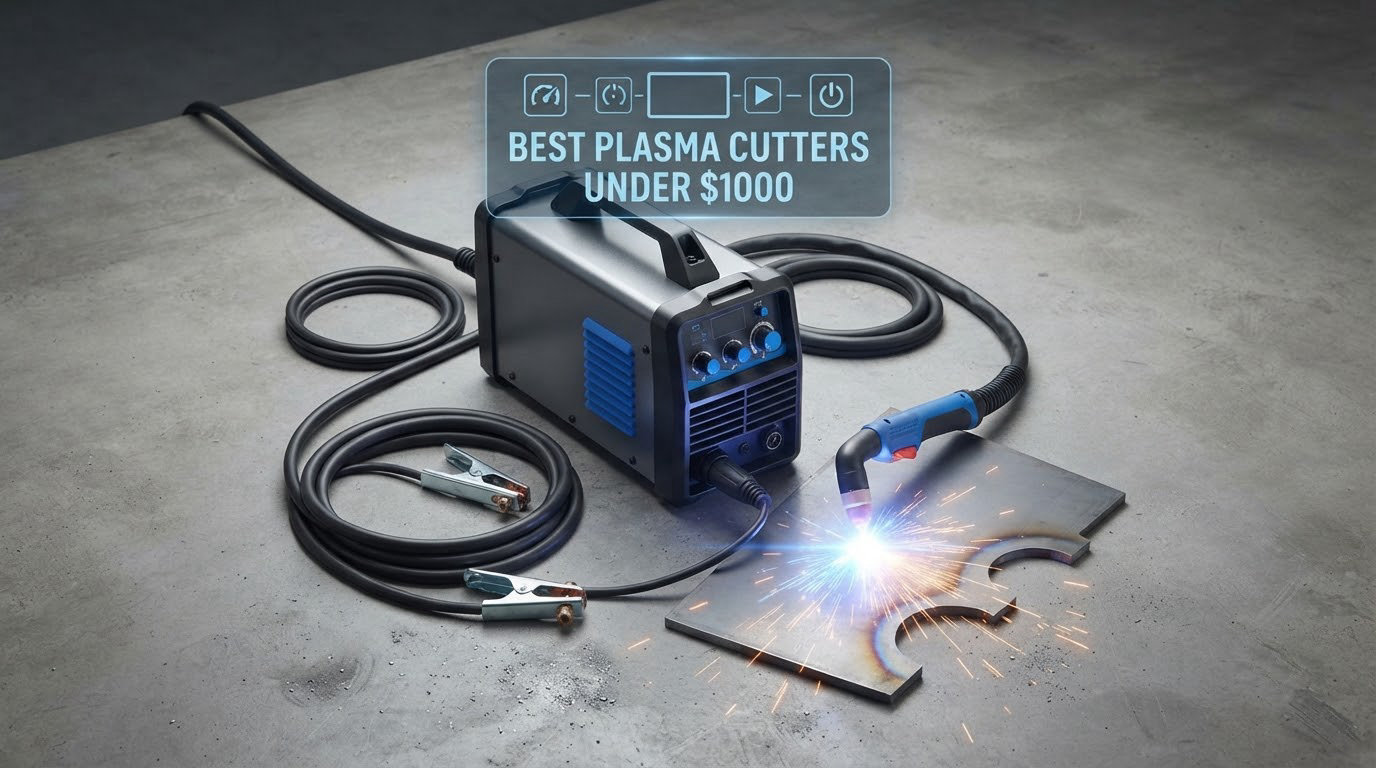
Here is the short answer: the LOTOS LTP5505D 55A Pilot Arc Plasma Cutter is the best plasma cutter under 1,000 dollars in 2026, because it is the only machine in this group that pairs a 5/8 inch clean cut rating, automatic 110V/220V switching and a non-touch pilot arc with a built-in air filter and regulator, and it does it with 2,400 owner ratings behind it.
That combination matters because most of the disappointment in this category comes from a machine that is underpowered for the steel in front of you, tied to a wall outlet that cannot feed it, or starved of air halfway through a cut. We looked at ten inverter plasma cutters that all sit comfortably inside a four-figure budget, read the full owner review sets on each, and compared output amperage, input voltage, rated and maximum cut thickness, air pressure demand, torch type and warranty length.
No compressor is included with any of the ten machines below. A plasma cutter is an arc device, not a self-contained tool, and budget air supply is where a lot of first cuts get abandoned. We cover the compressor math in the buying guide so you can budget for it before the machine arrives.
If you are still deciding what shape your cutting work takes, our guide to the best desktop laser cutters covers the lighter-weight option, and our roundup of the best manual die cutters covers sheet cutting without electricity at all. For curved shapes and pattern work in thin material, the best vinyl cutters for small business are the other half of the toolkit.
The Top 3 Plasma Cutters Under 1,000 Dollars in 2026

LOTOS LTP5505D
- 55A inverter output
- Non-touch pilot arc
- 5/8 inch clean cut
- Built-in filter and regulator
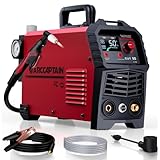
ARCCAPTAIN CUT50
- 20-50A output
- 1/2 inch quality cut at 220V
- 13 pounds with shoulder strap
- LED display with error codes
All 10 Plasma Cutters Under 1,000 Dollars Compared for 2026
The specs below are what the manufacturers list, and they are worth reading carefully rather than skimming. Output amperage is only half the story, because a 50 amp machine on 110V and the same 50 amp machine on 220V produce very different results, and the gap between a rated cut and a maximum cut is where the disappointment usually lives.
| Product | Specifications | Action |
|---|---|---|
| LOTOS LTP5505D 55A Pilot Arc |
|
Check Latest Price |
| ARCCAPTAIN CUT50 50A Dual Voltage |
|
Check Latest Price |
 TOOLIOM CUT-50 PRO 50A Non-Touch TOOLIOM CUT-50 PRO 50A Non-Touch |
|
Check Latest Price |
 YESWELDER CUT-65DS PRO 60A Non-HF YESWELDER CUT-65DS PRO 60A Non-HF |
|
Check Latest Price |
 PrimeWeld CUT50D 50A Air Inverter PrimeWeld CUT50D 50A Air Inverter |
|
Check Latest Price |
 ARCCAPTAIN CUT55 Pro 55A App Control ARCCAPTAIN CUT55 Pro 55A App Control |
|
Check Latest Price |
 PrimeWeld CUT60 60A Pilot Arc PrimeWeld CUT60 60A Pilot Arc |
|
Check Latest Price |
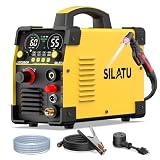 SILATU STC550P 55A Pilot Arc SILATU STC550P 55A Pilot Arc |
|
Check Latest Price |
 GZ GUOZHI CUT-50 50A IGBT GZ GUOZHI CUT-50 50A IGBT |
|
Check Latest Price |
 bestarc BTC500DP 50A Pilot Arc bestarc BTC500DP 50A Pilot Arc |
|
Check Latest Price |
A few patterns jump out immediately. Every machine here is a dual-voltage inverter design, which tells you the entire sub-1,000 dollar category settled on the same architecture. The real differences are amperage at 220V, whether the pilot arc can be adjusted, and how long the warranty runs.
1. LOTOS LTP5505D Review: 55 Amps With a Rust Removal Mode
- Largest review base in the group at 2400 ratings
- Cuts 1/4 to 1/2 inch steel with minimal dross
- Non-touch pilot arc saves consumables
- Built-in filter and regulator
- 16 pounds
- Ground clamp lead is short and does not lock positively
- Air fittings ship loose and may need tape
- Instructions are minimal
- Consumable wear is higher at full power
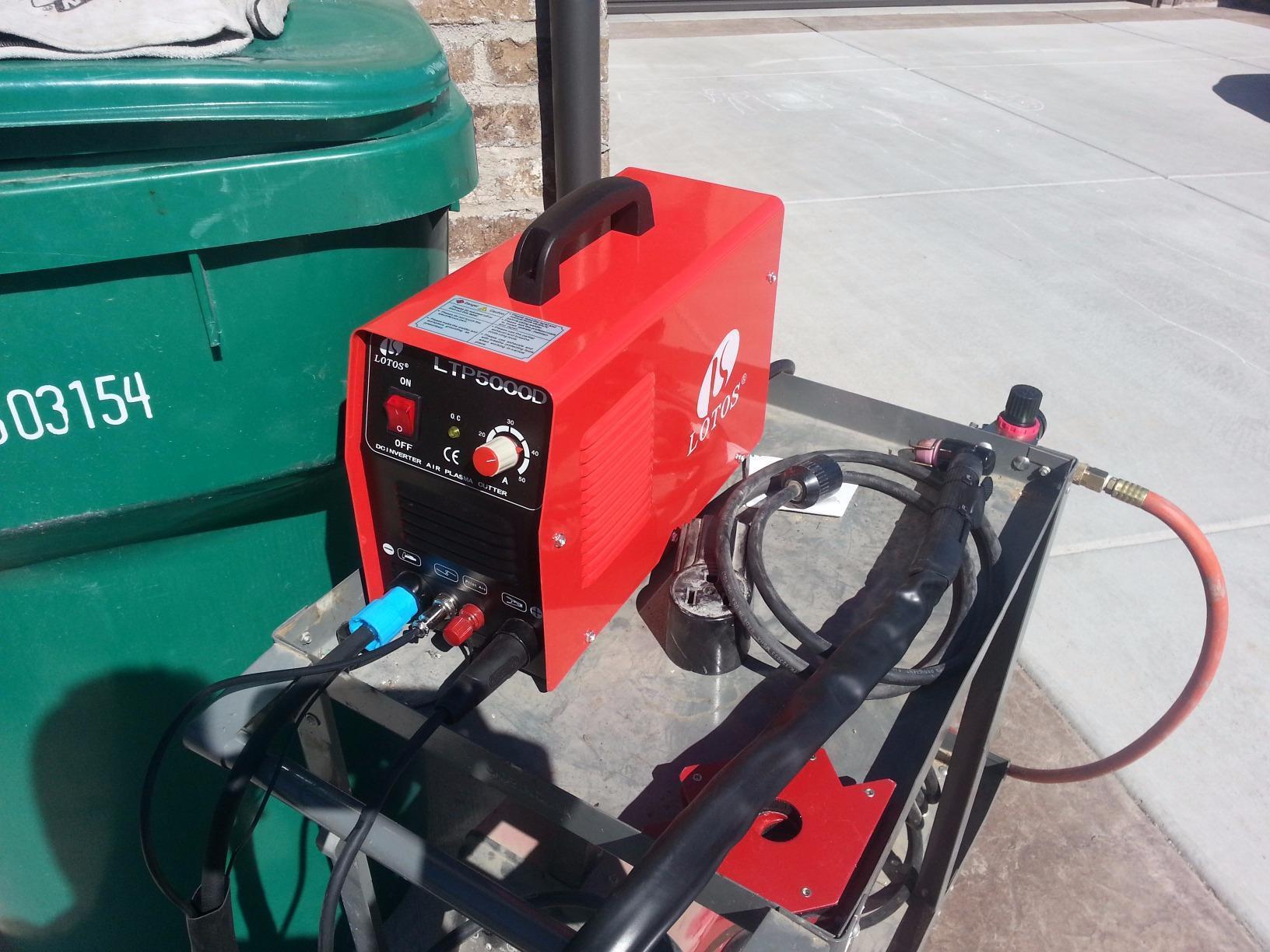
The LTP5505D is the machine we keep coming back to because it refuses to give up anything important to hit a low price. Output is 55 amps from an inverter power source, the advertised clean cut capacity is 5/8 inch, and voltage switching between 110V and 220V is automatic rather than a switch you have to remember to flip.
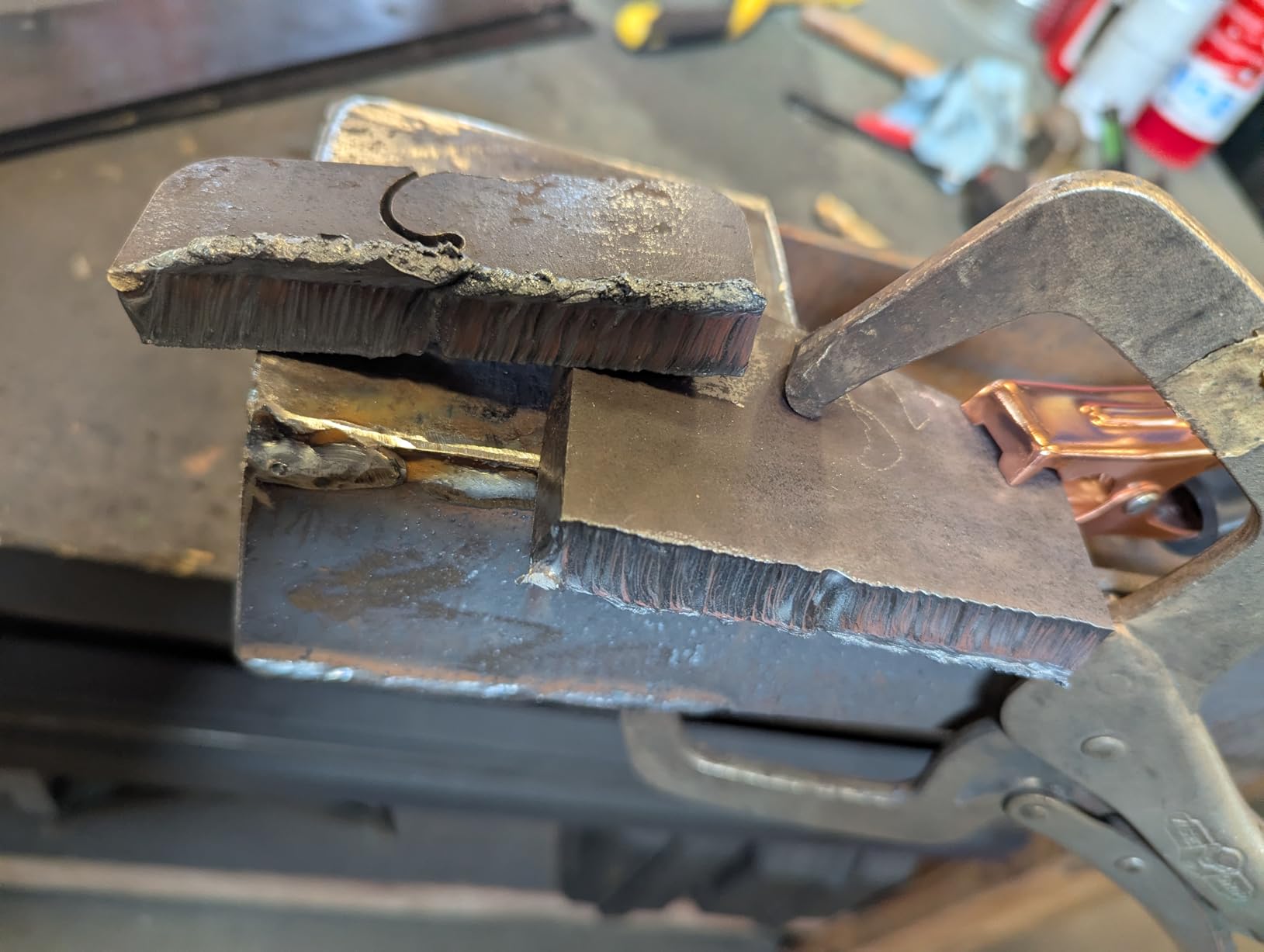
In the garage, the difference between this and a 40 amp entry machine is obvious on the first plate. A 55 amp arc moves through 1/4 inch mild steel with a kerf you can barely see, and 1/2 inch plate comes apart in one pass if you keep a steady travel speed. Owners repeatedly note that dross on the back side is minimal when the travel speed is controlled, which is the single biggest quality complaint on the cheaper machines in this list.
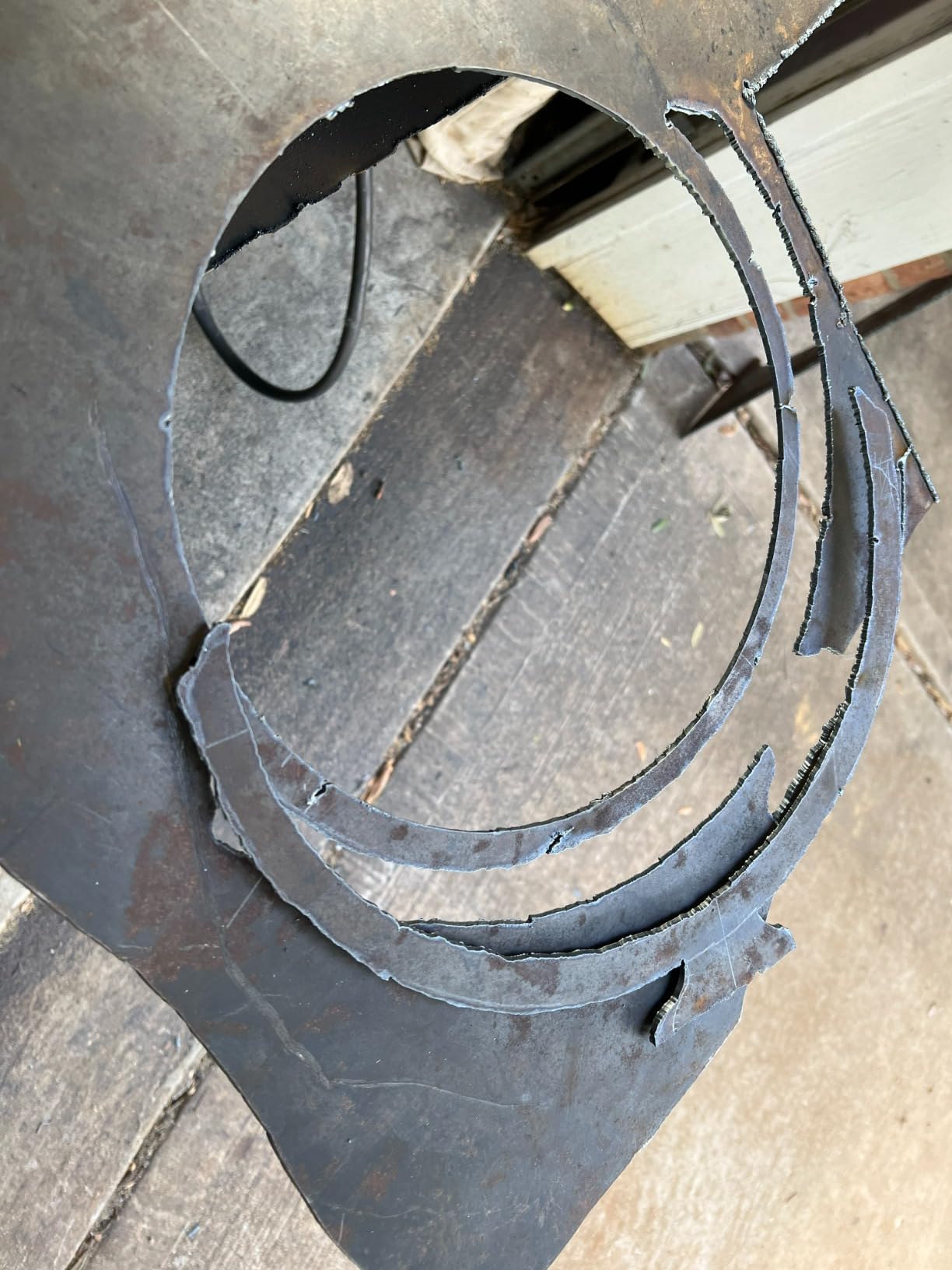
The dedicated rust removal mode is the sleeper feature here. It throttles output for working through scaled, painted or weather-beaten metal without destroying the electrode, which is exactly the job most of us point a plasma cutter at first. The non-touch pilot arc means you start the arc without striking the workpiece, and that single design choice is why consumable life on this unit runs long for its class.
A front-mounted air regulator with a pre-fitted quarter-inch plug is unusual at this level. Most competitors at or near this output either ship no filter at all or expect you to plumb one in, and an unfiltered compressor is the fastest way to ruin a pilot arc. My one standing complaint is the ground clamp: the lead is shorter than the torch lead and does not lock positively into the machine, so plan on a better clamp if you are working at the far end of the bench.
When this machine earns its slot in your shop
Pick the LTP5505D if your work is mostly mild steel between 1/8 and 1/2 inch, if you cut painted or rusted material regularly, and if you want one machine that runs from a garage outlet and from a 220V circuit without a reconfiguration ritual. The 5/8 inch clean cut rating gives you real headroom for trailer repairs, gate and fence work, and general fabrication.
It is also the safest pick for a first plasma cutter, and that is not a small thing. A 55 amp non-touch pilot arc pierces thin rusty metal without a restart, and it does not punish the beginner the way lower-output machines do when the amperage is wrong for the thickness.
Where you will notice the trade-offs
Owners report that the air regulator fittings and hose connections can be loose out of the box, and the filter and regulator arrive without hose barbs, so you may need a few extra fittings and some thread tape before the first cut. The instructions are thin, which means the settings table you want lives in a video rather than a manual.
At full 55 amp output the electrode and tip wear rate climbs faster than it does on a 40 amp machine doing the same job at lower settings. If you are a hobbyist who cuts a few brackets a month, that cost is irrelevant. If you are running production work, budget for consumables as a real line item.
2. ARCCAPTAIN CUT50 Review: 13 Pounds With 50 Amps of Output
ARCCAPTAIN 50A Plasma Cutter Machine, 110V/220V Dual Voltage, 2/3″ Max Cut
- Lightest machine here at 13 pounds with a shoulder strap
- Cuts 1/2 inch steel cleanly at 220V
- LED shows live voltage and current
- Adapter included so it runs from either circuit
- Switchable 2T/4T with adjustable post-flow
- Air connection ships as hard line rather than quick connect
- Cut finish on thin material needs tuning
- A minority report intermittent arc
- No settings reference chart by thickness
This is the machine to beat on value. It sits at the top of the Amazon Plasma Cutting Equipment subcategory with a 4.5 rating across 1,307 reviews, which tells you the unit-to-unit experience is consistent rather than a roll of the dice.
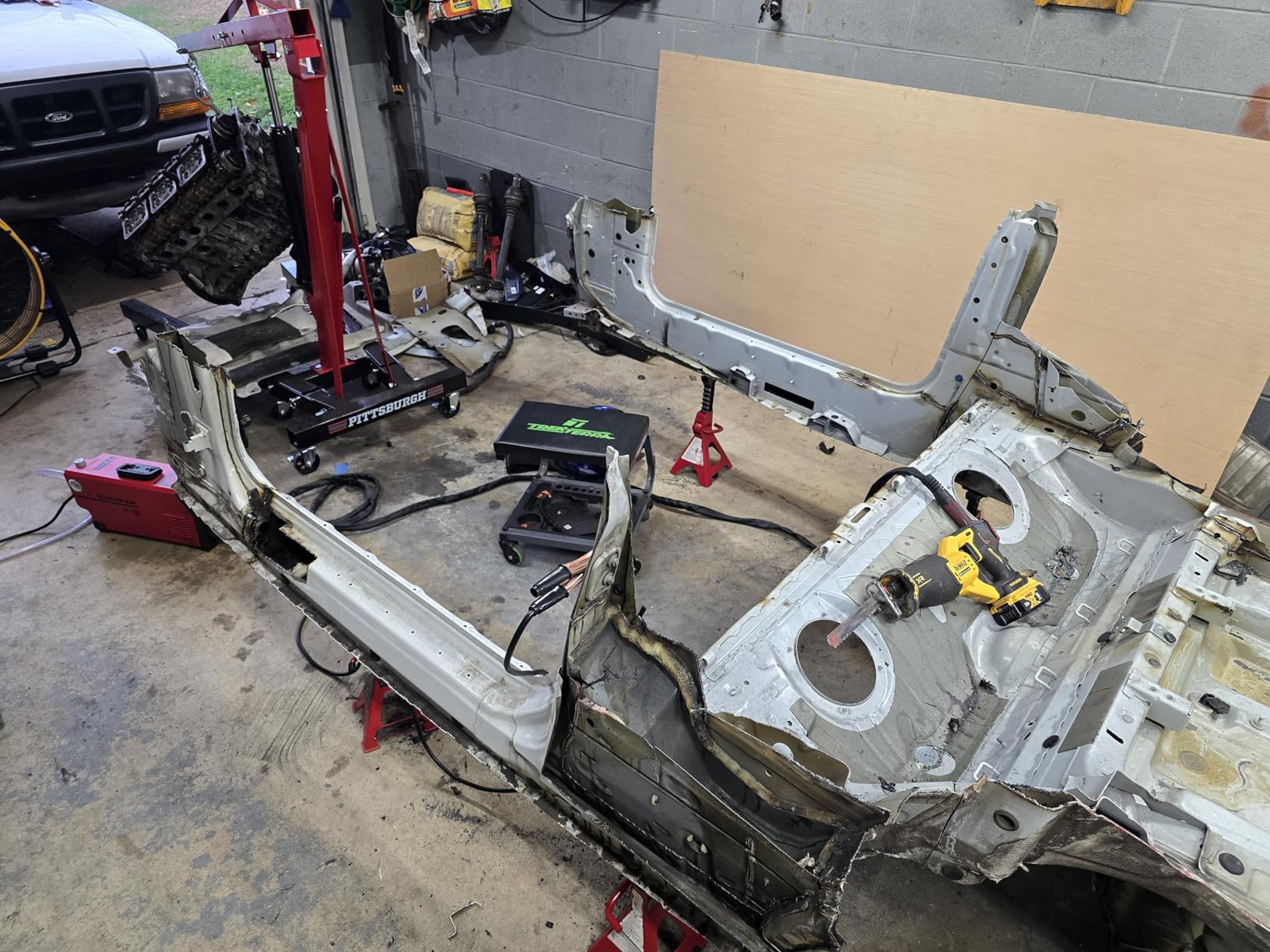
Output is 20 to 35 amps on 110V and 20 to 50 amps on 220V. The recommended maximum cutting thickness is 12mm at 35 amps on 110V at 55 PSI, and 18mm at 50 amps on 220V at 75 PSI. In plain terms, half-inch steel at 220V is a routine cut, and the marketing headline of a 2/3 inch maximum is honest.
What genuinely stands out is the physical design. At 13 pounds with a shoulder strap, this is the machine you can carry up a set of trailer stairs or take to a job site without thinking about it, and that portability is usually the first thing sacrificed when output climbs into the 55 amp range. The LED display showing live voltage, current and error codes is also unusual among budget machines and saves real troubleshooting time.
Adjustable post-flow between 5 and 15 seconds, plus 2T and 4T cut modes, extend consumable life noticeably compared with a machine that cuts post-flow the instant you release the trigger. A cooling system that the manufacturer claims reduces noise and improves cooling efficiency keeps the duty cycle honest on longer sessions.
Why this is the value pick
For 1/4 inch and thinner work on 110V, this machine does everything a first plasma cutter needs to do, and it does it while weighing less than most of a loaded toolbox. If your metal is quarter-inch plate or lighter and you want to move the machine around rather than anchor it to a bench, this is the straightforward choice.
The 2T and 4T modes also make it a better fit than its weight class suggests for anyone doing repeat production cuts, because a fixed torch position during a long cut is much easier on the operator and the tip.
What to fix before your first cut
The air connection ships as a hard-line fitting rather than a standard quick connect, so plan on swapping it for a quick-disconnect before you hook up a hose. Owners also report that the cut finish on thin or light-gauge material takes some amperage and travel-speed tuning rather than coming out clean on the first attempt.
A small number of owners report an arc that starts and stops intermittently, and there is no settings reference chart by material thickness in the box, so keep a note of your own settings. Neither issue is common, but both are worth knowing about.
3. TOOLIOM CUT-50 PRO Review: 3/4 Inch Maximum Capacity at 220V
TOOLIOM 50A Non-Touch Pilot Arc Plasma Cutter, Dual Voltage 110/220V
- Handles stainless
- alloy
- mild steel
- copper and aluminum
- Non-touch pilot arc reduces electrode burn
- Tool-free 110V/220V connection
- Digital display shows air pressure and current
- Post-cut air flow cools consumables
- Heaviest listed weight here at 21.6 pounds
- Lowest average rating in the group at 4.1
- Some owners report inconsistent arc and cut quality
- Included components are minimal
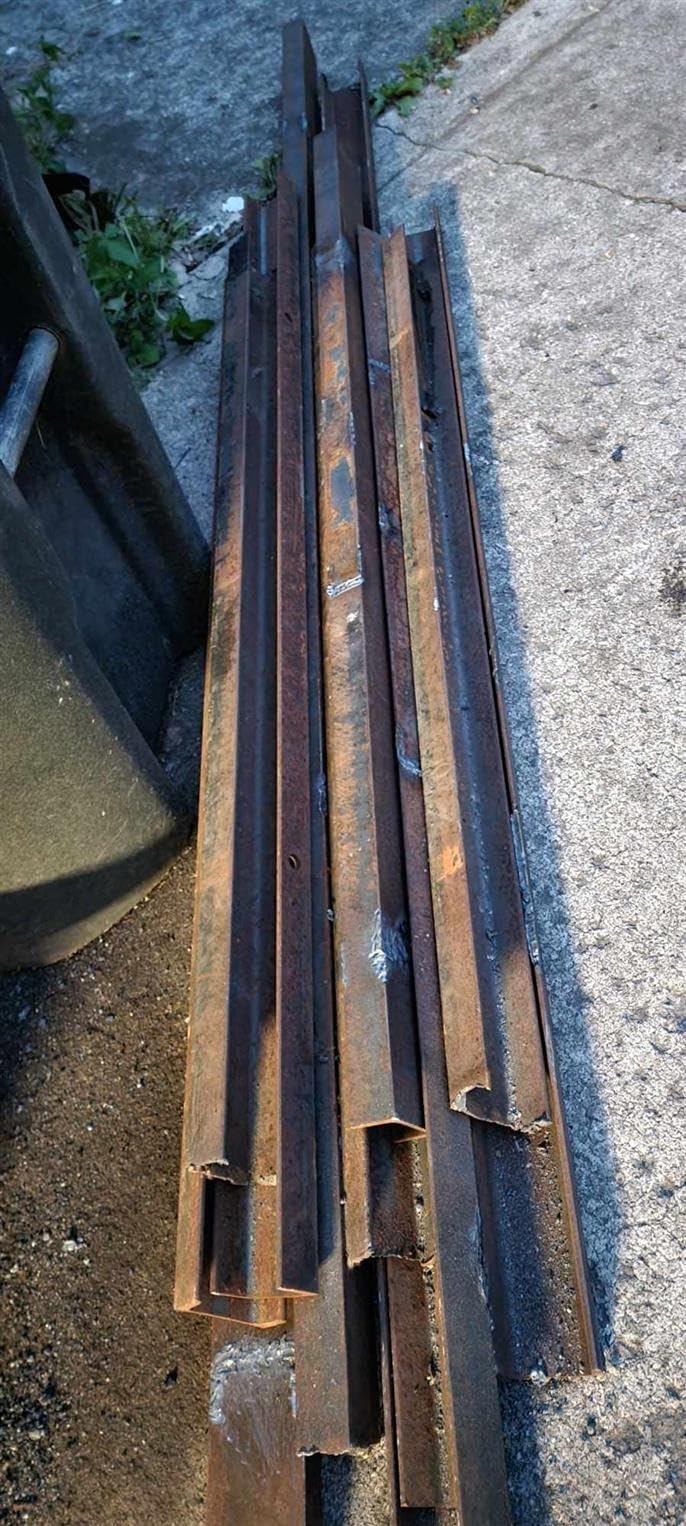
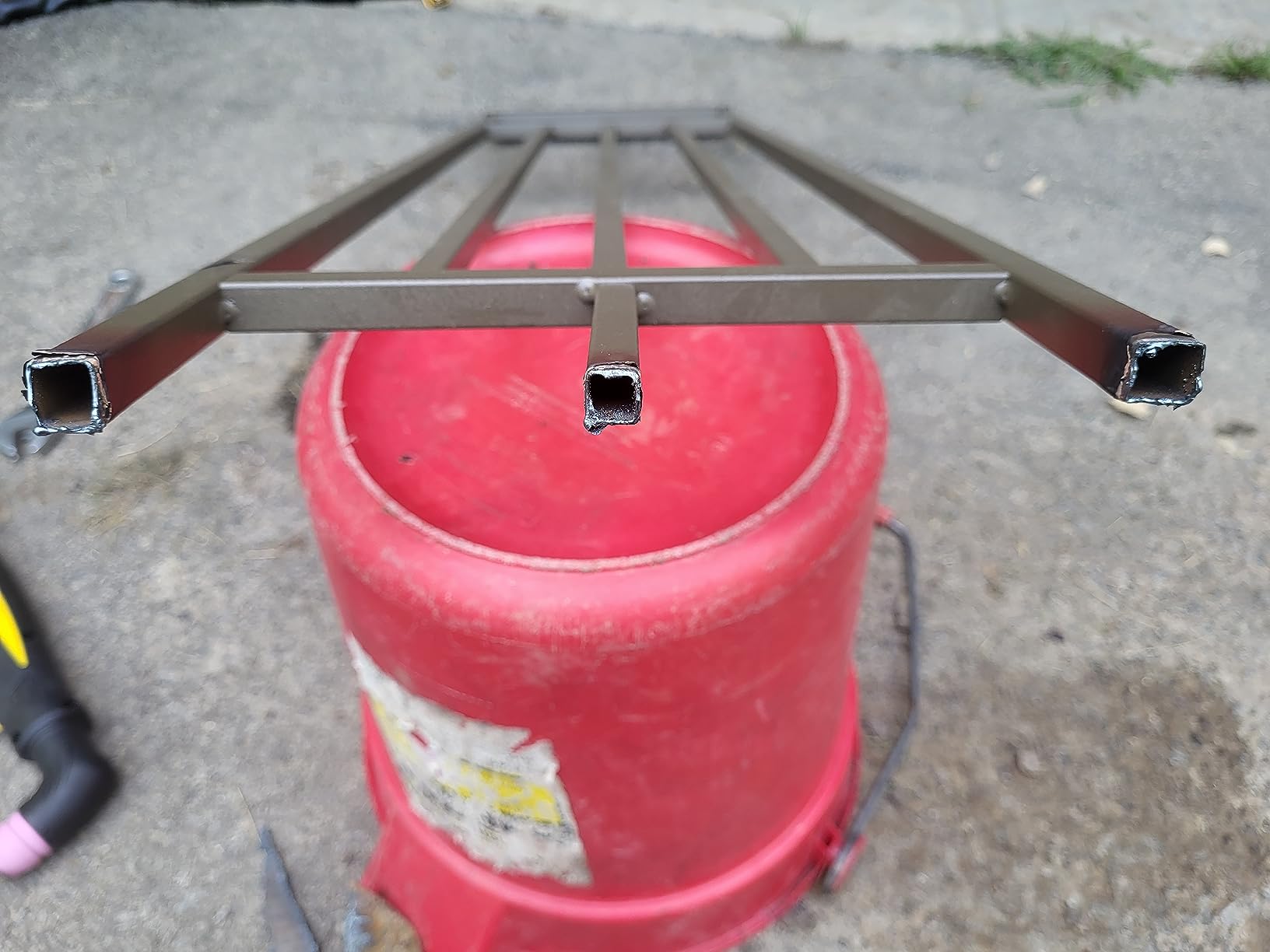
The CUT-50 PRO is the one in this group that reads like a shop tool rather than a garage project. Output is 20 to 50 amps, with a 1/4 inch ideal clean cut at 110V and 5/8 inch at 220V, and a maximum cutting capacity of 1/2 inch at 110V rising to 3/4 inch at 220V.
That 3/4 inch maximum is the highest headline capacity in this roundup at 220V, and it comes with a maximum air pressure rating of 50 PSI at 110V and 65 PSI at 220V. The AG60 non-touch pilot arc torch reduces electrode burn, which is a meaningful difference when you are working stainless or aluminum where a poor consumable ruins the kerf.
The large digital display showing air pressure, voltage and current is the most useful diagnostic feature in the group, because low air pressure is the number one cause of a wandering arc and most machines give you no way to check it. Post-cut air flow adjustable from 5 to 20 seconds is a generous range for consumable cooling.
The torch-free 110V and 220V connection means moving between circuits is genuinely tool-free, which matters if you use the machine in a garage one day and a shop with a 220V circuit the next.
Where this machine fits
Reach for the CUT-50 PRO if your material list includes stainless steel, aluminum, copper or alloys rather than only mild steel. Non-touch ignition and a large display make it a good partner for thinner non-ferrous work, where a wandering arc is most visible and most annoying.
It is also the choice for anyone who wants the biggest advertised maximum cut in the group and has 220V access to use it.
The honest drawbacks
At 4.1 stars with 12 percent one-star reviews, this unit has the widest spread of experiences in the roundup. Owners report inconsistent cut quality and arc stability on some machines, and the rating distribution says you are more likely to meet an average unit than an exceptional one.
The listed weight of 21.6 pounds also undercuts the portability story, and included components are minimal compared with competitors that ship a hose, clamp and adapter. Treat it as a shop machine that lives in one place.
4. YESWELDER CUT-65DS PRO Review: 60 Amps Without High-Frequency Start
YESWELDER 60A Non-HF Plasma Cutter, Non-Torch Pilot Arc, 110/220V
- Highest amperage here at 60A with a 63/64 inch maximum at 220V
- Non-HF blow-back start avoids interference with other equipment
- Built-in rear air filter and regulator
- Digital display with error codes
- ETL certified with an IP21 water rating
- One-year warranty is short for this class
- Blow-back start is slower than high-frequency ignition
- Manual quality is limited
- Some users need a higher-capacity circuit at 220V
This machine takes a different approach to ignition, and the reason is worth understanding. Instead of a high-frequency start, it uses a non-HF blow-back system with minimal electromagnetic interference, paired with an IPT40 non-touch pilot arc torch rated for rough, painted and rusty surfaces.
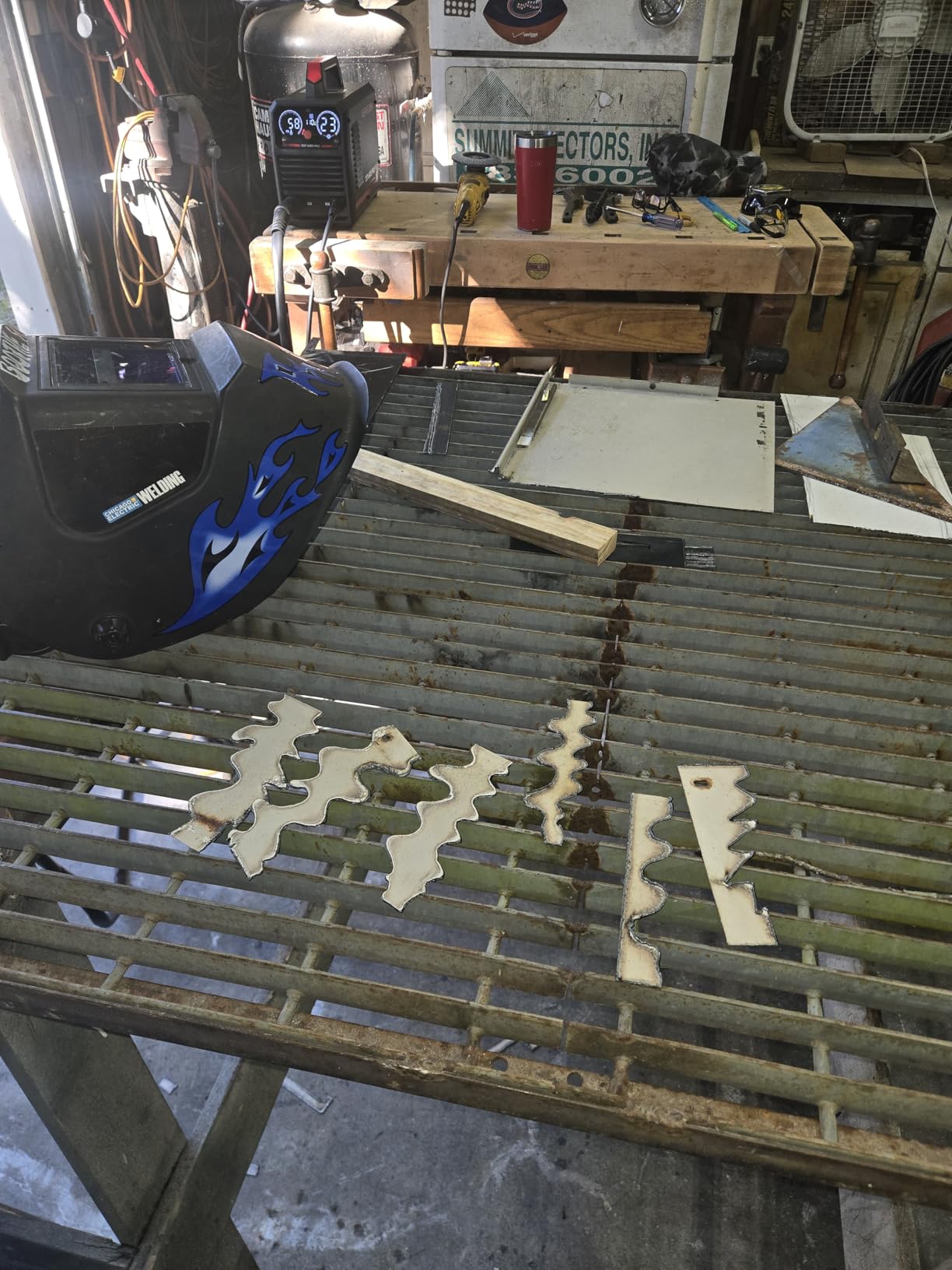
On paper the output is the most capable in the group: 60 amps maximum, an ideal clean cut of 5/16 inch at 110V and 5/8 inch at 220V, and a maximum cut of 1/2 inch at 110V rising to 63/64 inch at 220V. That is nearly four-fifths of an inch of maximum capacity, which is real plate-steel territory.
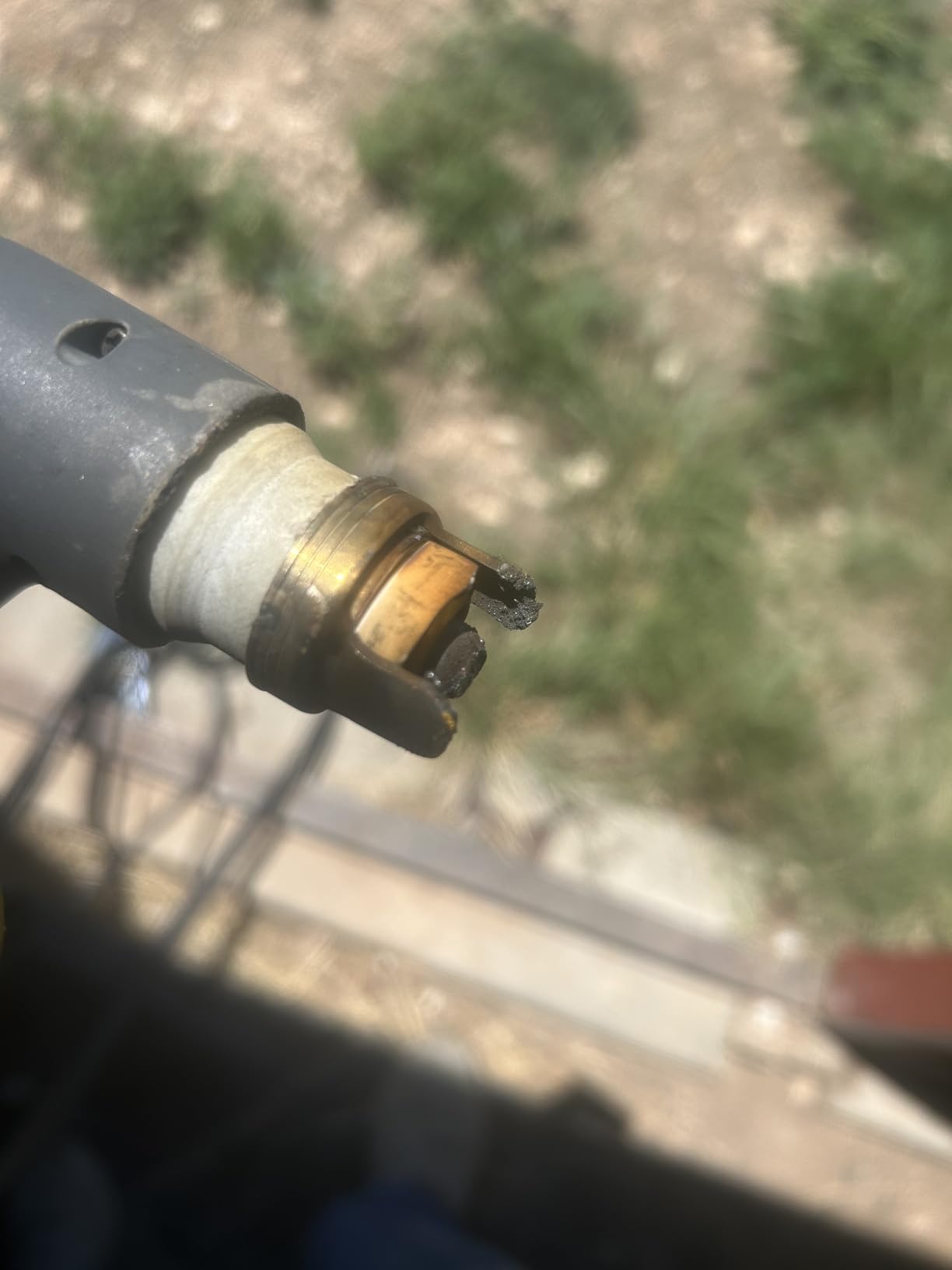
If you run a plasma cutter alongside a welder, a CNC router, or shop electronics that dislike electromagnetic noise, the non-HF start removes a whole category of problems. Owners working in automotive repair and pre-weld prep consistently report clean cuts and straightforward setup, and 75 percent of ratings are five star.
The box includes the cutter, an earth leakage protection unit, an air filter and regulator, air hose, ground clamp, power adapter, torch and manual. A built-in rear air filter means setup is close to one minute from box to first arc.
Why non-HF start matters in a real shop
Welding and fabrication forums raise the 110V versus 220V question more than any other, and the second question they raise is interference. A non-high-frequency machine is the safer pairing when a plasma cutter shares a circuit space with sensitive equipment, and the safety argument alone justifies the trade for many home shops.
For anyone cutting 1/2 inch plate as a regular job, the 60 amp output and 63/64 inch maximum make this one of the strongest cutters available inside a four-figure budget.
What you give up
Blow-back ignition is slower to initiate than a high-frequency pilot arc, so you feel the delay with every new pierce. The one-year warranty is the shortest coverage you will see among the better-reviewed machines here, and for a tool that eats consumables that gap matters.
Some users also report needing a dedicated higher-capacity circuit to get full 220V output, and the manual is limited compared with the feature set. Confirm your panel can carry the load before you commit.
5. PrimeWeld CUT50D Review: 50 Amps With Real Support Behind It
- One of the best rated machines here at 4.7 with 668 reviews
- Cuts 1/8 to 1/2 inch steel including rusted material
- Air filter and regulator arrive pre-installed
- AG60 torch with a real trigger guard
- 220V cord plus a 220V to 120V adapter included
- Support described as fast and responsive
- Some earlier-production units had leaking air fittings
- Power cord is short for 220V use
- Owner's manual is widely criticised
- Supplied quick disconnect leaks on some units
At 4.7 stars across 668 ratings with 80 percent five-star, the CUT50D is among the best reviewed machines in this roundup, and the reason is not a spec sheet. It is build quality paired with the best after-sales support in the category.
The technical package is a 50 amp air inverter output with automatic 110V and 220V AC dual-voltage operation and a 1/2 inch clean cut rating. The AG60 plasma torch comes with a proper trigger guard, which sounds trivial until you have used a torch whose trigger is held together with a cable tie.
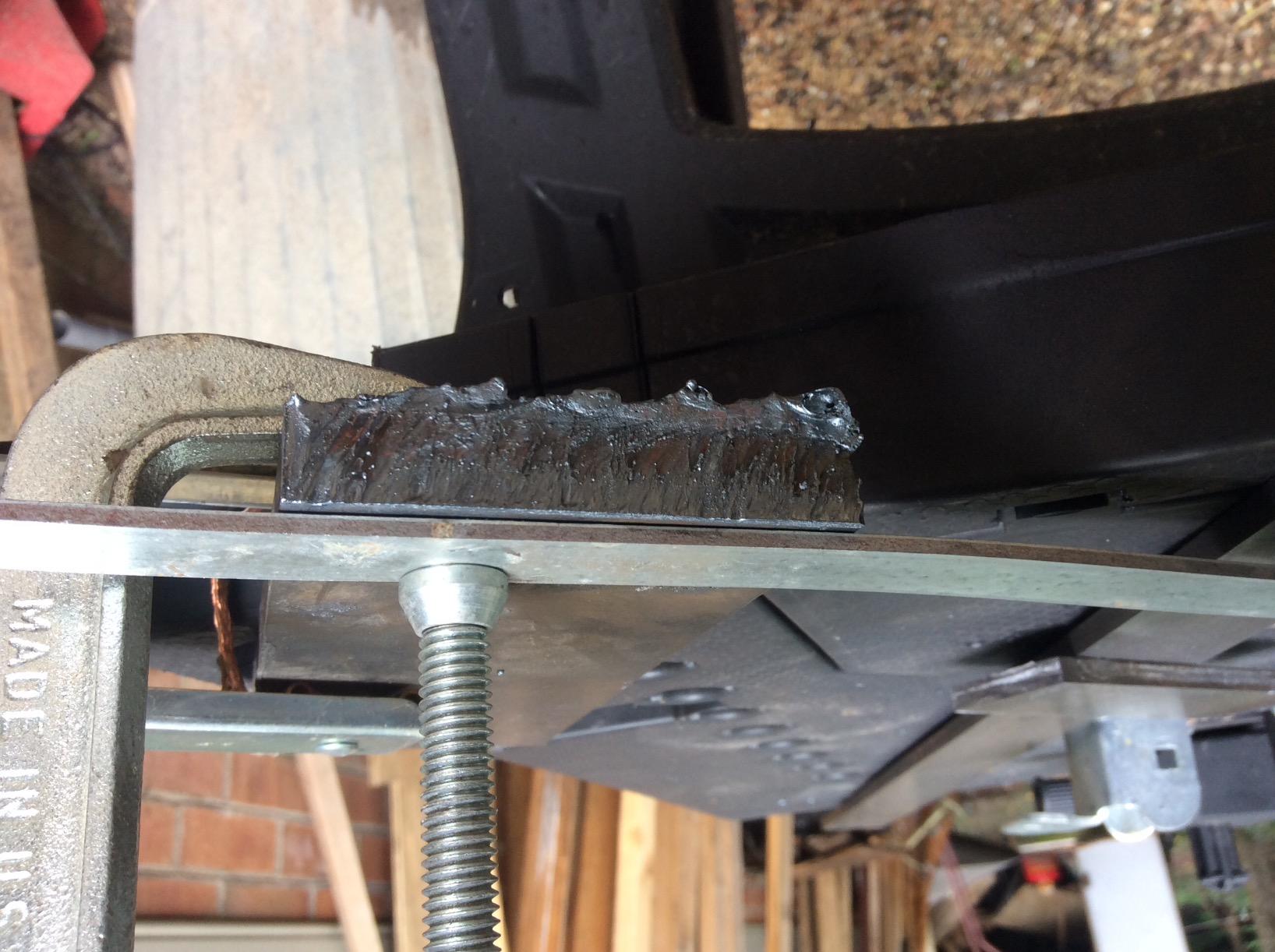
Units arrive pre-plumbed on the rear panel with the air filter, regulator and quick connect already installed, and the box includes a 220V power cord along with a 220V to 120V adapter for 110V outlets. Out of the ten machines here, this is the most complete package as delivered.
What stands out most in the reviews is the company itself. Multiple owners describe PrimeWeld answering technical questions within an hour and paying return shipping under warranty, which is not the norm for machines in this bracket. Owners also report that earlier complaints about missing parts and air leaks were addressed in later production runs.
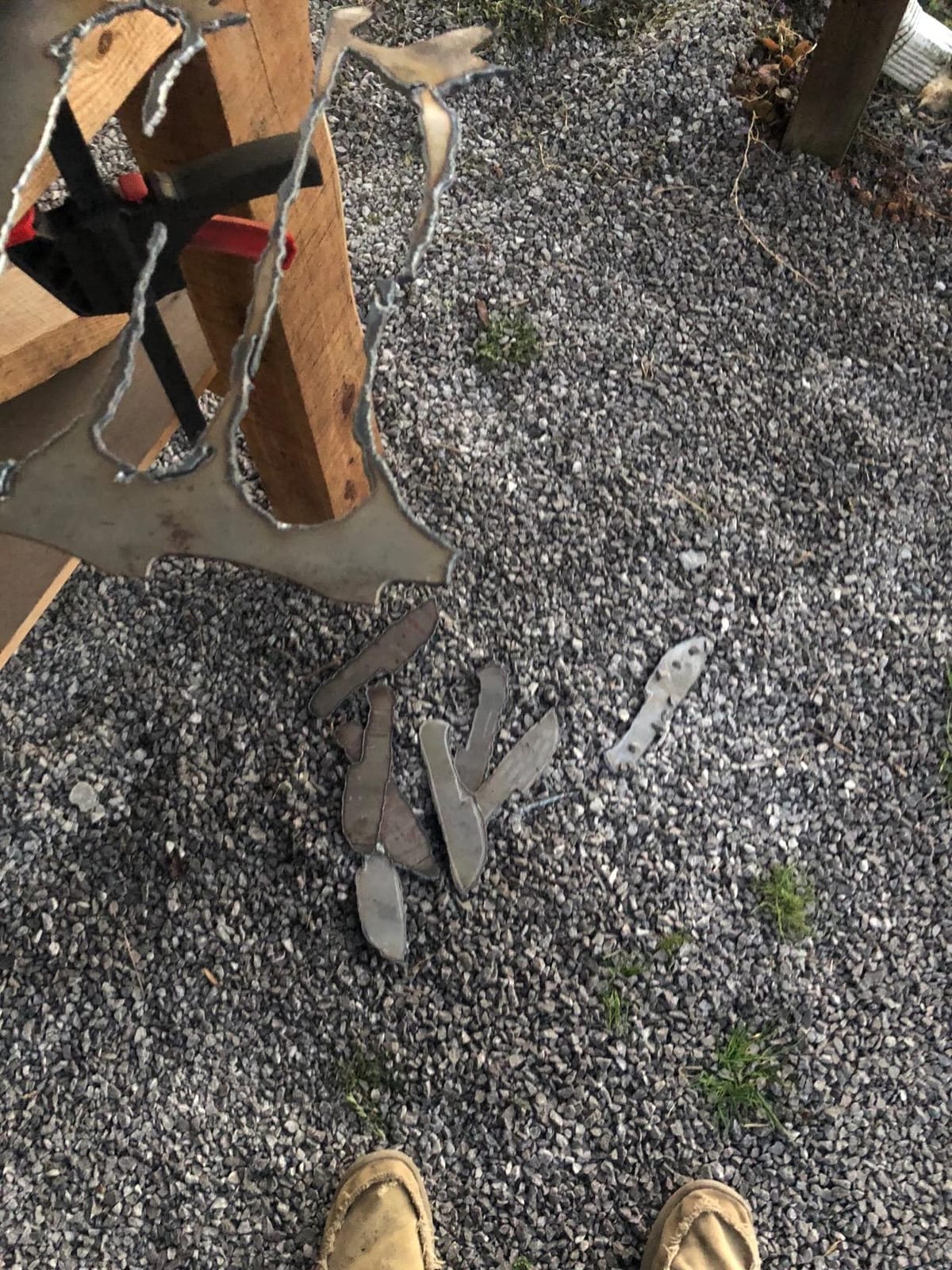
What you are buying with the support
Buying a machine that a person will answer the phone for changes the long game. Consumables are the recurring cost of plasma cutting, torch connections break, air fittings leak, and a responsive warranty service turns a frustrating afternoon into a solved problem.
Performance-wise it handles 1/8 to 1/2 inch steel cleanly, including rusted material, and owners routinely describe results as comparable to machines costing several times more. For anyone who wants a reliable 50 amp workhorse rather than a feature list, this is the pick.
Where to expect friction
Earlier-production units had leaking internal and external air fittings that required teardown and repair, and some of the supplied quick disconnects leak. Later runs are better, but check the air path with soapy water before you trust the machine.
The power cord is short, so a 220V setup will need an extension or a NEMA 14-50 adapter, and the owner’s manual is the single most criticised item in the review set. Read the settings from a reliable source rather than the booklet.
6. ARCCAPTAIN CUT55 Pro Review: App Control and a 3-Year Warranty
ARCCAPTAIN iControl CUT55 Pro Plasma Cutter Machine, 55Amp, 120V/240V
- App control adjusts parameters and checks status from up to 10 meters away
- Three-year warranty is longer than most in this class
- MCU digital control for steadier current and voltage
- Post-blow time scales automatically with cutting current
- Regulator and filter pre-installed
- ANSI certified with fault alarms
- Heaviest of the mid-priced machines at 19.46 pounds
- App adds a dependency some buyers do not need
- 10 foot torch and leads add bulk
- Digital controls are less simple than one knob
The CUT55 Pro is the feature-forward option in the middle of this group. It puts out 55 amps with a 12mm quality cut rating and a 20mm maximum, uses a high-frequency non-touch pilot arc start, and adds phone app control for remote parameter adjustment, real-time monitoring and status detection up to 10 meters from the machine.
Quality cut thickness of 1/2 inch and a 3/4 inch maximum puts it at the top of the mid-range tier. An MCU-based digital control system regulates current and voltage more precisely than an analog machine, and the box includes a 10 foot AG60 torch, 10 foot air hose, 10 foot earth clamp and a 120/240V power adapter.
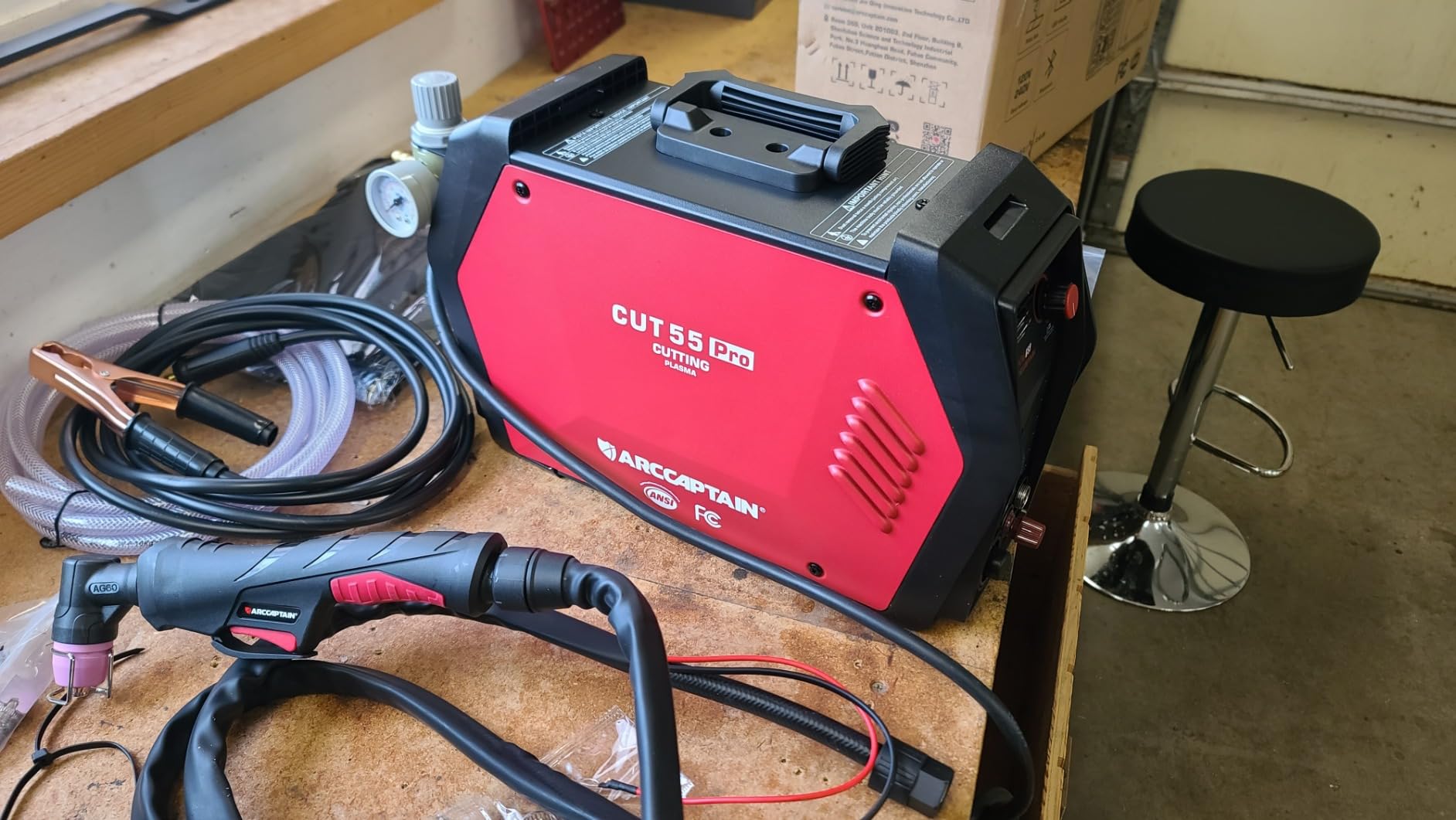
The genuinely clever feature is intelligent post-blow, which scales cooling time to cutting current: 5 seconds at 20 to 34 amps, 8 seconds at 35 to 45 amps, and 10 seconds at 46 to 55 amps. Nobody else in this group automates that, and it directly extends consumable life at higher amperage.
Smart fan cooling is claimed to cut noise by half and extend machine life by half, and the unit is ANSI certified with overcurrent, overvoltage, overload and overheating protection plus audible fault alarms. The three-year warranty is the second longest available here.
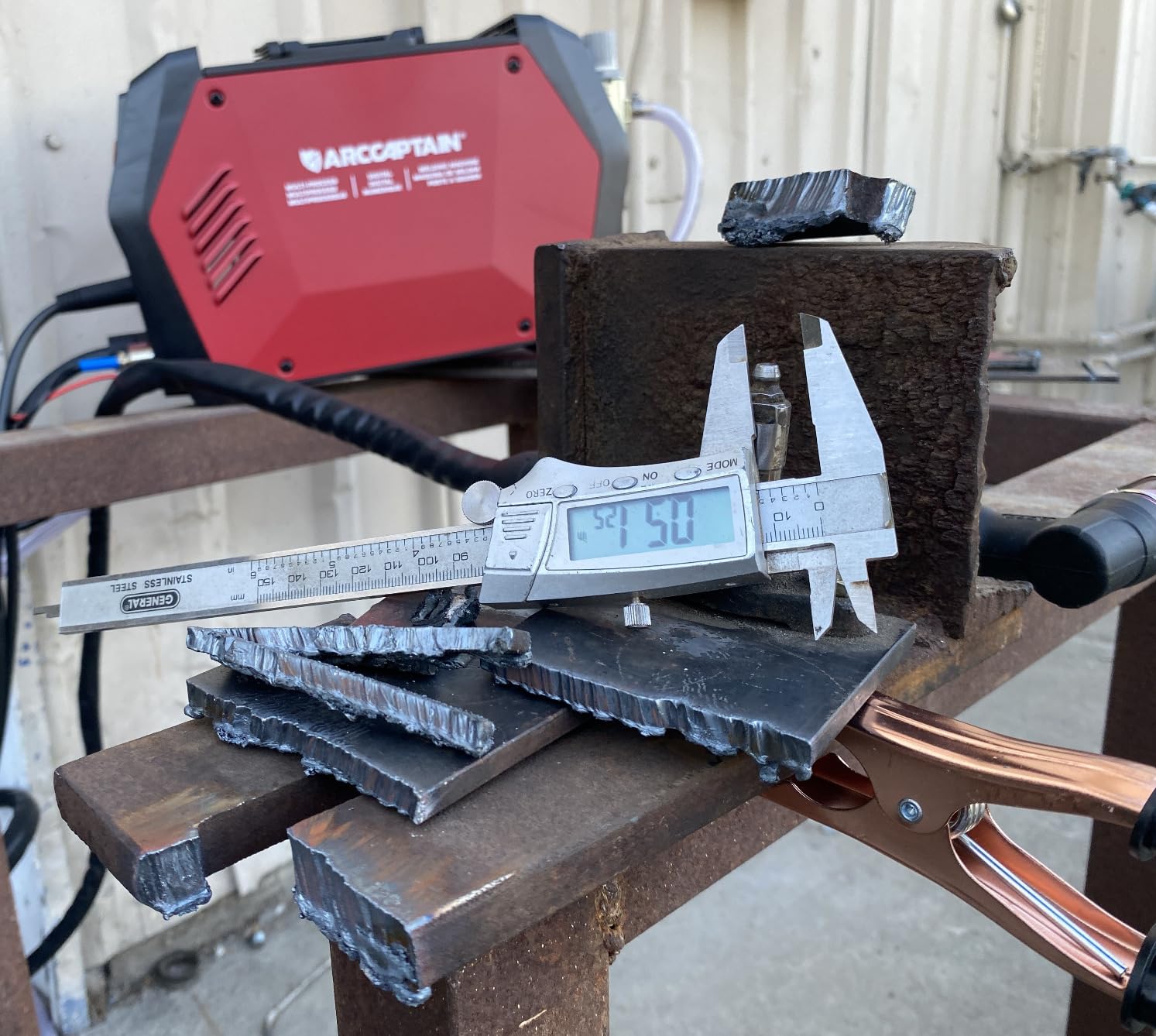
Who should pay extra for the app
App control is for the person who cuts at a comfortable distance from the machine rather than standing over the work. If you set parameters once and then run a series of similar cuts, dialing amperage and post-time from your phone without walking back to the panel is a real time saver, and the status detection is useful when the machine is down a ladder or inside a trailer frame.
The three-year warranty is the other reason to look here, since it matches the coverage of the most expensive machine in the roundup.
When the extra features do not pay
At 19.46 pounds this is the heaviest of the mid-priced machines, and the 10 foot torch, hose and earth clamp add bulk to anything you plan to carry. If you move the machine around rather than setting it up once, that weight is a daily cost.
Buyers also note that digital controls are more complex than a single analog knob for occasional use, and an app dependency is an extra thing to fail. For straightforward cut-and-clamp work, the app is decoration.
7. PrimeWeld CUT60 Review: 60 Amps at a 60 Percent Duty Cycle
PRIMEWELD CUT60 60Amp Non-Touch Pilot Arc PT60 Torch Plasma Cutter 110V/220V Dual Voltage 3 Year Warranty
- Highest rated machine here at 4.8 across 486 reviews
- PT60 blow-back torch is a step up from entry AG60 torches
- Continuous pilot arc handles expanded
- rusted and painted metal
- Three-year warranty with US-based support
- 60 percent duty cycle at full 60 amp output
- Highest price in the roundup
- Large footprint at 20 x 11 x 19 inches
- Euro central torch connection differs from the AG60 standard most rivals use
The CUT60 is the enthusiast’s pick. At 4.8 stars with 86 percent five-star ratings, it is the best-reviewed machine we found, and it is also the most expensive by a wide margin, which tells you exactly where this category spends the extra money.
It delivers 60 amps of continuous output at a 60 percent duty cycle, which is the specification that matters most for sustained work. A machine rated at 60 percent duty cycle can run at full output for a meaningful stretch before it needs to cool, and that is the difference between cutting all afternoon and cutting for twenty minutes.
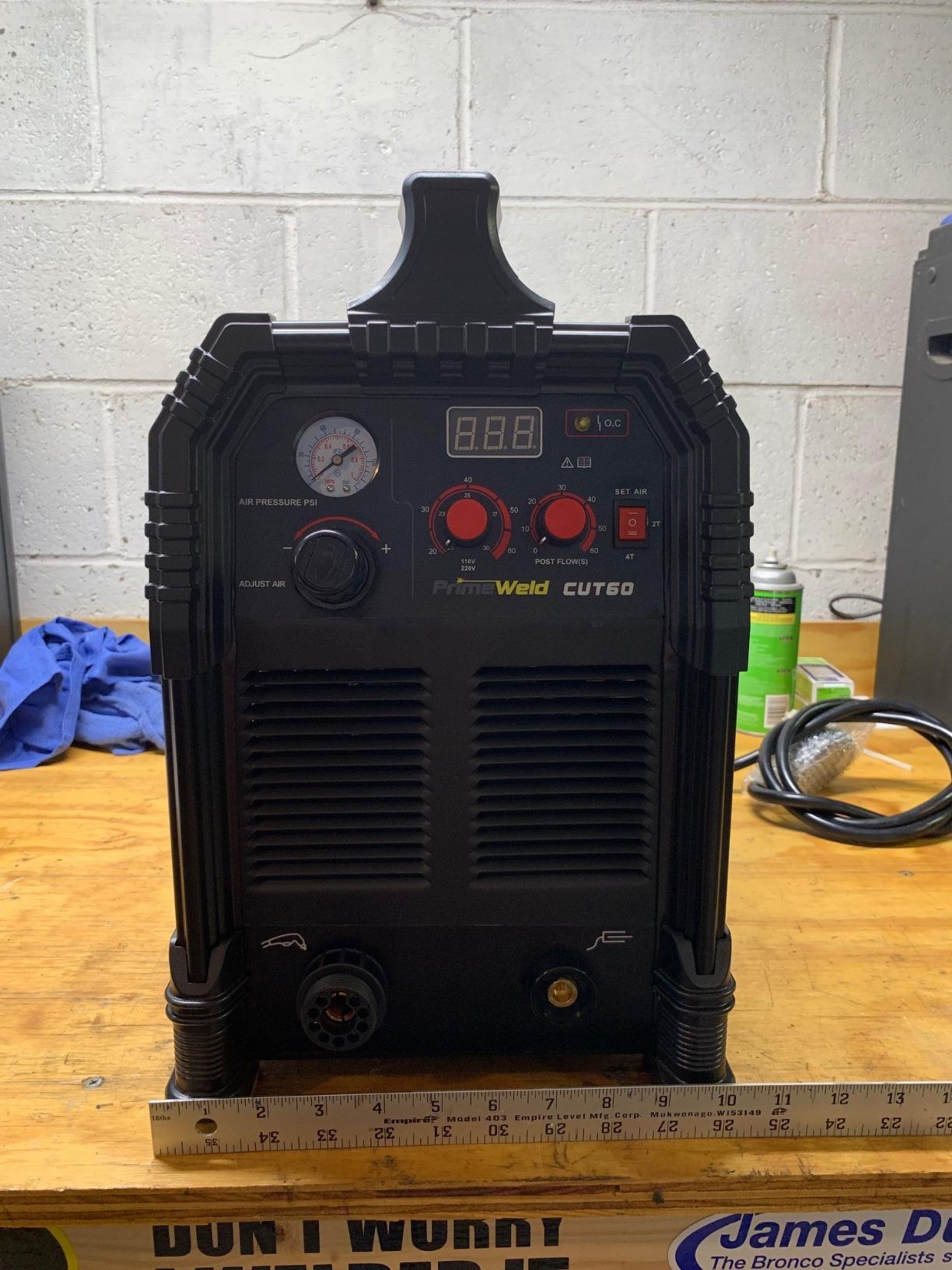
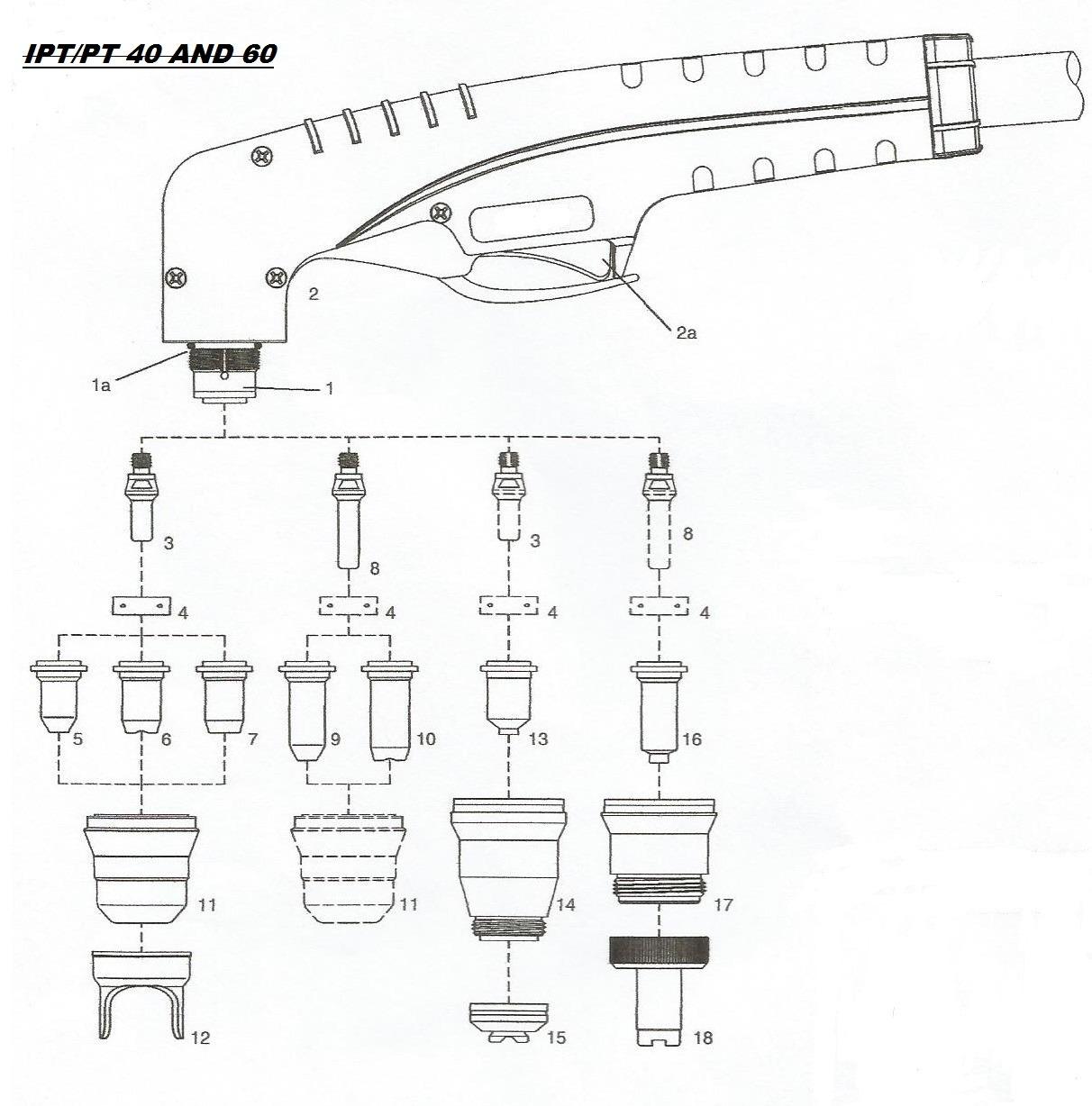
The PT60 blow-back cutting torch with a Euro central connection is a genuine step up from the AG60 torch found on almost every other machine here. A better torch means a stabler arc under sustained load, a kerf that stays narrow, and consumables that last longer between changes. Owners also point to the continuous non-touch pilot arc for expanded, rusted and painted metal, which stops the machine from restarting repeatedly on dirty stock.
Welding forum users frequently call out the PrimeWeld non-touch machines as very good for the price, while stressing the same caveat every time: filtered and dried air is essential to good results. That advice applies to every machine in this roundup.
Where the extra money actually goes
It goes into the torch, the duty cycle rating and the warranty, and those three things show up directly in how the machine behaves on a long job. If you cut 1/2 inch or heavier plate regularly, or you cut all day several days a week, the 60 percent duty cycle and the PT60 torch earn their keep in a way that no amount of extra amperage on a hobby-duty machine will.
The three-year warranty with US-based support also means a consumable or torch problem has a real path to resolution, which matters when your torch connection style is not the industry default.
The trade-off you accept
It is the most expensive machine in the roundup by a factor of several, so the value case depends entirely on your hours. A hobbyist cutting a few brackets a year gets nothing from a 60 percent duty cycle they never use.
The 20 x 11 x 19 inch footprint is larger than the compact machines, so plan the bench space. And the Euro central torch connection is a different standard from the AG60 torches most competitors use, which means your consumable options are narrower. That is a real long-term consideration if you like to mix consumable brands.
8. SILATU STC550P Review: The Lightest 55-Amp Machine in the Group
SILATU 55A Plasma Cutter, Non-Touch Pilot Arc, 110V/220V, 2/3″ Max Cut
- Lightest machine here at 12.57 pounds with a compact footprint
- 55 amp output reaches a 2/3 inch maximum at 220V
- Adjustable pilot arc duration balances mesh cutting against consumable wear
- Built-in air sensor with live pressure readout
- One-year warranty plus lifetime technical support
- Air hose is only 3.3 ft
- Air compressor not included and must be bought separately
- Documentation is limited
- Newer listing with a shorter review history
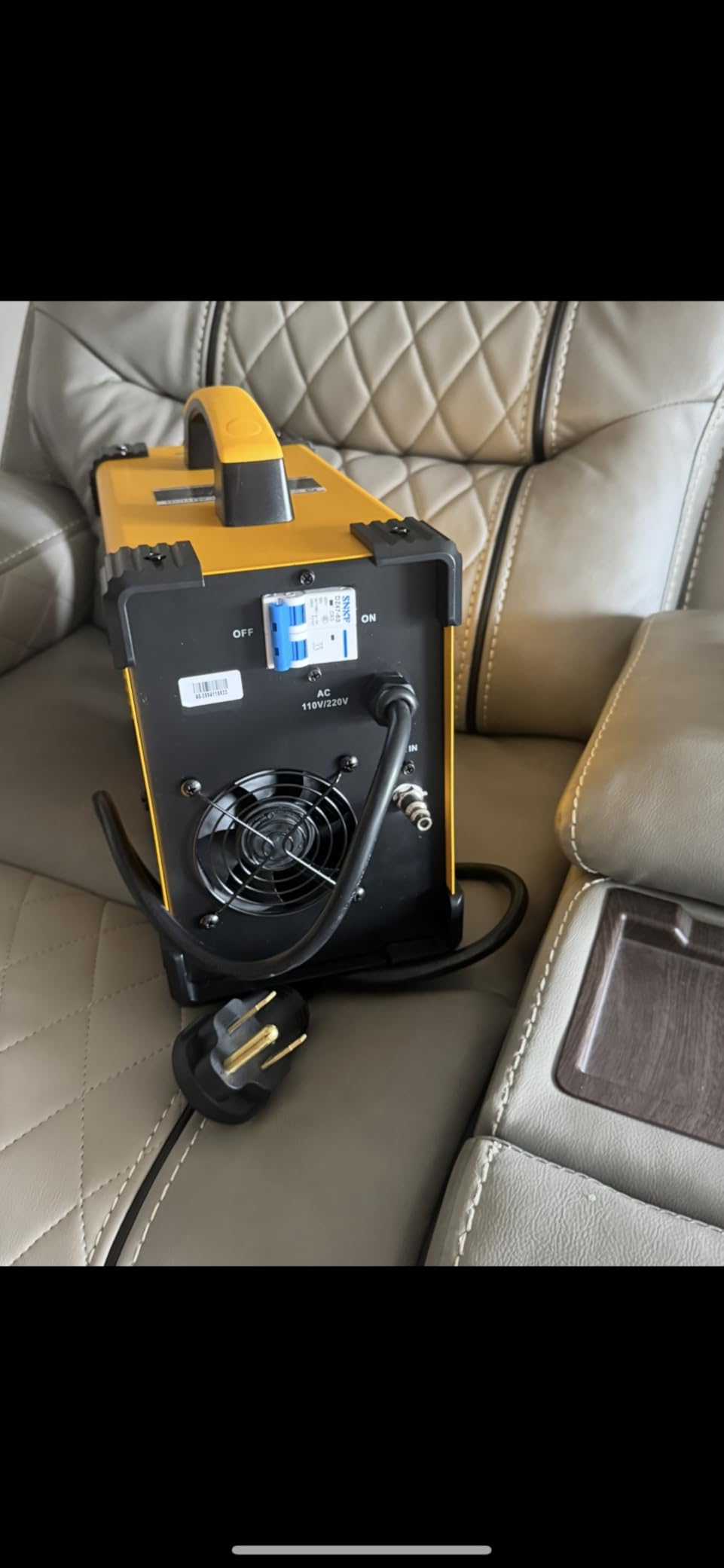
At 12.57 pounds the STC550P is the lightest machine in this roundup, and it does not get there by giving up output. It runs 15 to 40 amps on 110V and 15 to 55 amps on 220V, with a recommended maximum cutting thickness of 1/2 inch at 40 amps and 60 PSI on 110V, rising to 2/3 inch at 55 amps and 70 PSI on 220V.
Underneath it is an IGBT inverter with a 50/60Hz high-frequency pilot arc and a 60 percent duty cycle, which puts it in the same class as the more expensive machines on paper. The footprint is 13.98 x 6.1 x 8.86 inches, so it fits on a shelf rather than a stand.
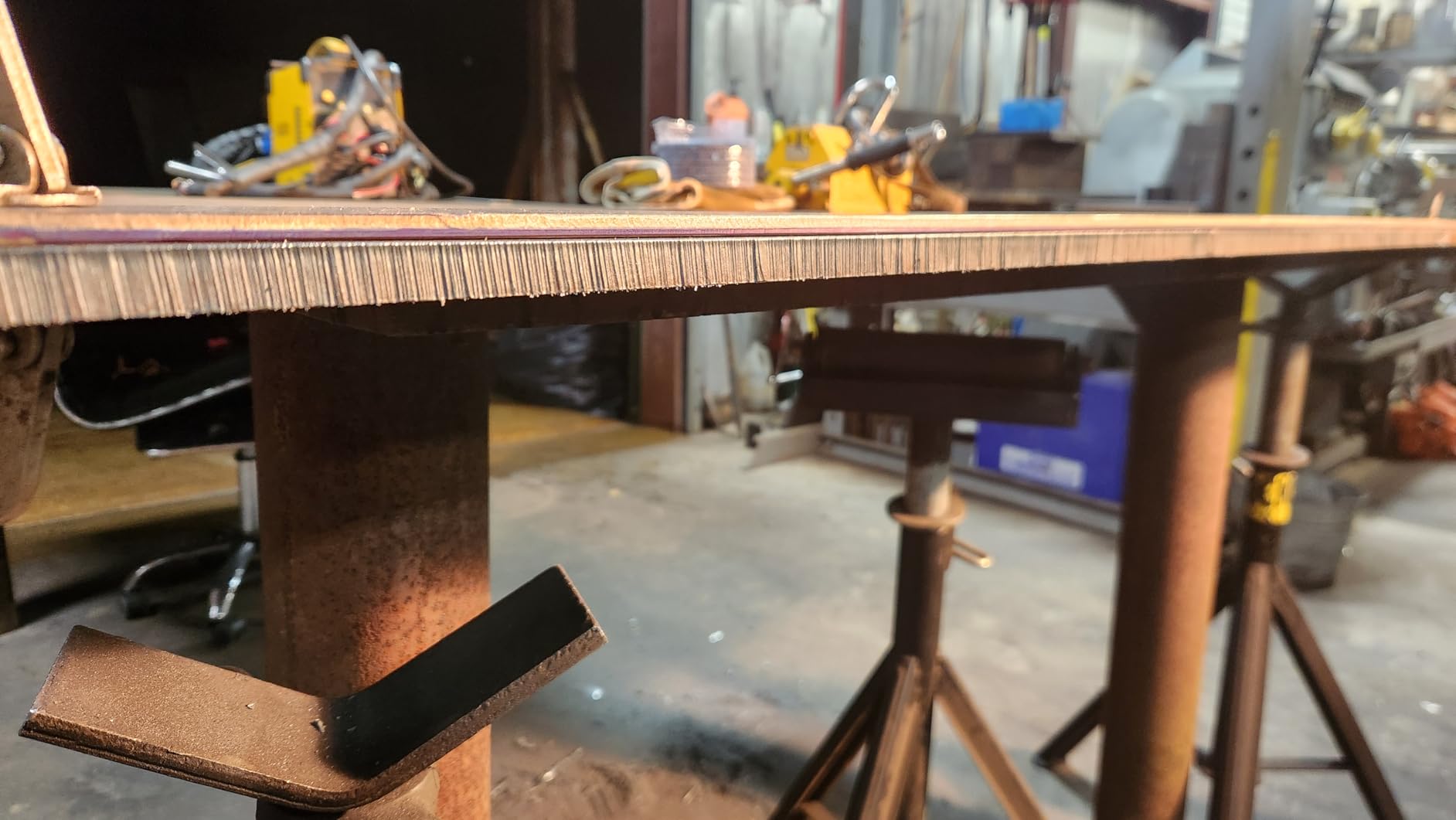
Two features separate it from cheaper 50 amp units. First, adjustable pilot arc duration lets you tune how long the pilot stays live, which is the difference between piercing expanded metal or mesh and not. Second, a built-in air sensor displays real-time pressure on the digital screen, and recommended air is 70 PSI at a flow rate of 250 liters per minute, roughly 8.8 CFM.
The box includes a 10 foot AG60P torch, a 10 foot earth clamp, a 110V/220V wire adapter, a 3.3 foot air hose and a 55A cutter with a 220V power plug. PT, 2T, 4T and PA functions are all present with 3 to 15 second post-time adjustment.
Best fit for moving the machine
If your cutting is spread across a garage, a barn and an occasional outdoor job, weight is a real constraint and this machine answers it better than anything else in the roundup. Half a pound over the next lightest option matters less than the 21.6 pound outlier at the other end of the list.
The air pressure readout also makes it a good first machine, because it tells you when your compressor is falling behind instead of leaving you guessing why the arc started wandering.
Two things to plan around
The supplied air hose is only 3.3 feet, noticeably shorter than the torch and clamp leads, so you will almost certainly add your own line. And the air compressor is not included, which is true across this entire roundup.
With 263 reviews this is one of the smaller samples here, and the listing is newer than the established competitors, so the long-term track record is shorter. The one-year warranty is offset by lifetime technical support, which is worth more to some buyers than a longer paper warranty.
9. GZ GUOZHI CUT-50 Review: Rated for Minus 20 Degree Shops
GZ GUOZHI Plasma Cutter, 50 Amp Air Inverter Plasma Cut, 110V/220V Dual Voltage Digital Display IGBT Inverter Plasma Cutting Machine with 2T/4T/TEST Function
- 3/4 inch maximum cut at 220V for a low price
- Operable down to minus 20 degrees for cold shops
- TEST function helps with setup and torch alignment
- Pilot arc handles rough
- painted and rusty surfaces
- Pre-installed quarter-inch D-type air plug
- Listed weight of 19.31 pounds conflicts with the marketing claim of 13 pounds
- One-year manufacturer warranty is the shortest here
- Cut finish on thinner material is rougher than expected
- Air regulator must be installed by the user
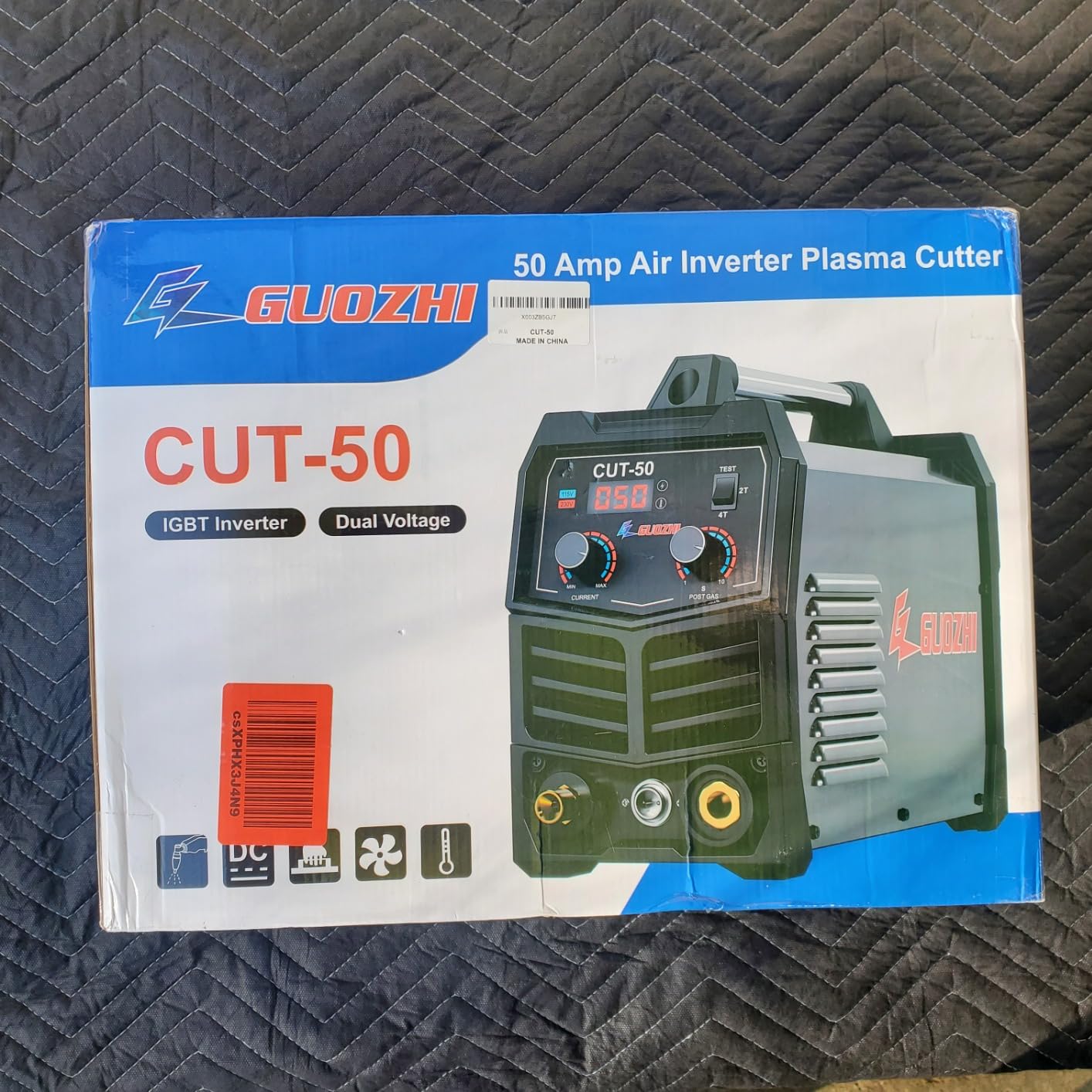
The CUT-50 lists a 3/4 inch maximum cut at 220V, which is impressive at this price, and it is genuinely operable down to minus 20 degrees, a rating no other machine in this roundup carries. For an unheated shop in a northern climate, that is a legitimate reason to choose it.
Output is a 60 percent duty cycle with 50/60Hz high-frequency output from an IGBT inverter with a pilot arc function for rough, painted and rusty surfaces. Recommended maximum cutting thickness is 1/4 inch at 35 amps, 110V and 50 PSI, rising to 3/4 inch at 50 amps, 220V and 65 PSI.
The TEST function is underused but handy: it lets you set up and check torch alignment before committing to a real cut, which is genuinely useful for a first-time operator. Recommended breakers are up to 40A at 110V and 30A at 220V, and overheating and overcurrent protection are built in.
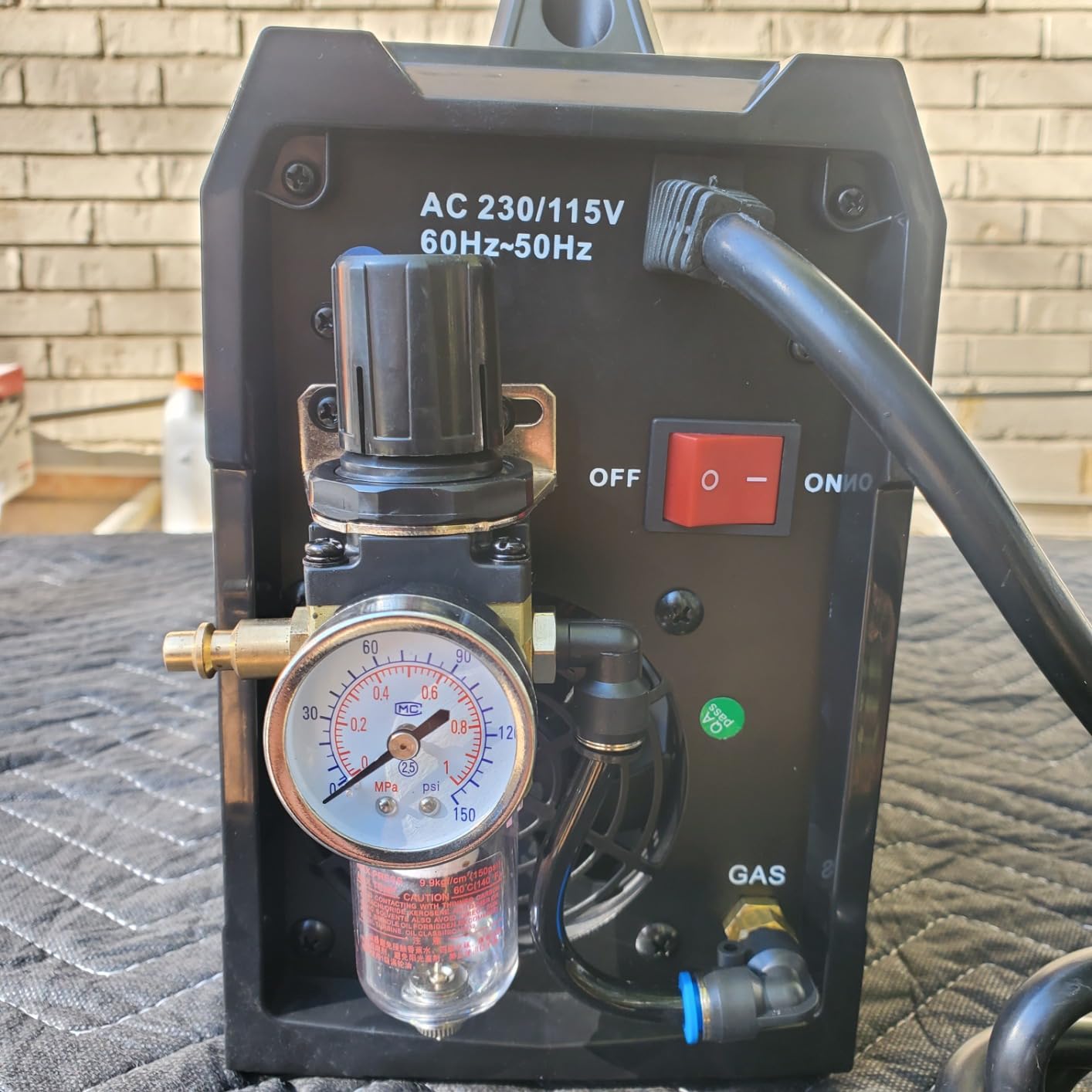
A pre-installed quarter-inch industrial D-type air plug gets you from box to connected compressor in about a minute, and 2T, 4T and TEST operating functions cover the usual cutting modes.
Who this suits
A cold garage, a farm workshop, or anyone cutting outside in winter where other machines would be operating outside their comfort zone. The 3/4 inch maximum at 220V also makes it a capable machine for occasional thick plate work at a very modest price.
It is a reasonable second machine for someone who already owns a lighter portable unit and wants a bench machine with more output and a 60 percent duty cycle.
The spec conflict to know about
The listed weight is 19.31 pounds while the marketing claims 13 pounds, so treat the portability claim as overstated and plan your bench accordingly. Cut finish on thinner material is described as rougher than expected, which means more tuning on light-gauge work.
The one-year manufacturer warranty is the shortest in the group, and you have to install the air regulator yourself. With 68 percent five-star and 12 percent one-star ratings, expect more unit-to-unit variance than the higher-rated alternatives.
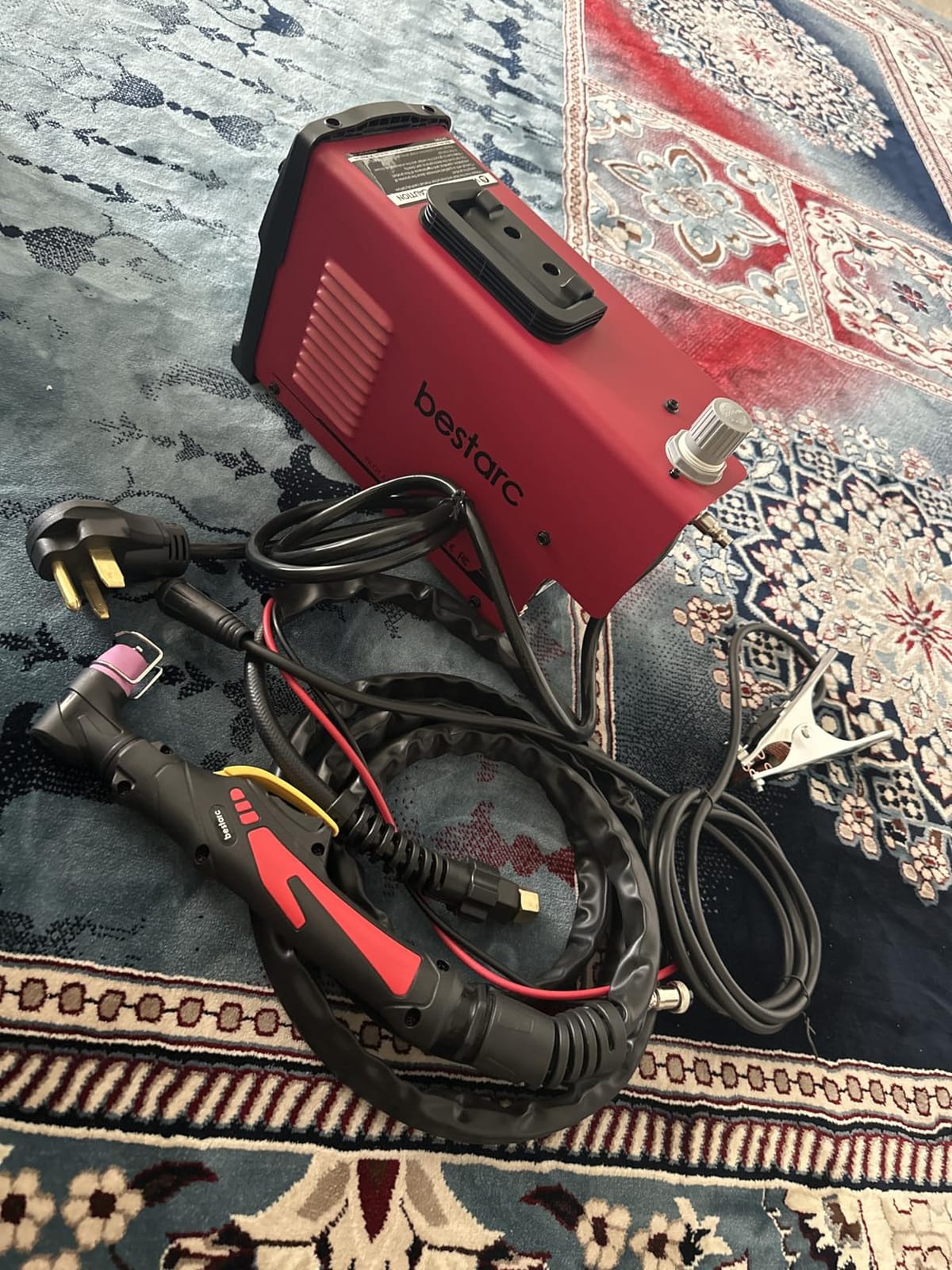
10. bestarc BTC500DP Review: The Cheapest Route to 2/3 Inch
Bestarc 50A Plasma Cutter Machine, Pilot Arc, IGBT 110V/220V Dual Voltage
- Lowest price in the roundup with 50A output and a 2/3 inch maximum at 220V
- Adjustable pilot arc extends consumable life
- Air sensor shows red or green pressure status at a glance
- Includes a 0.040 inch nozzle for finer cuts
- Pre-installed air filter with quarter-inch quick connect
- Instruction manual has translation errors
- Some units arrive with missing hardware or cracking knobs
- Pilot arc pulses on and off on some units
- 110V performance is noticeably weaker than 220V
The BTC500DP is the cheapest machine here and the reason is a value case rather than a specification race. It outputs 50 amps of IGBT inverter power, cuts a recommended 1/2 inch at 35 amps on 110V at 50 PSI, and reaches a 2/3 inch maximum at 50 amps on 220V at 65 PSI.
The AG60P high-frequency non-contact pilot arc torch has an adjustable pilot arc function up to 15 seconds, which the manufacturer claims extends consumable life to as much as twice that of a standard PT31 torch. A built-in air sensor shows real-time pressure on the LED screen as a red or green indicator, so you can confirm air supply at a glance without opening the machine.
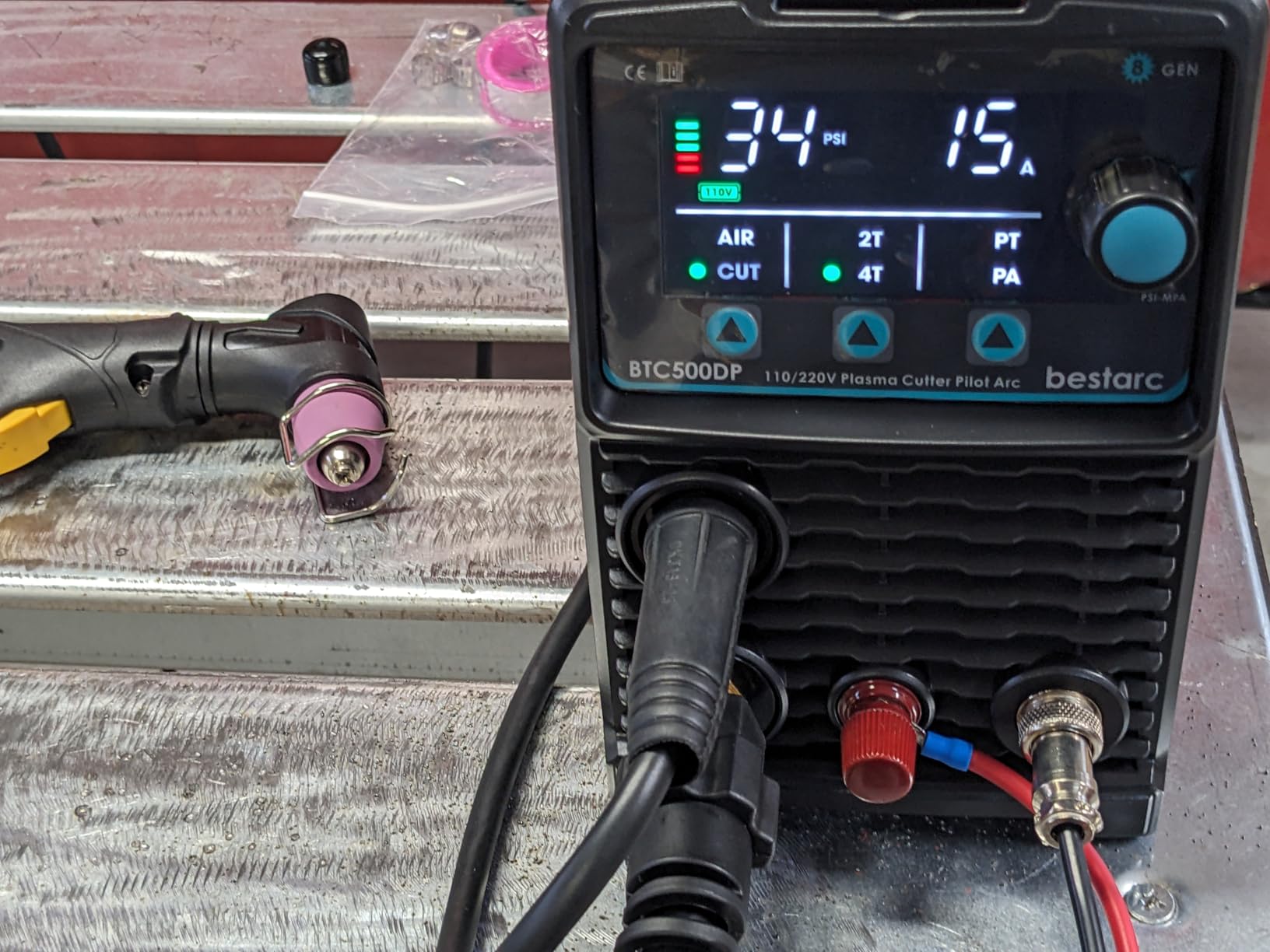
It also ships with a 0.040 inch nozzle for finer, more precise cuts than the default tip, and a pre-installed metal-cased air filter with a quarter-inch NPT quick-connect fitting. Owners report cutting 1/2 inch mild steel plate cleanly at 220V, 60 PSI and 60 amps, and several say the machine paid for itself in a day of 3/8 inch plate and 1/2 inch flat bar work.
2T, 4T, PA and PT functions with 3 to 15 second post-flow are all present, and recommended breakers are 40A at 110V and 30A at 220V. The 12000 watt rating is at the top of the group for a machine at this price.
When the cheapest machine is the right one
If you are cutting 1/8 to 1/4 inch material, working on a tight budget, and learning the craft, this machine covers the fundamentals well. The included 0.040 inch nozzle and the adjustable pilot arc are features usually reserved for machines costing far more, and the air sensor prevents the most common beginner mistake.
For a first plasma cutter, or a second machine for a workshop that does light fabrication, the capability per dollar here is hard to argue with.
Where the savings show
Quality control on small parts is the weak point. Some units arrive with missing screws, plastic air-adjuster knobs that crack, or a half-empty box, and the manual has broken English that suggests a translation problem. Inspect the machine on arrival before you rely on it.
Some owners report a pilot arc that pulses on and off at roughly one-second intervals despite the setting, and 110V performance is noticeably weaker than 220V. The included accessories are basic, so keep this one on light to medium duty work rather than production cutting.
How to Choose a Plasma Cutter Under 1,000 Dollars
Every machine in this roundup is a dual-voltage inverter plasma cutter, so the category has converged on one architecture. Choosing between them comes down to four things: how thick the steel is, what power you have at the wall, how much air your compressor can deliver, and how much torch and duty cycle you need for the hours you actually work.
Match the machine to the thickness you actually cut
Welding community consensus, repeated across forum threads for years, is straightforward: for 1/4 inch and thinner, a 30 to 45 amp machine on 110V works fine, but 1/2 inch and up really needs 220V. That single line resolves most of the buying decision.
Use the recommended cut thickness as your guide rather than the maximum. Recommended thickness is the number the manufacturer guarantees a clean cut at, while the maximum is usually listed without a cleanliness condition and may involve dross. For 1/8 inch work, any machine here is more than sufficient. For 1/4 inch plate, a 50 amp machine on 110V is comfortable. For 1/2 inch, you want 50 amps or more on 220V. For 3/4 inch and beyond, you are looking at the 60 amp machines and you should factor in pierce time and travel speed rather than expecting a fast cut.
Aluminum and stainless deserve their own note. Non-ferrous metals conduct heat differently and tolerate a wider range of amperage settings, so a machine with an adjustable pilot arc and a range of output control serves you better than a fixed-output unit.
110V or 220V: the decision that matters most
This is the most argued question in every welding forum, and the answer is mostly about your access rather than the machine. A 110V outlet on a 15 amp circuit is a real constraint, and running a 50 amp plasma cutter at 35 amps on one is the single most common reason people think a cheap machine is underpowered.
If you have a 220V circuit available, use it. Every machine in this roundup switches automatically, so you are not choosing between two machines, you are choosing where to plug one in. If you are limited to 110V, plan on 1/4 inch as a realistic ceiling for clean cuts and accept slower travel on thicker material.
Two practical warnings. Many machines will not run acceptably on a long extension cord, so use a properly rated cord rather than a household extension. And the GZ GUOZHI listing recommends breakers up to 40A at 110V and 30A at 220V, which tells you to check your panel before you buy rather than after.
Air supply: sizing your compressor with SCFM and psi
This is the section no competitor in this space bothers with, and it is where a lot of first cuts fail. A plasma cutter is an arc device, and the arc needs a continuous column of clean, dry air at a specific pressure and flow rate. Starve it and the arc wanders, the cut edge goes ragged, and the consumables wear out fast.
Run the machine at the manufacturer specification rather than the highest pressure your regulator can deliver. Typical demands in this class run 50 to 75 PSI, and the SILATU STC550P calls for 70 PSI at 250 liters per minute, which converts to roughly 8.8 CFM. That is the number to shop with.
A small consumer compressor with a pancake tank is the most common failure point. A pancake tank holds a few cubic feet, and a sustained cut at 50 amps will empty it faster than it refills, which means stopping mid-cut to wait for pressure. A vertical tank in the 20 to 30 gallon range recovers much faster and is the practical minimum for comfortable work above 1/4 inch.
Dry and filter the air. A dedicated water separator or dryer on the air line is inexpensive and it protects the pilot arc, which is why machines with a built-in filter and regulator, like the LOTOS LTP5505D and the PrimeWeld CUT50D, have an advantage over cheaper units that ship without plumbing. Threads that leak also destabilise an arc, so check every fitting with soapy water.
Duty cycle, pilot arc types and non-touch start
Duty cycle is the percentage of time a machine can run at full output before it needs to cool. A 60 percent duty cycle means 12 minutes of cutting in a 20 minute window. Machines rated at 60 percent, which includes most of the group here, suit part-time shop work; if you intend to cut for hours at a stretch, look for higher.
Arc start technology comes in three forms. High-frequency start uses a spark to ionise the air gap and ignites quickly, but it creates electromagnetic interference that can disturb nearby electronics. Non-touch pilot arc strikes the arc through the torch without touching the workpiece, which is what every machine in this roundup uses, and it reduces electrode wear. Blow-back start, used by the PrimeWeld CUT60 PT60 torch and the YESWELDER CUT-65DS PRO, retracts the electrode to start the arc and is the most robust of the three, but it is slower to initiate.
Non-touch is worth paying for because it extends consumable life, and consumables are the cheapest ongoing cost of plasma cutting. For mesh or expanded metal, the adjustable pilot arc duration on the SILATU and bestarc machines is a genuine advantage, since mesh needs a longer pilot time than plate.
Consumables, safety gear and total cost of ownership
No machine in this roundup includes a compressor, so your real budget is the machine plus air supply plus consumables. Budget for a compressor capable of 8 to 9 CFM at working pressure, plus a water separator, and add a set of shade 5 welding goggles and a pair of leather welding gloves before you start.
Consumables are the hidden cost. Electrodes, nozzles and swirl rings wear according to how hard you run the machine, and buying a mixed bag of cheap consumables is the single most repeated complaint about budget plasma cutting in owner reviews. The same forum users note that better consumables can last several hundred percent longer than budget ones, which makes quality tips the cheapest performance upgrade available to you.
On safety, a plasma arc produces an intense infrared and ultraviolet output that can damage your eyes from a distance. Shade 5 goggles are the minimum and are not optional. Ventilation matters too, because cutting steel produces metal fume containing hexavalent chromium, which is a recognised respiratory hazard. A fume extractor or a cross-ventilated position keeps the plume out of your breathing zone. Gloves matter for a different reason: the workpiece stays hot enough to burn through a cotton sleeve long before you notice.
Finally, the used market deserves a mention. Forum users regularly observe that the mid-900s can look like a deal on a used machine from a higher tier, and some regret buying new budget gear when a used unit from a major brand was available in the same range. That is a real alternative, but it comes with unknown consumable and electrode condition, so ask for proof of service history.
Frequently Asked Questions
Who makes the best plasma cutter for the money?
The LOTOS LTP5505D is the best value pick in this category, pairing 55 amp inverter output, a 5/8 inch clean cut rating, automatic 110V/220V switching and a non-touch pilot arc with a built-in air filter and regulator. The PrimeWeld CUT50D takes the build quality and support award at 4.7 stars, and the PrimeWeld CUT60 takes the sustained heavy work award with a 60 percent duty cycle at full 60 amp output.
Are cheap plasma cutters any good?
Yes, within their class. A 50 amp dual-voltage inverter machine with a non-touch pilot arc cuts 1/4 inch mild steel cleanly on 110V and 1/2 inch plate cleanly on 220V. The limits are duty cycle, torch quality and consumable life, so buy a machine with a proper torch, adjustable pilot arc and post-flow, and budget for good consumables.
What is the best air compressor for a plasma cutter?
Look for a compressor that delivers the machine’s specified pressure and flow, typically 50 to 75 PSI at around 8 to 9 CFM for 50 to 55 amp machines. A vertical tank in the 20 to 30 gallon range recovers far faster than a small pancake tank, and a water separator or dryer keeps the arc stable and protects consumables.
What air pressure should I run my plasma cutter at?
Run the pressure the manufacturer specifies for the machine and amperage, not the maximum your regulator can deliver. In this class that is typically 50 PSI at 110V and 65 to 75 PSI at 220V, with some machines calling for 70 PSI at 250 liters per minute. Too little air makes the arc wander and roughen the cut edge.
Do I need 220V for a plasma cutter?
Not for light work, but you want it for anything over 1/4 inch. A 50 amp machine produces 20 to 35 amps on 110V against 20 to 50 amps on 220V, so 1/2 inch plate is far more comfortable on the higher setting. All ten machines here switch between 110V and 220V automatically, and you also need a circuit that can carry the load without a long extension cord.
The Best Plasma Cutter Under 1,000 Dollars: Final Verdict
After reading thousands of owner reviews across these ten machines, the LOTOS LTP5505D comes out ahead as the best plasma cutter under 1,000 dollars in 2026. It offers the most useful combination of 55 amp output, 5/8 inch clean cut capacity, automatic dual voltage, a non-touch pilot arc and a built-in air filter, backed by the deepest review base in the roundup.
Buy the ARCCAPTAIN CUT50 instead if weight is your binding constraint, the PrimeWeld CUT50D if support and build quality matter most, and the PrimeWeld CUT60 if you cut thick plate for real hours rather than occasionally. Whatever you choose, add a compressor that can hold the specified pressure and flow, plus a water separator, before the first cut rather than after the third.
All ten are capable machines. The difference between them is how they behave in month three, not on day one, and that is exactly what these reviews sorted out.