
Walleye do not cooperate. They refuse the lure most of the day, then commit hard for a twenty-minute window right before dark, and they rarely do it on the spot you picked. That is the whole argument for a tip-up: instead of staring at a bobber for six hours, you set a device on the hole and walk away from it.
After a few seasons of running these ourselves and reading through thousands of buyer reviews, the differences between tip-up models matter less than most product pages suggest. What actually changes your catch rate is whether the trip mechanism trips on a light take, whether the base covers your hole, and whether the flag clears the snow around you. Get those three right and the brand name is a detail.
This guide covers the best ice fishing tip ups for walleye available in 2026, from insulated thermal bodies that keep a hole open in hard cold to rod-holder designs that let you work a reel instead of a bare spool. Every pick below is listed in the order we would actually load them into the sled.
If your gear locker is still mostly empty, our guide to the 5 best ice fishing rods pairs well with this list, since two of the picks here hold a rod and reel instead of a spool.
Top 3 Ice Fishing Tip Ups for Walleye in 2026
Our number one pick is the Frabill Pro Thermal 1660, which combines an insulated body that covers a 10 inch hole with a dual trip setting for light and heavy takes. The Beaver Dam Original earns the premium slot for anyone who wants a wood base that will still be in the garage in fifteen years. The Celsius three-pack is the one to buy when you want four or five holes covered on the first trip of the season without a second order.

Frabill Pro Thermal 1660
- Insulated body covers a 10 inch hole
- Dual light and heavy trip settings
- Sub-Zero pre-lubed shaft-in-shaft

Beaver Dam The Original
- 23 inch pine base
- Aluminum tube bearings
- Freeze-proof lubricant
- Made in USA
All 10 Tip Ups Compared Side by Side in 2026
The table below covers every tip-up in this roundup, ordered the same way as the reviews that follow. Read it as a shortlist screen rather than a ranking, because the right pick depends on whether you fish wood holes or open water, whether you run one rod or five, and how cold your last three mornings were.
| Product | Specifications | Action |
|---|---|---|
| Frabill Pro Thermal 1660 |
|
Check Latest Price |
| Beaver Dam The Original |
|
Check Latest Price |
| Celsius Multi 3 Pack |
|
Check Latest Price |
 Deep Freeze BlueTipz Deep Freeze BlueTipz |
|
Check Latest Price |
 Ifish Pro Tip-Up Ifish Pro Tip-Up |
|
Check Latest Price |
 Bullnose Big RED Bullnose Big RED |
|
Check Latest Price |
 HT Enterprise Polar Tip-Up HT Enterprise Polar Tip-Up |
|
Check Latest Price |
 HT Enterprise Husky Deluxe HT Enterprise Husky Deluxe |
|
Check Latest Price |
 I FISH PRO 2.0 I FISH PRO 2.0 |
|
Check Latest Price |
 Finicky Fooler Ice Tip Up Finicky Fooler Ice Tip Up |
|
Check Latest Price |
1. Frabill Pro Thermal 1660 – Best Overall for Walleye
- Keeps the hole open in deep cold
- Fits inside a 5 gallon bucket
- Dual trip settings for light and heavy takes
- Small storage compartment
- Removable spool shaft for re-greasing
- Plastic flag arm is fragile in extreme cold
- Flag sits low and hides in deep snow
- Pivot can ice up between trips
This is the tip-up we run the most, and the reason is boring: the insulated body covers a 10 inch hole, so on a cold morning the water around the bait stays liquid and the line keeps paying out. That single feature has done more for our early-season catch rate than any bait change we have made. The 1660 model also carries a pre-applied sub-zero lubricant and a shaft-in-shaft design, which means you can re-grease it between seasons instead of buying a new one.
Dual trip settings matter more for walleye than most anglers expect. Walleye takes are frequently soft, a suction nudge rather than a run, and a trigger set heavy enough for pike will sit there all afternoon. Flip to the light setting and the same unit starts responding to fish that barely move the line. The removable spool shaft also makes re-greasing a five-minute job rather than a teardown.
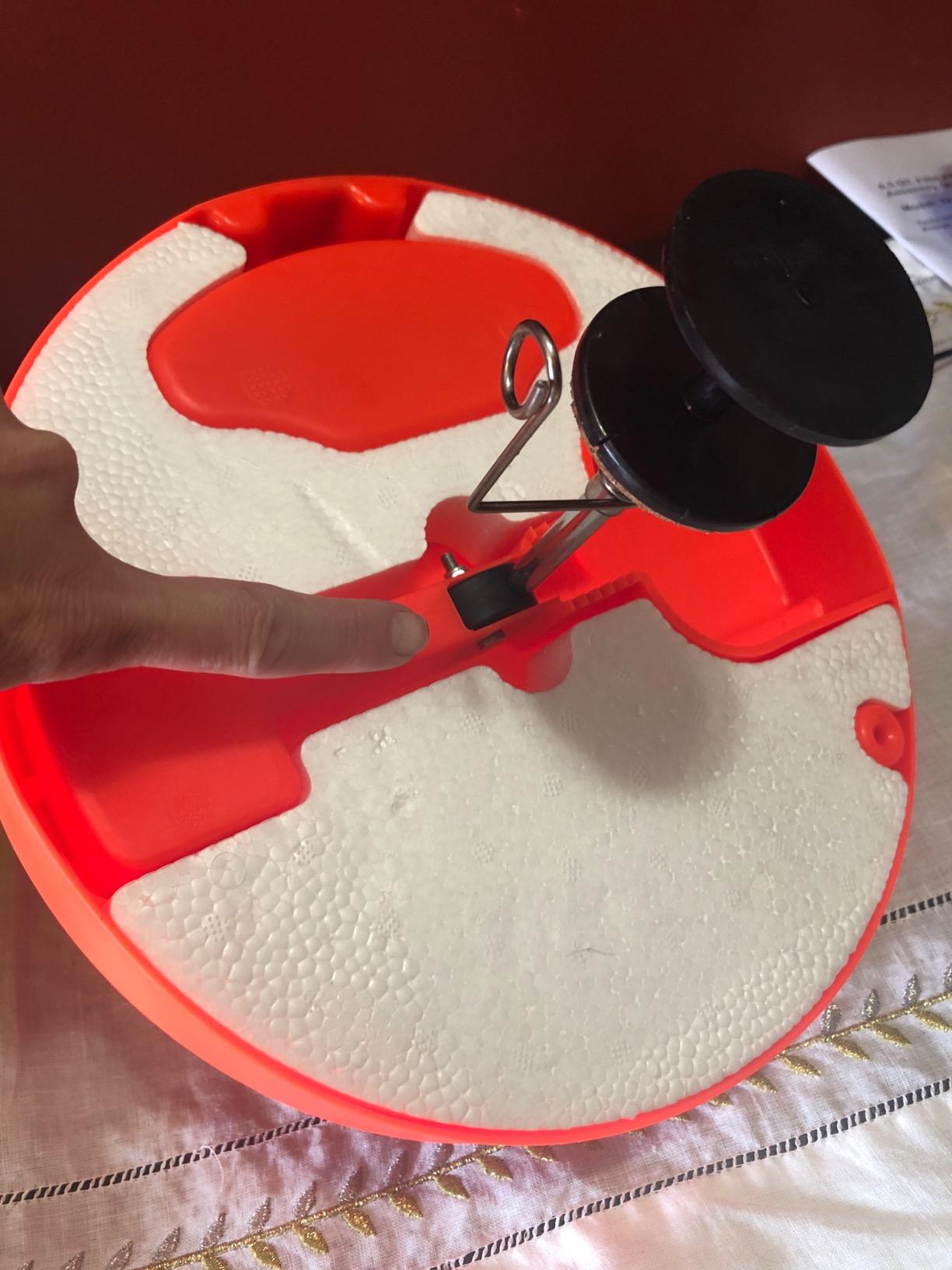
Storage was the detail that sold us. The whole unit fits inside a 5 or 6 gallon bucket, so a full spread of tip-ups fits in the same pile as the buckets themselves. There is even a small compartment for leaders, sinkers and spare triggers, which sounds minor until you are standing on a windy lake in gloves trying to find a swivel.
There is a caveat with the spool. Reviewers report no snags or tangles and smooth line flow, which separates it from cheaper plastic spools, but if you are fishing braid-heavy leaders to a deep basin you still want to check the spool after every few hours on a long soak.
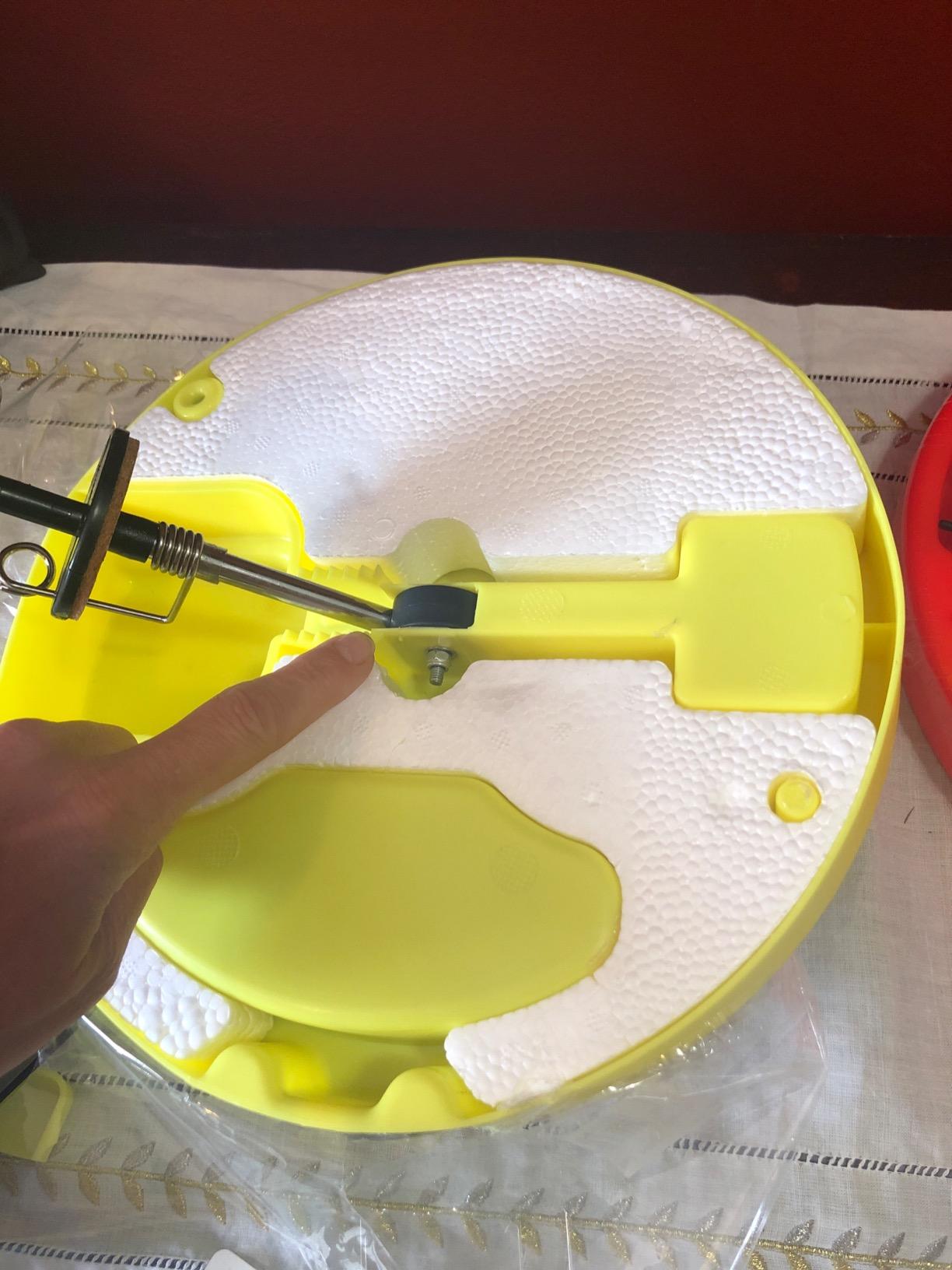
Where this tip-up earns its slot
Walleye anglers running early ice on shallow flats, or anyone who has lost trips to a hole that froze shut overnight, will feel the insulated body immediately. It is also the easiest unit here to carry on a walk-in, which matters when the good walleye water is a quarter mile past the truck. Small-ice anglers should note it floats high in a hole cut smaller than 10 inches, so keep your auger matched to the body.
What to watch before you commit
The flag arm is plastic and reviews describe it as fragile in extreme cold, so treat it as the first thing to break rather than the last. The flag also sits fairly low, which means heavy snow around the hole swallows it, and the pivot mechanism can ice over after repeated use and needs to thaw before storage. If you fish in a place where visibility across the ice is the problem, look at the taller flag designs further down the list instead.
2. Beaver Dam The Original – Best Wooden Tip-Up Built to Last
- Rigid pine base gives stable footing over wide holes
- Aluminum tube bearings keep flag action smooth
- Freeze-proof lubricant for deep cold
- Build quality comparable to sporting goods store units
- Made in the USA
- Costs more than most generic tip-ups
- Heaviest unit in the roundup at nearly 2 pounds
The Beaver Dam design has been the reference point for tip-ups for decades, and the reason is the base rather than the trigger. A 23 inch pine rail spans a wide hole and refuses to rock when a fish pulls, which means the line runs clean instead of chafing against the ice edge. If you cut big holes, fish heavy line, or simply do not want a plastic body to crack after one season, this is the unit to buy once.
Aluminum tube bearings are the other quiet upgrade. Metal bearings keep the flag action consistent season after season, and paired with the freeze-proof lubricant this is the model most owners report never freezing up. The ruler marking and spool handle are small conveniences that tell you the design was drawn by people who actually set up on ice in the dark.
It is a wooden design, so it has no insulated body and will not stop a hole from slushing over on its own. That is not a flaw for a March trip on a lake that stays open, but on a January lake it means you bring a scoop and a heater for the water around the hole.
Best for durability and long-term value
Owners routinely describe this as a buy-it-for-the-decade purchase, and the 4.6 average across more than 200 reviews is the highest-rated traditional design in this group. It is also the natural partner to a heavier Dacron main line, because the base has the mass to manage the pull without the spool binding up. Pair it with a mid-weight rod from our ice fishing rod roundup and you have a rig that will outlast most gear cycles.
Where it falls short
The weight is the honest tradeoff. At close to 2 pounds before line, this is the heaviest unit here, and that adds up fast when you are walking a mile with a sled of gear or a partner who did not sign up for the carry. Reviewers also note simply that it carries a higher price than generic tip-ups, which is a fair description of why the build quality exists. If you only fish a few days a year from a truck-side lake, the value case is weaker.
3. Celsius Multi 3 Pack Tip-Up – Best Value for Covering Holes Fast
- Three units plus tackle in one purchase
- Compact and packable
- Entry-level cost suits first-time ice anglers
- Lowest average rating in this roundup
- Nylon and plastic build is less durable in sustained sub-zero cold
- Basic plastic spool with no insulated hole cover
The pitch here is arithmetic. Walleye are not cooperative, so covering more structure is worth more than perfecting one hole, and three tip-ups with tackle in a single package is the cheapest way to get from one hole to three. The compact one-size design nests well in a bucket and there is no assembly beyond setting the trip.
Where it earns its place is early in the season or on a lake where you are still learning where the fish hold. Spread three units across a drop-off, a flat and a channel edge and you learn more about a lake in one afternoon than you would from a rod for three days. The included tackle also saves you a separate shopping trip on the drive up.
This is the least impressive unit in the roundup, and the 4.0 average across 330 reviews reflects that honestly. Reviewers like the convenience and the count, while construction quality in sustained sub-zero conditions draws the criticism. A wider spread of one to three star reviews than anything else here means quality varies more between units.
Where the three-pack makes sense
Beginners, families, and anyone fishing pressured public ice where holes close quickly are the audience this fits best. The bundled tackle is genuinely useful because a new angler who has never spooled a tip-up does not yet know which swivels and leaders to bring. Anglers who do the math on structure coverage will get more out of three mediocre tip-ups than one perfect one.
Why experienced anglers skip it
Nylon and plastic construction is the core problem in hard cold, and the basic plastic spool has no insulated hole cover at all. On a lake that sits below freezing for weeks, we would rather run a single thermal unit than three of these. There is also no insulated body, so slush builds around the hole faster and you spend more time scooping than fishing.
4. Deep Freeze BlueTipz – Best Bluetooth Alert for Multi-Hole Coverage
- Phone alerts replace constant flag watching
- Senders float and survive being run over
- Quick pairing with the free iOS and Android app
- Each transmitter gets its own name and tone
- Bright LED identifies which flag is up
- Made in the USA
- Effective range drops off past roughly 50 yards
- One AAA battery can drain while switched off
- Needs a phone or separate receiver to be useful
BlueTipz is not a tip-up, it is an addition to your tip-ups, and that distinction matters before you read any review. These transmitters attach to the tip-up of your choice and send a wireless alert to your phone when something pulls line, so you can sit in a shelter with six holes running and not walk the ice every twenty minutes. Anglers who spread gear across a wide area call the phone alerts the difference between covering structure and watching a single hole.
Pairing is fast and the free app lets you name every transmitter and assign it a distinct tone, which means you know which hole fired before you put the phone down. The bright color-changeable LED serves the same purpose visually, and at night it identifies the tripped flag without you walking to it. It also works as a plain beeper receiver if you would rather not dig out a phone at all.
One thing to plan for is power. Each unit runs on a single AAA battery, and reviewers warn that a battery can drain while the unit is switched off, which is how you lose an overnight bite. Put fresh batteries in before a night trip rather than trusting last season’s.
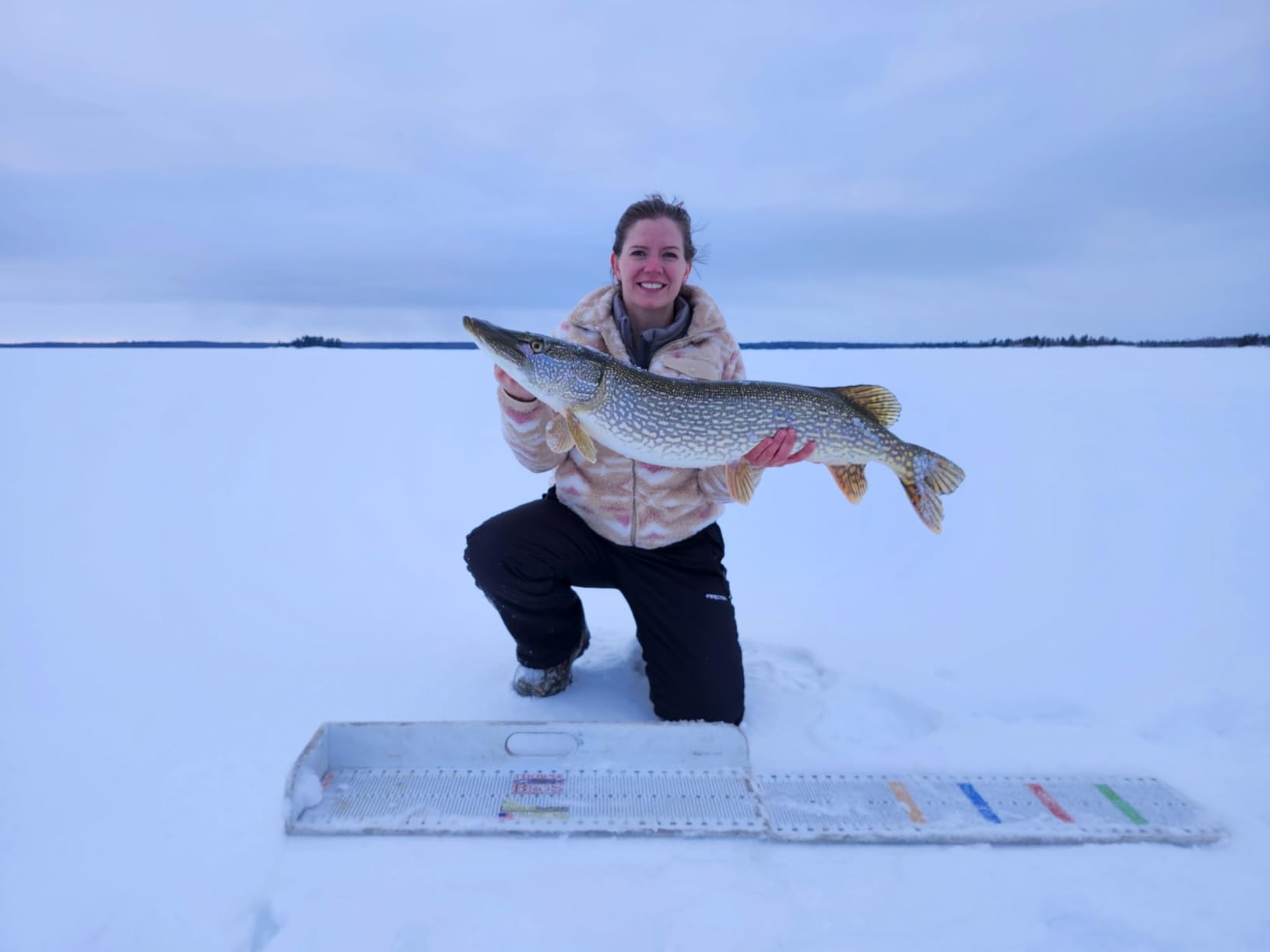
The build is also tougher than a gadget this small has any right to be. The units float and survive being run over on the ice, which matters when you are stepping over a hole in the dark. Adapters are available for non-standard tip-ups, though most anglers running common models do not need them, and it attaches to tip-downs and automatic hook setters as well.
We use these in the shelter, not at the end of a long walk. Once you are more than roughly 50 yards out, the reliable alert range falls off and the phone is just one more thing to carry.
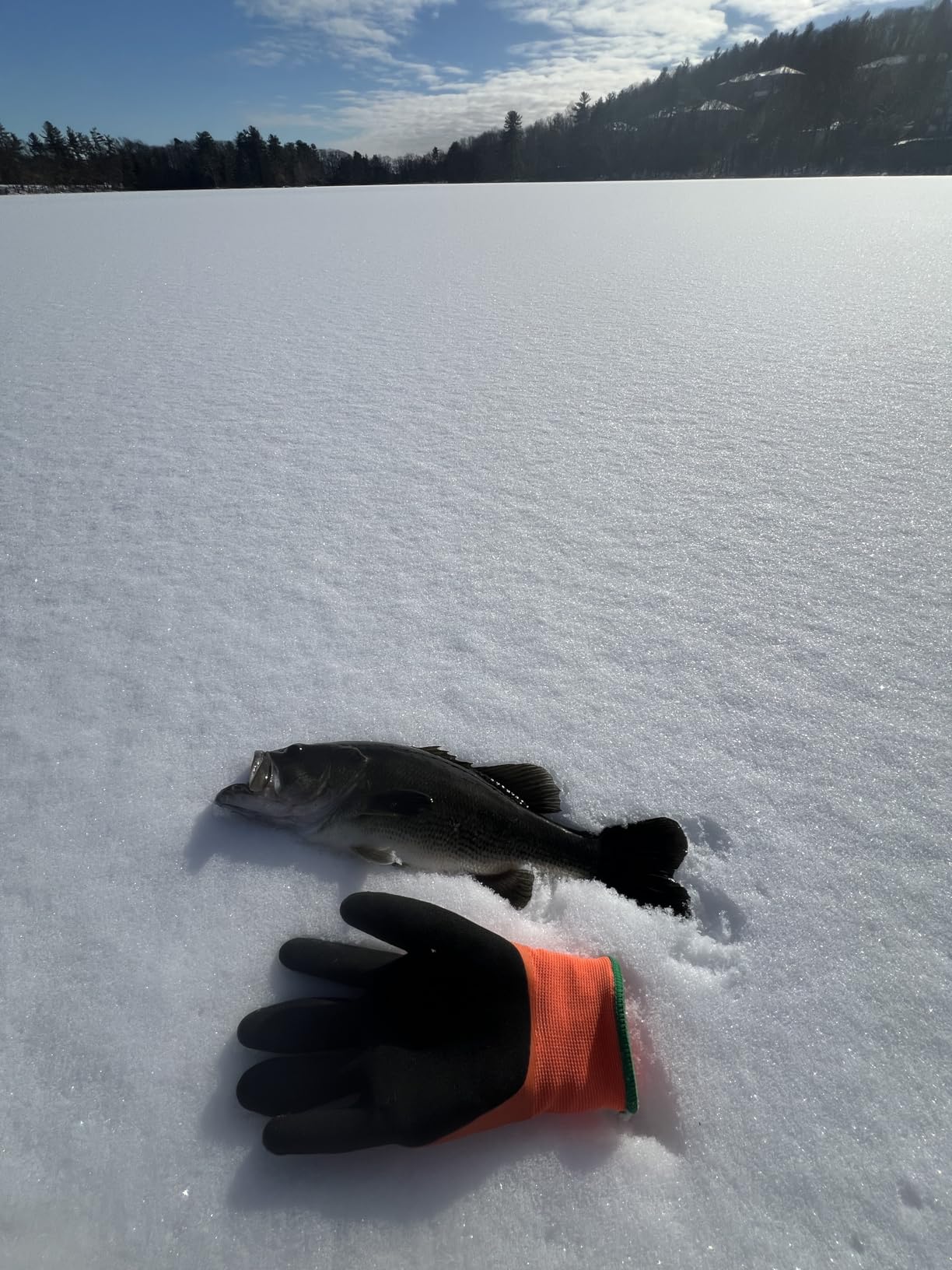
When wireless alerts earn their place
Any trip where you are running four or more holes inside a shelter or a nearby snow mound is the ideal case, because the flag-walking cycle is what wears you out over a full day. Two units at a time is a sensible starting configuration, and the per-unit tones make it obvious which channel fired. It is also a strong reason to pair with a portable shelter from our ice shelter roundup so the phone stays warm.
Limits worth knowing before you buy
Range is the headline limitation, with dependable alerts inside roughly 50 yards and a stated maximum of 600 feet that reviewers say falls off well before that. It is also useless without a phone, tablet, or the separate receiver, so budget for that if you are not already carrying a phone to the lake. The transmitter sticker can detach after rough handling, and the AAA battery drain issue is the single most reported complaint.
5. Ifish Pro Tip-Up – Best Rod-Holding Tip-Up for Live Bait
- Holds a real rod and reel for a much harder hookset
- Folding rod holder locks for transport
- Comes with spare slip stops and triggers
- Reported to hold up over repeated seasons
- Rod holding arm is described as cheap and flimsy
- Some users report the trigger fails to trip on live bait
- Setup takes practice to learn
Most tip-ups hold a bare spool on a wire, which means the fish feels almost nothing until the line breaks the surface ice. The Ifish Pro solves that by holding your rod and reel, so the strike transfers into a real rod and you can set the hook with actual line tension. For live bait, shiner minnows and anything else where the fish has to feel resistance, that difference is significant.
Three trigger settings cover light, medium and heavy takes, and the flag is 14 inches tall with a bright three-dimensional shape, which makes it much easier to pick out in deep snow than a flat cloth flag. The base is 12 inches, so it covers a standard hole without sprawling, and the whole thing folds in place and locks for transport between holes.
It also includes two spare slip stops and two spare triggers, which sounds like a small detail until you lose one on the ice and have to drive home. Reviewers with long northern-Minnesota seasons report the unit still performs after years, which is not a claim many budget rod holders can make.
Best for serious live-bait anglers
If your whole strategy is 6 to 7 inch shiners and you have been losing fish in the first two seconds after the trip, the rod-holder format is the direct fix. A rod also lets you drop the slip stop and work the bait up and down without touching the unit, which is a natural bridge into a jigging-plus-tip-up day. The tall flag solves the snow-burial problem that trips up several plastic designs here.
What you accept to get it
The rod holding arm is the weak link, described by several reviewers as cheap and flimsy relative to the cost, and that is the part you should inspect before every trip. There are also reports of the trigger failing to trip the flag even when line movement is visible, which on live bait means a fish can be on and you never know it. Setup is less intuitive than a spool tip-up, so give yourself one practice session at home before a long drive.
6. Bullnose Big RED Tip-Down – Most Sensitive Pick for Light Walleye Bites
- Rocking rod motion registers very light takes
- Heavy-duty steel frame built for hard ice
- Taller design handles larger reels and heavier line
- Collapses flat for transport
- Requires a separate fishing rod that is not included
- Rod clip fits a standard three-quarter inch handle only
- Bulkier footprint than spool-style tip-ups
A tip-down works in the opposite direction from a tip-up. Instead of a spool tripping a flag, a rod clips into a rocking frame and the flag pops when the rod bends. That rocking balance is extremely sensitive to even the slightest bite, and for walleye in a cold, clear lake where the fish is barely touching the bait, sensitivity is the whole game. This is the highest-rated design in the roundup at 4.6 stars.
The construction is genuinely heavy duty. The frame is steel rather than plastic, which matters if you are standing on 12 inch lake ice or a windblown pressure ridge, and the open frame measures 12 inches long by 4.5 inches wide by 10.5 inches tall. The taller profile is the point, because it takes standard three-quarter inch rod handles plus most spinning and straight-line reels, so you can run heavier line than a compact spool unit allows.
The frame collapses flat for transport between spots, which reduces the bulk considerably. Even so, it is the biggest object in this roundup once you add a rod, and that changes how you pack a sled for a walk-in.
Best for light-biting walleye and heavy tackle
Use this when the fish are committing without running, or when you are working a deep basin where a heavier leader is necessary. Because the rod is under tension, the hookset is far more decisive than a spooled line, and anglers who have lost fish on the drop report the change as the main reason to switch. It also scales up cleanly, so one design covers both a 12 inch shiner and a heavier deep-water presentation.
Where the format costs you
A fishing rod is required and not included, so the true cost of this setup is the frame plus a rod rated for the cold. The rod clip only fits a standard three-quarter inch handle, which rules out some ultralight and ice-specific grips. It is also bulkier than every spool-style design listed here, so it is a poor companion to a solo angler hauling a full spread of gear on foot.
7. HT Enterprise Polar Tip-Up – Best Spooling Capacity
- Smooth trip action on the 200 yard spool
- Built to keep working in sub-zero temperatures
- Wind-free trip wire reduces false flags
- Bundled spool handle and ruler add convenience
- Flag sits short and can be hidden by deep snow
- Smallest review base of the top-rated traditional models
The Polar Tip-Up is the one to look at when depth is your problem. The spool holds 200 yards, which is far more than a standard tip-up, so a hole in the deep basin of a reservoir or a boundary lake does not leave you running out of line. The wire spool itself is the reason for the 200 yard figure, and it pays out smoothly on the multi-design trip shaft.
The wind-free trip wire is the sleeper feature. Most false flags in blowing conditions come from wind pushing the trip mechanism rather than fish pulling line, and this design is built specifically to avoid that. Pair it with a wire tripping action that is rated to keep operating in sub-zero temperatures, and you have a unit that stays dependable on a lake where others seize up.
The spool handle and ruler are small additions that make re-spooling at the hole far less annoying than winding 200 yards by feel. It is a considered design rather than a basic one, and the 4.6 average comes with no one or two star reviews at all.
Best for deep water and long line
Mid-winter anglers working basins in the 20 to 30 foot range are the ones who get the most from 200 yards of capacity, because you can fish the drop-off and still have line if a fish runs. It is also a solid choice for boundary lakes where a hooked fish may travel a long way before turning. The wind-free trigger makes it our pick for days when the wind is the reason the other tips keep tripping.
Where it falls short
The flag is short, and reviews are blunt about that being the main complaint. In deep snow that buries the base of the hole, you will be walking the ice instead of reading it from the shelter, which partly defeats the point of running multiple holes. The review base is also small for a 4.6 average, so treat the rating as encouraging rather than conclusive.
8. HT Enterprise Husky Deluxe Tip Up – Best Traditional Wooden Frame
- Wooden frame with metal spool feels far sturdier than all-plastic designs
- Easy-flow spool keeps line moving smoothly
- Long slim profile is easy to carry
- Smallest review base in the roundup
- Noted share of one-star reviews hints at inconsistent quality
- No insulated hole cover
This is the budget entry into wooden tip-ups, and the appeal is simple: a rigid wooden frame and a metal spool instead of the all-plastic construction that dominates entry-level models. That material difference shows up immediately in how the unit feels to set and how it handles a fish with some weight to it, and the long slim profile is easy to carry between holes or pack into a sled.
The easy-flow spool is the other reason we like it. Smooth line payout is what lets you fish heavier line without the spool binding, and the frame is designed not to freeze up, which is the baseline requirement for any tip-up worth owning. The dimensions are worth noting: a little over 25 inches long and just a few inches wide, so it nests easily with other gear.
Be honest about the evidence here, though. With only 19 ratings, this is the smallest review base in the roundup, and around 13 percent of those ratings are one star, which points to inconsistent quality control rather than a design problem. There is no insulated cover, so it is a spring and late-season unit rather than a deep-winter one.
Where it fits in the sled
If you fish out of a permanent shack, or on a southern lake where ice thickens to a few inches and the season is short, the wooden frame and metal spool are appropriate. It is also a serviceable spare unit to keep in the truck, since you will use a mechanical tip-up eventually. The easy-flow spool pairs fine with the moderate line most shore-based walleye anglers use.
Why we would buy two instead
Quality control is the honest concern, and a device whose job is to not fail on a cold morning is the wrong place to gamble. There is no insulated hole cover, so slush is your problem to manage, and the small review base makes it hard to judge long-term durability. Anyone building a primary spread for a full winter would be better served by a model with a much larger sample of owner reports.
9. I FISH PRO 2.0 Tip Up – Best for Jigging and Tip-Up Combos
- Holds your own rod and reel for a harder hookset
- Wind deflector cuts false flags and snow buildup
- Insulated base retains sunlight heat and fits over catch covers
- Slip-stop setup allows depth changes without moving the unit
- Predominantly plastic construction feels cheap for the cost
- Bottom cover is held by four screws that loosened before use
- Cold-weather reliability questioned by at least one reviewer
The defining feature here is the slip-stop setup. You can drop the stop, work the bait up and down or jig the hole, and then reset the depth without moving the tip-up, which makes this the most natural unit in the roundup for combining active jigging with passive tip-up coverage on the same spot. If your day is half jigging and half watching flags, that flexibility is worth more than raw sensitivity.
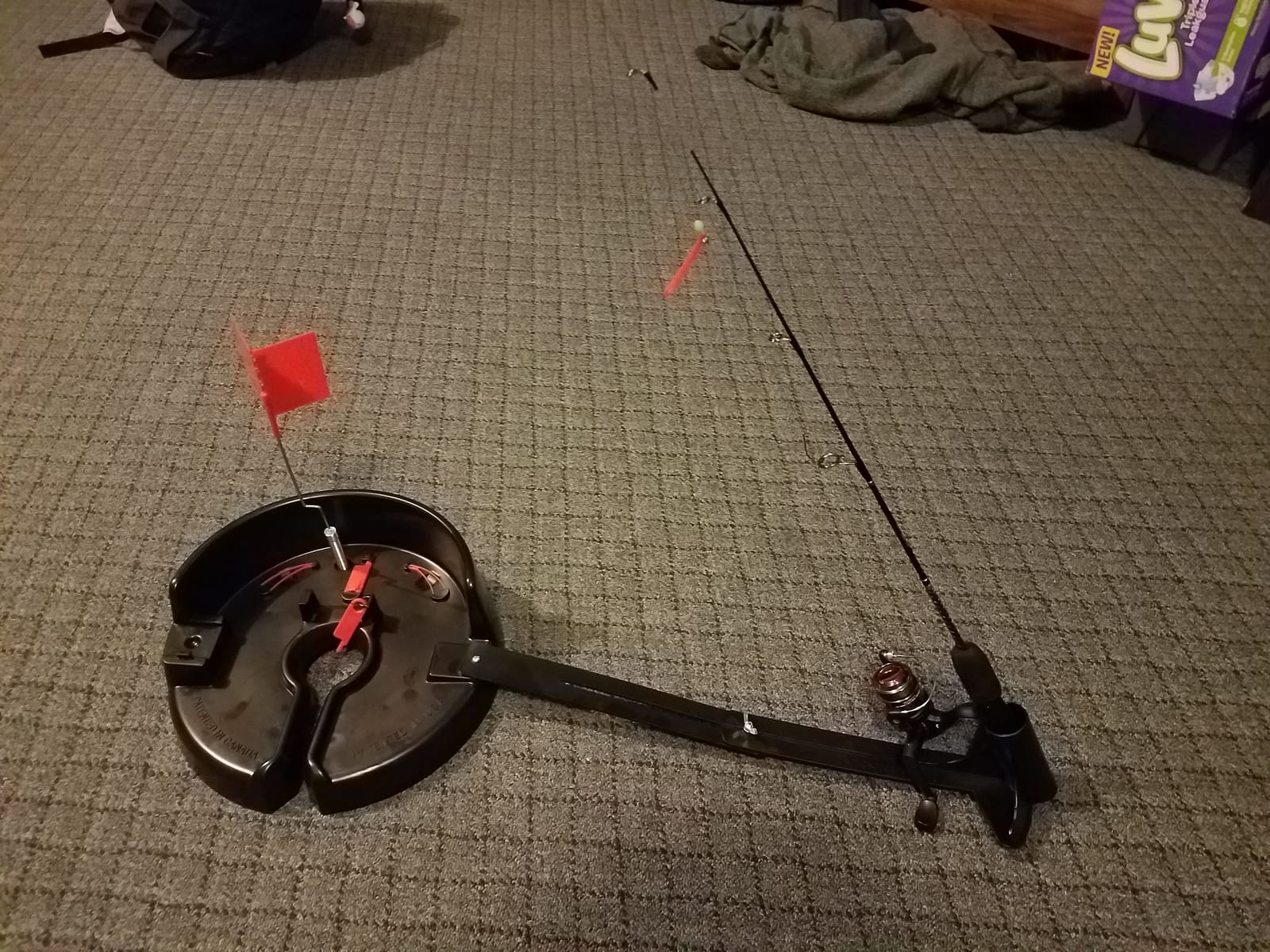
The insulated base is a smart piece of engineering for a cold lake. It retains heat from sunlight and fits over catch covers, so the water around the bait stays workable and slush builds more slowly. The wind deflector is the feature owners mention most, because it protects the flag from snow buildup and cuts the false trips that waste an afternoon on an exposed flat.
It also holds your own rod and reel, and it is designed to fit 42 inch rods, with adjustable light, medium and heavy trigger settings to eliminate false flags. The rod is a genuine advantage over a spool unit, because a fish feels resistance on the take and the hookset is far more solid.
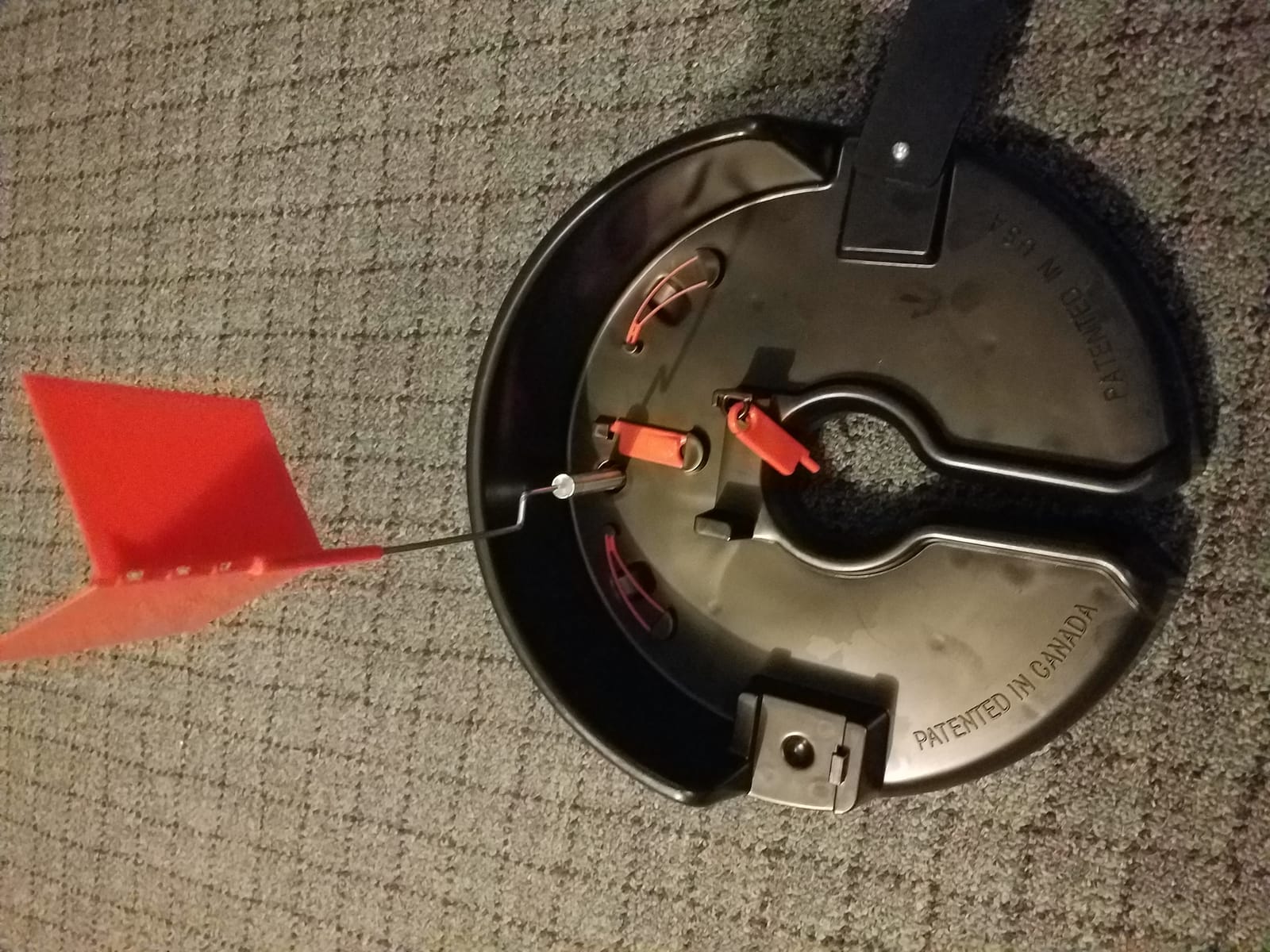
Two caveats sit alongside those features, and both concern the build. The bottom cover is held by four screws, and at least one reviewer reported those loosening before the unit was even used, so check them every time you set up. Weight is listed at 6 pounds, which is the heaviest figure in the group and is worth considering before you commit to a walk-in.
More seriously, there is a report of the unit running free rather than setting the hook in single-digit temperatures, and cold-weather rod and reel ratings matter here in a way they do not for a spool tip-up. That is a minority report against a 4.4 average, but it is the one we would test on a cold-weather-appropriate reel first.
Best for a mixed jig-and-tip-up day
Anglers running structure where walleye are active but not committing will get the most from this, because the same hole can be worked and then left to run. The wind deflector and insulated base also make it a good choice for exposed, snowier lakes where a bare plastic flag disappears within a day. It is the pick we would take if we were covering two or three spots and moving between them.
Where the premium is hard to justify
For a full-time tip-up spread, the predominantly plastic construction feels cheap for a unit at this tier, and the loose bottom cover is a build concern you would inspect constantly. The single-digit temperature report and the need for cold-rated tackle are the two things to test before a long season. Anglers on a fixed budget should look at the aluminum-bearing traditional designs instead.
10. Finicky Fooler Ice Fishing Tip Up – Best Lightweight Walleye Setup
- Purpose-built with walleye listed as a target species
- Medium-power fast action suits heavier lake tackle
- Cork handle stays warmer and grips better in cold
- 4.6 average with 77 percent five-star reviews
- Smallest review base among the top-rated models
- Listed as a single tip-up unit rather than a multi-pack
This one is different enough to be worth your attention even though it is a rod-and-tip-up setup rather than a spool mechanism. Walleye is a listed target species alongside trout and perch, which is rare on a product page, and the medium-power fast action is the correct power for the heavier tackle lake anglers use rather than the ultralight rods meant for panfish. That matters because a light rod simply cannot set a hook in a walleye mouth.
The cork handle is the detail we notice most on an ice lake. Cork does not feel like freezing metal, it stays warmer to the touch, and it gives a better grip with bare or lightly gloved hands than foam or plastic. On a long night, small ergonomic differences like this add up more than spec sheets suggest, and they are especially noticeable for anglers with reduced hand grip or cold-sensitive joints.
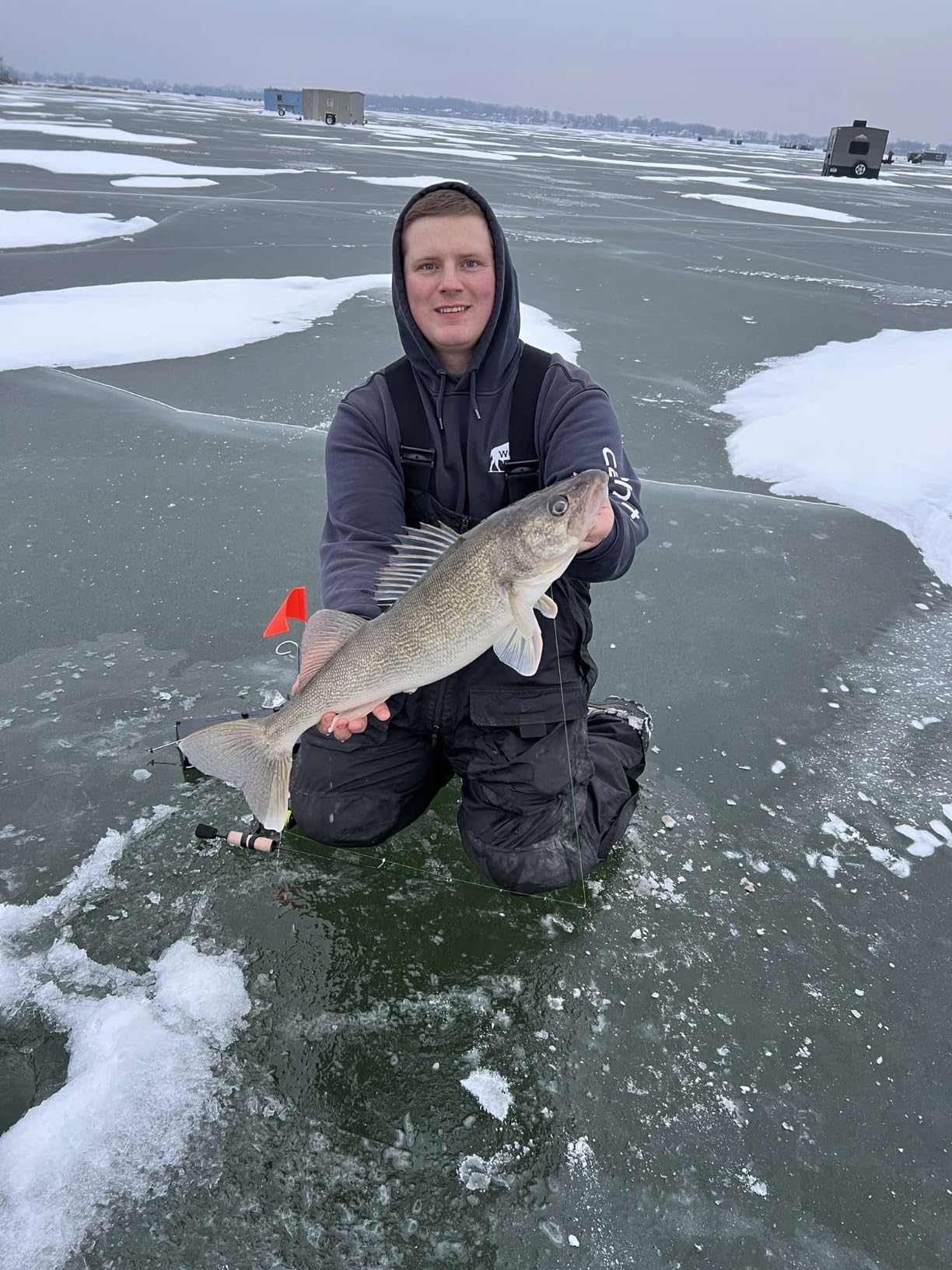
At 16 ounces it is also the lightest unit in this roundup by a wide margin. You can carry it all day on a walk-in, hold it while setting a trigger, and still have a hand free for the sled handle.
Best for anglers who want a rod and tip-up together
This is the one to look at if you want a single item that covers the rod decision and the tip-up decision at once, and it is a natural fit alongside a walleye-focused rig. Fast action means you can react to a strike quickly, and medium power matches the shiner and jig sizes that actually catch walleye on ice. Anglers fishing alone who carry gear any distance will appreciate the low weight.
Limits of the evidence
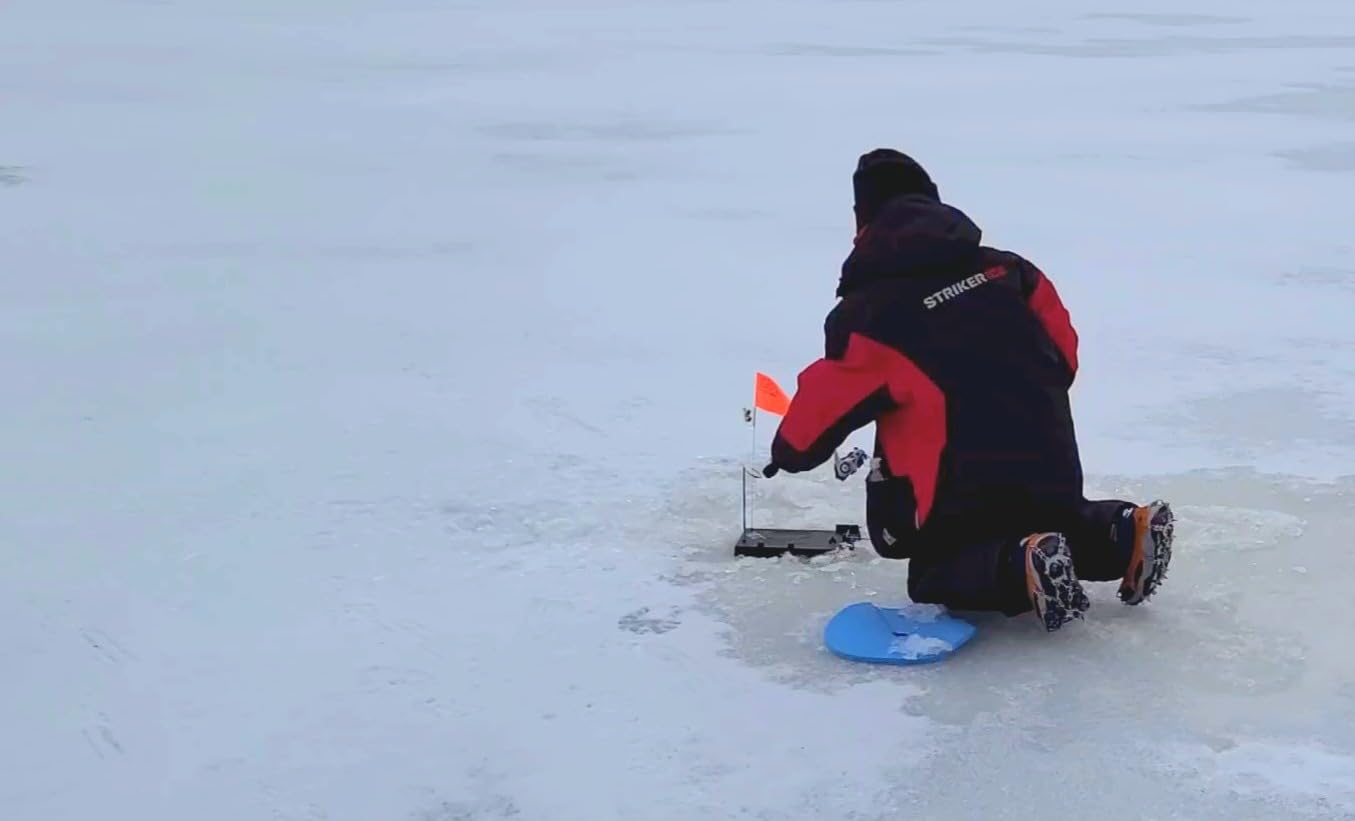
The review base is small at 43 ratings, so the 4.6 average with 77 percent five-star reviews is encouraging but not conclusive. It is also a single unit rather than a pack, so building hole coverage means buying more than one. And because it is a rod, you are responsible for confirming the setup is rated for ice use in cold weather rather than treating it as a spool device that works regardless.
How to Choose a Walleye Tip Up: 7 Features That Matter
Most buyers spend their research time on brand, and brand is the least informative variable in this category. A 4.6 average across a small sample tells you less than a mechanism that trips on a light take. Here is the order we would evaluate the seven features that actually change your results.
1. Trip sensitivity. Walleye takes are frequently soft. A dual or three-setting trigger lets you run a light setting for a lake where the fish barely move the line and a heavy setting for pike and burbot in the same spread. This is the single feature we would refuse to compromise on.
2. Hole coverage and insulation. A base that covers a 10 inch hole keeps the water moving and blocks light from above. The Frabill Pro Thermal and the I FISH PRO 2.0 both use an insulated body, and the difference is visible on a cold morning when the surrounding holes have slushed shut.
3. Flag height and shape. A 14 inch three-dimensional flag is visible in deep snow where a short cloth flag is not. Check the flag height against the snow depth you expect, not against the product photo, which is always shot on bare ice.
4. Base stability. A wide base such as the 23 inch pine rail on the Beaver Dam stays put over a big hole, while a narrow base rocks and lets line chafe on the ice edge. If you cut 10 inch holes, match the base width to the hole.
5. Spool capacity. 50 to 75 yards covers most lake work. Move to a 200 yard spool like the HT Polar when you fish deep basins or boundary lakes where a hooked fish can run a long way.
6. Portability. A unit that fits in a 5 gallon bucket is dramatically easier to move than a 6 pound frame. If you are walking to walleye water, this factor decides between designs that would otherwise be equal.
7. Build material. Wood, metal bearings and aluminum bearings outlast plastic in sustained cold. This is where the long-term value case lives, and it is the reason many anglers keep the same traditional tip-up for a decade or more.
Budget tiers are worth thinking about the same way. Entry spend goes on plastic spool models and three-packs, the middle of the range buys aluminum-bearing wood or insulated thermal bodies, and the top of the range is where rod-holder designs and wireless alarms live. The right question is not how much you spend, but which tier matches your coldest lake and your most committed day.
How to Rig a Tip Up for Walleye
A tip-up only works as well as the rig under it, and most missed fish trace back to line or leader rather than to the device. The community consensus rig for walleye is a 20 to 30 pound Dacron main line with a 10 to 15 pound fluorocarbon leader, which combines the low stretch of a braided-looking main line with the abrasion resistance and invisibility of the leader.
Main line. 20 to 30 pound Dacron is the standard because it is nearly invisible in clear water, has very low stretch so you feel the strike, and resists the abrasion of running through a spool all day. Fill the spool and leave a working margin, since you want to be able to gain line if a fish runs toward the shelter.
Leader. 10 to 15 pound fluorocarbon in a 3 to 4 foot length, tied with a double Uni knot and connected with a barrel swivel. Fluorocarbon is nearly invisible underwater and holds up against rocks and shell at the bottom of a basin. A leader also lets you change leaders per rod instead of stripping the whole spool.
Hooks. For walleye, a size 12 to 16 treble or a size 6 to 8 Kahle is the usual choice. Match the hook to the bait, and keep the size matched to the shiner, because a shiner that can swim away is a bite you will never resolve.
Bait. Shiners in the 3 to 7 inch range cover most situations, with 3 to 4 inch fish for numbers and 6 to 7 inch shiners for trophy fish. Sucker minnows and fatheads are the reliable alternatives, and a bait that stays in the strike zone matters more than any brand of bait.
Spooling. Most spool tip-ups are designed for 50 to 75 yards of line, and the HT Polar is the exception at 200 yards. Fill the spool evenly, keep the line off the trip mechanism, and confirm the trip wire or trigger is set for the species in front of you before you walk away.
Quick strike versus single hook. A quick strike rig adds a second short branch and raises hookup rate on live bait, but it tangles more often if the line is not spooled cleanly. On a calm day with light line we use it, and on a windy day with a heavy leader we go single hook for reliability.
Where and When to Set Tip Ups for Walleye
Depth and placement change constantly through the season, and a tip-up on the wrong structure will outfish nothing. The pattern below is a reasonable starting point for a typical lake, adjusted for your local water.
Early ice. Shallow flats in roughly 10 to 20 feet, especially the first and last hour of daylight. Walleye are shallow and aggressive early, and the fish are often in the same spots all month, which makes a set of tip-ups the right tool.
Mid-winter. Deep basins around 20 to 30 feet, often near the bottom. This is where the 200 yard spool earns its place, and where an insulated base that keeps the hole open makes the difference between a full day of fishing and a frozen hole. Set tip-ups near the bottom contour, not over the middle of the basin.
Late ice. Drop-offs, edges and structure as the fish move back up and start feeding before spawning. Shorter set-ups with more movement work well here, and a rod-holder design that lets you jig the same hole is useful when activity picks up.
Night fishing. Walleye are the most consistent night ice anglers in freshwater, and this is where a lighting plan pays off. Glow spoons, a rattle reel for audible feedback, and a tip-up light on each flag make the difference between watching flags and reading them. This is also where a Bluetooth alarm becomes genuinely useful, since you can sit inside a shelter with six holes running and still get an alert on every strike.
Combined jigging and tip-ups. The strongest results we have had come from doing both in the same day. Jig the active structure hard, then set tip-ups on the two or three spots that showed fish and let them work while you recover. A unit with a slip stop makes that switch fast, and Bluetooth alerts let you keep the jigging going instead of walking the ice every twenty minutes.
Local rules on how many lines one angler may run vary by state and by water, so check the regulations for the specific lake before you spread a full spread. And if you are heading out on exposed water, check our fishing waders guide for the shore approach and cold-water layering that comes before the tip-ups matter.
Hole Covers, Maintenance and Common Mistakes
Light coming through a hole is one of the most underrated variables in ice fishing, and anglers who block it consistently report a dramatic increase in catches. A simple dark hole cover or a piece of carpet over the opening keeps the light down and the water temperature slightly up, and anglers on fishing forums regularly describe results that dwarf their own open-hole sets. A tip-up with an insulated body that covers a 10 inch hole does part of this job for you by design.
Spool lubrication is the maintenance item that decides whether a tip-up still works in February. Factory lube is applied in a warm room and is often too thick once the temperature drops, which is why a mechanism that was smooth in January seizes in late January. Re-grease between seasons with a low-temperature lubricant, and prefer designs with a shaft-in-shaft construction that lets you re-grease without a full disassembly.
The most common mistakes we see repeat. Over-tightening the trip mechanism so wind trips it all afternoon, under-torquing it so a soft take does nothing, and leaving live bait in long enough that it swims out of the strike zone. A second common error is running heavy line on a spool sized for light line, which causes binding exactly when a fish pulls hardest.
Two smaller ones are worth naming. Tip-ups left in a truck overnight ice up and will not trip until they thaw, so carry them into the shelter. And flags that get buried in new snow are the reason anglers check holes instead of flags, so clear the snow around the base when you make your rounds.
Frequently Asked Questions
What are the best ice fishing tip-ups?
The Frabill Pro Thermal 1660 is our top overall pick for walleye because the insulated body covers a 10 inch hole, keeps the water from slushing over in hard cold, and the dual trip setting handles both soft and firm takes. The Beaver Dam The Original is the best traditional option, with a 23 inch pine base and aluminum tube bearings for durability.
How deep should I fish with tip-ups?
Start shallow at 10 to 20 feet in early ice, move to deep basins around 20 to 30 feet through the middle of winter, and return to drop-offs and edges in late ice. A spool with 50 to 75 yards of line covers most lakes, while a 200 yard spool gives you room for a fish that runs in a deep basin.
Are tip-ups better than jigging?
Neither is better on its own. Jigging finds active fish and lets you cover water fast, while tip-ups let you monitor several holes and fish live bait without holding a rod. The strongest approach for walleye is doing both, jigging structure during the active periods and setting tip-ups on the spots that produced fish.
What is the best tip-up bait for walleyes?
Shiner minnows in the 3 to 7 inch range are the most reliable choice, with 3 to 4 inch fish for numbers and 6 to 7 inch shiners for trophy fish. Sucker minnows and fatheads are solid alternatives. The more important detail is keeping the bait in the strike zone, since a minnow that swims out of position means a bite you cannot resolve.
How much line should I put on a beaver dam tip up?
Fill the spool evenly and leave a small working margin rather than packing it to the rim. For most walleye lakes that is 50 to 75 yards of 20 to 30 pound Dacron. Going deeper on a basin or boundary lake calls for a higher-capacity spool, such as the 200 yard HT Enterprise Polar, rather than over-filling a standard Beaver Dam.
Final Verdict: Best Ice Fishing Tip Ups for Walleye
The Frabill Pro Thermal 1660 is our pick for the best ice fishing tip ups for walleye, because an insulated body that covers a 10 inch hole and a dual trip setting solve the two problems that cost anglers the most fish. The Beaver Dam The Original is the choice for durability, and the Celsius three-pack covers the most holes per trip.
Where walleye are light-biting, move to a rod-held design such as the Bullnose Big RED or the Ifish Pro. When you are covering a spread inside a shelter, add the Deep Freeze BlueTipz, and keep fresh batteries in it. Check the local line limits, rig with 20 to 30 pound Dacron and a fluorocarbon leader, and go set the sled down before dark.