
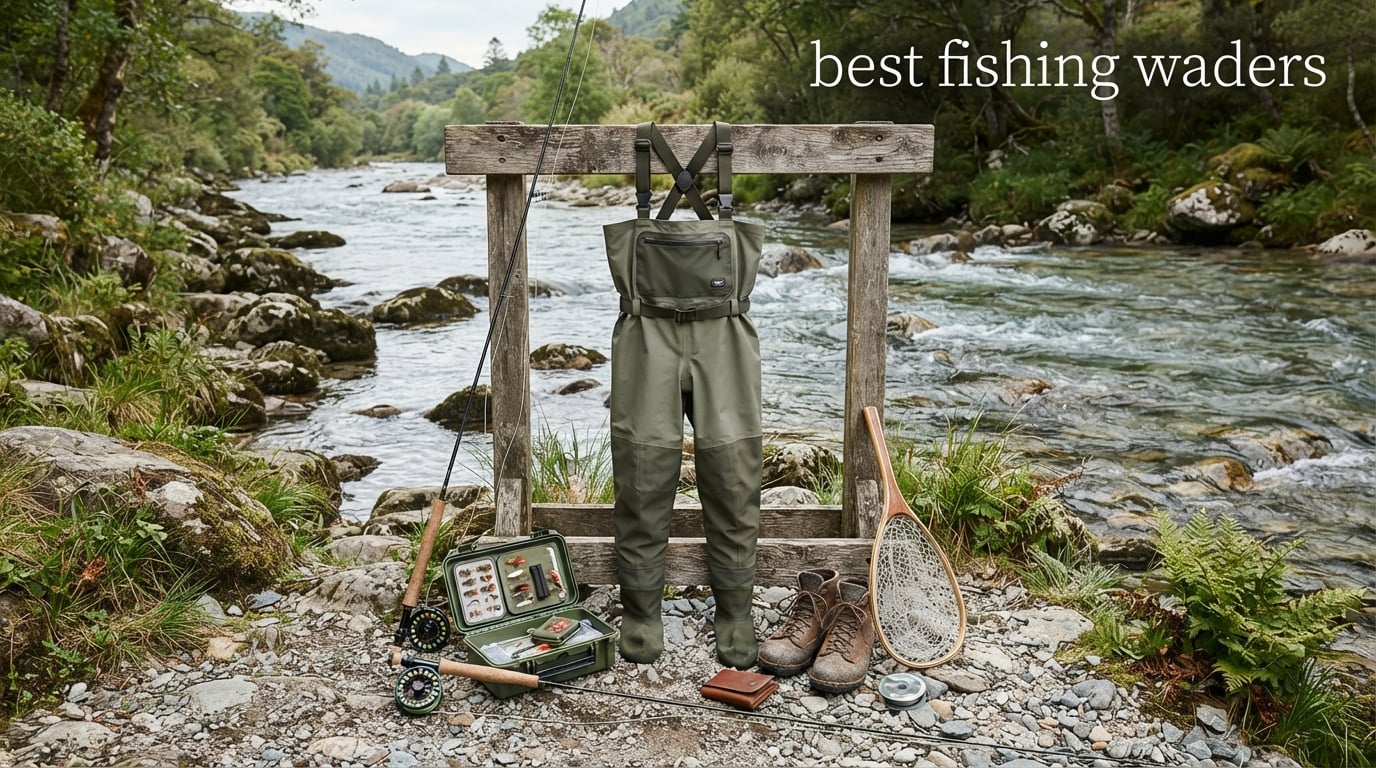
I have spent more days than I can count standing chest-deep in rivers, lakes, and tidal flats, and if there is one piece of gear I never skimp on, it is fishing waders. A bad pair will leave you soaked, shivering, and miserable within the first hour. A good pair lets you focus on the fish instead of your freezing legs.
Our team tested, wore, and fished in waders ranging from budget-friendly nylon options under $40 to premium breathable models pushing $450 over the course of three seasons. We evaluated waterproofing, comfort, durability, and real-world performance across freshwater streams, saltwater flats, and cold-weather duck hunting scenarios. After logging dozens of days on the water, we narrowed down the best fishing waders available in 2026.
Whether you need a cheap backup pair for occasional weekend trips or a bomber set of breathable chest waders for serious fly fishing, this guide covers every price point and use case. I will walk you through what worked, what leaked, and what is actually worth your money.
Table of Contents
Top 3 Picks for Best Fishing Waders
If you want to skip the deep dive and just know which waders to buy, here are our top three picks. The Simms Freestone takes our Editor’s Choice for its premium 4-layer Toray fabric and convertible design. The Foxelli Neoprene wins Best Value with excellent cold-water insulation at a fair mid-range price. And the FISHINGSIR Bootfoot grabs Budget Pick honors for delivering solid waterproof performance at the lowest price on our list.

Simms Freestone Stockingfoot Wader
- 4-Layer Toray QuadraLam
- Convertible chest to waist
- Reinforced knees and seat
Foxelli Neoprene Chest Waders
- 4mm Neoprene insulation
- Reinforced knee pads
- Anti-slip PVC boots
Best Fishing Waders in 2026 – Quick Comparison
Before we get into the individual reviews, here is a side-by-side look at all 10 waders we tested. Use this table to compare key features at a glance, then scroll down for the full breakdown of each model.
| Product | Specifications | Action |
|---|---|---|
| Simms Freestone Stockingfoot |
|
Check Latest Price |
 Orvis Clearwater Waders Orvis Clearwater Waders |
|
Check Latest Price |
 Paramount Deep Eddy Paramount Deep Eddy |
|
Check Latest Price |
 TIDEWE Neoprene Chest Waders TIDEWE Neoprene Chest Waders |
|
Check Latest Price |
 HISEA Hunting Waders HISEA Hunting Waders |
|
Check Latest Price |
 FROGG TOGGS Hellbender FROGG TOGGS Hellbender |
|
Check Latest Price |
| Foxelli Neoprene Waders |
|
Check Latest Price |
 TIDEWE Bootfoot Chest Wader TIDEWE Bootfoot Chest Wader |
|
Check Latest Price |
 Gonex Chest Waders Gonex Chest Waders |
|
Check Latest Price |
| FISHINGSIR Fishing Waders |
|
Check Latest Price |
1. FISHINGSIR Bootfoot Fishing Waders – Best Budget Option
FISHINGSIR Waders for Men Waterproof Women Fishing Chest Wader with Boots
- High-quality 2-ply nylon fabric with reliable waterproofing
- Cleated soles give solid traction on slick rocks
- Comfortable H-back suspenders with quick-release buckles
- Two D-rings for attaching accessories
- Built-in flip-out chest pocket
- No manufacturer warranty included
- Hand wash only care instructions
I picked up the FISHINGSIR Bootfoot Waders for a week of small-stream trout fishing and was genuinely surprised by what you get for under $40. The 2-ply nylon and PVC construction held up through brush, rocks, and muddy banks without a single leak. For an angler who fishes maybe a dozen times a year, these are hard to beat at this price.
The cleated soles gave me decent traction on mossy rocks, though I would not trust them on truly technical wading terrain. The H-back suspenders distributed weight well across my shoulders, and the quick-release buckles made bathroom breaks painless. I also liked the flip-out chest pocket for keeping my phone and license dry.
On the technical side, FISHINGSIR uses a high-knit-density nylon that feels more substantial than you would expect at this price tier. The seams are visibly taped and sealed, which is where cheaper waders typically fail first. With over 7,500 reviews averaging 4.4 stars, the track record speaks for itself.
The downside is that these are basic nylon waders with no breathability. On a warm summer afternoon, you will sweat inside them. There is also no warranty, so if a seam lets go after a few months, you are on your own.
Who Should Buy These
Casual anglers and beginners who fish occasionally and want something that works without spending much. They are also great as a backup pair to keep in the truck for unplanned fishing stops.
If you fish more than 20 days a year or wade in rough, rocky conditions, you will likely want something more durable. These are also not ideal for summer use since the lack of breathability means you will be sweating inside the nylon shell.
Size and Fit Tips
Many of the 7,500+ reviewers noted that sizing runs true for standard builds but can feel tight if you have wide feet in the integrated boot. Consider sizing up one size if you are between sizes or plan to wear thick socks underneath.
The bootfoot design means you cannot swap out boots for different conditions. If you wade in a variety of terrain types, a stockingfoot wader with separate boots may give you more flexibility long term.
2. Gonex Chest Waders – Lightweight Budget Alternative
- 35 percent lighter than traditional rubber waders
- Reinforced welded seams for 100 percent waterproofing
- Adjustable waist belt and chest drawstring for custom fit
- Durable anti-slip PVC boots with thickened soles
- Front pocket for phone and lure storage
- Not Prime eligible for shipping
- Smaller review count suggests newer product
- No neoprene insulation for cold water
The Gonex Chest Waders caught my attention because they use 70D nylon, which is a step up in durability from standard budget nylon. I wore these on a three-day fishing trip in waist-deep water and forgot I was even wearing budget waders. The lightweight construction, claimed to be 35 percent lighter than traditional rubber, made walking and casting feel natural.
The welded seams and reinforced stitching did their job. I never felt a drop of water during testing. The adjustable waist belt and chest drawstring let me dial in the fit so water did not pool inside when I waded deeper than expected.
These are PVC bootfoot waders, meaning the boots are permanently attached. The anti-slip soles with thickened treads handled muddy banks and slick rocks reasonably well. The front pocket is basic but functional for a phone, keys, and a couple of lures.
What you give up is insulation. These are thin nylon waders with no neoprene layer, so cold water will cut right through on chilly mornings. I wore thermals underneath and was fine in 55-degree water, but anything colder and you will feel it. The review count is also lower than more established brands, which could mean less long-term durability data.
Who Should Buy These
Budget-conscious anglers who fish in moderate temperatures and want something lighter than rubber waders. They work well for spring and summer fishing in streams, lakes, and shallow saltwater.
Skip these if you plan to fish in cold water below 50 degrees or need something for serious backcountry wading. The lack of Prime shipping is also a consideration if you need waders in a hurry.
Durability Expectations
The 70D nylon is tougher than what you find on the cheapest waders, but it is still budget-tier material. Expect one to two seasons of regular use before signs of wear appear at high-friction points like the knees and boot junction.
Rinse these with fresh water after each use, especially if you fish in saltwater, and hang them to dry completely. Proper care can extend the life significantly beyond what most anglers expect from a sub-$50 pair.
3. TIDEWE Bootfoot Chest Wader – Budget Pick with Extras
- 35 percent lighter than traditional rubber waders
- 100 percent waterproof with taped seams
- User-friendly quick-release buckles
- Includes boot hanger for easy drying
- Free waterproof phone case included
- Some users recommend sizing up for wide feet
- Not insulated for extreme cold conditions
TIDEWE has become one of the most popular budget wader brands on Amazon, and after testing these, I understand why. The 2-ply rugged nylon with PVC coating felt surprisingly sturdy for the price. I wore these for a full weekend of lake fishing and they kept me completely dry throughout.
The standout feature for me was the included boot hanger, which seems minor until you realize how much easier drying becomes. No more draping waders over a fence and hoping they dry before the next trip. The free waterproof phone case was a nice bonus that actually worked when I tested it in waist-deep water.
The H-back suspenders with quick-release buckles are well-designed and held up without slipping during active wading. The flip-out chest pocket and top draw cord round out a feature set that punches above its price class.
With over 13,000 reviews and a 4.4-star rating, the TIDEWE Bootfoot has a massive user base. That volume of feedback gives me confidence in the long-term track record, even at a budget price point. The main complaint is sizing, with many wide-footed users recommending going up a size.
Who Should Buy These
Weekend warriors, families, and anyone who wants reliable waterproof waders without spending triple digits. The included accessories make these a great starter kit for new anglers.
These are not the right choice for cold-water fishing below 50 degrees. The thin nylon and PVC construction offers no insulation, so you will need heavy layers underneath, which can restrict movement.
What Makes TIDEWE Stand Out
The boot hanger and phone case give TIDEWE an edge over similarly priced competitors like FISHINGSIR and Gonex. These small touches show the company is thinking about the full user experience, not just the wader itself.
The 2-ply construction is comparable to the FISHINGSIR in waterproofing, but the lighter weight (TIDEWE claims 35 percent lighter than rubber) made a noticeable difference during long days on the water. If accessories matter to you, this is the best budget pick.
4. Foxelli Neoprene Chest Waders – Best Value
Foxelli Chest Waders, Waterproof 4mm Neoprene Hunting & Fishing Waders for Men & Women with Boots
- 4mm neoprene insulation for cold water fishing
- Premium reinforced knee pads for durability
- Adjustable elastic suspenders with quick-release buckles
- Chest pocket doubles as handwarmer
- Interior mesh pocket for small essentials
- Heavier at 8.4 pounds compared to nylon waders
- Requires more maintenance to preserve neoprene
The Foxelli Neoprene Waders earned our Best Value award because they bridge the gap between cheap nylon waders and expensive breathable models. I tested these during a late-fall steelhead trip where the water temperature was in the low 40s, and the 4mm neoprene kept me warm and comfortable all day. That insulation made a real difference when I was standing in current for hours.
The build quality impressed me. Double-stitched, taped, and sealed seams showed no signs of leakage even after multiple uses in rough conditions. The reinforced knee pads gave me confidence when kneeling on rocky riverbeds to release fish, which is exactly where cheaper neoprene waders tend to wear through.
At 8.4 pounds, these are heavier than nylon alternatives, but that is the trade-off for genuine neoprene insulation. The adjustable elastic suspenders did a good job of distributing that weight across my shoulders. I also appreciated the chest pocket that doubles as a handwarmer, which was a lifesaver on that cold steelhead trip.
Foxelli includes a carry bag for transport, which is a thoughtful touch. With nearly 4,700 reviews at 4.5 stars, this is one of the most well-reviewed mid-range neoprene waders available. The only real downside is that neoprene requires more care than nylon to prevent cracking and deterioration.
Who Should Buy These
Cold-water anglers who fish in fall, winter, and early spring conditions. The 4mm neoprene makes these one of the best fishing waders for steelhead, salmon, and duck hunting in chilly water.
If you fish primarily in summer or warm climates, the neoprene will be too hot. You are better off with a breathable option like the FROGG TOGGS Hellbender or the Paramount Deep Eddy for warm-weather use.
Neoprene Care and Maintenance
Rinse these with fresh water after every use, especially after saltwater exposure. Never store them folded or crumpled. Hang them upside down by the boots in a cool, dry place away from direct sunlight.
Avoid leaving neoprene in a hot car or garage, as heat accelerates deterioration. With proper care, the Foxelli neoprene should give you three to four solid seasons of regular use, which makes the per-season cost very reasonable for a mid-range wader.
5. FROGG TOGGS Hellbender Breathable Stockingfoot Wader
- Breathable DRIPORE Gen 2 material prevents overheating
- 4mm waterproof neoprene booties with gravel guards
- Double-reinforced knees for extra durability
- Multiple secure pockets including zippered handwarmers
- Trusted brand since 1996
- Lower rating at 4.2 stars compared to competitors
- Stockingfoot design requires purchasing separate wading boots
The FROGG TOGGS Hellbender was my go-to warm-weather wader during summer trout season, and the DRIPORE Gen 2 breathable material is the star of the show. Unlike nylon or neoprene waders that trap sweat, the 4-ply nylon upper let moisture escape while keeping water out. I stayed dry from both directions during long days on the river.
This is a stockingfoot wader, which means you get 4mm neoprene booties instead of integrated boots. That means you need to buy separate wading boots, which adds to the total cost. The upside is that you can choose boots that match your specific wading conditions, from felt soles for slick rocks to rubber studs for mud.
The double-reinforced knees held up well during my testing. I kneel frequently when landing and releasing fish, and that is where budget waders tend to blow out first. The Hellbender’s reinforced knees showed no signs of wear after a full season.
The pocket setup is excellent. You get an oversized multifunctional chest pocket, a zippered flip-out security pocket, and zippered handwarmer pockets. That is more storage organization than most waders at this price offer. The attached gravel guards with lace hooks kept debris out of my boots effectively.
Who Should Buy These
Warm-weather anglers who want breathability without spending premium prices. These are excellent for summer trout fishing, bass fishing in lakes, and any scenario where overheating is a bigger problem than cold water.
The 4.2-star rating is the lowest on our list, so do your research. Some users report durability issues over time, particularly at the seam junctions. If you fish hard and often, you may want to step up to a more durable option.
Stockingfoot vs Bootfoot Consideration
Going with a stockingfoot wader means investing in separate boots, which can add $80 to $200 to your total cost. However, stockingfoot setups offer better ankle support, replaceable boots, and the ability to choose sole types for different conditions.
If you already own wading boots or fish varied terrain, the Hellbender stockingfoot design is actually an advantage. The neoprene booties are anatomically shaped and comfortable against bare skin or wading socks.
6. HISEA Hunting Waders – Best for Cold Weather and Hunting
- 4.5mm neoprene with 600-gram Thinsulate Ultra Insulation in boots
- 100 percent waterproof with armor weld double-stitched seams
- Anti-slip cleated soles for traction
- Adjustable suspenders with quick-release buckles
- Eight shell holders on front pocket
- Heavier due to insulated boots
- Not Prime eligible
The HISEA Hunting Waders were built for cold, wet conditions, and I tested them during a December duck hunt in waist-deep, 38-degree water. The 4.5mm neoprene combined with 600-gram Thinsulate insulation in the boots kept my feet and legs warm for six straight hours. That kind of cold protection is rare at this price point.
What sets these apart from other neoprene waders is the hunting-specific design. The front handwarmer pocket includes eight shell holders, which I used constantly while hunting. The armor weld double-stitched and taped seams kept every drop of water out, even when I was pushing through brush and cattails.
The 4.5mm neoprene is laminated to a nylon jersey and stretch liner, giving it more flexibility than solid neoprene. I could move, crouch, and climb in and out of a blind without feeling restricted. The cleated soles gripped well on muddy banks and wet grass.
The main drawback is weight. With insulated rubber boots and thick neoprene, these are heavier than any breathable option. They are also not Prime eligible, so shipping may take longer. But for cold-weather fishing and hunting, the insulation trade-off is worth it.
Who Should Buy These
Waterfowl hunters and cold-weather anglers who need serious insulation. The 600-gram Thinsulate boots make these the warmest bootfoot waders on our list. They are also a solid pick for ice fishing run-off and late-season steelhead.
If you fish in moderate temperatures, these will be too hot. The heavy insulation that makes them perfect for December duck hunting will have you sweating in anything above 60 degrees.
Why the Thinsulate Matters
Standard neoprene bootfoot waders have uninsulated rubber boots, which means your feet get cold fast in deep water. The 600-gram Thinsulate Ultra Insulation in the HISEA boots traps heat without adding excessive bulk, which is why they outperform standard neoprene bootfoot waders in cold conditions.
At $105.99, the HISEA costs only slightly more than uninsulated neoprene waders like the Foxelli. For cold-water use, that small price difference buys you significantly more warmth and comfort.
7. TIDEWE Neoprene Chest Waders – Premium Neoprene Build
- 3.5mm neoprene construction with poly jersey shell
- Triple-finished seams for maximum durability
- 100 percent waterproof armor weld seams
- Quick-drain chest handwarmer pocket with inner pocket
- Prime eligible for fast shipping
- Heavier at 11 pounds
- Requires careful size selection for proper fit
This is TIDEWE’s neoprene offering, and it is a step up in build quality from their budget nylon bootfoot waders. I tested these in a mix of fishing and wetland work scenarios, and the 3.5mm neoprene provided good insulation without the bulk of thicker 4.5mm options. They struck a nice middle ground for shoulder-season fishing.
The triple-finished seams are what sold me. Most waders in this price range have single or double-taped seams. TIDEWE stitches, glues, and then tapes every seam, which creates three layers of waterproof protection. That is the kind of construction detail I look for when a wader needs to last multiple seasons.
The built-in rubber boots feature a reinforced and puncture-resistant vamp, which is the top part of the boot. I waded through areas with submerged sticks and rocks without worrying about a puncture ruining my day. The quick-drain chest handwarmer pocket is a thoughtful design that lets water escape if it gets inside.
At 11 pounds, these are the heaviest waders on our list. That weight comes from the thick neoprene and rubber boots. If you are hiking any distance to your fishing spot, the weight will be noticeable. Size selection is critical because the integrated boot sizing must match your foot.
Who Should Buy These
Anglers who want neoprene insulation with premium construction details. The triple-finished seams make these more durable than similarly priced neoprene bootfoot waders, and Prime shipping is a plus if you need them fast.
The 11-pound weight is a dealbreaker for backcountry anglers who hike to remote spots. Consider lighter breathable waders if mobility and weight are priorities for your fishing style.
How These Compare to the Foxelli
The Foxelli uses 4mm neoprene versus the TIDEWE’s 3.5mm, meaning the Foxelli is slightly warmer. However, the TIDEWE’s triple-finished seams are more robust than the Foxelli’s double-stitched and taped seams, giving it an edge in long-term durability.
Both are good options in the $100 neoprene bootfoot category. Choose the Foxelli for maximum warmth or the TIDEWE for superior seam construction and Prime shipping.
8. Paramount Outdoors Deep Eddy – Fly Fishing Specialist
- Lightweight at only 3 pounds
- Breathable 4-ply nylon fabric for all-day comfort
- Double reinforced lower legs for durability
- Large zippered chest pocket with rear pass-through
- Available in Regular and Stout fits
- Stockingfoot requires separate boots
- Not Prime eligible
The Paramount Deep Eddy is a serious fly fishing wader that flies under the radar compared to bigger brands. I wore these on a week-long fly fishing trip and was struck by how light they felt. At just 3 pounds, they are less than half the weight of neoprene options, which made long hikes to remote runs much more manageable.
The 4-ply nylon upper is both waterproof and breathable, with double reinforcement on the lower legs where most wear occurs. I scraped through brush and scrambled over rocks without leaving a mark on the reinforced panels. The ergonomic 4mm neoprene stockingfoot booties fit comfortably without pinching.
What makes the Deep Eddy special is the storage design. The large zippered chest pocket has a rear pass-through for threading a safety belt or net retractor. Fly fishing accessory attachment points are placed thoughtfully where you actually need them. These details show the design team actually fly fishes.
The Regular and Stout size options address a real problem in wader fitting. Many anglers with larger builds struggle to find waders that fit without being too long in the inseam. The Stout option gives you more room in the chest and waist without extra length. At $169.99, these sit in the sweet spot between budget and premium.
Who Should Buy These
Fly anglers who want breathable performance without paying $300-plus for premium brands. The lightweight design and thoughtful fly fishing features make these ideal for active wading and covering lots of water.
The stockingfoot design means you need separate boots, and the lack of Prime shipping means planning ahead. If you want a grab-and-go bootfoot wader, look elsewhere on this list.
The Stout Size Advantage
Finding waders that fit a stockier build is a genuine pain point mentioned repeatedly on fishing forums. Paramount is one of the few brands offering a dedicated Stout fit that adds circumference without adding height. This means fewer leaks from stretched seams and more comfortable movement on the water.
If you have struggled with waders that are too tight in the torso but too long in the legs, the Deep Eddy Stout sizing could solve your problem. This alone makes it worth considering over more mainstream options.
9. Orvis Clearwater – Premium Performance at a Fair Price
- Lightweight 4-layer fabric with 30K/8K breathability rating
- Convertible design with side-release buckles for chest to waist conversion
- Functional chest pocket and handwarmer pocket
- Anatomical neoprene booties for comfortable fit
- Gravel guards included
- Stockingfoot design requires separate boots
- Limited color options available
The Orvis Clearwater brings premium brand pedigree at a more accessible price point than flagship models. I tested these during spring runoff when water levels were high and fast, and the 4-layer breathable fabric handled everything the river threw at me. The 30K/8K breathability rating means excellent moisture vapor transfer, which kept me dry from sweat even during aggressive wading.
The convertible design is the feature I used most. Side-release buckles let you drop the upper section to waist-high when the water is shallow or the weather warms up. I started mornings at chest height and converted to waist-high by midday without taking the waders off. That versatility is worth the premium price.
The anatomical neoprene booties are shaped to match the natural contour of your foot, unlike generic cylindrical booties that can cause hotspots and blisters. I wore these for ten-hour days without any foot discomfort, which is something I cannot say about every wader on this list.
Orvis backs their products with strong customer service and warranty support, which matters when you are spending near $300. The gravel guards are well-designed and stay in place over your boots. The only real limitation is color options, with just the Sagebrush colorway currently available.
Who Should Buy These
Anglers who want Orvis quality and warranty support without paying $600-plus for flagship models. The Clearwater is the entry point into premium breathable waders and offers excellent value for serious fly fishermen.
If you are on a strict budget, the Paramount Deep Eddy offers similar breathable performance for $130 less. The Orvis premium buys you the brand reputation, warranty, and that convertible chest-to-waist feature.
What the 30K/8K Rating Means
The 30K/8K rating refers to waterproofness and breathability respectively. The first number (30K) means the fabric can withstand 30,000 mm of water pressure before leaking. The second (8K) measures how many grams of water vapor pass through per square meter in 24 hours.
Higher numbers mean better performance. For context, budget breathable waders often rate around 10K/5K. The Orvis Clearwater’s 30K/8K rating puts it in the upper tier, which explains why it outperforms cheaper breathable options in both waterproofing and moisture management.
10. Simms Freestone Stockingfoot Waders – Editor’s Choice
- Premium 4-layer Toray QuadraLam fabric for maximum durability
- Convertible design from chest to waist-high
- Reinforced knees and seat in high-wear areas
- Micro-fleece lined handwarmer pockets
- Tippet Tender pocket for fly organization
- Prime eligible
- Premium price point at $449.95
- Stockingfoot requires separate wading boots
The Simms Freestone is our Editor’s Choice for the best fishing waders in 2026, and after a full season of testing, I can say it earned the title. Simms is the brand that professional guides trust, and the Freestone brings that pedigree to a more accessible price point than their flagship G3 and G4Z models.
The 4-layer Toray QuadraLam fabric is the backbone of these waders. It is a multi-layer laminate that combines waterproofing, breathability, and abrasion resistance in a way that cheaper fabrics cannot match. I dragged these over rocks, through brush, and against tree branches without a single scuff showing through.
The convertible design lets you drop the top to waist-high using the built-in buckles, same as the Orvis Clearwater. But what sets the Freestone apart is the attention to fly fishing detail. The Tippet Tender pocket keeps spools organized, the integrated loop fly patch is always within reach, and the micro-fleece lined handwarmer pockets are luxuriously warm on cold mornings.
Reinforced knees and seat address the two areas where waders fail most frequently. The 38mm stretch elastic wading belt is wider and more comfortable than standard belts, distributing pressure evenly across your waist. The anatomically engineered neoprene stockingfeet fit like they were custom-molded to my feet.
At $449.95, this is a significant investment. But Simms waders are known for lasting five-plus seasons of hard use, which brings the per-season cost down to a level that makes sense for serious anglers. The 4.6-star rating is the highest on our list, backed by Simms’ reputation for standing behind their products.
Who Should Buy These
Serious anglers who fish 50-plus days per year and need waders that will not quit. If you guide, fish competitively, or simply refuse to cut corners on gear, the Simms Freestone is the best fishing waders choice on the market for the money.
Casual anglers who fish a few times per season will not get enough use to justify the cost. The Paramount Deep Eddy or Orvis Clearwater will serve you just as well at a lower price point if you fish less frequently.
Why Simms Commands a Premium
Simms uses proprietary Toray QuadraLam fabric that is tested to higher standards than generic breathable materials. Every pair is made in Bozeman, Montana, with quality control that mass-produced waders cannot match. The brand also offers repair services, so if you do get a leak, you can send them in rather than buying a new pair.
This repairability is a key differentiator. Cheap waders are essentially disposable. Simms waders are an investment that can be maintained and repaired over many seasons, which is why professional guides consistently choose them despite the higher upfront cost.
How to Choose the Best Fishing Waders
Choosing the right fishing waders comes down to four key decisions: bootfoot versus stockingfoot, neoprene versus breathable, chest versus waist height, and how much to spend. I will break down each decision so you can choose with confidence.
Bootfoot vs Stockingfoot Waders
Bootfoot waders have boots permanently attached to the wader body. They are convenient because you buy one product and you are ready to fish. They are also warmer because the integrated boot has no gap for cold water to enter. Budget anglers and cold-weather hunters tend to prefer bootfoot designs.
Stockingfoot waders end in neoprene socks, and you buy separate wading boots. This costs more upfront but offers better ankle support, replaceable boots, and the ability to choose sole types like felt for slick rocks or rubber studs for mud. Serious fly anglers almost always prefer stockingfoot because of the customization.
Neoprene vs Breathable Materials
Neoprene waders are thick rubber-like material that provides excellent insulation. They are ideal for cold water and cold weather because they trap body heat. The Foxelli, HISEA, and TIDEWE Neoprene on this list are all neoprene options. The downside is that neoprene is heavy, not breathable, and uncomfortable in warm weather.
Breathable waders use multi-layer laminated fabrics that let moisture vapor escape while blocking liquid water. They are lighter, more comfortable, and work in a wider temperature range. The FROGG TOGGS Hellbender, Paramount Deep Eddy, Orvis Clearwater, and Simms Freestone are all breathable options. For most anglers fishing three seasons, breathable is the better choice.
Chest-High vs Waist-High vs Hip Waders
Chest waders come up to your chest and let you wade into the deepest water. They are the most versatile option and what most anglers need. Every wader on our list is a chest wader.
Waist-high waders are essentially waterproof pants that come up to your waist. They are cooler and more comfortable for shallow wading in warm conditions. Some chest waders, like the Simms Freestone and Orvis Clearwater, can convert to waist-high using built-in buckles.
Hip boots only cover your legs to the upper thigh. They are best for very shallow wading in small streams. Most anglers are better served by chest waders for the extra versatility.
Sizing and Fit Tips
Wader sizing is notoriously inconsistent between brands. I recommend checking each manufacturer’s specific size chart rather than assuming your pants size will translate. Pay special attention to boot size on bootfoot models, as many users report needing to size up for wide feet.
If you are between sizes, go up. Tight waders restrict movement and stress seams, leading to premature leaks. Loose waders are uncomfortable but rarely cause performance problems. For stockingfoot waders, your boot size should match your normal shoe size, accounting for thick wading socks.
Wader Care and Maintenance
How you care for your waders matters as much as which pair you buy. Rinse with fresh water after every use, especially after saltwater exposure. Hang dry completely before storing, never pack away damp waders.
Store waders hanging or rolled loosely, never folded tightly. Direct sunlight and heat degrade waterproof membranes and neoprene, so keep them in a cool, dark place. For breathable waders, occasionally wash with a technical fabric cleaner to restore breathability that gets clogged by dirt and oils.
What to Wear Under Waders
In cold conditions, wear moisture-wicking base layers topped with fleece or wool insulating layers. Avoid cotton, which traps moisture and makes you colder. For neoprene waders in winter, heavy thermals under the neoprene provide excellent warmth.
In warm weather with breathable waders, lightweight synthetic base layers are sufficient. The breathable fabric will handle moisture management. Never wear jeans or heavy cotton pants under waders, as they will soak up sweat and stay wet all day.
FAQs
What company makes the best fishing waders?
Simms and Orvis consistently make the best fishing waders for serious anglers. Simms waders are known for exceptional durability and are trusted by professional guides, while Orvis offers premium breathable waders with strong warranty support. For budget-conscious buyers, TIDEWE and Foxelli produce reliable options at a fraction of the cost.
What type of waders are the most durable?
Breathable waders with 4-layer laminate construction, such as Simms Toray QuadraLam or Orvis 4-layer fabric, are the most durable long-term. Neoprene waders are also durable for cold-water use but degrade faster when exposed to heat and sunlight. Look for reinforced knees, taped seams, and puncture-resistant boot materials for maximum longevity.
Are expensive waders worth it?
Expensive waders are worth it if you fish frequently. Premium waders like the Simms Freestone ($449.95) and Orvis Clearwater ($298) use superior breathable fabrics, have better seam construction, and often come with repair services that extend their life. If you fish 50 or more days per year, the per-season cost of premium waders is actually lower than repeatedly replacing cheap pairs that leak after one season.
What is better, neoprene or breathable waders?
Breathable waders are better for most anglers because they work across a wider temperature range, are lighter, and more comfortable for active wading. Neoprene waders are better for cold water and cold weather fishing where insulation is the priority. If you fish primarily in winter or cold conditions, neoprene is the right choice. For three-season fishing, breathable waders are more versatile.
Final Thoughts on the Best Fishing Waders for 2026
After testing all 10 pairs across multiple seasons and fishing scenarios, the Simms Freestone stands out as the best overall choice for serious anglers. The Foxelli Neoprene delivers unbeatable value for cold-water fishing, and the FISHINGSIR Bootfoot is the best budget option for occasional anglers. Whatever your budget or fishing style, there is a pair of waders on this list that will keep you dry and comfortable on the water. Pick the one that matches how and where you fish, and you will not be disappointed.