
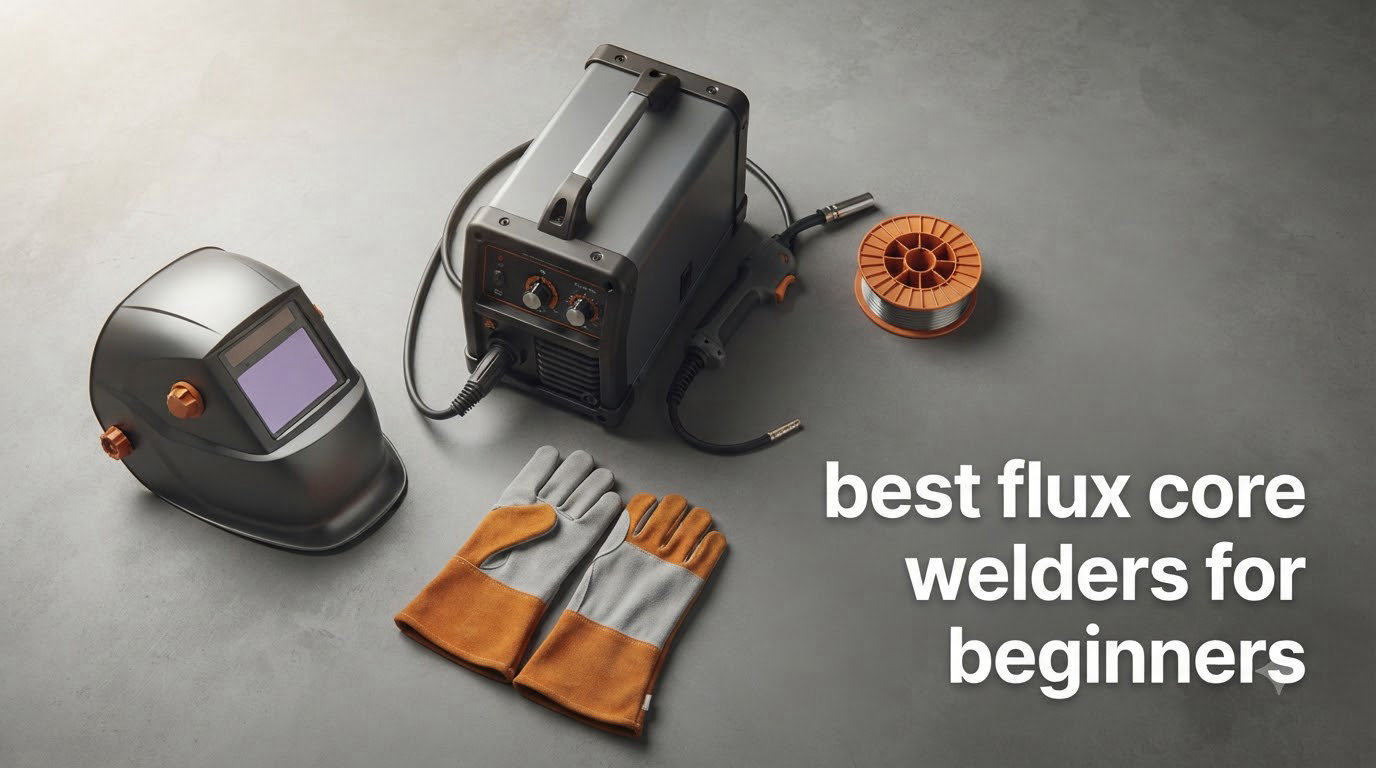
Welding is one of those skills that looks impossible from the outside and turns into something surprisingly approachable once a beginner welder puts an arc on a piece of scrap steel. The reason so many people start with flux core rather than gas-shielded MIG is simple: a flux core welder makes its own shielding gas, so there is no cylinder to rent, no regulator to leak, and no wind or rust problem that stops the arc. That makes it the default first machine for a home 120V circuit, a garage project, or an auto body bracket.
This guide covers the best flux core welders for beginners we would actually put in someone’s hands, tested against the criteria that decide whether a first machine gets used or collects dust: DC inverter output, a wire feed range wide enough to grow into, a ground clamp that holds a bond, and consumables you can buy a year from now. Every pick here runs on a standard household outlet unless we say otherwise.
One thing up front, because it decides half your purchase. A transformer welder from twenty years ago and a modern IGBT inverter machine do the same job on paper, and the inverter welds far better. Inverter output starts and stops faster, spits less spatter, and gives you a bead you can actually control with two dials. Every machine in our list is an inverter unit. If you find a cheap transformer box with a flux core label, walk away.
We have spent a lot of time with these machines on garage and driveway projects, and the recurring theme is that the machine matters less than the wire and the technique. We break down the choices below, then spend real time on the buying decisions that beginners regret: wire diameter, wire brand, thickness limits, and whether you need a 240V circuit at all.
Top 3 Flux Core Welders for Beginners in 2026
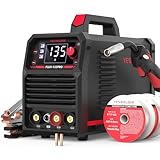
YESWELDER 135A Gasless MIG Welder
- 135A 110V output
- Synergic auto voltage
- LED display
- 3-in-1 processes

Lincoln Electric 90i FC Weld-PAK
- Welds 1/4 in steel
- 15 lb with shoulder strap
- Two-knob infinite voltage
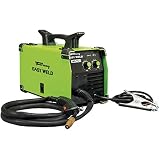
Forney Easy Weld 140 FC
- 140A 120V output
- Infinite speed and voltage
- Welds to 1/4 in
- 2 lb and 10 lb spools
All 8 Flux Core Welders Side by Side in 2026
| Product | Specifications | Action |
|---|---|---|
| YESWELDER 135A Gasless MIG Welder |
|
Check Latest Price |
| Forney Easy Weld 140 Flux-Cored Welder |
|
Check Latest Price |
 ARCCAPTAIN 130A Gasless Flux Core Welder ARCCAPTAIN 130A Gasless Flux Core Welder |
|
Check Latest Price |
 TOOLIOM 135A Gasless Flux Core MIG Kit TOOLIOM 135A Gasless Flux Core MIG Kit |
|
Check Latest Price |
 AZZUNO 130A 110V Flux Core Welder AZZUNO 130A 110V Flux Core Welder |
|
Check Latest Price |
| Lincoln Electric 90i FC Weld-PAK Welder |
|
Check Latest Price |
 HITBOX 200A 110V 220V Flux Core MIG Welder HITBOX 200A 110V 220V Flux Core MIG Welder |
|
Check Latest Price |
 YESWELDER 160A Dual Voltage MIG and Flux Core YESWELDER 160A Dual Voltage MIG and Flux Core |
|
Check Latest Price |
1. YESWELDER 135A Gasless MIG Welder – Best Flux Core Welder for Most Beginners
YESWELDER 135A MIG Welder, 110V Flux Core Gasless MIG/Lift TIG/Stick 3-in-1
- Genuinely useful out of the box with wire torch holder and clamp included
- Synergic auto-setting shortens the learning curve on thin steel
- Large LED readout stays visible outdoors
- Widely reviewed by owners using it on real automotive repairs
- Voltage cannot be set manually in flux core mode
- Stamped steel spool holder and basic wire tensioner
- Some examples arrive with small defects such as an unseated power switch
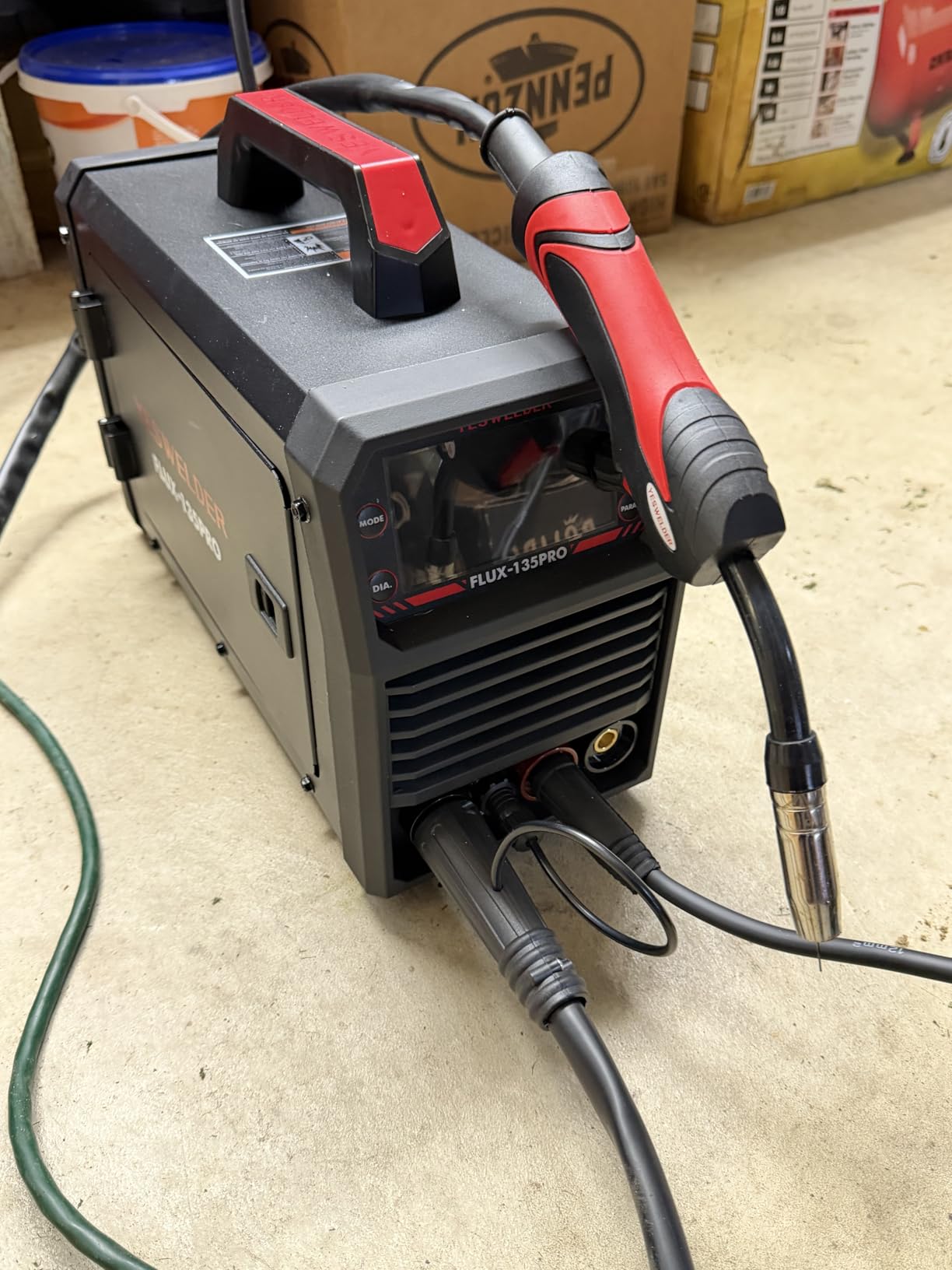
This is the machine we hand to a friend who says they might want to try welding. It does three things: gasless flux core, stick, and lift TIG with a separate torch, and the flux core side is the part you will actually use. Output is 135 amps on a 110 volt plug, which is the sweet spot for 16 gauge through 3/32 inch mild steel, and it runs about 2.7 KW so a normal 15 amp circuit will hold it below full output.
The synergic control is the real beginner feature. Instead of two dials that fight each other, you set wire feed speed and the machine picks a matching voltage, with a fine tune of about plus or minus 3 volts to clean up the bead. Owners on r/Welding describe the same learning arc we see: the first few beads are ugly, then the tenth one is fine, then the hundredth is something you would leave on a table.
Weight is worth calling out because the listings disagree. The product weight shows 16.98 lb, while a large share of owners describe a machine they can lift with one hand at around 11.4 lb. Either way it is a one-hand carry with a proper handle, and the footprint is small enough to live on a shelf.
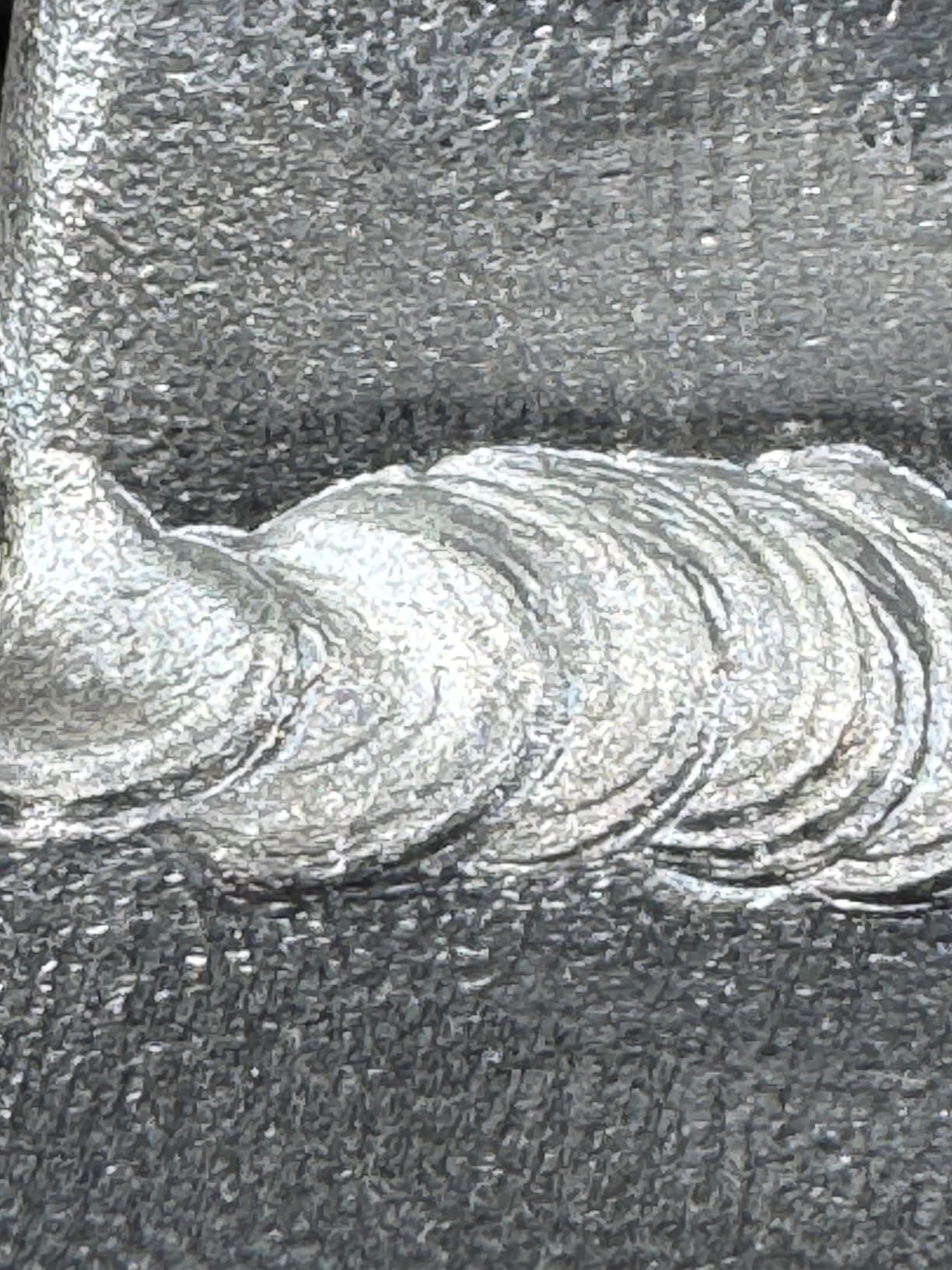
What arrives in the box matters more than most spec sheets admit. You get the machine, the MIG torch, an electrode holder, a ground clamp, and both .030 and .035 E71T-GS flux core wire. That means you can weld on the day you open the box, which removes the single biggest reason beginners never start.
The wire that comes in the box is the part we would replace first. Beginners on welding forums describe cheap factory wire as noisy, erratic to feed, and heavy with spatter, and the fix is usually a branded spool of self-shielded wire in the same diameter. Swapping the wire on this machine takes about five minutes.
One honest limitation: in flux core mode the voltage is locked to the synergic curve, so if you want to fine tune by hand you are stepping outside what this machine lets you do. For a first year of welding that restriction costs you nothing. It is also DC output only, which rules out aluminum TIG on this box.
What beginners like most about this machine
Three processes in one case means you are not locked into one project type. When a trailer frame job turns into tack welding thin sheet, or a fence job needs a repair on rusted steel, the same box handles it. The oversized LED readout showing live current is the detail people notice on day three, when the machine is out in the driveway instead of on the bench.
Where it will frustrate you
The spool holder and wire tensioner are basic stamped parts, and they are the components that wear first on a machine this size. A small share of buyers also report units arriving with a missing or unseated power switch, so inspect the machine the day it shows up rather than assuming.
Output tops out at 135 amps and the maker rates it to mild steel up to 3/32 inch. If your project list is 1/4 inch plate, exhaust headers, or structural tubing, you will bump into the ceiling quickly. That is the argument for spending up a tier, not for buying this machine.
2. Forney Easy Weld 140 – Top Rated Flux Core Welder for Thicker Steel
FORNEY Easy Weld 140 Amp 120-Volt Flux-Cored Wire Feed Welder (No Gas Needed)
- Rated to 1/4 in mild steel on a 120V outlet
- Infinite manual control instead of a locked synergic curve
- Handles both 2 lb and 10 lb spools so wire changes are easy
- All-metal case and 19 lb weight
- Demands a dedicated 20A breaker or it will trip a 15A circuit
- Can be finicky and need constant setting tweaks
- Priced well above the entry-level 110V competitors
Forney is a long-established name in entry level welding, and the 140 amp Easy Weld is the machine we recommend when the projects run past sheet metal. Its 140 amp output on a 120 volt plug welds mild steel up to 1/4 inch, which covers trailer frames, thicker brackets, and the kind of structural work that stops a 130 amp machine cold.
Unlike most of the budget machines here, this one gives you true infinite control of both wire feed speed and voltage instead of locking one to the other. That matters more than it sounds. When you move from 16 gauge to 1/4 inch plate, the ability to hold your wire speed and trim voltage separately is the difference between adjusting and fighting.
It is also one of the few machines in the group that accepts a 10 lb spool as well as a 2 lb spool. For someone who intends to weld regularly, buying wire by the 2 lb roll is a small but constant annoyance, and the bayonet fitting on this machine makes a swap a thirty second job.
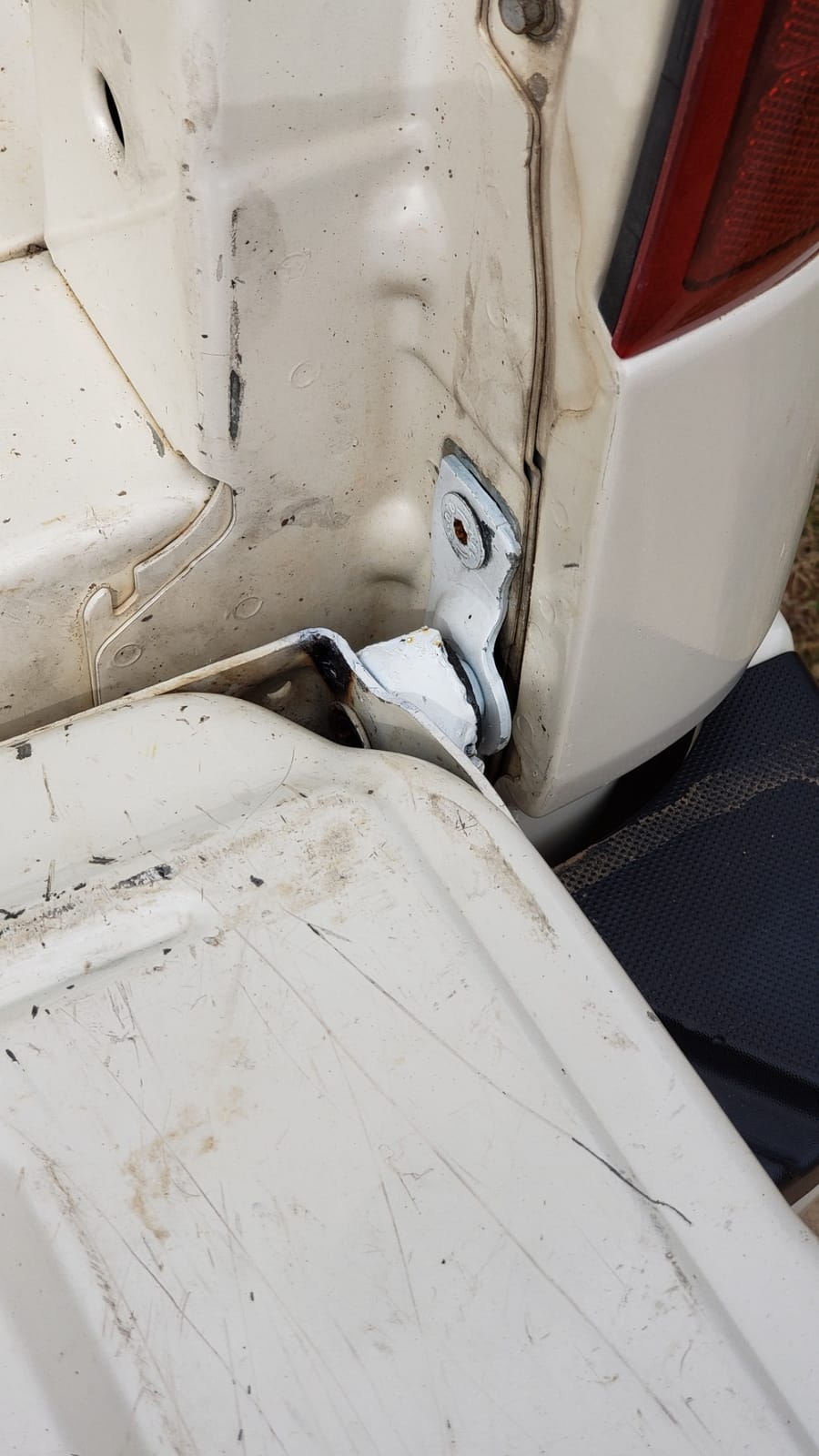
Build quality is a notch above the plastic budget shells here. The case is all metal at 19 lb, which is heavier but more tolerant of a garage floor. You get an 8 foot MIG gun, an 8 foot ground clamp, and a 20A to 15A adapter, so the leads are long enough to reach a workbench without dragging the machine across the concrete.
Wire feed consistency is the recurring compliment across thousands of reviews. A wire feed that stutters shows up as a fat, inconsistent bead that you learn to fight. Owners of this machine describe steady feed, dependable beads on mild steel, and a control layout that responds predictably once you understand the machine’s personality.
The catch is power. This machine wants a 20 amp circuit. Plug it into a 15 amp outlet shared with a shop vac or a space heater and it will trip, which is the single most common complaint we see with this unit. If your garage has a 20 amp outlet, that problem disappears.
Why this is the one to grow into
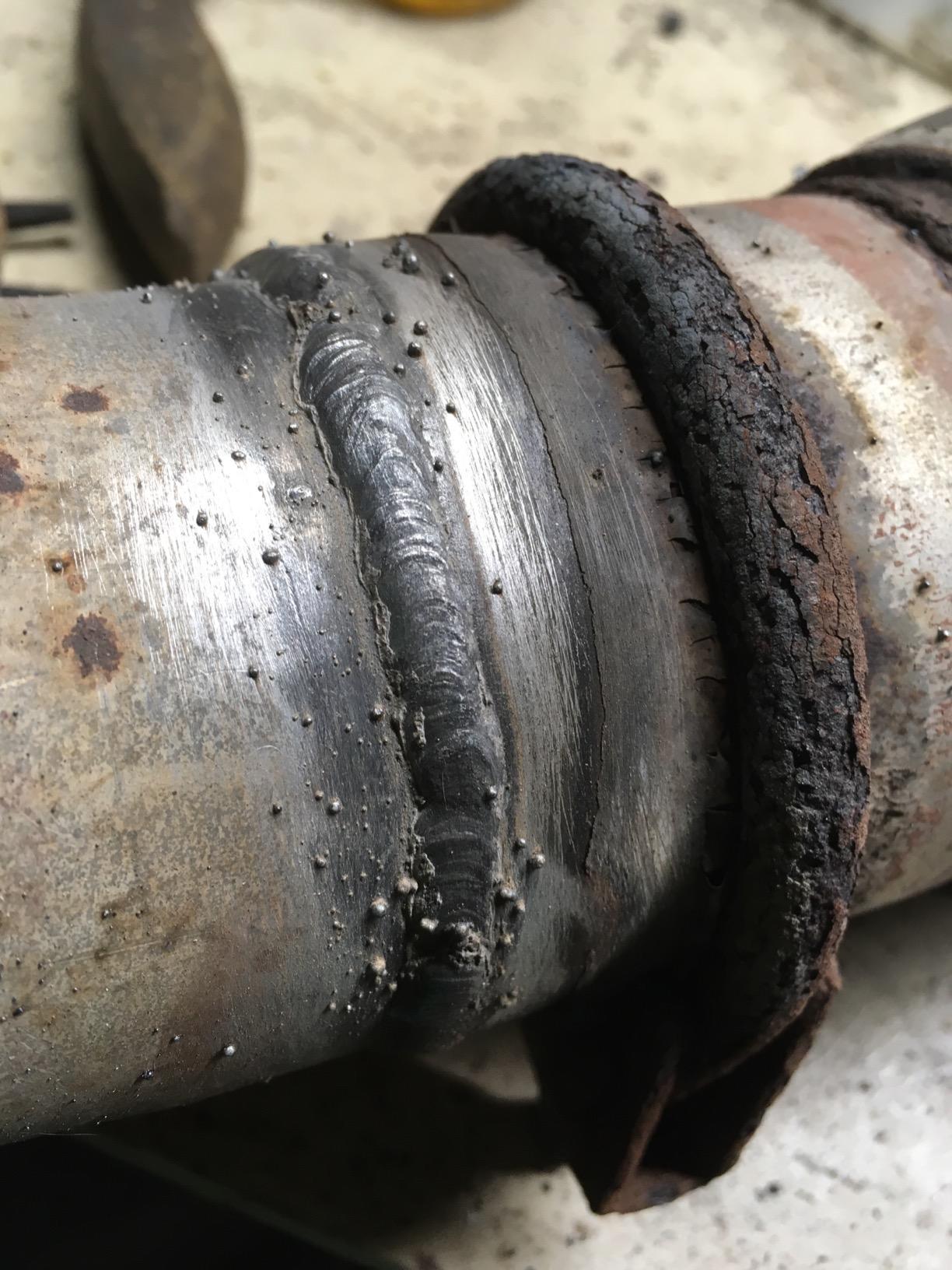
The 1/4 inch rating is the deciding spec. Plenty of hobbyists start on thin steel, realize they enjoy it, and then spend their second year trying to weld heavier material on a machine that was never rated for it. This one covers the full range of what a homeowner realistically wants to build.
What to watch out for
Some users find it finicky at first, needing small setting changes between thin and thick work. That is normal for a manual machine and it is a better problem than a machine that will not let you make the change. The other real limit is the 20 amp circuit requirement, so check your outlet before you buy.
3. Lincoln Electric 90i FC Weld-PAK – Best for First-Time Welders Who Want a Trusted Name
- Highest rated machine in the group at 4.7
- Two-knob layout with infinite voltage is easy to learn
- Only 15 lb yet handles 1/4 in and 3/16 in steel
- Shoulder strap and metal case suit job-site work
- Includes no flux core wire out of the box
- Ground clamp braid is short and loosens after a few welds
- Spatters noticeably on thin work
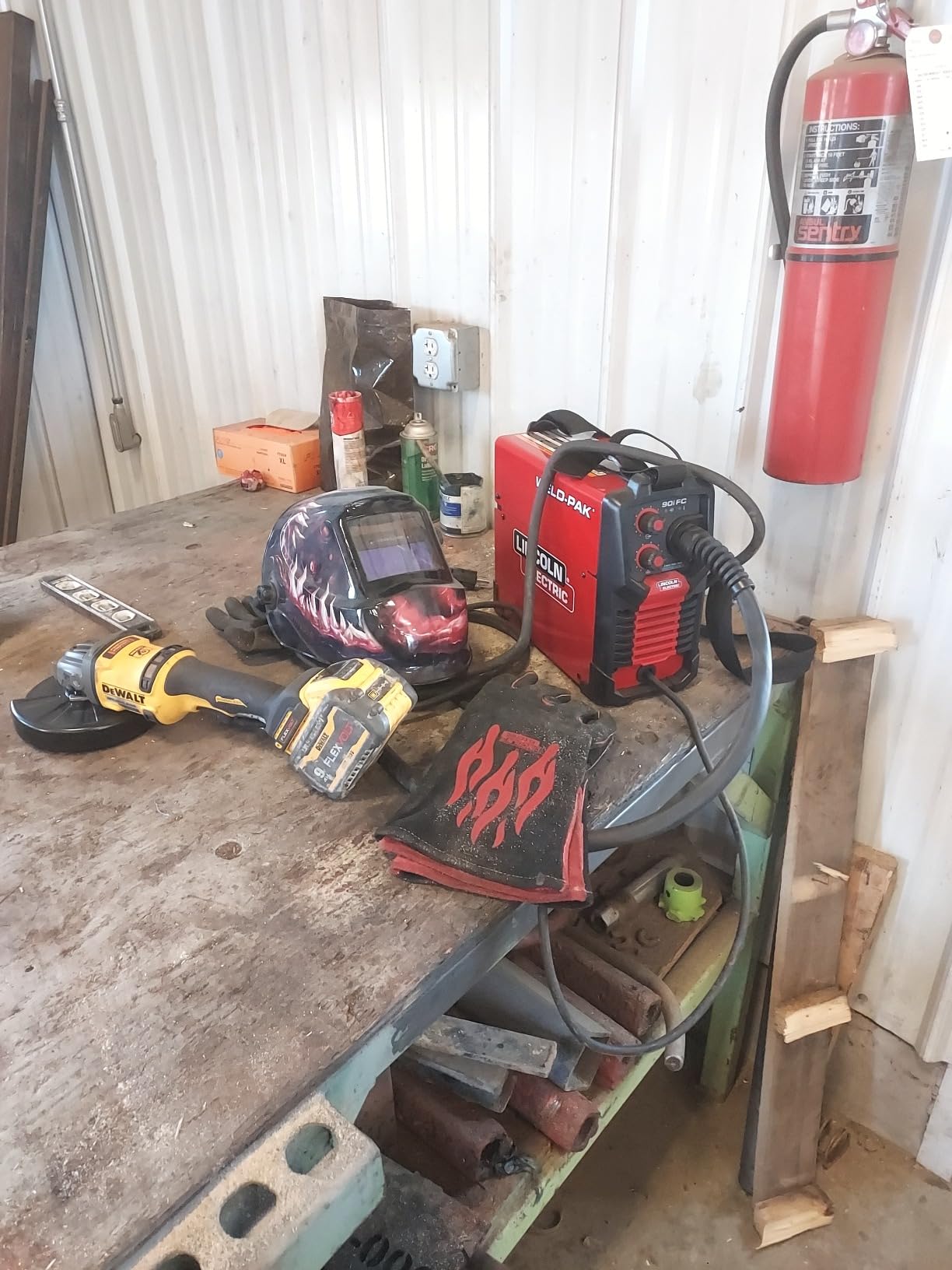
This Lincoln Electric 90i FC is the most highly rated machine we reviewed, and for a first welder that rating is earned. Owners include fabricators with decades of experience who say the weld quality here equals or beats the much larger transformer Lincoln 140. The inverter arc starts clean and holds a steady pool on thin material, which is exactly what a beginner needs.
Controls are among the simplest in the group: one knob for wire feed speed, one knob for welding voltage with infinite adjustment. No modes, no menu, no synergic curve locking you out. Lincoln put a shoulder strap on it and a protective metal case around it, so moving it to a driveway or a farm job is a one person job.
At 15 lb and 13 inches long, it is genuinely portable. Several owners use it on stainless and thin aluminum work, and the consistent comment is that this machine is far less fussy than its size suggests.
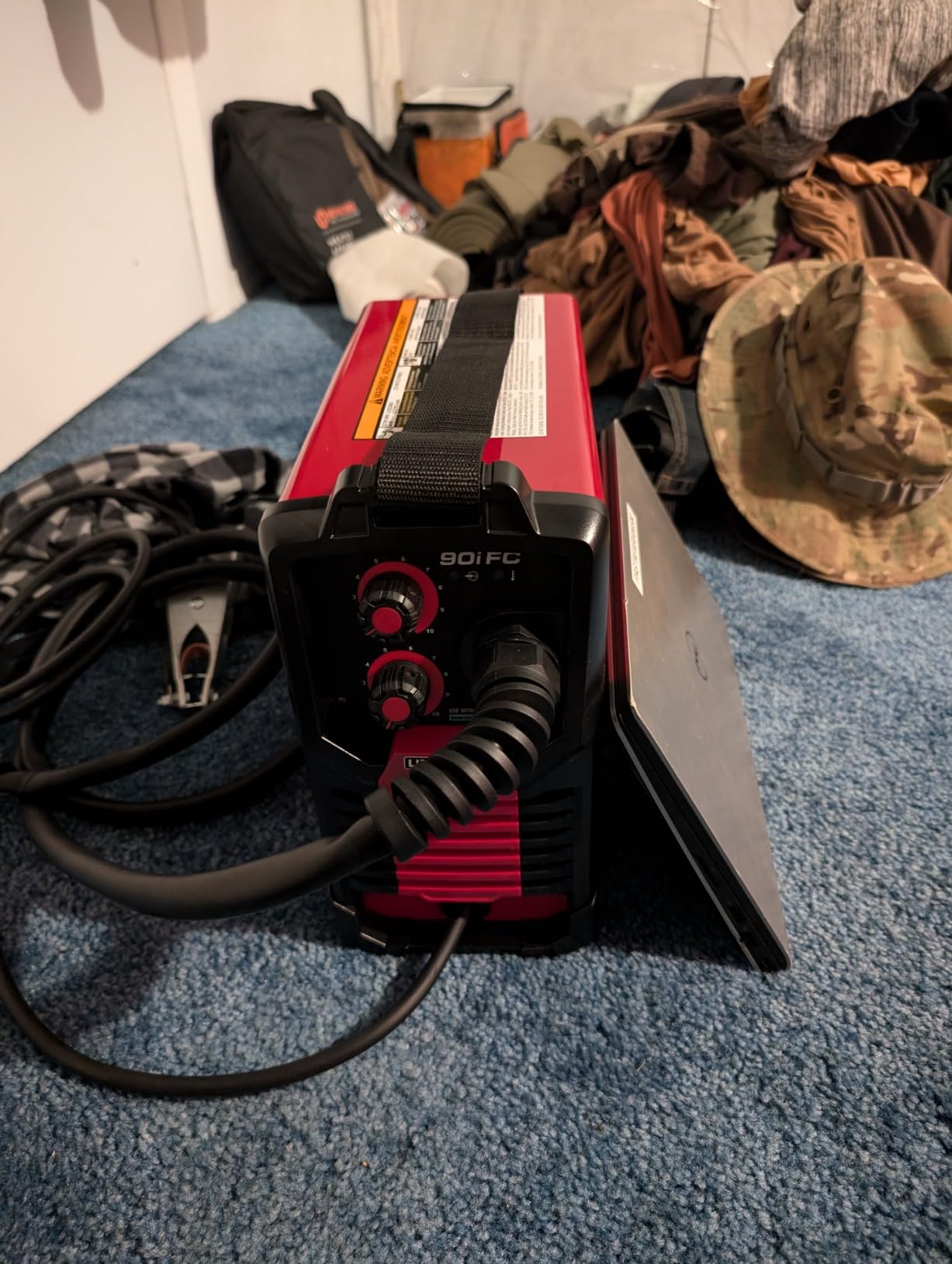
It welds material up to 1/4 inch on any 120 volt outlet, with no adapter and no circuit upgrades. That combination of power and reach is unusual in a machine light enough to carry with one arm, and it is why this one keeps showing up on shop carts and job trailers.
There is one genuine annoyance. Wire is not included, so your first purchase needs a spool added on. We would rather see it included, but you will be replacing the factory wire anyway, so treat it as a head start rather than a cost.
Spatter on thin material is the other recurring note, and it is a process characteristic rather than a fault. Flux core wire is a bit more spattery than gas MIG on thin gauge, and a slower travel speed with a small contact tip to work distance keeps it down. Budget a wire brush and a chipping hammer for the first few sessions.
What makes it the safest first purchase
Two knobs means there is almost nothing to learn before the first arc. The Lincoln name means consumables, contact tips, and replacement parts stay available for as long as you own the machine, and the 12 month manufacturer warranty is a real backstop on a first purchase.
Where it falls short
The included ground clamp braid is short and can work loose after a few welds, which is a bad symptom for a beginner who does not yet know that a weak ground causes a wandering arc. Plan on replacing the ground clamp early. Otherwise the limitations are minor for the thickness range it covers.
4. ARCCAPTAIN 130A – Best Budget Machine With a Two-Year Warranty
ARCCAPTAIN 130A Flux Core Welder MIG Welder 110V Gasless MIG Stick Lift TIG
- Two-year manufacturer warranty is longer than most budget rivals
- Synergic mode covers .030 .035 and .040 wire
- Light enough to carry by handle or shoulder strap
- Generous box contents with wire two contact tips brush and hammer
- Lift TIG needs a separately purchased torch
- 130A ceiling limits thicker material
- Tight spool and wire handling area
The ARCCAPTAIN 130A earns its place here on warranty length alone. Two years of manufacturer coverage in this price tier is unusual, and for a first machine bought by someone who has never held a welding gun, a longer warranty is meaningful protection against a dead power board in month fourteen.
Synergic control selects voltage and wire feed for .030, .035, or .040 wire, which lets you try different diameters depending on the material. There is a 10 speed wire feed control with adjustable current on top of that, so you can override the automatic setting when you start learning to listen to the arc.
At 11.79 lb with a carry handle, and compatible with a shoulder strap, it is easy to take outside. That portability matters for the kind of work that first draws people in: a gate, a mailbox post, a bumper bracket, anything that is easier to weld where it sits than where it can be moved.
The box contents go well past the wire and a clamp. You get the machine, MIG torch, ground clamp, electrode holder, a 2 lb spool of .030 wire, both a .030 and a .035 contact tip, plus a wire brush and chipping hammer. That brush and hammer are not filler, because self-shielded flux core makes spatter and every first welder needs them immediately.
Output is 130 amps on 110 volts, which handles mild steel reliably through 1/8 inch and into the 3/16 inch range with care. For a beginner that is plenty of machine. It is the thickness ceiling, not the arc quality, that limits it.
Why beginners rate it so highly
Rated 4.6 with around 80 percent five star reviews, the recurring description is best value for a first flux core machine. The synergic mode shortens the learning curve noticeably, and the light weight means you are far more likely to use it instead of leaving it on a shelf.
Where the limits are
Lift TIG capability is nominal until you buy a torch, so treat this as a two process machine for practical purposes. The spool and wire handling area is tight enough that changing a spool is more fiddly than it should be, and the 130 amp output simply will not push into 1/4 inch steel the way a 140 amp machine does.
5. TOOLIOM 135A Gasless Flux Core MIG Kit – Best for Thin Automotive Steel
TOOLIOM 135A 110V Gasless Flux Core MIG Welder Kit with Wire and Gloves
- DC inverter beads are noticeably cleaner than old transformer output
- Single knob set and forget layout shortens the learning curve
- Handles a full day of light work below 100 amps
- Gloves and wire included in the box
- Torch trigger has no safety lock so wire feeds while carried
- Spool bay is cramped and only takes a 2 lb roll
- Cables and the wire feed lead are short
Where most of these machines are sold as general purpose boxes, this one makes a strong case for thin automotive work. The 135 amp inverter output lays low spatter beads on 16 gauge and 18 gauge panel steel, which is exactly the material a first welder meets when they repair a bumper bracket, a floor pan, or a rusted body edge.
Wire feed speed runs from 120 to 420 inches per minute on .030 wire, and 120 to 308 on .035. That upper range is a real spec worth understanding, because it is what lets the machine lay a heavy bead on thicker plate instead of grinding through it. Under 100 amps the duty cycle carries a full day of light work without tripping the thermal cutoff.
Hot Start and Arc Force are both fitted, and those two features are what separate a pleasant first weld from a frustrating one. Hot Start ramps the current up as the arc strikes so you do not blow through the start of your bead, and Arc Force helps the arc stay stable when you are moving over a gap or a slightly uneven surface.
Experienced hobby welders consistently say this machine performs above its class, laying beads on 1/8 inch and 1/4 inch steel that compare well with machines costing considerably more. The single knob approach means fewer things to think about while you are learning to read the puddle.
Weight listings vary for this one too. The product weight is shown as 18.61 lb for the packaged unit, while a large share of owners cite an 11.24 lb body with a carry handle. Whichever number applies to your unit, it is a light machine you can move to a project rather than a fixed shop fixture.
There is a genuine safety concern in the design. The torch trigger has no safety lock, so the wire will keep feeding if you simply carry the gun, which means a live wire dangling as you walk. That is a habit to build early rather than a reason to skip the machine, but you should know about it.
What beginners like about the control layout
Auto voltage matching with a plus or minus 3 volt fine tune, plus a large LCD current readout, means you are making one decision instead of three on your first afternoon. Combined with the Hot Start and Arc Force, it is the shortest path to a bead that holds when you hit it with a hammer.
Where it gets in the way
The spool compartment is cramped and takes only a 2 lb roll, and the cables plus the wire feed lead are shorter than you would like for reaching across a car body. Stick performance with 6010 rods is inconsistent, so if you bought this for stick work as much as flux core, look elsewhere.
6. AZZUNO 130A – Best for Light-Gauge Craft and Hobby Work
AZZUNO MIG Welder,Flux Core Welder Machine 110V 130Amp, Gasless MIG Welding Machine IGBT Inverter Welder Portable Wire Feed Welder (110V)
- Light 8.6 lb body with a hand grip
- Complete accessory package in the box including wire and spare tips
- Synergic control works without prior welding experience
- Good fit for craft furniture and small repair work
- Plate capacity tops out at 3.0mm of mild steel
- Only accepts small 2.2 lb spools
- Flux core only with no solid wire MIG or TIG capability
- One-year warranty is shorter than rivals
This is one of the smallest machines here, at 8.6 lb, and for a specific kind of buyer that is the entire point. If your welding plans involve a metal planter, a small table frame, a gate latch, or light repair work, a machine you can carry to the workpiece with one hand changes how often you actually weld.
Output is 130 amps on 110 volts with synergic control that adjusts voltage and wire feed by amperage or material thickness. For a complete beginner that is enough intelligence in the box to get a decent bead on the first hour, without a manual, a settings chart, or a YouTube tutorial.
The included kit is unusually complete for this tier: MIG welder, torch, ground clamp, brush and chipping hammer, a 1 lb spool of .030 wire, and two spare contact tips. You are not ordering consumables to get started.
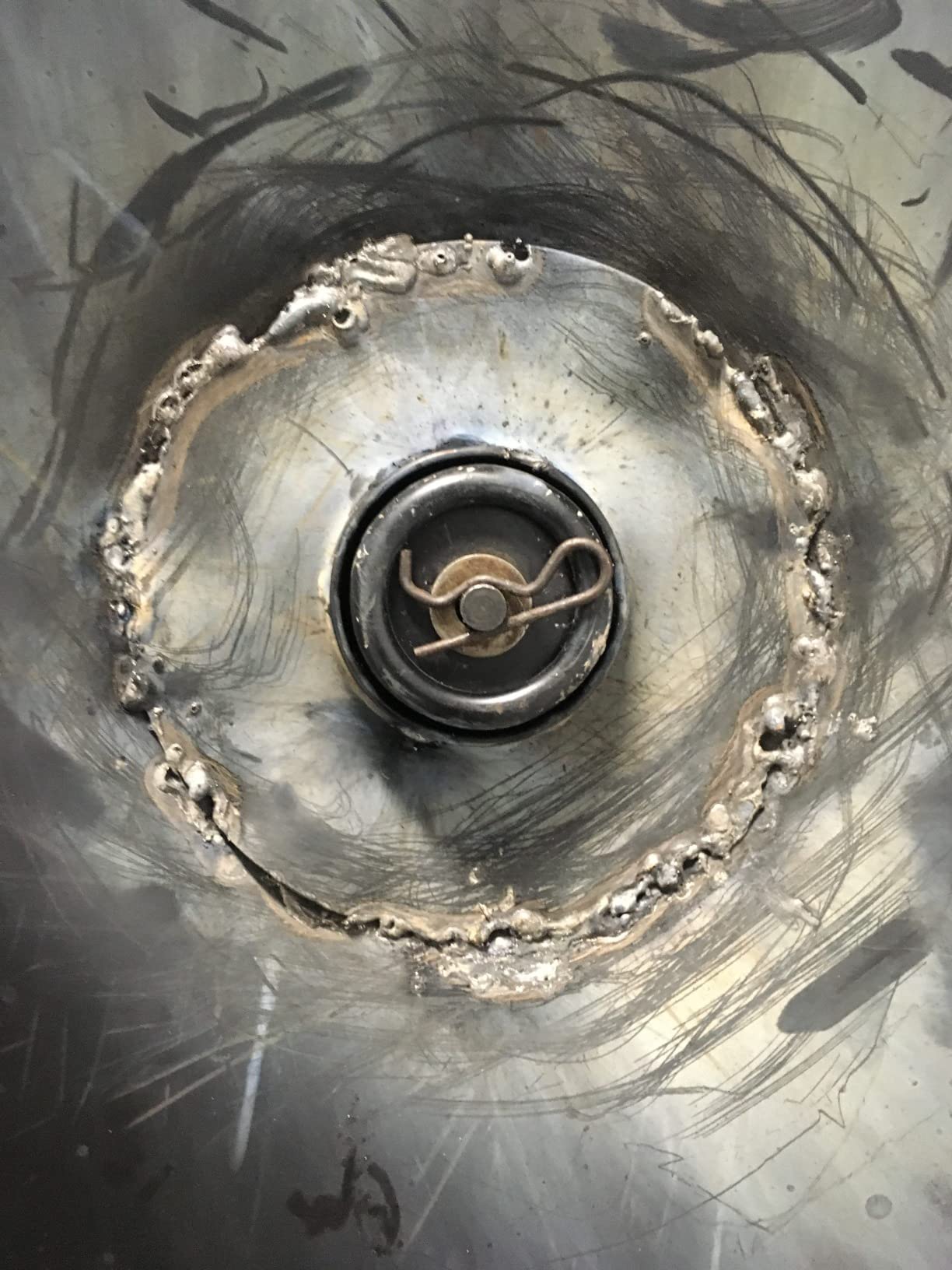
Buyers treat this as the entry point into welding, with 76 percent five star ratings across its reviews. The most common recommendation is hobby craft, small repairs, and light gauge work rather than anything structural. Read that recommendation as an accurate description of what the machine is for.
Being specific about the ceiling: this welds mild steel plate up to 3.0mm, which is about 0.118 inch. That covers 16 and 18 gauge sheet comfortably and reaches the low end of 1/8 inch. Anything heavier than that is outside its rating, and pushing past it will show you in the bead.
The small spool capacity is a genuine limitation. It takes 2.2 lb spools, so a regular welding habit means more frequent wire changes than a machine with a 10 lb bay. That is fine for occasional craft work and annoying for a weekend hobbyist with real projects.
Who this machine is built for
Someone doing light metal craft, small household fixes, and hobby work who wants the least possible commitment. At this weight, working outside, up a ladder, or in a cramped space stops being a logistical problem.
Why it will not grow with you
Flux core only, with no solid wire MIG and no TIG capability, plus a one year warranty and a 3.0mm plate ceiling. This is a first machine and a final machine for light work. If you already know you will be welding regularly, spend up a tier for headroom.
7. HITBOX 200A – Best Portable Welder With 220V Capability
HITBOX 200A MIG Welder, 110V/220V Flux Core MIG/Lift TIG/Stick 3-in-1
- Dual 110V and 220V capability at a compact size
- Exceptionally light at 8.6 lb with a built-in handle
- Quiet operation compared with transformer style machines
- Complete box with torch clamp wire and nozzles
- Measured output runs 20 to 30 percent below the displayed amperage
- Only accepts a 2 lb wire spool
- No hot start and 7018 rods arc poorly
- Instructions are hard to follow and dial labels are ambiguous
The HITBOX is the odd one out here because it is the only machine in the group that will run on a 220 volt circuit as well as 110. That matters if you own a welder of this size, because it is also the only one with headroom above the 130 and 135 amp range once you are on 220.
On 110 volts the plate rating is 4.0mm of mild steel, and the box supports .030 and .035 flux core wire across gasless flux core, stick, and lift TIG. Upgrading to a 240 volt supply opens up considerably thicker work, which makes this a reasonable bridge machine for someone who knows they will outgrow a 120V welder within a year.
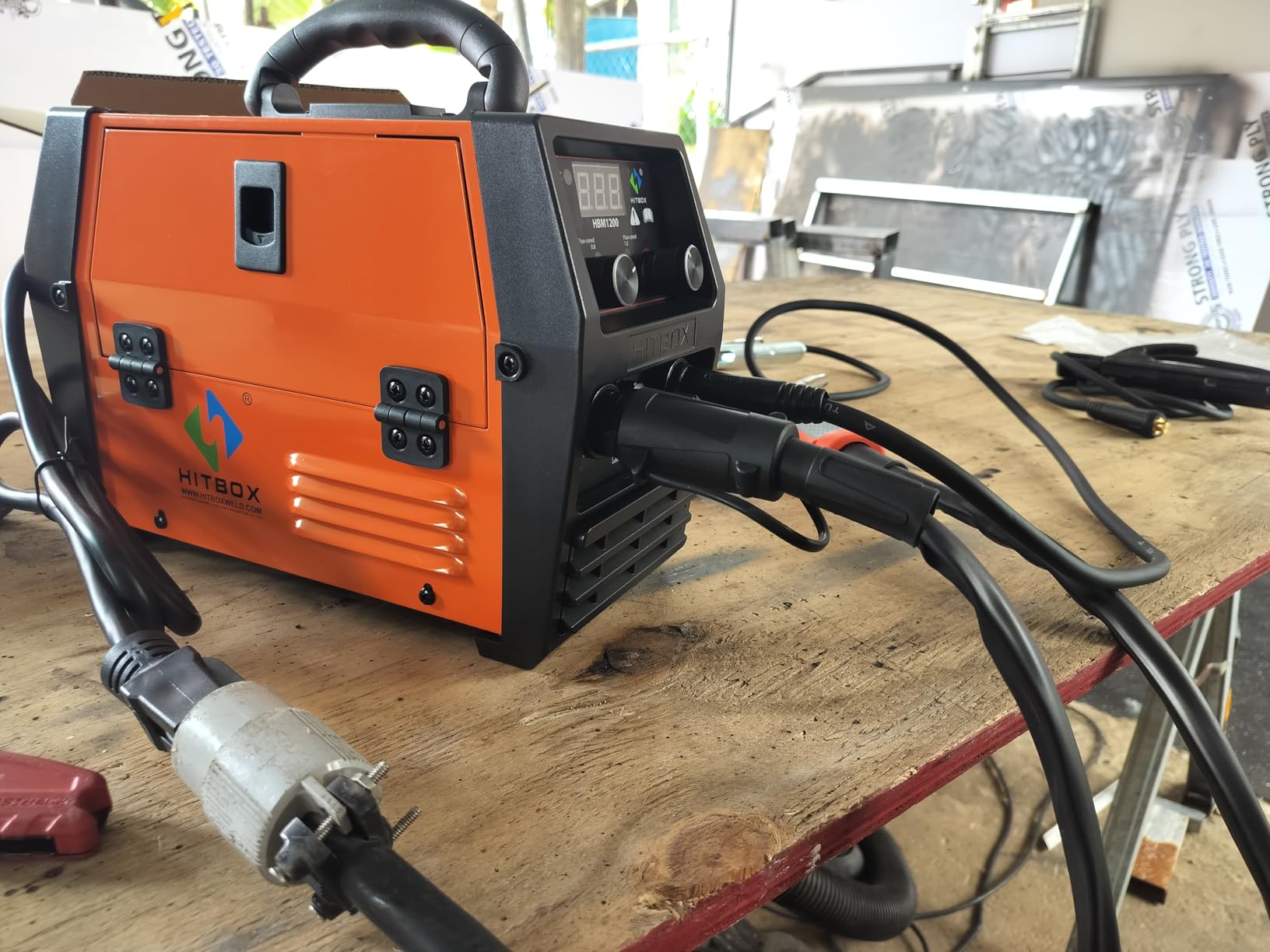
Owners upgrading from old transformer machines report two immediate wins: a visible jump in bead quality, and a big drop in weight. At 8.6 lb it is one of the most portable machines in this group, with a built-in carry handle and a small enough body to fit in a car boot.
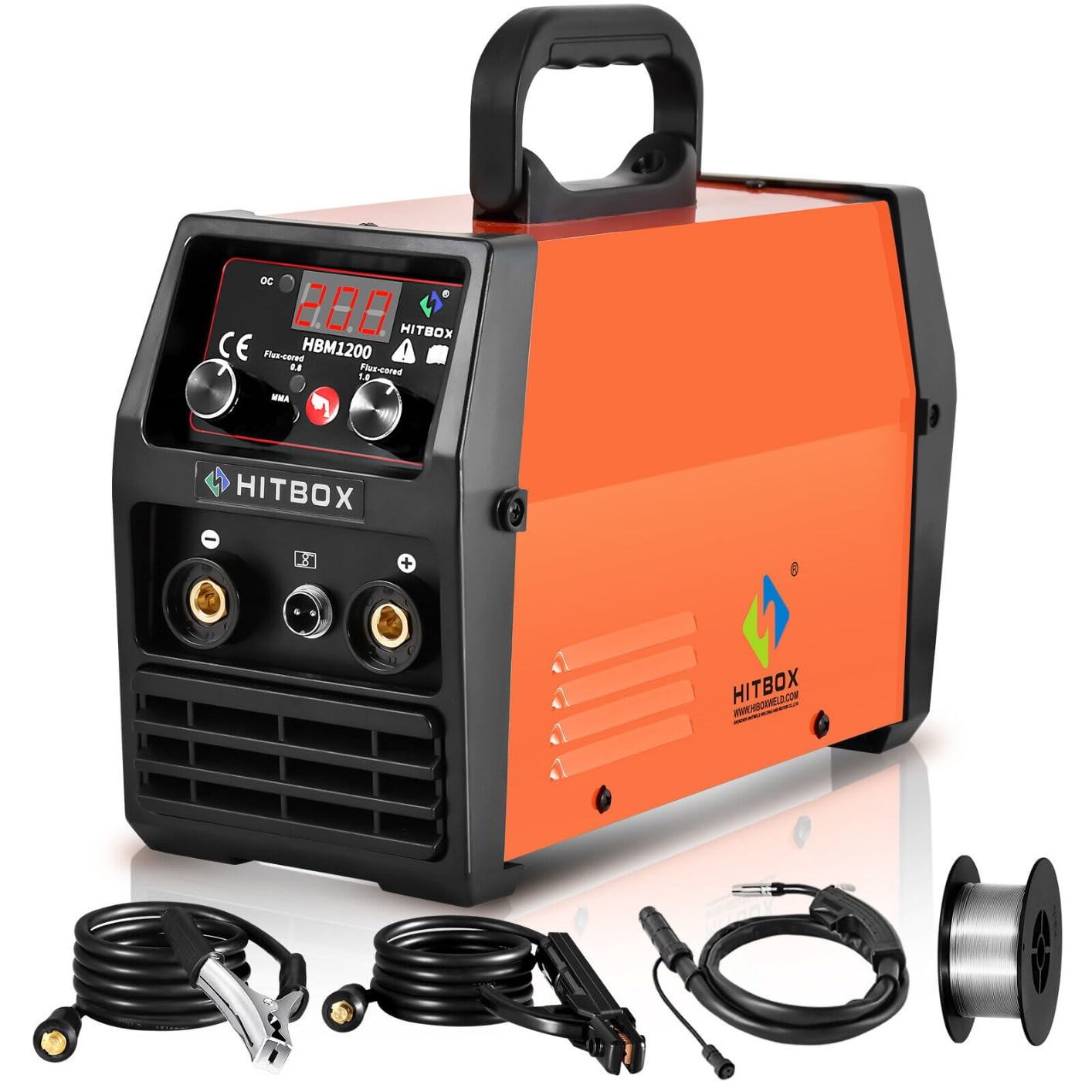
The single most useful technical comment in its reviews comes from a buyer who put a clamp meter on the output. Real output measured 20 to 30 percent below the displayed amperage, which is not a defect so much as a calibration reality. The practical takeaway is that you should treat the dial as a relative setting and judge the bead by eye, not by the number on the panel.
Operation is also quieter than the transformer welders many people are upgrading from, which sounds minor until you are welding in a garage for an evening. The box includes an 8 foot MIG torch, a 5 foot ground clamp, a 5 foot electrode holder, a 2 lb spool of .035 wire, conductive nozzles, and the brush and hammer.
Stick capability is the weak spot. There is no hot start, and 6010, 6011, and 3/32 inch 7018 rods arc poorly. If the stick side of the 3-in-1 claim is what you intend to use, test it first.
What beginners like about the range
Running .030 and .035 wire on a machine that also accepts 220V means you are not locked into one consumable habit. Owners who weld on both thin automotive sheet and thicker brackets describe clean, low spatter results for a machine this small, and some call it nearly foolproof.
What to be careful about
Calibrate your expectations against the display, and expect a rough manual. Poorly translated instructions and ambiguous dial labels are the top documentation complaint, so plan a first afternoon of practice on scrap steel with no project deadline attached.
8. YESWELDER 160A – Best for Growing Past Your First Projects
YESWELDER 160A MIG Welder, 110V/220V MIG/Flux Core/Lift TIG/Stick
- True dual voltage at 160 amps
- Works with both 2 lb and 10 lb spools of solid or flux core wire
- Gas MIG capability means you are not limited to self-shielded wire
- Synergic setup with a manual override
- Needs a genuine 220V supply for its full output
- Display panel washes out in direct sunlight
- Thin gun liner can melt on contact with a hot weld
- Stick mode struggles with 6010 rods
This is the machine to buy if you think you will still be welding in two years. The 160 amp output on both 110 and 220 volts, plus gas MIG capability, means you are not buying a dead end. Today you run self-shielded flux core outdoors. A year from now you might be running solid wire with shielding gas indoors and getting a cleaner bead than flux core can give you.
Gas MIG is the feature nobody puts on the cover of a beginner flux core welder, and it is the reason this one is different. Flux core is forgiving on dirty, rusty, outdoor steel. Gas MIG is what a fabricator will use on visible work, and having both in one machine removes the second purchase entirely.
It also takes 2 lb and 10 lb spools of .030 and .035 wire, both solid and flux core, and it handles 6010, 6011, 6013, and 7018 rods in stick mode. Synergic setup gets you started quickly, and a full manual override mode takes over once you want to control everything.
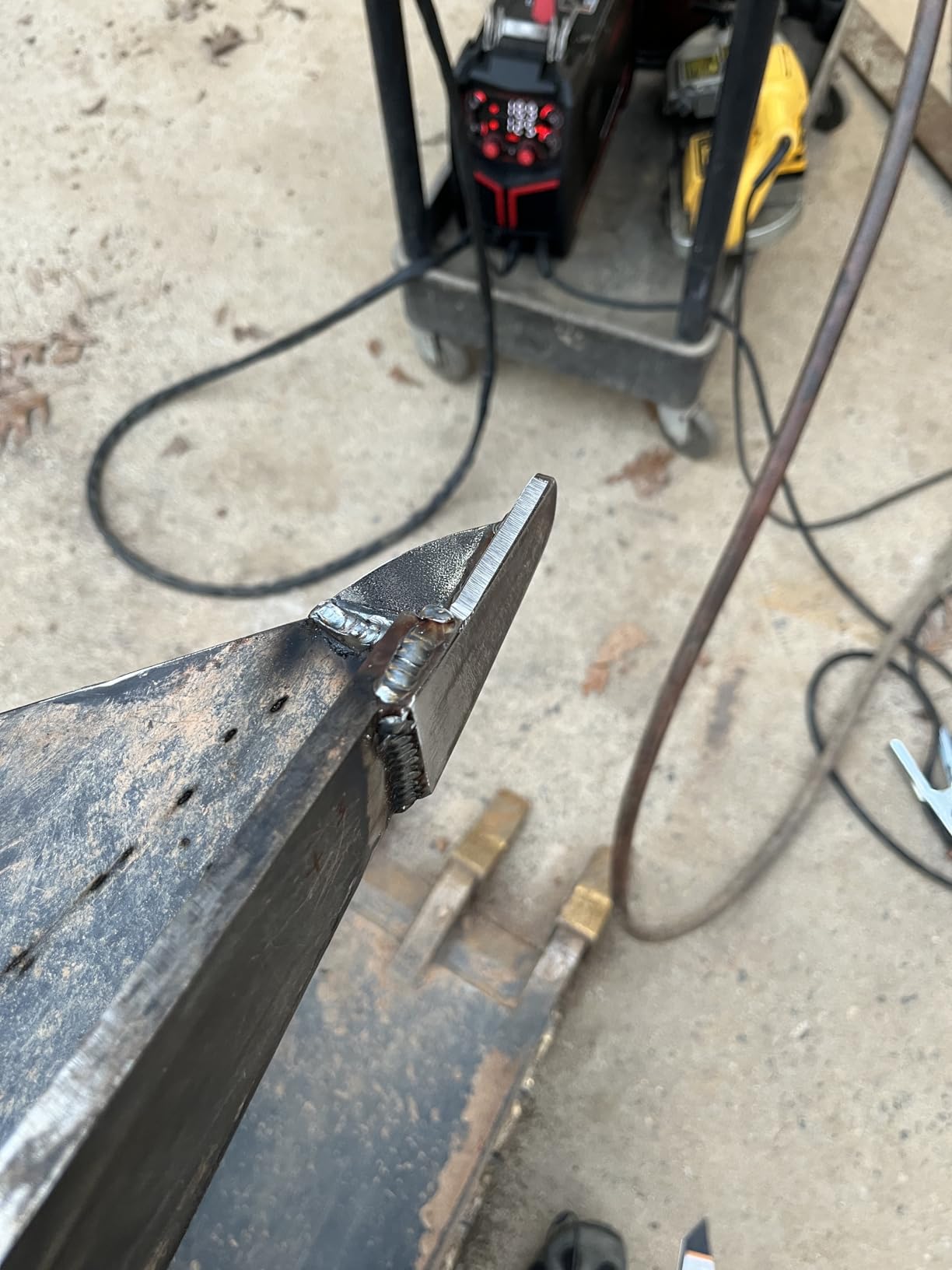
Long-term owners report more than two years of reliable operation in real shops, which is the kind of durability claim that matters when you are learning. Experienced users who own Miller and Lincoln machines rate the MIG side highly, saying setup is fast and the beads look professional after about half an hour of tuning.
The most important practical lesson is that this machine really wants 220V. At full output the 110V adapter can trip breakers, and at 110V you are giving up a chunk of the power that makes this machine worth owning. If your garage does not have a 220V outlet, budget for an electrician as part of the purchase.
Minor gripes: the display panel is thin plastic and washes out in direct sunlight, the included gun liner is thin enough to melt if you touch it to a hot weld, and the solid wire drive can slip on the power roller at high tension. None of these are deal breakers, but all three are annoying.
What makes it a growth machine
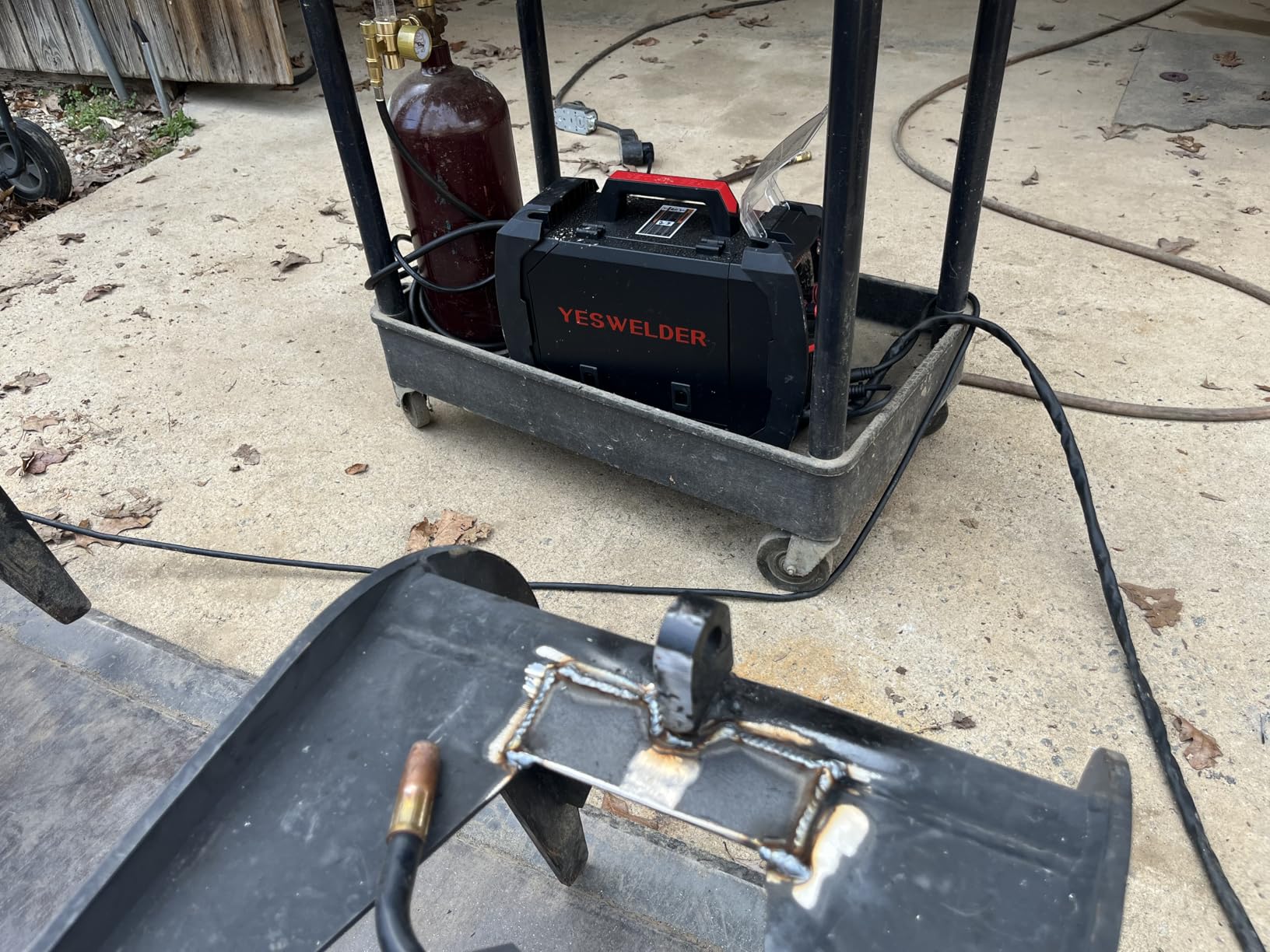
Gas MIG opens up aluminum work with the right spool, TIG capability with a proper torch, and cleaner beads on visible fabrication. It is the only machine here that runs gas-shielded MIG alongside flux core in one box, with long term owners backing that up.
Where it disappoints
It is heavier at 19.4 lb, the screen is hard to read in the sun, and the stick mode is weak with 6010 rods. Most of all it wants a real 220V circuit, which turns a simple purchase into a slightly larger project.
What Is a Flux Core Welder and Why Beginners Use One
A flux core welder is a wire feed machine that uses tubular wire with a flux powder inside its hollow core. As the wire melts, that powder vaporizes into gas which surrounds the weld pool and keeps oxygen and impurities out. It is the same shielding principle as the flux coating on a stick electrode, applied continuously through the wire. No gas cylinder is required.
That single fact is why flux core is the default first welder for home use. Gas-shielded MIG needs a bottle of shielding gas, and gas MIG is fussy about wind, rust, and mill scale because it relies on a stream of external gas for protection. Flux core carries its own protection in the wire, so it works outdoors in wind, on dirty steel, and in a garage without ventilation planning.
What you give up is finish. Flux core beads are wider, slightly rougher, and spatter more than gas MIG, and the slag on self-shielded wire needs chipping off. For an exhaust bracket, a gate, a trailer frame, or a repair nobody will look at closely, that is a trade almost everyone should take.
On the phrase gasless MIG welder: that is a marketing name, not a technical one. The process is FCAW, flux cored arc welding, and the machine is a wire feed unit. It is the same process whether a seller calls it a flux core welder, a gasless MIG welder, or a FCAW machine.
Should You Learn MIG or Flux Core First
The honest answer from experienced welders, and it is not the popular one, is that a gas-shielded MIG machine is the easier process to learn. The arc is quieter, spatter is lower, the bead is visible, and mistakes clean up instead of crumbling. One long-running recommendation on greentractortalk was simply to get the MIG first because it is the easiest to learn on. Plenty of beginners on r/Welding make the same argument from the other direction.
Here is the other half of that argument, which is also true. A good MIG machine needs a gas bottle, a regulator, and a ventilated indoor space, which turns a first welding purchase into a bigger commitment than most people expect. A frequently repeated line on r/Welding puts it more bluntly, arguing that flux core only gets called beginner friendly because of the low cost barrier and the assumption that anyone can pick it up.
Both positions survive contact with real projects, so decide based on where you weld. If you have a garage, a gas bottle, and mostly indoor metalwork, learn MIG. If you are outdoors, on a vehicle, on farm equipment, or on anything with surface rust, learn flux core and accept the cleanup. Our own answer for the person asking which single machine to buy first is still flux core, because the bottle and the ventilation are the two things beginners are most likely to skip.
If you want the full comparison across both process types, our guide to the best MIG welders for beginners covers the gas-shielded side, and our broader best welders for home use roundup covers stick, TIG, and multi-process machines.
How Thick of Steel Can a 120V Flux Core Welder Handle
Match the amp rating to your thickest material, and the numbers are straightforward. A 130 amp machine is a thin metal machine. It runs 16 and 18 gauge sheet easily, sits comfortably on 1/8 inch mild steel, and reaches the low end of 3/16 inch plate with care. It should not be asked for 1/4 inch.
A 135 amp machine adds a little headroom but stays in the same band, reaching 1/8 inch plus 3/16 inch work rather than full 1/4 inch. When a manufacturer rates a 135 amp unit to 1/6 inch, that is roughly 0.165 inch, which is the honest midpoint between the two sizes above.
A 140 amp machine is where 1/4 inch becomes realistic on a 120 volt outlet. That is why the Forney at number two on this list is the one we recommend for anyone whose project list includes thicker plate, structural tubing, or trailer work. Below 1/8 inch, the extra amperage buys you nothing you will notice.
Two rules that prevent most beginner failures. Set the amperage from the thickest material in the joint, not the thinnest, and use a 20 amp circuit for anything at or above 140 amps. Also remember that flux core wire adds its own heat, so a machine rated to 1/4 inch will burn through thinner material if you leave the amperage alone when you move to sheet.
120V vs 240V: Do You Need a Dryer Circuit
For a first machine, no. A 120 volt circuit in a garage or workshop is enough for every 110 volt unit in this roundup, and 130 to 140 amps covers the thickness range most beginners ever touch. Do not let a 240V requirement push you toward a bigger machine than your projects need.
Reach for 220 volt when two things are true: you weld regularly, and your material is regularly thicker than 1/4 inch. The 220 volt machines here run noticeably harder arcs, which means a deeper penetration bead with less amperage dial twisting. It is a genuine upgrade, and it is not necessary to learn the craft.
There is one caution about the included adapters. The 20A to 15A adapter that comes with some machines lets you plug into a 15 amp outlet, but running a 140 amp welder on a 15 amp circuit will trip the breaker, and repeatedly tripping breakers is how people damage outlets. Check what your outlet actually is before you plan the purchase.
If you already have a clothes dryer on a 220 volt circuit in the garage, converting it is a small electrical job. That is the cheapest wattage upgrade available in a home workshop.
Which Wire and Consumables to Buy First
This is the question that decides whether a beginner keeps a machine or gives up on it, and it is the one most spec pages ignore. Wire quality, not machine quality, produces most of the difference in a first flux core bead. Budget makers tend to fill the box with generic wire to keep costs down, and the result is noisy feeding, erratic push, and a bead you cannot control.
Buy self-shielded E71T-GS flux core wire in .030 inch diameter for any 120V machine. The .030 versus .035 debate comes up constantly on welding forums, and the consensus favors .030 on a home machine. It feeds more smoothly at lower amperage, it melts sooner, and it gives a finer puddle that a beginner can control. Reserve .035 for thicker plate where you want more heat and a wider bead, and never run .040 unless your machine is rated for it.
On brand, the advice is consistent across the beginner communities we read. Beginners on r/Welding describe the difference between generic wire and a branded spool as night and day, and the specific recommendation that recurs is a Lincoln NR-211 in .030, which produces noticeably less spatter. Shop for a reputable name-brand spool and avoid the cheapest spool on the shelf.
Consumables matter in the same way. A contact tip, the small copper or brass piece the wire passes through at the gun, wears with use and a worn tip causes stubbing, arcing inside the nozzle, and a wandering arc. Buy a pack of .030 and .035 tips for whichever gun you end up with, and check the tip before you blame the machine.
The nozzle on a flux core gun is a fake gas nozzle with no gas function. It exists only to shield the contact tip from spatter and heat. Flux core spatter melts regular MIG nozzles quickly, so if you see a chewed up nozzle, that is normal for the process and not a fault in the machine.
Safety Gear and Practice Steel to Buy Before the Machine
Buy the safety gear first. It costs less than the welder and it protects you on the very first arc, when your technique is worst. You need a welding helmet with an auto darkening lens, a shade 10 lens for light gauge work, leather welding gloves, a cotton or leather jacket, and safety glasses or goggles underneath the helmet for grinding and chipping.
A respirator matters more than people expect. Galvanized steel, painted steel, and rust all produce fumes that you should not breathe, and flux core fumes are heavier than MIG fumes. Weld outdoors or in a garage with the door open and a fan pulling air across your face, and fit the fan on the fresh air side. If you regularly weld galvanized or unknown coated metal, get the fume extraction rated for it.
Then buy practice material. A few pieces of 1/8 inch mild steel offcuts from a hardware store, a few lengths of 1/4 inch plate if your machine is rated for it, and something with surface rust so you learn to handle the conditions flux core is actually for. Welding coupons, small flat practice pieces, are ideal. Do your first twenty beads on scrap, not on the project.
A chipping hammer and a wire brush belong in the same order, because you will use them after every single weld. Self-shielded flux core leaves slag to knock off and spatter to scrub. Buying them on day one is the difference between finishing a project and abandoning it at the cleanup stage.
First Weld Troubleshooting: No Puddle, Too Much Spatter
No puddle, just an arc, is the most common beginner complaint and it has three usual causes. Your contact tip to work distance is too long, your wire feed speed is too slow, or your travel speed is too fast for the amperage. Start by pushing the gun closer so the tip sits about half an inch from the work, then drop your travel speed and let the puddle build.
Excessive spatter points the other way. Move the gun slightly further away, slow the travel, and check that your amperage is not cranked above what the material thickness needs. Abrasive shot blasting the steel right before welding also cuts spatter noticeably, which sounds extreme but is standard shop practice on dirty plate.
If the wire will not feed, check three things in order: the drive roller tension, the contact tip for a hole worn too large, and the liner for a kink. A kinked liner is the one people miss. Replace contact tips on a schedule rather than waiting for a problem.
If the arc wanders or sounds like a bacon sizzle, that is usually a poor ground connection. Clean the clamp to bare metal, tighten it on solid unpainted steel, and consider replacing the factory ground clamp, which is a weak point on several machines in this roundup.
Finally, if the bead is wide and rough rather than narrow and flat, you are running the amperage too high for the material or the wire feed speed too low for the amperage. Those two dials are a matched pair, and the whole game is learning the match.
Frequently Asked Questions
What is the best gasless MIG welder for beginners?
The best gasless MIG welder for beginners is the YESWELDER 135A, which gives 135 amps of 110V flux core output with synergic auto voltage matching and a large LED readout, and it comes with wire, torch, holder and ground clamp so you can weld on the day it arrives. The ARCCAPTAIN 130A is the alternative with a two-year warranty, and the Forney Easy Weld 140 is the better buy if you plan to weld 1/4 inch steel.
What is the easiest welder for a beginner?
The easiest welder for a beginner is a gas-shielded MIG machine, because the arc is quieter, spatter is lower and mistakes clean up instead of crumbling. Flux core is easier to own rather than easier to run, since it needs no gas bottle and works outdoors, but it is spattier and needs more chipping. If you have a garage, a gas bottle and mostly indoor work, start with MIG. If you are welding outdoors or on a vehicle, start with flux core.
Can a beginner learn flux core welding?
Yes. Flux core is one of the more approachable wire feed processes, and the synergic mode on most modern budget machines removes the hardest part, matching voltage to wire feed speed. A beginner with a 120V machine, .030 self-shielded wire from a reputable brand, a helmet, and a stack of scrap coupons can put down a solid bead in an afternoon.
Are Harbor Freight flux core welders any good?
Harbor Freight titanium and Easy-Flux machines are widely recommended as capable first units, and they do real 1/8 inch work. The recurring caveat from owners is the wire and consumables that come with them, which are the weak point. Buy a branded spool of E71T-GS wire and a proper ground clamp and the machine performs far better than the original setup.
What gauge of wire should I use for flux core welding?
Use .030 inch self-shielded E71T-GS flux core wire on a 120V machine. It feeds more smoothly at low amperage and gives a finer, more controllable puddle for a beginner. Choose .035 when you are welding thicker material and want more heat, and never run .040 unless the machine is rated for it.
What thickness of metal can a 120 amp flux core welder handle?
A 130 amp machine on a 120V outlet handles 16 and 18 gauge sheet comfortably, runs 1/8 inch mild steel well, and reaches the low end of 3/16 inch plate. For 1/4 inch steel you want at least 140 amps, and a machine rated to 1/4 inch on 120V is the right first buy if your projects run thick.
Do I need shielding gas for flux core welding?
No. Self-shielded flux core wire makes its own shielding gas as the flux inside the wire vaporizes, so there is no cylinder, regulator or gas hose. That is exactly why it works in wind and on rusty steel where gas-shielded MIG struggles. You only need a gas bottle if you later switch to gas MIG on solid wire.
The First Flux Core Welder to Buy in 2026
If you want one answer, take the YESWELDER 135A. It has the deepest owner base we found among the budget machines, three working processes, a synergic mode that does the hard part for you, and a box full of everything you need to make your first weld the day it arrives. It is not the most powerful machine here, and it does not reach 1/4 inch steel, but for learning on 16 gauge through 1/8 inch it is the least likely to frustrate you.
If your project list already includes 1/4 inch plate, trailer frames, or thicker brackets, go to the Forney Easy Weld 140 instead. Infinite control over both voltage and wire feed, a rating to 1/4 inch, and 10 lb spool capacity mean you will not outgrow it in a year. Just confirm you have a 20 amp circuit. If you know you will be welding for years and can get 220V power, the YESWELDER 160A adds gas MIG capability and removes the need for a second machine later.
Whichever you choose, spend a third of your attention on the wire. A branded .030 spool of self-shielded E71T-GS, a spare ground clamp, a chipping hammer, a wire brush, and a stack of scrap coupons will take you further than a machine upgrade would. That is the best flux core welder for beginners advice we can give, and it is the one most people skip.