
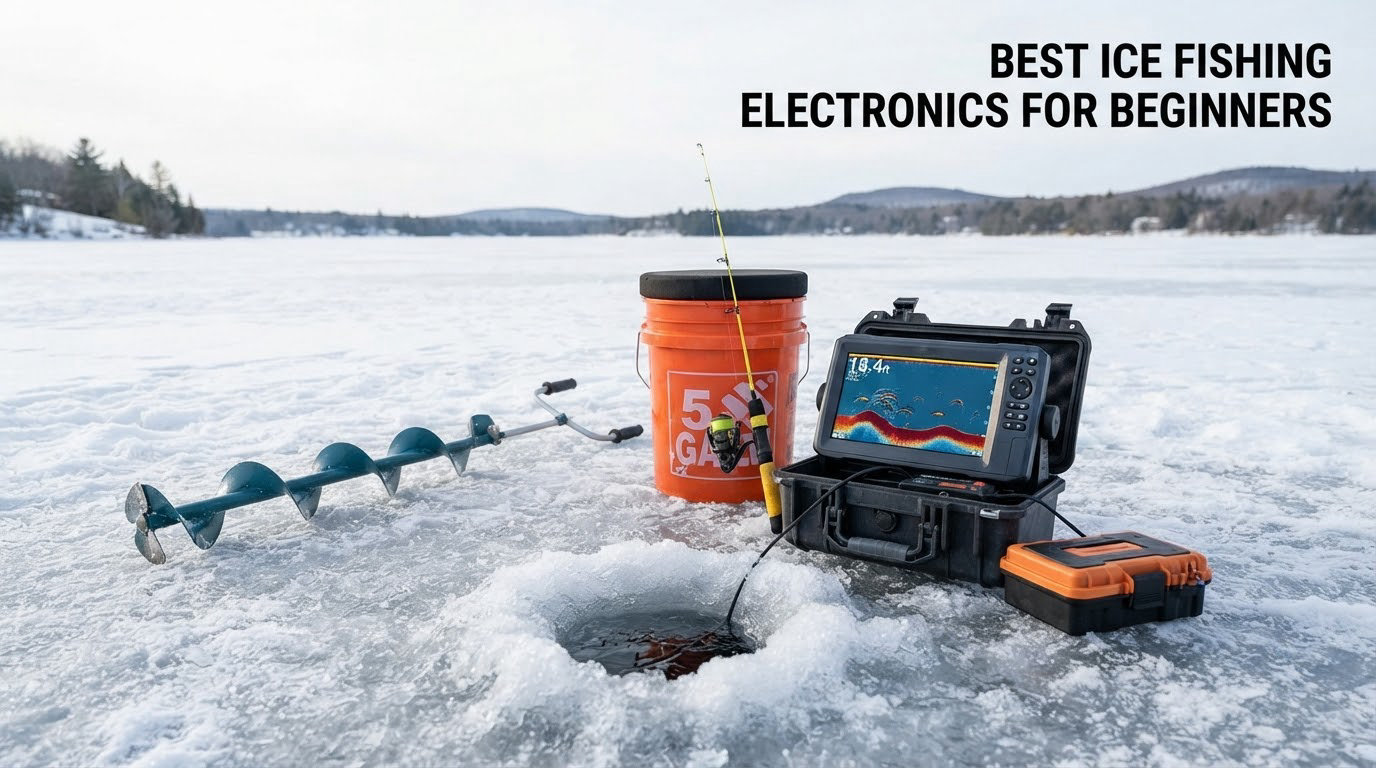
Every new ice angler eventually asks the same question: how do I stop fishing blind? The answer is electronics, and picking the right first unit matters more than most gear guides admit. This roundup covers the 12 best ice fishing electronics for beginners, from simple handheld depth finders to color sonar units with built-in flasher modes and 1080P underwater cameras.
I spent a season moving between these units on hardwater lakes, watching sonar in daylight and after dark, with frozen gloves on. That testing shaped every pick here. What matters for a beginner is not the longest feature list, it is whether the display is readable on a sunny lake, whether the buttons respond through gloves, and whether the battery still works at the end of day four.
A quick note on the rest of your kit. Electronics solve the finding-and-finding-again problem, but they do not keep you warm, and pairing a sonar unit with the right ice fishing rods and a solid ice shelter for cold weather changes the whole day. Many first-season anglers spend their budget on a display and then freeze while waiting for it to boot up.
Below, each pick includes who it suits, where it falls short, and the honest cost of ownership beyond the unit itself. Updated for 2026.
Top 3 Picks for Ice Fishing Beginners in 2026

Garmin Striker 4 Portable Kit
- Built-in flasher mode
- CHIRP sonar
- Waypoint map
- Rechargeable battery
Garmin Striker Plus 4 Ice Bundle
- Bundled ice transducer
- 4-inch color screen
- Quickdraw mapping

The Striker 4 wins the roundup because it does three jobs in one box: depth, fish arches, and marked spots to come back to. The Striker Plus 4 Ice Bundle is the one to buy if the transducer is what you are still shopping for, since it ships with a dual-beam ice transducer in the box. The FishPro camera earns its place because nothing else in this list shows you the actual fish moving on your lure.
12 Best Ice Fishing Electronics at a Glance in 2026
| Product | Specifications | Action |
|---|---|---|
| Garmin Striker 4 Portable Kit |
|
Check Latest Price |
| Garmin Striker Plus 4 Ice Bundle |
|
Check Latest Price |
 Vexilar GP1812 FL18 Genz Pack Vexilar GP1812 FL18 Genz Pack |
|
Check Latest Price |
| FishPro 7 inch 1080P Camera |
|
Check Latest Price |
 Venterior Wireless Castable Sonar Venterior Wireless Castable Sonar |
|
Check Latest Price |
 Deeper PRO Plus 2 Deeper PRO Plus 2 |
|
Check Latest Price |
 Eyoyo 7 inch Underwater Camera Eyoyo 7 inch Underwater Camera |
|
Check Latest Price |
 SUNMORN 4.3 inch 1080P Camera SUNMORN 4.3 inch 1080P Camera |
|
Check Latest Price |
 LUCKY 1108 Handheld Sonar LUCKY 1108 Handheld Sonar |
|
Check Latest Price |
 Yoocylii Handheld Fish Finder Yoocylii Handheld Fish Finder |
|
Check Latest Price |
 Lowrance Eagle 4 inch Lowrance Eagle 4 inch |
|
Check Latest Price |
 ReelSonar iBobber ReelSonar iBobber |
|
Check Latest Price |
Two columns in that table matter more than the rest for a beginner. Screen type decides what you can actually see, and whether a transducer is included decides whether the unit works the day you open the box. Several entries ship as a bare display and expect a separate ice ducer, which is where a lot of first-season frustration comes from.
1. Garmin Striker 4 with Portable Kit – the easiest all-round first unit
- Keyed buttons are easy to hit with gloves
- Built-in flasher mode suits ice and vertical jigging
- CHIRP sonar gives crisp arches and good target separation
- Waypoint map marks brush piles and docks
- Rechargeable battery runs a full day
- No ice transducer arm is included
- Documentation is thin so setup needs a walkthrough
- Cable stiffens in very cold water
My first season with the Striker 4 was mostly spent on the flasher mode rather than the graph, which tells you something about where its value sits. The 3.5 inch LCD is small, but the keyed buttons have enough travel that they respond through thick gloves, and the whole kit weighs 8 ounces, so walking a hundred yards between holes never became a chore.
The waypoint map is the feature that quietly earns its keep. Mark a brush pile at 17 feet on your first pass, walk back to it at 4pm, and you fish the same spot instead of drilling a random hole next to it. The bundle also includes a foam float, a tilt and swivel mount, a rechargeable battery, and transom and motor mounts for summer use.
Technically it transmits 200 W RMS and reads to 1600 feet in freshwater, though nobody needs anything like that depth on a first outing. The CHIRP sweep is what produces the clean fish arches, and the transducer picks up small jigs clearly enough that I could see a 1 inch spoon on the drop. Interference from neighbouring anglers was minimal, which matters more in a crowded shack than any spec sheet suggests.
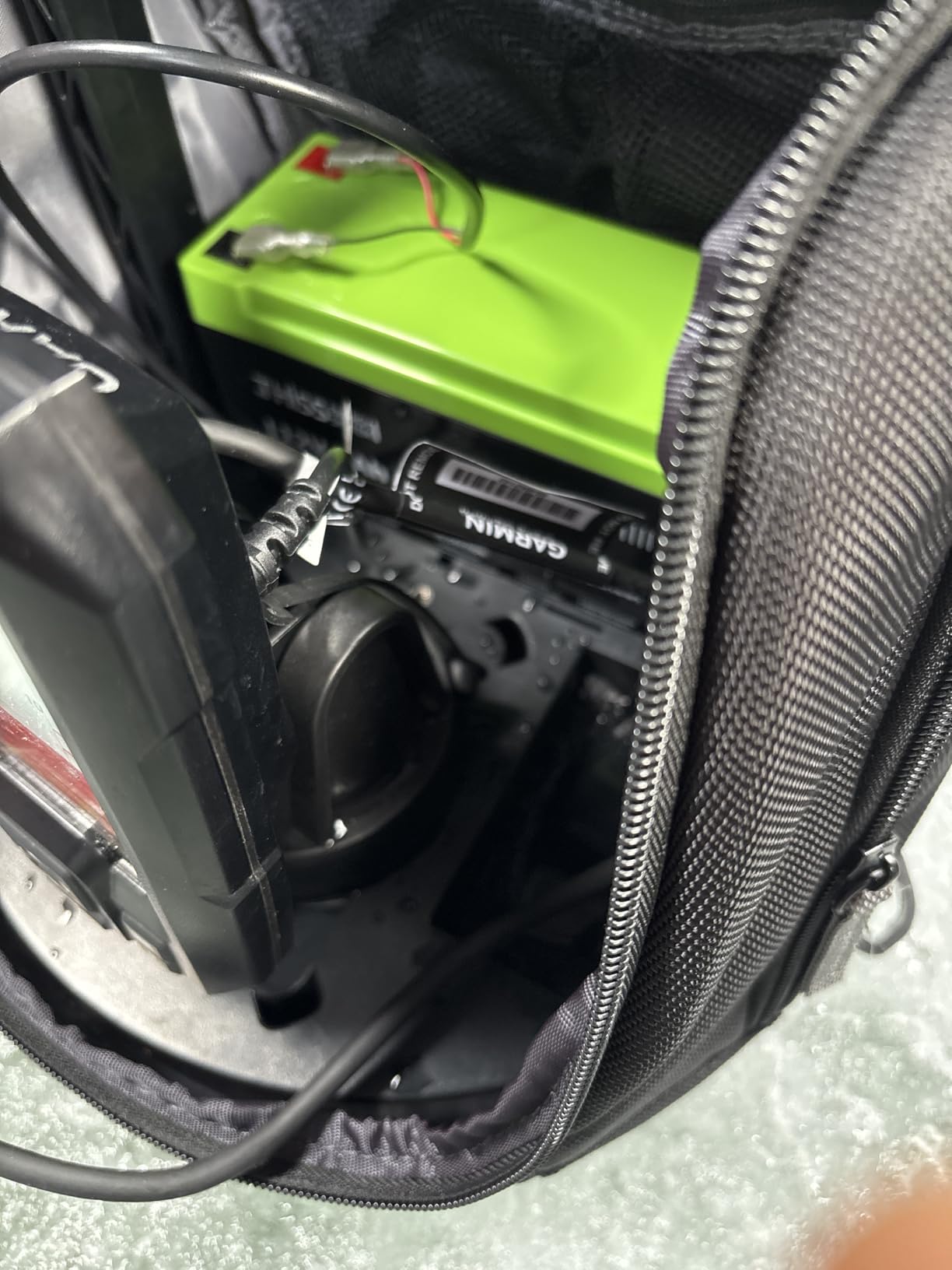
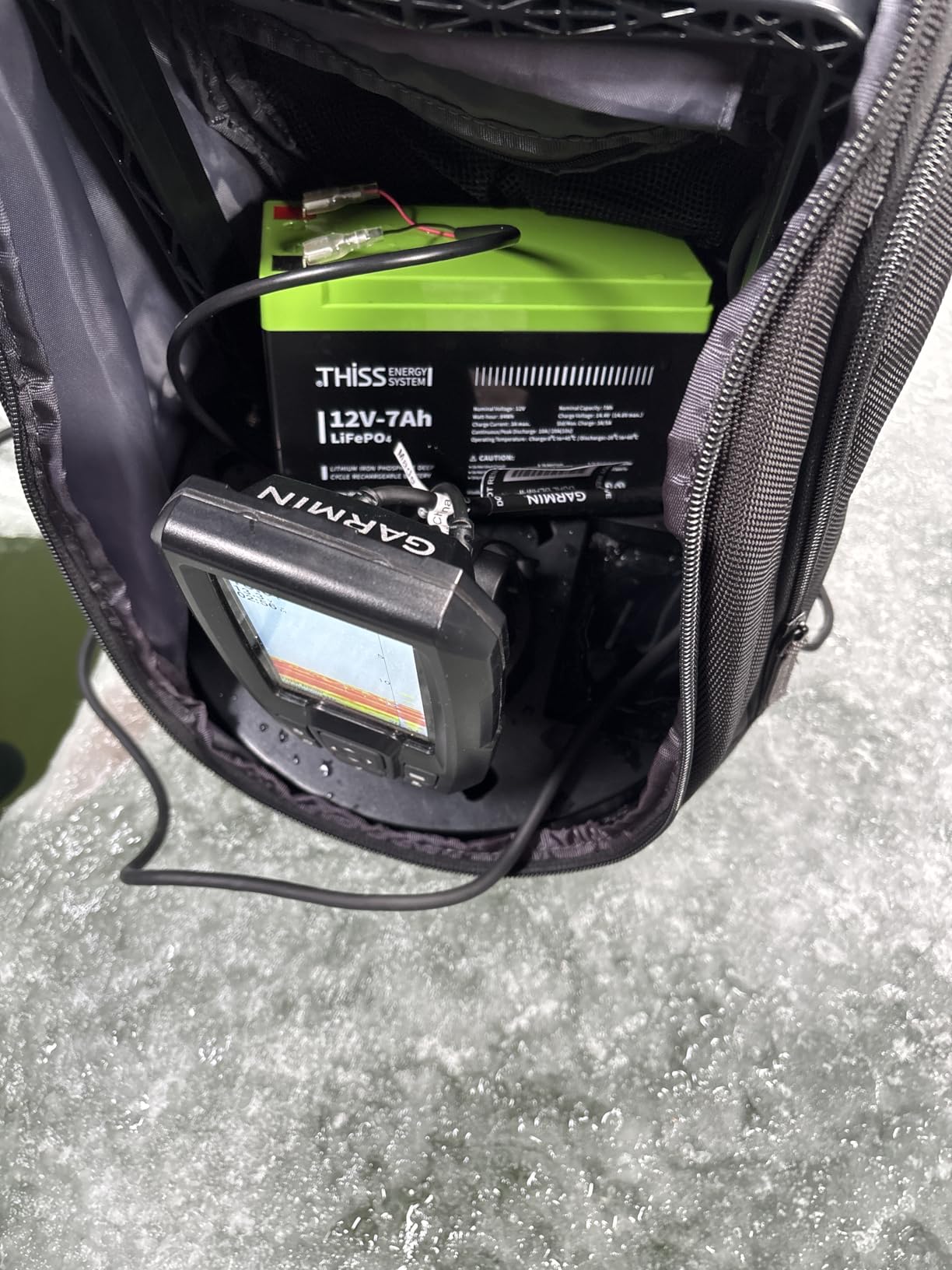
Two real drawbacks showed up in my testing. The instructions are poor enough that I watched setup videos instead of reading them, and the power cable lacks a quick-disconnect Y-connector, so the battery terminals must be unclipped to recharge. Several owners in the review pool swapped in a lighter LiFePO4 battery, which solved the overnight problem cleanly.
Who the Striker 4 suits
It suits someone who wants one device to cover the whole season. A beginner who plans to add open-water fishing in the spring gets a portable kit with mounts included, so the same box handles the dock in July. It also suits anyone fishing near other anglers, because owners report it running alongside competing flashers in a shared shelter with little display clutter.
If your local water is deep and you are jigging vertically, the flasher mode is the honest reason to pick it. r/IceFishing regulars repeat the same advice year after year: start with something simple, and learn to read the display before you chase resolution.
Where the Striker 4 falls short
It does not include an ice-specific transducer, and many buyers add one separately, so budget for that before opening the box. There is also no transducer arm, which means the unit sits closer to the hole edge than ideal and can pick up more noise from slush and moving ice.
The soft case handle is a pocket rather than a protruding carry handle, and several owners find it slippery with gloves on. Fish detection is less convincing than the depth reading, so treat the fish arches as a guide rather than a promise. For a first unit, that is still the right trade.
2. Garmin Striker Plus 4 Ice Fishing Bundle – the one-box ice package
- Dual-beam ice transducer with CHIRP traditional sonar
- Transducer battery charger float and bag all included
- Built-in GPS plus Quickdraw Contours mapping
- Color screen is easy to read inside a shelter
- Two year limited warranty
- Costs more than generic portable sonar
- Menu system needs a short learning curve
- Bundle bulk is noticeable when carrying it between holes
Most of the confusion in a first season comes from opening a box that has a display, a cable, and no ice transducer. This bundle removes that problem entirely, and that is why it edges out the Striker 4 for beginners who have never drilled a sonar hole before.
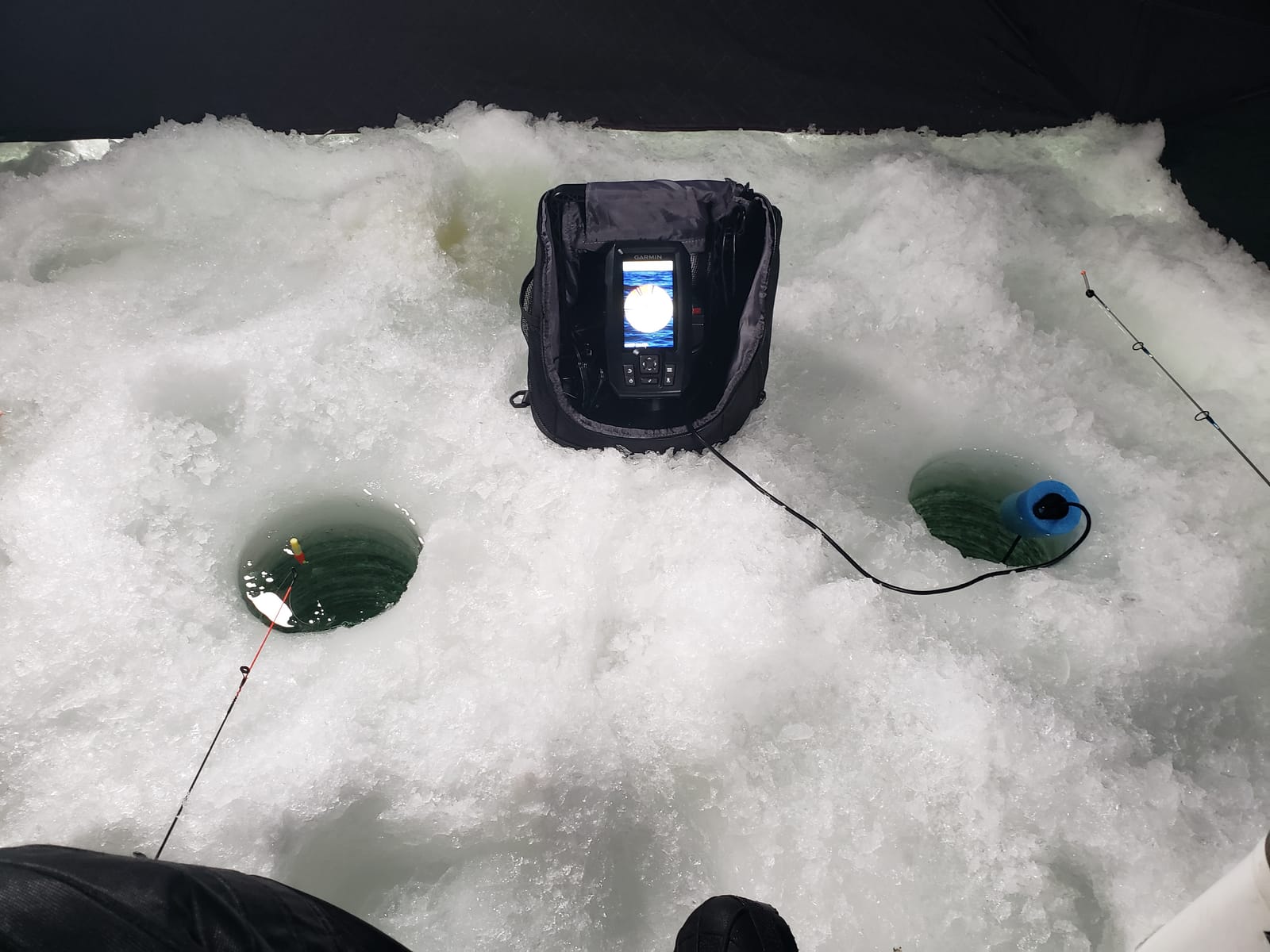
The bundled Dual Beam-IF ice transducer is the headline. Dual beam plus CHIRP traditional sonar gives strong target separation, which is the number that decides whether you can tell a fish from your lure at 25 feet. The 4 inch WVGA color screen is a genuine step up from the plain LCD on the smaller kit, and the built-in flasher mode still does the vertical jigging work.
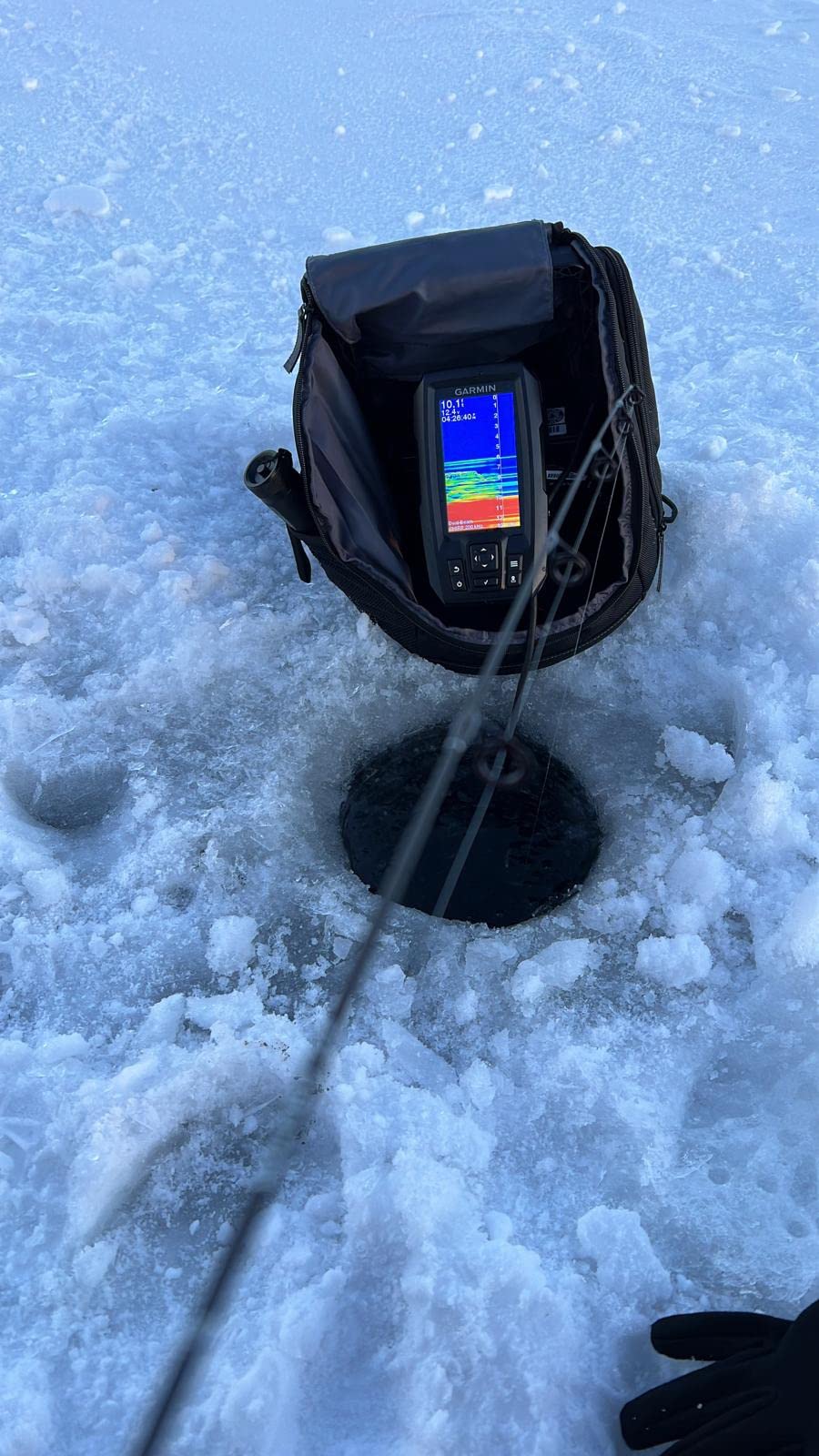
Built-in high-sensitivity GPS with Quickdraw Contours means you can mark and return to spots without guessing. Reviewers describe marking hot spots, docks, and ramps and navigating back to them, and the display stays readable through the plastic wall of a shelter, which matters once the sun drops.
The learning curve is real but shallow. Menus reward a short orientation, and the defaults are sensible enough that most beginners never open the settings again. If you like button-driven simplicity, the Garmin keypad approach feels familiar within ten minutes of the first trip.
Who the Striker Plus 4 Ice Bundle suits
It suits beginners who want a complete, ready-to-go ice package. If you fish a lake with structure, weed lines, and shallow drop-offs, the mapping features give you a reason to return to productive water instead of drilling new holes all day.
It also suits anyone who will use one unit for both hardwater and open water. That makes it a reasonable first electronics purchase for a household that also fishes from a small boat, since the same sonar serves both seasons.
Where the Striker Plus 4 falls short
The bundle bulk is the honest drawback. Moving it between holes at the end of a long walk takes a little planning, and it is the bulkiest of the portable options here. If you plan to run and gun on foot all day, weight matters more than screen color.
The price also sits above entry-level generics, and the interface is denser than a beginner expects at first glance. If your goal is simply to find depth and drop to the bottom, that spend buys capability you will not use yet.
3. Vexilar GP1812 FL18 Genz Pack – the analog dial done properly
- Purpose-built flasher from a long-established ice brand
- 12 degree ice transducer included in the pack
- Flasher and transducer arrive as one bundle
- Manufacturer warranty included
- Over 10 pounds to carry onto the lake
- Analog dial shows less history than a color graph
- Cannot mark a spot to return to later
The flasher is the oldest ice fishing electronic and still the fastest way to learn what a sonar return means. This Vexilar package pairs the FL-8 style analog flasher with a 12 degree ice transducer, and the narrow cone gives you a tight circle of information directly beneath the hole. Nothing about it is complicated, which is exactly the point.
On the ice, the dial reads instantly. Depth, bottom hardness, weeds, your jig, and any fish drifting through the cone all appear as moving marks, and you learn the language in a single afternoon. If you plan to jig vertically all season, that learning is worth more than any amount of screen resolution.
Who the GP1812 suits
It suits an angler who wants a dedicated hardwater tool rather than a device that doubles as a boat unit. A narrow 12 degree cone is exactly what you want in deep water, and the analog dial has no menus to learn, no updates, and nothing to fail except the battery.
It also suits anyone buying for a fishing partner or parent who will not read a manual. There are no settings, and the display has worked the same way for decades, which is why the flasher community still talks about these units as long-term purchases.
Where the GP1812 falls short
At over 10 pounds, this is by far the heaviest item here, and that is a real cost when you are walking a lake. The analog dial also gives you no scroll-back history, so a fish that passed through the cone 30 seconds ago leaves no trace to review.
There is no GPS and no way to mark a productive hole for later, and the single display mode means you cannot record a picture of a spot. If your season depends on finding new water, that is a genuine limitation to weigh before you commit.
It is a specialist choice, and specialists are rarely first purchases.
4. FishPro 7 inch 1080P Underwater Camera – the best way to actually see the fish
- True 1080P image on a 7 inch IPS screen
- 10000mAh battery runs and charges over USB-C
- 82 ft aramid cable rated to 88 lb
- One-button IR and LED lighting switch
- Flip-up screen cover doubles as a sunshade
- Heavy backscatter at night with lights on
- No HDMI port and no video recording on this model
- Screen is hard to read in direct sun without a tent
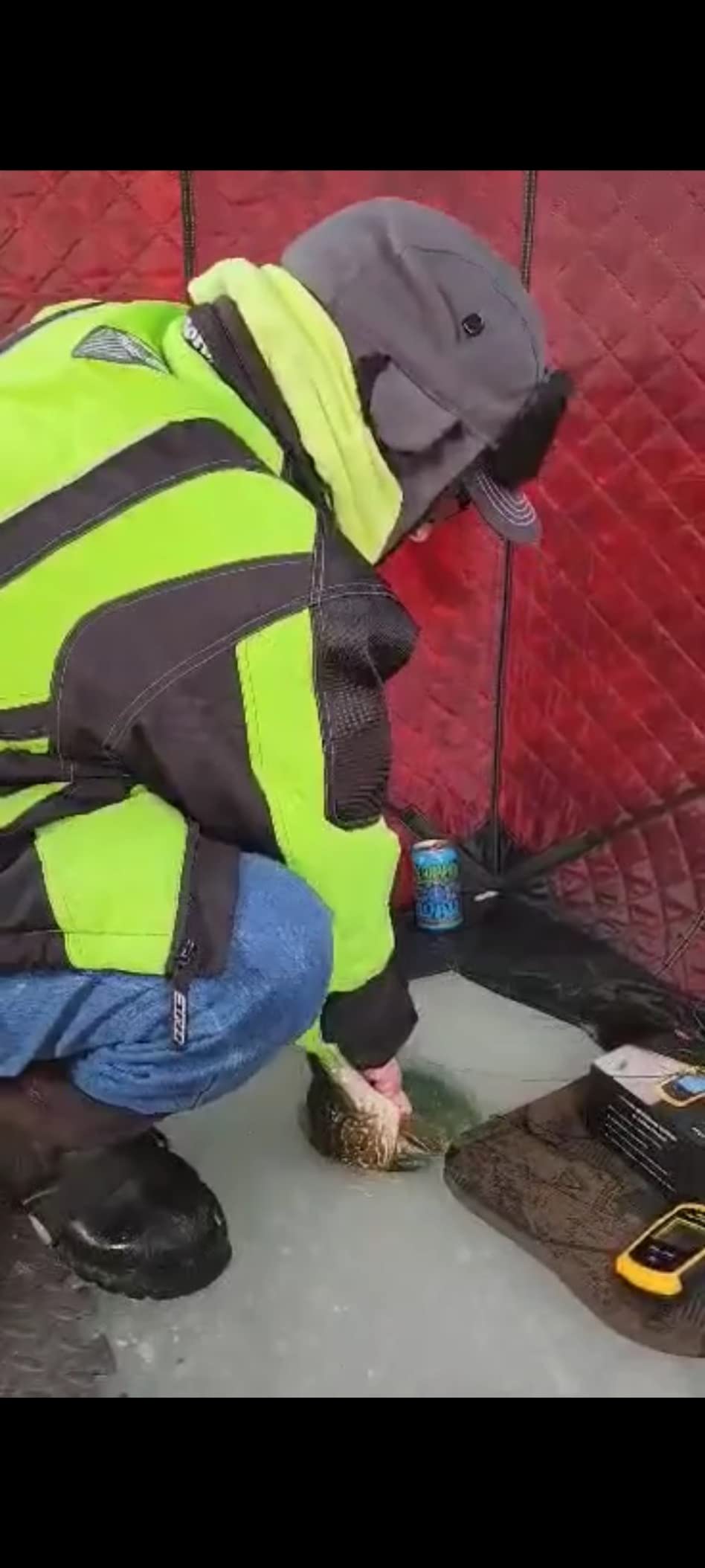
Sonar tells you a fish is there. A camera tells you whether it will eat. That difference is why a camera earns its own category in a beginner roundup, because watching a perch decide whether your jig is food shortens the learning curve faster than any sonar setting.
The image quality is the story here. This is true 1080P rather than the 1000TVL chips used in cheaper cameras, shown on a 7 inch full-color IPS panel that stays readable at many angles. The 10000mAh battery is rated for up to 20 hours, and because it takes USB-C you can run it while it charges, which removed my usual midday anxiety.
![[FishPRO® 2026 Upgrade] NO.1 HD 1080P Underwater Fishing Camera 7'' IPS- w/10,000mAh (Ease to Use) N/DVR Ice Fishing Camera, Fish Finder Camera for Ice Lake Boat Fishing w/USB-C, LED+IR, 82ft customer photo 1](https://www.talkofthehouse.com/wp-content/uploads/2026/09/B0D7PDWFWT_customer_1.jpg)
Below the ice, the HD1080P camera runs on an 82 foot cable with a 1.8 mm aramid fiber core rated to 88 lb of tension, which survives the repeated drop-and-haul cycle of hole drilling. The adjustable fin sets the camera at 45 or 90 degrees, and a single button switches between IR and white LED lighting, so you can match the light to murky or clear water.
Owners report that the service side is generous too, with a cracked camera replaced under the 12 month warranty at no charge. That matters for a device that is repeatedly dropped onto rocks and ice edges.
![[FishPRO® 2026 Upgrade] NO.1 HD 1080P Underwater Fishing Camera 7'' IPS- w/10,000mAh (Ease to Use) N/DVR Ice Fishing Camera, Fish Finder Camera for Ice Lake Boat Fishing w/USB-C, LED+IR, 82ft customer photo 2](https://www.talkofthehouse.com/wp-content/uploads/2026/09/B0D7PDWFWT_customer_2.jpg)
Who the FishPro camera suits
It suits beginners who fish visual species, particularly perch, crappie, and trout, where seeing the strike turns a guess into a decision. It is also the right pick for teaching someone to fish, because you can point at the screen and explain what the fish is doing.
For anyone fishing deep water, the 82 foot reach matters, and the 20 hour battery means one charge covers a long trip. The magnetic monitor-to-spool connection makes it fast to move between holes without rewinding a reel.
Where the FishPro camera falls short
Night vision is its weak point. With the lights on, backscatter from suspended ice particles can wash out the image, and murky water degrades fast. Clear late-season water and daylight are where this camera performs best.
This N/DVR model has no HDMI port and no video recording, so it will not capture footage of a bite. Several buyers also mention glare in direct sun despite the flip-up cover, and a motorized tripod is sold separately if you want the camera to hold position alone.
5. Venterior Wireless Castable Sonar – the Most Versatile that skips installation
- Truly wireless with no hull mounting needed
- Fast out-of-the-box setup
- Selectable black or white screen background
- Accurate depth and bottom contour readings
- Rechargeable sensor and receiver
- Wide beam bounces off ice-hole walls until settings are dialled in
- Cold weather noticeably drains the sensor battery
- Small medium and big size classes are subjective
Castable sonar skips the whole transducer question. There is nothing to hang under a shuttle, no cable to freeze, and no transducer arm to argue with. You drop the sensor, watch the screen, and move. For a beginner who has never set up a flasher, that simplicity is worth a lot.
The display is a 2.6 inch color TFT with selectable black or white backgrounds, which is a small detail that decides whether you can read it in daylight or at dusk. It shows depth, temperature, fish size, fish depth, and bottom contour, and the 105 degree beam covers a wide area when you are scouting a new lake from shore.
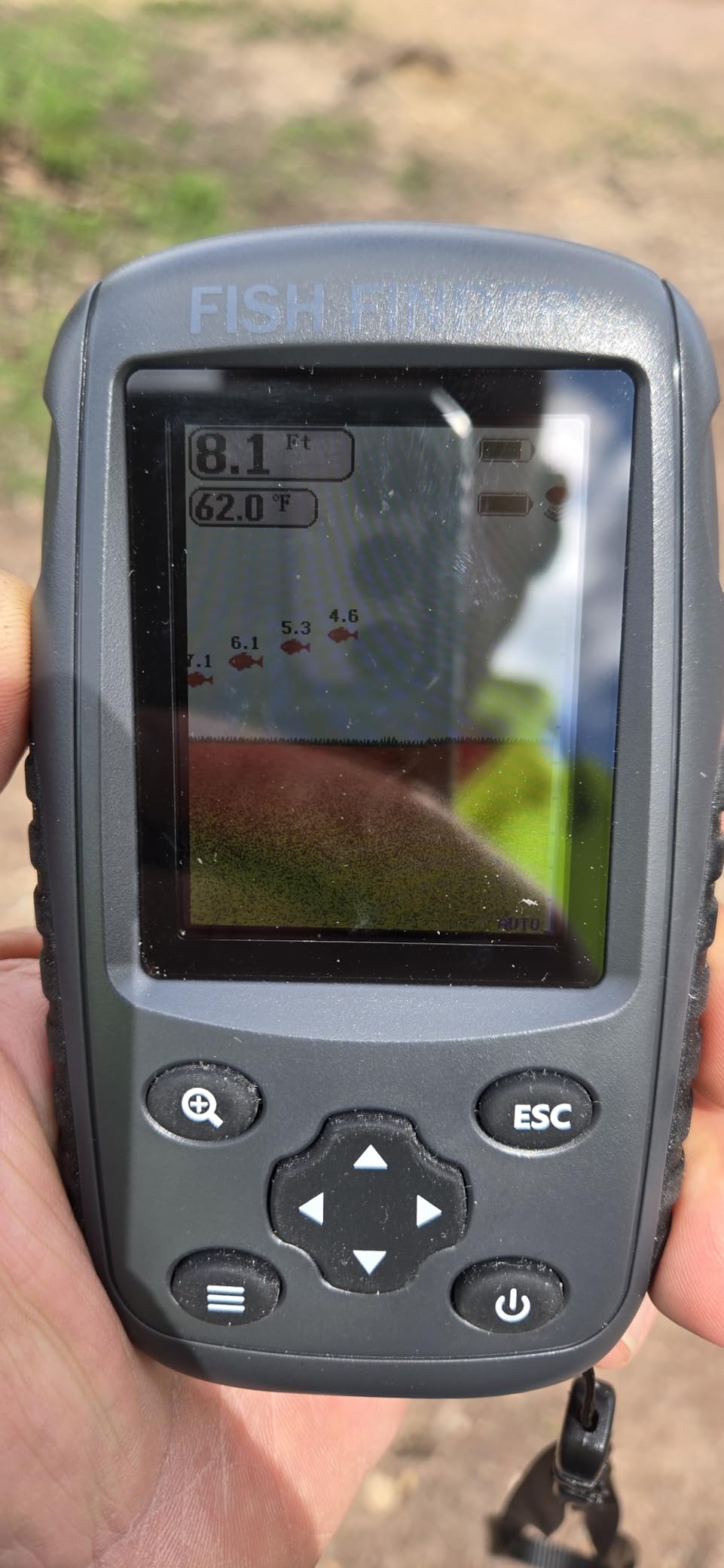
The wireless range between sensor and unit is 262 feet, and the usable depth range runs from 2.6 to 164 feet. On my first outing the depth and bottom contour readings were accurate enough to find a ledge I could see from shore and then confirm under the ice.
Battery life is roughly three-plus hours per charge for both sensor and receiver, and the whole unit weighs 15 ounces, so it fits in a tackle box. A two year warranty is included.
Who the Venterior suits
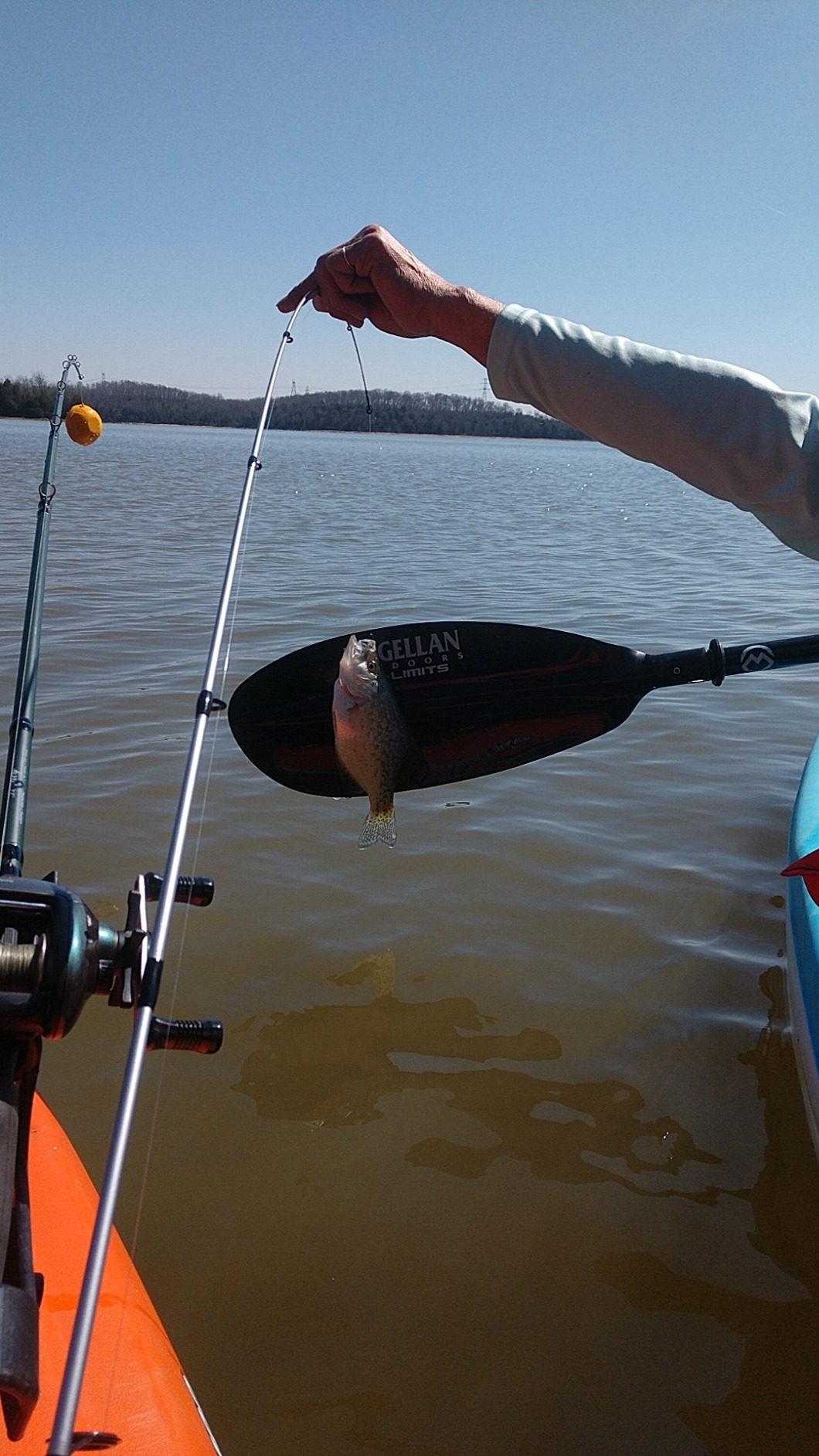
It suits anglers scouting water before they commit to drilling, and beginners who want to know the depth of a lake before buying an ice transducer. It also works from shore, from a small boat, and from a kayak, which makes it a genuine four-season tool rather than an ice-only device.
Owners consistently note that results improve markedly after a few outings, which is the honest way to describe a unit with a learning curve. Treat the fish size reading as a rough hint and the contour as the real product.
Where the Venterior falls short
On the ice, the wide 105 degree beam is a genuine problem. It bounces off the walls of the hole, so depth readings can be off until you change the settings, and that adjustment is the skill you have to learn first.
Cold weather drains the sensor battery noticeably faster than in summer, and the device is not usable past about 120 feet even though the rated range is higher. Some owners also report false readings when it is dragged behind a moving boat.
6. Deeper PRO Plus 2 – the castable unit with real mapping
- Weighs just over 3 ounces so it adds nothing to a tackle box
- 0.4 inch target separation on the narrow beam
- Built-in GPS creates bathymetric maps in the app
- Wide mid and narrow beams for scan or drill-in
- Two year limited manufacturer warranty
- Needs a phone or tablet as the display
- Wi-Fi dropouts when the phone is set down
- Accuracy is described as best in relatively calm water
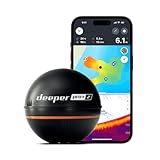
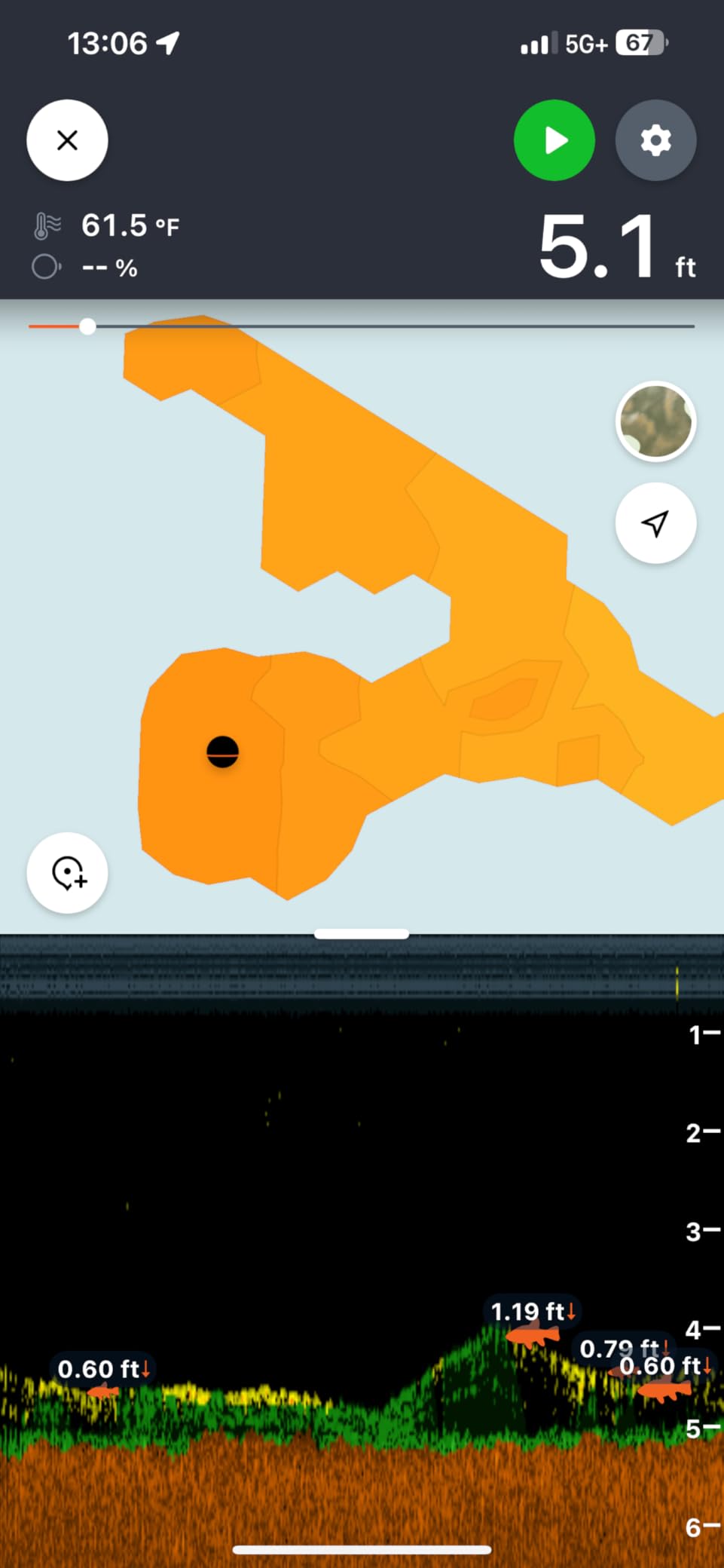
The Deeper PRO Plus 2 disappears in a jacket pocket, yet it carries built-in GPS and saves bathymetric maps of a lake through the free Fish Deeper app. For a beginner who wants to learn a new body of water, that map is the real product.
On the ice it becomes a vertical jigging tool rather than a flasher. The narrow beam gives 0.4 inch target separation, tight enough to track a small lure as it falls, and the wide and mid beams let you scan a wider column when you are searching. Accuracy is rated to 330 feet.
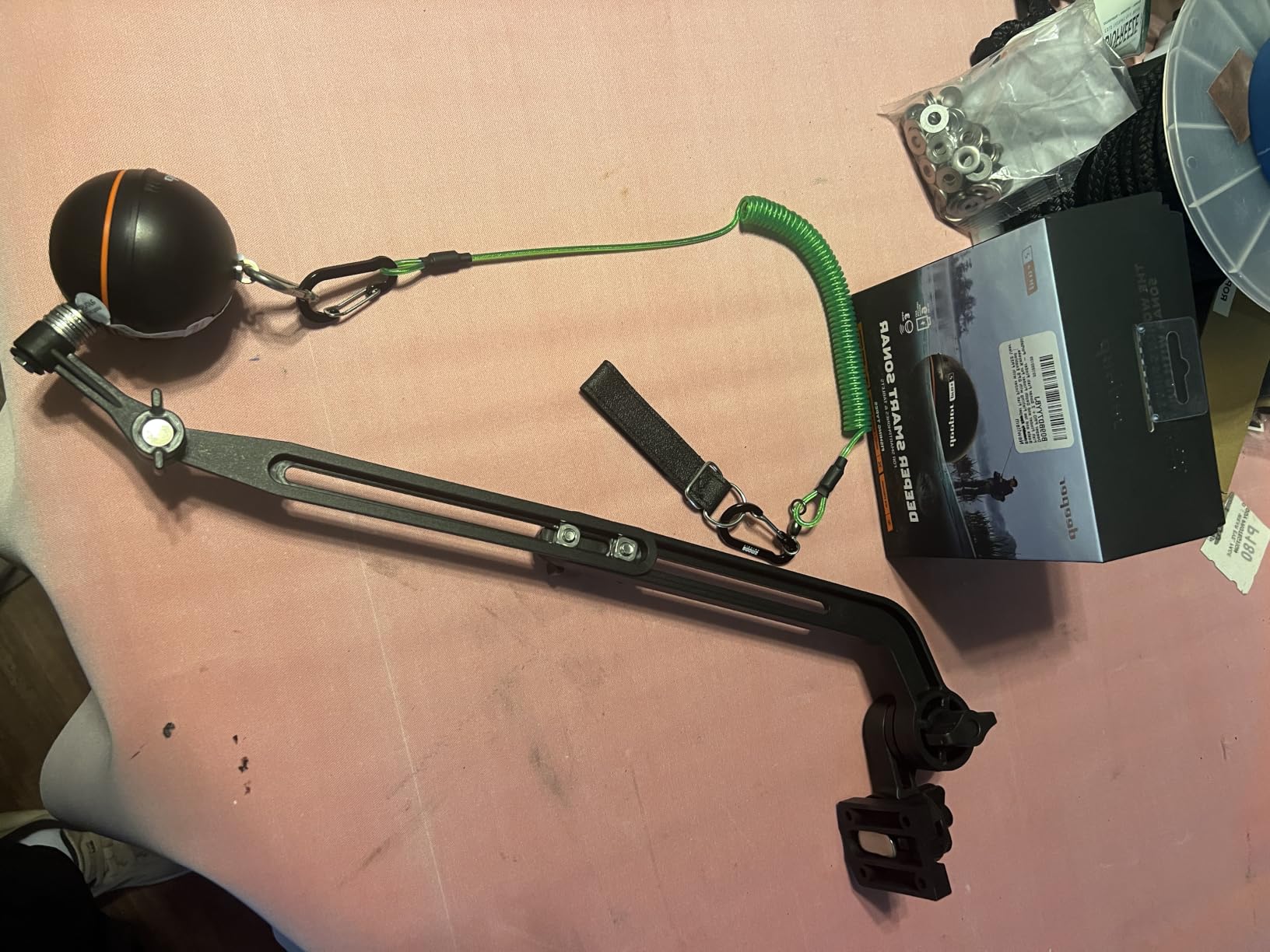
My testing found the three beam modes genuinely useful rather than decorative. Scanning with the wide beam told me where the drop-off was, then switching to narrow let me hold a jig just off the edge and see it clearly. That workflow is exactly what sonar is supposed to do.
The software is where friction appears. Wi-Fi dropouts are reported when the phone is set down or shielded, so keep the phone in a pocket facing you rather than propped on a bucket. The included neoprene pouch and USB cable are enough for a full day.
Who the Deeper PRO Plus 2 suits
It suits anglers mapping unfamiliar water, especially from shore or a dock before a trip, and it suits anyone who already carries a phone and does not want to carry a second device. The built-in GPS means saved maps persist between trips rather than resetting each session.
It is also a sensible summer companion. The same unit works from a kayak, and the mapping makes it useful on water you have never fished before.
Where the Deeper PRO Plus 2 falls short
There is no built-in screen, so you need a phone or tablet, and a phone in a glove pocket is a poor display in bright sun. If you want a unit that works with frozen hands and no phone, this is not it.
Owners also describe accuracy as best in relatively calm water, and results on the ice depend heavily on water clarity and your own ability to interpret them. Treat it as an excellent scouting tool and a capable second screen rather than your only sonar.
7. Eyoyo 7 inch Underwater Camera – the straightforward all-in-one camera
Eyoyo Underwater Fishing Camera 7 inch LCD Monitor Fish Finder 1000TVL
- Large 7 inch screen with a built-in sun visor
- Twelve infrared lights for dark or murky water
- 4500mAh battery covers a full day
- Carrying case and metal clips included
- Reliable two year warranty
- 1000TVL chip is lower resolution than 1080P models
- Video capture tops out at 720p
- Battery is a separate box rather than integrated
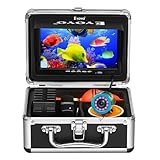
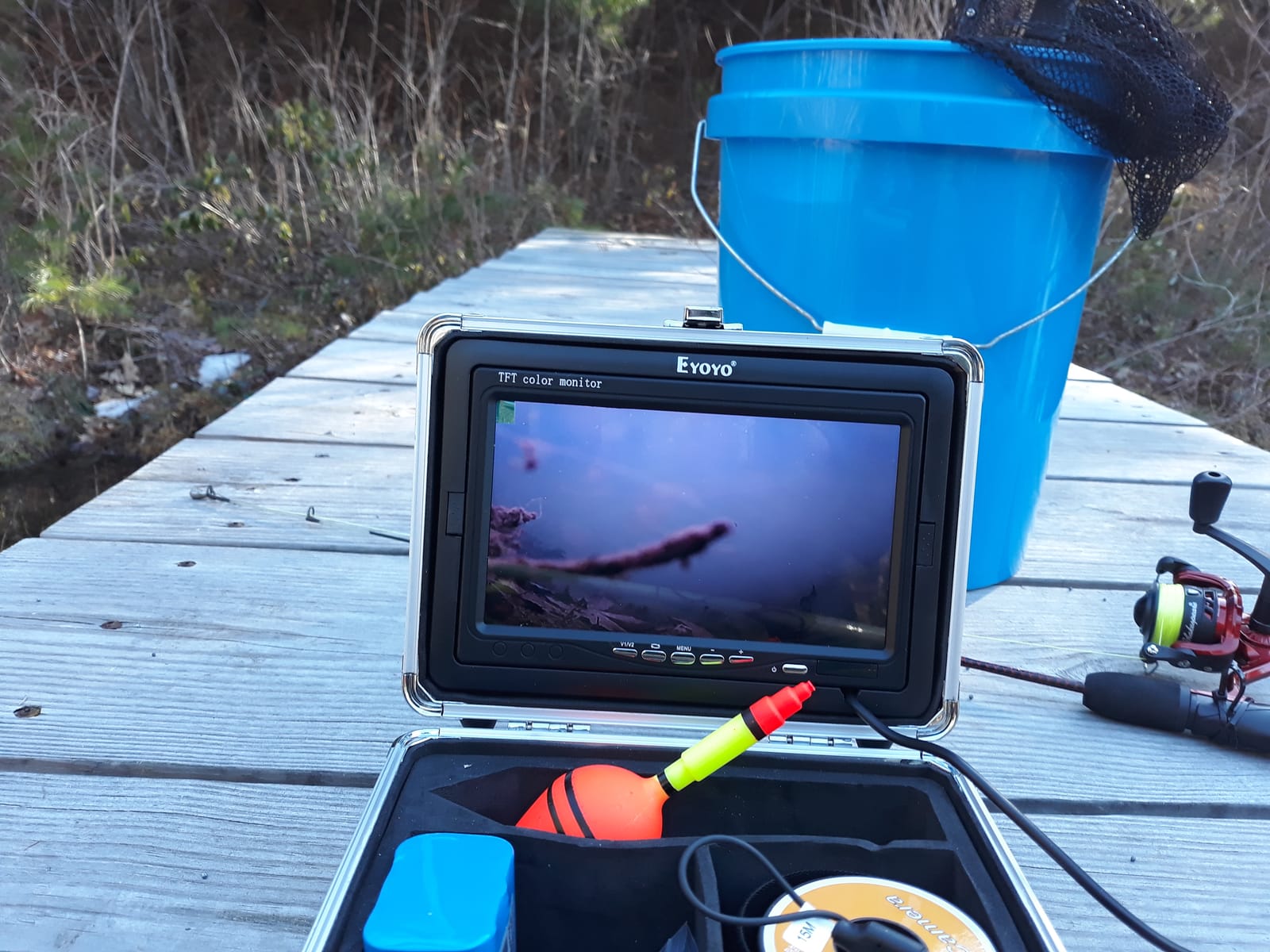
If you want a camera with nothing to assemble and nothing to configure, this is the safe pick. The 7 inch color TFT monitor, camera, cable reel, battery, charger, and carrying case all arrive together, and the whole setup is understood in about two minutes on a windy lake.
Twelve infrared lights are the feature that decides whether you can fish with it after dark. There is an automatic black and white mode when light levels drop, and in my testing the IR range was enough to pick out fish shapes in water that was not clear enough for a camera with no lighting at all.
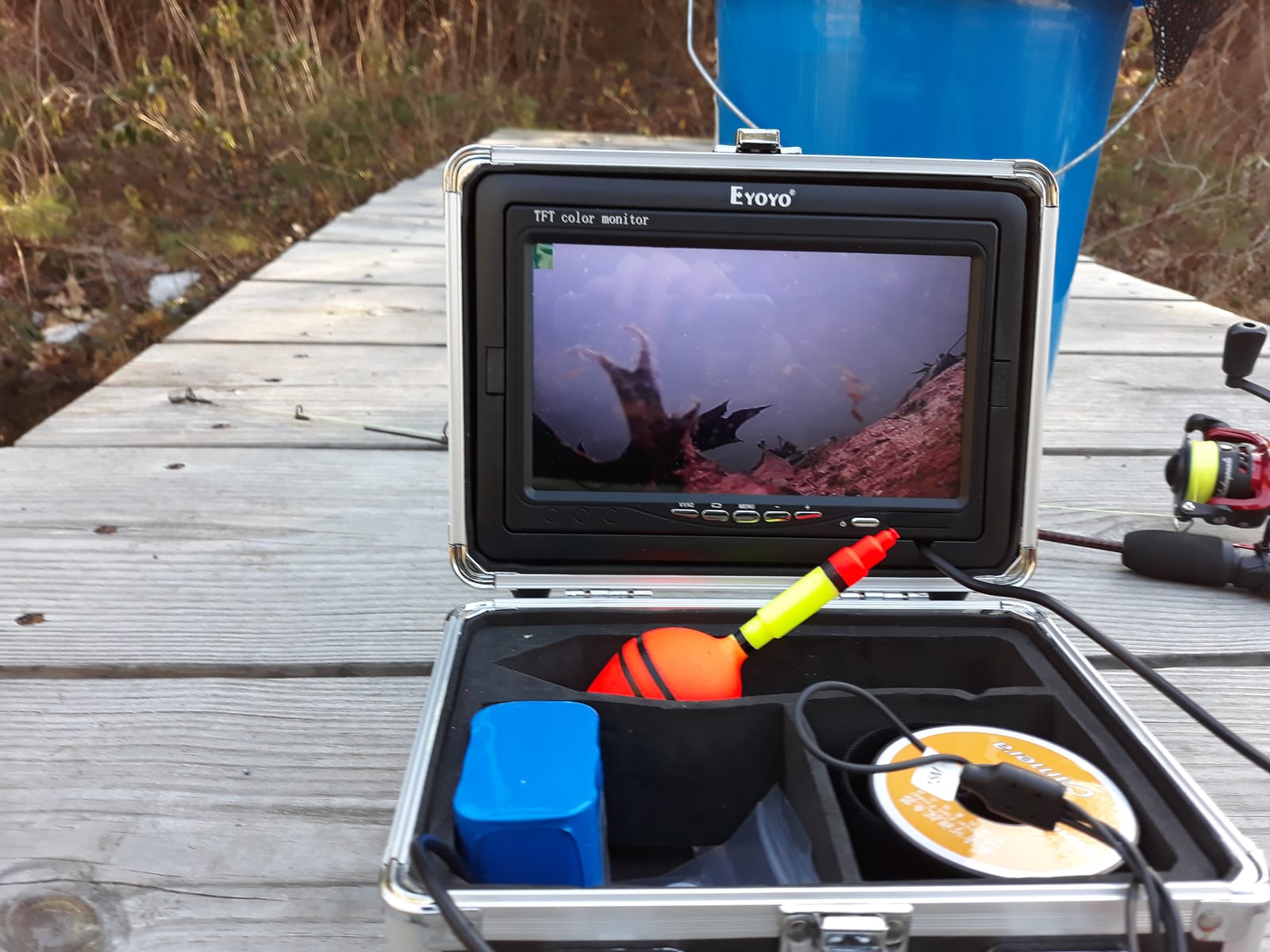
The 4500mAh battery runs up to 8 hours continuously, which covers a normal day without a mid-session charge. Cable length options range from 15 m to 50 m, so you can match the reach to your lake rather than the other way round, and the metal clips keep the cable dressed along a shelter wall.
The sun visor above the 7 inch screen is not decoration. It made the difference between a readable display and glare in direct midday sun, which is the single most common camera complaint I heard from owners.
Who the Eyoyo suits
It suits a first-time camera owner who wants reliability over specification. With 1393 reviews backing it and a two year warranty, it is a proven purchase rather than an experiment, and buyers regularly describe it as a safe choice for beginners.
It suits shallow to mid depth lakes where a shorter cable keeps the reel manageable, and anyone who fishes in low light and needs IR illumination more than image resolution.
Where the Eyoyo falls short
Image quality is the limitation. The 1000TVL chip and 720p video capture sit well below the 1080P sensors in newer cameras, so fine detail and structure inspection are limited. The 4mm fixed focus lens gives you no control over focus distance.
The battery is a separate box rather than built into the monitor, which adds a cable across your lap in the cold, and the cable reel can tangle and eats space at longer lengths. If crisp imagery is your priority, spend up for a 1080P model.
8. SUNMORN 4.3 inch 1080P Camera – the inexpensive way to look under the ice
Underwater Fishing Camera 1080P HD 4.3″ IPS 50ft Cable for Lake Ice Kayak
- Genuine 1080P imagery from a 220 degree wide-angle lens
- 6000mAh battery charges over USB-C while in use
- IPS screen stays readable in direct sunlight with the visor
- 50 ft tangle-free cable rated to 66 lb
- Padded carrying case included
- No video recording and no phone streaming
- 4.3 inch screen feels small
- Image degrades in murky water and at night
This is the camera to try if you are not yet sure a camera belongs in your kit. It needs no learning, and it answers one question fast: do I actually catch more fish by looking under the ice? If the answer is no, you have lost little. If the answer is yes, you know which model to buy next.
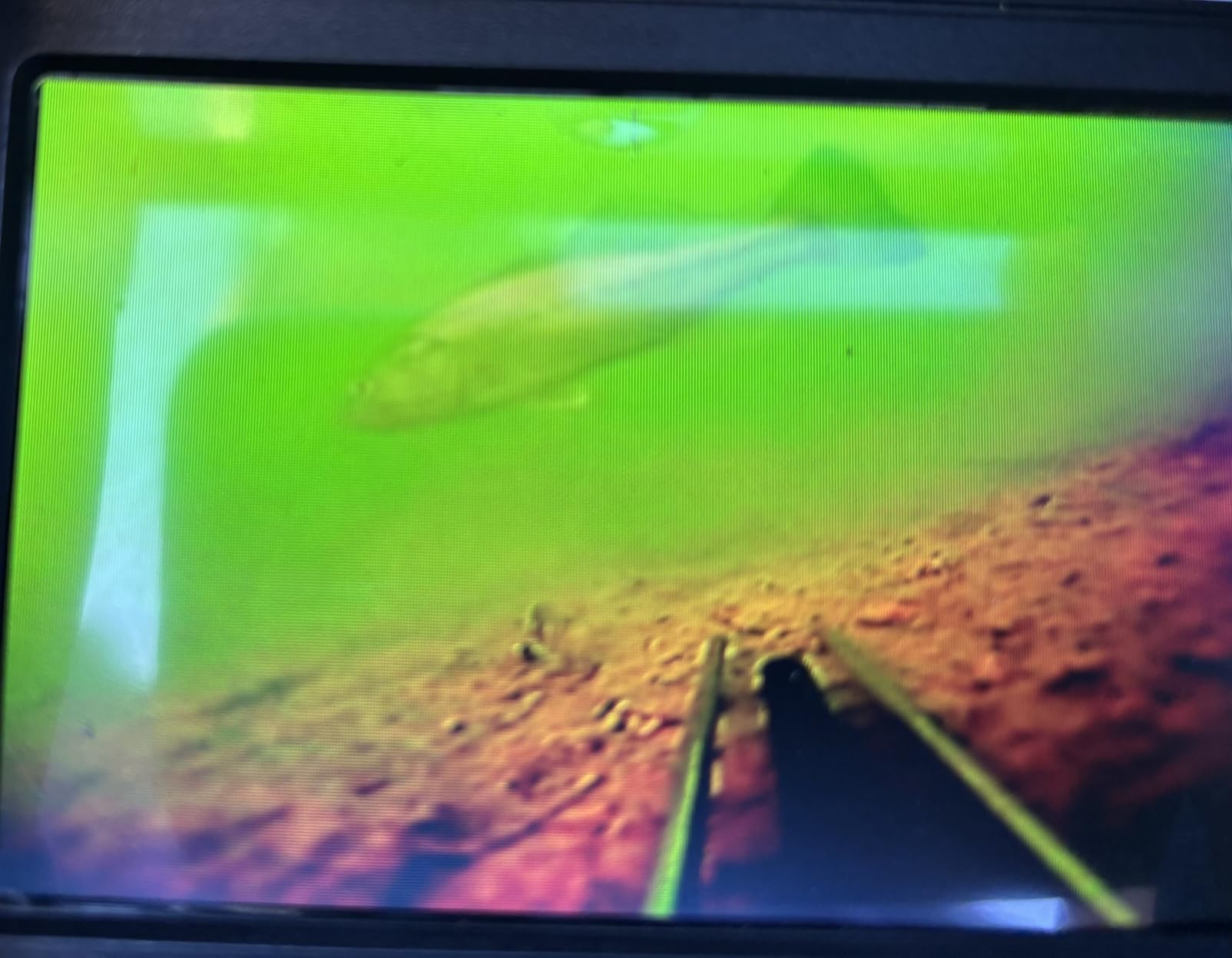
A 220 degree ultra-wide lens with true 1080P imaging gives a much wider view than most underwater cameras at this level, so you see the fish approaching rather than filling the frame with the side of one. The adjustable mount attaches to a rod or a kayak quickly, and the padded case makes it easy to keep in a vehicle overnight.
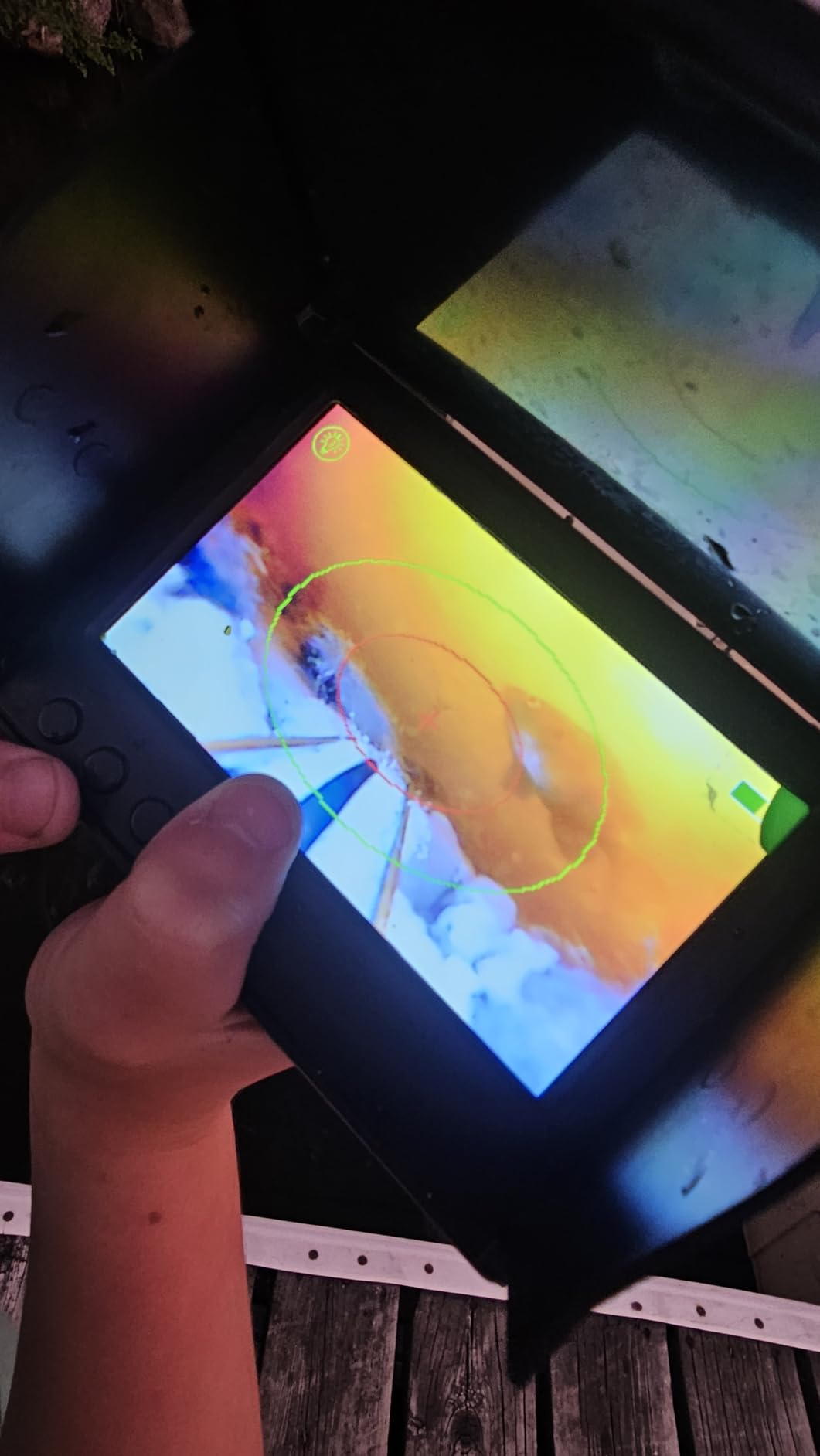
The 6000mAh battery is rated for 8 hours or more even at maximum brightness with IR on, and USB-C charging means it can run from a power bank while you fish. That removes the one failure mode that ruins a camera trip, which is a dead battery at hour seven.
The 50 ft cable is tangle-free and rated to 66 lb, and it glides over rocks and weeds without snagging on the way down. IR range runs 15 to 20 feet in clear water and 8 to 12 feet in murky water, which tells you where to use it.
Who the SUNMORN camera suits
It suits a first-timer testing whether a camera is worth the space in the sled, and it suits anglers on a tight budget who still want 1080P imagery. The wide lens also makes it easy for younger anglers to get hooked on watching structure. If you are not sure a camera belongs in your kit, this is an inexpensive way to find out.
It also suits anyone fishing shallow weedy lakes, because the 50 ft cable and low draw keep the whole package light and simple to move from hole to hole.
Where the SUNMORN camera falls short
The 4.3 inch screen is the most common complaint, and several buyers wish it were larger. It is workable under a shelter or beside a windshield, but it is not the screen you want to study in open sun.
This model records no video and does not stream to a phone, so there is no way to save or share a bite. Image quality also drops in murky water and at night, and it is best used while stationary since the moving view is ineffective.
9. LUCKY 1108 Handheld Sonar – the well-proven entry unit
- Most reviewed of the wired handhelds in this group
- Accurate depth with weed and rock bottom detail
- Five sensitivity levels for clear or turbid water
- Backlit LCD reads in sun and darkness
- Neck strap makes it hands-free
- Only picks up fish at short range and triggers on minnows
- No fish-size differentiation
- Thru-hull transducer does not read through fiberglass
- Wired transducer cable rather than wireless
With 3284 reviews behind it, the LUCKY 1108 is one of the most heavily field-tested budget finders available, and that matters for a first purchase. It is not the best ice fishing fish finder, but it is the one where the weaknesses are known in advance.
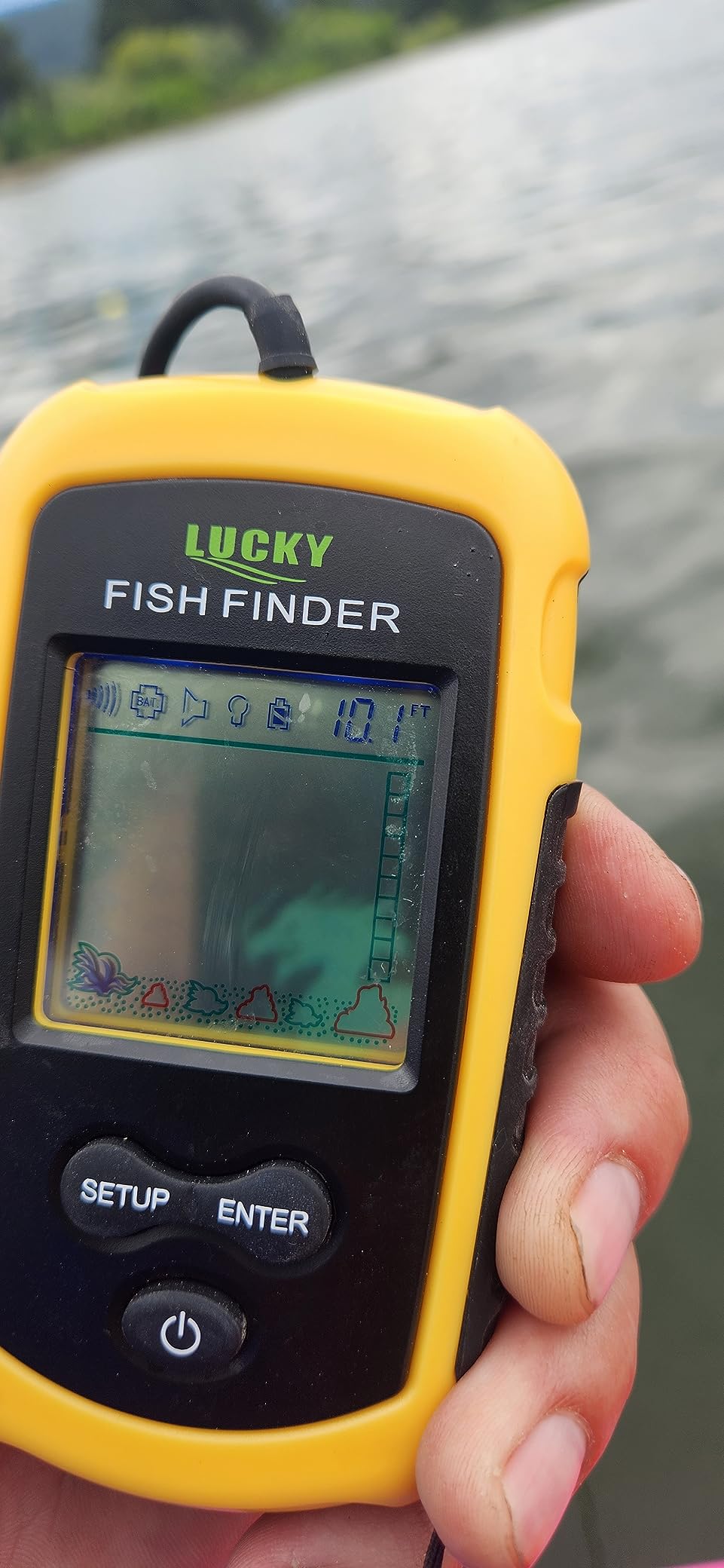
What it does well is depth and bottom structure. It detects from 3 feet to 328 feet, and it displays short and tall weeds, sand, and rocks, which is how you find ledges and weed edges without any prior knowledge of a lake. Five sensitivity levels let you tune it for clear or turbid water.
The backlit LCD stays readable in both bright sun and darkness, and the neck strap makes it hands-free in a kayak. It works in fresh and salt water from a boat, from shore, and on the ice, so it doubles as a summer tool for anglers who also paddle.
Runtime is 4 to 5 hours on fresh batteries and longer in battery-save mode. The included fish and fish-school alarm is genuinely useful when you are watching the water instead of the screen.
Who the LUCKY 1108 suits
It suits a complete beginner who wants to know the depth of a lake and find structure before investing in anything heavier. Experienced anglers also buy it deliberately, as a cheap ledges-and-vegetation finder to pair with a better unit.
It suits small boats, kayaks, and shore anglers who want one simple screen. If you spend your summers on the water, that versatility is the reason to choose it.
Where the LUCKY 1108 falls short
Its fish detection is weak. It only picks up fish at short range and will trigger on minnows, and there is no fish-size differentiation, so it is a depth and weed finder rather than a fish finder. Do not expect to hunt walleye with it.
It is a wired unit, and the thru-hull transducer does not read through a fiberglass hull, so it suits kayaks and small boats better. A small number of owners also report units failing to power on after limited use, so keep the receipt.
10. Yoocylii Handheld Fish Finder – the tackle-box backup unit
Handheld Fish Finder Portable Kayak Fishfinder Sonar Depth LCD Display
- The most inexpensive unit here with accurate depth readings
- Nothing to connect since the transducer is wired
- Screen easy to read in bright daylight
- Fish alarm helps locate fish and structure
- Usable on a moving kayak below 5 mph
- Weak on identifying actual fish
- Does not render bottom contour like larger finders
- Battery life of 4-5 hours means bringing spares
- Wired transducer cable rather than wireless
Sometimes the right first electronics purchase is not a display but a backup that lives in the bottom of the sled. This handheld fits in a tackle box, costs less than a single transducer, and gives you real depth and weed data in a pinch.
The sonar runs at 200 kHz with a 45 degree beam and a 3 to 328 foot range, which is more than enough for any beginner lake. It shows depth, approximate fish location, fish size class, and bottom features including weeds, sand, and rocks, so you can identify structure rather than guessing.
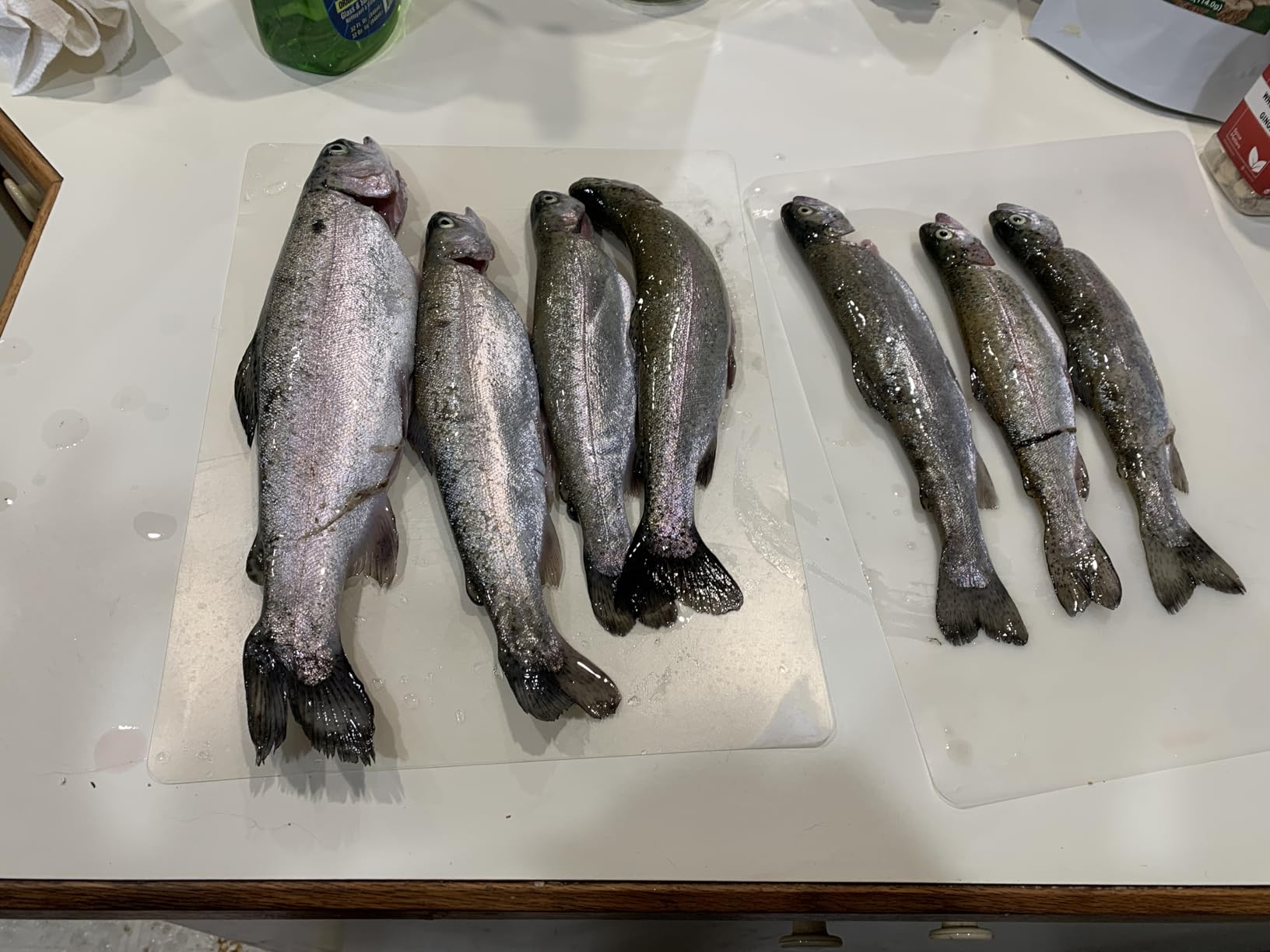
Setup is genuinely zero. There is no pairing step, no app, and no mount, which in my testing made it the quickest unit here to move from the truck to a drilled hole. The screen reads well in daylight, and the backlight covers dark conditions under a shelter.
Five sensitivity levels, a battery-save mode, and a fish alarm are more than most beginners will use. Usable on a moving kayak below 5 mph with the transducer held horizontal, it earns its place in a summer kit as well.
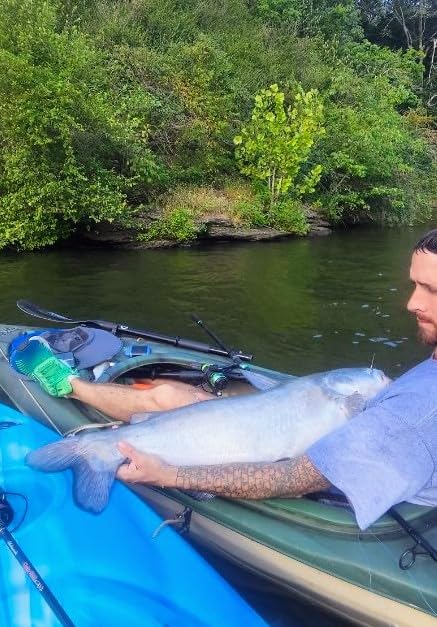
Who the Yoocylii suits
It suits a beginner who wants depth knowledge before committing to a transducer, and anyone who wants a cheap second unit for a second rod. Finding ledges and vegetation is where it adds the most value.
It also suits families sharing gear. A second inexpensive screen means two people fishing the same ledge are not arguing over who gets to look.
Where the Yoocylii falls short
Fish identification is weak, so treat it as a depth and weed finder rather than a fish finder. It also does not render a bottom contour the way larger finders do, which limits how useful it is for mapping structure.
Four AAA batteries give 4 to 5 hours of continuous use, so bring spares for a full day. A wired transducer cable means more to manage, and a small number of owners report units failing to turn on after a short period.
11. Lowrance Eagle 4 inch – the unit that earns its keep in summer
- IPS portrait screen stays clear in bright sun and through polarized sunglasses
- Auto-Tuning Sonar removes the manual settings beginners dislike
- Shows depth and bottom structure reliably
- Small footprint suits a kayak or skiff
- Twist-lock connector makes swapping displays quick
- Not a live scope so you see fish arches not real-time imagery
- Fish size and species identification is unreliable
- In this configuration it suits open water more than the ice
- Some users report the sonar performing poorly
The Lowrance Eagle is the pick here for an angler who wants one unit that works on the ice in January and from a pontoon in July. It is a modest, honest down-imaging unit, and it does not pretend to be more.
The 4 inch IPS portrait display is the standout and is the reason I recommend it in bright conditions. It stays readable through polarized sunglasses, which matters enormously on a frozen lake where you are squinting at a dark screen with the sun on it. Auto-Tuning Sonar handles the settings, so there is nothing to fiddle with on a cold morning.
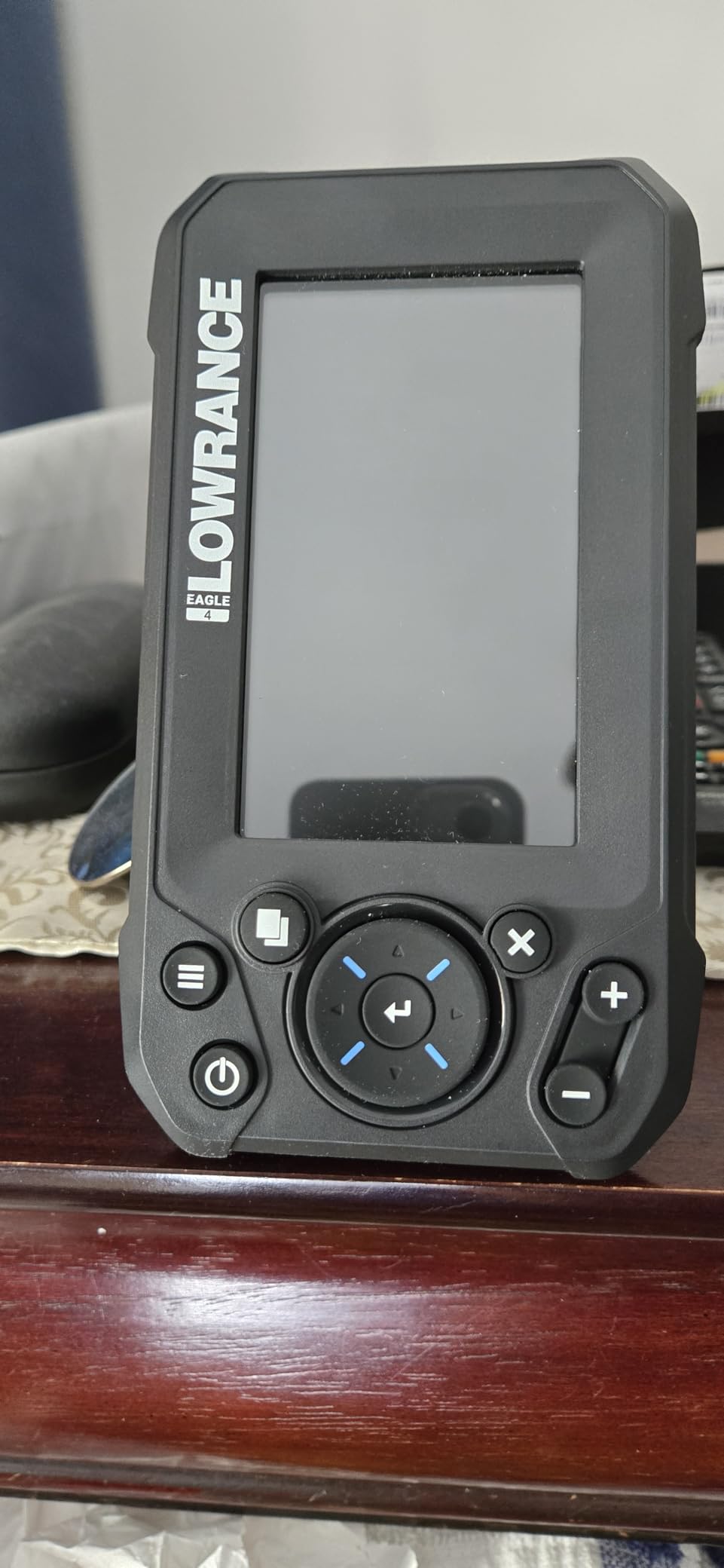
It includes a 200 kHz Bullet Skimmer transducer with a 44 degree beam, reaches 500 feet, and shows fish icons with depth plus zoom. The twist-lock connector makes removing the display for storage quick, and the small footprint fits a kayak, skiff, or pontoon where space is tight.
Think of it as an affordable step up from nothing. Owners use it on pontoons and small boats and appreciate that the unit remembers its settings between trips.
Who the Lowrance Eagle suits
It suits an angler who wants one display for two very different seasons, and it suits anyone who wears polarized glasses. The IPS screen solves the single biggest readability problem on the ice.
It also suits a beginner who wants minimal settings. Auto-Tuning Sonar removes the fiddling that pushes new anglers off digital units, and the same simplicity carries over to open water.
Where the Lowrance Eagle falls short
It is not a live scope, so you are reading fish arches rather than watching a fish react to your lure. Fish size and species identification is not reliable, and a few users report the sonar performing poorly on their local water.
In this configuration it is better suited to open water and structure than to hole fishing, and the included transducer is a conventional skimmer mount rather than an ice ducer. The one year warranty is also the shortest in this roundup.
12. ReelSonar iBobber – the most battle-tested budget tool
Reelsonar Portable Fish Finder Accurate Fish Depth Finder with Depth Range of 135 feet 10+ Hours Battery Life with iOS & Android App Wireless
- Casts like a normal float on an existing rod setup
- Largest review base of any pick in this roundup
- Maps bottom terrain with depth-tagged fish icons
- Battery covers a day of intermittent use
- Free apps with smartwatch support and a fishing log
- Effective Bluetooth range is only about 40-50 feet
- Minimum usable depth is around 5 feet
- App drains the phone battery
- Strike alarm triggers on small movements
The iBobber carries the largest review base in this roundup, with 6659 reviews, and that record is its main argument. Nothing about it is cutting edge, but very little about it surprises you, and it casts like a normal float onto a rig you already own.
It reports depth and fish depth through a Bluetooth connection to your phone or smartwatch, and it maps bottom terrain so you can build a picture of a shoreline or a channel from shore. Fish icons are color-coded by size and depth-tagged, with a fish alarm and a separate strike alert.
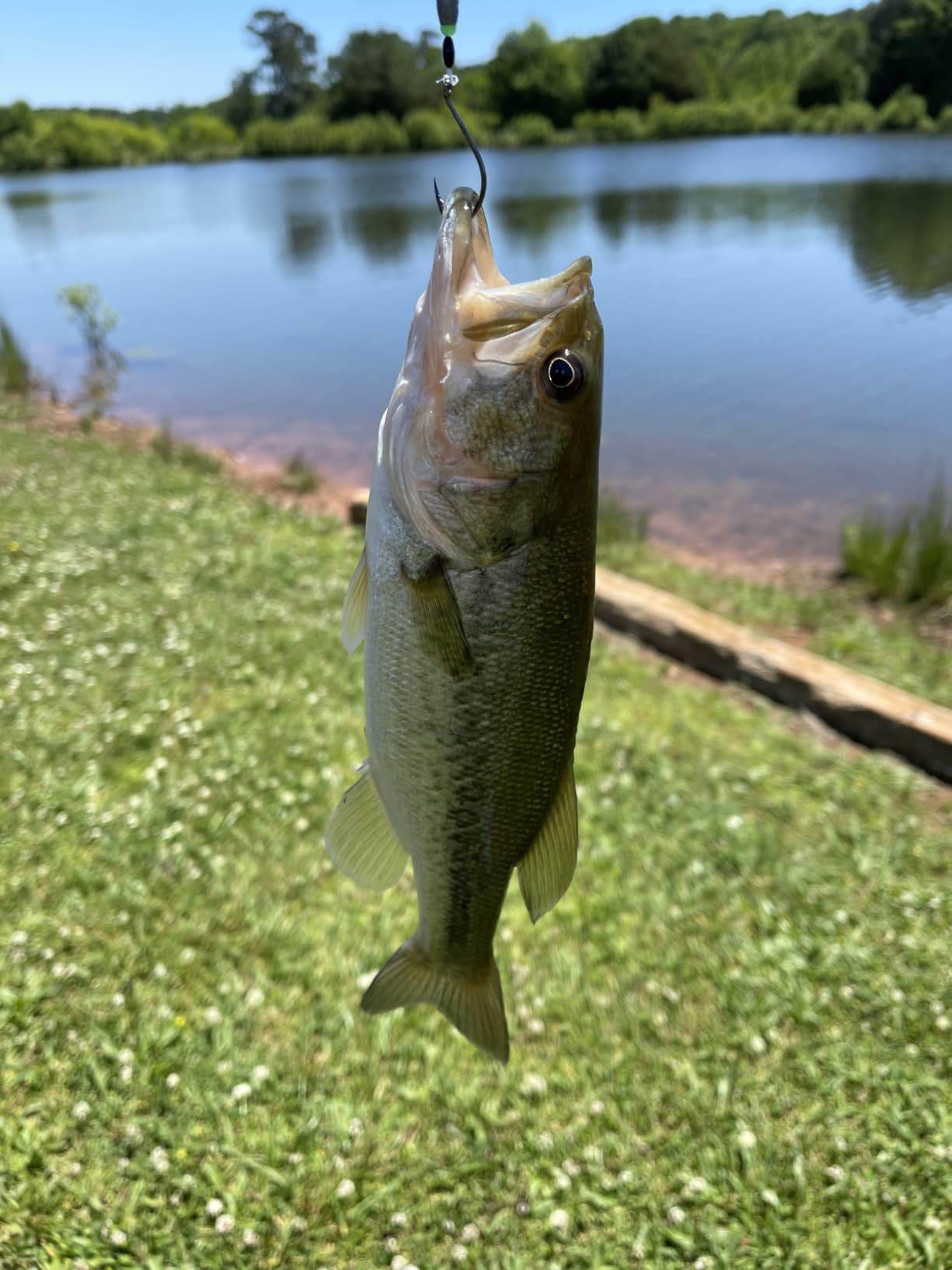
The 10+ hour rechargeable battery is the standout number, and because the unit switches on and off with the water you are not wasting charge between casts. The metal-lined eyelet takes a leader or hook rig, and a blinking LED ring makes it easy to find after dark.
The apps are free, support iOS and Android, and include demo mode and a fishing log, which is handy for a first season when you want to remember what worked.
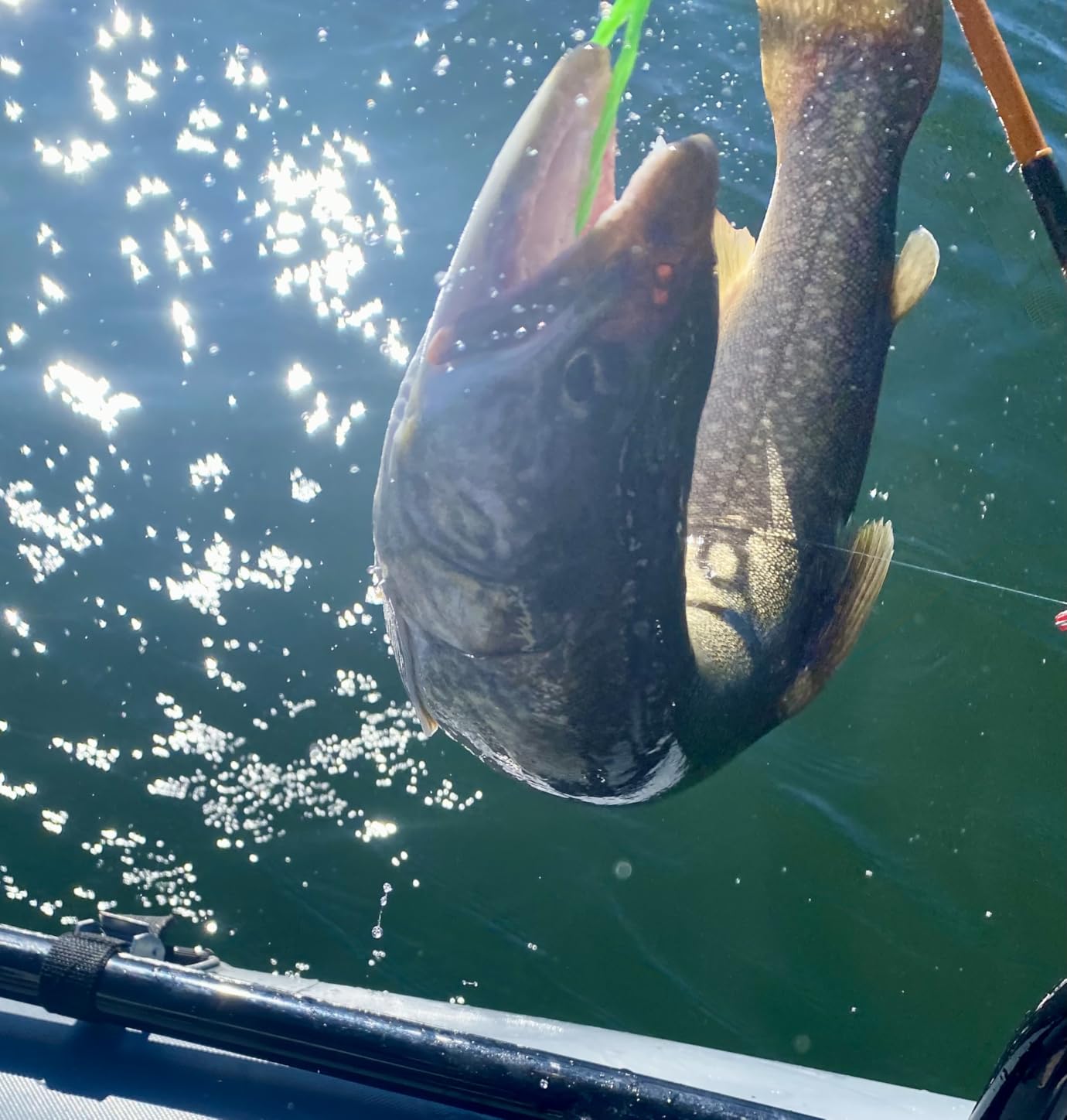
Who the iBobber suits
It suits shore anglers and anyone who fishes from a kayak or small boat and does not want a transducer in the hull. It also suits a beginner testing whether sonar changes their results before committing to an ice setup.
On the ice, set it in a hole and lower it away from you, and the terrain mapping and depth readout do the job of a simple depth finder. Casual users and families get a lot out of it because there is nothing to set up.
Where the iBobber falls short
Effective Bluetooth range is roughly 40 to 50 feet, so the phone has to stay close, which limits how far you can walk from your gear. Minimum usable depth is about 5 feet, which rules out shallow ponds and creeks entirely.
The app is a heavy battery drain on the phone, readings become unreliable when dragged behind a moving boat, and the strike alarm triggers easily on small movements. A one year warranty is the shortest here alongside the Eagle.
What to Buy First, Second, and Never
Most first-season regret comes from buying in the wrong order. The forum consensus that r/IceFishing repeats constantly is simple: start cheap, learn the display, and upgrade later. Beginners who regret a purchase are almost always the ones who bought the most advanced unit in year one.
- First: a flasher or a portable sonar with a flasher mode. This is the single tool that changes how you fish. It shows depth, bottom, your jig, and the fish around it in real time, and it costs less than you think.
- Second: a way to return to good water. Once you know where the fish are, marking those spots with GPS and contour mapping turns a good day into a repeatable one. The Garmin bundles in this roundup handle both jobs in one box.
- Third, if you stay: an underwater camera. A camera earns its place once you are already finding fish visually. It answers the question sonar cannot, which is whether that fish is going to eat.
- Never, as a beginner: premium live sonar and side-scan mapping. You are not yet interpreting what you see, so the extra detail becomes noise, and the cost dwarfs the rest of your first-season kit.
- Never: buying a display with no transducer. Unless the bundle lists an ice transducer in the box, budget for a separate ice ducer. This is the most common first-season surprise.
Flasher vs. Digital Sonar vs. Live Sonar vs. Underwater Camera
Flasher, digital sonar, live sonar, and cameras all answer the same question, which is what is under the ice. They differ in how much they show you and how much they cost to learn.
An analog flasher is a circular dial where depth, bottom, your jig, and fish appear as moving marks. There are no menus, so you learn it in an afternoon. It gives no history, no graph, and no way to save a spot, which is why the digital units exist.
Digital sonar draws a scrolling graph with fish arches, zoom, and usually GPS with waypoint marking. It is the most versatile category for beginners, and the Striker Plus 4 Ice Bundle sits here because it ships with a dual-beam ice transducer, battery, charger, and float in the same box.
Live sonar shows moving video of fish and your lure in real time. It gives you more information than anything else on the ice, and it is the worst first purchase. It costs the most, it is the most technical to interpret, and beginners generally learn faster on a flasher or a graph. Buy it in year two or three, if ever.
An underwater camera is not sonar at all. It shows the actual fish, which is invaluable for visual species and for teaching, and useless for judging depth or bottom hardness. Clear water is its requirement, since suspended ice particles destroy the image.
So which is better, Vexilar or LiveScope? For a beginner, the flasher, by a wide margin. LiveScope wins on information and loses on approachability, cost, and the fact that you cannot use half of what you see yet.
How to Read a Flasher in Five Steps
This is the sequence that turns a dial into a fish-finding tool. Most beginners never learn it, which is why they catch fish by accident rather than by design.
- Set the sensitivity. Start mid-range and raise it until the display gets noisy, then back it off one step. In very clear ice you run higher; in slushy melt water you run lower.
- Confirm the bottom. A thick, stable mark at a consistent depth is the lake bottom. If the reading wanders, your sensitivity is too high.
- Track your jig. Drop the lure and follow the small moving mark as it falls. Once you can hold that mark at one depth, you have the most important skill in the sport.
- Read the approach. A fish approaching from outside the cone enters the dial as a separate mark and drifts toward your jig. As it nears, the two marks merge into one thick return.
- Set the hook when the marks merge. That merge is the strike. Everything before it is preparation, and everything after it is a fish you already have.
Two terms make this easier. Target separation is the minimum distance the unit can tell two objects apart, and a lower number is better. Interference rejection is how well the unit ignores other anglers, moving ice, and your own cable noise. A narrow cone angle gives a smaller, cleaner picture, which is why deep water and open water benefit from different transducers.
How to Choose Your First Ice Fishing Unit
Start with water depth, not features. A narrow cone angle around 12 degrees concentrates energy for deep water and steep drop-offs, while a wider beam around 19 to 20 degrees covers more area in shallow, flat lakes. Getting this backwards is why cheap units frustrate beginners on water they were never designed for.
Next, check what is in the box. A display without an ice transducer, or without a battery and charger, is not a complete purchase. Two of the picks here ship with an ice transducer in the box: the Striker Plus 4 bundle with its dual-beam ice unit, and the Vexilar Genz Pack with its 12 degree ice ducer. That completeness is the difference between fishing this weekend and fishing next month.
Screen size matters more in sunlight than in the dark. A 4 inch color screen is readable inside a shelter and adequate in open sun, while a 2 inch handheld screen only shows depth and size class. If you fish open sun, prioritize an IPS panel, and consider a shelter or a pair of insulated waders for the hours spent staring at it.
Battery type is the cold-weather question. Sealed lead-acid packs are cheap and heavy, and cold drains them faster. Rechargeable lithium-ion packs hold charge in deep cold and are the better choice for anyone running overnight sessions, though check the operating temperature rating before you rely on it in serious weather.
GPS and waypoint marking are the features that compound over a season. Being able to mark a brush pile, a channel edge, or a ramp and return to it turns a single good hour into an entire productive trip. Skipping GPS to save money is a false economy for anyone fishing the same water repeatedly.
On brand, there is no universal winner. Garmin tends to lean on keyed buttons, flasher modes, and mapping, which suits glove-friendly operation and summer reuse. Lowrance competes hard on screen readability and auto-tuning settings. The simplest advice is to buy the transducer and battery package that matches your depth, and only then compare screens.
If you also fish open water, that changes the shortlist. A unit that works from shore or a kayak, like the LUCKY handheld or the ReelSonar iBobber, can double as a summer tool. Anglers moving between hardwater and open water should also consider fishing kayaks for summer access to the same structure you marked in January.
Cold-Weather Batteries and Ice Setup Basics
Cold is the number one reason ice electronics fail, and it is rarely the electronics. Lead-acid packs lose capacity fast below freezing, and a shuttle that dies at 3pm in a shelter is a lost afternoon. Charge inside, carry a spare pack, and keep the battery above the ice rather than hanging below the hole.
Total cost of ownership is where first-season budgets break. Add a shuttle, a spare battery, a charger, a separate ice transducer if the bundle does not include one, and an ice auger or spud, and a modest display becomes a much larger number. Plan for that before the first trip, not after the first failure.
Never fish alone, carry a spud, and check ice thickness on every walk. A sonar shuttle, an auger, and a spare battery are all reasons to travel with a second person, and electronics are a good reason not to rush a crossing. Beginner forum advice repeats one rule constantly: the gear is replaceable, the angler is not.
Finally, drill away from other anglers and keep your transducer cable clear of the hole edge, since cable movement and slush are the leading causes of interference clutter on the display.
Frequently Asked Questions
What are the best electronics for ice fishing?
For most beginners the best first ice fishing electronic is a portable sonar unit with a built-in flasher mode, such as the Garmin Striker 4, or a dedicated analog flasher if you want zero menus. Add an underwater camera later once you are already finding fish. The Garmin Striker Plus 4 Ice Bundle is the most complete single box because it ships with a dual-beam ice transducer, battery, charger, and float.
What is the best gear for ice fishing for beginners?
The best first gear list is short: a flasher or portable sonar with flasher mode, a shuttle to carry it, a spare battery, an ice auger or spud, a set of tip-up style rods, and a good pair of insulated gloves and a shelter. Electronics matter, but most beginners underestimate battery, charger, and transport costs more than the display itself.
What are some good gadgets for ice fishing?
Useful gadgets include an underwater camera with infrared lighting, a handheld depth finder for scouting lake structure, a power bank for charging displays over USB-C, a headlamp with a red mode, and a small thermos that fits in a sled. A castable sonar is the best of these for beginners because it needs no transducer and no mount.
Which is better, Vexilar or LiveScope?
For a beginner, Vexilar. An analog flasher has no menus, so you learn it in an afternoon, and it costs far less. LiveScope shows moving video of fish and your lure, which is the most information available on the ice but also the most expensive and the most technical to interpret. Buy the flasher first and consider live sonar in year two or three.
Which is better, MarCum or Vexilar?
Both are respected ice fishing brands and the honest answer is that the difference is smaller than the price difference suggests. Vexilar builds pure flashers with analog dials and a strong repair and resale history, while MarCum spans everything from entry flashers to advanced digital units. Beginners should choose on transducer type, battery, and weight rather than on brand alone.
What is the best ice fishing flasher for the money?
The best value flasher in this roundup is the Vexilar GP1812 FL18 Genz Pack, which includes a 12 degree ice transducer in the box and has a long record of field reliability. Beginners who want to spend less can start with a handheld depth finder such as the LUCKY 1108 to learn depth and structure before moving to a flasher.
Final Verdict for First-Time Ice Anglers in 2026
The best ice fishing electronics for beginners is a portable sonar with a flasher mode, and the Garmin Striker 4 is the unit I recommend first. It runs a full day on one charge, weighs 8 ounces, and its waypoint map makes your second trip better than your first. If you want everything in one box, the Striker Plus 4 Ice Bundle adds the ice transducer you would otherwise buy separately.
Add a camera only when you are ready to learn from what you see, and hold off on live sonar until you can read a flasher confidently. Buy a flasher or a flasher-mode unit, learn the five-step read above, and let the electronics do what they do best, which is tell you where the fish are so you can concentrate on the rest.