
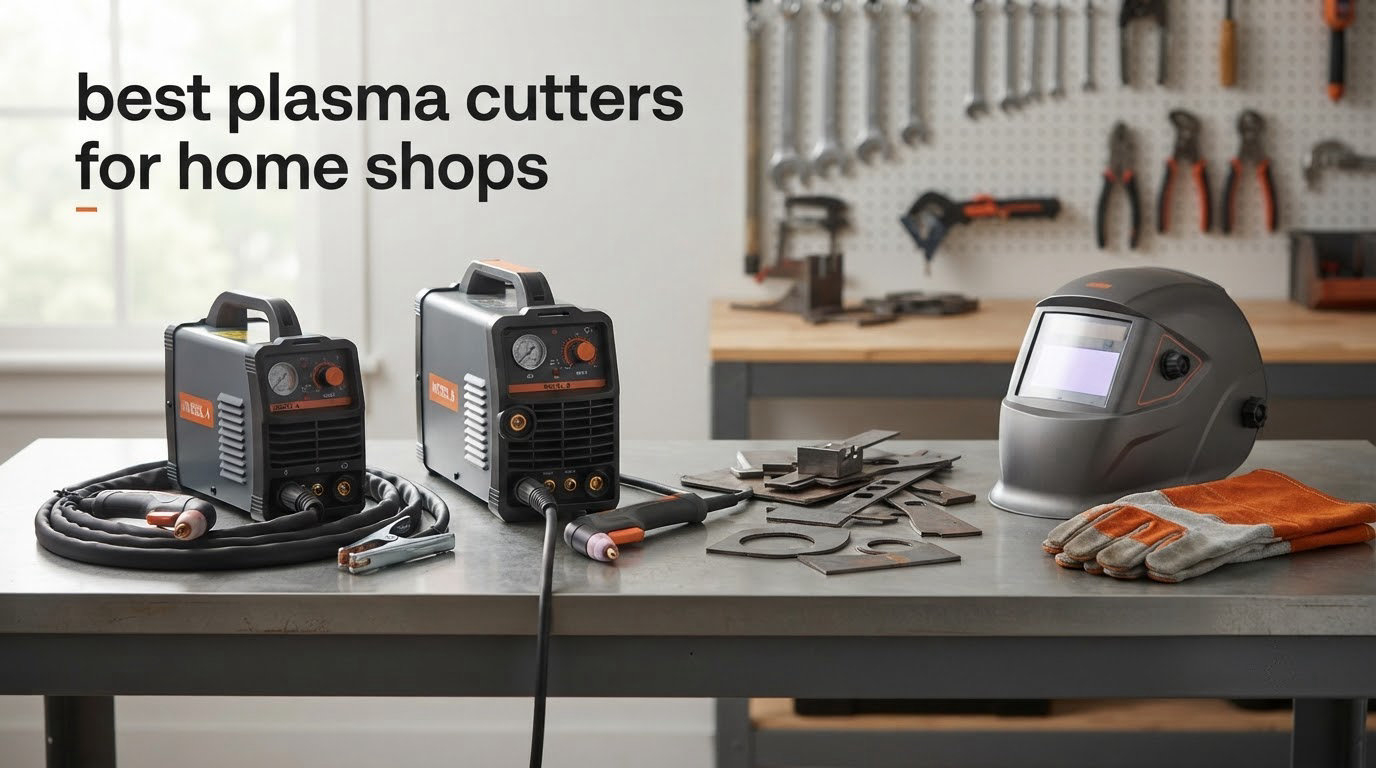
Hypertherm sets the professional standard for plasma cutting, and a shop that cuts thick steel every day should buy one. Most home shops should not. The gap between the two tiers has narrowed so much that a 50 amp inverter from a brand you can order in a minute now handles the 1/4 inch mild steel that used to justify a torch setup and a weekend of grinding. This guide to the best plasma cutters for home shops in 2026 covers the eleven machines that make sense for a garage or a small shop, with the honest limitations each one carries.
What changed is the inverter power source. A transformer machine pushes a large, hot, heavy core around and is genuinely tough. A modern IGBT inverter is smaller, lighter, dual voltage, and claims 50 to 65 amps from a 13 pound box that plugs into a 110V outlet or a 220V circuit. Reviewers of these machines are unusually blunt about the gap between the printed rating and the real cut, which is why every section below includes a stated limitation alongside the praise.
Two things decide whether a home shop is happy six months from now, and neither one is on the spec sheet. The first is dry air, because moisture in the air supply is the single most reported cause of short consumable life across every owner forum. The second is parts availability, because a control board you cannot source turns a cheap machine into an expensive one. Those topics get their own sections later in this guide.
We spent weeks reading owner reports and comparing the spec sheets on all eleven machines below, then grouped them by what they actually do well rather than by the numbers printed on the box. Every capacity figure here comes from the manufacturer’s published data, and every limitation comes from people who own the machine.
Table of Contents
Top 3 Picks for the Best Plasma Cutters for Home Shops
Three machines cover almost every home shop use case. Each one has a large enough review history to have a real failure rate rather than a theoretical one, and each carries a warranty or a service path that does not depend on a forum post. The woodworking benches guide covers the other half of shop setup if your bench cannot handle a plasma table.

LOTOS LTP5505D 55A
- 5/8 inch max clean cut
- Non-touch pilot arc torch
- Automatic 110V/220V
- Built-in air regulator

PrimeWeld CUT60 60A
- 60 amp blow-back start
- PT60 Euro torch
- 60 percent duty at 60 amps
- 3 year warranty
ARCCAPTAIN CUT50 50A
- 1/2 inch clean cut at 220V
- 13 pound portable body
- LED parameter display
- 2T/4T modes
Best Plasma Cutters for Home Shops in 2026: Full Comparison
Every machine below appears once, with its published capacity, ignition type, and the job it fits best. Read the key features column as the fast version of the full review that follows it.
| Product | Specifications | Action |
|---|---|---|
| LOTOS LTP5505D 55A Pilot Arc Plasma Cutter |
|
Check Latest Price |
| ARCCAPTAIN 50A Dual Voltage Plasma Cutter |
|
Check Latest Price |
 YESWELDER 60A Non-HF Plasma Cutter YESWELDER 60A Non-HF Plasma Cutter |
|
Check Latest Price |
 PrimeWeld CUT50D 50A Air Inverter Plasma Cutter PrimeWeld CUT50D 50A Air Inverter Plasma Cutter |
|
Check Latest Price |
 SILATU 55A Non-Touch Pilot Arc Plasma Cutter SILATU 55A Non-Touch Pilot Arc Plasma Cutter |
|
Check Latest Price |
 GZ GUOZHI 50A Air Inverter Plasma Cutter GZ GUOZHI 50A Air Inverter Plasma Cutter |
|
Check Latest Price |
 Reboot 60A RBC6000D Touch Arc Plasma Cutter Reboot 60A RBC6000D Touch Arc Plasma Cutter |
|
Check Latest Price |
 DNYKER CUT50 50Amp Dual Voltage Plasma Cutter DNYKER CUT50 50Amp Dual Voltage Plasma Cutter |
|
Check Latest Price |
 Bestarc 50A Pilot Arc IGBT Plasma Cutter Bestarc 50A Pilot Arc IGBT Plasma Cutter |
|
Check Latest Price |
 FLARING 65A FC650D Touch Arc Plasma Cutter FLARING 65A FC650D Touch Arc Plasma Cutter |
|
Check Latest Price |
| PrimeWeld CUT60 60A Non-Touch Pilot Arc Plasma Cutter |
|
Check Latest Price |
1. LOTOS LTP5505D 55A Pilot Arc Plasma Cutter – Best Overall for a Home Shop
- Cuts 1/4 inch steel cleanly with very little dross
- Non-touch pilot arc starts on rusty and painted material
- Automatic 110V and 220V switching for a garage outlet
- Built-in air filter and regulator with water cup
- Light enough at 16 pounds to move around the shop
- Ground lead is much shorter than the torch lead
- Air fittings can be loose and need extra sealing
- Consumables only sold in expensive multi-packs
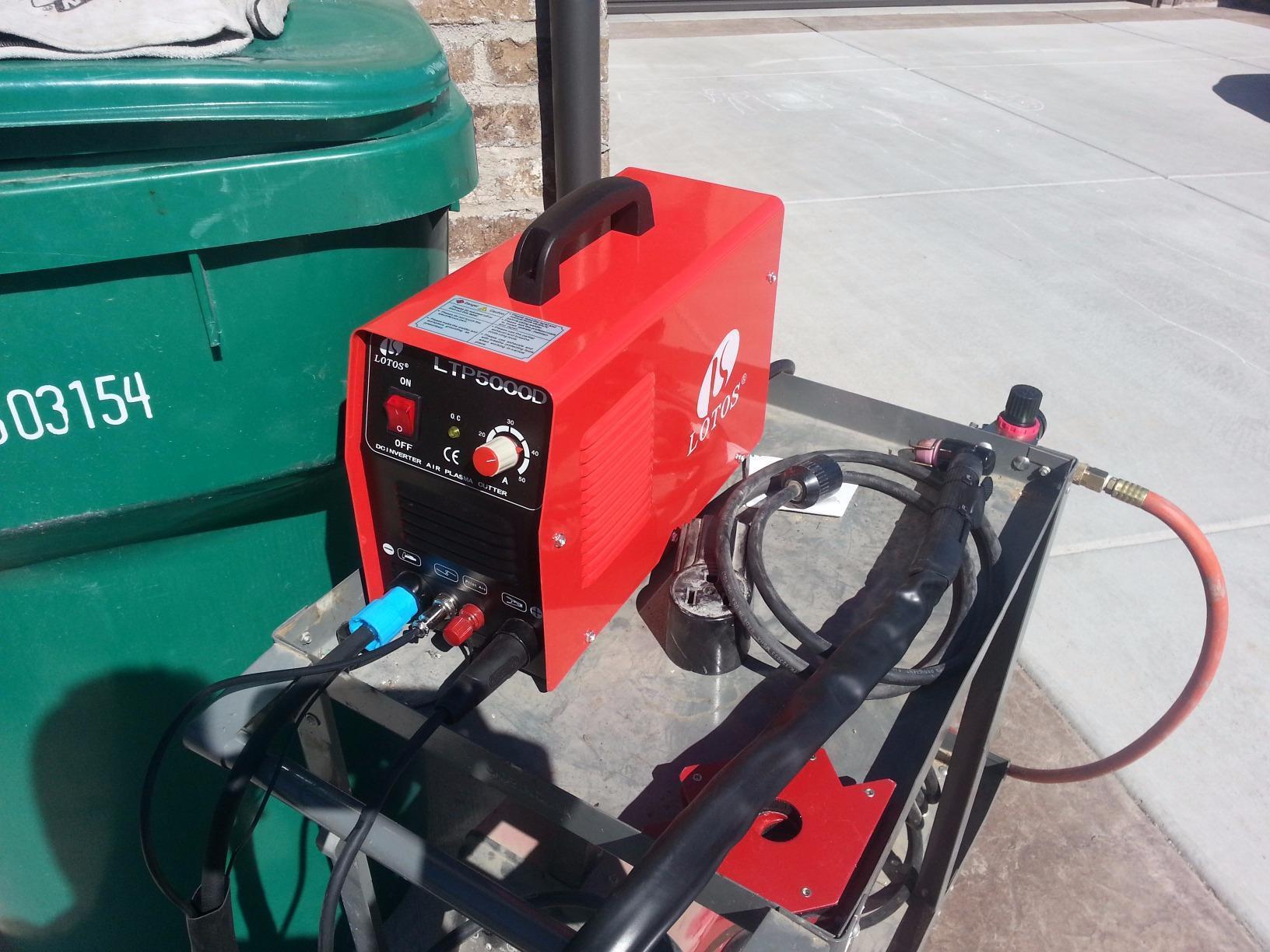
This is the machine I recommend to a home shop that has never owned a plasma cutter, and the reason is the review history rather than the spec sheet. With 2400 ratings behind it, this is the most thoroughly owned machine in the group, which means the failure rate is known instead of theoretical. Owners describe it cutting 1/4 inch steel cleanly with almost no dross when travel speed is watched, and 1/2 inch at a usable speed that most people report comparing well to machines several times heavier.
The pilot arc torch is the part that changes daily work. Because you do not touch the tip to the workpiece, you can start a cut on expanded metal, on a rusty trailer frame, or on a plate that still has paint on it without grinding a landing pad first. Several owners credit that with extending consumable life, since the electrode is not being shocked by a touch-start strike on dirty metal.
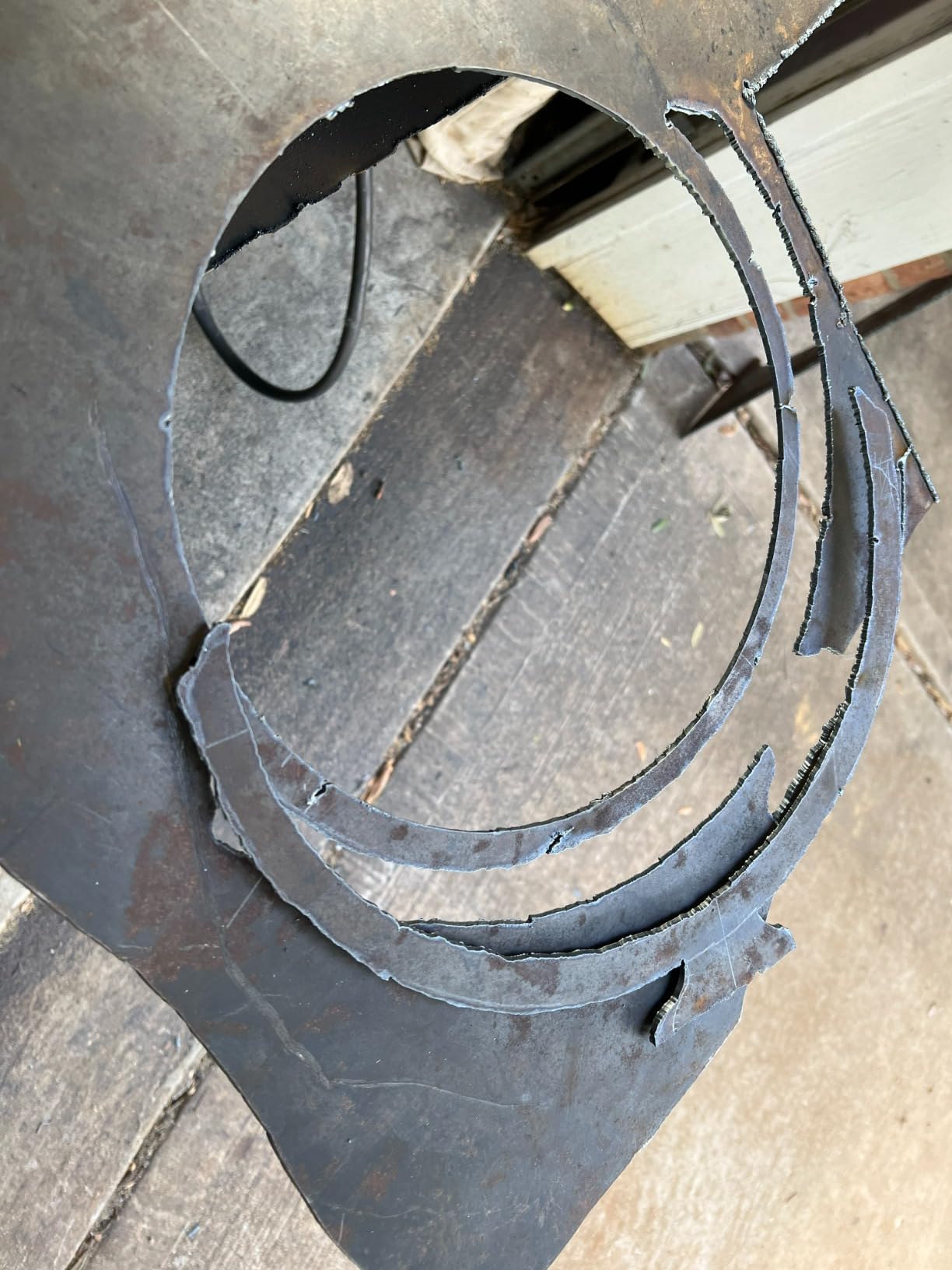
The rust removal mode is a nice touch for farm and property work. It runs a higher duty cycle on thinner, corroded material, which is exactly the case where a standard cut would stall and leave a mess of slag on the underside. The automatic 110V and 220V sensing means the same machine works in a garage with a household circuit and in a shop with a dedicated 220V branch circuit, with no relink procedure.
Air supply is handled by the front-mounted regulator, so you are not hunting for a filter on day one. The included unit has a water cup but no hose barbs, which is the one setup purchase most owners make immediately. Do that before your first cut rather than after.
Where this machine earns its rating
For a shop cutting 1/8 inch to 1/2 inch mild steel, occasionally aluminum and stainless, on a 110V or 220V supply, this is the shortest path to a clean weld-ready edge. The 55 amp inverter has the headroom to keep a steady arc on 1/4 inch plate instead of grinding through the last inch of the cut, and the non-touch torch removes the most common beginner frustration.
If you build hobby CNC plasma tables, check the consumable standard first. This machine uses common AG60-style consumables, which is the safest choice for parts availability.
Where this machine disappoints
The ground lead is noticeably shorter than the torch lead, and that matters more than it sounds. A short ground clamp lead means you are repositioning the clamp constantly on a large plate, which is both annoying and a source of arc wandering. Plan on buying a proper ground clamp with a longer lead.
The air fittings can arrive loose and need resealing, and consumables come only in multi-packs, which is a poor fit if you cut a few hours a month. A small number of owners also report pilot arc failures, and some describe support as rough in person while others say they had a replacement arranged quickly, so expectations should be moderate.
2. ARCCAPTAIN 50A Dual Voltage Plasma Cutter – Best Value for Cutting 1/4 Inch Steel
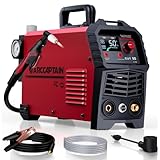
ARCCAPTAIN 50A Plasma Cutter Machine, 110V/220V Dual Voltage, 2/3″ Max Cut
- Cuts 1/2 inch steel cleanly on 220V and 3/8 inch with little mess
- Only 13 pounds with a shoulder strap
- LED screen shows live voltage and current plus error codes
- Air filter and regulator arrive pre-installed
- Handles 1/2 inch aluminum without trouble
- No laminated amperage and pressure reference chart
- Air line arrives as hard-line fitting needing modification
- A minority report inconsistent arc start
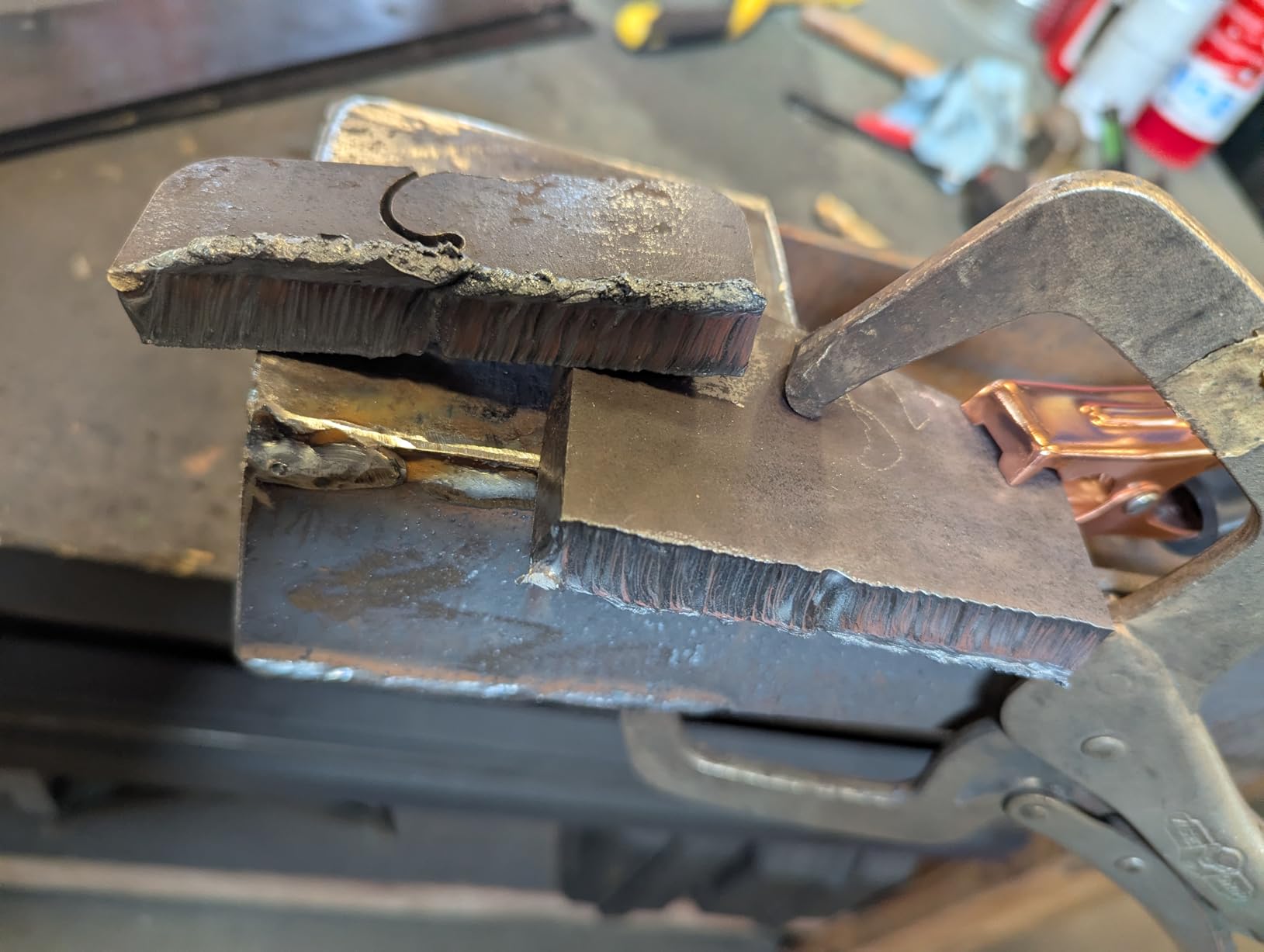
This is the value pick, and at 13 pounds it is also the one most likely to end up in a truck bed rather than on a bench. Reviewers consistently describe 1/2 inch steel cutting cleanly on 220V with a slag-free edge, which is a genuinely useful number for a home shop. It also holds 3/8 inch without much mess, which is where a lot of hobby projects land.
The 2T and 4T modes with adjustable post-flow cooling are more useful on a home shop machine than the spec sheet suggests. Four-tenth mode lets you finish a long cut without holding the trigger down, and a longer post-flow keeps the torch nozzle from burning through at the end of a cut. Set post-flow to 10 seconds or more and the consumables last noticeably longer.
The LED display is the feature owners mention most in a garage context. Seeing live voltage, current, and error codes means you can tell the difference between a machine fault and a bad air setup without a manual, which matters when you are learning. The rated output of 150 liters per minute of air is a fair benchmark to compare against a compressor spec sheet.
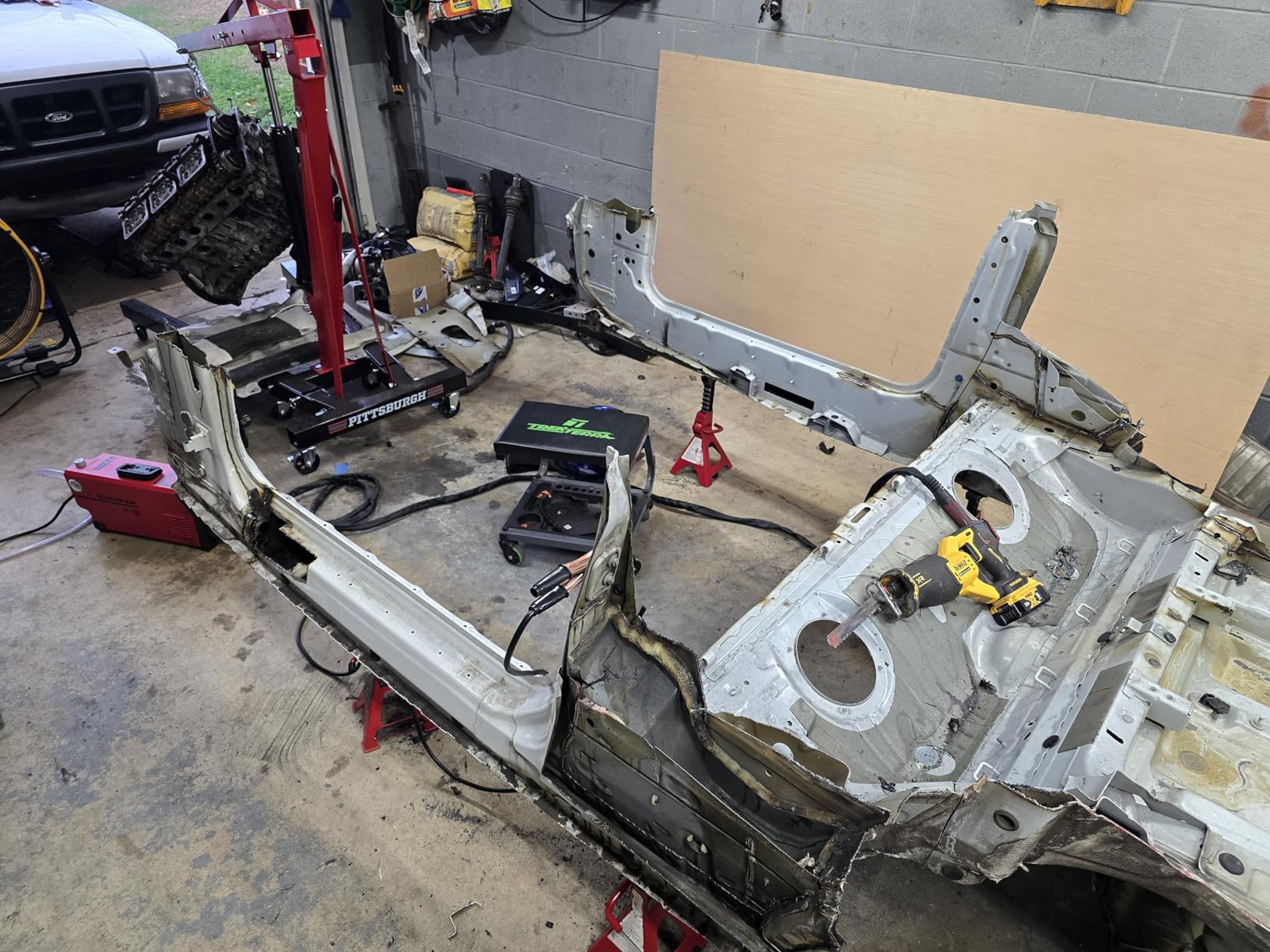
It handles aluminum well too, with owners reporting clean cuts through 1/2 inch aluminum. That is a real bonus for anyone doing wheel or bracket work rather than only mild steel.
Where this machine earns its rating
Best for a home shop cutting mostly 1/8 inch to 1/4 inch mild steel with occasional 1/2 inch work, where portability matters and a 220V circuit is available. The 13 pound weight and shoulder strap make it the easiest machine here to move to a job site, and the LED display removes the guesswork for a first-time owner.
Note the 12 mm clean cut figure is at 50 amps, 220V, and 75 PSI. On 110V the published figure drops to 12 mm at 35 amps, so a 220V outlet is where the headline number is real.
Where this machine disappoints
There is no laminated reference chart for amperage and pressure by material thickness, so you are estimating on your first few cuts until you build a feel for it. Print a chart from an experienced fabricator rather than guessing, because an underpowered setting is what produces the rough finish people mistake for a bad machine.
The air connection arrives as a hard-line fitting rather than the standard quick-connect most shops have, so budget a short adapter hose. The cut finish on thinner material is not as clean as the 1/2 inch headline implies, and a small number of owners report the arc starting and stopping on its own.
3. YESWELDER 60A Non-HF Plasma Cutter – Best for Shops With Sensitive Electronics
YESWELDER 60A Non-HF Plasma Cutter, Non-Torch Pilot Arc, 110/220V
- Blow-back start avoids interference with nearby electronics
- Digital readout for air pressure
- voltage and current
- Non-touch torch cuts rough and painted surfaces
- 5/8 inch clean cut and 63/64 inch maximum on 220V
- IP21 water rating with overload and overheat protection
- Only a 1 year warranty against longer coverage on rivals
- Listing mixes CUT-60DS and CUT-65DS identifiers
The reason to pick this machine over a similar 60 amp is the ignition system. Instead of a high-frequency start, it uses a non-HF blow-back start, which matters in a home shop that also has a welding machine, a computer, or a CNC controller on the same bench. High-frequency starts radially and have been blamed for interference with nearby equipment, and this design sidesteps that entirely.
On 220V it publishes a 5/8 inch clean cut and a 63/64 inch maximum, which puts it at the top of the home-shop group alongside the Lotos. On 110V the clean cut drops to 5/16 inch with a 1/2 inch maximum, so treat it as a 220V machine that tolerates 110V rather than the other way around.
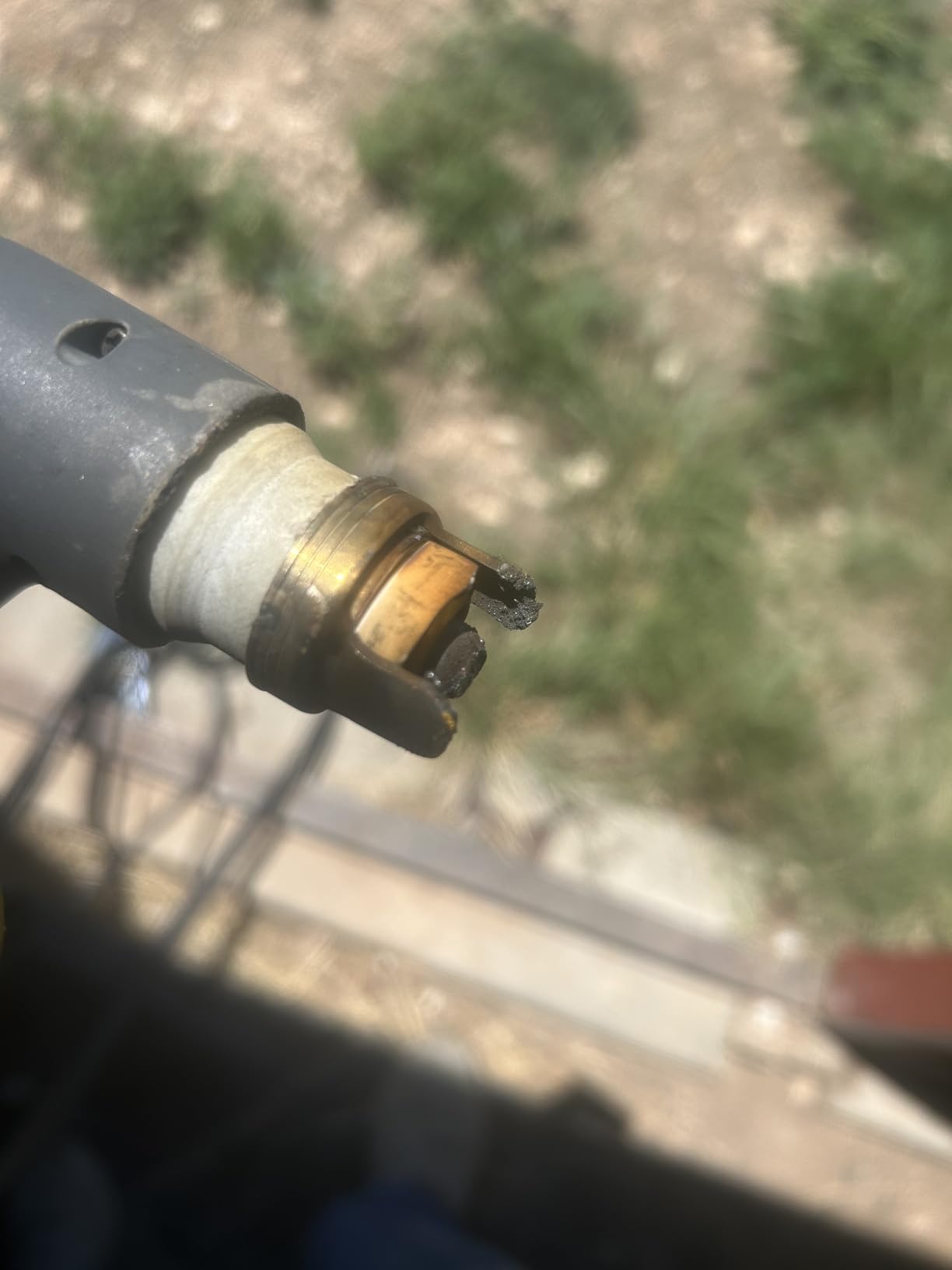
The digital display showing air pressure alongside voltage and current is genuinely useful, because wrong pressure is the most common cause of a bad cut. The IPT40 non-touch pilot arc torch starts through rough, painted, and rusty material, and the 4T mode with post-flow adjustable from 5 to 20 seconds covers both long cuts and consumable life.
Overload and overheat protection plus an IP21 water rating are small things that add up in a shop that is not climate controlled.
Where this machine earns its rating
Best for a home shop that runs other electronics on the same circuit, or for anyone cutting 1/2 inch and heavier who wants a machine that will not cause problems for other gear. The blow-back start is a real functional difference, not a marketing line, and reviewers treat it as the reason they bought this machine over the alternatives.
It is also one of the few machines here with ETL certification, which some shops and some insurers ask about.
Where this machine disappoints
The warranty is one year, which is the shortest of the machines with a solid rating in this group. If you cut thick steel often, a longer warranty is worth paying for elsewhere on this list.
The listing uses both CUT-60DS PRO-1 and CUT-65DS part numbers, and the model field says CUT-65DS, so you may not be certain which generation you receive. Ask the seller before ordering if that matters to you.
4. PrimeWeld CUT50D 50A Air Inverter Plasma Cutter – Best Pre-Plumbed Machine for a Garage
- Cuts 1/2 inch cold roll steel in about 5 seconds
- Air filter and regulator arrive pre-plumbed with brass quick connect
- Seller support answers fast and handles warranty repairs
- AG60 trigger guard is a real upgrade over zip-tied budget torches
- Air fittings and the quick disconnect can leak and need resealing
- Instruction manual is widely criticized
- The 220V power cord is short
At 4.7 stars this is the best rated machine in the group after the PrimeWeld CUT60, and the reason is a combination of cut quality and support. Owners describe cutting 1/2 inch cold roll steel in about five seconds and handling 1/4 inch plate without thinking about it, which is a level of performance owners previously associated with much larger professional machines.
It arrives ready to plumb. The air filter and regulator are already mounted at the rear with a brass quick connect, so the biggest first-day hurdle for a new plasma cutter owner is already solved. The AG60 torch with a trigger guard also feels like a step above the zip-tied budget torches that come with cheaper machines.
What stands out most in the reviews is the seller. Buyers report fast answers to questions and smooth handling of warranty shipping and repairs, which is unusual at this tier. Several owners also note that earlier complaints about the rear plumbing were answered by redesigning it and supplying a newer torch, which tells you the manufacturer listens.
Automatic 110V and 220V operation means you can start on a household circuit and move to a dedicated 220V branch circuit as your cutting grows.
Where this machine earns its rating
Best for a home shop that wants a reliable 1/4 inch to 1/2 inch cutter without fussing with air plumbing, and for buyers who value a support path over a lower sticker figure. A 2 year warranty is not published for this model, but the seller service record is the strongest support story in this roundup.
For anyone building a hobby CNC table, the AG60 torch is a common consumable standard, which makes parts easy to find.
Where this machine disappoints
The air fittings, particularly the supplied quick disconnect, can leak and need resealing. Not a dealbreaker, but you will want PTFE tape and a few minutes on the first setup.
The manual is poor, the 220V power cord is short enough that most owners add an extension or adapter, and replacement torches are not always as good as the original. Write down your amperage and pressure settings once you get a cut you like.
5. SILATU STC550P 55A Non-Touch Pilot Arc Plasma Cutter – Best for Tuning Consumable Life
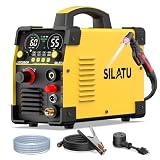
SILATU 55A Plasma Cutter, Non-Touch Pilot Arc, 110V/220V, 2/3″ Max Cut
- Adjustable pilot arc duration extends consumable life
- Built-in air pressure sensor reads on the digital screen
- Rear air filter with quick connector works out of the box
- 1 year warranty with lifetime technical support
- 2T mode trigger hold tires the hand on long cuts
- No air compressor included
This machine’s distinguishing feature is control over the pilot arc. You can set how long the pilot arc runs, and owners use that deliberately: shorten it for clean sheet metal work, lengthen it for mesh or expanded metal where you need the extra energy to punch through. That single adjustment is the most direct lever on consumable life available on a machine at this weight.
It also monitors its own air pressure. The digital screen shows air pressure, voltage, current, and error codes, and a built-in sensor flags when pressure is off target. That removes the most common beginner error in plasma cutting, which is running at the wrong pressure and blaming the machine for the resulting mess.
At 12.57 pounds carrying a 55 amp inverter, this is one of the better power-to-weight ratios here. The published figures are 1/2 inch at 40 amps on 110V at 60 PSI, and 2/3 inch at 55 amps on 220V at 70 PSI, with a 60 percent duty cycle.
PT, 2T, 4T, and PA functions with post-time adjustable from 3 to 15 seconds cover essentially every torch control a home shop needs, and the rear-mounted air filter with a quarter-inch NPT quick connector is ready to connect on day one.
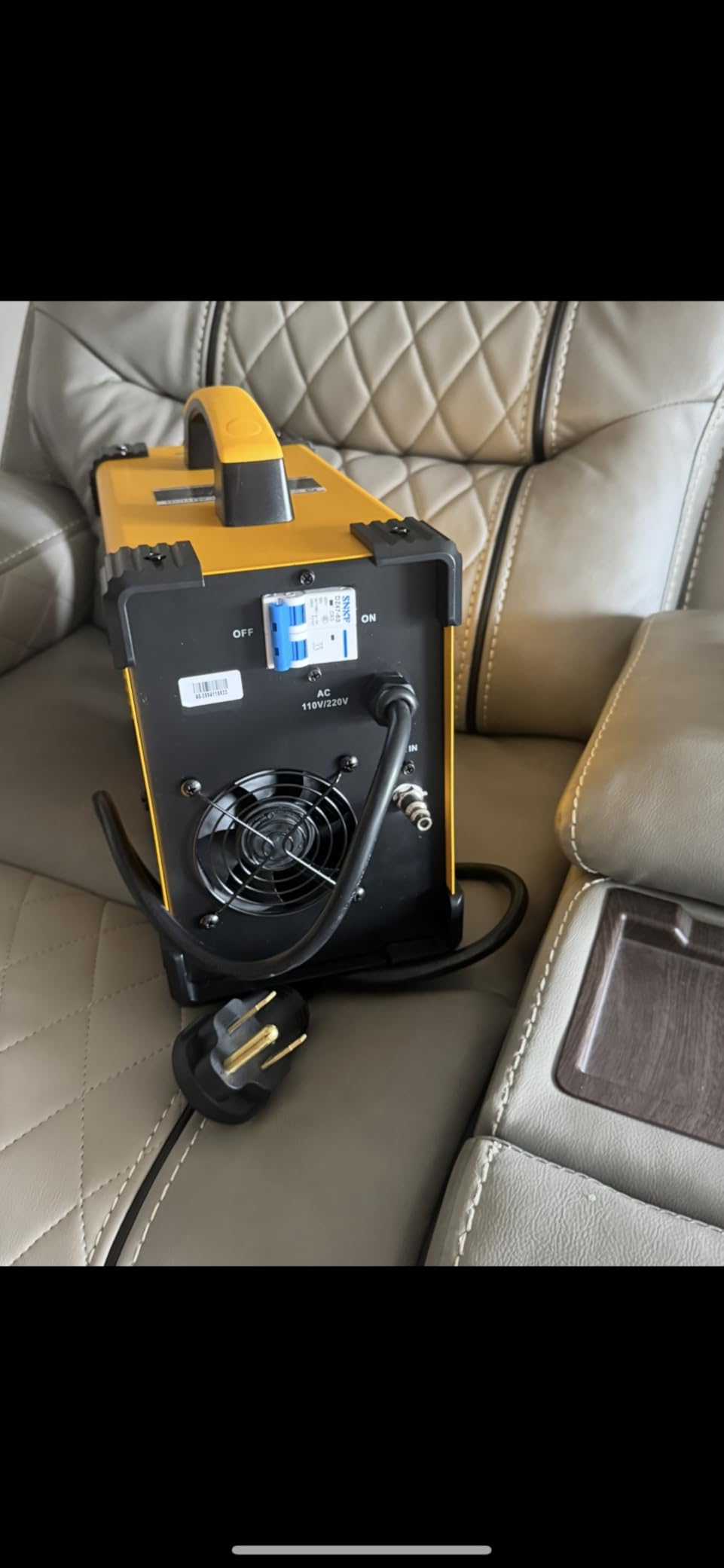
Where this machine earns its rating
Best for a shop that cuts a mix of thin sheet and thicker plate and wants to tune the torch rather than accept a fixed behavior. It is also a good choice for anyone who cuts expanded metal, since the adjustable pilot arc duration is made for exactly that job.
The 1 year warranty plus lifetime technical support is a reasonable combination for a machine aimed at garage use, and the 263-review history is enough to see a pattern rather than guesswork.
Where this machine disappoints
Trigger fatigue is real on long cuts if you leave the machine in 2T mode, because that means holding the trigger down continuously. Switch to 4T before you start a long cut and the problem disappears.
No compressor is included, and the air side is where most first-time owners underestimate the requirement. Add a compressor and a refrigerated dryer to your total cost before deciding this is the cheap machine.
6. GZ GUOZHI CUT-50 50A Air Inverter Plasma Cutter – Best for Rusty and Painted Material
GZ GUOZHI Plasma Cutter, 50 Amp Air Inverter Plasma Cut, 110V/220V Dual Voltage Digital Display IGBT Inverter Plasma Cutting Machine with 2T/4T/TEST Function
- Pilot arc starts reliably on rough and painted material with minimal slag
- Sets up in under a minute with the pre-installed D-type air plug
- 2T/4T/TEST functions suit different cut lengths
- Overheat and over-current protection
- Rated to operate at minus 20 degrees
- 12 percent one-star share
- the second-highest in this group
- Weight is listed as 13 pounds in one place and 19.31 pounds in another
- No built-in air filter or regulator
For a farm shop, a property maintenance shop, or anyone cutting trailer frames and old equipment, the pilot arc start is the feature that matters. Owners report reliable starts on rusted and painted surfaces with minimal slag, and the 2T, 4T, and TEST functions let you pick the behavior that suits a long cut, a short cut, or a test pass on a new material.
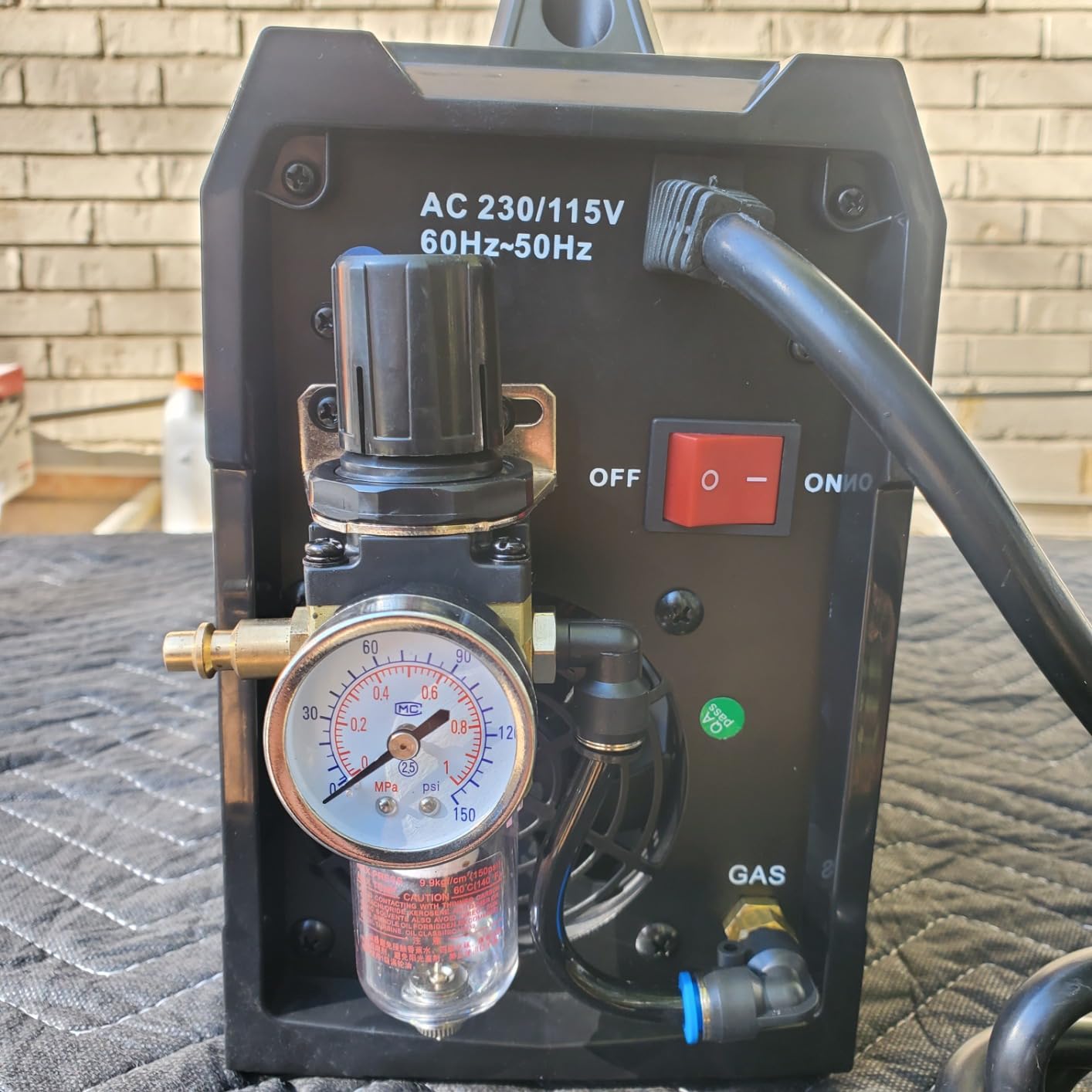
The setup story is the best in this price range. The quarter-inch industrial D-type air plug is pre-installed, so connecting to a compressor takes under a minute. Overheat and over-current protection is standard, and the machine is rated to operate down to minus 20 degrees, which is irrelevant in a garage but relevant if you cut outside in winter.
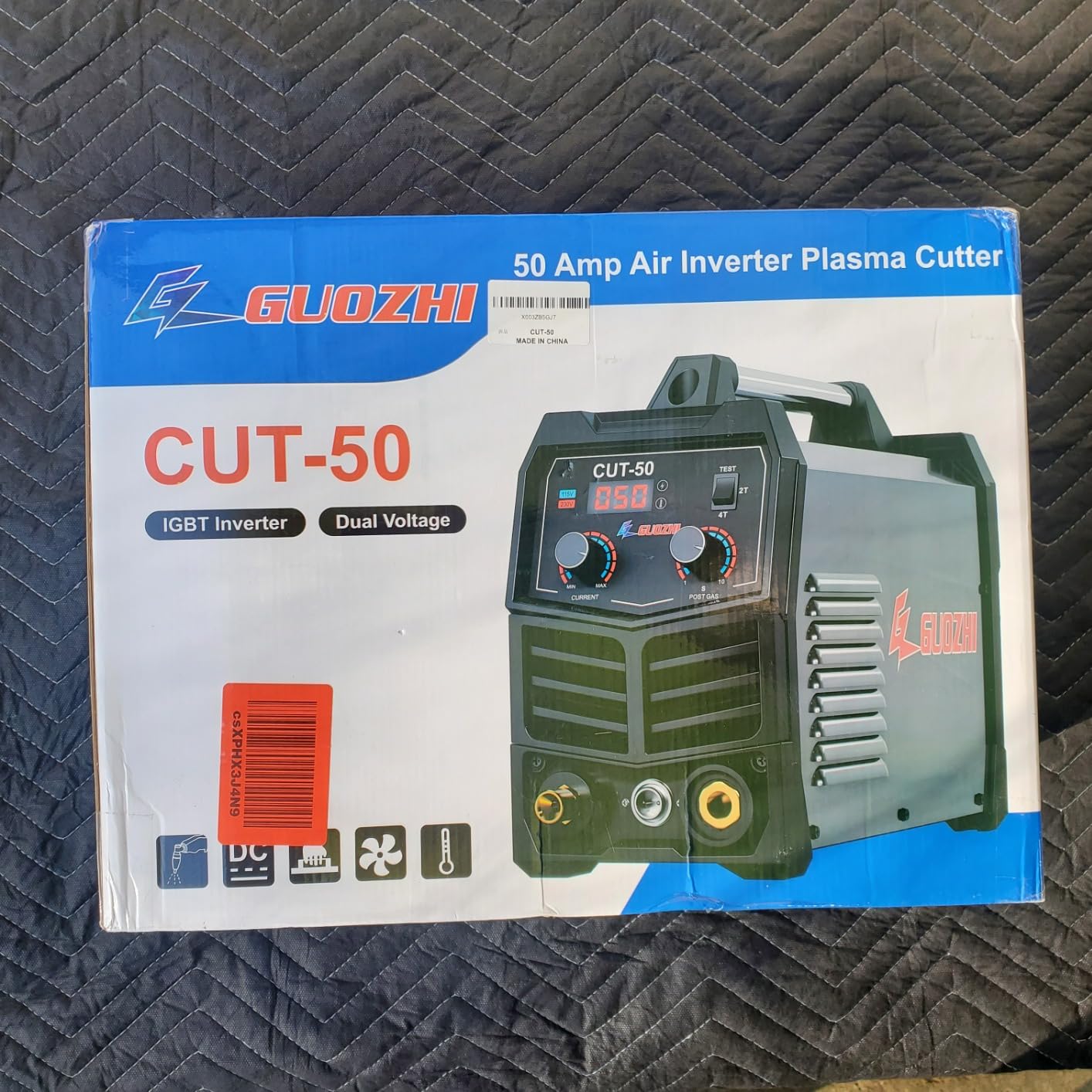
Published capacity is 1/4 inch at 35 amps on 110V at 50 PSI, and 3/4 inch at 50 amps on 220V at 65 PSI, on a 60 percent duty cycle. The 3/4 inch figure is a maximum rather than a clean-cut number, and we would plan real work around the middle of that range.
The machine ranks well in its category on the retailer’s bestseller chart, and at 251 reviews there is enough history to see the pattern in the complaints.
Where this machine earns its rating
Best for outdoor and farm work, for cutting material you have not cleaned, and for anyone who wants a machine that is running a minute after unpacking it. The sub-zero rating and the pilot arc reliability are the two features no other machine at this level combines.
If you are building a hobby CNC plasma table, the TEST function is a small plus because it gives you a low-arc mode for piercing without committing full output.
Where this machine disappoints
The one-star share is 12 percent, the second-highest in this roundup, which tells you the sample is smaller and the tail of failures is longer. On a machine with 251 reviews, twelve percent is a meaningful group of people who did not have a good time.
There is no built-in air filter or regulator, so you are buying those on day one, and the weight is listed inconsistently at 13 pounds in the description against 19.31 pounds in the spec listing. Plan for the heavier figure when you decide where it lives.
7. Reboot RBC6000D 60A Touch Arc Plasma Cutter – Best for First-Time Owners Learning Settings
- Cuts 1/4 inch and heavier quickly and cleanly once settings are dialled in
- Clear setup instructions for a first-time user
- Extra tips included for beginners who burn nozzles
- Compact enough to carry from garage to job site
- On 240V it replaces hours of grinding work
- On 120V above about 18 amps it repeatedly trips the breaker
- The roller guide on the tip comes loose and does not stay fixed
- Some units failed after a single use with no power afterward
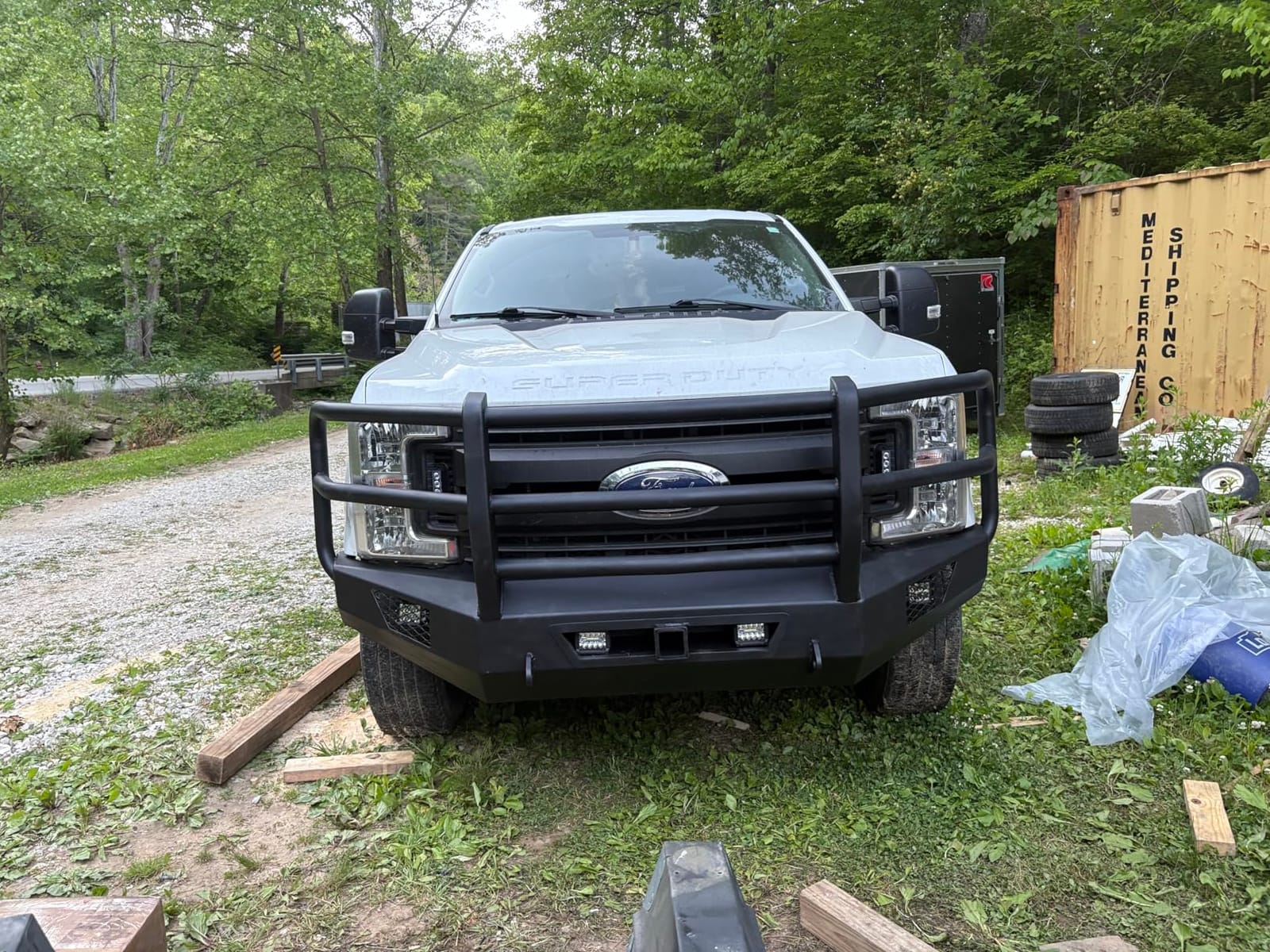
The reviews on this machine split cleanly by voltage, and that is the single most useful thing to know before you buy it. On 240V, owners describe an outstanding little machine that cuts steel quickly and cleanly. On 120V, multiple owners report the breaker tripping above about 18 amps. If your only outlet is a household circuit, this is not the machine to buy.
The touch arc ignition means you start the arc the way you would a welder, by touching the tip to the workpiece and pressing. That is a gentler learning curve than a pilot arc for some people, and the instructions are written for a first-time user, with explicit pressure guidance in PSI and a stated breaker requirement of 50A on 120V and 40A on 240V.
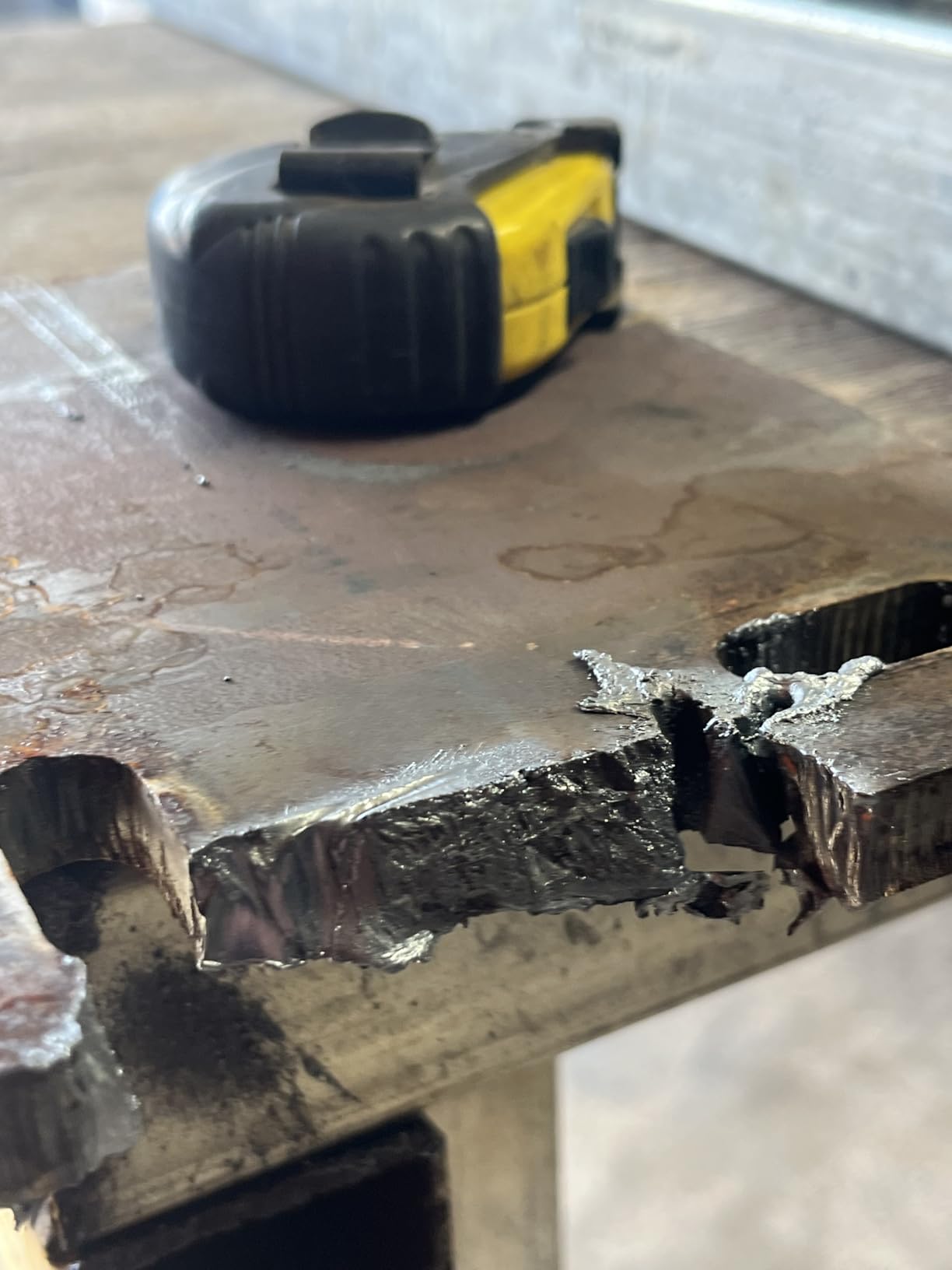
Published capacity is 1/2 inch at 35 amps on 120V and 5/8 inch at 60 amps on 240V, with 70 to 75 PSI at 60 liters per minute or above. It cuts steel, stainless, aluminum, and copper, and the PT31 torch and spare tips are included, which is a genuine help if you are learning and burn through nozzles.
Auto-detecting dual voltage means you can move the machine between a 120V and 240V circuit without a relink procedure.
Where this machine earns its rating
Best for a home shop with a dedicated 240V circuit and an owner who is cutting for the first time. The pre-installed air regulator, the clear setup guidance, and the included spare tips remove the three most common first-week problems in one box.
It is also compact enough to move to a job site, and owners report that on 240V it replaces hours of grinding per project.
Where this machine disappoints
The 120V limitation is real and repeatable. Above roughly 18 amps the breaker trips, which means on a household circuit you are working well below the machine’s capability. If you cannot add a 240V branch circuit, pick a machine that performs at 110V instead.
Some units failed after a single use with no power afterward, the roller guide that attaches to the tip comes loose and will not stay fixed, and warranty handling leaves the buyer paying to send the tool back. The listed weight also differs from the advertised figure, so plan the space accordingly.
8. DNYKER CUT50 50Amp Dual Voltage Plasma Cutter – Best Lowest-Cost Starter Machine
- Lowest cost in this roundup and often outperforms its stated capacity on 220V
- Pilot arc starts without touching the workpiece
- Owners report cutting 3/8 inch material without problems
- Genuine 110V and 220V operation with digital auto-detection
- Built-in carry handle keeps it portable
- Several buyers report failures and breaker trips after a few short sessions
- Real cut depth is often well under half the advertised maximum
- Included air regulator is weak and worth replacing
This is the cheapest machine here by a wide margin, and the reviews are the most polarized in the roundup. Many owners are pleasantly surprised by performance on 220V and call it a sensible first plasma cutter. A meaningful second group reports machines that tripped the breaker and stopped working within a few hours. A 64 percent five-star share alongside a 9 percent one-star share tells you both things are true at once.
The pilot arc start is the good part of the design. Starting without touching the workpiece improves cut quality and extends consumable life, and that behavior is not universal at this cost. The digital display auto-detects input current and voltage, and the protection package covers overheat, overcurrent, overload, and overvoltage with multiple exhaust windows.
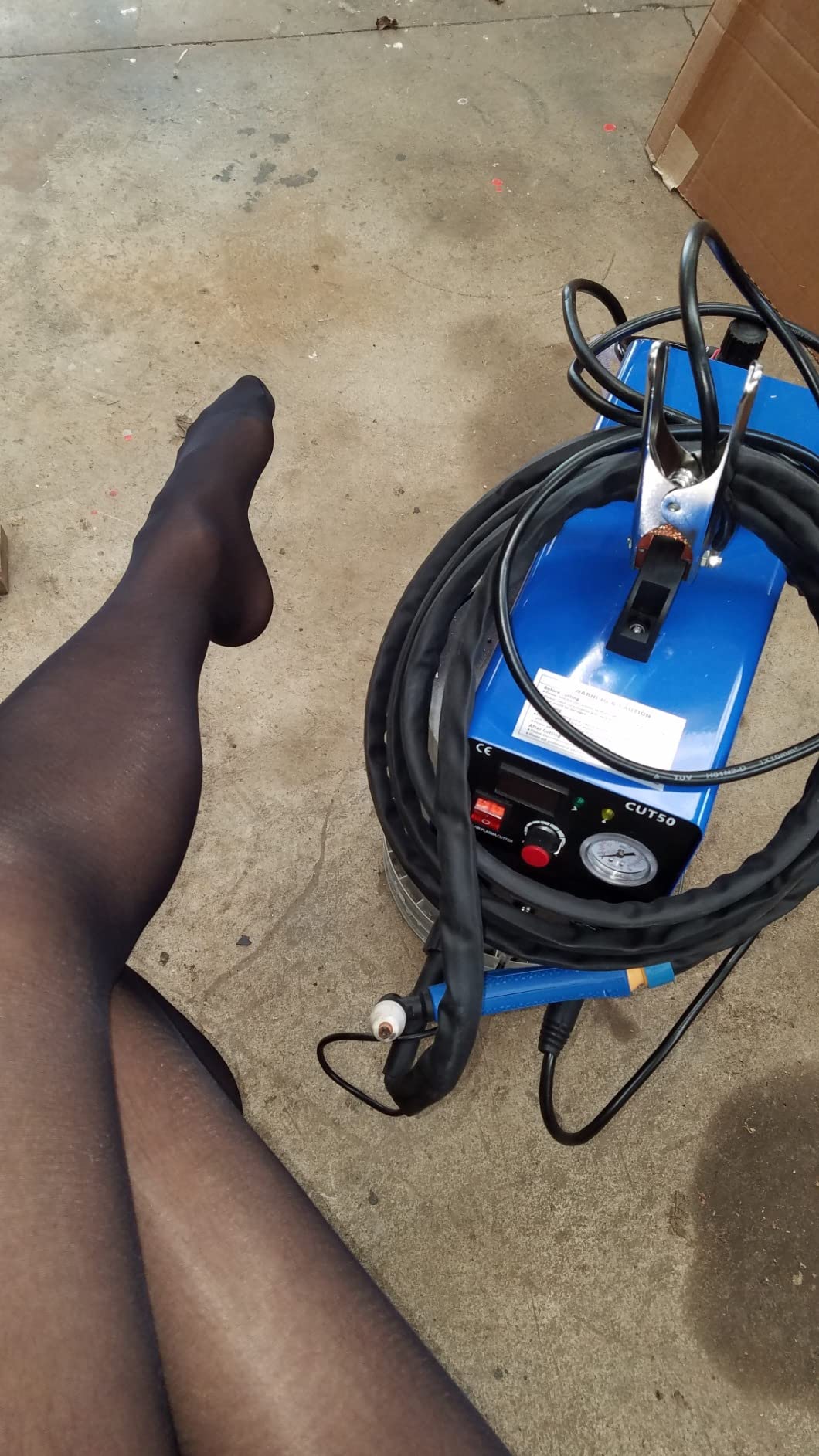
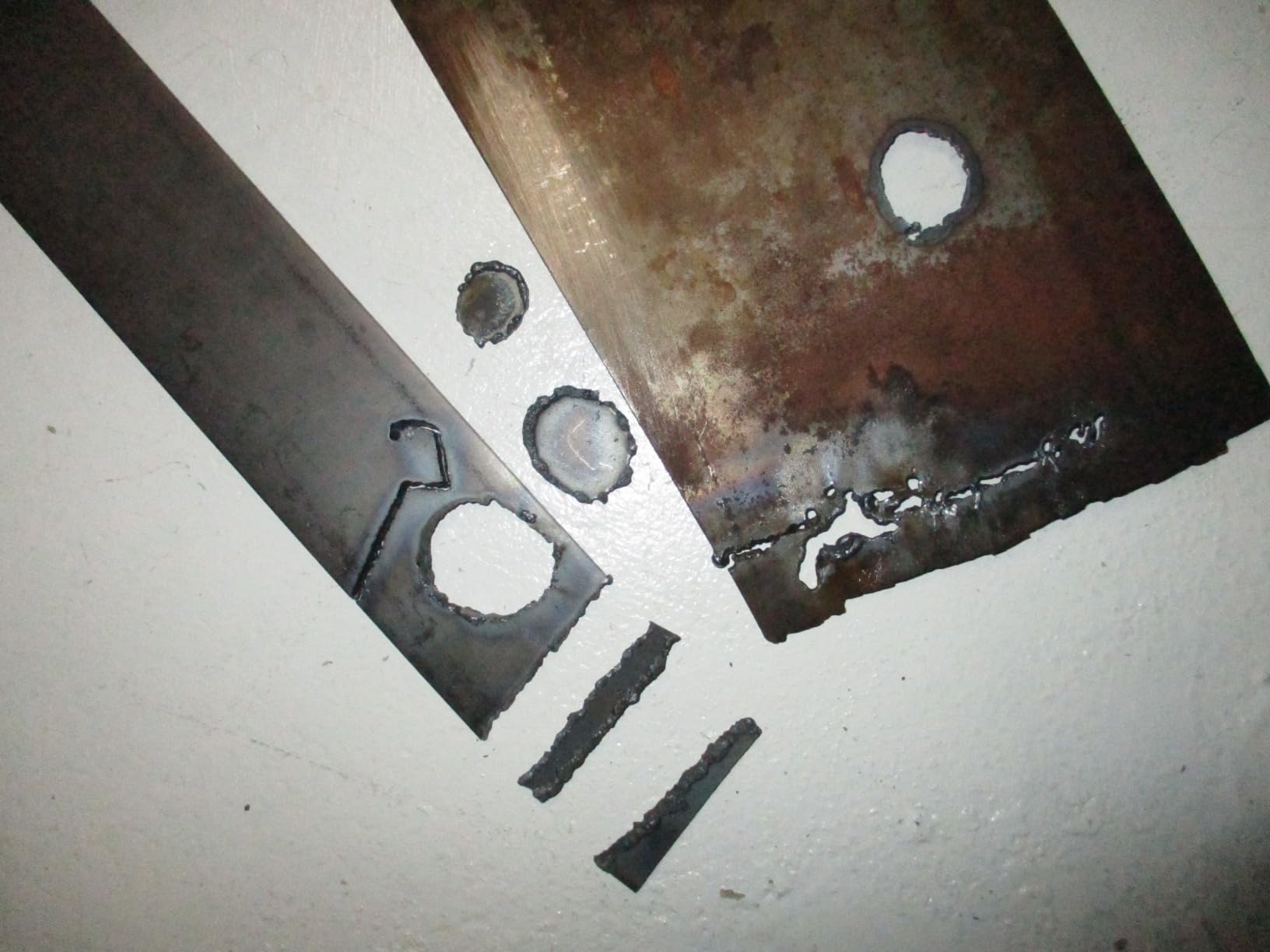
Published numbers are modest and more honest than most: a recommended maximum average cut of 2/5 inch at 220V and a maximum of 1/2 inch at 220V, with 3/8 inch at 110V. Recommended air is 60 to 70 PSI. Compared with the machines above, the capacity claims are lower but the disappointment gap is smaller too.
At 13 pounds with a carry handle, it moves around easily, and the MOS inverter design is simple enough that parts failures are usually obvious rather than mysterious.
Where this machine earns its rating
Best for someone who wants to learn plasma cutting on the smallest commitment, cutting 1/8 inch and thinner with occasional 3/8 inch work, on a 220V circuit. If your projects are sheet metal, this machine is genuinely enough and the rest of your budget can go toward a compressor and a dry air setup, which matters more to cut quality than the machine does.
The pilot arc torch and the digital auto-detect display are both features you would not expect at this cost.
Where this machine disappoints
The capacity claim is the problem. Owners measuring real cut depth often find well under half of the advertised maximum, so plan your project sizes around the 2/5 inch recommended figure rather than the headline number.
Several buyers report the machine failing and tripping the breaker after only a few short sessions, which is the failure mode that makes a low-cost machine a low-cost replacement rather than a low-cost purchase. The included air regulator is weak and worth replacing, and the listing references TIG and MMA modes that the instructions do not cover.
9. Bestarc BTC500DP 50A Pilot Arc IGBT Plasma Cutter – Best for Cheap and Available Consumables
Bestarc 50A Plasma Cutter Machine, Pilot Arc, IGBT 110V/220V Dual Voltage
- Air sensor turns green at correct pressure so setup mistakes are easy to avoid
- Cuts 1/4 inch steel at about 18-20 amps on a 110V outlet
- LED screen shows voltage
- current
- mode and air pressure
- Consumables are inexpensive and widely available
- 2T/4T/PA/PT modes with adjustable post-flow
- The air adjustment knob's plastic nut will not stay threaded and can crack
- Performance on 110V is well below 220V
- Pilot arc was reported pulsing on one model
- Instructions are poorly written with broken English
The best feature here is a small red and green indicator that tells you when your air pressure is right. Owners call it the reason setup mistakes are easy to avoid, and on a budget machine that is a genuinely valuable addition because the alternative is guessing at a gauge. The full LED screen also shows voltage, current, cutting mode, and air pressure.
The AG60P pilot arc torch has adjustable pilot arc duration up to 15 seconds and comes with a 0.040 inch nozzle for smooth, precise cuts, which is the nozzle you want for sheet metal and thin material work. Consumables are inexpensive and widely available, and the machine covers PT, 2T, 4T, and PA functions with post-flow adjustable from 3 to 15 seconds.
Published capacity is 1/2 inch at 35 amps on 110V at 50 PSI and 2/3 inch at 50 amps on 220V at 65 PSI, with recommended breakers of 40A at 110V and 30A at 220V.
Where this machine earns its rating
Best for a home shop on a 110V outlet that cuts mostly 1/4 inch material, and for anyone whose projects are sheet metal, tubing, and light plate. At 18 to 20 amps on 110V it cuts 1/4 inch steel easily, which covers a very large share of home garage work.
Consumable cost matters over a machine’s life, and the AG60P platform is one of the cheapest and most widely stocked consumable sets available. If you plan to cut a lot, that adds up.
Where this machine disappoints
Quality control is the weak point. Several buyers report loose or cracking plastic hardware, including the red plastic nut on the air adjustment knob that will not stay threaded, and some report missing screws out of the box. A 5 percent one-star share is among the lowest here, but the complaints repeat.
Performance on 110V is well below what you get on 220V, and pilot arc pulsing was reported on one model. The instructions are poorly written with broken English, so plan to learn settings from cut samples rather than the manual.
10. FLARING FC650D 65A Touch Arc Plasma Cutter – Best for Carrying to Job Sites
- Lightest and most compact machine here at 8.4 pounds
- Owners report fast clean cuts through 1/4 inch plate
- Automatic arc control handles expanded metal without re-triggering
- Comes with a 14-piece consumable set plus regulator
- hose
- torch and ground clamp
- Handles aluminum
- magnesium
- brass
- stainless
- cast iron
- copper and titanium
- 14 percent one-star share
- the highest in this group
- One unit failed after about 10 minutes on 110V
- Some packages do not include the advertised upgraded torch
- Much less capable on 120V than 240V
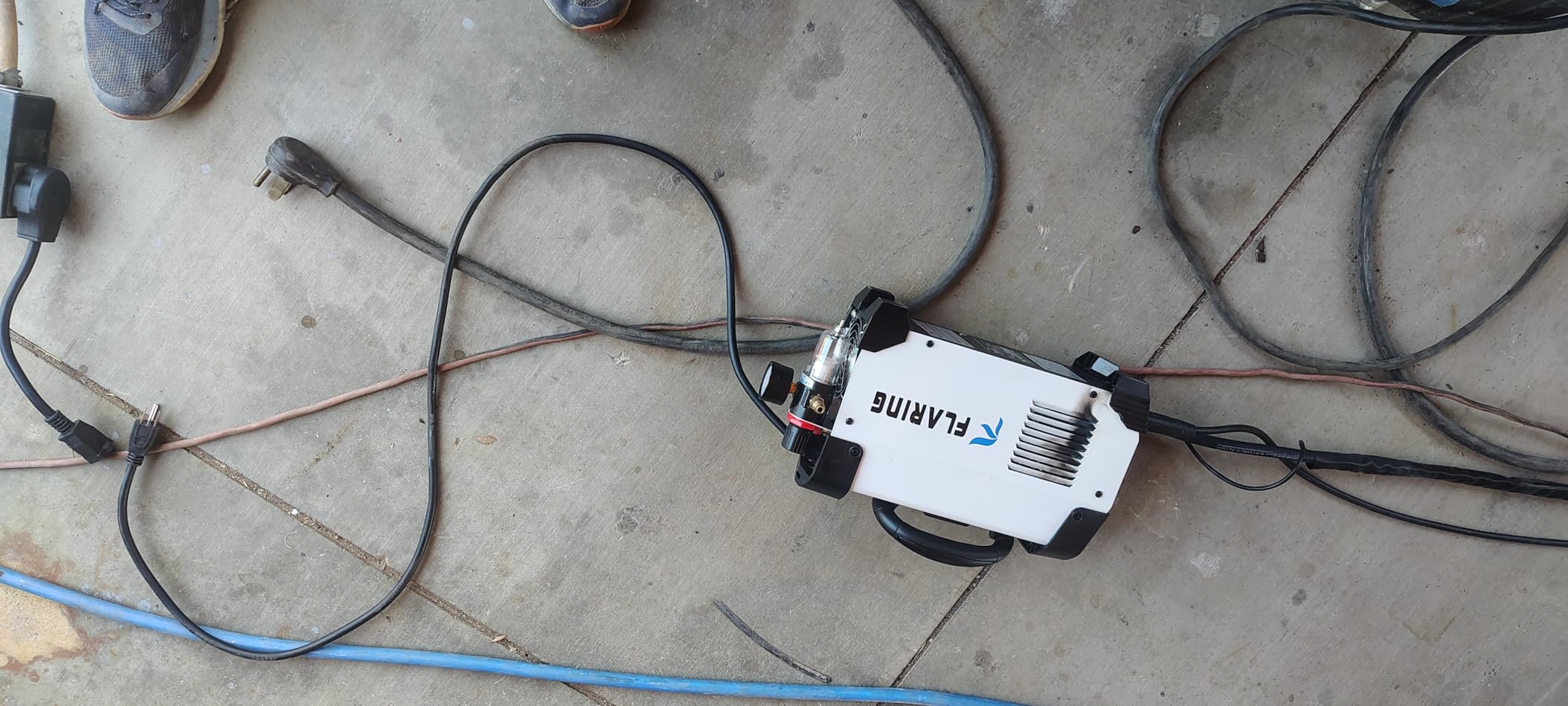
At 8.4 pounds with a 65 amp inverter, this is the smallest machine here by a wide margin, and one owner reported it delivered noticeably more cutting power than a five-year-old 50 amp machine in a smaller body. If you cut on rooftops, at customer sites, or anywhere the machine has to travel, that weight difference is the whole argument.
The automatic arc control is the sleeper feature. It manages arc behavior on expanded metal or stacked pieces without manual re-triggering, which cuts hand fatigue significantly on the kind of cut that otherwise forces you to release and re-strike the trigger repeatedly. It is a 60 percent duty cycle, fifth generation IGBT inverter with 120V and 240V auto-detection that needs no cover removal to relink.
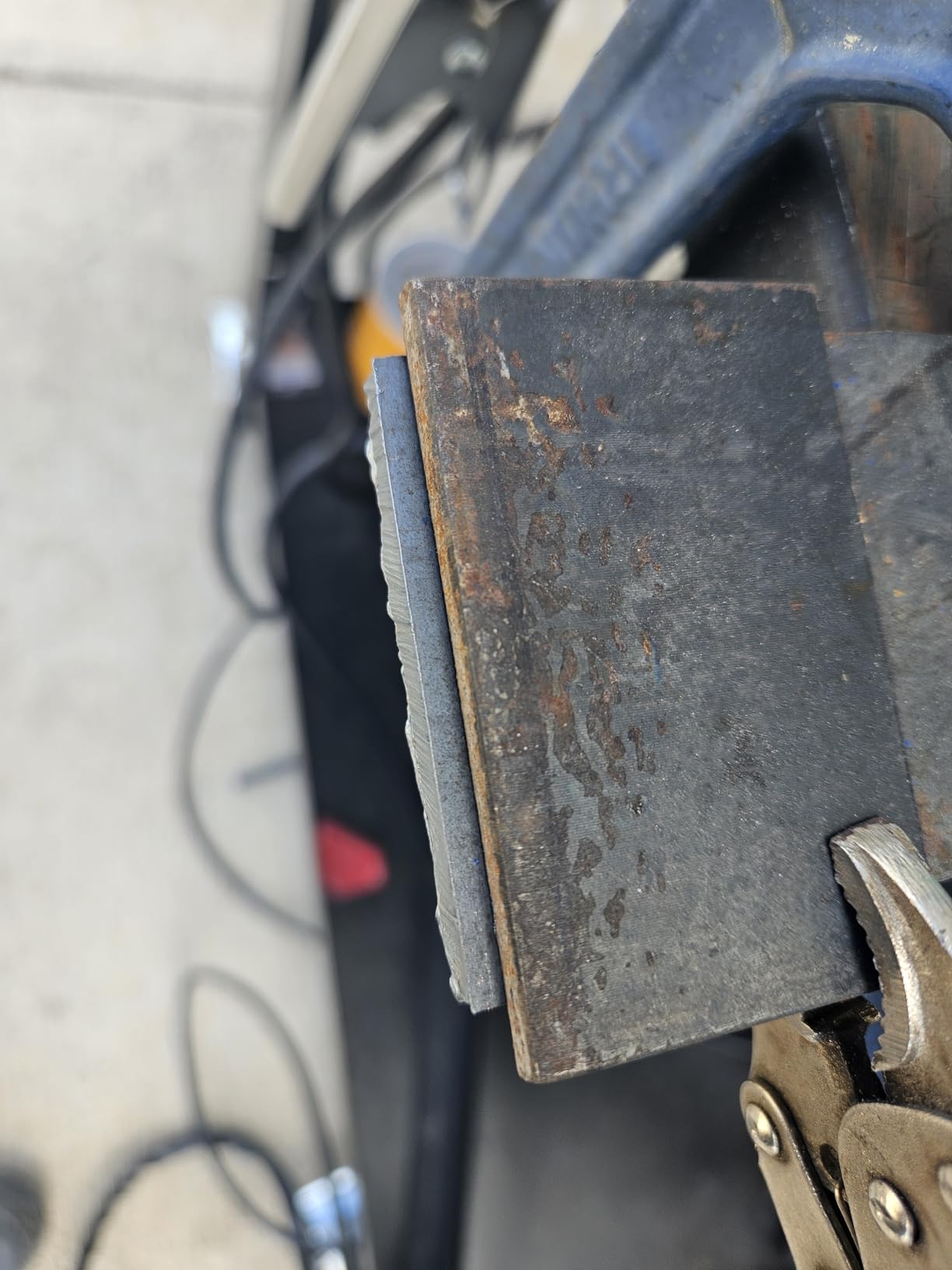
The complete package is worth noting. The box includes a 14-piece consumable set plus the regulator, hose, torch, and ground clamp, so the only day-one purchase is air. Owners also report clean cuts on aluminum and stainless, which broadens what a home shop can take on beyond plain mild steel.
Published capacity is a 1/2 inch ideal clean cut with a 4/5 inch maximum severance, and owners report fast clean cuts on 1/4 inch plate.
Where this machine earns its rating
Best for a shop that cuts on location rather than at a bench, and for anyone working in aluminum, brass, stainless, cast iron, or copper alongside steel. The package is unusually complete, with a 14-piece consumable set plus regulator, hose, torch, and ground clamp, so there is nothing to buy on day one beyond air.
If your material never exceeds 1/4 inch, the weight saving matters more than the headline amperage, and this is the machine that gets there fastest.
Where this machine disappoints
The 14 percent one-star share is the highest in this roundup, and the reviews point at early failures. One unit failed after about ten minutes on 110V, and multiple owners report performance that is much weaker on 120V than on 240V.
Some packages do not include the advertised upgraded torch, so verify the contents on arrival. Spec quality control is also inconsistent, with weight listed as 8.4 pounds in one place and 15 pounds in another. If you want the lightest option but not the reliability risk, this is the one to think hardest about.
11. PrimeWeld CUT60 60A Non-Touch Pilot Arc Plasma Cutter – Best Rated for Regular Shop Work
- Highest rated machine in the group at 4.8 stars with 86 percent five-star reviews
- PT60 torch with Euro central connection makes consumable changes quick and clean
- Continuous pilot arc handles expanded
- rusted and painted metal without restarting
- 60 percent duty cycle at full 60 amps supports sustained work
- 3 year warranty with US-based support
- Costs several times more than the 50A and 60A machines in this roundup
- Weight and detailed dimensions are not published in the listing
This is the best-rated machine in the roundup at 4.8 stars, with 86 percent five-star reviews and only 1 percent one-star. If you cut thick steel regularly and want the fewest compromises, this is where the extra money goes, and the reasoning is specific rather than brand loyalty.
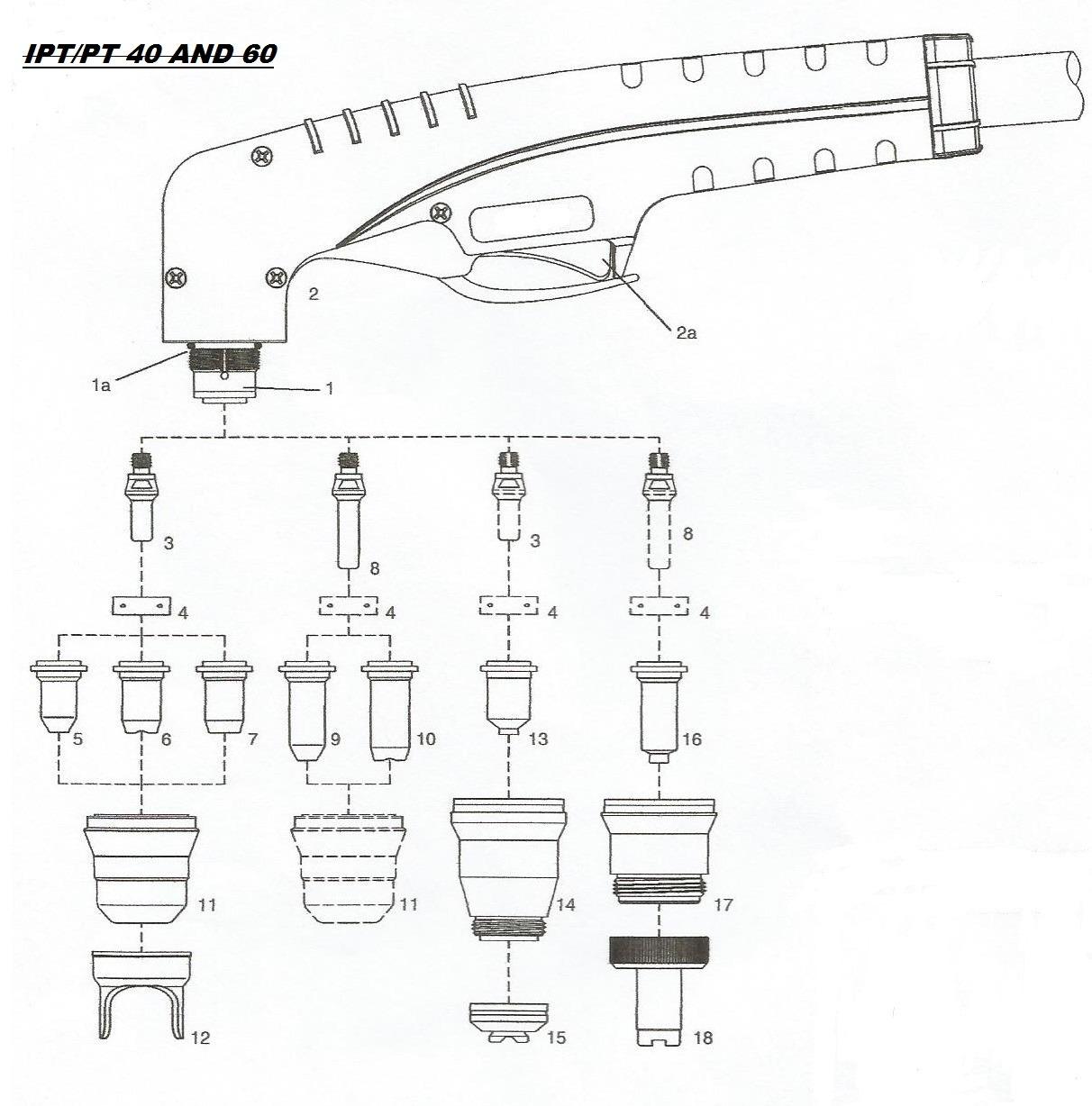
The PT60 torch with a Euro central connection is the detail that owners praise most. Consumable changes are quick and clean, and a sealed central connection is far less likely to leak air than a collection of barbed fittings. The continuous pilot arc cuts expanded, rusted, and painted metal without restarting, and a 60 percent duty cycle at the full 60 amps means it holds specification on a long cut instead of derating halfway through.
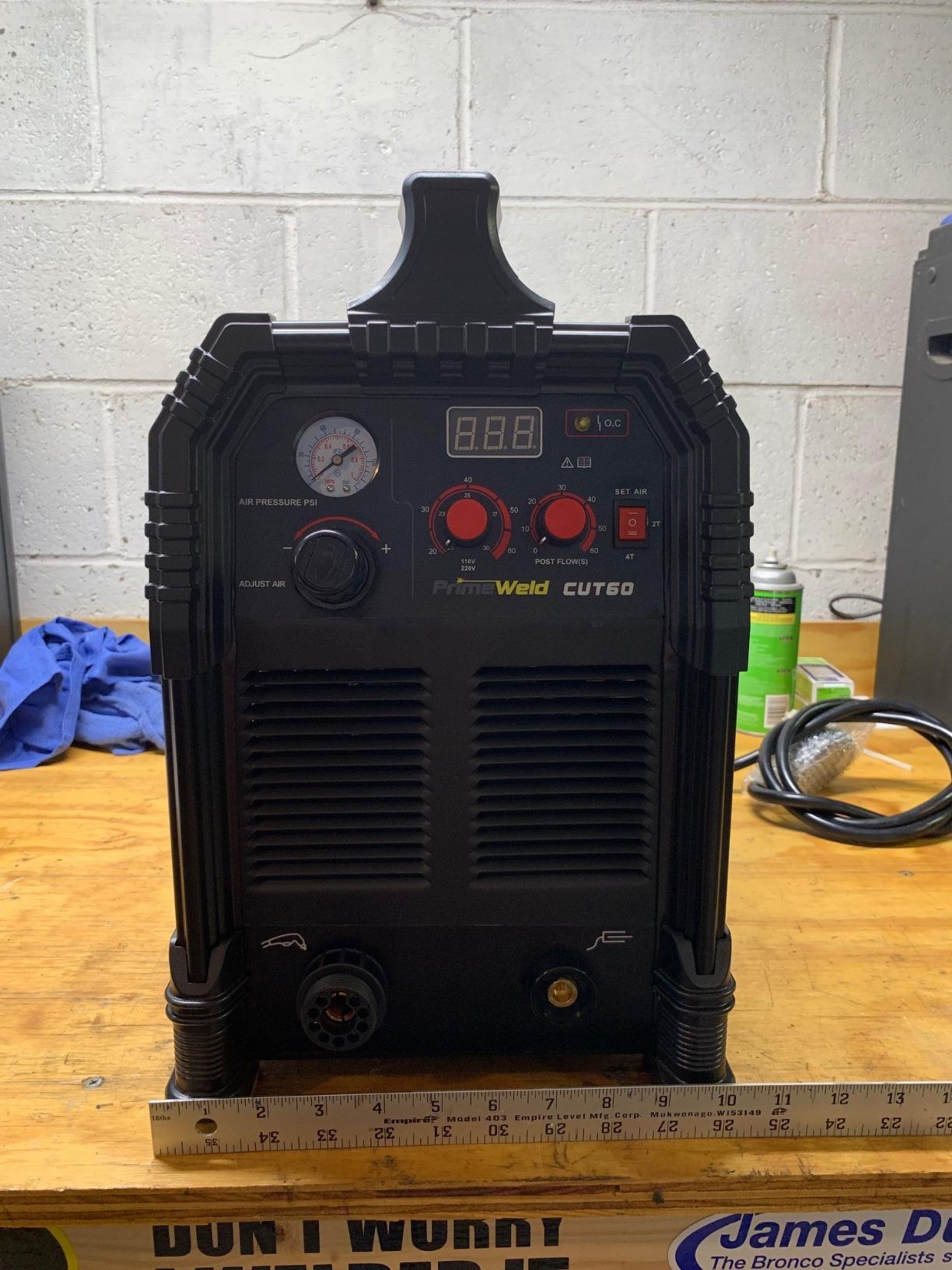
It uses a blow-back start rather than high frequency, so it is also the quiet choice for a shop with sensitive electronics nearby. The 3 year warranty with US-based support is the longest on this list, which matters when you are planning regular use rather than occasional hobby cutting.
At 486 reviews the history is deep enough that the 4.8 average is a settled number rather than an early-adopter artifact, which is part of why it tops this roundup for regular work.
Where this machine earns its rating
Best for a home shop that has moved past occasional cutting and is doing regular work at 1/4 inch to 1/2 inch, where the PT60 consumable platform and the warranty are worth the difference. It is also the machine to buy if you are tired of fighting air leaks at the torch.
Because it shares the blow-back ignition approach with the YESWELDER above, it works in a shop with other electronics on the same circuit.
Where this machine disappoints
Price. It costs several times more than the 50A and 60A alternatives in this roundup, and for a shop cutting a few hours a month that difference is difficult to justify. We would only make it if cutting is a regular part of your week.
Weight and detailed dimensions are not published in the listing, so plan the bench space before it arrives. It is a shop machine, not a carry-to-the-roof machine.
How to Choose a Plasma Cutter for a Home Shop
Amperage, air supply, torch type, and consumable cost decide whether you enjoy the machine or quietly resent it. These are the four questions that matter, in the order they should shape your purchase. The manual die cutters guide covers a different way to shape sheet material if you are not committed to a torch.
How much amperage do you actually need
Match the machine to the thickest material you cut regularly, not the thickest material you might cut one day. Up to 1/8 inch, a 40 to 50 amp machine has more than enough. From 1/8 inch to 1/4 inch, 50 amps is the home shop sweet spot. From 1/4 inch to 1/2 inch regularly, 60 amps and above pays for itself in cut speed and edge quality. Heavy plate work above 1/2 inch is professional territory, and a home shop should think twice about it.
Watch the difference between clean cut capacity and maximum sever capacity. Clean cut is the thickness the machine cuts at a speed that leaves a weld-ready edge. Maximum sever is the thickness it can eventually cut through, slowly, with dross underneath and a beveled edge. Manufacturers quote the flattering number, so plan around clean cut.
Air supply and compressor setup
Yes, you need an air compressor, and yes, it must be running during the cut. This is the most common first purchase mistake and the most common cause of disappointed new owners. A plasma cutter moves a lot of air, and a small compressor or a long thin line will starve the arc and wreck your consumables.
Use this checklist before the first cut:
- Check the machine’s published air consumption in liters per minute, then compare it to your compressor’s free air delivery at working pressure. The published figures here range from about 60 to 150 liters per minute.
- Add a water and oil separator upstream of the machine. Compressor moisture is the leading cause of short electrode life.
- Add a desiccant air dryer if you want consumables to last. Owner reports across every forum thread we read point to dry air as the single biggest improvement to consumable life.
- Use a two-stage compressor if you have the space. Owner reports on larger units reference five horsepower, two-stage compressors with 140 gallons of storage to keep up with sustained plate cutting.
- Keep the air line short and as large a diameter as practical. A starved line mimics a dirty torch.
- Check fittings on day one. Air fittings that arrive loose are a recurring complaint on several machines in this roundup.
Touch torch versus non-touch torch, and 2T versus 4T
These are two different specifications that beginners routinely confuse. A non-touch or pilot arc torch starts an arc through the air without touching the workpiece, which is what you want for rusty, painted, or expanded material. A touch torch starts by touching the tip to the metal, which feels more familiar if you already weld. Both work; the pilot arc is generally kinder to consumables and more tolerant of dirty surfaces.
The 2T and 4T rating is separate. Two-tenths thick means the torch body is made from 0.2 mm sheet, and four-tenths means 0.4 mm. The thicker torch body stands up to more heat and is what you want for repeated plate cutting or long cuts. A home shop doing occasional work can run 2T. If you cut 1/4 inch and heavier regularly, look for 4T or a heavy torch in the 3M and PT60 families.
PT, 2T, and 4T on a control panel are cutting modes. Two-tenths means the arc runs only while you hold the trigger. Four-tenths means the arc latches so you can release the trigger, which is what makes long cuts and CNC work practical. Check the machine offers 4T before you buy.
Consumables and materials
Consumables are the real running cost of plasma cutting. Every cut uses an electrode, a nozzle tip, and a ceramic shield, and all three wear. Budget owners buying in bulk report a full starter kit of five electrodes, twenty tips, and twenty shields at a modest outlay, so the running cost is manageable as long as you do not use dirty air.
For mild steel, the standard consumables work. For aluminum, use a nozzle one size larger, roughly 0.059 inch instead of 0.040 inch, and expect the electrode to wear faster because aluminum oxides are harder on it. For stainless, the standard consumables are fine and the cut comes out bright and clean. Never cut galvanized steel indoors without stripping the coating first, and see the safety notes below.
Inverter versus transformer, and when plasma is the wrong tool
An inverter machine is lighter, dual voltage, and has a digital readout. A transformer machine is heavier, runs hotter, and is mechanically simple. A used transformer such as a Thermal Arc PAK 5XR is reported by owners to cut 1/2 inch well even with worn consumables, and buying one used remains a legitimate way to spend your budget on air equipment instead. For new purchases, inverters give you more machine per pound, and the 60 percent duty cycle rating on modern units is honest enough to plan around.
Sometimes plasma is the wrong tool. If you only ever cut sheet metal under 1/8 inch, an abrasive wheel on a chop saw is faster, quieter, and needs no air supply, and a desktop laser cutter handles small sheet profiles with no consumables at all. If you cut the same heavy structural steel repeatedly, a bandsaw or a CNC plasma table will beat a handheld machine on quality. And for aluminum, plasma is the right tool only if you have consistent compressed air; a bandsaw handles aluminum plate more cheaply. A plasma cutter earns its place when you cut varied mild steel from 1/8 inch to 1/2 inch in small batches.
Safety on coated and unknown metals
Plasma cutting is not a low-hazard activity. You are working with an arc hotter than the surface of the sun, compressed air, and metal that may be coated in something you cannot identify. Wear a proper welding helmet with the right shade lens, cut-resistant gloves, leather sleeves, and steel-toe boots, and make sure anyone nearby is clear of the arc.
Ventilation matters more than most guides admit. Run the machine outdoors, or use a shop vacuum with a spark-arresting inlet connected near the cut. Galvanized steel produces zinc oxide fumes that cause metal fume fever, so strip the coating with a grinder and wear a respirator before cutting. Painted steel needs the same treatment because the paint may contain lead or chromate. If you cannot identify the coating on old steel, treat it as hazardous and grind a test area before you cut.
Never cut near flammable material, and remember that the cut edge stays hot enough to ignite sawdust long after the torch is off. Set scrap metal down on bare concrete or a steel plate, and keep a fire extinguisher within reach.
Frequently Asked Questions
Which brand of plasma cutter is considered the best?
Hypertherm is considered the professional standard, and shops that cut thick steel daily should buy one. For a home shop, the honest answer is a 50 to 60 amp IGBT inverter with a pilot arc torch from a brand that publishes a real warranty and a real failure rate. The Lotos LTP5505D and the PrimeWeld CUT60 lead this roundup for exactly that reason.
What is the best plasma cutter for home use?
The Lotos LTP5505D is the best plasma cutter for most home shops. It has the largest review base in this group, a 5/8 inch maximum clean cut, a non-touch pilot arc torch that starts on rusty and painted material, automatic 110V and 220V switching, and a built-in air regulator. It is light enough at 16 pounds to move between a garage and a workbench.
How many amps is a good plasma cutter?
Fifty amps is the home shop sweet spot, and it covers 1/8 inch to 1/4 inch mild steel with clean, weld-ready edges. Under 1/8 inch, 40 amps is plenty. If you cut 1/4 inch to 1/2 inch regularly, move to 60 amps for better travel speed and less dross. Judge the machine on its clean cut rating rather than its maximum sever rating.
What is the difference between 2T and 4T on a plasma cutter?
2T and 4T describe how thick the torch body sheet metal is: 0.2 mm for 2T and 0.4 mm for 4T. A 4T torch body dissipates heat better and lasts longer on repeated plate cutting and long cuts. Separately, 2T and 4T cutting modes mean whether the arc runs only while you hold the trigger, or latches on so you can let go. Buy a machine that offers 4T mode.
Do I need an air compressor for a plasma cutter?
Yes, and it must be running while you cut. A plasma cutter consumes roughly 60 to 150 liters per minute of air depending on the model, so a small shop compressor or a long undersized line will starve the arc and destroy consumables. Add a water and oil separator and a desiccant dryer, and check the machine’s published air consumption against your compressor’s free air delivery before you buy.
Conclusion: The Best Plasma Cutters for Home Shops in 2026
For most home shops the Lotos LTP5505D is the right first machine, because the largest review base in the group means its strengths and its short ground lead are both known facts rather than surprises. If you cut heavy plate every week and want the least compromise, the PrimeWeld CUT60 earns its premium with a sealed Euro torch, a 60 percent duty cycle at full output, and a three year warranty. If your shop has sensitive electronics on the same circuit, the YESWELDER 60A solves that with a blow-back start.
Two spending rules will save you money. Buy the machine that matches your thickest regular material rather than the biggest one you can justify, and spend what you saved on a compressor with a water separator and a desiccant dryer, because dry air decides how long your consumables last. That is the single change that separates a frustrating first plasma cutter from a tool you reach for every weekend.
Whichever machine you pick, start with a scrap plate of the same thickness, dial in amperage and air pressure, and take a slow pass before you cut anything you care about. The best plasma cutters for home shops all share one honest truth: a mediocre cut on scrap teaches you more than any review.