
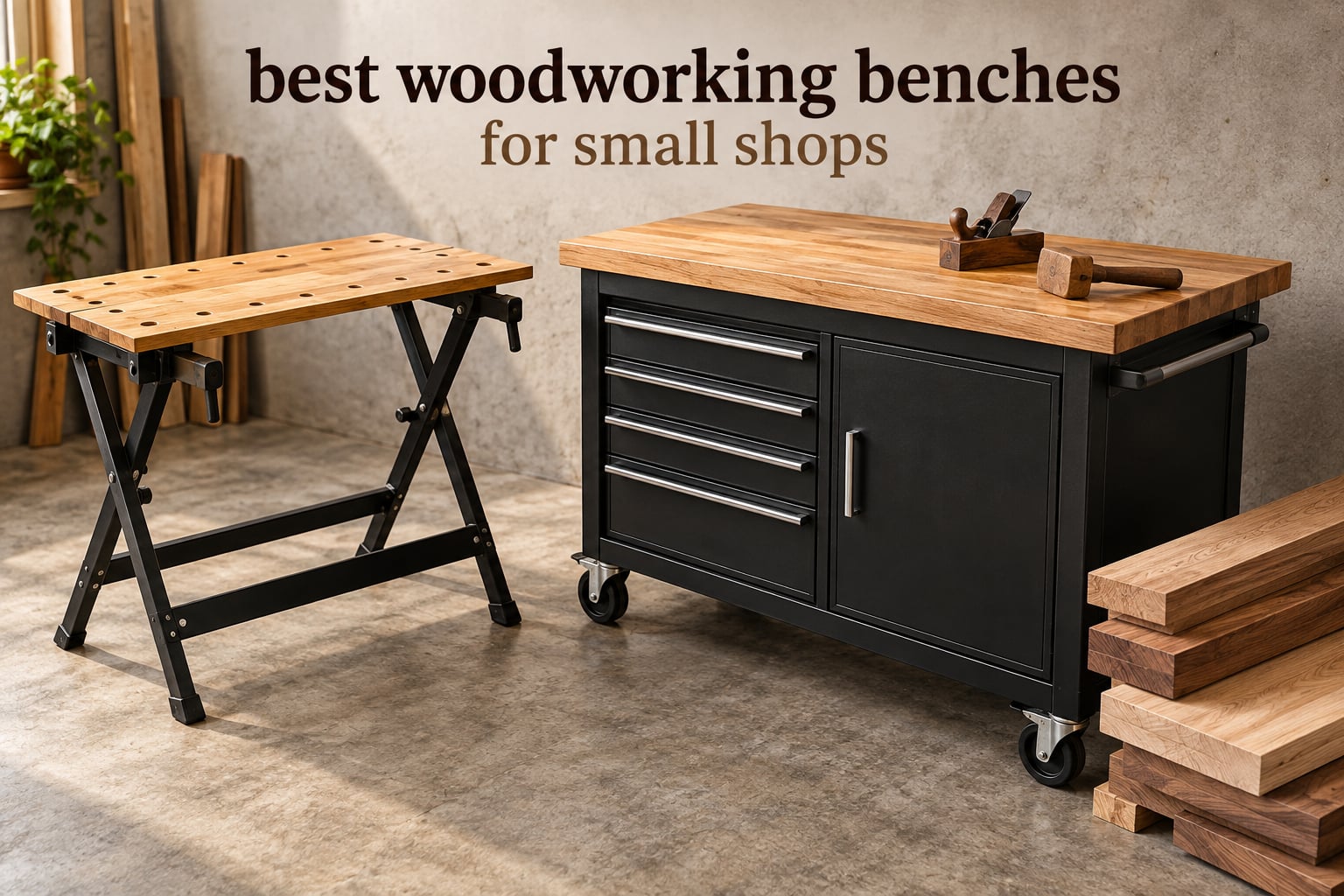
A small shop has one enemy, and it is not space. It is a bench that does not fit the space. Buy a 24 inch deep bench for a wall with 20 inches of clear run and you will spend every working hour shifting the bench, clearing the floor in front of it, and shoving sheet goods back into a corner. That is the number one complaint running through every woodworking forum thread about compact shops, and it is why most second and third bench purchases in this category are replacements rather than upgrades.
For this guide, a small shop means anything under roughly 120 square feet: a one car garage with the car moved out, a basement corner, a converted spare room, or a half of a two car garage. Inside that footprint you have to fit a machine or two, a dust collector, lumber storage and a bench. The bench usually loses that argument, which is why the ten benches below are organised the way they are. We group them by the space problem each one solves, not by brand.
We tested and compared ten folding, rolling, height adjustable and solid wood benches to build this roundup of the best woodworking benches for small shops. Every pick names the shop layout it fits, the one thing it does badly, and the person who should skip it. The first three picks below cover the three genuinely different answers to this question; everything after that goes deeper on fit, clamping and cost.
Top 3 Picks for Small Shops in 2026
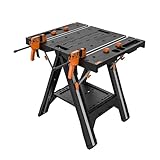
WORX Pegasus WX051
- 2-in-1 bench and sawhorse
- 300 lb bench and 1000 lb sawhorse
- 31 x 25 in top at 32 in height
- Folds in seconds and carries at 30 lb

Keter Heavy-Duty Folding Bench
- 1000 lb load capacity
- 33.46 in wide folding surface
- Two 12 in quick clamps included
- Weighs 27 lb and folds thin

BORA Centipede CK6S
- 2 x 4 ft folding work stand
- Up to 2500 lb capacity
- 30 in working height
- 12.5 lb with carry bag
All 10 Benches at a Glance in 2026
Here is the whole lineup in one view. The fastest way to read it is to find your shop size first, then your bench archetype, and only then look at ratings. If you have under 100 square feet and no spare wall, you are in the folding row. If a table saw already owns the best corner, you want casters. If you have one permanent stretch of wall, you can afford a solid wood top.
| Product | Specifications | Action |
|---|---|---|
| WORX Pegasus WX051 Folding Bench |
|
Check Latest Price |
| Keter Heavy-Duty Folding Workbench |
|
Check Latest Price |
| BORA Centipede CK6S Work Table |
|
Check Latest Price |
 BLACK+DECKER WM225-A Bench and Vise BLACK+DECKER WM225-A Bench and Vise |
|
Check Latest Price |
 Seville Classics UltraHD 20 in Rolling Cabinet Seville Classics UltraHD 20 in Rolling Cabinet |
|
Check Latest Price |
 Seville Classics WEB484 48 in Rolling Bench Seville Classics WEB484 48 in Rolling Bench |
|
Check Latest Price |
 CAMMOO WBC48 Adjustable Workbench CAMMOO WBC48 Adjustable Workbench |
|
Check Latest Price |
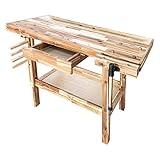 Olympia Tools Acacia 48 in Workbench Olympia Tools Acacia 48 in Workbench |
|
Check Latest Price |
 VEVOR 48 in Adjustable Workbench VEVOR 48 in Adjustable Workbench |
|
Check Latest Price |
 CAMMOO W2000 48 in Workbench CAMMOO W2000 48 in Workbench |
|
Check Latest Price |
How We Picked These 10 Benches
Selection started with the space problem rather than the spec sheet. We looked for benches that fold flat, roll on casters with working brakes, adjust height, or occupy a footprint small enough to sit against a wall without stealing the room. Anything that needed a permanent 4 by 8 footprint was excluded, because that is a dedicated shop bench rather than a small shop bench.
From there we weighted four things. First, whether the published load rating is honest, and whether you can tell what the number actually measures. Second, whether the bench includes any real clamping solution out of the box. Third, how the bench behaves in a shop with a concrete floor, because adjustable feet and locking casters matter more than any finish. Fourth, and most heavily, the volume of long-term owner feedback behind the bench, since cheap folding tables are replaced often and a shaky frame shows up in reviews within a year.
We also read the community threads, because bench reviews are unusually honest. On r/woodworking the most useful small-shop advice is not a product recommendation at all; it is that a simple wall mounted fold down bench does a lot of work in a small shop and disappears between sessions. On the FineWoodworking forum, the most repeated purchasing pattern is buying a quality bench top and building the base yourself. Both ideas shaped the archetype grouping below, and the second one is the reason a solid wood top at 330 lb capacity can still be a serious contender in a small shop.
One thing we set out of scope: anything that only works for welding, automotive or general storage duty. Those benches are excellent in their own right, and several of them appear in competitor roundups for this keyword, but a top that will not take a plane cut and a face that flexes under a hand plane make them the wrong purchase for woodworking.
Best Folding and Portable Benches for Sub-100 Square Foot Shops
These four are for the shop where floor space is the binding constraint. Each one opens in seconds, folds to roughly the thickness of a few boards, and lives against a wall, under a shelf, or in a closet between sessions. The archetype is well validated in the community threads: the bench that arrives in a box and stores out of sight between sessions is the one most small-shop builders reach for first.
1. WORX Pegasus WX051 – Best All-Round Folding Bench for a Tight Shop
WORX Portable Folding Workbench, 2-in-1 Pegasus Table & Sawhorse, WX051
- Sets up and folds in seconds with no tools
- Sturdy and rigid for a folding design
- Included clamps and clamp dogs save a separate purchase
- Carries comfortably under one arm at 30 lb
- Links to other WORX tables with the same connectors
- Included bar clamps have modest clamping force
- Vertical clamping needs a scrap block under the hollow top
- Lower shelf feels flimsy under heavy loads
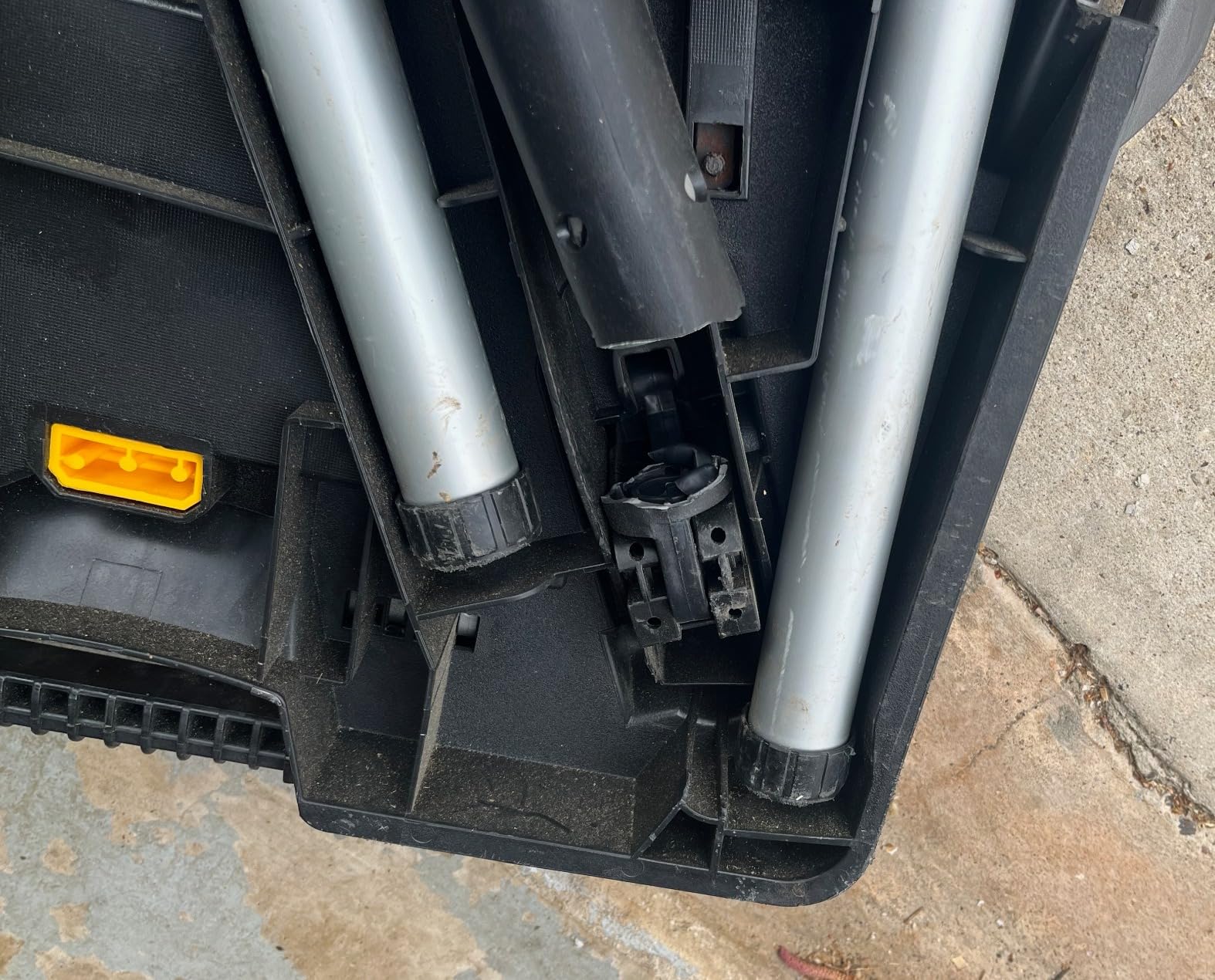
Our team has had the Pegasus on the bench of a one car garage shop for the better part of two months, and it is the one bench in this roundup that got used on every single project. It opens in a couple of seconds, holds steady under a hand plane, and folds down to something you can carry to the far wall of the garage with one arm. The 31 by 25 inch top is genuinely large for a folding bench, and at 32 inches high it sits close to a standard work height.
What surprised us most is the clamping package. Two 24 inch quick clamps and four clamp dogs come in the box, which means a folding bench that actually holds a workpiece still. Most competitors in this price band sell you a folding table and leave the clamping to a drawer full of clamps. Sawmillcreek users have backed the vise top Workmate style design for decades, and the Pegasus takes a different route to the same problem with dogs and bar clamps instead of a screw vise.
The honest weakness is the clamping force of the included bar clamps. They are light duty for glue ups and assembly, and if you are ripping 1 inch timber you will reach for something heavier. Owners also report that clamping in a vertical position needs a scrap block under the hollow underside, because there is no solid rail to bear against. The lower shelf is the other soft spot; treat it as a place for clamps and sandpaper, not for a stack of hardwood.
Load rating is where this category lies to you most often, so read the number carefully. The Pegasus is rated 300 lb as a workbench and 1000 lb in the sawhorse position, and the sawhorse figure describes two trestles carrying a distributed load with bracing at each end, not a full table. Judge it at 300 lb for anything you plan on, sawing or planing against.
Where the Pegasus earns its place in a small shop
This is the bench to buy when the garage has one wall of usable space and the table saw has the corner. It gives you a real clamping surface for assembly, glue ups and finish work without taking a single square foot of permanent floor. Because it links to other tables in the same range with the shared connectors, you can string two together for a long carcass or a door panel, then break the whole thing down in under a minute.
The 32 inch height suits assembly and general bench work well. It is a little low for a tall user who prefers standing, and the surface is a moulded plastic with a steel frame, so it is not a place to take a chisel or a shoulder plane. Keep it for holding work, not for cutting work, and pair it with a proper bench for the planing days.
Where the Pegasus will disappoint you
Skip it if your work is mostly hand tool work. The surface has no mass behind it, so planing and chopping feel springy no matter how firmly you brace your knees. Skip it too if you have any floor space at all, because a fixed bench of the same general size will be steadier and hold a heavier load for a similar outlay. The lower shelf and the light bar clamps are the two complaints that come up again and again, and neither is fatal, but both are real.
2. Keter Heavy-Duty Folding Workbench – Best Value for a Closet Shop
- One-motion setup and takedown with no assembly
- Folds to a few inches thick for closet storage
- Handles on all sides make it easy to carry upstairs
- Stable and rigid for a plastic table
- Two 12 in quick clamps add real value
- Included clamps are fiddly to operate and stow
- Vibrates noticeably with an orbital sander
- Fixed 29.75 in height is low for taller users
This is the bench we keep coming back to for basement shops and converted spare rooms, where the constraint is not just width but whether you can get the thing up a flight of stairs. At 27 pounds with handles on all sides, two people can carry it without drama, and it folds to a few inches thick, which means it can live inside a closet instead of against a wall.
The 1000 lb rating is among the highest in the folding group, and for most small-shop work the number is not close to being the limit. What actually matters here is the 33.46 inch width, and that is the widest single-piece surface in the folding group, and the fact that it opens and closes in one motion with no assembly at any point. Owners consistently describe it as far more rigid than a plastic table has any right to be, given the aluminium leg system and three point locking.
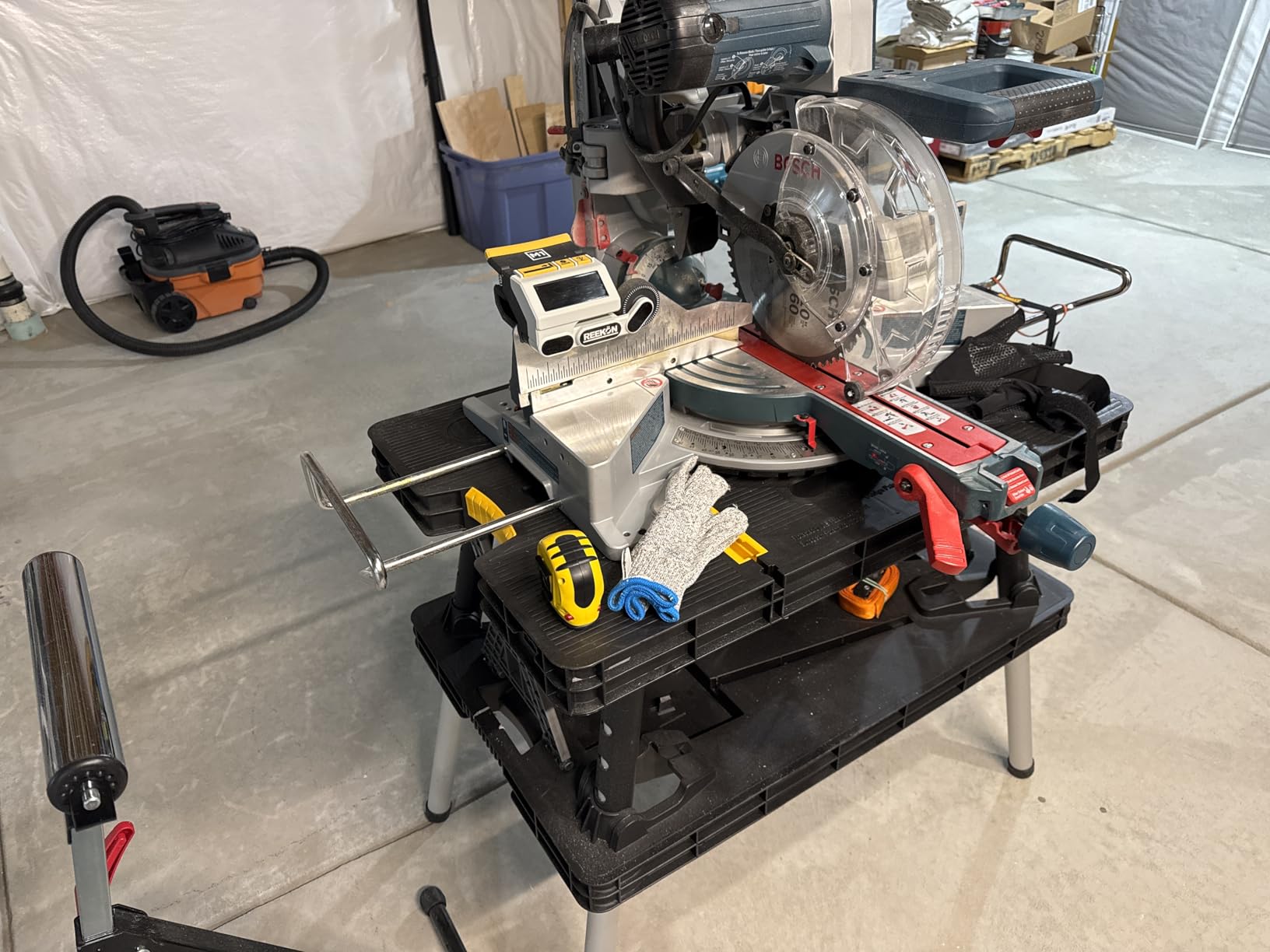
Two downsides shaped our use of it. The included 12 inch trigger clamps are light to medium duty and awkward to release, and owners complain about the fiddly stowage slots, so plan on buying proper bar clamps. The other is vibration: this bench shakes visibly with an orbital sander. Fine for glue ups, assembly, and outfeed work. Not the place to finish a large panel flat.
The working height is fixed at 29.75 inches, which suits shorter builders and anyone sitting at a bench, and feels low if you are over six feet and prefer to stand. Measure your own reach before you commit, because unlike the height adjustable benches further down this list, nothing here moves.
Where the Keter works best
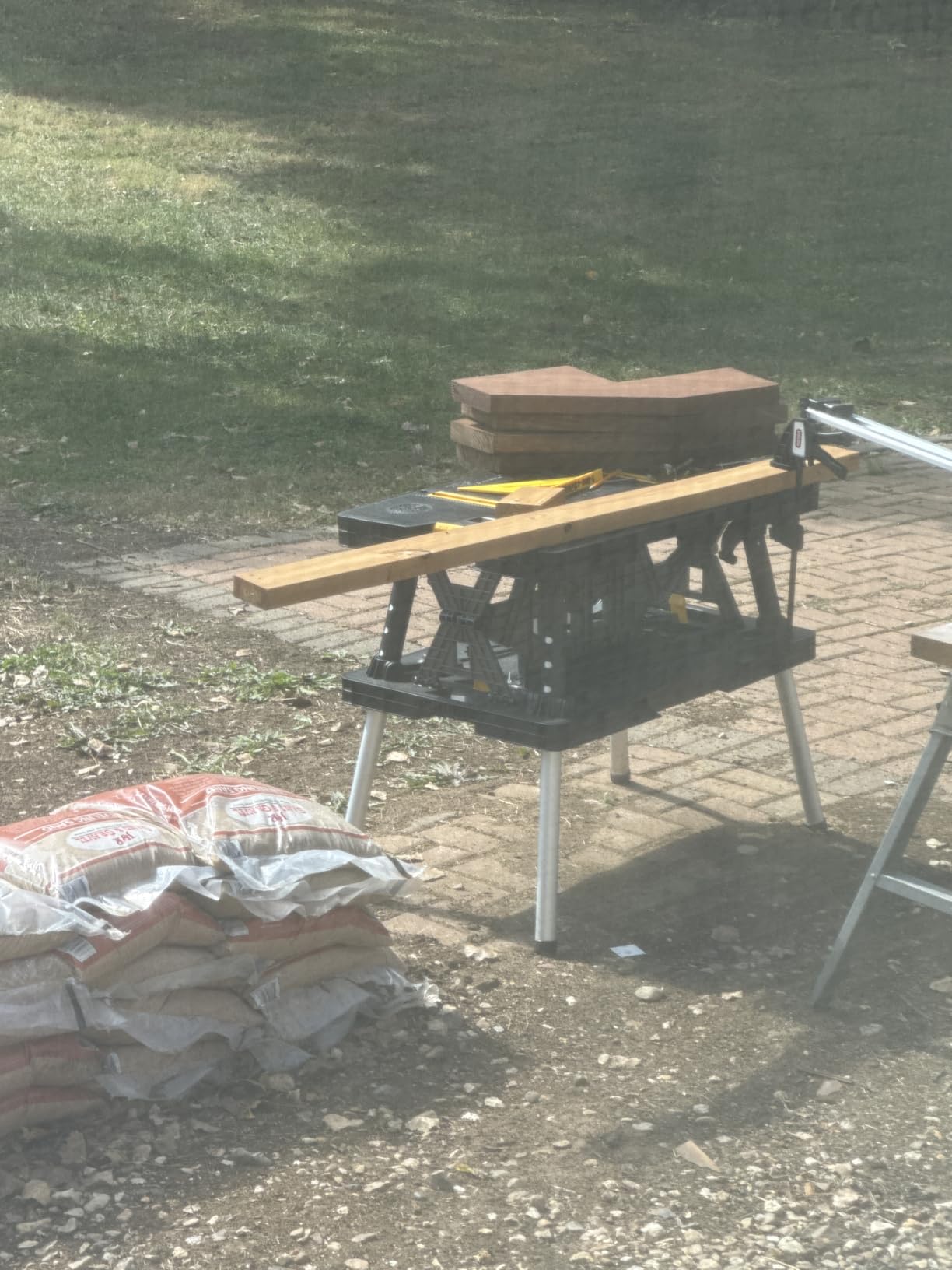
Buy this one if your shop has to be cleared between uses, or if the nearest usable corner is more than a few steps from where the work happens. Assembly, glue ups, hardware fitting, and outfeed for a table saw all suit it, because those are the jobs where you want the workpiece held still rather than the bench absorbing a cutting load. The wide top also handles a door face or a set of drawers more easily than the narrower folding benches, since you can spread a flat workpiece across it.
It is also the least fussy bench here to own. The resin top and aluminium legs wipe clean, the whole thing sets up in the time it takes to clear a chair, and the included clamps give you a working clamping setup on day one. If you have never owned a bench before and your shop is under a hundred square feet, this is the safe starting point.
Where the Keter will disappoint you
Skip it if your work is power sanding. Vibration through a light plastic top is the consistent complaint, and it makes a flat finish harder to hit. Skip it if you are tall and work standing, because the height is fixed and low. And skip it if your plans include gluing up a large panel, because a top that flexes and a pair of light clamps are a poor combination for a full size glue up.
3. BORA Centipede CK6S – Best for Sheet Goods and 2×4 Work
- Very light at 12.5 lb yet handles heavy loads
- Sets up and folds in seconds with no assembly
- X-cups hold standard 2x4 lengths steady
- Carry bag makes moving between rooms easy
- 30 in working height suits most builders
- Only two clamps included and they mount on one side
- 30 in height is low for taller woodworkers
- No top of its own so it is a stand rather than a true bench
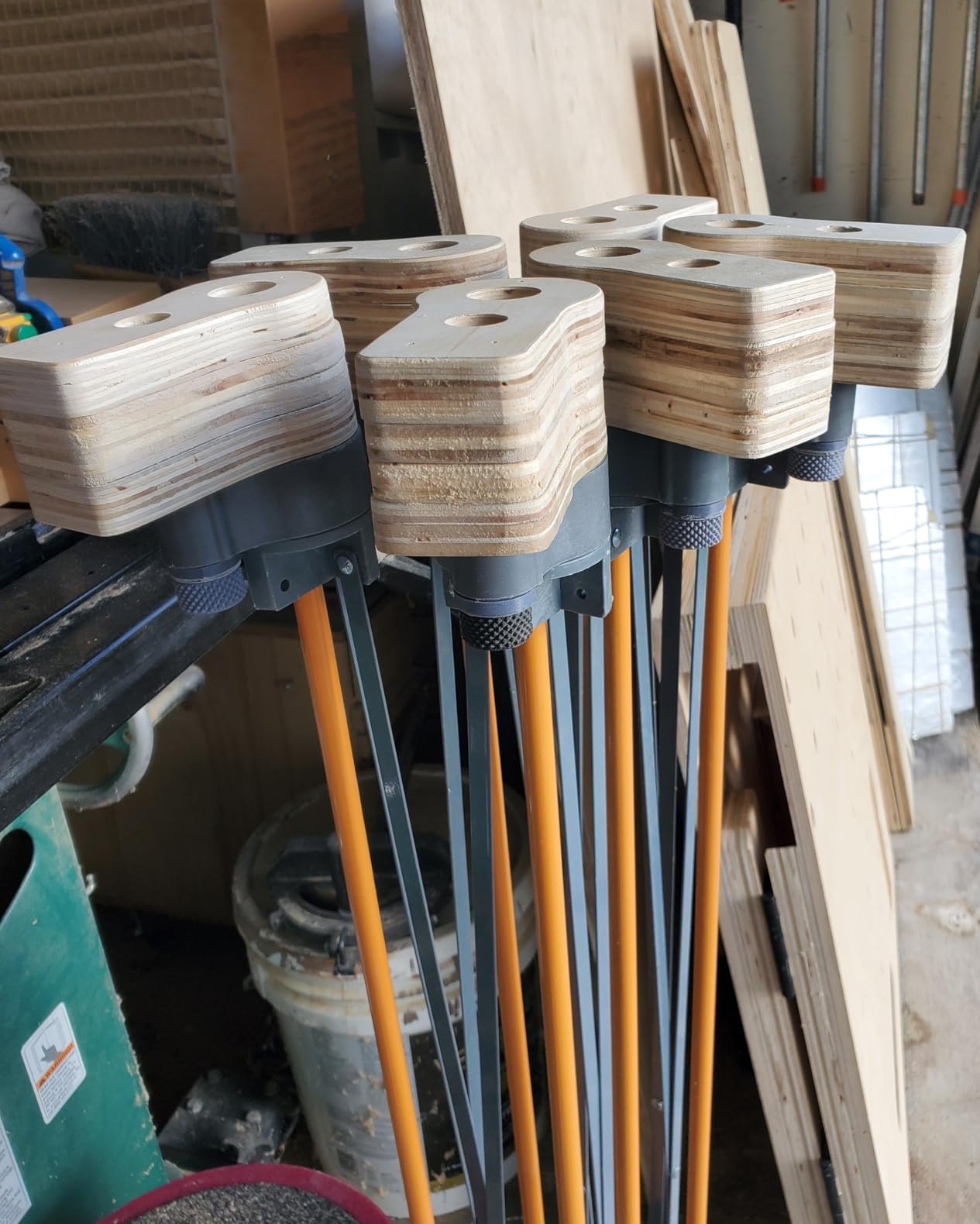
At 12.5 pounds, this is the lightest bench in the roundup, and it is the reason it works in shops where nothing else fits. You can carry it to the far end of a basement, set it up in a few seconds, and break it down again when the laundry needs the corner. The 2 by 4 foot platform is the largest stand-format surface here that still folds into something you can move around a staircase.
Understand what this is. The Centipede is a folding sawhorse stand, not a bench with a top, and the X shaped brackets at each end are what hold your material. That design is genuinely good for breaking down sheet goods, framing lumber, and 2x4s, because the workpiece sits in brackets rather than on an unsupported edge. The same design is why the capacity figure is measured on the stand rather than the working surface.
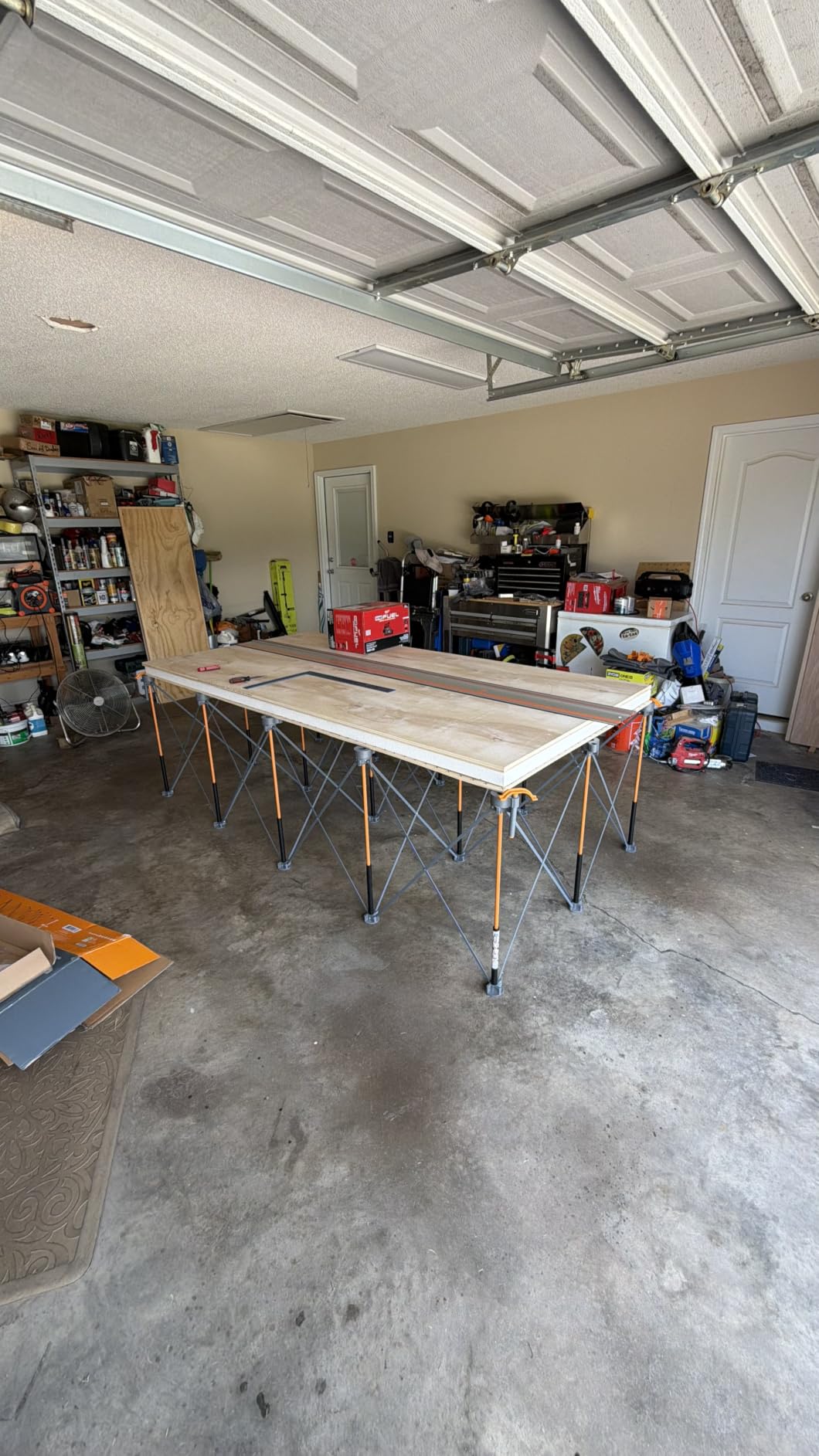
The 30 inch working height is the main ergonomic complaint, and it is repeated often by taller builders. The included clamping is thin: two quick clamps, mounted on one side only, so a wide workpiece needs something else to hold it. There is no bench top of its own, which means you cannot sand on it, glue on it, or use it as a surface for a finish.
Risers are available for the same system if 30 inches is too low, and the same folding platform scales up in larger sizes, so this bench can grow with you. But measure first, because a 30 inch stand that forces you to work bent over costs more in ruined posture than the bench saved.
Where the Centipede earns its spot
This is the pick for a shop with no room for a permanent bench at all, and it is the one we recommend for a shared garage where the bench has to disappear every weekend. It is also the right answer for the specific job of cutting and breaking down sheet goods, because a 2 by 4 foot platform with brackets at each end handles a cut piece in a way a folding table with a plastic top cannot.
The 2500 lb capacity figure is the highest quoted in this roundup and, because the design is a braced stand rather than a tabletop, it is one of the few numbers here that is difficult to argue with. Put a door on it, put clamps on it, put a stack of 2x4s on it. The failure mode is racking, not collapse, and the brackets are what keep that in check.
Where the Centipede will disappoint you
Skip it if you need a continuous flat surface for glue ups, sanding, or finish work, because there is not one. Skip it if you work seated, since 30 inches pushes a seated user into a slouch. And skip it if you are a tall builder who will spend hours at the bench, because the height cannot be changed without buying risers.
4. BLACK+DECKER WM225-A – Best for Hand Clamping in a Tiny Shop
- Folds flat and hangs on a wall in a tiny shop
- Adjustable rear jaws and swivel pegs grip odd shapes
- Dual-height folding legs add versatility at no extra cost
- Sturdy steel frame rated to 450 lb
- Diagram-only instructions cause misassembly
- Vise handle retaining pins need hammering
- Vise threads are reverse-threaded and catch people out
- Some reviewers find this revision thinner than the original
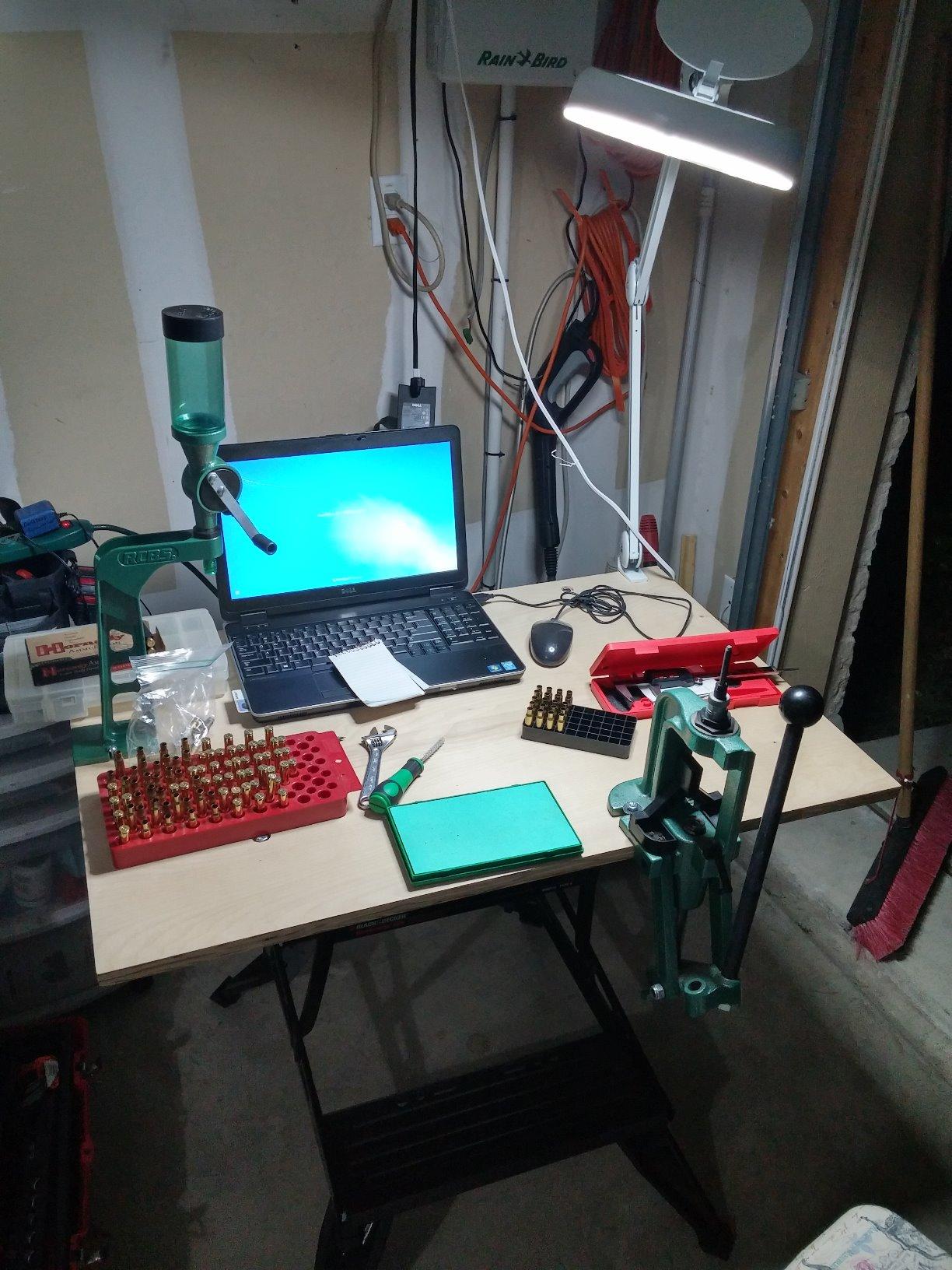
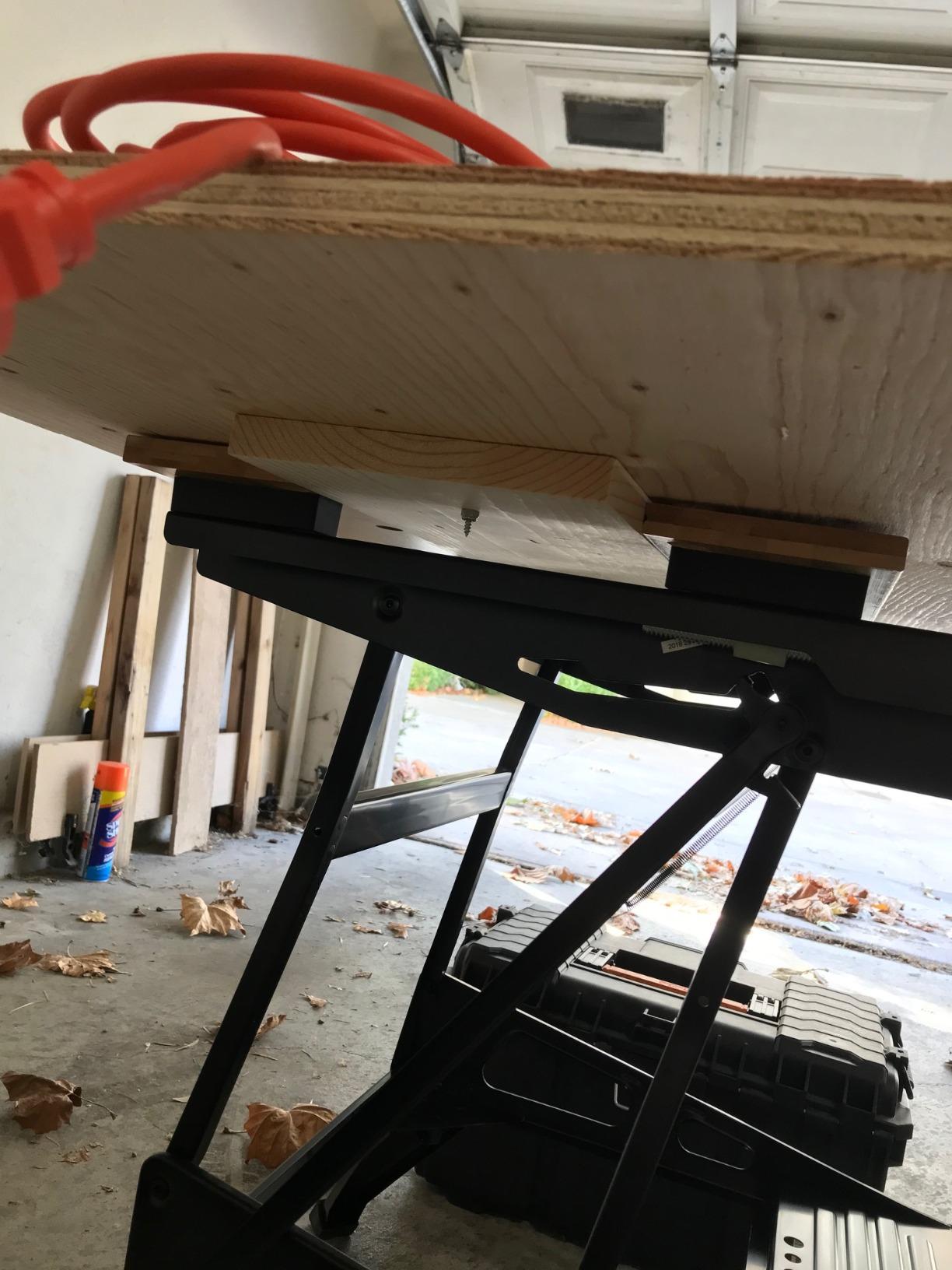
Of the four folding benches here, this is the only one with a real screw vise, and that is why it earns its place in a small shop. A vise holds a workpiece while both hands are on a saw, a chisel, or a router, and nothing else in the folding category does that as directly. The WM225-A folds flat, hangs on a wall, and weighs 28 pounds, so it can live above the sawhorse rack rather than on the floor.
The Sawmillcreek threads show why this design has survived for decades. The Workmate style layout, vise, sawhorse and bench stand combined in one steel frame, is the community default answer to portable clamping, and the adjustable rear jaws plus four swivel pegs extend the gripping area well beyond the jaw width for round timber and tapered pieces.
Assembly is the weak point and the most common complaint by a distance. The instructions are diagram only, with few words to explain orientation, and several owners report putting the vise mechanism in incorrectly and having to strip it back down. The retaining pins that hold the vise handles are fitted with hammer and nails, which is a five minute job that feels like a puzzle the first time.
One more thing worth knowing before you buy. The vise screws are reverse threaded, so a first time owner tightening the handle the normal way will loosen the jaws instead of closing them. Experienced builders recognise it immediately; newcomers frequently post about it. Quality opinion on this revision is mixed, with some owners reporting a thinner top and frame than on the earlier version.
Where the BLACK+DECKER works best
Buy it if clamping capacity matters more than surface area. A 25.6 by 28.75 inch top is small, and that is the trade: you give up working room to get a vise, a sawhorse, and a wall storage solution in one 28 pound package. It is a bench for cutting, ripping, and fitting rather than for assembly, because assembly wants width.
The dual height legs are a genuinely useful second setting, because the folded legs drop the whole unit lower for a seated user or for working next to a low outfeed table. For a shop where the primary machine is a table saw or a bandsaw, having the bench live behind the machine at knee height is a real advantage over a top-heavy fixed bench.
Where the BLACK+DECKER will disappoint you
Skip it if you cannot give it a whole afternoon for assembly, because the instructions will test you. Skip it if you glue up panels, because the top is small and there is no dog array to stop the workpiece sliding. And skip it if you are not prepared for a compact surface, because 25.6 inches deep is not enough for a cabinet door laid flat.
Best Benches With Storage and Height Adjustment for Tight Shops
These three solve a different problem. The floor space they take is fixed, so the design has to earn it: drawers and compartments hold the small tools that would otherwise take up a shelf, and height adjustment lets one bench serve both a seated assembly task and a standing one. If your shop has one usable corner and you refuse to give up the wall behind the bench, start here.
5. Seville Classics UltraHD 20 x 18 Rolling Cabinet – Best for a Tiny Corner
- Compact footprint suits a very small shop
- Solid wood top and all-steel body feel industrial
- Locking casters make repositioning easy
- Two drawers plus a cabinet compartment organise small tools
- Coated steel wipes clean of fingerprints
- 20 x 18 in top leaves little room for long or wide work
- 260 lb capacity is low for heavy planing or chopping
- Not designed to carry stationary machinery
This is the smallest bench in the roundup, at 20 by 18 inches, and it exists for a specific shop: one where the free corner is about two feet square. What you get for that footprint is a 0.75 inch solid wood top, an all-steel cabinet body, one door, two drawers, an interior shelf, and four casters of which two lock. The wheel locks are mechanical, so they hold without power and without fuss.
At 34.7 inches high it is a standing bench rather than a seated one, and the storage is the real feature. In a shop this size, a bench that swallows the drawer space under the top is often worth more than 100 extra pounds of capacity, because a second shelf is a shelf you no longer need to buy.
The honest limitation is the surface. A 20 by 18 inch top holds a hand plane, a set of chisels, or a small assembly, and that is genuinely useful. It does not hold a cabinet door, a drawer side, or a panel you need to work flat. The 260 lb capacity is also the lowest of the three rolling benches here, and this is not a bench to put a machine on top of, however tempting the flat top looks.
Buyers consistently report that the steel body and the coated top feel much more substantial than buyers expected, and the casters roll smoothly enough to move the whole unit with one hand while loaded with hand tools. The fingerprint resistant coating is a small thing that matters in a shop where the bench doubles as a place to set greasy fasteners.
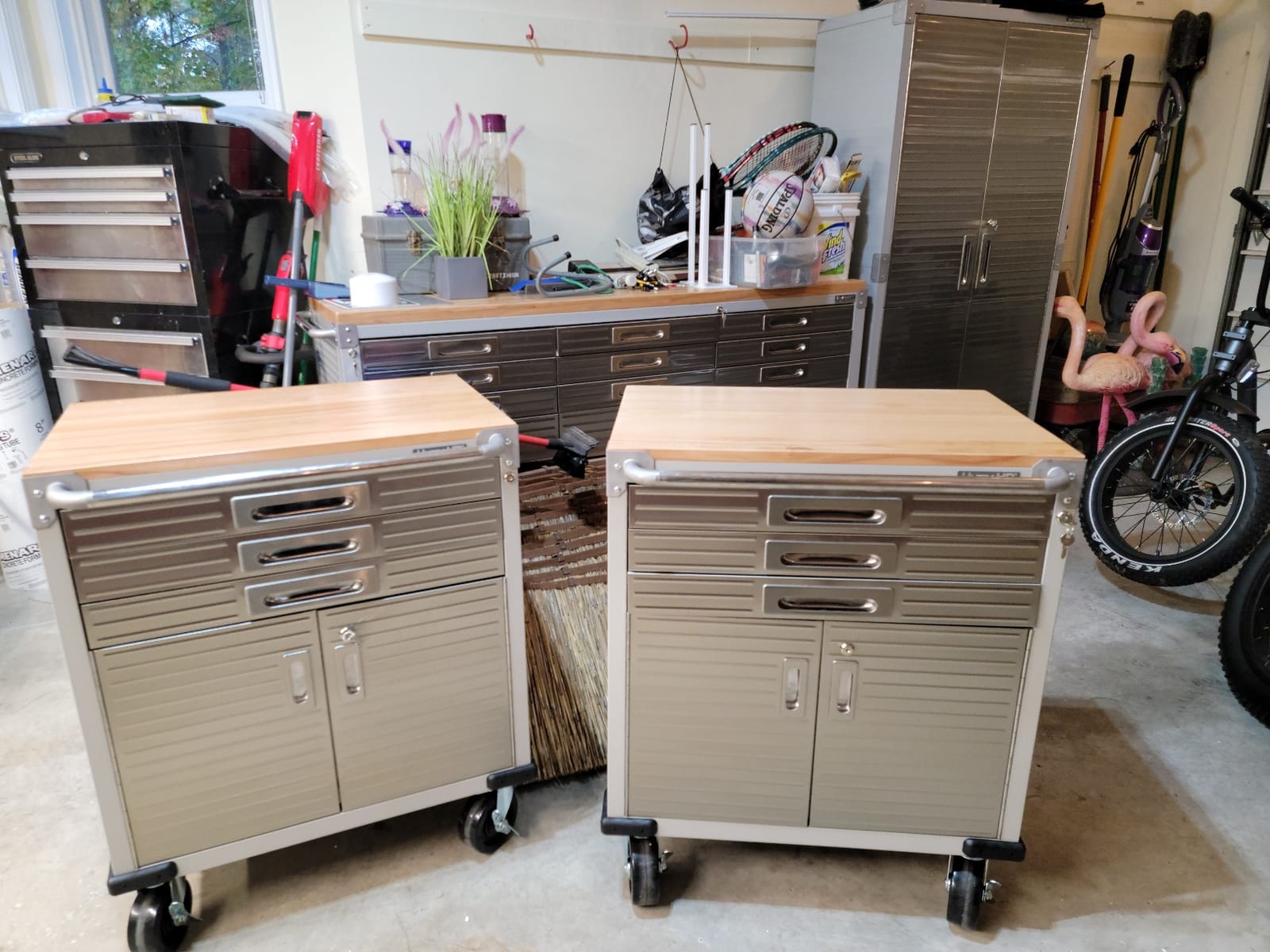
Where the rolling cabinet works best
Buy it if your shop has one corner free and you want the bench to double as storage. The pattern is a permanent home near the wall for the small stuff, then rolling it out when you need the floor swept or a large piece moved through. It is also a sensible outfeed and glue station next to a machine, because the casters mean you can get it out of the way of sheet goods being fed through.
For a hobbyist who mostly does finish work, assembly, hardware fitting, and sharpening, it is remarkably complete. You will not chase a dedicated bench for a long time, and the two drawers plus a compartment are enough to keep a small tool collection off the shelves.
Where the rolling cabinet will disappoint you
Skip it if you work in sheet goods or cabinetry, because the top is too small and the capacity too low. Skip it if you intend to put a planer, a small drill press, or any stationary machine on it. And skip it if you need knee clearance for a seated task, because a cabinet bench with a door and two drawers has none at floor level.
6. Seville Classics WEB484 48 in Rolling Bench – Best Large Surface on Wheels
Seville Classics UltraGraphite Wood Top Workbench on Wheels with Sliding Organizer Drawer Table, 48″, Graphite
- No side-to-side wobble once assembled
- 1 in solid wood top that takes a finish well
- Large steel organizer drawer with adjustable dividers
- Labelled hardware and threaded inserts aid assembly
- Doubles as a printer or drafting station
- 83.6 lb weight means two people to move it
- Fixed 37 in height suits standing work
- Instructions omit details and parts can fit backwards
- Removing the casters adds stability but costs mobility
This is the bench we would put against a wall in a one car garage where a folding bench would be too small for real work. The 48 by 24 inch top is a full size working surface, and it is a genuine 1 inch solid wood top rather than a thin veneer over particle board. Owners repeatedly describe the finished bench as furniture quality, with no side to side wobble once the frame is square.
Assembly is one of the better handled in this roundup, which matters. Labelled hardware, threaded inserts, and clear diagrams take about an hour for a first time builder, and the steel organizer drawer with two adjustable dividers and a non-slip liner is the feature owners mention most. A 37 inch height puts it firmly in standing bench territory, which suits planing, assembly, and machine-adjacent work.
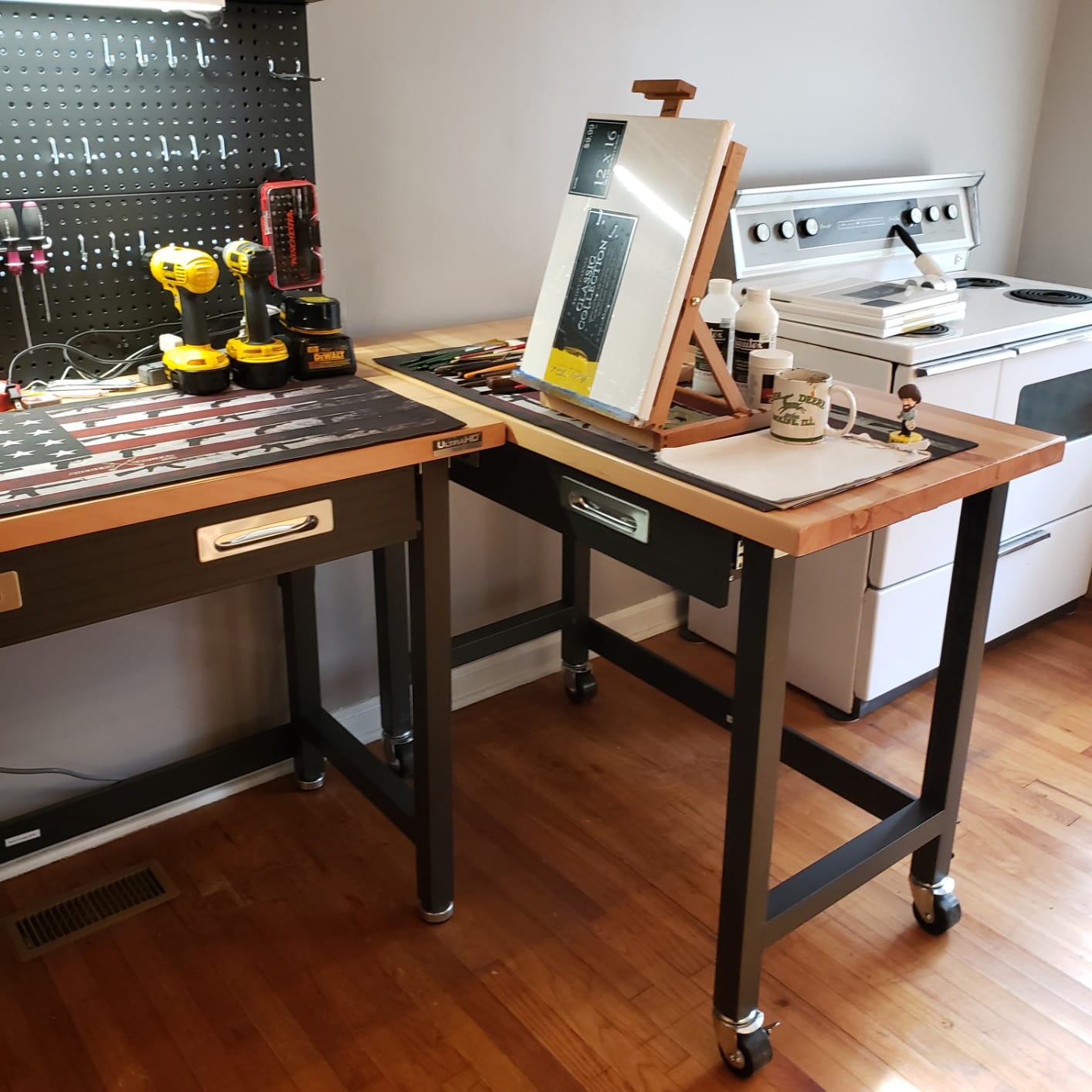
The 83.6 pound weight is the real constraint. It is a two person move, and if your shop is a one car garage with a narrow door you need to plan the entry before the box arrives. The fixed height means no seated work, and several owners remove the casters to stop it moving under load, which improves stability and ends mobility, so pick one priority.
This is the bench dog-out problem in miniature. A bench on casters that nobody locks will shift under a hand plane or a miter saw, and a 500 lb rating tells you nothing about that behaviour. The two locking casters here do their job, but you have to actually engage them, which is the single habit worth building before the first cut.
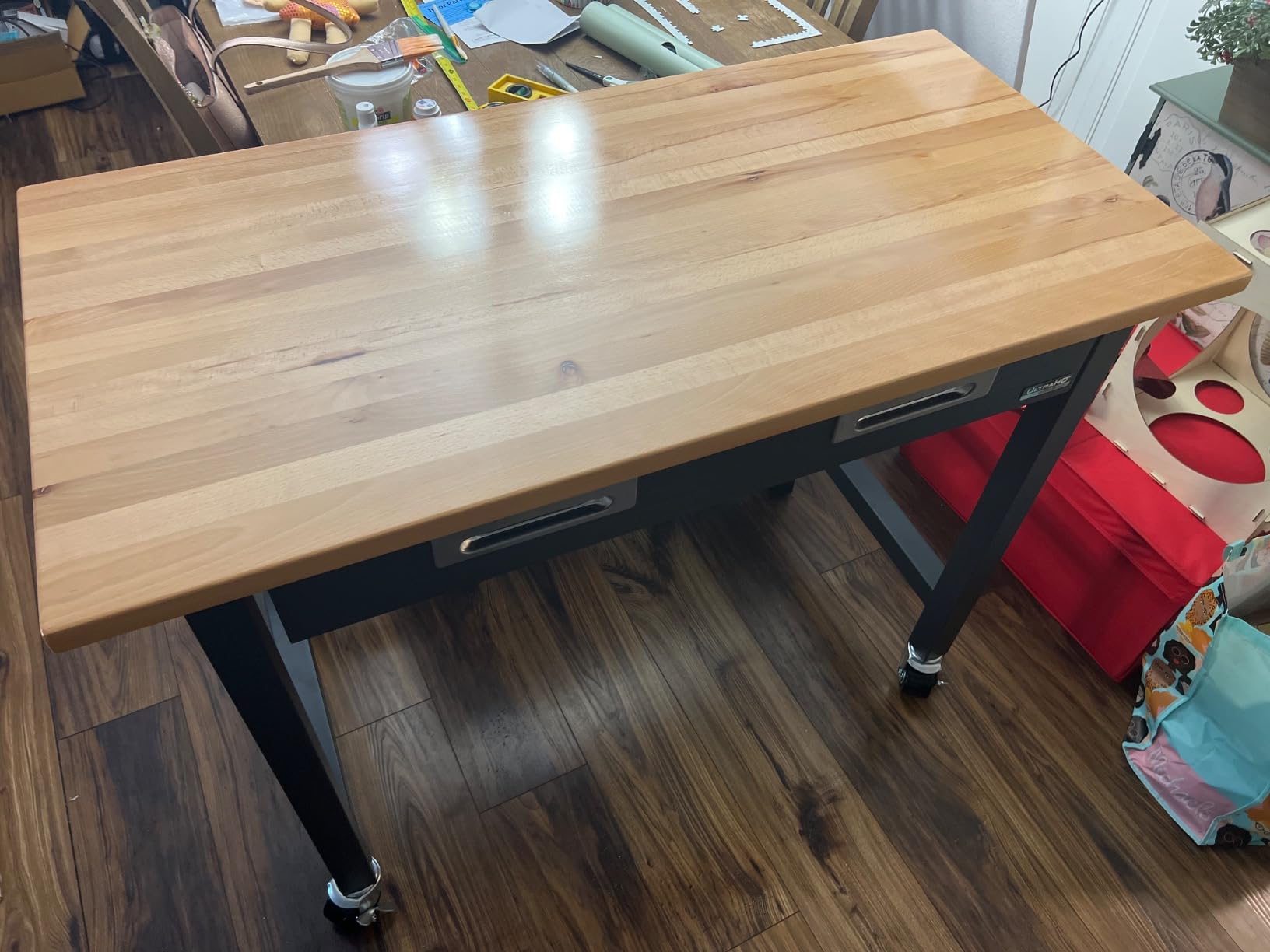
Where the 48 inch rolling bench works best
Buy it if you have a wall long enough for four feet and want a proper woodworking surface rather than an assembly table. The 1 inch solid top can take a finish, a sharp mark, and a light flattening job, and at 24 inches deep it will hold a door face or a run of drawer fronts. The organizer drawer underneath is exactly the right size for the clamps and squares that would otherwise live on a shelf.
It is also genuinely useful as a secondary station. Owners use it for 3D printing, drafting, and general bench work, and a bench that can be rolled against the wall at the end of a session is the difference between a usable garage and a garage you cannot park in.
Where the 48 inch rolling bench will disappoint you
Skip it if you work seated, since 37 inches is too high for a chair and there is no adjustment. Skip it if you move the bench alone, because at 83.6 pounds that is not realistic when it is loaded. And skip it if your floor is uneven, because adjustable feet are not part of the design and a rocking bench makes planing inaccurate.
7. CAMMOO WBC48 Adjustable Workbench – Best Height Adjustment on a Budget
CAMMOO 48″ Adjustable Workbench, 2000LBS Max Load, Pegboard & Power Strip
- Six height settings serve seated and standing work
- Rubberwood top feels solid and is well finished
- Integrated power strip and pegboards keep tools close
- Adjustable feet level it on an uneven garage floor
- Assembles quickly with labelled hardware
- Top screws need a power screwdriver to drive
- Some benches arrive with warped or split tops
- No lower cross beam so it is less rigid under heavy load
- No casters so it stays where you put it
Height adjustment is the feature this bench is built around, and it does it properly. Six settings from 28.5 to 39 inches are changed with 360 degree tool free knobs at the base of the legs, so one person can move it between a seated assembly position and a standing finishing position in a few seconds. That range is wide enough that a single bench can serve two differently sized users, which is unusual in a small shop.
The rest of the design targets small shop problems directly. Pegboards on both sides with six hooks stop the wall behind the bench from being wasted space. An ETL certified power strip with four outlets, two USB ports and a 6.5 foot cord means you are not running an extension lead across the floor. And the adjustable feet level the bench on the sloped concrete that most garages have.
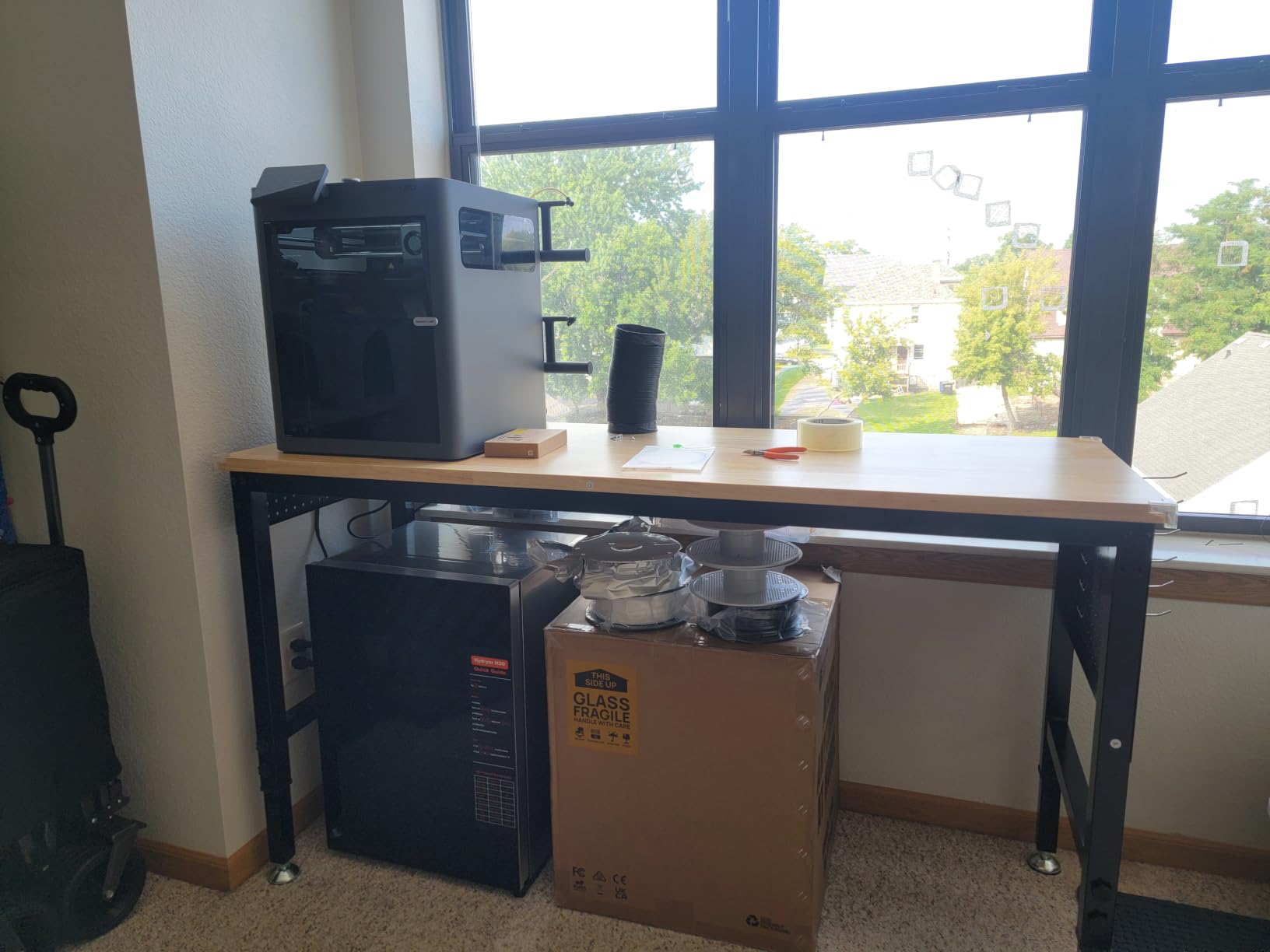
The reported drawbacks cluster around assembly and the top. The screws that fix the rubberwood top want a power screwdriver, and driving them by hand is a long afternoon. Some owners have received tops that arrived warped or split, which is a quality control issue rather than a design issue, but it is worth checking the top before you build the frame around it.
The structural note matters more. There is no lower cross beam, so under a heavy load the frame has more side movement than the 2000 lb figure implies. That rating is a capacity number, not a stiffness number. For planing and assembly at normal shop loads the bench is fine; for a stationary machine on top, it is not the right choice.
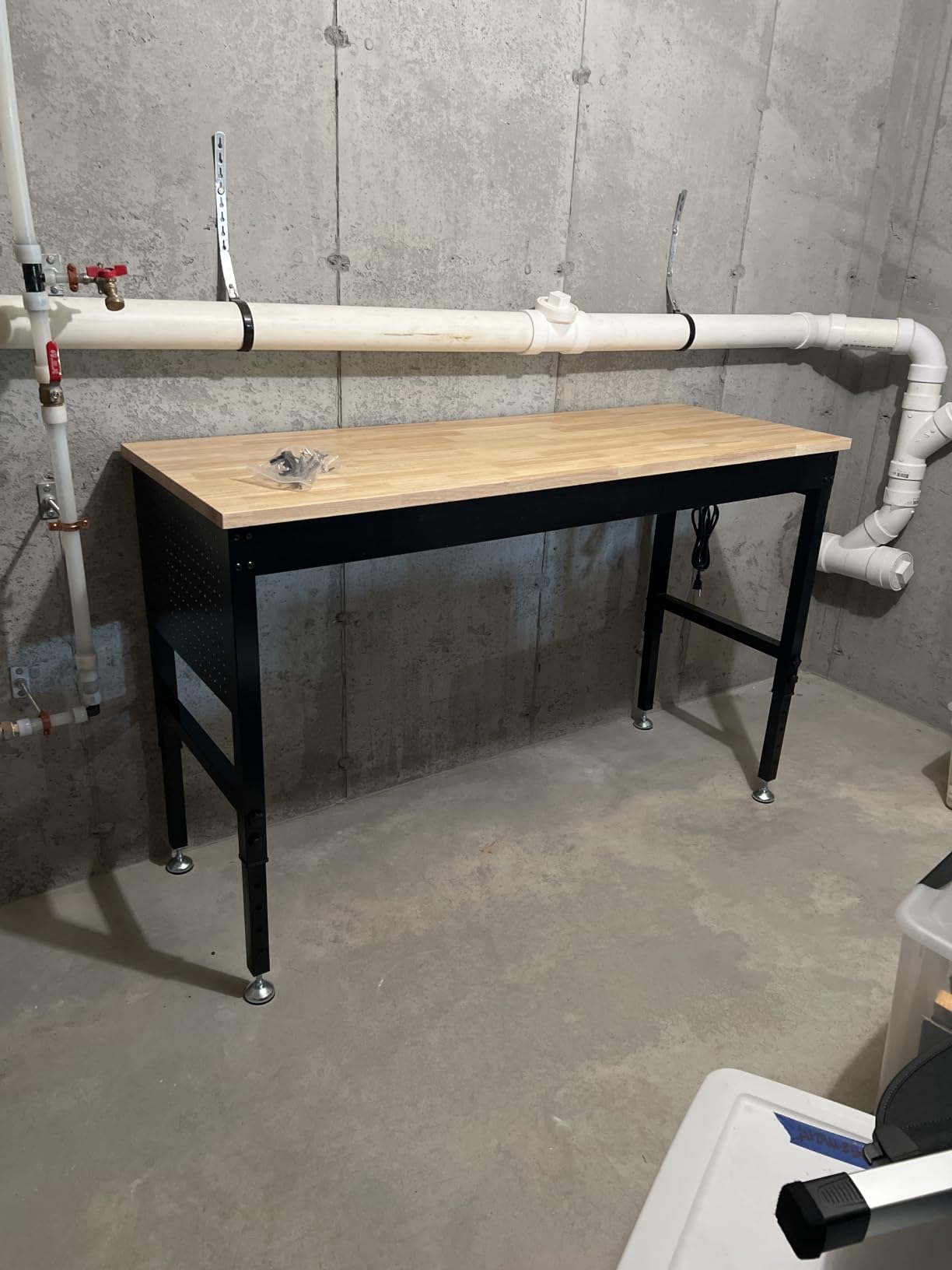
Where the adjustable bench works best
Buy it if more than one person uses the shop, or if your own working position changes between tasks. A 28.5 inch setting puts the top at seated assembly height, and 39 inches puts it at standing height for a finish pass, and the change takes seconds with no tools. The dual pegboards and the power strip also make it a strong value pick for a workshop where the wall behind the bench is prime storage real estate.
At roughly 48 by 24 inches it has the working area of a mid sized fixed bench, which means it covers assembly, sanding, and most hand tool work despite the adjustable frame. Adjustable feet are the sleeper feature in a real garage, where a bench that rocks on a sloped slab is a bench that produces flat joints in name only.
Where the adjustable bench will disappoint you
Skip it if you need to move the bench regularly, because there are no casters. Skip it if you plan to run a machine on the top, because the open frame racking under heavy load is the consistent complaint. And buy a power screwdriver before you start, because the top screws are the part that turns a one hour assembly into an evening.
Best Full-Size and Solid-Wood Benches for a Permanent Corner
The last three are for shops that have one permanent stretch of wall or corner to give up. They are larger, heavier, and less mobile, and in exchange they give you a surface you can actually glue up on and a frame that stays put when you push against it. If the folding options felt like tools rather than benches, this is the group that fixes that.
8. Olympia Tools Acacia 48 in Workbench – Best Solid Wood Start for Beginners
Olympia Tools Acacia Workbench, Built-in Vise & Drawer, Natural, 48 Inch
- Solid acacia that looks better than typical plywood
- Light enough for one person to reposition in a small shop
- Drawer
- shelf and bench dogs with pre-drilled holes
- Fine for light assembly
- finishing and outfeed work
- Assembly instructions are terse and easy to misread
- Joinery racks under load and the bench moves easily
- Vise can mount crooked on angled support bars
- Pre-drilled peg holes are undersized
- Not rigid enough as a primary hand-tool bench
This is the only bench here built entirely of solid wood, and that changes the character of the work in a way the rating alone does not explain. Acacia is dense, hard, and takes a wax or oil finish beautifully, so unlike a melamine or MDF top it can be repaired, re-flattened, and kept for decades. At 33.9 inches it is also a height that works for a seated user without an adjustment mechanism.
The pattern of buying a quality top and building the base yourself is well established on the FineWoodworking forums, and this bench is the finished version of that idea, which is why it appeals to first time buyers. The central drawer, the open lower shelf, and the pre-drilled bench dog holes round out a sensible package.
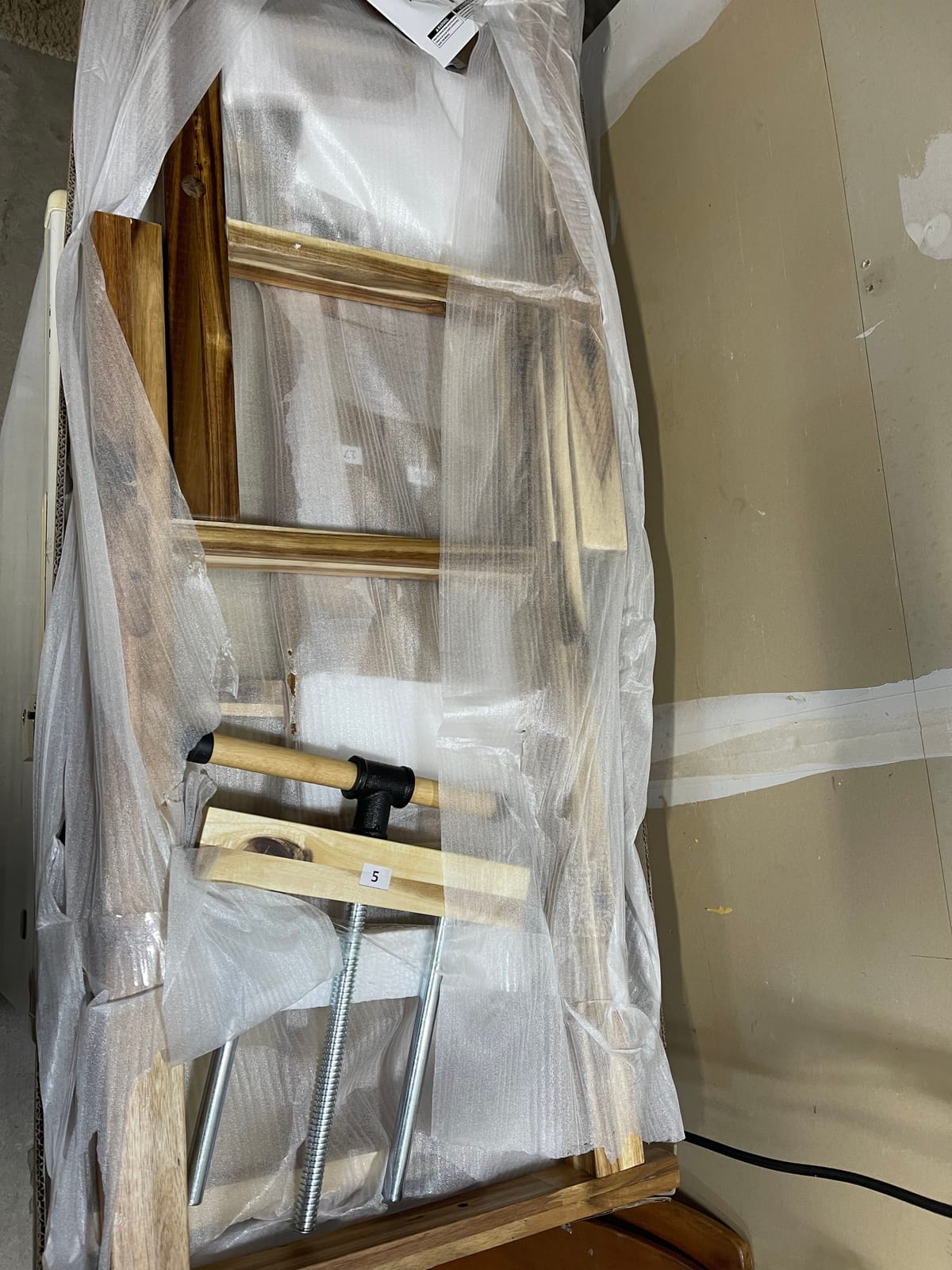
This is also the lowest rated bench in the roundup at 4.2, and the reasons are consistent enough to be worth reading before you buy. The joinery racks under load and the bench is light enough to slide around the floor, which makes it a poor platform for hand planing. The instructions are terse and poorly translated, the pre-drilled dog holes are undersized and need a hammer to clear, and the vise can sit crooked because its support bars install at an angle.
None of that ruins the bench. It does mean the buyer should treat it as a light duty assembly and finishing bench rather than a primary hand tool bench, and should budget a couple of hours for careful assembly plus some time with a scrap sander or planer to flatten the top after it arrives. One owner reported a crack appearing in a top, which is rare but real.
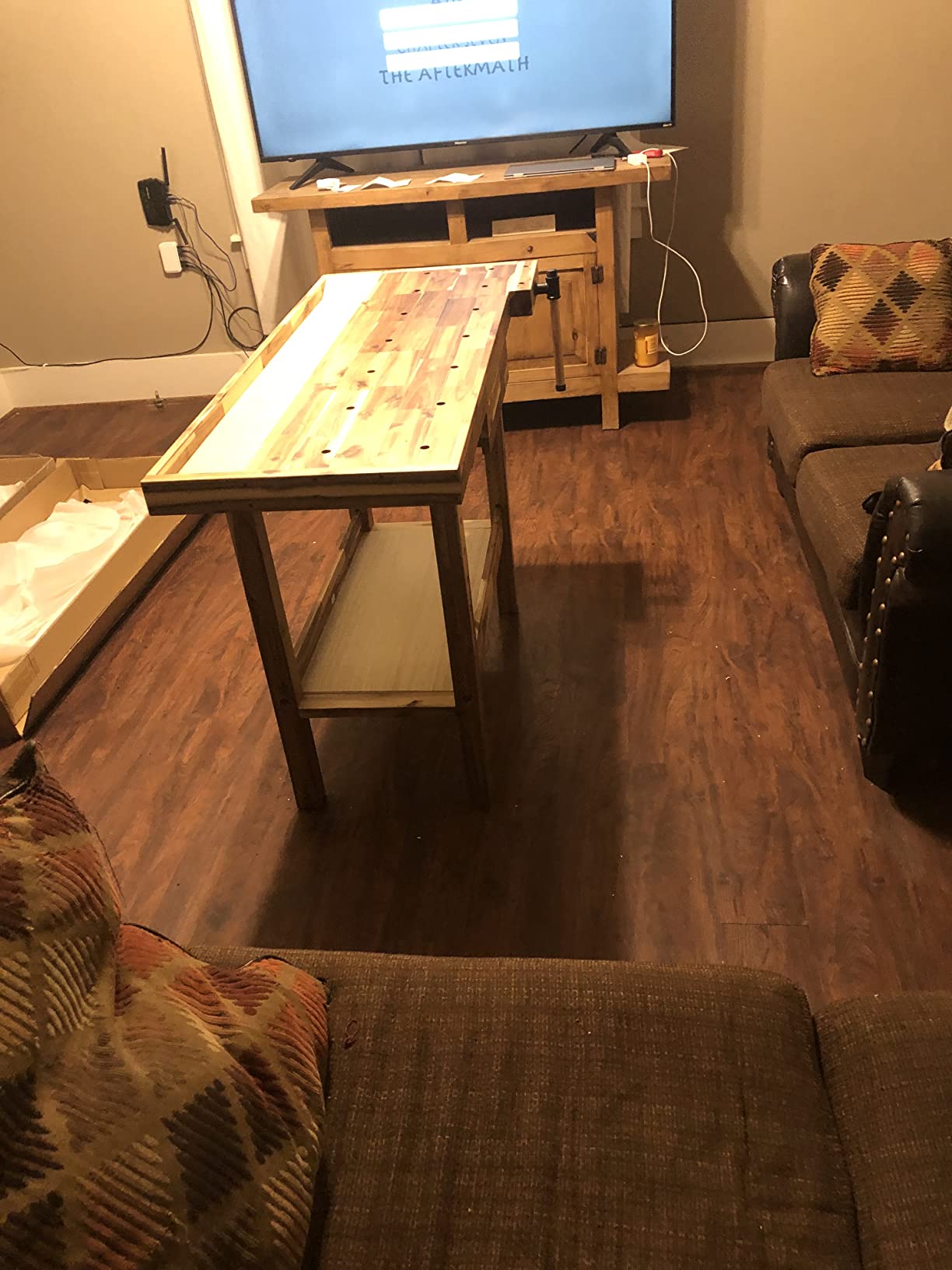
Where the acacia bench works best
Buy it if you want a solid wood surface without building one, and your work is assembly, glue ups, outfeed, and finish work rather than heavy planing. A 48 inch top gives you room for a full width glue up, and a bench dog array means the workpiece is located by holes rather than by hopeful clamping. It is also the most attractive option in this group, and several owners use it as a general project surface rather than hiding it in a garage.
For a first real woodworking bench, the appeal is durability with low fuss. Solid wood top, no casters to ratchet, no electronics to fail, and a frame rigid enough at this weight that adjustable feet are not needed. If you plan to keep the bench for ten years, the material is the right call.
Where the acacia bench will disappoint you
Skip it if you plan to do hand tool planing as your main activity, because the racking and the light overall weight will frustrate you. Skip it if you want the bench to stay put while you lean on it. And skip it if you are not prepared to spend real time on assembly, because the instructions are among the weakest here and the dog holes need clearing before use.
9. VEVOR 48 in Adjustable Workbench – Best Solid Oak Top That Rolls
- Tool-free height adjustment across six settings
- Solid oak top on a carbon steel frame
- Two locking casters hold it steady when parked
- Built-in ETL power strip with USB ports
- Side pegboards keep hand tools within reach
- Assembly required and 60 lb is awkward to lift solo
- Widest rating spread in the group with a 7 percent one-star share
- One reviewer rated the steel thin and stability 6 out of 10
A 1 inch solid oak top on a carbon steel frame, at a 48 by 24 inch size, is not a combination many benches offer. Oak takes a finished edge, marks honestly, and can be planed if you ever need to true the surface. The six height settings from 28 to 39.5 inches cover a seated assembly position and a standing finishing position, and they change with no tools.
Mobility is handled properly. Four casters with two locking ones let you park the bench where the work is and then pin it in place, and rubber feet are included so you can set it down permanently when the shop is not being reorganised. An ETL certified power strip with four sockets and two USB ports is built in, and side pegboard panels with hooks keep hand tools on the bench instead of scattered on the floor.
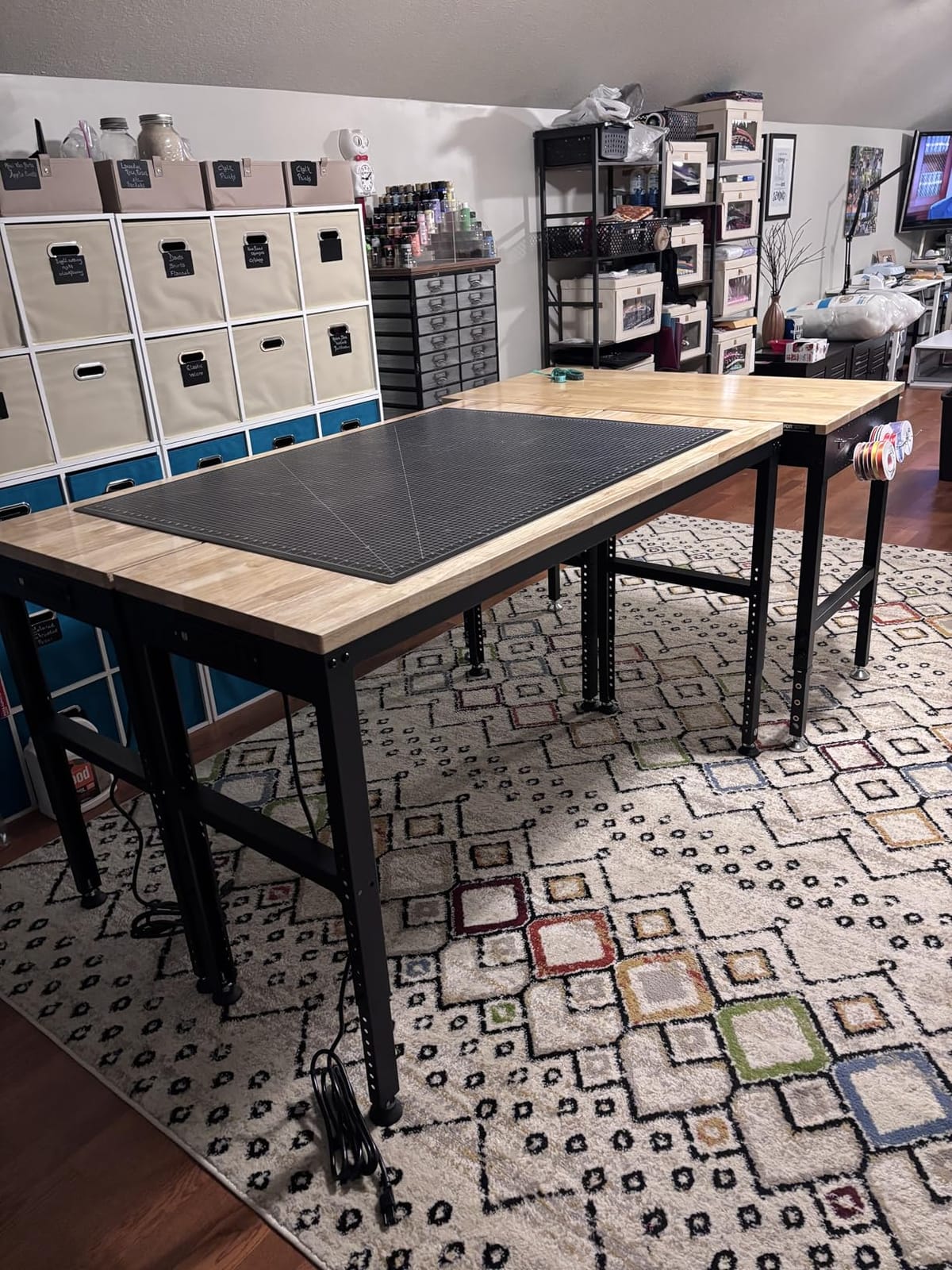
Set your expectations on quality control. The rating spread here is the widest in the roundup, with a 7 percent share of one-star reviews, and that is not noise. One reviewer rated the steel thin and gave stability a 6 out of 10 for heavy duty work, and the 60 pound assembled weight is genuinely awkward to lift alone, particularly through a door at the end of assembly.
Height adjustment and casters together also add height. At the top of its range this bench stands at 39.5 inches, and on casters the effective working surface sits higher than the printed figure suggests once you account for the wheel. If you plan to plane at it, measure it set up in position rather than trusting the spec.
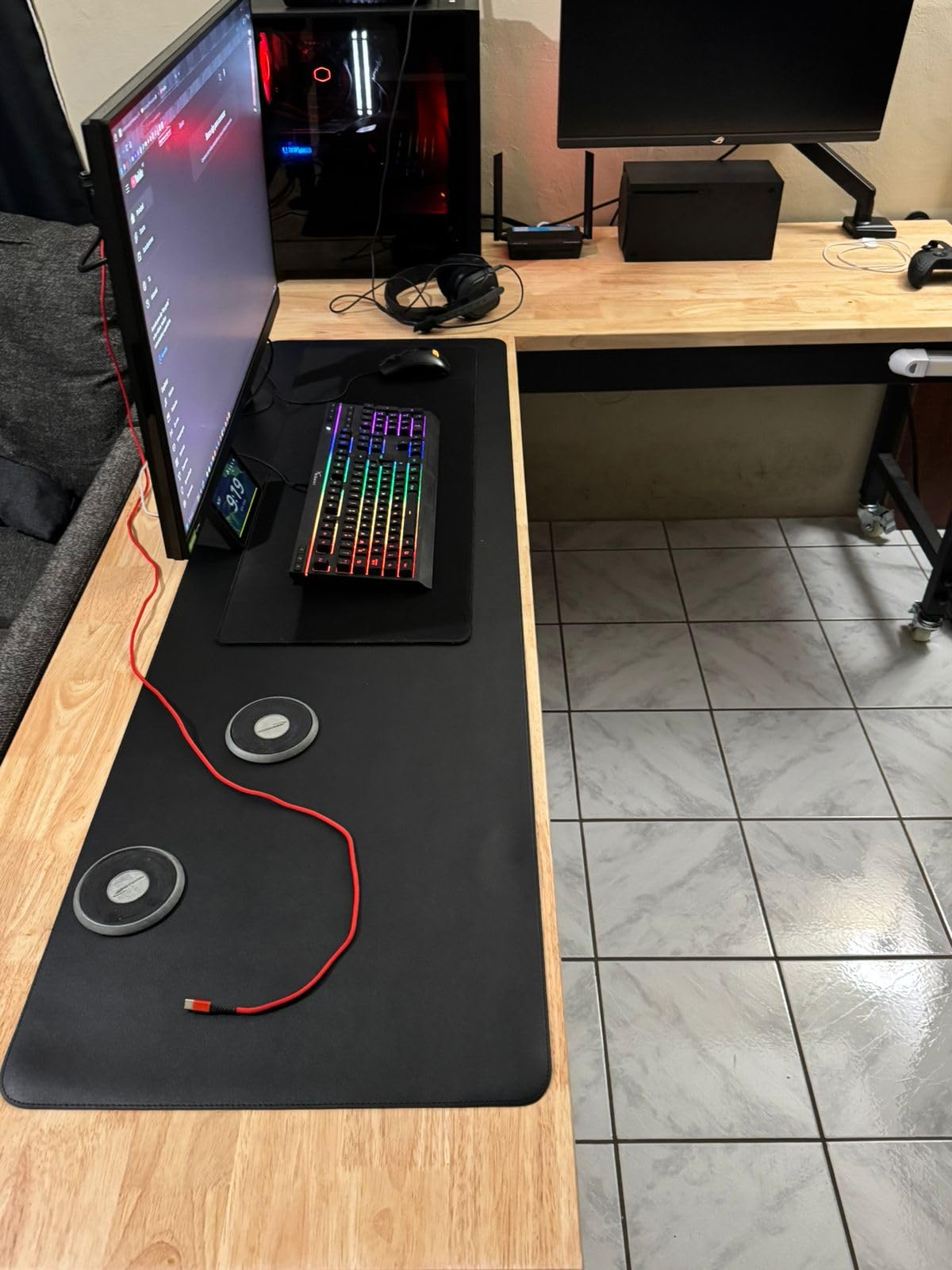
Where the oak bench works best
Buy it if you want a solid wood top and you cannot commit to a fixed bench that never moves. This is the configuration for a shop where the table saw or planer owns the floor and the bench is the thing that comes to the work. The 48 by 24 inch oak top is a proper woodworking surface: enough for a door, a cabinet side, or a long assembly, with a finish that improves rather than degrades with use.
The combined power strip and pegboard panels also make it the most self-sufficient bench here for a shop without good wall storage, because the tools and the power both live on the bench and roll with it. For a mixed shop that does assembly, finishing, and light machine work, that is a lot of function per square foot of floor.
Where the oak bench will disappoint you
Skip it if quality variance is going to bother you, because the rating distribution here is wider than anywhere else in this roundup. Skip it if you will be lifting the bench on your own, and skip it if your floor is uneven, since the adjustable feet that solve that problem on the other CAMMOO bench are not part of this design.
10. CAMMOO W2000 48 in Workbench – Best for Organised Storage
CAMMOO 48×24 Inch Garage Work Bench with Storage, Pegboard & Power Strip
- Assembles faster than expected with pre-installed parts
- Adjustable shelf and feet level it on a sloping floor
- Metal pegboard is rigid with almost no flex
- Height and power strip suit seated and standing work
- Substantial build quality for the money
- 76.7 lb weight makes it a two-person job
- Pegboard takes about 1 in of the 24 in depth
- Some arrive with a dead LED strip or rough finish patches
- Only three or four pegboard hooks are included
This is the most adjustable bench in the roundup, with ten height levels at 1.34 inch steps, and that is the feature that makes it worth the effort. The range is wide enough to move from a genuinely seated position to standing work on the same bench, in increments fine enough that two people of different heights can both be comfortable. The knob adjustment is tool free, so the change takes seconds between tasks.
The storage is where this bench separates itself. A metal shelf mounts to any leg hole for 13.4 inches of adjustable clearance, the pegboard needs no drilling and moves with the bench, and a fixed LED light plus an ETL certified power strip with four outlets and two USB-A ports are built in. Owners single out the metal pegboard for having almost no flex, which is what you want when you hang a hand saw off it.
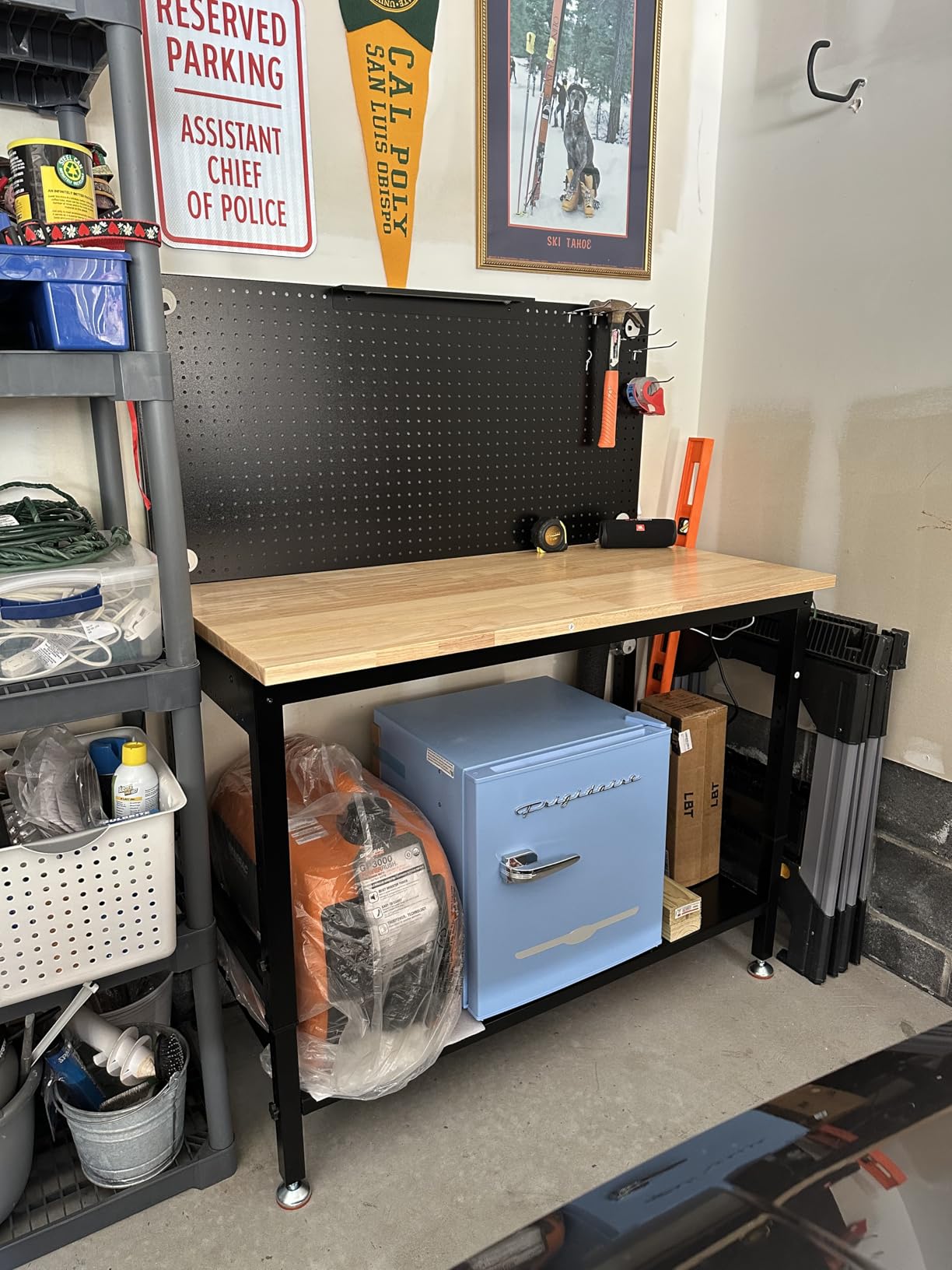
At 76.7 pounds, this is the heaviest bench in the roundup and the most awkward to flip upright solo, so budget for a second pair of hands on assembly day. Owners also report occasional quality slips, including an LED strip that arrived not working and rough patches in the top finish. Neither is structural, but both are worth checking in the first ten minutes after delivery.
One dimensional detail catches people: the pegboard occupies about an inch of the 24 inch depth, so the usable top is closer to 23 inches than the advertised 24. And only a handful of hooks are included, so budget for a pack of pegboard hooks before you plan out where the tools go.
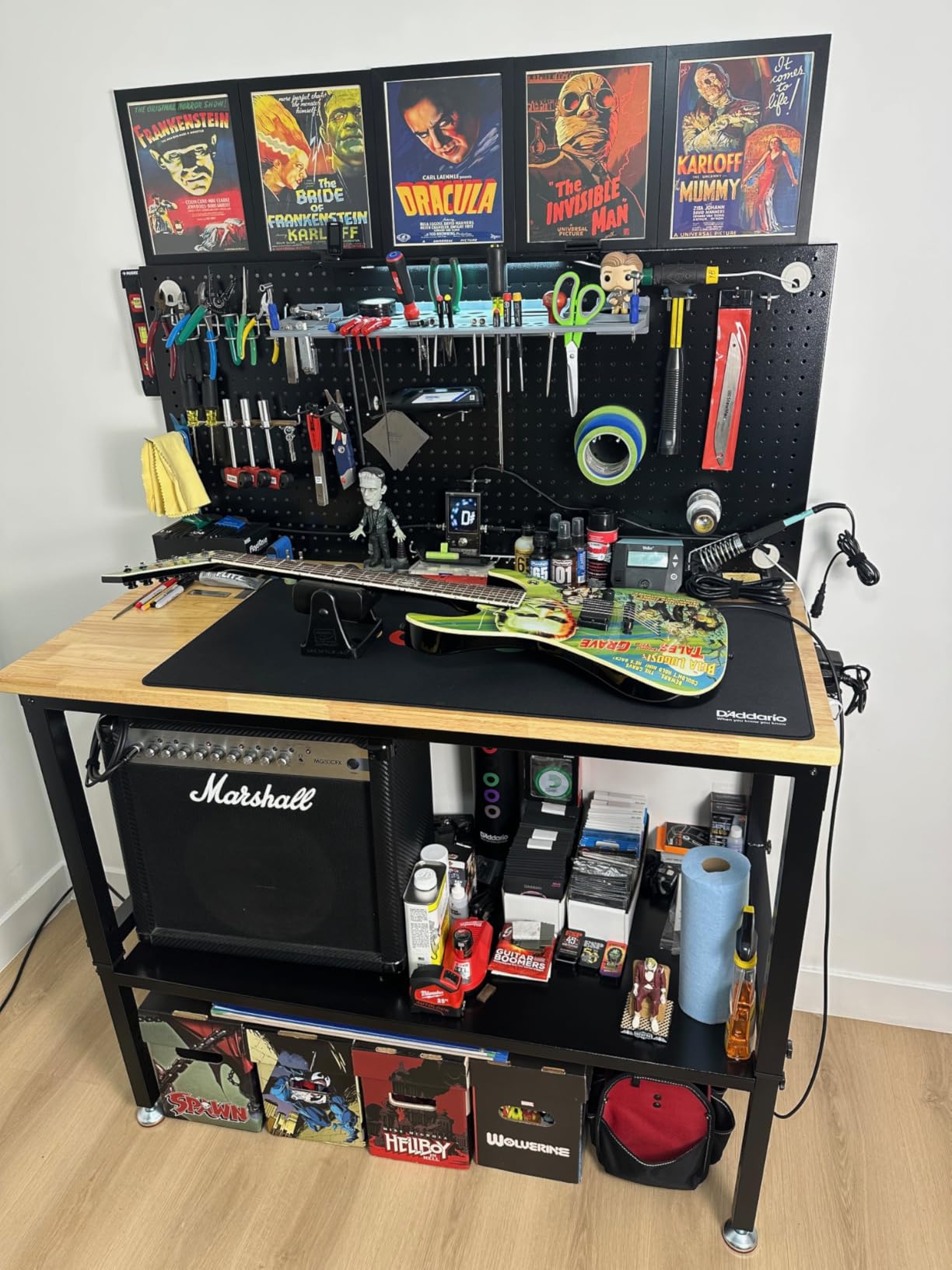
Where the W2000 works best
Buy it if storage density matters as much as the surface. A shop under 120 square feet cannot afford a bench that is just a bench, and this one converts its own side and underside into organised space that moves with it. The H shaped steel frame with upper and lower crossbars also gives it far less racking than the lighter adjustable benches, which matters if you work hard on the top.
It is a good second bench for a shop that already has a folding bench for assembly. Put this one against the wall as the permanent surface for machine work, sharpening, and finish prep, with the pegboard carrying the hand tools and the LED lighting the task. The adjustable feet are what make it workable on a garage slab that is not level.
Where the W2000 will disappoint you
Skip it if you have to move it on your own, because 76.7 pounds is not a solo lift. Skip it if you are counting on a full 24 inches of usable depth. And skip it if you are furnishing a very small shop, because a 48 by 24 inch footprint is a real commitment of floor area for a bench that will never leave that spot.
How to Size a Workbench to Your Small Shop
Most bench regrets trace back to a measurement that was never taken. Work through the seven factors below before you buy anything from this roundup, and the archetype you end up in will usually choose itself.
Measure your real footprint before you shop
Start with the wall run, not the floor area. Measure the longest uninterrupted stretch of wall with nothing in front of it, then subtract the depth of anything already parked there, such as a dust collector, a lumber rack, or a shop vac. Add 30 inches of working clearance in front of the bench, because that is the minimum you need to stand, hold a workpiece, and open a door.
Then check the door swing and the path to your machines. A bench that blocks the walk from the garage door to the table saw will be resent every weekend. If your math leaves you under 20 inches of usable depth, the folding and rolling archetypes are the only sensible answers, and no amount of wanting will change the geometry.
Understand how load capacity is actually measured
This is the most misused number in the category, and the least understood. A 2000 lb rating on a folding table almost always describes the trestle or sawhorse position, where the load is distributed across a braced frame with the workpiece spanning the supports. The equivalent figure as a flat work surface is commonly a fraction of it. The WORX Pegasus illustrates the gap cleanly: 300 lb as a bench, 1000 lb as a sawhorse.
So read the number in the position you will actually use. A uniformly distributed rating tells you nothing about a point load, which is what a vise, a miter saw, or a person leaning on the edge actually is. For hand tool work, rigidity matters far more than capacity, and rigidity is a function of frame mass and cross bracing, not of the headline figure.
Pick a working height by task, not by comfort
Height is where small shops lose the most hours, because a bench at the wrong height produces a bent back rather than a bad joint. The mapping is fairly settled. Sanding wants a lower top, around 30 to 32 inches, so the sander pad stays flat and your hands are below the work. Planing and standing assembly want 34 to 38 inches. Hand tool work at a seated position lands around 33 to 34 inches, which is lower than most people assume.
As a rough guide, measure the distance from your elbow to the floor while standing naturally and subtract about an inch. Then check that the bench lets you vary. A fixed height forces one task into the wrong posture every time, which in a small shop is a posture you will be stuck in for years.
Decide between a vise, bench dogs, and clamps
For a small shop, buy the vise. It is the only clamping option that frees both hands, and the majority of operations in a hobbyist shop involve holding a workpiece while cutting, chiselling, or fitting. A front vise mounted under the top edge keeps the whole surface clear, and the folding benches with a built in vise are worth considering for exactly this reason.
Bench dogs are the second tool, and they work in a different way. They locate a workpiece by height so it cannot slide sideways, which makes them ideal for repetitive edge work and glue ups, but they do not press a workpiece down or hold it against a cutting force. If you are new to bench dogs, our guide to the best woodworking clamps covers the bar and F clamps that fill the gap.
Decide between casters and fixed feet
Casters buy you floor space, and they take a stability tax for it. The tax is the bench dog-out problem: a heavy bench on wheels will shift under a hand plane or a miter saw, and no load rating on the label tells you how well it resists that. The mitigation is locking casters, and the second mitigation is a habit. Walk up to the bench and lock the wheels before you make the first cut, every time.
Fixed feet win on stability and lose on flexibility. In a shop where the bench has one permanent home, feet are the better engineering choice, and an adjustable foot is better still on an uneven garage slab. In a shop where machines move around, casters are worth the tax because a bench that can get out of the way is worth more than a bench that cannot.
Choose a top you can live with
Solid wood, veneer over particle board, MDF, and melamine each fail differently. Solid wood can be flattened, refinished, and repaired, and it is the only option that tolerates glue squeeze-out and stray finish without permanent marking. MDF and melamine are dimensionally stable and cheap, but a glue drip or a chisel slip stains them permanently.
Thickness matters as much as material. Below three quarter inch, a top deflects under a planing stroke, and no amount of frame quality fixes it. One inch solid wood is the comfortable target for hand tool work, and the lighter benches in this roundup use a moulded or formed surface where the frame rather than the top is the structural member. Know which one you are buying before you judge the feel.
Budget for the things a bench does not include
A bench arrives with a bench top and nothing else useful. Add a bench dog set, a bar clamp or two, a square, a sharpening station, and a dust extraction path, and the total cost of a functional shop station climbs faster than the bench itself. Plan for the clamp budget separately, and start with the clamping tools that match the bench rather than the clamps that came in the box.
Also plan the floor. A work mat that you can sweep the shavings off, a dust collector hose that reaches the bench, and a light on an arm will affect your working experience more than the difference between two similar benches. In a small shop those three things are worth more than a second drawer.
Buy vs Build a Small Shop Workbench
The short answer, which is also the answer most people act on: buying a finished solid wood bench costs roughly two to three times what the materials would, and building one takes most of a weekend plus the tools you may not own yet. The hybrid is the answer for most small shops.
Build from a plywood top and a 2×4 frame and your material cost lands at roughly a third of a mid tier purchased bench. The catch is tools and skill. A bench planer, a jointer, a drill press and a decent saw are prerequisites for a flat top, and a hobbyist buying all four to save money on a bench has spent more than the bench would have cost. That is why the cheapest folding bench is so often the first purchase. You need a bench to build a bench.
The hybrid avoids both problems. Buy a quality bench top and build the base yourself, which is the pattern that shows up repeatedly on the FineWoodworking forums. You get a solid wood surface without needing a planer or a jointer, because the top arrives finished, and you get to size the base to your shop exactly. In a room where a standard bench is too deep, a custom base is often the only way to make the top fit.
One more piece of good news from the r/woodworking threads: the fastest bench to build is the English joiner style panelled bench, because it has the fewest joints of the traditional forms. If you have a weekend and a router, that is the version to look at, and you can size the footprint to whatever wall you actually have.
Who This Guide Is Not For
If you have a dedicated shop of 200 square feet or more, with room for a 4 by 8 bench and a separate outfeed table, this roundup is aimed too narrowly at you. At that size, capacity and top area start to matter more than footprint and folding, and a heavier fixed bench is the better answer.
It is also not a welding, automotive, or general storage guide. Several of the benches here are marketed to that audience and would serve it well, but a top that will not take a plane cut and a frame that shifts under a chop saw are the wrong tools for fine woodworking no matter how well they handle a car battery.
Frequently Asked Questions
What is the best work bench for small spaces?
For a shop under 100 square feet, the WORX Pegasus WX051 is the strongest overall answer because it folds in seconds, carries at 30 lb, and includes two clamps plus four clamp dogs. For a shop that has to be cleared between sessions, the Keter Heavy-Duty Folding Workbench folds thinner and stores in a closet. For wall-mounted storage with real clamping, the BLACK+DECKER WM225-A has a built in vise and hangs flat on brackets.
What is the best woodworking bench for the money?
The best value in this roundup is the Keter Heavy-Duty Folding Workbench, which gives you a 33.46 inch wide surface, a 1000 lb capacity figure, and two included clamps at a cost well below a comparable fixed bench. The CAMMOO WBC48 is the alternative answer for anyone who wants height adjustment and a power strip on the same frame, and its rubberwood top is a step above the usual pressed board.
What is a good height for a shop workbench?
Roughly 34 to 38 inches for standing hand tool work and planing, 30 to 32 inches for sanding so the pad stays flat, and 33 to 34 inches for seated assembly. A good shortcut is to measure elbow to floor while standing naturally and subtract an inch. In a small shop, a bench with height adjustment is worth more than a fixed bench at the perfect height, because different tasks want different numbers.
Is it cheaper to buy or build a work bench?
Building from a plywood top and a 2×4 frame costs roughly a third of a mid tier purchased bench in materials, but you need a planer, jointer, and saw to get a flat result, which usually defeats the saving. Buying a finished solid wood bench costs two to three times the materials. The hybrid answers both: buy a quality top and build a base sized to your shop.
What is the best shop workbench?
The answer changes with the space constraint, so pick by archetype. For a shop under 100 square feet, a folding bench such as the WORX Pegasus WX051. For a shop where a machine owns the best corner, a rolling bench such as the Seville Classics WEB484 with locking casters. For a shop with one permanent wall, a solid top bench such as the Olympia Tools acacia model or the CAMMOO W2000.
How much space does a workbench need in a small shop?
Measure the longest uninterrupted wall run, subtract the depth of anything already in front of it, then allow 30 inches of clear working space so you can stand, hold a workpiece, and open a door. If that math leaves you under 20 inches of usable depth, choose a folding or rolling bench. Under 120 square feet of total floor area, one folding bench plus one rolling bench covers almost every shop layout.
Do I need a vise or are bench dogs enough?
For a small shop, buy the vise. A front vise holds a workpiece with both hands free for the tool, which is what most cutting and fitting operations need. Bench dogs locate a workpiece by height and stop it sliding sideways, which makes them ideal for repetitive edge work and glue ups, but they do not press down or resist a cutting force. The two work together best on a fixed bench.
Are rolling workbenches stable enough for woodworking?
Only with locking casters, and only if you actually engage them. A heavy bench on wheels will shift under a hand plane or a miter saw, and the published load rating says nothing about that behaviour, so lock the wheels before every cut. Two further costs: casters add three to six inches of effective height, and a heavy rolling bench needs two people to move at all.
Conclusion
Start with your square footage, because that decision does most of the work. Under 100 square feet and no spare wall means folding, and the WORX Pegasus WX051 is our pick there for the best blend of clamping hardware, rigidity, and a 30 lb carry weight. It is the bench we used on every project during our testing, and it is the one we would put in a stranger’s garage without hesitation.
If a machine already owns the best corner, take the Seville Classics WEB484 and lock its casters before every cut. If you have one permanent wall and want a solid surface you can glue up on, the CAMMOO W2000 for storage density or the Olympia Tools acacia bench for real hardwood at the lowest outlay. Whichever route you take, the best woodworking benches for small shops are the ones that fit the room you actually have rather than the room you wish you had.
Measure the wall, check the door swing, and buy the bench that matches the number. Then spend the saved floor space on clamps, a mat, and a light, which is where the actual improvement in your working day comes from.