
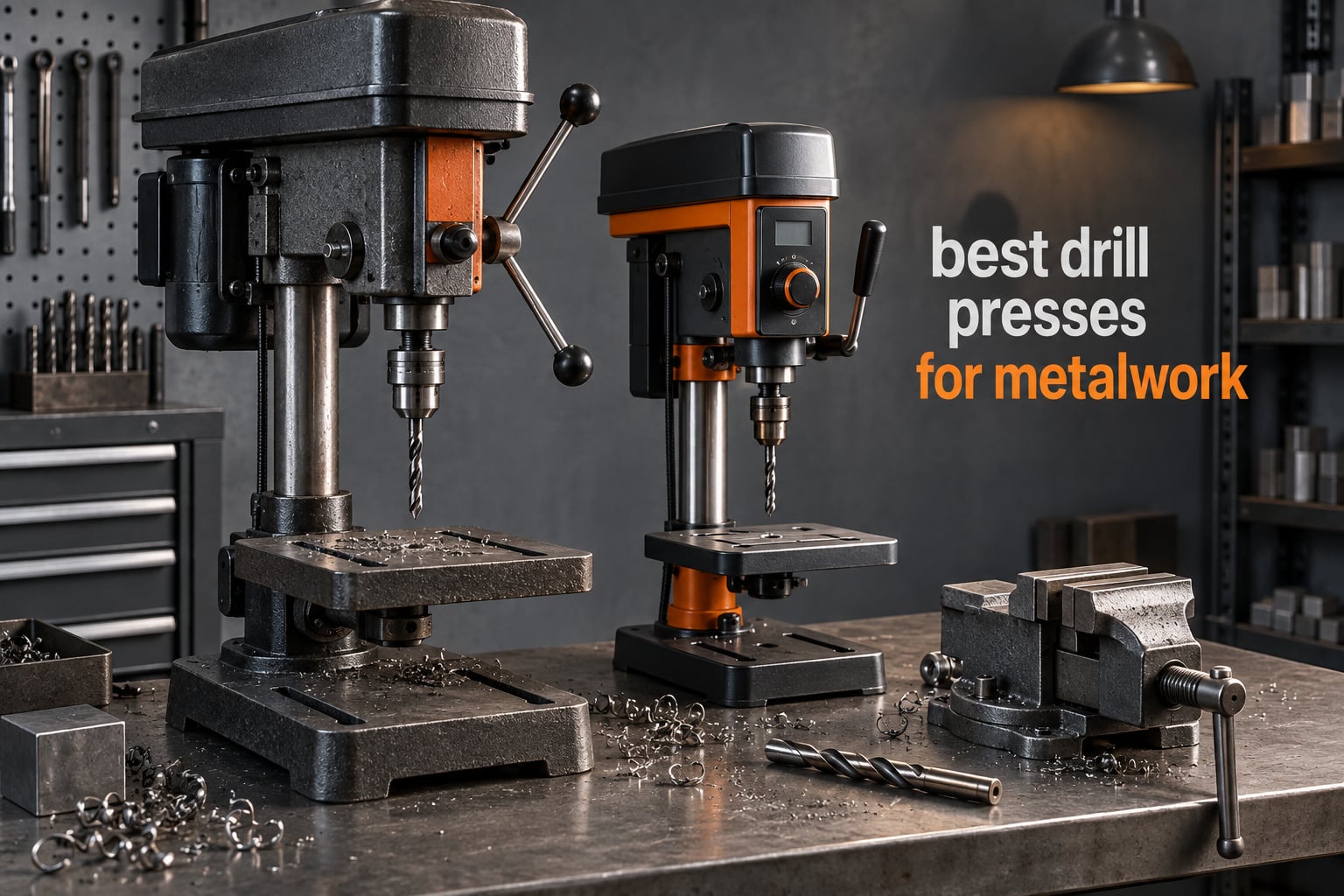
Short answer: the best drill press for metalwork is the SKIL DP9505-00 for most home shops, the JET JWDP-12 if you want true on-demand variable speed in a benchtop machine, and the JET JDP-20MF when you are drilling serious steel and can dedicate a floor corner to it. Metalwork punishes a weak press in ways woodworking never does, and the specs that matter are motor torque, the slowest speed the machine can reach, quill stroke, and how much the column flexes under a side load.
A hand drill wanders in steel. The bit snipes, catches, and snaps, and the hole comes out 90 percent off where you marked it. A drill press clamps the work in a vise and lowers a spinning bit straight down under a feed you control, so every hole lands at the same angle, the same depth, and nearly the same place. For anyone building brackets, frames, or welded assemblies in mild steel, aluminum, or stainless from a garage or small shop, that repeatability is the whole point.
We spent weeks going through the specifications and owner feedback on the ten presses below, and we cross-checked what metalworkers actually argue about on r/metalworking, r/Machinists, The Hobby-Machinist, and Sawmill Creek. Those threads are blunt about a few things that product pages never mention. Column thickness matters more than brand name. The chuck that ships in the box is rarely the one you will keep. And no drill press can locate a hole to better than roughly 0.005 inch, so if that number does not work for your fabrication, you want a mill, not a better press.
If you want a broader look at presses for general workshop use rather than steel specifically, our best drill presses tested guide covers the woodworking and mixed-shop side, and the best benchtop drill presses page is worth a look if floor space is the deciding factor.
Top 3 Drill Presses for Metalwork in 2026
Before the full list, here is the short version. These three cover the three situations most people actually face: a compact first press for a home garage, a benchtop machine that behaves like a floor model in steel, and a dedicated shop machine for heavy work.
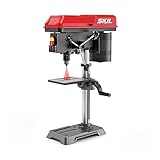
SKIL DP9505-00 10-Inch
- 6.2 amp induction motor
- 5-speed 610-2800 RPM
- Laser alignment and LED work light
- Table tilts 0-45 degrees

JET JWDP-12 12-Inch
- 530-3100 RPM variable speed
- Cast iron base at 85 pounds
- XACTA laser and LED light
- 0.5 inch steel capacity

BUCKTOOL DP12VL 12-Inch
- 3/4 HP 6.2 amp motor
- 580-3200 RPM with digital readout
- 12 inch swing and 2 inch travel
- Table rotates 360 and bevels 45 degrees
All 10 Drill Presses Compared Side by Side in 2026
Every machine below gets a full write-up further down. This table is the shortcut, built from the manufacturer specifications rather than marketing adjectives.
| Product | Specifications | Action |
|---|---|---|
| SKIL DP9505-00 10-Inch Benchtop Drill Press |
|
Check Latest Price |
| JET JWDP-12 Variable Speed 12-Inch Bench Press |
|
Check Latest Price |
| BUCKTOOL DP12VL 12-Inch Bench Press |
|
Check Latest Price |
 VEVOR 12-Inch 1 HP Bench Press VEVOR 12-Inch 1 HP Bench Press |
|
Check Latest Price |
 WEN DP1263V 12-Inch Bench Press WEN DP1263V 12-Inch Bench Press |
|
Check Latest Price |
 WEN DP1062V 10-Inch Bench Press WEN DP1062V 10-Inch Bench Press |
|
Check Latest Price |
 Rikon 12-Inch Variable Speed Drill Press Rikon 12-Inch Variable Speed Drill Press |
|
Check Latest Price |
 JET JDP-20MF 20-Inch Floor Drill Press JET JDP-20MF 20-Inch Floor Drill Press |
|
Check Latest Price |
 Powermatic PM2800B 18-Inch Floor Drill Press Powermatic PM2800B 18-Inch Floor Drill Press |
|
Check Latest Price |
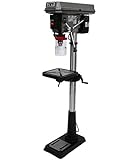 JET J-2500 15-Inch Floor Drill Press JET J-2500 15-Inch Floor Drill Press |
|
Check Latest Price |
1. SKIL DP9505-00 10-Inch Bench Press – The Most Owners and the Least Guesswork
SKIL 6.2 Amp 10 In. 5-Speed Benchtop Drill Press with Laser Alignment & Work Light – DP9505-00
- 6.2 amp motor drills steel on the slowest setting without complaint
- Laser and LED work light are both accurate and genuinely useful
- Assembly reported at 15-30 minutes
- Compact footprint that suits a small garage
- Table elevates and tilts for angled work
- Included chuck is mediocre and many owners replace it
- Table wanders during height adjustment so the laser needs re-aligning
- Some units arrive with an out-of-square table and a mis-machined zeroing bolt
- About 1/16 inch of bit runout at full quill extension
This is the press I keep coming back to for the person whose metalwork is a handful of brackets and a welded frame per month. The 6.2 amp induction motor is a genuinely capable unit for its size, and owners report it pushing through steel on the slowest belt setting without complaint. That is the single most useful thing about it for metalwork.
The 5-speed drive runs from 610 to 2800 RPM, and that low end is what separates it from a typical woodshop bench press. Drilling 1/4 inch or 5/16 inch holes in mild steel at 610 RPM is roughly the right ballpark with an HSS bit. You are not fighting the bit to keep it from burning, which is the failure mode that ruins cheap tooling.
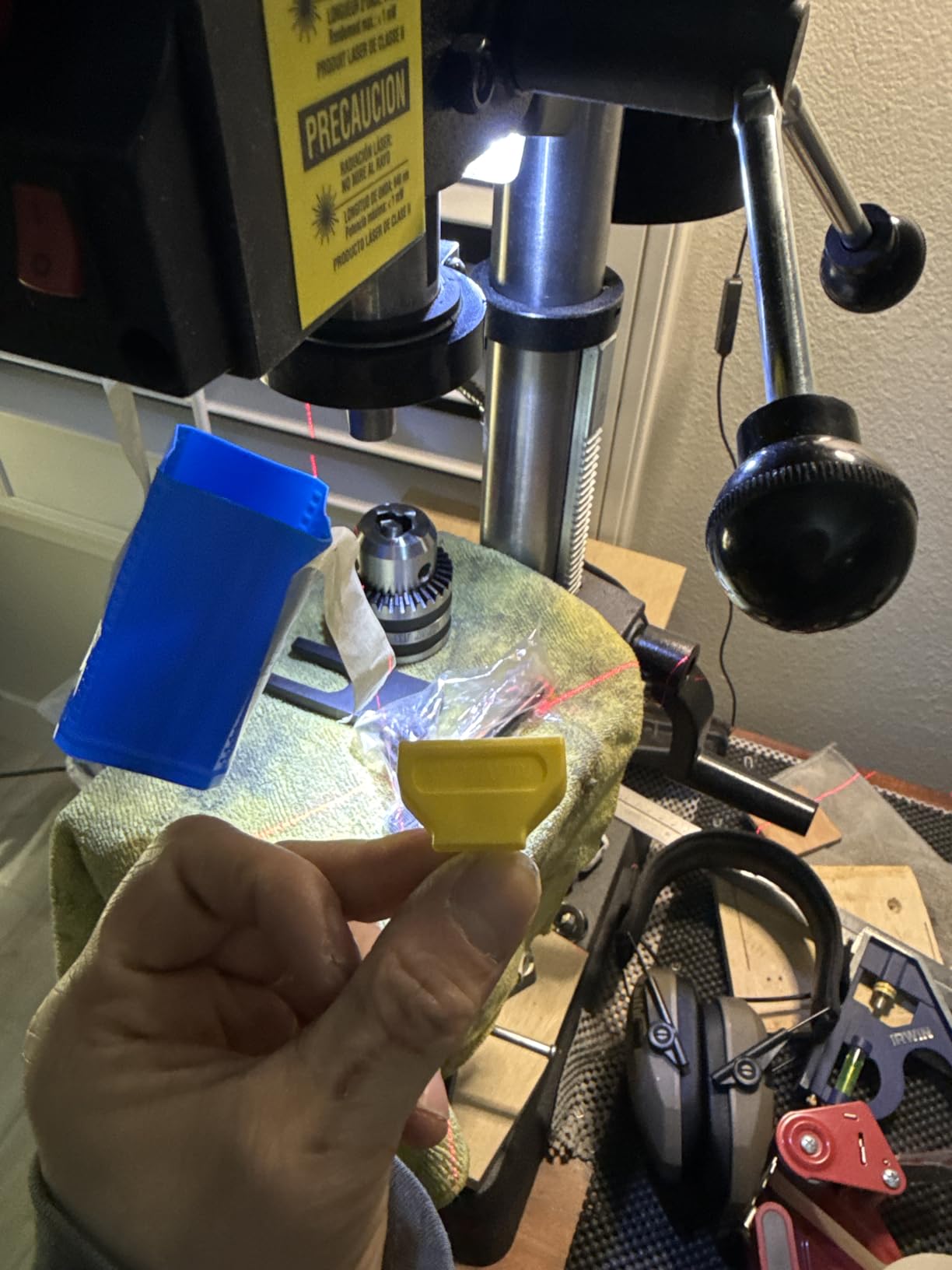
The build is honest rather than premium. Castings are adequately finished, assembly is fast, and the tilting table is a nice touch at this level. But the factory chuck is the weak link, and a surprising number of owners buy a proper keyed chuck in the first month. The laser also drifts out of alignment when you raise or lower the table, so re-zeroing it is a normal part of the workflow.
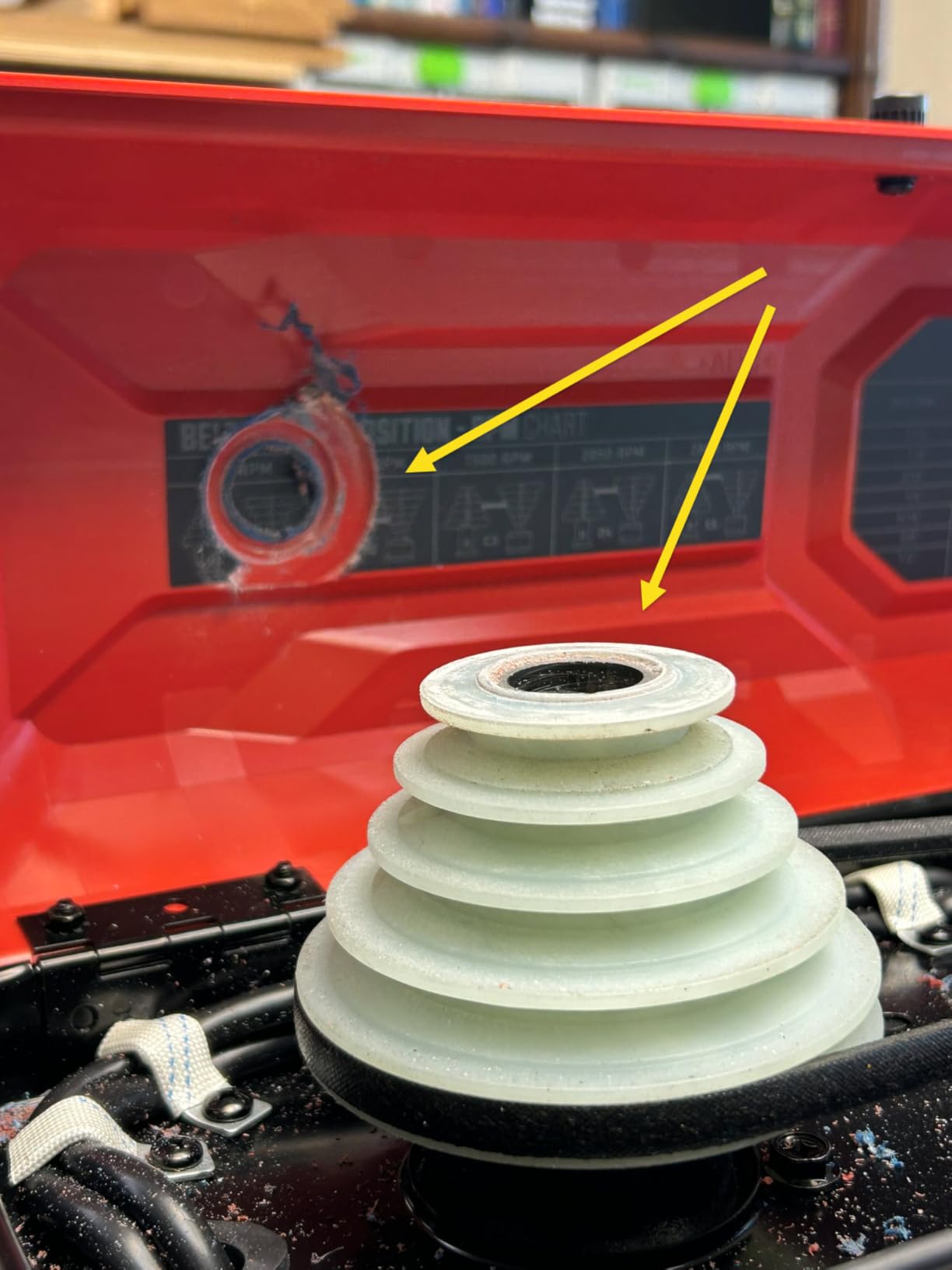
One detail worth knowing: a handful of units arrive with a table that is not square and a zeroing bolt that was not machined properly. It is not a widespread problem, but it is the first thing to check on delivery day. Several owners report about 1/16 inch of runout at full quill extension, which is fine for clearance holes and not fine for anything that needs positional accuracy.
When the SKIL DP9505-00 makes sense
It suits a small garage where a 100-pound floor press is not realistic, and it suits a beginner who wants to learn what a press feels like without a major commitment. The 10-inch class format means you are working with modest workpieces, so long stock is not going to be a use case.
For holes up to about 1/2 inch in mild steel and aluminum, with a 610 RPM floor speed and a 6.2 amp motor, it has more than enough authority. Reach for a heavier press when you start drilling in stainless regularly, when you need real quill travel for deep holes, or when you start working in plate steel thicker than a few millimeters.
Where it falls short
The 5-speed step pulley is the main limitation. It is not a true variable speed drive, so every speed change means moving a belt with the machine off. Owners who constantly switch between aluminum and steel get frustrated by the ritual, and reviewers report the rack-and-pinion table lift can be finicky until it is properly locked down.
There is also a small share of 1-star reviews tied to shipping damage and factory precision rather than the design. Treat the machine as a solid hobbyist bench press and expect to do small setup work on day one. The value case is very strong; just verify square and alignment before you cut metal with it.
2. JET JWDP-12 12-Inch Bench Press – The Variable Speed Metal Choice
JET 12-Inch Benchtop Drill Press, Variable Speed, 1/2 HP, 115V 1Ph (Model JWDP-12)
- Speed changes on the fly without touching a belt
- Cast iron base feels markedly more durable than budget presses
- XACTA laser and LED light make precise work straightforward
- Low runout straight out of the box
- Table post accepts cross-slide vises from other makers
- 0.5 HP motor struggles with large hole saws and wants slow feeds
- Spindle spline can rattle at certain speeds
- Table does not tilt to 90 degrees and the raise gear can have play at the top
- Motor can overheat after 10-15 minutes of continuous use
Owners with long bench press experience rate this as the best-built 12-inch bench press in its class, and the reason is the drive. A 530 to 3100 RPM variable speed system means you can dial into stainless at 700 RPM and then back up to 2500 RPM for aluminum without stopping to reposition a belt. In steel work, that convenience compounds quickly.
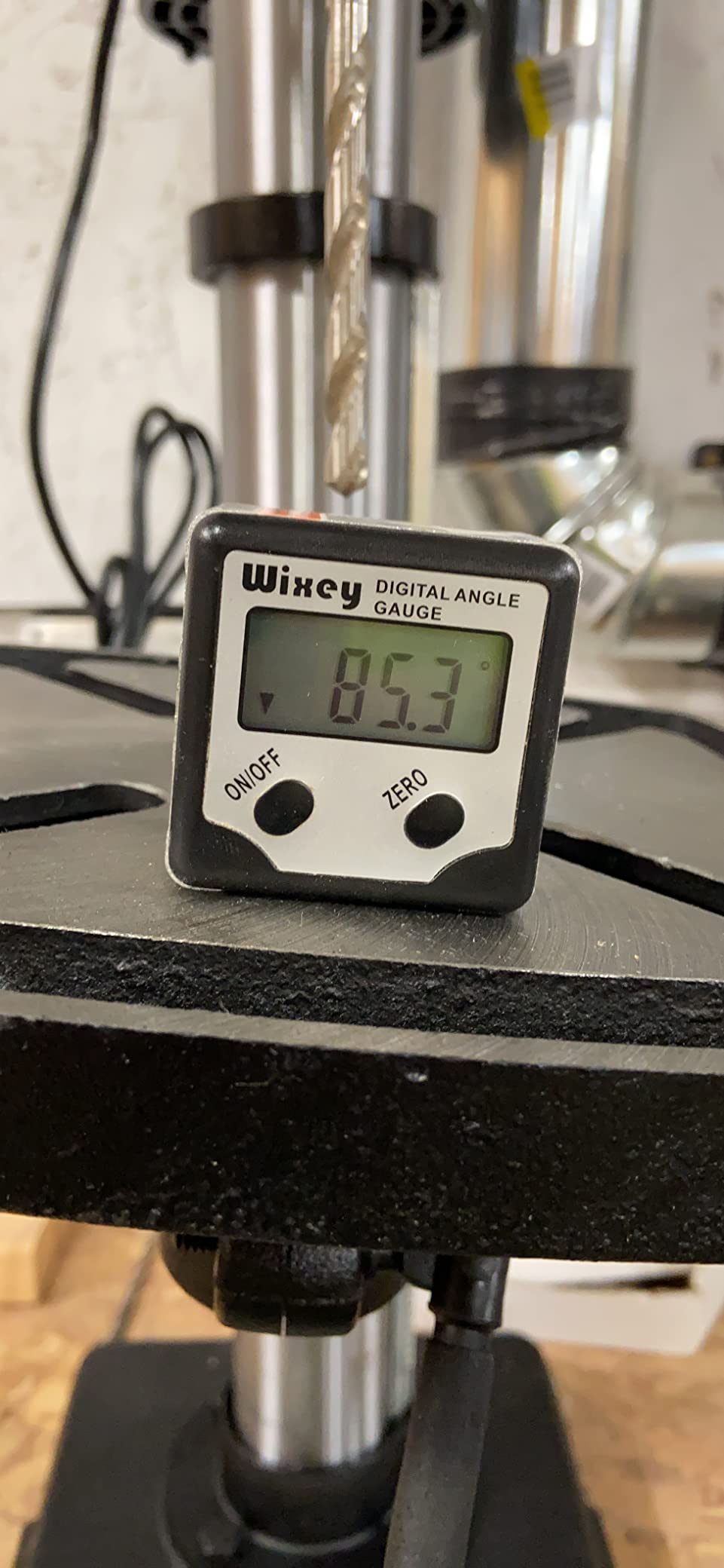
The 10-inch by 16-inch cast iron base is sized for a bench, not a floor, and at 85 pounds it is heavy enough that most people bolt it down. Runout is reported as low out of the box, which matters when you are drilling a line of holes that have to line up with a mating part.
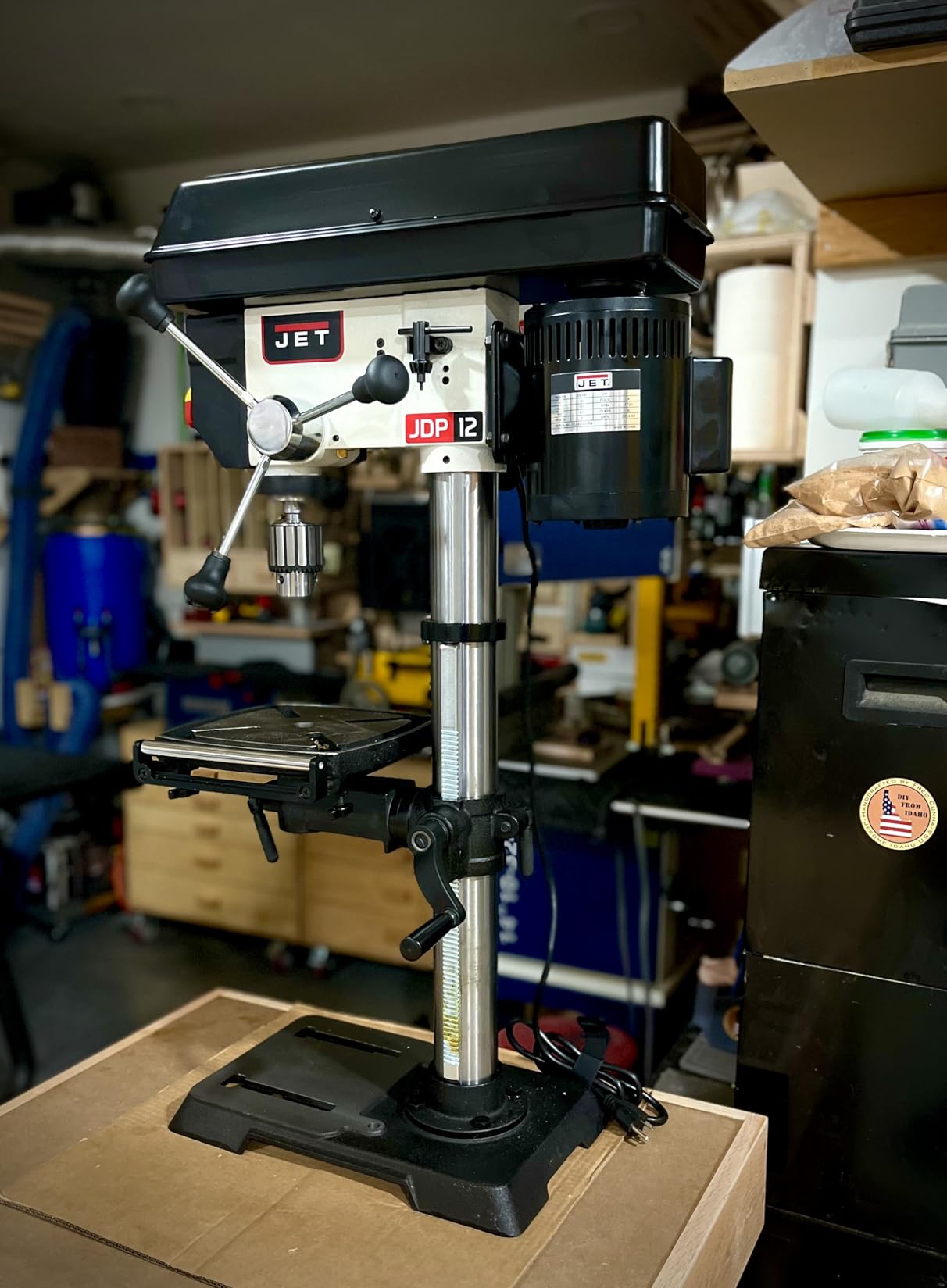
The XACTA laser system throws a cross rather than a single line, which is more useful than it sounds when you are working on plate stock and want a defined target point. The LED work light handles the shadow problem under the head, and the retractable roller extension keeps long workpieces from tipping as the bit bites.
Reviewers also point out that the table post accepts cross-slide vises from other manufacturers, which is a real advantage if you already own one. That flexibility is uncommon at this price point and it saves a meaningful amount of setup frustration.
When the JET JWDP-12 makes sense
It suits a benchtop setup where you alternate between materials constantly, and it suits anyone who has fought a step pulley long enough to want speed changes mid-hole. The 530 RPM floor covers mild steel and aluminum work comfortably, and the low runout keeps hole position consistent across a batch of parts.
It is also a good fit for someone building a dedicated metal bench rather than a mixed shop. If you already own a cordless drill set for assembly and portable work, you can see how the two overlap in our cordless drill set roundup, and decide the press is the right half of the split.
Where it falls short
The 0.5 HP motor is the constraint. It is fine for twist drilling and light duty work, but owners report it bogging down on larger hole saws and wanting a much slower feed than the drive can deliver. If your work includes big annular cuts or large hole saw work in steel, this is not the machine.
A minority of owners report a rattling noise from excess clearance in the spindle spline at certain speeds, play in the table raise gear track at full height, and motor heat after 10-15 minutes of continuous running. The warranty is 5 years for home use, dropping to 2 years commercially.
3. BUCKTOOL DP12VL 12-Inch Bench Press – The Cleanest Castings in the Class
- Exceptionally clean machining on the castings with no rough edges
- Dial indicator runout measured near zero on the mounted chuck
- Lever-operated speed change with a digital RPM readout
- Laser stays accurate at all table heights
- Thick base plate resists flexing under load
- Table is small and square rather than round
- No manual included in the box
- Roughly 100 pounds and about 40 inches tall so it needs bolting down
- Depth knob cannot lock the quill in the down position
This is the highest rated press in the group at 4.6 stars across 193 ratings, and the reason is unusually specific: the machining quality. Owners who compared it against the equivalent WEN model talk about clean castings with no rough unfinished edges and dial indicator runout measured at essentially zero on the mounted chuck. For metalwork, that is the single most valuable thing a bench press can offer.
The motor is a 6.2 amp induction unit rated at 744 watts, which BUCKTOOL notes is higher than the 5 amp motors most 12-inch presses carry. The 580 to 3200 RPM variable speed is lever-operated with a digital readout, so you can set a target and see it. For steel, that floor of 580 RPM is a usable low speed for holes in the quarter-inch to three-eighth-inch range.
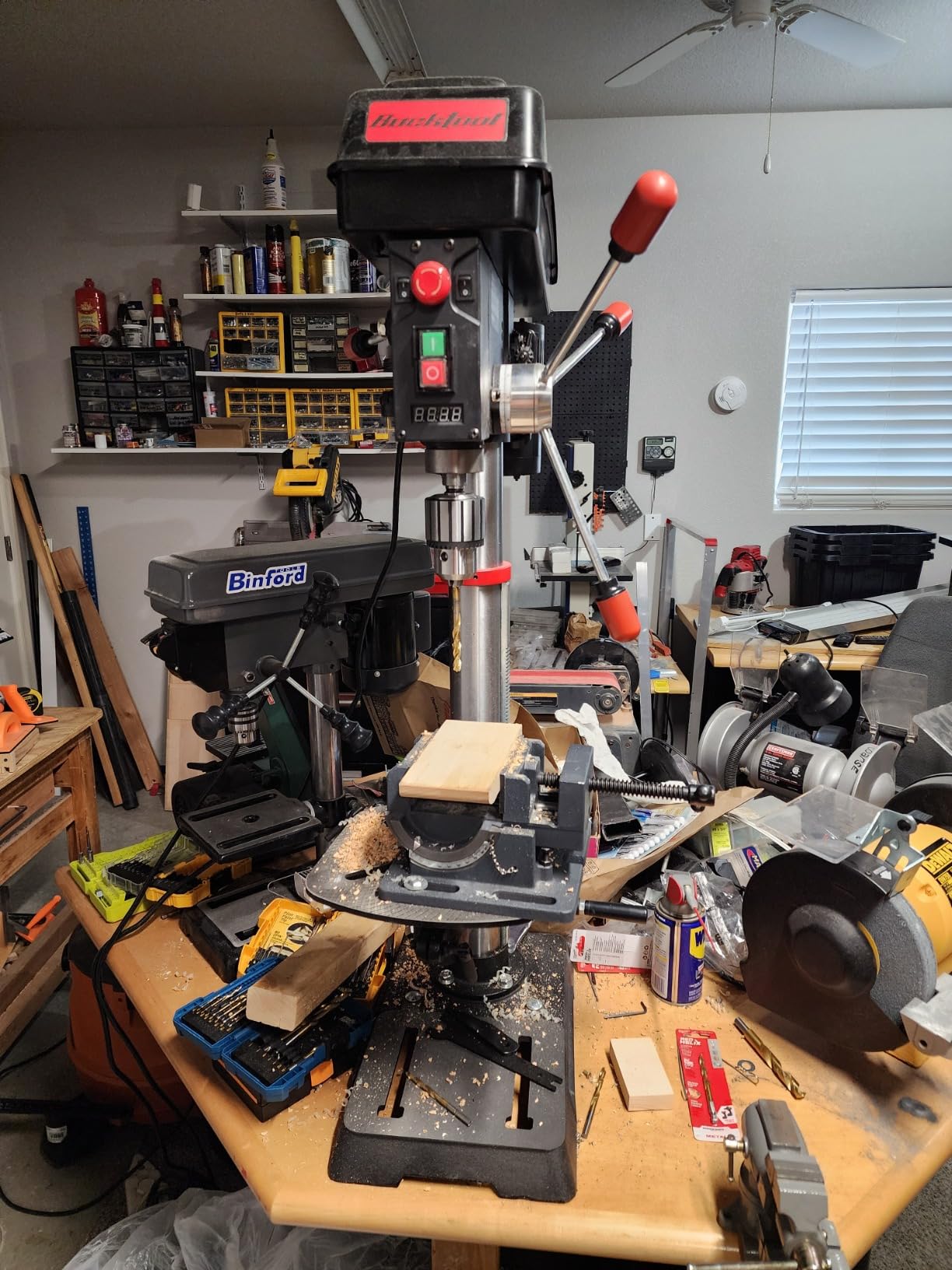
Swings come in at 12 inches and spindle travel at 2 inches, with overall height around 39 inches. The table rotates 360 degrees and bevels 45 degrees in either direction, which covers angled drilling into a workpiece without moving the part off the vise. A Class IIIA laser and a work light are both included and both positioned well.
Two safety features stand out for metal work: an emergency stop switch and a no-voltage-release switch, meaning the machine will not restart on its own after a power interruption. If you are drilling a lot of small holes and occasionally lose concentration, that matters more than it sounds.
When the BUCKTOOL DP12VL makes sense
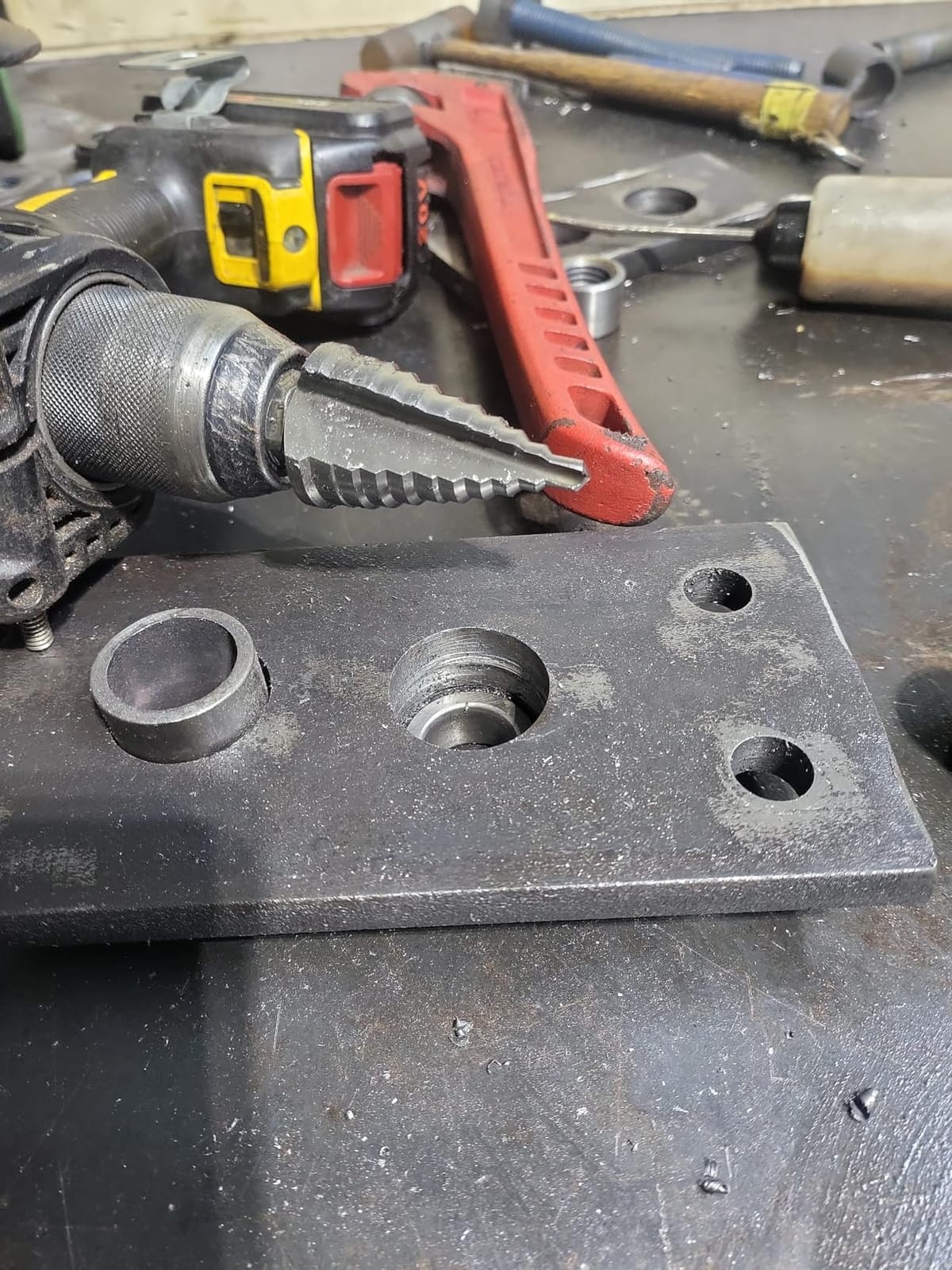
It suits anyone whose problem is hole quality rather than raw hole size. Near-zero runout means a set of holes will actually match each other and a drawing, and the clean casting finish means nothing nicks or chafes a workpiece the way rough iron does.
The 0.63 inch listed drilling capacity in steel and the 5/8 inch keyed chuck put it in the same working envelope as the WEN 12-inch, but with better reported precision. It is a good first serious press for someone moving from hand tools to machine work, and the digital readout removes the guesswork when you are learning what RPM a given bit wants.
Where it falls short
The table is small and square rather than round, which limits support for large flat workpieces. Owners who prefer clamping over a round table like the flat edge, but if your work involves wide plate, the usable surface is the constraint. At roughly 100 pounds in the box and about 40 inches tall, it needs to be bolted down, not set on a stool.
There is no manual in the box, the chuck key stores behind the spindle where it is awkward to reach, and the depth adjustment knob cannot lock the quill in the down position. Reviewers frequently upgrade the chuck anyway, noting the factory one is adequate rather than good.
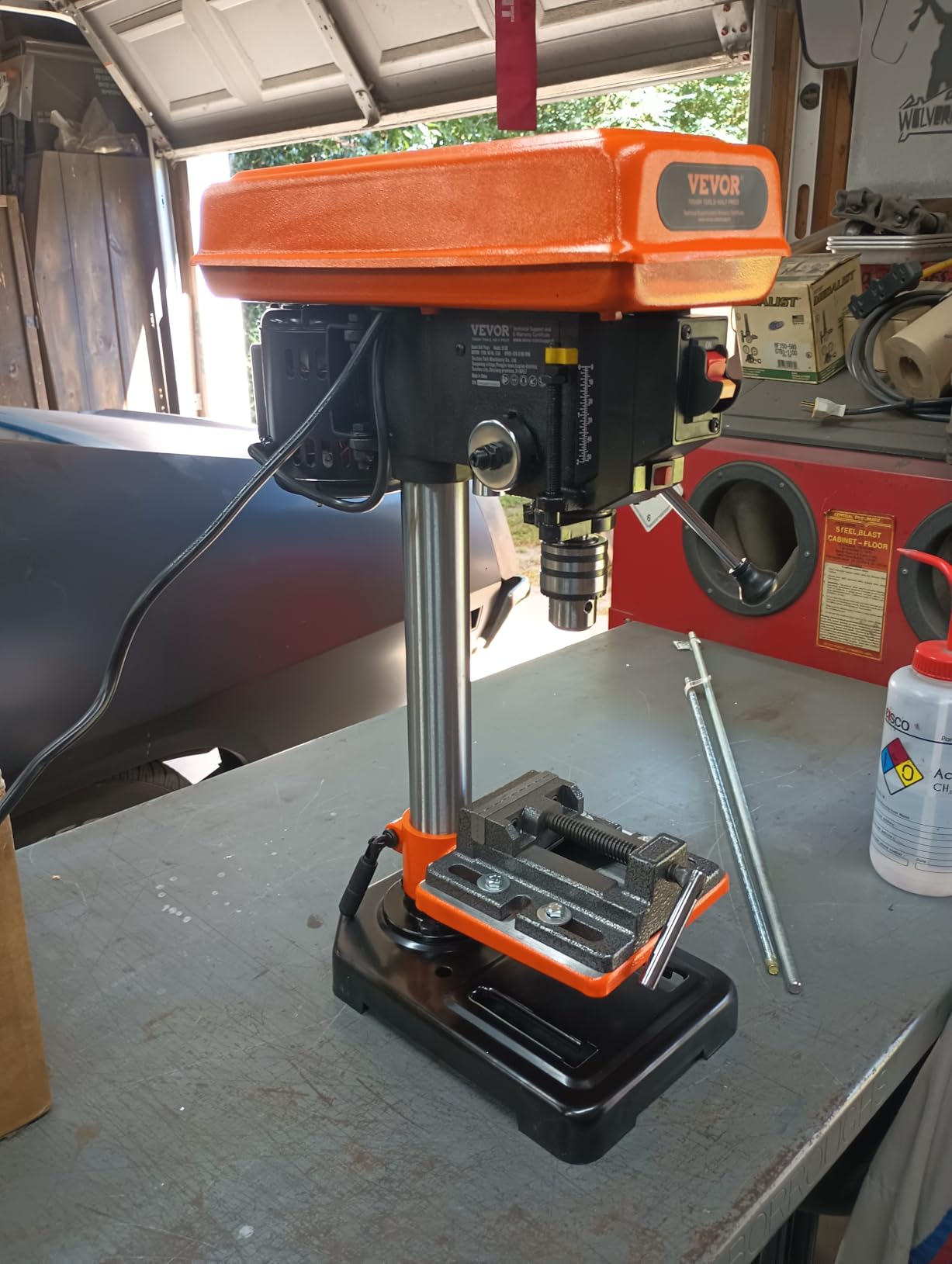
4. VEVOR 12-Inch 1 HP Bench Press – The Most Torque on a Bench
- 1 HP motor and 6.2 amp draw give more torque than most 12-inch bench presses
- Digital variable speed readout covering 530-3140 RPM
- X-laser guide and LED work light aid accurate placement
- Reinforced metal table adjusts in height and tilts 45 degrees
- High proportion of five-star reviews for the class
- Marketed primarily for light metalworking rather than heavy steel duty
- High torque use is capped by the 0.6 inch listed drilling capacity
Torque is the headline here. A 1.0 HP motor drawing 6.2 amps is more pulling power than most 12-inch bench presses offer, and that is exactly the spec that decides whether a bit keeps cutting or starts rubbing and heating up. Maximum torque is listed at 100 in-lb, which sits comfortably above the lighter machines in this list.
The 530 to 3140 RPM variable speed uses a digital readout, and the reinforced metal worktable adjusts in height and tilts 45 degrees. The X-laser positioning guide throws a cross for point location, and an LED work light covers the chuck area. A high-precision spindle is specified for stable holding.
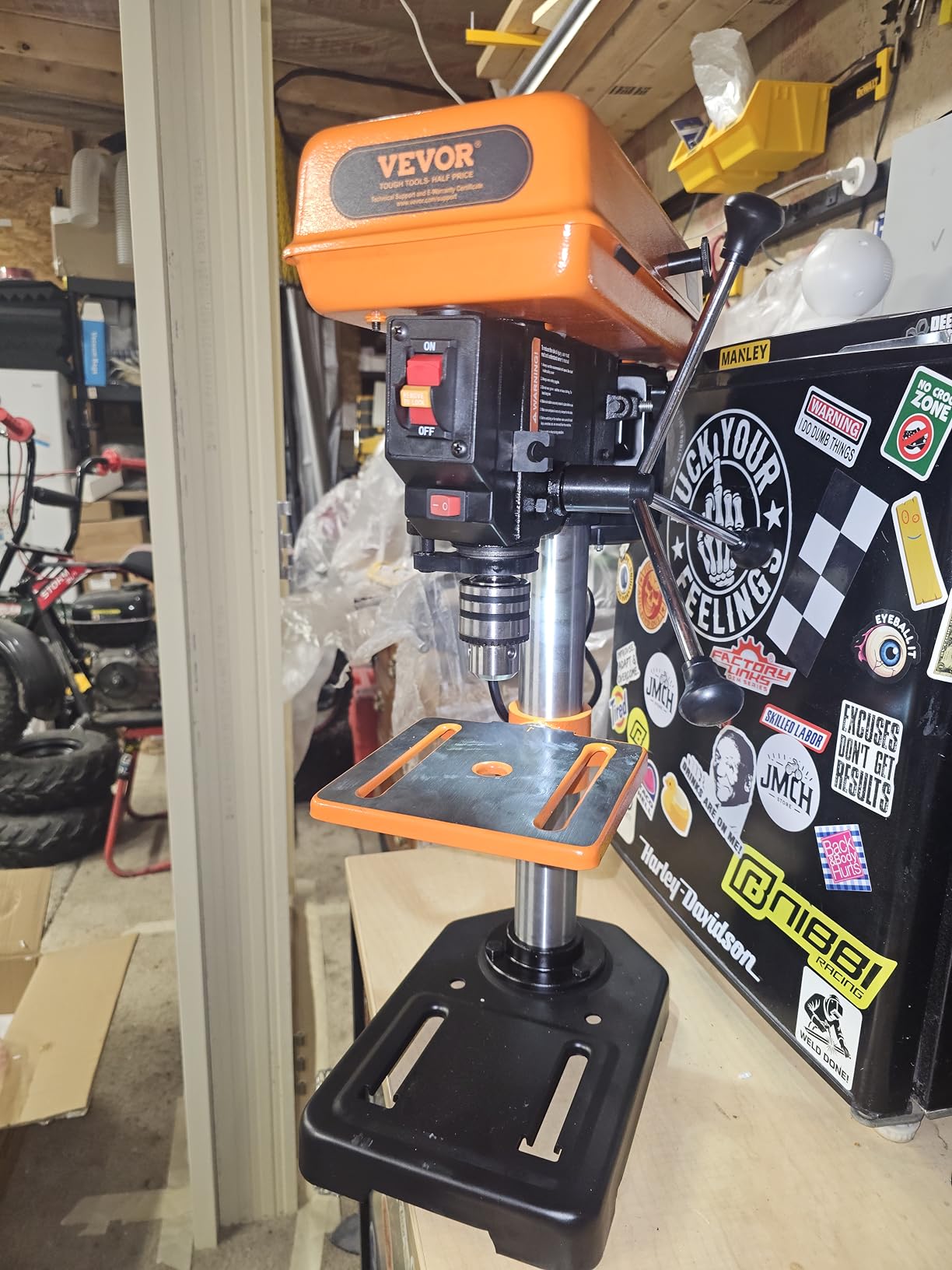
At 84.3 pounds and about 37 inches tall, it is the same physical class as the other 12-inch bench presses here, so it bolts to a bench the same way. The 12 inch swing gives you reasonable clearance for workpieces that are not enormous, and the listed drilling capacity is 0.6 inch in both steel and wood.
Worth being clear about what the 4.6 average and 79 percent five-star share represent: this is a machine doing well in the light-duty and hobby metalworking category. The reviews are consistently positive about power for the class, not about heavy industrial duty.
When the VEVOR 12-Inch makes sense
It suits someone drilling lots of small to medium holes in mild steel who keeps finding that a lighter bench press bogs down and the bit starts to discolor. That heat build-up is what burns out HSS tooling prematurely, so the extra torque pays for itself in bit life.
It also suits a maker who wants a laser and a tilting reinforced table in a 12-inch package at a price point that would have been out of reach a few years ago. The variable speed floor of 530 RPM is workable for mild steel and aluminum, though stainless at small diameters will want the very bottom of the range.
Where it falls short
The 0.6 inch listed drilling capacity is the ceiling. Even though the motor has the torque, the spindle, chuck, and quill are not built for pushing a large annular cutter or a big hole saw through plate. Owners doing repeated large-diameter work step up to a floor model instead.
Review text for this machine was thinner than for the others, so the long-term ownership picture is less clear. The specs are genuinely good for the category, but you are buying on specification rather than on a deep body of owner feedback, and the construction materials listed are Q235 and HT150, which tells you it is a light-to-medium duty casting rather than a machined iron head.
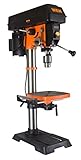
5. WEN DP1263V 12-Inch Bench Press – The Longest Spindle Travel Here
WEN 12-Inch Benchtop Drill Press, 6.2-Amp Variable Speed Motor with Cast Iron Construction, Laser and LED Work Light (DP1263V)
- Laser and LED light are built into the head rather than added on
- Bright four-digit speed display is easy to read in a lit shop
- Heavy cast iron build that bolts down with no vibration
- Smooth operation with external speed control
- Longer mast and generous travel make chuck and table swaps easy
- Metal table arrived out of level front to back by 1.5mm or more with no adjustment
- The tilt lock bolt is hard to access and 45 degree tilt is finicky to fine tune
- Table can drift sideways when raised and lowered
- Table knuckle clamps are weak for serious work
- A 5/8 inch wrench is needed for assembly but not included
The 3-1/8 inch spindle travel is the number that sets this machine apart among 12-inch bench presses. Nearly all of its competitors in this list offer 2 inches or less. For drilling deep into a workpiece, a thick section of steel, or a part where you need clearance under the bit, extra stroke is genuinely useful rather than a spec-sheet nicety.
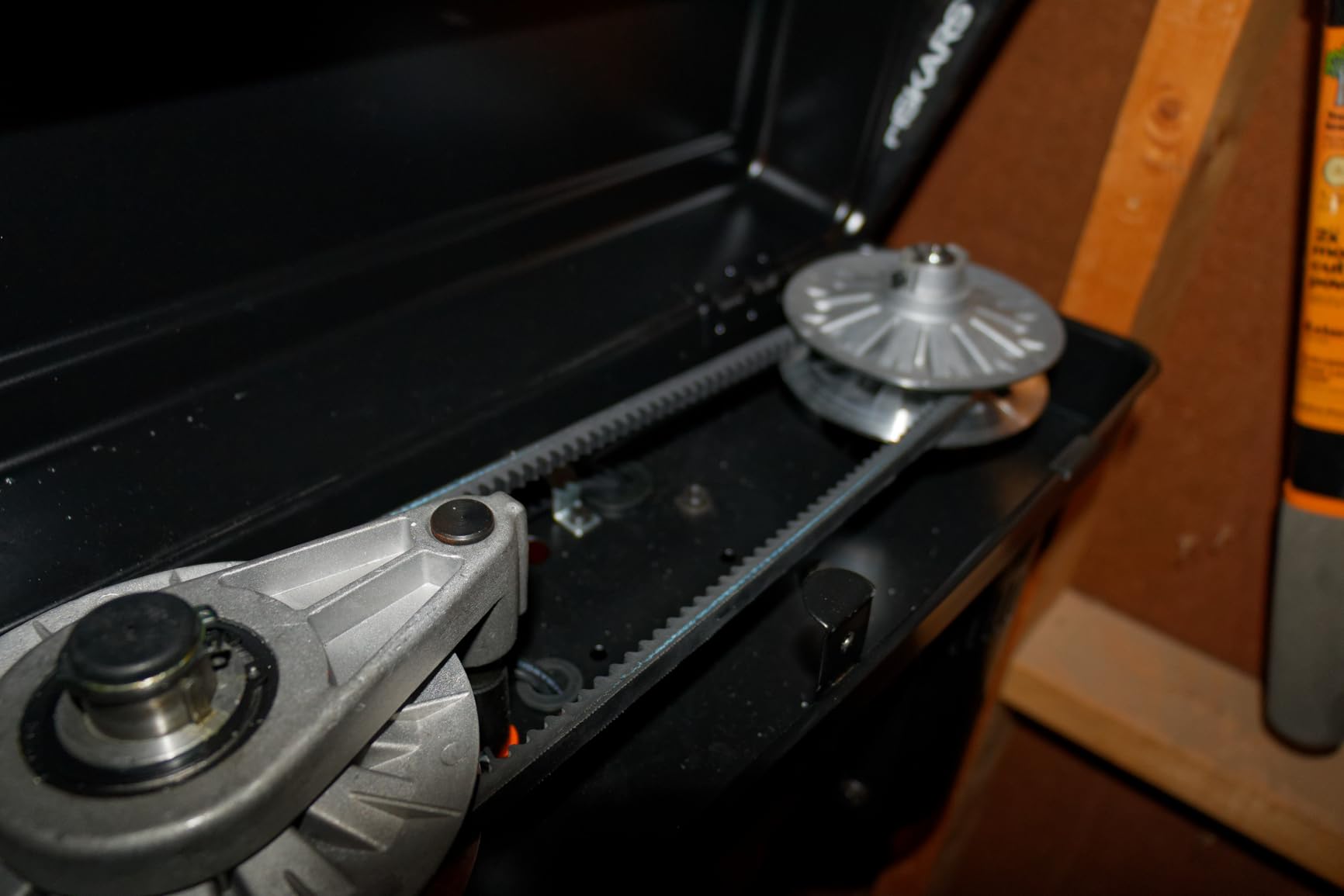
The 6.2 amp induction motor drives a mechanical variable speed from 580 to 3100 RPM with a digital readout. The speed control is external, so you change it without opening anything. At 85 pounds in cast iron, it bolts solidly to a bench and does not walk or vibrate, which reviewers single out as a difference from lighter machines.
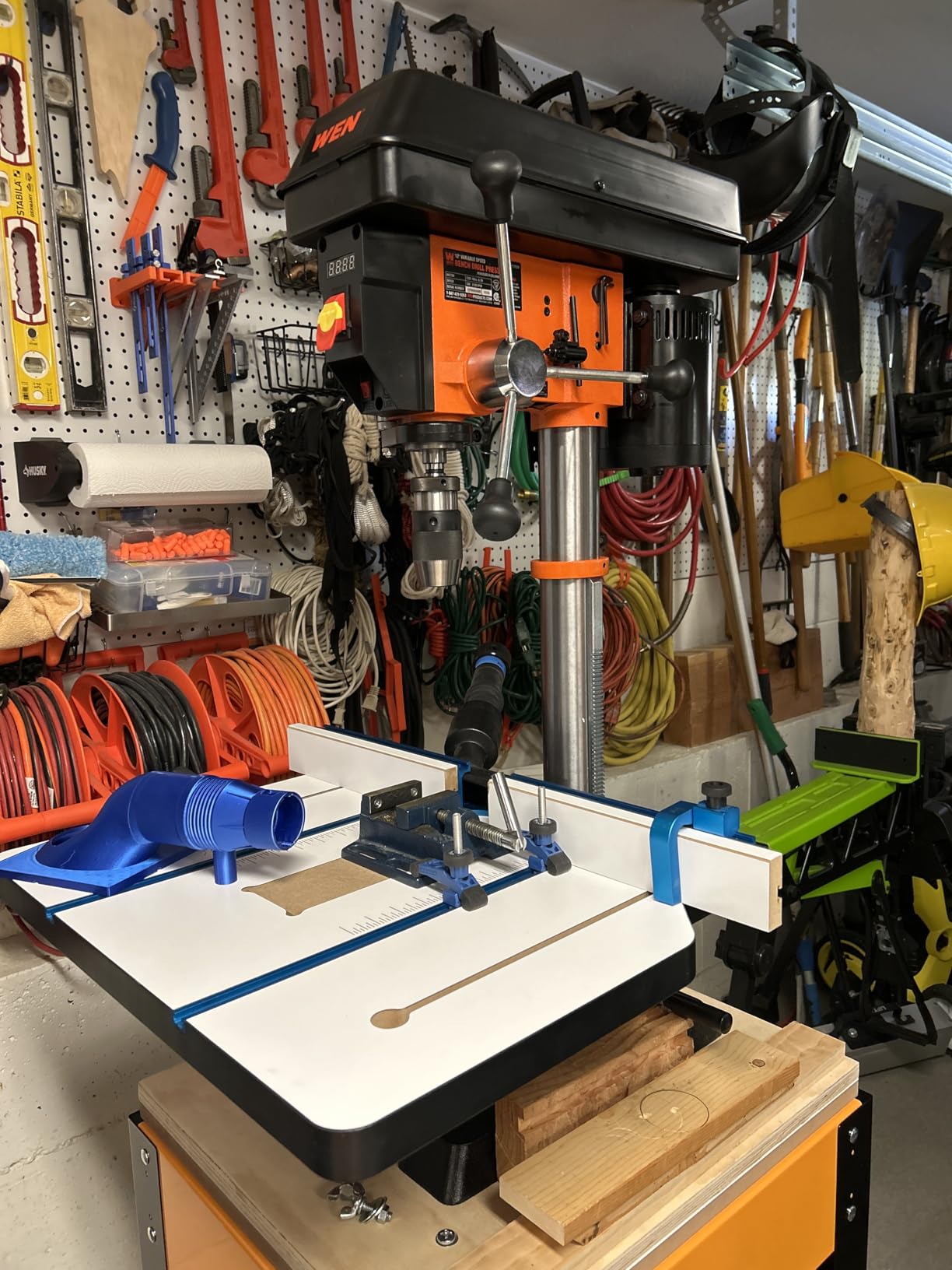
Both the laser and the overhead LED work light are integrated into the head rather than being aftermarket additions, and they run off separate protected toggle switches. The included beveling table measures 9-1/2 by 9-1/2 inches with a roller extension, and the 5/8 inch capacity keyed chuck stores its key on the machine.
Several owners compare this directly against the much more expensive JET equivalent and conclude it is a five-star value for budget and hobbyist users. The integrated lighting, the bright display, and the heavy iron construction are what they point to. A number of owners report steady service over long ownership.
When the WEN DP1263V makes sense
It suits deep-hole work in a benchtop format, particularly where you need more than 2 inches of quill travel to reach through a thick part or clear a backing block. The long mast also makes swapping chucks and adjusting the table easier than on shorter machines.
For anyone moving from pure woodworking into metal, the 580 RPM floor combined with a 6.2 amp motor is a reasonable starting envelope for mild steel and aluminum. Owners drilling 5/16 and 3/8 inch holes in steel report clean results, especially with cutting fluid.
Where it falls short
Factory table alignment is the recurring complaint. Units arrive with the metal table out of level front to back by 1.5mm or more, and there is no adjustment provided. One owner shimmed it with feeler gauges. If you buy this, check flatness on a surface plate before you drill anything that depends on squareness.
The 19mm tilt lock bolt is hard to reach and the 45 degree tilt takes work to fine-tune. The table can also drift laterally as it is raised and lowered, so you re-center it on the bit after each height change. The table knuckle clamps are reported as weak and are often replaced for serious work, and a 5/8 inch wrench is required for assembly but not supplied.
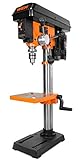
6. WEN DP1062V 10-Inch Bench Press – The Smallest Footprint That Still Cuts Steel
- 6.2 amp motor has enough power for small steel holes in a home shop
- Variable speed lever avoids belt changes
- Laser is accurate and runs on easy-to-replace batteries
- Rack and pinion table lift and head attach quickly to assemble
- Bolts down solidly with no vibration
- No onboard work light on this model
- Motor runs very hot after about half an hour of use
- Table yoke clamp needs a lot of torque to tighten and the lever is short
- Louder than expected and some base threaded holes needed cleanup
This is the smallest machine here that still has a 6.2 amp motor, and that combination is the reason to consider it. At 57 pounds it is half the weight of most 12-inch bench presses, and at 13.2 by 19.3 by 33.9 inches it fits on a bench in a garage where a bigger press simply is not going. The 10-inch swing and 2-inch spindle travel keep it in the same class of work as the SKIL.
Speeds run 530 to 3100 RPM on a mechanical variable control with a digital readout, and the lever change is the reason people like it. Reviewers report no slop in the spindle and clean holes at 90 degrees, which is a good result for this level of machine.
When the WEN DP1062V makes sense
It suits a first press in a very small shop, a mobile or shared workspace, or anyone who needs a press that two people can carry up stairs. For 3 to 10 mm holes in mild steel, which is the range people ask about most, the motor and the speed floor are genuinely adequate provided your bits are sharp.
That last point echoes what we saw repeatedly on r/Tools, where an 800W machine at 0 to 2500 RPM is considered adequate for 3 to 10 mm mild steel work as long as the bits are fresh and the machine is rigid. This press falls into that same class, with the added benefit of a much lower speed floor for larger holes.
Where it falls short
There is no onboard work light on this model, which is a real loss in metal work because a dark chuck area means you are judging chip color by feel. The motor also runs very hot after roughly half an hour of continuous use, and the table yoke clamp takes a lot of torque to tighten with a short lever, so there is a learning curve to setting table height quickly.
It is louder than expected, and a few owners had to clean up threaded holes in the base. With only 44 ratings the long-term reliability picture is still forming, so treat it as a solid starter rather than a forever machine. The 1/2 inch chuck capacity is the other ceiling to be aware of.
7. Rikon 12-Inch Variable Speed Press – Listed for 1 Inch Steel
- 3/4 HP motor paired with a 1 inch listed capacity suits heavier steel work
- Variable speed drive with a digital RPM readout
- Laser X-Y guides give a defined target point rather than a single line
- Thin-edged table is clamp friendly
- 5 year warranty and 110 pounds of cast iron
- Lowest average rating in the group at 4.2 stars with a 9 percent one-star share
- Smallest review base at 35 ratings so long-term data is thin
- Heaviest benchtop-class machine here at 110 pounds
- Two-star ratings suggest some inconsistency in fit and finish
On paper this is the most capable benchtop machine in the group. A 3/4 HP motor with a listed 1 inch drilling capacity in steel is a meaningful step up from the 0.5 to 0.63 inch limits of everything else in the benchtop group, and 1 inch holes in mild steel is real capacity rather than a headline figure.
It also has the nicest alignment feature in the group. The laser X-Y guides project a defined target point instead of a single line, which is meaningfully better when you are drilling a pattern of holes and want to mark and drill each one without re-establishing reference. There is an LED work light, an LED digital display, and a digital RPM readout. The thin-edge table is designed to be clamp friendly rather than relying on slots alone.
When the Rikon 12-Inch makes sense
It suits someone doing larger diameter steel work on a bench, where a 5/8 inch chuck ceiling would be the deciding factor. The 110 pound cast iron mass and 5 year manufacturer warranty also read as a durability signal, and that warranty length is longer than the JET floor models here.
If you are building heavier fabrications and want to keep the press on a bench rather than dedicating floor space, the specification sheet is the argument. Just recognize you are buying the least-proven machine in this group.
Where it falls short
Honesty first: this press has the lowest average rating in the group at 4.2 stars and the smallest review base at 35 ratings. That means 9 percent of ratings are one-star, and long-term durability data is thin simply because not many people own it yet. The two-star ratings point to fit and finish inconsistency rather than a design fault.
It is also the heaviest benchtop-class machine here at 110 pounds, so it needs a serious bench. And with only 35 ratings, you have very little owner feedback to guide you on chuck quality, runout, and long-term motor behavior. That is why we placed it seventh rather than higher despite the headline capacity.
8. JET JDP-20MF 20-Inch Floor Press – When Steel Work Gets Heavy
JET 20-Inch Floor Drill Press, 12 Speed, 1-1/2 HP, 115/230V 1Ph (JDP-20MF)
- 1-1/2 HP motor and 12 speeds covering 150-4200 RPM handle large steel and cast iron
- Quick-adjust motor mount makes speed changes far faster than a belt swap
- Fine ball bearing spindle support reduces friction under heavy load
- External positive depth stop gives repeatable depths
- Crank-operated tilting table has real mechanical advantage under load
- 282 pounds and 66 inches tall need a dedicated floor position and a multi-person lift
- Belt and pulley speed changes are slower than a true variable speed drive
- Work lamp bulb is sold separately
- 2 year warranty is shorter than the 5 year coverage on the Rikon and Powermatic
This is the machine you buy when drilling has stopped being occasional. A 1-1/2 HP motor drawing 18 amps across 12 speeds from 150 to 4200 RPM gives you a 150 RPM floor, which is genuinely slow. That is the speed range where a 5/8 inch or three-quarter inch bit can be fed into mild steel with cutting fluid without cooking itself.
The quick-adjustment motor mount is the feature owners praise most. Changing speeds on a 12-speed pulley head normally means a full belt shuffle, but the hinged belt and pulley cover with a sliding motor mount turns it into a short adjustment. Reviewers call it the difference between using the machine and avoiding it.
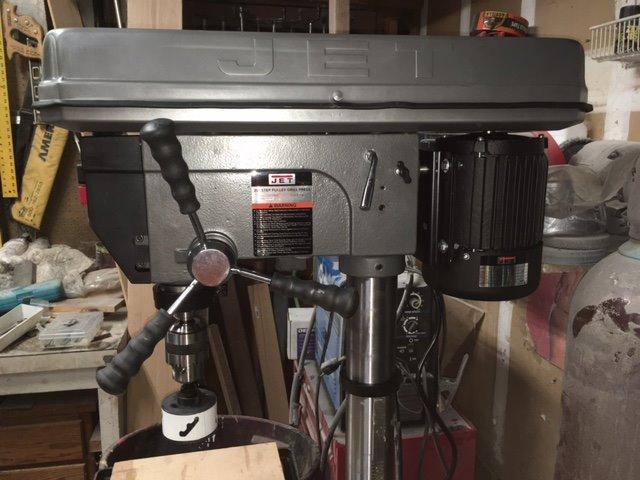
The spindle is supported by fine ball bearings to reduce friction and increase load support, and there is a half-inch diameter external positive depth stop with a three-nut lock. That depth stop matters more in production than people expect, because it lets you set a depth once and repeat it across a batch without measuring every hole.
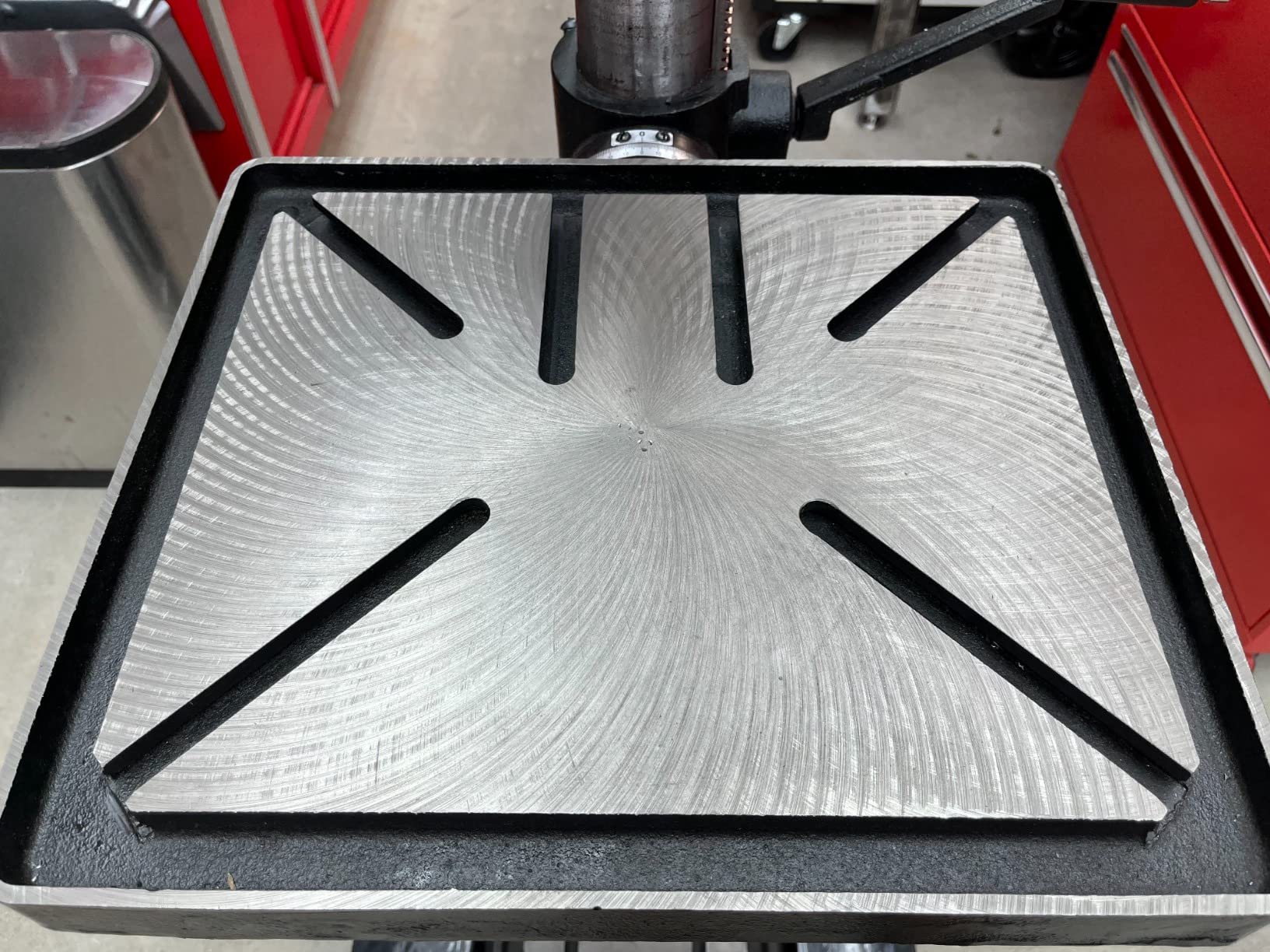
The crank-operated worktable rotates and tilts 45 degrees with a quick-release clamp, and the crank gives you real leverage to raise the table when a heavy part is clamped on. At 282 pounds and 66 inches tall, this is a floor machine and a two-person job to move.
When the JET JDP-20MF makes sense
It suits a shop where steel is the primary material, where you drill cast iron, or where you are doing large-diameter work that a bench press physically cannot reach. The 150 RPM floor is the strongest argument, because low speed in steel is what makes the difference between a clean hole and a ruined bit.
The quick-release tilting table and the external depth stop also suit production-adjacent work, where you make the same part repeatedly. If your shop floor is the constraint, note the 115/230V single phase capability, which means you can run it on a 20 amp circuit.
Where it falls short
The physical reality is the main drawback. At 282 pounds and 66 inches tall, it needs a dedicated floor position and a multi-person lift, and assembly realistically takes more than one person. Anyone in a small garage should measure twice before committing.
Speed changes are still a belt and pulley operation, so they are slower than a true variable speed drive, even with the quick mount. The work lamp bulb is sold separately, which is an odd omission on a machine at this level, and the 2 year warranty is shorter than the 5 year coverage on the Rikon and the Powermatic in this list.
9. Powermatic PM2800B 18-Inch Floor Press – True Variable Speed at Floor Model Size
Powermatic 18-Inch Floor Drill Press, Variable Speed, 1 HP, 115/230V 1Ph (Model PM2800B)
- Infinitely variable 250-3000 RPM drive with no belt changes
- Two independently adjustable LED lights eliminate shadows on the work
- Adjustable fence on machined table tracks keeps a true 90 degree relationship
- Cast iron table tilts to 90 degrees for angled work
- Owners report six-plus years of service with no issues
- Laser guide on this design is fragile and drifts out of alignment when tapped
- Keyless chuck can swing small drill bits off-axis when inserting
- Table lacks an X pattern for extra hold-downs
- 246 pounds and 71 inches tall needs at least two strong people
- Variable speed belt tensioner reported to fail on some units
The infinitely variable 250 to 3000 RPM drive with no belt changes is the best speed control in this entire group, and in steel work speed control is the whole game. You can bring the spindle down to 250 RPM in the middle of a hole rather than planning around discrete steps, which is what lets you work slowly in hard material without stopping the job.
The lighting is unusually thoughtful for a shop machine. Two independently adjustable LED work lights mean you can aim light from two directions and remove the shadow that a single head-mounted lamp always leaves. Owners cite hole quality and bit life improving once they could change speeds freely, and one reviewer reports the machine still going strong after six years.
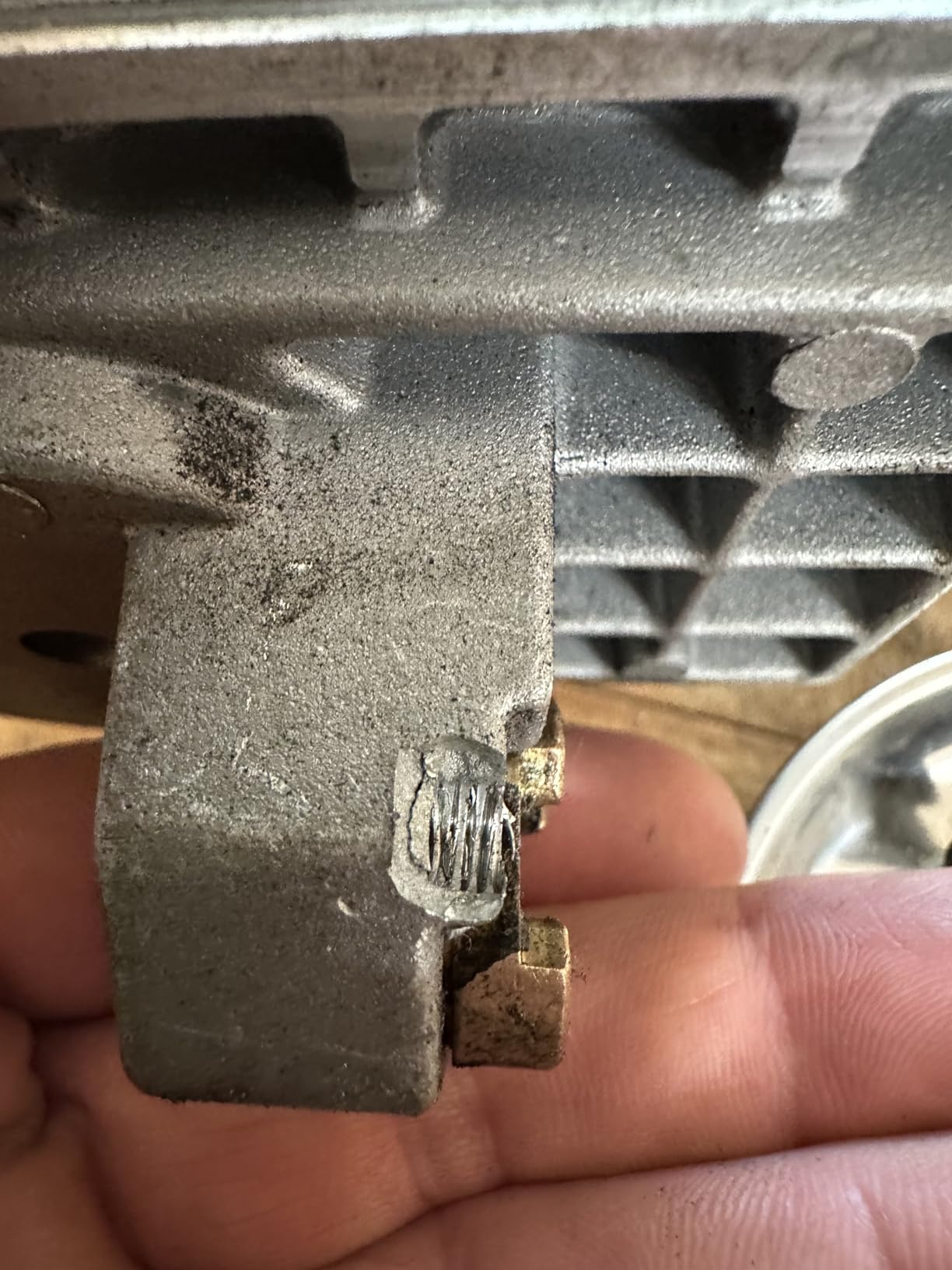
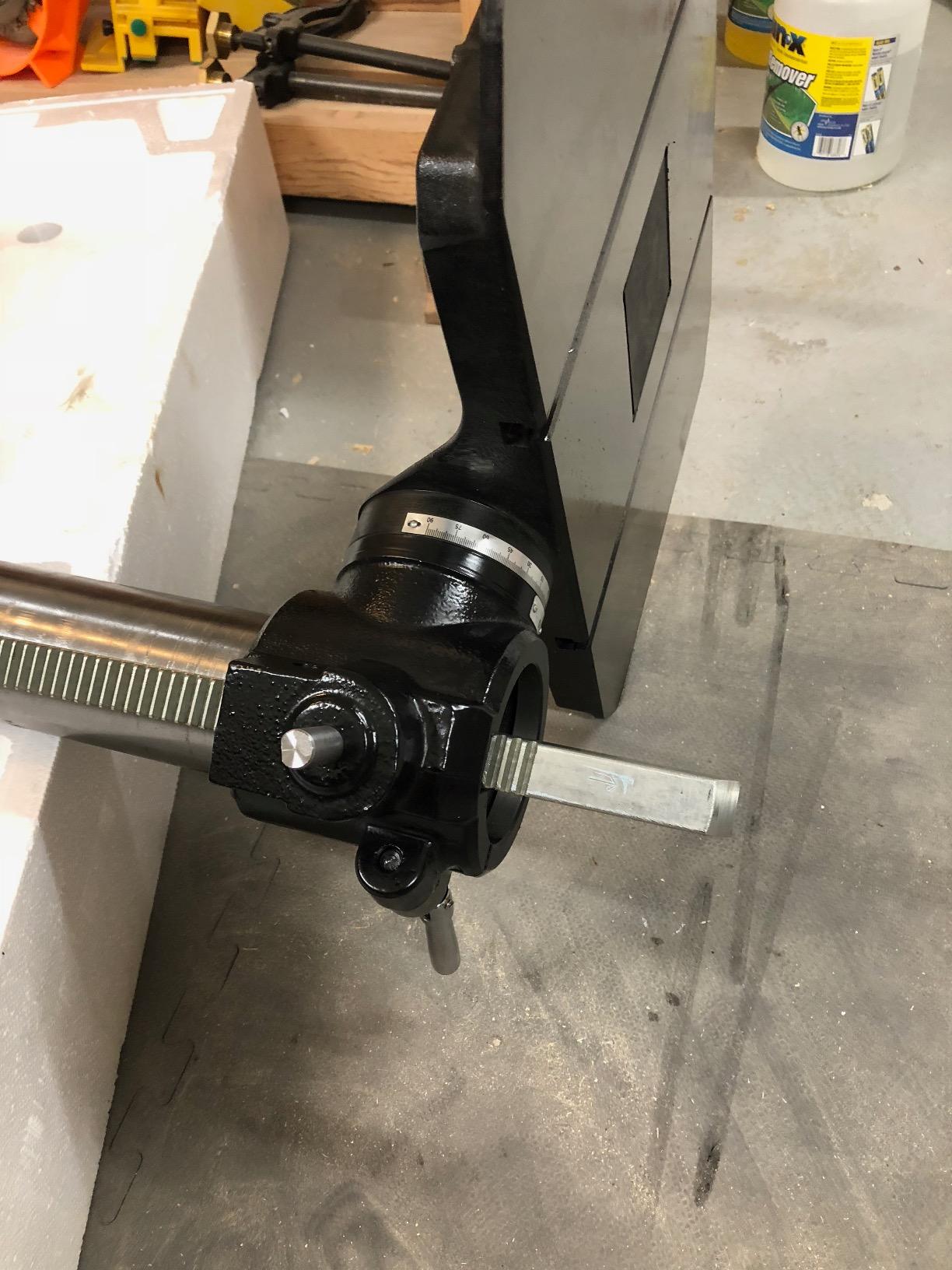
The cast iron table tilts to 90 degrees, which no bench press here can do, and the adjustable fence system on machined table tracks holds a true 90 degree relationship to the table. Reversible handles can be mounted on either side of the machine, so you can stand where you actually work rather than where the factory put the handles. The oversized cast iron base handles the 246 pound machine’s own mass well.
The 1 HP motor draws 20 amps and runs 115/230V single phase, with a maximum torque listed at 360.5 in-lb. Capacity is 0.63 inch, which is lower than the JDP-20MF despite the heavier frame, so this is a speed and precision machine more than a large-hole machine.
When the Powermatic PM2800B makes sense
It suits a shop where you drill many different diameters and materials and the belt juggling on a stepped head has become the part of the job you dread. Infinite adjustment is genuinely useful when you are switching between aluminum at high speed and stainless at low speed several times an hour.
The 90 degree tilting table and the fence system suit angled and repeated work where squareness matters. A 5 year warranty is the longest in this group, and the reported six-plus year ownership track record is the strongest long-term evidence here.
Where it falls short
The laser guide is the most-cited complaint. On this design it shifts several tenths of an inch when the head cover is tapped, which means it drifts out of alignment through ordinary use. Plan on re-zeroing it, or use the fence and a marked reference instead.
The keyless chuck can swing small drill bits off-axis when you insert them, which is exactly the failure that leads metalworkers to buy a keyed Jacobs-style chuck and move to taper-shank bits. The table also lacks an X pattern for extra hold-downs, and the variable speed belt tensioner has been reported to fail on some units. At 246 pounds and 71 inches tall, assembly needs at least two strong people.
10. JET J-2500 15-Inch Floor Press – Deep Stroke in a Smaller Footprint
JET 15-Inch Floor Drill Press, 16 Speed, 3/4 HP, 115/230V 1Ph (Model J-2500)
- 16 speed selections and a 3-1/8 inch quill stroke handle deep hole work in steel
- Four permanently-lubricated ball bearings in the enclosed spindle give accurate rotation
- Large ground steel column resists flexing under load
- Telescoping safety spindle guard is a real shop safety feature
- Owners drilling 5/8 inch holes in 3/8 inch plate report clean results with cutting oil
- Some units arrive with rough machining on the table surface
- Transmission design transmits noticeable vibration
- Belt-driven 16 speed changes take longer than a variable speed drive
- JET customer support reported as unhelpful for a machine this size to return
- Two people are needed to lift the head onto the column
The J-2500 is the compact choice among floor models. At 167 pounds and 54 inches long, it takes up meaningfully less floor space than a 20-inch machine, and it still delivers a 3-1/8 inch quill stroke. That combination of depth and footprint is why it lands at the end of our list but earns a place on it.
The column is a large ground steel column, which is the rigidity argument in hardware form. On The Hobby-Machinist, people comparing presses talk specifically about column thickness, noting roughly 5/32 inch on a classic Delta against about 1/16 inch on an entry-level Harbor Freight 20-inch press, and reporting that the difference is felt on every large steel hole. A ground steel column of this size sits well above that tier.
When the JET J-2500 makes sense
It suits a home shop that wants a floor press but not a shop-sized machine, and it suits deep hole work where 3-1/8 inches of stroke is the deciding requirement. Owners drilling 5/8 inch holes in 3/8 inch plate report clean results when they use cutting oil, which is the honest test of any metal drill press.
The enclosed spindle runs on four permanently-lubricated ball bearings, which supports both accuracy and low friction over years without service, and the telescoping safety spindle guard is a genuine shop-safety feature that most machines in this price range skip entirely.
Where it falls short
It is a 16-speed belt-driven head, and reviewers note that changing speeds takes noticeably longer than a variable speed drive, and the transmission transmits some vibration. Some units also arrive with rough machining on the table surface, which needs a skim or a flatten before you chase accuracy.
The bigger risk is service. One detailed account describes a motor that tripped the breaker on second use due to a casting nub on the rotor, alongside rough table machining and weak support, which flags JET quality control and returns handling as the main risks on a machine this size. Two people are needed to lift the head onto the column during assembly, and the warranty is 2 years.
What to Look for When Buying a Drill Press for Steel
Eight things decide whether a drill press is good for metal. Price correlates with them loosely, but not perfectly, and two machines at very different prices can be wrong in the same way.
1. Motor torque, not just horsepower. The 6.2 amp motors on the 12-inch bench presses here are 744 watts, and the VEVOR gets 1 HP in the same package. Torque is what keeps a bit cutting rather than rubbing, and rubbing is what kills HSS tooling. If steel is regular work, prioritize the motor over cosmetic features.
2. The slowest speed the machine can reach. This is the spec people miss and the one metalworkers argue about most. A 9/16 inch clearance hole in mild steel wants speeds in the low 200s RPM, which is below what a stock 5-speed bench press offers. A press with a 530 RPM floor will get you there with HSS; a stepped head with a 610 RPM lowest speed will make you burn a bit or force an aggressive feed.
3. Column diameter and rigidity. The column is what resists the side force of the cut. On The Hobby-Machinist, one owner restoring a geared-head press specifically contrasts a half-inch stiffened column with a cheaper press whose column flexed visibly on large steel holes. A heavier column is a real, feelable difference, and it is not something a spec sheet headline will tell you.
4. Quill stroke. Two inches covers most bench work. Three inches or more covers deep holes, thick plate, and tapping. The WEN 12-inch and both JET floor models here reach 3-1/8 inches, which is the practical threshold for serious metal work.
5. Spindle taper and chuck type. MT3 is the common bench standard, MT4 shows up on larger floor machines, and R8 collets are a machinist preference. A keyed Jacobs-style chuck holds taper-shank bits properly. A keyless chuck is convenient and, as owners of the Powermatic report, will swing small bits off-axis as you insert them.
6. Step pulley versus true variable speed. Step pulleys are cheaper to build and easy to maintain. Variable speed gives you the ability to change speed mid-job, which matters when you alternate materials or when a bit starts to bind. The Powermatic and JET JWDP-12 have it; the JDP-20MF offers 12 discrete steps with a quick-adjust mount instead.
7. Table tilt and hold-downs. A tilting table gets you angled work without repositioning the part. Hold-down slots, and ideally an X pattern, keep a workpiece from shifting under load. The Powermatic is the only machine here that tilts to a full 90 degrees.
8. Circuit and duty cycle. Most of the bench presses here run 115V on a normal household circuit. The floor models run 115/230V single phase at 18 to 20 amps, which means a 20 amp circuit and a real plan for where the machine lives.
RPM Math and Speeds for Mild Steel, Stainless and Aluminum
Speed is not guesswork. Surface speed is the number that matters, and for mild steel with an HSS drill you want to stay under roughly 100 feet per minute at the cutting edge. Convert that to spindle speed by dividing by the circumference of your bit, and you get the RPM you actually need.
Worked example for a 3/8 inch bit, which is 0.375 inches. Circumference is 3.14 multiplied by 0.375, or about 1.18 inches of travel per revolution. At 100 feet per minute, that is 1200 inches per minute, so 1200 divided by 1.18 gives roughly 1,020 RPM. So a 3/8 inch HSS drill in mild steel wants somewhere near 1,000 RPM, and faster only if the bit is cobalt and the feed is light.
Stainless steel runs the same math with a much lower ceiling, typically under 50 to 60 feet per minute, because stainless work-hardens and generates heat fast. That 3/8 inch bit in stainless lands near 500 to 600 RPM, which sits right at the bottom of the variable speed range on the JET JWDP-12, the BUCKTOOL, the VEVOR, and the WEN machines in this list. That is precisely why the variable speed drives matter for stainless work.
Aluminum is the opposite case. You can run aluminum at 200 to 300 feet per minute with HSS, which puts a 3/8 inch bit somewhere north of 2,000 RPM. The top of every speed range in this list handles it comfortably. The only real risk in aluminum is grabbing and pulling the bit off center, so use a positive feed and a sharp bit rather than lowering the speed.
Practical rules of thumb: if the chips come out blue or black, you are too fast. If the bit is rubbing and squealing instead of cutting, you are too slow. Cutting fluid for steel is not optional, and a periodic chip-clearing pause on deep holes prevents the flutes from loading and binding.
Chuck, Spindle Taper and the Upgrade Every Press Needs
Almost every machine in this list ships with a chuck that reviewers replace. That is not a knock on the machines, it is a fact about the category. The consensus across the metalworking forums is consistent: budget for a proper Shars or Albrecht keyed chuck, and keep hex shank bits in a separate holder for general work.
Why it matters for steel specifically. Taper-shank bits have no flats, so a chuck grips the full taper and the bit cannot slip. Straight-shank bits in a Jacobs-style chuck sit on the taper and rely on a flat or friction, which is why the recurring forum complaint is straight-shank bits twisting off in a drill. If you drill steel regularly, a keyed chuck plus a set of MT3 taper-shank HSS and cobalt bits is the practical combination.
On spindle taper: MT2 appears on small light-duty bench presses, MT3 is the standard for 12-inch bench presses and is what most metalworking taper-shank bit sets are sold in, MT4 shows up on larger floor machines, and R8 collet chucks are a machinist preference that allows holding small drills without a separate tailstock adapter. Match the taper before you buy bits, not after.
Runout is the other half of chuck quality. Reviewers who checked with a dial indicator report near-zero on the BUCKTOOL, low on the JET JWDP-12, and about 1/16 inch at full quill extension on the SKIL. That is the difference between a hole that lands where you marked it and one that drifts as the quill extends, and it is worth a dial indicator if you care.
When a Drill Press Is the Wrong Tool for Your Metal Job
A drill press is a convenience machine, and saying so is more useful than another recommendation. On The Hobby-Machinist, the framing we found most persuasive was that a drill press handles clearance holes and tapped holes for bolts up to about half an inch, and that anything past that needs a different tool.
Precision hole location. No drill press can repeat a hole position to better than roughly 0.005 inch, because the quill is a manually fed sliding shaft. If your design needs holes located to a tenth of a thousandth, you want a mill with a cross-slide or an X-Y vise, not a better press. This is the single most common overspend in this category.
Holes under 1/8 inch in diameter. Small-hole drilling in steel requires a sensitive drill press with a proper high-speed spindle, a good chuck, and often a lubricant drip. A standard geared press at the right speed will still wander and snap bits. If small holes in metal are your primary work, buy a sensitive press, not a heavier one.
Large holes in structural steel. A magnetic drill with annular cutters is the right answer for field work, plate steel, and anything where you cannot set up a press. Annular cutters cut a ring of material and remove the slug, they run cool, and they work on a vertical surface with a magnetic base. Many metalworkers keep a mag drill alongside a press for exactly this reason, and one forum owner notes a mag drill with annular cutters can cover cases that would otherwise push someone toward a more expensive press.
Anything needing a flat, square, or finished surface. A drill press makes holes. It does not face, mill, or turn. If the project needs those operations, a mill drill or a proper mill is the machine, and as one Sawmill Creek poster put it plainly, the argument for a mill drill is that it serves more needs than a drill press ever will.
Our own view, after weighing all of this: for a home shop doing brackets and frames in mild steel and aluminum, a 12-inch variable speed bench press is the correct 95 percent purchase. Add a mill drill or a sensitive drill later if a specific project calls for it, rather than buying the expensive machine up front for a problem you may not have.
Frequently Asked Questions
What is the best drill press for metal work?
For most home shops, the SKIL DP9505-00 10-inch bench press is the best drill press for metalwork because its 6.2 amp motor drills steel at the 610 RPM slow speed and it fits a small garage. If you want true on-demand variable speed, choose the JET JWDP-12. For heavy steel work, the JET JDP-20MF floor press has a 1-1/2 HP motor and speeds down to 150 RPM.
Can a drill press be used for metal?
Yes, and it is actually the right tool for steel compared with a hand drill. Metalwork needs slow, heavy, high-torque operation, which is the opposite of the light, fast use case most press listings are written for. Use cast iron construction, a keyed chuck, a speed floor low enough for the material, and cutting fluid. A press cannot locate a hole to better than about 0.005 inch.
Is there a difference between a wood drill press and a metal drill press?
Yes, in four ways. A metal press needs a lower RPM floor, more motor torque, a thicker and more rigid column, and a keyed chuck that holds taper-shank bits. A wood press runs fast, is light and flexible, and usually has a small keyless chuck. A metal press is cast iron, heavier, and built to push a bit slowly and hard into steel rather than spin it quickly.
What to look for when buying a drill press?
Check eight things: motor torque, the slowest speed it can reach, column diameter and rigidity, quill stroke, spindle taper and chuck type, step pulley versus true variable speed, table tilt and hold-down slots, and whether your circuit can carry it. For steel, the RPM floor and column rigidity matter more than brand name, and budget for a chuck upgrade because factory chucks are rarely kept.
What is the best drill for drilling through metal?
The machine is the drill press, and the bit is an HSS or cobalt twist drill. For steel, keep surface speed under roughly 100 feet per minute, which means a 3/8 inch HSS bit in mild steel wants about 1,000 RPM and the same bit in stainless wants 500 to 600 RPM. Use cutting fluid, clear chips on deep holes, and a keyed chuck with taper-shank bits so straight-shank bits do not twist off.
The Best Drill Presses for Metalwork in 2026: Final Verdict
The SKIL DP9505-00 is our pick for the best drill presses for metalwork in 2026 because it has the largest owner base in the group, a 6.2 amp motor that works steel at 610 RPM, and a footprint that fits a normal garage. Its weaknesses, a mediocre factory chuck and a wandering table, are both things you can fix in an afternoon.
Move up to the JET JWDP-12 if changing speed without a belt matters to you, to the BUCKTOOL DP12VL if runout is what is ruining your parts, and to the JET JDP-20MF or Powermatic PM2800B when steel is the main event and you have floor space. Whatever you pick, budget for a proper keyed chuck and a set of MT3 taper-shank bits, keep cutting fluid on the job, and check the table for flatness on day one.