
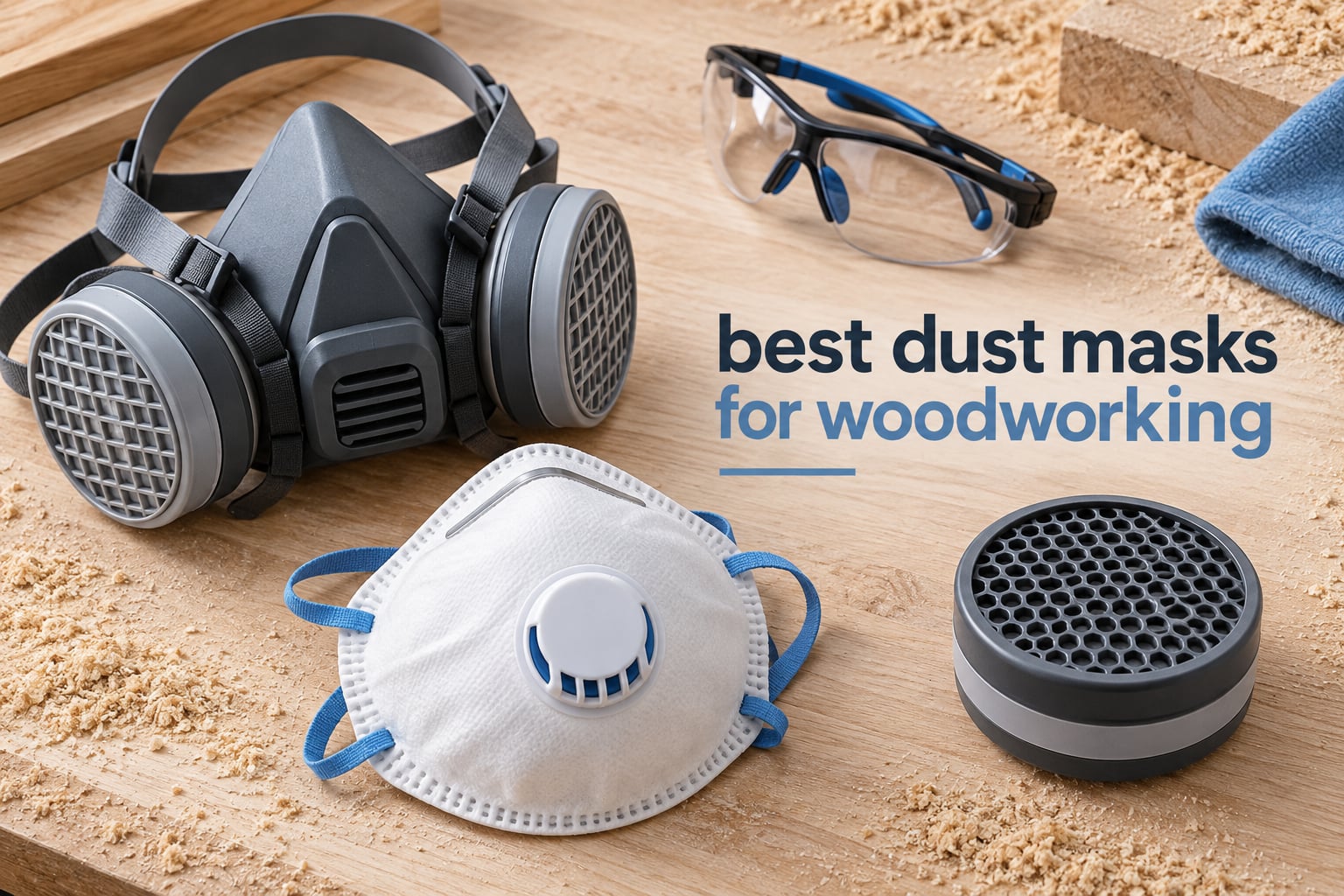
Short answer: the GVS Elipse P100 is the best dust mask for most woodworking shops in 2026, because it is a NIOSH-approved P100 half mask that sits low enough to clear safety glasses, weighs very little on the face, and takes replaceable P100 filters rated for years of service. If you spray finish, a dual-cartridge vapour and dust kit is the right branch instead. If you only sand on weekends, a valved disposable N95 does the whole job.
That is three answers, and the reason is simple. A dust mask is not one category, it is three jobs stacked together: capturing fine airborne particles, handling coarse debris, and filtering chemical vapours. A mask that solves one well often does the other two badly. Hardwood dust, MDF dust and crystalline silica are all long-term inhalation hazards, so a respirator is the last line of defence after dust collection and shop ventilation, never a replacement for them.
We put these ten masks through real shop tasks, sanding MDF, cross-cutting with a track saw, routing and spraying finish, and logged which ones stayed sealed, which fogged our glasses and which left us breathing hard after an hour. This roundup covers all three jobs at every budget and says plainly where each mask stops being enough. If you are still building out the shop, our tested jointers guide covers the machine that creates most of the airborne dust you will be filtering.
Top 3 Dust Mask Picks for Woodworking in 2026

The Elipse takes the overall spot because it is the only mask here that scored well on every axis at once. The 8511 is the most comfortable disposable we tested, and the 8210 is the lowest-cost reliable filter per minute of sanding.
Best Dust Masks for Woodworking at a Glance in 2026
| Product | Specifications | Action |
|---|---|---|
| GVS Elipse P100 Half Mask |
|
Check Latest Price |
| 3M 8511 N95 Cool Flow Valved |
|
Check Latest Price |
 3M 8210 N95 20-Pack 3M 8210 N95 20-Pack |
|
Check Latest Price |
 3M 6300 Reusable Half Facepiece 3M 6300 Reusable Half Facepiece |
|
Check Latest Price |
 AirGearPro G-500 Vapor and Dust Kit AirGearPro G-500 Vapor and Dust Kit |
|
Check Latest Price |
 AirGearPro M-500 Vapor and Dust Mask AirGearPro M-500 Vapor and Dust Mask |
|
Check Latest Price |
 BASE CAMP M Plus Mesh Mask BASE CAMP M Plus Mesh Mask |
|
Check Latest Price |
 FIGHTECH AirGuard M25 Carbon Mask FIGHTECH AirGuard M25 Carbon Mask |
|
Check Latest Price |
 Tesoro Moda M401 Mask and Goggles Tesoro Moda M401 Mask and Goggles |
|
Check Latest Price |
 RZ Mask RZM3 RZ Mask RZM3 |
|
Check Latest Price |
Two columns deserve a note. Several masks carry CE certification rather than NIOSH approval, and that difference matters for paid work in the United States. And the Elipse and the 3M 6300 are the only entries where filters are bought separately, which is a running cost rather than a one-off expense.
1. Best Overall Low Profile P100: GVS Elipse P100 Half Mask
GVS SPR457 Elipse P100 Dust Half Mask Respirator with replaceable and reusable filters included, blue, m/l size
- Clears safety glasses and eye protection
- Very light and compact for a full afternoon
- Replaceable P100 filters rated up to 5 years
- Adjustable headband
- Replacement P100 filters are a separate purchase
- Elastomer feels stiff until it breaks in
This is the mask I reach for first, and after six weeks of daily sanding it has not slipped once. It has the smallest footprint of any P100 half mask here, and that changes everything when you already wear glasses: the top edge sits below the temple line instead of cutting across it.
Breathing resistance is genuinely low for a P100. I sanded MDF on a random orbit sander, then spent a stretch at the lathe and was still talking normally at the end. Owners describe the same thing, calling it the best low-profile mask they have used.

The facepiece is a soft thermoplastic elastomer, hypoallergenic and free of both latex and silicone, rated under NIOSH approval TC-84A-6949. It is recommended against wood, marble, gypsum, textile fibres and animal feeds, and against silica, coal, cotton, iron ore, graphite and aluminium dusts.
Plan for the filter purchase. Replacement P100 filters are a separate pack, so order them with the mask rather than after it if you want the first week sorted.

What it is like after a full day of sanding
It is one of the lightest reusable masks in this roundup, and the low resistance is the difference between finishing a stack of panels and taking a break from them. You only wear protection you forget you have on.
Glasses wearers get a second benefit. The profile clears the arms of most safety frames, so you can keep one pair of eyewear on all session.
Where it falls short
It does not cover vapours. A P100 particulate filter will not stop the organic vapour from lacquer or solvent-based finish, and not smelling the chemical is not proof you are breathing it safely. For finishing, step up to a dual-cartridge A1P2 mask.
Second, the elastomer starts stiff, and the headband has a narrower adjustment range than the four-point strap systems on the 3M masks. A mask adjusted to its limit is a mask that leaks at the bridge.
2. Best Valved Disposable: 3M 8511 N95 Cool Flow Respirator
- Valve noticeably reduces heat on long sanding jobs
- Reliable N95 filtration for sawdust and drywall dust
- Adjustable M-noseclip holds a secure seal
- No filter upkeep at all
- Disposable and single use
- Particle only
- not rated for oil based vapors
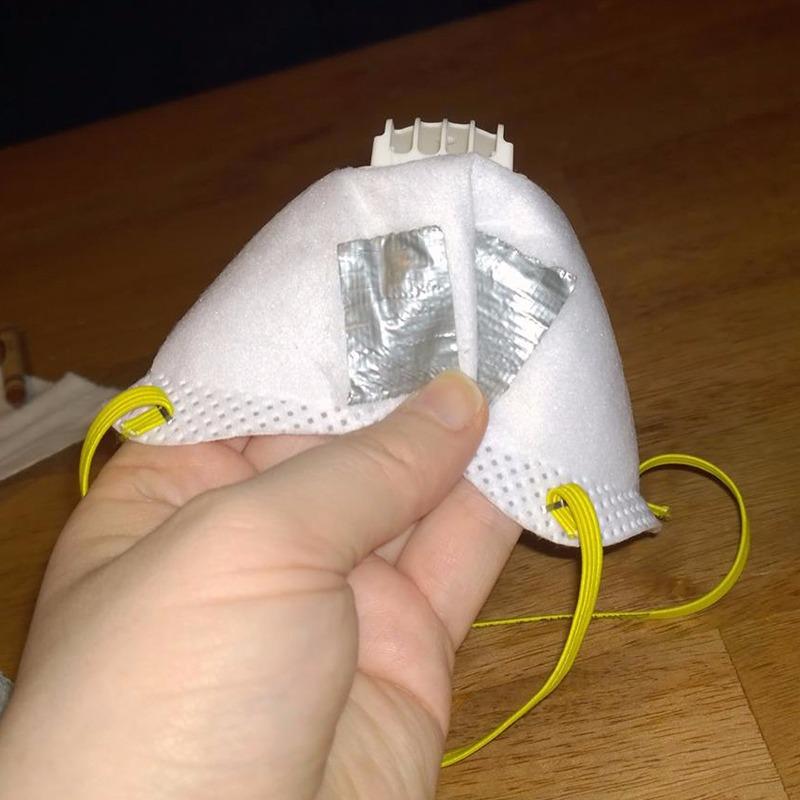
If you do not want a maintenance habit, this is the one. The 8511 is a valved disposable N95, and the most noticeable thing about it in the shop is how much warm air leaves the mask instead of your face. The Cool Flow valve is angled so exhaled air goes downward, away from the top of the mask.
That difference is not a marketing number. I ran a random orbit sander for an hour with the 8511, repeated it with a plain unvalved N95, and the second session had noticeably more heat around the nose and chin.
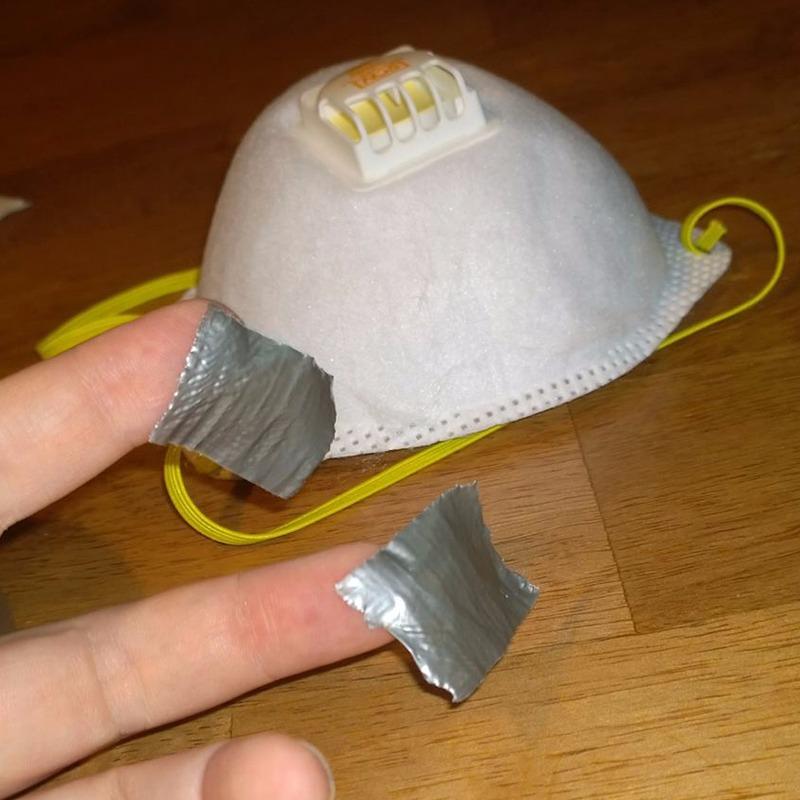
It is NIOSH approved for at least 95% filtration efficiency against non-oil-based particles and aerosols, which covers ordinary wood dust. Advanced electrostatic filter media keeps resistance low despite the valve, and the adjustable M-noseclip lets you pull a proper seal rather than a hopeful one.
Stretchable braided headbands hold tension well, and it is the easiest option here for handing to a helper for a single afternoon. Reviewers treat it as a long-running workhorse: the valve is the most-cited comfort feature, single use is the most-cited drawback.
Who should buy the 8511 instead of a reusable mask
Buy it if you sand occasionally, if you need a mask for guests, or if you refuse to track spare filters. A reusable mask only pays off once you are wearing it several times a week, because the filter cost has to spread across enough sessions to beat disposables.
It is also the right pick for anyone who reacts to rubber facepieces. There is no elastomer seal against your skin, which removes the most common source of irritation.
What to know before you buy
It is a particle-only mask. No N95 rating covers organic vapours, aerosols or gases, so keep it away from spray finishing, lacquer and solvent cleanup. It is also single use by rating.
Because there is no valve cover, some people notice a faint taste of dust when exhaling. That is normal and not a sign the filter has failed.
3. Best Bulk Disposable Box: 3M 8210 N95 20-Pack
3M Particulate Disposable Respirator 8210, N95, Pack of 20, NIOSH APPROVED
- Lowest cost per mask for keeping a shop supplied
- Adjustable nose clip reduces eyewear fogging
- Compatible with safety glasses and hearing protection
- No maintenance or filter changes
- No valve so it runs warmer on long jobs
- Disposable single use creates a steady replacement habit
- Looser fit than a reusable half facepiece
This is the mask most shops end up owning, and there is a good reason. The 8210 is a plain unvalved N95 in a twenty-count box that does one job for the lowest per-mask cost in this roundup. For a dependable baseline respirator, for visitors, or for a seasonal burst of sanding, it is the sensible buy.
What you give up is airflow. Without a valve, warm breath stays inside, and on a long sanding session the difference against the 8511 is obvious. For short bursts, cutting work and sweeping, I did not notice it at all.
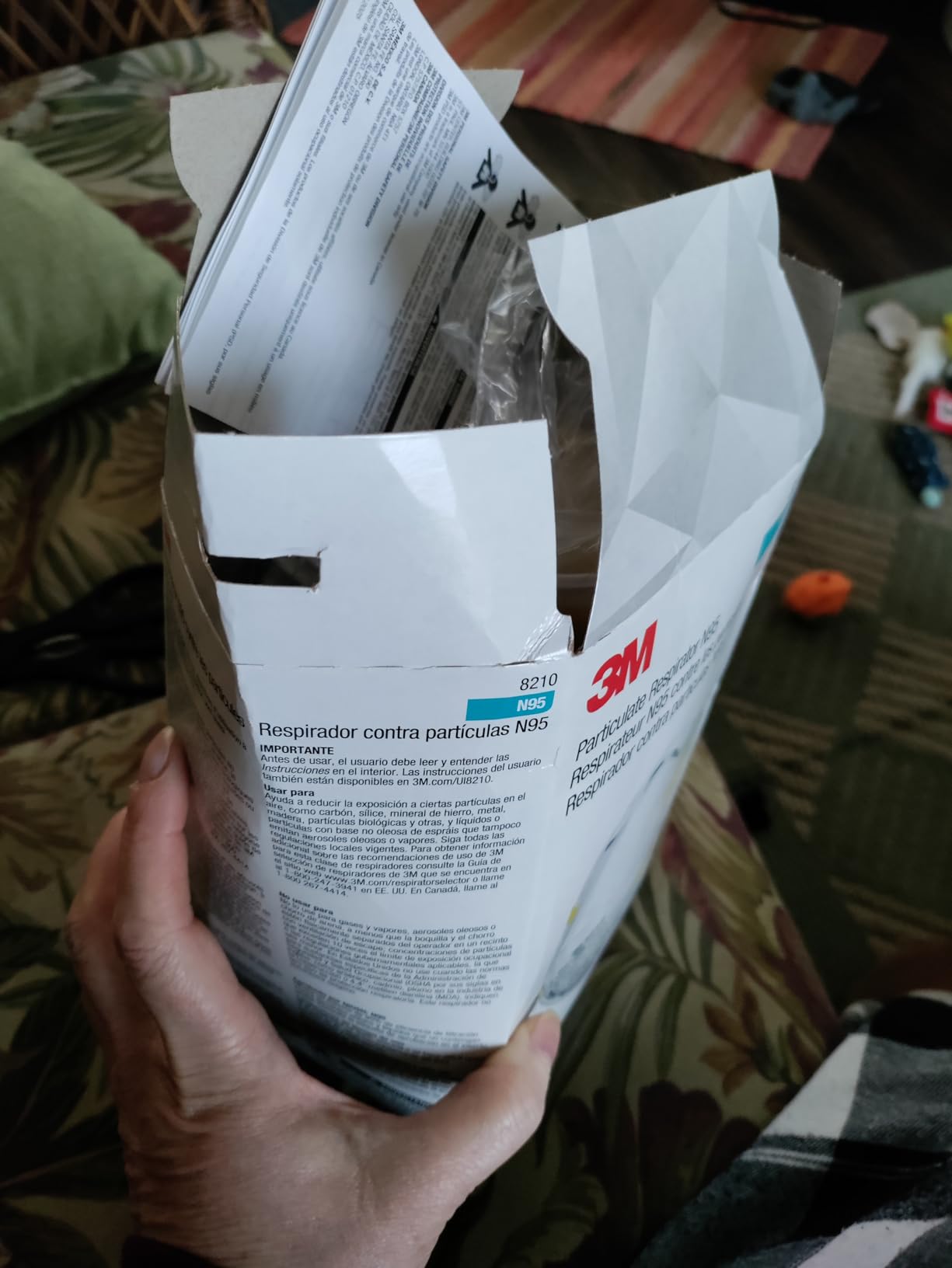
The adjustable nose clip is the feature reviewers mention most, and it earns its reputation twice: it pulls a tighter seal and it helps reduce the eyewear fogging that drives people to give up on masks. The welded dual-point two-strap attachment keeps it from shifting when you talk or lean over a workpiece.
It is rated for grinding, sanding, sweeping, bagging and other dusty operations, is compatible with protective eyewear and hearing protection, and is made in the USA with twenty respirators and safety documentation in the pack.
When a bulk box of disposables is the right call
Reach for the 8210 when more than one person is in the shop, or when you want masks that cost almost nothing to replace. Fitting a guest is instant, with no sizing conversation and no seal to talk anyone through.
It is also the easiest mask to keep in a toolbox, a vehicle and a finishing-area locker, so a lost mask is replaced in seconds rather than a week.
What you give up
Fit is the real limitation. A disposable is a one-size shell, and on a very small or very large face the gaps at the cheeks are where fine dust gets in. A nose clip does not fix that.
Be honest about disposal too. A spent N95 that has been through a day of MDF sanding is a saturated filter that belongs in the bin, not back in the drawer for next week.
4. Best Reusable Workhorse: 3M 6300 Half Facepiece Respirator
- Highest average rating in the roundup at 4.7
- Soft silicone seal stays comfortable over long sessions
- Four-point strap system makes the seal easy to adjust
- Disassembles and cleans for repeated shop use
- Ships without filters or cartridges
- Large size can run out of strap adjustment
- Some buyers report a faint latex-like smell out of the box
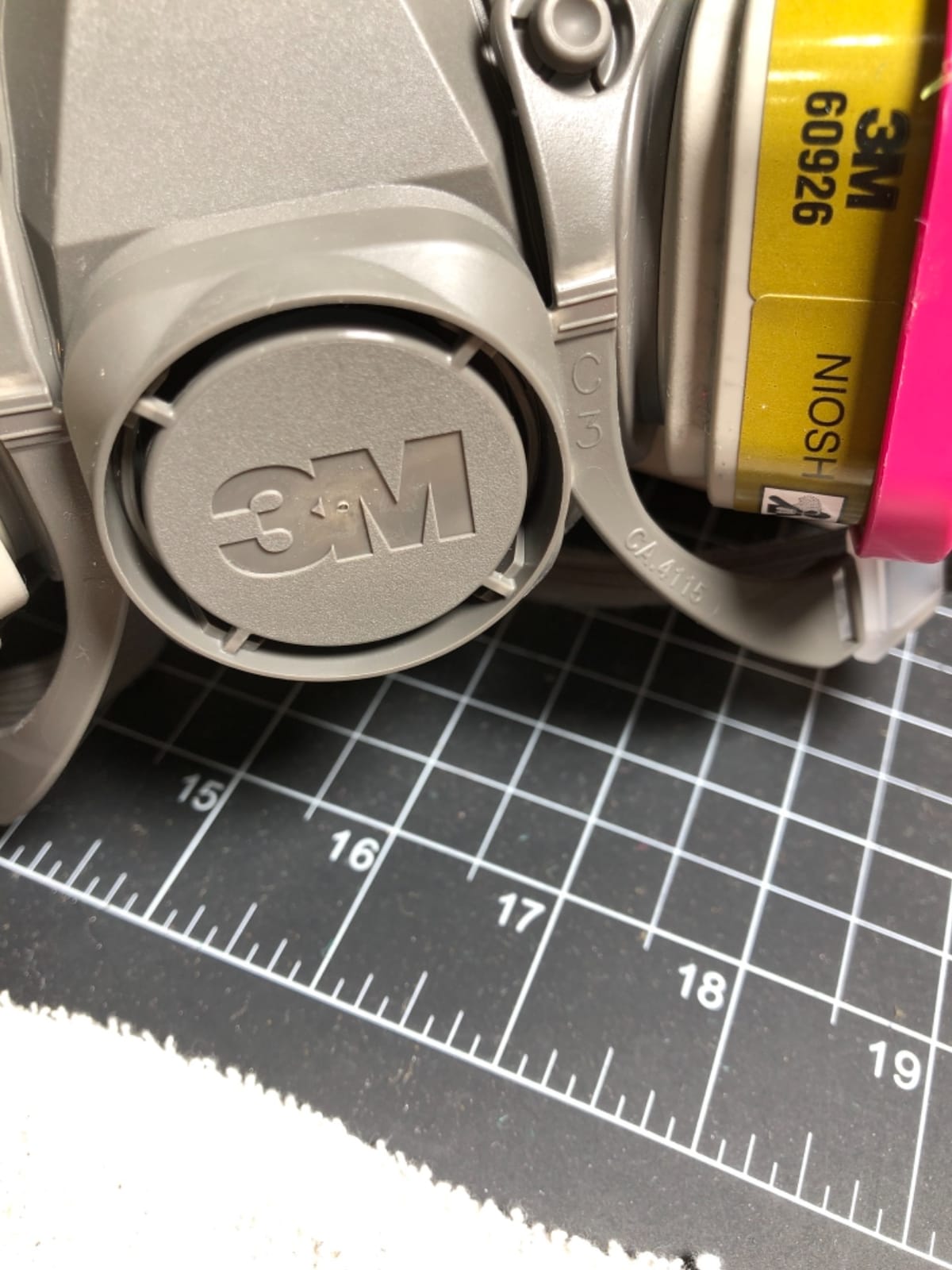
The 6300 is the mask that shows up in nearly every long-running shop I have seen, and the rating backs it up: 4.7 across nearly thirteen thousand reviews, the highest average here. It has a bayonet connection that accepts the whole 3M 6000-series cartridge and filter line, so your filter choice is not locked in when you buy the facepiece.
The soft silicone seal is the story. It moulds to the face over a week or two, then holds an even seal that does not dig in at the cheekbones. The four-point strap system is easy to adjust, which matters because a reusable mask is only as good as the tension you can dial in.
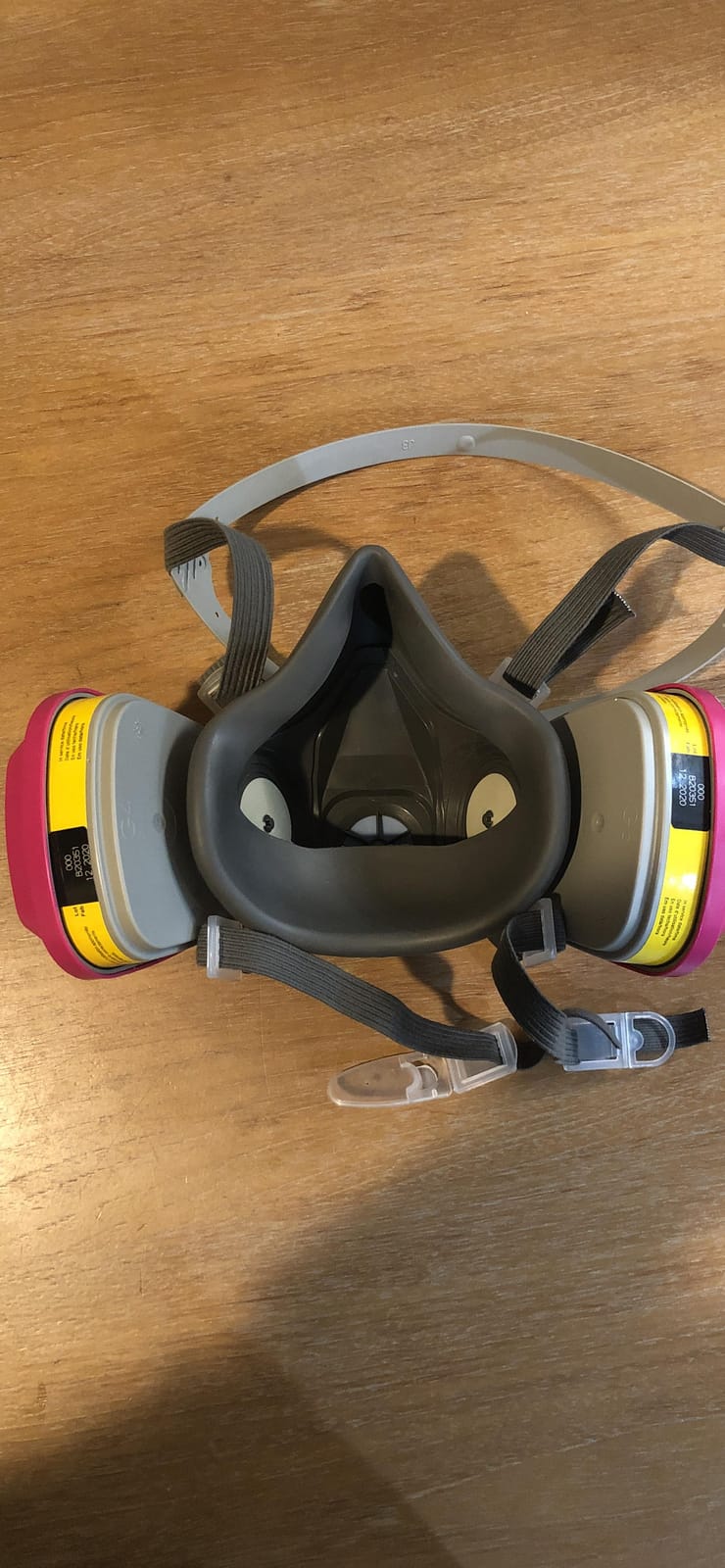
It disassembles and cleans for repeated shop use and comes with a reclosable storage bag, so it lives in a drawer rather than hanging in the dust. It is rated for chipping, chiseling, cleaning, grinding, machining, sanding, sawing and welding, and the adjustment points let it sit alongside other protective equipment.
This listing is the Large size, 0.11 kg and 10 by 9 by 3 inches, with a Small variant available and recyclable thermoplastic elastomer construction.
Why this one earns the top rating
Over a month of daily use it stayed comfortable through whole afternoons, which no disposable here managed simply because disposables are not built for day four. Washing it with warm soapy water takes a couple of minutes.
The 6000-series bayonet is the underrated part. When you add an organic vapour cartridge for finishing work, the same facepiece takes it, so you are not buying a second mask when your shop grows up.
What to plan for
It ships with no filters and no cartridges. That is the near-universal caveat in the reviews and the thing that surprises first-time buyers, so order P100 or P95 particulate filters with it.
Because this is the Large size, very large heads can run out of strap adjustment, and a few buyers mention a faint latex-like smell that clears after the first wear. If you have a genuinely small face, check the Small variant.
5. Best Kit for Spray Finishing: AirGearPro G-500 Vapor and Dust Kit
AirGearPro G-500 Reusable Respirator Mask with A1P2 Vapor & Dust Filters
- Complete kit with mask goggles ear plugs and spare filters
- Reviewers report not smelling chemicals while wearing it
- Replaceable cartridges keep running cost low
- Soft silicone seal resists irritation while sweating
- Not NIOSH approved
- certification is CE only
- Can run hot during prolonged use
- Goggles can fog slightly over prescription glasses
Every mask above filters particles, and every one is the wrong tool the moment you pick up a spray gun. The G-500 is built for both jobs at once, with a gas cartridge filtering organic vapours above 65 C boiling point and a P2 dust stage capturing at least 98% of airborne particles. When you spray and sand in the same session, one mask covers both.
The box is unusually complete: respirator, gas filters, dust filters, safety goggles, ear plugs, storage bag and an illustrated manual with a QR assembly video. For a first finishing setup that is everything in one purchase.

Reviewers across several countries describe using it for painting and sanding without detecting chemical smells, bleach or paint, which is the practical test people care about with a vapour stage. The soft silicone face seal avoids irritation even when sweating, and adjustable elastic straps make it quick to size in and out.
Replaceable filters extend mask life and cut waste, and the product carries a two-year warranty.
Why we would not use it as the daily driver
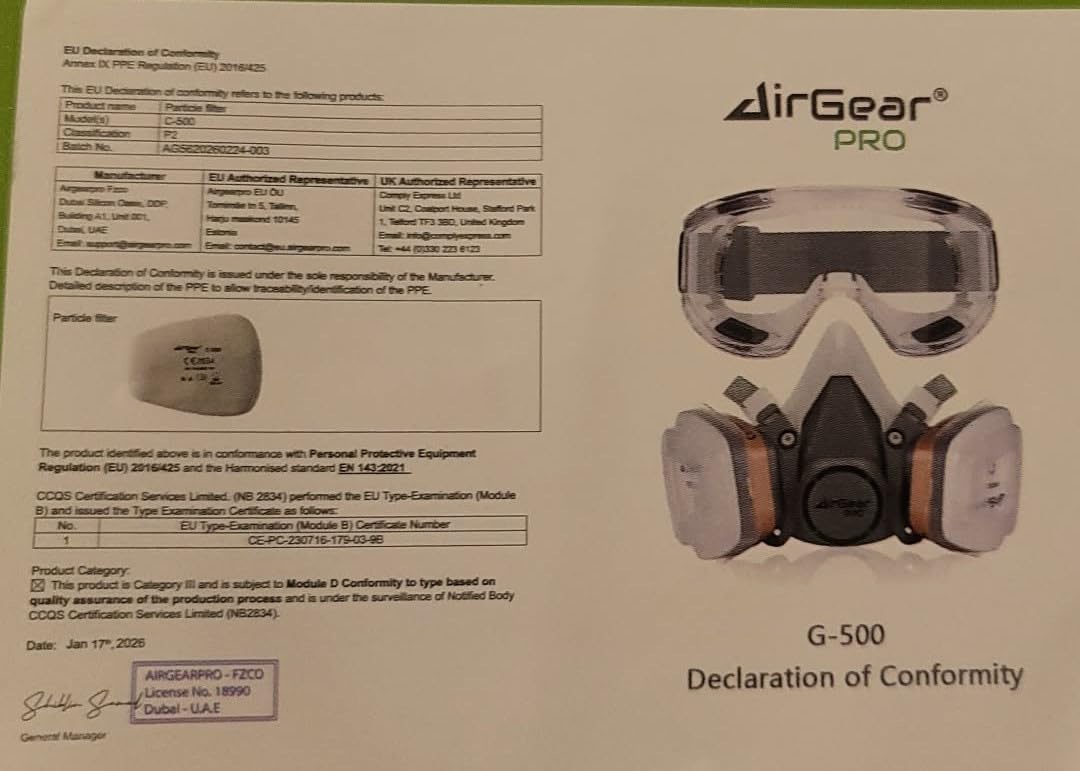
Certification is the honest limitation. This is a CE-certified respirator, not a NIOSH-approved one, and the reviews say so plainly. In a home garage that is a footnote. For paid work in the United States, an employer respirator programme may require NIOSH approval.
It also runs hot during prolonged use, and the integrated goggles can fog slightly when layered over prescription glasses, which is a common setup.
What it gets right that particle masks do not
Fine dust and solvent vapour are different contaminants with different filtration needs, and only a dual-cartridge mask addresses both in one session. If your shop has a finishing corner, this removes the temptation to wear a dust mask somewhere it does not belong.
Treat the A1 rating as a threshold rather than a guarantee, always spray in a ventilated area, and follow the cartridge replacement schedule in the manual.
6. Best Breathable Vapor and Dust Mask: AirGearPro M-500
AirGearPro M-500 Reusable Respirator Mask with Filters | Ideal for Painting, Woodworking, Construction, Sanding, Spraying
- Breathes more freely than many rubber-faced respirators
- Reportedly blocks resin and IPA smells in use
- Tight seal that works with prescription glasses
- Simple snap-together assembly
- Not NIOSH approved
- CE certification only
- Some users find the seal does not fully close at the cheeks
- Can still smell light vapours at heavier concentrations
The M-500 is the same dual-filtration idea as the G-500 in a smaller package, and it solves a different complaint: heat. At 92 g with a washable soft-touch face seal and a two-strap clip attachment, owners consistently describe it as breathing more freely than many rubber-faced respirators. In a hot shop that is felt within minutes.
Like the G-500 it filters organic gases and vapours above 65 C boiling point and captures at least 95% of airborne particles on the P2 stage. Reviewers report it handling resin, IPA and paint odours with a tight, comfortable seal that works with prescription glasses in place.
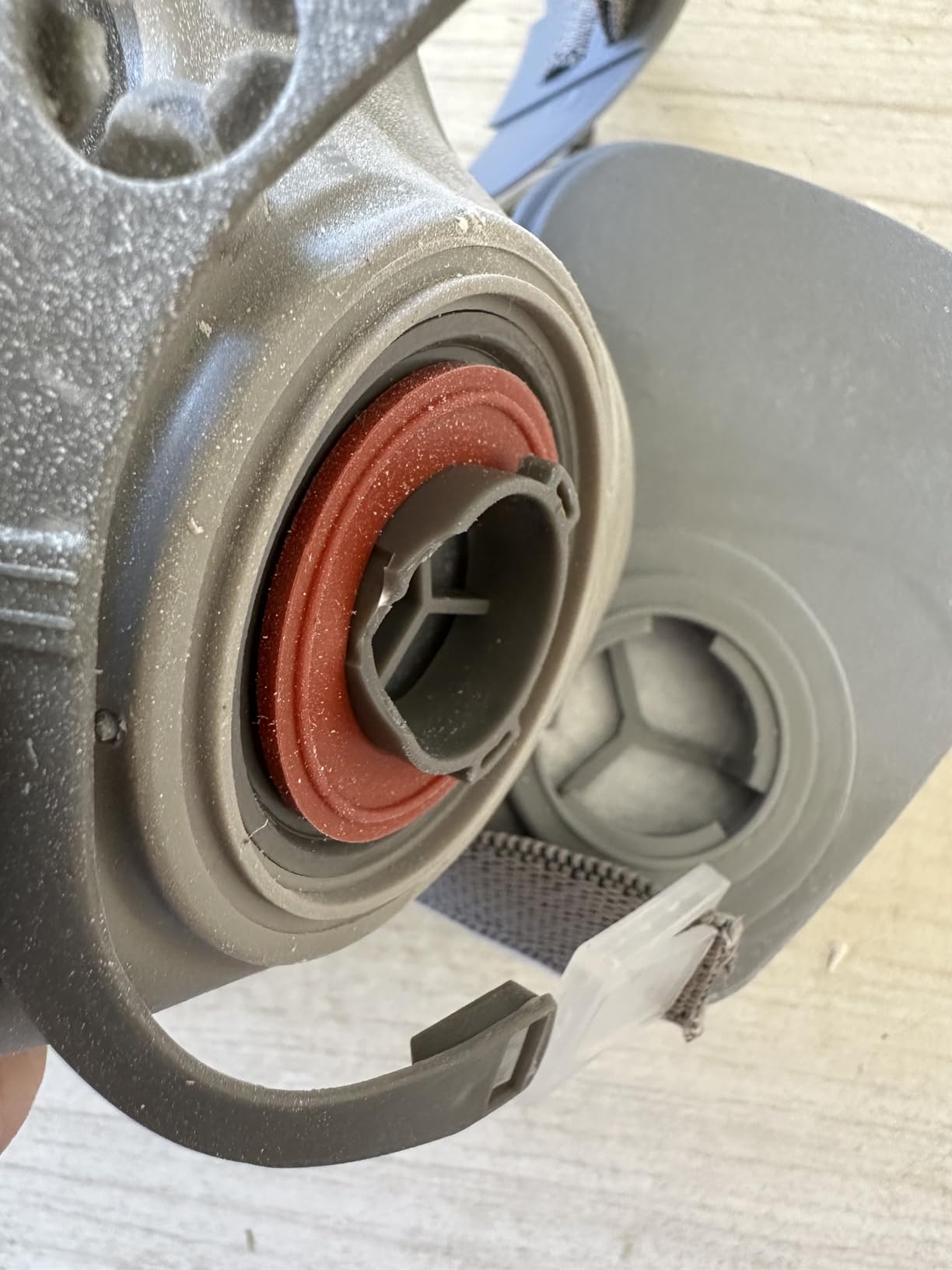
Assembly is a simple snap-together process and replacement filters are inexpensive relative to disposables, which is the argument for a reusable kit once you spray regularly. It is available as A1P2 and Abek1 P2 variants and carries a two-year warranty.
It measures 4.53 by 5.08 by 2.76 inches, so it packs into a small drawer or a tool bag without a dedicated case.
Where it beats the G-500
Choose the M-500 when airflow is your main complaint, when you wear glasses full time and want a seal that does not fight the frame, or when you want a smaller package. The filters are cheap enough that running two or three sets is painless.
It is also the more discreet option. In a small home shop a lighter mask gets worn rather than abandoned on the bench, and worn is what matters.
What to watch out for
Two caveats appear repeatedly. The same CE-only certification as the G-500, fine for personal projects and not sufficient for US occupational compliance. And some users find the seal surface does not fully close around the cheeks on certain face shapes.
If your finishing work is heavy rather than occasional, replace the gas cartridges on the schedule in the manual. Odour returning is the signal that the carbon stage is spent.
7. Best Cool Fabric Mask: BASE CAMP M Plus
- Lightweight breathable mesh stays cool in hot conditions
- Does not fog glasses thanks to the nose clip and valves
- Six spare carbon filters in the box
- Washable shell and replaceable filters
- Loose face seal lets fine dust past the edges
- neck strap can slide or latch awkwardly
- Not appropriate where a certified seal is required
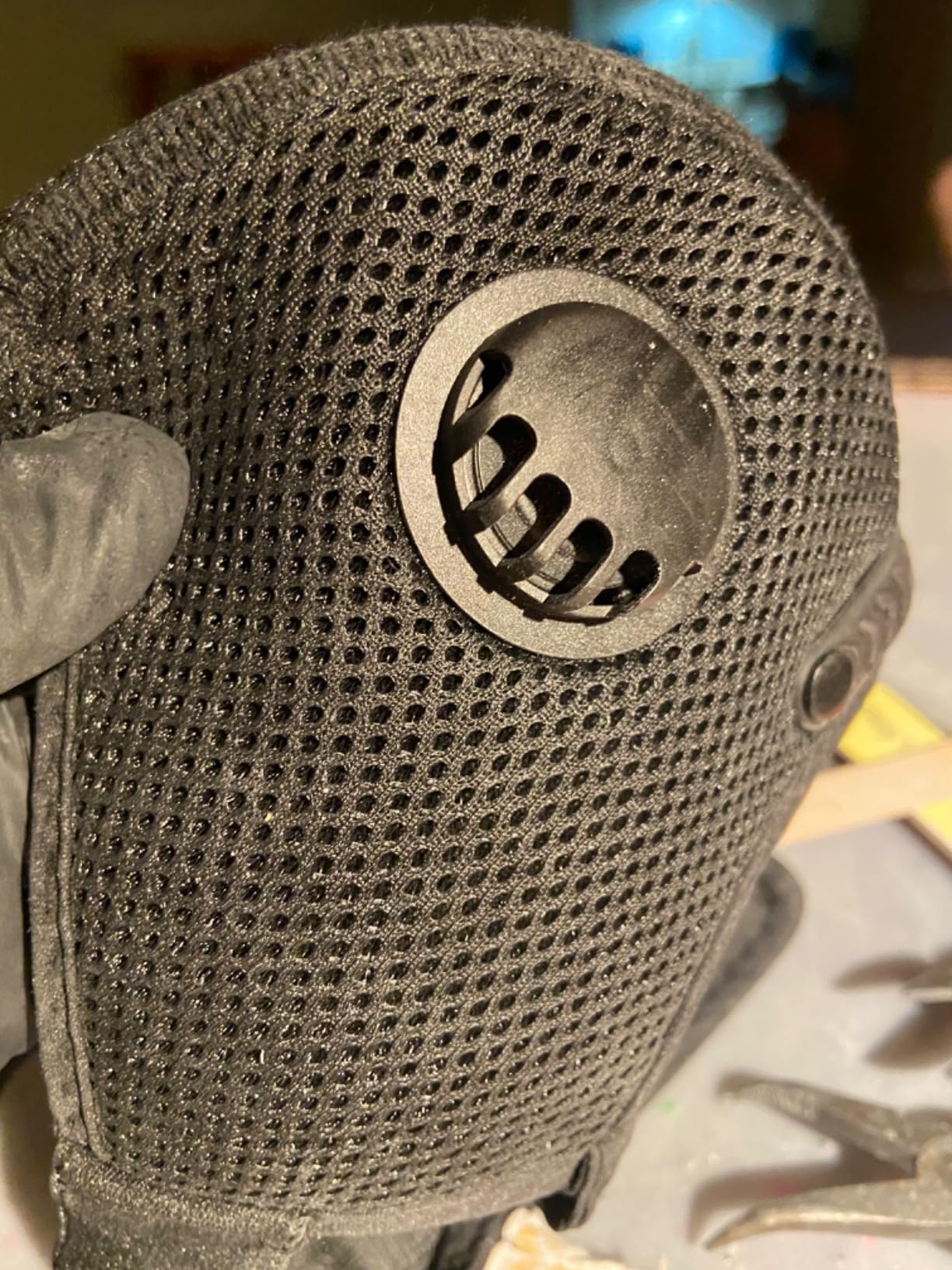
Not everyone can wear a rigid rubber half mask, and this is the option for the people who cannot. The M Plus uses a mesh fabric shell rather than a moulded elastomer facepiece, so it does not trap heat the way neoprene and silicone do. In a hot shop that is a genuine comfort difference rather than a preference.
The filtration figures are strong on paper: six-layer EAPI media rated at 99.6% filtration of dust, pollen, odours and pollutants, mesh engineered to dissipate heat and moisture, and enlarged one-way valves that move more heat, water vapour and carbon dioxide than a standard valve.

An adjustable nose clip reduces glasses fogging, and the closure is a hook-and-loop plus elastic band neck strap system, so the mask goes on and off quickly for short tasks. Six activated carbon filters ship in the box, and the shell and valves are washable. It is a reusable FFP2-rated, CE-marked design in nylon and melt-blown media.
Who this mask suits
It is a good companion mask for sweeping, shop cleanup, light sanding and quick jobs where you are putting the mask on and off repeatedly. It is also the most comfortable choice for anyone who reacts to rubber or latex, and the washable shell means one purchase lasts a long time.
It is the mask to hand to guests and helpers who will not fuss with a seal. People put it on because it is not a struggle.
Why woodworkers end up moving past it
The recurring complaint, and the reason several buyers went back to a 3M half mask, is the loose edge seal. Fine sanding dust finds the gap at the edges, and facial hair makes it worse. A fabric shell cannot reach the moulded seal of an elastomeric facepiece.
So treat this as a comfort mask for lighter dust, not your only protection during a long MDF sanding session. The neck strap can also slide or latch awkwardly when you are reaching for a switch.
8. Best Budget Carbon Mask in Multiple Sizes: FIGHTECH AirGuard M25
FIGHTECH Dust Mask 2 Sizes – Large, Woodworking Reusable Carbon Filter Mask
- Lab-tested filtration figures for fine particles
- Replaceable carbon filters and valves extend mask life
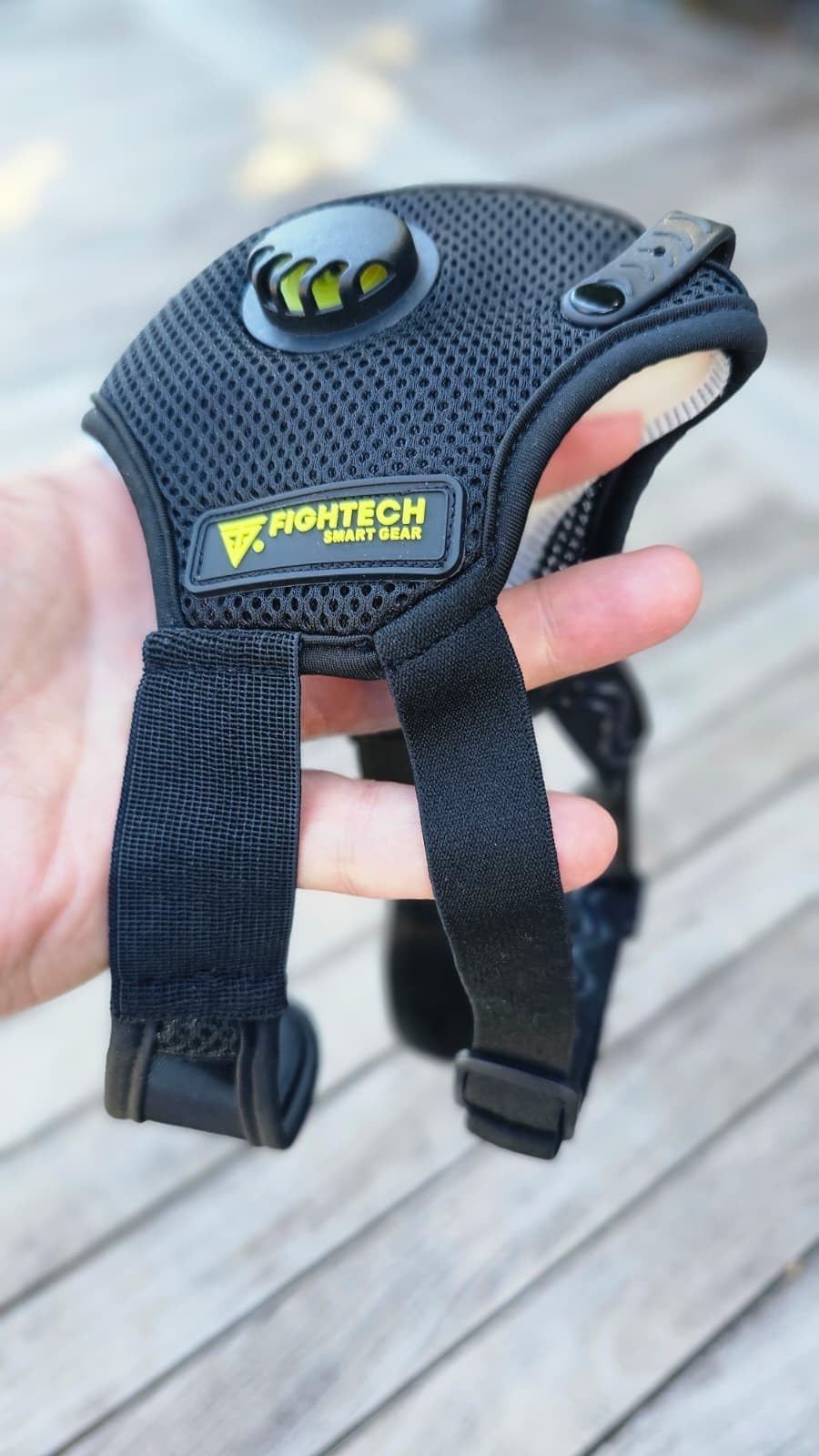
- Silicone grip lines on the upper strap resist slipping
- Three sizes to fit different head shapes
- Lowest average rating in the roundup at 4.2
- Loose fabric-style seal versus an elastomeric facepiece
- Cartridge filters need periodic replacement
Size is why this one is here, and it is a reason most roundups ignore. The AirGuard M25 comes in three sizes including Large and Medium, so if disposable one-size shells leave a gap at your cheeks, a properly sized mask is a real fix. The upper strap also has internal silicone grip lines, which keeps the mask from sliding down during active work.
The filtration claim is unusually specific for a budget product: the active carbon filters were tested at Nelson Laboratories USA with an average filtration efficiency of 99.941% down to 0.1 micron. It is rated for non-toxic dust, fumes and non-oil-based particles, and the filters and exhaust valves are interchangeable and reusable.
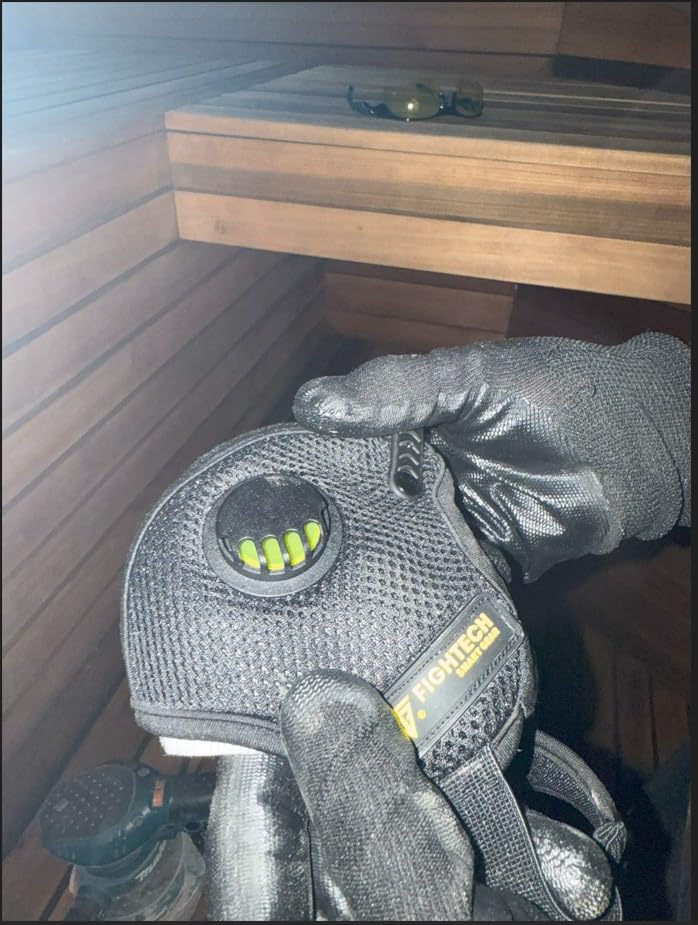
It is positioned for sanding, routing, sawing, painting and shop cleanup, which covers most of what a woodworker does on a weekend. Because the consumable parts are swapped rather than discarded, a single mask body can stay in service indefinitely.
It is also the lowest-rated product here at 4.2, with about 8% of reviews at one star, and the complaints cluster around seal tightness rather than filter media.
When it earns its place
Pick it when budget matters, when one-size disposables never fit you, or when you need a second mask for sweeping and cleanup. Three sizes and a grip-lined strap solve real fit problems, and the reusable cartridges drop the cost per session quickly after the first few uses.
It is also a sensible mask to keep for guests and helpers who will not buy their own, and the washable shell survives being dropped on the bench.
What to know before you commit
The seal is fabric-style, so it does not equal a tight elastomeric facepiece. In reviews it is consistently rated below the 3M and GVS options on that single point, and for heavy sanding of fine MDF dust it matters. The cartridge filters also need periodic replacement to keep performing as specified.
Think of it as a well-sized, comfortable mask for general shop dust rather than a certified-seal respirator. If your shop produces respirable fine dust daily, spend up to an elastomeric half mask instead.
9. Best Bundled Eye Protection: Tesoro Moda M401 Respirator and Goggles
Tesoro Moda Respirator Mask for Spray Painting, Woodworking, Welding, Dust, and General Safety with Clear Eye Goggles, 10 Replacement Filters, Half Face Cover with Safety Glasses
- Mask goggles and ten spare filters in one purchase
- Users report smelling no chemicals or dust while working
- Comfortable seal that does not dig in
- Silicone piece rinses clean
- Awkward to wear at the same time as prescription glasses
- Lower review volume than the 3M and GVS options
- Goggle and mask seals can conflict on some face shapes
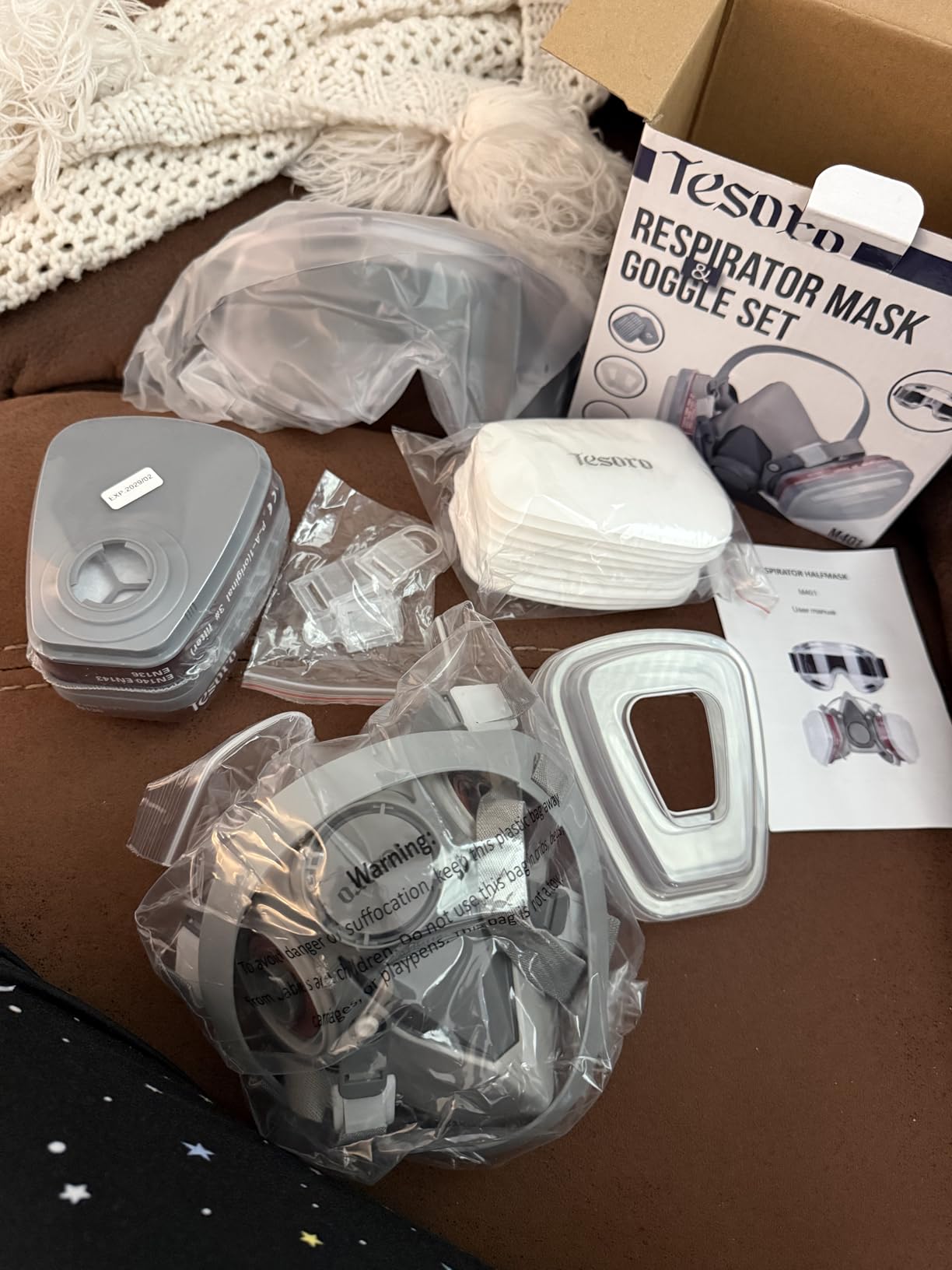
There is a specific kind of sanding where eye protection and a mask have to coexist, and this bundle is built for it. The M401 pairs a washable silicone half face respirator with reusable clear safety goggles that fit over prescription glasses, and ten replacement filters are included. Nothing else here ships with eye protection attached.
The silicone face piece is sized to sit against the face for spray, stain and dust work, and the adjustable headband, one size fitting most adults, keeps the setup simple. Owners like that the goggles sit against the mask rather than colliding with it, and that the mask does not dig in during long sessions.
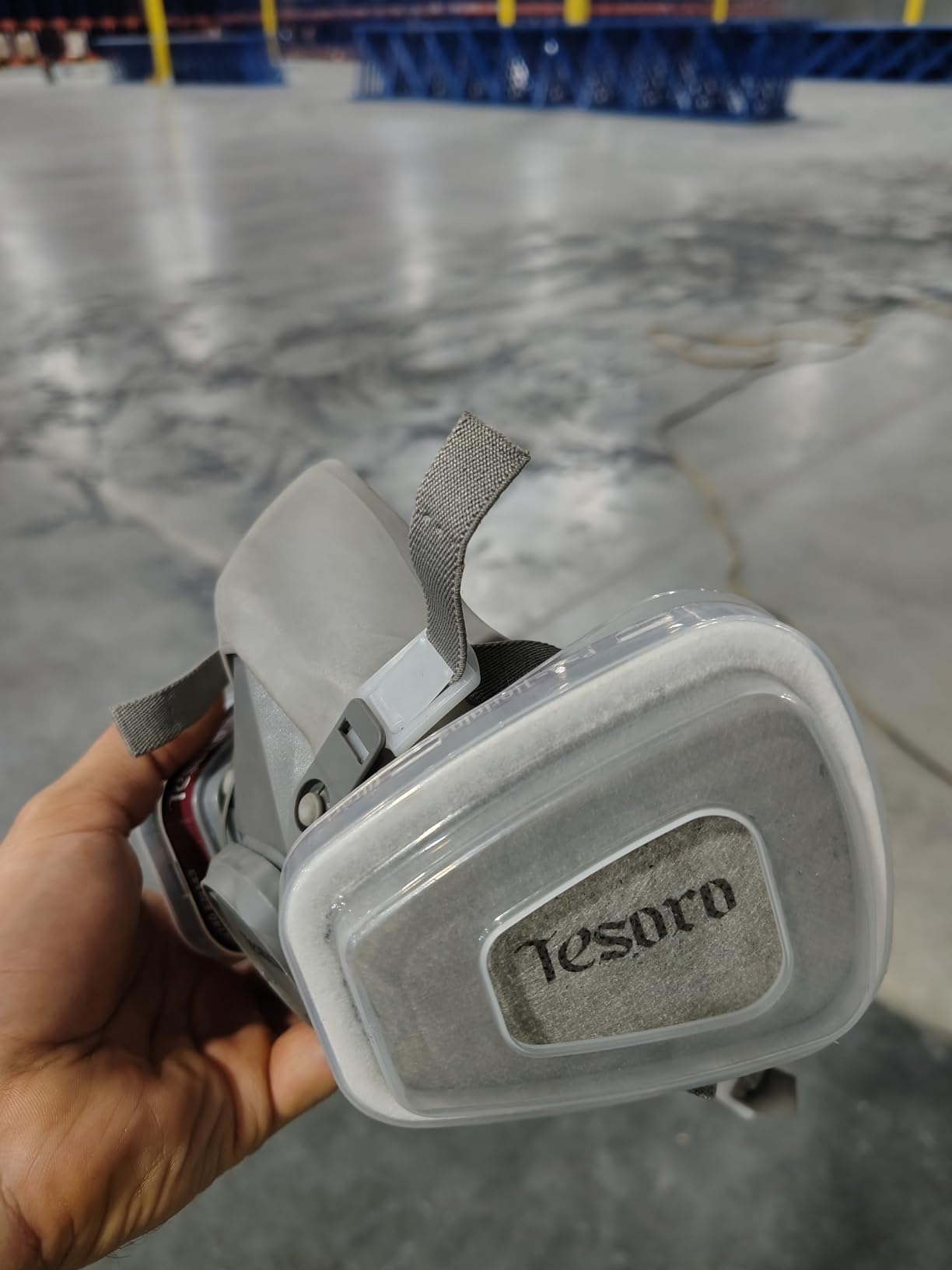
Filter changes are a pop-in operation, so swapping a spent cartridge takes seconds, and the silicone piece rinses clean under the tap. Buyers report using it for painting, airbrushing and staining as well as sawdust, drywall dust, insulation and concrete grinding.
It weighs 1.08 pounds, heavier than most elastomeric masks here, and measures 6.89 by 6.61 by 4.49 inches.
Where the bundled goggles win
If you already own good eye protection, the goggles are a bonus. If you are new to the shop, having mask, goggles and ten spare filters in one box removes the most common reason people skip one of the two.
A consistent seal across the face also stops dust entering around the eyes while you are bent over a sander, and review comfort ratings are consistently high once the silicone has moulded.
What to know about the fit
The most common complaint is wearing it alongside existing prescription glasses, which is awkward and can push the goggle seal out of position. On some face shapes the goggle and mask seals fight each other, so try it on before committing.
It also has a much smaller review base than the 3M and GVS options, so treat the consensus as thinner. Verify the fit in person if your frames are very small or very large.
10. Best for Quick Strap Changes: RZ Mask RZM3
- Three strap configurations for secure or quickest wear
- Breathable mesh shell does not trap heat
- Valves help keep safety glasses clear
- Four-point snap filter system makes changes fast
- Not NIOSH approved and not for occupational protection
- Filter can pop out of its clips while fitting
- Medium-Large sizing runs small
- Weaker against solvent vapours than against dust
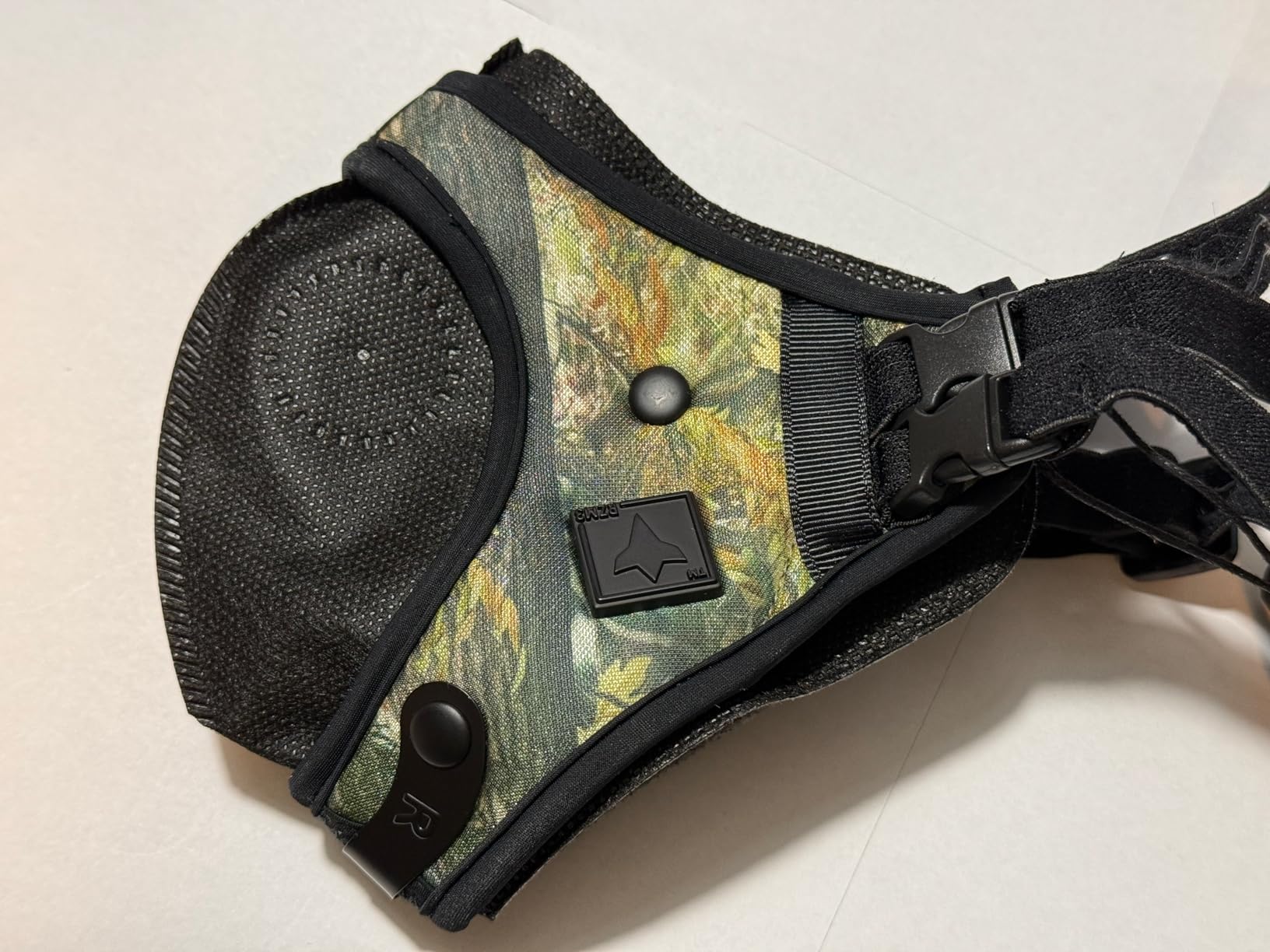
The RZM3 is the one we reach for when the job is a series of short bursts rather than one long grind. It offers three wearing configurations: dual head straps, a neck strap, or ear loops. The neck strap goes on and off in seconds, which owners describe as convenient for quick jobs, and the single rear strap is why some prefer the dual-strap setup for anything longer.
Filter performance is strong on paper, with lab-tested F3 replaceable filters rated at 99.9% efficiency down to 0.1 micron and an active carbon layer for organic odours. The mesh shell is hand-washable and does not trap heat, and the patented four-point snap attachment makes filter changes fast. Two filters and a belt storage bag are included.

The anti-fogging design is deliberate: an adjustable nose clip, nose foam and dual discharge valves, all aimed at keeping safety glasses clear. That makes it a strong option for anyone who wears glasses and moves on and off the mask repeatedly.
Filters are wearable for roughly 30 to 60 hours depending on the environment, and the mask comes in Small, Medium-Large and X-Large across several colours.
Why the configurability matters
Three strap setups sounds minor until a shop is full of quick tasks: fitting a router bit, checking a cut, wiping a bench. The neck strap goes on in seconds without disturbing glasses, and the dual straps give a proper seal for a longer sanding run.
Ventilation is the other strength. The mesh shell stays cooler than a solid rubber facepiece, and the discharge valves move air away from the top of the mask, the most effective anti-fog measure available on a dust mask.
What to keep in mind
Certification is the main limitation, and the manufacturer says so directly: not NIOSH approved and not intended to satisfy occupational respiratory-protection requirements. It is also weaker against solvent and stain vapours than against dust.
Two smaller issues: the filter can pop out of its clips while you pull the mask on, and the Medium-Large sizing runs small, so check the fit across the bridge of the nose. The belt storage bag makes it easy to keep the mask with you rather than abandoned on a shop bench.
What to Look For in a Dust Mask for Woodworking
Start with the rating, because everything else is secondary. NIOSH approval means the mask has been tested and certified for a stated filtration level; CE marking means it meets a European standard. Both are legitimate, but an unrated lookalike with no marking is not worth wearing. If you are doing paid work in the United States, check what your employer respirator programme requires.
Then look at the seal. A P100 rating describes a filter, not a mask on your face, and a leak around the nose bridge or the cheeks means air is coming in beside the filter rather than through it. Fit decides whether a rating means anything in practice.
The class letter comes next. N means not resistant to oil, P means oil resistant, and R is the oil-proof class rarely used here. Wood dust is a non-oil particulate, so both work, and P100 is the highest disposable particulate rating commonly used. FFP2 and FFP3 are the European equivalents, with FFP3 at the same ceiling. Many readers ask whether an N95 is good enough for woodworking: for routine sanding and cutting, an N95 filtering at least 95% of non-oil particles is adequate, and P100 earns its place when you are dealing with fine heavy dust, MDF or silica-bearing material.
Check the exhaust valve direction next. A valve that vents downward moves warm air away from the top of the mask and away from the arms of your safety glasses, which is the most effective single fix for fogging. A valve hidden under a hard shell does much less for you.
Then think running cost rather than purchase cost. A disposable has a small fixed cost and is done in one session. A reusable mask plus filter packs costs more to start and then falls to a fraction of that per session, but the arithmetic only works once you are wearing it regularly. Masking up monthly, disposables win. Masking up three times a week, reusable wins, and the crossover arrives somewhere around the tenth use.
Finally, match the mask to all three jobs in your shop. Fine dust needs a particulate rating, coarse debris benefits from a hard shell or a close-fitting elastomeric facepiece, and chemical vapour needs an organic vapour cartridge that no N or P filter provides. Buying one mask for everything means choosing which job you will handle badly. If your shop includes a finishing area, our tested clamps guide covers the other half of a well set up bench.
How to Fit Test and Seal Check a Dust Mask at Home
Seal quality is the make-or-break factor, and a five-minute check catches almost every bad fit before it matters. Do it once per mask, and again when you change glasses or the shape of your face changes.
1. Cover the front of the mask with your hand or a clean cloth, keeping your mouth open rather than sealed.
2. Breathe in gently. If the mask collapses slightly against your face and stays there, you are drawing air through the filter rather than around the seal. Air at the edges means a leak.
3. Breathe out with the cover still in place. The mask should bulge slightly and hold that pressure for a few seconds. Weak outward pressure means the seal is incomplete.
4. Remove the cover and say the letter O out loud. A change in the sound means the mask is sealing well, which owners report works better than any optical check.
5. In a mirror, check for gaps beside the nose, under the chin and along the strap line, then tighten until there is no visible gap and re-run the breathing test.
How to Stop Safety Glasses Fogging Over a Dust Mask
Fogging is the complaint that makes people stop wearing a mask, and it is mostly geometry rather than luck. Four fixes cover almost every case.
1. Choose a downward-pointing exhaust valve, which vents warm breath below the arms of your glasses instead of straight up into the lens.
2. Seat the mask so the top edge sits below the top rim of your frames rather than overlapping the lens area.
3. Pick a low-profile facepiece, shaped like the GVS Elipse, that clears the frame entirely instead of resting on it.
4. Wipe the lenses before you put them on, and use a moisture-wicking liner or an anti-fog spray each session. Keep a spare cloth by the dust collection.
When to Replace Filters and How to Spot a Spent One
For disposables the rating is the rule: a single-use N95 is done after one session, and a mask that has been through a day of MDF sanding should go in the bin rather than back in the drawer. Reusing a dusty disposable is a common habit and a bad one, because the media is already loaded before you start.
For reusable cartridges and carbon filters, watch the signals. GVS replacement filters are rated by the manufacturer for up to five years of service, RZ Mask filters are described as wearable for roughly 30 to 60 hours depending on the environment, and organic vapour cartridges give themselves away by letting the solvent smell return. Increasing breathing resistance is the clearest sign a particulate filter is loaded up. Replace cartridges on the schedule in the manual rather than waiting for a change you cannot see through the shell.
Replace the facepiece itself if the strap tension no longer holds, if the seal has hardened or torn, or if the elastomer has stiffened with age. A facepiece costs far less than a compromised afternoon of sanding.
Frequently Asked Questions
Is N95 good enough for woodworking?
Yes, for everyday sanding, cutting, sweeping and shop cleanup. An N95 filters at least 95 percent of non-oil airborne particles, which covers ordinary wood dust. Upgrade to a P100 half mask for fine heavy dust that lingers, for sanding MDF, or for any job involving silica. Neither rating covers chemical vapours, so keep a dual-cartridge mask for spray finishing.
Is a P100 mask better than an N95?
A P100 removes 99.97 percent of non-oil particles against the N95 figure of at least 95 percent, so it is the better choice for fine, heavy or nuisance dust and for materials such as MDF. For light cutting and short sanding tasks the practical difference is small. Fit matters more than the letter, because a leaking mask voids whatever rating it carries.
What is the best dust mask to wear with glasses?
A low-profile mask with a downward-pointing exhaust valve, and the GVS Elipse P100 is the clearest example in this roundup because its top edge clears the temple arms. Seat the mask below the top rim of the frames, keep the exhale valve pointing down, and wipe the lenses before you put them on. A moisture-wicking liner or anti-fog spray handles the rest.
What is the best option for heavy shop work with eye protection?
For heavy MDF sanding, chip-throwing work and finishing, the most complete single answer is a sealed half mask combined with proper eye protection, because it protects the eyes and lungs together and removes the fogging problem. No mask in this roundup is a full facepiece, so pair a high-quality half mask with goggles, as the Tesoro Moda M401 does. Remember that a face shield alone does not protect your lungs.
Do I need a different mask for spray finishing and MDF?
Yes on both counts, for different reasons. Spray finishing and lacquer need an organic vapour cartridge, which no N or P particulate filter provides, so use a dual-cartridge A1P2 mask such as the AirGearPro G-500 or M-500 in a ventilated area. MDF produces very fine, heavy dust, so a P100 half mask with a good seal is the right tool, and dust collection at the machine still comes first.
The Best Dust Mask for Woodworking in 2026
The best dust masks for woodworking in 2026 come down to what your shop actually does. For most people that is the GVS Elipse P100: NIOSH approved, light enough to forget, and shaped so it works with the safety glasses you already wear. The 3M 6300 is the choice when you want a mask you can wash and keep for years, as long as you order filters with it. The 3M 8210 box is the answer for a shop with more than one person in it.
Where you spray finish, the AirGearPro G-500 and M-500 cover dust and vapour in one mask, and no particulate-only respirator is a substitute for them. If heat and fogging are what drive you out of a mask, the RZ Mask RZM3, the BASE CAMP M Plus and the FIGHTECH AirGuard M25 run cooler and forgive more, with the trade-off that their face seals are looser.
Whichever you choose, run the five-minute seal check before your first sanding session, because a rating only counts if the mask seals to your face. And keep dust collection and shop ventilation doing the heavy work, because a respirator is the last line of defence, not the first.