
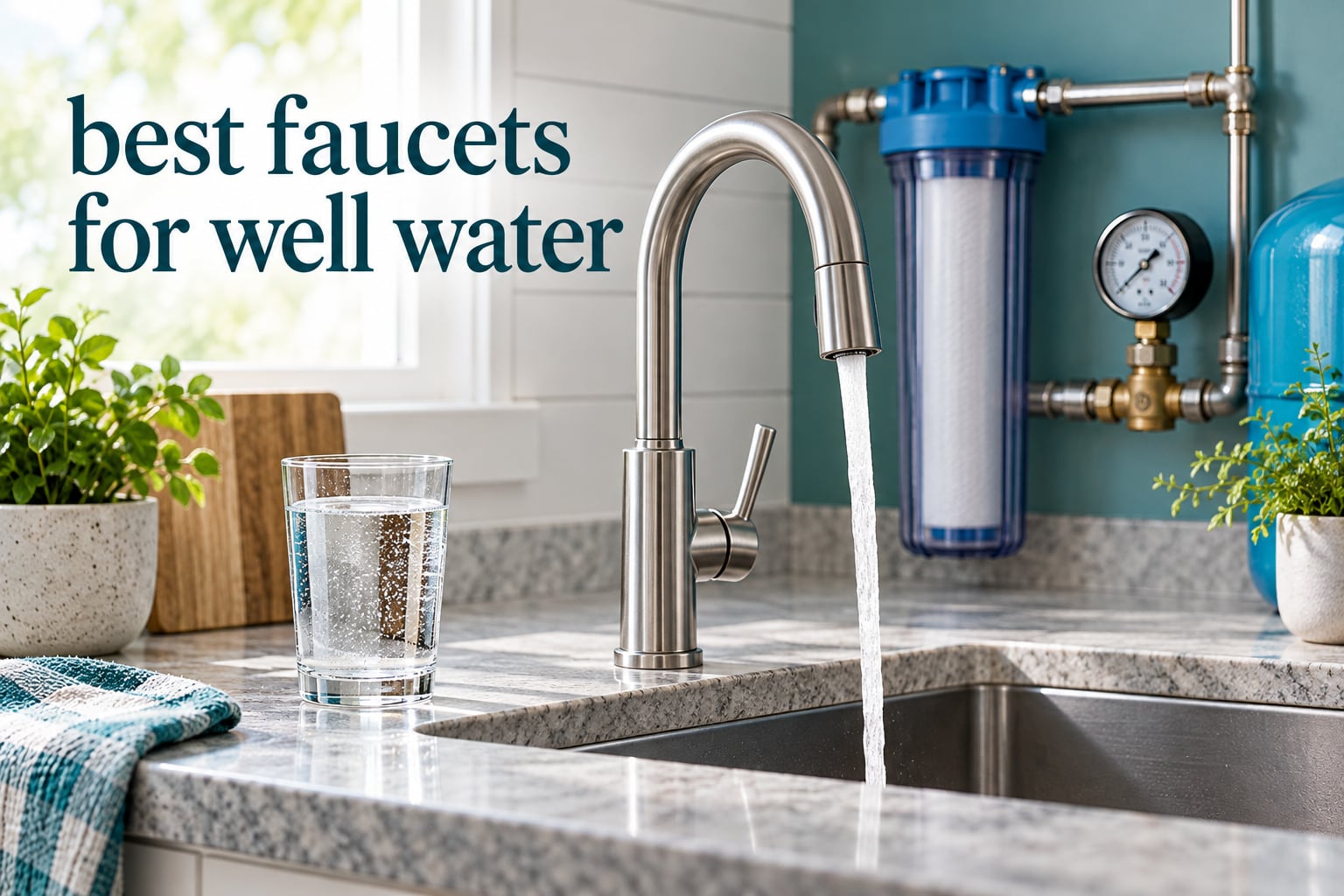
Buying the best faucets for well water is not the same job as buying the best faucets for hard water, and most roundups get that distinction wrong. City water arrives finished: treated, filtered at the utility, and pressed to a fairly consistent line pressure. A well delivers raw groundwater, and whatever the aquifer holds comes straight into your sink. Calcium and magnesium carbonate scale the aerator and spout. Iron and manganese leave orange and black stains. Hydrogen sulfide adds the rotten-egg smell. Silt and sand abrade the cartridge and block it outright. And if the well pump is undersized, the pressure that reaches the faucet swings all day.
That combination is why a kitchen faucet that looked perfect on the day it went in starts to sputter, spot and drip within two years on a well. I spent weeks comparing specifications, customer images and owner complaints across twelve faucets built for untreated water, and the picks that survive a well all share three things: a non-porous body, a cartridge you can actually replace, and an aerator that comes apart in your hand.
Below is the full roundup, updated for 2026, grouped by where each faucet does its job: drinking and filtration at the sink, the working kitchen, the bathrooms, the utility sink, and the outdoor hose bib. Our methodology and the buying guide come after the reviews, and every spec quoted below comes from the manufacturer listing or the owner feedback attached to it.
If you are still shopping for the room rather than the fixture, our guides to the best kitchen faucets and the best bathroom faucets cover style and design. What follows is the water-chemistry question underneath all of that.
Table of Contents
Why Well Water Is Harder on Faucets Than City Water
A faucet that suits well water is one built from a corrosion-resistant brass or SUS304 stainless steel body, a ceramic disc or cartridge valve you can swap yourself, a non-porous brushed or plated finish, and a removable aerator. Untreated groundwater carries hardness minerals, iron, manganese, sediment and sulfur, and each of those attacks a different moving part.
Hardness is calcium and magnesium carbonate. It precipitates out of solution wherever water heats or slows down, which means the aerator, the tip of the spout and inside the cartridge. The result is a white crust that narrows the flow path and cuts volume long before anything has actually failed. Plumbers answering questions on the JustAnswer forum regularly trace a sudden pressure drop on a well system to sediment packed into the faucet cartridge, and the fix is a cartridge, not a new faucet.
Iron and manganese are a different failure. They oxidize in the water and settle as orange or black staining on the spout and around the drain, and they gum up the cartridge ports. No amount of surface cleaning fixes it, because the stain is a coating of the metal itself rather than a surface deposit. Sulfur odor is a plumbing problem upstream of the faucet entirely, and no fixture change will touch it.
Sediment is the abrasive one. Silt scours the ceramic disc faces and rubber seals and settles in the gaps of a cartridge valve. Pressure swing is the underrated one: on a low or cycling well pump, a two-handle or bridge faucet with independent hot and cold feeds will feel weak and noisy, because each handle is metering against a fluctuating supply. A single lever, which throttles flow and temperature together, behaves far more predictably in that situation.
One more factor decides whether the faucet stays covered. Most manufacturers void cartridge and finish coverage when scale damage is the cause, so a faucet with a user-replaceable cartridge and a part you can still buy in five years protects the warranty in a way that a sealed cartridge does not.
Top 3 Faucet Picks for Well Water in 2026
Three faucets earned the top slots this year. The WEWE RO drinking water faucet takes the editor’s choice on the strength of a 4.7 rating across more than 45,000 reviews, a lead-free stainless steel path and quick connects that suit a filter install. The WEWE Vintage pull-down is the working-kitchen pick, and the Hurran centerset takes the bathroom slot on its lifetime warranty and 1.2 gpm aerator.

WEWE RO Drinking Water Faucet
- SUS304 lead-free path
- 0.5 gpm conserving flow
- 360 swivel
- Quick connects


The 12 Best Faucets for Well Water in 2026 at a Glance
Every pick below is stainless steel or brass, lead-free certified or labelled, and built around a replaceable cartridge or a serviceable valve. The features column lists the three or four details that decided its place.
| Product | Specifications | Action |
|---|---|---|
| WEWE RO Drinking Water Faucet |
|
Check Latest Price |
| WEWE Vintage Pull-Down Faucet |
|
Check Latest Price |
 GIMILI Pull-Down Kitchen Faucet GIMILI Pull-Down Kitchen Faucet |
|
Check Latest Price |
 DJS Matte Black Pull-Down Faucet DJS Matte Black Pull-Down Faucet |
|
Check Latest Price |
| Hurran 4 inch Centerset |
|
Check Latest Price |
 phiestina Brushed Gold Centerset phiestina Brushed Gold Centerset |
|
Check Latest Price |
 Homewerks Low-Arc Drinking Faucet Homewerks Low-Arc Drinking Faucet |
|
Check Latest Price |
 Bifordo Cold Water Only Faucet Bifordo Cold Water Only Faucet |
|
Check Latest Price |
 JIANBENKJ Frost Proof Yard Hydrant JIANBENKJ Frost Proof Yard Hydrant |
|
Check Latest Price |
 Delle Rosa Drinking Water Purifier Faucet Delle Rosa Drinking Water Purifier Faucet |
|
Check Latest Price |
 Waterdrop G2FCT-BN Faucet Waterdrop G2FCT-BN Faucet |
|
Check Latest Price |
 Kicimpro RO System Faucet Kicimpro RO System Faucet |
|
Check Latest Price |
The 12 Best Faucets for Well Water: Full Reviews
1. WEWE RO Drinking Water Faucet – Best Overall for Well Water
WEWE RO Drinking Water Faucet, Brushed Nickel, 1/4″ & 3/8″ Connectors
- Lead-free SUS304 stainless waterway
- Tool-free install with pre-assembled quick connects
- Double leak-proof seal rings plus ceramic cartridge
- 360 swivel with single-lever control
- CEC and NSF/ANSI 61 certified
- No magnet to hold the pull-down spout in its housing
- Spout does not always reseat in the same position
- Handle orientation reversed from most market faucets
On a well, the drinking faucet is usually the first fixture anyone replaces, because it is the one people distrust. This one is built around a SUS304 stainless steel lead-free waterway, which is the single most useful thing to look for when the aquifer carries iron and sediment. Stainless does not pit the way zinc alloy does, and it will not take the orange cast that iron leaves on a plated surface.
The flow rate is 0.5 gpm, and that is a feature, not a compromise. A drinking-water tap delivering half a gallon a minute takes a long time for the same aerator to scale up, and the fitting is designed to pair with an under-sink reverse osmosis housing. That combination is the reason we ranked it first: on untreated well water, the sensible long-term move is to stop drinking the raw supply and filter it at the point of use.
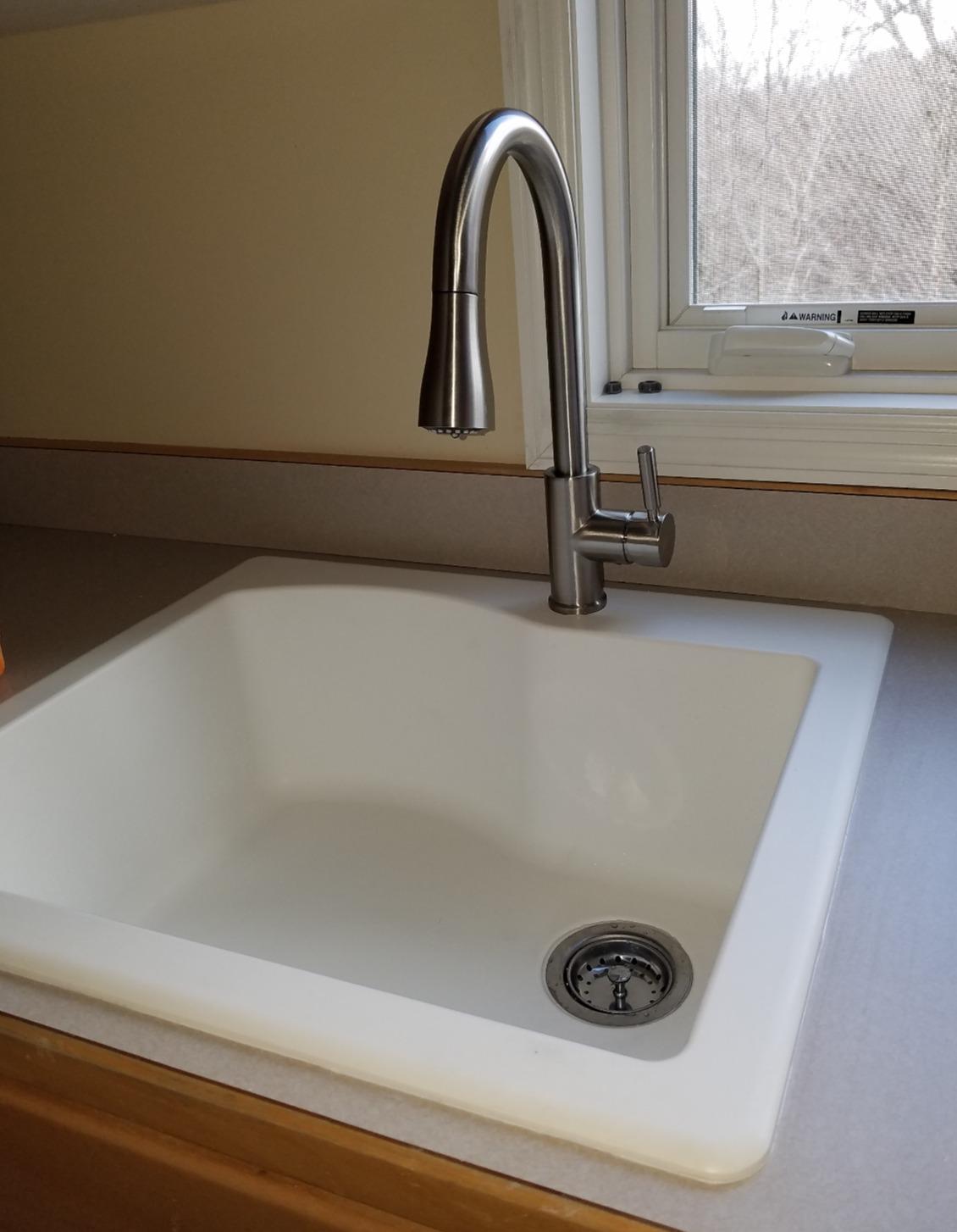
Installation is the other reason it wins here. The 1/4 inch and 3/8 inch quick connects come pre-assembled, and owners consistently describe a ten-minute swap with no tools. Double leak-proof seal rings and a ceramic cartridge sit behind the handle, which is the arrangement that keeps a drip from turning into a cartridge replacement. The 360-degree swivel and 90-degree lever give you a full range of movement at a sink where cabinet space is often tight.
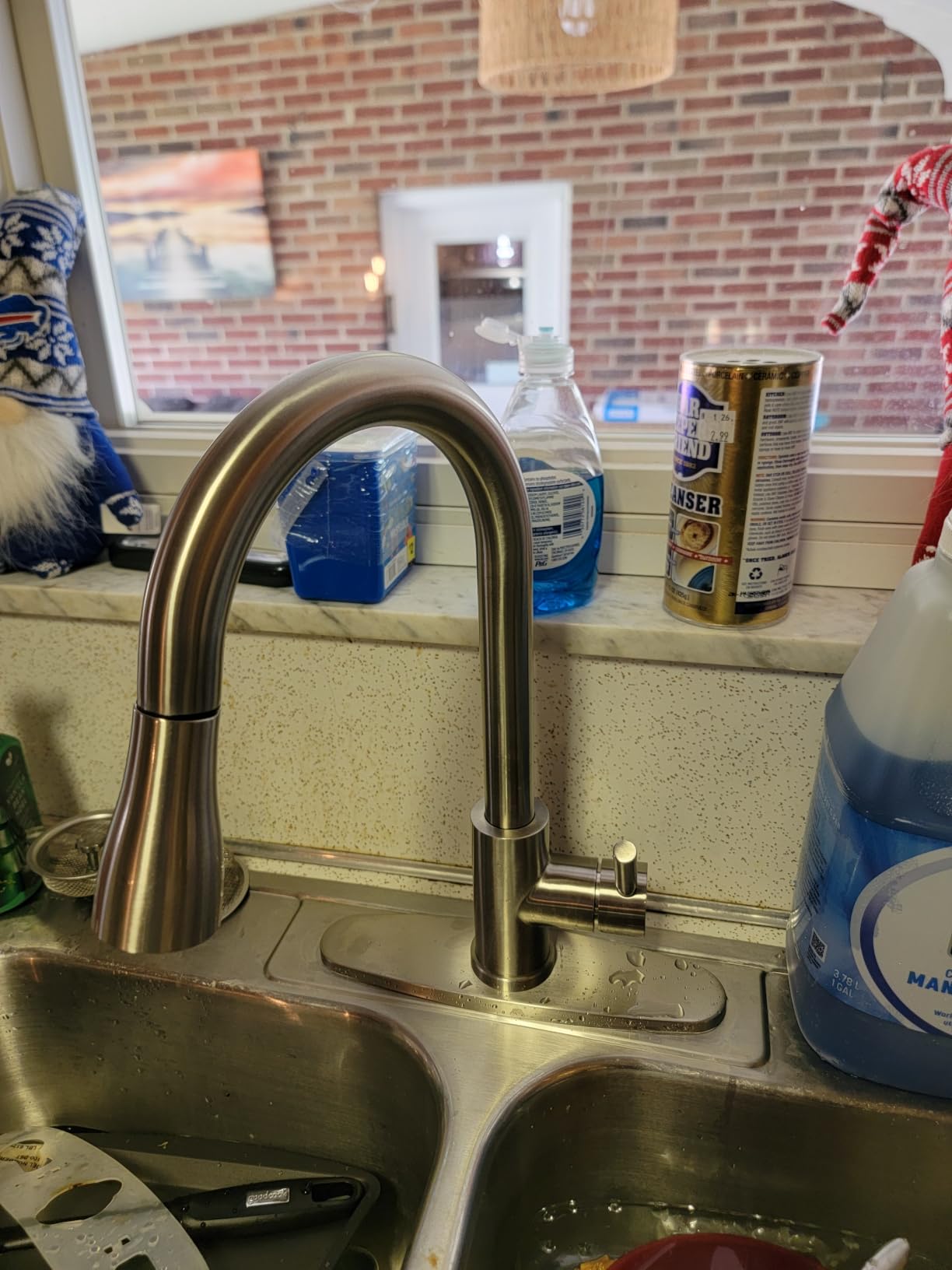
With more than 45,000 owner reviews averaging 4.7, this is the most widely used fixture in the group, and that volume is itself informative. On a product with this many installs, the recurring complaints are consistent and narrow: the pull-down spout has no magnet to hold it in the housing, it does not always reseat in exactly the same position, and the hot and cold lever is reversed from what most people expect when installed handle-right. None of those touch water quality or longevity.
What makes it the right call on a well
The lead-free stainless path is the decisive factor here. Untreated well water is exactly the situation where brass and copper alloys deserve scrutiny, and a listing that states lead-free SUS304 with CEC and NSF/ANSI 61 certification gives you something verifiable. It also happens to be the material least damaged by the sediment that wells produce.
The low flow rate does the rest of the work for you. Scaled aerators are the most common reason well owners think their faucet has failed, and a 0.5 gpm fitting in a secondary drinking position is rarely the one that gets used hard enough to scale solid.
Where it falls short
This is a cold-water-only drinking fixture with a 0.5 gpm flow rate, so it is not a replacement for a main kitchen faucet. Anyone expecting hot water or full sink flow from it will be disappointed by design rather than by fault.
The reversed handle orientation and the unweighted spout are real usability annoyances. If your household is used to a standard handle, budget thirty seconds of adjustment on day one, and hold the spout in place until you are used to it.
2. WEWE Vintage Pull-Down Faucet – Best Kitchen Faucet for Well Water
WEWE Vintage Kitchen Faucet, Pull-Down Sprayer, Brushed Nickel, High Arc
- Hand-tight base nut for tool-free removal in about 15 minutes
- NSF 61 and NSF 372 lead-free certification
- Three spray modes at 1.8 gpm
- 20 inch hose with 360 degree swivel
- Spot and fingerprint resistant finish
- Connector tails may need 3/8 to 1/2 inch reducers in some regions
- Narrowed adapter tails can reduce flow pressure
- Sweep mode splatters if the spout is not aimed down
This is the faucet to buy when your well puts grit in the line. The single most useful feature here is not the sprayer at all, it is the hand-tighten base nut. Most faucets need a basin wrench to remove, which on a well means a plumber visit every time the cartridge goes. This one comes out by hand in about fifteen minutes, and an owner with well grit specifically praises how quickly the unit can be swapped when something clogs it.
The ceramic cartridge is tested over 1,000,000 cycles, and the certification is NSF 61, NSF 372 and cUPC. Those cycle counts are laboratory numbers under clean water, so treat them as a floor rather than a promise on an untreated supply. What matters practically is that the cartridge is a standard part you can buy, and the three-mode pull-down gives you an aerated stream, a spray and a sweep at 1.8 gpm through a 20-inch hose with 360-degree swivel.
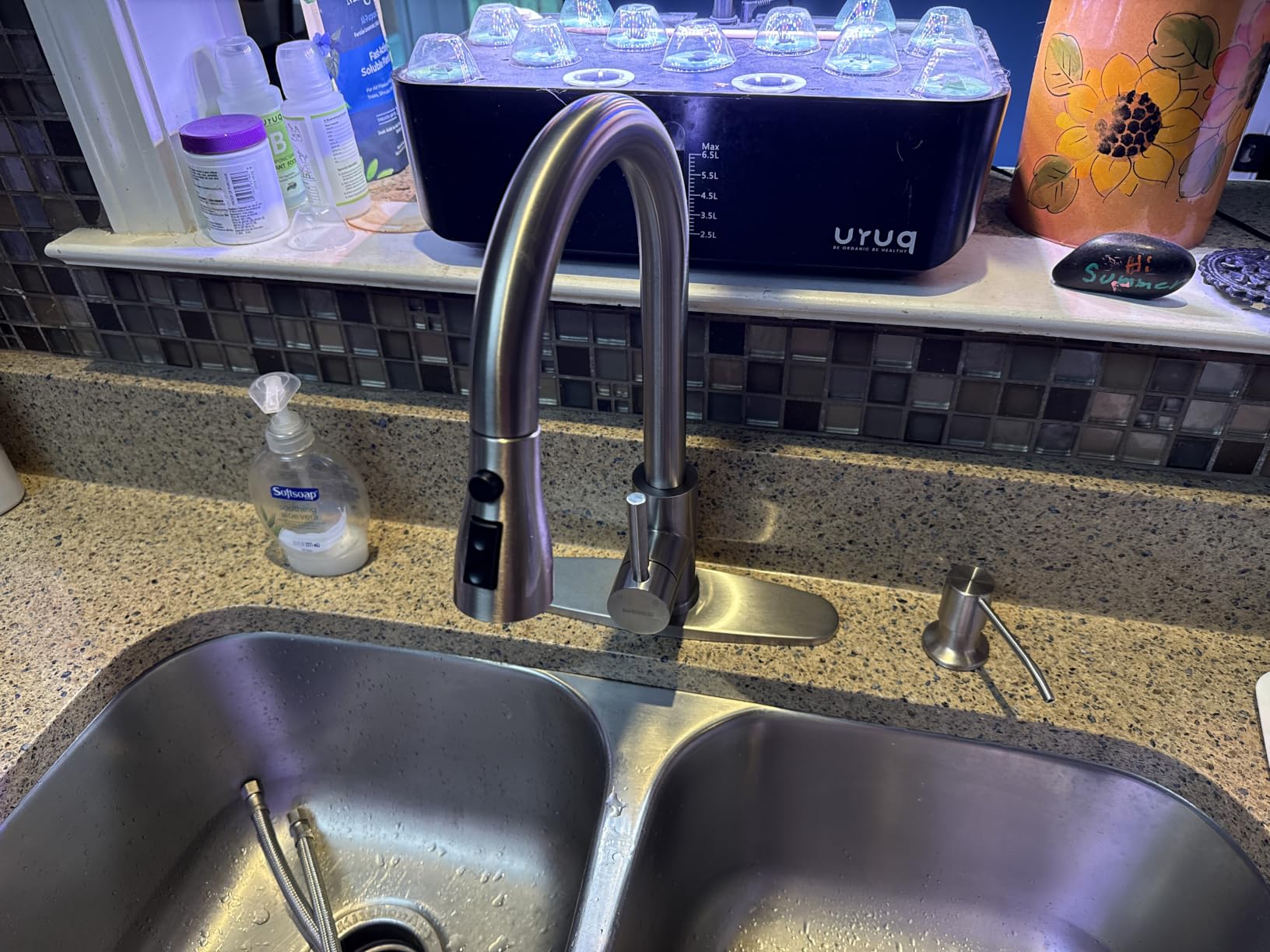
The finish is described as fingerprint and spot resistant, which is the finish category that survives hard water best. Polished chrome shows every droplet; a brushed or coated surface holds its appearance between cleans. On a spout that gets wet dozens of times a day on a scaling supply, that difference is the whole ball game cosmetically.
Owners are enthusiastic about the install and the lever feel, and a 4.7 rating across more than 4,200 reviews reflects that. The complaints cluster on one thing: connector tail sizing. In some regions the supplied tails need 3/8 to 1/2 inch reducers, and buyers report that narrowing the adapters reduces flow. Check your existing supply line sizing before you order, because that is the single avoidable problem with this faucet.
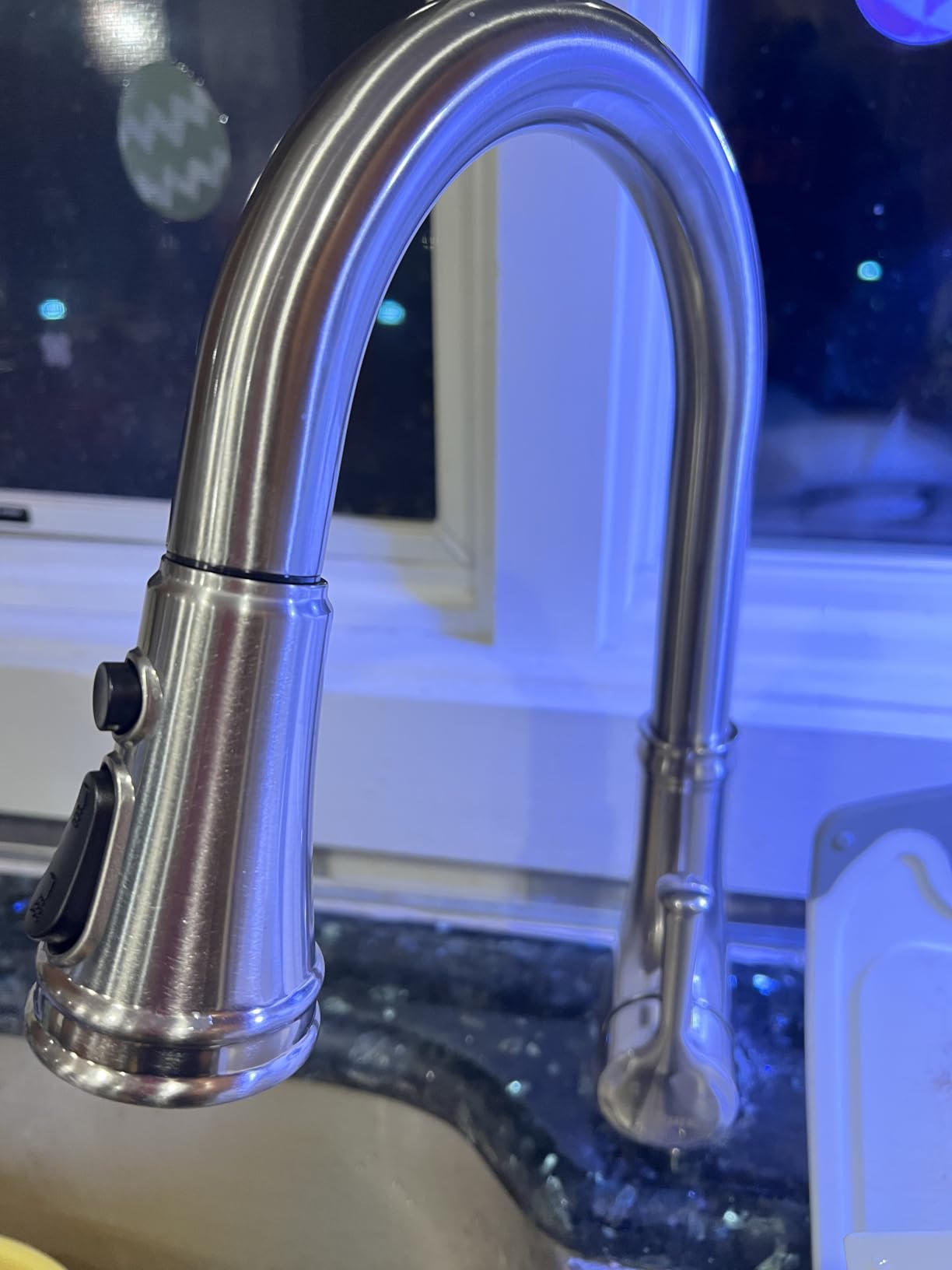
Why it wins the kitchen slot
Serviceability decides it. A faucet you can remove with your hands changes the economics of living on a well, where cartridge changes are a routine maintenance item rather than an emergency. Between the 20-inch hose for rinsing pots, three spray modes and a 1.8 gpm flow that still meets the federal maximum, it handles the working end of a kitchen without any soft feature that adds a failure point.
It is also, in our view, the best kitchen faucet for well water in this group because nothing it does depends on electronics. No sensor, no battery, no firmware. On a system where pressure already varies, a mechanical single lever is the low-maintenance choice.
Where it falls short
The connector tails are the weak point, and narrowing them with the wrong adapter visibly costs you pressure. Measure your existing 3/8 inch supply lines first, and buy the reducer in advance if your plumbing is not the standard size.
Sweep mode splatters if the spout is not pointed down at the sink floor, and the gap between handle and stem is tight enough that owners warn about pinching a finger during adjustment. Neither is serious, but both are worth knowing before day one.
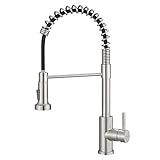
3. GIMILI Pull-Down Kitchen Faucet – Best Value for a Hard-Working Well Kitchen
- Stainless steel body with rust and corrosion resistance
- Dual-mode stream and spray nozzle
- Smooth 18 inch retracting hose
- Quick DIY install with included hardware
- Deck plate is not included and sold separately
- A 3/8 to 1/2 inch adapter is needed for RV hookups
- Short 5.5 inch spout height
With more than 11,700 reviews at 4.5, this is the most widely owned pull-down faucet in the group and the most direct route to a stainless steel body on a well kitchen. The body resists rust and corrosion, the cartridge valve is a standard serviceable type, and the CEC certification at 1.8 gpm means it is not losing pressure to an oversized unrestricted aerator.
The pull-down has two modes, a stream and a spray, on an 18-inch smooth retracting hose with a high-arc 360-degree swivel. Owners describe a twenty-minute install with the included hardware, and plenty have fitted more than one, which is a reasonable signal for a fixture that lives over a sink on a well.
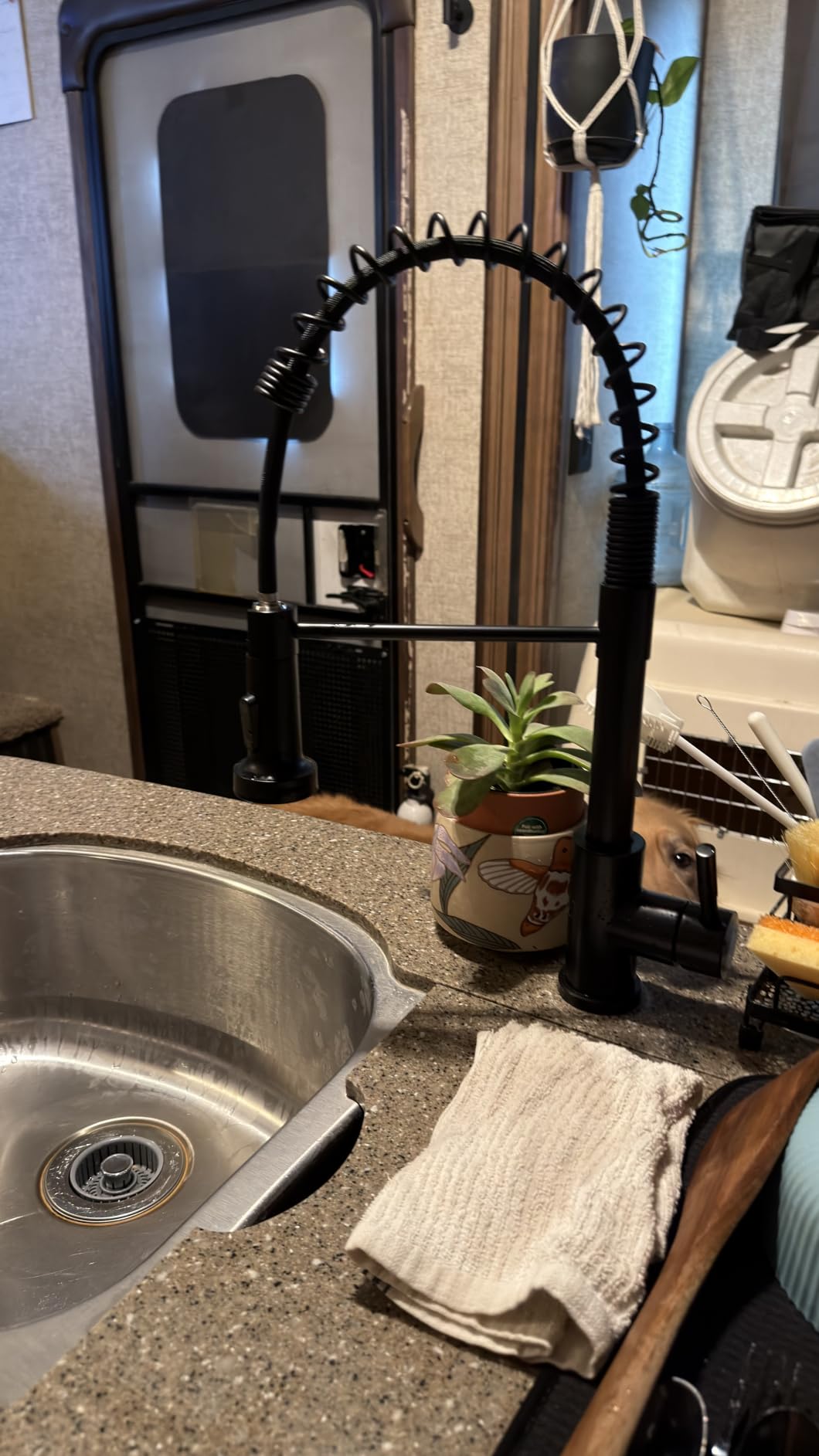
The spout height of 5.5 inches is the trade-off that comes with the price, and it is worth thinking about before you buy. It is a normal-arc faucet rather than a tall gooseneck, so filling a tall stock pot under the stream takes a little more patience. If your sink is deep or you run a wet bar, the taller gooseneck design suits you better.
Two practical notes from owner feedback. The deck plate is not included, so if your sink has three holes rather than one you will need to buy one separately or leave the old plate in place. And RV hookups need a 3/8 to 1/2 inch adapter, which is a common issue at rental and cabin properties that run on a well.
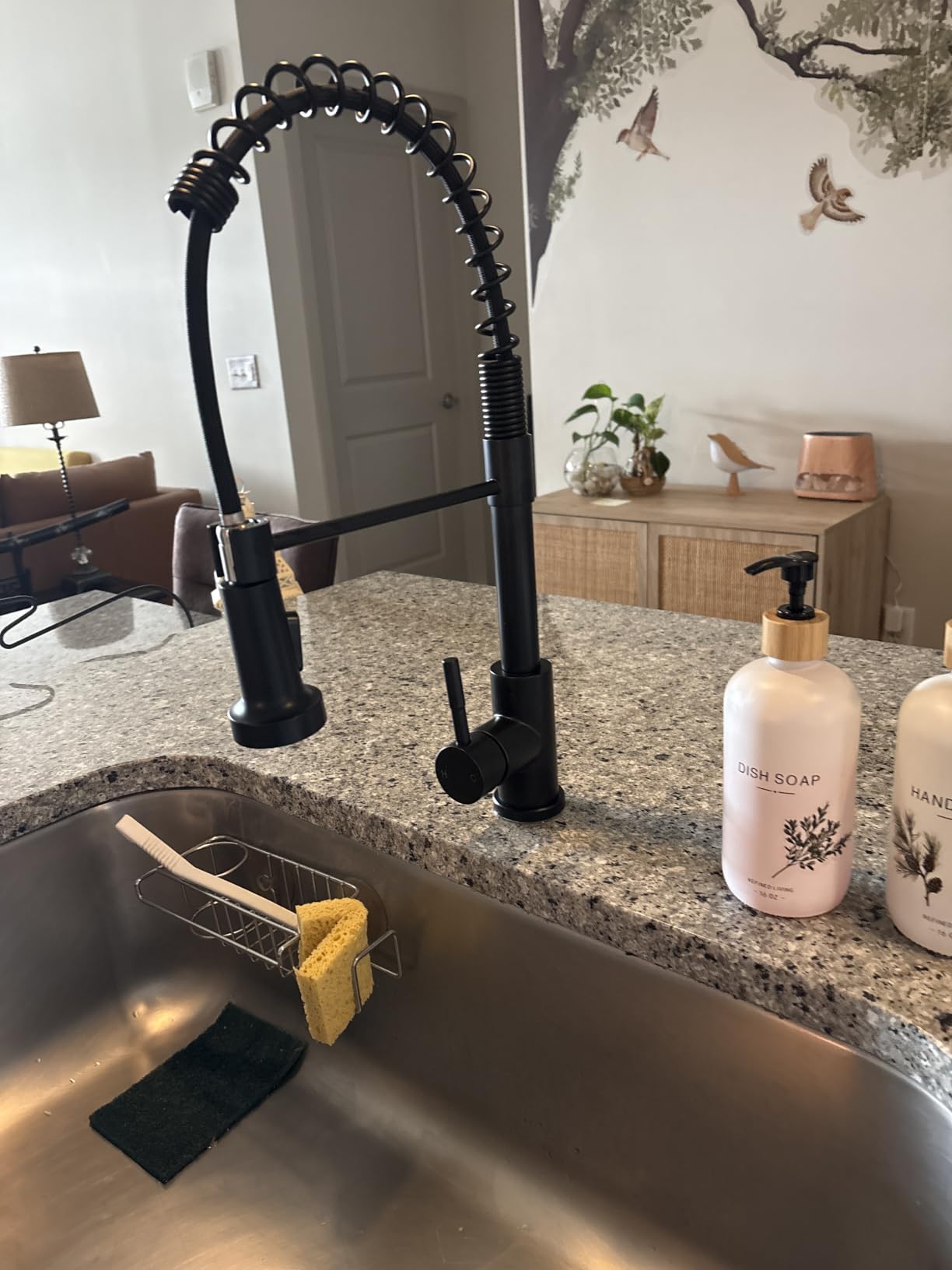
Why it is the value pick
It is the rare budget fixture that does not ask you to compromise the part that matters. The body is stainless rather than zinc alloy, the valve is a cartridge you can replace, and the flow rate is metered at 1.8 gpm under CEC registration. Those are the three things that decide whether a faucet survives a scaling supply, and this one has all of them.
At this review volume, you also get the benefit of a large body of long-term owner reports. That matters more than usual on a well, because it tells you how the faucet behaves once the novelty is gone and the first hard-water season has passed.
Where it falls short
The 5.5 inch spout height is the biggest limitation. If you fill large pots or serve from a deep sink, look at a taller gooseneck model instead of stretching under this one.
The missing deck plate is a genuine annoyance on a three-hole sink, and buying one separately adds a step to an otherwise quick install. Check your sink hole count before you order.
4. DJS Matte Black Pull-Down Faucet – Best Finish-Led Kitchen Pick
DJS Kitchen Sink Faucet with Pull Down Sprayer Single Handle Matte Black
- Solid stainless steel body with food-grade PEX inner hose
- Dual spray modes for stream and spray
- High-arc 360 degree swivel
- Multi-layer coating resists rust and water spots
- Deck plate included
- Matte black shows water spots as it wears
- Pull-down head and hose are lighter duty than metal-braided models
- One-year warranty is the shortest in the group
Matte black is a finish to think carefully about on a well, and this faucet is the honest option in that category rather than a disguised one. The multi-layer coating resists rust, tarnish, fingerprints and water spots, and it is the coating, more than the base colour, that determines how a dark finish ages on a scaling supply.
The body is solid stainless steel with a food-grade PEX inner hose in the sprayer, dual spray modes, and a high-arc 360-degree swivel. Unlike several competitors here, the deck plate and 3/8 inch hot and cold hoses are included, so a three-hole sink installs without a second purchase. That is a real convenience on a replacement job.
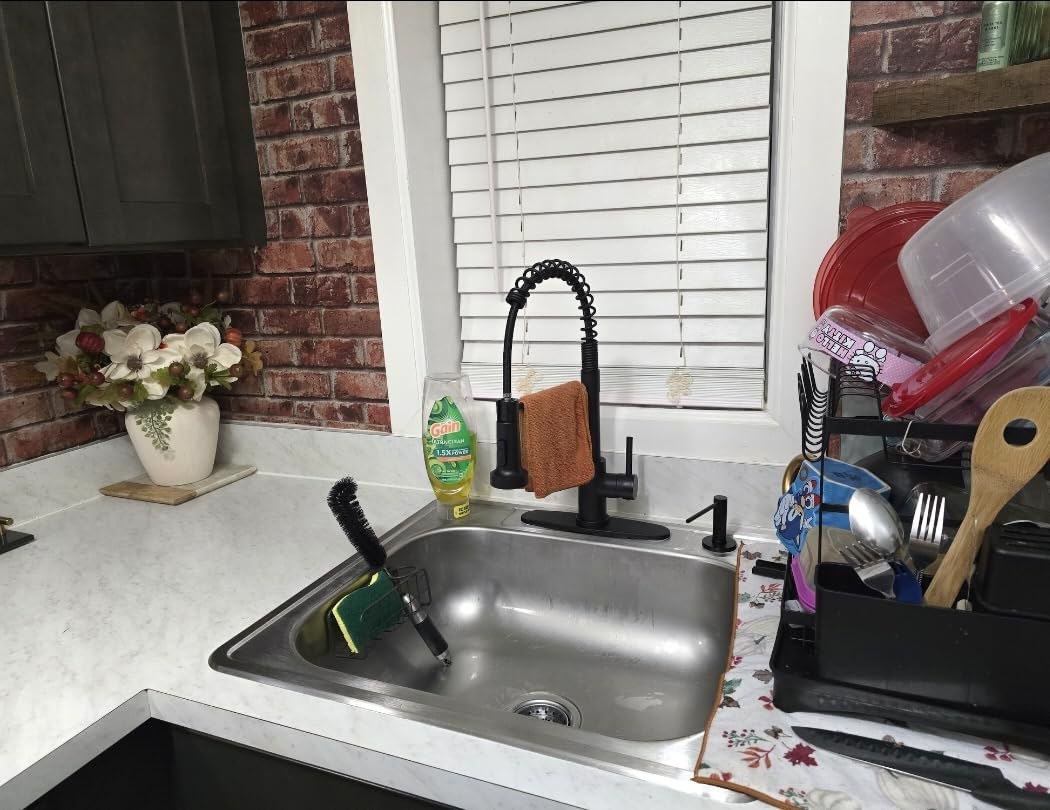
What gives me pause on a well is the sprayer hardware, not the body. The pull-down head and hose are lighter duty than the metal-braided assemblies you get on premium pull-downs, and a sprayer hose is exactly the part that takes abuse when you are filling stock pots and scraping dishes in hard water. The one-year warranty is also the shortest in this roundup.
The rating of 4.4 across more than 3,600 reviews sits a little below the leaders, which is consistent with the listing describing a well-built but basic fixture. Owners like the coating and the included hardware. The recurring caution is exactly the one you would expect: matte black shows water spots as the finish wears, and dark finishes are unforgiving of mineral haze.

Who should buy it
Buy this one if the finish is the decision and you want a dark kitchen faucet that coordinates rather than one that performs. The included deck plate and hoses make it the least fiddly replacement in the group, and the stainless body is the right material for a well even if the sprayer is the modest part.
It is also a sensible second faucet for a wet bar or prep sink, where the daily use is lighter and the finish is doing most of the work.
Where it falls short
On an untreated supply with visible mineral content, matte black is the finish that shows deposits first. The coating slows spotting but does not prevent it, and the dark surface magnifies any haze that does appear.
The lighter duty pull-down head and the one-year warranty are the two things to weigh. If your kitchen sees heavy pot-filling and daily scrubbing, spend up on a faucet with a metal-braided hose and a longer warranty.
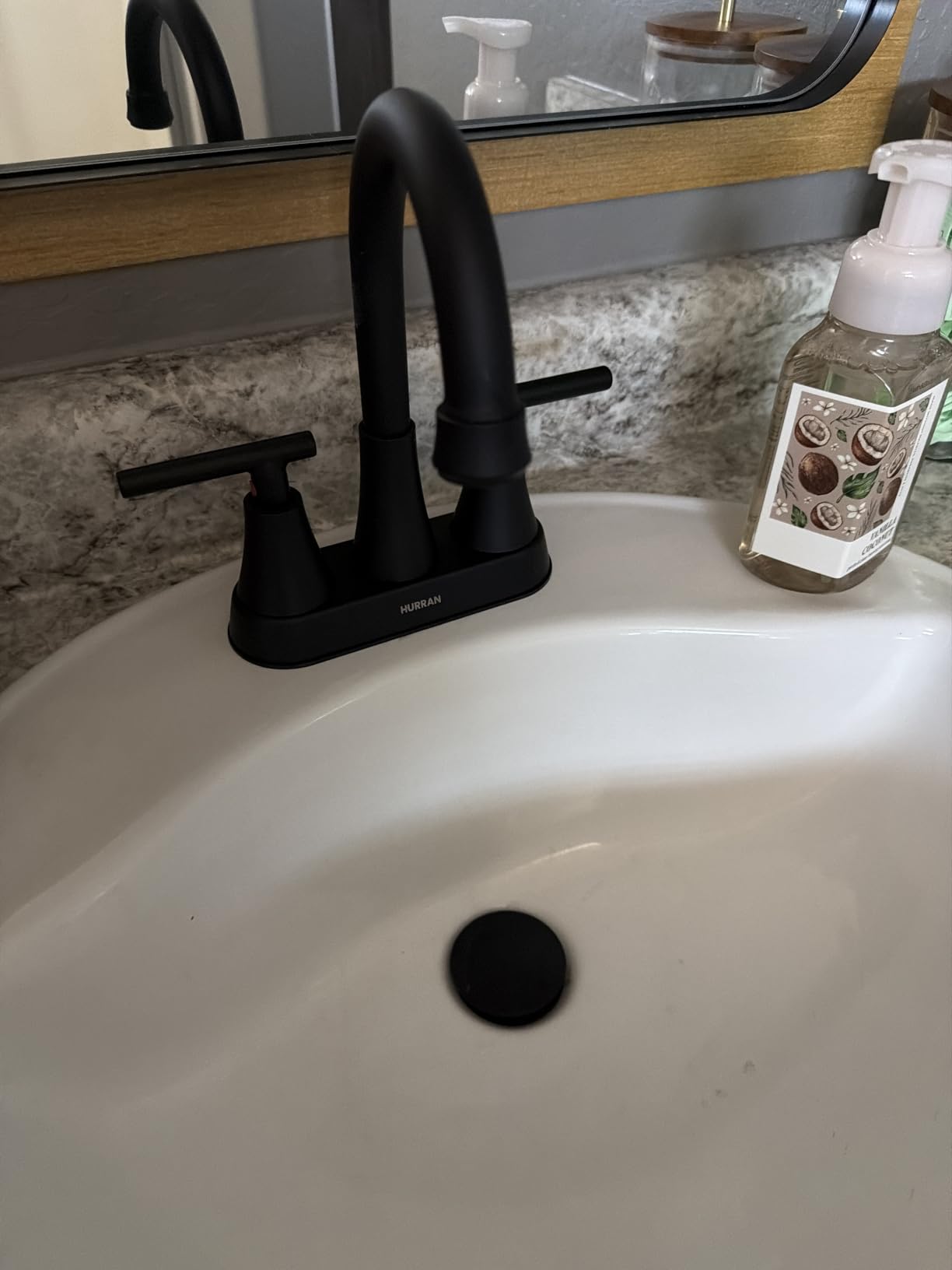
5. Hurran 4 Inch Centerset – Best Bathroom Faucet for Well Water
Brushed Gold Bathroom Faucet, Hurran 4 inch Centerset 2-Handle Lead-Free
- CEC registered lead-free stainless steel construction
- 1.2 gpm water-saving aerator with no-flow replacement included
- Drip-free ceramic cartridges
- 360 degree high-arch swivel spout
- Includes drain supply lines and tools
- Plumber's putty or silicone is not included
- Hot and cold valve stems can arrive reversed
- Maximum deck thickness of 1.2 inch
For a bathroom on a well, flow rate is the strategic choice. At 1.2 gpm this faucet uses roughly a third less water than a 1.8 gpm kitchen tap, which means the aerator that catches scale does so less often and takes longer to narrow. On a property with a well, water is metered by the pump, and running every bathroom at kitchen pressure is hard on the system and on the treatment equipment.
The body is stainless steel with CEC registered lead-free construction, and the two handles run on drip-free ceramic cartridges. The 360-degree high-arch swivel spout clears the basin, and the package includes the pop-up drain, two 24-inch supply lines and installation tools, so nothing else needs buying for a standard vanity swap.
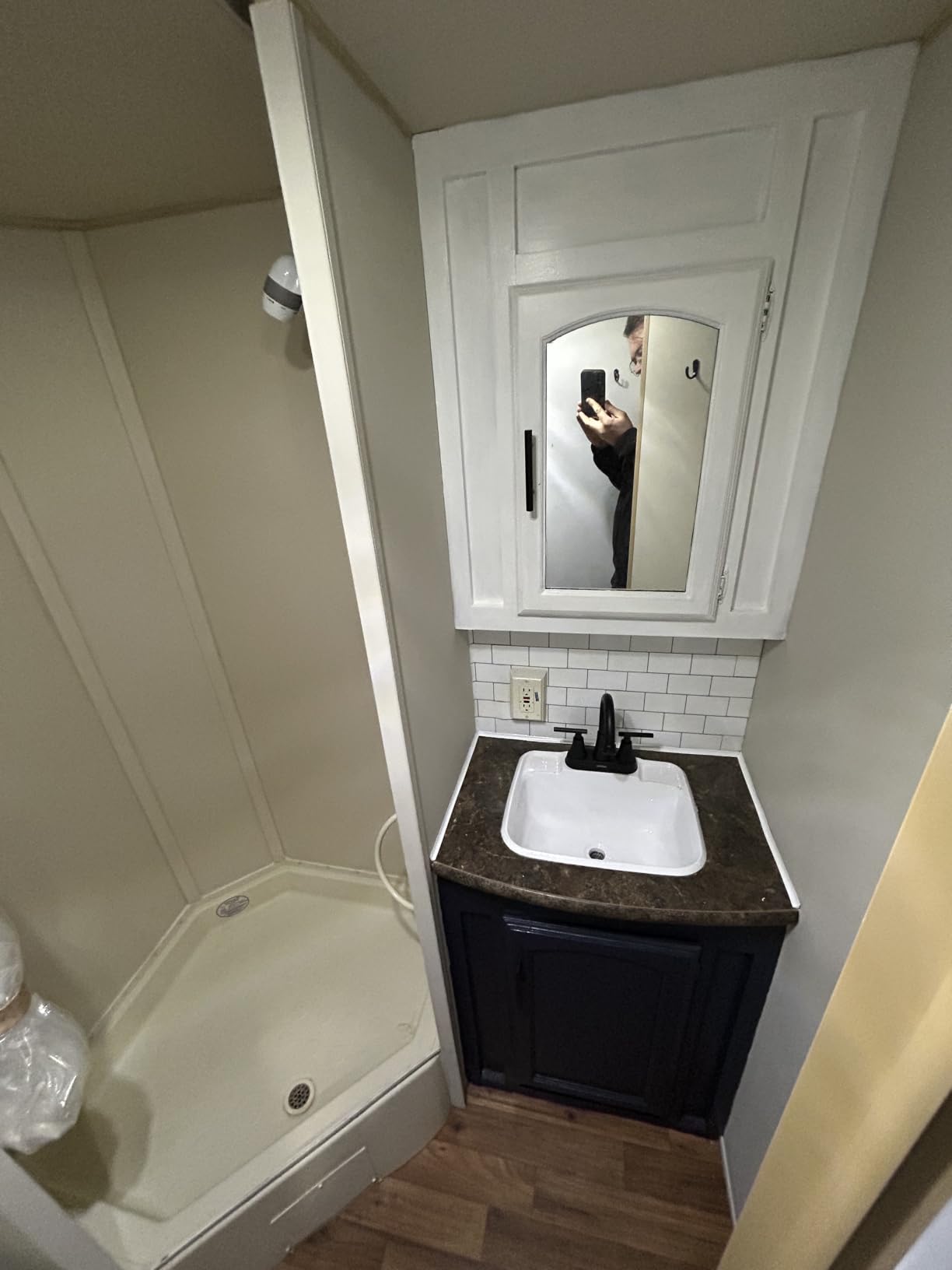
The lifetime warranty is the reason this takes the bathroom slot. On a well, warranty coverage that survives a few years of hard water is worth more than a longer feature list, because most manufacturers treat scale damage as a maintenance issue rather than a defect. A stated lifetime warranty on the fixture gives you a fallback the retailer cannot walk back.
Owners rate it 4.5 across more than 9,800 reviews and describe a clean modern look, smooth handles and a fifteen-minute install. Many buy multiples for bathrooms, RVs and laundry sinks. The practical notes are missing putty or silicone for mounting, and the occasional valve stems arriving reversed, which is a two-minute fix at install time if you check them first.
Why bathrooms should not match the kitchen
Matching flow rates across a house is a common instinct and usually a mistake on a well. A bathroom tap does less work, has a smaller spout and gets used in shorter bursts, so 1.2 gpm costs you almost nothing in experience while extending the time before scale blocks the aerator and the cartridge.
The lifetime warranty matters more here than anywhere else, because a bathroom faucet that gets replaced every few years due to scaling is the most visible sign that a house was plumbed for city water.
Where it falls short
The maximum deck thickness of 1.2 inch rules it out on thicker surfaces without workarounds, so measure a thick quartz or butcher block vanity before ordering. And on a low-pressure well system, a two-handle faucet needs both feeds to be supplying properly or the hot side will feel weak.
It is also worth being clear that two handles mean two cartridges to maintain over time. That is a fine trade for separate temperature control, but it is more service points than a single lever.
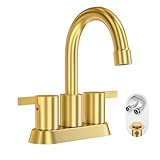
6. phiestina Brushed Gold Centerset – Best Two-Handle Bathroom Upgrade
Brushed Gold 4 Inch 2 Handle Centerset Lead-Free Bathroom Faucet, Swivel Spout with Copper Pop Up Drain and 2 Water Supply Lines, BF015-1-BG
- NSF 61 lead-free and CEC certified
- A-grade 304 stainless steel with nano electronic plating
- Swings smoothly with no loosening over a year of use
- Rust-resistant nylon braided supply lines
- Fast 24-hour customer support
- Some internal components are plastic beneath the plating
- Pop-up drain can be too long for shallow cabinets
- One owner reported a hot-side failure after about two years
This is the vanity faucet for someone who wants the two-handle look without a soft internal build. The body is A-grade 304 stainless steel with nano electronic plating, certified NSF 61 lead-free and CEC, and it carries a 3-year replacement warranty with 24-hour support behind it, which is longer than most fixtures at this tier.
Owners report that the spout swings smoothly side to side with no loosening or dripping after a year, and the high-arc swivel leaves room to fill containers. The rust-resistant nylon braided supply lines are a sensible detail on a well because rubber-lined connectors are where chlorinated municipal supply and untreated water behave differently, and braided lines tolerate both.
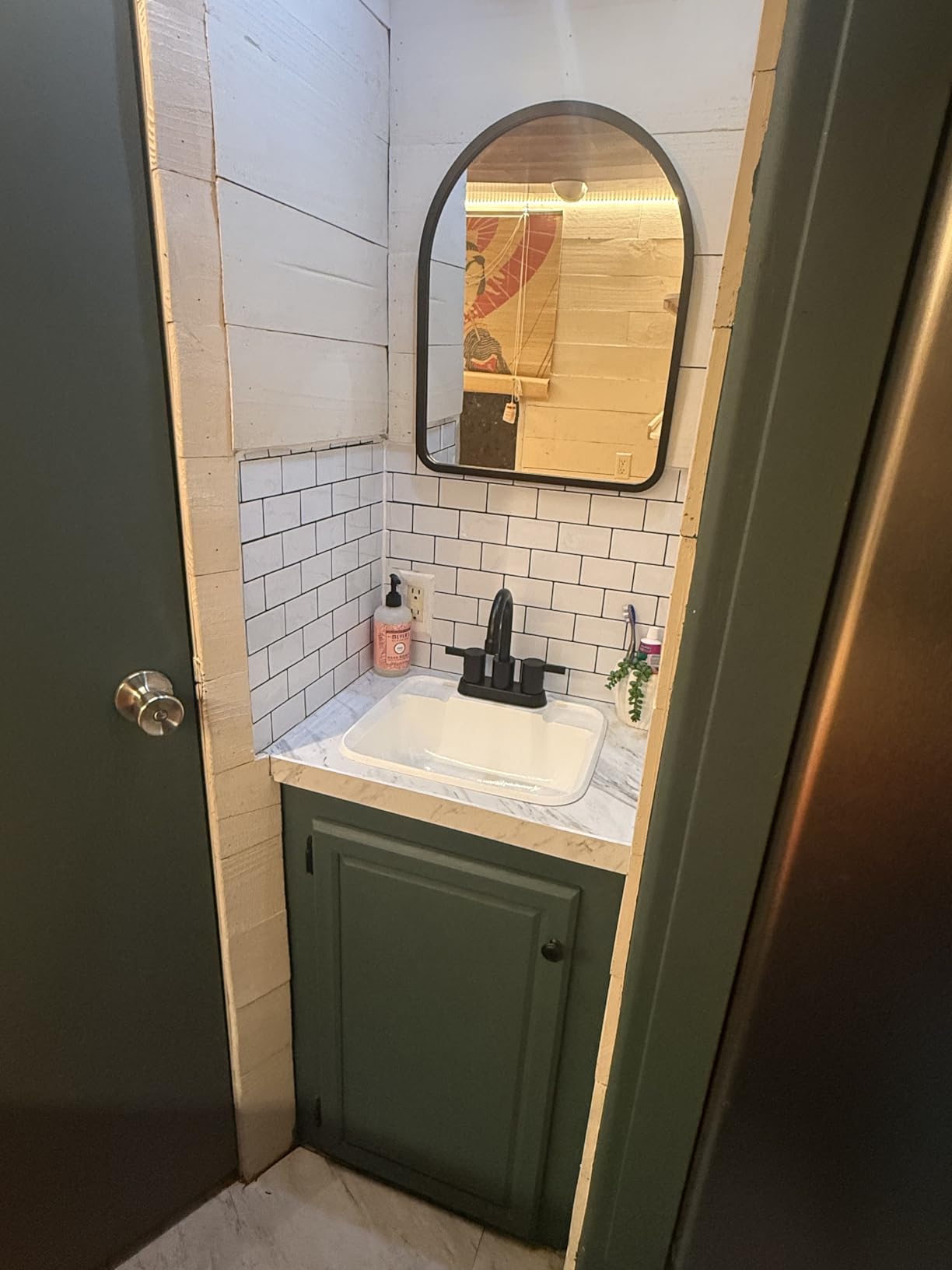
It fits a 4-inch centerset on either two or three holes with a deck plate, which makes it a straightforward retrofit over an existing vanity. At 1.2 gpm with a cartridge valve, it sits in the same water-conscious class as the Hurran, and the package includes the aerator, deck plate, drain, handles and manual.
Two reservations come straight from owner feedback. Several reviewers note plastic components beneath the plating, which is normal at this price but worth factoring in if you are replacing a fixture that lasted twenty years. And one long-term owner has had a hot-side failure after roughly two years, which is a single report rather than a pattern, but it is the kind of thing you want to know before buying.
What it does better than the other centerset
The plating system is the difference. Nano electronic plating over 304 stainless is a harder, more even surface than a standard electroplate, and on a well that translates directly into how the finish holds up to standing water and mineral haze. Brushed gold also disguises spotting better than a light finish does.
It is also the better choice if your existing vanity already has a three-hole layout, since the deck plate is included and the 1.38 inch maximum deck thickness is more forgiving than the Hurran.
Where it falls short
The pop-up drain can be too long for shallow cabinets, which is a real problem in RVs and small utility spaces. Measure your cabinet depth before you commit.
Two handles mean two cartridges, and the internal plastic components are a compromise on a faucet that is otherwise built to last. If the long game is your priority, spend up on a single-handle model with a documented cartridge cycle rating.
7. Homewerks Low-Arc Drinking Water Faucet – Best for Low Well Pressure
Homewerks 1-Handle Low-Arc Drinking Water Faucet, Chrome, Lead-Free
- Sturdy handle rated for heavy use
- Straightforward single-hole installation
- Smooth single-lever operation with solid pressure
- Compact low-arc design that does not splash
- Works for filtered water ice machines and RVs
- On-off spring in the valve is stiff and stiffens with age
- Low-arc spout has limited clearance for tall containers
- Plastic lever on a long-life faucet
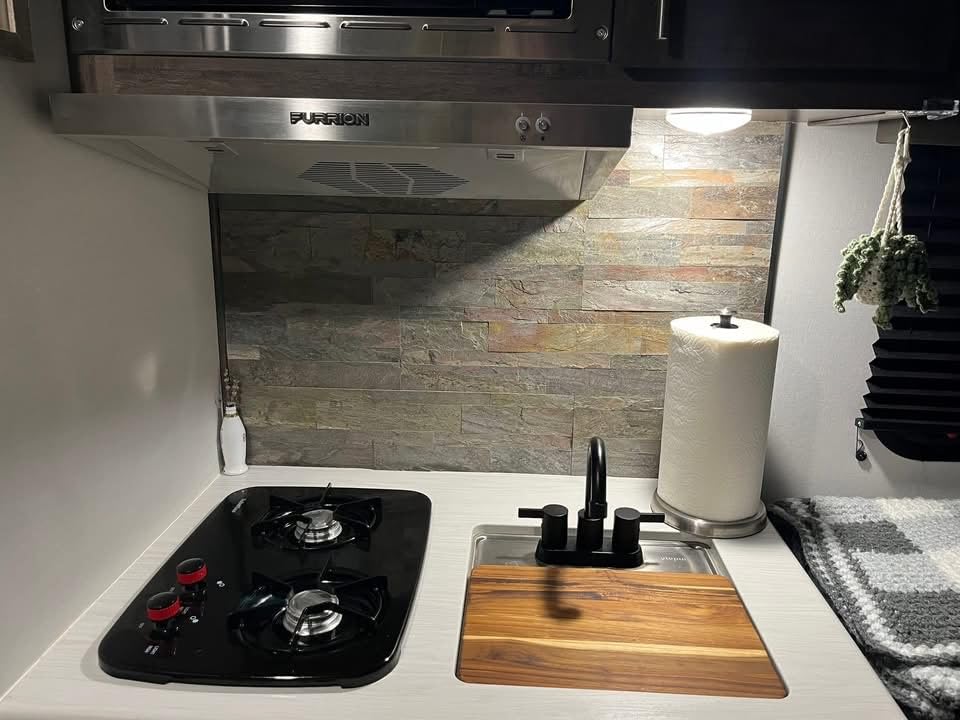
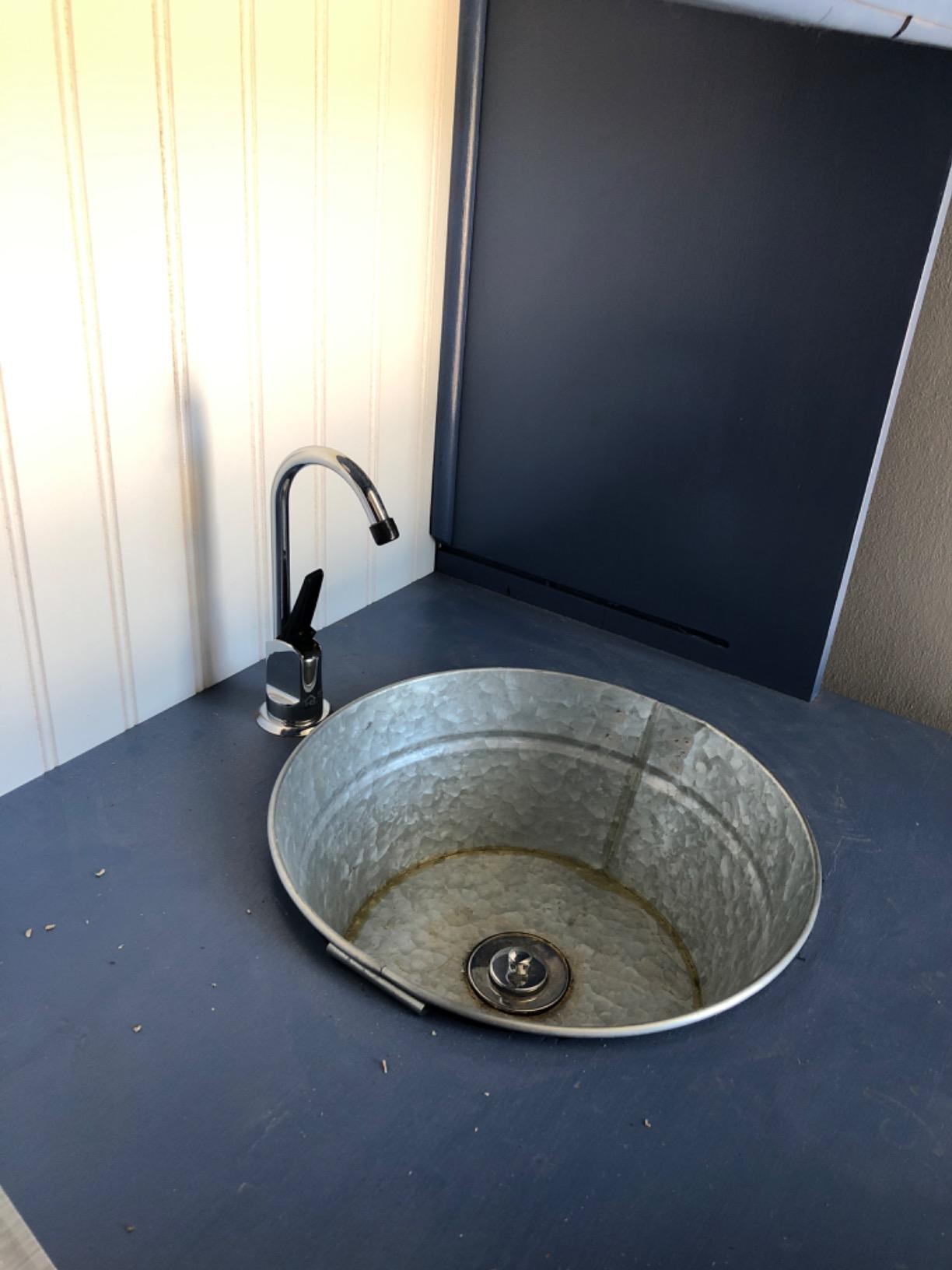
This is the one to look at if your well pump delivers modest pressure. It is a low-arc, single-lever drinking water faucet with a lead-free brass waterway, a 2.2 gpm flow rate and 1/4 inch and 3/8 inch compression connections. A low-arc spout puts the outlet close to the basin, so you keep the velocity of the stream instead of spraying the countertop, which is what makes a low-pressure system feel more usable than its rated flow suggests.
Long-term owners describe it as durable, easy to install and good looking for the money, using it for water bottle filling, ice machines, campers and food-service sinks. That last application is telling, because a faucet that holds up in a commercial sink will not be troubled by a domestic well.
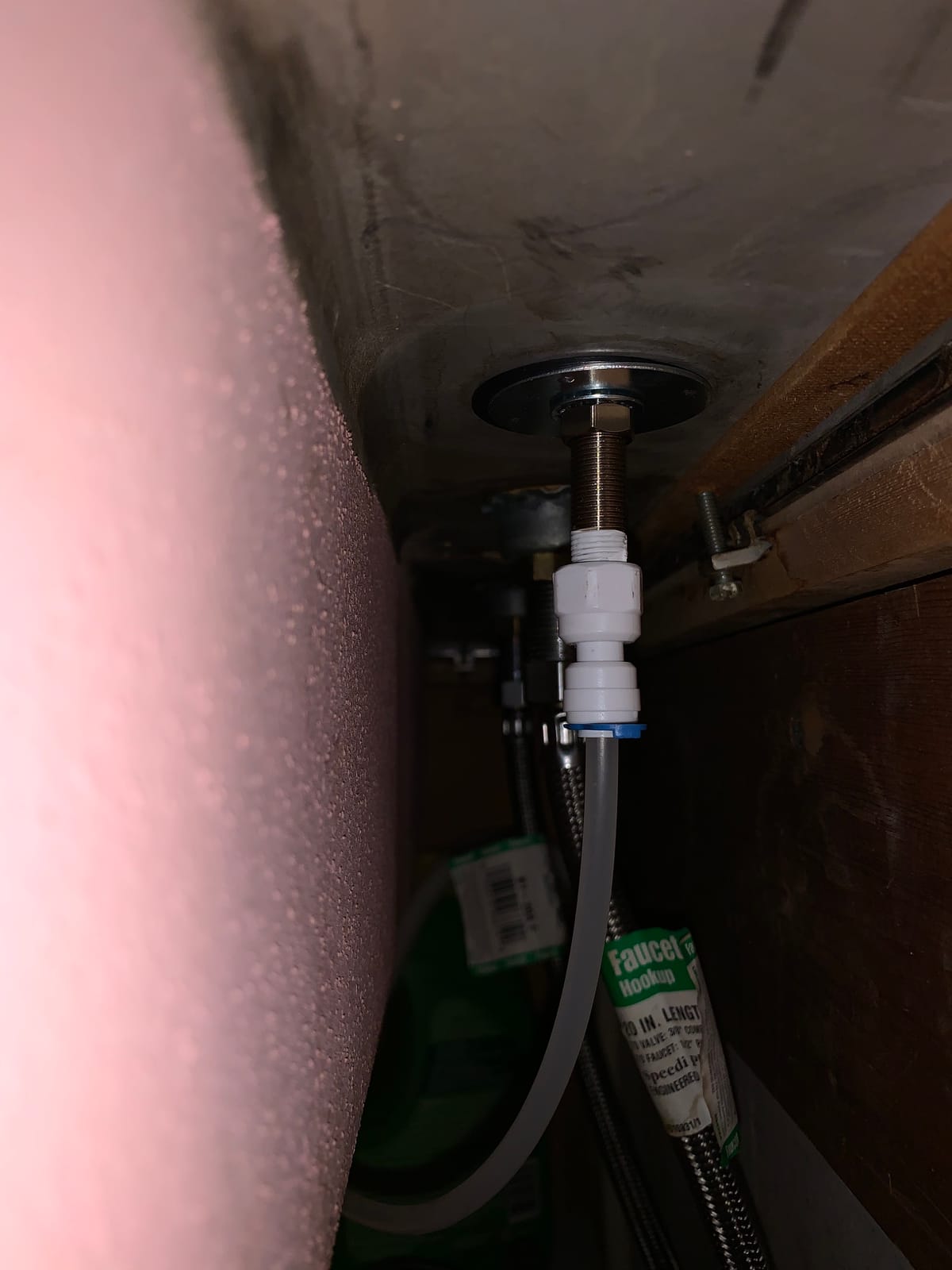
The main caution is the on-off spring inside the valve, which owners describe as stiff from the start and stiffer with age. The lever itself is plastic, so on a fixture you might keep for a decade, the handle is the component most likely to need attention first. Neither issue affects water quality, and both are cheap to live with.
It rates 4.6 across 990 reviews. The low-arc spout also means limited clearance for filling tall containers, so it works best beside a filter or ice machine on the counter rather than as the main sink tap.
Why low pressure changes the choice
Perceived flow is not the same as rated flow. A faucet that throws a narrow, aerated stream at 2.2 gpm feels stronger than a wide splashy one at the same number, and a low-arc spout concentrates what little pressure you have into the stream rather than spreading it. That is the whole argument for this shape on a low-pressure well.
The single lever also matters. A lever throttles flow and temperature together, so it responds predictably when the supply pressure changes, which is exactly what a well pump does on its cycle.
Where it falls short
The stiff valve spring and the plastic lever are the honest weaknesses here. On a fixture that will be used daily for years, the handle is a wear item, and the stiff spring makes the on-off action feel less precise than a ceramic cartridge would.
Low-arc clearance also rules it out if you plan to fill a tall pitcher or a vase at that sink. Choose a higher arc gooseneck model for that.
8. Bifordo Cold Water Only Faucet – Best for Utility and Outdoor Sinks
Cold Water Only Faucet SUS304 Stainless Steel Faucet for Kitchen Sink
- Food-grade SUS304 stainless steel that resists corrosion and fading
- 9.45 inch arc clears watering cans and BBQ tools
- 360 degree swivel switches between two sinks
- Installs in minutes with all-metal connectors
- Supplied supply fitting measured closer to 1/2 inch than advertised
- Lightweight packaging can crush the hose against the body
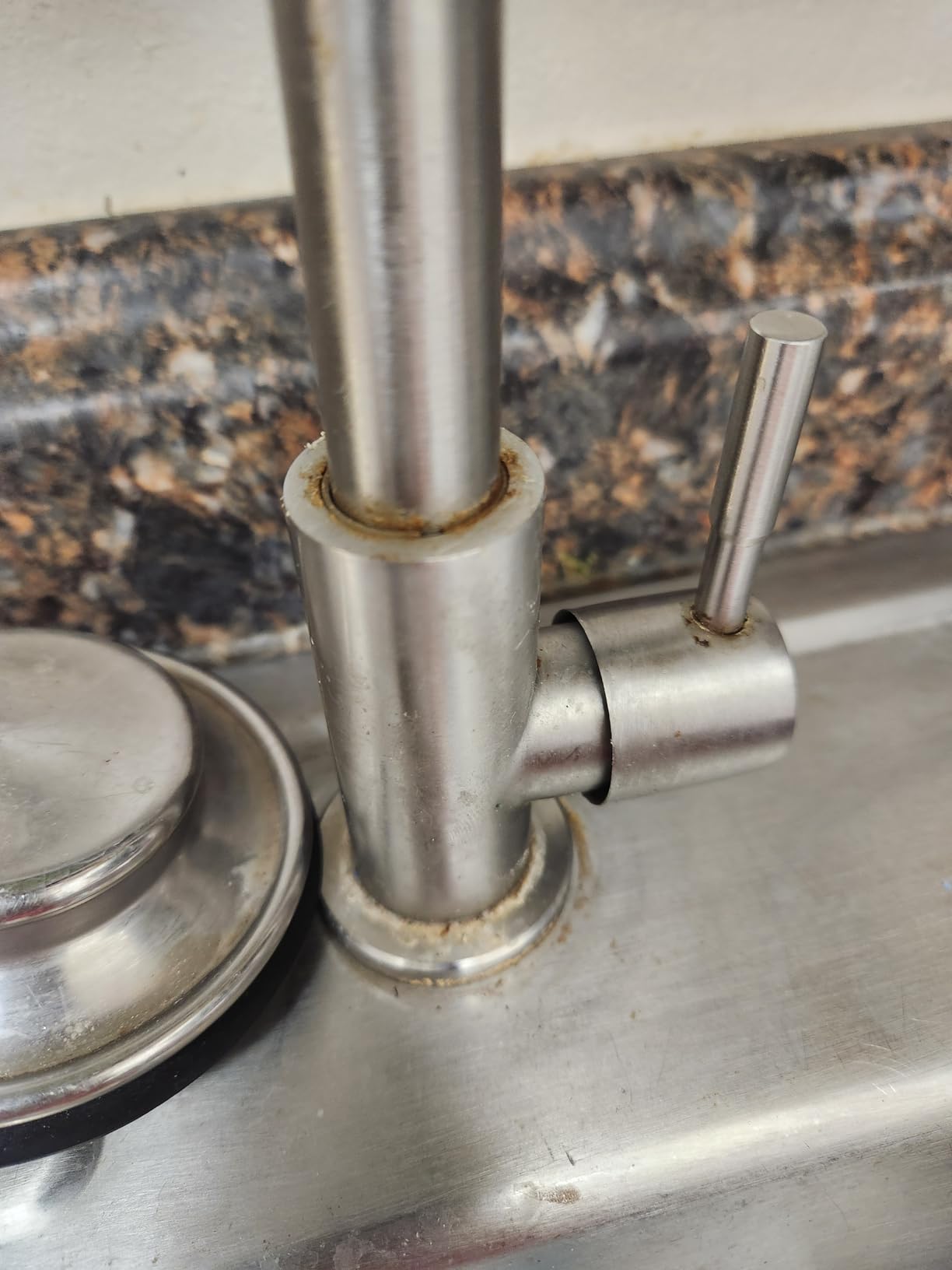
The utility sink, the outdoor wash station, the camper van and the garden tap all want the same thing: something that does not care. This cold-water-only faucet is food-grade SUS304 stainless steel, which is the right body for a well-fed spigot where a hose bib gets splashed, frozen and forgotten.
At 9.45 inches, the arc is tall enough to be the point of this faucet, and that height is the feature. It clears a watering can, a large grill utensil and a five-gallon bucket without you angling the container. The 360-degree swivel lets you switch it between two sinks, which is handy when a laundry sink and an outdoor basin share a run of pipe.
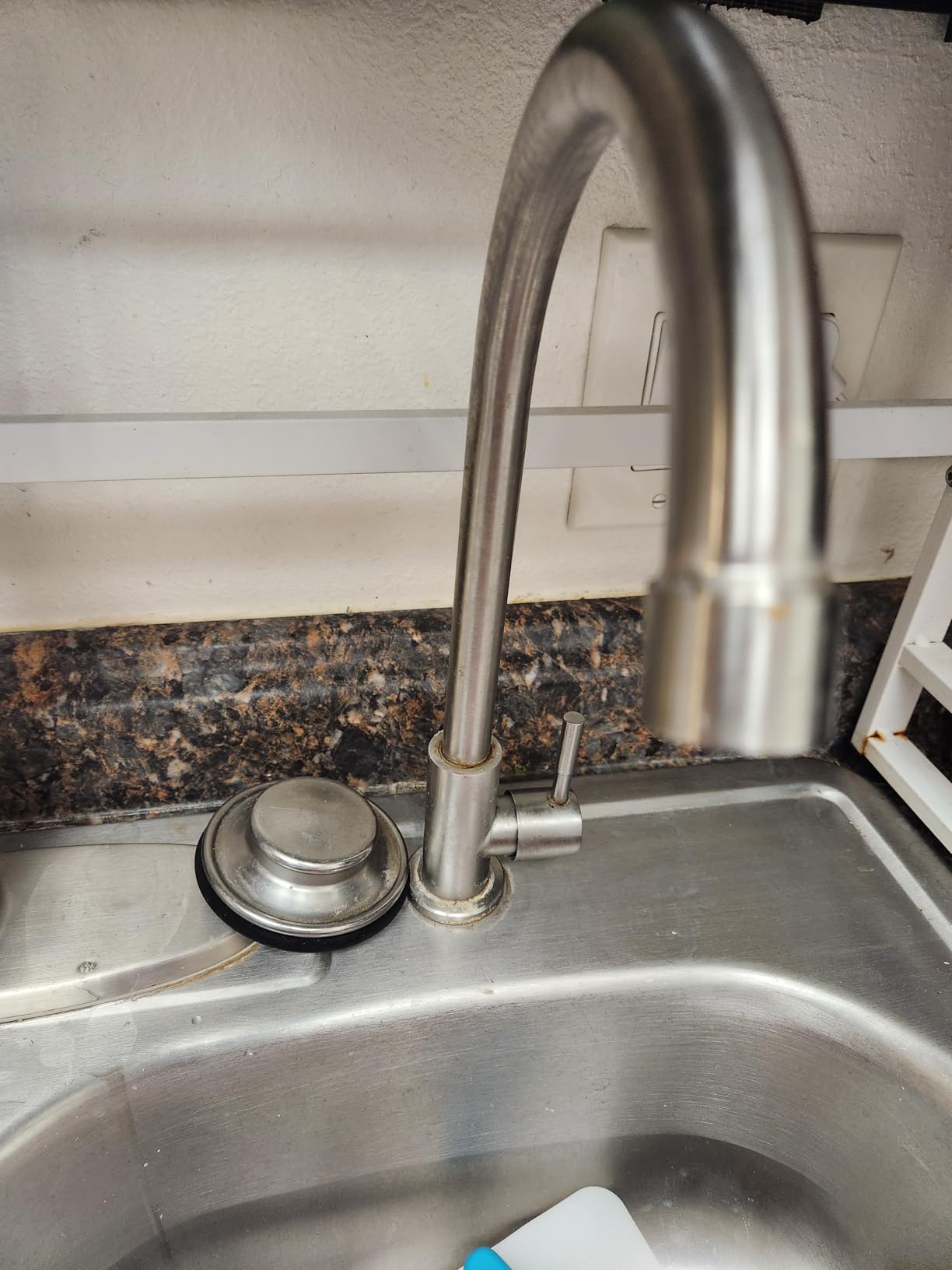
Flow is 1.78 gpm aerated and non-splash, and the valve is a disc type tested to 500,000 cycles with a two-year after-sales guarantee. Installation is a few minutes with all-metal connectors and rubber gaskets, which is the correct build for a location where you may be doing the work in the cold.
At 4.6 across 238 reviews, this is the least-proven fixture in the group, so we are not claiming a decade of owner data for it. What the listing does state is straightforward, and owners report solid, non-leaking performance in outdoor and camp applications. One install note: the supply hose fitting measures closer to 1/2 inch than the advertised 3/8 inch, so bring an adapter.
Where it earns its place
It is the pick here sized for a tall utility container, and stainless steel at a cold-only tap is close to the least failure-prone faucet configuration that exists. There is no cartridge to scale, no mixing valve to drip and no moving part above the water line beyond the lever.
It suits camp sinks, garden wash stations and outdoor taps where the tap is used in weather rather than watched. If you want hot water at that location, this is not the fixture, but for cold it is the simplest thing that will work.
Where it falls short
Cold water only is the defining limitation, and it makes this a supplementary tap rather than a main fixture. The 238-review base also means you are trusting the specification sheet more than a long owner history, which is a fair trade for a hose bib and a poor one for a primary sink.
Packaging is thin enough that owners have received fixtures with the hose crushed against the body. It is a five-minute fix if you see it, but check before you install.
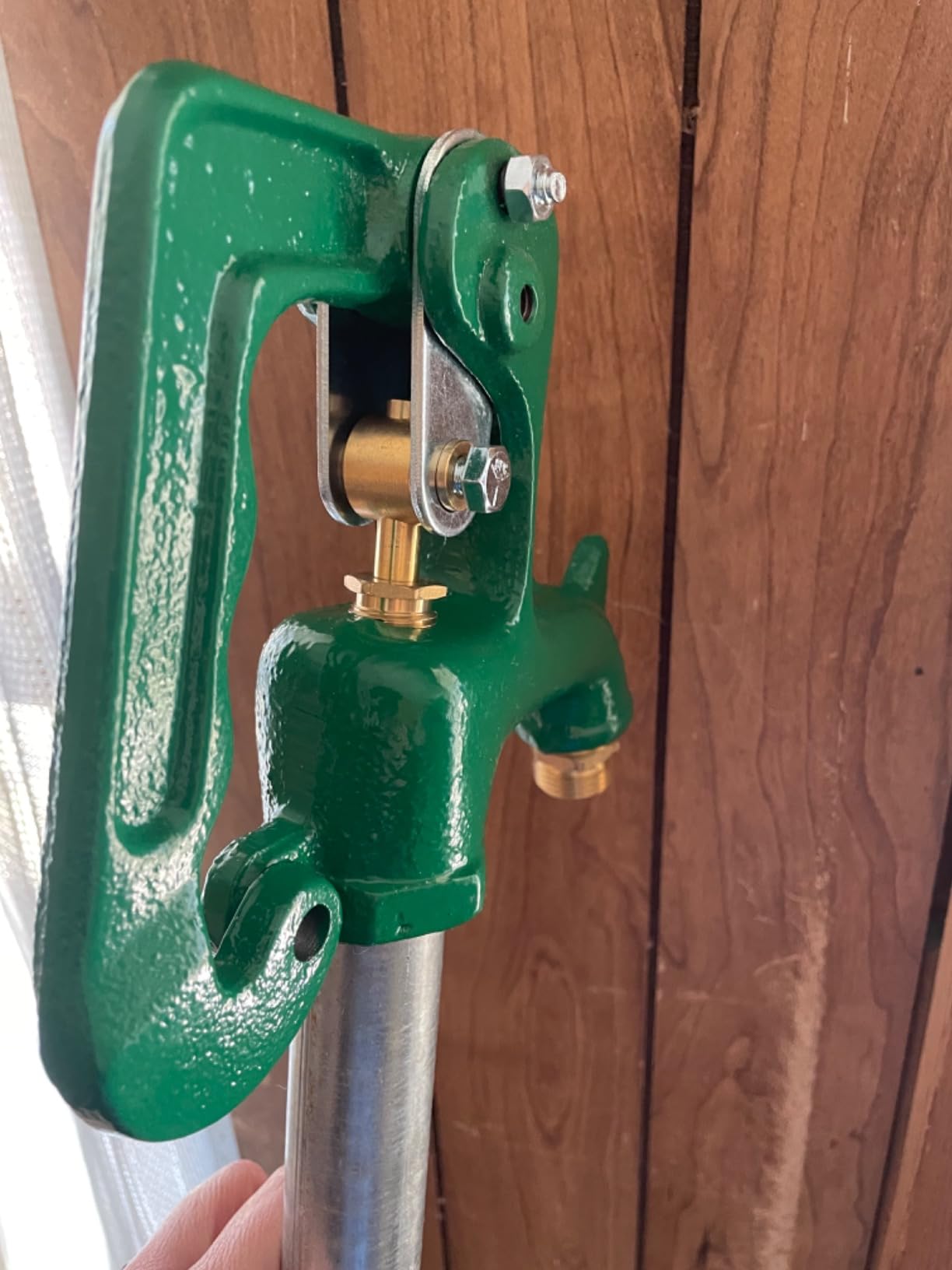
9. JIANBENKJ Frost Proof Yard Hydrant – Best Outdoor Tap for a Well
Frost Proof Yard Hydrant Frost Free Outdoor Faucet Freeze Proof Total3.25FT
- Cast iron head with zinc-plated corrosion-resistant tubing
- Lead-free brass foot valve and pivot certified to NSF/ANSI 372-2016
- Lever pivot allows adjustable flow
- 3.25 foot riser clears the frost line
- Must be buried at least 12 inches deep and deeper in cold climates
- Drain hole must stay clear of soil or it will not drain and can freeze
A yard hydrant solves a problem a hose bib cannot: an above-ground spigot that drains itself when shut off, so the water inside the riser is not sitting there when the temperature drops. The 3.25-foot total height clears the frost line in most climates, and the 3/4 inch FNPT connection takes a standard hose coupling.
On a well, the materials are what matter. The head is cast iron with zinc-plated one-inch tubing for corrosion resistance, and the foot valve and pivot are lead-free brass certified to NSF/ANSI 372-2016. That certification is a direct response to untreated groundwater, where the water reaching an outdoor tap has had no treatment beyond whatever your softener does.
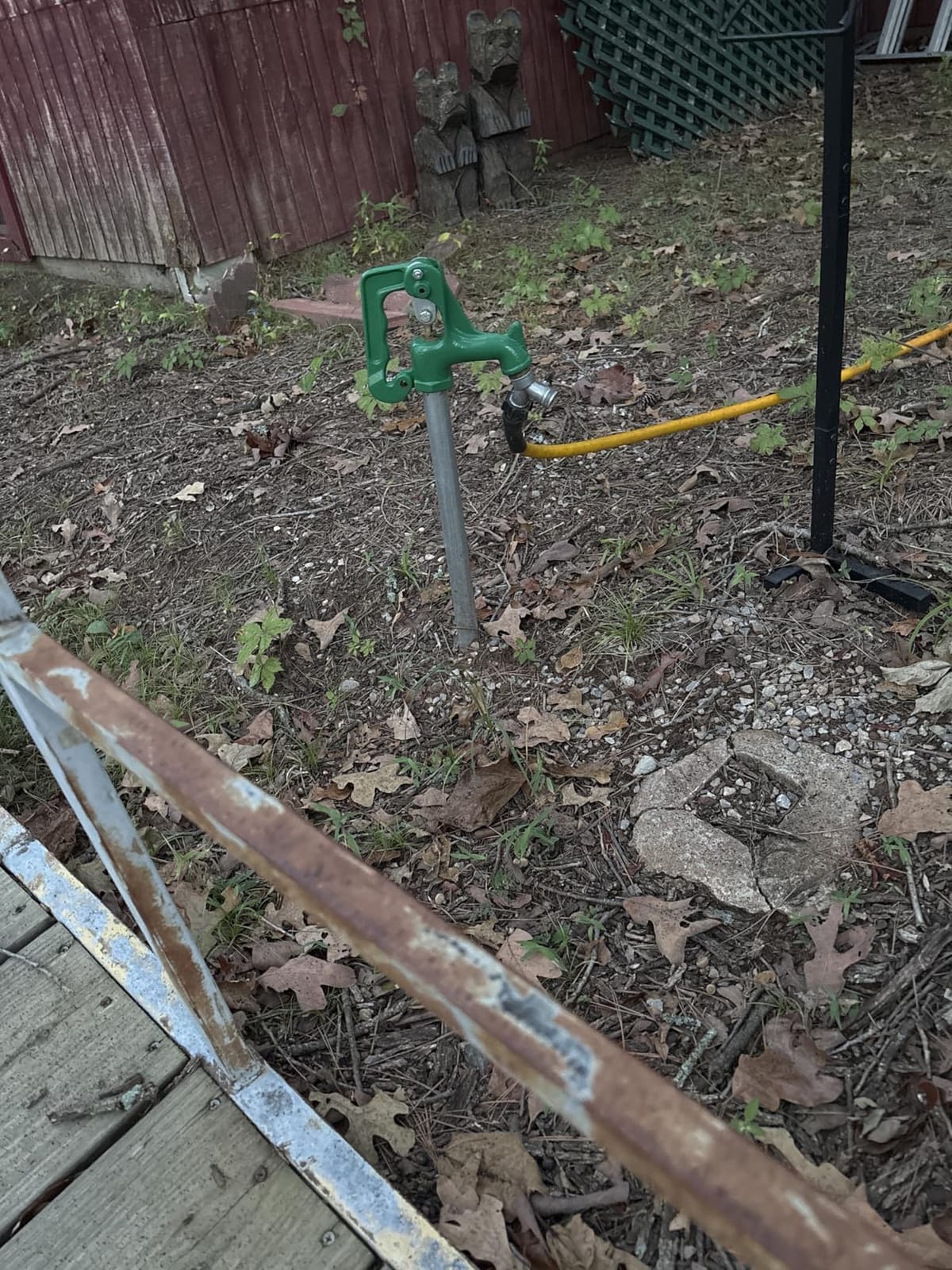
The lever pivot gives you adjustable flow, which is useful on a well because a full-flow hose bib can pull down the pressure at a distant fixture every time you run the hose. A part-open yard hydrant is a practical way to keep the rest of the house steady while you fill a bucket or wash a truck.
At 4.6 across 420 reviews, and with no owner review text returned for this ASIN, we are working from the specification data rather than a body of buyer feedback. The two installation conditions are the important part: bury it at least 12 inches deep, more in cold climates, and keep the underground drain hole clear of soil so the unit can drain between uses.
Why a well house needs one of these
A standard hose bib on a well line holds standing water in the supply pipe, and standing water plus an unpressurised line is how an outdoor tap splits a frost line. The self-draining riser removes that risk, and the adjustable flow helps you avoid depressing well pressure when you are watering the garden.
It is also the one fixture in this roundup that is meant to be installed once and then ignored for a decade, which is why we are comfortable recommending it on its certifications alone.
Where it falls short
It is a buried installation, not a five-minute swap, and it needs a drain hole that stays clear. If soil settles over the drain, the fixture cannot drain and can freeze, which is the single failure mode to plan for.
The 12-inch minimum bury depth is a floor rather than a target, and in a genuinely cold climate you will want more. This is a fixture to spec with your installer rather than add on a whim.
10. Delle Rosa Drinking Water Purifier Faucet – Best for Under-Sink Filtration
- Lead-free 304 stainless steel body with lead-free brass cartridge
- Fast self-locking flow that holds the set level
- Chrome finish resists tarnish and corrosion
- Includes quarter
- three-eighths and half inch adapters
- Supplied washer is undersized for a 1/2 inch hole
- Base can shift while tightening in a marginal hole
- Non-air-gap design will not suit an air-gap filter system
This is the filtration faucet for someone whose well makes them want to see the water rather than trust it. The body is lead-free 304 stainless steel with a lead-free brass cartridge, and the certification list includes CEC, DOE and NSF/ANSI 372-2024, which is the current lead-free standard most buyers now check first.
The flow behaviour is the underrated part. Unlike a spring-return drinking tap that closes when you let go, this one holds the level you set, which is a small daily convenience that owners mention often. The 360-degree rotating gooseneck reaches across the sink with a single 90-degree handle, and it fits countertop thickness under 2 cm with a hole diameter under 1.7 inches.
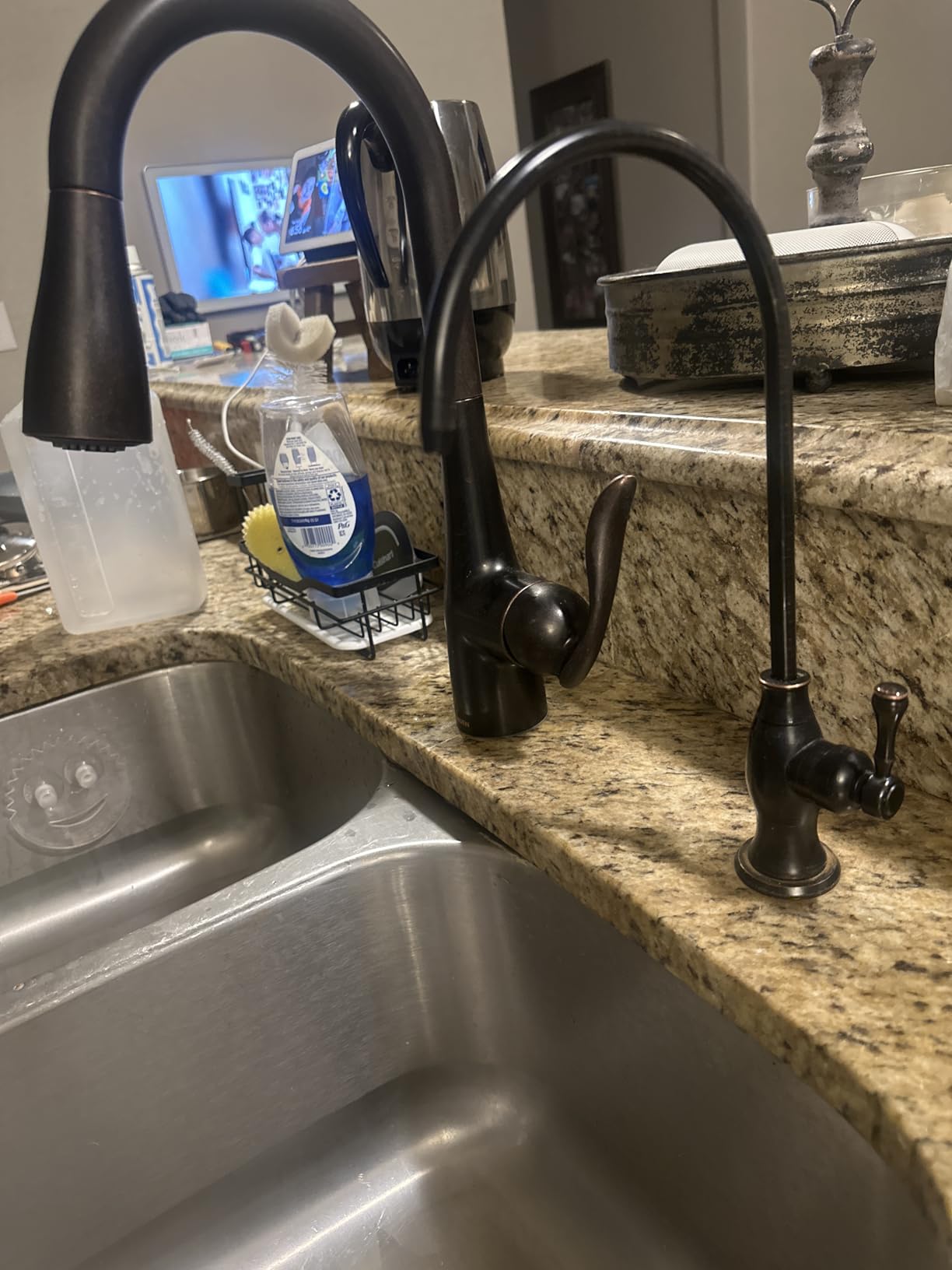
It rates 4.7 across 2,270 reviews. Reviewers highlight the strong flow, the high perceived metal quality and how well the chrome finish matches existing kitchen fixtures. A minority had trouble with cramped under-sink space and with hole coverage on larger sink holes, which are both install-planning issues rather than product faults.
The non-air-gap configuration is the one that can end a purchase incorrectly. If your under-sink reverse osmosis or filter system requires an air gap, this faucet will not serve it and you need the air-gap version instead. Check your filter housing before you order, because the adapters and the hole size both matter.
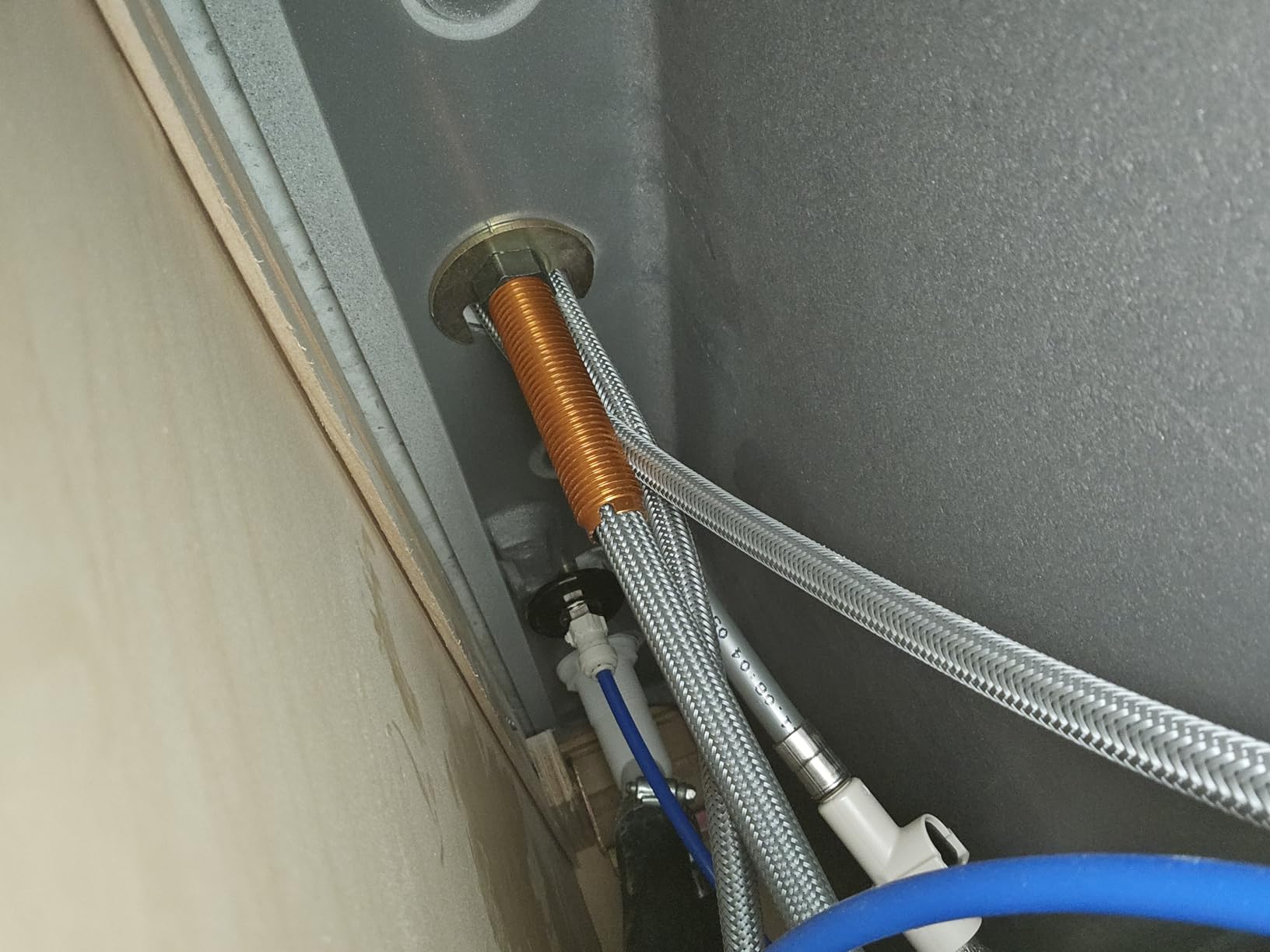
Why the cartridge material matters here
A lead-free brass cartridge is unusual in this category and it is the right call for untreated water. Brass resists the abrasion that grit causes in plastic components, and the lead-free rating under NSF/ANSI 372-2024 is the certification that matters on a private well where nobody else has tested the supply for you.
The self-locking flow also suits well households, where the supply pressure fluctuates. A tap that springs shut every time the pump cycles is genuinely annoying over a day, and holding position removes that variable.
Where it falls short
Non-air-gap is the deal-breaker if your system needs one, and the supplied washer is too small for a half-inch hole, so an extra washer may be needed. Owners also report the base can shift while tightening in a marginal hole size.
Chrome is the least forgiving finish on a scaling supply. It looks superb on day one and shows every spot from then on, so pair it with a planned descaling routine or reconsider a brushed finish.
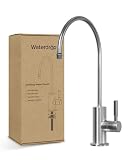
11. Waterdrop G2FCT-BN Drinking Water Faucet – Best for Thick Countertops
Waterdrop G2FCT-BN Drinking Water Faucet, NSF/ANSI 372 Certified, Brushed
- Lead-free 304 stainless steel resists rust and corrosion
- Triple O-ring seal and integrated stem design cut leak points
- Long bottom stem fits thick quartz countertops
- 360 degree swivel with quarter-turn lever
- One owner reported a small persistent leak at the base
- 3/8 inch connector can snap if over-tightened
- May need an extra line to mate with some filter housings
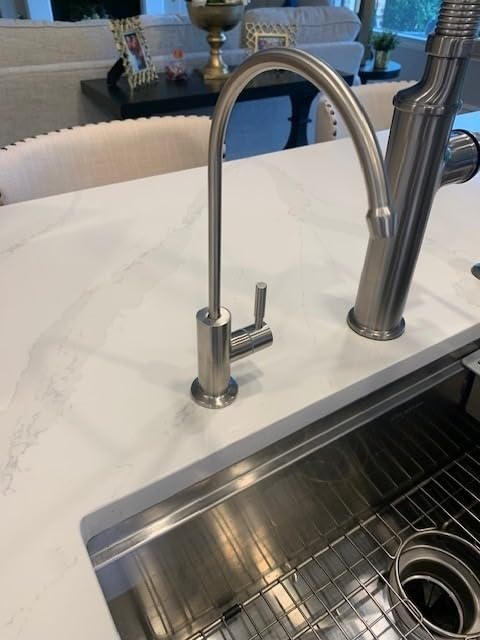
If your sink sits in a thick quartz slab, the stem length is the entire decision. This faucet has a long bottom stem and fits countertop holes from 0.4 to 1.57 inches, which covers the widest range of hole sizes in the group and means a retrofit over an existing drilled sink is usually possible without touching the counter.
The sealing architecture is the part worth noting. A triple O-ring seal combined with an integrated stem and base design removes the junction points where a faucet normally leaks, and the ceramic disc sealing is a serviceable standard rather than a sealed unit. On a lead-free 304 stainless steel body with 1.63 gpm flow, that is the correct construction order for a well.
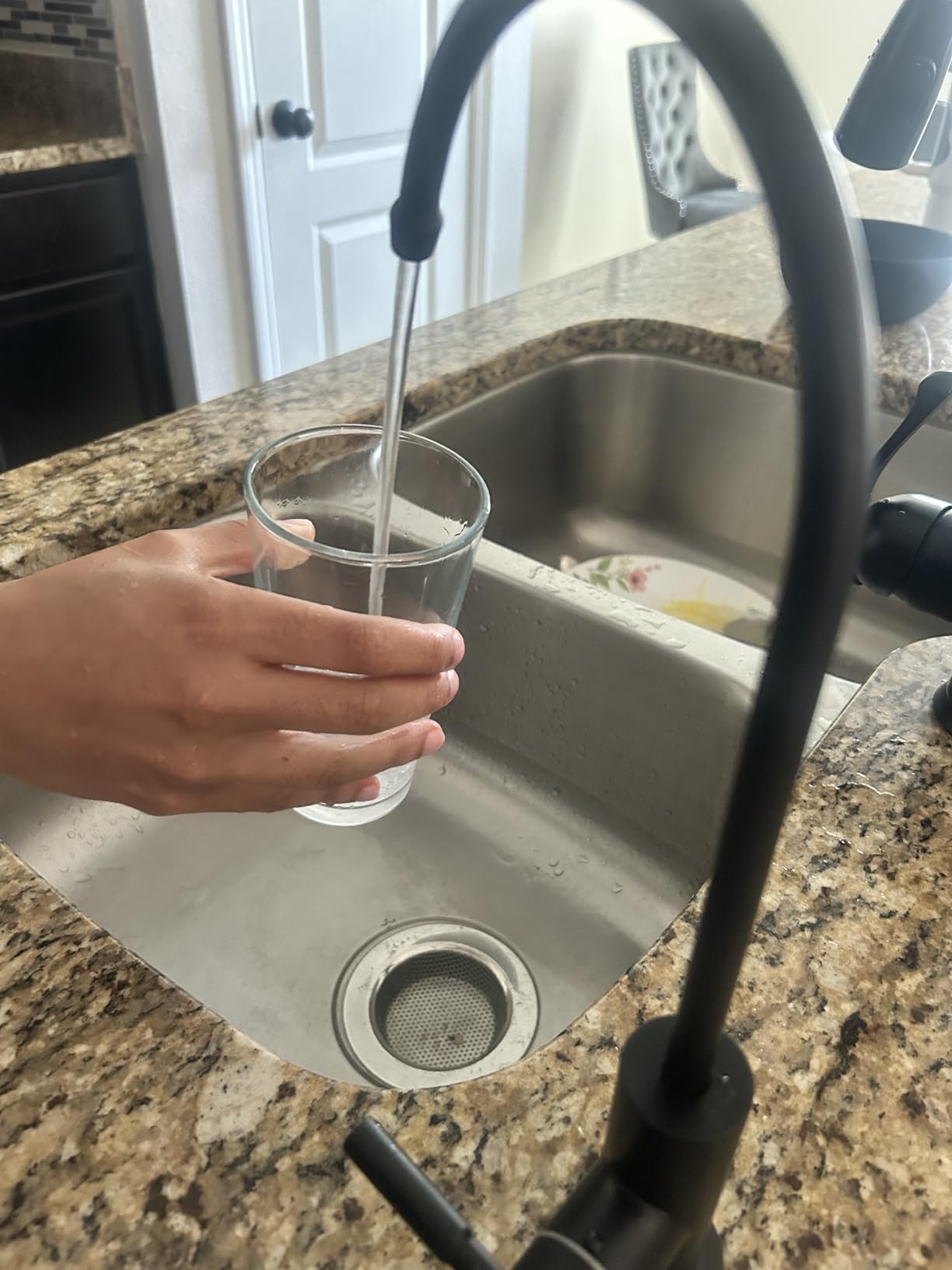
It rates 4.5 across 1,260 reviews, and most owners call it attractive, solid and easy to install with no dripping. Several specifically praise Waterdrop customer service replacing faulty parts, which matters more than usual when a well has already tested your last faucet.
The negatives are specific enough to plan around. One owner reported a small persistent leak at the base, the 3/8 inch connector can snap if over-tightened during install, and it does not directly mate with fittings on some Waterdrop filter housings without an extra line. Pre-assemble the connections loosely rather than wrenching them hard.
When the counter decides the faucet
Most faucet problems on a well are actually installation problems, and the most common installation problem is a stem too short for the slab. A long stem that swallows a 2 cm countertop means the shank and the supply connections are reachable from inside the cabinet, which is where you will be working every time you change a cartridge.
The wide hole tolerance matters for the same reason. If your existing sink was drilled by someone else, the difference between a 0.4 inch and a 1.57 inch accommodation is the difference between a ten-minute job and a new hole in quartz.
Where it falls short
It is a cold-water-only tap with no filtration function of its own, so it is a fixture to pair with a housing rather than a complete system. Check the fitting compatibility with your filter housing before you buy.
The connector is the fragile part. Over-tightening snaps it, and a base leak was reported by one owner. Both are avoidable at install time with care and a supply line sized to the tap rather than to the hole.
12. Kicimpro RO System Faucet – Most Versatile for Filtered Water
- Food-grade SUS304 stainless steel all-metal body resists rust
- Slender no-splash outlet keeps flow centered
- High-grade cartridge tested against dripping
- Simple installation and responsive warranty service
- Base and deck plate are not included for replacement installs
- Under-sink fastening nut changed to a harder-to-reach screw design
- Slightly unstable in a loosely cut sink hole
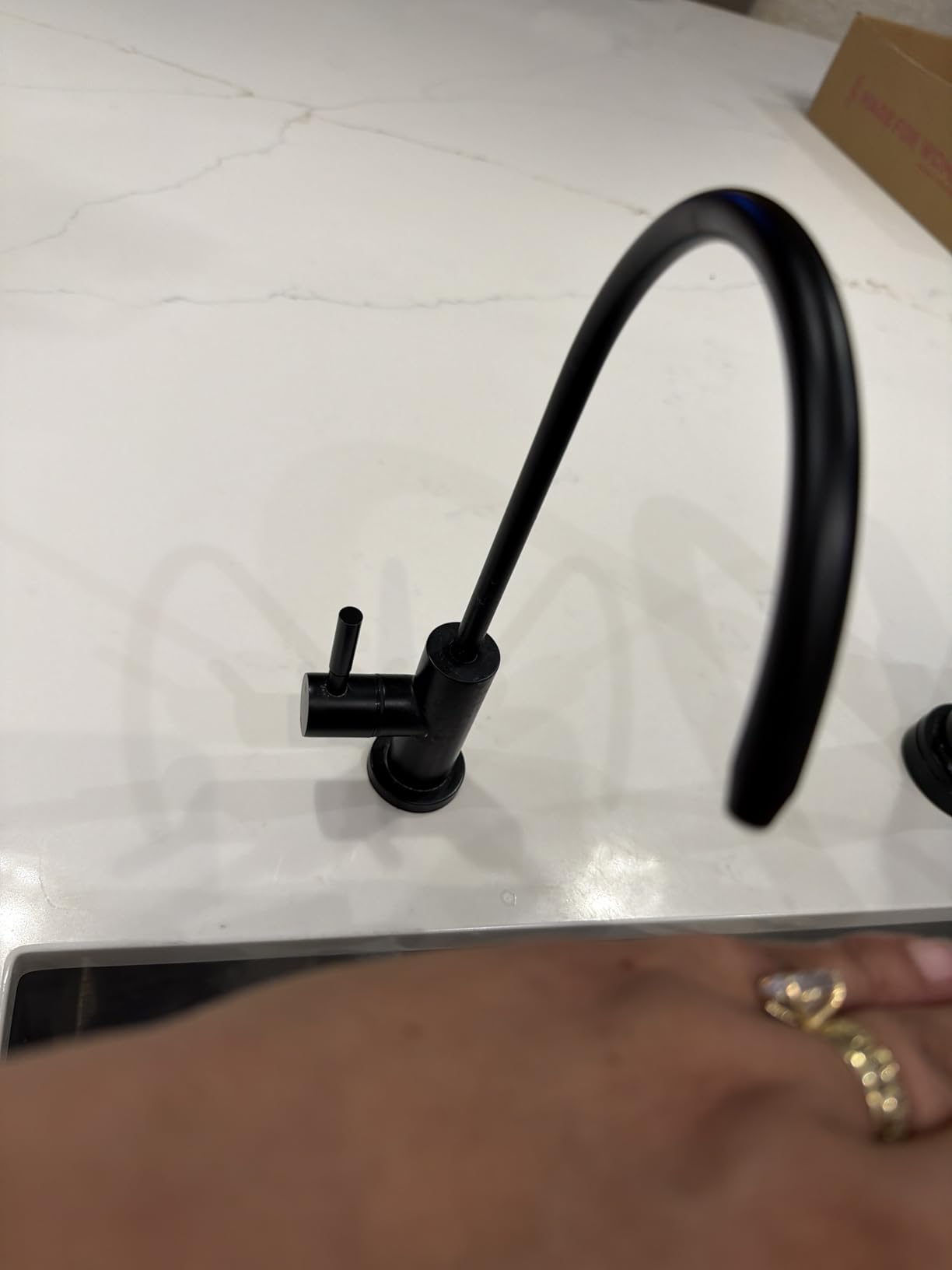
This is the entry point if you want a dedicated drinking water tap on a well and do not want to spend on the styling. The waterway is food-grade SUS304 stainless steel all the way through, the cartridge is a high-grade type tested against dripping, and the 1/4 inch and 3/8 inch quick connectors come included, which means the install is genuinely quick.
At 3,093 reviews averaging 4.5, it is a well-worn product rather than an experiment. Buyers generally describe the faucet as sturdy, well finished and good looking, with a smooth lever, and they use it for reverse osmosis systems on a well, which is a demanding test for a tap this simple.
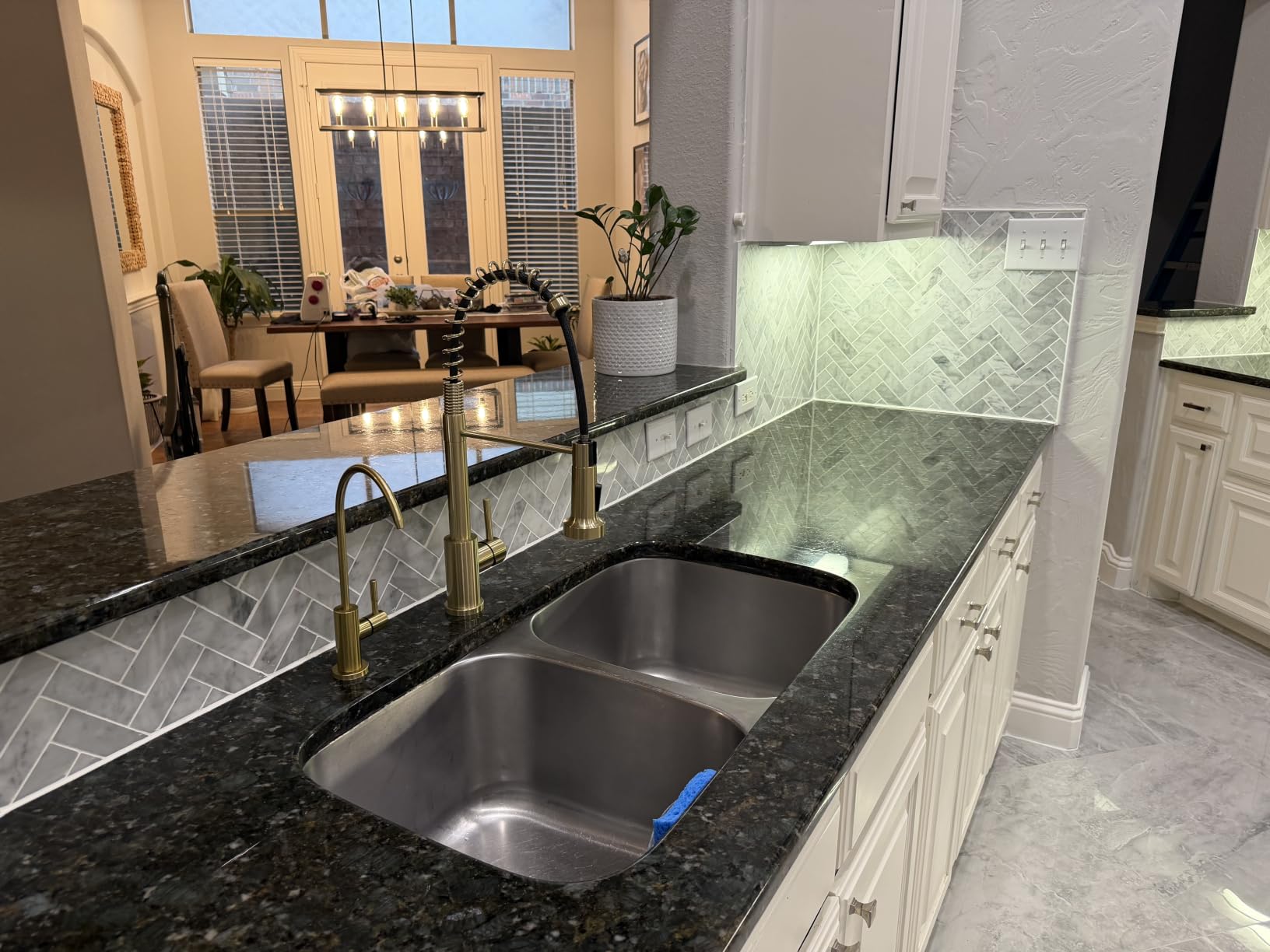
The fit range is 0.59 to 1.18 inch sink holes with a 5.7 inch reach and 8.3 inch spout height, and the slim no-splash outlet keeps the flow centred. That is a useful shape on a filtered tap because it makes filling a tall glass predictable.
The recurring negatives concern replacement installs rather than first-time fit. The base and deck plate are not included, so a second faucet means buying a plate, and some versions changed the under-sink fastening nut to a harder-to-reach screw design. In a loose sink hole it can also sit slightly unstable. None of that affects the water, but it matters if you expect to swap this tap in and out.
Why it is still worth considering
An all-stainless waterway is the correct material on a well, and this is a straightforward way to get one. The quick connectors mean the whole fixture is removable in minutes, which suits a household that treats the drinking tap as something to service rather than keep forever.
It is also the natural companion to a whole-house filter or softener, because it gives you a visible, dedicated tap for treated water while the main faucet stays on the raw supply. That split is how most well households end up operating.
Where it falls short
The missing base and deck plate make replacement installs more expensive than the first install, and the revised under-sink screw design is harder to reach in a shallow cabinet. If you are confident this tap will be replaced more than once, budget for the extra hardware.
In a loosely cut sink hole the faucet can feel unstable. Measure your hole and make sure it is in the 0.59 to 1.18 inch range before you commit.
How to Choose a Faucet for Well Water
Start with the body material, because nothing else on the list matters if the metal itself is wrong. Solid brass and SUS304 stainless steel are the two materials that hold up in untreated groundwater. Zinc alloy bodies are the first thing to fail, usually as pitting around the base and the threads where iron in the water accelerates corrosion. If a listing does not name the body material, treat that as a warning rather than a detail.
Second, decide between a ceramic disc cartridge and a compression valve. This is the most argued question on well water, and the honest answer is that plumbers and brand marketing disagree. Brand literature pushes ceramic disc as a near-permanent technology. Working plumbers posting on professional plumbing forums have argued the opposite, that on a well a competitive-brand compression faucet is the better bet because the parts are cheap, easy to find and simple to replace. Both are defensible, and the deciding factor is not the valve type but whether the cartridge for your faucet is still available in five years.
Third, pick the finish for how you will live with it. Polished chrome shows every water spot from the day it is installed and is the hardest finish to keep presentable on a scaling supply. Brushed nickel and brushed gold hold their appearance better because the grain hides fine spotting. Matte black is the most demanding, because any haze at all reads as a defect against the dark surface. Our rule for a well is to avoid polished chrome unless you genuinely like wiping it down every week.
Fourth, look at the aerator and the flow rate together. A 1.8 gpm aerator is the federal maximum for a residential handwashing and kitchen faucet, and 1.2 gpm is the WaterSense standard for a bathroom. Lower flow means the aerator catches scale more slowly and the cartridge sees lower pressure differential, both of which extend service life. Match the number to the room, and make sure the aerator unscrews by hand. A faucet whose aerator requires a tool is a faucet you will put off cleaning.
Fifth, count the handles against your pressure. On a well with a low or cycling pump, a single lever performs predictably because it throttles flow and temperature together. Two-handle and bridge faucets with independent hot and cold feeds need both supplies to be up to pressure or the hot side will run weak, and they are more likely to weep at the caps. If you want separate temperature control, buy it knowing you are managing two cartridges.
Sixth, check the lead-free certification. On a private well nobody else has tested your supply, and lead-free is a certification you can verify on the listing. Look for NSF/ANSI 372 or the California AB 1953 mark, and for drinking taps, NSF/ANSI 61 or 372-2024 for the filter path. This is not the most fun part of a faucet purchase and it is the one that protects the people drinking from it.
Finally, ask one question before you pay: can I buy the cartridge for this model in five years, and how much does it cost? That single question separates the fixtures that stay on a well from the ones that get replaced every couple of seasons. If the answer is that the part is discontinued, no warranty and no finish will save it.
Should Your Faucet Go Before or After a Whole-House Filter?
A whole-house softener or sediment filter is installed at the point where water enters the house, which means the kitchen and bathroom faucets are downstream of treatment by default. That is the right arrangement, and the practical consequence is that once treatment is running, your faucets deal with softened water rather than raw well water.
That is the whole point of pairing a faucet with a treatment system. A faucet cannot remove hardness, iron or sediment; it can only be built to tolerate what treatment does not catch. Filtration faucets at the sink are the exception, and they are deliberately plumbed downstream of their own under-sink housing so the drinking water is the most heavily treated water in the house.
The order that matters is at the point of use. The main faucet should be downstream of whole-house treatment, and a drinking faucet should be downstream of its own filter. If you install treatment after the fact, budget for new supply lines and check the pressure change, because a softener reduces pressure and a low-pressure well system will feel that more than a municipal one would.
One caution worth repeating: sulfur odor is a well chemistry problem that treatment addresses, not a faucet problem. No fixture on our list will remove a rotten-egg smell at the tap, and buying a new faucet to solve one is an expensive way to learn that.
How to Maintain a Faucet on Well Water
Descale on a schedule rather than on appearance. The aerator is the part that fails first and the part that is easiest to fix, so unscrew it every three to six months on a hard supply, soak it in white vinegar for thirty minutes, rinse it, and brush the mesh with an old toothbrush. That single habit does more for flow and longevity than any product choice on this list.
Keep a spare cartridge on the shelf. It costs little, it turns a Sunday morning emergency into a ten-minute fix, and it means you can change a faucet on a well without calling anyone out. A plumber on a well house is expensive, and the entire point of a serviceable design is that you avoid that visit.
Match the cleaner to the finish. White vinegar and a soft cloth are safe on chrome, brushed nickel and stainless steel. Never use an abrasive pad, and never use acidic vinegar on matte black or any PVD-coated finish, because the coating is thin and acidic soaking can dull it permanently. Matte black should be wiped and dried, not soaked.
Watch the warning signs early: a slow aerator, a handle that has gone stiff, a drip from the spout base, or a spout that no longer returns to its position. All of these are cheap to fix while they are small, and expensive once the cartridge distorts or the handle strips. On a well, the interval between the first sign and real failure can be months.
One category we would steer away from on any well is sensor-activated hardware. A battery, a solenoid and a sensor window are three extra failure points, and the window is a magnet for the same mineral film that clogs the aerator. If you want touchless, read our guide to the best smart faucets first and check what the manual says about descaling the sensor before you commit.
Frequently Asked Questions
What kind of faucet material is best for hard water?
Solid brass and SUS304 stainless steel are the two materials that hold up best in hard and well water. Both resist the pitting that iron in untreated groundwater causes in zinc alloy bodies. Avoid unlisted materials, and on a drinking faucet look for lead-free certification under NSF/ANSI 372 or AB 1953, because nobody else has tested a private well supply for you.
Which faucet finish is best for hard water?
A brushed or plated finish beats polished chrome on hard water because the grain hides fine mineral spotting. Brushed nickel and brushed gold stay presentable between cleans, while matte black shows haze fastest because any deposit reads as a defect on a dark surface. PVD and nano-plated surfaces sit at the top because the coating is harder and more even than a standard electroplate.
What is the best kitchen faucet for well water?
Our pick is the WEWE Vintage pull-down at 4.7 from 4,208 reviews, with a ceramic cartridge tested over 1,000,000 cycles, a 20-inch hose with 360-degree swivel and a hand-tighten base nut that lets you remove the whole faucet without tools. On a well, that last detail is what saves you a plumber visit every time the cartridge goes.
What kitchen faucet do plumbers recommend?
Working plumbers tend to recommend cartridge faucets from brands with widely available replacement parts, and some argue on professional forums that a serviceable compression faucet is actually the better bet on a well because parts are cheap and easy to find everywhere. The practical test is not the valve type but whether you can still buy the cartridge for that model in five years.
Is Kohler or Moen better for hard water?
Neither brand appears in this roundup, because the picks here were selected on verified material, certification and cartridge availability rather than brand reputation. The transferable answer is that finish and cartridge life decide hard water performance: PVD and spot-resistant plating, a ceramic cartridge rather than a rubber washer, and a removable aerator. A homeowner on Houzz reports Moen Arbor pull-downs lasting 10+ years of daily use, which fits that pattern.
Do I need a faucet filter or a whole-house treatment for well water?
A faucet filter treats the water at one point, which is what you want for drinking and cooking. Whole-house treatment, installed where water enters the home, is what protects every faucet, and it is the reason your bathroom and kitchen fixtures will not be fighting hardness and sediment. The sensible setup is both: whole-house treatment for the house, and a dedicated drinking faucet downstream of its own filter.
Why is my well water faucet pressure low?
In order of likelihood, check the aerator first, because a scaled aerator is the most common cause and takes minutes to fix. After that, sediment packed into the faucet cartridge is the usual culprit on a well system, and replacing the cartridge restores flow. If both are clear, the aerator and the supply lines are sound, then the pump or the pressure tank is the next place to look.
Can I replace a faucet cartridge myself on a well?
On most of the faucets in this roundup, yes, and that is the main reason we picked them. Look for a faucet that removes by hand or with a basic adjustable wrench, and buy the cartridge while the model is still current. A two-handle faucet means two cartridges, so a single-lever model halves the number of service points on a well system.
Our Final Verdict for Well Water Faucets
For the best faucets for well water, the deciding factors are never the style. A stainless or brass body, a cartridge that still exists as a spare part in five years, and an aerator that unscrews by hand will outlast any amount of finish. Start there, then pick the fixture that matches the room and the flow rate you actually need.
Our top three are the WEWE RO drinking faucet as the overall choice for its lead-free stainless path and more than 45,000 reviews at 4.7, the WEWE Vintage pull-down for the kitchen because it comes out by hand when the grit gets in, and the Hurran centerset for bathrooms because 1.2 gpm and a lifetime warranty do more for a well house than any added feature.
Start with a descaling habit rather than a shopping cart. Clean the aerator every three to six months, keep a spare cartridge on the shelf, and the faucet you pick this year will still be installed when the next one is chosen. For the rest of the house, our guides to the best waterfall bathroom faucets and the best shower faucets cover the fixtures that sit outside the well system entirely.