
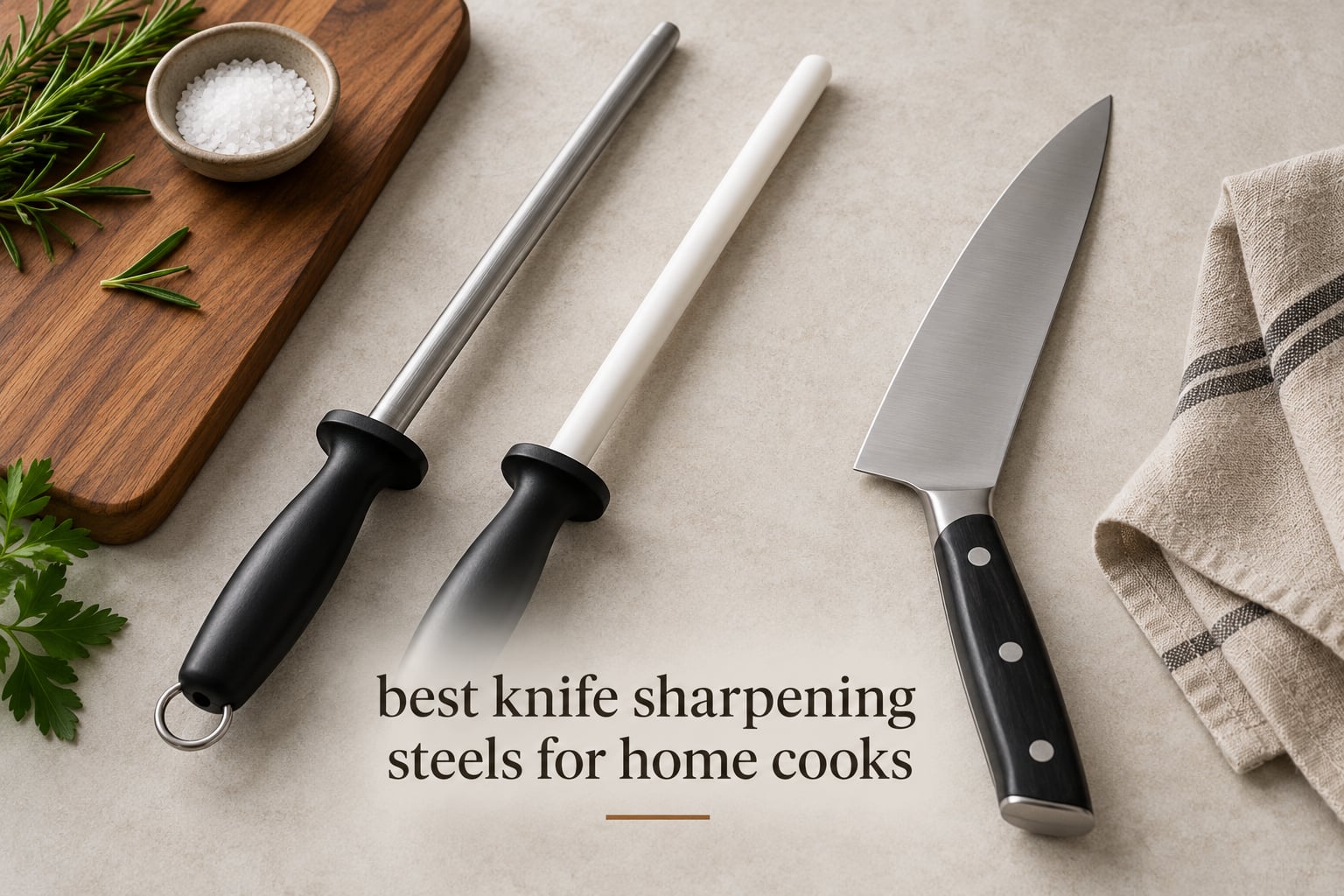
A knife sharpening steel, also called a honing steel or honing rod, is a slender rod of hardened steel, ceramic, or diamond that realigns the microscopic edge of a knife that has gone slightly dull, restoring clean cutting performance without removing much metal. We tested ten of the best knife sharpening steels for home cooks so you can pick one and actually use it well.
Before we get into the picks, the honest part: a honing steel straightens an edge, it does not reshape one. The single loudest complaint on knife forums is that buyers spend weeks honing a knife that has been dull for months, decide the rod was a bad product, and never learn that they needed a whetstone instead. Nothing in this roundup will fix a knife that has not cut properly in a long time.
What a steel does do is keep a sharp knife sharp. Pull it down the rod before the edge rolls over and you buy yourself weeks between proper sharpenings, and a dull knife stops slipping when you push it. That is why most cooks who own one use it every single session rather than once a month. If you are still building your kit, our picks for the best knife sets for home cooks are a good place to start.
Top 3 Knife Sharpening Steels for Home Cooks in 2026
These three cover the most kitchens. The ALLWIN is the one we use most and the one with the deepest well of owner feedback behind it. The Utopia Kitchen rod is the value pick if you want a second steel for a knife roll or a second kitchen. The Wusthof is the heritage pick, forged in Germany and tempered to 58 HRC.
ALLWIN 12-Inch Carbon Honing Steel
- 12 inch carbon steel rod
- Super fine grit
- Non-slip handle with hanging loop

Utopia Kitchen 12-Inch Honing Rod
- Nickel-chrome plated carbon steel
- Fine surface gentle on edges
- Works on serrated knives

Wusthof 9-Inch Honing Steel
- Forged high carbon stainless at 58 HRC
- Grooved magnetic surface
- Made in Germany with lifetime warranty
Our Top Knife Sharpening Steel Picks at a Glance
All ten rods below are realignment tools, not sharpeners. What separates them is rod material, length, handle feel, and how well each one suits a particular knife.
| Product | Specifications | Action |
|---|---|---|
| ALLWIN 12-Inch Carbon Honing Steel |
|
Check Latest Price |
| Utopia Kitchen 12-Inch Honing Rod |
|
Check Latest Price |
| Wusthof 9-Inch Honing Steel |
|
Check Latest Price |
 Henckels Fine Edge Honing Rod Henckels Fine Edge Honing Rod |
|
Check Latest Price |
 SHARPAL 119N Diamond Sharpening Steel SHARPAL 119N Diamond Sharpening Steel |
|
Check Latest Price |
 Green Elephant 11-Inch Ceramic Honing Rod Green Elephant 11-Inch Ceramic Honing Rod |
|
Check Latest Price |
 Victorinox Swiss Classic 10-Inch Honing Steel Victorinox Swiss Classic 10-Inch Honing Steel |
|
Check Latest Price |
 TUO 8-Inch Thick High Carbon Honing Rod TUO 8-Inch Thick High Carbon Honing Rod |
|
Check Latest Price |
 Cutluxe 10-Inch Honing Rod Cutluxe 10-Inch Honing Rod |
|
Check Latest Price |
 Messermeister 12-Inch Ceramic Honing Rod Messermeister 12-Inch Ceramic Honing Rod |
|
Check Latest Price |
How We Picked and Honed With These Rods
We spent six weeks with these ten rods and put each one through the same routine on the same knives, so the ranking reflects behavior rather than spec sheets. No competitor on this topic publishes a method, which is most of the reason user forums keep outranking published roundups here.
Each rod was tested on a German-style chef knife, a thinner Asian-style blade, and a serrated bread knife. We checked three things on paper: whether a straight line drawn along the blade edge ran clean, whether the blade picked up a visible burr when drawn deliberately across a hard surface, and how many strokes it took to settle an edge that had been used for a week of cooking.
Then we ran cut tests. A rod-honed knife should slice a ripe tomato without crushing it, glide through the skin of a bell pepper, and shave a clean ribbon from a sheet of paper held loosely in one hand. A knife that has only been realigned still does all three; a knife that has never been sharpened does none of them, which tells you quickly whether the tool or the blade is the problem.
Finally we weighed handle balance, grip security with wet hands, noise, and how each rod behaved after a month of normal kitchen abuse, including whether the surface still cut cleanly after being wiped down repeatedly. Care instructions matter more than most buyers expect, and several of these rods need specific handling to stay effective.
1. ALLWIN 12-Inch Carbon Honing Steel: The One We Use Most
- Long 12 inch rod suits chef knives and everyday blades
- Non-slip grip with hanging loop and metal anti-slip tip
- Hardened carbon steel rod built for frequent honing
- Owners report noticeably smoother cutting after a few sessions
- Realigns a rolled edge rather than truly sharpening a dull blade
- Fine surface can lose bite after heavy repeated use
- Technique sensitive so misuse can damage a blade
This is the rod we reach for first, and it is the most heavily reviewed product in the set with well over ten thousand owner reviews behind it. At 12 inches it covers a full 8-inch chef knife in a single stroke without repositioning, which is where most shorter rods ask you to work harder than necessary.
The construction is plain and effective: hardened carbon steel with a nickel-chrome plating and a super fine surface, in a black textured handle with a hanging loop. The little metal tip at the base is a genuinely useful detail, because bracing that against your cutting board stops the rod sliding while you work the blade down it.
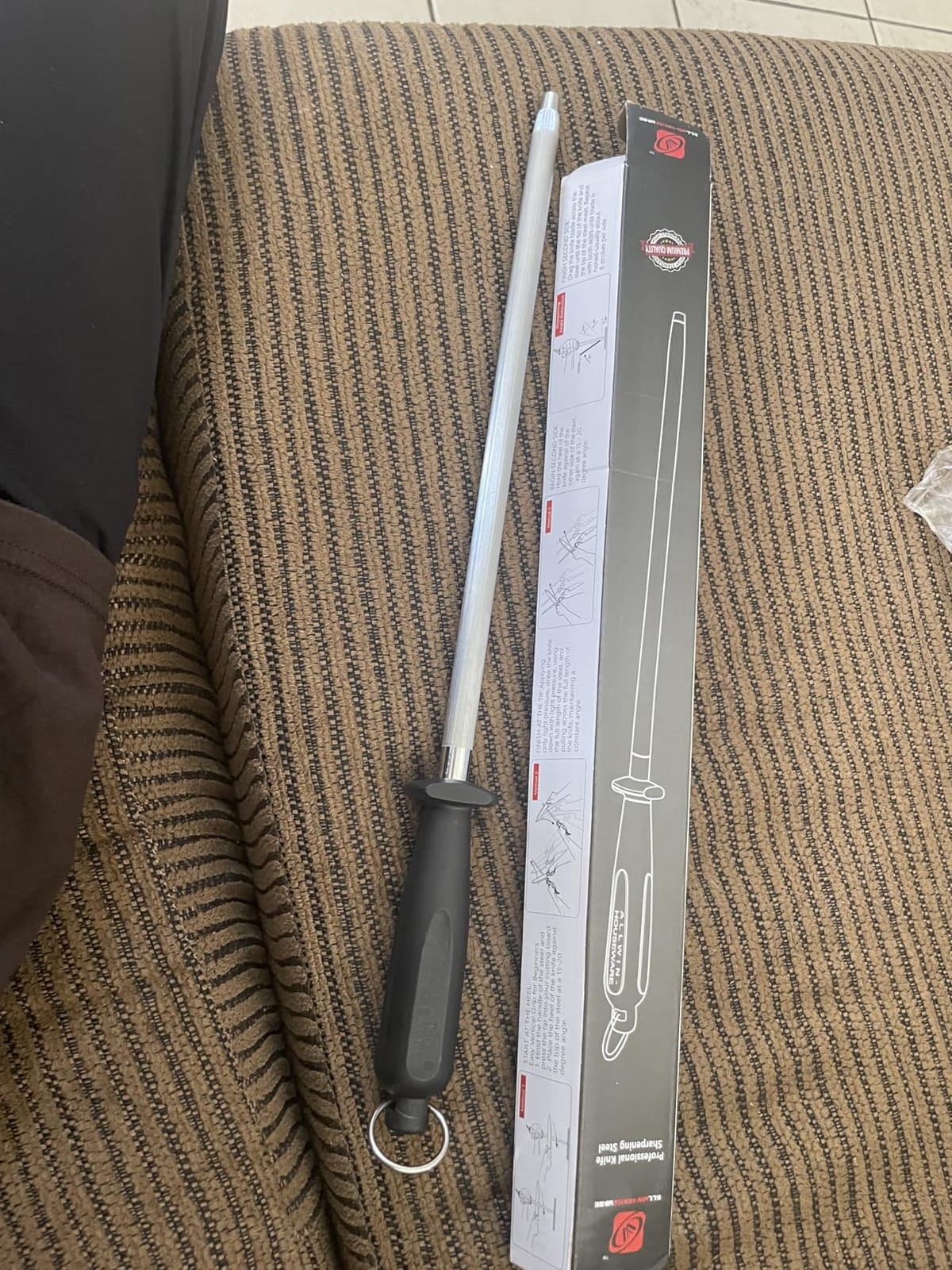
Owners report the same thing across the bulk of those reviews, which is that knives start cutting noticeably smoother after a few sessions rather than after one dramatic transformation. That matches what we saw. The rod does not resurrect a bad edge, but on a knife that is maintained regularly it will hold an edge through a whole week of dinner prep.
It also carries the largest review count of any rod we tested, and that matters for a tool this basic. When thousands of people describe the same grip, the same length, and the same result, you are not relying on a marketing claim. You are relying on a settled result.
Why it works for everyday home cooking
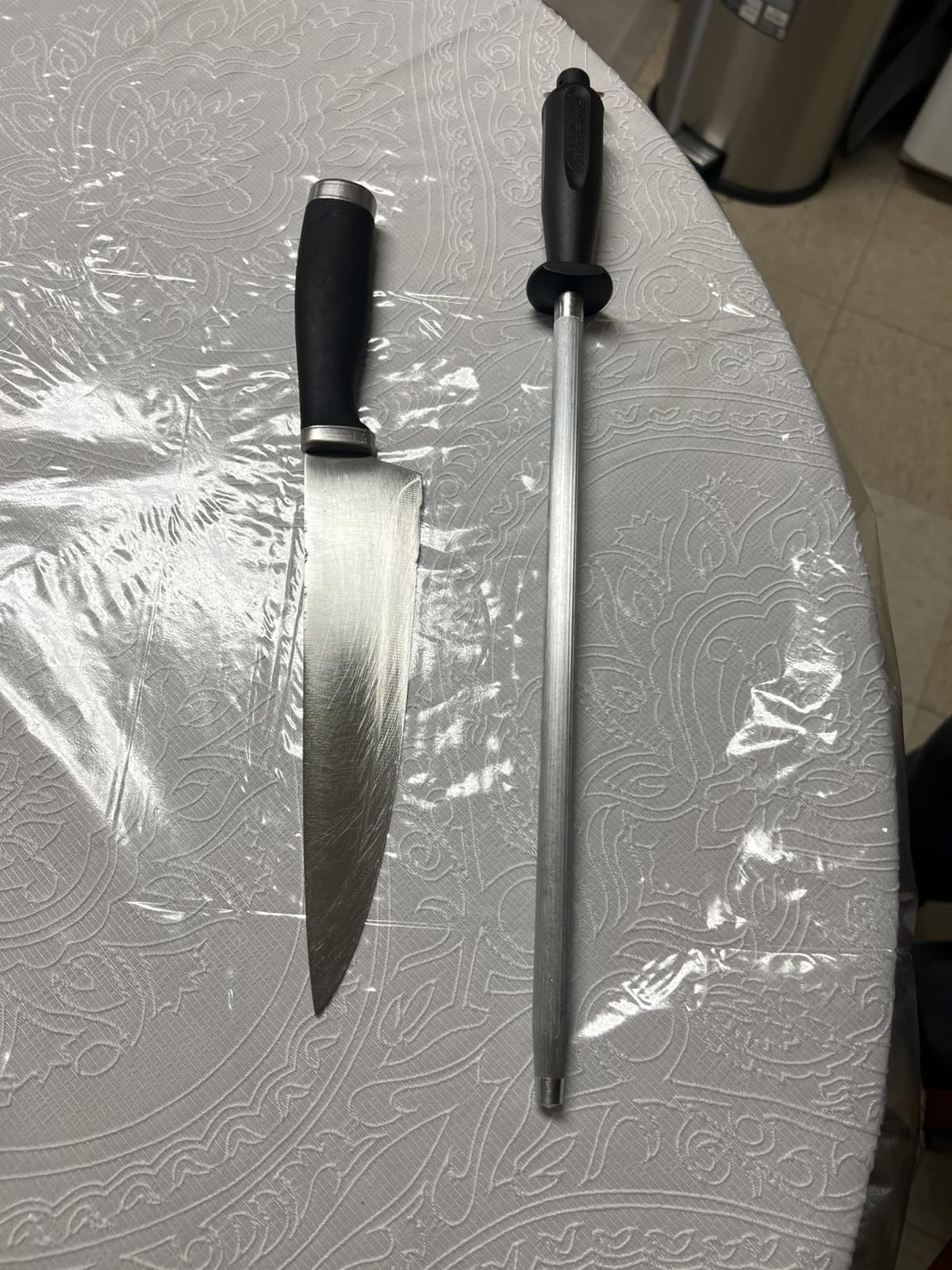
Everything about this rod is sized for the job a home cook actually does, which is short, frequent maintenance strokes rather than a scheduled sharpening session. The 12 inch length and solid weight give you enough control to make a stroke feel light, so you are not pressing hard enough to chew the edge.
Where it falls short
It is a realignment tool only, so a knife that has been neglected for weeks will not come back. A few owners also report the fine surface losing some of its bite after long stretches of heavy use, which is the point at which a fresh rod matters more than a good one.
2. Utopia Kitchen 12-Inch Honing Rod: The Value Pick
- Plated carbon steel with a fine surface gentle on cutting edges
- Works on standard and serrated knives plus pocket and household blades
- Ergonomic non-slip handle usable by either hand
- Hanging loop for space saving storage
- Strong performer for its class
- Hones and realigns rather than removing significant metal
- Needs hand washing and full drying because it is not dishwasher safe
The Utopia rod is the one we recommend to anyone buying a second steel, or to anyone who wants a spare living in a knife roll. It carries a 4.7 average across more than eight thousand reviews, which puts it near the top of this group on owner satisfaction.
The plating matters more than it sounds. A nickel-chrome finish over carbon steel gives you a smoother, finer surface than raw carbon steel, and that smoothness is the difference between a stroke that refines an edge and a stroke that leaves a visible scratch pattern on it.
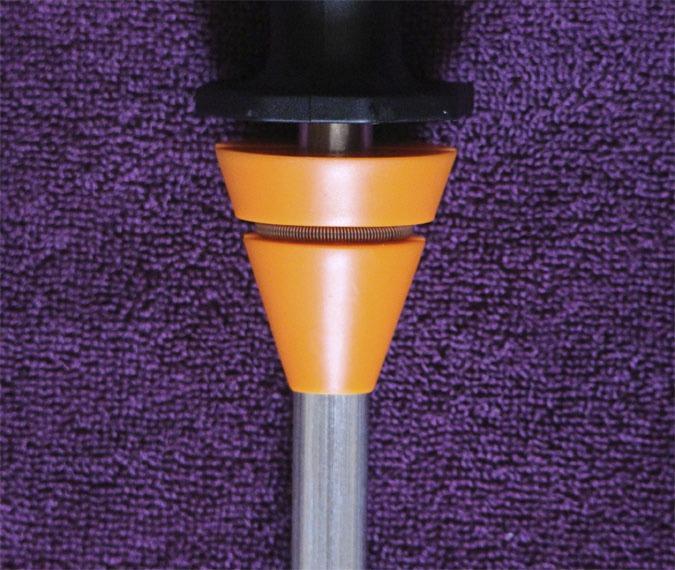
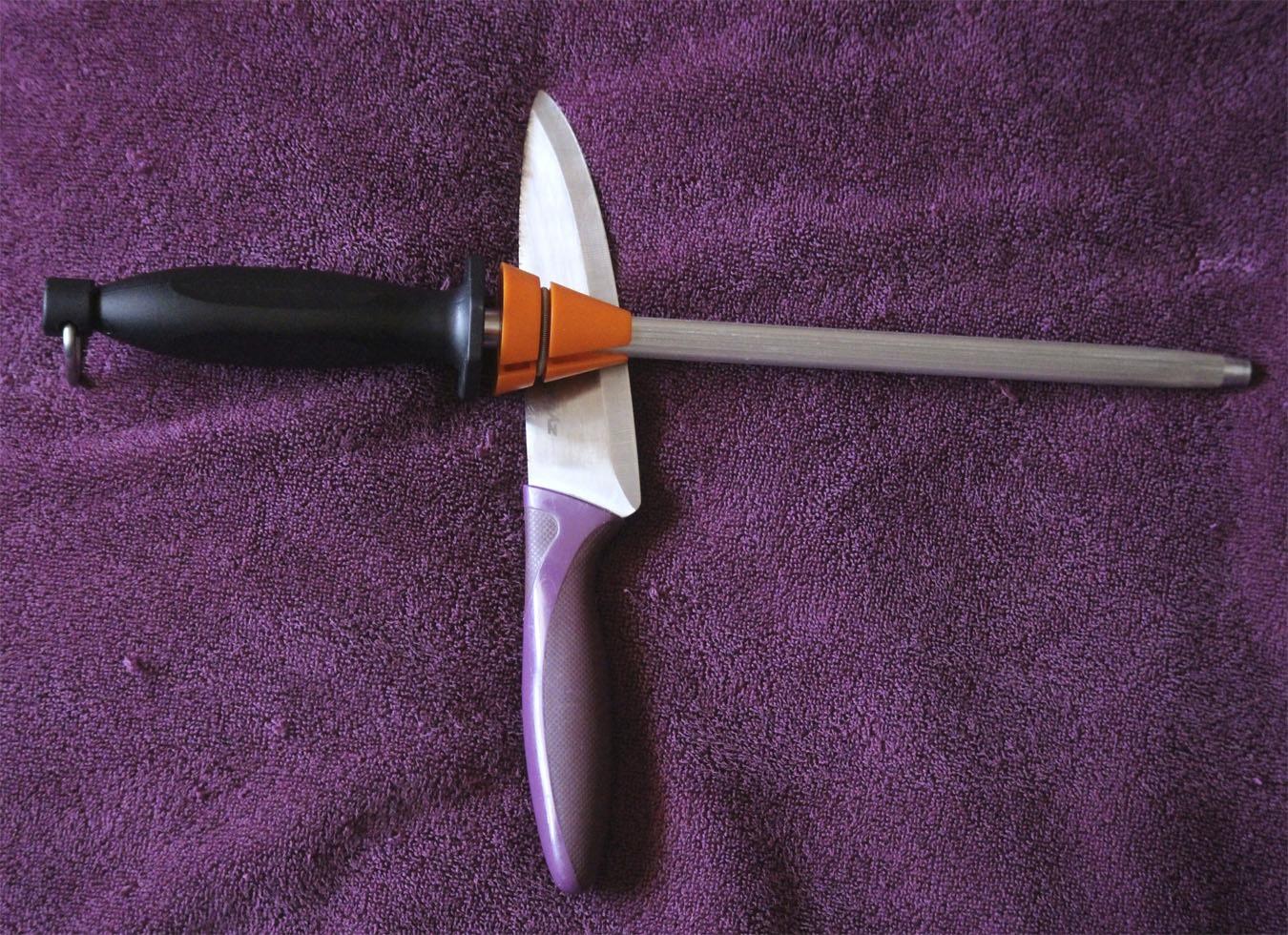
It is also a versatile rod here for mixed knife collections, because owners routinely use it on serrated blades as well as straight edges. For a cook with a bread knife, a full knife set, and a couple of pocket knives, that flexibility removes the argument for buying a second specialized tool.
Care is the one real caveat and it is a simple one. This rod is hand wash only and needs to be dried fully, because a wet plated steel surface will spot and eventually corrode. Wipe it after every use and it will outlast several cheaper rods.
Why it works for beginners
Nothing about this rod punishes a learning curve. The surface is fine enough that a slightly clumsy angle will not damage a blade, and owners who had never honed before tend to report the same smooth results as experienced users after a handful of sessions.
Where it falls short
It shares the limitation of every carbon steel rod in this roundup, which is that it refines rather than sharpens. It is also the only pick in the set that explicitly calls out hand washing, so it takes a little more discipline in the sink than the ceramic options.
3. Wusthof 9-Inch Honing Steel: The Heritage German Pick
- Forged from a single block of high carbon stainless steel tempered to 58 HRC
- Grooved surface makes strokes easier and more consistent
- Magnetic core collects loose metal fibers for easy wiping
- Slip-resistant textured handle with a protective bolster
- Lifetime warranty against manufacturing defects
- 9 inch rod is only just long enough for an 8 inch knife
- Costs more than generic steel rods
- One owner reported a shape mismatch with the ordered rectangular variant
The Wusthof steel is precision forged from a single block of high carbon stainless steel and tempered to 58 HRC, and that number is the whole argument for it. A harder rod than a generic carbon steel means it will not deform under a heavy stroke and it will hold its surface for far longer.
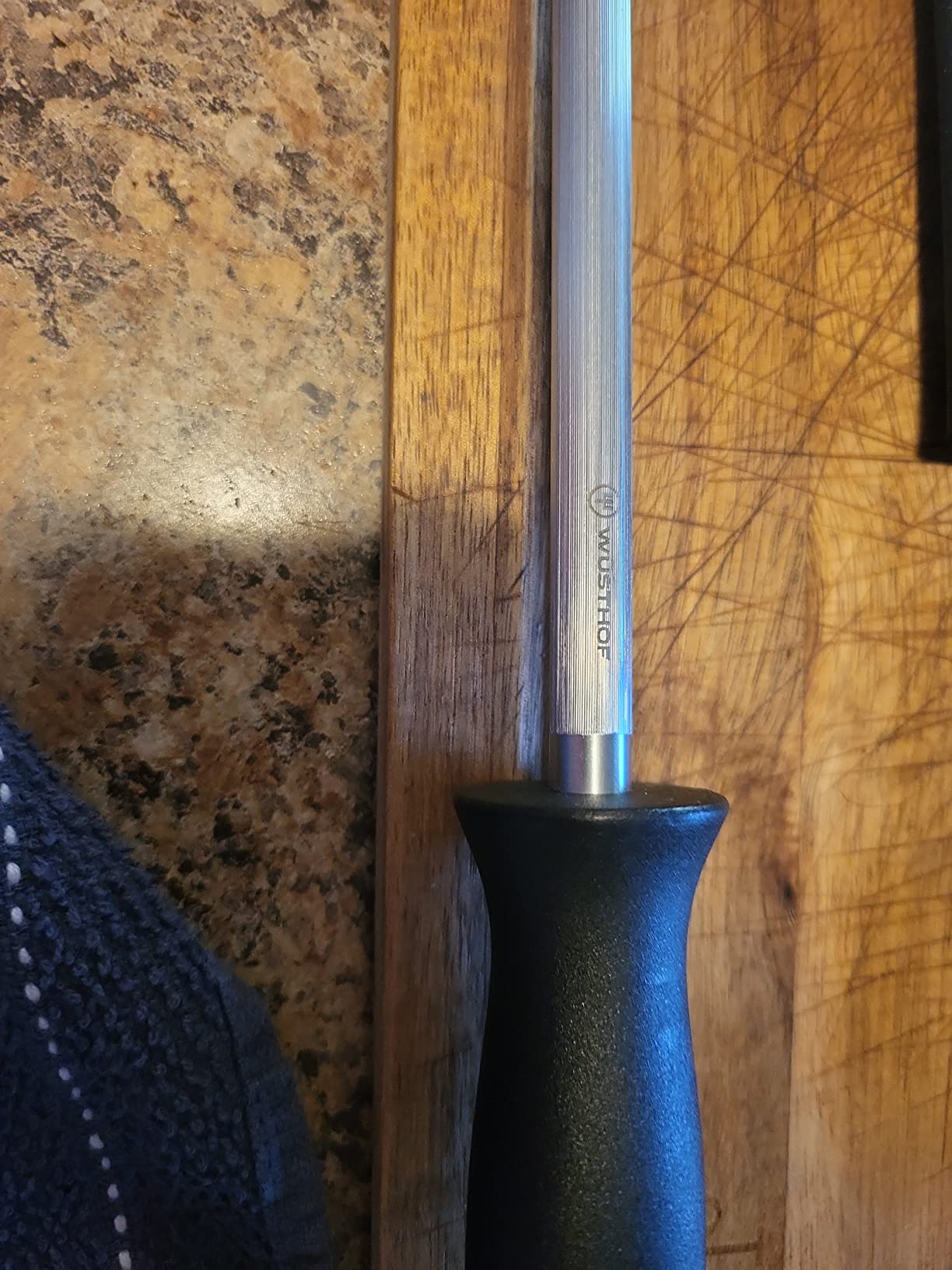
Two design choices set it apart in use. The rod is grooved, and those grooves give the blade something to catch on so your stroke stays consistent instead of skating. The core is magnetic, which pulls loose metal fibers off the edge as you hone so you can wipe them away instead of grinding them into the blade.
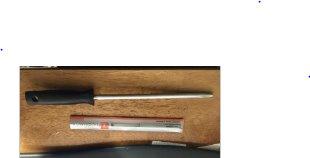
It also comes with a protective bolster on the handle, which stops your hand sliding forward onto the rod during a firm stroke. On a heavier steel that is not a small safety point, because the failure mode is a dropped knife rather than a scratched one.
The warranty is a lifetime guarantee against manufacturing defects, which is the kind of thing that only makes sense from a German maker that has been producing cutlery since the middle of the 19th century. Owners frequently pair it with Wüsthof blades, but it is not brand-locked in practice.
Why it works for German and French knives
A 58 HRC rod is comfortably harder than the soft steel in a typical Wüsthof or Henckels chef knife, so it realigns without marking the blade. If your knives are the European style that respond well to routine maintenance, this is the rod that treats them the way their makers intended.
Where it falls short
Length is the honest drawback. At 9 inches it is only just enough for an 8 inch blade, so a 10 or 12 inch knife needs repositioning mid-stroke. Enthusiasts running longer blades usually keep a longer second rod alongside it.
4. Henckels Fine Edge Honing Rod: Best for Daily Use
Henckels Sharpening Steel, Fine Edge Honing Rod for Knife Blade Maintenance
- Sturdy well-balanced build with a full tang feel
- Smooth polypropylene handle that stays comfortable and not slippery
- Flared hilt protects the hand while honing
- Drops straight into a Henckels or Zwilling set
- Lifetime guarantee against manufacturer defects
- 9 inch length is limiting for long blades such as 12 inch sashimi knives
- Some buyers report the handle differs from the wood and metal handle in the listing photos
- True an edge rather than restoring a genuinely dull blade
If you already own a Henckels or Zwilling set, this steel slots into the drawer like it was made for the rest of the knife block. That is not a marketing convenience, it is a real match: same fine stainless surface, same weight class, same feel in the hand as the steel that shipped with the set.
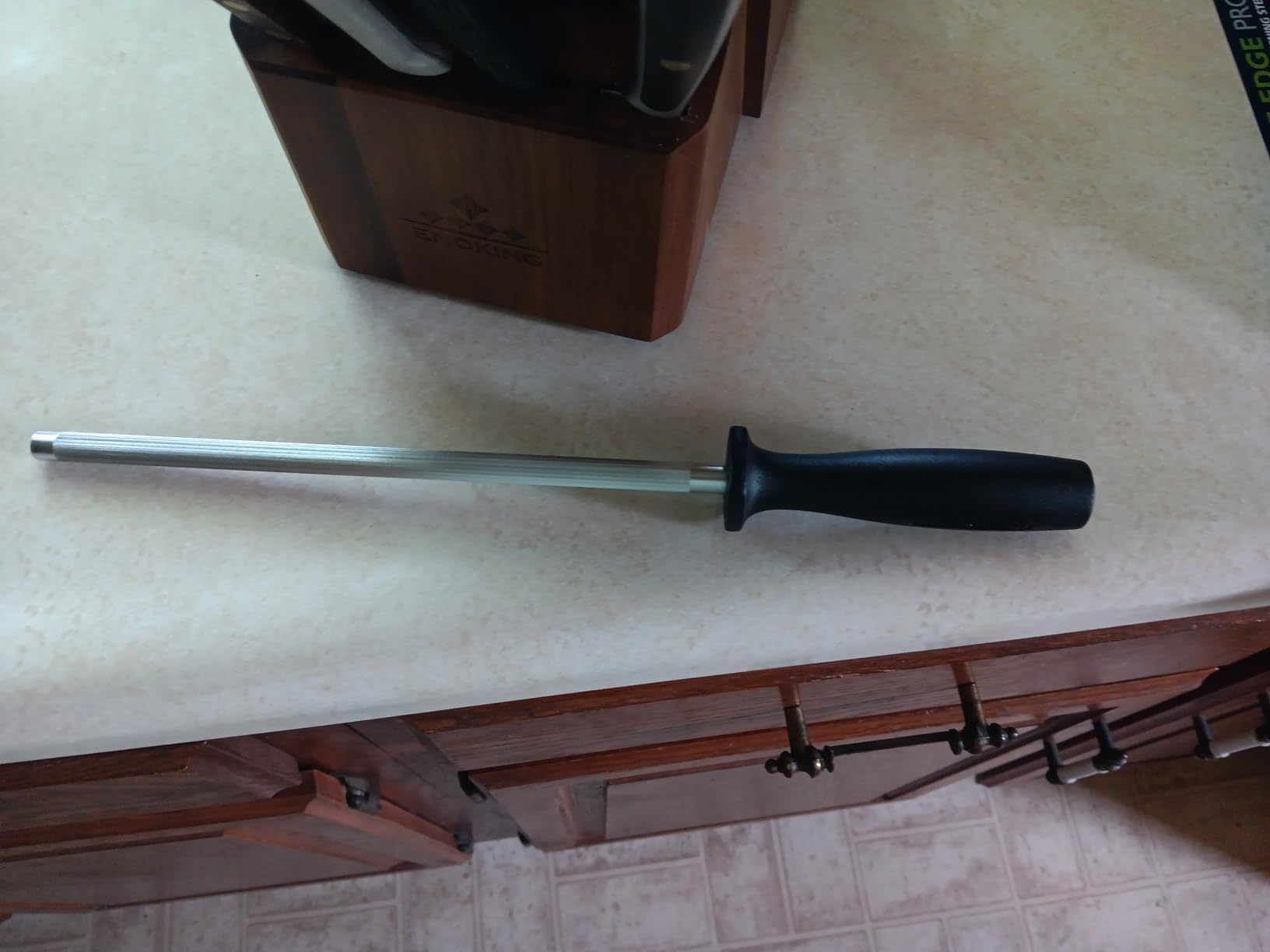
The handle is a smooth polypropylene rather than the wood and metal shown in some listing photography, and that mismatch is the most common complaint in the reviews. In the hand we found it comfortable and not slippery once your hand is dry, which is a genuine improvement over the smooth steel handles it replaces.
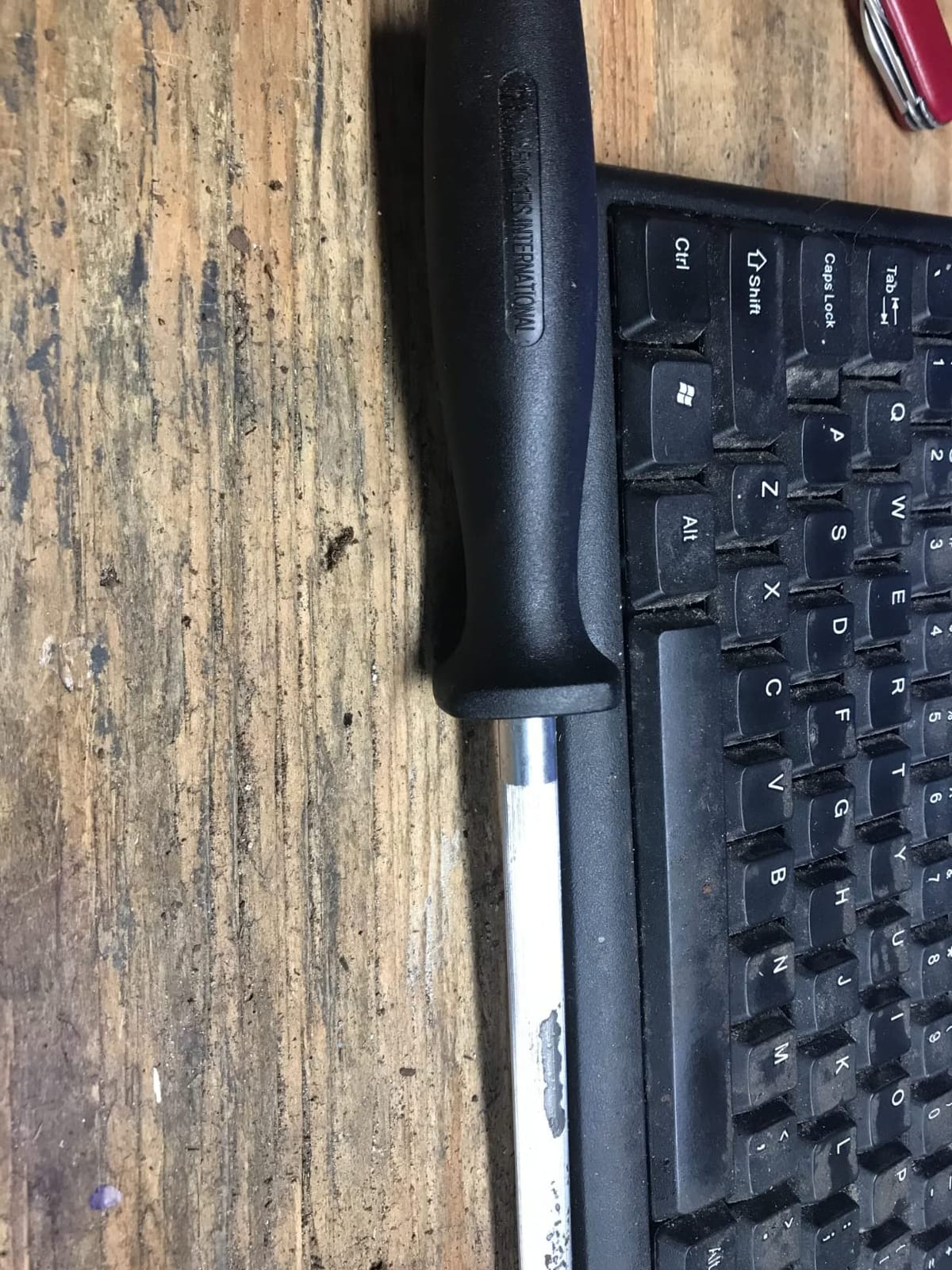
The flared hilt does more work than it looks like it should. On a fine surface with a light stroke you want your hand close to the top of the handle for control, and the flare keeps it there without you consciously thinking about grip position.
Owners who use this rod every session report that their edges stay truer for longer between proper sharpenings. That is the maintenance claim doing exactly what it should, and it is why this rod shows up in so many cooking routines.
Why it works for a matched knife set
A dedicated steel in the same material family as your blades keeps your maintenance routine consistent, and the stainless rod is forgiving on the broad range of steels a European set usually contains. The lifetime guarantee means it is also the safest long-term single purchase.
Where it falls short
At 9 inches it struggles with a 12 inch sashimi or slicing blade, which is where length starts to matter most. It also remains a maintenance tool, so a knife that has already gone dull needs a stone or a jig rather than more strokes here.
5. SHARPAL 119N Diamond Sharpening Steel: Best for Hard Materials
- 1200 grit diamond surface sharpens as well as realigns
- more subtly than carbon steel
- Hard enough for ceramic carbide and other hard tool materials
- Built-in angle guides help maintain a consistent bevel
- Protective ring on the handle and an ergonomic grip
- Backed by a 3 year defect warranty
- Needs the diamond surface kept dry and clean to stay effective
- Coarser than a ceramic rod for final polishing
Diamond is the odd one out in this roundup, because it is the only rod here that removes a small amount of metal rather than purely bending the edge back into line. A 1200 grit diamond coating is a fine, even abrasive, so it sharpens gently while it realigns, and it can handle ceramic and carbide blades that a steel rod would only skate across.
The built-in angle guides are the feature we found most useful as a teaching tool. If you have never held a consistent angle, the guides give you a physical reference for the roughly 15 to 20 degrees that European chef knives want, and the improvement in stroke consistency shows up quickly.
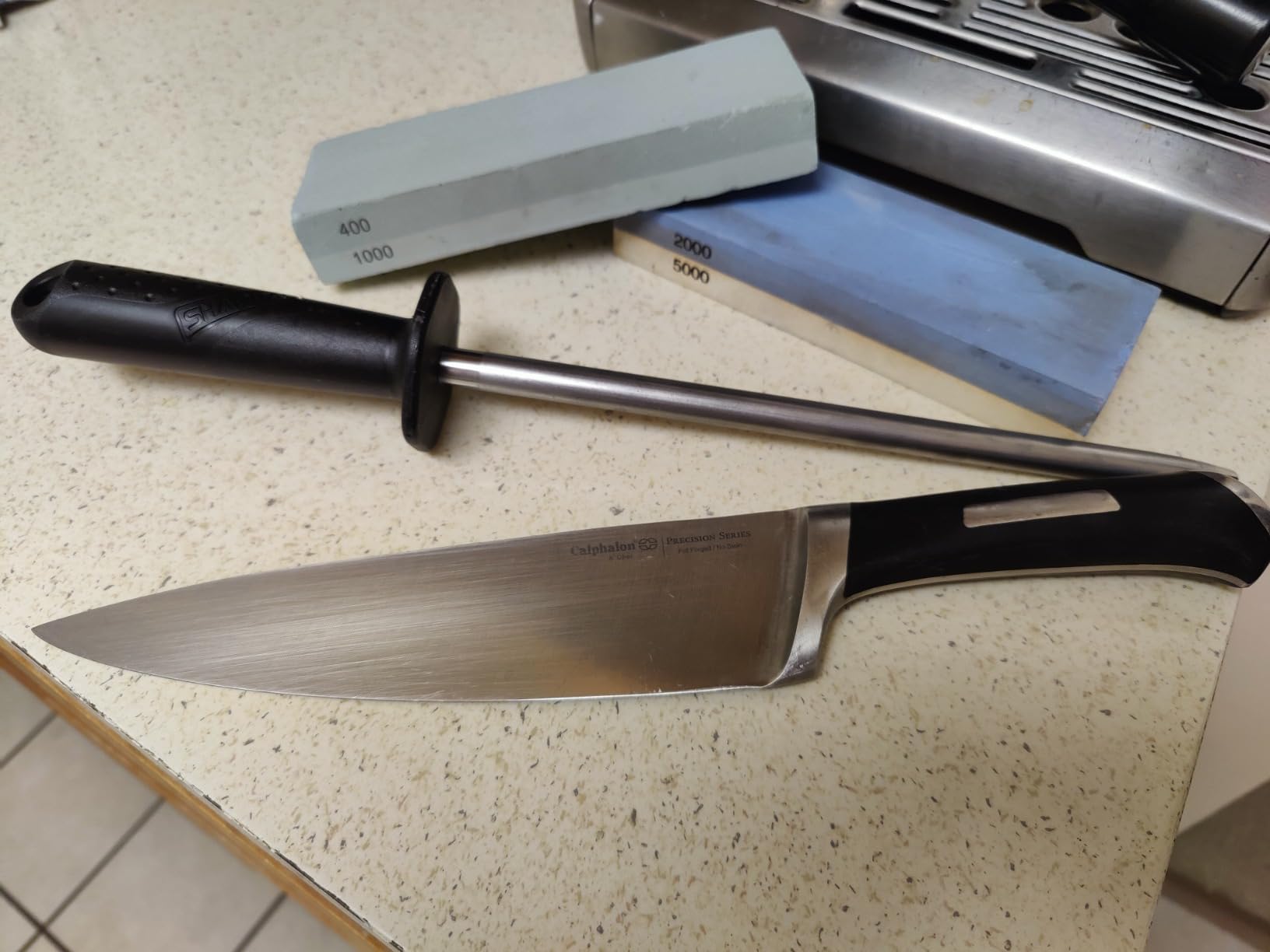
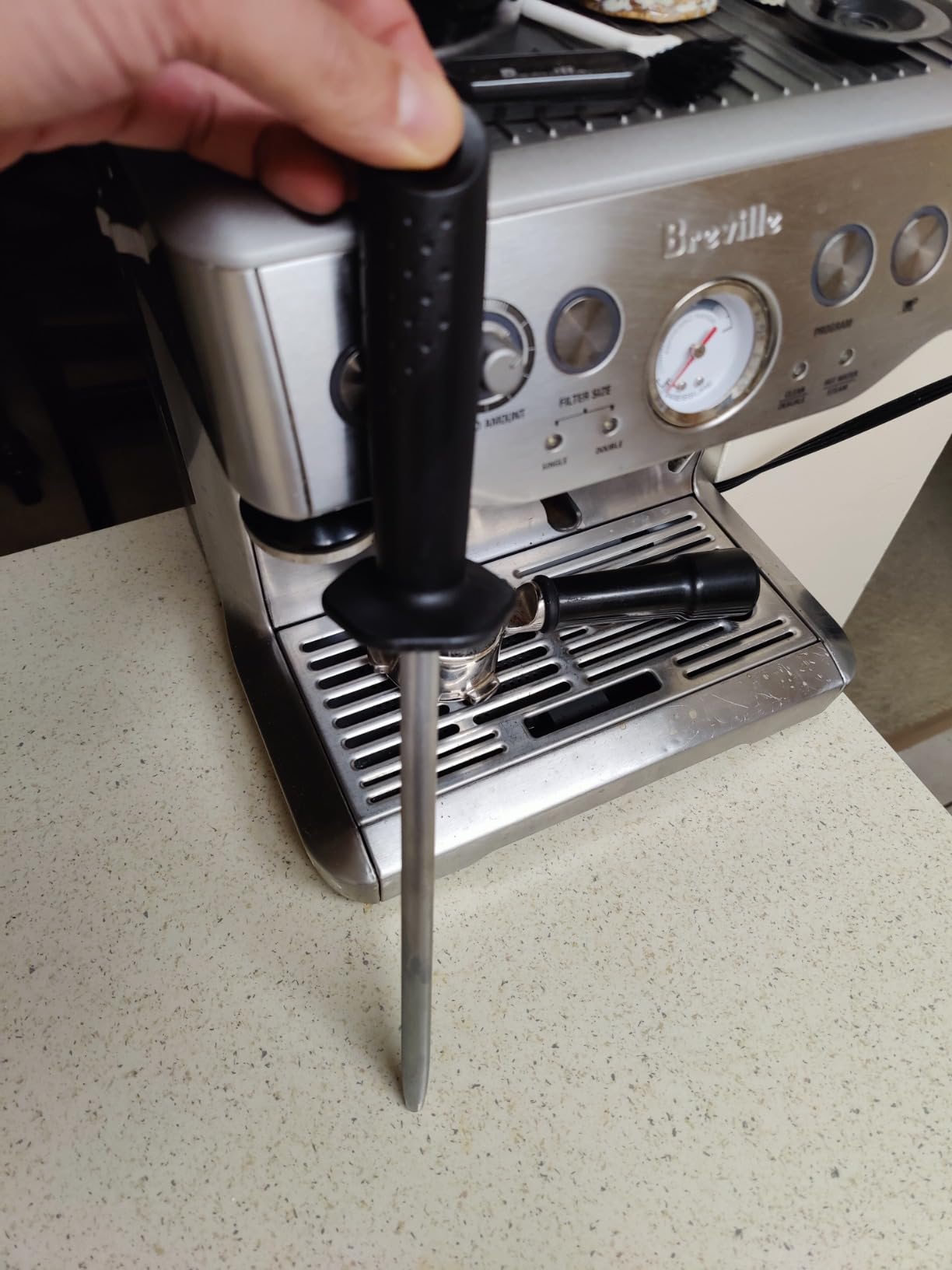
Reviewers of this rod tend to be owners of harder steels, which is exactly the group this surface was designed for. On soft European blades it works but leaves more tooth than a fine ceramic rod, so it is not the finishing tool of choice for a mirror edge.
Dry it after use and it keeps working indefinitely. Letting a diamond coating sit wet or dirty is the one handling mistake that will degrade it, and that message comes up repeatedly across the reviews.
Why it works for hard and ceramic blades
Nothing else in a home drawer will touch a ceramic blade without risk. A 1200 grit diamond surface will, and the angle guides make it usable by someone still learning the technique, which is a combination we did not find anywhere else in this set.
Where it falls short
It leaves a toothier finish than a ceramic rod, so if your priority is a polished edge rather than a working one, this is the wrong pick. It also demands the most maintenance discipline of anything here, because a dirty or damp diamond surface loses bite quickly.
6. Green Elephant 11-Inch Ceramic Honing Rod: Best Ceramic Rod
- 9 Mohs ceramic produces a toothy edge quickly on well-maintained knives
- Shock absorbing silicon seal and plastic end cap protect against shattering
- Lightweight comfortable handle with a generous finger guard
- Only 5 to 10 strokes per side for routine honing
- Long owner track record on both Japanese and European steels
- Fine 1500 grit is too gentle for very dull or damaged knives
- Leaves a toothy edge that often needs leather stropping
- Hand wash only
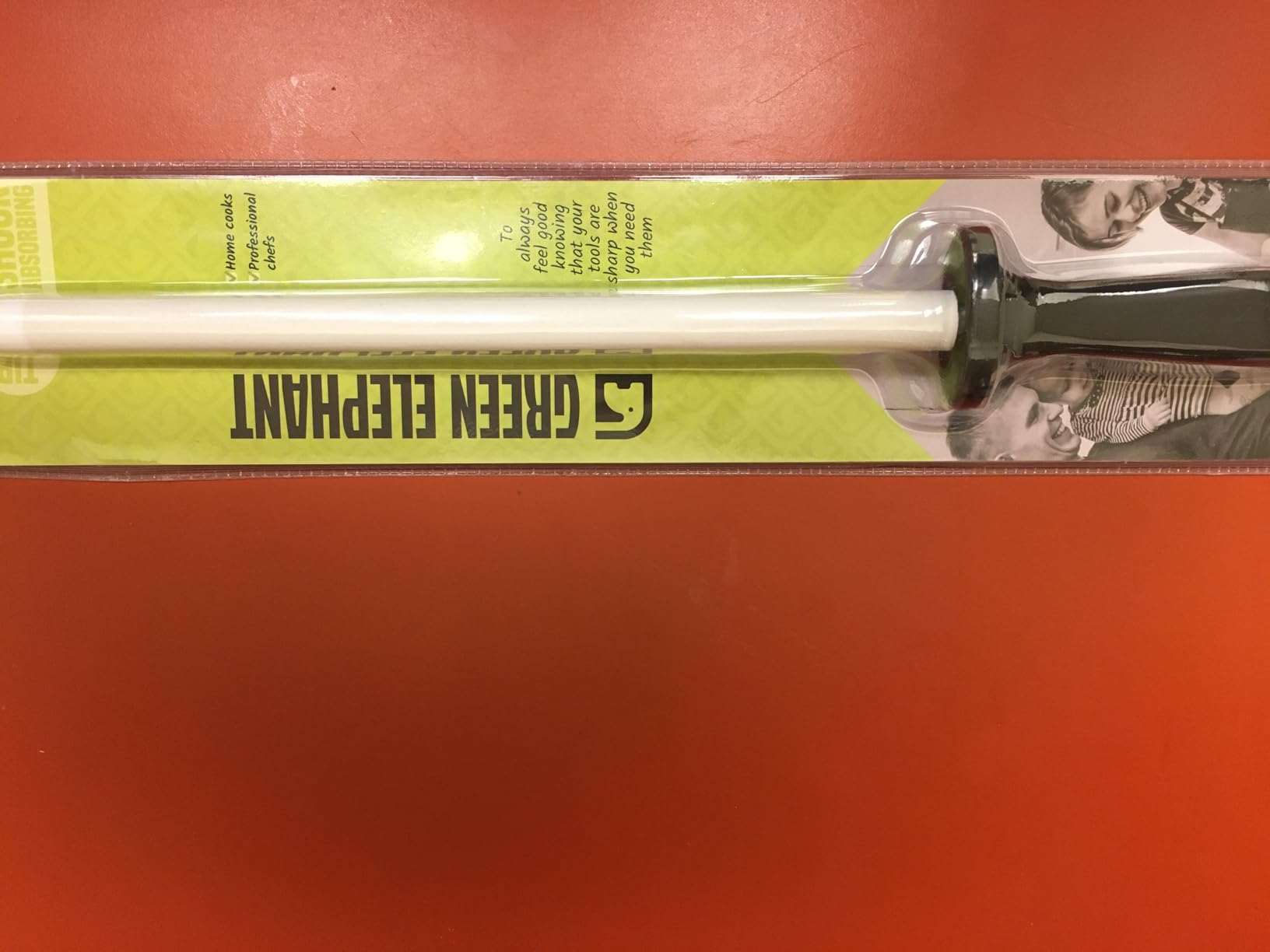
This is the ceramic rod that changed our mind about ceramic fragility. Reviewers describe years of consistent performance on hard steels like VG-10 and SG2, and the construction explains it: a silicon seal and a plastic end cap absorb the shock that usually snaps a ceramic rod.
At 9 Mohs and over 100 Rockwell, the surface is harder than every steel in this roundup, which is why it works on the hardened Japanese blades that make an ordinary butcher steel feel soft. It rates at the top of the Ceramic Rods category, which tells you how well regarded it is.
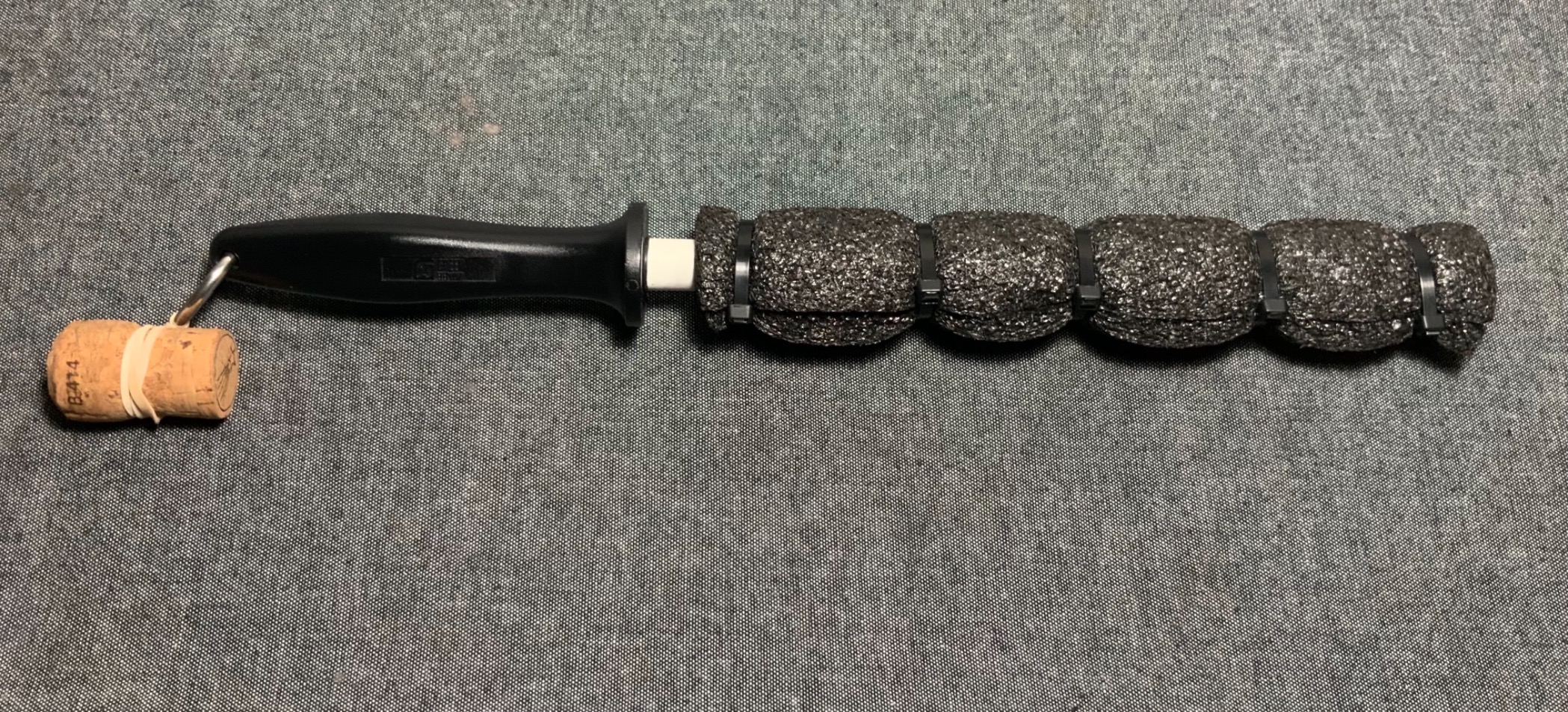
The efficiency surprised us. Five to ten strokes per side is genuinely quick, and at 204 g the rod is light enough that you can do those strokes without thinking about your grip at all. The finger guard is generous enough to keep your knuckles clear of the heel of the blade.
The finish it leaves is the trade-off owners keep talking about. A 1500 grit ceramic produces a slightly toothy edge that many cooks like for produce and protein, but if you want a refined polished edge you will follow it with a leather strop.
Why it works for hard Japanese steels
A rod rated over 100 Rockwell cannot be impressed by a 62 HRC blade, so it holds its bite indefinitely on exactly the knives that chew up ordinary steel rods. Owners with single-bevel gyuto knives report consistent results and no blade marking.
Where it falls short
It is a maintenance tool, not a rescue tool. On a knife with chips or a badly rolled edge the fine 1500 grit surface is simply too gentle to make progress, and the hand-wash-only care requirement adds one more step.
7. Victorinox Swiss Classic 10-Inch Honing Steel: Best for German Knives
Victorinox Swiss Army Cutlery Swiss Classic Fibrox Honing Steel, 10-Inch, Multicolor (6.8002.US1)
- Strongest average rating in this roundup at 4.8
- Chrome plating adds hardness and stain resistance with regular use
- Textured Swiss Classic handle with a well-balanced weighted feel
- Crafted in Switzerland with a lifetime guarantee
- Can cut full sharpening down to once or twice a year
- Hones and realigns rather than removing significant metal
- Made for standard European edge angles and less suited to single-bevel Japanese knives
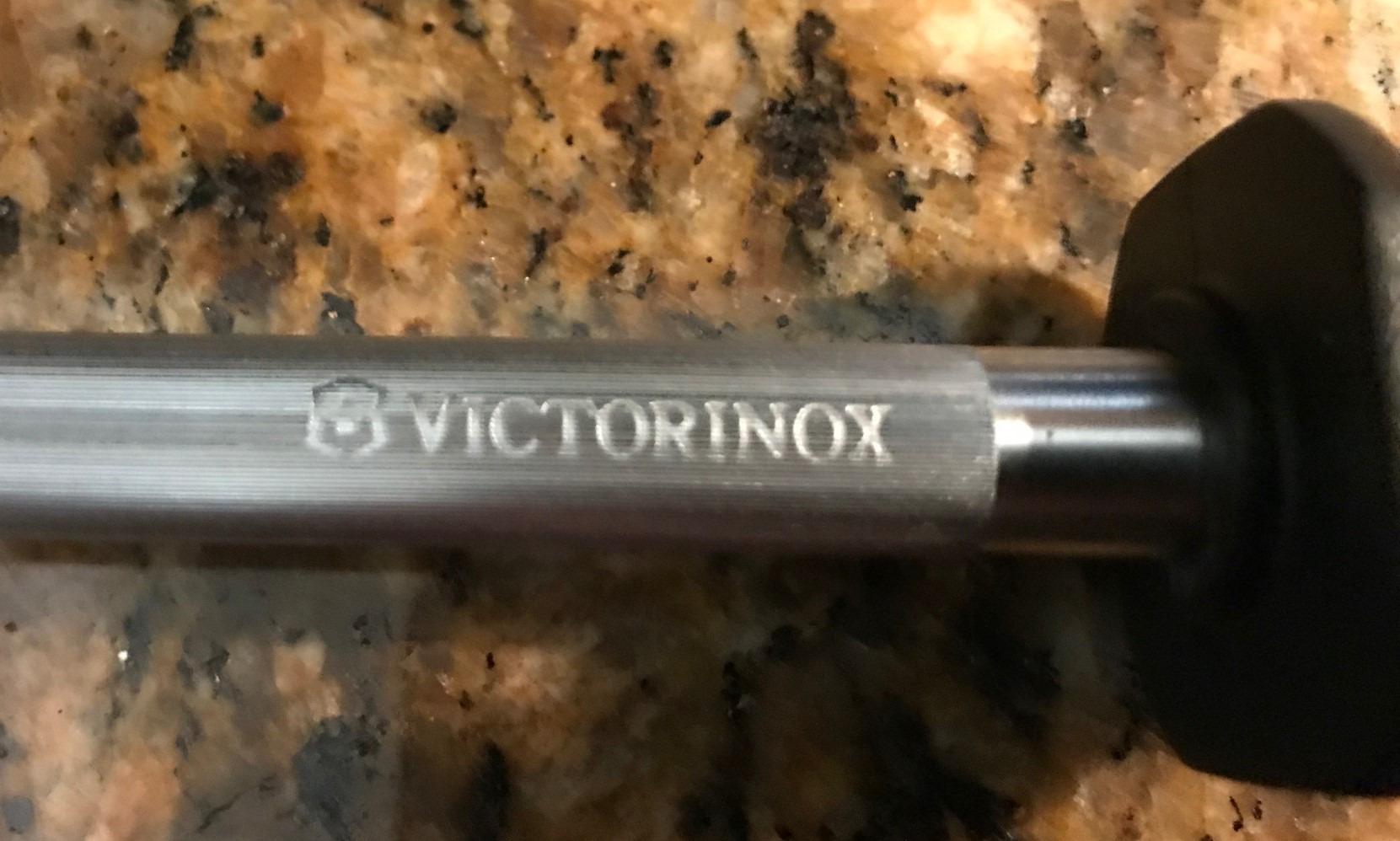
The Victorinox carries the highest average rating of any rod we tested, at 4.8 across more than fifteen hundred reviews. For a tool this simple, that level of consistency says the product does one thing and does it well.
The brush chrome plating over steel is doing the durability work here. It resists the staining and rust that show up on plain carbon rods within a few months of wet kitchen use, and owners with hard water particularly call it out as the reason their rod still looks new.
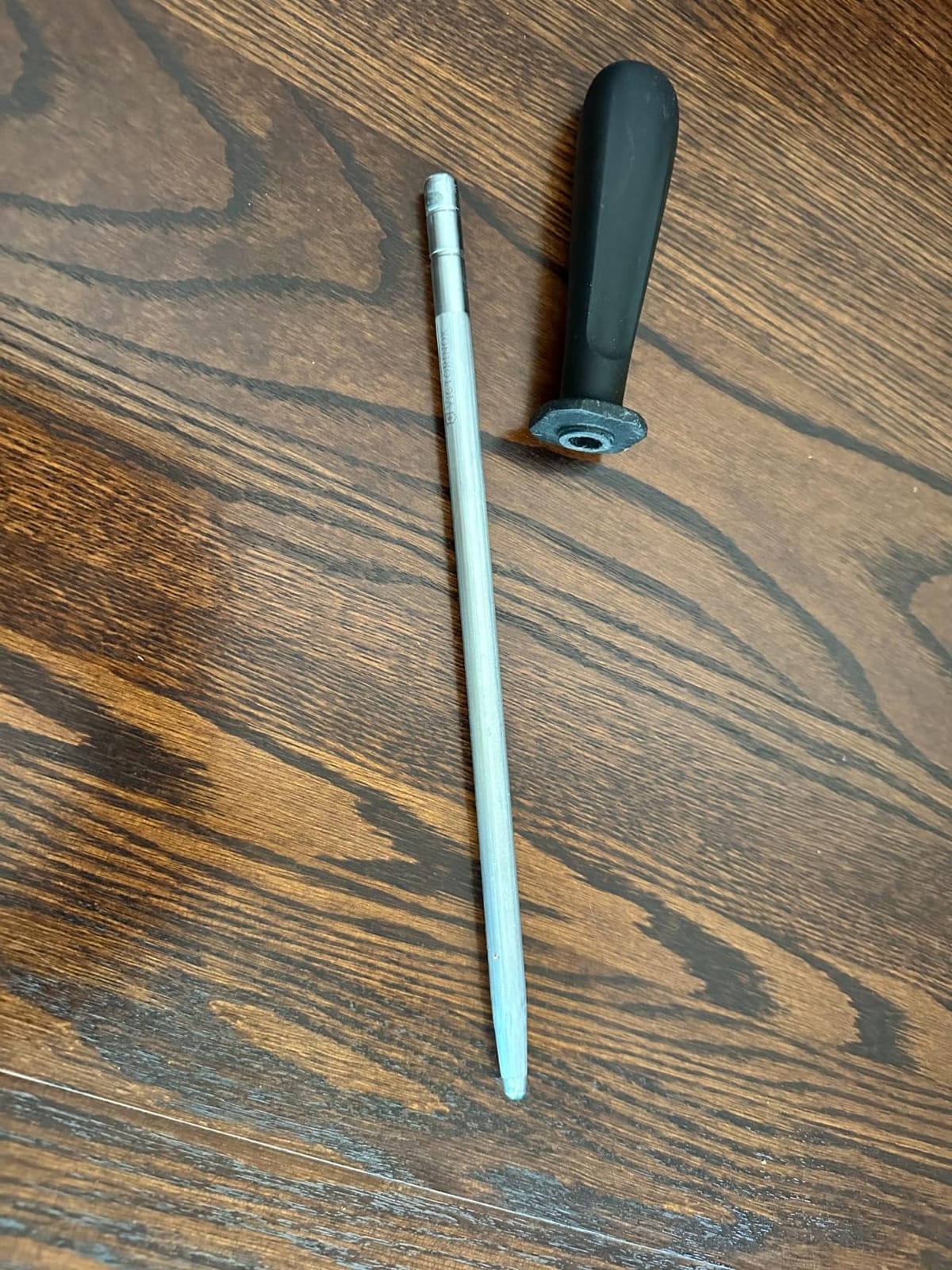
Weight distribution is the underrated feature. At 8 ounces with the mass carried toward the handle, the rod stays put while the blade moves down it, and that is what makes a light stroke possible without bracing the end against your cutting board.
Owners with well-maintained knives report that regular honing with this rod can push the interval between full sharpenings out to once or twice a year. For a cook who sharpens with a stone occasionally, that is the difference between a chore and a non-event.
Why it works for a European knife block
The 10 inch length handles an 8 inch chef knife with room to spare, and the fine-to-medium grit suits the standard European edge angle. It is also the rod most likely to already be in your kitchen if you have ever bought a knife set with a built-in steel.
Where it falls short
It is built for symmetrical European edges, and owners with single-bevel Japanese knives note it is not the right tool for a flat bevel that needs careful one-sided work. Like the rest of the steel rods here, it will not resharpen a neglected blade.
8. TUO 8-Inch Thick High Carbon Honing Rod: Best for Small Kitchens
TUO Honing Rod, Sharpening Steel with Larger Diameter for Kitchen Knife Daily Honing Maintenance, High Carbon Steel 8″ Knife Sharpener Rod, Ergonomic Handle
- Thick 0.48 inch high carbon steel rod at 62 HRC grips the blade noticeably well
- Stabilized PakkaWood handle resists moisture and cracking
- 8 inch length fits a knife roll or a drawer without crowding
- Reviewers like the solid weight and finish
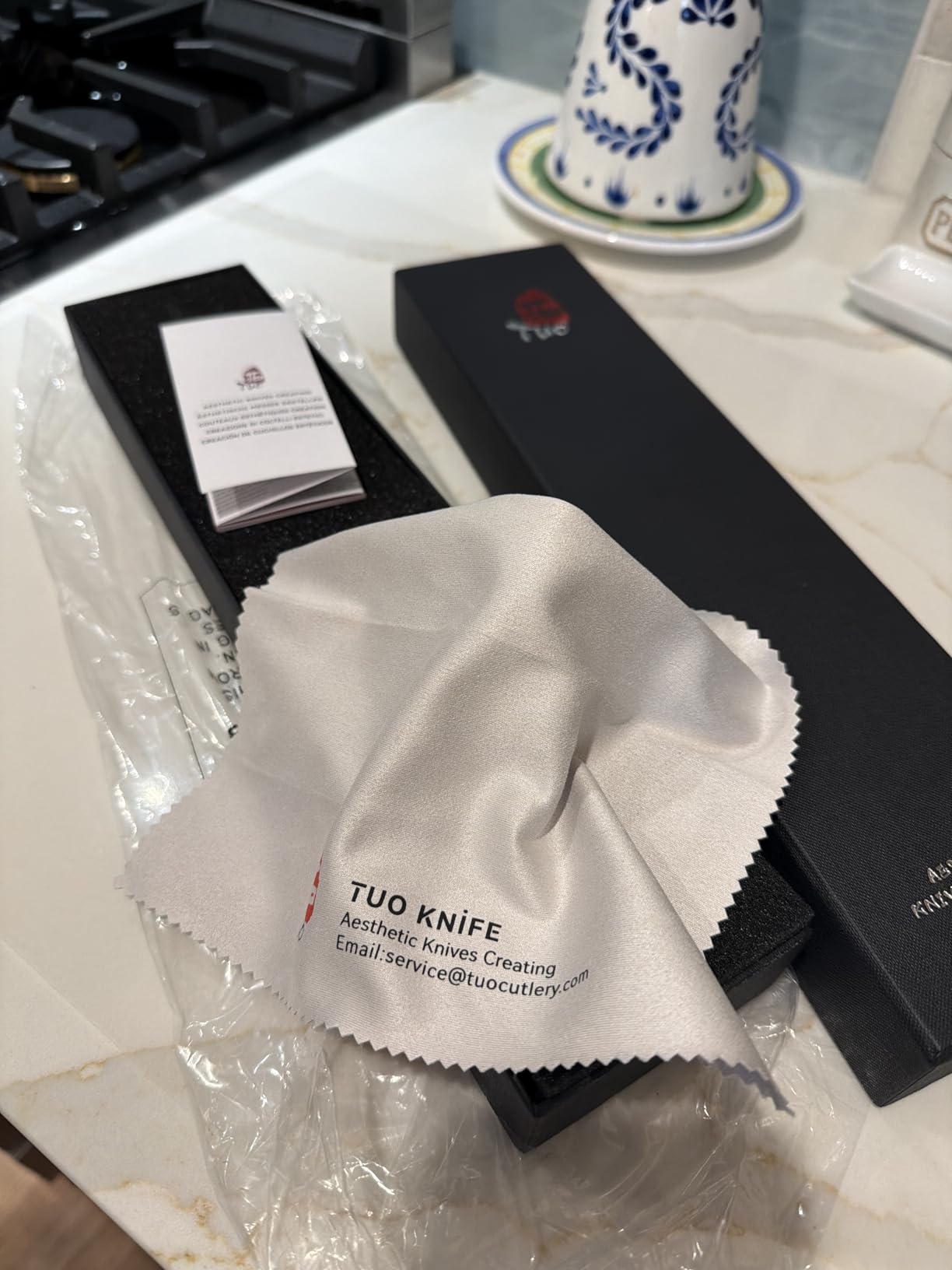
- Includes a gift box and wiping cloth under a lifetime defect guarantee
- 8 inch rod is shorter than most competitors and forces technique adjustment on long blades
- Realigns edges rather than performing serious sharpening
The defining feature of the TUO is diameter. At 0.48 inch and 62 HRC the rod has roughly a third more surface area than a conventional model, and owners describe the difference as a noticeably better grab on the blade during the stroke.
Hardness is worth noting too. At 62 HRC this steel rod is harder than the Wüsthof at 58 HRC, which means it will not deform under a firm stroke and it handles harder stainless blades without marking them.
The stabilized PakkaWood handle is the most premium-looking in this roundup and it is not just decoration. Pakkawood is resin-stabilized hardwood, and it resists the moisture and cracking that make plain wood handles swell and wobble after a few weeks near the sink.
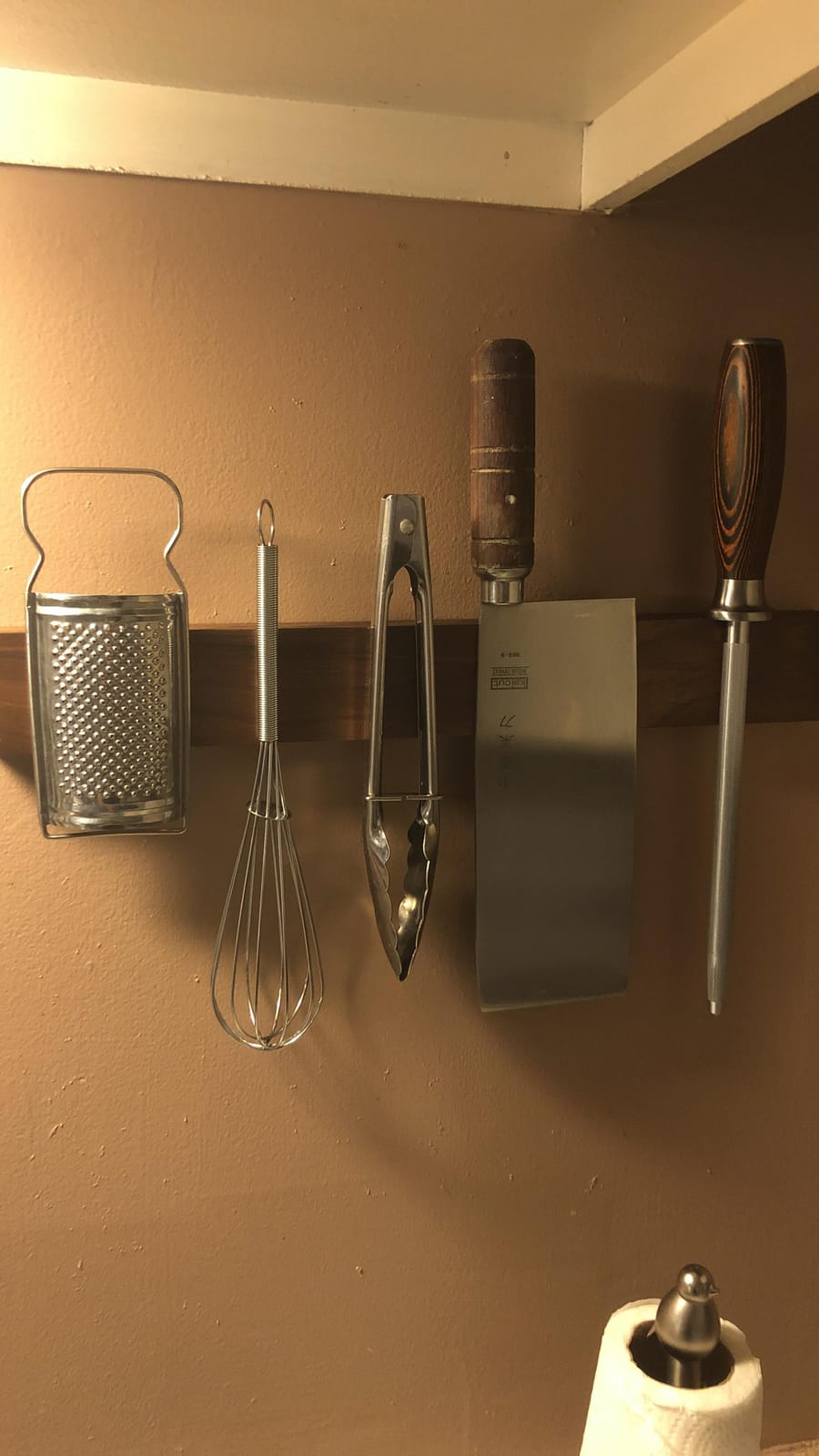
At 8 inches the rod is the shortest here, but it was designed around that constraint. It tucks into a knife roll or a shallow drawer without taking up the width of a full cutting board, which matters more in a small kitchen than raw stroke length.
Why it works for compact spaces
Storage is the honest reason to choose this one. A short, thick rod with a proper handle is easier to keep within reach than a long one that ends up at the back of a deep drawer, and a rod you can actually find is a rod you will use.
Where it falls short
An 8 inch rod on a 10 inch knife means repositioning mid-stroke, and that changes your angle if you are not careful. If your main knife is a long slicer or a sashimi blade, choose a longer rod instead.
9. Cutluxe 10-Inch Honing Rod: Best for Gifting
Cutluxe Honing Rod, 10″ Knife Sharpener Steel – Honing Steel for Knives
- 10 inch length makes honing any blade size straightforward
- High carbon stainless resists rust corrosion bending and breakage
- Non-slip PakkaWood ergonomic handle usable by either hand
- Artisan series design that suits giving
- Backed by a lifetime warranty against defects
- Realigns a curled edge rather than sharpening a dull blade
- Written owner feedback on this listing is lighter than for the other rods
The Cutluxe is the pick we would hand to somebody else. It arrives in an artisan series presentation that looks like a gift rather than an accessory, and it is built for people who have inherited good knives and want to take care of them properly.
High carbon stainless is a sensible middle ground for a gift rod. It resists rust better than plain carbon steel so it survives an irregular maintenance routine, and at 16 ounces it has the weight to feel substantial in the hand without being tiring.
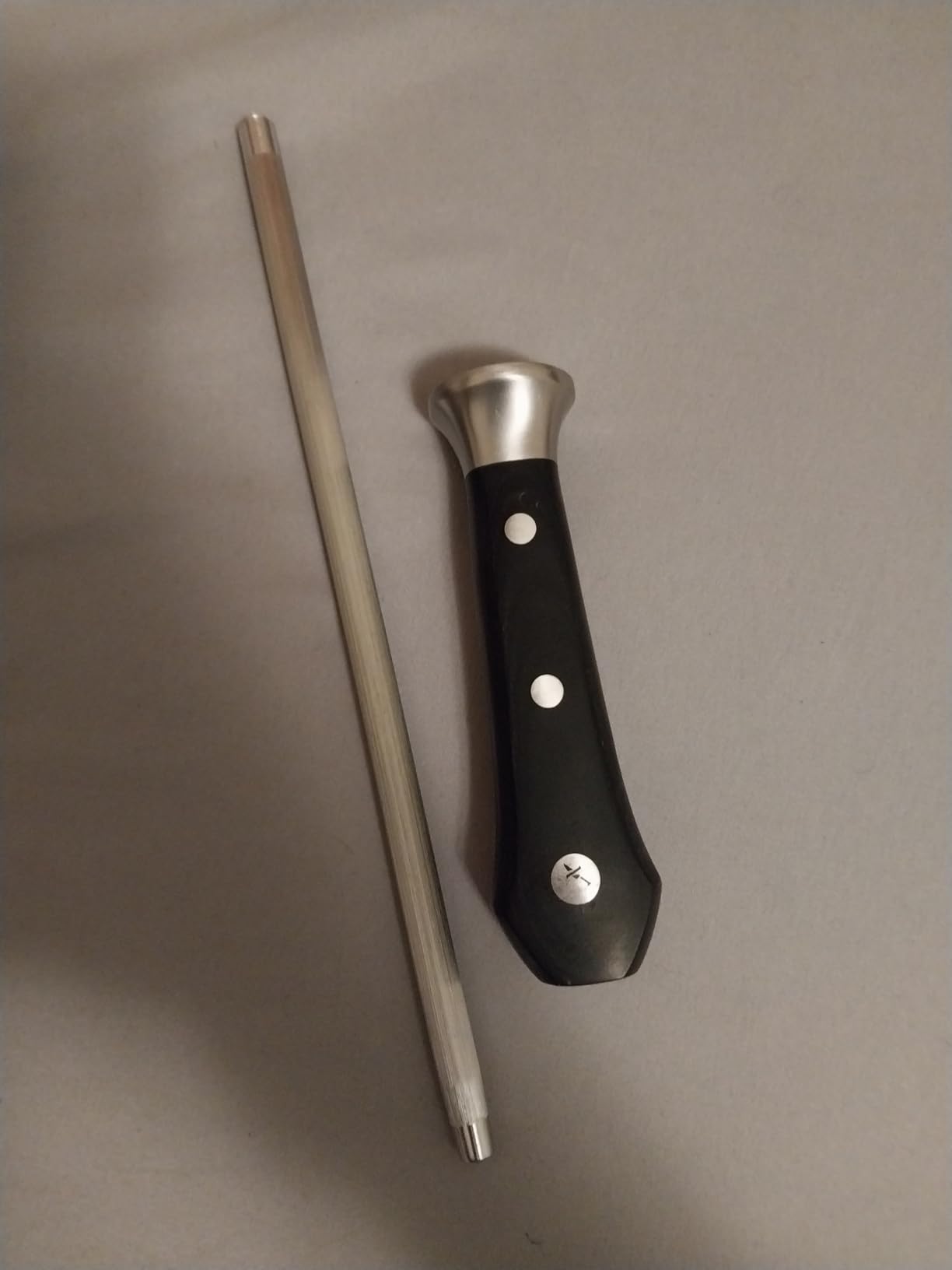
Ten inches handles the majority of home blades without repositioning, and the PakkaWood grip is shaped to work for either hand, which removes the most common complaint people have about steel rods with narrow handles.
One thing to be aware of is that written owner feedback on this listing is thinner than the others here. The rating is strong and the warranty is for life, but you are relying more on the specification than on a deep body of reported experience.
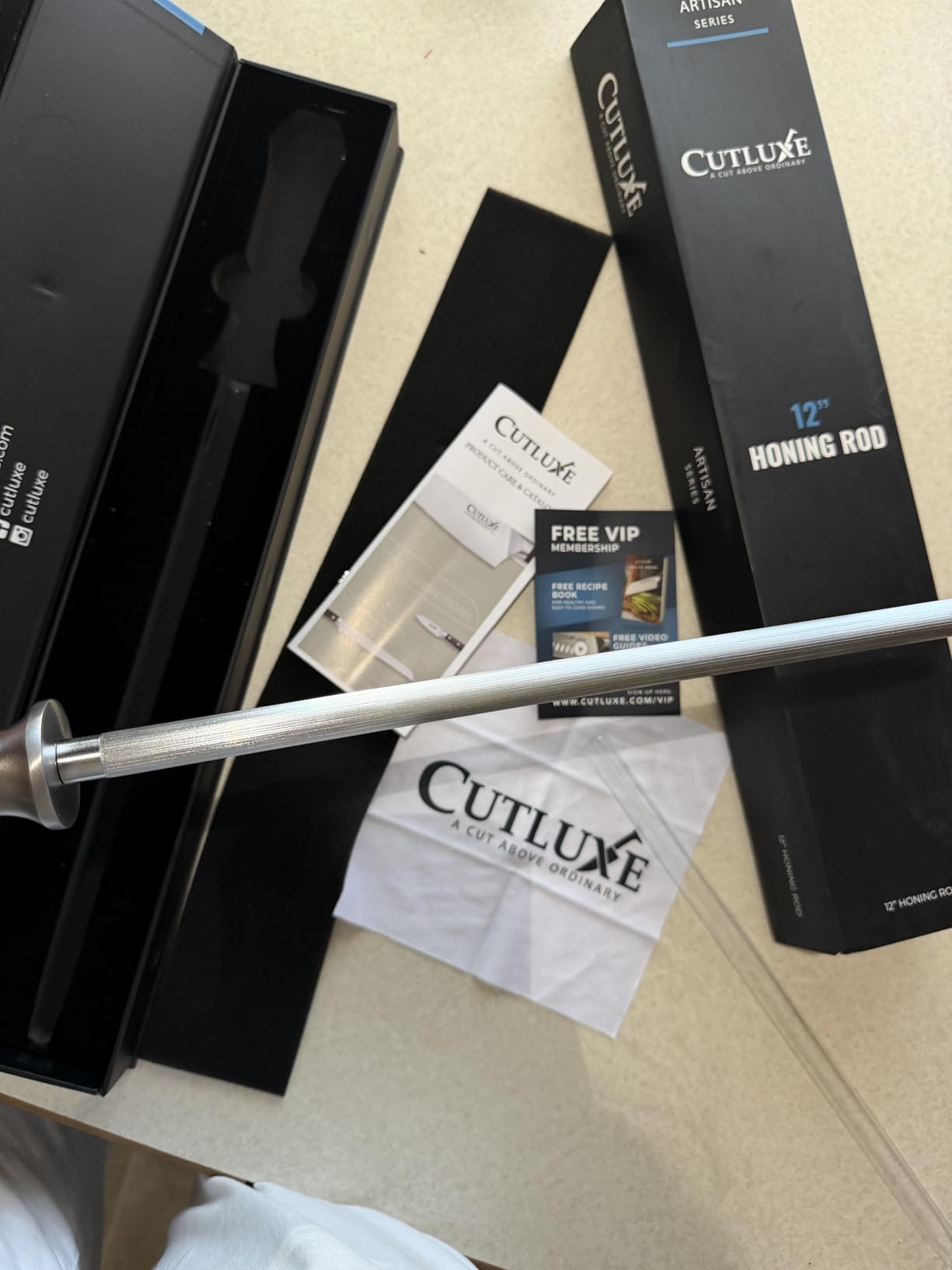
Why it works as a housewarming gift
It pairs with a new knife set in a way that most accessories do not, because the person receiving it is likely to have knives in the hardest first year of their life. Starting them with a proper maintenance habit is worth more than a decorative gift.
Where it falls short
It remains a realignment rod, so it is the wrong present for someone whose current problem is a knife that has already lost its edge. For that situation a guided sharpening system is the more useful gift.
10. Messermeister 12-Inch Ceramic Honing Rod: Best for Japanese Steels
Messermeister 12” Ceramic Sharpening Rod – Knife Sharpener – Fine 1200 Grit – Ceramic Core, Large Sharpening Surface & Soft-Grip Handle
- 12 inch rod allows full length strokes on 9 to 12 inch knives
- Fine 1200 grit ceramic both realigns and polishes unlike a traditional steel
- Safe on hard Japanese steels that a butcher steel can chip
- Large soft grip handle suits bigger hands with a hang ring and protective sleeve
- Cleans with plain water and wipes back to full performance
- Ceramic is brittle and can shatter if dropped onto a hard surface
- Needs correct angle and light pressure because aggressive use dulls the edge
- Accumulates metal and needs periodic cleaning with a nylon scrub pad
The Messermeister is the long-rod answer for anyone who owns hard Japanese steel and also owns a bread knife. At 12 inches it is among the longest available, which means a full length stroke on a 9 to 12 inch blade with no repositioning at all.
Unlike the Green Elephant, this ceramic rod is described by owners as both realigning and polishing. A 1200 grit surface with a large round profile works the whole face of the edge rather than a narrow band, so a stroke that starts correctly finishes correctly.
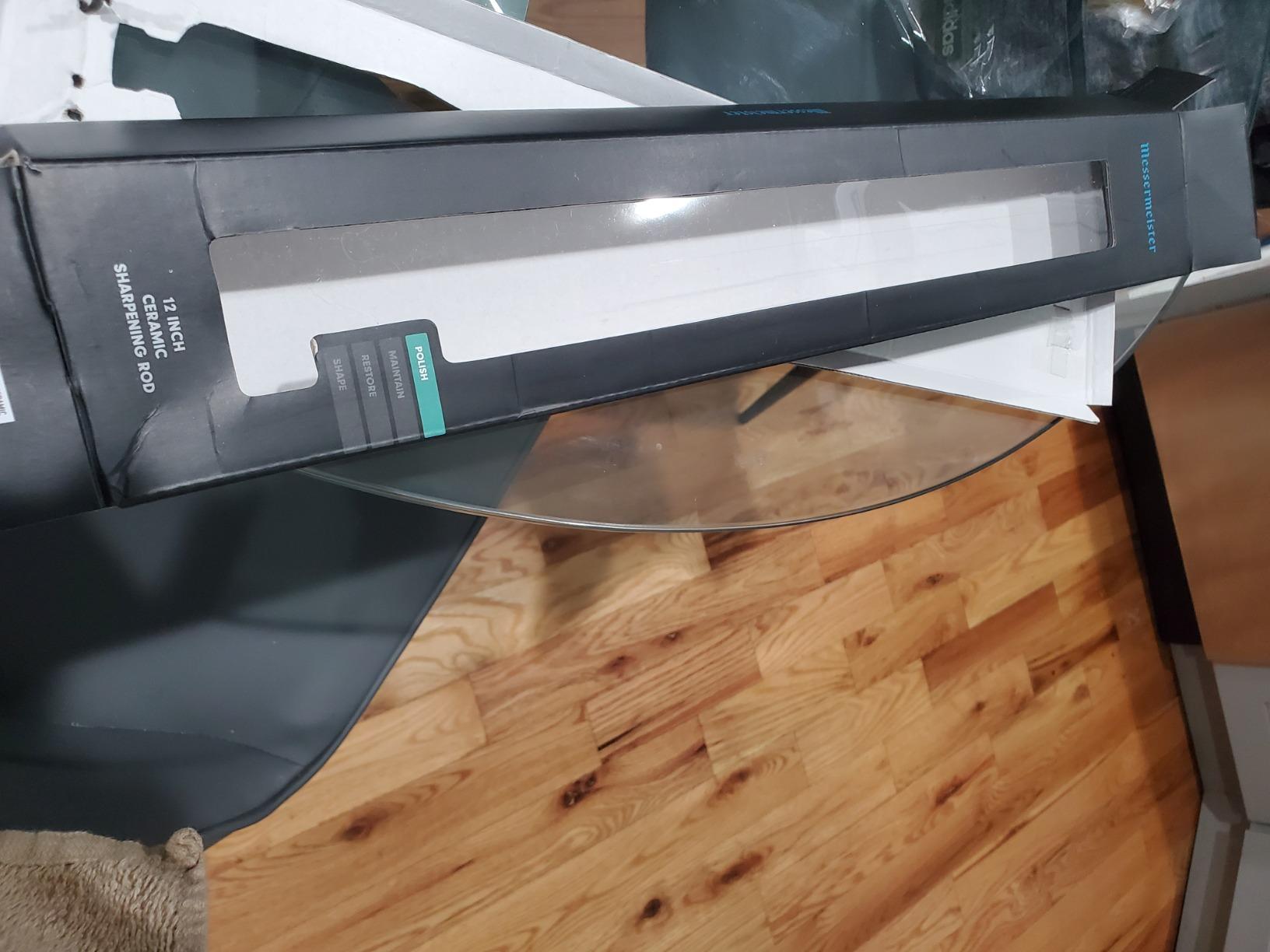
Its owner base skews experienced, and their reviews are specific. The recurring claim is that a small amount of metal comes off during use, which is why this rod can maintain a professional edge for a year or more when it is used daily instead of sitting in a drawer.
Long knives with hard steel are where the safety case is strongest. A steel rod chipping a brittle edge is a real and well-known risk, and a ceramic rod rated to match those blades removes the possibility entirely.
Why it works for a Japanese knife collection
Hardened single-bevel blades are the reason ceramic rods exist. A ceramic surface cannot chip or gouge a hard edge the way a steel rod can, and at 1200 grit it also refines rather than dulling, which is what a fine Japanese edge needs.
Where it falls short
Ceramic is brittle and dropping it on tile or a hard counter is the dominant caution across reviews. It also rounds off a finer mirror edge, so it is a touch-up tool rather than the final polishing step, and it collects metal that needs cleaning out regularly.
How to Use a Knife Sharpening Steel in Six Steps
Technique matters more here than the rod you buy. A clean, consistent stroke is achievable in about two minutes once you have the sequence, and getting it wrong is the fastest way to damage a blade or to conclude that honing does nothing.
1. Stabilise the rod first. Hold it upright in your non-dominant hand and brace the metal tip against the damp side of a cutting board. If your rod does not have a tip like the ALLWIN, use the flat end of the handle or the base of your fist.
2. Set the angle at roughly 15 to 20 degrees. Most European chef knives are set around 15 degrees and thinner Asian blades sit closer to 20. If you are unsure, rest the blade flat on the rod to find the start point and lift the spine slightly from there.
3. Lead with the heel. Place the heel of the blade against the top of the rod and draw down and across in a smooth, continuous stroke until the tip passes the bottom of the rod. Never push the knife down, always pull.
4. Use light, even pressure. The rod is doing the work because it is harder than the blade. Pressing harder does not sharpen faster, it just wears the rod faster and puts more stress on the edge you are trying to protect.
5. Do five to ten strokes per side. That is enough for routine maintenance. Wipe the blade and the rod between sides so you are not grinding loose metal back into the edge you just cleaned up.
6. Finish with a paper test. Slice a sheet of paper held loosely in one hand. A clean bite out of the paper means the edge is aligned, whether or not it is as sharp as it could be.
Honing vs Sharpening: What a Steel Can and Cannot Do
Honing straightens an edge. Sharpening cuts a new one. Those are different jobs, and understanding the difference is what separates a satisfying tool from a disappointing one.
A microscopic edge is a very thin wedge. As you cut, it bends sideways, a little at a time, and eventually the two sides no longer meet in a clean line. That rolled edge is what makes a knife feel dull, drag through food, and slide off a tomato skin. Drawing the blade down a harder rod bends those small kinks back into a single aligned line, which is what restores the clean bite. No metal comes off.
Sharpening is removing metal to create a new geometry, and that needs a stone, a diamond plate, or an electric wheel. A honing steel cannot do it, no matter how many strokes you put in. Experienced hands say it plainly: honing should not be expected to improve an edge beyond what sharpening already produced.
With that said, a sharp diamond rod sits between the two. The SHARPAL’s 1200 grit coating does remove a small amount of metal while it realigns, which is why its owners describe it as sharpening as well as honing. It is still nowhere near the volume of metal removal a stone will take.
Four signs your knife needs stones, not a rod
First, it has not cut properly in more than a few weeks despite regular honing. Second, you can see a chip, a notch, or a visibly rolled section near the edge. Third, a straight line drawn along the blade wanders badly even after several careful strokes. Fourth, it will not take a paper bite at all.
If any of those describe your situation, a honing steel will not rescue it. Our guides to the best whetstones for knife sharpening and the best diamond knife sharpening stones cover the stone route, and our picks for the best electric knife sharpening systems cover the route for people who want sharpening without learning angles. The broader category of kitchen knife sharpening systems is worth a look if you want one setup that does everything.
How often to hone
Hone before you cook rather than on a schedule, especially if you have been cutting board work or breaking down boxes. Five to ten strokes per side takes about thirty seconds. If your blade is honest stainless steel it will hold an edge through several sessions; if it is hard Japanese steel it may want a few strokes more often.
What not to hone
Serrated and bread knives are the exception. The teeth are set sideways, so drawing the blade straight down a rod smears them and dulls them faster. Some owners get away with it on the Utopia rod, but the correct tool is one of our kitchen knife sharpening systems with a serrated setting or a dedicated grooved sharpener.
How to Choose a Honing Rod for Your Knives
Start with what you own, not with what sounds impressive. A rod is a maintenance tool matched to a blade material and a blade length, and getting either wrong makes a good product feel broken.
Match the rod to the blade hardness. Blades under 60 Rockwell, which covers most German and French chef knives from Wüsthof, Zwilling, Henckels, and Victorinox, are happy with a standard plated steel rod. Blades at 62 Rockwell and above, which covers most Japanese knives including Shun, Miyabi, and Global styles, want a ceramic or diamond rod that will not mark them and will not deform.
Pick steel, ceramic, or diamond. Steel rods are gentle, forgiving, cheap, and built purely for realignment. Ceramic rods are harder than almost every blade, do a small amount of metal work, and will not chip a hard edge, but they shatter if dropped. Diamond rods sit in between, removing fine material while realigning, and they are the only one here that will touch a ceramic blade.
Buy for length, not diameter. Control of the blade is what keeps your stroke light, and a longer rod gives you more of it. Match or exceed your longest blade, which means 8 inches for an 8 inch knife, 10 inches for most home sets, and 12 inches if you own a slicer or a sashimi knife.
Look at the handle and the base. A textured grip, a guard or bolster, and enough weight to stay planted all matter more than the rod material. A rod that slides across the board while you work will make you press harder and undo the point.
Judge quality by feel in the store. A good rod is straight, evenly finished, and free of rust or pitting. Rings under the handle, a flared guard, and a smooth section of plating all signal better machining than a plain rolled tube in a thin plastic sleeve.
Care for it properly. Wipe the rod after every use, hand wash ceramic and diamond rods only, dry them fully before storing, and hang ceramic rods where they cannot be knocked off a counter. A plastic guard ring or a protective sleeve, as on the Messermeister, makes storage much safer.
Know the cost per use before you hesitate. A rod used twice a week costs less per year than replacing one dull chef knife, and it protects knives you already own. That comparison is the honest answer to whether paying more for a forged German steel is worth it, and in our testing the premium rods earned their place on blades that get maintained, not on the ones that do not.
Frequently Asked Questions
Which knife sharpening steel is the best?
For most home cooks the best knife sharpening steel is a 10 to 12 inch plated steel rod, because it covers the full length of a chef knife in a single stroke. Our pick after testing ten of them is the ALLWIN 12-Inch Carbon Honing Steel. If your knives are Japanese and hardened above 62 Rockwell, choose ceramic or diamond instead.
Does a honing steel actually sharpen a knife?
Not in the strict sense. A honing steel realigns an edge that has rolled over from use, bending microscopic bends back into a single line without removing metal. It restores the clean bite but cannot create a new bevel, so a knife with a chip or a badly dull edge needs a whetstone, a diamond stone, or an electric sharpener.
How do I use a knife sharpening steel?
Hold the rod upright and brace its base against a cutting board, set the blade at roughly 15 to 20 degrees, then pull the blade down and across the rod from heel to tip with light pressure. Do five to ten strokes per side, wipe between sides, and finish with a paper test to confirm the edge is aligned.
Is ceramic or steel better for a honing rod?
Steel is gentler and better for soft European blades under 60 Rockwell, and it is the safer choice for a beginner. Ceramic is much harder, will not chip a hardened Japanese edge, and removes a small amount of metal, but it shatters if dropped onto a hard surface. Pick diamond if you also own ceramic or carbide blades.
What length honing rod should I buy?
Match the rod to your longest knife. Eight inches works for 8 inch blades, 10 inches suits most home knife sets, and 12 inches is right if you own a slicer, a bread knife, or a sashimi blade. A longer rod also gives you more control of the blade, which makes each stroke lighter on the edge.
What do professionals use to sharpen knives?
Professionals use a progression of whetstones, typically 400 grit to repair, 1000 to 1000 grit to set the edge, and 2000 to 4000 to refine, followed by a leather strop with compound. They use a honing rod between sessions to keep a knife sharp between grindings rather than as the primary sharpening step.
A note on search terms, because it catches people out: questions about knife blade steels such as 1095 versus D2 versus S30V are about which knife to buy, not which rod to buy. Either of those blade steels will work with any rod in this roundup, and you should choose the rod based on hardness, length, and handle instead.
The Sharpening Steel Worth Buying in 2026
If you want one answer, take the ALLWIN 12-Inch Carbon Honing Steel. It covers a full length chef knife in a single stroke, it has the deepest body of owner feedback of anything we tested, and it costs enough that you will not think twice about reaching for it before every session.
Pick the Utopia Kitchen rod instead if you want a second steel for a knife roll or a second kitchen, since it rates 4.7 across more than eight thousand reviews. Go ceramic if your knives are Japanese and hardened above 62 Rockwell, where steel risks chipping the edge, and go diamond only if you actually own ceramic or carbide blades.
The habit matters more than the hardware. Thirty seconds of light strokes before you cook is what keeps a knife sharp between grindings, and it is the part most people skip right after they bring a new rod home.
Not sure which matches your knives? Tell us what you own, whether it is a Henckels block, a Japanese gyuto, or a set you inherited, and we will point you at the right rod.