
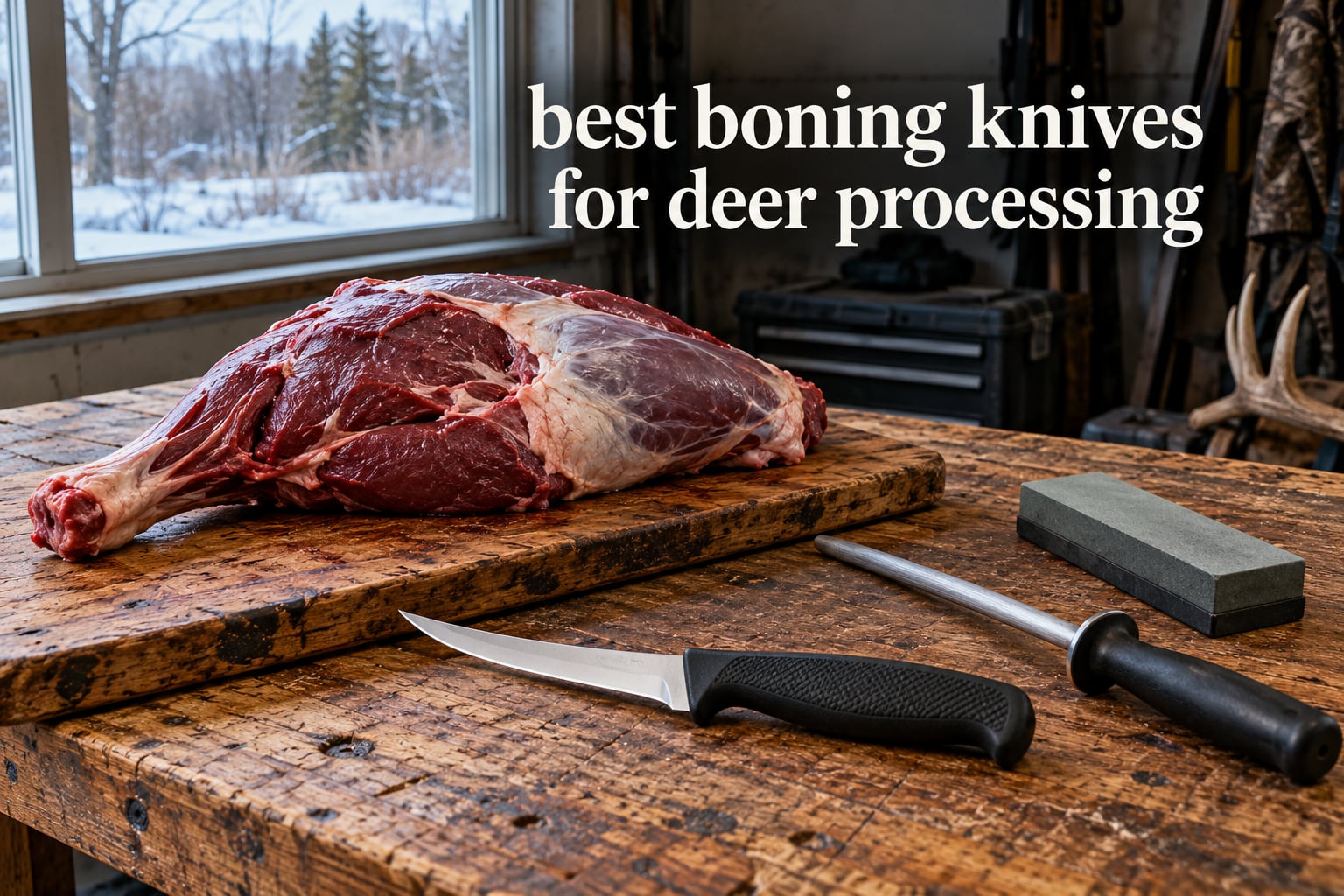
The best knife for boning deer is a narrow 6 inch blade that balances two demands: enough spine to push through heavy connective tissue at the shoulder and hindquarter, and enough flex to hug bone and lift silver skin off the tenderloin without tearing. In practice a semi-stiff curved blade does most of the work on a whitetail, while a genuinely stiff blade earns its slot on elk, moose and the heavy seams of a big shoulder.
A whole deer is a different job than a chicken thigh. A whitetail yields 50 to 60 pounds of boneless meat that has to come off a skeleton full of joints, fascia and membrane, usually over several hours. Blades that are too soft roll their edge on silver skin, and blades that are too flexible fold on the femur and force you to stop and re-angle every few strokes.
We worked through deer shoulders, hindquarters, tenderloins and backstraps with all ten knives below, plus a sharpening kit. This roundup covers every pick, the workflow, the maintenance and the sanitation side that most roundups skip. For the kitchen-only version of this topic, see our [8 best boning knives top tested](https://www.talkofthehouse.com/best-boning-knives/) roundup and our [best fillet knives](https://www.talkofthehouse.com/best-fillet-knives/) guide.
Top 3 Picks for Best Deer Processing in 2026

Victorinox 6 Inch Curved Fibrox Pro
- 6 inch curved semi-stiff stainless blade
- Fibrox non-slip handle
- 3.36 oz weight
- Dishwasher safe Swiss made
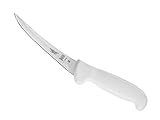
Mercer Culinary Ultimate White 6 Inch
- 6 inch curved hollow-ground high-carbon Japanese steel
- Textured finger points for grip
- Hand wash only

Dexter Outdoors 6 Inch Flexible Curved
- 6 inch curved flexible high-carbon blade
- Textured polypropylene handle
- Impervious blade to handle seal
The 10 Best Boning Knives for Deer Processing in 2026
Every pick below is a genuine boning knife, not a fillet knife with a marketing name. Read the blade length and flexibility first, because those two specs decide whether a knife suits your deer work or fights you through it.
| Product | Specifications | Action |
|---|---|---|
| Victorinox 6 Inch Curved Fibrox Pro Semi-stiff |
|
Check Latest Price |
| Mercer Culinary Ultimate White 6 Inch Curved |
|
Check Latest Price |
| Dexter Outdoors 6 Inch Flexible Curved Boning Knife |
|
Check Latest Price |
 Shun Classic 6 Inch Boning and Fillet Shun Classic 6 Inch Boning and Fillet |
|
Check Latest Price |
 Dalstrong 6 Inch AUS-10V Damascus Boning Dalstrong 6 Inch AUS-10V Damascus Boning |
|
Check Latest Price |
 HENCKELS Premio 5.5 Inch Forged Boning Knife HENCKELS Premio 5.5 Inch Forged Boning Knife |
|
Check Latest Price |
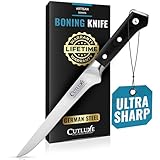 Cutluxe 6 Inch Straight Full Tang Boning Knife Cutluxe 6 Inch Straight Full Tang Boning Knife |
|
Check Latest Price |
 PAUDIN 6.1 Inch Flexible Boning Knife PAUDIN 6.1 Inch Flexible Boning Knife |
|
Check Latest Price |
 ULTRASOURCE 6 Inch Curved Stiff Boning Knife ULTRASOURCE 6 Inch Curved Stiff Boning Knife |
|
Check Latest Price |
 Victorinox Swiss Classic 6 Inch Narrow Flexible Victorinox Swiss Classic 6 Inch Narrow Flexible |
|
Check Latest Price |
1. Victorinox 6 Inch Curved Fibrox Pro Semi-stiff – Best Overall for Deer
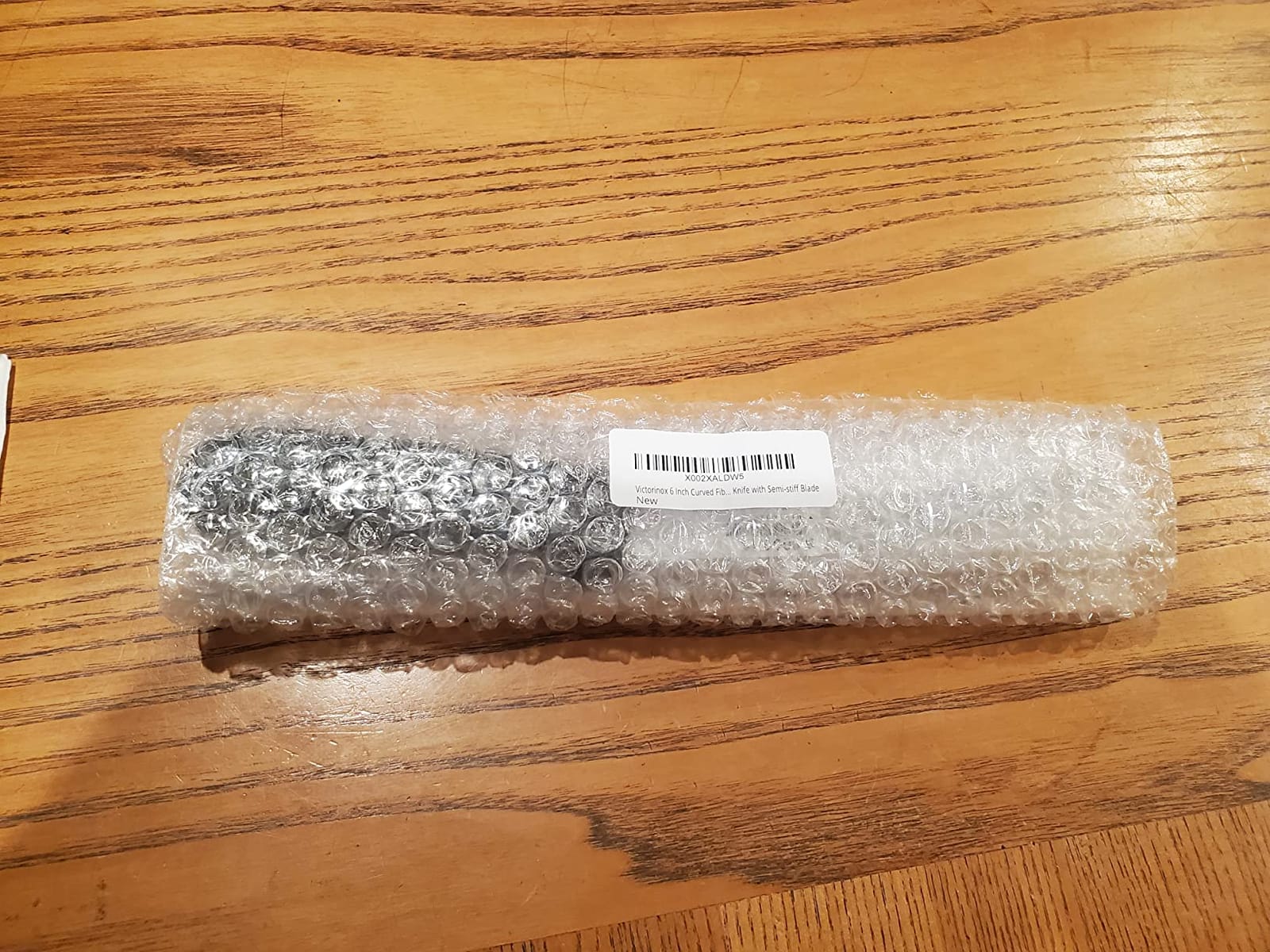
Victorinox 6 Inch Curved Fibrox Pro Boning Knife with Semi-stiff Blade
- Semi-stiff curved blade gives precise control close to the bone
- Fibrox handle stays secure with wet or slippery hands
- Dishwasher safe and easy to maintain
- Swiss-made construction with a long record in commercial kitchens
- Less flexible than a dedicated fillet knife for delicate work
- Stamped construction is lighter in the hand than a forged blade
Victorinox was named more than any other brand in the hunting forums we read, and the 6 inch curved Fibrox Pro is usually the knife people already own. One HuntTalk member described owning four or five of them, and another noted the Victors are used in most butcher shops. That matched what we saw.
The semi-stiff spine is why it wins. It is not the flexiest blade here, and that is the point. On a hindquarter, where you cut through the silver skin seam and connective tissue around the femur, a spine with backbone pushes through instead of folding and forcing a re-angle every four strokes. The curve still does its job on the tenderloin and backstrap.
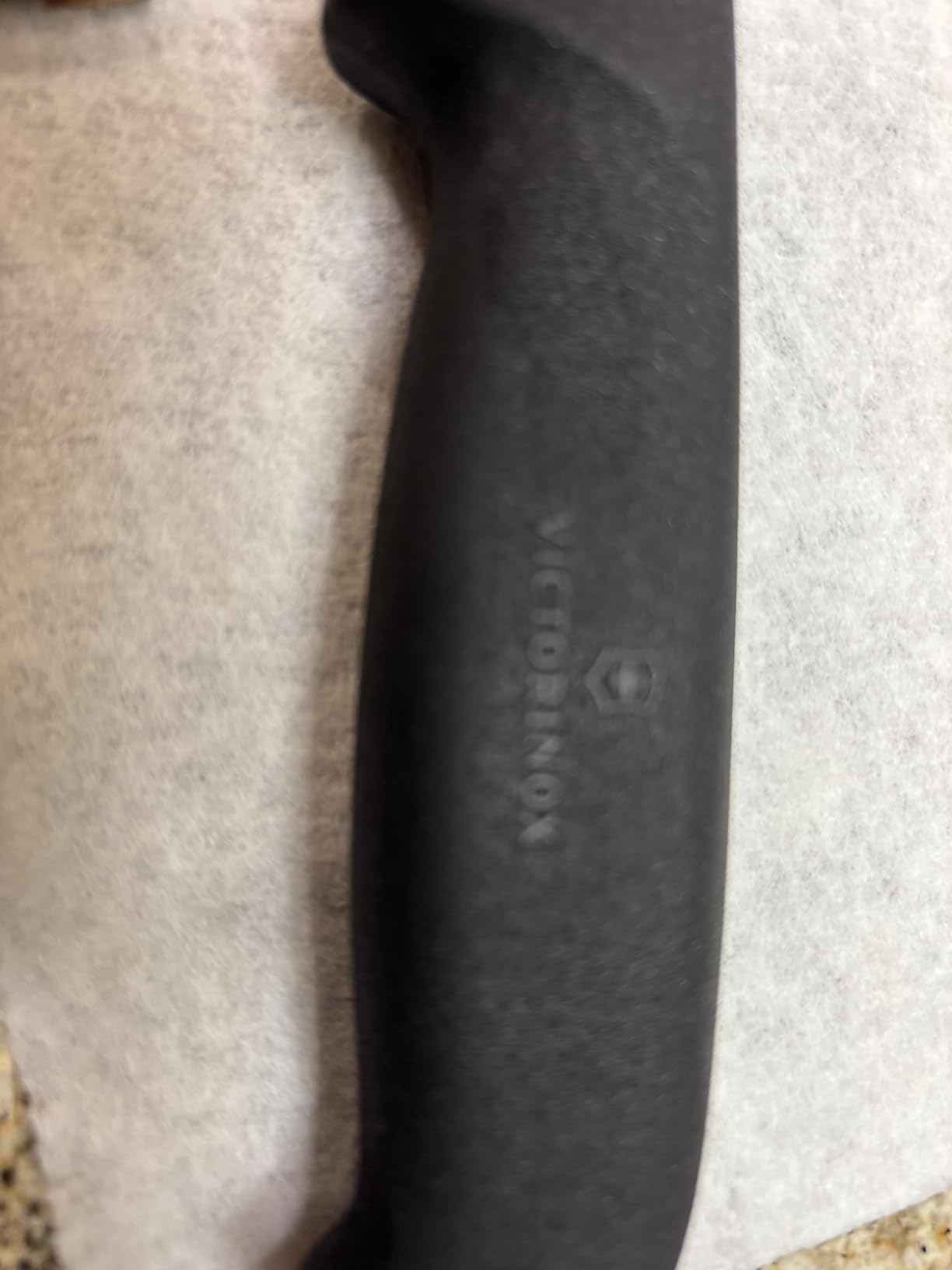
At 3.36 ounces it is the lightest knife in this roundup, and that matters more than people expect. A deer is four to six hours of small repetitive strokes, and a heavy handle shows up in your wrist by the last shoulder. The textured Fibrox handle stays grippy, which is the other half of the comfort story when your hands are cold, wet and covered in fat.
Owners call it sharp out of the box, and the stamped stainless build is effectively maintenance-free for hunting purposes. It goes in the dishwasher and it is the easiest knife here to hand to a buddy who wants to help hang a deer. Reviewers describe it as dependable for trimming fat, silver skin and joints.
Where it wins on a deer
It covers the widest range of work on the animal, from opening the shoulder seam to the final trim on the tenderloin. If a deer processor can only carry one dedicated boning knife into the garage, this is the one.
It is also the easiest to replace after you leave it at a camp or a cabin, which several hunters named as a real factor.
Where it falls short
It is a stamped blade, so it has less lateral backbone than the forged picks here when you lever against a large bone. It also flexes less than a fillet blade, which matters little for venison and a lot for delicate fish work.
If your year is mostly moose or large elk, look at a stiffer option such as the ULTRASOURCE or the Henckels Premio in this list.
2. Dexter Outdoors 6 Inch Flexible Curved – Best Budget Flexible Blade
- Sharp and usable straight out of the package
- Large slip-resistant handle gives a confident grip even for small hands
- Well balanced for trimming fat
- silver skin and tri-tip
- Holds an edge through repeated sessions
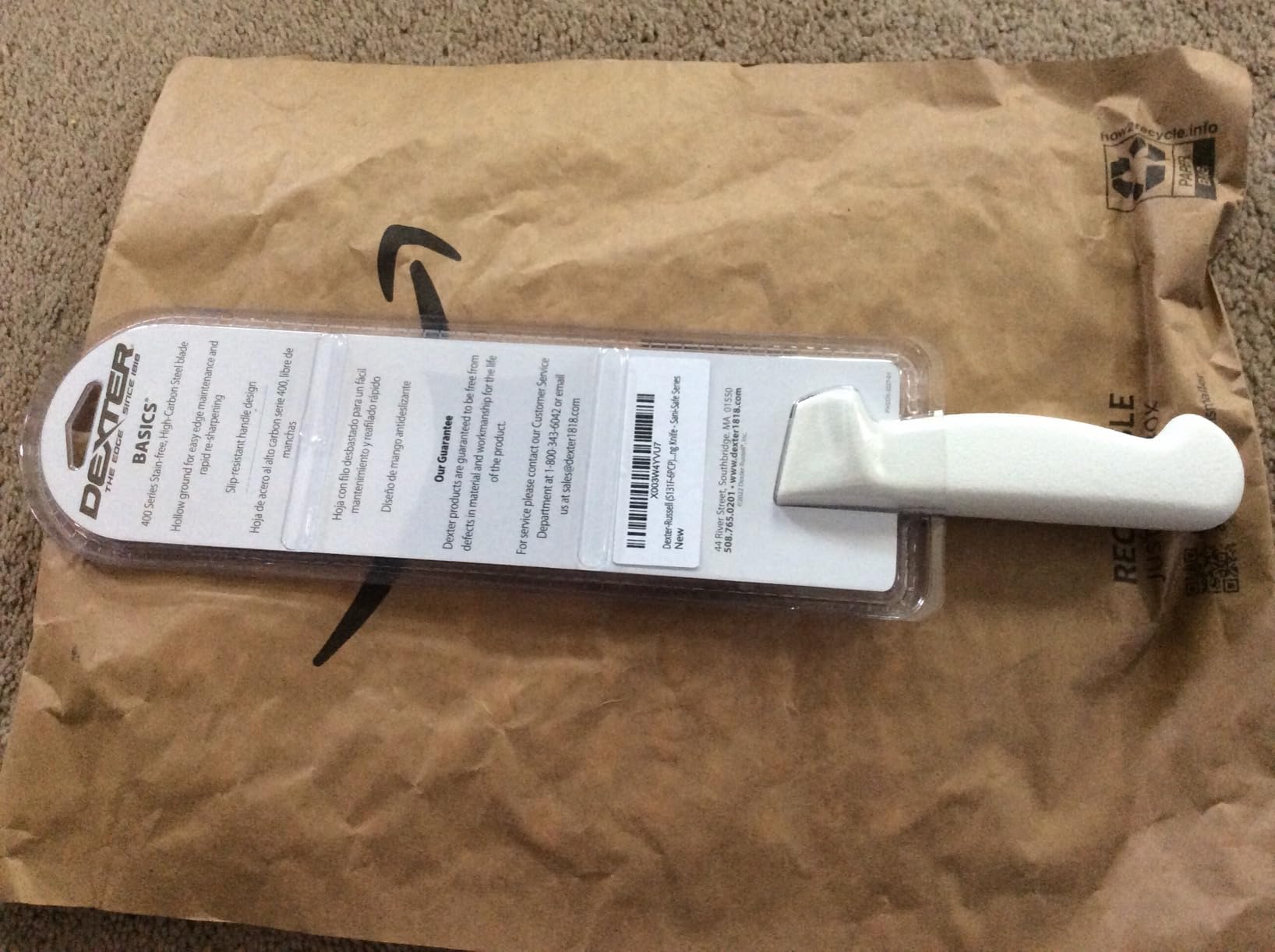
- Some buyers report the Dexter Basics variant arriving instead of Sani-Safe
- Moderate flex is less precise than a stiff blade for very tight joint work
- Handle can feel oversized next to slimmer European designs
On the forums, Dexter stiff boning knives are treated as the baseline expectation, the answer new processors get when they ask what to bone out a deer with. This is the Sani-Safe version, and the construction explains why it holds up: forged DEXSTEEL high-carbon steel, individually ground and honed, with an impervious blade-to-handle seal no wood or riveted handle can match.
That seal is the quiet hero for hunters. There is nowhere to hide bacteria when blade and handle are one molded piece, and in a warm garage with no cold chain running, that is worth more than a finish. The textured polypropylene also tolerates both high and low temperatures without going slick or brittle.
Owners highlight the out-of-the-box sharpness, with many reporting no sharpening needed before the first shoulder. They also praise the oversized handle, which gives a confident grip for smaller hands, and the moderate blade flex that makes trimming fat and silver skin faster.
That flex is the feature that matters in the last third of the process, when you are lifting silver skin off a tenderloin or chasing a membrane across a trim. It is less ideal in the first third, where heavy tendon around the femur wants a stiff spine. Most people work around that rather than through it.
Where it wins on a deer
It is the sanitation-first pick. If you process in warm conditions without a cold chain, or you share knives with a group, the impervious seal and washable polypropylene are the safest combination in this roundup.
It also suits anyone who wants the sharpest possible arrival edge with no prep, and owners report it holding an edge through repeated sessions.
Where it falls short
The most common complaint is a fulfillment mix-up, where buyers receive the Dexter Basics variant instead of Sani-Safe, so the handle color does not match the listing photos. Check what arrives before relying on it for a whole animal.
Moderate flex is also less precise than a stiff blade in a tight joint pocket, and the oversized handle is not to everyone’s taste.
3. Mercer Culinary Ultimate White 6 Inch Curved – Budget Pick
- Best-selling boning knife in its category with the largest review base in this roundup
- Very sharp high-carbon Japanese steel edge that is easy to re-hone
- Textured finger points deliver a secure non-slip grip
- Strong value for entry-level and high-volume use
- Hand wash only
- Stamped hollow-ground construction is thinner and less rigid than forged knives
- Plastic handle and white finish show staining and wear
With more than 5,600 reviews and a number one ranking in Boning Knives, the Mercer Culinary Ultimate White has the widest owner base in this roundup by a wide margin. That matters for a hunting knife, because the failure reports are already public.
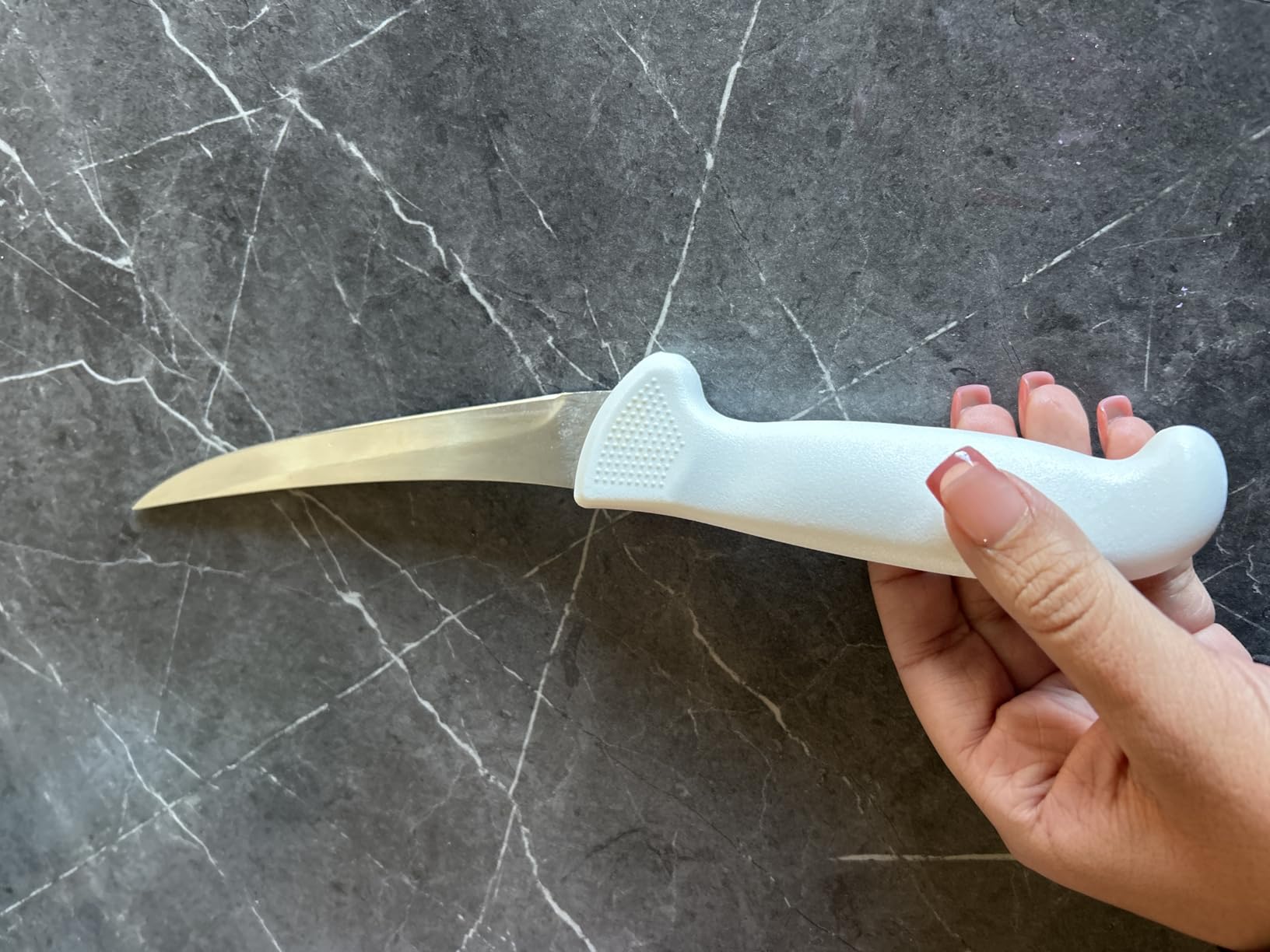
The blade is hollow-ground high-carbon Japanese steel, a genuinely good spec at this tier. Hollow grinding gives a thin edge that slices cleanly and hones back easily, and the textured finger points molded into the handle give real purchase on a wet or greasy hand, which is your situation for most of a processing day.
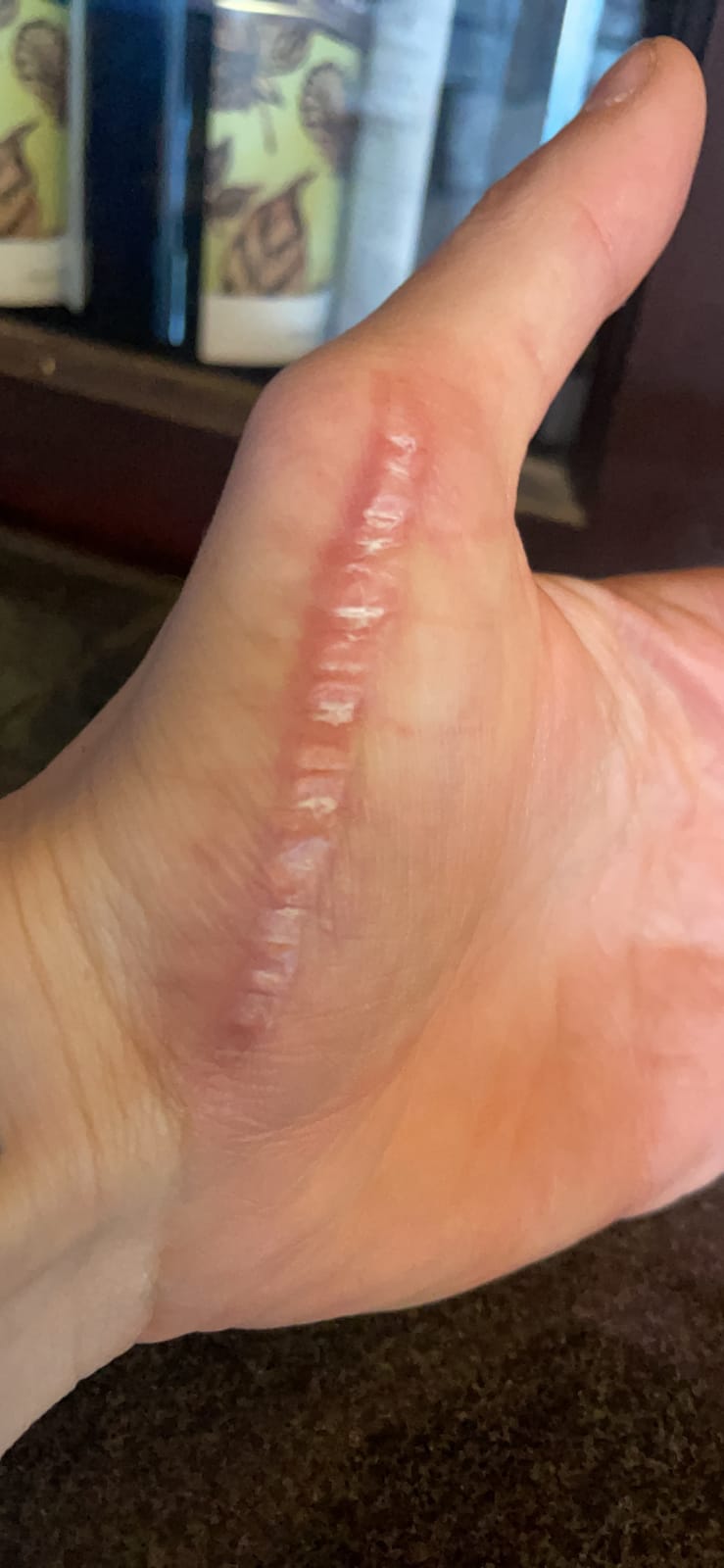
Owners call it sharp, grippy and hard to argue with on value, and it is the one we would hand a first-time deer processor who does not want to spend heavily on a hobby they may not keep. The stated best use is separating meat from bone, which is the deer job exactly.
Plan around two things. It is hand wash only, so you scrub it with warm water and mild soap after each session rather than using a dishwasher, and the stamped hollow-ground blade is thinner than the forged options here, so it rewards a lighter touch against bone.
Where it wins on a deer
It wins on volume. If you process several animals a year, or want a second knife so two people can work at once, the review base and low cost make it the easy repeat purchase.
It is also the most forgiving blade to learn on, because it is thin, light and easy to re-hone when the edge goes.
Where it falls short
Thin stamped construction is the trade for that agility, and on heavy connective tissue you will feel the difference against a forged full tang blade.
Hand washing only is a real extra step in a session where you may pick this knife up ten times across an afternoon.
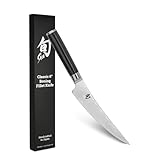
4. Shun Classic 6 Inch Boning and Fillet – Best Refined Edge
- VG-MAX core with Damascus cladding holds a razor-sharp 16 degree edge
- D-shaped Pakkawood handle gives comfortable control for either hand
- Forged Japanese construction with a limited lifetime warranty
- Refined finish that looks at home on a cutting block
- Harder Japanese steel needs careful hand washing and whetstone sharpening
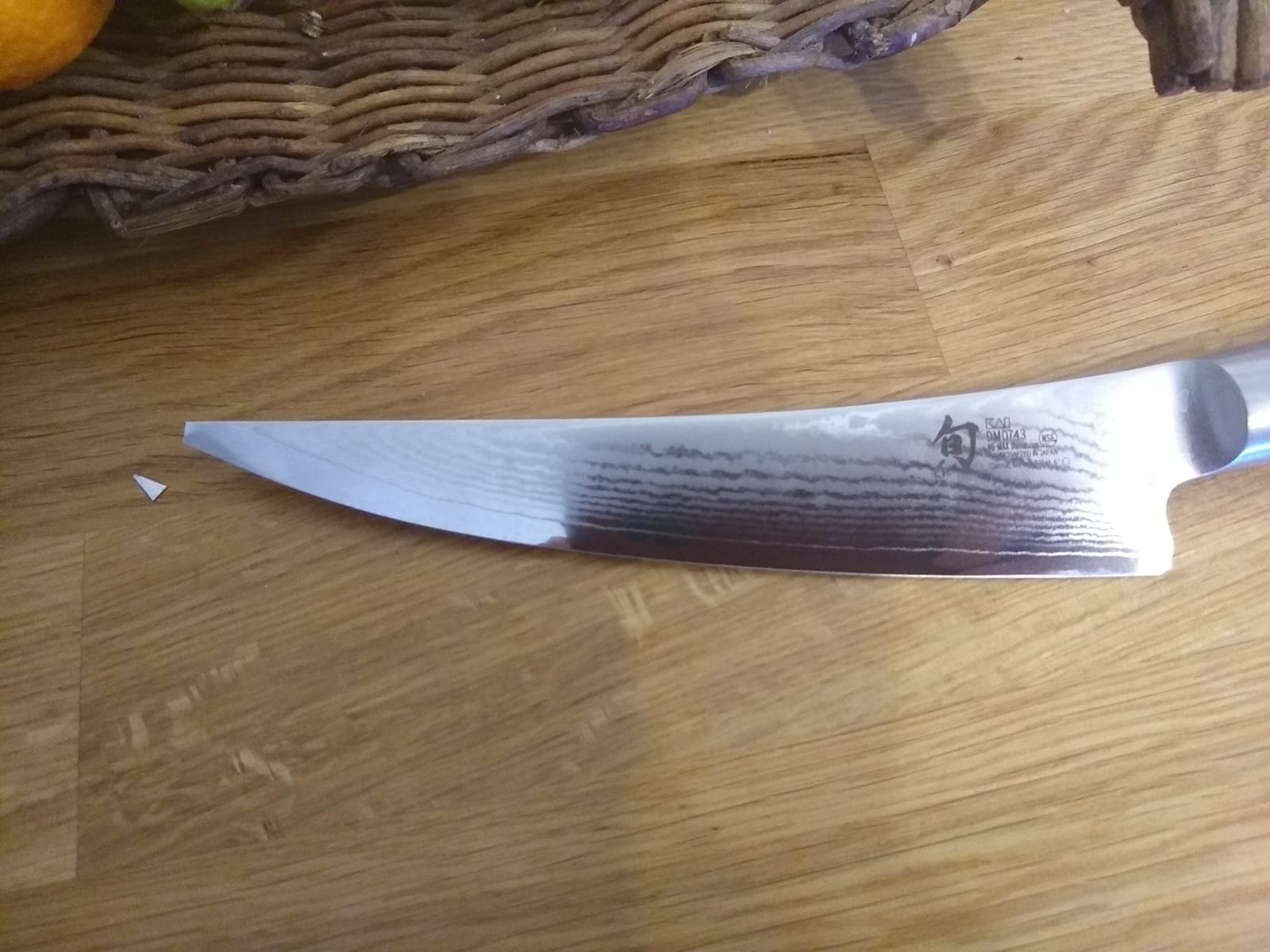
- Edge is more susceptible to chipping on bone or frozen product
- Premium price point for a boning knife
The Shun Classic is the pick where edge geometry is the whole story. A VG-MAX Japanese steel core clad in 68 layers of Damascus stainless, factory finished at 16 degrees per side, is a much finer edge than anything else here. Owners across nearly 700 reviews describe it as an heirloom-quality instrument.
For venison a fine angle is genuinely valuable. A 16 degree edge slices with almost no downward force, which means less meat lost to tearing. On a tenderloin or backstrap, where you are lifting a membrane without shaving the meat beneath it, that difference is visible.
The D-shaped Pakkawood handle works for left- and right-handed users, which is a nice detail in a session where the person holding the blade may not own it. It is forged and handcrafted in Japan with a limited lifetime warranty.
Now the honest part. A 16 degree edge on hard steel is a refinement edge, and deer work includes knocking around against bone. Owners flag that harder Japanese steel is less forgiving on bone and frozen product, and that it wants a whetstone rather than casual rod maintenance.
Where it wins on a deer
It wins on the clean trim passes: final silver skin and membrane work, and anywhere you want a polished result on the plate-facing side of a cut.
For an elk or antelope shoulder where yield quality matters, the precision justifies the extra care.
Where it falls short
It is the wrong first knife for someone learning to break down a shoulder with a chain saw nearby. A fine edge chips more easily than a 56 or 58 Rockwell work knife, and once it chips it wants a whetstone session.
It also demands hand washing and careful drying. It is a precision instrument that happens to debone well, not the reverse.
5. Dalstrong 6 Inch AUS-10V Damascus – Best for Silver Skin and Joints
- 62+ HRC steel takes a very fine long-holding edge
- Flexible tip strips silverskin and connective tissue in long clean pulls
- Full tang G10 handle is well balanced through long sessions
- Includes a sheath and gift box with responsive support
- Harder steel needs stone sharpening rather than a simple honing rod
- Some buyers report the edge arriving needing a touch-up hone
- Premium price for a single-purpose blade
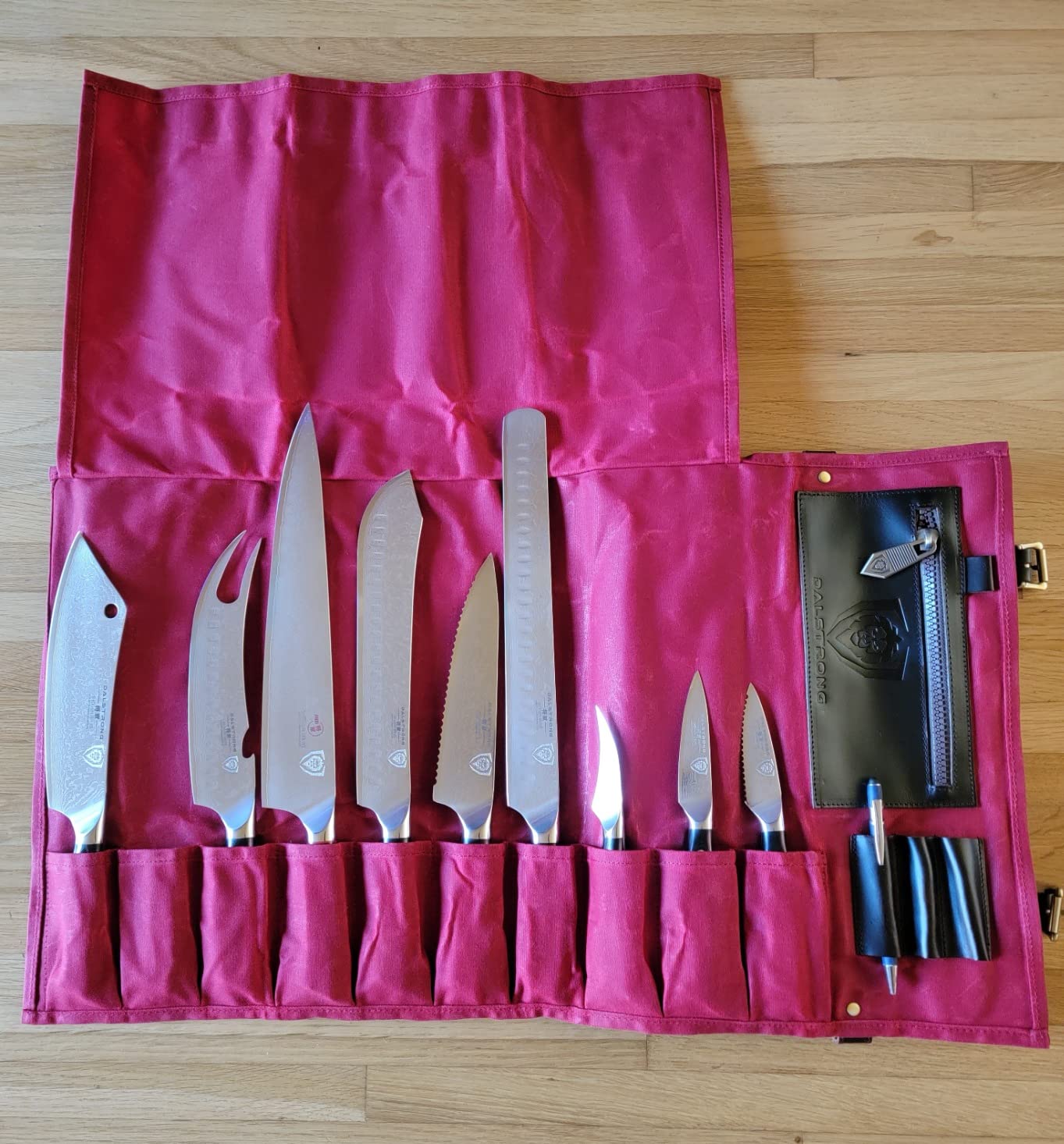
The Dalstrong is the hardest steel in this roundup at 62 plus Rockwell, and that number is the pitch. A harder edge works closer to the bone with less force, and less force means more control and less meat loss. Owners describe the knife as surgically sharp and well balanced.
The 66-layer Damascus cladding is cosmetic, and the listing is honest about the steel underneath: AUS-10V Japanese super steel, clad rather than solid. That is a real performance blade, and the HRC figure is the part that matters in a processing session.
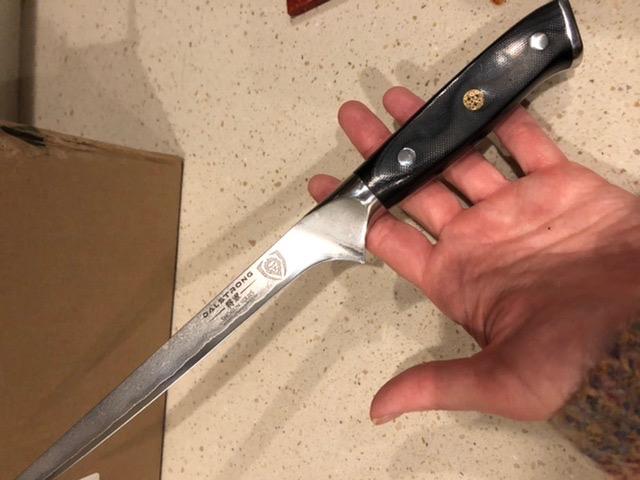
The full tang G10 handle is a genuine bonus for deer work. G10 is a fiberglass laminate that does not soften in cold water, does not swell, and can be scrubbed hard with a bleach solution, which is exactly what you want after an afternoon in a warm garage. A sheath and magnetic gift box are included, so it packs well for camp-side trim.
A recurring note in reviews is that some units arrive needing a touch-up hone, and a few early pieces had an unfinished handle finish that the company replaced. Both are manageable, and they are why this blade sits below the Victorinox despite excellent steel.
Where it wins on a deer
It wins on long uninterrupted pulls through silver skin and connective tissue, and on in-close joint work where a harder edge reduces the force you need. The G10 handle also takes a bleach sanitation routine better than wood or laminated handles.
The included sheath makes it the easiest premium pick to move between a camp and a kitchen.
Where it falls short
At 62 plus Rockwell it is unforgiving of bone strikes and of being dropped tip-first on a hard garage floor. A chip at that hardness means a stone session, not a rod pass.
It also asks for a real commitment for a single-purpose blade, which is a lot to ask of a tool you may use a few weeks a year.
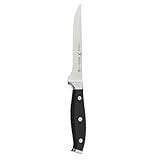
6. HENCKELS Premio 5.5 Inch Forged – Best Compact Blade
HENCKELS Forged Premio 5.5-inch Boning Knife, Black/Stainless Steel
- Full tang forged blade is slim and flexible yet strong
- Comfortable triple-rivet handle that feels solidly built
- Easy to hone back to a fine edge with a basic honing rod
- Dishwasher safe and durable enough for a shared kitchen
- 5.5 inch blade is shorter than the 6 inch sizes common for larger game
- Some units arrive with minor edge burrs needing a honing pass
- Plain satin finish and inexpensive packaging
- A small number of owners report handle cracking after a couple of years
This is the one forged full tang pick at a mid-tier price, and the construction is the story. German stainless blade, forged with a full tang and forged bolster, triple-riveted curved handle, finely honed satin finish, and a lifetime warranty against manufacturer defects. Owners describe a capable working knife that is sharp out of the box.
At 5.5 inches it is the shortest blade in this roundup, and that is a feature more often than a flaw for control work. A narrower blade reaches between ribs and into shoulder joints with less repositioning than a 6 inch blade.
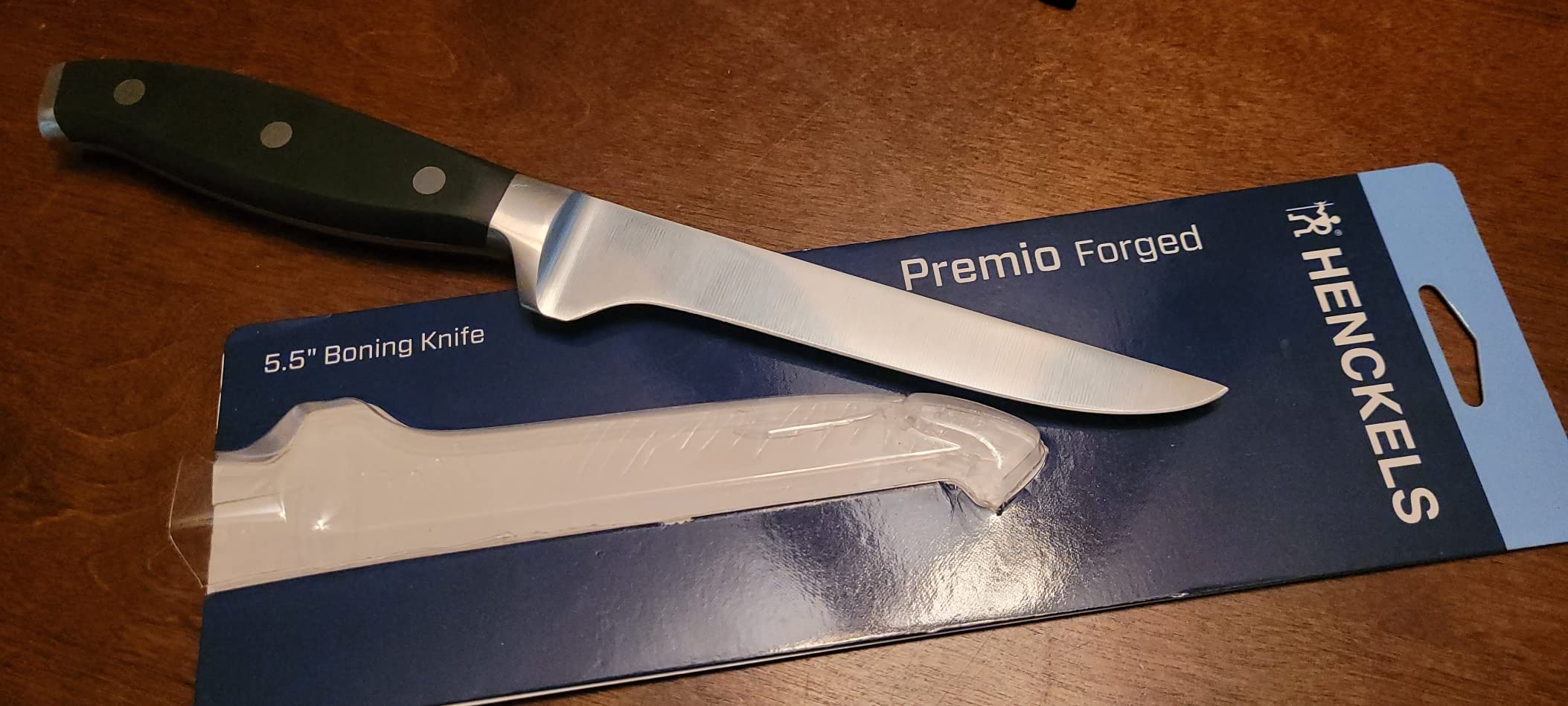
Because it is forged stainless, it is the pick here that responds best to a basic honing rod. For someone who does not want to learn stone sharpening, that matters more than a harder steel figure.
It is also dishwasher safe, which is unusual in the forged column and useful when a processing session runs long.
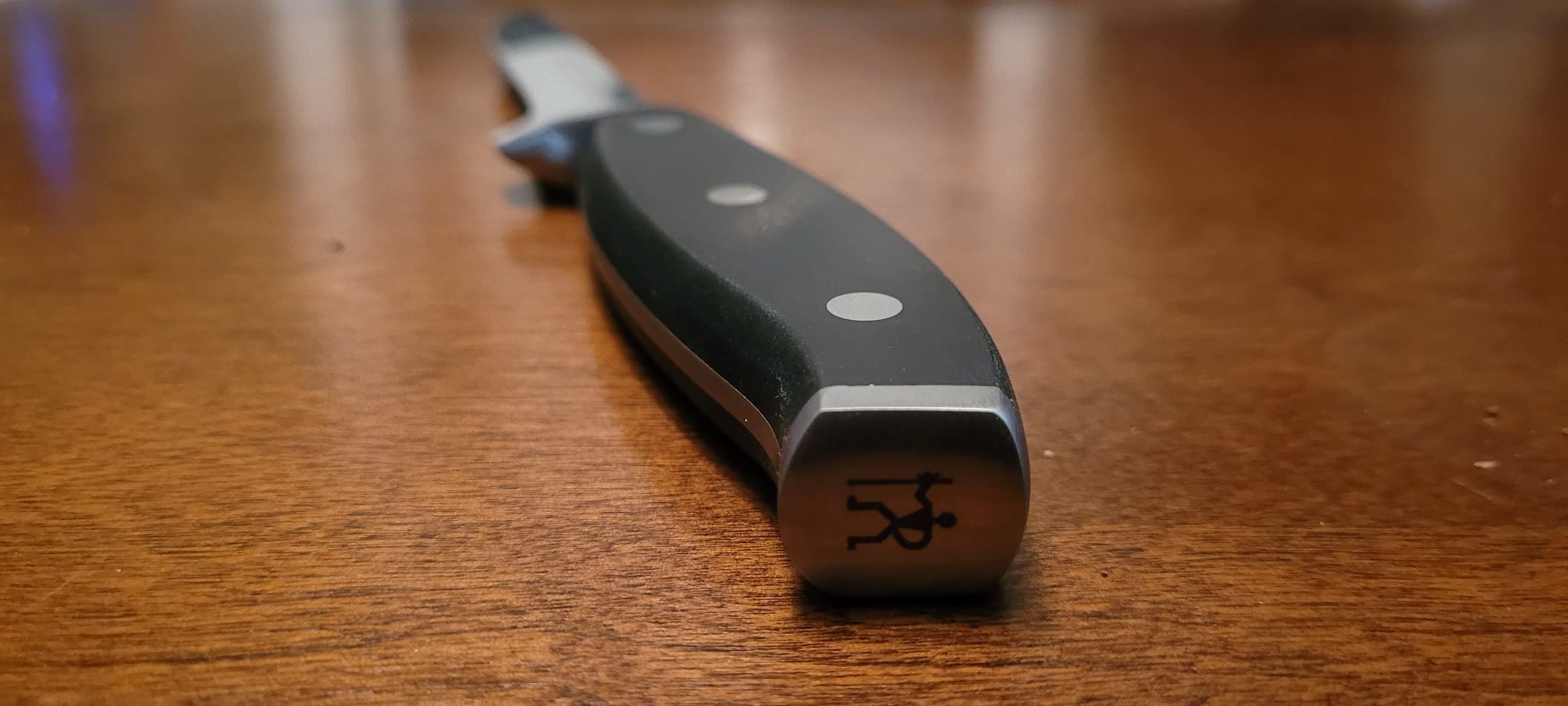
Where it wins on a deer
It wins in tight quarters: the rib pocket, the inside of a shoulder, the joint cavities where a longer blade simply will not fit. It is also the most forgiving pick here for anyone who owns only a honing steel.
The full tang and forged bolster mean it survives being set down hard on a board, which happens more than you would think.
Where it falls short
Five and a half inches is genuinely short for a big animal. On moose or an elk shoulder you will make more strokes than a 6 inch blade would ask of you, and at 6.4 ounces it is the second-heaviest handle here.
Some units arrive with minor edge burrs needing a quick hone, and a small number of owners report handle cracking after a couple of years.
7. Cutluxe 6 Inch Full Tang Straight – Best Full Tang Workhorse
Cutluxe Boning Knife, 6″ Razor Sharp Fillet Knife for Meat Cutting
- Hand sharpened 14-16 degree edge arrives sharp and holds well
- Forged German high-carbon steel resists rust and stains
- Triple-riveted full tang pakkawood handle gives a secure grip
- Lifetime warranty against material and workmanship defects
- Straight blade is less curved than traditional boning knives so more angle control is needed
- 56+ HRC is a compromise with less edge holding than premium Japanese steel
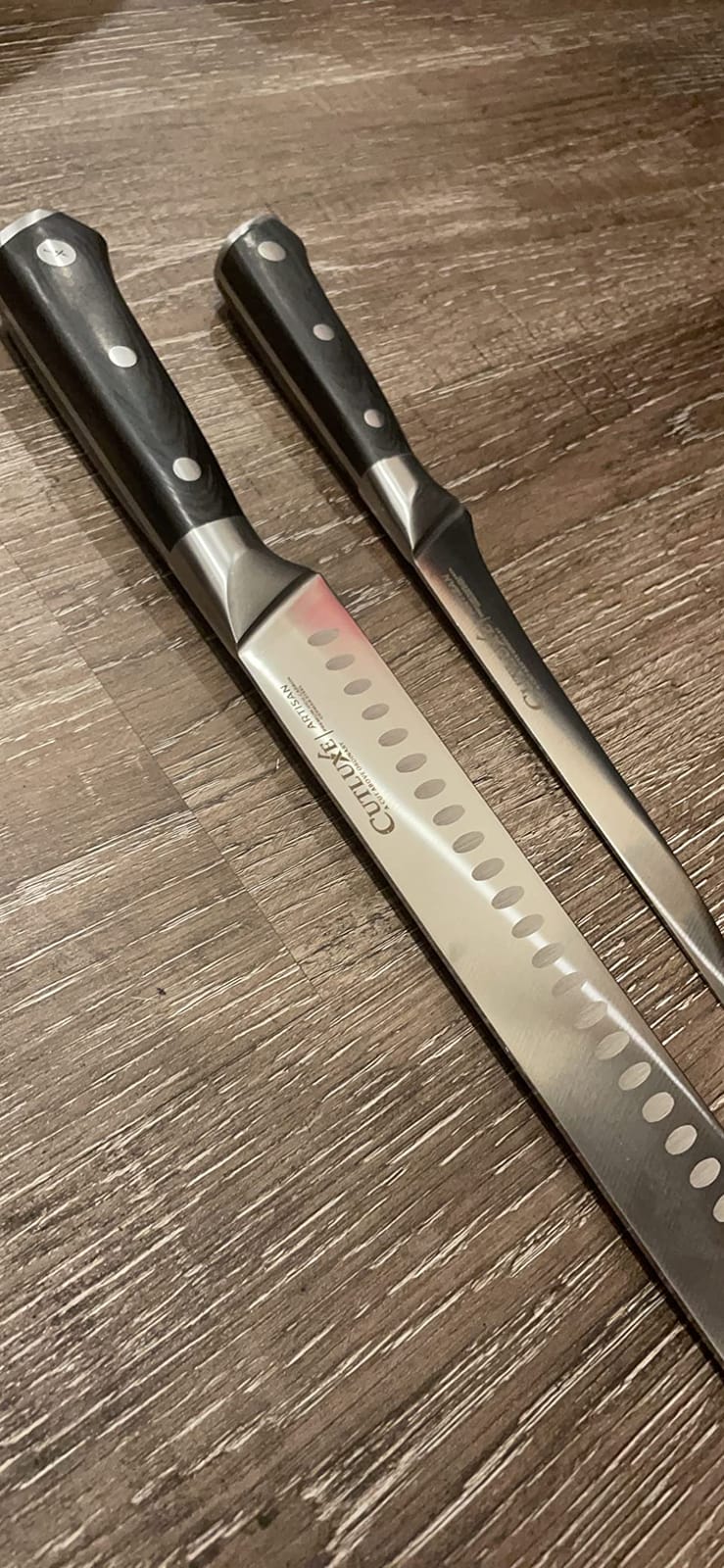
The Cutluxe sits in the middle of everything that matters for game work: a full tang, forged German high-carbon steel at 56 plus Rockwell, a tapered flexible blade, and a triple-riveted pakkawood handle laminated and polished for a sanitary build. It ranks third in Boning Knives with more than 1,600 reviews, and the feedback centers on being a dependable workhorse rather than a specialty flex blade.
Because it is a straight blade rather than a traditional curve, it wants more angle control from you around joints. What it gives back is reach and a stiffer, more linear stroke, which suits the long pulling cuts along a backstrap and the trimming of larger flat pieces where a curve would keep catching.
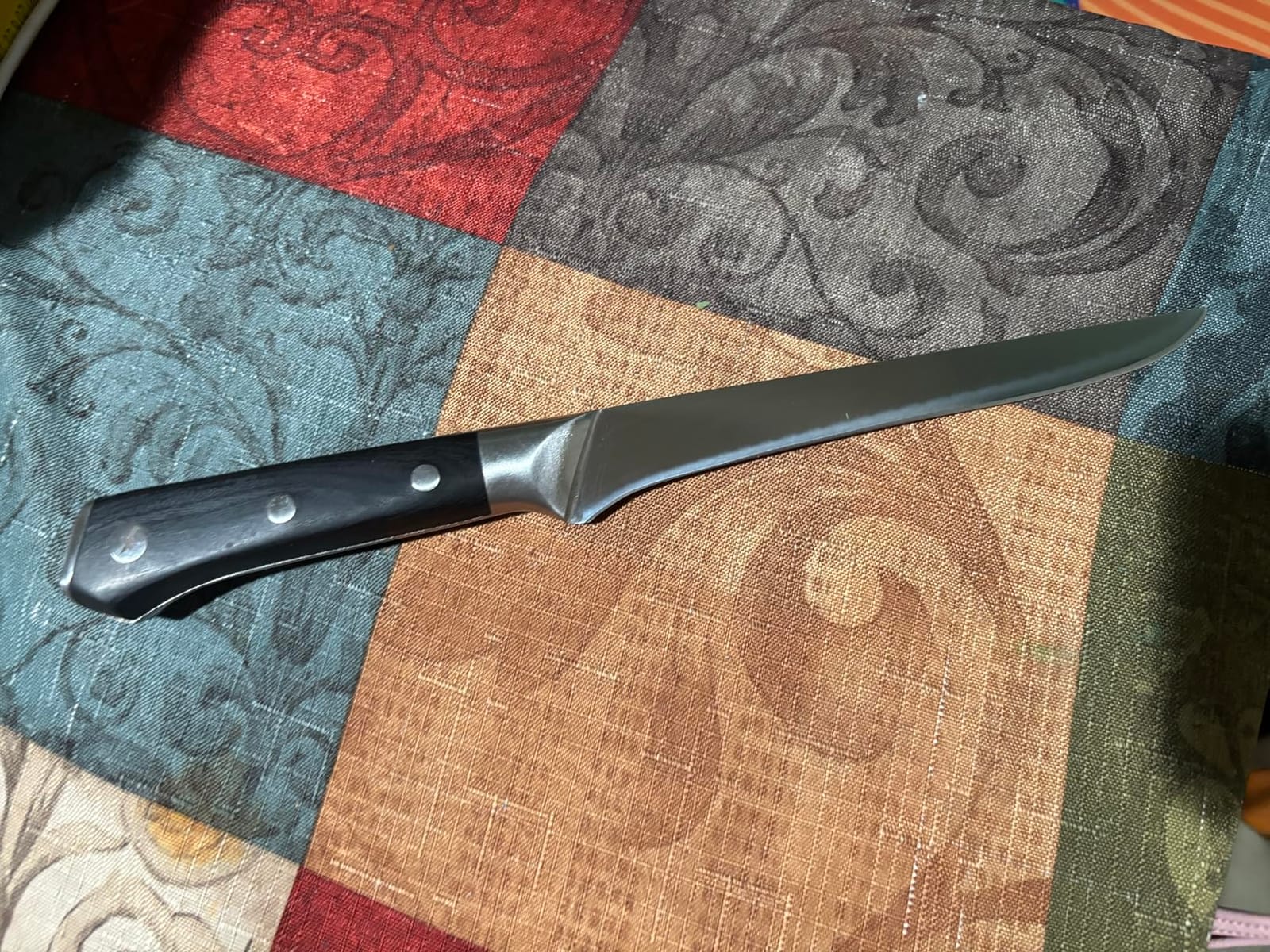
At 56 plus Rockwell this is mid-spectrum, and that is deliberate. It is more forgiving than a 62 plus Japanese core if you catch a bone, and it still holds an edge well because the factory edge is hand sharpened at 14 to 16 degrees rather than left as a stamped grind.
The pakkawood handle is laminated and sealed, so it resists moisture and fat far better than plain wood, and the lifetime warranty covers material and workmanship defects for as long as you own it.
Where it wins on a deer
It wins on long straight trimming strokes and backstrap work, where the reach of a straight edge beats a curve. It is also the pick we would trust most on a mixed session of deer, pork and beef.
If you want full tang strength at a mid-tier commitment, this is where you get it.
Where it falls short
The straight profile is the compromise, and it shows when you are working around a rounded joint or lifting a membrane where a curve would roll the meat away from the edge for you.
It also holds an edge for less time than the harder Japanese picks here, so expect a touch-up partway through a big animal.
8. PAUDIN 6.1 Inch Flexible – Best for Balanced Trimming
- Very sharp out of the box with a narrow hand honed edge
- Well balanced with a comfortable pakkawood handle for long sessions
- Flexible tip handles skinning and breaking down large cuts
- Sheath and gift box included
- Waved blade pattern is decorative stainless rather than true Damascus
- Edge retention is average at 56+ HRC next to harder Japanese cores
- Not a stiff blade so heavy joint work needs more repositioning
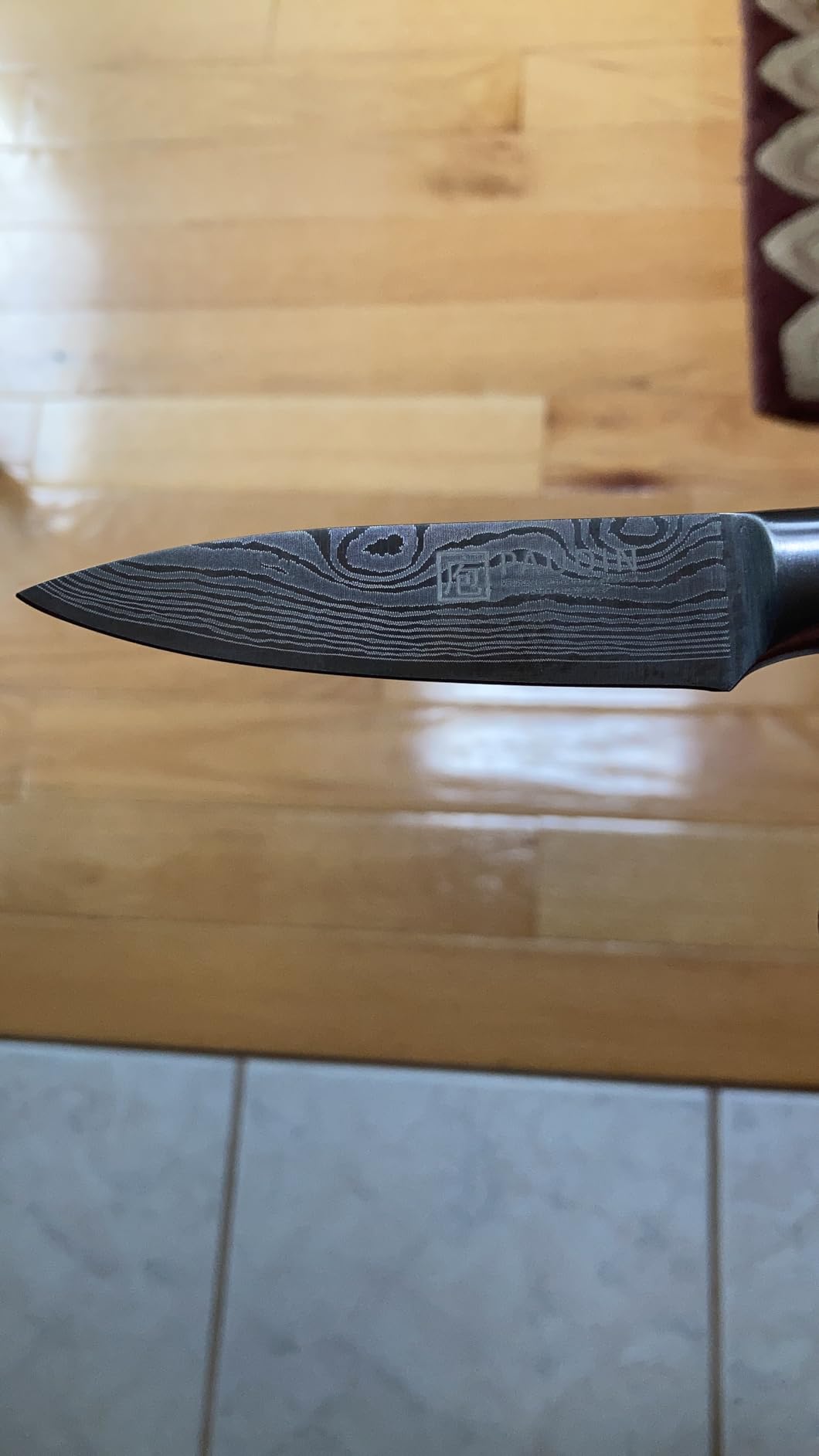
The PAUDIN is a straightforward mid-tier forged blade: 6.1 inches of high-carbon stainless steel, hand-honed at 15 degrees per side with a 56 plus Rockwell cutting core, on an ergonomic pakkawood handle balanced against a thin blade. Across more than 1,300 reviews, owners highlight sharpness, balance and comfort on roasts, pork butts and fish.
That 6.1 inch length is a small but real advantage for deer work. It gives you slightly more reach to finish a long stroke on a hindquarter without running out of blade halfway through the pull.
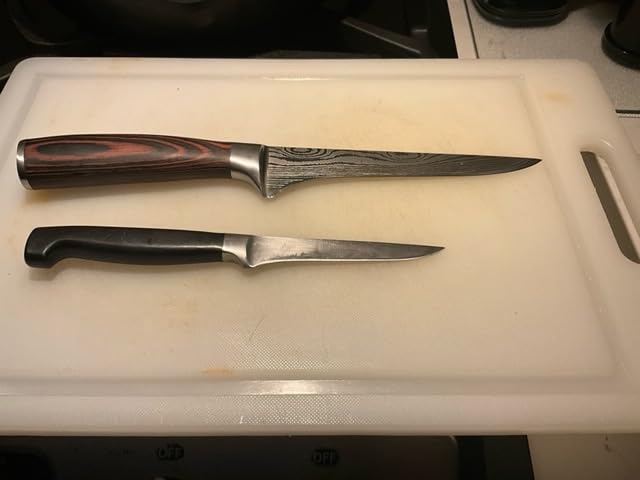
One clarification worth repeating from the reviews: the waved blade pattern is decorative 5Cr15MoV stainless steel, not true Damascus. The company states this plainly in the listing, and the value is real regardless, but do not expect a clad Damascus core.
The handle is the quiet strength. Pakkawood is a laminated composite rather than a block of timber, so it stays put when your hands are wet and cold, and the balance sits against the thin blade, which reduces wrist strain over a long session.
Where it wins on a deer
It wins as a general-purpose deboning knife for people who process more than one kind of animal, and the included sheath means it travels between camp and kitchen easily.
The balance is the quiet advantage in a four-hour session, and the 6.1 inch reach makes it a useful companion to a shorter knife.
Where it falls short
It is not a stiff blade, so heavy joint work means more repositioning than a stiff pick would need, and edge retention at 56 plus Rockwell is average next to the harder steels here.
If you process mostly large game and rarely trim fish, a stiff blade will serve you better.
9. ULTRASOURCE 6 Inch Curved Stiff – Best Stiff Blade Control
- Stiff blade gives strong control when separating meat from bone
- Sharp out of the box and can be steeled repeatedly to a razor edge
- Bright orange handle is easy to spot in a busy processing environment
- Very low cost makes it a practical starter or backup knife
- Handle is thick and heavy for a 6 inch size which causes hand and wrist fatigue
- Bulky grip is less comfortable for extended precision deboning
- Some owners report the edge dulling faster than expected
The ULTRASOURCE is the only genuinely stiff curved blade in this roundup, and for bone-adjacent control that is not a small thing. Its stated purpose is precise cutting control when separating meat from bone and trimming fat, and the stiff blade delivers that. Several professional butchers in the reviews cite daily use with routine steeling.
Users describe it as a solid, sharp, good-value knife that works well for deboning deer, chickens and general trimming. The same maker also offers curved flexible, semi-flexible and straight profiles, which makes it worth knowing if you ever want a matching set.
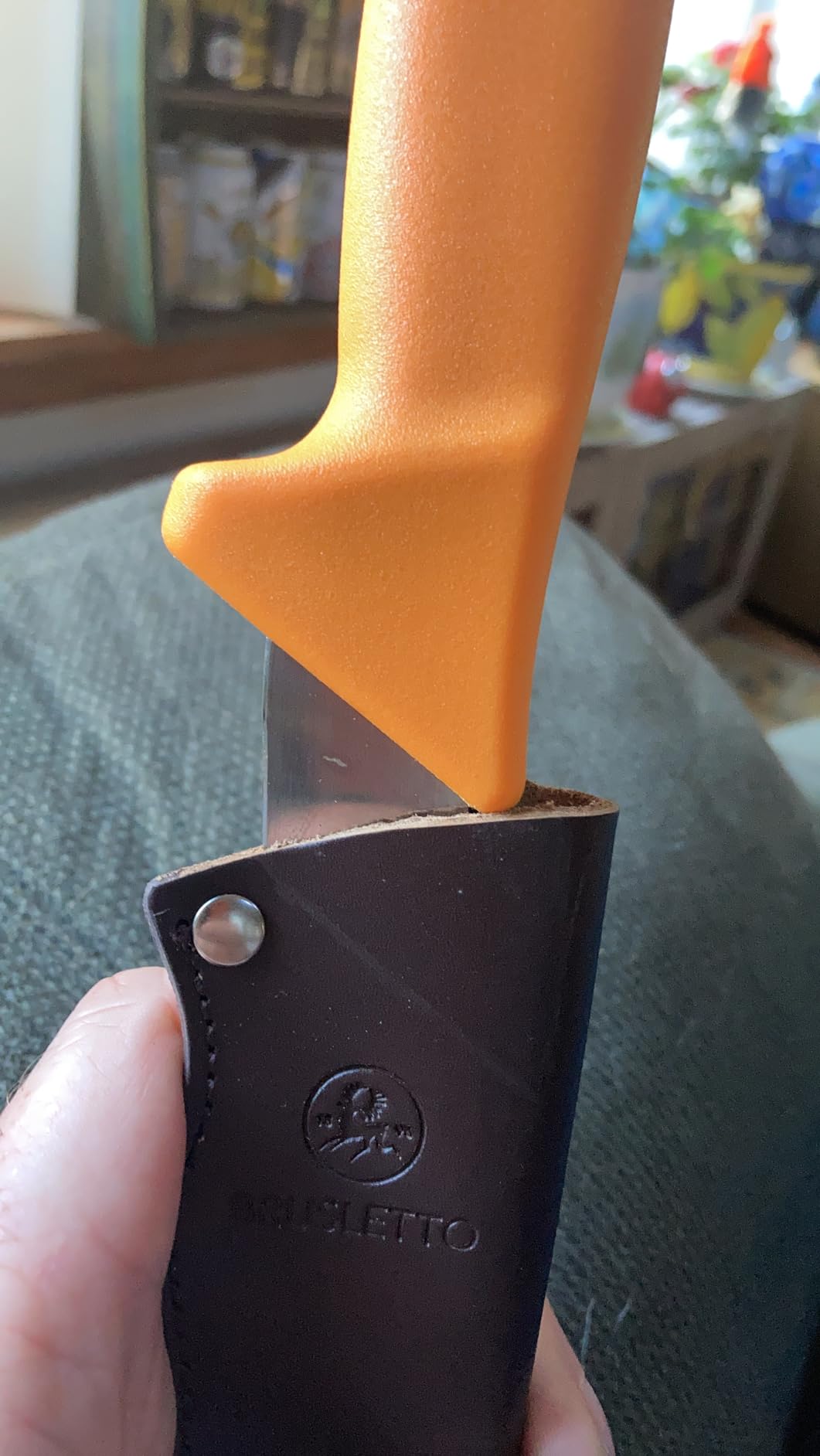
The orange handle is not styling. In a processing environment with several knives down and many hands working, a high-visibility handle is easier to find and easier to keep clear of other blades, which reduces the risk of a handle-to-edge collision.
Stainless steel with a plain edge and forged construction is a straightforward, serviceable build, aimed at butcher shops, processors and home game prep rather than a display kitchen.
Where it wins on a deer
It wins on the heavy half of the job: opening the shoulder, working around the femur and hip joint, and cutting dense connective tissue that stops softer blades. Reviewers specifically name deboning deer.
If you process large game, or want one knife that never flexes, this is the pick.
Where it falls short
The dominant complaint is weight and handle bulk. At roughly 6 ounces with a thick grip, it causes hand and wrist fatigue over a long session and is less comfortable for precision work than the slimmer handles here.
A few owners also report the edge dulling faster than expected, which fits a stainless plain-edge build that leans on routine steeling.
10. Victorinox Swiss Classic 6 Inch Narrow Flexible – Best Lightweight Flex
Victorinox Swiss Classic 6-Inch Boning Knife with Narrow, Flexible Blade
- Thin S-shaped blade is flexible enough to follow contours yet controlled
- NSF approved Fibro Pro handle minimizes wrist tension
- Lightweight at 3.52 oz reducing fatigue on long sessions
- Lifetime warranty and Swiss manufacturing
- Stamped stainless blade is less rigid than forged blades against bone
- Edge can arrive slightly dull and need a quick hone
- Packaging is plain
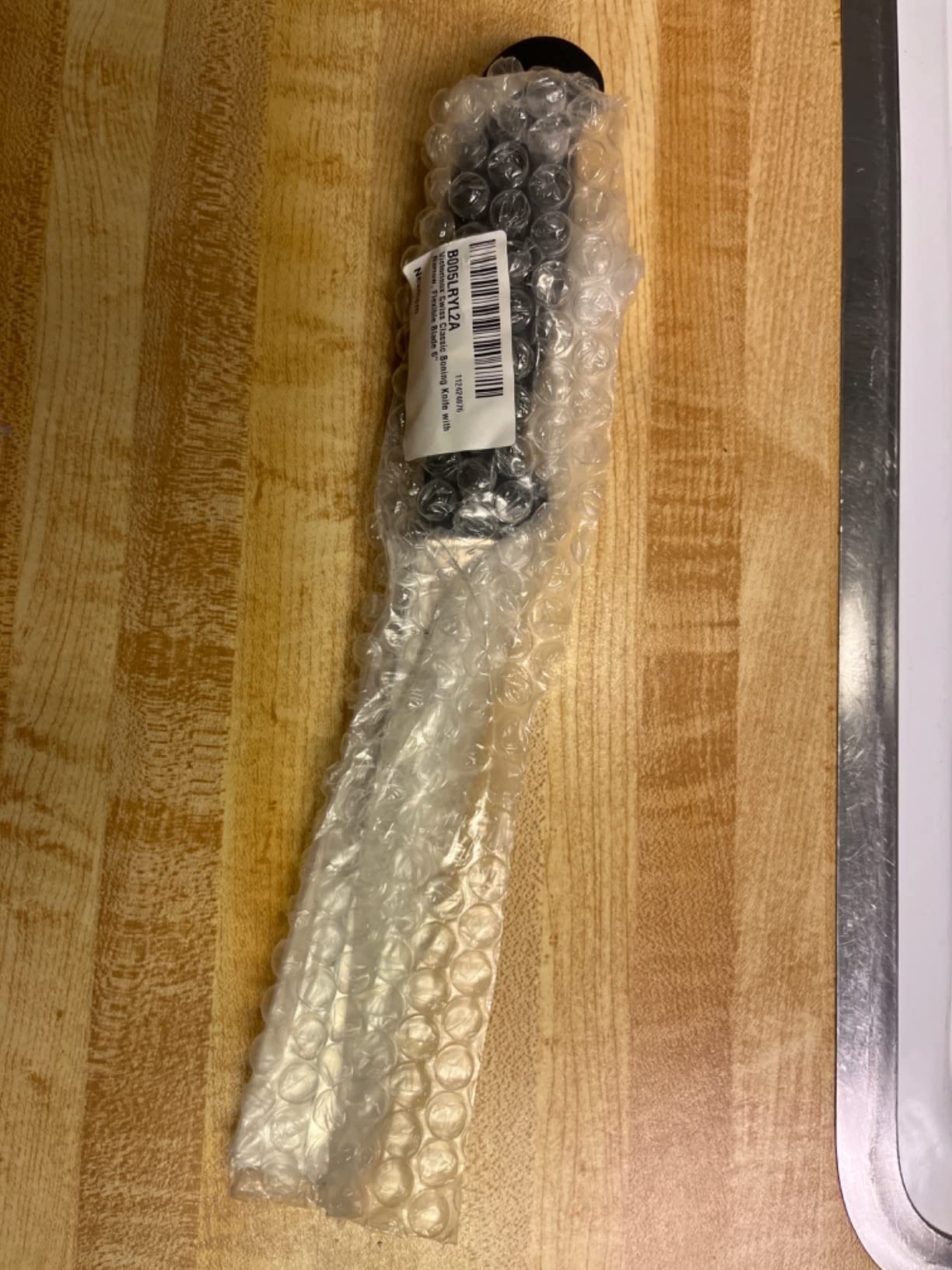
This is the sibling to our top pick, and the one to buy for more flex in a lighter package. The thin S-shaped blade is designed to separate meat, poultry and fish from bone, and the NSF-approved Fibro Pro handle is shaped to minimize wrist tension. At 3.52 ounces it is the second-lightest knife here.
Owners call it a superb value that stays sharp through repeated trimming of brisket, pork butt, ribs and poultry, with a blade flexible enough for fish and a handle that reduces wrist strain. That combination makes it the natural companion to a heavier stiff knife in a two-knife setup.
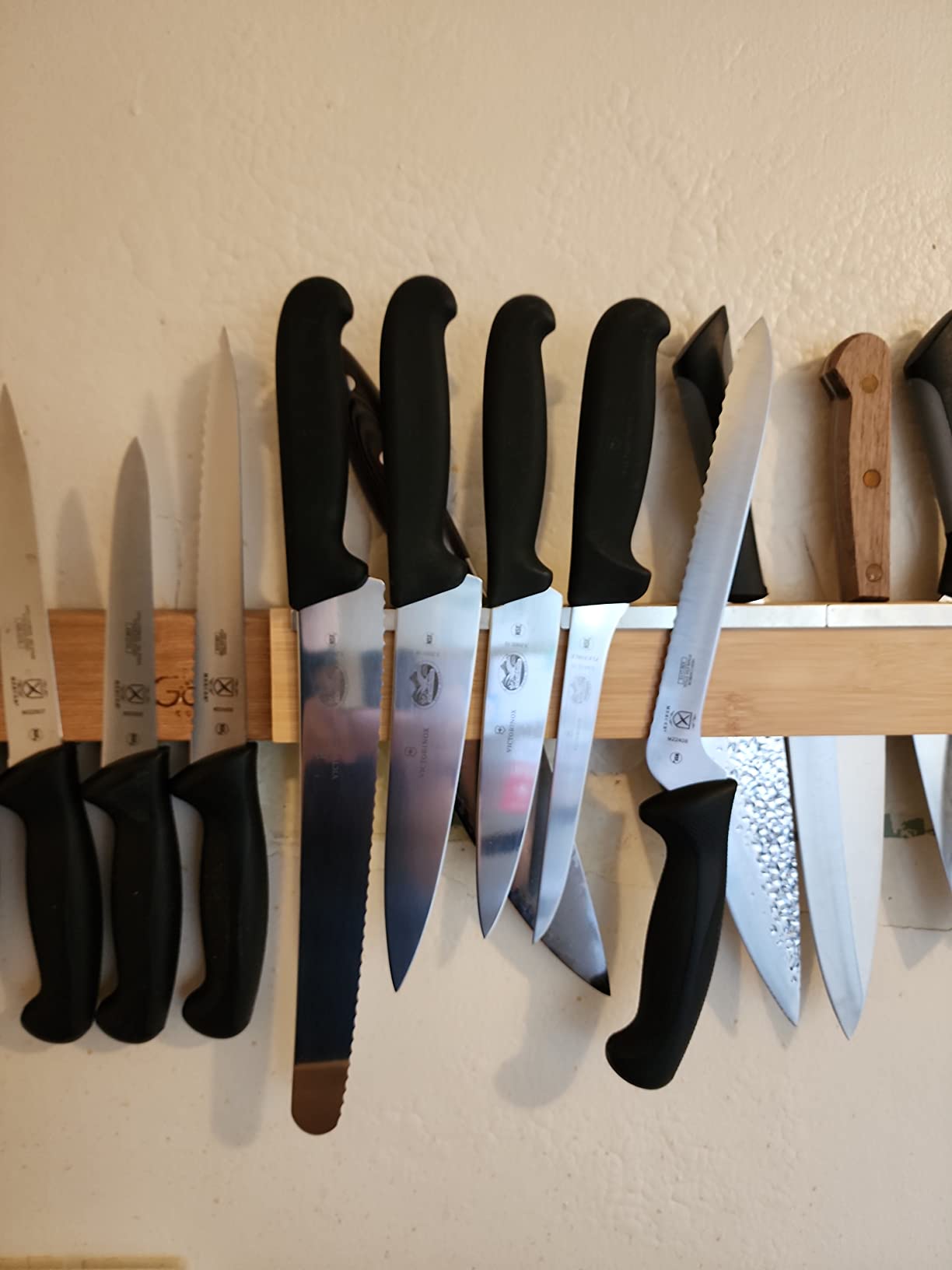
Because the blade is thin and S-shaped, it follows the contour of a rib cage and a backbone in a way a stiff blade cannot. For the silver skin pass on a tenderloin and the in-between rib work on a shoulder, that shape is an advantage rather than a stylistic choice.
It carries a lifetime warranty against defects in material and workmanship. The listing notes the blade is marked item 6.8413.15, which is the same 6 inch Swiss Classic boning knife under a different part number.
Where it wins on a deer
It wins wherever the blade needs to follow bone contour, and it wins on fatigue. A thin flexible blade at 3.52 ounces means you can work a whole deer in one session without your wrist telling you to stop.
It is also the better of the two Victorinox picks for anyone who also fills fish, since the S-shape is a genuine fillet profile.
Where it falls short
It is a stamped stainless blade, so it has less rigidity against bone than the forged picks here, and some units arrive needing a quick hone before first use.
It is flexible by design, so if your year is mostly large game and heavy connective tissue, the stiff pick above gets through the animal faster.
What Makes a Boning Knife Right for Deer Processing
A boning knife for deer is a narrow-bladed knife used to lift meat from bone after the animal is skinned and quartered, and it is not the same tool as a field dressing knife. The field dressing knife opens the body cavity, cuts the diaphragm and handles gut and hide work at the tailgate in twenty minutes. The boning knife does the slow, close, high-precision work hours later, on a table.
Deer work rewards four things, in order. A narrow blade that reaches between ribs and into joint pockets. A spine with enough backbone to push through tendon without folding. An edge angle fine enough to slice rather than tear. And a handle that stays grippy when your hands are cold, wet and covered in fat.
Silver skin and connective tissue are why a cheap knife seems to quit partway through an animal. Silver skin is a membrane that clings to the meat and drags across the edge sideways, and sideways drag is what rolls an edge. Everything else on this list is in service of keeping the edge meeting the work edge-on.
For the prep side of the same session, our [best chef knives](https://www.talkofthehouse.com/best-chef-knives/) and [best santoku knives](https://www.talkofthehouse.com/best-santoku-knives/) guides cover what happens before the meat reaches the boning board.
Stiff vs Flexible: Which Blade Deer Actually Rewards
Neither one wins outright, because a deer is two different jobs in one animal. Stiff earns the first two hours, flexible earns the last two. If you can only carry one, a semi-stiff curved blade covers the widest range, which is why the Victorinox Fibrox Pro sits at the top of this list.
Reach for a stiff blade when you are opening the abdominal cavity, working around the femur and hip socket, cutting the heavy connective tissue around a shoulder seam, or processing elk or moose. These are the cuts where a flexible blade folds, forces you to stop, re-angle and start again.
Reach for a flexible or semi-flexible blade when you are lifting silver skin off a tenderloin, trimming fascia off a flat muscle, following the contour of a rib cage, or cutting along the backstrap. This is where a stiff blade leaves meat behind or rolls its own edge.
Cold chain changes the balance too. Processing in a cold garage with meat coming off the bone quickly favors a stiffer blade. Processing in a warm garage over several hours favors a lighter handle and a blade that stays sharp without frequent stone work.
How to Bone Out a Deer, Step by Step
Most knives here can handle every step below, but the steps are not equally demanding. Matching the right blade to each stage is the difference between a clean three-hour session and a frustrating one.
1. Field dress and cool the carcass. This is the field dressing knife’s job, not the boning knife’s. Open the cavity, keep the meat cold and get the animal hung or on a clean surface. For the field end of the season, our [best crossbows for deer hunting guide](https://www.talkofthehouse.com/best-crossbows-for-deer-hunting/) covers the gear side.
2. Skin the animal. A stiff blade with a usable tip works here, because you are separating hide from fat and the hide is tougher than the meat. The ULTRASOURCE stiff pick and the Victorinox Fibrox Pro both handle it.
3. Quarter the carcass. This is the heaviest cutting in the process and where a stiff 6 inch blade earns its slot. You are cutting bone-adjacent connective tissue, and a flexible blade will fight you.
4. Debone the shoulder. The most demanding boning job on a deer: large muscle, heavy silver skin and a joint pocket that is tight on the inside. Use a semi-stiff or semi-flexible 6 inch blade and expect to reposition constantly.
5. Debone the hindquarter. The ham is bigger and flatter than the shoulder with a long silver skin seam. This is the best argument for a curved blade, because the curve rolls meat away from the edge as you pull.
6. Debone the tenderloin and backstrap. Pure flex work. A thin S-shaped or deeply curved blade lifts the membrane in long clean pulls, where a stiff knife tends to shave the meat.
7. Trim the finished cuts. Any sharp blade with a comfortable handle works. This is where a 14 to 16 degree edge on the Shun or the Cutluxe produces the cleanest result, and where a 3.36 ounce handle stops feeling light and starts feeling like relief.
How to Choose a Boning Knife for Deer
Blade length is the first decision, and for deer the sweet spot is 6 inches. Under 5 inches means more strokes per cut; over 7 inches and the tip wanders in the tight spaces you bought it for. The 5.5 inch Henckels Premio is the exception worth knowing for tight rib pockets, and the 6.1 inch PAUDIN if you want more reach on long pulls.
Steel matters less than people think, and hardness matters more. A 56 or 58 Rockwell high-carbon or stainless steel is forgiving and easy to maintain. A 62 plus Rockwell Japanese core holds an edge far longer and works closer to bone with less force, but it chips if you strike bone and it wants a whetstone.
Handle material is a deer-specific decision kitchen buyers skip. Synthetic handles such as Fibrox, Fibro Pro, G10 and polypropylene are the right answer for cold wet hands and for a knife that gets scrubbed with bleach. Pakkawood is a laminated composite that handles processing conditions well but needs drying. Avoid anything slick when wet, because your hands will be wet all session.
Weight is the quiet comfort factor. Under 4 ounces reduces fatigue noticeably, and over 6 ounces is a real problem for a full day of boning. The two lightest picks here are both Victorinox, at 3.36 and 3.52 ounces.
Finally, buy a sharpener at the same time. The most repeated complaint across the hunting forums we read is that a knife stops holding an edge partway through a deer, and the standard advice is to pair a mid-tier knife with an inexpensive steel rather than spend everything on the blade.
Keeping a Boning Knife Sharp Between Deer
A three-step routine covers almost everything: strop, then honing rod, then stone only when it is needed. A strop realigns the edge in thirty seconds. A rod removes the first signs of rolling. A whetstone is the reset, and you should reach for it between animals, not during one.
Hand wash with warm water and mild soap, then dry completely. Dried blood and salt are what actually pits and stains a blade over a season, and a knife stored in a damp sheath needs a stone twice as often.
Store it dry, away from the freezer’s condensation cycle, and never leave a blade damp overnight in its sheath. That habit does more for edge life than any steel choice on this list.
Game Meat Hygiene and Handle Sanitation
Wash your hands, your knife and your surfaces with warm water and mild soap before and after handling game, and never let a dressed carcass sit above 40 degrees for long. Most deer-season illness problems are temperature problems, not knife problems.
If you hunt in a chronic wasting disease positive zone, synthetic handles are the right call, and this is where G10 and Fibrox pull ahead of wood. A sealed synthetic handle can be scrubbed hard with a dilute bleach solution and rinsed, while a riveted or laminated handle traps moisture and residue in the joint. The Dexter with its impervious seal is the clearest version of that idea.
Keep your processing knife separate from your kitchen prep knives, and run a full wash and dry cycle on anything that touched game before it goes near a meal-prep surface.
Frequently Asked Questions
What is the best knife for boning deer?
A narrow 6 inch semi-stiff curved blade is the best all-round answer for boning deer. It has enough spine to push through heavy connective tissue at the shoulder and hindquarter, and enough flex and curve to hug bone and lift silver skin off the tenderloin. For elk or moose, add a stiff blade for the heavy joint work.
What is the best knife for field dressing a deer?
A field dressing knife is a different tool from a boning knife. Field dressing handles the body cavity, the gut and the hide in the first twenty minutes, so it wants a sturdy drop-point blade with a gut hook. Boning handles the close, slow work of lifting meat from bone hours later. If you already own a good field dressing knife, you still want a dedicated boning knife for the table work.
What is the best blade length for field dressing deer?
Six inches is the practical answer for boning deer, and it is also the size most field dressing knives come in. Under 5 inches means extra strokes per cut. Over 7 inches and the tip is too long to maneuver between ribs and inside joint pockets. For small game such as antelope or fawn, 5 inches is plenty. For moose, stay at 6 inches and reach for a stiffer blade rather than a longer one.
Should a boning knife be flexible or stiff?
Both, at different stages of the job. Use a stiff blade to open the cavity, quarter the carcass and cut around the femur and hip joint. Use a semi-flexible or flexible blade to lift silver skin, trim fascia and follow the contour of ribs. If you can only own one knife, pick a semi-stiff curved 6 inch blade, because it covers the widest range of deer work.
Which brand of boning knife is better, Mercer Culinary or Victorinox?
Victorinox is the stronger all-round pick for deer, with a semi-stiff curved blade and a grippy handle that holds up on cold wet hands. Mercer Culinary is the stronger value pick, with a larger owner base and a very sharp thin edge that is easy to re-hone. Pick Victorinox if you want one dependable knife, and Mercer if you want the most reviewed tool that still works well.
What is the best boning knife on the market?
For deer processing specifically, a 6 inch semi-stiff curved blade is the best overall format, and the Victorinox 6 inch Fibrox Pro is our pick of that format. It is light at 3.36 ounces, the handle stays grippy when wet, and the semi-stiff spine handles heavy connective tissue without folding. If your year is mostly large game, pair it with a stiff blade such as the ULTRASOURCE 6 inch curved stiff.
Why does my boning knife go dull processing a deer?
Silver skin and connective tissue are the usual cause. That membrane drags across the edge sideways, which rolls the edge rather than sharpening it. Three fixes help: a slightly stiffer blade that keeps the edge meeting the work, a strop or honing rod touch-up partway through the animal, and a harder steel such as 62 Rockwell that resists rolling longer. Store the knife dry, since dried blood and salt accelerate edge loss.
Are fixed blade or folding knives better for deer processing?
A fixed blade is the better choice for deer processing because it is stronger, easier to clean fully, easier to sharpen in the field, and has no mechanism to trap blood. A folder is more comfortable to carry and easier to keep on a belt, which matters if you are field dressing rather than boning. For the boning itself at a table, most experienced processors reach for a fixed blade.
Our Verdict on the Best Boning Knives for Deer Processing in 2026
After working through all ten, the Victorinox 6 inch curved Fibrox Pro is the best boning knife for deer processing, because a deer asks for a blade with both a spine and a curve, and this one is light enough to work a whole animal in. If your budget is tighter, the Mercer Culinary Ultimate White gives you the same format with the widest review base in the category, and if you process large game, the ULTRASOURCE stiff blade is the muscle for the heavy quarters.
Buy the knife and the sharpener together, keep the edge dry between animals, and match the blade to the stage. Those three habits do more for a processing session than any amount of extra steel.