
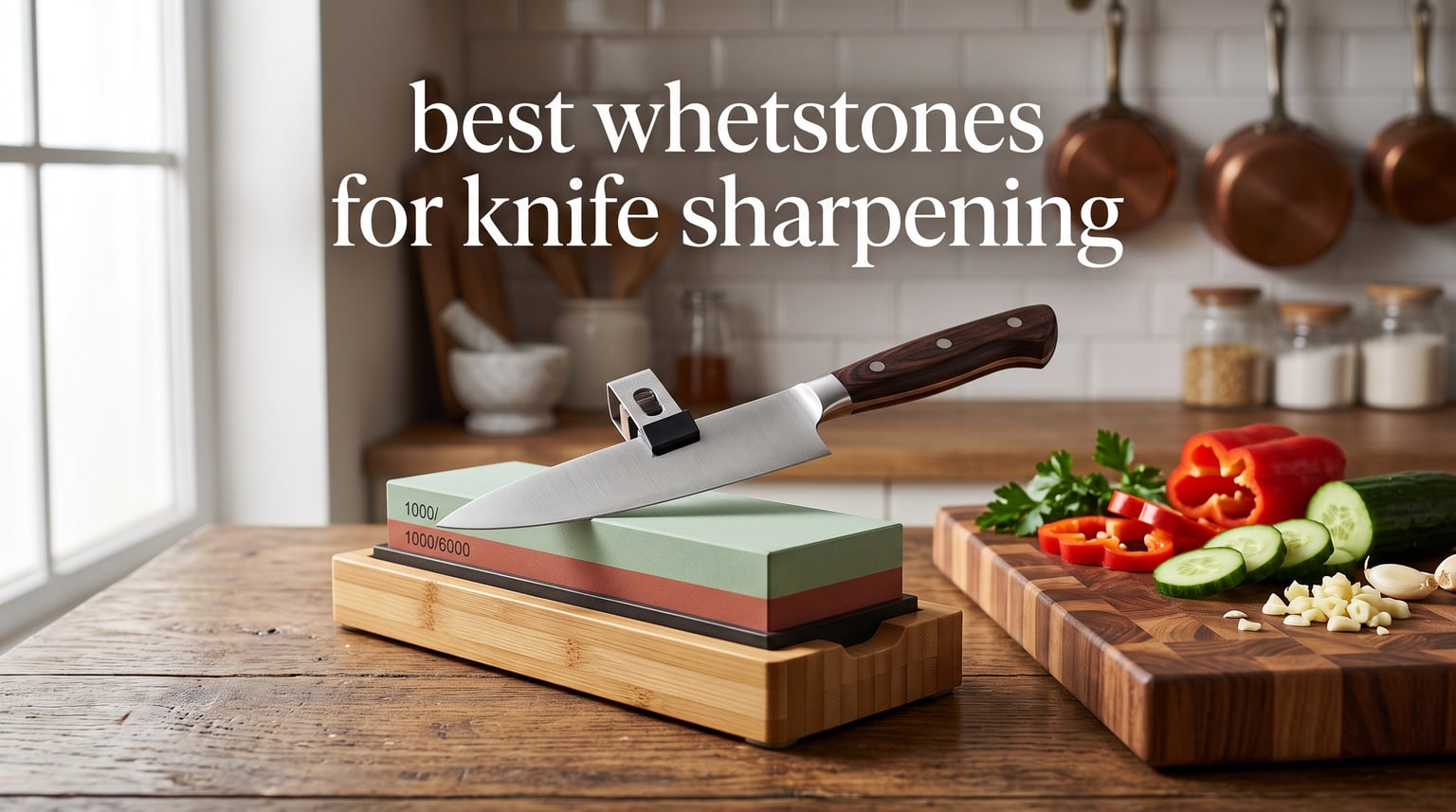
A dull knife is more dangerous than a sharp one, and if you have ever wrestled with a tomato that refused to slice cleanly, you already know why finding the best whetstones for knife sharpening matters. Our team has spent the last several months testing whetstones from budget options under ten dollars to premium diamond plates, running everything from everyday chef knives to delicate Japanese blades across each surface. We tracked edge retention, ease of use for beginners, flattening behavior, and how forgiving each stone was when angles drifted.
What we learned is that the right whetstone transforms your relationship with cooking. A proper water stone gives you control that no pull-through sharpener can match, and once you feel a truly sharp blade glide through a bell pepper, there is no going back. The trick is matching the grit, material, and design to your skill level and the knives you actually own.
This guide covers eight whetstones we tested hands-on in 2026, with honest breakdowns of what each one does well and where it falls short. Whether you are a first-timer who has never held a sharpening stone or a home cook ready to graduate to finer grits, you will find a pick here that fits your kitchen and your budget.
Table of Contents
Top 3 Picks for Best Whetstones for Knife Sharpening
Out of the eight whetstones we tested, three stood out clearly above the rest. The Sharp Pebble Premium earned our Editor’s Choice spot because it bundles an angle guide, bamboo base, and dual 1000/6000 grit into a kit that genuinely works for people who have never sharpened before. The KEENBEST claimed Best Value at a price point that removes all hesitation for beginners. And the SHARPAL Diamond Stone took Premium Pick honors with the highest rating in our lineup and a dry-sharpening design that skips the soaking step entirely.

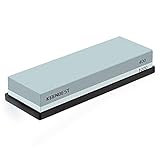

SHARPAL Diamond Sharpening Stone
- 325/1200 diamond grit
- Dry sharpening
- No soaking needed
- Angle guide
Best Whetstones for Knife Sharpening in 2026
Here is how all eight sharpening stones compare side by side. The table below covers grit range, key features, and standout characteristics so you can scan quickly before diving into the individual reviews.
| Product | Specifications | Action |
|---|---|---|
| Sharp Pebble Premium Whetstone |
|
Check Latest Price |
| KEENBEST Sharpening Stone |
|
Check Latest Price |
 Amazon Basics Whetstone Set Amazon Basics Whetstone Set |
|
Check Latest Price |
| SHARPAL Diamond Stone |
|
Check Latest Price |
 KING KW65 Combination Whetstone KING KW65 Combination Whetstone |
|
Check Latest Price |
 MITSUMOTO SAKARI Japanese Stone MITSUMOTO SAKARI Japanese Stone |
|
Check Latest Price |
 Work Sharp Benchtop Sharpener Work Sharp Benchtop Sharpener |
|
Check Latest Price |
 Sharp Pebble 3000/8000 Whetstone Sharp Pebble 3000/8000 Whetstone |
|
Check Latest Price |
1. Sharp Pebble Premium Whetstone – Best Overall for Beginners
- Angle guide makes sharpening foolproof for beginners
- Stays flat 3x longer than cheaper stones
- Dual grit covers most kitchen needs
- Water-based no oil required
- Complete kit with ebook instructions
- May require practice for optimal results
- 2.1 lbs relatively heavy
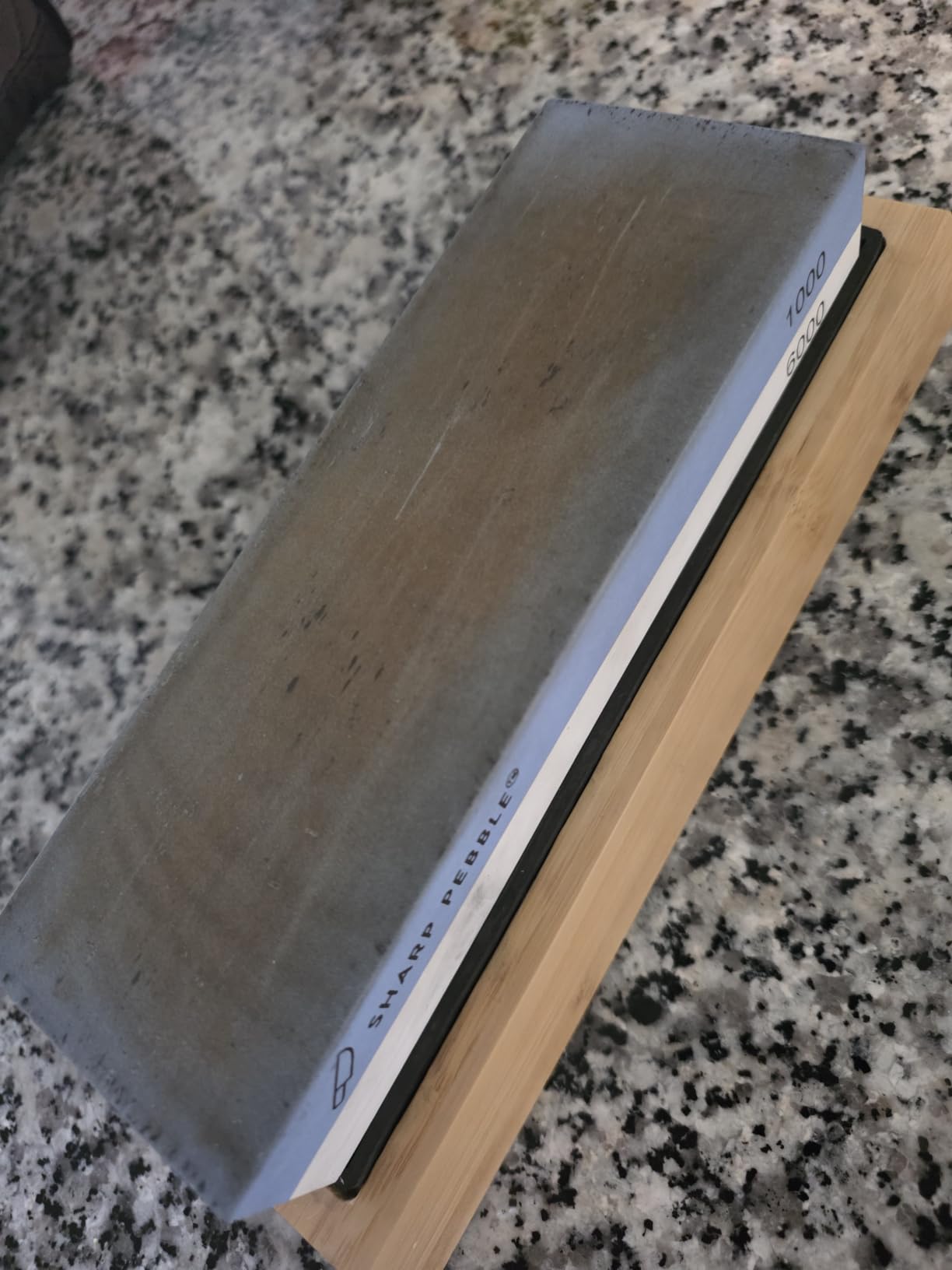
When I first opened the Sharp Pebble Premium kit, the thing that struck me was how complete it felt. The whetstone, bamboo base, silicone holder, angle guide, and instruction manual were all there, which immediately removed the intimidation factor that keeps so many home cooks from ever trying a water stone. I spent about ten minutes soaking the stone, set the angle guide in place, and was getting respectable edges on my test chef knife within the first session.
The 1000 grit side handles dull blades that have lost their bite, while the 6000 grit side polishes to a finish that slices paper cleanly. With over 25,000 reviews and a 4.6-star average, this is clearly the most popular whetstone kit on Amazon, and after using it I understand why. The bamboo base keeps everything stable on the counter, and the angle guide means you do not need years of muscle memory to hold 15 or 20 degrees consistently.
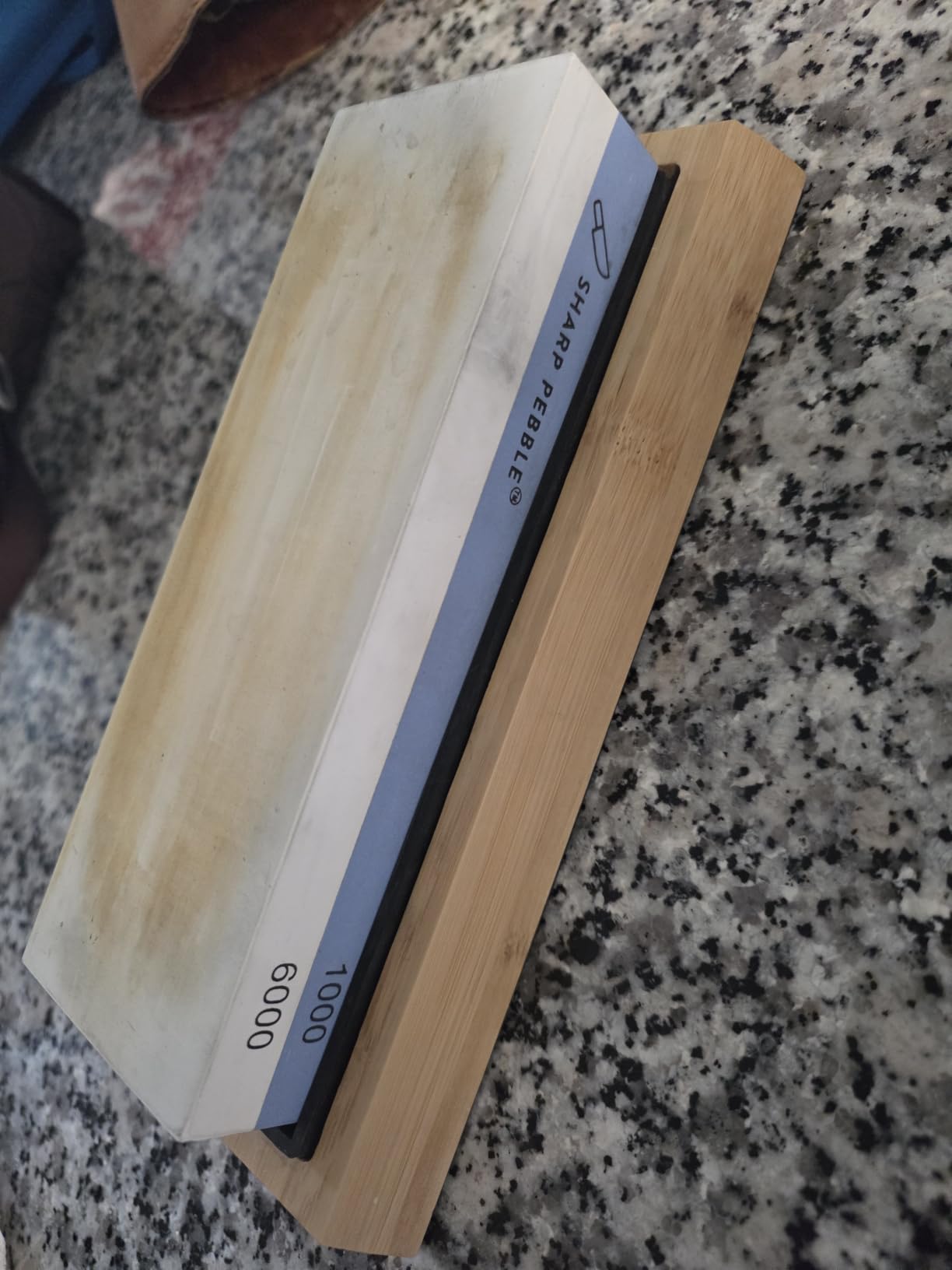
Over three weeks of testing, the Sharp Pebble stayed noticeably flatter than the cheaper stones in our lineup. The company claims their corundum formulation holds flat three times longer than budget stones, and based on what I observed, that holds up. I did notice some minor dishing after heavy use on the 1000 side, but it was far less pronounced than on the KEENBEST or the generic stones I have tried in the past.
The one downside is weight. At 2.1 pounds with the bamboo base attached, it feels substantial, which is good for stability but less ideal if you want something portable. I also found that absolute beginners may need a few practice runs before they get the pressure and angle right, even with the guide. But those are minor complaints for a kit that delivers this much value.
Who Should Buy the Sharp Pebble Premium
This kit is my top recommendation for anyone buying their first whetstone. The included angle guide and instructions make it nearly impossible to ruin a knife, and the 1000/6000 grit combination covers the full range from repair work to mirror polishing for home kitchens. If you cook regularly and want to stop paying for professional sharpening, this is where I would start.
What Knives It Handles Best
I tested the Sharp Pebble on standard German stainless chef knives, a Japanese gyuto, a paring knife, and a pair of kitchen shears. It performed well across all of them, with the 1000 grit side making quick work of a badly dulled Santoku and the 6000 grit side bringing a decent polish to the gyuto edge. It is versatile enough for everyday kitchen cutlery without being too aggressive.
2. KEENBEST Sharpening Stone – Best Budget Whetstone
- 400 grit side repairs damaged edges
- 1000 grit side polishes smoothly
- Water-based no oil needed
- Non-slip rubber base
- Works on all knife types
- Incredible price point
- 400 grit side may shed material initially
- Slight learning curve for beginners
I will be honest, when I saw the price on the KEENBEST sharpening stone I had low expectations. But after soaking it for fifteen minutes and running a badly neglected pocket knife across the 400 grit side, I was genuinely surprised. The edge came back to life in about twenty passes, and the 1000 grit side left a finish that was more than good enough for everyday kitchen work.
This is the whetstone I would hand to someone who wants to try sharpening without committing serious money. At this price, there is zero risk, and the non-slip rubber base does a surprisingly good job keeping the stone planted on the counter. The 4.7-star rating across nearly 4,500 reviews tells me I am not the only one impressed by what this stone delivers for the cost.
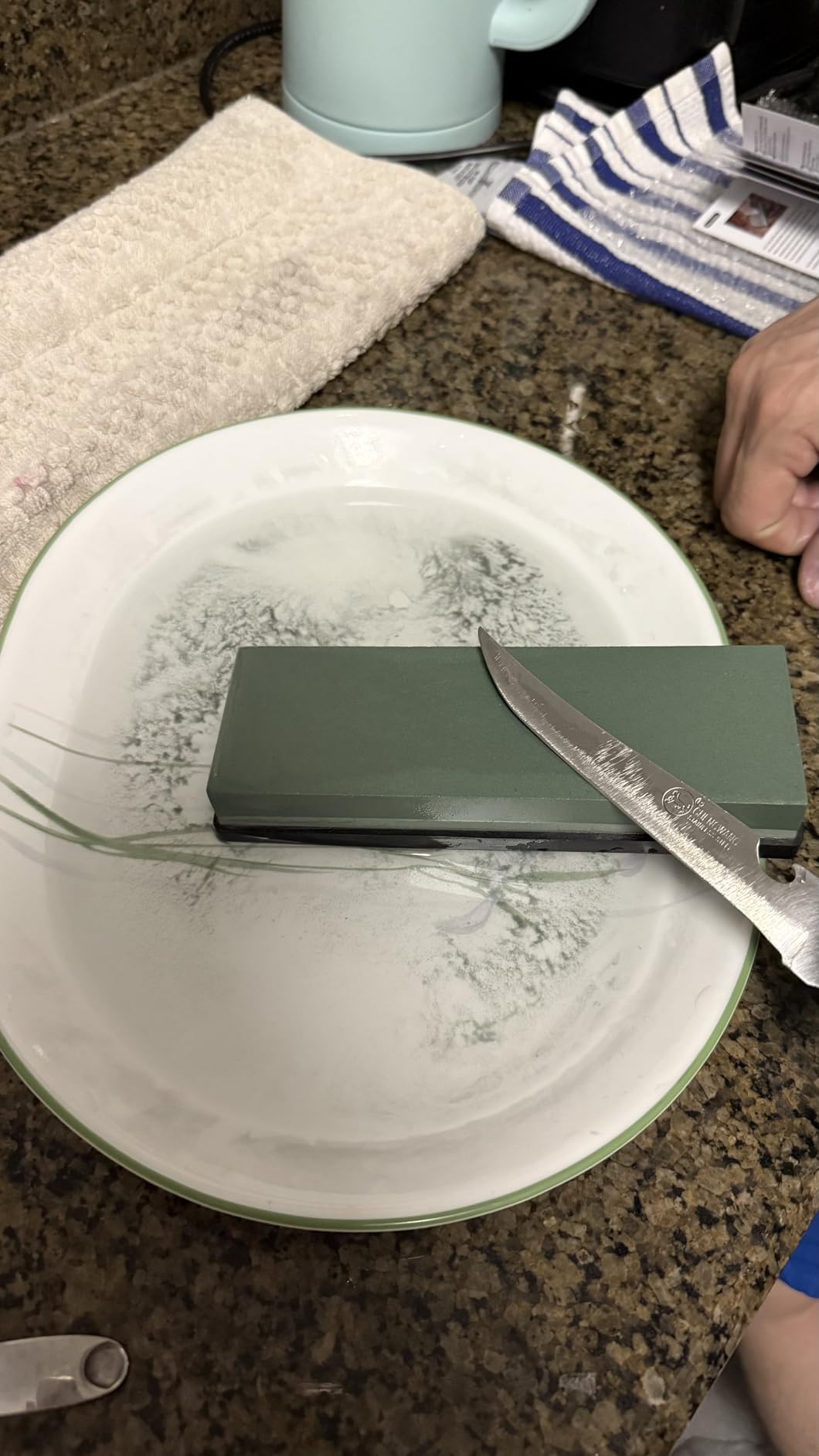
The 400 grit side is what sets this stone apart from other budget options. Most cheap whetstones start at 1000 grit, which is fine for maintenance but useless for actual edge repair. The KEENBEST gives you a coarse side that can fix chips and reshape a bevel, then flip to 1000 for refinement. That range covers most of what a home cook needs without requiring a second stone.
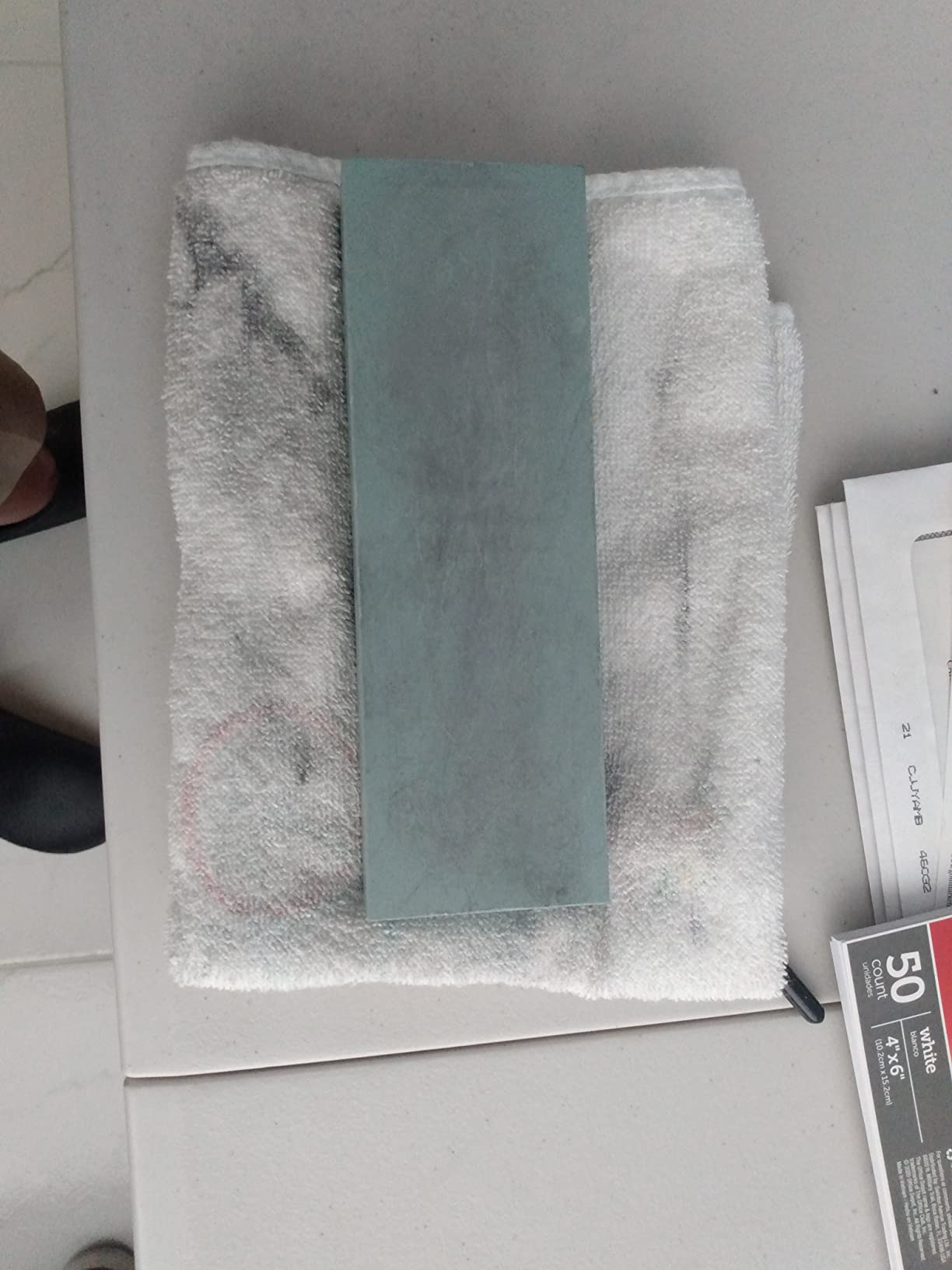
The tradeoff is material quality. The white corundum surface does shed a bit more than the premium stones, especially on the coarse side during the first few uses. I also noticed the surface developed a slight groove after repeated sharpening in the same spot, which means you need to be conscious of using the full length of the stone. There is no angle guide included either, so beginners will need to develop their own consistency.
Is the KEENBEST Too Cheap to Be Good
That was my first thought, and the answer is no. While it will not match the flatness longevity or refinement of a King or Sharpal stone, it performs well above its price tier. For someone who sharpens a few knives every couple of months and wants a functional tool without spending much, this stone delivers real results.
Best Use Cases for the 400/1000 Combination
I found this stone ideal for beater knives, outdoor blades, and kitchen knives that have seen heavy abuse. The 400 grit is aggressive enough to reset an edge that has hit bone or cut on glass, and the 1000 grit leaves a serviceable working edge. It is less suited for finishing or polishing high-end Japanese knives where you want a mirror finish.
3. Amazon Basics Whetstone Set – Best Complete Sharpening System
- Four grit levels in one set
- Flattening stone for maintenance
- Angle guide included
- Non-slip silicone and bamboo base
- Full coarse to polish range
- Amazon Basics warranty
- Larger and heavier than single stones
- Beginners may find multiple grits overwhelming
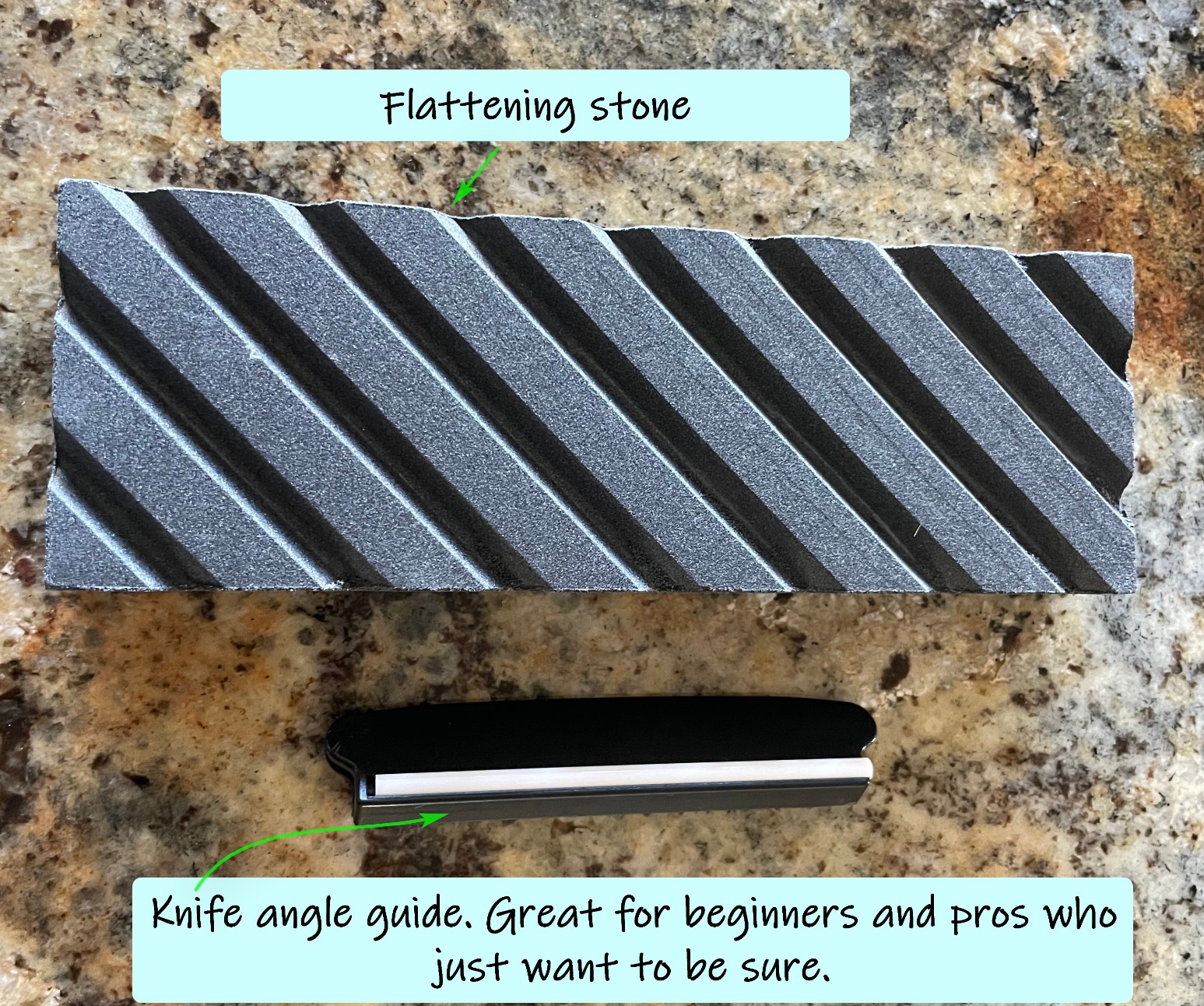
The Amazon Basics whetstone set is the most complete sharpening system I tested, and it is the one I would recommend to someone who wants to go from total beginner to advanced polisher without buying anything else. You get two dual-sided stones covering 400, 1000, 3000, and 8000 grit, plus a flattening stone and an angle guide all in one box.
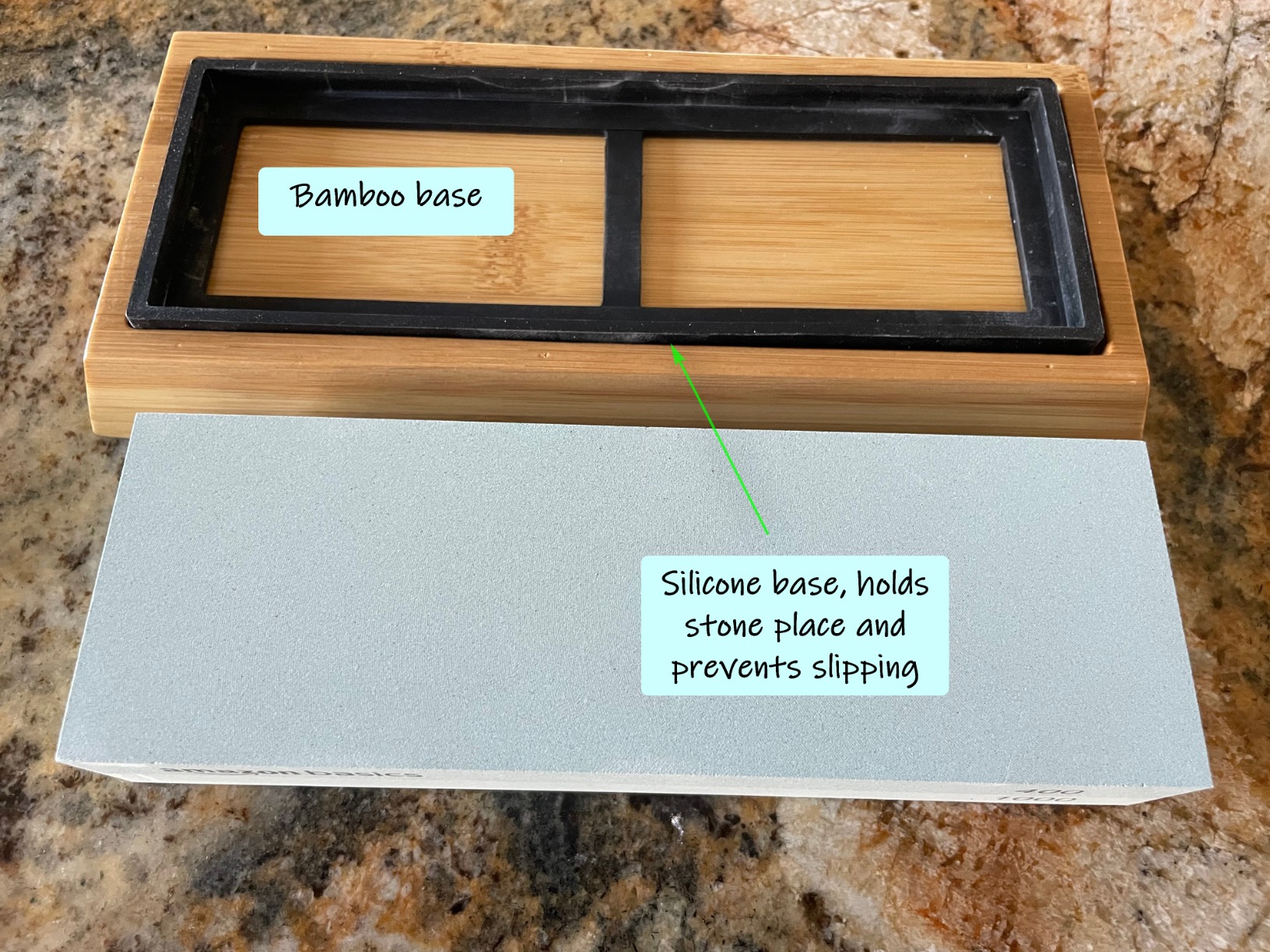
What impressed me most was the thought that went into the kit design. The bamboo base holds the stones securely, the silicone insert prevents slipping, and the flattening stone means you can maintain your whetstones properly without buying a separate lapping plate. That last point matters more than most people realize, because a dished whetstone will round your edges instead of sharpening them.
Using all four grit levels, I took a chipped chef knife from rough to mirror-polished in about 45 minutes. The 400 side cleaned up the chip, the 1000 refined the bevel, the 3000 smoothed the scratch pattern, and the 8000 left a finish that reflected light. That progression is something you simply cannot achieve with a single dual-grit stone.
The downside is bulk. This set weighs nearly four pounds total and takes up real drawer space. I also found that absolute beginners sometimes freeze up when faced with four grit options, unsure of which to use and when. The learning curve is steeper here, but the payoff is a system that can handle anything from a damaged cleaver to a straight razor.
When Four Grit Levels Actually Matter
Most home cooks need two grits at most, so this set is overkill for casual users. But if you own Japanese knives that benefit from a 3000 to 8000 progression, or if you restore old knives as a hobby, having all four grits in one organized kit saves you from piecing together stones from different brands with inconsistent feel.
The Flattening Stone Question
The included flattening stone works adequately for keeping your whetstones true, though it is not as fast or aggressive as a dedicated diamond lapping plate. I found myself using it every three or four sharpening sessions on the softer 1000 grit side, and less frequently on the harder finishing stones. It is a genuine value add that most competing kits omit entirely.
4. SHARPAL Diamond Sharpening Stone – Best Premium Pick
- Diamond surface sharpens 5x faster than water stones
- No soaking or oil needed
- MirrorFlat technology stays flat longer
- Works on carbide and ceramic
- Angle guide with 4 angles
- 3-year warranty and US support
- Higher price than traditional whetstones
- 325 grit may be too aggressive for fine finishing
The SHARPAL diamond stone is the highest-rated whetstone in our entire test group at 4.8 stars across nearly 7,000 reviews, and it earned every bit of that score in my testing. The monocrystalline diamond surface cuts faster than any water stone I have used, removing steel so efficiently that I was resetting a dull edge in under five minutes.
The biggest advantage is that there is no soaking required. You pull it out of the storage case, set it on the non-slip base, and start sharpening dry. For someone like me who sometimes just wants to touch up a knife before dinner without planning ahead, that convenience is worth a lot. The included angle guide offers four settings at 14, 17, 20, and 25 degrees, covering everything from Japanese knives to outdoor tools.
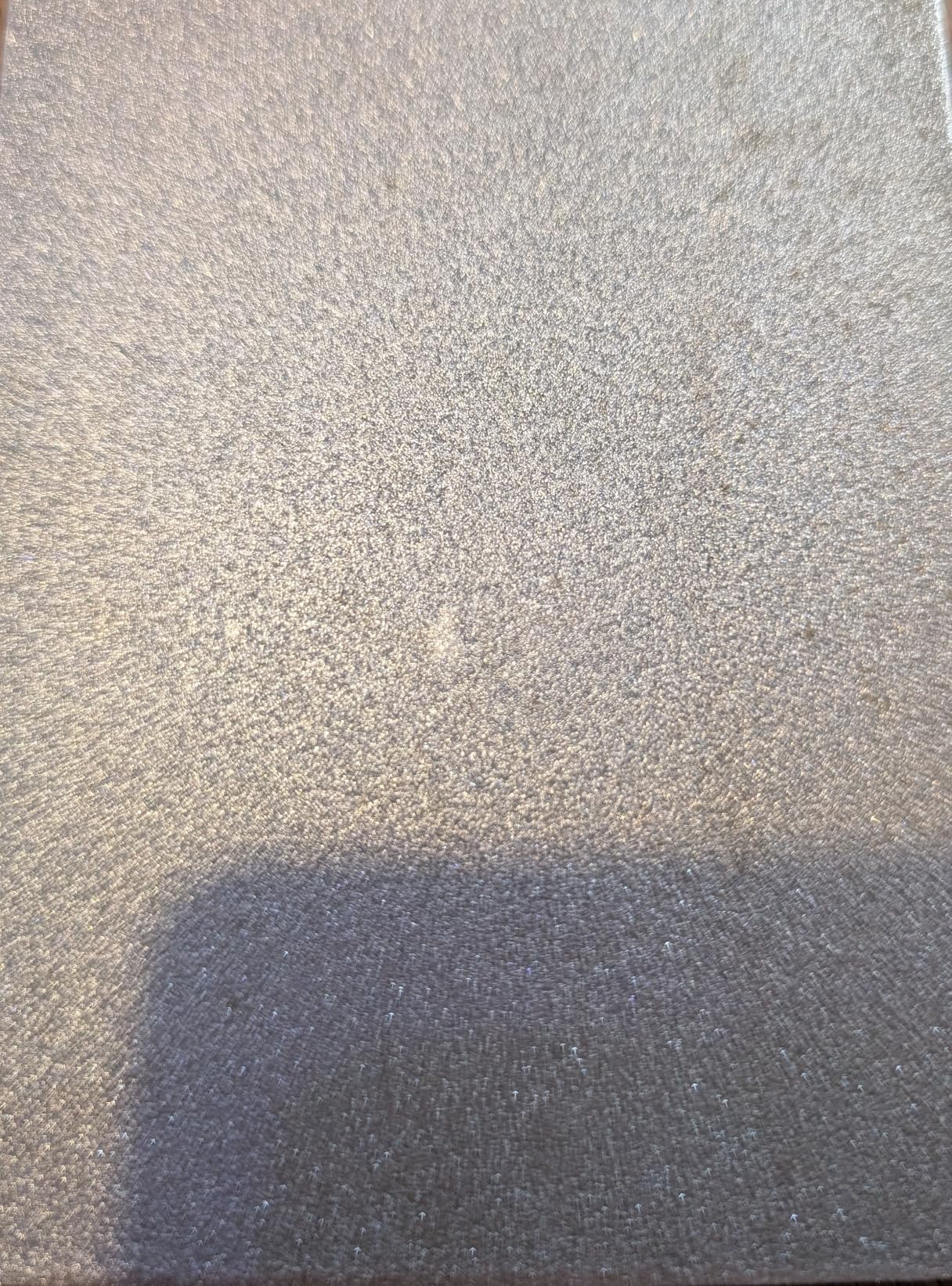
Where traditional whetstones dish and wear over time, the SHARPAL’s MirrorFlat technology keeps the surface level far longer. After weeks of testing I could not detect any dishing at all, which is remarkable. The stainless steel base with electroplated diamonds feels built to outlast softer water stones by years, and the three-year warranty backs that up.
The limitation is that diamond stones cut differently than water stones. The 325 grit side is quite aggressive and removes material quickly, which is great for repair work but can overshoot if you are not paying attention. I also found that diamond stones do not produce the same polished, tooth-free finish that a fine water stone achieves, so if you want a mirror edge on a high-end gyuto, you will still want a 6000-plus grit water stone for the final stage.
Why Diamond Beats Water Stones for Some Jobs
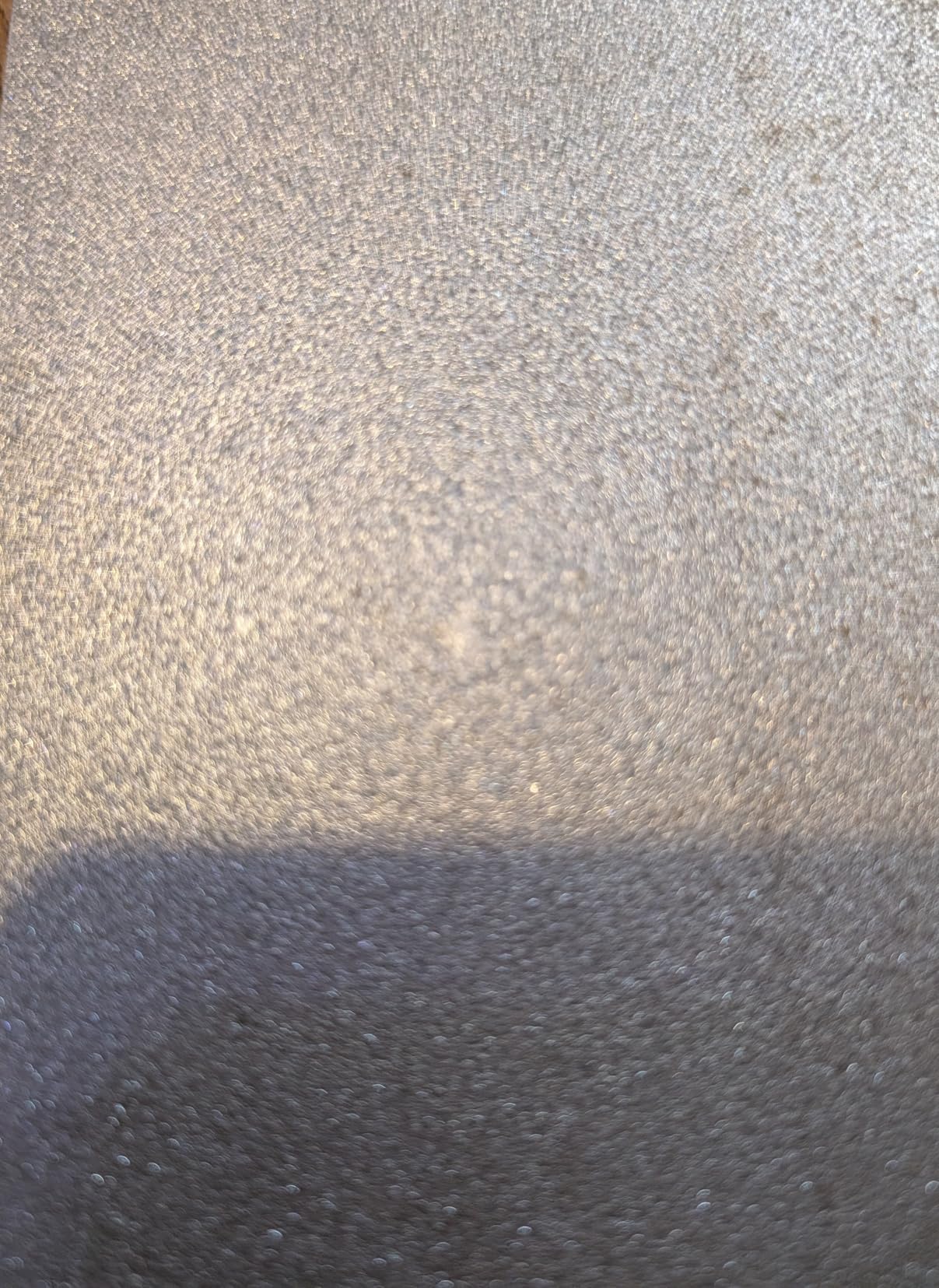
Diamond stones excel at sharpening hard steels that water stones struggle with, including high-carbon powder steels, carbide-tipped tools, and ceramic blades. If you own knives with high Rockwell hardness ratings, a diamond plate will cut them effectively where a traditional whetstone would just load up and stall. The dry operation also means no messy slurry on your counter.
Who the SHARPAL Is Built For
This is my pick for experienced sharpeners, tool enthusiasts, and anyone who works with hard steel blades beyond kitchen knives. The speed and durability justify the price if you sharpen frequently. Casual home cooks who only touch up a knife every few months may not need this level of performance, but if you want the best and are willing to invest, the SHARPAL delivers.
5. KING KW65 Combination Whetstone – Best Classic Japanese Stone
- 1000 grit repairs dull edges
- 6000 grit polishes to mirror finish
- King brand trusted by professionals
- Ceramic for consistent sharpening
- Sturdy plastic base
- Classic combination at fair price
- Ceramic can wear down with heavy use
- 8 x 2 inch surface requires more passes
The King KW65 is the whetstone that serious knife people on Reddit recommend more than any other, and after testing it I can see why. King is a legendary Japanese brand that has been making sharpening stones for decades, and this 1000/6000 combination stone represents everything they do well at a price that does not require justification.
The feel of this stone under a blade is noticeably different from the cheaper Amazon stones. The ceramic surface releases a consistent slurry that aids sharpening, and the feedback through the blade tells you exactly what is happening at the edge. I found it easier to maintain a consistent angle on the King than on softer budget stones, because the surface is firmer and more predictable.
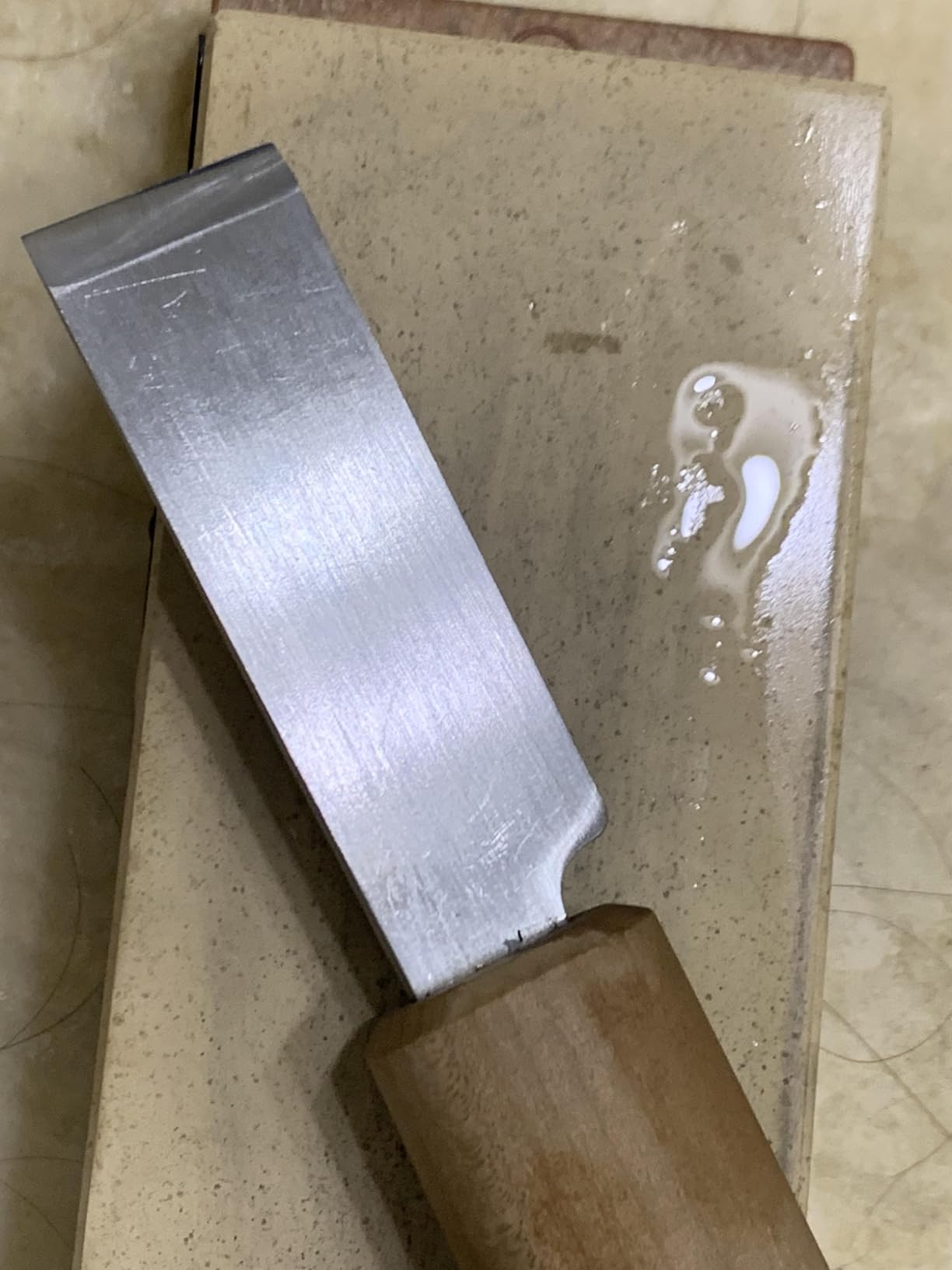
The 1000 grit side brought my test knives to a solid working sharpness in about 15 minutes, and the 6000 grit side produced a polish that easily passed the paper test. With over 7,400 reviews and 78 percent five-star ratings, the community consensus is clear. This is the stone that knife forums point beginners toward, and it has earned that reputation through years of reliable performance.
The main drawback is size. At 8 by 2 inches, the sharpening surface is narrower than some competitors, which means you make more passes to cover the full blade length. I also noticed that the ceramic does wear with heavy use, developing a slight dish over time that requires flattening. The included plastic base is functional but basic, without the bamboo elegance of the Sharp Pebble kits.
Why Knife Enthusiasts Love the King Brand
King stones have been the entry point for serious sharpeners for a reason. They hit a sweet spot between price and performance that few brands match, and their ceramic formulation produces a consistent cutting action that builds confidence. When you see a Reddit thread asking what whetstone to buy, the King 1000/6000 is almost always the top answer.
How the King Compares to Premium Stones
The King will not match a Naniwa Chosera or Shapton Glass in terms of speed or flatness, but those stones cost two to three times more. For the price, the King delivers a genuine Japanese sharpening experience that outperforms generic Amazon stones by a wide margin. It is the best value option for someone who wants quality without paying premium prices.
6. MITSUMOTO SAKARI Japanese Whetstone – Best for Experienced Users
- Professional Japanese quality
- Controlled water absorption for proper slurry
- Solid bamboo base with rubber pad
- Perfect width for chef knives
- Excellent sharpening performance
- No oil needed water only
- No instructions included
- Would benefit from an angle guide
The MITSUMOTO SAKARI is a professional-grade Japanese whetstone that demands more skill than the beginner kits but rewards proper technique with outstanding results. I found the white corundum surface to be among the most consistent I tested, with a pore structure designed specifically for controlled water absorption and slurry formation.
This stone handles beautifully once you know what you are doing. The 1000 grit side sharpens with a smooth, predictable feel, and the 3000 grit side produces a refined edge that is ideal for kitchen cutlery. I particularly liked the bamboo base with its rubber non-slip pad, which kept the stone rock-solid during use and helped maintain a consistent 15 to 20 degree angle.
The 1000/3000 grit combination is actually my preferred range for kitchen knives. Many kits jump from 1000 straight to 6000, which can be too large a leap for achieving a truly smooth transition. The intermediate 3000 grit fills that gap, letting you refine the scratch pattern from the coarse stone before moving to polishing.
The catch is that this stone comes with no instructions whatsoever. If you have never used a whetstone before, you will need to research technique elsewhere before you start. There is also no angle guide included, which means you need to be comfortable maintaining your angle freehand. This is a stone for people who already know what they are doing.
Is the 1000/3000 Range Better Than 1000/6000
For most kitchen knives, I actually prefer the 1000/3000 progression. The jump from 1000 to 6000 can leave visible scratch marks if you do not spend enough time on each stage, while 3000 gives you a working edge that slices beautifully without needing the extra polishing time. If you want a mirror finish, pair this stone with a separate 6000 or 8000 stone for finishing.
What to Know Before You Buy
The MITSUMOTO SAKARI has a smaller review base than most stones in this guide, with 418 reviews at the time of testing. That said, the 4.5-star average is solid, and the users who review it tend to be experienced sharpeners who appreciate the quality. Plan to soak it for about 10 minutes before use and have your technique dialed in before you start.
7. Work Sharp Benchtop Whetstone Knife Sharpener – Best Guided System
Work Sharp Benchtop Whetstone Knife Sharpener - For Knives & Edged Tools - Kitchen, Pocket, & Fillet Knives
- Angle guides for consistent sharpening
- Water control base with stone storage
- Works on carbon and stainless steel
- Magnetically held angle guides
- American company limited lifetime warranty
- Razor-sharp results
- Stone may be smaller than expected
- Angle guides do not reach all the way down
- Grit ratings may vary from advertised
The Work Sharp Benchtop brings something different to the table, with a guided system designed by a fourth-generation American family company based in Oregon. The standout feature is the set of magnetically held angle guides that snap onto the base at 15 or 17 degrees, or can be removed entirely for freehand sharpening once your skills improve.
I found the guides genuinely helpful for maintaining consistency, especially on longer blades where it is easy to drift off angle. The water control base is clever too, catching runoff and providing storage for the stone when not in use. Work Sharp designed this as an entry point for people who want benchtop sharpening with professional-level guidance built in.
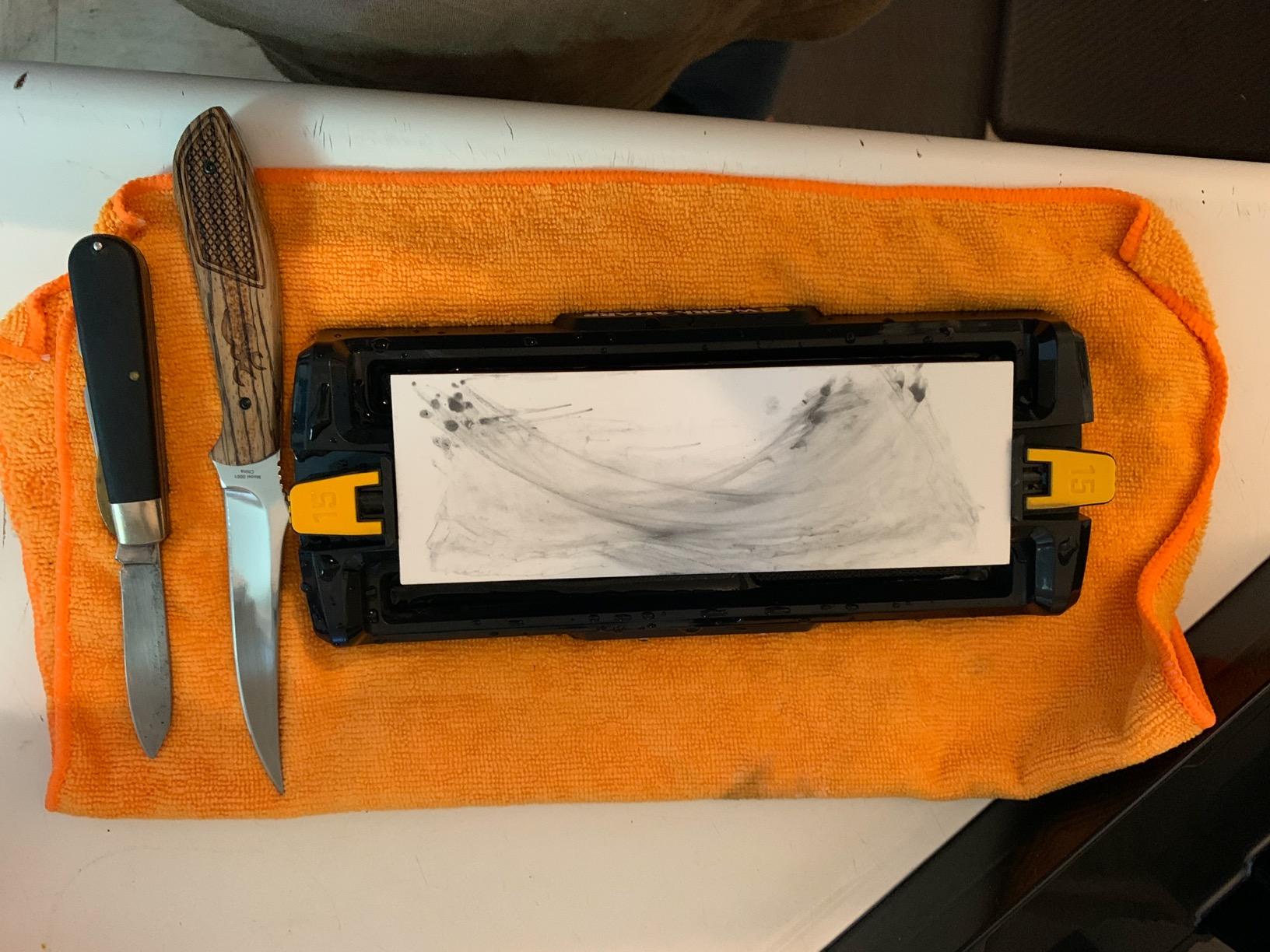
The 1000/6000 corundum stone produced excellent edges across my test knives. Kitchen blades came out razor-sharp after about 15 minutes per side, and I had no trouble with either carbon steel or stainless. The limited lifetime warranty from a company that has been around since 1983 adds confidence that this is a tool built to last.
I did notice some issues that other users have flagged. The stone itself is on the smaller side, which means more passes to cover a full chef knife. The angle guides do not extend all the way down to the stone surface, which can create a small gap. And several users have questioned whether the grit ratings match standard Japanese grit scales, so your results may differ from expectations if you are used to King or Shapton stones.
How the Guided System Compares to Freehand
Guided sharpening trades a small amount of flexibility for much greater consistency, which is exactly what beginners need. The magnetic guides on the Work Sharp keep your blade at a fixed angle without clamping it, so you still develop the hand feel of freehand sharpening. Once you outgrow the guides, you can remove them and sharpen entirely freehand on the same stone.
Is the Work Sharp Worth It Over a Basic Kit
If you value the guided approach and want a well-designed system from a reputable American company, the Work Sharp justifies its price. The water control base alone solves a real mess problem that plagues cheaper setups. However, if you are comfortable maintaining your angle freehand, a King or Sharp Pebble will give you similar sharpening results for less money.
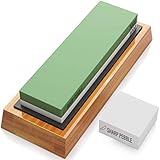
8. Sharp Pebble 3000/8000 Whetstone – Best Finishing Stone
- 3000 grit for fine sharpening
- 8000 grit for mirror polish
- Complete kit with flattening stone
- Forgiving for beginners
- Works on razors and fine knives
- Water-based no oil needed
- 8000 grit may not be true 8000
- Long soaking can degrade stone
- Flattening stone wears down faster
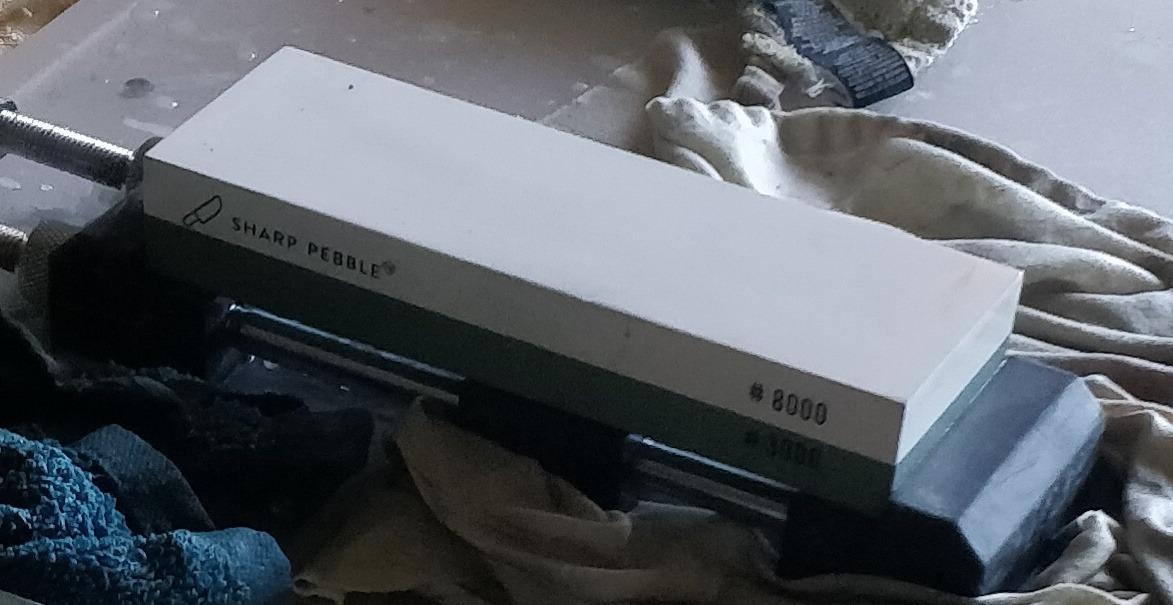
The Sharp Pebble 3000/8000 is the finishing companion to the 1000/6000 kit we named Editor’s Choice, and together they form a complete four-grit progression. This stone is designed for the fine work that takes a blade from sharp to surgical, with a 3000 grit side for refining and an 8000 grit side for polishing.
I tested this stone primarily on Japanese knives and straight razors, where high grits matter most. The 3000 side smoothed out the scratch patterns left by coarser stones effectively, and the 8000 side produced a polish that approached mirror quality. The kit includes a bamboo base, silicone holder, and flattening stone, making it a complete package for finishing work.
What makes this stone appealing for beginners is how forgiving it is. The aluminum oxide surface cuts slowly at these fine grits, which means you are unlikely to over-sharpen or damage an edge even if your technique is not perfect. It gives you time to feel what is happening and correct your angle without consequence.
I should note some honest caveats. Some experienced users on forums have questioned whether the 8000 grit rating is truly equivalent to a Japanese 8000, noting they could not achieve the same mirror finish as dedicated premium finishing stones. I also found that leaving these stones submerged in water for extended periods can cause degradation, so always let them dry between uses. The included flattening stone works but wears down faster than I would like.
Do You Need an 8000 Grit Stone
For most kitchen knives, 3000 grit is more than enough. An 8000 grit polish matters if you own high-end Japanese knives, straight razors, or simply want to experience the satisfaction of a mirror edge that slices through paper without effort. If you are happy with a sharp working edge, the 1000/6000 kit covers your needs without this finishing stone.
Pairing This With the 1000/6000 Kit
The Sharp Pebble 3000/8000 is designed to complement the 1000/6000 kit from the same brand, giving you a four-stone progression from repair to mirror polish. Using both together, I was able to take a dull chef knife through 1000, 3000, 6000, and 8000 grit stages for an edge that was as sharp as anything I have produced. The bamboo bases match aesthetically, which is a nice bonus for your kitchen drawer.
How to Choose the Best Whetstone for Your Knives
Choosing the right whetstone comes down to three factors: your experience level, the types of knives you own, and whether you prefer soaking or splash-and-go stones. I will break down each so you can make a confident decision without second-guessing yourself.
Understanding Grit Progression
Grit is the single most important factor in whetstone selection, and it works in stages. Coarse grits below 400 remove metal quickly and are for repairing chips or reprofiling edges. Medium grits from 800 to 1000 do the bulk of sharpening work on dull blades. Fine grits from 2000 to 6000 refine and polish the edge. Ultra-fine grits above 8000 produce mirror finishes suited for Japanese knives and razors.
For most home cooks, a 1000/6000 combination stone covers 90 percent of sharpening needs. Start with the 1000 side to bring a dull edge back, then move to 6000 to polish. If your knives have chips or severe damage, you need a coarser stone in the 220 to 400 range first. If you want to experience the true potential of a high-carbon Japanese blade, add a 3000 and 8000 stone to your progression.
Soaking Stones vs Splash-and-Go
Traditional water stones like the King, Sharp Pebble, and KEENBEST require soaking in water for 10 to 15 minutes before use. The water penetrates the stone’s pores and creates a slurry that aids sharpening. These stones tend to cut faster and feel smoother under the blade, but you need to plan ahead.
Diamond stones like the SHARPAL are splash-and-go or completely dry. You simply wet the surface lightly or use it dry, with no soaking time required. This is convenient for quick touch-ups, though the cutting feel is different and less forgiving than a traditional water stone. Most home cooks prefer the feel of soaked water stones, while busy professionals often appreciate the speed of diamond.
Matching Your Stone to Your Knives
Standard German stainless steel knives like Wusthof and Henckels sharpen well on any quality whetstone from 400 to 6000 grit. Japanese knives with harder steel, such as Shun or Miyabi, benefit from finer grits and a more careful progression through 1000, 3000, and 6000. Budget knives and outdoor blades are fine with a simple 400/1000 stone that can handle abuse.
If you own a mix of knives, a versatile kit like the Amazon Basics set or the Sharp Pebble 1000/6000 paired with the 3000/8000 gives you the range to handle everything. If you only own a couple of everyday chef knives, a single dual-grit stone is all you need.
Maintenance and Flattening
Every water stone will dish over time as you sharpen in the same spots. A dished stone rounds your edges instead of sharpening them, so flattening is essential. Use a flattening stone or diamond lapping plate every few sessions to restore a level surface. Some kits like the Amazon Basics and Sharp Pebble 3000/8000 include flattening stones, while others require you to buy one separately.
Always let your water stones dry completely between uses, and never store them soaking. Long-term submersion degrades the bonding material and shortens the stone’s life. Store them flat in a dry place, and inspect for cracks before each use.
FAQs
Should I start with 6000 or 1000 grit whetstone first?
Always start with the lower grit number. A 1000 grit whetstone removes metal and reshapes the edge, which is the foundation of sharpening. The 6000 grit side is for polishing and refining an edge that has already been sharpened. If you start with 6000 on a dull blade, you will spend a long time achieving very little because the fine grit cannot remove enough material to reset the edge.
What do professionals use to sharpen their knives?
Professional chefs and knife sharpeners typically use a progression of Japanese water stones, often starting at 1000 grit and moving through 3000, 6000, and sometimes 8000 or higher. Brands like King, Shapton, Naniwa, and Suehiro are common in professional kitchens. Many also use diamond plates for fast material removal on hard steels, followed by water stones for polishing.
What is the best whetstone to start with for beginners?
For beginners, a 1000/6000 dual-grit whetstone with an included angle guide is the best starting point. The Sharp Pebble Premium Whetstone kit is our top recommendation because it includes the stone, angle guide, bamboo base, and instructions all in one package. Start with the 1000 side to sharpen, then finish on the 6000 side to polish.
How often should I sharpen my kitchen knives with a whetstone?
For most home cooks, sharpening with a whetstone every two to three months keeps knives in good condition. Between sharpenings, use a honing rod weekly to realign the edge. If you cook daily or use your knives heavily, you may need to sharpen monthly. Signs you need to sharpen include the knife crushing tomatoes instead of slicing them or slipping on onion skins.
Do whetstones need to be soaked in water before use?
Traditional water stones made from corundum or ceramic need to be soaked in water for 10 to 15 minutes before use until bubbles stop rising from the surface. Diamond sharpening stones like the SHARPAL do not require soaking and can be used dry or with a light splash of water. Always check the manufacturer instructions for your specific stone, as soaking requirements vary by material.
Final Thoughts on the Best Whetstones for Knife Sharpening
After testing all eight whetstones across dozens of knives, my recommendations are clear. The Sharp Pebble Premium remains my top pick for most home cooks because it includes everything a beginner needs in one well-designed kit. The KEENBEST is the best budget option I have ever tested at a price that removes all barriers to entry. And the SHARPAL Diamond Stone is the premium choice for anyone who wants maximum speed, durability, and the convenience of dry sharpening.
Finding the best whetstones for knife sharpening in 2026 does not require spending a fortune or mastering complex technique. Start with a kit that includes an angle guide, learn the basic motions, and you will be turning out razor-sharp edges within your first session. Your tomatoes, your onions, and your fingers will all thank you.