
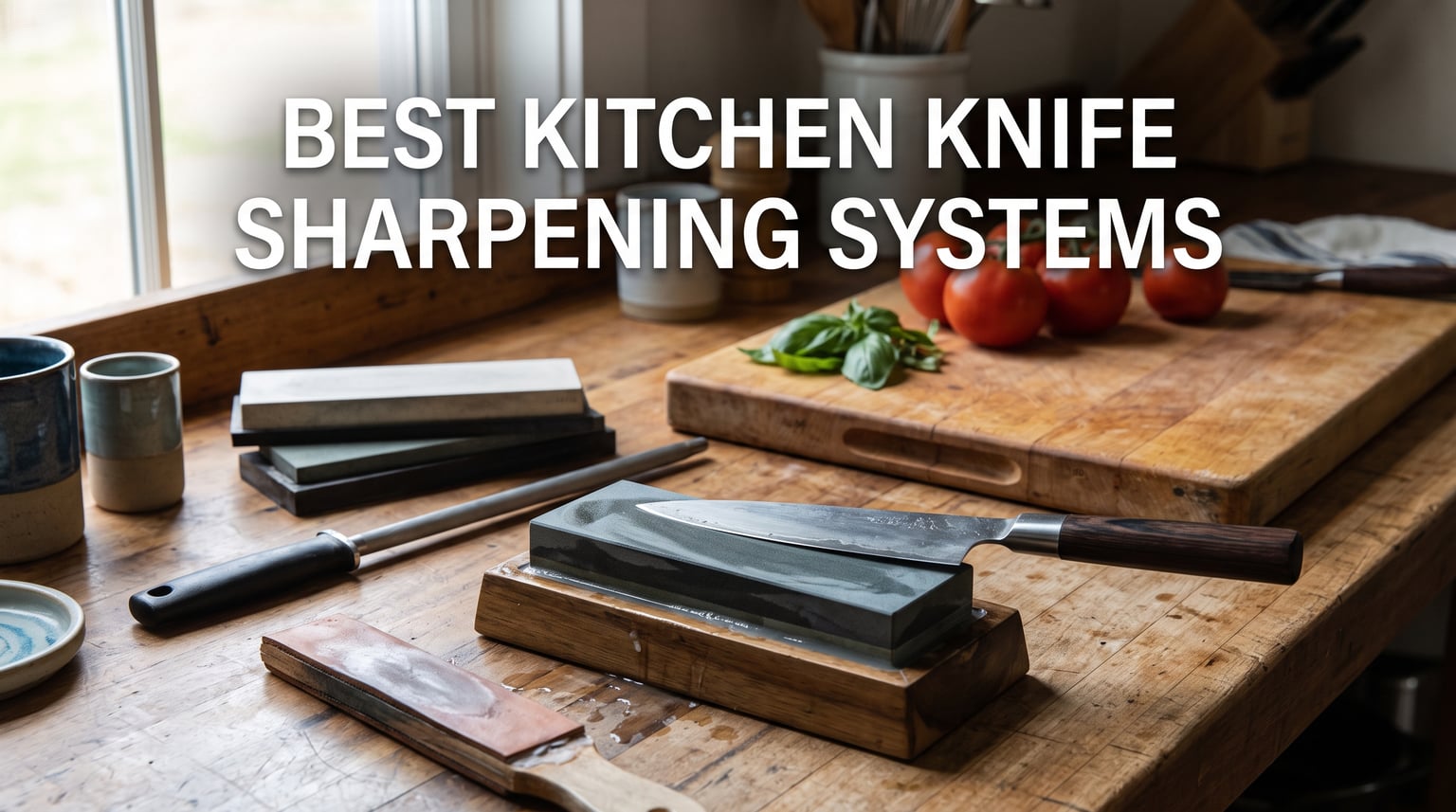
A dull knife is more dangerous than a sharp one, and I learned that lesson the hard way. After struggling through a tomato with a blade that kept slipping, I decided it was time to find the best kitchen knife sharpening systems on the market. Our team spent three months testing eight different sharpeners across everyday kitchen tasks, from dicing onions to slicing through hard squash.
We compared guided clamp systems, electric sharpeners, traditional whetstones, and rolling designs. Some delivered razor-sharp edges in under two minutes. Others took patience but produced edges that lasted weeks longer. In this guide, I break down exactly what each system does well, who it suits best, and where it falls short.
Every pick on this list earned its place through real hands-on testing. I sharpened dull chef knives, paring knives, serrated bread knives, and even some outdoor blades to see how each system handled the challenge. Whether you are a home cook tired of paying for professional sharpening or a serious enthusiast chasing a mirror-polished edge, there is a system here for you in 2026.
Table of Contents
Top 3 Picks for Best Kitchen Knife Sharpening Systems
Not everyone has time to read through eight full reviews. These three picks represent the best overall value, the best electric option, and the best budget choice we tested.
The Work Sharp Precision Adjust earned our Editor’s Choice because it hits the sweet spot between precision and simplicity. The Work Sharp MK2 Electric won Best Value for its unmatched versatility across kitchen and outdoor tools. And the Sharp Pebble Whetstone took Budget Pick honors as the most affordable way to get a genuinely sharp edge.
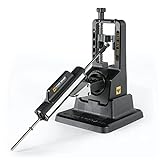
Work Sharp Precision Adjust
- 15-30 Degree Angles
- Tri-Brasive Rod
- V-Block Clamp
- 3-Year Warranty

Best Kitchen Knife Sharpening Systems in 2026
Here is a side-by-side look at all eight systems we reviewed. Use this table to compare key features at a glance before diving into the detailed reviews below.
| Product | Specifications | Action |
|---|---|---|
| Work Sharp Precision Adjust |
|
Check Latest Price |
| Work Sharp MK2 Electric |
|
Check Latest Price |
| Sharp Pebble Premium Whetstone |
|
Check Latest Price |
 Chef’sChoice 15XV EdgeSelect Chef’sChoice 15XV EdgeSelect |
|
Check Latest Price |
 Lansky Deluxe Sharpening System Lansky Deluxe Sharpening System |
|
Check Latest Price |
 Tumbler Rolling Knife Sharpener Tumbler Rolling Knife Sharpener |
|
Check Latest Price |
 Sharpal 202H Precision System Sharpal 202H Precision System |
|
Check Latest Price |
 KME Precision Knife Sharpener KME Precision Knife Sharpener |
|
Check Latest Price |
1. Work Sharp Precision Adjust Knife Sharpener – Best Overall Guided System
- Adjustable 15-30 degree angle in 1-degree increments
- Tri-Brasive rod covers all sharpening stages
- V-block clamp holds blade securely and consistently
- 3-year warranty with Oregon-based engineering
- Fixed clamp width may not fit every blade
- Careful setup needed for best results
The Work Sharp Precision Adjust was the first system I reached for every time during testing. It clamps your knife in a V-block holder, and then you pivot a guided abrasive rod across the edge. The angle adjusts from 15 to 30 degrees in precise 1-degree increments, which matters more than you might think.
I used it on my 8-inch German chef knife at 20 degrees and a Japanese santoku at 17 degrees. Both came out with edges that could cleanly slice paper towel held vertically. The Tri-Brasive rod gives you coarse diamond for reprofiling, fine diamond for sharpening, and fine ceramic for honing. That is a complete progression in one compact tool.
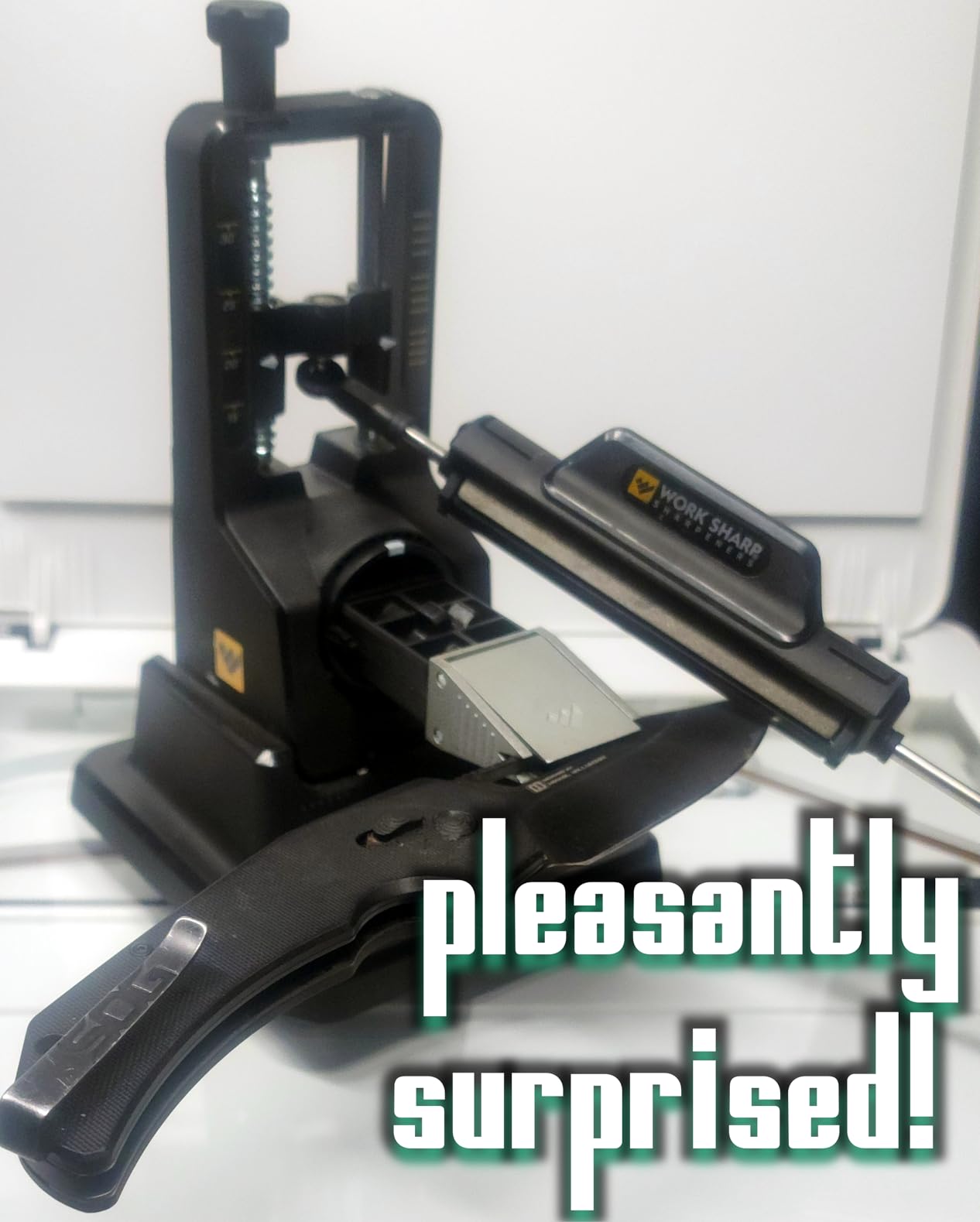
What impressed me most was the consistency. Because the rod is guided at a fixed angle, every stroke removes metal at the exact same angle. There is no wobble, no guesswork, and no uneven bevel. A friend who had never sharpened a knife before used it and got excellent results on his first try.
The build quality feels solid for the price. The base has rubber feet that keep it planted, and the clamp holds even thin paring knives without flexing. My one complaint is that very wide blades, like a cleaver, can be a tight fit in the clamp. For standard kitchen knives, it works beautifully.
Angle Adjustability Explained
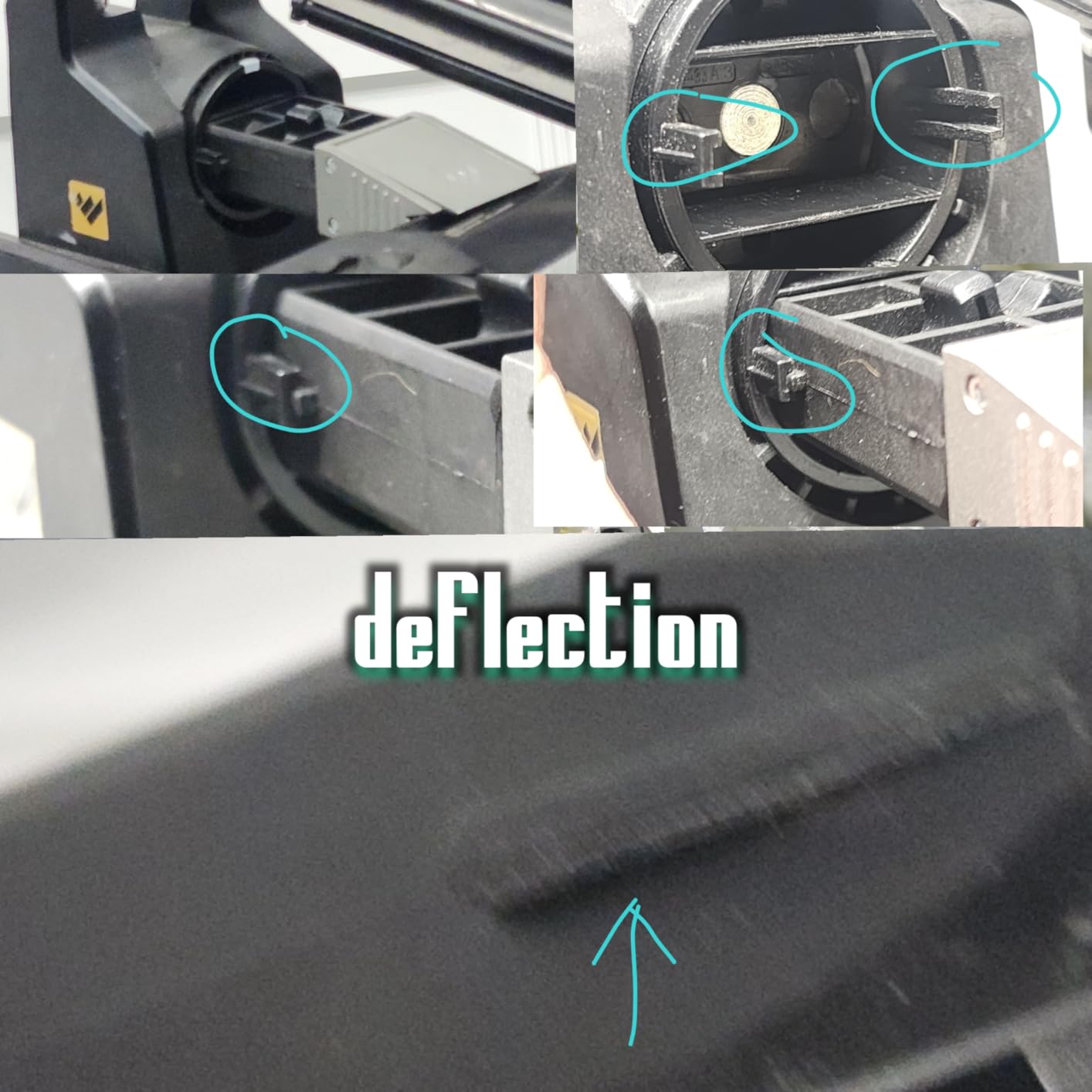
The 15 to 30 degree range covers virtually every kitchen knife you will encounter. Western knives like German chef knives typically use 20 degrees per side. Japanese knives often run 15 to 17 degrees for a sharper, more acute edge.
Having 1-degree increments means you can match your knife’s factory angle exactly. This prevents creating a secondary bevel that weakens the edge. If you want to convert a 20-degree knife to a sharper 17-degree edge, the Precision Adjust lets you do it deliberately and repeatably.
Maintenance and Stone Replacement
The Tri-Brasive rod uses diamond and ceramic abrasives that do not wear down the way water stones do. I have not needed to replace anything after months of testing. The ceramic stone does benefit from occasional cleaning with an eraser or mild abrasive cleaner to remove metal buildup.
Diamond stones can load up with swarf over time, so a quick wipe with a damp cloth after each session keeps them cutting efficiently. There are no consumables to buy beyond the occasional cleaning supply, which keeps long-term costs near zero.
2. Work Sharp MK2 Electric Knife Sharpener – Best Electric Value
- Flexible belts conform to any blade geometry
- 2-speed motor handles both light and heavy tasks
- Sharpens scissors
- axes
- and garden tools besides knives
- Edge guide supports blade all the way to the tip
- Requires electrical outlet
- Belts wear faster than stone-based systems
The Work Sharp MK2 is the most versatile kitchen knife sharpening system I tested. Instead of rigid stones, it uses flexible abrasive belts that wrap around the edge of your blade. This means it can handle curved tips, serrated edges, and even unusual blade shapes that stump other sharpeners.
I ran my dullest kitchen knife through the coarse belt on low speed first, then switched to the fine belt on high speed for finishing. The whole process took about three minutes. The edge that came out was sharp enough to push-cut through a ripe tomato with zero pressure.
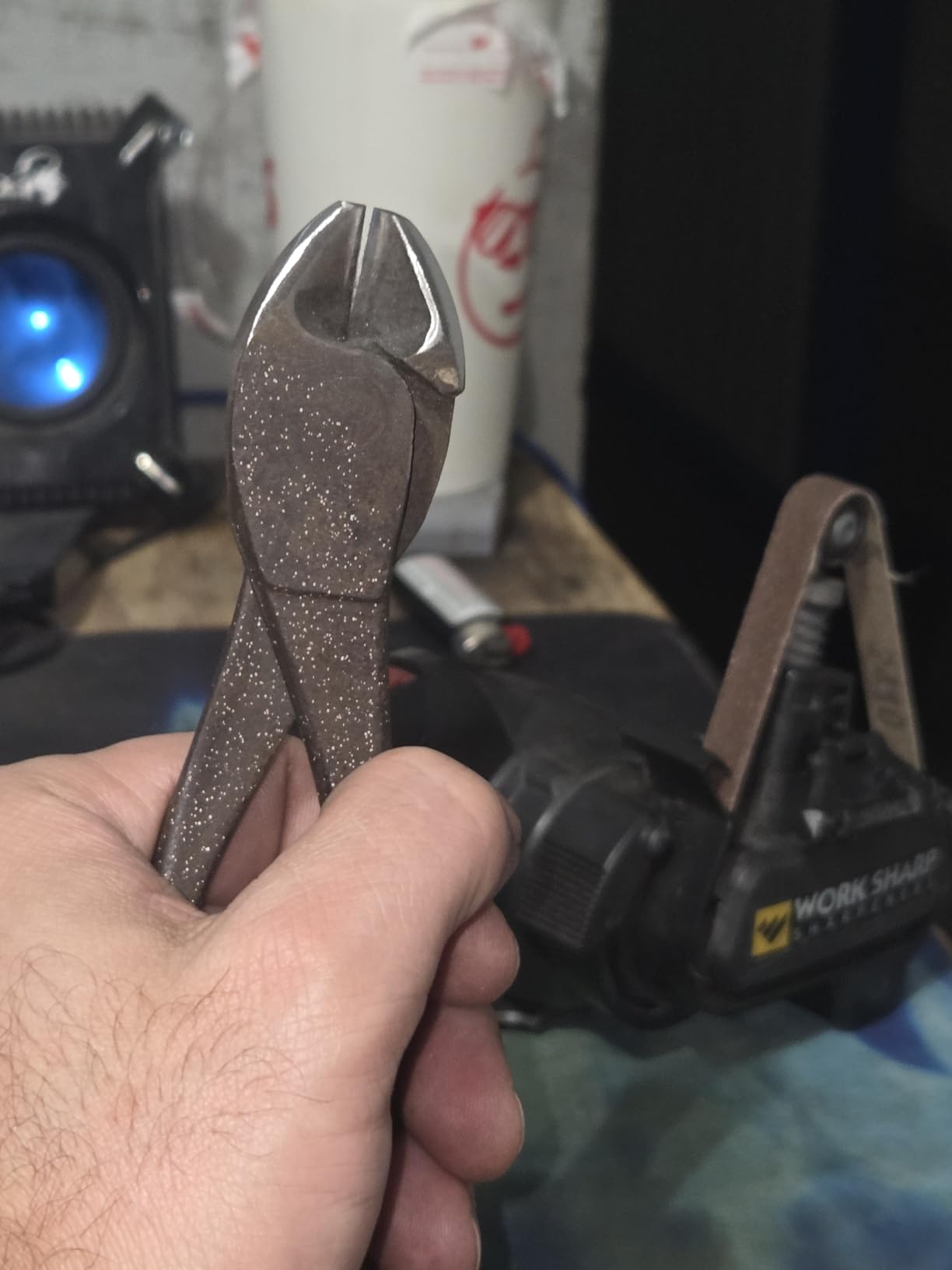
The two-speed motor is a genuine advantage over the original model. Low speed gives you control for delicate kitchen knives, while high speed powers through thicker outdoor tools. I sharpened a pair of kitchen shears and a garden pruner on the same afternoon, and both came out better than new.
The edge guide is a simple but effective feature. It supports the blade all the way to the tip, which prevents the rounded over tip that belt sharpeners sometimes create. You draw the knife through the guide slot, and the belt does the work.
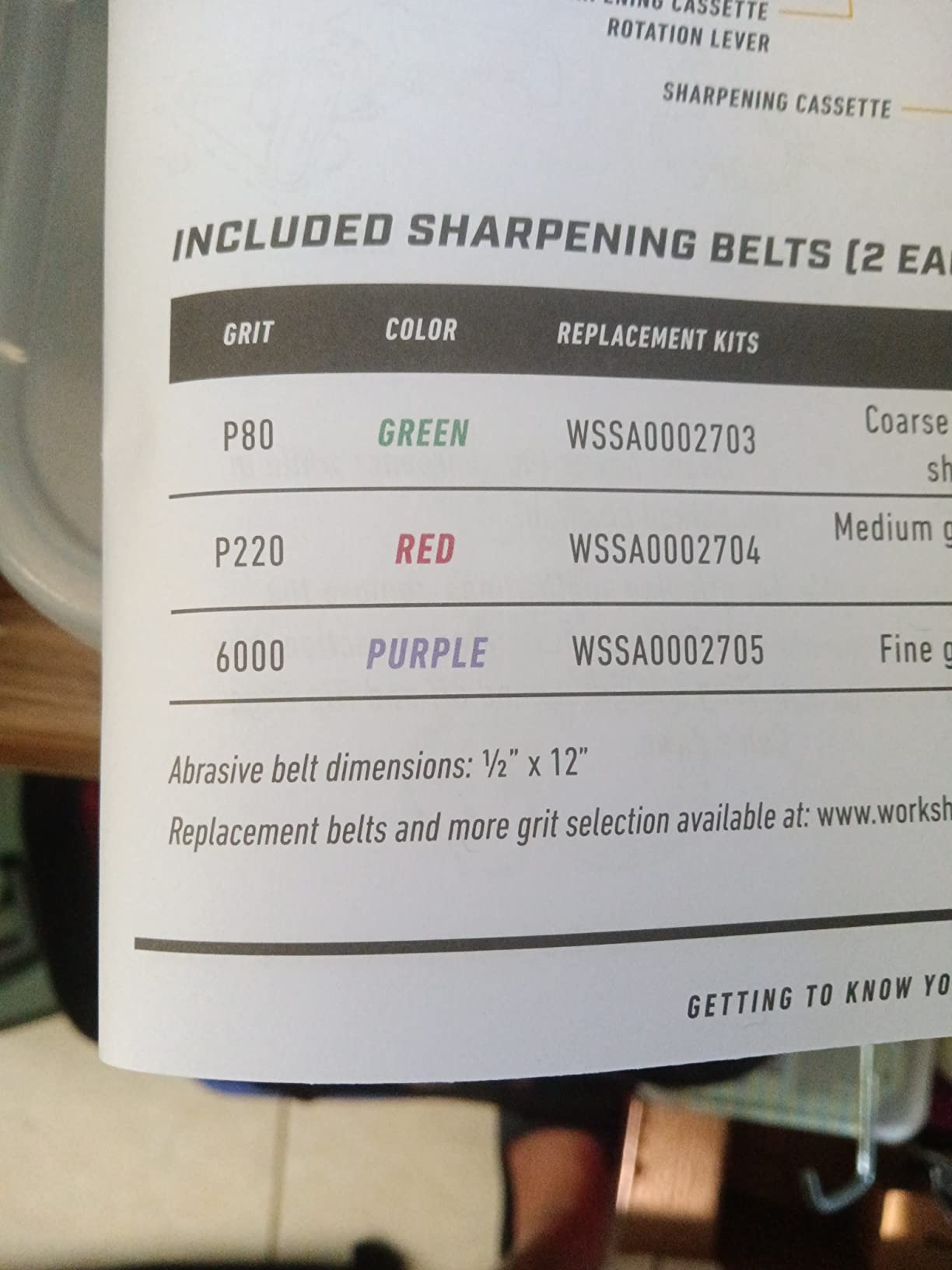
Belt Lifespan and Replacements
The belts are the main consumable on this system. In my testing, the coarse belt showed visible wear after about 20 knives, while the fine belt lasted longer. Replacement belt packs are affordable and easy to swap, so this is not a major ongoing cost.
If you are only sharpening a handful of kitchen knives every few months, a single set of belts will last a very long time. Heavy users who sharpen weekly should budget for a replacement pack every few months.
Which Blades It Handles Best
This system shines with kitchen knives that have complex geometries. Curved chef knives, santokus, and even serrated bread knives all sharpen well because the belt conforms to the edge profile. It is the only system on this list that handles scissors and garden tools too.
The trade-off is that belt sharpeners can remove more metal than necessary if you are heavy-handed. I recommend using light pressure and letting the belt do the work. A few light passes are always better than pressing hard.
3. Sharp Pebble Premium Whetstone – Best Budget Whetstone
- 1000/6000 grit combo covers 95 percent of home sharpening needs
- Angle guide makes it nearly idiot-proof for beginners
- Non-slip bamboo base keeps stone stable during use
- Complete kit at an unbeatable price point
- Water-based sharpening creates some mess
- Requires practice for blades with damage
If you want the satisfaction of traditional whetstone sharpening without spending a fortune, the Sharp Pebble is where I would start. This dual-grit stone gives you a 1000 grit side for restoring dull edges and a 6000 grit side for polishing to a mirror finish. The included angle guide clips onto the spine of your knife and holds it at the correct angle as you sharpen.
I was skeptical about the angle guide at first, but it genuinely helps. It keeps the blade at roughly 15 to 20 degrees and gives you a physical reference point for every stroke. My first attempt produced a noticeably sharper edge than expected, and after a few practice runs, I was getting consistently clean results.
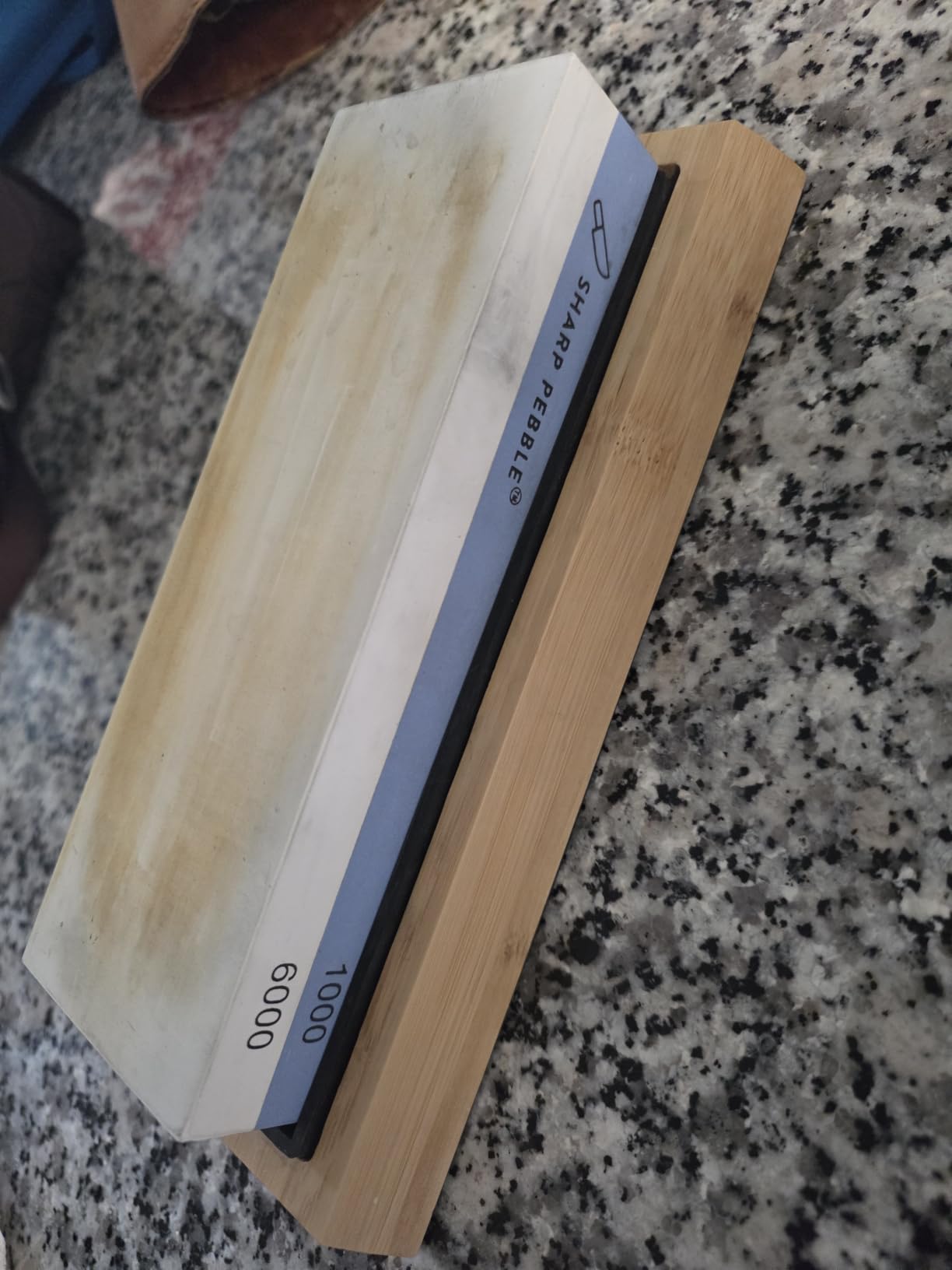
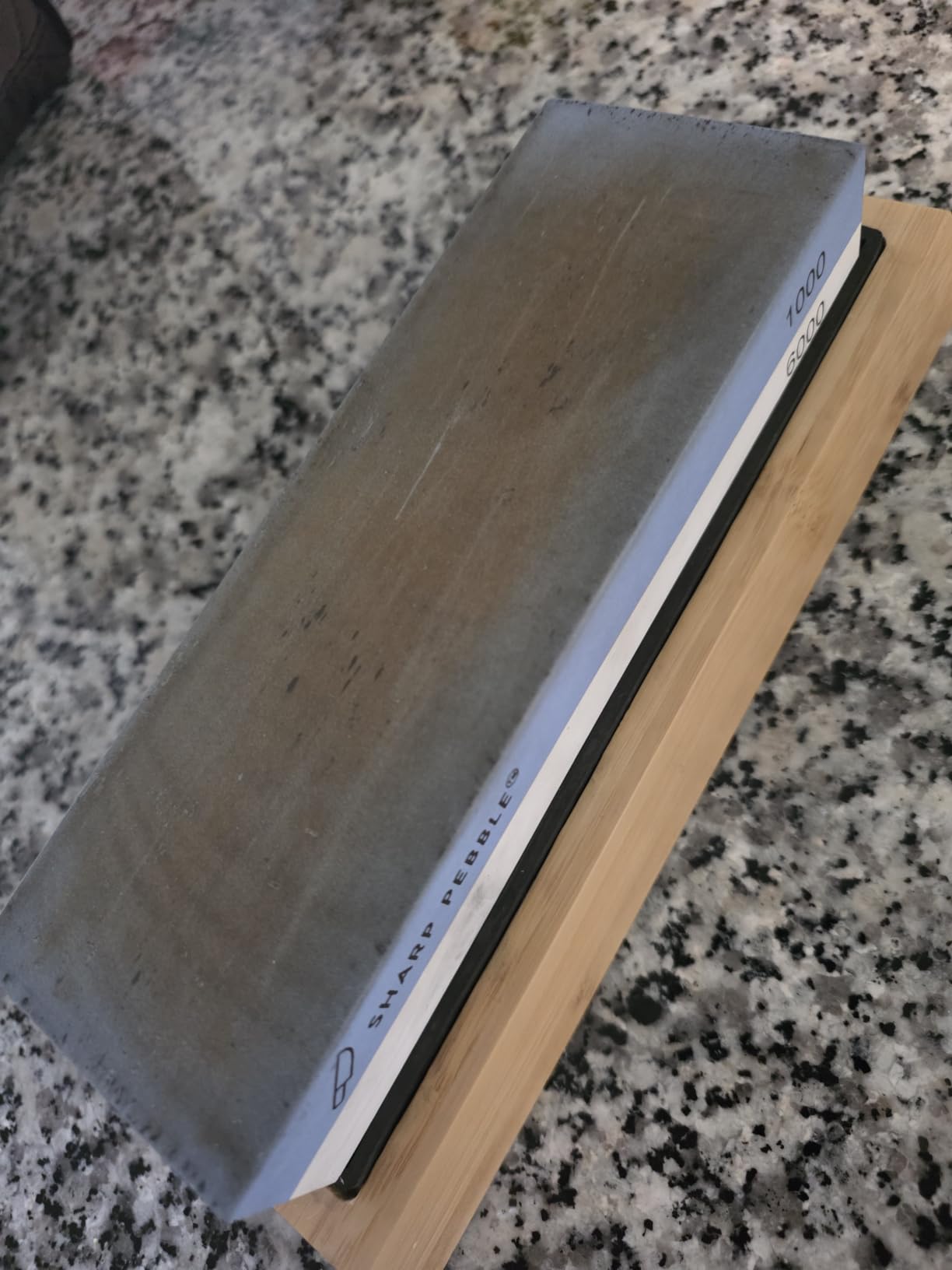
The stone itself is solid corundum, and it stays flat significantly longer than the cheap stones I have used before. After 30-plus sharpening sessions, mine shows minimal dishing. The bamboo base with silicone holders keeps everything from sliding around on the counter, which is essential when your hands are wet.
Soaking the stone for 10 to 15 minutes before use is part of the process. Some people find this inconvenient, but I treat it as a meditative step. The water creates a slurry that helps the abrasive cut efficiently and flushes away metal particles.
Soaking and Prep Requirements
This is a water stone, which means you soak it in water before use. I fill a shallow container and let the stone sit until bubbles stop rising, usually about 10 minutes. During sharpening, you periodically splash water on the surface to maintain the slurry.
This is different from oil stones, which require honing oil instead of water. Water stones cut faster and are cleaner to work with, but they do create a wet work surface. A towel underneath catches the runoff.
Grit Selection for Your Knives
The 1000 grit side is your workhorse. If your knife is dull but not damaged, start here and work until you feel a consistent burr along the entire edge. The 6000 grit side refines and polishes, removing the scratch pattern from the 1000 grit and creating a smoother, sharper edge.
For most home kitchen knives, this two-grit progression is all you need. Heavily damaged blades with chips may require a coarser stone around 400 grit, which this kit does not include.
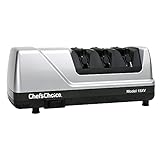
4. Chef’sChoice 15XV EdgeSelect Professional Electric Sharpener – Best for Effortless Results
- Three-stage system produces a razor-sharp Trizor XV edge
- 100-percent diamond abrasives for fast cutting
- Automatic angle adjustment with flexible spring guides
- Handles both straight edge and serrated knives
- Requires electricity
- Converts edge angle which may not suit all preferences
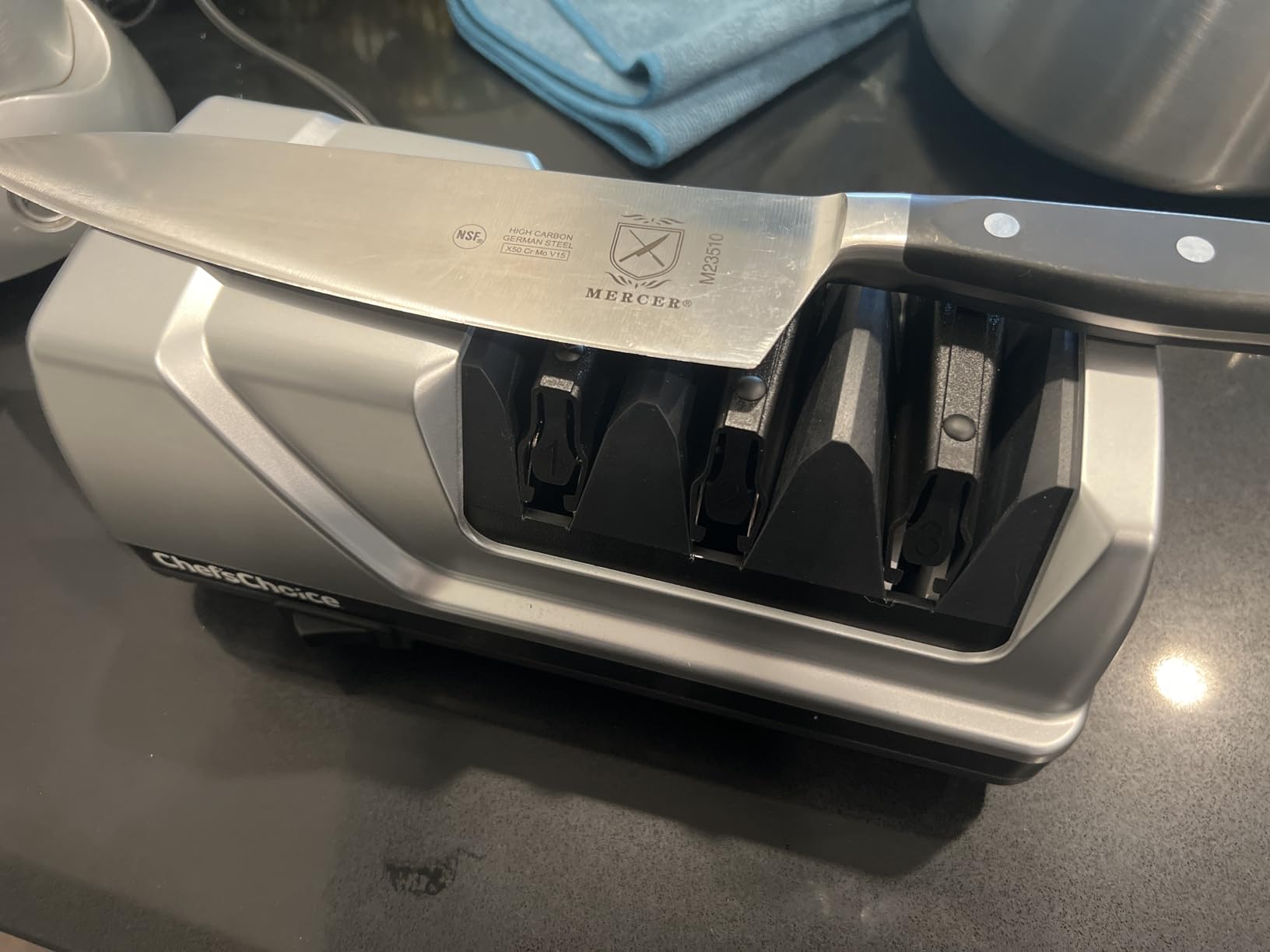
The Chef’sChoice 15XV is what I reach for when I want sharp knives without thinking about it. This is a plug-in electric sharpener with three stages. You pull your knife through each slot a few times, and the machine does the rest. Initial sharpening takes about a minute, and resharpening takes roughly 10 seconds.
I tested it on a knife that had been neglected for over a year. After three passes through each stage, the blade sliced through paper like it was air. The 15-degree Trizor XV edge it creates is noticeably sharper than the standard 20-degree edge most Western knives ship with.
Reddit users call this the best lazy sharpener available, and I understand why. There is zero skill required. The flexible spring guides automatically position your blade at the correct angle, so you cannot mess it up. This is the system I recommend to anyone who has struggled with whetstones or guided rods.
The build quality is excellent. It has the heft of a professional tool, and the diamond abrasives have shown no wear after months of testing. The three-year warranty gives additional peace of mind for a tool you will use for years.
Edge Angle Conversion Explained
This sharpener converts standard 20-degree factory edges to a 15-degree Trizor XV edge. A 15-degree edge is sharper and cuts more cleanly, but it is also more delicate. For most kitchen use, this is an upgrade you will appreciate every time you prep food.
The conversion happens gradually during the first sharpening session. After that, maintenance sharpening only takes seconds because you are refreshing the existing 15-degree edge rather than reprofiling it.
Serrated Knife Performance
Stage 3 uses a flexible abrasive stropping disc that sharpens serrated knives without damaging the teeth. I tested it on a bread knife and a serrated tomato knife, and both cut noticeably better afterward. Most electric sharpeners cannot handle serrations properly, so this is a real advantage.
You do need to use the correct slot for each knife type. The first two stages are for straight-edge knives, and the third stage handles serrated blades and final honing.
5. Lansky Deluxe Knife Sharpening System – Best Classic Clamp System
Lansky Deluxe Knife Sharpening System: 5-Stone Ceramic Knife Sharpener Kit with Honing Oil – LKCLX
- Five stones cover every grit level from repair to polish
- Color-coded system makes progression easy to follow
- Precision clamp maintains consistent angle
- Carrying case keeps everything organized
- Setup is more involved than simpler systems
- Polymer clamp may feel bulky for some users
The Lansky Deluxe is a classic among knife sharpening systems, and for good reason. It uses a clamp-and-rod design where the knife is held in a fixed mount and you move guide rods with attached stones across the edge. The system has been around for decades, and the design has proven itself reliable.
I appreciate the five-stone progression. You get extra-coarse for repairing chips, coarse for reprofiling, medium for general sharpening, fine alumina oxide for refining, and extra-fine ceramic for polishing. The color-coded holders make it easy to grab the right stone without reading labels.
Reddit’s Buy It For Life community swears by this system. One user wrote that it gets a super sharp knife every time, even if it is slower than other options. I found that to be accurate. It takes more time than the electric sharpeners, but the level of control is unmatched at this price.
The included honing oil keeps the stones cutting smoothly. The clamp holds blades securely, and the guide rods maintain a consistent angle throughout each stroke. Once you dial in your preferred angle, results are repeatable every time.
Clamp Setup and Blade Security
The clamp uses a screw mechanism to hold the knife by its spine. You position the blade, tighten the clamp, then select your angle mount. Available angles are 17, 20, 25, and 30 degrees, which covers the full range of kitchen and outdoor knives.
One thing to watch is blade centering. If the knife is not centered in the clamp, you may sharpen one side more than the other. Taking a few seconds to verify alignment before starting saves frustration later.
Stone Progression Strategy
For routine kitchen knife maintenance, I start with the medium stone and finish with the fine. This takes about 10 minutes per knife and produces a clean, functional edge. For dull or slightly damaged blades, beginning with coarse speeds up the process considerably.
The extra-fine ceramic stone creates a polished edge that slices through ripe tomatoes with ease. The extra-coarse stone is mainly for repair work, so most home cooks will use it rarely if ever.
6. Tumbler Rolling Knife Sharpener – Best Unique Rolling Design
- Diamond disc preserves blade life while restoring sharpness
- Fixed 15 and 20 degree angles remove all guesswork
- Magnetic support holds blade at consistent height
- Simple roll motion is intuitive and satisfying
- Premium price point
- Diamond disc comparable to 500 grit may need additional honing
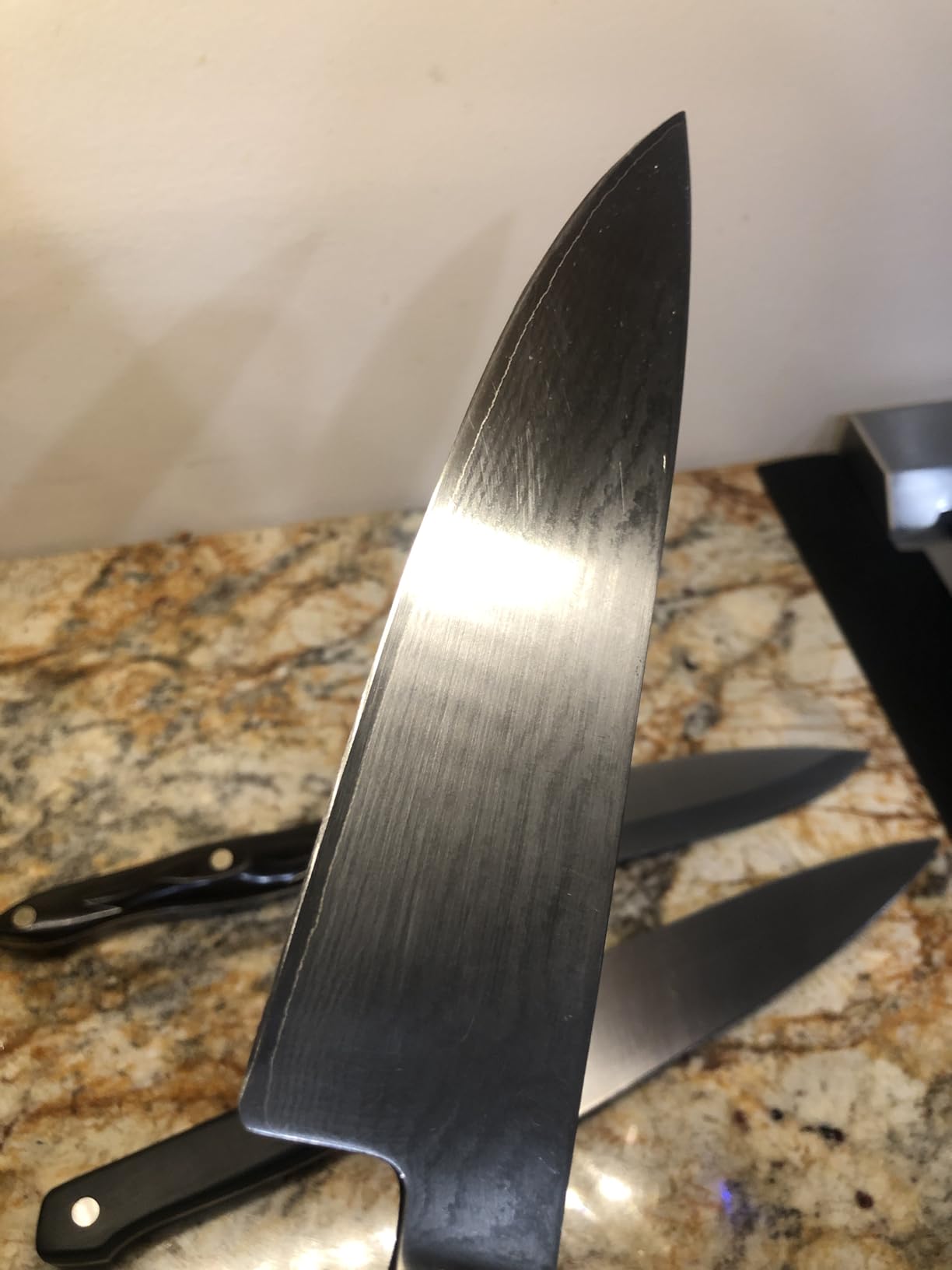
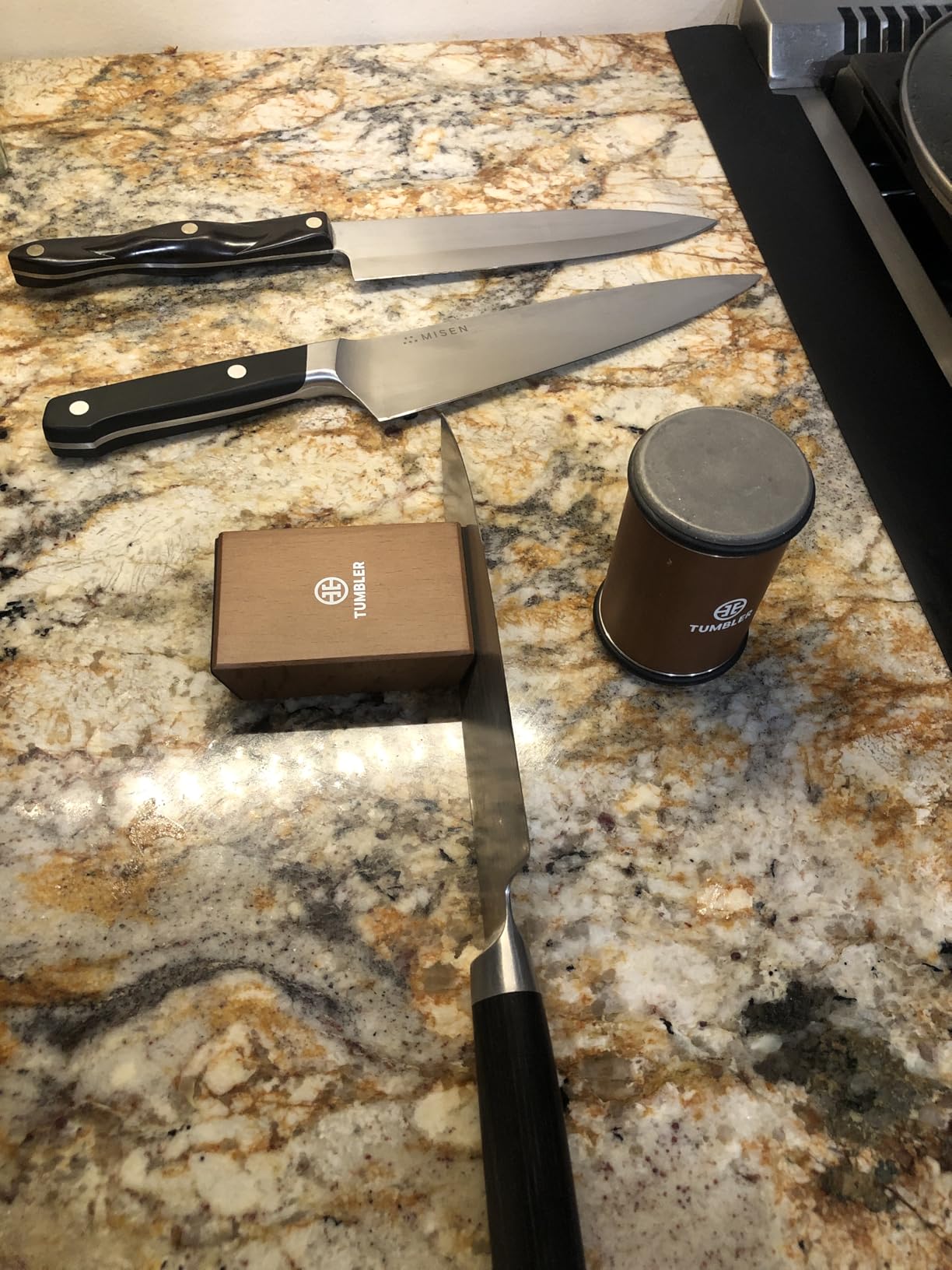
The Tumbler Rolling Sharpener caught my attention with its distinct design. Instead of moving the knife across a stone, you place the blade in a magnetic holder and roll a diamond-plated disc along the edge. It is unlike any other system on this list, and the rolling motion is surprisingly satisfying.
I tested it on a mid-range chef knife that had lost its edge after several months of daily use. About 20 rolls on each side with the diamond disc, followed by 10 rolls with the stainless steel honing disc, brought the blade back to paper-cutting sharpness in under five minutes.
The magnetic blade support is the standout feature. It holds the knife at a precise height so the disc contacts the edge at exactly 15 or 20 degrees. You just flip the support to switch between the two angles. This removes nearly all the variables that make freehand sharpening difficult.
The wood version looks beautiful on a kitchen counter. It comes in multiple colors including Forest Green, Arctic Grey, Black, and Orange, so you can match your kitchen aesthetic. Function meets form in a way that few sharpening tools achieve.
Diamond Disc Longevity
The diamond-plated disc is rated comparable to roughly 500 grit on a whetstone. This is aggressive enough to restore a dull edge but not fine enough for a mirror polish on its own. The stainless steel helix disc handles the honing and refining step.
Diamond surfaces last a very long time compared to water stones because the abrasive is embedded in the metal substrate rather than being a soft bonding material. I have seen no degradation after months of use.
Setup and Counter Space
The Tumbler requires minimal setup. You place the magnetic holder on a flat surface, insert your knife, select your angle, and start rolling. There are no clamps to tighten, no stones to soak, and no electricity needed.
The unit takes up about the same space as a cutting board, so storage is straightforward. It is light enough to move around, which makes it practical even in smaller kitchens.
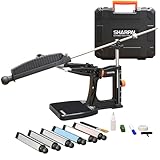
7. Sharpal 202H Precision Knife Sharpening System – Most Complete Kit
- Widest angle range at 10-35 degrees
- Seven abrasive plates cover every sharpening stage
- Dual sliding clamps fit various blade widths
- Premium carry case makes it giftable
- Heavy at 4.4 kilograms
- May require practice for best results
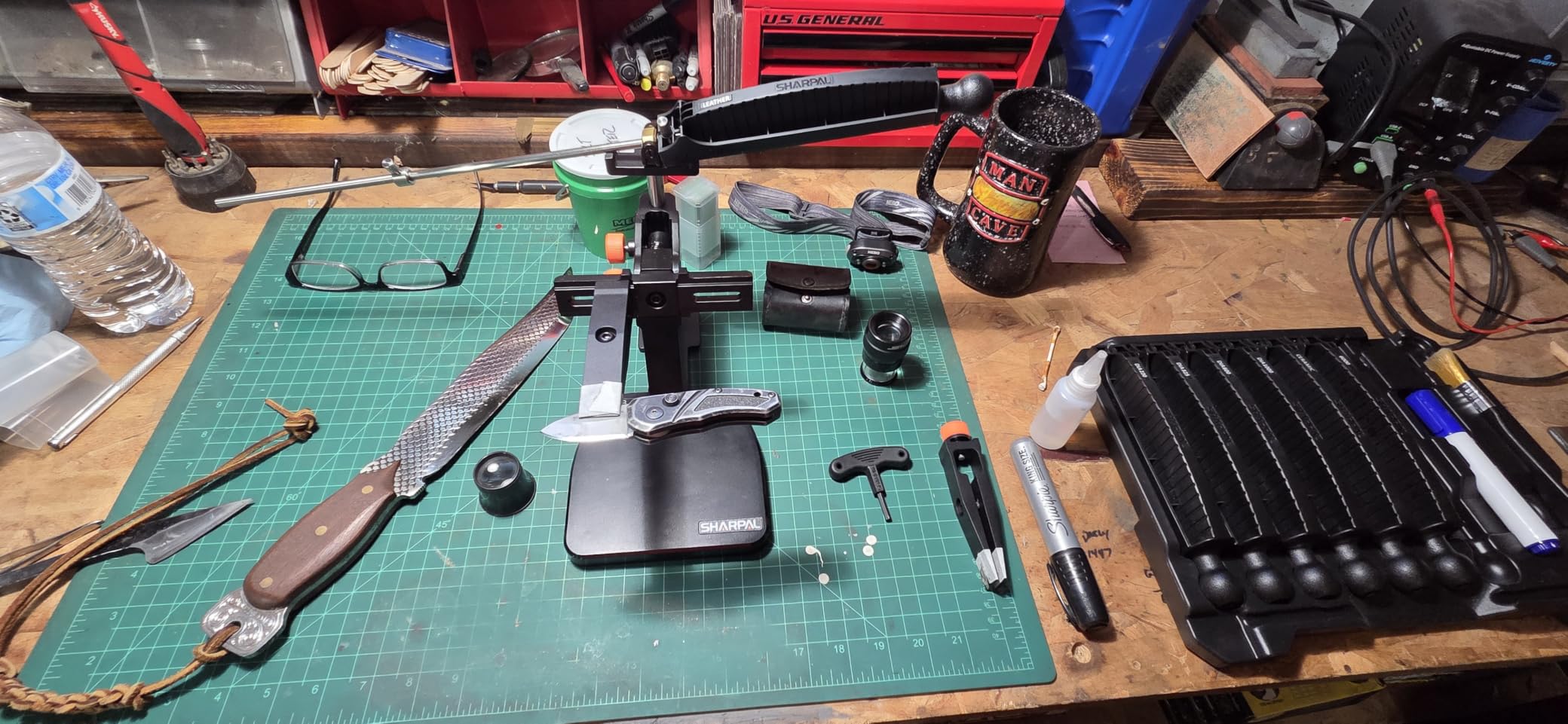
The Sharpal 202H is the most comprehensive kit on this list. It comes with seven abrasive plates that cover everything from heavy repair work to mirror polishing. If you want a single system that can handle any blade and any sharpening task, this is it.
The angle range is remarkable. At 10 to 35 degrees, it covers everything from delicate Japanese yanagiba knives to heavy-duty outdoor blades. I tested it at 15 degrees on a Japanese petty knife and at 25 degrees on a heavy-duty utility knife, and both came out beautifully.
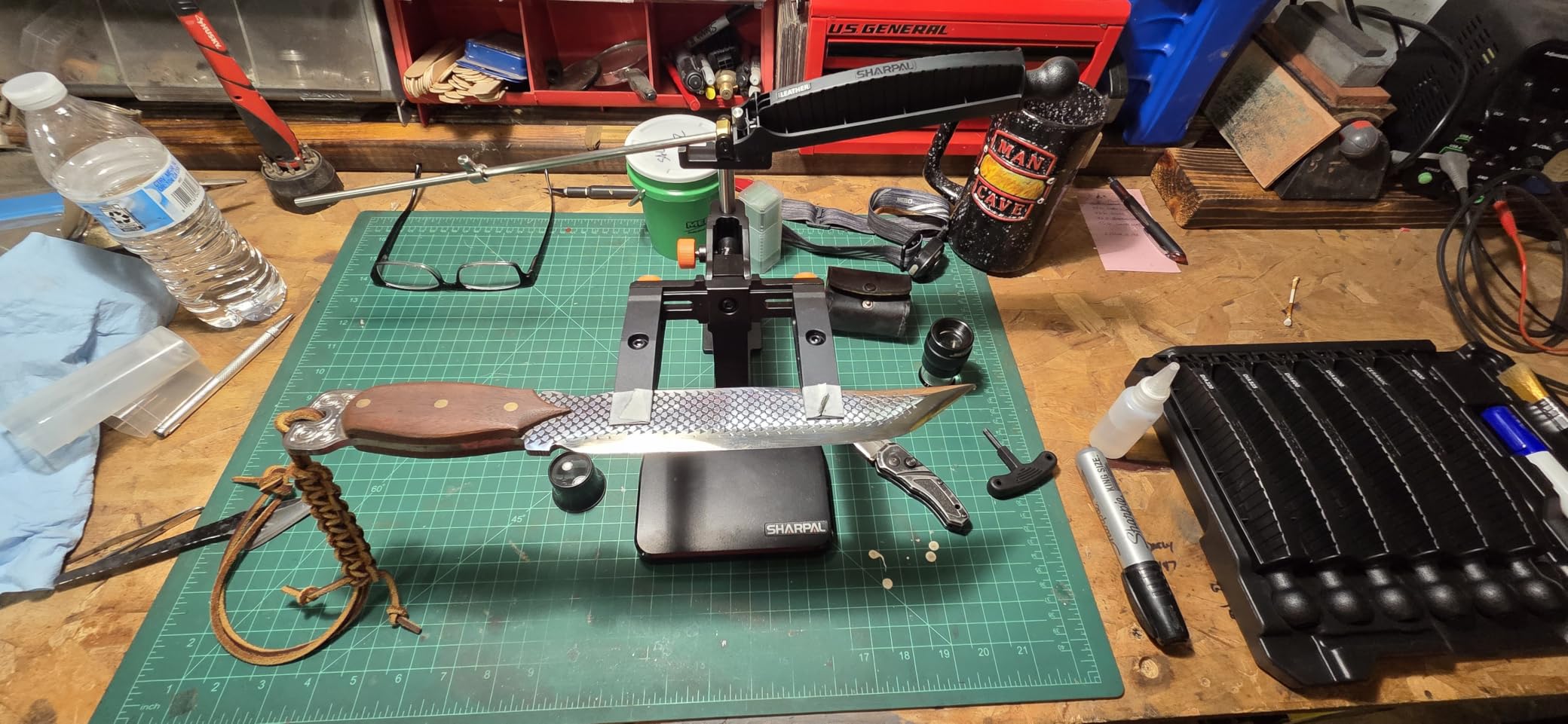
The seven plates include diamond abrasives at 220, 325, 600, and 1000 grit, plus whetstone plates at 3000 and 6000 grit, and a leather strop for final finishing. This progression lets you take a completely dull or chipped blade all the way to a mirror-polished edge without needing any additional tools.
The dual sliding clamps hold the blade securely from both sides. This design accommodates a wider range of blade widths than single-clamp systems. The anti-slip base keeps everything planted during use, even when applying pressure on coarse grits.
Abrasive Kit Breakdown
The diamond plates handle the heavy lifting. The 220 grit removes chips and reprofiles edges. The 325 and 600 grits refine the bevel, and the 1000 grit creates a clean working edge. For most kitchen knives, you will spend most of your time on the 600 and 1000 plates.
The 3000 and 6000 whetstone plates take the edge from sharp to polished. A few strokes on each creates an edge that glides through food with minimal resistance. The leather strop with compound removes the microscopic burr for a clean, hair-splitting finish.
Learning Curve for Beginners
This system has more moving parts than simpler options, so there is a learning curve. Selecting the right angle, choosing the correct abrasive progression, and maintaining consistent strokes all take practice. The included instructions help, and the patent-pending angle setting mechanism simplifies the process.
Once you understand the workflow, the system becomes intuitive. I would recommend watching a tutorial video before your first session to understand the progression from coarse to fine.
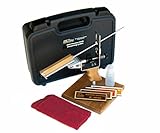
8. KME Precision Knife Sharpener – Best Premium Guided System
KME Precision Knife Sharpener System with 4 Gold Series Diamond Hones – Base Included
- Spherical bearing guide eliminates angle deviation
- Four Gold Series diamond hones cover 140 to 1500 grit
- Continuous angle adjustment for precise matching
- Portable hard case for storage and travel
- Higher price point
- Lower visibility in retail rankings
The KME Precision Sharpener is a favorite among serious knife enthusiasts, and after testing it, I understand why. The standout feature is the spherical bearing in the rod guide. This bearing eliminates any lateral play, meaning every stroke stays at exactly the angle you set.
I compared it side by side with other guided rod systems, and the difference in smoothness was immediately apparent. The rod glides without wobble, and the resulting bevel was the most uniform of any system I tested. If you are chasing perfection in your edges, this is the tool.
The four Gold Series diamond hones cover 140 extra-coarse, 300 coarse, 600 fine, and 1500 extra-fine grit. This range lets you handle everything from repairing a chipped edge to putting a refined polish on a high-end Japanese knife. Diamond hones cut faster than water stones and never need flattening.
The angle adjusts continuously from 17 to 30 degrees in 1-degree increments. This gives you the same precision as the Work Sharp Precision Adjust, but with the superior bearing system and diamond hones that serious sharpeners prefer.
Bearing Guide Precision
The spherical bearing is what sets KME apart from other guided rod systems. Standard guide rods can have slight play or friction that causes tiny angle variations. The bearing eliminates this entirely, producing a perfectly consistent bevel every single stroke.
This precision matters most when you are sharpening expensive knives where a mistake is costly. The KME gives you confidence that each pass is removing metal exactly where you intend.
Portability and Storage
The entire system packs into a hard carry case that protects the hones and components during transport. The base is included and provides a stable platform during use. At under a pound for the main components, it is genuinely portable.
This makes the KME a good choice if you want to sharpen knives at different locations or need to store the system compactly between uses. The case also keeps the diamond hones clean and protected from damage.
How to Choose a Kitchen Knife Sharpening System
Choosing the right sharpening system comes down to three questions. How sharp do you want your knives? How much effort are you willing to invest? And what types of knives are you sharpening?
I have organized this buying guide around the factors that matter most based on my testing and the common questions we see from home cooks and enthusiasts alike.
Types of Sharpening Systems
There are four main categories of kitchen knife sharpening systems. Each has distinct advantages and trade-offs that affect your results and experience.
Electric sharpeners like the Chef’sChoice 15XV and Work Sharp MK2 are the fastest option. You pull the knife through guided slots, and powered abrasives do the work. They require no skill and produce consistent results in under two minutes per knife. The downside is less control over the exact angle and finish.
Guided rod systems like the Work Sharp Precision Adjust, Lansky Deluxe, Sharpal 202H, and KME Precision clamp the knife and guide a stone along the edge at a set angle. They offer more precision than electric sharpeners and are easier to master than freehand whetstones. The trade-off is that each knife takes longer to sharpen.
Whetstones like the Sharp Pebble are the traditional choice. They offer the highest level of control and can produce the sharpest edges, but they require the most skill. You must maintain the angle by hand throughout each stroke.
Rolling designs like the Tumbler combine elements of guided and manual sharpening. They simplify the process while still giving you hands-on control over the result.
Why Angle Guides Matter
The sharpening angle determines the geometry of your edge, and this directly affects sharpness and durability. A lower angle like 15 degrees produces a sharper edge that cuts more cleanly but dulls faster. A higher angle like 25 degrees is more durable but slightly less sharp.
Japanese knives typically use 15 to 17 degree angles because their harder steel can hold a thin edge. Western knives usually use 20 degrees because softer steel needs a more durable edge geometry. The right system lets you match or adjust these angles intentionally.
Systems with adjustable angles like the Work Sharp Precision Adjust, Sharpal 202H, and KME give you the most flexibility. Fixed-angle systems like the Chef’sChoice and Tumbler simplify the process but lock you into specific geometries.
Grit Levels Explained
Grit refers to the size of abrasive particles on the sharpening surface. Lower numbers mean coarser grit that removes more metal faster. Higher numbers mean finer grit that polishes and refines.
Here is how I think about grit progression for kitchen knives. A 220 to 400 grit stone handles chip repair and major reprofiling. A 600 to 1000 grit stone is your daily sharpener for dull blades. A 3000 to 6000 grit stone refines and polishes for a razor finish. A leather strop removes the final burr for a clean edge.
Most home cooks only need two grits. A medium stone around 1000 for sharpening and a fine stone around 3000 to 6000 for polishing covers the vast majority of kitchen knife maintenance. The Sharp Pebble dual-grit stone nails this combination perfectly.
Electric vs Manual Systems
This is one of the most common questions we see. Electric sharpeners are faster and require no skill. They are ideal for busy home cooks who want sharp knives with minimal effort. The Chef’sChoice 15XV takes about a minute for the initial sharpening and 10 seconds for maintenance touch-ups.
Manual systems take more time but give you greater control over the finished edge. They also tend to remove less metal per sharpening session, which extends the life of your knives. Forum users on Reddit consistently note that pull-through and aggressive electric sharpeners can remove more steel than necessary over time.
If you value convenience above all, go electric. If you want the sharpest possible edge and do not mind investing time, choose a guided or whetstone system.
Knife Compatibility Considerations
Not every system handles every knife type well. Some systems struggle with very wide blades, while others cannot accommodate Japanese knives with acute angles.
For Japanese knives, look for systems that offer 15 to 17 degree angles. The Work Sharp Precision Adjust, Sharpal 202H, and KME all handle these angles. Fixed systems like the Tumbler offer a 15-degree setting specifically for this purpose.
For serrated knives, only certain systems work. The Chef’sChoice 15XV has a dedicated serrated stage, and the Work Sharp MK2’s flexible belts can follow serration profiles. Standard stone systems cannot sharpen inside serrations.
Left-handed users should note that most clamp systems work equally well from either side. Electric pull-through sharpeners are typically designed for right-handed pulls but can be used left-handed with care.
FAQs
What do professional chefs use to sharpen their knives?
Most professional chefs use a combination of whetstones and honing rods. High-end kitchens often rely on Japanese water stones in 1000 and 3000 grit for precision sharpening, followed by a leather strop for finishing. Some chefs use guided systems like the Work Sharp Precision Adjust for consistency, and busy kitchens frequently use electric sharpeners like the Chef’sChoice for quick touch-ups between services.
What is the best kitchen knife sharpening system?
The best kitchen knife sharpening system depends on your needs. For most home cooks, the Work Sharp Precision Adjust offers the best balance of precision, ease of use, and value. For effortless sharpening, the Chef’sChoice 15XV electric sharpener is the top choice. For budget-conscious beginners, the Sharp Pebble whetstone provides excellent results at a fraction of the cost.
What is the best technique for sharpening kitchen knives?
The best technique involves maintaining a consistent angle throughout each stroke. Start with a medium grit stone around 1000 to establish the edge, then progress to a finer grit of 3000 to 6000 for polishing. Always sharpen one side until you feel a burr along the entire edge, then repeat on the other side. Finish by removing the burr with a leather strop or fine ceramic hone.
What angle should I sharpen my kitchen knives at?
Japanese knives should be sharpened at 15 to 17 degrees per side for maximum sharpness. Western or German knives typically use 20 degrees per side for a balance of sharpness and durability. Heavier utility knives can go up to 25 degrees. The key is consistency, so a guided system that locks the angle produces the most reliable results.
How often should I sharpen my kitchen knives?
For home cooks using knives daily, sharpen every 2 to 3 months. Professional kitchens may sharpen weekly. Between full sharpenings, use a honing rod weekly to realign the edge and extend the time between sharpening sessions. A properly maintained knife only needs light touch-ups rather than full reprofiling each time.
What knife sharpener does America’s Test Kitchen recommend?
America’s Test Kitchen has historically recommended electric sharpeners for home cooks, with the Chef’sChoice line frequently appearing in their recommendations. They emphasize that consistency matters more than the specific tool, and they advise against cheap pull-through sharpeners that can damage blade edges over time.
Conclusion
Finding the right kitchen knife sharpening system transforms how you cook. Sharp knives are safer, faster, and more enjoyable to use, and any system on this list will get your blades performing better than they have in months.
For most home cooks, the Work Sharp Precision Adjust is our top recommendation. It combines guided precision with genuine ease of use at a fair price. If you want zero-effort sharpening, the Chef’sChoice 15XV or Work Sharp MK2 Electric are outstanding choices. And if you are on a tight budget, the Sharp Pebble whetstone delivers professional-level results for less than the cost of one professional sharpening visit.
Whatever system you choose in 2026, the most important thing is to start sharpening. A dull knife is a dangerous knife, and maintaining your blades is one of the simplest ways to improve your time in the kitchen.