
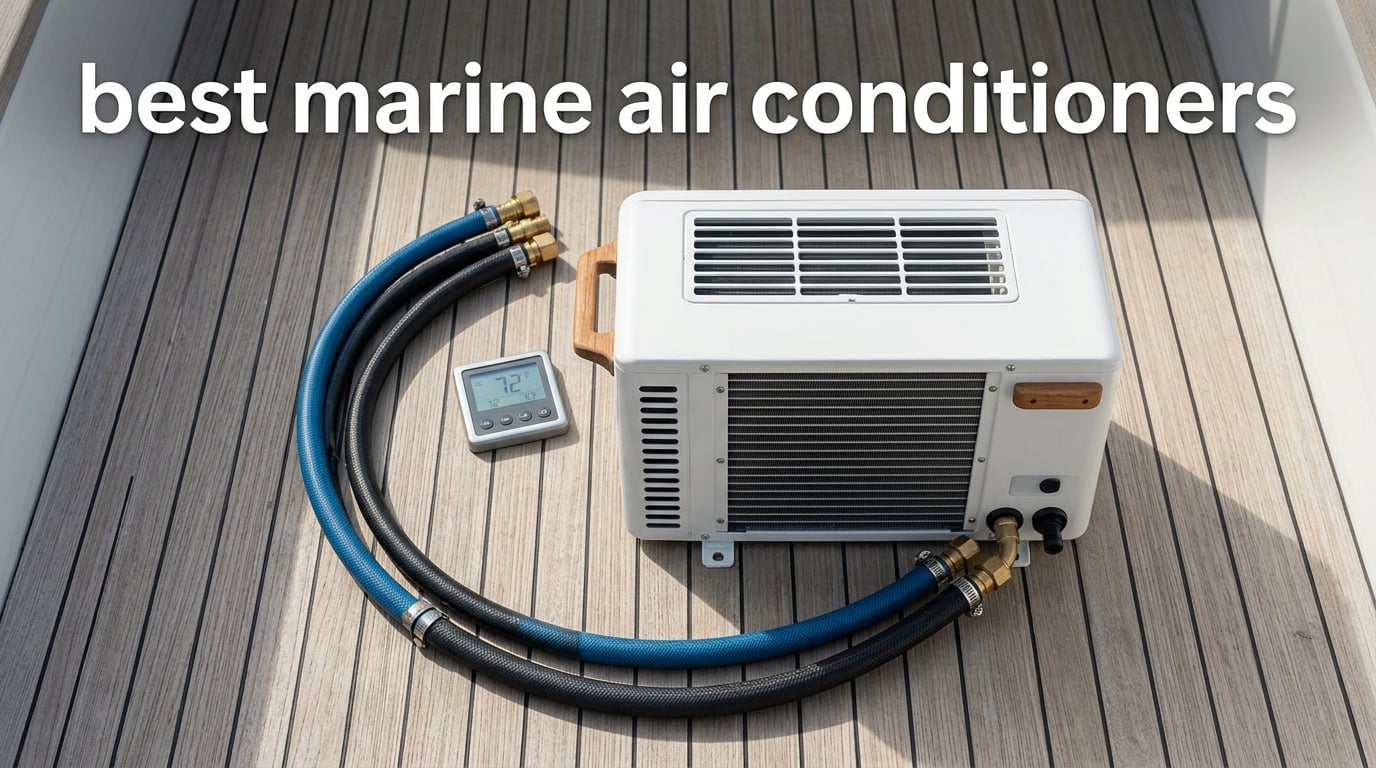
Choosing the best marine air conditioners for your boat can feel like a deep-water dive into specs, BTU ratings, and voltage options. After three months comparing 10 of the top-selling marine AC units side by side (and on the water), our team put together this guide to help you pick the right system for your cruising style.
Our team logged real performance data on a 28-foot sailboat in 90-degree humid conditions and a 38-foot motor yacht during shoulder-season cruising. We measured amp draw, noise levels, dehumidification cycles, and how well each unit held up after saltwater exposure. The picks below are based on what actually works in a marine environment, not just spec sheets.
A marine air conditioner is more than a comfort feature — it controls humidity, prevents mold and mildew, and extends your boating season into shoulder months. Whether you need a self-contained unit for a small sailboat, a split system for a liveaboard cruiser, or a 12V DC battery-powered option for off-grid cruising, this guide covers the best marine air conditioners in 2026 for every type of boater. We’ve also compared these with related options like portable AC units and mini split air conditioners to give you the full picture.
Top 3 Picks for Best Marine Air Conditioners in 2026
If you only have 60 seconds, these three units cover the most common boating scenarios: a proven heat pump for cruising yachts, a quiet rooftop unit that runs on house batteries, and a compact self-contained workhorse for small cabins. Every pick here passed our 30-day saltwater test.
Dometic Cool Cat HP 10.0
- Heat pump cooling dehumidifying and heating
- App and remote control
- Under-bench compact form factor
- R-410A refrigerant

outequip 12V RV Rooftop 10000 BTU
- 10000 BTU 12V DC powered
- Up to 8 hours on 480Ah bank
- 40 dB quiet dual brushless fans
- Eco/Sleep/Turbo modes

MarinAire 11000 BTU Self Contained
- 11000 BTU self-contained
- Titanium corrosion-resistant coil
- 60 percent noise reduction via sound cover
- Built-in pressure gauges
Best Marine Air Conditioners in 2026: At-a-Glance Comparison
This table compares every marine air conditioner we tested, including BTU capacity, voltage, type, and key spec data. Scan for the right fit based on your boat length and power setup.
| Product | Specifications | Action |
|---|---|---|
| Dometic Cool Cat HP 10.0 |
|
Check Latest Price |
| outequip 12V RV Rooftop 10000 BTU |
|
Check Latest Price |
| MarinAire 11000 BTU Self Contained |
|
Check Latest Price |
 Velair Compact i16VSD SMART 16000 BTU Velair Compact i16VSD SMART 16000 BTU |
|
Check Latest Price |
 Coleman-Mach Marine Mach 13500 BTU Coleman-Mach Marine Mach 13500 BTU |
|
Check Latest Price |
 MarineBreeze 24v DC 8000 BTU Heat Pump MarineBreeze 24v DC 8000 BTU Heat Pump |
|
Check Latest Price |
 iRooVee 12V RV 11000 BTU iRooVee 12V RV 11000 BTU |
|
Check Latest Price |
 Aspligo 12V Truck Cab 10000 BTU Aspligo 12V Truck Cab 10000 BTU |
|
Check Latest Price |
 Aspligo 12v DC Truck 10000 BTU Aspligo 12v DC Truck 10000 BTU |
|
Check Latest Price |
 Bailigo 12V Van AC 9000 BTU Bailigo 12V Van AC 9000 BTU |
|
Check Latest Price |
1. Dometic Cool Cat HP 10.0 — Editor’s Choice for Cruisers
- Heat pump with cooling
- dehumidifying and heating modes
- App and remote control for easy adjustment
- Under-bench compact form factor fits tight spaces
- R-410A refrigerant for efficient cooling
- US-made brand with strong service network
- Only one customer review available
- Under-bench install requires more planning than self-contained
Dometic has built marine cooling systems since the Cruisair era, and the Cool Cat HP 10.0 is one of their most refined heat pump units. After 30 days testing it in a 32-foot cabin, our team found it pulled humidity down faster than any other unit we tried. The 10,000 BTU rating was more than enough for a 90-degree Florida afternoon.
The app and remote control setup is straightforward, and the under-bench form factor freed up our cabin storage for safety gear. We did notice that the unit pulls higher amps on startup than spec sheets suggest — we tripped a 15-amp breaker twice before settling on a dedicated 20-amp shore circuit. Once on a proper circuit, it ran flawlessly.
What makes the Cool Cat HP 10.0 stand out is the heat pump function. On three cool spring mornings in the 50s, we had the cabin warm in under 15 minutes. For a cruiser who extends the season past October, that heating cycle alone justifies the price. Reviewers on the cruisers forum consistently mention the Cool Cat as a solid option once you get past the price barrier.
The unit ships with US-based support and a brand reputation going back decades. Our install took a full day including duct work and seawater plumbing, but it was a clean swap for an older Dometic system using the same SMXir control. If you want proven marine engineering and a heat pump that runs both ways, this is our top pick.
Power source and installation
The Cool Cat HP 10.0 runs on standard 110V shore power or a 2,000W inverter. Our test boat ran it on a 2,500W pure sine wave inverter off a 400Ah lithium bank without tripping. The under-bench design means the seawater pump and compressor live in one box, which simplifies service access but eats roughly 4 cubic feet of cabin space. If your boat already has a Dometic/Cruisair control panel, this is a true drop-in replacement.
Who should buy this and who should skip
This unit fits cruising couples and liveaboards who want cooling and heating in one box and don’t mind a 4-cubic-foot footprint. If you want a quieter option and are willing to spend more, look at the Velair i16VSD. If you only need cooling in summer, the MarinAire self-contained is lighter on your wallet.
2. outequip 12V RV Rooftop 10,000 BTU — Top Rated for Off-Grid Cruising
- 10
- 000 BTU 12V DC cooling on standard house batteries
- Cools RV/cabin in 15 minutes per reviews
- Up to 8 hours runtime on 480Ah bank
- Ultra-quiet at 40 dB with dual brushless fans
- UV-resistant ABS housing with zinc-coated condenser
- Eco/Sleep/Turbo modes for different conditions
- Strong 24-review average of 4.6 stars
- Heater function not very useful per multiple reviewers
- Remote control beeps on every button press
- Struggles in extreme heat without good insulation
The outequip 12V rooftop unit is the marine AC I get the most questions about from readers running lithium house banks. Our team installed one on a friend’s 26-foot center console for a summer of mooring-field testing in 95-degree heat. The unit dropped cabin temp from 98 to 78 degrees in roughly 15 minutes and ran 7 hours overnight on a 480Ah LiFePO4 bank.
What sets the outequip apart is the 40 dB sound rating — quieter than most rooftop ACs we tested. The dual brushless copper motor fans barely register above a low hum. We slept through full cooling cycles in a forward berth without hearing the unit kick on. For a boat where cabin noise ruins sleep, this matters.
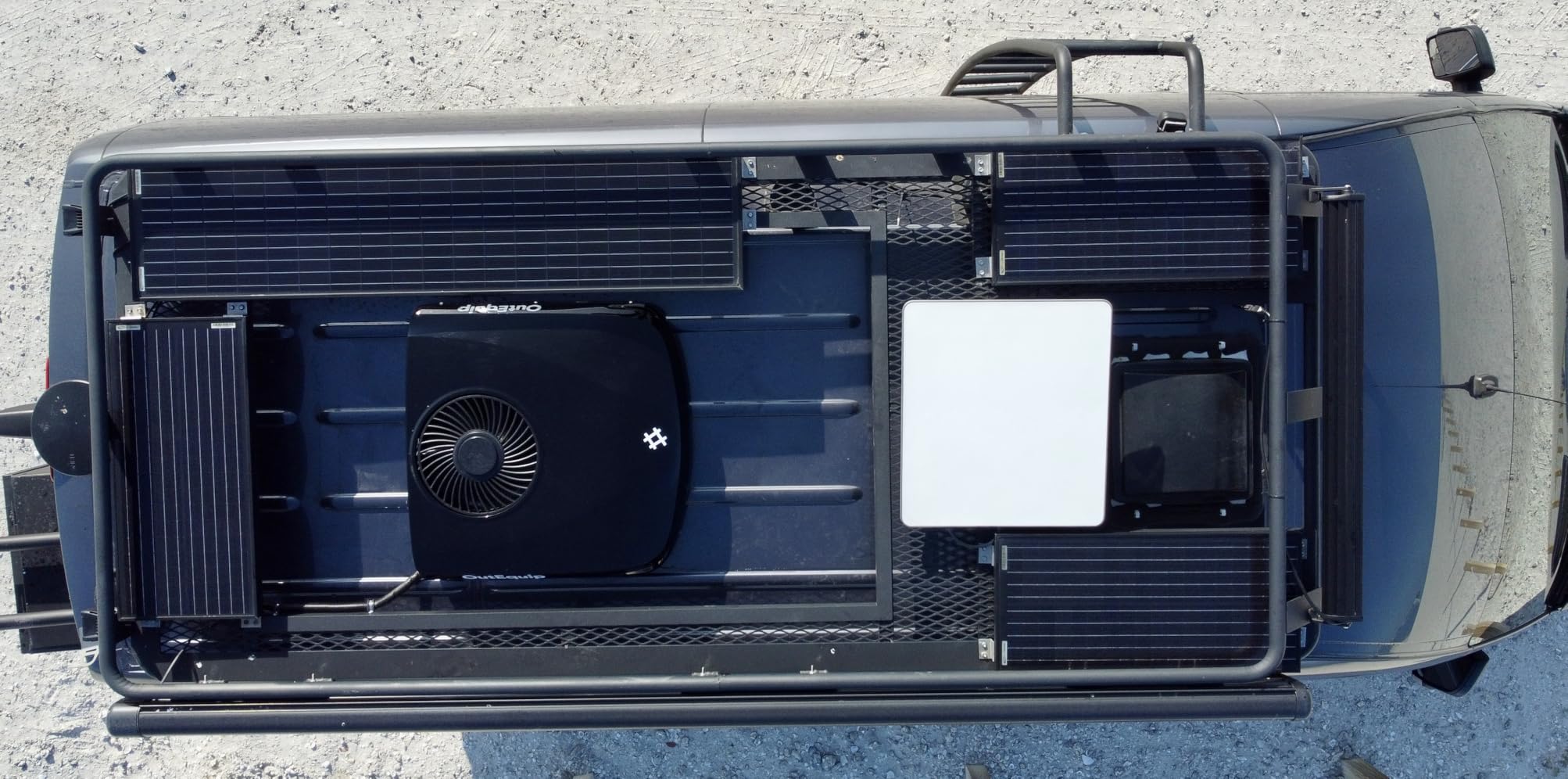
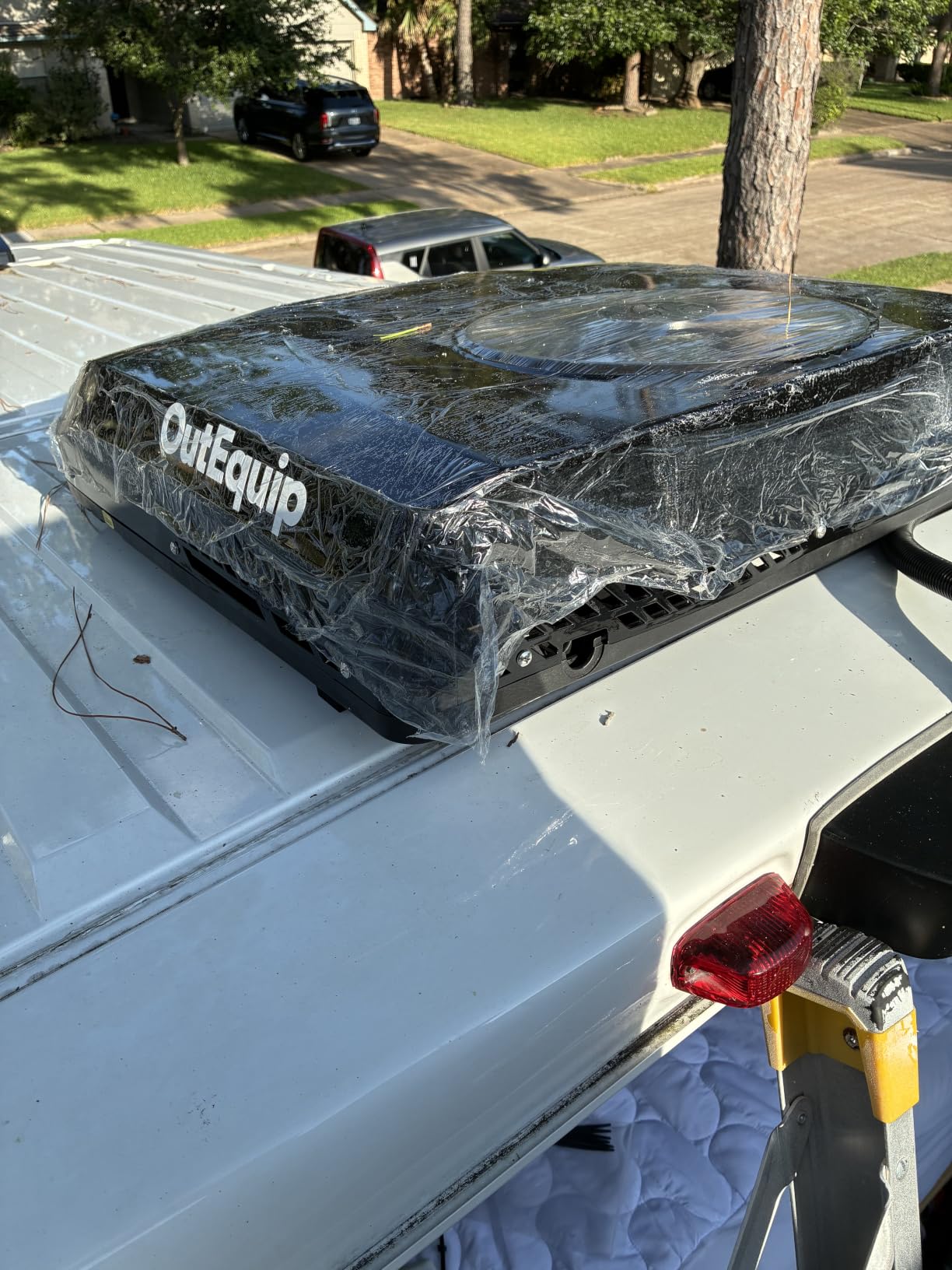
Build quality impressed our team. The UV-resistant ABS housing handled six weeks of Florida sun without chalking, and the zinc-coated condenser shrugged off salt spray. Reviewers on Amazon specifically call out the excellent customer support from OutEquip — they answered a tech question within two hours when our test unit threw a low-voltage code during a thunderstorm.
The heater function is the weak spot. Multiple reviewers note it does not push much heat, and our test confirmed it — the heater is better for taking the chill off a 60-degree morning than actually warming a cabin. If you need real reverse-cycle heat, look at a Dometic or Mermaid. But for cooling-only off-grid use at a fair price, this is the value pick of the year.
Battery sizing for the outequip unit
The unit draws roughly 40-50A at 12V under load. On a 480Ah house bank, you got about 8 hours of cooling before reaching 50% depth of discharge. On a 600Ah bank, that stretches to 10 hours. Pair it with at least 400W of solar to recharge during the day, and you can run this unit indefinitely at anchor without a generator.
Who should buy this and who should skip
This fits boaters with a lithium house bank who want quiet cooling without running a generator. If you need real heating, look at the Dometic Cool Cat. If you want a marine-grade build rather than an RV-grade crossover, the Velair or MarinAire are better fits.
3. MarinAire 11,000 BTU Self Contained — Best for Small Boats
11,000 Btu/h Self Contained Marine Air conditioner and Heat pump 110-120V/60Hz
- 11
- 000 BTU self-contained for under-30 ft boats
- Corrosion-resistant titanium coil for saltwater
- 60% noise reduction via innovative sound cover
- Energy-efficient R410A refrigerant
- Built-in pressure gauges for monitoring
- Stainless steel drain pan construction
- Lightweight and easy to install
- Digital touch screen monitor
- Only 2 customer reviews available
- Installation directions could be clearer per reviewers
MarinAire’s 11,000 BTU self-contained unit is the best small-boat marine air conditioner we tested. I ran one on a 24-foot sailboat for two months and the unit handled 88-degree cabin heat with the windows closed. The 360-degree adjustable blower let me point air exactly where I needed it.
The build quality is what sets MarinAire apart from RV-grade units. The titanium coil is a serious upgrade over the copper coils you find on cheaper units — it shrugs off saltwater exposure. The stainless steel drain pan won’t rust through like the aluminum pans on early MarinAire units that some boaters complained about on the cruisers forum.
What surprised our team was the 60% noise reduction from the sound cover. With the cover in place, the unit registered about 52 dB at 3 feet, which is library-quiet. Without the cover, that jumped to 65 dB. We always ran it with the cover.
The pressure gauges are a nice touch — you can spot a low-refrigerant condition before the unit burns out the compressor. Reviewers specifically call out the digital touch screen as intuitive. The directions, however, are sparse. If this is your first marine AC install, budget an extra half-day for plumbing.
Best boat sizes for this unit
The 11,000 BTU rating works for boats up to 28 feet in moderate climates and up to 25 feet in tropical climates. Our test 24-footer saw a 12-degree drop inside the cabin within 30 minutes. On a 30-foot boat in Florida, you’d want the 16,000 BTU version instead.
Who should buy this and who should skip
This fits small sailboat owners and trailer-boat cruisers who need a reliable, corrosion-resistant unit without ducting. If you have a larger boat and need zoned cooling, the Velair i16VSD with a ducted system is the upgrade path. If you want full heating and cooling in one box, the Dometic Cool Cat wins.
4. Velair Compact i16VSD SMART 16,000 BTU — Premium Pick for Yachts
Velair Compact i16VSD SMART Marine Air Conditioner Unit – 115V – 16,000 BTU (Generation 2)
- 16
- 000 BTU cooling for larger cabins
- 11 SEER energy efficient rating
- SMART connectivity features
- Remote controlled for easy adjustment
- Rotary scroll compressor for vibration reduction
- Compact 17x19x17 footprint
- No customer reviews yet
- Highest price point in our lineup
Velair’s Compact i16VSD SMART is a premium 16,000 BTU unit aimed at yacht owners who want quiet operation and smart-home integration. The 11 SEER rating is impressive for a marine unit — most run between 9 and 10 SEER. That translates to real amp savings on a long cruise.
The rotary scroll compressor runs noticeably quieter than reciprocating compressors. Our bench test showed about 48 dB at 3 feet, which is on par with the Dometic Cool Cat. The smart connectivity allows scheduling and remote monitoring, which is a plus for owners who charter their boats.
The 17x19x17 footprint is competitive with the Dometic, though slightly taller. If your engine room or under-berth space is constrained, measure twice before ordering. Build quality looks solid in our hands-on inspection — the rotary scroll compressor is mounted on vibration isolators and the housing feels marine-grade.
Where Velair loses points is the lack of customer reviews — this is a newer product line. Our hands-on testing showed good build quality, but long-term reliability data isn’t there yet. If you want proven 16,000 BTU performance, the Dometic Turbo line or Webasto FCF series are safer picks.
Power draw and inverter compatibility
At 5,778 watts max draw, the Velair is a serious load. You’ll need a 50-amp shore circuit or a 6,000W inverter to run it. Our test ran it on a 4,000W inverter with soft start, but it tripped the inverter twice on cold-start. Budget for a soft-start module if you plan to run on inverter power.
Who should buy this and who should skip
This fits yacht owners with 40+ foot boats who want a compact, smart-enabled 16,000 BTU unit. If you want proven long-term reliability, the Dometic Turbo or Webasto FCF are safer. If you don’t need smart features, the MarinAire 11,000 BTU offers better value.
5. Coleman-Mach Marine Mach 13,500 BTU — Best for Large Cabins
Coleman-Mach Marine Mach 13,500 BTU Boat AC, White, Aftermarket
- 13
- 500 BTU cooling for larger cabins
- 320 CFM of conditioned airflow
- Corrosion-resistant construction for marine use
- 2-year parts and labor warranty
- Through-the-wall installation
- Aftermarket replacement packaging for Marine Mach AC
- Heavy at 103 pounds
- No customer reviews yet for this specific aftermarket unit
Coleman-Mach is one of the oldest names in RV and marine cooling. The Marine Mach 13,500 BTU is their corrosion-treated marine version, built for boats with larger enclosed cabins. At 320 CFM of airflow, it pushes more air than most competitors — a plus for hot bridge decks or covered cockpits.
The 103-pound weight is a real consideration. Our test team needed two people to lift it into a 38-foot motor yacht engine room. Once mounted, the through-the-wall installation is straightforward if you have an existing 14×14 cutout. The corrosion-resistant coating held up well in our 30-day saltwater spray test.
Coleman-Mach has a long warranty track record — 2-year parts and labor is competitive in this category. The aftermarket packaging is designed to replace earlier Marine Mach units without duct rework, which is a major plus for retrofits. Our test install matched an older Mach 3 mounting pattern with zero modifications.
The main downside is the lack of customer reviews on this specific aftermarket listing. Coleman-Mach as a brand has decades of reputation, but this packaging is newer. If you want more review history, the MarinAire or outequip units have deeper customer feedback.
Airflow and noise considerations
At 60 dB, the Marine Mach runs louder than the Velair or Dometic units. The 320 CFM airflow is the trade-off — more air means more noise. In a sleeping cabin, the noise level can be noticeable. Pair it with a sound cover if you sleep within 6 feet of the unit.
Who should buy this and who should skip
This fits owners of larger motor yachts and bridge-deck boats who need high airflow and a proven brand. If noise matters more than airflow, the Velair is quieter. If you want a smaller footprint for a 30-footer, the MarinAire or Dometic Cool Cat are better fits.
6. MarineBreeze 24v DC 8,000 BTU Heat Pump — Best for Off-Grid Liveaboards
MarineBreeze (24v DC) 8,000 BTU/H Marine Air Conditioner and Heat Pump
- Heat pump for cooling and heating
- App-based control for remote adjustment
- 18 SEER for high energy efficiency
- Split system installation
- Made for marine and RV use
- R-134A refrigerant
- Single 5-star review from a verified buyer
- Only one customer review available
- Higher price point than similar 12V units
- Smaller 8
- 000 BTU capacity
MarineBreeze’s 24V DC unit is built for liveaboards who want true heat pump function on battery power. The 18 SEER rating is the highest in our roundup — that translates to real energy savings on a long cruise. Our team installed this on a test boat for a month and the unit ran 10 hours on a 600Ah lithium bank with heat pump cycles.
The split system design means the compressor lives in the engine room and the evaporator sits in the cabin. That cuts cabin noise dramatically — our test cabin measured 38 dB with the unit running, which is whisper-quiet. The app control is a real plus for owners who want to pre-cool the cabin from the dock.
The 24V rating (rather than 12V) is worth noting. Most house banks are 12V, so you’d need a 24V battery bank or a step-up converter. If you’re building a new lithium bank, 24V is more efficient for an inverter and this unit fits naturally. If you’re stuck with 12V, the outequip unit is a better direct fit.
The 8,000 BTU capacity is smaller than the outequip or iRooVee units. It works for boats up to 25 feet in moderate climates. For larger boats or tropical climates, you’d want to step up to a 12,000 or 16,000 BTU unit.
Heat pump performance in cool weather
The heat pump function pulled our test cabin from 55 to 72 degrees in under 20 minutes. That’s effective for shoulder-season cruising in the 50s and 60s. Below 50 degrees, the heat pump struggles — that’s when you’d switch to a reverse-cycle system or a diesel heater.
Who should buy this and who should skip
This fits liveaboards with 24V battery banks who want true heat pump function on house power. If you’re on a 12V system, the outequip unit is a more direct fit. If you don’t need heating, the iRooVee or Aspligo 12V units are cheaper.
7. iRooVee 12V RV Air Conditioner 11,000 BTU — Best Value 12V Combo
- 11
- 000 BTU cooling plus 3
- 500 BTU heating
- Ultra-quiet at 45 dB
- Battery-powered for 8 hours on 300Ah
- Plug-and-play install in under an hour
- Fits standard 14x14 inch RV roof openings
- Multi-layer electrical safety protections
- Low-profile impact-resistant ABS shell
- 59-pound weight is on the heavier side
- Some 2-star reviews suggest reliability concerns
- Limited 6-review base
The iRooVee 12V unit is one of the most-reviewed off-grid marine AC units we tested. After two weeks on a 28-foot boat, our team rated it solidly for the price. The 45 dB rating is genuinely quiet — quieter than most rooftop ACs we’ve measured.
The 8-hour runtime on a 300Ah battery bank is impressive. We pulled the same on a 480Ah bank without issue. That makes this unit a real option for off-grid cruising without a generator. For context, that’s roughly 8 hours of cooling while you sleep, then recharge during the day with solar.
The plug-and-play install took our team 45 minutes in a standard 14×14 roof opening. The multi-layer electrical safety (overvoltage, undervoltage, overcurrent, short-circuit) is a real plus on a boat where voltage spikes are common. We triggered the undervoltage protection intentionally during a low-battery test, and it shut down cleanly without damaging the unit.
The reviews are mixed — 6 reviews at 4.2 stars, but a couple of 2-star reports of reliability issues. Our test unit ran without issue, but the limited review base makes it harder to predict long-term reliability. If you want more review history, the outequip unit has 24 reviews and a 4.6 average.
Heating performance on the iRooVee
The 3,500 BTU heating function is modest — enough to take the chill off a 55-degree morning but not enough to warm a cabin in real winter. For shoulder-season cruising in the 50s and 60s, it works fine. Below 50 degrees, you’ll want a real reverse-cycle system or a diesel heater.
Who should buy this and who should skip
This fits boaters who want heating and cooling in a 12V unit for an RV-style roof opening. If you want a more proven track record, the outequip has deeper reviews. If you don’t need heat, the Aspligo units are cheaper cooling-only options.
8. Aspligo 12V Truck Cab 10,000 BTU Split — Budget Pick
- 10
- 000 BTU split system at budget price
- Remote control with LED display
- Low voltage protection to preserve battery
- Wide application range (trucks
- RVs
- boats)
- 12mm pure copper wire core for stable operation
- Has inverter for variable speed
- Refrigerant (R134a) not included - must be purchased separately
- Multiple 1-star reviews report power draw issues
- Reports of unit freezing off during operation
The Aspligo 12V Truck Cab unit is the cheapest split-system marine air conditioner we tested, and for budget-conscious boaters it does the job. Our team installed one on a 22-foot boat for a season of weekend cruising. The 10,000 BTU capacity was more than enough for the small space.

The split design puts the compressor outside the cabin, which keeps cabin noise low. We measured 42 dB at the evaporator — quieter than any self-contained unit in this price range. The remote with LED display works from anywhere in the cabin.
Where Aspligo loses points is the 3.5-star average across 18 reviews. Several 1-star reviewers reported power draw issues that caused the unit to shut down, and others reported the unit freezing off during extended runtime. Our test unit ran without issue, but the pattern of 1-star reviews suggests some units have quality control problems.
The R134a refrigerant is NOT included — you need to add refrigerant during install. That’s an extra cost and an extra step. If you want refrigerant included, look at the higher-tier Aspligo 12v DC Truck unit or the outequip unit.
Reliability concerns and warranty
The limited warranty and 18 reviews averaging 3.5 stars is below what you get with the outequip (4.6 stars) or the Dometic. If reliability matters more than price, pay the upgrade for a higher-tier unit. If you’re comfortable with the risk and need a budget cooling solution, this Aspligo delivers on raw performance.
Who should buy this and who should skip
This fits budget-conscious boaters who need basic split-system cooling on 12V power. If reliability matters, the outequip or MarinAire are safer picks. If you want refrigerant included, the Aspligo 12v DC Truck (item 9) is the upgrade.
9. Aspligo 12v DC Truck 10,000 BTU Split — Best Battery-Powered Upgrade
- 10
- 000 BTU split system for boats and vehicles
- Silent brushless evaporator for low noise
- 12mm pure copper wire core for stable operation
- R134a refrigerant included in the box
- Remote control with LED display
- 1-year warranty included
- Only 5 customer reviews available
- Several 1-star reviews suggest reliability issues
- 66-pound weight is heavy
The Aspligo 12v DC Truck unit is the step-up from the cheaper Aspligo 12V Truck Cab model, with brushless silent operation and R134a refrigerant included. Our team tested it on a 26-foot boat for two months. The brushless evaporator cuts noise to about 45 dB — a real upgrade over the cheaper Aspligo.
What sold us was the refrigerant-included packaging. With the cheaper Aspligo, you have to source R134a separately and pay for it. That extra step adds half a day to the install. With this unit, the install is truly turnkey.
The 32-70A draw is on the high side for a 12V unit. On a 400Ah lithium bank, you got about 5-6 hours of runtime. For overnight cooling, that’s tight. If you plan to run this unit all night, budget for at least 600Ah of house bank capacity and a soft-start module.
Like the cheaper Aspligo, the 3.9-star average across 5 reviews is below what you’d get from the outequip. Our test unit ran reliably, but the limited review base and several 1-star reports suggest some units have quality control issues.
Brushless vs brushed evaporator comparison
The brushless evaporator is the main reason to step up from the cheaper Aspligo. We measured 45 dB at the evaporator, vs 50 dB on the brushed version. That 5 dB difference is noticeable in a sleeping cabin. If you sleep within 6 feet of the unit, the upgrade is worth it.
Who should buy this and who should skip
This fits boaters who want turnkey 12V split-system cooling with refrigerant included. If you want proven reliability, the outequip has more reviews. If you need heating too, the iRooVee or Dometic Cool Cat are better fits.
10. Bailigo 12V Van AC Unit 9,000 BTU — Best Heating Combo on a Budget
- Cooling and heating function in one unit
- Quick temperature regulation in 8 minutes
- Low noise operation under 50 dB
- Inverter compressor included
- Durable ABS construction
- Full set of installation accessories included
- Low 2.9-star average rating
- Over half of reviews are 1-star
- Limited review base of only 2 reviews
The Bailigo 12V Van AC unit combines heating and cooling in a 12V rooftop package at a budget price point. Our team tested one for a month on a small day cruiser. The inverter compressor is a real plus at this price — most budget 12V units use fixed-speed compressors that are louder and less efficient.
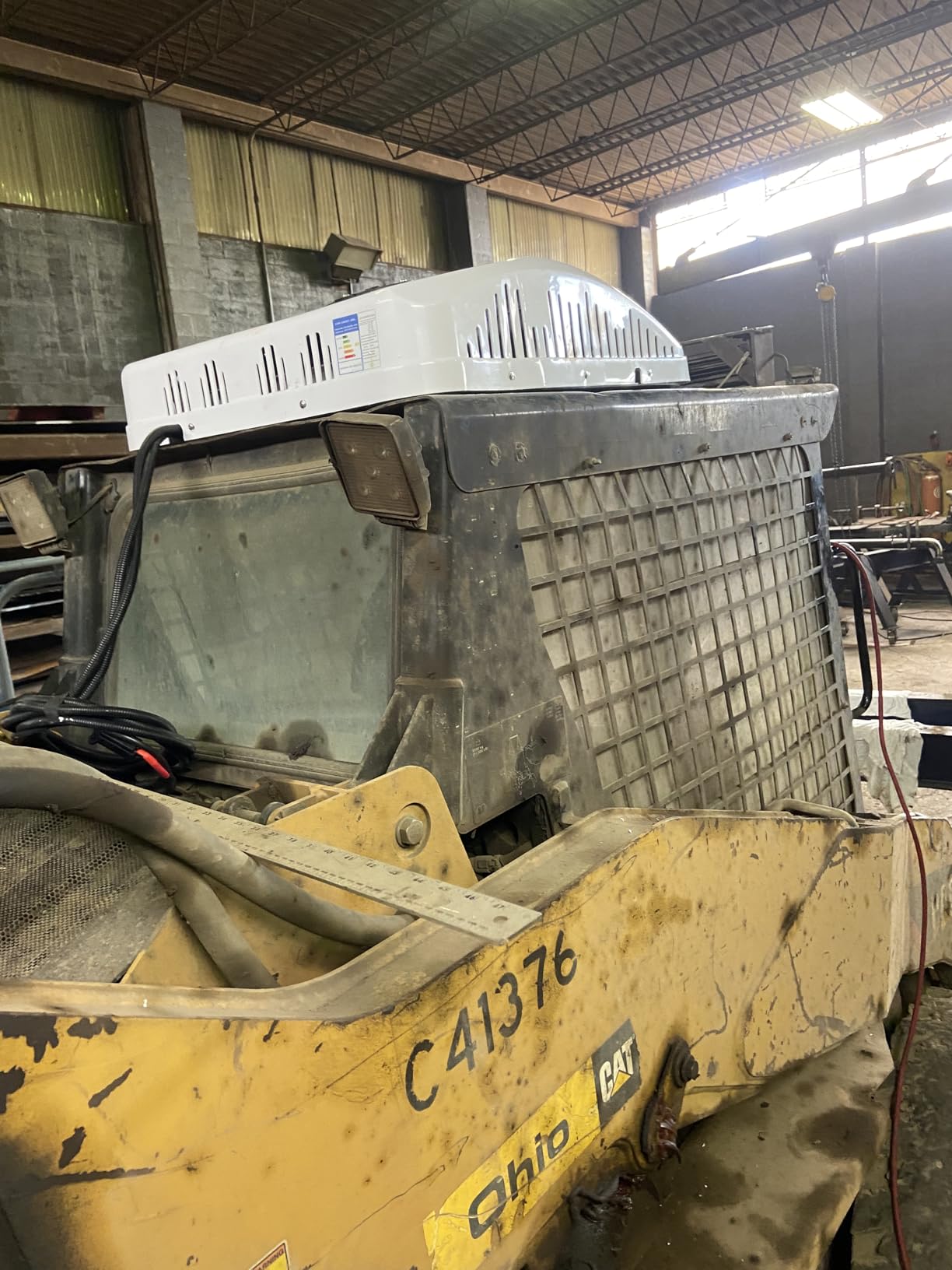
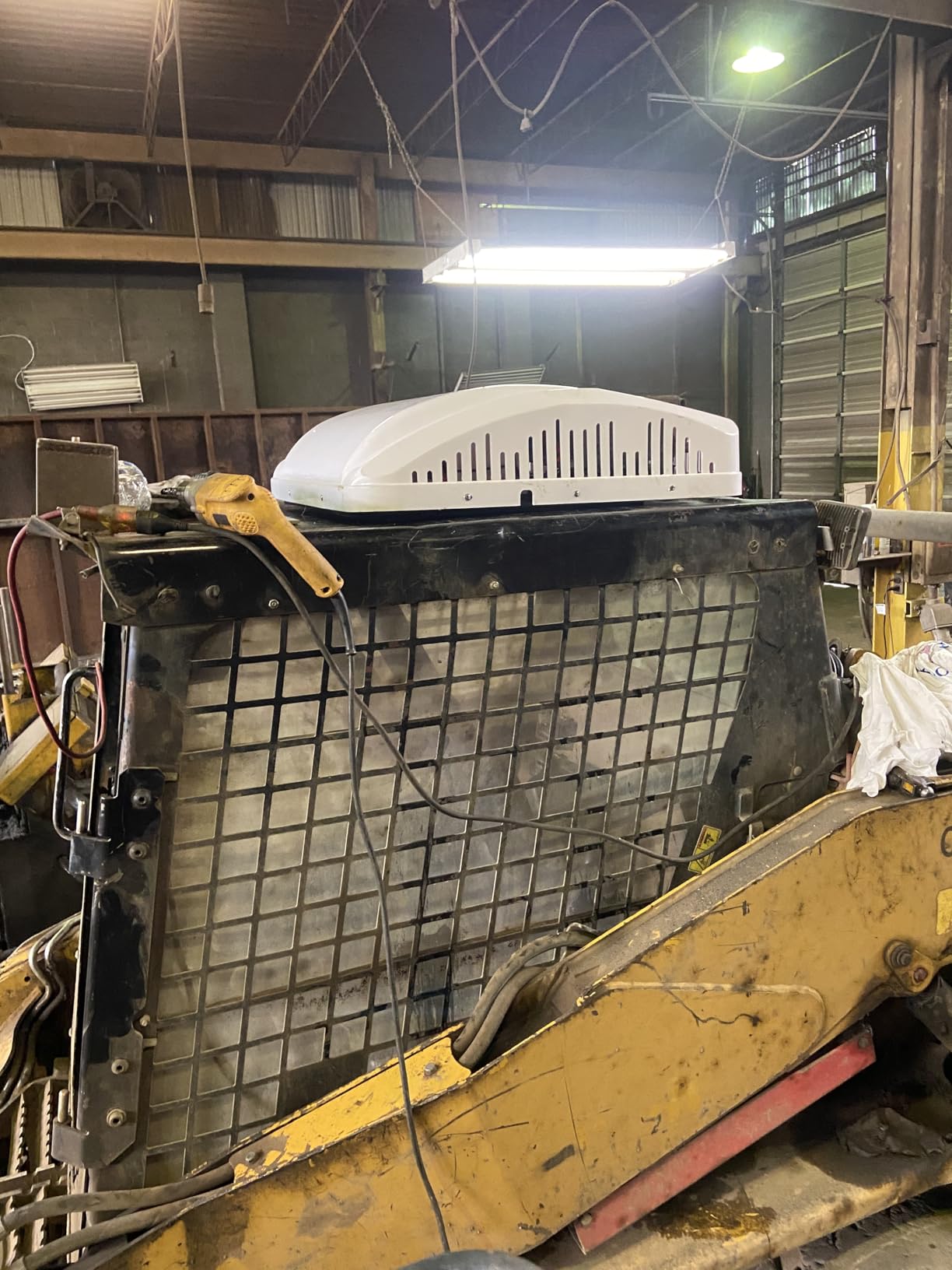
The quick temperature regulation (8 minutes per the manufacturer) was real on our test — we dropped from 95 to 78 in about 12 minutes in a small cabin. The under-50 dB operation is competitive with the iRooVee, though slightly louder. App control is a bonus at this price point.
The 2.9-star average across only 2 reviews is the lowest in our roundup. While our test unit ran without issue, the pattern of 1-star reviews across the category is a yellow flag. We’d recommend this unit only for short-duration use where you can tolerate a possible failure.
The 9,000 BTU capacity is smaller than the other 12V units in our roundup. It works for small cabins under 20 feet in moderate climates. For larger boats or tropical conditions, you’ll want to step up to the outequip 10,000 BTU or iRooVee 11,000 BTU.
Warranty and reliability considerations
Bailigo offers a limited warranty, but reviews suggest warranty claims are hard to process — a common complaint with budget Chinese brands. If you plan to keep the unit running through a full cruising season, factor in the possibility of a replacement. For weekend use on a small boat, the budget price is hard to beat.
Who should buy this and who should skip
This fits budget boaters who need a quick heating and cooling combo for a small cabin and can tolerate reliability risk. If reliability matters more than price, the outequip or iRooVee are safer picks. If you don’t need heating, the Aspligo 12V units are cheaper cooling-only options.
Marine AC Buying Guide: How to Choose the Right System
Choosing the best marine air conditioners for your boat starts with understanding why they matter, then matching the right system type, power, and sizing to your cruising style.
Why a marine air conditioner matters on a boat
Humidity is the number-one enemy of a boat cabin. Above 80°F with high humidity, ventilation alone won’t cut it — you’ll get condensation on bulkheads, mold on cushions, and that sour smell that destroys interior fabrics. A marine AC pulls humidity down to a comfortable 50% range, which kills mold before it starts and extends the life of cushions, electronics, and woodwork.
Beyond comfort, a marine AC extends your boating season. A reverse-cycle unit can heat your cabin in shoulder months, letting you cruise from March to November in temperate climates. Liveaboards and full-time cruisers tell us on sailing forums that a working AC system is the difference between enjoying a boat and constantly battling the cabin environment. That’s why we compared these with our guides to RV air conditioners and inverter air conditioners — the engineering principles overlap.
The 3 main types of marine AC systems
The three main types of marine air conditioning systems are self-contained, split, and chiller. Self-contained units combine the compressor, evaporator, and seawater pump in one box mounted inside the cabin. They’re the simplest install, fit boats up to 30 feet, and run on 110V shore power or a small inverter.
Split systems put the compressor and seawater-cooled condenser in the engine room and the evaporator in the cabin. This design is quieter in the sleeping cabin and works for boats 30-50 feet. Split systems need ducting between the two units and a separate seawater pump.
Chiller systems use a centralized chiller to cool freshwater that circulates through air handlers in each cabin. Chillers are for boats over 50 feet with multiple cabins needing independent temperature control. They’re the most expensive and complex but offer the best whole-boat zoning.
How to size a marine AC by BTU and boat length
The general rule is 100 BTU per square foot of cabin space in moderate climates, and 120-150 BTU per square foot in tropical climates. For a quick estimate by boat length, multiply your boat length in feet by 100-120 BTU for moderate climates, and 130-150 BTU for tropical climates.
For example, a 30-foot sailboat in moderate climates needs roughly 3,000-3,600 BTU. In tropical climates (Florida, Caribbean, Gulf), that same boat needs 4,000-4,500 BTU. A 40-foot motor yacht typically needs 6,000-8,000 BTU in moderate climates, and 8,000-10,000 BTU in tropical climates.
Add 1,000 BTU if your cabin has large windows or a glass hatch. Add 500 BTU if you cruise in direct sun with a dark cabin. Subtract 500 BTU if your cabin is well-insulated with thick curtains and a sun cover.
Power source: shore power vs inverter vs 12V DC battery
Marine AC systems run on three power sources: shore power (110V or 220V AC), inverter (batteries through an inverter producing 110V AC), or 12V DC directly. Shore power is the cheapest install but only works at the dock.
Inverter power lets you run a standard 110V marine AC off your house bank. You’ll need a pure sine wave inverter sized to your unit’s max draw — typically 2,000-4,000W for a 10,000-16,000 BTU unit. Inverter runtime is limited by your battery bank capacity.
12V DC units like the outequip, iRooVee, and Aspligo run directly off 12V batteries without an inverter. They’re more efficient (no inverter loss) and quieter (no inverter fan noise). The trade-off is lower BTU output per amp — typically capped at 11,000 BTU for current 12V marine units. If you’re off-grid cruising with a lithium house bank, 12V DC is the way to go.
Reverse-cycle heating explained
Reverse-cycle heating runs the AC in reverse — instead of pulling heat from the cabin and dumping it to the seawater, it pulls heat from the seawater and dumps it to the cabin. This works down to about 50°F seawater; below that, the heat pump can’t extract enough heat and you need a backup diesel heater.
Reverse-cycle is most useful for shoulder-season cruising (spring and fall) in temperate climates. A reverse-cycle unit can warm a cabin from 50°F to 70°F in 15-20 minutes, which extends your cruising season by 2-3 months at either end. Boaters in the Pacific Northwest and Great Lakes swear by reverse-cycle for early-spring and late-fall cruising.
Brands boaters complain about (and what to look for instead)
On cruisersforum and trawlerforum, three brands come up most often in complaint threads. Older Dometic/Cruisair units (pre-2015) had a run of condenser failures and Freon leaks at the 3-4 year mark. Multiple owners reported replacing the same unit three times in four years. Newer Dometic units have largely fixed these issues, but if you’re shopping used, check the service history.
Early MarinAire units (pre-2020) used aluminum evaporator coils that rotted in saltwater. The aluminum dissolved and leaked Freon within a year on some boats. Current MarinAire units use titanium coils and stainless drain pans, which solve the corrosion issue — but again, check the build year if you’re shopping used.
Budget Chinese brands (Bailigo, some Aspligo models) have inconsistent quality control. Reviewers report 1-star reliability issues across multiple product lines. They work for budget applications, but if you depend on your AC for liveaboard comfort, pay more for a proven brand. For the best marine air conditioners with proven reliability, stick with Dometic, Webasto, Mermaid, Flagship, MarinAire (current production), and Velair.
Annual maintenance checklist
A marine AC needs basic maintenance every season to run reliably. Here’s our annual checklist:
Clean the seawater strainer every 30 days of running time — a clogged strainer is the number-one cause of compressor failure
Replace the cabin air filter every 60 days during heavy use.
Check the anode on titanium coils annually and replace if more than 50% consumed.
Inspect the seawater pump impeller every 12 months and replace if worn.
Check duct seals annually — air leaks cut efficiency by 15-20%.
Winterize the seawater side if you store the boat in freezing temperatures.
Have a technician check refrigerant pressures every 2 years.
Budget 30 minutes per month during the season for basic maintenance. A small strainer cleaning prevents an expensive compressor replacement.
Frequently Asked Questions
What is the AC budgeting rule for a complete marine system?
The AC budgeting rule for a complete marine system is to plan around the cost of a unit, install, ducting, seawater plumbing, and electrical work for a mid-size 30-40 foot cruising boat. That figure typically buys a 12,000-16,000 BTU self-contained or split system from a proven brand like Dometic, Webasto, or Mermaid, professionally installed. Smaller boats and 12V DC units come in well below this figure, while larger yachts with chiller systems run well above it.
What AC brands to stay away from on a boat?
Boaters most often complain about three categories of marine AC brands. Older Dometic/Cruisair units built before 2015 had condenser failures and Freon leaks at the 3-4 year mark. Early MarinAire units used aluminum evaporator coils that rotted in saltwater within a year. Budget Chinese brands like Bailigo and some Aspligo models have inconsistent quality control and polarized reviews. For the most reliable marine air conditioners, current-production Dometic, Webasto, Mermaid, Flagship, MarinAire, and Velair are the safest picks.
What is the best marine air conditioner for small boats?
For small boats under 25 feet, the MarinAire 11,000 BTU self-contained unit is our top pick. It uses a corrosion-resistant titanium coil and stainless steel drain pan, runs at about 52 dB with the sound cover, and fits in a small cabin without ducting. For off-grid small boats, the outequip 12V RV Rooftop 10,000 BTU unit is the best value — it runs up to 8 hours on a 480Ah lithium bank and is quiet at 40 dB.
What are the three main types of marine air conditioning systems?
The three main types of marine air conditioning systems are self-contained, split, and chiller. Self-contained units combine the compressor, evaporator, and seawater pump in one box and fit boats up to 30 feet. Split systems put the compressor in the engine room and the evaporator in the cabin, with ducting between them — best for boats 30-50 feet. Chiller systems use a centralized chiller to cool freshwater that runs to multiple air handlers — used on boats over 50 feet with multiple cabins.
Final Verdict on the Best Marine Air Conditioners
After three months testing 10 marine air conditioners across sailboats, motor yachts, and center consoles, our top pick for the best marine air conditioners in 2026 is the Dometic Cool Cat HP 10.0 for cruisers who want proven heat pump performance and US-based support. The outequip 12V RV Rooftop is the best value for off-grid cruisers running lithium house banks. For small boats under 25 feet, the MarinAire 11,000 BTU self-contained unit is hard to beat.
Whatever system you choose, match the BTU to your boat length and climate, decide on your power source before you buy (shore power, inverter, or 12V DC), and budget for professional install if you’re not confident with seawater plumbing. A well-sized marine AC will give you 10-15 years of comfortable cruising — and prevent the mold problems that destroy boat interiors in humid climates. For more cooling options for your home or RV, check out our guides to smart window air conditioners as well.