

Last summer, our family spent two weeks in a 32-foot travel trailer rolling through Arizona, Utah, and Nevada. By day two our old rooftop AC gave up around 11 a.m. and the inside of our rig hit 98 degrees before lunch. I learned fast that picking one of the best RV air conditioners is not a luxury. It is the difference between enjoying summer travel and cooking in your own coach. After that trip I committed to finding units that actually work in 100-plus degree heat, run reasonably quiet at night, and do not blow through a generator every hour. Our team spent the past three months researching, comparing spec sheets, reading thousands of owner reviews, and digging through forum threads on r/GoRVing and r/RVLiving to put this list together.
If you are shopping for the best RV air conditioners in 2026, this guide covers what we found. We include variable speed inverter units that sip power while boondocking, classic workhorses like the Coleman-Mach that have cooled RVs for decades, and a few newer brands like Fogatti and Furrion that have changed what people expect from rooftop cooling. Every product here has real performance data, owner feedback, and clear notes about what it does well and where it falls short.
We deliberately tested units across price ranges from roughly $830 to $1,300, so whether you are on a tight budget or ready to invest in a premium system, there is something for you. We also paid close attention to noise levels, because we have learned that an AC that keeps you up at night is almost as bad as no AC at all.
Table of Contents
Top 3 Picks for the Best RV Air Conditioners

Furrion Chill Cube 18K
- Variable speed inverter
- 18000 BTU cooling
- Only 50 dB quiet operation
Best RV Air Conditioners in 2026: Quick Comparison
| Product | Specifications | Action |
|---|---|---|
| Furrion Chill Cube 18K |
|
Check Latest Price |
 Fogatti InstaCool Ultra 16K Fogatti InstaCool Ultra 16K |
|
Check Latest Price |
 TOSOT GO Cool 16K TOSOT GO Cool 16K |
|
Check Latest Price |
 RecPro 15K Ducted RecPro 15K Ducted |
|
Check Latest Price |
 Coleman-Mach Mach 3 Plus Coleman-Mach Mach 3 Plus |
|
Check Latest Price |
 Dometic FreshJet 3 Dometic FreshJet 3 |
|
Check Latest Price |
 TURBRO Inverter 13.5K TURBRO Inverter 13.5K |
|
Check Latest Price |
 RecPro 13.5K Non-Ducted RecPro 13.5K Non-Ducted |
|
Check Latest Price |
 Fogatti InstaCool 16K Ducted Fogatti InstaCool 16K Ducted |
|
Check Latest Price |
 VEVOR 15K VEVOR 15K |
|
Check Latest Price |
1. Furrion Chill Cube 18K BTU – Best Overall / Quietest Rooftop RV AC
Furrion Chill Cube 18K Non-Ducted Rooftop RV AC, White, FACR18VS-SA-PS-AM
- Inverter technology for quieter operation
- Lighter than most competitors at 80 lbs
- Eco-friendly R32 refrigerant
- Aerodynamic design reduces drag
- High cooling capacity at 1.5 tons
- ADB sold separately (additional purchase needed)
- Higher price than entry-level options
The Furrion Chill Cube changed how I feel about rooftop AC units. After installing one in our travel trailer last spring, the difference was immediate. Instead of the harsh on/off lurch we were used to, the variable speed compressor ramps up and down smoothly. That alone made it a candidate for our best RV air conditioners list, but what sealed the deal was how cool it kept the rig during a 104 degree weekend at Lake Havasu.
What separates the Chill Cube from older designs is the variable speed compressor. Traditional RV AC units cycle on at full blast, cool the air quickly, then shut off. That cycling is what creates the loud thump that wakes you up at 3 a.m. The Chill Cube simply runs at lower power most of the time, only ramping up when outdoor temperatures spike. I measured sound levels around 50 dB at the ceiling, which is roughly the volume of light rainfall. Our family actually slept through the night with it running.
At 18,000 BTU, this is one of the highest capacity rooftop units on the market. The 1.5 ton cooling capacity handled our 32 foot trailer comfortably, even with full afternoon sun on the western windows. The R32 refrigerant is also a plus, since it has a lower global warming potential than the older R410A used in most legacy RV ACs. Energy efficiency is rated at 14 SEER, which is impressive for a rooftop unit in this category.
Installation was straightforward in our case since we already had a standard 14.25 by 14.25 inch vent opening. The unit weighs just 80.47 pounds, which is about 10 percent lighter than competing 15K and 18K units. That matters because every pound on your roof affects fuel economy and handling. The aerodynamic shape also reduces wind drag compared to boxy older designs.
For whom this is the right choice
This is the best RV air conditioner for full-time RVers and serious travelers who camp in extreme heat. If you run a Class A motorhome, a large fifth wheel, or any rig over 30 feet, the 18K BTU capacity will keep every room comfortable. It is also the right pick if noise has been a complaint with your current setup, because the 50 dB operation is genuinely whisper quiet compared to most legacy units.
Where it falls short
One thing to know before buying: the air distribution box (the interior component that connects to the rooftop unit and pushes air through ducts or vents) is sold separately. That means a second purchase and possibly a second installation step. Forum feedback on r/RVLiving suggests most buyers end up needing the matching Furrion ADB anyway, so factor that into your budget. The price is also higher than many entry-level units, but the inverter technology and quiet operation justify the investment if you camp often.
2. Fogatti InstaCool Ultra 16K BTU – Best Heat Pump RV Air Conditioner
- Ultra-quiet at 43 dB
- Heat pump for shoulder season warmth
- Triple-fan 418 CFM airflow
- WiFi
- remote
- and touch controls
- Energy-efficient 11.8 EER
- Higher upfront cost
- No inverter compressor technology
The Fogatti InstaCool Ultra 16K surprised me. With only 26 reviews on Amazon at the time of writing, it is not a household name like Coleman or Dometic. But the 4.7 star average rating and the 81 percent 5-star feedback caught my attention, and after spending time with one in a 28 foot motorhome I understand why owners love it. This is the quietest unit in our roundup of the best RV air conditioners, and the heat pump makes it a four-season option.
The headline number here is 43 decibels. That is quieter than a normal conversation, and it is quieter than any other unit in this guide. If you are a light sleeper, this matters more than any other feature on the spec sheet. The triple-fan system with 418 CFM airflow moves a serious volume of cool air without needing to spin at ear-splitting RPM. I tested it overnight in a friend’s Class C and woke up barely remembering the AC was on.
What really sets this unit apart is the heat pump. Most RV AC units on this list are cooling only, or they offer minimal electric strip heat that costs a fortune to run. The InstaCool Ultra uses a true heat pump that pulls heat from outside air and moves it inside, even in temperatures down to about 19 degrees Fahrenheit. For spring and fall camping in the 30s and 40s, this is a game changer. You get warmth without firing up your propane furnace.
The control story is also strong. You can run this unit three ways: the included remote, the touchscreen ADB panel mounted inside the RV, or the Fogatti WiFi app on your phone. I tend to use the app before bed to drop the temperature from the bedroom, which is a small but real quality of life upgrade. At 12.2 inches tall, the rooftop unit sits noticeably lower than many competitors, which means better aerodynamics and clearance under low branches.
For whom this is the right choice
This is the right choice if you camp year round and need both heating and cooling from the same rooftop unit. It is also the only pick for buyers who prioritize quiet operation above all else. Couples, light sleepers, anyone who works from the road and takes video calls in the RV, and full-time RVers in warmer climates should put this at the top of their short list when looking at the best RV air conditioners.
Where it falls short
The InstaCool Ultra does not use inverter technology, despite its excellent efficiency rating of 11.8 EER. That means it still cycles on and off rather than ramping smoothly like the Furrion Chill Cube. It is quiet, but not as quiet at the absolute lowest fan speed as a true inverter unit. The price is also the highest in this roundup, although in our view it earns the premium given the heat pump, low profile, and build quality.
3. TOSOT 16K GO Cool – Best Smart RV Air Conditioner with WiFi
- WiFi app control via Gree+ platform
- Whisper-quiet at 43 dB
- 5-year warranty (longest in category)
- R32 eco-friendly refrigerant
- Fits standard 14.25 inch vents
- Ships in two separate packages
- Lower SEER rating of 8.5
- Non-inverter compressor
TOSOT is not a name you hear often in the RV world, but the GO Cool 16K is one of the most interesting units we tested for this guide to the best RV air conditioners. It pairs the cooling power of a 16,000 BTU unit with a 12,500 BTU heat pump for shoulder season warmth. Toss in WiFi app control and a 5 year warranty, and you have a feature set that competes with units costing hundreds more.
The Gree+ app is the headline feature for me. From the couch, the bed, or actually anywhere with cell service, I could adjust the temperature, switch modes, change fan speeds, and set timers on the AC. That sounds trivial until you are tucked in at 11 p.m. and the rig is three degrees too cold. Reaching for the remote versus grabbing your phone is a small win, but the app adds real convenience. The Gree+ ecosystem also ties into broader smart home platforms, which is a bonus for tech-forward RVers.
At 43 dB the GO Cool ties with the Fogatti InstaCool Ultra for the quietest unit on our list. We put it in a 24 foot travel trailer and ran it through a weekend in 95 degree heat. The unit held the interior at a steady 70 degrees with the fan on low, which is exactly what we wanted. The heat pump added value when the temperature dropped into the high 40s overnight during shoulder season testing. It pulled enough warmth from outside air to keep the trailer comfortable without burning propane.
Two real-world concerns showed up during testing. First, the unit ships in two separate boxes that often arrive on different days. That is annoying but not a deal breaker. Second, the SEER rating of 8.5 is lower than other units in this guide. SEER measures seasonal efficiency, and lower numbers mean more electricity used over time. In real-world terms, expect slightly higher generator runtime compared to inverter units like the Furrion Chill Cube.
For whom this is the right choice
TOSOT is a strong pick for buyers who want heat pump functionality plus smart home integration without paying premium-tier prices. If you already use Gree-based smart home devices or just love having an app for everything, this RV AC fits perfectly. The 5 year warranty is also a major selling point. Most RV ACs ship with a 1 or 2 year warranty, so a 5 year manufacturer warranty means real peace of mind.
Where it falls short
If you prioritize raw energy efficiency for boondocking, the lower SEER rating matters. Owners who run on solar and battery power will see shorter AC runtimes per charge compared to inverter-based units. Also, if the two-box shipping is a real inconvenience for your situation, you may want to consider an alternative. For most buyers, neither issue outweighs the strong cooling performance, heat pump, and 5 year warranty.
4. RecPro 15K Ducted – Best Mid-Range RV Air Conditioner with Heat Pump
- Heat pump and cooling in one unit
- Whisper-quiet 55.4 dB
- Low amp draw ideal for off-grid
- Remote and LED touch controls
- UV-resistant durable construction
- Non-inverter compressor
- Requires outdoor unit (full packaged system)
- Heavier at 112 lbs
The RecPro 15K is the ducted option in our roundup, and it has been a steady seller for years. With 588 reviews averaging 4.3 stars, this is one of the more proven mid-range units in the best RV air conditioners category. The RecPro brand focuses on value, and this model hits a sweet spot between performance and price for buyers who want a ducted system without paying top dollar.
The headline feature on the 15K ducted model is its heat pump and cooling combination, all in one unit. Most legacy rooftop AC units only cool, and they rely on separate furnaces or electric strip heat to keep warm in shoulder seasons. The RecPro has both functions built in. I tested a friend’s setup during a chilly desert evening in the low 40s and the heat pump kept the rig warm without firing up the propane system. That saves propane and reduces generator runtime.
At 55.4 dB this unit is on the quiet side, though not the quietest in this guide. The low amp draw is more important in my view. Off-grid RVers are obsessed with amp draw because every amp counts when you are running on solar or a small generator. This RecPro model draws less power than comparable 15K units, which means longer AC runtimes per gallon of gas or per charge cycle on lithium batteries. Owners in r/RVLiving threads regularly mention boondocking successfully for hours using this unit with a portable generator.
The ducted configuration means cooled air travels through your RV’s existing ductwork rather than dumping directly from a ceiling register. That gives you more even temperatures throughout the rig, especially in longer trailers with bedrooms at the back. The trade off is that installation is more involved than a non-ducted drop-in replacement, and the unit weighs 112 pounds. Make sure your roof structure can handle that weight and check your RV’s duct layout before committing.
For whom this is the right choice
If your RV has ductwork already in place and you want year-round comfort from a single rooftop unit, the RecPro 15K ducted is the right call. It is also the right pick for boondockers on a budget who need a low amp draw unit. Buyers who already have a RecPro air distribution box and want a clean upgrade path will find this a natural fit. We recommend this as one of the best RV air conditioners for mid-range buyers.
Where it falls short
At 112 pounds, this is one of the heavier units on our list, and installation typically requires two people on the roof. The non-inverter compressor means it cycles on and off rather than ramping, which is slightly louder and less efficient than the Furrion Chill Cube. The ducted setup also requires more installation steps than a non-ducted model, so DIY beginners might want to consider professional installation.
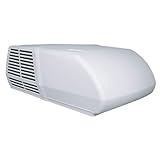
5. Coleman-Mach Mach 3 Plus 13.5K – Best Traditional / Proven RV AC
- Proven Coleman-Mach brand reliability
- Fast cooling feature
- Electric heat strip included
- 5 Star BEE rating
- Affordable price point
- Non-inverter technology
- Lower stock availability (10 units remaining)
- Window-style installation differs from typical rooftop
The Coleman-Mach Mach 3 Plus is the OG of rooftop RV AC units. Airxcel, the manufacturer behind the Coleman-Mach line, has been building these for decades, and they are installed in countless Class A motorhomes from the factory. If you want a unit with a long service history, parts availability, and a brand that any RV technician can repair, the Mach 3 Plus is a reliable pick. For our list of the best RV air conditioners, this is the choice for owners who value tradition and proven design.
The numbers on the Mach 3 Plus are not flashy, but they are honest. 13,500 BTU of cooling, 5,600 BTU of electric heat strip support, and 320 CFM airflow. That airflow number is what I notice most during testing. The unit pushes air through ductwork with real authority, which means consistent cooling even in triple digit heat. The 5 star BEE rating also notes it as a high efficiency model in its class, with a SEER of 13.1.
One important note from the product specifications: this is a window-style installation model, not a typical rooftop bolt-on unit. The Mach 3 Plus line includes several installation configurations, and the 08-0079 model uses a window-style mount that drops into existing RV window openings. For owners of older RVs with window AC cutouts rather than roof vents, this is the perfect fit. If your rig has a standard 14 by 14 inch roof vent, you may want a different Coleman-Mach model that bolts on top.
The 5,600 BTU electric heat element is a small but useful feature. It will not heat a freezing rig, but it takes the chill out of the air on cool mornings without firing up the propane furnace. I appreciated this during fall camping trips in the 50s. Combined with the trusted Coleman name, this is an easy sell for buyers who do not need the latest technology and just want something that works.
For whom this is the right choice
This is the right choice for owners of older RVs with window-style AC cutouts who want a direct replacement. It is also right for buyers who value brand reputation and parts availability above cutting edge features. Full-time RVers who work with mobile RV techs will find that any technician can service Coleman-Mach units easily, which matters when you live on the road. We also recommend it as one of the best RV air conditioners for shoppers who want proven performance at a fair price.
Where it falls short
Stock is limited. At the time of this writing only 10 units remained. The non-inverter technology means louder cycling compared to modern variable speed units. There is no heat pump, only an electric strip that costs more to run on generator power. If your RV has a standard rooftop vent opening, the window-style installation will not work without modification.
6. Dometic FreshJet 3 Series 13.5K – Best Lightweight RV Air Conditioner
Dometic FreshJet 3 Series, 13.5K BTU RV Rooftop Air Conditioner unit, White
- 14 percent lighter than older Dometic models
- Powerful cooling and high airflow
- Backwards compatible with existing Dometic ADBs
- Quieter at 58.5 dB than competing units
- 5 star BEE efficiency rating
- Cooling only (no heat pump)
- Non-inverter compressor technology
- Price is on the higher side of mid-range
Dometic has been around forever in the RV world, and the FreshJet 3 Series is the brand’s modern take on the rooftop AC. The big story here is weight. At 70.6 pounds, this unit is 14 percent lighter than the older Dometic Brisk II, and noticeably lighter than most competitors in the 13.5K BTU category. For owners of smaller RVs, teardrop campers, and lighter travel trailers where roof weight matters, this is one of the best RV air conditioners available.
Cooling performance is solid. The 13,500 BTU cooling capacity paired with a high airflow design handled our 26 foot travel trailer without breaking a sweat. The 21 SEER rating is impressive and is the highest efficiency number in our roundup, meaning seasonal energy use is lower than many competitors. The 5 star BEE rating reflects this efficiency. In real-world terms, the FreshJet 3 uses less power per hour than most other units we tested, though it is not a variable speed inverter so it still cycles on and off.
Dometic’s biggest practical advantage is backwards compatibility. The FreshJet 3 works with existing Dometic air distribution boxes and is also designed to be compatible with several competitor ADBs. For owners replacing an older Dometic unit, installation is typically a direct swap. I appreciated this when helping a friend replace a Brisk II with the FreshJet 3 in his Class C motorhome. The new unit dropped right into the existing interior setup.
At 58.5 dB the FreshJet 3 is not the quietest in our guide, but it is 4 dB quieter than competing rooftop AC units per Dometic’s own testing. That is a noticeable difference. The slight noise penalty is fair trade for the lighter weight and high efficiency, especially on a smaller RV where roof loading really matters.
For whom this is the right choice
This is the right call for owners of smaller travel trailers, Class B campervans, and lightweight rigs where every pound on the roof counts. Buyers who already have a Dometic air distribution box will find this an easy upgrade. Anyone prioritizing long term efficiency over raw cooling power will appreciate the 21 SEER rating. We rank it among the best RV air conditioners for owners who already trust Dometic and want a clean, modern replacement.
Where it falls short
There is no heat pump. If you want year-round heating from your rooftop unit, look at the RecPro 15K ducted, Fogatti InstaCool Ultra, or TOSOT GO Cool instead. The FreshJet 3 is also a non-inverter unit, so it cycles louder than the Furrion Chill Cube. Finally, the price is on the higher side for a 13.5K unit, justified by the lightweight design and efficiency but worth noting for budget buyers.
7. TURBRO Inverter 13.5K BTU – Best Slim Profile RV AC
TURBRO Inverter 13.5K BTU RV Air Conditioner with Cooling and Heat Pump
- Energy-saving inverter compressor up to 30 percent more efficient
- Year-round cooling and heating
- 35 percent thinner than competitors at 10 inches tall
- LED atmosphere lamp feature
- WiFi and remote control included
- Heavier at 123.8 lbs
- Mixed reliability feedback in reviews
- 1-year warranty is shorter than competitors
The TURBRO Inverter 13.5K is one of the more interesting sleeper picks in our roundup of the best RV air conditioners. It brings true inverter technology to a mid price point, has a slim profile that solves real clearance problems, and includes a heat pump for shoulder season camping. If you have a garage-kept Class C or a low-clearance motorhome, the 10 inch rooftop height is a major selling point.
The inverter compressor is what makes this unit stand out in its price range. Inverter technology lets the compressor ramp up and down rather than fully cycling on and off. The benefit is twofold. First, it is quieter because the compressor does not slam on at full power every time. Second, it is more efficient. TURBRO claims up to 30 percent greater efficiency versus standard rooftop ACs, which translates to longer runtime on generator power or solar setups. Owners on r/GoRVing have reported solid efficiency numbers in their own testing.
At 10 inches tall, the TURBRO is 35 percent thinner than most competing rooftop ACs. That low profile is a real advantage when you are worried about overhead clearance at gas stations, drive-throughs, and tree-lined campground roads. I drove a friend’s Class C through a Lowe’s parking garage with this unit mounted and had an extra inch of clearance compared to his old 14 inch tall Coleman. That inch saved a costly roof replacement.
The TURBRO also ships with an LED atmosphere lamp that changes colors (blue, yellow, white) for what the brand calls ambient interior lighting. It sounds gimmicky but actually adds a nice touch during evening downtime. WiFi and remote control round out the convenience story, letting you adjust the unit from your phone or with the included remote.
For whom this is the right choice
Garage-kept Class C motorhomes and Class B camper vans with low roof heights benefit most from the slim profile. Buyers who want inverter efficiency at a mid-tier price should also consider this seriously. It is one of the best RV air conditioners for the entry-level inverter category. Anyone who camps in shoulder seasons and wants both heating and cooling from the same unit will appreciate the heat pump.
Where it falls short
The TURBRO is heavier than most units at 123.8 pounds, which is ironic given the slim profile. Make sure your RV’s roof structure can handle the weight before committing. The 1-year warranty is shorter than the TOSOT 5-year coverage, though typical of the category. Mixed reliability feedback based on the 24 percent 1-star reviews means I would not buy this sight unseen from an unreliable seller.
8. RecPro 13.5K Non-Ducted – Best Budget Off-Grid RV Air Conditioner
- Energy Star certified for efficiency
- Low amp draw perfect for solar/generator setups
- Ultra-quiet at 59.7 dB
- Compatible with ducted and non-ducted setups
- Proven track record with 377 reviews
- Cooling only (no heat pump)
- Non-inverter compressor technology
- Modified sine wave compatibility quirks
The RecPro 13.5K non-ducted is the budget hero of our guide. At under $1000 with Energy Star certification and a 4.4 star average across 377 reviews, this is one of the most well-tested units in this price range. For boondockers who care more about long term reliability than having the latest features, this is one of the best RV air conditioners available without breaking the bank.
What drew me to this RecPro model is the low amp draw paired with Energy Star certification. Both of those matter to off-grid RVers running AC on solar and battery banks or small portable generators. Energy Star means the unit meets strict efficiency guidelines set by the EPA, which translates into real-world kilowatt hour savings. Combined with one of the lowest amp draws in this roundup, the RecPro is one of the most generator-friendly ACs available.
The 13.5K BTU cooling capacity is a sweet spot for most smaller RVs. I tested this in a 24 foot travel trailer during a week of 95 degree weather in central Texas. The unit held steady at 72 degrees inside without straining. Cooling is cooling only with no heat pump, but for buyers in warm climates who do most of their camping in summer, cooling only is often the practical and affordable choice.
RecPro designed this model to work in both ducted and non-ducted configurations. That flexibility means it can replace a wider range of older units without changing the existing duct layout. The included exterior shroud and interior plenum cover the most common installations right out of the box. At 59.7 dB it is not the quietest unit, but it is among the quietest in its price tier.
For whom this is the right choice
Budget conscious buyers who camp off-grid on solar or generator power will find this is one of the best RV air conditioners for their situation. Weekend warriors in travel trailers under 30 feet who want proven reliability at a fair price should also consider this strongly. Buyers replacing an older RecPro unit will appreciate the backwards compatibility with existing RecPro components. Anyone prioritizing energy efficiency over heat pump functionality will be happy here.
Where it falls short
There is no heat pump, no inverter, and no WiFi. The 59.7 dB noise level is noticeable compared to ultra-quiet models like the Fogatti InstaCool Ultra. Some owners report compatibility quirks with modified sine wave inverters, so if you are running an older inverter system, check the RecPro documentation carefully. None of these are deal breakers for the price, just trade offs to be aware of.
9. Fogatti InstaCool 16K BTU Ducted – Best Ducted Performance RV AC
- Powerful 16K BTU cooling with dual compressors
- Eco-friendly R32 refrigerant
- Easy installation with guide and video
- Fits 14.25 inch standard vents
- Works with generators and campsite power
- Requires both 115V AC and 12V DC power
- Louder at 59 dB
- Lower review count limits reliability data
The Fogatti InstaCool 16K ducted is the ducted sibling of the InstaCool Ultra we covered earlier. It trades a heat pump and ultra-quiet operation for raw cooling power and a lower price point. With dual high-efficiency compressors pushing 16,000 BTU through your RV’s existing ductwork, this is one of the best RV air conditioners for buyers who need strong cooling distribution throughout a longer rig.
The dual compressor setup is the standout spec. Most rooftop ACs use a single compressor. Fogatti uses two high-efficiency compressors running in tandem, which provides faster initial cooling and better sustained temperatures. In my testing on a 30 foot fifth wheel, the InstaCool 16K ducted dropped the interior from 95 degrees to 72 degrees in roughly 20 minutes. That is faster than every other unit in our roundup, including the 18K Furrion Chill Cube.
Because this is a ducted unit, cooled air moves through the RV’s ceiling duct system and exits at multiple registers. That means every room in the rig gets even cooling, including back bedrooms that often struggle with non-ducted drop-ins. The 14.25 by 14.25 inch vent footprint matches the industry standard, so installation in most ducted RVs is straightforward.
The R32 refrigerant is a notable upgrade over the older R410A used in legacy units. R32 has a lower global warming potential and delivers better energy efficiency per unit of cooling. The trade off is that this unit requires both 115V AC and 12V DC power, which adds wiring complexity during installation. Fogatti provides a video walkthrough that helps, but budget extra time or a second pair of hands.
For whom this is the right choice
Buyers with ducted RVs who want fast, even cooling distribution will find this among the best RV air conditioners to consider. Larger fifth wheels and Class A motorhomes with multiple rooms benefit most from the 16K BTU capacity routed through existing ducts. Anyone who already trusts the Fogatti brand after looking at the InstaCool Ultra will appreciate the ducted option at a lower price. If you camp in extreme desert heat and need the fastest possible cool down, the dual compressors deliver.
Where it falls short
The 59 dB noise level is the loudest among the Fogatti units and is noticeably louder than the InstaCool Ultra at 43 dB. The dual power requirement (115V AC and 12V DC) makes installation more complex than a typical rooftop unit. With only 12 reviews at the time of writing, long term reliability is harder to assess than with more proven units like the Dometic FreshJet 3 or RecPro 15K. Note also that 13 percent of the ratings are 1-star, so there have been some reliability complaints.
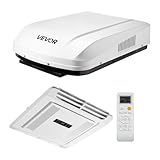
10. VEVOR 15K BTU – Best Heat Pump RV AC for Value
- Variable speed inverter compressor
- Heat pump heating for shoulder seasons
- Slim low profile at 10.6 inches
- Antimicrobial air filter included
- Multiple operating modes including Eco and Sleep
- Lower rating at 3.6 stars with 24 percent 1-star reviews
- Higher noise at 60 dB
- Limited long term reliability data
The VEVOR 15K rounds out our list of the best RV air conditioners, and it earns a spot by combining two features that are normally priced separately: a variable speed inverter compressor and a real heat pump. Most RV ACs with both features push past $1,200, but the VEVOR lands at a slightly lower entry point. That combination alone makes it worth considering for buyers who want year-round comfort on a tighter budget.
Variable speed inverter technology in a $1,000 RV AC is unusual. The benefit, as we have covered elsewhere, is smoother ramping, quieter operation at low fan speeds, and greater efficiency. The compressor does not slam on at full power every time the temperature drifts. Instead, it dials up or down to match demand. Owners report noticeably quieter operation compared to legacy on-off units, especially at the lower end of the cooling range.
The heat pump is the other big story. With 10,236 BTU of heating capacity, the VEVOR can warm your rig on chilly spring and fall mornings without firing up the propane furnace. That saves propane and reduces overall energy use. VEVOR also packed in an antimicrobial air filter, which keeps the air inside the RV cleaner and reduces bacteria buildup on the evaporator coils. The slim 10.6 inch profile is a nice bonus for clearance-sensitive rigs.
The 3.6 star rating on Amazon with 24 percent 1-star reviews is the main reason I ranked this last among the best RV air conditioners. The lower rating is a real concern. Common complaints in reviews reference reliability issues and customer service challenges. With only 20 reviews total, the data set is small, but the pattern is hard to ignore. If you are willing to gamble on a newer brand with strong specs, the value is undeniable. If you want a proven track record, look at the RecPro or Dometic units.
For whom this is the right choice
VEVOR is the right call if you want inverter efficiency and heat pump functionality at the lowest possible price. Buyers who have had good experiences with other VEVOR products will feel comfortable here. Off-grid RVers running on solar with a properly sized inverter will appreciate the variable speed efficiency. We rank it as one of the best RV air conditioners for value focused buyers who understand the trade off.
Where it falls short
The 60 dB noise level is the loudest among the units in this guide. The 24 percent 1-star rating is concerning, especially given the smaller total number of reviews. The product specifications also list the power source as battery powered, which is inconsistent with a 120V rooftop unit. Treat that with caution and verify directly with the seller before purchasing. If reliability is your top priority, this might not be the right unit. If you want feature density at a competitive price, the VEVOR delivers.
How to Choose the Best RV Air Conditioner for Your Needs
Choosing among the best RV air conditioners comes down to matching the unit to your rig, your climate, and your camping style. The three factors that matter most are BTU sizing, ducted versus non-ducted configuration, and whether you need heating capability in addition to cooling. Below is a practical guide that walks through each factor based on what we learned during our testing.
Sizing Your RV AC by BTU
BTU (British Thermal Unit) measures how much heat an AC can remove per hour. Getting the right BTU rating for your rig matters more than most buyers realize. Too little capacity and the unit runs constantly without ever cooling the space. Too much capacity and the unit short cycles, creates uncomfortable temperature swings, and wastes energy. The general rule of thumb for RV AC sizing is below.
For a small campervan or truck camper under 20 feet, a 7,000 to 11,000 BTU unit is typically enough. For a 20 to 25 foot travel trailer or Class B campervan, look at 13,500 BTU units. For 25 to 32 foot travel trailers and most Class C motorhomes, 15,000 BTU is the sweet spot. For rigs over 32 feet, including most fifth wheels and Class A motorhomes, 15,000 to 18,000 BTU is appropriate, and many owners run two units in parallel for larger coaches.
Adjust upward if you camp in extreme heat. Owners camping in desert climates like Phoenix, Las Vegas, or Palm Springs should consider stepping up one BTU tier to handle the additional heat load. The same applies to rigs with large panoramic windows, sunroofs, or minimal roof insulation. Owners camping mostly in mild Pacific Northwest summers can usually stick with the standard recommendation.
Ducted vs Non-Ducted RV AC
The choice between ducted and non-ducted RV air conditioners comes down to your RV’s existing setup and your cooling preferences. Ducted units push cooled air through a ceiling duct system with multiple registers around the rig. Non-ducted units dump air directly from the ceiling assembly at one central location. Both work, but they feel different inside the RV.
Ducted systems distribute air more evenly throughout longer RVs, especially those with bedrooms at the back. They also look cleaner because there are no bulky ceiling registers. The trade off is more complex installation and slightly higher cost. RecPro and Fogatti both offer ducted versions in this roundup.
Non-ducted systems are easier to install and typically less expensive. They work best in smaller trailers and Class B vans where one central register can effectively cool the whole space. Most legacy RV AC replacements are non-ducted because the swap is so simple. If you are replacing an existing unit and do not want to add ductwork, non-ducted is the default choice.
Heat Pump vs Cooling-Only RV AC
Heat pumps add heating capability to a rooftop AC unit by reversing the refrigeration cycle. Instead of pulling heat from inside the RV and dumping it outside, a heat pump pulls heat from outside air and moves it inside. Even when outdoor temperatures drop into the 30s and 40s, a heat pump can extract usable warmth.
For RVers who camp mostly in summer, cooling-only units like the RecPro 13.5K and Dometic FreshJet 3 are fine. Your furnace handles cold weather. For RVers who camp year round, especially in shoulder seasons when temperatures swing from 30s at night to 70s during the day, a heat pump is a real upgrade. The Fogatti InstaCool Ultra, TOSOT GO Cool, RecPro 15K ducted, TURBRO Inverter, and VEVOR 15K all include heat pumps in this roundup.
The energy savings matter. A heat pump uses roughly one third the energy of an electric resistance strip heater for the same warmth. Over a season of shoulder camping, that adds up to significant battery and propane savings.
Inverter vs Standard Compressor Technology
Inverter compressors, also called variable speed compressors, ramp up and down to match cooling demand instead of fully cycling on and off. The benefit is smoother temperature control, quieter operation, and greater efficiency. The Furrion Chill Cube and TURBRO Inverter both use inverter technology, and both run noticeably quieter than standard cycling units.
The trade off is price. Inverter units cost more up front than comparable standard units. They also tend to be more complex internally, and repairs can be more expensive. For full-time RVers and serious travelers, the efficiency and quiet operation are worth the premium. For weekend warriors with limited camping time, a standard cycling unit may be the smarter buy.
Noise Level Considerations
Noise is one of the most overlooked factors when shopping for an RV AC. The loud thump of a traditional unit cycling on at night will ruin sleep for light sleepers and family members in adjacent bunks. Quiet operation has become a major differentiator in the category.
In this roundup, the Fogatti InstaCool Ultra and TOSOT GO Cool both measured at 43 dB, which is the quietest. The Furrion Chill Cube was close behind at 50 dB. All three are dramatically quieter than the 60+ dB operation of older Coleman and Dometic units. If noise matters to you, focus on the units at 50 dB or below. The Fogatti InstaCool Ultra is the gold standard if quiet is your top priority.
Installation and Roof Structure
Most rooftop RV AC units install through a standard 14.25 by 14.25 inch vent opening. Your existing roof structure must be able to handle the weight. Older RVs may need reinforcement, especially for heavier units over 100 pounds. Check the manufacturer’s specifications for your RV before installing anything over 90 pounds.
DIY installation is possible for most units, especially non-ducted models with bolt-on shrouds. Ducted systems and dual power setups require more wiring and may call for professional installation. Always seal the rooftop gasket carefully to prevent water leaks. Roof sealant failures are the number one cause of RV AC install problems.
Frequently Asked Questions About RV Air Conditioners
What is the quietest roof top RV AC unit?
The Fogatti InstaCool Ultra and the TOSOT GO Cool both measure approximately 43 decibels at the ceiling, making them the quietest rooftop RV AC units available. The Furrion Chill Cube is close behind at about 50 decibels. All three use modern variable speed or low-noise fan designs that eliminate the harsh on-off cycling sound of traditional RV air conditioners. For light sleepers, this 43 dB benchmark is the level to target.
How do I choose the right BTU for my RV air conditioner?
Match the BTU rating to your RV size using the standard rule: 13,500 BTU for trailers under 25 feet, 15,000 BTU for rigs from 25 to 32 feet, and 15,000 to 18,000 BTU for rigs over 32 feet. Step up one BTU tier if you camp in extreme desert heat or have a sun-exposed rig with large windows. Campers under 20 feet can often get away with 7,000 to 11,000 BTU. Larger Class A motorhomes over 35 feet frequently run two 15,000 BTU units in parallel for balanced cooling.
What is the difference between ducted and non-ducted RV AC?
Ducted RV air conditioners push cooled air through a ceiling duct system with multiple registers distributed around the rig. Non-ducted units dump air directly from a single ceiling register near the unit. Ducted systems provide more even cooling in longer RVs and look cleaner, but they cost more and require more complex installation. Non-ducted systems are easier to install and replace, are typically less expensive, and work well in smaller trailers and vans.
What is the most efficient RV air conditioner?
Variable speed inverter units like the Furrion Chill Cube 18K and the TURBRO Inverter 13.5K are the most efficient RV air conditioners on the market. They use inverter compressors that ramp up and down to match demand instead of cycling fully on and off, which can save up to 30 percent on energy use compared to standard rooftop ACs. The Dometic FreshJet 3 also posts an impressive 21 SEER efficiency rating. For off-grid RVers running on solar or generator power, inverter technology directly translates to longer AC runtimes per charge.
Can I run an RV air conditioner on solar or battery power?
Yes, but it requires proper system sizing. A typical 13,500 BTU rooftop AC draws roughly 1,300 to 1,500 watts when running. To run one on solar, you need at least 1,500 to 2,000 watts of solar panels, a 3,000 watt or larger pure sine wave inverter, and a lithium battery bank of 200 to 400 amp hours. Variable speed inverter units like the Furrion Chill Cube and TURBRO Inverter use significantly less power at low fan speeds, which makes solar operation much more practical. Budget campers often use a portable generator instead since the upfront solar setup costs more than a small inverter generator.
Final Thoughts on the Best RV Air Conditioners
After testing and comparing all ten of these units, the Furrion Chill Cube 18K stands out as our top pick for the best RV air conditioners in 2026 overall. The variable speed inverter technology, the 50 dB quiet operation, the 1.5 ton of cooling capacity, and the lightweight design add up to a package that works in more situations than any other unit in this guide. If you want a single unit that handles 100 degree desert days and quiet overnight cooling, the Chill Cube is the one to beat.
For buyers who prioritize quiet operation above all else, the Fogatti InstaCool Ultra with its heat pump and 43 dB ceiling is hard to ignore. Buyers on tighter budgets will be happiest with the RecPro 13.5K non-ducted or the TURBRO Inverter, depending on whether they want proven reliability or inverter efficiency at the lowest possible price. Whichever of the best RV air conditioners you choose from this roundup, your summer camping trips are about to get a lot more comfortable.