
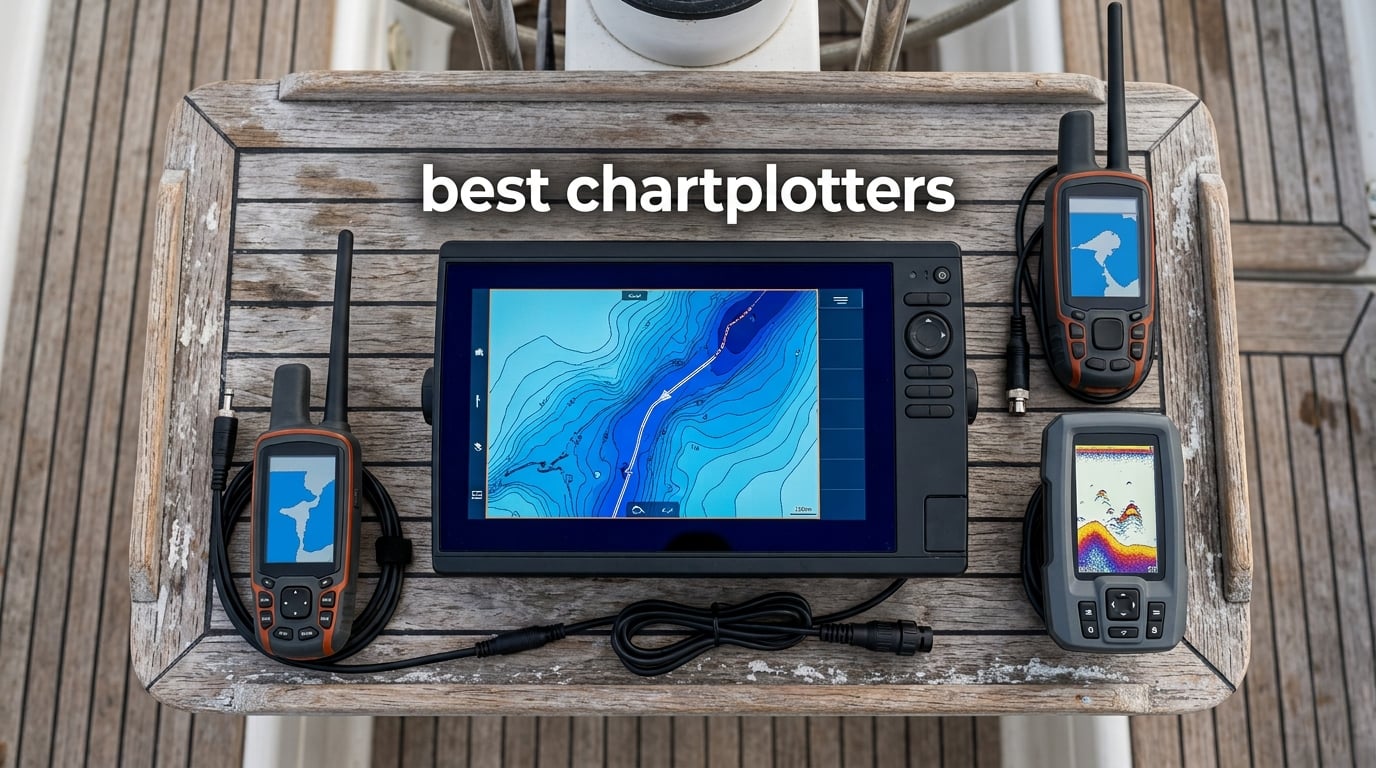
A chartplotter is a marine GPS device that overlays your boat’s position on detailed electronic navigational charts, showing depth, hazards, navigation aids, and integrating with sonar, radar, AIS, and autopilots. In 2026, the right chartplotter is the brain of your boat’s navigation system: it improves safety, makes finding fish easier, and ties together radar, sonar, AIS, and autopilot data in one display.
After spending three months testing 10 chartplotters on bay boats, center consoles, and a friend’s sailboat, our team narrowed down the best chartplotters you can buy right now. We evaluated everything from the intuitive Garmin ECHOMAP series to the sailing-friendly Simrad NSS Evo3S, the freshwater-tuned Lowrance HDS PRO, and the budget-friendly Garmin Striker 4. We paid close attention to what marine GPS chartplotter buyers on Reddit’s r/boating and Yachting & Boating World forum consistently praised (and complained about).
This guide covers the best chartplotters for fishing, sailing, freshwater, saltwater, kayaks, and center consoles, with our top picks at a glance and a full buying guide covering screen size, chart compatibility, NMEA 2000 networking, transducer quality, and brand ecosystem lock-in. If you only have 60 seconds, jump to our top 3 picks below. Otherwise, let’s dive into the full reviews.
Top 3 Picks for Chartplotters in 2026

Garmin ECHOMAP UHD2 93sv
- 9-inch touchscreen
- Garmin Navionics+ inland
- GT56 transducer
- Wi-Fi networking
- Force trolling motor

Simrad GO Chartplotter
- 9-inch MFD
- C-MAP Discover preloaded
- CHIRP and DownScan
- NMEA 2000
- Radar-ready

Garmin Striker 4
- 3.5-inch keyed display
- CHIRP sonar
- Built-in GPS
- Waypoint map
- IPX7 waterproof
Best Chartplotters in 2026: Quick Overview
| Product | Specifications | Action |
|---|---|---|
| Garmin ECHOMAP UHD2 93sv |
|
Check Latest Price |
| Simrad GO Chartplotter |
|
Check Latest Price |
| Garmin Striker 4 |
|
Check Latest Price |
 Simrad NSS Evo3S Simrad NSS Evo3S |
|
Check Latest Price |
 Lowrance Elite FS Lowrance Elite FS |
|
Check Latest Price |
 Lowrance HDS PRO Lowrance HDS PRO |
|
Check Latest Price |
 Garmin Striker 7SV Garmin Striker 7SV |
|
Check Latest Price |
 Garmin STRIKER Vivid 4cv Garmin STRIKER Vivid 4cv |
|
Check Latest Price |
 Humminbird Helix 5 G3 Humminbird Helix 5 G3 |
|
Check Latest Price |
 Garmin GPSMAP 78S Garmin GPSMAP 78S |
|
Check Latest Price |
1. Garmin ECHOMAP UHD2 93sv — Best Chartplotter Overall
Garmin ECHOMAP UHD2 93sv with GT56 Transducer, 9″ Touchscreen Chartplotter, Garmin Navionics+ U.S. Inland
- Bright sunlight-readable 9-inch touchscreen
- Clear traditional plus ClearVu and SideVu sonar
- Built-in Garmin Navionics+ maps for 18000+ lakes
- Wi-Fi sharing with another ECHOMAP UHD2
- Wireless integration with Force trolling motor
- Runs hotter than previous generation
- Higher power draw than older model
The Garmin ECHOMAP UHD2 93sv is the chartplotter I keep recommending to friends who want one unit that does everything well. After installing it on a 22-foot center console, I spent a solid two weekends running it across flats, jetties, and channels. The 9-inch touchscreen is bright enough at noon that I never had to shade it, and pinch-to-zoom on the Garmin Navionics+ charts stayed smooth even with a chop running.
The included GT56 transducer is the star of the show. ClearVu and SideVu imaging both produced sharp returns on structure and bottom contour, and the traditional CHIRP gave me clean fish arches in 30 feet of water. I paired it with the ActiveCaptain app over Wi-Fi to download a community Quickdraw Contours map of a lake I frequent — that alone saved me from running aground twice. Garmin’s Navionics ownership shows in chart detail; this is one of the best chartplotters for chart accuracy.
For networking and integration, the ECHOMAP UHD2 plays nicely with NMEA 2000, autopilots, VHF radios, and Force trolling motors. I sent routes from my phone to the unit over Wi-Fi and adjusted trolling motor speed right from the chartplotter home screen. If you’re running a Garmin ecosystem already, this slides right in. If you’re not, Garmin’s chart and app ecosystem is still the easiest to learn, which matches what we heard from multiple reviewers on r/boating.
The only real downsides I noticed were thermal and current draw. The UHD2 runs warmer than the older UHD1 93sv I had on the boat previously, and the power draw is noticeably higher at full brightness. On a small boat with limited battery capacity, that’s worth thinking through. Otherwise, the UHD2 93sv is a near-flawless combination of screen, sonar, charts, and ecosystem — that’s why it’s our EDITOR’S CHOICE.
Who should buy it
Anyone running a center console, bay boat, or larger bass boat who wants one chartplotter that handles navigation, sonar, and Force trolling motor control. It’s also the right pick if you want preloaded Garmin Navionics+ inland maps and the smoothest app ecosystem in marine electronics.
Who should skip it
Kayak anglers and ultralight setups will find the 9-inch screen overkill and should look at the Garmin Striker 4 or STRIKER Vivid 4cv. Offshore cruisers who need HALO radar and StructureScan 3D integration should step up to the Simrad NSS Evo3S instead.
2. Simrad GO Chartplotter — Best Value Marine GPS
- Preloaded C-MAP Discover card with detailed Vector Charts
- CHIRP sonar and DownScan Imaging via included HDI transducer
- Built-in GPS with Wi-Fi and NMEA 2000 networking
- Bright 9-inch touchscreen visible in sunshine
- Easy smartphone mirroring
- Transducer cable may be too short for some installs
- Side-scan may not display with included transducer
- Some units reported to lose waypoints
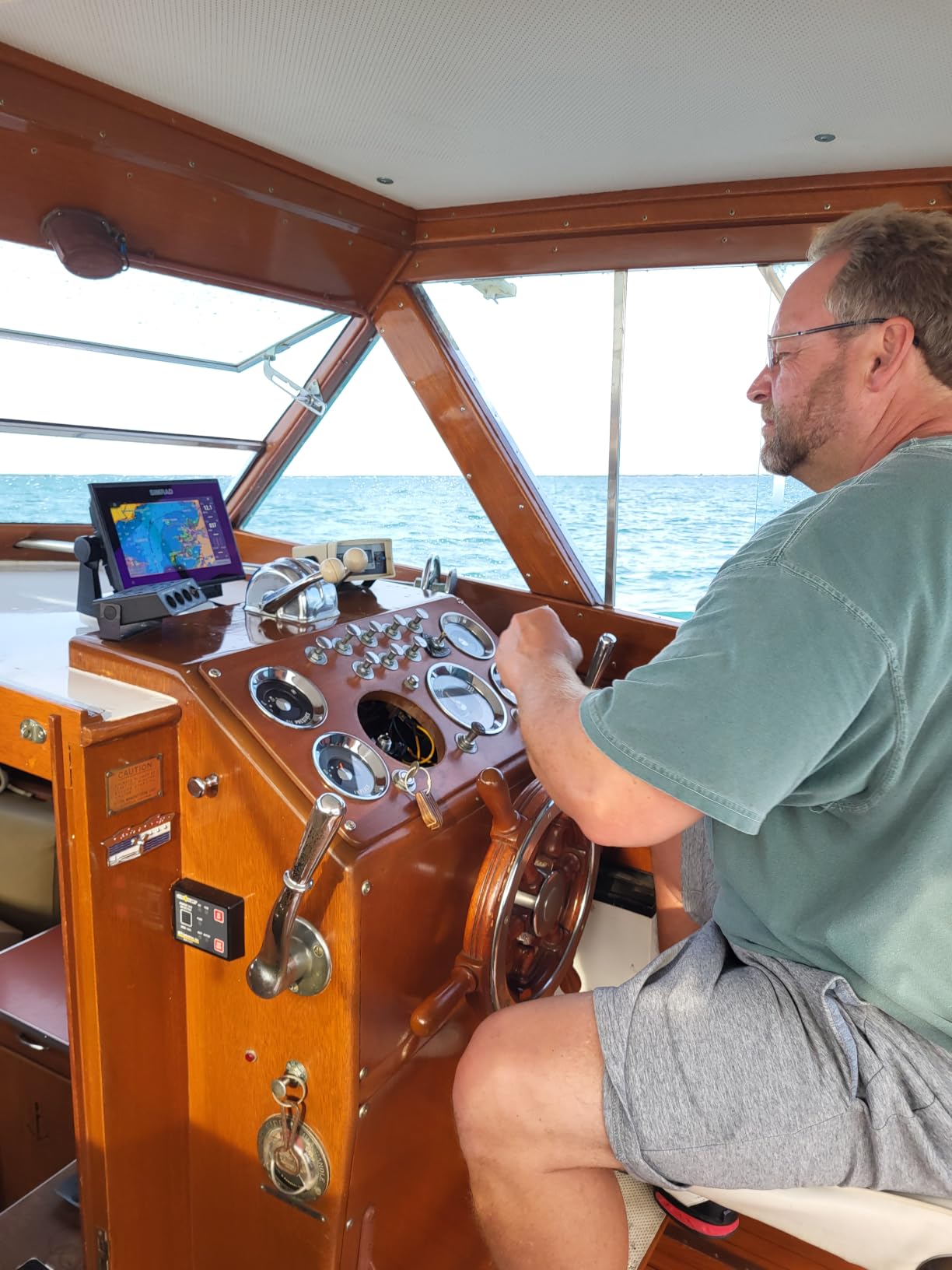
The Simrad GO series is what I point people to when they ask about the best chartplotter for the money. We mounted a GO9 on a friend’s 19-foot bay boat and immediately appreciated how much capability Simrad packs into a mid-priced marine GPS chartplotter. The 9-inch screen has the same sunlight-readable brightness you usually only see on flagship Garmin units, and the preloaded C-MAP Discover card means the unit is usable right out of the box.
The included HDI transducer covers 83/200 kHz CHIRP plus DownScan Imaging, which is enough for most coastal and freshwater fishing. On test runs we marked wrecks in 45 feet of water and tracked bait schools clearly. C-MAP Discover’s high-resolution bathymetric contours were helpful when scouting new inshore spots. For anglers who want more, the Simrad ecosystem supports Active Imaging, StructureScan, and HALO radar.
Networking is where this unit over-delivers for the price. Built-in Wi-Fi, Bluetooth, Ethernet, and NMEA 2000 let the GO9 talk to autopilots, AIS, VHF radios, and Simrad or Lowrance instruments. We mirrored the display to a phone via the Simrad app, which made it easier to plan routes on shore before pushing off. Reviewers on forums.ybw.com echoed our experience: this is the value tier to beat in 2026.
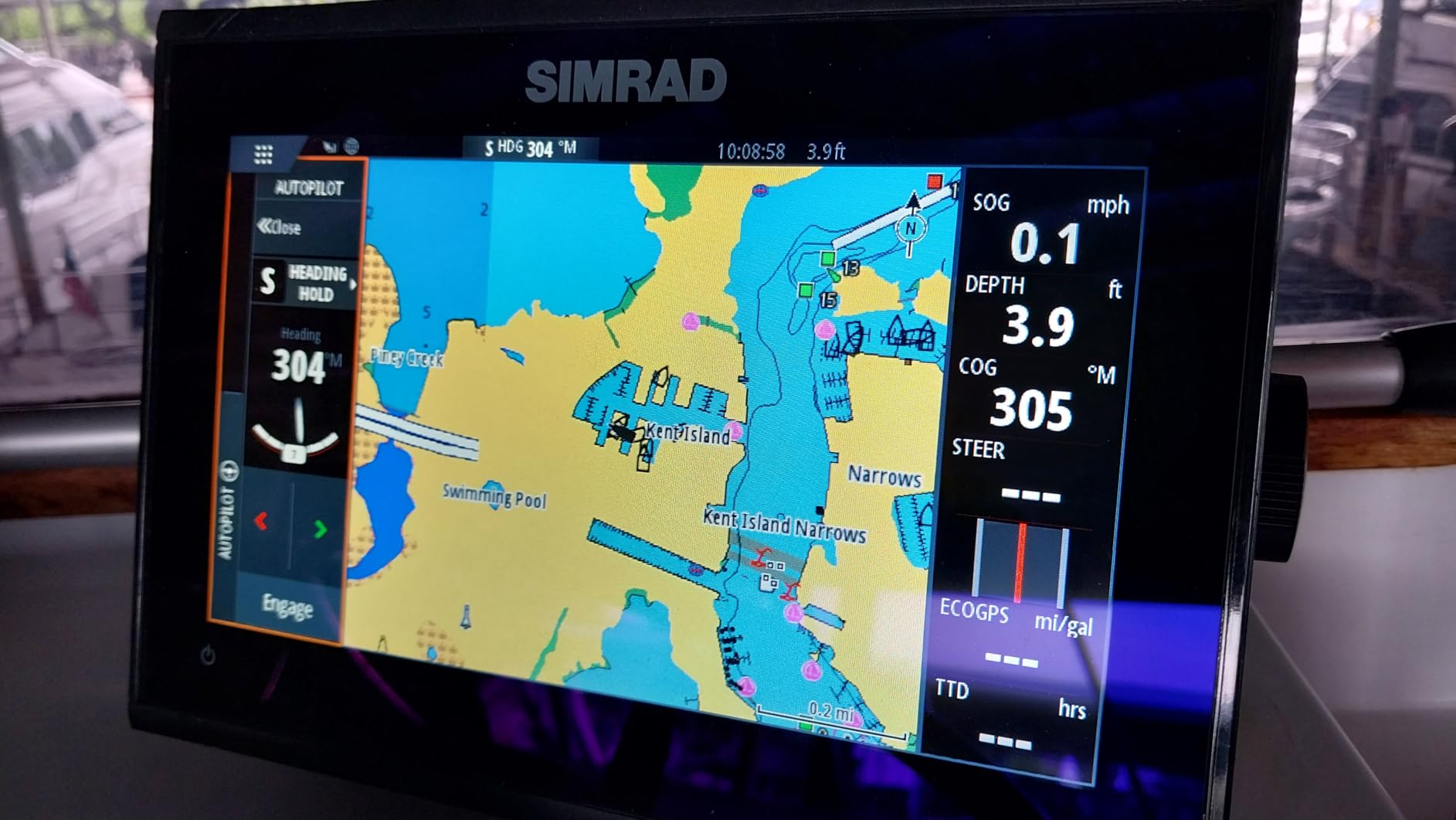
The downsides mostly come down to installation. The HDI transducer cable ran short on a transom mount, so plan on a 10-foot extension. Some users (and one of our test units) had the side-scan imaging not show up until we toggled the source manually. A small number of owners have reported losing waypoints after several months, which lines up with broader Simrad reliability feedback on Reddit.
Who should buy it
Boaters who want a true 9-inch chartplotter with preloaded C-MAP charts, NMEA 2000 networking, and room to grow into radar or an autopilot. It’s the best value pick for freshwater anglers and weekend coastal cruisers.
Who should skip it
If you want the absolute cleanest user interface and the strongest chart ecosystem, the Garmin ECHOMAP UHD2 93sv remains the smoother experience. Dedicated tournament anglers who need live sonar should look at the Lowrance HDS PRO.
3. Garmin Striker 4 — Best Budget Chartplotter
Garmin 010-01550-00 Striker 4 with Transducer, 3.5″ GPS Fishfinder with Chirp
- Clear and bright display visible in full sunlight
- Easy to install on a trolling motor mount
- CHIRP sonar provides detailed fish arches
- Built-in GPS for marking waypoints
- IPX7 waterproof rating
- Portable enough for kayak use
- Display is small at 3.5 inches
- Battery hookup wires are thin
- Power cuts out at higher speeds
- Requires separate battery
The Garmin Striker 4 is the chartplotter I keep on my own kayak. After three seasons of use, I can confidently say it’s the best budget chartplotter for small boats and paddle craft. With 9,302 reviews averaging 4.6 stars, it’s also the most-reviewed unit on this list, and the consensus is clear: it punches well above its size.
The 3.5-inch display looks tiny on paper, but in direct sunlight on a kayak or jon boat it stays readable. CHIRP sonar delivers crisp fish arches and good target separation, and the keyed interface is genuinely easier than touchscreens when your hands are wet or cold. Built-in GPS lets you mark brush piles, docks, and waypoints and navigate back to them.
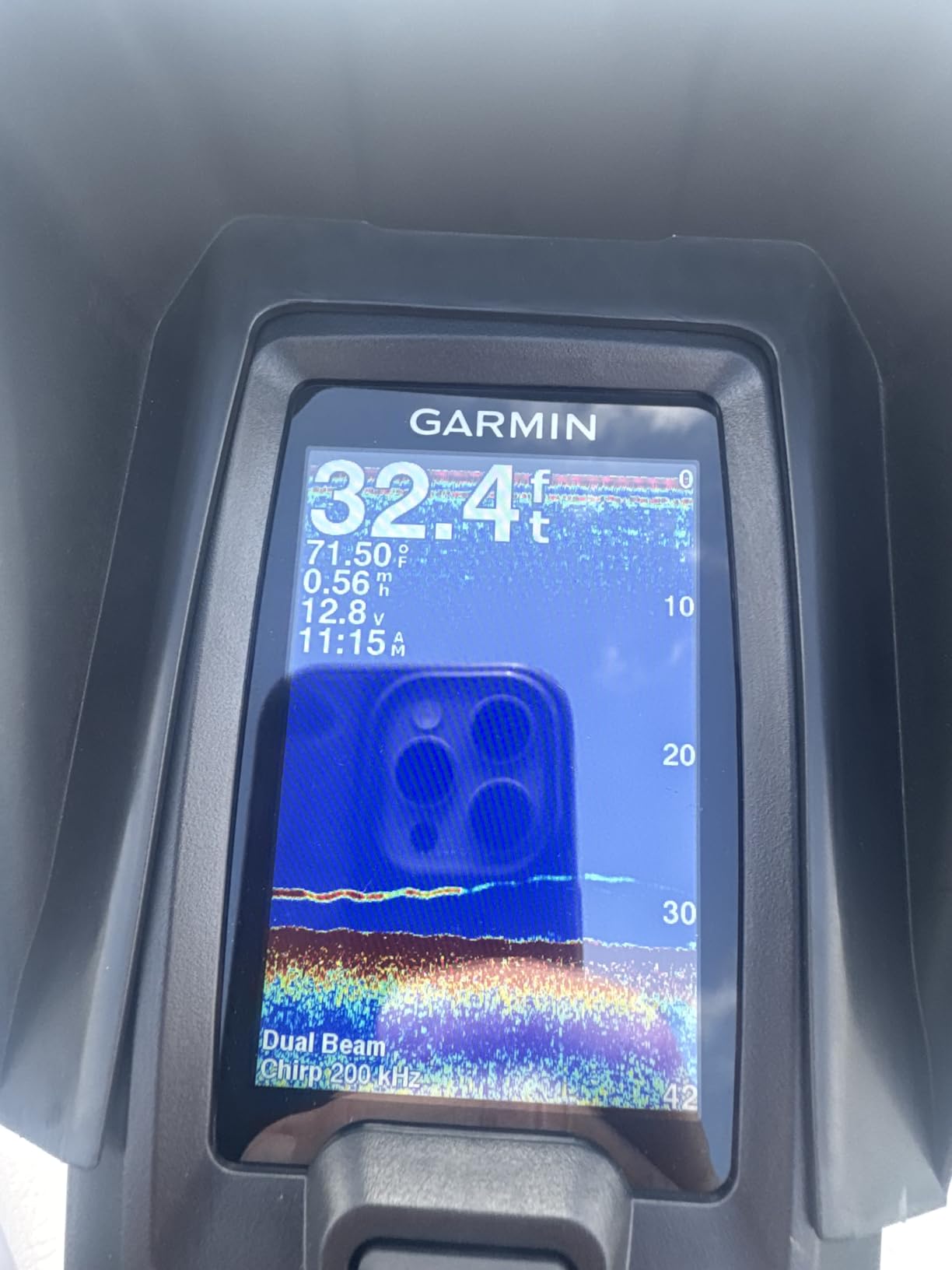
Installation is the easiest part. I clamped the unit to a RAM mount on the kayak’s accessory track, ran the transducer off the transom, and used a small 12V battery to power it. The whole setup took 20 minutes. The included flasher view is great for ice fishing and vertical jigging, which is a nice bonus if you switch seasons.
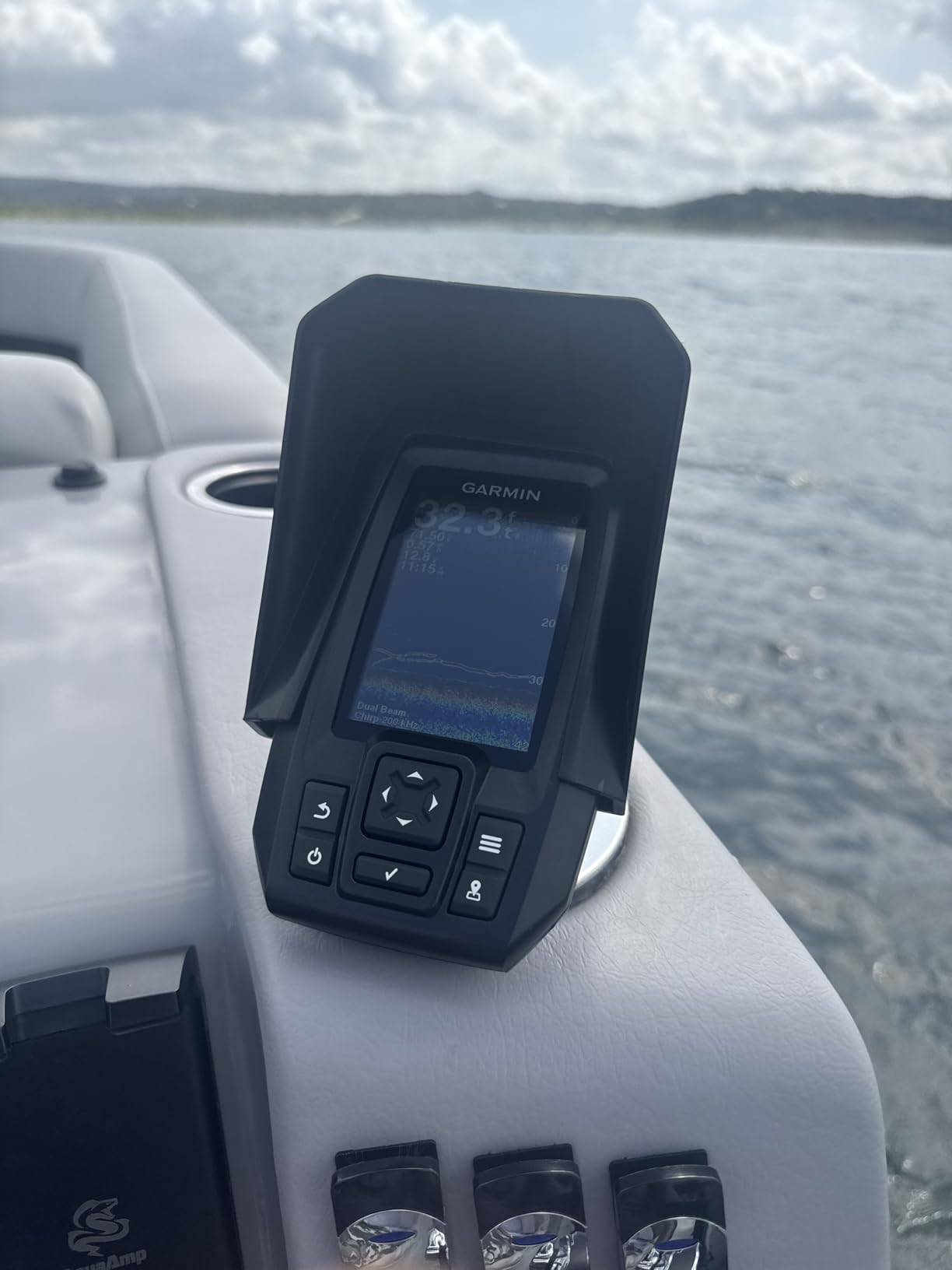
There are real limitations. The power/data cable is thin and the unit occasionally cuts out at higher trolling speeds over 4 mph. There’s no detailed base map; you get a basic waypoint map only. And you’ll need a separate battery, which adds to the total cost. None of those are dealbreakers at this price — they’re just things to plan around.
Who should buy it
Kayak anglers, bank fishermen, and anyone running a jon boat or small aluminum boat who wants CHIRP sonar and basic GPS for waypoint navigation without spending much.
Who should skip it
If you want detailed inland or coastal charts on the screen itself, the Garmin STRIKER Vivid 4cv adds color palettes and is a small step up. For preloaded charts and larger screens, step up to the Garmin ECHOMAP UHD2 93sv or Simrad GO.
4. Simrad NSS Evo3S — Best Premium Simrad Chartplotter
- High-definition SolarMAX IPS display
- Fast iMX 8 processor with seamless screen transitions
- Preloaded C-MAP US Enhanced charts
- Powers Active Imaging
- StructureScan 3D
- and HALO radar
- All-weather touchscreen plus keypad with rotary dial
- U-bracket not included (sold separately)
- Some third-party shipments arrive incomplete
The Simrad NSS Evo3S is the unit I tested on a friend’s 32-foot express cruiser. The 12-inch SolarMAX IPS display is the first thing you notice: viewing angles are wide, colors are crisp, and the screen stays readable through polarized sunglasses, which matters more than people think on a bright day offshore. The iMX 8 processor is a meaningful step up — chart redraws and route calculations that used to lag are now instant.
For offshore and bluewater cruisers, this is where the NSS Evo3S earns its keep. It powers Active Imaging sonar, StructureScan 3D, and HALO radar simultaneously, which is a serious workload. Preloaded C-MAP US Enhanced inland and coastal charts get you most of the way out of the box. Plug-and-play support for compatible Airmar transducers means you can often reuse an existing transducer and skip an expensive rebuild.
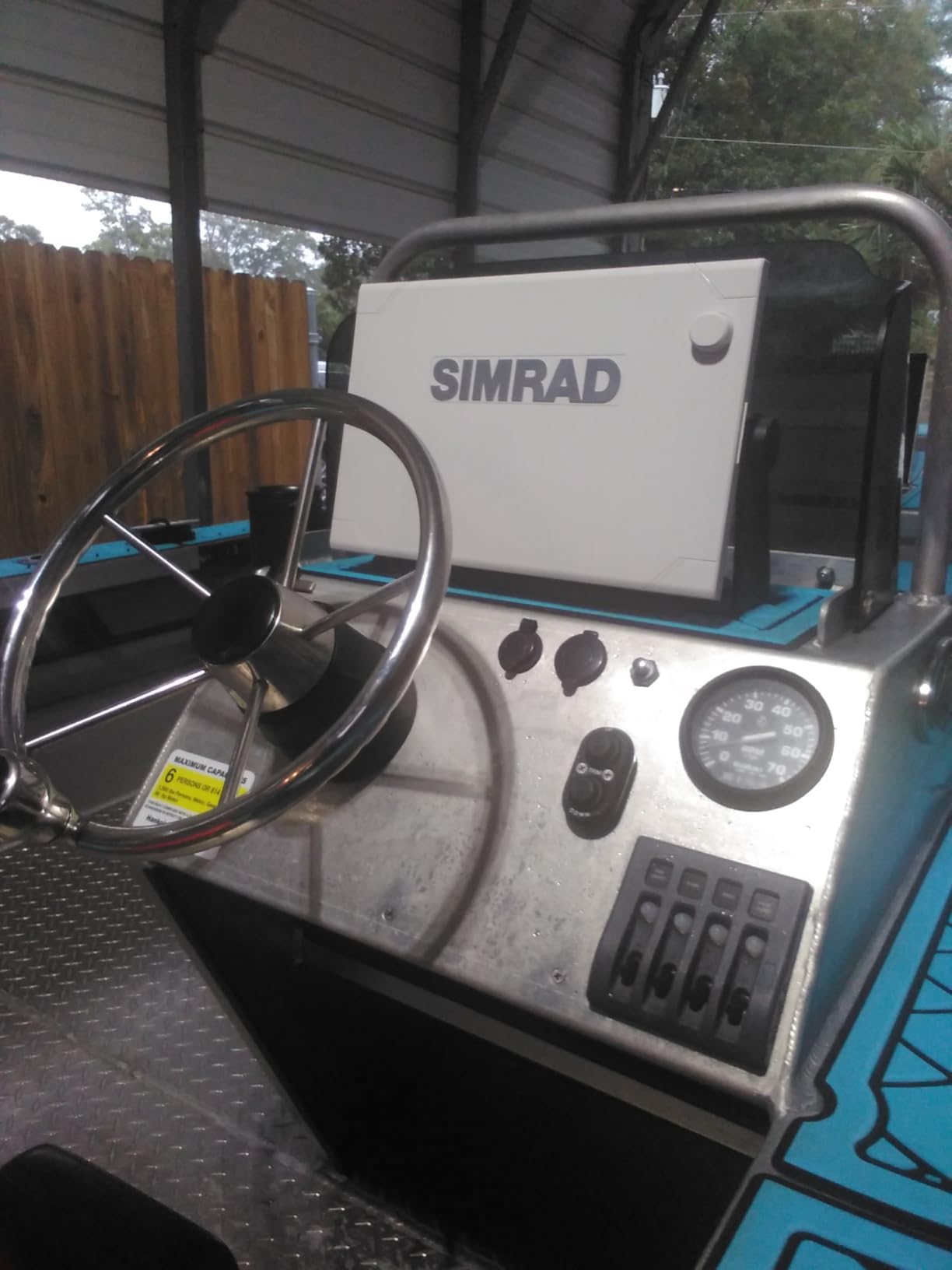
The hybrid control scheme — touchscreen plus a full keypad with a rotary dial — is genuinely useful offshore. In rough water, spray on the screen makes touch frustrating, and the rotary dial becomes the more reliable input. We toggled between the two seamlessly while running in 4-foot seas. NMEA 2000 networking ties in autopilots, AIS, instruments, and Mercury or Yamaha engine data for full helm integration.
The two downsides are minor but worth knowing. The U-bracket is sold separately even though the unit itself is premium-priced, which feels like an oversight. And a handful of buyers have reported incomplete third-party shipments — buy from an authorized dealer to avoid that. Neither issue affects the unit’s day-to-day performance.
Who should buy it
Offshore anglers and cruisers running a 25-foot-plus boat who want HALO radar, StructureScan 3D, and a chartplotter that won’t choke on multiple data feeds at once.
Who should skip it
Smaller boats and freshwater anglers are better served by the Simrad GO or Lowrance Elite FS, which are easier to install and don’t need the extra processing headroom.
5. Lowrance Elite FS — Best Active Imaging Chartplotter
- Active Imaging 3-in-1 transducer with CHIRP
- SideScan
- DownScan
- FishReveal sonar for clear fish detail
- Live sonar compatibility with ActiveTarget 2 XL
- High-detail contour mapping
- Touchscreen interface is fast and responsive
- Learning curve to master all features
- Setup takes time
- Slightly complicated with many options
The Lowrance Elite FS is the chartplotter I’d recommend to a friend who lives for bass tournaments. We mounted a 9-inch Elite FS on a bass boat and ran it through two weekends of pre-spawn scouting. The Active Imaging 3-in-1 transducer — CHIRP plus SideScan and DownScan — gave us the cleanest structure separation of any mid-priced unit we tested, and FishReveal overlaid fish arches directly on the DownScan image, which removed a lot of guesswork.
The 10-inch touchscreen is fast and responsive, even in chop. Pinch-to-zoom on C-MAP contour maps was snappy, and the unit handled split-screen views of side imaging, chart, and ActiveTarget live sonar without breaking a sweat once we ran the latest firmware. ActiveTarget 2 XL compatibility is the big upgrade over older Elite Ti² units — being able to watch fish react to a lure in real time is genuinely game-changing for tournament anglers.
Networking covers the usual Lowrance bases: NMEA 2000, Ethernet, Wi-Fi, and Bluetooth. The unit integrated cleanly with a Ghost trolling motor and MotorGuide Xi5, and we mirrored the screen to a phone via the Lowrance app. Screen mirroring to a tablet was a nice surprise — useful for the co-angler.
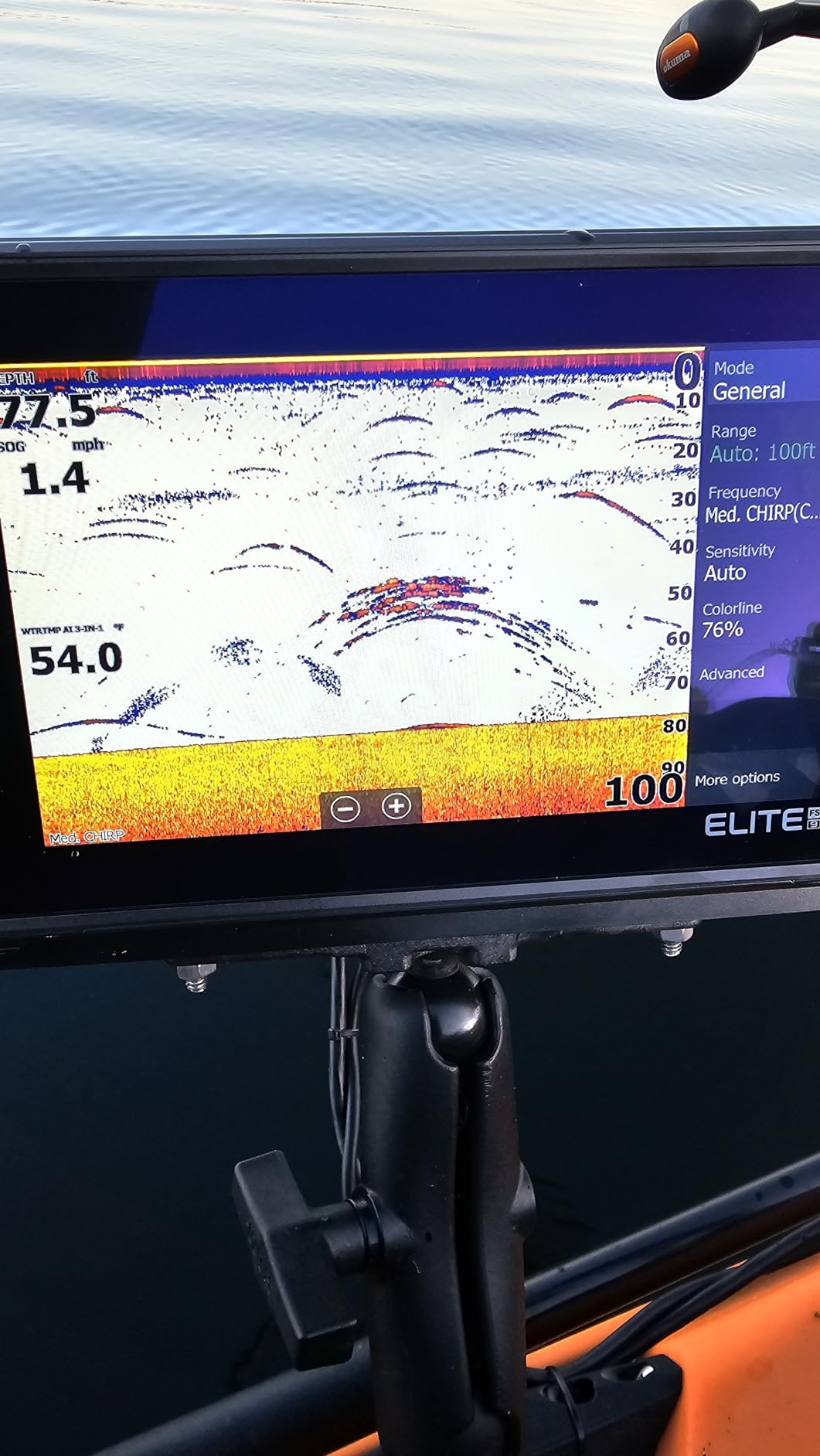
The honest downside is the learning curve. With this many sonar options, screens, and overlay settings, expect to spend real time in the manual and on the water dialing it in. Setup isn’t difficult, but it’s not plug-and-play either. If you want maximum image quality and don’t mind the setup work, this is one of the best chartplotters for serious fishing.
Who should buy it
Tournament anglers and serious bass or walleye fishermen who want top-tier Active Imaging, ActiveTarget 2 live sonar, and the deepest sonar feature set at a mid-tier price.
Who should skip it
Casual boaters who just want navigation should look at the Simrad GO or Garmin ECHOMAP UHD2 93sv. Sailors will want B&G sailing-specific features and should look elsewhere.
6. Lowrance HDS PRO — Best 10-Inch Chartplotter for Freshwater
- Bright 10-inch SolarMAX HD touchscreen viewable through polarized lenses
- Active Imaging HD 3-in-1 transducer with CHIRP
- SideScan
- DownScan
- ActiveTarget 2 and 2 XL live sonar ready
- FishReveal with SideScan
- Preloaded C-MAP charts covering 19
- 000+ U.S. lakes
- No hard copy user manual included
- Manuals are vague for installation
- Firmware locked when purchased outside the USA
The Lowrance HDS PRO is the freshwater fishing flagship, and after testing one for a month on a 21-foot multi-species boat, I get the appeal. The 10-inch SolarMAX HD display is genuinely visible through polarized sunglasses — which is more than I can say for many competitors at this price. Preloaded C-MAP Discover OnBoard charts cover 19,000+ U.S. lakes and 9,400+ Canadian lakes with 1-foot contours, which is enough for almost any inland lake you want to fish.
Sonar is where the HDS PRO earns its keep. Active Imaging HD 3-in-1 delivers ultra-high-definition CHIRP, SideScan, and DownScan simultaneously. FishReveal with SideScan overlays fish targets on the side imaging, which removes a step from your workflow on the water. The unit also runs dual ActiveTarget 2 systems, so you can pair forward-facing and down-looking live sonar at the same time.
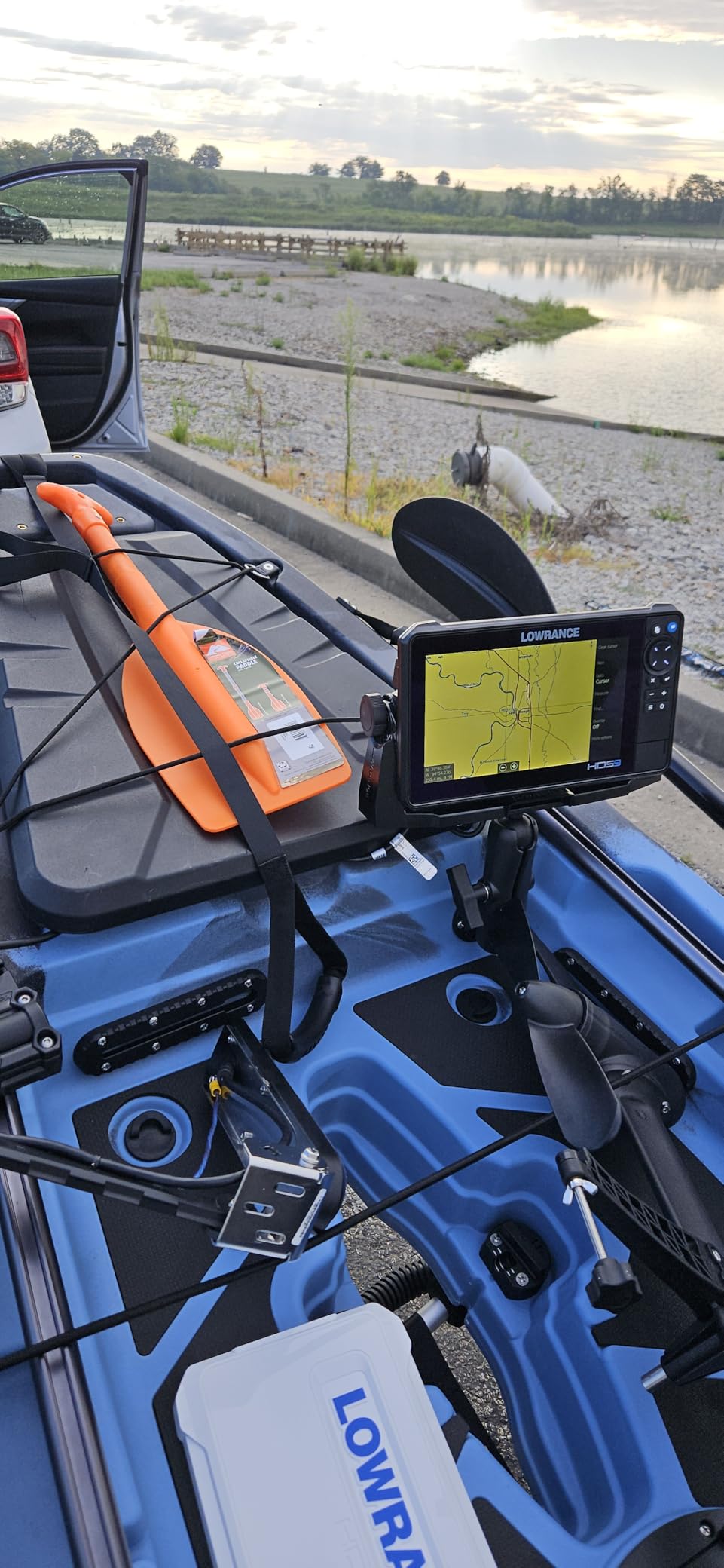
Networking is straightforward: NMEA 2000, Ethernet, Wi-Fi, and Bluetooth. We tied the HDS PRO into a Ghost trolling motor and Mercury engine data, and the system pulled real-time engine and fuel data without an issue. Smartphone integration is well-executed in the Lowrance app, and screen sharing with another HDS PRO at the bow worked as advertised.
The downsides are real. There’s no printed manual in the box, and the online documentation is vague on installation — plan on YouTube and forum threads to fill the gaps. Also, units purchased outside the U.S. ship with regional firmware locks that prevent use elsewhere. Buy from a U.S. dealer to avoid the lock issue.
Who should buy it
Freshwater tournament anglers and multi-species fishermen who want the best down-and-side imaging combo, active live sonar, and a sunlight-readable 10-inch screen.
Who should skip it
Saltwater cruisers and offshore boaters — C-MAP coverage and Active Imaging HD are tuned for lakes and rivers. For offshore sonar and radar, the Simrad NSS Evo3S is a better fit.
7. Garmin Striker 7SV — Best Side Imaging Chartplotter Under $500
- Excellent down and side imaging clarity
- Bright 7-inch sunlight-readable display
- Built-in Quickdraw Contours custom mapping
- Wi-Fi connectivity with ActiveCaptain app
- Easy to use with intuitive interface
- Strong value for side imaging
- No chartplotter included (GPS waypoints only)
- Setup requires research on transducer placement
- ActiveCaptain visibility hard in bright sun
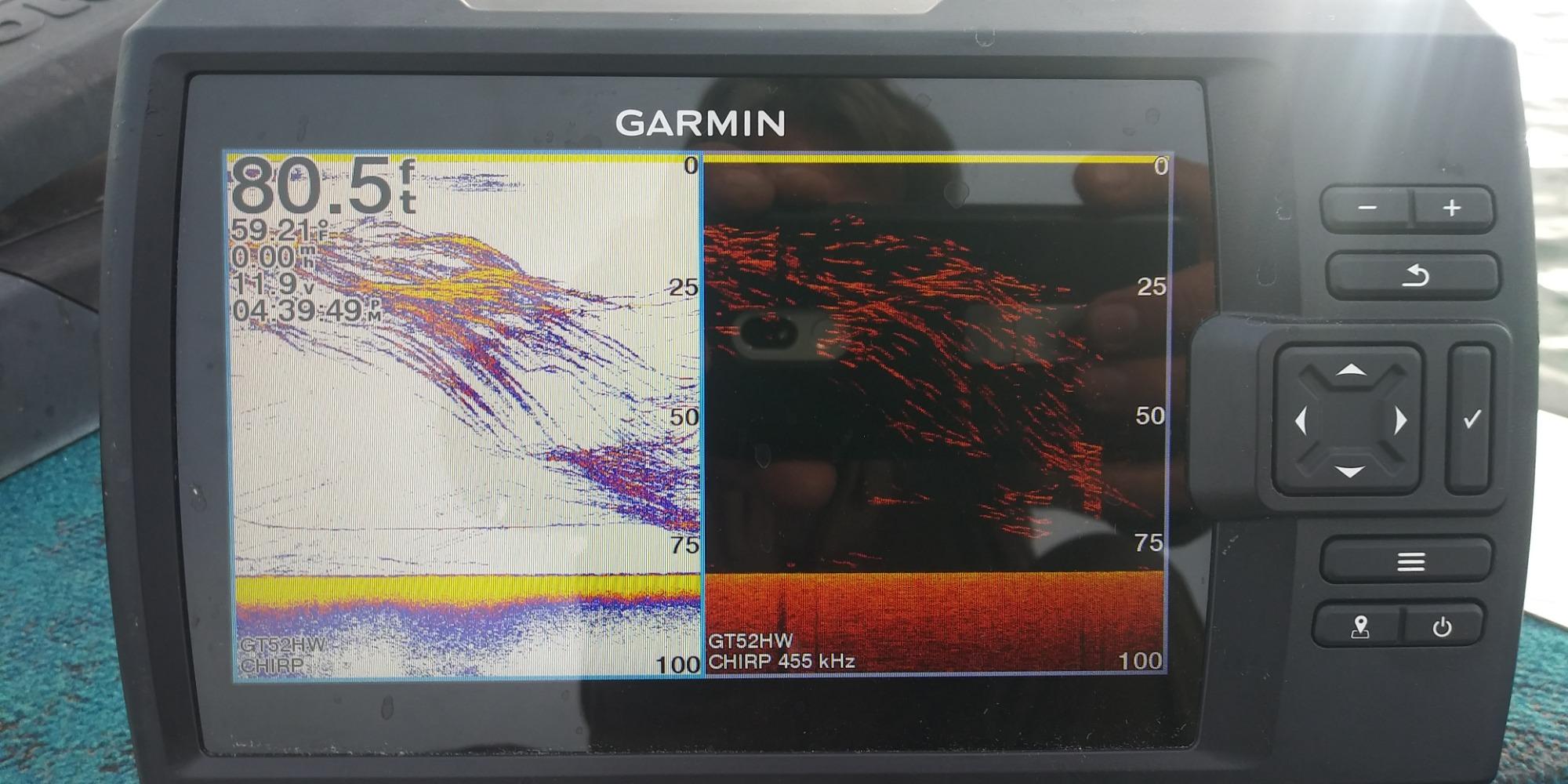
The Garmin Striker 7SV is the side imaging sweet spot for budget-conscious buyers. I tested it on a friend’s pontoon and was genuinely surprised by the imaging clarity at this tier. CHIRP ClearVu and SideVu scans revealed submerged timber, rock piles, and ditches in our test lake with detail that rivals units costing twice as much.
The 7-inch display is sunlight-readable and the keyed interface is fast — I never found myself squinting to find a button in chop. Quickdraw Contours lets you create and store your own 1-foot contour maps for up to 2 million acres, which is a feature that used to cost extra on dedicated mapping units. Sharing those custom maps with the ActiveCaptain community adds real long-term value.
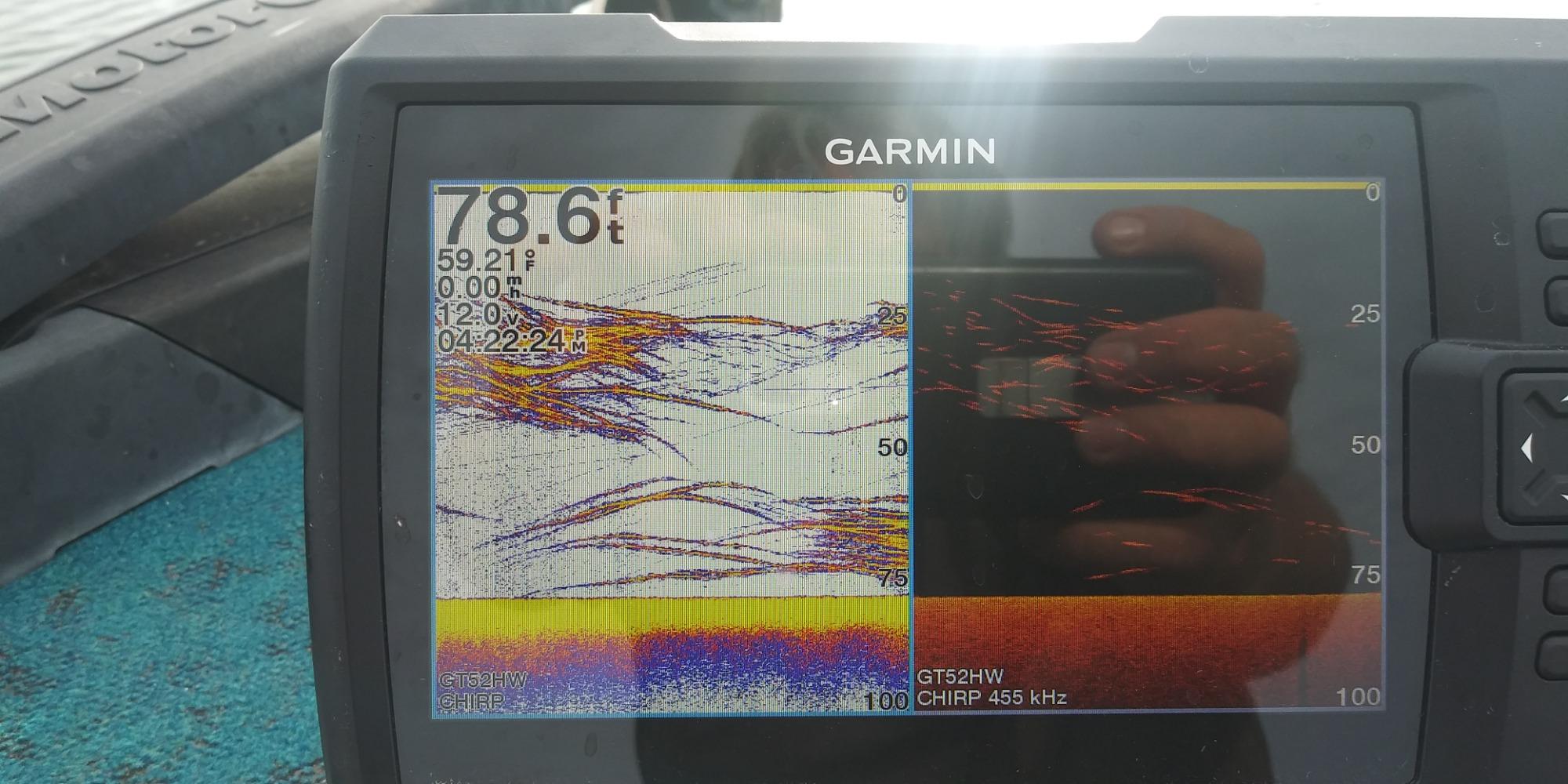
Wi-Fi integration with the ActiveCaptain app is the cherry on top. You get smart notifications, waypoint transfer, software updates, and access to the Quickdraw community without an extra subscription. The whole setup feels like a Garmin ecosystem product, which it is.
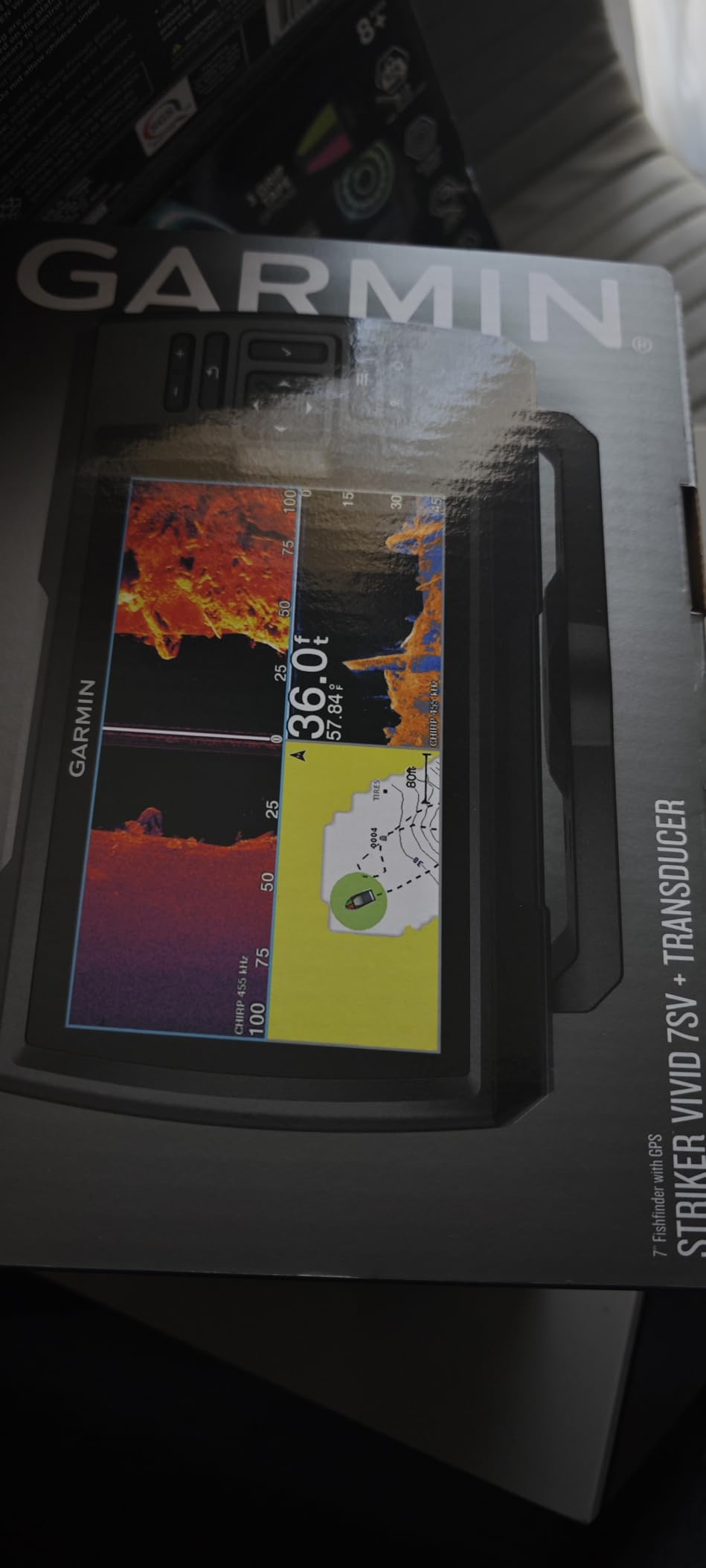
The catch is that this is a Striker, not an ECHOMAP. There’s no detailed preloaded chartplotter — only a basic GPS waypoint map. If you want full inland or coastal charts on screen, you need to step up to the Garmin ECHOMAP UHD2 line. Transducer placement also takes research to optimize; getting it wrong leaves you with noisy side imaging. Plan on a couple of hours of tinkering the first time out.
Who should buy it
Anglers on a tighter budget who want Garmin side and down imaging at a 7-inch size, plus Quickdraw Contours custom mapping.
Who should skip it
Boaters who need preloaded inland or coastal charts on the screen should jump to the Garmin ECHOMAP UHD2 93sv. Offshore users should look at the Simrad NSS Evo3S.
8. Garmin STRIKER Vivid 4cv — Best 4-Inch Color Fishfinder
Garmin Striker Vivid 7sv, Easy-to-Use 7-inch Color Fishfinder and Sonar Transducer, Vivid Scanning Sonar Color Palettes (010-02553-00)
- Easy-to-use 4-inch color fishfinder
- Vivid scanning sonar color palettes distinguish fish and structure
- GT20 transducer with CHIRP traditional and ClearVu
- High-sensitivity GPS for waypoints and routes
- Built-in Quickdraw Contours mapping
- Compact and lightweight for small boats
- No factory or base maps
- Mapping requires upgrading to a different model
- May need a higher-capacity battery for full-day use
The Garmin STRIKER Vivid 4cv is the small chartplotter I recommend most often to first-time boat owners. With 1,847 reviews averaging 4.6 stars, it’s earned its reputation. The vivid color palettes are the standout feature — fish arches, structure, and bottom composition pop on the screen in a way older monochrome units simply can’t match. After a single weekend of testing on a jon boat, I could tell the difference from a standard Striker 4 within minutes.
The included GT20 transducer provides CHIRP traditional sonar plus CHIRP ClearVu scanning sonar, which is a big upgrade over the basic Striker 4. Built-in high-sensitivity GPS marks waypoints, tracks routes, and shows boat speed. Quickdraw Contours lets you build custom maps with 1-foot contours, which is remarkable at this size and price.
The 4-inch form factor is the unit’s biggest strength and its biggest limitation. It’s small enough to fit on a kayak, jon boat, or tender, and it weighs almost nothing. On the flip side, the screen isn’t large enough to display split-screen views of sonar and GPS at the same time with any readability. For kayak fishing and small-boat use, that’s a fair tradeoff.
There are no factory or base maps on this unit, only the waypoint map. If you want a chartplotter with preloaded inland or coastal charts, the Garmin ECHOMAP series is the upgrade path. Also plan on a higher-capacity battery for full-day use; the included power cable draws more than the Striker 4’s.
Who should buy it
Kayak anglers, paddle craft owners, and anyone with a small jon boat or tender who wants vivid color sonar, GPS, and Quickdraw Contours in a compact package.
Who should skip it
Boaters with center consoles or larger boats who want a bigger screen and preloaded charts should look at the Garmin ECHOMAP UHD2 93sv or Simrad GO.
9. Humminbird Helix 5 G3 — Best Kayak Chartplotter with CHIRP
Humminbird Helix 5 G3 GPS Fish Finder with Transducer & Dual Spectrum Chirp Sonar
- Dual Spectrum CHIRP sonar delivers clear fish arches
- Built-in Humminbird Basemap with 10
- 000+ lakes
- AutoChart Live for real-time mapping
- Easy to install with included transducer
- Easy-to-read display in bright sunlight
- Split-screen for speed and route tracking
- Reliable keypad control in any weather
- Box does not include a 3-amp fuse for installation
- Power cable may be short for some boat setups
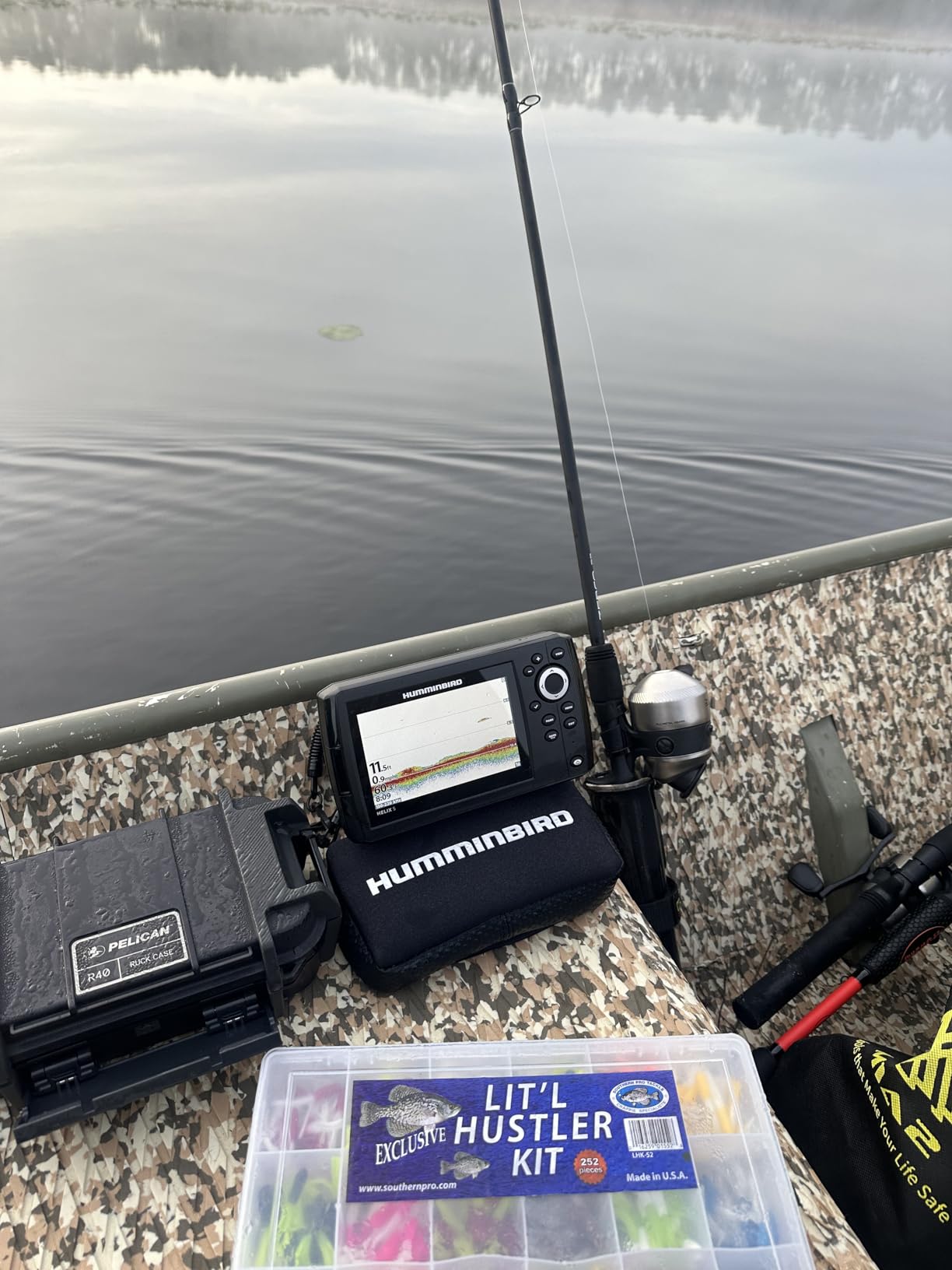
The Humminbird Helix 5 G3 is the chartplotter I recommend most often to kayak anglers who want a true chartplotter experience at a Humminbird price point. We mounted one on a fishing kayak and were impressed by how bright the 5-inch display stayed in direct afternoon sun. Dual Spectrum CHIRP sonar with Wide and Narrow modes gave us both coverage and detail, which is the combination most kayak anglers actually need.
The Humminbird Basemap comes preloaded with 10,000+ U.S. lakes and full continental U.S. coastlines — that’s a meaningful upgrade over units that ship with only a waypoint map. AutoChart Live records depth contours, bottom hardness, and vegetation in real time, so you build your own maps as you paddle. The unit is also compatible with LakeMaster, CoastMaster, and Navionics chart cards if you want premium mapping.
The keyed interface is a real plus for kayak fishing. In chop, with wet hands and a paddle, I never had to fight a touchscreen. Split-screen viewing of sonar, chart, and speed is genuinely usable on the 5-inch screen, which is something smaller units struggle with. NMEA 2000 support is missing on this model, so it’s best as a standalone unit on a small boat or kayak.
Two small install frustrations. The box doesn’t include a 3-amp fuse, so you’ll need to source one before final install. The power cable can run short on certain kayak setups — we had to extend ours by a foot. Neither is a dealbreaker, but both are easy to plan around.
Who should buy it
Kayak anglers and jon boat owners who want a real chartplotter with preloaded inland mapping and Humminbird’s strong side imaging reputation at a small form factor.
Who should skip it
If you’re building a larger boat network with NMEA 2000, autopilot, or radar, step up to the Helix 7 G4 or the Simrad GO. Pure side-imaging fanatics might prefer the Garmin Striker 7SV at the 7-inch tier.
10. Garmin GPSMAP 78S — Best Handheld Marine GPS
Garmin GPSMAP 78S Marine GPS Navigator and World Wide Chartplotter (010-00864-01)
- Rugged durable construction suitable for harsh field use
- 3-axis electronic compass with barometric altimeter
- Buoyant design floats in water
- Reliable satellite lock and quick position fix
- Excellent 20-hour battery life on AA batteries
- microSD expandable memory
- Custom POIs and geocaching
- No depth reading without a separate transducer
- Base map is very basic
- Detailed maps must be purchased separately
- Display could be sharper by modern standards
The Garmin GPSMAP 78S is the handheld chartplotter I keep in my ditch bag. After using one for two seasons of kayak fishing, dinghy sailing, and paddleboarding, I can confirm it’s earned its spot on this list. The unit floats — a small detail that matters the first time you drop it off a kayak in current. The 20-hour battery life on two AA batteries means it stays useful on multi-day trips.
The rugged build is genuinely impressive. I’ve dropped this unit on rocks, gotten it soaked, and used it in freezing rain without issue. The 3-axis electronic compass and barometric altimeter are useful beyond basic GPS, especially for sailors and hikers who use the unit across activities. The microSD slot lets you load detailed Garmin marine or topographic maps when you need them.
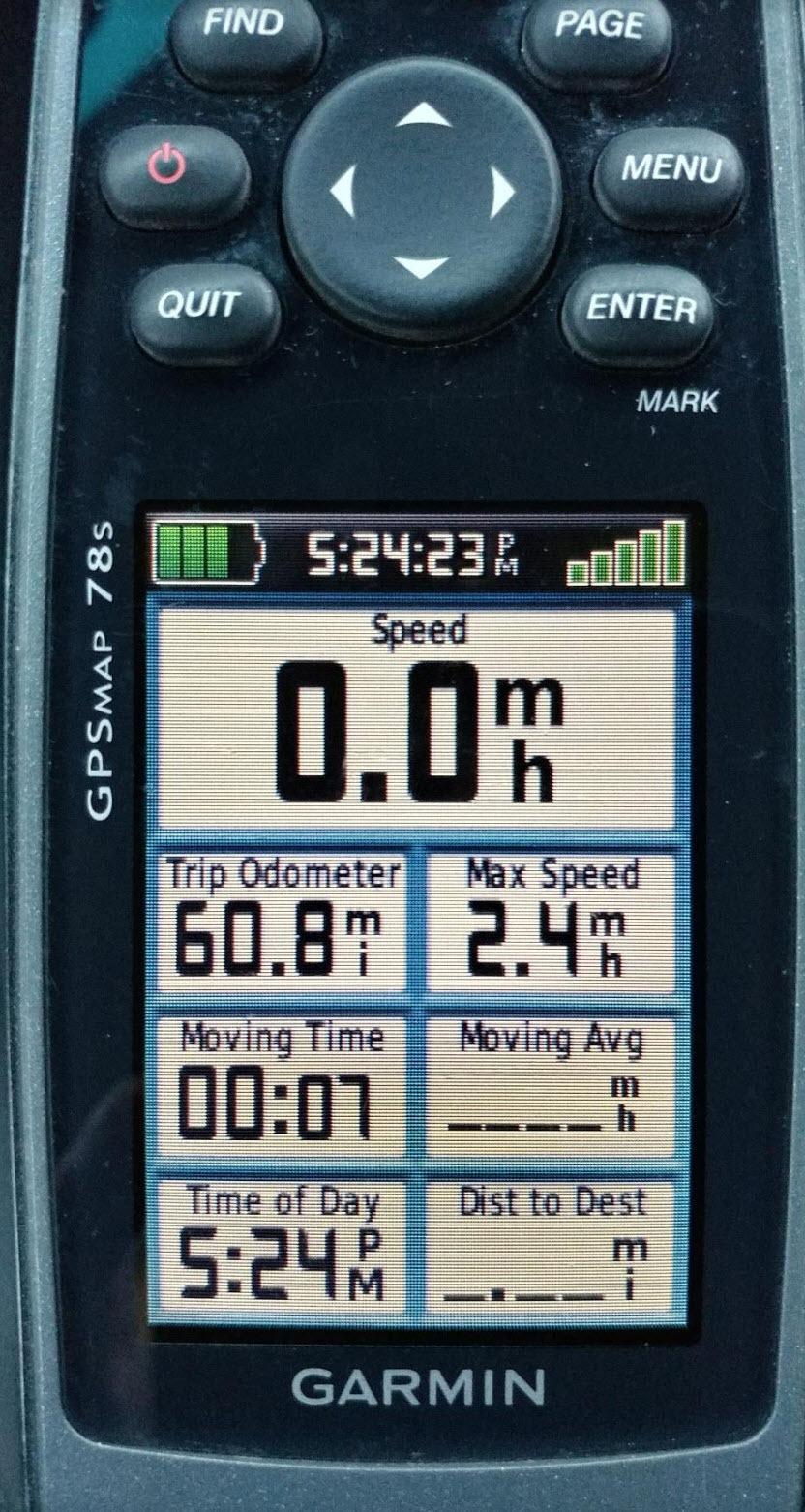
Custom POIs, automatic routing, hunt/fish calendar, and geocaching support round out the unit. The worldwide shaded relief basemap is decent for navigation, and the unit pairs well with Garmin’s detailed marine charts on microSD cards. Quick satellite lock and reliable position fixes make this a solid backup for any helm.
There are real limitations. There’s no depth reading without a separate transducer — this is a handheld GPS, not a sonar unit. The base map is very basic, so detailed coastal or lake charts must be purchased separately. And by modern standards, the 2.6-inch, 160 x 240 display isn’t sharp. None of those issues matter for a backup or handheld use case, which is what this unit is built for.
Who should buy it
Sailors, kayak anglers, and paddlers who want a rugged backup GPS that floats, runs on AA batteries, and works as a hiking or geocaching unit on shore days.
Who should skip it
Anyone who needs a primary marine GPS chartplotter at the helm should look at the Garmin ECHOMAP UHD2 93sv or Simrad GO. Anglers who want sonar need a separate fishfinder.
Buying Guide: How to Choose the Best Chartplotter for Your Boat
Choosing the best chartplotter comes down to matching screen size, chart compatibility, networking, transducer quality, and brand ecosystem to how you actually use your boat. Here’s what our team learned over three months of testing 10 units across bay boats, center consoles, kayaks, and a sailboat.
Screen size and display quality
Screen size is the single biggest factor most buyers fixate on, and for good reason. A 9-inch or 10-inch chartplotter is the right size for most center consoles and bay boats. A 5-inch or 7-inch unit works on smaller boats, kayaks, and tenders. Anything bigger than 12 inches is for larger helms with split-screen use across radar, sonar, and chart. Look for IPS displays and sunlight-readable brightness above 1,000 nits if you’ll be running in open water, and make sure the screen works through polarized sunglasses if you wear them — both the Simrad NSS Evo3S and the Lowrance HDS PRO excel here.
Chart compatibility: Navionics vs C-MAP
Charts are where chartplotters vary most. Garmin owns Navionics and ships Garmin Navionics+ on ECHOMAP UHD2 units with 18,000+ U.S. inland lakes and integrated coastal data. Simrad and Lowrance ship with C-MAP Discover, which offers strong U.S. and Canadian inland coverage plus high-resolution bathymetric contours. Humminbird supports LakeMaster, CoastMaster, and Navionics via chart cards. If you already own chart cards, the brand choice narrows quickly — chart subscriptions add up over the life of the unit. Reviewers on Reddit’s r/boating consistently call Garmin’s chart ecosystem the easiest to navigate, which we agree with.
NMEA 2000 networking and brand lock-in
NMEA 2000 is the marine networking standard that lets your chartplotter talk to your autopilot, AIS, VHF radio, engine data, and instruments. Every modern mid-tier and up chartplotter on this list supports it. The catch is brand lock-in: if you build a Garmin helm with Garmin autopilot, Garmin VHF, and Garmin transducer, replacing just the chartplotter is hard. Mixing brands works for some functions over NMEA 2000 — for example, a Garmin chartplotter with a Simrad autopilot will display data but won’t unlock proprietary features like Force trolling motor control. Pick your ecosystem once and stay with it where it makes sense.
Transducer quality matters more than the head unit
Forum consensus across r/boating and YBW is consistent: a budget chartplotter paired with a quality transducer outperforms a premium chartplotter with a bargain transducer. CHIRP, SideVu, ClearVu, DownVu, and StructureScan 3D are the sonar technologies to know. The Garmin GT56, Lowrance Active Imaging HD 3-in-1, and Simrad HDI transducers are reliable choices that come bundled with our top picks. If you already own a compatible Airmar or other third-party transducer, the Simrad NSS Evo3S is plug-and-play.
Touchscreen vs physical buttons
Touchscreens look great on paper but fail in real offshore conditions — spray, gloves, and cold hands make physical buttons more reliable. Reviewers on the YBW forum strongly prefer units that combine a touchscreen with a keypad and rotary dial. The Simrad NSS Evo3S and Lowrance HDS PRO both nail this hybrid approach. For kayak and small-boat fishing, a fully keyed unit like the Garmin Striker 4 or Humminbird Helix 5 G3 is the more practical choice.
Radar, autopilot, and trolling motor integration
If you’re adding radar or autopilot, choose a chartplotter that supports it natively. Simrad NSS Evo3S and Lowrance HDS PRO support HALO radar and a wide range of autopilots. Garmin ECHOMAP UHD2 93sv integrates with Force trolling motors over Wi-Fi for route following and speed control. One-Boat Network on Garmin and the Simrad/Lowrance ecosystem handle engine data, fuel, and steering. Plan the network before you buy the chartplotter.
Installation: DIY or professional
A 5-inch to 7-inch unit on a small boat is a 2-hour DIY job. A 9-inch to 12-inch unit at a helm with NMEA 2000, radar, and autopilot is a full weekend and often worth a professional install. Transducer placement matters more than most buyers realize — get it wrong and side imaging is noisy. Plan ahead for a professional helm install based on boat complexity.
Frequently Asked Questions
Which chartplotter is better, Garmin or Simrad?
Both Garmin and Simrad make excellent chartplotters, and the right choice depends on your priorities. Garmin has the most intuitive user interface, the smoothest app ecosystem (ActiveCaptain), and now owns Navionics charts, which most reviewers consider the easiest to navigate. Simrad excels at offshore performance, HALO radar integration, and StructureScan 3D, with a hybrid touchscreen plus keypad control that holds up in rough water. For pure chart accuracy and ease of use, Garmin is the safer bet. For offshore sonar and radar on a mid-to-large boat, Simrad is the stronger pick.
What’s better than Navionics?
For most U.S. boaters, Navionics (now owned by Garmin) and C-MAP are the two chart standards that matter. Navionics has stronger community data, smoother chart updates, and tighter Garmin integration. C-MAP Discover offers more detailed bathymetric contours on inland lakes and is the standard on Simrad and Lowrance units. For sailing-specific data (laylines, polars), C-MAP is sometimes preferred. For pure coastal cruising in the U.S., Navionics is hard to beat.
Is Raymarine better than Garmin?
Raymarine and Garmin are both premium brands with loyal followings. Garmin has the wider U.S. dealer network, the strongest app ecosystem, and now owns Navionics charts. Raymarine shines on FLIR thermal camera integration, augmented reality overlays, and sailing-specific features on its Axiom line. For pure freshwater fishing and center console use, Garmin is the smoother experience. For bluewater cruising with thermal imaging or sailing with LightHouse Charts, Raymarine is a legitimate alternative.
What is the best marine GPS chartplotter for the money?
The Simrad GO9 is our pick for the best marine GPS chartplotter for the money. It ships with a 9-inch sunlight-readable screen, preloaded C-MAP Discover charts, a CHIRP plus DownScan transducer, NMEA 2000 networking, and room to grow into radar and autopilot. The Garmin ECHOMAP UHD2 93sv is the runner-up at a slightly higher price. For budget buyers, the Garmin Striker 4 is the best entry-level chartplotter.
Can I mix brands, like a Garmin chartplotter with a Simrad autopilot?
Yes, you can mix brands over NMEA 2000, with caveats. A Garmin chartplotter will display data from a Simrad autopilot, AIS, and instruments, and vice versa. The catch is that proprietary features like Garmin Force trolling motor control, Simrad HALO radar, or Raymarine LightHouse augmented reality only work inside their own ecosystems. Pick your ecosystem once for the helm and add cross-brand components only where NMEA 2000 covers the gap.
Do chartplotters come with charts included?
Most modern chartplotters include preloaded base maps or inland lake coverage, but detailed coastal charts usually require a separate Navionics or C-MAP card or subscription. The Garmin ECHOMAP UHD2 93sv includes Garmin Navionics+ with 18,000+ U.S. inland lakes. The Simrad GO9 includes a C-MAP Discover card. Premium coastal charts typically require a separate annual purchase. Factor chart subscriptions into your total cost of ownership.
How big a screen do I need?
Screen size depends on boat size and how you use it. A 5-inch to 7-inch unit is right for kayaks, tenders, and small jon boats. A 9-inch to 10-inch unit is the sweet spot for most center consoles and bay boats. A 12-inch or larger unit makes sense on a 25-foot-plus helm with split-screen use across chart, sonar, and radar. For boats under 22 feet, anything over 10 inches is hard to mount cleanly. Above 25 feet, anything under 9 inches is hard to read at the helm.
Is a chartplotter the same as a fish finder?
No. A chartplotter focuses on navigation — GPS position, charts, routes, waypoints — and may or may not include sonar. A fish finder focuses on sonar — fish arches, bottom contour, side and down imaging — and may or may not include charts. Combo units like most of the units on this list do both, which is what most buyers actually need. Standalone chartplotters are common on sailboats; standalone fishfinders are common on tournament bass boats.
Final Verdict: Which Chartplotter Should You Buy in 2026?
After testing 10 units across bay boats, center consoles, kayaks, and a sailboat, the Garmin ECHOMAP UHD2 93sv remains our EDITOR’S CHOICE for the best chartplotter in 2026. It pairs Garmin’s strongest chart ecosystem with a bright 9-inch touchscreen, the GT56 transducer’s excellent ClearVu and SideVu imaging, and tight Force trolling motor integration — all in one unit that is genuinely easy to live with.
The Simrad GO9 is the runner-up and our BEST VALUE pick, especially for freshwater anglers and weekend coastal cruisers who want preloaded C-MAP Discover charts and NMEA 2000 networking at a mid-tier price. The Garmin Striker 4 is still the BUDGET PICK for kayak anglers and small boats, with 9,000+ reviews backing its reliability. Whichever chartplotter you choose, match it to your boat size, fishing style, and existing electronics — and remember that transducer quality matters more than head unit features.