
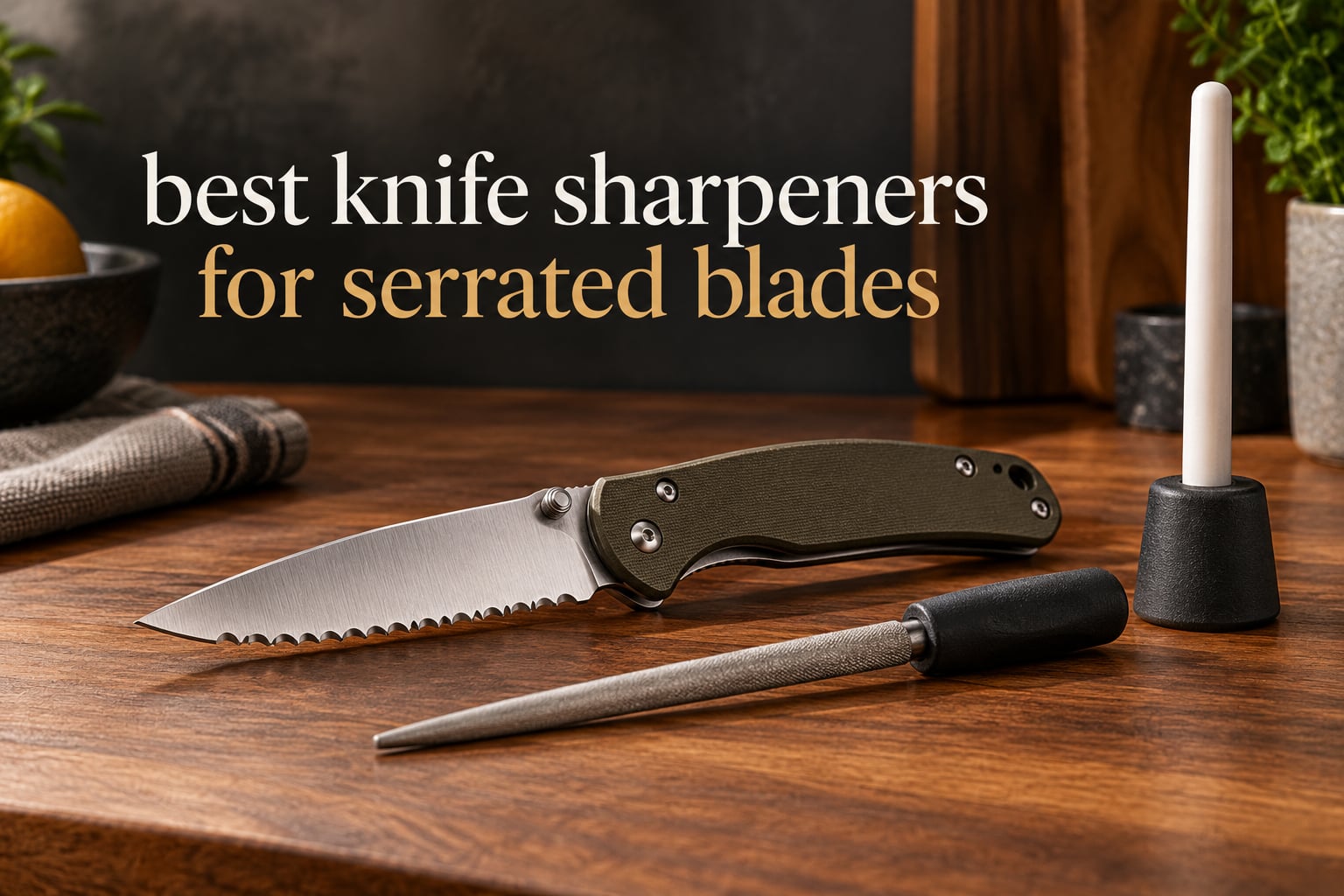
If you want the short answer: a tapered diamond rod is the tool that best knife sharpeners for serrated blades rely on, because the narrowing tip physically fits inside the scallops of a serrated edge. A ceramic honing rod is the maintenance companion, and a guided wheel system is the choice for households that want speed over control. Everything else is a variation on those three ideas.
The reason serrations behave differently is simple. Every scallop on a bread knife or a partially serrated pocketknife is its own tiny wedge, and each one has to be dressed separately. That makes the job slower than a straight edge, not harder, and it makes the wrong tool actively harmful. A through-the-slot sharpener will happily chew the tooth tips off a serrated blade and leave you with a strip of smooth metal.
We compared ten sharpeners built for the job, from a folding tapered diamond file to a belt-driven bench system, and put them through the same questions: does it reach the narrow scallops, does it handle more than one serration style, and what does it fail to fix? If you are still building out a knife drawer, our general kitchen sharpener guide covers the straight-edge side of the conversation. Everything below is updated for 2026 and built around serrations only.
Top 3 Picks for Serrated Blades in 2026

AccuSharp Knife Sharpener
- Reversible tungsten carbide blades
- One-motion sharpening
- Full finger guard

Chef’sChoice 15XV EdgeSelect
- Dedicated serrated stropping stage
- Automatic angle guides
- Three-stage diamond system

Orange Ninja 4-Stage Sharpener
- Dedicated serrated slot
- Coarse carbide repair stage
- Diamond and fine polish stages
Our quick verdict before the detail: the AccuSharp is the most forgiving general pick, the Chef’sChoice electric is the fastest way to service a whole drawer, and the Orange Ninja is the cheapest way to cover repair, honing and serrations in one body. The three tools enthusiasts actually argue about sit further down the list.
All 10 Serrated Knife Sharpeners at a Glance
| Product | Specifications | Action |
|---|---|---|
| AccuSharp Knife Sharpener |
|
Check Latest Price |
| Chef’sChoice 15XV EdgeSelect Electric |
|
Check Latest Price |
 Chef’sChoice Manual Diamond Sharpener Chef’sChoice Manual Diamond Sharpener |
|
Check Latest Price |
| Orange Ninja 4-Stage Sharpener |
|
Check Latest Price |
 DMT Diafold Serrated Sharpener DMT Diafold Serrated Sharpener |
|
Check Latest Price |
 Wamery Retractable Diamond Rod Wamery Retractable Diamond Rod |
|
Check Latest Price |
 Fino Edge Retractable Diamond Rod Fino Edge Retractable Diamond Rod |
|
Check Latest Price |
 Work Sharp Ceramic Honing Rod Work Sharp Ceramic Honing Rod |
|
Check Latest Price |
 Work Sharp Ken Onion Mk.2 Work Sharp Ken Onion Mk.2 |
|
Check Latest Price |
 Lansky Fine Hone for Serrated Knives Lansky Fine Hone for Serrated Knives |
|
Check Latest Price |
A note on how to read the table: the slot-style sharpeners at the top are fast and forgiving but they set the bevel for you, while the tapered rods and hones are slower and give you control over each individual tooth. Neither category is wrong, they solve different problems.
1. AccuSharp Knife Sharpener: The Most Forgiving All-Rounder for Serrated Blades
- Serrated slot restores dull teeth in seconds
- Reversible carbide blades double service life
- Full-length finger guard protects the hand
- Ambidextrous handle for either hand
- Dishwasher-safe and easy to rinse
- Fixed bevel geometry gives no angle control
- Coarse carbide is a honing abrasive not a repair abrasive
- Slot design takes practice for a consistent angle
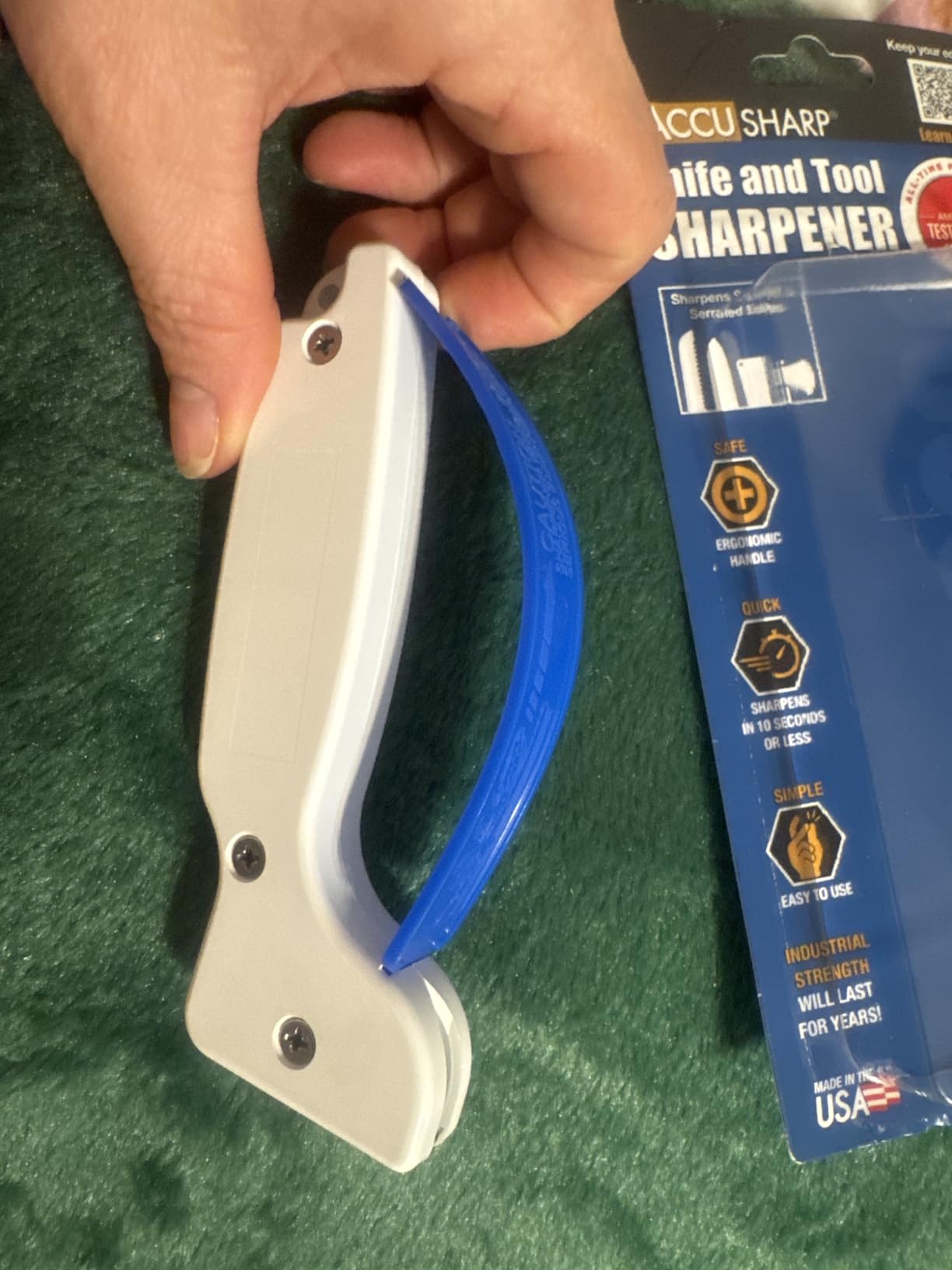
This is the sharpener that lives in the drawer everybody actually uses, and for serrated blades it earns its place. The toothed carbide slot is shaped so the blade rides over the scallops rather than into them, which means it refines each tooth without the grinding damage a flat wheel would do. On a bread knife that has gone from slicing to crushing, a handful of pulls brings the edge back to working order.
What I appreciate is how little it asks of the user. You hold the handle, you place the heel of the blade in the slot, and you draw the knife toward you once. There is no angle to judge and no stroke count to remember, which removes the single biggest reason people give up on sharpening. The carbide blades are also reversible, so flipping them to a fresh face when one dulls roughly doubles the useful life of the tool.
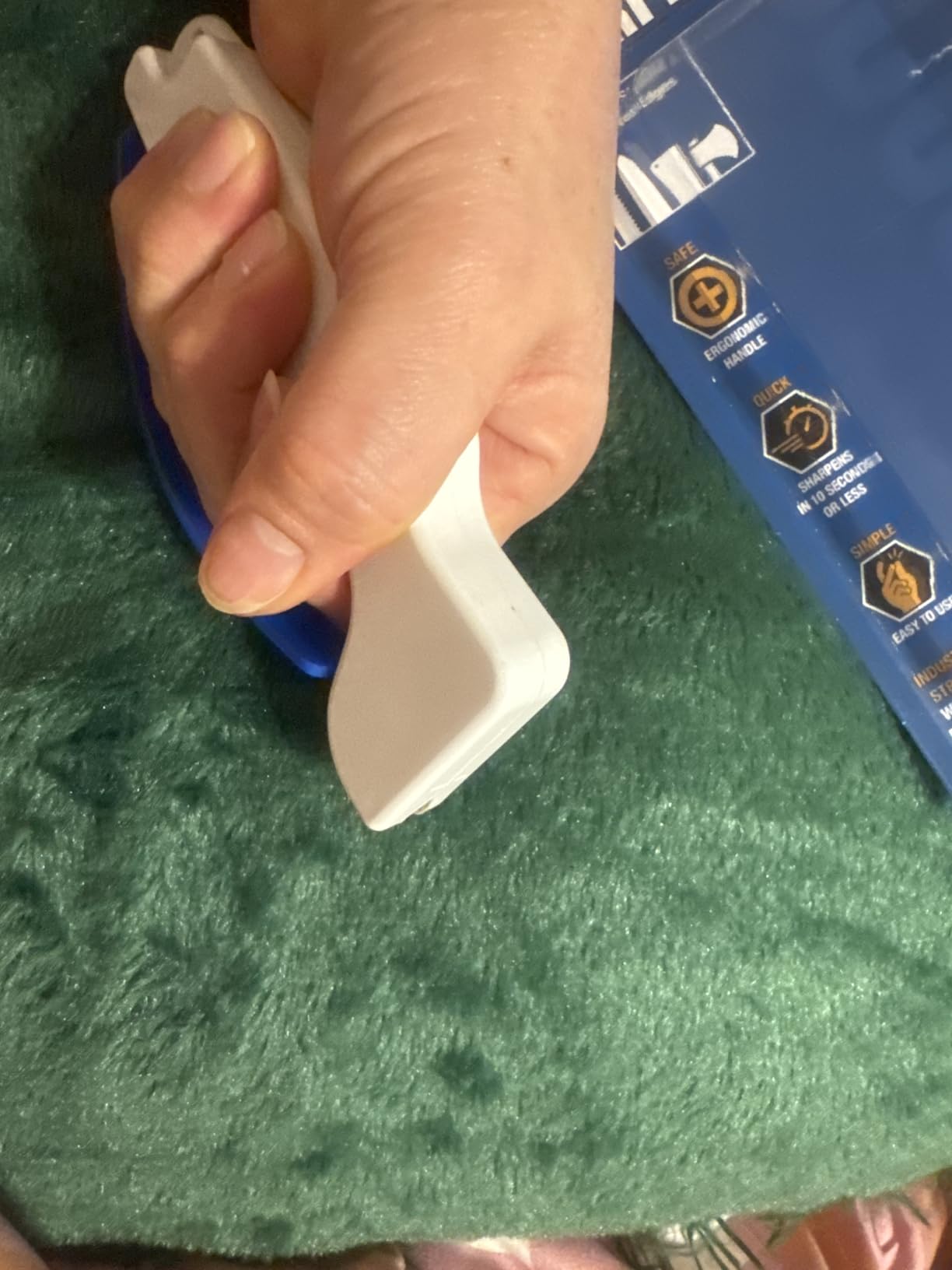
Owners report that they reach for it two or three times a year and it keeps a knife set in service for years, and the cleaning story is as simple as it sounds: soap and water, or the dishwasher. The finger guard runs the full length of the handle, which matters more than it sounds because a slick serrated blade in a wet sink is exactly how people cut fingers.
It is also the pick I would hand to someone who will not learn a technique. Draw the blade through the serrated slot, then follow with a light pass or two on a ceramic hone if you want the teeth brighter. That pairing covers ninety percent of home kitchens, and you can read our ceramic sharpener picks to fill the second half.
Which serrations it handles
It does well on the common kitchen patterns: the wide, even scallops of a bread knife, the shallower scallops on steak knives, and standard partially serrated pocketknives. Because the carbide teeth are small and numerous, the slot does not need a taper to reach into a narrow gullwing well, and mixed scallop sizes are not a problem.
The one pattern it does not love is a gullwing edge with very deep, widely spaced teeth, where the blade can rock slightly in the slot on the first pass. Holding the knife a touch flatter against the slot handle removes the wobble.
What it will not fix
It will not reshape an edge that has been ground down to a smooth band, and it will not repair a chip out of a tooth tip. For that you need a coarser abrasive or a tapered diamond file first, then the slot for finishing.
It also cannot change the resulting edge angle. That is the trade for the fixed slot, and for most cooks it is a trade worth making.
2. Chef’sChoice 15XV EdgeSelect: Fastest Way to Service a Whole Serrated Drawer
- Third stage is built specifically to polish and prolong serrations
- Spring guides hold a steady angle without thought
- About a minute for a full pass and ten seconds to resharpen
- Handles a whole drawer in one sitting
- Large countertop footprint at 10 by 4.25 inches
- Fixed 15 degree bevel cannot make a 20 degree edge
- Stage one can shorten a fine blade if you linger on it
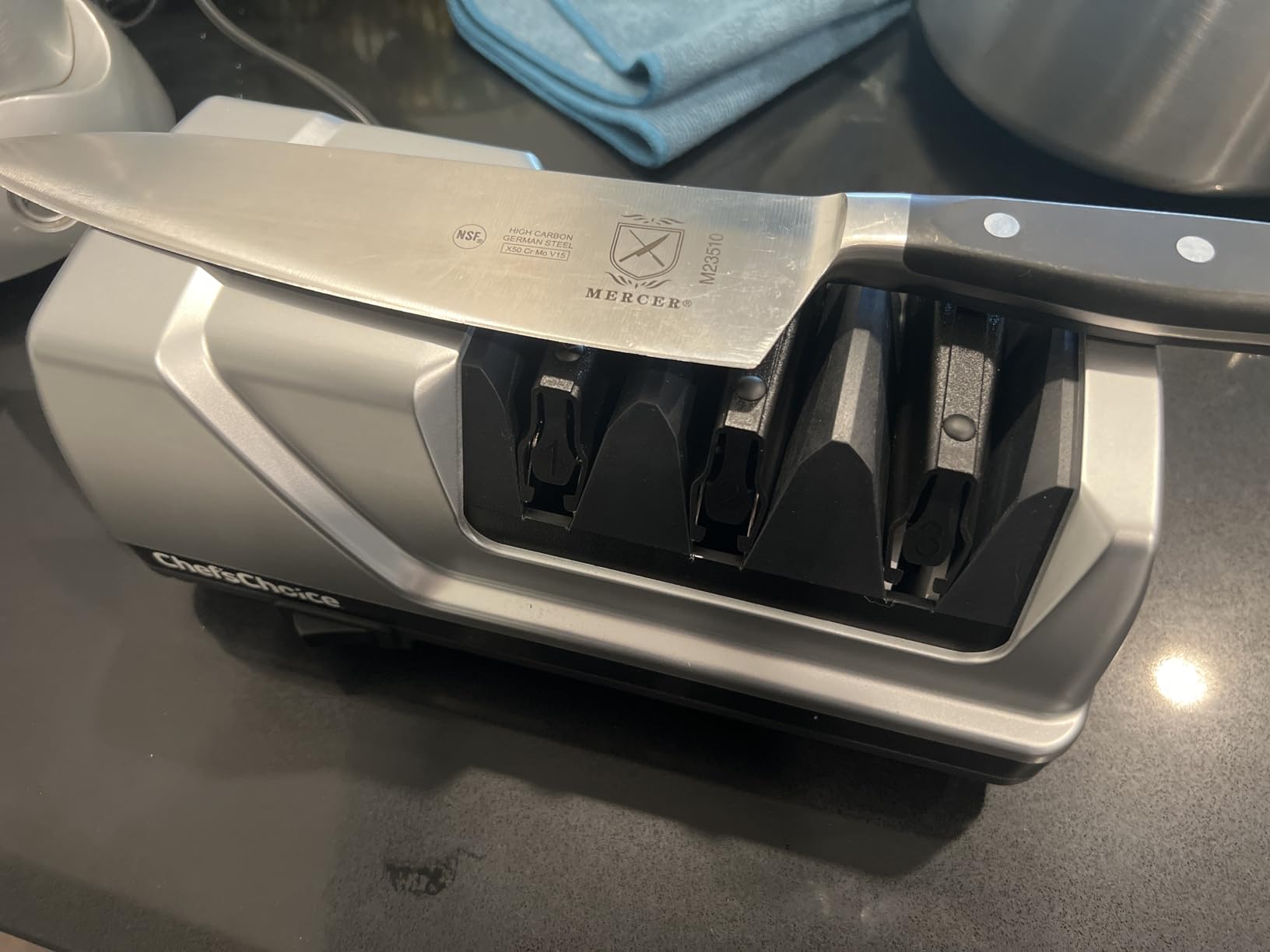
Electric sharpeners get dismissed in serrated-edge conversations, and most of them deserve the dismissal. This one has a third stage built around a flexible abrasive system that polishes and helps prolong serrated teeth rather than grinding them flat, which is the specific design choice that makes it work where a plain metal wheel would fail.
The speed is the real argument. Roughly a minute for a first-time sharpening and about ten seconds for a resharpen means a full serrated set gets sorted while the coffee brews. The spring guides do the angle thinking for you, so there is no rocking to correct and no streak of half-sharpened teeth down the blade.
Reviewers repeatedly make the same point about this machine: results depend entirely on pulling each stage until you feel a burr, and skipping the manual is how people over-sharpen an edge. Treat it as a three-step sequence rather than a one-and-done pass, and it behaves exactly as advertised.
It is worth pairing with a rod anyway. Owners commonly run the electric first, then touch up with a ceramic hone, and the combination produces brighter teeth than either tool manages alone.
Which serrations it handles
It covers the full kitchen range, from coarse bread-knife scallops to fine gullwing teeth on a folding knife, because the serrated stage uses a flexible abrasive that conforms rather than a rigid wheel that skips. It is also rated for sports and pocket knives, which broadens the audience beyond the kitchen drawer.
For very delicate hollow-ground blades, a light hand in stage one pays off. The material removal is real, and it is applied evenly, which is both its strength and the thing to watch.
What it will not fix
It will not sharpen scissors, shears, or most non-knife tools, so a household with a good pair of kitchen shears still needs a second device. It also cannot put a 20 degree bevel back on a knife that arrived with one.
And it is a countertop commitment. If you sharpen one knife once a year, the machine is solving a problem you do not have.
3. Chef’sChoice Manual Diamond Sharpener: Angle Control Without the Power Cord
- Angle guides let you choose the bevel
- Covers straight and serrated plus sport and pocket knives
- Compact 9.25 inch body stores easily
- No power or consumable cartridges
- Manual passes take longer than an electric unit
- Extra-fine diamond refines rather than repairs
- Angle selection takes practice to get even
Where the electric version trades control for speed, this manual unit keeps the angle guides and gives the speed back to your arm. CrissCross technology sharpens with two diamond abrasive wheels at once, and the separate sharpening and polishing stages produce an arch-shaped edge that holds up well between sessions.
For a bread knife specifically, this is the pick in the group. Large even scallops are the easiest pattern to run through a guided system because the guide plate supports the blade the whole way and the wheels meet each tooth consistently. You get an even result along a long blade in a fraction of the time a stone would take.
At 8 ounces it lives in a drawer rather than on the counter, and the soft-touch handle gives a secure grip even with wet hands. The ten-year warranty is the longest in this roundup and covers the mechanical parts you would worry about on a cheaper unit.
Owners who rate it lower tend to be coming to it expecting a repair tool. The extra-fine diamond is a refining abrasive. It will bring a working edge back and brighten it, but it will not take off the damage left by a year of crushing bread.
Which serrations it handles
Because the wheel geometry is fixed and supported, it suits serrations of moderate and even spacing best, which covers most bread knives and steak knife sets. Very fine gullwing teeth on a folding knife can sit below the working height of the wheels and need a tapered rod to finish.
Because it does not depend on a taper to reach a scallop, you can work fast and use long strokes along the blade instead of stopping at every tooth.
What it will not fix
It will not restore a badly dulled or nicked blade, and it will not reach the deepest part of a narrow gullwing well. Pair it with a tapered diamond rod and the two cover each other’s gaps neatly.
It also cannot be adjusted beyond the two bevel options, so if you like a 25 degree edge this is the wrong tool.
4. Orange Ninja 4-Stage Sharpener: The Cheapest Way to Cover Four Jobs
Orange Ninja Serrated & Kitchen Knife Sharpener – 4-Stage Sharpening Tool
- Serrated slot is purpose-built not an afterthought groove
- Coarse carbide stage repairs nicks the finer stages cannot
- One tool covers repair through polishing
- Ambidextrous ergonomic handle
- Fixed slot angles with no bevel control
- Plastic body feels light and less rigid than metal
- Needs several passes per slot for an even result
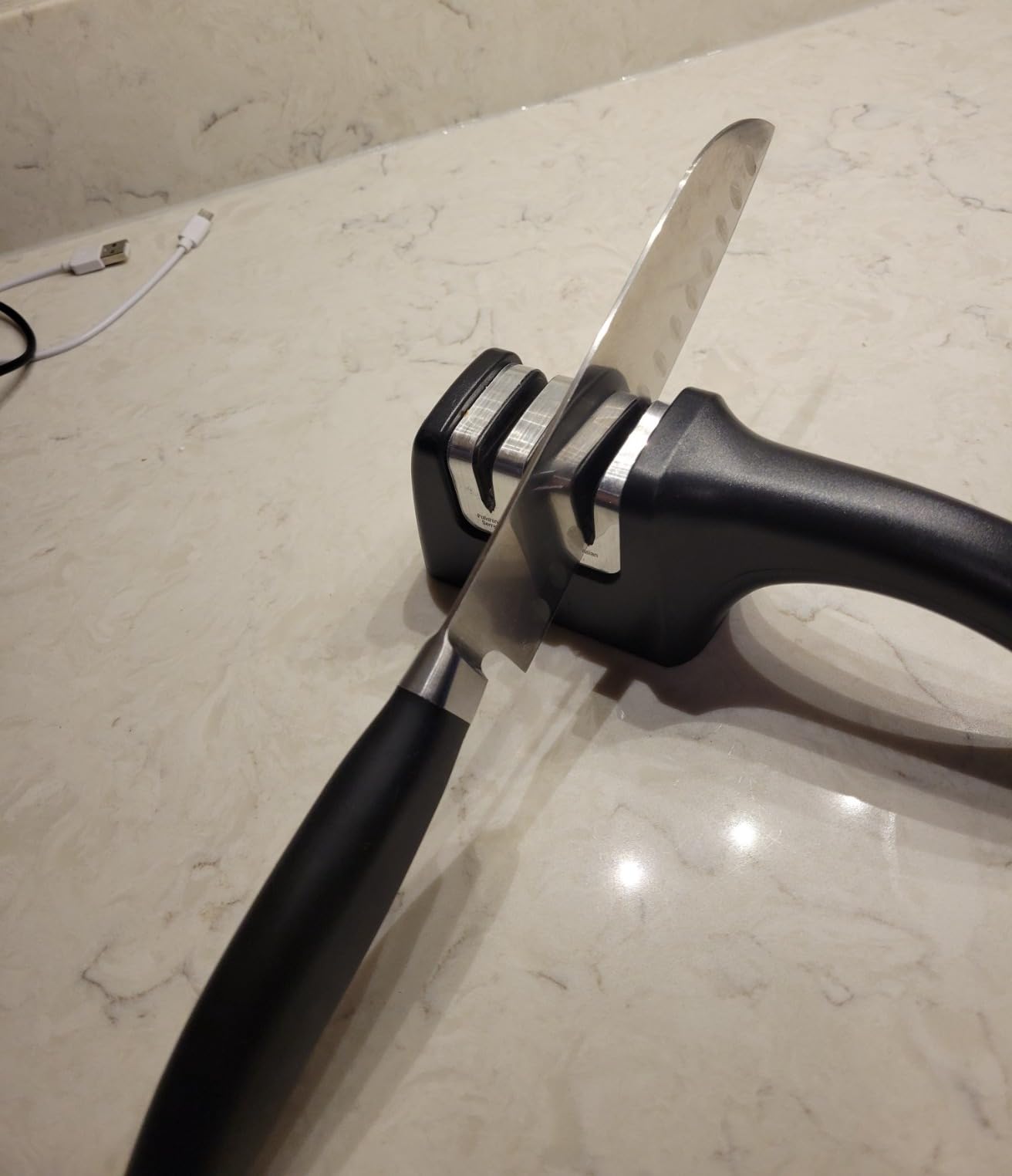
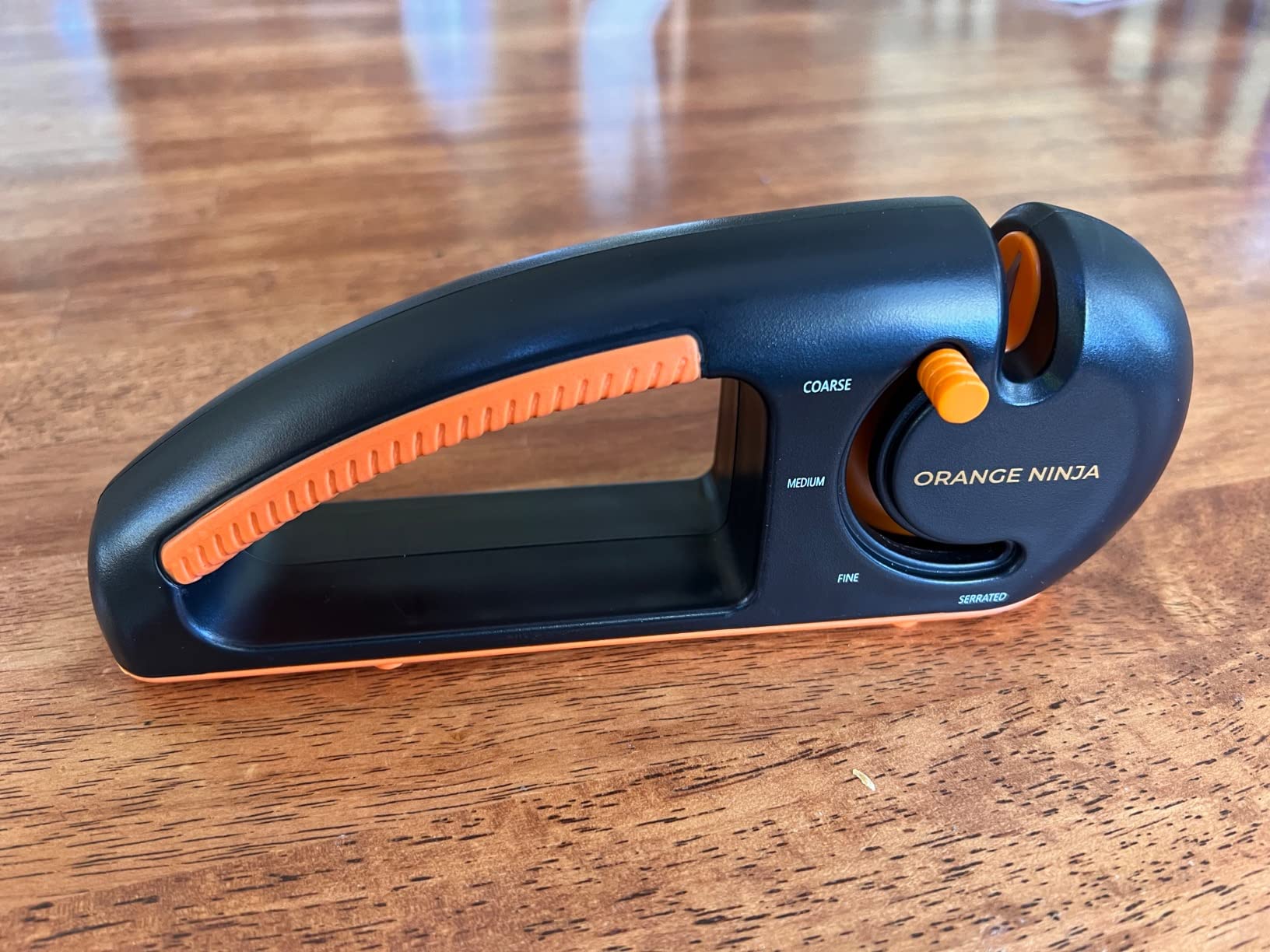
Most multi-slot sharpeners include a serrated groove that does almost nothing, so it is worth being clear that this one was designed around the serrated case. The dedicated slot is sized to let a serrated blade ride over the scallops, and owners report it brings a dull bread knife back to cutting within a session.
The four stages are what make it interesting. A coarse carbide slot repairs damage, a medium diamond rod sharpens, a fine slot polishes, and the serrated slot handles teeth. That progression is the same logic a full stone setup would follow, compressed into something you can buy once and store in a drawer.
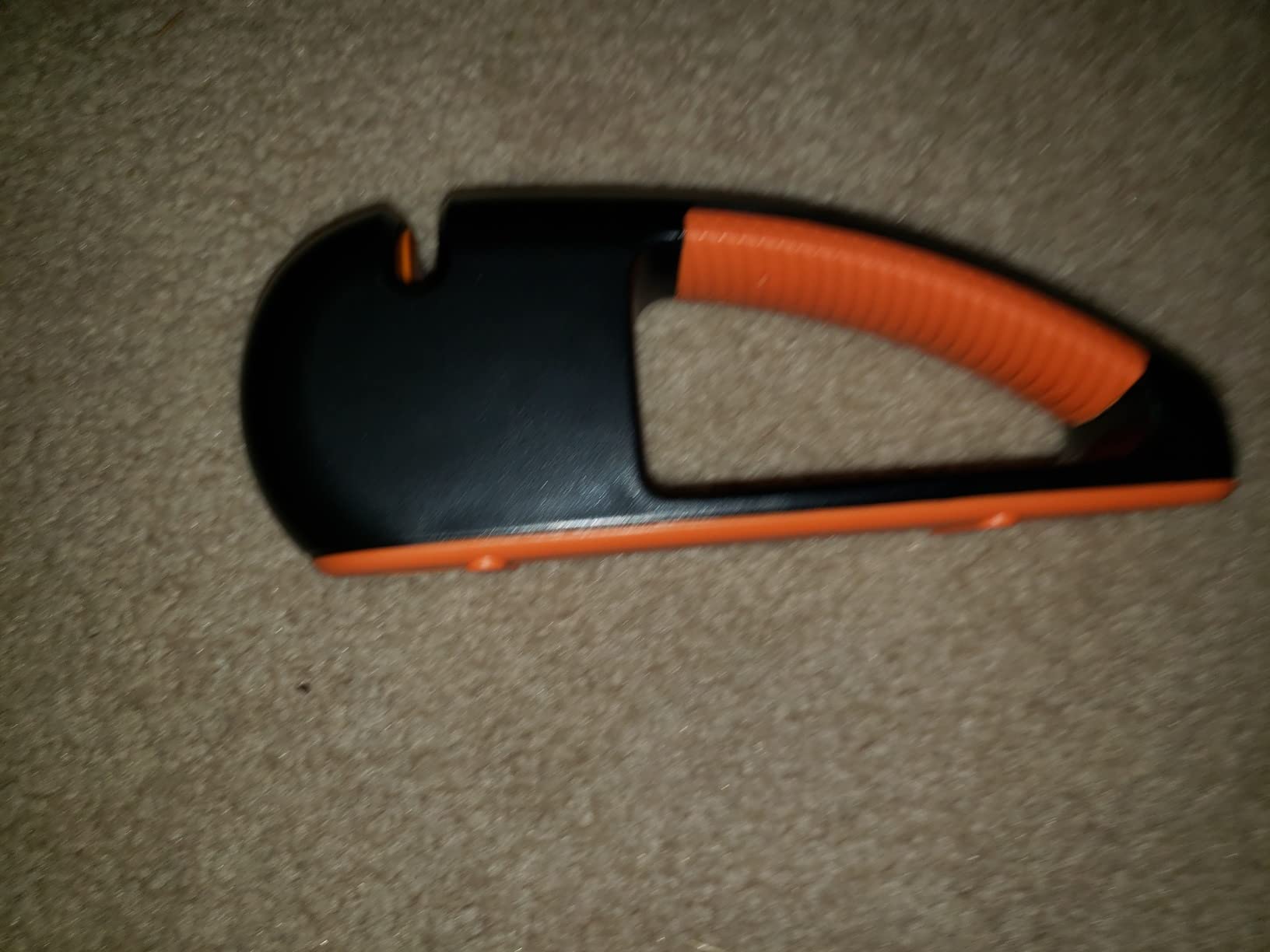
It weighs a little over ten ounces and the ergonomic handle works equally well for either hand, which matters if the sharpener is going to be shared. Reviews also note that it needs several passes per slot before the edge looks consistent, so treat the first session as practice rather than a verdict.
For someone sharpening two knives a year, this is a defensible single purchase. Sharpening enthusiasts make the opposite point repeatedly, that with a small number of knives a single tapered diamond rod beats a full kit, and they are not wrong.
Which serrations it handles
It covers the common kitchen serrations well, including the wide scallops of a bread knife and the shallower teeth of a steak knife. Some users find the serrated slot works best only on the more common serration sizes, so an unusually deep gullwing pattern may still need a taper.
The flat and half-round treatment in the other slots means you can service the straight portion of a partially serrated folder in the same pass.
What it will not fix
It will not produce a mirror finish, and the fixed slot angles mean you have no say in the resulting bevel. Very fine gullwing teeth can sit below the slot geometry and remain partly untouched.
It is also not a substitute for a diamond file on a blade with real chips in the tooth tips.
5. DMT Diafold Serrated Sharpener: The Specialist Tapered Diamond File
Diamond Machining Technology (DMT) Diafold Serrated Diamond Knife Sharpener, Fine (FSKF), 4″
- Single taper covers serrations of very different sizes
- 600 mesh diamond leaves a clean non-scratched finish
- Folds closed to protect the diamond plate
- Doubles as a gut hook sharpener and conical file
- Folding plastic hinge is the weak point for some owners
- Handle lacks ergonomics at 18 grams
- Fine grit only refines and a coarse companion is needed
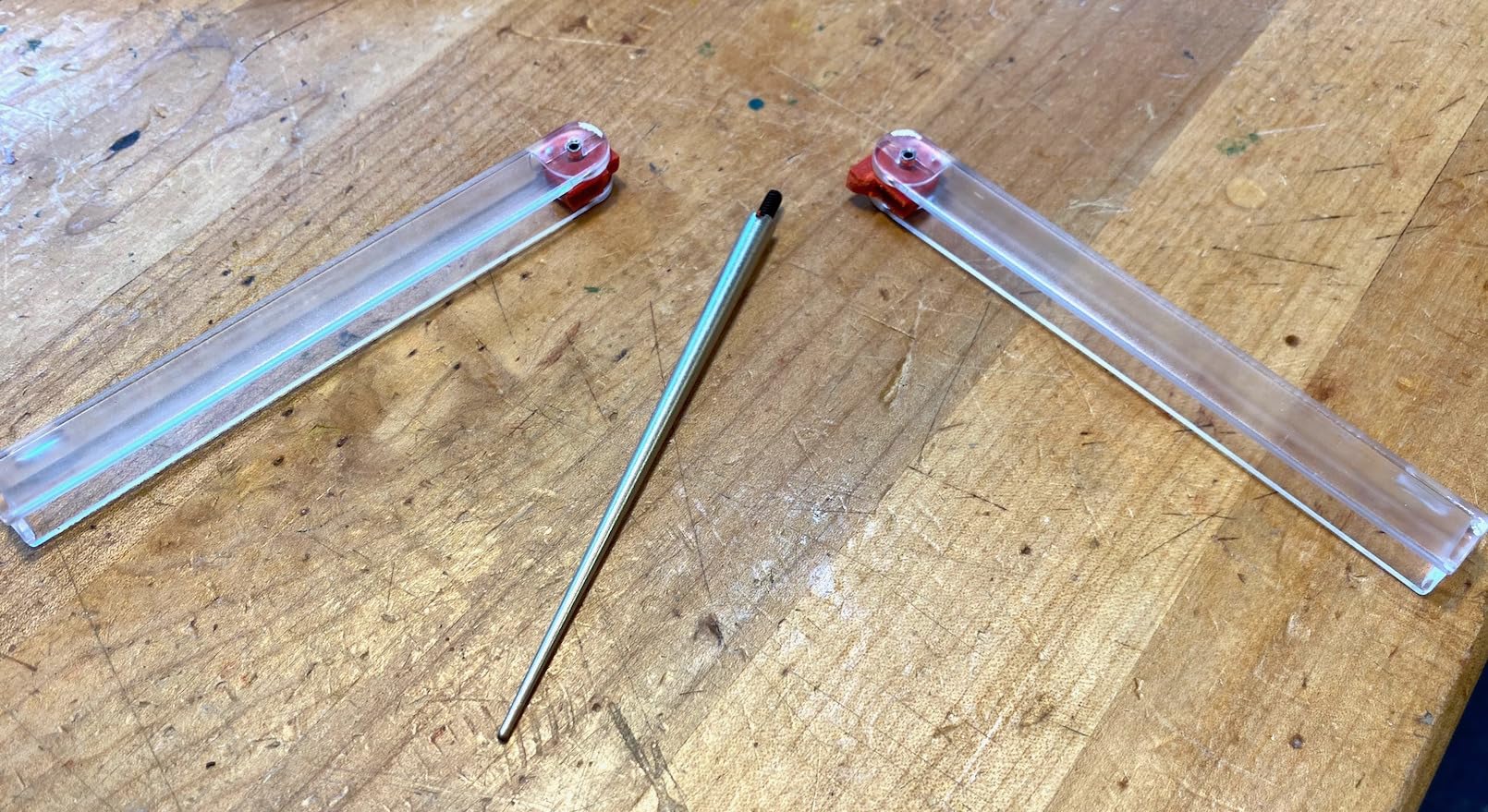
This is the tool the category is built around, and once you hold it the reason is obvious. The cone tapers from a quarter inch down to a sixteenth, so the same implement that dresses a wide bread-knife scallop at the base will fit inside the narrow gullwing wells of a folding knife near the tip. No other single tool in this roundup covers that range.
The 600 mesh monocrystalline diamond surface is genuinely fine, and users consistently describe the result as clean and free of the oily residue that oil stones leave behind. It sharpens dry or with water, no lubricant required, and it needs no soaking or flattening ritual between sessions.
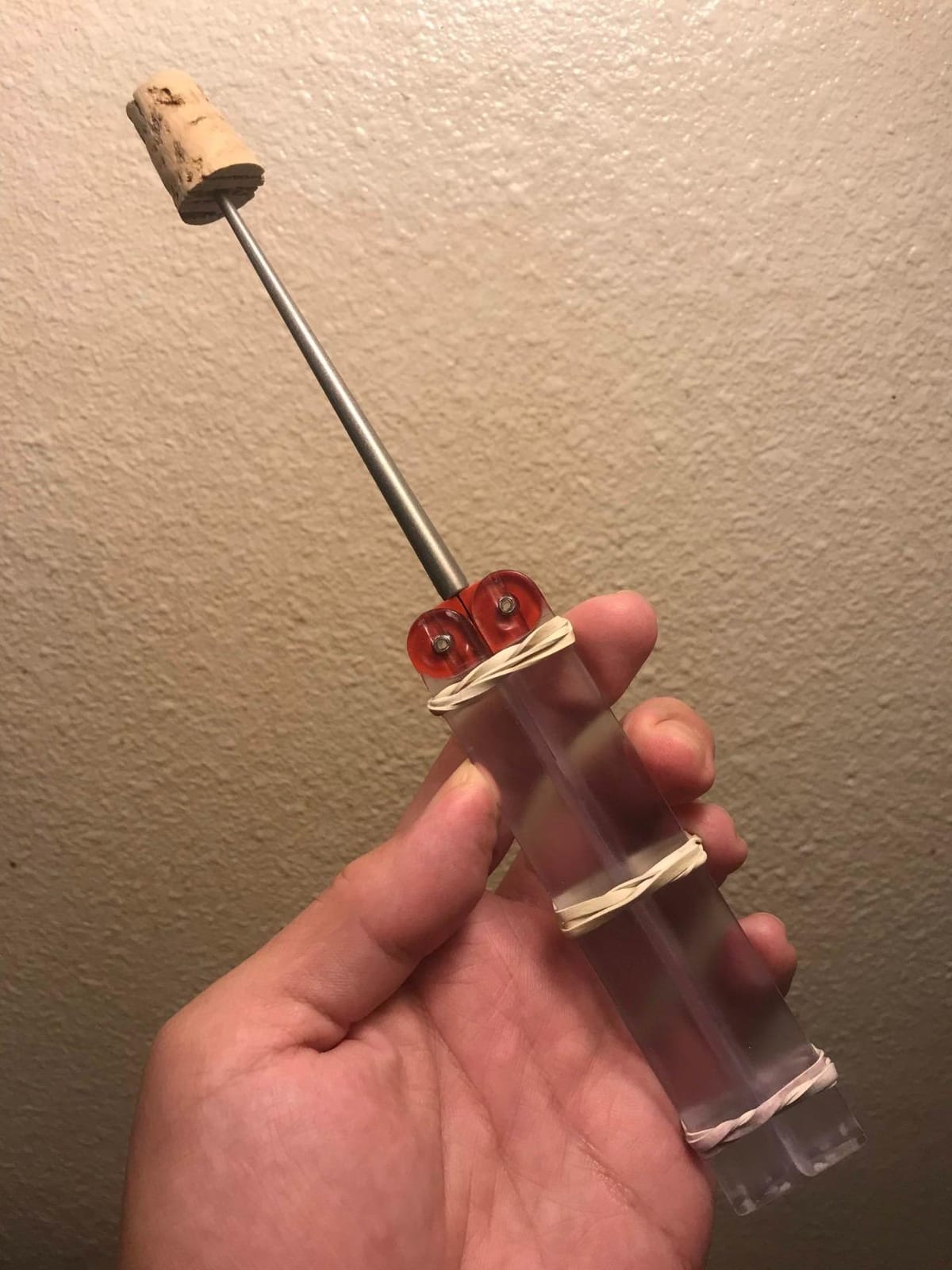
It also does secondary jobs well. Owners use it as a mini steel, a gut hook sharpener and a conical file, and it folds to five inches so it lives in a pocket or a tool roll rather than on a shelf. Sharpening hobbyists have been using diamond cones on serrations for decades for the simple reason that nothing else fits the geometry.
The grip is the compromise. At 18 grams the folding handle is light and several buyers mount the cone in a wooden handle instead, which is a five-minute fix if you plan to use it often.
Which serrations it handles
Every one of them, which is the headline. Wide bread-knife scallops, mixed-size scallops on a utility knife, fine gullwing teeth, and the partial serrations on a pocketknife all sit somewhere on the taper. This is the tool to buy if you own a folding knife and do not know which pattern it uses.
Because the diameter changes along the length, you work the blade with short strokes near the base and progressively shorter, finer strokes toward the tip rather than running the whole edge in one pull.
What it will not fix
Fine diamond refines an edge rather than reshaping it. A serration that has been ground smooth by an electric wheel needs a coarser diamond first, and the same goes for a tip chipped on a jar lid or a stone.
Technique matters too. Owners report that heavy pressure can dislodge the diamond plating, and since it is not a fixed size, working between the wells and the tips is an acquired skill rather than an automatic result.
6. Wamery Retractable Diamond Rod: The Pocket-Sized Taper for Daily Carry
Wamery Serrated Knife Sharpener, Retractable Diamond Rod Pocket (Black)
- Taper reaches both large scallops and micro-serrations
- Retractable so the rod is protected in a pocket
- Just over an ounce so it disappears into a bag
- Flat section handles straight edges too
- Coarse diamond is for maintenance not neglected edges
- Short rod means several passes per tooth
- Does not repair nicks or chips
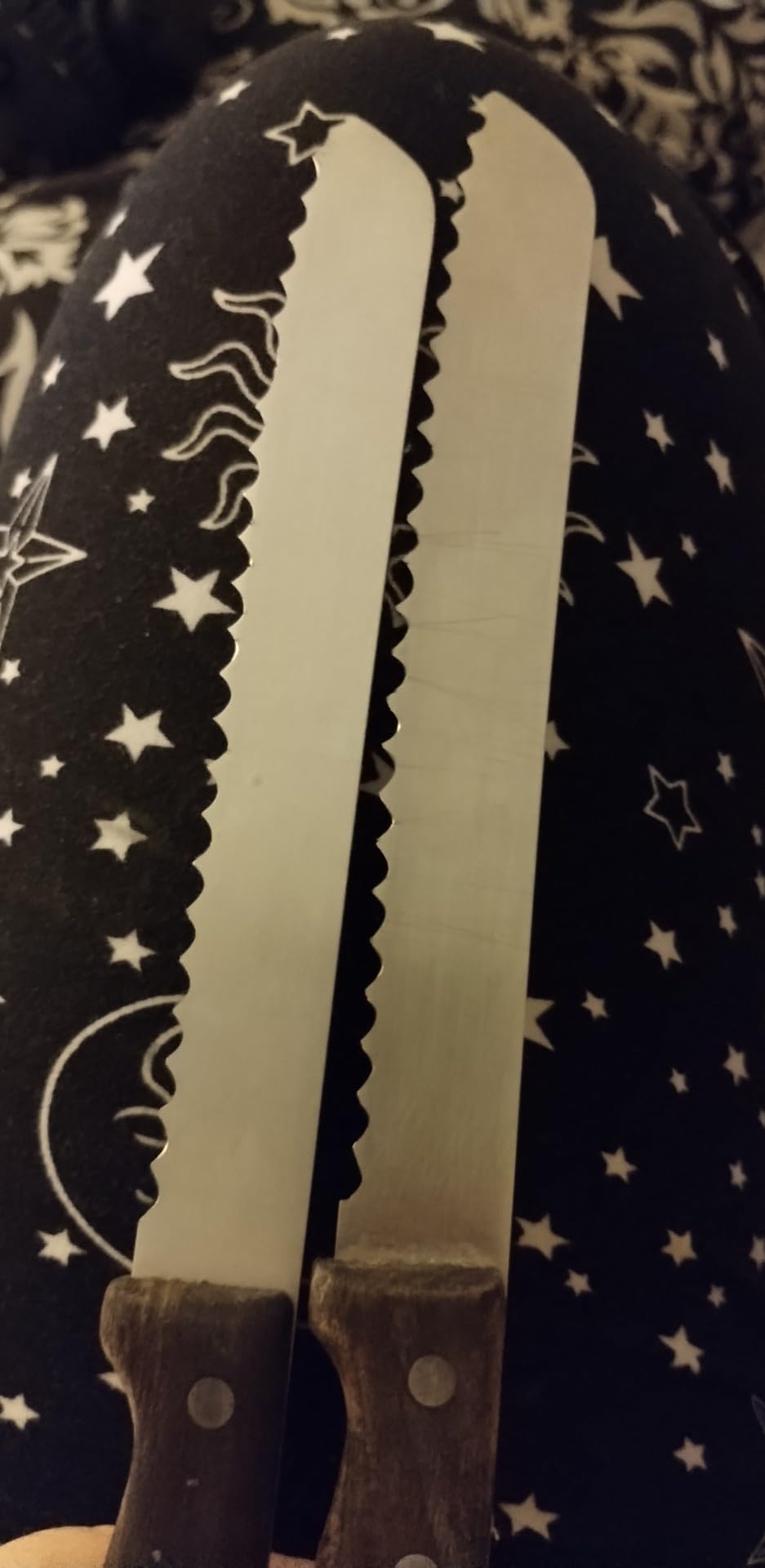
Where the DMT cone is a workshop tool, this one is designed to disappear into a jacket pocket. The tapered diamond-coated rod reaches into scallops and micro-serrations, and the flat half-round section behind it restores plain straight edges, so a single tool covers both halves of a partially serrated folder.
It weighs just over an ounce and the rod retracts fully into its housing, which matters outdoors where a loose abrasive would get knocked. The coarse diamond is the right choice here because the intent is a quick touch-up between trips rather than a full restoration.
Reviewers treat it as an everyday carry fix. Bring it back from a week of camping, run each scallop a few times, and the edge is functional again. The same reviewers are consistent about the limit: it maintains an edge well, and it is not the tool for a blade that has been left dull for a season.
It is also a sensible second purchase rather than a first. If you already own a full-length taper, this earns its slot as the portable companion.
Which serrations it handles
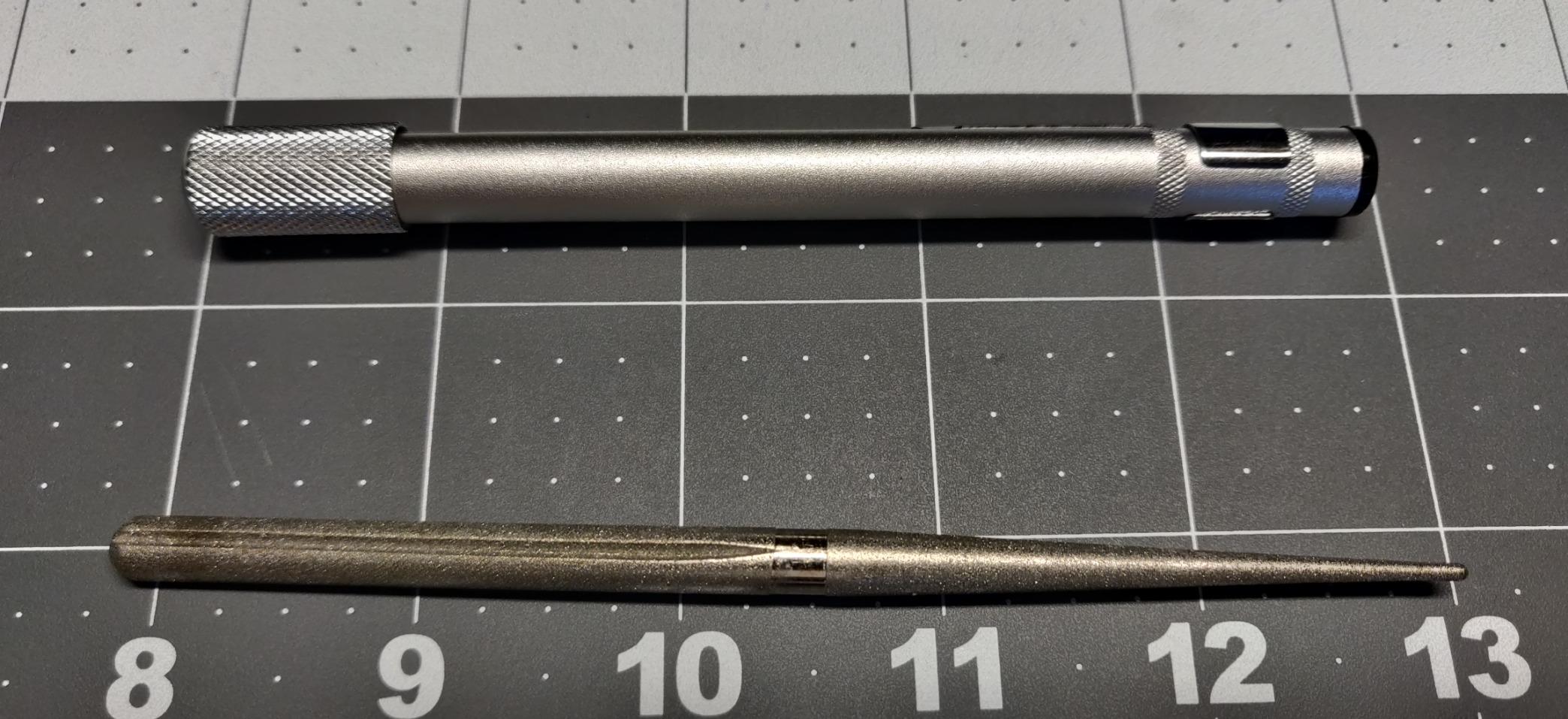
The taper handles large scallops and very fine micro-serrations, which covers bread knives, steak knives, and the small gullwing patterns found on compact folding knives. The short length is the only real constraint: on a long bread knife you are making many short passes rather than long strokes.
It is less suited to deeply angled or very unusual serration patterns, where the rod’s short length makes it awkward to keep the correct angle.
What it will not fix
It will not repair nicks or chips in the blade, and the coarse diamond will not restore an edge that has been worn past the point where the tooth tips still exist. That is a job for a fine diamond file or a stone.
It is also a maintenance tool by design, so expecting straight-edge razor sharpness from it is the wrong expectation.
7. Fino Edge Retractable Diamond Rod: Budget Backup for Tackle Box and Tool Bag
- Rescues serrations worn smooth by an electric sharpener
- Handles gut hooks and nail clippers too
- Tapered and flat ends in one rod
- Very light and among the least expensive dedicated options
- Instruction sheet is vague and technique takes practice
- 400-grit is a maintenance grit not a repair grit
- Narrow flat face needs a steady hand on long edges
The most interesting thing owners say about this rod is that it has brought back serrations an electric sharpener had stripped. That is the failure mode most people encounter first, and a 400-grit diamond taper is exactly the right instrument for putting tooth back on a blade that a metal wheel has sanded flat.
The adjustable retractable rod lets you choose how much length is exposed, which is genuinely useful on small hooks and narrow patterns where a long rod is unwieldy. The tapered end is for serrations and the flat end for straight edges, and the same rod handles gut hooks, nail clippers and scissors.
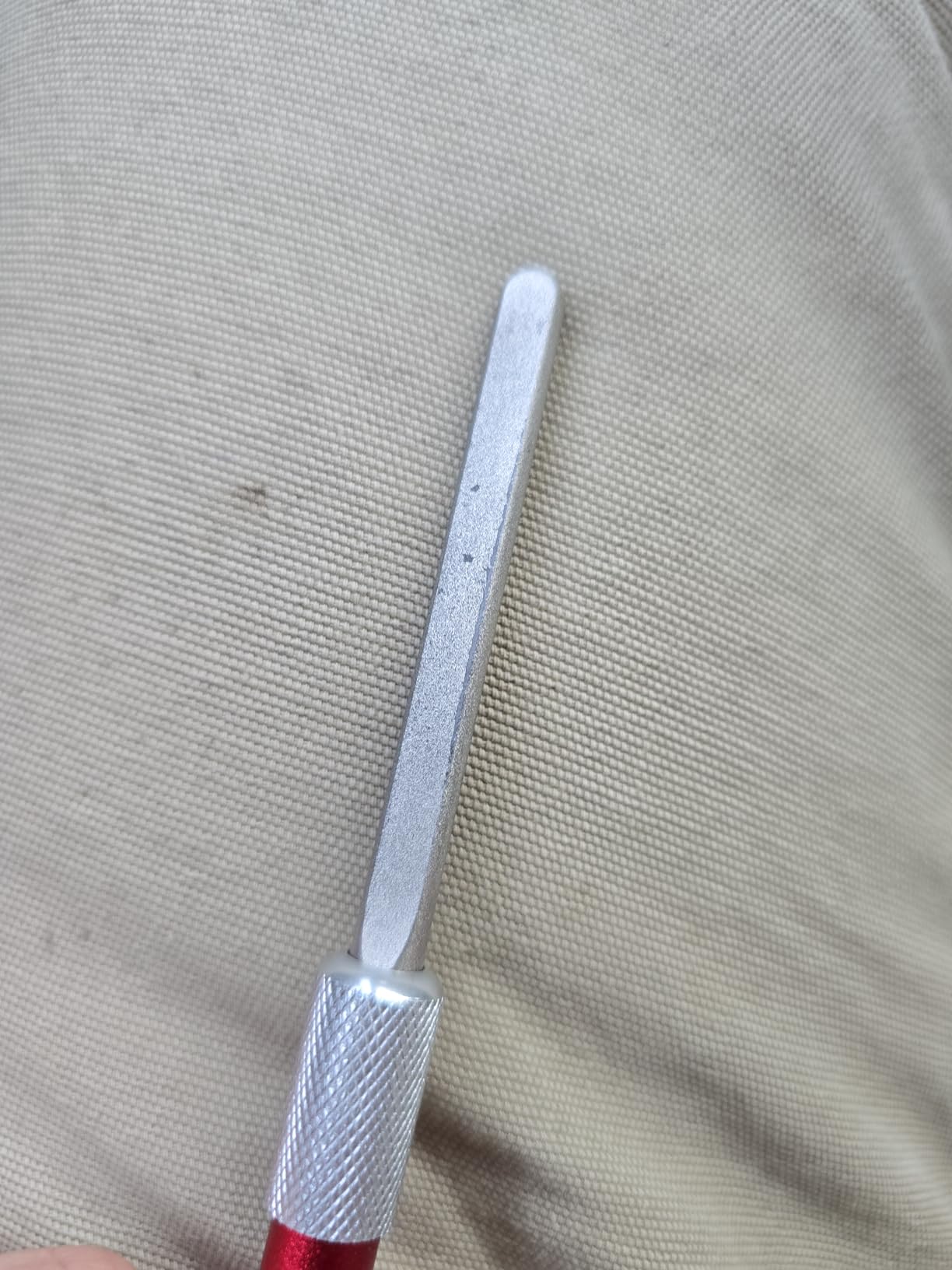
It weighs 40 grams and fits in a pocket or a tackle box, so it lives in the same bag as the knives it serves. That is a different buying decision from a kitchen-drawer sharpener, and for field users it is the correct one.
The weakest point is documentation. Owners repeatedly single out the instruction sheet as vague, so plan on learning the angle by feel or by watching a demonstration once before you rely on it.
Which serrations it handles
It works across bread knives, pocketknives and utility knives, and the tapered end reaches both coarse scallops and finer gullwing patterns. The adjustable length helps most on short blades and small hooks where control matters more than reach.
It is less convenient on a long straight edge, where the narrow flat face needs a steadier hand than most people have first time.
What it will not fix
It will not restore a blade with real chips removed from the steel, and 400-grit is a maintenance abrasive that refines rather than reshapes. A badly neglected serrated knife wants a coarser step before this rod.
It is also not a polishing tool, so it will not brighten teeth to a reflective finish.
8. Work Sharp Ceramic Honing Rod: the Finishing Step Between Repairs
Work Sharp Kitchen Ceramic Honing Rod – Angle Guided – For Chef, Santoku, Paring, & Serrated Knives Black
- Angle guides keep the bevel consistent without a separate jig
- Fine ceramic refines while removing minimal material
- Rubber tip gives a stable base on a board
- Long rod covers a full chef's knife in few strokes
- A honing rod so it cannot fix a truly dull blade
- Ceramic is harder to dress and does not repair chips
- Angle is fixed by the guides rather than adjustable
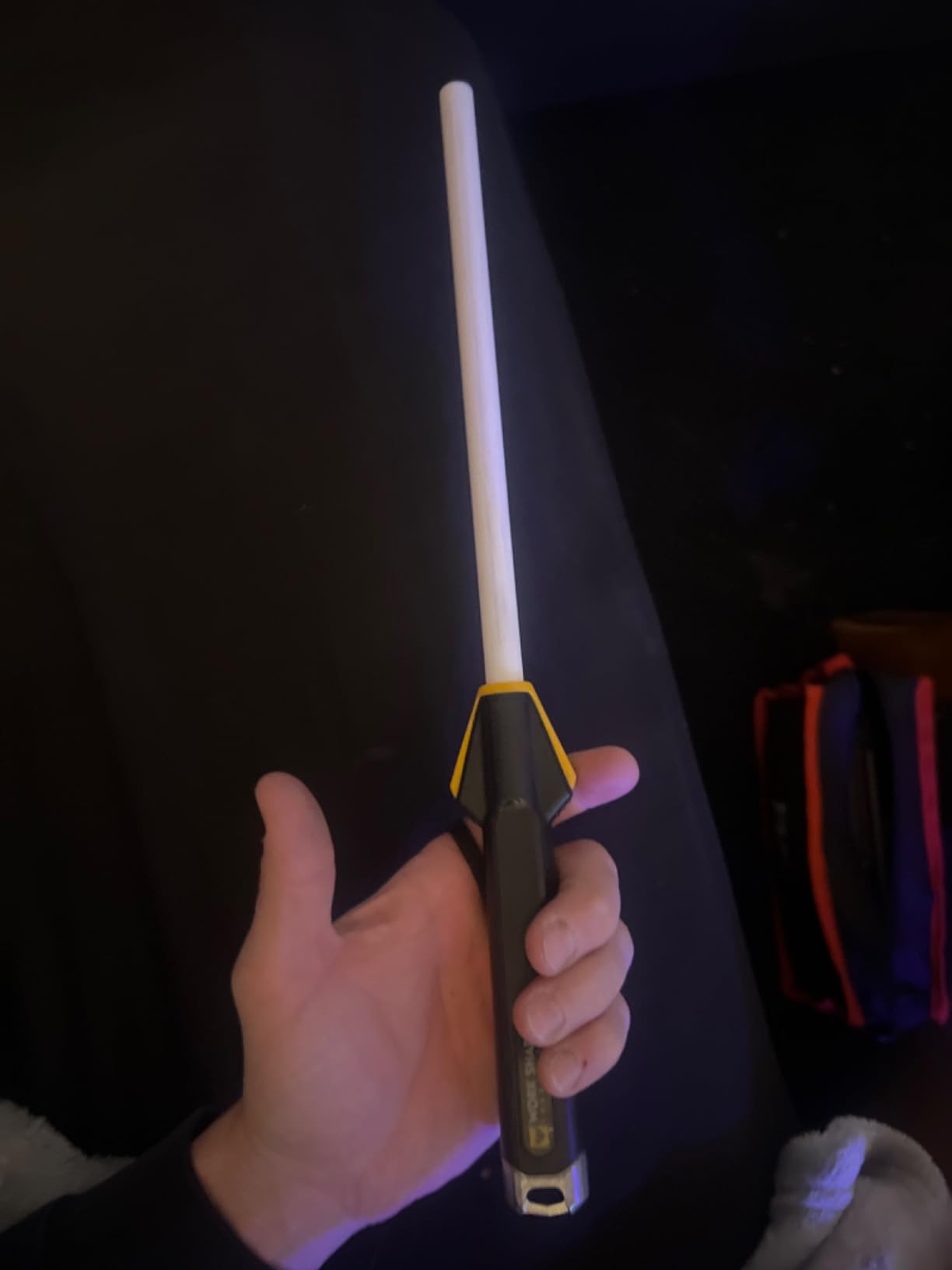
It is a hone, not a sharpener, and the distinction matters more on a serrated blade than on a straight one. Ceramic at this fineness removes a very small amount of material to refine the teeth back to bright, which is exactly what a serrated edge needs between heavier repairs. It will not rebuild a tooth that is already gone.
The built-in angle guides are the feature that separates it from a generic ceramic stick. You lay the rod at a fixed angle and draw the blade across, and the guide keeps the bevel consistent without a separate jig. For serrations specifically, it means the teeth finish at the same angle as each other rather than drifting across the blade.
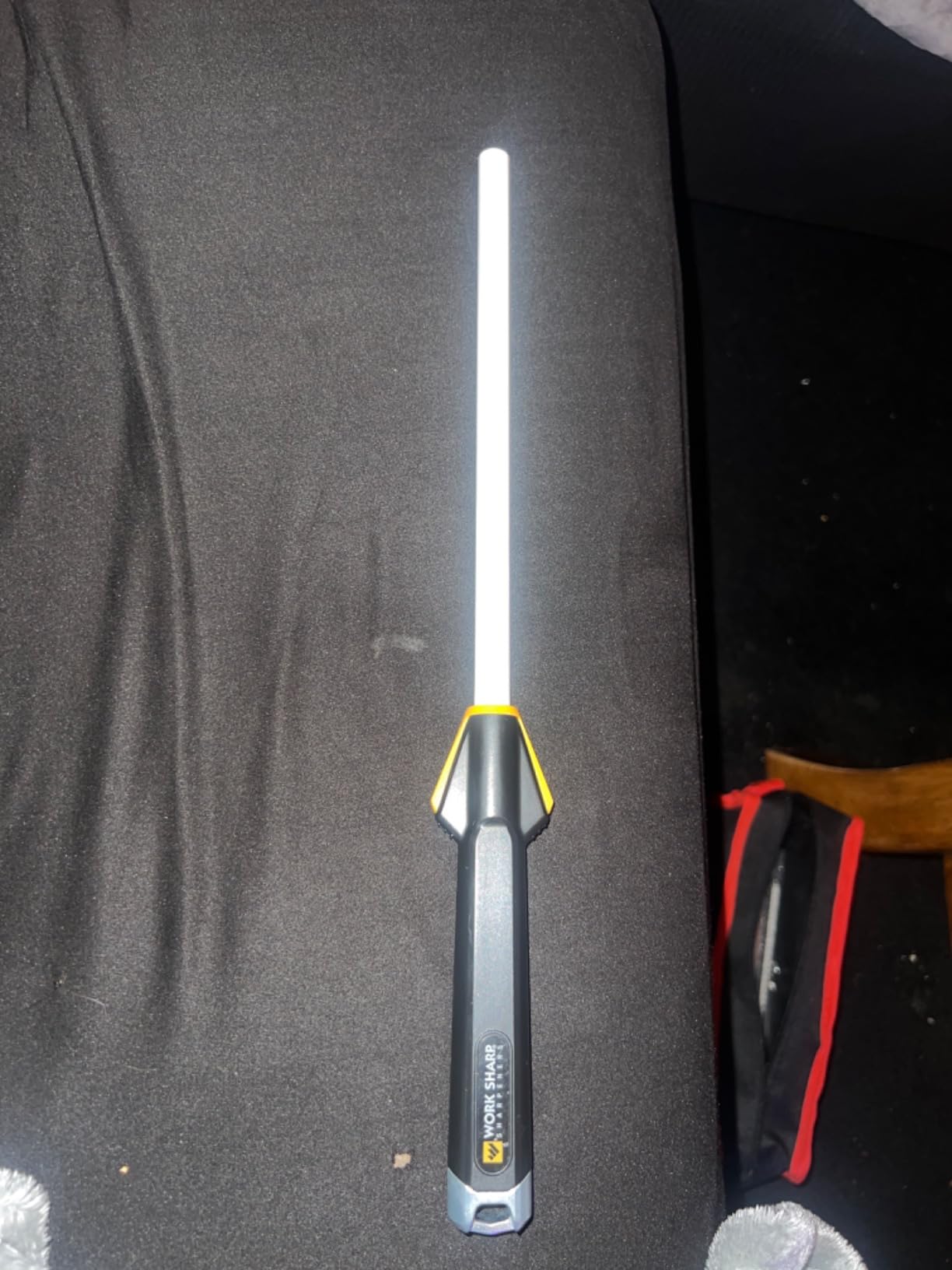
The rubber tip is a small design decision that makes a real difference. Standing the rod on your cutting board or bench gives you both hands free and stops the roll that normally ends a honing session with a dropped knife and a new hole in the countertop. A lanyard hole lets it hang on a grill or a wall instead of disappearing in a drawer.
At 15.5 inches the rod covers a full chef’s knife or a bread knife in a few strokes, and the pairing most owners settle on is a sharpener for repairs and this for weekly maintenance.
Which serrations it handles
It finishes standard kitchen serrations well, including the scallops on a bread knife and the shallower teeth on a steak knife, as the second half of a two-step maintenance routine. The long rod suits a blade that needs an even sweep rather than careful per-tooth work.
Very fine gullwing teeth are the limit. A cylindrical ceramic rod meets each tooth but does not reach into the narrowest wells, so those edges will still want a tapered diamond pass.
What it will not fix
It will not fix a truly dull or nicked blade, and ceramic is hard to dress if it does get damaged. The angle is set by the guides rather than the user, so it is a honing tool for one geometry, not an edge-setting tool.
Owners who expect a sharpener from it are the source of most of its lower reviews. Paired correctly, it is the most-used tool in most kitchens.
9. Work Sharp Ken Onion Mk.2: The Bench System for Mixed Tool Collections
Work Sharp Ken Onion Knife Sharpener Tool – Adjustable Knife Sharpening System – For Knives, Scissors, Serrated Blades, & Tools
- Covers knives
- scissors
- serrated blades and tools in one machine
- Flexible belts follow curved and contoured edges
- Angle guides plus variable speed give repeatable results
- Compact enough for a countertop shelf
- Costs more than electric or manual slot sharpeners
- Belt technique takes practice to avoid rounding tips
- Abrasive belts wear and need replacement
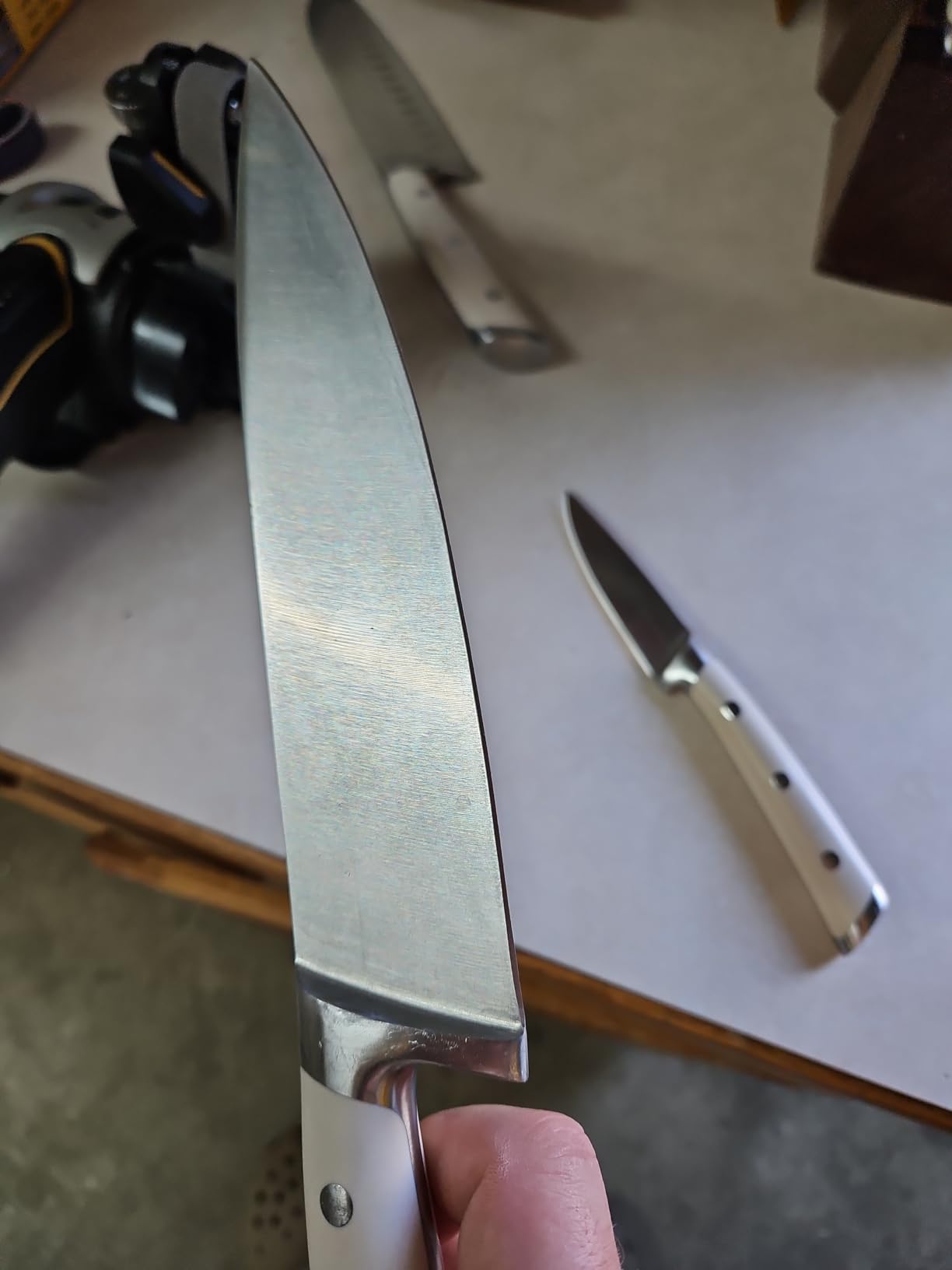
If your collection includes kitchen shears, a pruner, a chisel and a serrated bread knife, this is the one machine in the group that takes all of them. The flexible abrasive belts conform to curved and contoured edges, which is the reason a belt machine can follow the spine of a gullwing pattern that a rigid wheel would skip over.
The angle guides combined with electronic variable speed give the most repeatable results here. You set the bevel, dial the speed, and the belt removes steel at a controlled rate rather than the aggressive bite of a fast electric wheel. That control is why enthusiasts put serious edges on blades with this class of machine.
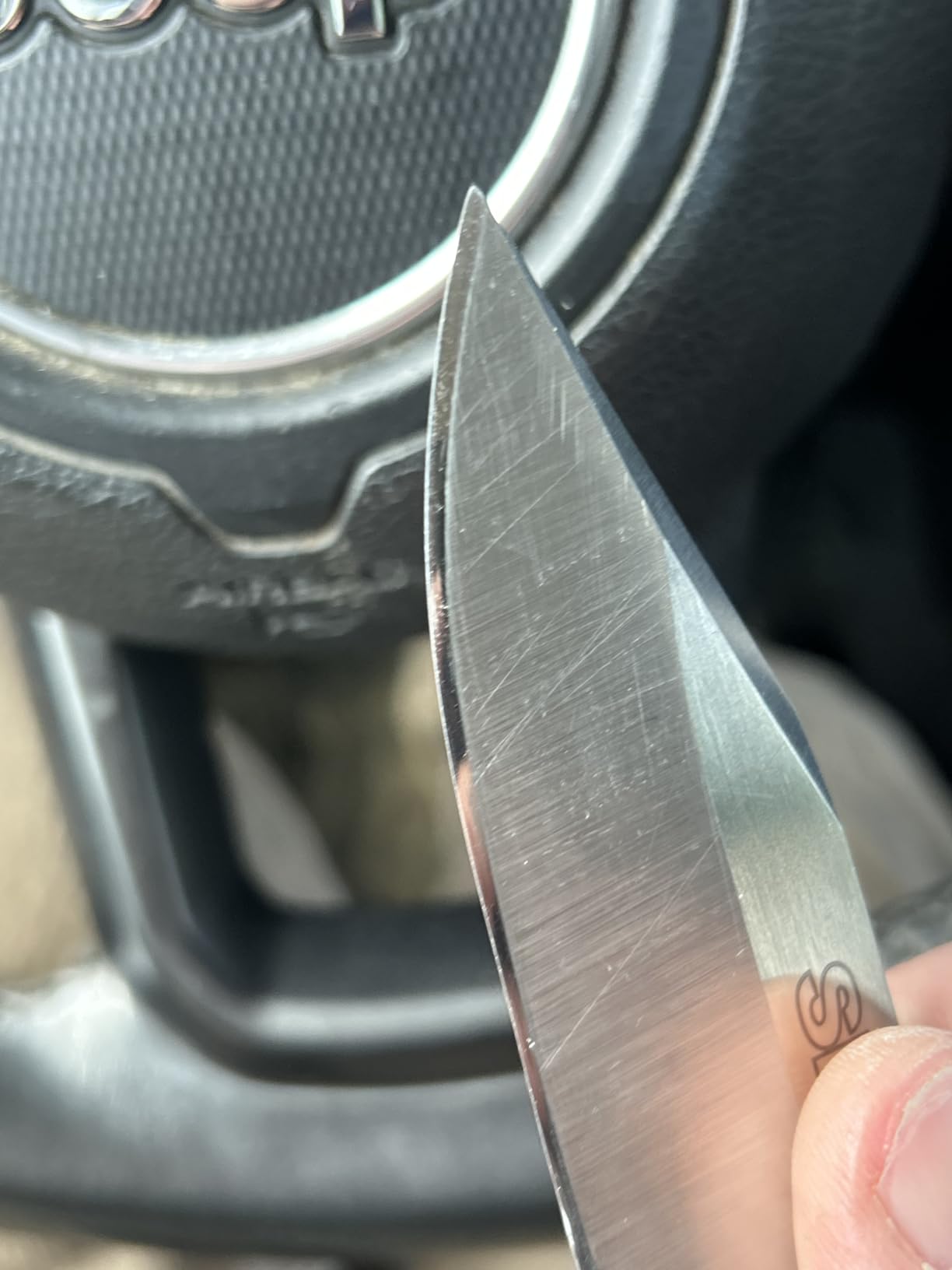
It weighs 2 pounds and measures a little over 10 inches wide, which is small enough for a countertop shelf rather than a dedicated workbench. The 3-year warranty and the Ken Onion design partnership are the sort of detail that matters when you are buying the most expensive item on this list.
Owners also mention that serrations are a secondary use rather than the headline, but they consistently report it doing the job on a bread knife without drama once the technique clicked.
Which serrations it handles
It handles the full range of serrated patterns, and the flexible belt is the reason: it follows the contour of each tooth instead of bridging across them. Bread knife scallops, gullwing teeth and mixed partial serrations all work within the guides.
Because the belt is a fixed shape rather than a taper, very narrow gullwing wells rely on careful guide positioning. It will get there, but it is not as natural a fit as a tapered rod.
What it will not fix
It will not save a badly damaged blade instantly, and belt technique takes practice because a steady hand matters more here than on a slot sharpener. Belts also wear and need replacing over time, which is an ongoing cost the rod and hone options do not carry.
It is also the wrong purchase if you own one bread knife. The price belongs to households sharpening many tools often.
10. Lansky Fine Hone for Serrated Knives: the Finishing Step in a Clamp System
- Holds the sharpening angle constant for each serration
- 1000 grit closes the edge and leaves a clean tooth line
- Also works on gut hooks
- detail and recurve blades
- Cleans with warm water and mild soap
- Fine grit takes a long time on a very dull blade
- Some angled or unusual serrations do not sit at the expected angle
- Freehand use is less precise than clamped use
This is the last step in a system rather than a standalone answer, and knowing that changes how you should shop for it. The triangular 1000-grit ceramic profile is sized for serrated and contoured edges, and inside the Lansky clamping system it holds the angle constant so every scallop finishes at the same angle.
Its specific job is closing the edge and removing the burr from the reverse of the serrations, which is the step that turns a functional serrated edge into a bright one. Owners describe it as a finishing hone that is typically paired with a medium serrated hone in the same system.
It weighs 1.6 ounces and cleans with warm water and mild soap, so it is easy to keep in a kit bag with the rest of your sharpening stones. The same profile works on gut hooks, detail knives and recurve blades, which is why users with mixed sharpening gear like the versatility.
One caution worth knowing before you buy: hot water can dissolve the adhesive holding the hone to its carrier, so rinse it cool and dry it flat.
Which serrations it handles
It is built for serrated and contoured edges, and it does well on gullwing patterns and on bread knife scallops as the final pass. Because the clamp fixes the geometry, the results are consistent across a long blade.
Some angled or unusual serration patterns do not sit at the expected angle, so the clamp can be awkward to position. Very deep scallops on a hollow-ground blade are the case owners mention most often.
What it will not fix
It will not start from a very dull blade. At 1000 grit it takes a long time to remove real steel, so it belongs after a coarser stage, not instead of one. Used freehand without the clamp, it loses the precision that is the whole point.
It is a specialist finishing tool. If you own a couple of kitchen knives and nothing else, a tapered diamond rod serves you better.
How to Choose a Sharpener for Serrated Blades
Start by identifying what you actually own, because serration type decides the tool more than any other variable. The three patterns cover nearly everything:
- Gullwing serration, sometimes called an S1 pattern: a single deep scalloped section near the heel, with a straight edge forward. This is the most common pattern on folding and pocketknives, and it needs a taper to reach the narrow wells.
- Coarse scalloped serration: large, widely spaced teeth. Bread knives and many steak knives fall here, and a slot or wheel sharpener handles them efficiently.
- Fine scalloped serration: small, closely spaced teeth. These appear on utility and partially serrated knives, and they are the hardest pattern to reach with anything except a tapered diamond tool.
Then match the abrasive to the job. Each one has a different personality, and the honest version is shorter than the marketing.
- Diamond is the fastest-cutting abrasive and works dry, which makes it the best choice for a dull or neglected serrated edge. Fine diamond refines, coarse diamond repairs.
- Ceramic is harder than steel and removes very little material, so it is a honing and finishing abrasive. It is fast and neat, but it will not fix a chip.
- Tungsten carbide is the cheapest and most forgiving, and it is built into most slot sharpeners. It suits routine maintenance and beginners rather than serious restoration.
- Whetstone gives the best polish and the most control, and it demands the most skill. For serrations it works, though a tapered rod reaches the narrow patterns far more easily, which is why it is a second-stage tool for most people.
Set a maintenance rhythm before you buy, so the tool matches how often you will actually use it. Hone serrated knives every few uses with a ceramic rod or fine diamond, and plan a full repair one or two times a year, or any time a tooth tip gets chipped. Buying a full system for two knives a year is the most common mistake owners make, and sharpening enthusiasts say it repeatedly: one good tapered rod beats a stone set you will not use.
Finally, consider what else in your house needs sharpening. If it is knives only, a slot sharpener plus a ceramic hone is a complete setup. If you also have shears, garden tools, or a mixed collection of folders, a belt machine or a clamp system is the better investment. And if serrated knives are the only thing you care about, choose the tool that reaches the narrow patterns first.
How to Sharpen a Serrated Knife Step by Step
Sharpening a serrated edge takes about ten minutes for a bread knife once you have done it twice. The order of operations matters more than any individual stroke.
- Clean the blade before you touch it. Dried-on food and mineral residue change how the abrasive bites and hide what is actually happening at the tooth tips.
- Identify the bevel side of each scallop. Most serrated knives have a single-bevel side, and it is the flat, ground-down face of the tooth rather than the raised cutting face.
- Seat the taper or rod in the scallop. With a tapered diamond rod, start at the base of each tooth where the scallop is widest and use short strokes, not long pulls along the blade.
- Make three to five gentle passes per tooth, moving down the taper as the scallop narrows. Pressure is the enemy here; let the diamond do the work and keep the angle consistent from tooth to tooth.
- Work the tooth tips last with the finest part of the taper, using a touch more attention and even less force, because the tips are the first thing to round off.
- Hone to remove the burr, either with a ceramic rod or a fine stone, then wipe the blade clean and test it on a sheet of paper or a ripe tomato.
The paper test is the honest one. If the blade is cutting clean sheets without a sawing motion, the serrations are doing their job again. Slicing a tomato cleanly is the practical test in a kitchen, and both are worth doing because a serrated edge that has been ground smooth will feel deceptively sharp while tearing instead of cutting.
What Not to Use on a Serrated Blade
Most ruined serrated edges are not caused by bad technique. They are caused by using the wrong category of tool, and the list below covers almost every case.
- Pull-through and through-the-slot sharpeners. The slot geometry grinds the tooth tips flat. Once that happens the serrations are gone and the blade is just a straight edge in bad shape.
- Electric sharpeners with metal wheels unless the manufacturer has a dedicated serrated stage. Hard metal wheels and the heat they generate remove tooth tips far faster than a diamond abrasive would.
- Coarse stones on a hollow-ground blade. Thin, hollow-ground edges flex when you push on them, and a coarse grit will follow that flex and take metal out of the middle of the edge.
- Shallow, quick strokes at a guessed angle. An inconsistent angle leaves one side of each tooth high and the serration catches instead of cutting, which dulls it faster than doing nothing.
- Any expectation of straight-edge sharpness. A rod restores cutting function and tooth. It does not produce a mirror finish, and chasing one is how people damage a good blade.
One safety note that applies to every method here: a dull serrated edge is more dangerous than a sharp one, because you have to force it. A cut-resistant glove on the holding hand costs nothing and takes seconds to put on.
Frequently Asked Questions
What is the best sharpener for serrated knives?
A tapered diamond rod is the best all-round choice, because the narrowing tip fits inside the scallops of any serration size. Add a ceramic honing rod for maintenance between repairs. Slot and wheel sharpeners are faster but set the angle for you and can round tooth tips if used carelessly.
What is the best knife sharpener for a serrated bread knife?
Bread knives have large, even scallops, which makes them the easiest serration to sharpen. A slot or wheel sharpener with a dedicated serrated stage handles them quickly and evenly. A fine diamond taper is the better choice if you want control over each tooth and already own a guided system for your straight edges.
Will a knife sharpener work on serrated knives?
Only certain types. Manual slot sharpeners with a purpose-built serrated stage, guided wheel systems with a serrated stage, ceramic hones and tapered diamond rods all work. Pull-through and through-the-slot sharpeners, and electric sharpeners with rigid metal wheels, will grind the tooth tips flat and destroy the edge.
What is the best way to sharpen a serrated knife?
Clean the blade, identify the bevel side of each scallop, seat a tapered rod at the base of the tooth and make three to five light passes moving down the taper. Work the tips last with the finest part of the rod, then hone away the burr with a ceramic rod and test the edge on paper.
Do you need a special sharpener for serrated knives?
You do not need a device labelled serrated, but you do need a tool that reaches into a scallop. A tapered diamond rod and a ceramic honing rod between them cover nearly every case. What you should avoid is any general slot sharpener, since those are the tools most likely to ruin a serrated edge.
The Best Knife Sharpeners for Serrated Blades in 2026
After working through all ten, the AccuSharp is the sharpener we would put in the most kitchens. It is fast, it is forgiving, the carbide blades are reversible, and it will not be the reason a serrated knife gets ruined. The DMT Diafold earns its place as the specialist, because its 4 inch taper is the only tool here that reaches from a wide bread-knife scallop down to a narrow gullwing well.
Whichever you choose, the difference between a good serrated edge and a ruined one is usually the tool category rather than the technique. A rod or a serrated stage restores cutting function in a single session, and a ceramic hone keeps it there between repairs. If you are still deciding on the knives themselves, our steak knife set picks are a good place to see how much scallop variation a drawer usually ends up with.