
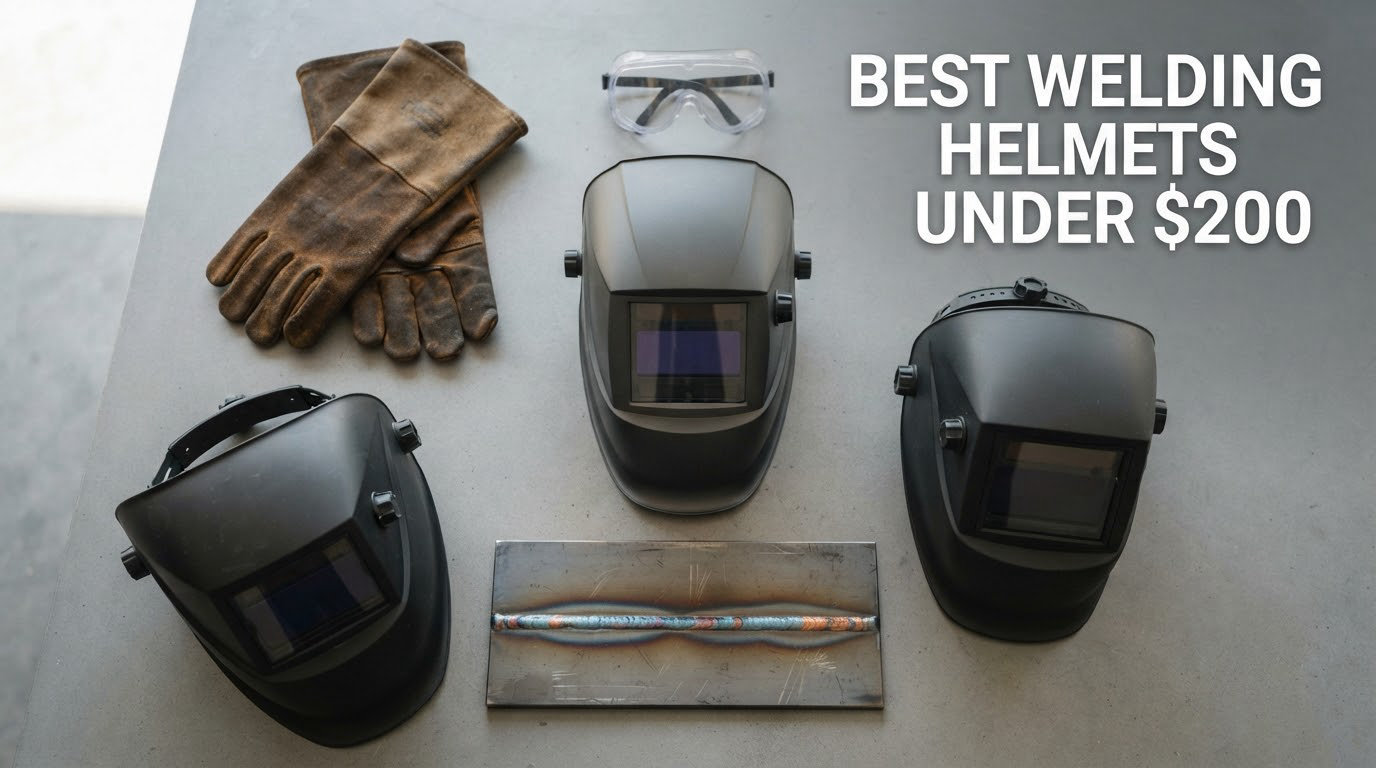
The short answer: the best welding helmets under 200 dollars fall into two very different groups. At the cheap end you are buying electronics and optics from marketplace brands that hit the same headline specs as the big names. Higher up you are buying Lincoln, Hobart and Miller hoods with ratchet headgear, real wear parts and manufacturer warranties. We compared all ten below on the numbers that actually decide whether a helmet works: optical clarity, arc sensor count, switching speed, shade range, viewing area and power source.
Here is how we picked, and where our limits are. We compared published specifications, certification claims, included parts and owner feedback for ten hoods that all fall under the 200 dollar ceiling. We did not arc-test every unit ourselves, so treat our spec comparisons as the map and the owner reports as the territory. Where a spec sheet and a user complaint disagree, we tell you about the complaint.
One thing worth saying up front: five of the top results for this keyword are welding forums rather than editorial roundups, and that is not an accident. Real welders care about two things a spec sheet hides, which is whether the headgear survives and whether the outer cover lens is still available in two years. We weighted both heavily. If you want a broader look at protective gear, our ski helmet test and MTB helmet roundup cover the same fit and headgear questions from a different discipline.
Top 3 Welding Helmets Under 200 Dollars in 2026

YESWELDER LYG-L600A
- 1/1/1/1 true color
- 2 arc sensors
- 1/30000 sec switching
- Shade 3/7-13 TIG MIG and grind
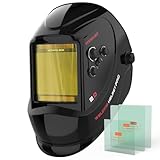
YESWELDER LYG-M800H
- 3.93 x 3.66 inch large view
- 4 arc sensors
- 1/30000 sec switching
- Shade 3/5-9 and 9-13

ARCCAPTAIN HSH-S800
- 1/1/1/1 true color
- 4 arc sensors
- 1/25000 sec switching
- DIN 16 UV/IR filter
If you want one answer instead of ten, take the YESWELDER LYG-L600A. It carries a 4.6 rating with the largest review base of any hood here, and it holds true color optics at the low end of the price range. The YESWELDER LYG-M800H is the smarter buy if viewing area matters more than unit weight, and the ARCCAPTAIN HSH-S800 is the one to pick if you want four arc sensors plus automatic DIN 16 UV and infrared blocking at a mid-range price.
Quick Comparison: Every Helmet in This Roundup
| Product | Specifications | Action |
|---|---|---|
| YESWELDER LYG-L600A |
|
Check Latest Price |
| YESWELDER LYG-M800H |
|
Check Latest Price |
| ARCCAPTAIN HSH-S800 |
|
Check Latest Price |
 TRQWH TRQ-HS0103 TRQWH TRQ-HS0103 |
|
Check Latest Price |
 ARCCAPTAIN XK-LY800H ARCCAPTAIN XK-LY800H |
|
Check Latest Price |
 YESWELDER LYG-Q800D YESWELDER LYG-Q800D |
|
Check Latest Price |
 Lincoln Electric K3419-1 Lincoln Electric K3419-1 |
|
Check Latest Price |
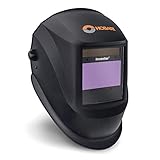 Hobart 770890 Hobart 770890 |
|
Check Latest Price |
 Miller Classic ClearLight Miller Classic ClearLight |
|
Check Latest Price |
 MIGVAN H-21 MIGVAN H-21 |
|
Check Latest Price |
1. YESWELDER LYG-L600A – Best Overall Under 200 Dollars
YESWELDER Auto Darkening Welding Helmet 1/1/1/1 True Color, LYG-L600A
- True color 1/1/1/1 optics
- Fast 1/30000 sec darkening
- Shade 3 available for low-amp TIG
- Light 16 oz shell
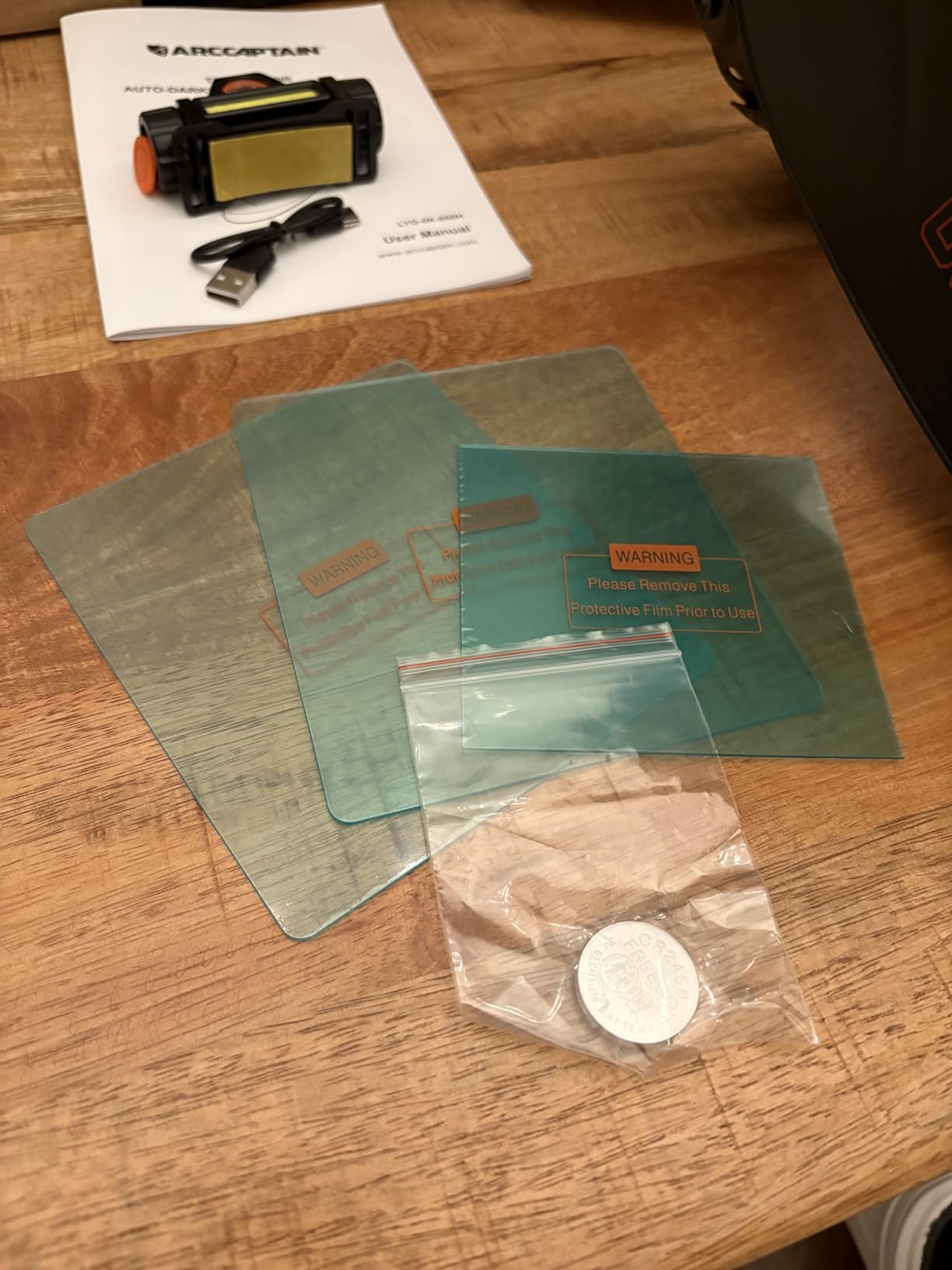
- Spare inner and outer lenses plus bag
- Small viewing area
- Two sensors only
- Light-duty shell and headgear
This is the helmet we keep reaching for. The LYG-L600A carries a 4.6 rating across more than 13,900 owner reviews, the deepest owner-feedback base of any hood here, and it is the top seller in its category on the marketplace.
Switching happens in 1/30000 of a second across two arc sensors, with sensitivity and delay both adjustable. Shade 3 is available for low-amperage TIG, which is more than most budget MIG-oriented hoods offer, and the mode covers TIG, MIG, arc and grind. At 16 ounces it is among the lightest shells in this roundup, and neck strain over a long Saturday is a real cost. The 1/1/1/1 true color filter with a blue light blocking outer lens means you are not squinting at a green-tinted rectangle.
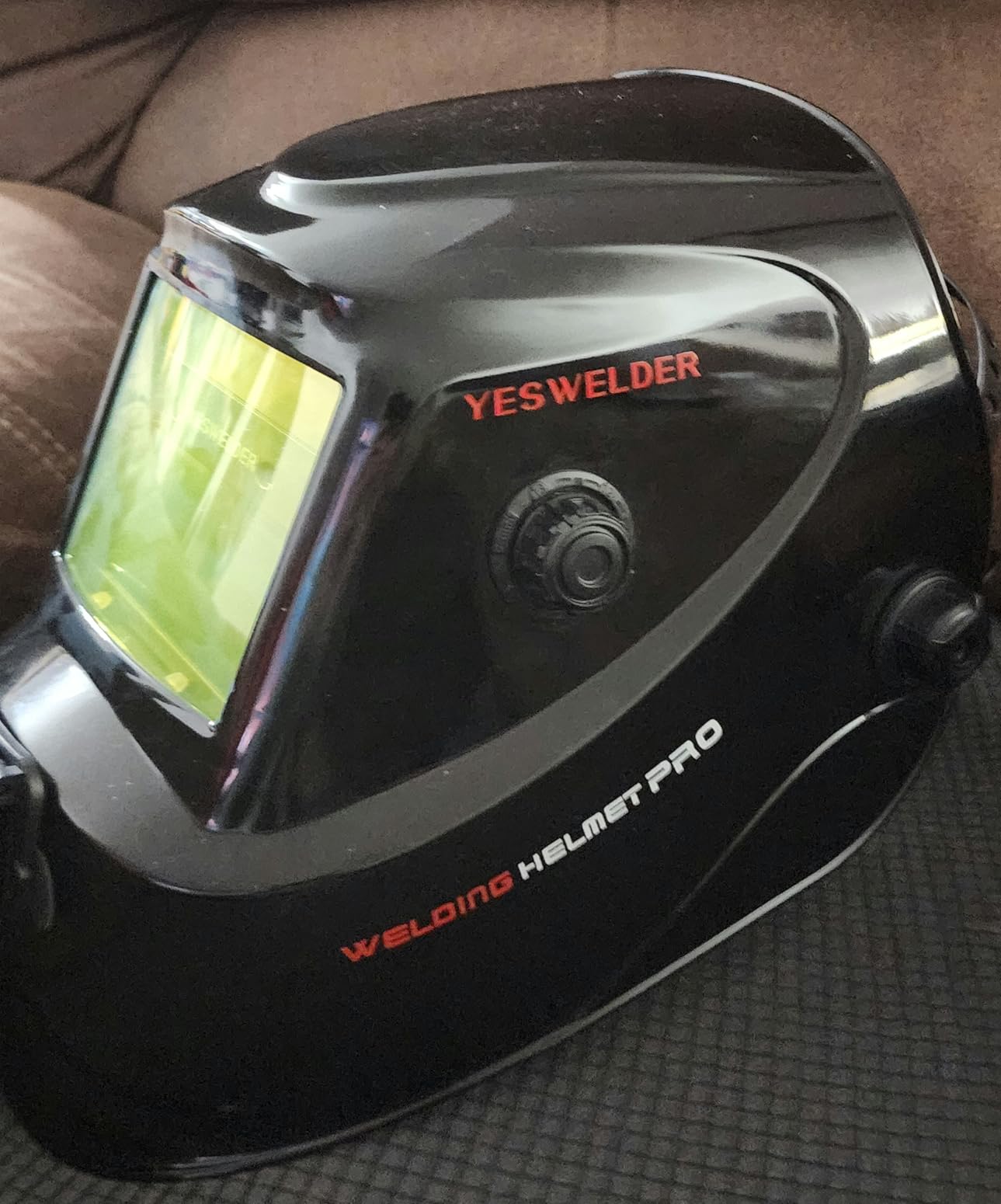
Reviewers report the headgear adjusts easily and holds through long sessions, and the box includes a spare inner lens, two outer lenses and a storage bag, which is generous for the money. What owners also report is the tradeoff: the 3.64 by 1.67 inch viewing area is narrow, so you tip your head more than you would in a panoramic hood, and the plastic shell and headgear feel light compared with a shop-grade unit. The electronics have not needed a cartridge replacement across that volume of feedback.
When this helmet works for you
This is the pick for a first auto-darkening helmet, a weekend garage welder doing MIG and stick, or anyone doing occasional low-amp TIG on thin material. It carries both ANSI Z87.1 and CSA Z94.3 certification and runs on a solar panel with a replaceable CR2450 battery, so there is no charging routine to remember.
Where it will disappoint you
Two arc sensors are the first limit. Owners working in tight joints or at odd angles report missed triggers more often than owners of four-sensor units, and if you weld in a shop with a lot of stray light or a lot of clamp shadows, the extra sensors are worth paying for. The CR2450 compartment is also tight, and swapping that battery is fiddly the first time.
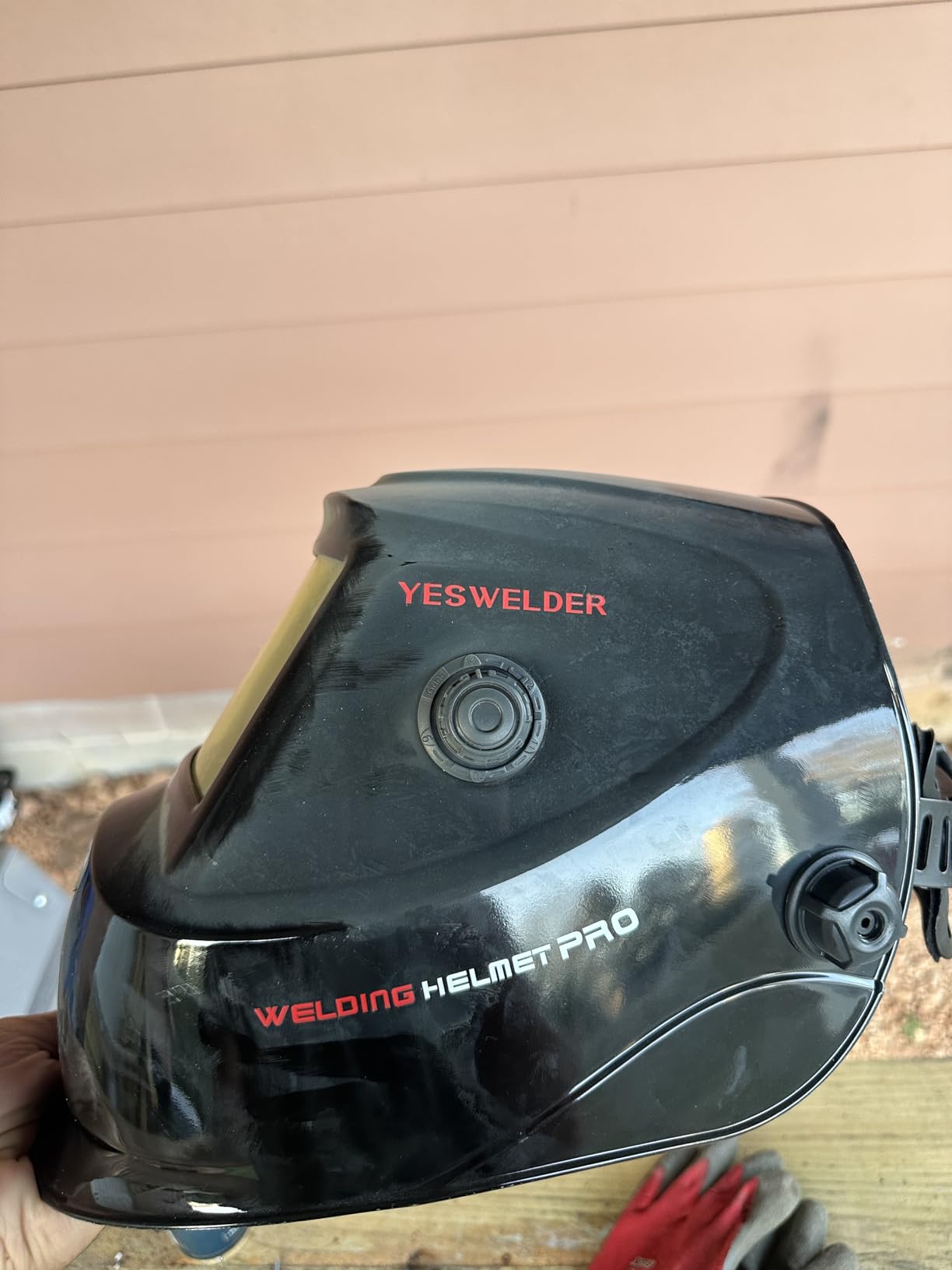
2. YESWELDER LYG-M800H – Best Value Large-View Helmet
- Large panoramic viewing area
- Four arc sensors
- All controls outside the shell
- Cheater lens compatible
- About 1.32 lb body weight
- Tension knobs feel fragile
- Inner lens hard to remove
- Headgear can slip if tension is loose
If the L600A feels like looking through a mail slot, this is the fix. The M800H gives you a 3.93 by 3.66 inch viewing area at the same 1/1/1/1 true color clarity, and it adds two more arc sensors for a total of four. It still switches in 1/30000 of a second, and the shade range covers 3, 5-9 and 9-13 across weld, cut and grind modes.
For most people this is a strong value in the roundup. The 4.4 rating across more than 8,000 reviews reflects an electronics-and-lens package that performs well with a headgear that does not. External controls mean you can change shade and delay with gloves on, which matters more than it sounds when you are mid-job.
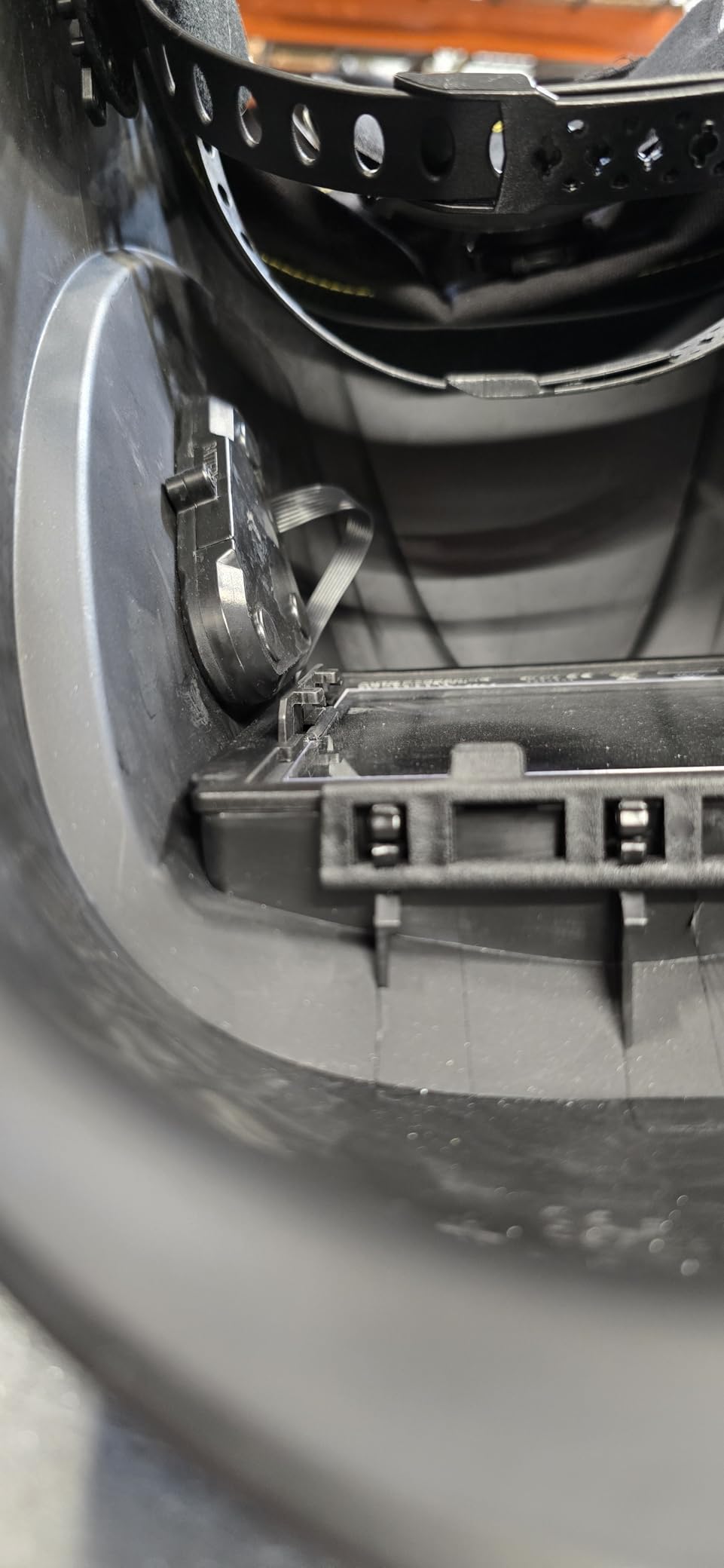
The repeated owner criticism is mechanical, not electrical. Reviewers describe the side tension knobs needing to be cranked very tight and feeling fragile, and the inner lens being difficult to grip for replacement. The headgear can also creep forward if you do not set the tension precisely, so check it before you flip the hood up.
When this helmet works for you
This is the choice for someone who spends real hours at the bench and wants to see the joint, the puddle and the surrounding fit-up without moving their head. It is also the better TIG-capable budget option of the two YESWELDERs, since four sensors catch arc starts at low amperage more reliably and shade 3 is available. Cheater lens support means you can add a 2.5 magnifier for close work on stainless or aluminum.
Where it will disappoint you
Do not buy it expecting a shop-grade ratchet headband. The thin plastic shroud and the tension knobs are where this hood fails, and headgear breakage is the single most cited replacement trigger across budget welding helmets generally. If you are welding eight hours a day in a hot shop, spend the difference on the Lincoln or Hobart in this roundup instead.
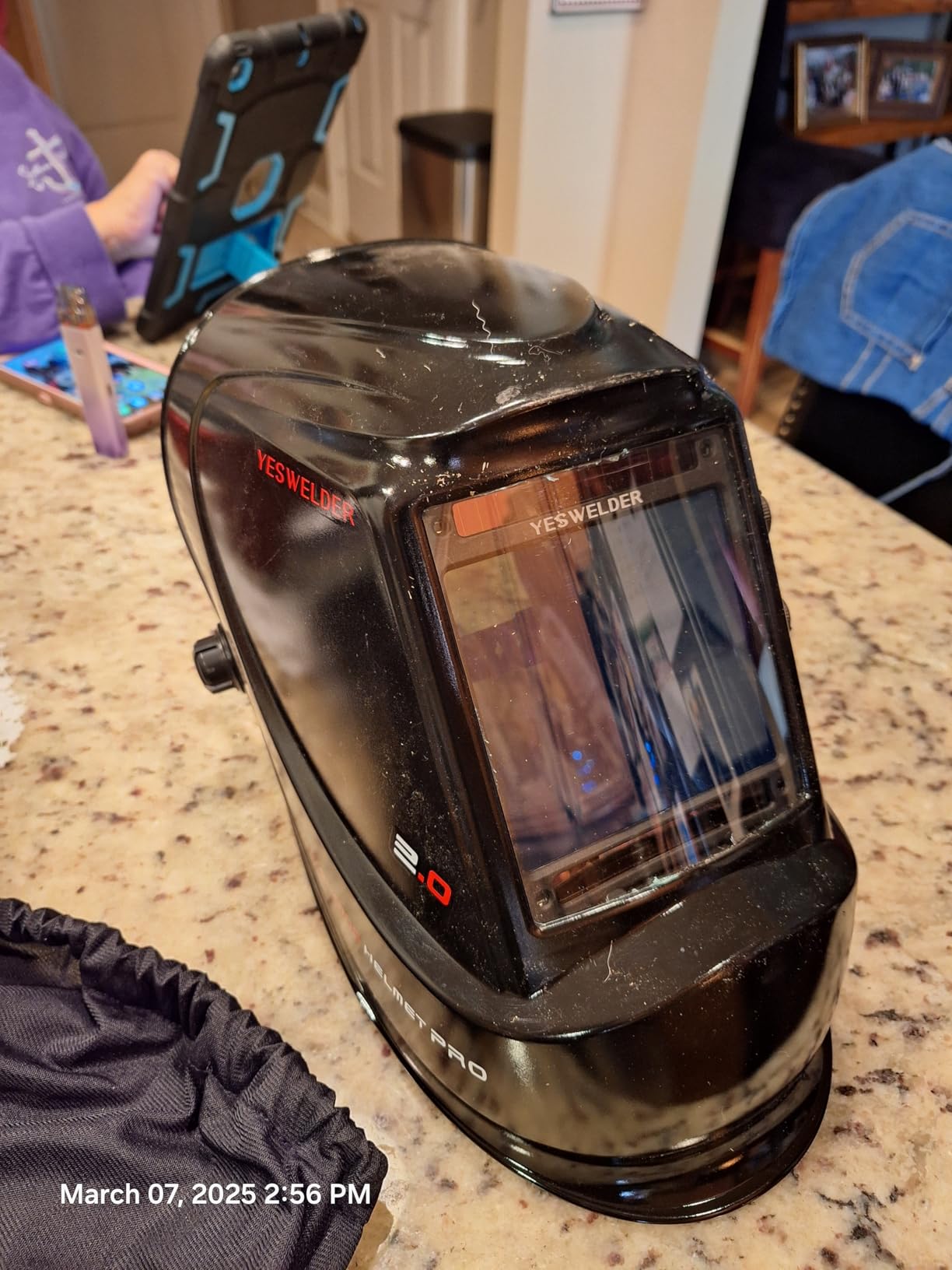
3. ARCCAPTAIN HSH-S800 – Top Rated With Four Sensors
- Four arc sensors at 1/25000 sec
- Strong 1/1/1/1 true color optics
- Lightweight nylon-look shell
- Three replacement lenses included
- Full ANSI and CSA and DIN EN certification listed
- Some units report slow initial response
- Shell feels cheap on first impression
- Minority report lenses that stop darkening
The ARCCAPTAIN is among the most fully certified budget hoods in this group. It lists ANSI/ISEA Z87.1-2010, CSA Z94.3, DIN EN 175 and DIN EN 379, four separate standards, and it pairs four arc sensors with 1/25000 second switching and a 1/1/1/1 true color lens.
At about 1 pound it is one of the lightest shells we reviewed, and the 4.6 rating across more than 3,000 reviews puts it in the same band as our top pick. The 12-in-1 smart filter with automatic DIN 16 UV and infrared protection is the spec that matters most for anyone welding galvanized or stainless, and three replacement lenses are in the box.
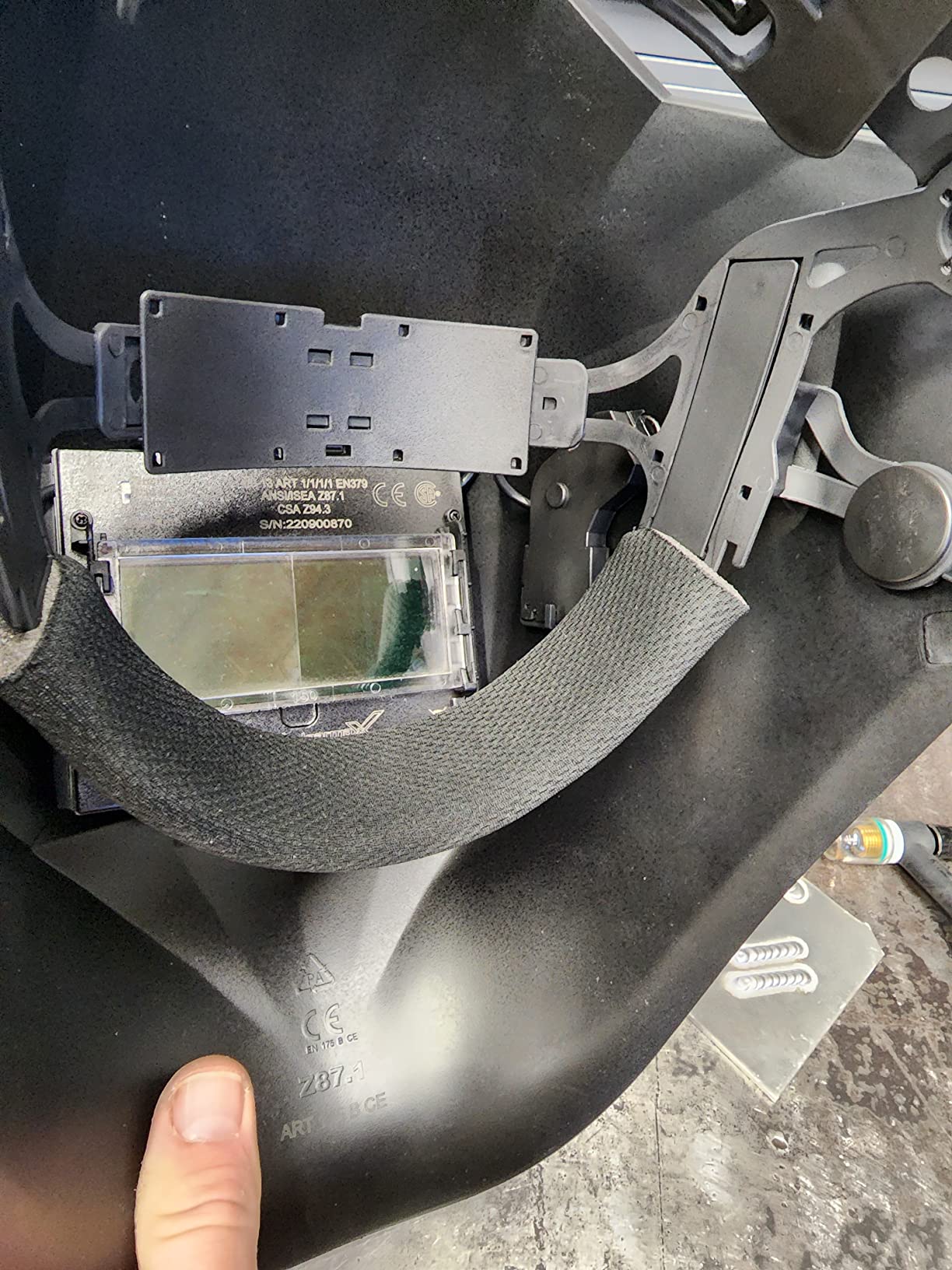
Owner feedback splits cleanly. Most buyers are satisfied with optics that outperform more expensive units, and a minority report helmets that darken slowly or stop darkening reliably after a period of use. The construction also reads as inexpensive in hand, which is the trade for that certification list and sensor count at this price.
When this helmet works for you
Pick this one if you are moving between processes, welding thin stainless or aluminum where UV exposure matters, and you want a documented standards rating rather than a marketing claim. It is also a good fit for pipe work and out-of-position welding where the arc appears at an angle.
Where it will disappoint you
The 3.86 by 1.69 inch viewing area is wide but short, which suits horizontal work less well than the near-square panels on the two larger ARCCAPTAIN and YESWELDER models. The 180-day warranty is also the shortest in this roundup, and if you are buying for a shop that keeps helmets for years, that matters.
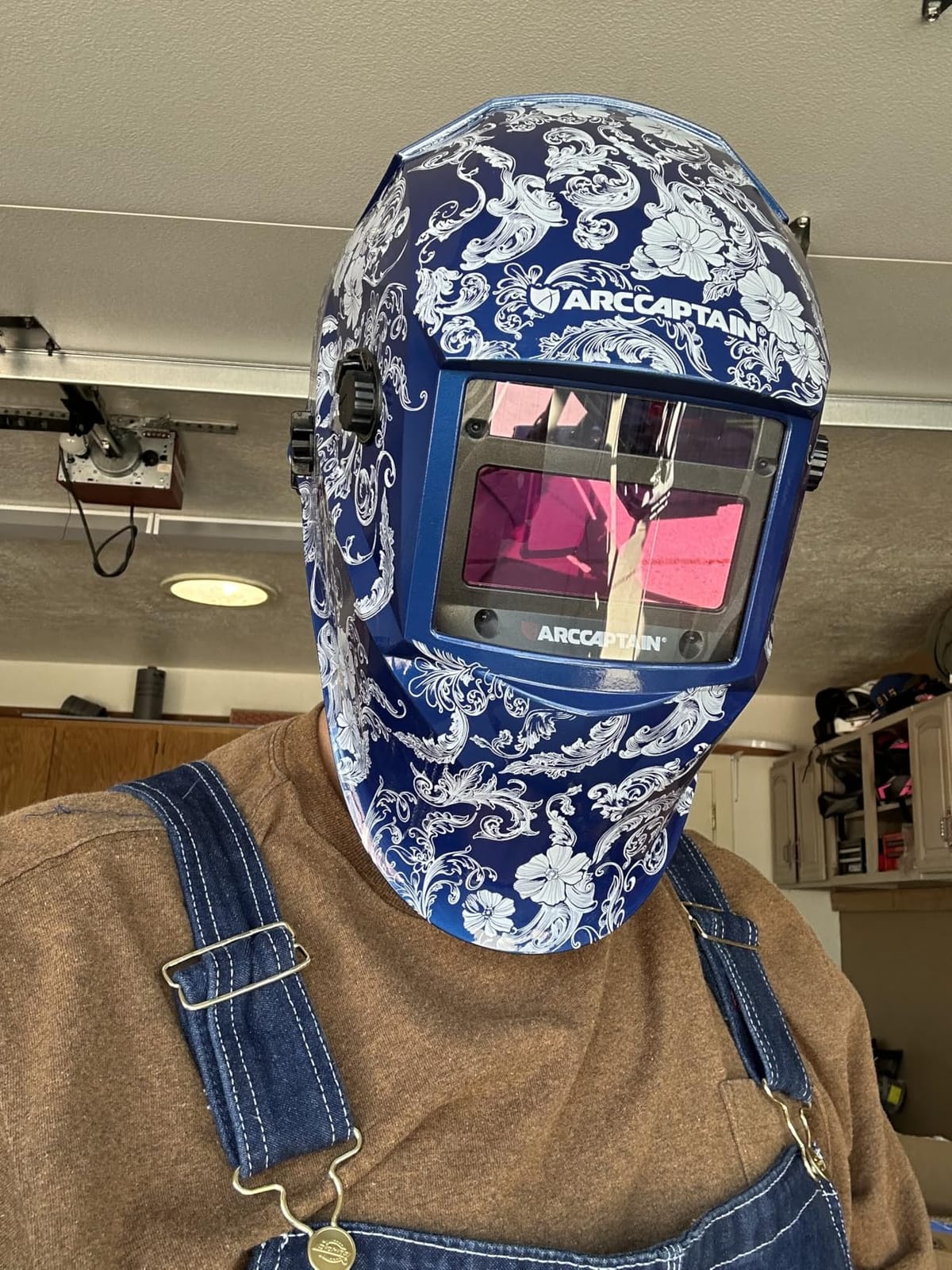
4. TRQWH TRQ-HS0103 – Budget Pick With a Built-In Light
- Low-cost entry point
- Built-in rechargeable LED work light
- True color lens reduces eye fatigue
- Padded forehead and ear sponge
- Handles plasma cutting and grinding
- 1/1/1/2 not 1/1/1/1
- 1/20000 sec switching is slow
- Thin inner lenses
- Shell can loosen
This is the lowest-cost hood here, and it is the one we would hand to a trade student or a first-time weekend welder. It is a solar-powered shell with a true color lens rated 1/1/1/2, two arc sensors, and a 1/20000 second switch. The light state is DIN 4 and the dark state runs DIN 9-13, with plasma cutting and grinding in the mode list.
What makes it unusual is the built-in USB rechargeable LED lamp on top. If you weld in a dark garage or a dim shop, that light is genuinely useful and no other helmet at the low end of this roundup has one. The 4.4 rating across more than 1,300 reviews reflects a strong quality-to-price ratio.
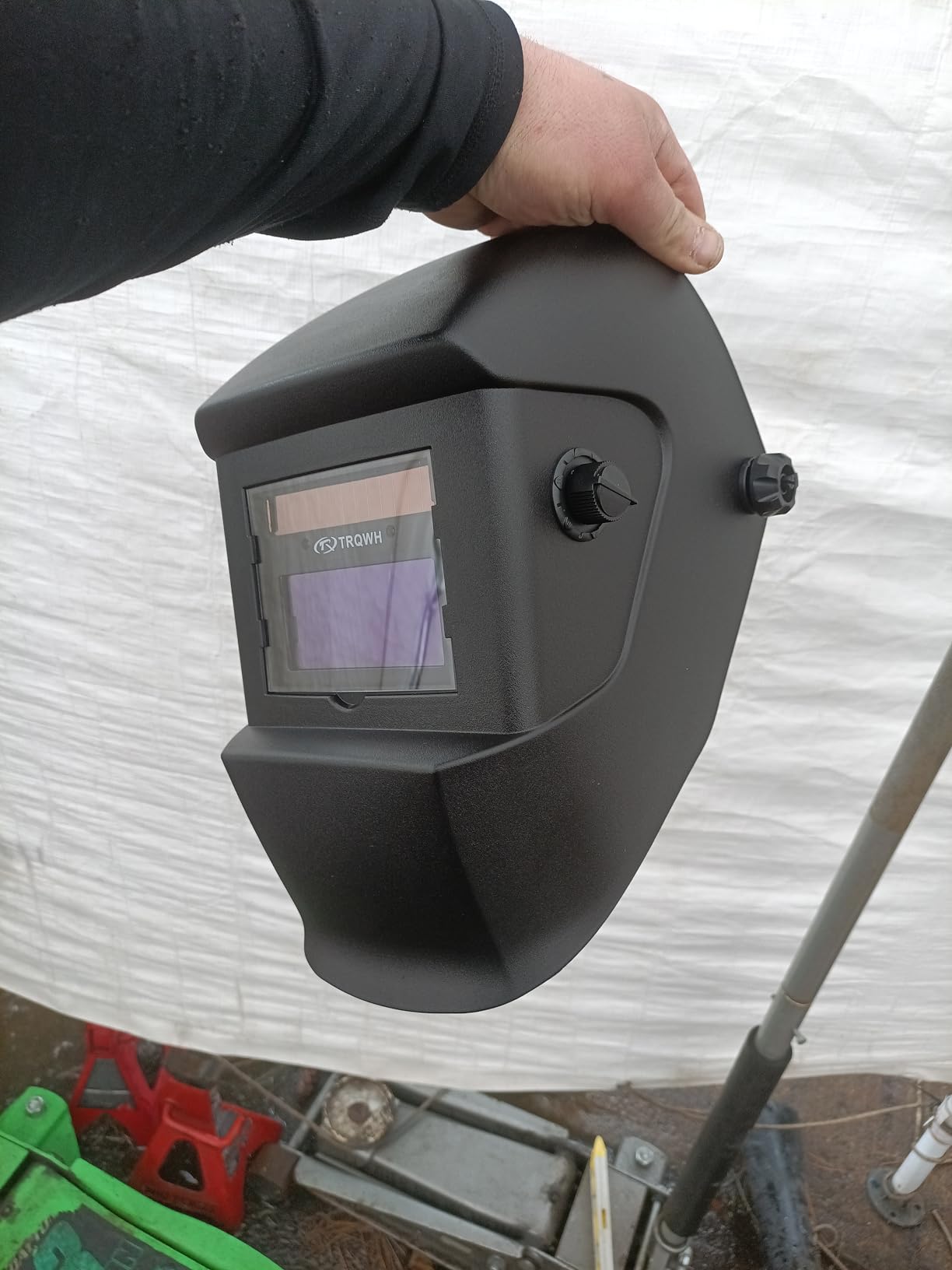
Be clear-eyed about the specs. A 1/1/1/2 rating means the angle dependence is one class lower than the others, and 1/20000 second is among the slowest switching speeds in this group, which shows up as arc flash on fast travel and on TIG root passes. Inner lenses are thin, and owners doing heavy shop work report replacing them sooner than they expected.
When this helmet works for you
This suits a student, a school fleet purchase, or anyone who welds once a month and does not need low-amp TIG. It handles MIG, MAG, DC and AC TIG, stick, plasma cutting and grinding, and the padded forehead and ear sponge make it comfortable enough for a long first project.
Where it will disappoint you
Two sensors and slower switching are the deal breakers for production work. If you are doing repeated short tacks in a tight joint, the arc may not be detected reliably at odd angles. The shell also tends to loosen over time, and the included lamp, while functional, is the first thing owners criticize.
5. ARCCAPTAIN XK-LY800H – Best for Low-Light Work
ARCCAPTAIN Auto Darkening Welding Helmet with Light, 3.94″X3.66″ Large View
- 3.94 x 3.66 inch super large view
- Two-level LED welding light
- Four sensors with 1/25000 sec switching
- Light 8.1 oz shell
- Dual solar panels plus CR2450 battery
- LED light arrives uninstalled
- Shade needs setting before low-amp work
- Light flexible PP shell
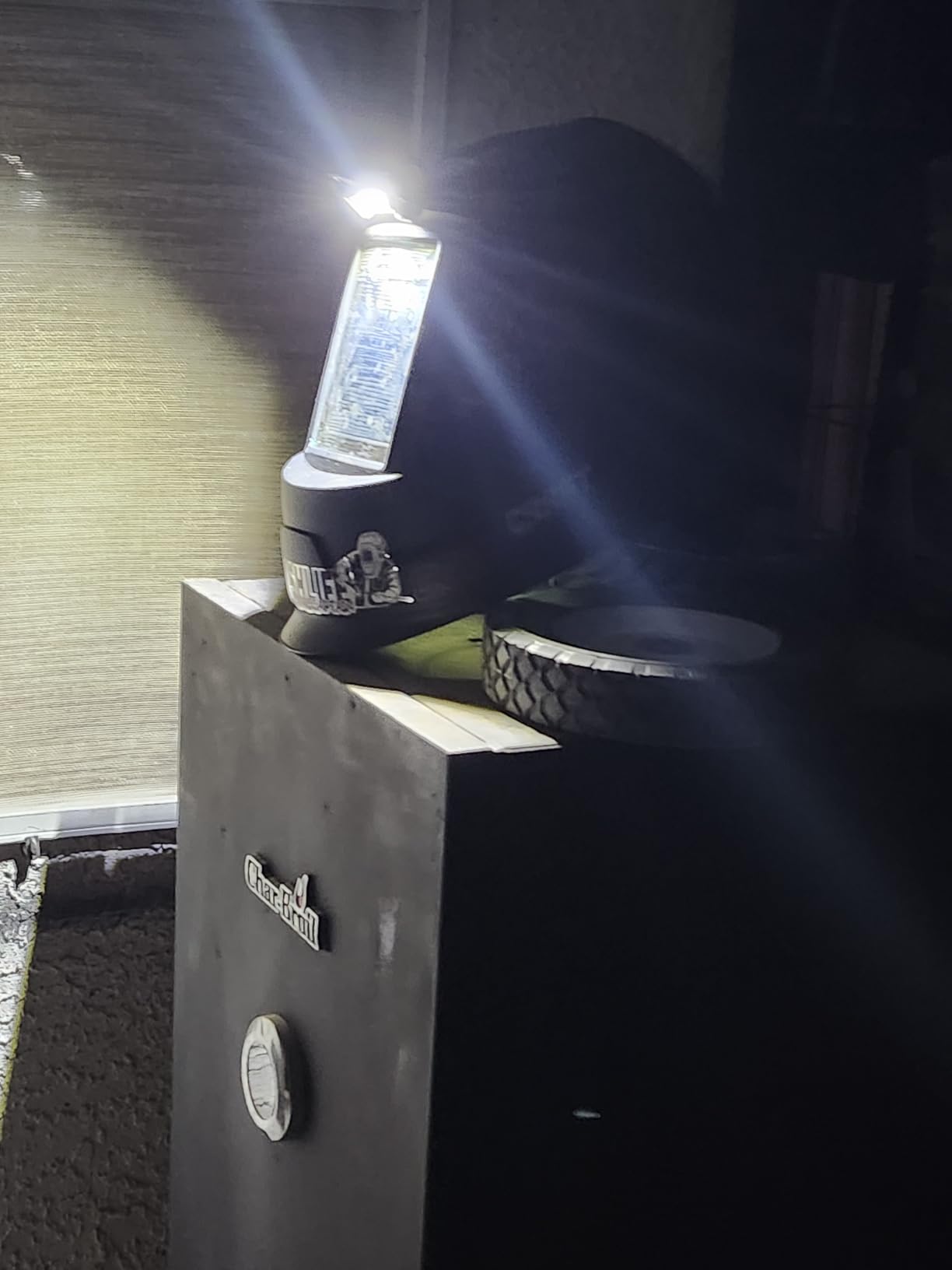
The XK-LY800H is the pairing of a near-square 3.94 by 3.66 inch viewing area with a USB-powered two-brightness LED welding light, and that combination is genuinely rare at this end of the range. Four arc sensors and 1/25000 second switching put the electronics on par with pricier hoods.
At 8.1 ounces it is the lightest shell in the roundup, and the dark state spans 4, 5-8 and 9-13, so you get a lighter cut shade than most of the budget group. Owners rate the large view and the practical light as the two reasons this hood stands out in its price range.
The one setup note that catches people is that the LED light is not installed when the box arrives. It is a two-minute mount with the included hardware, but plan for it. The light itself has a USB input, so you charge it separately rather than from the helmet battery.
When this helmet works for you
This is our pick for night work, mobile repair and dim shop lighting, and for anyone welding stainless or galvanized who wants continuous protection with the DIN 16 UV and infrared blocking of the 12-in-1 filter. The large view helps with fit-up on a frame or a trailer.
Where it will disappoint you
Reviewers note that the shade settings need adjusting before low-amperage work rather than sensing the right shade automatically, and the flexible PP shell feels light next to a polycarbonate shell. For a full production shift, that shell flex is the part that will bother you first.
6. YESWELDER LYG-Q800D – Best for a Panoramic View
YESWELDER Auto Darkening Welding Helmet with LED, 180° View, LYG-Q800D
- Blue light blocking outer lens
- Four sensors at 1/30000 sec
- Reinforced thicker shell
- Three replacement lenses included
- Side view is fixed DIN5 and does not auto-darken
- Heavier shell than the slim budget models
- Adjustment knobs need tightening
The Q800D solves a specific problem: you cannot see past the edge of a standard front panel when you are positioning a joint. This hood gives you 3.94 by 3.23 inches of true color view plus a non-auto-darkening DIN 5 side window, for roughly 180 degrees of coverage. Four arc sensors and 1/30000 second switching keep the front panel responsive.
It covers shade 3, 5-9 and 9-13 across TIG, MIG, stick, cutting and grinding, with a blue light blocking outer lens. The 4.4 rating across nearly 2,900 reviews describes a hood that works steadily rather than one that excites anyone.
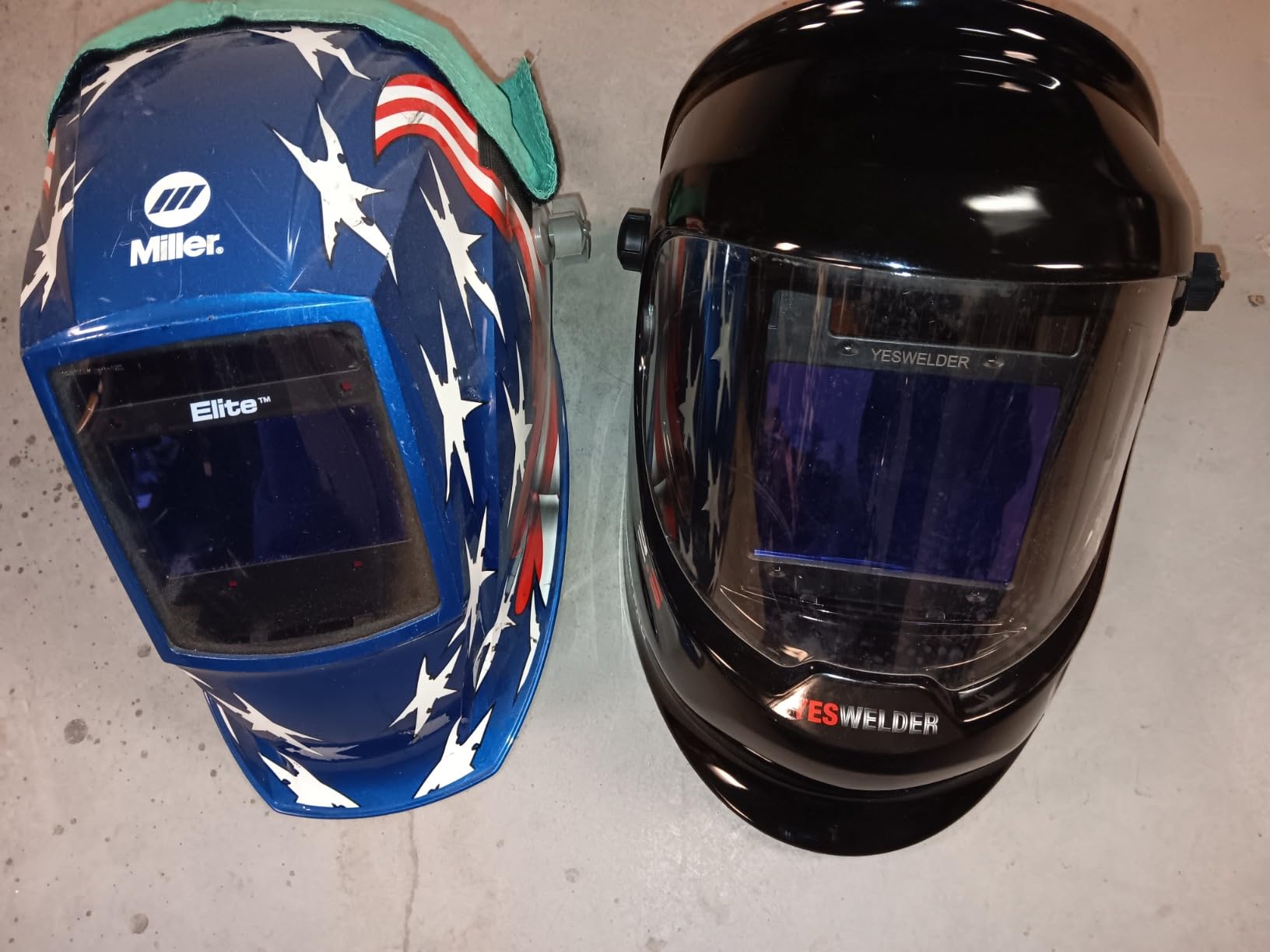
Understand what the side window is: a fixed DIN 5 tinted panel. It is always that shade, it never auto-darkens, and it is for setup and positioning, not for welding. The other recurring note is weight. At 2.2 pounds this is one of the heavier shells we reviewed, and on a long hot afternoon you will feel it.
When this helmet works for you
Choose this for large assemblies, trailer and frame work, or anywhere you need peripheral awareness of the piece and the arc. The blue light blocking outer lens is a real benefit for anyone doing lots of stainless work or spending evenings in the garage, where blue light exposure drives end-of-day eye strain.
Where it will disappoint you
Do not count the side window as sensor coverage. You still have four sensors in the front panel, and tight inside corners can still miss. The heavier shell and the knobs that need re-tightening to keep the mask flipped up are the two annoyances owners name most.
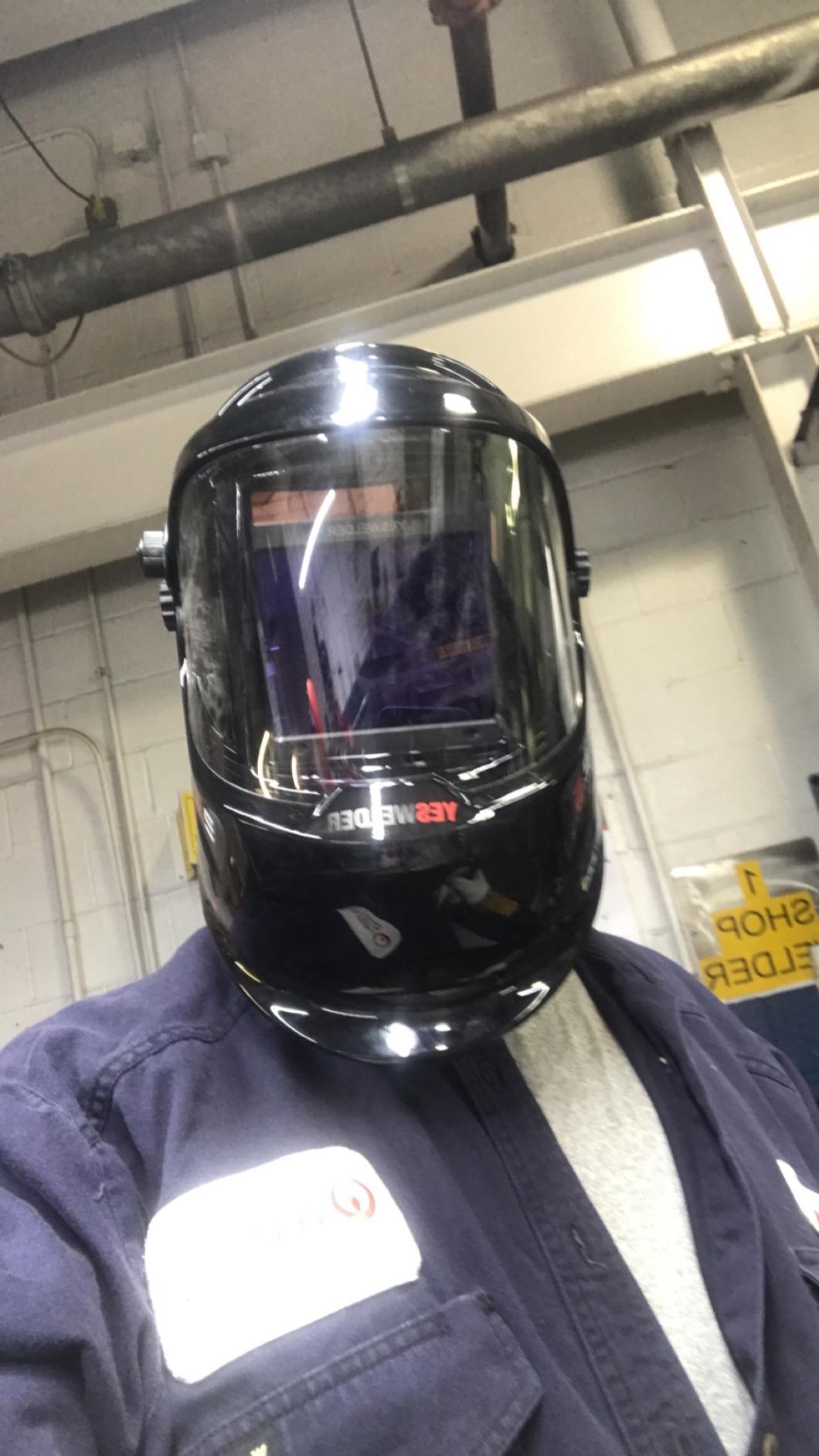
7. Lincoln Electric K3419-1 – Best for Shop Durability
Lincoln Electric K3419-1 Glossy VAR 7-13 W/Grind ADF Helmet, Capacity, Volume, Polycarbonate, 11.12 x 10.25 x 11.87, Black (
- 4.7 star owner rating
- Adjustable ratchet headband stays put
- Variable 7-13 shade plus grind mode
- Covers gouging and flux-cored
- Lightweight polycarbonate
- Shade range starts at 7
- No lighter cut shade
- No published viewing area figure
The Lincoln is the reason the branded tier is worth stretching to. It is a polycarbonate shell with an adjustable ratchet headband and an oversize absorbent sweatband, and the 4.7 rating from more than 680 owners sits at the top of this roundup alongside the Hobart and the Miller. A ratchet band does not slip forward halfway through a bead, which is the failure we hear about most from budget headgear.
The variable shade lens runs 7-13 with a grind mode and covers stick, TIG, pulsed TIG, MIG, pulsed MIG, flux-cored and gouging. That process list covers the widest range of processes of any hood here, and gouging in particular is a shop task that most budget hoods skip.
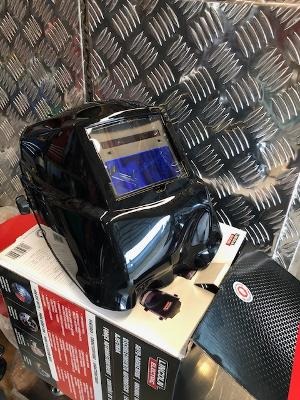
Owner satisfaction is very high, and the criticism is narrow. The fixed 7-13 variable range means no lighter cut shade, so plasma work needs a different setting than the helmet gives you, and some owners report less consistent sourcing than the mainstream marketplace brands.
When this helmet works for you
This is the buy for a small fabrication shop, a trade school, or anyone whose helmet gets handled roughly, dropped and carried between jobs. Lincoln Electric is a brand that continues to make wear parts, which matters if you want the shell for a decade. The 1.5 pound weight and sweatband make it workable across a full shift.
Where it will disappoint you
If you need a light cut shade or low-amp TIG work on very thin material, the 7-13 range is limiting. This is a welding helmet, not a cutting helmet. It also has no viewing area figure published in the spec block, so judge the window size against a physical unit if window size is your deciding factor.
8. Hobart 770890 – Best for a Wide Widescreen View
- 9.3 inch widescreen viewing area
- Accurate color from the PureColor lens
- Four independent arc sensors
- Auto-on and auto-off at arc strike
- Two year manufacturer warranty
- Wider shell can feel bulky
- Analog dials take longer to adjust
- CR2 battery rather than the common CR2450
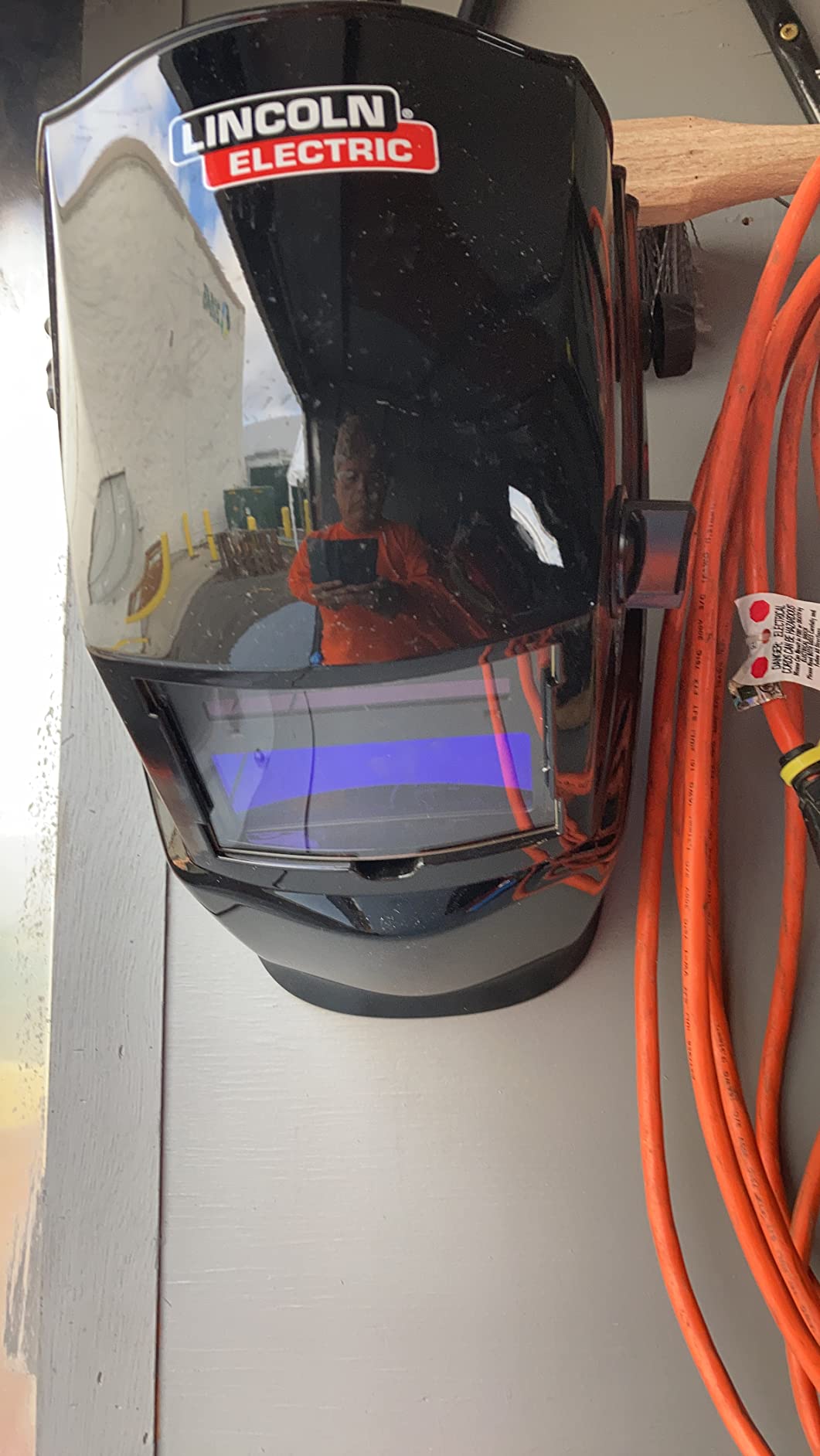
The Hobart 770890 has by far the widest viewing area in this roundup. The PureColor lens and the 9.3 inch widescreen give you a very wide field, and the 4.7 rating from more than 870 owners puts it alongside the Lincoln at the top. Owners like the analog controls, and the seamless Weld to Grind switching means one helmet covers welding and finishing.
Four independent arc sensors, auto-on and auto-off triggered at arc strike, continuous UV and infrared protection, and a limited two-year manufacturer warranty round out a package that reads as a shop tool. At 1.25 pounds it is lighter than the panoramic YESWELDER and heavier than the ARCCAPTAIN.
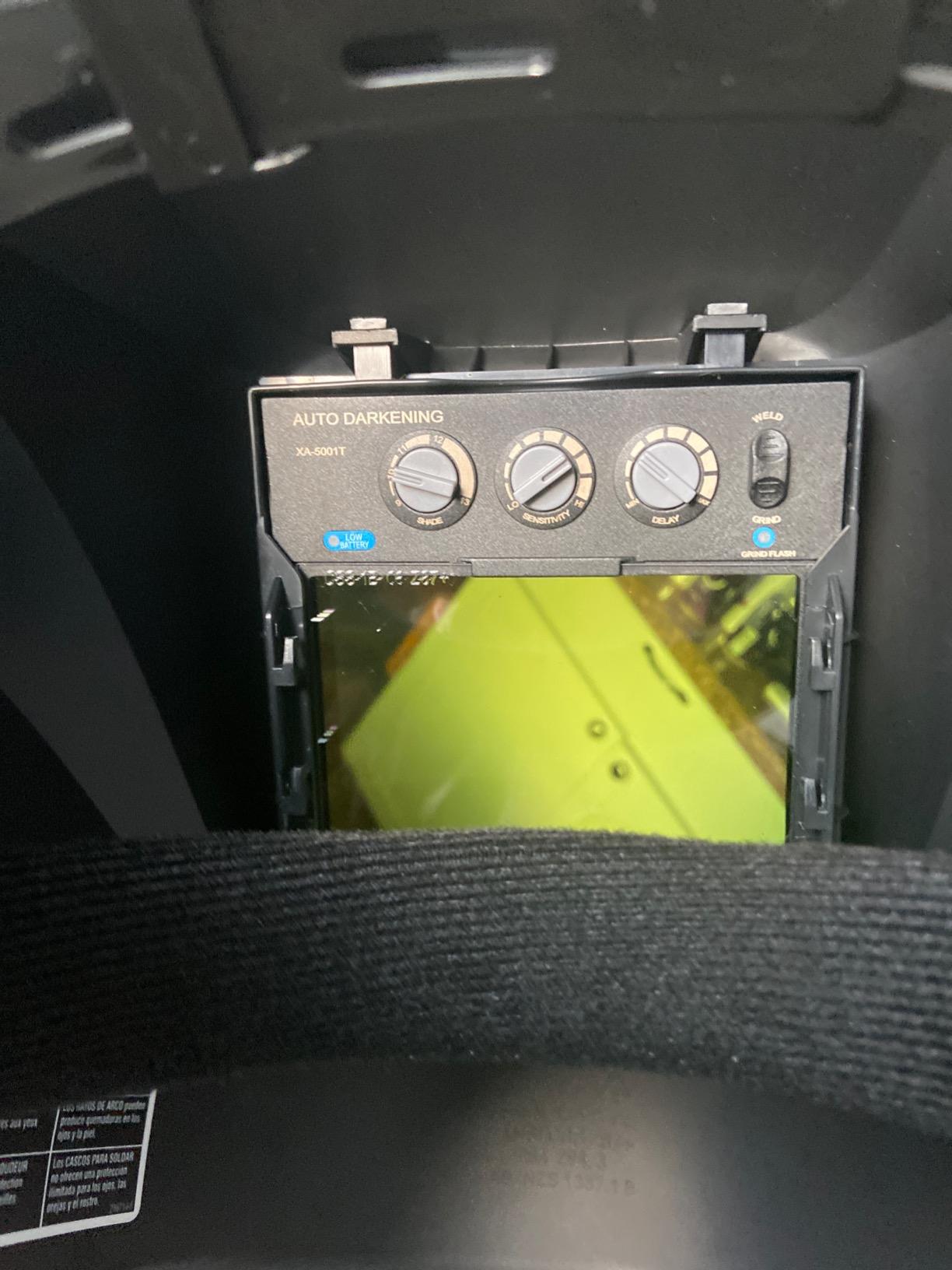
Two owner notes come up repeatedly. The wider shell can feel bulky next to a slim hobby helmet, especially for people with smaller heads, and the analog dials take more time to set than digital controls. It runs a single CR2 lithium cell, so a spare battery is not the coin-cell pack most other hoods on this list use.
When this helmet works for you
This is the pick for production and pipe work where seeing along the joint and the surrounding geometry matters, and for anyone who prefers physical knobs to menu-driven buttons with gloves on. The two-year warranty and the polyamide nylon shell also make it a sensible shop fleet option.
Where it will disappoint you
If you are after true color rendering of a specific alloy, the PureColor lens is accurate but it is not the same as the modern high-definition gold-filter optics found on some budget units in this list. And if you already have a habit of carrying spare CR2450 cells, this one breaks the pattern.
9. Miller Classic ClearLight – Best for Low-Amp TIG
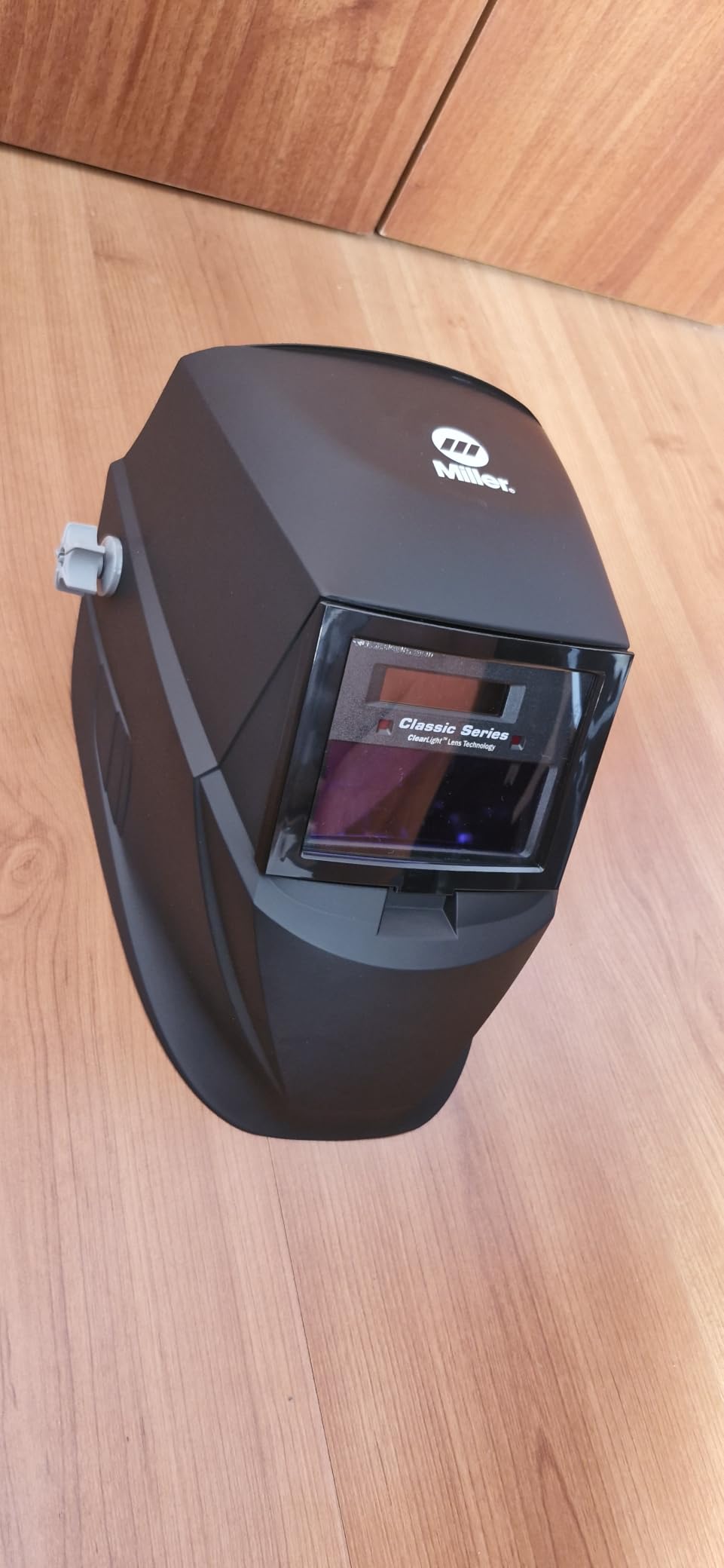
Miller Classic Series Welding Helmet, ClearLight™, Shade 8-13, Black
- Works down to 5 amps for TIG on thin material
- ClearLight high-definition optics
- 86 percent five-star owner ratings
- Three year warranty with EU spare parts
- 3.0 light state lets you keep the hood down
- Only two arc sensors
- Small 6 square inch viewing area
- Weld shade starts at 8
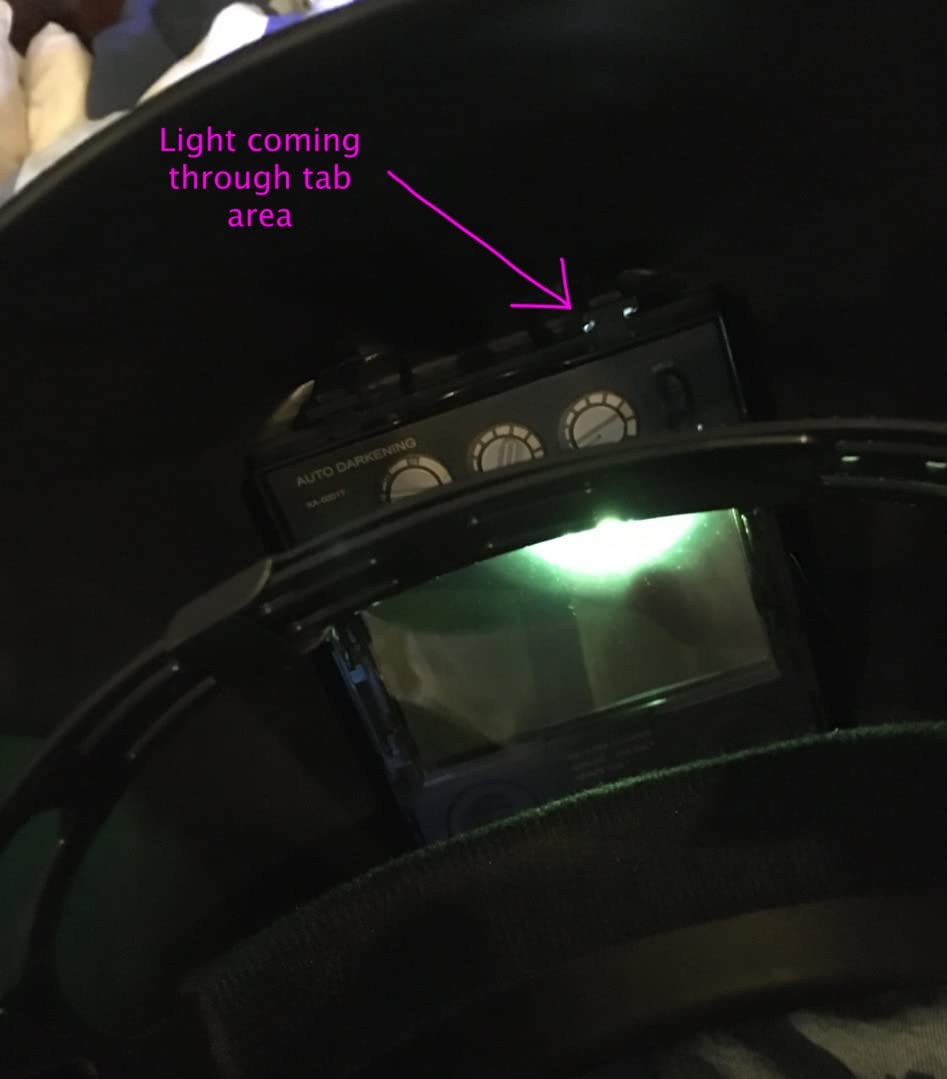
The Miller Classic shows the strongest owner satisfaction in this roundup, with 86 percent of ratings at five stars. The ClearLight lens gives high-definition, accurate color optics, and the practical headline is sensitivity: it works down to 5 amps, which is what makes it the pick here for low-amperage TIG on thin stainless or aluminum.
Its shade structure is unusual and worth understanding. Weld shades run 8-13, cut shades run 5-8 and grind is 3, so lighter work has its own dedicated range rather than forcing you into a dark weld shade. A 3.0 light state means you can keep the hood down between welds, and ratchet headgear with adjustable digital controls handles shade, delay and sensitivity.
The trade-offs are the same two that come up in every Miller Classic discussion: two arc sensors instead of four, and a 6 square inch viewing area that is small next to the 3.94 by 3.66 inch panels on the budget large-view models. The three-year warranty with EU spare part availability for three years is the best wear-parts commitment in this roundup.
When this helmet works for you
If TIG is your process, especially on thin material and aluminum, this is the helmet to buy. It also suits anyone who works in short bursts because the 3.0 light state means you are not flipping the hood up and down all day, and the digital controls make shade changes quick between a fill pass and a root pass.
Where it will disappoint you
Two arc sensors are the real limit. Owners welding inside corners, in deep pipe or with a lot of clamp shadow report missed triggers more than owners of four-sensor units. If you are a fabricator who does pipe, spend up on the Lincoln or Hobart for sensor headroom and viewing area.
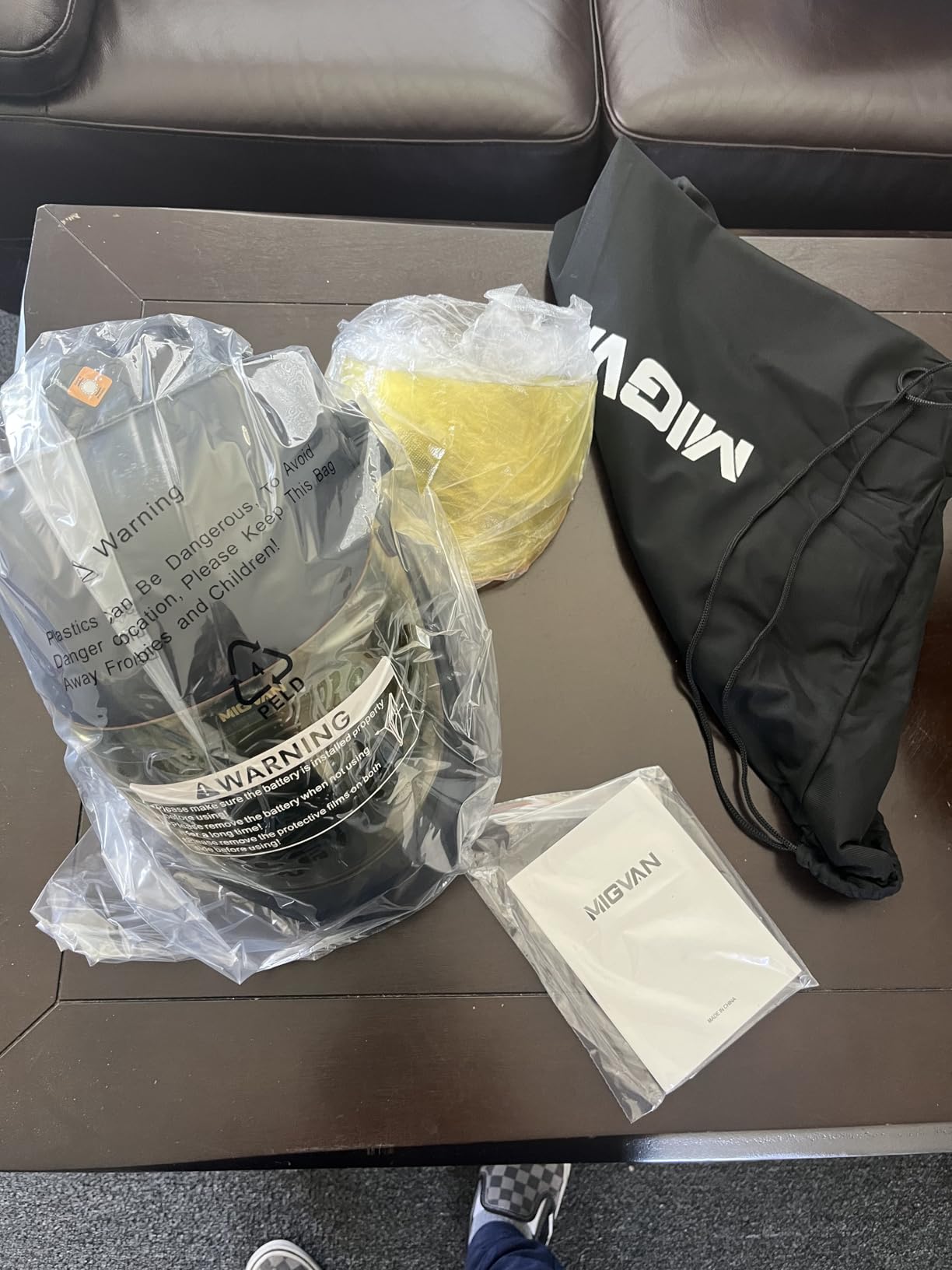
10. MIGVAN H-21 – Best for a First Helmet With Spares
- Golden true color filter with no color saturation
- Large viewing screen cuts neck movement
- Four replacement lenses and a storage bag
- Inner and outer lenses both easy to replace
- Slower 1/10000 sec switching
- No cheater lens support
- Buckle headgear is less refined
The MIGVAN is the value pick for somebody who will chew through lenses. The box includes two inner lenses, two outer lenses and a heavy-duty storage bag, which is the most generous consumables package in the roundup. Outer cover lenses wear out faster than anything else on the hood, and having four spares on day one changes the ownership experience.
The lens is a true color golden filter designed to cut distortion and color saturation, giving a more natural view of the weld pool. Four arc sensors, a DIN 4 light state and DIN 5-9 plus 9-13 dark states cover the usual MIG and stick range, and it runs on solar power with a replaceable CR2450.
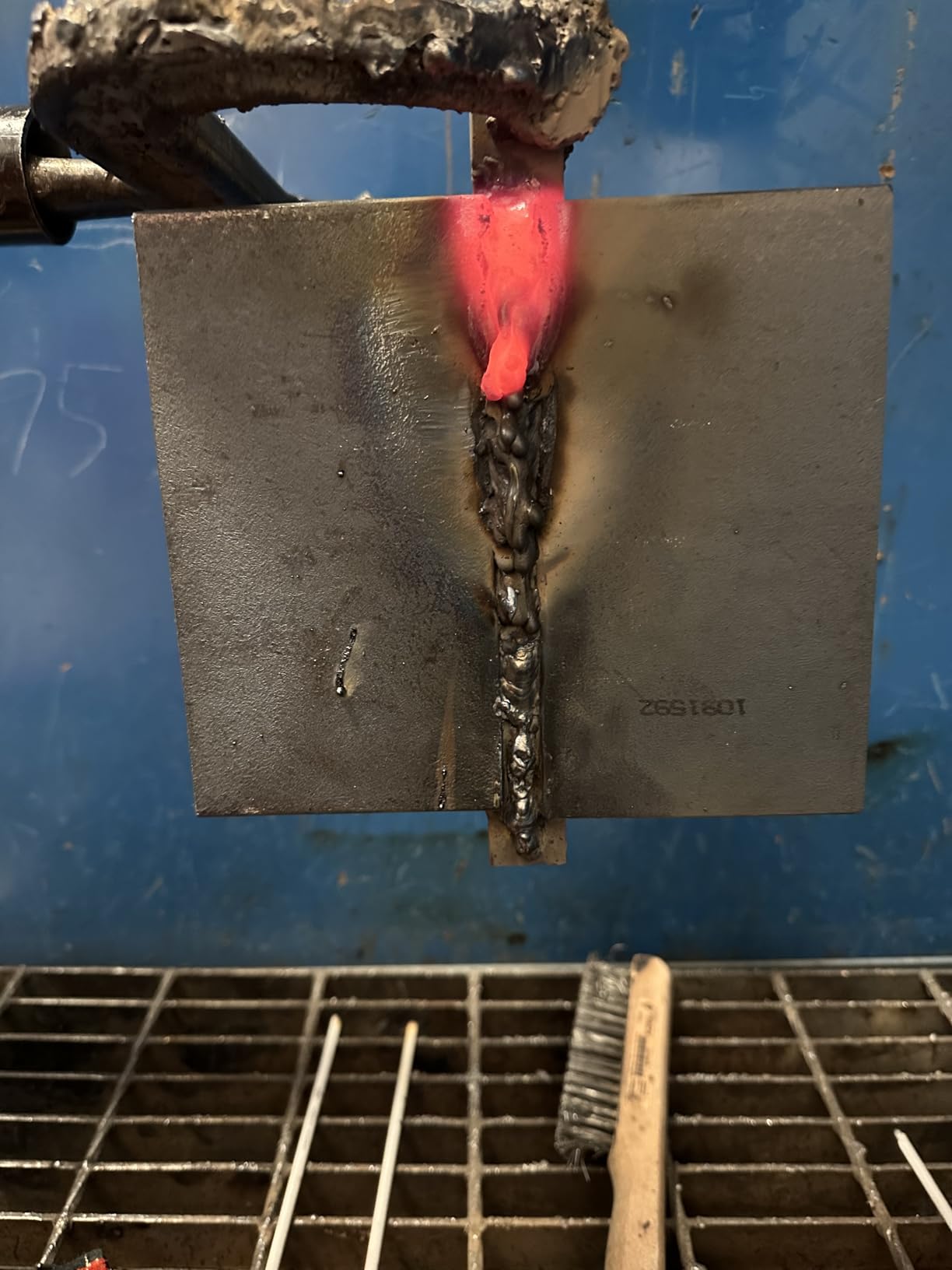
Here is the honest drawback: 1/10000 second switching is the slowest figure in this roundup, and it is behind the 1/25000 to 1/30000 second units here. Owners report that it is noticeable on TIG root passes and on any fast travel, where a little arc light gets through before the filter catches up.
When this helmet works for you
This suits MIG and stick work on mild steel, a garage or student setup, and anyone who wants to avoid ordering replacement lenses every few months. The large viewing screen reduces how much you move your head during long sessions, and the four sensors are a genuine step up from two-sensor budget models.
Where it will disappoint you
Low-amp TIG is not this helmet’s strength, because the 1/10000 second switching is slow and the dark state bottoms out at 9 for welding. The buckle-style headgear also gives less fine adjustment than a ratchet band. At 1.09 kg it is one of the heavier shells in the roundup.
How to Choose a Welding Helmet Under 200 Dollars
Almost every listing at this price prints the same three words: true color, large view, fast switching. Here are the numbers worth comparing instead, and the thresholds we would refuse to go below.
Optical clarity and the 1/1/1/1 rating
Optical clarity is graded under EN 379 as four digits: optical class, luminous transmittance, diffusion of light and angle dependence. A 1/1/1/1 helmet is the top grade in all four, meaning the view stays even as you move your head. Treat anything advertised as true color without a stated rating as unverified marketing, and treat 1/1/1/2, like the TRQWH above, as a small but real step down in off-axis clarity.
Switching speed
Switching speed is the time between the arc striking and the filter reaching full shade. Anything at 1/25000 second or faster handles MIG, stick and TIG cleanly. Below that, owners report arc flash and eye strain, most often on TIG root passes where the arc is short and low-amp. The gap between 1/10000 second and 1/30000 second is not academic on thin material.
Arc sensors
Arc sensors are the photocells that detect the arc and trigger darkening. Four sensors is the practical minimum in our view: owners of two-sensor helmets report missed triggers in tight joints, at odd angles and in dim conditions, because two photocells are easier to shadow. For pipe welding, out-of-position work or production shop use, do not compromise here.
Shade range and TIG capability
Shade numbers run from 1 (light) to 13 (dark). For MIG, shade 10 covers roughly 100 to 200 amps, shade 9 suits lower amperage, and 11 or 12 suits heavy work. TIG root passes and thin material need shade 8, and 6 or 7 for very light work, so any helmet that starts at 9 cannot do low-amp TIG at all. Check the low end before you buy, not the high end.
Viewing area
Viewing area is quoted as width by height. A 3.64 by 1.67 inch window like the L600A is narrow and forces you to move your head. The 3.93 by 3.66 inch panels on the M800H and the ARCCAPTAIN XK-LY800H are the comfortable benchmark, and the Hobart 9.3 inch widescreen goes further for pipe and long assemblies.
Grind mode
Grind mode opens the filter to a very light shade for grinding and cutting without removing the helmet. It is a small feature that owners value a lot, and it is a strong reason to buy the Lincoln, the Hobart or the YESWELDERs over the bare-bones budget units. If you do a lot of finishing work with a grinder, treat it as a must-have rather than a nice-to-have.
Power source
Solar plus a replaceable lithium cell is the most common design here and the most reliable. Fully solar designs need enough arc time to keep the cell charged, and owners report flicker at startup on short tacks in dim shops. Fully rechargeable designs need a charging routine and die flat if forgotten. Solar with a battery backup is the pattern we would pick, and most of the hoods in this roundup use it.
Fit, headgear and certification
A ratchet headband holds position through a bead; a tensioned strap or buckle can creep. Since headgear breakage is the most common reason budget helmets get replaced, this is where a Lincoln or Hobart earns its price. Our road cycling helmet roundup covers the same retention and adjustment questions from a different discipline. Finally, verify ANSI Z87.1 for the United States, EN 379 for Europe and CSA Z94.3 for Canada, and treat a listing with no stated standard as one to skip.
Are Cheap Welding Helmets Safe?
Short answer: most of them are, provided they carry a real certification. The difference between the cheapest hood in this roundup and the priciest is rarely the UV and infrared protection, which is a filter property and is present in most certified models including the cheap ones. The difference is consistency of darkening, sensor count, headgear durability and whether wear parts still exist. Two cheap helmets can differ from each other more than either differs from a premium one, which is why owner failure reports cluster on particular production runs rather than whole brands.
On Harbor Freight specifically: the Vulcan and Titanium lines appear repeatedly in the shopping results for this keyword and are broadly treated as adequate entry-level hoods rather than shop tools. The sensible position is that they are fine for a first helmet doing MIG and stick in a home garage, provided the listing states ANSI Z87.1 and the shade range includes a low number for TIG. ARCCAPTAIN and YESWELDER carry the largest view per dollar in this group, so if your only question is how much pool you can see, those two win. No Harbor Freight model made this roundup, so treat that as category guidance rather than a tested verdict.
On the value brands: YESWELDER, ARCCAPTAIN, Antra, Vevor and similar names have earned their place in the budget tier, and the two YESWELDERs and two ARCCAPTAINs here carry high ratings from thousands of owners each. The consistent complaint across all of them is not the electronics, it is the headgear and the availability of a matching outer cover lens two years from now. Check the lens dimensions before you buy, not after.
Lincoln vs Miller vs Hobart: The Branded Tier Compared
The three heritage brands in this roundup sit in the same price band and solve different problems. The Lincoln K3419-1 is the durability play, with a polycarbonate shell, a ratchet headband and the broadest process list, including gouging. The Hobart 770890 is the visibility play, with the widest viewing area and analog controls that work with gloves. The Miller Classic ClearLight is the process play, working down to 5 amps with separate cut and grind shade ranges and a three-year warranty.
Forum consensus across welding communities consistently treats Miller and Lincoln, alongside 3M and optrel, as the heritage names worth trusting, largely because they keep making replacement parts. That is the deciding factor if you plan to keep a helmet for years, and it is the reason we put three of them in a roundup that is otherwise mostly budget gear.
Helmet Care, Cover Lenses and When to Retire a Hood
Auto-darkening helmets fail in predictable ways, and all four of these signs mean retire it rather than repair it. First, a lens that stays dark when the arc stops or will not lighten at all. Second, an arc flash that reaches your eyes, meaning switching speed or sensor coverage has degraded. Third, a lens that darkens but shows a green or brown tint or blurred edges, which usually means delamination between the filter layers. Fourth, a cartridge that will not hold a setting.
Until one of those happens, maintenance is simple. Replace the outer cover lens the moment it gets scratched or hazed, because a damaged outer lens is what the arc actually hits and a scratched lens can trap glare. Clean the inner lens with a soft cloth and no solvent, keep the solar panel clear of spatter, and wipe the sensors with a dry cloth. Carry a spare cell if your hood takes a battery, because a dead battery in a dim shop is a dark helmet mid-job.
Total cost of ownership is the honest argument for the branded tier. Budget hoods burn through outer lenses faster, and some marketplace models use non-standard window sizes that make replacements hard to source. A branded hood with a three-year warranty and published spare parts is cheaper over five years even though the sticker number is higher.
When to Spend More Than 200 Dollars
There is a defensible case for stretching, and it comes down to optics rather than protection. Above 200 dollars you get electromagnetic arc sensing that does not false-trigger in sunlight, X-mode filtering for low-amp TIG, wider viewing areas with better true color, and lighter shells built from materials that survive daily handling. Buy there if you are doing production pipe work, welding outdoors in bright sun, or running a shop where a failed helmet costs more than the helmet.
Stay at or under 200 dollars if you are a hobbyist, a student, or a garage fabricator doing MIG, stick and occasional TIG. Every pick in this roundup carries UV and infrared protection and a stated certification, and the differences above that line are about comfort and consistency rather than whether the hood keeps arc light out of your eyes.
Frequently Asked Questions
What is the best welding helmet under 200 dollars?
The YESWELDER LYG-L600A is the best overall under 200 dollars, with 1/1/1/1 true color optics, 1/30000 second switching and a 4.6 rating across more than 13,000 reviews. For a large viewing area, the YESWELDER LYG-M800H adds a 3.93 x 3.66 inch window and four arc sensors. For shop durability, the Lincoln Electric K3419-1 uses a ratchet headband and polycarbonate shell.
Do cheap welding helmets work?
Yes, provided they carry a real certification such as ANSI Z87.1, EN 379 or CSA Z94.3. Budget and premium helmets both block UV and infrared equally well, because that is a property of the filter. The cheaper tier differs in sensor count, switching consistency, headgear durability and whether replacement cover lenses remain available.
Are Yeswelder welding helmets any good?
They are among the best reviewed helmets in the budget tier. The LYG-L600A holds a 4.6 rating across more than 13,000 owner reviews and the LYG-M800H a 4.4 across more than 8,000. Both are rated 1/1/1/1 for optical clarity and switch in 1/30000 second. The common criticism is the light-duty headgear, not the electronics.
Can I use a MIG welding helmet for TIG?
Only if the shade range goes low enough. TIG root passes and thin material need shade 8, and very light work needs 6 or 7, so a helmet whose dark state starts at shade 9 cannot do low-amp TIG at all. The LYG-L600A, the M800H and the Miller Classic are the picks here that genuinely cover low-amperage TIG.
What is a 1/1/1/1 optical clarity rating?
It is the top grade under the EN 379 standard, which grades a filter on four things: optical class, luminous transmittance, diffusion of light and angle dependence. A 1/1/1/1 rating means the view stays even and natural as you move your head. A 1/1/1/2 rating, like the TRQWH in this roundup, is one class lower on angle dependence.
How many arc sensors does a welding helmet need?
Four is the practical minimum. Two sensors are cheaper but easier to shadow, and owners of two-sensor helmets report missed triggers in tight joints, at odd angles and in dim conditions. The Lincoln, Hobart, YESWELDER M800H, YESWELDER Q800D, both ARCCAPTAINs and the MIGVAN all use four sensors.
Is the Harbor Freight welding helmet any good?
The Harbor Freight Vulcan and Titanium lines are generally treated as adequate entry-level hoods rather than shop tools. They are reasonable for a first helmet doing MIG and stick in a home garage, provided the listing states ANSI Z87.1 certification and the shade range includes a low number for TIG. Expect lighter construction and thinner headgear than Lincoln, Miller or Hobart.
How long does an auto-darkening welding helmet last?
It depends far more on care than on price. Replace the outer cover lens as soon as it is scratched or hazed, since that is the surface the arc strikes, and keep the solar panel clear of spatter. Retire the hood entirely if the lens stays dark when the arc stops, if arc flash reaches your eyes, or if the filter shows a green or brown tint from delamination.
Final Verdict
The best welding helmets under 200 dollars split at about 120 dollars. Below that line you are buying genuine 1/1/1/1 optics, four arc sensors and 1/25000 to 1/30000 second switching from marketplace brands, and the honest picks are the YESWELDER LYG-L600A for overall quality, the YESWELDER LYG-M800H for viewing area and the ARCCAPTAIN XK-LY800H for low-light work with its LED. Above that line, the Lincoln K3419-1, Hobart 770890 and Miller Classic ClearLight give you ratchet headgear, polyamide or polycarbonate shells, real warranties and wear parts that still exist in a few years.
Start with your weakest sense. If it is clarity, buy true color. If it is detection, buy four sensors. If it is comfort across a full shift, buy weight and headgear. You do not need to spend more than 200 dollars to get any of those right, and you should not spend less than the certification line to get protection. Use the comparison table above to check the numbers against your process, then check the latest price on each before you order.