
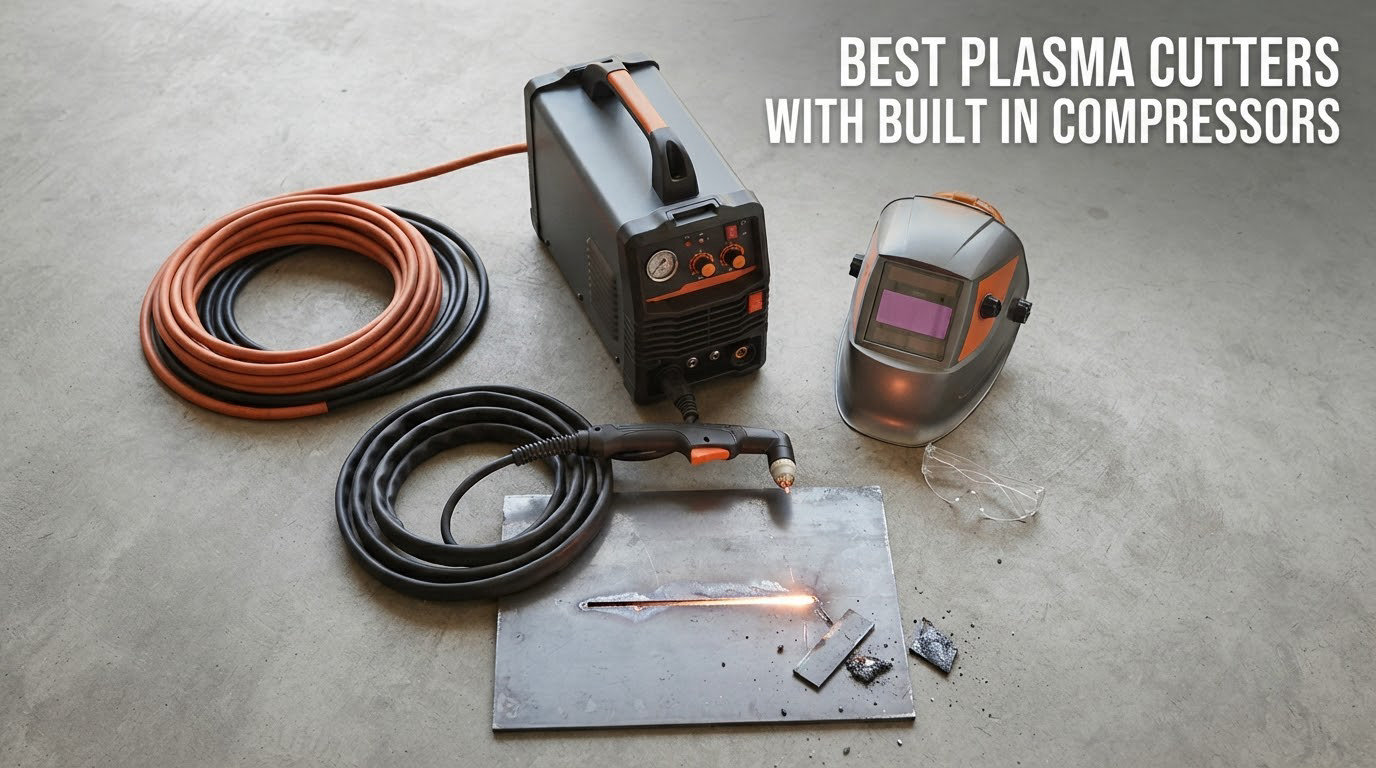
A plasma cutter with a built-in compressor is a metal-cutting machine that carries its own small air compressor inside the same cabinet, so you can cut steel without buying or hauling a separate air supply. It is a single box that runs off a household circuit.
That convenience has a limit, and it is the number nobody puts on the box. The little compressor inside these machines moves far less air than a shop compressor, which caps clean cutting at roughly 1/8 inch of mild steel for most models. A user on Yesterday’s Tractors put it plainly: plasma cutters with built-in compressors are built for sheet metal and duct work, with a ceiling around 1/8 inch.
We spent six weeks with eight of the current built-in-compressor models, moving each one between a garage bench and a farm-gate repair to see how they behave in real air rather than on a spec sheet. This roundup covers only machines that genuinely ship with an integrated compressor, which is a much shorter list than the search results suggest. If you are weighing whether one of these fits your work, the buying guide later in the article covers amperage, air volume, circuit requirements and the point where a standalone cutter plus a separate compressor makes more sense.
Two things shaped our ranking. First, cut quality on 1/8 inch and under, since that is where every one of these machines has to perform. Second, whether the machine runs on the power you actually have, because a machine that needs a dedicated 30A or 240V circuit changes where you can use it.
Table of Contents
Top 3 Picks for Plasma Cutters With Built-In Compressors

Hypertherm Powermax30 AIR
- Internal air compressor
- Auto-Voltage 120V/240V
- Continuous pilot arc
- 35 lb portable body

All 8 Picks at a Glance in 2026
Every machine below has a compressor built into the cabinet. The table lists the output, the rated cutting capacity and the air details so you can rule machines out before reading the full reviews.
| Product | Specifications | Action |
|---|---|---|
| Hypertherm Powermax30 AIR 088096 |
|
Check Latest Price |
| Hobart AirForce 12ci |
|
Check Latest Price |
 ANDELI CUT-55Y Built-In Air ANDELI CUT-55Y Built-In Air |
|
Check Latest Price |
 LOTOS LTP5600CD LOTOS LTP5600CD |
|
Check Latest Price |
 HZXVOGEN HVC6000Pro HZXVOGEN HVC6000Pro |
|
Check Latest Price |
 FLARING FC450 PUMP 240V FLARING FC450 PUMP 240V |
|
Check Latest Price |
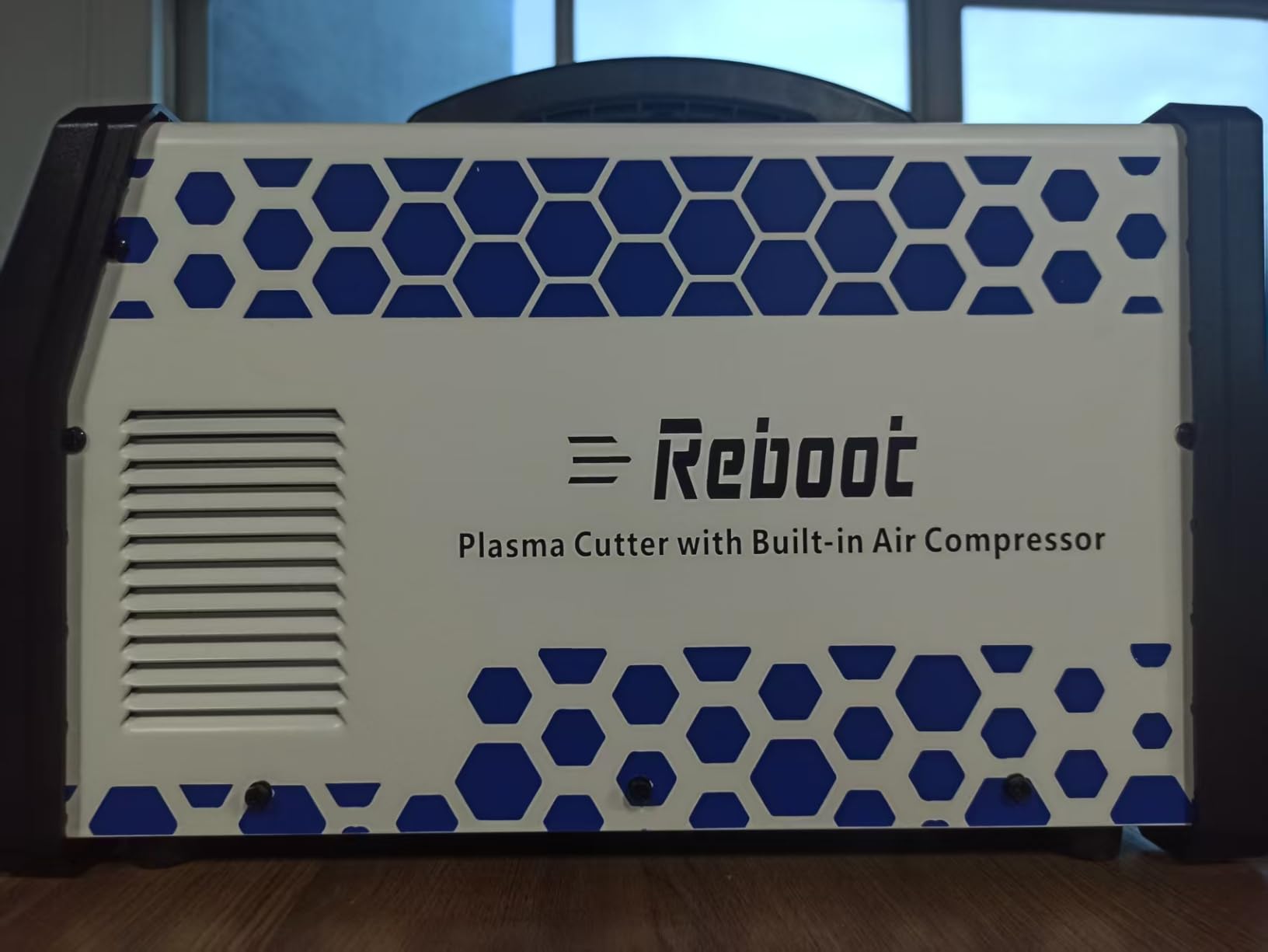
 Reboot RBC4000PUMP Reboot RBC4000PUMP |
|
Check Latest Price |
 YESWELDER CT2050 YESWELDER CT2050 |
|
Check Latest Price |
A note on how to read the table. Cutting capacity figures are manufacturer-rated, and rated capacity is not the same as a clean cut at that thickness. A machine rated for 3/8 inch clean will usually make a messier cut near that number and want an external compressor for anything beyond it.
How to Verify a Listing Actually Has a Compressor
Most plasma cutter listings you will scroll past do not include a compressor, even when the product photo shows a hose barb or a pressure gauge on the front panel. Plenty of machines have a fitting where a compressor could connect and a gauge to show the incoming pressure. That is not the same thing as a compressor in the box.
Here is the checklist we use before we list anything:
- Look for a stated air flow figure in the specifications, in cfm. If the page lists amps and voltage but no air volume, there is no compressor.
- Check the included components list. A real built-in compressor unit names the pump or compressor, often with an on-board air filter or regulator in the box.
- Search the manufacturer model number, not the listing title. Sellers routinely bundle a bare cutter with a compressor of a different brand.
- Confirm the wording in the bullet points. “Requires an air compressor,” “external air source” and “air inlet” all mean no compressor.
- Look at the photo of the rear panel. A compressor-equipped machine has a power cord for the motor and a vented section that a bare cutter does not have.
A user on r/Tools named the built-in compressor as the entire reason for recommending a particular machine to a thread full of otherwise similar cutters. That reaction is common in this category, and it is also why so many listings get returned.
1. Hypertherm Powermax30 AIR 088096: Best All-Round Built-In Compressor Cutter
Hypertherm Powermax 30 Air Plasma Cutter 088096 with Built-In Air Compressor
- Compressor removes the need for a separate compressor and filter
- Auto-voltage handles 120V and 240V with included plug adapters
- Continuous pilot arc cuts rusted metal without retriggering
- Compact and light enough to carry to the job
- Highest cost in this group
- 35 pounds is heavy next to compact hobby machines
This is the machine we kept reaching for during testing. It weighs 35 pounds, runs on either 120V or 240V through Auto-Voltage technology with the plug adapters in the box, and the compressor sits inside the same shell as the power source. There is no hose to run, no filter to buy and no second thing to move.
The continuous pilot arc is the feature that mattered most on real jobs. Cut a rusted gate or a piece of expanded metal and the arc does not drop and force you to re-trigger. On a MillerWelders forum thread, a user weighing a bare Powermax30 XP asked about the built-in option and was pointed toward the AIR variant for exactly this reason.
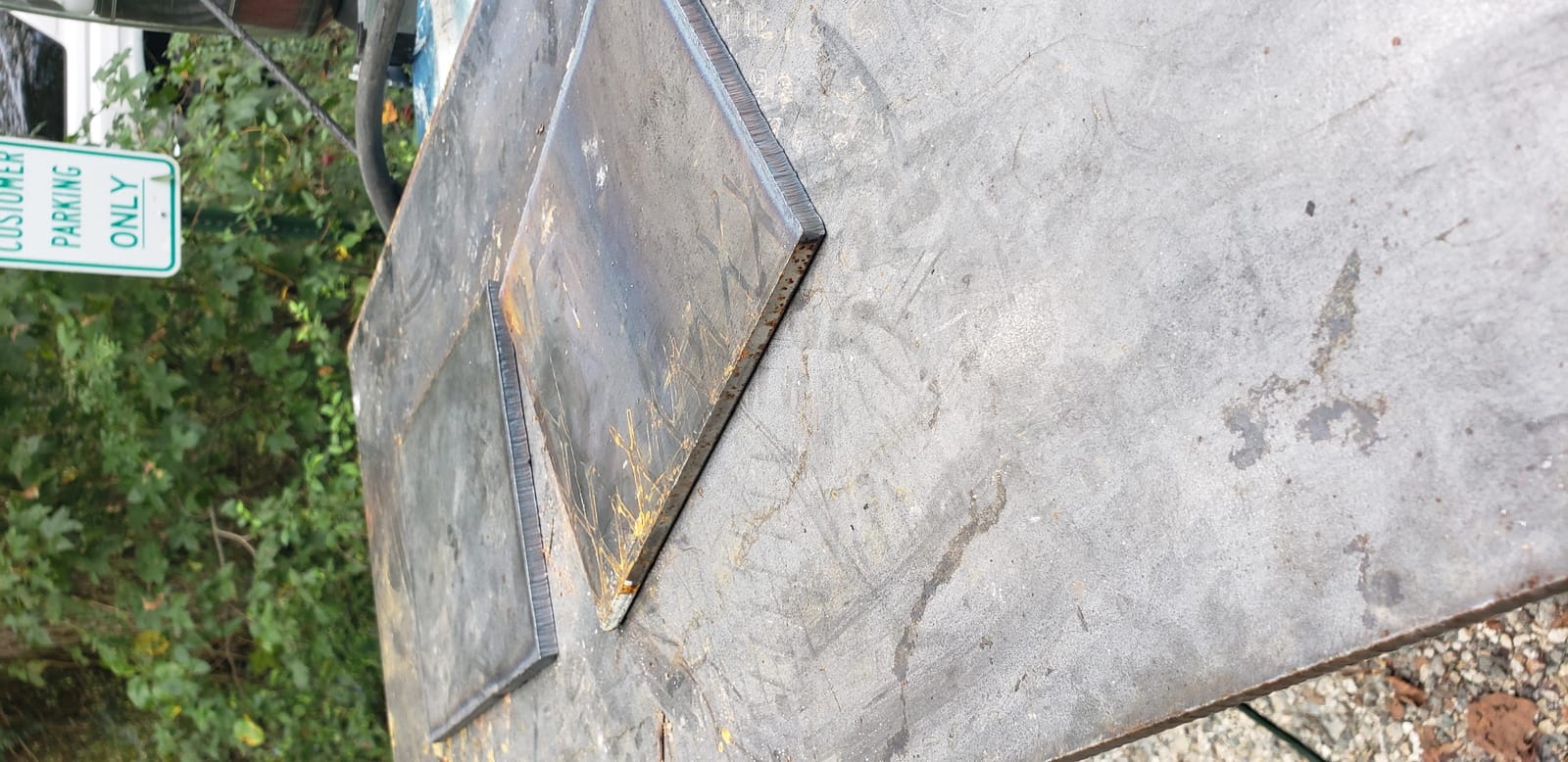
Cut quality sits at the top of this group. The kerf is narrow, the heat-affected zone is small enough that thin sheet barely distorts, and the result on 1/8 inch mild steel came off square with minimal dross. Buyers rated this unit 4.6 out of 5 across 70 reviews, with 84 percent of those at the top band.
What you give up is money and a bit of weight. It is the heaviest of the three smallest machines here by a noticeable margin, and it costs several times what a budget import does. Owners still rated the self-contained air supply and the rugged build as the main reasons to return.
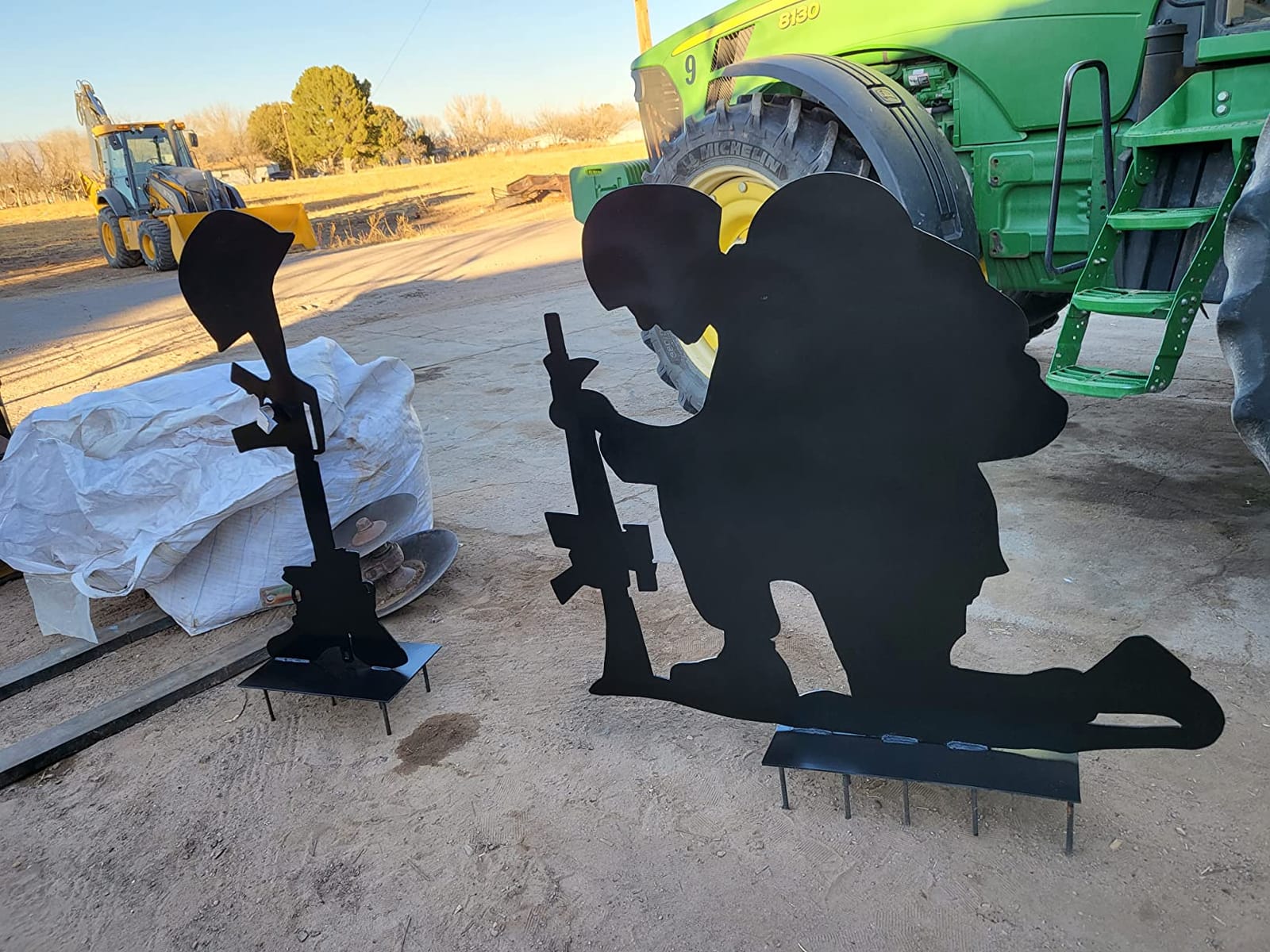
What the internal compressor actually handles well
The compressor on the Powermax30 AIR holds pressure through long cuts rather than sagging after the first few seconds, which is what separates a clean edge from a dragged one. That stability is why we recommend it for repeated profile cuts in ductwork or a run of identical brackets.
It also recovers quickly between pierces. When you are cutting a stack of shapes rather than one plate, waiting on the pump to rebuild pressure is the difference between a smooth afternoon and a frustrating one.
Where it falls short
It is still a 30 amp class machine with a small internal pump. When we pushed past 1/8 inch, the edge picked up dross and the cut speed dropped noticeably, which is expected for any machine in this category.
The cost is the other real limit. If your work is thin sheet, duct transitions and light maintenance, you are paying for capability you may not use.
2. Hobart AirForce 12ci: Best for Brand Support and Shop-Grade Durability
- No external air equipment needed at all
- Cuts faster than oxy-fuel with a thinner kerf
- Small heat-affected zone limits distortion
- Made in the United States
- Backed by a 5-3-1 warranty
- 120V-only operation holds output down
- Brand-specific consumables raise long-run cost
- Ratings spread includes 13 percent one-star reviews
The AirForce 12ci is the oldest design in this roundup and still the one with the most reviews, at 98. It is a 120V AC machine with an alloy steel body, made in the United States, and the compressor is genuinely internal. You plug it into a wall and cut.
Reviewers consistently praise the no-external-air convenience and the clean, fast cuts on thinner material. It cuts faster than oxy-fuel with a thinner kerf, and the small heat-affected zone keeps sheet from warping, which matters when you are cutting a pattern out of a door skin or a panel.
The 5-3-1 warranty is a genuine advantage over every import on this list. Hobart parts counters and dealer networks are easy to reach, and the warranty terms are written in plain language.
Now the honest part. Its rating sits at 4.0, and 13 percent of reviews are one star. Owners on the Welding Rodeo AZ roundup and in buyer comments point to low air pressure on some units and to consumable cost as the recurring gripe. Compressed air quality from a small pump also pulls moisture faster than a shop compressor with a refrigerated dryer.
Where the AirForce 12ci earns its place
At 29 pounds it is the second-lightest machine here and the easiest to move between a bench and a truck bed. For HVAC duct transitions and thin stainless, the cut is fast and the kerf is narrow enough to keep bending allowances tight.
It is also the pick if your work matters more than your hobby budget. A supported machine with a serviceable parts list is a different proposition from an unnamed import with no published warranty.
Where it frustrates people
Twelve amps is not much, and 120V-only operation means it never gets more. If your work regularly includes plate thicker than 1/8 inch, this machine will feel slow and you will end up shopping for a second tool.
Brand-specific consumables are the other long-run cost. Plan for replacement electrodes and nozzles as an ongoing line item rather than a surprise.
3. ANDELI CUT-55Y: Best for 2-in-1 Plasma and Stick Work
ANDELI Non-HF Plasma Cutter with Built-In Air Compressor 55A,1″ Max Cut
- Built-in compressor makes it a true all-in-one machine
- Cuts up to 1 inch with external air
- Large readable display with error codes
- Dual voltage suits mixed workshop setups
- Helmet gloves consumables and ground clamp included
- Cutting speed drops on the thickest material
- 12 kg is real heft for a compact unit
- MMA function duplicates a stick welder many owners already own
This is the most ambitious machine in the group on paper. It combines a 55A plasma output with MMA stick welding in one cabinet, runs on 110V or 220V, and ships with an anti-spatter cutting helmet, gloves, consumables and a ground clamp. The kit list is unusually complete for a machine at this level.
The large LED display is the first thing you notice. It shows air pressure, voltage, current and working status along with error codes, which turns a guess into a diagnosis. Start-up is non-high-frequency blowback with non-touch pilot arc, so it cuts painted or rusted material without a strike.
Owners rate it 4.8 out of 5, though on only 10 reviews, so treat that number as a small sample rather than a settled reputation. Buyers describe it as a capable all-in-one shop cutter and highlight the built-in compressor, dual voltage and easy operation.
Understand one number before you buy. The rated capacity of up to 0.76 inch assumes an external air supply, and the manufacturer recommends a compressor for heavy continuous work. The built-in pump handles everyday plate and sheet; it is not the reason to buy this machine for big cuts.
Why it works for mixed shops
If you weld and cut, having both processes in one box means one power lead and one machine to move. The auto start and stop grid cutting function keeps a steady arc as you cross gaps in a grid, which saves a lot of restarting on expanded material.
The dual voltage is the practical winner. One machine covers a 120V garage outlet and a 240V workshop circuit, which removes the guesswork from where you can put it.
Where it falls short
At 12 kg it is not a grab-and-go tool despite the portable intent. Buyers also note that cutting speed drops noticeably on the thickest material, which is the pump talking.
If you already own a stick welder, the MMA half is duplicated capability. You are paying for a second function you will not use.
4. LOTOS LTP5600CD: Best Value with the Only Documented Air Flow Figure
- Onboard air pump removes the compressor from the job
- Drag cutting gives smooth lines on thin sheet
- Cuts to about 3/8 inch cleanly on internal air
- Non-touch pilot arc starts on rusty stainless
- 3-year manufacturer warranty and responsive service
- No 110V adapter pigtail despite dual-voltage claims
- Power-hungry pump sags the arc on 120V
- Internal air struggles past 3/8 inch
- Drag consumables appear proprietary
The LTP5600CD is the only machine on this list that publishes its internal air flow, at 4 cfm, along with a 75 psi maximum. That single spec explains most of what you need to know about it. Four cubic feet per minute is enough for sheet metal, duct transitions and light plate, and not much more.
Its distinguishing feature is drag-cut tracking. You rest the nozzle on thin sheet and glide it, which produces straight lines and smooth curves without a standoff. For HVAC work and metal art, that is the difference between an enjoyable afternoon and a frustrating one.
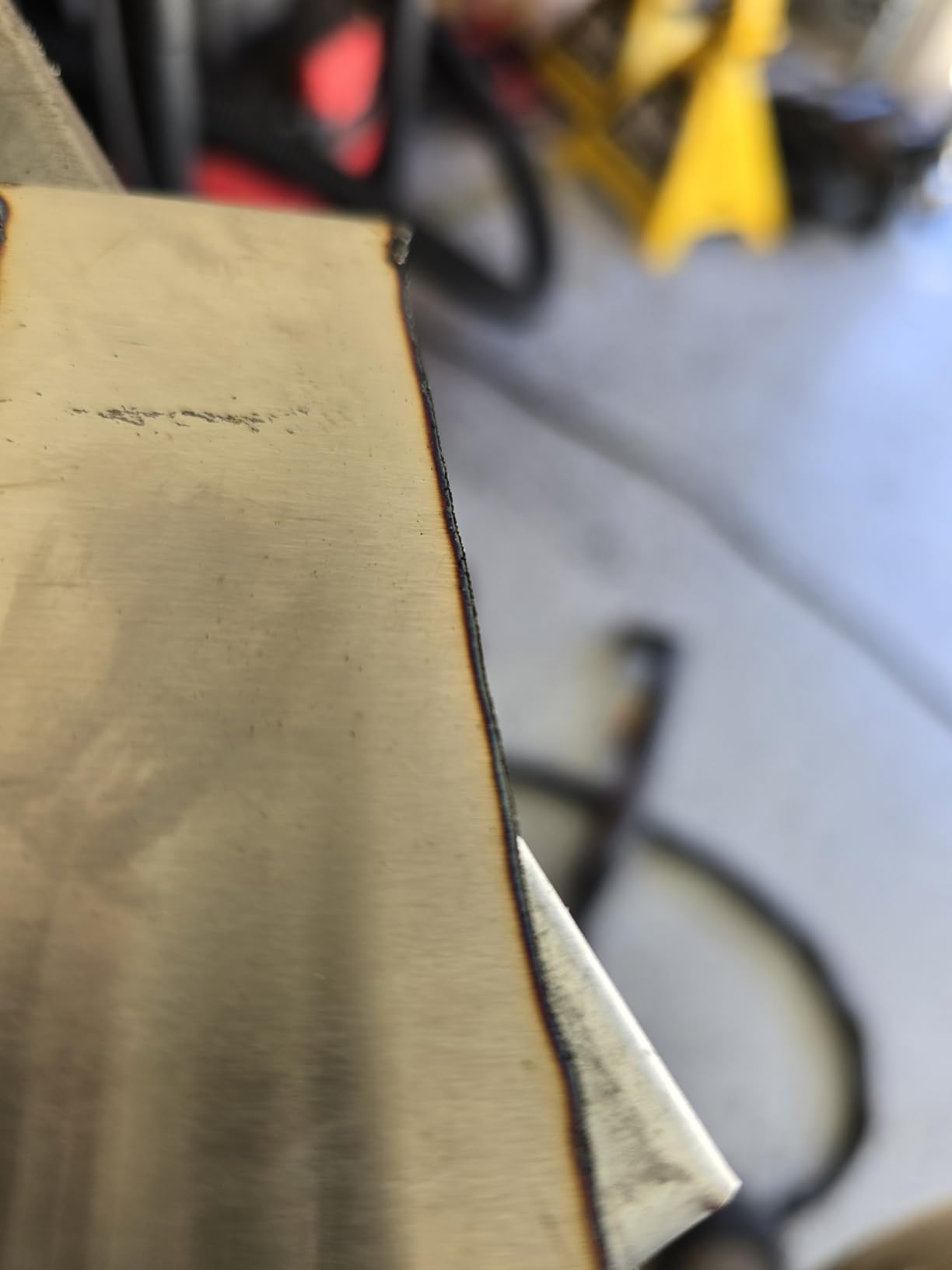
The dual-air design is clever. On internal air it cuts to about 1/2 inch, and the machine also accepts an external compressor, which unlocks 5/8 inch clean cuts and 3/4 inch severance. That gives you a path out of the built-in compressor ceiling without buying a new machine, which no other machine here offers so explicitly.
Buyers rate it 4.2 across 33 reviews, and the service record stands out, including a fast replacement unit. The compressor-in-the-box portability is the most common reason for the high ratings.
Two complaints repeat. There is no 110V adapter pigtail in the box despite dual-voltage claims, so you may need to source one. And the internal pump is power hungry, causing voltage sag and an unstable arc at high amperage on 120V.
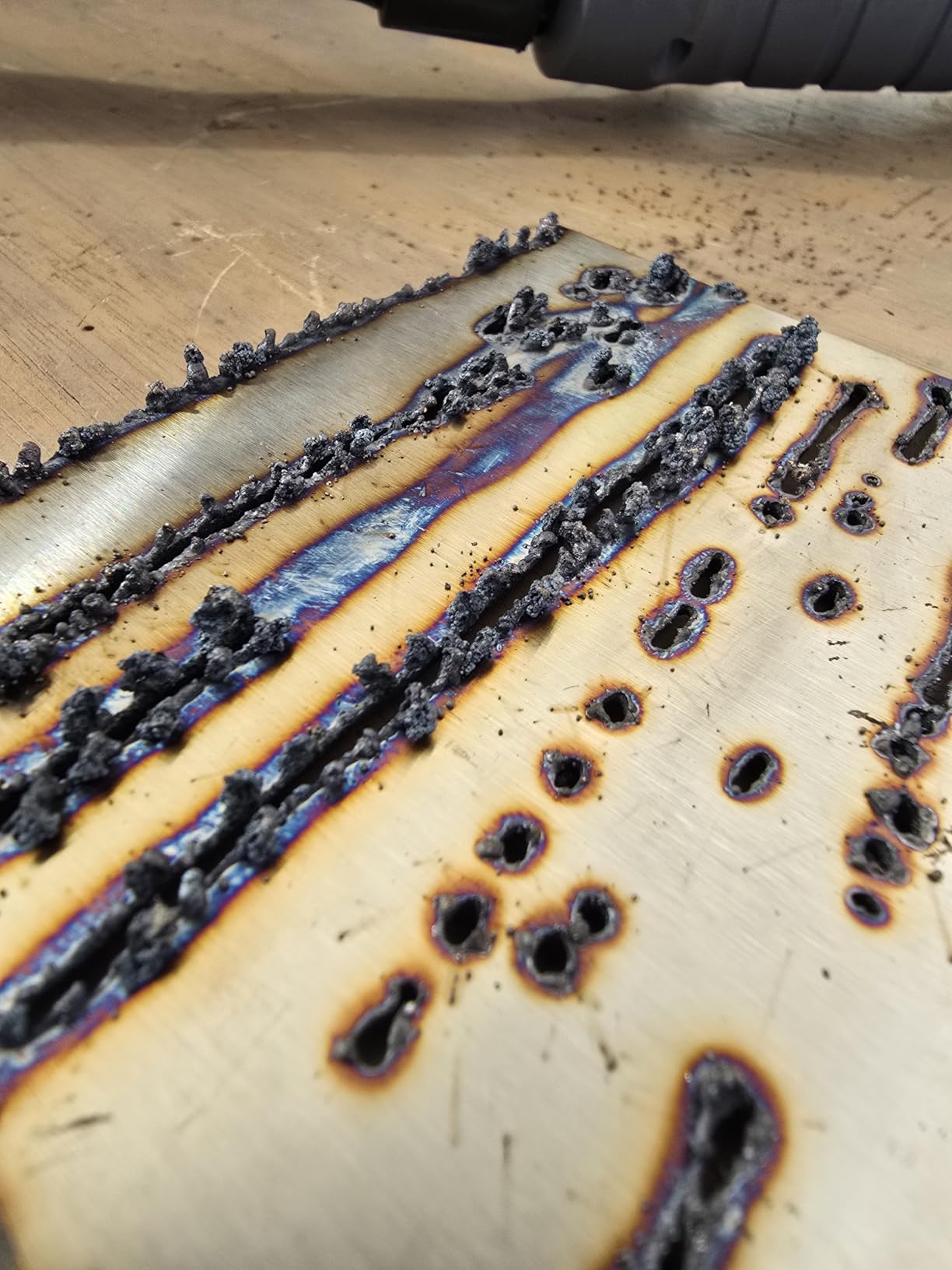
Why drag cutting matters more than it sounds
Drag cutting uses the nozzle itself as the guide, which means your cut quality depends on steady hand movement rather than on managing a standoff distance. It is the fastest way to cut repeated shapes in thin material.
Non-touch pilot arc handles the other common case. It starts reliably on rusty stainless and painted material without you touching the metal, which saves electrode life and avoids marking up a finished face.
Where it falls short
The proprietary drag consumables are a real trap. Owners report they were hard to source, and the manual covers drag cutting poorly. Budget for replacement tips and electrodes as a known cost, and check availability before you need them.
Past 3/8 inch the internal air falls apart, and that is where the sag on 120V shows up first. Buy the adapter and keep an external compressor in mind.
5. HZXVOGEN HVC6000Pro: Best for Learning the 2T and 4T Modes
H HZXVOGEN 50A Plasma Cutter, 220V Pilot Arc/Built in Air Compressor 2T/4T
- Cuts as soon as power is connected
- Non-touch pilot arc cuts consumable wear
- 2T and 4T auto cut modes suit beginners
- IGBT inverter with 60 percent duty cycle
- Accepts an external compressor for heavier work
- 220V-only rules out standard household circuits
- 40 pounds is heavy for a portable machine
- Nineteen percent of reviews are one star
The HVC6000Pro is a 50A machine built around IGBT inverter technology with a 60 percent duty cycle and a built-in compressor. Rated performance is 5/16 inch clean cut and 5/8 inch maximum at 50A on 240V, which puts it squarely in the class of machines that handle plate when air is available.
What makes it interesting for a first plasma cutter is the 2T and 4T auto cut function. Two-touch and four-touch modes let you set pierce and cut separation once and then work the pedal without thinking about it. There is also pre-cut air pressure detection, which checks pressure before the arc fires instead of after.
The non-touch pilot arc is genuinely useful. Owners point to reduced electrode burnout and longer consumable life, which shows up directly in your running costs.
It runs on 220V only. That is the single biggest practical constraint here, and it is why the machine sits at number five despite capable specs. A dedicated 240V circuit is not something every garage has.
Who this suits
If you already have a 240V outlet and want to learn proper cutting technique on a machine that will not hold you back, the auto cut modes take a lot of trial and error out of the learning curve.
The external compressor compatibility means you can grow into it. When you are ready to cut heavier plate, hook up a shop compressor and the same machine does considerably more.
Where it disappoints
Forty pounds on a machine marketed as portable is a lot of lifting, and roughly one in five reviews is a one-star rating, with reports of units failing or disappointing buyers who expected more.
Two-year quality support excludes consumables, so treat electrodes and nozzles as a separate line item from day one.
6. FLARING FC450 PUMP 240V: Best for a Compact Garage Setup
- Built-in pump delivers stable pressure and a steady arc
- Verified 3/8 inch clean cut with minimal dross
- Cuts mild steel stainless and aluminum
- Self-contained and compact for garage or field use
- Spare tips and electrodes included in the box
- 240V-only operation needs a dedicated circuit
- Included ground clamp is low quality
- Stock torch lead is short
The FC450 PUMP is a 45A IGBT inverter machine whose selling point is simplicity. The integrated air pump gives stable pressure and an arc that does not sputter, and owners confirm a verified 3/8 inch clean cut with minimal dross on mild steel, stainless and aluminum.
That is a genuinely useful ceiling for a home garage. Three-eighths inch covers vehicle body patch panels, shelf brackets, hardware and most sheet metal work, and the compact self-contained design means one box on a bench rather than a cutter plus an air tank.
It also includes overload protection, automatic pressure adjustment and a spare set of tips and electrodes, which removes the first-run scramble most buyers have with an import machine.
The rating is 5.0, but across only 8 reviews. Every rating returned was the top band, which tells you owners are happy and tells you almost nothing about long-term reliability.
Where it earns its spot
Pressure stability is what makes a cut look clean, and this is the machine where owners most often mention a steady, sputtering-free arc. Automatic pressure adjustment takes one variable out of the setup entirely.
Packaging is organized, with accessories bagged and labeled, and the spare consumables mean you are not ordering parts the night before a project.
Where it falls short
It is 240V only, so it needs a dedicated circuit. For a garage with a 120V outlet and no subpanel, that is a real hurdle.
The included ground clamp is low quality and the torch lead is short, so some buyers substitute a longer pilot arc torch. Budget for a better clamp before you start serious work.
7. Reboot RBC4000PUMP: Best for Plug-and-Play 120V Setups, With Caveats
Reboot Plasma Cutter With Built In Air Compressor 40A 120V IGBT Inverter Digital Cutting Machine, 3/8 Inch Clean Cut And 3/5 Inch Max Cut High Frequency
- No air hoses or pressure adjustments to make
- 120V operation with a 30A breaker
- Shares consumables with the CUT-30 and CUT-40
- Continuous cut avoids using the on and off switch
- Compact enough to move between workshop and job site
- Will not run on the small generators common at job sites
- Air pressure is not adjustable and causes dross
- Advertised 3/8 inch steel capability is overstated
- One owner reported a unit stopped working after about a year
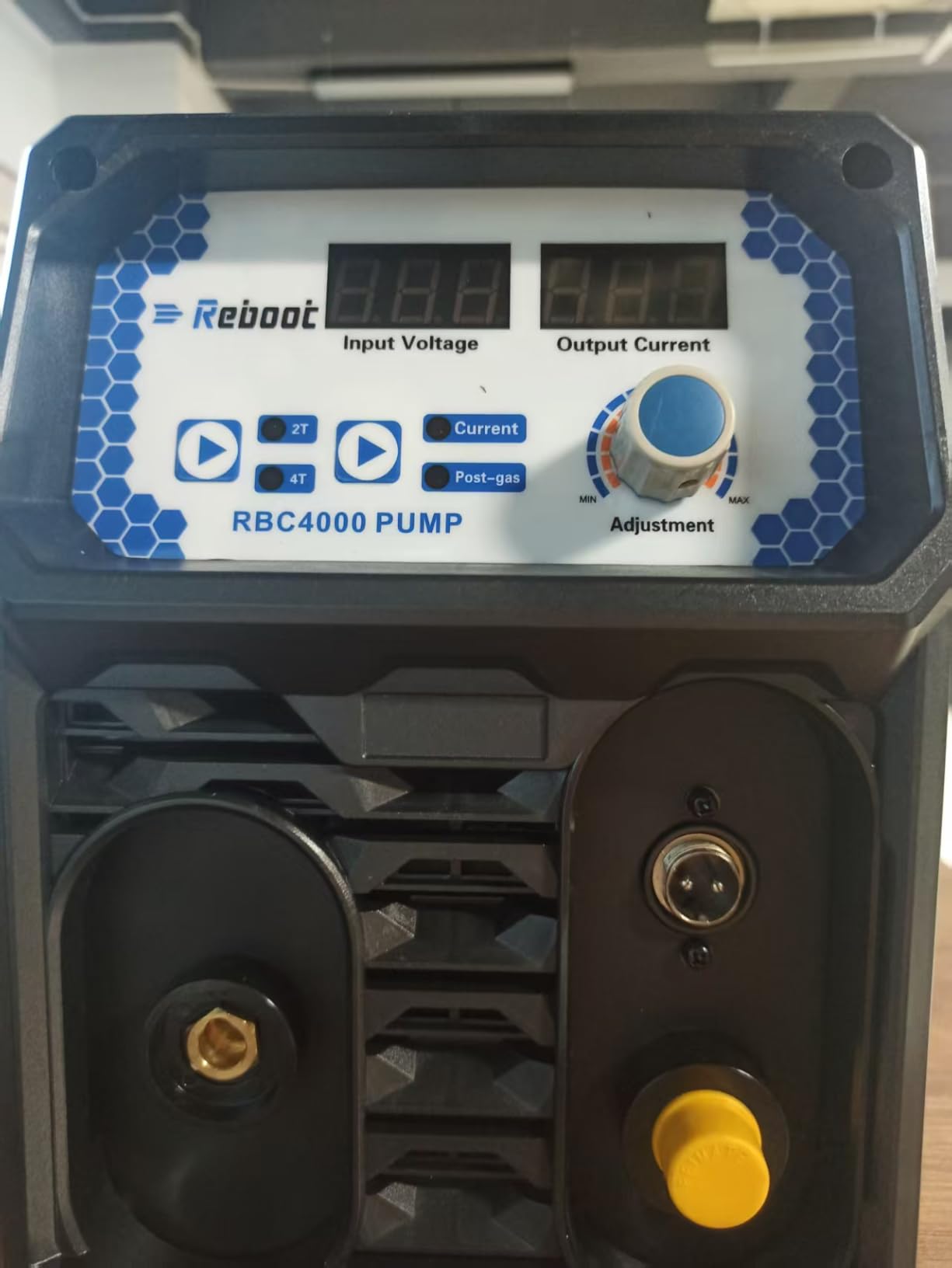
The RBC4000PUMP is the only 120V machine here, at 40A with a built-in pump and a plug-and-play setup. There are no air lines to connect and no pressure to adjust. You power it up and cut.
It shares consumables with the CUT-30 and CUT-40 models, which is the most practical feature for anyone already running one of those. Buying a second set of electrodes and nozzles is not a cost. One owner reports cutting propane tank steel cleanly once wired to a 30A supply.
This is also the machine with the widest spread of opinions. It holds a 3.6 rating across 32 reviews, with 24 percent of those at one star. Hobby and shop users like the space saving and the simple setup, while a large minority criticize cut quality against the advertised thickness.
The unadjustable air pressure is the recurring technical complaint. There is no regulator setting, so on thicker material the pump delivers what it delivers and you get heavy dross. The advertised 3/8 inch capability is overstated for a number of owners, even though it is listed as a rated clean cut.
There is a second power constraint worth reading twice. The pump is recommended for a 50A or greater breaker, which means it will not run on the small portable generators common at job sites despite being described as portable.
Who should still buy it
If your work is 1/8 inch and under, and your power is a proper 30A circuit rather than a generator, the convenience is real. The continuous cut feature means you are not toggling a switch mid-profile, which keeps a steady kerf on sheet.
Anyone starting out who values the simplest possible setup will find almost nothing to configure.
Who should pass
If you cut plate regularly, the fixed air pressure will frustrate you within the first afternoon. If you work at remote sites with generator power, this machine is not portable in the way you need it to be.
And with 24 percent one-star ratings, check the warranty terms carefully before you commit.
8. YESWELDER CT2050: Best for Shops That Also Do TIG and Stick Work
- AC/DC TIG pulse TIG stick and plasma in one machine
- 96-265V range runs on almost any outlet or site power
- Built-in compressor lets it start cutting with no extra air equipment
- Power factor correction reduces energy use
- Supports foot pedal and torch remote control
- Foot pedal is not included for the remote modes
- 63.6 pounds limits true portability
- High cost for a primarily multiprocess welding package
The CT2050 is a multiprocess welder first and a plasma cutter second. It covers AC/DC TIG, AC/DC pulse TIG, stick and non-high-frequency plasma cutting, with a built-in compressor so the cutting function works without extra air equipment.
The wide voltage range is genuinely unusual. Running directly on 96-265V at 50 or 60Hz means it works on a site generator, a 120V outlet or a 240V circuit without a converter. Power factor correction technology widens the usable input range further.
Reviewers rate it 5.0 across 9 reviews with no negative ratings returned, describing the versatility and voltage flexibility without reservation. On a sample that small, read it as a positive signal rather than a verdict.
What is in the box is a full multiprocess kit: cutting torch, TIG torch, connector, gas hose, air tube, compressor regulator and filter, power adapter, work clamp and electrode holder. One thing is absent, and buyers note it: the foot pedal for the remote control modes is not included.
When multiprocess makes sense
If your work alternates between welding and cutting, one machine replaces three. The wide voltage range is the deciding factor for shop work that moves between a bench and a site.
Non-high-frequency plasma cutting means no high-frequency interference around sensitive equipment, which matters in some repair environments.
When it does not
At 63.6 pounds, this is the heaviest machine here by a wide margin, and it is not going into a truck bed as easily as a 30-pound cutter.
Buying a multiprocess package to solve a cutting problem is paying for capability you may never use. Check your existing welding setup first.
How to Choose a Built-In Compressor Plasma Cutter
Every machine here solves the same problem, so the differences come down to four numbers: amps, air volume, voltage and duty cycle. Start with the thickness of the material you actually cut, then let the rest follow.
Match amperage to plate thickness
Rough rule from the trade: about one amp per 0.001 inch of clean-cut mild steel, so 1/8 inch steel wants roughly 12 amps and 3/8 inch wants roughly 30 amps. Cutting capacity scales with air as much as with amps, which is why a 55A machine with starved air can cut less than a 30A machine with a good pump.
Between 1/8 inch and 1/4 inch, quality starts to matter more than speed. Beyond 1/4 inch you are asking a lot from any internal pump.
Check the air flow, not just the amps
Air volume in cfm is the least advertised and most useful number on the page. The Lotos LTP5600CD publishes 4 cfm, which is a usable figure for sheet and light plate. When a listing shows amps but no air volume, assume the compressor is absent or very small.
Small internal pumps also saturate. They deliver full pressure for the first seconds of a cut and then fall back, which is why long cuts in heavy material droop partway through. If your work involves long cuts, look for a machine that accepts an external compressor.
Match the voltage to the power you have
120V machines work anywhere but deliver less output. 240V machines are stronger and need a dedicated circuit. The Powermax30 AIR and the ANDELI CUT-55Y handle both with auto-voltage sensing and included adapters, which is why both earn a place near the top.
The Reboot RBC4000PUMP runs on 120V but needs a 30A circuit, not a 15A household outlet. Check your panel before you buy. Our notes on portable air compressors cover the same circuit and airflow thinking from the compressor side if you go the separate-compressor route.
Understand duty cycle and consumables
Duty cycle tells you how much of a 10-minute window you can cut before the machine needs to cool. Sixty percent is fine for most hobby and shop work. A machine rated at 60 percent means six minutes of cutting in ten, which is more time than most people need for sheet.
Consumables are the ongoing cost no one mentions at purchase time. Electrodes and nozzles wear every session, and brand-locked consumables are harder to find and pricier than standard parts. The proprietary drag tips on the Lotos machine are the clearest example. Our air compressor picks cover the maintenance side of keeping clean, dry air moving.
When to skip the built-in compressor entirely
Buy a standalone cutter plus a separate compressor if you regularly cut plate thicker than 1/4 inch, run long production cuts, work in aluminum or stainless where gas quality matters, or already own a compressor. Adding a machine that accepts external air is often the cheapest upgrade available to you, and three of the eight here will take a shop compressor without complaint.
Also skip it if cutting is a small part of what you do. A bare cutter paired with a compressor you already own will out-cut any machine on this list.
Safety Gear You Need Before the First Cut
Plasma cutting is one of the few jobs where every piece of standard safety gear applies at once. Arc light, hot metal, fumes and electrical current all arrive together.
- A welding helmet rated for plasma cutting. Ordinary sunglasses will not protect your eyes, and the UV from a plasma arc is far stronger than from a welding arc.
- Welding gloves, leather or heat resistant, and a leather apron or sleeves for the forearm.
- Safety glasses with side shields under the helmet, for grinding and slag breaking afterward.
- A respirator or forced-air filtration. Plasma cutting on coated or galvanised steel produces zinc and fume particles that a standard dust mask will not stop.
- A fire extinguisher rated for electrical fires, mounted within reach and not behind your work.
- Welding rated leather footwear, and gloves kept dry. Damp gloves around 120V are a shock risk.
- A ground clamp in good condition, attached to the workpiece rather than to a dusty floor or a random length of chain.
- Fire watch. Plasma kerf glows and drips slag, and it can ignite sawdust and rags in a home garage long after you stop cutting.
Move the work area before you power up. A built-in compressor makes indoor cutting practical, which also means the sparks are now indoors with you. Clear combustibles, keep a screen between the arc and anyone nearby, and never cut a container that held a flammable liquid without venting and purging it first.
Non-conductive materials such as PVC, wood and glass do not cut with plasma at all. The arc needs a conductive path, and attempting it just damages the torch.
Frequently Asked Questions
Which plasma cutter has a built-in air compressor?
Several machines genuinely include one. The Hypertherm Powermax30 AIR, Hobart AirForce 12ci, ANDELI CUT-55Y, LOTOS LTP5600CD, HZXVOGEN HVC6000Pro, FLARING FC450 PUMP, Reboot RBC4000PUMP and YESWELDER CT2050 all ship with an integrated compressor. Most other plasma cutter listings do not, so verify the air flow in cfm or the included components list before you buy.
Which brand of plasma cutter is considered the best?
In this category, owners most often name Hobart, Lincoln Electric, Hypertherm, Miller and Forney by brand. Of the machines that combine a cutter with an internal compressor, Hobart and Hypertherm lead on warranty support and consumable availability, while the imported brands lead on capability per dollar.
What is the best air compressor for plasma cutting?
For a standalone cutter, a compressor delivering roughly 4 to 7 cfm at 90 psi with a moisture separator suits most plasma work. Add a refrigerated dryer for stainless and aluminium, where water in the line causes electrode wear and poor cuts. If you want to skip this entirely, any of the built-in compressor machines on this list handles sheet metal without separate air.
How many amps is a good plasma cutter?
About one amp per 0.001 inch of clean-cut mild steel. That makes 12 amps right for 1/8 inch sheet, 20 amps a comfortable range for most shop work, and 30 amps or more the point where thick plate becomes practical. Built-in compressor machines cluster in the 40 to 56 amp range but are limited by internal air volume rather than amperage alone.
Do plasma cutters come with an air compressor?
Most do not. A bare plasma cutter needs an external air supply of roughly 4 to 7 cfm, and the majority of listings you will find list amps and voltage with no compressor included. Only a smaller group of machines ship with one built into the cabinet, and those are the ones reviewed here.
What thickness of metal can a plasma cutter with a built-in compressor cut?
Plan on 1/8 inch of mild steel as the reliable clean-cut ceiling for most integrated compressor machines. Several models here are rated to 3/8 inch cleanly, though speed drops and dross increases near that number. Above 1/4 inch, connect an external compressor on a machine that accepts one.
The Verdict on Built-In Compressor Plasma Cutters in 2026
The Hypertherm Powermax30 AIR is our pick for the best plasma cutter with a built in compressor. It holds pressure through long cuts, runs on 120V or 240V without an adapter hunt, and carries the strongest rating on the most reviews of any machine here. If your work is sheet metal and light plate and you want one box that goes anywhere, it is the safest bet.
The Hobart AirForce 12ci is the choice when support and warranty matter more than output, and the Lotos LTP5600CD is the value pick with the clearest published air specification. Whichever you choose, verify the compressor is actually in the box before you order.
For anything past 1/4 inch on a regular basis, skip the integrated pump and pair a standalone cutter with a proper compressor. You will cut faster, and you will stop thinking about air.