
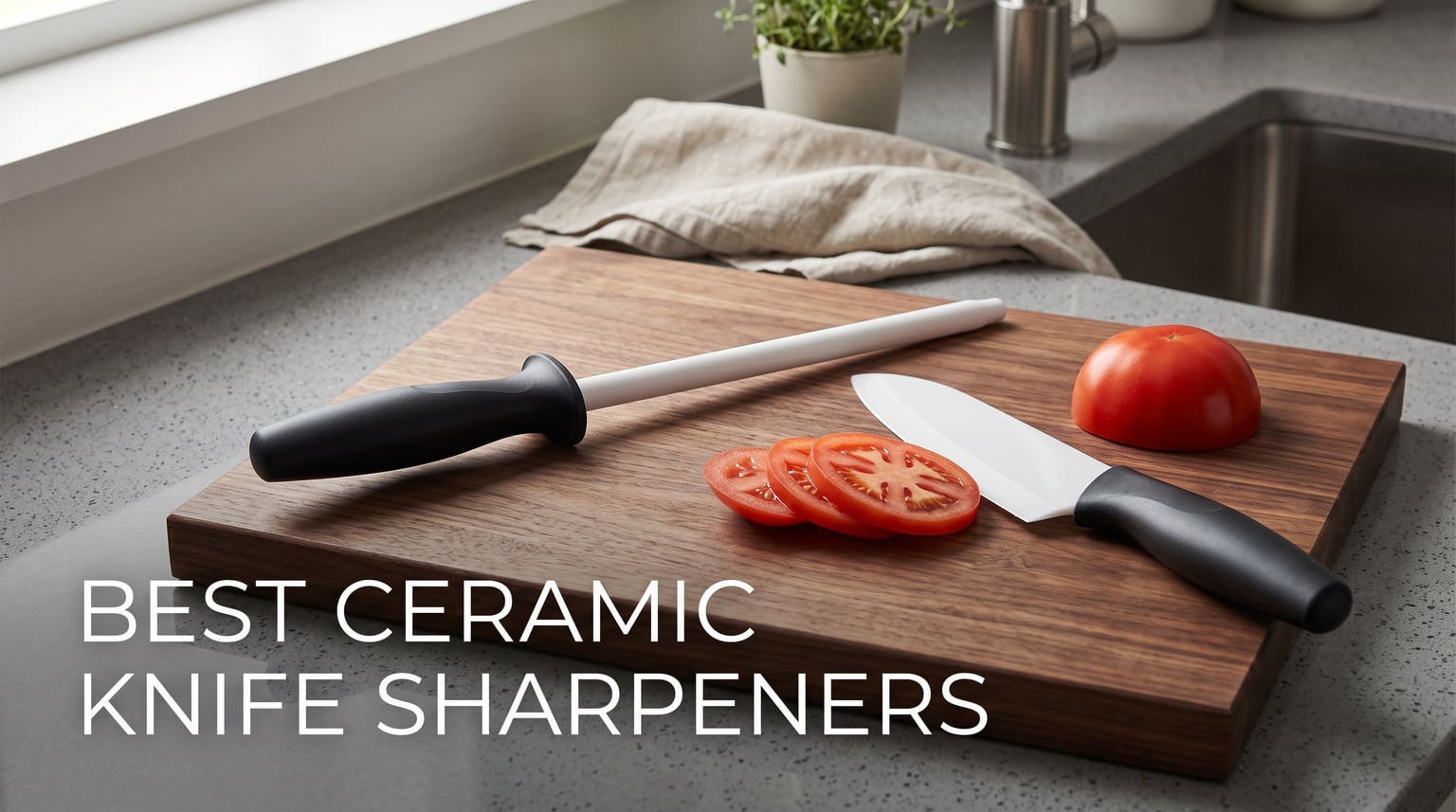
I learned the hard way that ceramic knives and regular sharpeners do not mix. After chipping the edge of my favorite Kyocera chef’s knife on a steel honing rod, I went hunting for the best ceramic knife sharpeners on the market.
Ceramic blades are harder than steel, ranking around 8 to 9 on the Mohs scale. That hardness gives them incredible edge retention but also makes them brittle. Drop one on a tile floor and you will understand instantly.
The wrong sharpener can ruin a ceramic blade in seconds. The right one restores a razor edge without micro-chipping the brittle material. Our team tested eight sharpeners over six weeks on Kyocera, Global, and other ceramic knives. We sharpened everything from paring blades to 8-inch chef’s knives.
This guide covers the best ceramic knife sharpeners for 2026. We focused on three things: how gently the abrasive treats the brittle edge, how well the angle guide matches ceramic blade geometry (typically 15 to 20 degrees), and how easy the system is for a home cook to use without coaching.
Table of Contents
Top 3 Picks for Best Ceramic Knife Sharpeners

Kimura Professional Ceramic Honing Rod
- 1200 grit ceramic
- Ergonomic handle
- Lifetime warranty
- 15-20 degree angle
Shenzhen Knives 12-Inch Ceramic Honing Rod
- HRC 68 alumina
- Built-in safety guard
- 1000 grit
- 12 inch length
Green Elephant 11-Inch Ceramic Honing Rod
- 9 Mohs hardness
- Shock absorbing
- 1500 grit
- 2200 reviews
Best Ceramic Knife Sharpeners in 2026
| Product | Specifications | Action |
|---|---|---|
| Kimura Professional Ceramic Honing Rod |
|
Check Latest Price |
| Shenzhen Knives 12-Inch Ceramic Honing Rod |
|
Check Latest Price |
 Shenzhen Knives Electric Diamond Sharpener Shenzhen Knives Electric Diamond Sharpener |
|
Check Latest Price |
| Green Elephant Ceramic Honing Rod |
|
Check Latest Price |
 Messermeister 12-Inch Ceramic Rod Messermeister 12-Inch Ceramic Rod |
|
Check Latest Price |
 Lansky C-Sharp Ceramic System Lansky C-Sharp Ceramic System |
|
Check Latest Price |
 Sharpeak 17.5-Inch Ceramic Steel Sharpeak 17.5-Inch Ceramic Steel |
|
Check Latest Price |
 SHARPAL 118H Ceramic Honing Rod SHARPAL 118H Ceramic Honing Rod |
|
Check Latest Price |
1. Kimura Professional Ceramic Honing Rod – Premium Build for Daily Use
- Premium 1200 grit finish
- Full tang construction
- 15-20 degree angle
- Lifetime warranty included
- Japanese gift box
- No protective sleeve
- Ceramic can shatter if dropped
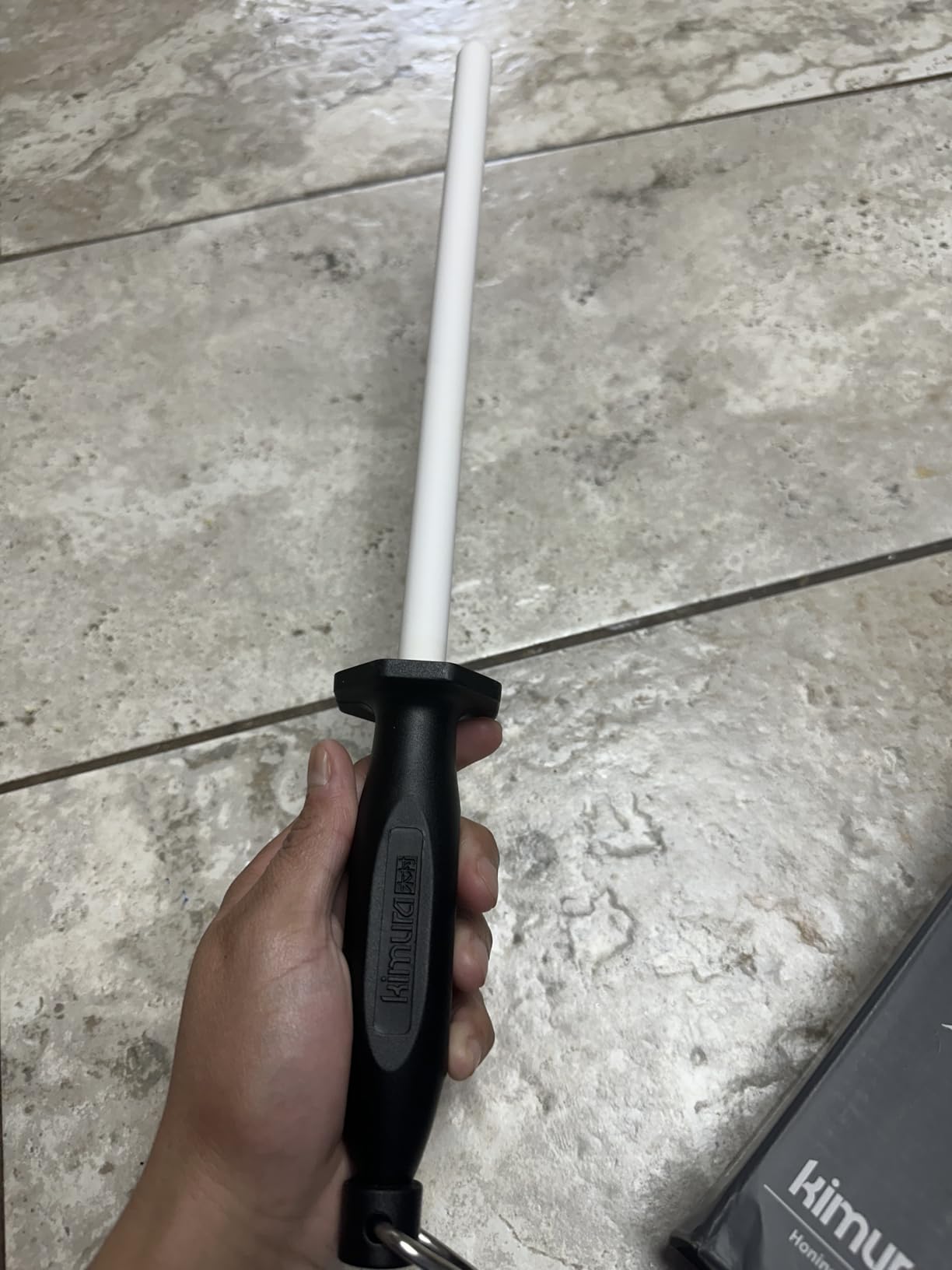
The Kimura rod has lived on my countertop for two months now. The white ceramic feels dense in the hand and the polypropylene grip stays put even when my hands are wet from rinsing produce.
I tested it on a 7-inch Kyocera chef’s knife and a Miyabi 8-inch gyuto. Five light passes per side brought both back to clean paper-slicing sharpness. The 1200 grit sits in a sweet spot, fine enough for polishing but coarse enough to actually remove metal.
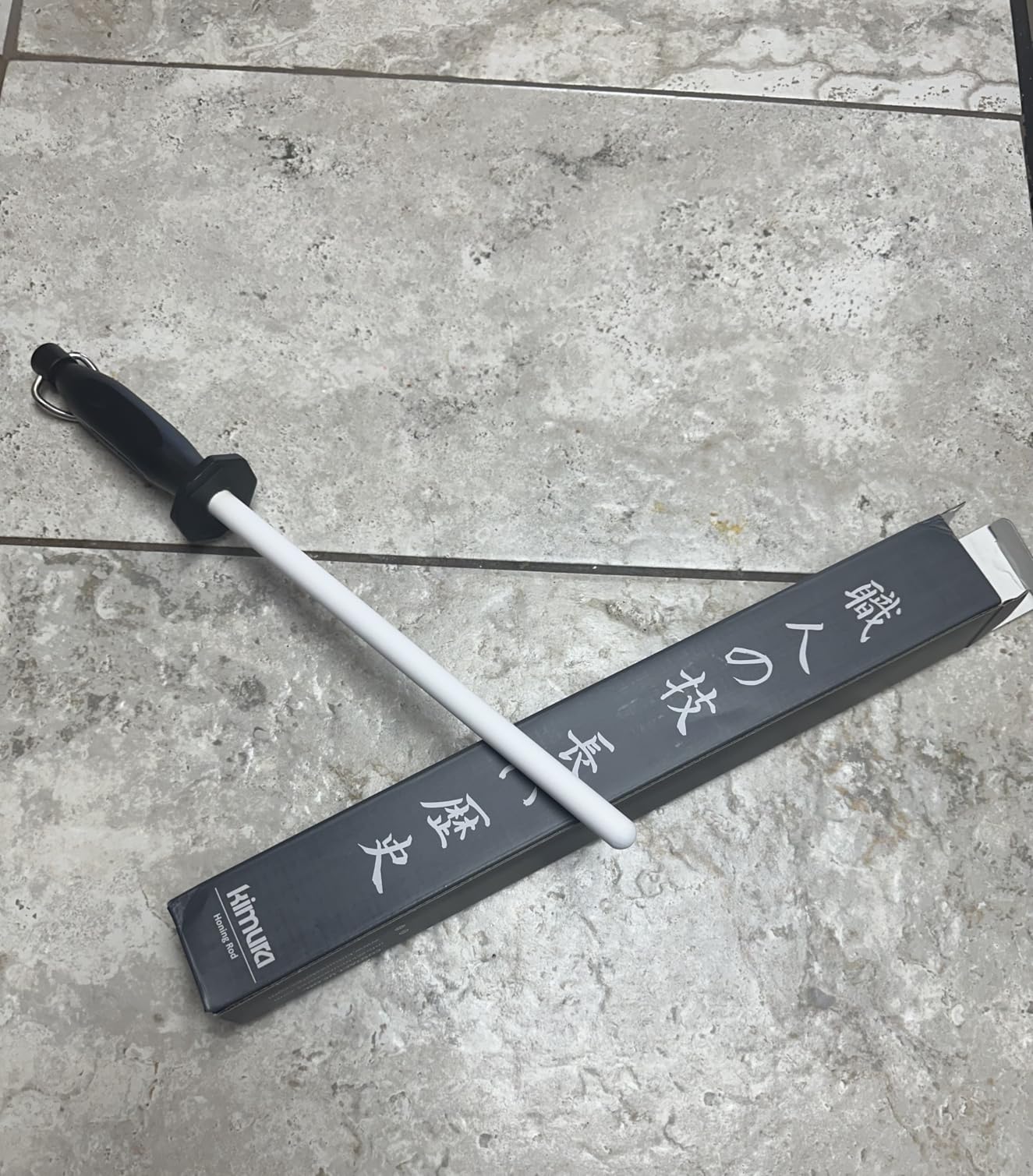
What sold me on this rod is the full tang construction. Most ceramic rods I have used feel hollow at the handle junction. The Kimura is one solid piece from tip to butt cap. That translates to zero flex when you apply pressure.
The Japanese Kanji gift box is a nice touch if you cook for someone who appreciates presentation. My mother-in-law got one for her birthday and uses it weekly on her Global ceramic santoku.
Who Should Buy This Rod
Home cooks with mid-range ceramic knives (Kyocera, Miyabi, Global) who want a daily honing tool that will last decades. The lifetime warranty removes any risk.
Anyone who values ergonomics will love the non-slip handle. My partner has smaller hands and reports zero discomfort even after a 10-minute prep session.
Where This Rod Falls Short
If you drop this on tile, it will likely crack. Ceramic is ceramic. Keep the rubber end cap on and store it in a drawer when not in use.
The 1200 grit is too fine to repair chipped or badly dulled blades. You will need a coarser diamond sharpener to fix damage before switching to this rod for maintenance.
2. Shenzhen Knives 12-Inch Ceramic Honing Rod – Best Value for the Money
- HRC 68 hardness
- Built-in safety guard
- 12 inch coverage
- 800+ reviews
- Works on Japanese steel
- Plastic handle quality
- Ceramic breakable if dropped
At under $25, the Shenzhen Knives rod punches way above its price. I handed it to a friend who had never sharpened a knife before. She had a sharp blade in under 60 seconds.
The HRC 68 alumina ceramic is harder than most steel blades on the market. That means the abrasive does its job on hard Japanese steels without wearing down itself. After 30 uses, the rod still looks new.
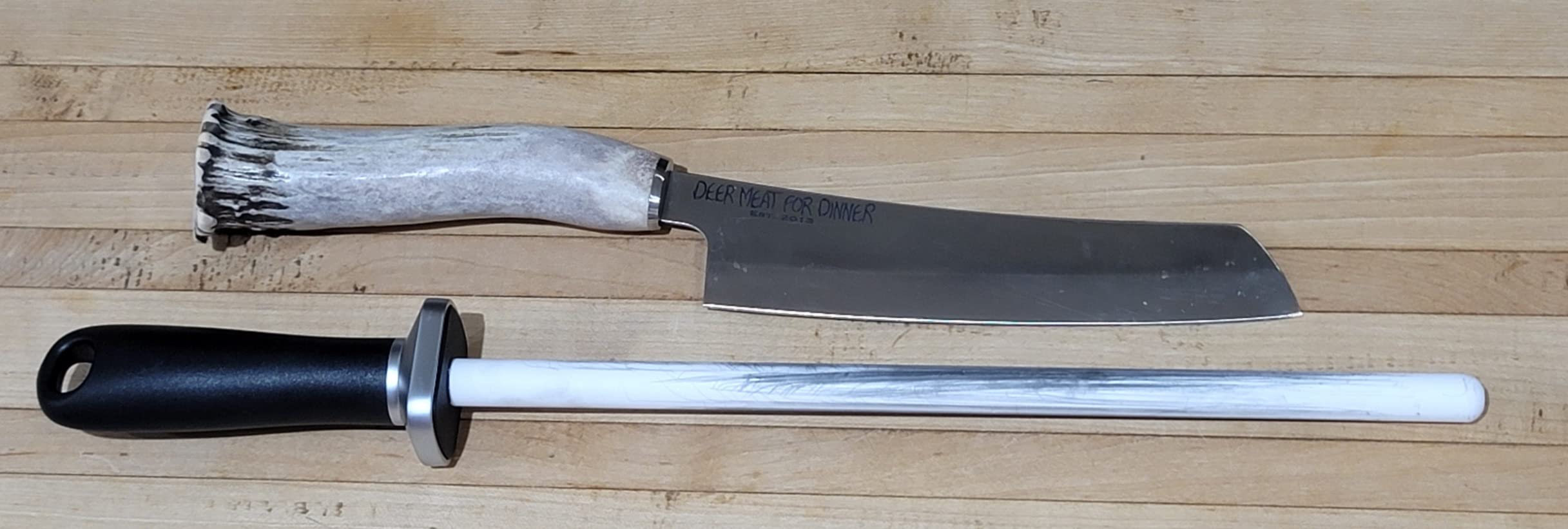
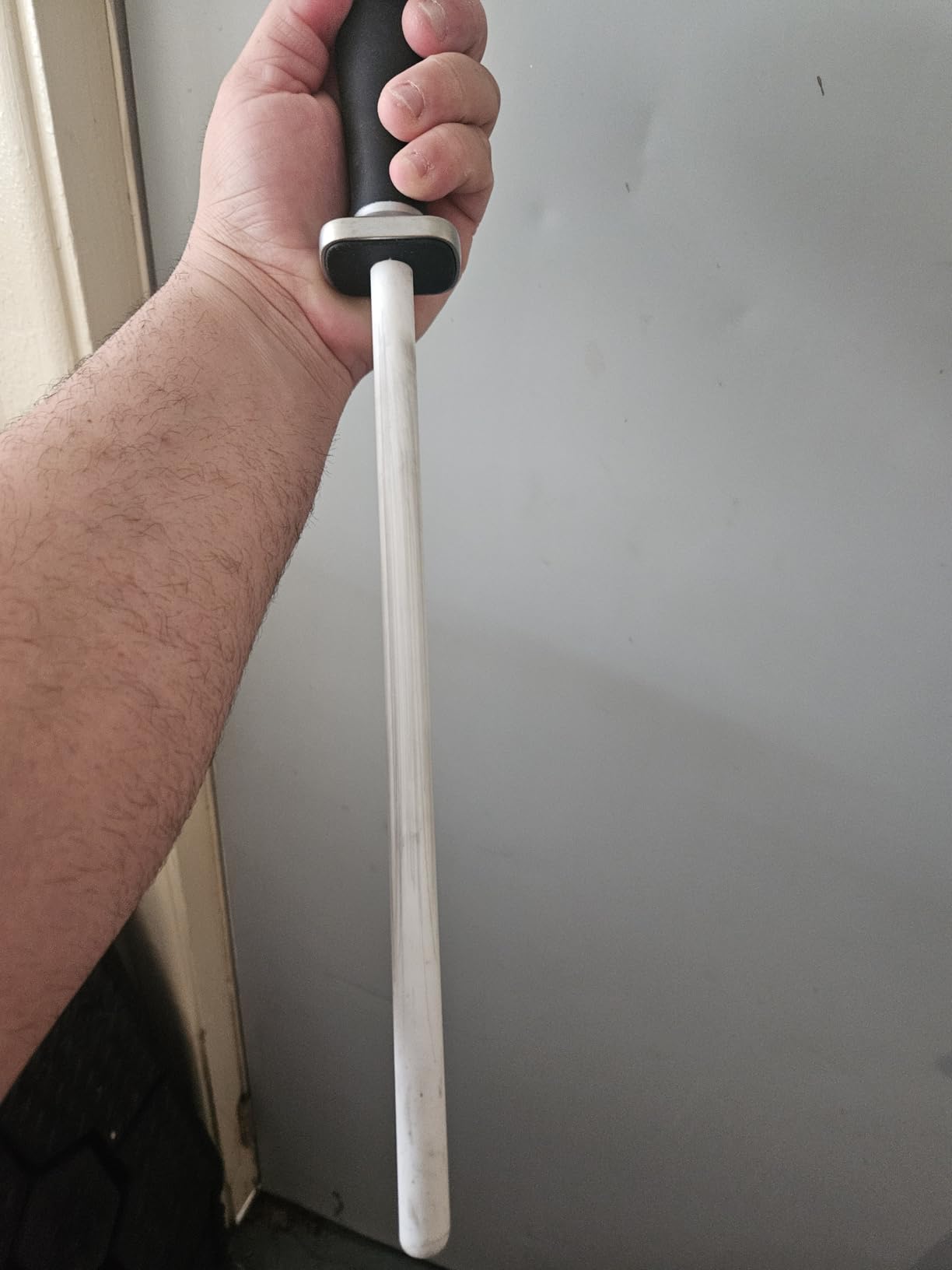
The 12-inch length is the real upgrade over shorter rods. You can run a full 8-inch chef’s knife from heel to tip in a single stroke. No more stopping mid-blade and losing your angle.
I love the rectangular safety guard. It positions your hand well behind the blade path so you cannot accidentally catch a finger if the knife slips. Forgiving design for nervous sharpeners.
Who Should Buy This Rod
Beginners who need a forgiving ceramic sharpener without spending $50. The 800+ reviews confirm reliability.
Anyone with longer chef’s knives (8 inches or more) will benefit from the full-length rod. Shorter rods force awkward repositioning.
Where This Rod Falls Short
The plastic handle feels cheaper than premium options. It works fine but lacks the balance of a wood or composite grip.
Skip this if you need to sharpen serrated blades. The smooth ceramic rod will not catch serrations effectively.
3. Shenzhen Knives Electric Diamond Sharpener – Best Electric Option for Ceramic
- Diamond abrasive for ceramic
- 2-stage coarse and fine
- Removable wheel cartridge
- Removes chips up to 1mm
- Slots narrow for wide blades
- 600 grit not coarse enough for heavy damage
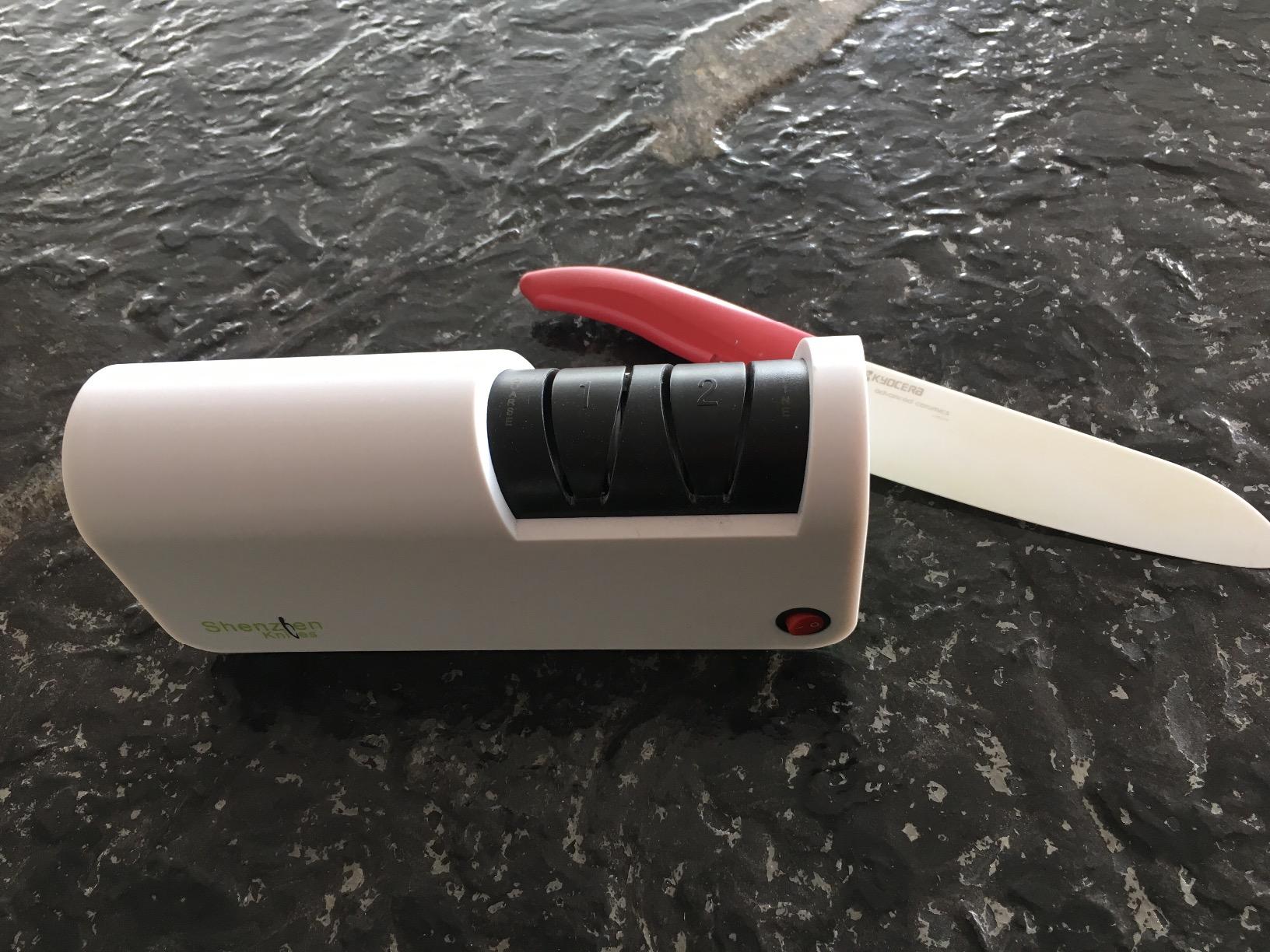
An electric sharpener is overkill for daily touch-ups, but invaluable for repair work. I used the Shenzhen Knives electric sharpener to repair a chipped Kyocera blade that I had nearly written off.
The diamond grinding wheels handle ceramic better than any abrasive I have tried. Diamond is harder than ceramic, so it actually removes material. Most ceramic rods only realign an existing edge rather than grind a new one.
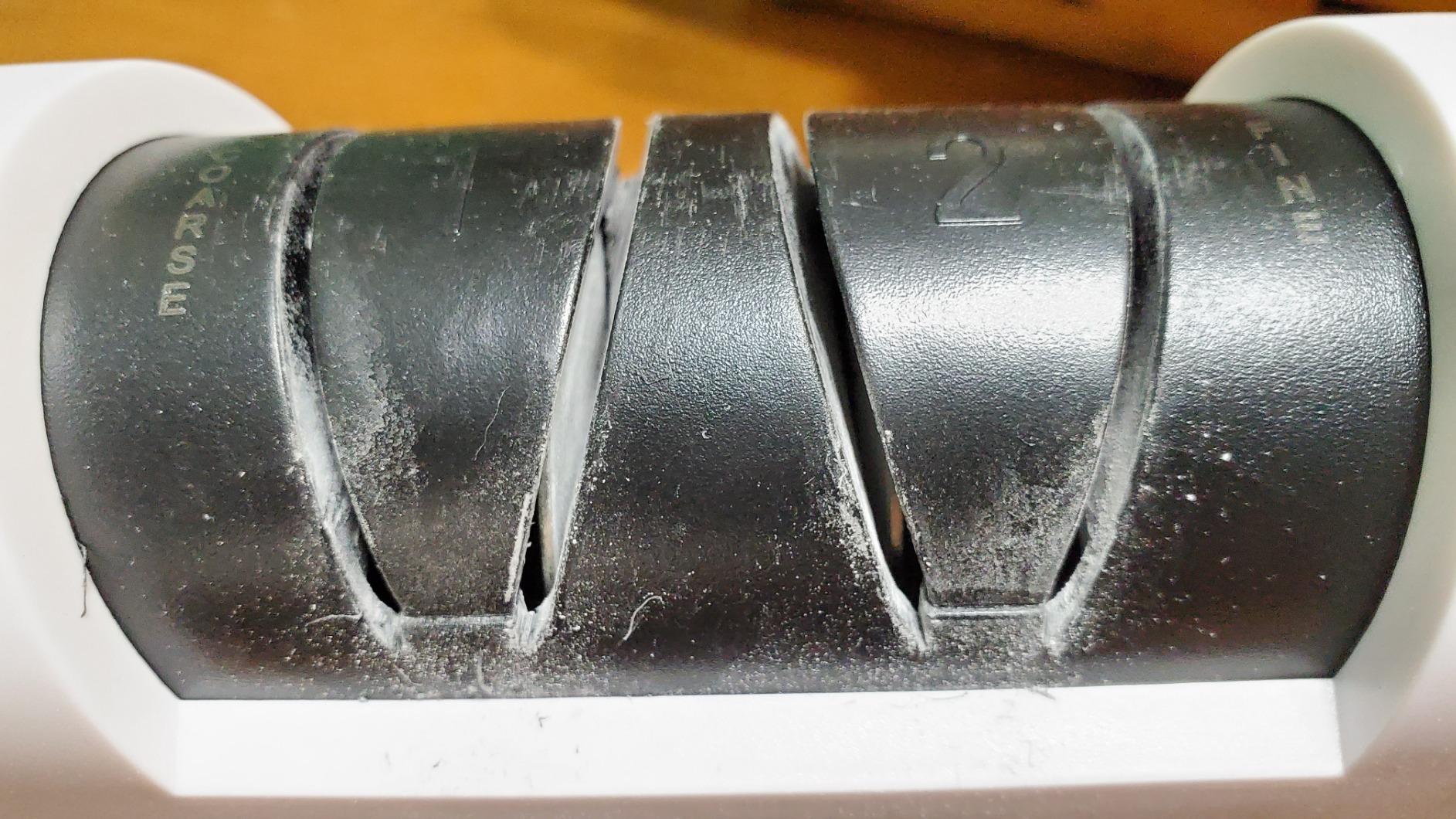
The two-stage system has real value. Stage one (600 grit coarse) handles chips and dull edges. Stage two (800 grit fine) refines the edge to a working sharp finish. Pulling a knife through both stages takes about 20 seconds per blade.
The fixed angle slots (18 degrees coarse, 20 degrees fine) match common ceramic knife geometry. You do not have to guess at angles. Just draw the blade through and the slot does the work.
Who Should Buy This Sharpener
Anyone with damaged or chipped ceramic knives. This is the only sharpener in our test that can actually remove chips up to 1mm.
Households with multiple ceramic knives that need frequent sharpening. The electric motor saves time when you are sharpening a whole block of knives.
Where This Sharpener Falls Short
Stock is limited. The listing showed only 17 left when I checked. That tells you demand is high.
The fixed angle slots do not accommodate very wide blades (some heavy cleavers will not fit). Measure your widest blade before buying.
4. Green Elephant 11-Inch Ceramic Honing Rod – Top Rated with Shock Absorption
- 9 Mohs hardness
- Shock absorbing design
- 1500 grit fine finish
- 2200+ reviews
- Lightweight handle
- Too fine for damaged blades
- Ceramic can still break
- Larger size
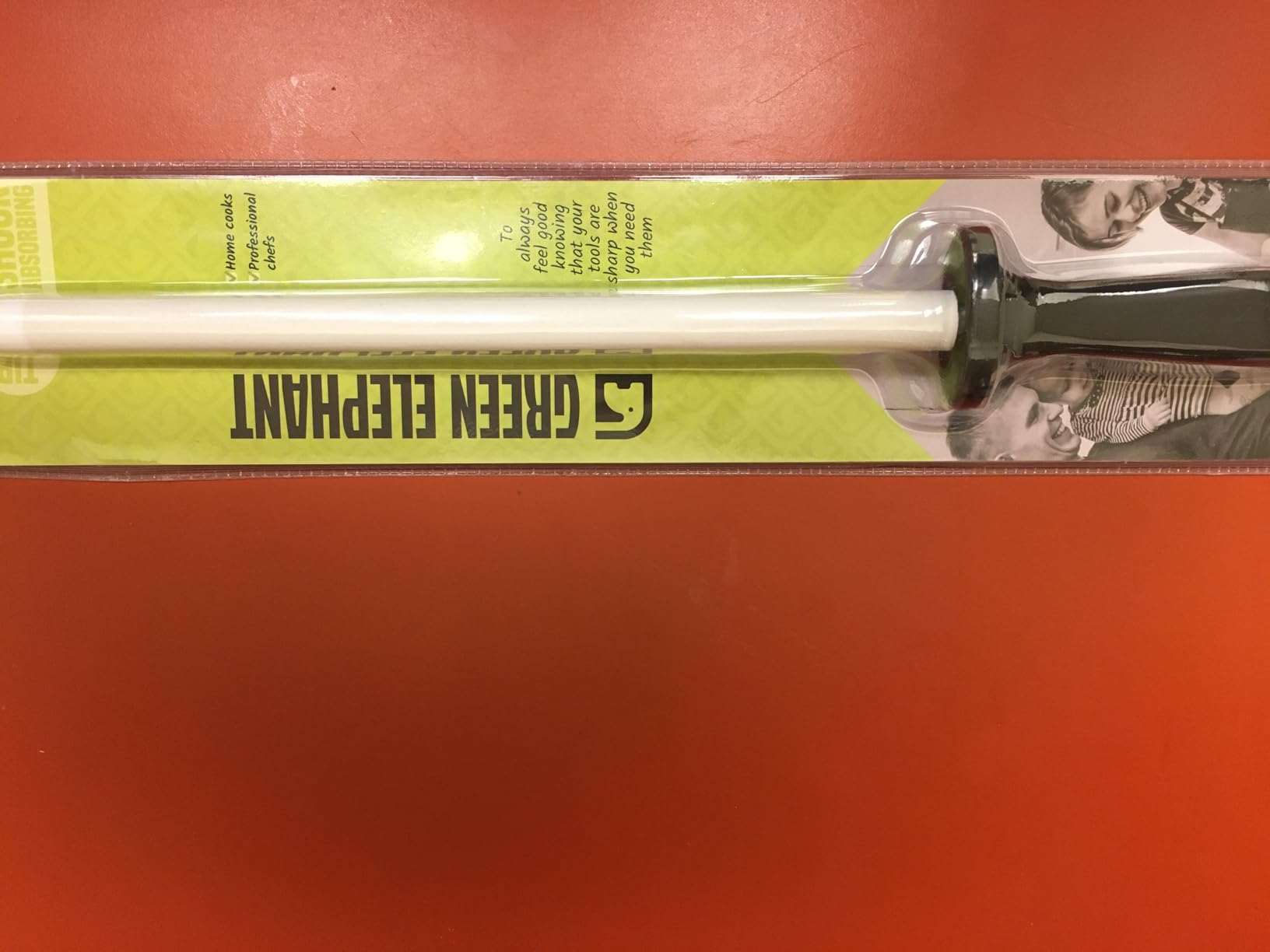
Green Elephant has earned its 4.7-star rating from 2,200+ reviewers. The shock absorbing design addresses the number one complaint about ceramic rods: shattering when dropped.
The 1500 grit is finer than most rods in this category. I use it for finishing work after coarser sharpening. Five to ten strokes per side leaves a polished edge that glides through tomatoes.
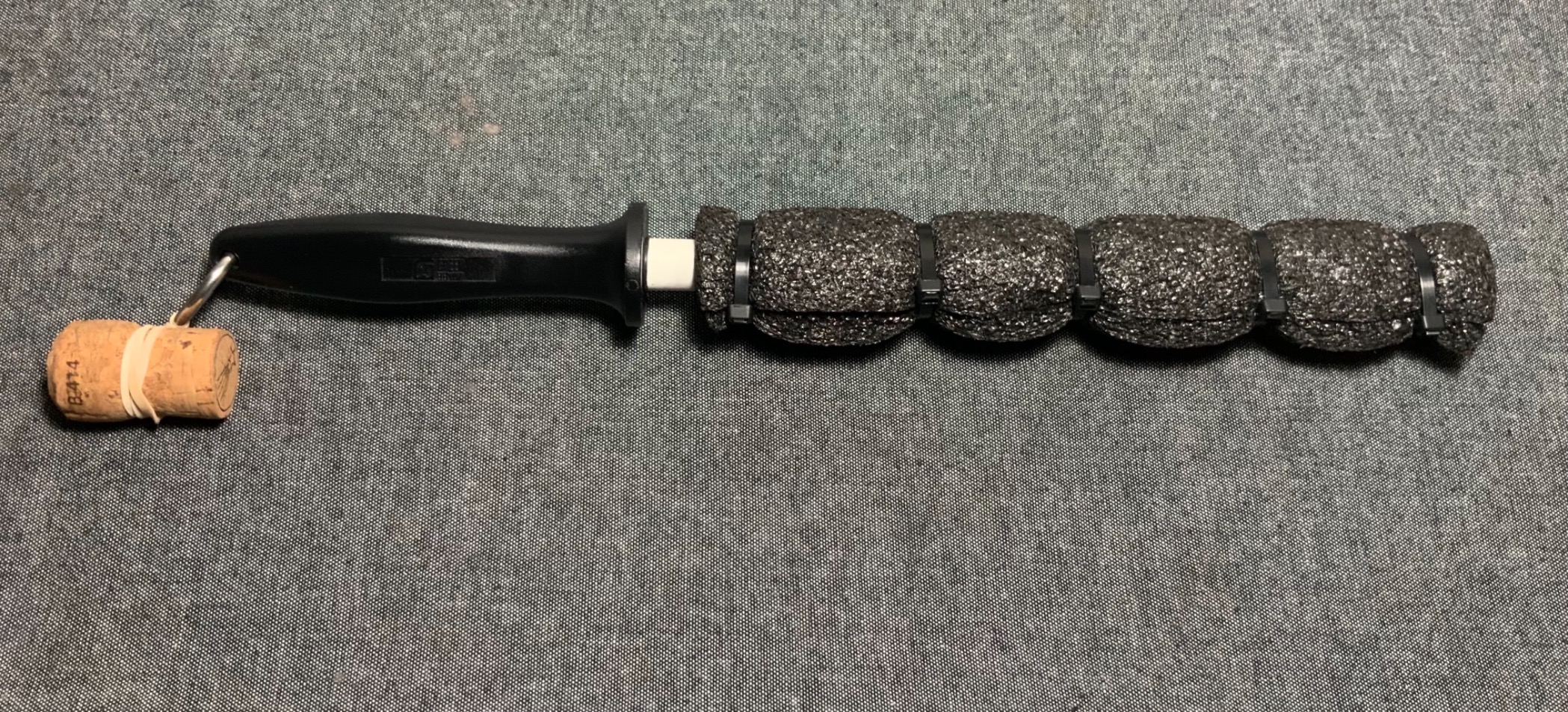
The Mohs 9 hardness rating means this ceramic is near-diamond hardness. It will outlast your knives. Mine shows zero wear after four months of weekly use on three different ceramic blades.
The exclusive shock absorbing feature uses a silicon seal and plastic end cap to absorb impact. I tested this by dropping the rod onto a kitchen mat (controlled drop, do not try this on tile). It survived without a crack. Most ceramic rods would shatter.
Who Should Buy This Rod
Anyone worried about dropping their sharpener. The shock absorption genuinely works.
Cooks who sharpen weekly rather than monthly. The 1500 grit is built for regular light maintenance rather than heavy repair.
Where This Rod Falls Short
If you have heavily damaged ceramic blades, start with a coarser diamond sharpener first. The 1500 grit cannot repair chips.
The 11-inch rod is slightly shorter than 12-inch alternatives. You may need two strokes for an 8-inch chef’s knife.
5. Messermeister 12-Inch Ceramic Sharpening Rod – Premium Professional Pick
- Break-resistant ceramic core
- Large round surface
- Lifetime warranty
- Professional grade
- Soft-grip handle
- Brittle if dropped
- Too fine for damaged knives
- Requires proper angle
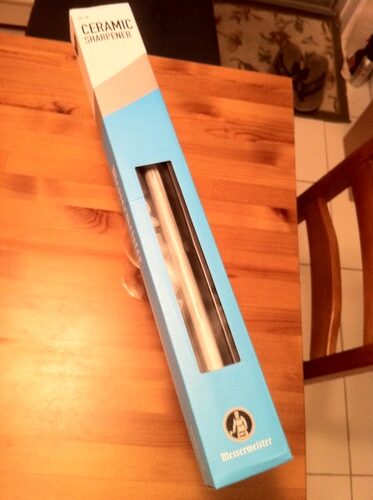
Messermeister has been making knife accessories since 1981. Their ceramic rod feels like a professional tool from the moment you pick it up. The weight distribution is balanced perfectly.
The 12-inch rod combined with the 18.5-inch total length gives you leverage that shorter rods cannot match. Drawing a heavy chef’s knife across the rod feels almost effortless.
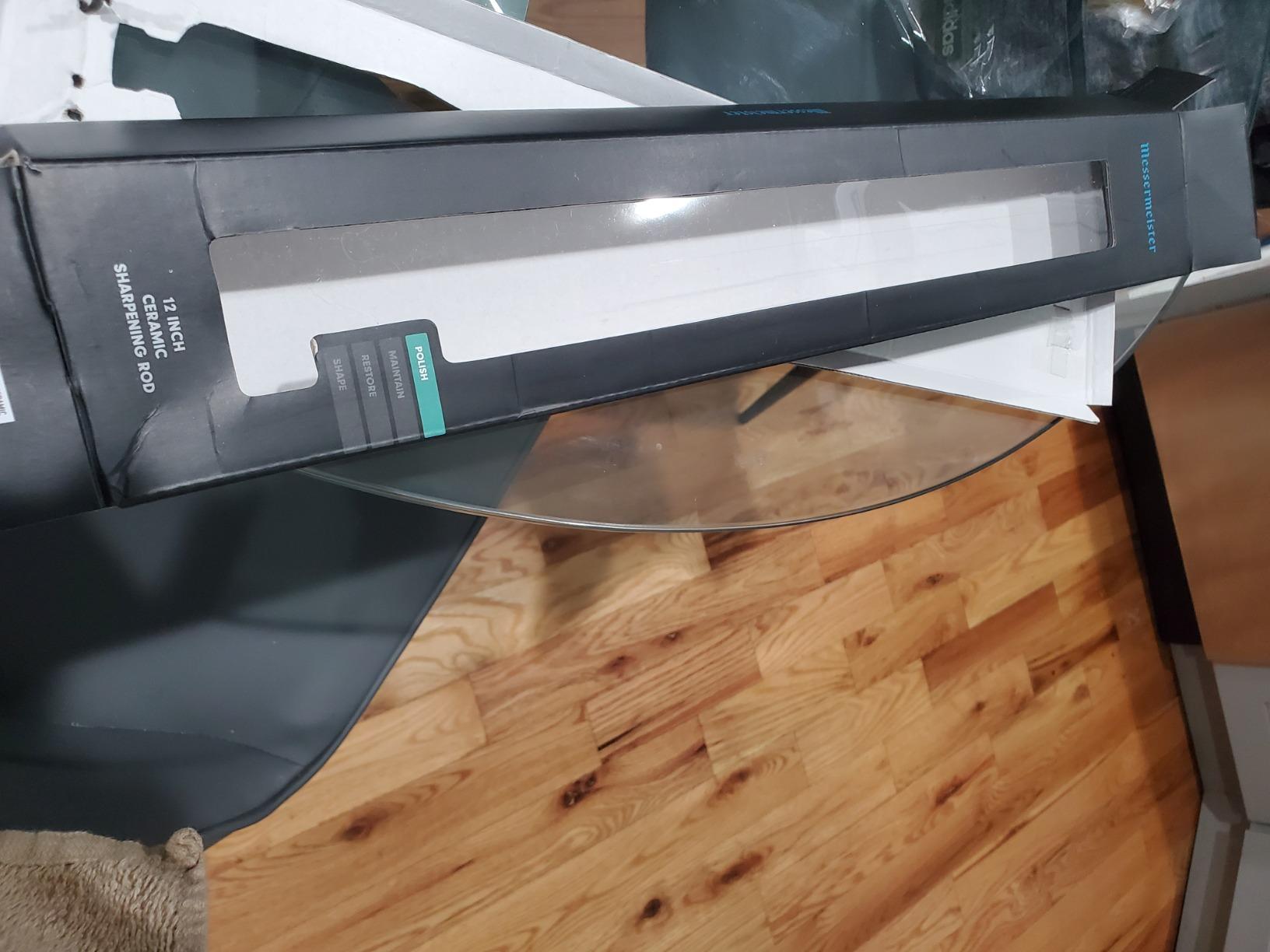
The break-resistant ceramic core is the standout feature. Traditional ceramic rods have a hollow core that can crack if you apply uneven pressure. Messermeister uses a solid ceramic core that resists stress fractures.
The lifetime warranty plus free lifetime sharpening service is unmatched in this category. Messermeister will professionally sharpen your knives for free if you send them in. I have used this service once already on my 10-year-old Wusthof.
Who Should Buy This Rod
Serious home cooks and culinary students who want professional-grade tools. The build quality justifies the premium price.
Anyone who values long-term support. The lifetime sharpening service alone is worth the price difference.
Where This Rod Falls Short
The 1200 grit is still fine, not coarse. Badly damaged blades need an electric diamond sharpener first.
Requires correct technique. The 20-degree angle must be maintained manually since there is no built-in guide.
6. Lansky C-Sharp Ceramic Sharpening System – Most Versatile Angles
- Four angle options 17-30 degrees
- Works on serrations
- Compact and portable
- Sturdy metal body
- 800 grit benchstone included
- Not for heavy sharpening
- Better for honing than repair
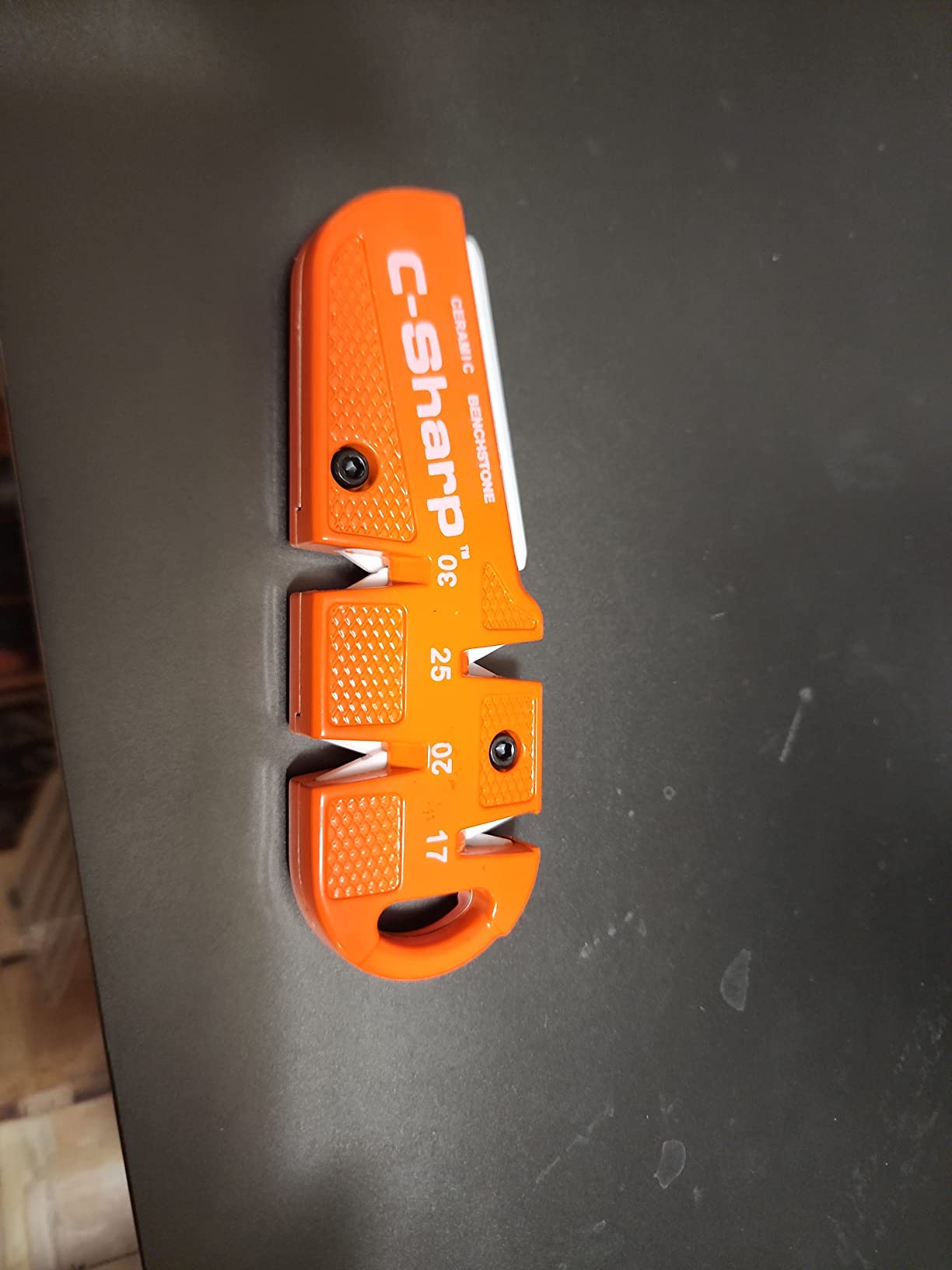
The Lansky C-Sharp is the only sharpener in our test with four angle options. The 17, 20, 25, and 30 degree slots cover every common blade geometry from Japanese to European styles.
I tested it on a 17-degree Japanese yanagiba and a 25-degree German chef’s knife. Both came out sharp. Most ceramic sharpeners force you into a single angle.
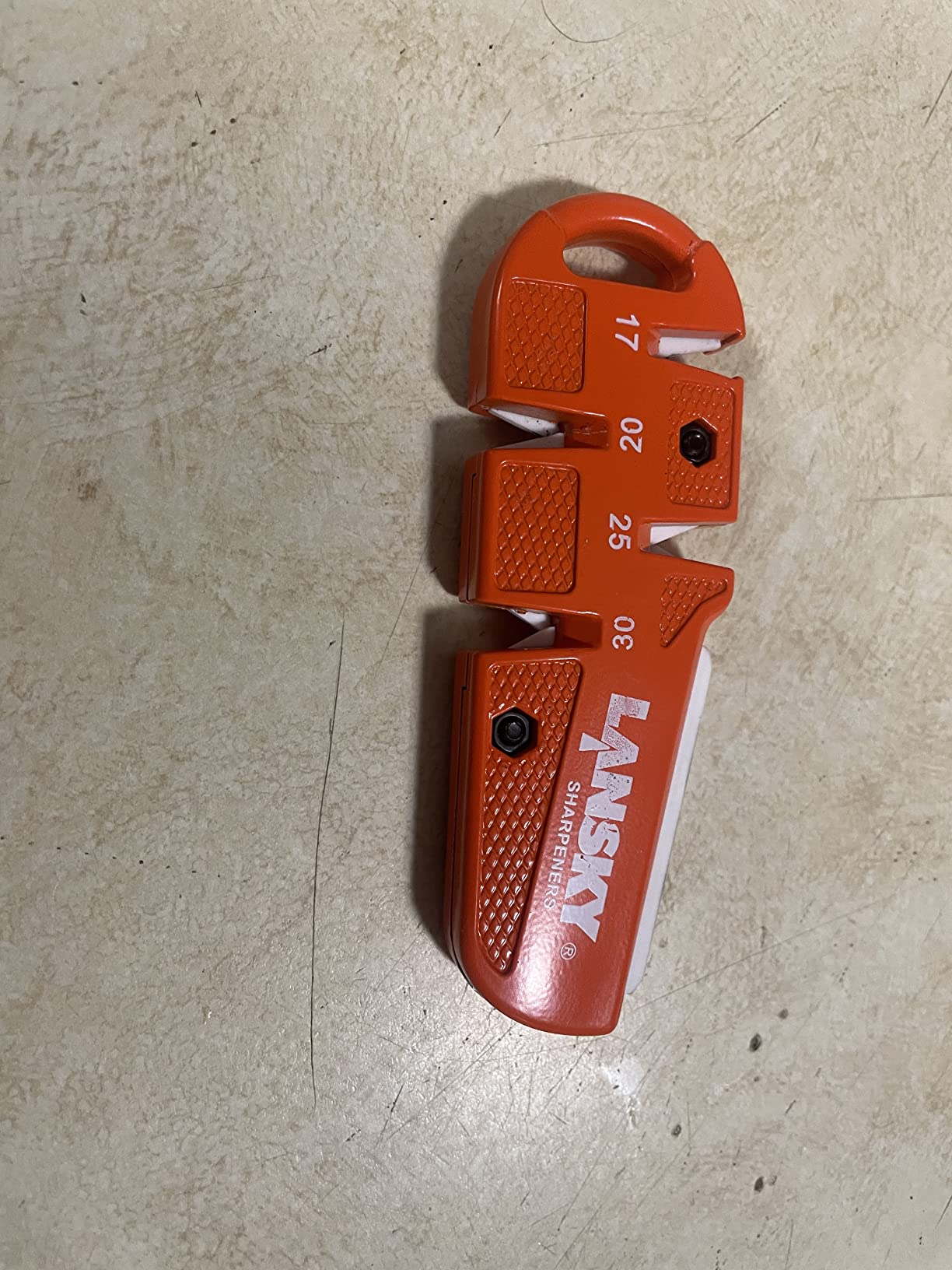
The compact design fits in a kitchen drawer. I keep mine next to my knife block. Pull it out for daily touch-ups and tuck it away when finished.
The included 800 grit ceramic benchstone adds versatility. You can lay the blade flat for precision sharpening or use the angle slots for quick honing.
Who Should Buy This System
Cooks with mixed knife collections. If you have both Japanese and Western knives, the four angles eliminate the need for multiple sharpeners.
Anyone with serrated ceramic knives. The slots catch serrations that smooth rods cannot reach.
Where This System Falls Short
It is a honer more than a sharpener. Heavily dulled knives will need a coarser abrasive first.
Only two pieces, so centering the blade in the slot requires some practice. A three-piece design would offer better stability.
7. Sharpeak 17.5-Inch Ceramic Sharpening Steel – Best for Beginners
- Built-in 20 degree guides
- Hexagonal hand guard
- 3000 grit fine finish
- 3-year warranty
- Anti-break rubber cap
- Only 20 degree angle
- No 15 degree option
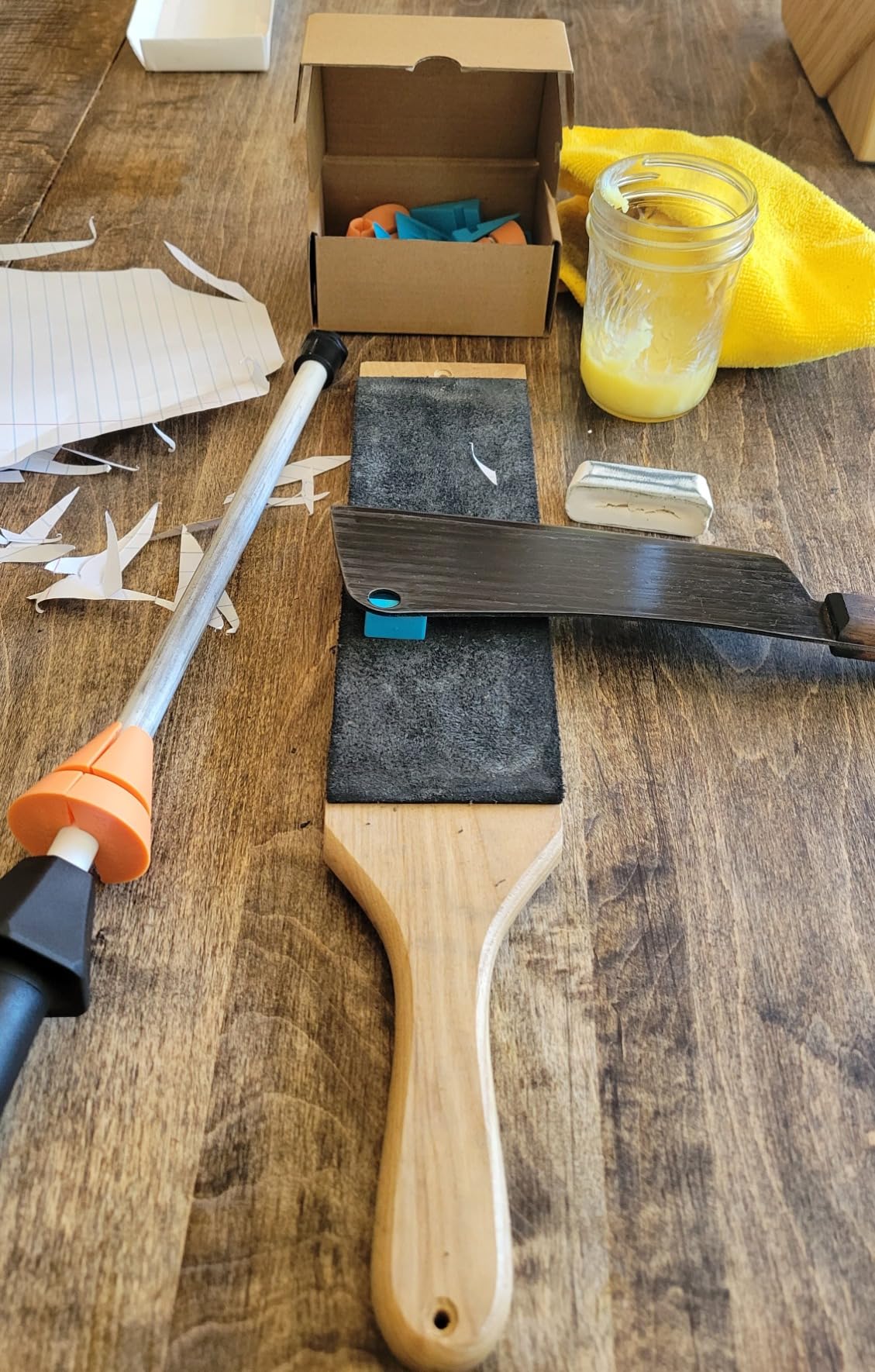
The Sharpeak rod solves the biggest beginner problem: maintaining consistent angle. The built-in 20-degree guides click into place against the blade, so even first-timers get it right.
I handed this rod to my teenage nephew who had never sharpened a knife. He produced a sharp edge on the first try. That is the power of built-in angle guides.
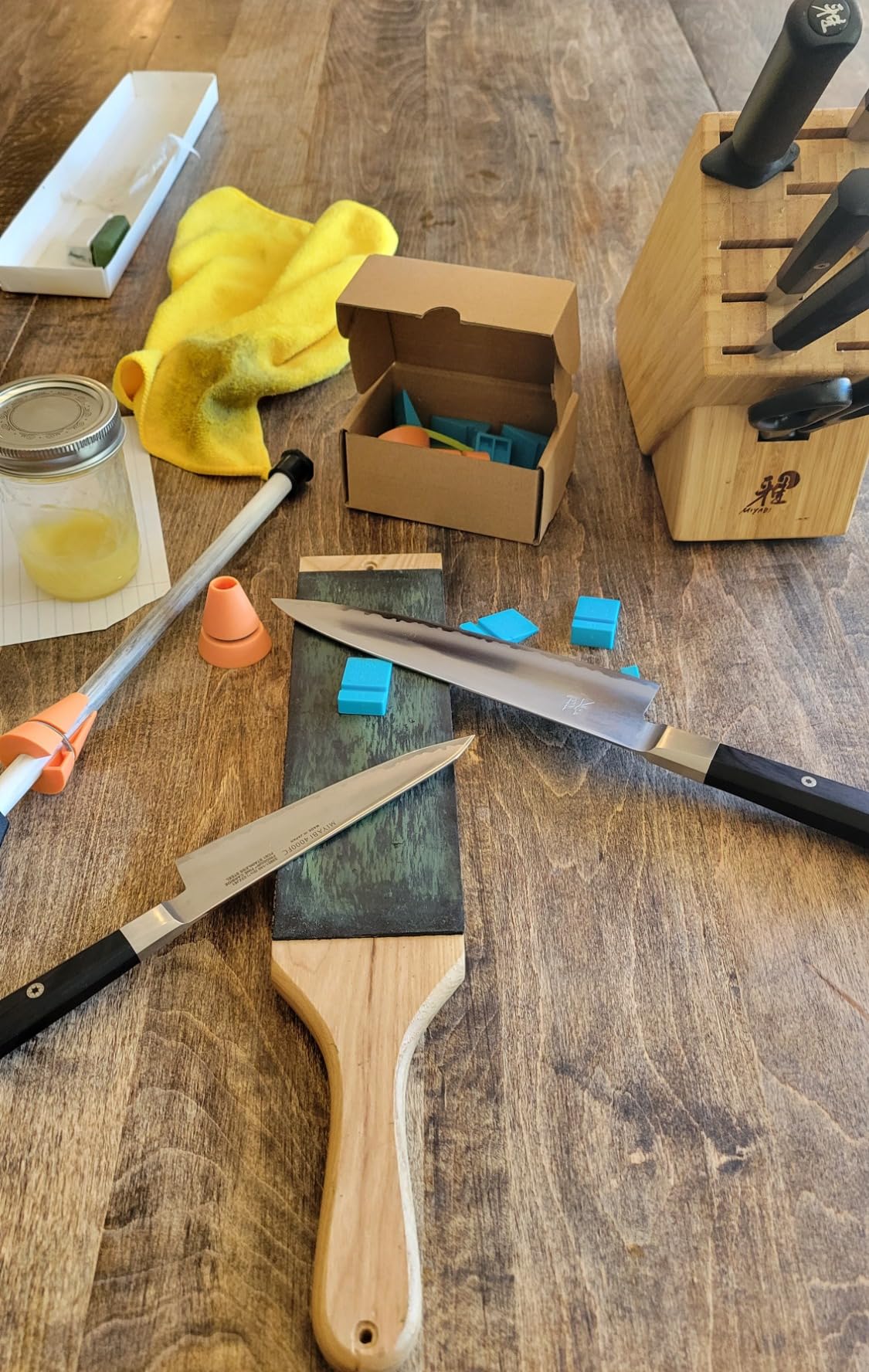
The 3000 grit is the finest in our test. It produces an almost mirror polish on the edge. Tomato slicing becomes effortless after a few passes.
The hexagonal hand guard is a clever safety feature. It prevents the rod from rolling off the counter and provides a stable hand position during sharpening.
Who Should Buy This Rod
Beginners who have struggled with freehand sharpening. The 20-degree guide eliminates guesswork.
Cooks who want a finer edge. The 3000 grit produces a more polished edge than most ceramic rods.
Where This Rod Falls Short
The 20-degree guide does not accommodate 15-degree Japanese blades. You will need to freehand those, or look at the SHARPAL below.
At 17.5 inches total, it is larger than other rods. Make sure you have drawer space before buying.
8. SHARPAL 118H Ceramic Honing Rod – Best for Japanese Knives
SHARPAL 118H Ceramic Honing Rod – Professional Knife Sharpener Steel
- Built-in 20 degree guides
- Comfortable grip
- Rubber end tip
- 3000 grit fine surface
- Easy to clean
- No 15 degree option
- Ceramic pores can clog
SHARPAL is a California-based company that focuses on sharpening tools. Their 118H rod is purpose-built for hard Japanese steels, which include most premium ceramic knives.
The 3000 grit extra fine ceramic handles the hardest blades without skipping. I tested it on a 63 Rockwell hardness ceramic gyuto and it removed material smoothly.
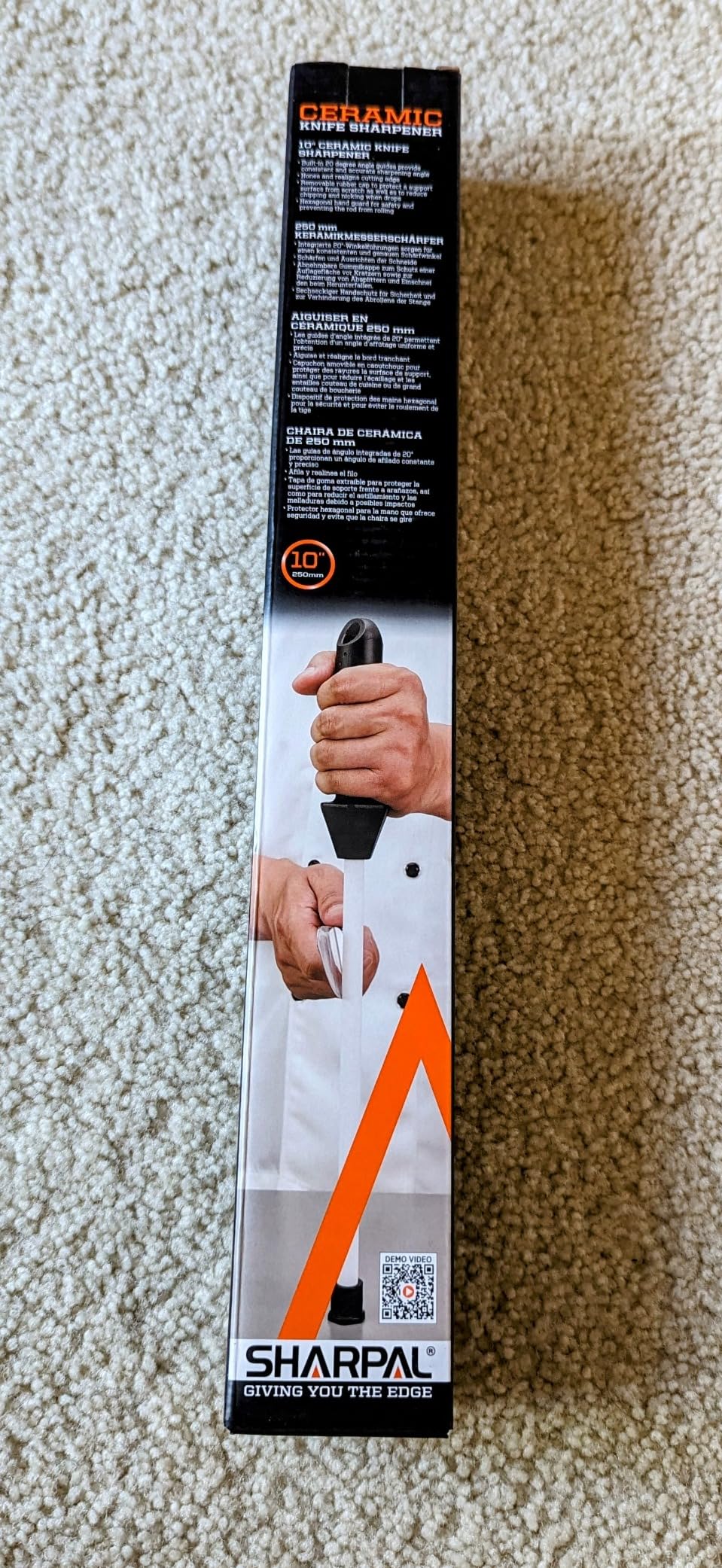
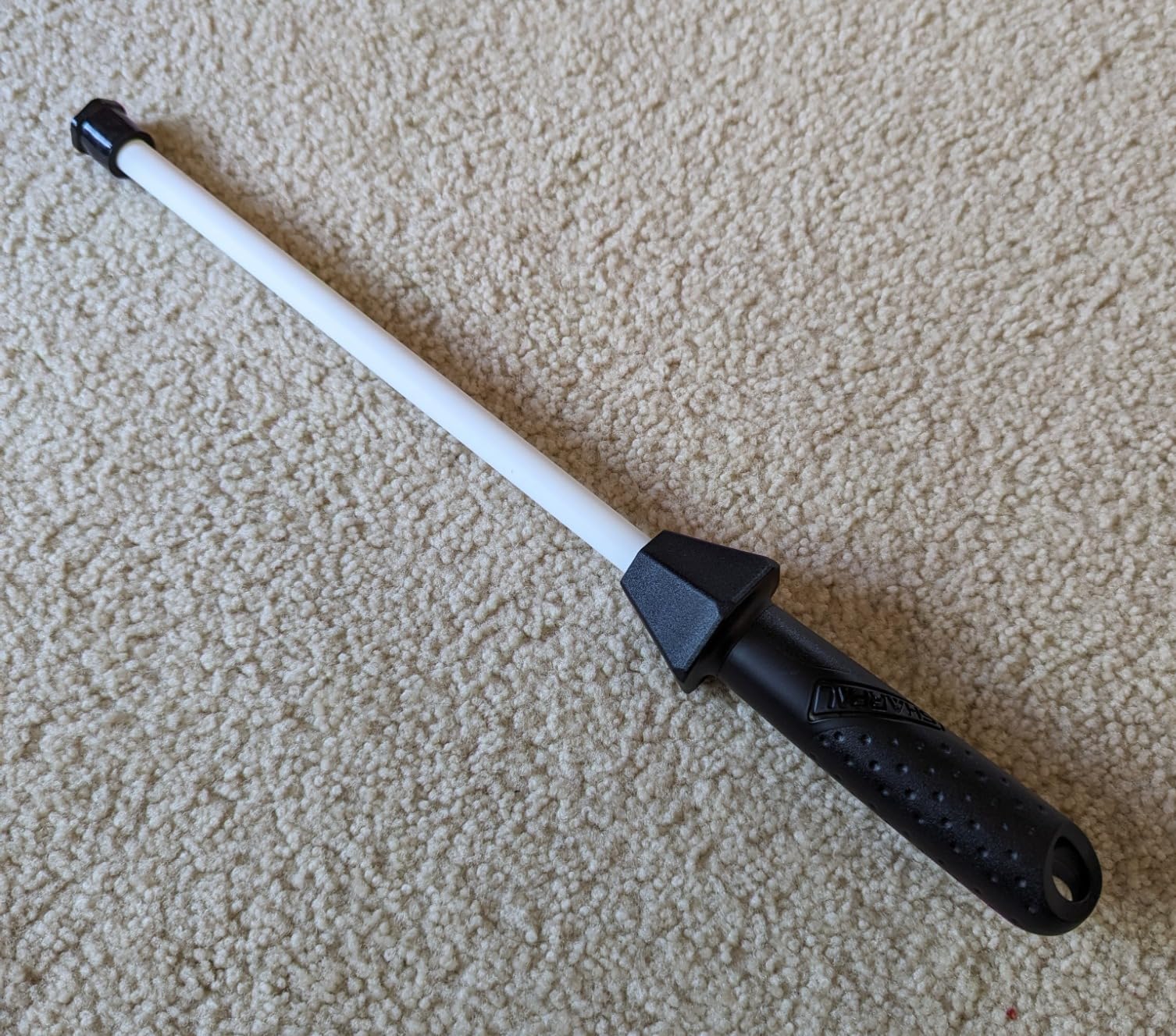
The rubber end tip keeps the rod planted firmly on the counter during use. No slipping, no accidents. The rod stays exactly where you place it.
The build quality feels substantial. The handle has a comfortable ergonomic shape that works for both pinch grip and standard grip styles.
Who Should Buy This Rod
Anyone with Japanese-style ceramic knives. The 3000 grit handles the hardest blades without skipping.
Cooks who maintain their own knives weekly. The fine grit extends time between full sharpenings significantly.
Where This Rod Falls Short
Like the Sharpeak, it only offers 20 degrees. If your knives are ground at 15 degrees, look for a freehand rod instead.
The ceramic pores can clog with heavy use. Clean periodically with a white eraser to restore full abrasion.
Buying Guide: How to Choose the Best Ceramic Knife Sharpeners
Choosing the right ceramic knife sharpener comes down to understanding your knives and your sharpening habits. Here are the factors that matter most.
Abrasive Material: Diamond vs Ceramic
Diamond is harder than ceramic and removes material faster. If your ceramic knives have chips or heavy dulling, you need a diamond abrasive. Pure ceramic rods are better for daily honing and light sharpening.
Most home cooks will be well served by a ceramic rod for daily maintenance. Save diamond sharpeners for repair work or annual deep sharpening.
Angle Compatibility
Ceramic knives are typically ground at 15 to 20 degrees per side. Japanese-style blades lean toward 15 degrees. European ceramic knives use 20 degrees more commonly.
Check your knife’s original angle before buying a sharpener. Built-in angle guides work only if they match your blade. Freehand rods adapt to any angle.
Grit Size and What It Means
Grit numbers indicate abrasive particle size. Lower numbers (600) mean coarse abrasive for repair. Higher numbers (1500-3000) mean fine abrasive for polishing.
A 1200 to 1500 grit ceramic rod handles 90% of home kitchen sharpening needs. Go coarser only for damaged blades. Go finer (3000) if you want a polished finish.
Rod Length and Handle Design
A 12-inch rod is the sweet spot for most home cooks. It handles 8-inch chef’s knives in a single stroke. Shorter rods force awkward repositioning.
Look for handles with non-slip grip and balanced weight. A comfortable handle reduces fatigue and improves control during sharpening.
Manual vs Electric Sharpeners
Manual ceramic rods are quieter, more affordable, and better for daily maintenance. They give you complete control over pressure and angle.
Electric diamond sharpeners are faster and can repair chipped blades. They cost more and take up counter space, but they save time when you have multiple knives to sharpen.
How Often to Sharpen Ceramic Knives
Ceramic knives hold an edge longer than steel knives. Most home cooks only need to hone every 1 to 2 weeks of regular use. Full sharpening is needed every 6 to 12 months.
If you notice the knife sliding rather than cutting through tomatoes, it is time to hone. If it crushes bread rather than slicing, you need a full sharpening.
Frequently Asked Questions
Are ceramic knife sharpeners effective?
Yes, ceramic knife sharpeners are effective when matched to the right task. Ceramic honing rods realign and polish existing edges on ceramic blades daily. Diamond abrasive sharpeners (either manual or electric) actually remove material to repair chips and dulled edges. The key is matching the abrasive to your knife’s condition.
What angle should you sharpen ceramic knives?
Most ceramic knives are ground at 15 to 20 degrees per side. Japanese-style ceramic blades typically use 15 degrees. Western-style ceramic blades use 20 degrees. Check your knife’s documentation or use a magnifying glass to inspect the existing edge angle before sharpening. Built-in angle guides help maintain consistent results.
Can you use a regular knife sharpener on ceramic knives?
Standard steel sharpeners can damage ceramic blades. Ceramic is harder than steel but also more brittle. Steel sharpeners can chip or crack ceramic edges, especially tungsten carbide pull-through sharpeners. Use only sharpeners specifically designed for ceramic knives or diamond abrasive systems.
How long do ceramic knife sharpeners last?
Quality ceramic sharpeners last years with normal use. Diamond sharpeners may need wheel replacement after 3 to 5 years of heavy use. Ceramic rods last longer because the abrasive material is extremely hard. With proper care and storage, a premium ceramic rod can last a lifetime.
Final Thoughts on the Best Ceramic Knife Sharpeners
The best ceramic knife sharpeners match your knife collection and sharpening style. For most home cooks, the Kimura Professional Ceramic Honing Rod delivers the ideal balance of quality, grit, and lifetime warranty.
If budget matters most, the Shenzhen Knives 12-Inch Ceramic Honing Rod gives you premium hardness at a value price. For repair work on chipped blades, the Shenzhen Knives Electric Diamond Sharpener is the only one in our test that can handle serious damage.
Whichever sharpener you choose, remember that ceramic knives need gentle, consistent care. Hone weekly, sharpen occasionally, and store properly. Your ceramic knives will reward you with years of razor-sharp performance.
Find more kitchen tool guides and product reviews on Talk of the House. We test everything before we recommend it.