
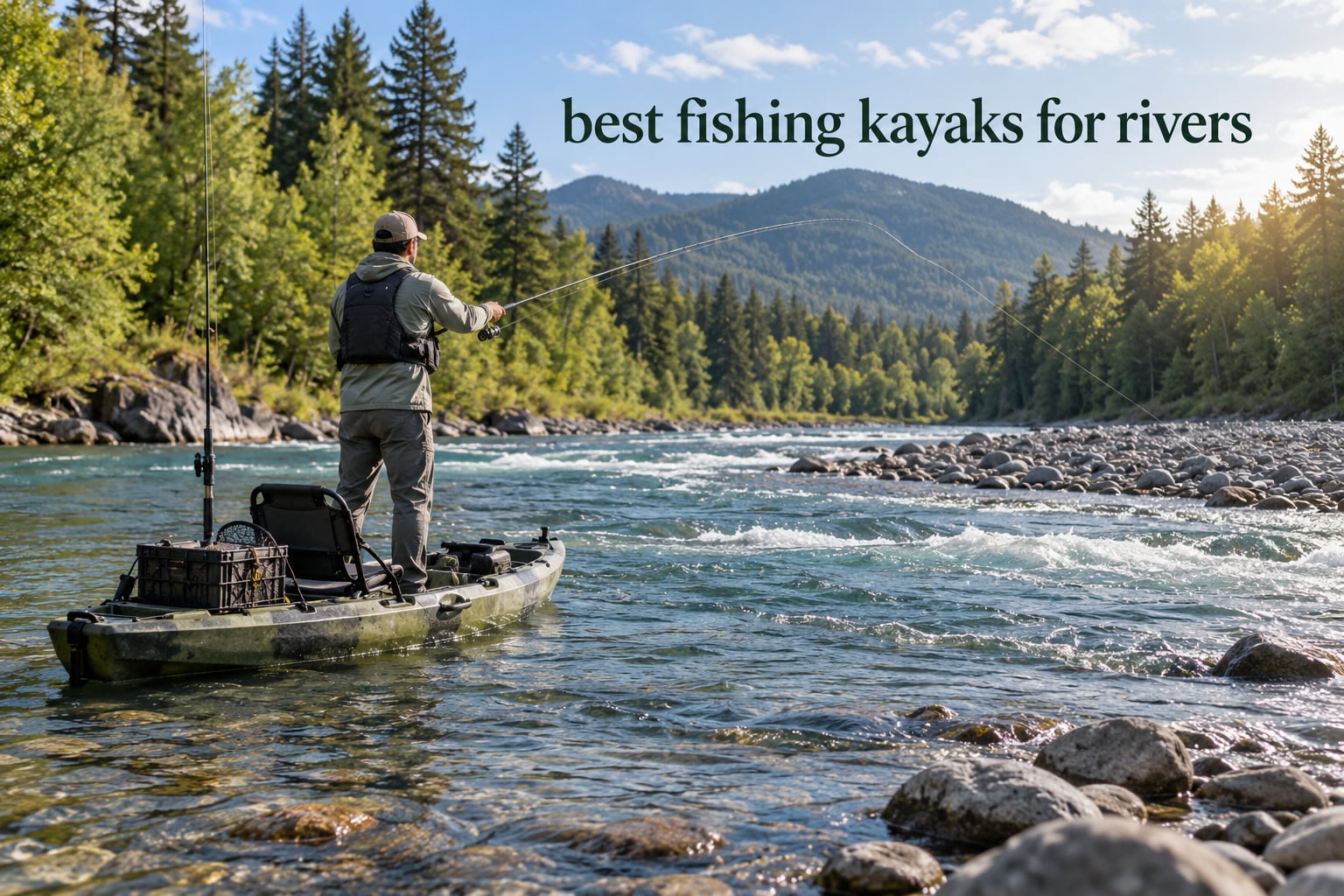
Rivers do not care how good your boat looks on a trailer. They care about length, rocker and how you handle a boat that suddenly stops over a gravel bar with current pushing you sideways.
That is why the best fishing kayaks for rivers are a narrower group than the best fishing kayaks in general. A lake hull that tracks beautifully across open water can feel like a barge the moment you try to spin it in a seam. A pedal drive that seems effortless on a reservoir can ground out over a shallow riffle. After working through ten models and their owner reviews, the pattern was consistent: rivers reward short, maneuverable, durable hulls with enough rocker to climb waves, and enough beam to stand on.
We covered every pick below from a river angler’s angle rather than a lake angler’s. Weight capacity matters, but so does the number of pounds you can lift over your head at a gravel-bar launch. Stability matters, but so does whether you take on water when current pushes you sideways. If you want a broader look first, our general guide to the best fishing kayaks covers lake-heavy setups too.
By the end of 2026 you should know which water type you are fishing, how much you can solo-carry, and whether your river is deep enough for a driven boat or shallow enough that you want nothing hanging under the hull.
Table of Contents
What Type of Kayak Is Best for Rivers?
The best kayak for rivers is usually a short, wide, highly maneuverable sit-on-top angling boat of 10 to 12 feet, built on a durable polyethylene hull with pronounced rocker and flared sides, a manageable solo-carry weight, and a propulsion system matched to how shallow the water gets.
Rocker is the upward curve at the bow and stern. It lifts those ends so the hull climbs over waves and riffles rather than punching into them, and it is the single most river-relevant shape feature on this list.
Before you shop, here are the features that actually decide whether a kayak works in moving water:
- Rocker: More rocker means the hull climbs waves and pivots faster. Touring hulls have almost none.
- Flared sides and secondary stability: Flared topsides push back toward you when you lean, which is what keeps a standing cast from going over.
- Length and beam: Shorter turns tighter around rocks; wider holds steadier when you stand. Ten to twelve feet is the river sweet spot.
- Hull material: Rotomolded polyethylene takes hits from rocks and gravel bars without cracking.
- Solo-carry weight: Anything over about 55 lb becomes a two-person job at a remote launch.
- Propulsion choice: A plain paddle works in anything. Drives and motors hang below the hull and need depth.
- Weight capacity: Buy for your body plus your gear, not just your body.
Top 3 River Fishing Kayaks
All 10 River Fishing Kayaks at a Glance
| Product | Specifications | Action |
|---|---|---|
| Intex Explorer K2 Inflatable Kayak Set |
|
Check Latest Price |
 Lifetime Tamarack Angler 100 Fishing Kayak Lifetime Tamarack Angler 100 Fishing Kayak |
|
Check Latest Price |
 Intex Excursion Pro K1 Inflatable Kayak Intex Excursion Pro K1 Inflatable Kayak |
|
Check Latest Price |
 Pelican Sentinel 100X Angler Sit-On-Top Pelican Sentinel 100X Angler Sit-On-Top |
|
Check Latest Price |
 Pelican Argo 100X Sit-Inside Kayak Pelican Argo 100X Sit-Inside Kayak |
|
Check Latest Price |
 Perception Outlaw 11.5 Fishing Kayak Perception Outlaw 11.5 Fishing Kayak |
|
Check Latest Price |
 Perception Flash 9.5 Sit-Inside Kayak Perception Flash 9.5 Sit-Inside Kayak |
|
Check Latest Price |
 Pelican Bass Raider 10E Angler Fishing Boat Pelican Bass Raider 10E Angler Fishing Boat |
|
Check Latest Price |
 Perception Pescador Pro 12 Sit-On-Top Perception Pescador Pro 12 Sit-On-Top |
|
Check Latest Price |
 Lifetime Tamarack Pro 103 Sit-On-Top Lifetime Tamarack Pro 103 Sit-On-Top |
|
Check Latest Price |
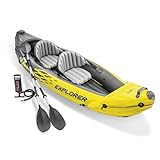
1. Intex Explorer K2 Inflatable Kayak Set
INTEX Explorer Inflatable Kayak 2-Person Portable Set with Paddles and Pump
- Inflates and deflates in minutes
- Two-person capacity with a 400 lb rating
- Removable skeg for directional tracking
- Bright yellow improves visibility
- Handles rocks and mild rapids well
- Included paddles feel short and lightweight
- Seats sit close together so paddles clash
- Vinyl seam can rub hands while paddling
- Does not track like a hard shell
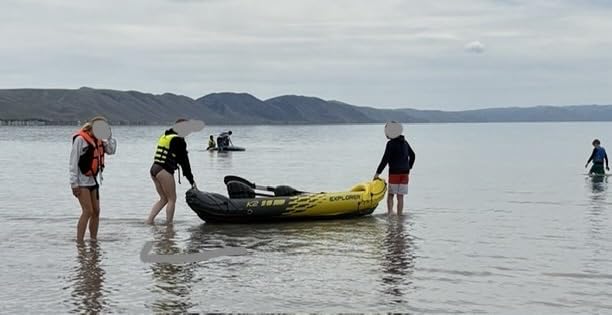
This is the boat we kept coming back to for river-specific reasons. Most anglers shopping for a river kayak start with a hardshell wish list and quietly abandon it when they price a trailer or a roof rack. The Explorer K2 sidesteps the entire problem: it rides in a backpack-sized carry bag, sets up in minutes at the car, and floats two people with a 400 lb rating.
Owners consistently describe it as tougher than it looks. The SuperStrong PVC body has been run over rock-and-brush river stretches by plenty of buyers without complaint, and the inflatable I-beam floor with high-buoyancy side chambers gives a surprisingly settled ride for a boat this size. At 35 lb packed, one person can manage it on a gravel bar without calling for help.
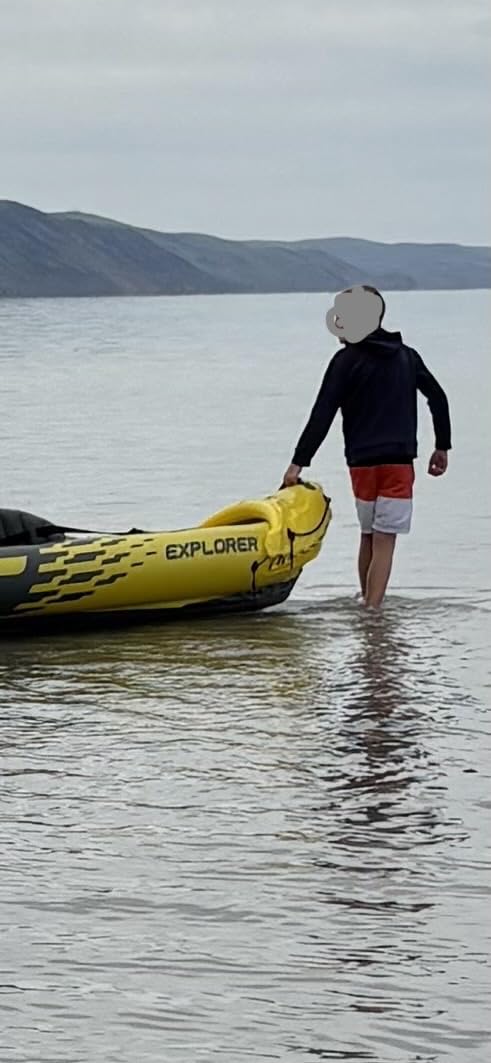
The removable skeg matters more on a river than most reviewers give it credit for. On a slow backwater it is a small thing, but in a seam with lateral push it is the difference between holding your line and being walked downstream sideways.
What you give up is glide. This boat carries almost no momentum, so when you stop paddling you stop, and it will not track across a wide current the way a 10 ft polyethylene hull does. That is a fair trade on narrow water and an irritating one on a broad pool.
How it handles current and shallow water
The short 10.3 ft footprint and soft, forgiving hull make this a good boat for water that changes under you. Transitions from knee-deep riffle to a deep inside bend are exactly the pattern that punishes long touring hulls, and an inflatable simply deforms rather than digging a rail into gravel.
Because it floats rather than displaces, you can cross shallow seams without worrying about a sharp bow burying. The trade is that wind pushes you around more, so this is a tree-and-tunnel river boat, not an exposed-reach boat.
What you should know before buying
The supplied paddles are the weakest link and the single most common complaint. Most owners replace them within a season. The seats also sit close together, so shorter paddlers will have blade clash that no amount of technique fixes.
One more thing worth flagging: the instructions do not clearly explain how firm the chambers should be. Owners who report the boat feeling wobbly are usually underinflated, not looking at a bad hull.
2. Lifetime Tamarack Angler 100 Fishing Kayak
- Very stable in chop and for standing casts
- Light enough for one person to roof-load solo
- HDPE hull shrugs off rocks and trees
- Paddle and keeper included
- Front and rear T-handles aid solo carry
- Included paddle is short and flimsy
- Weaker tracking and drift when you stop
- Seat connector clips bend under back weight
- Cup inserts for storage are sold separately
If you want one hardshell that does everything a river asks without turning your hobby into a transport project, this is the pick. Ten feet is short enough to pivot around obstacles, the flat bottom gives genuine primary stability, and 51 lb is genuinely solo-carryable over a rough launch path.
The UV-protected high-density polyethylene is the workhorse part. Reviewers describe it taking hits from rocks, submerged trees and even dog claws without structural complaint, which is precisely the durability profile river fishing demands.
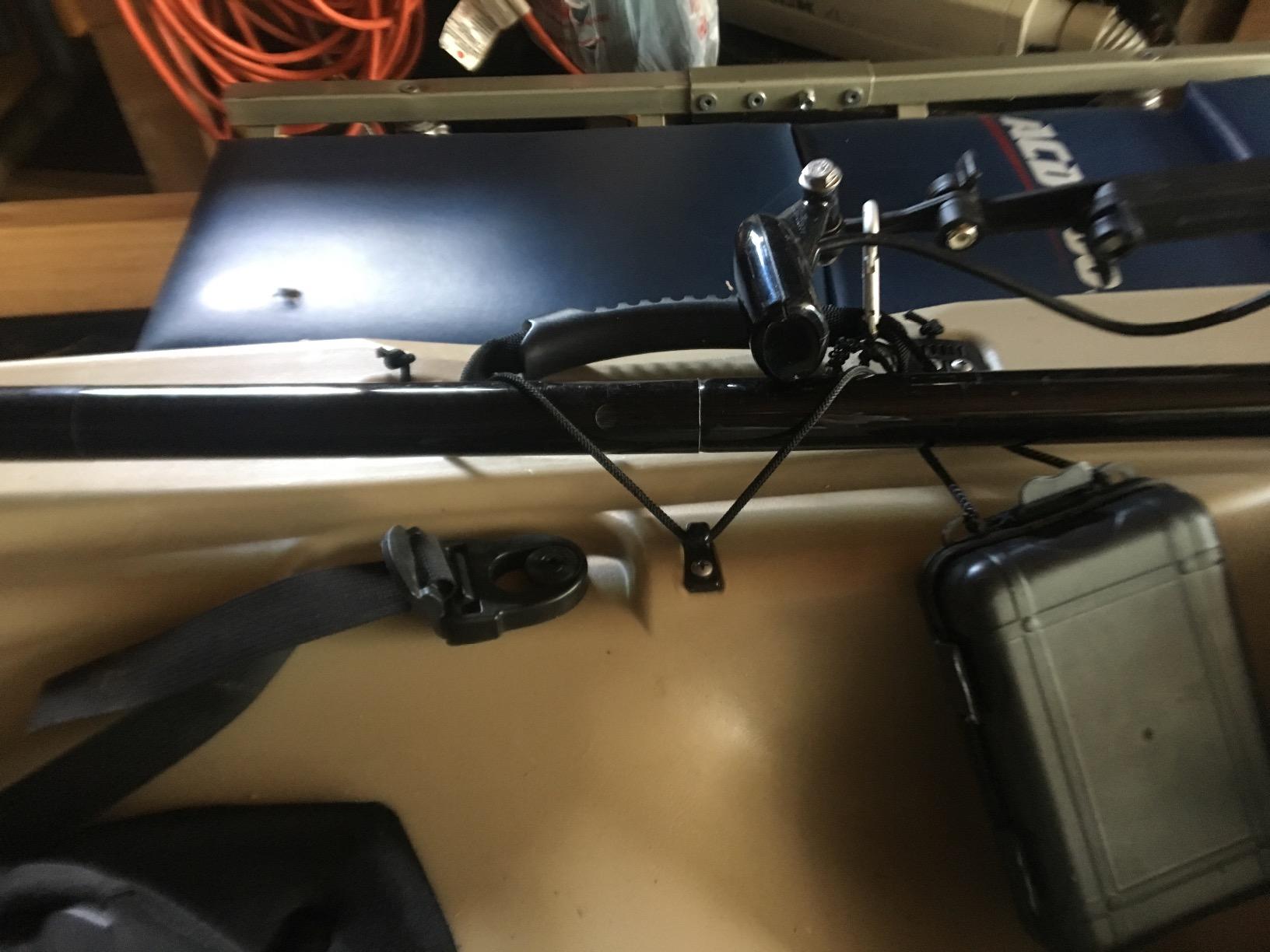
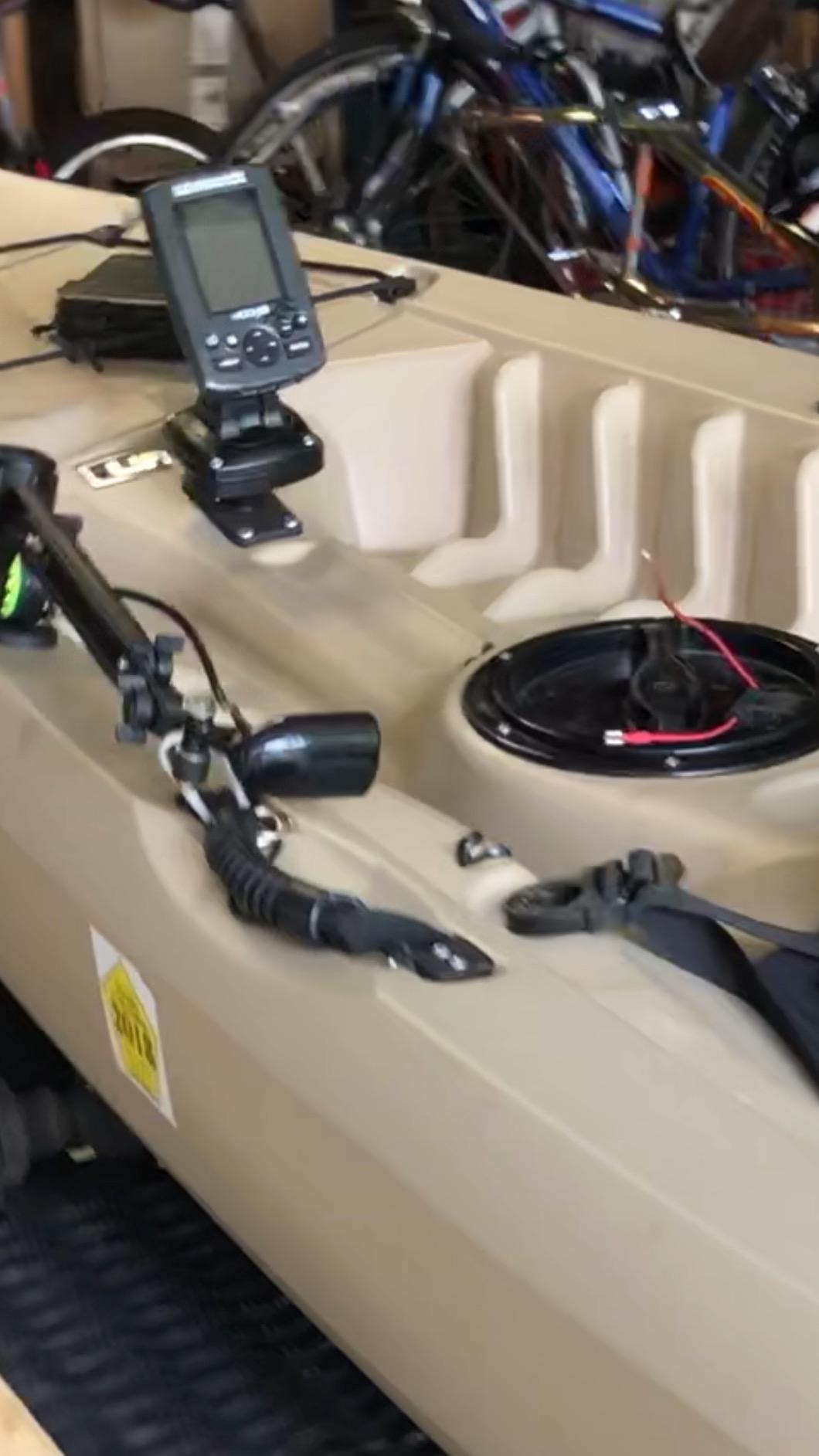
Two flush-mounted rod holders plus one top-mount holder cover the standard rod count without aftermarket tape-on hacks, and two 6-inch storage compartments take a tackle bag. Multiple footrest positions help if you fish in shoes rather than boots.
Tracking is the compromise here. The skeg and deep hull tracking channels help, but reviewers consistently note the boat drifts when you stop paddling, so position-holding in current takes active work.
Rocker, stability and standing ability
The sharp bow is designed for speed and tracking, which is a slightly unusual emphasis for a river boat, but the flat bottom underneath it is what makes standing casts possible. Owners report it stays planted on a gravel bar while casting to the far seam.
At 31 inches wide it is not the widest hull in this roundup, so secondary stability is adequate rather than generous. If you are a heavy caster who leans hard over the side, step up to a wider platform.
Build quality and the details that annoy people
Quality control is the weak spot. Reports of plastic chips on arrival and missing seat cushion pieces are not common but they are real, and seat connector clips are noted as bending under back weight over time.
Budget for two small extras: a proper fishing paddle, because the included one is short and light, and cup inserts for the storage compartments, which are not included.
3. Intex Excursion Pro K1 Inflatable Kayak
- Sets up in under 5 to 15 minutes
- Light at 31.2 lb for solo carrying
- Stainless D-rings add real rigging options
- SuperStrong PVC has handled rock river runs
- Two removable skegs for deep or shallow water
- Stock paddle is flimsy
- Rod holders are shallow and angle away
- Limited seat back support
- Carries little momentum when you stop
The single-person version of the inflatable idea, and the cheapest way into river fishing with a boat that fits in a closet. At 31.2 lb packed and 10 ft inflated, it is the easiest solo-carry option we tested and the one that suits creek and small-river work best.
The thing that surprised us in the reviews is how useful the stainless D-rings are on moving water. They let you lash a dry bag, a spare paddle or a landing net somewhere solid rather than holding it in one hand while you brace.
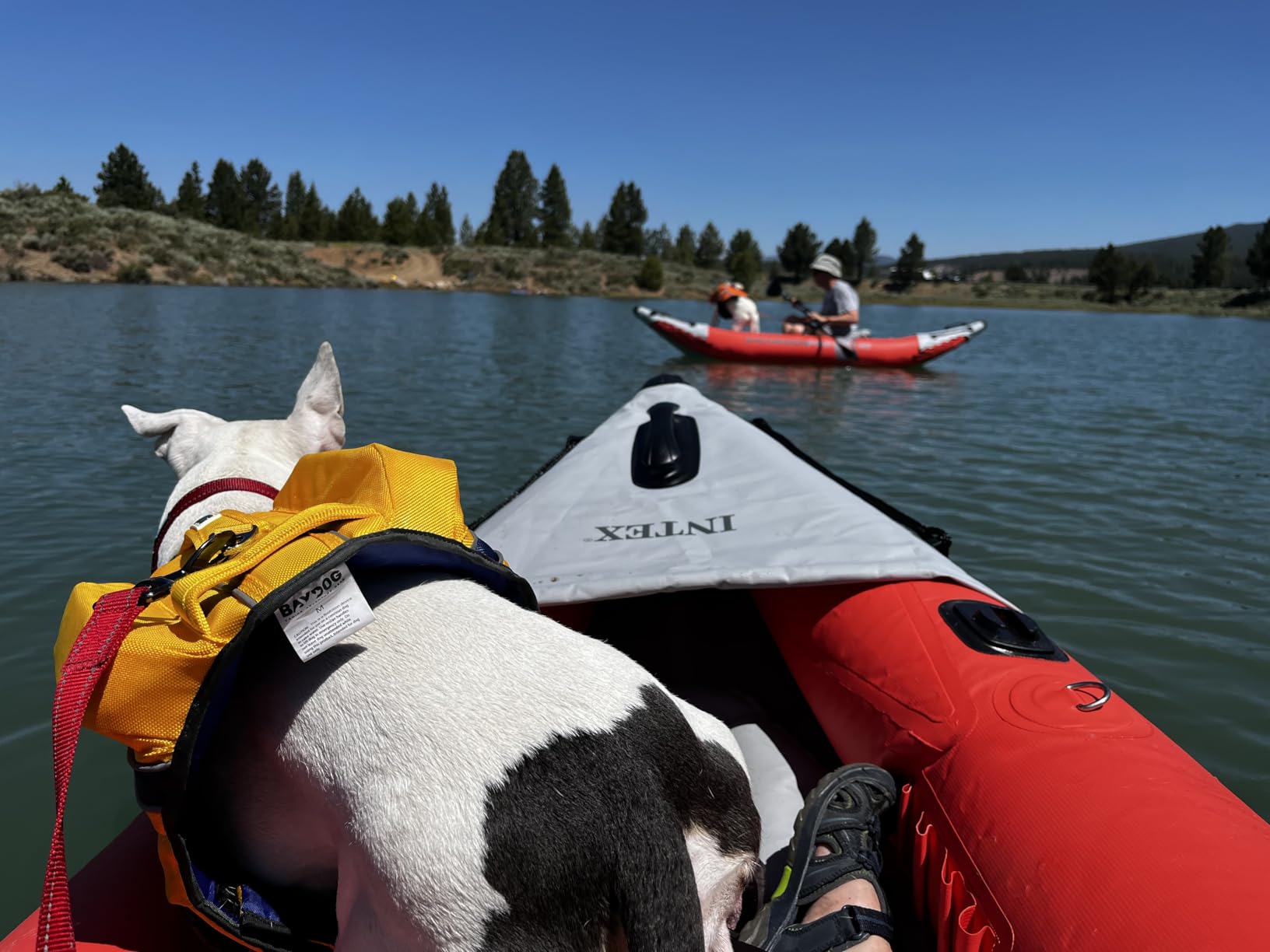
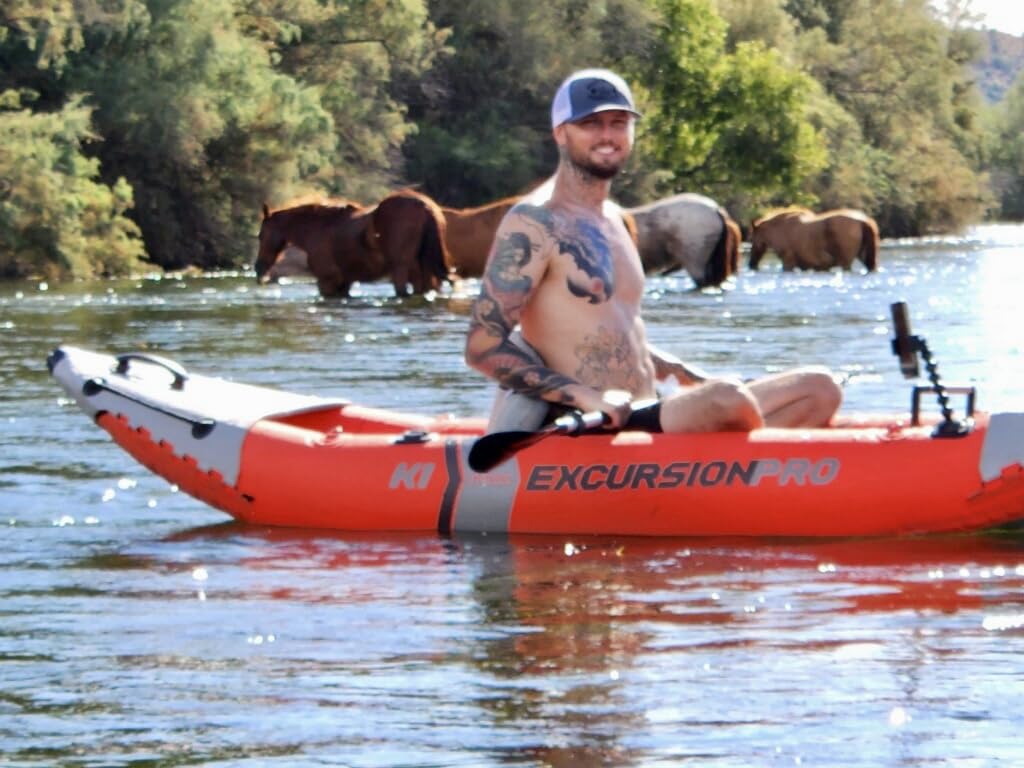
Two removable skegs give you a genuine shallow-water mode: pull them for gravel bars and riffles, fit them for tracking across deeper pools. Very few hardshells at this end of the market give you that choice at all.
Owners who fish this boat on river runs like the 3-ply SuperStrong PVC laminate and its high abrasion resistance. Several report repeated rock-and-brush trips without a single puncture.
Where this boat is at its best
This is a creeks, small streams and shallow inside-bends boat. The 220 lb rating and 10 ft length mean it is not the place for a heavy gear load or a second person, and at that size you will feel every eddy line.
Because it carries almost no momentum, expect to hold position with paddle strokes rather than momentum. On a slow river that is a non-issue. On a fast seam it is a workout.
Honest limitations
The 4.1 average is the lowest in this roundup and the reasons are consistent. The stock paddle is flimsy, the detachable rod holders are shallow and angle away from you, and the seat back support is thin enough that long sessions get uncomfortable.
A small number of owners also report a valve that does not seal and slowly deflates. Check the valves in the driveway before you carry it to the water, not at the ramp.
4. Pelican Sentinel 100X Angler Sit-On-Top
- Ergolounge seat with a tall wide padded backrest
- Only 44.6 lb so one person can carry and store it
- ExoPak storage lets you pack gear at home
- Four rod holders total
- Molded-in side handles simplify transport
- Seat and hull sized for paddlers near the 275 lb limit
- Open cockpit takes on water in moving water
At 9 ft 6 in and 44.6 lb, this is the easiest hardshell to carry to a river, and the ExoPak removable storage is the feature that changes how you pack. You load your gear into a plastic box at home, drop it into the kayak at the launch, and pull it out afterward. Nothing to repack, nothing loose in the boat.
The Ergolounge seating system is genuinely the best in this roundup for long sessions. Extra-thick cushioning and a tall, wide padded backrest are the reason owners describe this as a boat they can sit in all day.
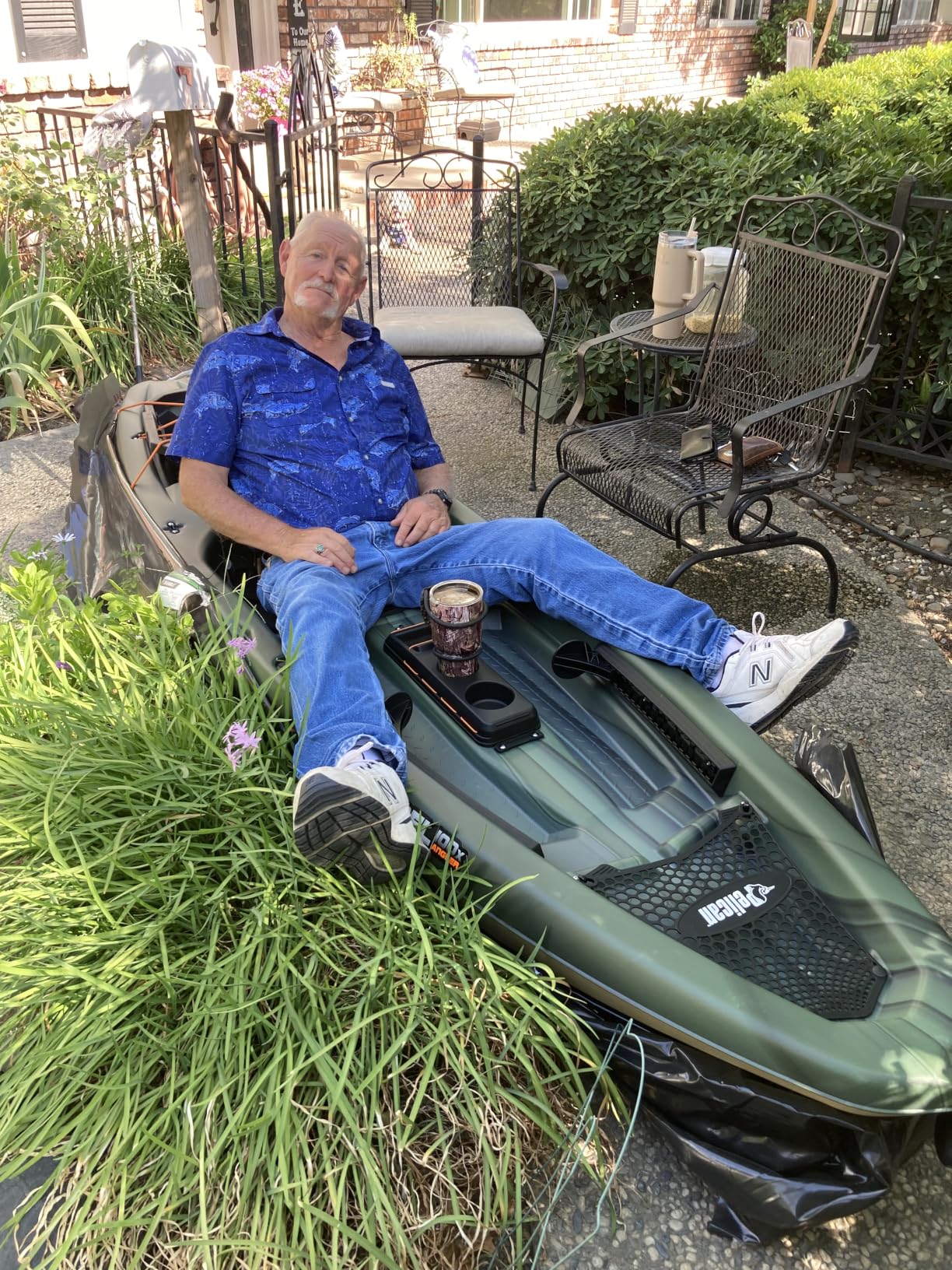
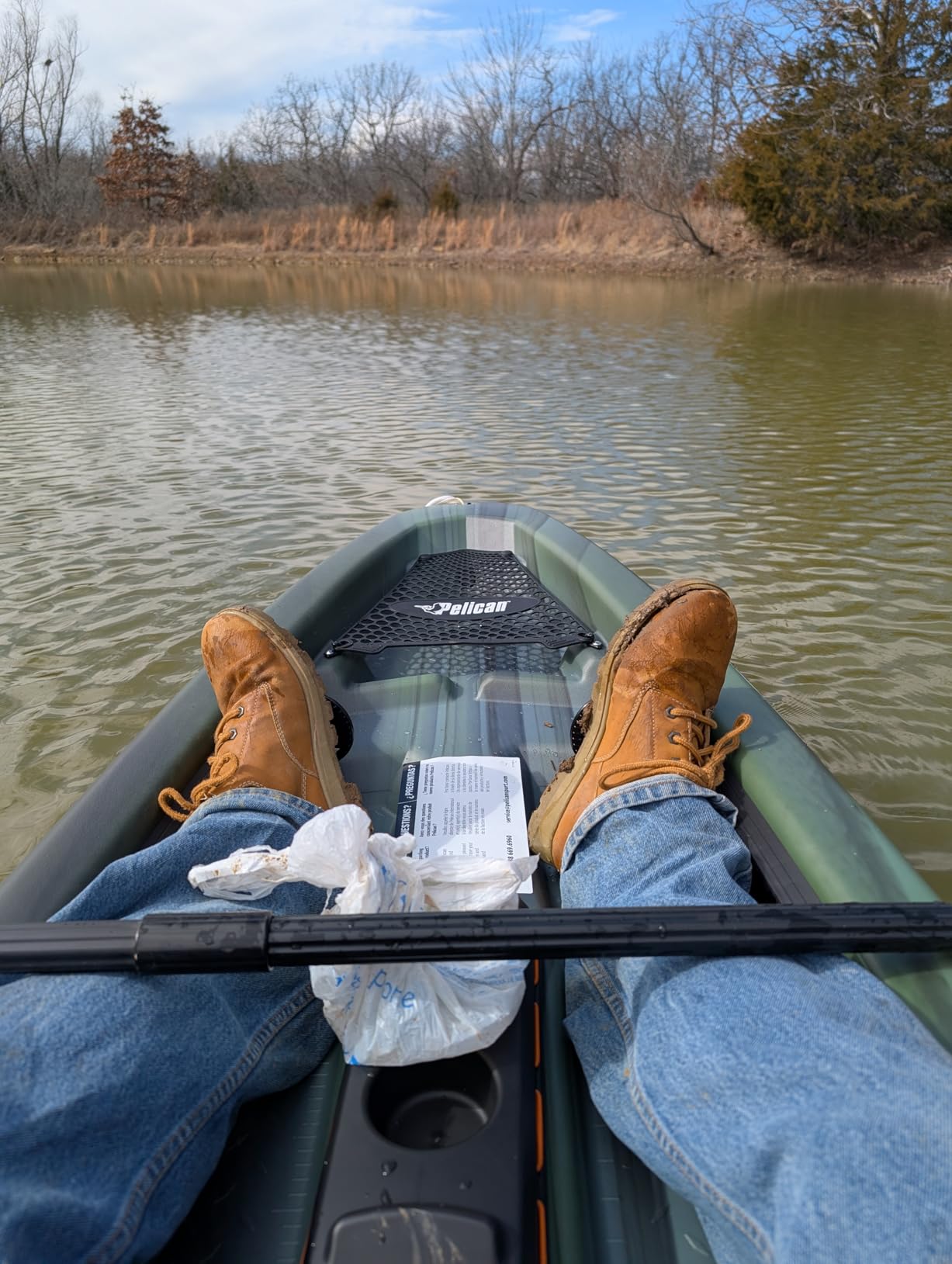
Four rod holders cover a full rig: two flush-mounted in the deck plus two vertical in the ExoPak. At 9 ft 6 in it turns on a dime, which is what you want when you are working a seam that ends in a downed tree.
The hull is polyethylene, so it takes the same rock and gravel punishment the rest of these do, and Pelican backs it with a lifetime limited warranty against manufacturer defects.
Why short length works on rivers
Nine and a half feet is short by fishing-kayak standards, and that is the point. Shorter hulls pivot faster, carry less momentum in a cross-current and are easier to reverse out of a bad spot. On a river you rarely need glide.
The cost is tracking. You will spend more strokes holding a line than you would in a 12 ft hull, and the narrow 30 in beam means less lateral support when you stand.
Where the fit gets tight
The 275 lb capacity is the ceiling for the seat and hull as well as the boat. Owners above that range report a cramped fit and a backrest that does not support a heavy angler properly.
As a sit-on-top it has an open cockpit, so you will take on some water in chop or whitewater spray. If you are fishing cold water in 2026, budget for a dry top and a change of layers.
5. Pelican Argo 100X Sit-Inside Kayak
Pelican Argo 100X – Recreational Sit-in Kayak – 10 ft – Fade Deep Blue/White
- Highest owner rating in this roundup
- Exceptionally stable even when hit broadside
- Only 36 lb so it is easy to shoulder-carry solo
- Adjustable backrest and footrests with no cramped legs
- Tracks smoothly and glides well with a skirt
- Paddle is sold separately
- Front storage hatch is small and awkwardly placed
- Handling described as workable rather than sharp
- Sit-in cockpit needs a spray skirt in moving water
This boat took the highest owner rating of the ten, and the reviews explain why. One reviewer reports it stays upright when hit broadside at speed, and that is a stability claim you rarely see attached to a 28-inch-wide recreational sit-inside.
The twin-arched multi-chine hull is the technical answer to that. Multi-chine shapes give a firm, predictable edge in moving water while keeping the primary stability of a flatter bottom, and the internal foam flotation blocks add backup buoyancy that most hulls this size skip.
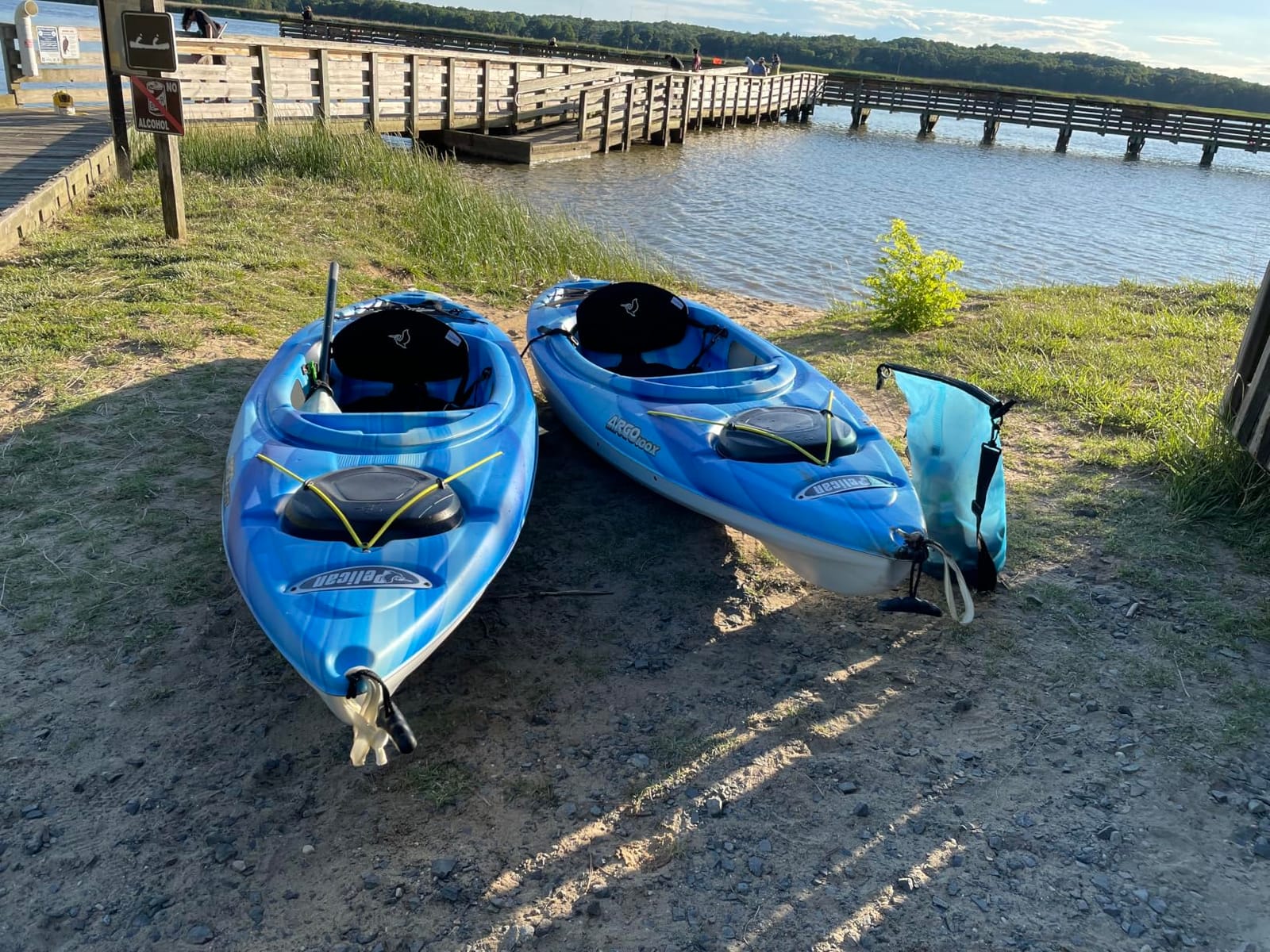
At 36 lb it is the second-lightest hardshell here and easily shoulder-carried solo, which matters enormously at a river access with a hundred yards of uneven ground to the water.
The sit-inside format is the reason it suits cold and moving water. With a skirt on, you stay dry in spray and cold air in a way no open cockpit boat allows, which is why it is our pick for early-season river trips.
Stability and tracking in current
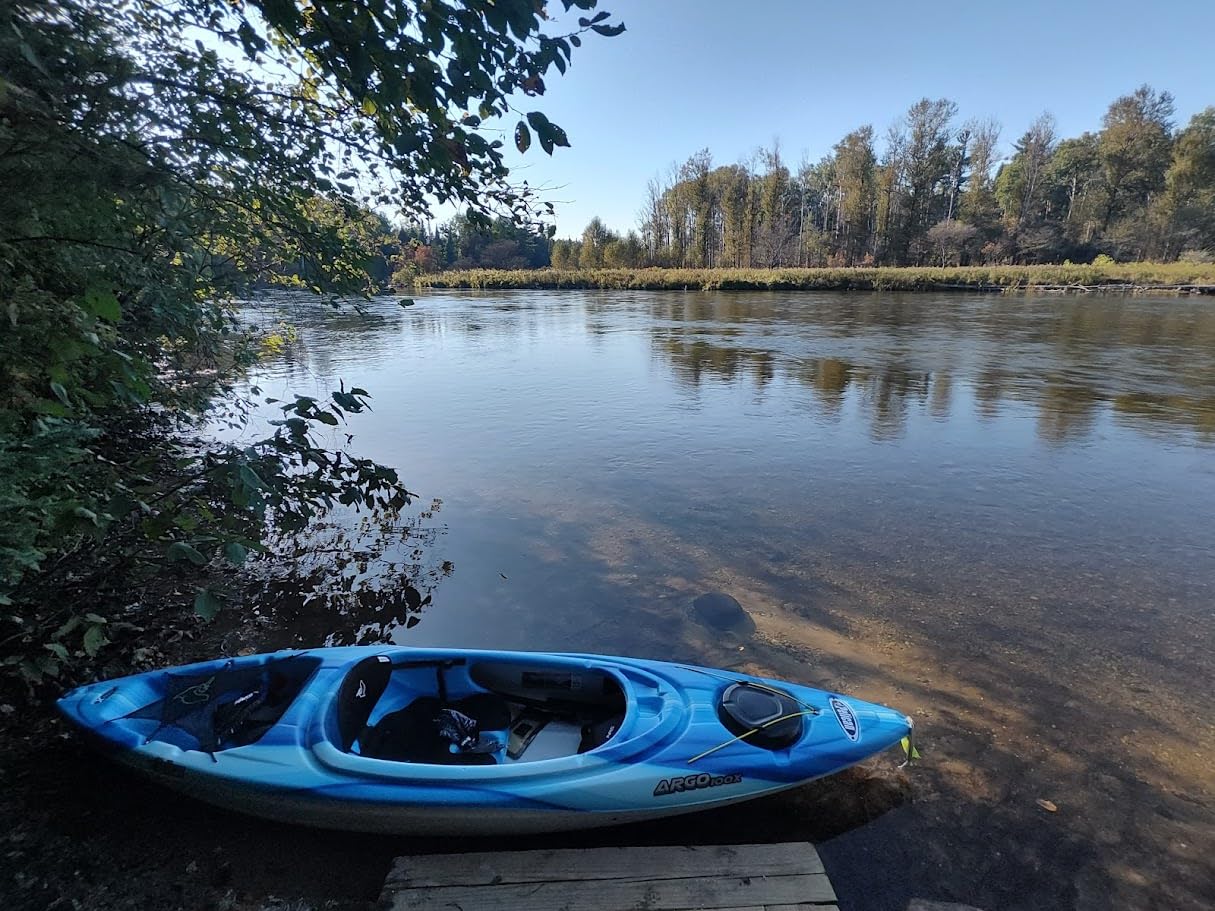
Reviewers call tracking and handling workable rather than sharp, and that is accurate. It will not spin like a 9 ft sit-on-top, but the 10 ft length gives it enough straight-line speed to hold a line across a decent current.
The RAM-X high-impact polyethylene is specified for impact resistance, and there are no reports of hull damage from rocks. Pelican’s lifetime limited warranty against manufacturer defects is the strongest coverage on this list.
What it lacks compared with an angling hull
This is a recreational kayak with angling-friendly add-ons, not a purpose-built fishing platform. There are no flush-mount rod holders, no gear tracks and no anchor trolley, so fishing rigging is on you.
Two practical notes: the paddle is not included, and the front hatch is small enough that reaching into it while seated is awkward. If you plan to carry a full tackle setup, plan on a crate or a deck bag.
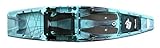
6. Perception Outlaw 11.5 Fishing Kayak
- Very high 425 lb capacity with fishing-tuned stability
- Large rear tankwell and front storage for crates and coolers
- Four integrated rod holders
- Integrated tackle trays within reach
- Fold-away frame seat for long hours
- 11 ft 6 in length is harder to turn and transport
- Premium price bracket versus entry models
- Weight not listed by the manufacturer
When the limiting factor is how much gear you want on the water, capacity is the spec that matters. At 425 lb this boat carries a 250 lb angler plus a full cooler and crates, and the 35 in beam gives a wide, planted platform for a standing cast.
Storage is the standout. A large rear tankwell plus front storage area means a day of gear fits without a pile on the deck, and the integrated tackle trays put lures within arm’s reach rather than in a bag at your feet.
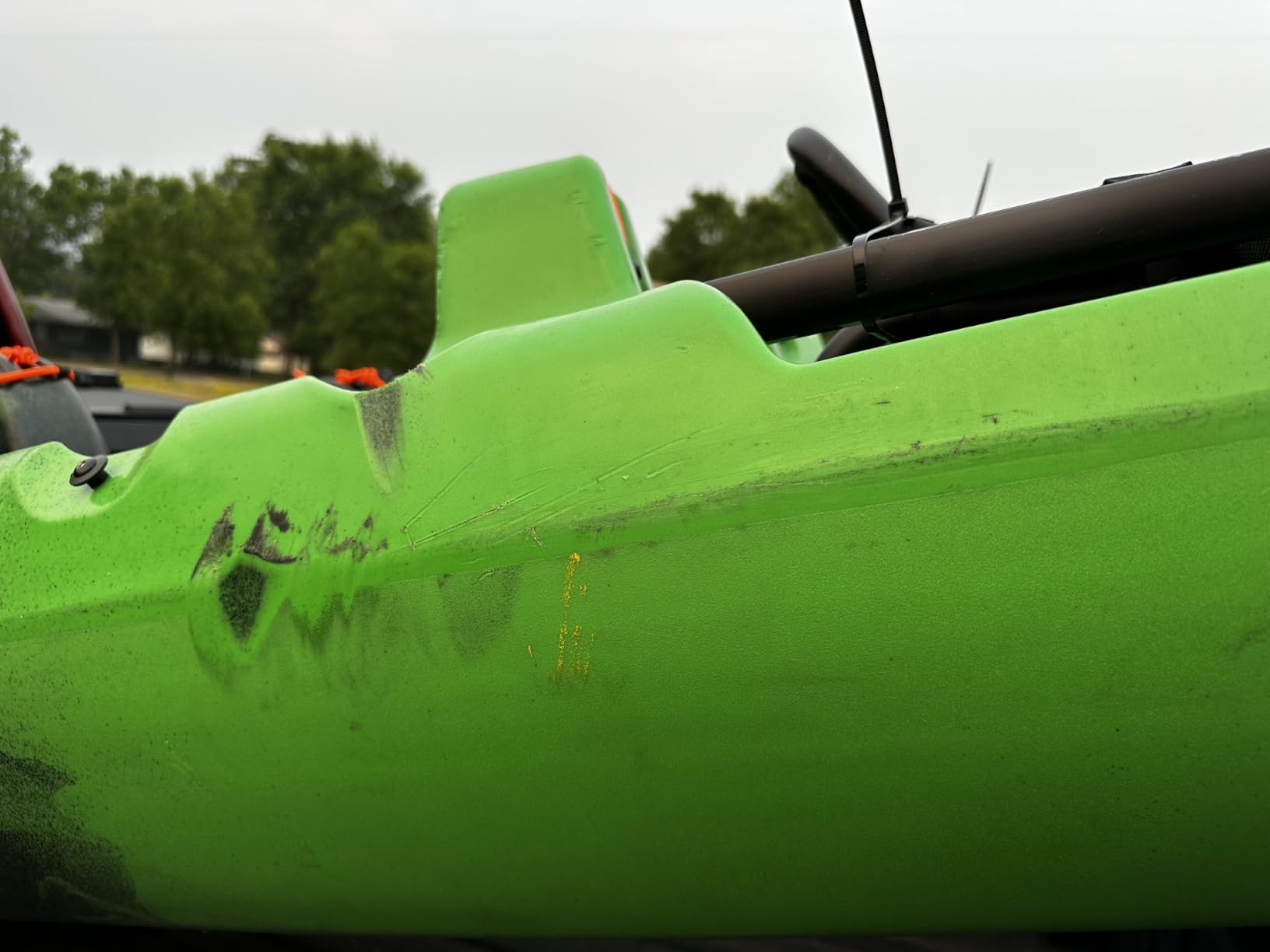
Four integrated rod holders cover a multi-rod setup, and the fold-away frame seat is built for hours rather than quick casts. Perception makes it in the USA and warrants the hull and deck for five years against material or manufacturing defects.
That warranty length matters on a river. Rock strikes and abrasion are normal, and a five-year hull warranty means one bad season does not end the ownership.
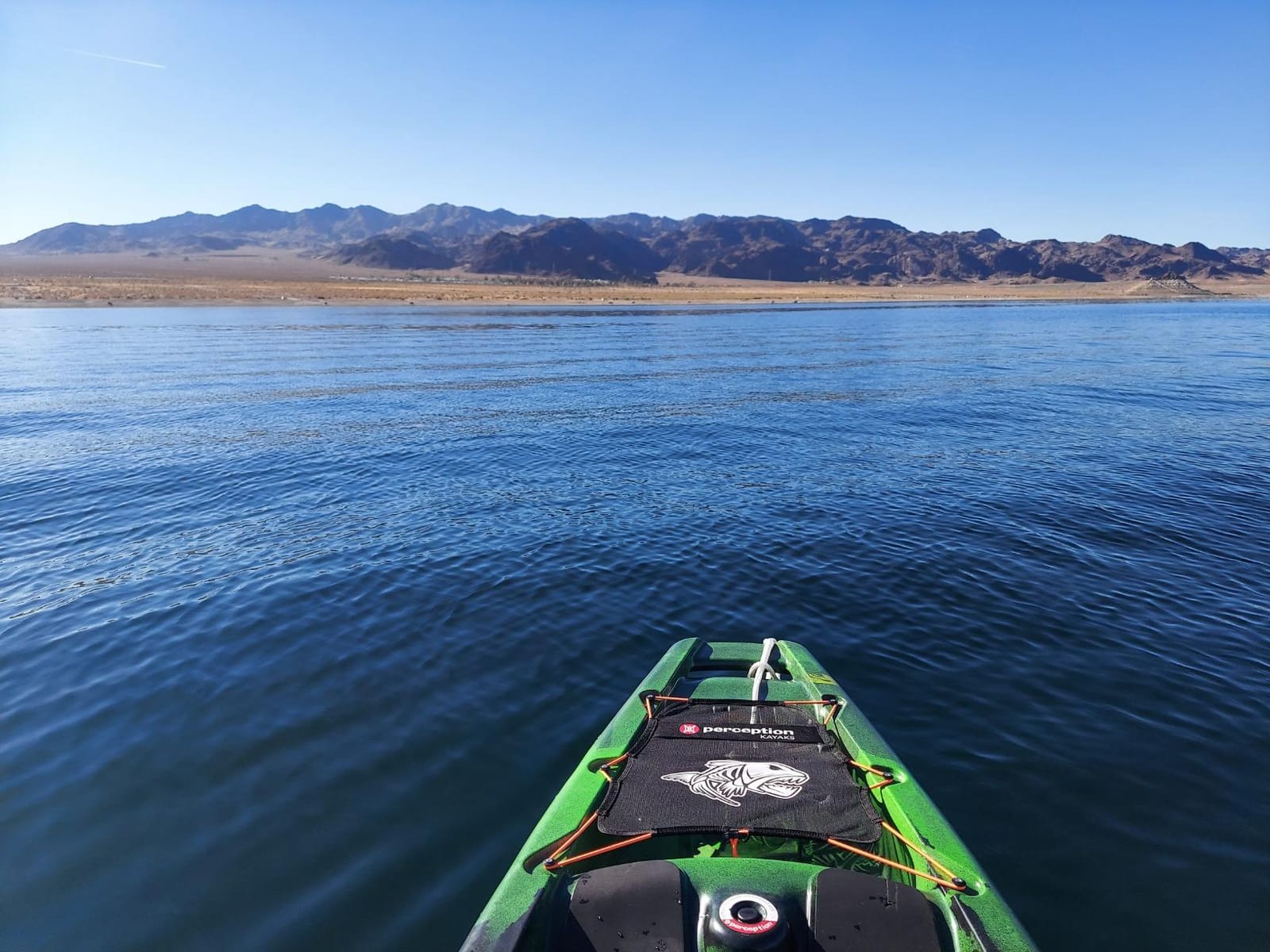
How it behaves in moving water
Eleven and a half feet is a long boat for river work. Owners note it is harder to maneuver and transport than shorter hulls, and in a tight bend you will be paddling hard to keep the stern out of the bank.
On a broad, slow reach or a big reservoir backwater the length pays off instead. It carries speed, carries weight and holds a line across wide water, which is exactly the condition this boat is built for.
Who should skip it
Solo paddlers fishing narrow, rocky water should look elsewhere. The length-to-beam combination is a stability package, not a maneuverability package, and the manufacturer does not list a boat weight, so check that before planning a solo portage.
It also sits well above the entry models in price. If you are not filling that tankwell every trip, the money buys you nothing.
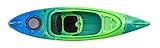
7. Perception Flash 9.5 Sit-Inside Kayak
Perception Flash 9.5 | Sit Inside Kayak for Fishing and Fun | Two Rod Holders | Multi-Function Dash | 9′ 6″ | Earth (9331900190)
- Nimble handling from a compact 9 ft 6 in hull
- 41 lb is easy to carry and launch
- 325 lb capacity suits a wide range of paddlers
- Built-in rod holders and rear storage
- Adjustable foot braces fit different paddler sizes
- Short length favors slow rivers over long open water
- Sit-in cockpit requires a spray skirt in wet conditions
- Modest cargo capacity
The Flash 9.5 is the shortest hardshell sit-inside here and the one that behaves most like a river boat rather than a lake boat. Nine and a half feet with a polyethylene hull pivots quickly, and owners single out the handling as the standout quality.
At 41 lb it still shoulder-carries comfortably, and the 325 lb rating is unusually generous for a boat this short, which means a larger angler or a bigger gear load is realistic.
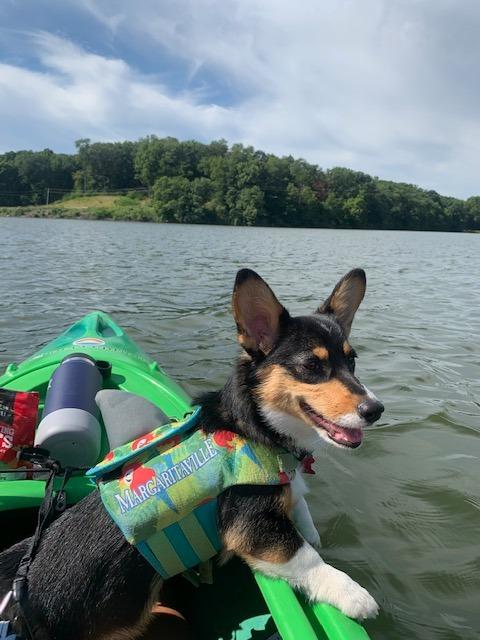
Built-in rod holders and a rear storage compartment mean it is not a bare recreational hull. Adjustable foot braces let you dial in legroom, which reviewers on the taller end of the range appreciate on longer days.
The dry sit-inside cockpit is the practical reason to choose it over an open boat. With a skirt on, spring fishing on a cold river stops being a misery.
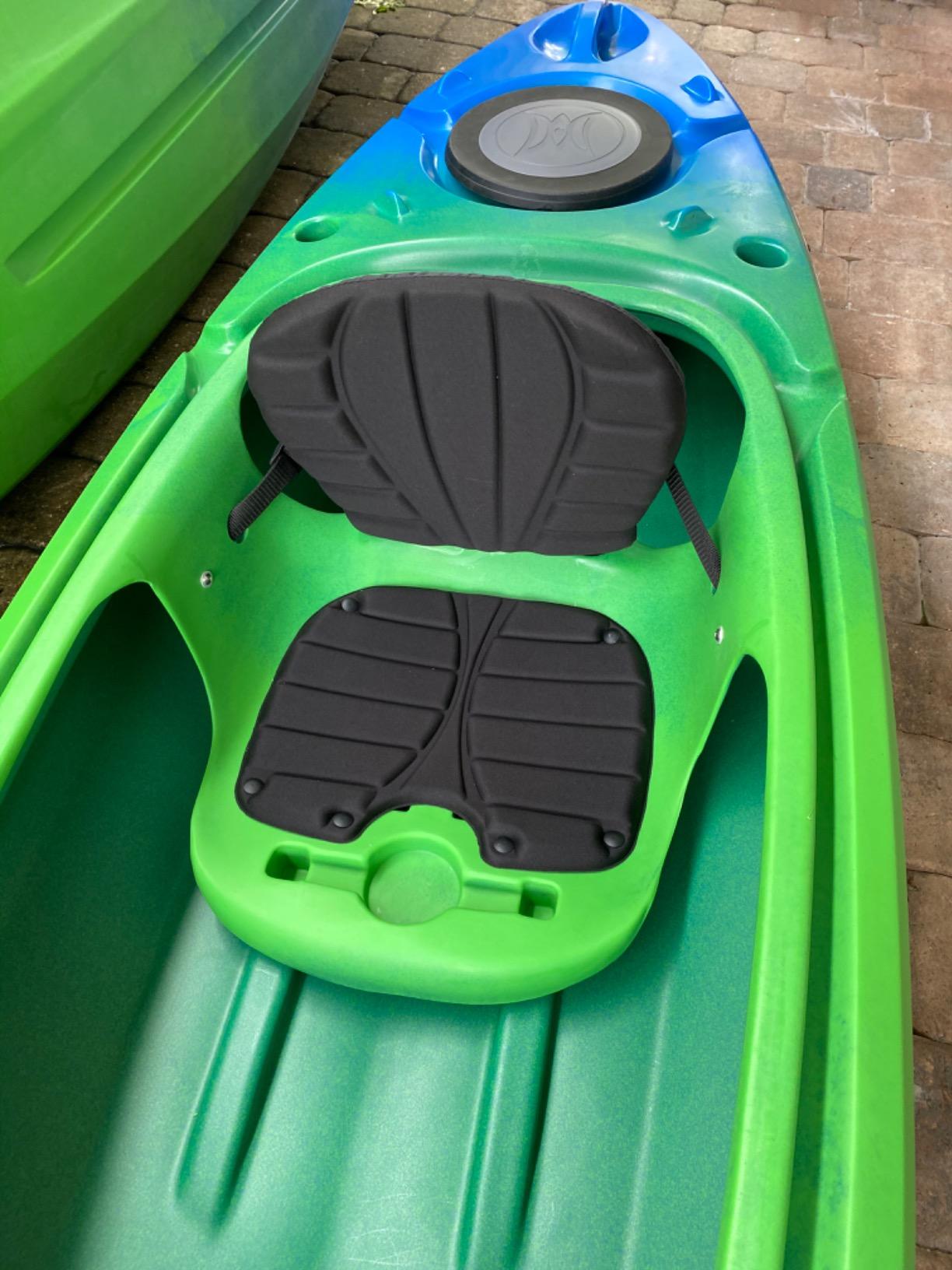
Where the compact length helps
Short is the right answer for tight water. In a creek, a gorge with rock gardens, or a river that bends every thirty yards, a 9 ft 6 in hull is far easier to control than a 12 ft one, and the lower total weight makes getting in and out of the boat easier too.
The limit is speed and glide. On a long, wide, slow reach this hull works harder to move than a longer boat would, and you will feel current more.
Buying considerations
Add a spray skirt to the cost. It is not optional on moving or cold water, and the whole advantage of this cockpit disappears without one.
Storage is a rear compartment only, so this is a boat for a day trip with a small gear load rather than a full day of crates and a cooler. Perception warrants the hull and deck for five years.
8. Pelican Bass Raider 10E Angler Fishing Boat
- Extremely stable with owners standing on the gunwale
- Pre-wired for a trolling motor and sonar
- Two 360-degree swiveling seats on sliding tracks
- 600 lb capacity carries two anglers and gear
- Internal flotation built to ABYC standards
- Not paddled effectively without a motor
- 50 in beam is hard to transport solo
- Reports of hull damage on arrival
- Not a kayak
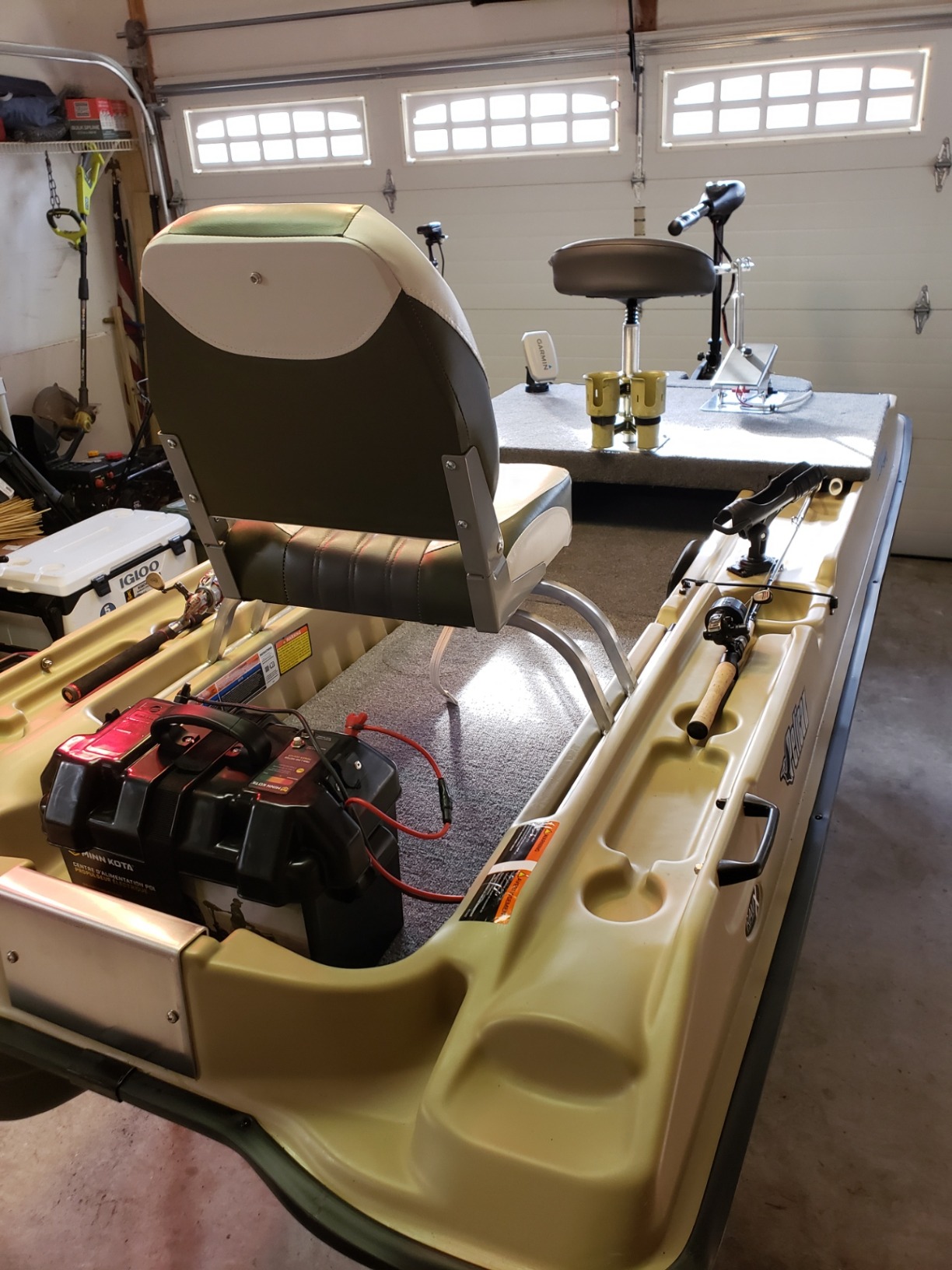
This is a small fishing boat, not a kayak, and we include it because a percentage of river anglers fish wide, slow, open water where a kayak is simply the wrong tool. At 50 inches wide it is the most stable platform in this roundup by a wide margin, and owners report standing on the gunwale without tipping.
Pre-wiring is the headline feature. A 12V outlet is already installed for a trolling motor and sonar, which removes the electrical work that adds real cost and time to a first installation.
Two 360-degree swiveling seats on sliding tracks let you fish facing forward or sideways without shifting your gear, and the 600 lb capacity covers a second angler plus a full load.
Internal flotation built to meet or exceed ABYC standards is a safety feature that hardshell angling kayaks rarely bother with, and it matters on open water where a capsize is a swim, not a soak.
Which rivers suit this boat
Wide, slow, sheltered reaches, backwaters and reservoirs with open water and wind. The 50 in beam is a stability asset in chop and a transport liability everywhere else.
It is not a moving-water boat. There is no paddle authority worth speaking of in current, so this is the pick only if you have a shallow launch and slow water at the far end.
What to weigh before buying
A motor is effectively required, which is a cost and a maintenance commitment. The 50 in beam also means solo roof-loading or solo launching is genuinely difficult even though there are four carrying handles.
A recurring set of reviews mentions boats arriving with holes, gouges or a poorly installed hull seam trim. Inspect the hull thoroughly before the first launch, and keep the packaging until you are satisfied.
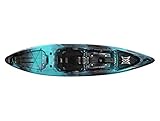
9. Perception Pescador Pro 12 Sit-On-Top
perception Pescador Pro 12 | Sit on Top Fishing Kayak with Adjustable Lawn Chair Seat | Large Front and Rear Storage | 12′ | Dapper
- Very stable with roughly 350 lb of paddler and gear
- Glides and tracks well
- Adjustable footrests suit tall paddlers
- Lawn chair seat tolerated over three-hour trips
- Large front and rear storage
- Solid enough to roof-load solo
- Heaviest boat here at 64 lb
- Paddle not included
- Seat sits lower than larger paddlers prefer
- Scupper plugs needed to keep the cockpit dry
- Reports of hull gouges arriving on delivery
The Pescador Pro 12 is named in more river conversations than any other boat in this general category, and the tracking is why. At 12 feet it carries speed across current in a way nothing shorter here will, which is what you want on a long, fast reach or a big river pool.
Owners report holding roughly 350 lb of paddler and gear before losing stability, so despite being the heaviest hull here at 64 lb it is not overloaded by a normal angler plus a day of equipment.
The adjustable footrests get specific praise from taller paddlers, and the lawn chair seat has been reported comfortable over three-hour trips. Large front and rear storage takes a cooler, tackle and dry bags without a deck pile.
Several repeat buyers mention durability across years of use, and Perception warrants the hull and deck for five years against material or manufacturing defects.
Length, tracking and the river trade-off
Longer really is better for tracking on open water, and this hull proves it. In a steady current you can hold a line with far fewer strokes than a 10 ft boat demands.
The cost is turning. Twelve feet is genuinely hard to pivot, and in tight bends or around rock gardens you will be fighting the bow. This is a big-water boat that can handle moderate moving water, not a creek boat.
Handling and setup details
At 64 lb this is the heaviest boat in the roundup. Roof-loading solo takes effort, and if your launch involves a long carry or a portage, plan on a second person or a cart.
Three things to plan for: the paddle is not included, the seat sits lower than larger paddlers prefer so standing to fish may not work for you, and scupper plugs are needed to keep the cockpit dry in a rain. Inspect the hull on arrival given recurring delivery-damage reports.
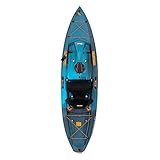
10. Lifetime Tamarack Pro 103 Sit-On-Top Kayak
Lifetime Tamarack Pro 103 Sit-On-Top Kayak, Lightning Fusion, 10 ft. 3 in.
- Fishing-ready with three rod holders and tackle storage
- Adjustable framed seat and footrests
- Deep hull channels aid tracking and chine rails add stability
- Center storage hatch with bucket
- Front and rear bungee cords plus paddle keeper
- Heaviest Lifetime sit-on-top here at 57.5 lb
- 300 lb capacity is below larger fishing kayaks
- Accessory mounting needed for electronics and extra rod holders
The Tamarack Pro 103 is the one boat here that arrives genuinely ready to fish, with nothing taped on. Three rod holders, an adjustable one plus two flush-mounted, a center storage hatch with a bucket, and a catch ruler in the box.
At 10 ft 3 in it splits the difference between maneuverability and tracking better than most, and the deep hull channels plus chine rails give a solid, predictable ride in chop and current.
The adjustable framed seat and footrests let you set your position properly rather than tolerating a fixed one, which on a full day of casting makes a measurable difference.
Front and rear bungee cords and a paddle keeper keep loose gear contained, and Lifetime backs the boat with a five-year limited warranty.
How it performs on a river
Ten feet three inches is a sensible river length. It turns in a bend without the effort a 12 ft hull demands, and it will not wallow the way a very short inflatable does in a cross-current.
The 31 in beam is narrower than the wide fishing platforms on this list, so secondary stability is adequate for a seated cast and workable for a careful standing one rather than confident.
Where it falls short
The 300 lb capacity is the real ceiling. It is below the larger Perception and Pelican fishing kayaks here, so a heavier angler or a large gear load will push the boat past its comfort point.
At 57.5 lb it is the heaviest of the Lifetime sit-on-tops in this roundup and takes real effort to roof-load alone. Accessory mounting has to be added if you want a fish finder or extra rod holders.
River Kayak Buying Guide: What Actually Matters
Ten boats, three formats and one recurring lesson: on moving water, the specs that matter are the ones you feel when the boat stops moving the way you want. Here is how we weigh them.
Hardshell or inflatable for rivers?
Hardshells win on durability, tracking and standing stability. Rotomolded polyethylene takes a direct hit from a rock and shrugs; an inflatable deforms and rebounds. If your river has structure in it, that difference decides the argument.
Inflatables win on transport and forgiveness. They ride in a bag, they will not be gored by a submerged branch, and they float rather than displace, so shallow seams are not a grounding event. Our deeper comparison of the category is in our guide to the best inflatable kayaks.
The inflatable failure mode nobody mentions: seams are the weak point. Repeated flex in current and heat during inflation degrade the bonded seams over years, and a puncture in current is a swim, not an inconvenience. If you go inflatable, carry a patch kit you have actually used once on dry land.
Sit-on-top or sit-inside?
Sit-on-tops give you secondary stability. The open hull flares outward as you lean, pushing back against your weight, which is what makes a standing cast possible. They also drain instantly after a capsize and take on gear through open hatches. The cost is wet feet in cold water.
Sit-insides keep you dry, sit lower and quieter, and give better spray protection with a skirt. They need a skirt, they need a spray deck practice, and they have less secondary stability because your body is inside the hull line rather than above it.
For cold early-season river fishing, the sit-inside wins. For standing casts and warm water, the sit-on-top wins.
Length, beam and rocker in plain language
Length and beam pull against each other. A longer hull tracks straight and carries speed; a shorter hull pivots and turns. A wider hull is stable when you stand; a narrower hull is faster and more efficient when you paddle. There is no hull that wins both, so pick the axis you fish on.
Rocker is the curve running from bow to stern. A flat-bottomed touring hull has almost none and will bury its bow in a wave. A heavily rockered hull curves up at both ends, climbs waves and riffles instead of punching them, and pivots faster. Anglers on the forums describe rivers that run from three inches to fifteen feet within a single float, and rocker is what lets one boat work all of that.
Flare is separate from rocker. Flare is how sharply the sides angle outward at the top. More flare means more resistance to leaning, which reads as secondary stability. Multi-chine hulls give you a defined hard edge in moving water without the vague soft feel of a heavily rounded hull.
Paddle, pedal drive or motor
This is the most repeated question on river forums, and the consensus is consistent: paddle first for skinny water. Pedal drives and propellers hang below the hull, and rocks and gravel bars are what they meet.
Owner reports put a pedal drive at roughly 1.5 feet of minimum workable depth, and that is the only concrete figure that shows up consistently across angler reports. Below that you are grinding the mechanism. A rudder is cheaper and safer but needs deeper water than a paddle. Retractable and removable skegs are the compromise: fit them in deep pools, pull them in the shallows.
If your river is deep and wide, a drive buys you free speed and hands-free position holding, which is the real argument for it. If it is shallow and rocky, it is dead weight and a repair bill. Our guide to the best pedal kayaks covers the drive systems in depth.
Never give up the paddle. Owners with dual-propulsion rigs consistently say the same thing: you need to hand paddle back to safety fast, and that ability has saved trips.
Weight, capacity and the portage
Solo-carry weight is the criterion most buyers ignore and most regret ignoring. Every boat here is described by owners in terms of whether one person can load it, and the split is stark: 31 to 45 lb hulls are solo-carryable, 51 to 57.5 lb are manageable, and 64 lb is a two-person job or a cart.
Capacity should be your body plus your gear plus about 20 lb of margin. A 300 lb-rated boat with a 230 lb angler and a full day of gear is already over the useful limit.
If your launch involves carrying, the honest question is how far and how uneven. Over a hundred yards of rough ground, ten pounds of hull weight is worth more to you than any feature on this list. For genuinely remote launches where you must portage around a rapid, treat the boat as a whitewater purchase instead and read our best whitewater kayaks guide.
Safety on moving water
Fit your PFD properly and wear it. The 120 rule says a properly fitted life jacket will keep your head above water for a paddler of that weight, and it assumes the jacket actually fits. Test the straps before you leave the truck.
Cold water kills, not rapids. On any river cold enough to numb your hands, wear a dry top or wetsuit. In water under 50 degrees, assume you have about 30 minutes of useful function if you are not wearing protection.
Other basics that apply to every boat in this roundup: a paddle leash so you do not watch your paddle go, a whistle, a night light if you will be out late, a dry bag for your phone, and a float plan with someone on shore.
Going alone is a judgment call, not a rule. If you go, tell someone your launch point, your planned route and your return time, and carry more than the minimum.
Rod holders, rigging and where gear lives
Flush-mounted rod holders are cleaner and snag less than vertical tubes, and one adjustable holder saves you constantly repositioning a spinning rod. All of the hardshell sit-on-tops here have three or four, and the two inflatables use stainless D-rings plus detachable holders, which is more flexible if you rig your own.
On a river the priority is keeping gear low and contained. Front and rear bungee cords, a tankwell or a removable gear box beat an open deck every time in current. Wet gear adds weight, and weight in a small boat costs you freeboard and secondary stability.
If you are fishing two people, our best tandem kayaks guide covers the stability ratings that matter when a second angler is on board.
Which River Kayak Fits Your Water?
Match the boat to the water, not to the water to the boat. Here is how the water types map to hull characteristics and to specific picks from this roundup.
Creeks and small streams: You need short length, low weight and shallow-water hardware. Favor removable skegs and soft hulls. The Intex Excursion Pro K1 and the Perception Flash 9.5 fit this water best.
Shallow rocky rivers and gravel bars: Rocker and beam matter more than tracking. Avoid anything with a drive. The Intex Explorer K2 and the Lifetime Tamarack Angler 100 are the practical answers.
Big slow rivers with moderate current: Length and tracking start to pay off. The Perception Pescador Pro 12 and the Perception Outlaw 11.5 handle this water with margin.
Wide open reaches and reservoir backwaters: Wind and exposure dominate the conversation. The Pelican Bass Raider 10E gives you a wide, motor-ready platform; the Pelican Sentinel 100X gives you the light option you can solo-carry.
Cold and early-season water: Dry cockpit beats everything. The Pelican Argo 100X with a skirt is the pick here.
On price tiers, entry money buys an inflatable or a basic polyethylene sit-on-top that will fish moving water acceptably. Mid money buys a purpose-built angling hull with real storage, rod holders and a warranty that covers more than a season. Premium money buys length, capacity and drive systems, which only pays off on deep, wide water.
Frequently Asked Questions
What type of kayak is best for using on rivers?
A short, wide, maneuverable sit-on-top angling boat of 10 to 12 feet built on a durable polyethylene hull with pronounced rocker and flared sides. Rocker lifts the bow and stern so the hull climbs waves instead of burying them, flare gives you secondary stability for standing casts, and a hull under about 55 lb is realistic for a solo carry to the launch.
What kind of kayak is best for river rapids?
For rapids, buy a hull with high rocker, a hard polyethylene shell and enough beam to stay upright when you are bracing, and carry a paddle you can actually use. Rockers climb waves and keep the bow out of holes, and flared topsides keep you upright while you brace. If the rapids are above class II, this is no longer a fishing kayak decision and you want a whitewater-rated boat instead.
What is the best size kayak for rivers and lakes?
Ten to twelve feet works for both. Around 10 feet is agile enough for rivers, bends and portages while still being stable, and 12 feet tracks better on wider water. Beam matters more than most buyers expect: wider boats stand up better, narrower boats paddle faster. In this roundup the Argo 100X is 10 ft and 28 in wide, while the Outlaw 11.5 is 11 ft 6 in and 35 in wide.
Which is better for river fishing, a pedal drive or a paddle?
For most rivers, a paddle. Pedal drives and propellers hang below the hull and meet rocks and gravel bars, and owner reports put a pedal drive at needing roughly 1.5 feet of water to work without grounding. A drive earns its place on deep, wide water where it gives you free speed and hands-free position holding. Whatever you choose, keep a working paddle on board.
Are inflatable kayaks good for river fishing?
Yes, on shallow and rocky water especially. They are light, pack small, float instead of displacing, and absorb contact with rocks and branches rather than cracking. The trade-offs are glide and long-term seam durability, since repeated flex in current and heat during inflation degrade the bonded seams. They also move with wind, so they suit sheltered water better than exposed reaches.
Should a river fishing kayak have a standing platform?
Only if you actually stand to cast. A standing platform buys you secondary stability and sight-fishing ability, and it demands a hull wide enough to support your weight high. If you fish seated from an adjustable chair-style seat, a wider hull costs you tracking and efficiency for a benefit you will never use.
What is the 120 rule for kayaking and how does it work?
The 120 rule says a properly fitted personal flotation device will keep the head of a paddler weighing that amount above water. It is a fit rule, not a weight rule: a jacket two sizes too big will not lift you, and one fastened loosely will not hold. Test the straps on land before every trip, and treat the number as the minimum rather than a target.
Final Verdict: Matching Kayaks to River Types
The best fishing kayaks for rivers share three traits: real rocker, enough beam to stand on, and a solo-carry weight you can live with. Start from the water you fish and work back. Shallow and rocky, go inflatable or a short polyethylene sit-on-top. Deep and wide, go long. Cold water, go sit-inside with a skirt.
Our Editor’s Choice, the Intex Explorer K2, is the one that solves the most problems for the most people at once: two people, 400 lb of capacity, a bag that fits in a closet and a hull that shrugs off rocks. If you want hardshell and want to carry it alone, the Lifetime Tamarack Angler 100 is the better buy, and it stays stable enough for a standing cast.
Go check the current boat’s highest-rated pick, the Pelican Argo 100X, if cold water and a dry cockpit matter more to you than angling features. Read the specs against your actual water, check your launch distance against the hull weight, and get on the river.