
Four years old is the age when a child stops being satisfied with stacking blocks and starts asking how the grown-ups play the thing on the table. The best board games for 4 year olds share four traits: simple rules, play times under about 20 minutes, cooperative or low-stakes play, and enough structure that a child practises turn-taking without a single tantrum. I have pulled 12 of them together, ranked, and grouped them by the exact decision you are standing in a shop aisle trying to make.
Over the past couple of months our household has been running through first board games the way a preschool class runs through circle time, and we compared the ones that survived week four with the ones that got shelved after the second evening. What surprised me most was how few games teach a child the shape of a turn. Most games taught colour matching or fine motor control. Very few taught the thing parents actually want: wait, watch, then act.
So here is my short answer before the long one. If your child is four and has never played a proper game, start with Candy Land. If they have moved past that and you want something they will still be playing at six, start with Outfoxed or Sequence for Kids. If they get upset when they lose, skip straight to the cooperative picks and never buy anything with the word elimination on the box. Everything below is written for a parent standing in a shop, not a game designer.
Top 3 Board Game Picks for 4 Year Olds in 2026

Candy Land Kingdom of Sweet Adventures
- No reading required
- Colour recognition and turn taking
- 15 minute play time
- 2-4 players

ThinkFun Zingo Bingo
- Pre-reading and picture matching
- Two levels of play
- Zinger fine motor slider
- 2-6 players

The Sneaky Snacky Squirrel Game
- Squirrel tong fine motor practice
- Colour matching and counting
- Box doubles as game board
- 2-4 players
Those three cover the three most common starting points. Candy Land is the game most four-year-olds meet first and the one that teaches a turn in a single sitting. Zingo is the strongest pick when you want language development happening inside a game rather than alongside it. The Sneaky, Snacky Squirrel Game is the calmest of the three and the one that quietly trains a pincer grip better than most dedicated fine motor toys.
All 12 Board Games for 4 Year Olds at a Glance in 2026
| Product | Specifications | Action |
|---|---|---|
| Candy Land Kingdom of Sweet Adventures |
|
Check Latest Price |
 Don’t Break The Ice Don’t Break The Ice |
|
Check Latest Price |
| ThinkFun Zingo Bingo |
|
Check Latest Price |
 Yeti in My Spaghetti Yeti in My Spaghetti |
|
Check Latest Price |
 UNO Junior Card Game UNO Junior Card Game |
|
Check Latest Price |
| The Sneaky, Snacky Squirrel Game |
|
Check Latest Price |
 Let’s Go Fishin’ Let’s Go Fishin’ |
|
Check Latest Price |
 Outfoxed! Outfoxed! |
|
Check Latest Price |
 Sequence for Kids Sequence for Kids |
|
Check Latest Price |
 Crocodile Dentist Crocodile Dentist |
|
Check Latest Price |
 Greedy Granny Greedy Granny |
|
Check Latest Price |
 Pete the Cat The Missing Cupcakes Game Pete the Cat The Missing Cupcakes Game |
|
Check Latest Price |
Two columns in that table are worth reading twice. Players is the column parents underestimate most often, because a four-player game played by two bored adults stops being cooperative and starts being a chore. Play time is the column that decides whether a game gets a second play.
1. Candy Land Kingdom of Sweet Adventures – The First Game Almost Every Child Plays
- No reading required
- Teaches colour recognition and turn taking
- Short 15 minute play length
- Colourful cards that pull younger players in
- Little strategic depth once colour matching is mastered
- Card luck can frustrate rule followers learning the basics
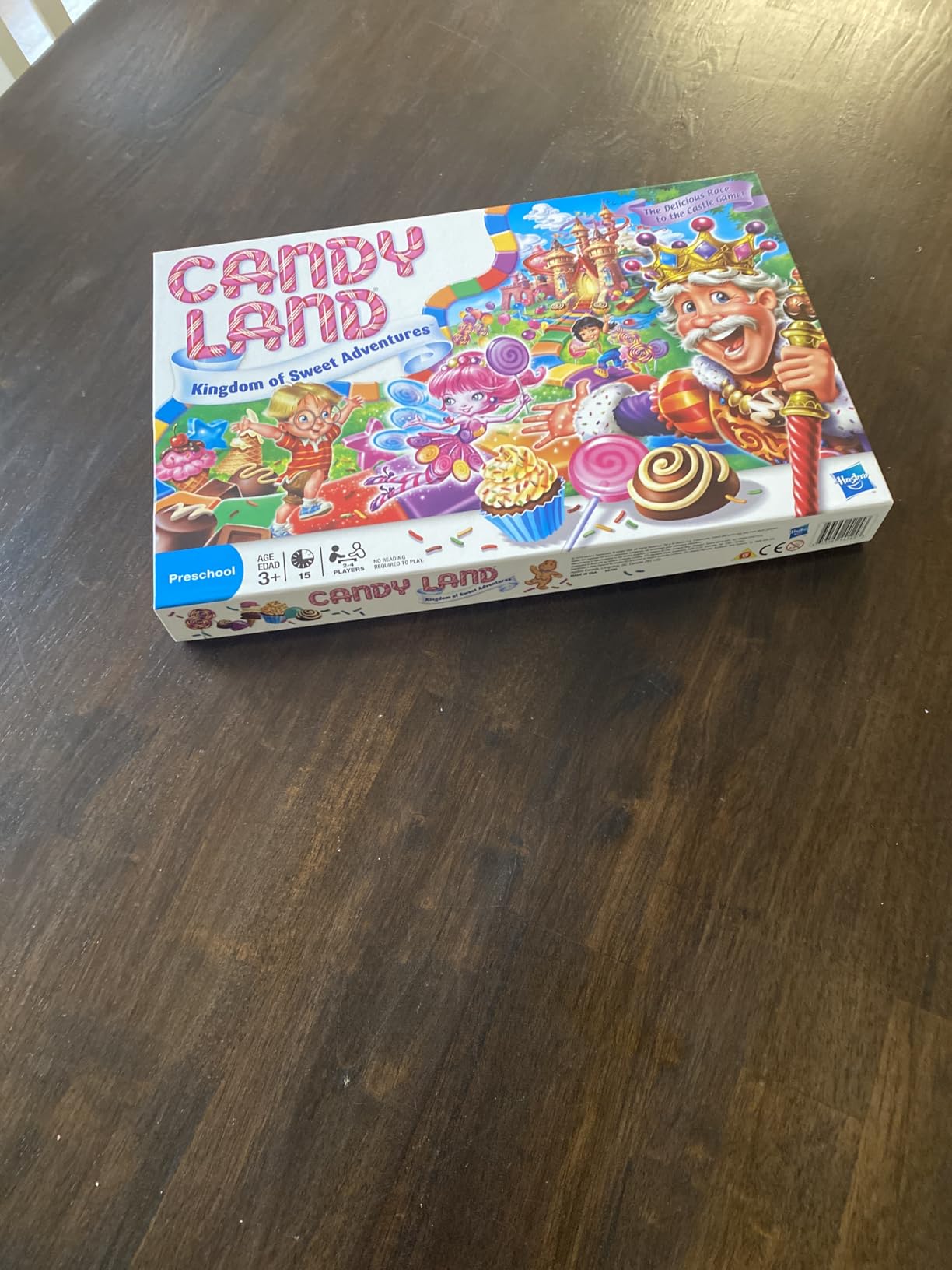
This is the game I hand to any parent whose child has never touched a board. The rule set fits in one sentence: flip a card, move a colour. My then four-year-old understood it inside a single round, which is the highest compliment a game for this age can earn.
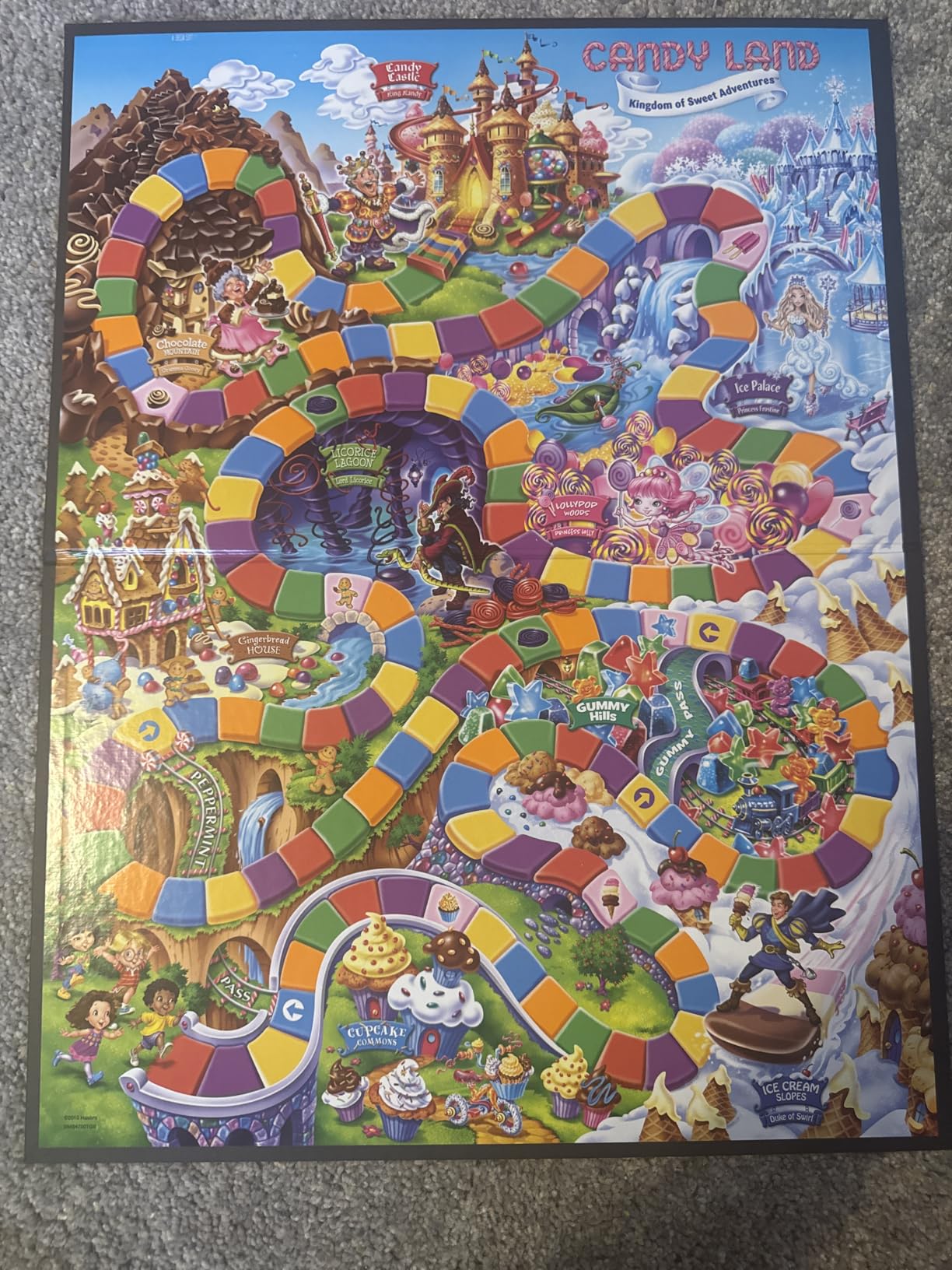
It ranks number one in Board Games on Amazon, and with 37k+ reviews the pattern of use is well documented. Families have been playing this version across generations, which tells you something important about durability. The board measures 15.75 inches across, so four gingerbread pawns have real room to move and a small hand is not constantly bumping pieces.
What it genuinely teaches is turn shape. Flip a card, move, take your turn back, sit down. That is the whole ritual, and a four-year-old needs maybe three rounds before they start anticipating their own turn instead of asking mid-move. The Hasbro listing names colour recognition, turn taking and sportsmanship as the educational aims, and those are real rather than marketing filler.
Two things to set expectations on. Once a child has the colour matching down, the decisions become thin, so you will see the box come out less often after a month. And the shuffle means a child who loses four turns in a row on a bad draw sometimes takes it personally. A short reassurance before the first game prevents most of that.
It is also a good two-player game, which matters more than the box suggests. Parents stuck with one child on a rainy afternoon get a real game rather than a repetitive puzzle.
Who this suits best
A child in their first six months of playing anything with rules. If someone asks me which single game to buy first, this is the answer, because the transition from a turn being something an adult does to a turn being something you do is the hardest developmental step in game play and Candy Land makes it painless.
It also works well for a household where a grandparent is the primary play partner. The illustrations are sweet rather than babyish, so an adult is not playing something embarrassing.
Where it falls short
A child who has already been given older siblings games. Candy Land is number one in Board Games for a reason, and that reason is that it is simple. An older child who can already count to twenty will tell you so.
It also carries a small advantage worth naming: a card shuffle means outcomes are not fully in your control, so if you are specifically trying to stop a child fixating on winning, this is not the game to lean on. Use a cooperative pick instead.
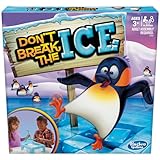
2. Don’t Break The Ice – Best Family Game for Wide Age Spans
Hasbro® Don’t Break The Ice Game, Classic Version for Ages 3+ Years, 2-4 Players
- Simple to set up and simple to play
- Works across a wide age span in one household
- Suspenseful tapping action with lots of laughter
- Fine motor tapping doubles as a dexterity workout
- Plastic tray legs fall off frequently and need reassembly
- Younger children need practice counting the remaining ice blocks
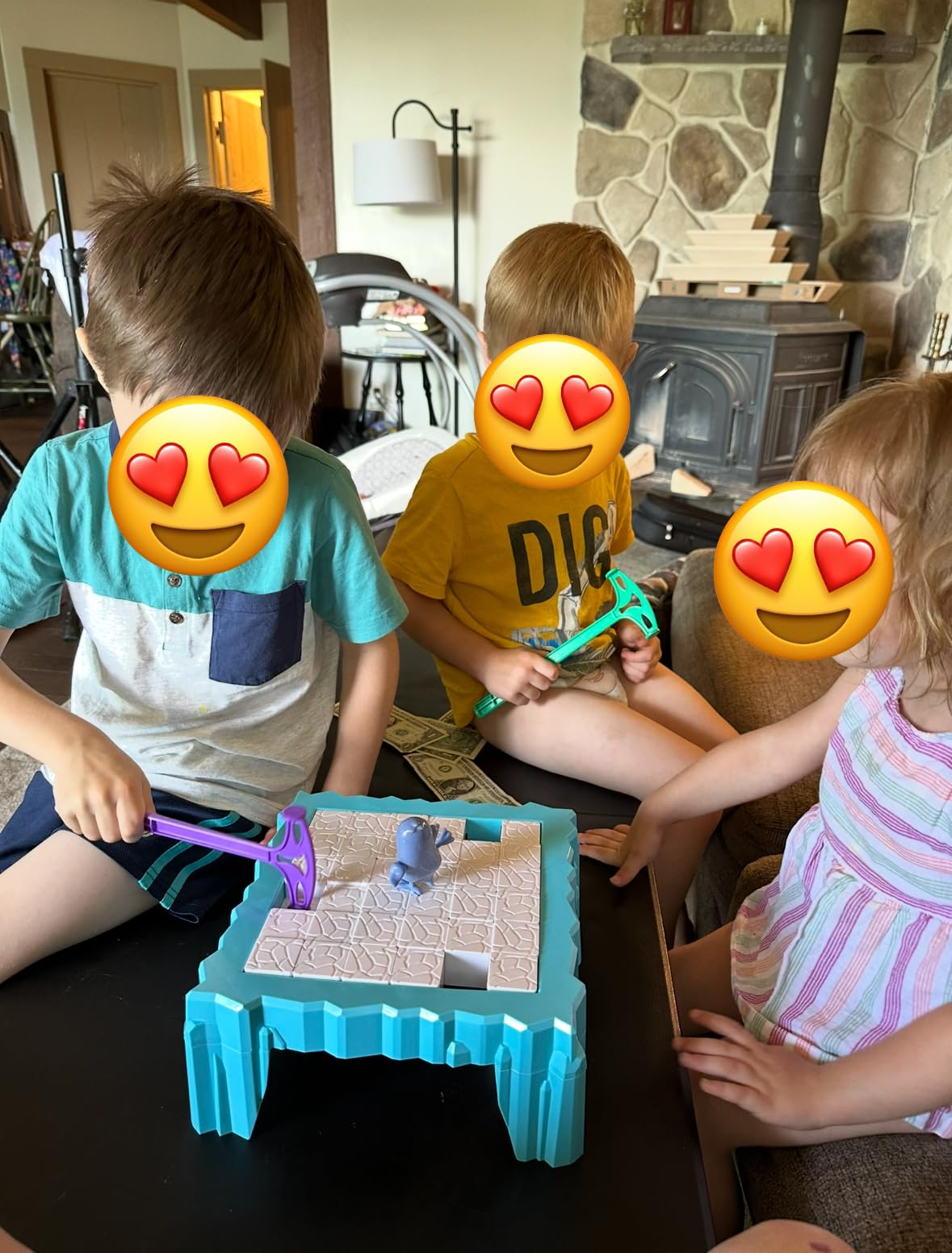
The fantasy is simple. You are helping Phillip the Penguin build an igloo by tapping out ice blocks, and if you tap the wrong one the whole thing collapses. Children love the collapse far more than the igloo.
The box holds 2 mallets, an ice tray frame, 4 tray legs, one large ice block, 32 small blocks and the penguin figure. That is a small enough component list that setup takes under a minute, which is one of the main reasons a four-year-old can start playing without a demonstration.
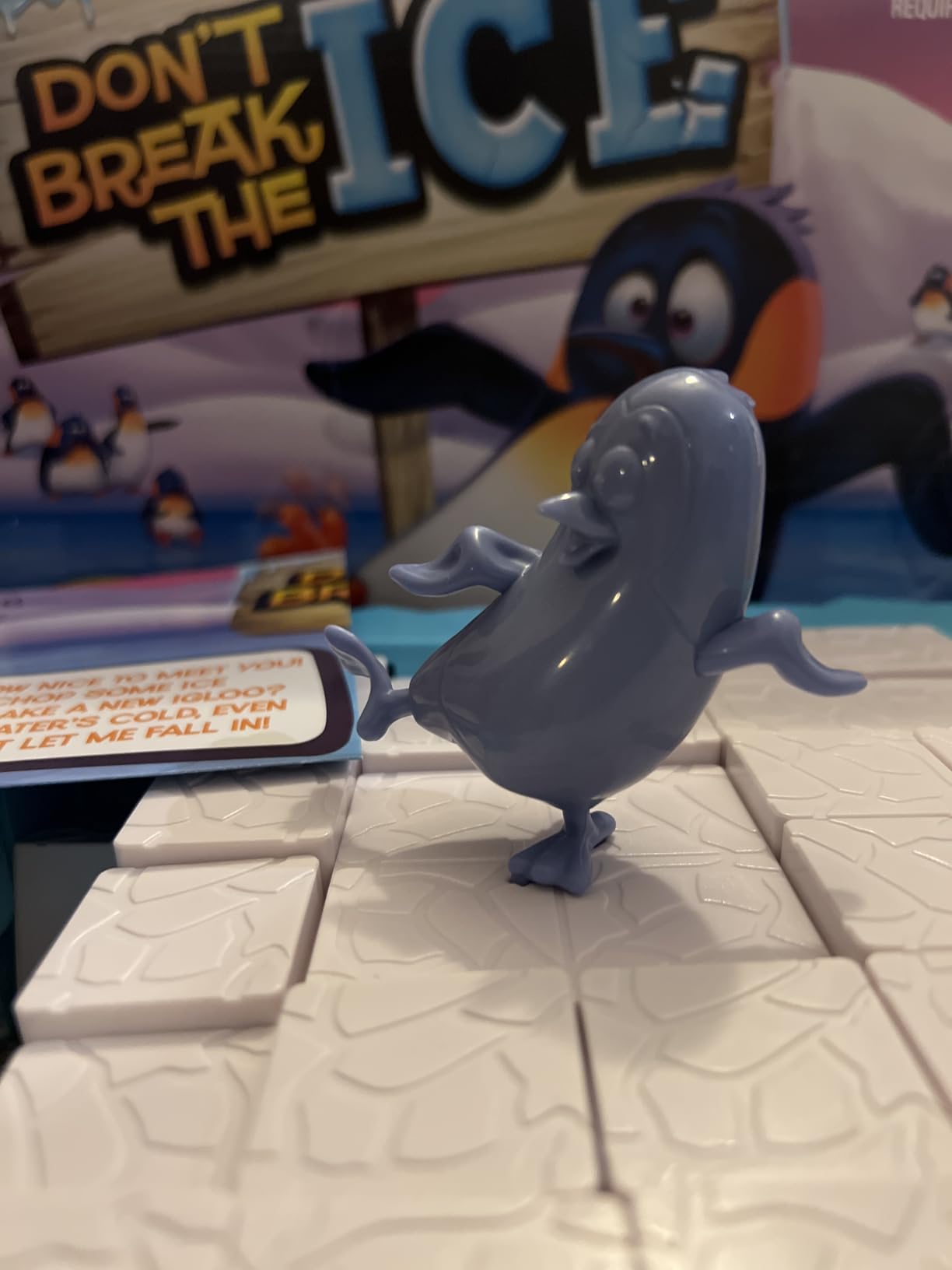
The reason this one sits high on my list is the age span. Families mention playing it with everyone from toddlers up to pre-teens, and the mechanic genuinely scales because the older players can see which blocks will drop the stack while the younger ones are still choosing freely. It is a game where being worse is not a problem.
Counting is an underrated benefit here. As the tray empties, children start counting the gaps out loud to work out how many safe blocks remain, and that reasoning is a genuine step up from counting plastic sweets on a mat.
At around 30 minutes it is one of the longer play times in this roundup, which is the main caveat. In practice a round rarely reaches that, but if your child is the type who abandons a game the moment it stops moving, expect this to need a second and third sitting.
Who this suits best
Families with a wide age range, or a four-year-old who is drawn to noise and suspense rather than quiet concentration. The tension of the stack does the work of holding attention, so a child who finds matching games boring will often stay on this one longer.
It is also a strong pick for a playdate, since two four-year-olds plus two adults makes exactly four players and nobody is left watching.
Where it falls short
Durability. The plastic tray legs are the near-universal complaint in reviews and they do pop off. If your household is rough on games, expect a reassembly mid-game rather than between games.
Counting the remaining blocks accurately is a real skill ask, so a four-year-old just learning numbers will guess. That guessing is usually fine because the result is a laugh, but a child sensitive to being wrong may find it harder.
3. ThinkFun Zingo Bingo – Best Buy for Pre-Reading Development
- Builds pre-reading and picture matching skills inside a game
- Zinger slider is a fine motor workout children love
- Sturdy build that tolerates heavy use
- Extra card expands play up to seven players
- Youngest players often just slide tiles instead of following the rules
- No carrying case so tiles scatter during travel
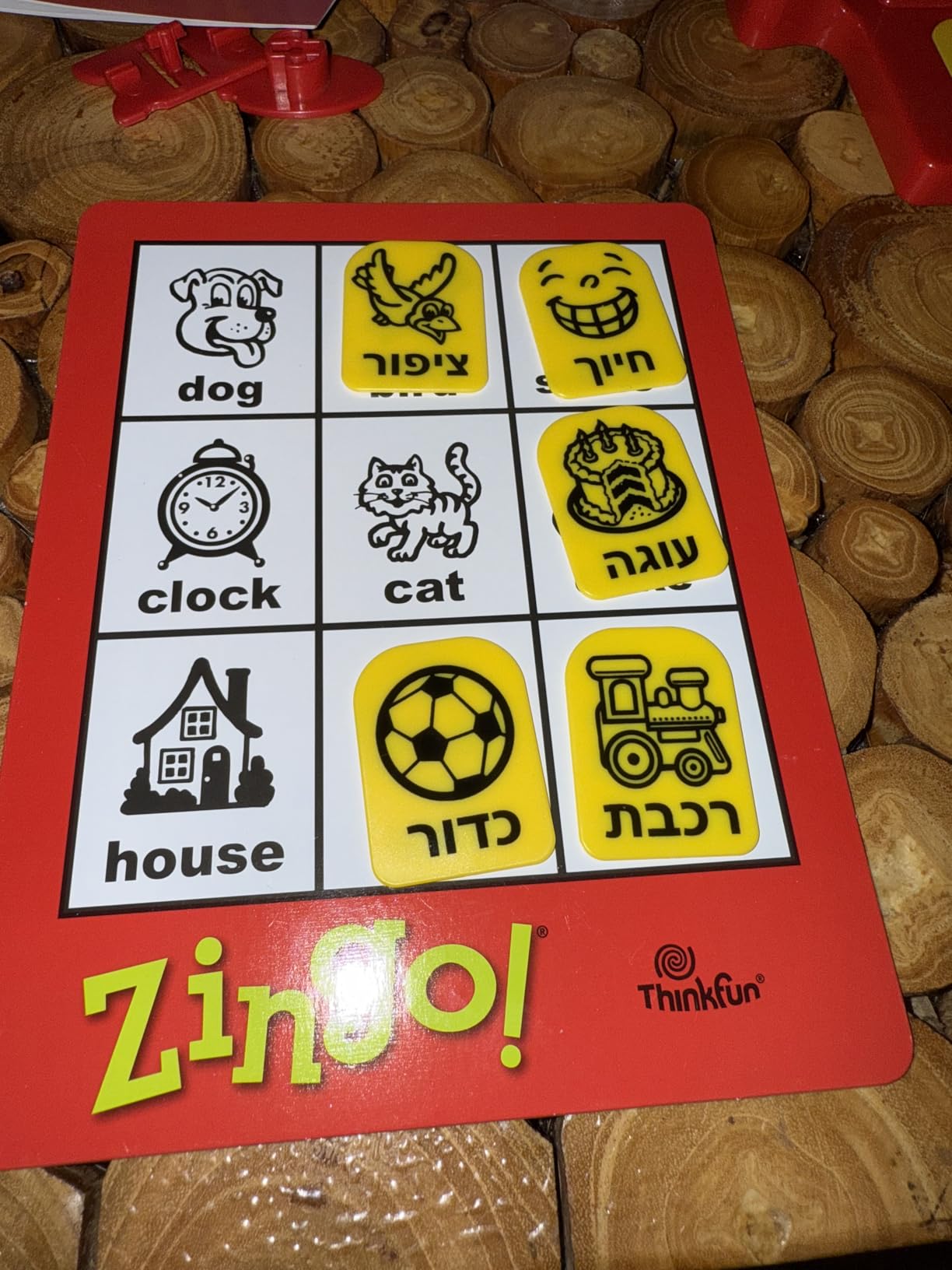
Zingo is a matching game with a slot machine handle. You slide a Zinger to eject a tile, hold up the tile, and anyone holding the matching picture calls out. The excitement comes from the tile ejection, which is exactly the hook a four-year-old needs.
ThinkFun recommends ages 4 to 10, and the box holds 6 double-sided cards with two levels of play, 72 double-sided tiles, a parent guide and the Zinger. Six players is a real step up from the two-player norm of this roundup, and the extra card included here pushes it to seven.
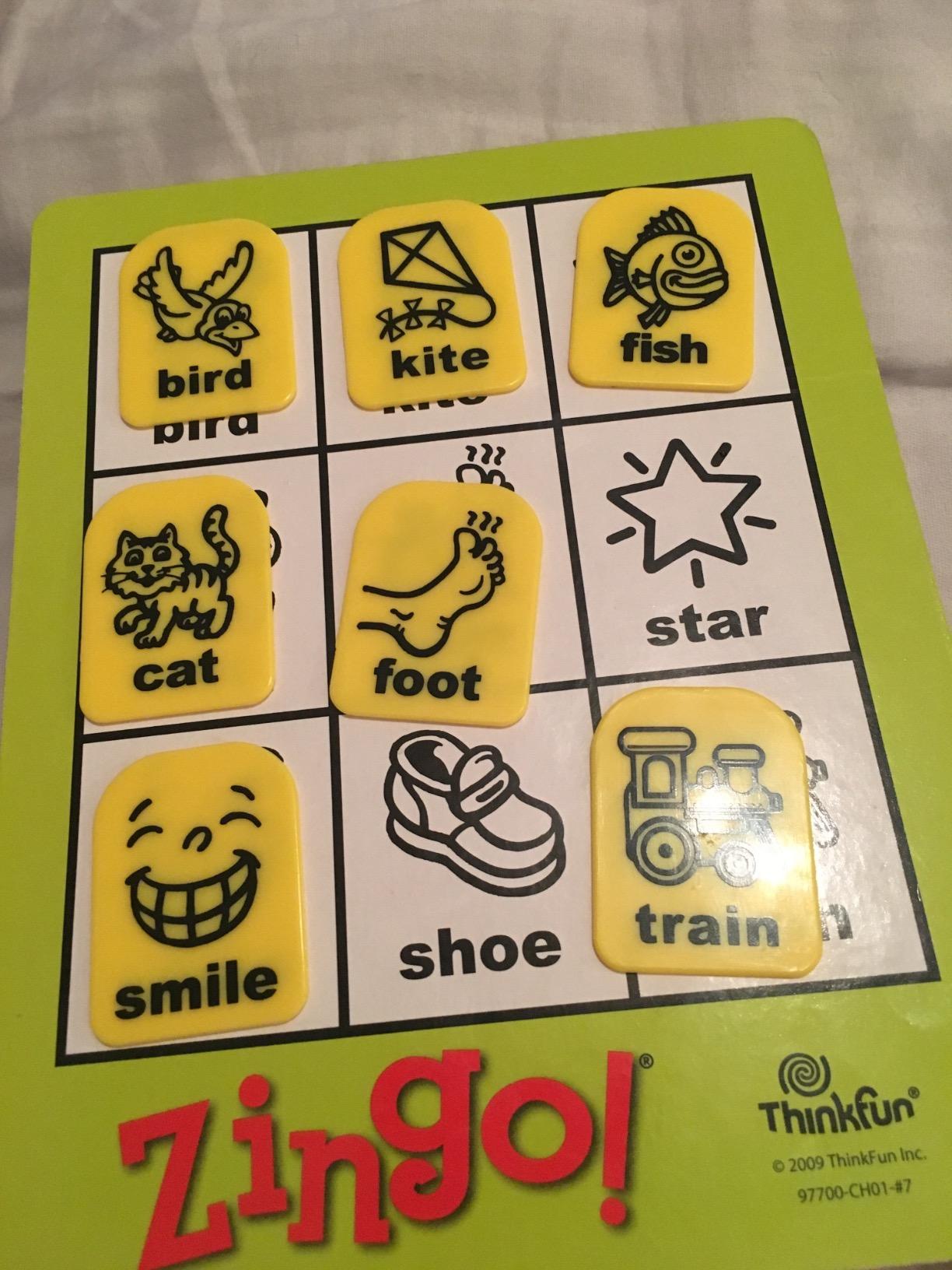
What I like most is that the older players are not being patronised. A 40-year-old genuinely wants to win Zingo, and because everyone is shouting a picture rather than reading a word, a four-year-old can hold their own. Parents and grandparents name it as one of the few games that works cleanly across generations.
Teachers like it too, and a game a preschool class can be handed without an explanation is a rare thing. The two levels of play mean the same box serves a child who is genuinely new to matching and one who is ready to be challenged.
Then there is the Zinger itself. Operating a slider requires pincer grip, wrist control and a bit of sequencing, and no parent buys this thinking of it as fine motor practice. It is also the part children want to do on their own when nobody wants a game.
Who this suits best
A child who is pre-reading or an early reader. The educational objective on the listing is reading, and the mechanic is built so that recognising a picture and saying its word is the entire game loop.
It is also the pick for an only child with a large family around them, because the second level of play absorbs an adult who would otherwise be a passenger. If you want a game for a child who does not yet enjoy losing, the speed of the round helps here too.
Where it falls short
Young children play with the pieces rather than the game. This comes up often and it is worth naming plainly: a three or four year old will slide tiles for the noise. The fix is easy, wait five minutes and hand them the card, but be prepared for the first session to look like a puzzle rather than a contest.
There is no carrying case, and 72 loose tiles in a soft bag will end up under a sofa. If travel is a use case, pack them in a zip bag. The box measures 10.25 inches long and 8.25 inches tall, so it is a proper box rather than a pocket format.
4. Yeti in My Spaghetti – Best for Big Groups and Loud Rooms
Yeti in My Spaghetti Board Games for Family Night, Multi-Player Game, 4+
- No complicated rules so play starts within seconds
- Fast paced and suspenseful for mixed age groups
- Noodle pulling trains patience and hand-eye coordination
- Sturdy plastic pieces and a lightweight bowl make it travel friendly
- Works for four year olds while still entertaining adults
- Real chance element so a child can be frustrated when the Yeti drops early
- Limited strategic depth once children are older
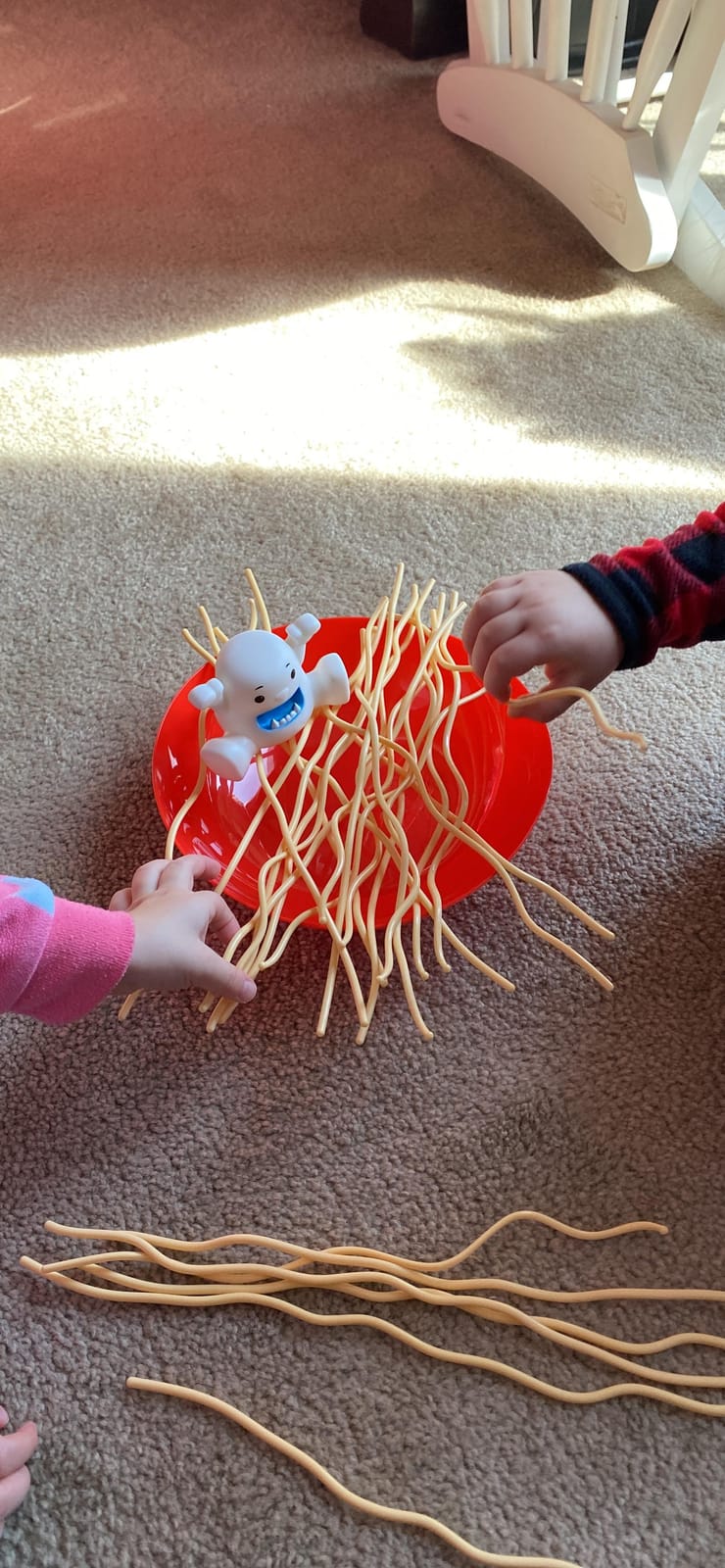
The whole game is one sentence. Take a noodle out of the bowl, and try not to be holding one when the Yeti drops. That is it. Children grasp it faster than the box is opened.
It is also a solid pick when adults and children have to share one activity, since PlayMonster lists up to six players. The game weighs 168 grams and measures 10.5 by 2.5 by 10.5 inches, so it packs into a bag without ceremony, and the sturdy plastic noodles survive the journey.
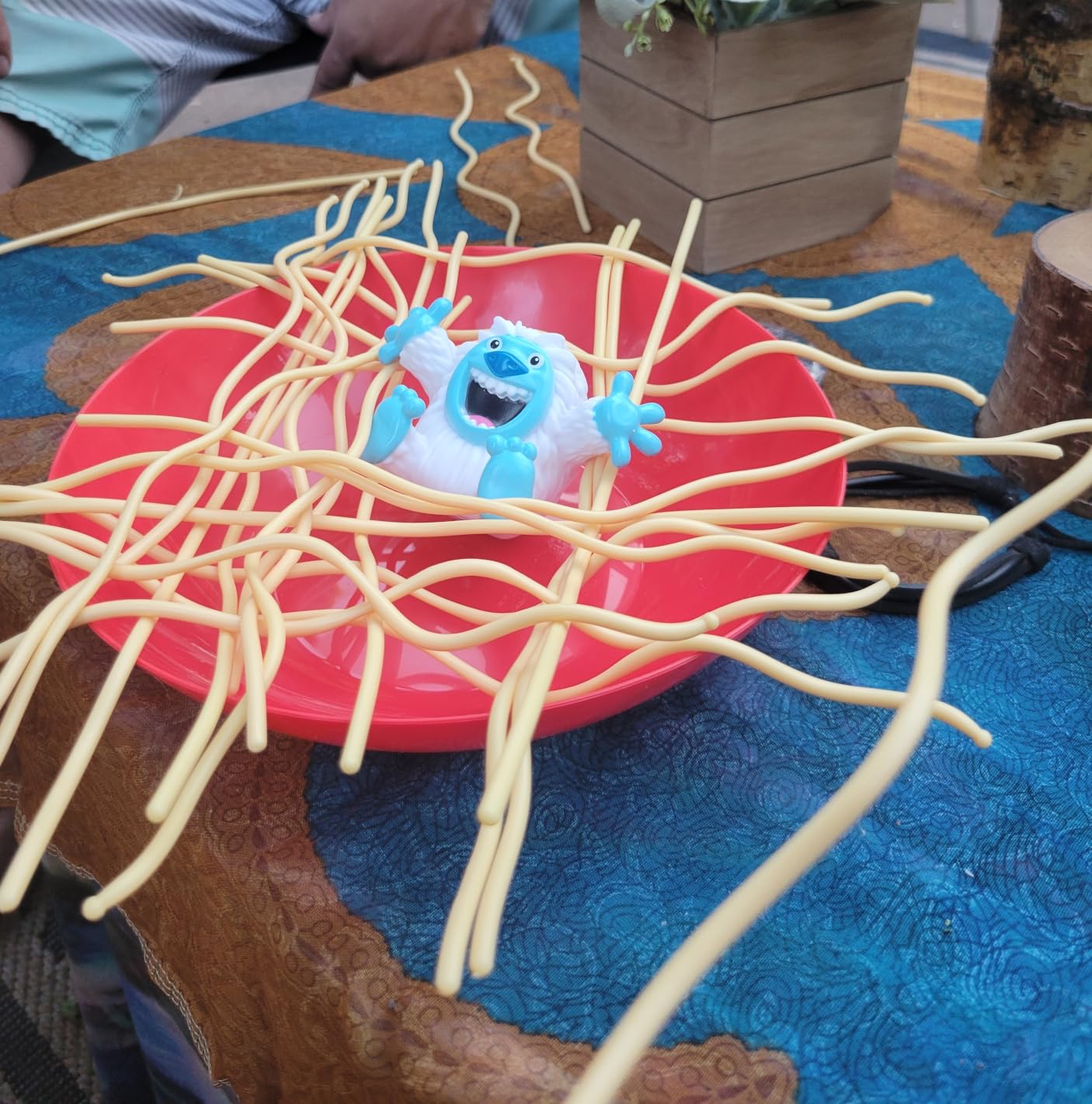
The hand-eye work is the real payload. Pulling a single plastic noodle out of a bowl full of tangled noodles requires a slow, deliberate pinch, and it is the opposite motor demand to the fast flapping of a running-around game. Parents mention focus and concentration as the benefit more often than they mention counting.
It is also a genuinely good family game rather than a toddler game. Adults play it with the same care they bring to a real dexterity title, which is why it keeps working when the child outgrows the preschool framing.
The tension is the point. In a room of six people going quiet one at a time as a hand hovers over the bowl, you get the kind of attention you would struggle to buy.
Who this suits best
A hyperactive child. Forum discussions about games for four-year-olds who cannot sit still keep coming back to this one, because a child is physically still but mentally wound up waiting for their turn. The tension does the settling for you.
It is also a strong birthday party choice, since six players is more than most games in this list handle and the rules fit in one breath.
Where it falls short
It is a pure luck game with a cruel edge. When the Yeti drops early, a child loses turns for something they did not do, and no amount of explaining chance makes a four-year-old find that fair. This is the main reason its average rating sits below the 4.8 group.
Strategic depth is genuinely limited. Plan a year of family game nights and this one will feel thin by the end of it.
5. UNO Junior – Best Card Game for Little Hands
- Simplified rules a three year old can follow
- Matching animal pictures let pre-readers play
- Three difficulty levels keep it interesting as children grow
- Compact tin travels easily
- Lower number difficulty means older siblings may find it too simple
- Turn based play can drag for kids with short attention spans
UNO is the game most adults already know, which removes the single biggest obstacle to playing it with a small child. UNO Junior keeps the shape and changes the pressure. Every number card carries a matching animal picture, so a child who cannot read the number can still match the picture and play.
Three levels of difficulty is an unusually thoughtful design for this age. Level one is simple matching, level two brings in action cards, level three adds penalty cards. A four-year-old starts at one and there is somewhere to go, which is what stops a familiar game from being abandoned after a month.
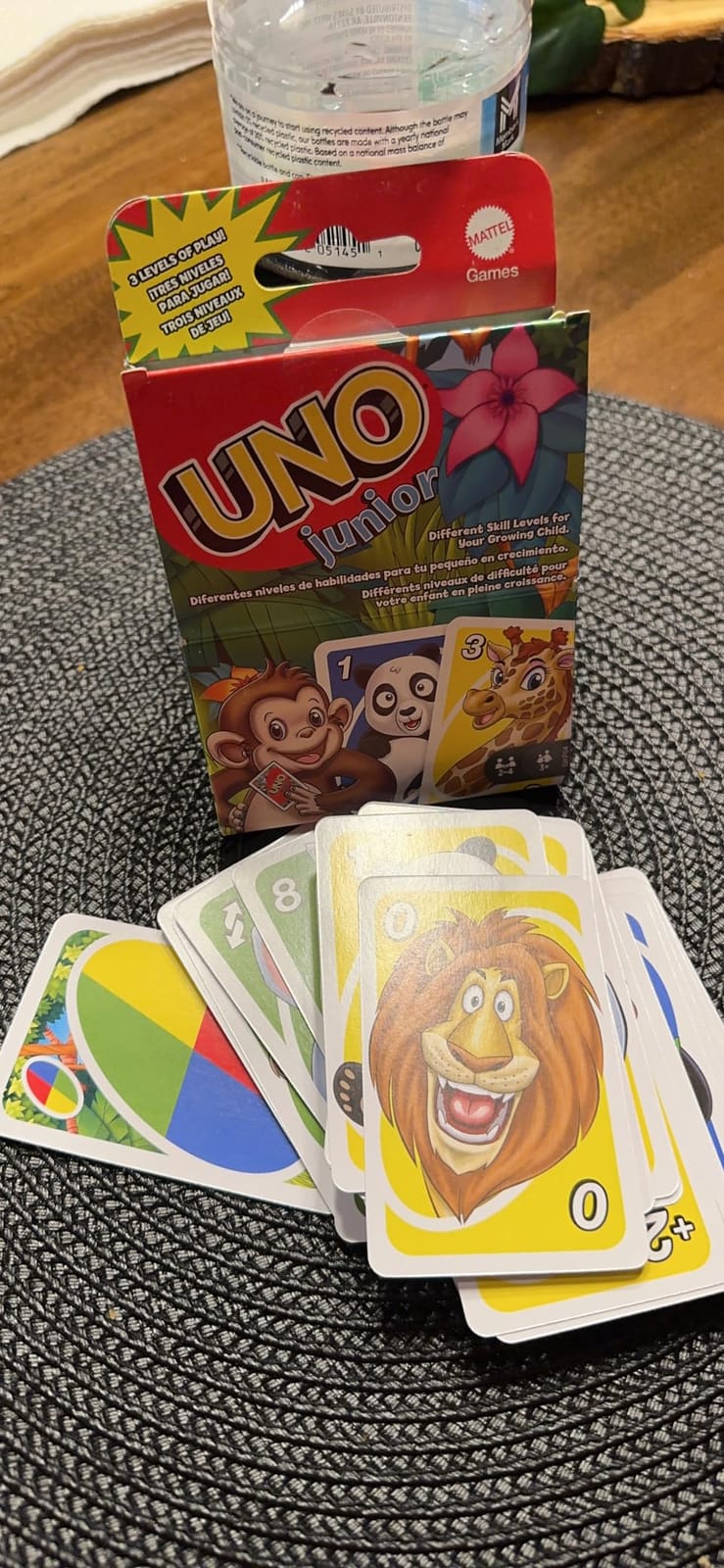
It is one of the smallest and lightest boxes here, at 0.79 by 3.62 by 5.71 inches and 50 grams, and the easiest to drop into a bag for a restaurant, a waiting room or a grandparent visit. Cardstock rather than plastic means it will eventually bend at the corners, but it survives far longer than a toddler usually does to a game.
The objective is also worth knowing before you start. When you are down to one card you call UNO, which gives a child a small piece of vocabulary and a small moment of pride.
Two to four players is listed on the box, though it plays fine with two. A head-to-head UNO game with a grown-up is a good rainy afternoon that fits in a pocket.

Who this suits best
A child who is ready for a real game but not ready for a long one. UNO Junior is a genuine card game rather than a board game with cards, so it feels like a step up without becoming a step too far.
It suits travel, waiting rooms and grandparents’ houses where space is small. It is also the safest pick here for a family with a wide gap between children, because the older sibling can be moved up a level instead of outgrowing the box.
Where it falls short
Older siblings get bored. A seven-year-old will finish the beginner deck in a week and want the real thing, so budget for that transition or buy the level system something to do with.
Rounds can drag with younger players because someone has to think. The fix is to play one game rather than three, which is easy advice to give and hard to follow at bedtime.
6. The Sneaky, Snacky Squirrel Game – Best for Fine Motor Skills and Quiet Rooms
- Self-contained box doubles as the board so nothing gets lost
- Tongs give genuine fine motor and dexterity practice
- Teaches colour matching counting and turn taking
- Rules graspable from age two or three
- Calm quiet play that builds focus
- Squeezing small acorns with the tongs is genuinely hard for small hands
- Some buyers describe the cardstock construction as feeling inexpensive
Spin the spinner, then use a squirrel-shaped pair of tongs to pick up the acorn of the matching colour. If another player snatches it first, you spin again. If a windstorm spins up, everyone drops what they are holding.
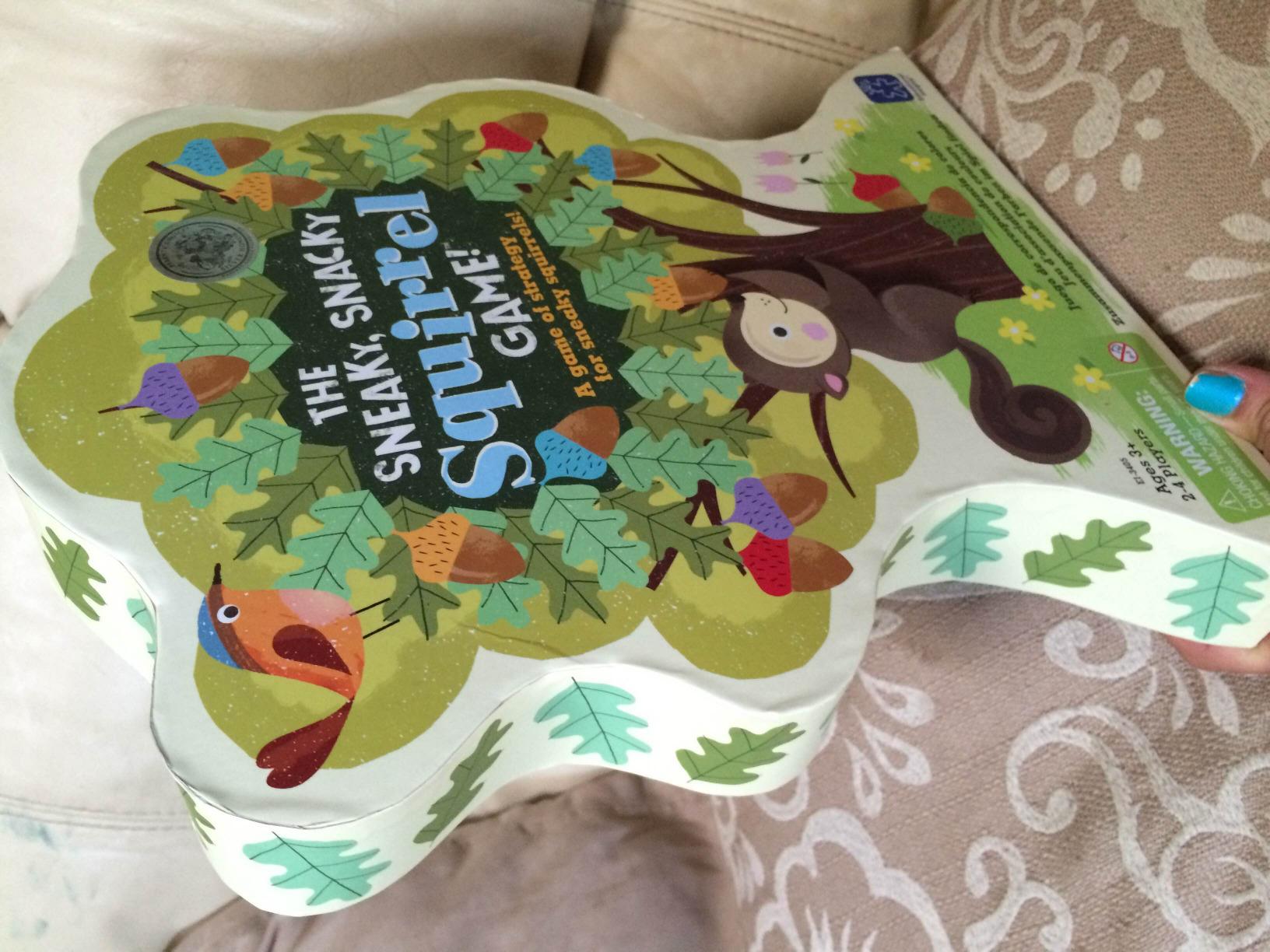
That is the entire rule set, and it is a good one. Educational Insights recommends ages 3 to 7, a range that runs wider than most of the preschool games here. The box contains the squeezer, 20 acorns in five colours, a spinner, four logs, an instruction guide and a tree-shaped board.
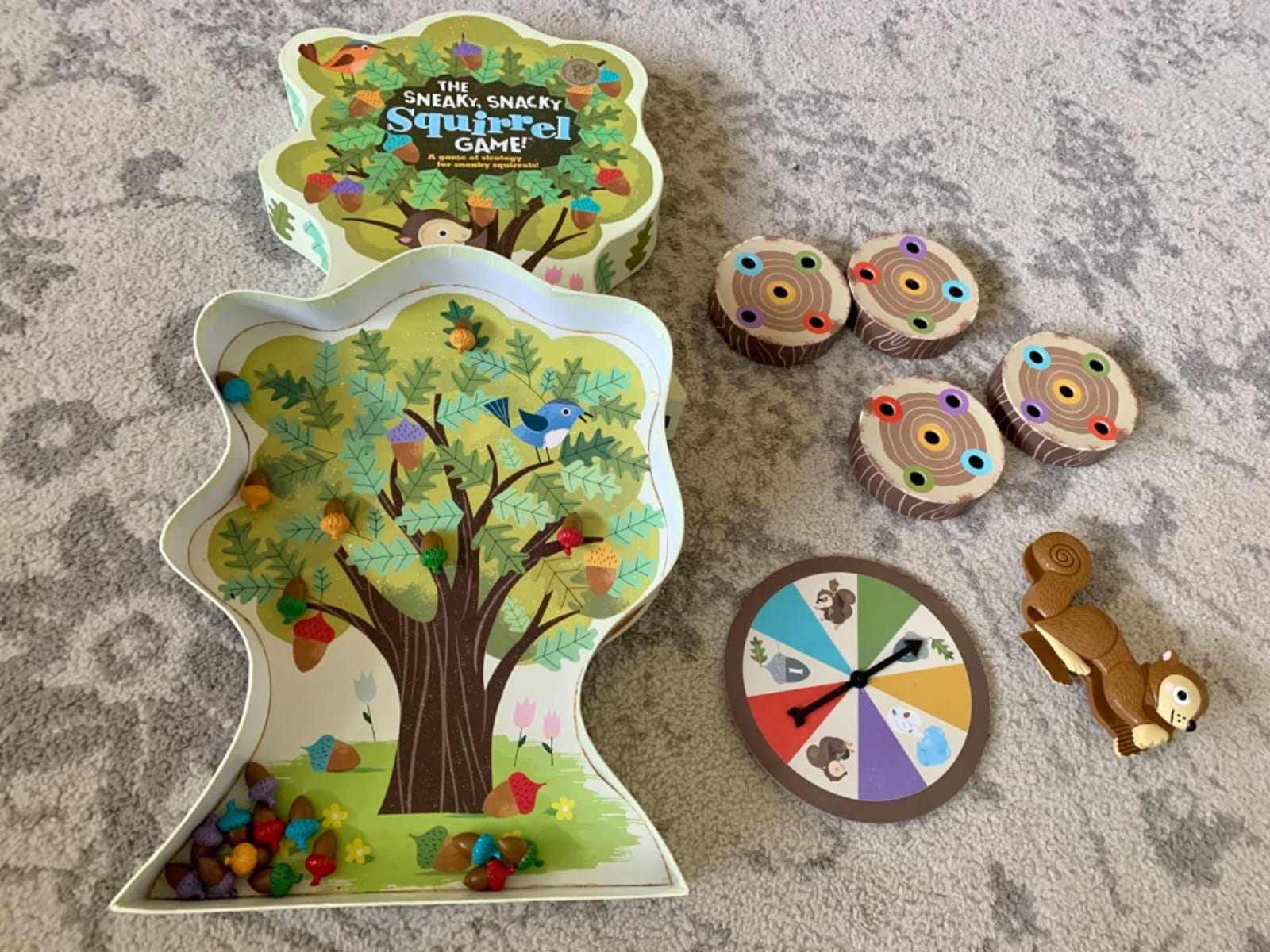
The tree-shaped board folds flat and the box opens to become the playing surface. For a household with limited floor space, that single design decision removes the most common source of friction in a first board game, which is pieces everywhere within a week.
What makes it stand out is the tong. Squeezing a small rubbery acorn with a chunky plastic claw is a genuine pincer grip and hand-eye coordination exercise, and a four-year-old will need about a week before they can do it reliably. Once they can, they will do it for twenty minutes without you because the motor task is absorbing on its own.
It is also a quiet game by design. No shouting, no elimination theatre, no raised voices. That makes it the one to reach for on a rainy afternoon in a small flat or when the neighbours are thin-skinned.
Who this suits best
A child who is calm, focused or sensory-sensitive. Nothing about this game is loud or fast, and the self-storing box means cleanup is a ten-second job rather than a negotiation. It is the game I would recommend for a child who finds competitive noise overwhelming.
It is also a good first game for a child who finds fine motor work hard, because the tong gives them a reason to practise that has nothing to do with a worksheet. Four players is listed, and it works for two.
Where it falls short
The tongs are hard. This is the point of the game, but a four-year-old with limited fine motor control can lose several turns in a row and start watching rather than playing. Play one practice round with no spinner and let them practise holding the claw first.
The build is cardstock and some buyers describe it as inexpensive, so treat it as a play-at-home game rather than something for a school bag that gets thrown around.
7. Let’s Go Fishin’ – Best Solo Game and Best Hand-Eye Practice
Let’s Go Fishin’ Game by Pressman – The Original Fast-Action Fishing Game!, 1-4 players
- Rotating pond with fish that open and close their mouths
- Simple single action play a four year old can master immediately
- Real hand-eye coordination and fine motor practice
- Works solo for one child or as a competitive group game
- Compact and stows away easily
- Needs a button battery and stops working when the battery drains
- Highly luck based so score differences come from chance
- Small fish and rods are a choking hazard for younger siblings
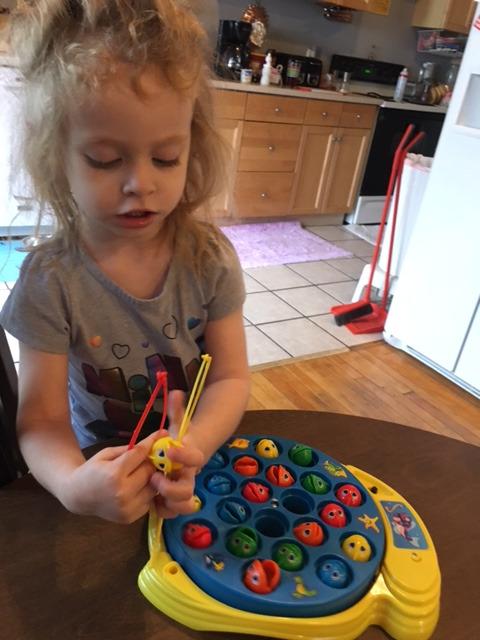
Press the button and the pond rotates, twenty-one fish swim past, and you try to land one before it swims away. The fish that open and close their mouths are what make the catch feel worth celebrating, and the speed of the whole thing is the design.
Pressman Toys recommends ages 4 and up, and one to four players, which makes this the only game in the roundup a single child can genuinely play alone. The deluxe plastic base measures 10.5 by 2 by 10.5 inches and the whole thing is 12.3 ounces, so it moves between rooms easily.
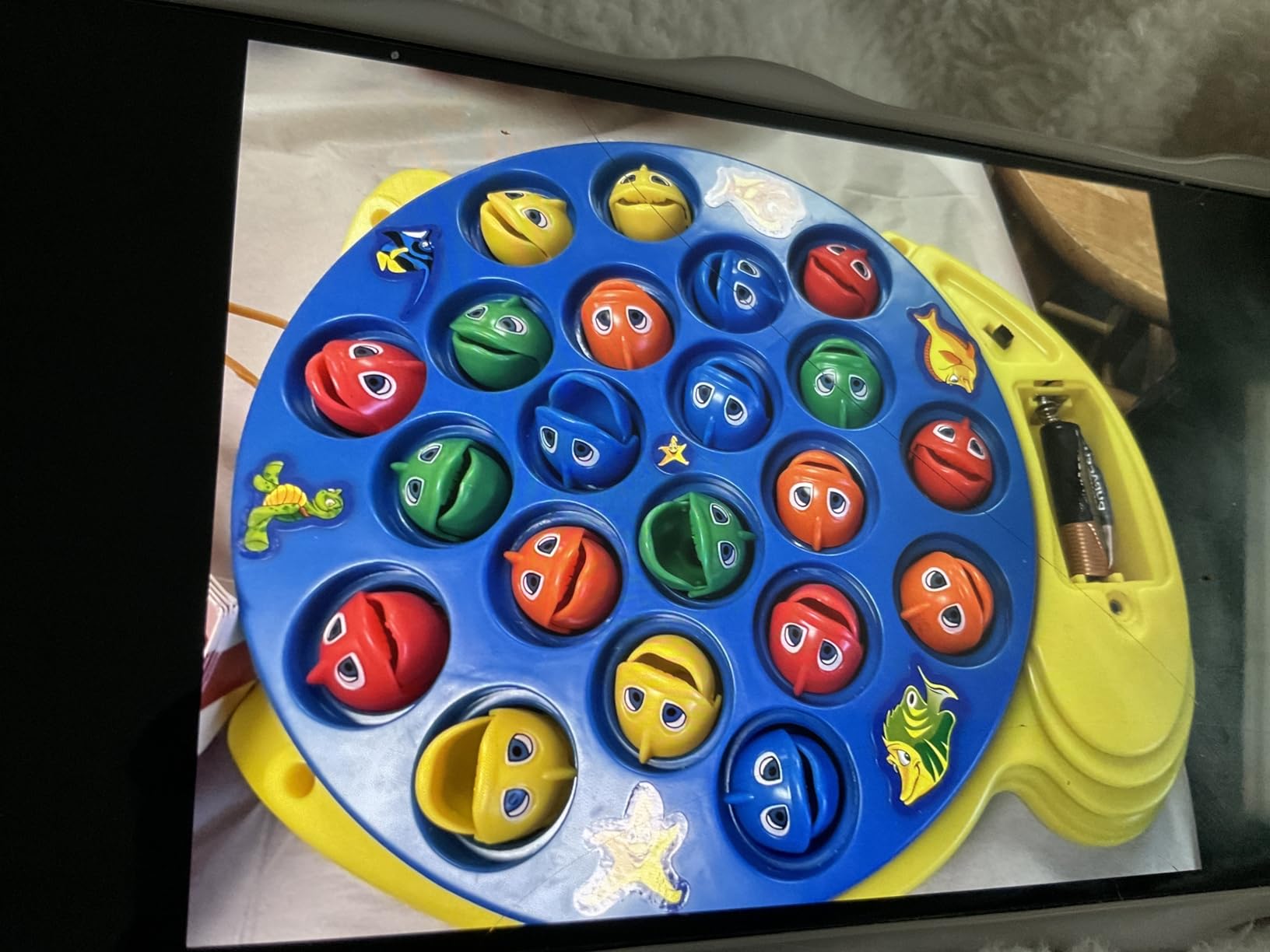
For a four-year-old working on hand-eye coordination, a moving target that requires a quick vertical lift of a rod is about as direct as it gets. The educational objective listed is hand-eye coordination and fine motor skills, and the mechanic is a clean demonstration of both.
Adults enjoy it too, which is unusual for a game this simple. There is a short window where the fish is in the right place and a small decision about whether to go for it, and that is enough to make a grown-up lean in.
It is a nostalgic classic, and that memory of a parent playing it as a child is a legitimate reason to buy it. This version still carries over 10k reviews, and the repeat play across a single family is a good sign the design has aged well.
Who this suits best
A child who needs to play alone while a parent works nearby, which is the most common real use case for a four-year-old. The box does not say a game is for one player often, and this one does.
It is also the right pick for a child who is very competitive in a loud way, because the scoring gap between players stays small. Everyone catches roughly the same number of fish.
Where it falls short
It runs on a button battery. The listing calls out an LR44, and when it drains the game simply stops, which is the single most common complaint in reviews and the main reason this is the lowest rated of the twelve.
Keep the small fish and rods away from any younger sibling in the house, since the box carries a choking hazard statement for small parts and magnets. The game is pure luck rather than skill, so it teaches almost nothing about strategy once the novelty fades.
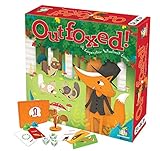
8. Outfoxed! – Best Cooperative Game for a Child Who Hates Losing
OUTFOXED, A CLASSIC WHO DUNNIT GAME FOR PRESCHOOLERS, 4 players
- Cooperative play means no sore losers
- The decoder wheel makes clue solving tangible and screen free
- Teaches deduction memory and shared decision making
- 15-20 minute rounds suit short attention spans
- Easy rules children pick up in minutes
- Packaging suggests age five so some four year olds need help with the decoder
- Reading the clue cards is needed to play at full speed
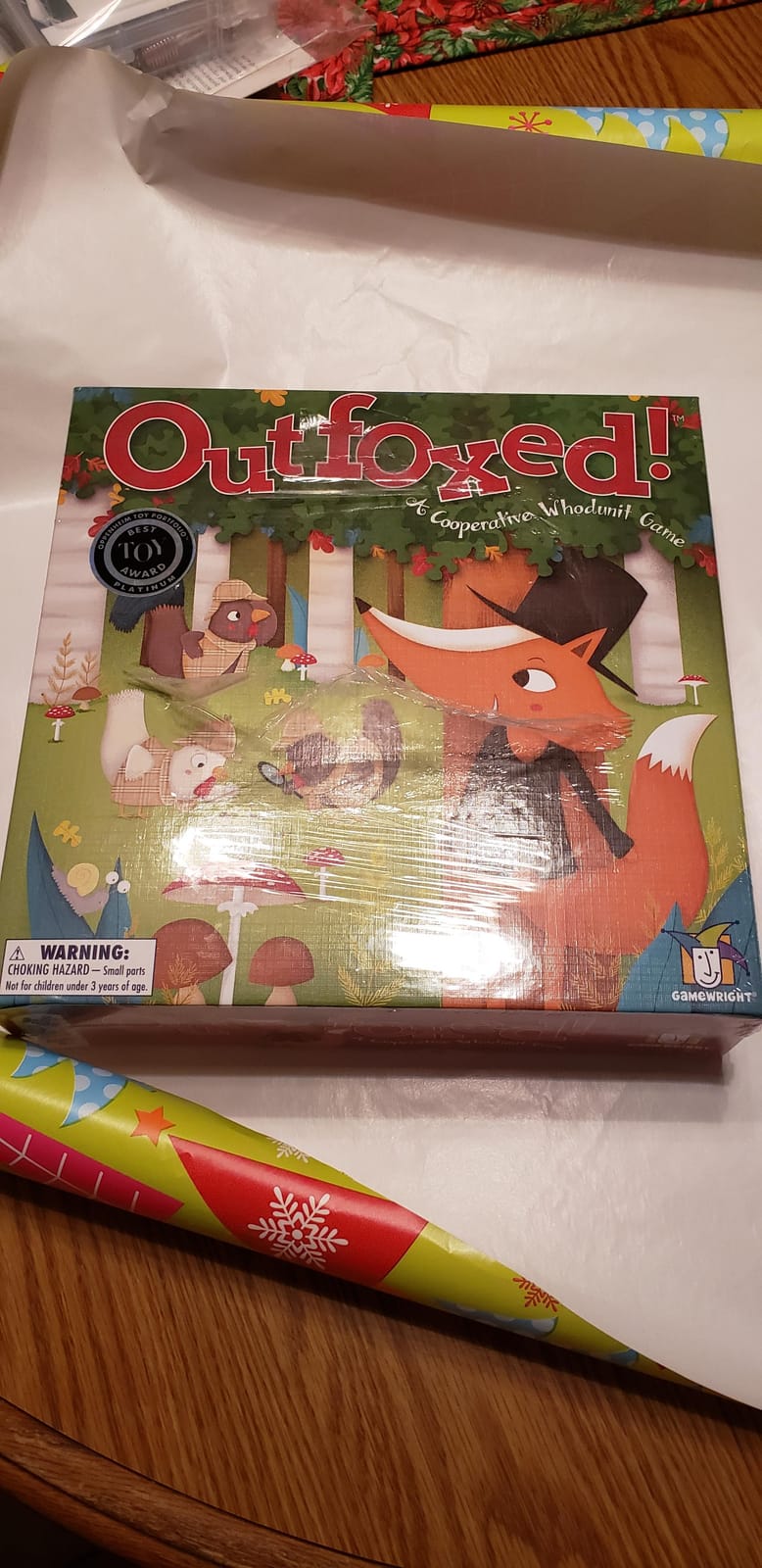
You are a group of chickens trying to catch a fox. Roll dice, collect clues, and work out who stole the chickens before the fox escapes. Everyone plays the same side, so there is no losing, only a fox that gets away.
That design is why Outfoxed is the answer to the most common complaint in parenting forums about games for this age, which is a child who cries, flips the board or refuses to replay after a loss. A cooperative game removes the loss entirely.
Four players, 15 to 20 minute rounds, and a decoder wheel that physically points at a ring of eight symbols. The wheel is the clever part: a child who cannot yet read the clue cards can be shown the symbol and the wheel, and they can still contribute. Without it, four-year-olds sit out of their own game.
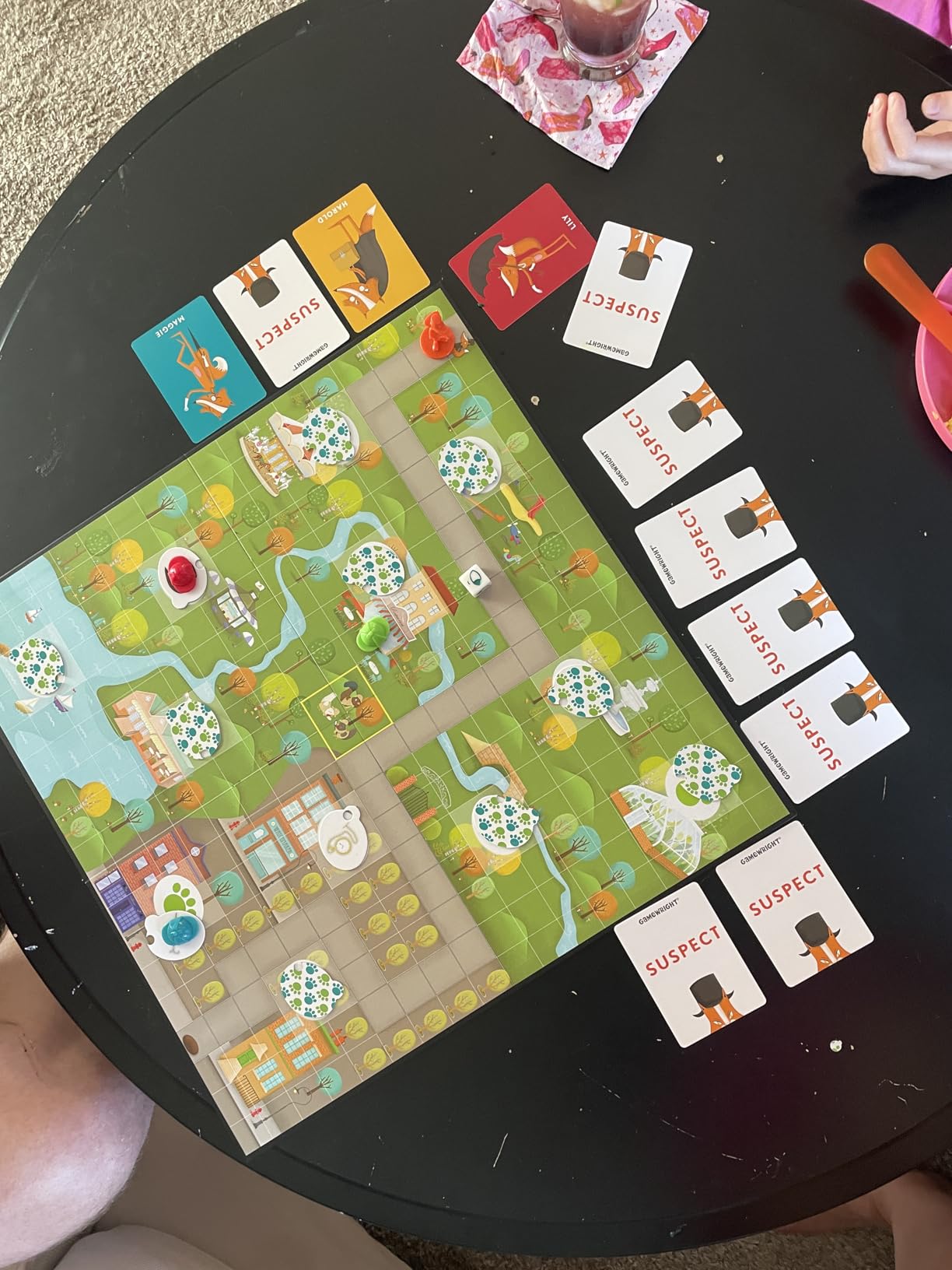
It teaches genuine logic. By the end of a game a child is not guessing, they are eliminating suspects and holding a memory of who was where. That is real deductive reasoning, and it arrives disguised as a whodunit rather than as a worksheet.
It is also the game here that will not embarrass a parent. The box art and the theme work for adults, and if you have started collecting more serious cooperative games, this is the natural first step. Our guide to the best cooperative board games covers where the format goes next.
One practical note on the packaging. The listed manufacturer recommendation is ages 4 to 15, but the age range shown on the box is five. Treat four as the working age and expect to read the first few clue cards aloud until your child is ready.
Who this suits best
A child who melts down over losing. This is the first recommendation I make to parents who say their child cannot cope with competitive games, and the reason is structural rather than gentle. There is nothing to be upset about because nobody is on the other side.
It suits a family that likes sitting around a table doing something together, and it scales from four players up to a group of older siblings and parents. It also works in a preschool classroom because the round is short and resets fast.
Where it falls short
Reading. The clue cards have to be read, and a pre-reader needs an adult or an older sibling for the first several games. This is the honest limitation of an otherwise excellent first cooperative game.
It is also a bulky box at 9.5 by 9.5 by 2.25 inches, made largely of paper, so it is a table game rather than a travel game.
9. Sequence for Kids – Best Bridge From Toddler Games to Real Strategy
- A genuine strategy game that still works before a child can read
- Folding board and colourful animal artwork appeal to young players
- Introduces planning and card tracking gently
- Well made and holds up to repeat family play
- Grandparents enjoy playing it with the grandchildren
- Young children can win or lose largely by chance until they grasp the strategy
- Some buyers find the licensed Funskool version cheaper in build quality
- Boxes have occasionally arrived with damaged corners
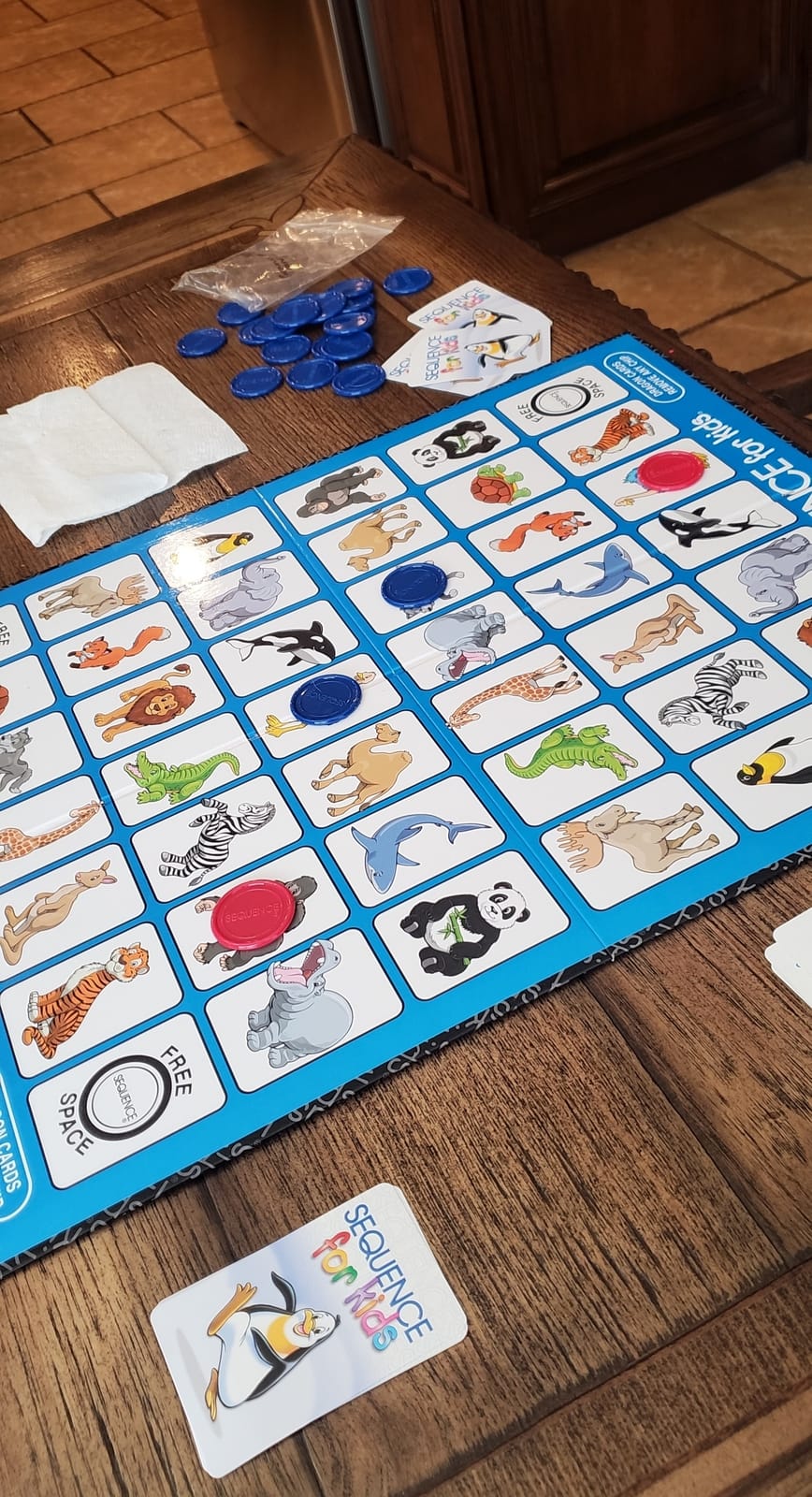
Sequence is a card game about placing chips. Play a card, put a chip on the matching animal picture, and the first person to get four in a row wins. It is a real strategy game with real competitive tension, and this version is built so a four-year-old can operate it before they can read.
The listing recommends ages 4 to 17 and the game targets three to six, with two to four players. The box holds a folding board, 42 playing cards, and 21 chips in each of four colours, so 84 chips in total. The fold is the detail that matters: it stores flat and stands up for play.
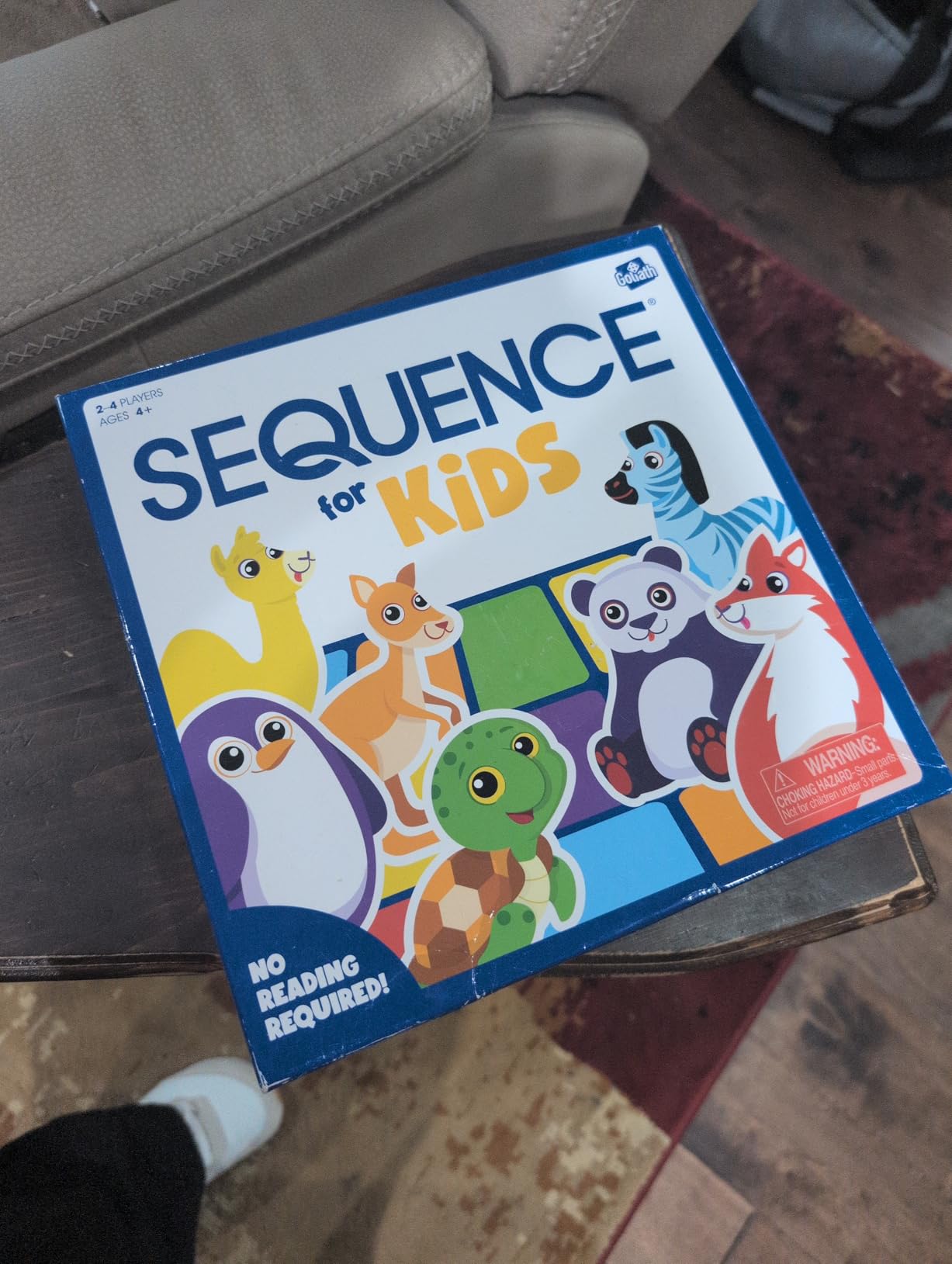
Why this is in a roundup aimed at four-year-olds is the reason it will outlast the others. Sequence is the standard recommendation on BoardGameGeek threads for parents who want their child to move toward real gaming rather than away from it, and our own guide to the best strategy board games starts in the same place.
It also solves a problem none of the other games here solve: an adult who will not play a preschool game. Sequence has real decisions, real blocking and real reason to want a second sitting, which is exactly what keeps a parent engaged for the tenth play rather than the second.
Coloured animal artwork does the accessibility work. A child who cannot read the card names the symbol and the animal, and the mapping from card to board picture is intuitive enough to grasp in one round.
Who this suits best
A good two-player game for a parent and child, which is the pairing most families actually have. Two of the four chip colours exist for that exact case, and the board stands up on a table between you.
The board folds down to 6.69 by 10.5 inches when packed, so it stores flat and stands up for play. That is the detail that matters for a game intended to last years rather than weeks.
Where it falls short
Four-year-olds largely win or lose by chance until they understand the strategy, and the first three games are essentially luck. That is a real risk if you are trying to stop a child fixating on winning, so pair it with a cooperative game rather than making it the only one.
A few buyers report boxes arriving with damaged corners, and some rate the separately sold Funskool version as better made. At 1.5 pounds it is the heaviest box in the roundup, so it lives in one place rather than travelling.
10. Crocodile Dentist – Best Game for Instant Restarts
Hasbro Gaming Crocodile Dentist Kids Board Game, Ages 4 and Up (Amazon Exclusive)
- Resets in about five seconds so the game keeps moving
- No batteries and almost no rules to explain
- Compact with no loose pieces to lose
- Produces tension that children ask to repeat daily
- Can help normalise a visit to the dentist
- Stick-on labels loosen with repeated play
- A tooth occasionally sticks and does not pop back up cleanly
Jock Croc has a toothache. Players take turns pressing teeth, and if the sore one goes down, Croc chomps and that player is out. It is a press-your-luck game disguised as a dentist appointment, and the round is over almost as soon as it begins.
Two to four players, ages four and up, and the box holds the Jock Croc unit, a label sheet and instructions. There are no batteries and nothing to shuffle, which means setup is genuinely instant and the reset between rounds takes about five seconds.
That reset is the reason it works. Most games make a child wait through a shuffle or a set-up between rounds, and a child with a short attention span will often lose interest in that gap. It is the quickest game to start and the easiest to abandon mid-round. Chomp, open the mouth, go again.
There is also a theme that does quiet work. Children who are anxious about the dentist often approach a game about checking a crocodile’s teeth with far less resistance than a conversation. It is a small thing, but parents mention it.
Being first to a good game is not a milestone most parents plan for, and the daily-repeat factor in reviews suggests this one lands. A four-year-old who asks for the same game seven days running is a good sign about the mechanic, not just the novelty.
Because there are no loose pieces, it also survives a floor, a buggy seat and a bag. The unit measures 3.19 by 10.51 by 10.51 inches and weighs 27 grams, so it is among the lightest boxes here alongside Greedy Granny.
Who this suits best
A child who abandons games during the boring part. The instant reset means there is never a lull, and the whole round is a single tense decision repeated, which is about as close to a four-year-old’s attention shape as a game gets.
It is a good first game for a child with a short fuse, because a round ends in seconds and there is no long slump after a loss. It is also a natural birthday party game, since it needs no setup and no teaching.
Where it falls short
It is an elimination game, and elimination is the single most cited cause of preschool tantrums in parent discussions. If your child cries, flips the board or refuses to replay after losing, this is the one to skip. Reach for Outfoxed instead.
The stick-on labels are the wear point. They loosen with play, and a tooth occasionally sticks rather than popping back up cleanly. It weighs only 27 grams, so it is also the game most likely to end up under a sofa.
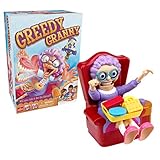
11. Greedy Granny – Best for Speech and a Two-Minute Setup
Goliath Greedy Granny – Take the Treats Don’t Wake Granny Game
- Unique push the button mechanic creates suspense without reading
- Bright chunky pieces easy for small hands
- Encourages describing the treats which builds speech and language
- No batteries required
- Suitable for 2-4 players from age four
- An early wake up can knock a child out of the round quickly
- Rules are thin on strategy so it relies on the button press
Granny is asleep in an armchair and the treats are on her tray. Take turns swiping treats away and pressing the button on the chair. The suspense is that nobody knows when Granny will wake, and when she does her teeth go everywhere.
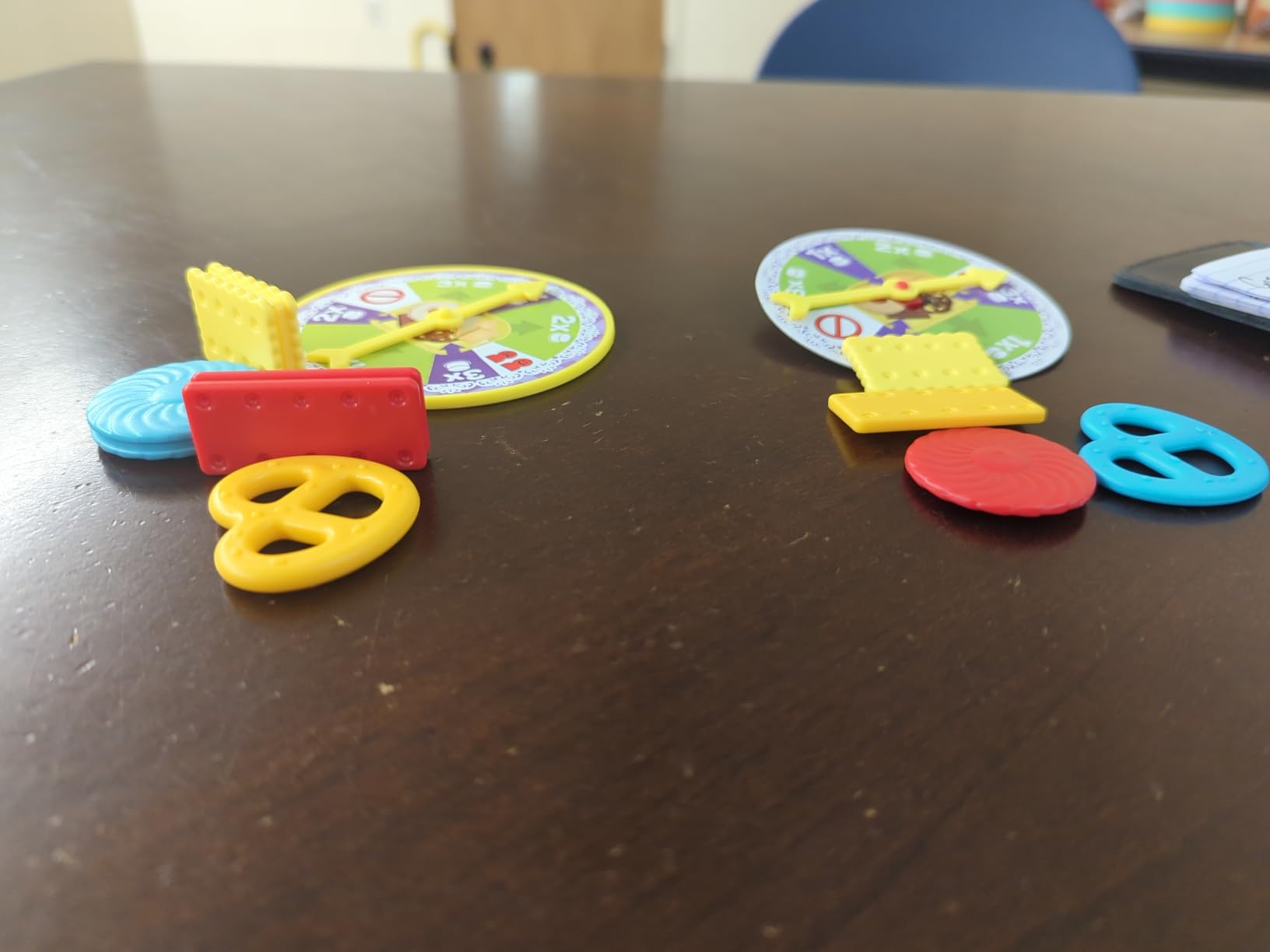
Two to four players from age four, and the box holds Granny in two pieces, a set of Granny’s teeth, a treat wheel and 12 treats. No batteries, and Goliath recommends it from age four.
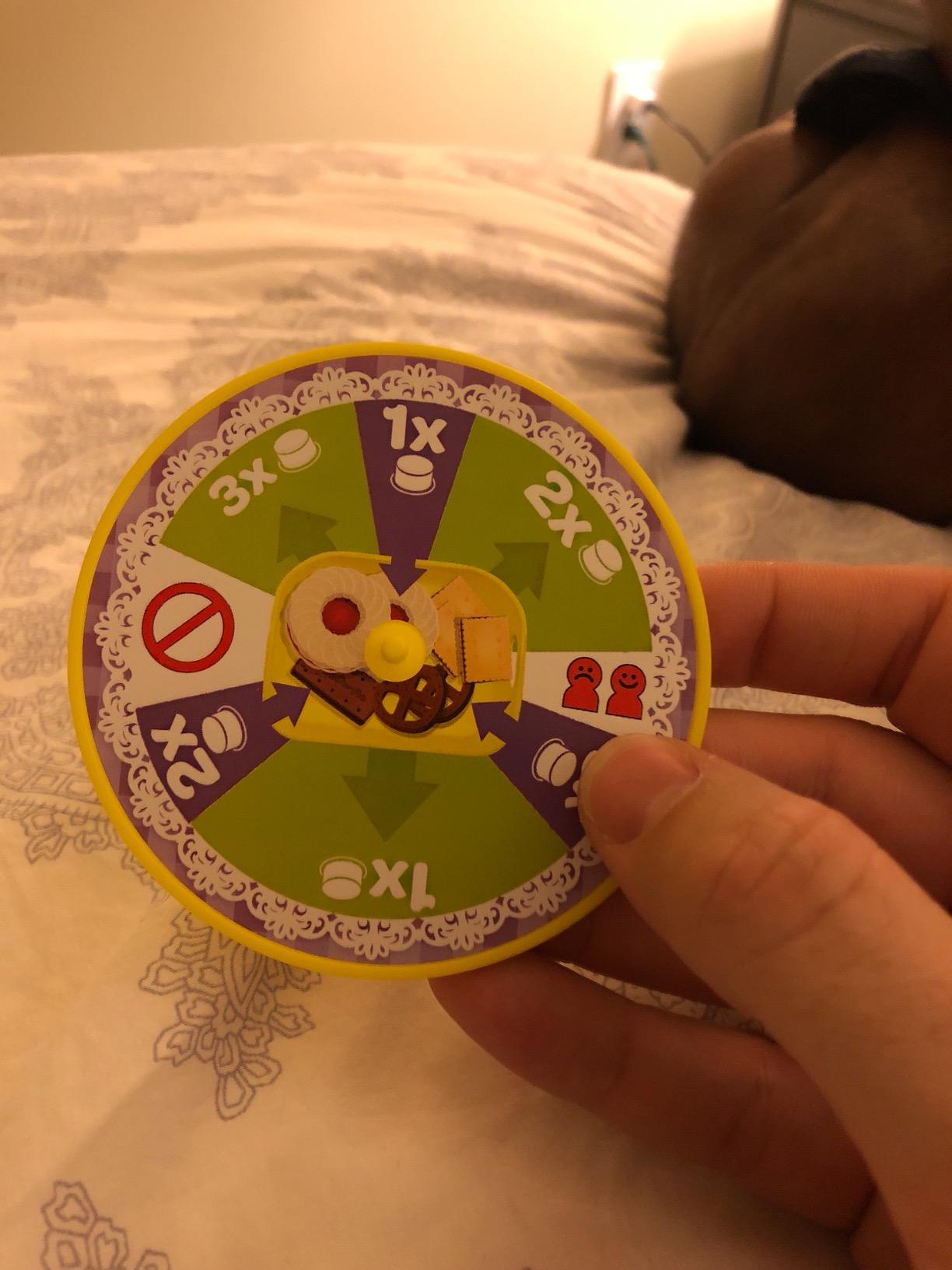
The speech angle is the part most parents do not notice. A child deciding which treat to grab will describe it, because the treats are named and pictured, and that naming is the language practice. The listed educational objective is improving speech and language skills, and the mechanic supports it without a single instruction from you.
The button is a remarkable piece of design for this age. One physical action, unpredictable outcome, immediate feedback, and a payoff that is loud enough to feel like a reward. A four-year-old will press that button on purpose even when it is not their turn.
Chunky bright plastic pieces matter more than they sound. A thin, floppy token is no fun to a four-year-old, and the pieces here are sized for a hand that has not fully developed pincer control.
Who this suits best
A child who is learning language, or who talks freely but needs a reason to keep describing things. The treat-stealing turn is a natural prompt and it works without you asking questions.
It is also a good pick for a child who is slightly too old for the very simplest games but not ready for real strategy, and for any household that wants a novelty game with no batteries to fail.
Where it falls short
The suspension mechanic can be harsh. A wake-up at any point sends a child out of the round almost immediately, and that abrupt elimination is the most common reason this game sits at a 4.6 rather than 4.8.
There is very little strategy once everyone understands the button. The appeal is the novelty of the press, and novelty has a shelf life, so expect interest to fade faster than with a game that has decisions in it.
12. Pete the Cat The Missing Cupcakes Game – Best for Getting Kids Moving
Briarpatch Pete the Cat The Missing Cupcakes Game, Fans of Pete the Cat Books, Ages 3+
- Get up and move format burns energy instead of sitting children down
- Cooperative play rewards teamwork rather than creating a winner and loser
- No reading required
- Includes songs silly actions and memory tasks that engage three year olds
- Appeals to children who know the Pete the Cat books
- Short five minute rounds can feel over quickly for older children
- Movement based play does not suit quiet spaces or travel
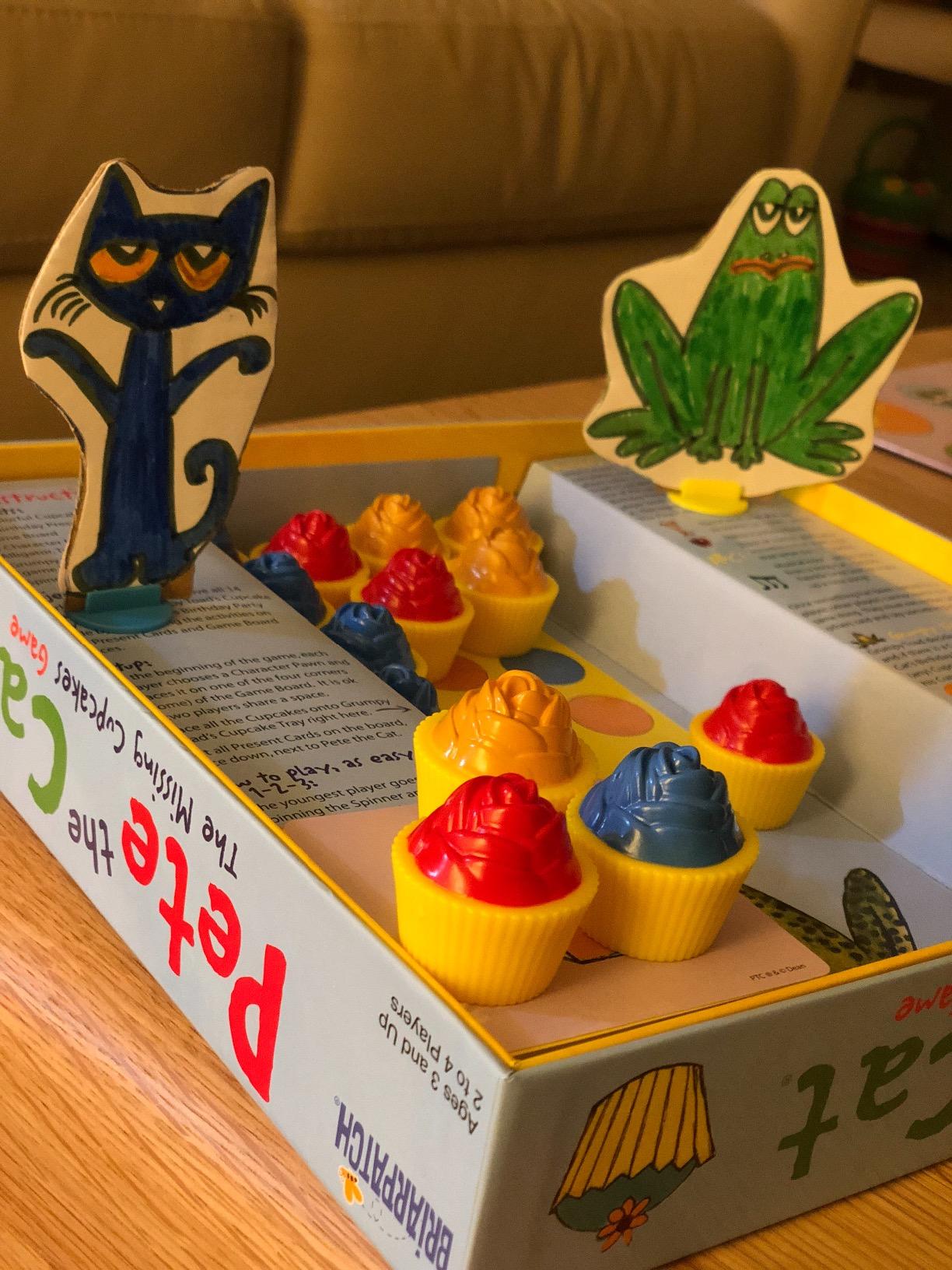
Pete the Cat and his friends are chasing a cupcake thief. Players take turns spinning, acting out silly moves, singing songs and collecting cupcakes, and everyone cooperates to catch the thief together.
This is the one game in the roundup that gets children out of their chairs, and that is exactly why it earns a place. Two to four players, ages three and up, and about five minutes a round. The box holds 14 cupcakes, 20 birthday present cards, a game board, four character pawns, a grumpy toad, a cupcake tray and a spinner.
It is also fully cooperative, with no elimination and no winner-loser dynamic, so a child who cannot handle losing is not at risk here either.
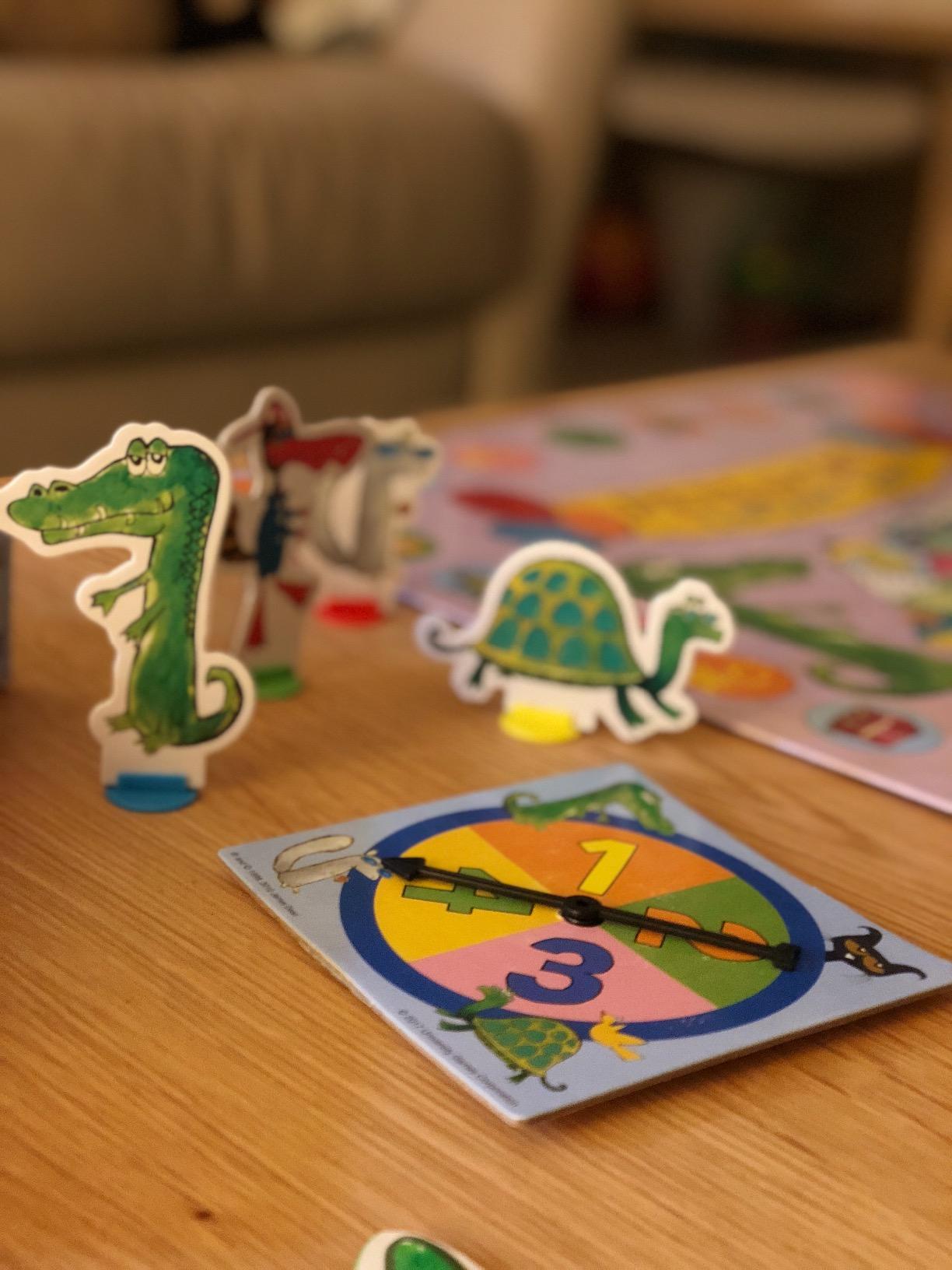
The songs are not a gimmick. Singing on a turn is a memory task, a listening task and a reason to pay attention to the spinner, and it is the part children bring back to on their own for years after the novelty of the board has faded.
For a family with a four-year-old and a six-year-old, this is the game they can both play without either of them being bored. The two-year gap is exactly the range where get-up-and-move formats still work, and both children are contributing rather than one spectating.
Recognition helps if the books are familiar. Children who know Pete the Cat are playing a game they have already met, and that familiarity is worth a lot at this age.
Who this suits best
A child who cannot sit still. Forum threads about games for hyperactive four-year-olds keep circling back to the fact that most board games demand stillness, and this one converts that energy into the game rather than fighting it.
It is also a strong pick for a small flat on a wet afternoon, a preschool setting where space is limited but movement is welcome, and a birthday party where two games can run back to back in five minutes each.
Where it falls short
Five minutes a round is short, and an older child in the house will find it over quickly. If you have a six-year-old, this is a game for the younger one rather than for both.
It also does not travel. Movement-based play in a car seat or a quiet room simply does not work, and the cardboard construction is not built for a buggy. Buy it for home play only.
How to Choose a First Board Game: 7 Criteria Parents Actually Use
Every list of games for four-year-olds is really a list of opinions dressed as research. These seven criteria are the ones that survived our own testing and the complaints we read from parents, and they are the questions to ask in a shop aisle when the boxes all look equally cheerful.
Cooperative or competitive: the first decision you make
This is the decision that matters most, and it should be made before you look at a single box. A competitive game has a loser. A four-year-old is developmentally poor at losing, and the typical result of a first competitive game is a flipped board, a tantrum and a game that goes into a cupboard unused.
The fix is not to avoid competition forever. The fix is to make it the third game rather than the first. In this roundup, Outfoxed and Pete the Cat are fully cooperative, Candy Land and UNO Junior are competitive but low stakes, and the genuinely elimination-based ones such as Crocodile Dentist are the ones to leave until next year.
If your child already has a competitive game and is reacting badly to it, adding a cooperative one alongside it, rather than replacing it, is the gentler move. Our guide to the best cooperative board games covers the format in more depth if you want to go further in.
Play time under 20 minutes, and why the box estimate is fiction
The number on the box is the estimated minimum for competent adult players. What you need to know is the time to the second round, because that is when a four-year-old decides whether to continue. Games with a fast reset like Crocodile Dentist, which is back in play in about five seconds, tolerate long attention laps much better than games with a shuffle between rounds.
A second consideration matters more than the printed figure: can a child who has lost or been out sit and wait through the reset? If the answer is no, every round becomes a small loss of confidence.
No reading required, or the game needs an adult forever
Look for picture-based rules rather than word rules. The strongest no-reading games here use an animal picture on every card, like UNO Junior, or a spinner and a colour, like The Sneaky, Snacky Squirrel Game.
Be realistic about the exceptions. Outfoxed is an excellent first cooperative game and it does need the clue cards read aloud. That is fine for a while, but check whether you are prepared to be the reader for the next two years before you commit.
Piece size, durability and how many go missing
Small parts are the first practical failure. Every game in this roundup that includes small items carries a small parts warning, and the ones that last longest in real households are the ones with a storage solution built in. The Sneaky, Snacky Squirrel Game folds into its own box. UNO Junior is a tin. Crocodile Dentist has no loose pieces at all.
Second question is what happens when a piece disappears. Zingo has 72 double-sided tiles, and that is a lot of inventory to recover from a carpet. A missing tile in a matching game ends the round, and a four-year-old will blame the game rather than the vacuum.
Storage is the third question, and it decides how often the game comes out. A game that lives in a high cupboard is a game that gets played twice, and if you have a small space our guide to the best board game tables covers setups where games stay in reach. Our picks for the best board games for adults cover what to hand over when the child goes to bed.
Player count that matches your actual household
Two-player-capable games are the ones that survive a bad week. Yeti in My Spaghetti takes six players, and Zingo lists two to six, which makes them ideal for a big family. But the most common household on earth is one adult and one child, and a game that needs three will sit in a cupboard instead.
Look for a game that scales down as well as up. A game that works at two and at five is the one that appears in rotation for years. If you are planning for the two-player case, our guide to the best two player board games covers how to judge that.
Will an adult actually play it a tenth time
This is the criterion no ranking page bothers with, and it is the one that decides whether a game is bought twice. Parents describe two categories: games they tolerate for their child, and games they would choose on a family night. Sequence for Kids and Outfoxed are in the second group. Almost everything marketed directly at toddlers is in the first.
A quick test is to ask whether you would play it with another adult if the child were asleep. If the honest answer is no, the game has a shelf life of about three evenings, whatever its rating suggests.
Longevity: will it still work at five and six
A game bought today will be asked to work for two to three years. Sequence for Kids lists ages 4 to 17, UNO Junior has three difficulty levels, and Outfoxed is manufacturer recommended from 4 to 15. Those three have somewhere to go. A game with one rule and no levels will be finished in a month.
This is also how to choose when you have a gap between siblings. A four-year-old and a six-year-old can share Sequence and Outfoxed. They cannot share most of the preschool matching games, which is worth knowing before a birthday party for the younger one strands you.
What to skip at this age
Ticket to Ride, Catan and Stratego all appear in roundups for this age, usually because an older sibling plays them. They are not four-year-old games. Catan needs resource management and negotiation well beyond a preschooler’s reach, and Stratego is a game about anticipating an opponent, which is a skill children develop well after this stage.
Also skip anything with a long instruction booklet. At four, a game with 40 components is a game with 40 ways to end in tears on the floor.
One more worth naming: novelty games built entirely around a single button or a single suspense moment. They are fun for a fortnight and then the mechanism has given everything away. The green light for a game that keeps going is hidden decisions, which is what makes Sequence and Outfoxed last longer than the rest.
How to Teach a New Board Game in Under Two Minutes
Too many rules is the most common complaint parents have about games for this age, and the fix is not a simpler game. It is a better two-minute demonstration, done in a specific order.
- Say the win condition in one sentence before you touch a piece. Not the rules, the goal. In Candy Land it is get to the castle. In Outfoxed it is catch the fox. Children can hold a goal even when they cannot hold a rule.
- Demonstrate your own turn only. Do not explain what the other players may do. A four-year-old will not remember it anyway, and every extra sentence costs attention you will need later.
- Let them take a turn before the explanation is finished. Hand them the piece while you are still talking. Children learn by handling, not by listening, and an unfinished explanation beats a complete one that was too long.
- Name the thing you are about to do, then stop talking. Say colour matching, then be quiet. The gap is where the child does the work.
- Correct nothing for the first two rounds. If a child takes a legal but silly action, let it stand. A game that gets argued about on turn three is a game that gets abandoned on turn five.
- End the first game on purpose while it is still fun. Stop after two or three rounds and say you will finish it later. A child who wants to come back to a game has just been acquired, and a child who has had enough has learned the wrong lesson.
If the game is still not landing after that, the problem is the game, not the teaching. Reach for something with one action per turn, and leave the two-rule games until next year.
Frequently Asked Questions
What are some good board games for a 4-year-old?
The strongest starting picks are Candy Land, which teaches a turn in one sitting, The Sneaky, Snacky Squirrel Game for fine motor practice, and Outfoxed for cooperative play. UNO Junior works well for a child who is ready for cards but not a long game. All of them run under about 20 minutes and need no reading.
Which game is best for a 4 year old?
Candy Land is the best first game for most four-year-olds. The rule set fits in one sentence, no reading is required, and a round runs about 15 minutes. It teaches a child the shape of a turn, which is the hardest part of learning to play, and it ranks number one in Board Games with over 37k reviews.
What is a good game to play with a 4 year old?
Choose a game with one action per turn and no reading. Yeti in My Spaghetti takes up to six players and needs no explanation. Sequence for Kids is the pick if you want a real strategy game that will still be worth playing in three years. Outfoxed suits a family that wants to sit around a table and cooperate.
What is the best learning game for a 4-year-old?
ThinkFun Zingo is the strongest pick for early learning. It matches pictures rather than words, works from age 4, and the Zinger slider trains pincer grip and wrist control as a side effect. The Sneaky, Snacky Squirrel Game is a close second, because squeezing acorns with a squirrel-shaped tong is genuine dexterity practice disguised as play.
What are some good brain development games for a 4-year-old?
Outfoxed builds deductive reasoning through eliminating suspects, with a decoder wheel that lets a pre-reader contribute. Sequence for Kids teaches planning and card tracking with no reading required. Zingo builds language and visual discrimination. Greedy Granny also pushes speech practice, because children describe the treats as they take them.
What to do when bored for 4 year olds at home?
Reach for a game that resets fast rather than a long one. Crocodile Dentist is playable again five seconds after a round ends. Pete the Cat gets children moving and singing, which suits a rainy afternoon. For a quiet flat, The Sneaky, Snacky Squirrel Game takes ten seconds to set up and put away again.
What board games teach turn-taking without tantrums?
Cooperative games, because there is no loser. Outfoxed and Pete the Cat The Missing Cupcakes Game are fully cooperative, with no elimination at all. Then add a low-stakes competitive game like Candy Land or UNO Junior so your child learns the shape of a turn before anyone has to win one.
Which Board Game Is Right for Your Child
If your child has never played a proper game, buy Candy Land. Nothing else on this list gets a four-year-old from solo play to taking a turn as fast, and it is the game our household has played most with a child at this exact stage. If they have already mastered that and you want something with a longer runway, buy Outfoxed, a cooperative game with hidden decisions that will still be worth playing at six.
If your child cannot cope with losing, skip anything with elimination on the box, start with Outfoxed or Pete the Cat, and add a cooperative game to the shelf rather than replacing the competitive one. If they are too restless to sit, start with Yeti in My Spaghetti, which converts tension into attention. If they are calm and you want fine motor progress, start with The Sneaky, Snacky Squirrel Game.
If the real problem is that you will not play a preschool game twice, buy Sequence for Kids and stop looking for a compromise. It is a proper strategy game that a four-year-old can operate, which means the whole household can use it and it will not be abandoned in a month.
Whatever you choose, the second most useful thing you can do is keep the box out. A game that lives in a cupboard is a game that gets played twice, and these twelve are built to survive far more than two.