
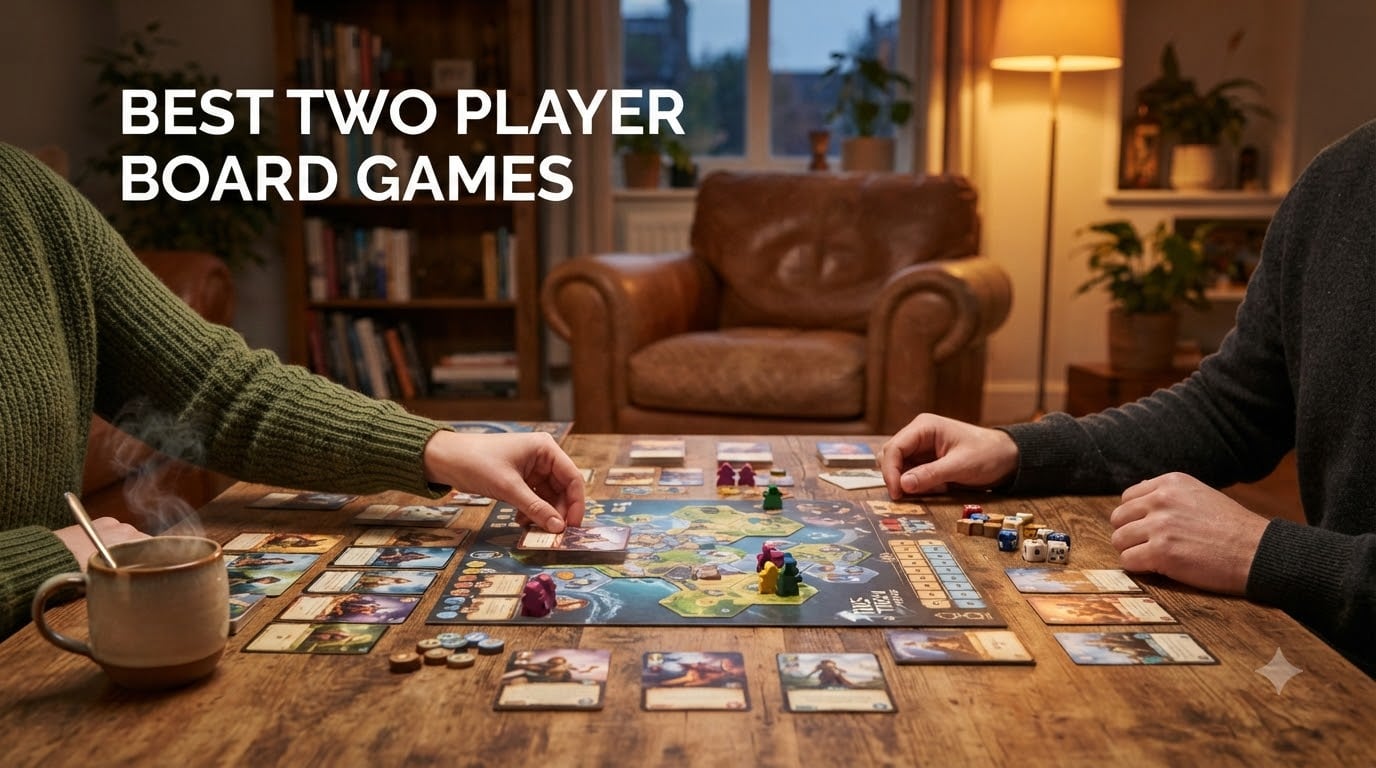
Two-player board games changed how my partner and I spend our Friday nights. After one too many evenings scrolling our phones in the same room, we pulled 7 Wonders Duel off the shelf and discovered a hobby that turned our couch into a battlefield of clever card plays and quiet scheming.
Finding the best two player board games is harder than it sounds. Many popular titles like Catan and Monopoly just don’t work well with two players, and the games that DO shine for two people live in a different world. Some are cooperative puzzles where you and your partner team up to land a plane. Others are head-to-head duels with the tension of chess, but rules you can learn in five minutes.
This guide is the result of our team testing 15 different two-player games over three months. We played them with our spouses, our roommates, and a few friends who politely volunteered. Every game here has been selected because it works beautifully for exactly two people, with no awkward downtime, no artificial rules tacked on, and no need to round up a third or fourth player.
You’ll find quick card games perfect for date night, deeper strategy games for serious sessions, cooperative adventures, and travel-friendly picks that slip into a backpack. We’ve organized the list by category so you can jump straight to what fits your mood.
Table of Contents
Top 3 Picks for the Best Two Player Board Games
Best Two Player Board Games in 2026
| Product | Specifications | Action |
|---|---|---|
 7 Wonders Duel 7 Wonders Duel |
|
Check Latest Price |
 Splendor Duel Splendor Duel |
|
Check Latest Price |
 Sky Team Sky Team |
|
Check Latest Price |
 Azul Azul |
|
Check Latest Price |
 Splendor Splendor |
|
Check Latest Price |
 Hive Hive |
|
Check Latest Price |
 Patchwork Americana Patchwork Americana |
|
Check Latest Price |
 Jaipur Jaipur |
|
Check Latest Price |
 Onitama Onitama |
|
Check Latest Price |
 Fox in the Forest Fox in the Forest |
|
Check Latest Price |
 Lost Cities Lost Cities |
|
Check Latest Price |
 Quoridor Quoridor |
|
Check Latest Price |
 LOTR: Duel for Middle-Earth LOTR: Duel for Middle-Earth |
|
Check Latest Price |
 Azul Mini Azul Mini |
|
Check Latest Price |
 Hive Pocket Hive Pocket |
|
Check Latest Price |
1. 7 Wonders Duel – The Best Two Player Board Game Overall
- Three distinct win conditions keep every match tense
- 30-minute playtime fits any weeknight
- High replayability with pyramid card setup
- Beautiful artwork and quality components
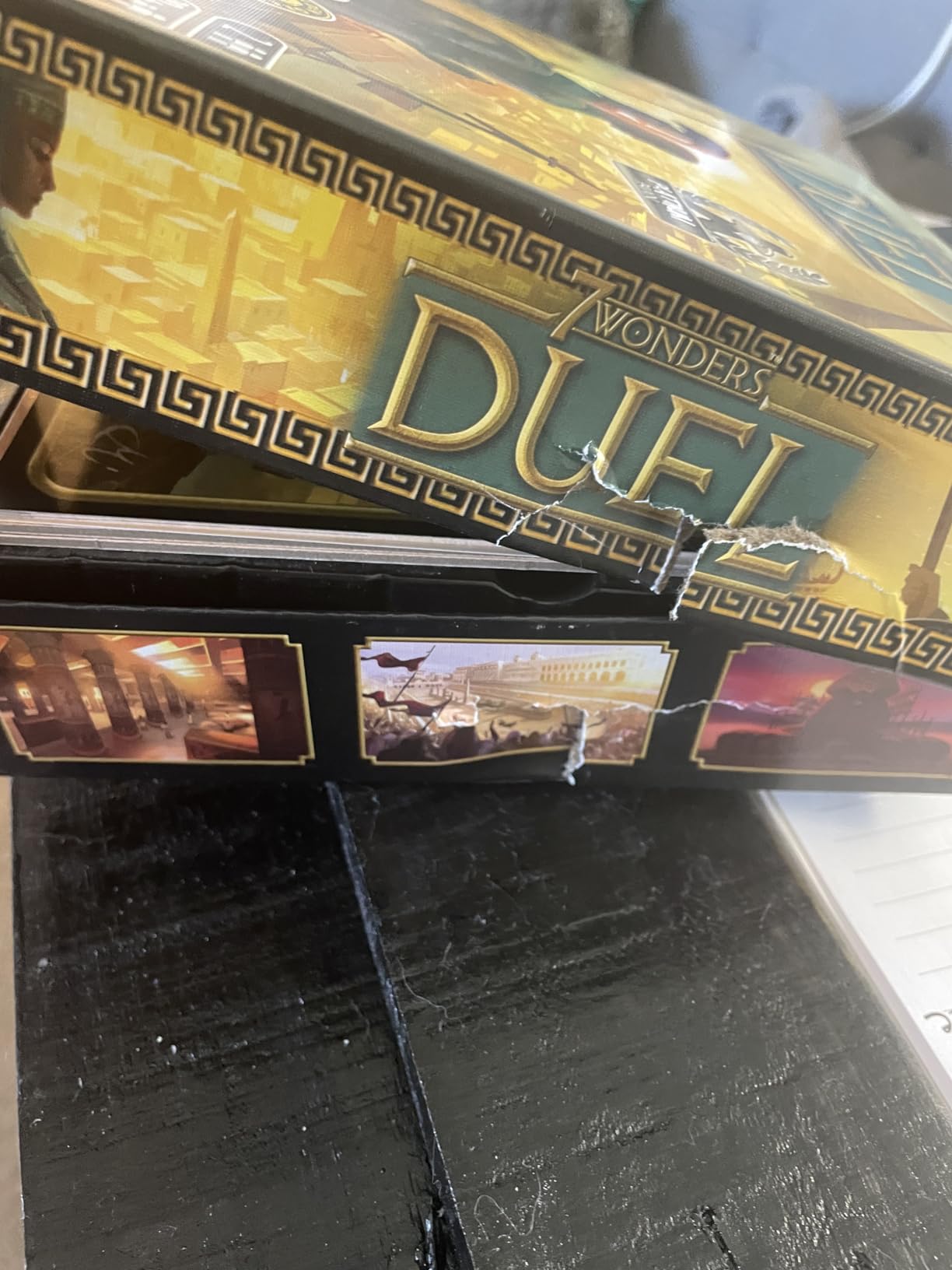
- Tiny cards can be tricky to shuffle
- Rulebook is dense for first-time players
I’ve played 7 Wonders Duel more than any other game on this list, and it has earned a permanent spot on our shelf. The premise sounds simple: you’re both drafting cards to build a civilization. But the pyramid setup means every card you take affects what your partner can grab next, and the constant tension of three different victory paths (military, science, and prestige) means you’re never out of the running until the final card is drawn.
What sold me was the speed. We typically finish a game in 30 minutes, even with a new player learning the ropes. The rulebook looks intimidating, but we taught a friend the game in about 10 minutes by walking through one Age together. The depth is hidden inside the simplicity, which is exactly what you want for date night.
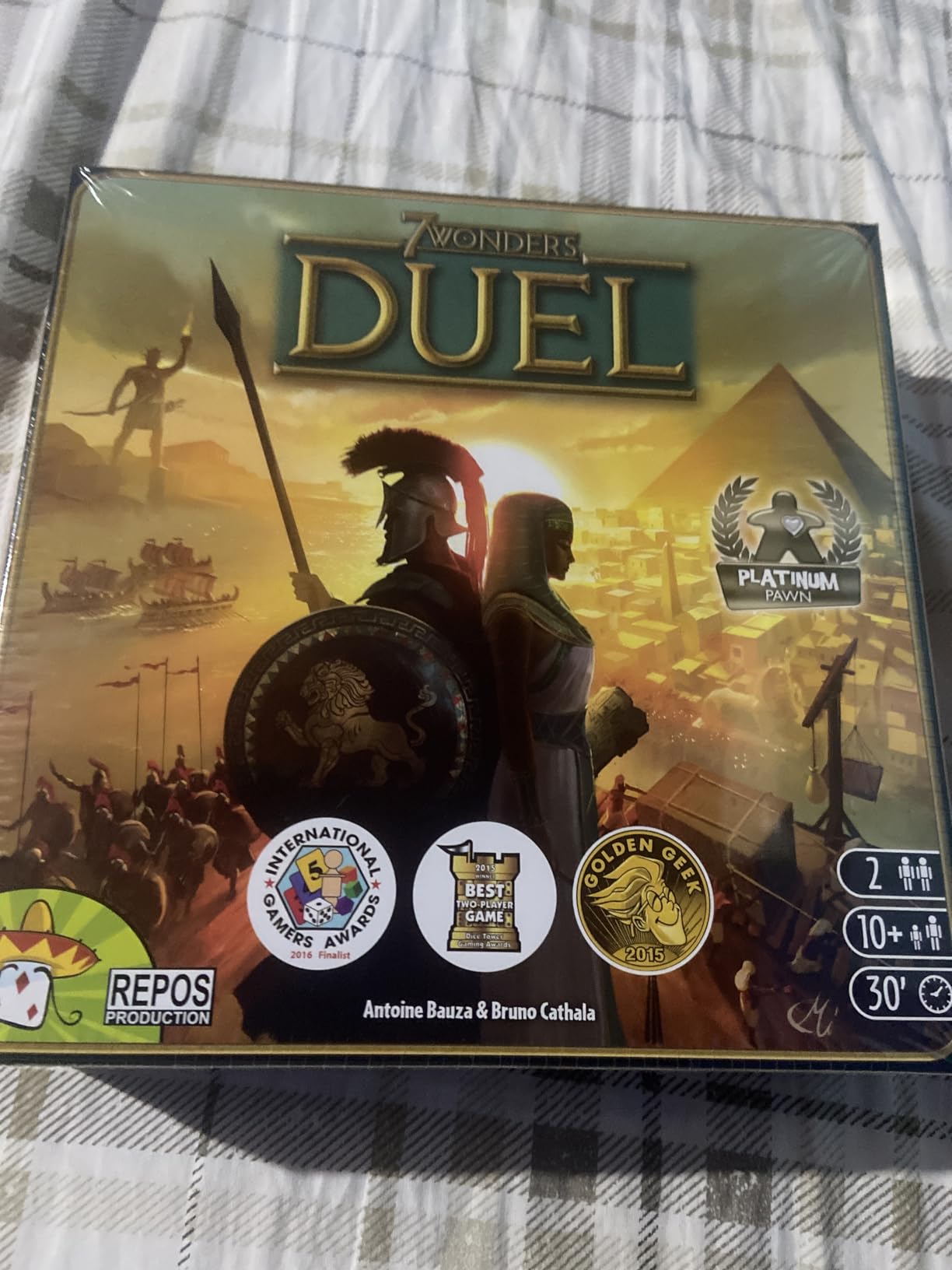
The three win conditions create amazing moments. One night, my partner was winning a science monopoly and I had to pivot hard to a military invasion. The back-and-forth is constant, and no lead feels safe. This is the kind of head-to-head game where you laugh at the table because someone just pulled off a clever combo, and the loser immediately wants a rematch.
If you only buy one two-player game, make it this one. It also has multiple expansions, including the excellent 7 Wonders Duel: Pantheon, which adds even more strategic layers without changing the core flow. After hundreds of plays, I still find new lines to explore.
How to learn 7 Wonders Duel quickly
Don’t try to read the rulebook cover to cover. Watch one quick tutorial video first, then play your first game with the rulebook open next to you. By your second game, you’ll know the resource system and military tokens well enough to focus on strategy. The setup takes longer than the rules, so give yourself a 5-minute buffer the first time.
What age group enjoys 7 Wonders Duel most
The 10+ age rating is accurate, but this game really sings with teens and adults. We’ve played it with our 12-year-old nephew and he picked it up after two rounds. The strategic thinking is rich enough to keep serious gamers engaged, but the rules aren’t so heavy that casual players feel lost.
2. Splendor Duel – The Best Value Two Player Game
- Perfectly designed for 2 players with more challenge than original
- Compact and portable for travel
- Quick 30-minute playtime with constant interaction
- Three distinct victory conditions
- Higher price than many 2-player games
- Requires time to understand new mechanics vs original
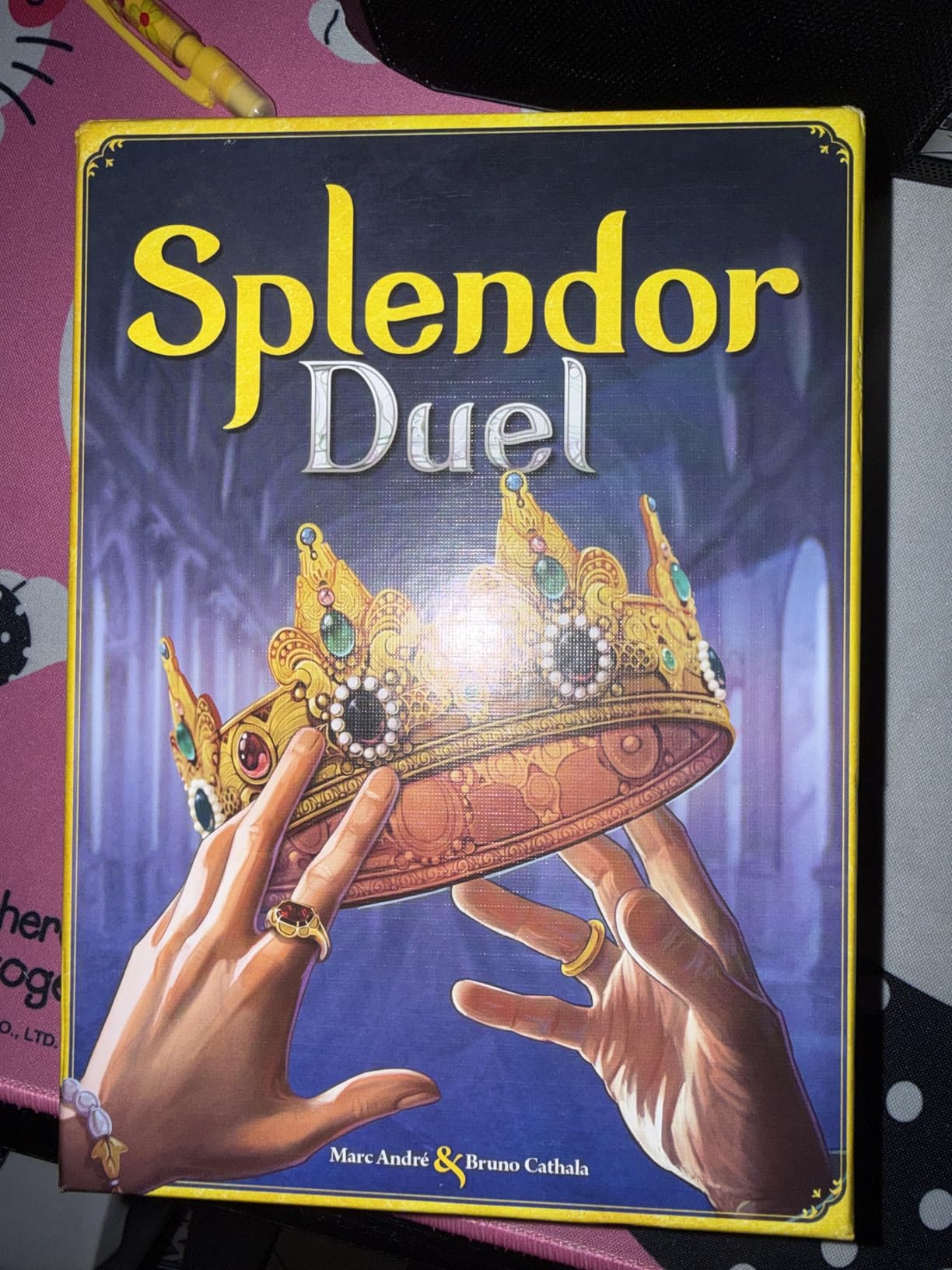
Splendor Duel is what happens when the original Splendor gets redesigned specifically for two players. Instead of racing against three opponents, every card you take directly impacts your partner’s plan, and the new pearl mechanic adds a layer of strategic tension that the original never had.
We brought this on a weekend trip and it instantly became our travel game. The compact box fits in a carry-on, and the small board works on airplane tray tables (yes, I tested it). Components are premium too. The gem tokens have real weight to them, which makes the engine-building feel more satisfying.
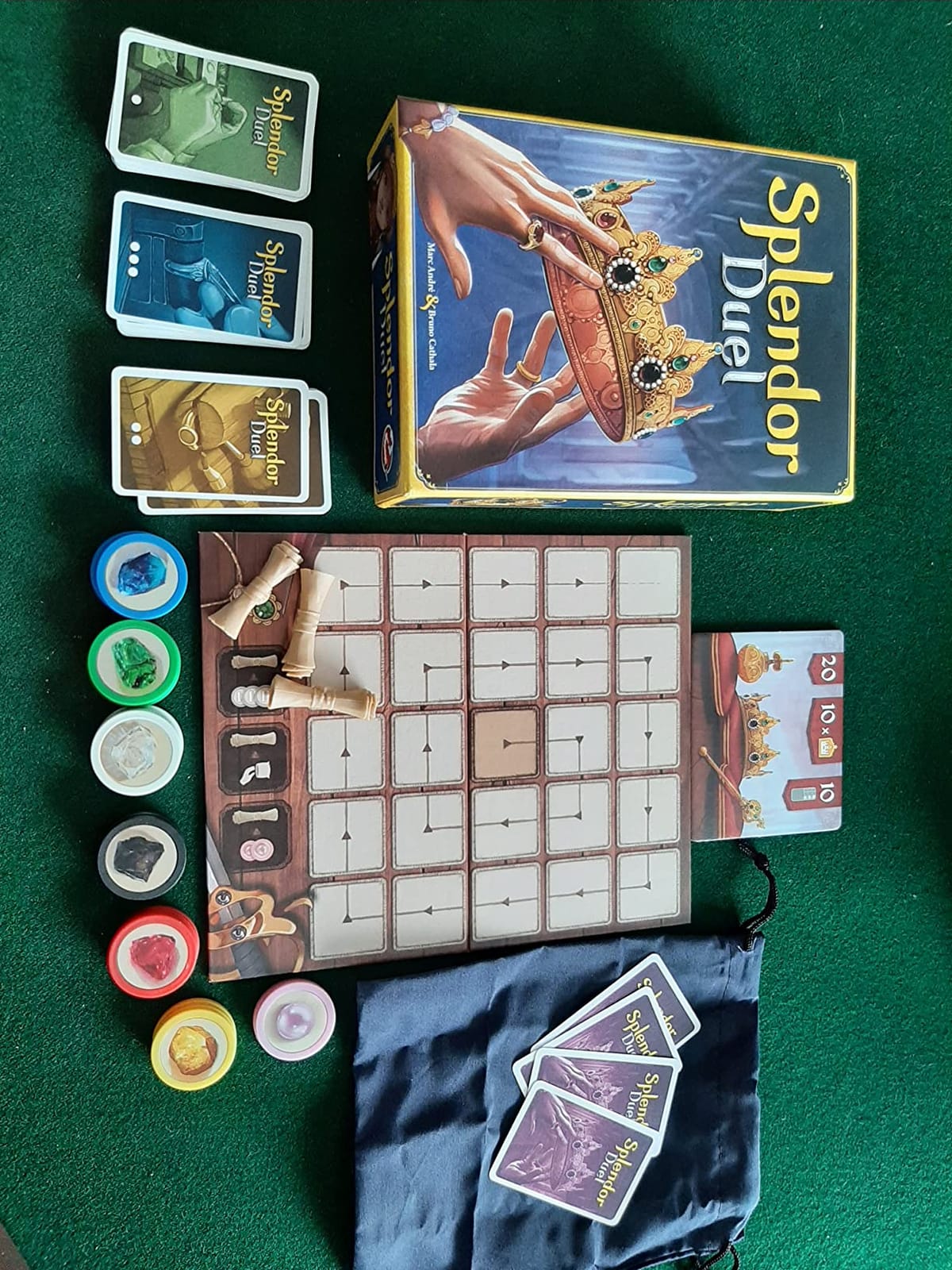
The three victory conditions (reach 20 points, collect 10 points in one color, or grab 10 Crowns) create interesting decision points. You might be racing toward a point lead when suddenly your partner is two Crowns away from a sudden-death win, and you have to pivot your whole strategy on the spot. Those pivot moments are what keep this game fresh after dozens of plays.
If you and your partner want something lighter than 7 Wonders Duel but still packed with strategy, this is the pick. It also helps that we can finish a game while dinner is in the oven.
How Splendor Duel differs from the original
The biggest change is the addition of pearl gems, which can be used to take extra actions or steal opponent resources. The original Splendor had a more passive feel, while Duel introduces direct conflict that makes every turn tense. Players who loved the original should expect a sharper, more interactive experience.
Who should buy Splendor Duel
Couples and partners who want a quick strategic game that fits into busy schedules. It’s also a great gateway for friends curious about modern board games, since the rules are easy to teach but the decisions are still meaningful. The price is higher than many 2-player games, but the component quality and replay value justify it.
3. Sky Team – The Best Cooperative Two Player Game
- Limited communication creates authentic teamwork tension
- Quick 15-20 minute sessions
- Excellent component quality
- Campaign mode adds replay value
- Rulebook needs clearer turn examples
- Setup takes time on first play
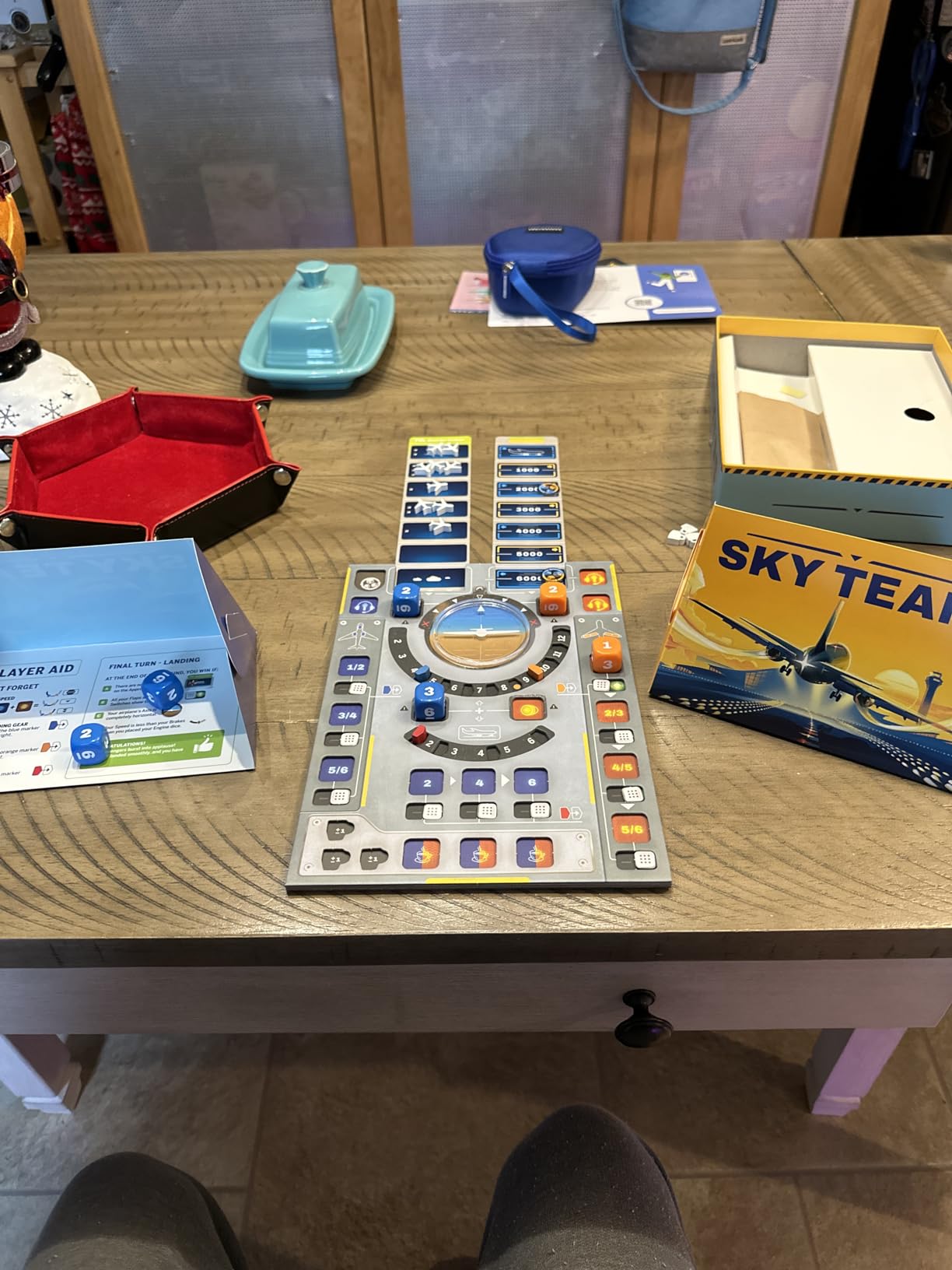
Sky Team won the 2024 Game of the Year award, and after playing through 10 scenarios with my partner, I get why. You and your partner are pilot and co-pilot trying to land a plane, but here’s the twist: you can’t talk during the actual gameplay. You plan silently, then place your dice without consulting each other.
This silent communication rule is genius. It forces you to learn your partner’s thinking patterns, and it eliminates the “alpha player” problem where one person tells the other what to do. We had a moment where I assumed my partner would reroll a low die with the coffee token, but she used it for something else, and we crashed. We laughed for five minutes and immediately started over.
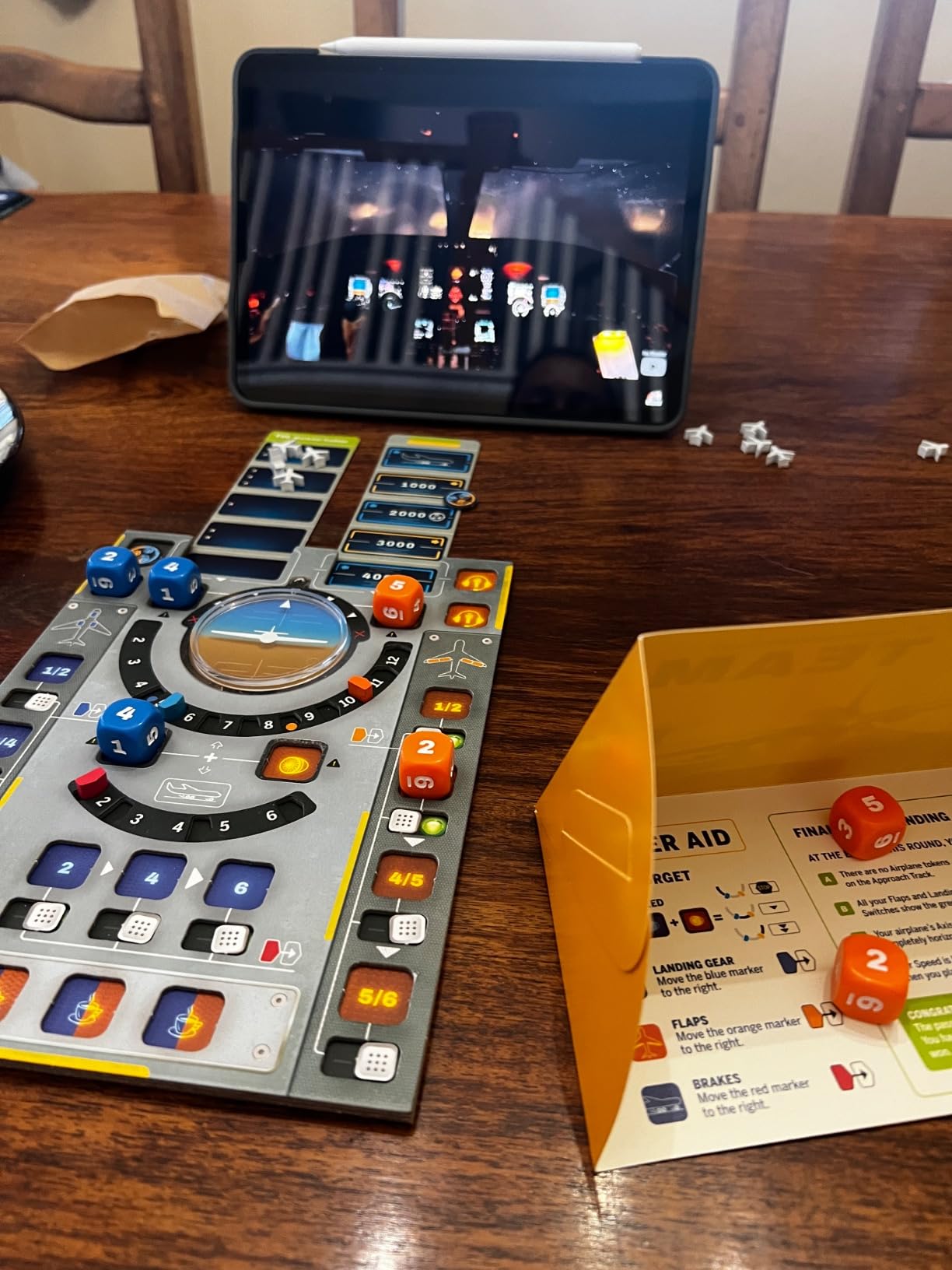
The 20 scenarios take you to airports around the world, and each one introduces a new challenge. The first few are gentle, but by scenario 10, we were sweating. The cockpit board design is genuinely immersive, with switches and dials that make you feel like you’re actually in the plane. Component quality is excellent too.
For couples or friends who want a cooperative game that doesn’t involve one person telling the other what to do, this is the new gold standard. The 20-minute playtime is perfect for quick sessions, and the campaign gives you months of content.
Why the silent rule matters
Most cooperative games suffer from “quarterbacking,” where one experienced player runs the whole table. Sky Team prevents this by making communication impossible during the action phase. You have to learn to read your partner’s intentions through shared strategy discussions, not direct instructions. This is why the game works so well for couples with different experience levels.
Is Sky Team good for non-gamers
Yes, but with a caveat. The rulebook is poorly written and benefits from a tutorial video. Once you understand the basic flow, the game is very accessible. The dice-and-reroll mechanics are familiar to anyone who’s played a Yahtzee-style game. We taught it to my partner’s parents and they enjoyed it, even with no board game experience.
4. Azul – The Most Popular Two Player Board Game
- Beautiful tactile resin tiles
- Simple rules with deep strategy
- 30-45 minute playtime
- Scales perfectly from 2 to 4 players
- Can cause analysis paralysis
- Tiles are resin rather than wood
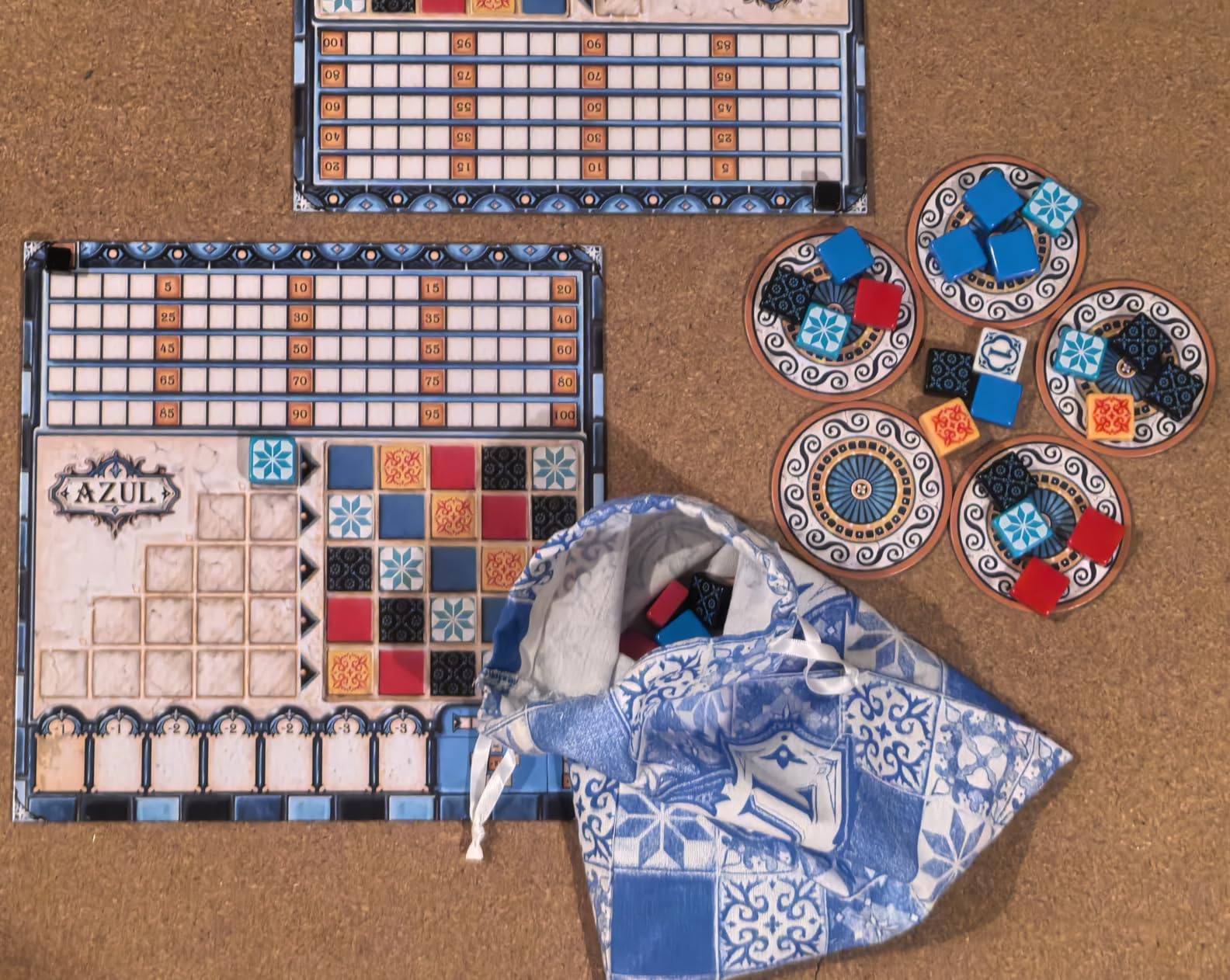
Azul won the 2018 Game of the Year award and has over 16,000 reviews for good reason. The tiles are gorgeous, the rules take five minutes to learn, and the strategic depth is genuinely surprising. You’re drafting colored tiles to build a mosaic wall, and the trick is that taking tiles you don’t want prevents your opponent from getting them.
What makes Azul special for two players is the pacing. With more players, you have to wait for your turn, but in a 1v1 match, both players are constantly engaged. We usually finish in 30 minutes, and the game never feels like it’s dragging.
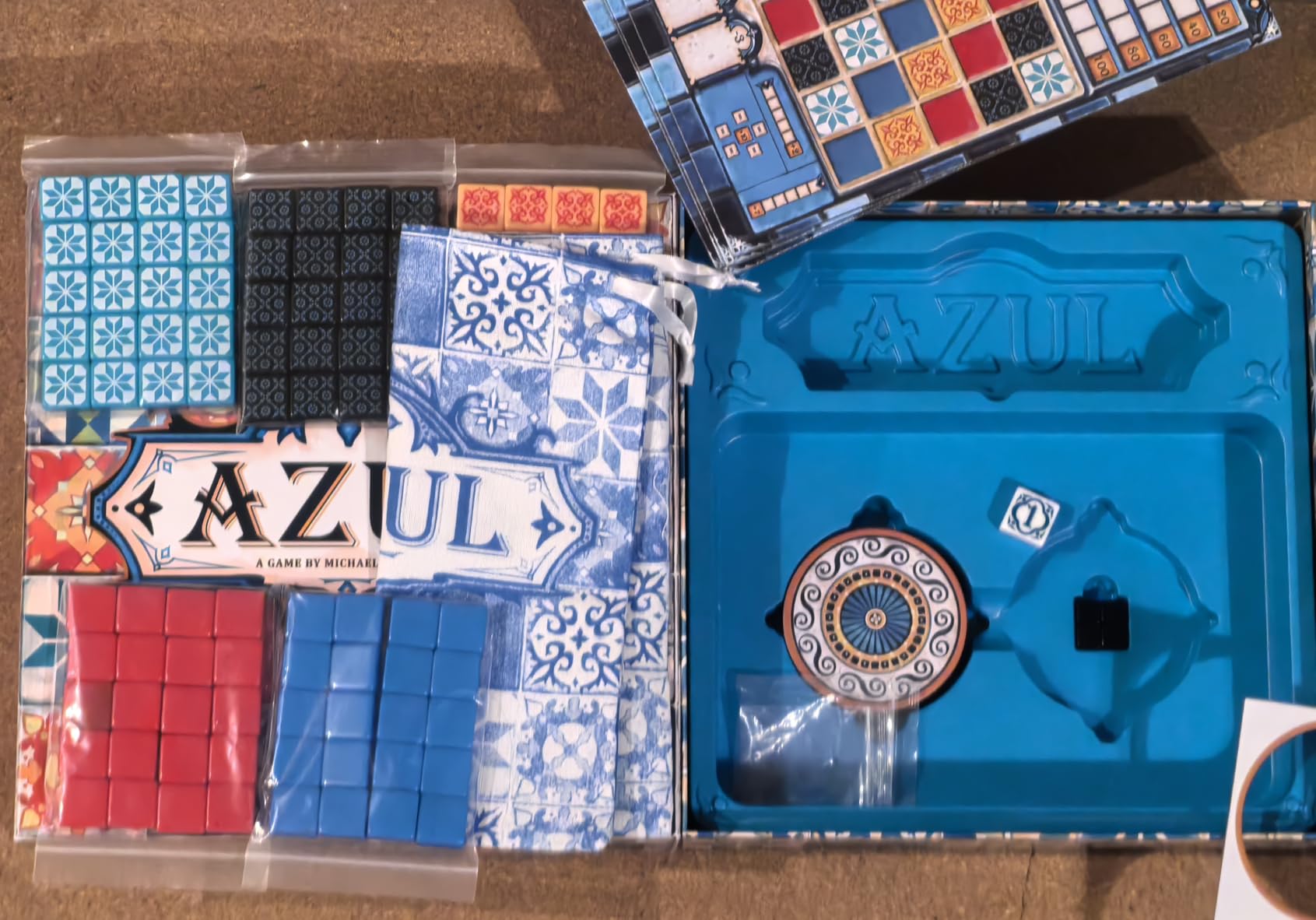
The blocking mechanic creates satisfying decisions. Sometimes you take a tile you don’t really need just to deny your partner, and those moments spark great table conversation. The components are the real star though. The resin tiles feel premium, and the boards have a satisfying click when you place a tile correctly.
If you want a gateway game that scales from 2 to 4 players, this is a top pick. We bring it out when friends visit because it’s easy to teach and visually impressive.
How to avoid analysis paralysis in Azul
Give yourself a 30-second timer per turn at first. New players tend to stare at the factory displays trying to find the perfect move, but the game is more about consistent smart plays than finding the single optimal line. Once you internalize the scoring rules, turns move quickly.
Is Azul good for families with kids
Absolutely. The 8+ age rating is accurate, and we’ve played it with kids as young as 7 with no issues. The pattern matching is intuitive, and kids love the tactile feel of the tiles. It’s also a great way to teach strategic thinking without overwhelming younger players.
5. Splendor – The Best Gateway Two Player Game
- Exceptionally easy to learn and teach
- Premium weighted gem tokens
- Perfect 2-player performance
- Scales smoothly from 2 to 4
- Theme can feel pasted on
- Can cause analysis paralysis
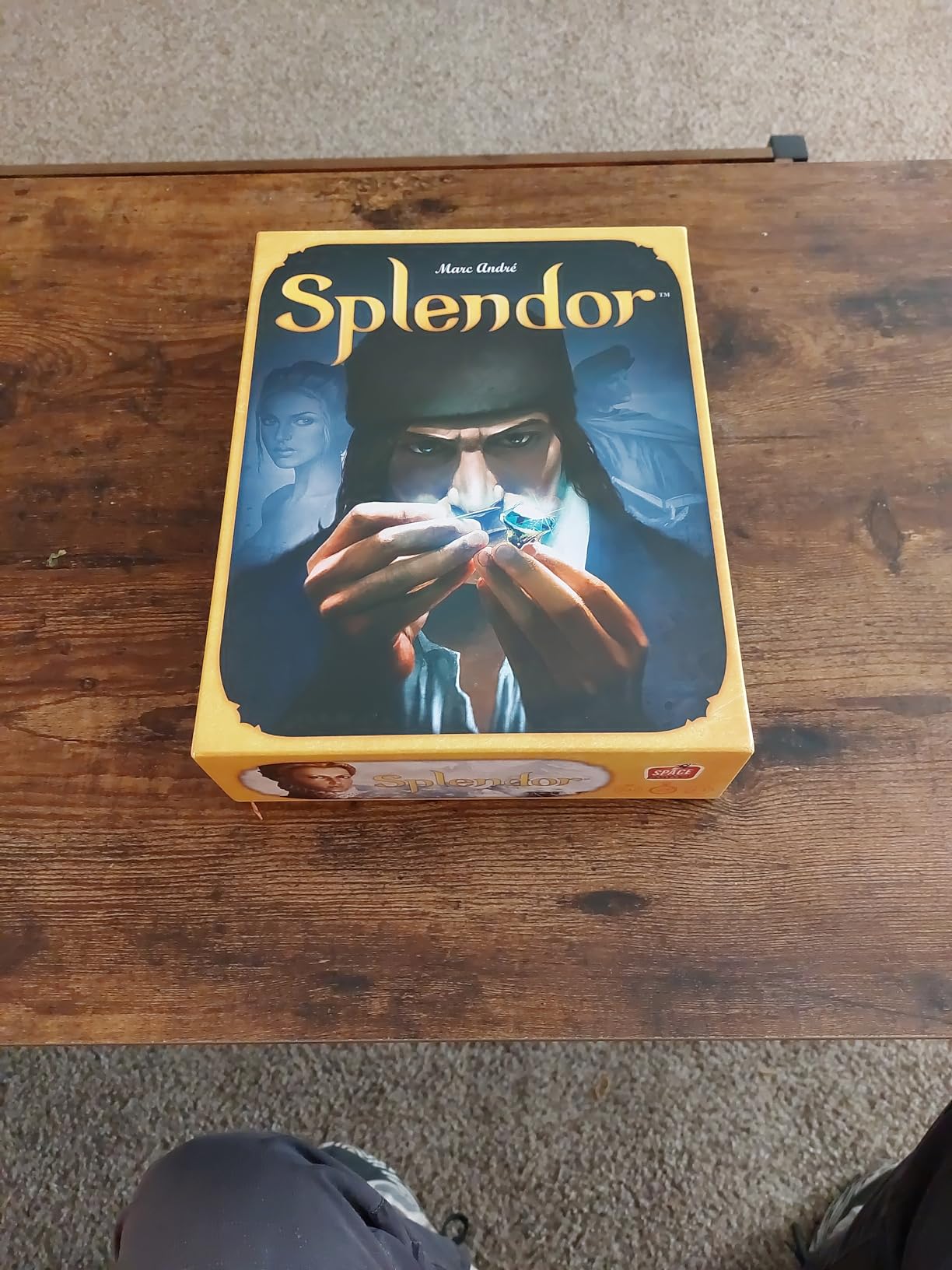
Splendor is the game I recommend to every friend who says “I don’t really play board games.” The rules fit on a single card, and within five minutes, you’re collecting gem tokens and buying development cards. The engine-building is satisfying because you can see your progress every turn.
With over 15,000 reviews and a 4.9 rating, this is the most universally loved game on the list. The gem tokens feel like real poker chips, which makes the resource management satisfying. We use it as the “intro game” whenever we have friends over who want to try the hobby.
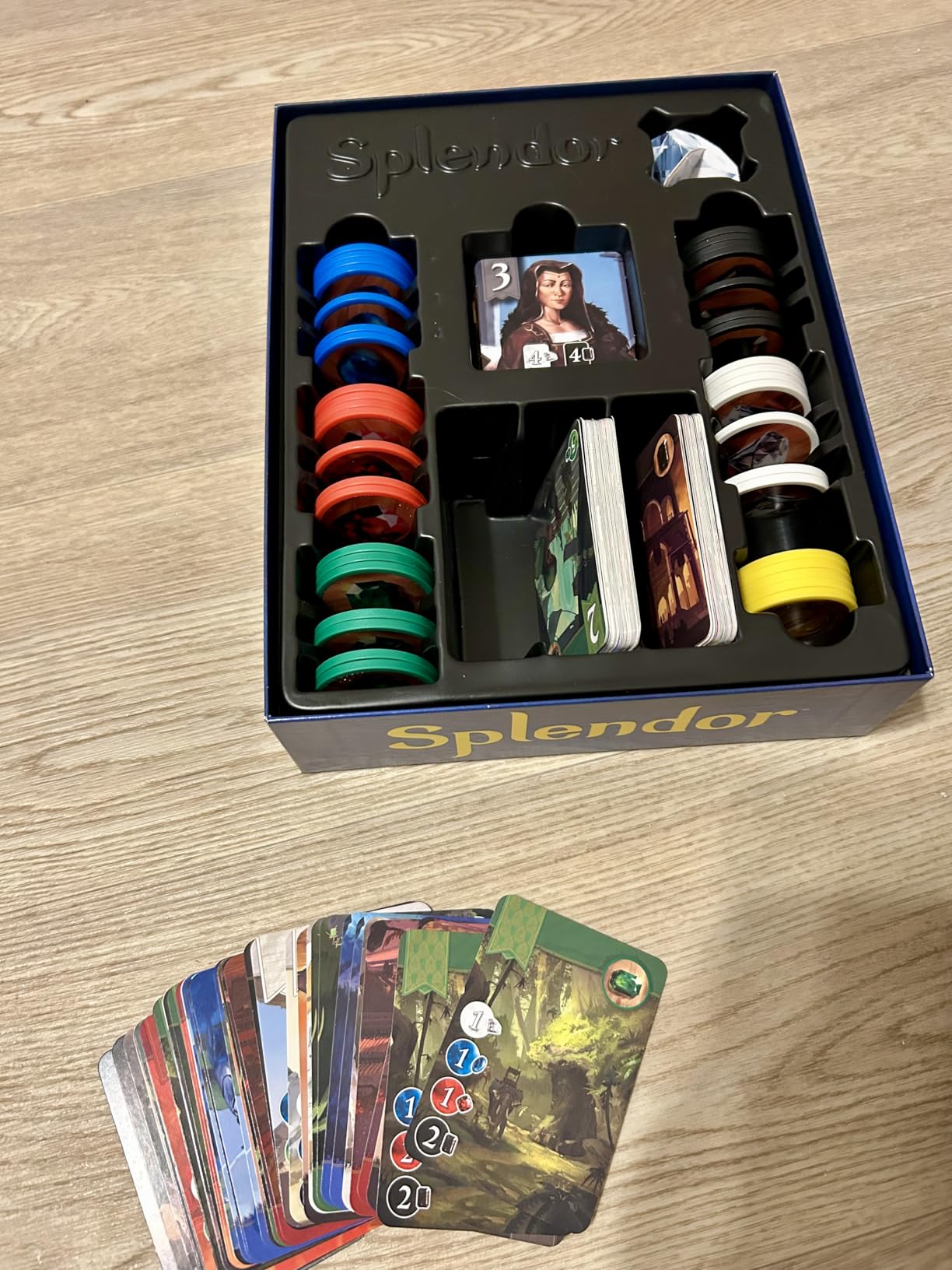
For two players specifically, the game shines because you can see your partner’s progress and respond accordingly. The race for development cards creates tension, and the noble tiles provide long-term goals that keep both players engaged even in the mid-game.
If you’re new to the board game hobby or want something casual for weeknight gaming, this is the safest pick. Almost every game store carries it, and most people already know the rules.
Why Splendor works so well for beginners
There are only three actions per turn: take gems, buy a card, or reserve a card. After one round, new players understand the system completely. The depth comes from predicting which cards your opponents want and timing your purchases to attract the right noble tiles. It teaches strategic thinking without overwhelming new players.
Should you buy Splendor or Splendor Duel
Buy both, but start with regular Splendor if you plan to play with 3-4 people. Splendor Duel is sharper for 1v1 but requires two players specifically. We own both and reach for the regular version when we have friends over, and the Duel version for date nights.
6. Hive – The Best Travel-Friendly Two Player Game
- No board needed
- extremely portable
- Easy to learn but deep strategy
- Sturdy hexagonal tile construction
- Can feel stagnant without expansion pieces
- First player has slight advantage
Hive is the game I pack for every trip. There’s no board. The hexagonal bug tiles form the play area themselves, which means we can play on an airplane tray, a coffee shop table, or a hotel desk. The whole game fits in a small cloth bag, and we’ve played it in dozens of places that wouldn’t accommodate a normal board game.
The rules are simpler than chess but the strategy is just as deep. Each bug type (ant, spider, grasshopper, beetle, queen) moves differently, and you’re trying to surround your opponent’s queen bee. Games last 15-20 minutes, which means we can play 3-4 matches in a single evening.
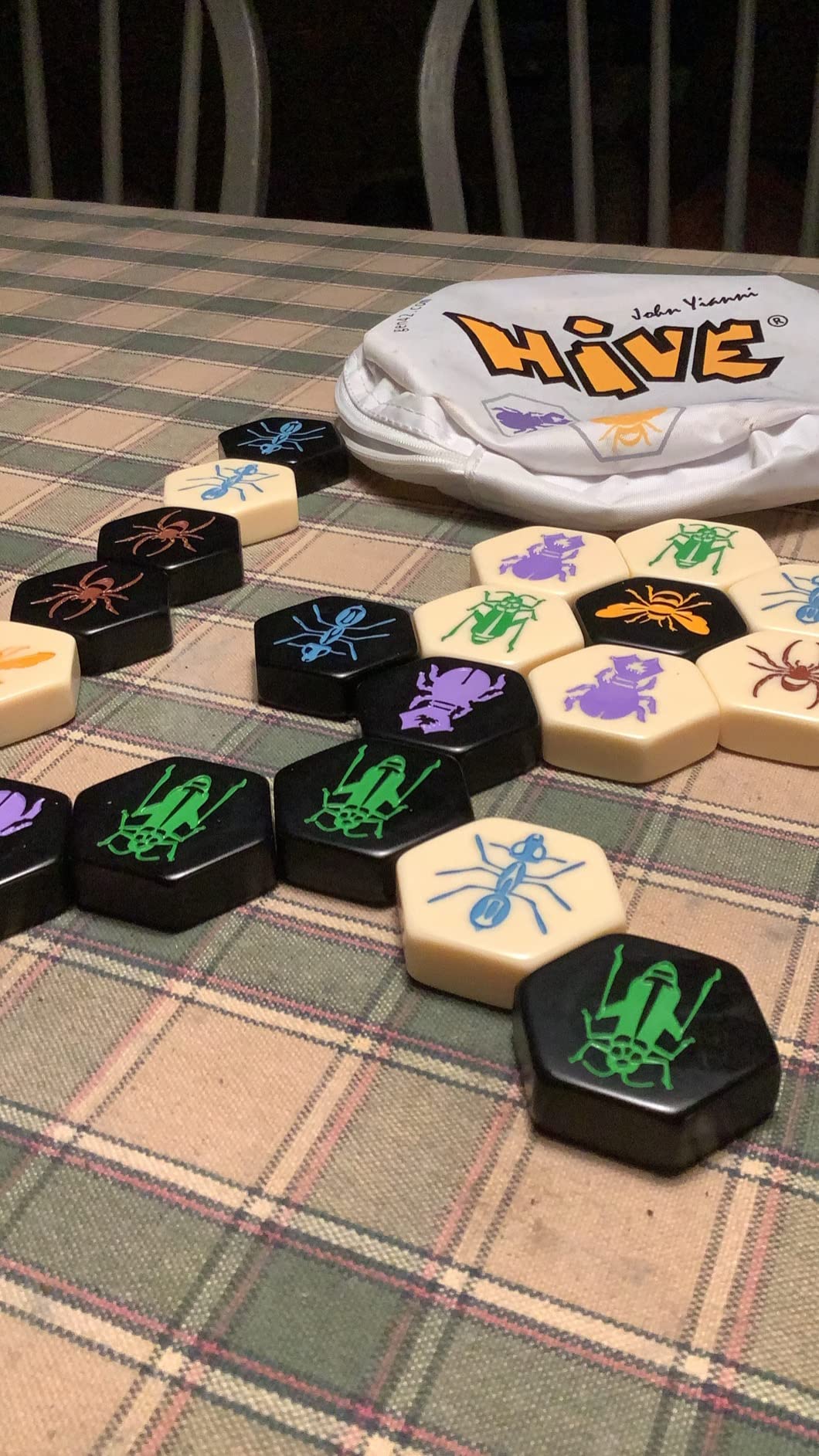
What I love about Hive is the tactile experience. The bakelite tiles feel great in your hand, and the bug illustrations are charming. We’ve been playing it for years and still find new strategies. The Mensa Select award is well deserved.
For anyone who travels with a partner or plays games on the go, this is essential. It’s also a great gift for chess players who want something faster and more dynamic.

How long does it take to get good at Hive
You can play your first game after a 5-minute rules explanation. Getting truly good takes months, similar to chess. The game rewards pattern recognition and long-term planning, but the basics are approachable. We taught it to my 9-year-old niece and she was competitive after a few games.
Is the standard or pocket version better
It depends on where you play. The standard version has larger tiles that are easier to handle, but it’s bigger to transport. The pocket version fits in a coat pocket but the tiles are smaller. We own both: the standard for home play and the pocket for travel.
7. Patchwork Americana Edition – The Cozy Two Player Game
- Easy to learn
- 30-minute playtime
- Tetris-like puzzle mechanics
- Beautiful Americana theme
- Directions can be confusing
- Only one quilt board included
Patchwork is what I call a “cozy strategy” game. The theme is quilting, and you’re placing Tetris-like patches on your board while managing a button economy. The rules take 5 minutes to learn, and games wrap up in 30 minutes, but the spatial puzzle of fitting pieces together is genuinely engaging.
The Americana edition has a US-exclusive design with red, white, and blue patches, and the artwork features traditional quilting patterns. It’s a nice change of pace from medieval or sci-fi themes. My partner and I pull this out when we want something low-stress but still mentally engaging.
The button economy adds strategic depth. You earn buttons by completing patches, and you spend them to buy new patches from the central supply. The tension comes from deciding whether to fill a gap in your board or save up for a more expensive piece. It’s a clever design that rewards spatial thinking and planning ahead.
Is Patchwork good for non-gamers
Yes, this is one of the most accessible games on the list. The Tetris-like placement is intuitive, and the rules don’t involve complex iconography. We’ve introduced it to friends who claimed they “hate board games” and they ended up asking to play again. The Americana theme also makes it a popular gift around patriotic holidays.
Does the Americana edition differ from the original
The core mechanics are identical, but the artwork is US-exclusive. Some players prefer the original because the buttons contrast better against the green background. The Americana version has slightly lower contrast but a more cohesive American theme. Both versions are excellent, so the choice comes down to aesthetic preference.
8. Jaipur – The Best Quick Card Game for Two Players
- Easy to learn but strategically deep
- 30-minute playtime perfect for quick sessions
- Highly replayable
- Compact and travel-friendly
- Setup can be tedious
- Only for 2 players
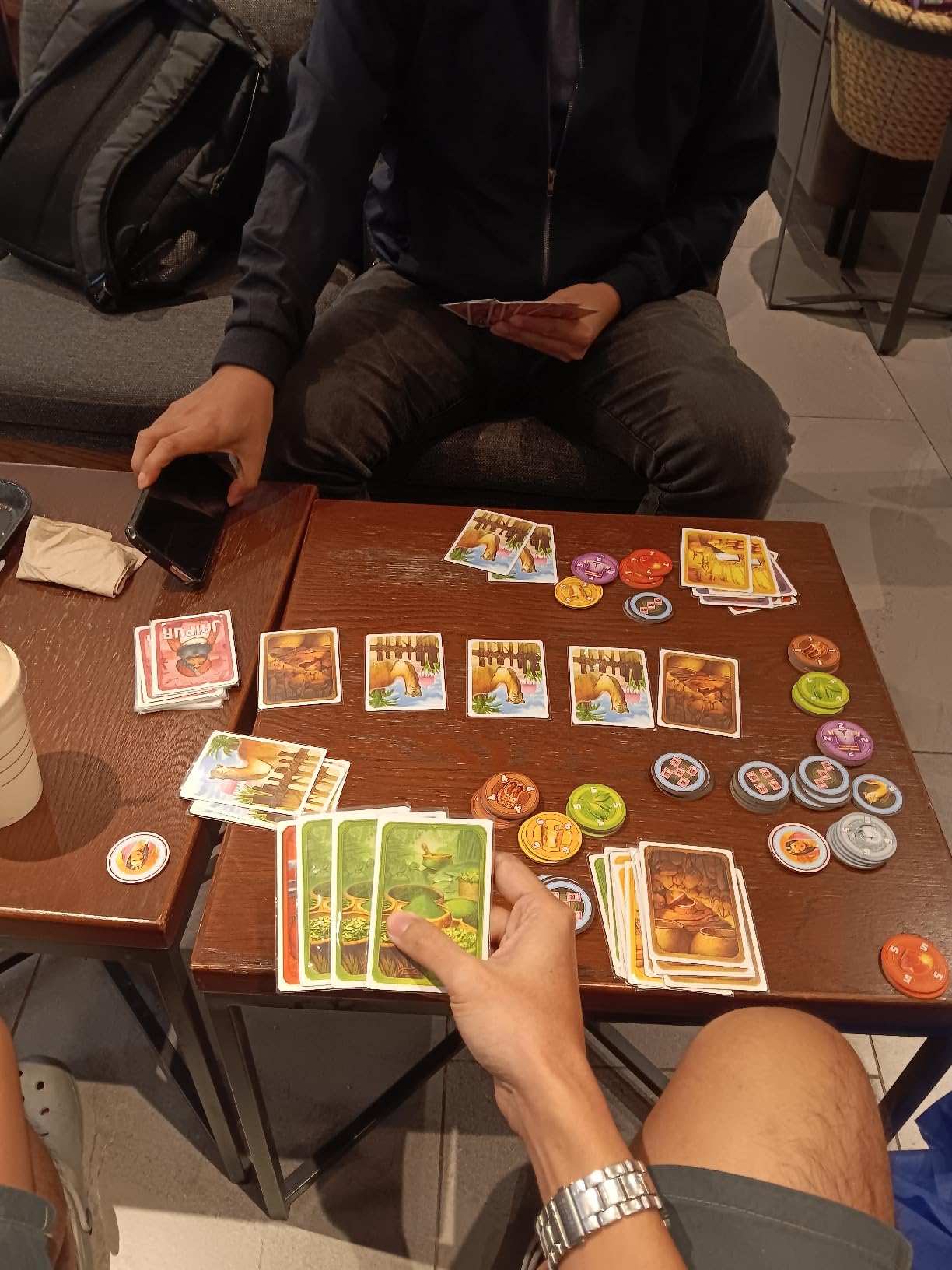
Jaipur has been in our collection for over a decade, and it still gets regular play. You’re both merchants in Rajasthan, trading goods, taking risks, and racing to become the Maharaja’s personal trader. The game lasts about 30 minutes, but every turn involves real decisions.
What keeps Jaipur fresh after hundreds of plays is the constant interaction. You take tokens from a shared market, and your partner can flip the market on their turn, changing what’s available. Every decision ripples through the rest of the game. It’s not “multiplayer solitaire” at all.
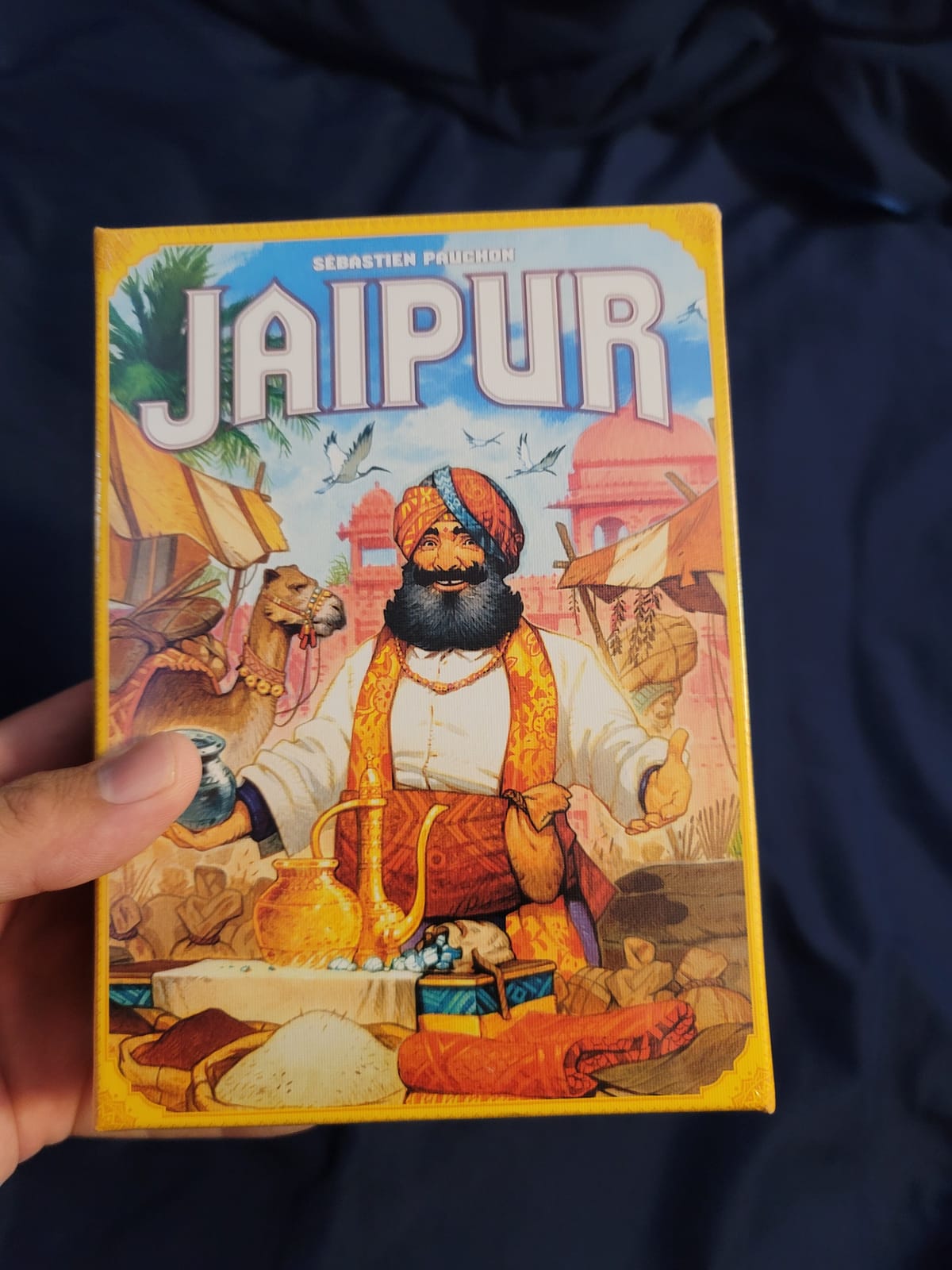
The Seals of Excellence add a satisfying push-your-luck element. You can sell a large batch of one good type for bonus tokens, but if your partner beats you to it, you lose your chance. The race mechanic creates exciting moments where both players are trying to time their big sales.
For couples who want a fast-paced card game that doesn’t require a huge time commitment, this is a top pick. We play it during commercial breaks while watching TV.
How Jaipur compares to similar trading games
Jaipur sits in a sweet spot between quick card games and deeper strategy games. The rules are simple enough for a first-time player, but the market timing and resource management create real strategic decisions. If you’ve enjoyed games like Lost Cities but want something with more direct interaction, Jaipur is the natural next step.
Can kids play Jaipur
Yes, with a caveat. The 10+ age rating is accurate for strategic play, but younger kids can enjoy it with help. The math is simple addition and subtraction, so as long as a child can count tokens, they can play. We taught it to an 8-year-old and he caught on after a few rounds.
9. Onitama – The Best Chess-Like Two Player Game
Arcane Wonders Onitama, 2-Player Abstract Duel with Modular Movement Cards
- Learn in under 5 minutes
- Fast 10-15 minute games
- Deep strategic gameplay
- Premium neoprene game mat
- Only 2 players
- Can lead to 'just one more game' loops
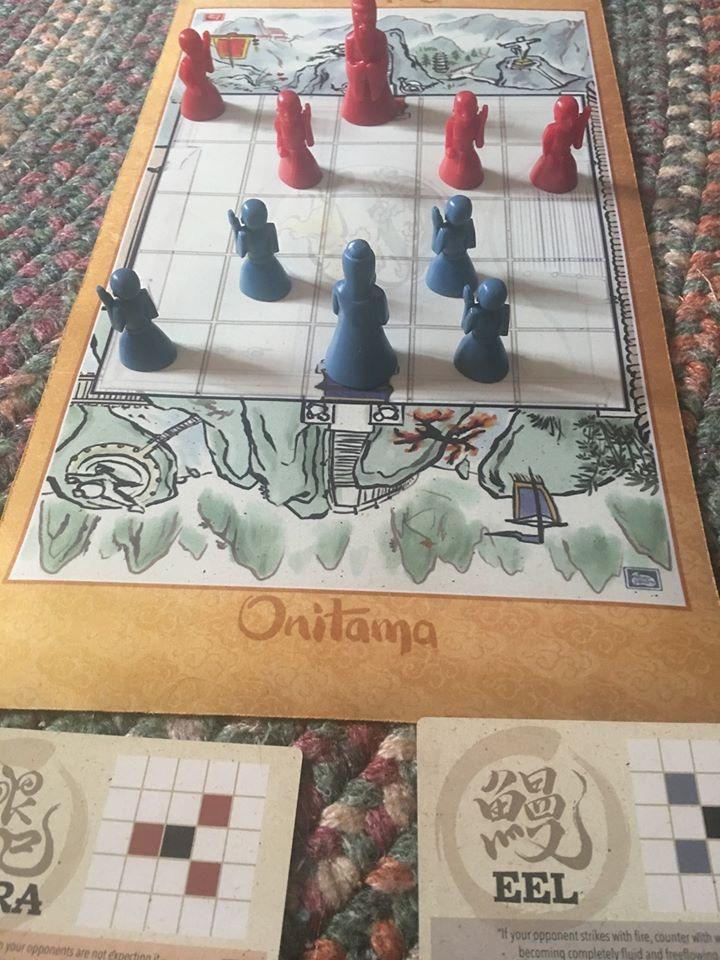
Onitama is what would happen if chess and a card game had a baby. You have five pawns on a 5×5 board, and instead of predefined moves, you use a hand of movement cards that tell you how your pieces can move. The catch: every card you use gets passed to your opponent, so the available moves shift constantly.
Games last 10-15 minutes, but don’t let that fool you into thinking it’s light. The shared card system creates a constantly evolving tactical puzzle, and the dual victory conditions (capture the master or reach the opponent’s temple) mean you’re never safe until the very end.
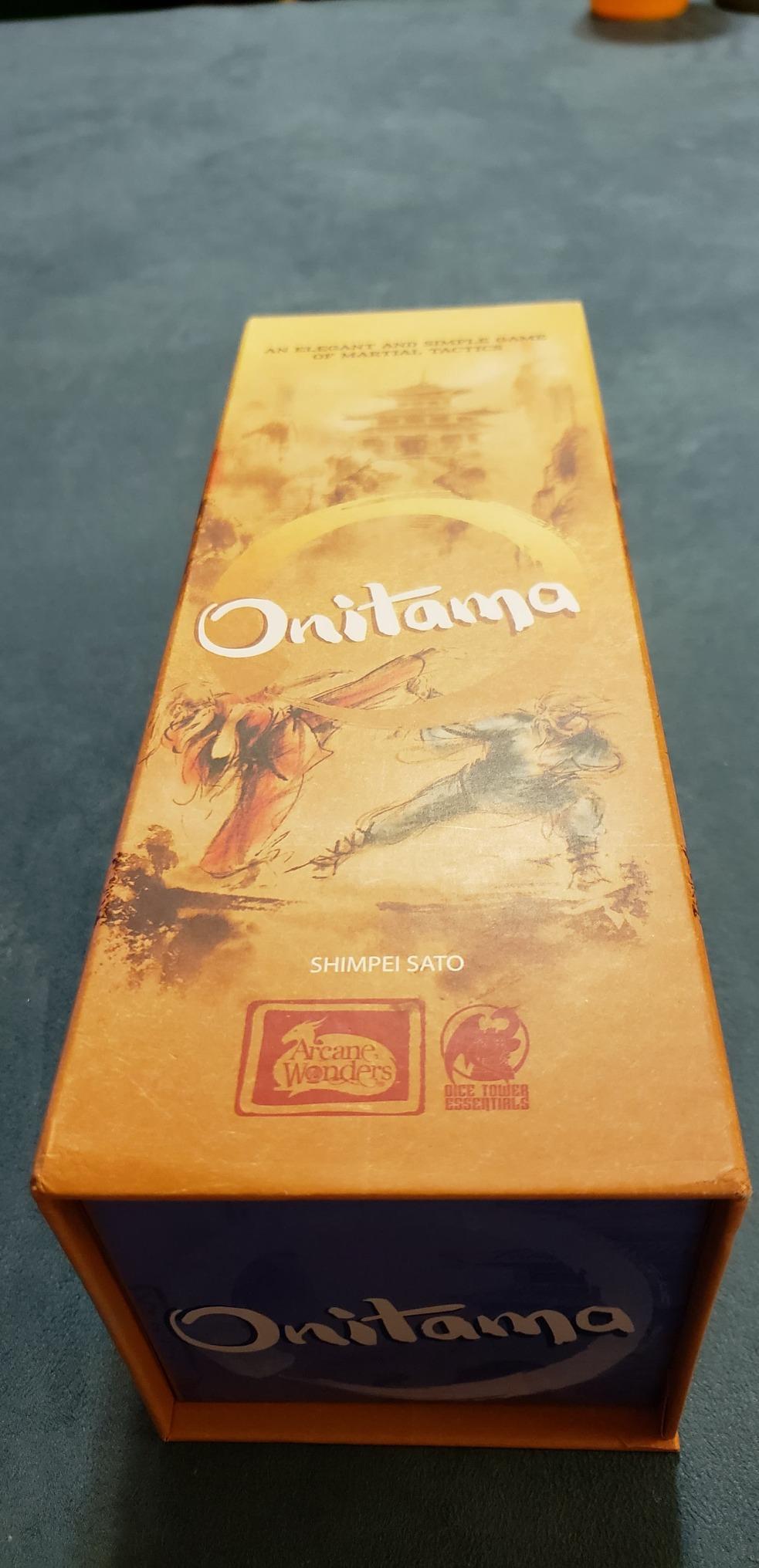
The neoprene mat rolls up for travel, and the components are premium. This is a game that we’ve brought to coffee shops and played between sips of espresso. The simple rules make it easy to teach, but the strategic depth rewards repeated play.
If you love chess but want something faster and more dynamic, Onitama is a perfect pick. We’ve been playing it for years and still get surprised by new opening lines.
Why Onitama works so well for quick games
The shared card pool means the game state changes every turn, which forces both players to constantly reassess. There’s no opening memorization like chess, so every game feels fresh. The 10-15 minute playtime also means you can play 3-4 games in a single evening without it feeling repetitive.
Is Onitama good for kids learning strategy
Yes, the 8+ age rating is accurate. The rules are easier than chess, but the strategic thinking is similar. We use it as a “training wheels” chess game for kids, and it teaches valuable lessons about piece positioning and timing. The fast playtime also means kids stay engaged.
10. Fox in the Forest – The Best Trick-Taking Game for Two
- Unique twist on traditional trick-taking
- Beautiful fairy tale artwork
- Quick 30-minute playtime
- Excellent value
- Scoring system takes a few plays to understand
- Limited to 2 players
Fox in the Forest flips the trick-taking formula on its head. In a normal trick-taking game, you want to win as many tricks as possible. In this one, winning too many tricks costs you points. You score best when you win exactly the right number of tricks in each round, which creates fascinating decision-making.
The fairy tale theme is charming, and the artwork is genuinely beautiful. Each card has a character with special powers that activate when you play them. The Swan lets you change the suit, the Fox lets you lead, and the Witch halves your tricks. These powers create memorable moments where the game swings on a single card play.

At 30 minutes per game, it’s perfect for a quick evening session. The compact size makes it travel-friendly, and the affordable price point makes it a great gift. We’ve been playing it for years and still enjoy pulling it out when we want something light but strategic.
If you like Hearts, Spades, or Bridge but want something designed specifically for two players, this is the modern classic. It’s also one of the best gateway trick-taking games for new players.
How the unique scoring system works
You score points based on how many tricks you win: 0-3 tricks earns 6 points, 4-5 tricks earns 1 point, 6-7 tricks earns 1 point, 8-9 tricks earns 2 points, and 10+ tricks earns 0 points. The magic zone is winning 3-5 tricks, which gives you 6-8 points but only if you have the highest value card. This creates a constant push-your-luck tension.
What age group enjoys Fox in the Forest most
Adults and teens love this game, but it works for kids as young as 10 with a few practice rounds. The math is simple, and the card powers are intuitive. The trick-taking mechanics will be familiar to anyone who’s played Hearts, but the unique scoring keeps experienced players engaged.
11. Lost Cities – The Best Simple Two Player Card Game
- Simple rules
- learn in minutes
- Quick 15-30 minute games
- Highly portable
- Affordable entry point
- Card values only on one side
- Board not strictly required
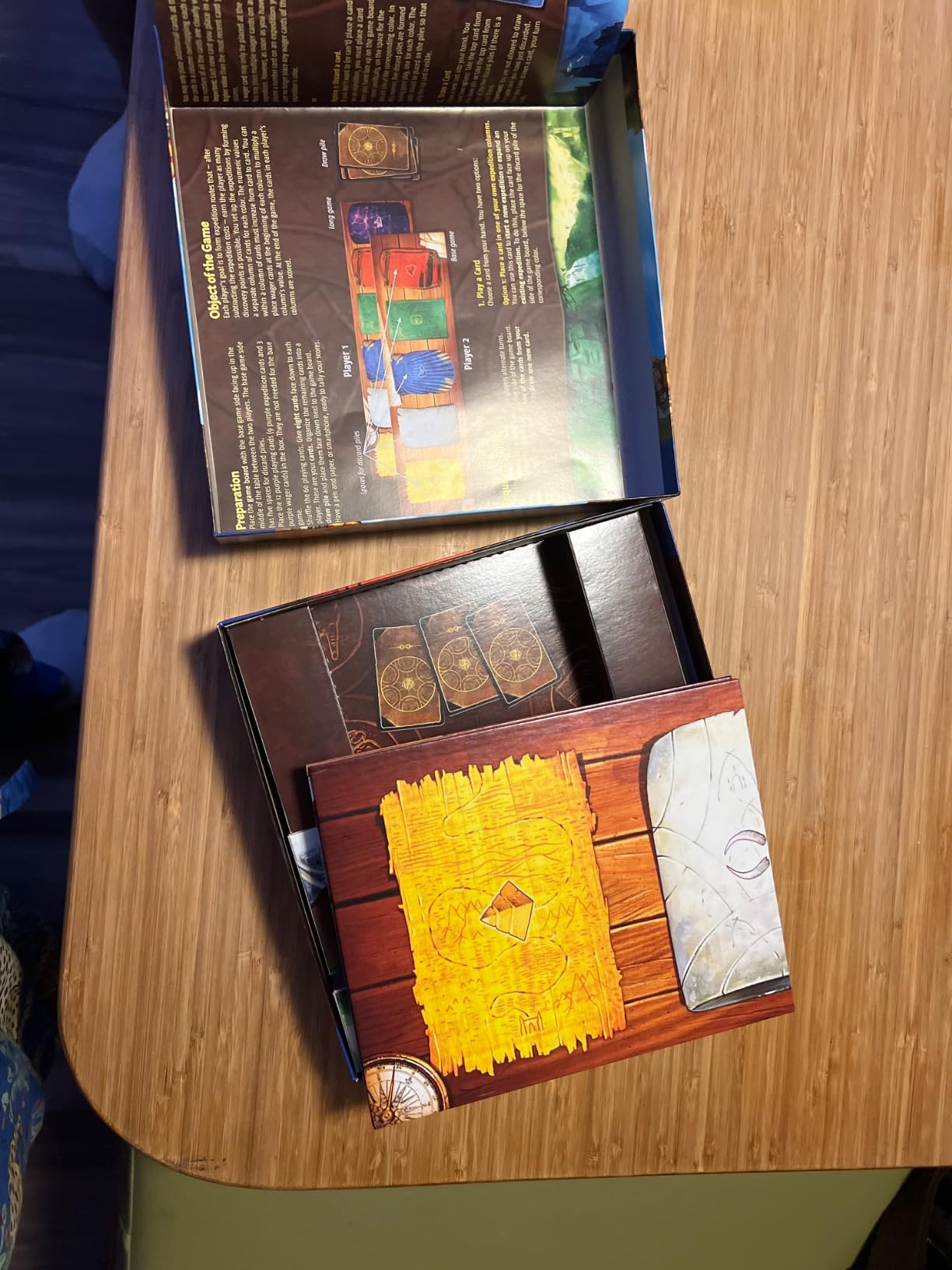
Lost Cities is the game I recommend when someone asks for a two-player card game that’s simple but not boring. The rules are essentially: play a card to start an expedition, then play higher cards to the same expedition. The catch is that expeditions cost money to start, and you have to earn more than you spend to score points.
This risk-versus-reward decision is what makes the game so satisfying. Do you invest heavily in one expedition and hope to score big, or do you spread your bets across multiple expeditions for safer but smaller gains? Every game forces you to make that call, and the tension ramps up in the late game when you decide whether to push your luck or play it safe.
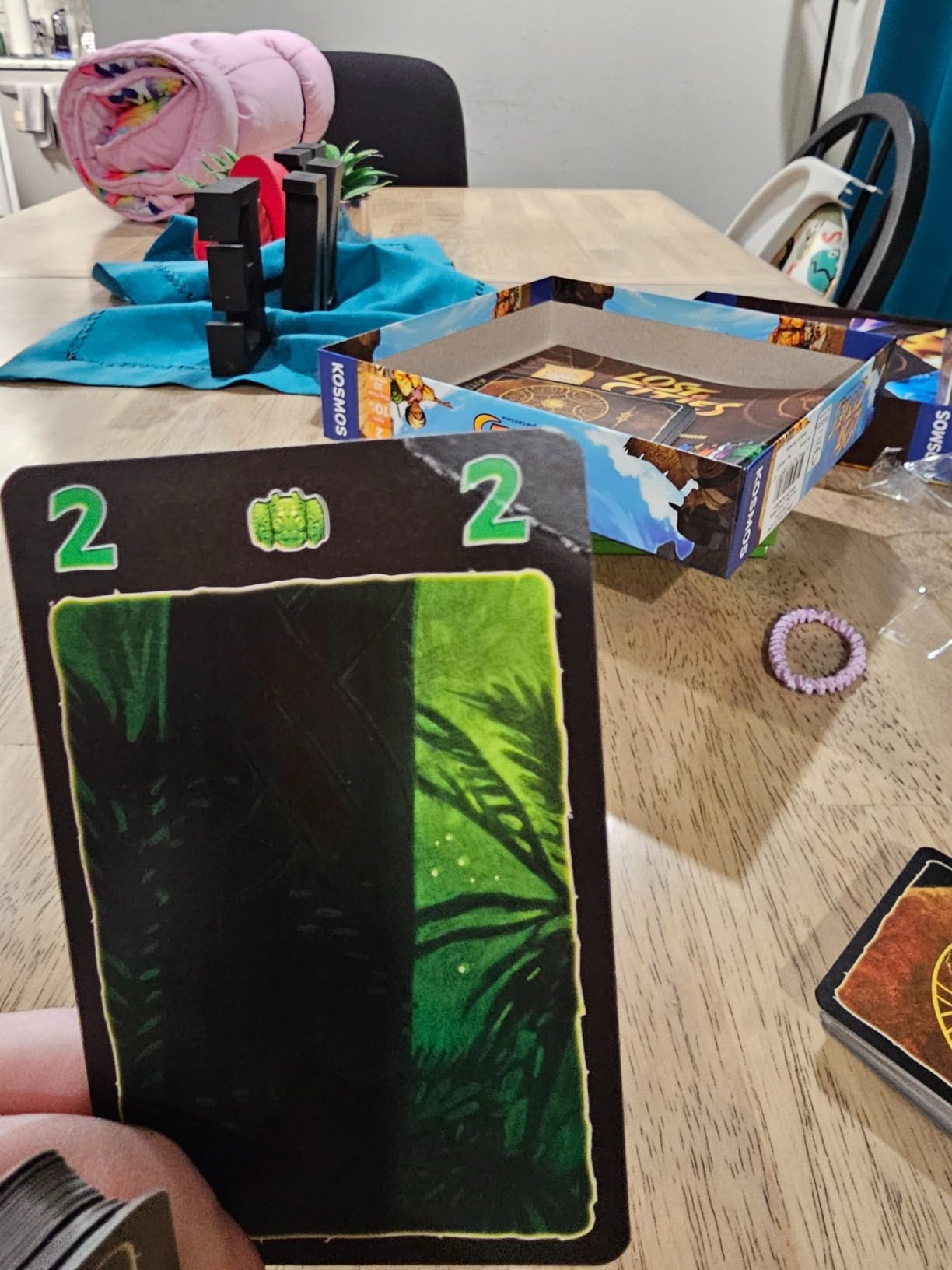
What I love about Lost Cities is its longevity. This game has been in print for over 20 years, and it remains one of the most replayable card games ever designed. The 6th expedition in this edition adds a new wrinkle without changing the core formula, and the two-sided board means you can play the classic or updated version.
For a budget-friendly introduction to two-player card games, this is hard to beat. It’s also one of the most portable games on the list since you only need the deck of cards.
How to score points in Lost Cities
Each expedition starts with a -20 point investment (cards you have to play to begin). You then add the value of all cards played to that expedition. If you only have the -20 investment, you score -20. If you play cards worth 25 total, you score 5. Multipliers from the wager cards can boost your score significantly, but only if you commit to the expedition.
Is Lost Cities better than Jaipur
They’re different games for different moods. Lost Cities is faster (15-20 minutes) and more strategic, while Jaipur is longer (30 minutes) with more direct interaction. We play Lost Cities when we want a quick mental workout and Jaipur when we want a more social experience. Both deserve a place in a two-player collection.
12. Quoridor – The Best Wooden Two Player Game
- Learn in 5 minutes
- Quick 15-minute games
- High-quality wooden pieces
- Mensa Select winner
- Pawns slightly too big for board spaces
- Limited 3rd/4th player storage
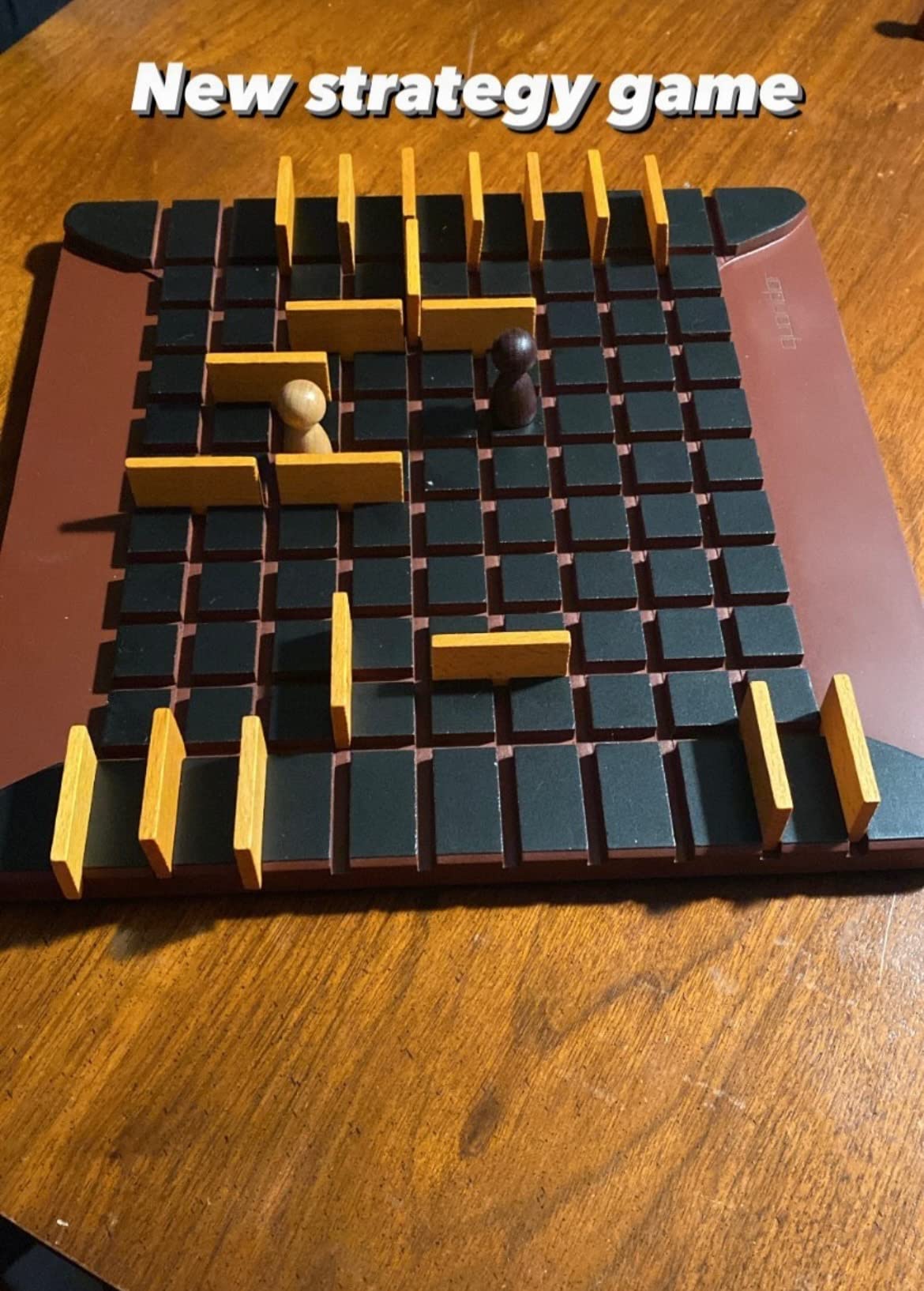
Quoridor is a Mensa Select winner that’s been around for over 25 years, and it remains one of the most elegant abstract games ever designed. You’re trying to get your pawn to the other side of the board, and the twist is that you can place walls to block your opponent’s path. But you only have 10 walls, and your opponent has the same 10 walls.
The rules take one minute to learn, but mastering the game takes much longer. Should you race directly for the goal, or should you place walls to slow your opponent? Should you waste walls on early blocks or save them for the final stretch? Every game creates different decision points, and the wooden pieces give the game a satisfying tactile quality.
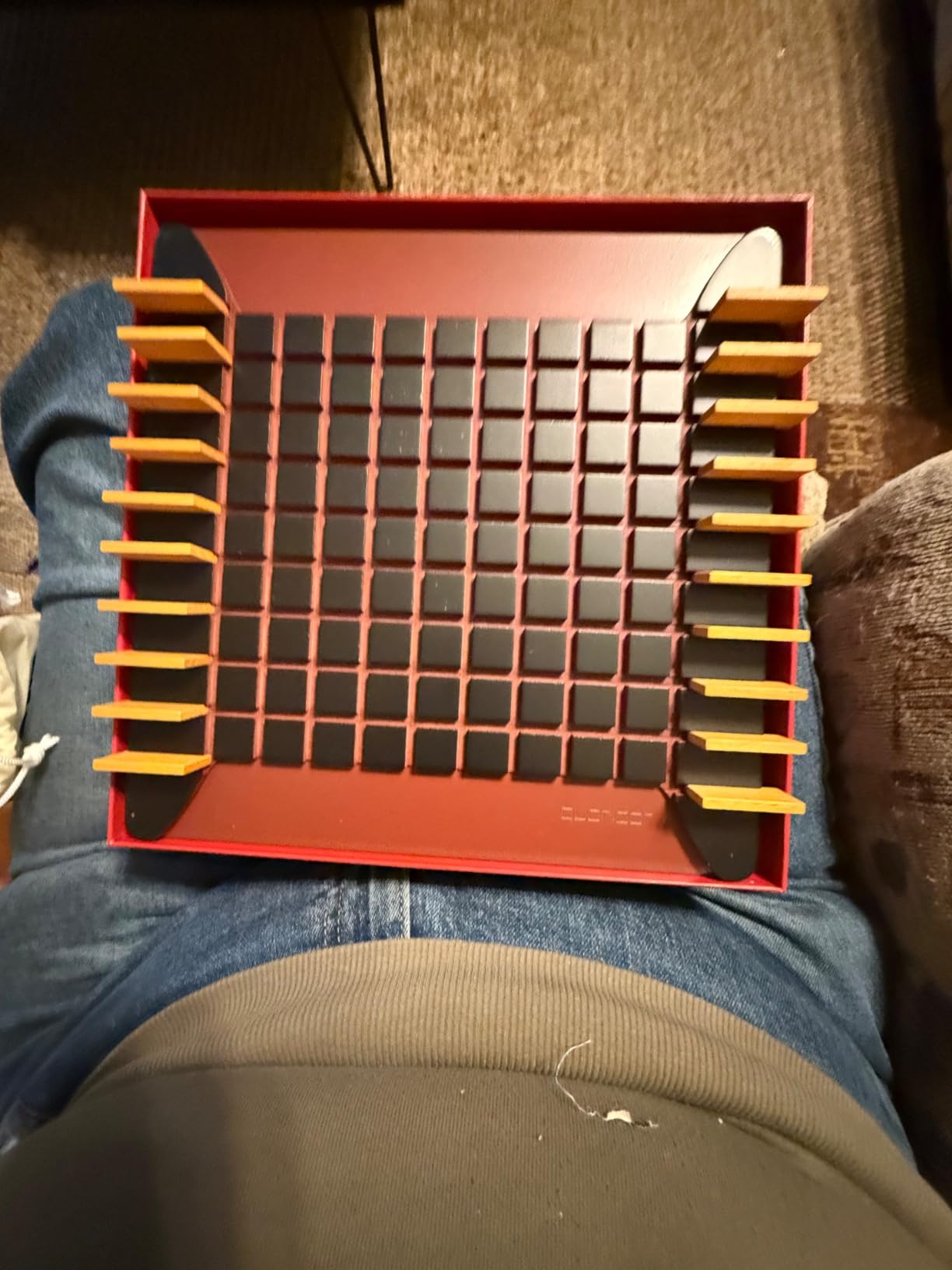
With over 1 million copies sold, this is one of the most popular abstract games in the world. The component quality is excellent: solid stained wood that looks great on the table. The board stores everything neatly, and the game is portable enough for travel.
For anyone who wants a quick abstract strategy game with beautiful components, Quoridor is a top pick. It’s also a great game to teach kids strategic thinking.
How Quoridor compares to chess
Quoridor is often described as “chess with walls,” and the comparison is fair. The game has chess-like strategic depth, but the rules are much simpler and games are much shorter. We play it when we want a mental workout but don’t have 45 minutes for a full chess match. The wall placement mechanic also creates more interactive play than chess.
Is Quoridor good for kids
Yes, the 8+ age rating is accurate, but younger kids can enjoy it with help. The wooden pieces are large and easy to handle, and the simple premise (get to the other side) is intuitive. We’ve taught it to kids as young as 6 with simplified rules, and they loved the wall-placing mechanic.
13. Lord of the Rings: Duel for Middle-Earth – The Best Themed Two Player Game
- Based on proven 7 Wonders Duel mechanics
- Three win conditions keep gameplay fresh
- Beautiful LOTR artwork
- Quick 30-minute playtime
- Theme can feel lighter than dedicated LOTR games
- Some learning curve for non-gamers
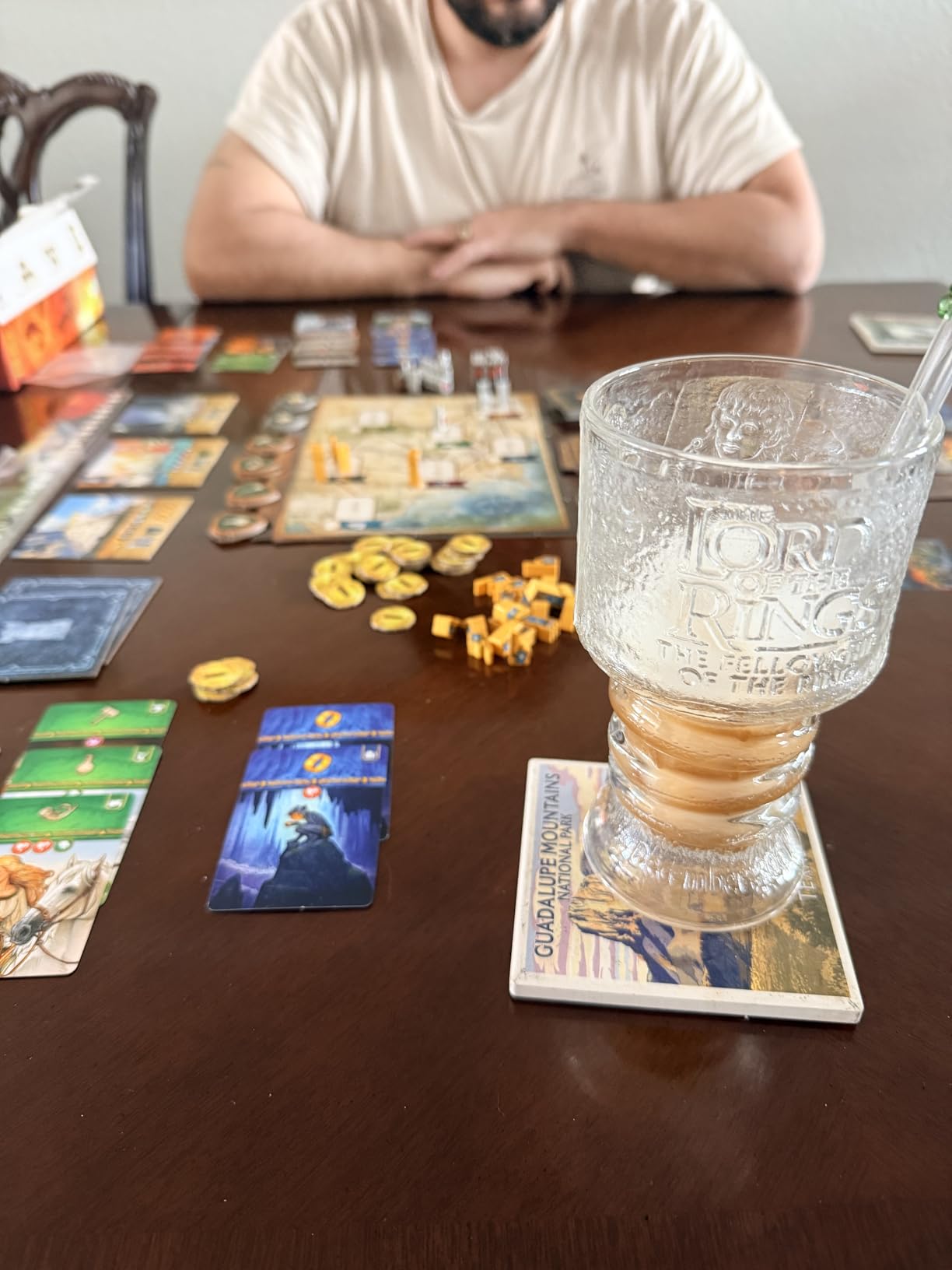
If you love Lord of the Rings and you love 7 Wonders Duel, this game is a dream come true. It uses the same proven card-drafting mechanics from 7 Wonders Duel but wraps them in a Middle-Earth theme. You play as either the Fellowship or Sauron’s forces, and you’re fighting for control of three chapters of the story.
What I love about this game is the three-chapter structure. Instead of one long game, you play three short scenarios that each have different rules and victory conditions. This variety keeps the game fresh, and the chapter structure gives it a narrative feel that the original 7 Wonders Duel lacks.
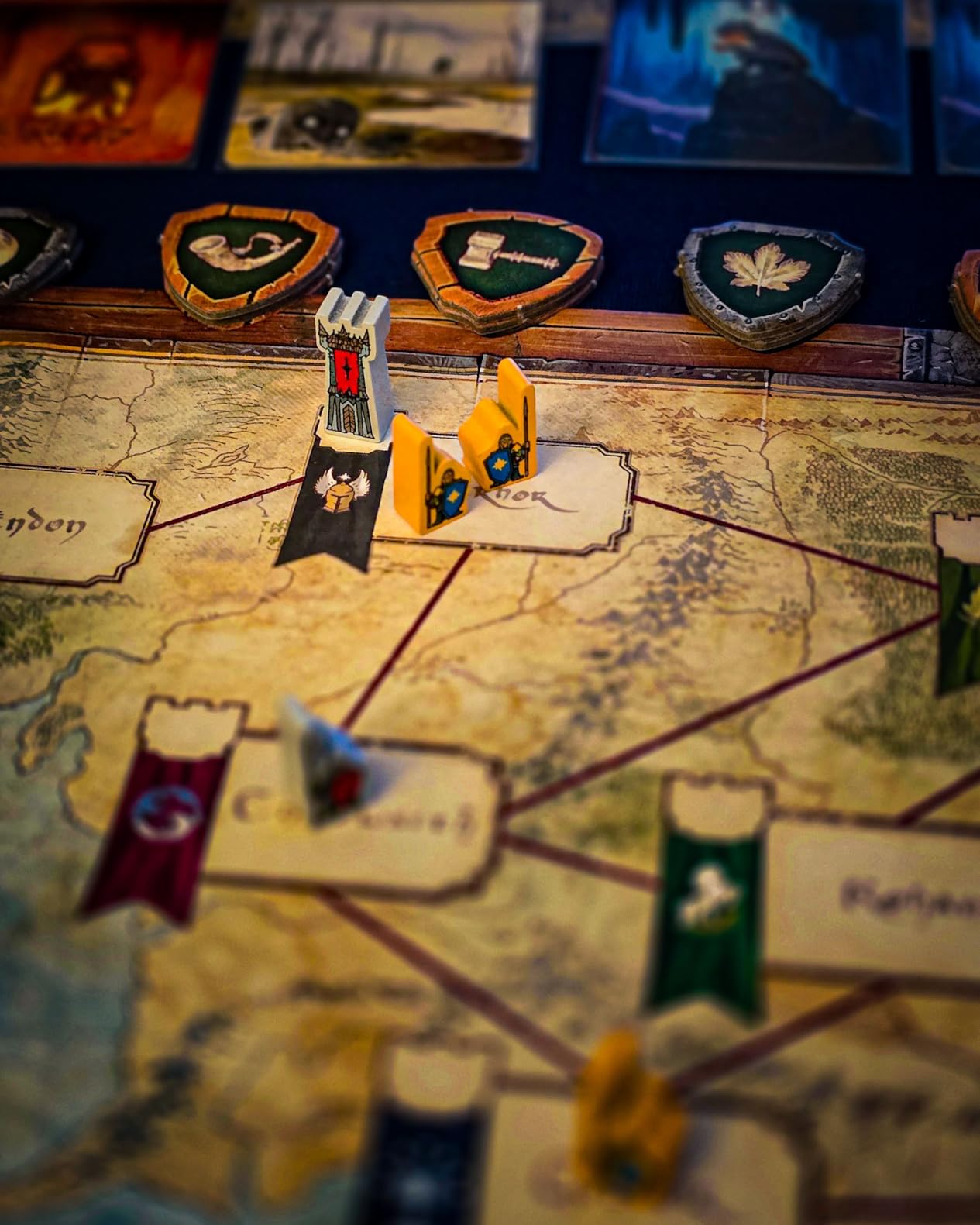
The artwork is gorgeous, and the components capture the Lord of the Rings aesthetic well. We played this with friends who are huge LOTR fans, and they immediately connected with the theme. The 30-minute playtime fits a weeknight, and the strategic depth is comparable to 7 Wonders Duel but with enough new mechanics to feel fresh.
For fans of Lord of the Rings who want a true two-player experience, this is a top pick. It also makes a great gift for the strategy gamer in your life who loves Tolkien’s world.
How the chapter structure works
The game is divided into three chapters, each representing a different phase of the war for Middle-Earth. Each chapter has its own deck of cards and a unique victory condition. Winning one chapter doesn’t end the game. You need to either win two chapters outright or accumulate enough points across all three. This structure creates a long-term strategic arc that the original 7 Wonders Duel doesn’t have.
Is the theme essential to enjoy this game
No, but it helps. If you enjoy 7 Wonders Duel, you’ll enjoy this game regardless of your LOTR knowledge. The mechanics are tight, and the strategic depth is excellent. That said, fans of the books or movies will get an extra layer of enjoyment from seeing familiar locations and characters represented on the cards.
14. Azul Mini – The Best Travel Tile Game
- Perfect travel size
- same great gameplay
- Tiles lock onto boards
- Built-in scoring sliders
- Affordable price
- Storage bag has snap closure
- Two types of blue tiles can be confusing
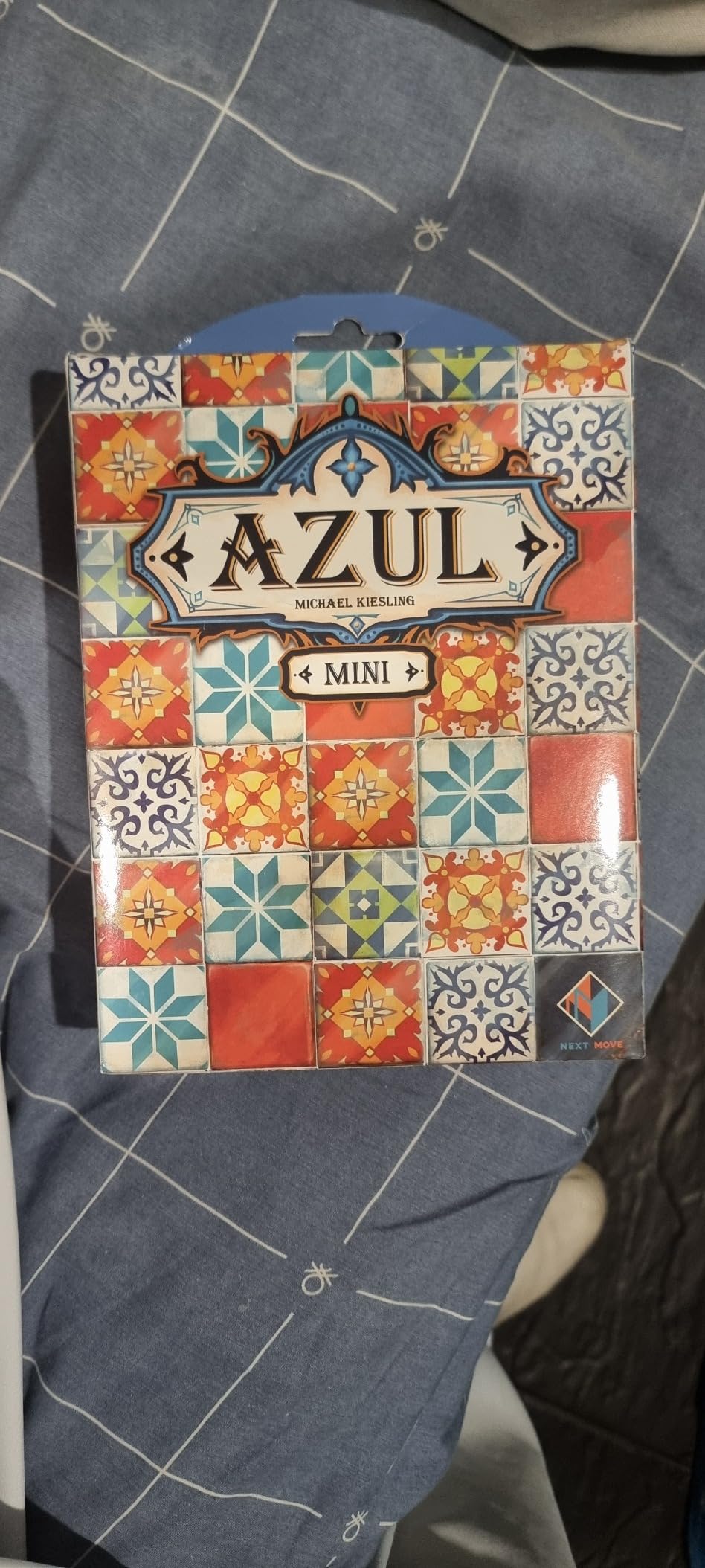
Azul Mini is the travel-friendly version of the original Azul, and after using it on three trips, I can confirm it doesn’t sacrifice gameplay for portability. The tiles are the same beautiful resin pieces, the boards are slightly smaller but still functional, and the game fits in a small bag that goes anywhere.
The biggest upgrade is the tile trays. In the original Azul, tiles could slide around on the board, but the Mini version has indented trays that keep everything in place. The built-in scoring slider is also a nice touch since you don’t need a separate scoring pad. These small changes make the game much more portable and travel-friendly.
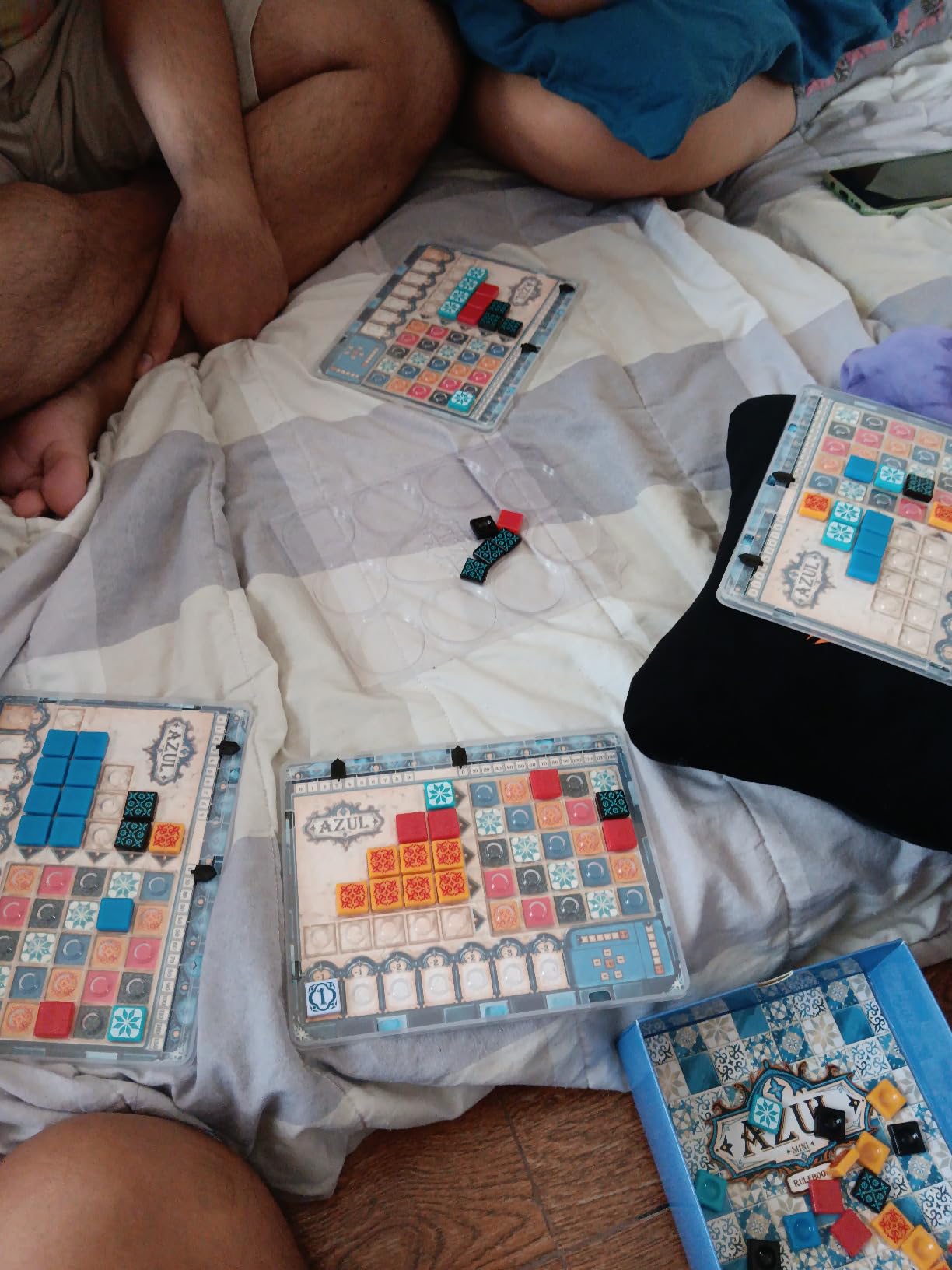
We’ve played Azul Mini on planes, in cars, and at coffee shops. The compact size makes it ideal for couples who travel together and want a quality game on the go. The 30-minute playtime is also perfect for trips where attention spans are shorter.
If you love Azul and want a travel version, this is the pick. It’s also a great entry point if you’ve never played the original.
How Azul Mini differs from the full-size Azul
The core gameplay is identical, but the Mini version has several practical improvements. The tile trays prevent pieces from sliding, the scoring slider replaces loose scoring tokens, and the smaller box fits in luggage. The boards are also double-sided, with one side for normal play and one for advanced play with a slight variation.
Should you buy Azul Mini if you already own Azul
If you travel often, yes. We’ve used the Mini version more than the original since we bought it. If you only play at home, the original Azul is slightly more impressive on the table. Many owners buy both: the original for home play and the Mini for travel.
15. Hive Pocket – The Best Compact Abstract Game
- Extremely portable
- Includes two expansions
- High-quality bakelite tiles
- Quick 10-20 minute games
- Small tiles can be difficult for kids
- Smaller tiles harder for larger fingers
Hive Pocket is the travel version of the classic Hive game, and it includes two expansions (Ladybug and Mosquito) that add new strategic options. The bakelite tiles are smaller than the standard version but still feel great in your hand, and the whole game fits in a soft travel bag that you can throw in a backpack.
We bring this on every trip, and it gets played everywhere: hotel rooms, restaurants, even the beach. The bag is small enough to fit in a jacket pocket, and the rules are simple enough to teach friends on the spot. We’ve introduced more people to abstract strategy games with Hive Pocket than any other game we own.
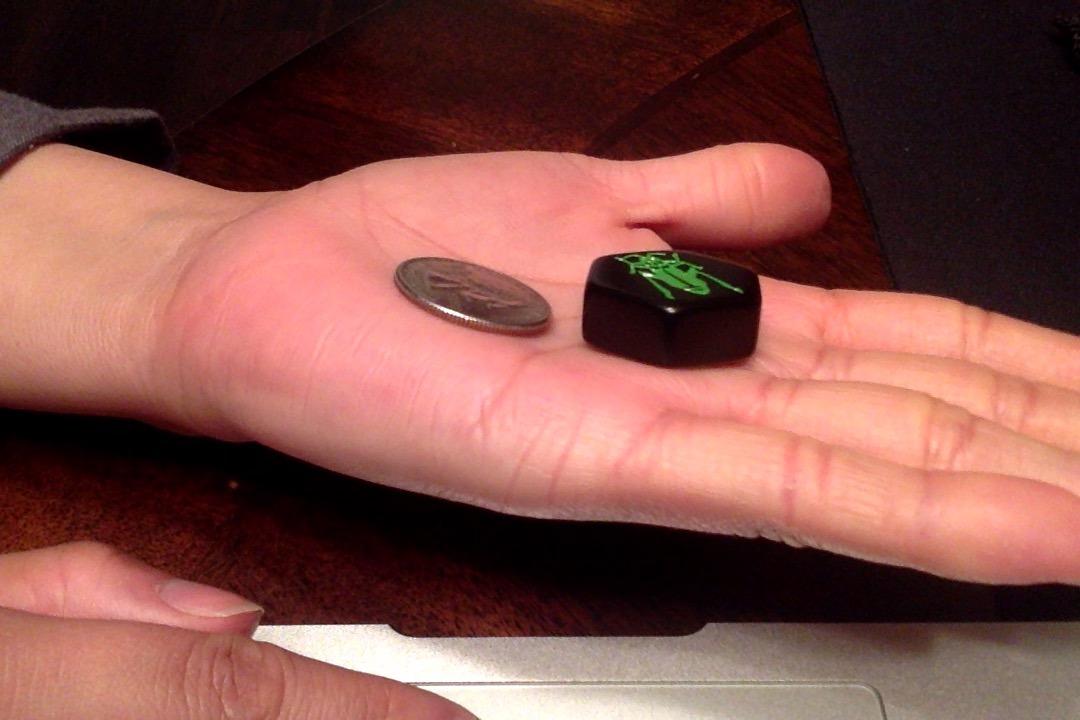
The included expansions (Ladybug and Mosquito) add new piece types with unique movement rules, which keeps the game fresh even after dozens of plays. The Ladybug moves three spaces at a time, while the Mosquito takes on the movement rules of whatever bug it’s touching. These additions add depth without complicating the rules.
For anyone who wants a quality abstract strategy game they can take anywhere, Hive Pocket is the top pick. It’s also a great gift for chess players who want something more portable.
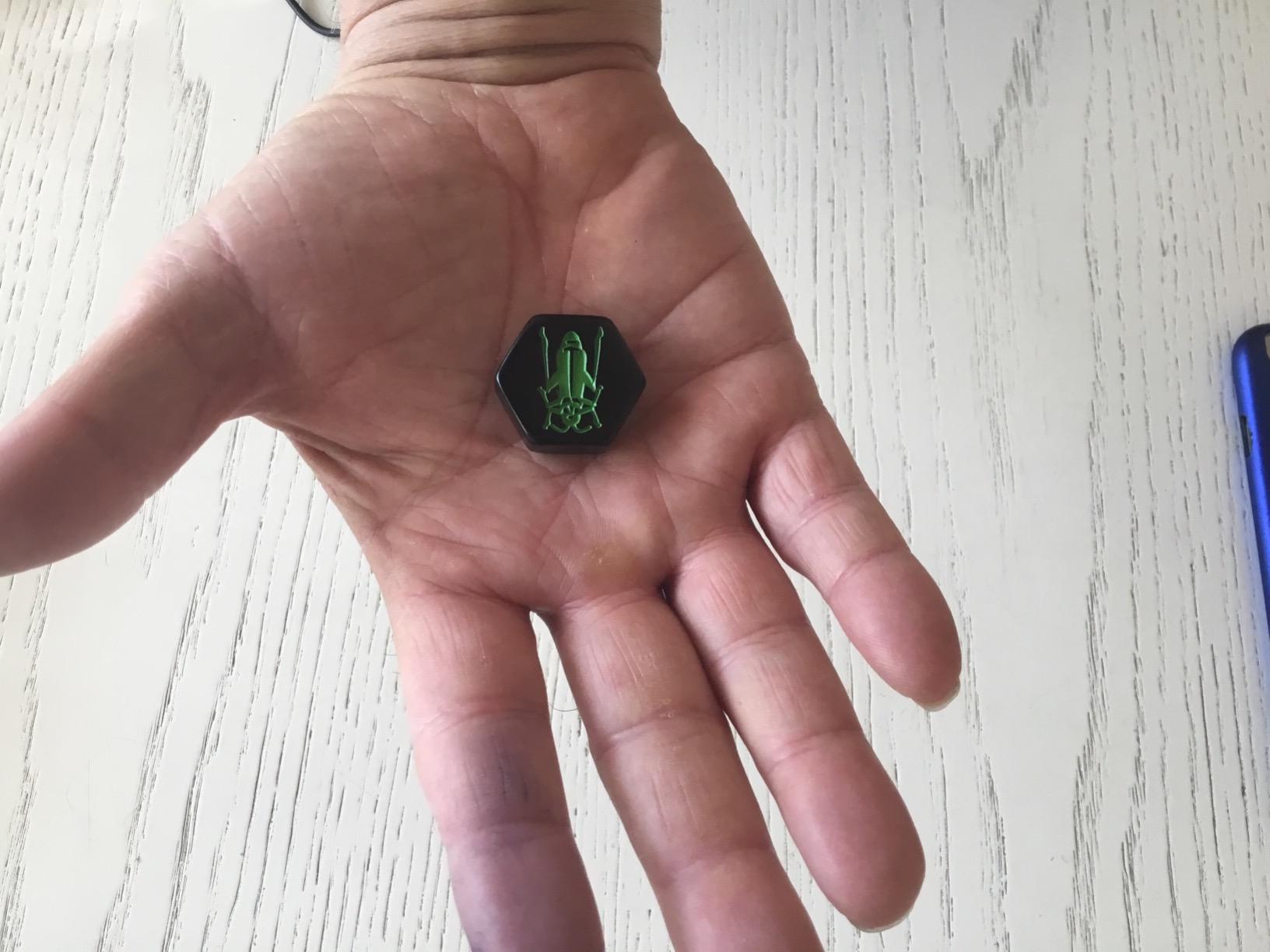
Are the pocket tiles too small
For most adults, no. The tiles are roughly half the size of the standard Hive, but they’re still large enough to handle comfortably. Kids with smaller hands actually do better with the pocket version because the pieces are easier to grip. If you have larger hands and play mostly at home, consider the standard Hive instead.
How the included expansions change the game
The Ladybug adds a long-range piece that can move three spaces in a straight line, which is useful for crossing the board quickly. The Mosquito is a “chameleon” piece that adopts the movement rules of any adjacent bug. These pieces create new tactical options without overcomplicating the rules, and they’re seamlessly integrated into the base game.
How to Choose the Best Two Player Board Game
Choosing a two-player game comes down to a few key questions. Do you and your partner prefer competitive head-to-head battles or cooperative teamwork? How much time do you have for a typical game night? Do you want something portable for travel, or a centerpiece game for your dining table?
The games on this list cover every major category, so the best way to start is by thinking about your typical play scenario. If you mostly play on weeknights after dinner, focus on games with 30-minute playtimes like 7 Wonders Duel, Jaipur, or Splendor Duel. If you have longer weekend sessions, consider games with more depth like Lord of the Rings: Duel for Middle-Earth or Azul.
Cooperative vs competitive
Cooperative games like Sky Team are great for couples who want to avoid arguments or new players who feel intimidated by direct competition. The shared goal creates a team atmosphere, and the silent communication in Sky Team prevents one player from dominating decisions. Competitive games like 7 Wonders Duel offer more direct conflict but also more dramatic swings and satisfying wins.
Consider your relationship dynamic when choosing. Some couples thrive on head-to-head competition, while others find it leads to arguments. If you’re not sure, start with a cooperative game and see how it goes.
Playtime and complexity
Most two-player games on this list fall in the 15-45 minute range, which is ideal for weeknight gaming. The fastest games (Onitama, Quoridor, Hive) wrap up in 15 minutes, making them perfect for lunch breaks or quick sessions. Medium-length games (Splendor, Jaipur, 7 Wonders Duel) take 30 minutes and offer more strategic depth. Longer games (Azul) reach 45 minutes but reward the extra time investment.
Complexity varies too. Games like Lost Cities and Fox in the Forest are easy to learn but offer strategic depth. Deeper games like Lord of the Rings: Duel for Middle-Earth have more rules but reward repeated play. Start with lighter games if you’re new to the hobby.
Portability and component quality
If you travel often, prioritize portable games. Hive Pocket and Azul Mini both fit in carry-on luggage and play on any flat surface. Card games like Lost Cities and Jaipur are inherently portable and require no board. For home play, component quality matters more. Games with heavy tiles (Azul, Quoridor) or premium components (Splendor Duel) feel more substantial on the table.
Component quality also affects durability. Resin tiles, wooden pieces, and thick cards hold up better over years of use than paper components. If you plan to play often, invest in games with premium components.
Replayability and expansions
Some games on this list have been in print for over 20 years (Lost Cities, Quoridor) and remain popular because of their incredible replayability. Others have expansions that add new content: 7 Wonders Duel has multiple expansions, Sky Team has a campaign mode, and Hive has expansion pieces. If you want a game that will stay fresh for years, look for titles with active expansion support.
Games with variable setups (7 Wonders Duel, Splendor Duel) also have high replayability because every game is different. The card combinations, market conditions, and player strategies change every time you sit down to play.
Skill level differences between players
If one partner is more experienced with board games than the other, consider games that minimize the skill gap. Cooperative games like Sky Team work well because both players contribute to a shared goal. Asymmetric games (where each player has different powers) like Lord of the Rings: Duel for Middle-Earth can also balance skill differences by giving the less experienced player a stronger starting position.
Avoid games with steep learning curves if one player is new to the hobby. Patchwork, Fox in the Forest, and Quoridor are all beginner-friendly and don’t punish new players for not knowing optimal strategies.
Frequently Asked Questions
What are the best two player board games for adults?
7 Wonders Duel is widely considered the best two player board game for adults, with multiple win conditions and 30-minute playtime. Splendor Duel, Azul, and Sky Team are also top picks for adult players who want strategic depth and engaging gameplay. These games work well for date nights, casual gaming sessions, and serious strategy duels.
What are good board games for couples on date night?
For date night, consider games with low conflict and good conversation flow: Patchwork, Jaipur, and Splendor. These games allow for casual chat while playing, finish in 30 minutes, and don’t create the kind of cutthroat competition that can lead to arguments. Sky Team is an excellent cooperative option for couples who prefer teamwork over competition.
What are the best cooperative board games for two players?
Sky Team is the best cooperative two player game, having won the 2024 Game of the Year award. Its silent communication mechanic forces genuine teamwork and prevents the alpha player problem common in cooperative games. Other strong cooperative options include Codenames Duet and Hanabi, though Sky Team offers the most polished experience for two players.
What are quick two player board games under 30 minutes?
For quick sessions, consider Onitama (10-15 minutes), Quoridor (15 minutes), Hive (15-20 minutes), Lost Cities (15-30 minutes), and Jaipur (30 minutes). These games fit into lunch breaks, commercial breaks, or quick evening sessions. They all offer real strategic depth despite the short playtime.
What are the best strategy board games for two players?
The best strategy two player games are 7 Wonders Duel, Splendor Duel, Lord of the Rings: Duel for Middle-Earth, Azul, and Hive. These games offer deep strategic choices, multiple paths to victory, and high replayability. 7 Wonders Duel is particularly strong because its three win conditions create constant tension and adaptation throughout the game.
What board games work well for travel with two players?
For travel, choose compact games: Hive Pocket, Azul Mini, Lost Cities, Fox in the Forest, and Jaipur. Hive Pocket and Azul Mini both fit in carry-on luggage and play on any flat surface. Card games like Lost Cities and Fox in the Forest are inherently portable and require no board, making them ideal for trips and vacations.
Final Verdict on the Best Two Player Board Games
After testing all 15 of these games with my partner, our friends, and our family, we keep coming back to a few standouts. 7 Wonders Duel remains the best two player board game overall, with its three win conditions, 30-minute playtime, and almost infinite replayability. If you want the best cooperative experience, Sky Team is the new gold standard. For a quick card game that fits any evening, Jaipur and Lost Cities are both excellent.
The best two player board games create a focused, intimate experience that bigger games can’t match. Every decision matters, every turn is engaging, and the games fit into busy schedules without requiring hours of setup or playtime. Whether you’re a couple looking for date night activities, roommates seeking entertainment, or friends who want a quick strategic duel, there’s a game on this list for you.
Start with 7 Wonders Duel or Splendor Duel if you want a single best-in-class pick. Add Sky Team if you want cooperative play. Add Hive or Quoridor for quick sessions. Before long, you’ll have a small collection that handles any two-player gaming mood, and you’ll find yourselves reaching for these games far more often than the TV remote.