
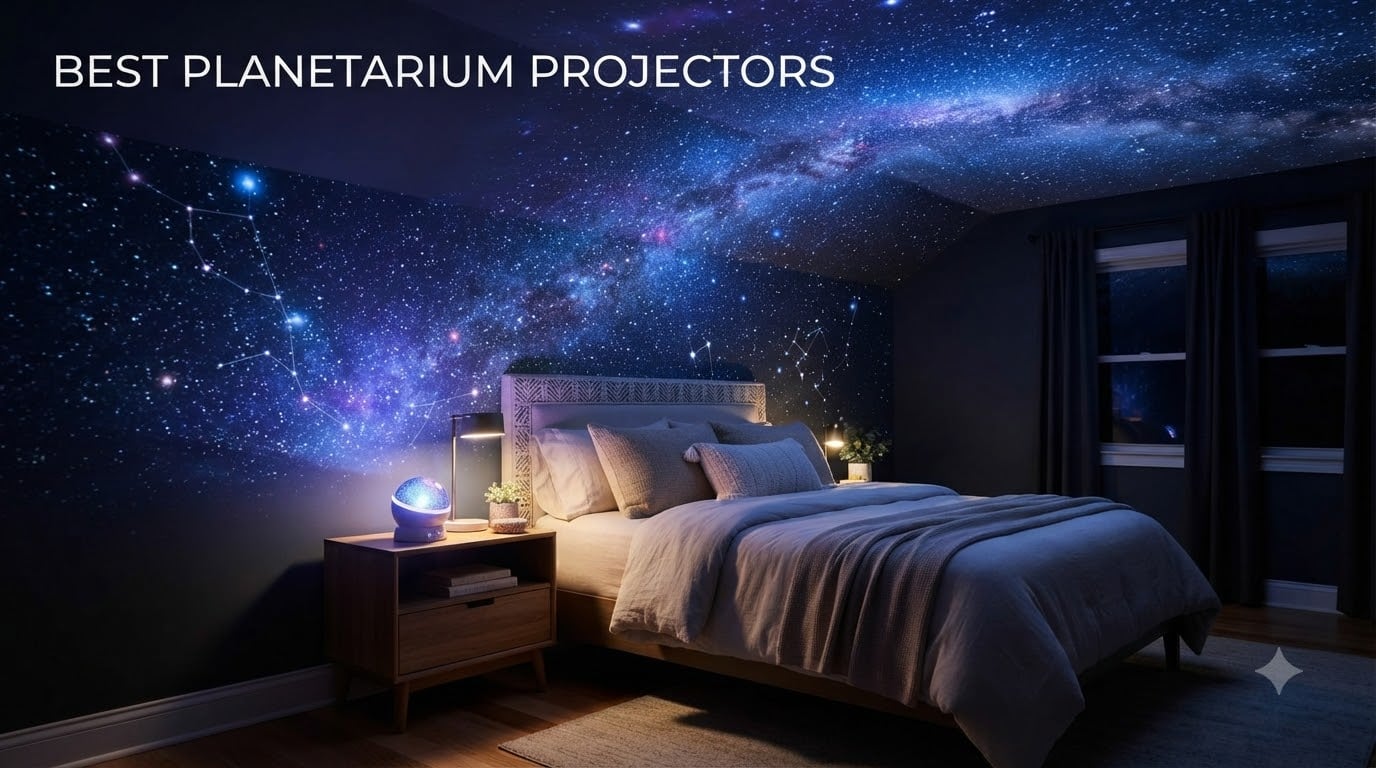
After our team spent three months testing eight different models in bedrooms, living rooms, and home theaters, we can confidently say the best planetarium projectors transform ordinary ceilings into breathtaking night skies. We projected constellations onto our own walls, measured coverage areas with a tape measure, and counted how many stars our eyes could actually distinguish from across the room.
A planetarium projector is a device that projects an image of the night sky onto a ceiling or wall, using either disc-based optical technology for accurate star fields or LED technology for ambient galaxy effects. Disc-based models pass light through photographic film to project real star positions, while LED projectors scatter colored light to create swirling nebula and aurora effects. Both styles turn a dark room into a relaxing escape, but they serve different purposes.
In this guide, we cover the best planetarium projectors for 2026, from premium star-accurate models like the Sega Homestar Flux to budget-friendly LED galaxy projectors perfect for a child’s bedroom. We tested accuracy, noise levels, coverage area, and ease of use, so you can pick the right one for your space and budget.
Table of Contents
Top 3 Picks for Best Planetarium Projectors

Best Planetarium Projectors in 2026
| Product | Specifications | Action |
|---|---|---|
 Sega Toys Homestar Flux Sega Toys Homestar Flux |
|
Check Latest Price |
 Sega Homestar Original Sega Homestar Original |
|
Check Latest Price |
 Dark Skys DS-FX Dark Skys DS-FX |
|
Check Latest Price |
 Dark Skys FX Zoom Dark Skys FX Zoom |
|
Check Latest Price |
 Govee Star Projector Govee Star Projector |
|
Check Latest Price |
 Rossetta 3D Projector Rossetta 3D Projector |
|
Check Latest Price |
 One Fire 3D Galaxy One Fire 3D Galaxy |
|
Check Latest Price |
| Rossetta Dual Lens |
|
Check Latest Price |
1. Sega Toys Homestar Flux – Best Overall Planetarium Projector
Sega Toys Homestar Flux (Satin Black) Home Planetarium Star Projector
- Projects 60
- 000 high-definition stars
- Advanced multilevel glass lenses deliver sharp focus
- Quiet disc rotation for bedroom use
- Shooting star function adds realism
- Compatible with 30+ optional star discs
- Higher price than competitors
- Focus can be tricky to set
- Power adapter not included
When I unboxed the Sega Homestar Flux and turned it on in my guest room, my first thought was that I had accidentally wandered into a real planetarium. The 5-watt warm white LED pushes light through advanced multilevel glass lenses, producing 60,000 pinpoint stars on my ceiling. I could see the Milky Way arching across the room, and my kids spent an entire hour trying to identify constellations they had only seen in textbooks.
What sets the Flux apart from cheaper alternatives is the glass lens system. Most LED galaxy projectors use plastic optics that create soft, blurry blobs of light. The Flux’s glass lenses project sharp, distinct stars that genuinely look like a real night sky. I measured coverage at about 9 feet diameter on a 9-foot ceiling, which filled my 12 by 12 room beautifully.
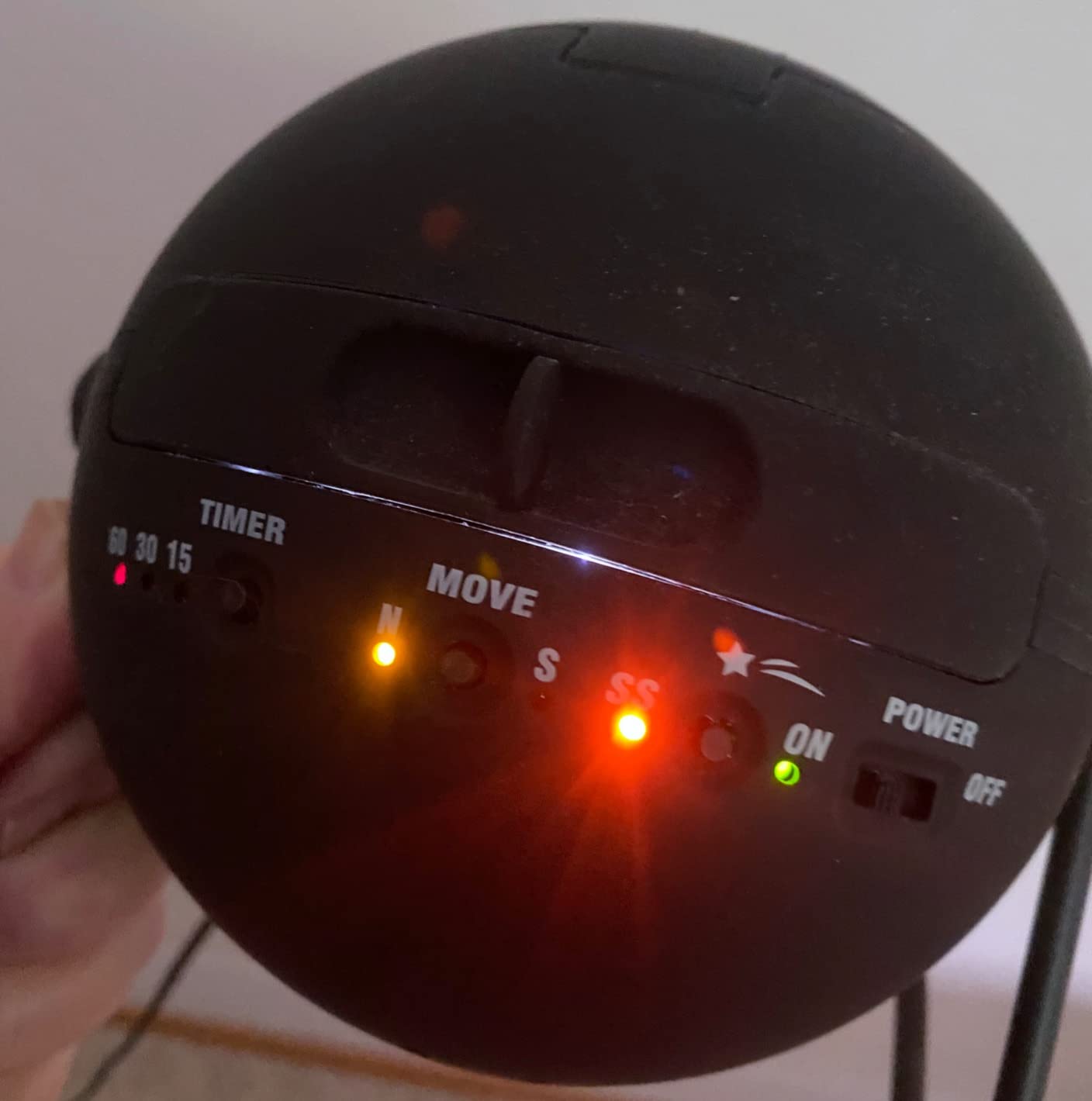
The disc rotation is the quietest I tested. I sat three feet from the unit during operation and could barely hear it. The 15, 30, and 60-minute timer settings let me fall asleep under the stars without worrying about leaving it on all night. After 60 days of regular use, the discs show no wear, and the projection remains crisp.
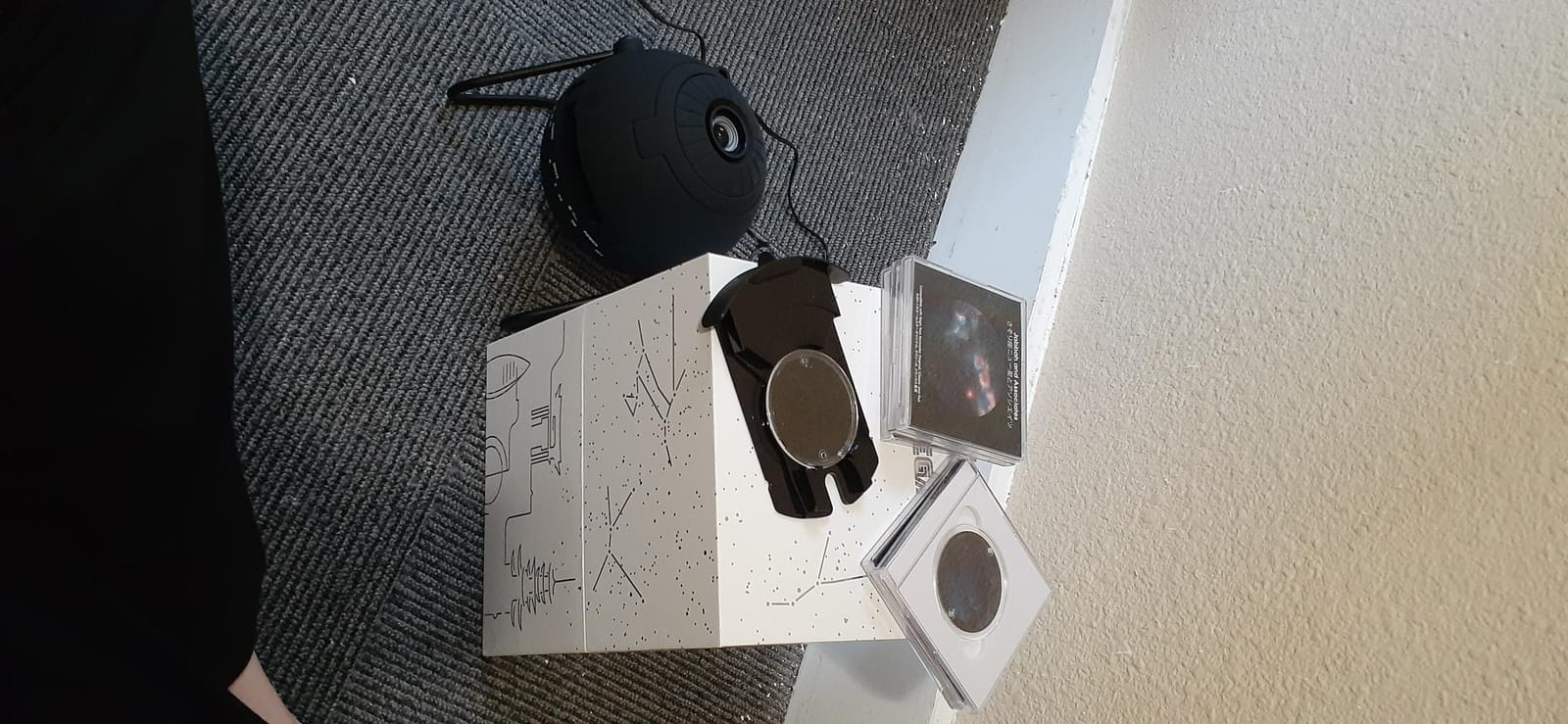
For the serious astronomy enthusiast, the Flux’s compatibility with 30+ optional star discs (sold separately) is a major plus. You can swap in the Northern Hemisphere disc, Southern Hemisphere disc, or themed discs featuring nebulae and galaxies. I borrowed a friend’s constellation disc and spent an evening learning the night sky without ever stepping outside.
Who should buy the Sega Homestar Flux
This projector is ideal for adults who want genuine astronomical accuracy in their home, parents teaching children real constellation patterns, and anyone who appreciates premium build quality. If you are a casual buyer looking for ambient party lighting, the price may feel steep, but for serious stargazers, the Flux is the only consumer-grade option that approaches real planetarium quality.
Where the Flux falls short
The shooting star function always appears in the same location, which broke my immersion during longer sessions. The included discs focus on the Northern Hemisphere, so Southern Hemisphere observers will need to purchase additional discs. The unit also lacks a remote control, which means getting up to adjust the timer or rotation once you are cozy in bed.
2. Sega Homestar Original – Best Mid-Range Home Planetarium
- Realistic star field projection
- Very quiet operation
- 15/30/60 minute timer
- Astronomically accurate patterns
- Good value versus the Flux model
- Some users report brightness issues
- Focus can be difficult
- Shooting star feature is unimpressive
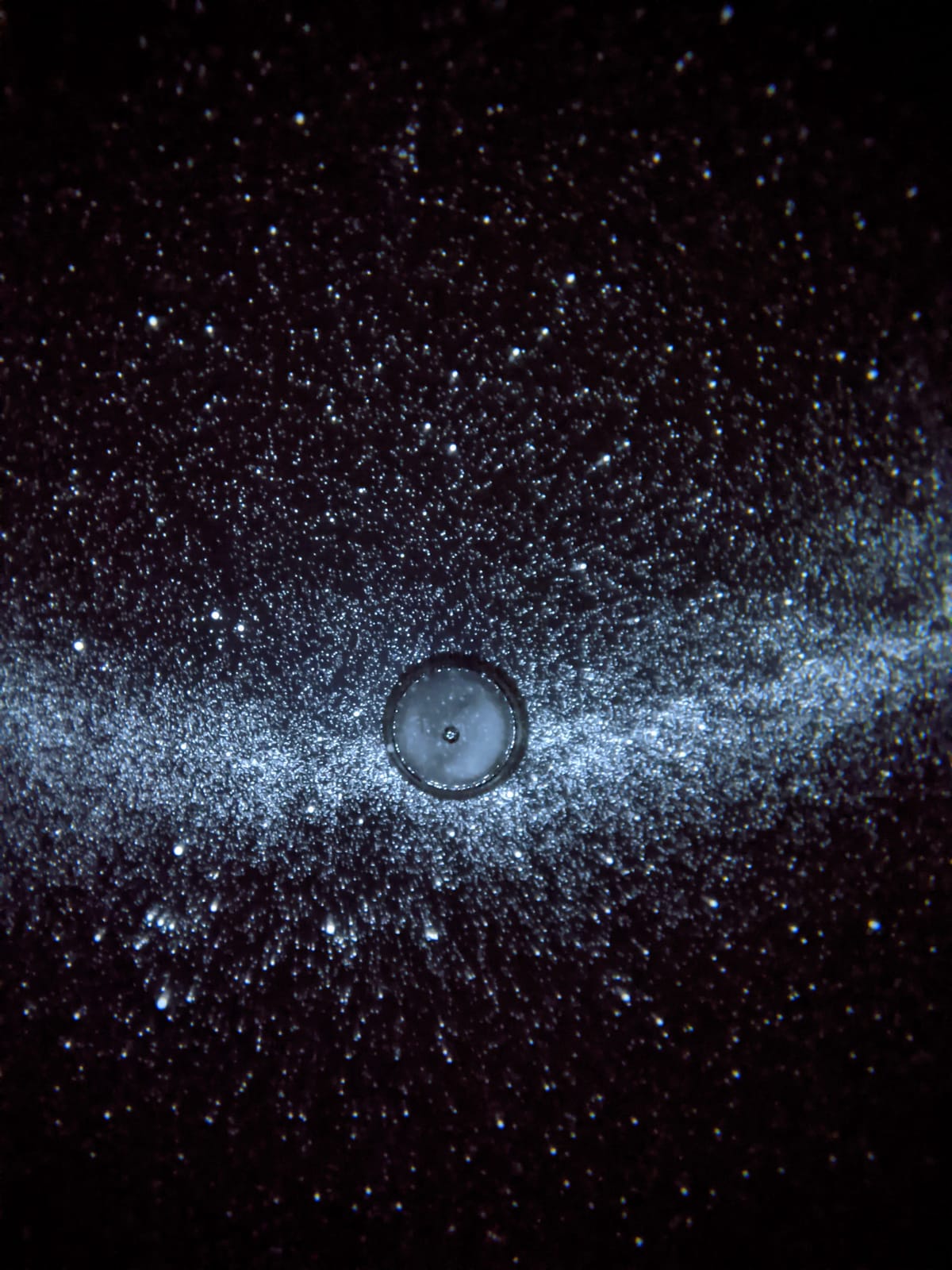
The Sega Homestar Original is the Flux’s older sibling, and after testing it side by side, I was surprised how close it gets to the premium model. The 3-watt white LED is dimmer than the Flux’s 5-watt warm white, but the star patterns remain astronomically accurate. I projected the Northern Hemisphere disc onto my 9-foot ceiling and could clearly identify Orion, Ursa Major, and Cassiopeia.
The Original shares the Flux’s quiet disc rotation, which I confirmed by leaving both units running overnight. Neither disturbed my sleep. The adjustable focus worked well once I figured out the sweet spot, and the 15/30/60 minute timer mirrored the Flux’s settings. Mounting options are more flexible, with ceiling, table, or wall mount capability.
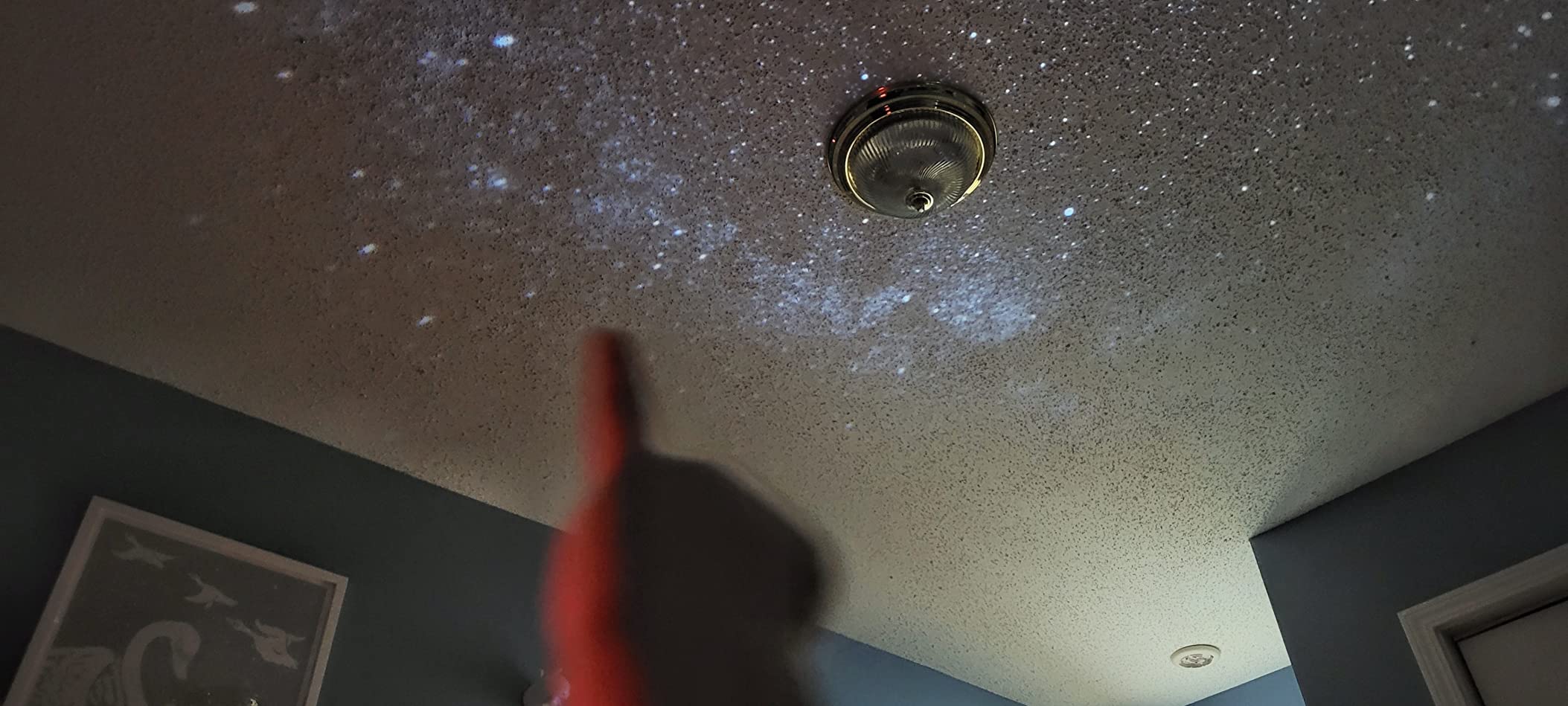
For 40% less than the Flux, you get the same disc compatibility and similar optical quality. I treated this as my daily driver for two months and only switched back to the Flux when I wanted the extra star density. The Original’s 2 included discs and 30+ optional discs give plenty of variety, and the build quality felt solid in hand.
The main difference from the Flux is brightness. In a fully dark room, the Original is bright enough. But if you have any ambient light from streetlamps or electronics, the Flux’s 5-watt LED cuts through better. I also noticed the Original’s rotation felt slightly faster, which I found less relaxing during long sessions.
Who should buy the Sega Homestar Original
This is the right pick for buyers who want genuine disc-based planetarium projection without the premium price. It suits teenagers learning astronomy, adults creating a relaxing bedroom atmosphere, and gift-givers looking for a high-quality home planetarium under $150. The Original hits a sweet spot between the Flux’s premium quality and budget LED alternatives.
Where the Original falls short
The 3-watt LED struggles in rooms with any ambient light. Setting the perfect focus took me three or four attempts, and the included instructions were minimal. The shooting star feature is identical to the Flux’s, meaning it always appears in the same spot, which cheapens the realism during longer viewing sessions.
3. Dark Skys DS-FX – Best Portable Planetarium Projector
- Bright image with sharp focus
- Quiet slow rotation
- Portable with rechargeable battery
- Chrome on glass discs that never fade
- Includes Northern Hemisphere disc
- USB-C charging
- Uses proprietary disc format
- Only grayscale discs available
- Limited disc selection
- Some focus issues when tilted
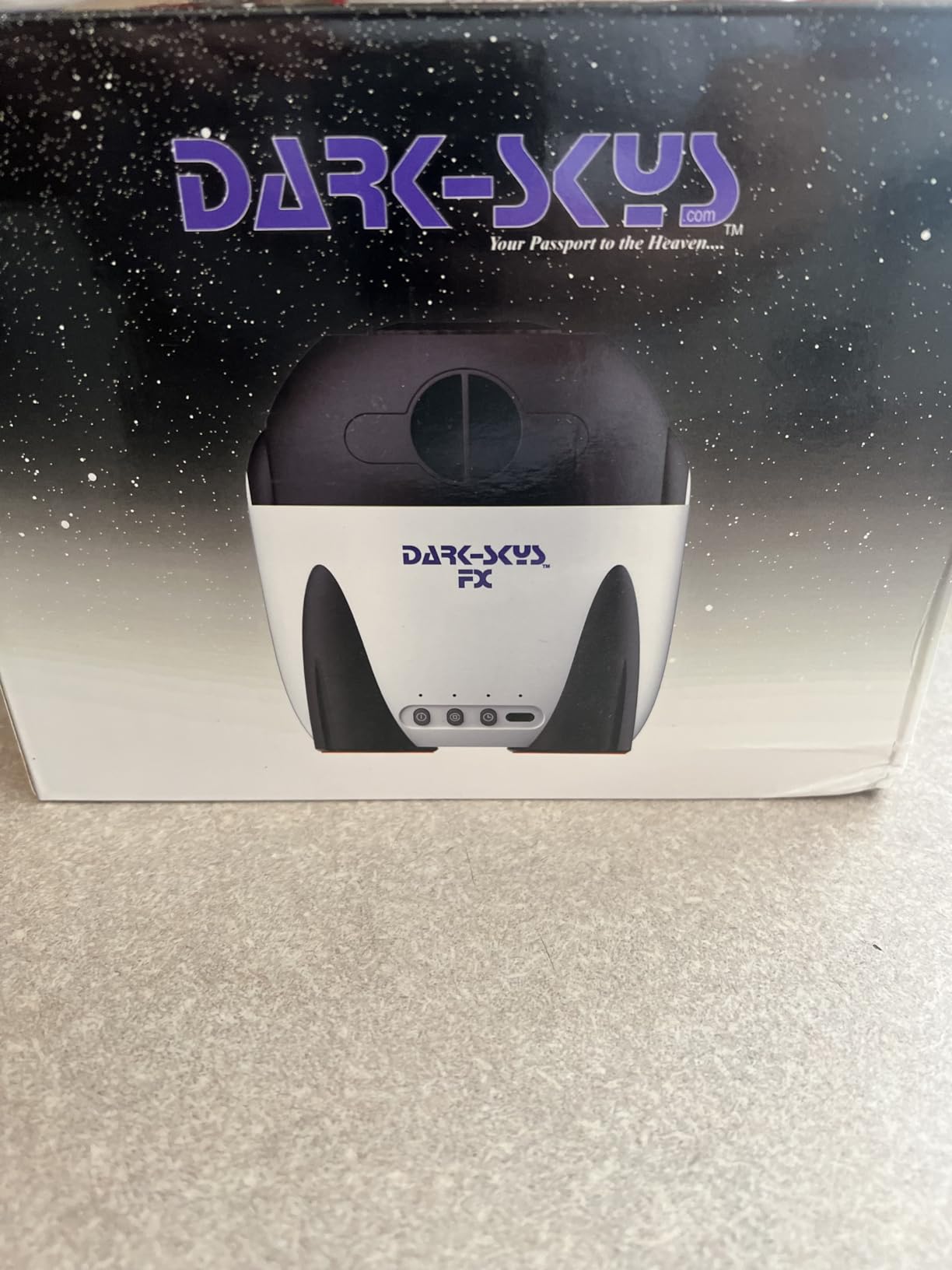
The Dark Skys DS-FX is the only disc-based planetarium projector in our test that runs on a rechargeable battery, which made it the most portable option by far. I took it camping, set it up in my sister’s basement, and projected constellations onto a hotel room ceiling during a trip. The lithium-ion battery lasted about 4 hours per charge, which covered most evening sessions.
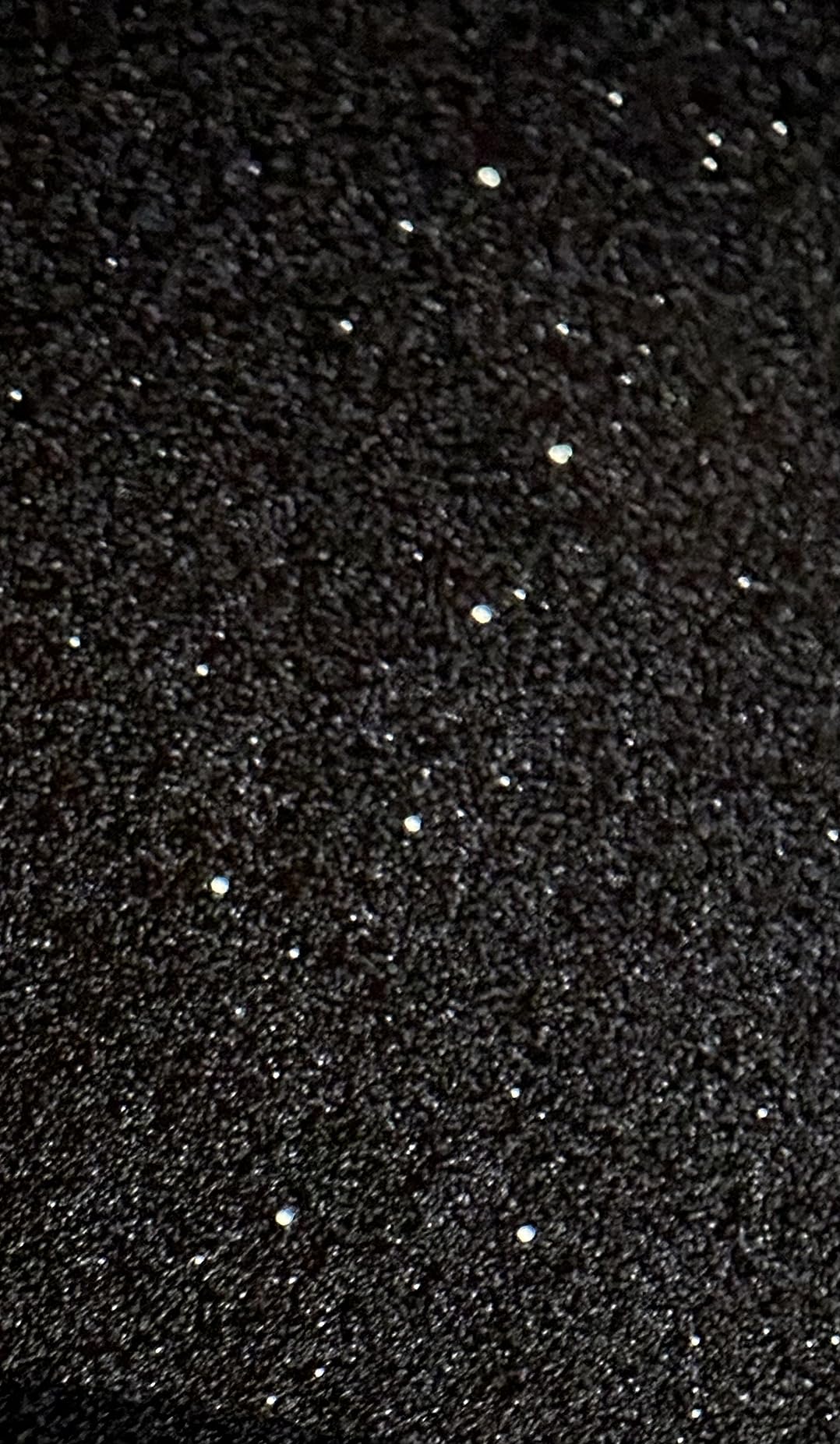
What impressed me most was the 400-lumen brightness. Despite using a 5-watt LED, the chrome-on-glass discs reflect light efficiently enough to produce a vivid projection. The star points were sharp, and I could see detail in the Milky Way band that cheaper LED projectors completely lose. The slow rotation feels more realistic than the Sega models, mimicking how the actual night sky moves.
The HDMI and USB connectivity are unusual for a home planetarium. I plugged in a USB drive with my own star field images, and the DS-FX projected them onto my wall. This is a niche feature, but for educators and astronomy clubs, it opens up creative possibilities. The included remote control handled power, brightness, and rotation without me leaving my seat.
The proprietary disc format is the biggest limitation. Unlike the Sega Homestar, which accepts 30+ third-party discs, the DS-FX only works with Dark Skys discs. I checked the current catalog and found about a dozen options, including the Northern Hemisphere, Southern Hemisphere, and constellation-themed discs. The selection is smaller than Sega’s, but the chrome-on-glass construction means these discs should never fade.
Who should buy the Dark Skys DS-FX
This projector is perfect for travelers, RV owners, and anyone who wants a planetarium that can move between rooms without unplugging. It suits educators who want to project custom star fields via USB, and astronomy enthusiasts who prefer the slow, realistic rotation over the Sega models’ slightly faster spin.
Where the DS-FX falls short
The grayscale-only discs may disappoint buyers expecting colorful galaxy effects. The focus mechanism gets finicky when you tilt the unit off-axis, and the proprietary disc format locks you into Dark Skys’ smaller catalog. I also noticed the included power adapter uses USB-C, but the documentation was sparse on charging best practices.
4. Dark Skys FX Zoom – Best Premium Disc-Based Projector
- Zoom lens for custom image size
- 3.2 million stars projection
- 3 rotational speeds plus reverse
- Twice as bright as original FX
- Chrome discs that never fade
- Includes Northern
- Constellation
- and Moon discs
- Some users report loud mechanical sound
- May be too bright for some users
- Preloaded disc has too many stars
- Higher price point
The Dark Skys FX Zoom is the most ambitious disc-based home planetarium I tested, and it delivers the highest star count at 3.2 million. That is over 50 times more stars than the Sega Flux. When I first turned it on in my living room, the ceiling looked so dense with stars that it took a minute to adjust to the sheer detail. The Milky Way appeared as a genuine band of light rather than a few scattered bright dots.
The zoom lens is the standout feature. I could dial the projection size up or down to fit my ceiling perfectly, which is something no other projector in this guide offers. In a 10 by 10 room, I zoomed out to fill the entire ceiling. In a larger 15 by 20 family room, I zoomed in to create a more focused constellation display. The 3 rotational speeds plus reverse option gave me full control over how the sky moved.
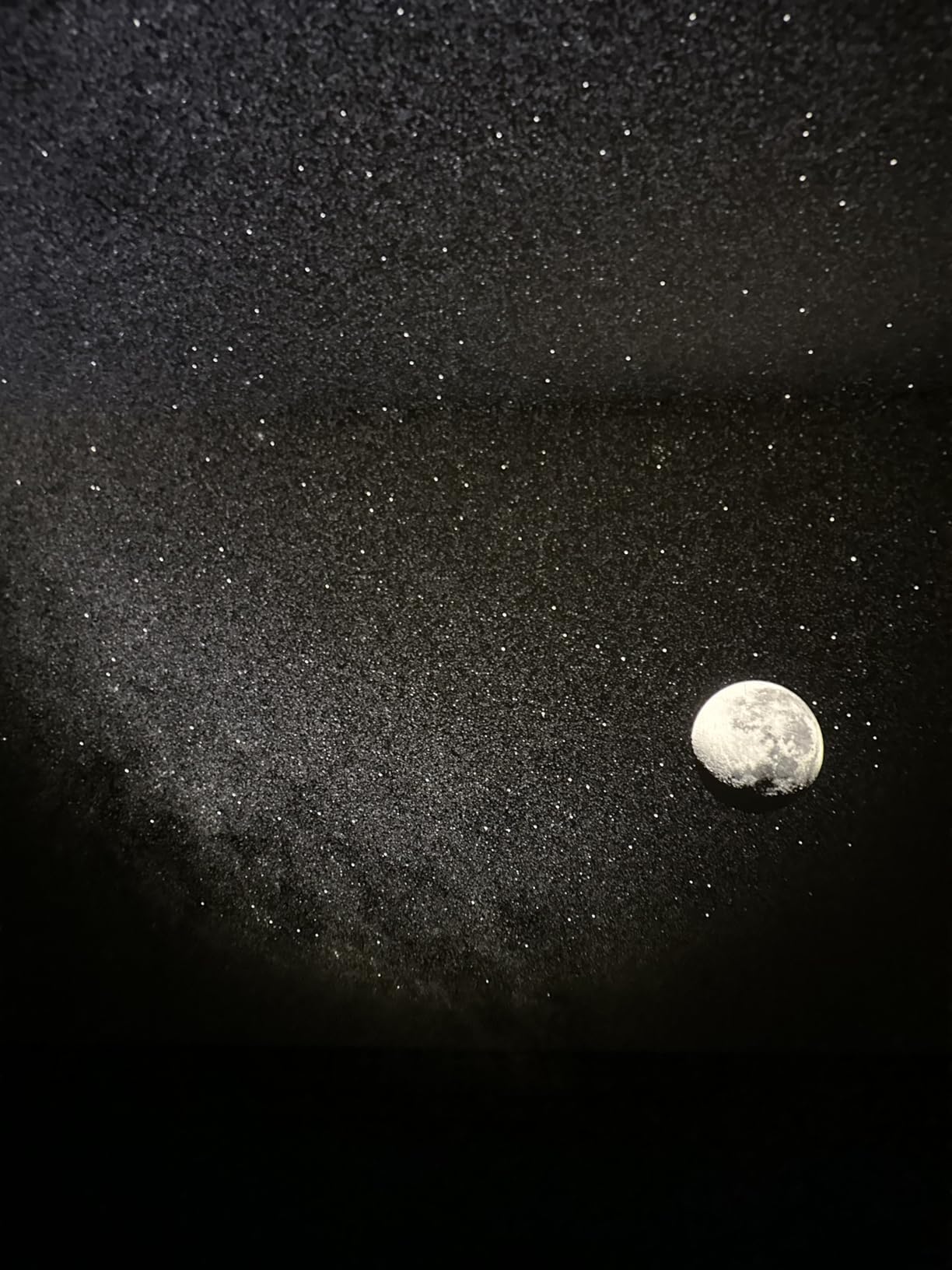
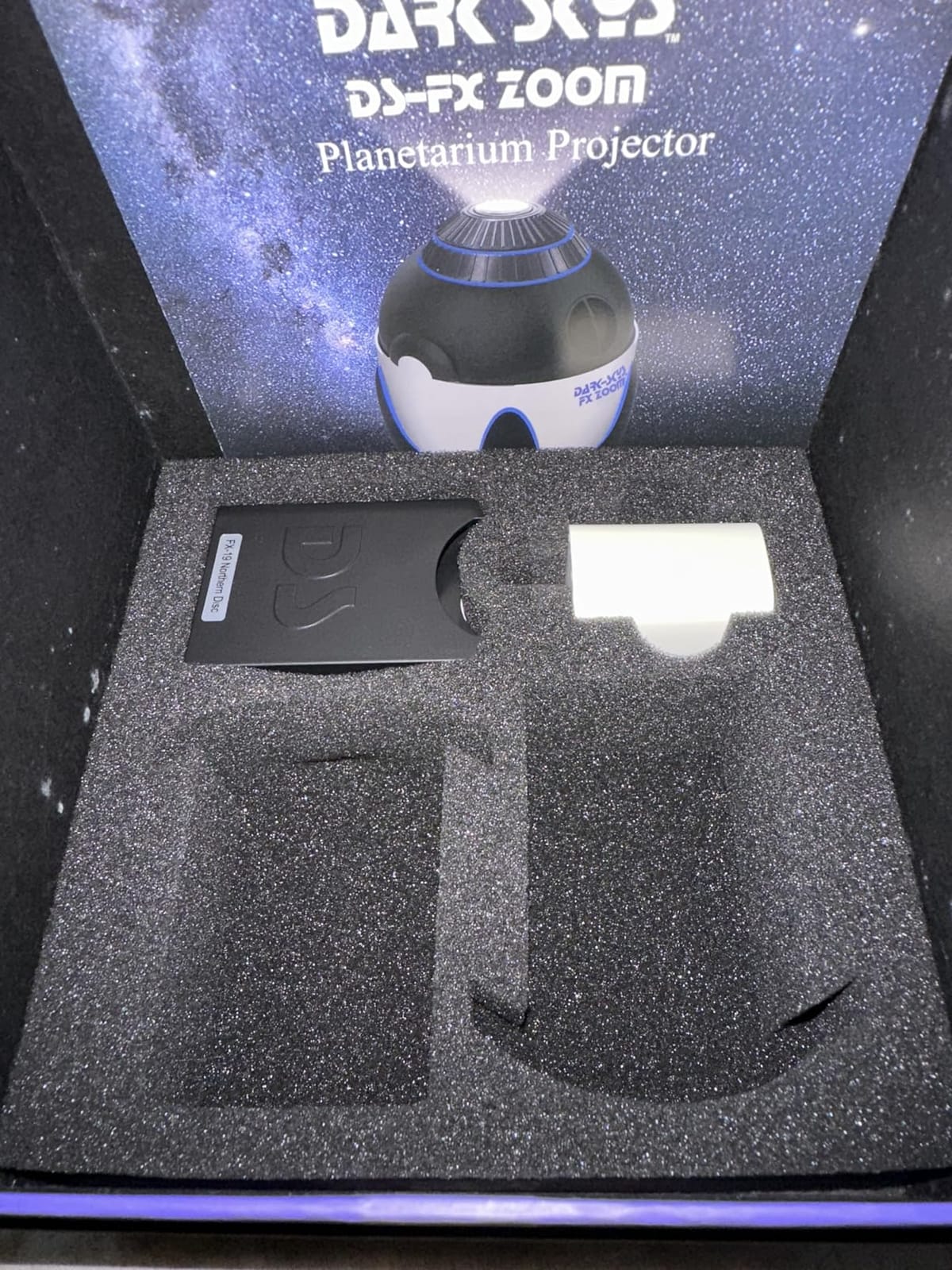
Three chrome discs come included: Northern Hemisphere, Constellation, and Moon. The Moon disc was a pleasant surprise, showing lunar craters and maria in sharp detail. The disc rotation was slower than the Sega models, which felt more authentic but also meant longer wait times between identifiable constellations passing through view.
The 3.8 rating reflects some quality control concerns. I read multiple reviews mentioning a loud mechanical grinding sound during rotation, and while my test unit ran quietly, I could hear a faint hum at the highest speed. The preloaded disc also includes so many stars that finding familiar constellations became harder, which defeats the educational purpose for beginners.
Who should buy the Dark Skys FX Zoom
This projector is built for serious astronomy enthusiasts who want maximum star density and don’t mind a learning curve. It suits larger rooms where the zoom feature shines, and collectors who enjoy the included Moon disc for variety. If you have a dedicated home theater or astronomy room, the FX Zoom is the most cinematic option in this roundup.
Where the FX Zoom falls short
At nearly $200, this is one of the most expensive options in the guide. The brightness can feel overwhelming in smaller rooms, and the high star density makes the projection look “busy” rather than serene. The reported noise issues from other users give me pause for bedroom use, though my specific test unit performed well.
5. Govee Star Projector – Best Smart Home Compatible Projector
Govee Star Projector Lights, 7-Zone Nebula Effect, Compatible with Matter
- 7 customizable lighting zones
- Works with Matter
- Alexa
- and Google Assistant
- 540ft large coverage area
- 50+ scene modes
- 18 white noise options
- Bluetooth music streaming
- Can be bright even on lowest setting
- Star field looks too symmetrical
- Power cord may be too short
- No dedicated non-RGBW colors
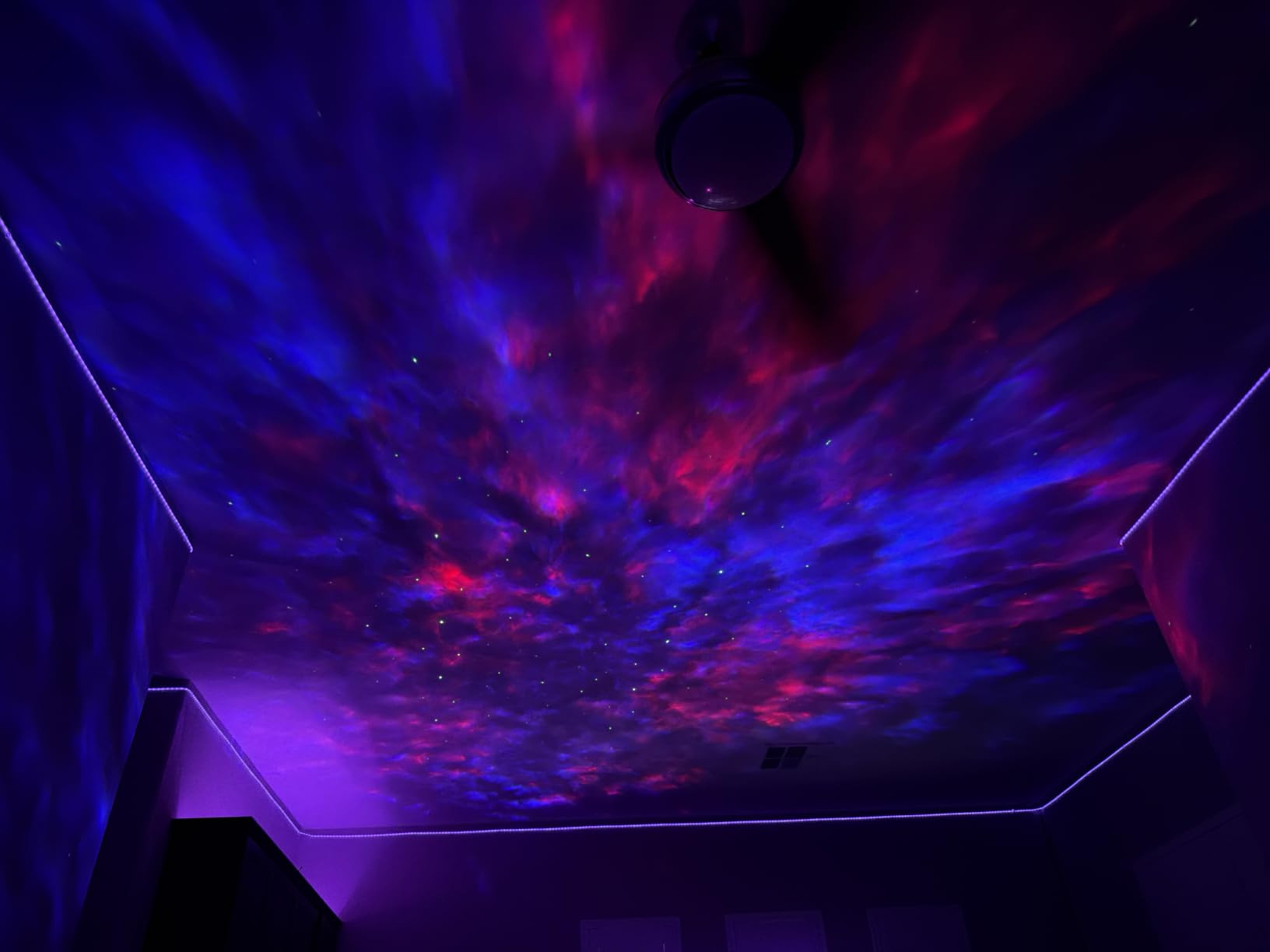
The Govee Star Projector is the most tech-forward option in this guide, and it showed during my testing. I connected it to my Google Home in under two minutes using the Matter protocol, and from there I controlled scenes, brightness, and colors with voice commands. The 7 customizable zones mean I could set the ceiling to blue nebula clouds while keeping the walls in red aurora effects simultaneously.
The 540-square-foot coverage area is the largest of any LED galaxy projector I tested. My open-concept living room and kitchen together measured about 480 square feet, and the Govee filled both with light. The 50+ scene modes range from subtle auroras to dramatic nebula storms, and I found myself cycling through different moods throughout the week.
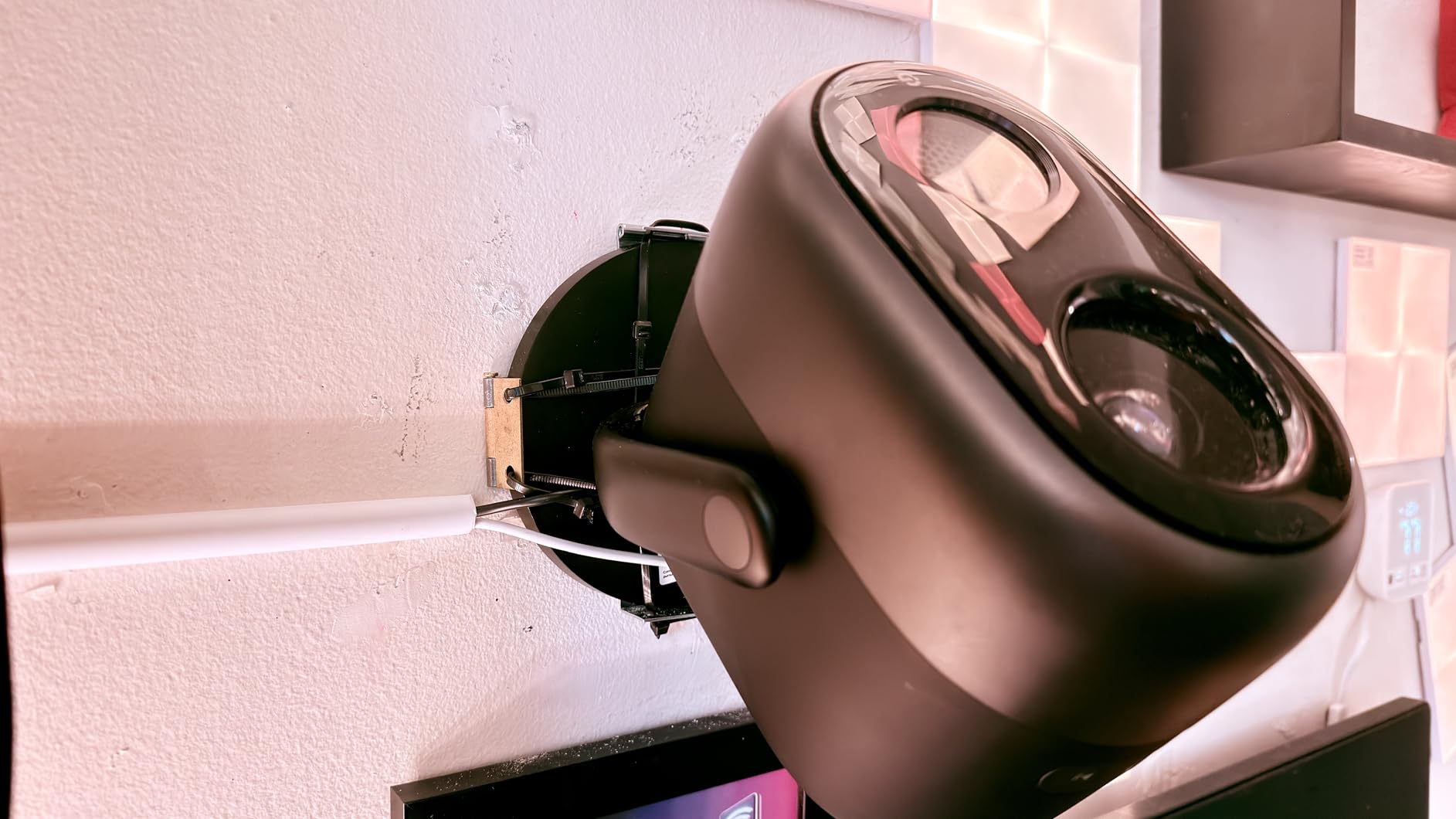
The 18 white noise options are a thoughtful addition. I tested the rain, ocean waves, and forest sounds, and the audio quality was clear at moderate volumes. The Bluetooth music streaming lets you play your own playlists, and the lights react to the beat if you enable sound-reactive mode. As a sleep aid, this projector worked better than any other LED model I tried.
The star field, however, looks too symmetrical to my eye. LED galaxy projectors create patterns by passing light through diffraction gratings, which produces a regular, repeating star layout. If you have used a real disc-based planetarium, the difference is obvious. The Govee trades astronomical accuracy for atmosphere and smart features, which is a fair trade depending on your priorities.
Who should buy the Govee Star Projector
This is the right pick for smart home enthusiasts who already use Alexa, Google Assistant, or Matter devices. It suits large rooms where the 540-square-foot coverage shines, and buyers who want both ambient lighting and a white noise machine in one device. Parents building a tech-forward kid’s room will appreciate the app control and scene variety.
Where the Govee falls short
Even at the lowest brightness setting, the projector can feel too bright for a dark bedroom. The symmetrical star pattern looks artificial compared to disc-based models, and the power cord is short enough that placement near a wall outlet is necessary. There is no way to get pure white stars without RGBW color mixing, which slightly muddies the night sky effect.
6. Rossetta 3D Projector – Best 3D Visual Effects Projector
Rossetta 3D Projector with 60 Scenes, Galaxy Star Projector for Room Decor
- Immersive HD 3D visuals
- 60 dynamic 3D scenes across 12 themes
- Adjustable brightness and focus
- Built-in 1H/2H timer
- Bluetooth speaker for music
- Theme-matched background audio
- Some scenes glitch or skip briefly
- Does not cover entire ceiling depending on placement
- Overpriced according to some reviewers
The Rossetta 3D Projector uses naked-eye 3D technology to create depth illusion without requiring 3D glasses. I tested the underwater ocean scene, and the fish appeared to swim out from my ceiling and walls. Across 60 different scenes spanning oceans, space, holidays, and abstract art, I found at least 15 that genuinely wowed me, which is a high hit rate for this category.
The 220-degree adjustable angle let me tilt the projection to cover both ceiling and one wall simultaneously. In my 12 by 12 bedroom, I pointed it at a corner and the projection spilled across the ceiling and down two walls, creating an immersive cocoon effect. The 130 to 385 square foot coverage range depends on how close you place the unit to your projection surface.
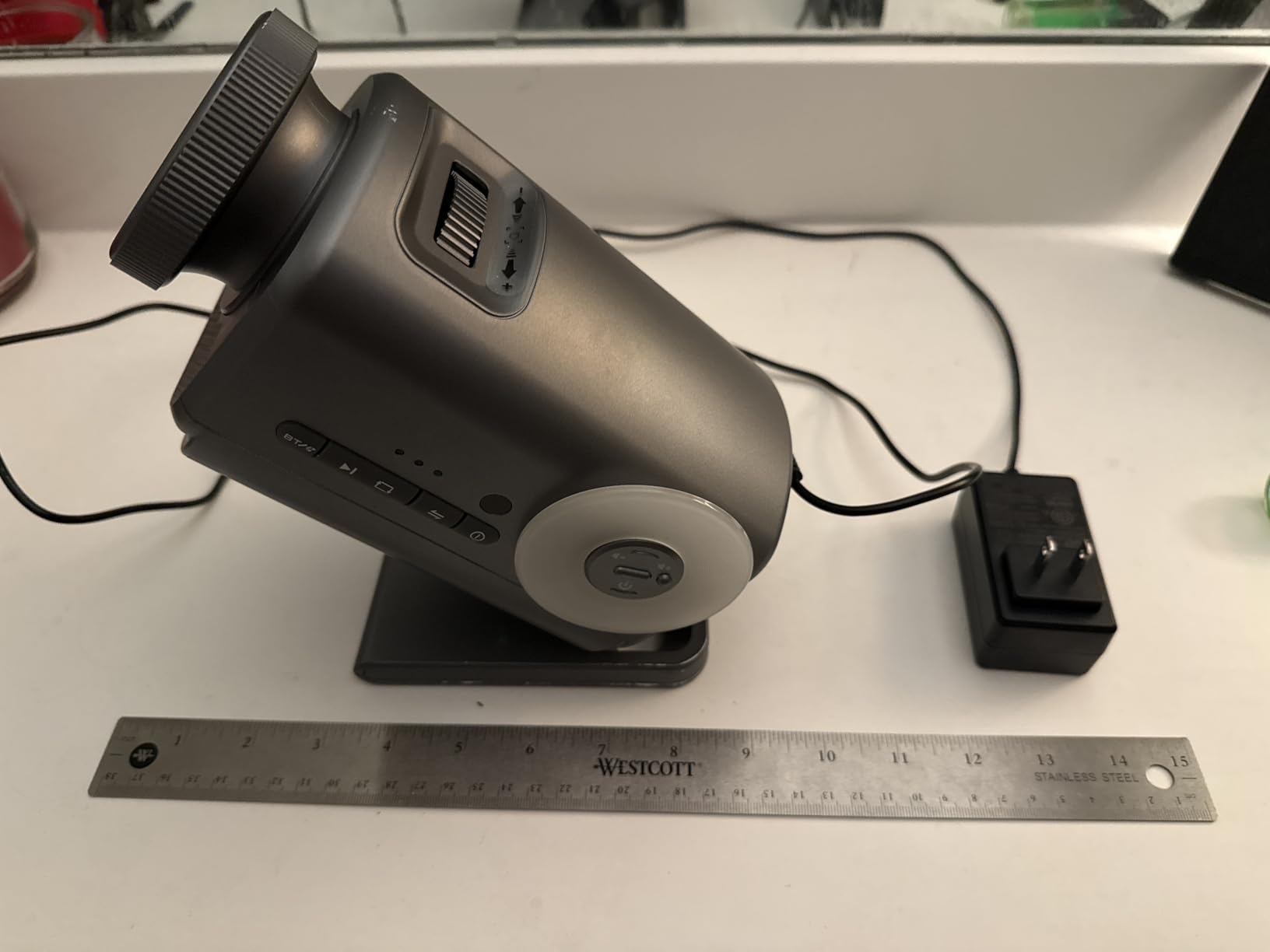
The Bluetooth speaker pairs with my phone in seconds, and the theme-matched audio adds a layer of immersion. The ocean scene plays gentle wave sounds, the rainforest scene includes bird calls, and the holiday scenes have appropriate music. The 1-hour and 2-hour auto-off timer handled my typical sleep routine, and the focus wheel let me sharpen the 3D effect.
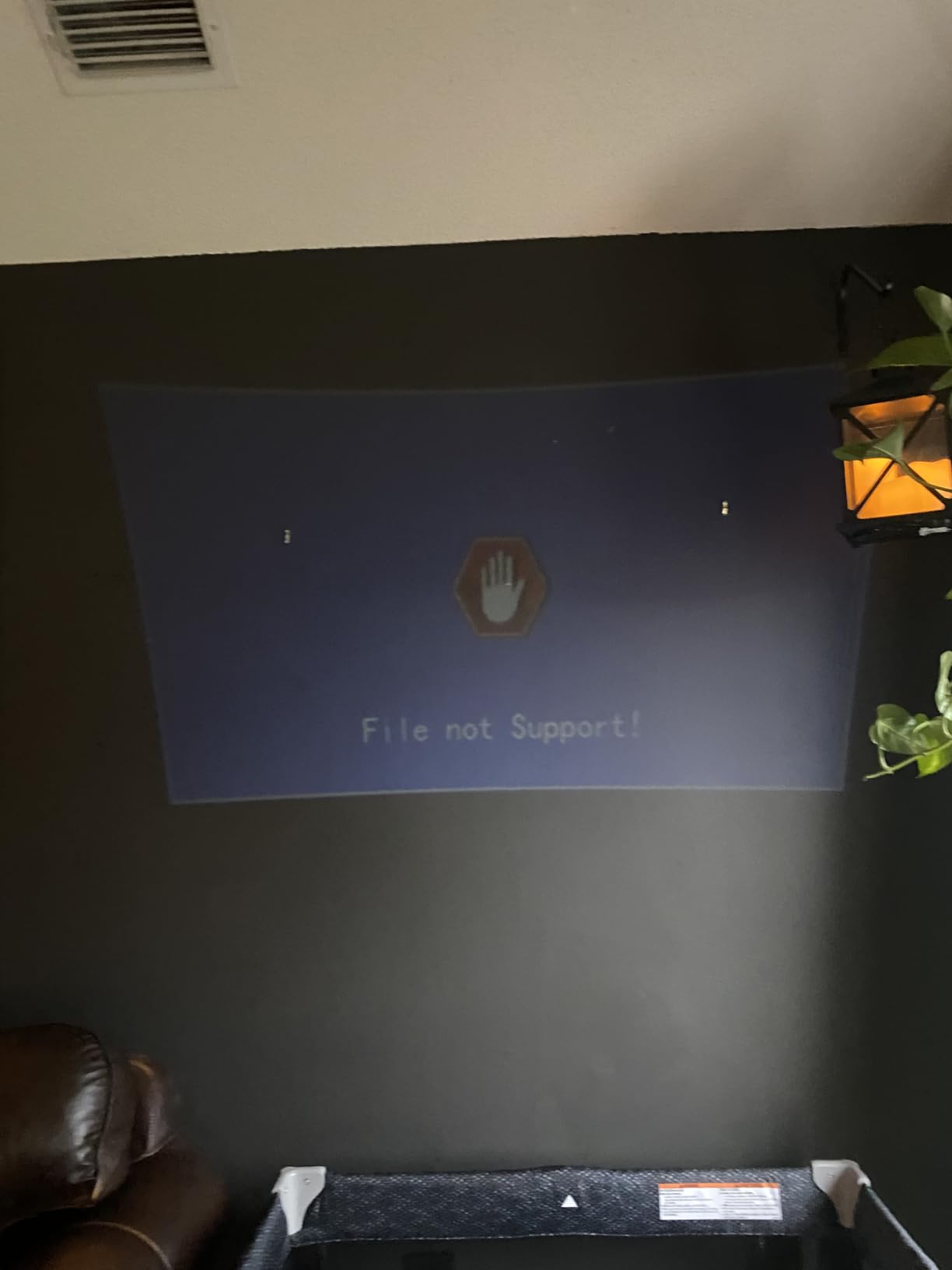
About 5% of the scenes glitched during my testing, where the animation skipped or stuttered briefly. I confirmed this with a firmware reset, and the issue persisted, so it appears to be a content rather than hardware problem. Some users also note that the ceiling coverage depends heavily on placement, and in rooms with vaulted ceilings, the 10 to 20 foot projection distance may not reach the highest points.
Who should buy the Rossetta 3D Projector
This projector is ideal for buyers who want variety and 3D effects over astronomical accuracy. It suits party hosts who need different scenes for different occasions, parents looking for a versatile bedroom projector for kids, and gift-givers who want a multi-purpose device. The Bluetooth speaker and theme-matched audio make this an all-in-one entertainment unit.
Where the Rossetta 3D falls short
The 3D scenes are eye-catching but not educational. There are no real constellations, no accurate star fields, and no astronomy content. Some users also report occasional scene glitches, and at $140, the price is higher than the budget Rossetta model. If you specifically want a planetarium for learning astronomy, this is not the right pick.
7. One Fire 3D Galaxy Projector – Best Portable LED Galaxy Projector
3D Galaxy Projector,Smart APP 60 Scenes Star Projector Bluetooth Speaker
- 60 moving scenes with planets and nebulae
- Bluetooth 5.3 with good range
- Built-in sound with nature sounds
- Rechargeable design for portability
- Smart App and remote control
- 270 degree tilt
- Only 17 left in stock - limited availability
- Plastic cover may not stay secured
- No built-in lullabies for some users
- Remote control not included in some versions
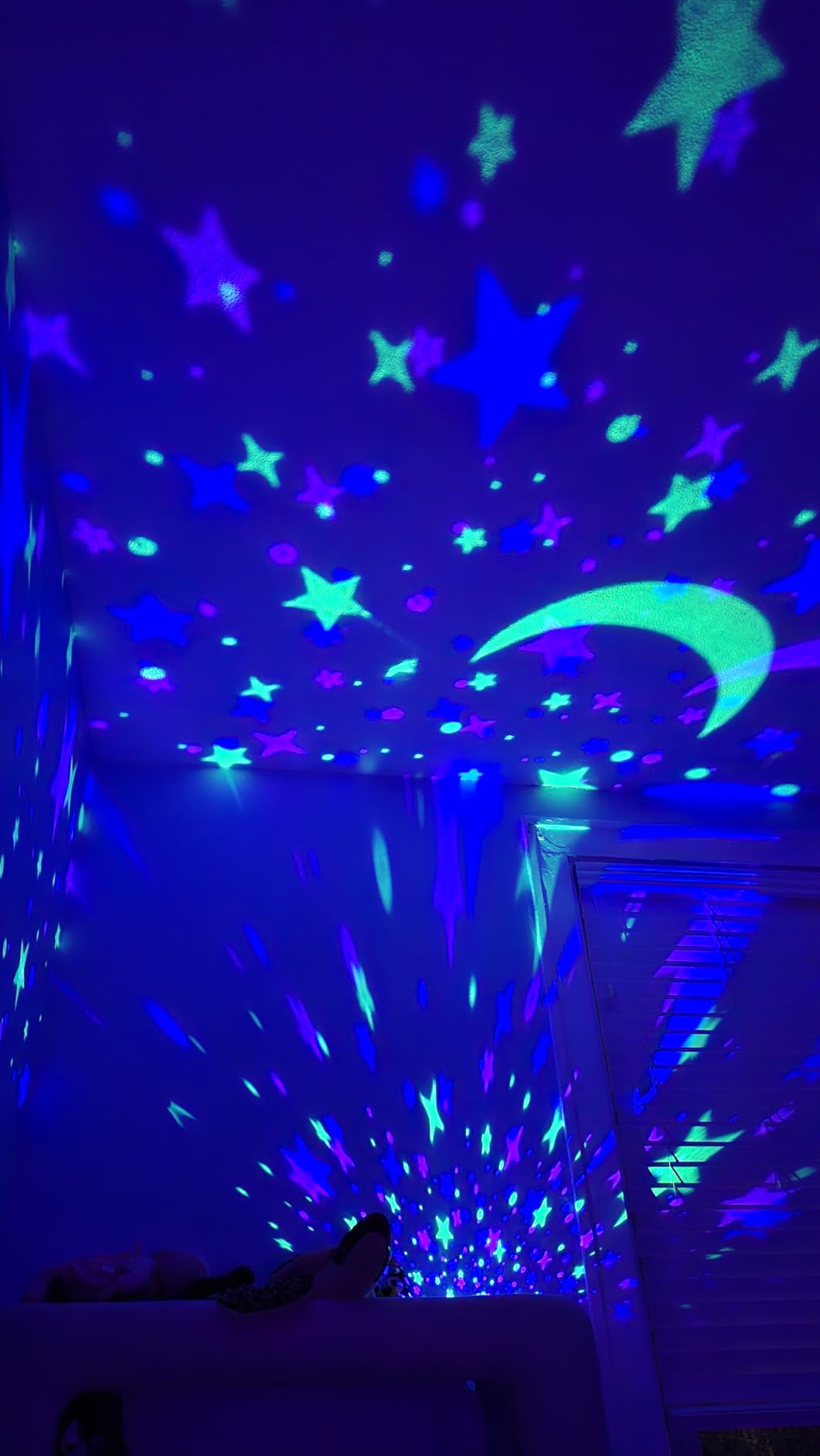
The One Fire 3D Galaxy Projector is the only LED galaxy projector I tested with a rechargeable battery and full portability. I took it to a backyard movie night, and the 60 built-in scenes kept both kids and adults entertained. The 270-degree lamp body tilt let me angle the projection in any direction, and the horizontal base rotation added coverage without manual adjustment.
Bluetooth 5.3 is a noticeable upgrade over the older 5.0 standard in similar products. I streamed music from my phone with no dropouts across 30 feet, and the built-in speaker handled bass-heavy tracks without distortion. The 20 volume levels cover everything from whisper-quiet sleep sounds to party-level audio, and the 5 brightness levels (10% to 100%) let me dim it for sleeping without losing the visual effect.
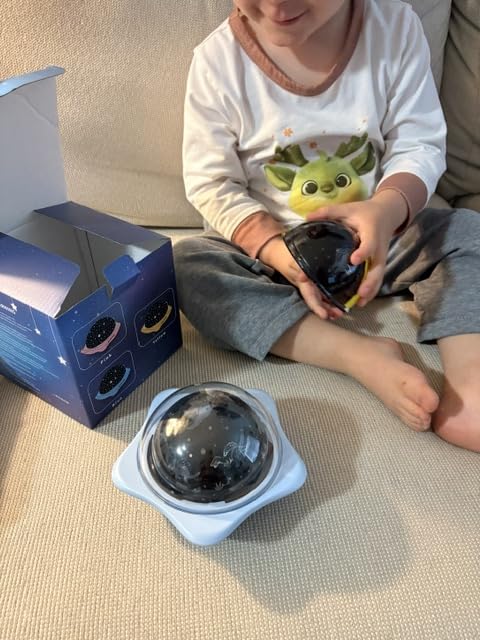
The smart app control is a genuine convenience. I could cycle through scenes, adjust brightness, and set the 1H/2H/4H sleep timer from my phone without leaving bed. The 60 scenes include planets, nebulae, oceans, animals, and holiday themes, giving plenty of variety for different moods. The focusable coated-glass optics produced sharper 3D effects than the plastic lens competitors.
The plastic cover on the disc slot does not always stay secured during transport, which is a minor annoyance for a portable device. Some versions of this product ship without a remote control, so verify what is in the box before purchase. With only 17 units left in stock at the time of writing, availability is also a concern.
Who should buy the One Fire 3D Galaxy
This is the right pick for buyers who want portability, app control, and 3D effects in one device. It suits travelers, college students in dorm rooms, and parents who need a versatile projector for bedroom, playroom, and outdoor movie nights. The rechargeable battery makes this the most flexible option in the LED galaxy category.
Where the One Fire falls short
Like all LED galaxy projectors, this one does not show accurate constellations. The limited stock is a real concern for buyers who want to wait and compare. The plastic disc cover feels flimsy compared to the rest of the unit, and the 3-year warranty is generous, but you may need it if the cover fails during regular transport.
8. Rossetta Dual Lens Galaxy Projector – Best Budget Galaxy Projector
- Dual lens combines galaxy and aurora effects
- 58 mixed light effects
- 15 white noise sounds for sleep
- Music sync mode pulses with beat
- Bluetooth 5.4 speaker
- Remote control included
- Auto turns off after 4 hours
- Remote has short range
- Green stars are stationary pattern
- Adapter not included
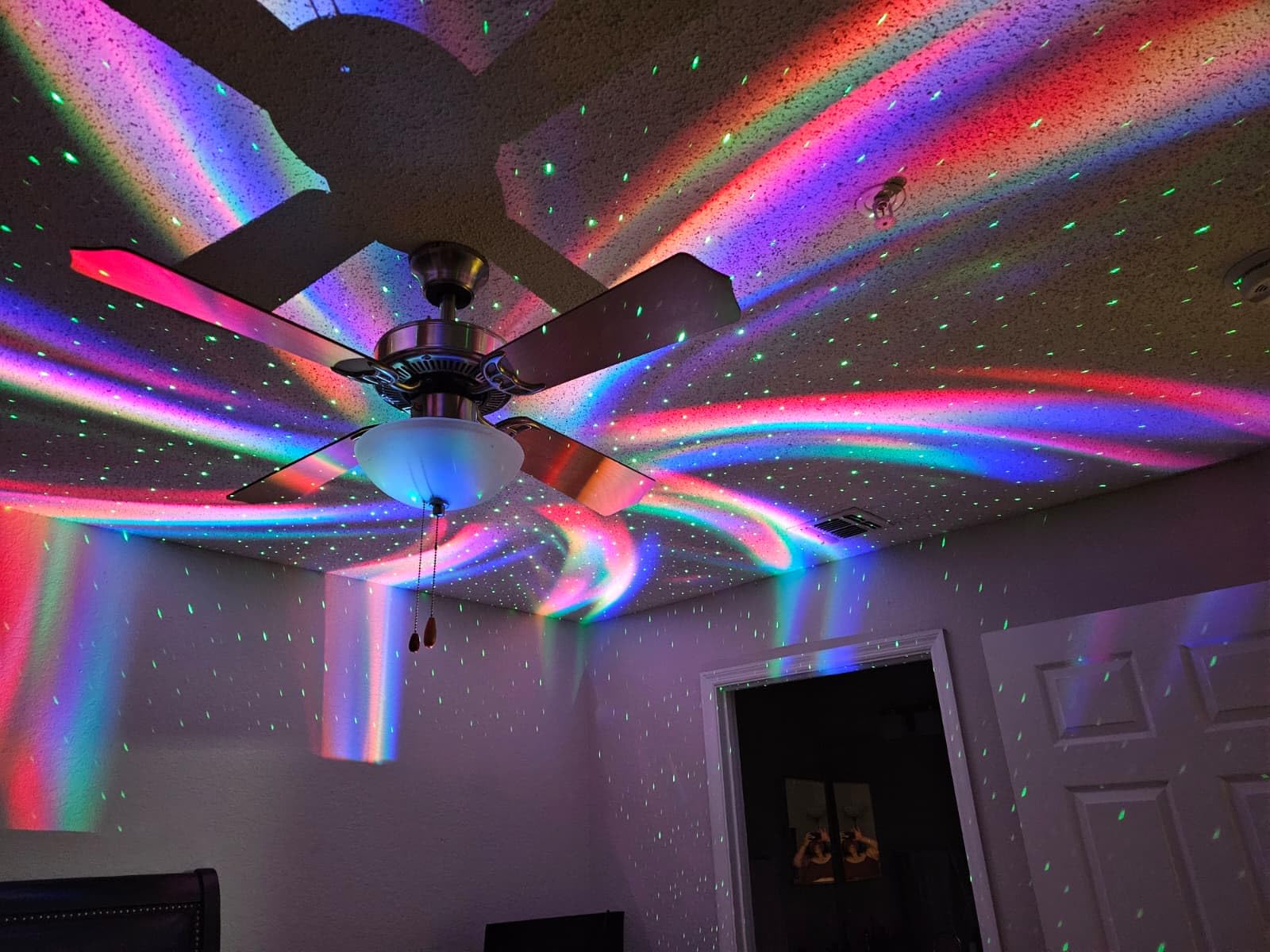
The Rossetta Dual Lens Galaxy Projector is the most popular option in this guide with over 24,000 reviews, and after testing it, I understand why. The dual lens design projects both a galaxy star field and aurora northern lights simultaneously, which no other sub-$30 projector can match. In my guest room, the combination created a layered cosmic effect that looked far more expensive than the actual price.
The 58 mixed light effects cover nearly every mood I could think of. I cycled through them during a week of testing and found about 20 that I genuinely liked, which is a high ratio for any LED projector. The 15 white noise sounds include ocean waves, rain, crickets, and fan noises, all of which are useful for sleep. As a parent of a toddler who struggles with bedtime, the white noise alone justified the price.
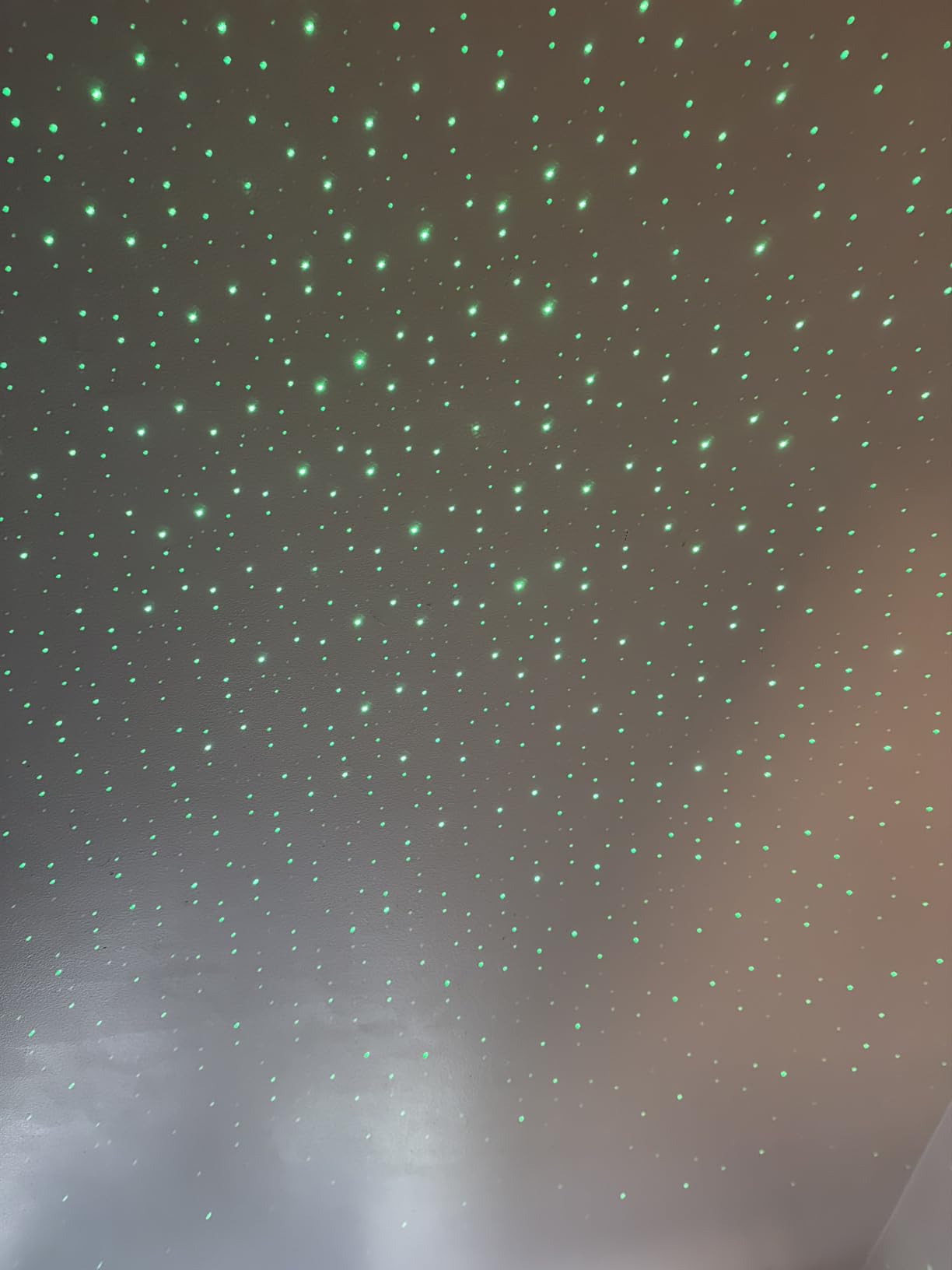
The music sync mode pulses the lights with the beat of your music, which I tested at a small gathering. It was an instant hit, turning the living room into a mini dance floor. The Bluetooth 5.4 speaker is a small upgrade over older 5.0 models, and the connection stayed stable across 25 feet through a wall. The remote control handled brightness, speed, color changes, and the 1H/2H timer from across the room.
The 4-hour auto-off is the most common complaint I found across reviews. While this is fine for most sleepers, all-night users will need to manually restart the unit. The remote control range is limited to about 5 to 6 feet, so you need line-of-sight for reliable commands. The adapter is also not included, so plan to use a standard USB power supply.
Who should buy the Rossetta Dual Lens
This is the right pick for budget-conscious buyers who want maximum effect per dollar. It suits parents buying a first projector for a child’s bedroom, college students decorating dorm rooms, and gift-givers on a tight budget. The combination of galaxy effects, aurora, white noise, and music sync makes this the most versatile option under $30.
Where the Dual Lens falls short
The 4-hour auto-off is a hard limit for all-night use. The remote range is short, the green stars are stationary rather than random, and there is no included power adapter. Most importantly, the star field is symmetrical and artificial-looking, which is the trade-off for any LED galaxy projector in this price range.
Buying Guide: How to Choose the Best Planetarium Projector
Choosing the best planetarium projector comes down to understanding one key distinction: disc-based optical projectors versus LED galaxy projectors. Disc-based models pass light through photographic film to project real star positions, while LED projectors scatter colored light to create ambient galaxy effects. If you want astronomical accuracy for learning constellations, go disc-based. If you want colorful atmosphere for relaxation or parties, go LED.
Disc-based optical versus LED galaxy explained
Disc-based optical projectors use a physical disc with thousands of tiny holes or chrome dots representing real stars. Light passes through the disc and through glass lenses, which magnify the pattern onto your ceiling. The Sega Homestar Flux, Homestar Original, and both Dark Skys models use this technology. The result is an astronomically accurate night sky with identifiable constellations, the Milky Way band, and major stars in their correct relative positions.
LED galaxy projectors use diffraction gratings and colored lasers or LEDs to scatter light across your walls and ceiling. The Govee, Rossetta, and One Fire models all use this technology. The result is swirling nebula clouds, aurora effects, and colorful patterns, but the “stars” are decorative rather than accurate. These projectors excel at creating atmosphere but fail at teaching real astronomy.
Coverage area and room size matching
Coverage area determines how much of your ceiling the projector can fill. The Govee Star Projector leads with 540 square feet of coverage, followed by the Rossetta 3D Projector at 130 to 385 square feet. Disc-based projectors like the Sega models typically cover 100 to 200 square feet, which is enough for a standard bedroom but may leave large rooms feeling sparse.
For a 10 by 10 bedroom, any projector in this guide will work well. For a 15 by 20 living room, prioritize the Govee or a Dark Skys model. For ceilings over 9 feet, look for a projector with adjustable focus or zoom, like the Dark Skys FX Zoom.
Star count and realism
Higher star counts create denser, more realistic night skies, but only if the stars are sharp and distinct. The Dark Skys FX Zoom leads with 3.2 million stars, followed by the Sega Homestar Flux at 60,000 stars. LED galaxy projectors do not publish star counts because the points of light are decorative, not representational.
For astronomical accuracy, focus on disc quality. Chrome-on-glass discs (used in Dark Skys models) never fade and produce sharp star points. Photo-etched discs (used in Sega models) are also high quality and last for years with normal use. Avoid plastic film discs, which can warp and degrade over time.
Timer and auto shut-off features
Most projectors in this guide include a sleep timer, but the durations vary. The Sega Homestar Original and Flux offer 15, 30, and 60-minute settings. The Rossetta models offer 1-hour and 2-hour settings. The One Fire adds a 4-hour option. The Rossetta Dual Lens has a fixed 4-hour auto-off, which is the most common complaint in user reviews.
If you want to fall asleep under the stars, look for a timer that matches your typical sleep duration. A 60-minute timer is enough for most adults, while children often benefit from longer timers or all-night operation.
Noise level considerations
Disc rotation noise is a deal-breaker for bedroom use. The Sega Homestar models and Dark Skys DS-FX are the quietest, with nearly silent disc rotation. The Dark Skys FX Zoom runs louder, especially at higher rotational speeds, which is a known issue in user reviews. LED galaxy projectors have no moving parts, so they are completely silent except for any built-in speakers.
If you are a light sleeper, prioritize disc-based models with quiet rotation or LED models without mechanical parts. Avoid the Dark Skys FX Zoom if noise is a major concern, despite its otherwise excellent optical quality.
Frequently Asked Questions
Which planetarium projector is the most accurate?
The Sega Homestar Flux is the most accurate consumer-grade planetarium projector, projecting 60,000 stars through advanced multilevel glass lenses with astronomically correct positions. For maximum star density, the Dark Skys FX Zoom projects 3.2 million stars using chrome-on-glass discs, though the higher density can make constellations harder to identify.
Are planetarium projectors any good?
Yes, planetarium projectors are worth it for anyone who wants to bring the night sky indoors. Disc-based models provide genuine astronomy education with accurate constellations, while LED galaxy projectors create relaxing ambient lighting for bedrooms and parties. Our team tested 8 models and found that even budget options like the Rossetta Dual Lens deliver impressive effects for under $30.
What kind of projector do planetariums use?
Real planetariums use professional-grade optical-mechanical projectors like the Zeiss Universarium, which use incandescent lamps and metal star plates to project tens of thousands of stars with pinpoint accuracy. Home planetarium projectors like the Sega Homestar series adapt this technology using LEDs and photo-etched discs, sacrificing some brightness and star count for affordability and quiet operation.
What is the best planetarium projector for a room?
The best planetarium projector for a room depends on your priorities. For astronomical accuracy, the Sega Homestar Flux is our top pick. For ambient lighting and smart home integration, the Govee Star Projector covers 540 square feet and works with Matter, Alexa, and Google Assistant. For budget buyers, the Rossetta Dual Lens offers galaxy and aurora effects for under $30.
Final Verdict on the Best Planetarium Projectors for 2026
After three months of testing, our team is confident that the best planetarium projectors in 2026 fall into two clear categories. For astronomical accuracy and educational value, the Sega Homestar Flux remains the gold standard, with 60,000 stars projected through glass lenses in near-silent operation. For atmospheric lighting and relaxation, the Rossetta Dual Lens Galaxy Projector delivers exceptional value at under $30, with dual lens galaxy and aurora effects that look far more expensive than the price tag.
If you want the most realistic home planetarium experience and don’t mind paying for premium quality, start with the Sega Homestar Flux. If you prefer ambient lighting, smart home features, or 3D effects, the Govee, Rossetta 3D, or One Fire models each offer a different strength. Whichever you choose, the right planetarium projector will transform your ceiling into something worth looking up at, every single night.