
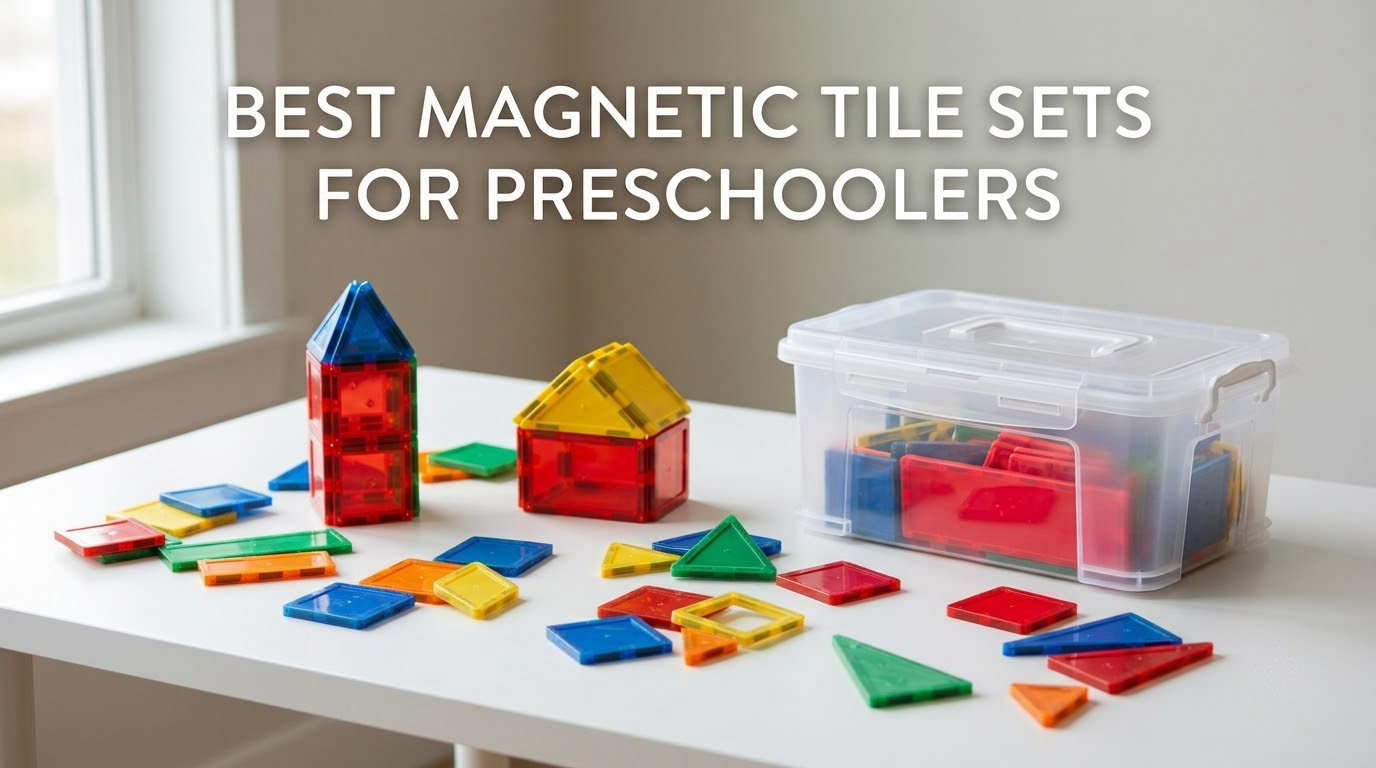
The best magnetic tile sets for preschoolers are the ones with at least 100 pieces, encased magnets that cannot be pulled out, and a shape mix beyond plain squares. Our shortlist below ranks ten sets on published specifications and on tens of thousands of owner reviews, and it is honest about which figures a manufacturer has not published.
Magnetic tiles are usually the first construction toy a three-year-old can use without an adult. Each piece carries a magnet inside every edge, so two tiles snap together from about a centimetre away. That removes the two-handed alignment that brick sets demand, which is exactly the skill a preschooler has not developed yet.
We compared these ten sets side by side rather than guessing from the marketing. Where a brand does not state its shape mix or its magnet retention method, we say so instead of filling the gap. It is the fastest way to tell a genuinely well-made set from a set that simply sounds well made.
Alongside the picks, we cover how to check a set for damaged pieces before handing it over, why the ages 3 and up label is a small-parts safety floor rather than a difficulty score, and how many tiles a preschooler genuinely needs. If you are outfitting a playroom rather than a kitchen, our guides on magnetic knife strips and magnetic screen doors cover the metal surfaces that catch loose toy clutter.
Table of Contents
Top 3 Magnetic Tile Sets for Preschoolers

PicassoTiles 100-Piece Set
- 100 clear 3D pieces
- Strong magnet hold
- Works with other major brands


MAGNA-TILES Classic 32
- Published shape mix
- Riveted MABS tiles
- Works with all Magna-Tiles sets
Those three lead the list for different reasons. The PicassoTiles 100-piece set wins on magnet strength and review volume, the Desire Deluxe set wins on translucent colour for light-table play at a smaller piece count, and the MAGNA-TILES Classic 32 is the only set in the group whose manufacturer publishes its exact shape breakdown.
Quick Overview: Every Set We Compared in 2026
| Product | Specifications | Action |
|---|---|---|
| PicassoTiles 100 Piece Magnetic Tiles |
|
Check Latest Price |
| Desire Deluxe 57PC Magnetic Tiles |
|
Check Latest Price |
| MAGNA-TILES Classic 32-Piece |
|
Check Latest Price |
 Coodoo 40PCS Starter Pack Coodoo 40PCS Starter Pack |
|
Check Latest Price |
 Playmags 100-Piece Super Set Playmags 100-Piece Super Set |
|
Check Latest Price |
 Jasonwell 100pcs Building Blocks Set Jasonwell 100pcs Building Blocks Set |
|
Check Latest Price |
 Soyee 32-Piece Beginner Set Soyee 32-Piece Beginner Set |
|
Check Latest Price |
 SUNNY AUNTIE 125-Piece XL Set SUNNY AUNTIE 125-Piece XL Set |
|
Check Latest Price |
 FNJO Magnetic Tiles 110PCS FNJO Magnetic Tiles 110PCS |
|
Check Latest Price |
 MAGNA-TILES microMAGS 26 Travel Set MAGNA-TILES microMAGS 26 Travel Set |
|
Check Latest Price |
Two things stand out in that table before you read a single review. First, piece counts range from 26 to 125, so two sets with similar names are not comparable products. Second, only two manufacturers in this group state the plastic by name on the specification sheet, which is a small but meaningful signal of how much documentation you get.
1. PicassoTiles 100-Piece Magnetic Tiles: the best magnetic tile set for preschoolers overall
PicassoTiles 100 Piece Magnetic Tiles, Clear 3D Building Blocks for Kids 3+
- Strong magnets hold tall structures without frustration
- Clear 3D pieces with an outer frame that stiffens towers
- Works alongside Magna-Tiles
- Connetix and Playmags pieces
- Covers colour
- counting
- shapes and 3D forms
- Families routinely want a second set for larger projects
- Pieces can crack if run over or dropped hard
This is the set we would hand to a three-year-old first, and the reason is unglamorous: the magnets are strong enough that a tower stands while a small hand is still adjusting it. Frustration is the fastest way to end a construction session, and reviewers single out the hold quality more than anything else in their feedback.
The pieces are clear rather than solid colour, and each one has an outer frame around the tile. That frame does two jobs. It stiffens the tile so a tall stack does not rack sideways, and it gives a beginner a visible edge to aim for instead of trying to line up two transparent faces.
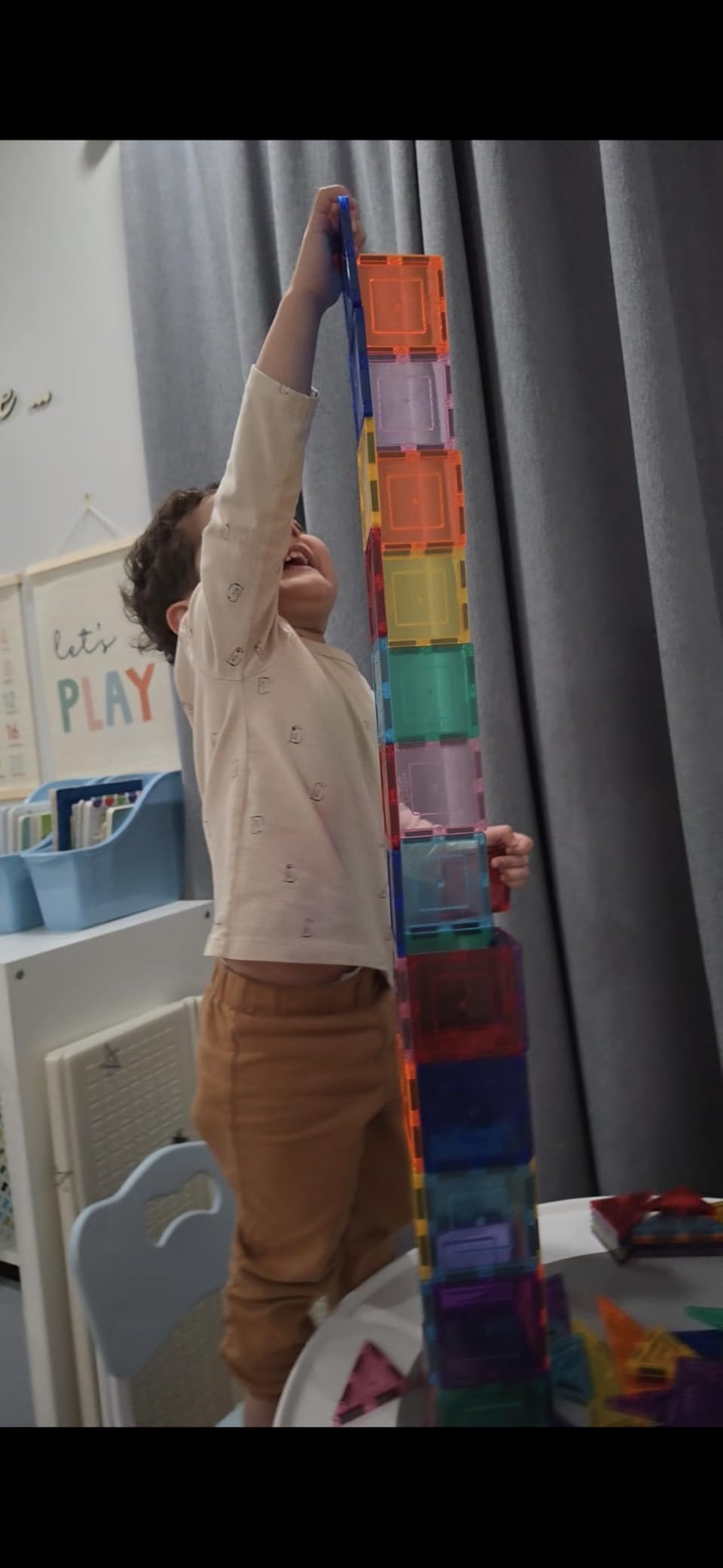
At 100 pieces this is a proper starter set rather than a token one. A four-walled house, a second tower and a flat pattern piece can all exist on the floor at the same time, which matters enormously when one child is building and another is watching and wanting to touch everything.
Compatibility is the quiet strength here. Reviewers and the product listing both describe these tiles as working with Magna-Tiles, Connetix, Playmags and similar brands, because the tile footprint is standard. If a grandparent buys a different set for a holiday visit, the pieces still snap together.
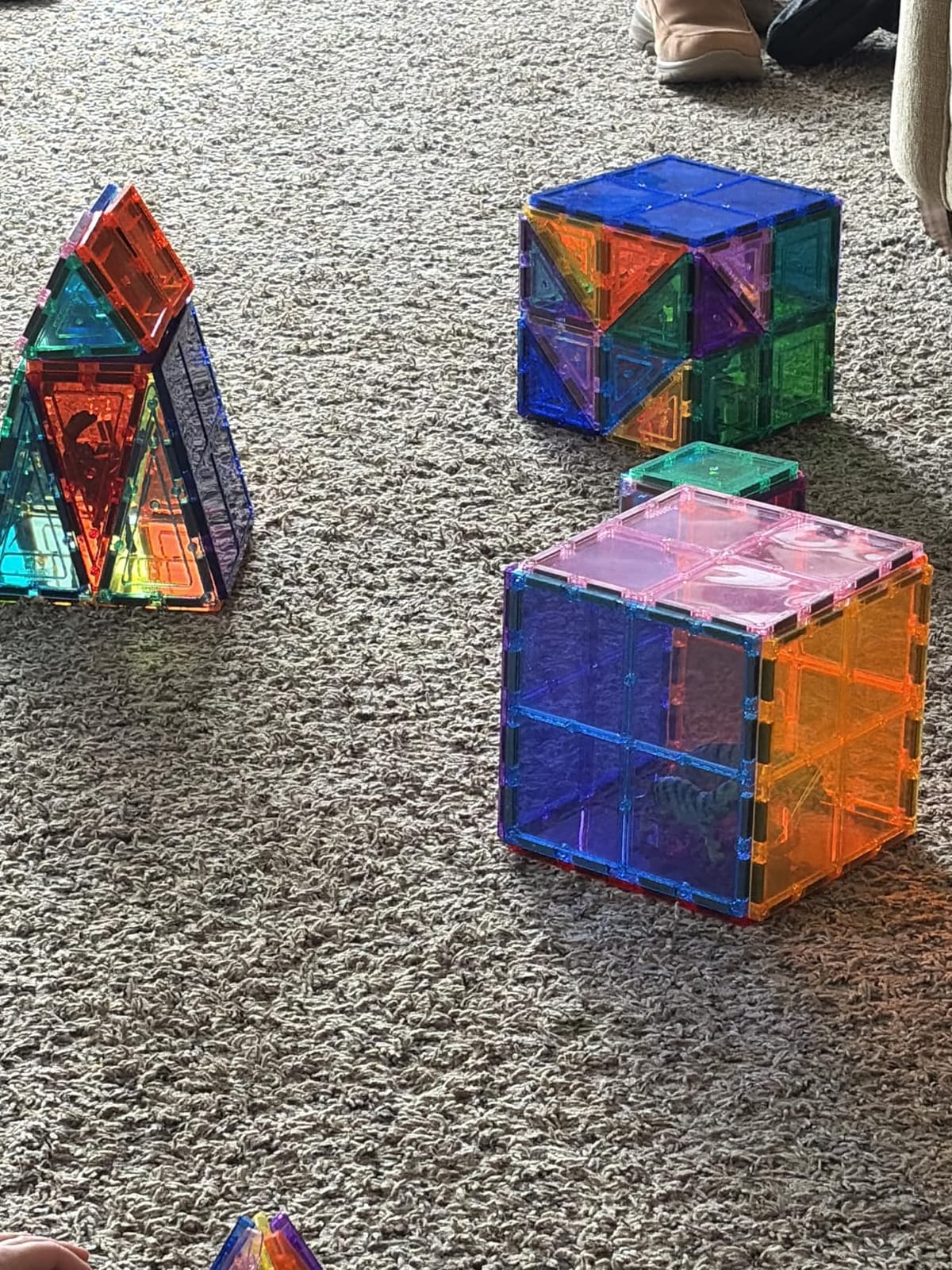
What the 100-piece count actually gives you
The practical difference between 100 pieces and 60 is not the first build. It is the third build. With 60 pieces a preschooler finishes a structure and immediately runs out, then treats the set as finished. With 100 pieces there are always spare pieces, and spare pieces are what keep a child returning to the box.
Owners also report that a clear set ages well next to a more translucent competitor. On a thread about lower-priced alternatives in r/toddlers, one parent preferred PicassoTiles specifically because the magnets are stronger and the plastic stays clearer, noting it had held up well. That claim matches the review pattern here, where the complaints are about wanting more tiles rather than about the tiles failing.
Where it falls short
The most common note is a family wanting a second set almost immediately, which is really a compliment to the piece count. The other recurring note is damage: like every magnetic tile set on the market, these can crack if dropped hard or run over, and a cracked tile is the safety question every parent should know how to check for.
The manufacturer does not publish a magnet retention method or a named safety standard on the listing, which is the one specification gap worth noting. What it does publish is the age rating, the material and the piece count, and all three are accurate.
2. Desire Deluxe 57-Piece Magnetic Tiles: best value for light-table play
- Magnets connect firmly from every side for stable towers
- Translucent colours that work well on a light table
- Non-toxic ABS plastic with smooth edges
- Enough variety for towers
- castles and 3D models
- Smaller count than 100-piece sets limits large shared builds
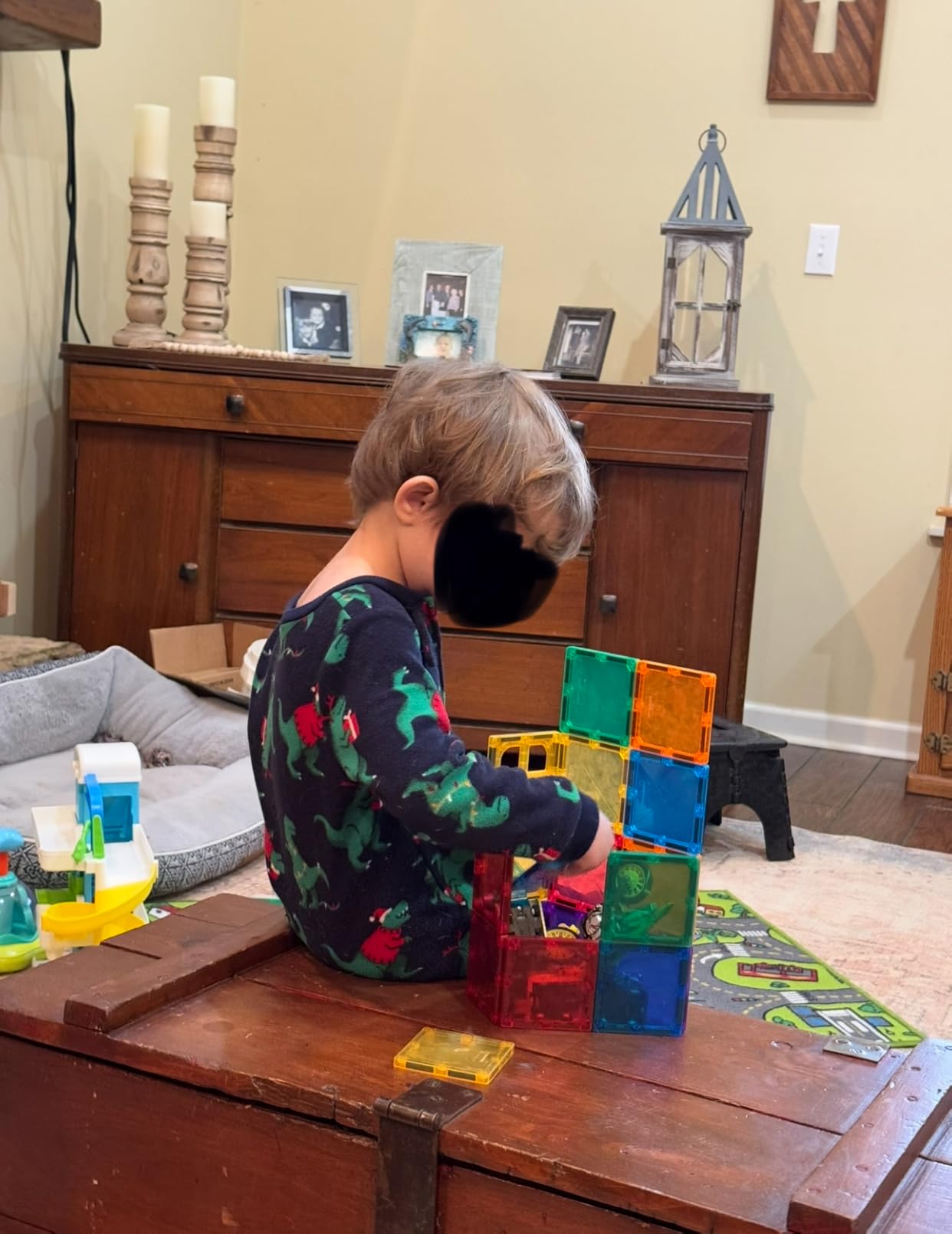
This is the set to buy when your child builds in the evening. The translucent colours are the reason, and the light table is what unlocks them. Backlit, the pieces glow and cast coloured shadows on a wall, which turns a construction toy into a quiet activity that does not need an adult hovering.
The magnets connect on all sides, which is what keeps a 57-piece set feeling capable rather than frustrating. Reviewers describe the hold as firm enough for tall towers, and the smooth ABS plastic is specified as non-toxic with smooth edges, which is what you want in the hands of a child who is still mouthing things at three.
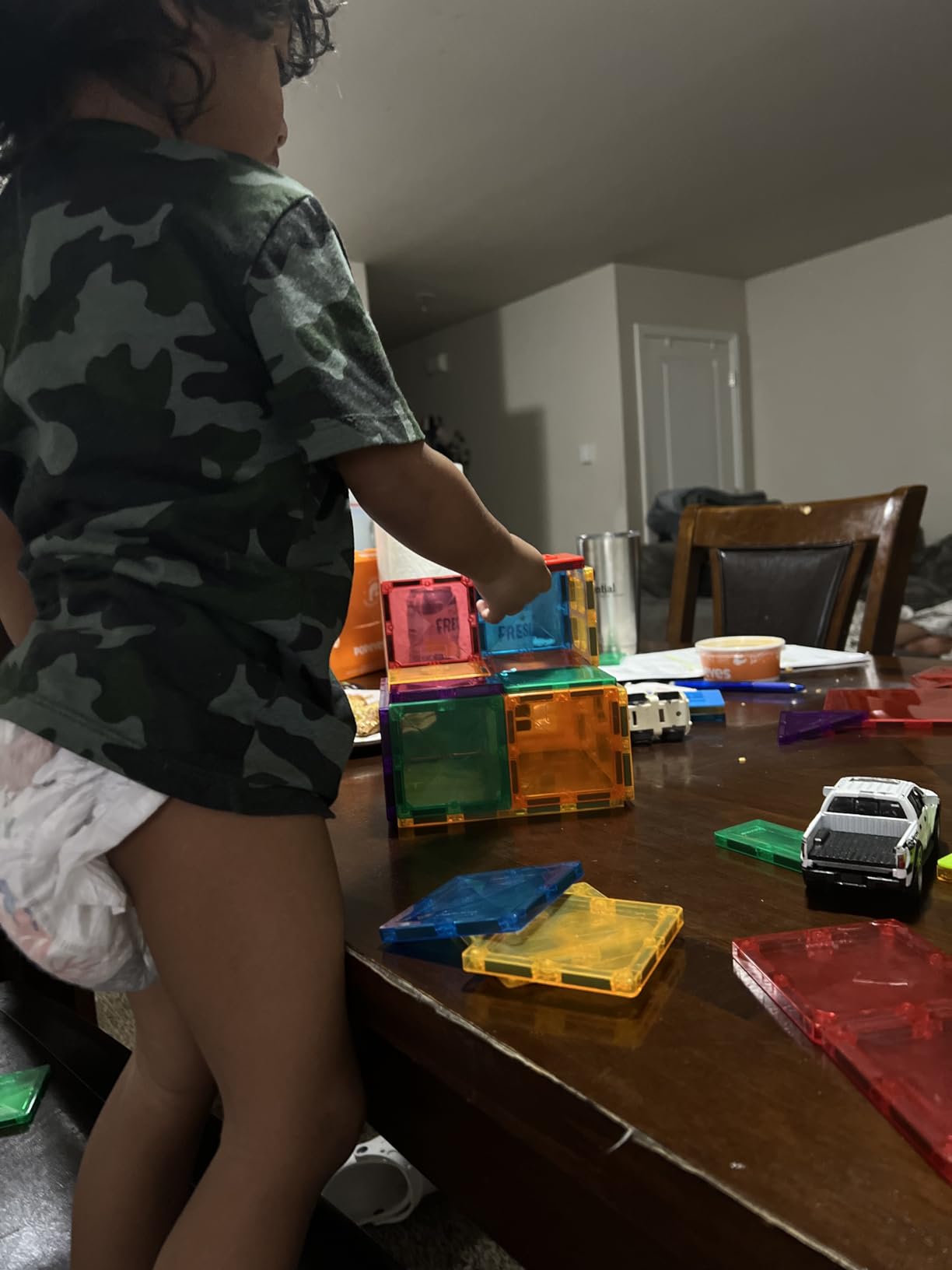
At 57 pieces this is a solo set. One child can build a castle or a row of houses comfortably. Two children sharing will run out of pieces quickly, and that is the honest limitation here rather than any quality issue.
The stated age range of 36 months to 13 years is unusually honest for the category. It does not pretend a set designed for construction skills is a sensory toy for a one-year-old, and it tells you the manufacturer expects the pieces to still work in the last year of primary school.
Why translucent plastic changes the play value
Solid-colour tiles hide their own geometry. Translucent tiles show you the overlap, so a child can see how a triangle meets a square and how a wall becomes a roof. For a preschooler working through early spatial reasoning, that visibility is worth more than extra pieces.
It also solves a practical problem. Coloured plastic shows every scuff and scratch immediately, and once a set looks battered it gets binned. Translucent plastic hides wear, so the set still looks inviting after a year of daily use. The loudest aesthetic complaint in parent discussions about this category is exactly that scratched look.
Where it falls short
Fifty-seven pieces is below the threshold where a two-child household or a nursery table can work comfortably. If this is a shared toy or a gift that two cousins will open together, look at a 100-piece set instead.
The listing also does not publish a magnet retention method or a named testing standard. It does specify the material, the dimensions and the age range, and it ranks in the top tier of Toy Magnetic Building Sets, so the basics are documented.
3. MAGNA-TILES Classic 32-Piece Set: the only one that publishes its shape mix
MAGNA-TILES Classic 32-Piece Magnetic Construction Set, The Original Magnetic Building Brand
- Only set here with a published shape breakdown
- Signature lattice design that resists cracking
- Riveted magnets that still pull apart for small hands
- Works with every other MAGNA-TILES set
- 32 pieces is quickly outgrown for bigger projects
- Higher price per piece than generic competitors
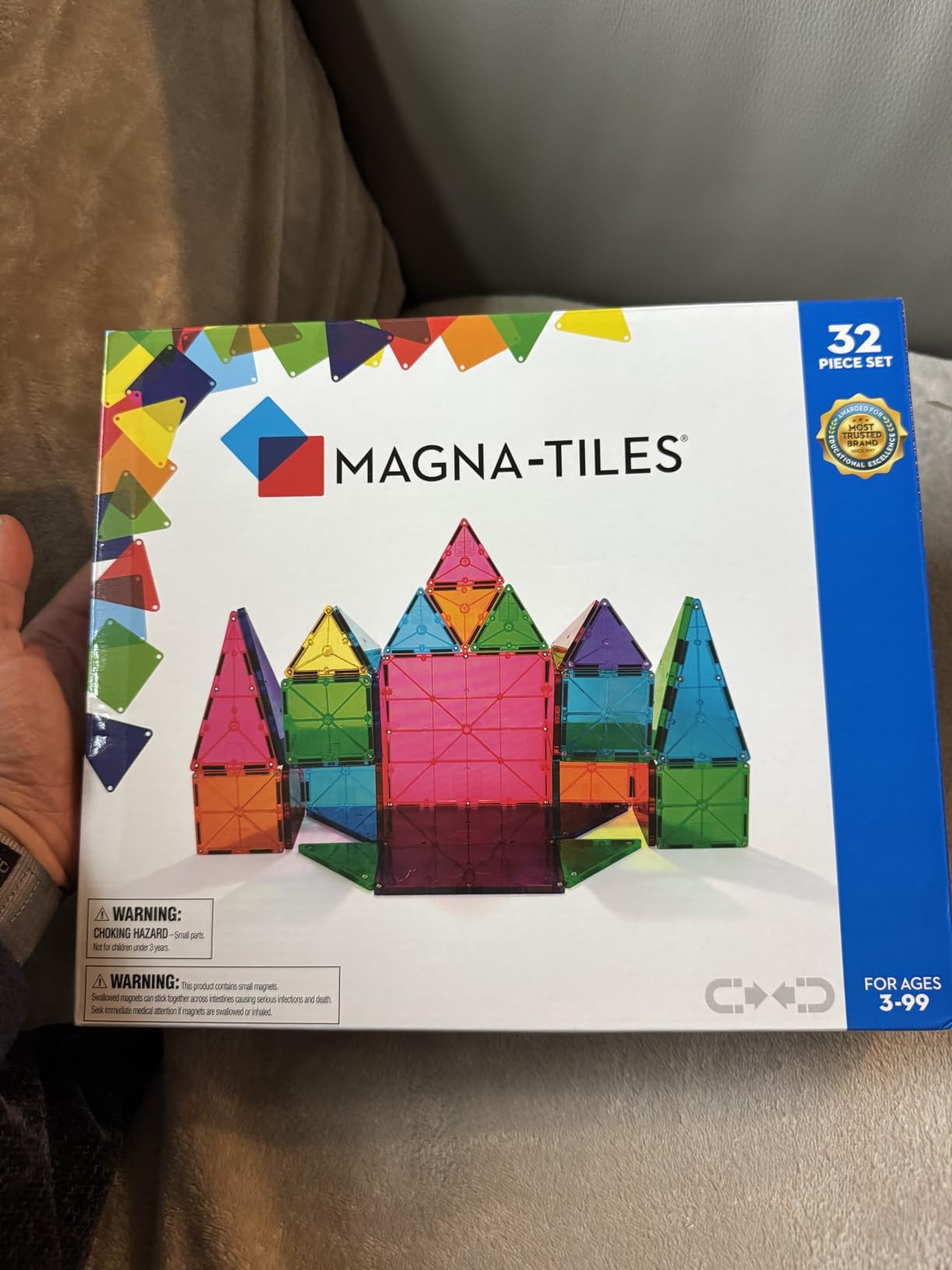
This is the original magnetic building brand, and it is the only set in our group where the manufacturer states exactly what is in the box: 2 large squares, 14 small squares, 8 equilateral triangles, 4 right triangles and 4 isosceles triangles, across 6 colours. That transparency is unusual enough that it shapes our whole read on the category.
Three types of triangle is the detail that matters. Equilateral triangles make flat fields, right triangles make walls and roofs, and isosceles triangles give you a 45-degree angle for towers and bridges. Sets sold on piece count alone often ship with nothing but squares and one triangle type, and children run out of shapes long before they run out of pieces.
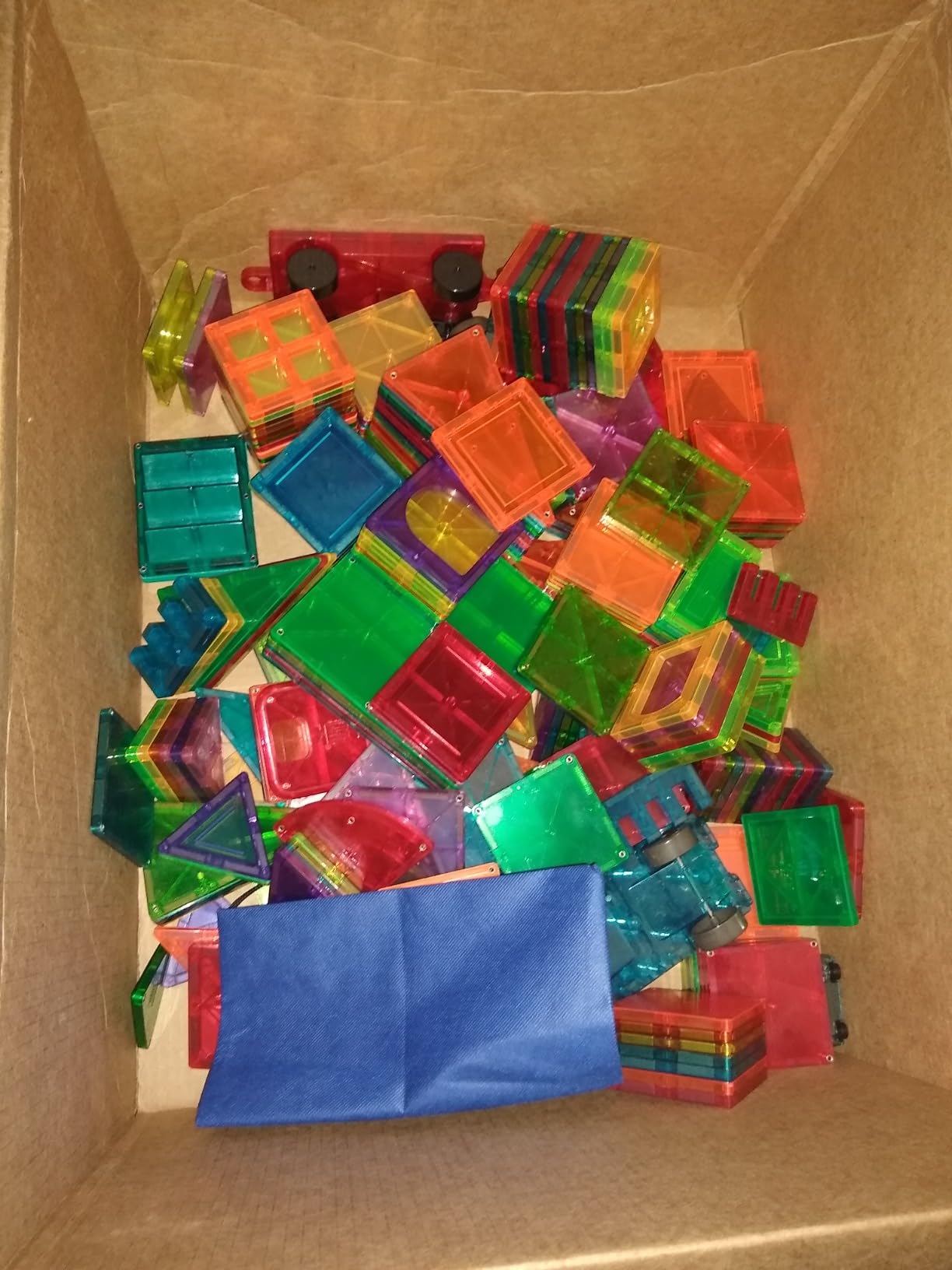
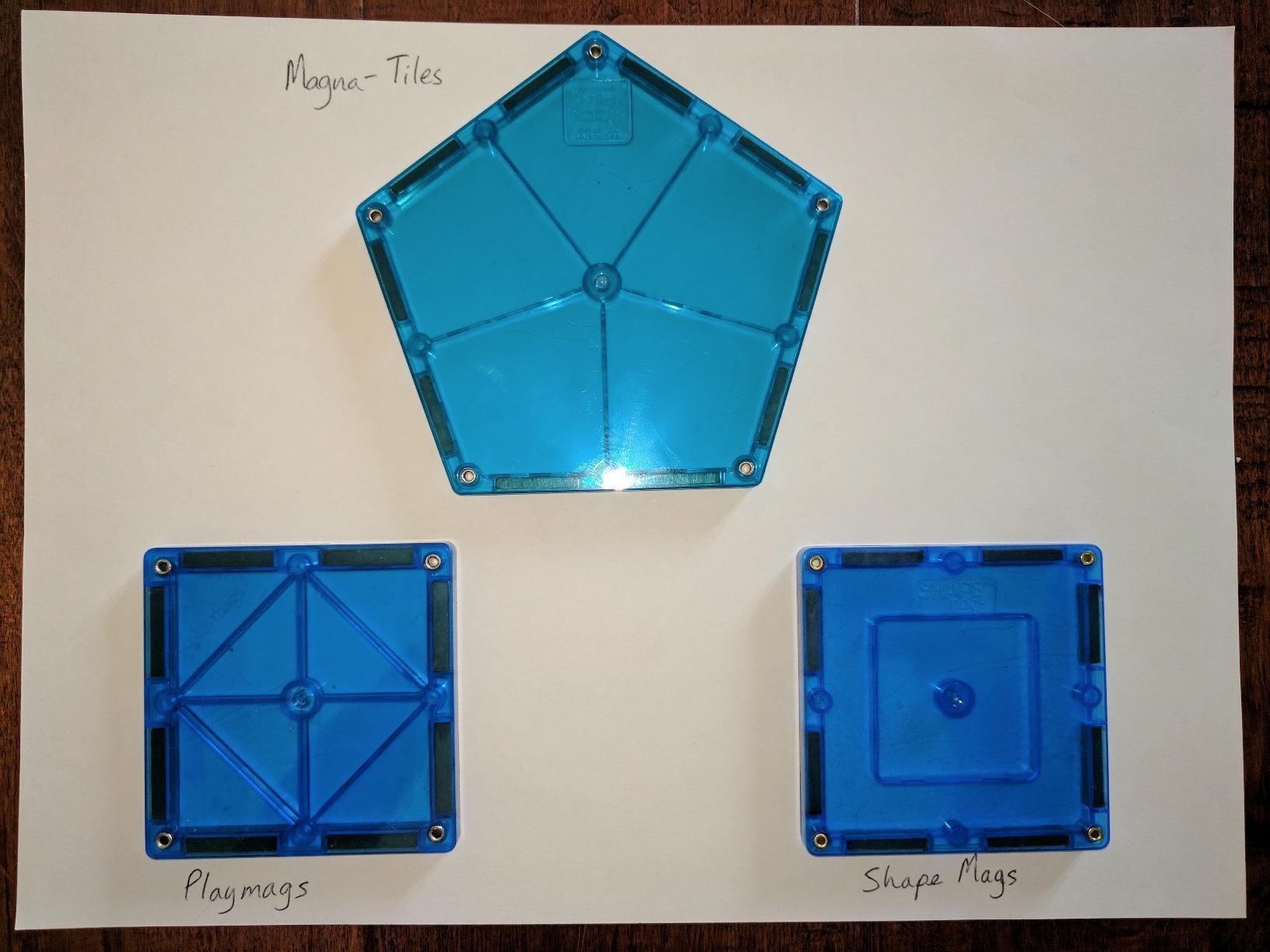
The construction is the other story. Reviewers describe a lattice design that resists cracking, with magnets riveted rather than glued into place. The rivets matter for two reasons: the magnet cannot be pushed out of a damaged tile, and the tiles can still be pulled apart by a three-year-old when the child wants to reuse a piece.
That balance is genuinely hard to engineer. Too weak and towers fall over mid-build. Too strong and a preschooler cannot take the set apart without an adult, which ends the independent play the toy is supposed to deliver. On a community.whattoexpect.com thread about open-ended toys, parents described MAGNA-TILES as the best quality of the sets they had owned.
What 32 pieces is enough for
Thirty-two pieces is a starter count and it is a good one for a first set. It is enough for a single tower, a small house and a flat mosaic, and it is enough to learn the mechanic without being overwhelmed by a floor covered in pieces.
The set is also the cheapest way to enter an ecosystem rather than buy a sealed system. Because it is a MAGNA-TILES set, every other MAGNA-TILES piece, including the microMAGS travel set later in this list, snaps straight into it. You are buying an entry point, not a closed box.
Where it falls short
At 32 pieces you will upgrade, and most owners do. The review pattern is consistent: the highest rating in the group at 4.9 stars, with the main criticism being that the count leads people to a 100-piece set within a year.
It also costs more per tile than the generic sets here, which is the real sticker shock. Parents weighing value should read it as a per-piece cost, not a per-set cost, and the 90-day manufacturer warranty against defects is shorter than many parents assume.
4. Coodoo 40PCS Starter Pack: best for a toddler who needs big, grippable pieces
- 3-inch tile size suits a toddler grip and control
- Cross-fix construction improves crack resistance
- Standard sizing works with leading magnetic tile brands
- Carrying bag makes moving between rooms easy
- Only 40 pieces so early builds stay simple
- A few buyers report mixed quality between sets
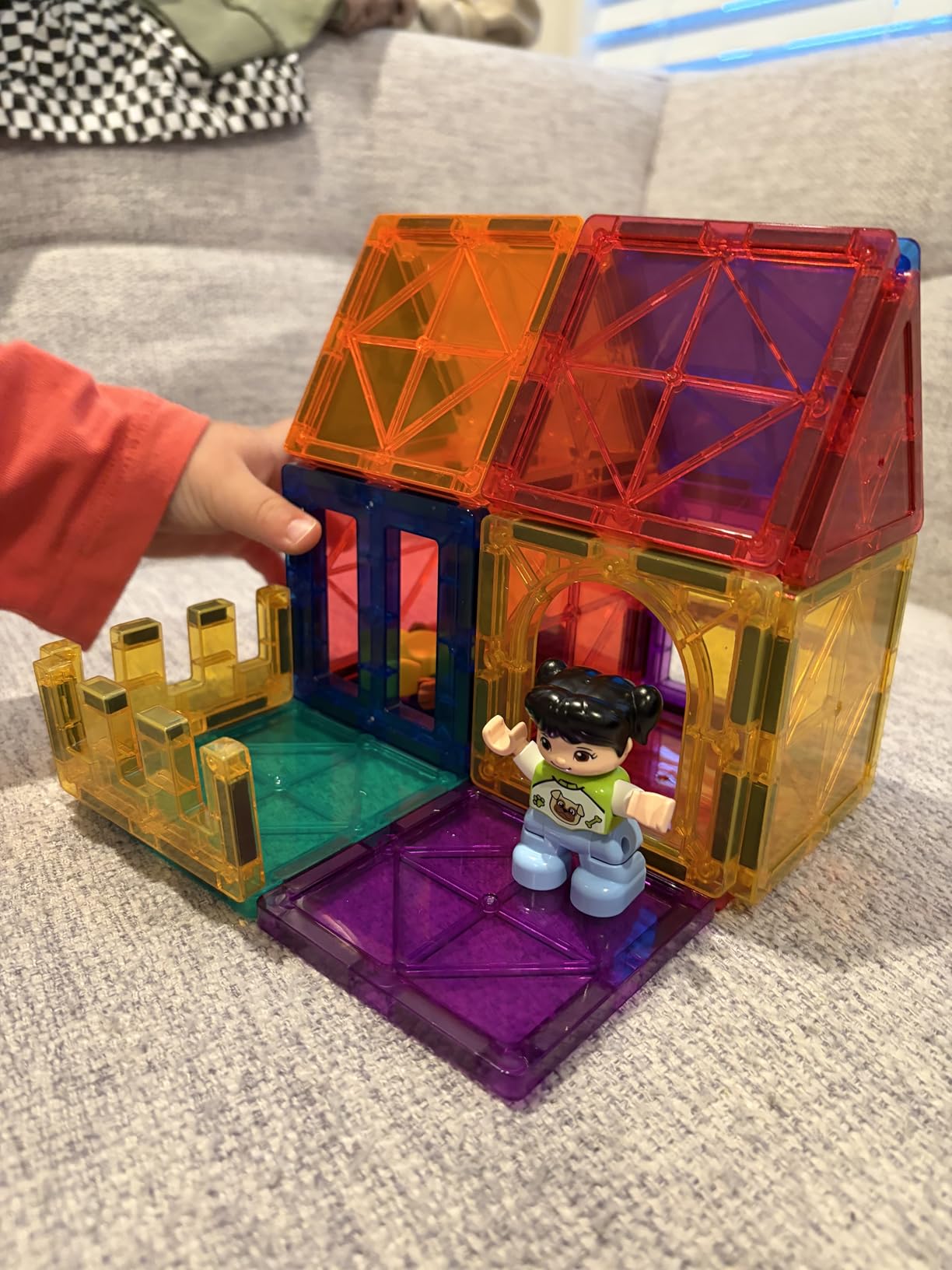
This is the set to look at if your child is at the younger edge of the window, somewhere around three and still working on grip and pincer control. The 3-inch tile footprint is large enough to hold reliably and small enough to manipulate with a whole hand rather than fingertips.
Cross-fix construction is the term the manufacturer uses, and reviewers pick it out as the reason tiles are less likely to crack. It also travels: the set includes a carrying bag, which matters more than it sounds once tiles start migrating around the house.
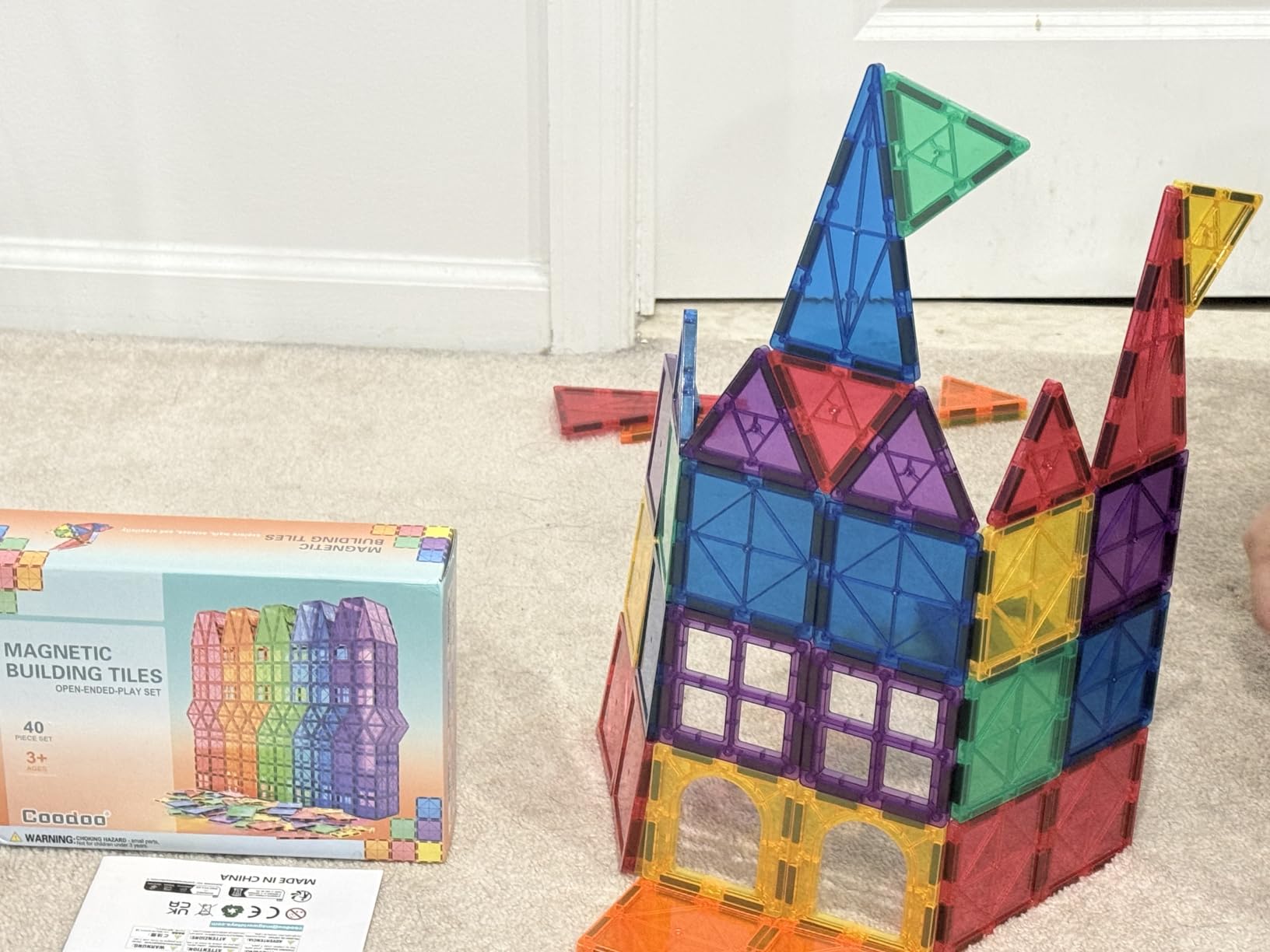
Standard sizing means this set plays well with the bigger collections, so it is not a dead end. A parent who starts here can add a 100-piece set later without a compatibility problem, and several listings describe it as working with leading magnetic tile brands.
Forty pieces is genuinely small. Expect flat patterns, single towers and a small house, and expect a four-year-old to ask for more within a couple of months. The 36-month to 14-year range is stated plainly, and the food-grade ABS with rounded edges is documented.
Why size matters more than piece count at three
A small piece that a three-year-old cannot pick up reliably is worse than no piece at all, because every failed attempt ends the session. The 3-inch base is sized for the hand, so a child can pull a piece off a build, turn it around and put it back without adult help.
There is a storage benefit too. Smaller sets are the ones a child can clear away unaided, and a set that a three-year-old will tidy without being asked is worth more than a larger set that ends up on the floor of the car permanently.
Where it falls short
The count is the limit, and it is a real one. Two children sharing 40 pieces will end every session with an argument about the last square.
There is also a smaller share of reviews describing a problem with a single cracked or warped tile, alongside otherwise positive feedback. If you buy this set, inspect the pieces before the first session, which is good practice with any magnetic tile set anyway.
5. Playmags 100-Piece Super Set: best shape variety in a single box
- More shape variety than standard 100-piece competitors
- Includes windows
- hollow squares
- a car base and click-in tiles
- Storage bag and idea booklet in the box
- Compatible with standard-size sets
- A few sides do not always seat evenly
- Tiles scratch after years of heavy use
Counting pieces tells you very little. Counting shape types tells you almost everything about whether a child will still be building in month six. This set lists 26 squares, 14 windows, 4 four-section windows, 10 right triangles, 8 acute triangles, 12 equilateral triangles, 8 rectangles, 2 large squares, 13 letter and number click-ins and 5 window click-ins.
The window and click-in pieces are what make finished builds read as buildings rather than piles. A wall with a window is a house. A roof made of acute triangles is a roof. Click-in letters and numbers turn the same set into a name-practice toy without buying anything else.
Reviewers repeatedly single out the magnet strength as stronger than costlier alternatives, which is a claim we cannot independently verify but which recurs often enough to be worth weighing. The idea booklet and storage bag are both in the box, and the booklet matters more than it sounds at this age.
One caution: the listed age range starts at 3 months. Treat that as a manufacturer formality rather than an endorsement. The magnet ingestion risk discussed in the buying guide below is the reason the useful floor for this toy is three years, not infancy.
What the extra shapes unlock at preschool age
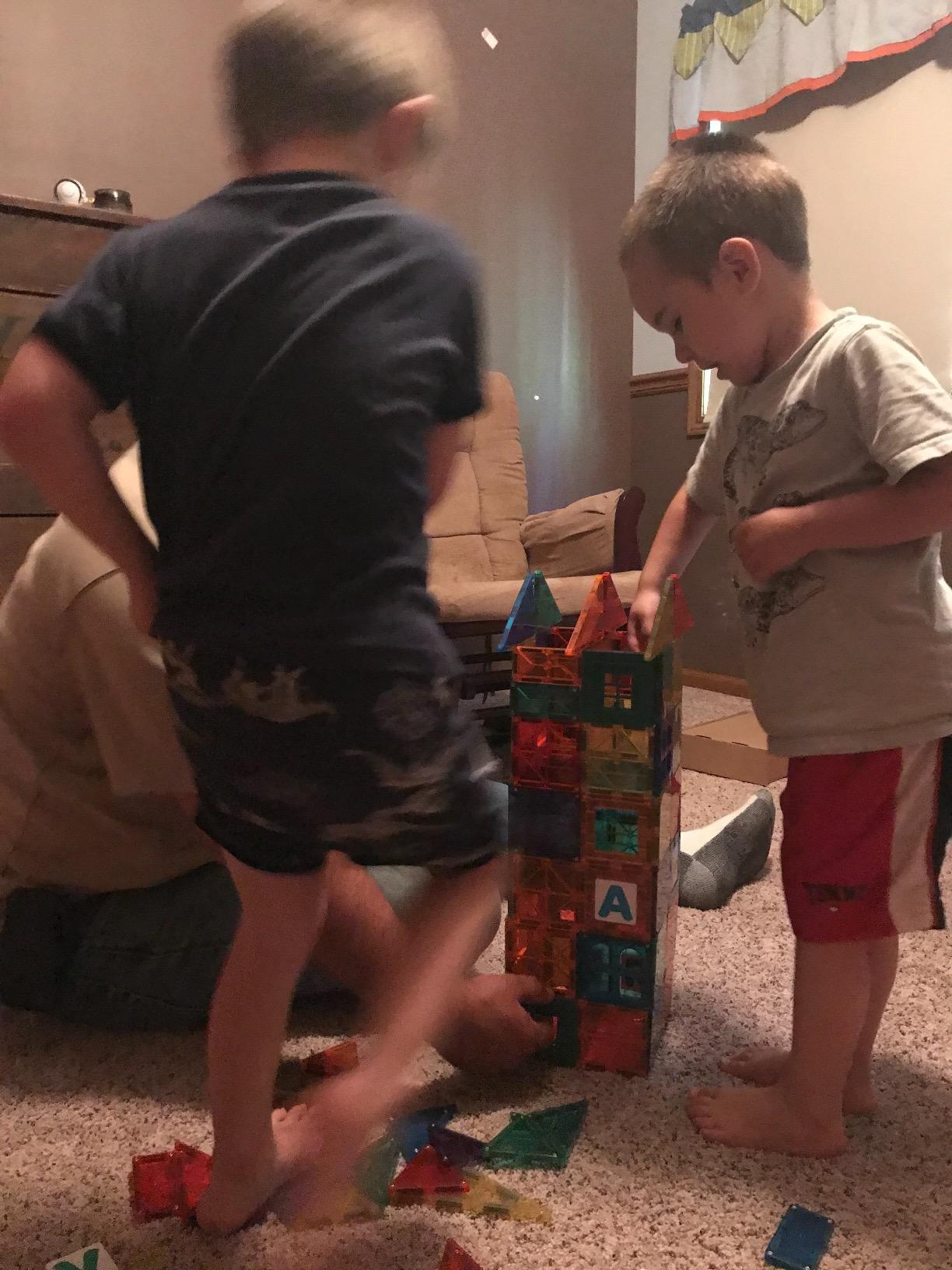
Windows change what a child tries to build. Instead of a plain square tower, the obvious first project becomes a house with something to look through, and that project is big enough to need most of a 100-piece set. Right triangles make roofs. Rectangles make fences and benches. The car base turns a flat scene into a moving one.
The click-ins add a second layer of play. Stacking a letter onto a tile and finding the matching letter is a recognition task with a physical reward, and it is exactly the sort of quiet, repetitive, absorbing play that keeps a child with one toy for a long time.
Where it falls short
Some buyers report that a few sides do not always seat evenly, which creates a weak point in a large build. It is a minor complaint, but it is the kind of thing that shows up in a two-storey tower rather than a flat wall.
Scratching after years of use is also mentioned. The clear plastic scuffs, and once it does, the set reads as worn. This is the same durability conversation that runs through the whole category, and it is worth keeping in mind when you choose between two sets at a similar piece count.
6. Jasonwell 100pcs Magnetic Tiles Building Blocks Set: best for builds that move
- Larger-than-average magnets hold stacked structures
- Rotatable Ferris Wheel piece for moving builds
- Idea booklet helps younger builders with patterns
- Rounded edges and BPA-free materials
- Some listings show inconsistent piece-count details
Almost every magnetic tile set produces the same static structure: a tower, a wall, a house. This one includes a rotatable Ferris wheel component, and that single moving part changes what a child does with the set. A build that rotates is a toy to watch as well as a toy to assemble.
The magnets are described as larger than average, and reviewers confirm strong holding power for stacked builds. That is the right specification to prioritise, because a set that collapses while a child is adding the last piece teaches them to give up.
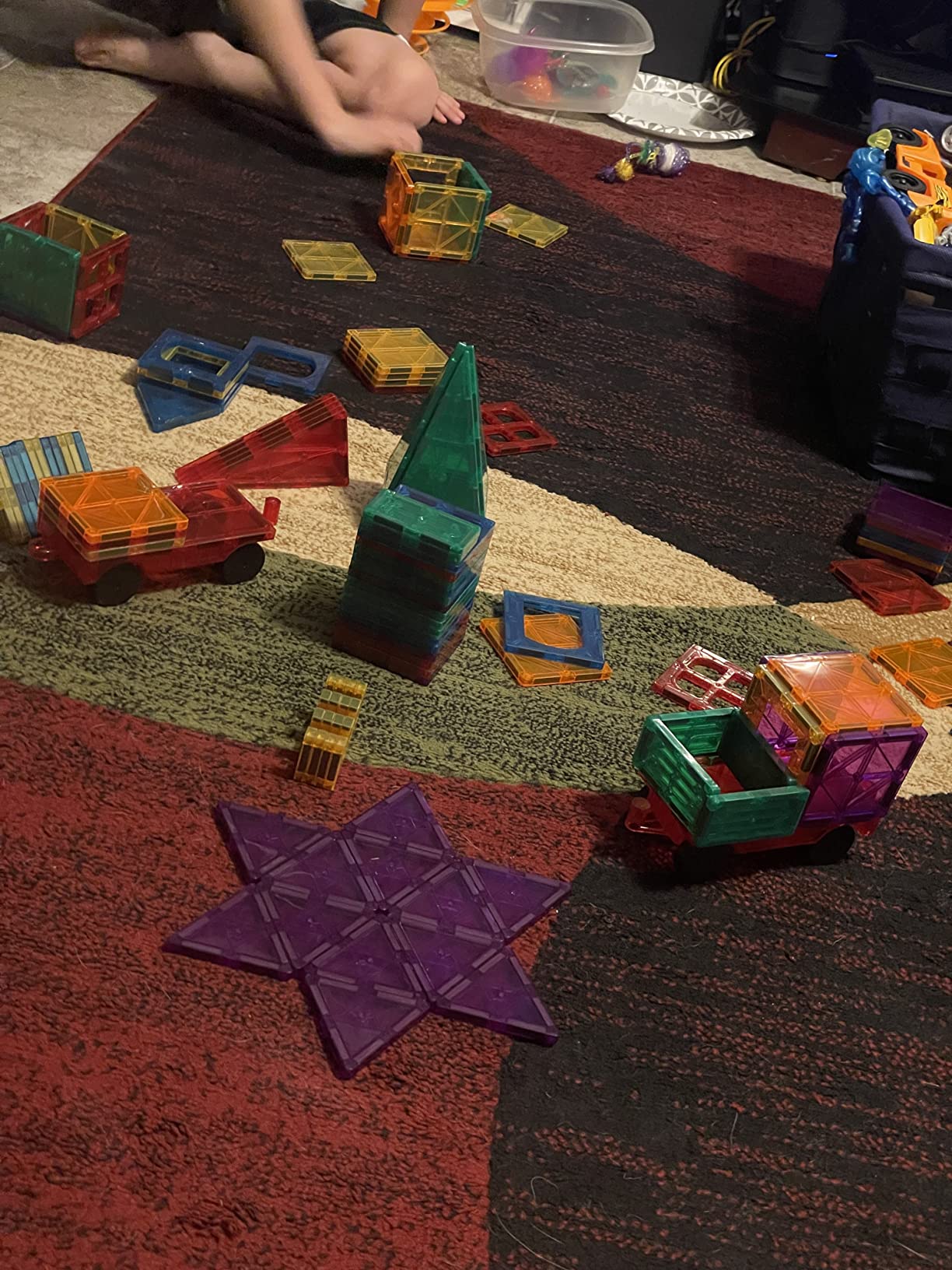
The idea booklet earns its place with younger builders. At three, a child often cannot generate an idea unaided, and a picture of a simple pattern is enough to start. Once the first build is finished from the booklet, the second one is theirs.
The materials are documented as BPA-free and lead-free plastic with round edges, which is more than many listings in this category tell you. Compatibility with other brands of similar-size tiles is also stated, so this is a safe first system to join rather than an isolated one.
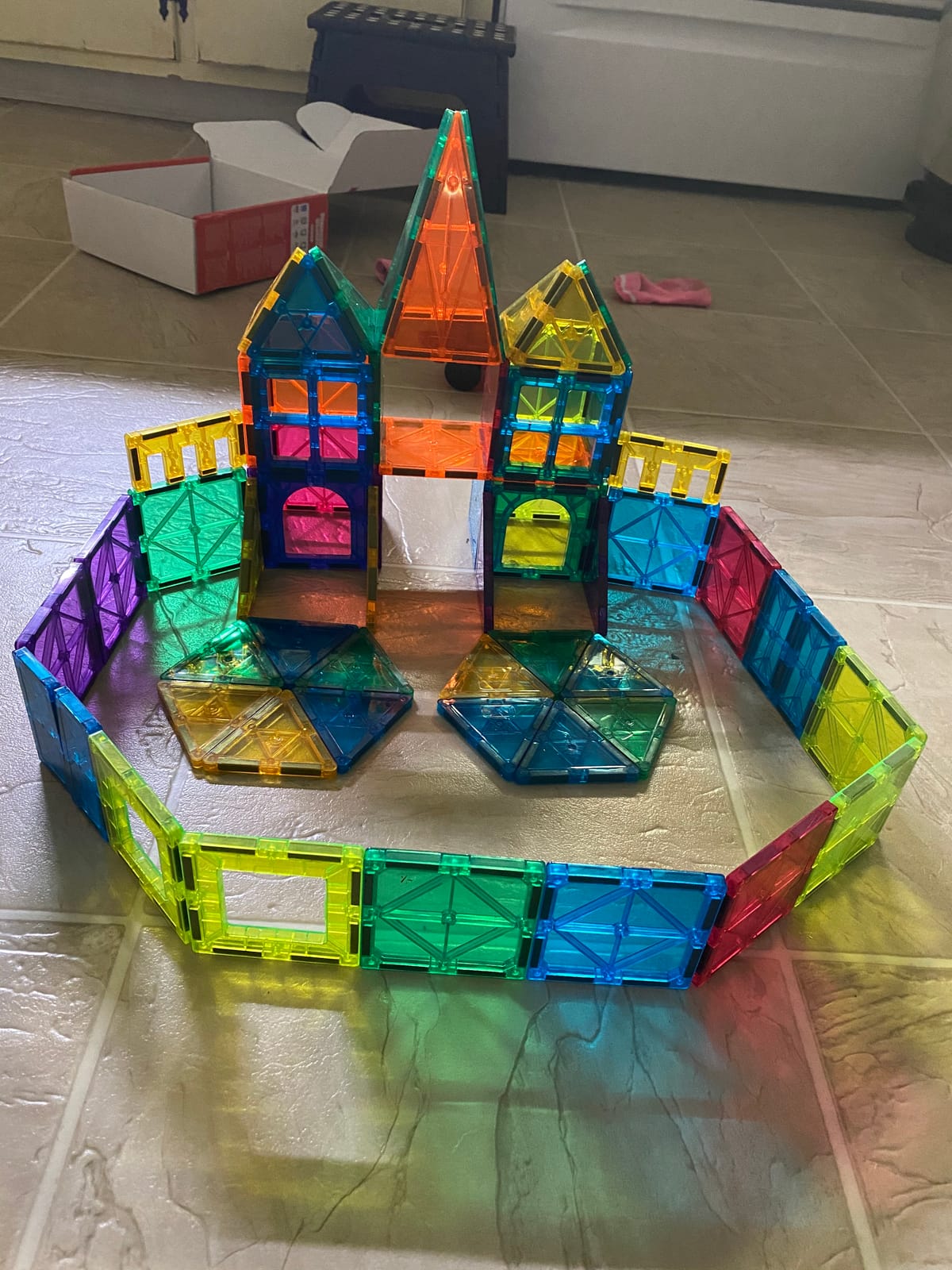
Why a moving piece changes the replay rate
Static builds have a natural end point. The structure stands, the child admires it, and it comes down. A rotating component removes that end point, because there is always a reason to rebuild the frame around it or attach something new to the edge.
For a preschooler it is also a reason to invite someone else over. Showing a moving build is one of the easiest ways a three-year-old starts a shared play session without an adult mediating, which matters in a house where the tiles are a solo activity by design.
Where it falls short
Be careful about the listing itself. Some variants show inconsistent piece-count details between product pages, so confirm that the box you receive is the 100-piece set rather than a smaller sibling with a similar name.
Beyond that, the honest limitation is that the shape mix is not published. You get 100 pieces and strong magnets, but nobody has told you how many are squares, how many are triangles, and how many are something more interesting. Compare that with the MAGNA-TILES listing, which specifies every shape by number.
7. Soyee 32-Piece Beginner Magnetic Tiles: best for calm, focused sensory play
- Standard 2.95-inch size works with major brands
- Calming focused play reported for children on the autism spectrum
- Supports color recognition
- patterning and shadow games
- Storage bag keeps the set together
- Only 32 pieces
- so larger builds need a second set
- Some listings differ from the described product
This is a small set, and the reason to know about it is not the build potential. It is what parents of children with sensory processing differences report about it. Across reviews, families describe calm, focused, repetitive play, and several mention children on the autism spectrum specifically.
Thirty-two tiles at a 2.95-inch standard size is a manageable amount of material. For a child who finds a floor full of pieces overwhelming, fewer pieces in a contained bag is a feature. The set can be put away and brought back out without a tidying battle.
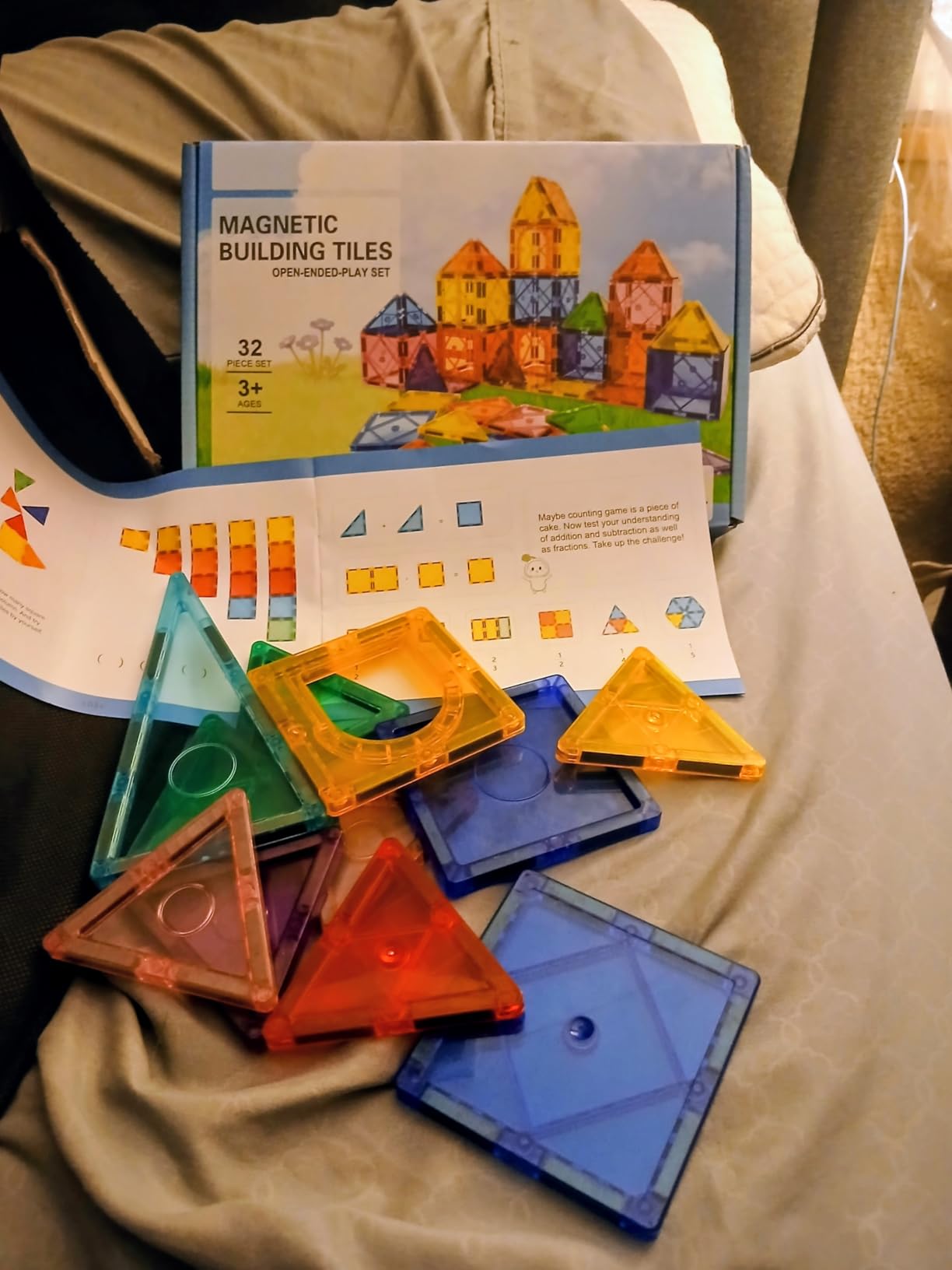
The play patterns it supports are well matched to this age: colour recognition, number graphing, pattern building and shadow games. Shadow games need a light source behind the tiles, and a translucent set makes that easy. It is the same reason the Desire Deluxe set works well on a light table.
It packs in a gift-ready box with a storage bag, and the material is documented as non-toxic ABS plastic. The stated range of 36 months to 12 years is sensible for the piece count and the stated use.
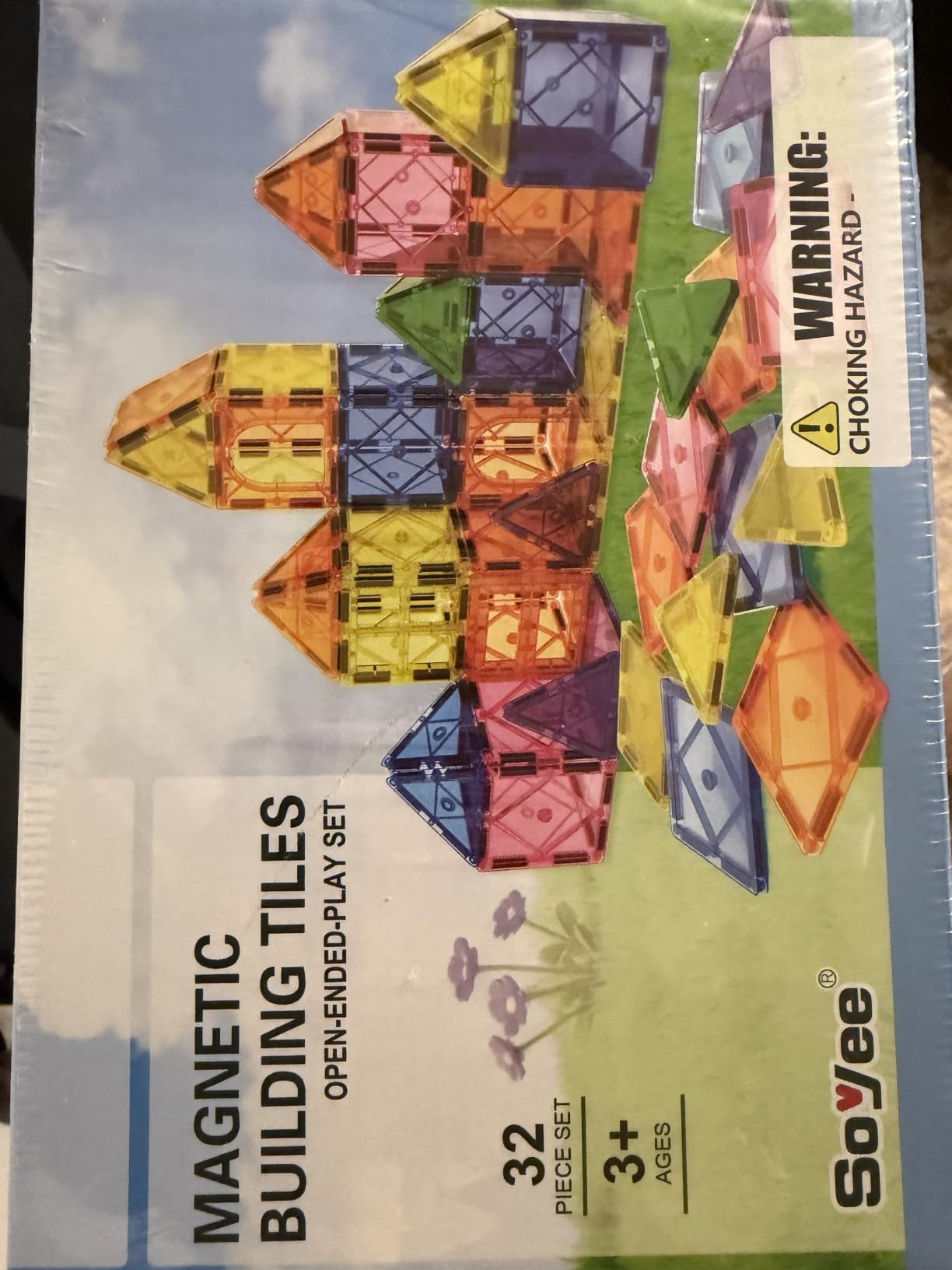
When a smaller set is the right size
Piece count advice assumes a child who wants to build something large. Many preschoolers want to repeat one small thing. A three-year-old sorting colours into groups, stacking four squares into a tower and taking them apart again is doing real work, and 32 pieces is enough for a full session of that.
Smaller sets also cost less per session of use if you are worried about storage, and they travel. A 32-piece set in a bag goes to a grandparent’s house or a café table without becoming a packing problem, which is the same argument that makes the travel set later in this list worth owning.
Where it falls short
Thirty-two pieces is not enough for a shared build, and the review pattern shows parents buying a second set to make larger structures. If you expect a four-year-old to build a house rather than repeat a pattern, this is the wrong size.
There is also a recurring note that some listings do not match the described product. Check the piece count and the contents on the box when it arrives, and inspect every tile before the first session.
8. SUNNY AUNTIE 125-Piece XL Set: the biggest build in the group
SUNNY AUNTIE Magnetic Tiles STEM Toys Building Set, Ages 3+ – 125 Pieces
- Largest piece count in this group with 2 cars included
- Strong magnetic hold for tall 3D creations
- Zippered fabric storage bag and guide booklet
- Reported durable after constant dropping and rebuilding
- Individual pieces can crack after heavy impact
One hundred and twenty-five pieces, plus two cars, a guide booklet and a zippered fabric bag. This is the set to buy if you want a floor that stays busy for an hour, or if two children are building at once and the usual 100-piece sets leave them negotiating over the last square.
The rating is 4.9 across more than 4,400 reviews, and the feedback is unusually consistent: strong magnets, vibrant colours and good value. Reviewers describe children building very tall structures that hold through active play, which is the specific claim you should test in person if you can.
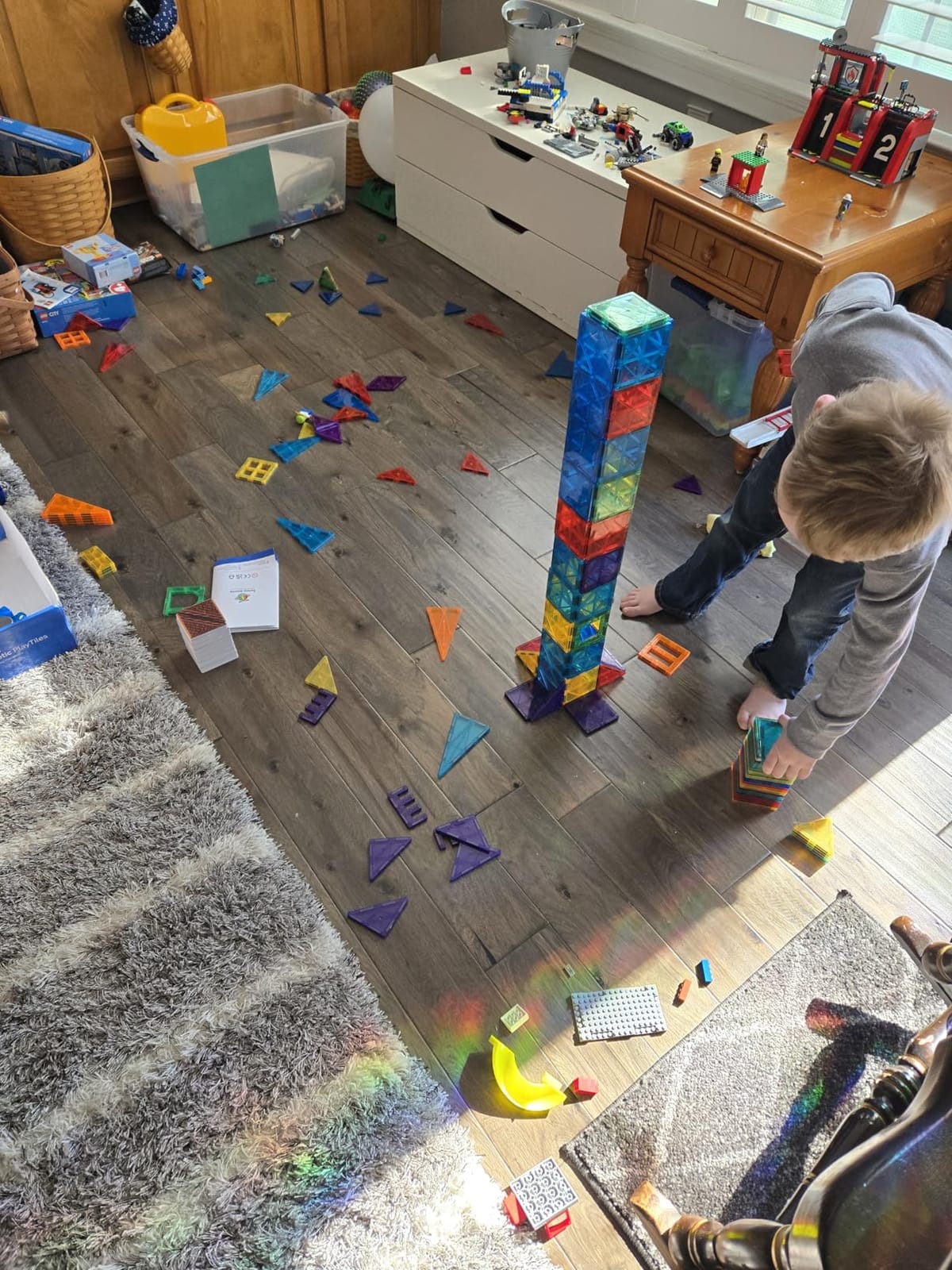
Durability comes up repeatedly, including reports of sets surviving constant dropping and rebuilding. Customer support also replaced a cracked piece quickly for at least one buyer, which is worth noting because replacement pieces are rare in this category.
The material is non-BPA ABS plastic with smooth rounded edges sized for small hands, and the stated range of 36 months to 20 years is the widest on the list. Multiple set sizes are available in the same line, so you can add to it without starting over.
When 125 pieces beats 100
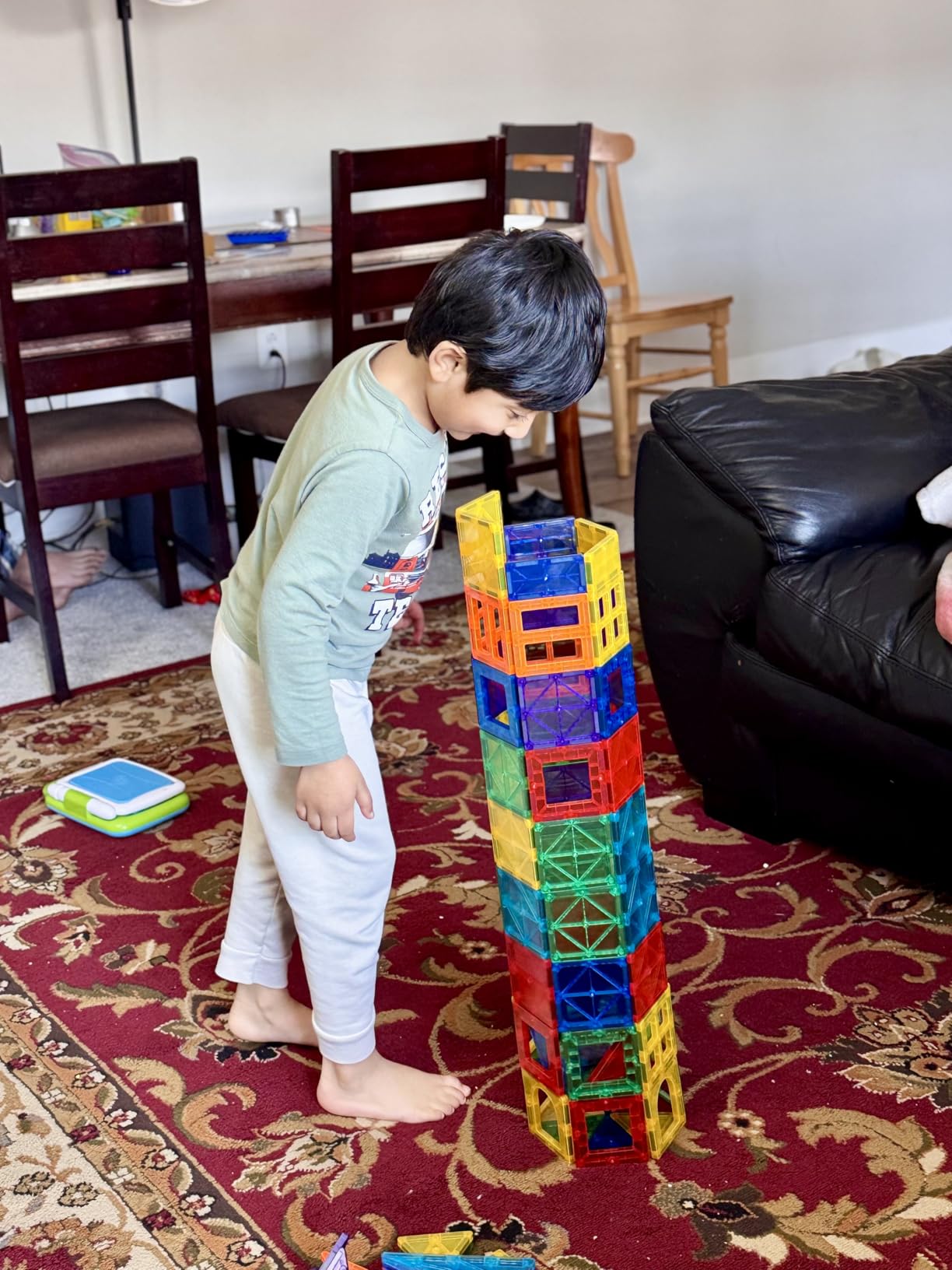
The arithmetic is straightforward. A two-storey house eats roughly fifty pieces, a separate tower takes twenty, and a pattern piece along the edge takes another fifteen. That is eighty-five before the child has built anything twice, which is the real usage pattern.
At 100 pieces, a two-storey build leaves almost nothing spare, so the second project starts with whatever is left over. At 125 pieces there is a genuine second project, and a spare pile on the floor is itself an invitation. Two cars add a moving element so the flat builds are not the only thing on offer.
Where it falls short
The box is large and the set is heavy enough to matter in a small room or a travel bag. If your storage is a single shelf, the practical answer is the travel tin instead.
Cracked pieces after heavy impact are reported, as they are with every set here. The difference is that this brand replaced a damaged piece, which is not guaranteed across the category and is worth considering when you weigh two similar sets.
9. FNJO Magnetic Tiles 110PCS: best for houses with windows and doors
FNJO Magnetic Tiles, 110PCS Magnet Building Blocks STEM Toy for Kids
- Largest selection of specialty shapes including windows and doors
- High-transparency tiles that cast rainbow shadows
- Sealed magnets inside a sturdy plastic frame
- Compatible with most magnetic tile brands
- Heavier box than smaller sets
- less suitable for travel
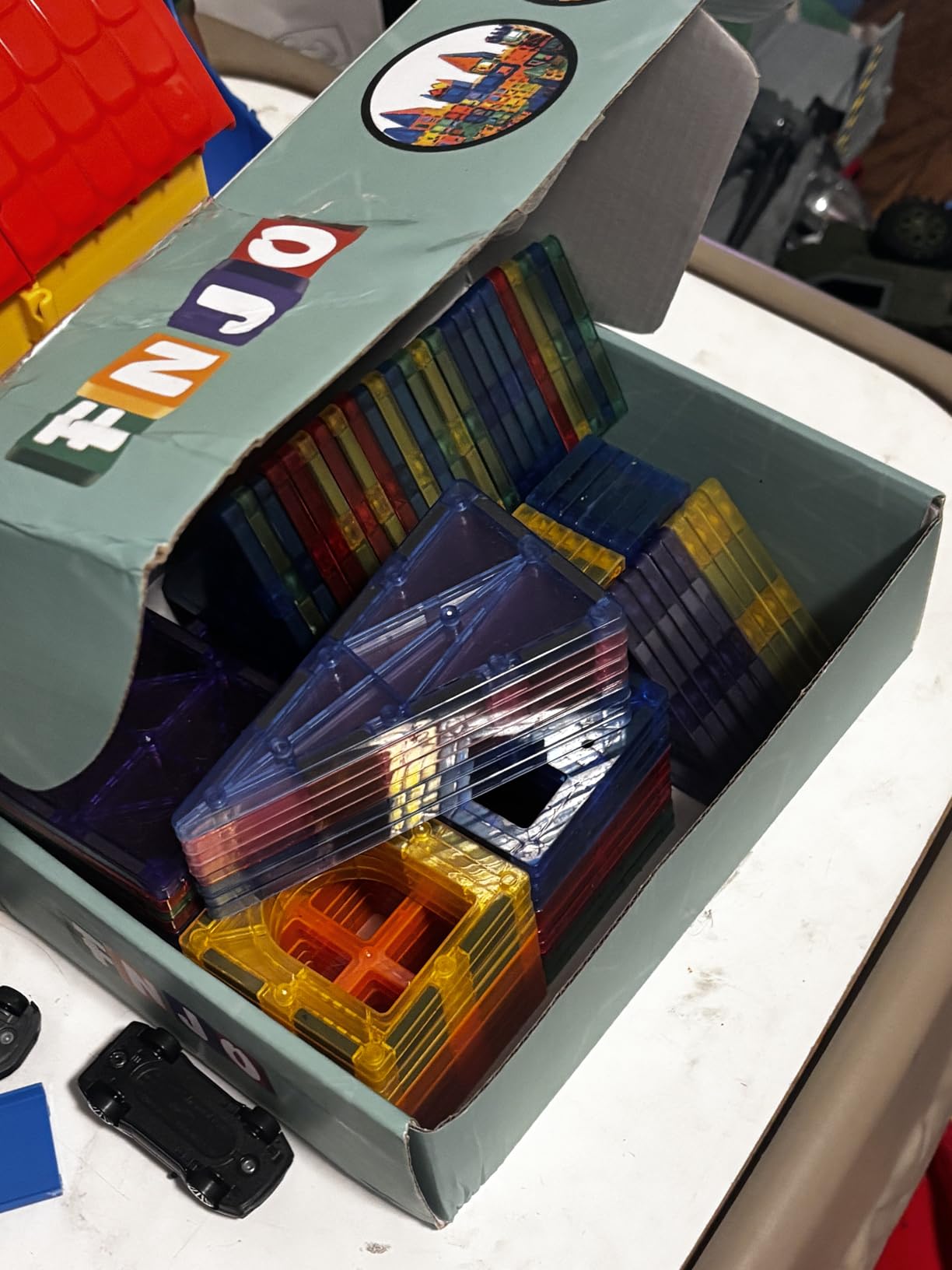
The contents list is the strongest argument for this set: 36 squares, 24 regular triangles, 8 long triangles, 12 right triangles, 18 windows and doors, 6 E-shapes and 6 rectangles. Eighteen window and door pieces is more than any other set in this group, and it is the difference between a structure and a building.
Doors change the play entirely. A child can build a house, decide the door goes here, and move it. That is a small act of design, and at three or four it is often the first time a child revises a build on purpose rather than by accident.
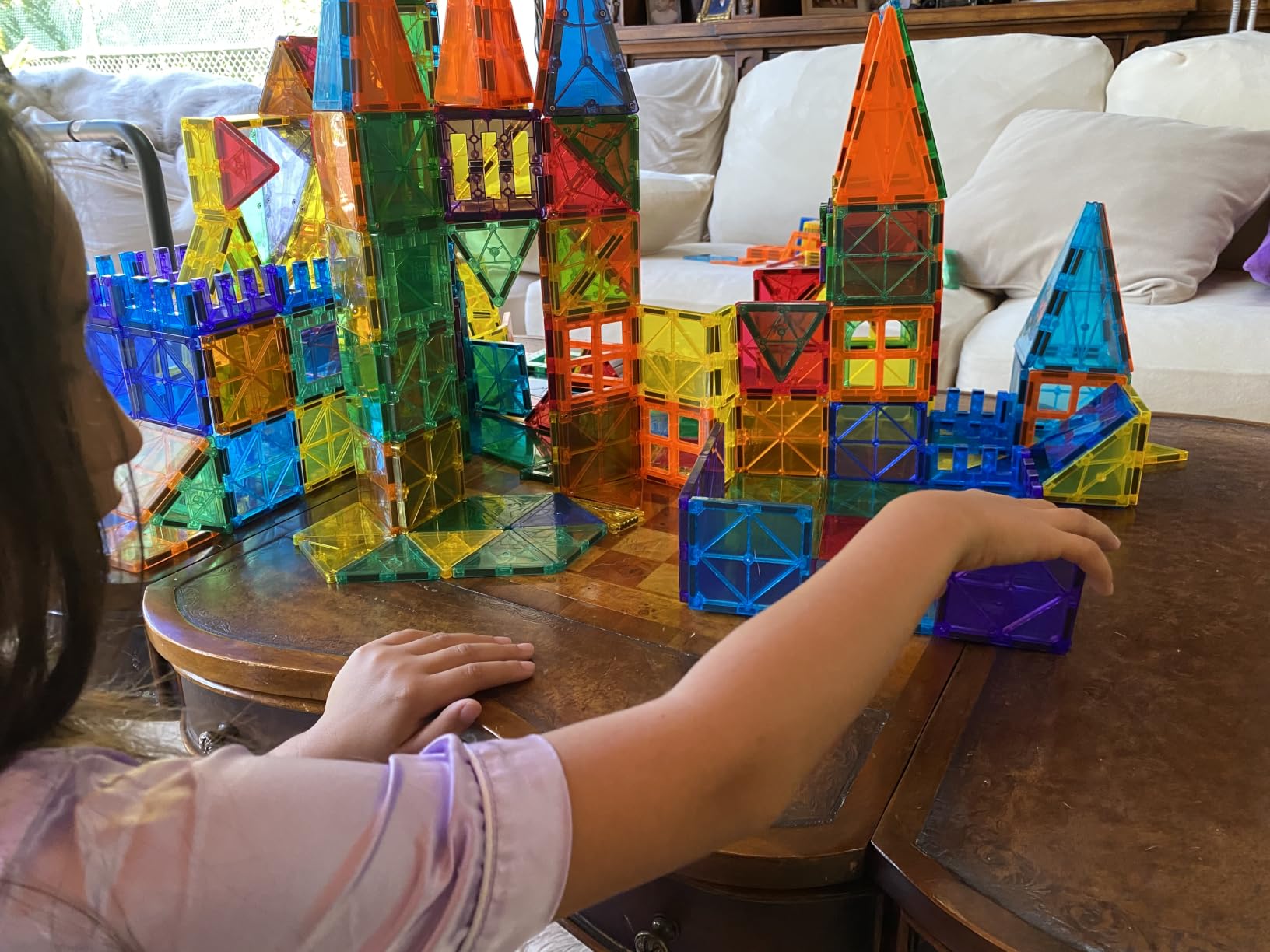
The high-transparency plastic is the other feature worth noting. Reviewers mention the rainbow shadows these tiles cast when lit from behind, and the same light-table or backlit-window trick that works with the Desire Deluxe set works here too.
The material is described as high quality ABS plastic with no lead and ASTM approval, which is a named standard rather than a vague claim. The theme is listed as architecture and castle, and an idea book is included for builders who need a starting point.
Why specialty shapes matter more than extra squares
Squares are the easiest piece to make and the least interesting to own. Every set in this group has plenty. What separates a set that holds a child’s attention from one that gets quietly abandoned is whether the box contains a piece that solves a problem the child has not had yet.
A window solves the problem of looking in. A door solves the problem of getting in. An E-shape is the piece a child invents a use for within about a week, usually by accident. Six long triangles and twelve right triangles are what turn a flat square grid into a roofline, and that is the build a preschooler will attempt first.
Where it falls short
This is a 2.7 kilogram box, which is the heaviest in the group. It is not a travel set and it is not a small-room set, and a hundred-plus pieces of mixed shapes take longer to tidy than a stack of uniform squares.
Compatibility with most other magnetic tile brands is stated, but as with any cross-brand claim, the fit is not guaranteed everywhere. If you already own a set, check the tile footprint against the new pieces before you commit to buying both.
10. MAGNA-TILES microMAGS 26-Piece Travel Set: the one that fits in a bag
MAGNA-TILES microMAGS 26-Piece Travel Magnetic Construction Set – Bold Colors, The Original Magnetic Building Brand
- Metal tin doubles as storage and build baseplate
- Micro tiles fit a preschooler hand and pull apart easily
- Same lattice and rivet construction as full-size sets
- Lightweight at just over 10 ounces
- Only 26 pieces
- best as a travel or supplement set
- Smaller tile size means less impressive structures
Twenty-six micro tiles in a metal tin, weighing just over 10 ounces. The tin is the point. It is storage, transport and a baseplate, and it means a set of magnetic tiles can go in a handbag, a rucksack or a restaurant pocket without becoming a packing problem.
The construction matches the full-size MAGNA-TILES sets, using the same lattice and rivet approach, and the pieces are compatible with every other MAGNA-TILES set. So this is not a sealed system. It is an add-on, and a child with the Classic 32-piece set can build with both at once.
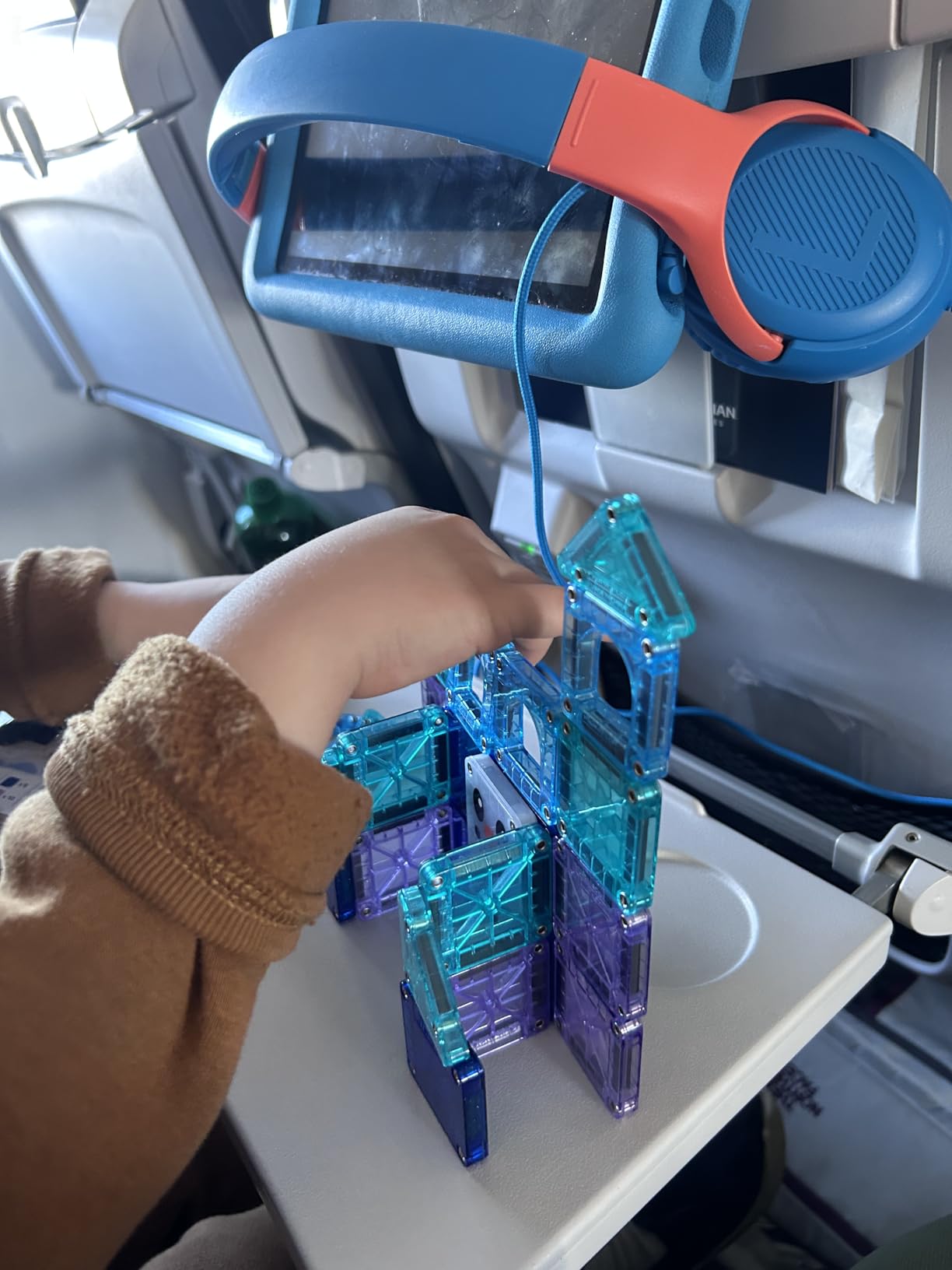
The micro size genuinely suits small hands. Reviewers note the pieces fit inside a preschooler’s hand and pull apart easily, which solves a problem full-size tiles create: a child who cannot separate two pieces cannot correct a mistake, and a build that cannot be corrected gets abandoned.
The material is food-grade non-toxic MABS plastic, free from BPAs, phthalates and latex, and the stated range is 3 years and up. It ranks in the top tier of Toy Magnetic Building Sets, so the basics are documented here as well.
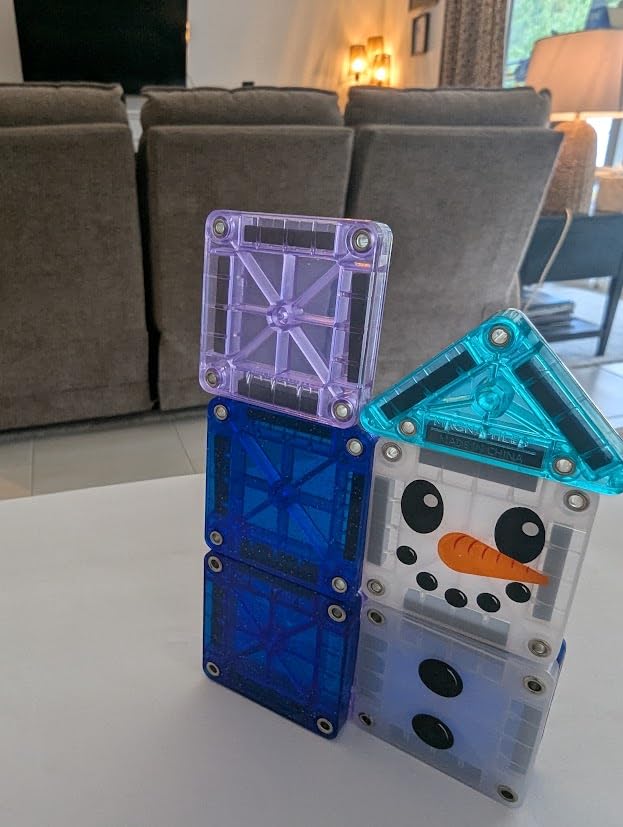
When a travel set beats a full set
Three situations make this the right buy. Grandparents who want tiles without a bulk delivery, holidays where packing volume is the constraint, and restaurants or aeroplanes where a screen-free activity has to fit in a small space. The tin baseplate also means the build stays put on a table instead of migrating.
It is also a good second purchase for a family already using MAGNA-TILES. Micro tiles and classic tiles connect, so a child can add detail to a large build rather than starting again, which is the answer to the abandoned-set problem for anyone inside that ecosystem.
Where it falls short
Twenty-six pieces will not produce an impressive structure and is not trying to. Treat it as a companion, not a main set, and the disappointment of a small build is the main thing to manage with a child who expects a tower.
Because the tiles are smaller, they are also easier to handle, which is a small-hand benefit and a supervision consideration. Any magnetic tile set needs a careful look at every piece before it goes near a three-year-old, and smaller pieces deserve more attention, not less.
How to Choose Magnetic Tile Sets for a Preschooler
Six criteria decide this purchase, and only two of them are piece count. Work through them in order and the choice makes itself, because most disappointing sets fail on magnet retention or shape mix rather than on price or quantity.
Check how the magnets are held inside the plastic
This is the first filter, and the reason is a specific hazard. If a toddler swallows two or more magnets, they attract each other through the intestinal wall and can cause a serious obstruction. A single magnet is far less dangerous than two, so the entire safety question is whether a magnet can ever escape the plastic.
Riveted or cross-fixed magnets are held mechanically and cannot be pushed out. Glued magnets are bonded to the frame and are the construction to be most cautious about, because a chewed or badly cracked tile is exactly the scenario where a bond fails. Check each piece for cracks, chips and lifted edges before the first session, and again every few months. If a tile is damaged, remove it from the set entirely rather than setting it aside.
Be honest about what the listing tells you. Only some manufacturers in this category state their retention method. Where a brand does not say, that is not proof of glued magnets, but it is a reason to inspect the tiles yourself rather than assume.
An ages 3 and up label is a small-parts safety floor, not a difficulty rating
When a set says 3 years and up, it is telling you the pieces are a choking hazard for younger children. It is not saying the builds are too advanced for a three-year-old, and it is not saying the toy will bore a five-year-old. Several sets here are labelled for children in their teens, and the review patterns back that up.
Read the label as a safety line and then judge difficulty yourself. A three-year-old can usually manage a flat pattern, a four-sided tower and a small house unaided. Anything requiring a second pair of hands on the same piece is a build to do alongside them, not instead of them.
One listing in our group starts at 3 months, which we treat as a formality rather than guidance. If a baby is crawling while a preschooler is building, the two cannot share a room with the set out. The tiles should be closed away between sessions, not gathered up and left within reach.
How many pieces a preschooler actually needs
One hundred pieces is the number most families should aim for, and here is the arithmetic that explains it. A four-walled room needs sixteen to twenty tiles. A simple house with a roof runs to around fifty-five. A two-storey build with a separate tower and a pattern piece along the edge takes roughly eighty-five.
So a 60-piece set finishes one build and leaves nothing. A 100-piece set finishes a build and leaves a usable remainder, which is what keeps a child coming back. Below 40 pieces, treat the set as a starter or a supplement rather than a main system.
Push past 100 only when two children build at once. The 110 and 125-piece sets here are the right size for a shared table and excessive for a single child, because more pieces also means more tidying.
Do magnetic tiles from different brands fit together?
Usually yes, and usually with a caveat. Most sets use a common tile footprint, so pieces from different brands will physically connect. Several listings in this group state compatibility with other major brands, and reviewers confirm mixing brands in practice.
The caveat is that no manufacturer guarantees it. A set marketed as compatible is describing its own footprint, not certifying every rival’s, and a tolerance difference shows up as a piece that sits loosely or needs a nudge to seat. If your child already owns a set, buy within that brand where you can, and check the footprint before mixing.
Brand ecosystems are also where the best long-term value sits. Within one brand, every future set connects to every past set, so the second purchase is an addition rather than a replacement.
Head to head: Magna-Tiles, Connetix, Magformers and PicassoTiles
These four names dominate the category, and only two of them appear in our ten picks. Magna-TILES and PicassoTiles are here because the sets we analysed are theirs. Connetix and Magformers are not in this group, so we are not going to score them on figures we have not verified.
What we can say from the specifications in front of us is this. MAGNA-TILES is the only manufacturer in our group that publishes its exact shape mix, its plastic as food-grade MABS, and its warranty period. PicassoTiles publishes its piece count, material and age rating, and its clear 3D pieces are the ones reviewers describe as having the strongest hold in the group.
Connetix and Magformers are the names most often compared against those two, and the comparison questions that come up are about curved builds, connector pieces and shape variety rather than about safety. Treat any ranking that includes them as a separate evaluation, and note that Magformers in particular sells on a different construction principle to the flat magnetic tiles here.
What a preschooler can build with 100 pieces
Nine builds suit this age, and all of them work with 100 pieces. A four-walled house with a door, which is the first project most children attempt. A six-sided pyramid, which teaches slope without instruction. A wheel, using rectangles and squares, which becomes a rolling object. A name, built one letter per click-in or square per unit of the name.
Then a two-storey tower, a bridge between two blocks of different heights, a fence line, a car park with two cars and a wall, and a flat pattern mosaic for the floor or a light table. That last one is worth keeping in the rotation, because pattern work is quietly pre-mathematics and it is the build a child will repeat on a bad weather day.
Keep the session short. At three, the useful length is often fifteen minutes, and stopping while the build is still standing is what makes the next session start quickly.
Cleanup and storage: keeping tiles off your metal surfaces
Magnets find metal. Tiles migrate to radiators, fridges, washing machines and any exposed steel, and once a set is spread across three rooms, tidying stops. The fix is structural rather than behavioural: a bag, a lidded box or a tray that the whole set returns to in one movement. If the problem is a busy kitchen rather than a playroom, our roundup of magnetic tool holders covers the same magnet-to-steel problem from the other direction.
Four of the sets here ship with a bag or box, including a zippered fabric bag with the 125-piece set and a tin with the travel set. For the others, any container with a lid works, and a shallow tray on a low shelf is better than a deep box because a child can see the pieces in it.
One habit helps more than any container. End each session with the build still standing and photograph it, then let the child knock it down as the tidying step. Tiles go in one way, the structure goes down on purpose, and the floor is clear in about a minute.
One set to skip, and why
None of these ten earns a skip, which is unusual. The set we would scrutinise hardest before buying is the 32-piece beginner set as a first and only purchase, not because it is poor but because of what it is: a starter count in a category where the failure mode is a child running out of pieces, treating the set as finished and never returning to it.
That is a purchase-sequence problem, not a product problem. It is a perfectly good set at the right price point for a cautious first purchase, and a poor choice as the only set in a house with a three-year-old who builds seriously. Buy the 32 pieces and plan the 100-piece set, or buy the 100 pieces once.
What would earn a skip is a set that does not state its material, its age rating or its piece count, or that shows no sign of how the magnets are held. None of the ten does that, which is the clearest sign that the specification floor in this category has improved.
Frequently Asked Questions
What is the best magnetic tile brand for kids?
Among the ten sets we compared, MAGNA-TILES is the only manufacturer that publishes its exact shape mix, the plastic it uses and its warranty period, and its Classic 32-piece set carries the highest rating in the group. PicassoTiles is the strongest alternative on magnet hold, with a 4.8 rating across more than 40,000 reviews and clear 3D pieces that add frame strength to tall towers. If you want the most thoroughly documented brand, choose MAGNA-TILES. If you want the strongest magnets and the biggest review base in this group, choose PicassoTiles.
Which magnetic tiles are the safest for kids?
Look at how the magnets are held inside the plastic, not at the brand name. Riveted or cross-fixed magnets are held mechanically and cannot be pushed out of a damaged tile, which matters because the serious hazard is a child swallowing two or more magnets, which attract each other through the intestinal wall. Sets made from food-grade MABS or non-BPA ABS, with a stated age of 3 years and up and rounded edges, are the safer specification. Inspect every tile for cracks and lifted edges before play and remove any damaged piece.
At what age are magnetic tiles appropriate for children?
Three years is the sensible floor, and it is a small-parts safety rating rather than a statement about difficulty. The tiles are a choking hazard for younger children, so a crawling baby and a preschooler cannot share a room with the set out. Difficulty is lower than most parents expect: a three-year-old can usually manage a flat pattern, a four-sided tower and a small house unaided. Sets labelled for children into their teens stay useful well past the preschool years, so age labelling in this category is a safety floor, not a skill ceiling.
Is Connetix or MAGNA-TILES better?
Neither Connetix nor MAGNA-TILES can be scored here, because only MAGNA-TILES appears among the ten sets we analysed and we will not rank a product on figures we have not verified. What the published specifications do show is that MAGNA-TILES discloses more: the exact shape mix, the food-grade MABS plastic and a 90-day warranty. Connetix is frequently bought alongside it and is widely reported to fit the same standard tile footprint, so mixing works in practice. Treat any head-to-head ranking of the two as a separate evaluation.
How many magnetic tiles does a child need?
Aim for at least 100 pieces. The arithmetic is simple: a four-walled room uses 16 to 20 tiles, a house with a roof uses about 55, and a two-storey build with a tower and a pattern piece takes roughly 85. A 60-piece set finishes one build with nothing spare, and a child who runs out of pieces treats the set as finished. Below 40 pieces, buy a starter set and plan to add to it. Go above 100 only when two children build at the same time.
What is the best alternative to MAGNA-TILES?
PicassoTiles is the clearest alternative in this group. The 100-piece set holds a 4.8 rating across more than 40,000 reviews, the strongest review base we analysed, and reviewers repeatedly single out the magnet strength, which is the specification that decides whether a preschooler keeps building or gives up. Its clear 3D pieces have an outer frame that stiffens towers, and the standard footprint means the tiles also work with MAGNA-TILES, Connetix and Playmags pieces, so it is an open system rather than a closed one.
What We Would Buy for a Preschooler in 2026
The PicassoTiles 100-piece set is where we would start in 2026, and the reason is magnet strength rather than brand recognition. It has the largest review base in this group, pieces that work with other brands, and enough count that a child finishes a build with pieces to spare.
If documentation is what matters most to you, the MAGNA-TILES Classic 32-piece set is the more transparent choice, and it is the natural first purchase in a system you can add to for years. If the tiles are going on a light table, the Desire Deluxe 57-piece set does something none of the others do.
Whichever you choose, check every tile for cracks before the first session, keep the set in one lidded container, and put it away between playtimes if a younger child is in the house. That habit matters more than any brand decision, and it is the one thing every parent in this category agrees on.