
At eight, a child sits in the awkward middle of toy life. Big toddler bricks feel babyish, and kits rated twelve plus ask for patience they do not have yet. The sweet spot is a STEM building set that still feels substantial in the hand, but that pushes past stacking into circuits, gears, hydraulics or gravity.
The short answer on the best STEM building sets for 8 year olds: the Snap Circuits Jr. SC-100 is the strongest all-round pick, the Sillbird 12-in-1 Solar Robot is the best value, and the Klutz LEGO Gear Bots is the best screen-free engineering gift. All three build something that works, and all three hold up after the first build.
STEM here means science, technology, engineering and math taught through building rather than worksheets. A STEM building set is any construction toy that makes a child reason about stability, cause and effect, sequence or measurement while a structure comes together in their hands. We went through the specs, the ratings and the review language for twelve sets, then filtered hard for the age-8 fit.
If you are also shopping for a broader gift, our tested picks for educational STEM kits and steel building kits cover a couple of angles this list does not.
Top 3 STEM Building Sets for 8 Year Olds in 2026

Snap Circuits Jr. SC-100
- 100+ projects from 30 snap modules
- No soldering or tools required
- Color-coded parts and full-color manual


Here is the same shortlist in plain terms, matched to the kind of child you are shopping for.
- Best overall: Snap Circuits Jr. SC-100. More than 100 projects from one box, and the highest rating in this group at 4.8 across nearly 30,000 reviews.
- Best value: Sillbird 12-in-1 Solar Robot. Twelve models and 190 pieces at a budget price point, with a large solar panel that also runs under a bright lamp.
- Best screen-free engineering: Klutz LEGO Gear Bots. Genuine LEGO Technic elements, axles, cams and cranks, no batteries and no device.
- Best open-ended building: K’NEX Adventure Wheels. 480 rods and connectors that keep producing new models long after the booklet is done.
- Best for coding and robotics: Henoda 468-piece programmable robot. Five control modes including a coding mode, plus a rechargeable battery.
- Best for gravity and physics: National Geographic Magnetic Marble Run. Wall-mounted track with clear pieces so a child can watch why the marble stalls.
All 12 Sets Compared Side by Side
Screen-free means no phone, tablet or computer is needed at any point, including setup. The table below lists every set in this roundup with its main build, piece or model count, and whether a device is required.
| Product | Specifications | Action |
|---|---|---|
| Snap Circuits Jr. SC-100 |
|
Check Latest Price |
| Sillbird 12-in-1 Solar Robot |
|
Check Latest Price |
| Klutz LEGO Gear Bots |
|
Check Latest Price |
 K’NEX Adventure Wheels 480 Pieces K’NEX Adventure Wheels 480 Pieces |
|
Check Latest Price |
 Smartivity Hydraulic Aeroplane and Dart Launcher Smartivity Hydraulic Aeroplane and Dart Launcher |
|
Check Latest Price |
 Bottleboom 13-in-1 Solar Robot Bottleboom 13-in-1 Solar Robot |
|
Check Latest Price |
 National Geographic Da Vinci Catapult National Geographic Da Vinci Catapult |
|
Check Latest Price |
 Parhlen 244-Piece Set with Electric Screwdriver Parhlen 244-Piece Set with Electric Screwdriver |
|
Check Latest Price |
 Huaker 180-Piece STEM Building Blocks Huaker 180-Piece STEM Building Blocks |
|
Check Latest Price |
 Henoda 468-Piece Programmable Robot Henoda 468-Piece Programmable Robot |
|
Check Latest Price |
 National Geographic Magnetic Marble Run National Geographic Magnetic Marble Run |
|
Check Latest Price |
 Tsomtto 10-in-1 STEM Set Tsomtto 10-in-1 STEM Set |
|
Check Latest Price |
How We Picked
Every set here was rated on the same five points, using the listed specifications and the language buyers use in reviews.
- Buildability at eight. Can a child read the diagrams, follow the step order and finish without calling an adult every two minutes? Instruction clarity mattered as much as piece count.
- Durability. Sets that survive a year of daily handling ranked above sets whose smallest parts crack in the first month. This is where thin plastic kits separate from wood and metal-component systems.
- Replay value. One-and-done builds scored poorly. We favoured sets that produce several models from a shared pool of parts, because interest collapse is the most common complaint in parent forums.
- Screen requirement. Anything that needs a specific device to function got flagged clearly, because app compatibility is a leading source of frustration.
- Safety and labelling. We noted the stated age grading, material claims, storage solutions and small-parts warnings, since a 3+ label tells you a younger sibling in the house needs supervising.
1. Snap Circuits Jr. SC-100: The Best All-Round STEM Building Set for 8 Year Olds
SNAP CIRCUITS Jr. SC-100 STEM Electronics Kit, 100+ Projects, Ages 8+
- One box covers 100+ electronic projects
- No tools or soldering needed
- Color-coded numbered parts make circuits easy to debug
- Rated 4.8 across nearly 30000 reviews
- Models come apart after a session
- Alkaline batteries not included
- Later projects need help reading schematics
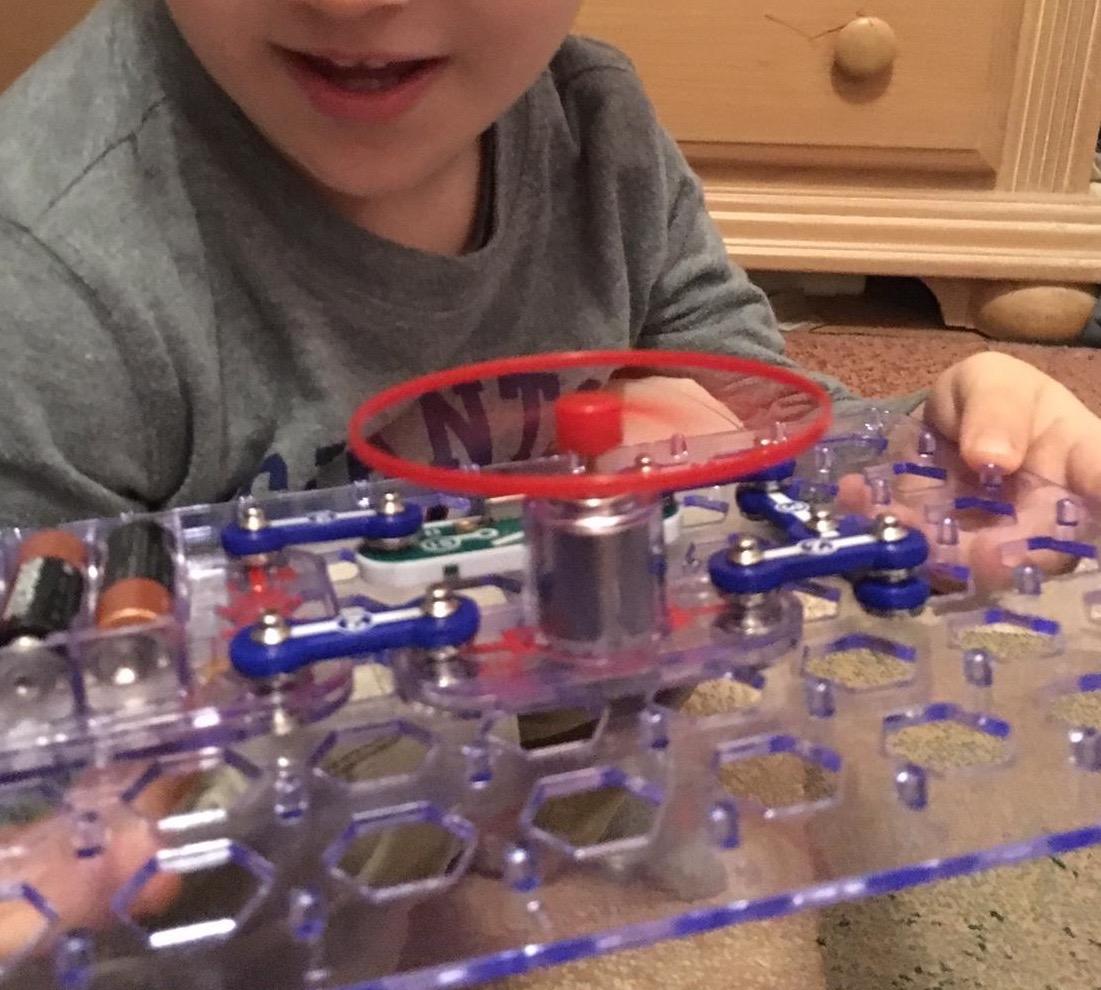
This is the set we kept coming back to. The SC-100 gives a child 30-odd snap modules on a plastic grid and a full-colour manual, and from those same parts they can work through more than 100 electronic projects, starting with simple circuits and ending at a flying saucer. Nothing needs soldering and nothing needs a tool, which is exactly why it works at eight.
What struck me most was not the first build but the hundredth. Parents describe it as a kit that keeps producing something new for months. The parts are colour-coded and numbered, so when a circuit does not light up, an eight-year-old can trace the path and find the loose piece without an adult taking over.
There is no app here, but it is not silent either: the alkaline batteries it needs are not in the box.
The honest drawback is that a finished project comes apart the moment the session ends. That is a flaw for a child who wants to park a model on a shelf, and a feature for a child who wants to rebuild. It is also not a construction toy in the brick sense, so free-form structure building is not part of the deal.
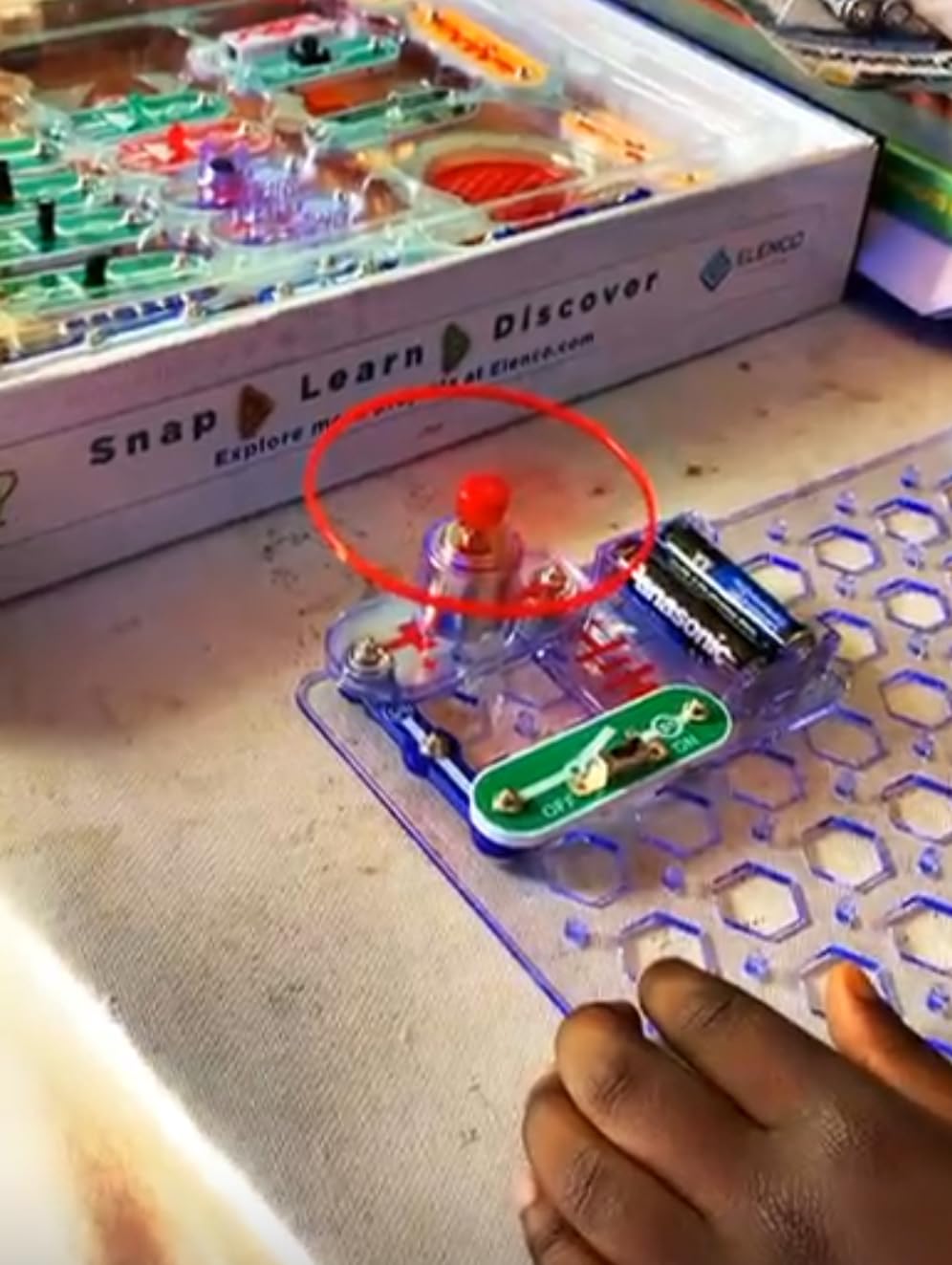
Why it works at age eight
The stated age range starts at eight, which is unusual in this category and exactly what you want to see on a box. The kit teaches electrical engineering by making a child sequence components, notice what a resistor does, and work out why an alarm will not sound.
Who should skip it
Skip it if your child wants a model that stays assembled on the desk, or if they are already deep into building vehicles. It does combine with other Snap Circuits kits, so extending the system is straightforward.
2. Sillbird 12-in-1 Solar Robot Kit: The Budget Pick STEM Building Set for 8 Year Olds
- Twelve models that ramp up in difficulty
- Large solar panel delivers stronger power
- Works indoors under a bright light
- Step-by-step instructions for solo or family builds
- Thin ABS can be fragile
- Slow or stops in dim light
- Instructions less polished than premium kits
For a first robotics set, this is the one I would hand over without hesitating. 190 pieces build 12 models that start simple and get harder, so the same box covers a beginner month and a confident one. The models come apart and reuse the same gears, plates and shafts, which is how a twelve-model set fits into one affordable box.
The upgraded large solar panel is the quiet advantage. The panel is bigger than the ones in most kits at this level, and it also runs under a strong artificial light source, so a rainy-week afternoon indoors still produces a moving robot. No batteries, no device, no charging.
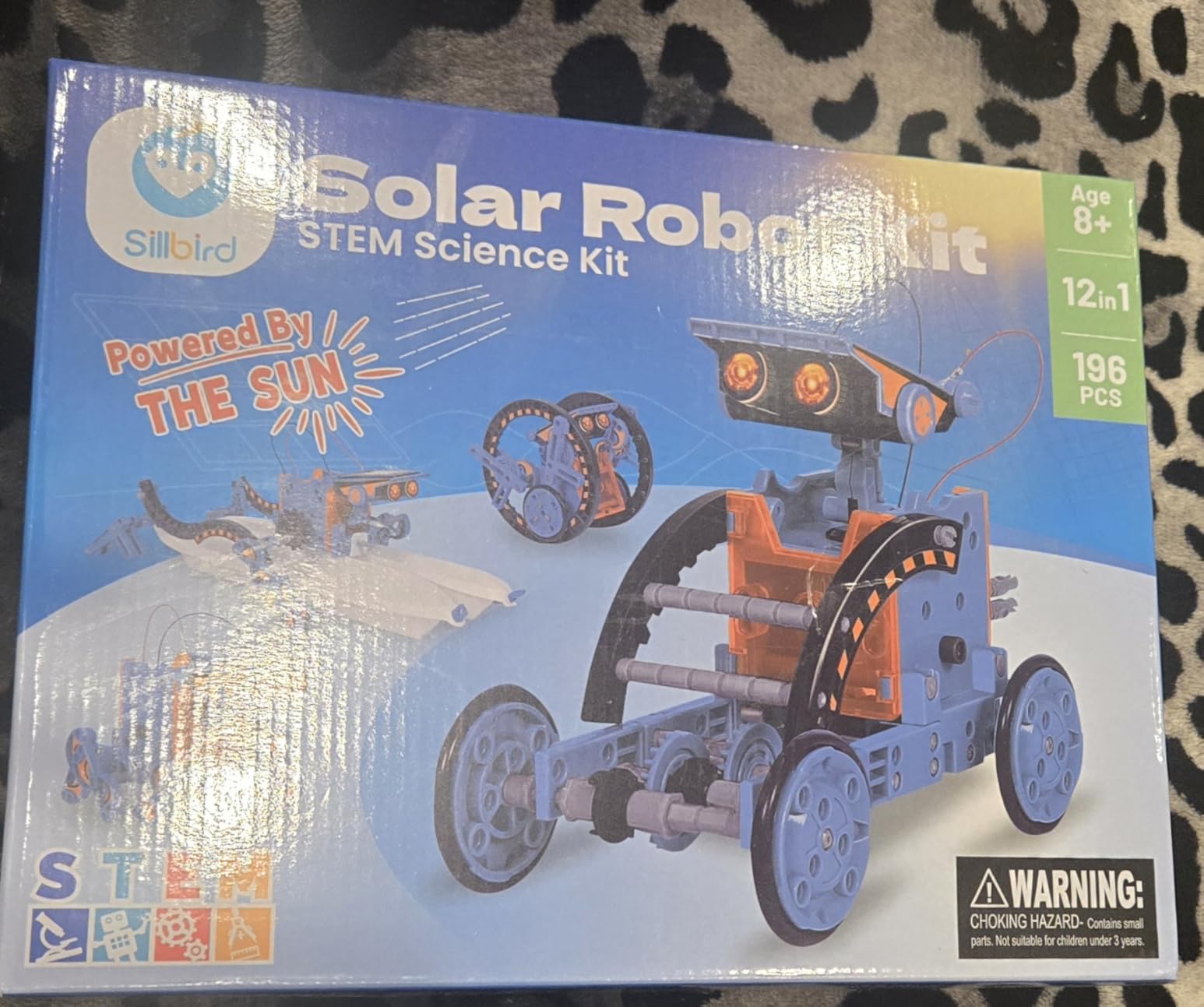
The 4.3 rating tells the honest story. Parents like the progression and the panel; the same parents flag that the thin ABS construction can crack under enthusiastic handling, and that solar models crawl or stall in low light.
There is a packaging point worth flagging too. The listing is marketed for boys, which is worth ignoring. The mechanical content is identical for any child who likes gears, and several of the models are simply machines that move when the sun hits them.
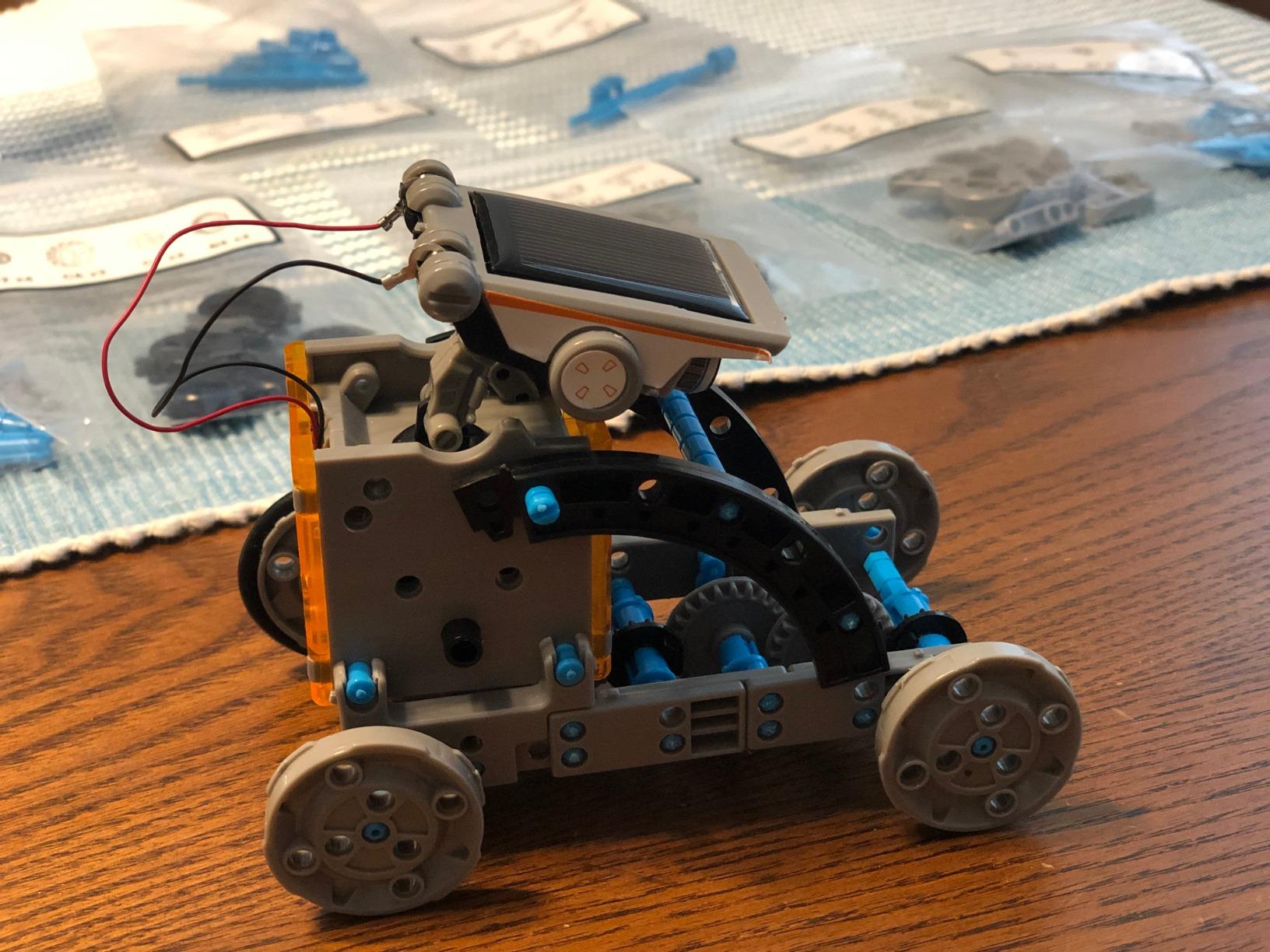
Why it works at age eight
Ages eight to thirteen is the stated range, and the beginner models are genuinely reachable on day one. Twelve models from one parts pool makes this an affordable first step into robotics, and it suits a budget gift or a rainy-day activity.
Who should skip it
Skip it if your child builds roughly rather than carefully. Small parts and thin plastic are the recurring complaints, and a child who forces connections will break something. Skip it too if the child wants a machine that moves quickly, because solar power is slow by design.
3. Klutz LEGO Gear Bots: The Best Screen-Free Engineering Set for 8 Year Olds
- Real LEGO Technic elements with papercraft
- Book explains axles cams and cranks
- All parts included
- Paper packaging stores flat
- Only 62 elements so models are small
- Papercraft creases easily
- Tricky for younger 8 and 9 year olds
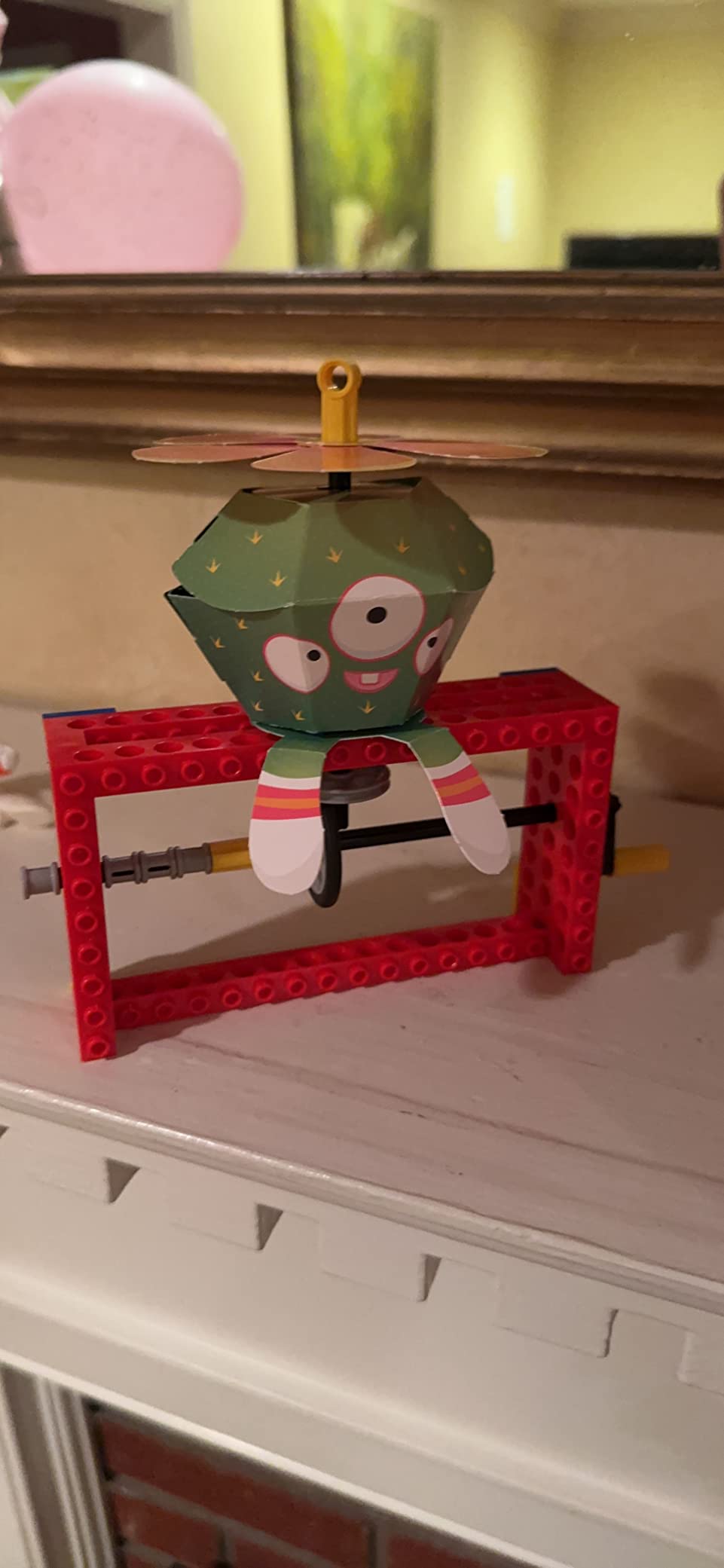
This one does something the others do not: it explains why the machine works. The 64-page book walks through axles, cams and cranks in the context of everyday machines, then hands over eight kinetic creature models built from 62 genuine LEGO Technic elements and papercraft parts. The learning happens alongside the building rather than being added afterwards.
All the pieces are included, which matters if you do not already own a Technic collection, and the flat paper format is far easier to gift and store than a moulded plastic tray.
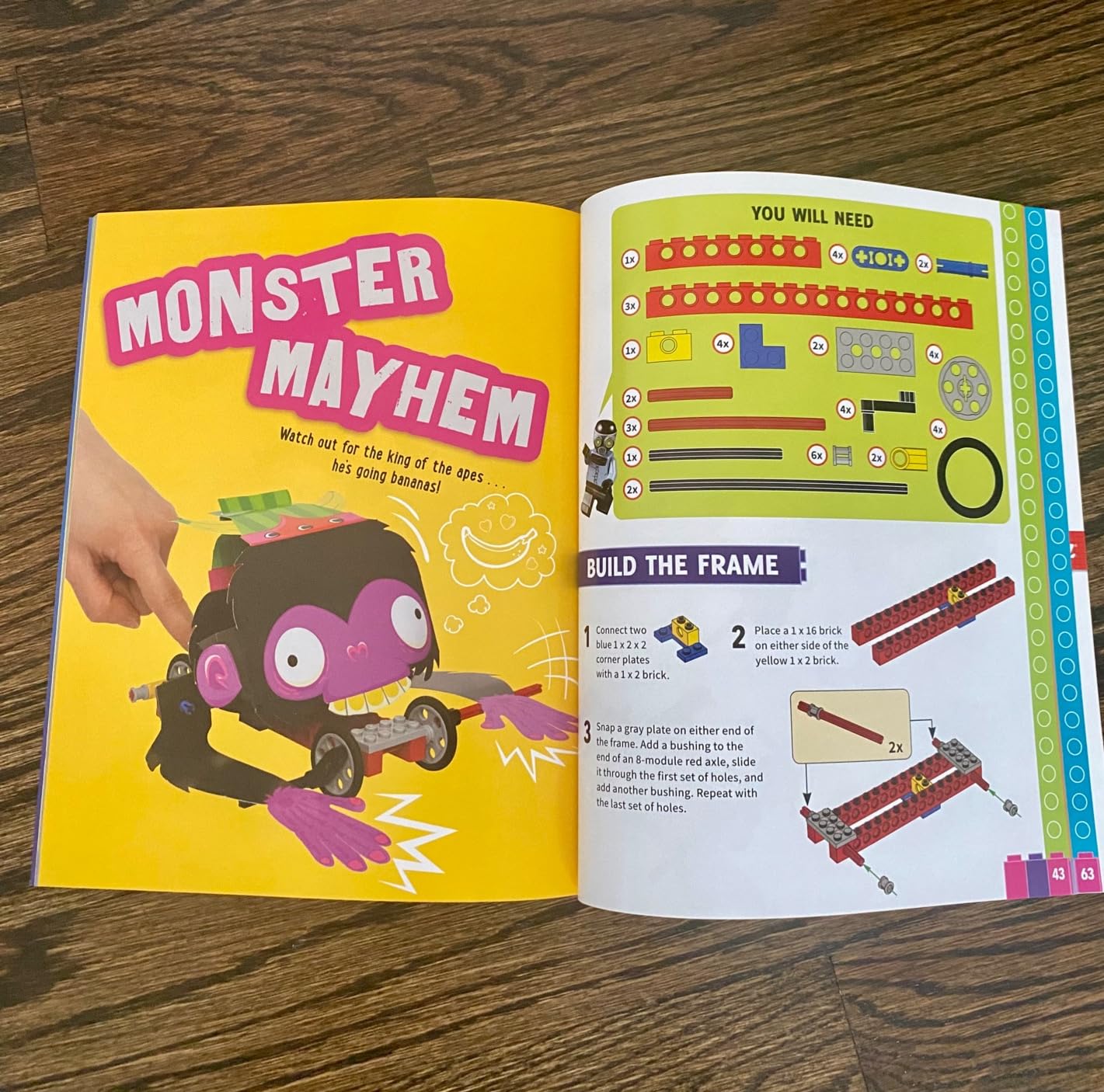
At 4.6 stars the reservations are consistent. 62 elements is a small count, so the models are compact and simpler than a full Technic set. The papercraft components need a steady hand, and a crease or tear means starting that piece again.
It is also purely mechanical. A child who wants circuits or programming will not find it here, though they will find a clear explanation of how a crank converts rotation into movement.
Why it works at age eight
The stated range is eight to twelve, which lines up precisely with the child in question rather than spanning a decade. Reading load is light, the concepts are physical, and nothing needs a device or a battery to run. It is the most natural bridge here from basic bricks to mechanism.
Who should skip it
Skip it if the child has no patience for paper and glue, or if you want a model that ends up impressive on a shelf. These are small kinetic mechanisms that move, not display pieces, and it is a single-player kit.
4. K’NEX Adventure Wheels 480 Pieces: The Best Open-Ended Build System for 8 Year Olds
K’NEX – Adventure Wheels Building Set – 480 Pieces‚ STEM Building, Creative Construction Set‚ Ages 7+ – Amazon Exclusive
- 480 parts give real open-ended freedom
- Models move with working rotors and wheels
- Connections hold yet come apart easily
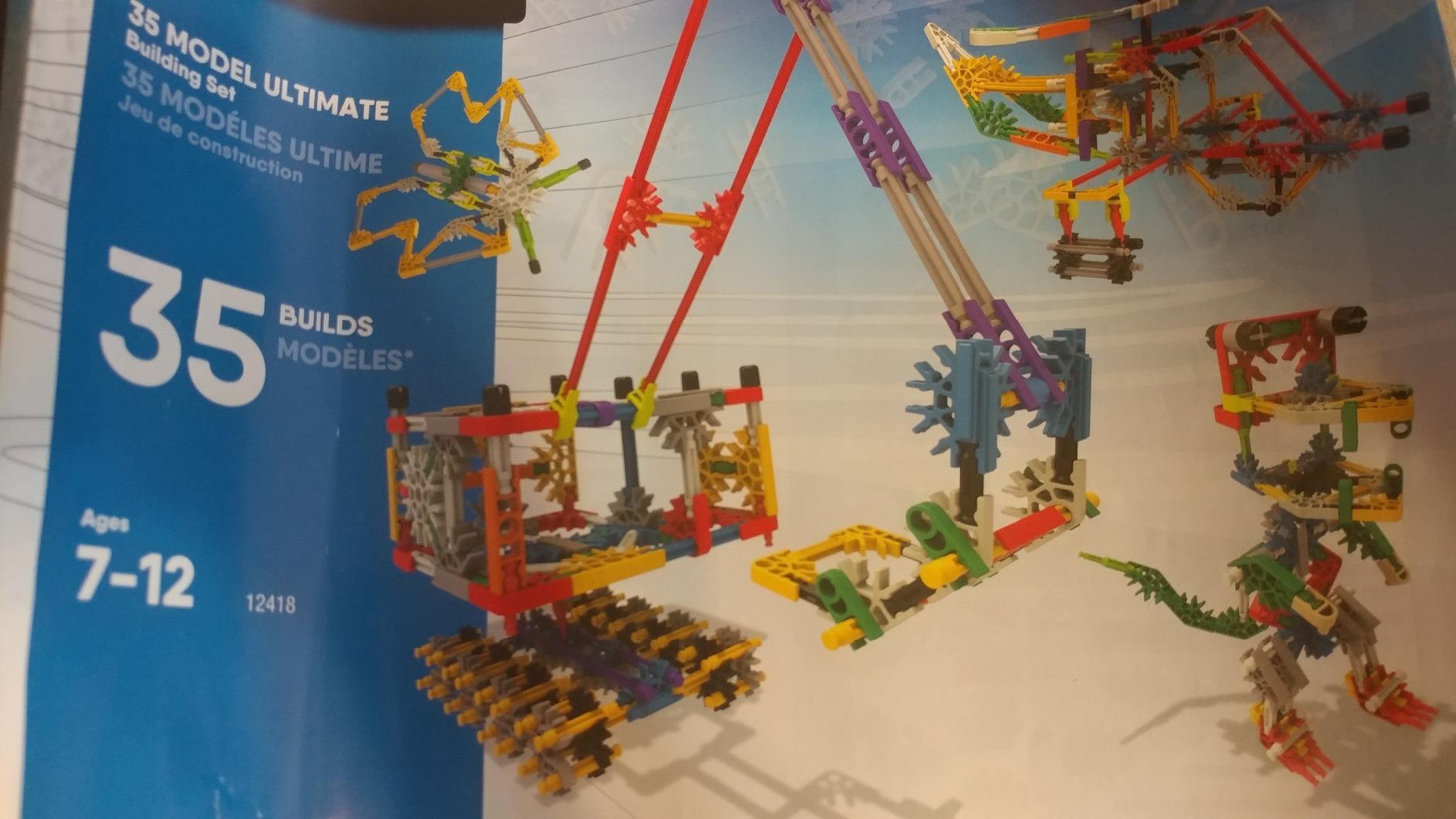
- Instruction booklet covers 35 models
- Thin rods can crack or bend
- Wheels and axles get lost or break
- Storage chest is simple cardboard
This is the set for a child who has already discovered that the instruction booklet is a starting point, not a rulebook. 480 classic K’NEX rods and connectors, snapping together securely and coming apart just as cleanly, give far more freedom than any fixed-model kit. The 35 printed models are simply the starting point.
The moving parts are what separate it from a generic brick set. Wheels roll, rotors spin, wings and tracks work, and a completed vehicle gets pushed down a hallway rather than photographed. Age seven to fifteen is the stated range, so eight sits comfortably inside it, and the treasure-chest box keeps several hundred small parts in one place.

The recurring weakness is the thinnest parts. Reviewers report rods and small connectors cracking or bending under force, the same failure mode we see in steel building kits that rely on slim rods, and wheels and axles are the pieces most often lost or broken. The cardboard chest is also modest, so it will not survive being dropped repeatedly by a child carrying a full box.
The booklet introduces rather than completes for an eight-year-old, so a parent who wants guided, bounded projects will find it open-ended to a fault.
Why it works at age eight
Structures, mechanisms and vehicles are all within reach, and a child without K’NEX experience will learn the system in the first session. It is also the best answer here to LEGO-brick fatigue: a child who already owns hundreds of studs gets a genuinely different construction language.
Who should skip it
Skip it if you are worried about small parts around a toddler, or if the child snaps things when frustrated. A parent who wants a finished, identifiable model rather than a parts pool will also be disappointed.
5. Smartivity Hydraulic Aeroplane and Dart Launcher: The Best Gift With a Working Payoff
Smartivity 2in1 Hydraulic Aeroplane & Dart Launcher STEM Kit Ages 6-14
- Working hydraulic launcher feels genuinely impressive
- Engineered wood feels sturdier than plastic
- Manual holds an 8-year-old for hours
- Two models in one kit
- Hydraulic pressure weakens over time
- Fine motor demands need adult help near the start
- MDF edges can need light sanding
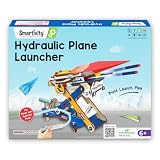
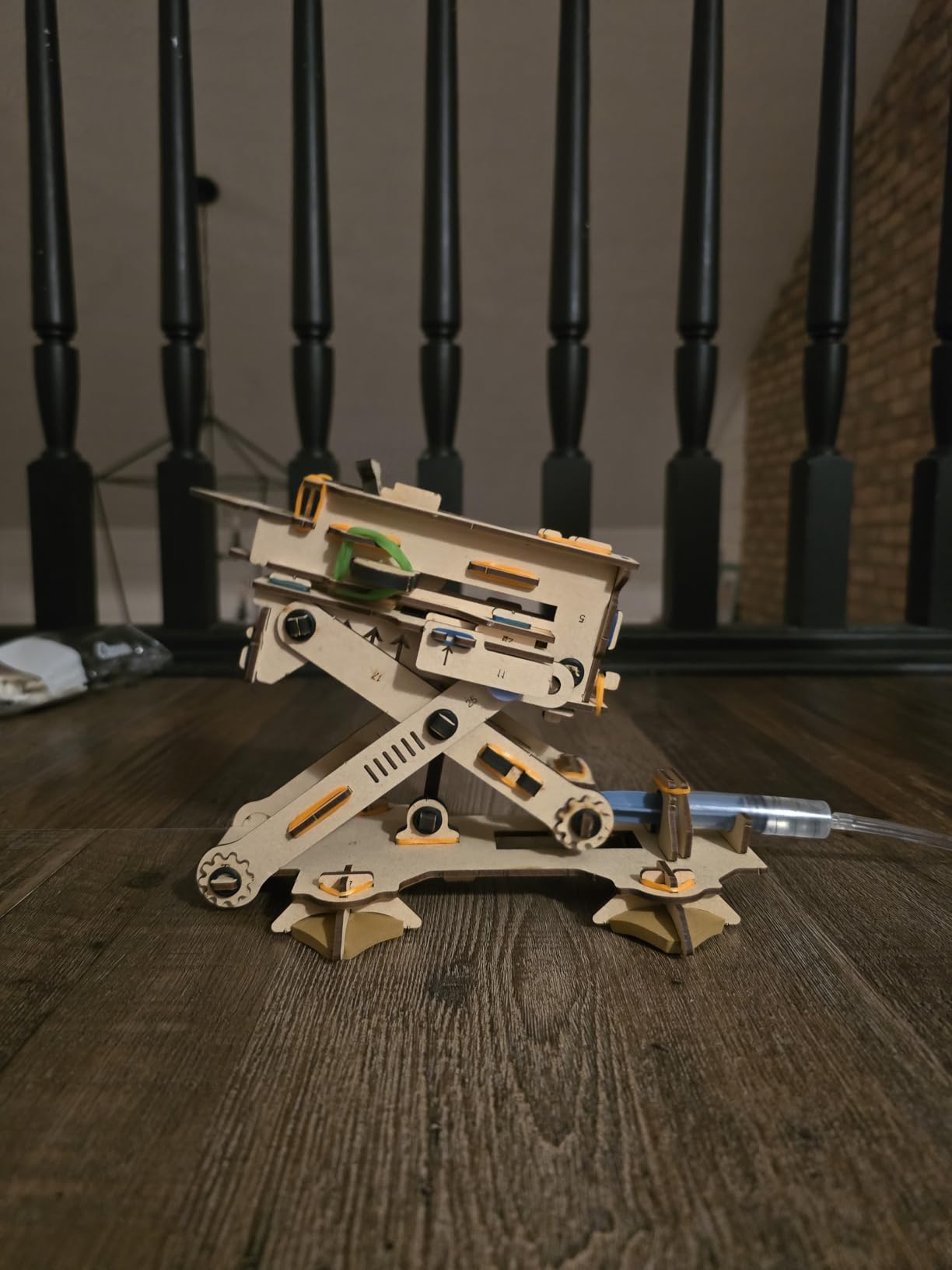
Most kits end in a static model. This one ends in a machine that works. The child builds a hydraulic mechanism from 58 engineered wood parts, then loads a paper aeroplane or a foam dart and gets a genuinely satisfying launch. The 2-in-1 design gives two play modes from a single build, and free replacement parts are included.
Engineered wood rather than plastic is the quiet upgrade. It feels more substantial in the hand, and parents consistently rate the build quality above plastic kits in the same range. The step-by-step manual is good enough to hold an eight-year-old through hours of screen-free building.
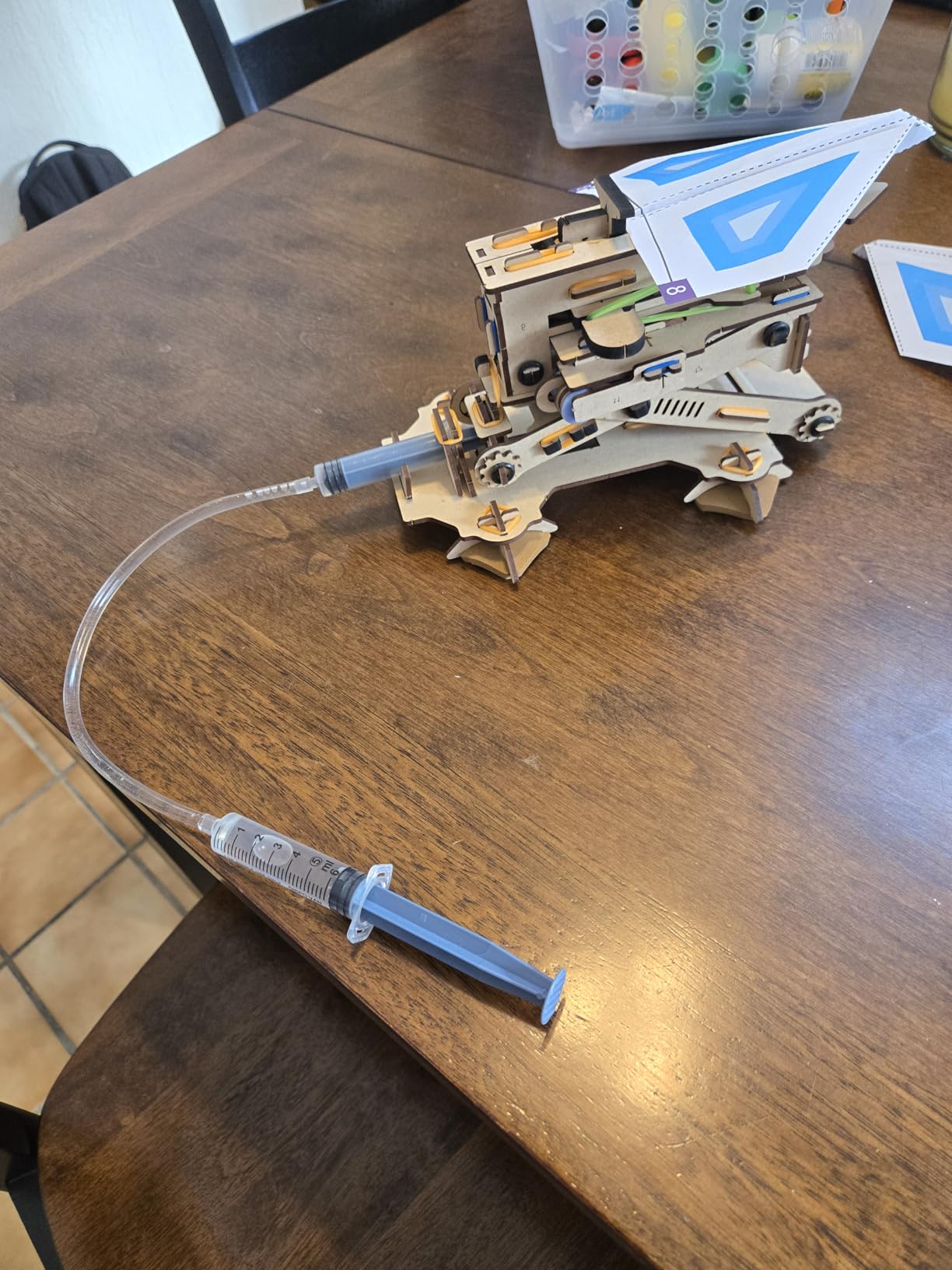
Two things to know. The fine motor demands are real, so most children need an adult nearby for the first session. And the hydraulic pressure weakens with use, so launch power drops over time and small leaks appear in some units.
Ages six to fourteen is the stated range, so an eight-year-old sits squarely inside it. The design team reports kid-testing the kit for over a thousand hours.
Why it works at age eight
Hydraulics is one of the few science ideas an eight-year-old can feel rather than read. The child pushes, the mechanism moves, the launcher fires, and the relationship is immediately obvious. Because a finished model has a purpose, the child keeps coming back to it.
Who should skip it
Skip it if the child has very limited hand strength, if a launch mechanism indoors will cause conflict, or if you want something that can be handed over unsupervised for weeks. It is a build-with-someone kit.
6. Bottleboom 13-in-1 Solar Robot Kit: The Best Budget Robotics Set for 8 Year Olds
- Thirteen models reuse the same gears and shafts
- Works on land and water surfaces
- Manual clear enough for an 8-year-old
- Smooth non-toxic ABS parts
- Small parts easy to lose
- Slow movement under solar power
- Visible share of 1-star reviews on durability
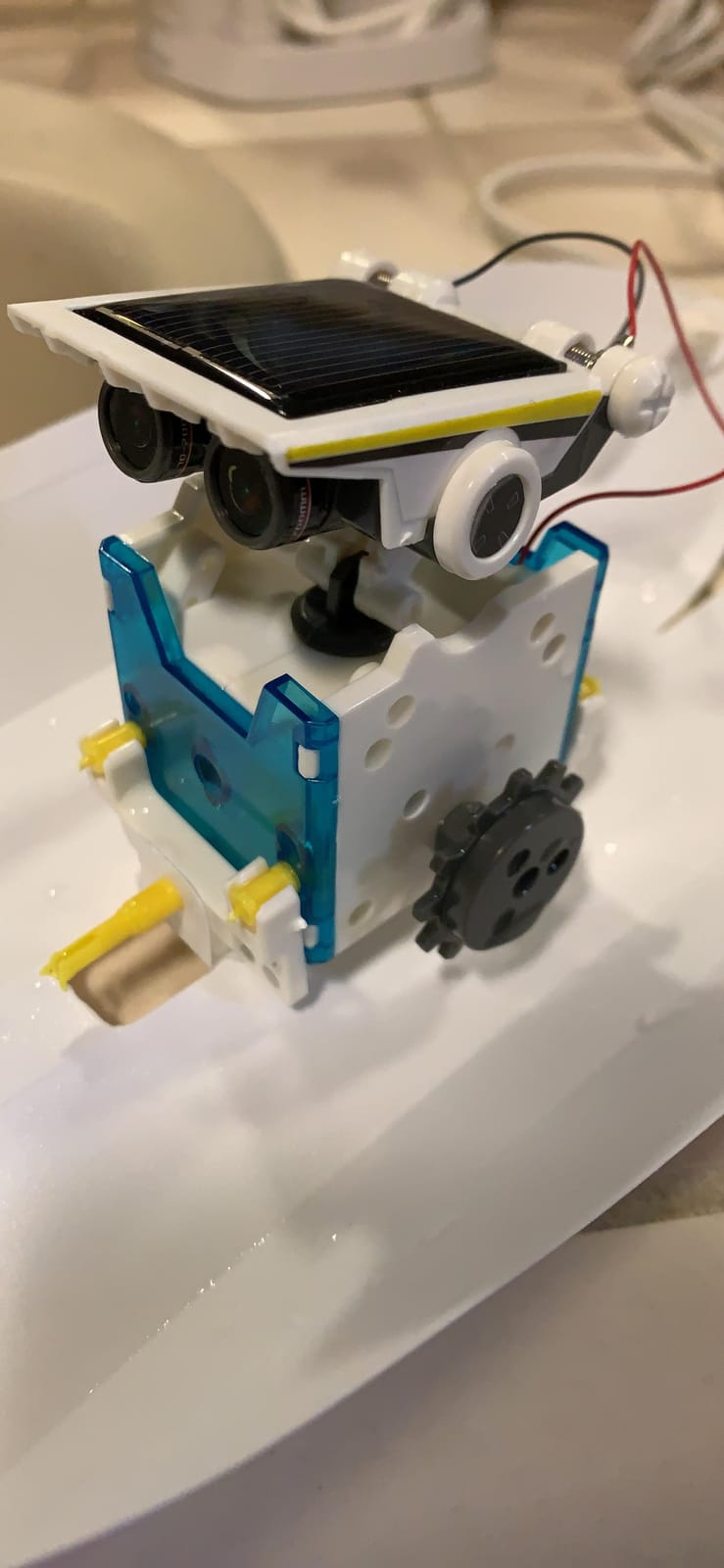
The pitch here is variety. Thirteen robot types come from one kit by splitting and reassembling the same gears, plates, tyres and shafts, and the models move on both land and water. Water capability turns a build into a bath-tub experiment and widens the play surface considerably.
Ages eight to fifteen is the stated range, and the step-by-step manual is clear enough for an eight-year-old to follow without constant help. The parts are non-toxic ABS with smooth, raw-edge-free surfaces, which matters in a house with younger siblings.
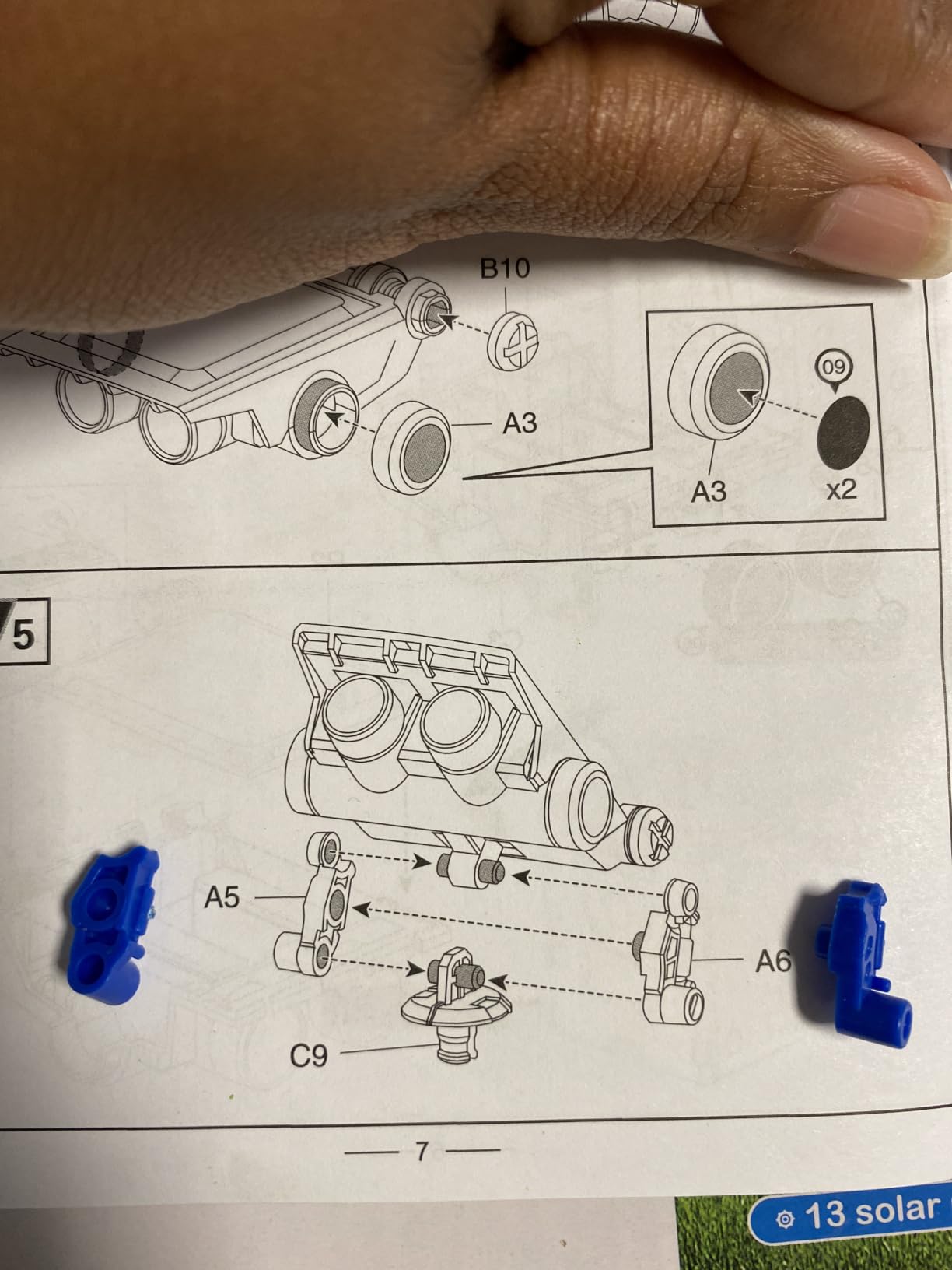
At 4.3 stars with a visible seven percent one-star share, this kit has a quality spread. The complaints cluster: small parts disappear easily, several common accessory pieces are not included, and the plastic is thin enough to break when a child works hard on a build.
Solar movement is slow, and a child expecting a remote-controlled robot will read that as broken. The listed dimensions on the product page are also inaccurate, so do not plan shelf space from them.
Why it works at age eight
Thirteen models is genuine replay value for a budget set, and land-and-water capability keeps a single kit interesting for weeks. Teaching solar and renewable energy by experimentation suits a child who already knows what a battery is.
Who should skip it
Skip it if the child expects fast movement, or if the household loses small parts regularly. It is also the set here most likely to disappoint on durability, so for a child who is hard on toys, spend a little more elsewhere.
7. National Geographic Da Vinci Catapult Kit: The Best Pick for an 8-Year-Old Ready for a Challenge
National Geographic Da Vinci Catapult Wood Building STEM Kit for Kids
- Three machines that genuinely launch
- Laser-cut pieces punch out cleanly
- Catapult throws remarkably far
- Short history write-ups included
- Listed age is 12 so adult help is needed
- Balsa can snap on tight joints
- Instructions hard to decipher
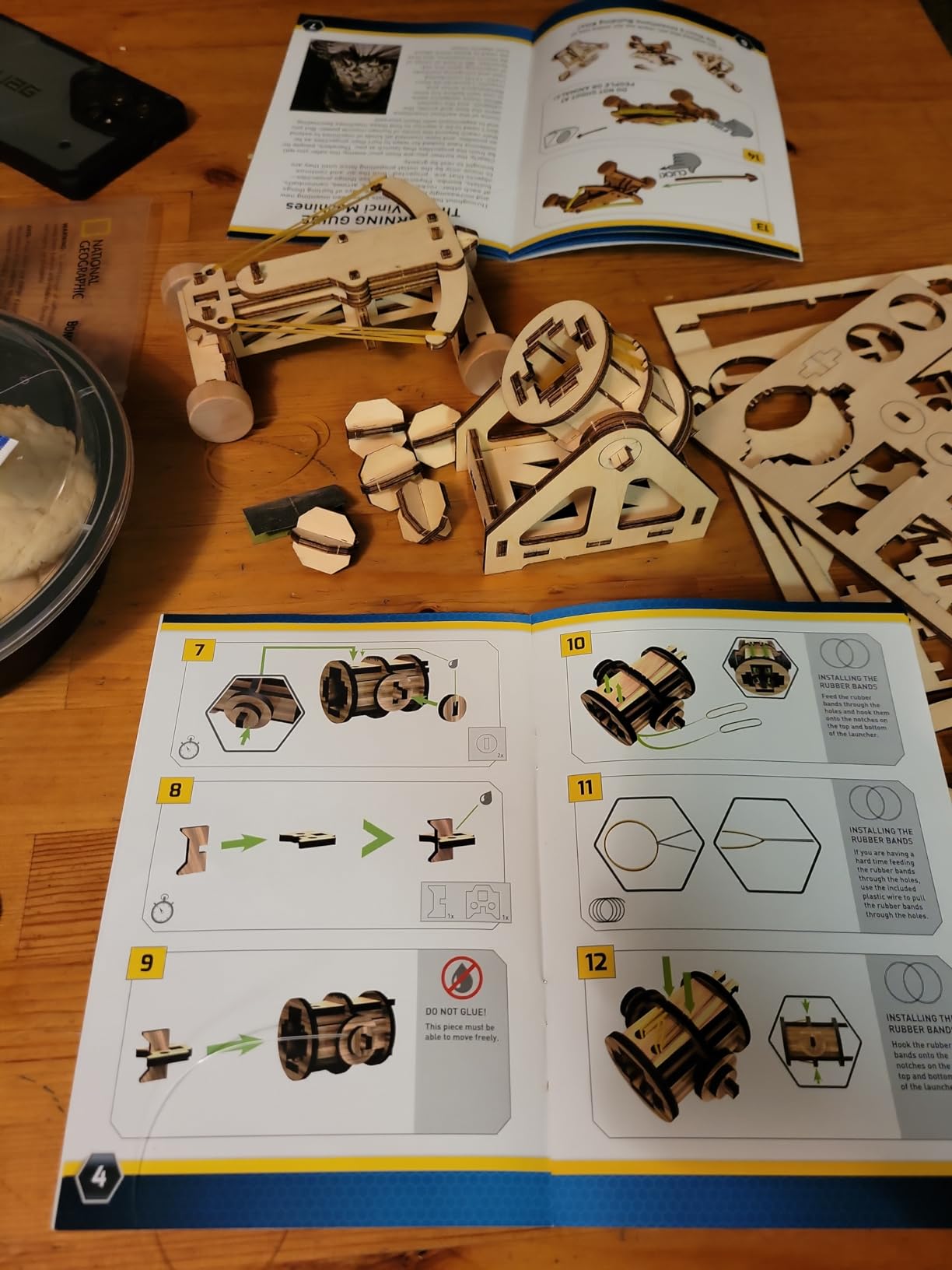
Three working siege machines from a different era: a ballista crossbow, a bombard cannon and a catapult. Each takes roughly one to three hours to assemble, the laser-cut balsa pieces punch out cleanly, and the finished catapult throws its projectile an impressive distance. The booklet adds short historical notes on each invention.
Wood construction is the appeal. Parents in forums repeatedly favour wooden and metal-component kits as more durable than plastic, and this one survives repeated firing once assembled. No batteries, no device, and a US-based support team behind the brand.

Now the honest part, and it matters at this age. The listed age is twelve and up. An eight-year-old can do this, but needs close adult help, and the instructions are the weakest link in an otherwise well-made kit. A few steps lack clarifying detail, and one buyer reported a glued-in piece mounted backwards on the bombard.
Tight-fitting joints are the second issue. Balsa is fragile, and an error often means full disassembly and regluing. The bombard trigger is the least reliable of the three, so the catapult is the model to start with.
Why it works at age eight
For a child who reads well, works carefully and enjoys a long project, this is a stretch rather than a strain. Simple machines, stored energy and projectile motion are all visible in the finished product, and it is one of the few kits here that rewards building alongside an adult.
Who should skip it
Skip it if your eight-year-old is not ready for a twelve-plus rating, or if the child needs to finish something in one sitting. The fragile joints and unclear instructions make this a hands-on kit, not a hand-it-over kit.
8. Parhlen 244-Piece Set with Electric Screwdriver: The Best Set for Building Without an Adult
Parhlen Educational Toys Building Blocks, 244 Pieces Electric Screwdriver DIY Building Toys for Boys and Girls, Educational Construction Building kit for Kids Ages 4 5 6 7 8 9 10 Year Old
- Electric screwdriver makes assembly far easier
- 244 pieces support flat and solid models
- Recognisable designs including lion truck butterfly
- Large case plus bonus bag included
- Needs 2 AA batteries not included
- Screwdriver can strip nuts if over-tightened
- Thin plastic plates crack
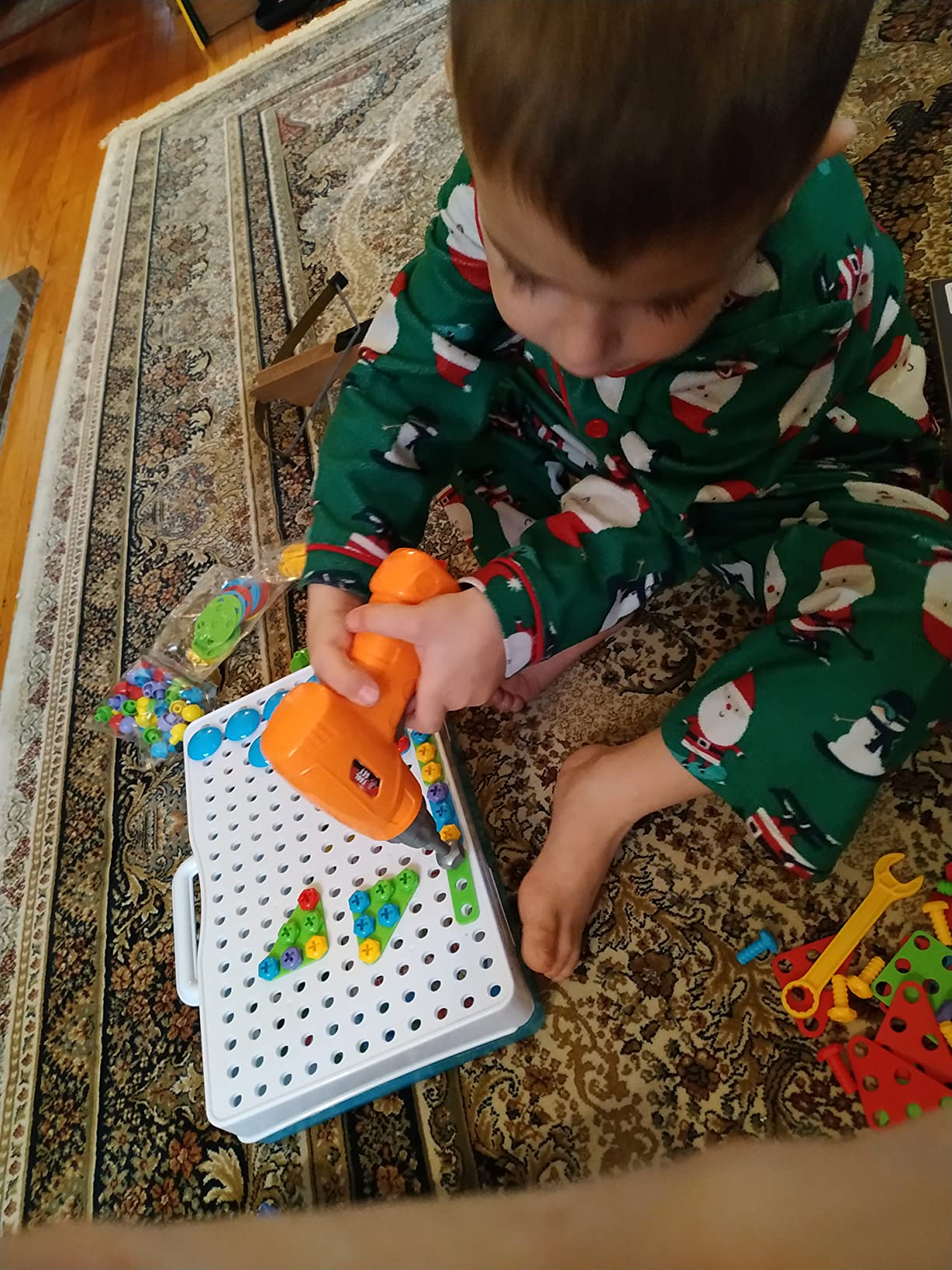
The electric screwdriver is the feature that separates this from every other bolt-and-nut set we looked at. Instead of finger-tightening a plastic nut, a child swaps between the drill and the driver head and assembles plates onto base grids far faster. Reviewers single it out again and again as the reason the kit works independently.
244 pieces cover both flat two-dimensional designs and full three-dimensional models, with recognisable builds like a lion, truck, butterfly, flower, bird and helicopter. The material is non-toxic food-grade ABS with smooth edges, and the whole set washes under running water with mild soap.

Two AA batteries are needed for the screwdriver and are not included. The tool can also strip plastic nuts and bolts if a child over-tightens, which is the most common complaint in the reviews. Thin plastic plates crack under rough play, and decorative extras such as eyes are sparse enough to cause arguments.
The stated range runs from 36 months to ten years, and the instruction diagrams are basic, so designs are limited to what the child can improvise once the patterns run out.
Why it works at age eight
Independent building is the point. A child who can finish a model without waiting for a parent to tighten every joint gets a very different experience from one who abandons a build halfway. The storage case and bonus bag make clean-up fast, which protects the chance of starting again tomorrow.
Who should skip it
Skip it if you need genuine engineering content, since the builds here are decorative rather than mechanical. It is also the weakest choice for a child who will torque screws without being asked.
9. Huaker 180-Piece STEM Building Blocks: The Best Set for Everyday Replay
Huaker STEM Building Toys for 3 4 5 6 7 8 Year Old Boys Girls Birthday Gift
- Pieces suit open-ended cars robots and dinosaurs
- Booklet shows piece counts so kids can plan
- Reported to hold up to daily use for years
- Sturdy storage box speeds up cleanup
- Connector prongs snap if handled roughly
- Wheels and eye pieces too few to share
- Links join more loosely than studs
At 4.7 stars with 84 percent five-star ratings, this is the highest-satisfaction set in the group, and the reason is unusual: parents describe it as a toy that gets used every day for years rather than played hard for a fortnight. 180 pieces in multiple colours and shapes cover race cars, robots, trucks, dinosaurs and whatever the child invents, with no fixed end point to the building.
The idea booklet is better than it needs to be. It shows piece counts alongside images, which turns a build into a planning exercise, and the same booklet works for children as young as three and four. It is also designed for collaborative building, so it works in a classroom STEM bin as well as in a parent-and-child session.

Materials are certified non-toxic and BPA-free, and the pieces wash. The connector prongs are the weak point, snapping if picked up roughly or thrown. Links also join more loosely than interlocking studs, so a tall structure needs careful building and will lean if a child rushes it.
Wheels and eye pieces are too few for two children at once, and small pieces are lost over time, so a second box may be needed after a year or two.

Why it works at age eight
An eight-year-old is old enough to plan a build from a piece count and young enough to want a new challenge every afternoon. Durability is the reason it stays interesting instead of being retired to a bin, and it works for two people without a second purchase.
Who should skip it
Skip it if you want a single impressive finished model, or if the child throws pieces when excited. Nothing here moves or launches, so a child motivated by watching a machine work will lose interest faster than the ratings suggest.
10. Henoda 468-Piece Programmable Robot: The Best Coding and Robotics Set for 8 Year Olds
Henoda Robot Toys for 8-16 Year Old Boys Girls Kids with APP or Remote Control Science Programmable Building Block Kit, STEM Projects Educational Birthday Gifts
- Five control modes give real driving variety
- 468 pieces build a transforming robot
- Manual marks assembly areas clearly
- Parts bagged separately by build step
- App and remote add setup complexity
- 468 small pieces mean a long build
- Bluetooth app limited to some platforms
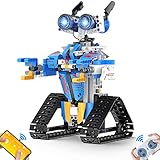
For a child who already plays building games on a screen, this is the kit that turns that interest into something physical. 468 building block pieces assemble a transforming robot with glowing eyes and rotating hand joints, and it runs on five control modes: Bluetooth app, the included 2.4GHz remote, path mode, voice control and a gravity sensor, plus a STEM programming mode for introductory coding play.
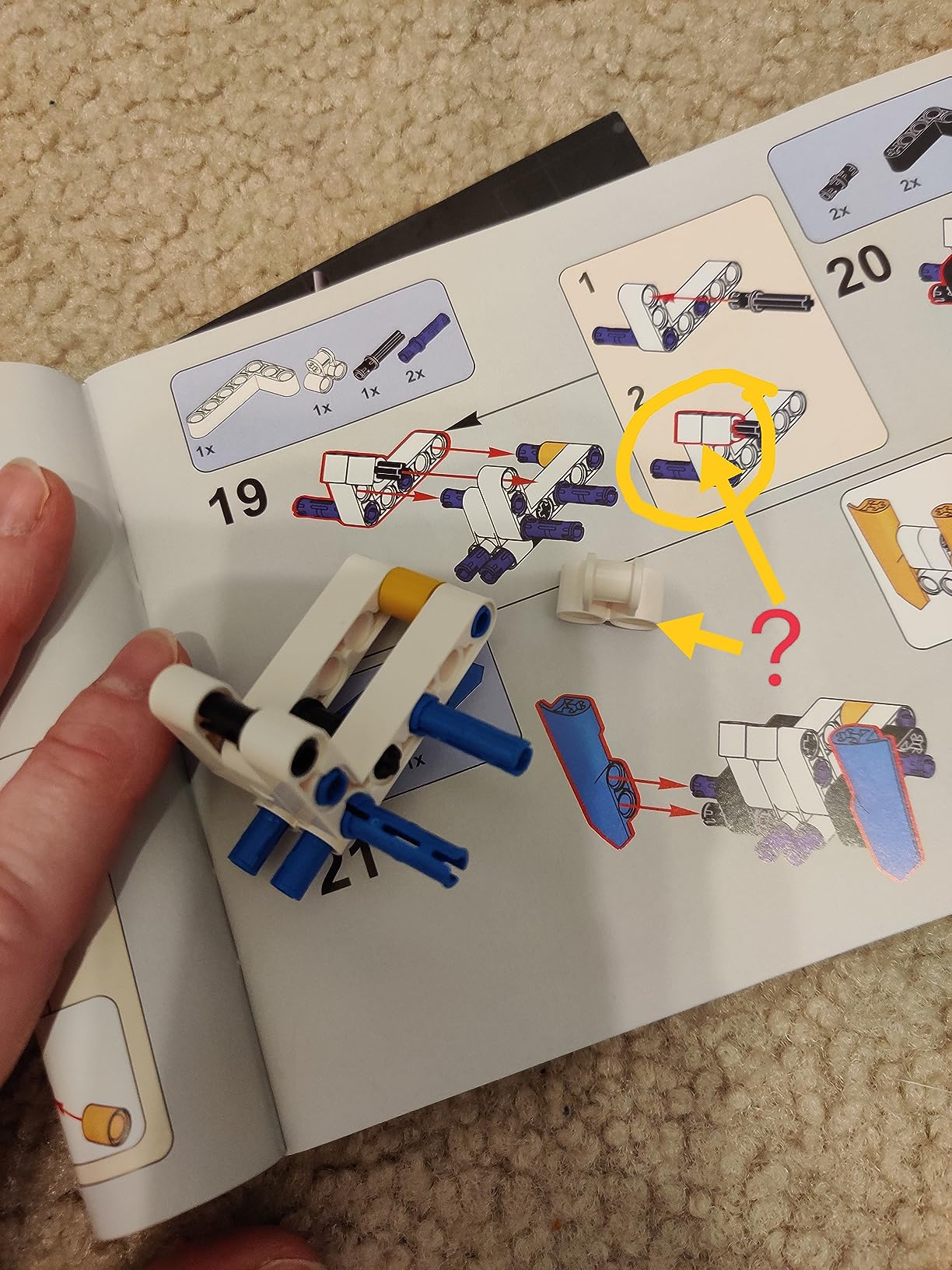
The instruction design is unusually good. The manual uses coloured boxes and arrows to mark the assembly area for each step, and every part is bagged separately by build stage. The rechargeable lithium battery and USB cable are included, which removes the most common reason a robot kit stops working.
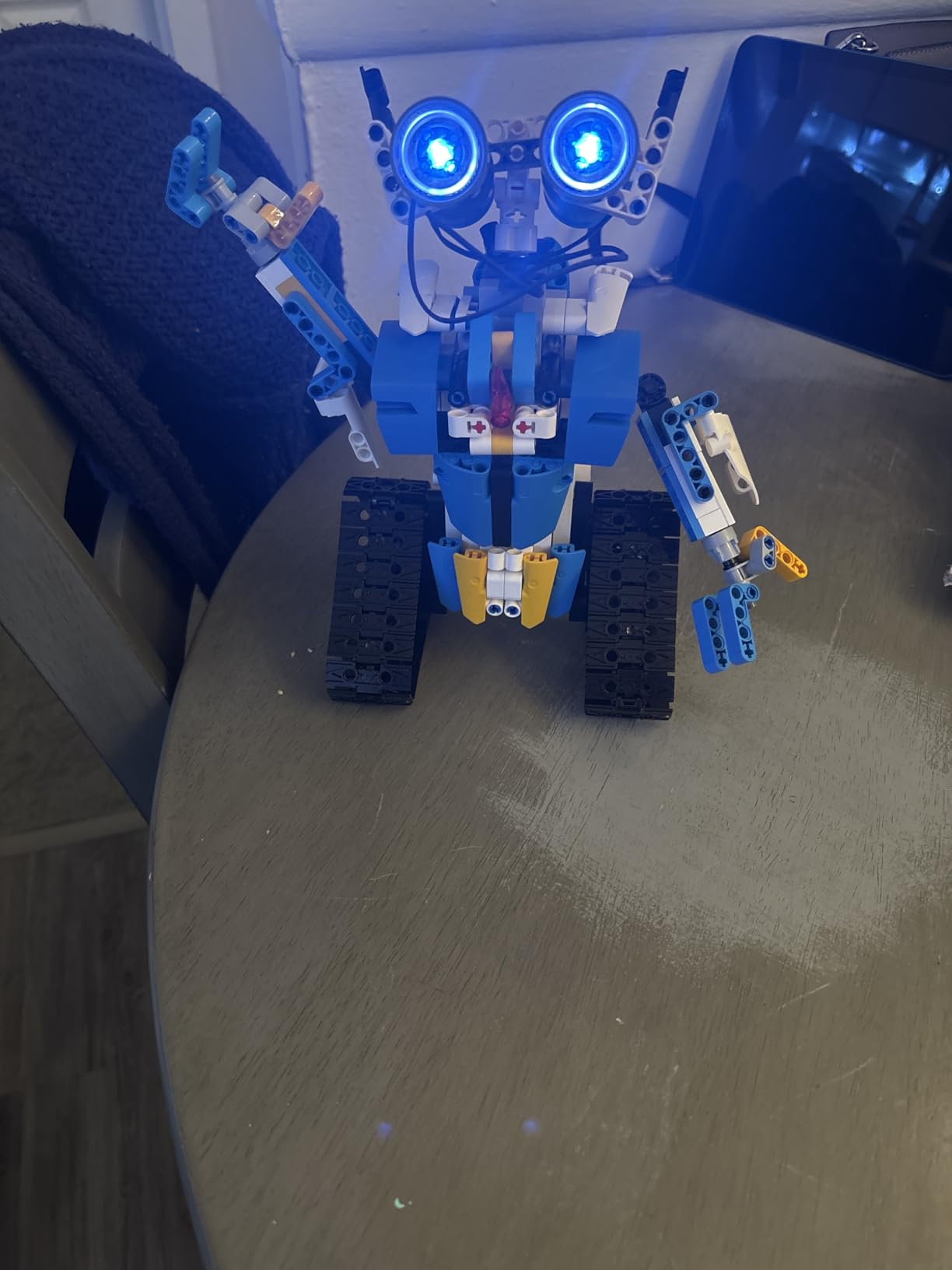
This is the most complex set here, and complexity is the trade. 468 small pieces mean a build that runs well past a single sitting and a real risk of losing parts mid-way. The app and remote features add setup steps some younger children cannot manage alone, and the Bluetooth app is limited to certain phone platforms, which is the compatibility complaint that shows up most often in this category.
The stated range starts at eight, so it is age-appropriate on paper. Joints on the transforming model can also feel loose after repeated play.
Why it works at age eight
Coding at this age is about sequencing, cause and effect and debugging, not syntax. Path mode lets a child lay out a route, run it, watch it fail and adjust, which is the loop that makes computational thinking stick. It is the one set here where a device genuinely improves the experience rather than being required to unlock it.
Who should skip it
Skip it if the child will not sit through a multi-session build, or if the family phone is not on a supported platform. It is a poor choice for a child who wants a same-day result.
11. National Geographic Magnetic Marble Run: The Best Set for Gravity and Physics
National Geographic Magnetic Marble Run STEM Building Set for Kids
- Attaches to a fridge locker or whiteboard
- Clear tracks show the marble path
- Good range of trick pieces for maze designs
- Travel bag makes it easy to move
- No magnetic board included
- Ambitious builds can pop apart
- Some pieces have weaker magnets
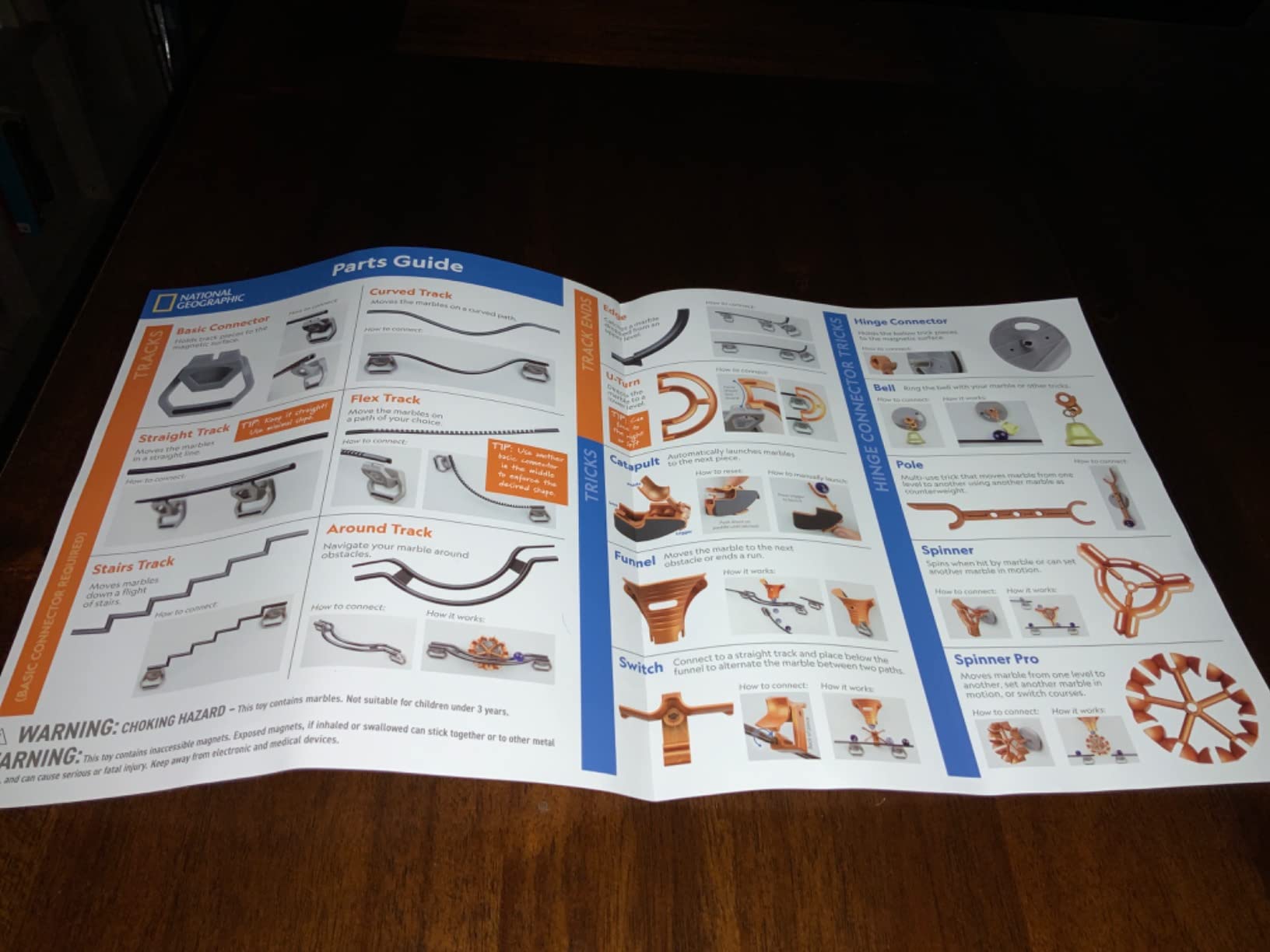
There is no marble run in this list that gets a child thinking about angle, gravity and momentum quite like a magnetic one. 42 tracks and connectors, 17 trick pieces and 15 marbles build a maze that climbs a vertical surface, and because the track is clear, the child can watch exactly where the marble loses speed. That visible feedback loop is the toy.
Because the pieces attach to fridges, lockers, whiteboards and workbenches, the whole thing builds vertically and takes no floor space. The travel and storage bag also makes it portable between rooms.
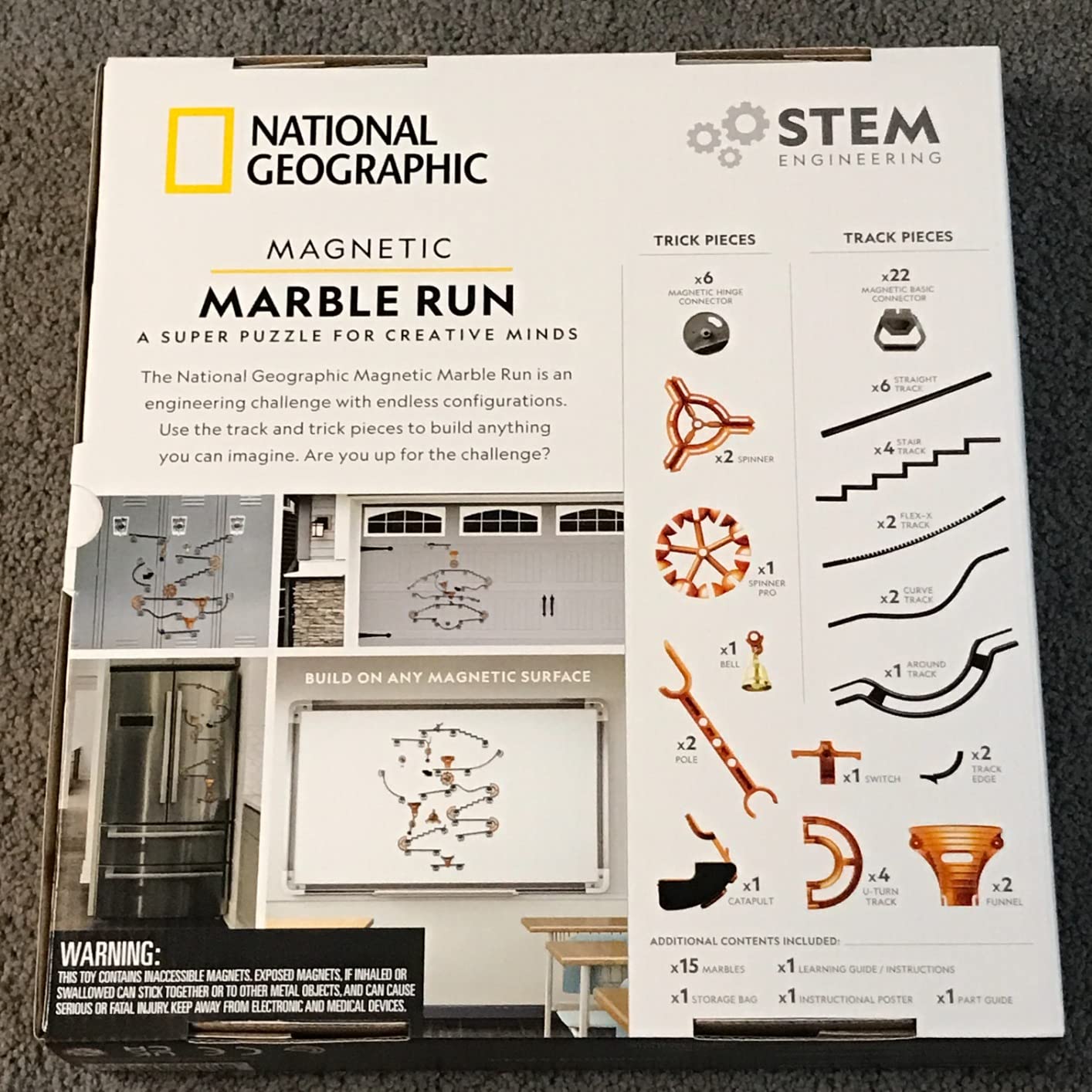
Two practical points. No magnetic board or base plate is included, so you need a fridge, whiteboard or magnetic easel to use it, and in a house without a ferrous vertical surface the set is close to useless. Ambitious builds also pop apart when bumped, and some buyers report weaker magnets on certain pieces, with marbles stalling on the rails.
The listed age is ten and up, though many eight-year-olds manage it with planning help. Marbles can shift on the magnets after a run, so realignment is normal.
Why it works at age eight
It is the best cooperative set here. Siblings, cousins and adults can add a section to the same run, and parents often get more involved with this toy than with almost any other. The included physics guide gives language to what the child is already doing, which helps when the concept comes up in school.
Who should skip it
Skip it if there is no suitable metal surface, or if small loose marbles in a shared space are a concern. It is also a poor gift if the child needs to pick it up and use it without a setup step.
12. Tsomtto 10-in-1 STEM Set: The Best Set for Two Builders at Once
10 in 1 STEM Toys for 4 5 6 7 8+ Year Old Boy Girl Christmas Birthday Gifts
- Ten models from a reusable 167-piece pool
- Older kids complete a model solo
- Finished vehicles roll for extra play
- Two tool sets support two children
- Only one model can be built at a time
- Over-tightened screws snap the bolt heads
- Instructions stretch the youngest end of the range
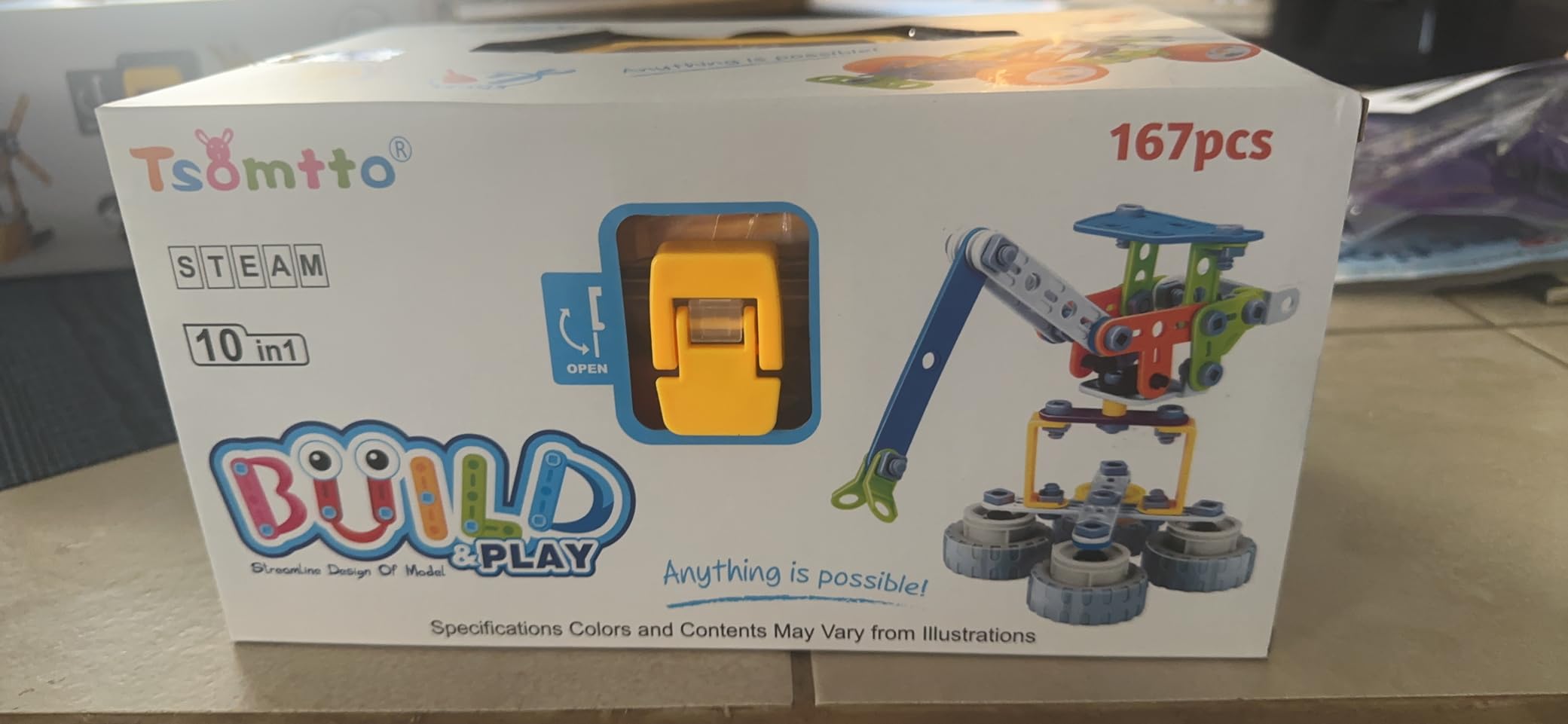
Ten models from 167 reusable pieces, and two complete sets of assembly tools, which is unusual at this level. The models include a tower crane, forklift, catch car, rocket car, plane, racing car, UTV, robot and helicopter. Because the pieces reuse across builds, the set keeps generating new projects instead of finishing after one afternoon.
At 4.7 stars, reviewers most often describe children building something daily, and they note the vehicles roll around for play after assembly. Finished models that move get used far longer than static ones. The blocks are washable, non-toxic and brightly coloured, and the sturdy storage box makes clean-up a single job.
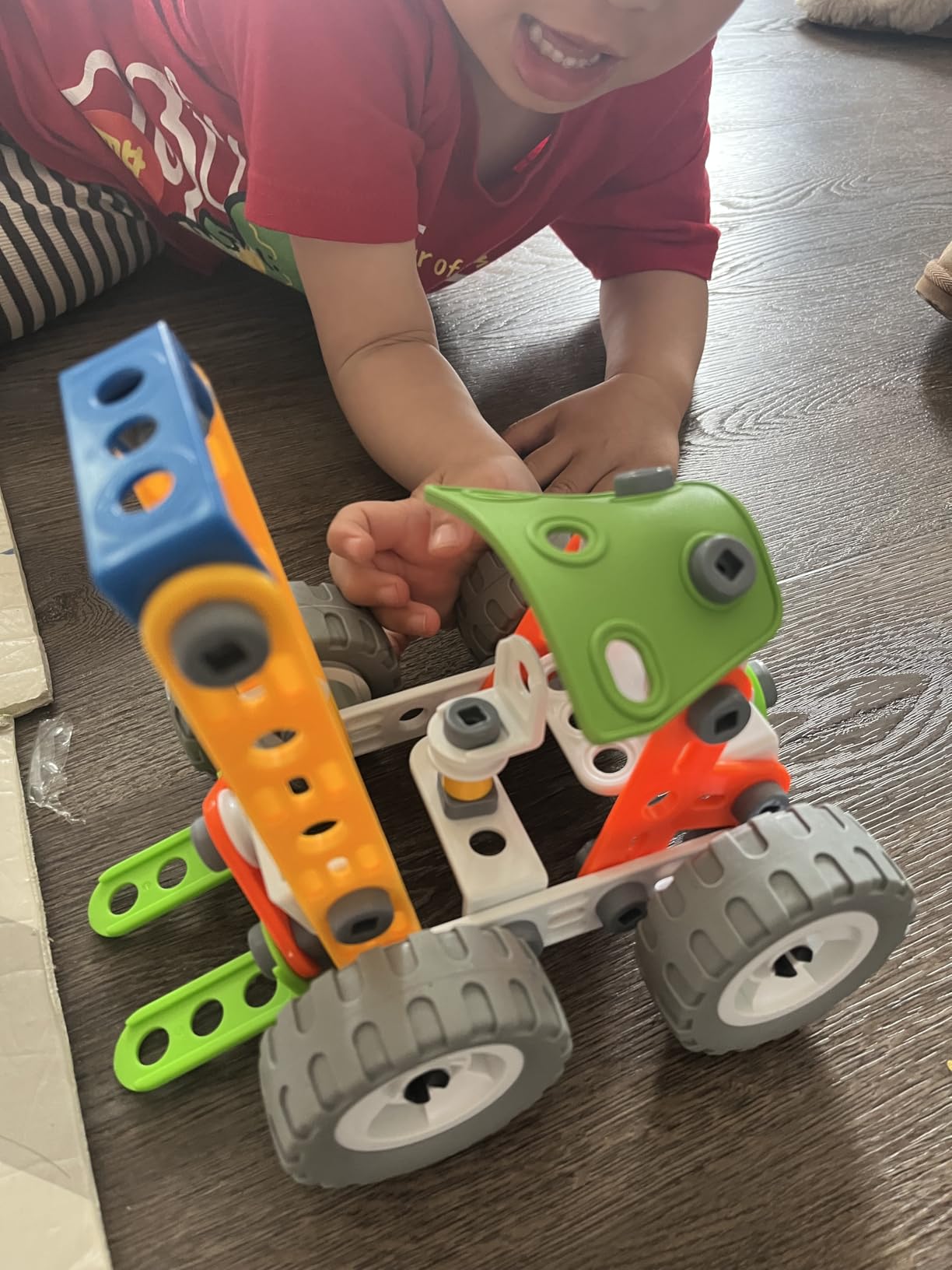
All ten models share one piece pool, so only one can be assembled at a time. That is the most-cited limitation in the reviews, and it matters if you have two children who want their own build simultaneously. The two tool sets solve the tooling problem, not the parts problem.
Do not over-tighten screws, because the bolt heads snap. The stated range starts at three, and instructions are a stretch for the youngest children in that window.
Why it works at age eight
Ten models give genuine variety, and a vehicle theme tends to hold attention at this age better than abstract shapes. The build sequence teaches a child to read a plan, count parts and follow order, which is the quiet skill underneath most STEM curricula. It also needs no device, no battery and no adult.
Who should skip it
Skip it if two children need two projects at the same time, or if the child is new to bolt-and-nut construction sets. It suits an eight-year-old who has built this kind of kit before rather than a first attempt.
Screen-Free or App-Driven: The Question Parents Ask Most
Eleven of the twelve sets in this roundup are fully screen-free. The child builds, the thing moves or lights up, and no device is involved at any stage including setup. That matters because app compatibility is one of the most common reasons a kit gets abandoned.
Screen-free in this roundup: Snap Circuits Jr. SC-100, Sillbird 12-in-1 Solar Robot, Klutz LEGO Gear Bots, K’NEX Adventure Wheels, Smartivity Hydraulic Launcher, Bottleboom 13-in-1 Solar Robot, National Geographic Da Vinci Catapult, Parhlen 244-Piece Set, Huaker 180-Piece Set, National Geographic Magnetic Marble Run and Tsomtto 10-in-1.
Device-dependent: the Henoda 468-piece programmable robot. Its app features add genuine value for a child who wants programming, and the included remote means it still works without a phone, but the Bluetooth app is limited to certain platforms. Check compatibility before you commit, because that mismatch is the most common reason programmable robot kits end up half-used.
Two other things worth reading carefully. The Snap Circuits kit needs alkaline batteries, which are not included, and the Parhlen electric screwdriver needs two AA batteries, also not included. Neither is a screen, but both stop a build on day one if you have not thought about it.
What to Skip at Age 8
Five categories cause most of the disappointment parents report at this age.
- Anything rated twelve and up that you expect to be handed over solo. The Da Vinci Catapult kit in this roundup is a fine product, but its stated age is twelve and the instructions need adult help. Read the label, not the ambition.
- Builds that cannot finish in one sitting. A 468-piece robot is a weekend project. If a child gives up mid-build, the pile of parts usually ends up back in the box rather than finished on the shelf.
- App-only kits. If the primary way to control or configure the toy is a device, confirm that the app supports the phone or tablet in the house before buying. Parents repeatedly report kits abandoned over exactly this.
- Single-model sets. One finished build and no spare parts means one completed object and nothing to do afterwards. Replay value, not model count, is what keeps a set alive past the first month.
- Large kits with no storage solution. A set without a case or box will be cleared away within weeks, no matter how good it is. Storage is a durability feature.
One more, less obvious: buying another brick set for a child who already has hundreds of studs. A genuinely different construction system teaches more than a fifth of the same one. Our picks for a child with a large existing collection are the Klutz Gear Bots and the K’NEX Adventure Wheels.
How to Choose a STEM Building Set for an 8-Year-Old
Match piece count to skill, not to excitement. A 180 to 250 piece set is the sweet spot for most eight-year-olds: substantial enough to feel like a real project, small enough to finish in a session or two. Past 400 pieces, plan for a multi-day build or build it together. Under 100 pieces, a child quickly runs out of challenges unless the set is mechanical rather than decorative.
Count models, not pieces. Twelve models from 190 pieces beats 190 pieces with no guidance, because the second one keeps producing. Sets that reuse a shared pool give more hours of play than sets that give you one large object to build and admire.
Decide on screens before you shop. If screen time is already contested in your house, take the screen-free list above and ignore everything else. If your child is ready for programming, the Henoda kit is the one to look at, with a compatibility check first.
Read the age label as a floor and a ceiling. A 3+ label means small parts and a warning for younger siblings. A 7+ label usually means the difficulty is right for eight. A 12+ label is not a promise of quality, it is a signal that an adult is expected in the build.
Check the materials and the storage. Parents in forums consistently prefer wood and metal components to thin plastic, and the review data in this roundup matches that. A set that includes a case or box will still be in use in six months; one without it will not.
Position the gift around the moment, not the price. The Snap Circuits kit is a birthday gift because a hundred projects means a hundred sessions. The K’NEX and Huaker sets suit a child who builds constantly. The Magnetic Marble Run fits a family that wants one project on the fridge over several weeks. A budget solar robot kit works as a stocking filler or a first robotics step rather than a headline present.
For a wider look at kits that are not construction sets at all, our guide to educational STEM kits covers the experiment and activity side of the category, and it pairs well with this list for a child who burns through building sets quickly.
Frequently Asked Questions
What are the best STEM toys for 8-year-olds?
The strongest all-round pick is the Snap Circuits Jr. SC-100, which gives over 100 electronic projects from one box with no soldering and no tools, and holds a 4.8 rating across nearly 30,000 reviews. For a cheaper first robotics set, the Sillbird 12-in-1 Solar Robot gives twelve models from 190 pieces with no device needed. For screen-free engineering that explains how machines work, the Klutz LEGO Gear Bots uses real Technic elements to teach axles, cams and cranks. K’NEX Adventure Wheels is the pick when a child already owns hundreds of bricks and needs a different construction system.
What are some good STEM projects for 8-year-olds?
Project ideas that match an age-eight skill level include building a working catapult and testing how far it throws with different elastic tension, laying out a marble run across a fridge to learn how angle and gravity change the path, wiring a fan, a switch and a battery into a simple circuit, and programming a robot to follow a fixed path and then changing the sequence when it fails. Each one takes an hour or two, produces something that visibly works, and maps directly onto a classroom topic in simple machines, energy, circuits or sequencing.
What are some good building toys for 8-year-olds?
Beyond dedicated STEM sets, K’NEX, LEGO Technic-style systems, wooden marble runs and interlocking construction sets all work well at eight, because the pieces are large enough to handle and the challenges scale. K’NEX Adventure Wheels at 480 pieces suits a child who builds constantly, and the Parhlen 244-piece set with an electric screwdriver suits a child who wants to finish independently. Sets with ten or more buildable models are worth more than sets with a larger piece count and a single finished object.
What is a good STEM gift for an 8-year-old boy?
The best gift depends on what the child already owns rather than on gender, and packaging labelled for boys is worth ignoring. A child who already has a large brick collection usually values a different construction system such as K’NEX or a mechanical kit such as Klutz Gear Bots. A child who wants circuits will pick Snap Circuits immediately, and a child who wants programming will want the Henoda robot kit. If you are unsure what is already in the house, a screen-free mechanical build is the safest choice because it is the least duplicated.
What are the best STEM construction toys for kids?
The best STEM construction toys fall into five families: interlocking rod systems such as K’NEX, which maximise open-ended building; mechanical and wooden kits such as the Klutz Gear Bots and the Smartivity hydraulic launcher, which build machines that actually move; snap-together circuit kits such as Snap Circuits, which teach electrical concepts through assembly; solar and battery robot kits, which trade speed for screen-free play; and magnetic or marble sets, which teach gravity and momentum. The right family depends on whether the child thinks structurally, mechanically or electrically.
What are trending toys for 8 year olds?
The fastest-moving categories for this age in 2026 are programmable robots with app and remote control, solar and battery robot kits with many buildable models, and magnetic construction sets. Robotics kits dominate because they connect physical building to the block-based coding children already meet on a screen, while magnetic sets win on portability because they travel and store easily. A quieter trend is a return to wooden and metal-component kits, with parents citing durability as the reason to buy fewer, better sets rather than a pile of cheap ones.
The Bottom Line for Families
If you buy one thing from this list, make it the Snap Circuits Jr. SC-100. More than 100 projects from a single box, no tools, no soldering, and the strongest rating and review volume in the group make it the safest recommendation for an 8-year-old. If you would rather spend less, the Sillbird 12-in-1 Solar Robot gives twelve models and 190 pieces for a fraction of the cost, with a screen-free experience throughout. If you want something that teaches while it builds, the Klutz LEGO Gear Bots explains how machines work in a way few kits in this price range attempt.
Whatever you choose, buy for replay value over piece count, check whether the set needs a device or batteries you do not have, and ignore the marketing language about who the toy is for. The best STEM building sets for 8 year olds in 2026 are the ones a child returns to on an ordinary Tuesday afternoon, not the ones that photograph well once.