
The best board games for family game night are the ones a household can teach in under five minutes, finish in under an hour, and play with a wide age spread at the same table. On this list that means SEQUENCE, Rummikub and Hues and Cues lead the field, with a fast dice filler and a preschool-proof plastic game rounding out the starters.
Family game night is the evening a household sets aside to play board games or card games together instead of screens. The goal is not the most impressive game on the shelf. It is the one every person at the table can learn in under five minutes and finish before the evening drifts.
Our team plays these titles repeatedly, in the actual conditions family game night produces: a mixed-age group, a weeknight time limit, and one adult willing to read the rulebook out loud. That last condition is the one that decides everything. Nothing derails an evening faster than a dense rulebook and one person narrating it.
Three failure modes kill more family nights than any other choice, and they are worth naming before we get to the games. The first is teaching time. The second is setup. The third is a wide age gap inside one household, where a three-year-old and an adult are handed the same box and one of them leaves the table within ten minutes.
Every pick below is scored against the same six criteria: rules explainable in under five minutes, a 30 to 60 minute window, one box that works across a wide age span, no early elimination of a player, setup under ten minutes, and a cleanup burden you will accept on a Tuesday. This list was last checked in October 2026, and the page-one alternatives we compared against had not been refreshed in a long while.
One more note before we start. Nearly all of the games here are family board games in the mainstream sense, which means they are not the hobbyist end of the shelf. That is deliberate. We also keep a separate guide to the best strategy board games for households that have already worked past the classics.
Top 3 Picks for Family Game Night in 2026
Three titles earn the top slots because they combine the shortest teach time with the widest usable player range. Each one holds a full table and finishes before anyone checks a phone.

SEQUENCE Original Folding Board Game
- Teach in under five minutes
- Scales from 2 to 12 players
- About 5 to 15 minutes a game
Rummikub Original Tile Game
- Real strategy with meld and discard
- 2 to 4 players ages 8 and up
- Substantial numbered tiles

HUES and CUES Color Guessing Game
- Scales from 3 to 10 players
- 480 distinct colour squares
- One or two word clues per turn
The Editor’s Choice goes to SEQUENCE because it is the rare game that satisfies every household at once. Rummikub takes the strategy slot for adults and older children who want decisions to matter. Hues and Cues is the one to buy when the table is bigger than your average night.
Every Pick at a Glance for Family Game Night in 2026
All twelve games in one place, with the details that decide a purchase: how many people the box supports, the age floor on the packaging, and the length of a round.
| Product | Specifications | Action |
|---|---|---|
| SEQUENCE Original Folding Board Game |
|
Check Latest Price |
| Rummikub Original Tile Game |
|
Check Latest Price |
| HUES and CUES Color Guessing Game |
|
Check Latest Price |
 Hasbro Gaming Yahtzee Hasbro Gaming Yahtzee |
|
Check Latest Price |
 Sorry! Classic Board Game Sorry! Classic Board Game |
|
Check Latest Price |
 Jenga Classic Wooden Block Game Jenga Classic Wooden Block Game |
|
Check Latest Price |
 What Do You Meme Family Edition What Do You Meme Family Edition |
|
Check Latest Price |
 Yeti in My Spaghetti Yeti in My Spaghetti |
|
Check Latest Price |
 Tapple Word Game Tapple Word Game |
|
Check Latest Price |
 Clue 1986 Retro Edition Clue 1986 Retro Edition |
|
Check Latest Price |
 Herd Mentality Family Party Game Herd Mentality Family Party Game |
|
Check Latest Price |
 Double Ditto Family Party Game Double Ditto Family Party Game |
|
Check Latest Price |
Two things stand out. Every game here supports at least two players and scales past a couple, and only four of the twelve ask anyone to read anything at all. That is the shortlist we would actually hand to a host.
1. SEQUENCE – The Folding Board Game Everyone Can Teach in One Sentence
- Teach in under five minutes
- Scales from a two-player duel to teams of twelve
- Board cards and chips feel durable
- Short games of about 5 to 15 minutes
- Round chips are small
- Content can feel thin for the component count
- Long-term players may want extra card sets
I keep coming back to SEQUENCE because the entire rule set is one sentence: play a card, put a chip on the matching space, five in a row wins. I have taught it to a nine-year-old, two grandparents and a teenager who claimed not to care, and nobody needed the rulebook.
Reviewers consistently describe it as a firm family favourite, easy to pick up and genuinely competitive for adults. The large folding board shows the card art better than the smaller travel versions, which matters more than it sounds when six people need to see across the table.
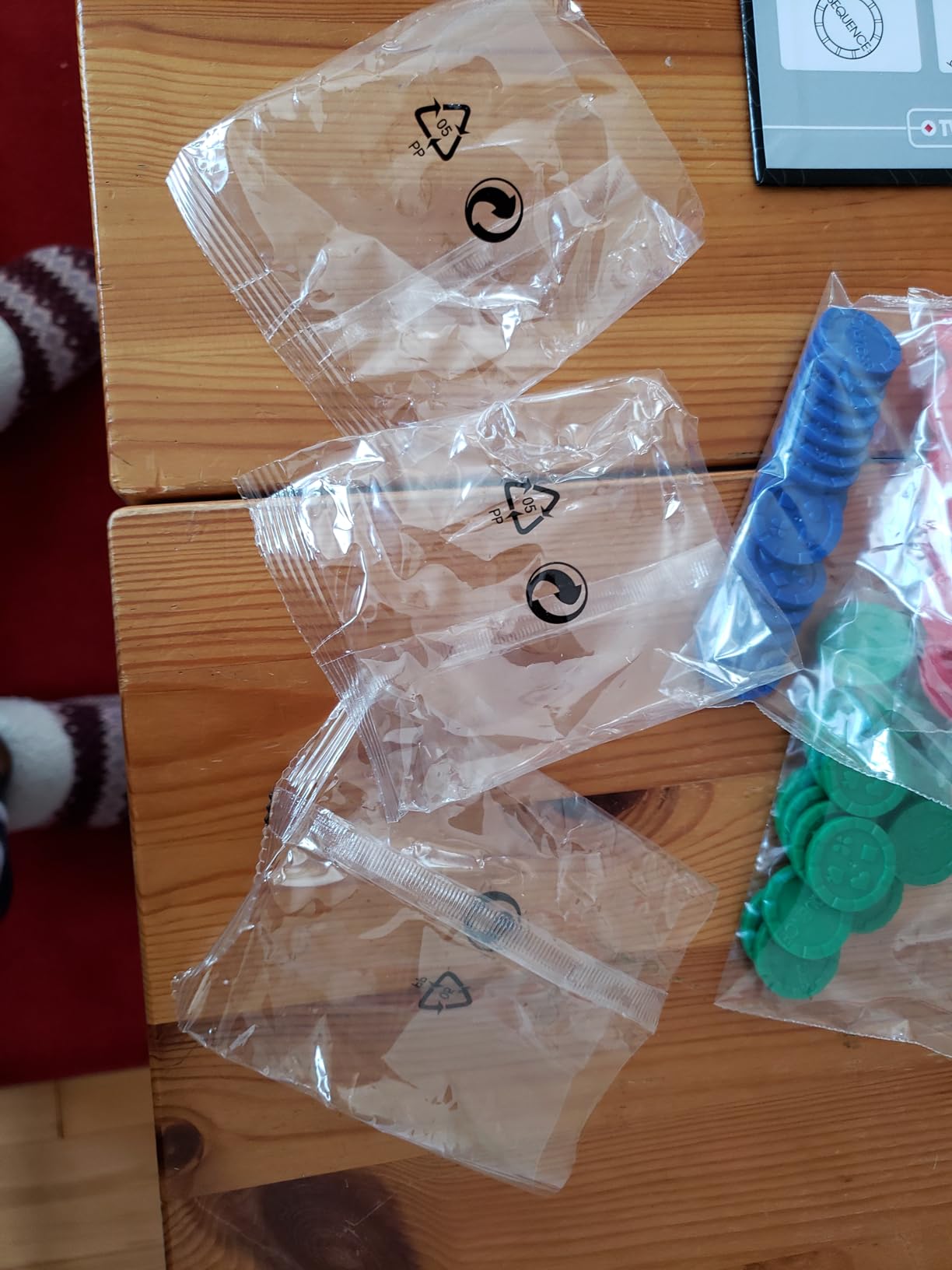
The board, cards and chips survive repeated play, and the round length means it works as both an opener and a closer. We have run it as a fifteen-minute bridge between dinner and a longer game, and it fills that slot better than anything else we have tried.
The learning curve is not really a curve. Rounds are quick, hands are busy for everyone, and the people who lose are still moving pieces until the last card is played. Nobody sits out and nobody watches.
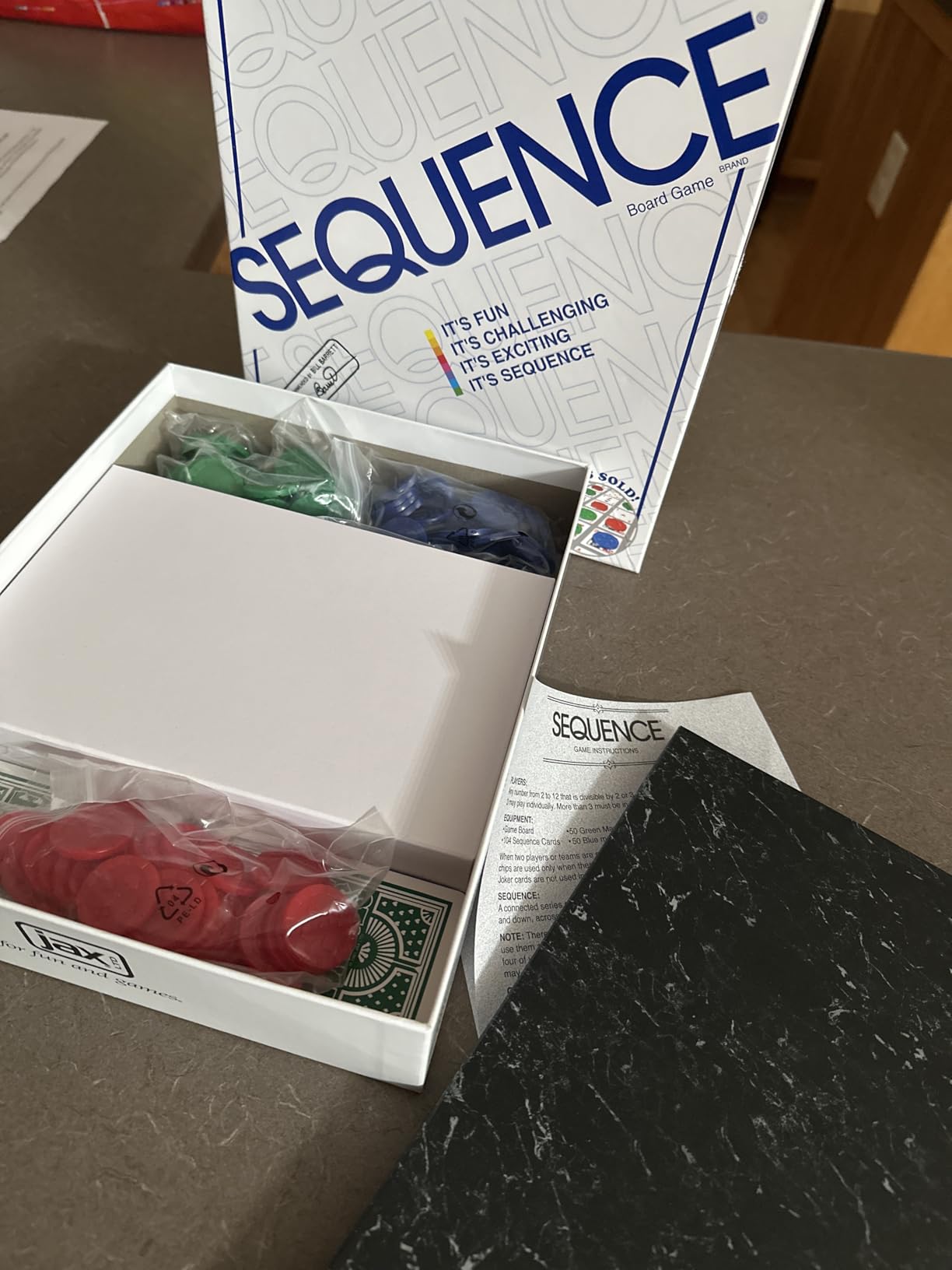
Who it works for at the table
This is the game I hand to a mixed-age group with no briefing. A five-year-old and a grown-up can both contribute to a line, and the older player has real decisions to make about blocking. It holds from two people up to teams of twelve, so it covers a couple’s evening and a holiday gathering with the same box.
Where it falls short
The chips are small enough that a choking-hazard warning applies, so it is not a game for a household with a toddler who still mouths toys. And once your household knows the pattern, replay value drops. It is a brilliant first box and a weak tenth game, which is why we rotate it out and bring it back.
2. Rummikub – The Tile Game Where Adults and Kids Finally Play the Same Level
- Substantial tiles with clear colours and numbers
- Real strategy since dropping a tile out of turn can be penalised
- Plays well with two to four
- Reinforces sequencing and planning
- Two-player games can drag at times
- Takes a round or two before the drafting clicks
Rummikub is the answer to the family that has one child old enough to want depth. Everyone draws tiles, and everyone lays runs or groups, and the tile you drop out of turn is a risk your relatives will absolutely punish you for.
Reviewers call it a dependable family default, and the most common praise is on the tiles themselves. The colours and numbers read clearly on a table, the plastic feels substantial in the hand, and that clarity is what keeps younger players in the game rather than guessing.
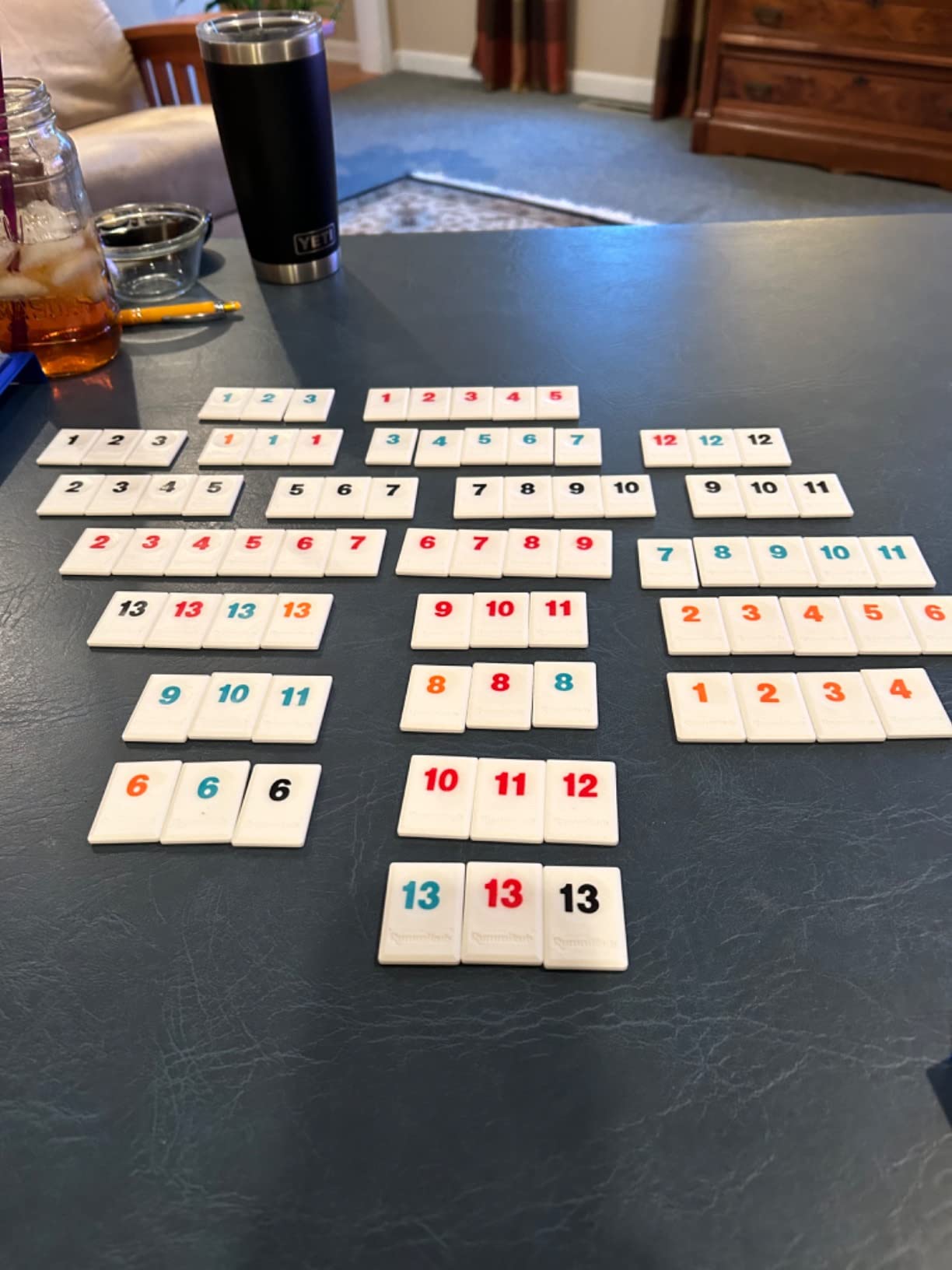
It is also a genuinely good screen-free evening. The tile sorting happens quietly, everyone is looking at their own rack, and the conversation resets every time someone lays a long run. If your family has outgrown the shallow end, this is a reasonable next step.
What surprised me is how little downtime there is. Turns are fast, and the tension comes from opponents rather than from a spinner, so nobody is idle while a clock runs.
Who it works for at the table
Ages eight and up is the honest floor, and the sweet spot is two to four players. This suits a household where the youngest child can already sort a rack without adult help, and where the adults want a game that rewards thinking rather than luck.
Where it falls short
At two players it can drag, and reviewers warn that it sometimes feels like solitaire. There is also a genuine learning hump: the first round is mostly everyone faking it, and some of the more interesting plays do not surface until round two. Budget for that before you judge the game.
3. HUES and CUES – The One That Handles a Table of Ten
- 480 distinct colour squares so rounds change
- Scales cleanly from 3 to 10 players
- One or two word clues suit younger players
- Scoring frame makes the endgame obvious
- Colour-blind players can struggle with similar hues
- Harder with many clue-givers
- Small squares carry a choking-hazard warning
Most family games quietly max out at six. Hues and Cues is printed for three to ten, and it genuinely works at the top of that range, which makes it the pick for relatives, in-laws and any gathering where the guest list keeps expanding.
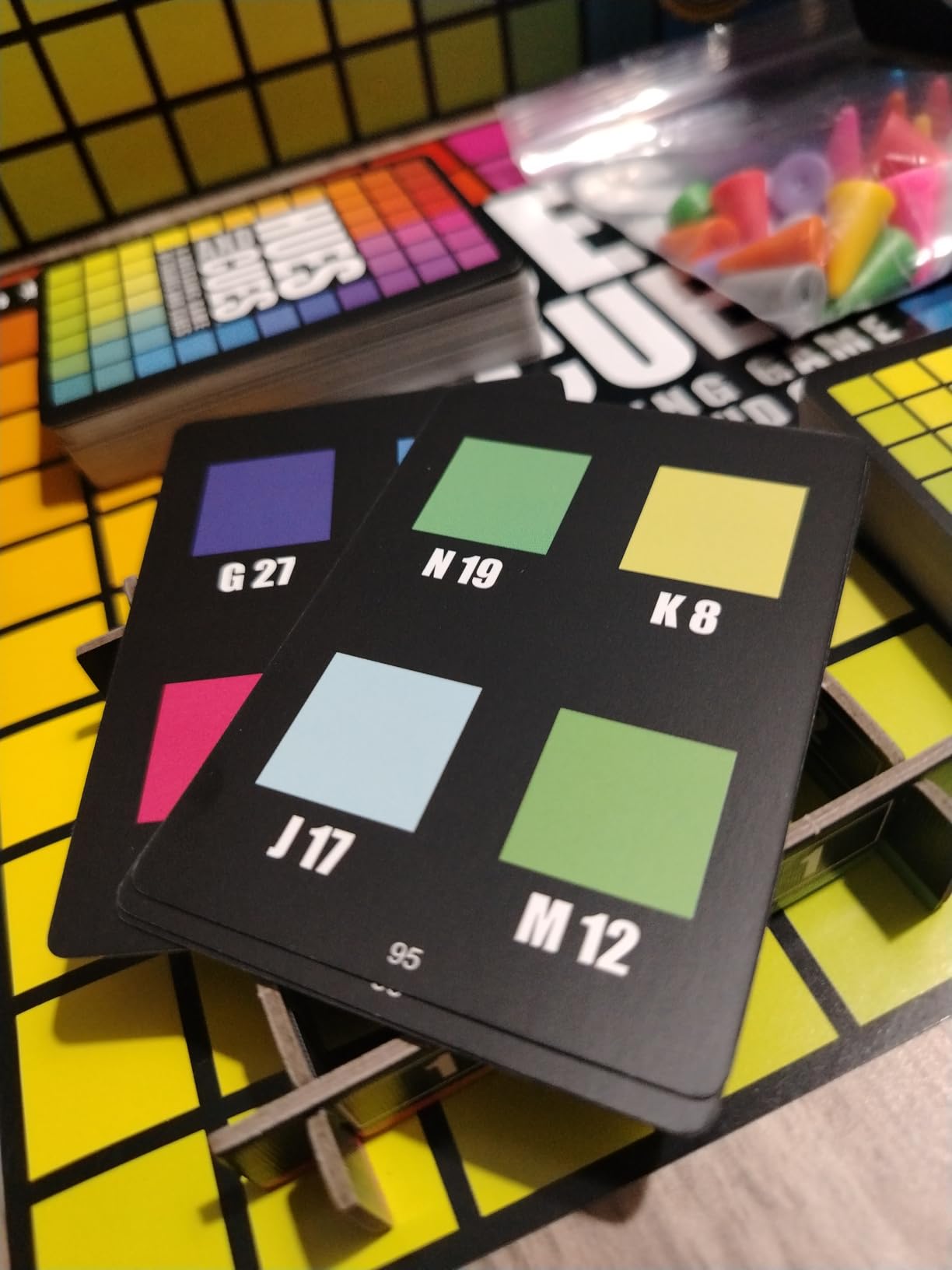
The mechanic is simple: the leader flips a colour, everyone else gives one or two word clues, and the group picks from 480 colour squares. Reviewers praise the sheer variety of shades, since no two rounds play out the same way.
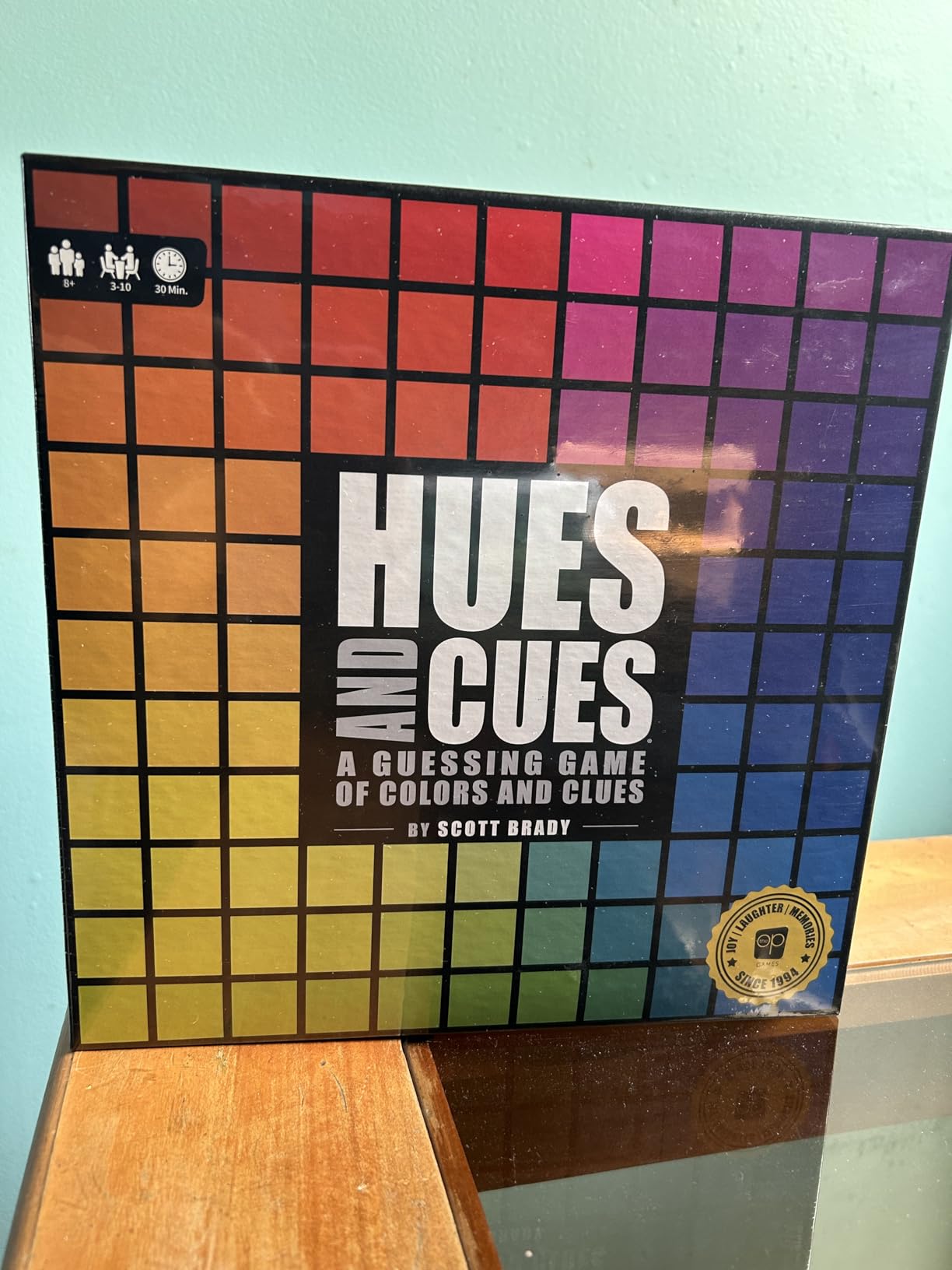
The clue length is the part families like most. A child can offer a single word and still earn the team’s trust, while an adult gives a long, careful description. Both contributions are useful, and nobody gets talked over.
The scoring frame and player pieces also do quiet work. Newcomers can see exactly how the game ends without someone reading a fiddled rules sheet aloud, which is the difference between starting in two minutes and starting in ten.
Who it works for at the table
Big and mixed groups of three to ten, ages eight and up, and any household that struggles with games that fall apart past four or five people. The estimated play time of about 30 minutes means it fits comfortably between a main course and something else.
Where it falls short
Reviewers flag two real limits. Colour-blind players can struggle to tell similar hues apart, and the difficulty scales fast once several talkative clue-givers are involved, because the group narrows the options down to almost nothing. In a loud room, the later rounds get hard.
4. Yahtzee – The Dice Filler That Ends in Ten Minutes
- Fast rounds keep every player engaged
- Shaker-and-dice format is quick to set up and teach
- Mix of luck and tactical choices
- Compact and portable
- so it travels well to gatherings
- Package is cards and dice rather than a full board
- Scoring can slow once score sheets fill
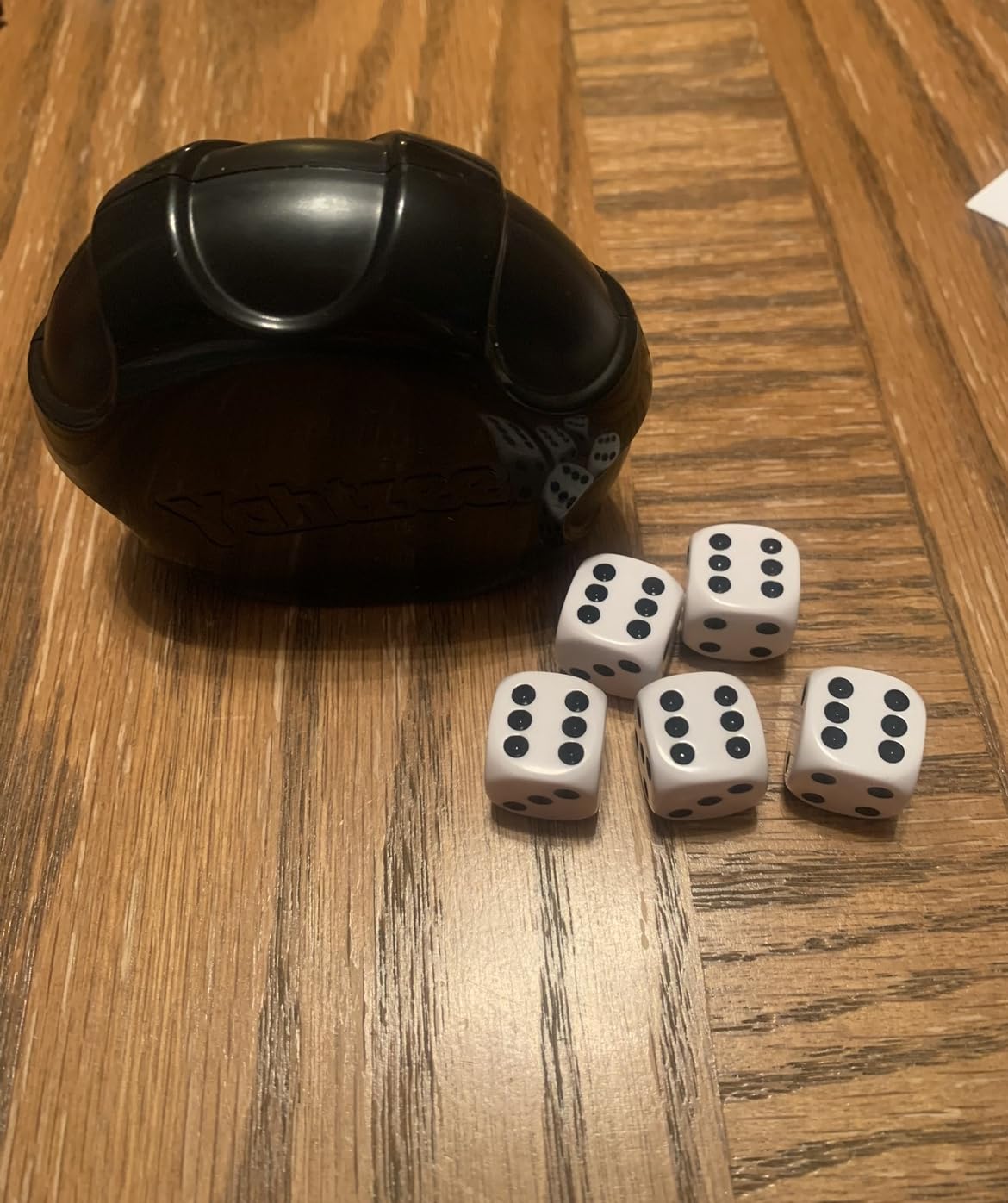
Yahtzee is the game I reach for when the evening has a hard stop. Everyone shakes, everyone rolls, everyone decides whether to hold for a full house or push for five of a kind, and a round closes almost before it opens.
Reviewers treat it as an easy add-on to a family game night rather than the main event, and that is the right framing. It is fast, portable and mixes luck with just enough tactical choice that a child and an adult are both still deciding something.
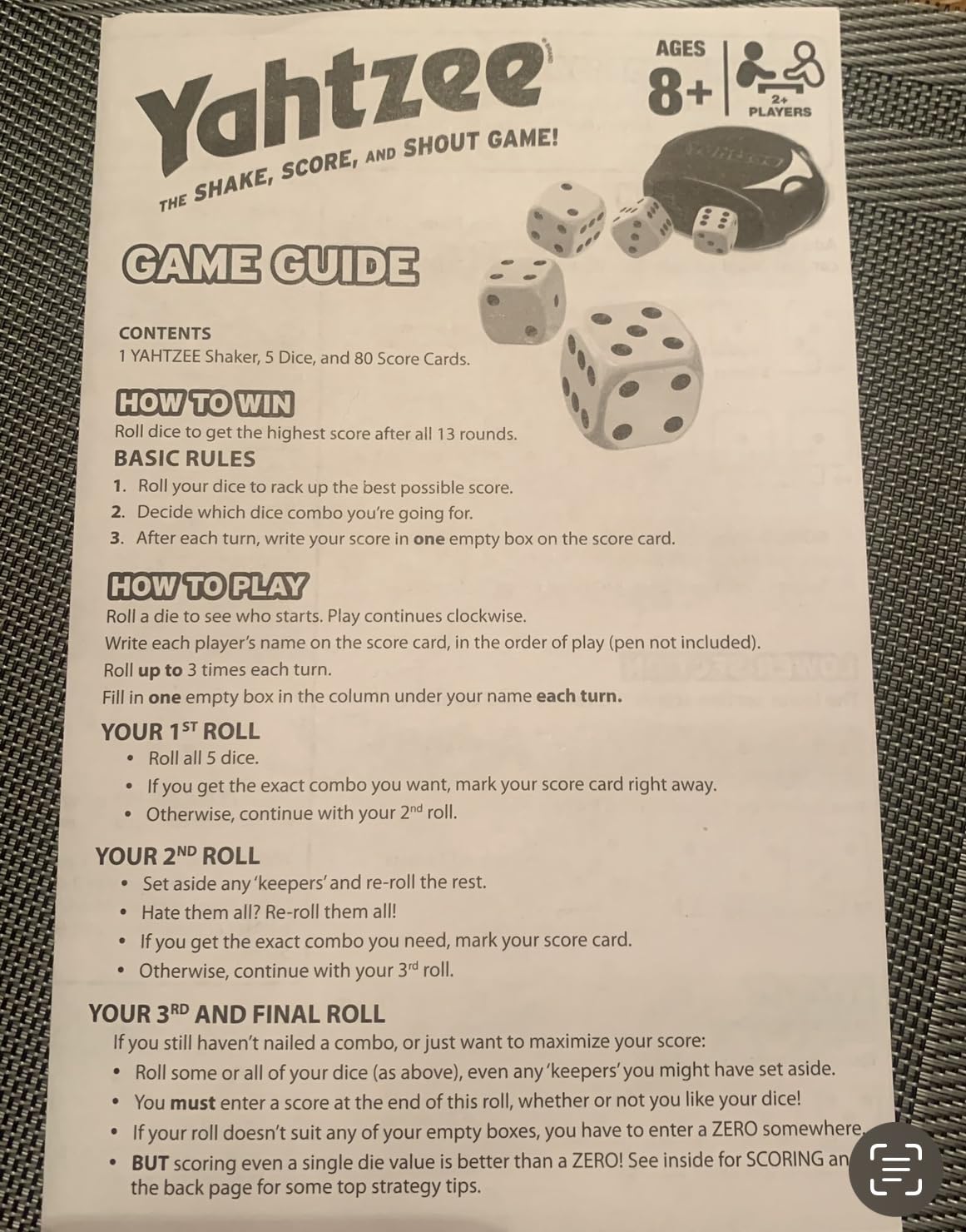
It travels well, which matters if your game night rotates between houses. Nothing to unfold, nothing to sort, and cleanup means shaking the dice back into the tube.
The mixing of chance and choice is what keeps it interesting past the first few games. One player is chasing a straight while another is gambling on a big score, and the score sheet tells that story afterwards.
Who it works for at the table
Two or more players, ages eight and up, and any group that wants a game between courses rather than instead of one. It also works as a warm-up that teaches nothing, because there is nothing to teach.
Where it falls short
The package is cards, dice and a shaker rather than a full board, and reviewers sometimes describe it as sparse for what it is. Scoring also gets slower late on, once score sheets are half full and players are calculating rather than playing. Keep it short and it stays sharp.
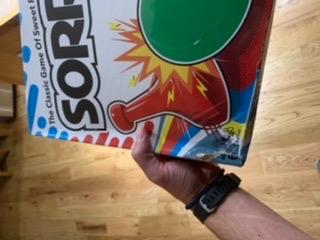
5. Sorry! – The Race That Still Ends Before Bedtime
Sorry! Board Game for Kids Ages 6 and Up; Classic Hasbro Board Game; Each Player Gets 4 Pawns; Family Game
- Sturdy board
- pawns and cards
- Straightforward race-to-home format younger players catch fast
- Suits most family game nights at 2 to 4
- Retro styling appeals to adults who grew up on it
- Pawns and small parts carry a choking-hazard warning
- Losing a pawn can frustrate younger children
Sorry! is the game most households already own and rarely think of as a choice. That is a shame, because for a family with children aged six and up it delivers exactly the structure family game night needs: a race with real setbacks and no elimination.
Reviewers highlight nostalgia as much as play, describing it as a reintroduction of the original for families with kids and grandchildren. The build quality of the board and pawns comes up constantly and positively.
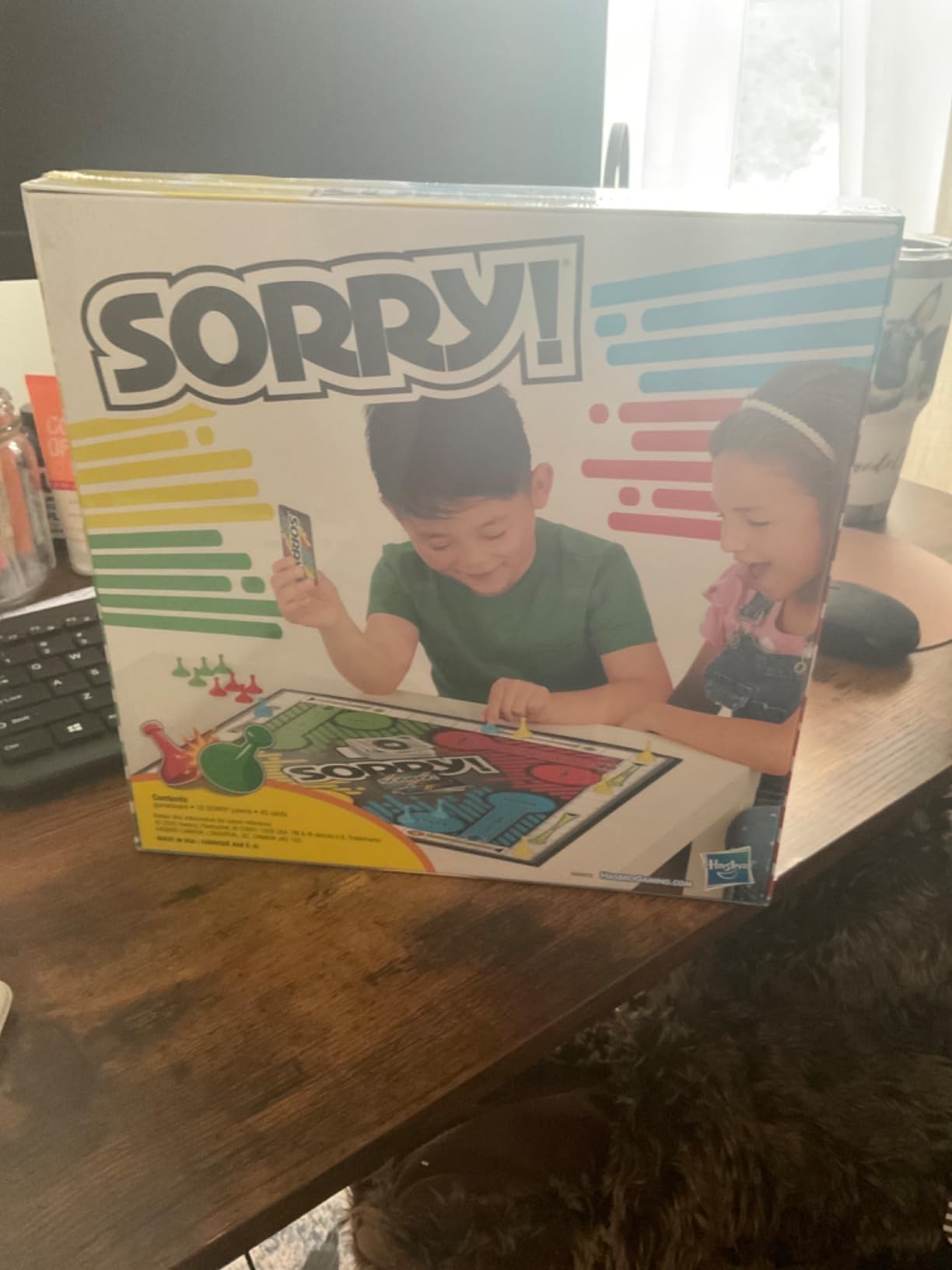
It also plays well when the group is mismatched. You slide, you collide, and the outcome turns on cards rather than dice, so nobody is simply waiting out a bad shake. Two to four players is the printed range and the practical one.
The theme does soften the sting of being sent back. It is still a setback, and a seven-year-old who loses two pawns in a row may need a minute, but the round keeps moving and everyone gets to the home stretch.
Who it works for at the table
Families with children from about six upward, and any group of two to four who wants something nostalgic without a heavy teach. It pairs well with a second game because it wraps quickly and leaves the table free.
Where it falls short
The pawns and smaller components carry a choking-hazard warning, so a household with a toddler needs to decide carefully about the table layout. Reviewers also note that a child losing a pawn to a sibling or parent can be genuinely upsetting, whatever the cartoon theme says.
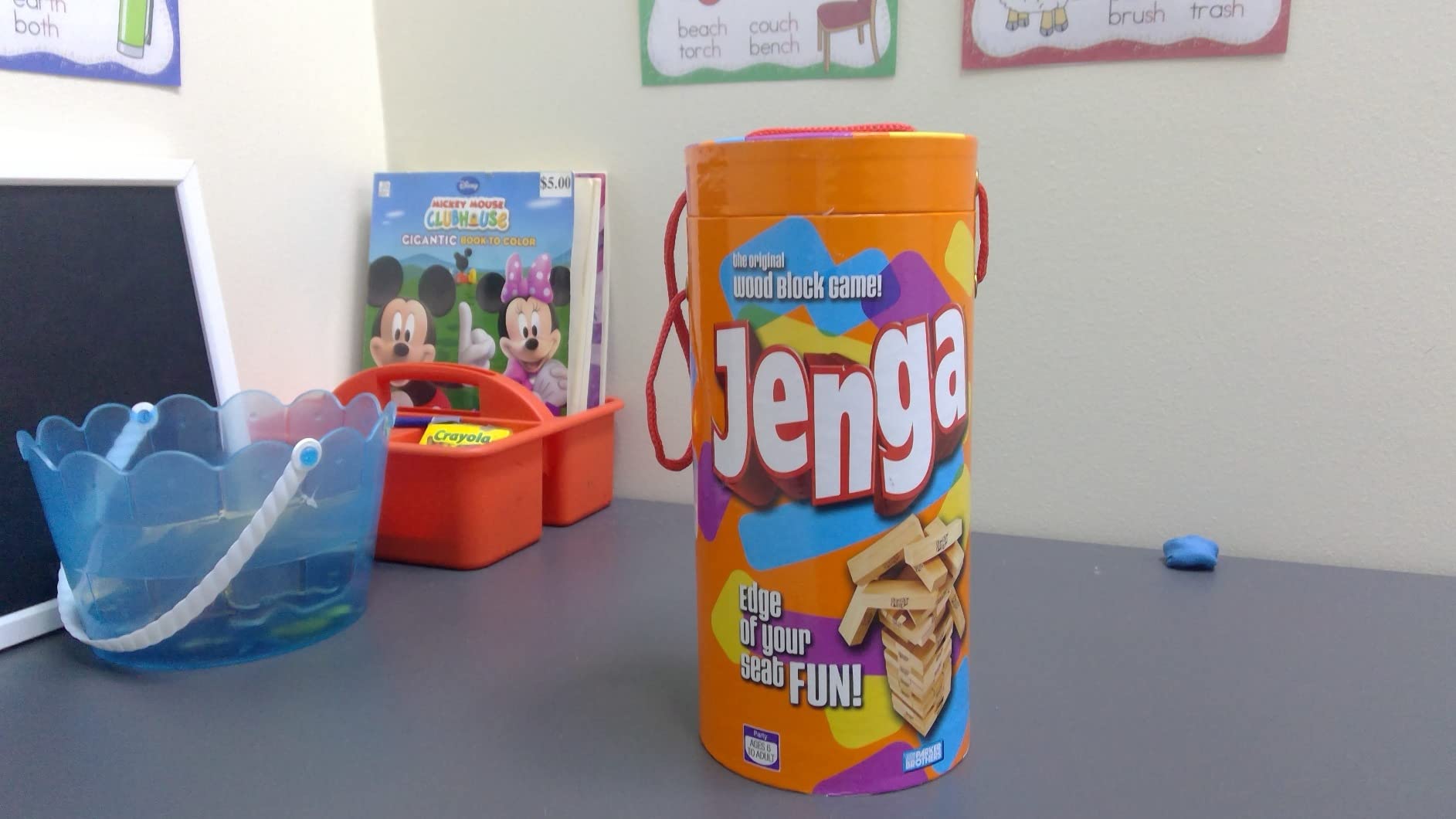
6. Jenga – The Only Game Where the Rules Come Before the Game
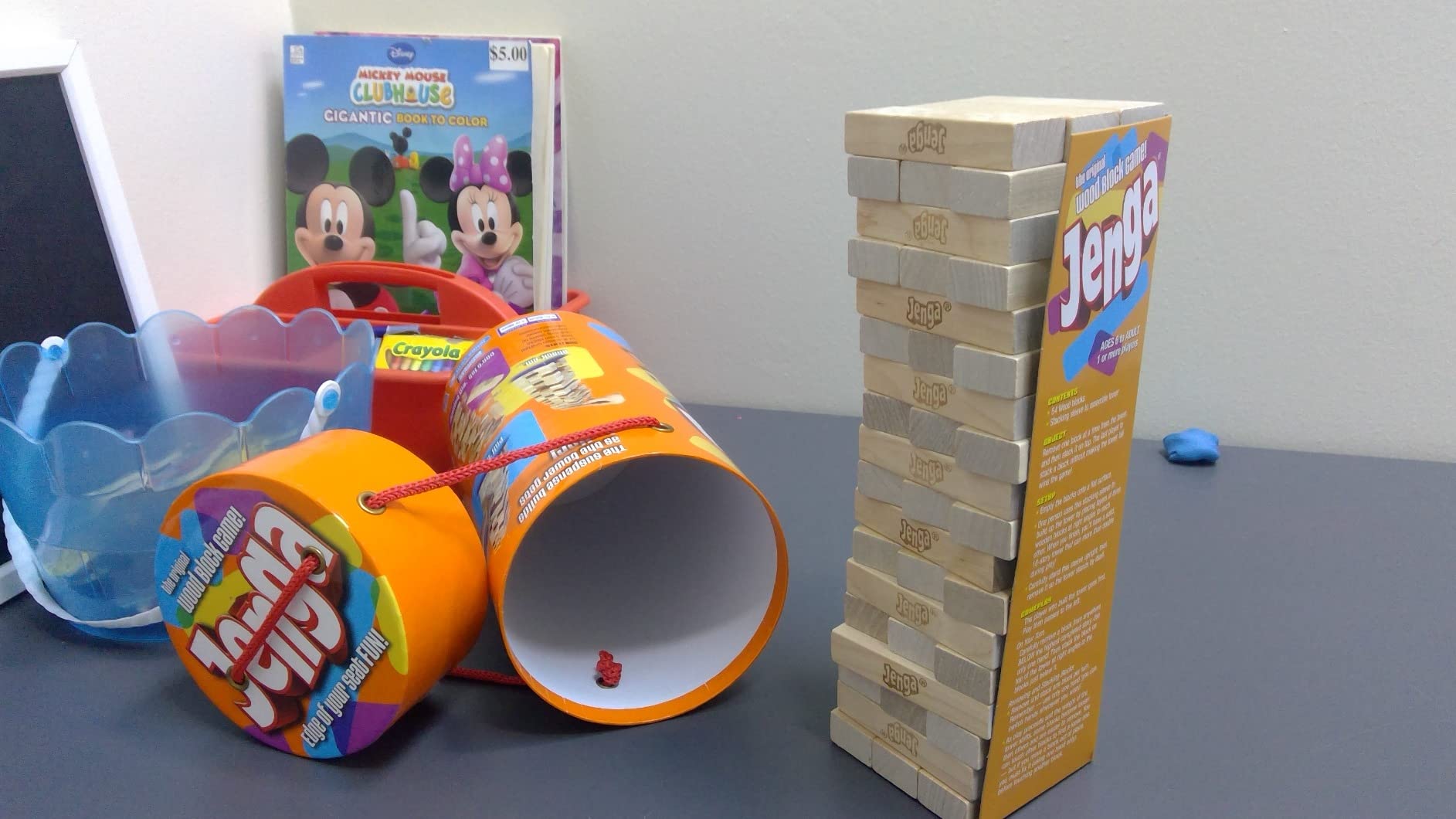
Hasbro Gaming Jenga Wooden Blocks Stacking Tumbling Tower Game | Party Games for Kids & Families | Stocking Stuffers | Ages 6+ (Amazon Exclusive)
- Anyone joins in seconds with no instruction
- 54 solid hardwood blocks with real weight
- Works for a family
- a group of adults or solo practice
- Tube packaging with a handle stores and carries easily
- Solo play loses the tension that makes it fun
- Blocks wear
- dent or splinter after heavy repeated use
Jenga is the most underrated entry on this list for family game night, because the teach time is zero. You pull a block, you put it on top, you do not knock the tower over. That is the whole game, and it removes every objection parents raise about rulebooks.
Reviewers call it the reliable crowd-pleaser, and specifically praise the block weight and the tube packaging. It bridges a six-year-old and a grandparent at the same table without either of them feeling talked down to.
It is also the game I use when a guest arrives unexpected. Someone can walk into the middle of a game and be fully caught up before the next turn, which no other title on this list manages.
Physical play has a side benefit that is easy to miss. Players stand up, move around the table and reset a tower that has to be rebuilt from nothing. An evening built around it tends to end with everyone awake.
Who it works for at the table
Any group size at all, ages six and up, and any room. It is the safest opener in this entire roundup, and the only pick here that works just as well at a birthday party as it does at a weeknight table.
Where it falls short
Blocks wear. Reviewers mention dents and splintering after years of heavy use, so it is a purchase that eventually needs replacing rather than a permanent fixture. Solo stacking is listed as an option but loses the tension that makes the game interesting.
7. What Do You Meme Family Edition – The One Teenagers Will Actually Join
- Self-explanatory
- so teens and adults start without a walkthrough
- Family Edition keeps the humour usable across ages
- Parents specifically praise it for getting kids off screens
- Large cards and an easel read across the table
- A few photo cards are considered weak
- Humour is subjective so rounds can feel uneven
- Works best with three or more players
What Do You Meme Family Edition is the teenager answer. It needs no rules explanation because the format is self-evident, and the Family Edition is the version that keeps the humour usable when a grandparent is at the table.
Reviewers love that mixed-age families, and even groups of strangers, can start playing without help. Parents single out the screen-free effect: people laugh, devices stay in another room.
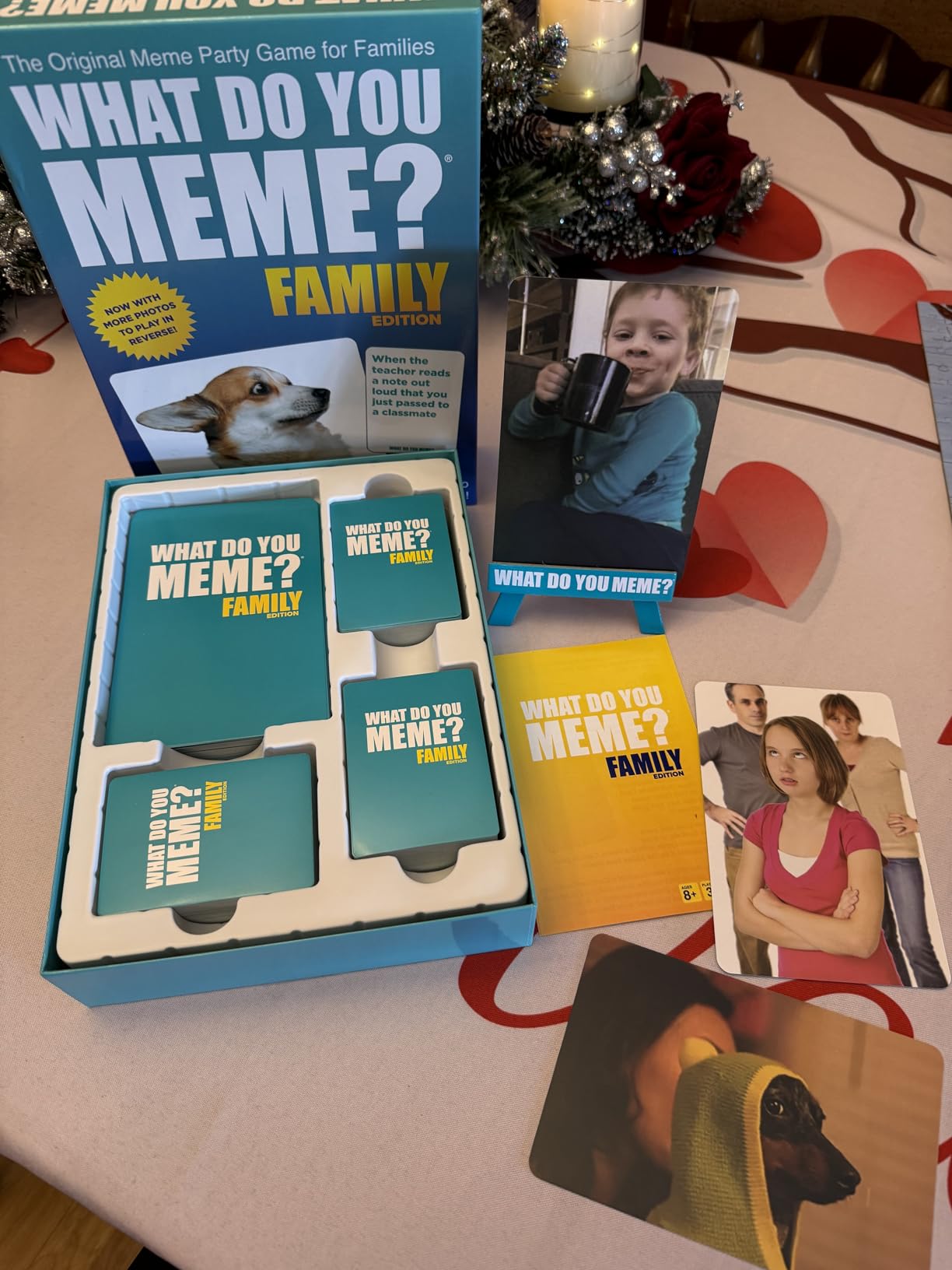
The rotating judge is the social engine. Every round a different person decides the winner, so a confident player loses the power of judging, and the table keeps shifting in a way that keeps a tween engaged for a full hour.
The 300 caption cards and 108 photo cards give it real staying power, which is not always true of party games. It also travels and stores flat, which makes it a good choice for a house that plays in more than one place.
Who it works for at the table
Three or more players, and mixed groups of kids, teens and adults where the adults have vetoed anything childish. It carries the widest age range of any party game here, provided the youngest children can read a caption card.
Where it falls short
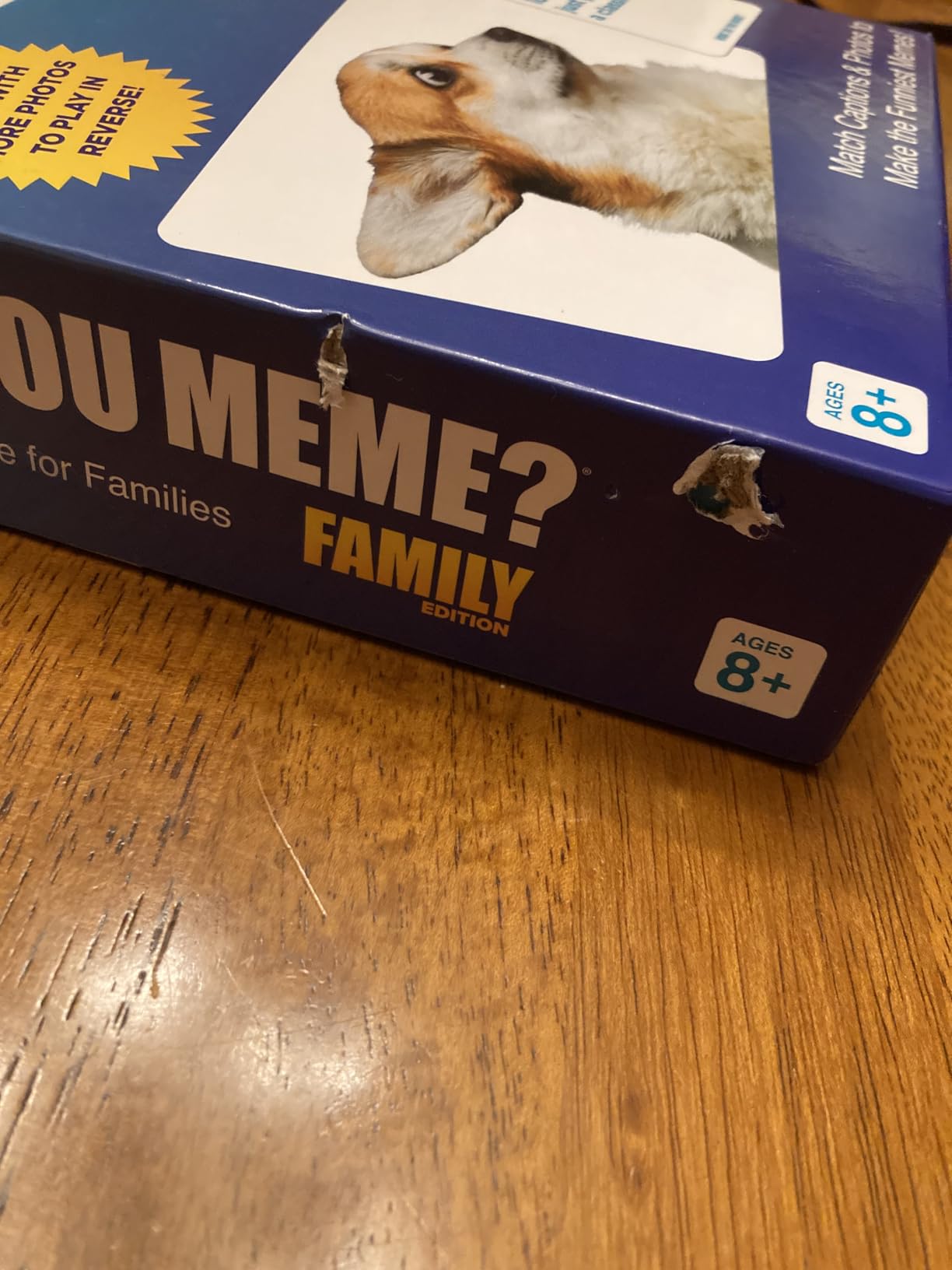
It is the lowest-rated pick in our group, and the reasons are consistent: a handful of photo cards read as weak or sad to some buyers, and because humour is subjective the same round can land very differently depending on the judge. It also wants three or more players to work properly, which rules out a quiet evening for two.
8. Yeti in My Spaghetti – The Preschool Proof Filler
Yeti in My Spaghetti Board Games for Family Night, Multi-Player Game, 4+
- About a minute to set up with no teach-in
- Push-your-luck mechanic needs no reading
- Suits preschoolers through adults
- Sturdy plastic pieces pack easily for travel
- Thin or quiet with only two or three players
- Noodles are hard for very young children to grip
- Leaning on luck
- a heavy Yeti fall can end a round abruptly
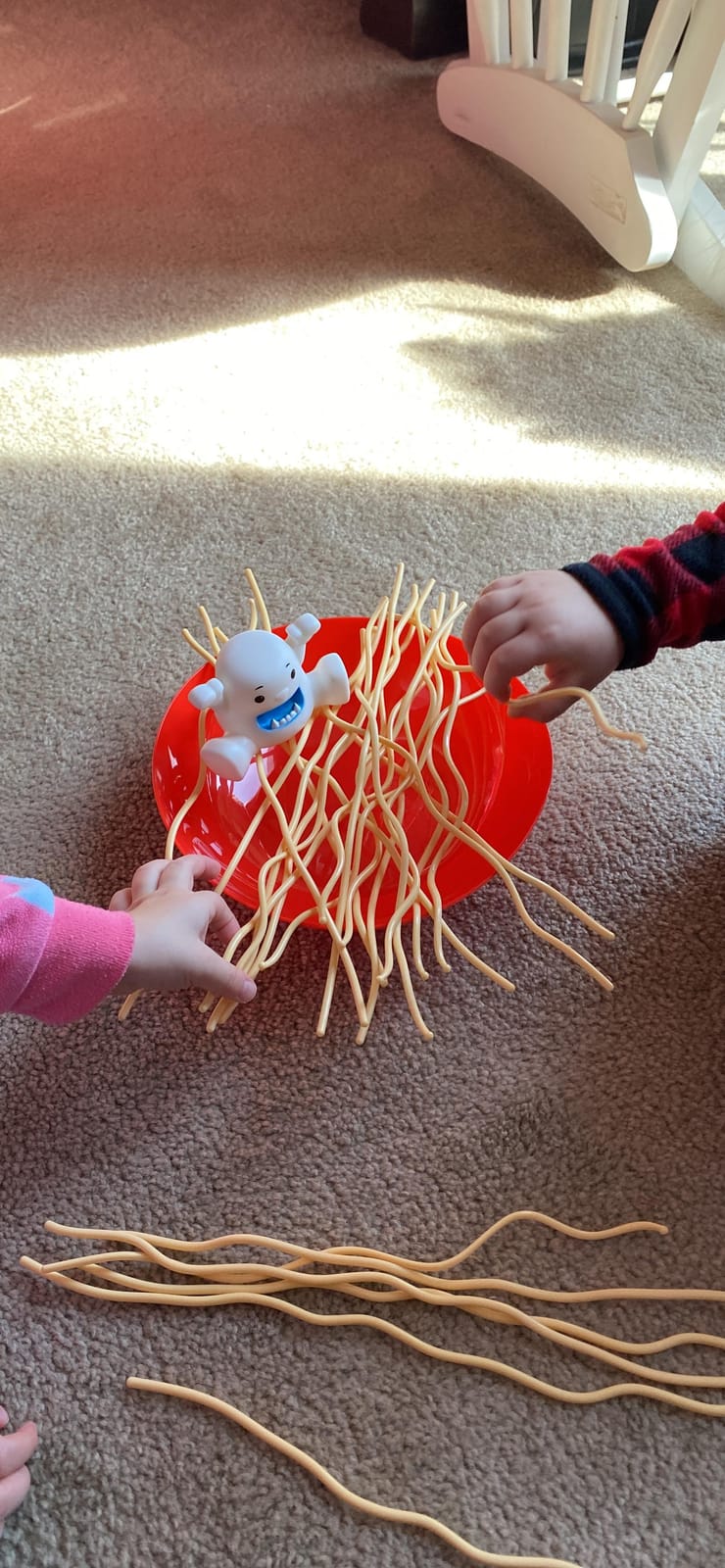
Yeti in My Spaghetti solves the age gap problem that trips up most family game night choices. A four-year-old and an adult can sit at the same table and both be genuinely involved, because the only rule is take a noodle without letting the Yeti fall.
Reviewers treat it as an ideal preschool-and-up game that is instantly playable and reliably produces giggles with four or more players. Setup takes about a minute, which is why we keep it on the coffee table ready to go.
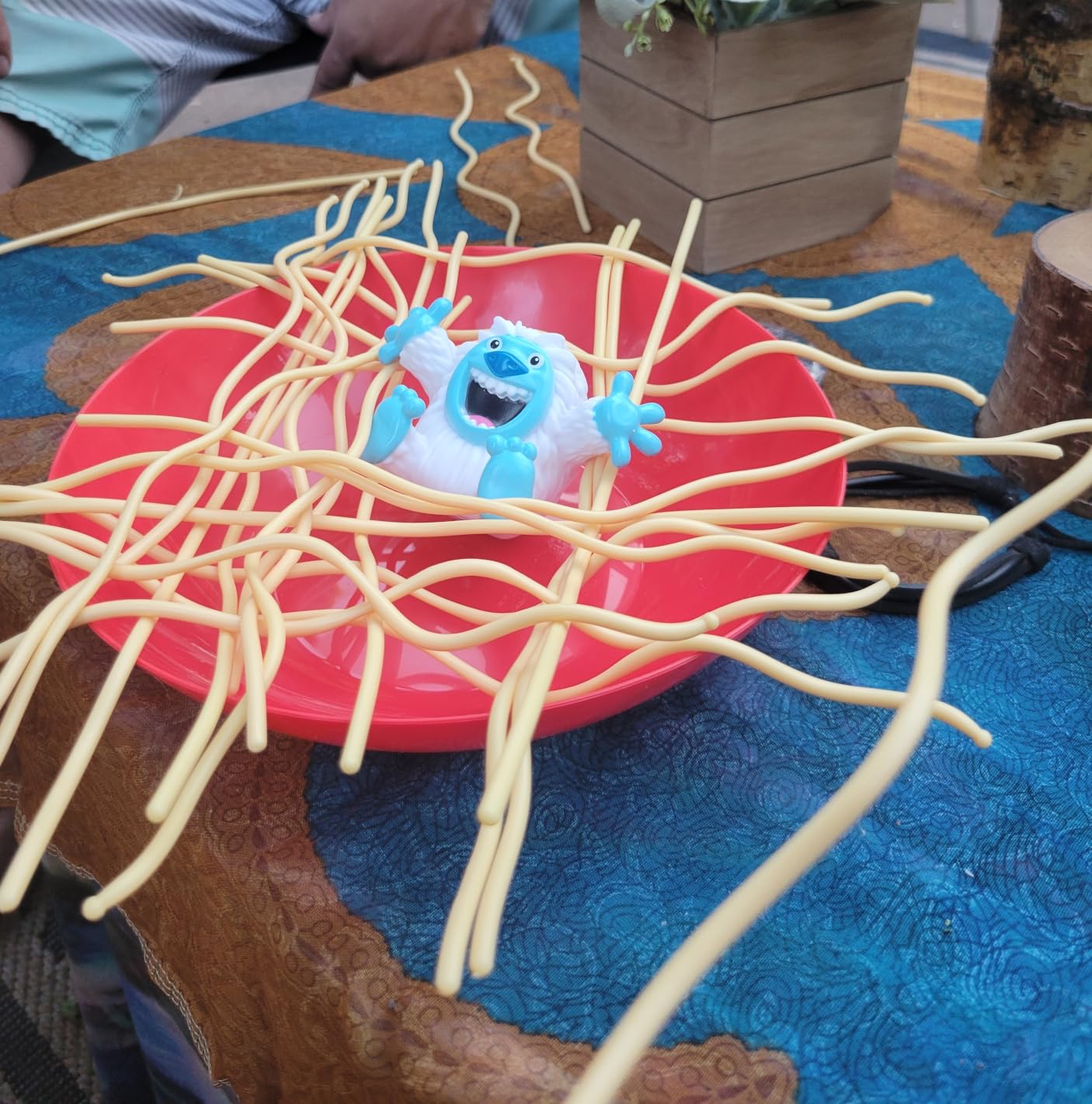
There is a real developmental layer underneath the silliness, and reviewers mention it directly. The grip-and-lift action practices hand-eye coordination, patience and concentration, and children get noticeably better at taking one noodle after a few rounds.
The whole box is plastic, which changes the tone of a family evening. Nothing can be spilled, ruined or lost under a sofa, and the lightweight bowl packs into a bag for a playdate or a trip.
Who it works for at the table
Households with a preschooler and an adult who need to play the same game, and any group of four or more who wants a twenty-minute opener. It also works as the game for a group that includes people who do not consider themselves gamers at all.
Where it falls short
At two or three players it is thin, and reviewers say so plainly. The chopstick-style noodles are also tough for the youngest children to grip, so a two-year-old will need help. And because the outcome leans on luck, a heavy Yeti fall can end a round before anyone has really played.
9. Tapple – The Fifteen-Minute Word Game With a Built-In Timer
USAOPOLY The Original TAPPLE, The Fun & Fast-Paced Family Word Game
- About 15 minutes a round
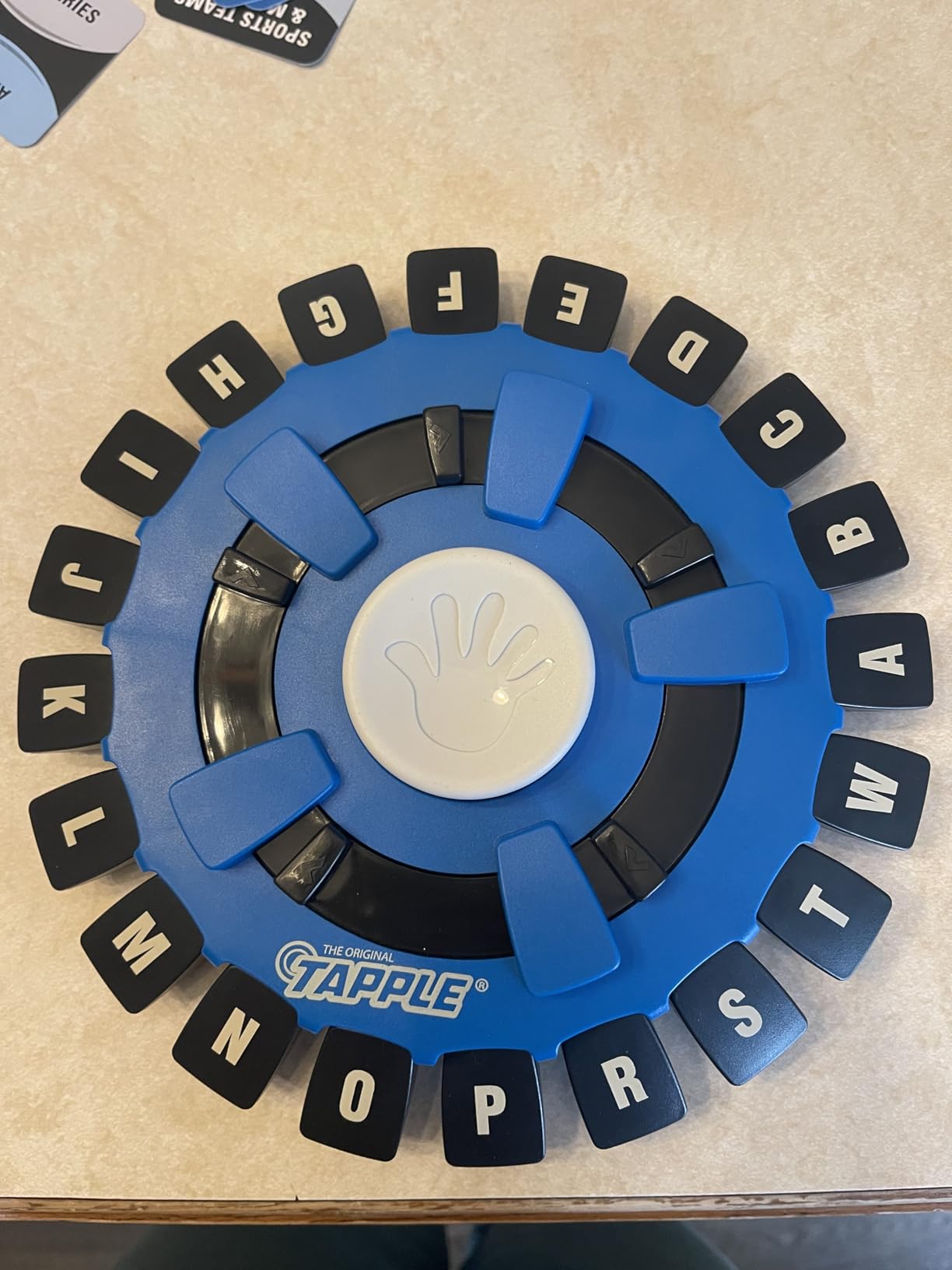
- Built-in mechanical timer needs no phone or app
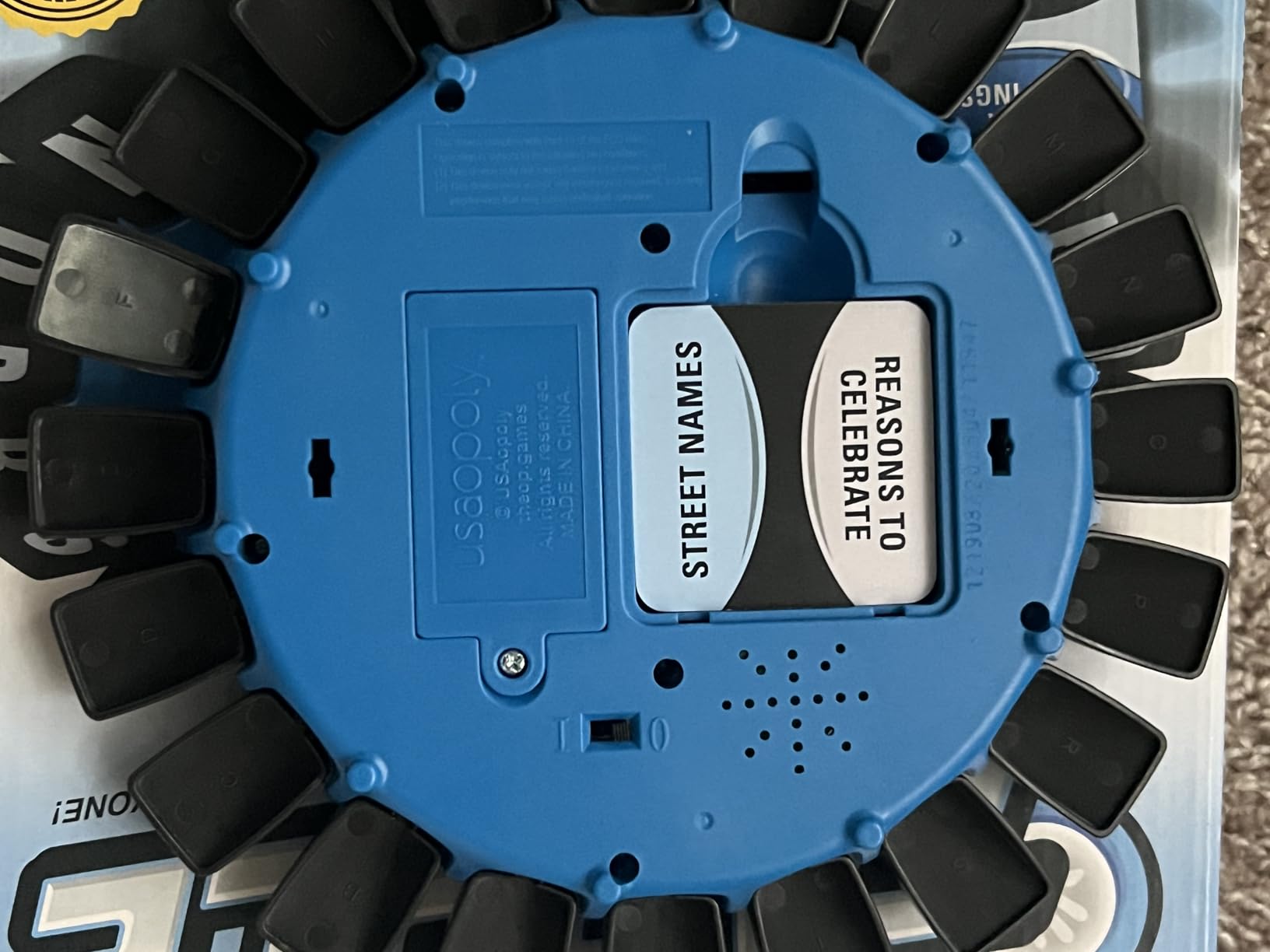
- 144 categories across 36 cards
- Portable wheel stores the cards so setup and cleanup are quick
- Loud and frantic in a big group
- Word knowledge creates a skill gap across ages
- Timer needs a battery
Tapple is the most precisely timed game on this list, and timing is exactly what family game night needs. A round runs about 15 minutes, the timer is built into the wheel, and nobody has to pass a phone around the table.
Reviewers describe it as a short, energetic crowd-pleaser with a large category bank. Choose a category card, press the timer, and shout words starting with the chosen letter until someone hits the tab.
It is a good game to put in the middle of an evening, because it produces a specific kind of noise that wakes up a table without taking over the whole night. A couple of rounds and everybody is talking again.
Cleanup is genuinely fast. The wheel stores all 36 cards, so the box goes back on the shelf in under a minute, which is more than we can say for most games in a house with a weeknight limit.
Who it works for at the table
Two to eight players, ages eight and up, and any group that wants a guaranteed short round. It is one of the better fillers for a family with a wide age range, because the timer keeps younger players from being left waiting on a slow turn.
Where it falls short
Two limits come up repeatedly. It is loud and frantic in a large group, which can overwhelm quieter players, and vocabulary differences create a natural skill gap between stronger and younger players. The timer also needs a battery, which is not the sort of detail anyone remembers until it matters.
10. Clue 1986 Edition – The Deduction Game Worth the Longer Evening
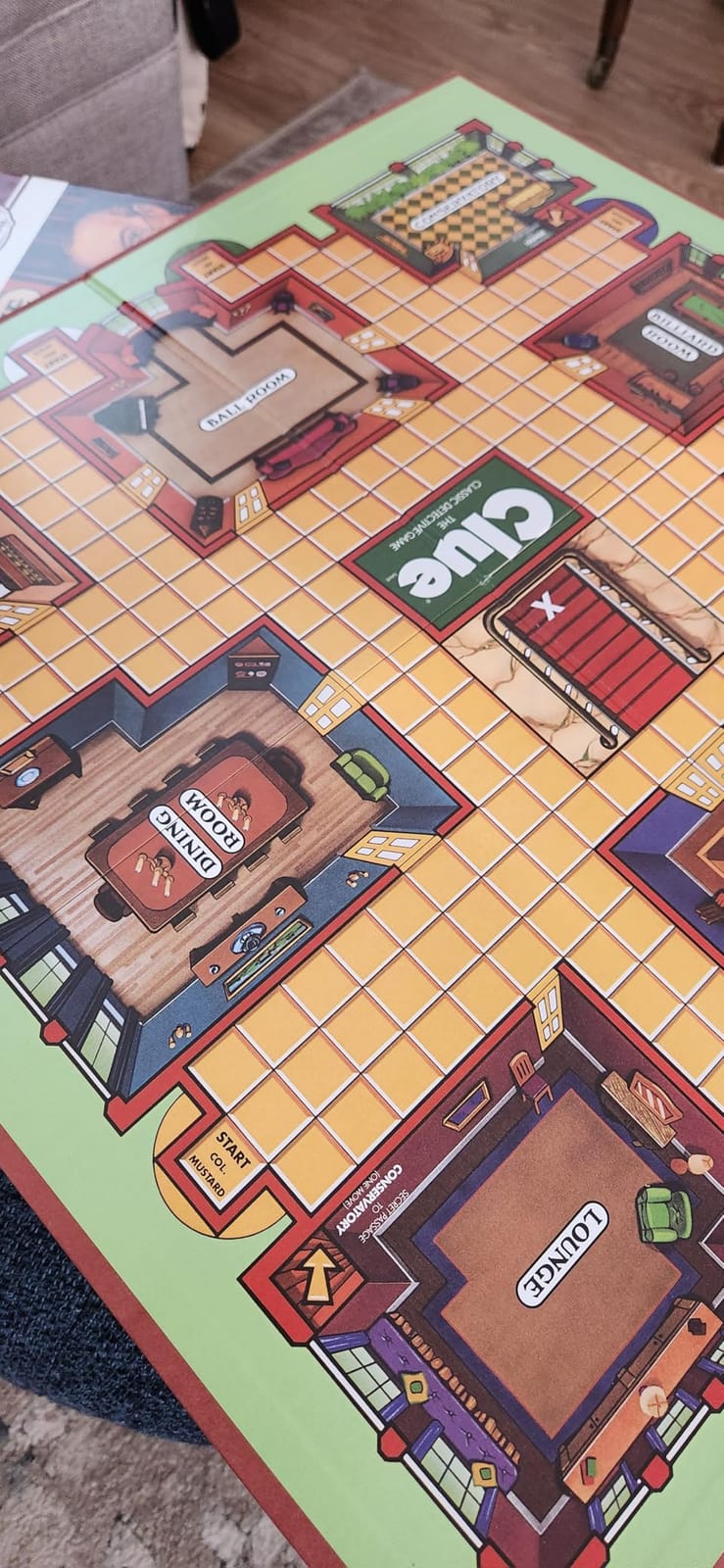
- Retro artwork and character moulds
- Die-cast weapons feel durable
- Works for 3 to 6 and holds multi-generational attention
- Printed instructions get a new group playing
- Takes a few rounds to get the hang of
- Board folds into quarters rather than halves
- Some players prefer the die-cast weapons to the pawns
Clue is the one pick here that is deliberately slower, and that is the trade. If your family game night can stretch past an hour, the deduction format holds three to six players of different ages better than almost anything else in the mainstream shelf.
Reviewers are candid that nostalgia is the dominant theme. Buyers compare it favourably to modern shelf versions and report buying a second copy as a gift for parents or grandchildren.
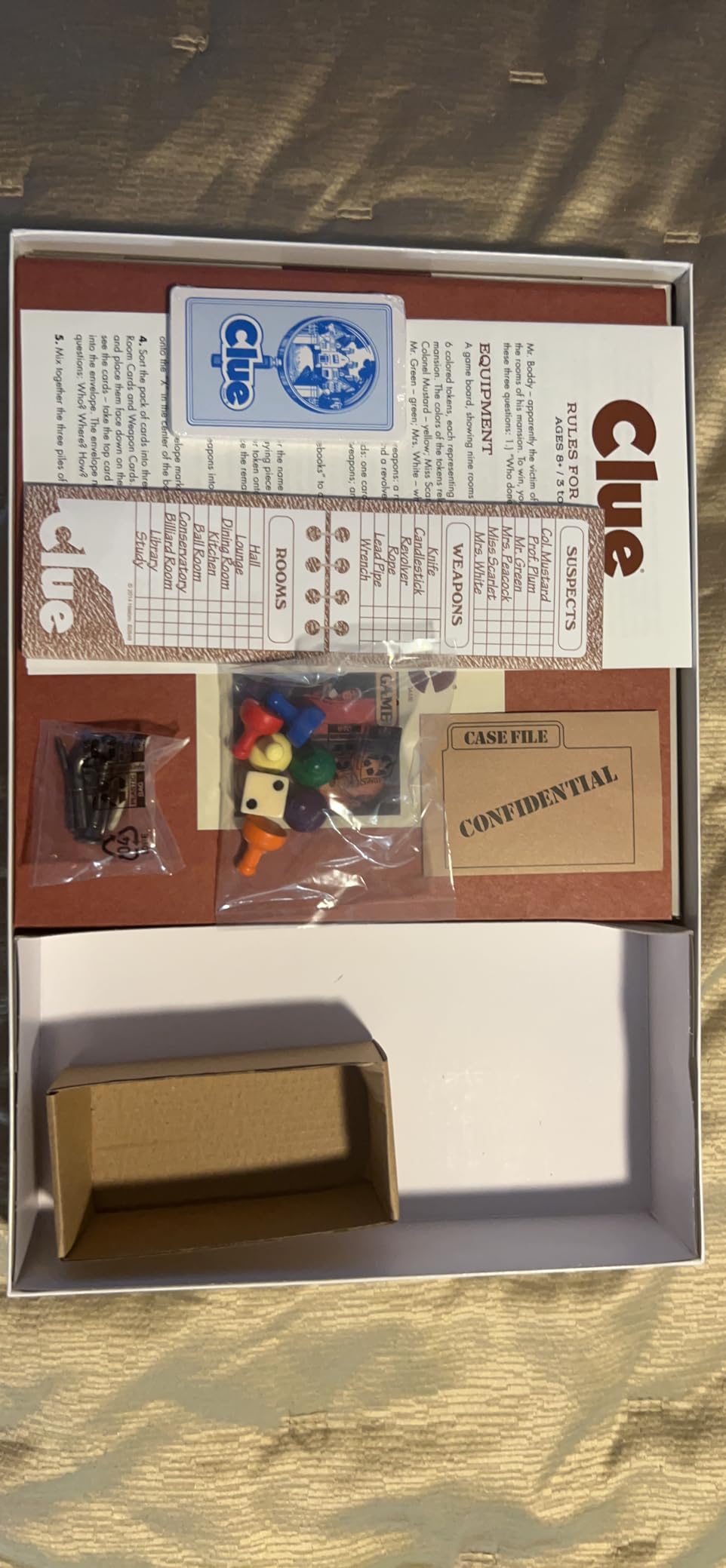
Component quality comes up in the same breath. Die-cast weapons, a full board, pawns, dice, cards and a score pad, and reviewers describe the piece set as complete rather than thin, which is unusual at this level.
It also survives a mixed table better than the format suggests. A child can work the cards and a grandchild can make wild accusations, and the whole thing produces more talking than any other game here.
Who it works for at the table
Groups of three to six, ages eight and up, and any household with a longer window on a weekend. It is a strong choice for a family that enjoys a story or a mystery, since the deduction gives everyone a reason to keep talking.
Where it falls short
It takes a few rounds to get the hang of, so it is a poor opener and a poor choice for a weeknight with a hard stop. Reviewers also note the board folds into quarters rather than halves, a small departure from the original, and that some players prefer the die-cast weapons to the plastic pawns.
11. Herd Mentality – The One That Scales to a Twenty-Person Table
Herd Mentality: Funny Family Party Board Game for Game Night, 4-20 Players
- Scales to 20 players
- About 20 minutes a round
- Majority-vote mechanic is instantly intuitive
- Works as an icebreaker with guests you do not know
- Recommended for ages 10 and up
- Thin cardstock box for a game meant to travel
- Simple voting can feel repetitive once the group is predictable
For holiday and Thanksgiving gatherings where the guest list runs to double digits, Herd Mentality is the pick. It is printed for 4 to 20 players, and reviewers call it one of the few games that handles a large extended family without breaking.
The mechanic takes almost no teaching. You answer a question about what most of the group would say, and if your answer sits in the majority you win. If you are the odd one out, you get the pink cow of doom.
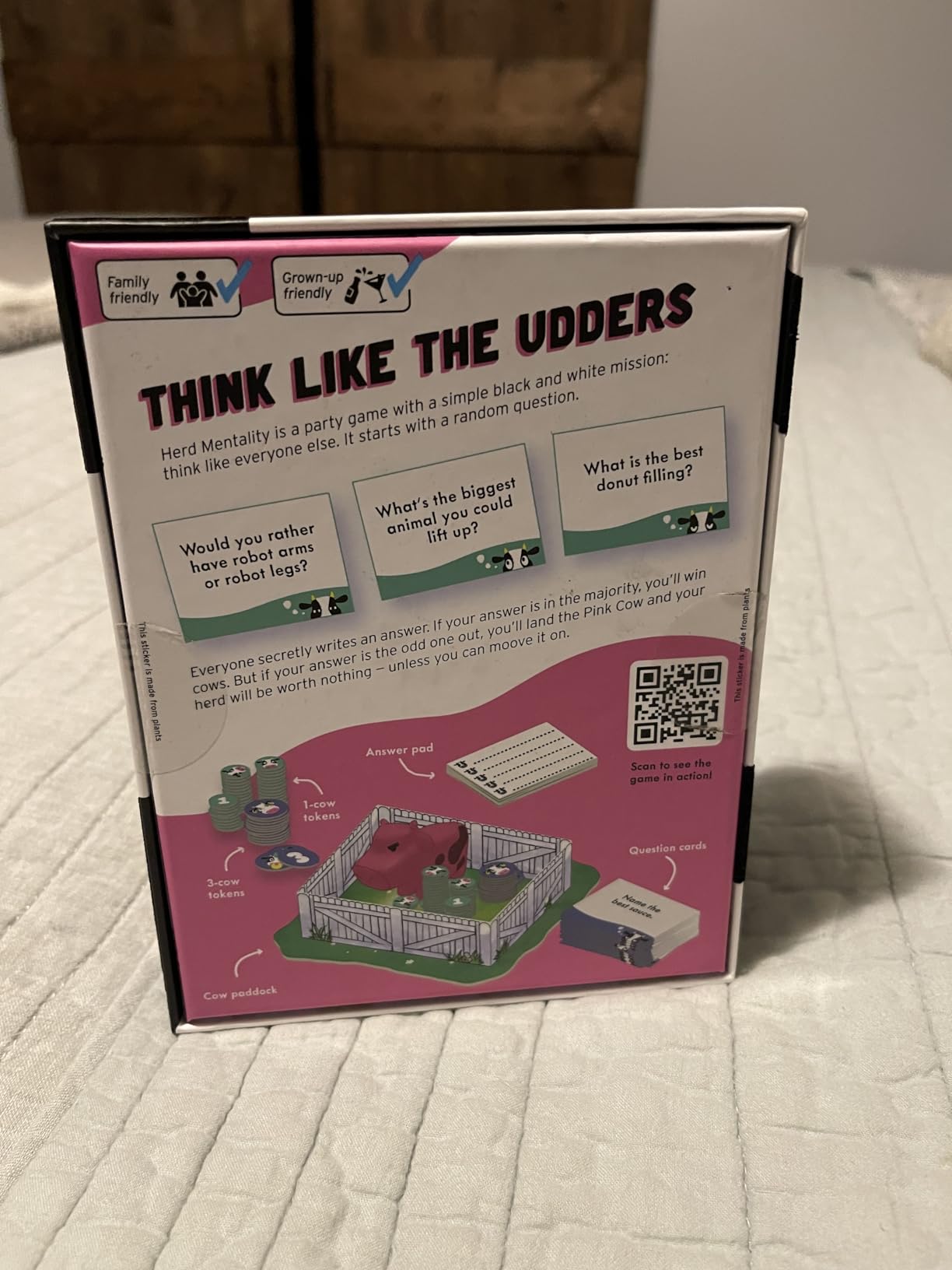
That makes it the best icebreaker on this list by a distance. With relatives you do not know well, it hands everyone something to say in the first thirty seconds, and the group learns about itself in a way that does not feel like a quiz.
At about 20 minutes a round it also fits a packed agenda. Twenty people finish, someone else runs the kitchen, and the game is gone from the table.
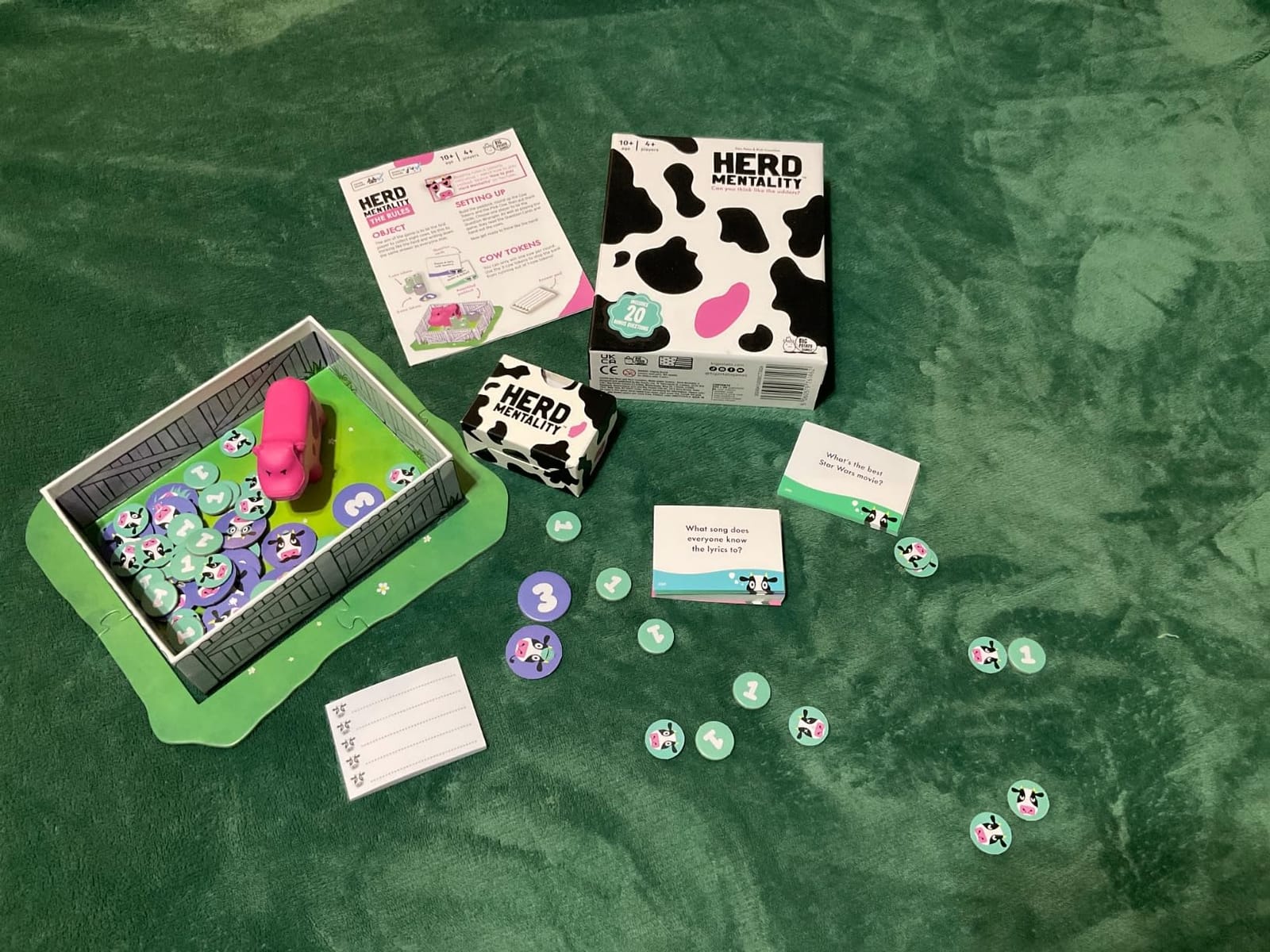
Who it works for at the table
Large gatherings of 4 to 20 players, ages ten and up, and any host who needs a game that works with guests rather than a set of regulars. It needs no moderator, no elimination and no host skill beyond reading a card aloud.
Where it falls short
Two honest caveats. The ten-year age floor makes it unusable with younger children, and the thin cardstock box is a poor fit for a game that is meant to travel to gatherings. Reviewers also note that simple majority voting gets repetitive once the group starts predicting each other.
12. Double Ditto – The Twenty-Five-Minute Party Game With Two Answers
Inspiration Play Double Ditto – a Hilarious Award-Winning Family Party Game for 4-20 Players (Ages 8 and up)
- Two answers per round keeps guesses lively
- Built-in 15-second timer keeps the pace fair
- 400 category cards give strong replay value
- Scales to 4 to 20 players for gatherings
- Writing two answers is demanding for 8 and 9 year olds
- Play quality depends on how creative the group feels
- Needs score sheets and a pen at the table
Double Ditto is the game to reach for when a table needs to move. Pick a card, read it aloud, and write down two answers you think everyone else will give before the 15-second timer runs out.
Reviewers praise the built-in timer and the sheer size of the card bank, and they position it as a reliably funny group game for holiday gatherings and mixed-age families. The two-answer format makes it more interactive than the original.
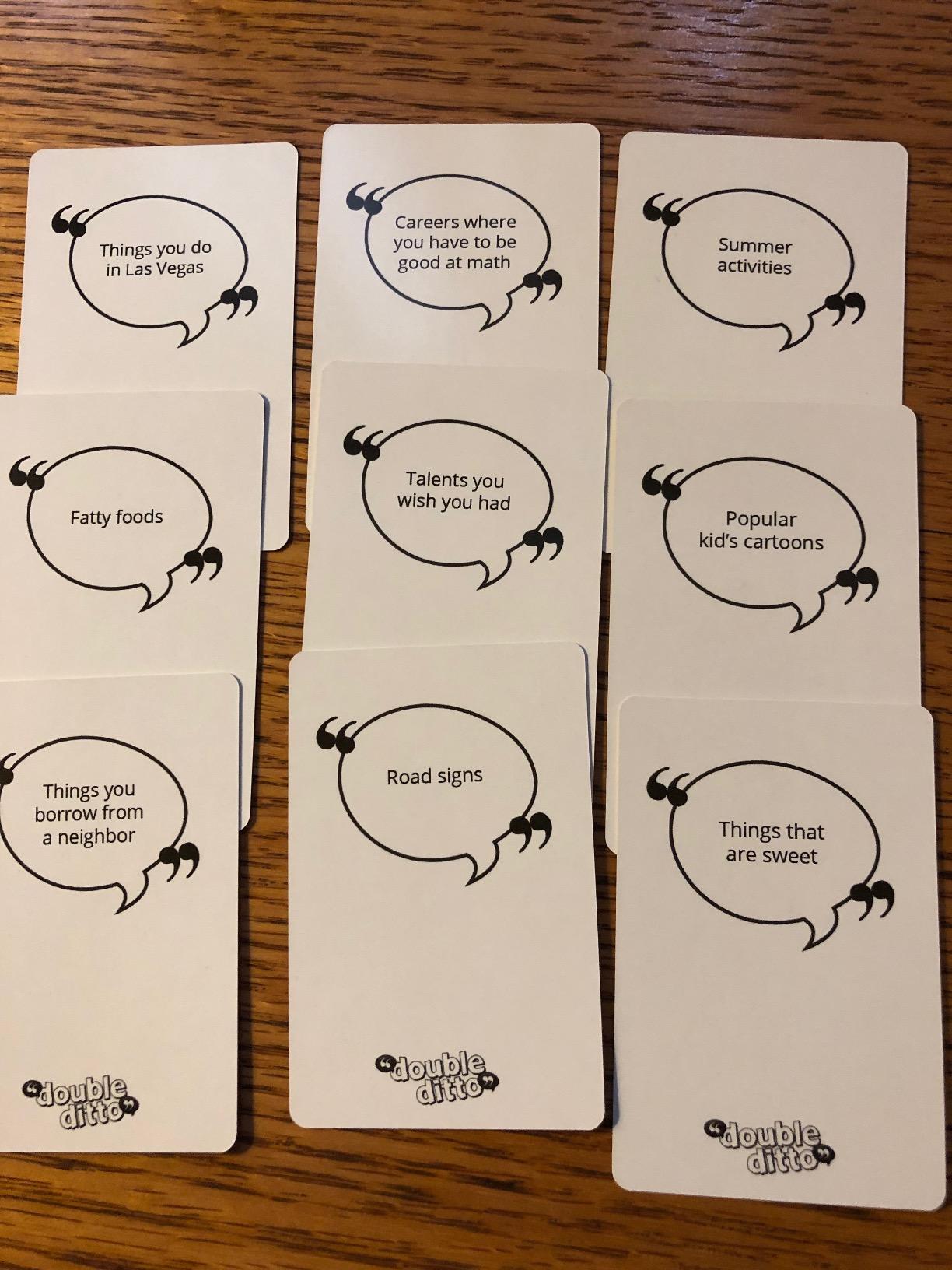
Play time runs about 25 minutes, which makes it the best mid-length party game in this roundup. It fills the gap between a 15-minute filler and an hour-long main course without dragging.
It also scales to 4 to 20 players, so a quiet family evening and a full gathering use the same box. The 400 cards are what make that scale believable rather than a marketing claim.
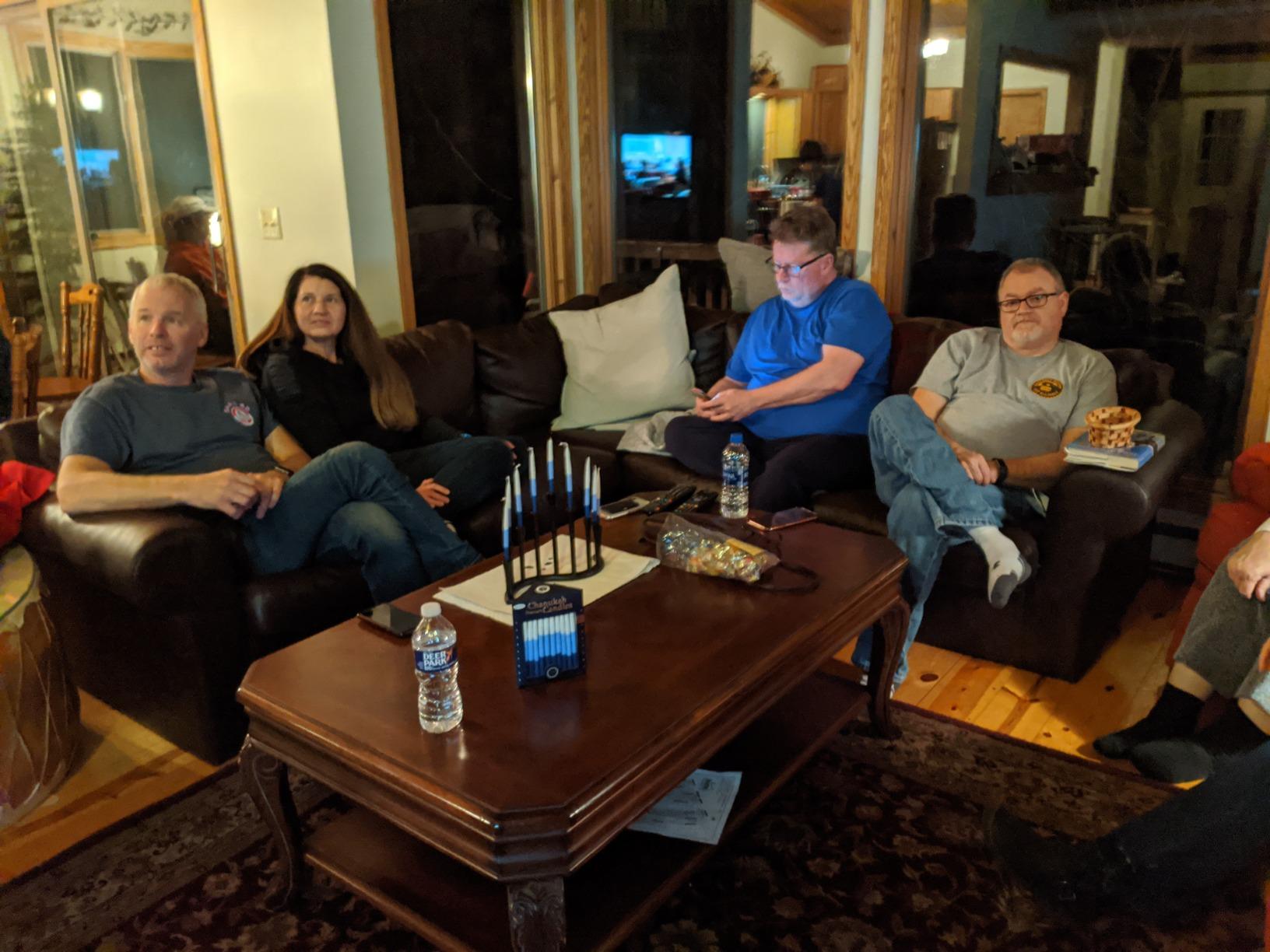
Who it works for at the table
Groups of four or more, ages eight and up, and any family with a creative streak. It works well with aunts, uncles and grandparents at a gathering, and the categories can be adapted to whatever the household finds funny.
Where it falls short
The writing component is the real limit. Reviewers point out that writing two answers under a timer is demanding for 8 and 9 year olds who are still building those skills, and the table ends up pairing a child with an adult. Quality also swings with the mood of the room, and you need score sheets and a pen set out first.
How to Choose a Board Game Your Family Will Actually Finish
Pick for the constraints of the night, not for the theme on the box. A game that is beautiful on the shelf and unteachable at the table is a worse choice than something plain that starts in two minutes.
Teach time matters more than theme
This is the number one purchase filter. If you cannot explain the rules in under five minutes, you will lose the first fifteen minutes of your evening to a rulebook. Four games here require almost no explanation at all: Jenga, Yeti in My Spaghetti, Herd Mentality and What Do You Meme.
Play time is not the same as real time
A game printed as 30 minutes rarely takes 30 minutes. Budget roughly a 30 minute game at 45 minutes of real time, and a 60 minute game at 90. If your evening ends at a fixed hour, work backwards from the end, not the start.
Check the player count at both ends
Look at the minimum and the maximum, not the headline number. A game for 4 to 20 players is a different proposition from one for 2 to 4, and a household that regularly hosts six adults needs the wider range far more often than it realises.
Downtime is the hidden killer
Ask what a player does while waiting. Games where everyone acts on their own turn, like Rummikub, Yahtzee and Jenga, keep the table quiet but busy. Games with long sequential turns leave children drumming their fingers. Herd Mentality and Hues and Cues are built so the whole group is doing something at once.
Elimination ends family nights early
When a child is knocked out in round one, they sit out for the rest of the evening. None of these twelve games eliminate players, and that is a deliberate filter rather than a coincidence. Prefer games where a setback costs you position, not participation.
Luck, strategy and how adults will read it
Adults disengage when a game is pure luck, and children disengage when it is pure strategy. The mix matters. Yahtzee and Tapple lean on chance with a tactical decision attached, Rummikub and Clue reward thinking, and the party games rely on conversation instead of systems.
Cooperative or competitive
If the evening goes better when everyone works toward the same goal, this list is competitive by design and worth pairing with something else. Our guide to the best cooperative board games covers that angle properly, and mixing one cooperative game into a competitive evening often smooths out the table.
Replayability and the novelty problem
Every family hits the night where the same box has been played three times. Games with large banks, such as Hues and Cues with 480 colour squares, Double Ditto with 400 cards and Tapple with 144 categories, keep their edge longest. Tile and board games like Sorry! and Rummikub exhaust themselves faster.
Storage, cleanup and the table footprint
Cleanup is the last thing anyone thinks about and the reason game night quietly stops happening. Tapple’s wheel stores its own cards, Yahtzee fits in a tube-like package, and games with a large folding board like Clue need table space you may not have. A tidy board game storage setup makes the reset fast enough that you actually do it.
Games we would skip and why
Heavy historical strategy with long teach times, anything that eliminates a player early, and children’s games pitched entirely at four-year-olds in a house with teenagers all get passed over. So do party games that need a host to referee constantly. The single most common reason a family gives up game night is a game that required an argument about the rules, and no game on this list is worth that risk.
How to Run a Smooth Family Game Night
Hosting is half the result. A few small habits turn an evening that might not happen into one that people talk about the next morning.
Plan a filler and a main course. Open with something short and physical, like Jenga or Yeti in My Spaghetti, while the kitchen finishes. That buys you a real hour for something with more weight, and it means nobody is staring at a rulebook before the food is even on the table.
Pre-sort the components. Every family loses the first stretch of the evening sorting pieces. Deal them out while the filler is running and nobody notices.
Keep a three-game shortlist. Deciding what to play in the moment is what produces a forty-minute discussion about games instead of a game. We keep a shortlist and we commit.
Have card games ready for the non-gamers. The most common guest objection is not the game, it is being handed something with a rulebook. A handful of card games alongside a board game solves that without splitting the group. We keep our board game shelves organised by play time for exactly this reason, with fillers on one shelf and main courses on another.
Set the table for the endgame. A clear surface, a pen, and a board game table with room for six removes most of the friction of a large group.
Frequently Asked Questions
What is the best board game for a family night?
SEQUENCE is the best board game for a family night for most households. The rules take under five minutes to explain, the box runs from two players up to teams of twelve, and a round lasts about 5 to 15 minutes. Rummikub is the pick when you want more strategy, and Hues and Cues handles tables of up to ten players.
What are the 10 most popular family board games?
Among the most widely bought family board games are SEQUENCE, Yahtzee, Sorry!, Rummikub, Jenga, What Do You Meme Family Edition, Tapple, Clue, Hues and Cues and Double Ditto. What makes them popular is the same thing that makes them work at a family table: short teach time, low setup and a player range wide enough for mixed ages.
What are the most complex board games?
Complexity in family board games usually means teach time, not theme. Clue has a slower deduction format that takes a few rounds to get going, Rummikub has a real planning layer that only surfaces in the second round, and Hues and Cues gets difficult quickly once several talkative clue-givers are involved. Anything needing more than a few minutes of rules reading belongs on a different night.
What games do neurodivergent kids like?
Games with short, self-contained turns and no elimination tend to sit best, because there is no dead time and nobody gets removed mid-game. Jenga and SEQUENCE work well because every turn is obvious and physical. Games with a built-in timer, like Tapple, give a clear endpoint. If colour perception is a factor, check the components for a small-parts or contrast concern before buying.
What are good games to play at family game night?
Start with three that cover different needs: Jenga or Yeti in My Spaghetti as a short physical opener, SEQUENCE or Rummikub as the main event, and Tapple or Hues and Cues as a 15 to 30 minute closer. Adding card games alongside a board game keeps non-gamers comfortable without splitting the group, which is the most common reason a guest leaves the table early.
Start With These Three and One Filler
If you buy nothing else, start with SEQUENCE. It is the best board game for family game night because it teaches in one sentence, scales to whatever table you have, and never leaves anyone sitting out. Add Rummikub for the evening when your family wants decisions to matter, and Hues and Cues for the gathering where the guest list runs long.
Then keep one short filler on the coffee table. Jenga or Yeti in My Spaghetti costs you nothing but shelf space and buys the hour you need for a longer game. That combination, a physical opener and one properly finished main event, is the whole trick to a family game night that people ask about the next morning.
This list was checked in October 2026, and we will keep testing it as new titles land on the shelf.