
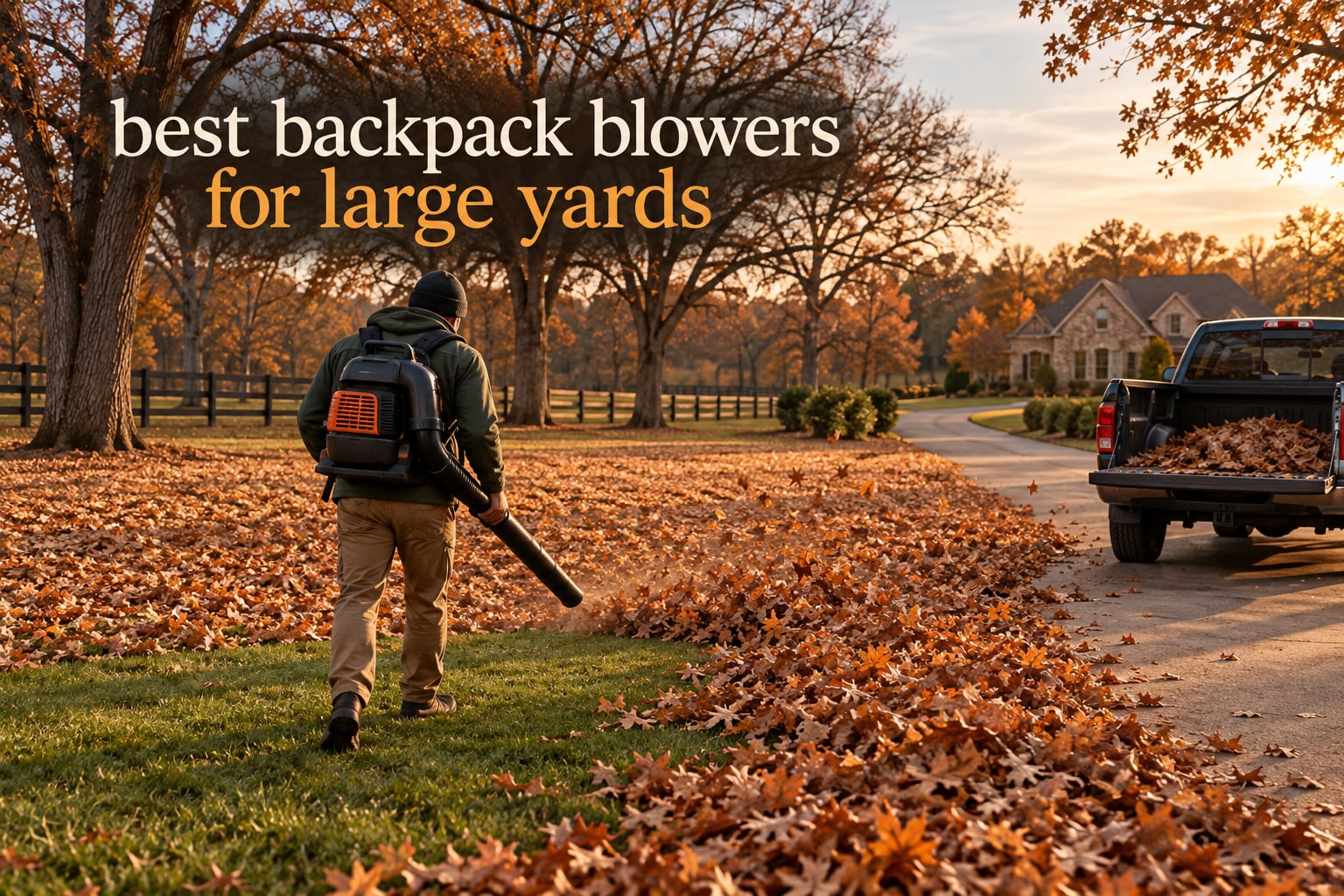
There is a very specific moment in late October when a big yard wins. The oak drops its last week of leaves, the ones that sat through two days of rain and welded themselves into a wet mat along the driveway, and the handheld blower you have been using since September starts to feel like a mistake. Forty minutes in, your forearm is burning, you are rearranging the same pile instead of moving it, and half the property is still waiting.
That is the whole case for the best backpack blowers for large yards. A backpack leaf blower puts a 900 to 1,100 CFM fan on your back and hands the output to your shoulders and hips instead of your arm, so the machine can keep working for the two or three hours a real acreage cleanup actually takes. It is a different machine, not a bigger version of the same tool.
We spent weeks reading owner feedback, spec sheets and service documentation across eight gas and cordless backpack blowers to sort out which ones are worth a large property, and which of the loud, heavy, carburetor-fussy options are not. If you are still narrowing the field, our earlier guide to the best backpack leaf blowers covers the general case; this one is sized specifically for acreage, wet leaf piles and long sessions.
Table of Contents
Top 3 Picks for Large Yard Leaf Cleanup
If you want the short answer first, these three cover almost every large-yard situation. The Schroder is the one we would put on our own shoulders, the PRORUN PBB2884 is the muscle option, and the Greenworks 80V is the low-friction cordless pick when noise or a neighbor matters more than raw throughput.

Schroder SR-6400L
- 920 CFM air volume
- 230 MPH air speed
- 63.3cc 2-stroke 3.7 HP
- 19.5 pound frame

Greenworks 80V 610 CFM
- 80V brushless motor
- 610 CFM / 180 MPH
- 14.6 pounds
- up to 18 minutes on high

One thing worth saying plainly before the individual reviews: the loudest unit in this group is not always the most powerful one, and the highest CFM figure on the box is not always the machine you want on your back for four hours. Weight, vibration and harness quality decide more sessions than airspeed does.
All 8 Backpack Blowers Compared in 2026
| Product | Specifications | Action |
|---|---|---|
| Schroder SR-6400L |
|
Check Latest Price |
| Greenworks 80V 610 CFM |
|
Check Latest Price |
 EGO POWER+ LB6003 EGO POWER+ LB6003 |
|
Check Latest Price |
| PRORUN PBB2884 |
|
Check Latest Price |
 VEVOR 63CC VEVOR 63CC |
|
Check Latest Price |
 Greenworks 80V 750 CFM Greenworks 80V 750 CFM |
|
Check Latest Price |
 Husqvarna 580BTS Husqvarna 580BTS |
|
Check Latest Price |
 PRORUN PBB3000 PRORUN PBB3000 |
|
Check Latest Price |
For reference, the rated weights in this group run from 9.5 pounds on the lightest cordless pack to 34 pounds on the heaviest gas machine. That 24.5-pound spread is why two blowers with almost identical airflow can feel completely different across a full afternoon of cleanup.
1. Schroder SR-6400L: Best Overall Backpack Blower for Large Yards
Schröder Backpack Leaf Blower – Backpack Blower – Gas Leaf Blower – SR-6400L – 3.7 HP Engine
- 920 CFM and 230 MPH in a light 19.5 pound frame
- Padded shoulder
- sternum and waist straps with a ridged back cushion
- 65 oz fuel tank for roughly an hour of runtime
- Throttle holds at full power so you are not riding the trigger
- Rated noise level of 65 dB
- Vibration carries into the back and hands on long shifts
- Only full power can be locked in
- No foot brace on the frame for pull-starting
The Schroder SR-6400L is the model we kept coming back to. A 63.3cc two-stroke making 3.7 HP moves 920 cubic feet per minute at 230 MPH, and it does that from a frame weighing 19.5 pounds, which makes it the lightest gas machine in this group by a wide margin. For a two-acre property with a long driveway, being able to keep it on for an hour without wrecking your shoulders is the feature that matters most.
Assembly takes about fifteen minutes and involves basically fitting the tube. The 65 oz tank holds 1.9 liters, which owners report translates to close to an hour of nonstop work, and the throttle can be set and held at full power so your index finger is free for steering.
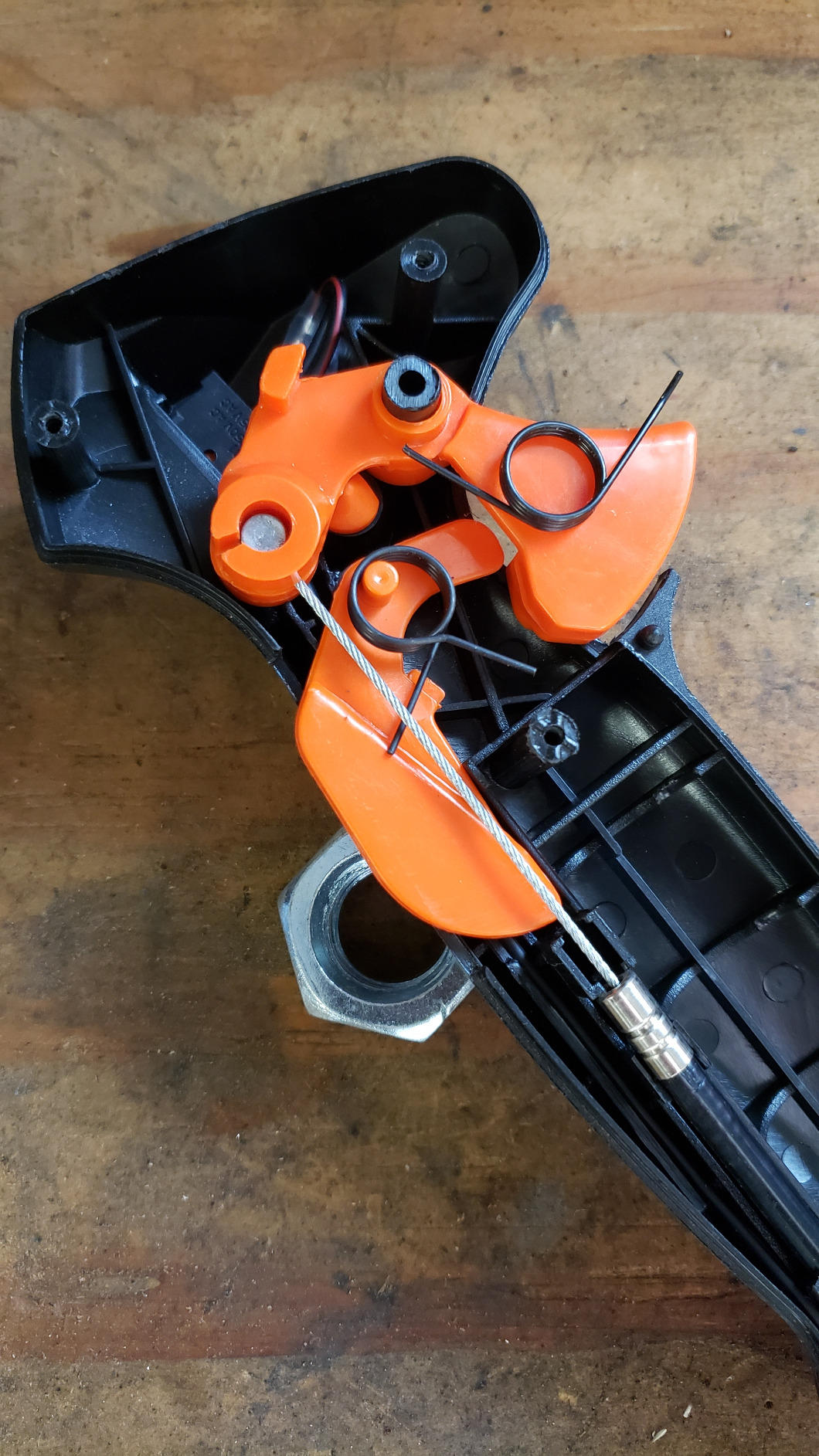
Owner feedback is heavily favorable on power for the money. Across 2,983 reviews averaging 4.4 stars, the most common note is that the airflow punches well above what the spec sheet leads you to expect, with several buyers comparing it favorably to higher-priced prosumer machines. Seventy-four percent of ratings are five-star, and a substantial group of long-term owners describe running through tens of tanks of fuel without trouble.
The recurring criticisms are honest ones. Owners consistently report noticeable vibration coming through the back and into the hands, plus a loud operating character that makes ear protection sensible. The manual’s fuel-ratio guidance is also confusing, since the printed instructions reference a 30:1 mix that conflicts with the 50:1 practice most people use.
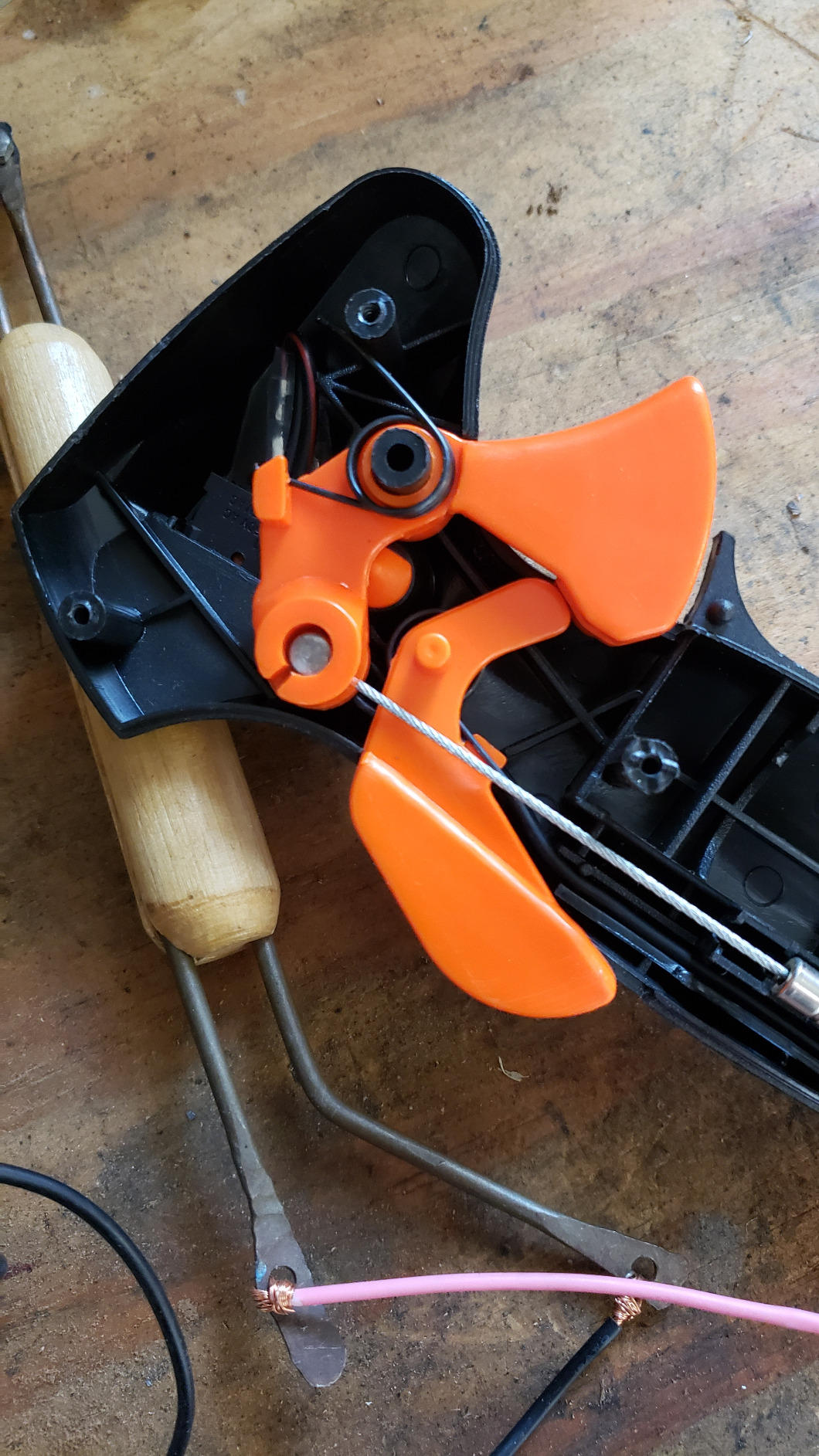
What works well on a large property
The combination of 920 CFM with a 19.5-pound weight is unusual and genuinely useful. A higher-CFM machine usually arrives with 30-plus pounds on your shoulders, so this one lets you clear wide, already-dry piles without trading away the afternoon.
Owner feedback on the frame is consistently positive. The padded shoulder straps, sternum strap and waist buckles are singled out, and the ridged foam back cushion is described as helping air move so the frame does not sit in a sweaty patch for hours. Support calls get answered by a person, and replacement parts ship directly from the manufacturer.
Where it falls short
Owners who use it for full commercial shifts tend to find the vibration tiring over many hours, even with the padding. If your cleanup days routinely run past three or four hours of continuous running, that is the first thing you will notice.
Two smaller issues come up repeatedly. The air cleaner cover is held by thumb screws whose threads strip if they are overtightened, and there is no foot shelf or bar on the base frame to brace against while pull-starting, which matters if you start it as many as a dozen times in a weekend. There is also no Amazon returns path here, so support runs through the manufacturer.
2. Greenworks 80V 610 CFM: Best Value Cordless Backpack Blower
- Cordless start with no fuel mixing and no pull cord
- 14.6 pound frame
- Brushless motor for long service life
- Turbo button and cruise control for adjustable output
- 45 minute recharge on the included rapid charger
- Part of a 75+ tool platform so one battery covers many jobs
- Four-year tool and battery warranty
- 610 CFM is the lowest airflow of the cordless options here
- About 18 minutes of runtime on high with the 2.5Ah battery
- Marketed for yards up to 1 acre
- Rated 76 dB is not actually quiet
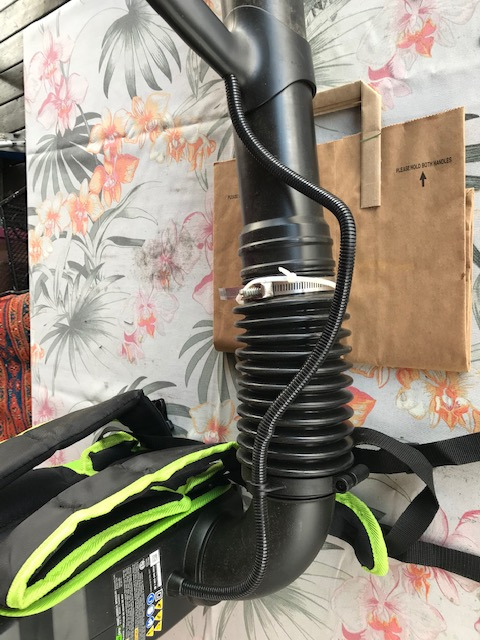
This is the cordless option that makes the most sense if you already own Greenworks tools. The 80V brushless motor delivers 610 CFM at 180 MPH from a 14.6-pound frame, with push-button start and no fuel to mix. At 1,078 reviews it also has the deepest owner history of any cordless pack in this group, which is useful when you are judging long-term reliability.
The controls are the selling point for real cleanup work. A variable speed trigger handles the low-output passes that gather loose leaves into windrows, cruise control holds a setting for the long haul, and a turbo button delivers the full push when you hit a stubborn pile. The included rapid charger brings the 2.5Ah pack back up in 45 minutes.
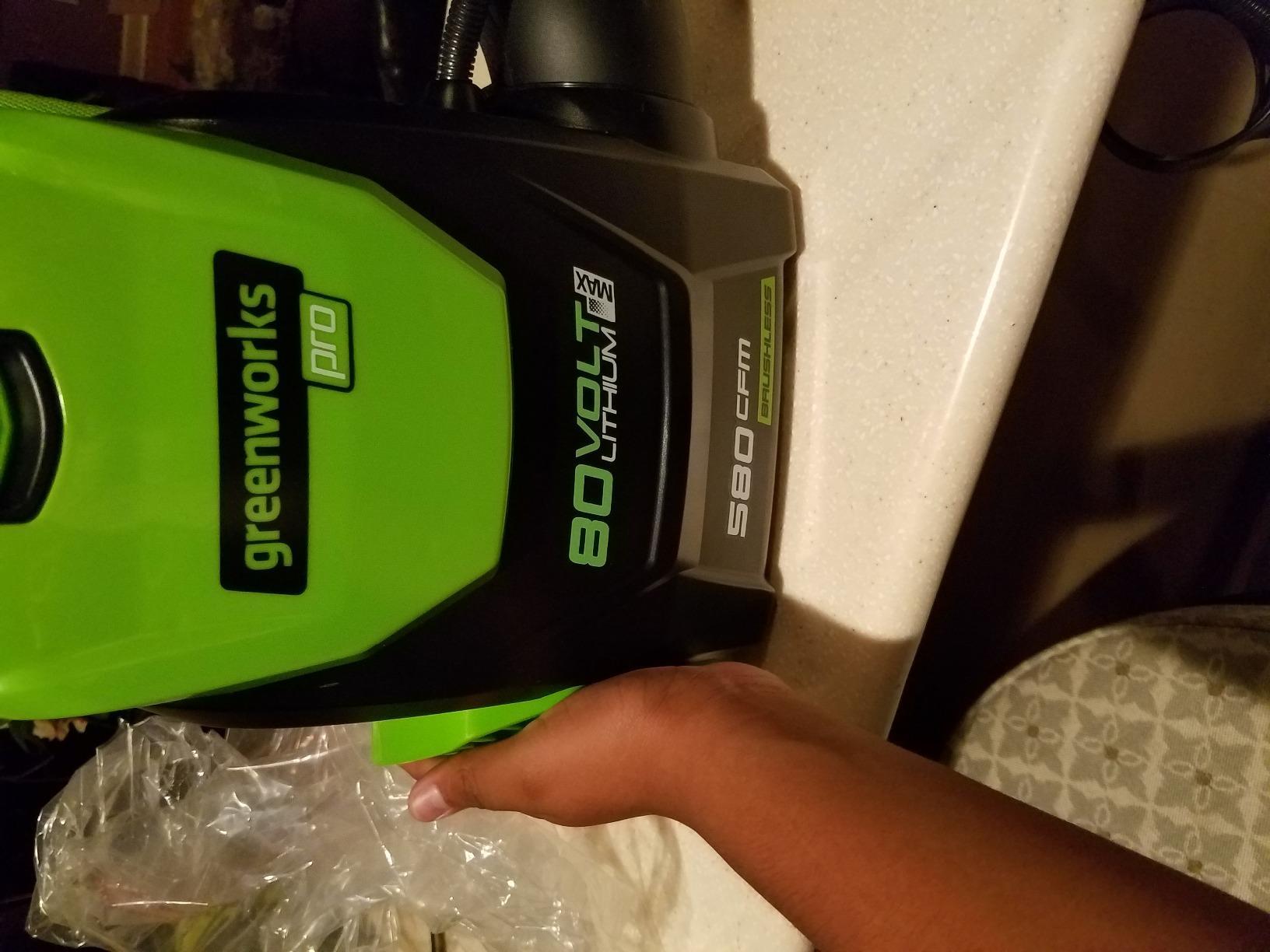
Owners consistently appreciate the cross-platform battery compatibility. If you already run the 80V system for a mower or a chainsaw, this blower reuses those packs, and a four-year warranty covers both the tool and the battery. There is no oil to mix, no spark plug to change, and no carburetor to rebuild after a season of storage.
The limitation everyone lands on is endurance and output. Eighteen minutes on high is a real number, and once the pack is empty you are waiting 45 minutes for the charge or reaching for a second battery. At 610 CFM this also produces less air per minute than any of the gas machines here.
Where this one earns its place
It suits properties up to about an acre, plus the paved and hard-surfaced parts of a bigger lot. Driveways, walkways, decks and the lawn immediately around the house get cleaned fast, and nobody in the neighborhood can complain about the sound.
For anyone who finds two-cycle maintenance tiresome, the simplicity argument is real. There is no fuel line to gum up and no winter storage procedure to follow, which for many owners is the deciding factor rather than raw CFM.
Where it falls short
This is not the machine to buy if your property is several acres of deep leaf cover. Owner sentiment is more mixed here than with the gas models, with five-star reviews at 60% and one-star reviews at 11%, and the complaint that recurs is output that feels slow rather than power that feels absent.
It is also worth knowing that the 76 dB rated figure is the highest number on the spec sheets of the quieter-looking units. The vibration-free electric drive keeps the sound lower-pitched and less fatiguing than a two-stroke, but it is not a stealth machine, and you should not buy it on the assumption that it solves an ordinance problem by itself.
3. EGO POWER+ LB6003: Best Cordless Blower for Quiet, Low-Fatigue Work
EGO POWER+ Backpack Leaf Blower, Cordless Electric 600 CFM, Includes 56V 7.5Ah Battery and Charger – LB6003
- Rated at 64 dB
- the quietest machine in this group
- Up to 180 minutes on the included 7.5Ah battery
- Variable speed dial on the handgrip from 260 to 600 CFM
- Brushless motor with low vibration
- Adjustable tube length
- 5-year tool warranty and 3-year battery warranty
- Single-battery setup is not sized for very large properties
- Output and runtime drop in cold weather and on older batteries
- Turbo shortens runtime well below the headline figure
The EGO POWER+ LB6003 is the one to look at if fatigue is what is actually ending your cleanups. At a rated 64 dB it is the quietest option here, the brushless motor produces very little vibration, and reviewers repeatedly mention how well balanced it feels compared with a gas pack of similar class. Several owners in their seventies specifically point to reduced arm strain as the reason they switched.
The runtime figure is the headline. The included 7.5Ah battery is rated for up to 180 minutes of operation, and the handgrip carries a variable speed dial that sweeps from 260 CFM up to 600 CFM in turbo at 145 MPH. That range lets you work the lawn quietly and only open it up for the pile, which is where battery tools usually lose the argument against gas.
It also handles wet leaves better than its airflow number suggests. Owner reports describe it moving heavy, damp oak piles without the straining that smaller battery packs tend to show, and the adjustable tube length is a small quality-of-life touch that helps with reach under shrubs and along fences.
What works well here
The combination of 64 dB and near-zero vibration makes this the easiest machine in the group to run for a long stretch, and the 180-minute ceiling means a full property can be cleared on one charge at working settings. It is the sensible pick for a household with a noise-restricted street or an HOA that discourages gas equipment.
Owners like that the 7.5Ah pack is interchangeable with the wider 56V EGO platform, and the warranty split of five years on the tool and three on the battery is among the more generous arrangements in the category.
Where it falls short
Scale is the real limitation. With a single battery, owners consistently judge it better suited to pavement, driveways and moderate loose leaves than to a genuine multi-acre property, and clearing takes noticeably longer. The battery is also a large share of what the package costs.
Cold weather and pack age both matter. Owners report a noticeable drop in output and runtime in cold conditions and with older, higher-wear batteries, so if you plan to use it in late fall or early winter, plan on a second pack. The 107-review sample is also thinner than most in this roundup, so the long-term record is less established than the rating alone suggests.
4. PRORUN PBB2884: Most Versatile for Pro-Level Throughput
PRORUN 75.6cc 1020 CFM 240 MPH Gas-Powered 2-Cycle Backpack Leaf Blower, PBB2884
- 1020 CFM moves whole swathes of yard from a standing position
- Spring-assisted pull cord starts reliably
- Full tank gives about two hours at max throttle
- Owners compare output to Echo and Stihl pro-class machines
- Anti-vibration and instant start features
- 3-year residential warranty
- Heavy at 32.8 pounds for smaller-framed users
- Harness quality is the weakest link on the machine
- Tube sections connect loosely and can leak air
Owners treat the PRORUN PBB2884 as pro-class output at a fraction of brand-name pricing, and the numbers back that up. The 75.6cc two-cycle makes 1020 CFM at 240 MPH, with a reported blow force around 43 newtons, and multiple reviews compare it directly to Echo and Stihl machines in the same bracket.
Where the gas machines usually fight you, this one helps. A short, spring-assisted pull cord starts reliably, and the spring assist is a genuine benefit for larger or less-fit users on a 32.8-pound machine. A full tank runs about two hours at maximum throttle, which is a long working window between fuel stops.
The throttle lock is useful for long passes, and owners describe being able to clear entire swathes of yard from a standing position rather than walking behind a slow trickle of air. At 4.3 stars across 193 reviews with 70% five-star ratings, the sentiment is broadly positive, and reviewers doing landscaping work report that it holds up under regular professional use.
Build quality is uneven in the places that matter most for comfort. The harness is the most common complaint, and the tube sections connecting loosely and leaking air shows up often enough that it is worth checking the fittings before a big cleanup day.

What works well on acreage
This is a machine for moving volume. If your property produces deep, windrowed piles rather than a thin scatter, the 1020 CFM figure translates directly into fewer passes and a shorter Saturday, and the two-hour tank window means fewer refuel breaks on a big property.
The spring-assisted start also matters more than it sounds. A 32.8-pound machine with a hard pull cord is a machine people stop wanting to use, and reducing that effort is what keeps it in rotation for owners who are not in peak condition.
Where it falls short
The weight is the first thing. At 32.8 pounds it is well past the point where a backpack frame stops being comfortable, and smaller-framed users report real difficulty shouldering it. If you are lighter or shorter, test it with the frame fully adjusted before committing.
Reliability reports are mixed at the margin. Some owners report units that would not restart or failed early in ownership, and the stop switch is described as stiff and occasionally unreliable, sometimes needing a hard push or a choke. Cold-weather starting is also reported as harder than the spring assist suggests, and warranty service runs through the manufacturer with no local purchase record kept on file.
5. VEVOR 63CC 1110 CFM: Best for Fuel-Efficient Raw Output
- Strips wet leaves and moves small branches
- Very economical on fuel per pass
- Starts in about two pulls even in cold conditions
- Throttle lock saves trigger fatigue
- Includes noise-reducing earmuffs
- mixing bottle
- funnel
- wrenches and a tool bag
- Shock-absorption frame with a thick back cushion
- Starter and recoil assembly is a recurring failure point
- Some units shut down after short runs or will not restart
- Tube extensions are cheaply made and reported to loosen
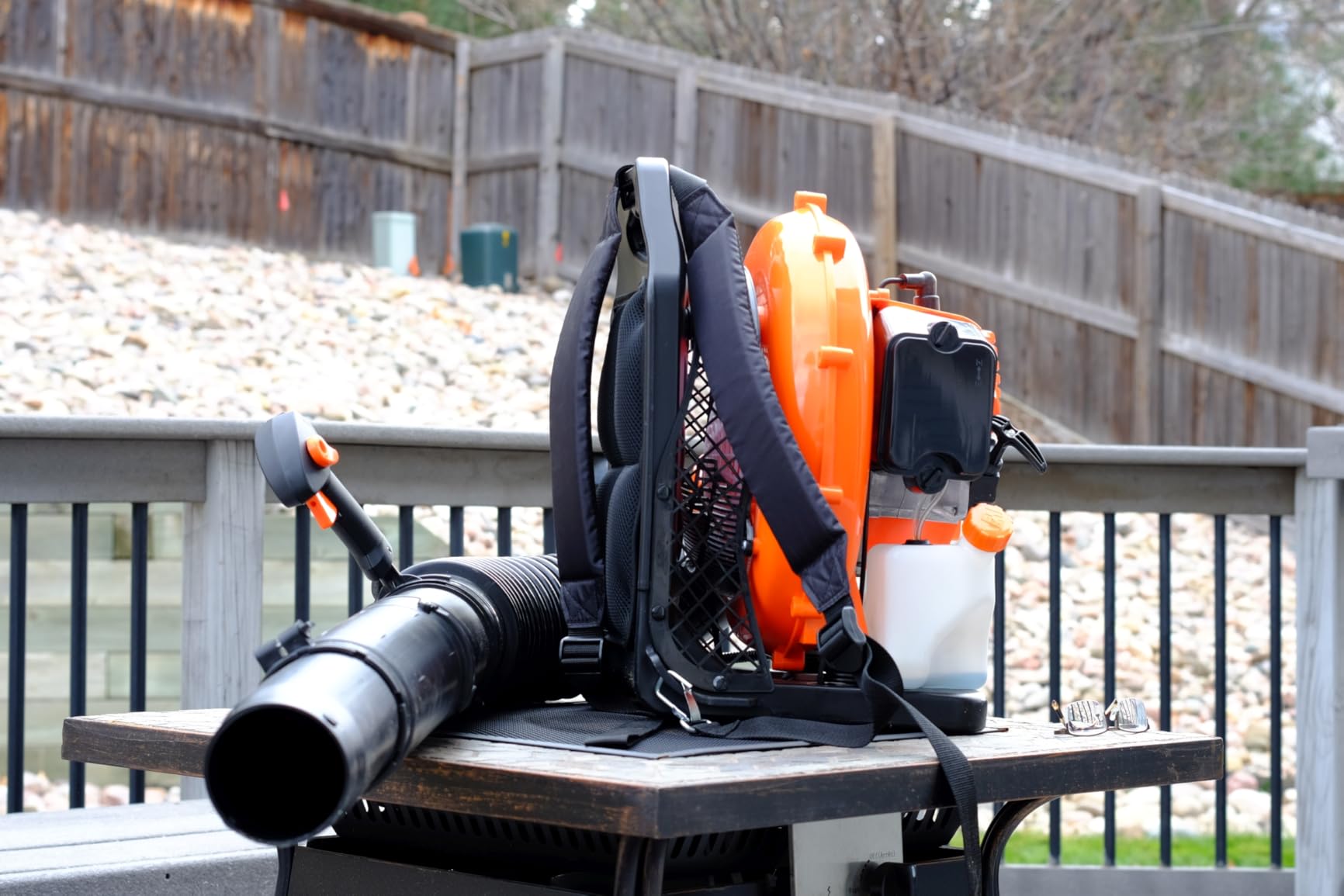
The VEVOR 63CC produces 1110 CFM from a 63cc engine at 26.5 pounds, and owners doing real cleanup work treat it as a capable machine. Reports describe it stripping wet leaves and even moving small branches, and landscaping users say it cuts job time dramatically compared with handhelds.
Fuel economy is the sleeper advantage. A 32 oz tank of 50:1 mix covering several passes over roughly 1,000 square feet is a better running cost per acre than most of the group, which adds up across a property that produces leaves for six weeks every fall. It also starts in about two pulls even in cold conditions.
The included accessory kit is unusually generous. You get noise-reducing earmuffs, a mixing bottle, a funnel, wrenches, hex keys, clamps and a tool bag, which covers the small things that normally send you to the store on cleanup morning. Cruise control locks in a power setting so you are not riding the trigger for an entire pass.
Reliability is where the ratings split. At 4.1 stars across 143 reviews, five-star ratings sit at 65% but one-star reviews are a meaningful 13%, and that same group centers on the pull-start and recoil assembly, units cutting out after ten to fifteen minutes of running, and weak support for warranty claims. Build quality appears to vary between individual machines.
Where the raw output pays off
At 1110 CFM this clears wide swathes quickly, which is exactly what wet, compacted leaves along a driveway need. The 26.5-pound weight sits between the light gas units and the 33-plus-pound pro machines, so it delivers a lot of air without pushing you into the heaviest bracket.
The shock-absorption frame with adjustable padded straps and a thick back cushion also does more than comfort work, since it keeps the engine’s vibration from transferring directly into your spine during long passes.
Where it falls short
Start it more than a few times a season and the recoil assembly becomes the weak link. Multiple owners report pull cords breaking or failing to retract, which is the most common single complaint in the reviews, and there are reports of units shutting down after short runs or refusing to restart.
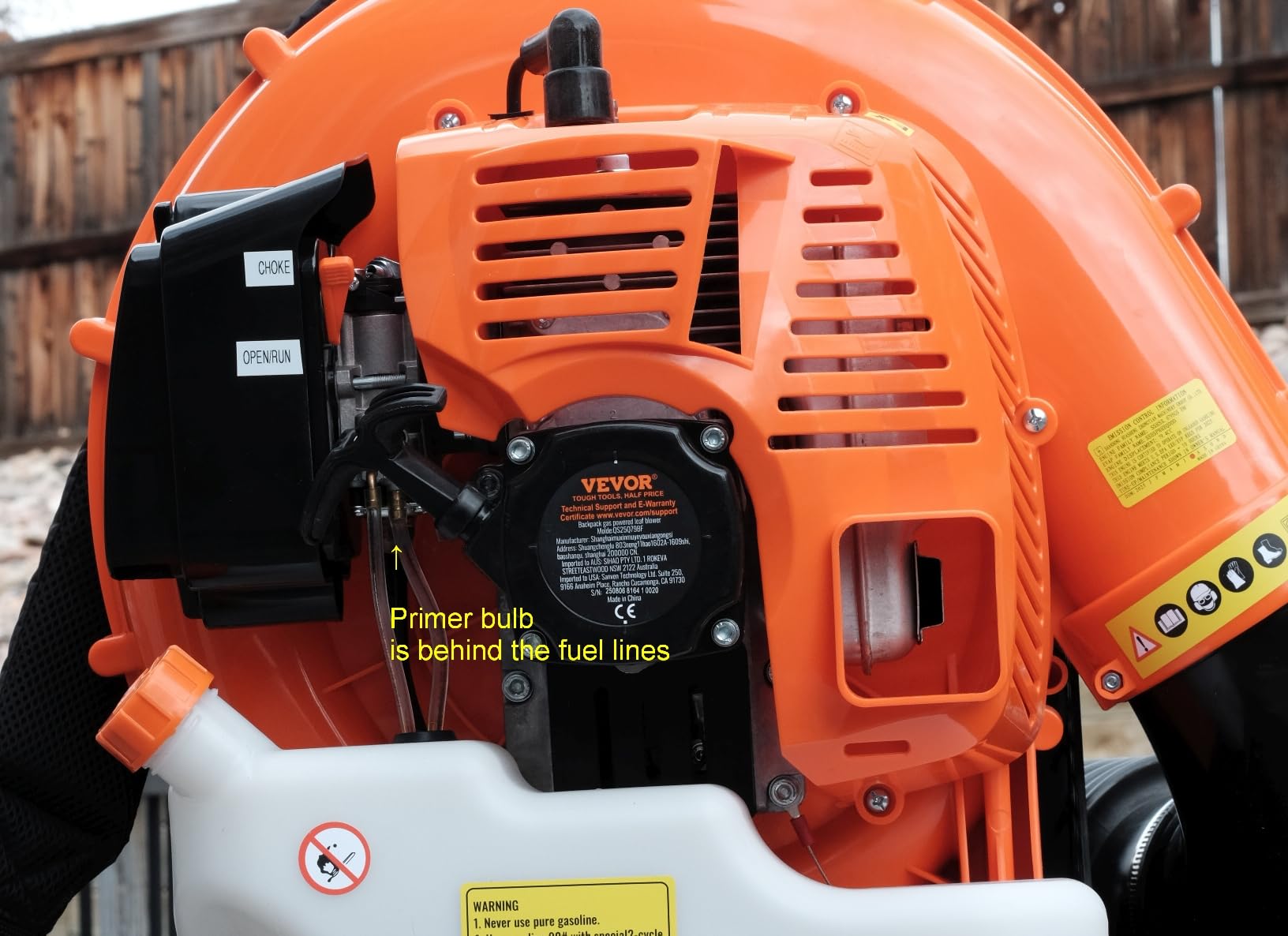
A few other details are worth knowing. The stated blowing speed appears overstated when compared side by side with handhelds, the tube extensions are reported to loosen or fail, the primer bulb sits in an awkward position, and the idle sometimes needs adjusting upward. One review also reported a missing blower tube and a manual that did not match the backpack model, so check the box contents before you leave the house.
6. Greenworks 80V 750 CFM: Best Lightweight Backpack for Wet Leaf Piles
Greenworks 80V Backpack Leaf Blower, 750 CFM, 4.0 Ah Battery and Charger
- Lightest machine in this roundup at 9.5 pounds
- 750 CFM is the highest airflow of the cordless options
- Brushless motor with low maintenance needs
- Rated at 64.52 dB with no tailpipe emissions
- Backpack format keeps hands free and the unit off wet ground
- Variable speed with turbo mode
- Includes 4.0Ah battery
- 4A charger and manual
- 4.0Ah battery means pauses to recharge on large yards
- Battery and charger bundle is a large share of the purchase price
- Only 80 reviews
- so the long-term record is thin
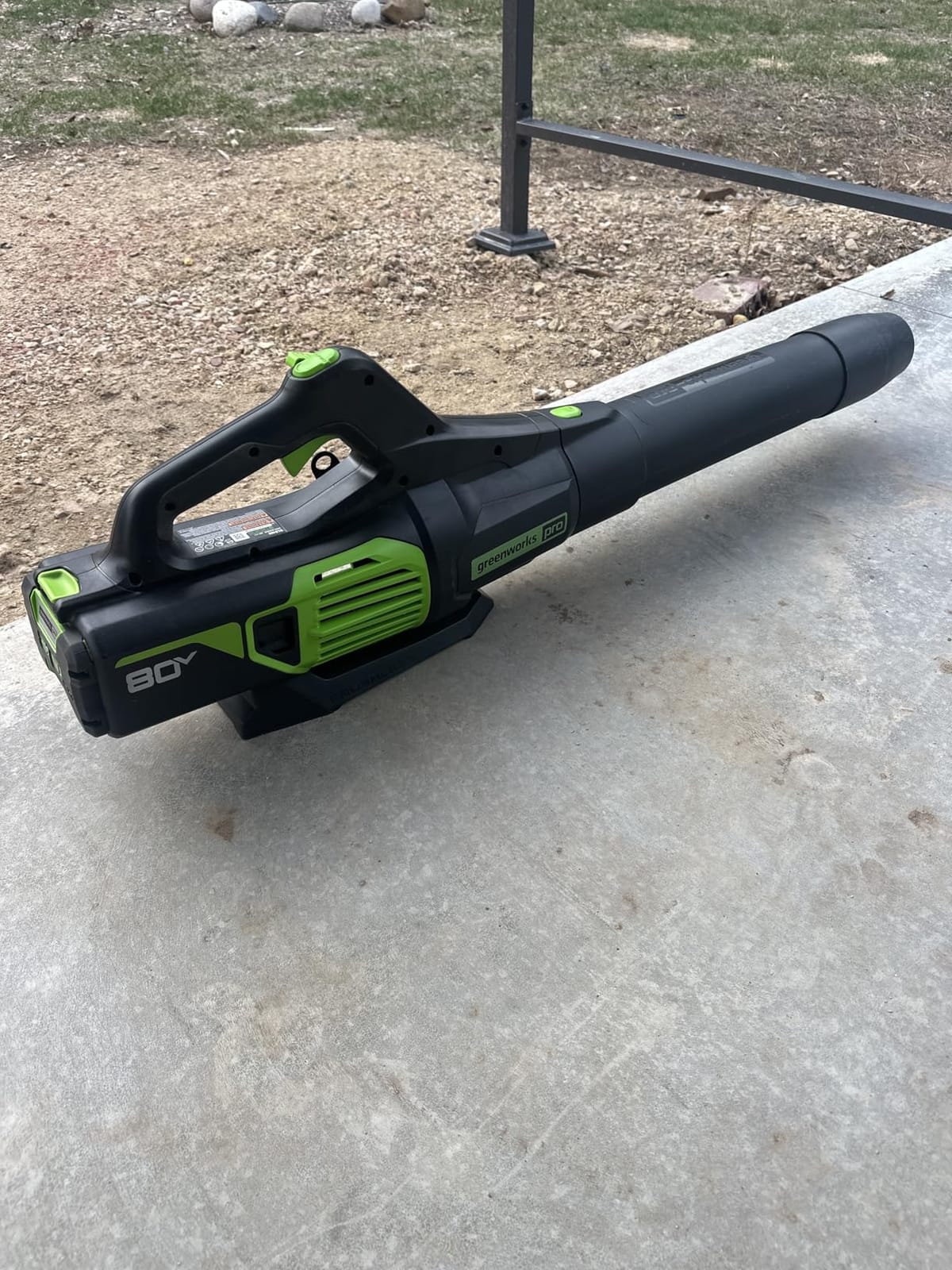
At 9.5 pounds, the Greenworks 80V 750 CFM is the machine you can forget you are wearing. The 80V brushless motor delivers up to 750 CFM, which is the highest airflow of any cordless backpack in this group, and it does so from a frame that is roughly a third the weight of the gas machines listed here. That combination is unusual enough to be worth a look.
It runs at a rated 64.52 dB with zero tailpipe emissions, and the variable speed control with turbo mode lets you match output to the task. Variable speed matters more than the headline number suggests, because most of the cleanup pass is spent moving loose leaves at lower output.
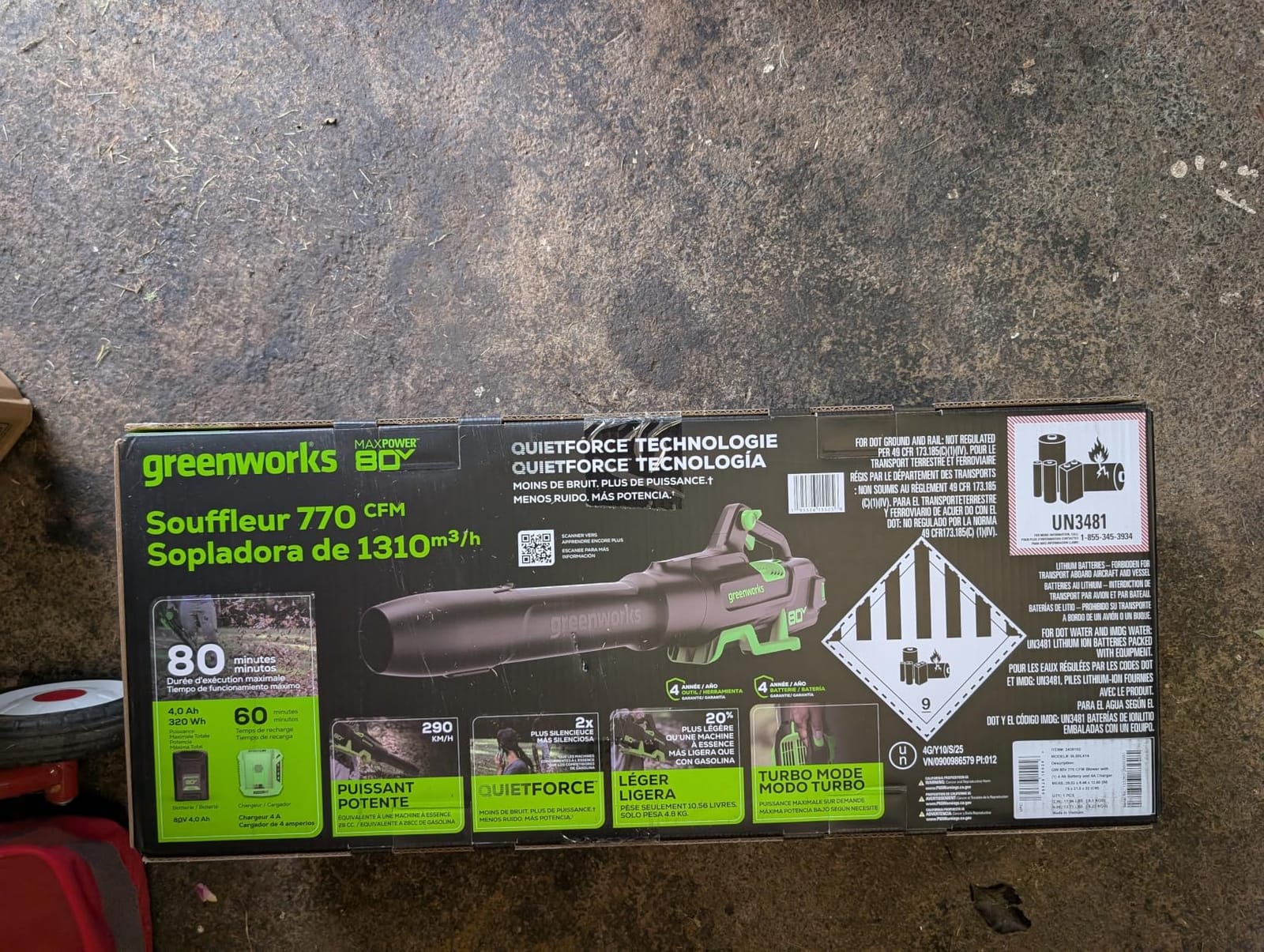
Owners highlight the same things the spec sheet does: low weight, high airflow for a cordless machine, quiet operation, and a form factor that keeps your hands free while keeping the unit off the ground and out of the wet. That last point is not trivial when you are working a soaked pile that would soak through a handheld housing.
Sentiment is favorable at 4.3 stars with 72% five-star ratings, but the sample is small at 80 reviews. The category-level constraint owners note is battery capacity, and a thin review base means long-term reliability is less well established here than for the gas models.
Why the weight matters so much
Frame weight is the number that determines whether you finish the job. Anything above 25 pounds starts to press on your shoulders and lower back over a long session, and 9.5 pounds simply does not. If you are managing a large property with joint or back issues, this is the pick that will not argue with you at hour two.
750 CFM of airflow in a cordless pack also means it is genuinely capable rather than a token machine. Packed driveways, patios and the leaf-heavy areas right around a house are all within reach, and the lack of fuel mixing removes a recurring failure point entirely.
Where it falls short
The 4.0Ah battery sets the pace. On a large yard you will need more than one pack or you will be waiting on the 4A charger mid-job, and the pack plus charger is a large share of what the package costs in total. If you already own the 80V platform, that math improves considerably.
It is also the least proven machine in the group, with 80 reviews against nearly 3,000 on the top pick. Long-term durability data simply does not exist yet for this model, so treat the strong rating as encouraging rather than settled.
7. Husqvarna 580BTS: Best for Dealer Support and Pro-Grade Hardware
- Highest average rating in this group at 4.5 stars
- 47 N blow force and 1000 CFM for sustained acreage work
- Ventilated harness and padded hip belt spread weight well
- Tube-mounted throttle keeps the control hand clear
- Two-stage commercial-grade air filter protects the engine
- Established brand with a serviceable parts network
- Heaviest machine in this roundup at 34 pounds
- Gas power means fuel mixing and pull-starting
- 74 dB still calls for hearing protection
- Smallest review sample in the set at 44
The Husqvarna 580BTS is the choice when support and serviceability matter as much as airflow. The 75.6cc 4.59 HP X-Torq engine produces 47 newtons of blow force, 1000 CFM of air volume and 220 MPH, and behind it sits an established dealer and parts network that most owners buying their first pro-grade machine are really paying for.
It holds a 4.5-star average, the highest in this group, with 80% five-star ratings and no two- or three-star reviews at all. Owners responding to the specification point to the blow force, the ventilated load-reducing frame and the commercial-grade filtration, which are exactly the things that matter when a machine will run for many seasons.
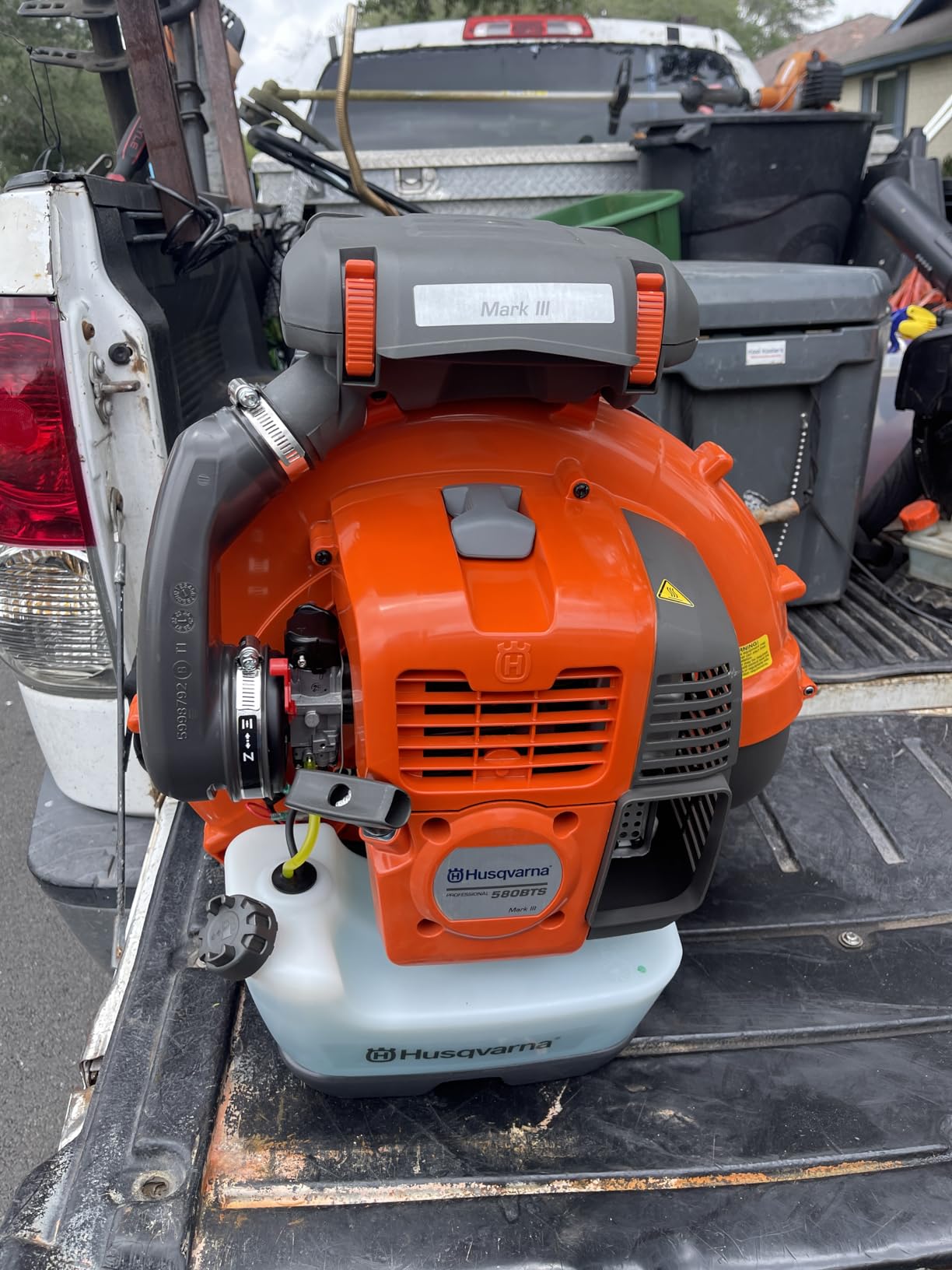
Two hardware details stand out on long jobs. A tube-mounted throttle keeps your control hand away from your body, and the two-stage commercial-grade air filter intake protects the engine from the fine dust and debris that come with dried leaf beds and spring cleanup. The padded hip belt is the other piece owners mention, since it moves load off the shoulders.
Be clear-eyed about the sample size. Forty-four reviews is the smallest evidence base in this roundup, so the strong score should be read alongside thin owner feedback rather than as a proven long-term record.
Why the dealer network changes the decision
Experienced owners on LawnSite and the OPE Forum repeatedly describe checking dealer proximity and parts availability before they settle on a brand, and that is the argument for this machine. Carburetors, fuel filters, spark plugs and frames are all replaceable on a platform with a real service network behind it.
The ventilated frame is also the more considered solution to the fatigue problem. Air is pushed through the padding, which cuts both the heat build-up and the sweating that makes long sessions miserable in the first place.
Where it falls short
At 34 pounds it is the heaviest machine in this roundup, and weight compounds if you are not used to a full pack. Buy it for a reason, and that reason should be the dealer support and the sustained blow force rather than a weekend of occasional use.
It is also a gas machine, so fuel mixing and pull-starting are part of the deal, and the 74 dB rating is high enough that hearing protection is not optional. A three-year residential warranty is standard for the class, but the purchase price sits at the top of this group with only the hardware to partly offset it.
8. PRORUN PBB3000: Highest Raw Airflow in the Roundup
PRORUN PBB3000 Gas Backpack Leaf Blower, 79.9cc Commercial-Grade, 250 MPH, 1125 CFM, 50N, 2-Cycle Engine
- Highest airflow and airspeed in this group at 1125 CFM and 250 MPH
- 79.9cc 5.0 HP engine gives genuine commercial-grade output
- CoolFlow fan-powered back ventilation
- Spring-assisted start cuts pulling effort by 40 percent
- Scuffguard metal rings reduce tube wear on abrasive work
- Tool-less dual-stage filtration built for dusty conditions
- Up to 90 minutes at full throttle
- Heaviest tier alongside the Husqvarna at 33 pounds
- Lowest average rating in this group at 4.0 stars
- 16 percent of reviews are one-star
- Gas engine requires premixed fuel and pull-starting
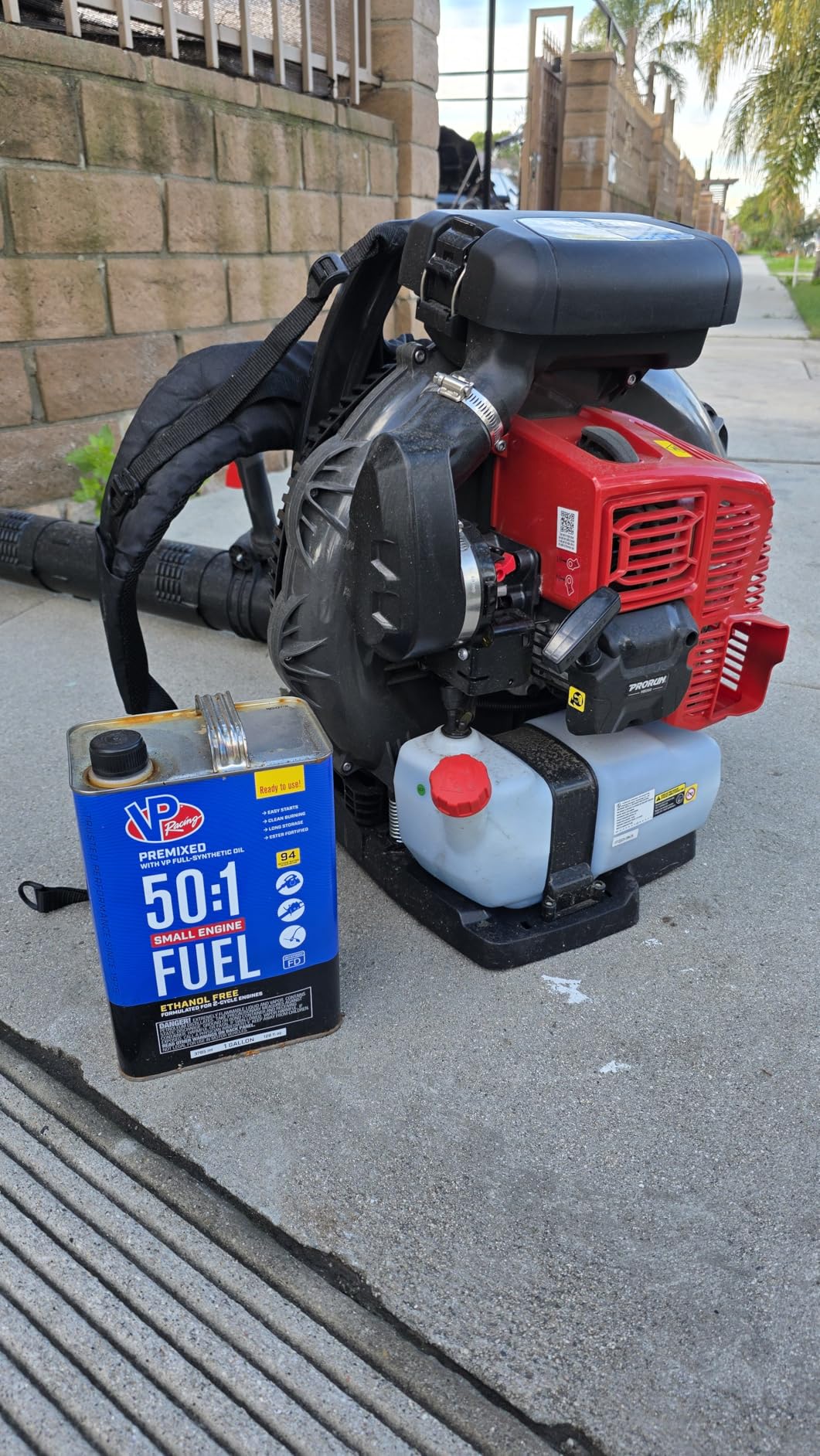
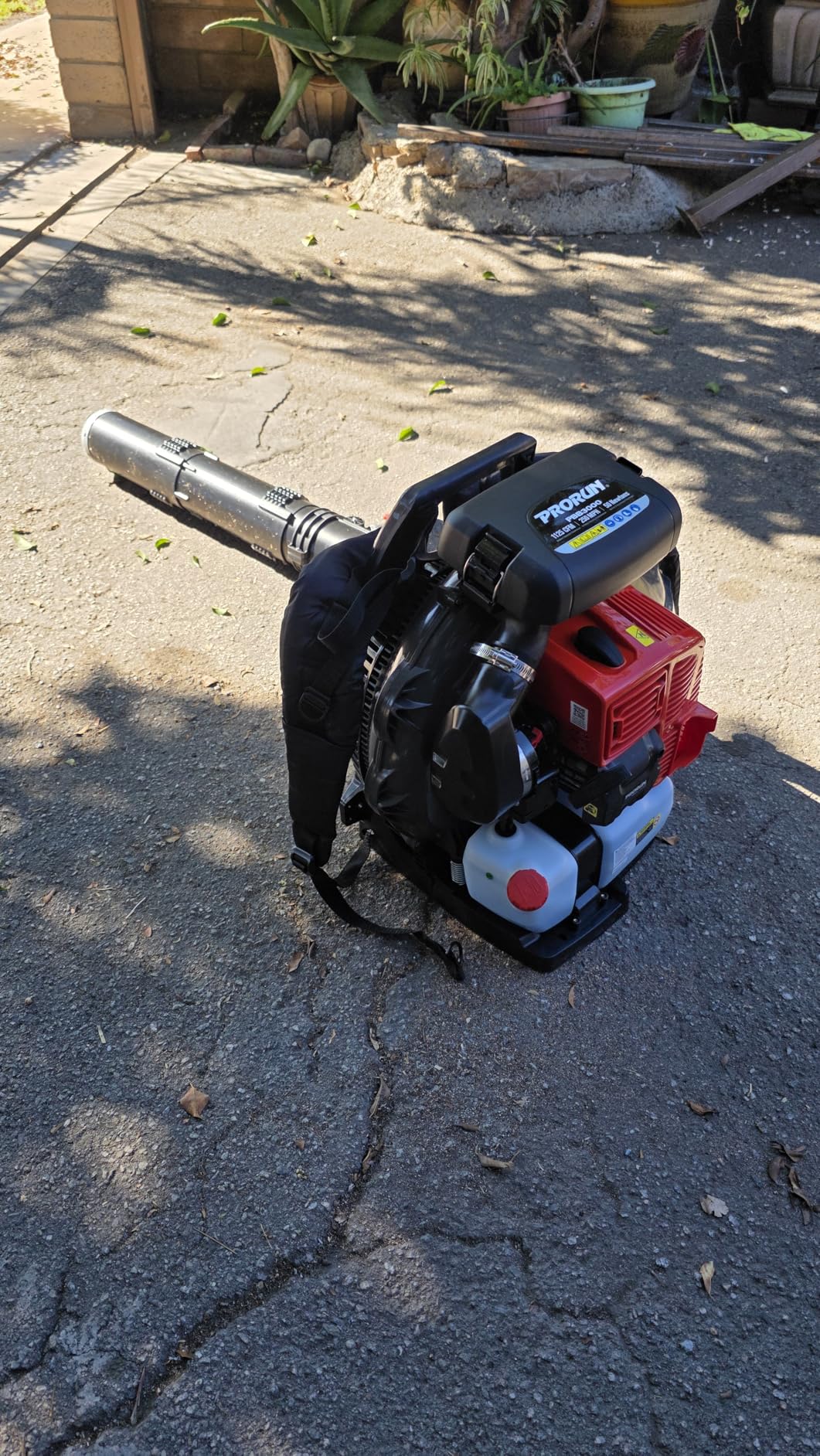
On paper, the PRORUN PBB3000 is the most capable machine here. A 79.9cc 5.0 HP two-cycle engine drives 1125 CFM at 250 MPH with 50 newtons of blow force, which makes it the highest airflow, highest airspeed and highest blow figure of any option in this roundup. For pure throughput on a big property, nothing else in the group is in its class.
The comfort hardware is unusually considered for a machine at this output level. A CoolFlow fan pushes air through the back padding, anti-vibration dampeners and wide-grip padded straps manage the engine’s movement, and the spring-assisted start cuts pulling effort by a reported 40 percent, which goes a long way on a 33-pound machine. A full tank runs up to 90 minutes at full throttle.
There are details built for abrasive work. The scuffguard nozzle carries heavy-duty metal wear rings to reduce tube wear, and tool-less dual-stage filtration is designed for dusty conditions, which is a real consideration when you are clearing dried leaf beds rather than fresh green debris.
The rating is where caution belongs. This machine posts a 4.0-star average with 67% five-star, 8% four-star and 16% one-star reviews, the highest one-star share in the group, which suggests some of the promised commercial-grade durability does not materialize on every unit. The 98-review sample is modest as well.
When max airflow is the right call
This is the machine for the largest jobs: multi-acre properties, post-storm cleanup, and any situation where debris is wet, heavy and matted into a surface rather than lying loose. Fifty newtons of blow force is the figure that matters most on that kind of material.
The back ventilation and dampeners are the features to look at closely if you plan to run it hard. Fan-powered cooling is the kind of thing that only seems like a gimmick until you have worked a four-hour afternoon in it, and the assisted start offsets a real portion of the weight penalty.
Where it falls short
At 33 pounds it sits in the heaviest tier, and the highest one-star share in the group suggests the durability claims do not hold for everyone. If reliability matters more to you than peak output, one of the better-reviewed gas options is the safer wager.
It is also a gas machine with premixed fuel and a pull start, and it ships configured around a turbo nozzle rather than a full kit of attachments. The warranty split of three years residential and one year commercial is thinner than the residential coverage on some rivals, which matters if you plan to bill for the work.
How to Choose a Backpack Blower for a Large Yard
Most buyer mistakes happen because people shop on CFM alone. Airflow matters, but the decisions that determine whether you finish the cleanup are made by weight, ergonomics, power source and local rules. Here is how we would think through it.
Match the airflow to your acreage
A simple ladder does most of the work. Under half an acre, a handheld is usually enough. From a half acre to one, a 450 to 700 CFM machine covers it comfortably. Beyond one acre, or on a wooded lot with deep leaf beds, you want 700 CFM and up, which is where this roundup lives.
For two acres or more, or for post-storm work on wet debris, look for 900 CFM or above. That is the class that clears a whole driveway or a long lawn strip in a single pass rather than pushing leaves around in a circle. Anyone under 700 CFM on a multi-acre property is going to spend far more time repositioning than blowing.
CFM, MPH and newtons: what the numbers actually mean
CFM is volume, MPH is speed, and newtons is force. CFM is the number that matters most on large yards, because it determines how much material you can move in a given time, and volume is what clears leaf beds. MPH matters more for driving debris out of beds and along fences where speed beats volume.
Newtons, the blowing force measurement, is the most useful number for heavy wet material and it is the one most often left off retail listings. If your property piles up wet oak and maple that mats down after rain, a blower in the 43 to 50 newton range will handle it where a 600 CFM unit will only tease it loose.
A good rule is to want both. A machine with 900-plus CFM and meaningful blow force will clear acreage in a morning; a machine with high MPH but modest CFM is better suited to scattering light debris than moving a pile.
Gas, battery or corded for a large property
Gas wins on capacity and session length. A two-cycle with a 1.9 liter tank runs an hour or more and a commercial tank runs longer still, which is why every genuinely high-CFM machine in this roundup is gas. The trade is fuel mixing, pull-starting, a spark plug, a carburetor and ear protection.
Battery wins on noise, vibration and simplicity. A cordless pack starts instantly, needs no winterizing, produces no tailpipe emissions, and will not rattle your back at hour three. The limits are real: runtime of 18 to 180 minutes depending on the pack, lower sustained airflow, and platform lock-in, since buying the wrong voltage family means your existing batteries will not fit.
Corded electric backpack blowers essentially do not exist as a product category, and are not likely to. The current required for that output makes a cord an unusable liability across acreage, so your real choice is gas or battery.
Harness design matters more than raw power
Vibration and shoulder fatigue are the most repeated complaint across every owner forum we read for this roundup, and they end more cleanups than power ever does. Look at the carrying frame first: padded shoulder straps, a sternum strap, a waist or hip belt, and a back cushion with ventilation channels are what separate a machine you keep using from one that ends up in the shed.
Weight is the second filter. A frame above 25 pounds is fine on a harness for a couple of hours, and miserable well before that. If you are smaller-framed, older, or dealing with any back or joint issue, the 9.5-pound and 14.6-pound cordless options here are genuinely more usable than a 34-pound pro machine, whatever the CFM gap.
Adjustability is what makes those weights workable. A frame you can bring the hip belt up on and pull the shoulder straps to fit actually distributes load to your hips, and that is the difference between an hour and a half-hour of work. Test it loaded, not empty.
Noise rules and the quiet-compliance path
Check your municipality and your HOA before you buy, not after. Some towns restrict gas blowers to specific hours or ban them outright, and a neighbor dispute is a much worse problem than a different brand of machine. Community boards have been known to push for bans on gas-powered equipment, so it is a live issue rather than a theoretical one.
If sound is a constraint, the cordless route is the answer. The EGO at a rated 64 dB and the Greenworks 750 CFM at 64.52 dB sit at the quiet end of this group, and the electric drivetrain also removes the low-frequency rumble that reads as more intrusive than the number suggests. The Greenworks 80V at 76 dB is the counterexample: it is cordless, but it is not quiet, and you should not choose it on the assumption that it is.
Ear protection matters in every case. Even the quieter gas machines sit in a range where you should be wearing something, and both the VEVOR and the Husqvarna ship or warrant toward that expectation. The VEVOR includes noise-reducing earmuffs in the box, which is a nice touch for a first gas purchase.
What a two-cycle backpack blower asks of you each season
Two-stroke fuel is the single most common cause of a backpack blower dying within a year. Owners consistently report engines that ran for a decade and others that failed in one season, and the difference is usually fuel handling. Mix to the ratio the manual specifies for that engine, and treat that guidance as the authority rather than an older habit.
After each use, run the engine rich for a few seconds to clear the crankcase, and before storage, drain the tank, clean the air filter, check the spark plug gap and treat the remaining fuel with stabilizer. A machine stored with a full tank of stale premixed fuel is the classic story behind the “bought new, died in a year” complaint.
For first-time buyers on a budget, owners across the small-engine forums consistently recommend a used two-stroke as a durable entry point, and the logic is sound. A simple air-cooled two-stroke with an external carburetor is mechanically understandable and repairable, and you can learn the maintenance on a machine that is not your primary one. Pair that with a new machine later if you find you need more output.
One last thing to weigh: whether you need to blow at all. Mulch-mowing leaves returns them to the lawn as a light layer that breaks down and feeds the soil, which several turf authorities consider better for your grass than removal, and it costs no fuel. If your property is turf-dominant, a mulching mower may handle most of what you would have blown. Backpack blowers earn their keep on paved surfaces, hard beds, fences and wet debris, which is a smaller job than it sounds.
Frequently Asked Questions
What size backpack blower do I need for a large yard?
For most large yards, aim for 700 CFM or more, and 900 CFM or above if you have two acres or more, a wooded lot, or deep wet leaf piles. Under half an acre a handheld is usually enough, while a half acre to one acre is well served by 450 to 700 CFM. Blow force measured in newtons matters most for wet, matted debris.
Is it better to have more MPH or CFM in a leaf blower?
For large yards, CFM matters more because volume determines how much leaf material you can move per minute. MPH is the better measure for driving light debris out of beds and along fences. Look for both, and check newtons of blow force, roughly 43 to 50 on this roundup, if your material is wet and heavy.
Which brand of leaf blower is the most reliable?
Stihl, Echo and Husqvarna are the names experienced owners most often name as durable, and Husqvarna 580BTS carries the highest average rating in this roundup at 4.5 stars. Reliability in practice tracks simpler design, replaceable parts and nearby dealer support as much as brand name, so check that a service network exists near you before you buy.
Is a battery backpack blower worth it for a large property?
It is worth it if noise, vibration and low maintenance matter to you, and if your property is roughly an acre or less plus paved areas. Battery packs deliver 600 to 750 CFM in this roundup, well below the gas machines, and runtime ranges from about 18 minutes to 180 depending on the pack. Expect longer cleanups and buy a second battery if you already own the platform.
What CFM do I need to clear one acre of leaves?
One acre of moderate leaf cover is cleared comfortably by a machine in the 700 to 900 CFM class. Deep, wet or matted leaf beds, a wooded lot or a two to five acre property pushes that requirement to 900 CFM and above. Owners on lawn care forums generally agree that 50cc of engine displacement or more is the threshold for moving large piles.
The Best Backpack Blowers for Large Yards in 2026
Eight machines later, the Schroder SR-6400L is our pick for the best backpack blowers for large yards, because 920 CFM in a 19.5-pound frame is the combination that most reliably ends a big cleanup in one session. If maximum throughput on wet debris is the goal and the weight does not bother you, the PRORUN PBB2884 delivers pro-class output at 240 MPH. If your street is quiet-sensitive or you want no fuel mixing at all, the Greenworks 80V 610 CFM is the sensible cordless starting point, and the EGO POWER+ LB6003 is the quietest machine we tested in this group.
One last piece of advice. Whatever you choose, adjust the frame to your body before the first pass, keep the intake filter clean between jobs, and mix your two-stroke fuel to the ratio the manual specifies. Most of the disappointing backpack blower stories we found trace back to one of those three things, not to the machine itself. And if you are still planning the rest of your fall equipment, our guides to the best lawn mowers for large yards and the best backpack commercial vacuums cover the tools that usually follow a leaf cleanup job.