
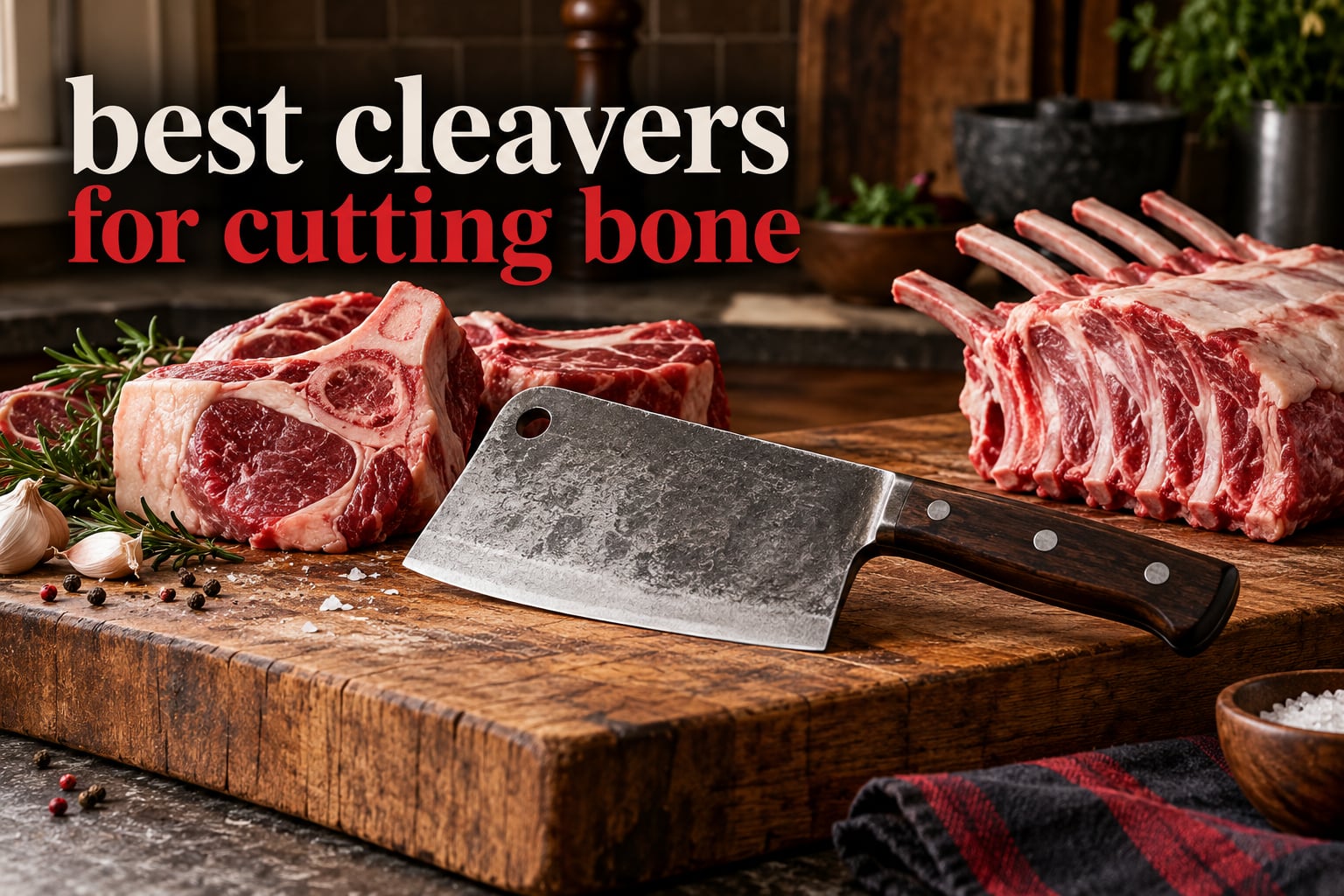
Yes, a cleaver can cut bone, but only a thick, heavy meat cleaver will do it well. A thin Chinese vegetable cleaver is built for produce and will chip the moment it meets a chicken joint, so the best cleavers for cutting bone are the ones with a thick spine, real weight behind the edge, and a steel that is hard enough to hold an edge but not so hard that it shatters.
We spent weeks working through eight bone-capable cleavers on whole birds, rib racks and beef shanks, and the differences between them are more dramatic than the product photos suggest. A 2.7-pound forged cleaver and a 1.2-pound stamped one can look similar in profile and behave completely differently when the blade hits a femur.
This guide is written for home cooks. That matters because the bone most of us actually cut is very different from the bone a commercial butcher cuts. You are dealing with chicken joints, pork ribs, turkey carcasses and the occasional beef shank. Nobody reading this is splitting hogs in a locker room, and buying for that workload means paying for weight you will never lift.
If you are still working out which cleaver family you need, our general cleaver testing roundup covers the lighter everyday options, and our Chinese cooking cleaver guide goes deep on the vegetable cleavers that excel at bok choy and ginger but were never meant for bone.
Top 3 Picks for Cutting Bone in 2026

ENOKING 5.7 inch Bone Cleaver
- Hand-forged full tang high carbon steel
- Thick spine for bone force
- Leather sheath included

Juvale 8 Inch Meat Cleaver
- 8 inch forged stainless blade
- Wood handle with steel pins
- Hanging hole for storage

Dalstrong Ravager 9 Inch Cleaver
- 9 inch German steel at 56+ HRC
- Full tang G10 handle
- Sheath and gift box included
All 8 Cleavers Side by Side in 2026
| Product | Specifications | Action |
|---|---|---|
| ENOKING 5.7 inch Bone Cleaver |
|
Check Latest Price |
| Juvale 8 Inch Meat Cleaver |
|
Check Latest Price |
| Dalstrong Ravager 9 Inch Meat Cleaver |
|
Check Latest Price |
 ROCOCO 6.3 Inch Bone Cleaver ROCOCO 6.3 Inch Bone Cleaver |
|
Check Latest Price |
 TUO 7 Inch Meat Cleaver TUO 7 Inch Meat Cleaver |
|
Check Latest Price |
 BLADESMITH 6.3 Inch Bone Chopper BLADESMITH 6.3 Inch Bone Chopper |
|
Check Latest Price |
 Kitory 6.3 Inch Bone Cleaver Kitory 6.3 Inch Bone Cleaver |
|
Check Latest Price |
 Lamson 7.25 Inch Meat Cleaver Lamson 7.25 Inch Meat Cleaver |
|
Check Latest Price |
1. ENOKING 5.7 Inch Bone Cleaver – Best Overall for Poultry Bones
- Sharp out of the box and holds an edge well
- Chops chicken leg bones and ribs with little effort
- Thick spine gives real bone impact
- Comfortable wooden handle
- Leather sheath included
- Carbon steel rusts fast if not dried and oiled immediately
- Too light for very large or thick bones
- Finish quality varies between units
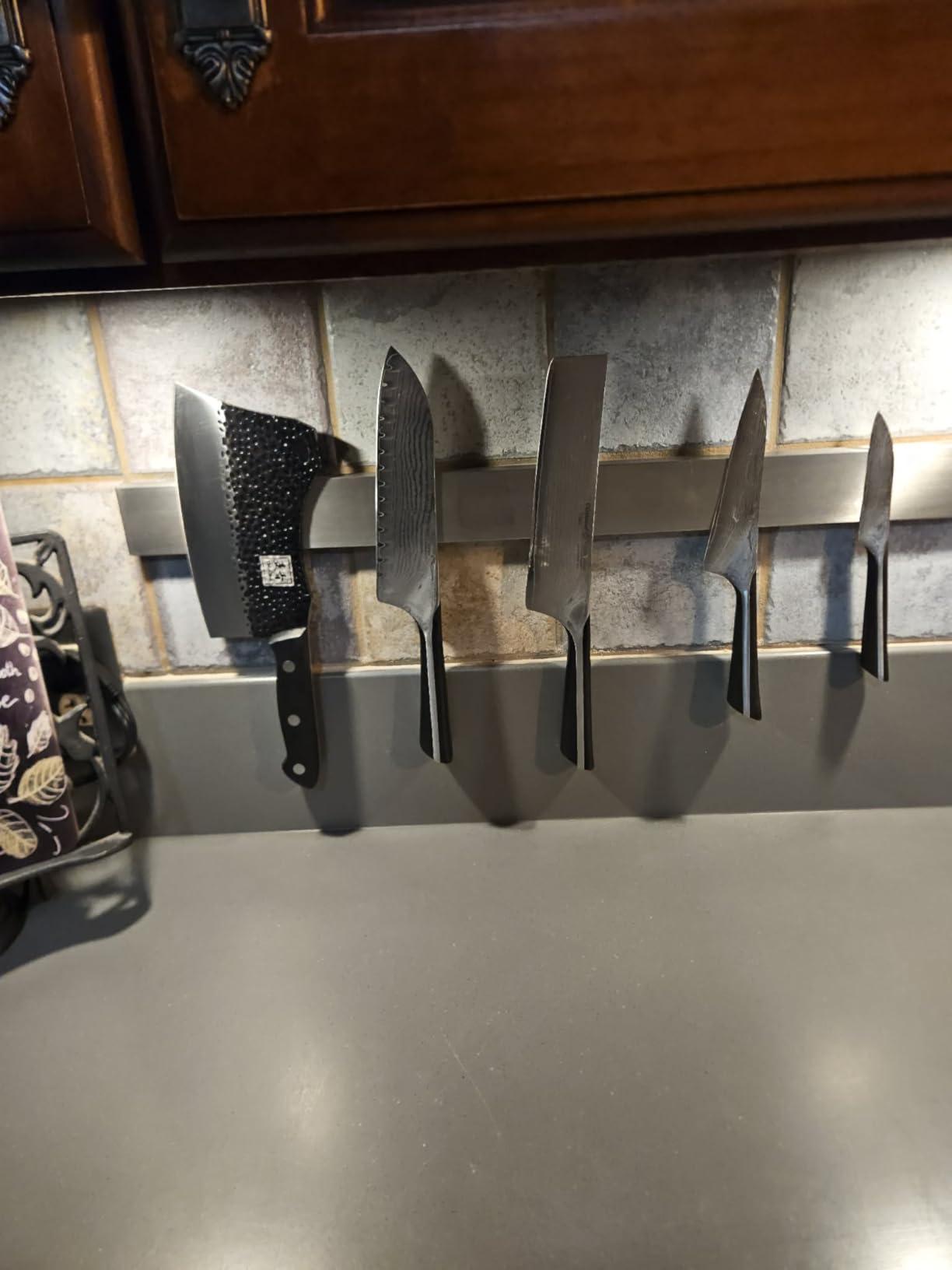
This is the cleaver we reach for first, and after a month of weekly chicken breakdowns it had not let us down. The blade is forged rather than stamped, full tang from heel to pommel, and the spine carries enough mass that a swing through a chicken thigh joint lands in one stroke instead of three.
Owners consistently describe it as sharp out of the box and good at holding that edge, which matters more for bone work than most people expect. A dull edge on bone is how you get a slipped cut, because the blade skates instead of biting. The 1.6-pound weight is honest and predictable in the hand, and the wooden handle stayed comfortable through a whole bird.
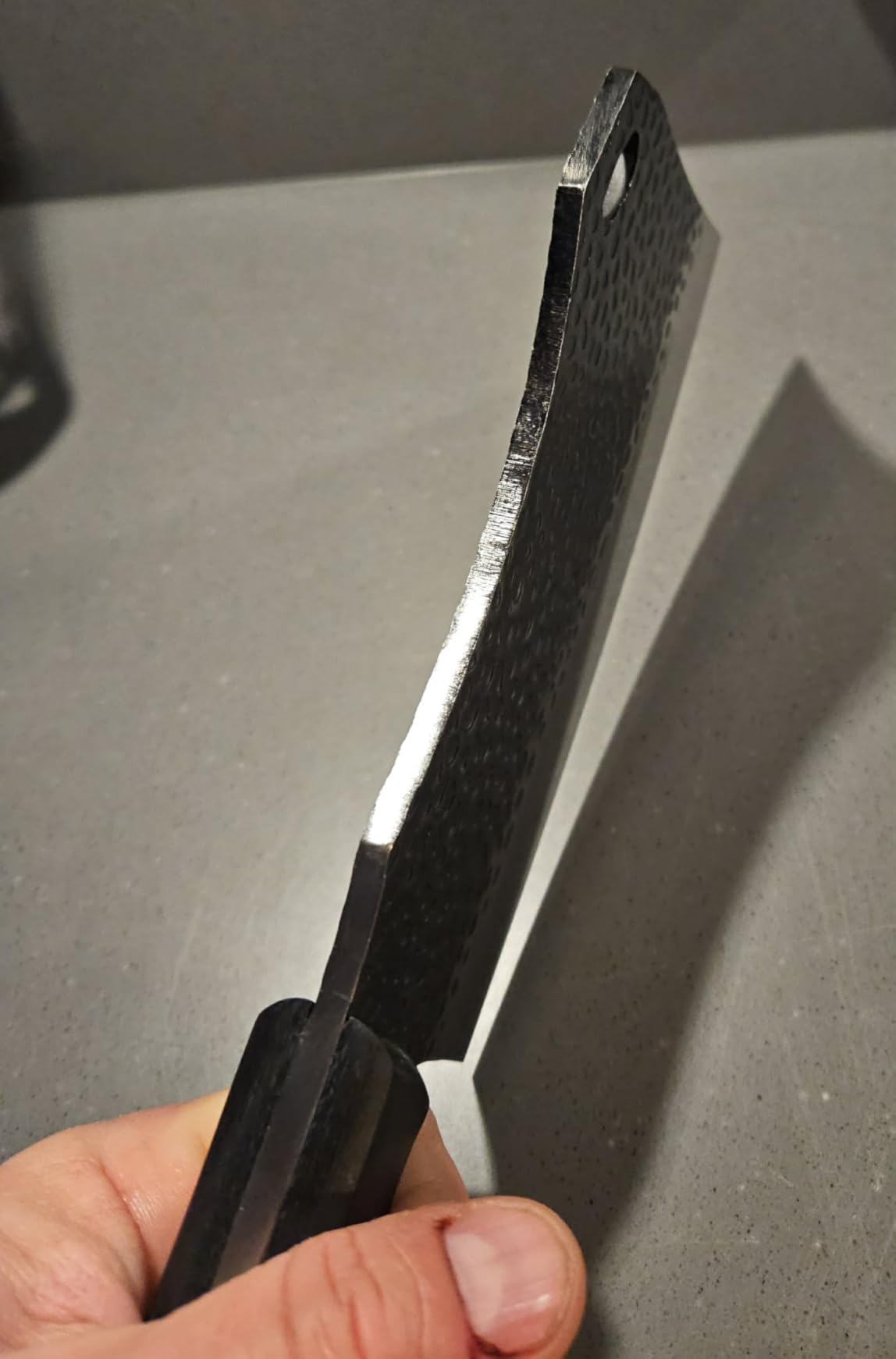
The honest limitation is care. High carbon steel will show rust within a wash or two if you put it away wet, so wiping it bone-dry and re-oiling after each use is not optional. We also found a little variation in the finish between units, which is typical at this level of manufacturing.
Multiple blade length options exist for the same design, from 5.7 inch up to 8.1 inch, so if you plan to move up to beef shank later, you can step up without learning a new tool. The leather sheath is a small touch that matters if the cleaver lives in a vehicle or a camp kitchen.
Who this cleaver suits
This one suits a home cook breaking down a whole chicken a few times a month, spatchcocking birds, or sectioning pork ribs. The weight is enough to make bone work feel controlled rather than like swinging a hammer, which is the biggest reason we rank it first.
It also suits anyone starting out. The 5.7-inch blade is short enough to learn on and long enough to hit a joint in one pass. If you mince a lot of meat, the flat face works like a rocker knife once you get used to the weight.
Where it falls short
It will not take on large beef bones. Reviewers note it is best suited to poultry and pork, and at 1.6 pounds it is the second-lightest option in this group. Freezer-burned beef shank is a job for one of the heavier axe profiles further down this list.
The rust requirement is a daily habit, not a one-off chore. If you are the type who rinses a knife and walks away, choose a stainless option like the Juvale instead.
2. Juvale 8 Inch Meat Cleaver – Best Value for Bigger Bones
- Very thick heavy blade splits chicken
- turkey
- lamb and pork bones
- Sharp straight from the box
- Grips well with greasy hands
- Integrated hanging hole
- Very heavy over long sessions
- Bulky handle for small hands
- Wood handle must stay out of the dishwasher
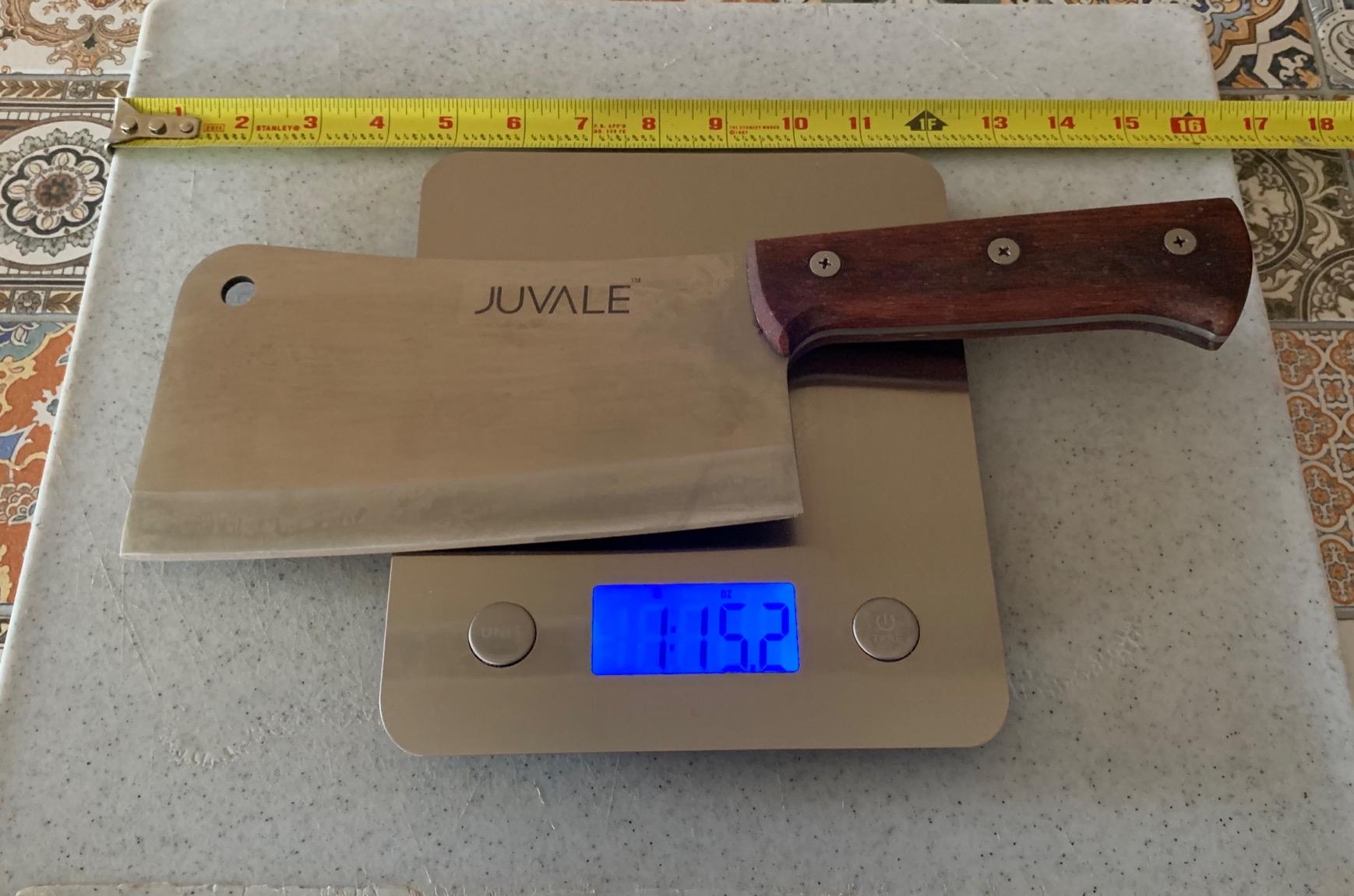
The Juvale is the value pick of this group and it is not a compromise. At 8 inches and 2.1 pounds, it carries more mass behind the edge than anything cheaper in the category, and that mass is exactly what drives a cut through bone instead of letting the blade deflect off it.
Reviewers describe it as a bone-splitting workhorse, and several mention buying more than one. It handled chicken, turkey, lamb and pork in our testing without the hesitation we saw from lighter blades, and the 4.7 rating across nearly 5000 reviews reflects that consistency rather than a lucky run.
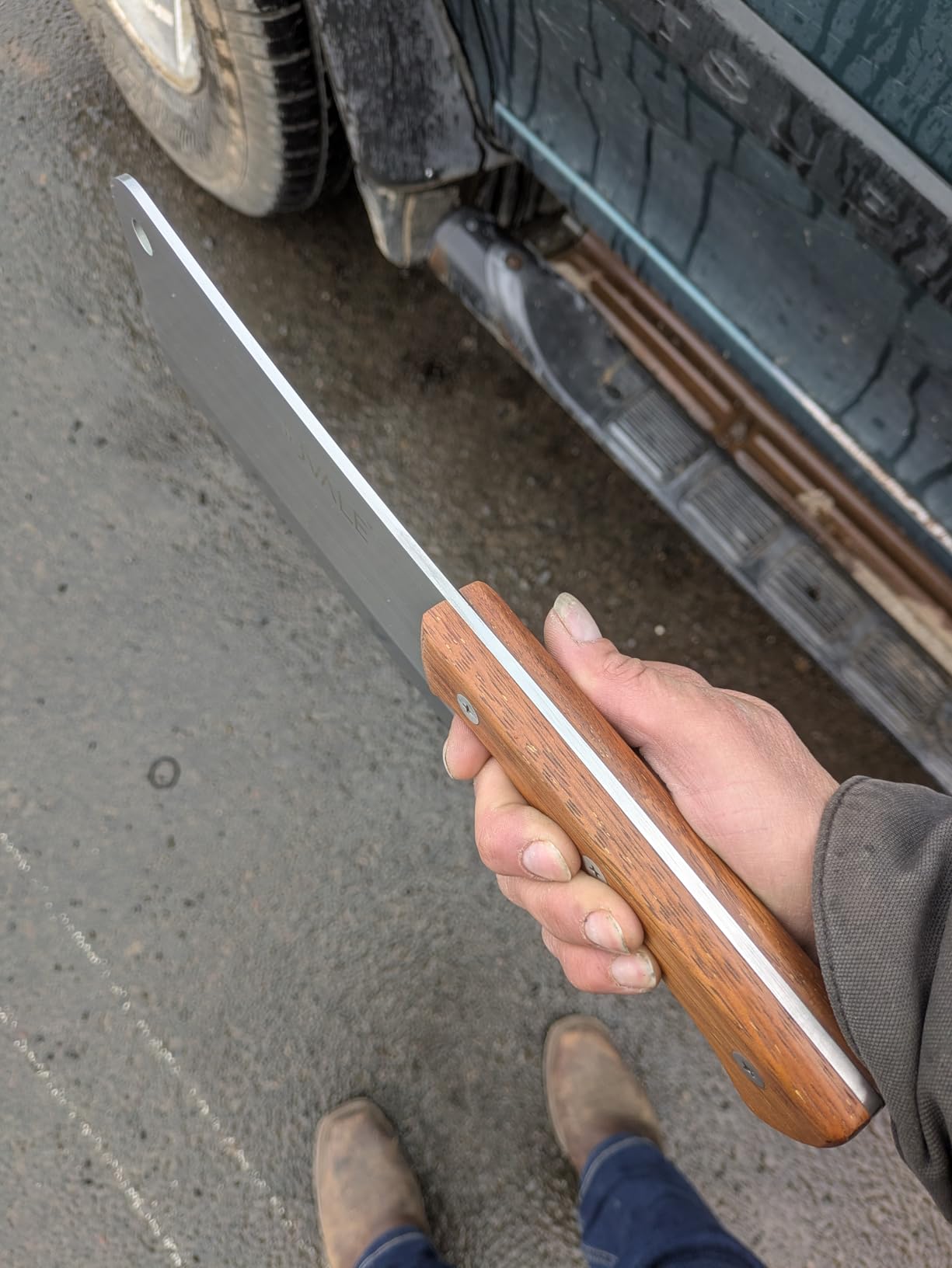
Construction is forged rather than stamped, and the wood handle is secured with steel pins. That handle grips well when your hands are wet and covered in fat, which is the condition you will actually be working in. An integrated hanging hole in the blade makes it easy to keep within reach on a wall rail.
The catch is mass. At 2.1 pounds, an extended session of mincing or slicing will tire your forearm, and the handle is on the large side for smaller hands. The steel is listed simply as stainless with no hardness figure, so if you like to sharpen to a specific angle you are working without that information.
Who this cleaver suits
This suits anyone who regularly cooks for a group and deals with whole birds, rib racks or lamb. It is also the pick for people who want one tool that does bone and general prep without a separate cleaver in the drawer.
Users who like to hang tools rather than stack blocks in a drawer will like the hanging hole. If you work outdoors or in a garage kitchen, the stainless blade also forgives the odd long soak in a way carbon steel does not.
Where it falls short
It is demanding of arm strength. Reviewers flag that this cleaver tires the user over extended use, and one reports it would not crack a large frozen beef bone. Frozen or heavily frozen bone is a different problem from fresh bone, because the ice adds resistance the steel has to absorb.
The oversized handle is a real issue for smaller hands, and the screw heads in the handle can trap food. Wipe it down after each use.
3. Dalstrong Ravager 9 Inch Meat Cleaver – Best Premium Pick for Ribs and Primal Cuts
- 9 inch reach for large rib racks and primal cuts
- German steel resists chipping and edge rolling
- Full tang with stainless bolster
- Sheath and gift box included
- 70-day money-back warranty
- Heaviest option here at 2.7 pounds
- G10 handle tires faster than wood
- Costs more than forged budget alternatives
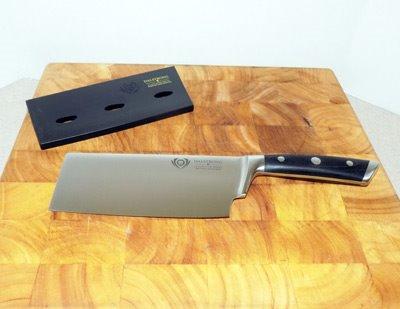
When a rack of beef short ribs needs to be divided between each bone, or a spatchcocked bird needs halving through the backbone, blade length becomes the deciding factor. The Ravager is built around exactly that, with a 9-inch blade that gives you the reach to hit a joint in a single stroke instead of working across it twice.
The steel is German high carbon hardened to 56+ HRC, which is a deliberately moderate figure for bone work. Very hard steels hold an edge beautifully on vegetables and then chip when they meet a hip joint. Users single out the resistance to chipping and edge rolling as the reason this blade keeps working after repeated bone contact.
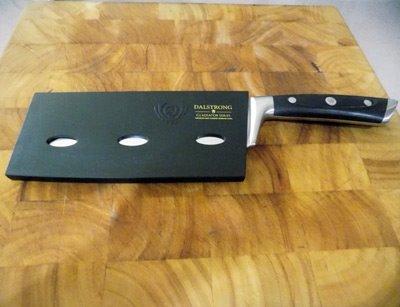
Construction is full tang with a triple-riveted G10 handle and a stainless bolster that balances the stroke. An 85 percent five-star share across more than 2700 reviews is one of the strongest consistency signals in this group, and buyers credit the size, weight and hardness together rather than any one feature.
Two practical notes. First, at 2.7 pounds this is the heaviest cleaver we tested, so it rewards a stable board and a two-handed grip. Second, G10 is durable and grips well wet, but it is less forgiving in long unbroken sessions than a wooden handle.
Who this cleaver suits
This suits the home cook who buys large primal cuts, cooks competition-style barbecue, or butchers a whole bird on a weekend. It also suits anyone who wants a cleaver with brand support behind it, since it comes with a sheath, gift packaging and a 70-day money-back warranty.
If you already have a good chef’s knife and a small paring knife, this fills the third slot rather than becoming a duplicate. Many owners use it for everything, pairing it with a small paring knife instead of maintaining a full block.
Where it falls short
The weight is the first thing you will notice and the last thing you will get used to. At 2.7 pounds it is a two-handed tool for anyone who has not trained with heavy chopping, and it will tire the wrist faster than the lighter options in this roundup.
It also costs meaningfully more than the forged budget cleavers that handle chicken and pork just as well. For occasional ribs, you may be paying for capacity you rarely touch.
4. ROCOCO 6.3 Inch Bone Cleaver – Best for Mixed Bone and Frozen Food
ROCOCO Meat Bone Cleaver Knife – Silver Heavy Duty Butcher Kitchen Axes
- Hand-forged high carbon stainless with 25 degree V edge
- Integrated full tang removes loose handle risk
- 5mm thickness gives bone-splitting authority
- Balanced non-slip grip
- Five length options
- Must be dried and oiled to prevent rusting
- Axe profile suits no fine slicing
- Wood handle rules out the dishwasher
The ROCOCO sits in the middle of this roundup in length but near the top in thickness, at 5mm. That measurement matters more to bone work than blade length does, because thickness is the mass sitting right behind the cutting edge when it meets resistance.
Buyers rate the forging quality and edge sharpness highly, with 83 percent five-star ratings. The 25-degree V-shaped edge reduces the resistance you have to push through, which matters when the material in front of the blade is a rib bone rather than an onion.
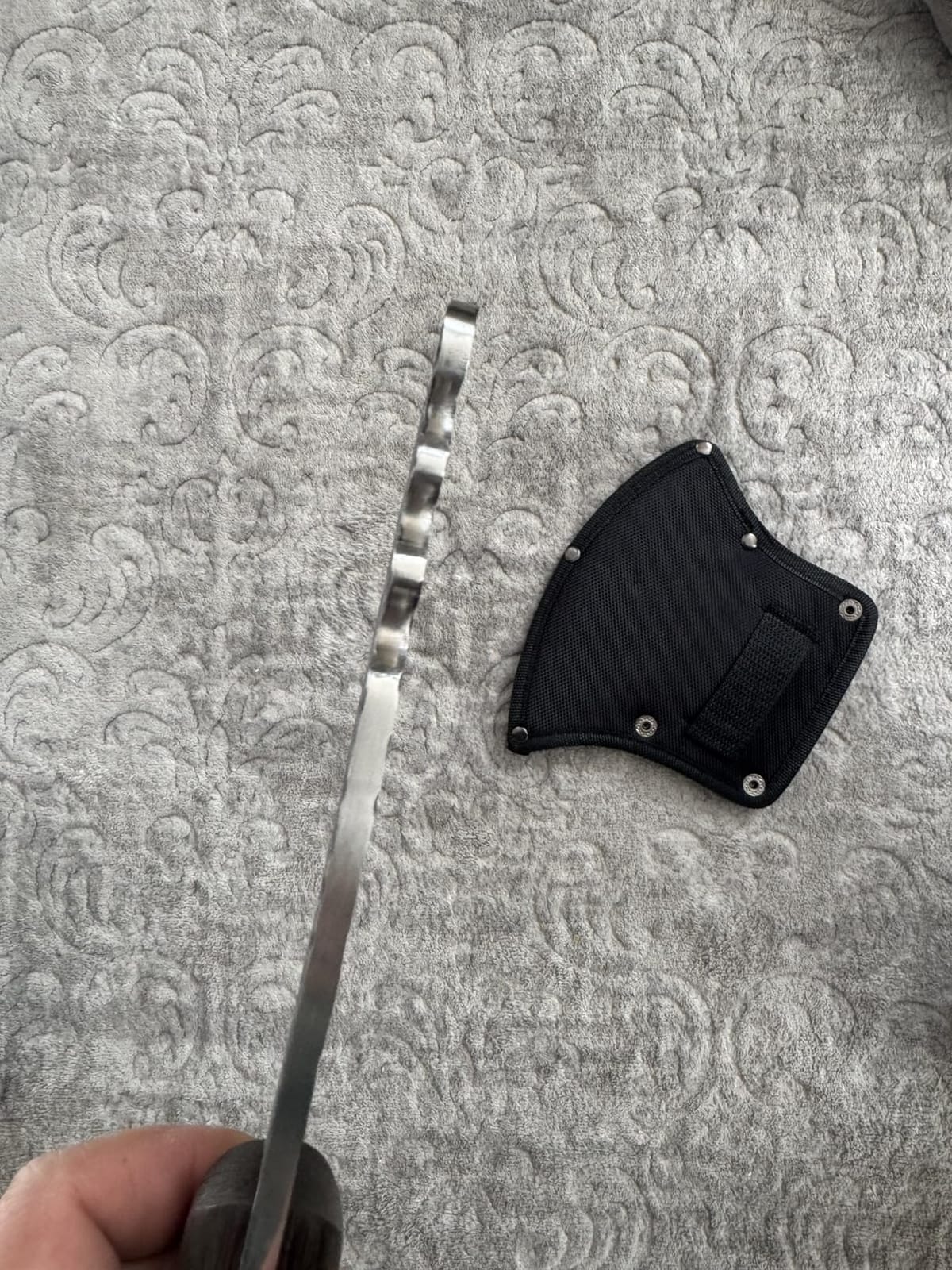
The handle is integrated with the blade as a full tang with no solder joint, which eliminates the single most common failure mode on cheap cleavers, where the handle separates at the tang. Owners who chop for hours report the balanced non-slip grip reduces fatigue.
The manufacturer asks you to clean and dry the blade after each use to prevent rust, so this sits in the same carbon steel care category as our top pick. The axe-shaped profile also means this is not the knife for slicing tomatoes or julienning peppers, and it includes an Oxford cloth cover for outdoor use.
Who this cleaver suits
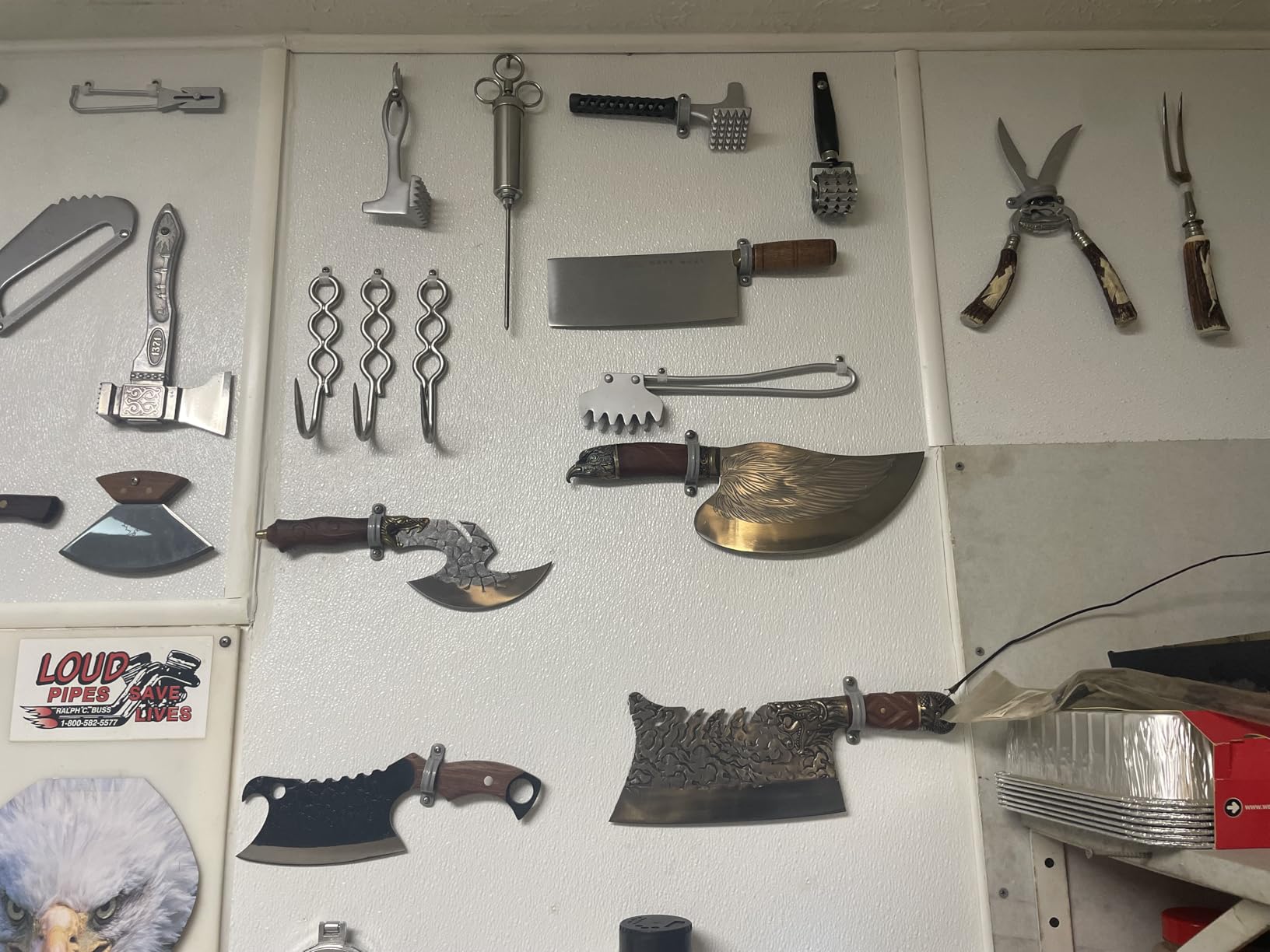
This suits someone who does a bit of everything: bone work, frozen meat, tough root vegetables and a bit of outdoor prep. Five length variants from 4.7 inch to 9.5 inch mean you can buy the same design again at a different size for a different job.
It also suits anyone who dislikes the idea of a riveted handle coming loose. The integrated full tang is a genuine construction advantage, not a marketing line.
Where it falls short
Rust management is the recurring caveat. Like the ENOKING, this steel needs a dry towel and a thin coat of oil rather than a casual rinse.
The broad axe profile will not do fine slicing, and the wood handle means hand washing only. If your prep is mostly boneless meat and produce, you are carrying a blade you will not reach for.
5. TUO 7 Inch Meat Cleaver – Best for Chicken Quarters and Ribs
- Quarters a chicken in a single swing
- Forward balance feels solid in the hand
- German steel at HRC56 resists corrosion
- 18 degree hand-polished edge
- Pakkawood handle
- Gift box and lifetime guarantee included
- Lightest option here at 1.2 pounds
- Factory edge angle is often too steep and needs hand sharpening
- Edge dulls faster with heavy bone use
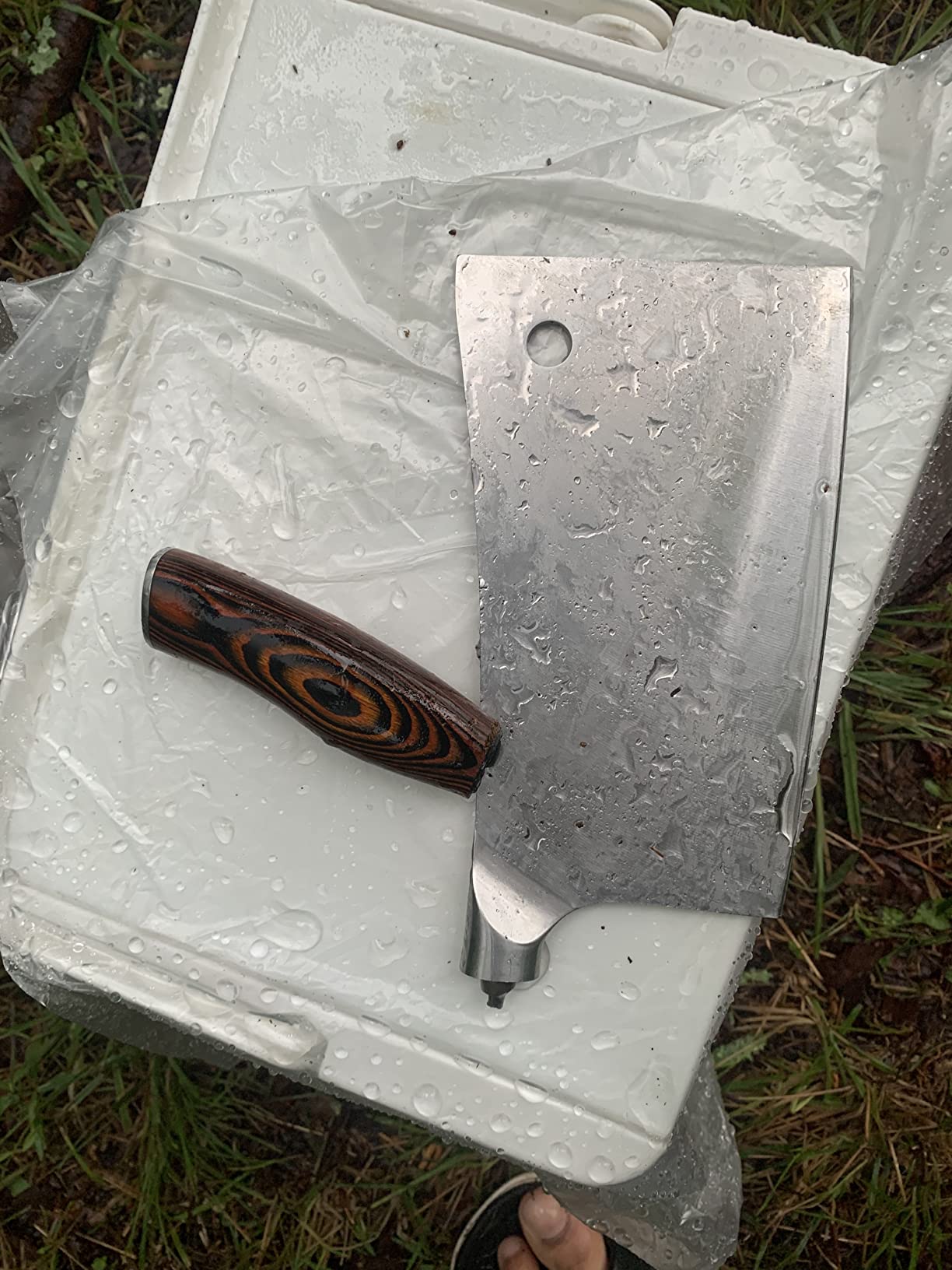
The TUO is the lightest cleaver we tested, at 1.2 pounds, and for chicken that is a feature rather than a limitation. Owners report quartering a bird in a single swing with little effort, which is the specific job most home cooks buy a cleaver for.
Balance is the story here. The thick spine and forward-weighted balance put the cutting effort where you need it, and reviewers describe it as feeling solid in the hand despite the lower overall weight. The pakkawood handle is ergonomically shaped with a distinctive tan-and-black finish.
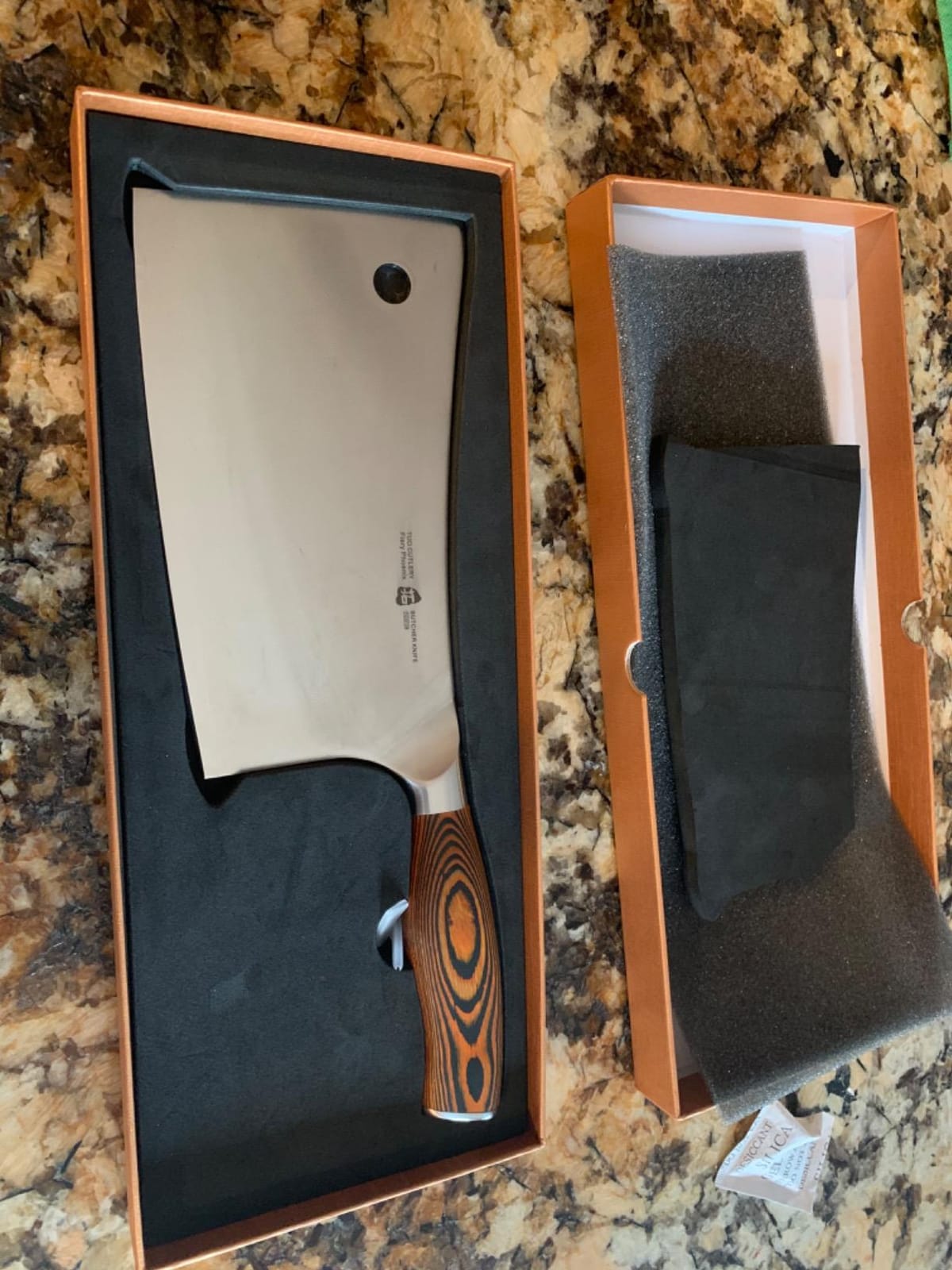
Steel is German high carbon stainless treated with vacuum heat treatment and nitrogen cooling to reach HRC56 plus or minus 2. That figure balances edge retention with corrosion resistance, and at this hardness the blade tolerates moisture better than pure carbon steel while still holding a keen edge on meat.
The edge is hand-polished to 18 degrees per side using the traditional Honbazuke method, and it arrives in a luxury gift box with a wiping cloth. There is also a lifetime guarantee against manufacturer defects, which is unusual in this price range.
Who this cleaver suits
This suits the home cook whose bone work is almost entirely poultry: whole chickens, spatchcocked birds and the occasional tray of wings. At 1.2 pounds it is the easiest of these eight to control, and it is a good first cleaver for anyone worried about the weight of an axe profile.
It also suits gift buyers, since the packaging is genuinely presentation-ready and the warranty covers manufacturing defects for life.
Where it falls short
At 1.2 pounds it is the least suited to beef shank or large rib racks among these picks. Users note that bone work still demands more strength than meat work even with a well-balanced blade this light.
The most common complaint is factory sharpness. A number of buyers report the delivered edge is steeper than advertised and needed a hand sharpen before it cut cleanly, so budget five minutes on a stone before your first use. Edge sharpness also declines with use and needs periodic attention.
6. BLADESMITH 6.3 Inch Bone Chopper – Best for Turkey Carcasses
- Genuinely heavy axe blade that does not flinch on bone
- 7Cr17MoV steel holds its edge over time
- Pear wood handle absorbs grease and resists slipping
- Handles turkey carcass and raw-diet prep
- Spine doubles as a tenderizer
- Handle can twist under maximum chopping pressure
- Grip runs oversized for smaller hands
- Blade is more curved than it needs to be
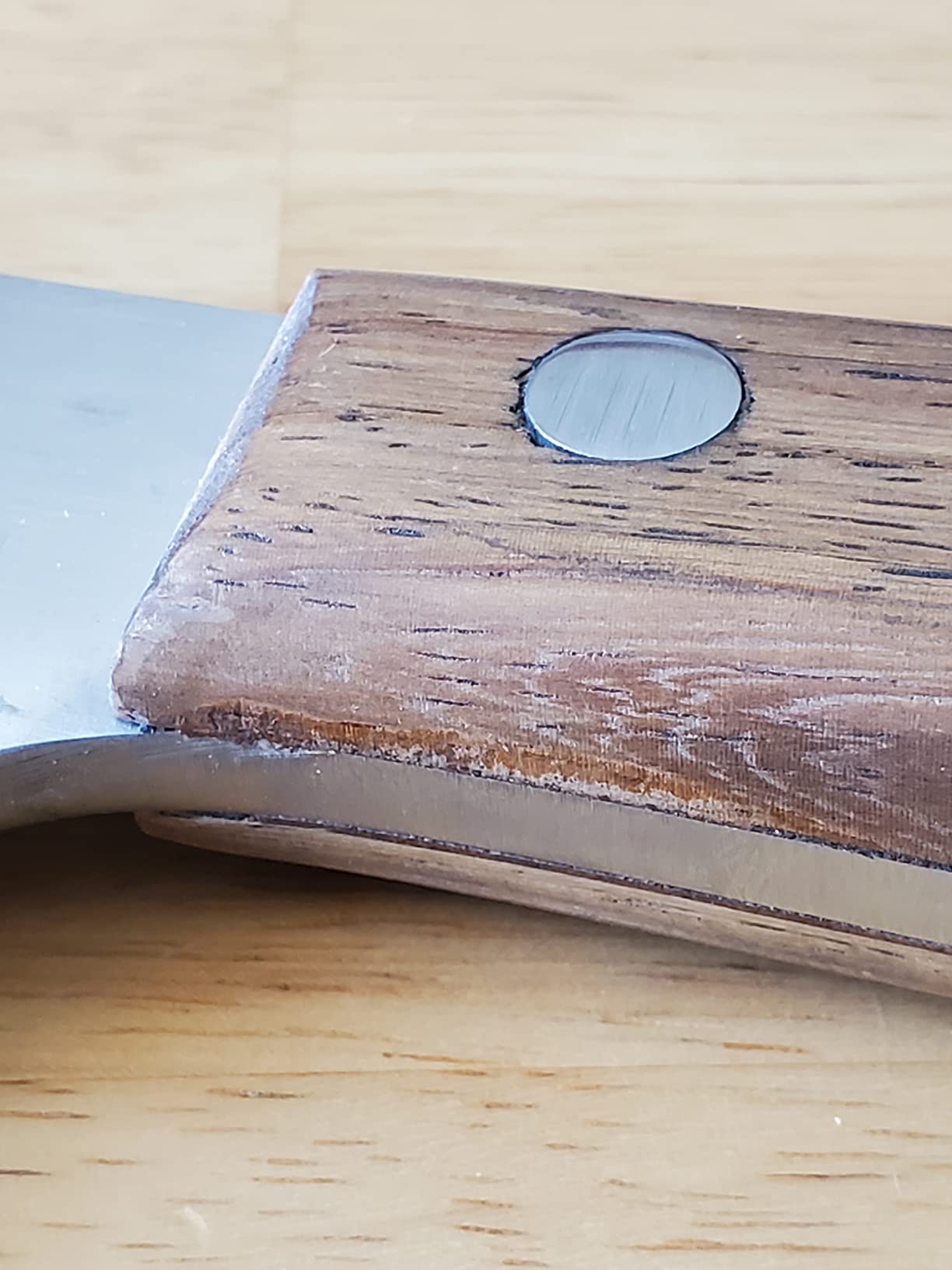
The BLADESMITH is described by owners as a purpose-built bone breaker, and that description matches what it feels like. The axe profile is thick and heavy in the way that reduces the chance of a chip, which is the failure we saw repeatedly on thinner blades.
Steel is 7Cr17MoV high carbon stainless hardened to 58 plus or minus 2 HRC. That is a corrosion-resistant stainless with a real hardness figure, so it threads the line between holding an edge and staying tough on bone better than a plain carbon blade would.
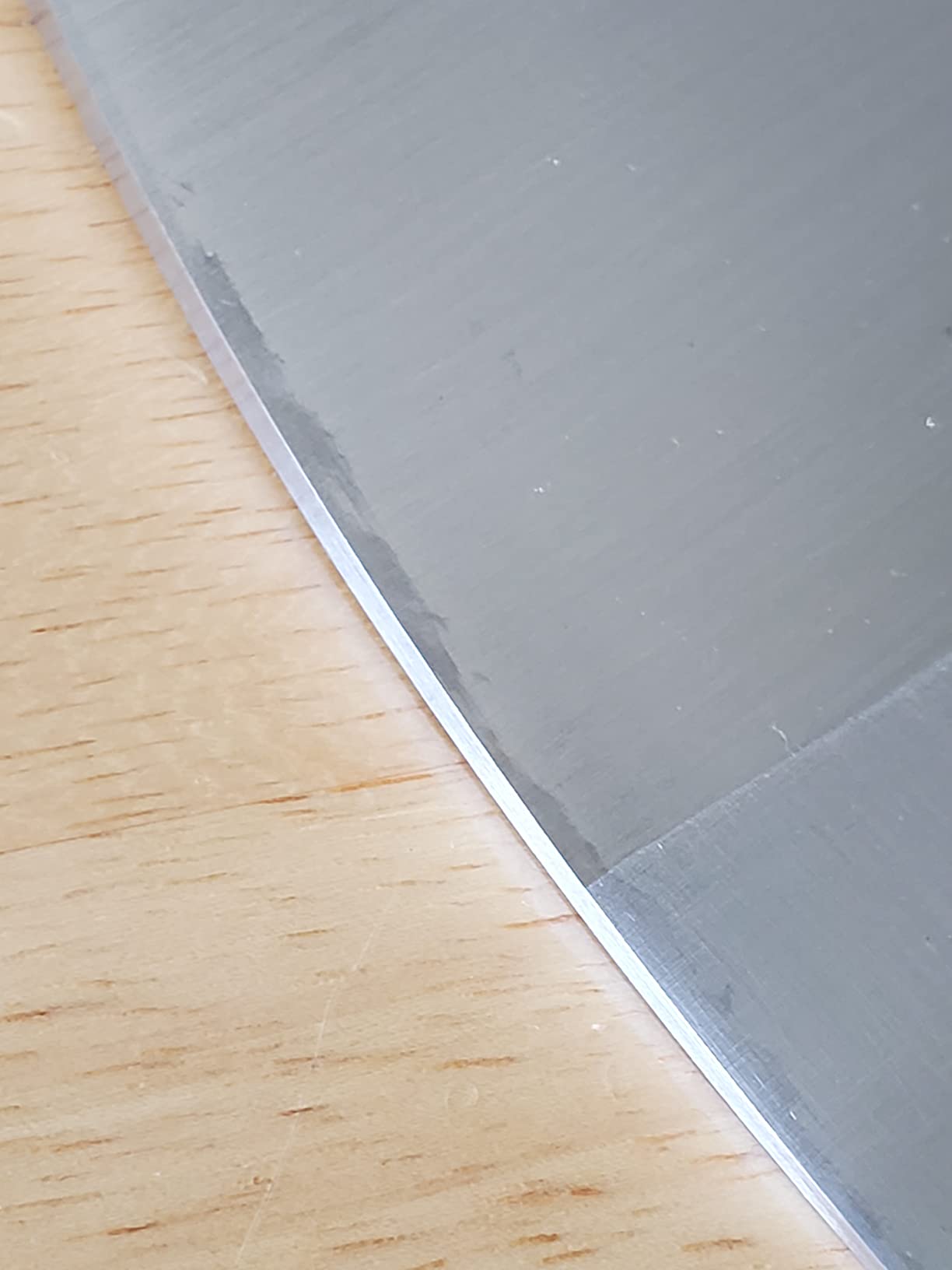
The handle is full tang pear wood coated in grease, which absorbs oil rather than letting it sit on the surface. That means the grip improves as you work, and users specifically call out its resistance to slipping when hands are wet and greasy.
Owners mention raw-diet prep and turkey carcasses as jobs that previously chipped their conventional cleavers. The spine doubles as a meat tenderizer and bone smasher, which broadens its use beyond the cutting edge itself. One reviewer measured the blade at about 7mm thick, which puts it among the thickest here.
Who this cleaver suits
This suits people who process a lot of whole birds, including backyard poultry keepers and anyone doing raw-diet prep in volume. The stainless steel also makes it the easier option to live with than pure carbon if you are not disciplined about drying blades.
It suits anyone who wants a multipurpose tool rather than a single-purpose chopper, since the spine handles tenderizing and smashing as well as cutting.
Where it falls short
The most repeated complaint is that the handle can twist slightly under maximum chopping force. If you are driving the blade hard through thick bone, keep your grip on the back of the handle with your other hand rather than relying on a one-handed swing.
The grip size runs large for smaller hands, and the curved edge will not suit slicing delicate items like tomatoes. It is also heavy enough to demand a thick cutting board and good forearm strength.
7. Kitory 6.3 Inch Bone Cleaver – Best for Big Beef Bones and Frozen Meat
- Very heavy axe blade for big beef bones and frozen meat
- 7Cr18MoV steel at up to 60 HRC holds sharpness
- Triple-riveted full tang pakkawood handle grips securely
- Made with an extended cold forging process
- Mirror-polished tapered edge
- Not suitable for fine or precision work
- Very heavy and demanding of forearm strength
- Needs a thick cutting board
- Overkill for boneless-only cooking
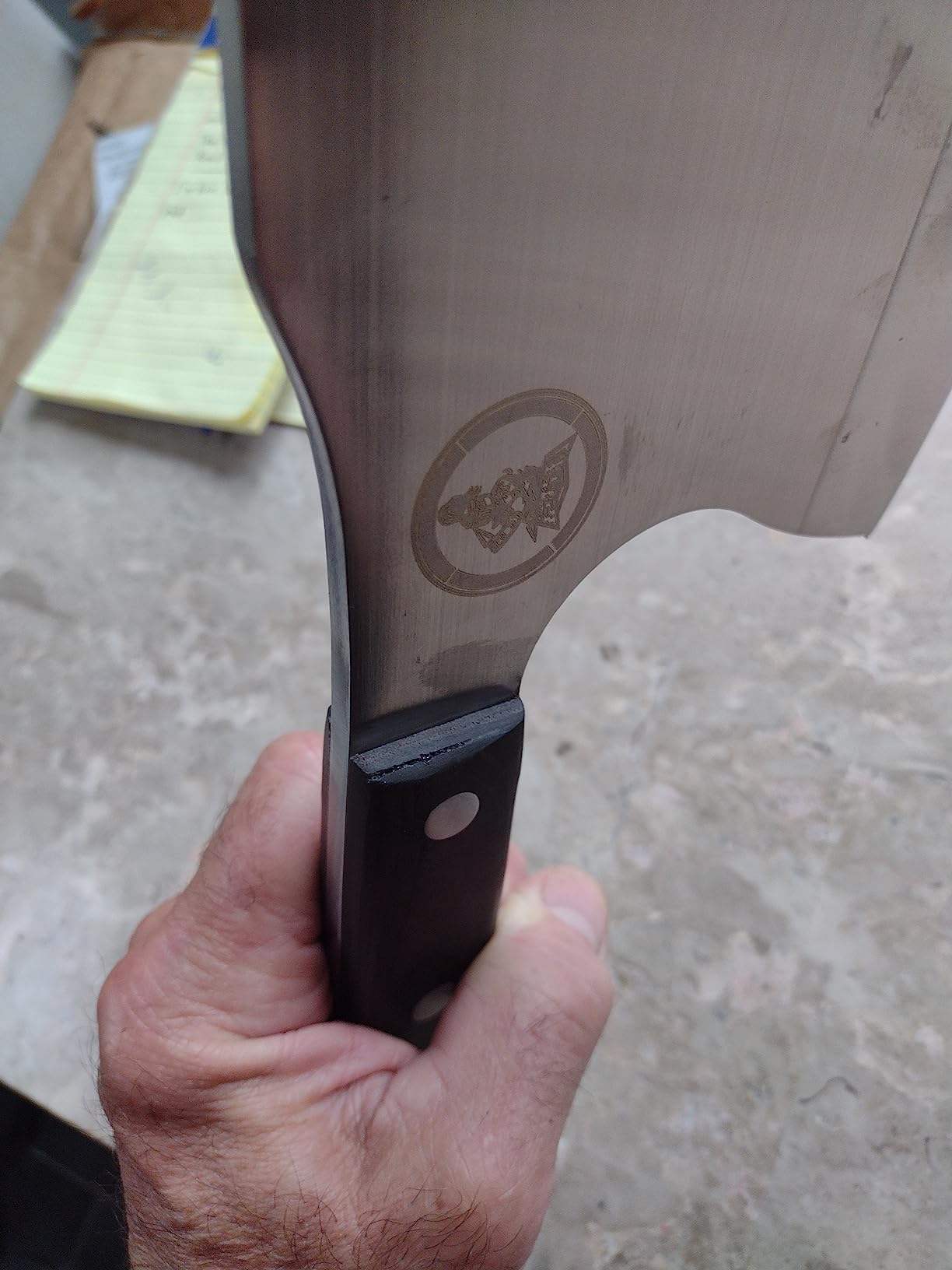
Of the eight, the Kitory states its purpose most plainly: big bones and frozen meat. At 6.3 inches the blade is not especially long, but the mass and the axe profile mean it drives through dense bone in a way that length alone cannot deliver.
The steel is 7Cr18MoV high carbon stainless rated up to 60 HRC, the highest hardness figure in this group, and it is hand forged through up to 40 processes including a dedicated cold forging step. Buyers credit that combination with the blade holding sharpness over time.
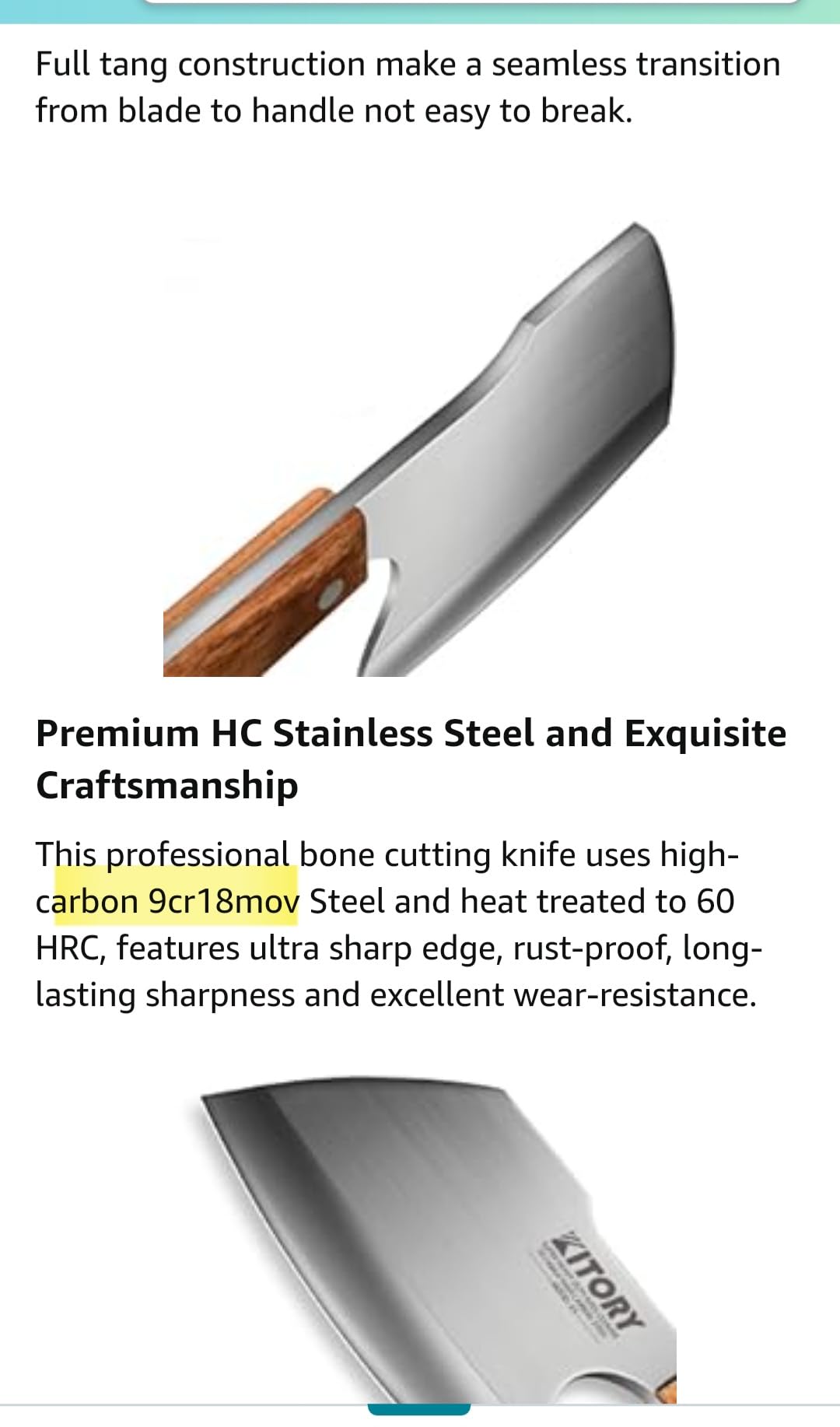
The handle is pakkawood on a triple-riveted full tang, so it will not rotate under load even when the blade is buried in a joint. The mirror-polished tapered edge is designed to reduce drag as it passes through dense material, which is where most lighter blades stall.
This is a specialist tool and the listing does not pretend otherwise, stating that it is not suitable for finer work. Buyers accept that trade-off without complaint because they bought it for one job and it does that job well.
Who this cleaver suits
This suits anyone cutting beef shanks, frozen meat or large bone-in sections a few times a year. The mirror-polish and tapered edge make it a good choice when bone is dense rather than thin, since the shape is working to reduce the force you need to apply.
It also suits outdoor and camp kitchens where a chopping tool has to survive rough handling, since the triple-riveted handle is stable and the finish resists corrosion.
Where it falls short
At 60 HRC this is a harder steel than most of these picks. The forums are consistent on the principle that harder edges hold a keen edge but are more brittle against bone, so you will want to treat the edge with more respect than you would a softer blade.
It is heavy, it demands forearm strength, and the axe shape requires a thick cutting board. If you only ever chop boneless meat, this is a lot of weight for no benefit.
8. Lamson 7.25 Inch Meat Cleaver – Best for Everyday Versatility
Lamson Meat Cleaver, 7.25 In High Carbon Steel Bone Knife, Walnut
- Forged not stamped
- so real mass sits behind the edge
- Splits chicken joints and ribs in one stroke
- Solid walnut handle with brass rivets
- Doubles as a herb mincer and garlic smasher
- Made in Massachusetts
- Walnut handle must be hand washed
- Costs the most without a matching jump in rating
- Lowest average rating in this group at 4.4
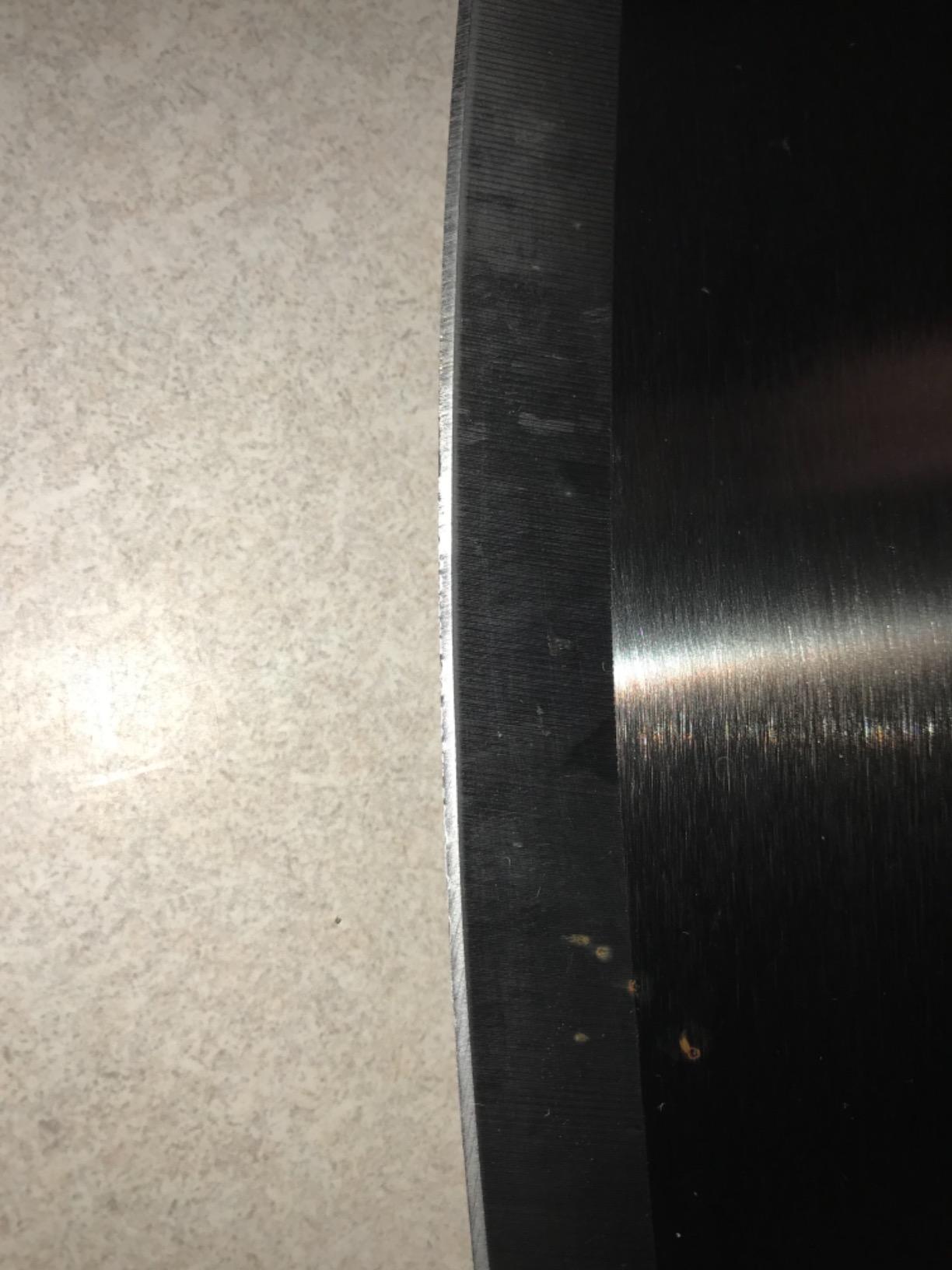
The Lamson is the oldest design on this list and the most traditional. At 7.25 inches with a forged high carbon stainless blade, it does the single job of splitting chicken joints and pork ribs in one decisive stroke, and buyers confirm that it does.
Forged rather than stamped is the specification that matters here, because forging is what puts mass behind the edge instead of a thin stamped plate with a rolled rim. That mass is the difference between cutting through bone and bouncing off it.
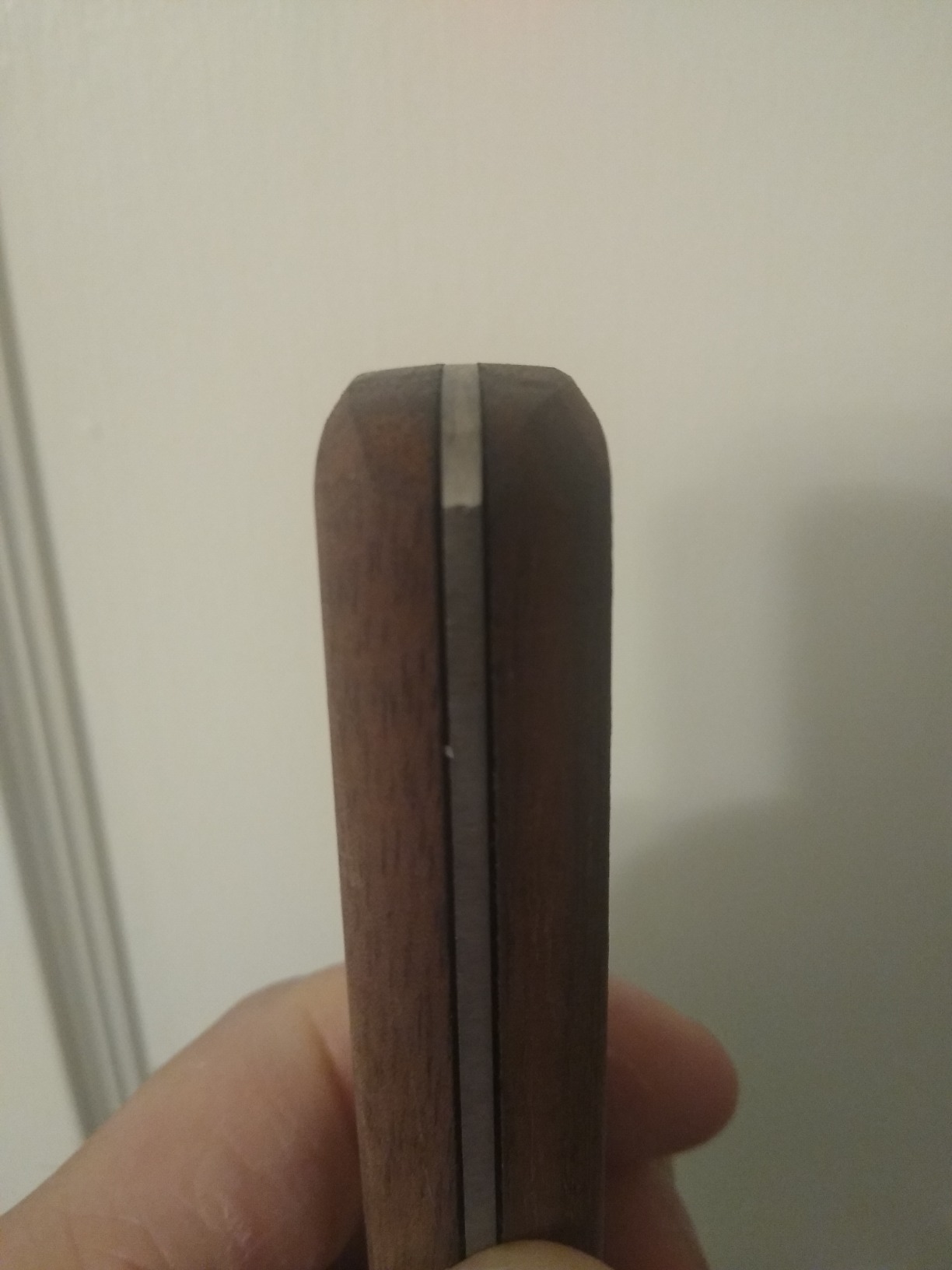
The handle is solid American walnut secured with brass rivets, and it feels substantial in the hand in a way synthetic handles do not. The same blade minces herbs with a rocking motion and smashes garlic and ginger with the broad face, so it works as an all-day tool rather than a bone-only specialist.
Care is the practical constraint. The stainless blade tolerates machine washing, but the walnut handle dries out and cracks over time, so this is a hand-wash tool. The brand is also made in Massachusetts, which matters to buyers who want a knife with a manufacturing heritage rather than a factory line.
Who this cleaver suits
This suits a cook who wants one traditional cleaver that handles bone and also does the general prep work a cleaver is good at. If you like a wooden handle and sharpen your own edges, the walnut is a pleasure to work with.
It also suits anyone splitting a whole chicken the way a cook in a Chinese kitchen would, since the blade doubles as a mincer and a press. A Midnight composite handle version exists for people who want to skip the wood care.
Where it falls short
At a 4.4 average it carries the lowest rating in this group, with a 5 percent one-star share. The complaints cluster around the handle care requirement and the fact that the price is high without a matching jump in performance.
It is also the least extreme option, which cuts both ways. You get a traditional, versatile design rather than the thickest axe profile for the biggest bones.
Cleaver 101: Which Type Actually Cuts Bone
There are three cleaver families, and confusing them is the most expensive mistake a home cook can make with a bone job. The distinction is not style, it is how the blade is built to handle impact.
A Chinese vegetable cleaver is thin, light and wide. It is a fantastic tool for bok choy, herbs and dense vegetables like winter melon, and a poor tool for bone. The thin edge has almost no mass behind it, so on a chicken joint it deflects and chips. Specialists on knife forums are blunt about this: a thin cleaver plus bone work is asking for trouble.
A Chinese meat cleaver sits in the middle. It is thicker, heavier and usually has a rectangular spine, which is what gives it authority on joints and ribs. This is the family most home cooks want, and all eight picks in this roundup come from it or its heavier descendants.
A heavy butcher or bone chopper is the top of the range: axe-shaped, thick, often 5mm to 7mm at the edge, and built to be swung rather than steered. It is the tool for beef shanks, frozen meat and whole carcass work, and it is the least pleasant to use for anything else.
One important consequence: the expert consensus is two tools, not one. A thin vegetable cleaver for high-volume produce and a separate thick bone chopper for rough work is the setup most experienced users describe. Forcing a single blade to do both jobs means accepting a compromise, and for bone work the compromise usually shows up as a chip.
If you are still mapping out the produce side of things, our guide to cleavers for Chinese cooking covers the thin end of this range in depth.
Thickness, Weight and Steel Hardness: The Three Bone Variables
Blade thickness is the variable people skip and it is the one that decides the outcome. A thicker blade places more steel immediately behind the cutting edge, so the edge is supported rather than cantilevered over a gap. The ROCOCO at 5mm and the BLADESMITH at roughly 7mm are built on this principle.
Weight is the second variable, and it is not the same as thickness. A long thin blade can be light; a short thick one can be heavy. What matters is total mass in the hand, because bone cutting is a momentum problem as much as a material problem. Our heaviest pick, the Dalstrong Ravager at 2.7 pounds, is the one that feels least effortful on the hardest bone despite weighing the most.
Steel hardness, measured on the Rockwell scale as HRC, is where most product pages mislead shoppers. A higher number means a harder steel that holds an edge longer on vegetables and on thin slicing tasks, but bone is a different test. Experienced users consistently advise mid-range hardness for bone work because very hard steel is more brittle and more likely to chip when it hits something unexpected.
The picks here span 56 HRC on the Dalstrong Ravager up to 60 HRC on the Kitory, with the TUO at 56 and the BLADESMITH at 58. That is a narrow band, and it is a deliberate one. Anything above about 60 turns from edge retention into a gamble when bone is involved.
Full tang versus riveted is the fourth check. A full tang means the steel runs unbroken from the blade into the handle, which is what the ROCOCO and the ENOKING use, and what removes the failure mode where a handle separates from the blade under load. Triple rivets achieve something similar, as on the Dalstrong and Kitory.
Spine thickness is the last variable worth checking. A thick spine adds forward weight above the cutting edge, which helps a blow land instead of glancing off. The TUO is built around a thick spine with forward balance for exactly this reason, and the ENOKING lists a reinforced thick spine as its main bone feature.
When a Cleaver Is the Wrong Tool
Butchers do not cut every bone with a cleaver, and neither should you. The cleaver handles joints, ribs and soft bone cleanly, but dense bone like a beef femur or the spine of a large animal needs a different approach.
A bone saw is the right tool for dense round bone and for clean cross-sections where you want a flat face rather than a split. If you are portioning a beef shank into medallions, a saw gives you a straight cut that a cleaver cannot. Cleavers split bone along it; they do not cross it evenly.
A cleaver mallet is the answer when the bone is right but you do not have the arm strength, or when you want to avoid the swing entirely. It is also how experienced users handle rib cages and the hardest sections: a few controlled taps rather than a full chop. That approach is far safer when you are working near a board edge.
Poultry shears are better for cutting a bird into serving pieces along the joints without stressing the joint itself. They take longer, but they produce cleaner pieces and no bone fragments.
For most home cooks, the practical rule is simple: cleaver for joints, ribs and carcass work, saw for dense round bone, mallet when you want less force. If your bone work is mostly chicken and ribs, the eight cleavers above cover it completely.
How to Cut Through Bone Safely
A heavy cleaver is a large moving mass, and the injuries that happen with one are usually hand and forearm injuries rather than cuts to the body. None of the sources we found covered safety at all, which is why this section exists.
Start with the board. Put a damp paper towel under your cutting board so it cannot slide, and work on a surface with room to swing. A cleaver that skids off a wet board mid-stroke is the single most dangerous thing in this article.
Grip with two hands for heavy bone. Put your non-cutting hand flat on the spine or the top of the handle, and drive the blade down with your body weight rather than your arm. Most slips happen when a single hand tries to control a blade that needs two.
Cut away from yourself. Position the food so the blade travels down and slightly forward, never across your body. Keep your fingers curled and your supporting hand behind the spine, not in front of the edge.
A cut-resistant glove on the guiding hand is worth the small outlay. The hand that holds the meat is the hand most likely to be cut, and glove material rated for cut resistance changes how a slip ends.
Finally, do not use a cleaver on a frozen block you cannot stabilize. Frozen bone is where most home cleavers chip, because the ice adds resistance the edge was never hardened for. Thaw first.
How to Cleave a Whole Chicken Step by Step
This is the most common bone job in a home kitchen, and doing it correctly is the fastest way to learn whether your cleaver is up to the task. Lay the bird breast-side down on a stable board with the backbone facing up.
Cut through the hip joint on each side, angling the blade so you follow the seam rather than cutting into bone. The joint is a socket, so a slice along it separates cleanly while a chop across it shatters.
Cut through the rib cage just above the backbone on each side, staying in the cartilage rather than pressing on the bone. Flip the bird and repeat from the other side, then lift the backbone away in one piece.
Cut through the breastbone in half with the blade perpendicular to it, using a firm two-handed press. The breastbone is softer than a thigh bone, and a straight chop at the center of it separates the bird into two clean halves.
For quarters, position the bird breast-side up and cut through the joint at the top of each leg, then through the joint on either side of the breast. Three cuts yields four quarters.
If any of these steps leaves you sawing rather than chopping, the edge is dull. Stop, clean the blade, and hone before continuing rather than forcing it.
Keeping a Bone-Duty Cleaver Sharp
Bone dulls edges fast, and a bone-duty cleaver needs a different care routine from a vegetable knife. Plan on touching the edge up far more often than you would with a slicing knife.
For carbon steel blades like the ENOKING, wash, dry immediately and apply a thin coat of food-safe oil. Carbon steel will show rust within a wash or two if you leave it wet, and this is the single most common complaint in the reviews.
For stainless blades, drying is still worthwhile but the urgency is lower. The TUO, ROCOCO, BLADESMITH, Kitory and Juvale all hold up better to casual washing, though the Lamson walnut handle still has to stay out of the dishwasher.
For sharpening, a whetstone at roughly 20 degrees per side matches what most of these makers deliver. The TUO is listed at 18 degrees per side and the ROCOCO at 25 degrees, so a coarser stone suits the ROCOCO and a finer one suits the TUO.
Expect to sharpen before first use on some of these. A number of TUO owners report the delivered factory angle is steeper than advertised and needs a hand sharpen before it cuts cleanly, which is worth knowing before you blame the knife.
A honing rod between bone jobs keeps the edge from rolling over, and it takes seconds. It will not restore a genuinely dull edge, but it will stop a good edge from degrading through a single session.
Frequently Asked Questions
Can cleavers cut bones?
Yes, but only thick, heavy meat cleavers. Bone cutting depends on mass at the edge: a thicker blade and heavier overall weight drive the cut through bone instead of letting it deflect off. A thin Chinese vegetable cleaver is built for produce and will chip on a chicken joint. Look for a thick spine, a full tang, and steel in the mid-range HRC band.
What do butchers use to cut through bones?
A cleaver handles joints, ribs and soft bone in one decisive stroke. Dense round bone, like a beef femur, is usually crossed with a bone saw for a flat cut. A cleaver mallet handles very heavy bone when you want controlled taps rather than a full swing. Poultry shears give the cleanest cut when you are working along a joint and do not want to stress the bone.
What is the best meat cleaver for cutting through bones?
For most home cooks, the ENOKING 5.7 inch bone cleaver is the best starting point, with a forged full tang high carbon blade and a thick spine that quarters poultry in one stroke. If you routinely cut rib racks or beef shank, the Juvale 8 inch adds mass and reach for very little more. If you buy large primal cuts regularly, the Dalstrong Ravager 9 inch is the one to own.
What is the best high-quality meat cleaver?
The Dalstrong Ravager 9 inch is the premium pick here, built from forged German high carbon steel at 56+ HRC with a full tang and triple-riveted G10 handle, and it comes with a sheath, gift box and a 70-day money-back warranty. For a traditional feel at a higher price, the Lamson 7.25 inch pairs a forged stainless blade with a solid American walnut handle.
Why do Chinese chefs use cleavers?
A cleaver is treated as the main knife of the kitchen rather than a specialty tool. Its wide flat blade slices, minces, scrapes ginger and garlic, transfers food, and cuts bone, so one tool covers most of a cook’s work. The wide face also works as a scoop and a press. Chinese kitchens favor a thin vegetable cleaver for produce and a thicker meat cleaver for bone, rather than one blade for both.
How do I stop my cleaver chipping on bone?
Use a slightly softer steel and a thicker blade. Very hard steels hold an edge on vegetables but are brittle against bone, so favor mid-range hardness around 56 to 58 HRC rather than the hardest steel available. Keep the edge honed with a rod between bone jobs, cut along joints instead of across them, and thaw frozen meat before cutting it. If chipping continues, the blade is too thin for the job.
The Best Cleavers for Cutting Bone in 2026
After weeks of testing across chicken, pork and beef, the ENOKING 5.7 inch bone cleaver is our pick of the best cleavers for cutting bone for most home kitchens. It is sharp out of the box, light enough to control, thick enough in the spine to take a joint in one stroke, and backed by the largest review base in this group.
Buy the Juvale 8 inch if you want more mass and reach for rib racks, and the Dalstrong Ravager 9 inch if you regularly break down large primal cuts. Whatever you choose, the rule is the same: mass behind the edge, mid-range steel hardness, and two hands on the handle.
Check the current details for any of these before you buy, and keep a second thin cleaver in the drawer for the vegetables.