
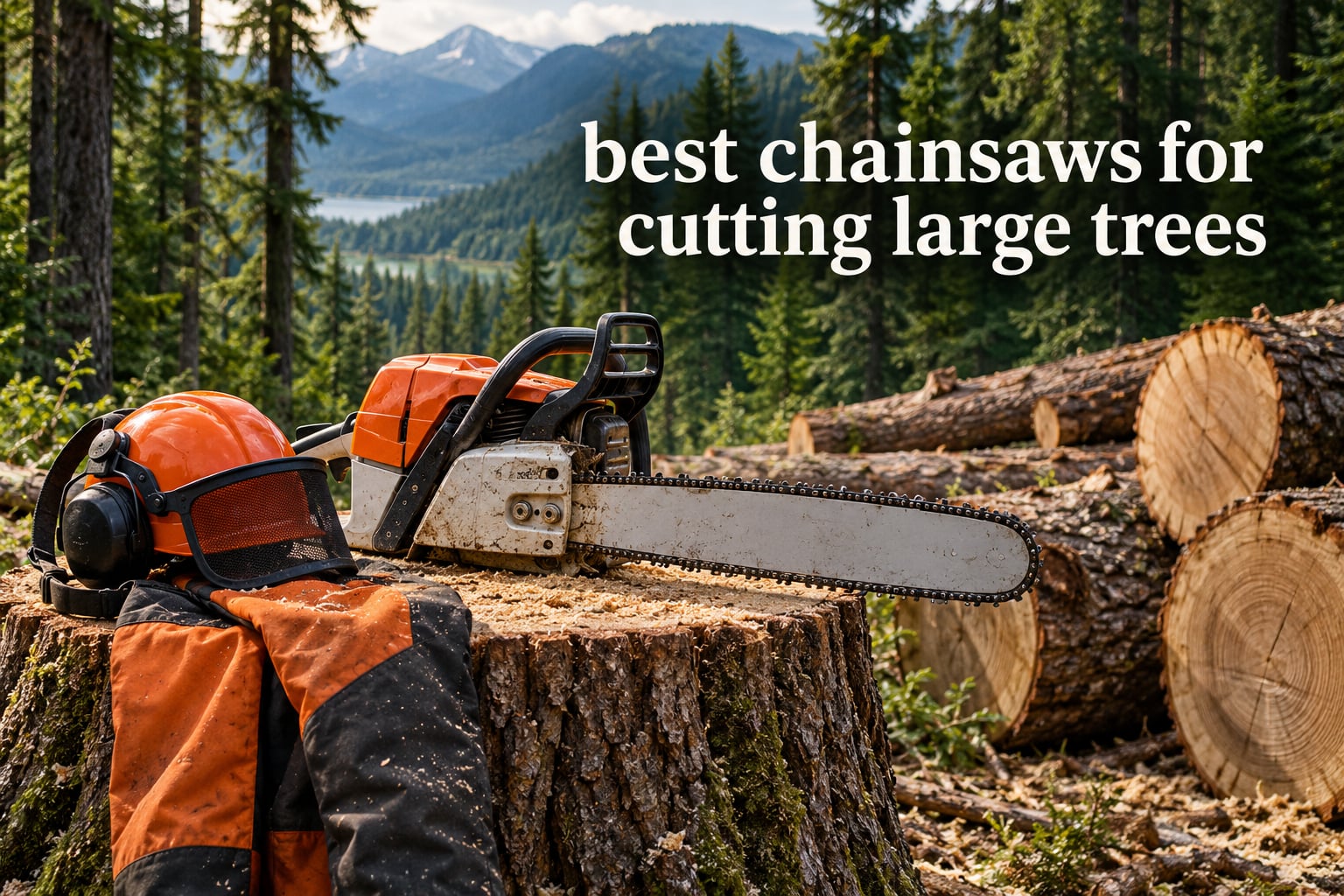
The best chainsaws for cutting large trees are high-displacement gas saws in the 60cc and up class, fitted with a guide bar long enough to reach most of the way through the trunk in one pass. For trees past roughly 30 inches in diameter, plan on 70cc to 80cc or more and a 28 inch or 33 inch bar.
That single sentence is the whole buying decision. Displacement decides how much torque the saw has before the chain stalls, and bar length decides how deep one cut can go. Everything else on the spec sheet, the clutch count, the air filter design, the handle shape, is a refinement on those two numbers.
Our team spent weeks going through owner feedback on ten saws that cover the range, from a 20 inch cordless that weighs 12.7 pounds to 105cc gas saws carrying 36 inch bars. What follows is what the owners actually reported, not a spec sheet restatement. If you want the short version, jump to the picks below. If you want the reasoning, the tier guide explains how bar length maps to tree diameter.
If you are still narrowing the field, our broader best chainsaws guide covers the small and mid-size saws that most buyers actually start with, and our gas chainsaw guide goes deeper on two-stroke maintenance.
Table of Contents
Top 3 Chainsaws for Cutting Large Trees
Quick Picks: Every Saw, Ranked by Job
| Product | Specifications | Action |
|---|---|---|
 Husqvarna 460 Rancher 24 Inch Husqvarna 460 Rancher 24 Inch |
|
Check Latest Price |
 Husqvarna 455 Rancher 20 Inch Husqvarna 455 Rancher 20 Inch |
|
Check Latest Price |
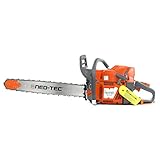
| NEO-TEC NH872 24 Inch |
|
Check Latest Price |
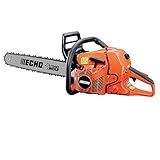 ECHO CS-590 20 Inch ECHO CS-590 20 Inch |
|
Check Latest Price |
 EGO POWER+ CS2000 20 Inch EGO POWER+ CS2000 20 Inch |
|
Check Latest Price |
 DEWALT 60V MAX GEN2 20 Inch DEWALT 60V MAX GEN2 20 Inch |
|
Check Latest Price |
 FARMMAC F070W 36 Inch FARMMAC F070W 36 Inch |
|
Check Latest Price |
 NEO-TEC NS892V1 36 Inch NEO-TEC NS892V1 36 Inch |
|
Check Latest Price |
 FARMMAC F660VW 36 Inch FARMMAC F660VW 36 Inch |
|
Check Latest Price |
 Holzfforma G660 36 Inch Holzfforma G660 36 Inch |
|
Check Latest Price |
What Type of Chainsaw Is Best for Cutting Large Trees?
A professional-grade gas chainsaw with at least 60cc of displacement and a 24 inch guide bar, moving up to 70cc or more with a 28 inch bar for trees past 30 inches in diameter.
Gas wins this category outright. A two-stroke engine gives you the torque to keep pulling through a wet hardwood trunk without the chain bogging, and it refuels in under a minute. Cordless saws in this guide cut genuinely large wood, but they are limited by battery heat rather than by cutting ability, and that limitation shows up exactly when you have four more trees to fell.
The two numbers interact more than most buyers expect. A 24 inch bar on a 56cc engine is a mismatched combination in the other direction, because the saw can technically pull it but will run hotter and slower than a 24 inch bar on a 71cc head. Match the bar to the saw, then match both to your trees.
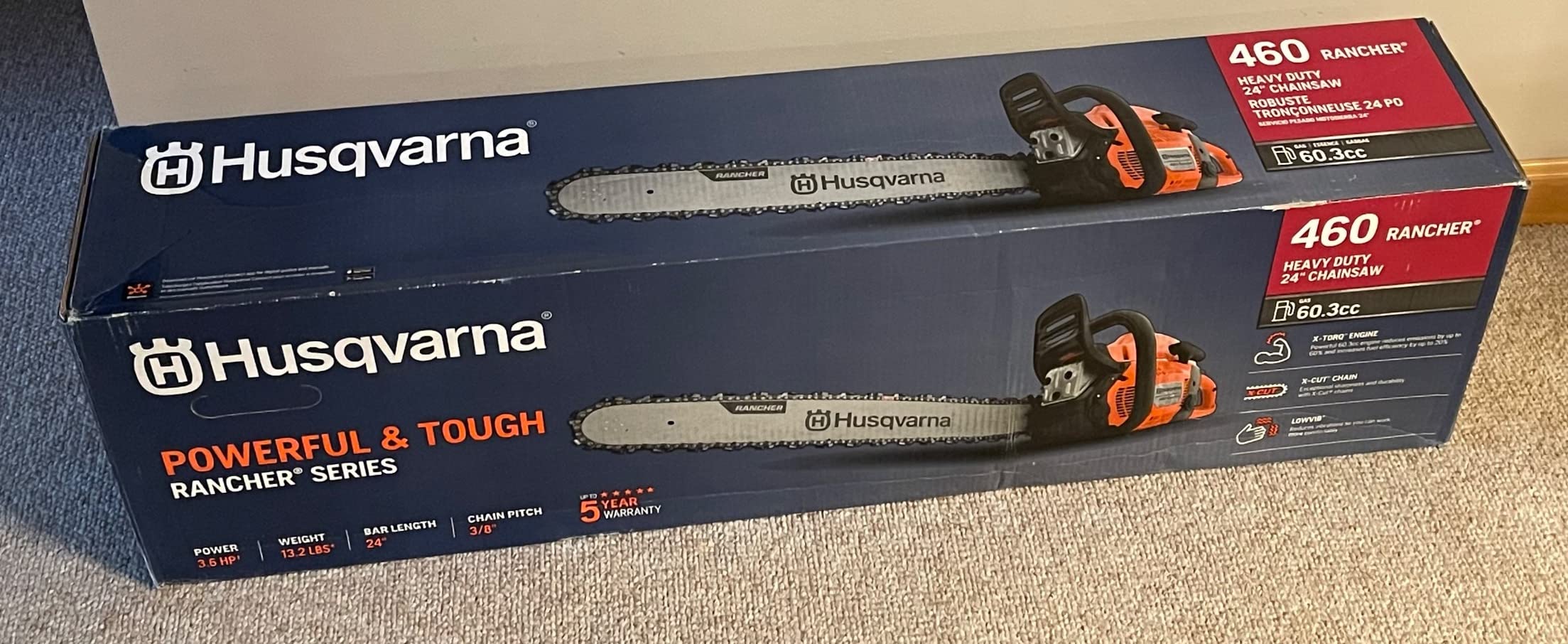
1. Husqvarna 460 Rancher 24 Inch — Best Overall for Large Trees
- Largest review pool of any saw in this guide with 81 percent five-star ratings
- OEM build quality with a 2-year manufacturer warranty
- X-TORQUE engine holds power at low RPM in hardwood
- Air Injection system keeps debris out of the filter
- 13.2 lb adds up across a full day of felling
- Two-stroke fuel has to be mixed by hand
- 24 inch bar is the largest this engine is rated to pull
This is the saw forum consensus points to again and again, and the owner data backs it up. 552 ratings sit behind it, and 81 percent of those are five-star, which is a much deeper validation base than anything else in this group.
The 60.3cc X-TORQUE engine is the reason it works. X-TORQUE is not about peak horsepower, it is about torque retention at low RPM, which is exactly the condition you hit when the bar is buried halfway through a 24 inch oak and the chain is loading up. Owners consistently report that the saw does not have to be revved to the top of its range to finish a cut.
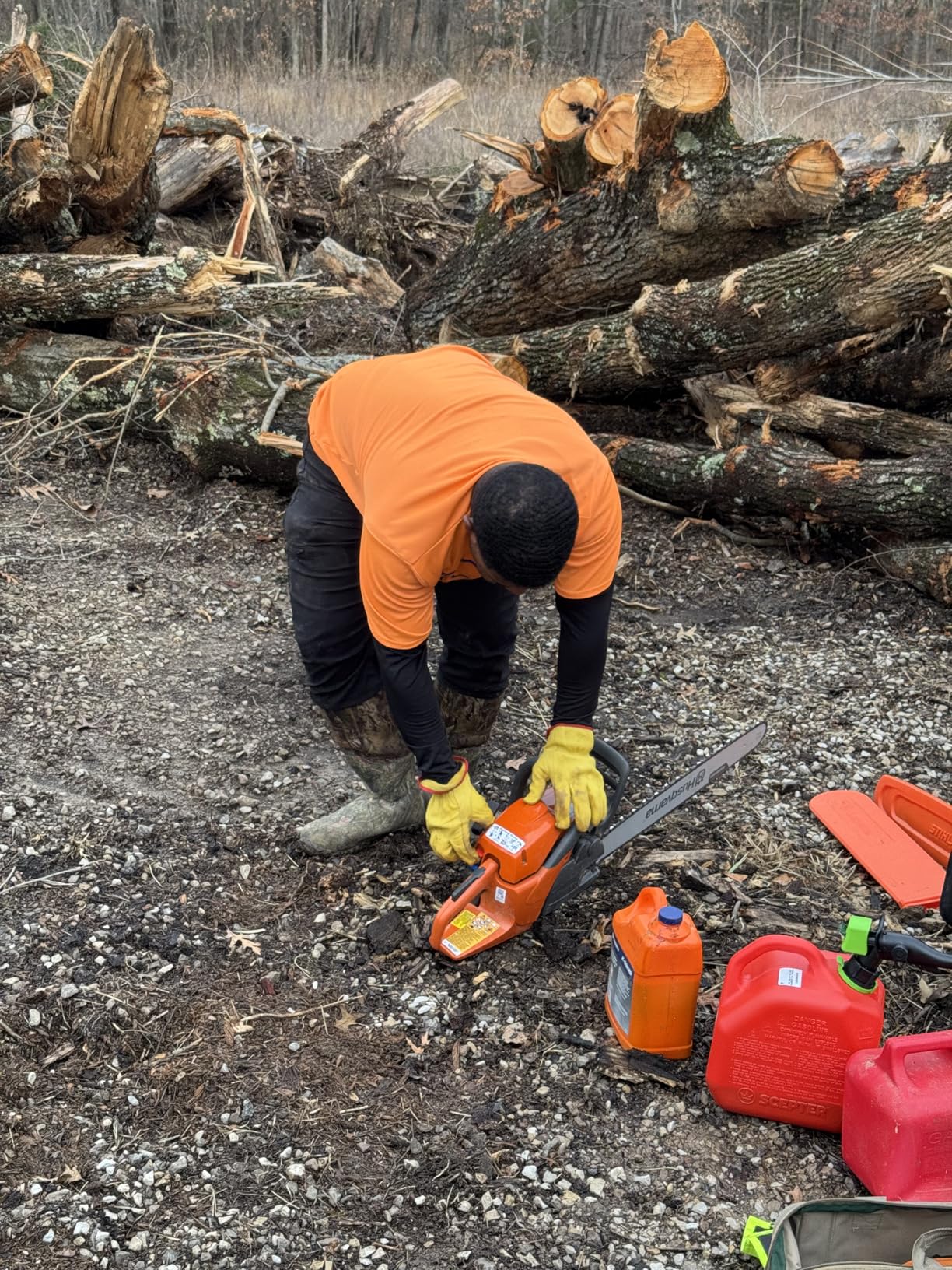
Two details separate it from the cheaper 60cc-class saws. Smart Start takes the compression and choke guesswork out of pulling, and the inertia-activated chain brake stops the chain the instant the saw hits a hard stop or kickback loads the bar. Air Injection throws debris out of the filter housing before it settles, which is the difference between a filter you clean once a season and one you clean every tank of fuel.
The 7-degree offset front handle and LowVib dampeners matter more than they sound. They put the saw between your hands during a cut, which is exactly the geometry that resists the rotational pull of a binding bar.
What it handles well
This is the saw to own if you have mixed hardwood on acreage and cut more than a few cords a year. The 24 inch bar is the practical limit for felling trees up to roughly 30 inches in diameter without a wedge, and Husqvarna rates 24 inch as the maximum bar for this engine, which means you are running it inside its design envelope rather than past it.
Where it falls short
It is not a 36 inch saw and it will not be. If your land holds mature hardwood past 30 inches or you plan to mill wide boards, a 24 inch bar means more passes and more time. At 13.2 pounds it also stops feeling light somewhere around the third tree of a long day.
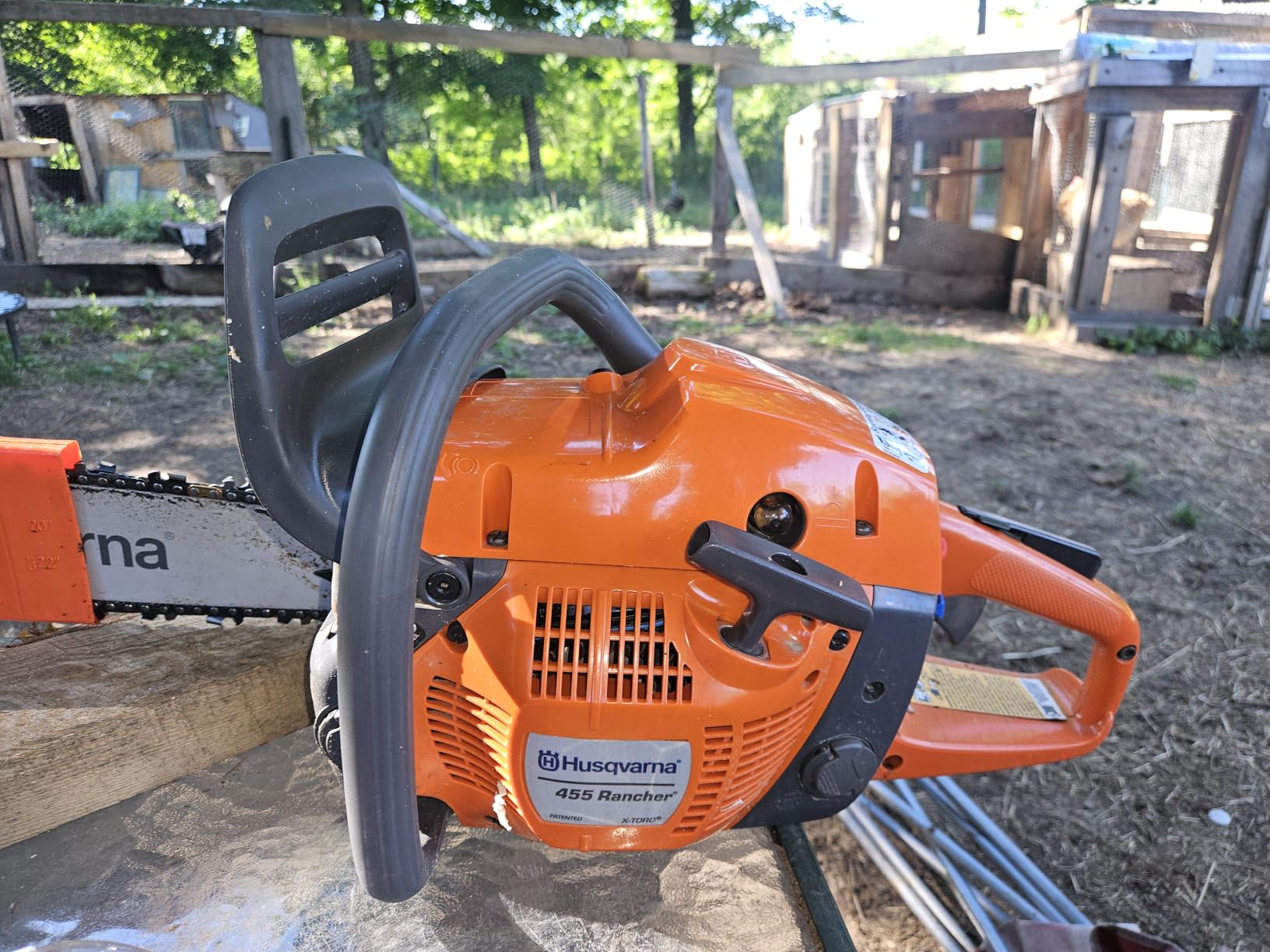
2. Husqvarna 455 Rancher 20 Inch — Best Value for Trees Under 24 Inches
- Strongest and smoothest-running saw in its class per owner reports
- 393 validated ratings with 77 percent five-star
- Compression release makes cold starting straightforward
- OEM build with a 2-year warranty
- 20 inch bar helps balance the saw
- 20 inch bar stalls on trees past 24 inches
- Weight builds fatigue over extended use
- Isolated reports of oil pump and early-failure issues
Owners describe this as a clear step up from the older 450 series saws, and one long-time Husqvarna owner with 30 years of experience called the power jump out specifically. That is a real signal, because the people who notice an improvement over the outgoing model are usually the ones who owned the outgoing model.
The 56cc engine is not a large-tree engine, and we want to be straight about that. Husqvarna rates it for bars between 13 and 24 inches, so the 20 inch bar it ships with sits comfortably in the middle of that range. Run it on trees up to about 20 to 24 inches and it is effortless.
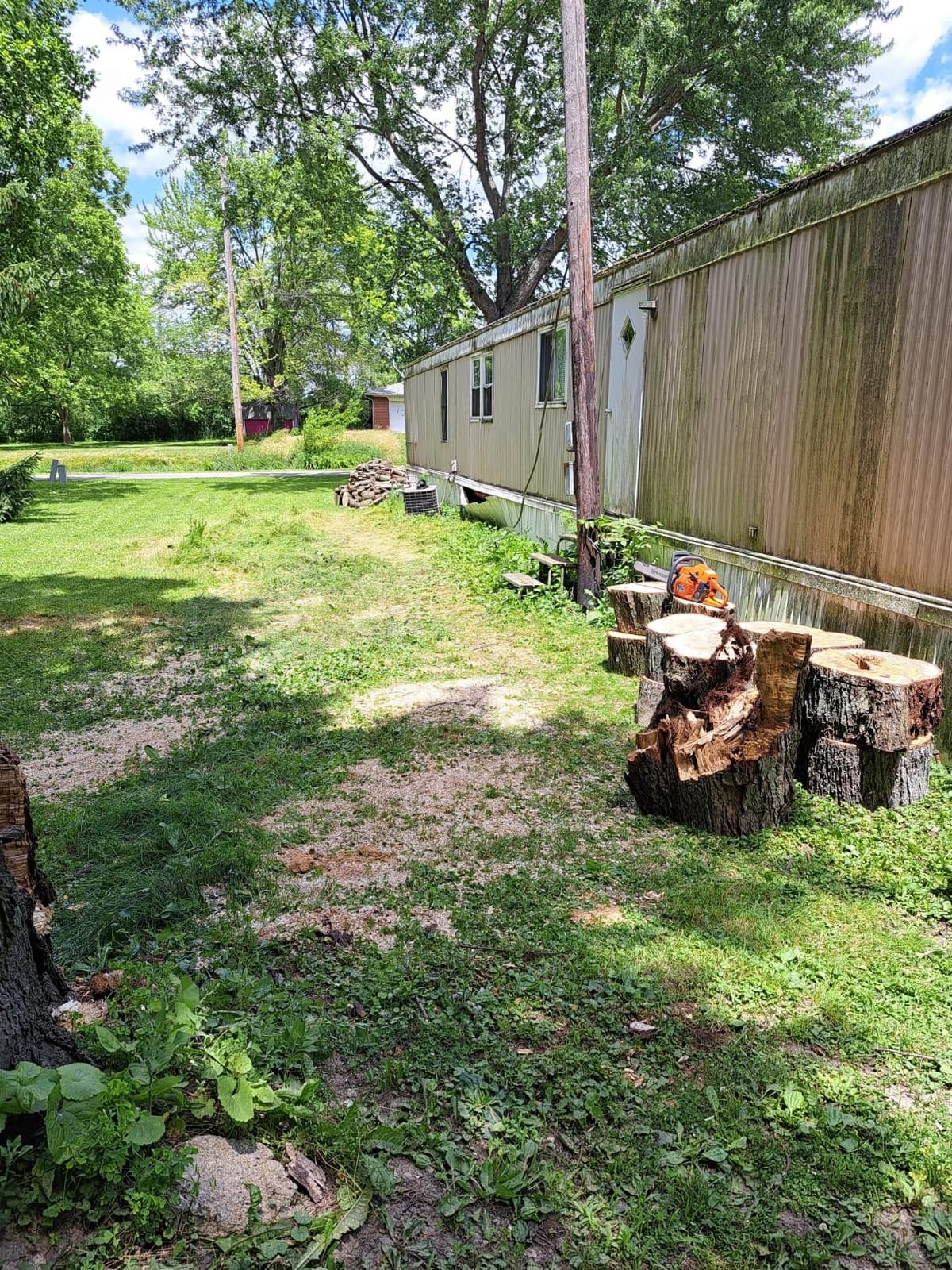
Push past that and owners report the engine working hard. A 56cc two-stroke on a green oak trunk past 24 inches will bog, and a bogging saw is both slow and the exact condition that leads to operator error.
What you give up going from the 460 to the 455 is about 4cc of displacement and 4 inches of bar. What you keep is the same OEM build quality, the same Smart Start and inertia chain brake, the same Air Injection system, the same 2-year warranty, and roughly 160 more owner ratings to back it up.
What it handles well
Storm cleanup of small and medium trees, firewood cutting, limb work, and any property where the biggest thing growing is under 20 inches thick. If you are cutting five to ten cords a year rather than clearing land, this is the saw that does not get in the way of the work.
Where it falls short
It is the wrong tool for felling hardwood over 24 inches, and no amount of technique changes that. Several owners flagged the roughly 20 pound-feel of it after extended use as the main ergonomic complaint. If you already know you have large trees, step up a class instead of saving the difference.
3. NEO-TEC NH872 24 Inch — Best for Falling Timber Past 24 Inches
- Largest review pool in the 71cc class with 355 ratings
- Designed by the maker for felling hardwoods over 24 inches in diameter
- All critical components compatible with Husqvarna 372XP parts
- Tool-free side-mounted chain tensioner
- Quick-release air filter and adjustable oil pump
- Backed by a 1-year commercial warranty
- Not CARB certified for California sale
- Oil reservoir can leak in under a week during storage
- Ignition coil failure reported by one owner
- Powerhead arrives separately from bar and chain
The spec that matters most on this one is the parts compatibility. Every critical component is compatible with Husqvarna 372XP parts, which means when something breaks you are buying a real service part at a real service price instead of ordering a proprietary component with a lead time. For anyone who intends to keep a saw past its warranty, that changes the ownership calculation more than any feature on the list.
The 71cc full-crank engine produces 5.3HP and the maker states it is built for felling hardwoods over 24 inches in diameter, which puts it squarely in the range where the 60cc-class saws start straining. Owners report cutting 22 inch red oak quickly and one cleared roughly half an acre of dense forest without incident.
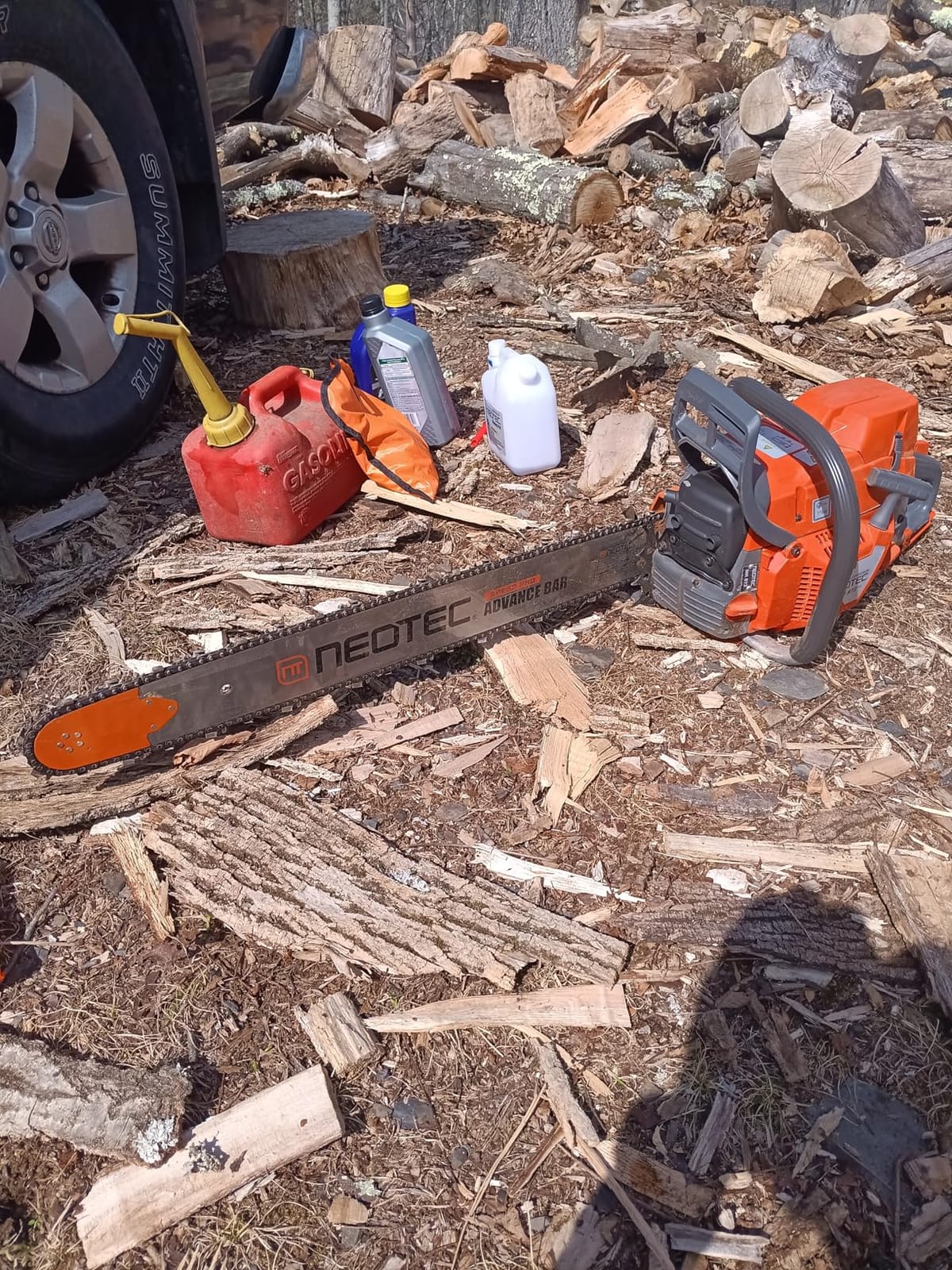
The magnesium crankcase and the professional anti-vibration system are aimed squarely at long cutting days. At 25 pounds it is a serious load, but the damping is there because the saw is meant to be run all day rather than pulled out for an hour.
Starting is a genuine strength here. Owners repeatedly report first-pull starts, including first-pull when the engine is already warm, which is the single most common complaint on every other saw in this group except the ECHO.
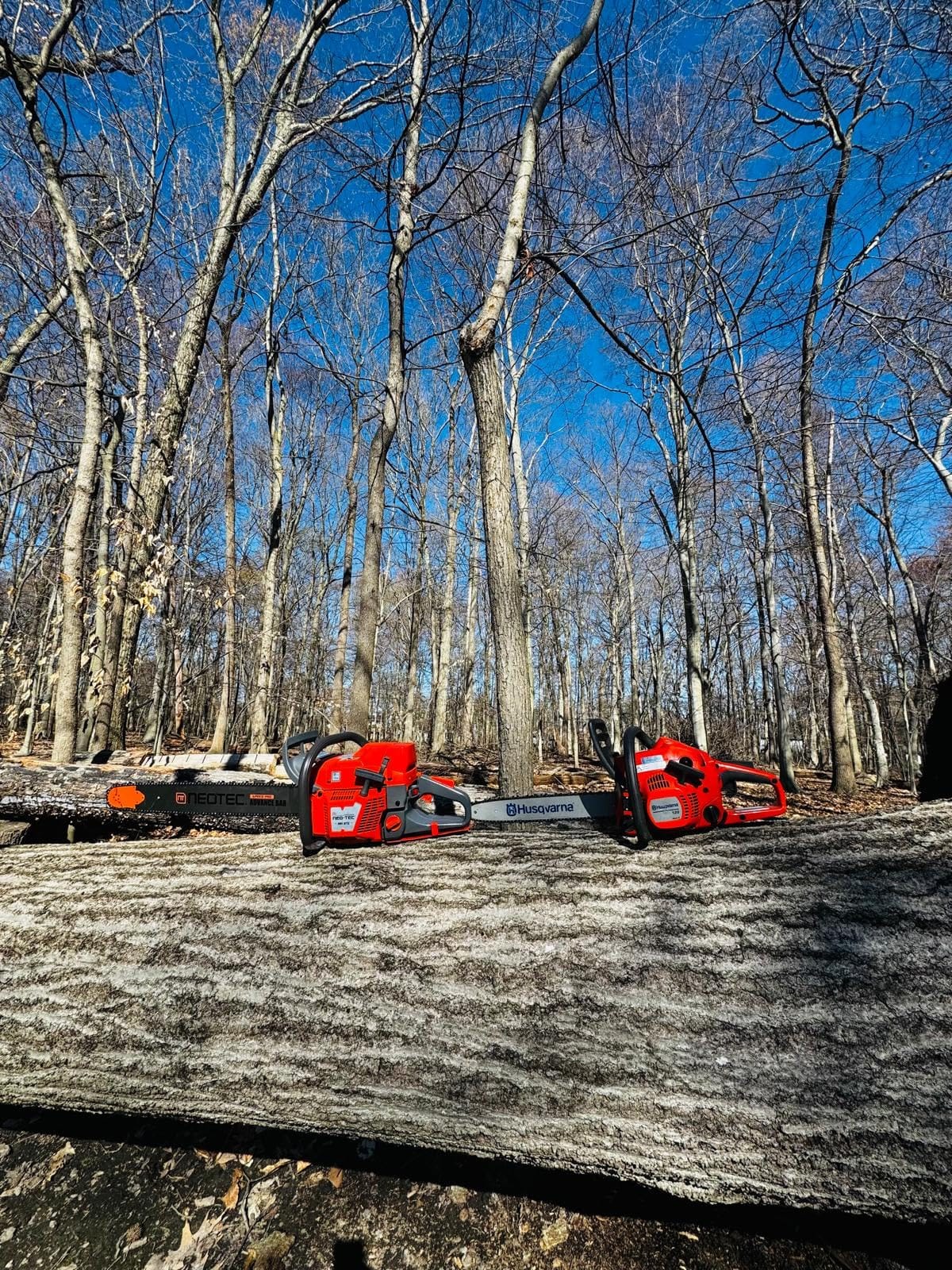
What it handles well
Timber in the 24 to 30 inch diameter band, which is the gap between what a 60cc homeowner saw can do comfortably and what requires a full professional setup. The inertia-activated chain brake, throttle lock and centrifugal air cleaning give it the safety furniture of a much more expensive saw.
Where it falls short
Ownership quality varies. Owners report ignition coil failure, carburetor setup issues during break-in, and an oil reservoir that can leak in under a week if you store the saw with both oil and fuel in it. Empty the tank and the oil sump before you put it down for the winter.
4. ECHO CS-590 20 Inch — Best for Firewood and Big Logs
- Owners report it handles huge oak logs without bogging
- One owner cut a full truckload of firewood on a single tank
- Heavy-duty construction with solid fit and finish
- Starting sequence matches the Husqvarna routine owners know
- Hard to crank and easy to flood with repeated choke pulls
- One buyer received a non-functional saw with no warranty support
- Carburetor adjustment may be needed even when warm
The 59.8cc engine sits just under the 60cc line most guides treat as the large-tree threshold, and with a 20 inch bar it is not the pick for felling 30 inch hardwood. What it is genuinely excellent at is cutting already-fallen wood, and that is a different job with different demands.
Owners describe a saw that does not bog down on big oak logs, with one cutting a full F-250 truckload of firewood on a single tank of fuel. Bucking big logs is sustained load work, and the 59.8cc has enough torque margin to keep the chain moving instead of bogging at the end of a long cut.
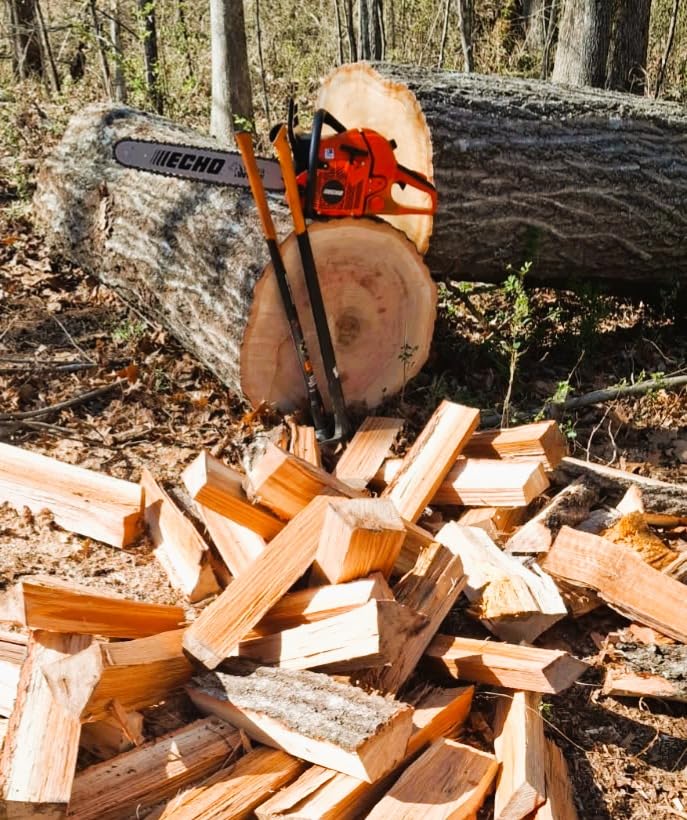
That is also why it appears on so many small farm and acreage lists. Buying rounds of firewood, clearing felled brush, and processing storm debris is thousands of cuts rather than a handful of long ones, and a saw that is comfortable on short bursts beats a heavier saw that is only happy on big work.
The starting ritual is the honest drawback. Owners specifically flag it as a barrier for some users, and it floods easily with too many choke pulls. Learn the sequence before you need it rather than in the middle of a job.
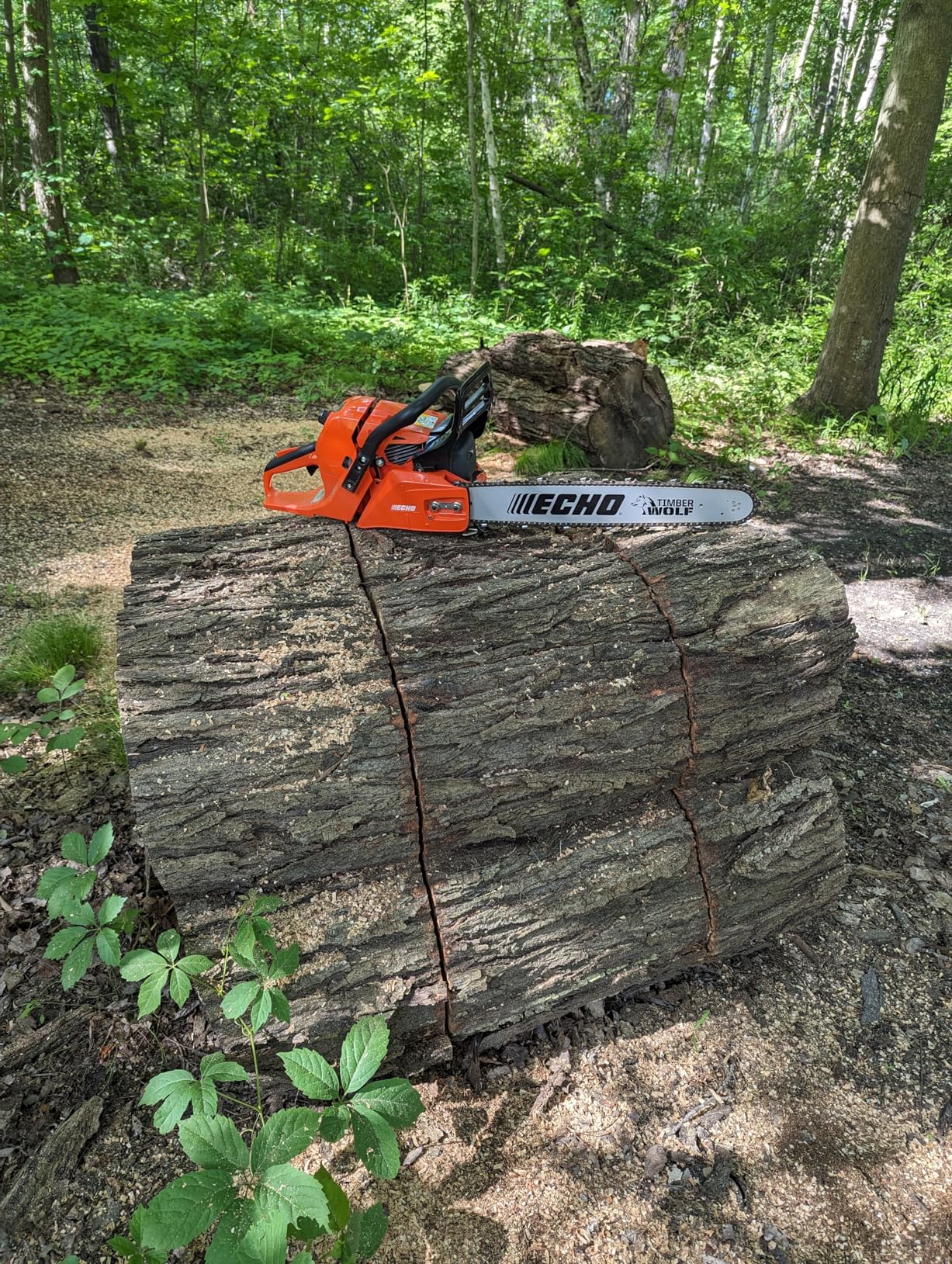
What it handles well
Firewood processing, bucking large logs, and clearing felled brush on acreage. Owners consistently call it a solid lower-cost alternative to the Husqvarna 460 class, and the fit and finish is described as noticeably better than most saws at this tier.
Where it falls short
It is not a felling saw. A 20 inch bar and a 59.8cc engine will not comfortably drop hardwood past 24 inches, and the same starting difficulty that owners like will frustrate anyone new. One buyer also received a dead saw from this seller with no warranty support, which is worth factoring in if you are relying on this specific listing.
5. EGO POWER+ CS2000 20 Inch — Best Cordless Saw for Big Wood
EGO POWER+ Chain Saw, 20” Battery Powered Chainsaw, Electric Cordless, Battery and Charger Not Included – CS2000
- Highest owner rating in this group at 4.6 across 170 ratings
- Listed at 12.7 pounds
- one owner felled two white pines over 60 feet tall
- Starts instantly with no choke or compression
- Silent operation with no two-stroke fumes or carb maintenance
- Up to 135 cuts on a 6x6 with a 6.0Ah battery
- Battery and charger sold separately
- Batteries stop after roughly 5 to 7 minutes of continuous trunk cutting
- Overheated packs reportedly lose charging capacity
- Anti-kickback rakers need filing to cut properly
This is the saw that changes the cordless conversation. Owners report felling two white pines over 60 feet tall with 30 inch and 36 inch trunks, cutting through each trunk in under two minutes. That is genuine large-tree capability, not the token 16 inch bucking a lot of battery saws are limited to.
The brushless motor delivers performance equivalent to a 55cc gas saw at up to 25 meters per second of chain speed, with instant full power on the 20 inch bar rather than a spool-up. At 12.7 pounds it is by far the easiest saw here to control during a two-handed cut, and it starts instantly with a button.
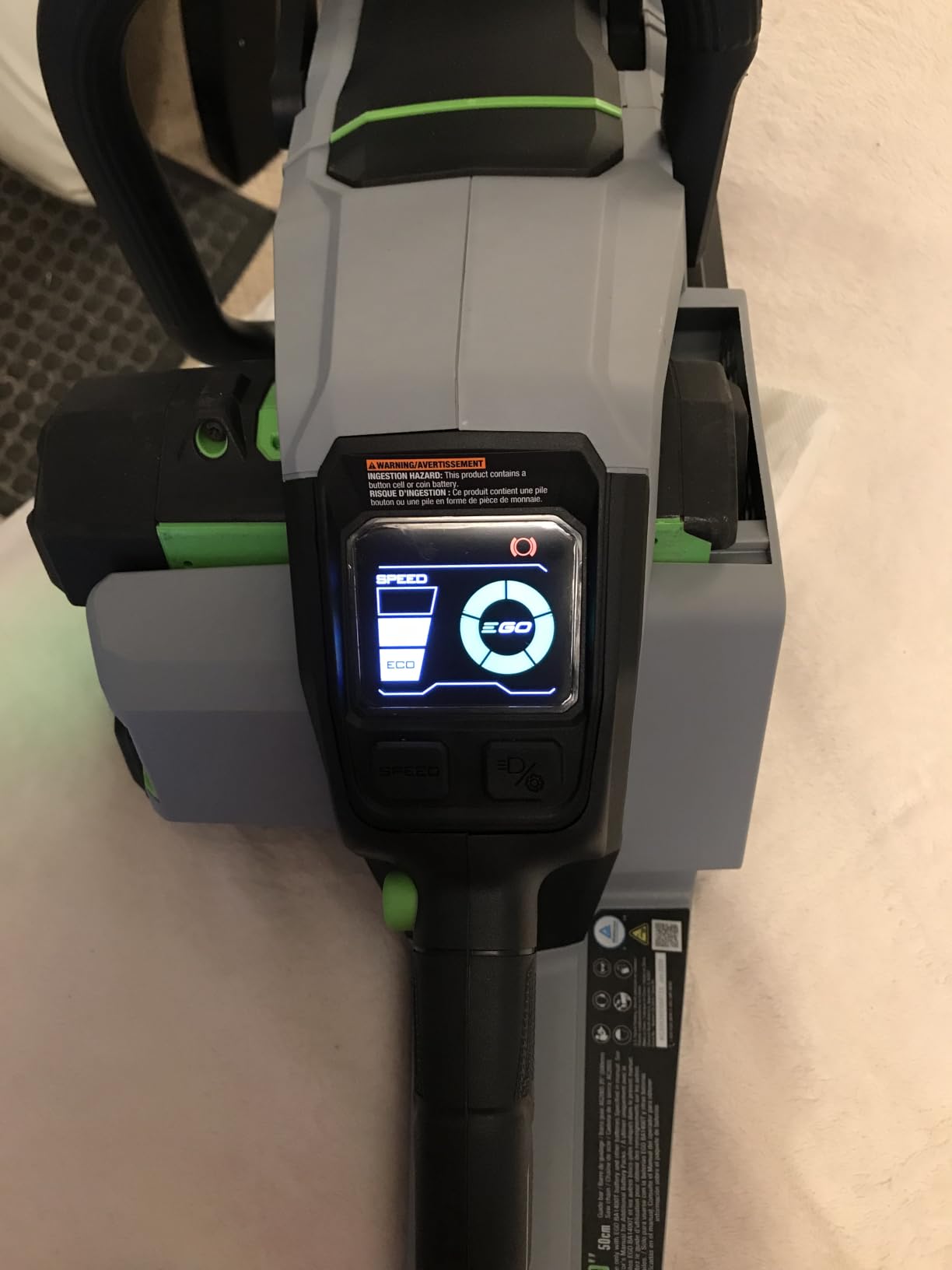
The consensus caveat is battery heat, and it is not a small one. Owners report that EGO packs stop accepting a cut after roughly five to seven minutes of continuous trunk work, and that packs which have overheated repeatedly lose capacity and no longer charge fully. Treat the battery as a consumable with a finite cycle life, not a permanent asset.
The anti-kickback rakers also ride higher than owners expect and cut poorly until they are filed down. That is a five-minute job with a flat file and it makes a real difference to how the chain bites.
What it handles well
Property work near houses and neighbors, any job where noise matters, and single large trees rather than a day of continuous felling. Zero exhaust fumes means no two-stroke mixing, no carburetor, no spark plug, and no pull cord when the motor is hot.
Where it falls short
Sustained heavy cutting is where it stops. Batteries cook in continuous trunk work and the top speed mode needs at least a 6.0Ah pack, which is not in the box. Budget for the battery and charger before anything else, because the bare tool is not a working saw on its own.
6. DEWALT 60V MAX GEN2 20 Inch — Best Cordless Platform for Existing Tool Buyers
- Brushless 60V GEN2 platform with gas-class output on a 20 inch bar
- 4Ah battery configuration removes fuel mixing and engine maintenance
- Backed by an established cordless tool ecosystem and warranty
- Listed weight of 20 lb is heavy for handheld felling work
- Battery and charger configuration varies by what you already own
- Lower sales traction than the gas picks in this guide
The reason to look at this one is not the saw, it is the platform. If you already own DEWALT 60V MAX packs and a charger, adding this saw is cheaper and simpler than starting a second battery ecosystem. Owners rate it solidly at 4.2 across 247 ratings.
On paper the output is competitive with the EGO, with a brushless motor producing gas-class cutting speed on a 20 inch bar. The difference is that the 60V MAX platform has been around long enough that packs, chargers and parts are easier to source than on newer systems.
The catch is weight. At a listed 20 pounds it is considerably heavier to control in a two-handed cut than the EGO, and the listing detail is thin enough that the buyer needs to confirm exactly which battery and charger configuration they are getting.
Like every cordless saw here, it shares the same ceiling. A 20 inch bar limits you to roughly 20 to 24 inch diameter trees comfortably, and sustained trunk work drains a single pack quickly.
What it handles well
Yard work, storm debris, and medium trees where you want to avoid fuel and fumes. It is the most practical choice for a household that already has DEWALT batteries and no interest in mixing two-stroke fuel.
Where it falls short
It is a 20 inch cordless saw, not a professional felling saw, and the listed weight works against it during long cuts. For sustained work on large timber, a gas saw at the same bar length will keep going after the battery is done.
7. FARMMAC F070W 36 Inch — Best for Milling and 36 Inch Work
- Largest engine displacement in this group at 105cc
- Solid alloy 36 inch bar rated for milling work
- 0.404 inch pitch low-kickback chain suits milling and felling
- Full magnesium alloy body resists heat and impact
- Advanced AV vibration damping for long days
- 1-year manufacturer warranty
- Heaviest saw here at 29.7 lb
- Not CARB certified for California sale
- Powerhead and bar arrive as separate pieces
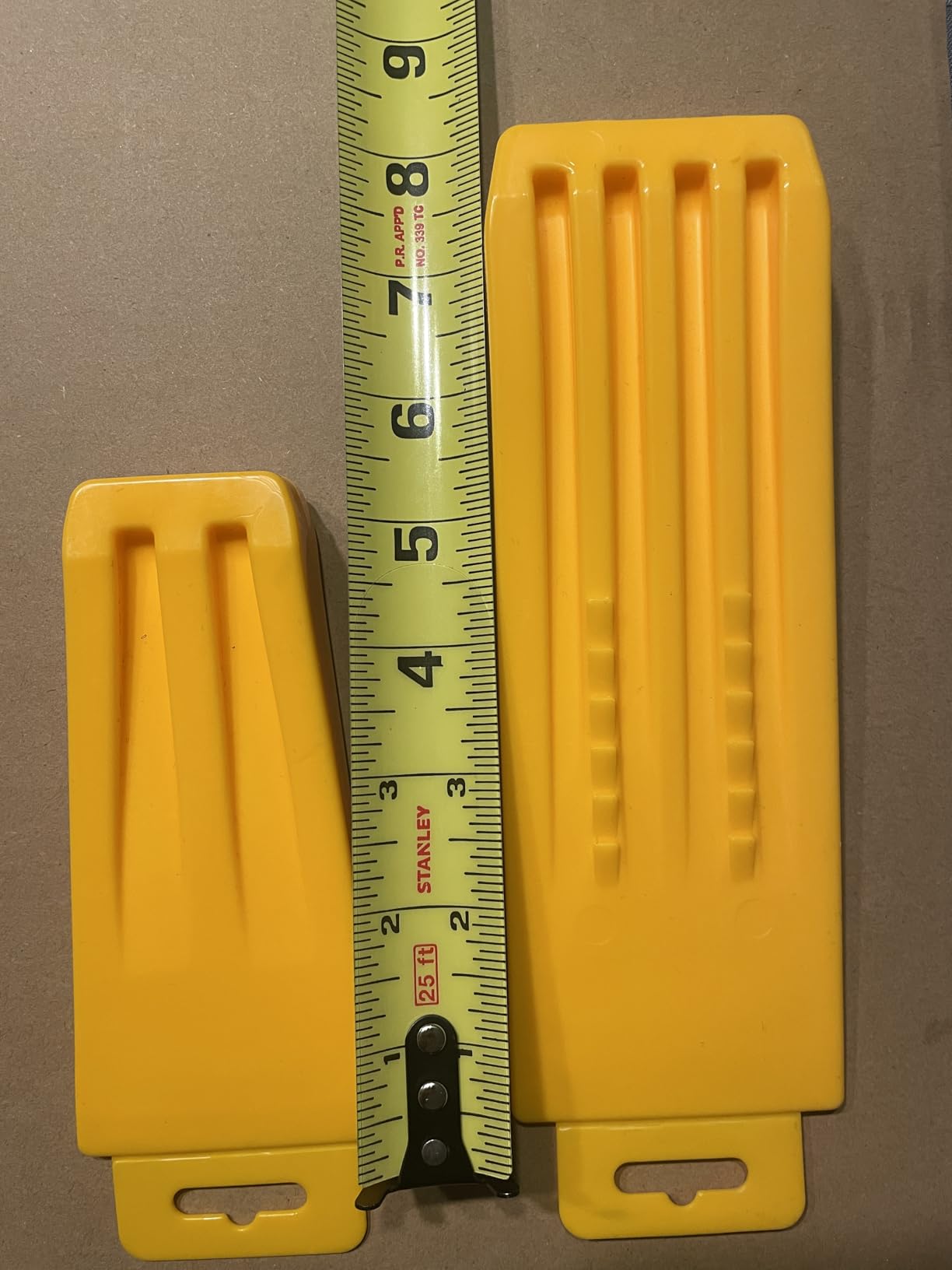
At 105cc this is the largest engine in the group, and it is paired with a solid alloy 36 inch bar rather than a resin or laminated one. The 0.404 inch pitch, 0.063 gauge low-kickback chain is a milling-capable specification, which is why this is the pick if you plan to cut boards instead of just logs.
Milling is the hidden requirement that catches people out. Forum consensus on r/Chainsaw is blunt about it: if you want to mill with a wide bar, you need a more powerful saw than a standard homeowner model, because the mill is dragging the chain through hardwood continuously instead of taking free cuts.
The full magnesium alloy body, including the cylinder cover, air filter cover and starter assembly, is a step above the plastic covers typical at this tier. Parts compatibility runs across STIHL MS070, MS090 and MS1050 platforms, and the 2200GS flywheel is a high-speed magnetic induction type.
Maximum recommended engine speed is 13,300 RPM and fuel mix is 25:1 with two-stroke oil at 5.1 ounces per gallon, or 40:1 at 3.2 ounces with the lower-viscosity oil. Get that ratio right from the first tank.
What it handles well
Timber past 30 inches in diameter, long logs, and board milling. The 36 inch bar reaches most of the way through a large trunk in one pass, which turns a two-minute cut into a one-minute cut. AV damping is there because you will be running it all day.
Where it falls short
It weighs 29.7 pounds, and that is the honest limit on this saw. A heavy operator can run it all day. A lighter one will feel it within an hour, and at this weight and bar length, control errors become more likely rather than less.
8. NEO-TEC NS892V1 36 Inch — Best Value 36 Inch Saw
- Owners with branded saw experience report performance matching premium saws
- One owner cut a 2 foot wide log in about 20 seconds
- Exceptionally well-balanced for a saw this size
- Detailed owner manual with part numbers and maintenance guidance
- Responsive service that shipped replacement parts and a sharpener
- Hard pull-start reported by several owners
- Chain tensioner reported seized on one unit
- Cylinder head bolt failure reported after four uses on one unit
- Small review pool of 38 ratings
Owners coming from branded saws report output they describe as matching what they were using before. The 92cc full-crank engine delivers 5.2kW, and one owner cut a two foot wide log in about 20 seconds and dropped two 50 foot pines with it.
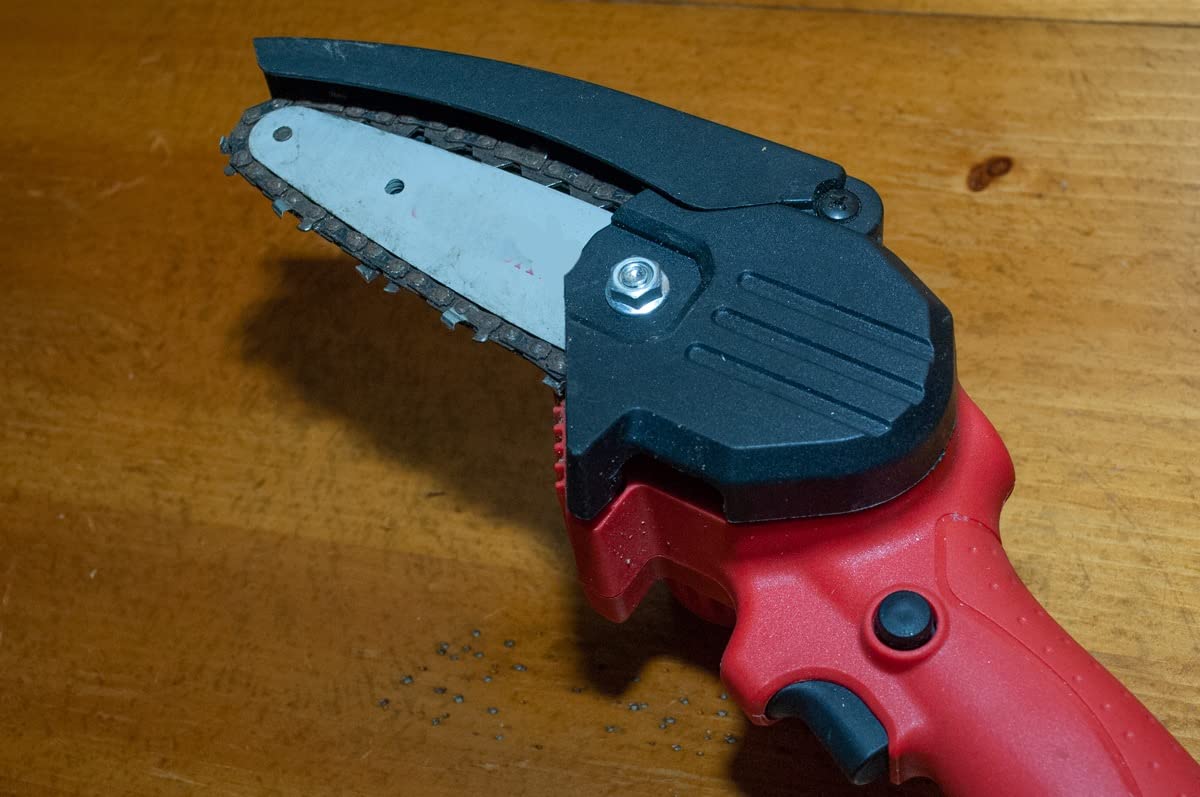
The magnesium alloy parts and the rapid air-cooling system are aimed at sustained load, which is what a 36 inch bar generates. A quick-stop chain brake and safety switch handle kickback and accidental starting.
Balance is the standout here. Owners single it out as well-balanced for a saw this size, and on a 36 inch bar that genuinely matters because the front of the saw is heavy.
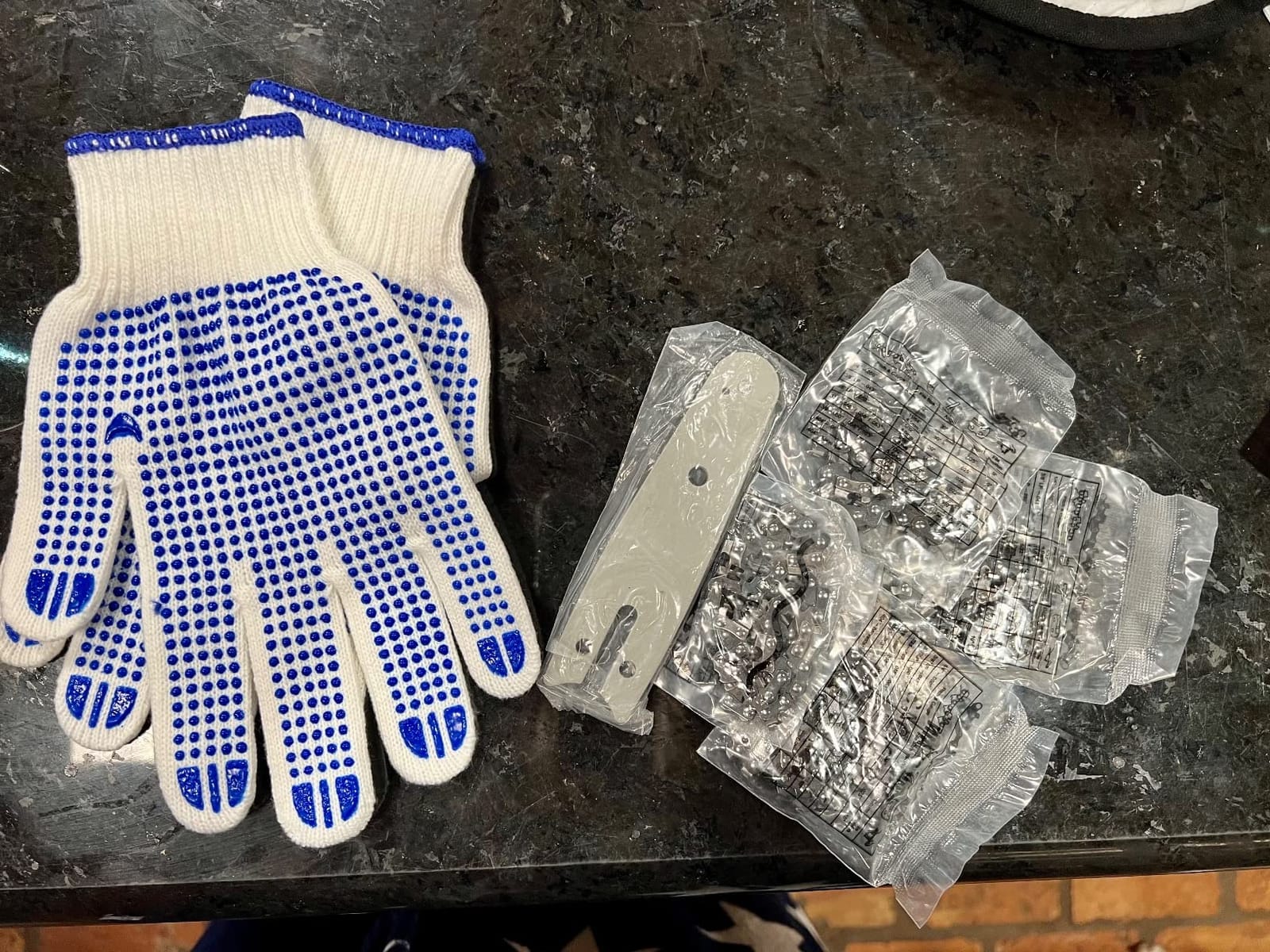
The documentation and support are also mentioned repeatedly, with owners citing a detailed manual with part numbers and a service team that shipped replacement parts and a free electric chain sharpener.
What it handles well
Large hardwood and softwood over 30 inches, storm-damaged timber, and high-volume bucking. It is also a reasonable entry into the 36 inch bar class for someone who has never run a bar that long.
Where it falls short
The pull-start is hard, and several owners reported needing shop help or a return. With only 38 ratings behind it, the long-term reliability picture is thinner than the 460 Rancher or the ECHO, and one owner reported cylinder head bolts snapping after four uses.
9. FARMMAC F660VW 36 Inch — Best High-Output 36 Inch Saw
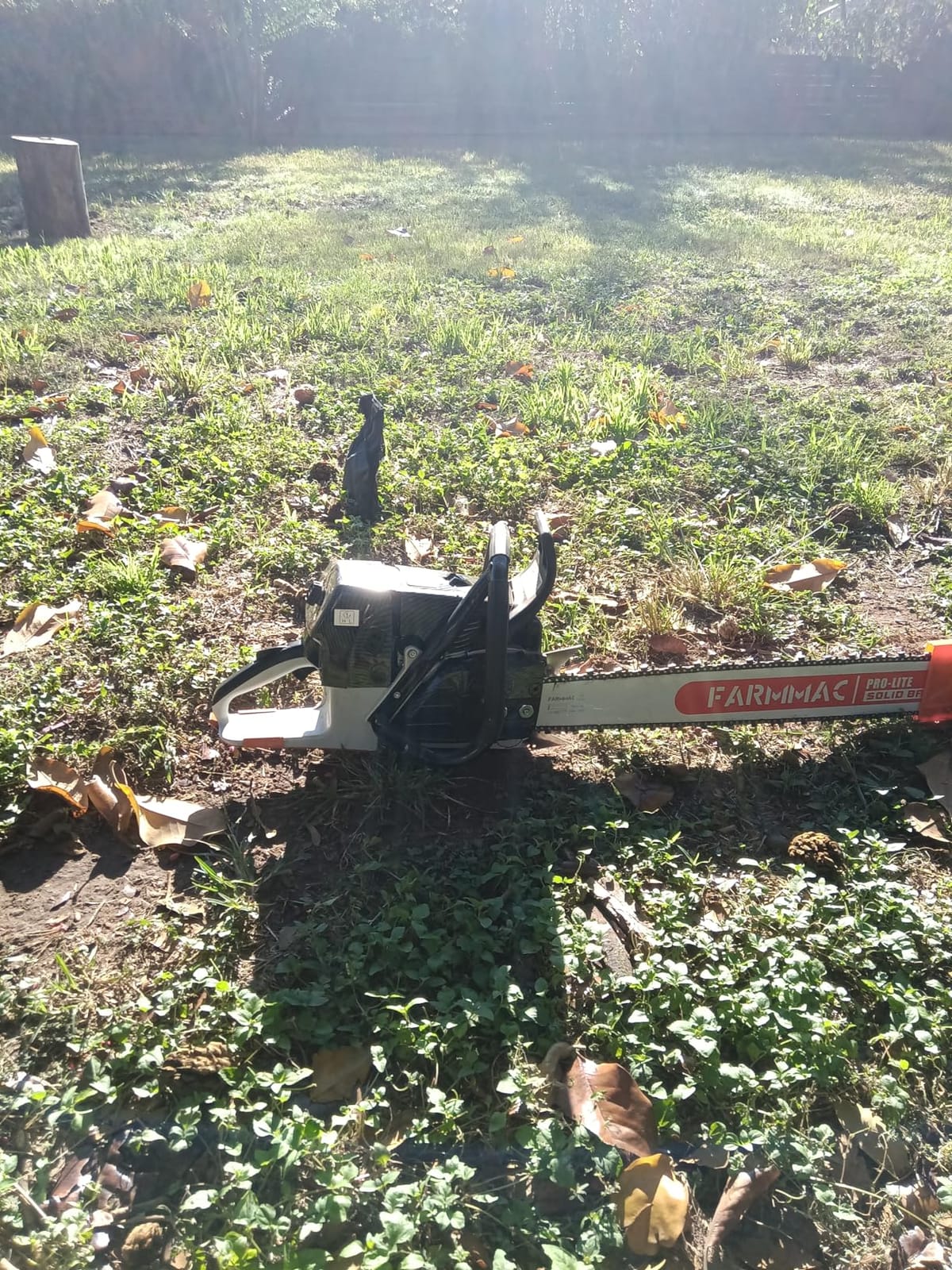
FARMMAC F660VW 36 Inch Gas Chainsaw 92cc Chainsaw 2-Cycle Gasoline Power Chain Saws 5.2KW 7HP All Parts Compatible with MS660 G660 (With 36″ Alloy Bar & Chain)
- 92cc 7HP output class with a 36 inch bar for high-volume work
- Magnesium alloy construction resists impact and dissipates heat
- Full chisel 0.063 gauge chain rated for aggressive hardwood work
- 28 inch and 42 inch bar variants available in the same platform
- Rigid resin guide bar is lighter and less durable than a solid alloy bar
- Not CARB certified for California sale
- Reported durability concerns in a small share of reviews
At 18.18 pounds for the magnesium power head this is the lightest of the 92cc saws in this roundup, and that is a real advantage when the bar is 36 inches long. The 92cc full-crank two-cycle air-cooled engine puts out 5.2kW, or 7HP, with parts compatibility across STIHL MS660 and G660 platforms.
The chain spec is the aggressive one. A full chisel 3/8 inch pitch, 0.063 inch gauge, 114 drive link chain is the heavy-cut chain that professional hardwood work calls for, and it is why the power head can chew through green oak without the chain skating.
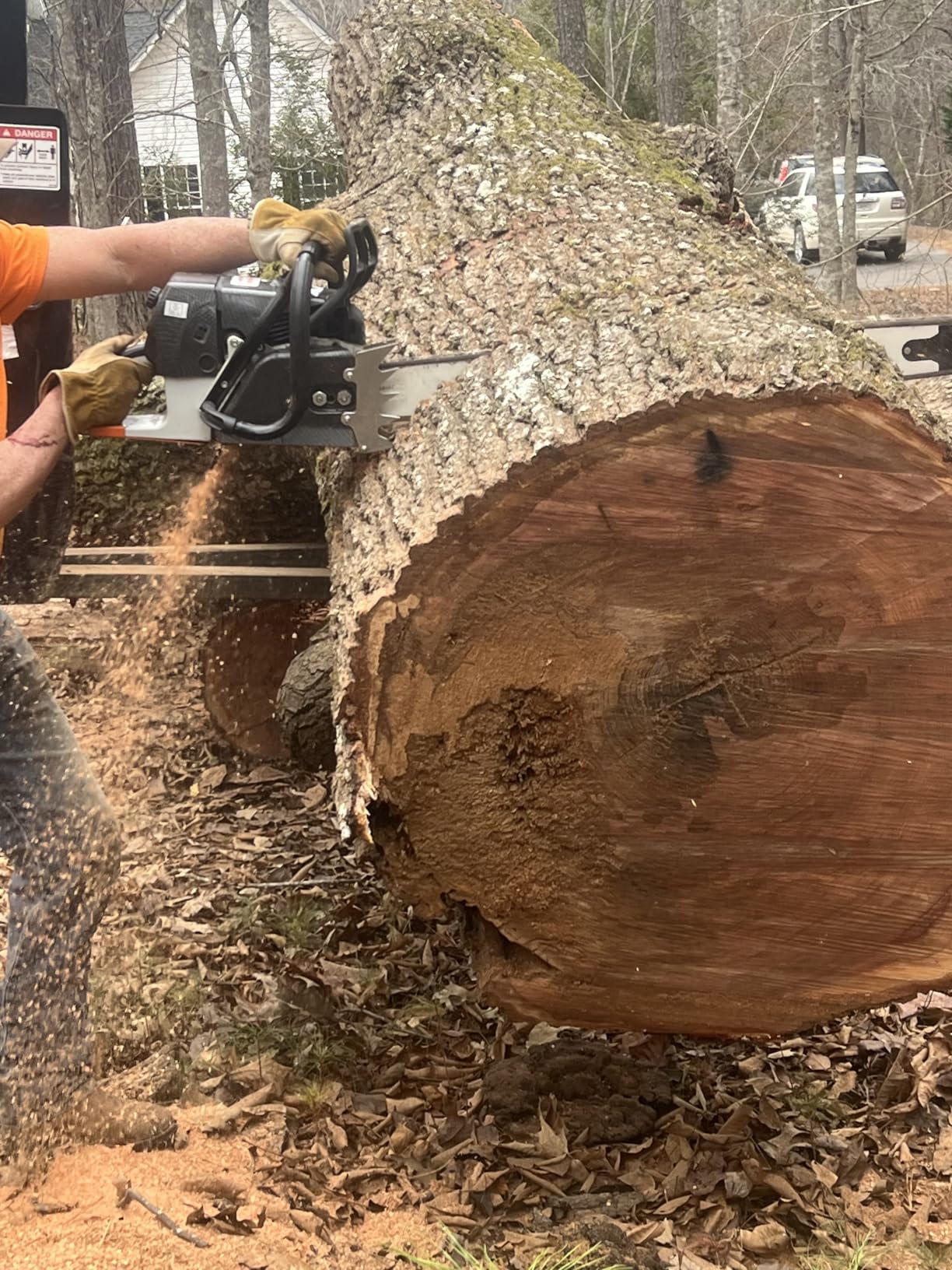
The magnesium alloy body resists impact and dissipates heat well, which is the right construction for a saw being run at sustained load. The 2200GS high-speed magnetic induction flywheel and the HLHIC carburetor are both aimed at fast ignition and stable running.
Review sentiment is good on cutting ability, with 12 percent of ratings at one star, and those concentrate on durability and assembly rather than cutting. Same power head is offered in 28 inch and 42 inch configurations if your tree size differs.
What it handles well
High-volume work on large timber, acreage clearing, and firewood production at scale. The 7HP output class combined with a 36 inch bar covers everything from 24 inch hardwood up to full-size storm debris.
Where it falls short
The rigid resin guide bar is lighter and less durable than a solid alloy bar, so it is the first part you will replace on a saw like this. It is also not certified for sale in California, which rules it out for a portion of the market entirely.
10. Holzfforma G660 36 Inch — Best With Heavy-Gauge Chain Included
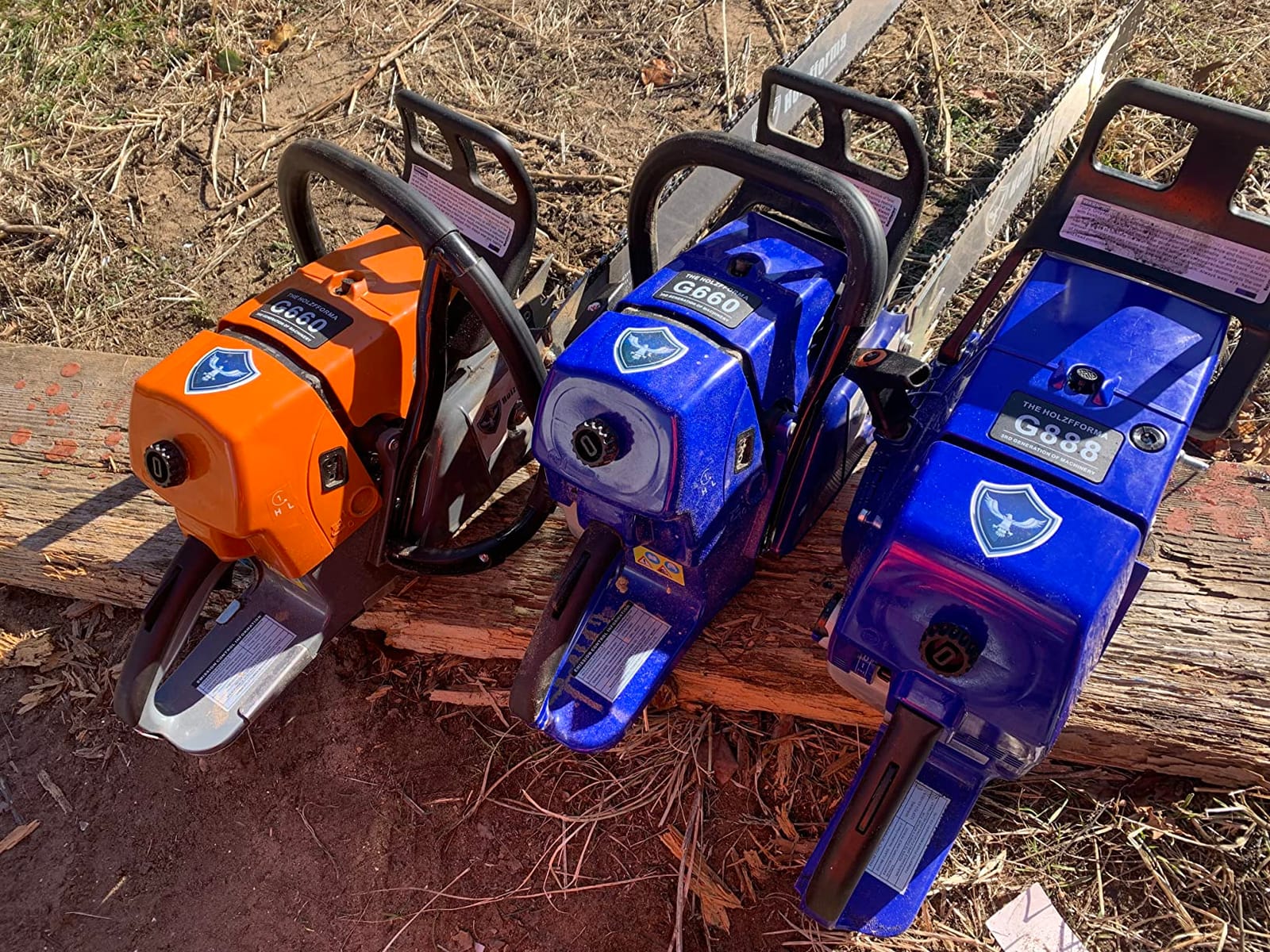
Holzfforma 92CC G660 Gasoline Chain Saw Chainsaw with 36 Inch 114DL 3/8″ .063″ Guide Bar and Saw Chain Tank Protective Guard
- Ships with a heavy 0.063 inch gauge full-chisel chain rather than a lighter kit
- Owners report noticeably more power than OEM saws costing several times more
- Cuts large red oak and sycamore without slowing down
- One owner reports three years of continuous firewood and mill duty
- Sprocket nose bar with standard 7-tooth sprocket
- Higher vibration than STIHL saws per a comparing owner
- Break-in period of roughly five tanks before it runs correctly
- Bar oil cap and chain oiler leakage reported by multiple owners
- May not hold up to daily professional duty
The 36 inch bar and chain come with a 114 drive link, 3/8 inch pitch, 0.063 inch gauge chain rather than the lighter chain most kits ship with, and there is a tank protective guard in the box. For hardwood work that difference is immediate, because a light chain in a hard cut just blunts faster.
Owners report cutting 28 inch red oak, 30 inch plus sycamore, and old poplar stumps without the saw slowing, and one owner reports three years of continuous firewood and sawmill duty on the same unit.
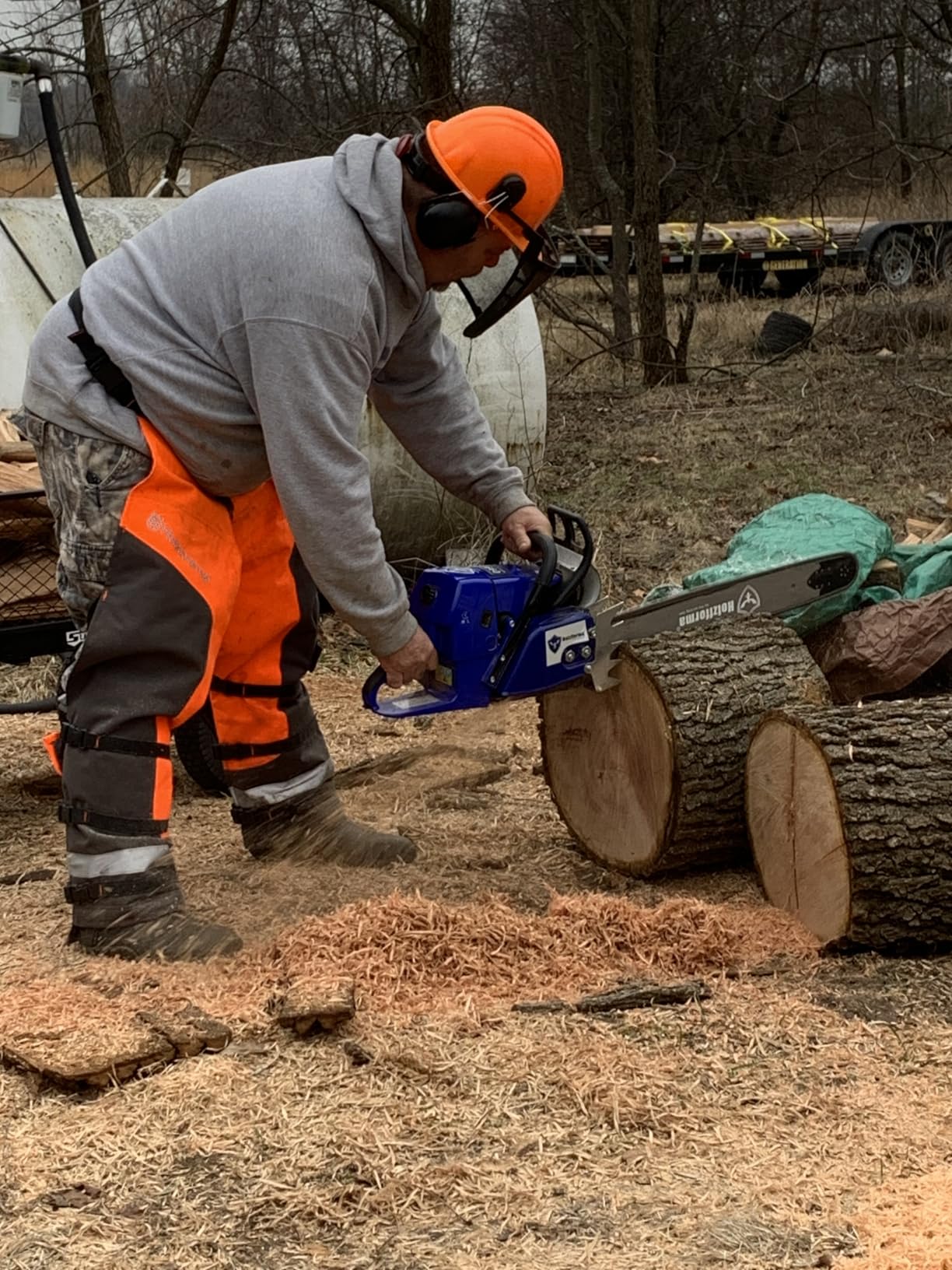
The G660 power head is 92cc with 5.2kW output, driving a sprocket nose bar with a standard 7-tooth 3/8 inch pitch sprocket. A deluxe handle bar is included.
Two things to plan for. Owners report a break-in period of roughly five tanks before the saw runs and starts correctly, and multiple owners report leakage from the bar oil cap and chain oiler. Check both before you start a long job.
What it handles well
Large hardwood, stumps, and heavy firewood production on a budget. The included heavy-gauge chain means you are not buying a second chain before the first real job.
Where it falls short
Vibration is noticeably higher than STIHL saws according to owners who compared them directly, which adds up over a full day. Multiple owners also report oil system leaks, and at 27 pounds it is a heavy saw for that configuration.
How Big of a Tree Can a 24-Inch Chainsaw Cut?
A 24 inch bar can fell trees up to roughly 24 to 30 inches in diameter with reasonable confidence, but the practical rule is that a tree should be no more than about half to three quarters the bar length across.
The reason is geometry. The saw reaches roughly two thirds of the bar into the trunk, so an 18 inch opening is what you actually get with a 24 inch bar, and anything wider than that needs a second pass from the opposite side. On green hardwood you also want to leave room to drive a wedge and finish the cut clean.
Here is the mapping most buyers find useful. Bar length first, then the tree diameter it handles well, then the job it suits.
- 16 inch bar handles trees up to roughly 12 to 14 inches. Pruning, small limbs, light yard work only.
- 18 inch bar handles trees up to roughly 14 to 18 inches. Limbs, brush, small property trees.
- 20 inch bar handles trees up to roughly 16 to 20 inches. Firewood, medium yard trees, light acreage work.
- 24 inch bar handles trees up to roughly 20 to 30 inches. The large-tree threshold, and the most common answer for property work.
- 28 inch bar handles trees up to roughly 24 to 36 inches. Rural landowners with mature hardwood.
- 33 inch bar handles trees up to roughly 30 to 40 inches. Semi-professional and heavy acreage work.
- 36 inch bar handles trees past 36 inches and is the standard professional felling length. Also the practical minimum for milling wide boards.
One caution the forums raise constantly, and it is correct: a bar longer than the saw is designed for wastes fuel, overheats the engine, and increases kickback risk because the saw is out of balance. If you want a bigger bar, you need a bigger engine behind it, which is why every 36 inch saw in this roundup runs 92cc or higher.
For perspective on where that threshold came from, r/Chainsaw users converge on a 60cc-or-equivalent saw rated to safely pull a 24 inch bar, or 28 inch in a pinch running a skip chain. That matches the manufacturer limits quoted in this guide exactly.
Which Chainsaw Size Do You Need? A Buyer’s Guide by Tier
Tier one: property maintenance, 16 to 20 inch bars
This tier covers limbs, brush, small property trees and firewood under 16 inch logs. A 20 inch bar is the ceiling here, and a 56cc engine pairs well with it. If the largest tree on your land is under 16 inches across, anything bigger is dead weight you will carry for years.
Tier two: large trees on property, 24 inch bar with 60cc or more
This is the answer most people are looking for. A 24 inch bar with a 60cc engine handles trees up to roughly 24 to 30 inches, which covers mature maples, oaks and storm-damaged trees on a normal lot. This is also where the 60cc threshold comes from, and it is the consensus across r/Chainsaw, the buying guides, and the 60cc-and-up recommendation that circulates everywhere on this topic.
Tier three: rural landowner, 28 to 33 inch bars with 70cc or more
Past this tier you are dealing with timber rather than trees. A 70cc engine with a 28 inch bar handles 24 to 36 inch diameter hardwood and gives you room to cut on a face that does not bind. r/Chainsaw owners running this class often say bar length is the variable they upgrade first, because a longer bar through a cut is faster than a shorter bar through the same cut.
Tier four: full professional, 36 inch bars and up with 90cc or more
A 36 inch bar is the professional felling length, and 92cc or 105cc engines sit behind it. This is the tier for storm response, land clearing, and milling. It is also the tier where weight becomes the limiting factor, not power.
When not to buy bigger
A saw longer than you need is a slower saw. A 36 inch bar on a yard with 12 inch trees is harder to control, harder to start, and more dangerous in the hands of a beginner. For most people the 24 inch class is the honest ceiling of what they will use more than a few times a year.
Renting is also worth a serious look before you buy into the professional tier. Many owners who ended up regretting a big saw say they bought a 36 inch machine to do a job they could have rented a saw for one weekend. If the tree is an isolated event, renting is the cheaper decision by a wide margin.
Our gas chainsaw buying guide covers the smaller classes in more detail if you are still working out where your needs actually sit.
Gas vs Battery Chainsaws for Big Trees
Gas wins for large trees, and the reason is refuelling rather than cutting power. A cordless saw in this guide can fell a 36 inch trunk, but it does that once and then needs to cool and recharge. A gas saw does it eleven times.
The cordless case is still strong in three situations. Noise matters when you are working close to a house or a neighbour boundary. Fumes matter when you work in enclosed or partially enclosed spaces. And the EGO at 12.7 pounds is light enough to control precisely, which makes it the safest option here for a one-off large tree for a new operator.
Battery thermal limits are the honest ceiling. EGO owners report packs stopping after five to seven minutes of continuous trunk cutting, and packs that overheat repeatedly losing charging capacity. A 4Ah or 6Ah pack is a consumable with a finite cycle life, and for full-time felling work the fuel cost of a two-stroke mixture is far cheaper than cycling large lithium packs.
There is a middle path worth considering. Many owners keep a small cordless saw for limbs and brush and a gas saw for anything that comes off the ground. That split is where our electric chainsaw guide is useful.
Husqvarna vs STIHL vs ECHO for Large-Tree Work
All three build 60cc-class saws that handle the 24 inch bar, and the differences are mostly about service network and feel rather than raw capability.
Husqvarna has the deepest owner validation here. The 460 Rancher carries 552 ratings and the 455 carries 393, and the X-TORQUE engine design is specifically tuned for torque retention at low RPM. If you want a dealer network and readily available parts, this is the safest bet.
STIHL builds the saws that most professional buyers name first, and their service and parts support is the reason many owners choose them even at higher cost. STIHL saws are also frequently named as the benchmark for vibration comparison, and several owners in this roundup rated competing saws against them.
ECHO’s CS-590 sits in the same power class with a strong reputation for build quality and finish, and owners describe it as a solid lower-cost alternative to the Husqvarna 460. Its most common complaint is starting, which is a learnable skill rather than a defect.
The honest summary from the forums is that brand tribalism costs buyers money on both sides. What actually matters for a large tree is engine displacement, bar length matched to the saw, and a dealer who can service it. Our 71cc pick in this roundup illustrates the third point, since its parts are compatible with a major OEM platform.
What It Really Costs to Own a Large-Tree Chainsaw
The saw is the cheapest part of owning a chainsaw. Nobody warns you about this before the first purchase, and the saw that looks like the smaller cost is usually not.
Chain is the consumable that surprises people most. A 36 inch chain needs sharpening on roughly every two to three fuel tanks under hardwood duty and far less often on softwood. Professional-grade riveted or welded semisprocket chains cost several times what a homeowner-grade low-profile chain does, and aggressive full chisel chains wear faster than the lighter chain that ships in the box.
Bar oil consumption scales with cutting. A 36 inch bar working hardwood drains a tank of bar oil in a couple of hours of hard cutting, and an adjustable oil pump set too low will cook a bar rather than save oil. Bar oil is a consumable you should buy in bulk once you own a saw this size.
Fuel is the running cost, and two-stroke mixing is a real ongoing task. A 50:1 premix poured from a proper jug takes a minute, and running rich wastes fuel and fouls plugs. A fixed fuel line and a mixing bottle cut that down.
Then there is the jump in maintenance. Bigger saws have bigger air filters that need cleaning more often, hotter plugs that foul faster, and heavier bar and chain hardware. Nobody in this roundup described a large saw as low maintenance.
The four figures nobody puts on the label are the ones to ask about before buying: chain cost, bar oil consumption rate, service availability within driving distance, and whether the saw uses parts you can buy anywhere. The 71cc pick in this roundup is worth a look on that last point alone.
Chainsaw Safety for Large Trees and When to Hire an Arborist
Every one of these saws will kill you if you use it wrong, and the big ones kill easier because the bar travels further and the saw weighs more. Wear a helmet with a face shield, ear defenders, cut-resistant chaps, and boots with chainsaw-rated protection. No exceptions, every time.
Plan the felling direction before you touch the saw, and check for hazards overhead. Kickback is the real danger with a longer bar, and a low-kickback chain plus the inertia chain brake on your chosen saw is the mitigation. Never cut with the upper half of the bar, and never continue a cut when the chain begins to bog.
Where to stop and hire a certified arborist is worth stating plainly. Any tree substantially taller than you are, any tree with obvious structural decay or root damage, anything near a house or a road where the fall zone cannot be cleared, and anything past 36 inches in diameter. Those are not judgement calls, they are the standard line between competent operation and professional work.
The forum consensus on this point is unusually consistent, and the common thread is that most injuries happen to new operators who bought a bigger saw than their experience. If you have never felled a tree, start with a 16 or 20 inch saw on small timber and work up. The 36 inch saws in this roundup are the most capable machines here and also the least forgiving of a beginner.
Frequently Asked Questions
What type of chainsaw is best for cutting large trees?
A gas chainsaw with at least 60cc of displacement and a 24 inch guide bar handles trees up to roughly 24 to 30 inches in diameter. For trees past 30 inches, step up to 70cc or more with a 28 or 33 inch bar.
What size chainsaw do I need for big trees?
Match the bar to the diameter. A 24 inch bar covers trees up to roughly 20 to 30 inches across, a 28 inch bar covers 24 to 36 inches, and a 36 inch bar is the professional standard for larger timber.
How big of a tree can a 24 inch chainsaw cut?
Comfortably up to about 24 to 30 inches in diameter. The saw reaches roughly two thirds of the bar into the trunk, so an 18 inch opening is what you get from a 24 inch bar, and anything wider needs a second pass from the opposite side.
Is a 20 inch chainsaw enough for large trees?
A 20 inch bar handles trees up to roughly 16 to 20 inches across, which covers most yard work and firewood but not mature hardwood. Beyond 20 inches you want a 24 inch bar with at least 60cc of displacement.
Should I buy an 18 or 24 inch chainsaw?
Buy the 18 inch for limbs, brush and small trees under 14 inches. Buy the 24 inch if you have mature trees or plan any real felling work, since it is the first class that reaches large-tree territory.
Is a battery chainsaw powerful enough for large trees?
For a single tree, yes. The EGO CS2000 has been reported felling pines over 60 feet tall with 30 and 36 inch trunks. For sustained work, no, because batteries overheat after five to seven minutes of continuous trunk cutting.
What chainsaw do loggers prefer?
Most professionals run 36 inch bars, often with 90cc or larger engines, because a longer bar gets through a trunk in fewer passes. Forum owners also note that bar length, not engine size, is the variable they upgrade first.
Bottom Line
The best chainsaws for cutting large trees come down to two picks, and the rest are tiered around them. For trees up to roughly 30 inches in diameter, the Husqvarna 460 Rancher with its 60.3cc engine and 24 inch bar is the one to buy, backed by more owner ratings than anything else here. Past that diameter, move up a class rather than a brand.
If you are cutting timber past 30 inches or clearing acreage regularly, the 71cc pick in this roundup gives you the displacement and the parts support. If it is one tree, rent the saw. Whatever you buy, measure your trees before you choose the bar, and hire a certified arborist for anything taller than you are.