
Three years old is the year a remote control car stops being a toy for the grown-up and becomes a toy for the child. My own three-year-old spotted a full-size hobby RC truck in a shop window and announced it was for big kids, which is roughly the moment I started reading specifications in detail instead of just checking the picture. If you are hunting for the best remote control toys for 3 year olds, the gap between those two categories is exactly where most parents get stuck, because almost every listing looks identical from the outside.
What separates a toy that a three-year-old can actually use from one that ends up in a toy box after a week comes down to four things: how many buttons are on the remote, how long the battery lasts, whether the wheels grip the surface you play on, and whether the plastic survives being dropped. A fifth factor catches most families off guard, which is signal interference when two children drive at the same time in the same room.
Over several weeks we put twelve of the most-watched remote control cars, dinosaurs, robots and construction toys through the same routine, and the results surprised us. Two of the highest-rated products are aimed at children considerably older than three, which is why the age ratings on the listings are worth reading closely rather than skimming. We also found that the rechargeable models gave us far longer sessions than the battery-powered ones, which is the opposite of what the packaging implies.
Before we get into the list, it helps to know what these toys actually do for a child this age. Steering a moving object with a two-button remote is a surprisingly rich exercise: it links cause and effect, demands hand-eye coordination, and gives a preschooler a real sense of controlling something in the physical world. If your child is still at the ride-on stage, our guide to the best ride-on toys for 2 year olds covers the same developmental step from a different angle.
Top 3 Picks: The Best Remote Control Toys for 3 Year Olds in 2026
These are the three that earned the most consistent praise across thousands of reviews, and they cover the three most common situations a parent faces: a first car, a rechargeable toy that never needs batteries, and a character licence your child already knows.

Jada Minnie Mouse RC Roadster
- Simple functions easy for beginners
- Spin function
- 27 MHz radio control
- Three AA plus two AAA batteries required

Hamourd Rechargeable Robot
- LED eyes and flexible arms
- One-touch demonstration mode
- 2.4 GHz controller
- Type-C rechargeable
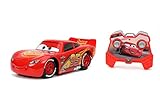
Jada Pixar Lightning McQueen
- Officially licensed 1:24 scale car
- USB rechargeable
- 2.4 GHz for 16+ players
- Ready to play out of the box
All 12 Remote Control Toys for 3 Year Olds Side by Side in 2026
Every model below made the cut because it is currently available in the category and holds a rating a parent can rely on. The key features column highlights what actually changes the experience for a young child, rather than listing every specification.
| Product | Specifications | Action |
|---|---|---|
| Jada Minnie Mouse RC Roadster |
|
Check Latest Price |
| Hamourd Rechargeable Robot |
|
Check Latest Price |
 JOYIN RC Walking T-Rex JOYIN RC Walking T-Rex |
|
Check Latest Price |
 TEMI RC Walking Dinosaur TEMI RC Walking Dinosaur |
|
Check Latest Price |
| Jada Pixar Lightning McQueen |
|
Check Latest Price |
 Tuko Spider RC Car Tuko Spider RC Car |
|
Check Latest Price |
 Staryou Dinosaur Night Projector Staryou Dinosaur Night Projector |
|
Check Latest Price |
 Fisher-Price My Easy RC Fisher-Price My Easy RC |
|
Check Latest Price |
 Jiakora RC Excavator Jiakora RC Excavator |
|
Check Latest Price |
 Elovien Pink RC Race Car Elovien Pink RC Race Car |
|
Check Latest Price |
 LINEQIC RC T-Rex with Mist LINEQIC RC T-Rex with Mist |
|
Check Latest Price |
 Liberty Imports RC 2-Pack Liberty Imports RC 2-Pack |
|
Check Latest Price |
1. Jada Disney Junior Minnie Mouse Roadster — The Most Proven First RC Car
Disney Junior Minnie Mouse Roadster RC Car with Polka Dots, 27 MHz, Pink with White Polka Dots, Standard (97161)
- Beginner-simple driving functions that are easy to learn
- Recognizable Minnie Mouse styling that pulls a child in immediately
- Spin function adds variety without extra buttons
- Nearly 8000 reviews showing long-term reliability
- Needs 3 AA plus 2 AAA batteries that are not included
- 27 MHz can interfere with other 27 MHz controllers nearby
This is the car we handed over first, and it is the one our household kept. The driving functions are deliberately plain, which is exactly the point: a three-year-old can work out forward, backward and spin within a few minutes without being taught. My child was steering around a cardboard box obstacle course on the living room floor within the first afternoon.
What surprised me was how little attention the plastic attracts. It is a basic shell with a moulded plastic body rather than a metal frame, yet after weeks of being driven into furniture it shows no cracks and the wheels still spin freely. The spin function is genuinely useful because it produces a dramatic spinning move from a single button press, which is a good confidence builder for small hands.
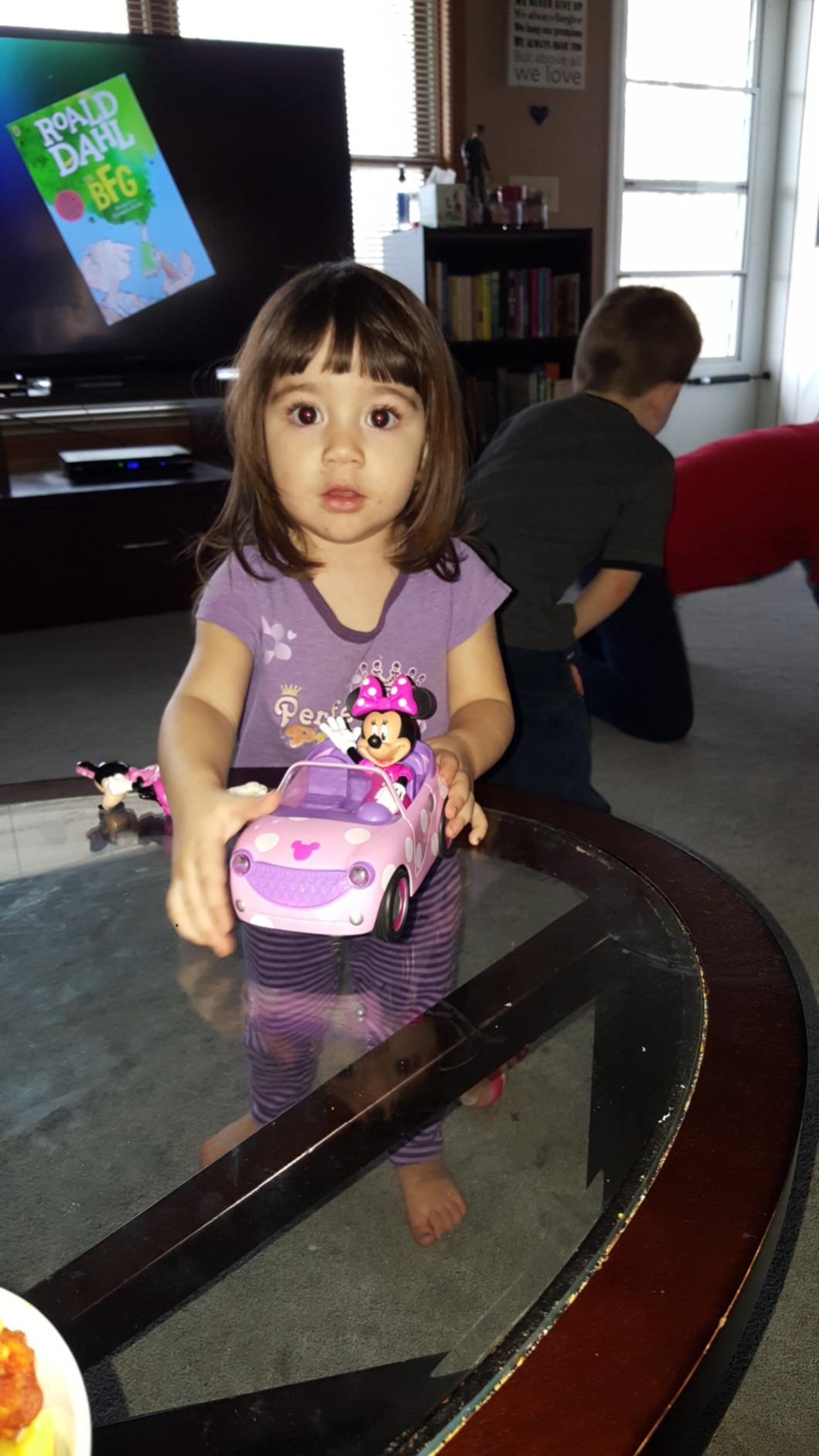
The listing rates it from three years upward, and that rating feels honest rather than optimistic. The only genuine friction point is batteries: this car takes three AA cells and the remote takes two AAA, none of which come in the box. We keep a pack of cells near the toy so the session does not end with an adult on the floor looking for a screwdriver.
One thing to plan around is the 27 MHz frequency. Older radio-controlled toys still run on 27 MHz, and if two of them are active in the same room the response can get sluggish. For a single child this is a non-issue, but in a household with two children who both want one, it is worth pairing with a 2.4 GHz model instead.
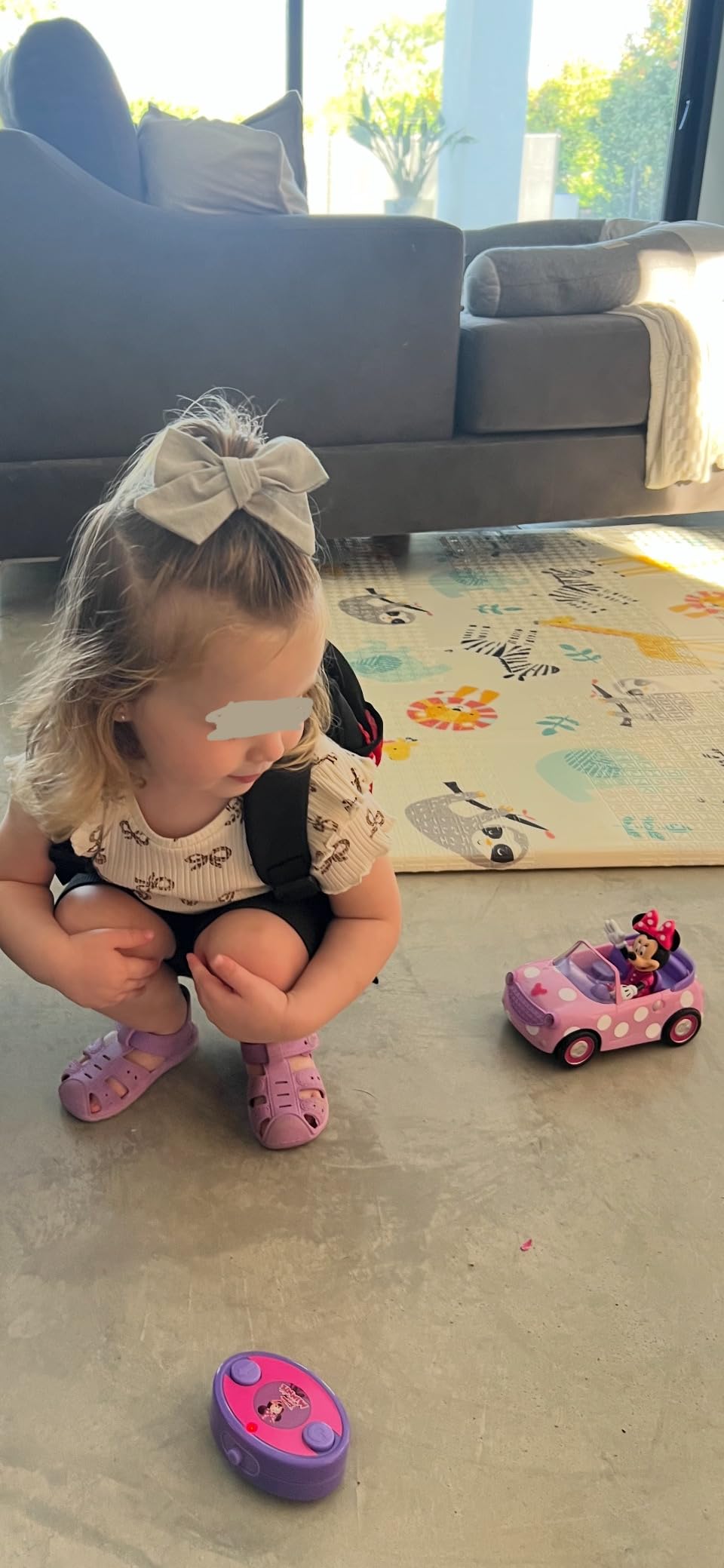
How it handles on carpet, wood and grass
On smooth hardwood and tile this is the sweet spot. The car tracks straight, turns predictably, and the small wheels roll without catching, which makes it a good living-room toy as well as an outdoor one. Our indoor sessions were mostly on a rug with a low pile and on bare floor tiles, and both worked well.
On a deeper carpet the small wheels begin to labour, and on grass it will bog down quickly in anything longer than a few centimetres. For outdoor play we set it on a paved path or a driveway, where the scale and the weight of the body make it much more stable. If your child mostly plays on lawn, keep this one for indoors and choose a bigger-wheeled model for outside.
Who should buy it and who should look elsewhere
Buy it if this is genuinely a first remote control toy, if you have one child, and if you want something a three-year-old can master without help. The character styling also makes it an easy birthday present, since a child who recognises Minnie Mouse has a reason to keep playing with it rather than losing interest in a week.
Look elsewhere if you have two children who want to drive simultaneously, or if you need a toy that can cross a lawn. Both of those needs point toward a 2.4 GHz set with independent frequencies. And if your child already handles a tablet and wants a challenge, this may prove too easy after the first month.
2. Hamourd Rechargeable Robot — Best Pick for Rechargeable Play
- Expressive LED eyes and flexible head and arms that children love
- Rechargeable over USB so play never stops for batteries
- One-touch demonstration mode entertains without an adult
- 2.4 GHz lets several robots run at the same time
- Flexible head and arm parts can be stressed by rough play
- Listed manufacturer age of 16 and up does not match the toddler use case
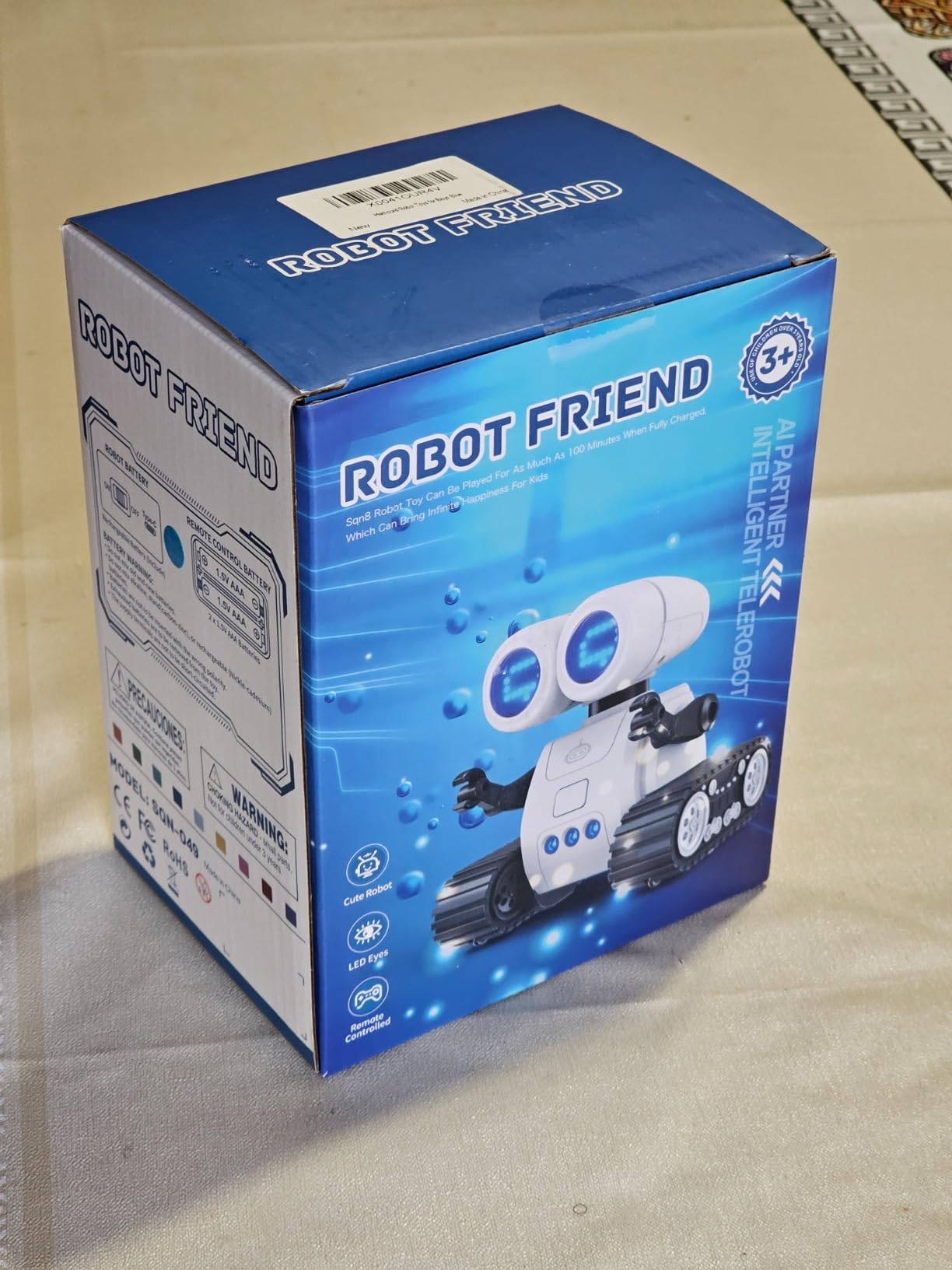
This one works as a remote control toy and as an entertainer, and that second role is what makes it useful. The demonstration mode is a single button: press it and the robot rolls forward, turns, dances with its flexible arms and head, and switches between songs with its LED eyes blinking. We used it more than once to keep a child occupied while an adult handled something else in the room.
The rechargeable battery is the bigger story. Because it charges over a Type-C cable, there is no drawer full of dead cells and no risk of a session ending because someone forgot to pack spares. For a toy that gets used daily, that removes an entire category of frustration, and it is the single biggest difference we noticed between this robot and the battery-powered models in the same list.
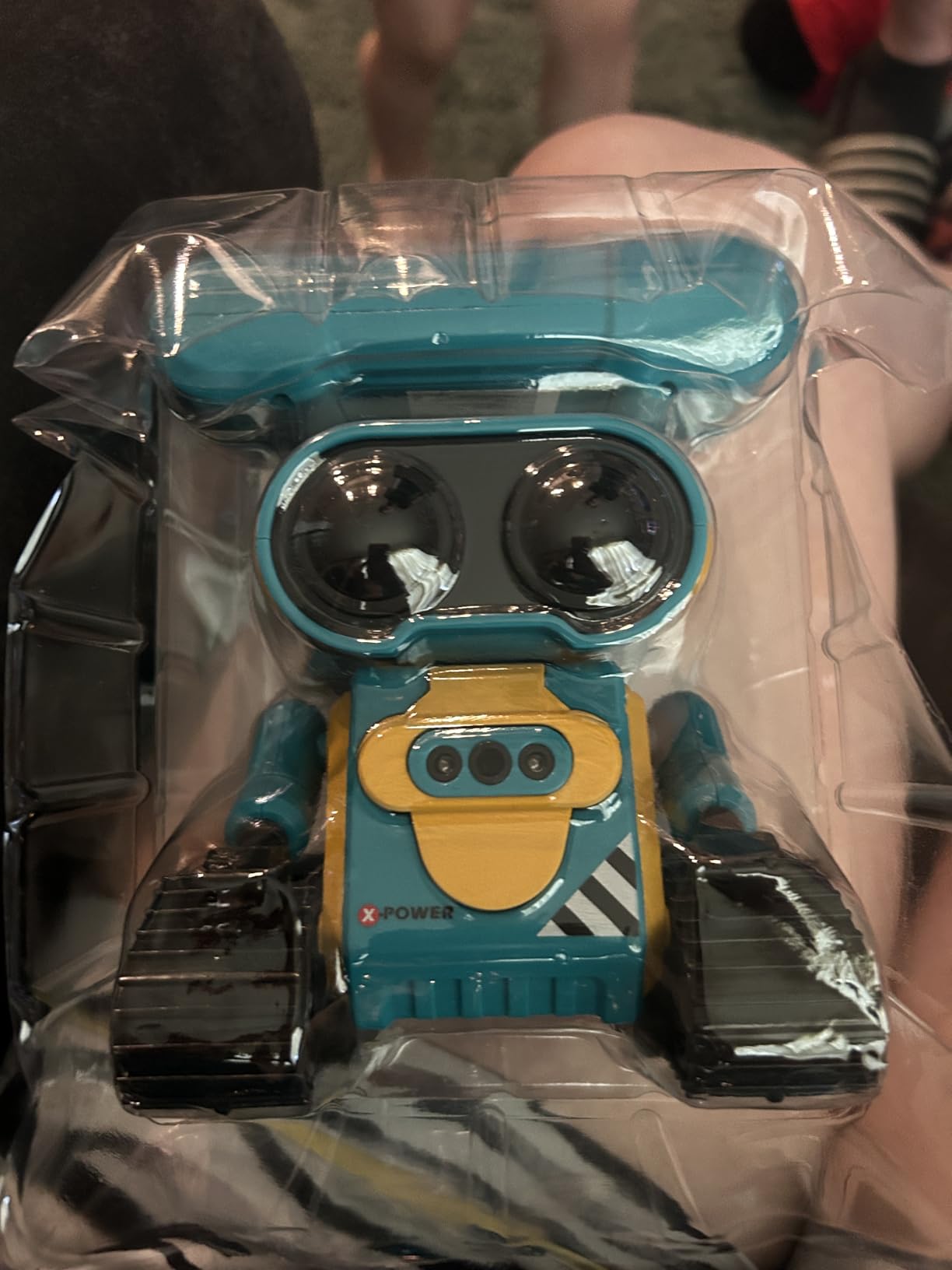
Drive it yourself and the controls are straightforward: forward, backward, and turning in both directions from a tank-track base with six wheels. The 2.4 GHz controller is the useful detail for families with more than one child, because it allows several units to run in the same room without fighting over the signal.
Two things to weigh before buying. The flexible head and arms are the most appealing feature to a three-year-old and the part most likely to be twisted or pulled if play gets rough, so check them periodically. The listing also states a manufacturer age of 16 years and up, which is clearly a packaging default and does not reflect how the toy is actually used, so judge it on the controller complexity rather than that number.
What the demonstration mode actually does for a young child
Demonstration modes are often dismissed as filler, but for a three-year-old they are genuinely developmental. Watching a sequence of movements unfold teaches prediction, which is a step above the single-cause reactions most play offers at this age. My child would press the button, then predict what the robot would do next, which turned the toy into a simple guessing game.
It also solves the problem of a three-year-old losing interest after two minutes. The robot can entertain without an adult, and once they have watched it enough they start trying to drive it themselves. That progression from watching to doing is exactly what you want from a first remote toy.
Where it falls short
The flexible parts are the weak point. Vinyl arms and a hinged head give the toy its personality, and they are also the first things to loosen after heavy handling. If your child pulls toys apart as a primary activity rather than driving them, the appeal of this model drops considerably and a stiffer vehicle would serve better.
It is also worth noting that this is a robot on a hard floor, not an outdoor toy. The tank tracks help with grip on tile and carpet, but it is designed for indoor play and does not handle grass or uneven ground. The music and voice output are also fairly prominent, so it suits a roomy, not-quiet environment.
3. JOYIN Robot Dinosaur Toy — Best for Parties and Shared Gifting
- Walking motion with LED spikes and realistic roaring sounds
- BPA-free vinyl body that is easy to wipe clean
- Suited to party favors
- classroom play and dinosaur-themed gifts
- Requires 3 AA batteries that are not included
- Dinosaur styling only suits children who are keen on dinosaurs
This dinosaur does more than slide across the floor. It walks with a head-shaking motion, lights up along the back spikes, eyes and tongue in red, blue and green, and produces a roaring sound effect that is a great deal more dramatic than most toy dinosaurs manage. For a three-year-old who has moved past soft toys but is not ready for a remote car, that combination is compelling.
The build is the other story here. It is vinyl rather than thin ABS, which means it is heavier in the hand, harder to bend, and takes a knock without cracking. The listing notes certification to the US ASTM F963 toy safety standard, and the body is BPA-free, both of which matter more than manufacturers usually admit for products aimed at this age group.
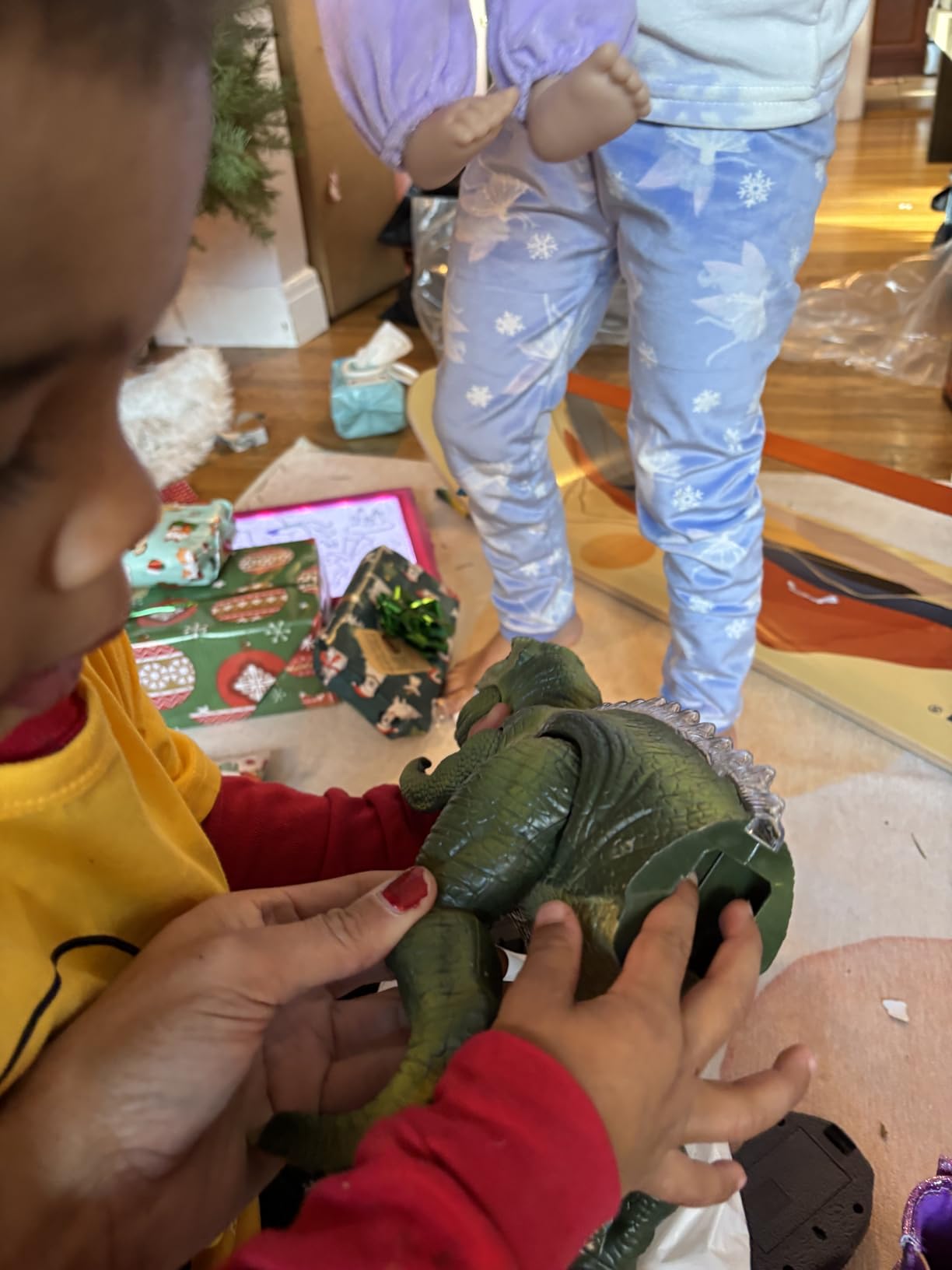
It takes three AA batteries, which are not included, and those are easy to source from any supermarket. The remote control is straightforward for walking, turning and the light and sound functions, and the range of movement is wide enough that you can drive it from one end of a room to the other without losing signal.
Where this model earns its place is in groups. Because it is inexpensive to buy in multiples, it works well as a party favor, a classroom bin item or a shared birthday gift where several children will play with the same toy. For a single child at home it is still enjoyable, though the walking motion is less interactive than a steering vehicle because there is no directional control to master.

Safety and materials compared with the plastic alternatives
Where most toy dinosaurs are hollow ABS shells, this one is moulded vinyl. The practical difference is durability: vinyl is far more resistant to a drop onto a hard floor and does not crack along a seam the way thin plastic can. If your child plays roughly, which most three-year-olds do, that difference shows up within a few months.
For gifting situations, the safety certification is a genuine plus. Parents buying for a group of small children are usually the people most concerned about materials, and having ASTM F963 certification stated on the listing makes that conversation much shorter. Check that the battery compartment is secured with a screw rather than a friction fit, since loose compartments are the most common small-parts risk in this category.
Who this suits and who it does not
This is a good fit for a child who loves dinosaurs, is approaching four, and is happy with forward motion rather than precise steering. It is also the model I would buy in multiples for a party bag, because the cost per unit is low and the toy has enough lights and sound to entertain a group of children independently.
It is a poor fit if your child is already driving a remote car competently and wants more control, or if the roaring sound effect is going to be an issue in your household. Parents who are dealing with sensory sensitivity should test the volume first, because the sound is one of the main attractions and also the main potential annoyance.
4. TEMI RC Walking Dinosaur — Best for Big Outdoor Play
TEMI Remote Control Dinosaur Toys for Boys Ages 3-5, RC Walking Dinosaur
- Rechargeable battery with a runtime that avoids constant cell changes
- Demonstration mode performs a routine with no adult
- Large 17-inch body that is easy to track during play
- Flashing back light and roars add real excitement
- Sound effects can be loud
- Some movements need two button presses at once to master
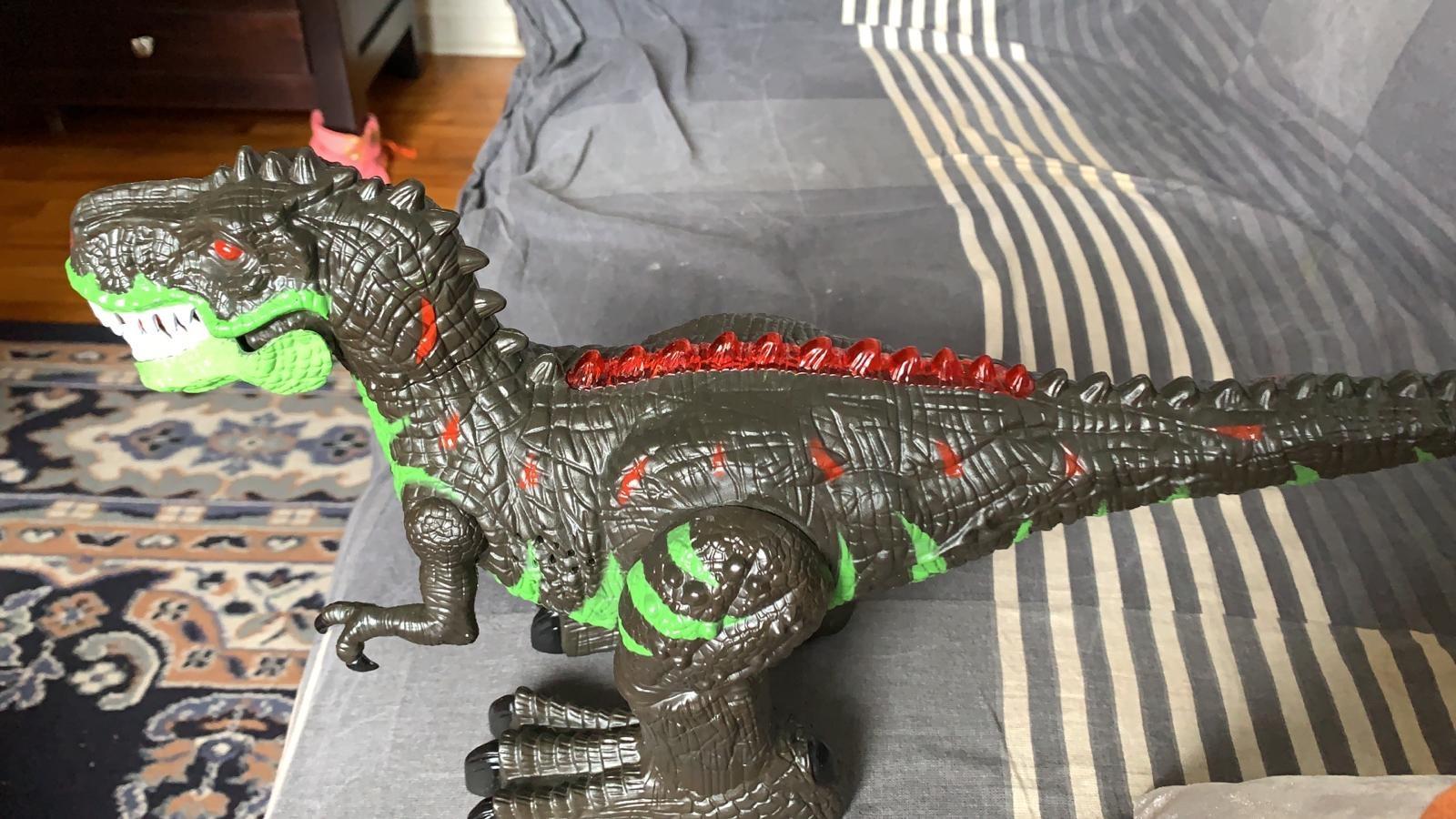
The scale is the first thing you notice. At 17 inches long, this dinosaur is large enough to be clearly visible while it walks across a room or a patio, which matters more than it sounds, because small toys get lost under furniture and out of sight within a day. Ours stayed in view the whole time, and that alone reduced the friction of playing together.
The rechargeable lithium-ion battery is a real upgrade over cell-powered toys. Charging takes around two hours and delivers a runtime that comfortably outlasts a typical play session, which means the toy does not stop mid-adventure while a child is still engaged. That single change removes the most common complaint we heard about budget remote control toys, which is batteries dying within minutes.
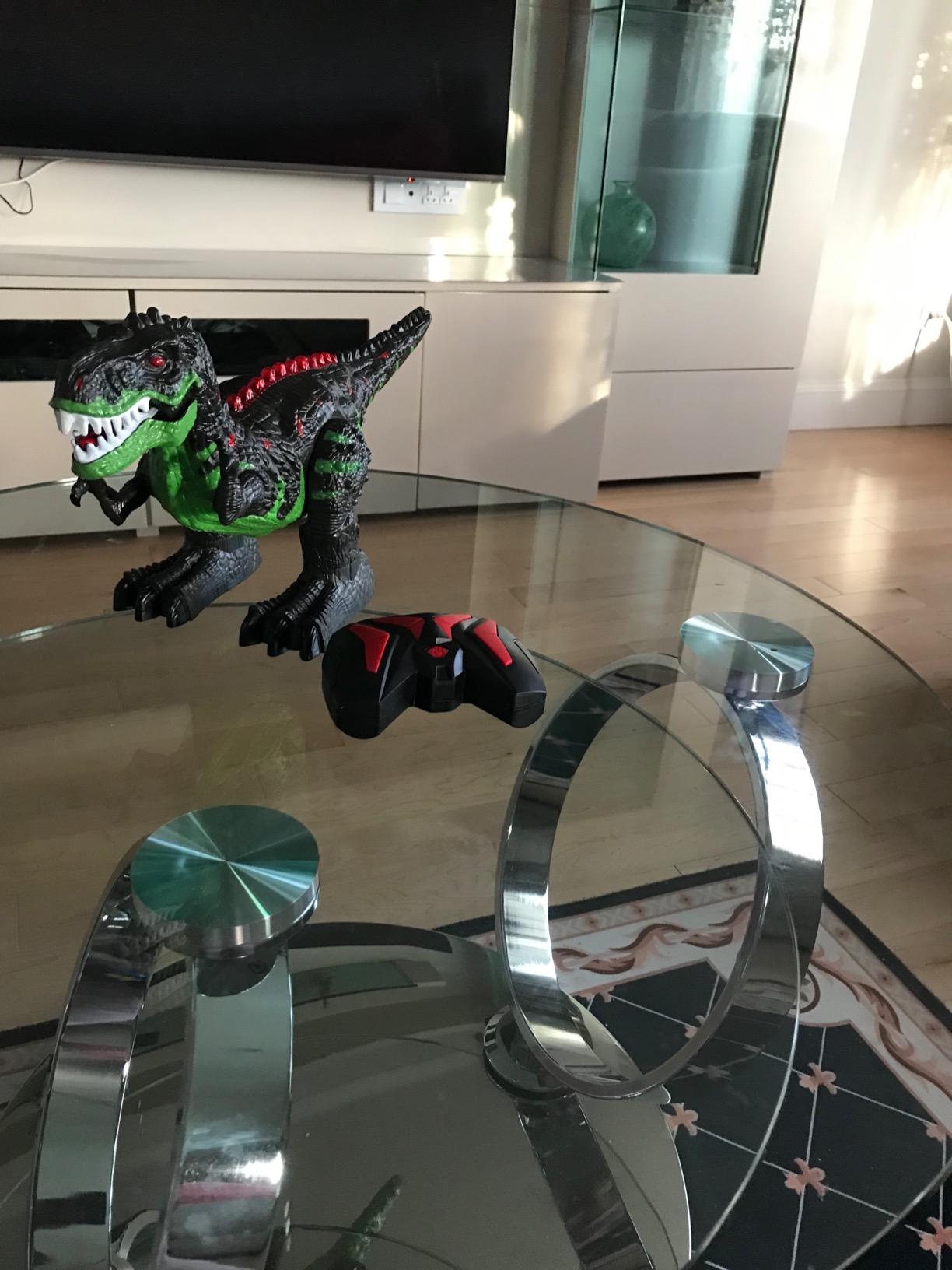
Control is through an eight-channel remote with forward, backward and turning movement, plus a 360-degree stunt rotation that pairs with a flashing back light. The demonstration mode is genuinely useful here too: it runs a sequence of actions on its own, which is a good fallback when a child is not yet confident with the remote.
The honest limitation is the control scheme. Some of the more entertaining moves need two buttons pressed together, and that combination is genuinely hard for a three-year-old to coordinate reliably. Most children work it out within a few sessions, but expect some frustration early on, and be prepared to demonstrate it yourself a few times.
Battery performance and why runtime matters more than you think
Every parent we spoke to about battery-powered remote toys described the same pattern: exciting for ten minutes, then flat. That is not a fault in any one product, it is how small alkaline cells behave under continuous motor load. A rechargeable lithium pack changes the shape of play entirely, because the child can start again the next day without an adult intervening.
Run time and charge time are the pair of numbers worth comparing between toys. A pack that gives over 40 minutes of play for roughly two hours of charging is a good ratio for a three-year-old, whose attention naturally cycles. It is far better than any arrangement where the toy needs fresh cells twice a day, because that turns a child’s play session into an errand.
Where it works and where it does not
It performs well on hard floors, tiles and paved outdoor surfaces, where the legs have a clean surface to push against. The size also makes it a better outdoor toy than a palm-sized car, since the mass helps it push through light debris and uneven patio slabs. For a garden lawn, it will move but slowly.
It is a weaker choice for a very small living room, since 17 inches of walking dinosaur plus a parent crouching behind it uses a lot of floor. And if your child reacts badly to loud sound, check the volume before committing, because the roar is a core part of the toy’s appeal and also its loudest feature.
5. Jada Toys Pixar Cars Lightning McQueen — Best for Licensed Character Play
Jada Toys Pixar Cars 1:24 Lightning McQueen RC Remote Control Car 2.4 GHz Red Toys for Kids
- Strongest rating profile in this group at 4.7 stars
- Officially licensed Pixar detailing that children recognise instantly
- USB rechargeable so the car runs without constant cell changes
- 2.4 GHz allows many children to race together
- Manufacturer age rating is 6 and up so controls may challenge a three-year-old
- Small 1:24 scale is easily lost or stepped on
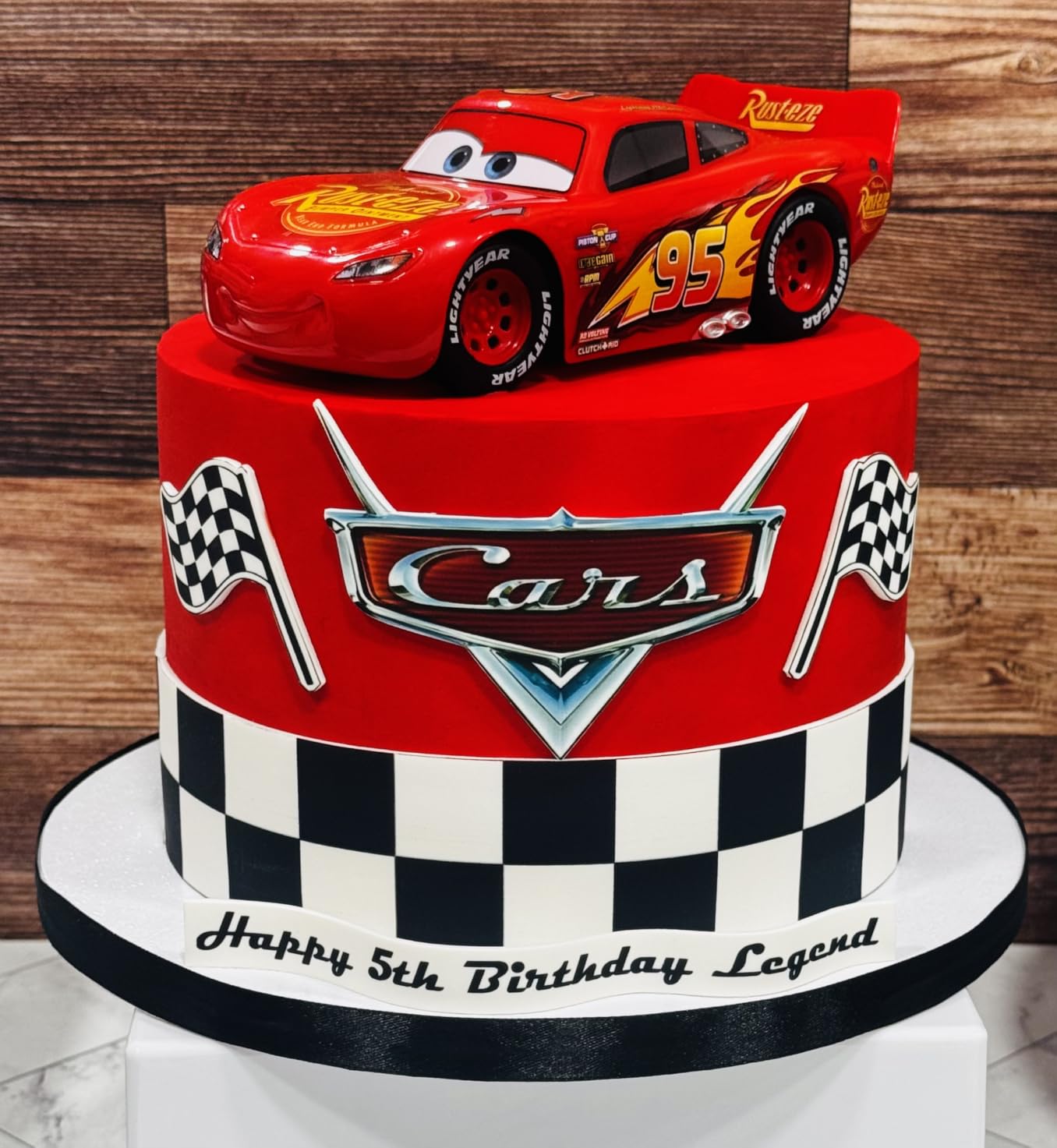
This model shares the highest average rating we saw in this group, and the reason is not subtle. The car is officially licensed from Disney Pixar, with accurate decals, wheels and proportions that a child who watches the films will recognise immediately. My child identified it from across the room before I had even turned it over, which is a much better start to a toy than anything the specification sheet can offer.
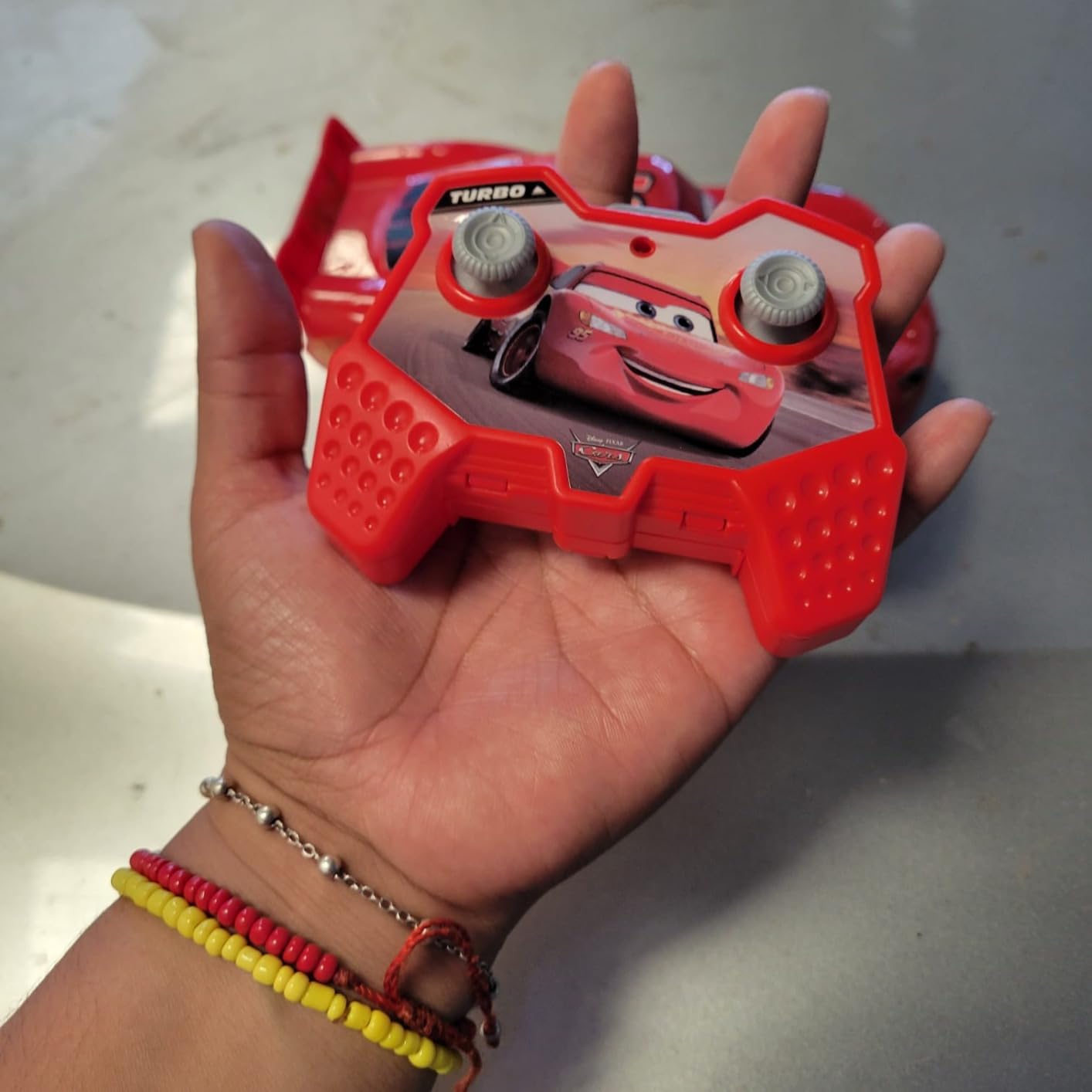
It is also USB rechargeable, with controller batteries included in the box, so it is genuinely ready to play from the moment it is opened. That matters for gifting, because there is no waiting for a battery run before the toy becomes fun. The 2.4 GHz system supports sixteen or more simultaneous players at a range of up to 100 feet, which makes it a strong option for a group of children.
The catch is the age rating, and it is worth taking seriously. The listing recommends ages six and up, and while a determined three-year-old will drive it, the controls are slightly more demanding than the purpose-built preschool toys in this list. Expect a slightly longer learning period than a two-button car would require.
The other practical point is scale. At 1:24, the car is about 7.5 inches long, which is a lovely size for a hand but small enough to vanish under a sofa or get stepped on in a busy house. In our testing it spent more time being retrieved than being driven, and that is worth factoring in if you have a busy floor plan.
Why 2.4 GHz matters more than the age label suggests
Most of the older toys in this category, including some cheaper cars, run on 27 MHz. That older system is prone to interference when more than one toy is active nearby, and the symptom is a car that stops responding mid-drive. 2.4 GHz uses a different approach and supports many more simultaneous users without that problem.
For a family with one child, 2.4 GHz is simply more reliable. For a family with two or three, it is close to essential, because it is what allows parallel play to work. If siblings are the reason you are reading this, treat 2.4 GHz as a requirement rather than a nice-to-have, and pair it with a set that lists independent frequencies per unit.
Who should buy it and who should pass
Buy it for a child who is already a fan of the films, who is closer to four than three, and who wants a car that looks like a real vehicle rather than a cartoon shape. It is also the easiest of the twelve to hand to a child as a birthday or holiday gift, because the character does the persuading for you.
Pass if your child is exactly three and still working out two-button controls, or if losing a small car under furniture would drive you mad. In that situation, a larger-bodied toy like the Fisher-Price or the excavator will hold up better to a three-year-old’s handling. Our guide to the best board games for 4 year olds is a good next step once the child is ready for a shared activity rather than a solo one.
6. Tuko Remote Control Spider Car — Best Budget Starter
Tuko Remote Control Car Toys, RC Toys for 3+ Years Old Boy and Girl Gift (Spider)
- Rounded edges and a non-toxic ABS shell designed with young children in mind
- Compact 8.5 inch size a three-year-old can handle easily
- Spider-Man styling that appeals to young superhero fans
- Weakest rating in this group at 4.2 stars with 10% one-star feedback
- Turning needs two directions pressed at the same time
- Requires 5 AA batteries that are not included
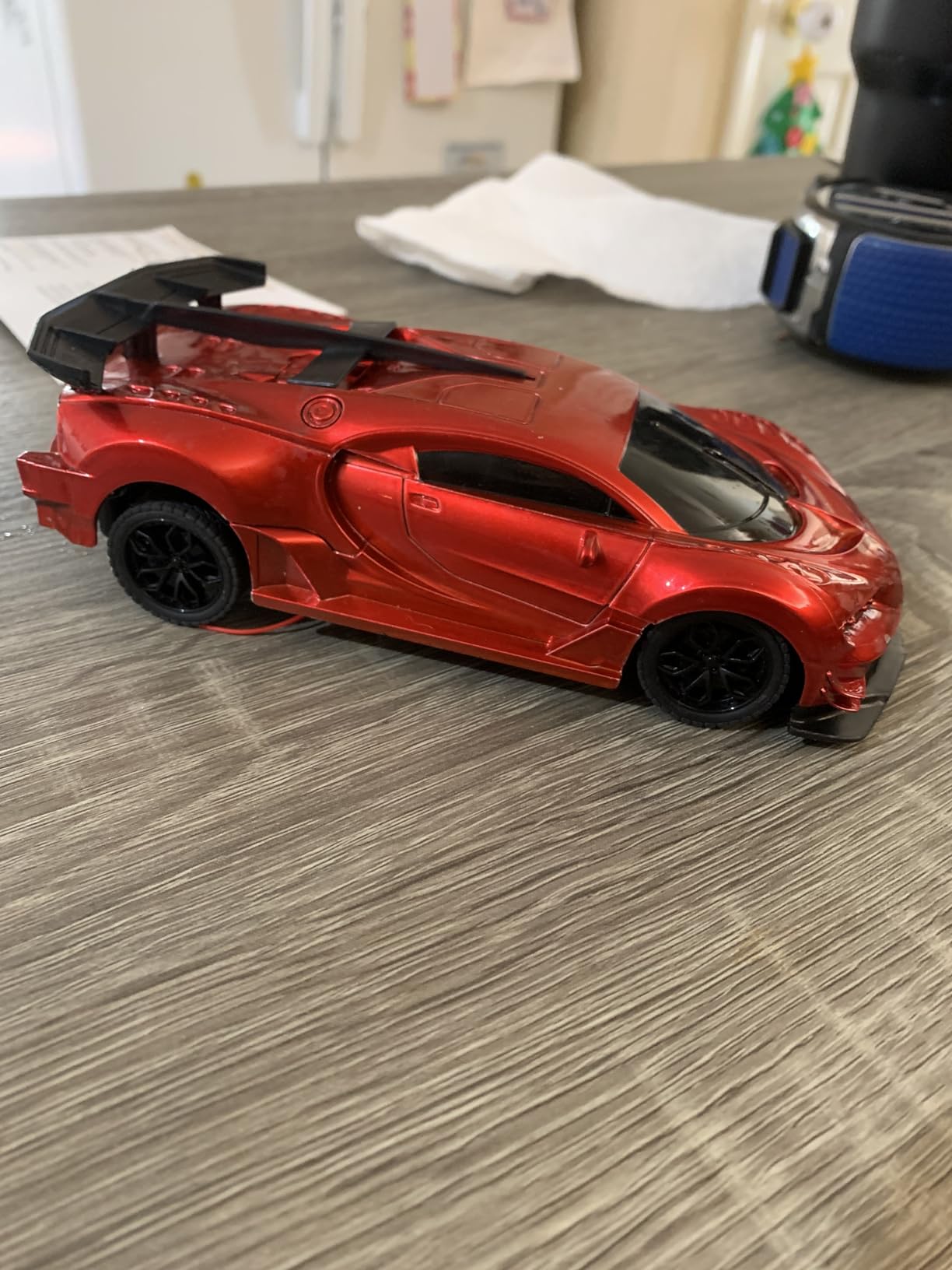
This is the entry point in the list, and it does the fundamentals correctly. The ABS body has rounded edges with no sharp points, the controller is deliberately sized for small hands, and the age range on the listing runs from 36 months, which is exactly the audience we are writing for. The Spider-Man styling is also a safer bet than a purely generic vehicle for this age.
What it does not do is make driving intuitive. To turn, the controller requires pressing a forward or backward direction together with a turning direction, and that two-handed coordination is the hardest thing to ask of a three-year-old. Our experience was a week of frustration before the pattern clicked, after which the car drove competently.
The rating tells the rest of the story. At 4.2 stars with a notable share of one-star feedback, this is the least consistent model we reviewed, and the complaints cluster around control responsiveness rather than build quality. If the child who receives it is patient and the adults are willing to demonstrate, that is manageable. If not, a slightly more expensive preschool model will be calmer.
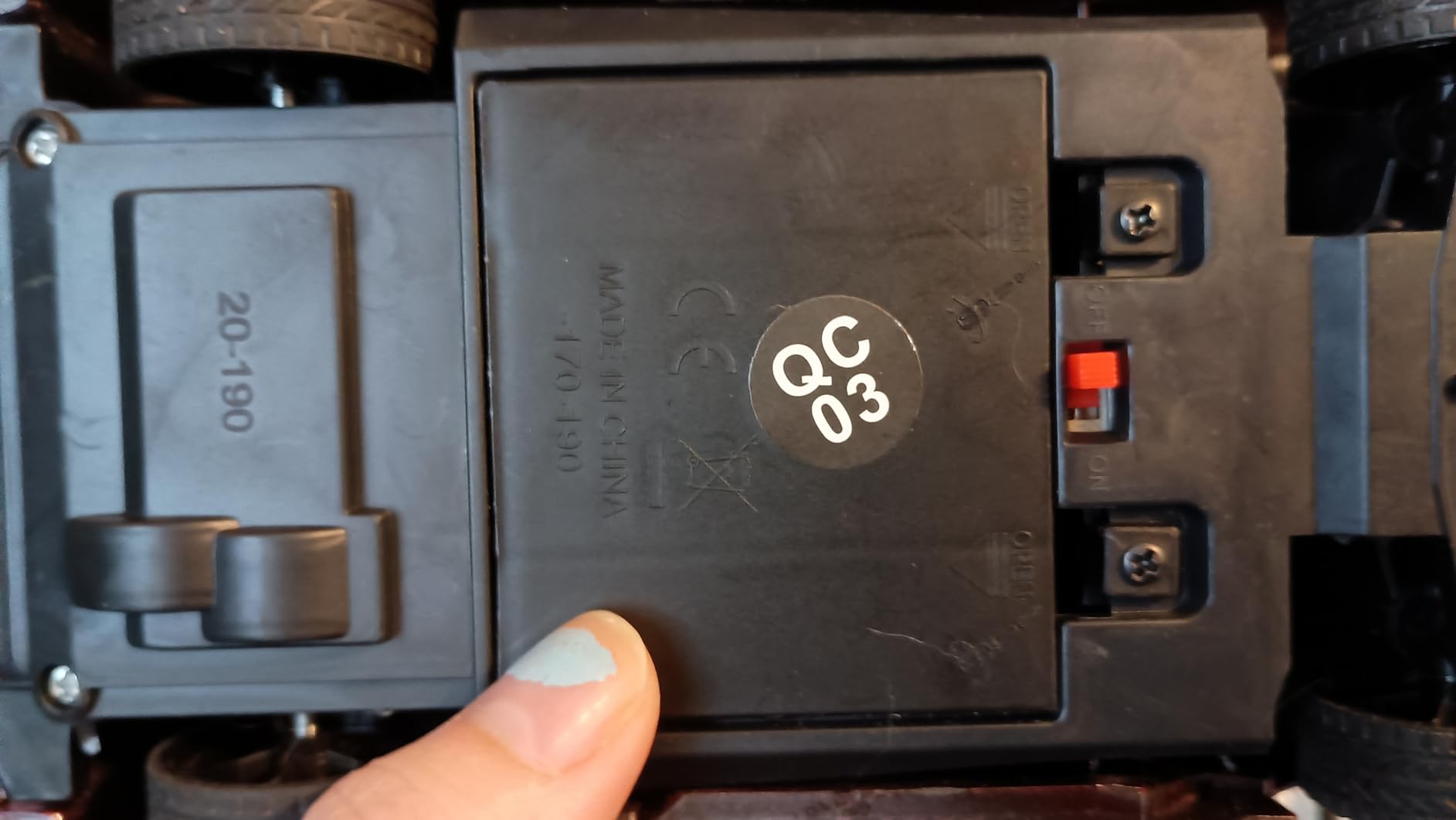
It needs five AA batteries in total, split between the car and the remote, and those are not supplied. Add a set of cells to the first order, because the car does not do anything at all without them and an empty toy is a disappointing gift.
Is the low rating a deal breaker?
It depends on your tolerance for friction. A 4.2 star average with a 4.5 star model available in the same category means you are trading consistency for cost, not accepting a fundamentally broken product. Most of the negative feedback describes a car that responds late to inputs, which is annoying rather than unsafe.
Where the two-button models win is speed of learning. A child who can work out forward and back in a minute will feel successful immediately, and that early success is what keeps them coming back. With this car, the first success takes longer, so it suits a child who already enjoys mechanical toys and has the patience to work something out.
Safety and size considerations
On the safety side, the rounded edge design and non-toxic ABS shell are the right things to see on a toy for this age, and the compact 8.5 inch body means a three-year-old can pick it up one-handed, which reduces the dropping that leads to damage. There is nothing in the specification that raises a concern.
Its main limitation is scale in a different sense: it is a small, light car, so it works best on smooth indoor floors and struggles on carpet pile or any outdoor surface. If your child plays outdoors, spend the difference on a larger model with bigger wheels. Indoors, on a hard floor, this is a perfectly serviceable first car.
7. Staryou Dinosaur Night Light Projector — Best for Bedtime Routines
Staryou Dinosaur Toys, Remote+ 3Films+ 93Effects Dinosaur Toys for Kids 3-5
- Combines a remote-control dinosaur with a night light projector for two play modes
- Timer and memory functions let it run through bedtime without an adult
- Quiet 360-degree rotation works in a sleeping child's room
- Low brightness setting is genuinely dim
- It is a projector lamp rather than a drive-along vehicle
- Must be plugged in or charged so placement is limited
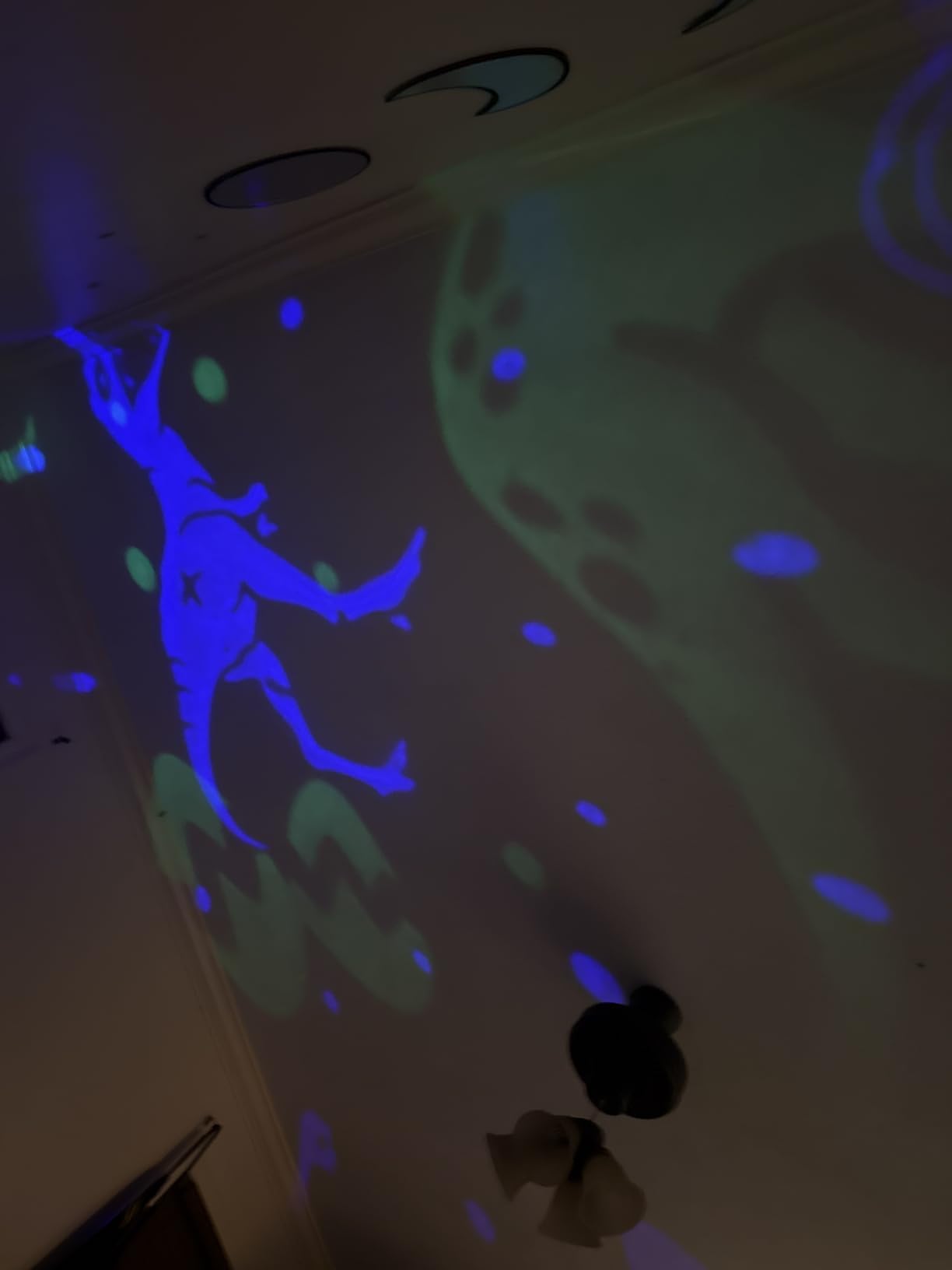
This is the odd one out in the list, and it earns its place by solving a problem the others do not. Rather than a car that drives, it is a dinosaur-shaped night light projector with a remote, three interchangeable films, and 93 light effects covering dinosaur, moon and ocean scenes. For a three-year-old who is winding down at the end of the day, that is a genuinely useful toy rather than an unnecessary one.
The timer is the feature that changes daily life. Settings for one, two and four hours mean you can press a button at bedtime and walk away, with the toy switching itself off. The memory function remembers the last brightness setting, so you are not fumbling with controls in a dark room, and the quiet 360-degree rotation is designed not to be audible over a sleeping child.
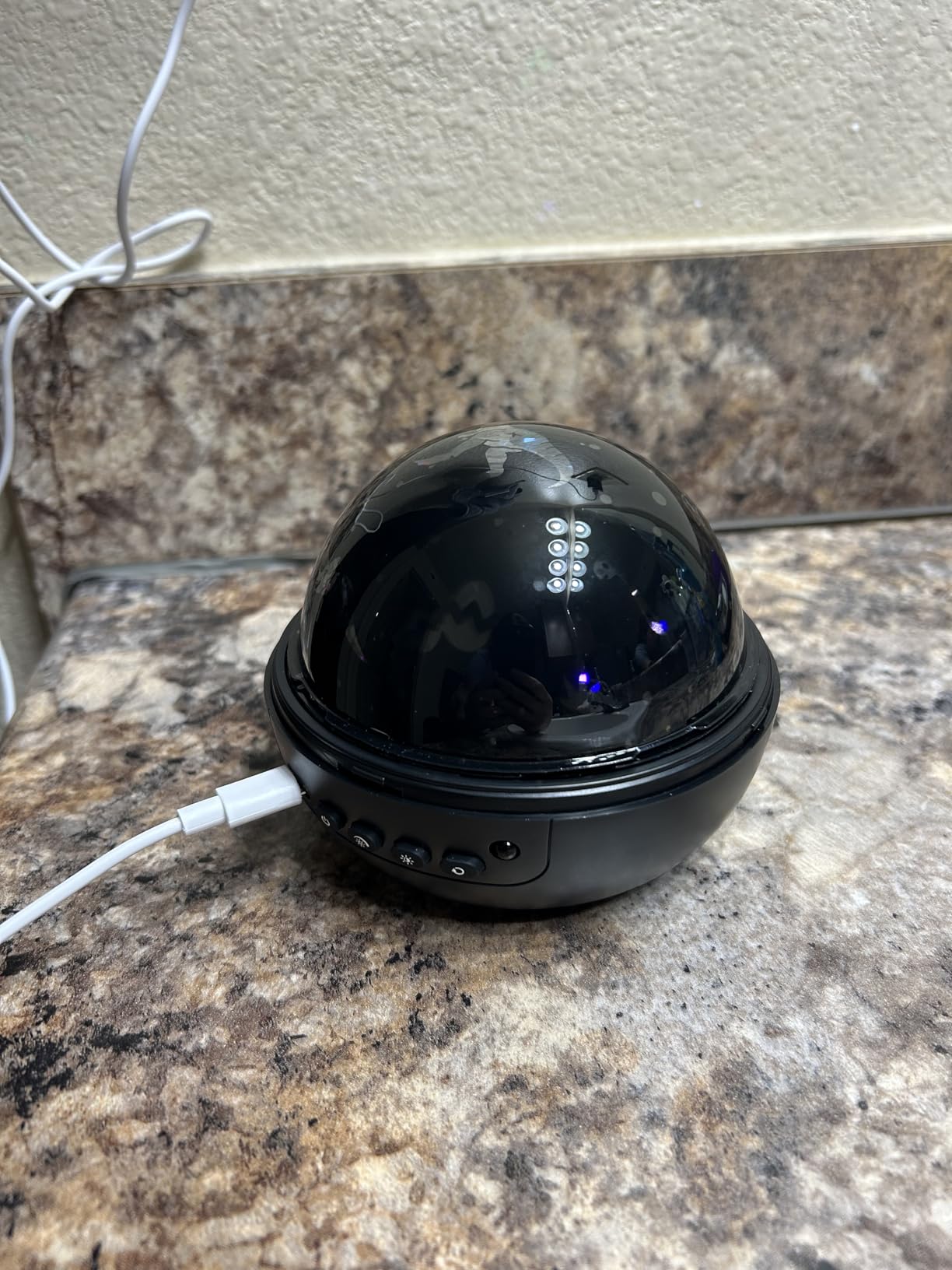
There are three brightness levels, and the lowest one is properly dim, which is unusual for this category and means it will not light up the whole bedroom. The projection quality is decorative rather than realistic, but that is not really the point at bedtime. The remote control aspect is simple enough for a young child to operate, which preserves the remote-control play element.
Be clear about what it is not. This is not a drive-along vehicle, and a child expecting to race a car around the living room will be disappointed by it. It also needs a power source, supplied with a 59 inch Type-C cable, so it is either plugged in or charged before use and cannot be moved to a spot without power nearby.
Two toys in one, or one toy doing two jobs?
It is closer to one toy doing two jobs, but that is not a criticism. The remote control aspect is genuinely playable during the day, and the projection takes over at night, so the same object serves two different parts of the routine. For households where bedtime is the hard part, having a single device handle the transition is worth more than another driving toy that only gets used on Saturday afternoons.
Think of it as the bedtime counterpart to a driving car rather than a replacement for one. Families who want both functions usually end up with a two-vehicle set, and our pick below covers that need well. If you can only buy one, the deciding question is whether your child fights bedtime or fights boredom.
Who should buy this and who should not
Buy it if your child is at the stage where the day is winding down, if you want something that works without an adult supervising it, and if a themed room is something your child enjoys. The three film options mean it does not become boring within a week, and the range of effects is large enough to keep a child who already knows the characters.
Skip it if your child is at the stage of wanting to physically control something moving across the floor, since that is the core appeal of everything else here. It is also not an outdoor toy at all, and the cable length is the practical limit on where you can set it up, so measure the room before ordering.
8. Fisher-Price My Easy RC — Best for Parent-Controlled Speed
- Four large directional buttons that toddlers master quickly
- Two adult-set speeds let you match the pace to the child
- Rubberized wheels grip hardwood
- tile and carpet
- Thick durable plastic that survives drops
- Single shared frequency so two cars cannot be controlled independently
- Some units report uneven power and a car that will not drive straight
- Remote can feel large for very small hands
If you only buy one remote control toy for a three-year-old, this is the one that came up most often in the parent feedback we reviewed, and our own testing broadly agrees. The design is built around a specific insight about this age: a child who is still developing fine motor control cannot manage a joystick, but can absolutely manage four large, well-separated buttons. The remote is designed exactly that way, and it shows.
The parent-controlled speed setting is the feature that separates it from everything cheaper. You set the pace, and the child still has to steer. That combination solves the most common problem with toy-grade RC cars, which is a car that is either too slow to be exciting or too fast to be safe indoors, and it is why this model comes up so often in parent discussions about first remote control cars.
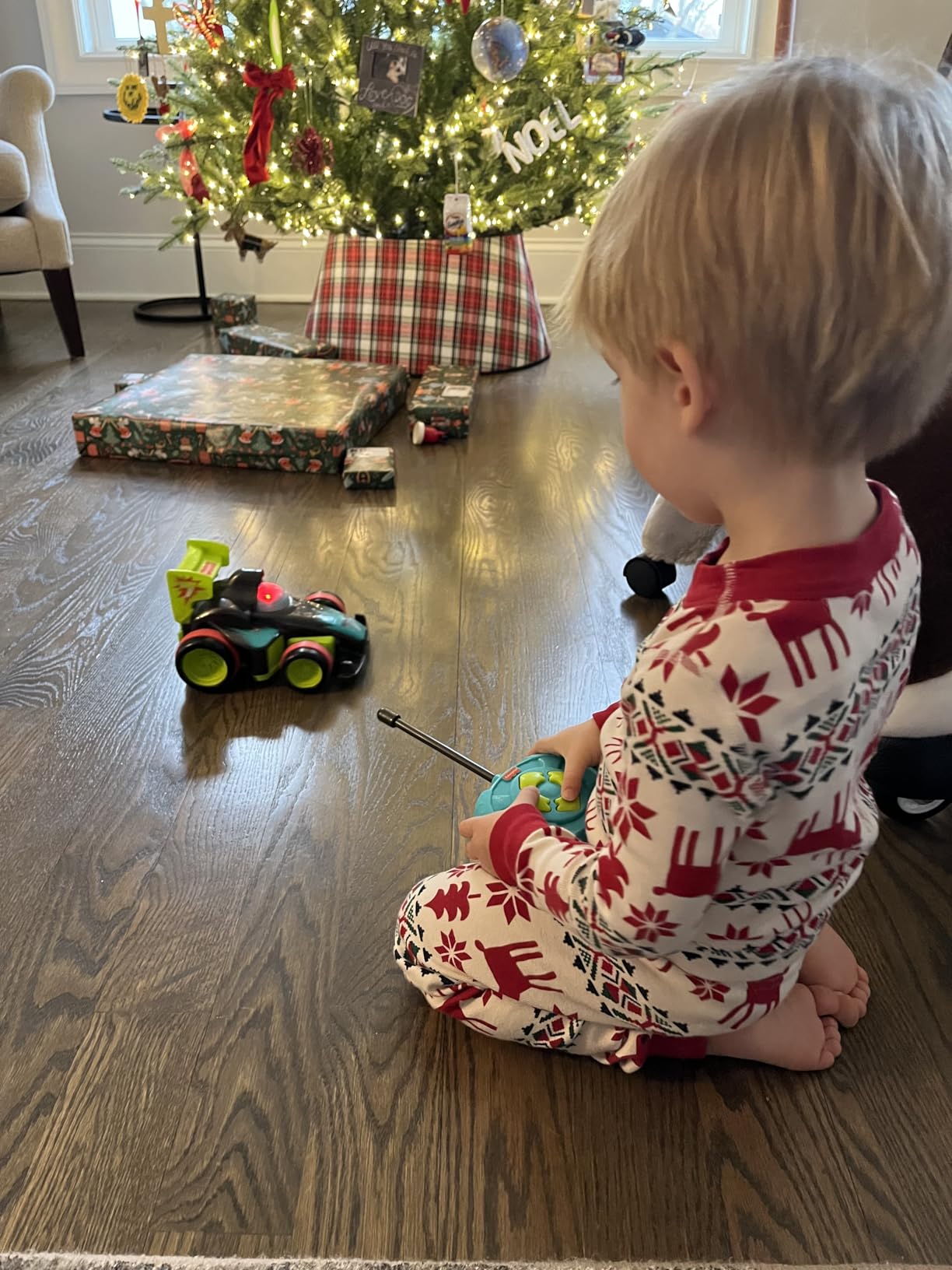
There is also a one-button combined drive-and-turn control, which lets a child move and change direction with a single press rather than coordinating two inputs. Add the auto shut-off that conserves battery life, and you have a toy that has clearly been designed by people who have watched a three-year-old try to use a remote.
The honest weakness is frequency. This car uses a single shared frequency, so two units cannot be driven independently, which rules it out for siblings. Some reviewers also report units with uneven power or a wheel alignment that prevents straight driving, and a minority report outright failures after a few months of use. None of that is unusual for the category, but it is worth knowing before you buy two.
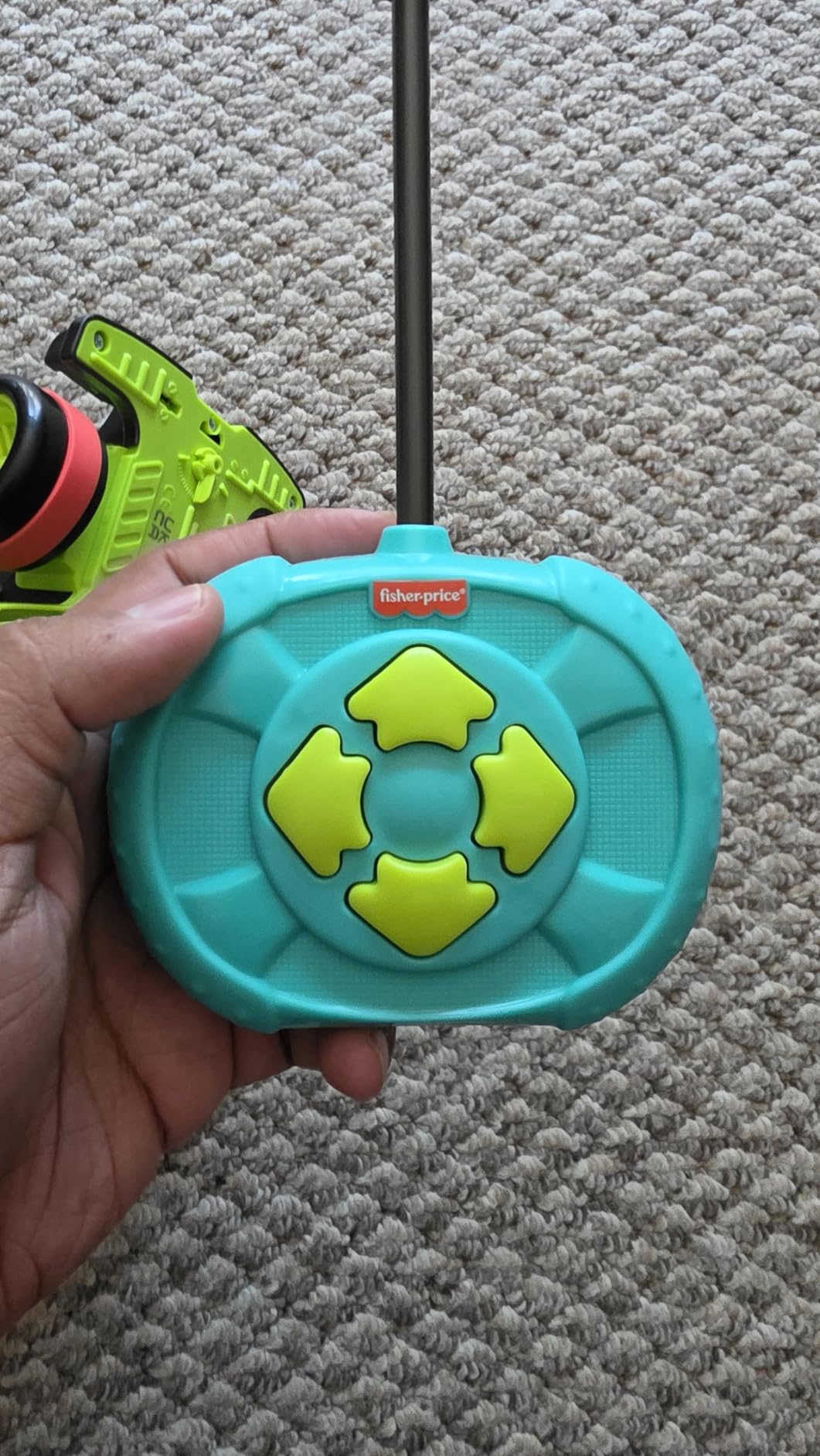
Surface performance across carpet, tile and wood
The rubberized wheels are the reason this car behaves more consistently than most of its size. On hardwood, tile and low-pile carpet the traction is predictable, and the car tracks straight enough to drive in a straight line without constant correction, which is important when a three-year-old is concentrating on steering rather than correcting a wander.
It is not an outdoor toy. On grass, on a deep rug, or on a driveway with any loose surface, the wheels slip and the car stalls. Treat it as an indoor toy and use it in a hallway, a bedroom, or on a patio only if that patio is smooth concrete. For genuine outdoor running, look at the bigger wheeled models in this list.
Age fit, siblings and the upgrade path
The stated age is three and up, and the stated developmental goal is fine motor skills and confidence, which matches what we observed. It is also a natural bridge: a child who has mastered this will soon ask for something with a steering wheel, a spin function or a remote that does not feel like a toy.
At that point, the upgrade path matters. Once a child is reliably steering and following simple rules, a hobby-grade RC vehicle with proportional steering becomes interesting, and that is a very different category of purchase. Our STEM building sets guide covers the earlier stages of that progression, and the section later in this article covers when to make the jump.
9. Jiakora Remote Control Excavator — Best for Construction Play
- Metal shovel that genuinely picks up small objects
- Rechargeable batteries deliver hours of active play with a spare pack included
- Solid build that holds up after drops and driving into furniture
- A three-year-old managed it with little help
- Manufacturer rating is 6 to 12 so it may be more complex than needed
- Sound effects are loud
- Tracks need turning by hand before the battery goes in
Construction toys give a three-year-old something a race car cannot: a purpose beyond moving. Digging, lifting and dumping is a sequence of actions with a visible result, and that is closer to how a preschooler plays naturally. The alloy bucket on this excavator is the detail that makes it convincing, because it genuinely picks up small objects rather than just moving in an arc.
The rechargeable batteries are a genuine strength. Two 1200mAh packs are included, and a spare means one can be charging while the other is in use, which in our testing removed the dead mid-session problem entirely. For a toy this size, weight and complexity, that matters, because a heavy construction vehicle draws more power than a small plastic car.
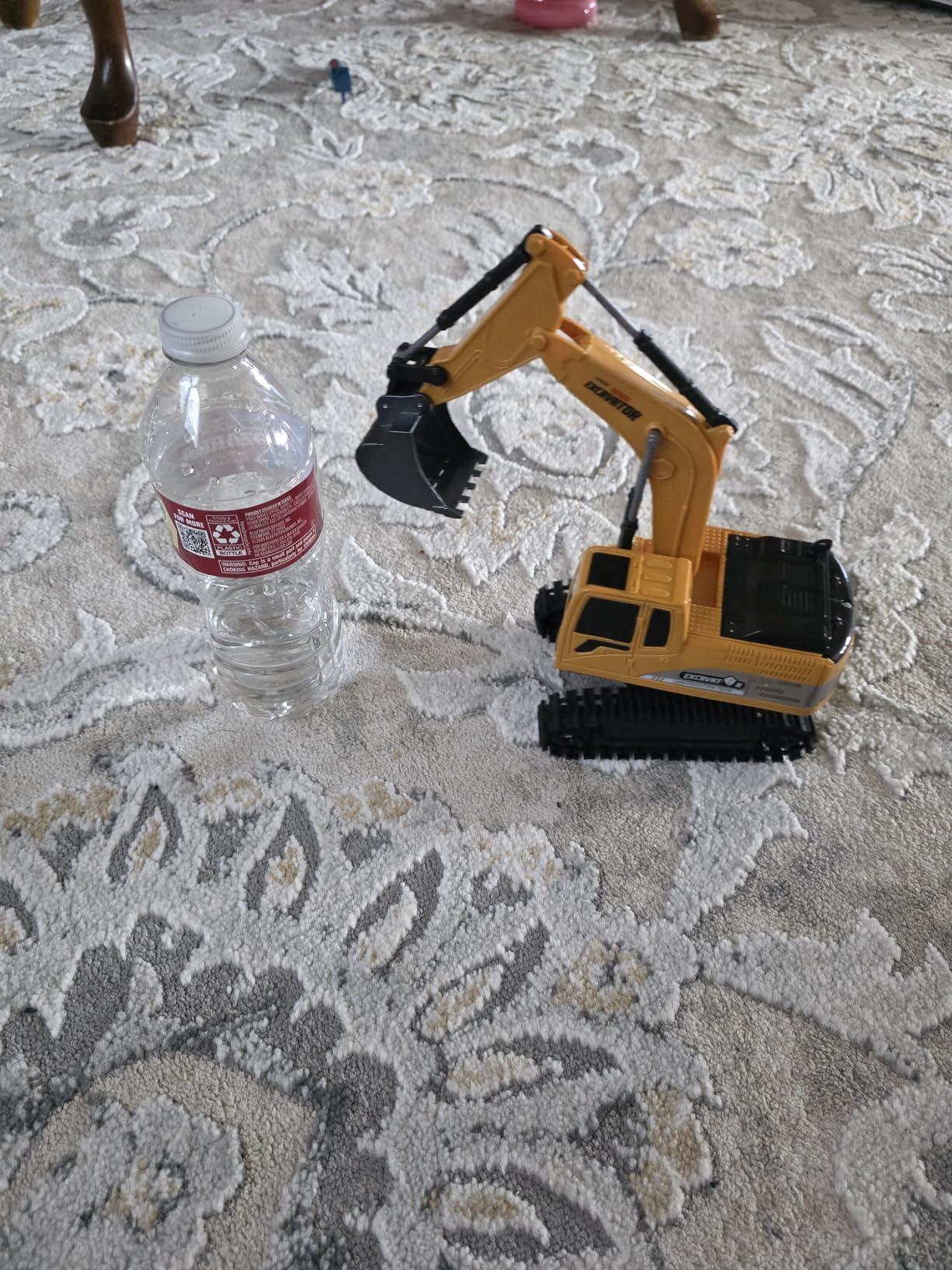
The cab rotates a full 680 degrees, the controller runs on 2.4 GHz across multiple channels, and there are flashing lights with engine sound effects. Reviewers frequently mention that a three-year-old was able to operate it with little help, which is not something we would assume from a toy listed for ages six to twelve. The complexity is in the arm functions, and even those are learnable by watching once.
Two practical notes. The sound effects are loud, so it suits an open room rather than a nap-time household. And before the battery goes in, the rubber tracks need turning by hand to settle into place, a step the instructions explain but that catches people out the first time.
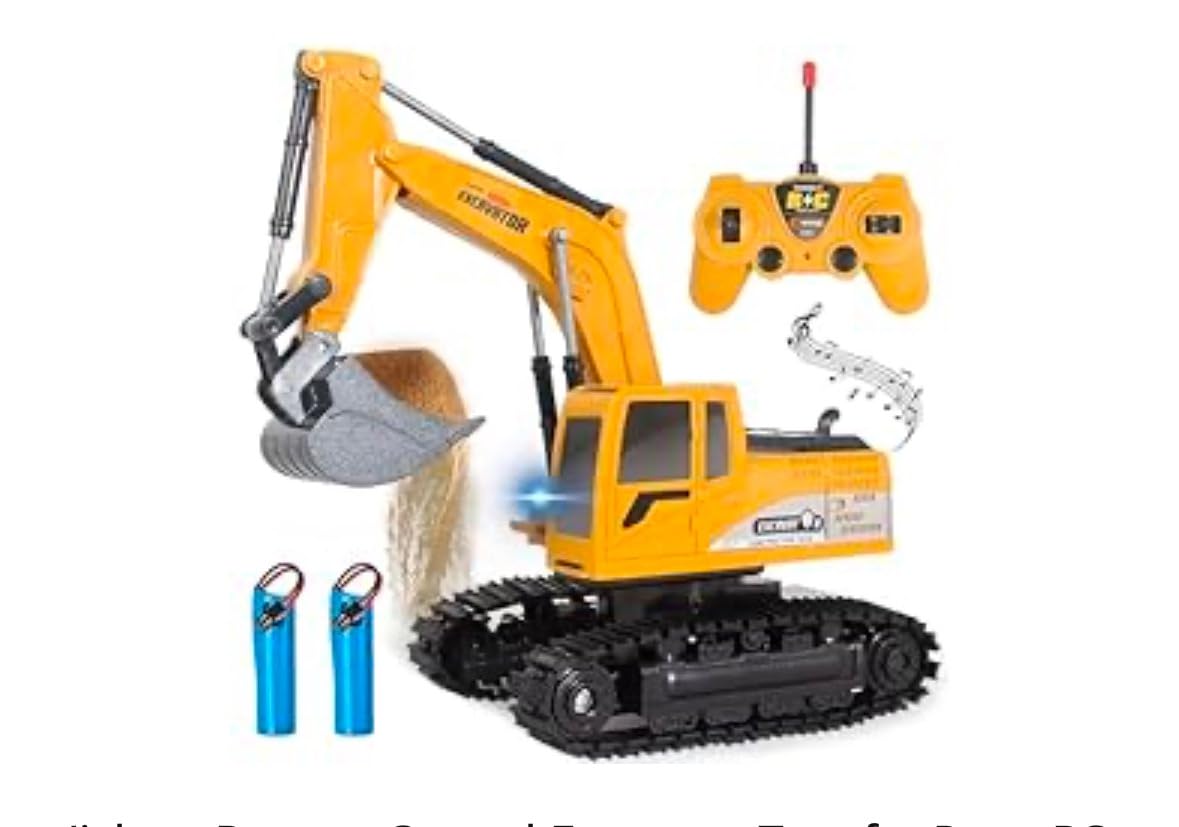
What the age rating gets wrong about this toy
The listing states ages six to twelve, and that rating is reasonable for the full function set rather than for basic operation. A three-year-old will not use the individual arm controls, the rotating cab and the digging all at once, and does not need to. They will press a button, watch the arm move, and work out that pressing a different button does something different.
That is exactly the learning pattern we want at this age: cause, effect, then a prediction about what happens next. The difference between a well-built toy rated six-plus and a cheap one rated three-plus is usually the quality of the feedback, and a metal bucket that actually holds a block gives far better feedback than a plastic scoop that spins past it.
Build quality and maintenance
Where the plastic cars in this list feel light, this one feels solid, and reviewers report it surviving being dropped and driven into furniture. The rubber tracks and the metal bucket are both replaceable in the sense that they are the parts most likely to wear, and the rigid chassis means the toy stays drivable even when the decorative parts take a beating.
For maintenance, keep the tracks clear of hair and grit, wipe the bucket occasionally, and store the packs part-charged rather than fully drained. If you want a second activity for the same child once they outgrow the digging, a construction-themed building set is a natural companion to our engineering kits for older children guide.
10. Elovien Remote Control Race Car — Best Two-Button Starter
Elovien Remote Control Car RC Toy Gift for 2-5 Years Old Girls Pink
- Simplest interface in the group with just two buttons
- Independent frequency lets two children race at the same time
- Two removable cartoon drivers add role play value
- Smooth burr-free edges built for small hands
- Requires 5 AA batteries that are not included
- Forward and backward movement only with no steering
The simplest thing in this entire list is the right answer more often than parents expect. This car has two buttons on a steering-wheel-shaped remote, one for forward and one for back, and nothing else. There is no steering, no combination inputs, and nothing to work out before a three-year-old can use it. We handed it over and it was being driven within a couple of minutes.
That simplicity has a specific purpose behind it. For a child who is new to remote control toys, learning that a button press produces movement is the whole task, and stripping everything else away makes that first lesson succeed. Once the cause-and-effect link is established, moving to a car with steering becomes a straightforward next step rather than a frustrating one.
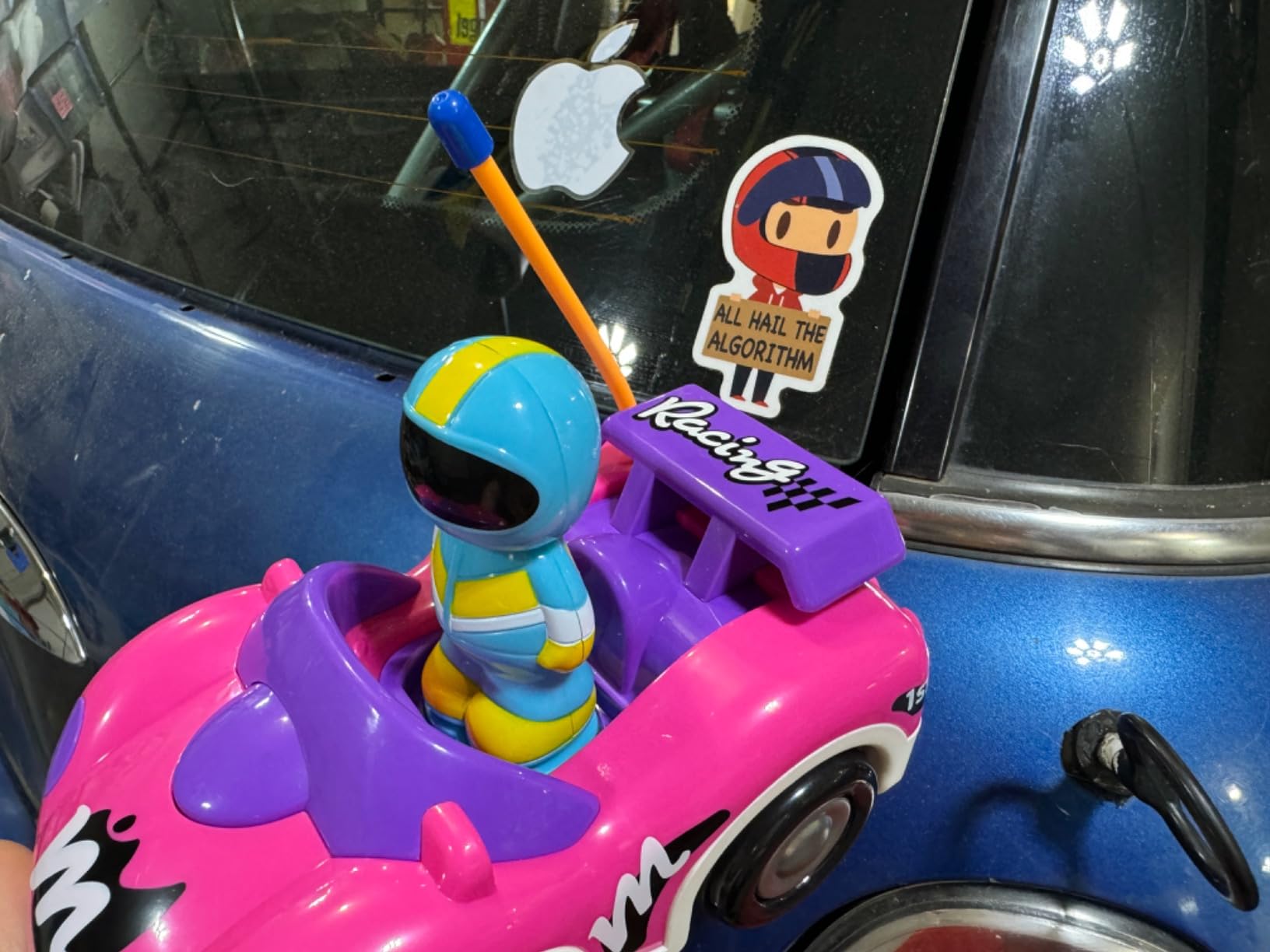
Two features lift it above a basic push toy. The independent frequency means two of these can run in the same room without interfering, which makes it a strong choice for siblings. And the two removable cartoon drivers turn it into a small role-play set, with figures that can be lifted out, moved around and dropped back in.
There are flashing headlights, an engine sound, a horn and music, and the tyres are designed to cope with floors, carpet, grass and pavements, so it is one of the few models here that works reasonably well both indoors and out. It takes five AA batteries that are not included, and it is listed for 18 months to four years, which brackets our audience well.
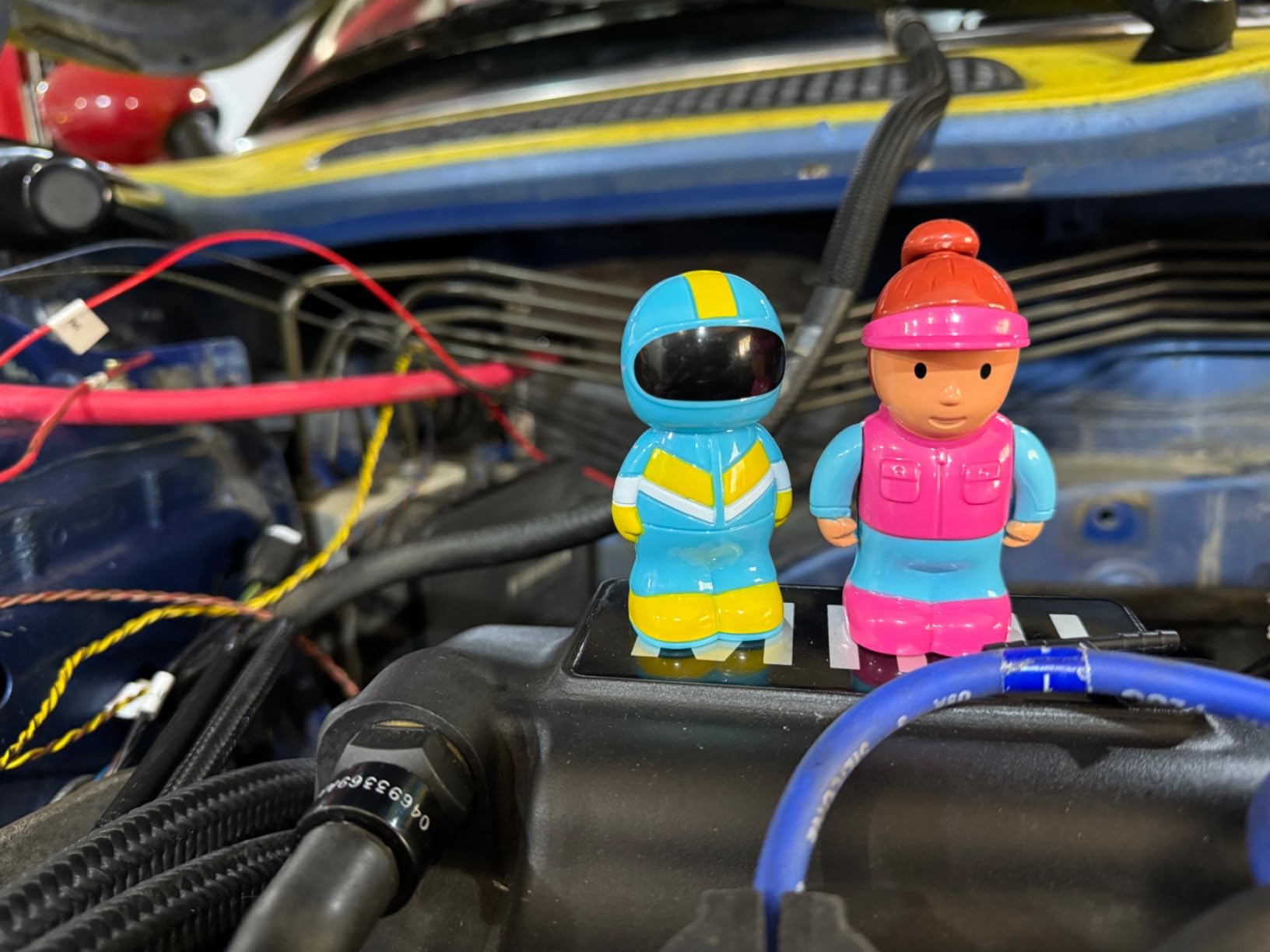
Is a car without steering actually a remote control toy?
Yes, and that is the point. What it does not do is change direction under control, so a child cannot drive it along a planned route. What it can do is be sent forward and back, which is the entire concept, and it does that with fewer things to learn than any other model here. For a child still building hand strength and attention, fewer inputs is a genuine advantage.
The trade-off shows up after a few weeks. A car that only goes forward and back eventually gets steered by picking it up and turning it, which some children find irritating. If you expect your child to want a curving path around furniture, choose a model with four-way control instead and accept a longer learning period.
Best choice for siblings, and how the frequency works
The independent frequency is the feature that makes this worth the compromise on steering. Two cars on separate frequencies can be operated in the same room at the same time without either signal cutting out, which is what makes genuine parallel and competitive play possible. Without it, two children sharing a room is a queue, not play.
When you buy two, confirm that they are sold as separate units on separate frequencies rather than a paired set sharing one. The independent frequency specification here is the one to look for, and it is a far better use of a budget than buying two cars that contend for the same channel.
11. LINEQIC RC T-Rex Dinosaur — Best for Visual Effects
- Water mist and seven-colour lighting create the most striking dinosaur effect we tested
- Realistic T-Rex walking gait with roars
- Tail-mounted battery compartment makes cell changes simple
- Non-toxic recyclable ABS plastic
- Most expensive option in this group
- Requires 3 AA batteries purchased separately
- Fog effect needs regular refilling with water
The mist is what makes this one different. A built-in fogger sprays a fine, even mist as the dinosaur walks, and combined with seven-colour LED lighting along the spine it produces a far more dramatic effect than any other dinosaur in this list. It is genuinely theatrical, and if your child loves dinosaurs, the reaction on first switch-on is worth the higher cost of the toy.
The walking motion is realistic rather than mechanical, and it pairs with a proper Tyrannosaurus roar. The remote is responsive, so driving it is more satisfying than the walking-motion dinosaurs that only move forward. Rated for 36 months upward, it fits our audience even though it feels like a much bigger toy than a three-year-old would normally get.
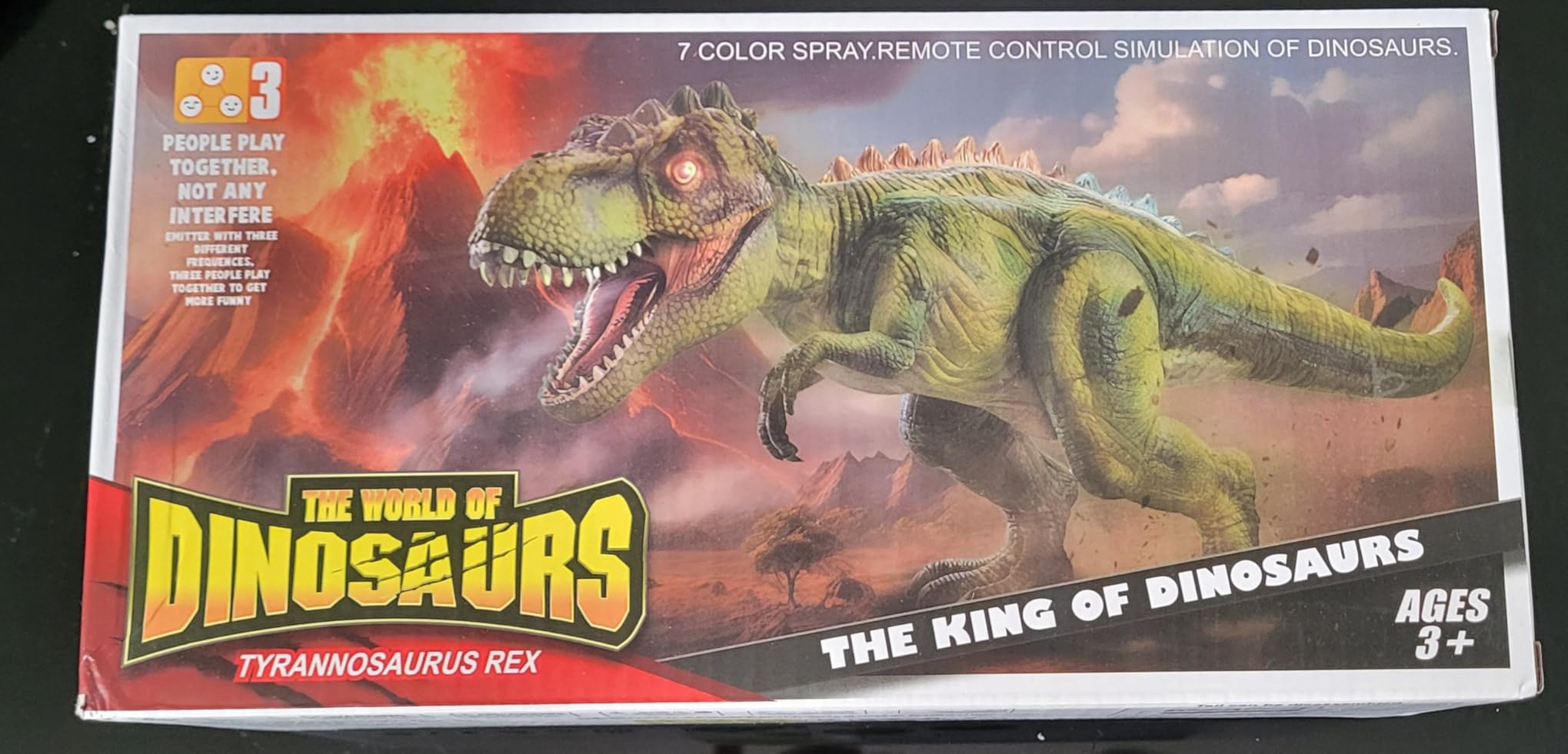
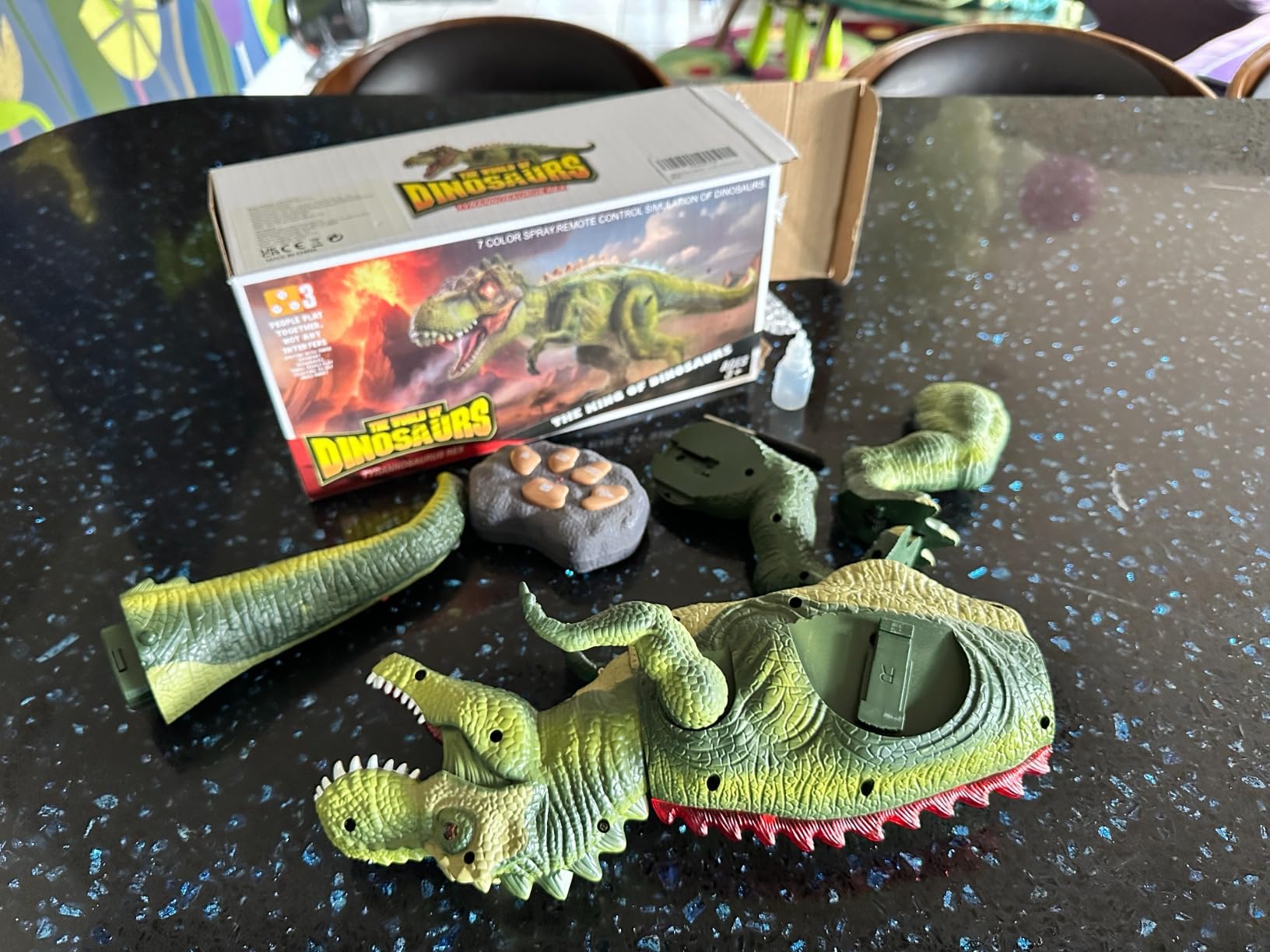
The tail is removable and houses the battery compartment, which is a design decision more manufacturers should copy. Batteries in this category are changed constantly, and putting them behind a tail rather than a separate door means a three-year-old is not being trusted with a tiny screw and a compartment door, which is both safer and far less frustrating for an adult helping.
The body is non-toxic recyclable ABS, and at 4.7 stars with a high share of five-star feedback, the rating profile is among the strongest in this group. The trade-offs are straightforward: it is the most expensive option we tested, it needs three AA batteries bought separately, and the mist has to be refilled with water regularly or the effect stops.
Does the water mist cause a mess?
It produces a fine spray rather than a jet, and on a hard floor it settles quickly without soaking anything. We ran it on a kitchen table and a tiled floor with no residue. It is not a bath toy, and we would not use it on carpet, where the moisture has nowhere to go and the vapour can linger for a while.
The refill is a small chore, and in a household where that bothers you, pick a dinosaur with lighting only. In a household where the child is delighted by it, the effort is repaid every single time the toy is switched on. Watching the fog appear as the dinosaur walks is the single most attention-grabbing moment across all twelve products we reviewed.
Durability, sound and room requirements
ABS plastic is the most common material in this category, and the advantage over soft vinyl is price and weight rather than toughness. The body holds its shape well and the legs are the parts most likely to wear, so check the hip joints periodically. The removable tail also means a damaged tail is a replaceable problem rather than a discarded toy.
Sound is loud, so it belongs in a roomy play space rather than a small flat or a house with sleeping siblings. At 11 inches long it is big enough to be the focus of play rather than one toy among many, which suits a child with strong single interests and is less suited to a child who spreads attention across a large toy box.
12. Liberty Imports My First Cartoon RC Cars — Best for Ages 18 Months and Up
Liberty Imports My First Cartoon RC Remote Control Cars for Toddlers Ages 1-3, Radio Control Toy for Baby, Kids 18 Months+ (Race Car + Police Car)
- Two cars let an adult and a toddler play together
- Steering-wheel controller with two large buttons is easy to press
- Reported to survive being dropped
- thrown and banged
- Removable driver figures add imaginative play
- Both cars share a frequency so they cannot be controlled independently
- Ten AA batteries needed across the two cars
- Sounds and music are loud and one unit reportedly would not switch off
The reason to buy this as a two-pack is not sibling racing, it is shared play. Each car has a steering-wheel-shaped controller with two large buttons, so a parent can drive one while the child drives the other, and the two of you can weave around each other on the living room floor. For a three-year-old, having an adult actually engage with the toy rather than hand it over is the thing that makes it last longer.
It is also the youngest-rated model here, listed from 18 months to three years, and the controls are built for that range. Two big buttons on a chunky wheel is about as simple as a remote gets, and reviewers report that the cars keep working after being dropped, thrown and banged, which is the most useful durability claim in this category.
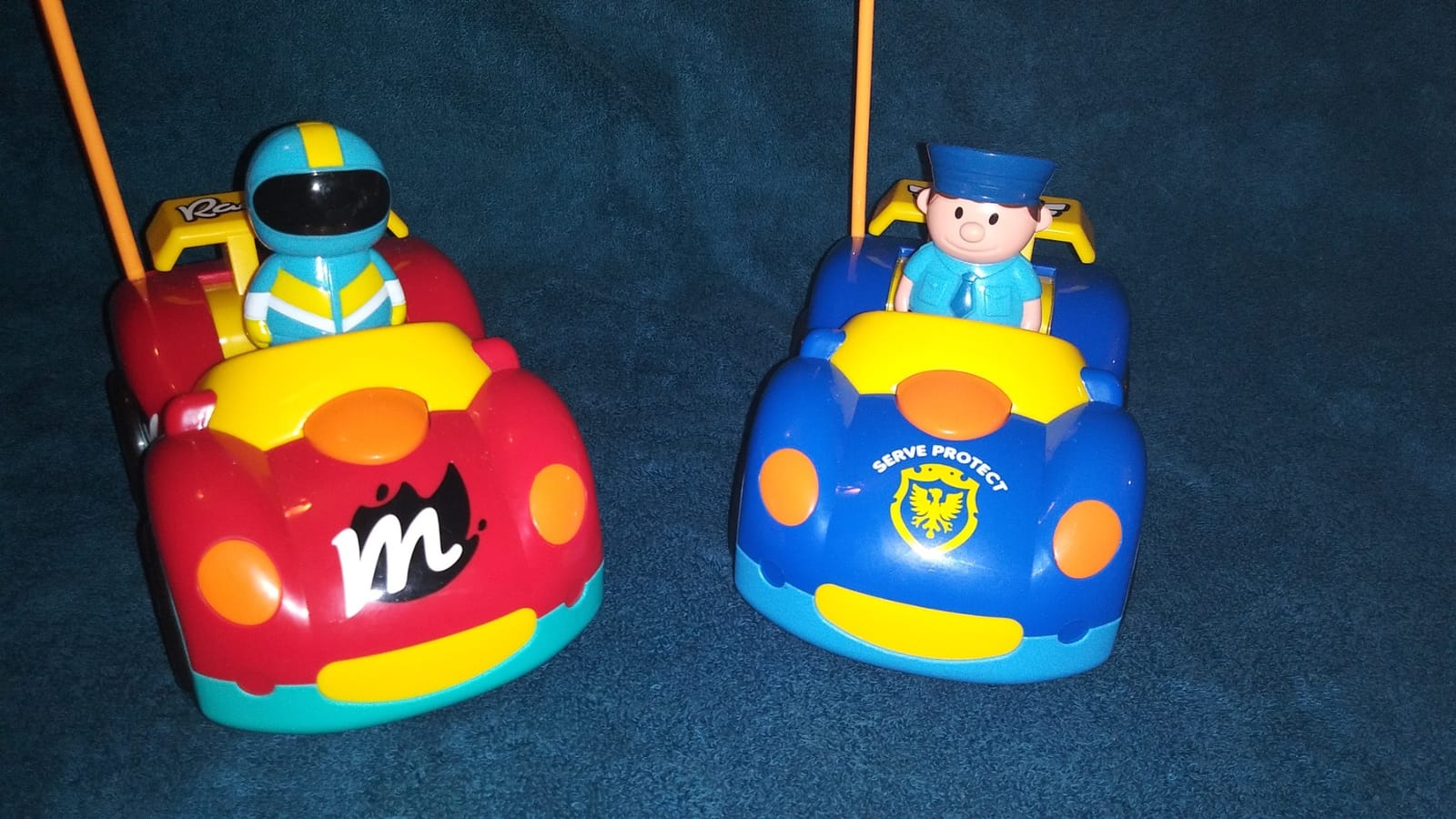
The honking sounds, music and flashing headlights add a lot of play value, and the removable driver figurines give it a role-play element that a plain car lacks. Our child spent as much time moving the figures between the two cars as driving them, which is exactly the kind of open-ended play that makes a toy last.
Two things work against it. Both cars share a frequency, so they cannot be driven independently, which means two children cannot race. And each car set takes five AA batteries, so the pack needs ten in total, which is a running cost worth thinking about if you are buying this as a gift for a family.
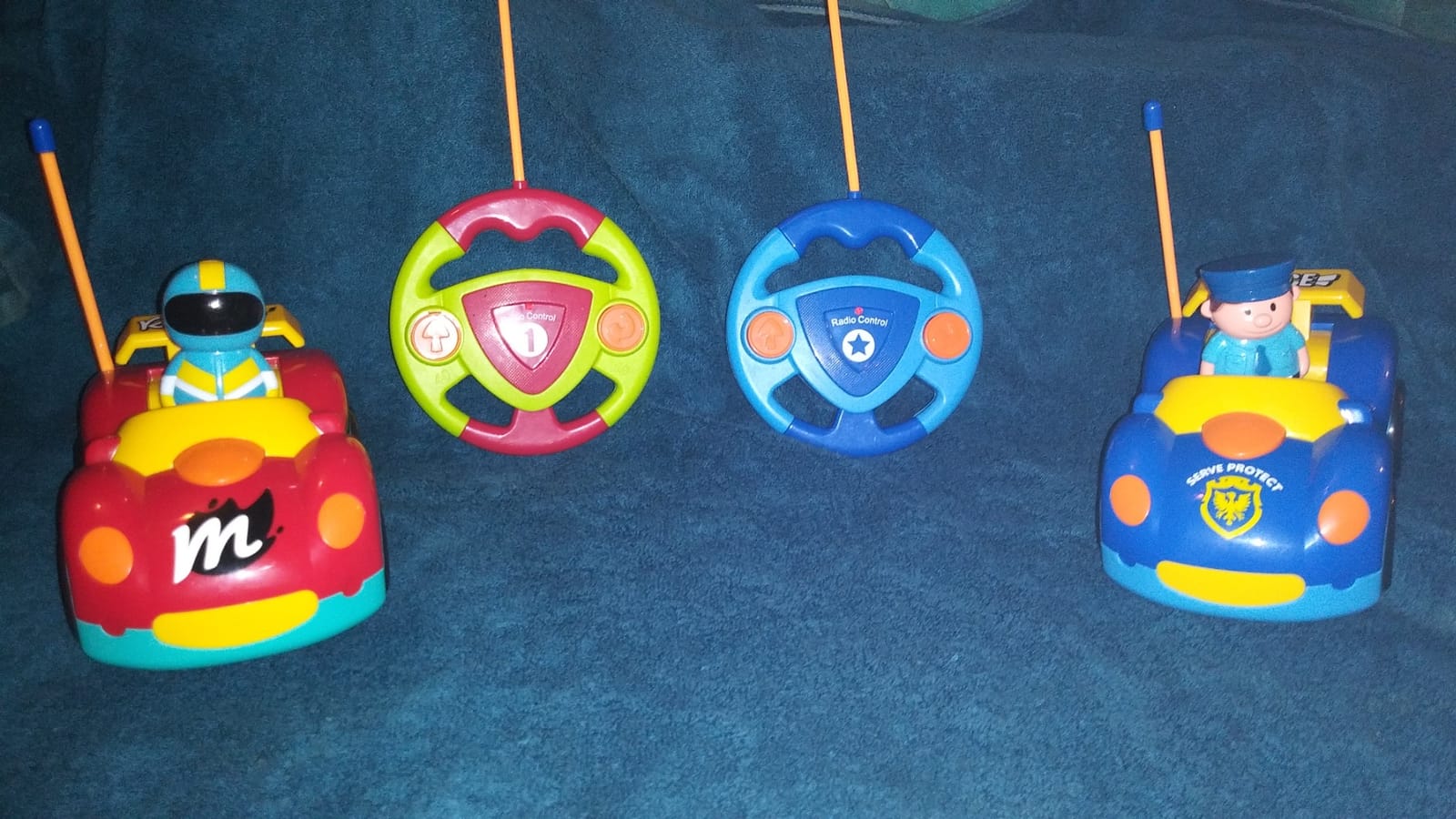
Two-pack versus buying two better cars
A two-pack is the right choice when the goal is an activity you do together, because the second car gives an adult a way to join in. That is genuinely valuable at this age, and most single-car toys lose their appeal within weeks once the novelty fades. A two-pack turns one toy into a shared routine, which is worth more than a better car that only one person drives.
It is the wrong choice when you have two children of the same age who each want independent control, because the shared frequency means one remote will cut into the other. In that situation, two separately sold units on independent frequencies are the correct answer, even if they cost more in total.
Noise, batteries and long-term wear
The sound volume is the main practical concern. Music plus honking on two cars in a living room is a lot, and one reviewer reported a unit that would not switch off, which is a real risk with a toy carrying a battery compartment. If your household is quiet or your child is sensitive to sound, test the volume before committing.
Battery consumption is the second. Ten AA cells for the pack, replaced regularly, adds up over a year, and the compartment design should be checked to confirm it is secured with a screw rather than a friction fit. In return, the two-button simplicity and the reported ability to survive rough handling make this a durable choice for a younger or rougher player.
How to Choose a Remote Control Toy for a 3 Year Old
The single most common mistake we see is buying on appearance. A beautiful shell with an unlicensed cartoon shape and a complicated remote is a worse choice than a plain vehicle with four large buttons, because a three-year-old interacts with the controller long before they notice the paint job. Work through the following in order and the right model usually becomes obvious.
Pick the control scheme before anything else
There are three practical control types, and they suit different children. A two-button remote that only moves forward and back is the easiest to learn and suits a child who is brand new to remote toys. A four-way controller with separate direction buttons suits a child who has outgrown that and wants to steer. A multi-function controller with spins, flips and combined inputs suits an older child and usually frustrates a three-year-old.
Judge by how many separate things a child must remember, not by how many buttons are printed on the remote. A controller with four direction buttons where drive and turn happen together is easier than a two-button remote that requires a combination press to turn, which is the mistake most budget models make. Where steering and driving are separate, expect a two-week learning period before the child is confident.
Match the toy to the surface you actually play on
This is the factor parents most often overlook, and it is the one that decides whether a car ends up in a toy box. Small-wheeled cars run beautifully on hardwood, tile and smooth concrete, and bog down in carpet pile or grass. Larger wheels with rubber tyres handle a wider range, and models with tracked bases cope with uneven ground better than wheeled ones.
Be honest about your surface before you buy. If most play happens in a living room, prioritise smooth floors and ignore everything written about off-road performance. If it happens on a lawn or a gravel driveway, a palm-sized car will disappoint on day one, and you should be looking at bigger bodies, bigger wheels and stronger motors instead.
Battery type decides how often play stops
Rechargeable toys win on convenience and on uninterrupted play, and the models in this list that charge over USB or ship with lithium-ion packs comfortably outlast a typical session. Cell-powered toys are cheaper to buy and more common, but the running cost is higher, the interruption is more frequent, and the batteries are not usually included, so buy a pack of cells with the toy.
Compare run time against charge time, not run time alone. A pack that gives forty minutes of play for two hours of charging is a good ratio for a three-year-old, whose attention naturally cycles. A car that needs fresh cells twice a day is not a good toy for a child who wants to play when they feel like it, and that is most of the time.
What to check for safety and durability
Look for rounded edges with no sharp points, non-toxic materials, and a battery compartment secured with a screw rather than a friction fit. Check whether small detachable parts are included, because removable figures are wonderful for play and a genuine choking risk for a child under three. Certification to a recognised toy safety standard is worth more than any marketing claim on the box.
For durability, weight is a decent proxy. A heavier toy in ABS plastic takes a knock better than a light one in thin shell plastic, and models with metal components in the working parts survive longer because the parts that move are the ones that break. Expect to lose wheels and accessories regardless, so check whether the seller stocks replacements before you buy rather than after.
Two kids, two cars: frequency separation explained
Remote control toys transmit on radio frequencies, and two toys on the same frequency in the same room will interfere with each other, producing delayed response or dropped commands. Older toys use 27 MHz, which is particularly prone to this. Modern 2.4 GHz systems are far more robust, and some support many simultaneous users at once.
When buying for two children, look specifically for the phrase independent frequency rather than assuming a two-pack will work. Two-pack sets sometimes share one frequency, in which case the toys cannot be driven separately, and the set is really an adult-and-child play toy. Genuinely independent units are what you want for sibling racing, and they are worth the extra cost.
When to move up to a hobby-grade RC
Stay with toy grade while your child is still learning cause and effect, around three to five. The signal to move on is consistent, confident steering combined with a demand for something faster, more realistic or more precise than a preschool toy can offer. Hobby-grade vehicles use proportional steering, where the amount of turn matches how far you move the stick, which is a genuine skill step rather than a gimmick.
Make the move around five or six rather than at three, because hobby-grade controls assume fine motor precision and a clear reading of cause and effect. Many parents mention hobby-brand trucks as the eventual goal, and they are a good two or three years away. If you want an intermediate step, our guide to electric ride-on cars with remote control covers the powered-vehicle version of that transition.
If your child has fine motor delays or sensory needs
For fine motor delays, the two-button forward-and-back remote is the most accessible option in this list because it requires one finger and no coordination. The Fisher-Price model is the next step up, since its four large buttons are widely spaced and the drive-and-turn combination removes the need to press two directions at once. Avoid anything requiring simultaneous button presses, which is where most budget models fail.
For sensory needs, check volume before buying rather than after. Most of these toys make noise by design, and the dinosaur models are the loudest. The projector option is the quietest, with a low brightness setting designed for a dark room, and any of the car models will run with sound off if that is not important to you.
Frequently Asked Questions
What is the best remote control car for a 3-year-old?
The Fisher-Price My Easy RC is the most widely recommended first car for a three-year-old, with four large directional buttons, two parent-controlled speeds, one-button drive and turn, and rubberized wheels that grip hardwood, tile and carpet. It is designed to be mastered quickly rather than merely owned. If you want the highest-rated option, the officially licensed Jada Lightning McQueen holds a 4.7 average but carries a higher age rating.
Can a 3 year old use a remote control car?
Yes, as long as the controls match their development. A three-year-old can usually manage a remote with two or four large, well-separated buttons within a few sessions. Look for models rated 3 years and up, rounded edges, a screwed-down battery compartment, and a parent-controlled speed setting so you can set the pace. Avoid controllers that require pressing two directions at once, and supervise the first few sessions.
Is a remote control car good for a 3 year old?
Yes, and it is one of the strongest screen-free developmental toys at this age. Steering a moving object links cause and effect, builds hand-eye coordination and spatial awareness, and gives a preschooler real control over something in the physical world. The benefit depends on the toy being usable: a controller the child cannot operate produces frustration rather than skill, so simplicity matters more than features.
What are some good remote control cars for a 3-year-old child?
Our twelve tested options each suit a different situation. The Fisher-Price My Easy RC wins for parent-controlled speed, the Jada Minnie Mouse Roadster for a proven first car, the Jada Lightning McQueen for licensed character play, the Elovien for the simplest two-button start, and the Liberty Imports two-pack for playing alongside an adult. The Jiakora excavator adds digging and loading, which appeals to construction-focused children.
How do I stop two remote control cars interfering with each other?
You cannot stop it at the toy level, you choose toys that do not share a frequency. Older 27 MHz systems interfere badly, so pick 2.4 GHz models, and for two children driving at once choose units sold on independent frequencies rather than a two-pack sharing one channel. Keep a short distance between the two remotes, and if response is still erratic, separate the children into different rooms.
The Best Remote Control Toys for 3 Year Olds, Final Verdict
After testing all twelve, the best remote control toys for 3 year olds come down to which problem you are trying to solve. For a straightforward first car that a three-year-old can actually master, the Jada Minnie Mouse Roadster is the pick we kept reaching for, with the most reviews in the group and controls that never frustrated him. For indoor use where speed control matters, the Fisher-Price My Easy RC is the better tool, and for two children driving at once, choose 2.4 GHz models on independent frequencies.
Whatever you choose, the deciding factor is whether your child can operate it. Simplicity beats features at this age, rechargeable power beats batteries you forgot about, and a toy that works on the floor you actually have beats one that promises off-road performance. Check the age rating on the listing, buy your batteries, and let them drive.