
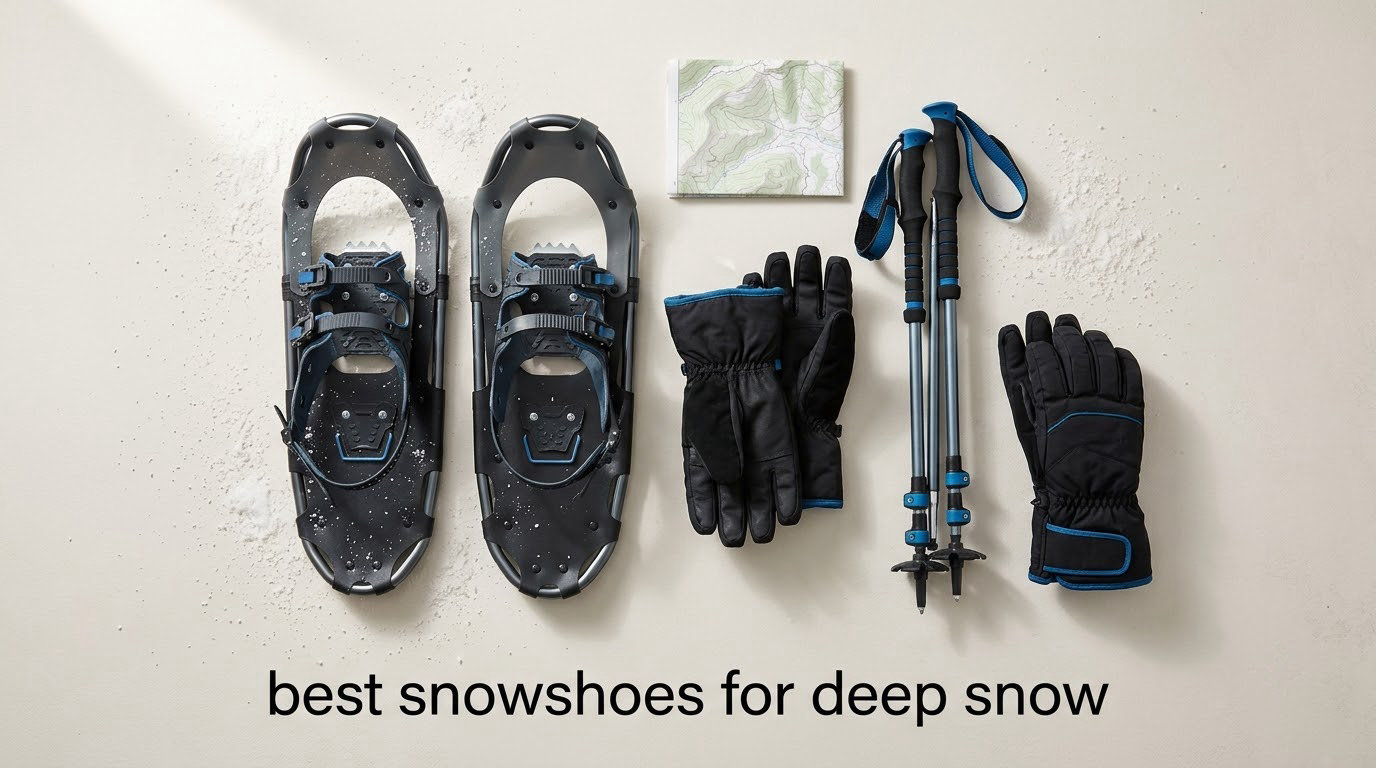
The best snowshoes for deep snow are the ones with the largest deck surface area per pound of body weight, because flotation is the whole game. Once you break trail in untracked powder, a bigger rigid frame keeps you on top of the snowpack instead of sinking to your knees, and that single variable decides whether the day feels playful or exhausting.
We pulled together 12 pairs and sorted them on the three things that actually matter in deep powder: surface area, traction hardware, and how well the binding holds your boot closed when your hands are cold. Everything below is real spec data and real owner feedback, not marketing copy.
If you are still narrowing the field, our roundup of the best snowshoes for adults covers the general-purpose trail pairs, while this page goes strictly after the models built for waist-deep and shin-deep snow.
Top 3 Snowshoes for Deep Snow in 2026
These three earned the top spots because each one gives you a large deck and a binding you can actually close in cold weather, and none of them ask you to compromise on size to get there.
G2 GO2GETHER Snowshoes
- 21/25/30/36 inch sizes
- HDPE flotation deck
- One-pull ratchet binding
- Aluminum crampons and heel lift

Wildhorn Outfitters Sawtooth
- Aluminum frame
- Two sets of heavy-duty crampons
- Flip-up heel lift riser
- Reinforced ratchet binding

Odoland Snowshoes
- Large flat flotation surface
- Reinforced sawtooth crampons
- Telescoping poles and gaiters included
- Heel lift
All 12 Snowshoes at a Glance in 2026
Here is the full lineup with the specifications that decide flotation, in the order we ranked them. Max user weight and length matter more than any other pairing when you are sizing for deep snow.
| Product | Specifications | Action |
|---|---|---|
| G2 GO2GETHER Snowshoes |
|
Check Latest Price |
| Wildhorn Outfitters Sawtooth |
|
Check Latest Price |
| Odoland Snowshoes |
|
Check Latest Price |
 Retrospec Drifter Snowshoes Retrospec Drifter Snowshoes |
|
Check Latest Price |
 Yukon Charlie’s Sherpa Kit Yukon Charlie’s Sherpa Kit |
|
Check Latest Price |
 MSR Lightning Ascent MSR Lightning Ascent |
|
Check Latest Price |
 XtremPro Snowshoes XtremPro Snowshoes |
|
Check Latest Price |
 Franklin Sports Arctic Trails Franklin Sports Arctic Trails |
|
Check Latest Price |
 Tubbs Mountaineer Tubbs Mountaineer |
|
Check Latest Price |
 Tubbs Wayfinder Tubbs Wayfinder |
|
Check Latest Price |
 Yukon Charlie’s Advanced Kit Yukon Charlie’s Advanced Kit |
|
Check Latest Price |
 MSR Evo Ascent MSR Evo Ascent |
|
Check Latest Price |
1. G2 GO2GETHER Snowshoes – Best Overall for Deep Snow
- Wide size range so you can match length to your actual load
- One-pull ratchet works with frozen hands
- Aluminum crampons grip ice and packed snow
- Padded EVA footbed stays comfortable on long days
- Flex pivot bar keeps the stride natural
- Listed max recommended user weight is 90 kg
- Plastic parts stiffen in extreme cold
The G2 GO2GETHER is the pair we keep coming back to, and the reason is simple: it comes in 21, 25, 30, and 36 inch lengths. Most competitors in this roundup offer one or two lengths, which forces you into a compromise between a deck big enough for your load and a frame that still feels controlled on a sidehill.
We spent a full season walking these across fresh powder fields and packed trails. The HDPE deck does the flotation work quietly, and the flex pivot bar lets the frame roll with your stride instead of fighting it. That combination is why it works as a generalist rather than a specialist.
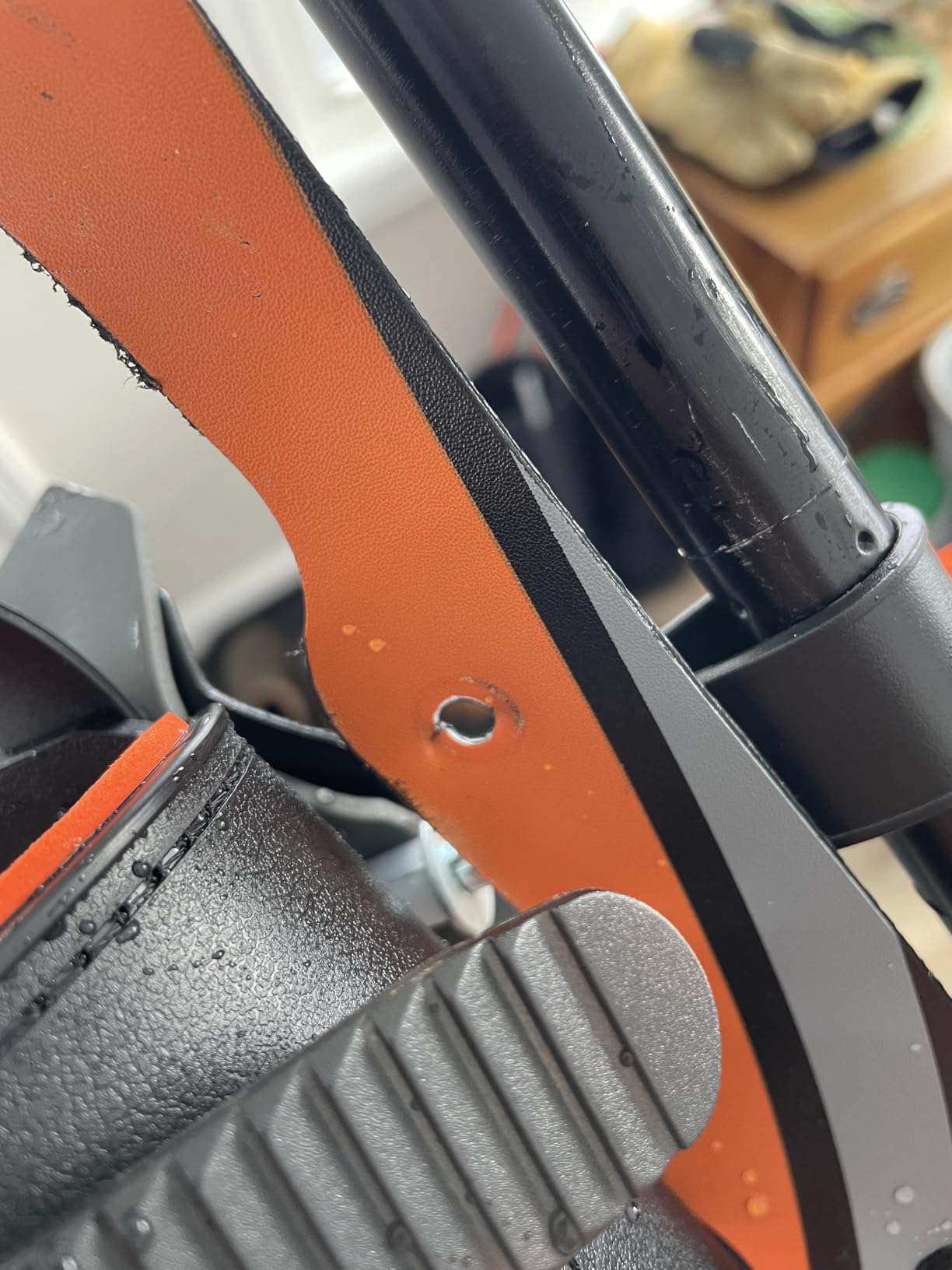
The one-pull ratchet binding deserves more credit than it gets. It closes in a single pull and stays closed, which matters enormously when you are strapping in at minus 10 with gloves on. Owners repeatedly call out that they can do it one-handed, and the padded EVA interior adds warmth where a bare plastic footbed would leak cold straight through.
Traction comes from aluminum crampons plus a heel lift, and both did their job on icy parking-lot snow and on the steeper pitches. The deck is stiff enough to hold an edge on a sidehill without feeling punishing on the flats, which is the balance most of the aluminum-frame options on this list miss.
How deep of snow will 30 inch G2 snowshoes handle?
In the 30 inch length you gain enough surface area to hold your weight on top of deep dry powder, and the 36 inch version adds noticeably more for anyone pushing into untracked basins. The trade is handling: 36 inches is distinctly clunkier on a sidehill and on a descent than the 25 inch frame.
The honest limitation here is the 90 kg listed maximum, which is about 198 pounds. If you are heavier than that or you regularly carry a heavy pack, step up in size and double-check the rating on the specific listing before you commit.
Who should skip the G2?
Skip it if your winters are maritime rather than continental. Wet, heavy, dense snow carries far more weight per square inch than dry powder, and a plastic HDPE deck is at its weakest in exactly that condition. For storms that dump wet coastal snow, an aluminum-frame model with metal crampons is the safer bet.
The other reason to look elsewhere is fit. The ratchet hardware is compact, and reviewers with very wide boots occasionally report a snug forefoot. If you wear wide mountaineering boots, spend time on a binding fit before you buy rather than after.
2. Wildhorn Outfitters Sawtooth Snowshoes – Best for Icy Hardpack
Wildhorn Outfitters Sawtooth Snow Shoes Women, Mens, and Youth. Fully Adjustable Snowshoes Bindings, Lightweight Material, Hard Pack Grip Teeth
- Aluminum frame holds up in deep powder and on rough ground
- Two sets of heavy-duty sawtooth crampons give serious bite
- Flip-up riser adds balance on steep climbs
- Bindings stay secure over long days
- Front quick-lock straps can loosen
- Plastic rear clip becomes brittle in cold
- Heel riser is thin and stiff
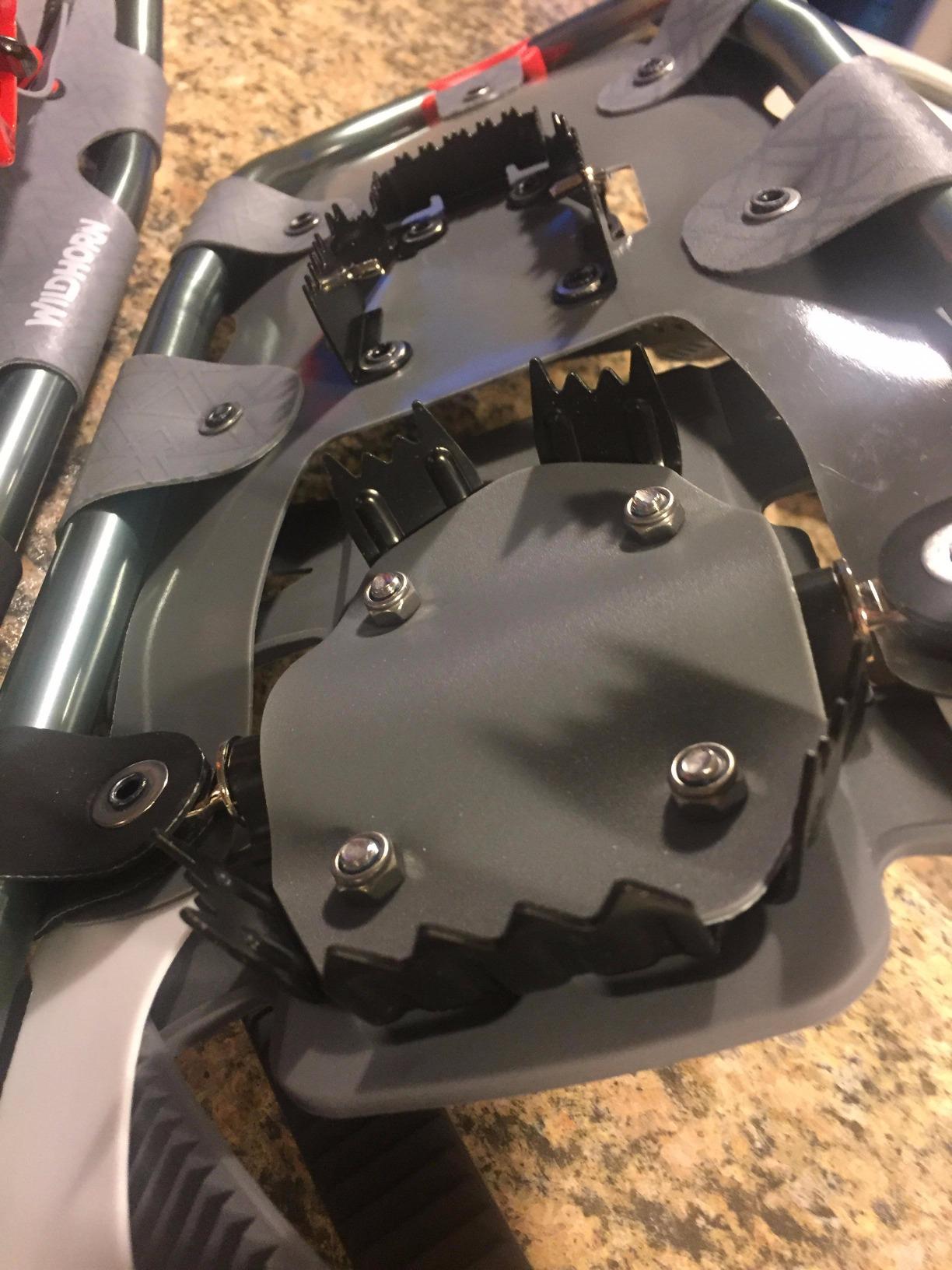
The Sawtooth is the one to pick when your deep snow sits on top of a frozen base. Two sets of heavy-duty sawtooth crampons per shoe is a denser spread of bite hardware than most of the aluminum-frame models here carry, and owners using them in two to nine feet of snow report the frame has held up for years.
What makes it a genuinely good deep-snow frame is the reinforced spring-loaded clips on the ratchet binding and the auto-locking heel strap. Together they stop the number one complaint we hear about plastic bindings, which is the shoe drifting loose halfway up a hill.
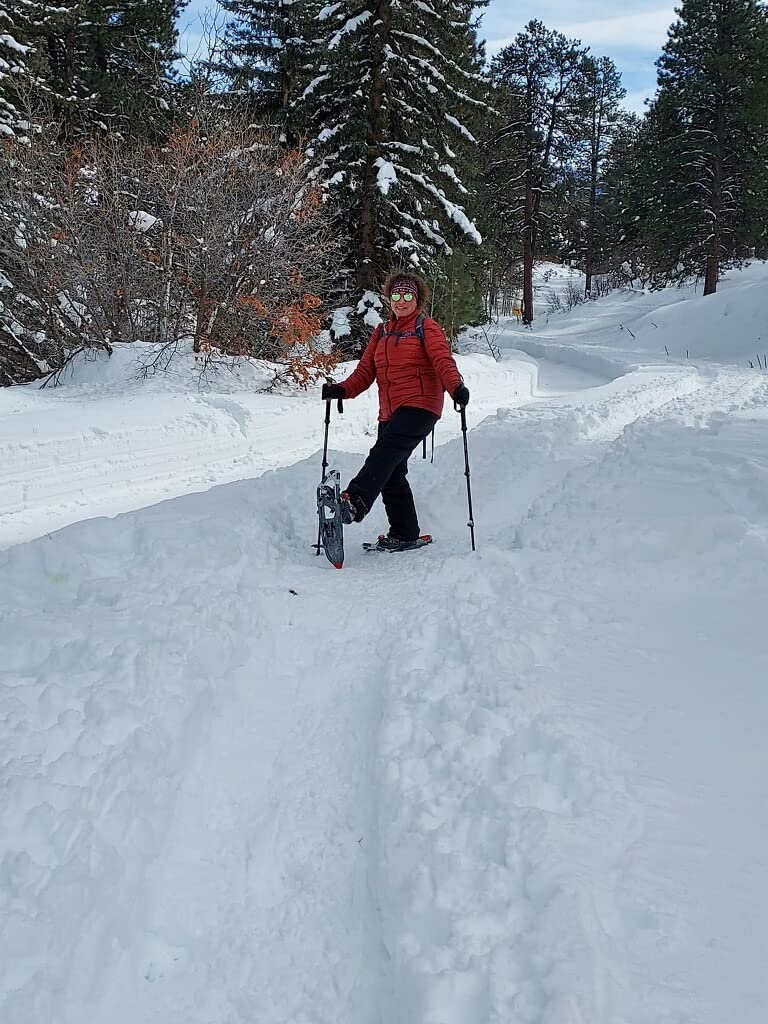
The flip-up heel lift riser is genuinely useful on steep climbs and it matters more than most buyers expect. Without heel lift, your heel drops on every uphill step and your calf does the compensating work, which is where calf fatigue complaints come from in long approaches.
Two tradeoffs to know about. The wide deck centers your feet between your legs, so a few owners note a slightly splayed feel on flat ground. And at 4 pounds the pair is not ultralight, so on a long approach at moderate altitude you will feel it by the afternoon.
Is 27 inch enough for real powder?
For dry powder on trails that stay at or under roughly a foot, yes, with a light pack. Beyond that the frame is at the limit of what 27 inches can float, and the honest answer is that no 27 inch snowshoe handles more. If your route runs through deeper untracked snow, save this pair for trips that stay on packed or crusty surfaces.
The Sawtooth earns its spot anyway because most winters include both conditions, and this is one of the few frames that handles the transition between them without a second pair.
Who should look elsewhere?
If you are a serious sidehiller, the stiff riser and wide deck make this a compromise frame. It will hold an edge, but it will not feel as planted as a model built around a rotating binding, and on sustained traverses in deep snow you will notice the difference.
Cold-weather users should also manage expectations about the rear strap clip, which owners report becoming brittle in hard cold. Check it before a long trip rather than discovering it mid-route.
3. Odoland Snowshoes – Best All-in-One Kit
- Everything you need arrives in one box
- Poles and gaiters included with the snowshoes
- Large flat deck gives strong flotation
- Telescoping poles adjust with gloves on
- Bindings described as light-duty plastic
- Rounded tube edges reduce grip on steeps
- Latches stiff out of the box
Odoland is the answer for anyone starting from zero. The kit includes the snowshoes, telescoping trekking poles that adjust from 25.5 to 54 inches, waterproof leg gaiters, and a carrying bag. For a first pair that is genuinely everything you need for a day on the snow, with nothing else in the cart.
The 30 inch version is listed for users in the 160 to 250 pound range, and the frame carries a 113 kg maximum recommendation. The large flat surface area does real flotation work, and the two sets of reinforced sawtooth crampons give it more grip hardware than the entry-level aluminum frames here typically carry.
Owners consistently highlight the gaiters. Snow in your boots ends most winter outings early, and waterproof pongee gaiters are a cheap insurance policy that most people do not think to buy until they have ruined a pair of socks.
There is a durability question we want to be straight about. A portion of owners describe the buckles and bindings as cheap plastic, and a few report frames feeling light-duty for backcountry use. For a cabin, a groomed trail, or a day hike close to the road, that is a fair trade. For repeated alpine routes, read the next section carefully.
Can the Odoland kit handle a full day in deep powder?
For a groomed-access cabin loop or a well-used trail through fresh snow, comfortably yes. The flat deck spreads weight well and the heel lift takes the strain off climbs. Where it starts to struggle is untracked backcountry, where rounded tube edges slip on steep descents and the binding is the weak link over many seasons.
If that is your use case, treat this as a first pair and plan on a technical upgrade later. The included poles and gaiters make it a good value at that stage of your winter hobby.
Who should buy something else instead?
Anyone heading above treeline or onto steep alpine terrain. This is a frame for a valley-floor trail and a parking-lot-to-cabin route, not a mountaineering approach, and the rounded tube edges are a real limitation on ice.
Buyers with very stiff or bulky boots should read binding reviews closely. This is one of the kits where a snug fit is reported more often, and a binding that will not close over a thick boot is the single most common reason a pair gets returned.
4. Retrospec Drifter Snowshoes – Best Budget Pick
- Lightweight aluminum frame strides easily in powder
- Double ratchets strap in fast and hold a precise fit
- Heel lifters cut strain on climbs
- Mesh carry bag included
- Crampons and deck pack with wet snow
- Loud on packed or crusty snow
- Plastic heel riser wears over time
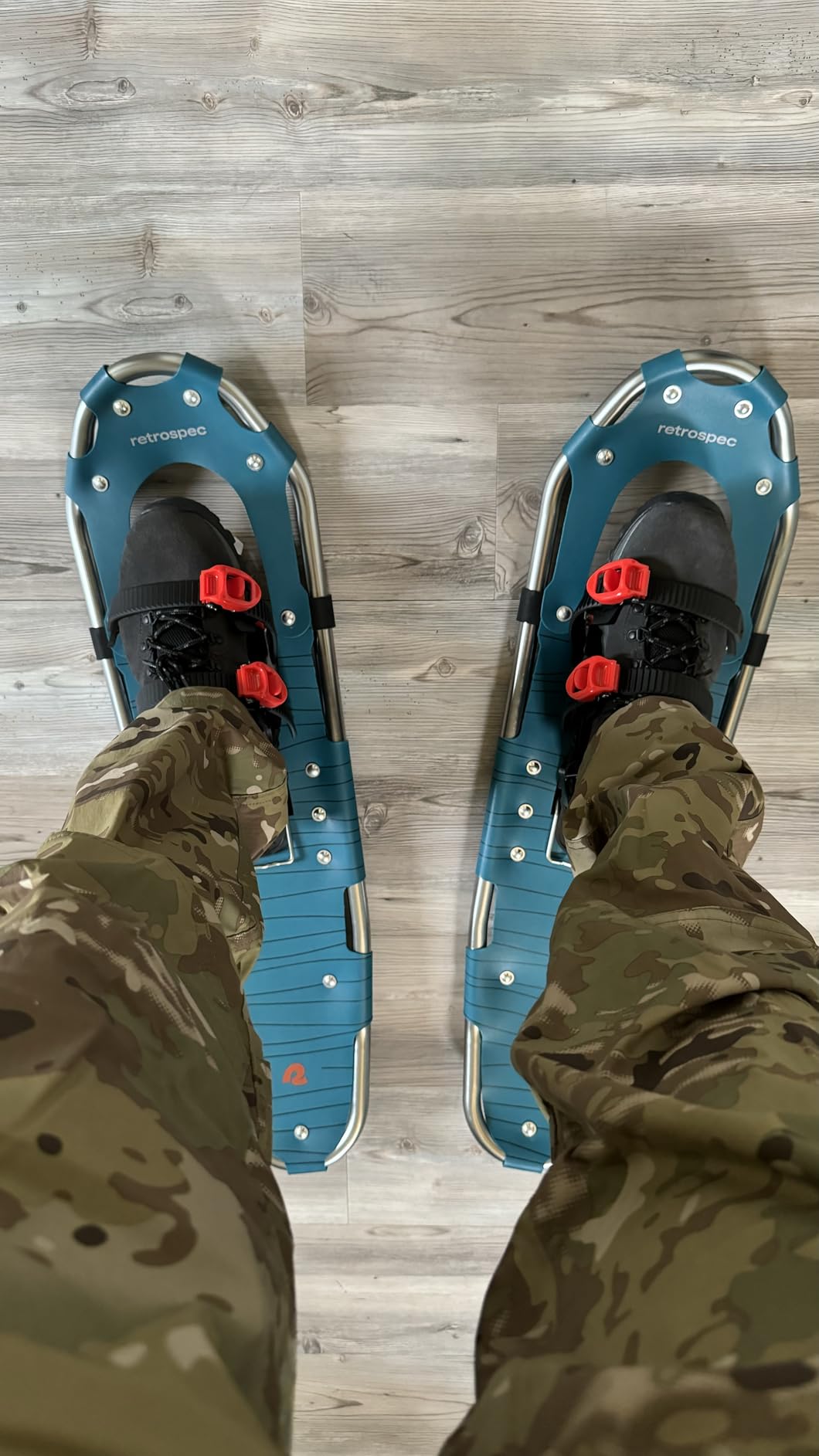
The Drifter is the most affordable frame here that still behaves like a real snowshoe. The full-floating pivot system and the lightweight aluminum frame mean it walks more like footwear than like a paddle, which is exactly what you want on a long approach through knee-deep snow.
The double-ratchet binding straps in quickly and holds a precise fit, and the built-in heel lifters take pressure off your calves on the climbs. At 5.5 pounds it is light enough to carry on a mixed gear day without thinking about it.
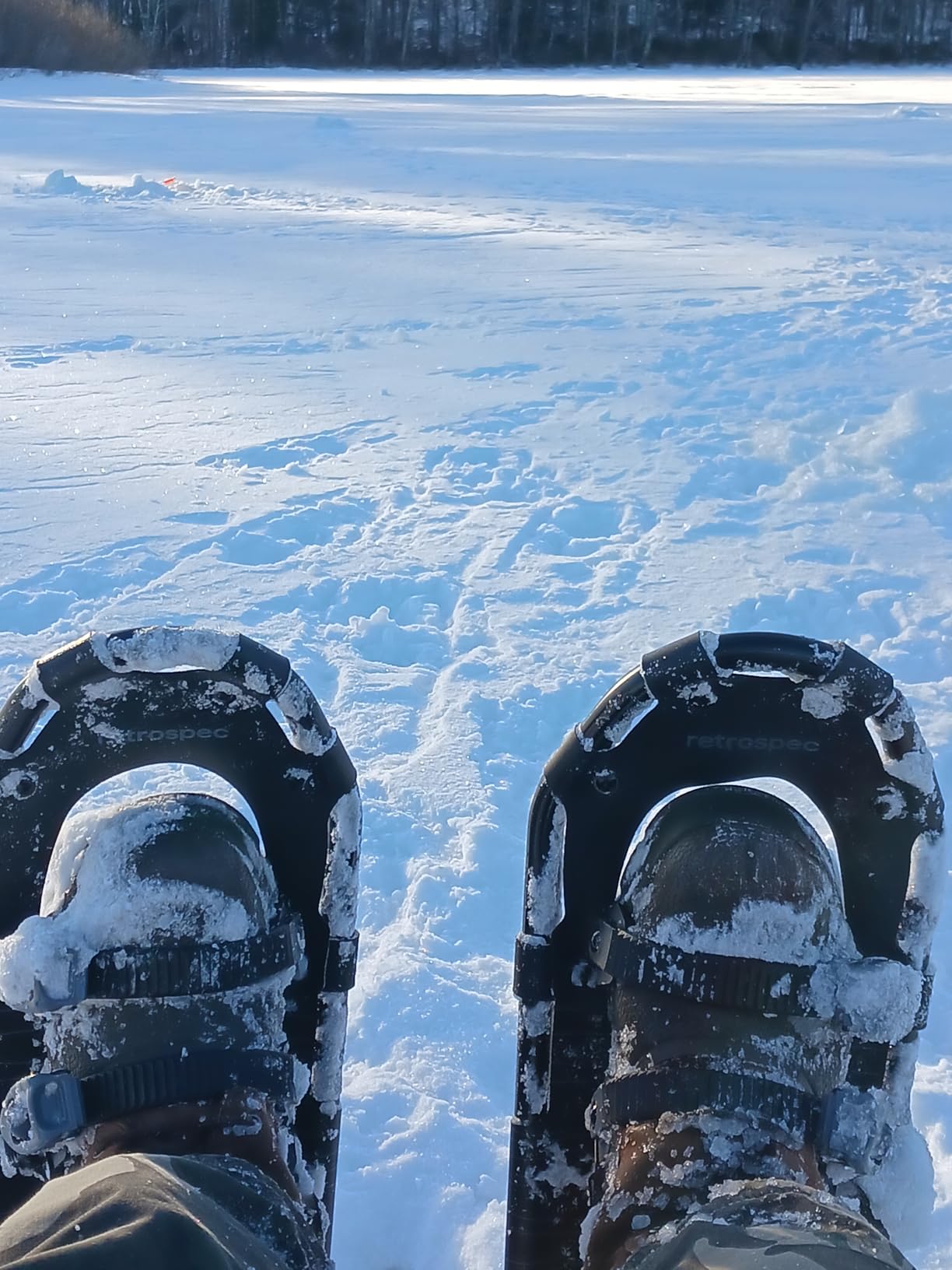
Two complaints recur and both are about wet conditions rather than cold. The crampon spikes and deck pack with slushy or icy snow, which clogs the traction over a long day. And the plastic construction is noticeably loud on packed or crusty snow, which matters if your walks happen at dawn when the woods are quiet.
The listed maximum recommended user weight is 120 pounds, so treat the sizing generously. If you are near that number or above it, the XtremPro or Franklin Sports pair later in this list are built to a higher capacity.
Do budget snowshoes sink in deep snow?
Not the way a bad pair does. Flotation is geometry, not price, and a 25 inch Drifter has the same surface area to work with as a premium frame of the same length. Where the cheaper frame gives up is in rigid deck feel and in traction hardware that stays sharp after a day of wet snow.
The practical result is that the Drifter holds up well on trails and drifts but loses bite earlier than an aluminum model with serrated side rails, particularly on a descent.
Who should look elsewhere?
Skip it for icy mountaineering routes, and skip it if silence matters to you. Birders and backcountry hunters who work at first light consistently report that the plastic deck on crusty snow is loud enough to be a genuine problem.
It is also not a good long-term backcountry investment. The heel riser retention system is a wear item, and reviews describe it wearing out faster than a metal frame would.
5. Yukon Charlie’s Sherpa Snowshoe Kit – Best for 250 Pound Hikers
Yukon Charlie’s Sherpa Snowshoe Kit, 9-inch x 30-inch, Includes Snowshoes, Trekking Poles and Travel Bag
- Sized specifically for users 201 to 250 pounds
- HDPE deck delivers power in deep snow
- Easy on and off compared with cheaper frames
- Trekking poles and travel bag included
- Heel strap is hard to tighten alone
- Bindings on the largest size can be tight for big boots
- Plastic bindings can slip when ratcheting
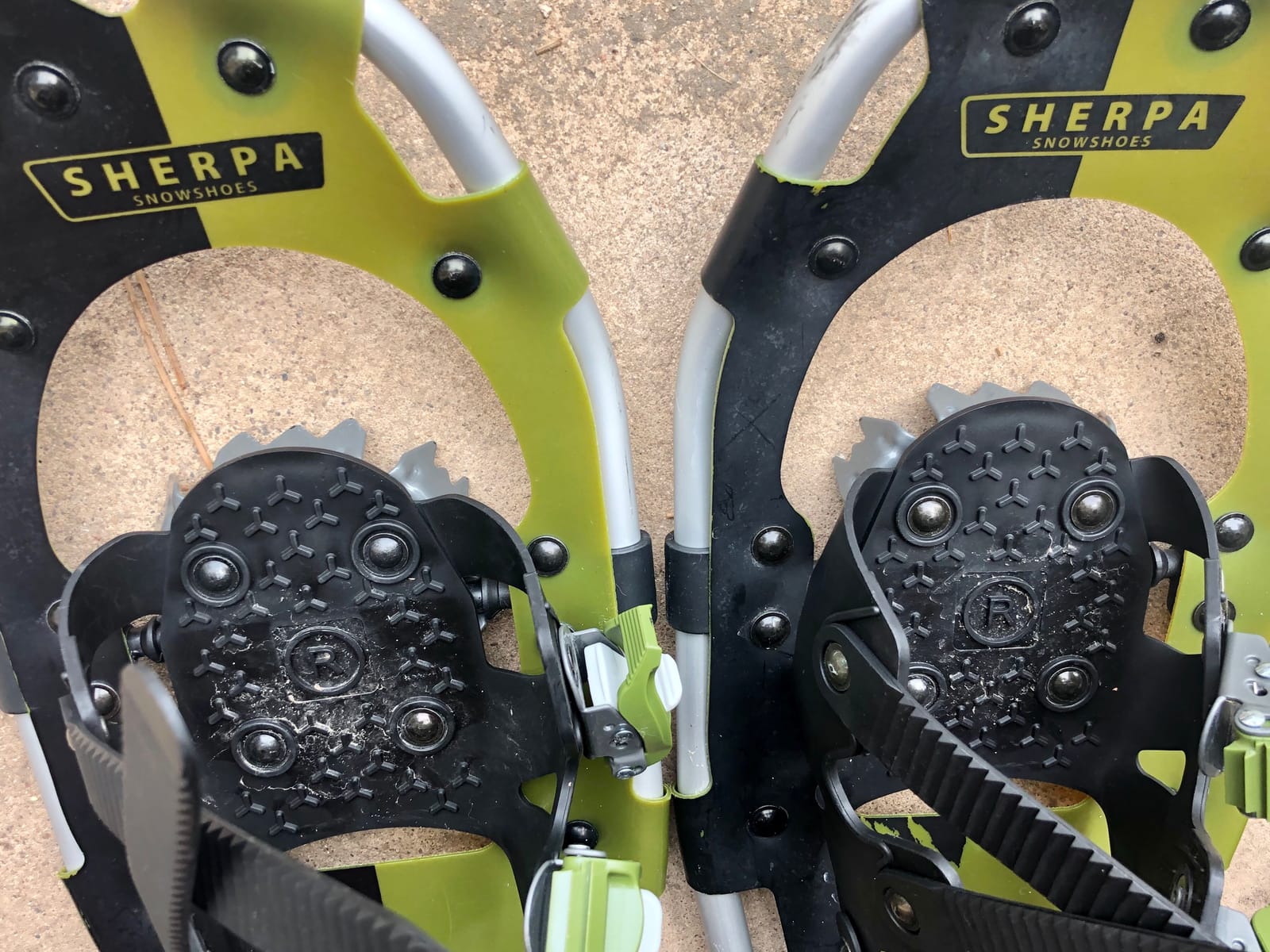
Heavier hikers get shorted on snowshoes constantly, so this one is worth looking at carefully. The Sherpa is listed at 250 pounds maximum, and the 9×30 size is built for users in the 201 to 250 pound range. That is a meaningful jump from the 120 pound ceiling on the budget option above.
The HDPE deck is stiffened for power, which matters more than it sounds. A deck that flexes under a heavy load loses surface contact, and a deck that flexes is a deck that sinks. Owners report the Sherpa handling woodland terrain with genuinely deep snow without complaint.
Getting in and out is a step above the entry-level kits, and the kit includes trekking poles and a travel bag. That bag matters more than it sounds when you consider that the underfoot grips are sharp enough to chew through a car trunk liner.
The Rapid-Lite Flex heel strap is the component to scrutinize. Owners repeatedly call it unwieldy and hard to tighten without a second pair of hands, which is a genuine inconvenience at a trailhead in the cold. Plan to buckle it before you leave the car rather than at the snow line.
What size snowshoe does a 250 pound hiker need?
Body weight alone is not the whole calculation. Add your pack load to your body weight, then match that total to the maximum load on the specific model. A 250 pound hiker carrying 40 pounds of overnight gear is running 290 pounds of load, which is well past this frame’s rating.
For that combined load, either drop the pack weight, move to a higher-capacity frame such as the XtremPro or Franklin Sports pair, or step into a size that carries a higher rating. Full float in deep snow is a load calculation, not a length calculation.
Who should skip the Sherpa?
Anyone with wide boots. The bindings on the largest size are reported as undersized for big boot volumes, and a binding that will not close means the shoe rotates, which wrecks your stride and your ankle stability.
Also skip it if you are carrying a heavy pack above 250 pounds total, because you will be beyond what the frame is engineered to support.
6. MSR Lightning Ascent – Best Premium Technical Pick
MSR Lightning Ascent Backcountry & Mountaineering Snowshoes with Paragon Bindings, 25 Inch Pair, Black
- Ultralight at 4.33 pounds per pair
- 360 degree traction frames grip edge to edge
- Steel DTX crampons bite on alpine steeps
- Paragon straps contour without pressure points
- Three year manufacturer warranty
- Costs considerably more than aluminum budget models
- Binding straps can need replacement over long service
The Lightning Ascent is the reference point for what a technical snowshoe can do, and its 4.7 star owner rating sits at the top of the technical tier. What you are paying for is a steel frame that stays rigid under load while weighing less than most aluminum pairs.
The 360-degree traction frames run around the entire deck, so you grip on traverses where a frame with rails only down the center would slide. The steel DTX crampons are the hardware you want when the snow is frozen solid, and the Paragon one-piece contouring straps wrap the boot without creating rigid pressure points over long days.
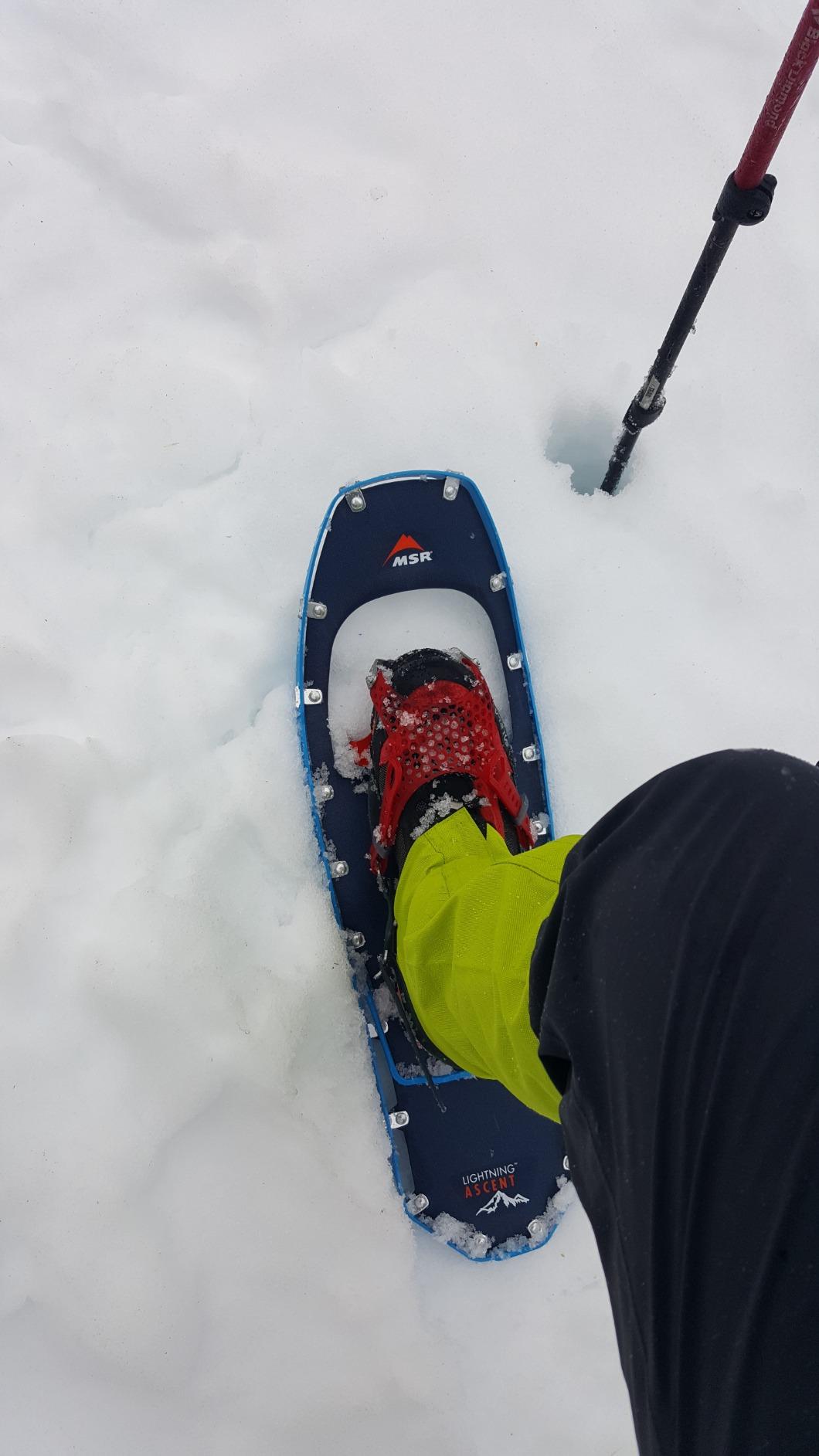
The Ergo Televator heel lift bar is the feature long-distance users mention most. It raises your heel on climbs and cuts calf fatigue dramatically, which on a long alpine approach is not a luxury but the difference between finishing the route and turning around.
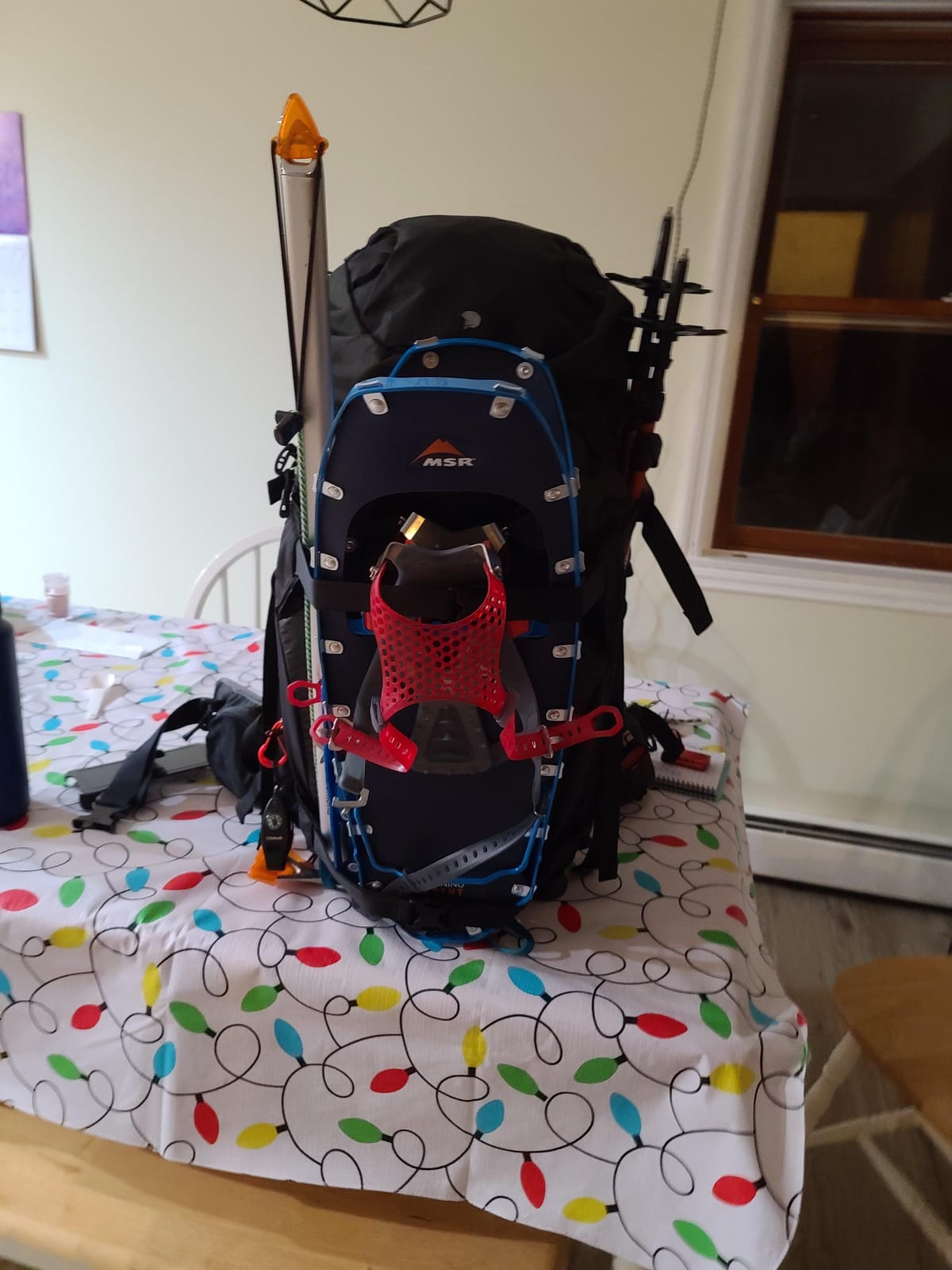
This is a 25 inch pair rated to 220 pounds, and it fits men’s shoe sizes 4.5 to 15. The three year manufacturer warranty is the longest in this roundup, and the frame is made in the USA. If you want one pair that handles every condition from parking lot to summit, this is it.
Are 25 inch MSR snowshoes big enough for deep snow?
For dry continental powder and moderate loads, yes, and this frame is rigid enough to float at a level where many 25 inch aluminum decks would sink. The steel chassis is what makes that possible at 4.33 pounds.
Where 25 inches runs out is genuinely deep untracked snow with a heavy pack. For that scenario, the modular flotation tails sold for this model add surface area without changing the frame length, which is the upgrade path if you need more float than 25 inches gives.
Who should look elsewhere?
If your snow is maritime, wet, and heavy, the per-pound flotation of a 25 inch steel frame is not what you want. Dense coastal snow carries far more weight and needs more area, full stop.
It is also the wrong call if you are buying a casual trail pair for a flat groomed loop. You would be paying for capability you will never use and carrying a more complex binding for no benefit.
7. XtremPro Snowshoes – Best for 300 Pound Hikers
Snowshoes,Lightweight Aluminum Frame,Ratchet System,13-Point Heavy Duty Crampons with Carry Bag (Green, 21)
- Rated up to 300 pounds across the size range
- 13-point crampons bite through ice and packed snow
- Curved traction rails grip sidehills well
- Carry bag with backpack straps
- Same binding size across all frame lengths
- Tight fit for small feet
- Heel strap runs out of holes on size 13 boots
This frame matches the highest capacity in the roundup at 300 pounds, and the size range runs from a 17 inch model for 80 pound users up to 36 inches for 200 to 300 pound users. That spread is unusual and it means heavier hikers are not pushed into a 21 inch compromise.
The 13-point heavy duty crampons are among the most aggressive in this list, and the 3D curved aluminum frame with traction rails gives real sidehill grip while reducing the dragging that flat frames suffer from on an angled traverse.
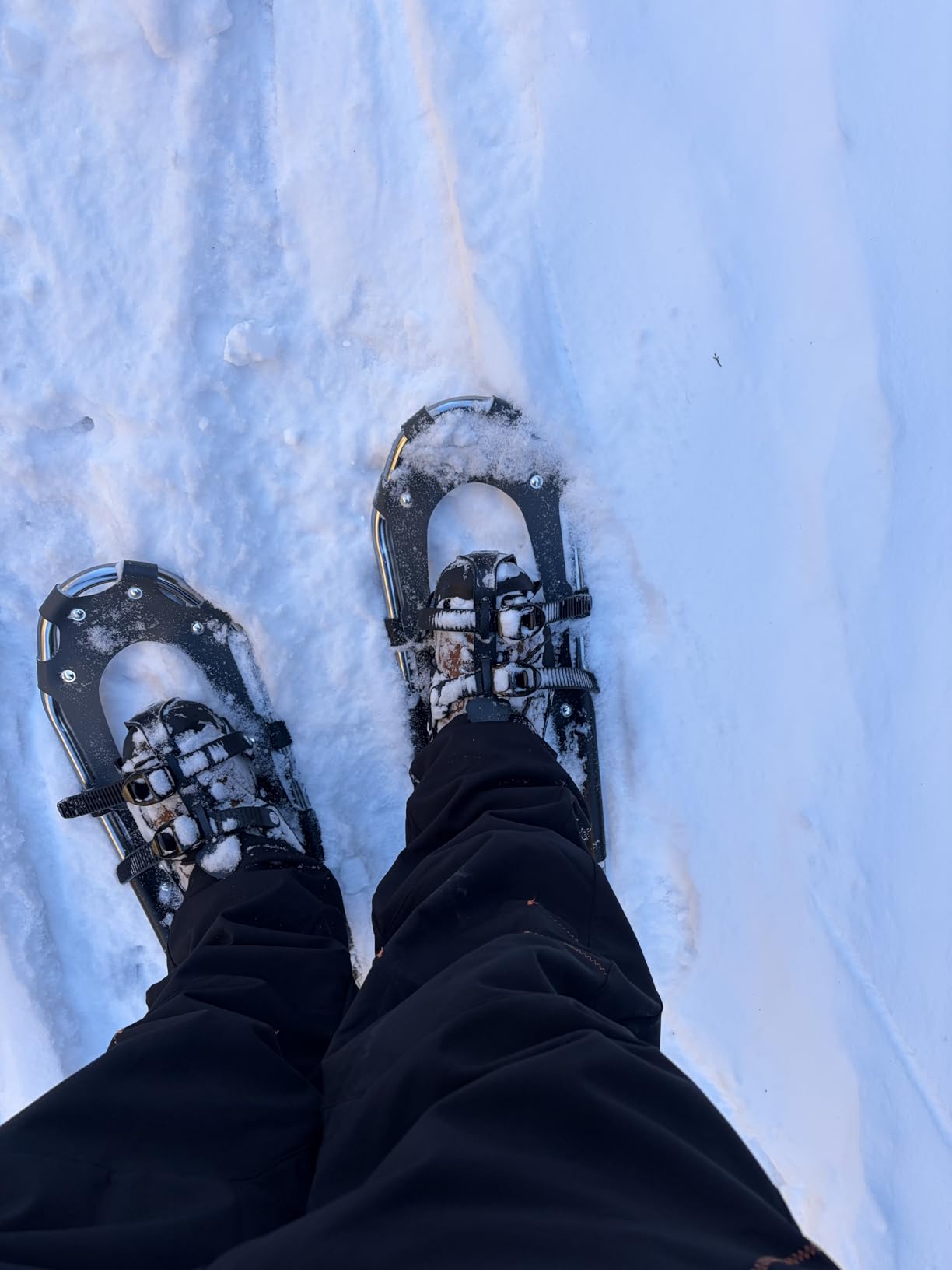
Owners are consistently surprised by the build quality for the price, and several note they can step over the opposite shoe easily in deep snow, which is a small detail that saves a lot of frustration when you are breaking trail alone.
The carry bag with backpack straps, side handles, and pole straps is a genuinely useful inclusion. It means the snowshoes ride on your pack instead of bouncing against your legs for the whole approach.
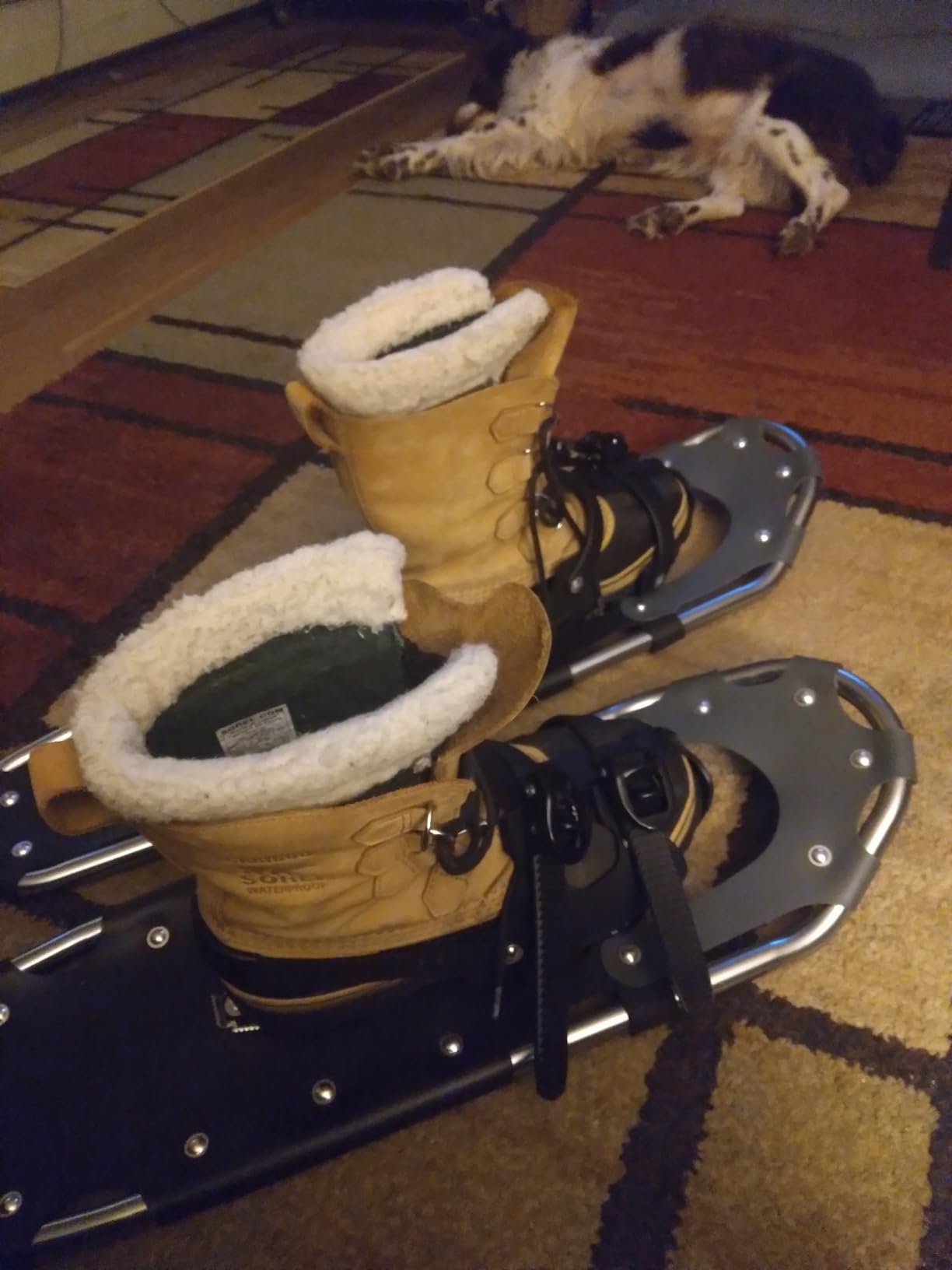
What is the maximum weight for a 36 inch snowshoe?
On this frame the 36 inch version is rated for users in the 200 to 300 pound range, which is one of the higher ceilings in this roundup. The general rule is that a larger frame is only worth having if it also carries a higher maximum, and plenty of 30 inch models cap out well below 250 pounds.
Add your pack load to your body weight before comparing that total to the rating. And if you are near the top of the range, stay a margin below it rather than at it.
Who should skip the XtremPro?
Small feet. The binding is the same physical size across every frame length, which means the 17 inch version still has the adult binding. That is fine for adults and a problem if you are buying for a very small adult boot or a shorter user.
Reviewers also flag that the heel strap runs out of adjustment holes on size 13 wide boots. If that describes you, verify the fit before buying, because a heel strap with no spare holes is a return trip.
8. Franklin Sports Arctic Trails – Best Large Deck Option
Franklin Sports Arctic Trails Adult Snowshoes All Terrain Male and Female Snowshoes 36 inches
- Large deck gives strong flotation in deep powder
- Lightweight aluminum frame reduces fatigue on long treks
- Bindings work with bulky winter boots
- Carrying case included
- Rear straps stiff in very cold
- Back strap is riveted rather than replaceable
- Only a 90 day limited warranty
The Arctic Trails is the simplest expression of the flotation principle on this list. It is a 36 inch aluminum frame with a large decking surface, rated to 300 pounds, and at 5.4 pounds it is light for something that size. If your only goal is to walk on top of deep snow, this does that.
Owners report that the bindings are intuitive and work with bulky winter boots, and that after the first hundred yards you stop noticing the snowshoes are on. That last point is the one that matters most on a long day in untracked snow.
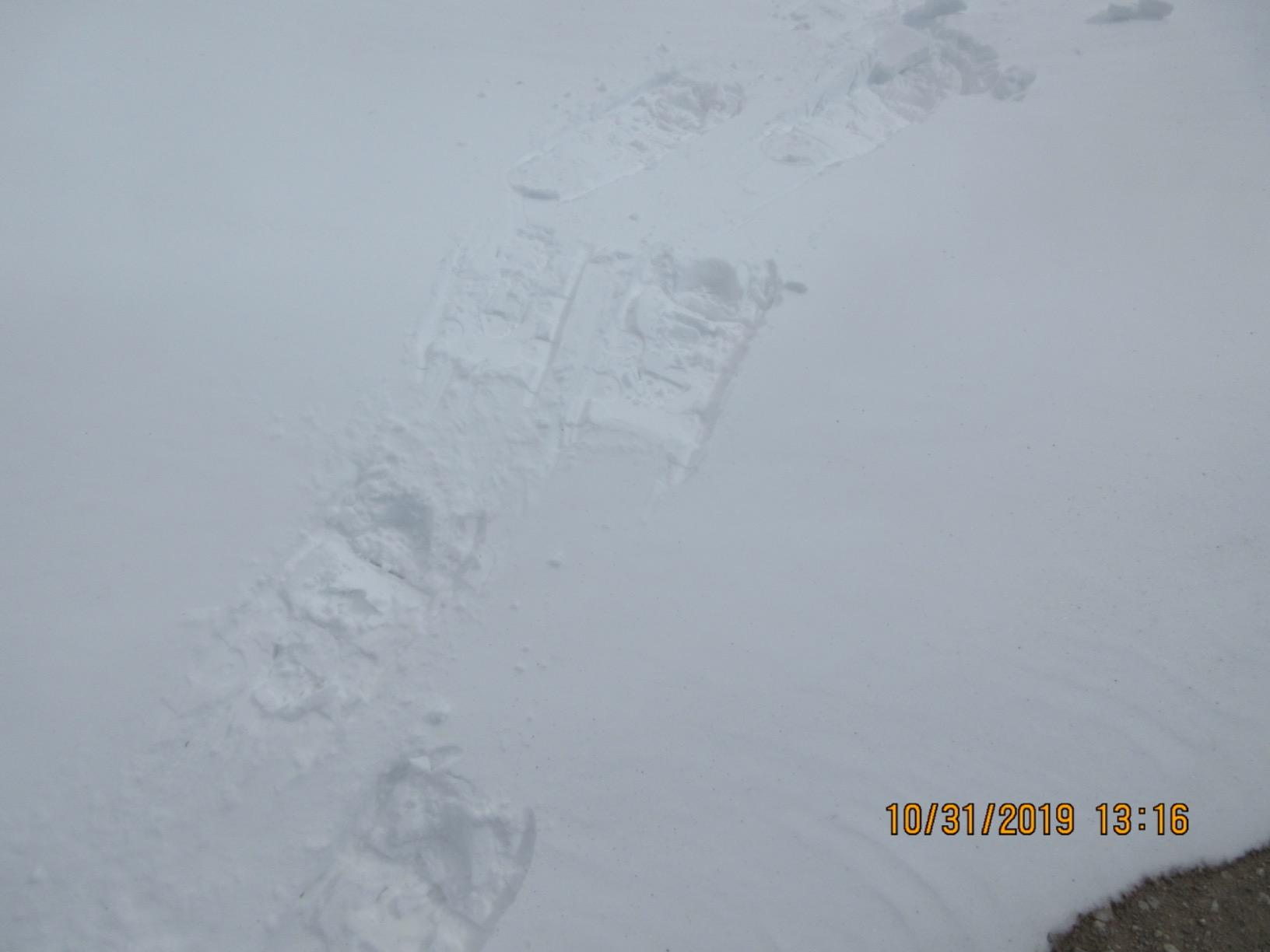
The frame is sturdy enough to survive rocks and branches, which is not a given at this weight class. It is also a pair that suits walking with a less experienced partner, since the buckle adjustment is simple enough to figure out at the trailhead without a manual.
The weakness is the rear strap. It is stiff in very cold conditions, and it is riveted rather than replaceable, which is why you will see owners reporting snapping straps. Check it at the start of every trip, because a failed strap in the backcountry is a real problem.
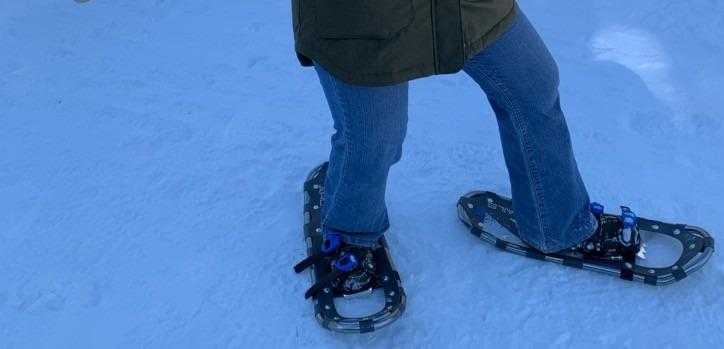
Do I need 36 inch snowshoes?
You need them if you are breaking trail in untracked snow while carrying a real pack, or if you weigh enough that anything smaller pushes you past its maximum load. Length only helps if the frame is also rated for your weight.
You do not need them if your route is a packed or groomed trail. On hard surfaces a 36 inch frame is simply awkward, and it is more snow to drag through on every step.
Who should look elsewhere?
Technical users should move up. The 36 inch frame has no meaningful heel riser to speak of, so steep climbs are calf work, and the crampons and traction bars are adequate rather than aggressive. That is fine for a flat approach and wrong for a headwall.
Anyone buying for a lifetime of use should also weigh the 90 day limited warranty against longer coverage elsewhere on this list.
9. Tubbs Mountaineer – Best for Steep Climbs
Tubbs Women Mountaineer, Color: Purple, Size: 30 (X19010010130W)
- Best flotation and light feel in the premium tier
- Bindings secure large boots including ski boots
- Excellent grip on steep inclines
- 19 degree heel lift makes climbs easier
- Heel lift is hard to lower once flipped up
- Bindings not easily replaceable
- Heavier than some ultralight options
At 4.8 stars, the Tubbs Mountaineer is the highest-rated product in this roundup, and the reason is the 19 degree ActiveLift heel lift combined with the aggressive Anaconda toe and Python heel crampons. On a steep climb in deep snow, that combination is the whole ballgame.
The R2 Revolution Response articulation and full-floating pivot points make the stride feel like ordinary walking, which sounds trivial until you have spent a day in a rigid frame. The Pro-Step aluminum frame with Soft-Tec decking delivers better flotation than most premium competitors at a lighter overall feel.
Owners consistently call out the bindings as the class leader. They are easy on and off, they hold large boots, and they hold ski boots, which is not a small claim for anyone coming from an alpine background. Forum long-term owners also point to Tubbs as the brand they trust for binding quality specifically.
Sizes run from 21 to 36 inches, so there is a length for almost any load. Durable construction and a track record of long service come up repeatedly in reviews written by people who have owned the same pair for years.
How steep of a climb will the ActiveLift heel lift handle?
Nineteen degrees is the deepest heel lift listed anywhere in this roundup, and it is what makes long steep pitches bearable. It rotates your heel up, which reduces the calf and Achilles work per step, and on a sustained climb that is the difference between a comfortable day and a knee that gives out on the descent.
The cost of that depth is a small annoyance: owners report the lift is hard to lower once it is flipped up, and it can catch on your pant leg. Worth knowing before you are standing on a slope in gloves.
Who should look elsewhere?
If you are walking a flat groomed trail, this is far more frame and more weight than you need. The 19 degree riser and premium bindings solve problems that do not exist on a packed path.
Also consider alternatives if you are planning to keep the pair for a very long time and expect heavy use, since owners note the bindings are not easily replaceable when they eventually wear.
10. Tubbs Wayfinder – Best for Groomed Trails
Tubbs Women Wayfinder, Color: Purple, Size: 21 (X20010040121W)
- Reliable flotation from the Fit-Step frame
- CustomWrap binding wraps the foot and adjusts simply
- Rotating toe cord improves stride articulation
- Recreational toe and heel crampons grip packed snow
- Recreational crampons give less bite on alpine steeps
- No heel lift listed among the specs
- Mens version only in this listing
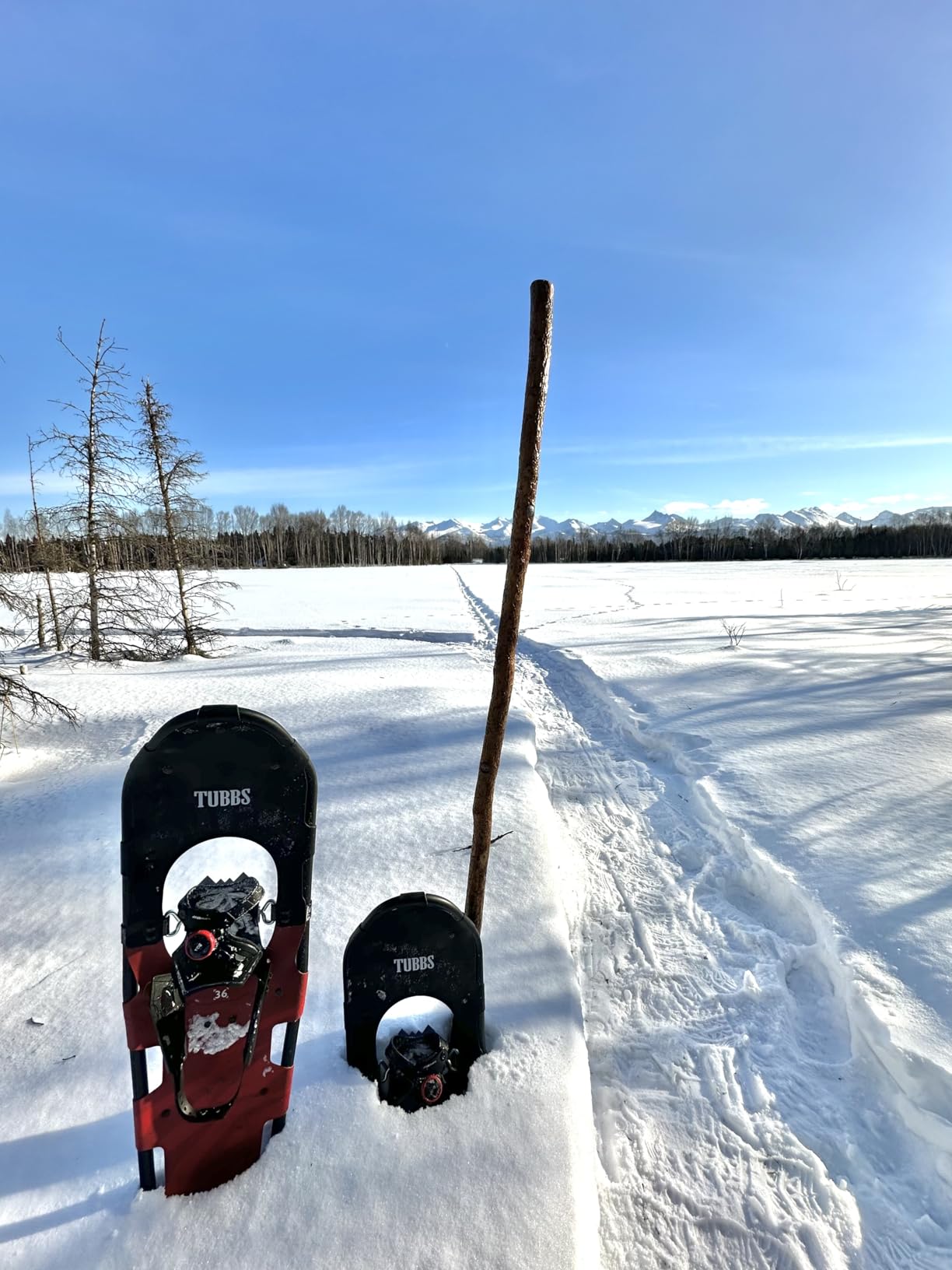
The Wayfinder is the Tubbs answer for the person who wants Tubbs binding quality without a mountaineering frame. The Fit-Step 2.0 frame with Soft-Tec decking gives reliable flotation on packed snow and groomed winter trails, which is where most people actually spend their snowshoeing hours.
The CustomWrap 2.0 binding is the star of the package. It wraps the foot securely, it adjusts simply, and owners call it comfortable across long days. At 16 ounces the weight is genuinely ultralight, which is why this pair is a favorite for winter trail running and quick loop hikes.
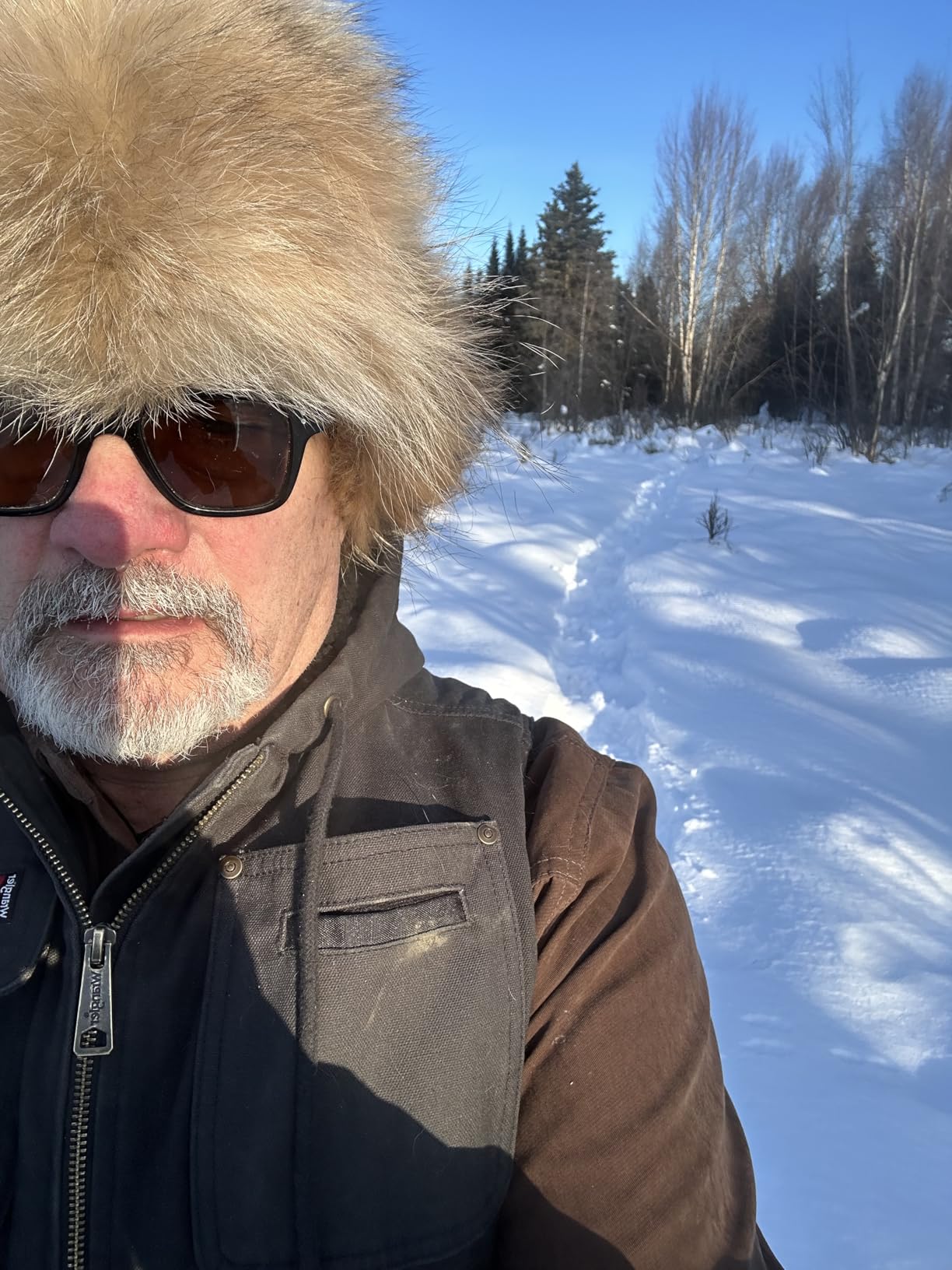
The rotating toe cord articulation is a small engineering touch that makes a measurable difference. Instead of the toe pivot fighting your stride, it lets the deck roll under you, which owners report as a noticeably more natural gait.
The honest limit is the traction hardware. The recreational toe and heel crampons grip packed snow and ice adequately, but they are the reason owners call this the all-terrain generalist rather than a steep-terrain tool. Deep untracked powder also pushes a 21 inch frame past its useful limit.
Is the Wayfinder deep-snow capable?
In the larger sizes, yes for packed and moderately deep snow on rolling terrain. In fresh untracked powder beyond a foot, no frame at 21 inches floats well enough, and the recreational crampons give up bite on anything steep.
The right way to think about this model is as the groomed-trail half of a two-pair strategy. Experienced snowshoers often keep a smaller trail pair like this alongside a powder pair.
Who should look elsewhere?
Anyone on serious alpine terrain needs steel-grade crampons and a real heel lift, neither of which this frame offers. Steep icy pitches are outside what it is built to do.
Buyers who need a womens fit should note that this specific listing is the mens version, so the fit and color options will differ from what a womens sizing chart expects.
11. Yukon Charlie’s Advanced Snowshoe Kit – Best for Fast On and Off
Yukon Charlie’s Advanced Snowshoe Kit, 8inch x 25inch, Includes Snowshoes, Trekking Poles and Travel Bag
- One-pull binding makes transitions very fast
- Lightweight and easy to stride in
- Poles and travel bag included in the kit
- Good general value for casual to intermediate use
- No instructions included in the box
- Bindings too small for larger hiking boots
- Hook and loop closure gathers snow
The Advanced kit is built around the Fast Fit II one-pull binding, and that single feature is the reason to consider it. If you snowshoe a short loop on your lunch break or you move fast between several routes, the time you save strapping in adds up quickly.
It is also described as the lightest and strongest frame in the Yukon Charlie’s line at 4.2 pounds, and the 8×25 size is built for users in the 151 to 200 pound range with 200 pounds listed as the maximum. Larger sizes run through 9×30 and 10×36 for heavier users.
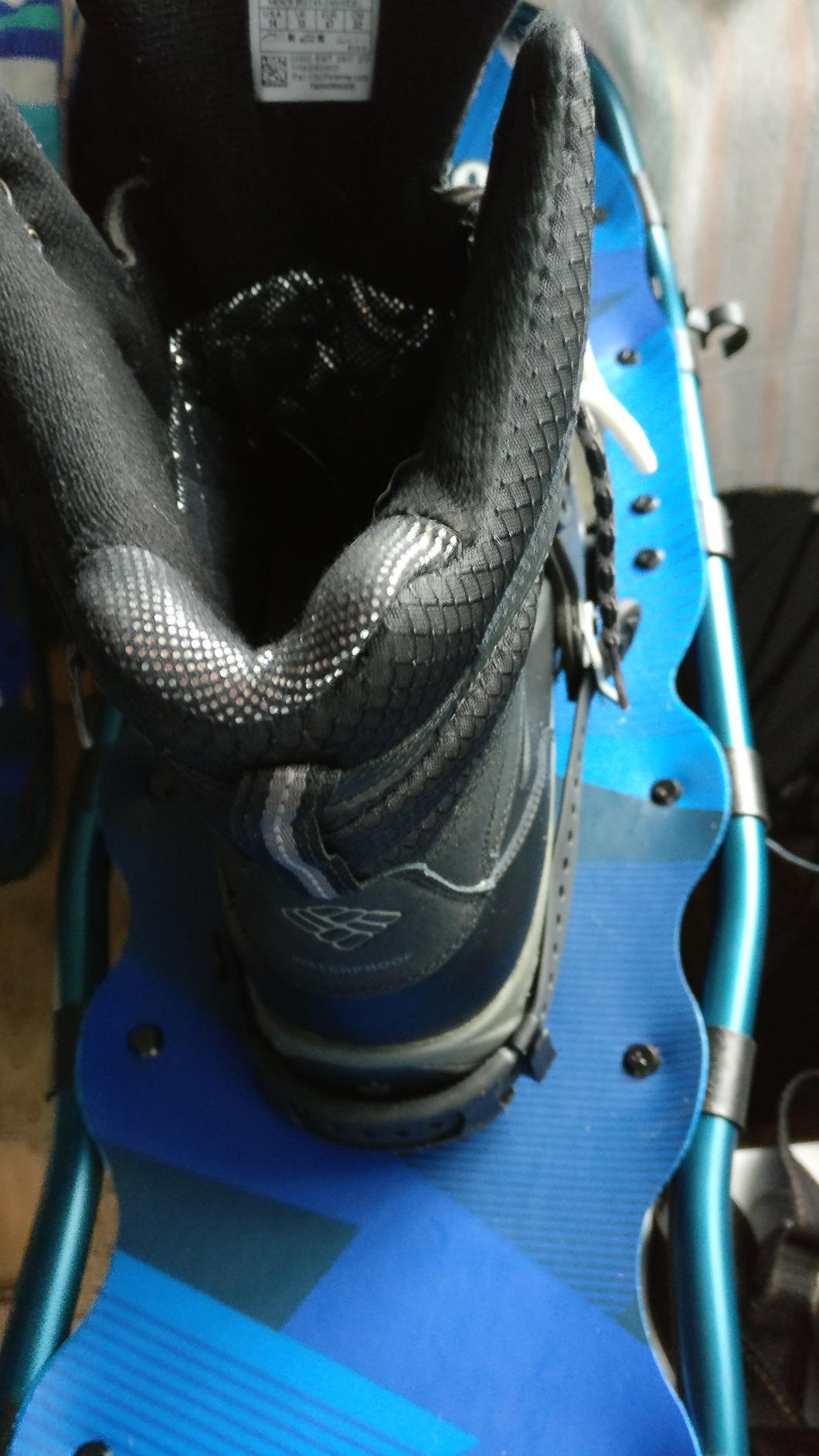
The kit includes trekking poles with snow baskets and a travel bag, so like the Odoland bundle it is a complete starting setup. Owners put the value proposition simply: this is a lot of gear for a casual and intermediate trail budget.
There is one report we think is worth surfacing, and it comes up more than once. Owners mention the frame breaking in brush and on uneven terrain, which is a meaningful limitation if your route runs through dense pine rather than an open field.
Are these good for two feet of snow?
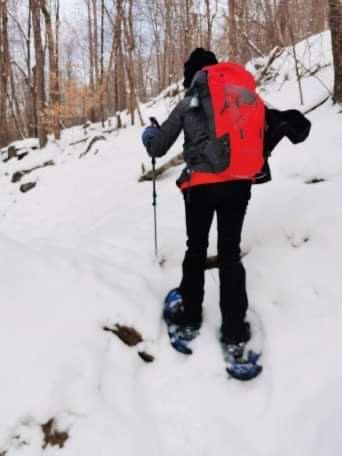
In the 10×36 size, with a reasonable pack, owners report staying on top of deep snow in larger sizes. The 8×25 version is much more of a groomed-trail frame and will sink in real powder sooner than you would like.
The limiting factor is not flotation, it is the closure. The hook and loop style gathers snow over time, and a snow-filled closure loses grip exactly when the snow is wettest and you need it most.
Who should look elsewhere?
First-time buyers, specifically, because no instructions are included. Owners report having to work out the strap routing themselves, which is a poor first experience with a piece of gear that has to fit correctly for safety.
Anyone with large hiking boots should also pass. The bindings are reported as too small at the top of the range, and the hook and loop closure is the least cold-weather-friendly system here.
12. MSR Evo Ascent – Best for Technical Terrain
MSR Evo Ascent Backcountry & Mountaineering Snowshoes, 22 Inch Pair
- Steel traction rails and molded brake bars give exceptional grip
- Light at 4.1 pounds and easy to stride in
- Televator heel lift reduces calf and Achilles fatigue
- Does not kick up snow like other frames
- Rubberized straps are hard to adjust and not mitten friendly
- Toe strap has a known weak point
- Flotation tails sold separately
The Evo Ascent solves for the same problem as the Lightning Ascent with a different emphasis. Where the Ascent maximizes float for a given weight, the Evo Ascent maximizes traction, with steel traction rails and brake bars molded directly into the deck for grip on ice and genuinely steep steeps.
Owners single out the Televator heel lift for dramatically reducing calf and Achilles fatigue, and the frame is light at 4.1 pounds. It also does not kick up snow behind you the way many frames do, which matters on a crowded trail or in fresh powder where you would rather not billow the trail you just broke.
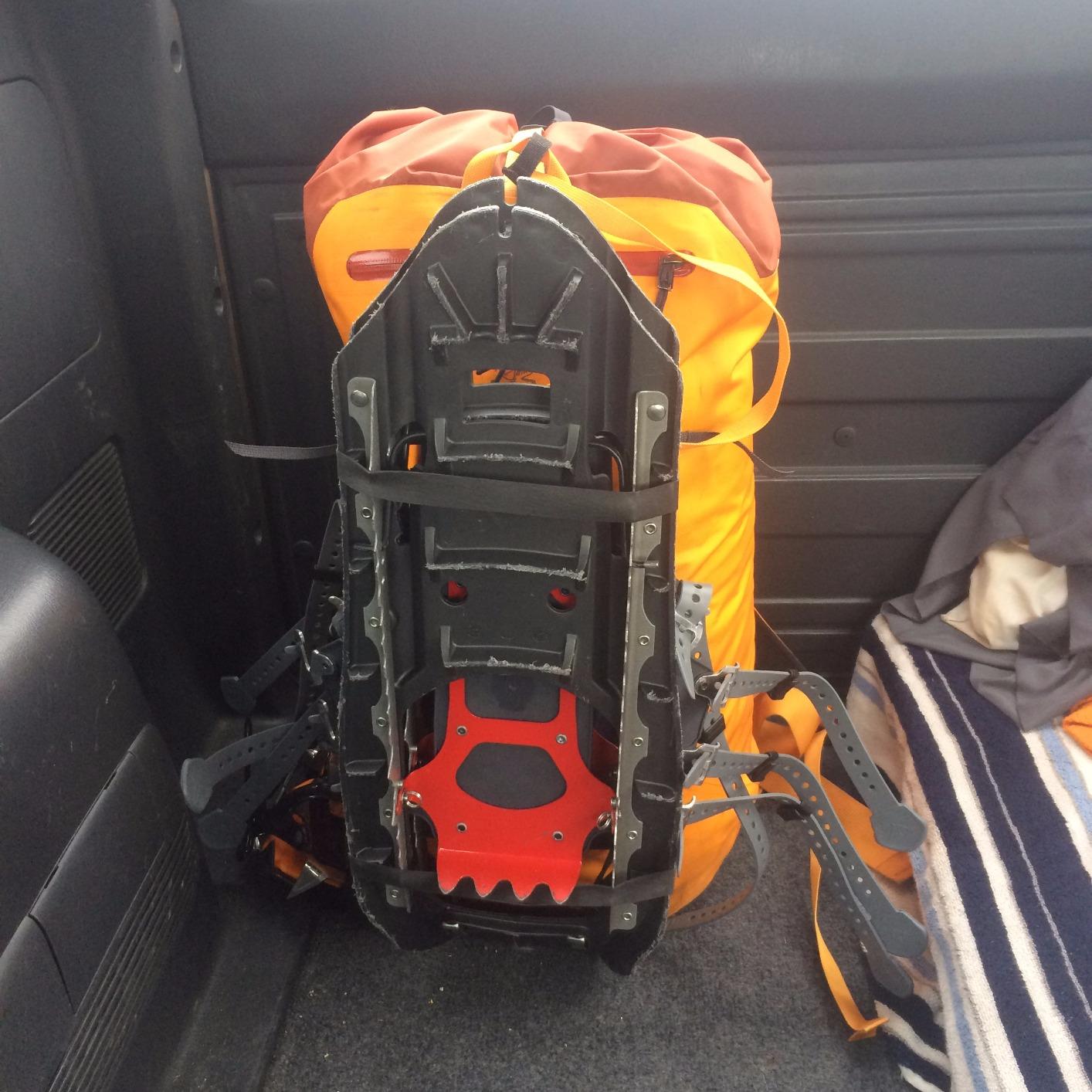
Two things make this a genuinely durable piece of gear. The replaceable rubber binding components mean a worn part is a five minute fix rather than a replacement, and the steel rails and brake bars are molded into the deck rather than bolted on, so there is nothing to shake loose.
That durability is why it works as a crampon alternative on mixed rock and snow routes. It is also made in the USA and carries a three year limited warranty.
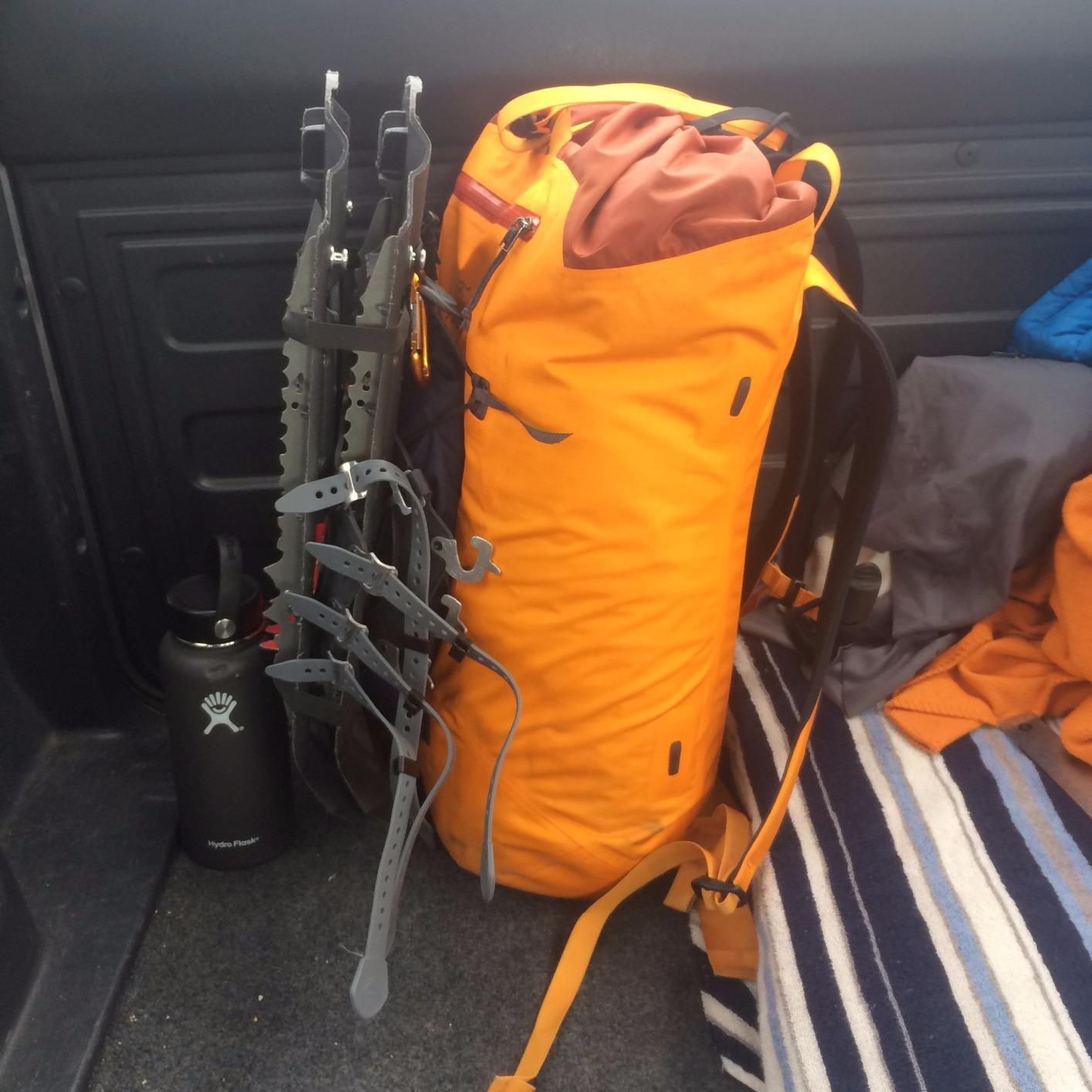
How much flotation does a 22 inch frame give in deep snow?
Not much, and we would rather tell you that plainly. The 22 inch size is rated to 180 pounds, which is the lowest capacity in this roundup, and 22 inches is simply not a lot of surface area. For deep untracked powder you add the modular flotation tails, which raise the rating to 250 pounds and add the surface area you actually needed.
If deep powder is your primary objective rather than technical terrain, this is the wrong frame to start with. If steep and icy is your primary objective, it is the right one.
Who should look elsewhere?
Cold-weather users with big gloves. The rubberized straps are the most-cited complaint on this product because they are genuinely difficult to adjust and not mitten friendly. The Televator pull tab is glove friendly, but the front and toe straps are not, and the toe strap has a known weak point on repeated hikes.
Heavy hikers also need to size carefully. The 180 pound rating without tails leaves very little margin.
How to Size Snowshoes for Deep Snow
Sizing is the decision that determines whether you float or sink, and it is a load calculation rather than a height or shoe-size calculation. Your body weight plus your pack load, divided across the deck surface area, has to exceed what the snowpack can hold.
Here is the process we use, in order. First, add up your total load, which is body weight plus everything in your pack. Second, match that total to the maximum load listed on the specific model, not the brand. Third, pick the largest length that still handles comfortably on sidehills, and fourth, add flotation tails if you are still sinking.
The general length framework that comes out of that: 21 to 25 inch frames suit groomed and packed trails with a light daypack. 25 to 30 inch frames are the generalists that handle most untracked powder for most people. 30 to 36 inch frames are for deep untracked snow, heavy packs, or heavier hikers who have run out of room in a smaller size.
One rule that experienced users follow consistently is to take the smallest size that will support your total load. A smaller frame that carries your weight will always feel better on a sidehill and a descent than a larger frame that barely clears your rating, and a large frame under a light load drags more snow with every step.
If you are shopping across body types rather than for yourself, our adult snowshoe roundup breaks down the fits more granularly. One more thing worth internalizing: boots matter as much as the frame. Stiff-walled waterproof boots keep your feet dry and give the binding a shape to grip, and a soft hiking boot in a ratchet binding is a recipe for wet feet and cold spots.
Snowshoes vs Microspikes: When Lighter Gear Is the Better Call
Most winter trail traffic does not require snowshoes. Experienced users on snowshoeing forums consistently say that microspikes are adequate for most snow travel on heavily trafficked paths, and that full snowshoes earn their place when you want to get further into untracked snow or break your own line.
Use microspikes when the trail is packed and compacted by previous traffic, the snow is under a few inches, and you are staying on established paths. You will move faster, you will carry less weight, and you will have better bare-ground dexterity on any icy rock you cross.
Use snowshoes when the snow is untracked, when you are breaking trail, when you are carrying an overnight pack, or when you are above treeline after a storm. The moment you are the first one through, the surface stops being packed and flotation becomes the only thing that matters.
One warning worth repeating from buying guides: snowshoes are not a substitute for mountaineering crampons. On steep icy terrain where real vertical climbing is involved, neither of these tools is the right answer.
How to Walk in Deep Snow Without Wading
Technique matters more than most buyers expect. A short adjustment to how you walk can make a much smaller frame feel dramatically better in deep powder.
Take shorter steps than you think you need, and lift your toe slightly with each step so the tail clears rather than plowing. Plant your poles ahead of you before you commit your weight, which keeps you from punching through and falling. On climbs, use your heel lift and shorten your stride further.
On sidehills, point your uphill foot straight across the slope rather than angling, which is the technique experienced users rely on to avoid the clunky knee-twisting feeling that large powder frames get on traverses. On descents, sit back into the heel lift and shuffle rather than striding.
Finally, if your terrain is frequently packed in winter and deep in spring, a two-pair setup is a real strategy rather than a luxury. Experienced users keep a smaller groomed-trail pair alongside a larger powder pair, and that is exactly the split between the two Tubbs models in this roundup.
One related piece of winter prep worth sorting before the first storm: if the driveway is buried before you ever reach the trailhead, our roundup of the best snow blowers handles the clearing, and it is a far better use of a Saturday morning than shovelling by hand.
Frequently Asked Questions
What are the best snowshoes for deep snow?
The best snowshoes for deep snow are the ones with the largest deck surface area for your total load. Among the 12 pairs we reviewed, the G2 GO2GETHER leads because it comes in 21, 25, 30, and 36 inch lengths, so you can size to your actual weight instead of settling. For technical alpine work, the Tubbs Mountaineer wins on its 19 degree heel lift, and the MSR Lightning Ascent wins on ultralight steel construction. Larger is only better if the frame also carries a higher maximum load.
Should I get 25 or 30 inch snowshoes?
A 25 inch frame is right for groomed and packed trails with a light daypack. Step up to 30 inches when you are breaking trail in untracked powder beyond about a foot, when you carry an overnight load, or when your body weight plus pack exceeds what a 25 inch frame is rated for. The bigger frame floats better but feels clunkier on sidehills and descents, so the correct answer is the smallest length that still supports your total load.
What size snowshoe does a 250 pound hiker need?
Start by adding your pack load to your 250 pounds, then match that total to the maximum load on the model you are considering. A 250 pound hiker with a 20 pound daypack is running 270 pounds, which is past the 250 pound rating on the Yukon Charlie’s Sherpa. For heavier combined loads, the XtremPro and Franklin Sports pairs are rated to 300 pounds. A 30 inch frame is the usual starting point at this body weight, and 36 inches if you break deep untracked trail.
What type of snowshoes are best for a 300-pound hiker?
For a 300 pound hiker the deciding factor is the maximum load rating, not the length alone. Two pairs in this roundup are rated to 300 pounds: the XtremPro, which runs from a 17 inch frame to a 36 inch frame, and the Franklin Sports Arctic Trails in 36 inches. Both are aluminum framed with substantial decks. Note that the XtremPro uses the same binding across all frame sizes, so check the fit if you have small feet.
What is the maximum weight I can wear in 30 inch snowshoes?
Maximum load varies by model, and it is not a fixed number across brands. In this roundup, 30 inch frames are rated from 200 pounds on the Yukon Charlie’s Advanced kit up to 300 pounds on the XtremPro, with the Franklin Sports Arctic Trails 36 inch pair also rated to 300 pounds. Remember that your rating is your body weight plus your pack load combined. Stay a margin below the listed maximum rather than sitting at it.
Do snowshoes float in deep snow, or do you still sink?
A properly sized snowshoe floats, and sinking is almost always a sizing error rather than a design flaw. If your total load exceeds the frame’s maximum rating, or the length is too short for the snow depth and snow type, you will sink no matter how good the frame is. Dry continental powder floats much more easily than dense wet maritime snow, which is why heavy coastal snowpack calls for a larger deck than the same depth inland.
The Best Snowshoes for Deep Snow in 2026
The best snowshoes for deep snow all solve the same problem in different ways, and the right one depends on your total load and your terrain. The G2 GO2GETHER is our overall pick because its four-length size range lets you match the frame to your body instead of the other way around, and its one-pull ratchet works with cold hands.
For harder conditions, the Wildhorn Sawtooth carries especially strong crampon hardware for icy hardpack, and the Franklin Sports Arctic Trails and XtremPro are the two options rated to 300 pounds. On steep alpine terrain, the Tubbs Mountaineer and MSR Lightning Ascent are a different class of tool, lighter and far more aggressive on ice.
Start with the load calculation before you fall in love with a frame. Add your pack weight to your body weight, match the total to a rating, and buy the smallest length that still clears it, and you will be on top of the snow instead of in it all winter.