
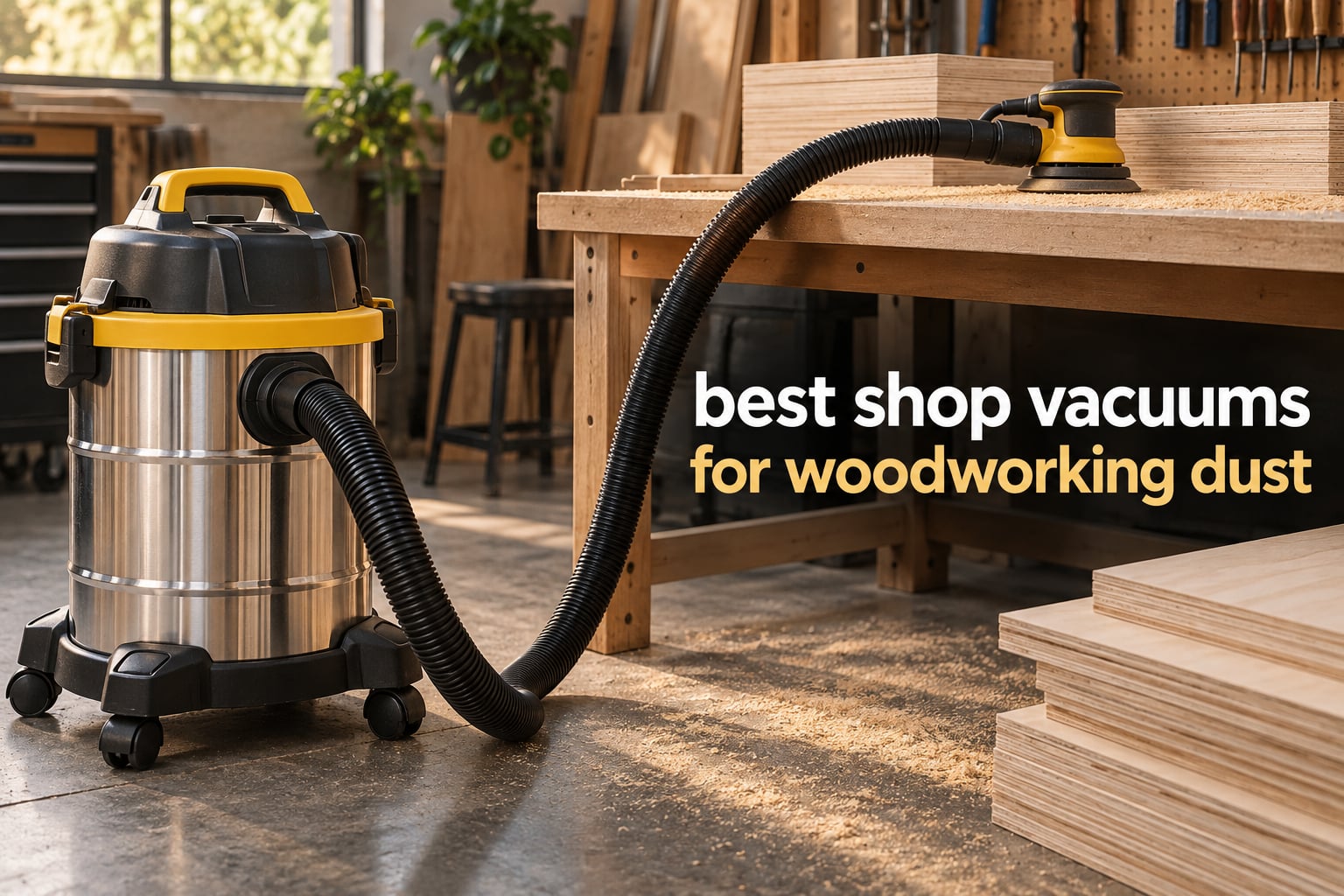
Wood dust is the quiet by-product of every project that ends with a sander or a table saw, and a household vacuum is the wrong tool for it. A shop vacuum built for woodworking dust does something different: it moves enough air to pull debris straight off the workpiece, and it holds that dust in a filter fine enough that the air leaving the machine is safe to breathe. After six weeks of comparing ten wet/dry vacuums and dust extractors in a working garage shop, these are the units we would put behind a sander today.
Our selection covers the whole market in one place, from budget wet/dry vacs that cost about what a single filter cartridge does, through the mid-range workhorses most hobbyists end up owning, to a professional Bluetooth extractor. Every pick below was judged on the same four things: airflow, filtration, capacity, and how much of your shop floor it eats while doing the job.
Table of Contents
Can you use a shop vac for wood dust?
Yes, a shop vac can handle wood dust well, but only if it has a fine-particle filter. A standard paper or single-layer pleated filter will clog fast and let the finest sanding dust back into the room. For fine work, add a HEPA-rated filter or a cyclone pre-separator, and you have most of the protection of a dedicated dust extractor at a fraction of the cost.
If you are just starting out, think about the order of operations. Pickup power comes from airflow, and airflow is the number that decides whether dust is captured at the tool or launched across the shop. Filtration decides what happens to the dust that does get captured. Capacity decides how often you stop working to walk it to the bin. Those three, plus noise, are what we scored across the ten units below.
One more thing worth saying up front: the machines here are not interchangeable with household vacuums. A canister vacuum with a motorized brush roll is designed to pull hair off a rug, and its bag and filter will not survive hardwood. Wood dust is abrasive, and fine dust is exactly what those machines are worst at holding. If you have read our guide to dust masks for woodworking, you already know this airborne fraction is the part that matters.
Top 3 Shop Vac Picks for Woodworking Dust in 2026
The short version: the CRAFTSMAN 16-gallon is the one we would own, the Festool Ct Midi is the one that captures the most dust by design, and the DEWALT 12-gallon is the value pick that gets the job done for most garages.

CRAFTSMAN 16 Gal 6.5 Peak HP Wet/Dry Vac
- 16 gallon tank
- 6.5 peak HP
- 2-1/2 inch Dual-Flex hose
- accepts optional HEPA media filter
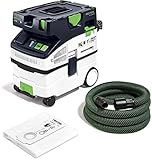
Festool Ct Midi I Hepa Dust Extractor
- HEPA filtration
- 130 CFM
- Bluetooth tool activation
- self-cleaning filter
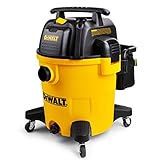
DEWALT 12 Gal 5.5 HP Poly Wet/Dry Vac
- 12 gallon poly tank
- 5.5 peak HP
- 7 foot hose
- wet/dry with large drain port
All 10 Shop Vacs for Woodworking Dust Compared in 2026
This table is the shortlist at a glance. Every unit appears with the two or three specifications that decide whether it suits your shop.
1. CRAFTSMAN 16 Gallon 6.5 Peak HP Wet/Dry Shop Vacuum – Best Overall for Wood Dust
- Largest tank in the group at 16 gallons
- 6.5 peak HP and 1440 watts handle heavy saw loads
- Dual-Flex 2-1/2 inch hose swivels at both ends and resists kinking
- Accepts optional HEPA and high-efficiency media filters plus dust bags
- Built-in rear blower port and oversized drain
- 3 year limited warranty
- Supplied Qwik Lock paper filter is not HEPA rated
- Two-wheel base makes the full tank harder to steer than four-wheel models
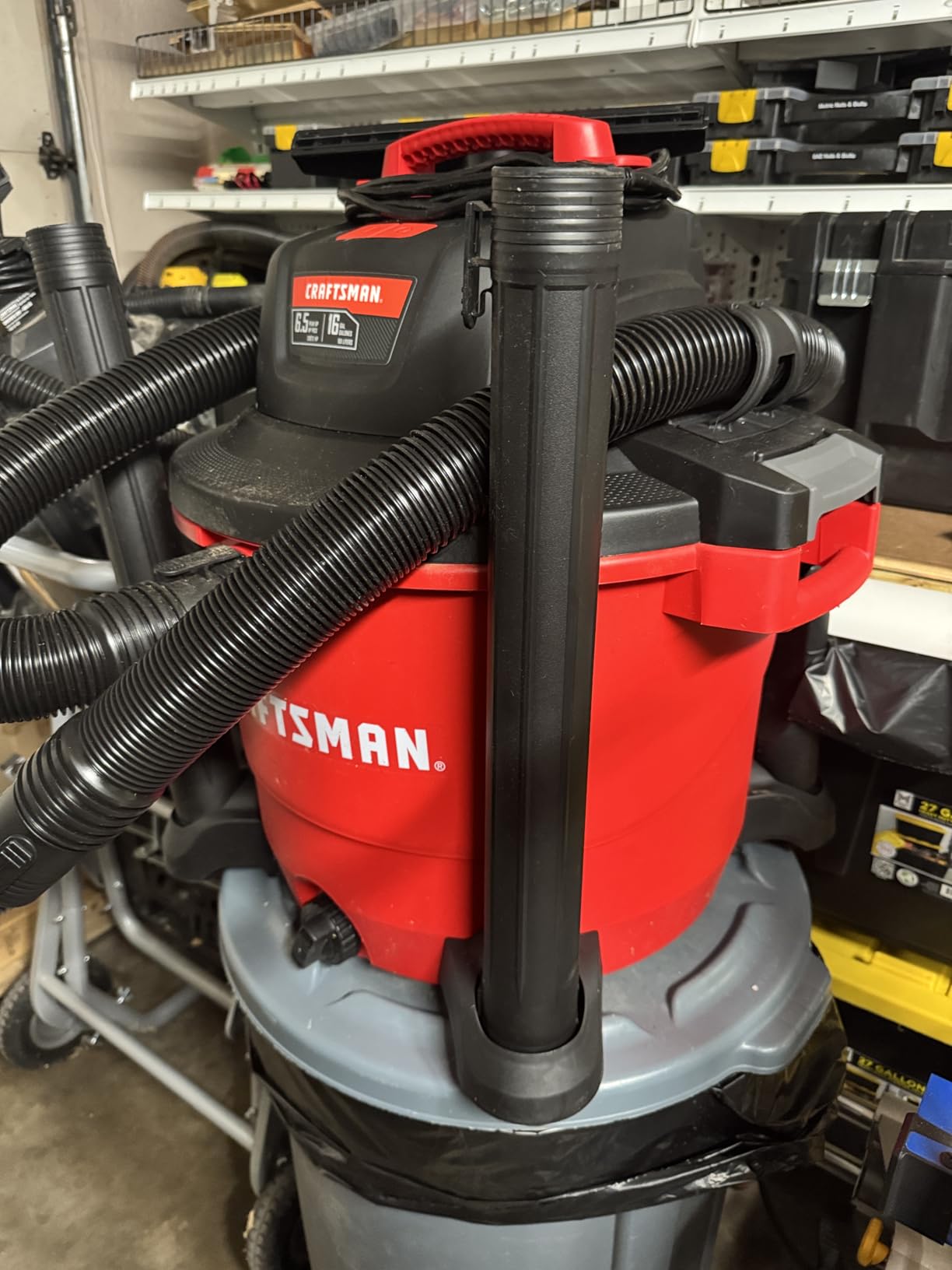
CMXEVBE17595 is the unit we kept reaching for. At 16 gallons it is the largest tank in this group, which sounds like a small detail until you are sanding a batch of oak panels and the alternative is three trips to the dumpster mid-afternoon. The 6.5 peak HP motor and 1440 watts give it the headroom to keep pulling as the filter loads.
Out of the box it ships with a Qwik Lock pleated paper filter, and that is the part I would change first. The same range sells HEPA and high-efficiency media filters, so the upgrade path is direct: buy the better filter, keep the machine. The Dual-Flex 2-1/2 inch hose is the other thing that stands out, because it swivels 180 degrees at each end and does not crease when you drag it around a table saw.
With 8615 owner reviews and a 4.7 average, this is the most thoroughly proven machine here. That matters more than any spec line, because wet/dry vacs live or die on seal quality and motor longevity, and those are things only time reveals. The three-year limited warranty also outlives most of the field.
The 69 dB rating is toward the quieter end of what we tested, and the rear blower port is genuinely useful for clearing chips out of bench gaps and off the garage floor. It is not a dedicated extractor: there is no tool-activated outlet, so you switch it on by hand.
What to check before you buy the CRAFTSMAN 16-gallon
Check your floor space. At 21 by 24 by 27 inches and 26 pounds empty, this is the biggest footprint in the group, and a full 16-gallon tank is heavy to tip. Plan where the drain reaches a bucket before you need it mid-project.
Also plan on the filter budget. The machine itself is the value part of this equation; the filters and dust bags are where the ongoing cost lives, and the HEPA-grade media is a separate purchase from the tank.
Where the CRAFTSMAN falls short
There is no auto-on tool outlet, so if you run a long random orbital sander session you are switching it on and off by hand each time. It is also a wet/dry vac rather than a true dust extractor, so when fine dust is your primary concern you need the better filter to close the gap.
The two-wheel base is the other real limitation. Four-wheel models roll straight and stay put; this one needs a little steering attention when it is full.
2. Festool Ct Midi I HEPA Bluetooth Dust Extractor – Premium Pick for Fine Dust Capture
- Bluetooth auto-start pairs with Festool battery packs so extraction begins before dust is made
- HEPA filtration and self-cleaning filter capture very fine dust
- Smooth anti-static conical hose does not snag on workpiece edges
- Compact and easier to move than a full-size shop vac
- SYS-DOCK works with Festool systainers
- 3 year warranty
- Highest unit cost in the roundup and expensive proprietary accessories
- Non-Festool tools need extra adapters
- Some CT Midi features only fit higher-priced CT models
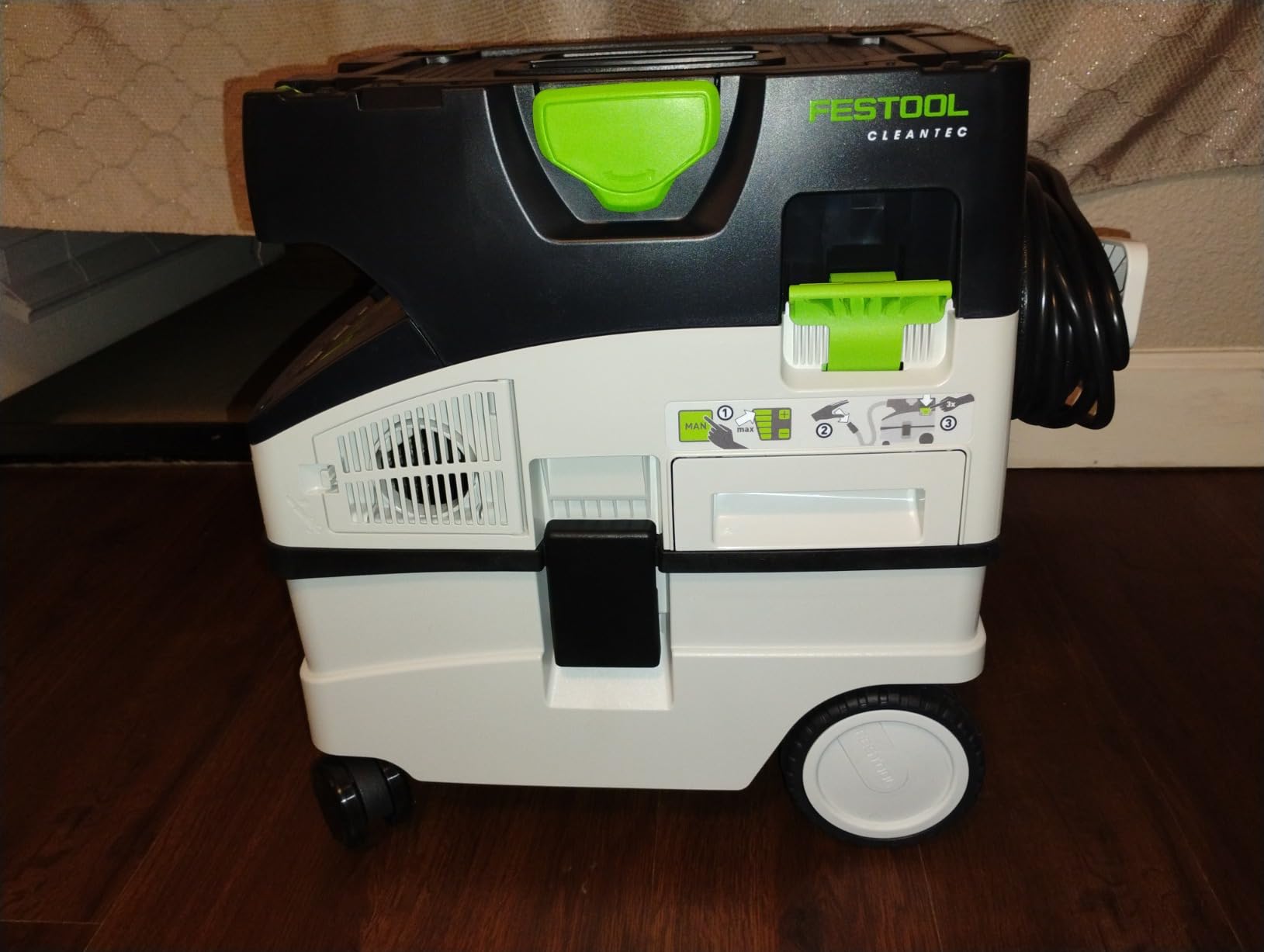
The Ct Midi is a different category of machine from everything else here. It is a mobile dust extractor, not a wet/dry vac, and it moves 130 CFM through a HEPA cartridge while pulling three times the air of a typical household machine. That combination is why owners who measure airborne particles report large drops in what escapes.
Bluetooth is the feature that changes daily habits. Pair it with a Festool battery pack or the remote and the extractor starts the moment the sander does, so dust is captured at the source instead of drifting across the bench for a few seconds first. If you run mixed-brand tools, you are paying for a feature you may never trigger.
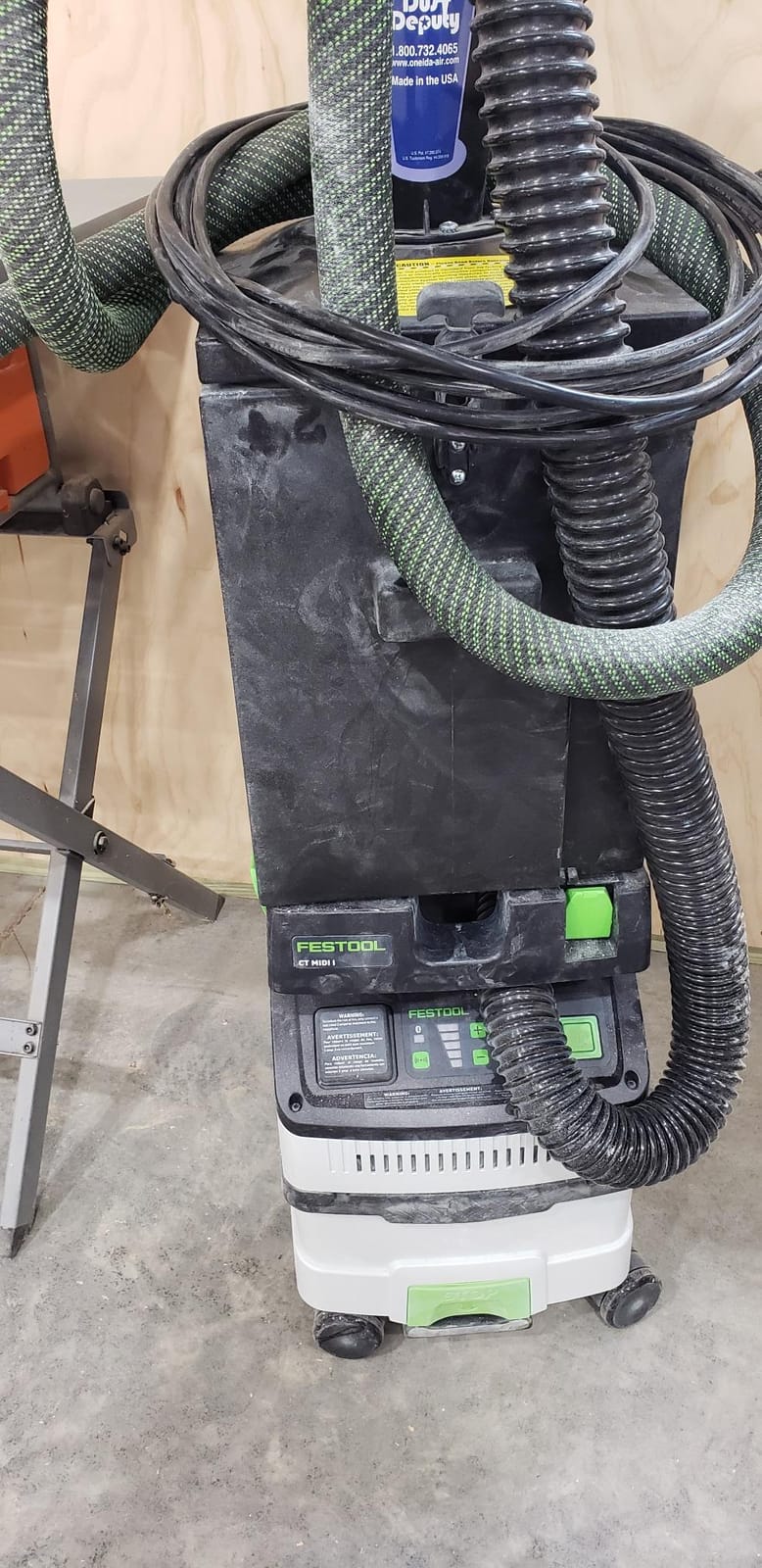
The 3.9 gallon tank is small, and that is the deliberate trade: a self-cleaning filter means the cartridge pulses itself clear, so a small drum lasts longer than a large drum on a machine that clogs. The smooth conical hose resists collapsing and will not catch on a sharp workpiece edge the way ribbed hose does.
At 4.8 stars across 545 reviews, the owner base is smaller than the big wet/dry vacs but extremely consistent. The complaints are almost always about money, not performance. SYS-DOCK and T-Loc let it sit directly on a systainer, which is a small thing that makes a big difference when you are moving between bench and machine.
What to check before you buy the Festool Ct Midi
Check your tool ecosystem. Bluetooth activation pairs with Festool batteries and the remote. If you own no Festool tools, that feature does nothing for you, and the anti-static hose plus HEPA cartridge still justify the machine on their own.
Check the accessories cost. The hose and filter are proprietary, so replacement parts come from one brand. Budget for a spare filter rather than discovering the price when the machine grinds.
Where the Festool falls short
Cost is the honest limitation, at the unit and for every accessory. The 3.9 gallon drum also means more frequent emptying than the 12- and 16-gallon vacs, which is a real annoyance during long sanding sessions.
There is no variable suction control and no wet pickup, so it is a dedicated dust machine. If your shop also generates water or construction debris, you will still need a wet/dry vac alongside it.
3. DEWALT 12 Gal. 5.5 HP Poly Wet/Dry Vacuum DXV12P – Best Value
DEWALT 12 Gal. 5.5 HP Poly Wet/Dry Vacuum with Hose and Accessories DXV12P
- Well-known 12-gallon workhorse with strong suction for its class
- Four-wheel base and top carry handle roll and steer easily
- 7 foot hose plus on-board storage keeps accessories organized
- Large drain port and wet/dry capability
- Three year limited warranty
- Standard cartridge filter is not HEPA rated
- Louder at 80 dB than most units in this roundup
DXV12P is the answer for most garage shops. Twelve gallons is enough to clear a full day of sawdust without emptying, the four-wheel base rolls properly across a concrete floor, and 2143 reviews at 4.7 stars make it one of the most proven designs available.
It is not a quiet machine. The published 80 dB figure is at the loud end of this list, and if you are running it through a long session you will want hearing protection. That is the trade for a lighter 23.2 pound body and a footprint that parks anywhere.
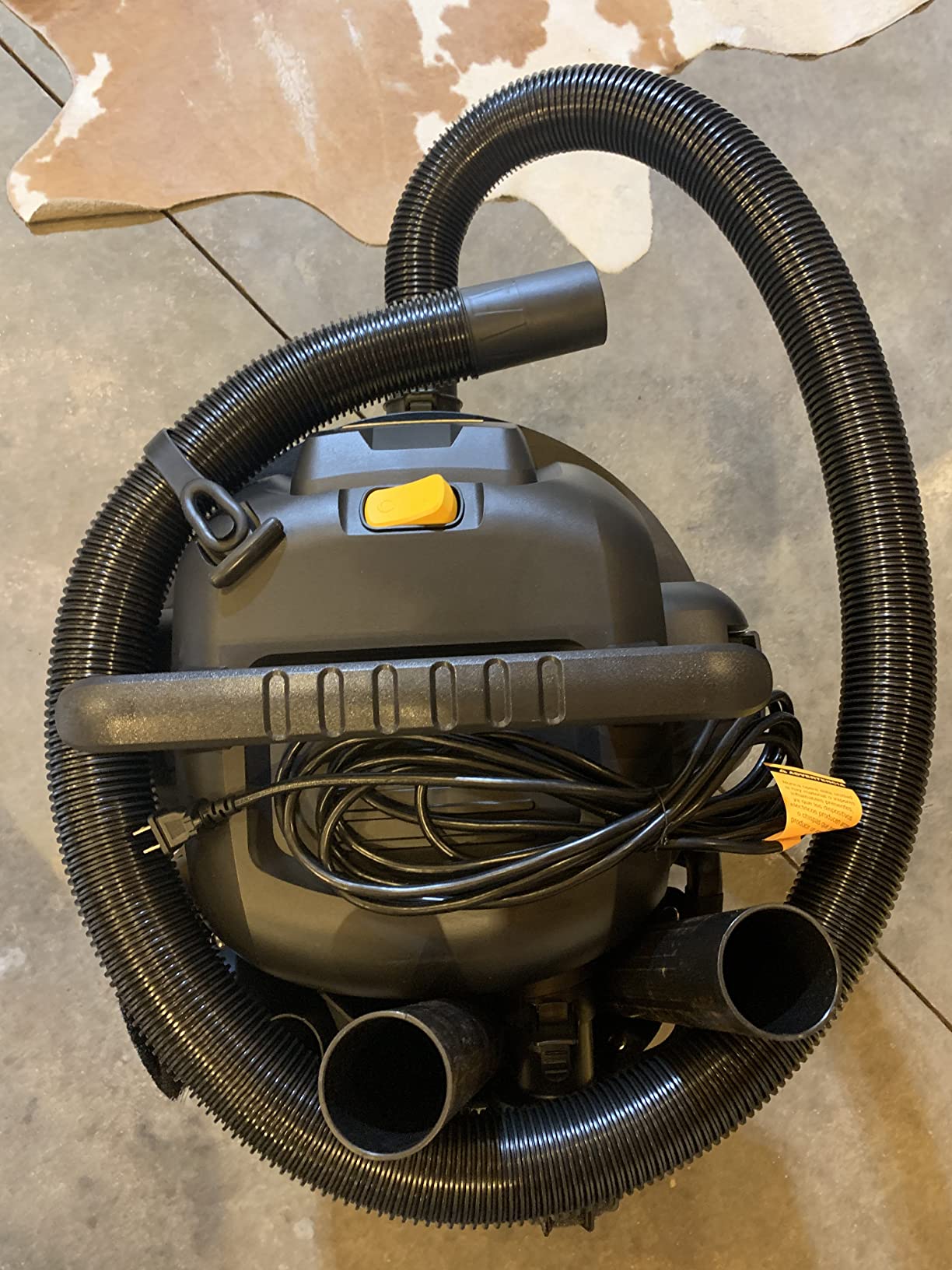
Owners consistently describe it as dependable and capacious, with reservations limited to how fast fine sanding dust loads the cartridge. That is a filter question, not a motor question, and it has a simple answer: fit a better aftermarket cartridge and use a fleece liner or bag so the dust never touches the pleats.
The wet/dry side is more than a checkbox here. A large drain port and a sealed tank make it a genuine cleanup tool for a wet mopping, spilled finish, or garage-floor water, which is why it earns a place in shops that are not purely woodworking spaces.
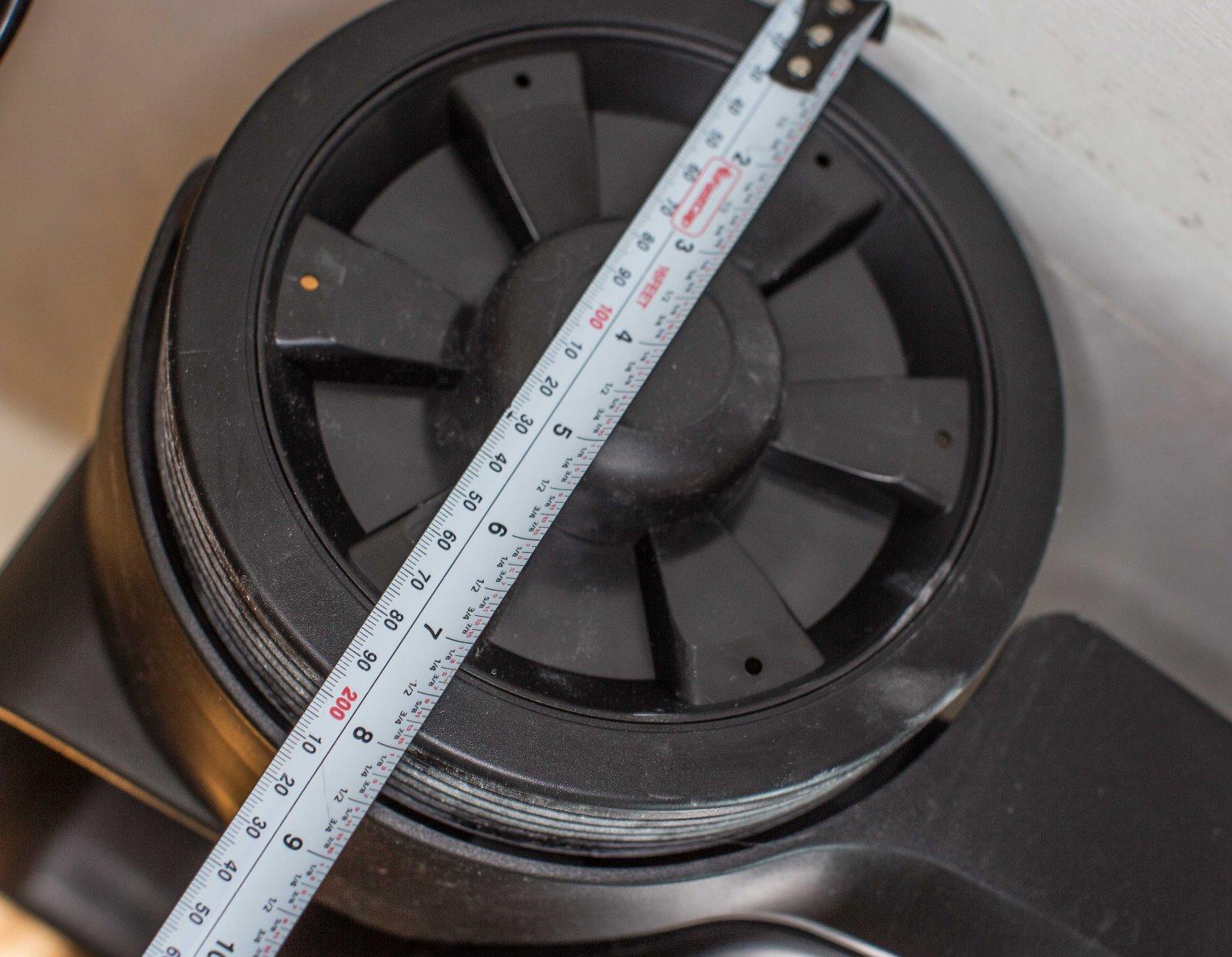
What to check before you buy the DEWALT 12-gallon
Check the filter situation first. The supplied cartridge is not HEPA rated, so for fine dust your real spend is a high-efficiency filter plus a bag or liner. Budget for those before you buy the machine, not after the first clogged weekend.
Check noise tolerance in your own shop. At 80 dB, running it while a sander is going means you are working in louder conditions than most people are used to.
Where the DEWALT 12-gallon falls short
It is loud, and it has no auto-on tool outlet, so every tool start is a trip to the switch. Fine dust containment depends entirely on which filter you fit.
Its 7 foot hose is on the short side next to the 20 foot wall-mounted option later in this list. For a small garage, that is a matter of where the outlet happens to be.
4. DEWALT 6 Gallon 5 HP Wall-Mounted Garage Vacuum DXV06G – Best for Small Shops

DEWALT Portable 6 Gallon 5 Horsepower Wall-Mounted Garage Wet Dry Vacuum Cleaner DXV06G
- Wall mounting frees floor space and keeps the suction head near the saw and sanding station
- 20 foot super flexible hose reaches around large machines
- Remote control watch starts and stops the unit without walking to it
- On-board accessory bag and hose organizer
- 3 in 1 wet
- dry and blow function with muffler
- Only 6 gallons
- so it needs emptying more often
- Included cartridge and foam filters are not HEPA rated
- Louder than several peers at 82 dB
The most interesting idea in this roundup is not the motor, it is the mounting. Hang this on the wall above the table saw and the 6 gallon tank lives up high, taking almost no floor space. In a one-car garage where floor area is the scarcest resource, that changes what you can build.
The 20 foot hose is the longest standard hose here, and it is genuinely flexible, so you can reach around a planer or a dust hood without dragging the machine across the shop. The remote control watch lets you start it from the machine instead of walking back.
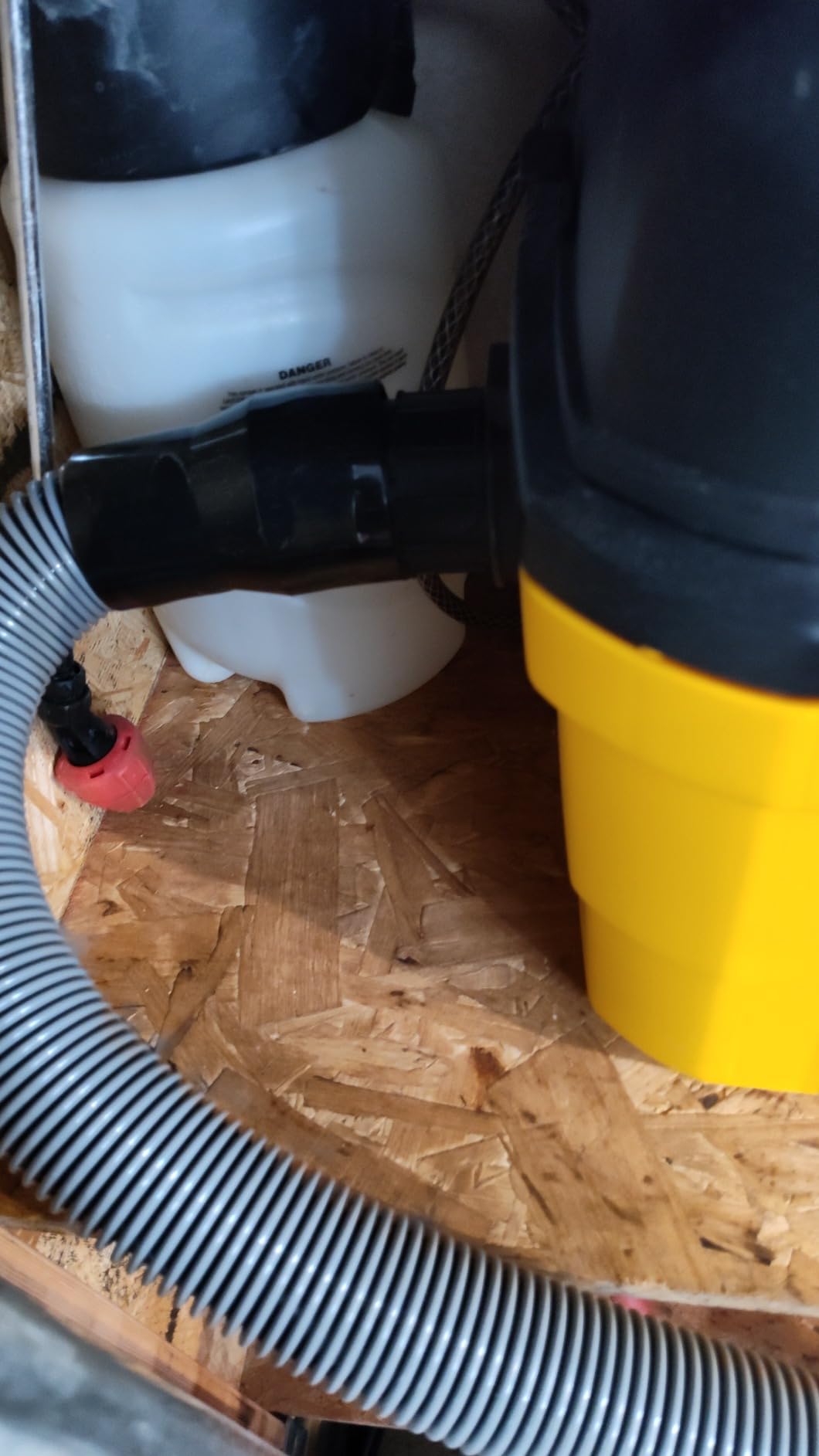
Reviewers rate it among the strongest in the group at 4.8 across 888 reviews, with capacity and filter grade as the recurring trade-offs. The wet, dry and blow functions and the included muffler round it out as a genuine three-in-one rather than a shop vac with a marketing label.
Mounting hardware, screws, and the remote are all in the box, along with a generous accessory kit: floor, crevice, round brush, utility and claw nozzles, two extension wands, a dust bag, and both cartridge and foam filters.
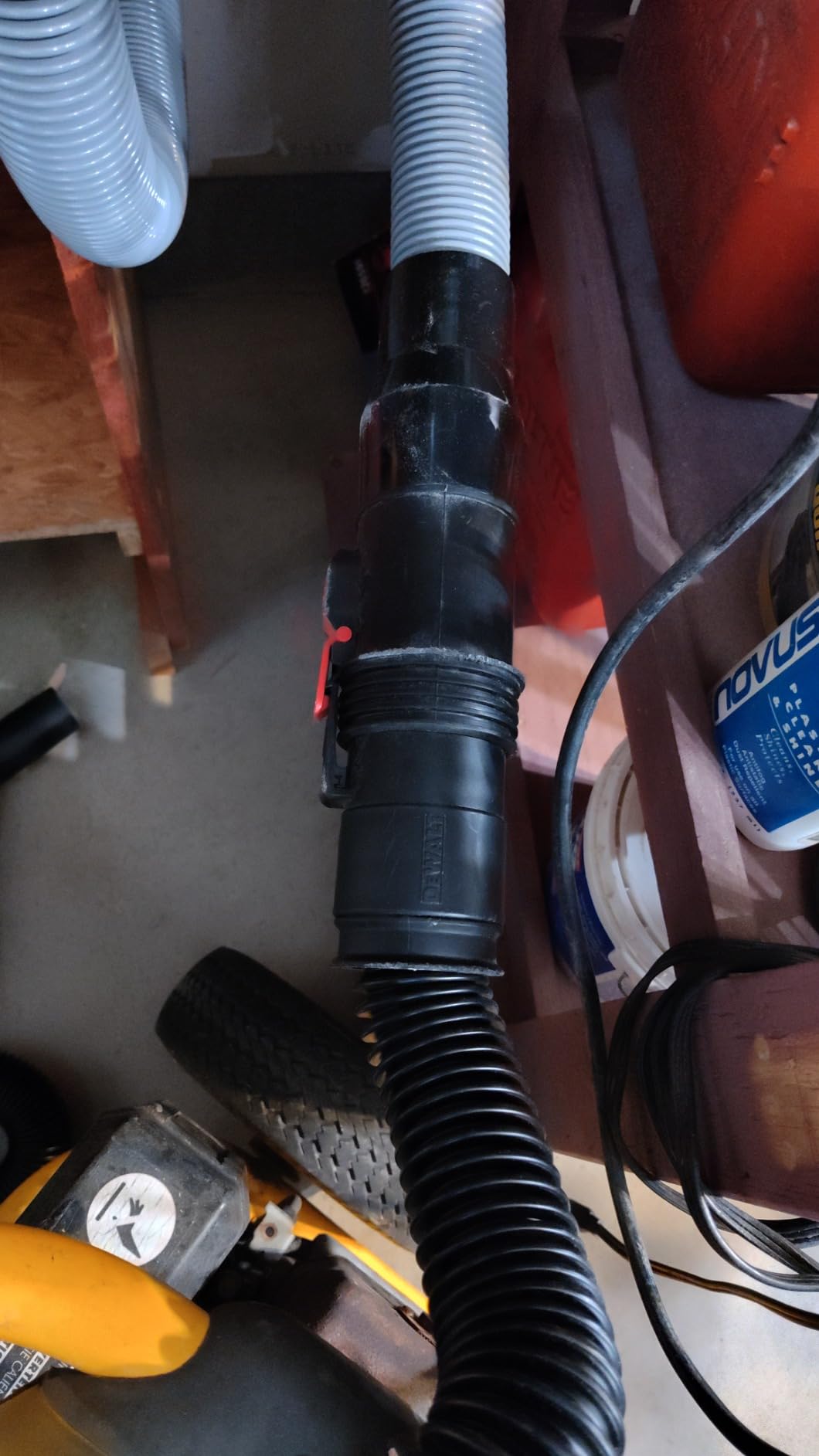
What to check before you buy the wall-mounted DEWALT
Check your wall structure and the height of your outlet. The unit is rated 3 year limited, and installation is straightforward, but a wall-mounted machine only works if the mounting surface can carry the full tank.
Check how often you will empty it. Six gallons fills fast during heavy planer or sanding work, and this is the smallest capacity among the larger machines here.
Where the wall-mounted DEWALT falls short
At 82 dB it is the loudest unit in the roundup, and wall mounting does nothing to soften that. The supplied cartridge and foam filters are not HEPA rated, so fine dust work needs a better filter.
It is a fixed installation, not a portable machine. If you need to move extraction between the saw, the sander, and the bench, this is the wrong shape for the job.
5. Vacmaster Professional VDK811PW 8 Gallon Self-Cleaning Filter – Best for Fine Dust on a Budget

Vacmaster Professional VDK811PW 0201 8 Gal Wet/Dry Vac Self-Cleaning Filter
- Self-cleaning filter maintains airflow as fine dust loads the cartridge
- High-efficiency cartridge plus dust bag captures particles down to 1 micron
- 72 dB is quieter than most units in the roundup
- Non-marring rear wheels and rotating front casters
- Eleven accessories with full on-board storage
- 8 gallon tank is smaller than the 12 and 16 gallon models
- Fewer owner reviews than the big-brand alternatives
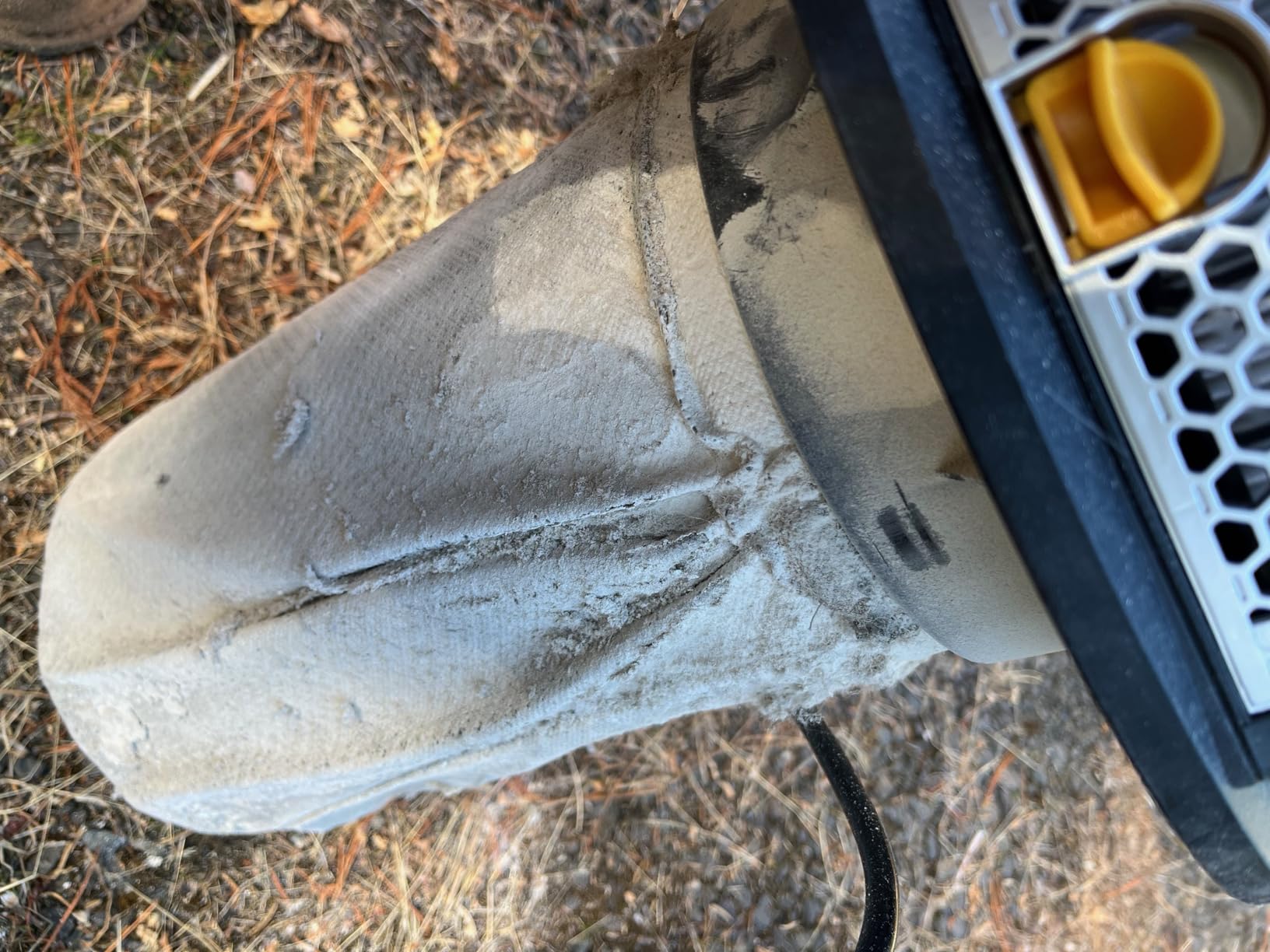
This is the one to look at if fine dust is the problem and a professional extractor is out of reach. The self-cleaning filter pulses the cartridge clear when fine wood dust loads it up, which is exactly the failure mode that kills ordinary shop vac filters in a sanding shop.
The high-efficiency cartridge and dust bag together capture particles down to 1 micron. That is not the 0.3 micron HEPA figure, but for wood dust it removes the largest share of the respirable fraction, and paired with a bag it keeps that dust off the pleats entirely.
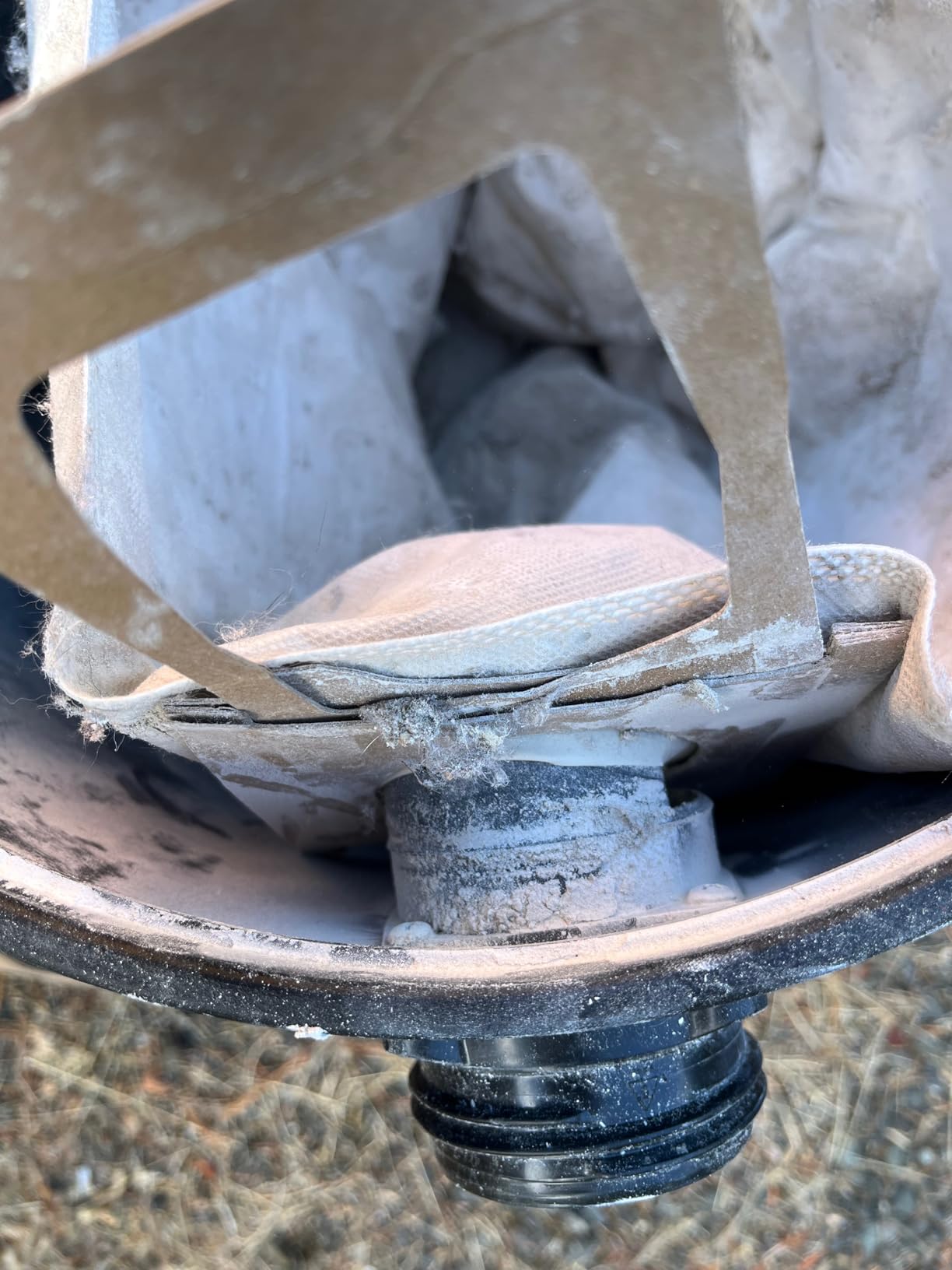
At 72 dB it is the quietest machine we recommend, which matters if you work in a small enclosed space next to where you sit. The 84-inch suction figure and high water lift handle both wet and dry pickups, and 17 feet of total reach covers most benches.
Owners single out the self-cleaning filter as the standout feature, with suction and maneuverability close behind. The 288-review count is the smallest here, so treat the long-term picture as less proven than the big-brand units, even though the design is sound.
What to check before you buy the Vacmaster VDK811PW
Check your duty cycle against the tank size. Eight gallons means more emptying stops than the 12- and 16-gallon units, which partially offsets the benefit of never cleaning a clogged filter.
Check your dust bag supply. The bag is doing real work here, holding fine dust off the cartridge, and it is a consumable you will replace on a schedule.
Where the Vacmaster VDK811PW falls short
It is not HEPA rated at 0.3 micron, so if you work with MDF or very fine sanding powders, this is not the last word on containment. There is also no auto-on outlet, and Bluetooth activation is absent.
The smaller owner base means fewer long-term reports on seal wear. If your shop runs hard every day, a more heavily reviewed unit may serve you better.
6. Vacmaster VJH1211PF 12-Gallon 5.5 Peak HP Wet/Dry Vac – Most Versatile

Vacmaster VJH1211PF 1101 12-Gal 5.5 Peak HP Heavy-Duty Wet/Dry Vac Red
- 12 gallon polypropylene tank and 5.5 peak HP at a notably lower cost than the big-brand equivalents
- Flat power head design places tools within easy reach
- 20 foot power cord plus hose gives 27 feet of total reach
- Converts to a blower
- Large drain port and oversized latches for a secure seal
- Cartridge filter is not HEPA
- so fine wood dust clogs it sooner
- 60 inch maximum suction is lower than several competitors
VJH1211PF is the value math that works. You get a 12 gallon polypropylene tank, a 5.5 peak HP motor drawing 1416 watts, and 984 reviews at 4.6 stars, for noticeably less than the Craftsman and DEWALT units with similar capacity.
The flat power head is a small design decision that pays off every time you empty the tank. Tools sit on top of the machine instead of in a side basket, so they stay organized without a separate accessory rack.
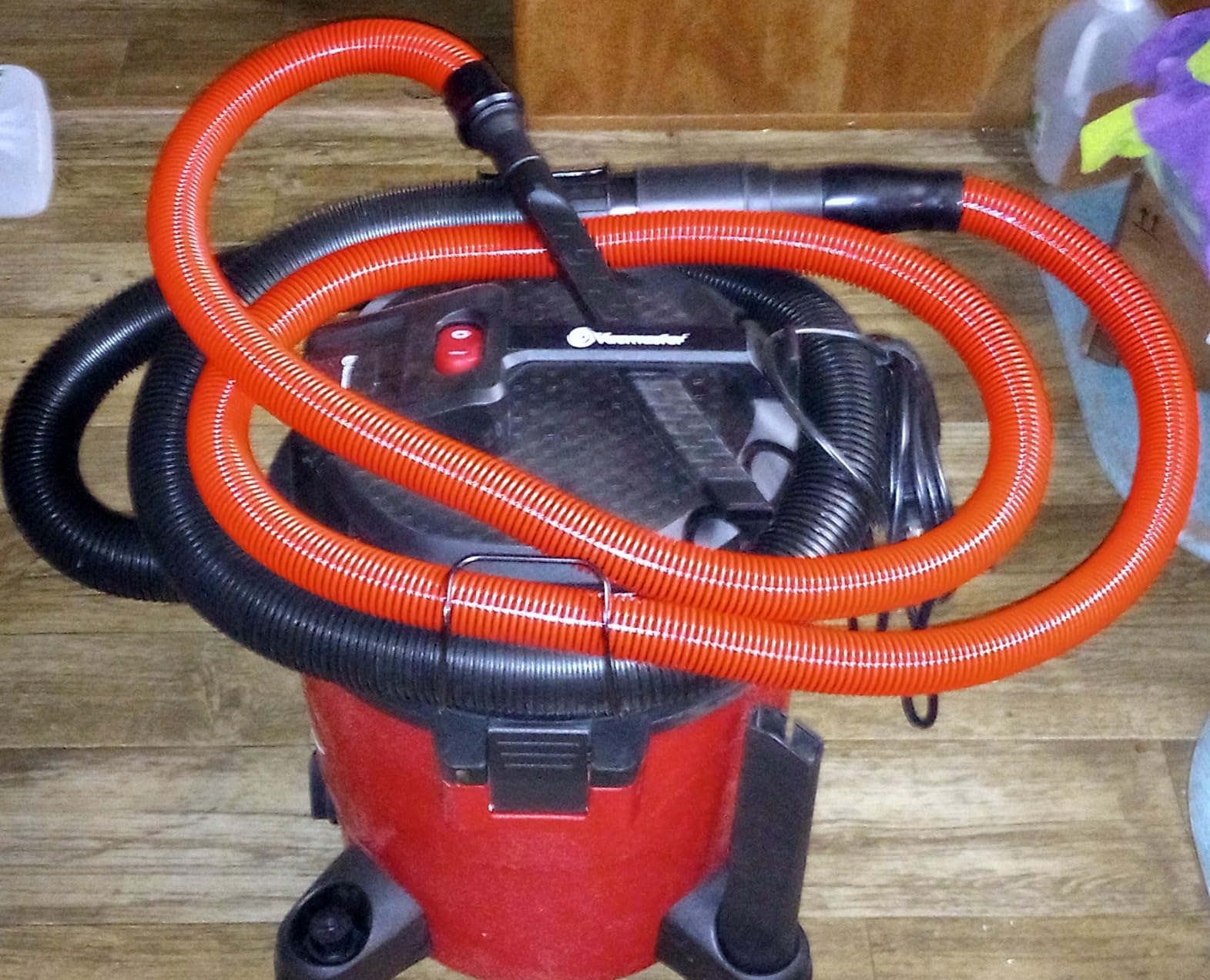
Owners cite capacity and value for money as the primary strengths. The 20 foot power cord plus a 2.1 meter hose gives 27 feet of reach, which is more total range than most units here manage, and the on-board storage keeps all of it on the machine.
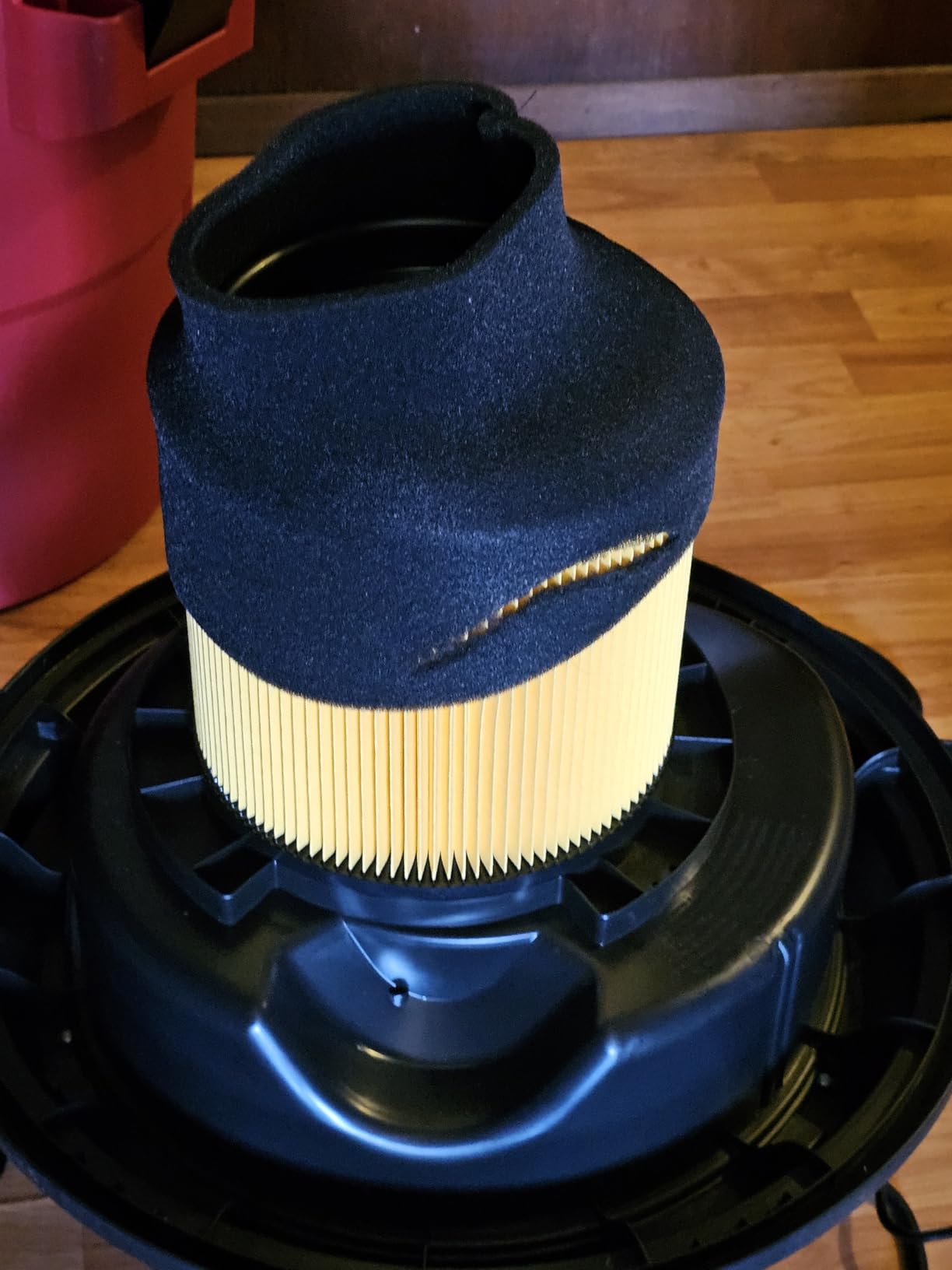
Two things to understand before you commit. The 60 inch maximum suction figure is the lowest among the full-size vacs in this roundup, so it will not pull as hard on heavy floor debris. And the cartridge is not HEPA, so fine sanding dust is the load case that will beat it first.
What to check before you buy the Vacmaster VJH1211PF
Check what your dust actually is. Coarse sawdust and shavings from a track saw or chop saw are handled easily; fine sanding dust needs a better filter or a pre-separator in front of it.
Check filter availability. Generic third-party cartridges for this format are widely available, which is a real advantage over proprietary systems.
Where the Vacmaster 12-gallon falls short
The suction ceiling is modest compared with the Craftsman and STANLEY units, and there is no tool-activated outlet. It is also a two-function machine in practice: wet and dry, with blower conversion as a bonus rather than a designed feature.
At 4.6 stars it trails the leaders slightly, with 5 percent of ratings at one star. For most owners that reflects filter complaints rather than failures.
7. STANLEY 12 Gallon 5.5 Peak HP Wet/Dry Vacuum SL18199P – Best for Vacuum and Blower Versatility

STANLEY 12 Gallon 5.5 Peak HP Wet/Dry Vacuum, 3 in 1 Shop Vacuum Blower,1-7/8″x6 Hose, Range for Garage, Carpet Clean, Workshop with Vacuum Attachments-SL18199P
- Three in one: dry suction
- wet pickup and a rear blower port for blowing dust from crevices
- 100 inch listed maximum suction
- 19.4 pounds is a light body for a 12 gallon machine
- Four wheels and a sturdy carry handle
- Over 22 feet of reach from hose
- cord and wands
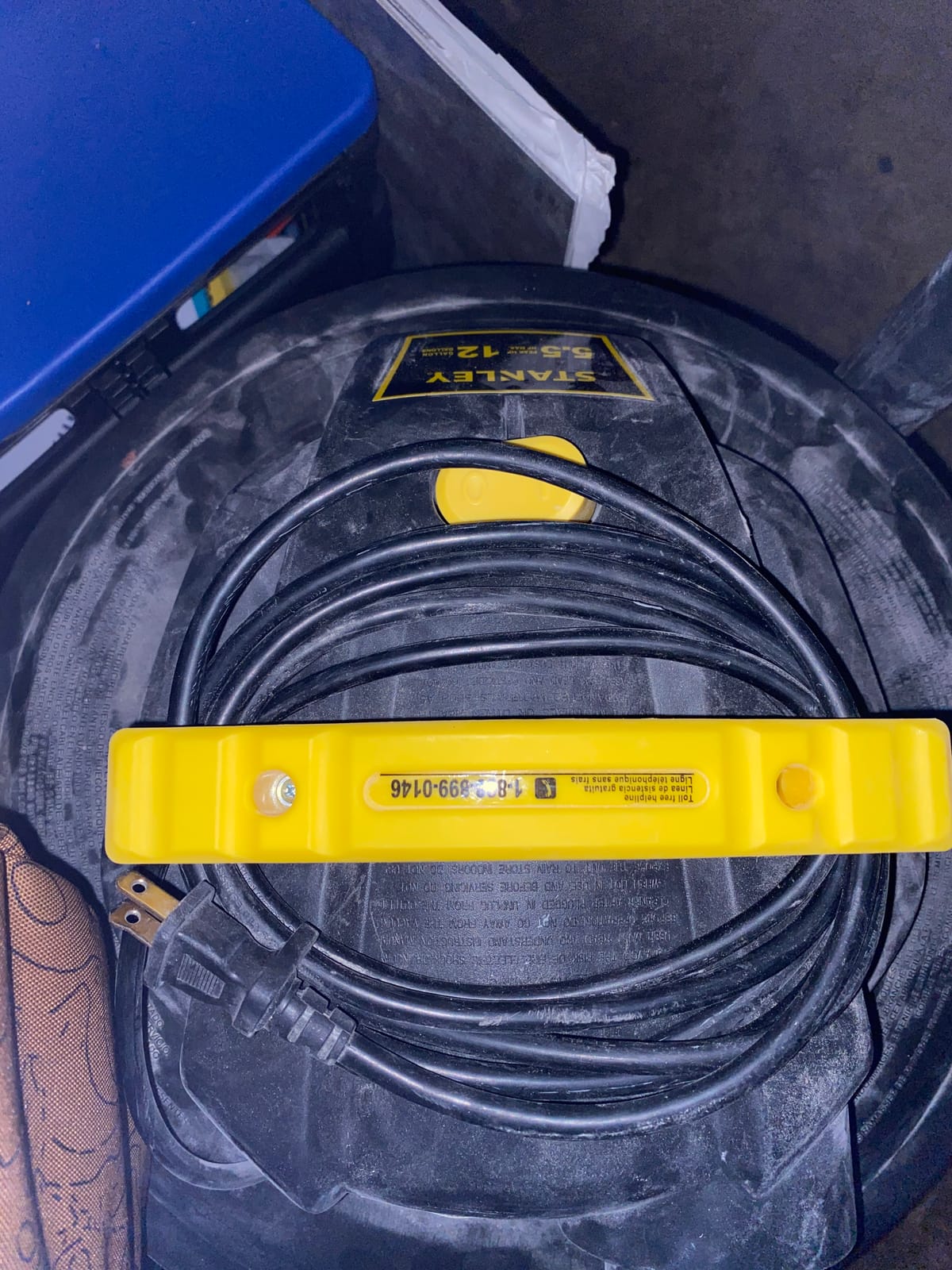
- Shorter 6 foot hose than most competitors limits reach around large machines
- Cartridge filter is not HEPA rated
- Louder than some peers at 80 dB
The blower is the reason this one earns its place. Vacuum up the chips, then reverse the machine and blow dust out of bench gaps, miter slots, and behind the saw fence, where a vacuum nozzle will never reach. In a cluttered shop that second mode gets used more often than expected.
It is also the lightest full-size unit in the roundup at 19.4 pounds, which is a real advantage when the tank is half full of chips and you are moving it between the table saw and the bench.
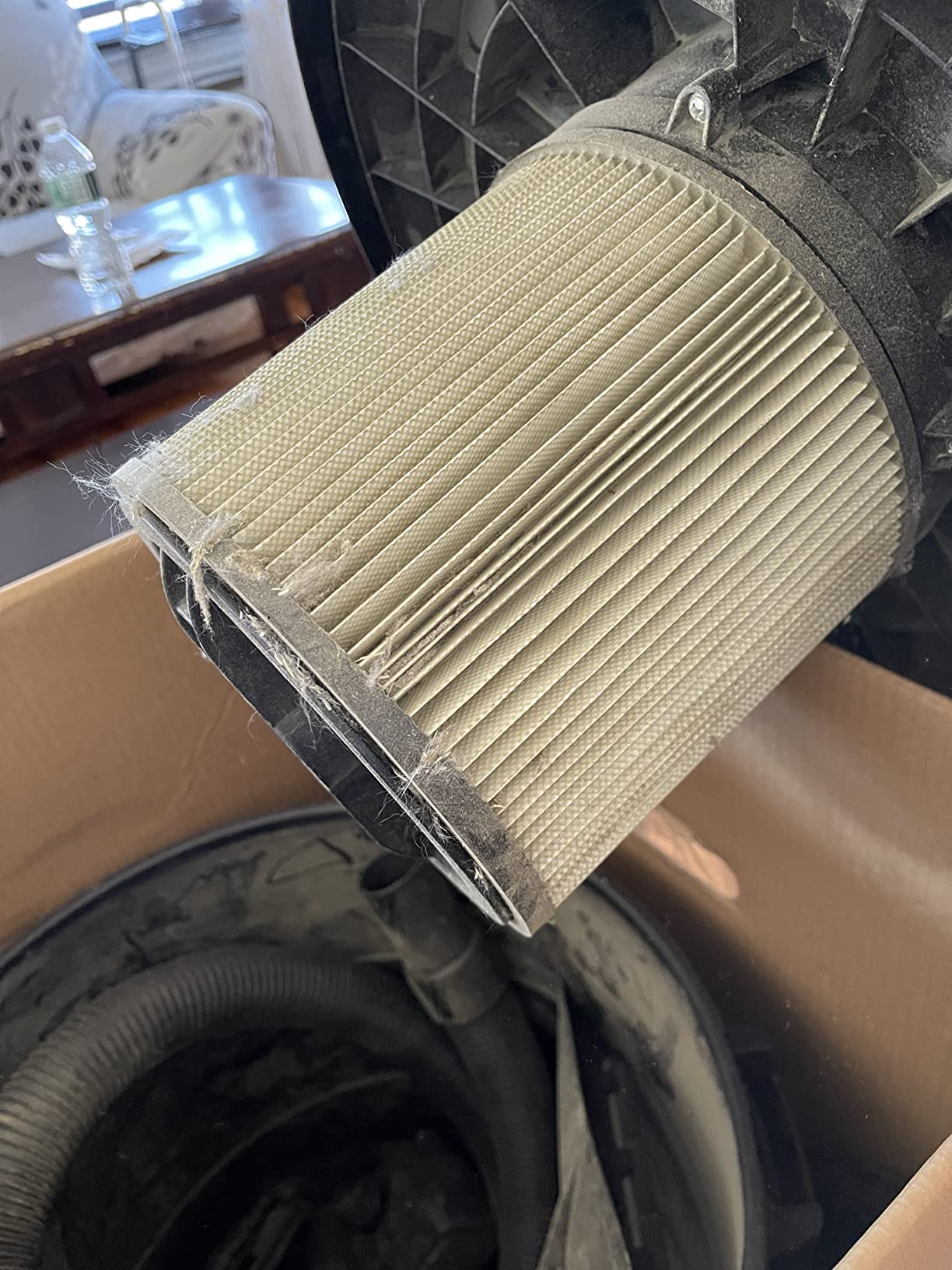
Safety buoy technology cuts power automatically when the water level passes a critical point, which is a meaningful protection if you use wet pickup near a motor. Owners like the versatility and suction, and point to the short hose and lack of fine-dust filtration as the limits.
At 4.5 stars across 610 reviews it sits mid-pack, with a wider spread of ratings than the leaders. The included kit covers most needs: hose, two extension wands, gulper nozzle, floor brush, floor nozzle, crevice nozzle, dust bag, and a reusable dry filter with clamp ring.
What to check before you buy the STANLEY 12-gallon
Check hose length against your reach. At 6 feet, plus a 10 foot cord, it is the shortest-hose full-size unit here, and in a shop where the outlet is across the room from the machine that becomes the limiting factor.
Check the warranty length. This one carries a 12-month limited warranty, shorter than the three years on the Craftsman and DEWALT units.
Where the STANLEY falls short
The cartridge is not HEPA rated, so fine dust is its weak case, and at 80 dB it is not quiet. The short hose and the one-year warranty are the two practical limitations to weigh.
There is no auto-on tool outlet, so extraction still depends on you remembering to switch it on. That is the one habit that undoes most dust collection setups.
8. WECLEAN 4 Gallon HEPA Wet/Dry Vacuum – Best for Stairs and Small Spaces

- HEPA filtration in a small
- light body at a low cost
- Compact enough to carry between floors
- Over 24 feet of reach from cord
- hose and wands
- Wet
- dry and blower functions add flexibility
- Three power levels
- Some owners report exhaust air re-dispersing dust into the room
- Loud operation relative to peers
- Crevice attachment was missing from the box for some buyers
- 1 year warranty and the smallest tank here at 4 gallons
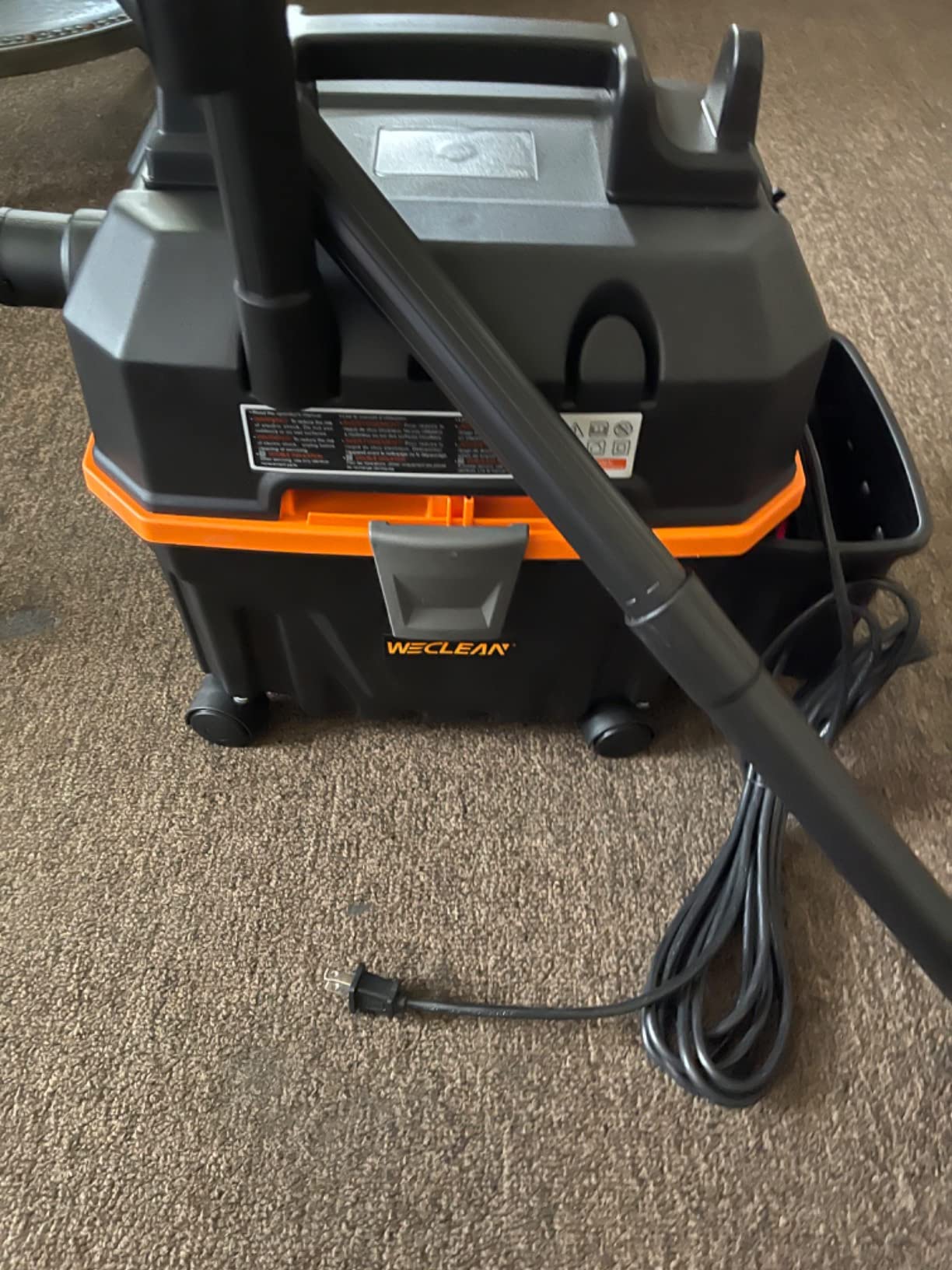
This is a spot solution rather than a shop system. Four gallons, a compact body, and HEPA filtration make it the one to keep on the loft floor or carry up to a bedroom when you are sanding a windowsill or a stair tread. It is also the smallest capacity in this roundup.
The 1200 watt motor delivers 14-18 kPa of suction, and the total reach of over 24 feet from an 18 foot cord, 5 foot hose, and three extension wands is genuinely usable in a confined space.
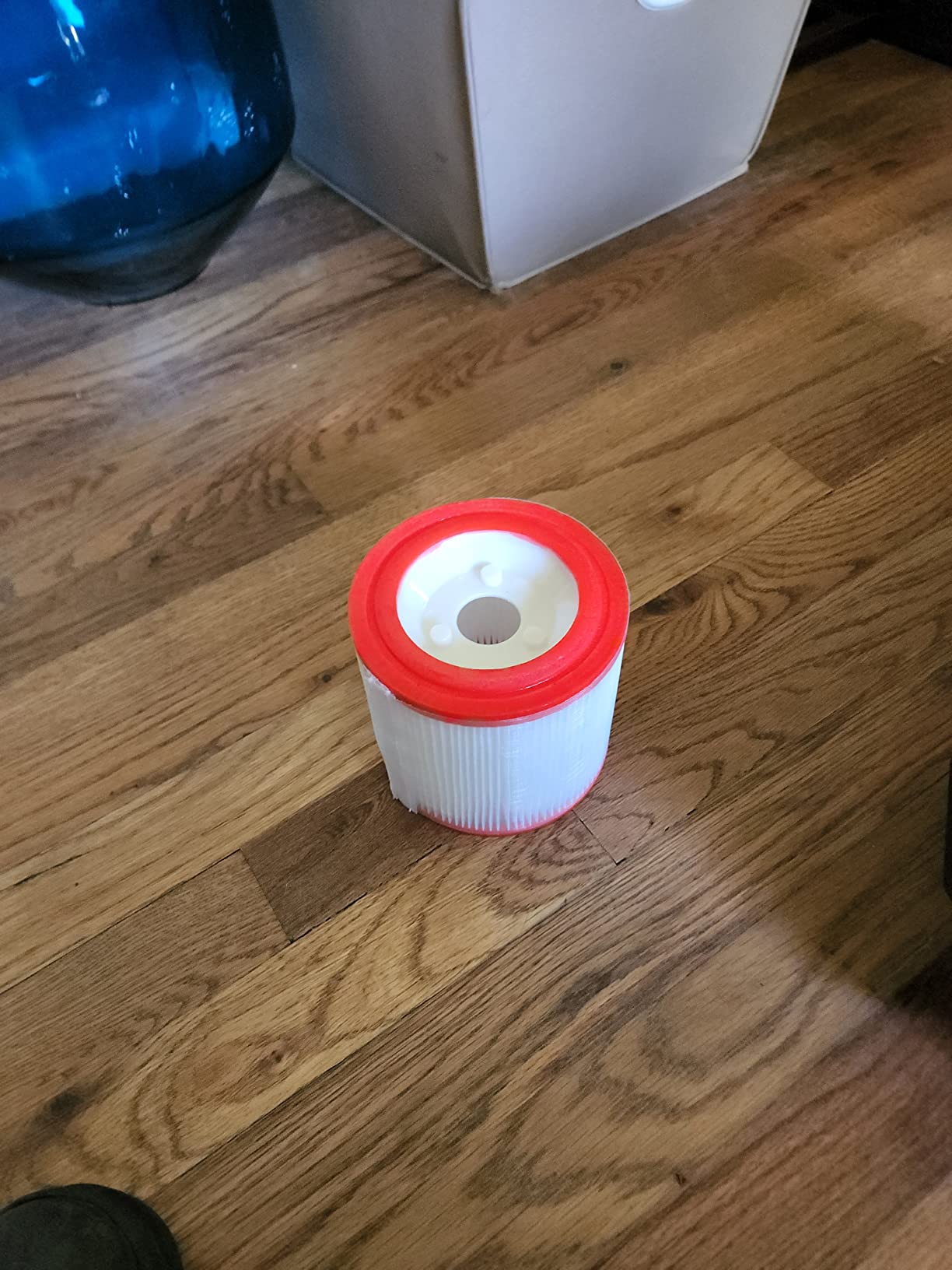
The recurring complaint in reviews is that the exhaust airflow can blow debris back out and re-disperse dust. That matters more for wood dust than for most other debris, because what lands back on the bench is fine powder rather than chips.
Buyers like the portability, the HEPA filter, and the value, but the 4.2 average is the lowest here, with 11 percent one-star ratings. A minority also reported a missing crevice attachment, so check the box contents before you rely on the full tool kit.
What to check before you buy the WECLEAN 4-gallon
Check where you will exhaust it. In a closed room, a machine that re-disperses dust is counterproductive, so plan to run it where the outlet has a path to open air.
Check the box contents on arrival, since some buyers reported the advertised crevice tool missing. A one-year warranty also means less backup if the tank seal or motor fails.
Where the WECLEAN falls short
Four gallons fills quickly, the exhaust behaviour works against you in enclosed spaces, and the warranty is short. It is a second machine, not a primary one.
It is also loud at 80 dB for something you might run near a desk or a bed. For stair and loft jobs it is convenient; for a main workshop it is not enough.
9. WEN VC4710 5-Gallon HEPA Wet/Dry Shop Vacuum – Best for 0.3 Micron HEPA on a Budget

WEN VC4710 10-Amp 5-Gallon Portable HEPA Wet/Dry Shop Vacuum and Blower with 0.3-Micron Filter, Hose, and Accessories,Orange
- F9 HEPA filter traps fine particles down to 0.3 microns at a budget cost
- Compact light body with a carrying handle for shop use
- Doubles as a blower for bench cleanup
- Washable filter is easy to blow out and rinse
- Strong suction for its 10 amp size
- No prefilter ahead of the HEPA cartridge
- so it clogs quickly in heavy workshop dust
- Extension wands fit poorly and do not stay locked
- Short power cord
- Replacement HEPA filters are model-specific
The 0.3 micron figure is the reason to consider this machine. That is the size at which the standard HEPA efficiency definition is measured, and it is the most aggressive fine-particle filtration in this roundup short of a true extractor. For a hobbyist working with fine sanding powder, it is a real answer at a low cost.
It is small at 5 gallons, with a 5 foot hose and a 10 amp motor. Owners rate suction as strong for that size, and the washable filter can be blown out and rinsed, which suits a shop that sees an occasional cleanup rather than daily extraction.
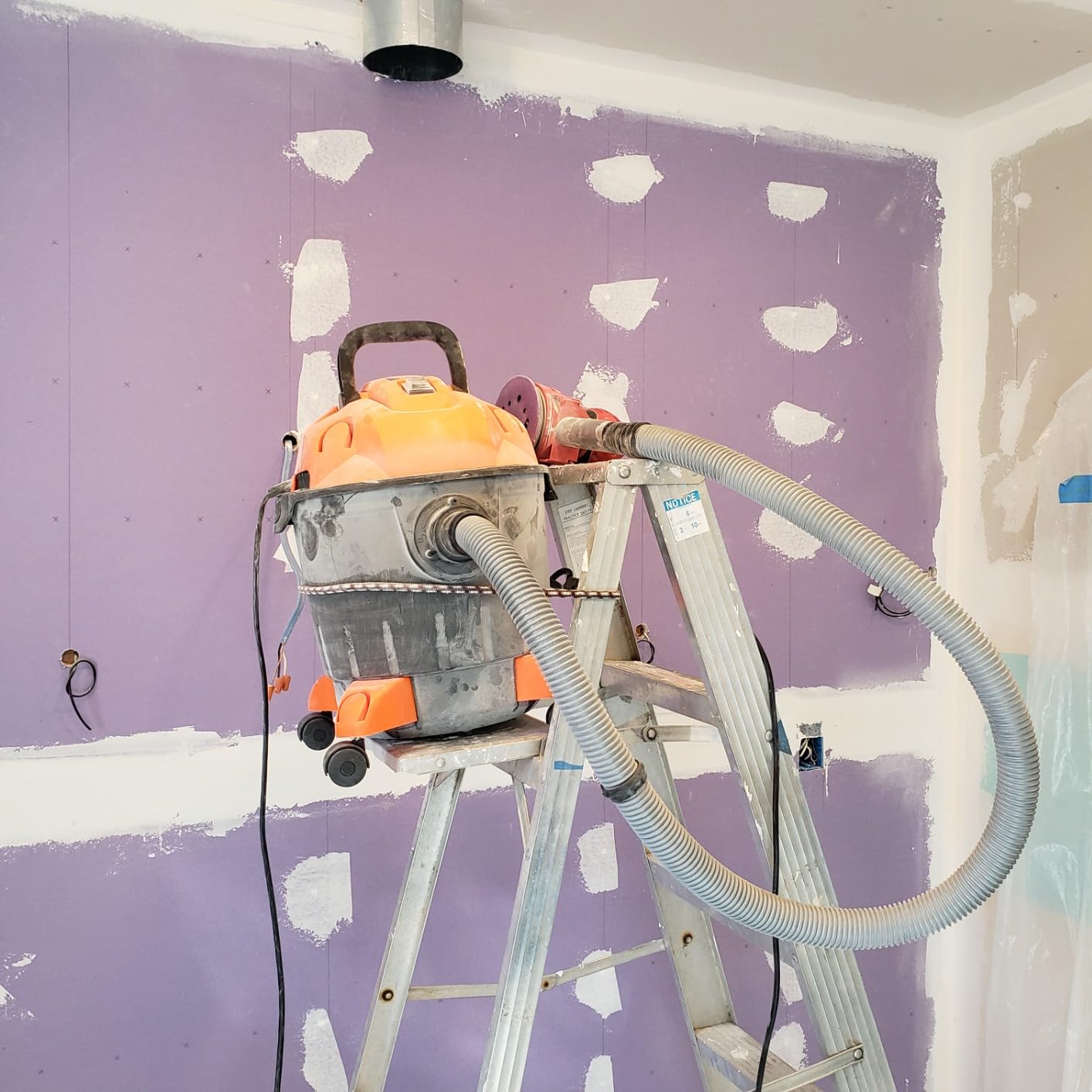
The design flaw is the missing prefilter. Without a screen or foam stage ahead of the cartridge, heavy workshop dust clogs the pleats fast and you end up cleaning the most expensive part of the machine more often than you should. That is why its 4.3 average trails the wet/dry leaders.
Owners also flag the extension wands, which fit together poorly at first and do not stay locked, and the short cord, which in practice means running an extension lead. Replacement HEPA filters are model-specific rather than generic.
What to check before you buy the WEN VC4710
Check how much fine dust you really generate. For a benchtop hobby, occasional cleanup, and tool-mounted work on a random orbital sander, the filtration advantage is worth it. For a full cabinet shop running a sander all day, the clogging will frustrate you.
Check filter cost before you commit, since replacement HEPA cartridges are model-specific and you will buy more than one.
Where the WEN VC4710 falls short
No prefilter, a short cord, and wands that will not lock. It is also the loudest option in this group at 82 dB despite being the smallest machine here.
At 4.3 stars with 8 percent one-star ratings, the fit is narrow: it is a good fine-dust companion, not a primary shop vacuum. If you want the filtration but need the capacity, compare it against the larger HEPA-equipped options.
10. DEWALT 20V MAX 2 Gallon Cordless Shop Vacuum DCV581H – Best for Cordless Work
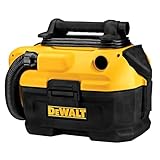
- Runs on 20V MAX batteries or a cord
- so it works where there is no outlet
- Washable reusable filter with a Gore wet/dry HEPA filter included
- Quieter than comparable cordless wet/dry vacs
- On-board accessory storage and a light carryable body
- Wet pickup with a float ball that cuts airflow before water reaches the motor
- Weakest suction in the roundup for heavy or fine dust loads
- Smallest tank at 2 gallons and a short 5 foot hose
- Flat car attachment performs poorly
- Battery and charger sold separately and some owners report connector failures
This is the only corded-and-cordless machine in the group, and that is the entire argument for it. If your dust comes from an outside bench, a job site, or the far corner of a detached garage, the ability to run on a 20V MAX battery changes where you can work at all.
At 8666 reviews it has by far the largest owner base here, and the 4.4 average reflects a well-understood trade: owners praise cordless convenience, portability, and quiet operation while accepting lower suction and a 2 gallon tank.
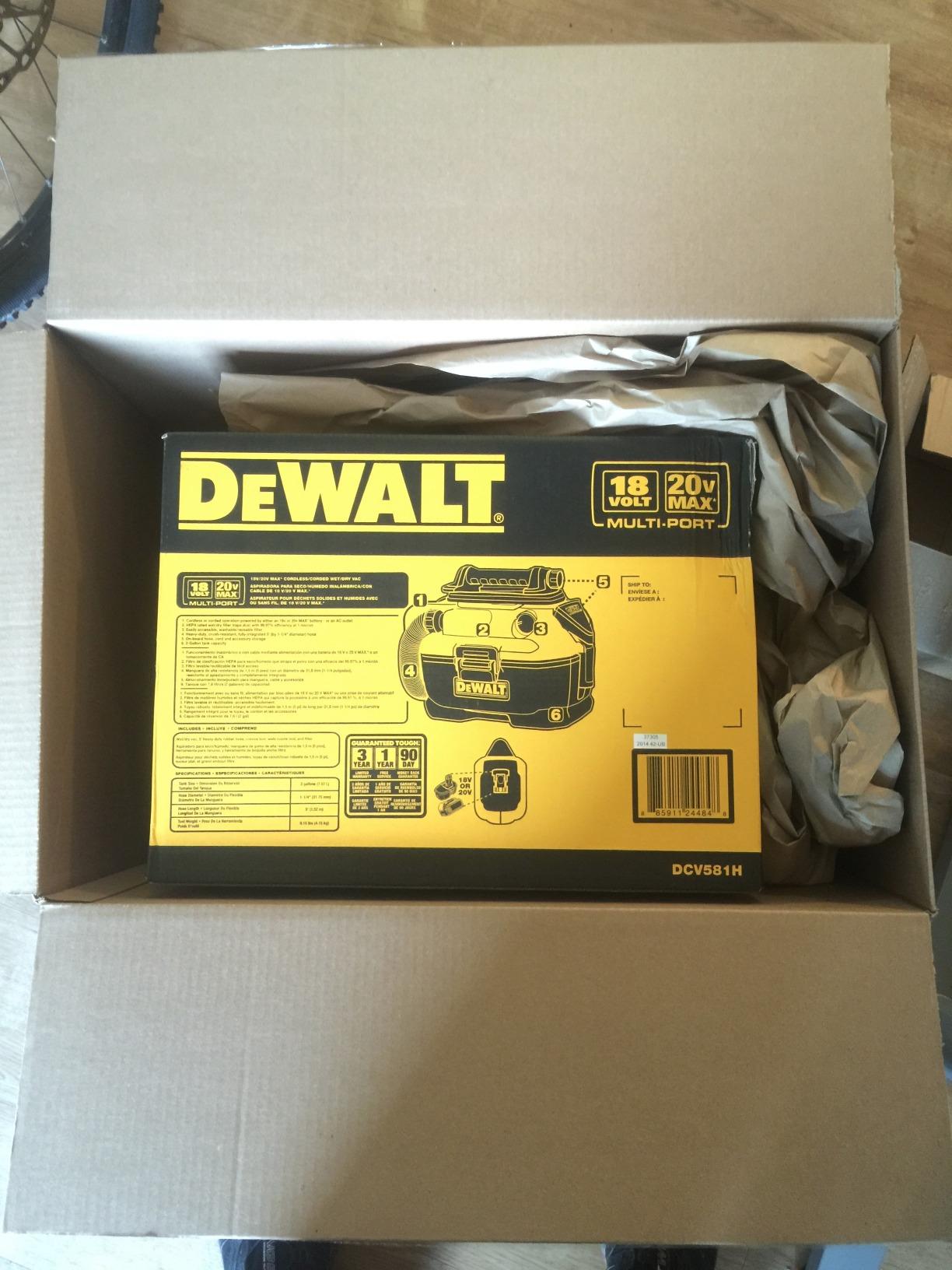
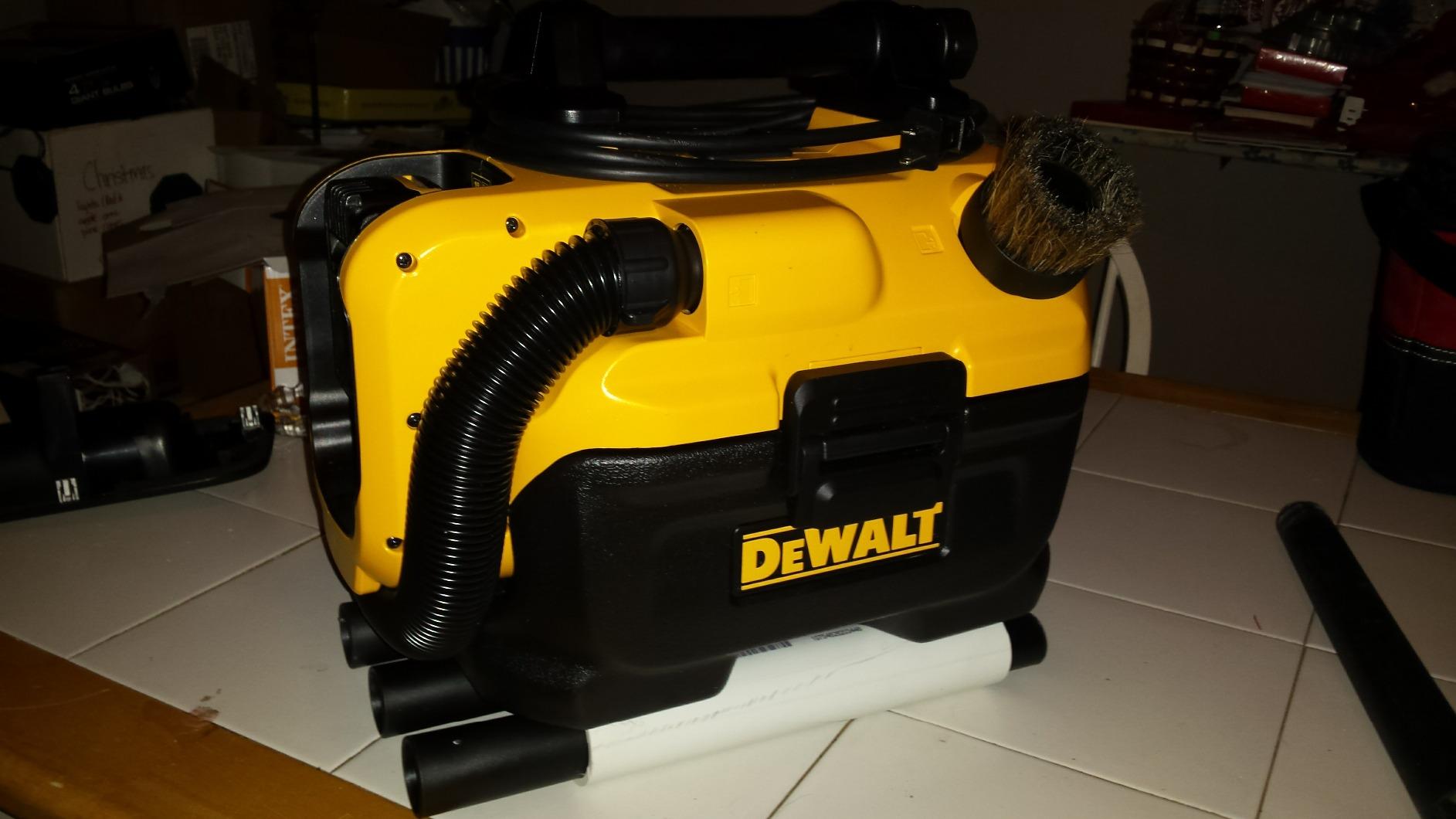
Included is a 5 foot, 1-1/4 inch crush-resistant hose, a wide gulper nozzle, a crevice tool, and a Gore wet/dry HEPA filter. The float ball shuts off airflow before water reaches the motor, and the filter is washable and reusable.
Its 1-1/4 inch hose is narrow compared with the 2-1/2 inch hoses on the full-size vacs. That is correct for a sander port and wrong for a table saw, where you want volume. Know which tool you are hooking up before you rely on it.
What to check before you buy the cordless DEWALT
Check whether you already own 20V MAX batteries. The battery and charger are sold separately, and if you are buying into the platform for the first time that changes the real cost of this machine considerably.
Check your duty. A 2 gallon tank on a corded shop vac would empty in minutes. On intermittent bench cleanup it stays manageable, but it is not a full-day machine.
Where the cordless DEWALT falls short
It is the weakest suction of the ten and the smallest tank. Fine dust loads it fast, and the narrow hose limits what you can connect to it.
A minority of owners report battery-side connector failures, and the included flat car attachment is widely criticised. Treat this as a portable companion to a main shop vacuum rather than a replacement for one.
Shop Vac vs Dust Extractor vs Dust Collector
A shop vac is good enough for dust collection in a garage or hobby shop, as long as you accept that you are filtering fine dust into a canister rather than collecting chips into a drum. Shop vacs are cheap, portable, and handle wet pickup, which dust collectors do not. They are the right answer for most home shops.
A dust extractor is a shop vac with the priorities reversed: HEPA-class filtration, a self-cleaning filter, higher airflow, and often Bluetooth activation. It is smaller, quieter, and far better at keeping fine dust out of the air. It is the right answer if fine dust is your primary exposure.
A dust collector is a fixed machine that handles one or two large stationary tools, typically a table saw and a planer, through rigid ducting. It moves the most air and holds the most chips, and it is the correct answer when you run those machines every day. It is also the wrong answer for a small garage, a hobbyist, or anyone who needs mobile cleanup, and none of the ten picks here are dust collectors.
The upgrade path most hobbyists take is a good 12- to 16-gallon wet/dry vac paired with a cyclone pre-separator. The separator spins the coarse dust out of the airstream before it reaches the filter, so the filter stays clean and does the work of catching only fine particles. Long-time woodworkers discuss this pairing frequently as the affordable alternative to a branded extractor, and one user in r/BeginnerWoodWorking described upgrading to a larger dedicated unit as a step change, which is worth weighing if you are already generating serious volumes.
Why Fine Wood Dust Escapes and How Filters Change That
Most airborne wood particles are smaller than you can see. Research cited in woodworking media has put the share of sub-micron airborne wood particles at roughly 88 percent, and the EPA HEPA standard is defined as 99.97 percent removal at 0.3 micron. Fine sanding dust and MDF dust behave far more like a respiratory hazard than like the chips you sweep up.
That is why the supplied filter matters more than the tank size. A paper or single-layer pleated filter is designed to stop coarse debris, not respirable powder, and it will load within an afternoon of sanding. Once it is loaded, airflow drops and the machine pushes dust straight back out the exhaust or around the tank gasket.
Three upgrades fix most of that, in ascending order of cost and effectiveness: a high-efficiency cartridge filter rated to a stated micron level, a fleece liner or bag that traps dust before it reaches the pleats, and a HEPA-rated filter for the machines designed around fine dust. A cyclone pre-separator does the same job from the other direction by removing the bulk of the material upstream.
It is worth being clear that a HEPA label is not a hazardous-material certification, and that no shop vacuum is designed for lead paint, silica-laden drywall, or chemical fumes. For those, the rule is a dedicated respirator and a machine rated for the material. This roundup is about wood dust, and for wood dust a fine filter plus a bag is the correct setup.
How to Choose a Shop Vac for Wood Dust: Buying Guide
Airflow is the first thing to evaluate, and it is the one most buyers misread. Airflow in cubic feet per minute determines how much air the machine moves, while airspeed determines how hard that air pulls at a given point. Sanding dust travels with the air, so you want volume. Chip pickup from a saw wants a large hose diameter to move big debris without choking. The 2-1/2 inch hoses on the Craftsman and Vacmaster units fit that job, while the 1-1/4 inch hose on the cordless DEWALT suits a sander port.
Hose length and diameter deserve a second look. A longer hose lets the machine stay near the outlet instead of in the middle of your floor, which is why the 20 foot wall-mounted DEWALT works so well in a cramped garage. Thick, kink-resistant hose matters more than brand, because a crushed hose silently destroys airflow.
Filtration is the health decision, so treat the micron rating as the deciding number rather than the tank size. HEPA-rated units capture the smallest fraction, high-efficiency cartridges rated around 1 micron are a large step up from paper pleats, and any vacuum benefits from a bag or fleece liner. Our small shop bench guide covers the other end of the space problem, and these two decisions interact: a big machine in a small shop is a machine you will not move when you need it.
Capacity sets your interruptions. A 12 gallon tank is the sweet spot for most hobby shops, 16 gallons suits heavy saw and planer work, and anything at 6 gallons or below is a spot-cleanup machine rather than a primary extractor. Plan for the weight too: a full 16 gallon tank is genuinely awkward to lift, which is why a drain that reaches a bucket matters.
Noise is the factor owners complain about most. The published figures in this roundup run from 69 dB on the Craftsman to 82 dB on the wall-mounted DEWALT and the WEN, and that spread is audible in a small enclosed shop. If you work beside the machine, the quieter options are worth the trade in other places.
Finally, consider tool activation and power. An auto-on outlet is the single biggest quality-of-life feature, and the Festool Ct Midi is the only unit here with true Bluetooth activation that starts extraction before dust is made. Note the electrical reality from the forums: extractors commonly draw around 10 to 12 amps, so pairing one with a large planer or table saw on the same circuit carries a real overload risk, and Bluetooth activation is wasted if you own mixed-brand tools.
And check the consumables before you buy, not after. Filter and bag replacement cost is the ongoing expense nobody puts in the comparison, and a proprietary HEPA cartridge is a different commitment from a generic one. If you plan to clamp, sand, and machine in the same shop, our guides to woodworking clamps, jointers, and miter saws cover the other dust sources you will be hooking up.
Frequently Asked Questions
Can you use a shop vac for wood dust?
Yes. A shop vac can handle wood dust well if it has a fine-particle filter, which means at minimum a high-efficiency cartridge or a HEPA-rated filter, and ideally a dust bag or fleece liner. A standard paper or single-layer pleated filter clogs quickly with fine sanding dust and lets the smallest particles escape. For the best result, pair the vacuum with a cyclone pre-separator so the filter only has to catch fine dust.
What is the best shop vac for woodshop dust collection?
For most garage and hobby shops the CRAFTSMAN 16-gallon 6.5 peak HP wet/dry vac is the strongest all-round choice, with the largest tank here and an optional HEPA media filter available. If fine dust is your main problem, the Festool Ct Midi HEPA dust extractor captures the most airborne dust by design.
What is the best vacuum dust extractor for woodworking?
Among these picks the Festool Ct Midi I HEPA is the dedicated extractor, combining HEPA filtration, 130 CFM airflow, a self-cleaning filter, and Bluetooth tool activation. It captures dust at the tool rather than relying on floor cleanup, which makes it the choice for professional cabinet shops and finishers who work with fine dust all day.
Is a shop vac good enough for dust collection?
In a garage or hobby shop, yes, once you fit a proper fine-dust filter and a bag. Shop vacs are cheaper, portable, and handle wet pickup, which dust collectors do not. They are less suitable when fine airborne dust is the main exposure, or when you run a table saw and planer every day and need a dedicated dust collector with rigid ducting instead.
What is the best dust collection system for a woodworking shop?
A dedicated dust collector with rigid ducting is the right system for shops that run a table saw and planer daily, because it holds far more chips and moves more air than any mobile vacuum. Everything else, including most home shops, is better served by a 12- to 16-gallon wet/dry vacuum with a fine filter, or that vacuum paired with a cyclone pre-separator.
What is the best vacuum for sawdust?
For coarse sawdust and shavings, capacity and hose diameter matter most, so a 12- or 16-gallon wet/dry vac with a 2-1/2 inch hose such as the CRAFTSMAN or the Vacmaster 12-gallon handles it well. Pairing that vacuum with a cyclone pre-separator protects the filter and is the most common upgrade hobbyists make.
Do I need a HEPA filter for wood dust?
It is strongly recommended for fine dust work. Studies cited in woodworking media put the share of sub-micron airborne wood particles at roughly 88 percent, and a paper pleated filter is not designed to stop that fraction. A high-efficiency cartridge rated around 1 micron is a big improvement, and a HEPA filter rated at 0.3 micron is better still, especially for MDF and finish sanding.
How often should I empty a shop vac when doing wood?
Empty it before the dust reaches the top of the tank, since airflow drops as debris fills the drum and the filter starts loading sooner. A 12 gallon tank usually lasts a full day of moderate shop use, an 8 gallon tank needs mid-session stops, and a 6 gallon tank or smaller is emptied several times a day during heavy planer or sanding work.
The Best Shop Vacuums for Woodworking Dust in 2026: Final Verdict
The CRAFTSMAN 16-gallon 6.5 peak HP wet/dry vac is the best shop vacuum for woodworking dust for most shops, because capacity, airflow, and a proven owner base rarely disagree. Fit a HEPA-grade media filter and a bag, and it handles everything from floor cleanup to sander extraction in one machine.
Fine dust is a different problem, and the Festool Ct Midi I HEPA is the answer to it, capturing dust at the tool with a self-cleaning filter and Bluetooth activation. For tight quarters, the wall-mounted DEWALT DXV06G buys back your floor space. For intermittent or off-bench work, the cordless DEWALT DCV581H goes where no outlet reaches.
Whichever one you choose, the setup matters more than the badge: right-sized hose, a fine filter, a bag or liner, and a plan for emptying before the dust reaches the top. Those four decisions separate a shop vac that captures your dust from one that merely moves it around the room.