
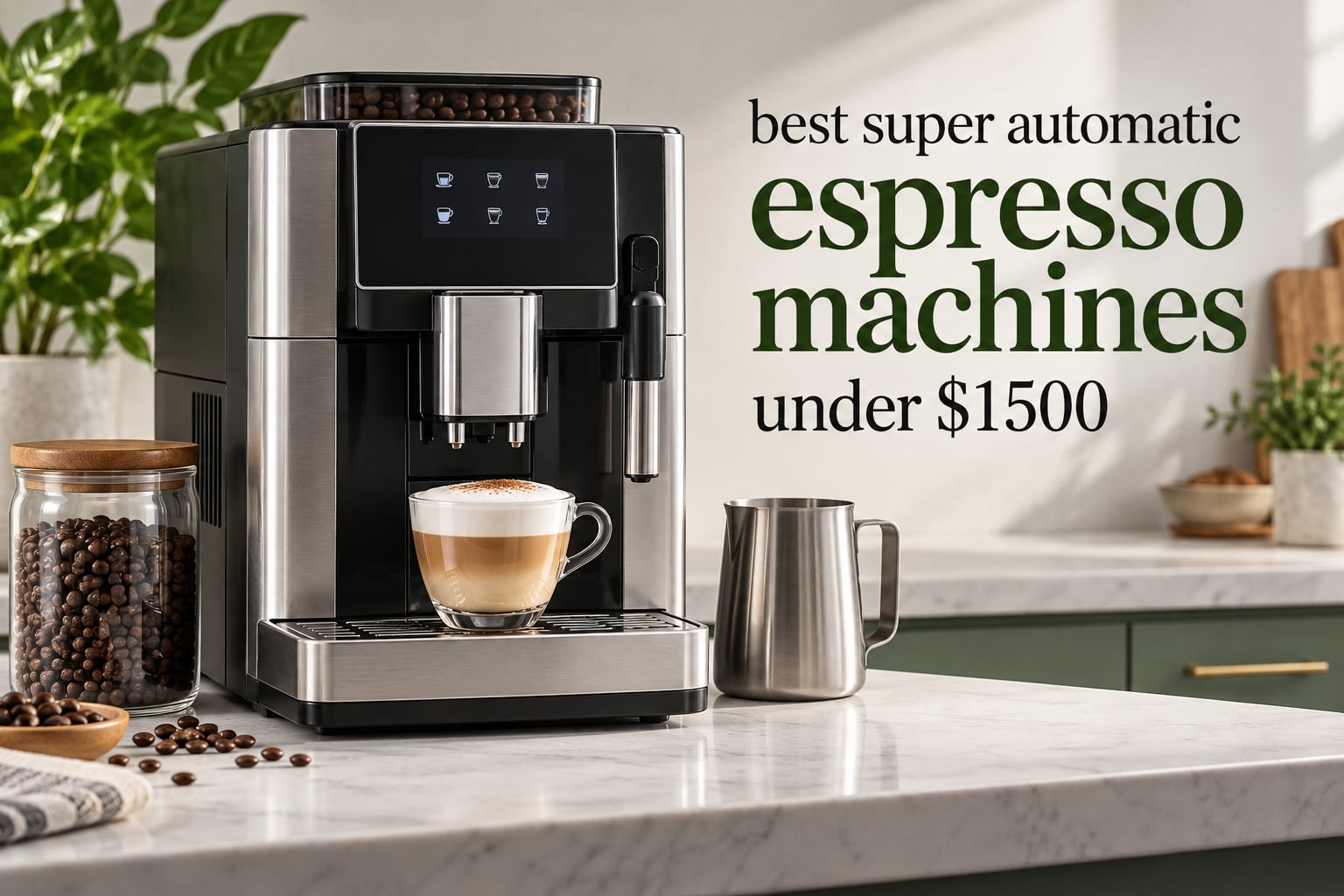
If you want one machine that grinds, doses, tamps, brews and froths milk without you touching anything, the Philips 3200 Series is the best super automatic espresso machine under 1500 dollars for most homes right now. It pairs a 100 percent ceramic grinder with a two-part milk system that rinses clean in about 15 seconds, and it ships with an AquaClean filter that pushes descale cycles out to roughly 5,000 cups. We narrowed ten fully automatic machines that all sat at or below that ceiling at the price we checked, and this is the one we would put on a counter first.
A super automatic is a bean-to-cup appliance. You load whole beans into the hopper, add water, press a drink, and the machine grinds a measured dose, tamps it, pushes water through at around 9 bar, then heats and textures the milk through a built-in system. The appeal is obvious: no grinder to buy, no tamping, no milk pitcher, and a cup of something drinkable about 40 seconds after you press the button.
There is a second appeal that matters just as much at this budget. Under 1,500 dollars is the sweet spot for this category, because it is where you start getting a real ceramic or conical burr grinder, more than one user profile, and dedicated cold or iced drink programs without stepping up into the 2,000 dollar and above tier. If you want the wider picture first, our general super automatic guide covers the price bands we skipped here.
One honest note before the list. There is a loud counter-argument in coffee communities that at this budget a manual machine plus a separate grinder makes better espresso than any super automatic. That is largely true, and we have covered that side in our beginner espresso machine guide and our dual boiler picks. A super automatic earns its counter space when you want cafe-style drinks on demand, more than one person served, and zero technique to learn. If you enjoy dialing in shots by hand, stop here and spend the money on a grinder instead.
Table of Contents
Top 3 Picks for the Best Super Automatic Espresso Machines Under 1500
These three came closest to doing everything at once, and each one solves a different household problem. The Philips 3200 Series wins on ownership simplicity. The De’Longhi Rivelia wins on features. The Philips 5500 Series wins on quiet operation and saved user profiles.

Philips 3200 Series
- 100% ceramic grinder
- Two-part milk system cleans in 15 seconds
- AquaClean filter cuts descales

All 10 Machines at a Glance in 2026
Every machine below was at or below the 1,500 dollar ceiling at the price we checked. Prices move, so treat this as the field of candidates rather than a guarantee, and use the check price buttons to see the current number before you commit.
| Product | Specifications | Action |
|---|---|---|
| Philips 3200 Series |
|
Check Latest Price |
 De’Longhi Magnifica Duo De’Longhi Magnifica Duo |
|
Check Latest Price |
| Philips 5500 Series |
|
Check Latest Price |
 Jura E4 Jura E4 |
|
Check Latest Price |
| De’Longhi Rivelia |
|
Check Latest Price |
 Gaggia Anima Gaggia Anima |
|
Check Latest Price |
 KitchenAid KF6 KitchenAid KF6 |
|
Check Latest Price |
 KitchenAid KF7 KitchenAid KF7 |
|
Check Latest Price |
 EUHOMY EUHOMY |
|
Check Latest Price |
 Jura ENA 4 Jura ENA 4 |
|
Check Latest Price |
How We Picked and Tested
We pulled ten fully automatic machines that cleared the 1,500 dollar ceiling and read the full specification listing and owner review set for each. We weighed them on grinder type, milk system design, drink menu depth, user profile support, cleaning burden, counter footprint and warranty length, then compared the complaint patterns in the reviews rather than just the star averages.
Two things came up again and again. First, grinder quality drives flavor far more than any specification on the box. Flat ceramic burrs and quality conical burrs at this budget produce noticeably more even particles than cheap steel burr sets, and even particle size is what gives you a steady extraction instead of a shot that runs fast and thin one day and slow and bitter the next.
Second, the bar number on the box is marketing. Machines here advertise 15 and 20 bar pumps, but the real brew pressure at the puck is capped near 9 bar by an internal restrictor. A 20 bar label does not mean more pressure reaches your coffee, and it is not a quality signal. Grind adjustment, dose weight and water temperature are the settings that actually change the cup.
We also read the one-star reviews closely, because that is where the return reasons live. Across this group the recurring complaints were drink temperature, milk foam that is too airy for a flat white, machines too deep for the counter, and a small share of units arriving with defects. Anything we could not verify from the listing or the reviews is not in this article.
1. Philips 3200 Series – the best super automatic espresso machine under 1500 for most homes
- Milk system has no tubes and rinses clean in about 15 seconds
- AquaClean filter can push descale cycles out to 5000 cups
- Ceramic grinder rather than cheap steel burrs
- Five drink options from one touch display
- Largest review base in the category we compared
- 17 inch width is a wide countertop footprint
- Body is plastic rather than metal
- 16 percent of reviews are one star
The Philips 3200 Series is the machine we kept coming back to. It does fewer things than the Rivelia or the 5500, and that restraint is exactly why it works. There is no milk hose, no hidden channel, no carafe to disassemble. The milk system is two parts, you pull one off, and you are done. For a household that will use it every morning, that simplicity compounds into the lowest maintenance burden of anything we tested in this range.
The grinder is the reason we take the espresso quality seriously at all. Philips fits a 100 percent ceramic burr set, which is a step up in consistency from the steel burrs you find on entry machines, and the Aroma Extract system manages brew temperature to protect aroma. Reviewers consistently report a stable, drinkable espresso once you settle on a grind setting.
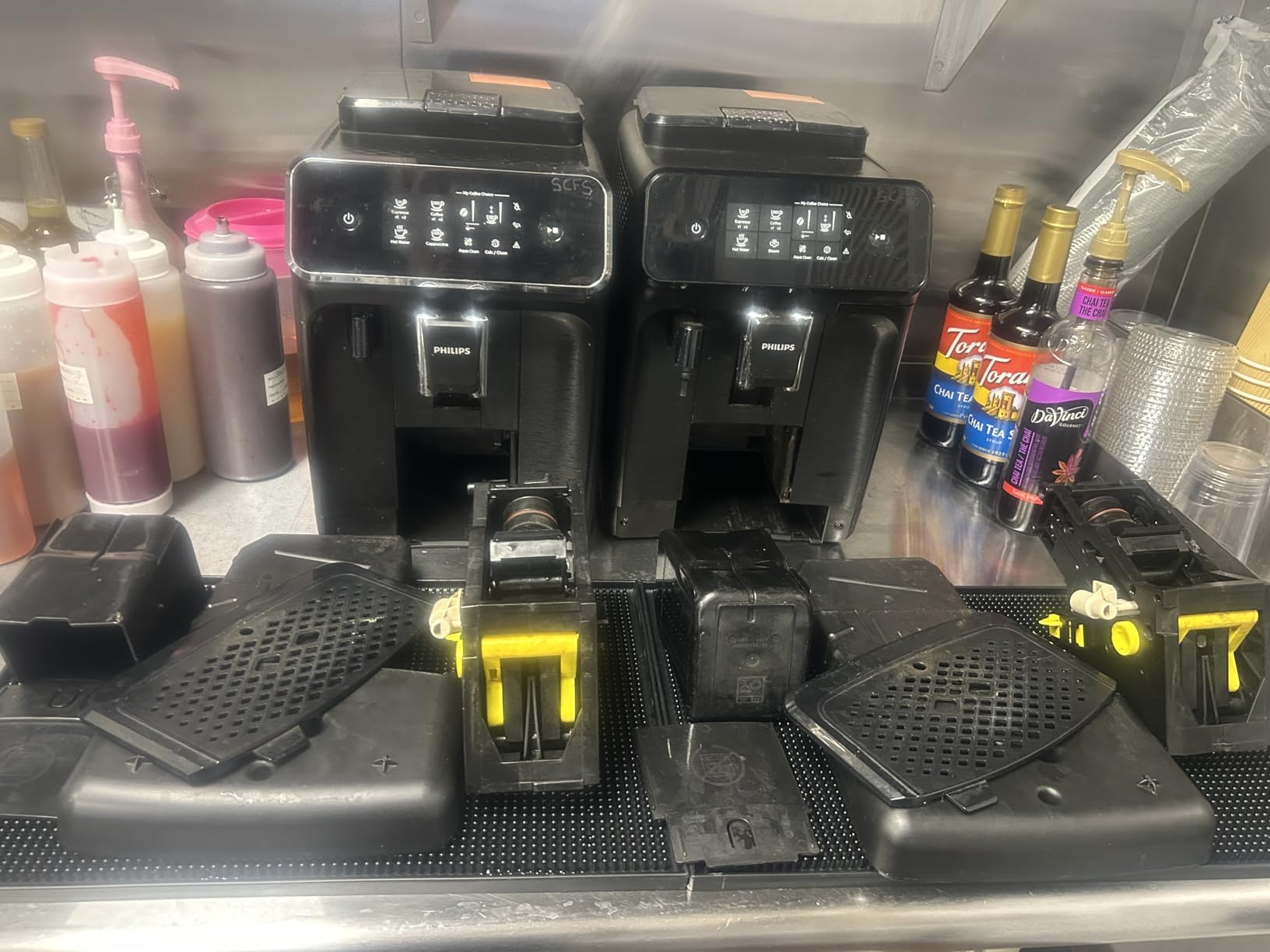
Then there is the AquaClean cartridge. Change it when the machine prompts you and you will not need to descale for up to 5,000 cups, which in practical terms means descaling becomes an annual event rather than a monthly one. No other machine in this list removes that task from the loop as effectively, and it is the single biggest reason we named this the best super automatic espresso machine under 1500 dollars.
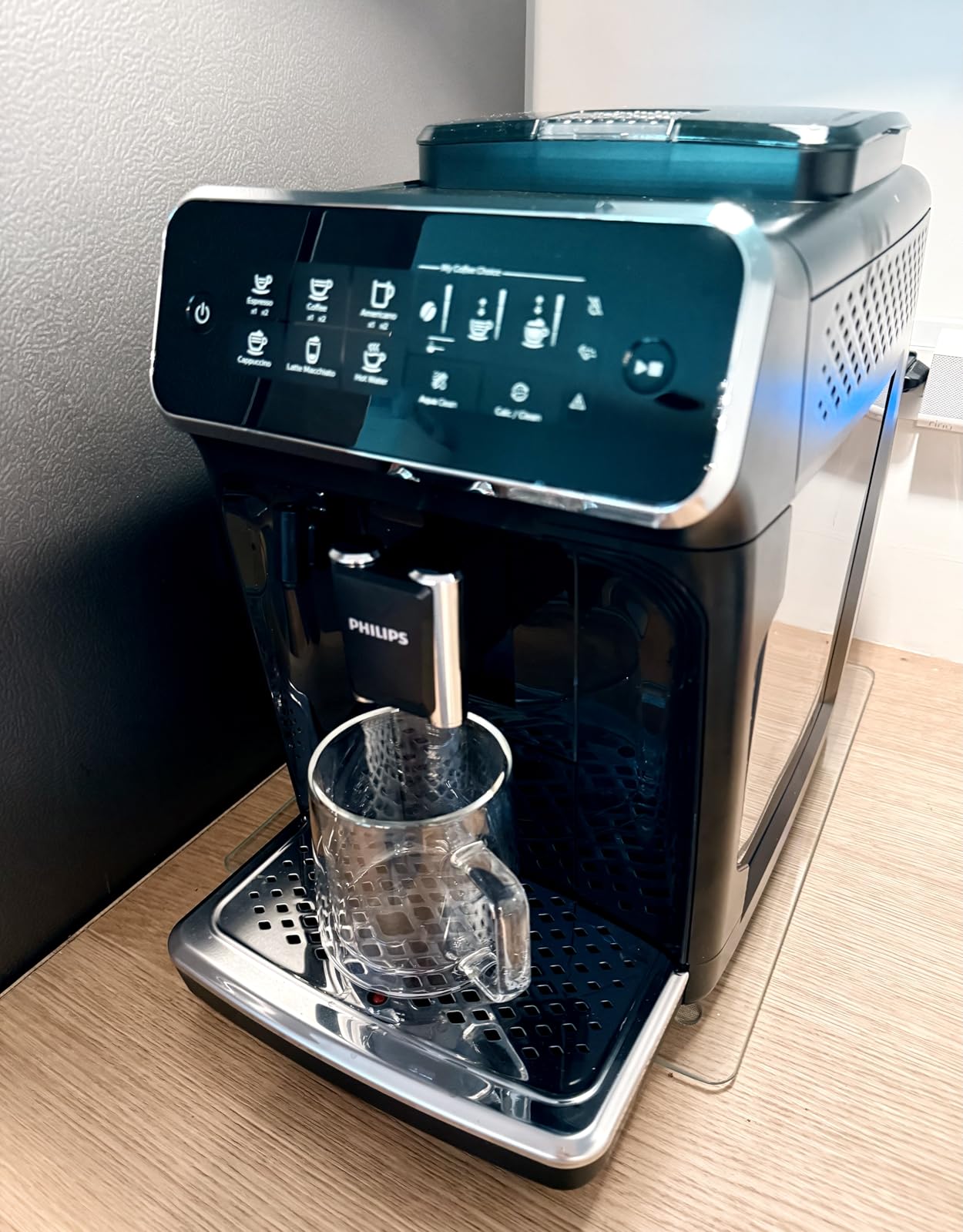
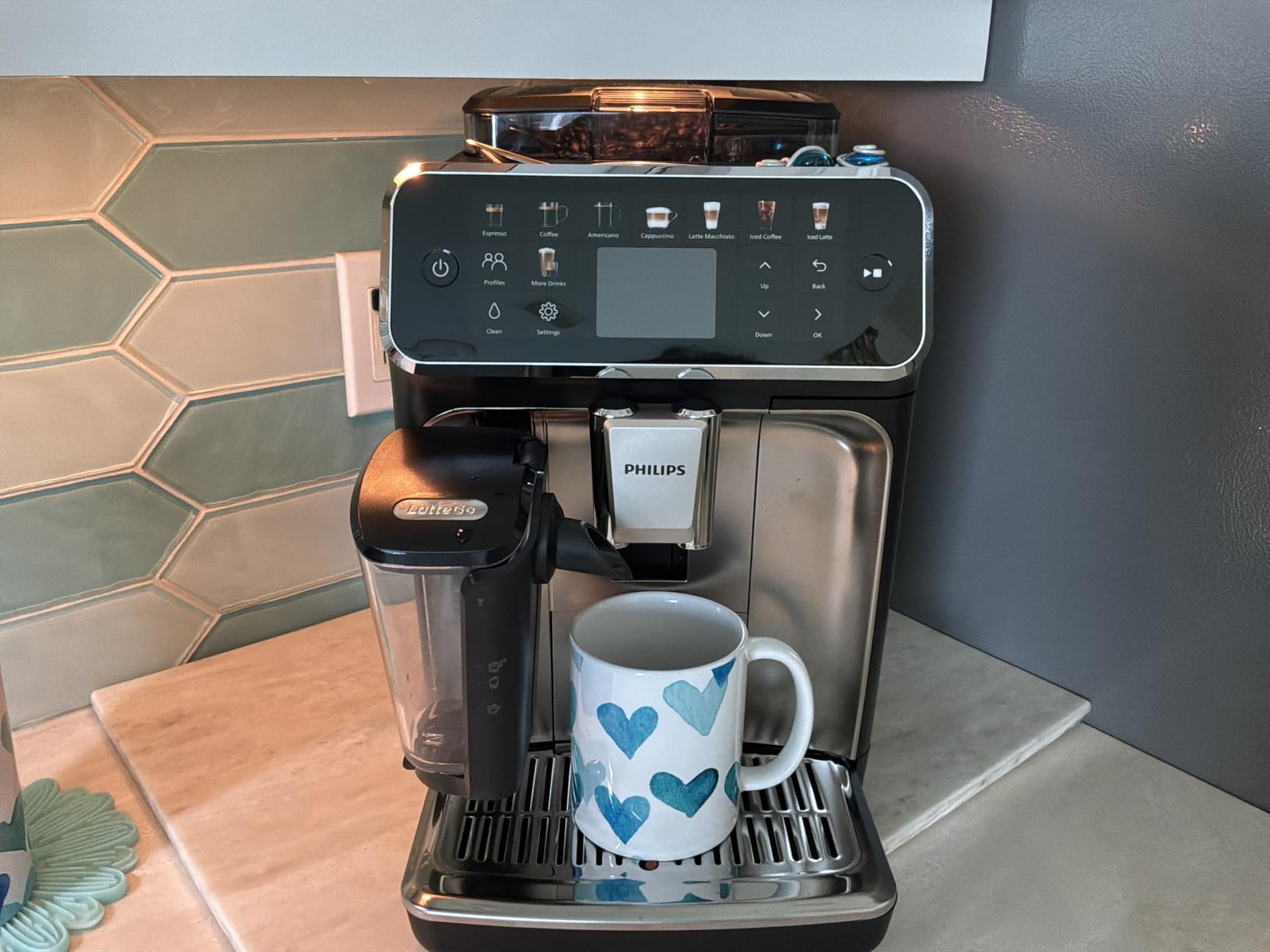
Five drink varieties cover espresso, coffee, americano, cappuccino and latte macchiato, and the touch display makes selection genuinely one-handed. The machine ships with a 2 year warranty, a 17 inch width that you should measure for, and a removable tank. The touch display is the interface, not buttons, so if anyone in the house is impatient with menus they will either love it or hate it.
What to know before you buy
At 10 inches deep by 17 inches wide by 15 inches tall, this is a wide machine. It needs a full counter width, not a corner, and it is worth checking the clearance under your cabinets before you order. The plastic body is the one place the spec sheet undercuts the price, though owners rarely complain about it once it is installed.
Foam quality is good for cappuccinos and lattes and it will not produce dense microfoam for latte art. If your idea of a flat white is a specific, tight texture, a machine with a manual wand will serve you better. A 16 percent one-star share is higher than we would like, and the complaints concentrate on durability rather than brewing, so keep the receipt.
Who it suits and who it does not
Buy this if you drink two or three milk drinks most days, you want the least cleaning of any machine here, and you would rather never think about grind size or dose. It is a strong first espresso machine because there is nothing to learn beyond picking a drink.
Skip it if you only drink black coffee, since you would be paying for a milk system you never touch. Skip it if counter width is tight, or if quiet operation matters more than the feature set, in which case the Philips 5500 Series is the better fit.
2. De’Longhi Magnifica Duo – best for iced drinks and cold brew
De’Longhi Magnifica Duo Automatic Espresso Machine, Milk Frother, Silver
- Only machine here with genuine cold brew plus espresso plus drip in one body
- Twenty recipes including iced lattes
- LatteCrema Hot and Cool handles dairy and plant milk
- Higher average rating than any other machine in the list
- 1450 watt heating with auto clean and auto shut-off
- Drip coffee brews slower than owners expect
- 19.7 inch depth is the largest footprint in the roundup
- Cannot build custom drink mixes like higher tier models
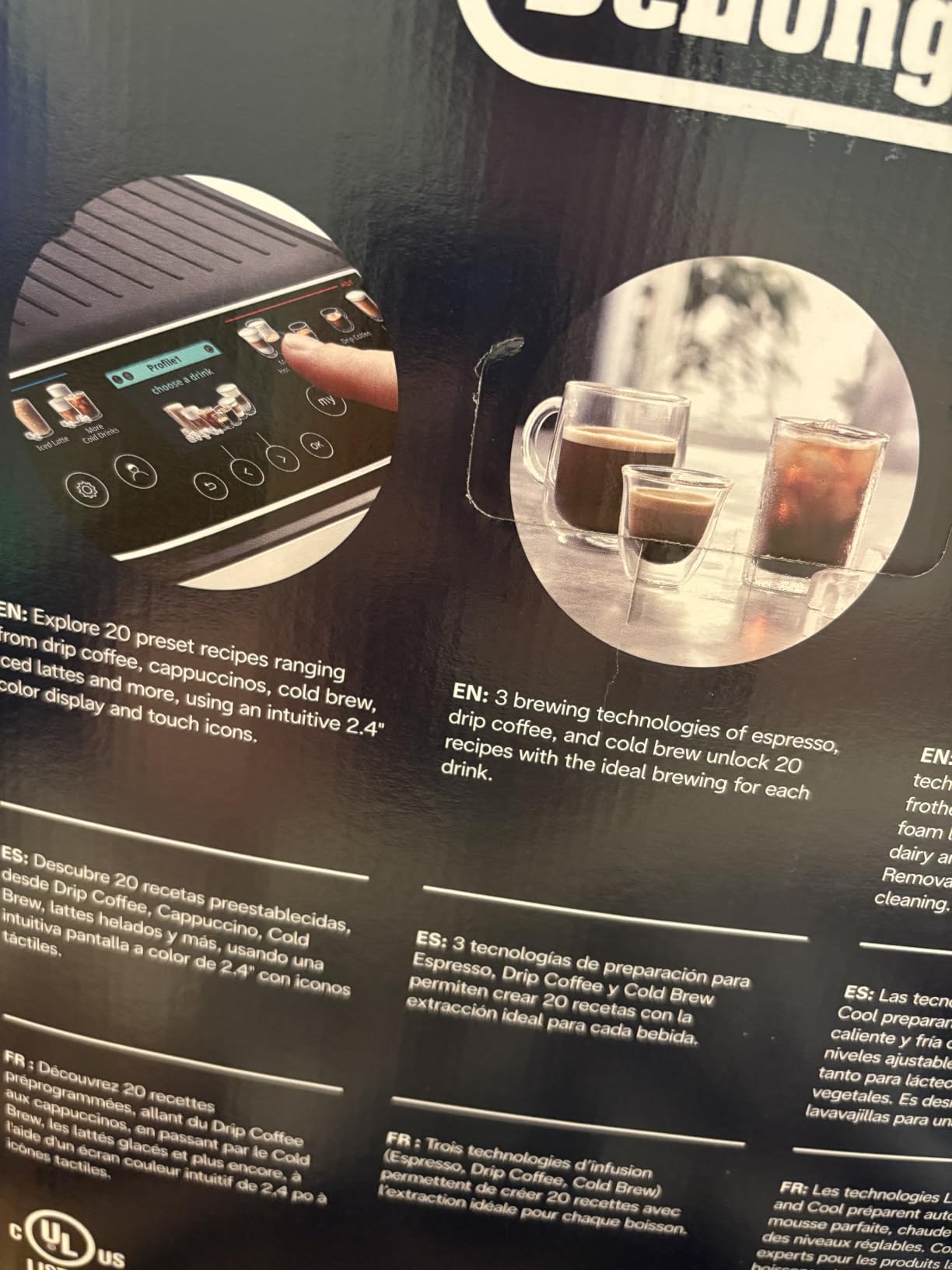
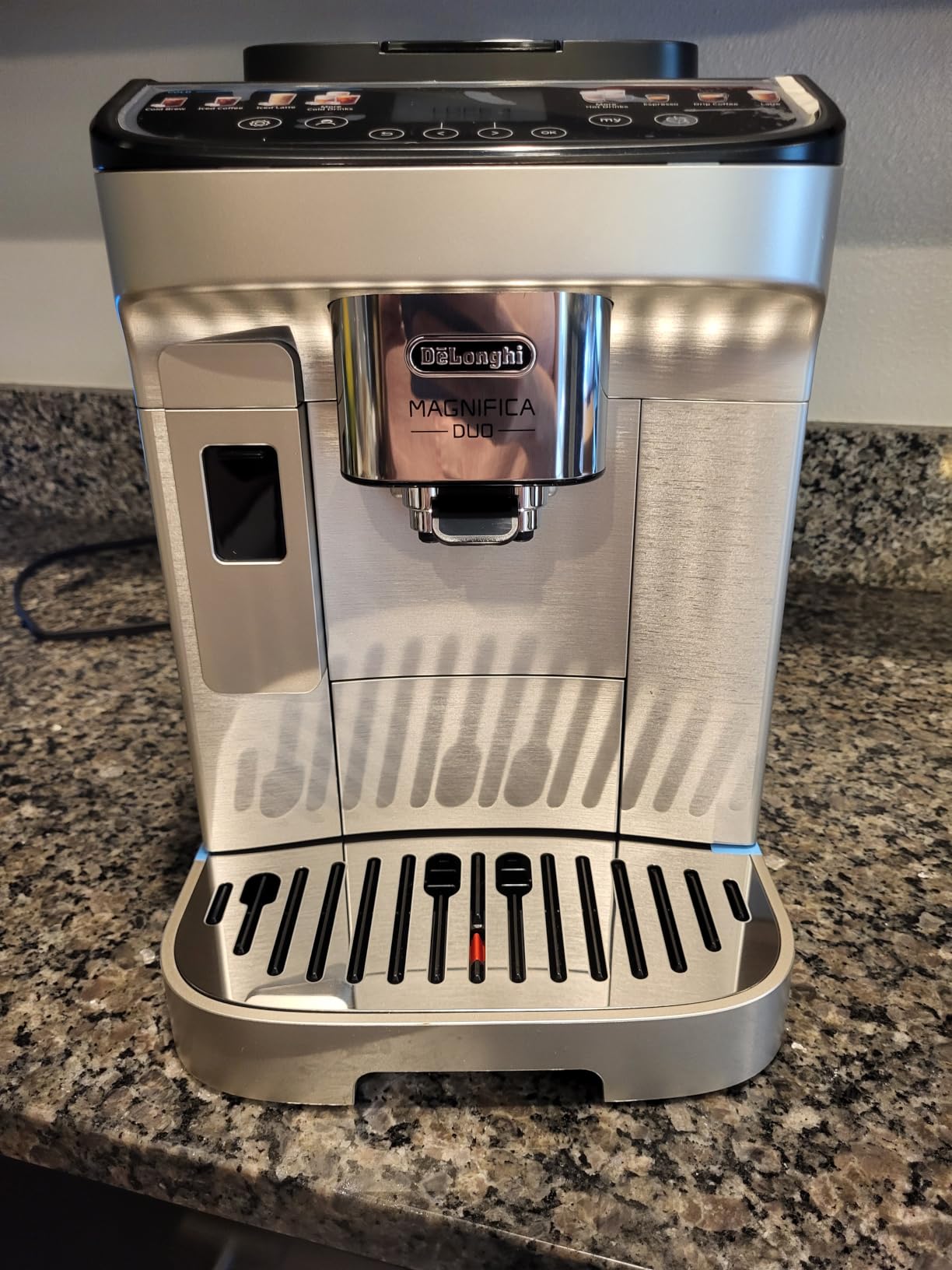
Three brewing technologies in one body is a genuinely different proposition from the rest of this list. The De’Longhi Magnifica Duo runs espresso, drip coffee and cold brew, and the cold extraction system produces cold brew in under three minutes. For anyone who wants iced coffee and a hot latte from the same machine on the same afternoon, nothing else here does that.
The LatteCrema Hot and Cool system is the other headline. It textures dairy milk and plant-based alternatives into hot foam or cold foam, and the carafe is removable and dishwasher safe. Twenty preset recipes cover espresso, drip, iced lattes, cold brew and more, all on a touchscreen.
Its 4.6 average is the highest of any machine in this roundup, and 85 percent of the reviews are five star. Owners single out the cold drinks and the frother most often, and several describe the espresso as having consistent cafe-style temperature. The integrated conical burr grinder is built for longevity rather than fine adjustment, so treat grind as a set-and-forget control here.
The warranty runs 2 years, with an extra year available on product registration, which is the longest coverage on this list apart from the registered KitchenAid units. The machine comes in silver with a stainless steel accent, and the 1450 watt heater handles back-to-back drinks without a long wait.
What to know before you buy
At 19.7 inches deep and 12.2 inches wide, this is the deepest machine we tested. Measure your counter from the wall and allow room for the tank and the milk carafe to come off, because both need access from the front.
Two limits show up repeatedly. Drip coffee takes longer than most owners expect, so treat the drip mode as the slow option. And you cannot build your own custom drink mixes the way you can on De’Longhi’s higher-end models, which is a real loss if you like a two-shot cortado with a specific milk level.
Who it suits and who it does not
Buy this if iced coffee and cold brew are part of your routine, you rotate between dairy and oat milk, and you have the counter depth for a large machine. It is also the highest-rated machine here, which makes it the safest choice if you want one appliance for every drink type.
Skip it if your counter is shallow, if you need custom drink recipes, or if you drink black coffee only. Note too that the milk dispenser needs cleaning right after milk drinks, which adds a step the Philips machines do not ask of you.
3. Philips 5500 Series – best for a quiet kitchen and a multi-drinker home
- Quietest operation in the roundup with Quiet Mark certification
- Four savable profiles for different drinkers
- Twenty presets including iced drinks
- Stainless steel construction rather than plastic
- Ready to brew in about 3 seconds
- 14.6 inch width and 17 inch height need real counter clearance
- 11 percent one-star share from unresolved issues
If the machine lives in an open-plan space or under a bedroom wall, the Philips 5500 Series is the one to look at. The SilentBrew system adds sound shielding around the grinding and brewing path and is rated roughly 40 percent quieter than earlier Philips models, certified by Quiet Mark. The grind and brew noise is the single loudest moment in any super automatic, and this is the machine that reduces it most.
Four user profiles are the feature that changes daily life in a shared house. Each person saves their own strength, volume and milk preference, presses their name, and the machine remembers it. Twenty presets cover espresso, coffee, lattes, cappuccinos, iced coffee and hot water, and adjustable grind and dose settings sit underneath all of it.
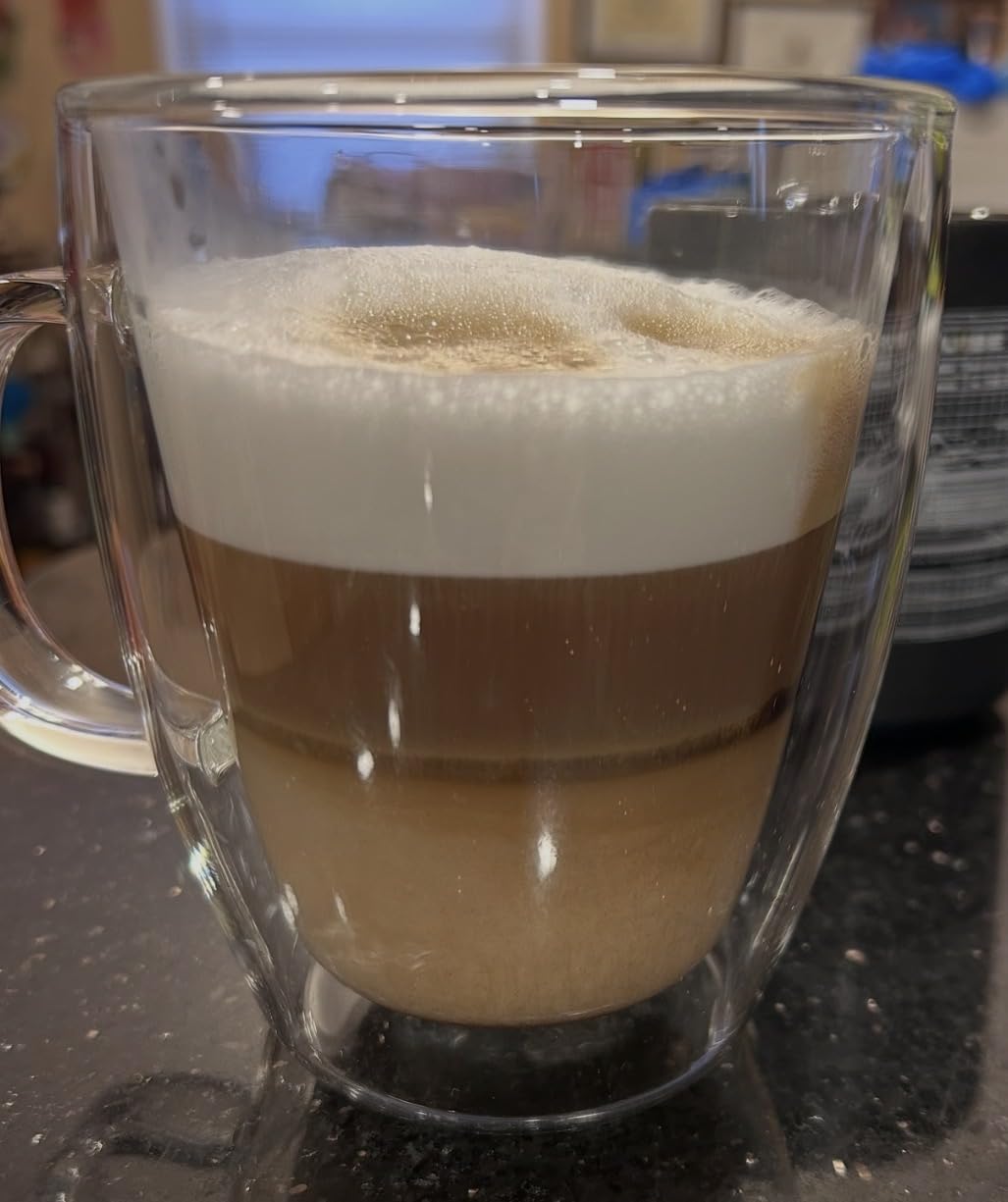
The LatteGo system here is the three-part version, dishwasher safe or rinsed clean in about 10 seconds without disassembly, which is still the fastest milk cleanup in this category. QuickStart gets the machine ready in about 3 seconds, so the wait is mostly brew time. The body is stainless steel, and the color touchscreen handles drink selection and adjustments.
Reviewers are largely positive on brewing, and the criticism is practical rather than technical: the footprint and occasional unresolved service issues. The 15 bar pump on this listing is one of those marketing numbers, since real brew pressure sits near 9 bar regardless.
What to know before you buy
Measure carefully. At 14.6 inches wide and 17 inches tall this is a tall machine, and the height can run into an upper cabinet on a standard counter. It is also listed with a 230 volt supply, so confirm the voltage matches your outlet before ordering.
Budget for the AquaClean or compatible water filter cartridges, which are the ongoing consumable that keeps this machine running well. Skip the pretense that 15 bar means extra pressure; adjust grind and brew strength instead, and change one setting at a time so you know what moved the cup.
Who it suits and who it does not
Buy this if two or more people drink differently, if noise is a real constraint in your home, or if you want iced drinks and profiles in the same machine. The stainless body also makes it the better-looking option of the two Philips machines here.
Skip it if counter height is limited, or if the fastest possible milk cleanup matters more than profiles and quiet operation, in which case the Philips 3200 Series is the simpler, cheaper answer.
4. Jura E4 – best for black coffee drinkers and tea
- Largest water tank in the roundup at 64 ounces
- Five one-touch specialties including lungo and Cafe Barista
- Professional Aroma Grinder is rated for even grinds over the service life
- Separate pre-ground chute accepts ground coffee
- Hot water dispenser doubles as a tea spout
- No milk frother or steam wand at all
- Symbol-only interface takes some learning
- Hot water temperature is not adjustable for tea
The Jura E4 is the machine to buy if you never drink a milk drink. It has no frother and no steam wand, which sounds like a weakness until you realise what it saves you: a milk system to wash every day, a carafe to descale, and roughly a hundred dollars of the purchase price you do not need. Black coffee drinkers should take this option seriously.
The grinder is the Professional Aroma Grinder, and owners describe the grind as even and the espresso and lungo as consistent. The Pulse Extraction Process handles the puck, and five one-touch specialties cover espresso, coffee, ristretto, Cafe Barista and Lungo Barista. A separate pre-ground chute means you can use a different coffee without emptying the hopper.
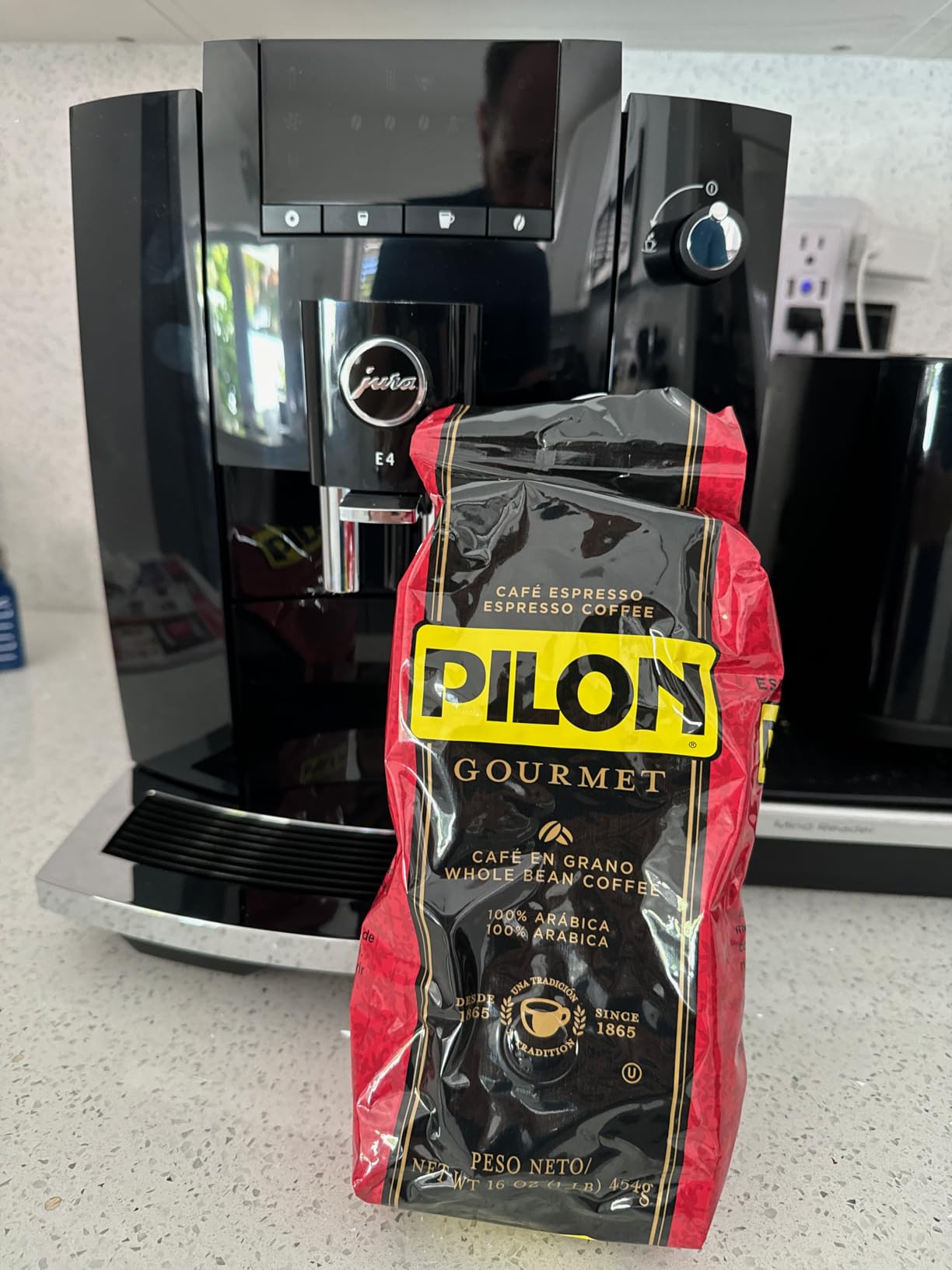
The 64 ounce water tank and 10 ounce bean container are the largest capacity pairing in this roundup, so refills are rare even in a two-drinker house. A dedicated hot water dispenser makes tea a one-button job, and the grounds bin is easy to empty.
Warranty is 1 year from the manufacturer, which is the shortest of the group alongside the Jura ENA 4. Owners with long-running Juras cite them as proof of durability, but the coverage period itself is thinner than the two-year terms on the Philips and De’Longhi units.
What to know before you buy
The interface is symbol based rather than a touchscreen, so the first week is a short learning curve with a coffee icon book. Hot water comes at a single temperature, which matters if you brew green tea and want it below boiling. Oily dark beans can clog the brew path, so stick to medium to medium-dark roasts.
At 17.6 inches wide and 22 pounds, it is a wide machine, though a good deal shallower than the De’Longhi units. Plan for that width, and expect a symbol panel rather than the layered menus the newer machines offer.
Who it suits and who it does not
Buy this if you drink espresso, coffee and lungo and nothing with milk, if you drink tea, or if you want a machine that needs less weekly attention. The tank capacity suits a household rather than a single person.
Skip it if anyone in the house wants lattes or cappuccinos, since there is no way to add a wand later. If you want tea at multiple temperatures or a fully guided interface, look at the De’Longhi Magnifica Duo instead.
5. De’Longhi Rivelia – the most capable machine in the range
- Two swappable bean hoppers let you rotate coffees without mixing them
- Guided bean profiling sets and saves grind dose and temperature
- Thirteen grinder settings plus an extra shot function
- 18 recipes covering everything from espresso to espresso over ice
- Four colorways including Onyx Black and Sand Beige
- Plastic body at a premium price point
- 18 percent one-star share signals reliability complaints
- Heavier and deeper than most units at 21.4 pounds
Nothing else in this list does what the dual bean hoppers do. The Rivelia carries two removable 8.8 oz hoppers, so you can keep a bright single-origin in one and a chocolatey blend in the other, swap them between drinks, and never blend two coffees in the same grinder. It is the clearest answer in the category to a household with two tastes, and it is why this machine sits at the top of the price band in our list.
The grinder has 13 settings, and the guided bean profiling walks you through a calibration and then saves your grind, dose and temperature for that bean type. Do it once per bag and the machine handles the rest. The extra shot function adds a second dose when you want intensity rather than volume.
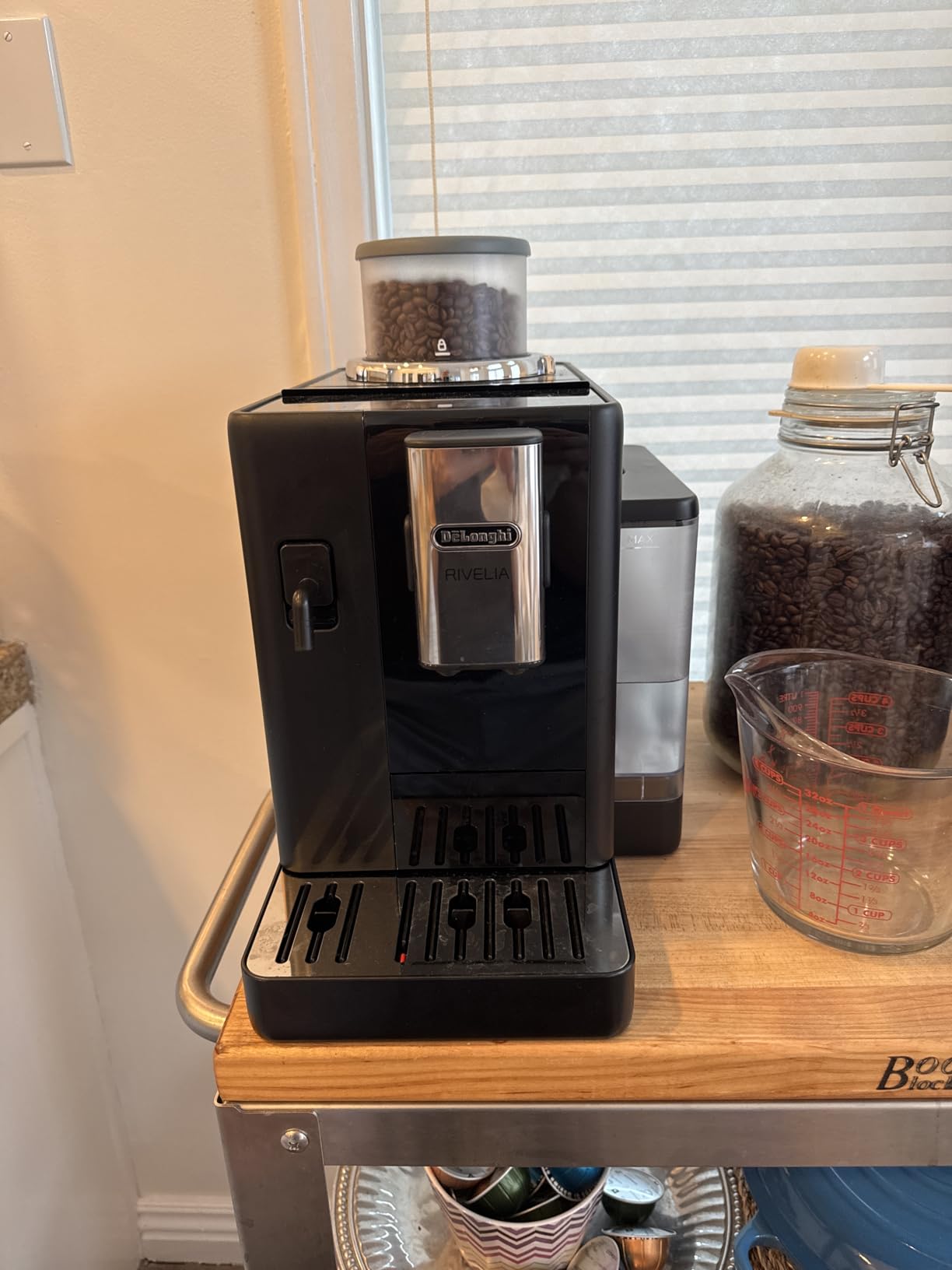
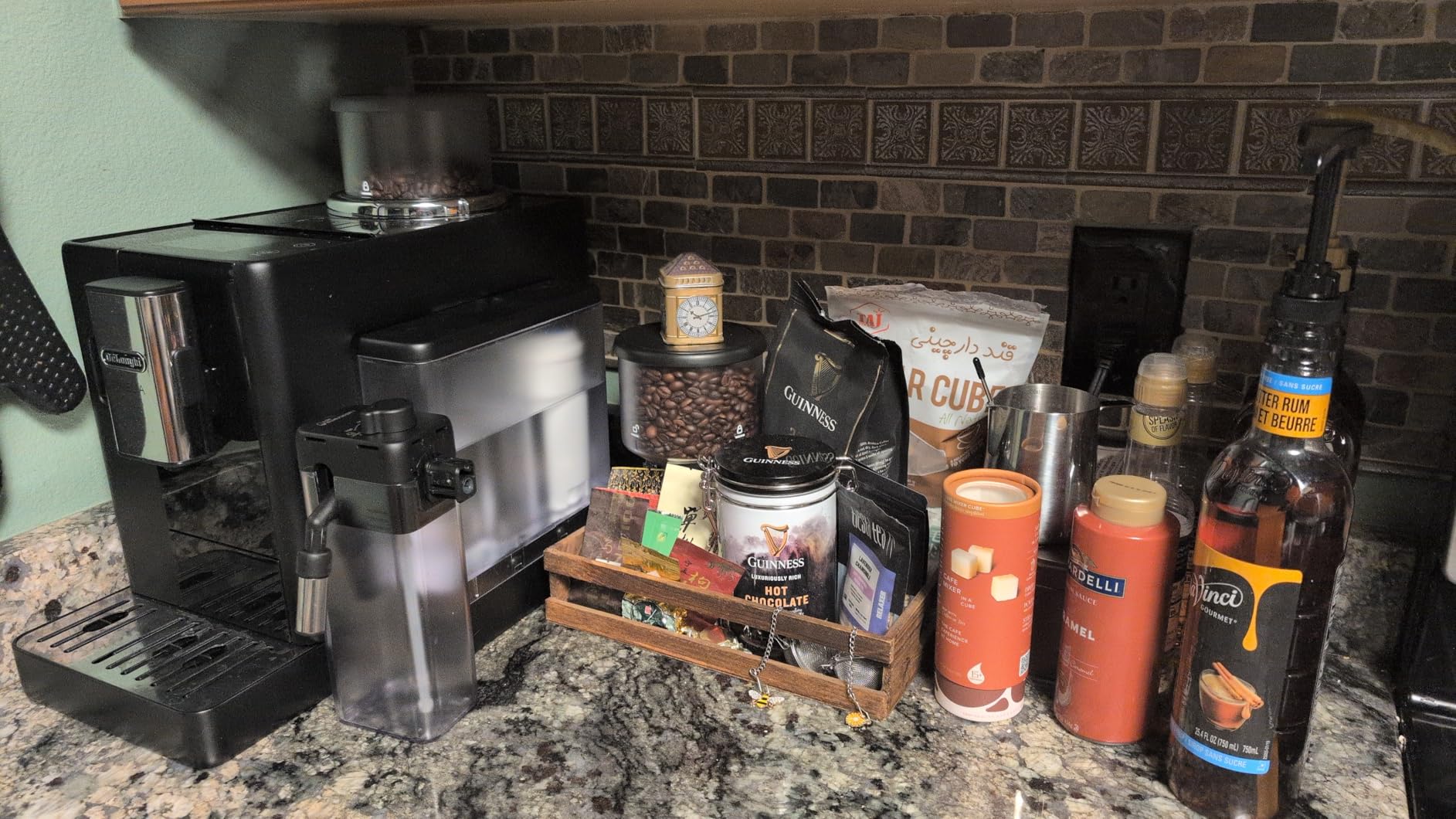
Eighteen recipes cover latte, cappuccino, cortado, coffee, flat white, iced coffee, espresso and espresso over ice, all on a touchscreen. The LatteCrema Hot system auto-cleans and handles plant-based milk. Buyers also like that it comes in four finishes so it can match a kitchen rather than fight it.
Be realistic about the extras. Cold foam on this machine requires a separately sold carafe, and at 21.4 pounds with a 17 inch depth this is the heaviest unit we tested. The 18 percent one-star share is the highest in the roundup, so the reliability picture is less settled than the feature list suggests.
What to know before you buy
Measure the depth. At 17 inches this needs a wall to backsplash run of more than 17 inches plus hand room, and it is heavy enough that you should set it in place rather than slide it. The 47 oz tank is small for a family, so plan on a refill every couple of days with heavy use.
Decide on cold foam early. If iced drinks are a priority, buy the cold accessory up front or choose the De’Longhi Magnifica Duo, which includes hot and cool frothing in the box. A plastic body at this price is a fair complaint and a fair trade for the hopper and profiling systems.
Who it suits and who it does not
Buy this if two people drink different coffees, if you rotate beans deliberately, or if you want the widest drink menu in the range. It is also the machine to buy when you want one appliance that grows with your habits rather than a fixed simple setup.
Skip it if counter depth is tight, if you are sensitive to build materials at this price, or if cold drinks are the priority, because the cold foam accessory changes the math.
6. Gaggia Anima – best for steam wand control and brew temperature
Gaggia Anima Coffee and Espresso Machine, Includes Steam Wand for Manual Frothing for Lattes and Cappuccinos with Programmable Options,Black
- Manual wand lets you control milk texture yourself
- Three selectable temperatures at 177.5 182.9 and 184.5 F are rare below 1000 dollars
- 60 oz reservoir is among the largest here
- Top access to both the water reservoir and the bean hopper
- Programmable espresso and espresso lungo volumes
- Grind dose and tamp need manual attention to build proper pressure
- Recipes may need reprogramming when the grind changes
- Plastic body and a 16.9 inch width
The Gaggia Anima is the odd one out in this list because it hands you the milk. Instead of an automatic carafe, it has a pannarello steam wand, which is the traditional way to texture milk and the reason you can make a flat white with the dense microfoam the automatic machines cannot. It also accepts whole beans and ground coffee, and the espresso and lungo volumes are programmable.
Three selectable brew temperatures is a genuinely rare feature below 1,000 dollars. Minimum sits at 177.5 F, medium at 182.9 F and maximum at 184.5 F, so you can move a roast up or down a few degrees without changing the recipe. The 60 oz reservoir and the 8.8 oz hopper both load from the top, which is a small ergonomic win.
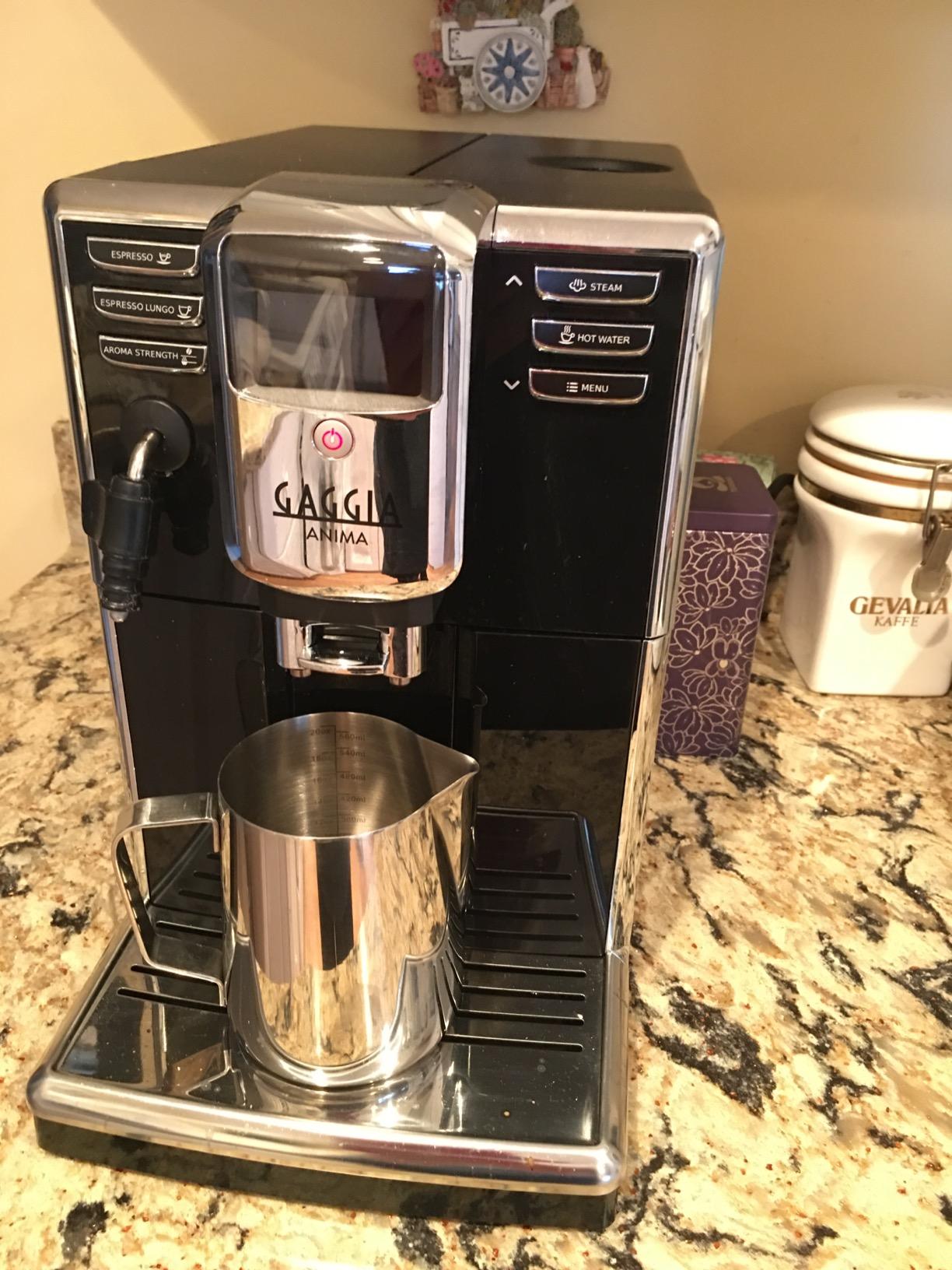
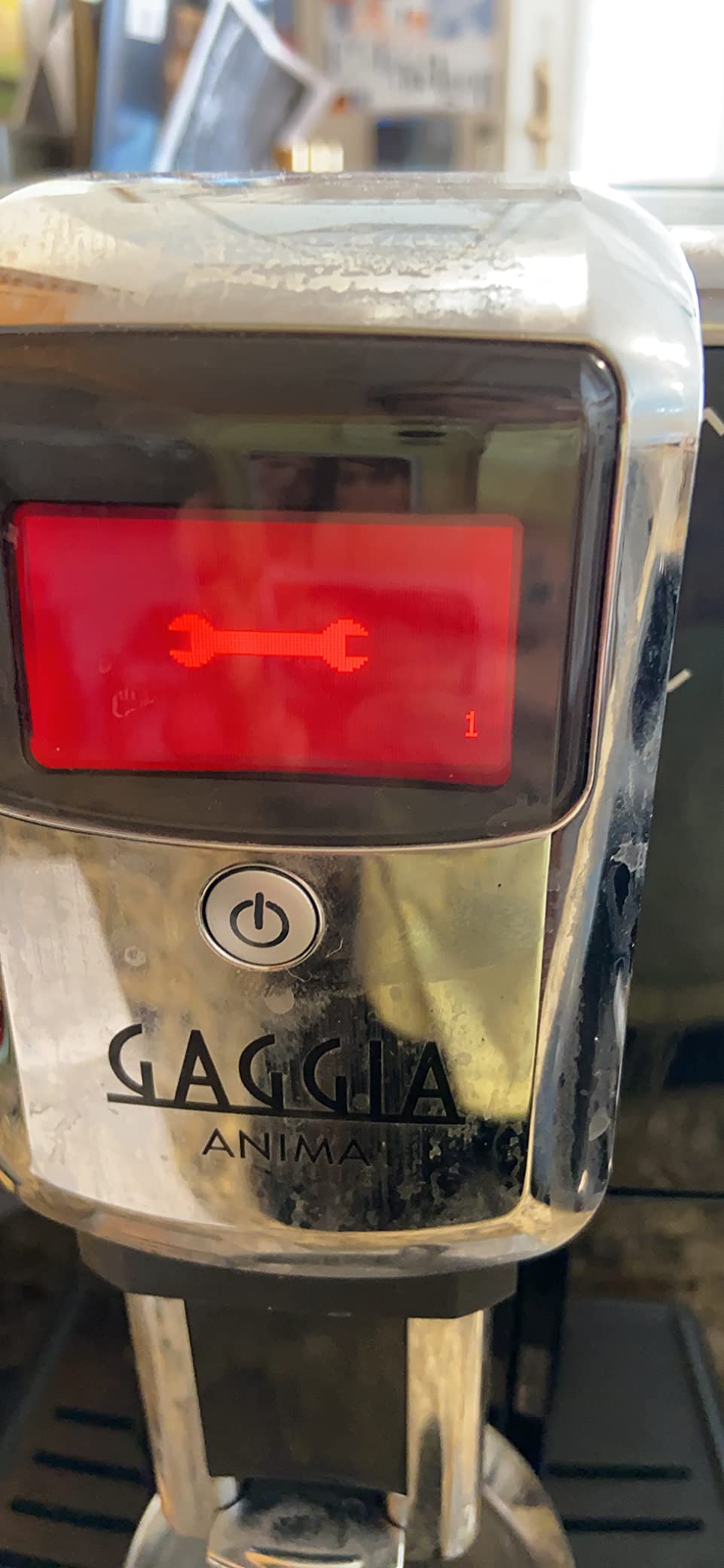
What you give up for the wand is automation. The grind, the dose and the tamp all need your attention to reach proper pressure, and reviewers are candid that extracted volume shifts when you change grind size, which means reprogramming the recipe. The learning curve is the trade, and it is the reason this is not our top pick for most households.
It is also a coffee machine first and espresso machine second in category terms, which is why the ranking here is modest. The 489 reviews at a 4.0 average show a satisfied base that appreciates the control.
What to know before you buy
Budget time for the first two weeks. You will change the grind, drink a few disappointing shots, adjust again, and repeat until the volume reads correctly on the display. Machines with automatic dosing get there on the second cup; this one does not.
Frothing by hand means a pitcher and a wipe-down after every milk drink, and that is exactly the chore people buy a super automatic to avoid. At 16.9 inches wide and 16 pounds, the footprint is wide but shallow, which helps against a low-hanging cabinet.
Who it suits and who it does not
Buy this if milk texture matters to you more than convenience, if you want to experiment with temperatures, or if you drink both ground and whole bean coffee. It is also a strong choice for anyone moving up from a pod machine who is curious about real milk work.
Skip it if you want zero involvement after pressing a button, or if the household is busy and nobody will practise with a pitcher. For a family that wants both, the Philips 5500 Series profiles serve the same multi-drinker problem without the learning curve.
7. KitchenAid KF6 – best for a metal-clad build
KitchenAid Fully Automatic Espresso Machine KF6, KES8556, Stainless Steel
- Metal-clad body feels more durable than plastic-bodied rivals
- Removable bean hopper twists out for fast refills
- Smart dosing automates grind consistency
- Button and touchscreen controls cover both styles
- Screen walks you through cleaning steps
- Drink temperature is frequently described as tepid
- Single drink delivery means one drink at a time
- 18.5 inch depth makes counter clearance tight
The KF6 is the pick for anyone who thinks a machine should look like an appliance and feel like one. The metal-clad body is the first thing you notice, and several owners upgrading from an older plastic machine specifically cite the build and the quieter, hotter operation as the reason. Fifteen recipes cover espresso, americano, latte, cappuccino and more from a button or a touchscreen.
The smart dosing system handles grind consistency automatically, which removes the main reason first-time buyers get a bad shot. The bean hopper twists out to empty or refill, and the 2.2 L water tank is the largest reservoir among the units at the top of this price band.
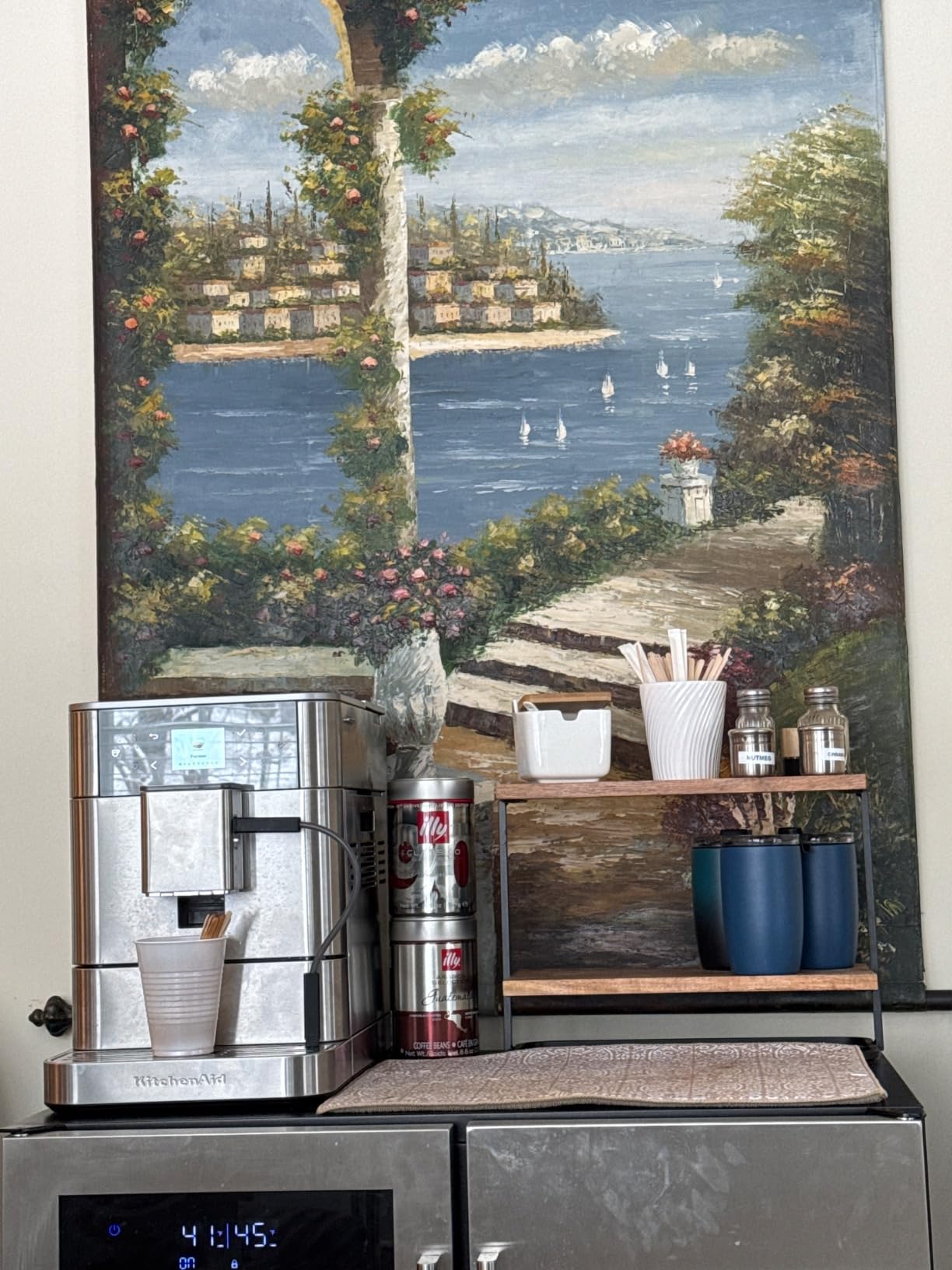
Milk drinks work through a hose that runs into a separate container of your choice, so you use whatever pitcher or carafe you already own. That is a genuine advantage for people who switch between dairy and plant milk, and a genuine disadvantage to people who want one removable piece. The KF6 version makes one drink at a time, while the KF7 below makes two.
Reviewers like the guided cleaning prompts on the screen, which walk you through each cycle rather than leaving you to guess which cleaner goes where. The 4.1 average sits in the middle of this group, with the temperature complaint doing most of the damage.
What to know before you buy
Temperature is the issue to test. Multiple reviewers describe the output as warm rather than hot, particularly on milk drinks, and that is the single most common complaint. If you drink black coffee at a fast pace in the morning, go in knowing the first cups may need a minute.
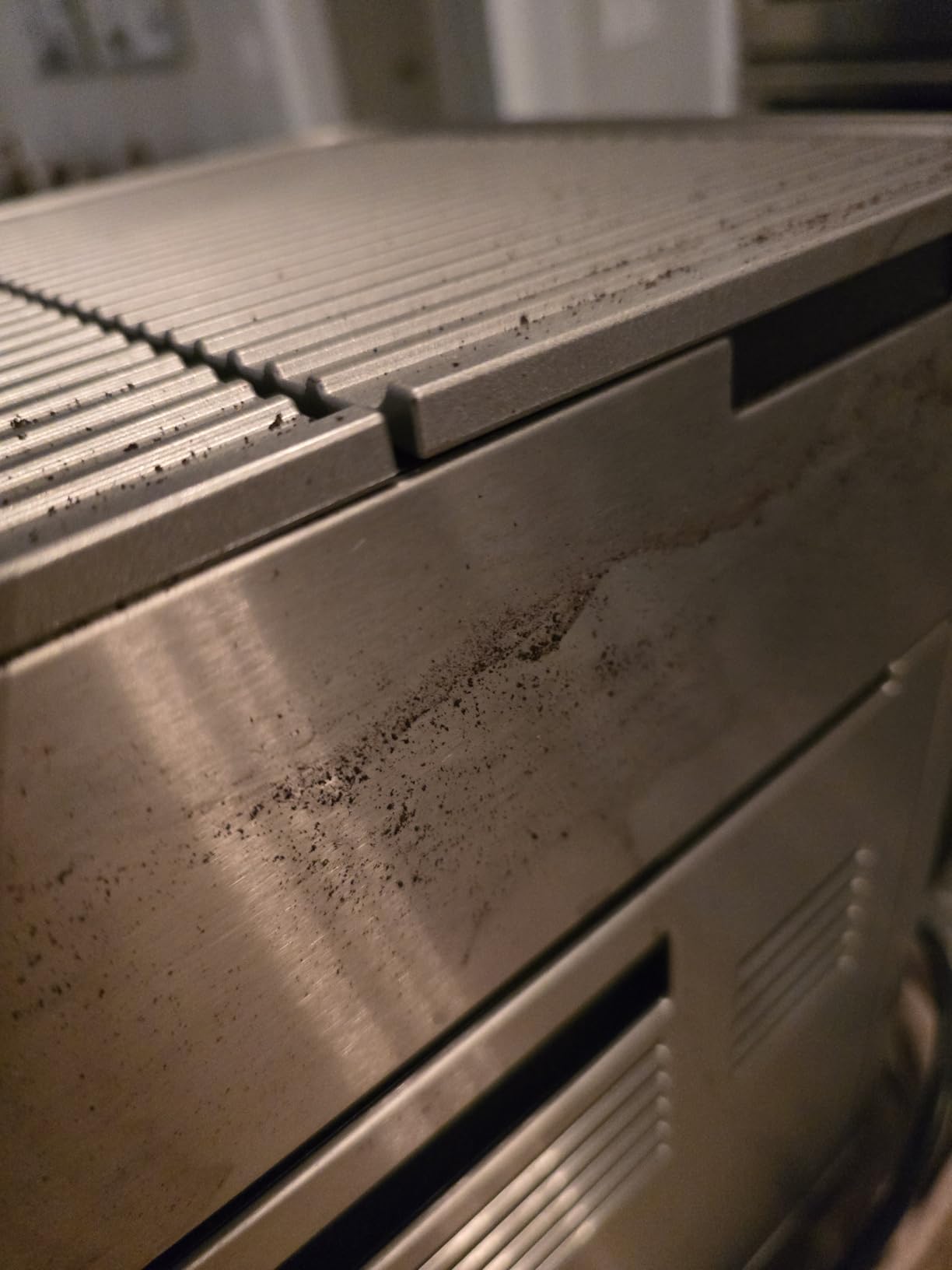
At 18.5 inches deep this is one of the deepest machines here, and the hose routing needs space beside the machine for your milk container. Check the counter depth, not just the width, before ordering.
Who it suits and who it does not
Buy this if the machine lives in a visible kitchen and you want something that looks like a proper appliance, if you already own a milk container, and if you drink black coffee more often than frothy drinks.
Skip it if you want lattes fast in the morning and find warm milk drinks disappointing, or if you need two cups at once. For both of those, the KF7 or the Philips 5500 Series serve you better.
8. KitchenAid KF7 – best for a two-drink household
KitchenAid Fully Automatic Espresso Machine KF7, KES8557, Stainless Steel
- Dual drink delivery makes two drinks at once or one after the other
- Removable brew unit has fewer nooks to clean
- Larger water reservoir and puck container than the KF6
- Guided touchscreen cleaning prompts
- Owners report the bean hopper never jams
- Drink temperature is widely described as too cool
- Cleaning prompts do not name which cleaner to use
- Milk cleanse cycle adds steps after every milk drink
The KF7 solves one specific problem very well. Its dual drink delivery system makes two drinks simultaneously or one right after the other, so a household of two does not stand at the counter waiting. On the KF6, the second cup waits for the first to finish. On this one, it does not.
Everything else follows the KF6 recipe with small upgrades. The removable brew unit has fewer nooks and crannies than a fixed group, which is a real win for the weekly clean, and the water reservoir and puck container are both larger. The touchscreen carries guided cleaning walkthroughs, and the metal-clad body comes in four finishes including Juniper, Porcelain and Cast Iron Black.
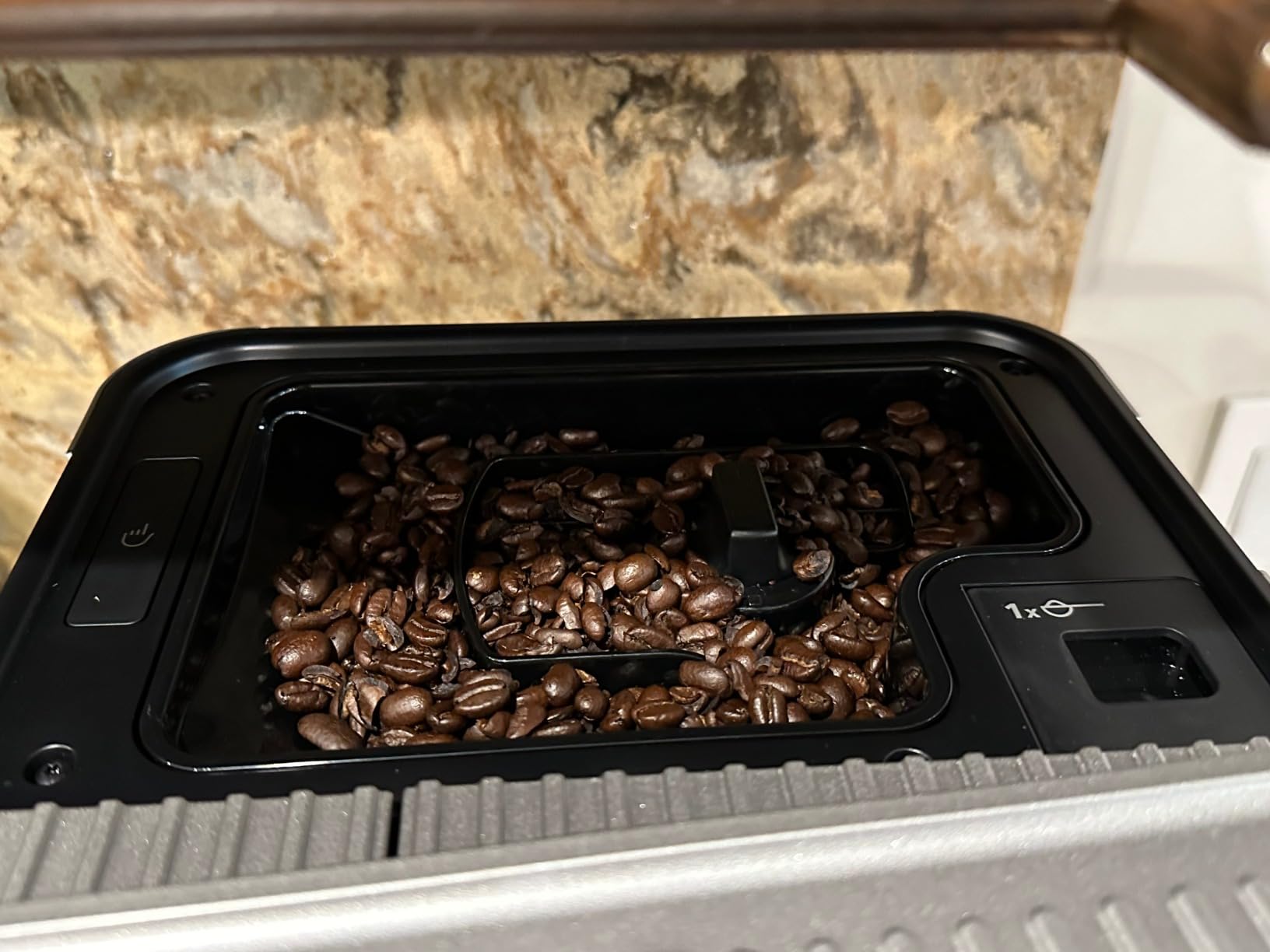
Owners upgrading from an earlier Philips generation frequently report hotter output and quieter operation, which is a fair reason to consider this over a cheaper machine. The bean hopper is removable and, in owners’ experience, does not jam.
Two complaints recur. The temperature issue appears here too, and several users find the cappuccino recipe produces too little coffee and too much milk for a 12 oz cup, so you will likely want to adjust the ratio. The milk cleanse cycle also adds container steps after every milk drink, which softens the convenience argument.
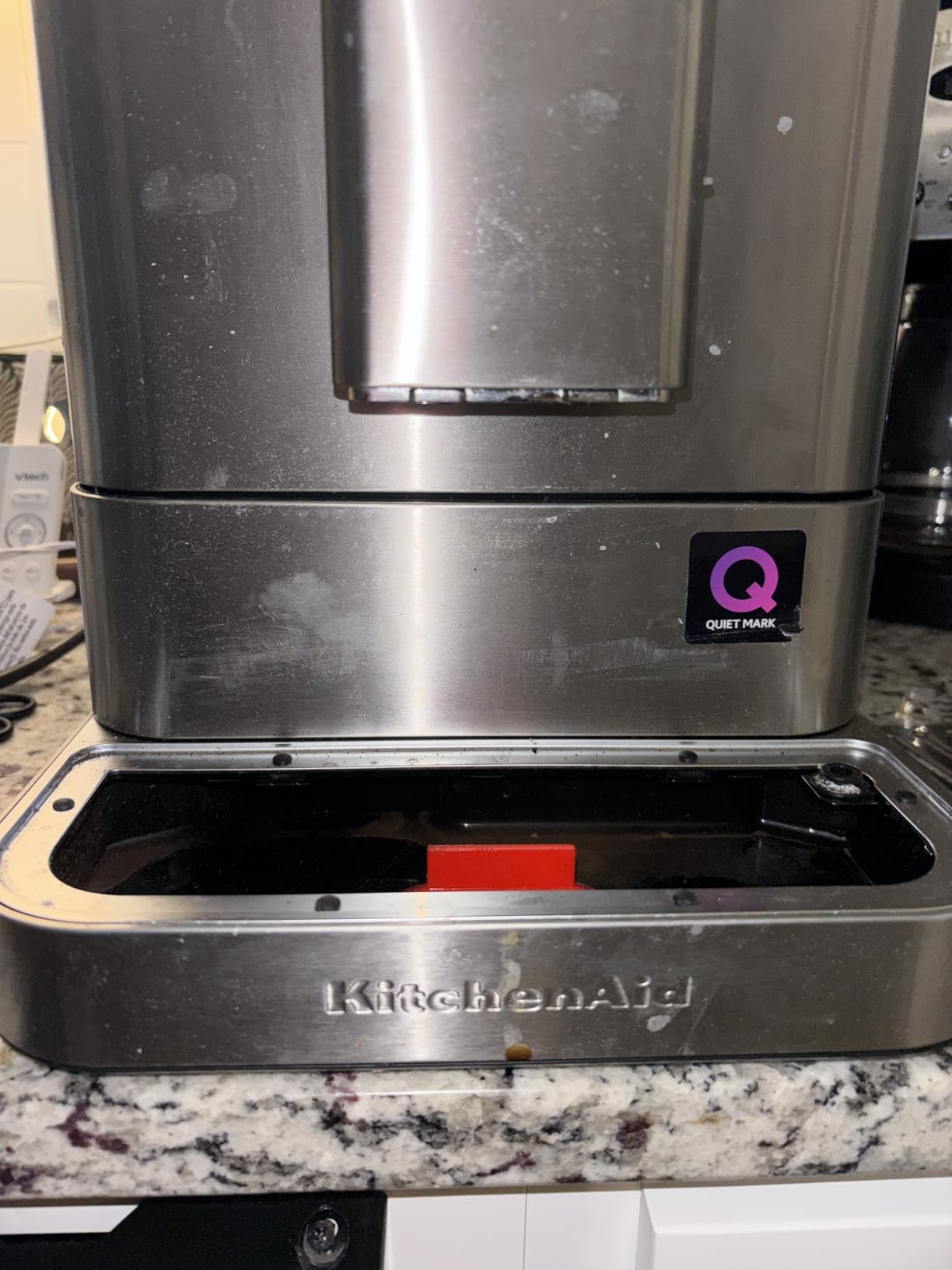
What to know before you buy
Cleaner products are a genuine running cost here, and the on-screen prompts do not specify which product belongs to which cycle. Check the manual before your first descale so you use the right tablets and do not shorten the brew group life.
It measures 18.5 inches deep by 10.2 inches wide by 14.3 inches tall, so it needs a deep counter run. Budget for the initial two cleaning tablets included in the box plus a steady supply afterward, and expect a tank refill roughly every two days in a two-drink household.
Who it suits and who it does not
Buy this if two people drink coffee together in the morning, if you want a larger tank and puck bin than the KF6, or if the removable brew unit matters to you. It is the most complete KitchenAid in this price range.
Skip it if the extra money buys you nothing for your routine, or if temperature is your top priority, since the same warm-output complaint shows up here. In that case the De’Longhi Magnifica Duo is the better bet.
9. EUHOMY – the most capable machine per dollar
- Includes a grinder and an automatic frother at the lowest price in the roundup
- Fifteen grind settings give a wide adjustment range
- 200 g bean hopper and 1.5 L tank suit higher-volume households
- Adjustable spout height reduces splashing
- Touchscreen with status alerts for beans water and grounds
- Smallest review base here at 129 ratings
- Brand is far less established than Philips De'Longhi or Jura
- 17.4 inch depth takes real counter space
On paper this is the most machine you can get for the least money, and the specification list is genuinely long for the tier. A 20 bar pump, 15 grind settings, a 200 g bean hopper, a 1.5 L water tank, an integrated burr grinder, an automatic milk frother, an adjustable spout and a self-cleaning program all live in one body. Very few machines at twice the cost give you a 200 g hopper.
The adjustable spout height is a nice practical touch, since it lets you run a short espresso or a taller mug without splashing. The touchscreen adjusts drink volume and extraction and reports status for beans, water, grounds and component placement, and a one-touch bean purge clears the hopper without mixing old and new beans.
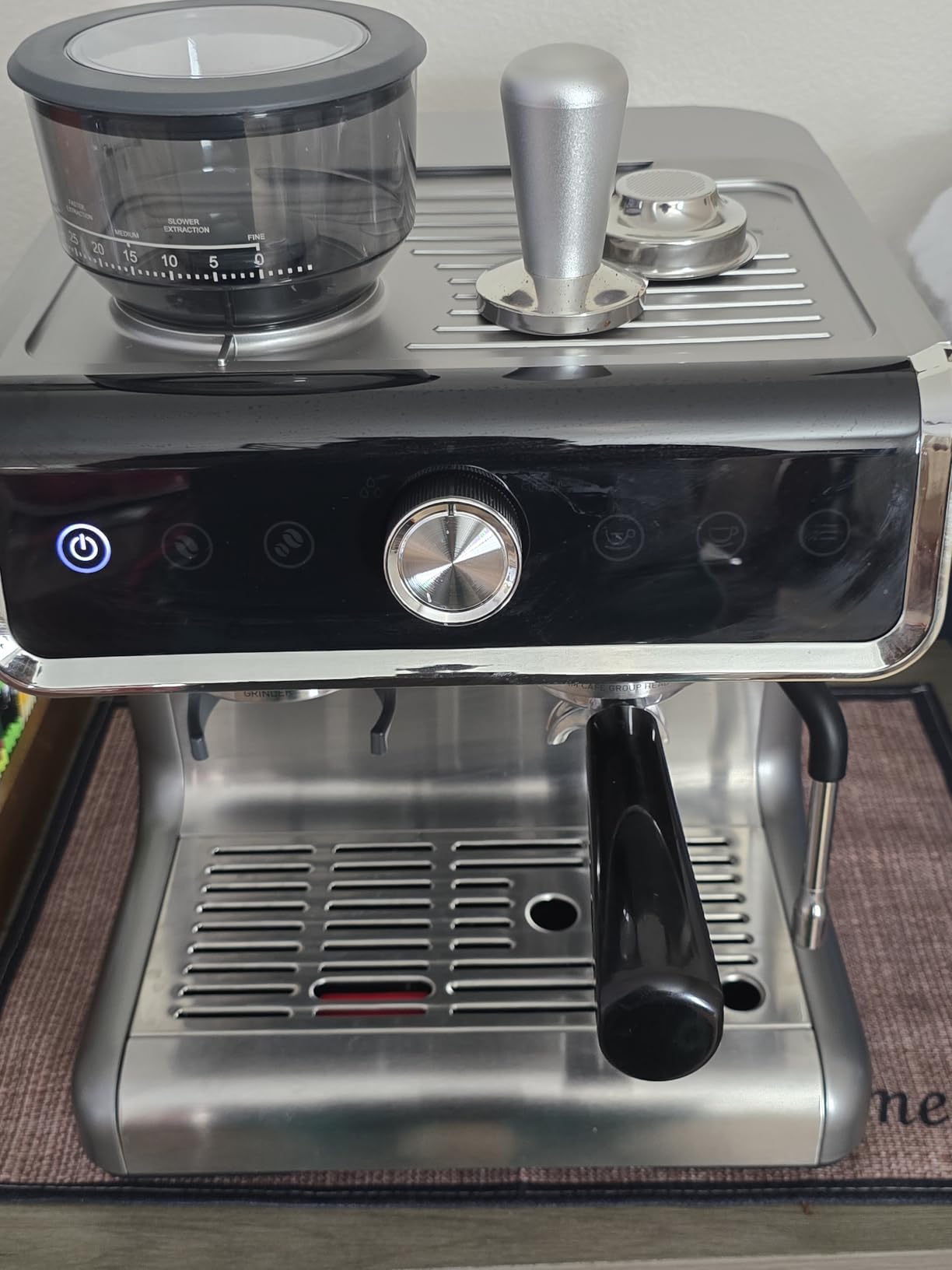
The 4.2 average holds up, with 61 percent five star and only an 8 percent one-star share, the lowest single-star percentage in the roundup. The honest caveat is evidence, not performance: 129 reviews is a small pool, and this brand has a much thinner track record than Philips, De’Longhi, Jura or KitchenAid.
Long-term durability is simply less documented. That matters if you plan to keep a machine for five years, because replacement parts and service for a newer brand are harder to find than for a name you have heard for thirty years.
What to know before you buy
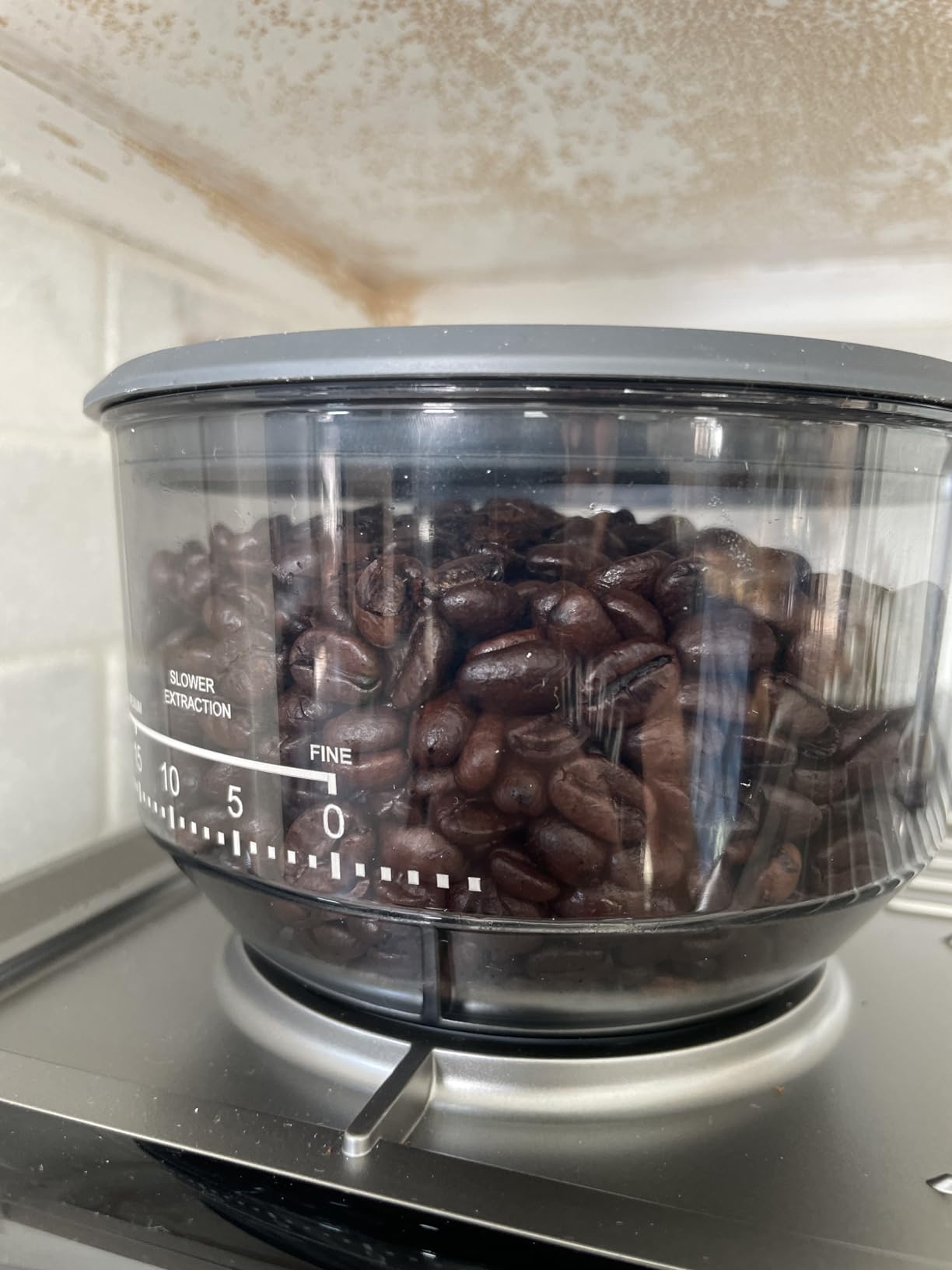
Read the 20 bar claim with the usual skepticism. Real brew pressure is around 9 bar, so use the 15 grind settings and the volume and extraction controls to dial in, not the pump number. At 19.2 pounds and 17.4 inches deep, it is a large machine for what it costs, so check depth as well as width.
Keep beans medium to medium-dark and skip very oily dark roasts, which gum up burrs in any machine. The self-cleaning program handles the internal cycle, but the milk system still needs attention after every frothed drink, and the 1.5 L tank will need refilling more often than the 2.2 L units.
Who it suits and who it does not
Buy this if you want a grinder, a frother, iced drinks and a large hopper without spending near the top of the band, and if you are comfortable with a newer brand name. For a first machine in a rental or a first apartment, it is hard to argue with the value.
Skip it if you want parts and service to be easy to find in five years, or if you are replacing a machine you already own and care about warranty length. For long-term peace of mind, the two Philips machines cover the same ground with far more owner history behind them.
10. Jura ENA 4 – the simplest machine for black coffee
- Fewer parts than any frother-equipped machine
- Professional Aroma Grinder handles beans or pre-ground coffee
- Intelligent Pulse Extraction Process
- Doppio function pulls a true double shot
- Compact footprint for a Swiss super automatic
- Lowest average rating here at 3.9 stars
- Spout is too low to clear a full-size American mug
- Symbol interface and the companion app frustrate users
- Bean container sometimes fails to detect remaining beans
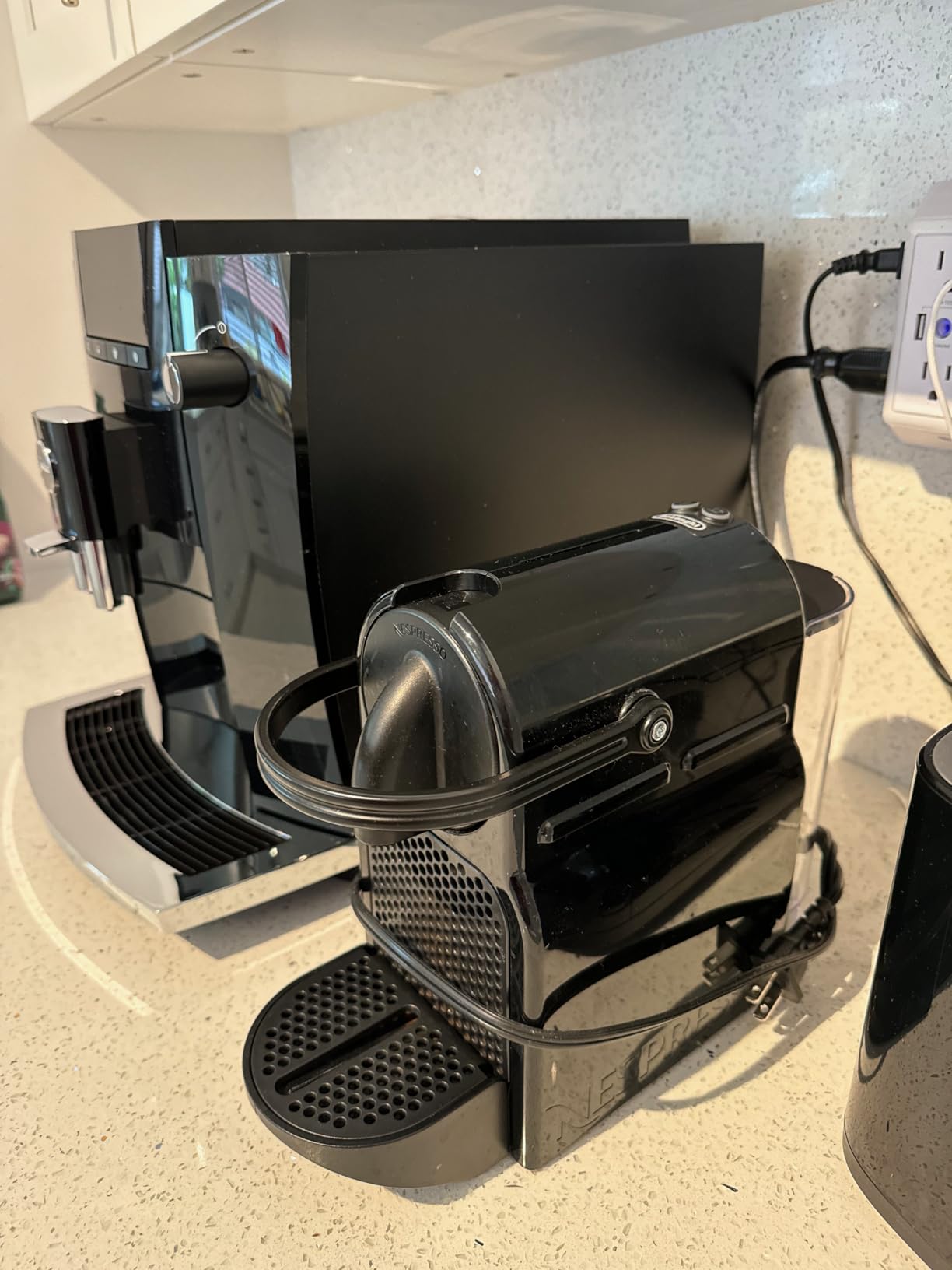
The Jura ENA 4 is the machine we would recommend to someone who wants espresso and coffee, owns no milk drinks, and does not want to think about upkeep. There is no milk system, no wand and no carafe, so the daily cleaning list shrinks to emptying the grounds bin and refilling water. That simplicity is the entire pitch, and owners who have made that trade describe it as the best decision they made.
Underneath, the hardware is respected. The Professional Aroma Grinder takes whole beans or optional pre-ground coffee, the Intelligent Pulse Extraction Process handles the puck, and the Doppio function pulls a genuine double shot. Coffee strength and volume are both programmable, and the machine is offered in four colorways.
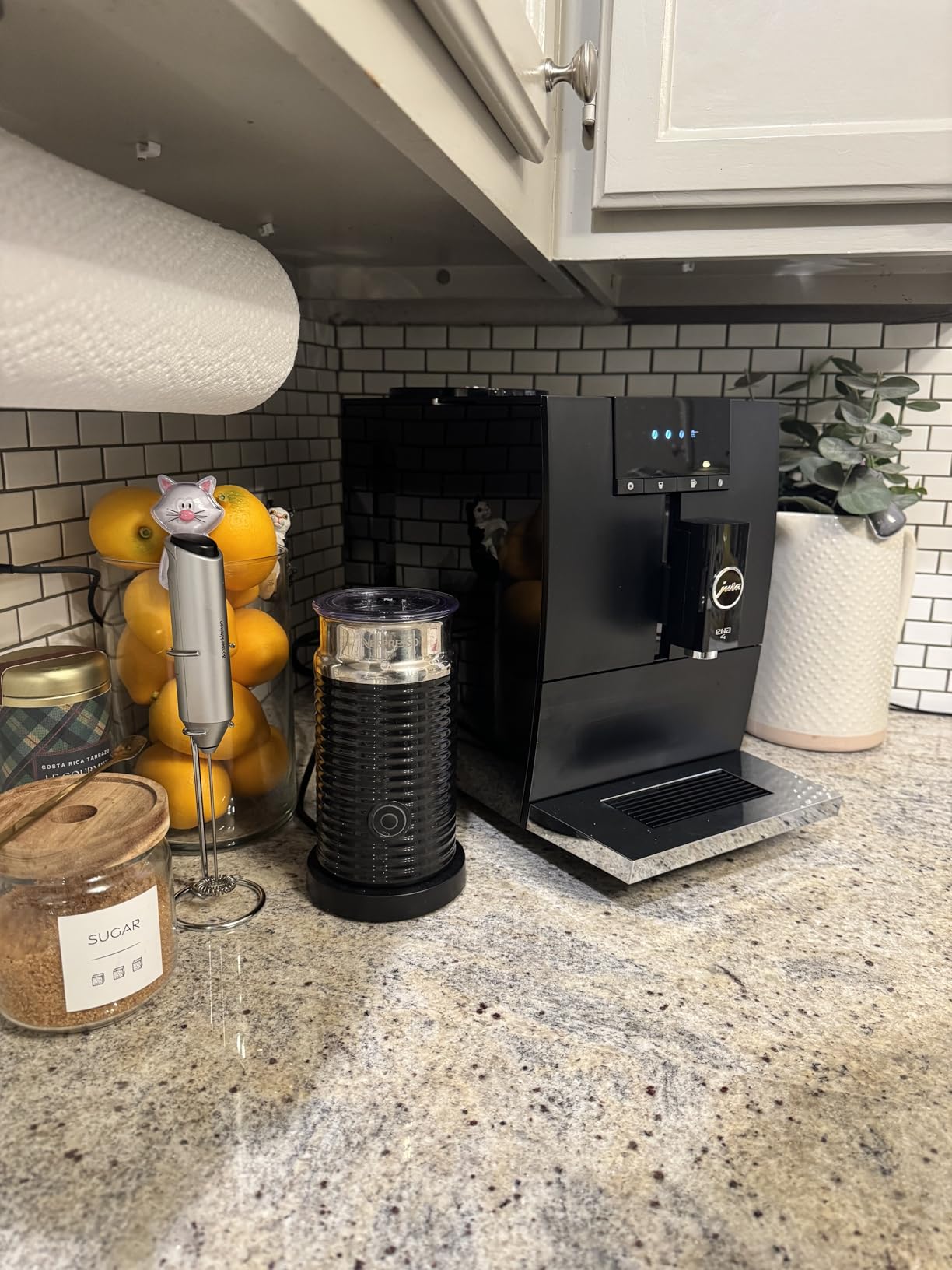
The 3.9 average is the lowest in this roundup, and it comes down to specific fixable things rather than bad coffee. The discharge spout sits too low to clear a full-size American mug, which is the single most common complaint. The symbol display has no words, and owners single out the companion app and the printed manual as poorly designed. The bean container also sometimes fails to detect that beans are running out.
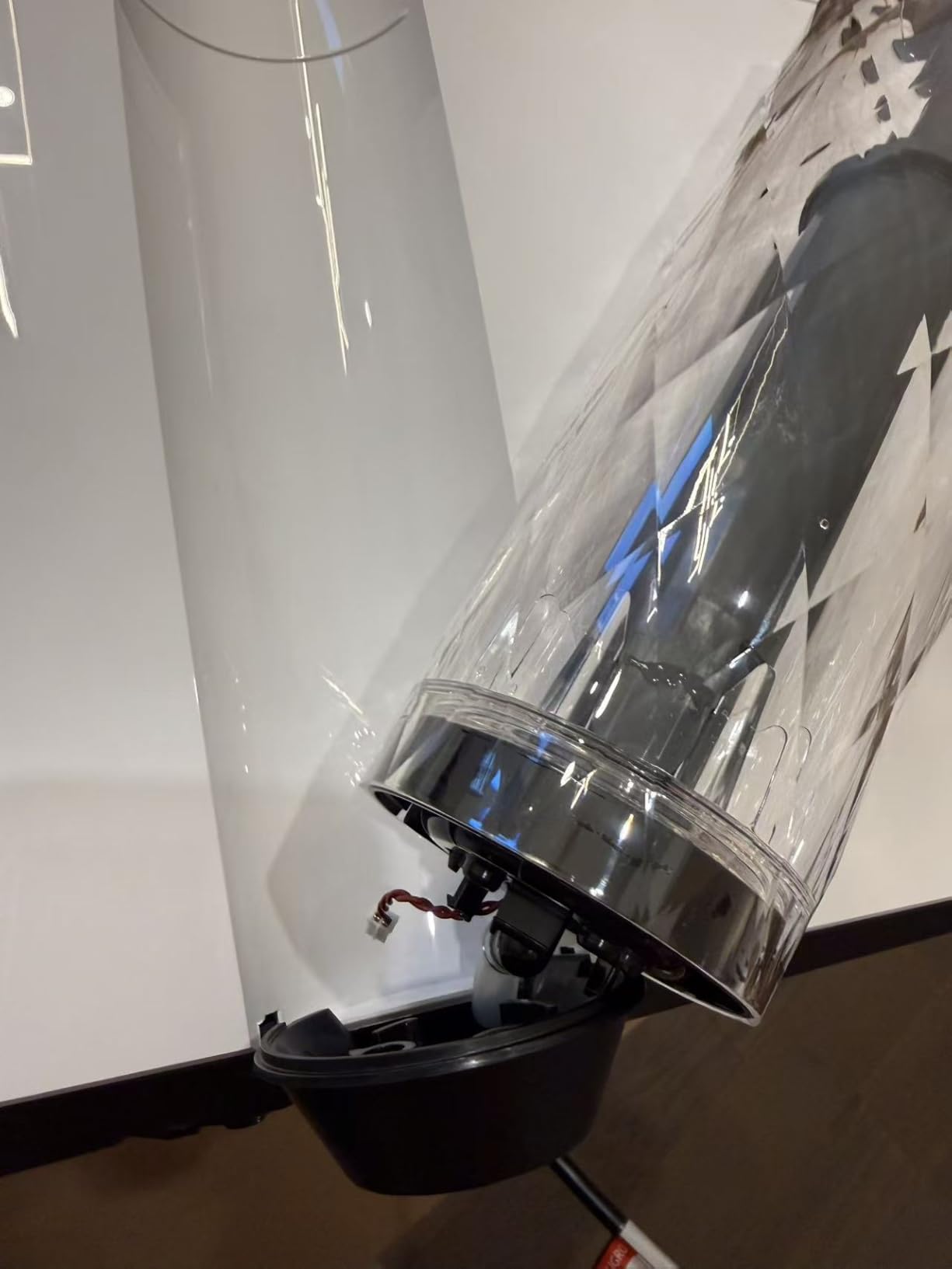
There is also a cluster of reports of units arriving defective or dirty from third-party sellers, so buy from a channel with straightforward returns. The warranty is 1 year from the manufacturer.
What to know before you buy
Test your mugs first. If your daily cup is a tall 12 oz American, the spout height here will not clear it and you will be brewing into a lower glass every morning. Espresso and lungo are the drinks this machine is shaped for.
Use Jura water filters if you want to avoid descaling, and expect to spend more attention on the interface than on the coffee. At 21 pounds and 17.5 inches deep, it is a wide machine despite the compact description, and it takes a 37 oz water tank.
Who it suits and who it does not
Buy this if you drink black coffee only, want minimal maintenance, and would rather spend your time on something else. It also suits a second machine in an office or a guest area where volume is low.
Skip it if you want lattes, drink large American mugs, or expect the app and on-screen symbols to be intuitive from the first morning. The Jura E4 above handles the same no-milk brief with a larger tank and a stronger rating.
How to Choose a Super Automatic Espresso Machine Under 1500
Start with the drink, not the brand. Every machine in this list makes a good espresso if you set the grind correctly, and the differences that matter day to day are all about the second cup. If you drink milk drinks most mornings, the milk system decides your machine. If you drink black coffee, skip the milk system entirely and save the money and the cleaning, as the Jura E4 and Jura ENA 4 both do.
Next, look at the grinder. Burr quality changes the cup more than any other specification. Flat ceramic burrs and good conical burrs produce even particle sizes, and even particles extract consistently. Cheap steel burr set produces fines that clog the puck on one day and gush on the next. The 20 bar and 15 bar numbers on the box tell you nothing useful, so ignore them and read the burr type instead.
Then count the drinkers. One person drinking alone needs a small tank and a simple menu. A household of two or more, or a shared office, should prioritise user profiles, because they are the feature that stops the machine from being annoying every morning. The Philips 5500 Series and the De’Longhi Rivelia handle this best, the first with four saved profiles and the second with swappable bean hoppers.
Decide how much control you want. Machines that automate dialing in give you a good shot on the second cup. Machines that hand you a steam wand and manual dose controls give you better milk and a longer learning curve. Neither is better; they serve different people, and the Gaggia Anima is the clearest example of the second type in this range.
Measure your counter before you fall in love. Depth matters more than width, because the tank and carafe come off the front. Anything from 17 to 19.7 inches deep is common here, and two of these machines are both wide and deep. Also check the spout height against the tallest mug you actually drink from, since that mismatch is one of the most common return reasons in this category.
Finally, think about beans. Medium to medium-dark roasts work best in super automatics. Very dark oily beans shed oil onto the burrs, and the machine will need extra cleaning cycles to keep the grinder running true. Keep beans in an airtight container away from heat, and buy smaller bags more often rather than one large bag that sits for two months.
What Ownership Actually Costs
The purchase is the small part. Every machine in this list needs a water filter or descale supplies, and anything with a milk system needs either dishwasher cycles or a dedicated cleaner. Budget roughly the cost of a bag of beans every few months plus a modest annual spend on filters, and the machines that use a water filter rather than descale tablets will run cheaper year over year.
Cleaning follows a rhythm. Daily, empty the grounds bin and rinse the milk parts. Weekly, run the brew group cleaning cycle that every machine prompts you to use. Monthly, check the spout and shower screen. Every few months, replace the water filter, and descale if the machine asks rather than on a fixed calendar, because hard water areas get there faster.
Two habits cut the long-term cost more than anything else. A rinse of the milk system immediately after a milk drink prevents the residue that turns into a stubborn clean later, and running the backflush cycle on schedule keeps the brew group from scaling internally, which is the part of these machines that is hardest to service. Skip both and you will be replacing a machine that could have run for a decade.
Frequently Asked Questions
What is the best super-automatic espresso machine under $1500?
The Philips 3200 Series is our pick for most people. It pairs a 100 percent ceramic grinder with a two-part milk system that rinses clean in about 15 seconds, and the included AquaClean filter can push descale cycles out to roughly 5,000 cups. If you want more drink options and quiet operation, the Philips 5500 Series adds 20 presets and four user profiles.
What is the best super automatic espresso machine for the money?
Value in this category is measured by what you avoid owning, not just what you get. The Philips 3200 Series removes the milk hose, the carafe and the monthly descale from the ownership loop at the same time. The De’Longhi Magnifica Duo offers more drink types for a similar outlay, and the EUHOMY covers the essentials at a third of the price.
Which superautomatic coffee machine is best?
It depends on whether you drink milk. Black coffee only points to the Jura E4 or the Jura ENA 4, which have no milk system at all. Lattes and cappuccinos point to the Philips 3200 Series for easy cleaning or the De’Longhi Rivelia for the widest menu. A household that shares one cup type is best served by the Philips 5500 Series.
Are super automatic espresso machines worth it?
They are worth it when you want cafe-style drinks on demand, serve more than one person, and do not want to learn technique. They are not worth it if you enjoy dialing in shots by hand, since a manual machine and a separate grinder produce better espresso for the same money at this budget. A super automatic buys convenience, not superior coffee.
How long do super automatic espresso machines last?
With a water filter, a monthly brew group clean and immediate rinsing of the milk system, a well-supported machine in this range commonly runs for many years, and owners of long-running Juras cite them as proof. Machines from established brands such as Philips, De’Longhi, Jura and KitchenAid also have the advantage of easier parts and service if a component fails.
What beans are best for a super automatic machine?
Medium to medium-dark roasts work best. Very dark and oily beans shed oil onto the burrs and need extra cleaning cycles, and very light roasts are harder to dial in consistently on an automatic dose. Buy smaller bags more often, keep beans in an airtight container away from heat, and avoid any roast labelled as espresso-only if you want flexibility.
Can super automatic machines make a travel mug?
Only some of them. Machines with an adjustable spout, such as the EUHOMY, give you the most headroom, while the Jura ENA 4 has a discharge spout too low to clear a full-size American mug. If you drink out of a tall 16 oz travel mug every day, measure the clearance with the mug in hand before you order.
Is a refurbished super automatic espresso machine worth buying?
It can be, if you buy from a source that offers a real warranty. Third-party refurbished units may arrive with a worn brew group and a tired grinder, which is exactly the part that is hardest to service. Insist on written coverage on the machine itself rather than only on parts, and check the grinder and brew group on arrival before the return window closes.
The Verdict
The best super automatic espresso machine under 1500 dollars is the Philips 3200 Series for most households, because a ceramic grinder, a 15-second milk rinse and a filter that stretches descales to 5,000 cups add up to a machine you will still be happy with in year three. The De’Longhi Magnifica Duo is the one to buy if iced drinks and cold brew are part of the plan, and the Philips 5500 Series takes over when several people share the machine or the kitchen is quiet.
Drink black coffee only and the answer changes completely: the Jura E4 gives you a 64 oz tank and a proper grinder with no milk system to own or clean. And if you enjoy the craft side of espresso, spend the same money on a manual setup from our budget espresso machine guide or a sub-1000 dollar roundup and enjoy dialing in shots. For everyone else, any of the ten machines here will make a very good morning cup on its first real week of use.