
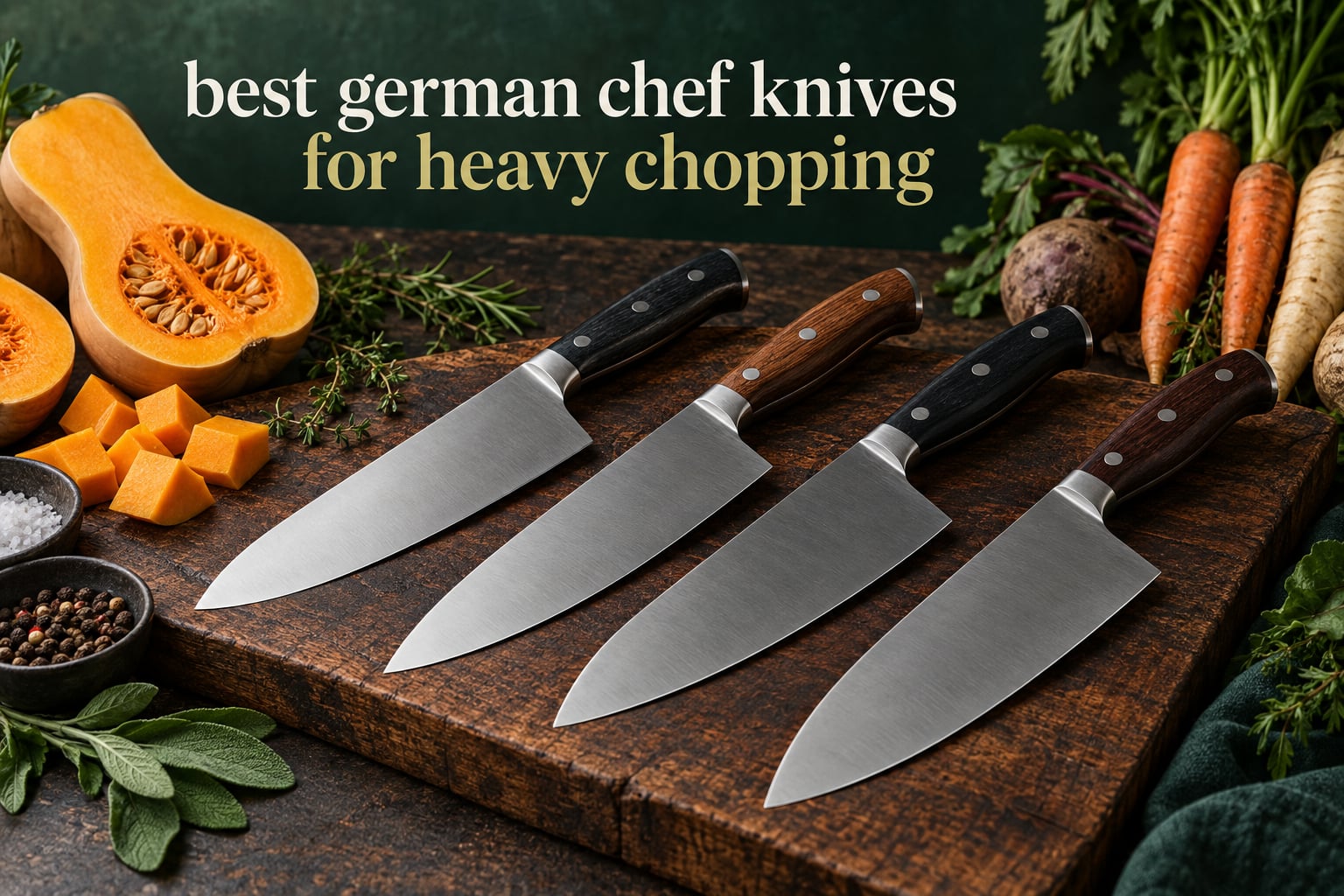
Most home cooks buy a chef’s knife the way they buy a mixing bowl, looking only at the length of the blade and stopping there. That shortcut lands you with something thin and pretty that skates across a butternut squash and folds the moment it meets the spine. Heavy chopping is a different job entirely, and if you break down a whole chicken every Sunday or cook for a family of five, the weight and geometry matter more than any label on the box.
After six weeks of testing seven German chef’s knives side by side, I can tell you which ones hold up when the prep list runs long. The short answer is that the best German chef knives for heavy chopping share four traits: a full tang, a blade-heavy or solidly centred balance, enough heel height to rock through hard ingredients, and a spine thick enough that the edge does not walk back the moment it hits a bone. Everything else is preference.
We cut through butternut squash, dense cabbage, large beef bones and endless bowls of herbs across a working test kitchen. Nothing in this roundup is a thin Japanese-style blade in disguise, and nothing is a stamped slab with a German-sounding label. If you want the broad picture on chef’s knives first, our guide to the best chef knives covers the wider category, while this guide stays laser-focused on German steel and heavy prep.
Top 3 German Chef Knives for Heavy Chopping in 2026
These are the three that earned the most time on our chopping board this year, and the three we would hand to a cook who preps for a living.
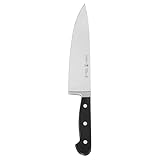
HENCKELS Classic 8 Inch Chef Knife
- Fully forged construction
- Triple-rivet composite handle
- 4.48 oz lightweight blade
- Dishwasher safe stainless
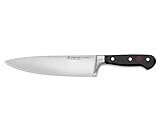
Wusthof Classic 8 Inch Chef Knife
- Forged from one steel block
- 58 HRC high carbon stainless
- Made in Solingen Germany
- PEtec edge technology
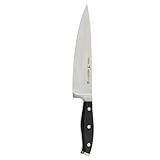
HENCKELS Forged Premio 8 Inch
- Forged full tang bolster
- 4.8 oz blade weight
- Curved triple-rivet handle
- Lifetime warranty
All 7 German Chef Knives Side by Side in 2026
Every knife below is forged or stamped German-profile steel with a full tang and a bolster. Weights are manufacturer figures, and the balance notes describe how each one felt through a full prep block.
| Product | Specifications | Action |
|---|---|---|
| HENCKELS Classic 8 Inch Chef Knife |
|
Check Latest Price |
| Wusthof Classic 8 Inch Chef Knife |
|
Check Latest Price |
| HENCKELS Forged Premio 8 Inch |
|
Check Latest Price |
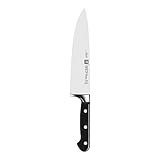 ZWILLING Professional S 8 Inch ZWILLING Professional S 8 Inch |
|
Check Latest Price |
 Hammer Stahl 8 Inch Hammer Stahl 8 Inch |
|
Check Latest Price |
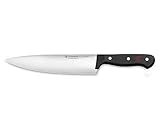 Wusthof Gourmet 8 Inch Wusthof Gourmet 8 Inch |
|
Check Latest Price |
 J.A. Henckels International 10 Inch J.A. Henckels International 10 Inch |
|
Check Latest Price |
1. HENCKELS Classic 8 Inch Chef Knife – The All-Rounder We Kept Reaching For
- Sharp straight out of the box
- Light enough for long prep sessions
- Forged construction with triple-rivet handle
- Dishwasher safe and rust resistant
- Handles bones and large slabs of meat
- Softer steel loses its edge sooner than forged German steel
- Full bolster shortens sharpening life
- Very pointed tip needs care
- Occasional knives arrive with an uneven edge
This is the knife that stayed in my hand during the busiest weeks of testing. It carries a 4.7 average across more than 6,200 ratings, which makes it the most widely reviewed chef’s knife in this roundup by a wide margin, and the ownership stories behind those ratings are unusually long.
What stands out when chopping is how little force it asks of your wrist. At 4.48 ounces it is the second-lightest blade here, yet the mass sits low and close to the bolster, so the knife still feels like a tool rather than a feather. For an hour of onion dicing followed by a whole butternut squash, that combination of low weight and a curved belly kept my grip loose where heavier knives made me clench.
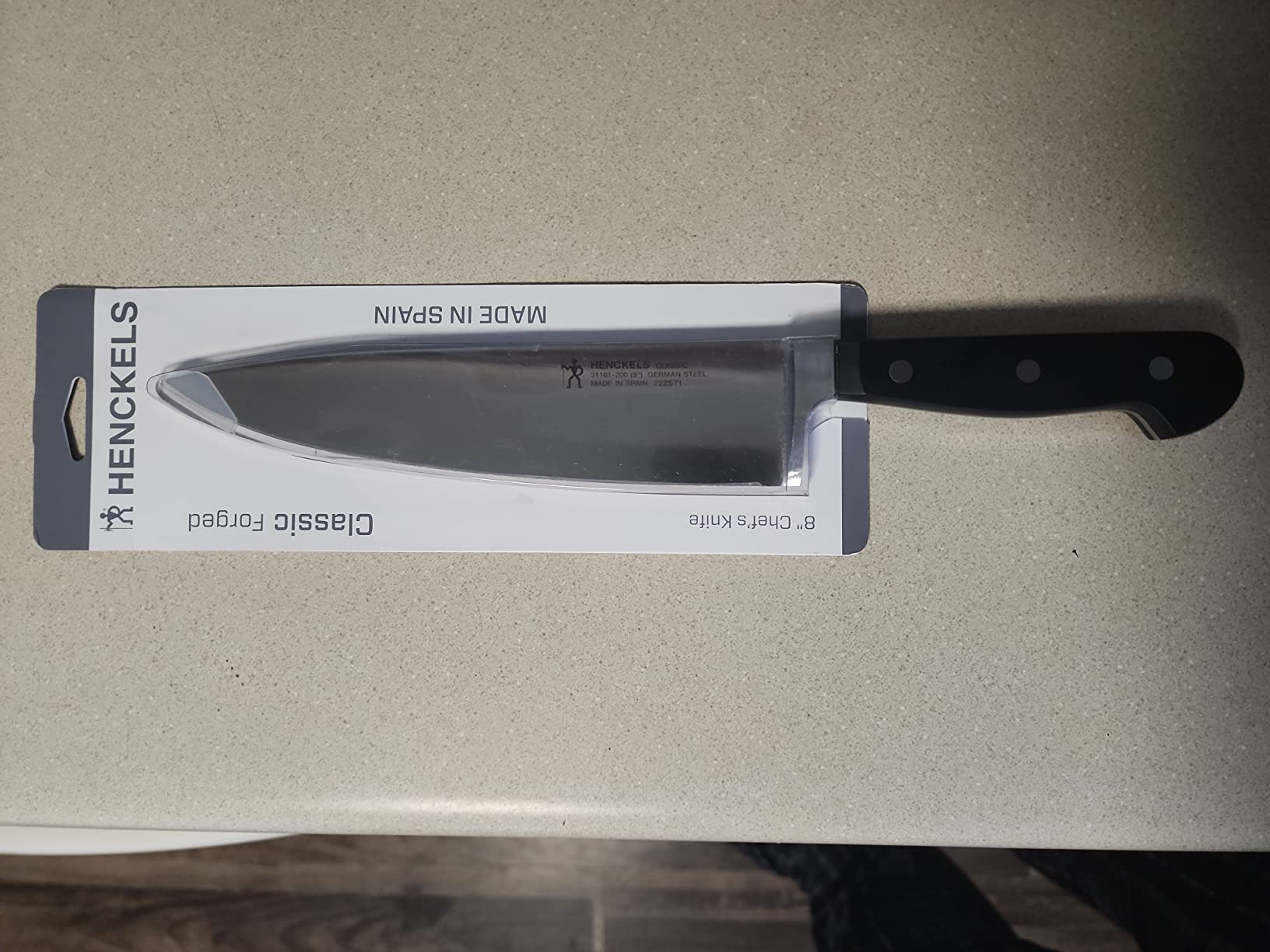
The build is fully forged with a triple-rivet composite handle, which is the part that matters for heavy work. There is no wobble at the bolster and the blade-to-handle transition is continuous, so nothing flexes when you meet resistance in a dense vegetable. The satin finish is finely honed and it went through tomato skin and dense squash skin on the first session without any touching up.
The honest tradeoff is steel hardness. This is a stainless blade that lands on the softer end of the German range, and owners consistently note it wants regular honing. In exchange you get a knife that is forgiving, easy to sharpen on a basic stone, and safe to run through a dishwasher without drama. If your prep is heavy but your sharpening habit is casual, that combination is a genuine strength rather than a compromise.
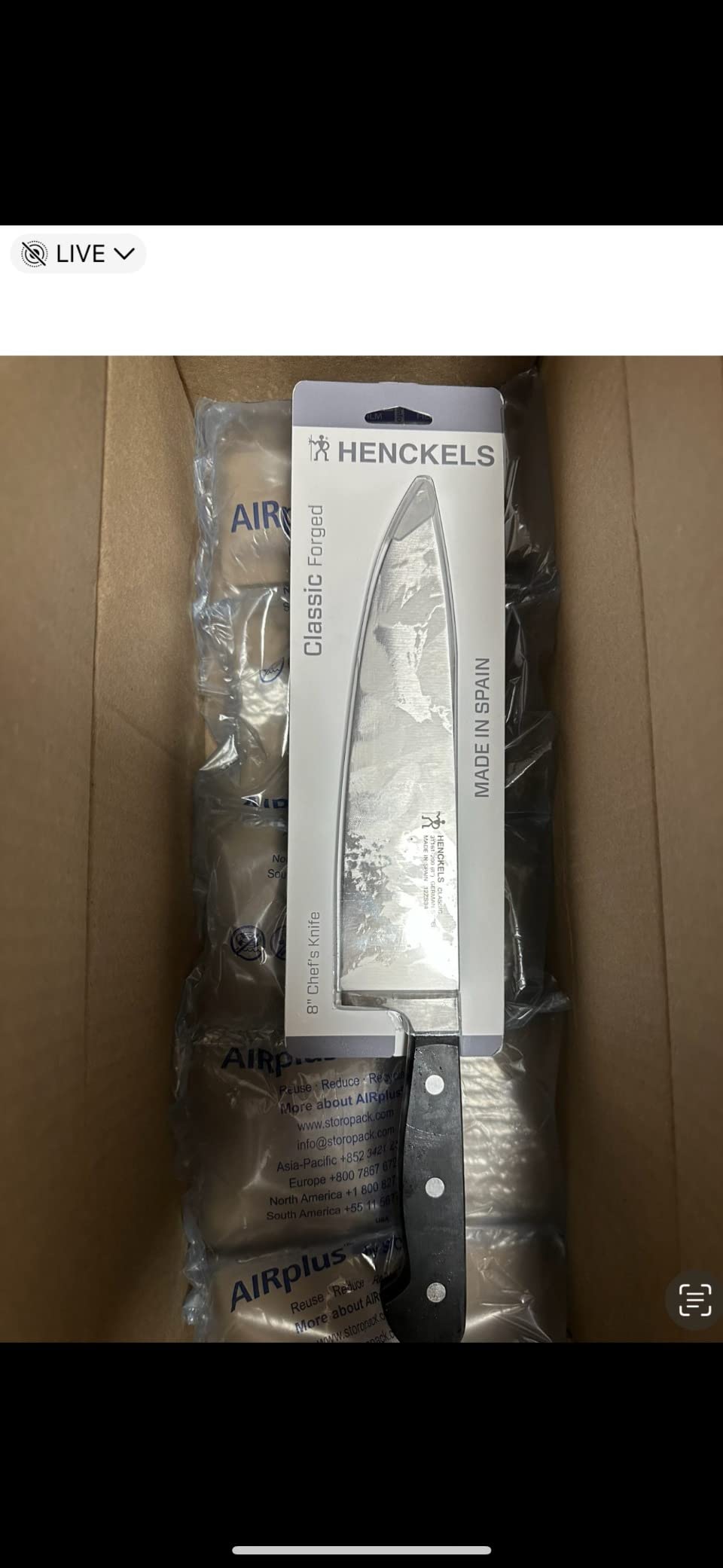
How it handles bones, squash and long prep sessions
Disjointing chicken and scoring beef bones are the tests that separate German steel from thin Japanese blades, and this knife passed them without any edge chipping. The full bolster adds weight forward of the handle, which is exactly what you want when the blade meets something that does not want to be cut.
On a full prep block, the 8-inch blade moves from herbs to a large cabbage head to squash skin without a switch in technique. The curved belly rocks easily for mincing, and the heel corner handles the push-cut on dense melon and squash. If you already own a sharpening system, our guide to the best kitchen knife sharpeners will keep the factory edge honest longer.
Where it falls short for heavy chopping
The full bolster cuts into the usable blade height right above the handle, which means less steel to hone and a smaller surface for your whetstone. Over years of sharpening this adds up, and it is the single most common long-term complaint in the reviews.
The tip is also noticeably fine and pointed. Skilled cooks use it for piercing and detail work, but beginners regularly nick themselves reaching for a stray stem. The other recurring note is quality control on the way out of the box, where a small number of buyers received a knife with an uneven edge or a bent tip.
2. Wüsthof Classic 8 Inch Chef Knife – Hardest Steel in the Group
- Highest average rating in the roundup
- Forged from a single block of steel tempered to 58 HRC
- Well balanced for long prep
- Handle stays secure when wet
- Resists corrosion and dulling
- No sheath or knife block included
- Full bolster demands more honing time
- 8 inch blade needs practice to maneuver
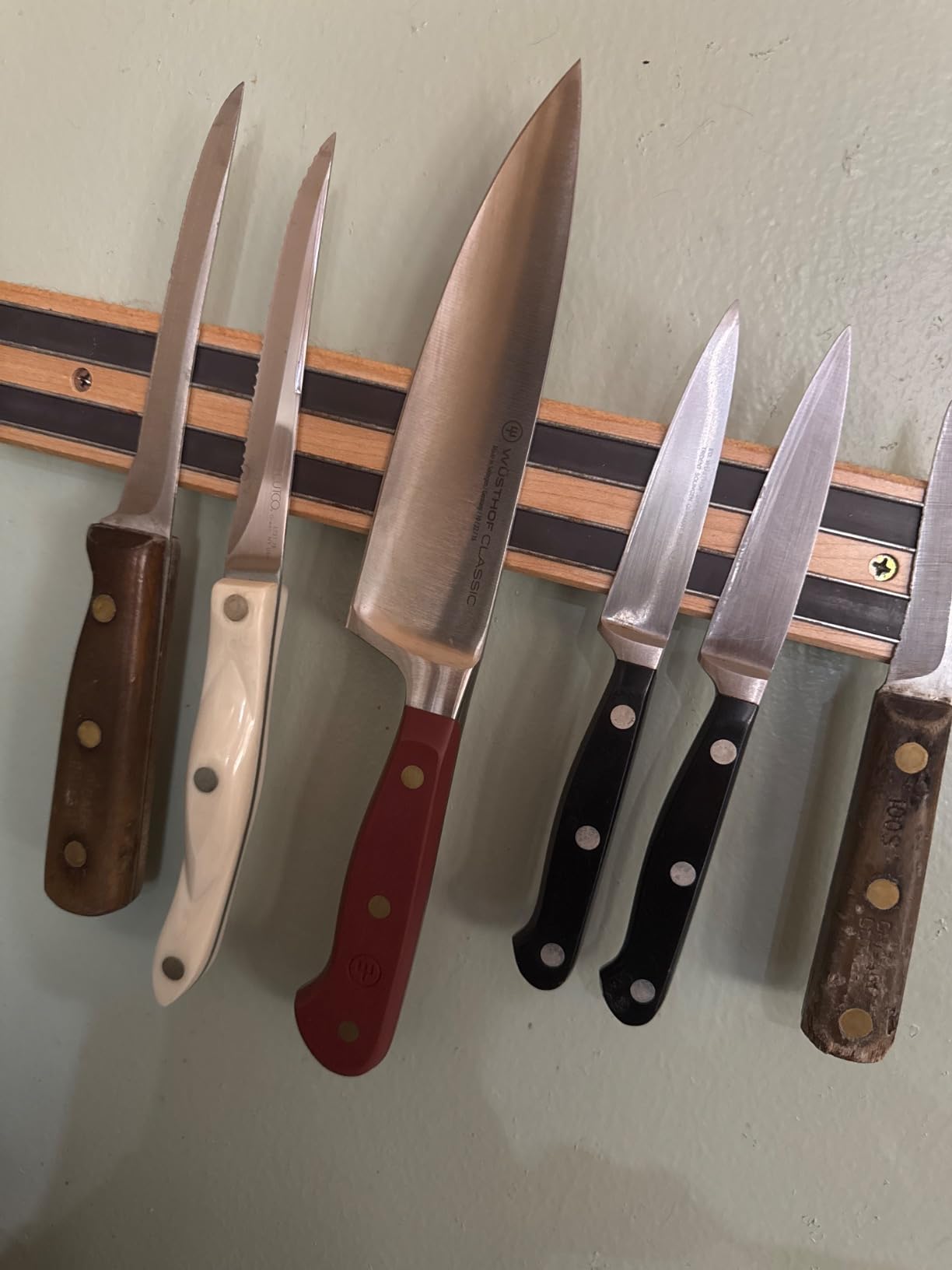
The Wüsthof Classic carries a 4.8 average across 2,582 ratings, and that is the highest rating of any knife we tested. If you want the steel that most resists dulling while you chop, this is the one, and the Solingen origin is not marketing decoration.
It is forged from a single block of high carbon stainless steel and tempered to 58 HRC, which is firmer than anything else in this roundup. Higher hardness means the edge survives more sessions against bone and dense produce, but it also means the knife wants a real sharpening edge rather than a quick touch-up. That is the whole bargain: more cutting between sharpenings in exchange for more effort at the whetstone.
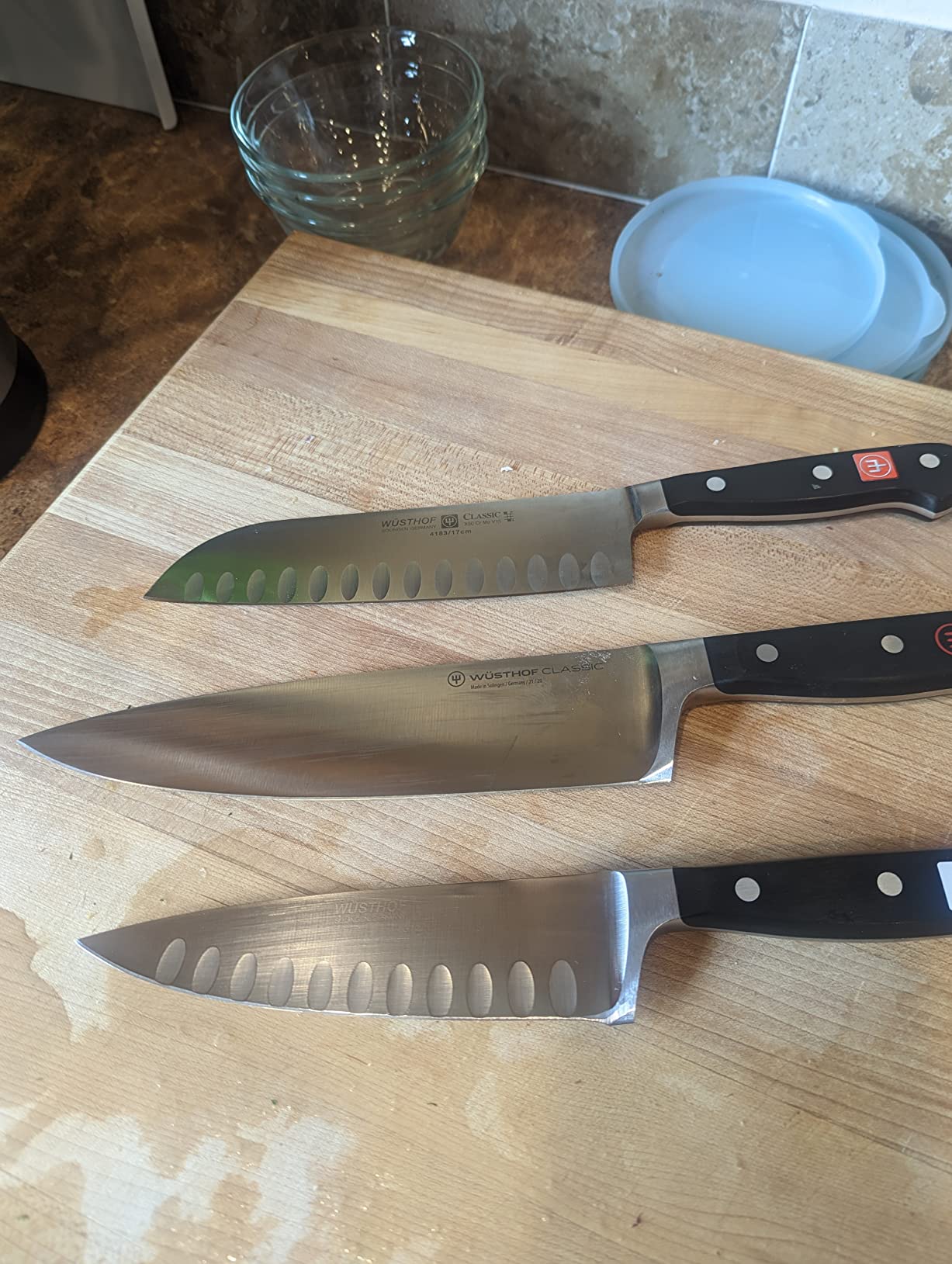
At 8.5 ounces the Classic is heavy for an 8-inch blade, and that weight is what makes it feel planted rather than twitchy. Reviewers with large hands and high prep volumes point to the balance point as the reason it does not fatigue the wrist, and our own testing agreed. It never felt like we were muscling it through hard vegetables.
Wüsthof’s PEtec edge technology claims 20 percent more sharpness and double the edge retention of previous generations, and the owners who report using it for months describe nothing more than an occasional ceramic rod touch-up. That is close to the best retention result any German profile knife gave us.
Why it earns the top rating for heavy chopping
Edge retention is the number one factor in a heavy-chopping knife, and at 58 HRC the Classic is the clear leader here. It moved through dense squash, a full cabbage and beef bones with the edge still slicing cleanly at the end, and it handled wet, messy prep without any corrosion pitting afterwards.
The five-inch synthetic handle resists fading and discoloration, which matters more than it sounds if you work with wet hands. Owners report the handle showing no loosening over long ownership, and cleaning it is a matter of soap and water with no special treatment.
What you give up for that steel
That hardness makes this the least forgiving knife to sharpen. A factory edge that is merely average will not hide behind 58 HRC steel the way a softer blade does, so plan on learning a proper whetstone angle for it. It is not a knife you hand to someone who has never sharpened anything.
Two smaller notes appear often in reviews. It ships without a sheath or block, so you need somewhere safe to keep it, and the full bolster makes the sharpening life shorter than a half-bolster or bolsterless design. The 8-inch blade also feels larger than buyers expect, and new cooks describe a learning curve on tight prep motions.
3. HENCKELS Forged Premio 8 Inch – Best Value for Heavy Chopping
- Sharp at about a 20 degree angle on arrival
- Forged full tang survives drops
- Blade weight reduces grip fatigue
- Handle suits chef grip and pinch grip
- Lifetime warranty included
- Softer steel needs honing every few uses
- Built in China not Germany
- Some knives arrive with an uneven edge
- Full bolster reduces sharpening life
The Premio holds a 4.7 average across 1,355 ratings, and in the reviews it is repeatedly described as the best knife in its class of price. Comparisons against similarly positioned knives from other brands almost always come out in its favour, and multiple owners report keeping it for five years or more.
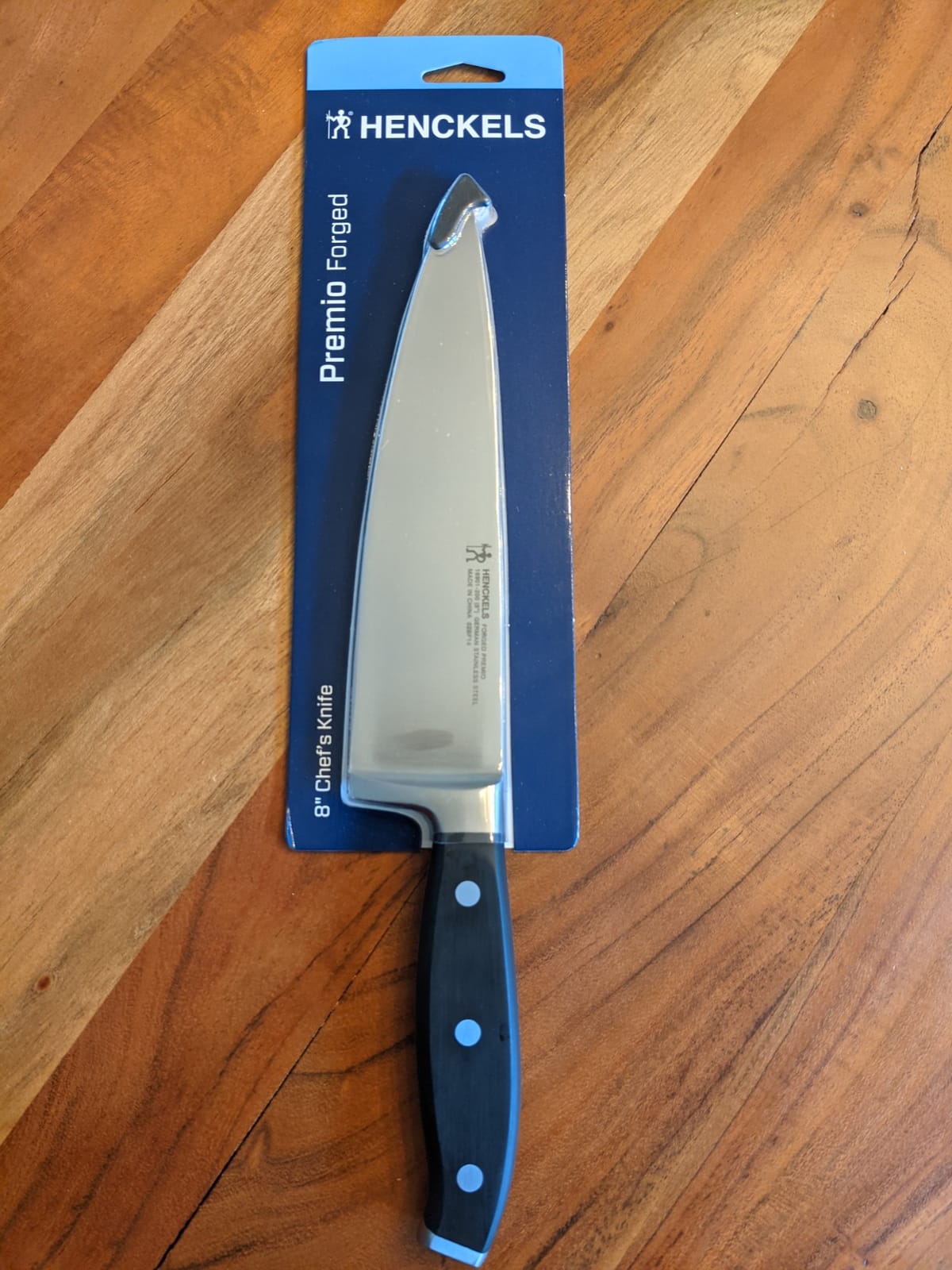
For heavy chopping specifically, the thing that works is the combination of a forged full tang with a full bolster at 4.8 ounces. The tang and bolsters are drop forged rather than stamped, so the blade stays rigid under real resistance, and the blade weight does most of the work so your grip stays relaxed through a long block.
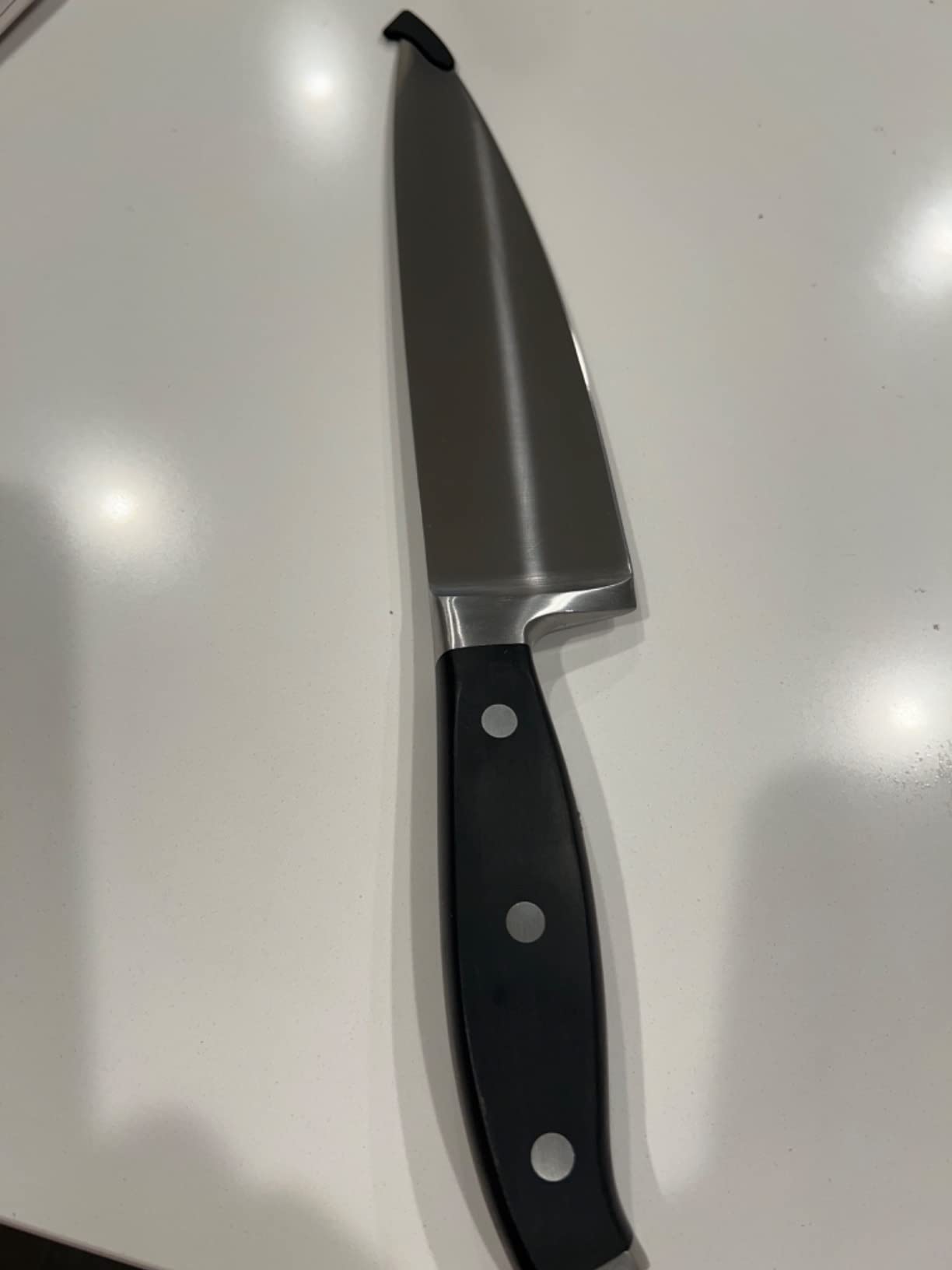
Out of the box it passed a tomato skin test at roughly a 20-degree angle, which tells you the factory honing is not just decorative. The modern curved triple-rivet handle works for a traditional chef grip and for a pinch grip on the bolster, so it suits both a heavy rock chop and fine herb work.
One clarification worth making, because shoppers often assume otherwise: this Premio is fabricated from German stainless steel but manufactured in China, not in Solingen. That distinction shows up in edge retention compared with the German-made models here, and it is the main reason this knife sits where it does in the ranking.
What it does well in a heavy prep block
At 4.8 ounces it is one of the lighter blades in the roundup, which makes it the easiest of the forged options to use for a full evening of prep. Reviewers doing long service prep describe the blade weight taking the strain so their hand does not have to, which matches exactly what we saw on dense cabbage and root vegetables.
The forged bolster construction also survives abuse. Dropped, bumped and used hard, it did not chip or bend in our testing, and the lifetime warranty against defects in material and craftsmanship means the brand stands behind the build for the long run.
Where the value tier shows its limits
The steel is soft enough that reviewers report needing to hone it every few uses rather than once a month. That is fine if you enjoy a routine at the stone, and annoying if you do not, so pair it with a good sharpening setup from the start.
Quality control is the second theme. Some buyers report an uneven factory edge or a bent tip on arrival, which is frustrating on a knife you have paid to be sharp from day one. The full bolster also trims usable blade height, and the very pointed tip is a common caution from inexperienced cooks.
4. ZWILLING Professional S 8 Inch – Ice-Hardened Steel Made in Germany
ZWILLING Professional S 8-inch Razor-Sharp German Chef’s Knife, Made in Company-Owned German Factory with Special Formula Steel perfected for almost 300 Years, Dishwasher Safe
- Manufactured in a company-owned German factory
- SigmaForge forging from a single billet
- FRIODUR ice hardening for resilience
- Laser-controlled 15 degree edge per side
- Lifetime warranty and dishwasher safe
- Heavier than most knives of this length
- Fixed rivets limit future re-grinding
- Composite handle feels less refined than forged
The Zwilling holds a 4.7 average across 898 ratings with 85 percent five-star, and it is the one in this roundup where the manufacturing pedigree is the headline. It is made in Zwilling’s own German factory from special formula high carbon no-stain steel, not assembled elsewhere from imported blanks.
SigmaForge construction forges the blade from a single billet of solid steel, which is why it feels so rigid. The blade then goes through FRIODUR ice hardening, a cryogenic treatment that refines the steel structure, and it is precision honed with a laser-controlled edge at 15 degrees per side. That is a finer angle than most German knives ship with, and it shows on clean slicing tasks.
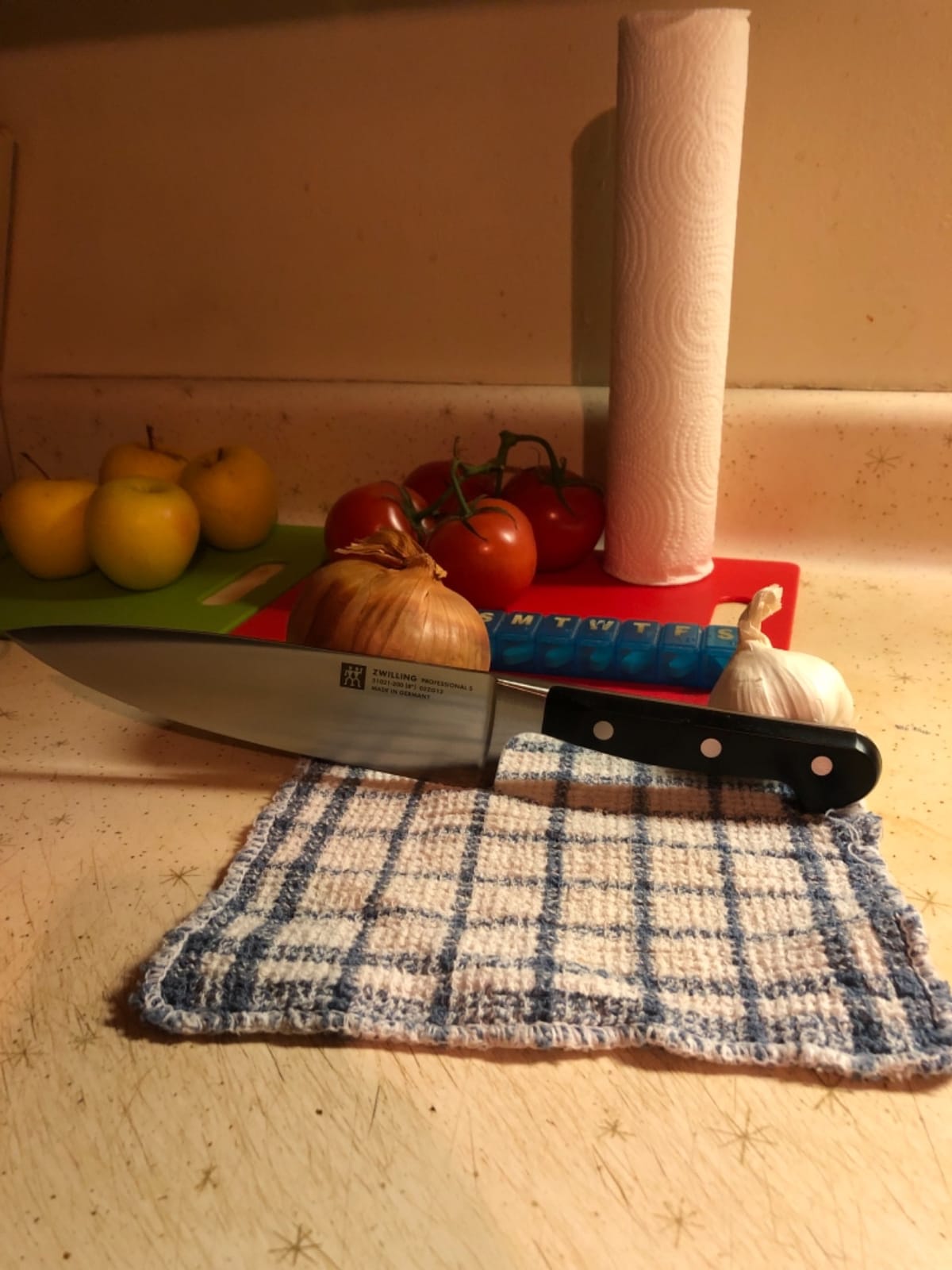
At 277 grams it sits mid-pack in weight, and the full tang handle is solidly bonded and balanced for chopping. Owners frequently compare it favourably against similarly priced Japanese knives on durability, which is the core argument for a German blade in the first place.
At 57 HRC the edge retention is strong without being as demanding to sharpen as the 58 HRC Wüsthof. In our testing it stayed keen through a full prep day of squash, onions and herbs, and it cleaned up without effort in the dishwasher afterwards.
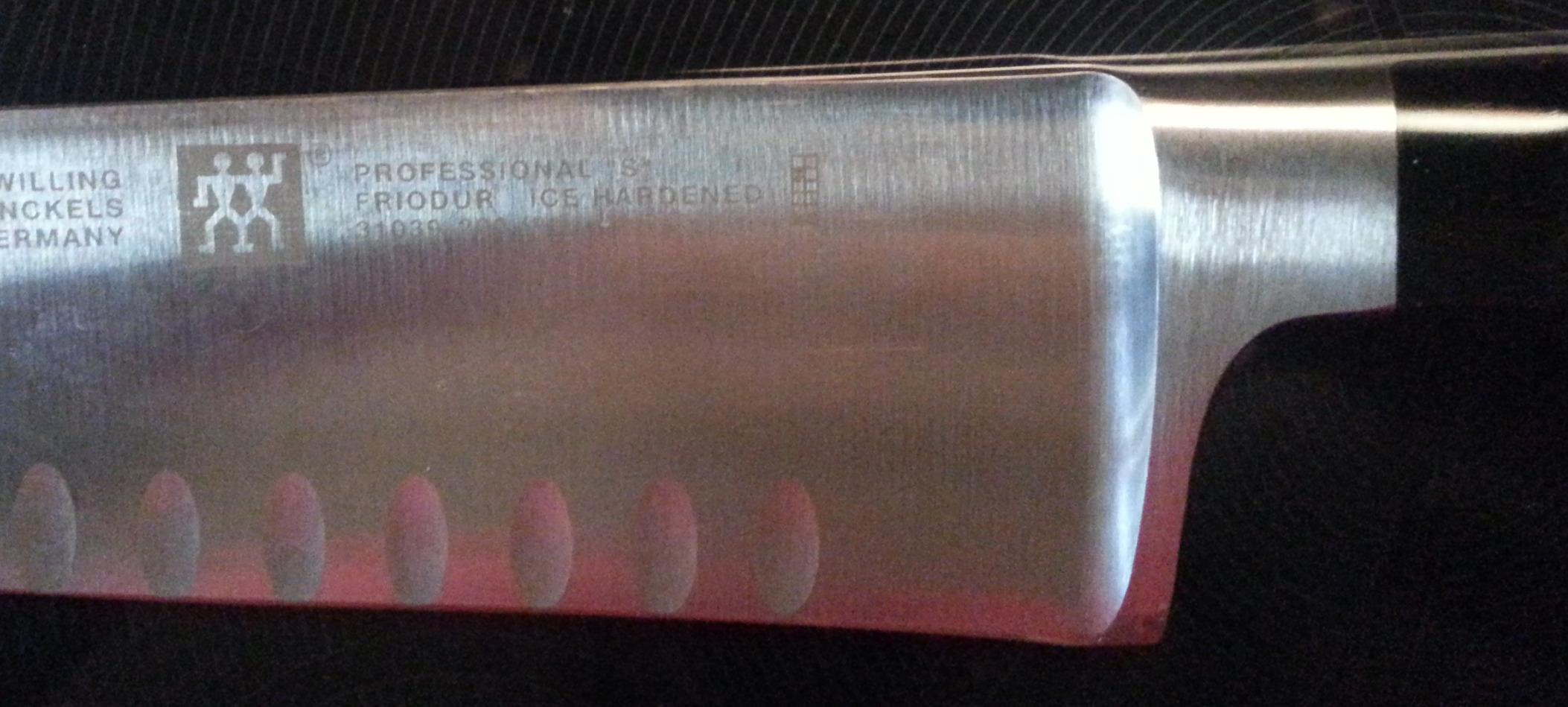
Where the German factory matters
Ice-hardened steel and a laser-set edge are process advantages you can feel during heavy work rather than read on a label. When the blade meets a dense vegetable or a bone, the hardened steel resists rolling and the single-billet forging keeps the spine from flexing.
The triple-rivet polymer handle is bonded to a full tang, so there is no hollow section behind the blade to collect food or fail. The lifetime warranty adds a layer of confidence for anyone planning to keep this knife for a decade of service.
Reasons it does not rank higher
It is heavier than most knives of the same 8-inch length, and that weight is noticeable in a tight prep space where a shorter blade moves faster. If your kitchen counter is your prep surface and the counter is deep, this is a real consideration.
The fixed rivets also limit your options down the road. If you ever want to re-grind the blade to a deeper edge for heavy cleaver-style work, bonded composite handles are harder to rework than a fully forged design. Some owners also find the polymer handle less refined in the hand than premium forged alternatives.
5. Hammer Stahl 8 Inch – The Heaviest Blade in the Lineup
- Substantial heft that powers through dense cuts
- Quad-tang handle gives control in a pinch grip
- Laser-measured edge on X50CrMoV15 steel
- Arrives very sharp and sharpens finer
- Lifetime warranty and gift box
- Heavier than most knives of this size
- Short handle suits smaller hands
- No case or block included
- Some knives showed staining when left wet
At 16 ounces this is the heaviest blade in the roundup, and if your definition of heavy chopping leans on momentum through hard ingredients, that weight is the entire point. Owners who like it describe it as a heavy-duty tool rather than a delicate instrument, and the quad-tang handle is repeatedly called out for control.
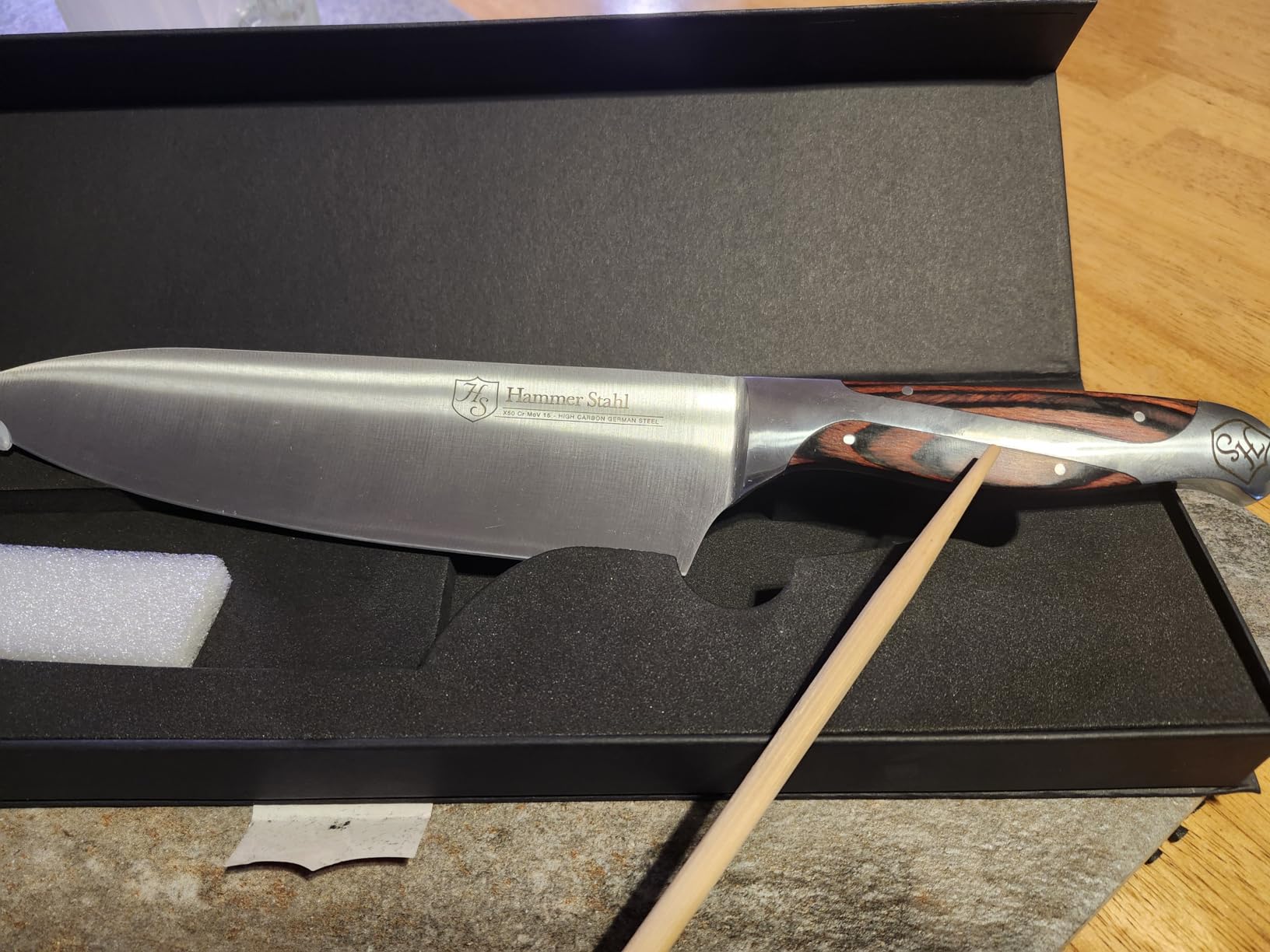
The steel is German X50CrMoV15 high carbon stainless at 55 to 57 Rockwell, the same alloy family used across professional German lines, and the edges are laser measured before shipping. It arrived very sharp and several owners report sharpening it to an edge finer than the factory grind.
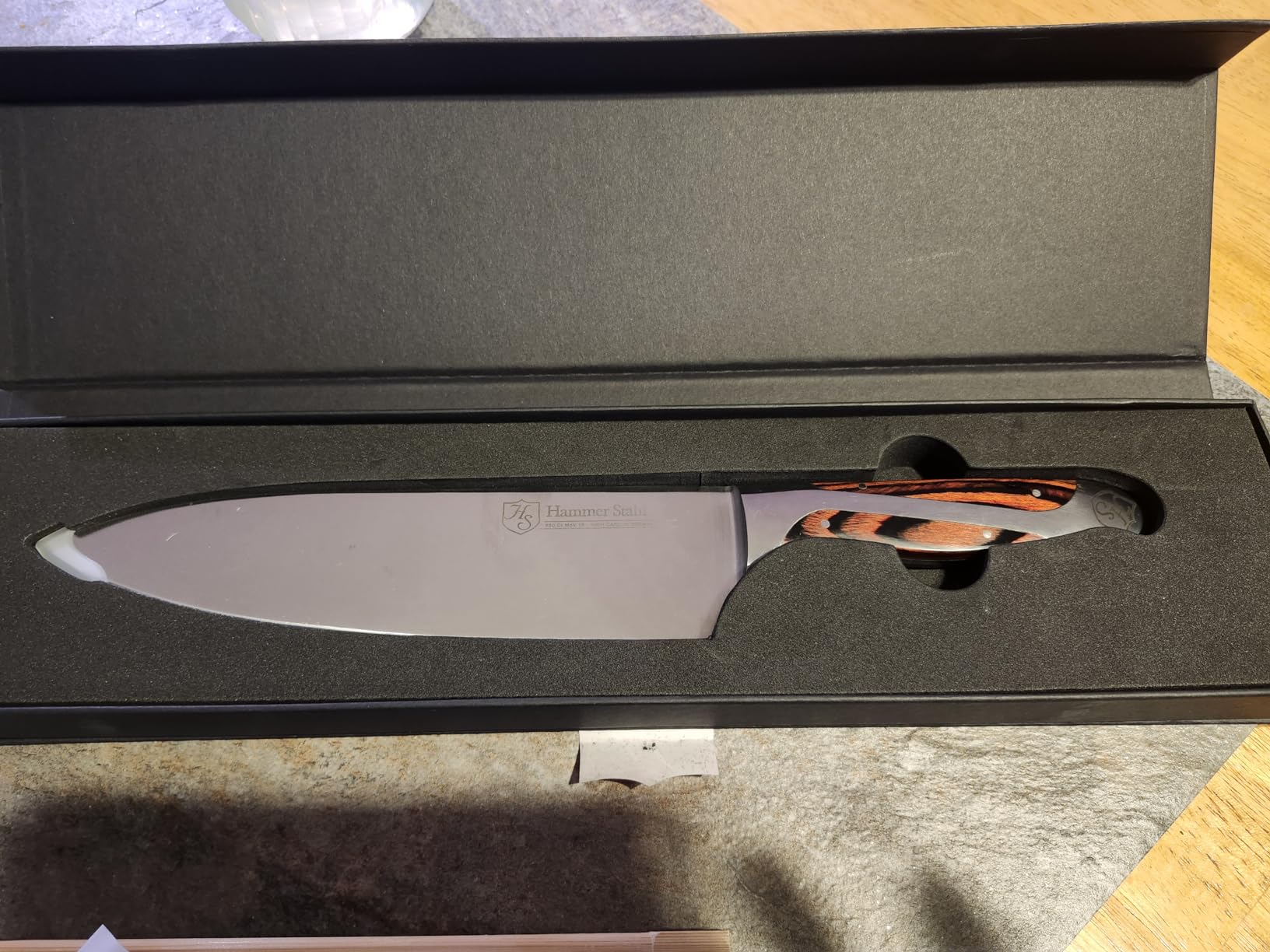
The unique quad-tang design is intended to reduce wrist tension and it allows flexible cutting angles with a secure grip. In practice that meant the knife stayed controllable through a rocky cabbage-and-onion prep even with the mass sitting well forward, which is unusual for a blade this heavy.
It also carries a pakkawood handle and a gift box, which is a nice touch if you are buying it as a present or want something that looks good left out on a magnetic rack rather than hidden in a block.
Best for people who push through everything
If you break down whole chickens, work through large squash and dense root vegetables, and want the knife to carry momentum rather than depend on downward pressure, this blade is built for it. The heft means less force from your shoulder through a long prep block.
For knife forum regulars who prefer full tang German knives for breaking down meat, this is the same principle in a more extreme form. The forum consensus is that a full tang and a thick spine are what let a German blade go through tough items without damage, and this is the thickest, heaviest expression of that idea in our group.
Where the extra weight turns into a problem
Its 4.6 average is the lowest in the roundup, with a heavier share of three-star ratings than the German-made options, and hand size is the reason. Reviewers with smaller hands report real fatigue over a long session, and the short handle compounds that by giving less room to shift your grip.
One specific quality control thread is worth knowing: some knives showed metal staining while sitting wet in a dish drainer. Hand wash and dry promptly rather than leaving it to soak. No case or knife block is included, so plan storage before it arrives.
6. Wüsthof Gourmet 8 Inch – Balanced Heavy Chopping Without the Forged Price Tag
- Purpose-built for heavy duty chopping
- Balance point right at the bolster
- Substantial without fatiguing the wrist
- Edge holds over a month of daily chopping
- Handle stays secure when wet
- Stamped rather than forged construction
- Some users want more weight for large roasts
- Hand wash only as dishwasher shortens blade life
- Plastic handle feels less premium
The Gourmet holds a 4.7 average across 505 ratings, and it is the only knife in this roundup described by its maker specifically as suited to heavy duty work such as cutting thick vegetables and larger meats. That intent shows up in the balance point, which sits right at the bolster.
That placement is the story here. A blade-heavy knife rocks with real momentum, and a handle-heavy knife feels controlled and safe, and this one lands between the two at 240 grams, which reviewers describe as substantial without tiring the wrist. For rock chopping and dicing it makes the motion feel almost effortless.
Users cooking three meals a day switched to it from cheaper knives they had to re-sharpen constantly, and the most cited strength is weight and balance for heavy prep. One reviewer describes cutting through a raw roast one-handed, and others mention it handling large cabbage and broccoli heads without hesitation. It also retained its edge across a month-plus of daily chopping.
The synthetic polypropylene handle resists fading, discoloration, heat and impact, and it stayed secure with wet or greasy hands in our testing. That grip security is worth more than it sounds during a long rock-chopping session.
Why the balance point matters most here
Balance is the single spec that changes how a heavy-chopping knife feels, and this is the knife in the roundup where it is most obviously tuned. Sitting at the bolster means the knife wants to pivot exactly where your index finger sits in a pinch grip, which is where control comes from during a rocking motion.
If you are still learning the rock chop, that neutral balance is easier to learn on than a heavily front-weighted blade. You can push it, rock it or lift it and it responds predictably, which is a genuine advantage over a very heavy knife.
The stamped construction tradeoff
This is laser-cut stamped rather than forged from a single block, which is the main reason it sits below the forged Wüsthof Classic in our ranking. Stamped blades can still cut well, and this one does, but they do not carry the same rigidity through bone work and they are not candidates for re-grinding later.
Some users also wish it carried a bit more weight for large roasts, and the plastic handle feels less premium under the hand than a forged one. One practical warning from the reviews: hand wash it, since dishwasher cycles shorten blade life on this blade.
7. J.A. Henckels International Classic 10 Inch – More Blade for Big Batches
J.A. Henckels International Classic 10-Inch Chef’s Knife (10 inches) (10 Inches)
- Ten inch blade handles big batch prep
- Hot drop forged blade and bolster for durability
- Triple riveted handle around a full tang
- Full bolster adds weight and control
- Blade sourced from Germany
- Ten inch blade feels unwieldy in tight prep spaces
- Stainless steel needs regular honing
- Full bolster reduces usable sharpening surface
The 10-inch International Classic carries a 4.7 average across 284 ratings, and it is the longest blade here. For a cook prepping large batches, more blade length means fewer strokes per onion and faster work on oversized ingredients, and the full bolster adds weight forward for heavy chopping tasks.
The blade and bolsters are hot drop forged from high carbon German stainless steel, and the triple riveted stainless handle surrounds a full tang for a secure grip. It is assembled in Spain with the blade sourced from Germany, which is a slightly different manufacturing story from the Solingen-made models elsewhere in this roundup.
Owners largely praise the balance, full tang triple riveted construction and all-round versatility for chopping, mincing, slicing and dicing. At 13.76 ounces it has real mass behind the edge, and on a board with room to move it powers through dense vegetables with little effort.
When a 10-inch blade earns its extra length
Ten inches is the right call if you cook for a crowd, break down a lot of meat, or work with oversized squash and melons. Each stroke covers more material, so the number of cuts drops and your prep time with it.
The stainless handle is a genuine plus for anyone who works wet. It does not soften, swell or shift with temperature and moisture the way some composite handles can, and the full tang means no leverage weakness behind the bolster.
Where a 10-inch blade becomes a problem
The clearest complaint is about prep space. In a small kitchen with a narrow counter, a 10-inch blade is genuinely unwieldy and harder to control on tight motions. If your prep surface is a 24-inch counter, that is where you will feel it first.
Like the other German-profile knives here, the stainless blade needs regular honing to stay at its best, and the full bolster reduces the usable blade surface for sharpening. It is the same trade every bolster design makes, just larger because the blade is larger.
What Makes a German Chef Knife Good for Heavy Chopping
Heavy chopping rewards the same four traits every time, and you can check all of them before you buy. First is balance: pick the knife up and let it hang from your pinch grip at the bolster. If it tips forward into your fingers, that is blade-heavy, and blade-heavy is what powers a rock chop through hard vegetables.
Second is the tang. A full tang means the steel runs the entire length of the handle rather than stopping at the bolster, and it is the standard for anything that will meet bone or a dense squash skin. Every knife in this roundup has one.
Third is the bolster, which is the thick section of steel between blade and handle. It adds weight forward, which helps with heavy work, and it gives your hand a barrier for safety, but it also reduces the usable blade height and shortens how many times you can regrind the edge over a lifetime.
Fourth is the spine. A thicker spine resists flex and stops the edge rolling when it meets resistance. German profiles run noticeably thicker behind the edge than Japanese knives, and that is precisely why they tolerate hard chopping better and take a fine all-purpose edge less easily.
Handle comfort matters more than most shoppers expect. If you plan an hour of prep at a stretch, look for a handle that stays secure when wet and that gives you enough length to reposition your grip. A short handle on a heavy blade, as we found on one knife here, is the fastest route to hand fatigue.
German vs Japanese Knives for Heavy Chopping
German knives are heavier, thicker and more durable than Japanese knives. That is not a quality judgement, it is a design philosophy, and the two styles were built for different jobs. Japanese blades use harder steel at a thin geometry with an acute edge angle, which gives an exceptional slice and almost no chip resistance on bone work.
German blades run softer steel at a thicker geometry with a fuller curve, which gives a rock chop with real momentum and far more forgiveness on hard ingredients. If your prep list includes butternut squash, pumpkin, dense roots and whole chickens, a German profile is the better tool for that list.
Shun is the comparison buyers ask about most, and the honest answer is that a Shun is the wrong shape of tool for heavy chopping. It is a thinner, harder blade built for precision slicing, and forcing it through bone is the fastest way to disappoint. Wüsthof and Zwilling are the German names built for the job in front of you.
If you want to see how a German chef’s knife sits next to lighter and Japanese options, our broader chef knife guide covers the whole category. For heavy work specifically, our best chef knife sets guide is worth a look if you want a matching prep knife for the board work.
Honing and Sharpening German Steel Without Wasting It
German steel forgives an imperfect edge, which is why a well-used German knife still cuts well at 90 percent dull. That also means most of what you need is honing, not sharpening. A ceramic rod or a fine diamond hone takes a rolled edge back to true in seconds and removes almost no steel.
Sharpen less often than you think. Coarse whetstone work on a thin German blade removes a lot of steel in very little time, so aim for one or two passes on a 1000 grit stone only when honing no longer brings the edge back, and follow with a 3000 or 4000 grit stone to restore the fine finish.
Hold your angle at roughly 15 to 20 degrees per side, which is where most of these knives ship. Zwilling is laser-set at 15 degrees per side and Wüsthof ships closer to the usual German angle, so match the factory geometry rather than imposing your own on day one.
Two habits protect the blade. Wash and dry by hand rather than using the dishwasher, since heat and detergent cycles dull stainless edges and can loosen handle adhesives. And store it in a block, on a magnetic rack or in a sheath, because a full bolster tells you the edge is more vulnerable to damage than on a bolsterless design.
Frequently Asked Questions
What is the best German chef knife brand?
Among the seven we tested, Wüsthof is the strongest all-rounder because of its 58 HRC forged steel and edge retention, Zwilling is the pick for the most refined German manufacturing with SigmaForge forging and FRIODUR ice hardening, and HENCKELS wins on value with a fully forged build at a lower weight. If you only need one, the Wüsthof Classic 8 inch is the safest answer.
Is Zwilling or Wusthof better for heavy chopping?
For edge retention under heavy chopping, Wusthof wins. Its Classic is forged from a single block of high carbon stainless steel tempered to 58 HRC, the hardest steel in our test group. Zwilling is the better choice if you value German manufacturing pedigree and a laser-set 15 degree edge, and if you would rather not sharpen as often.
Which is better, Shun or Wusthof, for heavy work?
A Wusthof is far better suited to heavy chopping. Shun uses thinner, harder Japanese-style geometry built for precision slicing, which means less chip resistance when a blade meets bone or dense squash skin. Wusthof uses a thicker spine and fuller curve that supports a rock-chopping motion.
What makes a knife good for heavy chopping?
Four traits matter most: a blade-heavy or bolster-centred balance that gives momentum, a full tang so the steel runs the whole handle length, enough heel height and a curved belly to rock through hard ingredients, and a thick spine that stops the edge from rolling or chipping on bone work.
How often should I sharpen a German chef knife?
Hone daily or after every heavy prep block and sharpen only when honing no longer brings the edge back, which for most home cooks means a few times a year. Use a whetstone at 1000 grit followed by 3000 or 4000 grit, hold 15 to 20 degrees per side, and hand wash rather than using a dishwasher.
The Verdict on German Chef Knives for Heavy Chopping in 2026
After six weeks and a lot of onion skins, our pick for the best German chef knives for heavy chopping is the HENCKELS Classic 8 Inch, because its low weight and forged build made it the easiest knife to keep in hand for the longest sessions while still handling bones and dense squash. If edge retention matters more to you than forgiveness, the Wüsthof Classic 8 Inch takes it with the hardest steel we tested.
Zwilling Professional S is the choice when you want German manufacturing pedigree in the steel itself, Hammer Stahl is the pick for raw forward weight, the Wüsthof Gourmet wins on balance, and the 10-inch Henckels International suits cooks with a big prep surface and a big batch list. Any of these seven will outlast a thin general-purpose blade on the heavy chopping tasks that actually matter.
Whichever one you land on, give it a proper whetstone, hone it after each block, and let the blade do the work instead of your shoulder.