
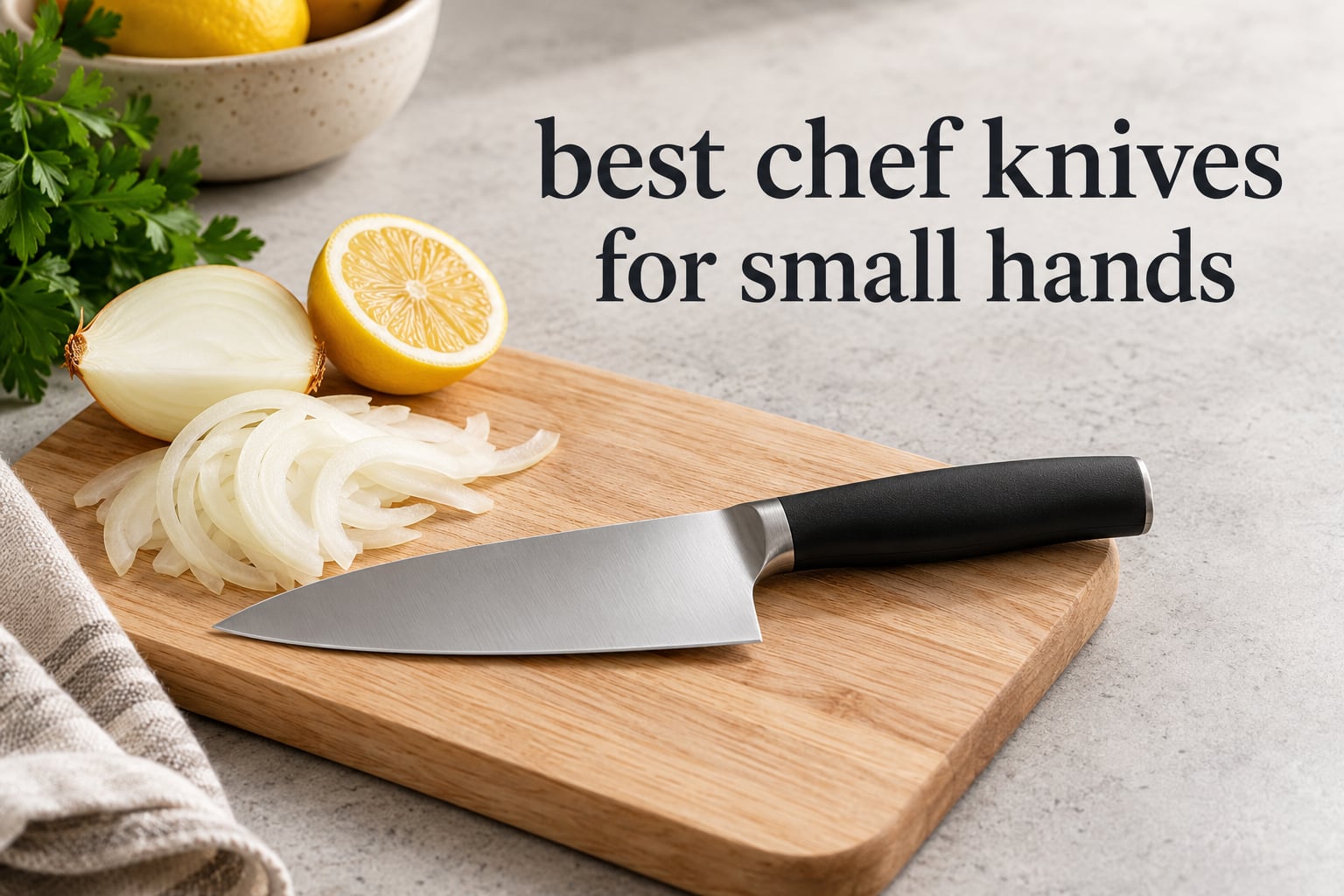
Most knives sold as chef’s knives are built for an average-plus hand. That means a long handle your fingers cannot wrap, a full bolster that pushes your thumb sideways, and a blade so tall your knuckles hit the board every time you rock it. If that sounds familiar, you do not need a better knife. You need a smaller one.
After working through a dozen compact blades side by side, the picks below are the ones that stayed in our hands longest. Every one has a 5 or 5.5 inch blade, because blade length is the single strongest lever on handle size in this category. The measurement, weight and steel details are published for each pick so you can match a knife to your hand instead of guessing.
Below is our shortlist of the best chef knives for small hands, plus a method for measuring your own hand in under a minute. We also cover the mistakes that make people quit short knives after a week, and which tasks a 5 inch blade genuinely cannot handle.
Table of Contents
Top 3 Picks for Chef Knives for Small Hands
These are the three we recommend first, based on grip comfort across a full prep session rather than on a single spec.
- Victorinox Fibrox 5-Inch: at 2.89 ounces it is the lightest blade in the group, and the tapered 5 inch profile sits in a petite palm without forcing a grip change.
- imarku 5-Inch Pakkawood Santoku: the most-reviewed compact santoku available, with a slim pakkawood handle and 18 colour options so you can find one that suits your grip.
- HOSHANHO 5-Inch Laminated Santoku: 62 HRC Japanese steel at 9.6 ounces, the pick for cooks with slightly larger hands who still want a short, slim-handled blade.

Victorinox Fibrox 5-Inch
- 2.89 oz
- 5 inch stamped stainless blade
- Tapered TPE non-slip handle
- Dishwasher safe

imarku 5-Inch Santoku
- 3.2 oz
- forged high carbon stainless
- 15-18 degree edge
- 18 handle colour options

HOSHANHO 5-Inch Santoku
- 62 HRC laminated Japanese steel
- 9.6 oz
- African pakkawood handle
- 15 degree edge
The 12 Best Chef Knives for Small Hands in 2026
Here is the full shortlist with the specs that matter for fit. Use the table to narrow the field, then read the individual notes before you commit.
| Product | Specifications | Action |
|---|---|---|
| Victorinox Fibrox 5-Inch Chef’s Knife |
|
Check Latest Price |
| imarku 5-Inch Pakkawood Santoku |
|
Check Latest Price |
 Cutluxe 5-Inch German Steel Santoku Cutluxe 5-Inch German Steel Santoku |
|
Check Latest Price |
 HENCKELS Statement 5-Inch Compact Chef Knife HENCKELS Statement 5-Inch Compact Chef Knife |
|
Check Latest Price |
 Sunnecko 5.5-Inch Small Chef Knife with Sheath Sunnecko 5.5-Inch Small Chef Knife with Sheath |
|
Check Latest Price |
| HOSHANHO 5-Inch Japanese Laminated Santoku |
|
Check Latest Price |
 Farberware EdgeKeeper 5-Inch Santoku Farberware EdgeKeeper 5-Inch Santoku |
|
Check Latest Price |
 Arcos 5-Inch Universal Chef Knife Arcos 5-Inch Universal Chef Knife |
|
Check Latest Price |
 WÜSTHOF Classic 5-Inch Santoku WÜSTHOF Classic 5-Inch Santoku |
|
Check Latest Price |
 Shun Sora 6-Inch Chef’s Knife Shun Sora 6-Inch Chef’s Knife |
|
Check Latest Price |
 DRGSKL 5-Inch ATS-34 Utility Chef Knife DRGSKL 5-Inch ATS-34 Utility Chef Knife |
|
Check Latest Price |
 Cuisinart Graphix 5-Inch Santoku Cuisinart Graphix 5-Inch Santoku |
|
Check Latest Price |
How to Measure Your Hand Before You Buy
A petite chef knife is a 5 to 6 inch blade with a short, slim handle sized so you can get a full four-finger or pinch grip. The number that decides fit is handle circumference, but you can screen knives from home with three measurements.
- Measure your hand span. Stretch your fingers straight and measure from the tip of your thumb to the tip of your middle finger. Roughly 6 inches or less points to a slim handle.
- Measure palm width. Measure across the widest part of your palm just below the knuckles. A palm under about 2.75 inches wide will struggle on most Western 8 inch handles.
- Wrap a tape around a fist grip. Note the circumference, then compare it against the handle in front of you. If four fingers cannot lie flat without the pinky hanging past the end, the handle is too long.
- Check the bolster height. If your thumb touches metal when you hold the knife in a pinch grip, the bolster is too tall.
Coaches on the ChefKnivesToGo forums make the same point about Japanese knives: the wa handles are all roughly the same narrow size, and the practical lever is blade length rather than handle choice. Cooks on Reddit’s r/Cooking also lean on a two-knife approach, pairing a 6 inch and an 8 inch for less than the cost of one premium 8 inch knife.
Our general guide to the best chef knives overall covers full-size blades, which is worth reading if you also cook for a group. These picks are built for the opposite problem.
1. Victorinox Fibrox 5-Inch Chef’s Knife
- Lightest knife in the group at 2.89 oz
- Tapered 5 inch blade gives real control
- Non-slip TPE handle stays secure when wet
- Dishwasher safe with a lifetime warranty
- Stamped construction feels less rigid than forged blades
- 5 inch blade needs extra passes on large ingredients
- Plain black handle has one grip shape
This is the knife I hand to a cook who says they cannot hold a normal chef’s knife. At 2.89 ounces it is the lightest blade we tested, and weight matters more for a petite hand than most spec sheets suggest. A heavy knife forces you to grip harder to keep it from lagging behind the food.
The 5 inch blade is stamped stainless with a laser-tested edge, so it arrives sharp and stays sharp enough for daily onion and pepper prep. The TPE handle is contoured and stays put when your hands are wet or greasy, which is the real test of a small-hand grip.
The taper along the spine is worth noting. This is not a flat-sided European blade, so your knuckles have somewhere to travel during the rocking motion. That single shape decision removes the knuckle-banging complaint that sends people back to searching.
How it handles a full prep session
We used it for a 30 minute vegetable session: onions, celery, carrots, garlic and a large batch of herbs. Nothing in that session produced the grip fatigue that comes from a thick handle. The knife simply never asked us to change grip mid-task.
When to pick something else
If you regularly break down a whole cabbage, a watermelon or a large roast, this blade will feel slow. It is built for precise work, not bulk prep, and the stamped steel will flex a little under hard pressure. Cooks who want a stiffer blade at the same length can look at the knife sets we tested for forged options.
2. imarku 5-Inch Pakkawood Santoku
- Highest review count of any pick here
- Forged construction at 3.2 oz
- Slim pakkawood handle eases wrist tension
- 18 handle colour options to match your grip
- Dimpled anti-stick surface is shallow and adds little
- Short blade means more cuts on large vegetables
- Edge does not hold a mirror finish as long as VG10 steel
With over six thousand reviews, this is the compact santoku with the largest body of owner feedback behind it, and the consensus is consistent: the short blade gives control and the pakkawood handle does not tire the wrist. It is also the number one best seller in the santoku category.
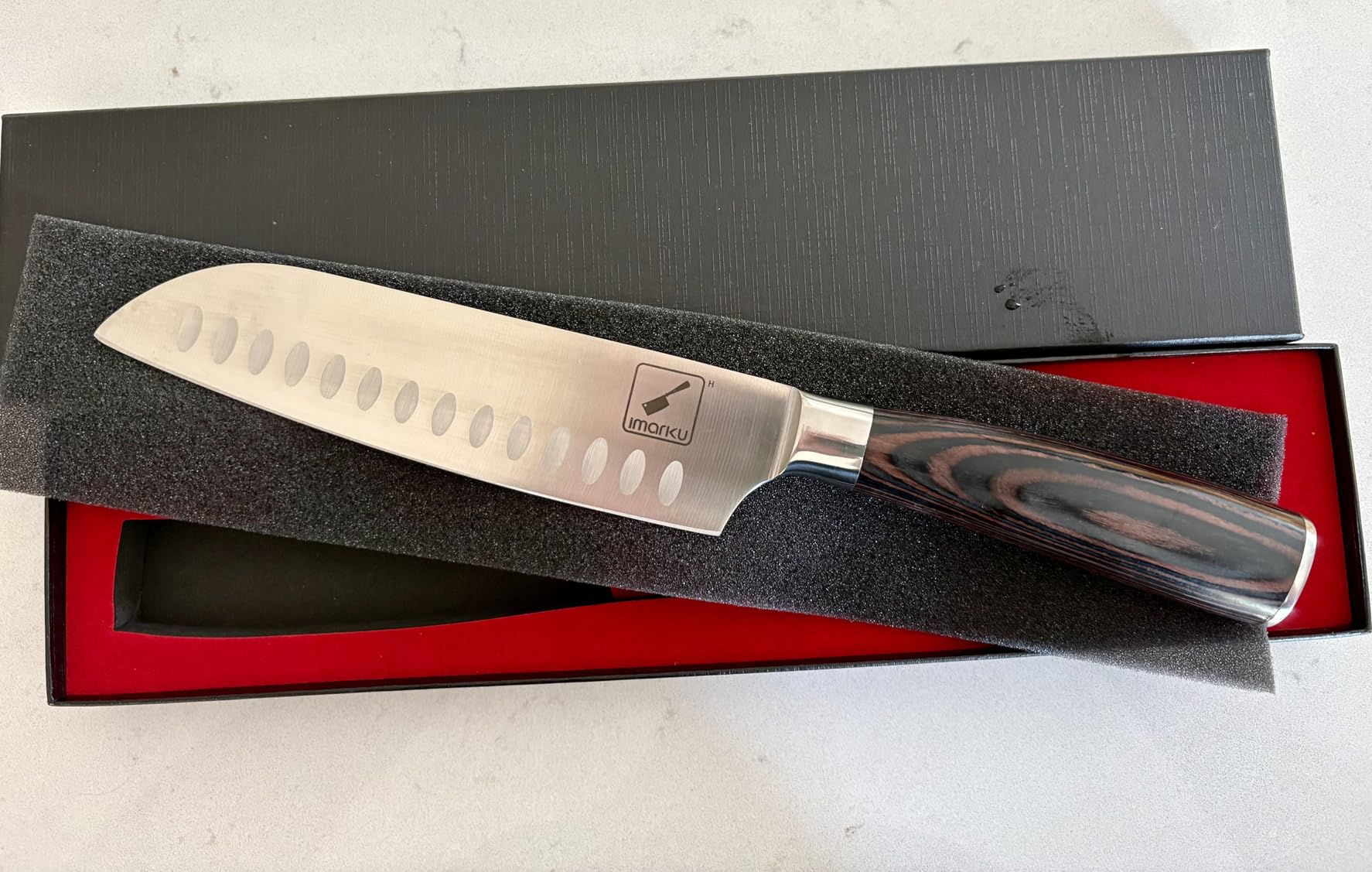
At 3.2 ounces it is the second lightest blade here and the only forged one at that weight. The 15 to 18 degree hand-polished edge on 2.3 mm steel gives clean slices on garlic and shallots, and the compact profile means your working hand stays over the food rather than reaching along a long blade.
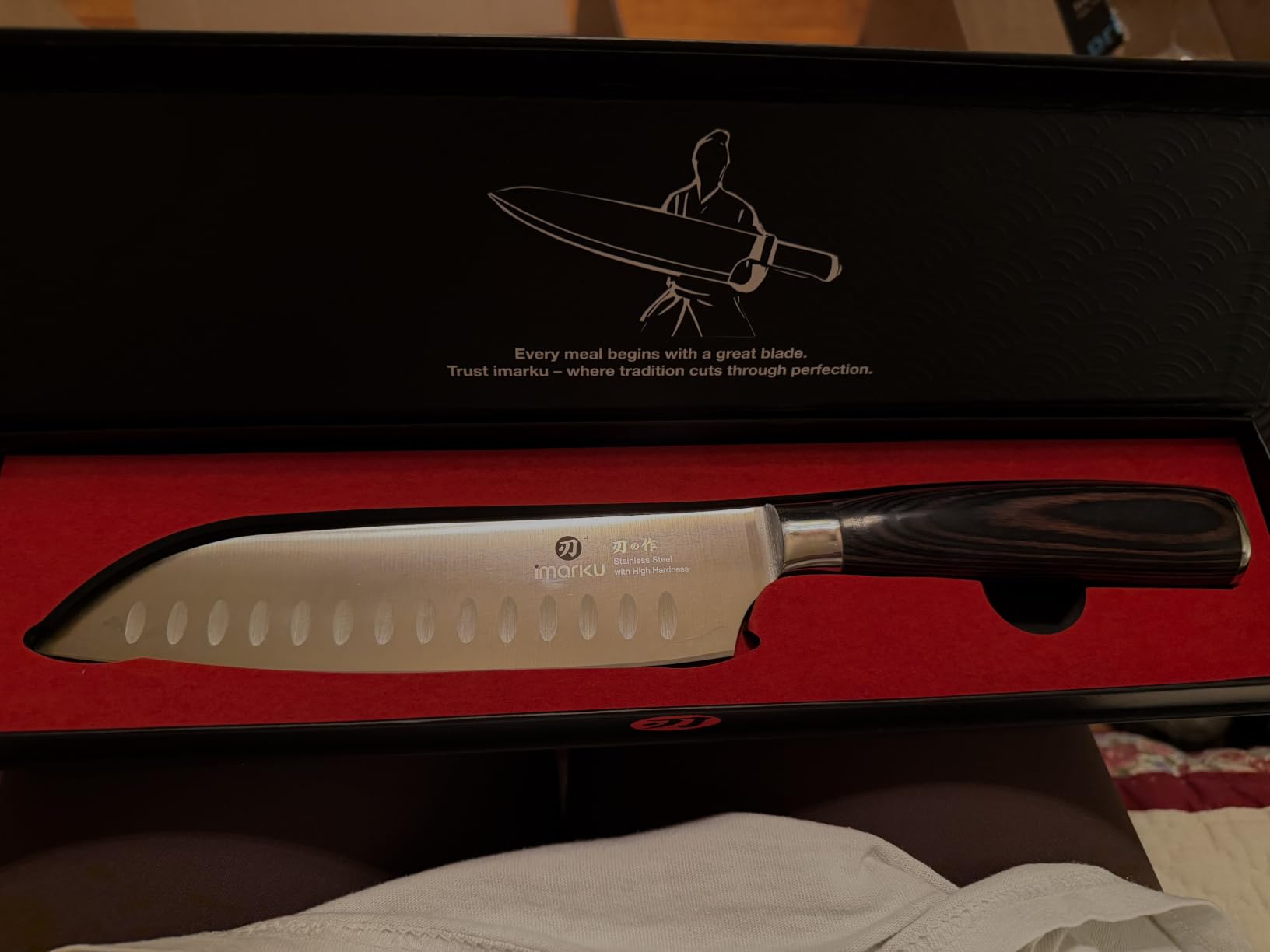
One detail we did not expect to matter as much as it does: the handle comes in 18 colour options. For small hands, grip shape and finish matter more than colour, but having a choice means you can find one that feels right rather than settling for the only option.
Why small-hand cooks gravitate here
Reviewers repeatedly describe this as easy to hold for extended prep. The pakkawood scales are slim and smooth, and the full profile gives all four fingers somewhere to sit without the handle running long. For a hand that cannot wrap a standard European handle, that geometry is the whole point.
Where it falls short
The dimpled anti-stick surface is shallow, and reviewers say it offers little real benefit. More importantly, a 5 inch blade means noticeably more cuts on a large melon or a big block of squash. This is a precision knife, not a bulk knife.
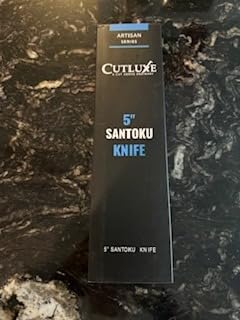
3. Cutluxe 5-Inch German Steel Santoku
Cutluxe Santoku Knife 5″ – Meat & Vegetable Chopping Knife, German Steel
- Substantial weight keeps a small hand steady
- Full tang with triple-riveted pakkawood
- Grooved sides release food during chopping
- Lifetime warranty against defects
- Some units need sharpening before first use
- Handle can feel heavy relative to the blade at first
- Tang can leave a small ridge above the scales
This is the pick for cooks who have grip-strength issues rather than small hands alone. Reviewers with hand weakness and tremor specifically credit the weight for control, because a heavier blade does not need a tight pinch to stay on the food.
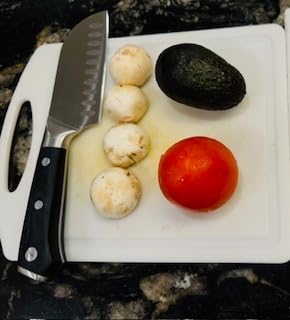
Construction is the strongest in the compact group: German high carbon stainless at 56 plus Rockwell, hand sharpened at 14 to 16 degrees per side, full tang, triple-riveted pakkawood. The hollow edge gives a clean release, and the grooved sides keep diced onion from sticking during a long prep session.
Handle thickness is reported as comfortable even for smaller grips, and the 5 inch blade keeps the working end close to your knuckles so the rocking motion stays controlled. That combination of a slim-enough handle and a substantial blade is unusual in this category.
Who this suits best
Anyone whose hands tire from a thin blade, or who prefers a knife that feels planted rather than nimble. The 0.39 kg weight is the heaviest per gram ratio here, and for many cooks that is the feature rather than the flaw. It suits both hands equally since the santoku profile is symmetrical.
Watch for these details
A recurring complaint is that some units arrive less sharp than advertised and want a pass on a stone before the first cut. A few buyers also notice the handle feels heavier than the blade in the first few minutes, and that the tang can leave a slight ridge where it meets the scales.
4. HENCKELS Statement 5-Inch Compact Chef Knife
HENCKELS Statement Razor-Sharp 5-inch Compact Chef Knife, German Engineered Informed by 100+ Years of Mastery
- Genuinely light for a 5.5 inch blade
- Compact blade suits fine prep work
- Rust and stain resistant steel
- Dishwasher safe with a lifetime warranty
- Stamped blade feels less solid under load
- Plain plastic handle has little grip texture
- 5.5 inch blade is small for breaking down large items
This is the German-brand answer for cooks who want a familiar name and a compact blade. The 5.5 inch satin-finished blade is stamped from a single piece of stainless steel and arrives finely honed, so it is usable immediately after a rinse.
At 4.8 ounces it is heavier than the Victorinox and the imarku, but the profile is short enough that the total package still sits well in a petite hand. Dishwasher safety and a lifetime warranty make it the lowest-friction choice for a busy kitchen.
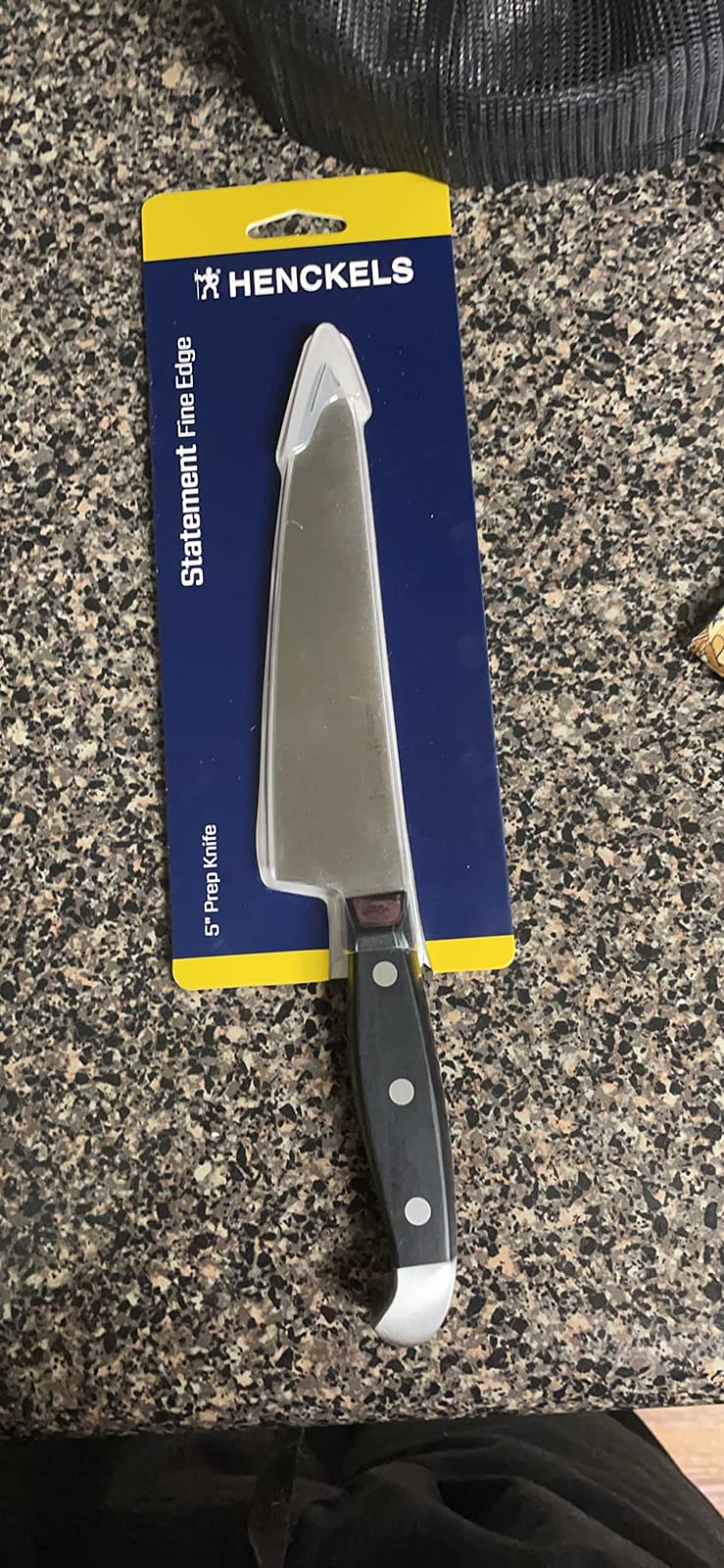
The handle is the weak point for this audience. Plain plastic has less surface texture than pakkawood or a TPE grip, and reviewers with wet hands notice it sooner than those with dry hands. If you prep vegetables straight after washing, factor that in.
Best used for
Fine prep work: chopping herbs, slicing meat, dicing vegetables and general board work on a small counter. The short blade is genuinely convenient in a compact kitchen because it never overhangs the board, which a longer blade on a small board does constantly.
Less suited to
Heavy tasks. The stamped blade has less rigidity than a forged one, so it feels soft when you push through dense ingredients like a whole cabbage core. If that is a regular part of your cooking, spend the extra and move up in weight.
5. Sunnecko 5.5-Inch Small Chef Knife with Sheath
- Custom-fit sheath included for safe storage
- Steel bolster supports a pinch grip
- Buyers with arthritis report low cutting pressure
- Sharp out of the box
- Edge dulls with use and needs frequent honing
- Factory sharpness can exceed expectations
- Handle and bolster add weight over long sessions
This one arrives with a custom-fit PVC sheath, which matters more than it sounds. A short blade is easy to store loose in a drawer or a bag, and the cover keeps the edge from meeting everything else in the cutlery drawer.
The steel is forged high carbon stainless with a full tang, hand sharpened at 12 to 15 degrees per side, and finished with a laser-etched pattern that imitates Japanese grain. That aggressive edge angle explains both the excellent cutting performance and the complaint we heard most: it dulls sooner than a European edge.
The steel bolster is described as pinch-grip friendly, which matters for small hands. A bolster catches the thumb when it is too tall, and this one is proportioned for a close grip. One parent specifically sized this knife for a younger, smaller hand, which is the exact use case it serves.
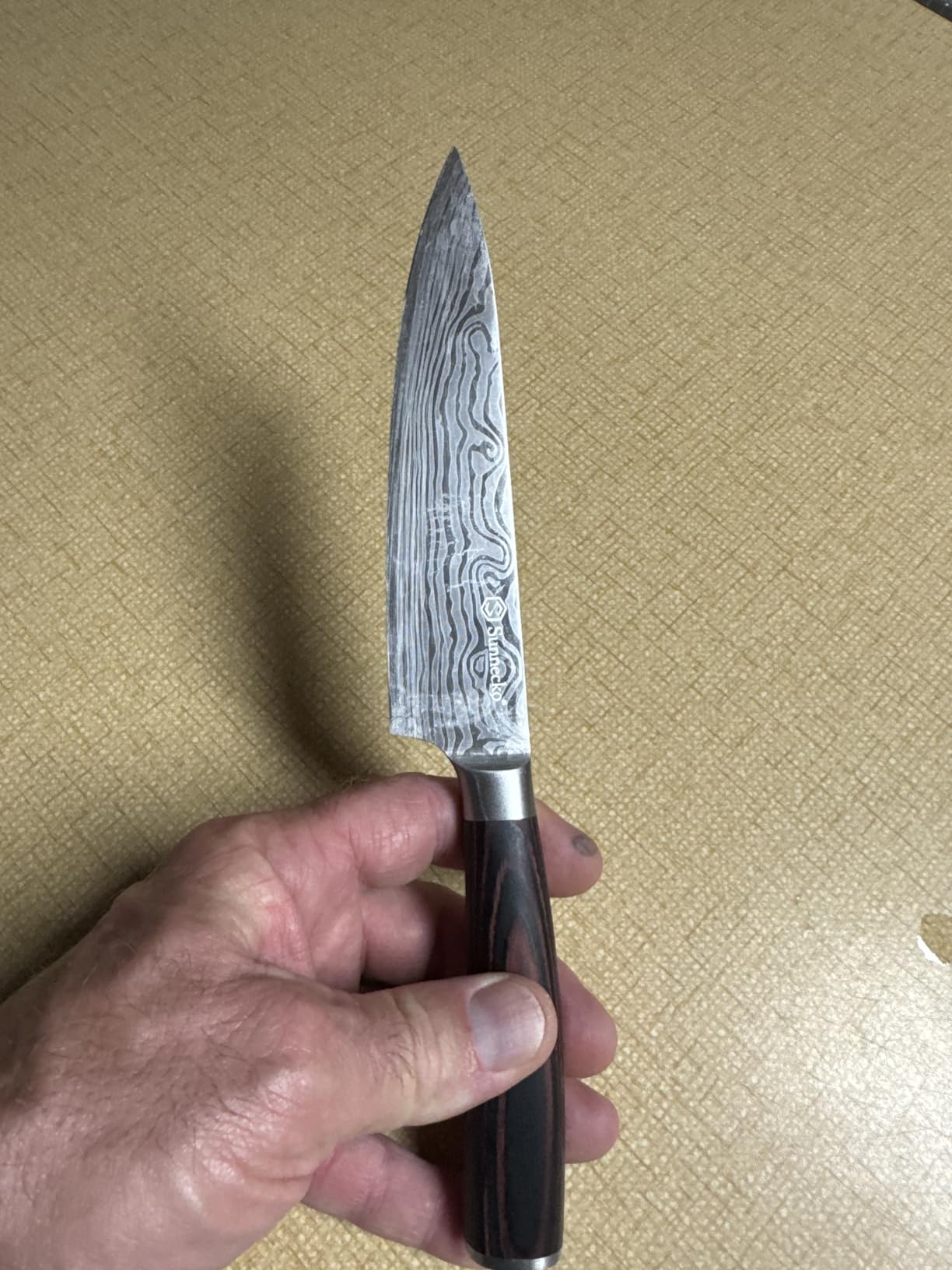
Comfort over a long prep block
Buyers with arthritis report slicing and dicing with noticeably less pressure, and reviewers consistently mention reduced hand fatigue. The pakkawood handle stays comfortable through long sessions, though the bolster does add weight at the front of the grip.
Where the tradeoff shows
That sharp factory edge needs regular honing on a steel or a whetstone. If you do not want to build that habit, choose a knife with a lower edge angle. A dedicated knife sharpener solves it, and we have tested the options.
6. HOSHANHO 5-Inch Japanese Laminated Santoku
HOSHANHO 5 Inch Japanese Chef Knife, Ultra Sharp Kitchen Santoku Knives
- 62 HRC steel holds an edge far longer than budget blades
- Slim pakkawood handle works for either hand
- Double-sided grooves cut down resistance and sticking
- Gift box included
- Heaviest knife in the group at 9.6 oz
- Finish quality varies between production batches
- Very sharp out of the box and catches people out
The steel here is the most advanced in the roundup: triple-layer laminated Japanese 10Cr15CoMoV rated at 62 HRC with roughly 0.9 percent carbon. Edge retention on that steel is a step above every budget pick on this list, and several professional cooks name it among the best knives they own.
Handle geometry is where it fits the brief. The African pakkawood handle is slim and smooth, reviewers say it feels comfortable for either hand, and it resists cracking from thermal expansion. The 5 inch blade keeps the whole knife short enough to move without wrist work.
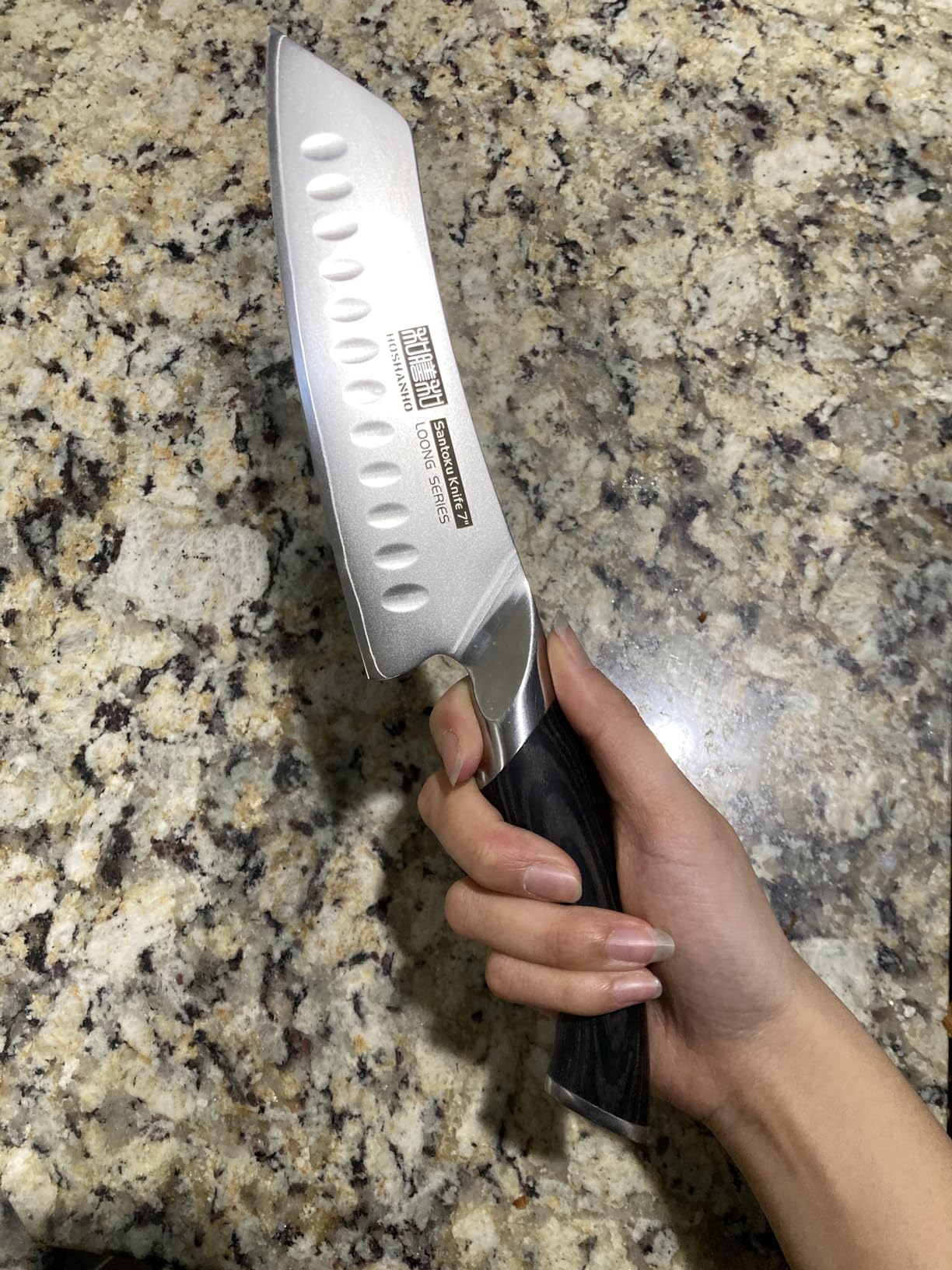
Two practical notes. The frosted finish and pattern photograph well and make it an easy gift, and the double-sided groove design genuinely lowers cutting resistance on wet ingredients like cucumber and tomato, where stickiness is worst.
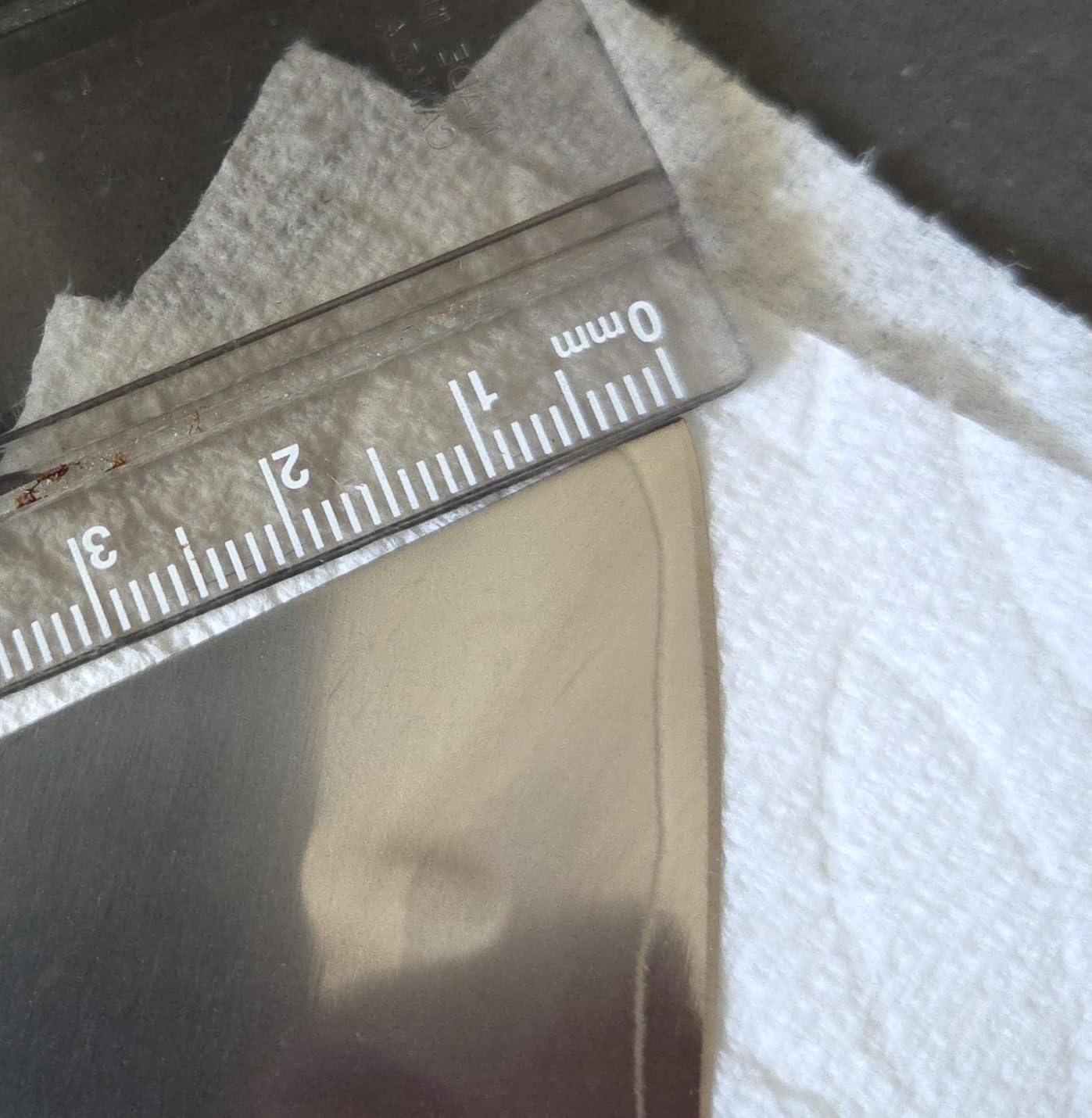
Who should look at this one
Cooks who want an edge that survives a heavy prep week and who have a slightly larger hand than the rest of this audience. The slim handle still helps, and the balance point sits forward enough to feel planted without being clumsy.
Why a petite cook might skip it
At 9.6 ounces it is the heaviest knife in the group by a wide margin, and weight is the thing that tires very small hands first. Reviews also note inconsistent finish quality between batches, and the blade is sharp enough that several owners caught a finger in the first week.
7. Farberware EdgeKeeper 5-Inch Santoku
- Lowest entry point in the roundup
- Very light at 4.2 oz
- Sheath doubles as a self-sharpening cover
- Handy for travel and small kitchens
- Thin blade flexes under heavy or hard ingredients
- Cheap plastic handle feels less refined
- Sheath sharpener inserts can loosen
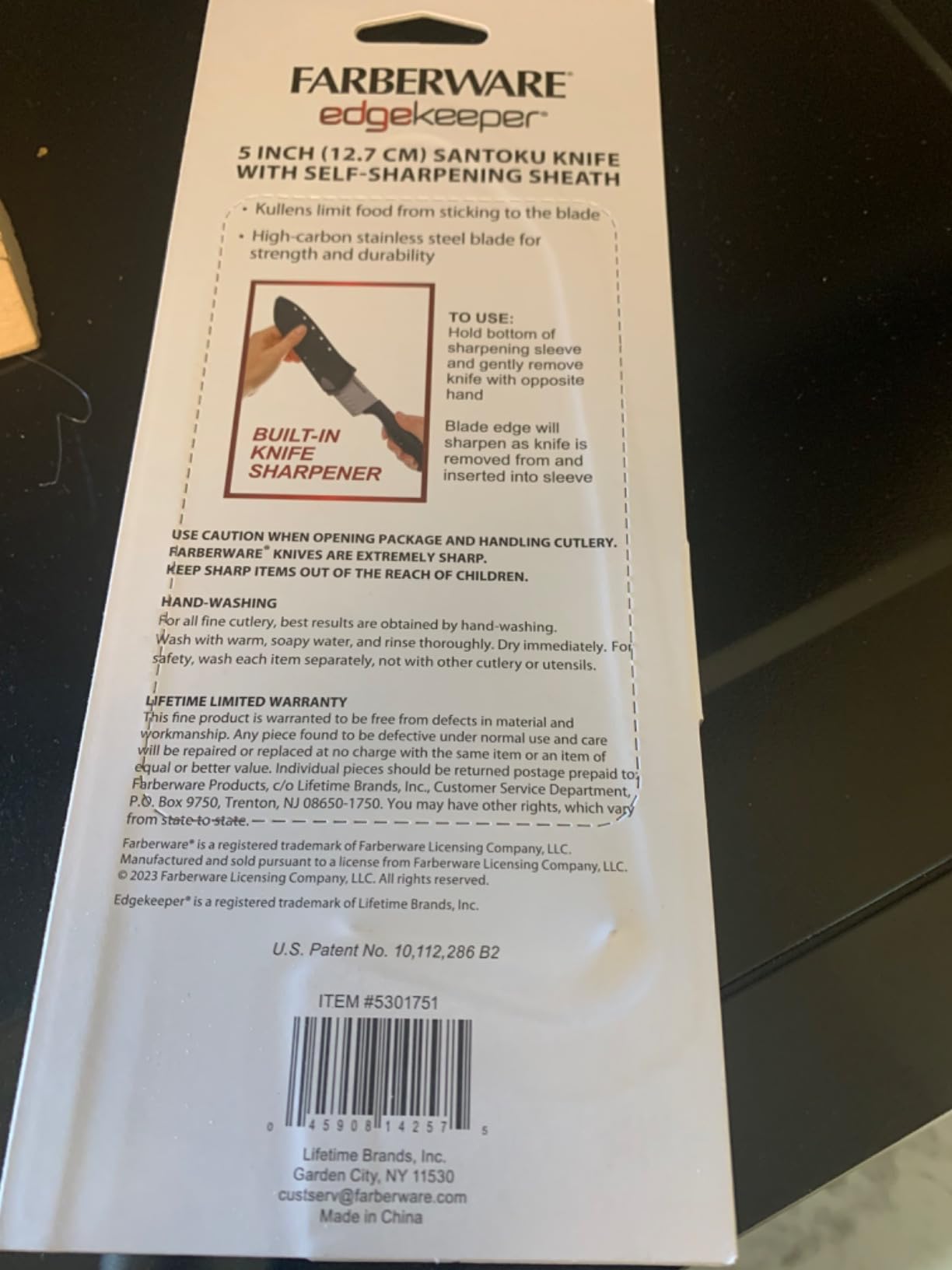
This is the least expensive way into a compact santoku, and the sheath is the reason it deserves a place. The EdgeKeeper cover holds a built-in sharpener that hones the blade each time the knife goes in or comes out, so a casual user keeps a workable edge without ever touching a stone.
At 4.2 ounces it is the second lightest blade we tested. Oval indentations along the sides reduce sticking, and the contoured handle is shaped to sit in a small hand rather than fill an average one. Hand washing with warm water and immediate drying is recommended.
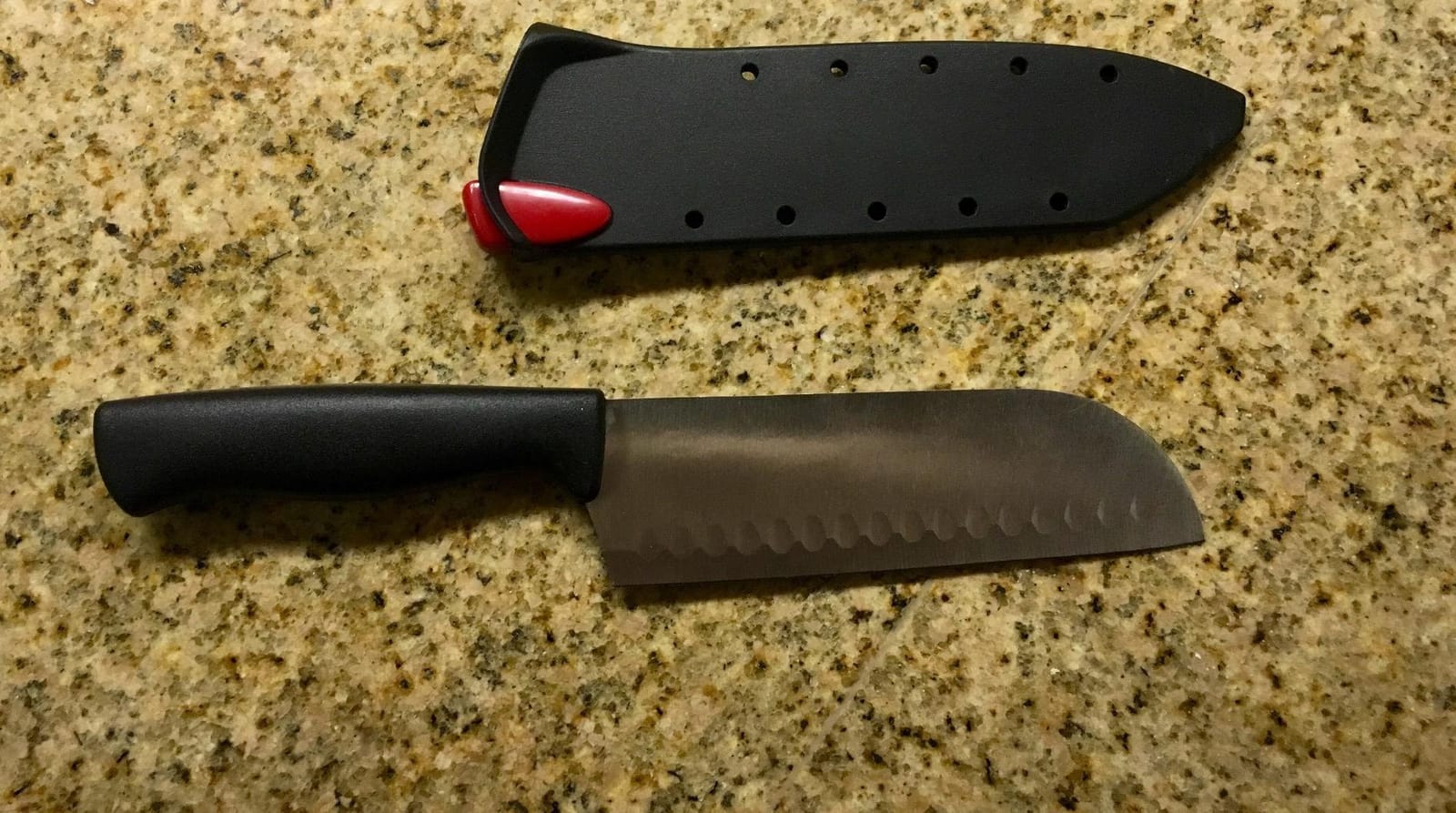
It is also a genuinely portable knife. The cover doubles as a safety lock and protects the edge in a bag, which makes it practical for a camper, a dorm kitchen or a small apartment where drawer space is limited.
Best for
Beginners, occasional cooks, and anyone who wants one small knife for a compact counter rather than a full set. The self-sharpening cover removes the single biggest reason short knives get abandoned, which is a dull edge nobody knows how to fix.
Limits to accept
The blade is thin and bendy, and reviewers who expected a forged feel call it too light for confident chopping through hard vegetables. The plastic handle feels cheap next to pakkawood, and a few buyers report the sheath sharpener insert loosening over time. It is also the entry in this list that arrives blunt most often.
8. Arcos 5-Inch Universal Chef Knife
Arcos Chef Knife 5 Inch Stainless Steel. Cooking Knife to Cut and Peel Fruits and Vegetables. Ergonomic Polyoxymethylene Handle and 140mm Blade. Series Universal. Color Black
- Nitrum nitrogen-treated steel beats basic stainless
- Very light at 159 g
- Handles and blades are dishwasher safe
- Ten year defect replacement from a maker dating to 1734
- POM handle has limited grip ergonomics
- Spec sheet lists 6 inch while the product is marketed as 5 inch
- Edge retention trails Japanese steels such as VG10
The Arcos is the pick for cooks whose prep is mostly fruit and vegetables. Its blade is wider than the santoku shapes here, and that width is what makes peeling, trimming and slicing soft produce quick without the knife digging into the flesh.
Steel is Arcos Nitrum, a nitrogen-treated stainless that holds an edge and resists corrosion better than plain stainless at the same price band. The handle is molded polyoxymethylene, chosen because it shrugs off detergents and temperature swings and goes in the dishwasher.
At 159 grams it is one of the two lightest knives in the roundup, and the overall length of 250 mm keeps it compact in a small kitchen. A ten year replacement against manufacturing defects adds a longer warranty than most knives here carry.
Where it fits a petite grip
The low weight does the heavy lifting. A slim molded handle would not be our first choice, but at this mass you do not need a tight grip to keep control, and reviewers with limited hand strength use it comfortably. It suits either hand equally.
What to know before buying
The spec sheet lists a 6 inch blade while the product is marketed as 5 inch, with the actual blade at 127 mm. Buyers also find the POM handle less sculpted than pakkawood, and the edge retention trails harder Japanese steels when you compare them side by side.
9. WÜSTHOF Classic 5-Inch Santoku
- Highest rating in the roundup at 4.9 with 95 percent five star reviews
- Single-piece forged steel with full tang and bolster
- Hollow granton edge for wafer-thin slices
- Light at 4.32 oz despite being forged
- Hand wash only
- Full bolster limits a full pinch grip
- Synthetic handle is smooth compared with pakkawood
This is the only forged German knife in a genuinely compact 5 inch format, and the owner consensus is the strongest in the group. Ninety-five percent of 695 reviews are five stars with no meaningful negative theme, which is unusual at any price.
The hollow granton edge is the reason to choose it. Those hollow scallops let slices release from the blade instead of clinging, so a tomato or a thin slice of beef separates cleanly. At 4.32 ounces it is light for a forged knife, and full tang construction gives it real strength.
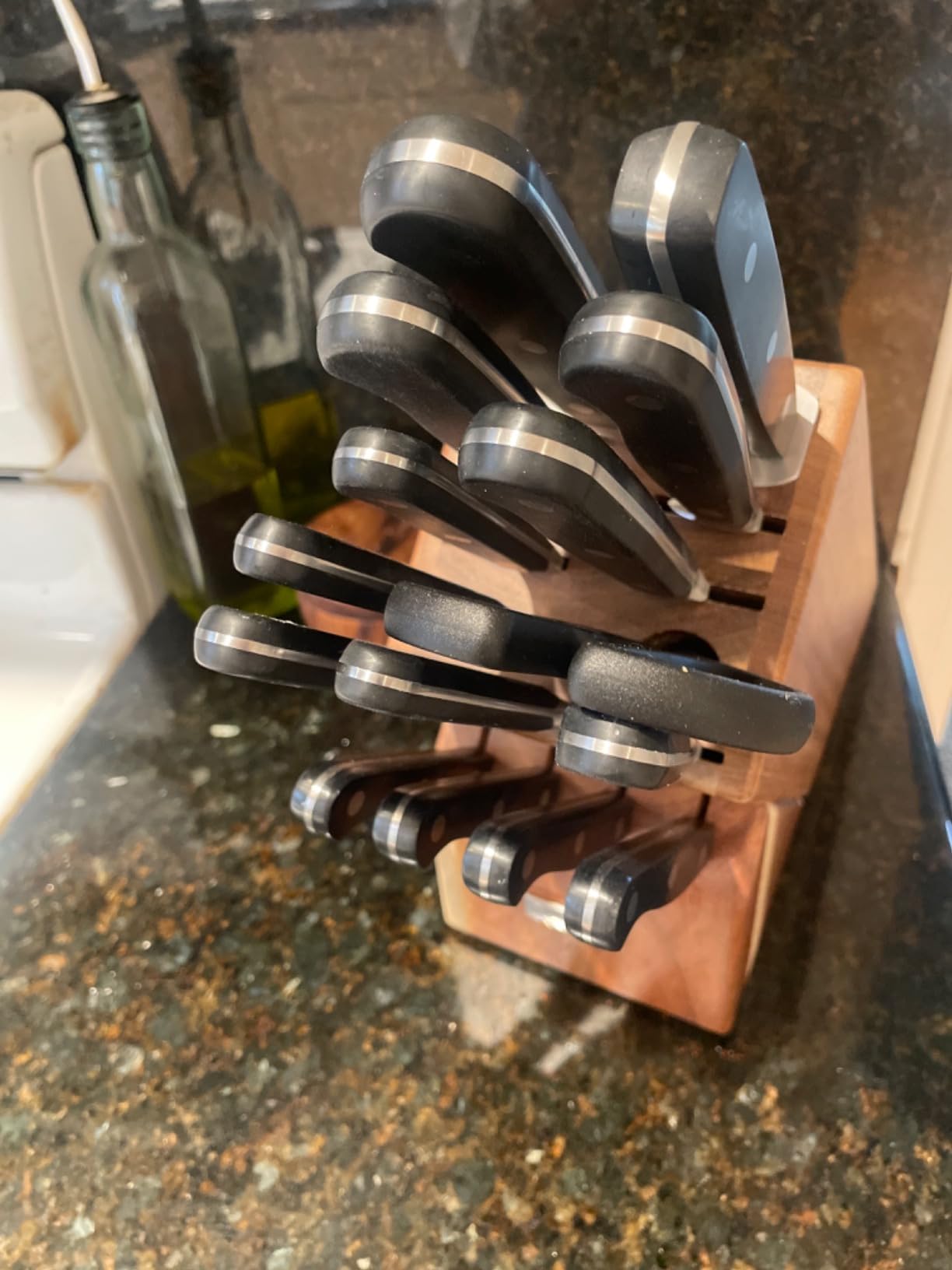
That light weight is the small-hand story here. A full tang and bolster normally add heft, so getting 4.32 ounces with that construction means the handle is not oversized. The triple-riveted synthetic handle is durable and easy to maintain.
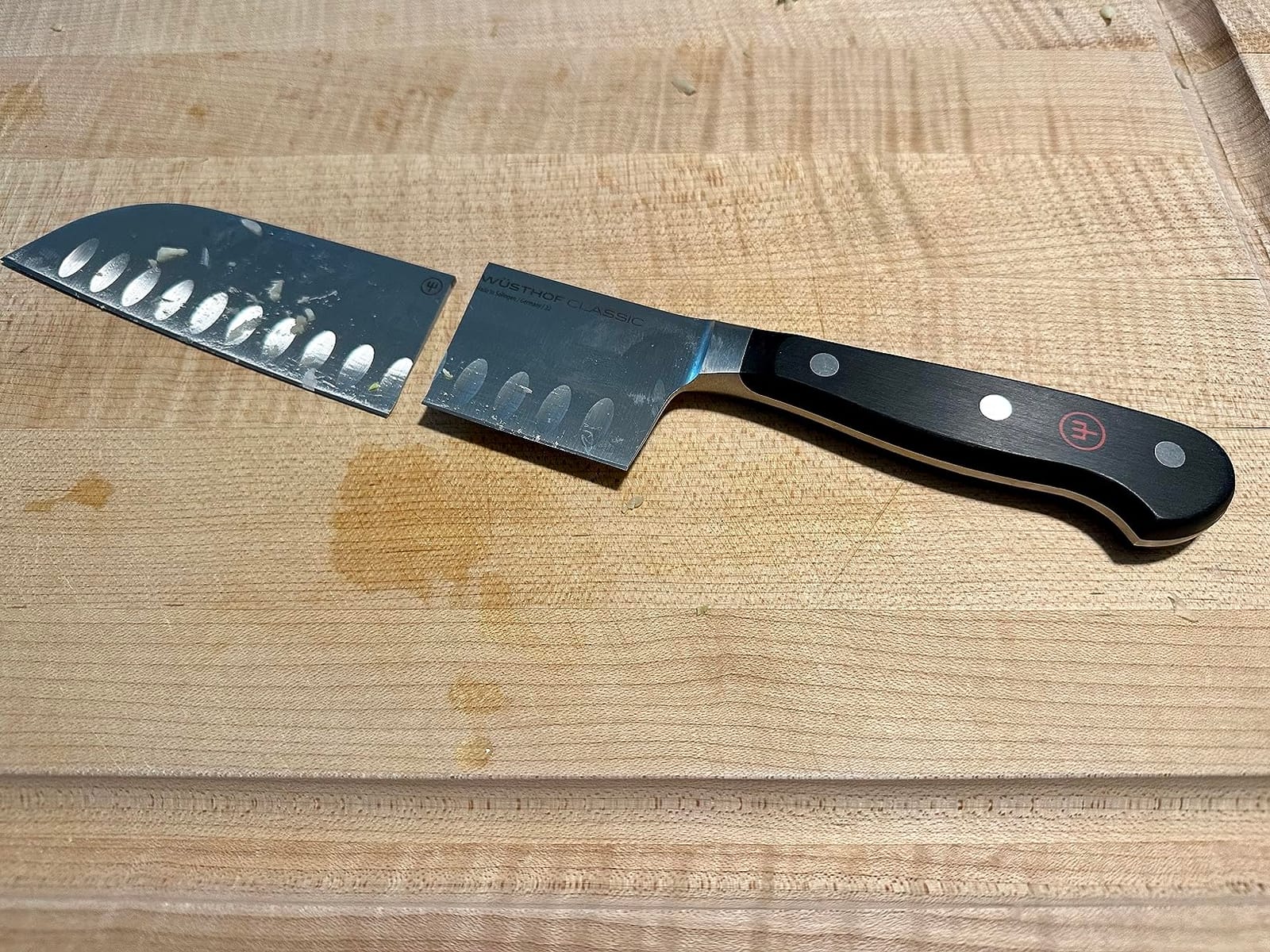
Best for thin slicing
Cucumbers, tomatoes, onions, raw potato and deli meat, where paper-thin output matters. If your cooking is slicing-driven rather than chopping-driven, the hollow edge earns its premium over cheaper santokus of the same size.
Trade-offs to weigh
It is hand wash only, and the full bolster stops you sliding forward into a pinch grip right up against the blade. The synthetic handle is smooth, so it offers less texture than pakkawood when your hands are wet. This is also the priciest pick in the roundup.
10. Shun Sora 6-Inch Chef’s Knife
- Narrow gyuto profile is highly maneuverable
- VG10 core holds a razor edge and resists chipping
- D-shaped handle suits either hand
- Free sharpening and honing for life
- 6 inch blade is larger than the true compact options
- Premium price point
- Composite cladding can patina over time
The Shun Sora is the step up for a cook who has outgrown 5 inch blades but still wants a slim handle. The narrow gyuto profile keeps the blade tall enough for knuckle clearance while staying short enough to move quickly on a small board.
Construction is san mai: a VG10 steel core clad by a 420J stainless upper, sharpened to a 16 degree edge. That core holds a razor edge and resists chipping, and the full tang adds balance. The D-shaped handle is the key spec here, since it suits both hands.
At 4.32 ounces it is the joint second-lightest forged blade in the group. Free sharpening and honing from Kai for as long as you own it removes the maintenance objection entirely, which matters if you have never sharpened a knife.
Who should choose it
Cooks who want Japanese steel and a slim handle but prep more than a few vegetables a week. Dicing onions, slicing meat and mincing herbs all benefit from the narrow profile, and ambidextrous grip geometry means nobody in the household is left out.
Where it does not fit
A 6 inch blade is larger than the true compact options here, so if your hand is at the very small end this may still feel long. It also sits at a premium price, and the composite cladding can show discoloration or patina with heavy use.
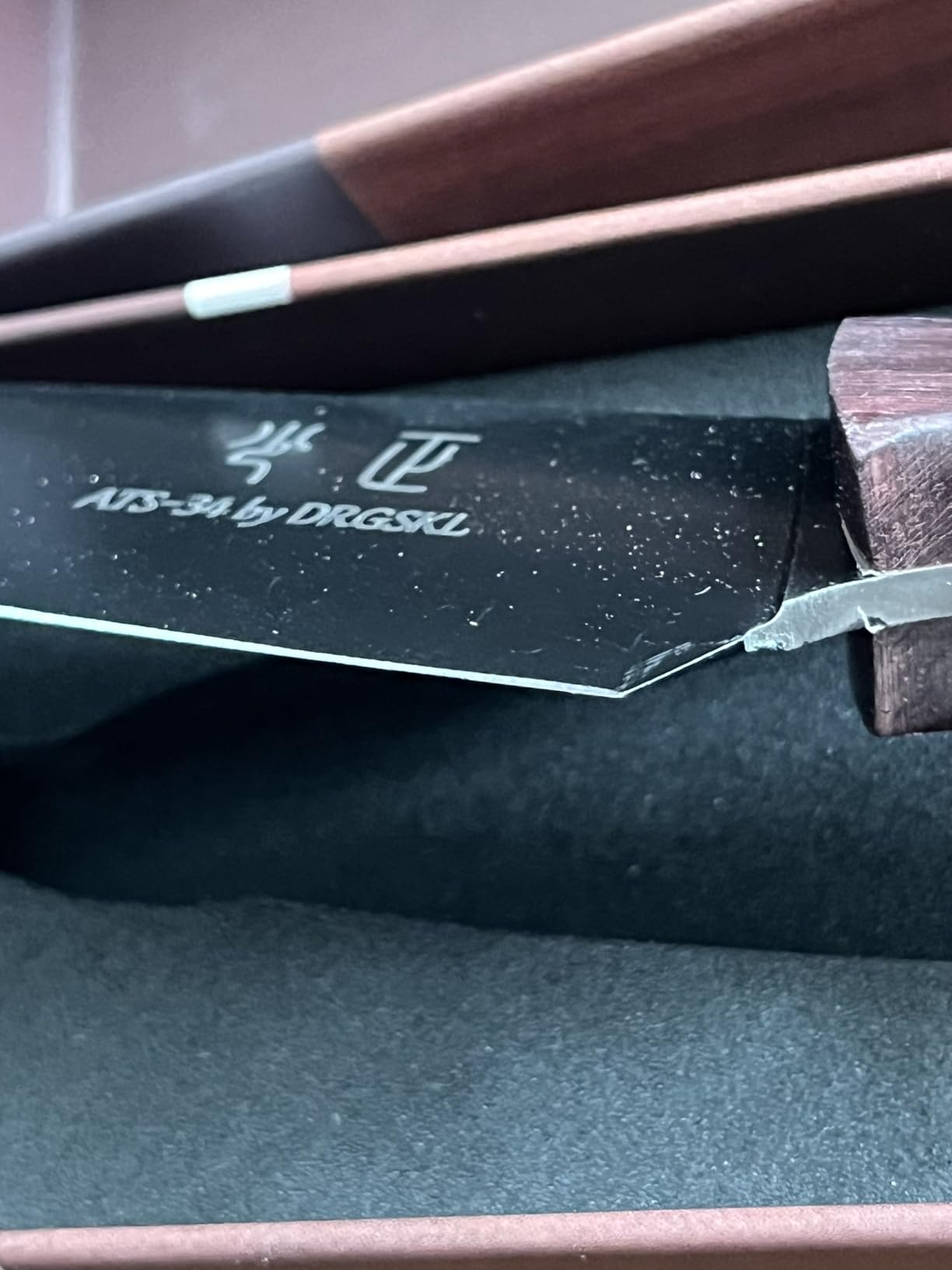
11. DRGSKL 5-Inch ATS-34 Utility Chef Knife
DRGSKL Kitchen Utility Knife From Japan – Small Chef Knife 5 Inch
- Sculpted finger groove gives real grip security
- ATS-34 Japanese steel takes a fine edge
- Black titanium plating resists wear
- Full tang with a metal spacer adds balance
- Coating reduces visible steel and is harder to sharpen
- Smallest review sample in the roundup at 549
- Alloy steel listed rather than named Japanese stainless
Most handles in this roundup are smooth, sculpted or contoured. This one has a carved finger groove, and that physical stop is the most direct answer to fingers sliding toward the edge. It is unusual, and for a genuinely petite hand it does real work.
The blade is forged ATS-34 high carbon Japanese steel sharpened through a multi-stage wet grinding process, then finished with a black titanium plating over a silver-tone base. A full tang and a hand-polished walnut handle with a metal spacer keep it balanced at 9.5 inches overall.
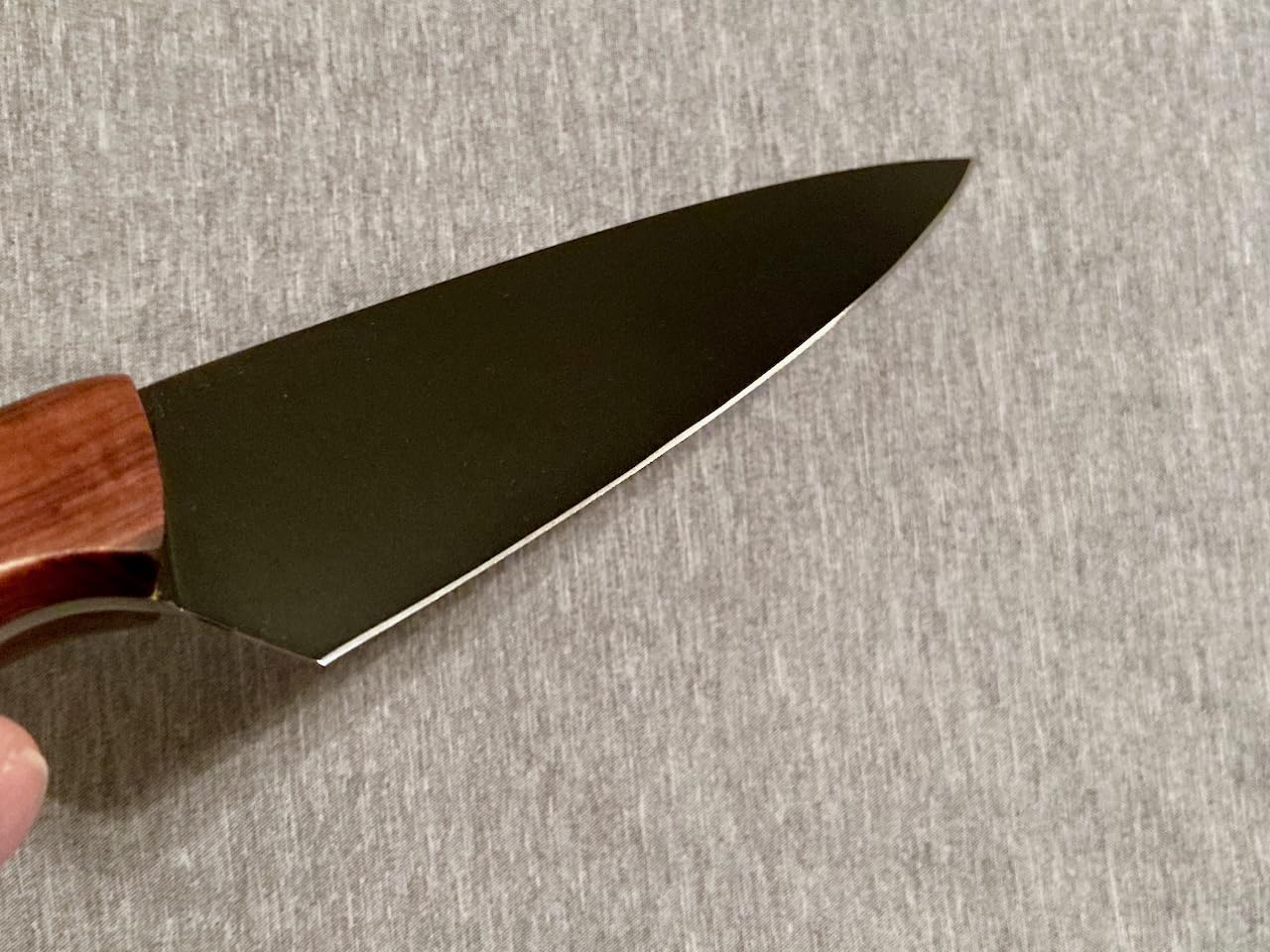
This is marketed as a utility knife, which bridges a chef’s knife and a paring knife. That makes it a genuinely useful second blade for trimming meat, slicing sandwiches and prepping small fruit and vegetables where a full chef’s knife is more tool than you need.
Best for grip security
If your complaint about other knives is that your hand creeps toward the blade, the finger groove is the feature that addresses it directly. Owners describe it as easy to control and steady, and the walnut handle is the most tactile in this group.
Things to consider
The titanium coating means less visible bare steel at the edge, which makes the cutting edge less apparent and harder to restore on a stone. With 549 reviews it has the smallest sample in the roundup, so long-term durability data is thinner, and the listed material reads as alloy steel rather than named Japanese stainless.
12. Cuisinart Graphix 5-Inch Santoku
Cuisinart C77SS-5SAN Graphix Collection Santoku Knife, 5″ Stainless Steel
- Entry-level price with a genuinely fine tapered edge
- Textured handle improves grip in a small hand
- Full stainless build is easy to clean
- Backed by a lifetime warranty
- Stainless handle gets slippery when wet
- Edge retention is modest against Japanese steels
- Construction is not forged in the Japanese sense
The Cuisinart Graphix is the lowest-cost way to find out whether a short santoku suits you. Buyers treat it as a solid first knife and are consistently happy with the tapered grind, which narrows gradually to a fine edge.
The textured handle is the part that matters for this audience. It adds grip security for a smaller hand, and at 0.17 kg the whole knife stays light. It also belongs to the Graphix collection, so a 5 inch santoku pairs with an 8 inch chef, slicing and bread knife.
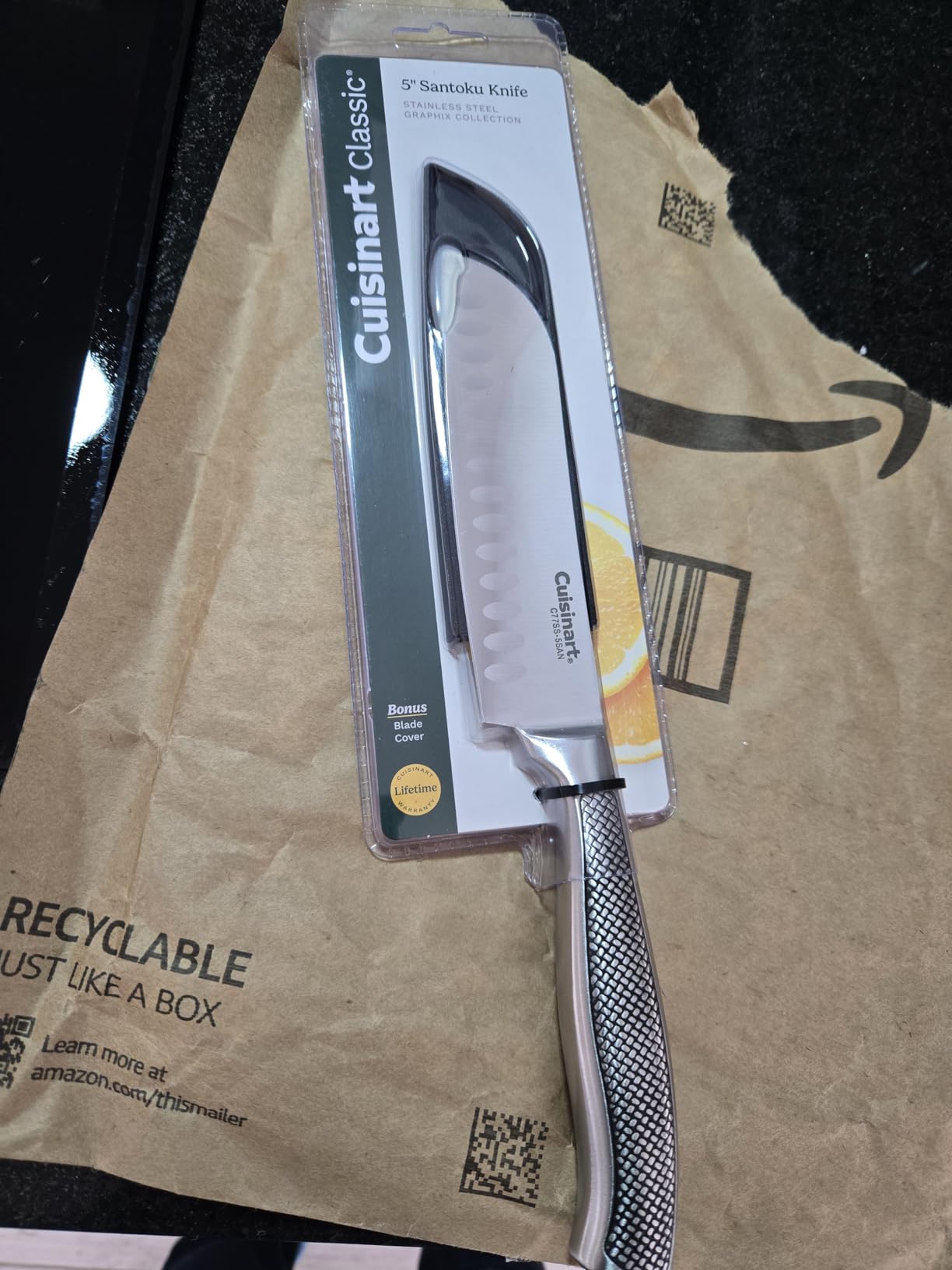
A lifetime warranty covers manufacturing defects. That makes it a reasonable first step: you learn whether you prefer a short blade before committing to a forged or Japanese steel option.
Best for first-time buyers
Anyone who wants to test the format at the lowest commitment. The fine tapered edge handles onions, herbs and soft produce well, and the textured handle is better for a petite grip than the smooth steel handles usually found at this level.
Where it falls behind
The all-stainless handle slips when wet, which is the most common complaint and the one most likely to matter during prep. Edge retention is modest against Japanese steel, and it is described as forged stainless construction rather than a true forge. Expect to sharpen it more often.
What to Look for in a Chef Knife for Small Hands
When a knife feels wrong, the problem is almost always the handle rather than the steel. These are the four things that decide fit, in the order they matter.
- Shorter blade, 5 to 6 inch. Blade length drives handle size. A 5 or 5.5 inch blade is built with a proportionally shorter and lighter handle, which is the most direct route to a grip that fits.
- Slim handle circumference. Look for a handle your four fingers can lie flat along without the pinky hanging past the end. Manufacturers rarely publish this number, so use the hand measurement method above instead.
- Lighter weight. A blade under about 5 ounces needs far less grip pressure. Heavier knives cause the forearm to tense, which is what produces fatigue and bruising after a short prep session.
- Knuckle clearance. Blade height at the heel decides whether your knuckles scrape the board. A tapered spine or a gyuto-style profile gives your knuckles room during the rocking motion.
Beyond those four, look at the bolster. A full bolster catches your thumb in a pinch grip, so a narrow or partial bolster is friendlier to small hands. Wa handles are all roughly the same narrow size, so choosing a smaller blade is the practical lever rather than hunting for a smaller handle.
Also plan for two knives. A 5 or 6 inch knife for herbs, garlic, shallots, onions and small produce, paired with an 8 inch knife for large cuts, is the approach several cooks on r/Cooking recommend. It costs less than one premium full-size blade and removes the compromise.
Frequently Asked Questions
What is a petite chef knife used for?
A petite chef knife is a 5 to 6 inch blade with a short, slim handle sized so a cook with small hands can get a full four-finger or pinch grip. It handles everyday prep well: mincing garlic and ginger, dicing onions and celery, slicing citrus and strawberries, and any task on a compact cutting board. For large roasts or whole produce, pair it with a longer knife.
Is a 6-inch chef’s knife too small?
For small hands, a 6 inch blade is usually the ceiling rather than the floor. Blades of 5 to 5.5 inch give the most control and the shortest handle, while 6 inch still leaves room for knuckle clearance during the rocking motion. Only go shorter if you prep almost exclusively small vegetables and herbs.
What is the typical size of a santoku knife?
A standard santoku runs 6 to 8 inch, most often 7 inch. The compact versions built for small hands run 5 to 5.5 inch, and those are what we tested here. A short santoku keeps the working end of the blade over the food and fits a small counter far better than the usual 7 inch model.
Which is better, santoku or chef knife?
For small hands, a santoku is usually the better choice because the shorter, narrower blade is easier to move. A Western gyuto gives a longer rocking surface and more knuckle clearance. If your hands tire quickly, pick the santoku; if you prefer a strong rocking motion for onions, pick the shorter gyuto profile.
Is Zwilling or Henckels better?
They are the same company, sold under two names, so the honest answer is that handle fit matters more than the badge. Choose whichever 5 or 6 inch knife gives you four flat fingers and a bolster your thumb can clear. Reviews are comparable on steel and edge, and ergonomics decide which one you keep using.
What is the best small kitchen knife?
The best small kitchen knife is one with a 5 inch blade under about 5 ounces and a handle your fingers can wrap. Our top pick is the Victorinox Fibrox 5-Inch at 2.89 ounces, with the imarku 5-Inch pakkawood santoku a close second for cooks who want forged steel at that weight.
Conclusion
The best chef knives for small hands in 2026 all share one trait: a short blade paired with a short, slim handle. Start with the Victorinox Fibrox 5-Inch if you want the lightest option, move to the imarku 5-Inch if you want forged steel and pakkawood, and consider the Wüsthof Classic 5-Inch when thin slicing is the priority.
Whatever you choose, measure your hand first, and pair a compact knife with a longer one for bulk prep. A good chef apron and a decent board will not fix a handle that does not fit, but the right blade will end the grip fatigue within a week.