
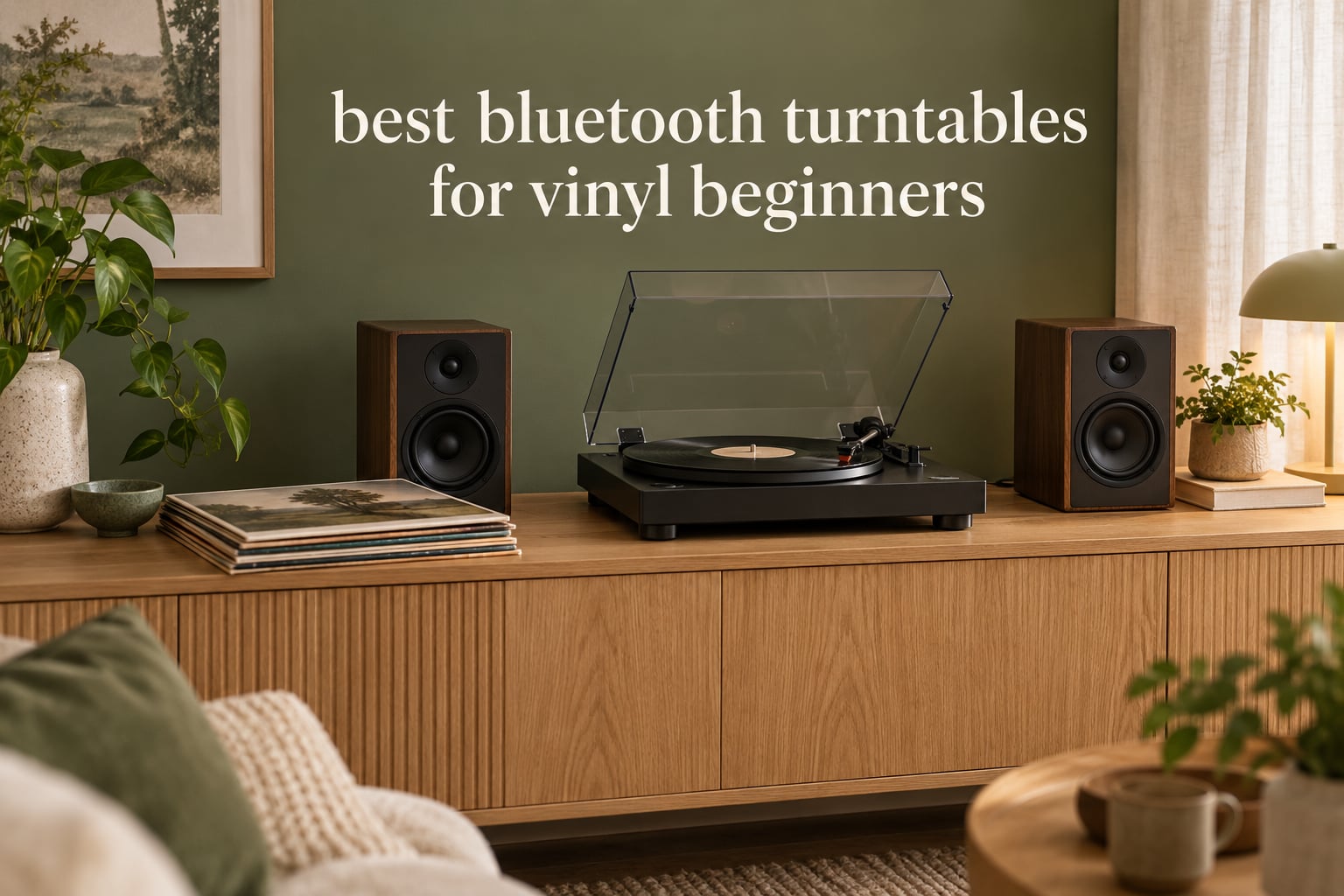
The best Bluetooth turntable for a vinyl beginner who owns no gear is the Victrola Quincy 6-in-1: it plays records, streams from your phone and needs nothing else plugged in. If you already have a pair of speakers, or headphones, the Audio-Technica AT-LP60XBT is the better first record — it drops the needle and lifts it on its own, and it streams wirelessly to anything with a Bluetooth receiver.
That split matters more than it sounds. A Bluetooth turntable comes in two very different flavours, and beginners regularly confuse them. Some transmit: the turntable takes over the wireless stream and sends it to your speakers or headphones. Others receive: they use Bluetooth to pull music off your phone and play it through their own built-in speakers. Only the transmitting kind lets you dump the cable clutter that makes people give up on a stereo setup in a small flat.
We put eight decks side by side across that divide, from a pocket-sized three-speed player to a direct-drive model with a USB port for digitising your collection. Along the way we cover the questions that actually block a first purchase: whether you need an amplifier, how much tracking-force jargon you have to learn, and which mistakes make a first record player feel broken.
Last updated for 2026. All ratings and review counts are the live figures attached to each listing.
Top 3 Bluetooth Turntables for Vinyl Beginners (2026)

Victrola Quincy 6-in-1
- Vinyl
- CD
- cassette
- radio and Bluetooth in one cabinet
- Three-speed belt drive including 78 rpm
- Headphone jack and RCA line out for later upgrades
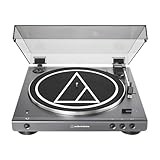
Audio-Technica AT-LP60XBT
- Fully automatic start
- stop and return
- aptX Bluetooth plus included RCA cable
- Die-cast aluminium platter and replaceable stylus
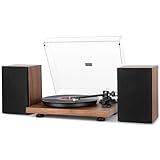
1byone HiFi System with Speakers
- Iron platter with counterweight and anti-skate
- Two 36 watt bookshelf speakers in the box
- USB output for recording to a computer
All 8 Bluetooth Turntables Head to Head (2026)
One table, every deck we looked at, and the four details that decide whether a Bluetooth turntable suits a first-time buyer: how the Bluetooth works, whether you must balance a tonearm by hand, whether it can digitise, and whether speakers come in the box.
| Product | Specifications | Action |
|---|---|---|
| Victrola Quincy 6-in-1 |
|
Check Latest Price |
| Audio-Technica AT-LP60XBT |
|
Check Latest Price |
| 1byone HiFi System |
|
Check Latest Price |
 Audio-Technica AT-LP70XBT Audio-Technica AT-LP70XBT |
|
Check Latest Price |
 Audio-Technica AT-LP120XBT-USB Audio-Technica AT-LP120XBT-USB |
|
Check Latest Price |
 ANGELS HORN Four-Speaker Player ANGELS HORN Four-Speaker Player |
|
Check Latest Price |
 Seasonlife All-in-One Seasonlife All-in-One |
|
Check Latest Price |
 cotsoco Retro M49 cotsoco Retro M49 |
|
Check Latest Price |
1. Victrola Quincy 6-in-1: the one-box answer for a first record player
- Plays four media formats plus AM/FM radio in one wooden cabinet
- Bluetooth pairing is quick and reliable with phones
- Warm and full for its size
- Headphone jack and RCA line outputs allow a later upgrade
- Built-in speakers are not hi-fi and bass output needs external speakers
- Cassette transport is basic with one shared button
- FM radio tuning is slow and manual
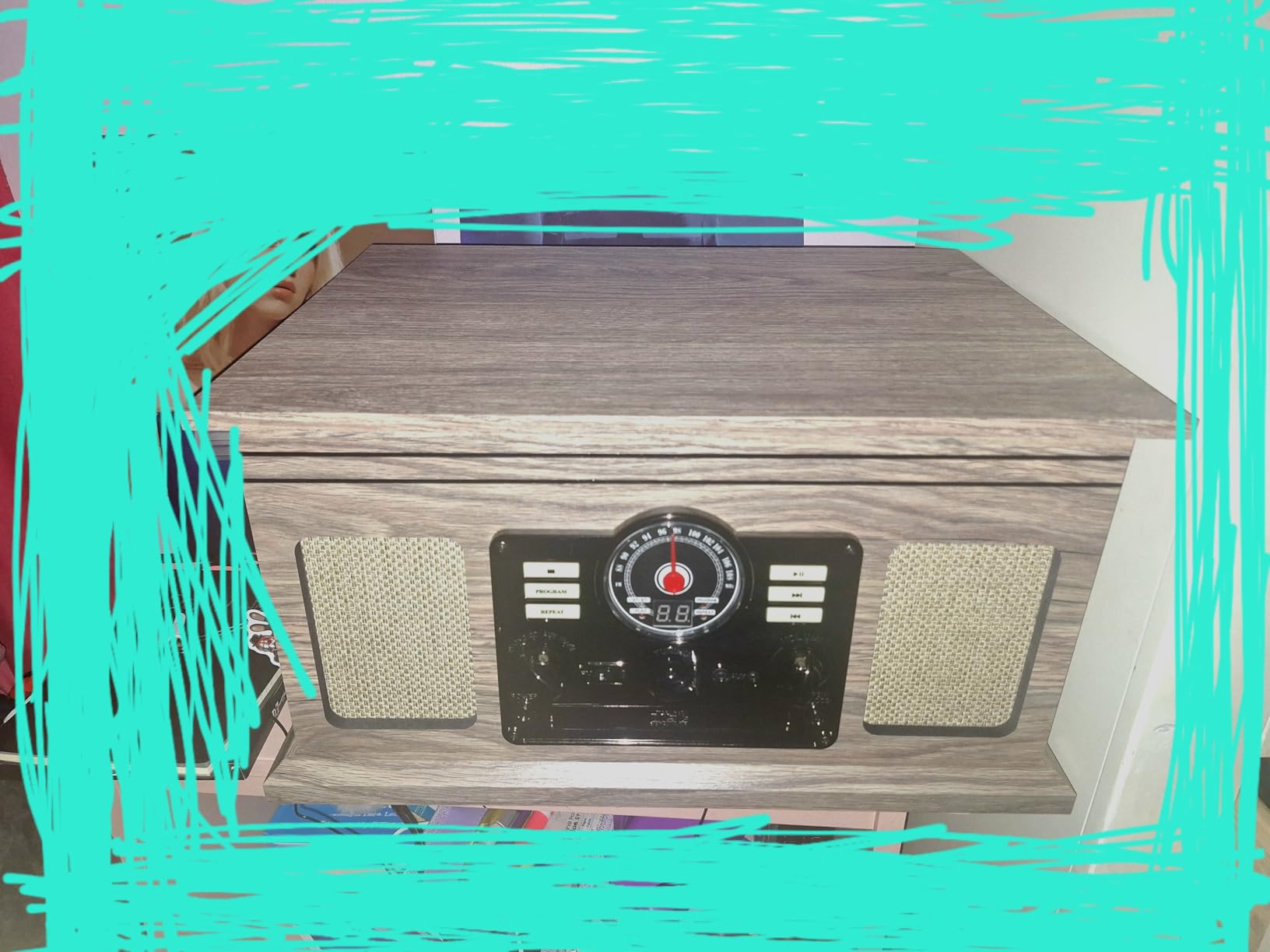
This is the deck we hand to someone who wants to know what vinyl sounds like without buying anything else. It spins records at 33 1/3, 45 and 78 rpm, plays CDs and cassettes, has an AM/FM tuner, and streams from a phone over Bluetooth. Nothing is hidden behind a menu.
Owners consistently describe the setup as minutes rather than an evening, and the cabinet styling gets called beautiful and nostalgic in a way no other deck here attracts. At 14.9 pounds it is the heaviest thing in this roundup, but that mass is why the platter feels stable rather than skittish.
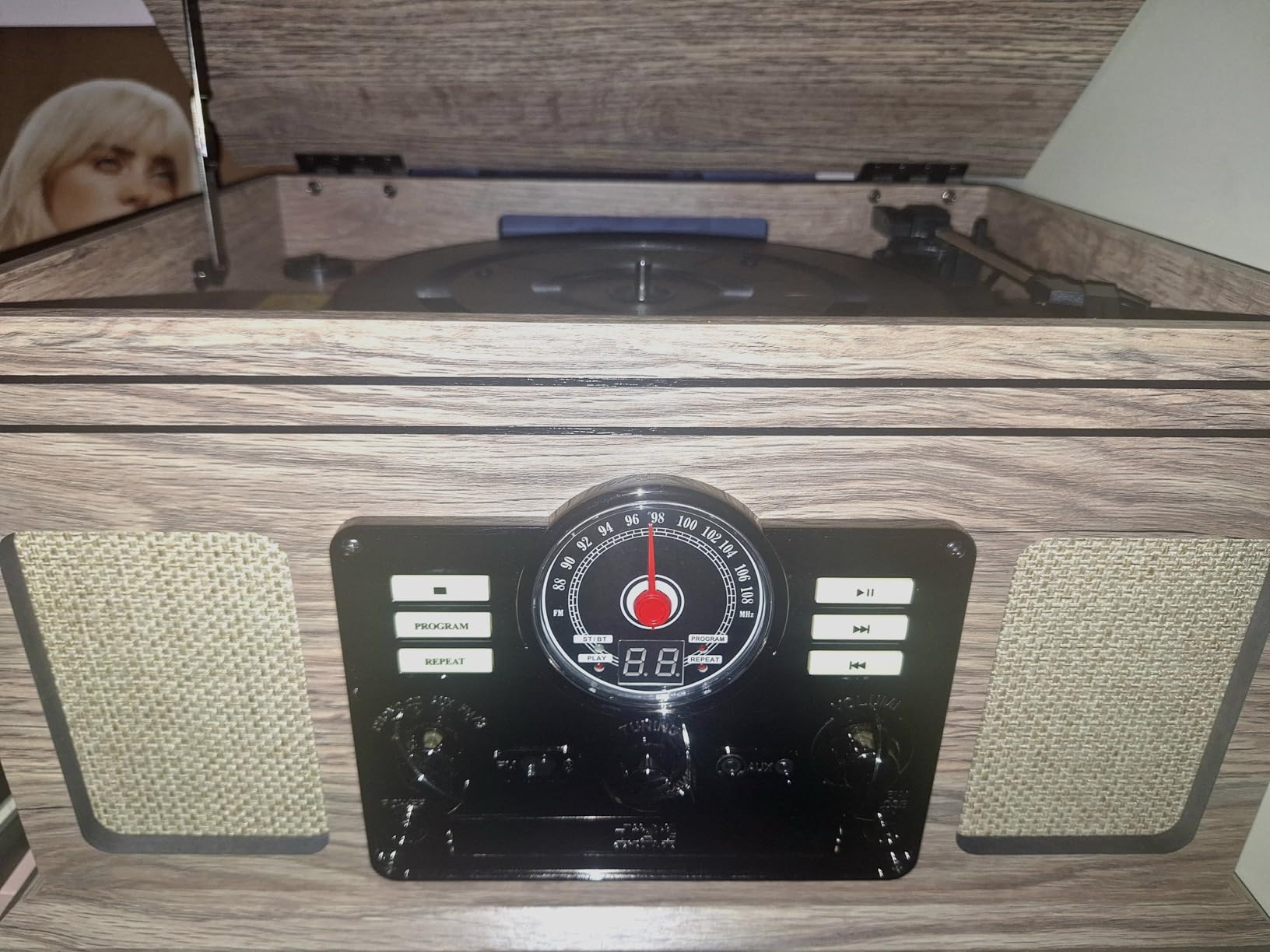
The specification that matters for a beginner is the three-speed belt drive. Most competing all-in-ones here stop at two speeds, which means you cannot play the 78 rpm shellac and 45 rpm singles that turn up in bargain boxes. The signal-to-noise rating of 70 db is the second best of the eight.
Its RCA line outputs and 3.5 mm headphone jack mean this is not a dead end. When you outgrow the built-in speakers you can run RCA cables to an amplifier or a pair of powered speakers, and the deck keeps working. Some buyers had to fit a replacement phono cartridge early on, which is a fair warning to check the warranty terms.
Who this suits best
It suits a renter with limited shelf space, or anyone who wants their record player to double as a piece of furniture. The retro cabinet means it can sit on a sideboard in a living room without looking like equipment, and the four media formats make it a natural second-hand shop companion.
It also suits anyone who wants to test Bluetooth streaming through built-in speakers before committing to separate ones. Just be clear on the direction of travel: this unit receives Bluetooth from your phone, it does not transmit to headphones or wireless speakers.
Who should look elsewhere
Skip it if your priority is sound quality through wireless speakers, because the Bluetooth here is receive-only. Also skip it if you want to rip records to a computer, since there is no USB output here at all.
Serious listeners will find the built-in speakers thin, and the cassette deck has one shared button for eject, play and fast forward. A few owners report the deck rocking slightly enough to move the tonearm, so give it a flat surface rather than a slightly uneven shelf.
2. Audio-Technica AT-LP60XBT: the easiest turntable to actually start using
Audio-Technica AT-LPGO-BT Fully Automatic Wireless Belt-Drive Turntable (Gun-Metal/Black)
- Fully automatic return to start and stop removes all tonearm handling
- Die-cast aluminium platter is heavier and steadier than plastic at this level
- Bluetooth and RCA output mean you can start with speakers you already own
- External AC adapter keeps converter noise out of the signal chain
- No built-in speakers so a separate pair is required
- Two speeds only with no 78 rpm
- Bluetooth is transmit-only and cannot receive phone audio
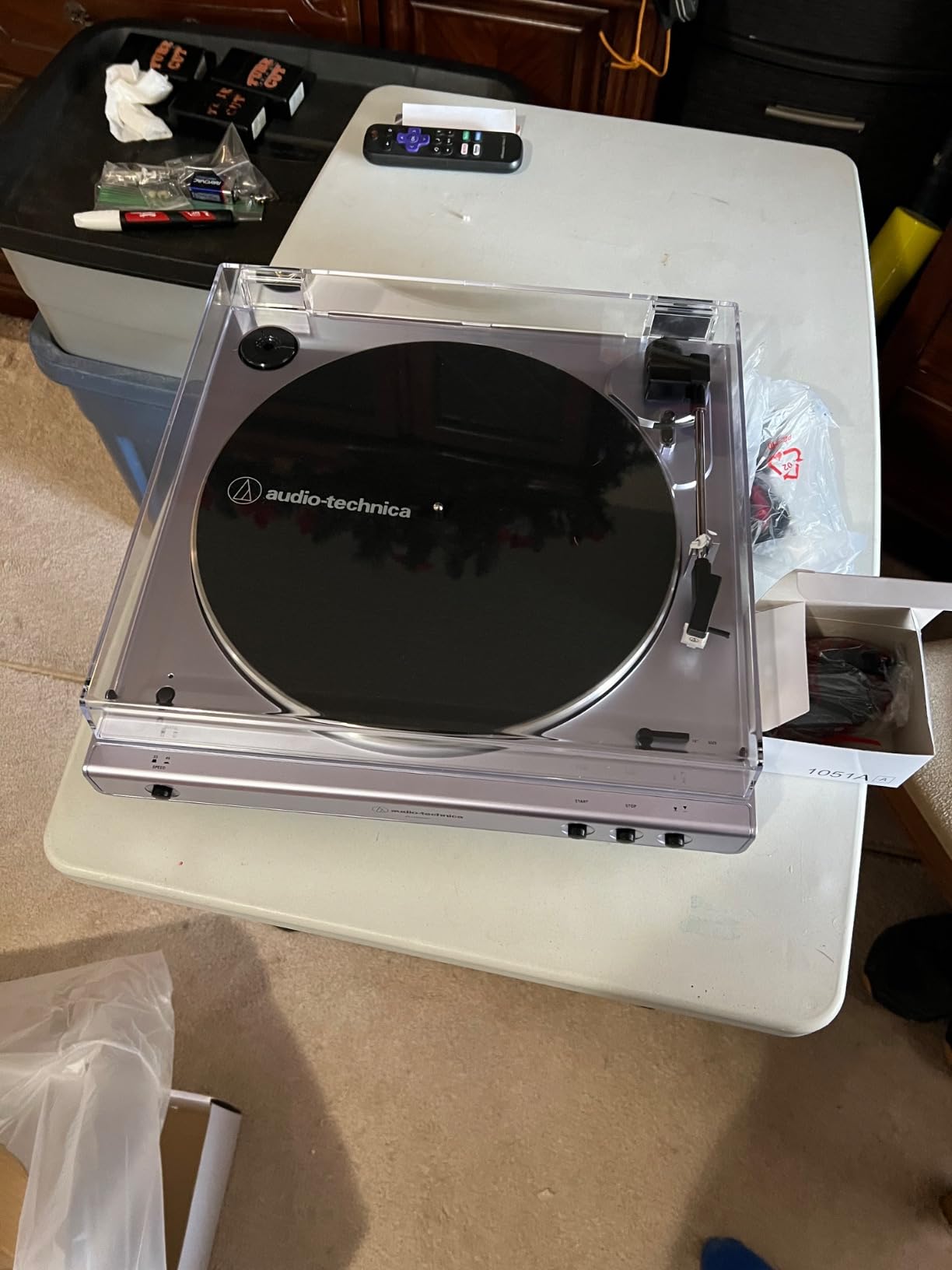
Set a record on the platter, press start, and the arm cues itself, plays the side and returns. That is the whole routine. For a first vinyl purchase, removing the two things beginners most often get wrong — tracking force and cueing a moving needle — is worth more than any amount of specification.
The die-cast aluminium platter is the detail that separates it from the plastic decks in the same bracket. Heavier rotational mass means a steadier rotation and a lower rumble floor, and it is the first component most owners mention when they explain why this deck beat their expectations.
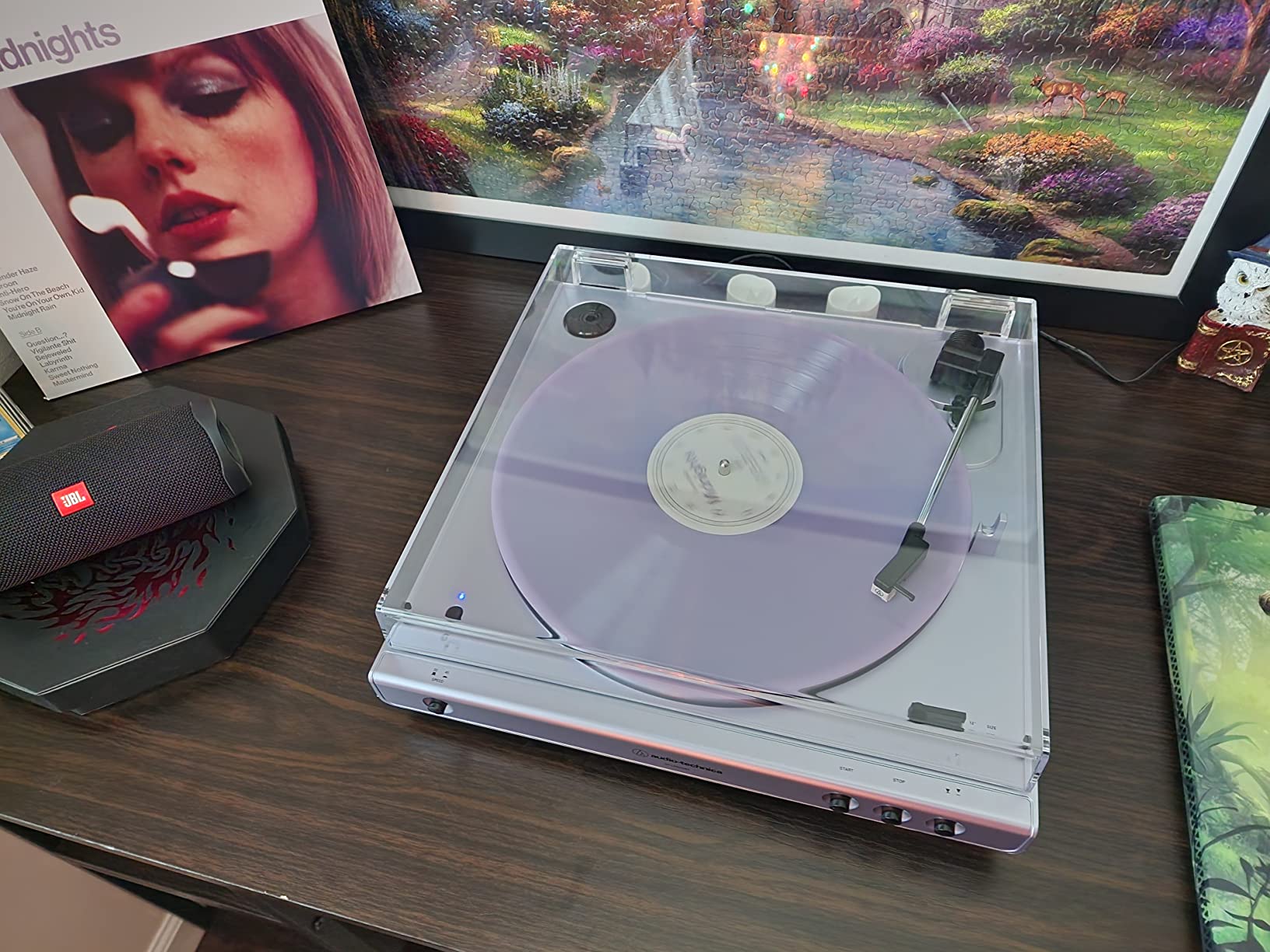
The cartridge is an integral dual moving-magnet design with a replaceable ATN3600LC diamond stylus, so when the needle eventually dulls you replace a small part rather than the tonearm assembly. The two-year manufacturer warranty is longer than most of the field.
Bluetooth here is transmit-only with aptX support, which means the deck sends audio out to your speakers or headphones. A dual RCA output cable is included for a wired path instead, and the AC adapter sits outside the chassis so its converter noise stays away from the signal chain.
Who this suits best
It suits anyone who already owns a pair of speakers, a soundbar or Bluetooth headphones, because the only extra purchase is the music. The model number on the box reads AT-LP60XBT even when the listing calls it something longer, which trips up a lot of first-time buyers.
It also suits anyone in a small apartment who wants to listen in bed at night over Bluetooth headphones without a cable running across the room.
Who should look elsewhere
Look elsewhere if you want one box to do everything, since there are no built-in speakers here and the included cable is the only way to hear anything. You will need powered or active speakers, or a headphone, on day one.
Owners wanting to play 78 rpm records will find two speeds only. It is also a deck for listening rather than archiving: there is no USB recording output on this model.
3. 1byone HiFi System: the only pick with real speakers in separate boxes
1 BY ONE Bluetooth Turntable HiFi System with 36 Watt Bookshelf Speakers
- Complete system with two bookshelf speakers in one box
- Speakers can be repositioned and later replaced or driven by a receiver
- Counterweight and anti-skate give accurate tracking once balanced
- Phono line and USB outputs make it a versatile hub
- Assembly is fiddly because the anti-skate wire must be knotted
- Printed instructions are often described as incomplete
- Bluetooth playback is quieter and stuttery compared with vinyl
Most one-box players put tiny speakers inside the turntable cabinet, which puts bass vibration straight into the chassis. This one does the opposite: the turntable sits on its own plinth and the two 36 watt bookshelf speakers stand apart from it. That separation is the single acoustic reason to prefer this system over the other all-in-ones here.
It is also the only system in this roundup that ships with separate speakers you can position across a room, rather than small drivers fixed inside the cabinet. The turntable also has a real adjustable tonearm — a counterweight and an anti-skating system rather than a fixed tracking force — plus a USB port that records your vinyl to a computer as MP3.
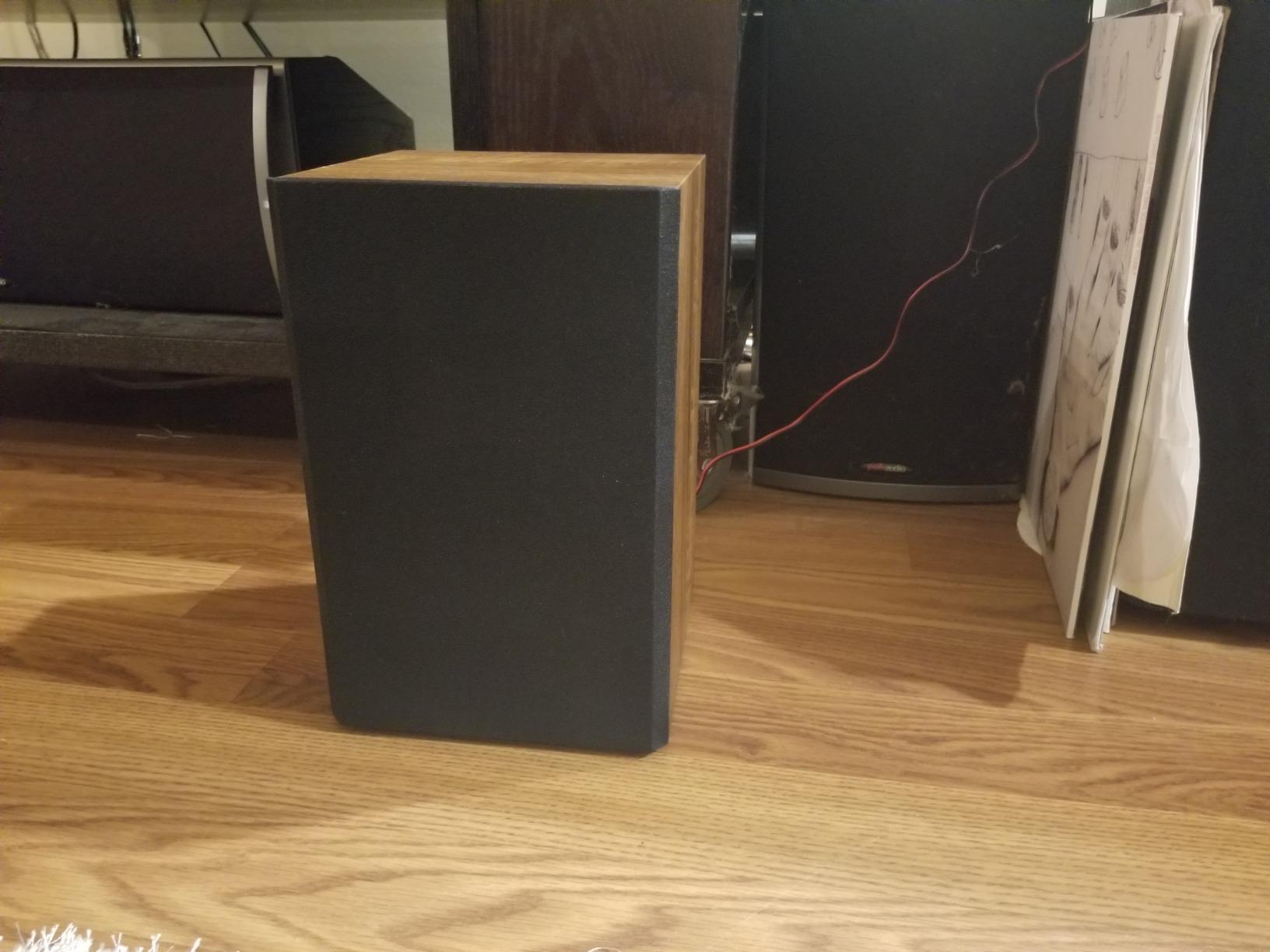
The solid iron platter gives uniform inertial mass, which is why long-standing owners describe the tracking as accurate with very few skips once the arm has been balanced. The bundled AT3600L cartridge sits in a standard-mount headshell, so upgrading the stylus later is straightforward.
Connectivity is the broadest here: switchable phono and line output with a built-in preamp, dual RCA cables to your own powered speakers, USB to a computer, and Bluetooth reception through the included speakers.
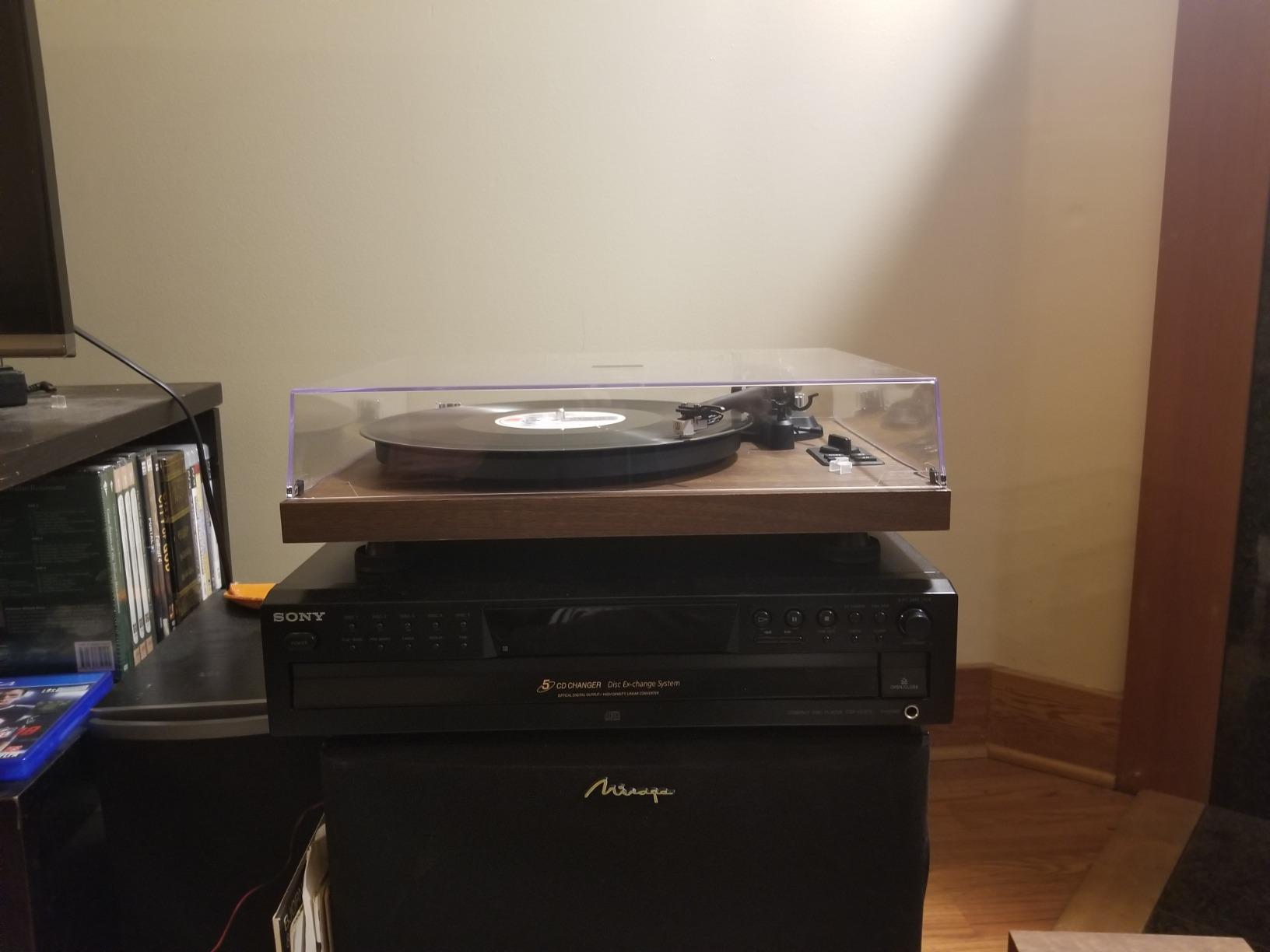
Who this suits best
It suits a beginner who wants the wired quality of a proper speaker system but does not want to buy an amplifier, and who plans to digitise a stack of inherited records while learning. The 36 watt speakers punch well above their size for a bedroom or a study.
It also suits anyone who will keep records for years, because the counterweight and anti-skate mean you are learning the real mechanics of a tonearm rather than working around them.
Who should look elsewhere
This is not the deck to buy if setup must be effortless. Balancing the tonearm and knotting the anti-skate wire is the recurring friction point in reviews, and the printed instructions are regularly described as incomplete.
The stock tracking force of 3.5g is heavier than ideal and can wear records and stylus faster. Bluetooth playback through the bundled speakers is also quieter and more prone to stuttering than the vinyl path, so treat Bluetooth here as a convenience for phone playback rather than a hi-fi path.
4. Audio-Technica AT-LP70XBT: the automatic deck with a stylus upgrade path
- Fully automatic start and stop so the tonearm is never touched
- Switchable built-in preamp works with speakers that lack a phono input
- VM95 cartridge system gives a cheap and simple stylus upgrade path
- Compact and light at 6.4 pounds so it moves between rooms easily
- No built-in speakers so a separate pair is needed
- No 78 rpm speed and no USB recording output
- Plastic body and a 55 db signal-to-noise ratio sit below the metal-bodied models
On paper this looks like a stripped-down version of the deck above it, and in some ways it is. The real argument for spending more here is the cartridge: an integrated AT-VM95C that fits any stylus in the VM95 series, so you can replace or upgrade the needle for a modest outlay whenever you want rather than buying a new deck.
The built-in switchable phono preamplifier is the sleeper feature. It lets the deck feed either a phono input or a line input, so it works with everything from modern active speakers to an older amplifier with no phono stage.
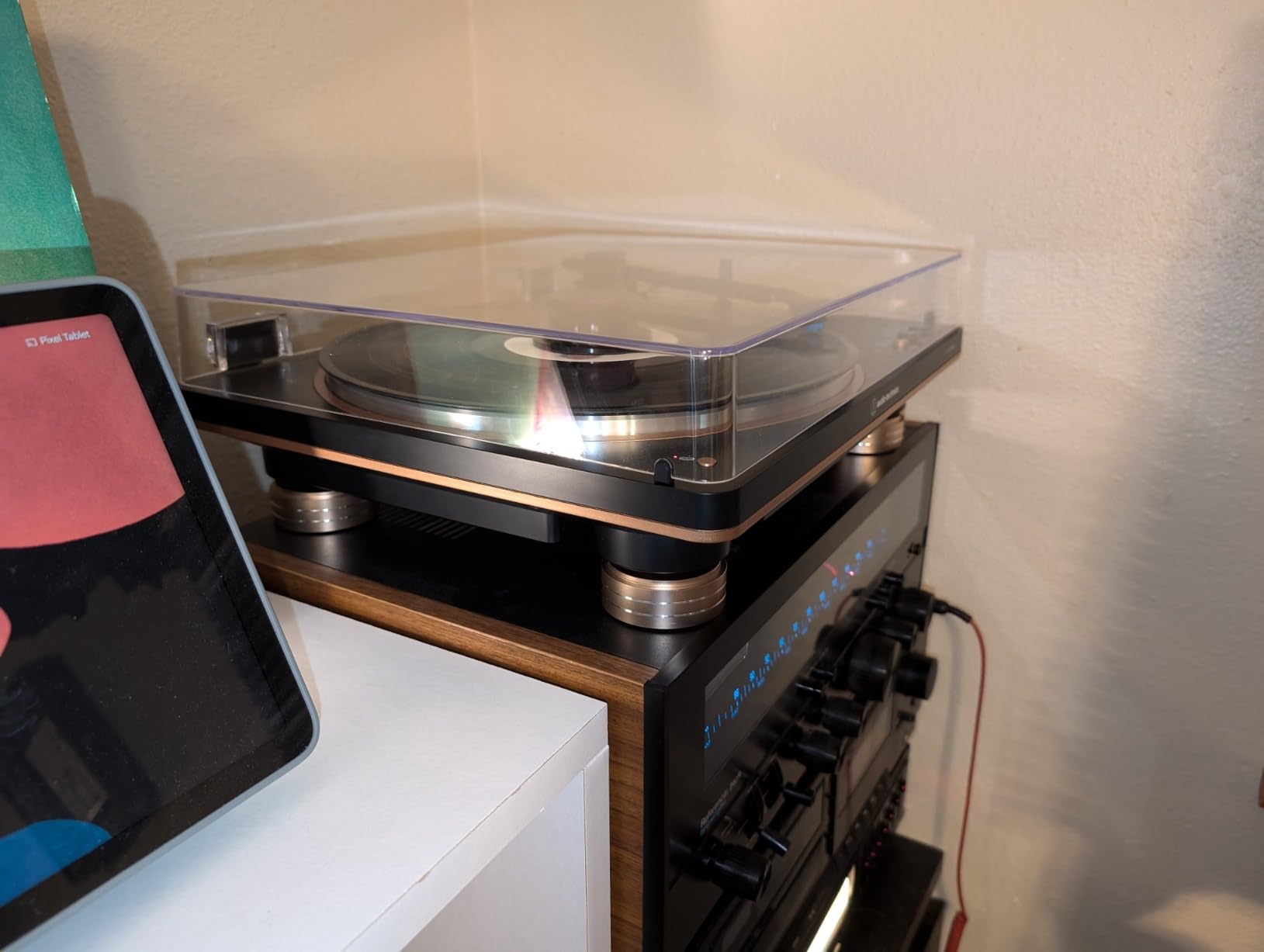
The J-shaped tonearm is engineered to minimise tracking errors, and in use it tracks cleanly with very little surface noise. A three-piece plastic chassis keeps weight down and resonance manageable, and the removable hinged dust cover is included.
Bluetooth output here is transmit-only, and a detachable RCA cable, a 45 rpm adapter and the dust cover all come in the box. That makes it a clean first deck for streaming to Bluetooth speakers or headphones.
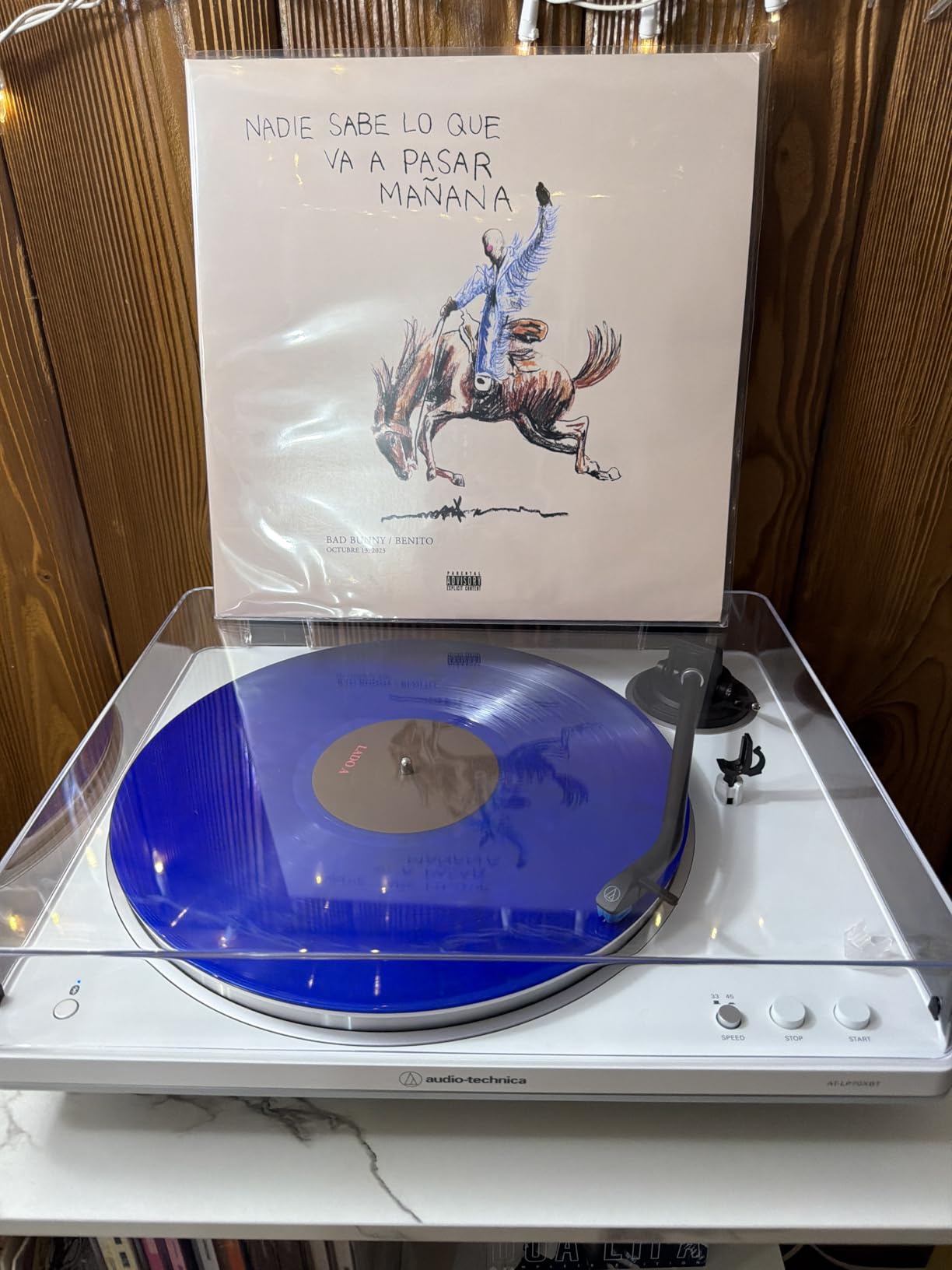
Who this suits best
It suits a beginner who wants the least handling and plans to stay in the hobby. Automatic operation removes the learning curve, and the VM95 platform means the first upgrade you will ever make is a cartridge rather than a turntable.
It also suits anyone connecting to speakers that have no phono input, since the switchable preamp solves a problem that trips up plenty of first-time buyers.
Who should look elsewhere
Buyers wanting one-box playback should choose an all-in-one instead, since there are no built-in speakers. Anyone who owns 78 rpm records will find two speeds only, and there is no USB output for digitising.
The plastic chassis and 55 db signal-to-noise rating are a step below the metal-bodied decks here, so on quiet passages you may hear more surface noise than the automatic alternative offers.
5. Audio-Technica AT-LP120XBT-USB: the pick for digitising and growing into the hobby
Audio-Technica AT-LP120XBT-USB-BK Wireless Direct-Drive Turntable (Analog, Wireless & USB), Fully Manual, 3 Speed, Convert Vinyl to Digital, Built-in Pre-Amp, Black
- Direct-drive motor holds speed tightly with a stroboscopic platter and speed indicator
- Die-cast aluminium platter and damped base give low rumble and stable playback
- The most flexible connectivity here with Bluetooth RCA and USB recording
- Target light and hydraulic arm damping make cueing easy in a dim room
- Fully manual operation means a beginner must learn cueing and anti-skate by hand
- No built-in speakers so external gear is required
- Bluetooth is transmit-only and cannot receive phone audio
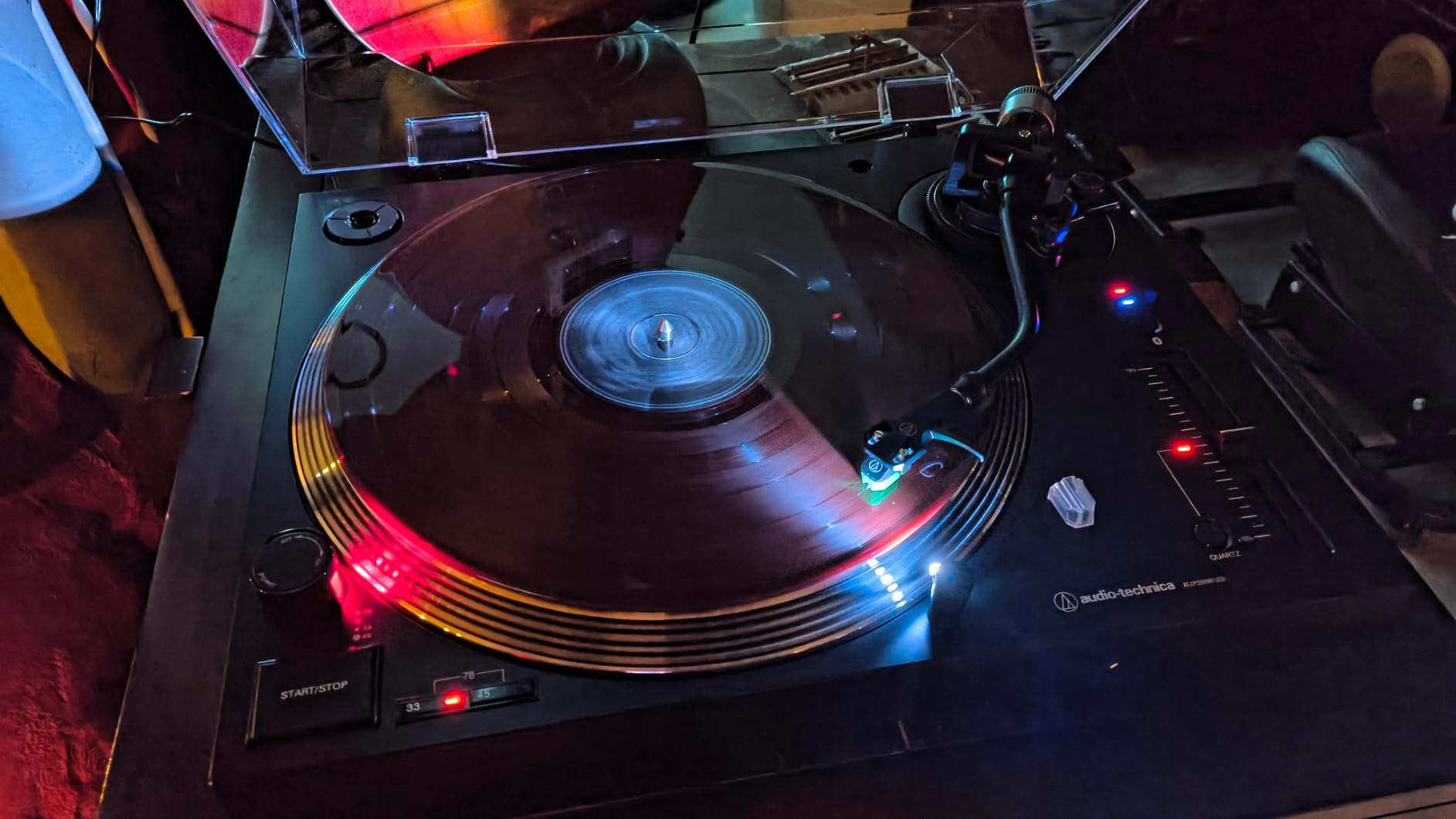
This is the highest-rated deck in the roundup, and it is also the one that asks the most of you. Operation is fully manual: you balance the tonearm, set the tracking force, adjust anti-skate and cue the needle yourself. None of that is hard, but it takes a first album to stop feeling like homework.
What you get for that effort is a direct-drive DC servo motor with a quartz-locked variable pitch control and a stroboscopic platter, which is a far more exacting mechanism than anything else here. Speed selection covers 33, 45 and 78 rpm.
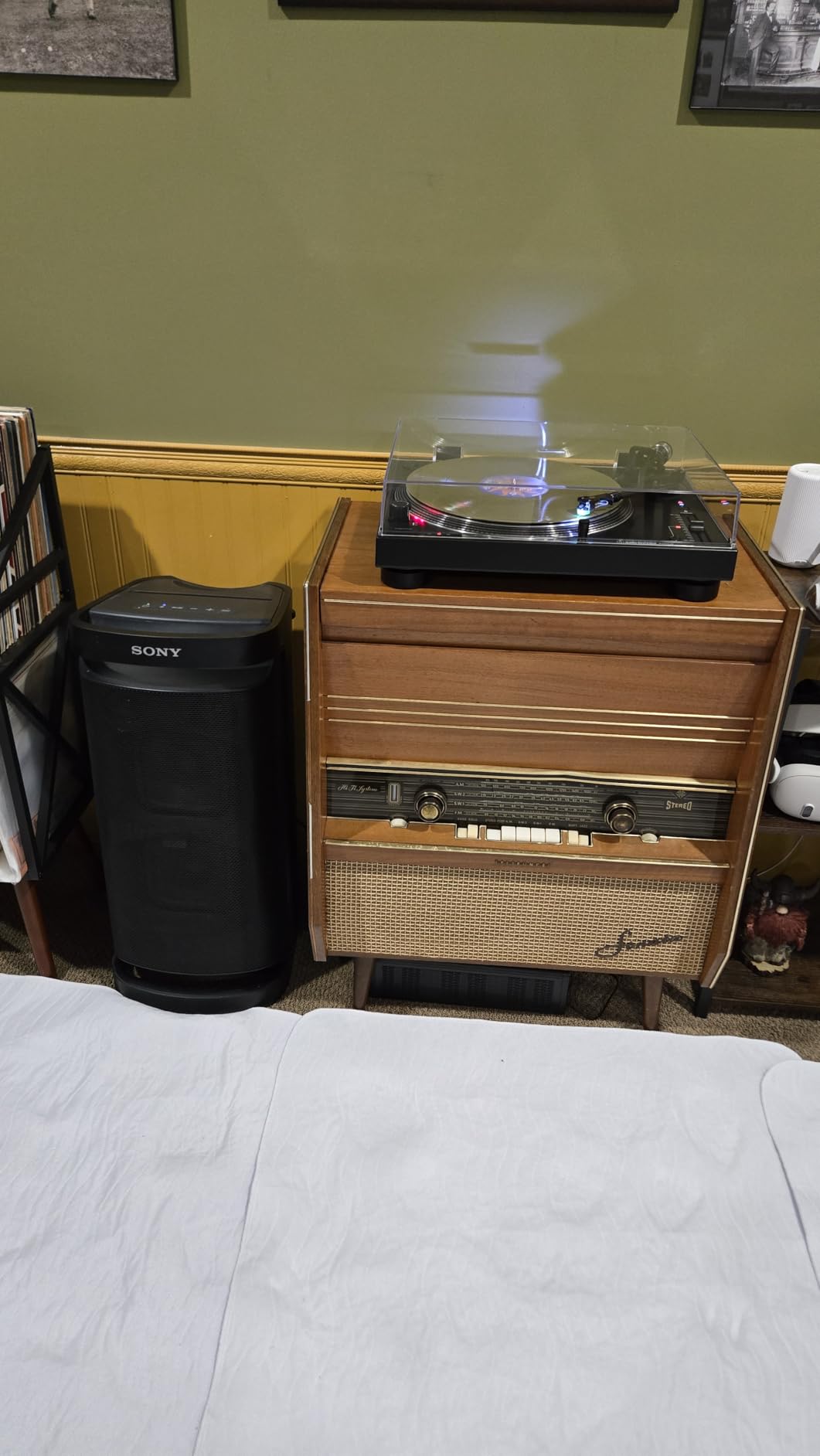
It is one of only two decks here that adds a USB-to-computer output alongside Bluetooth, so you can record vinyl to digital files as well as stream it. The USB cable is included along with a dual RCA cable.
Bluetooth uses aptX Adaptive for a more stable, higher-quality connection than basic pairing. The S-shaped tonearm has hydraulic damping on the lift control, dynamic anti-skate and a lockable rest, and a removable plug-type target light helps you place the needle in a dim room.
Who this suits best
It suits a beginner who already knows this is a hobby they will be in for years, and who wants a deck that rewards learning. It is the one to buy if you plan to digitise a family collection, because the USB path is included rather than an add-on.
Anyone with 78 rpm records in the stack will appreciate the three-speed selection, and the direct-drive motor holds pitch far more tightly than a belt drive when you nudge the shelf.
Who should look elsewhere
Do not buy this as your very first record player unless you enjoy reading manuals. Manual cueing, anti-skate and tracking force are the three areas beginners complain about, and this deck puts all three in your hands.
There are no built-in speakers, so you need powered speakers, an amplifier or headphones from day one. The US warranty is a one-year limited end-user warranty, shorter than the two-year terms on the cheaper Audio-Technica decks.
6. ANGELS HORN Four-Speaker Player: the most speaker-like all-in-one
ANGELS HORN Bluetooth Vinyl Record Player with Built-in Speakers, AT-3600L
- Four built-in speakers give fuller and better-balanced sound than most one-box rivals
- Bluetooth 5.0 plus aux-in and both phono and line RCA outputs allow later upgrades
- AT-3600L cartridge in a universal headshell can be swapped for a better stylus
- Wood cabinet and removable dust cover look well made
- No auto-stop so the record keeps running after the side ends
- Bluetooth is receive-only and cannot send audio to headphones or speakers
- Counterweight is very sensitive and needs calibration for best tracking
Four built-in speakers is the headline here, rather than the single pair crammed into a small cabinet on cheaper all-in-ones. Reviewers comparing it to those cheaper units usually come away surprised at how balanced and full the result is.
Underneath is a more serious deck than the styling suggests. It runs on a belt drive with a DC servo motor and a die-cast aluminium platter at 33 1/3 and 45 rpm, and the AT-3600L cartridge sits in a universal headshell with an adjustable counterweight.
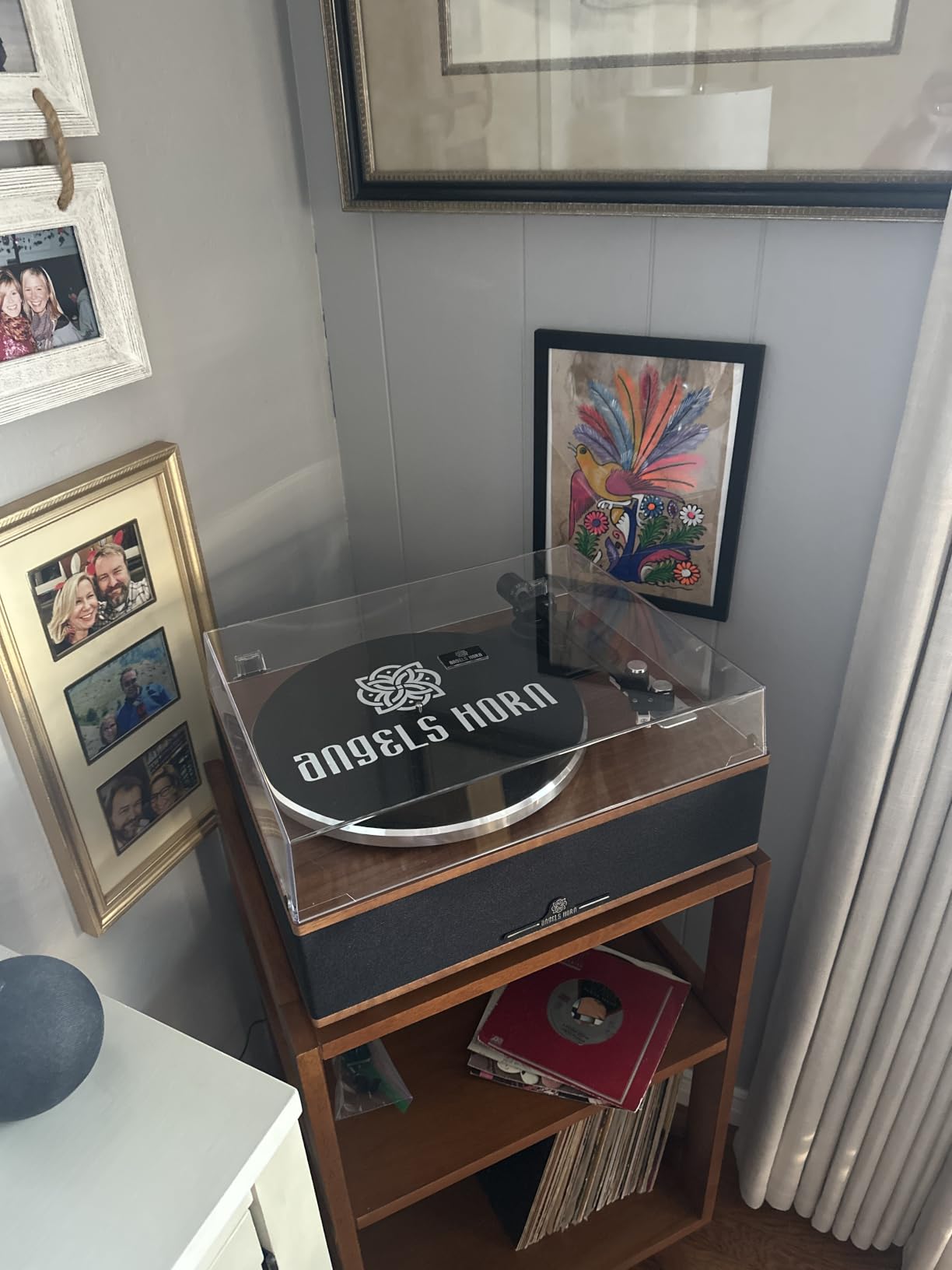
Connectivity is unusually flexible for an all-in-one: Bluetooth 5.0, an aux input, and RCA outputs that can be switched between phono and line, so you can move to external speakers without replacing anything.
A three-year warranty is the longest in this roundup, and the box includes a cartridge alignment protractor, a slip mat, a spare belt and a counterweight. That accessory list is a good sign about how the manufacturer expects the deck to be set up.
Who this suits best
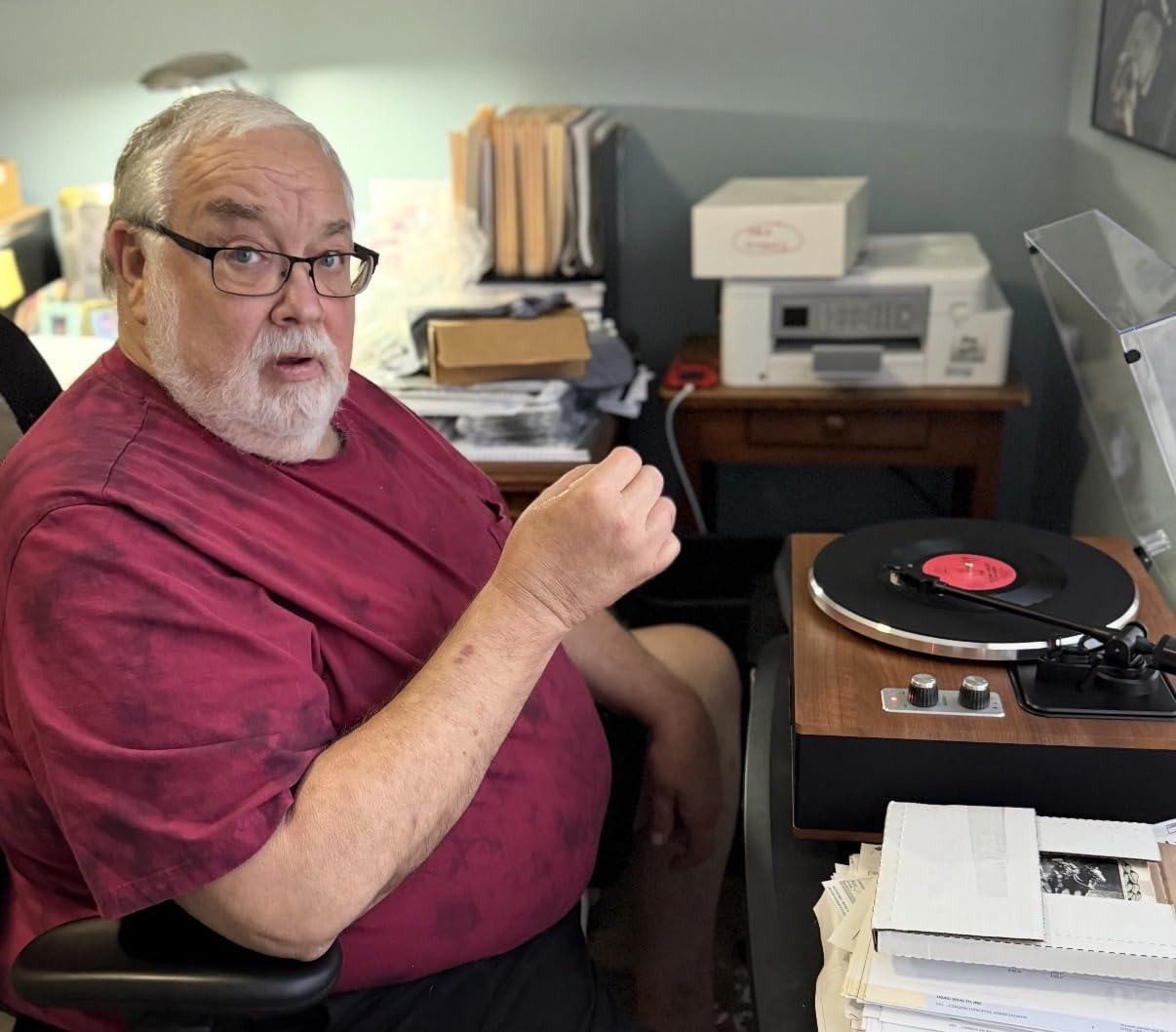
It suits a first-time buyer who wants four speakers in a wooden cabinet and does not want to think about an amplifier. Bluetooth 5.0 reception makes it a fine way to play phone playlists through better speakers than a phone offers.
Anyone who will want to add real speakers within a couple of years will like that both phono and line outputs are present, and that the cartridge headshell is a standard fit rather than a proprietary one.
Who should look elsewhere
Buyers who want the record to stop on its own should avoid this one. There is no auto-stop, so the stylus sits in a finished groove, which one reviewer called a dealbreaker and which wears the cartridge faster over time.
Bluetooth is receive-only, so it cannot transmit to your own speakers or headphones. Some owners also report skipping when someone walks past the unit, and the counterweight is sensitive enough that tracking needs proper calibration rather than a rough guess.
7. Seasonlife All-in-One: four speakers and an auto-stop in one cabinet
Seasonlife® All-in-One Record Player with 4 Speakers & Bluetooth, Brown
- Rich and full sound from four built-in speakers with an aluminium platter
- Adjustable counterweight reduces skipping compared with cheaper all-in-ones
- Auto-stop ends the record and the 45 rpm adapter has its own storage slot
- Works as a Bluetooth speaker as well as a turntable
- Cartridge tracking force is factory-set around 3g which can wear records faster
- Power switch is hidden on the back and volume is separate
- Documentation is thin and replacement parts are not listed
The auto-stop is the reason this one earns its place. Most all-in-ones in this price bracket keep the stylus running after the side ends, and the difference in listening experience is immediate. Here the platter stops on its own.
Sound quality is the other argument. Four built-in speakers, split into two high units and two low units, produce a fuller and more balanced result than the single pair in the cheapest decks, and several owners say it beat pricier all-in-ones they had tried.
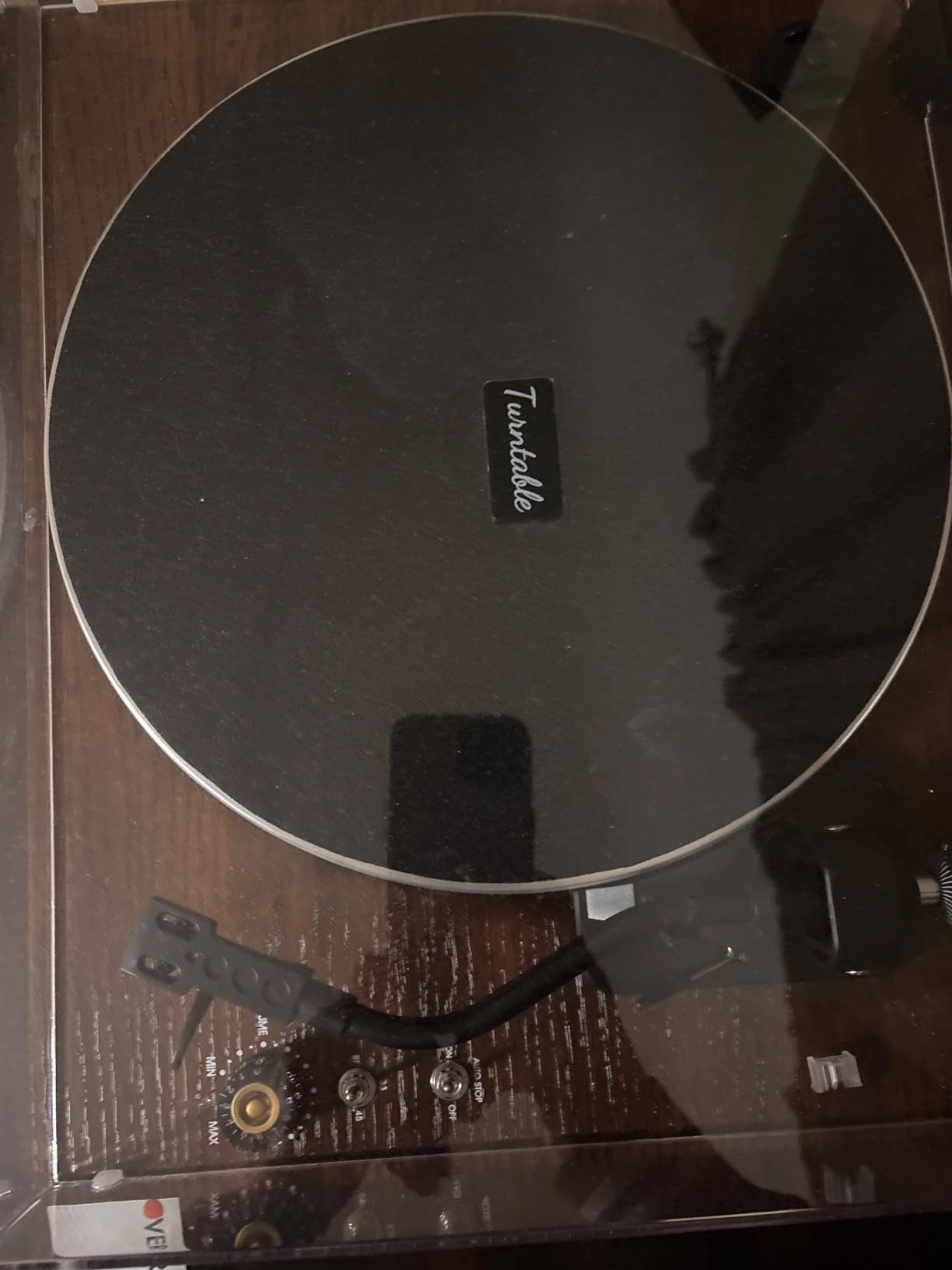
The aluminium platter with an adjustable counterweight tracks more reliably than the fixed-force decks it competes with, and the AT-3600L cartridge on an S-shaped tonearm can be replaced. The 75 db signal-to-noise rating is the highest figure among the eight here.
Outputs are well thought out: a PH setting for passive speakers and a LINE OUT for active speakers, both on RCA, plus Bluetooth and an aux input. That means the deck can graduate to a proper system later without being discarded.
Who this suits best
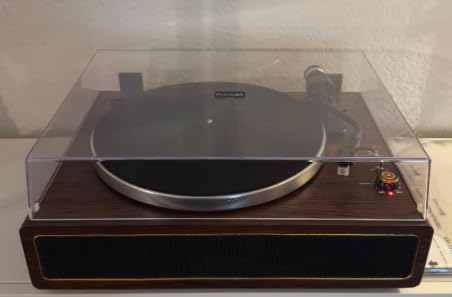
It suits a beginner in a small apartment who wants furniture-grade styling, four speakers and a record player that stops when the music does. The wood cabinet finishes are widely praised as attractive enough to leave on display.
It also suits anyone who wants to be able to upgrade the speakers without replacing the deck, since the RCA output can be switched between passive and active modes.
Who should look elsewhere
Watch the tracking force. It is factory-set around 3g, which is heavier than ideal and can wear both records and stylus faster than it needs to, so budget for an alignment tool or a light touch.
The documentation is thin and replacement parts such as the stylus and belt are not listed anywhere, with support by email only. The power switch is also on the back of the cabinet, which is an odd place for it, and this model carries a one-year warranty.
8. cotsoco Retro M49: the cheapest way to try vinyl with Bluetooth
- The least expensive way to own a record player with Bluetooth
- One of only three options here that play all three speeds including 78 rpm
- Bluetooth receiver works as a phone speaker with no extra hardware
- Twenty plus colour options and a two-year warranty
- 45 db signal-to-noise ratio means audible surface noise on quiet passages
- Small built-in speakers with limited bass and no tone controls
- No adjustable counterweight or anti-skate so tracking force is fixed
If the question is whether you want to see yourself buying records, this is the cheapest credible answer. It plays 7, 10 and 12 inch records at 33, 45 and 78 rpm, which puts it in a small group of three decks here that cover all three speeds at this entry level, and it streams from a phone through its two built-in speakers.
The 4.3 rating across more than twelve thousand reviews reflects real enthusiasm for the styling and the low outlay, set against steady criticism of noise and modest volume.
The signal-to-noise ratio of 45 db is the weakest figure in this roundup by a wide margin, and it shows on quiet passages as audible surface noise. There is no adjustable counterweight or anti-skate, so the tracking force is fixed by the manufacturer.
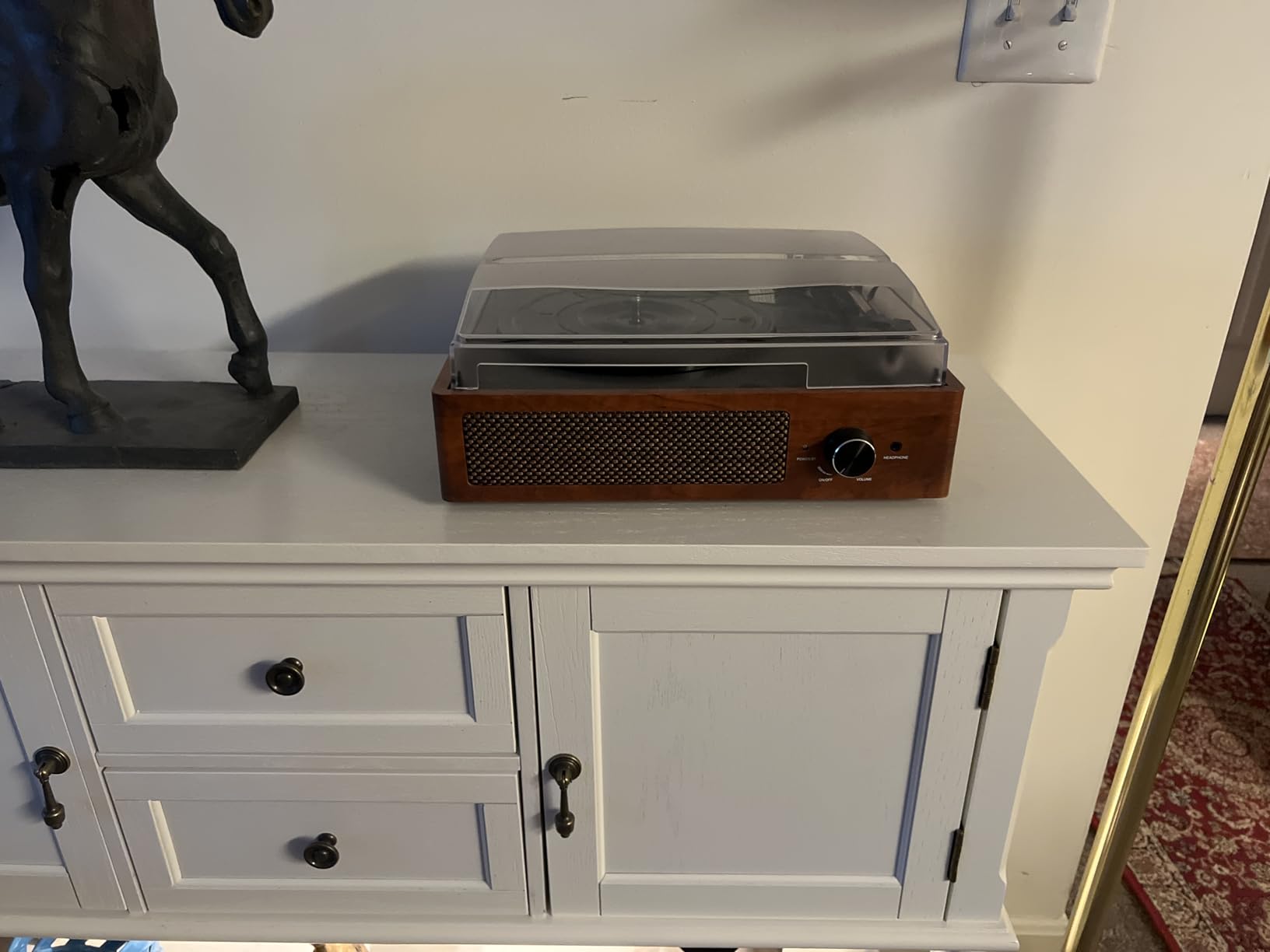
What you do get is choice: more than twenty colour options, a removable dust cover, a headphone jack, an aux input and an RCA line out. At 4.8 pounds it is also the easiest deck here to carry between rooms or take to a shared space.
Who this suits best
It suits someone testing the idea rather than committing to it, a child or teenager who wants a first deck of their own, or anyone who wants the vinyl look in a specific colour that no other deck offers.
It is also a sensible second machine for a room where you will play background records rather than sit and listen properly.
Who should look elsewhere
Do not buy this expecting it to be a serious audio path. The 45 db noise floor and small speakers with limited bass will disappoint anyone who reads reviews of hi-fi turntables and expects the same result.
Because tracking force is fixed, you cannot fine-tune the arm to match a worn record or a new one. 12 inch records also need tilting toward the tonearm to seat properly, which tells you how the mechanism is built. If you want a first turntable you can grow with, spend the extra money.
Do You Need an Amp? What to Buy Alongside a Bluetooth Turntable
Short answer: if your turntable transmits Bluetooth, no amplifier is needed. The amp is inside the deck, the signal is boosted to line level before it is encoded, and it goes straight to whatever Bluetooth speaker or headphone is playing. If your turntable receives Bluetooth and has built-in speakers, an amplifier is optional and only needed when you outgrow them.
This trips up a lot of first-time buyers, who see RCA sockets and assume they must buy a receiver. On the Audio-Technica models the RCA cable is a second route, not the only one, so you can start wireless and move to wired later.
The realistic starter spend splits like this: the turntable, plus either a pair of active speakers or Bluetooth speakers, or a decent pair of Bluetooth headphones. If you already have any of those, the deck is your only purchase. If you have nothing, speakers usually cost more than the turntable does — which is the opposite of how people budget for this hobby.
Our advice is to buy the deck first, then listen on the speakers you already have before spending anything else. Plenty of beginners discover their phone speaker or a cheap pair of bookshelf speakers is enough for the first year, and that money goes further on a better cartridge later. If you are still deciding between decks, our broader turntable buying guide covers the wired options in more depth.
Wired vs Bluetooth: Our Honest Verdict
Bluetooth on a turntable is a convenience feature with a real cost. The audio is encoded and compressed before it leaves the deck, so the sound that arrives at your speakers is processed rather than the pure analogue signal the stylus produced. Whether you notice depends on the codec and the quality of everything in the chain.
Codec quality varies meaningfully between these decks. The Audio-Technica AT-LP120XBT-USB supports aptX Adaptive, the AT-LP60XBT supports aptX, and the rest fall back to basic pairing. Where higher-quality codecs are supported, streaming is stable and the gap to a wired connection narrows considerably.
Our rule is simple. Use Bluetooth for convenience — a flat, a bedroom, a kitchen, headphones at bedtime. Use the RCA cable when you are sitting down to listen properly and the speakers can take it. Owners of these decks consistently report that wired playback from the same deck is fuller and more detailed, and there is no honest way around that.
The same caution applies in reverse to the all-in-ones. A reviewer with decades of hi-fi experience notes that the tinny complaints aimed at small built-in speakers largely disappear when the same deck is routed through powered speakers.
First Turntable Mistakes to Avoid
Buying a turntable with no tracking adjustment at all. Fixed tracking force is the single biggest quality ceiling on the cheapest decks, including the cheapest pick in this roundup. If you see no counterweight and no anti-skate, the arm cannot be tuned to a new record or a worn one.
Assuming Bluetooth on a record player always means it sends audio out. Half the decks here receive Bluetooth instead, which only means they can play music off your phone through their own speakers. Read the direction carefully before buying.
Leaving the arm parked at the end of a record. On a deck without auto-stop — one of the picks here has none — the stylus sits in the run-out groove and wears the cartridge. Lift it or buy a deck that stops itself.
Placing the turntable on the same surface as a subwoofer speaker or near a vibrating wall. Every forum conversation about turntables lands on this eventually. A firm, level, isolated shelf makes more difference than most beginners expect, and it costs nothing.
Setting up a heavy turntable near a bed in a small flat. The best Bluetooth turntable for vinyl beginners is also often the one you can move easily and place where the neighbours will not hear it. Weight is a virtue for a platter and a nuisance for a nightstand.
Unboxing to First Record: A 5-Minute Setup
First, put the deck on a level surface away from speakers and vibration, then connect power last. Whatever instructions came with the manual, most of the packaging is packing material that has to come off before anything else makes sense.
Second, fit the dust cover if the deck has one, and take the stylus guard off if the cartridge arrived with a protective restraint. This is the single most common reason a first record sounds like nothing at all.
Third, set the speed. Check whether the record is 33 1/3 rpm or 45 rpm from the label, and drop the 45 rpm adapter onto the spindle for singles. Two-speed decks such as the Audio-Technica automatic models handle this with a switch.
Fourth, pair Bluetooth. Put the turntable into pairing mode — usually a held button on the top panel — and put your speaker or headphones into pairing mode too. If the room is full of Bluetooth gear, turn the other devices off first, because a turntable will happily latch onto whatever answers soonest. Reddit users hit this pairing problem more than any other.
Fifth, drop the needle and listen. On a manual deck that means balancing the tonearm over its rest, setting the counterweight so the arm just floats, then setting anti-skate so it drifts very slightly inward. On an automatic deck it means pressing start.
How to Choose a Bluetooth Turntable
Phono stage and why every deck here has one. The signal a stylus produces is far too quiet to feed a speaker directly, so a phono preamp boosts it and applies the equalisation curve vinyl needs. Every deck in this roundup has one built in, which is the single biggest reason Bluetooth turntables are beginner-friendly. Check for a phono or line switch if you own an amplifier, because a line-level input plus a phono stage doubles the wrong signal.
Belt drive or direct drive. A belt drive uses a rubber belt to turn the platter, which absorbs motor vibration and gives a gentler, warmer result at lower cost. A direct drive spins the platter from the motor itself, holding speed more tightly and starting instantly. For a first deck at the automatic end of this roundup, belt drive is the sensible default.
Automatic or manual tonearm. An automatic arm cues itself, plays the side and returns. A manual arm asks you to balance it, set tracking force and place the needle. Automatic removes the two steps beginners most often get wrong; manual teaches you the mechanics that let you upgrade later without relearning everything.
Bluetooth transmit or receive. This is the decision that actually shapes your layout. Transmit decks replace the amplifier and let you use your own speakers or headphones. Receive decks pair with your phone and play through their own speakers, which is simpler but means the sound quality is fixed by hardware you cannot change.
How much a first Bluetooth turntable should cost. Spend roughly a quarter of your total system budget on the deck, because the speakers or headphones are what actually determine how it sounds. Buyers on a tight budget should also look at our entry-level turntable roundup for the wired alternatives.
Frequently Asked Questions
Is it worth getting a Bluetooth turntable?
Yes, if you want vinyl without amplifier and speaker cables running across a room. The Bluetooth path removes the amp and lets you use wireless speakers or headphones you already own. You trade a little audio fidelity for that convenience, so keep the RCA cable for serious listening.
What is a good quality turntable with Bluetooth?
Look for a die-cast platter, an adjustable counterweight or a fully automatic tonearm, a built-in switchable phono preamp, and Bluetooth transmit rather than receive. Those four details separate a deck you can grow with from one you will replace in a year.
Which is the best Bluetooth turntable?
For a first record player with nothing else at home, the Victrola Quincy 6-in-1 needs no extra components. If you already own speakers or headphones, the Audio-Technica AT-LP60XBT is the easiest to operate and the best place to start.
Do I need an amp with a Bluetooth turntable?
No, if the deck transmits Bluetooth over speakers or headphones, because the amplifier is built in. You only need an amplifier for a wired setup with passive speakers, or to replace the built-in speakers on an all-in-one system later.
How do I pair Bluetooth headphones to a turntable?
Put the turntable into pairing mode using the button on its top panel, then put the headphones into pairing mode with theirs. If nothing connects, switch off other Bluetooth devices in the room first, since the deck will connect to whichever device responds soonest.
Which Bluetooth Turntable Should You Buy?
Buy the Victrola Quincy 6-in-1 if you have no other equipment and want the vinyl look without a single extra box. Buy the Audio-Technica AT-LP60XBT if you own speakers or headphones already and want the deck to do the work for you. Those two cover most beginners in 2026, and the rest of the roundup is there for when you know which direction you want to go.
Once you have one playing, come back to our full turntable guide for the next step up.