

The best sharpening stones for axes are dual-grit round pucks and compact field whetstones in the 120 to 400 grit range, because their curved, forgiving faces let you follow the convex bevel of an axe bit without grinding a hollow into it.
That single design choice is why a hockey-puck-shaped stone exists at all. A rectangular kitchen whetstone is flat and rigid, so when you lay a curved axe bevel against it you concentrate your strokes on the middle of the edge and leave the corners untouched. A round puck lets you sweep the entire face around the bit in circles, which is the motion that actually produces a convex edge.
A dull axe is worse than useless. It rounds over, glances off end grain, and leaves a torn cut surface that takes three times the swing energy to produce. It is also more dangerous than a sharp one, because a dull bit can glance unexpectedly instead of biting where you aimed it.
We pulled 10 dual-grit pucks and field stones through our own comparison, checking grit ranges against the work each axe actually demands, grip safety with gloves on, how each face behaves once it dishes, and how much metal each one can remove before the edge is back. The list below runs from the best overall field-and-bench puck down to the finest finishing stone for competition axes, with grit guidance, step-by-step technique, and stone care after the picks.
If you are still choosing the axe itself, start with our best camping axes tested so you know what edge you will actually be maintaining.
Table of Contents
Top 3 Sharpening Stones for Axes at a Glance
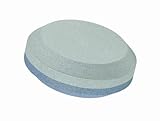
Lansky Puck Dual Grit
- Coarse and fine dual faces
- Circular strokes follow a convex bevel
- Pocketable puck format for field use
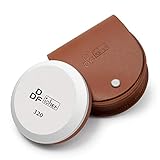
DDF IohEF 180/320
- 180 grit repairs dull edges
- 320 grit finishes them
- Leather belt pouch included
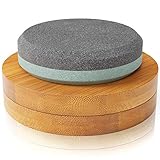
Sharp Pebble 150/320
- Large silicon carbide face
- 150 grit coarse and 320 grit fine
- Bamboo storage box included
All 10 Sharpening Stones for Axes Compared in 2026
| Product | Specifications | Action |
|---|---|---|
| Lansky Puck Dual Grit Sharpener |
|
Check Latest Price |
| DDF IohEF Axe Stone 180/320 |
|
Check Latest Price |
| Sharp Pebble Puck 150/320 |
|
Check Latest Price |
 NedFoss Axe and Hatchet Puck NedFoss Axe and Hatchet Puck |
|
Check Latest Price |
 Angerstone Axe Sharpener 180/320 Angerstone Axe Sharpener 180/320 |
|
Check Latest Price |
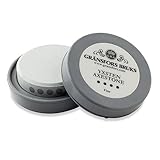 Gransfors Bruk Ceramic Grinding Puck Gransfors Bruk Ceramic Grinding Puck |
|
Check Latest Price |
 Norton Axe and Hatchet Stone Norton Axe and Hatchet Stone |
|
Check Latest Price |
 Hultafors Swedish Axe Grinding Stone Hultafors Swedish Axe Grinding Stone |
|
Check Latest Price |
 Whitby Abrasives 4 Inch Dual Grit Puck Whitby Abrasives 4 Inch Dual Grit Puck |
|
Check Latest Price |
 WATL Dual Grit Axe Stone 400/1000 WATL Dual Grit Axe Stone 400/1000 |
|
Check Latest Price |
1. Lansky Puck Dual Grit Sharpener – Best Overall for Field and Bench
Lansky Puck – Dual Grit Multi-Purpose Sharpener – Blade & Tool Sharpener
- Very easy to learn with a simple circular motion
- Dual faces cover coarse shaping and fine honing
- Works across axes hatchets machetes and mower blades
- Portable puck fits in a hand or pocket
- Long-lasting stone that holds up over years
- Coarse side too mild for deep chips or severe edge damage
- Will not reach a true hair-shaving edge
- Neither face polishes
- Felt slightly heavy for backpacking
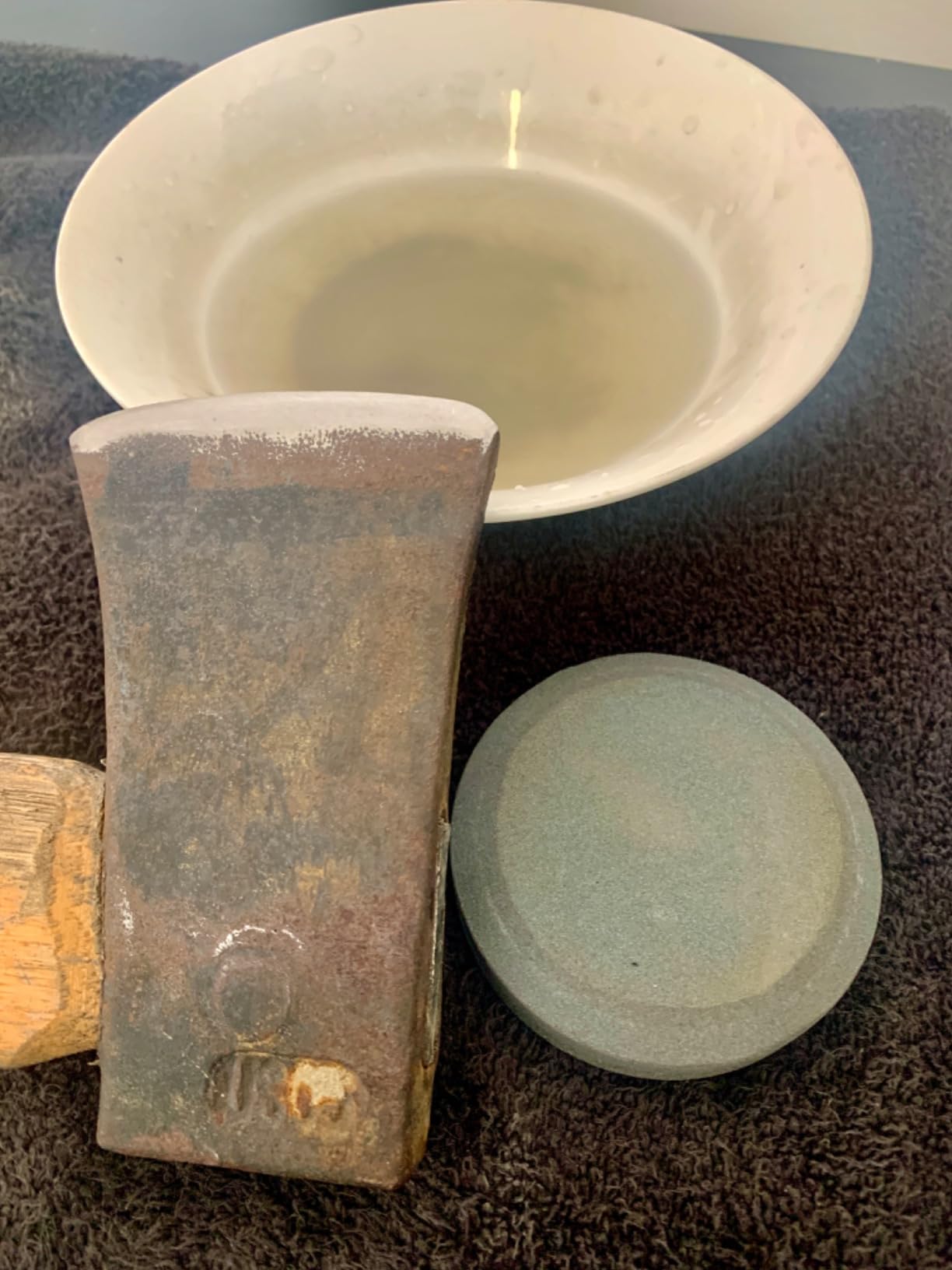
We kept this puck on the bench for months and it never stopped being the easiest tool in the drawer to pick up. The whole technique is one motion: brace the axe on a stump or in a vise, rest the stone on the bevel, and sweep it in circles. There is no jig, no angle guide, and no measuring. That simplicity is why it ends up getting used instead of sitting in a drawer.
The two faces cover almost every maintenance job on a working axe. Coarse goes on first when the bit is dull or has picked up a few dings from stones in the wood. Fine takes over once the bevel is re-established and you just want the edge back to biting cleanly.
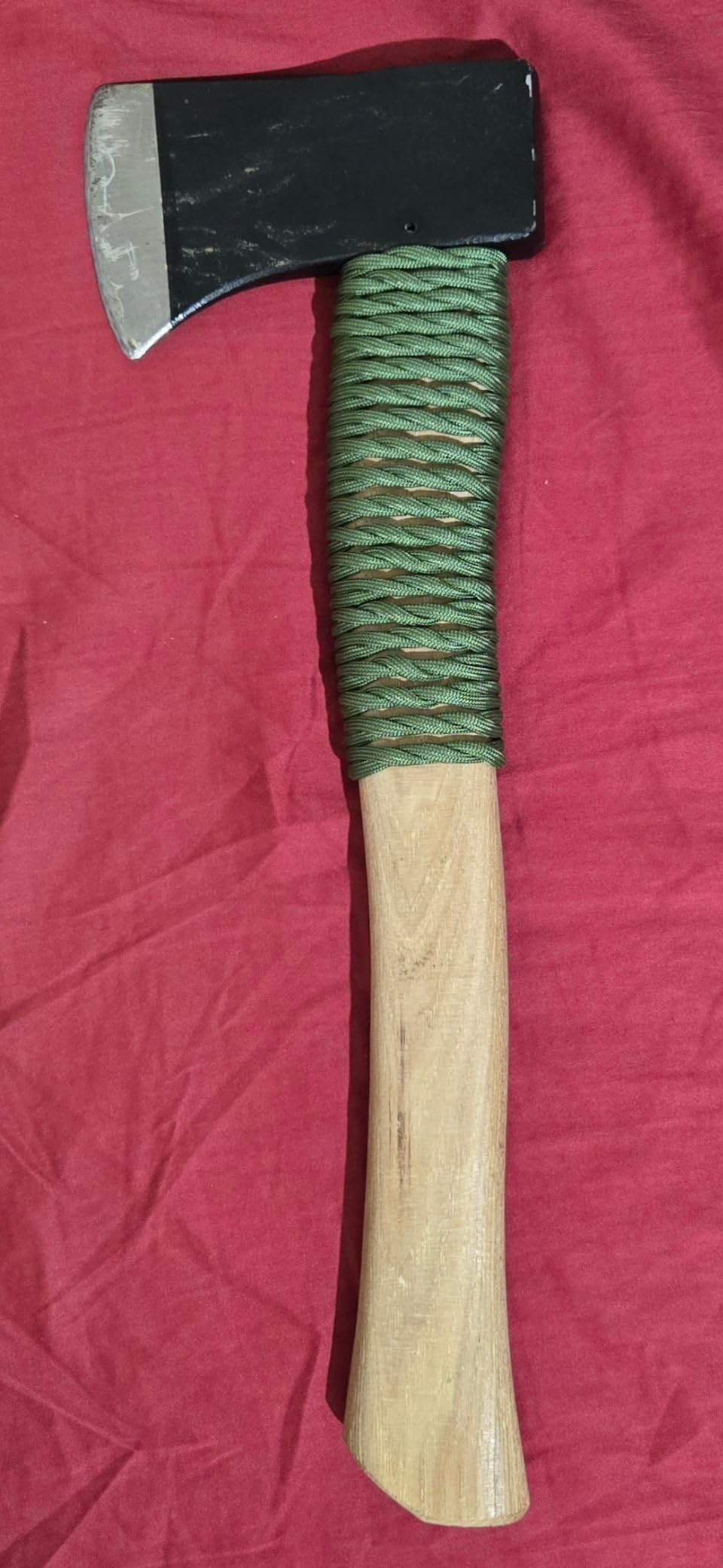
With more than 18k reviews behind it, this is also the puck most owners have actually lived with longest, and the pattern in that feedback is consistent. Wetting the stone before you start keeps steel fines from jamming the surface, and ten to fifteen minutes of steady circular strokes is usually enough to bring a firewood axe back from dull to biting.
The honest limitation is that this is not a tool for heavy damage. If your bit has a chip deep enough that your thumbnail catches in it, start with a file or a coarser stone first. The puck is a maintenance tool, not a repair tool.
What it is good for
It suits anyone who wants one stone that handles 90 percent of axe sharpening without any technique to learn. Felling axes, hatchets, camp axes, and the occasional machete or mower blade all fall inside what it can do.
It also works well for people who sharpen in gloves or cold weather, because the puck is gripped in the palm with fingers naturally clear of the bit rather than pressed close to it.
What it is not good for
It will not thin a thick factory bevel, and it will not rescue a badly damaged edge on its own. Both faces are more abrasive than buyers expect, so the finest result is a working edge rather than a polished one.
If you need to set a fresh bevel on a new axe, or take a rolled edge back to where it started, reach for a coarser stone or a file before you pick this up.
2. DDF IohEF Axe and Hatchet Stone 180/320 – Best Value Dual Grit
- Comfortable puck size that fits larger hands
- 180 grit repairs and 320 grit finishes in one stone
- Soft leather belt pouch with belt loop
- Frequent praise for build quality at this tier
- Not aggressive enough for a badly damaged edge
- Coarse side wears faster than expected under heavy pressure
- A few units reportedly arrived chipped
- No printed instructions in the box
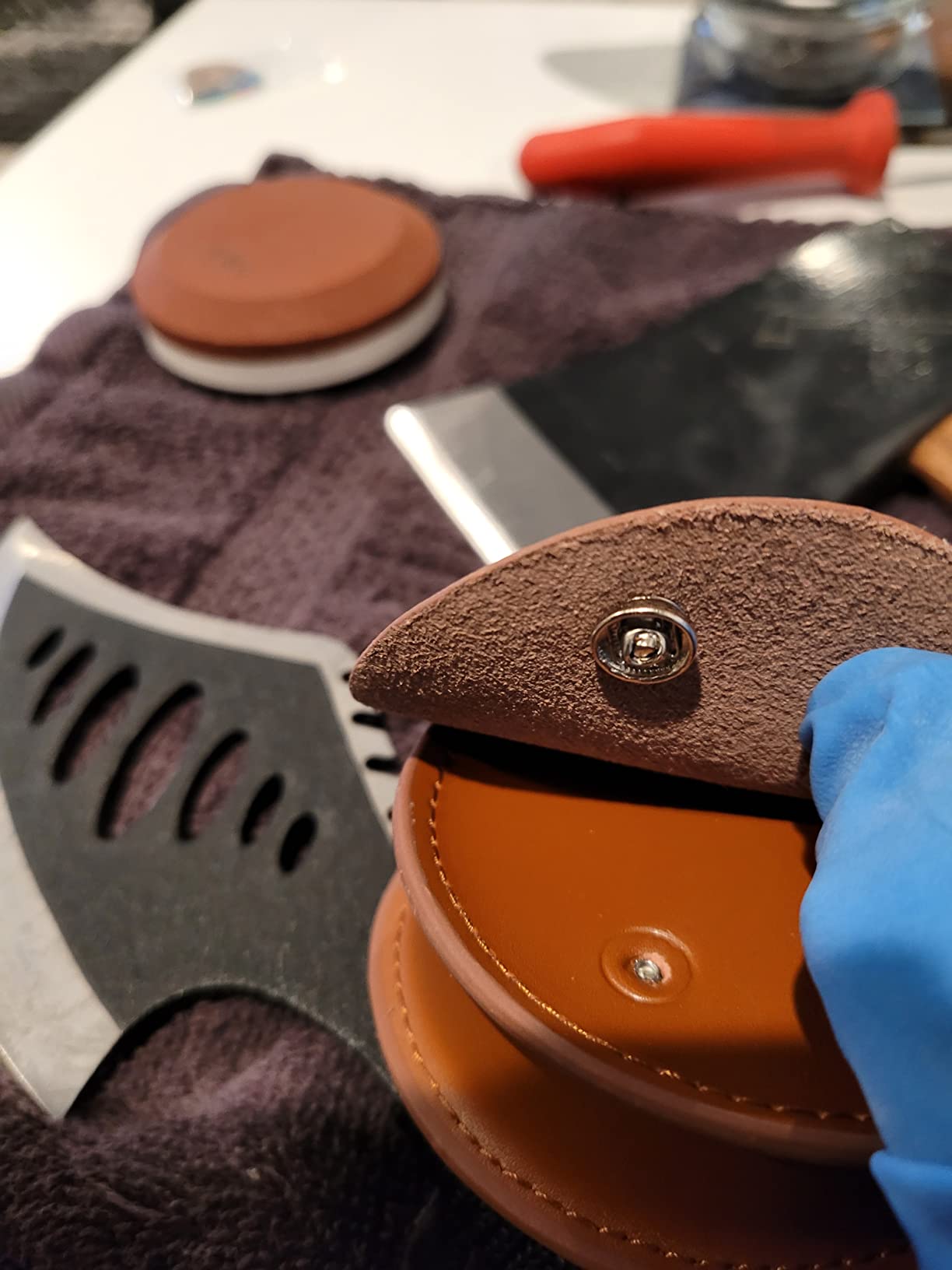
The 180 and 320 pairing is the most sensible progression for a normal working axe that has been used for a season and needs bringing back, rather than a stone built for damage repair. The red coarse face takes the dullness off quickly, and the white fine face leaves an edge that will hold a bit on end grain.
The puck itself is a comfortable size. It measures just over three inches across and an inch thick, which fills a large palm properly and gives you enough stone to follow a broad axe bevel without hunting for contact.
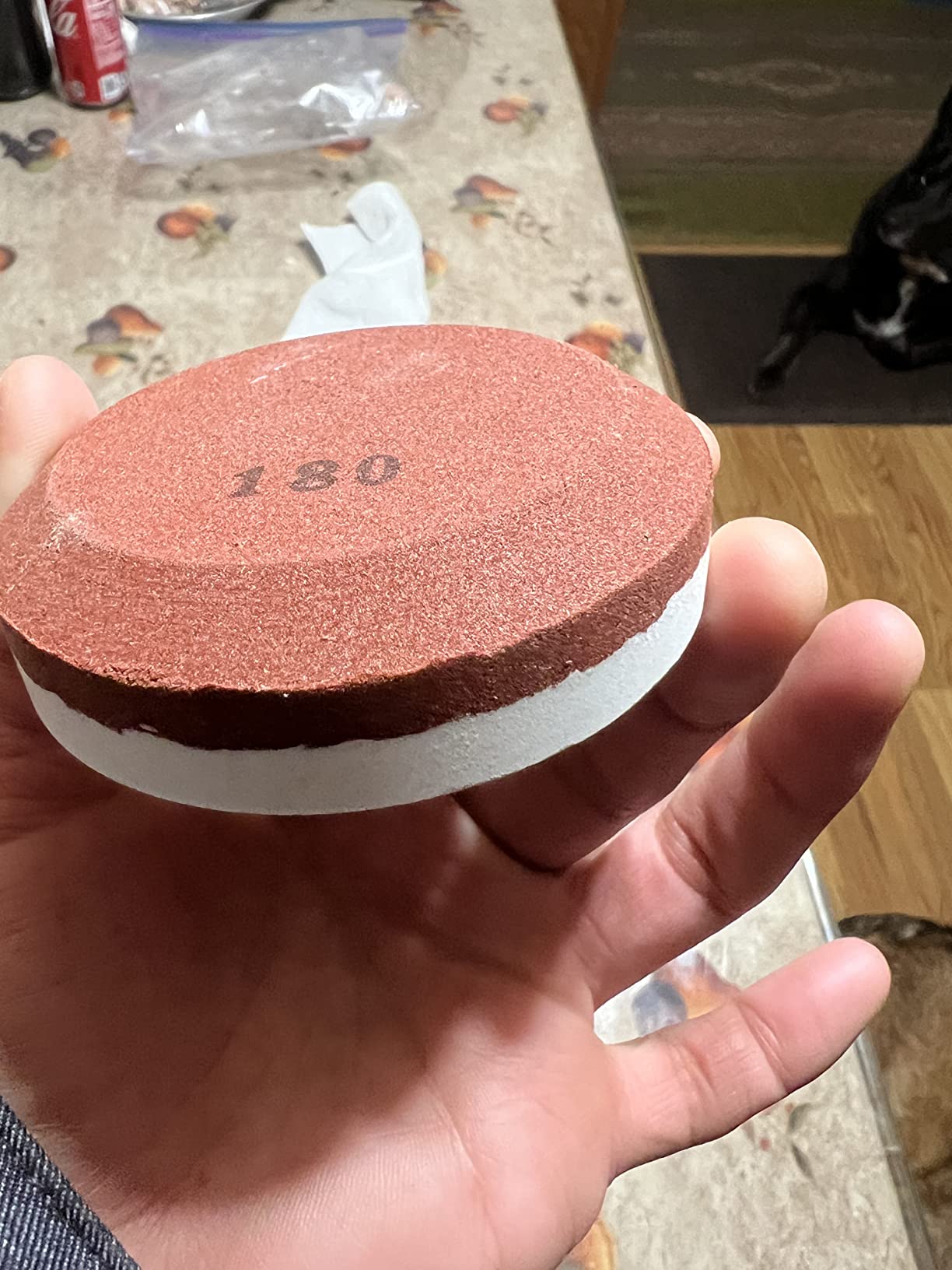
The leather pouch with a belt loop is the detail that turns this from a bench stone into a field stone. Reviewers buying it for bushcraft and firewood work mention the belt carry constantly, and the pouch is soft enough that you can draw the stone one-handed with the axe still in the other.
Owners also flag the same caveat, so plan for it. When you push hard on a very dull blade, the 180 grit face wears faster than you would expect, and it will not rescue an edge that has real damage in it. This is a maintenance and touch-up stone, and it is very good at that job.
What it is good for
It is the pick for someone who wants a genuine two-grit progression and a carry pouch in one purchase without paying for a premium brand. The 180 side handles routine resharpening and the 320 side handles finishing.
It also handles more than axes. Owners use it on machetes, tomahawks, shovels, spades, and mower blades, which makes it a sensible one-stone kit for a shed or a truck cab.
What it is not good for
It is not a heavy repair stone, and pushing it hard on damaged steel shortens its life. If your edge is chipped from a strike or a hidden wire, start with a file.
The grit faces wear down faster than the price suggests if you treat them as a stock-removal tool. Used as intended, for touch-ups, the stone holds up fine.
3. Sharp Pebble Puck 150/320 – Best for Chipped and Dull Edges
- Handles very dull and chipped edges well when soaked
- Surface is larger than typical pucks
- Ergonomic disk comfortable in the palm
- Bamboo storage box included
- Good for axes hatchets machetes and mower blades
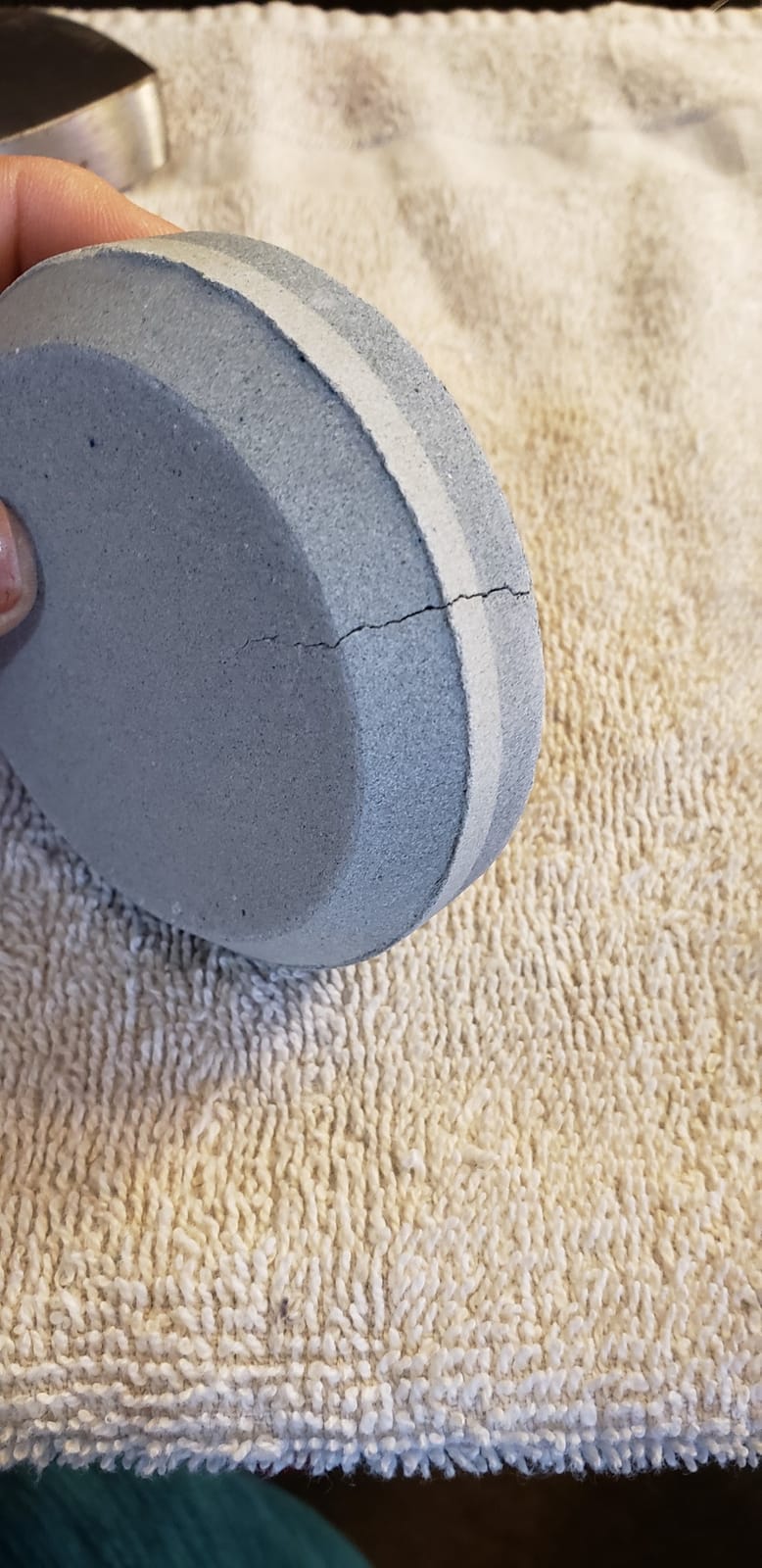
- Soft stone that wears and dishes with heavy use
- Sealed bamboo box traps moisture if stored wet
- Surface concaves quickly under regular load
- No higher grit option in this line
This is the puck we reach for when an edge has been neglected. The 150 grit coarse side cuts noticeably faster than a 180, and that extra aggression is the difference between an edge that takes ten minutes and one that takes half an hour. Several owners report using it on three axes in a row before needing to flatten it.
The face is the largest of the small pucks at just under four inches, so you get more stone under the bevel per stroke. It fills a whole palm properly in a way the smallest pucks do not, and the silicon carbide feels like it is working rather than skating.
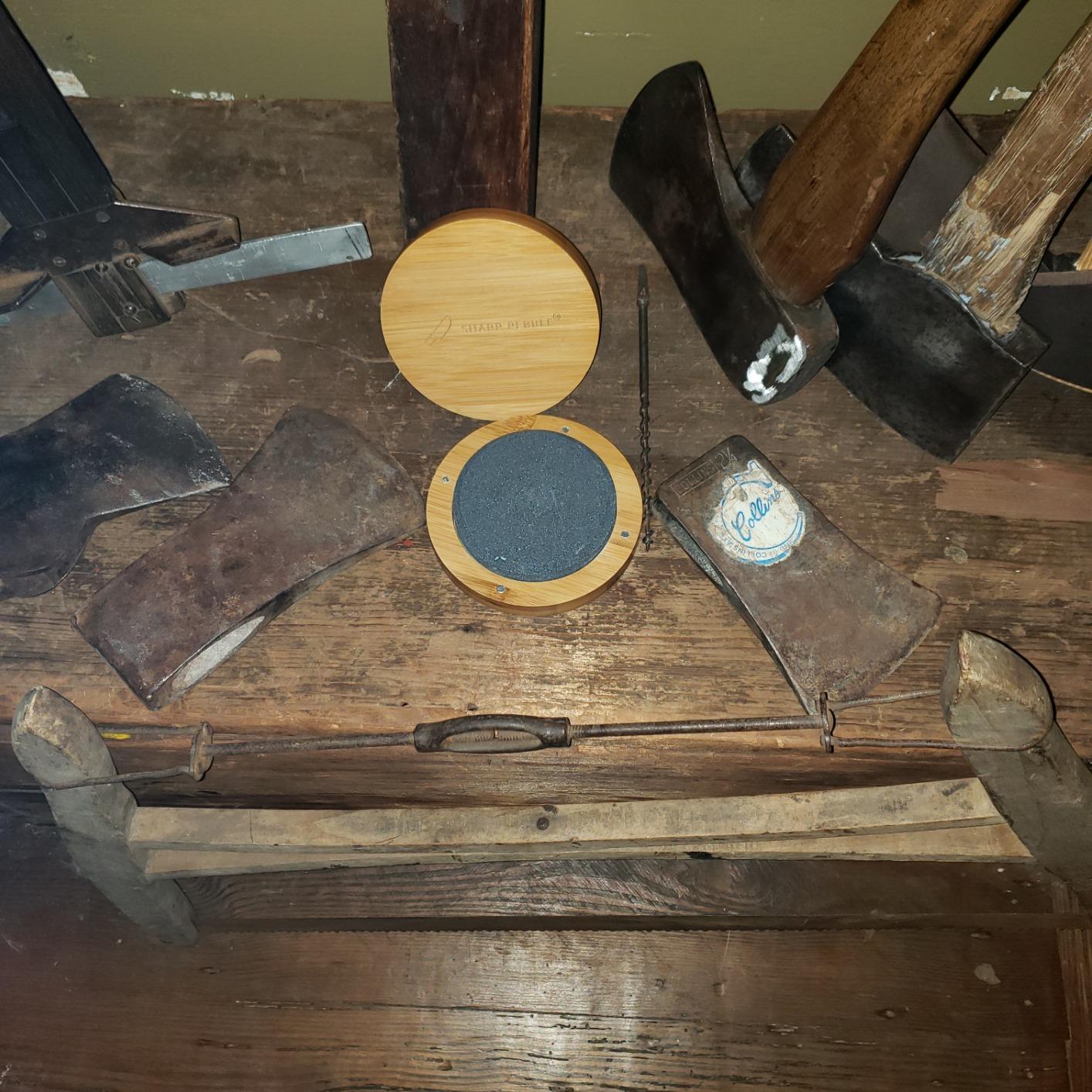
Soak it. Owners who wet the surface report it cutting far faster and loading less, which is the honest answer to why some reviews describe it as impressive and others call it soft. Dry, it is a slower stone than the same grit number implies.
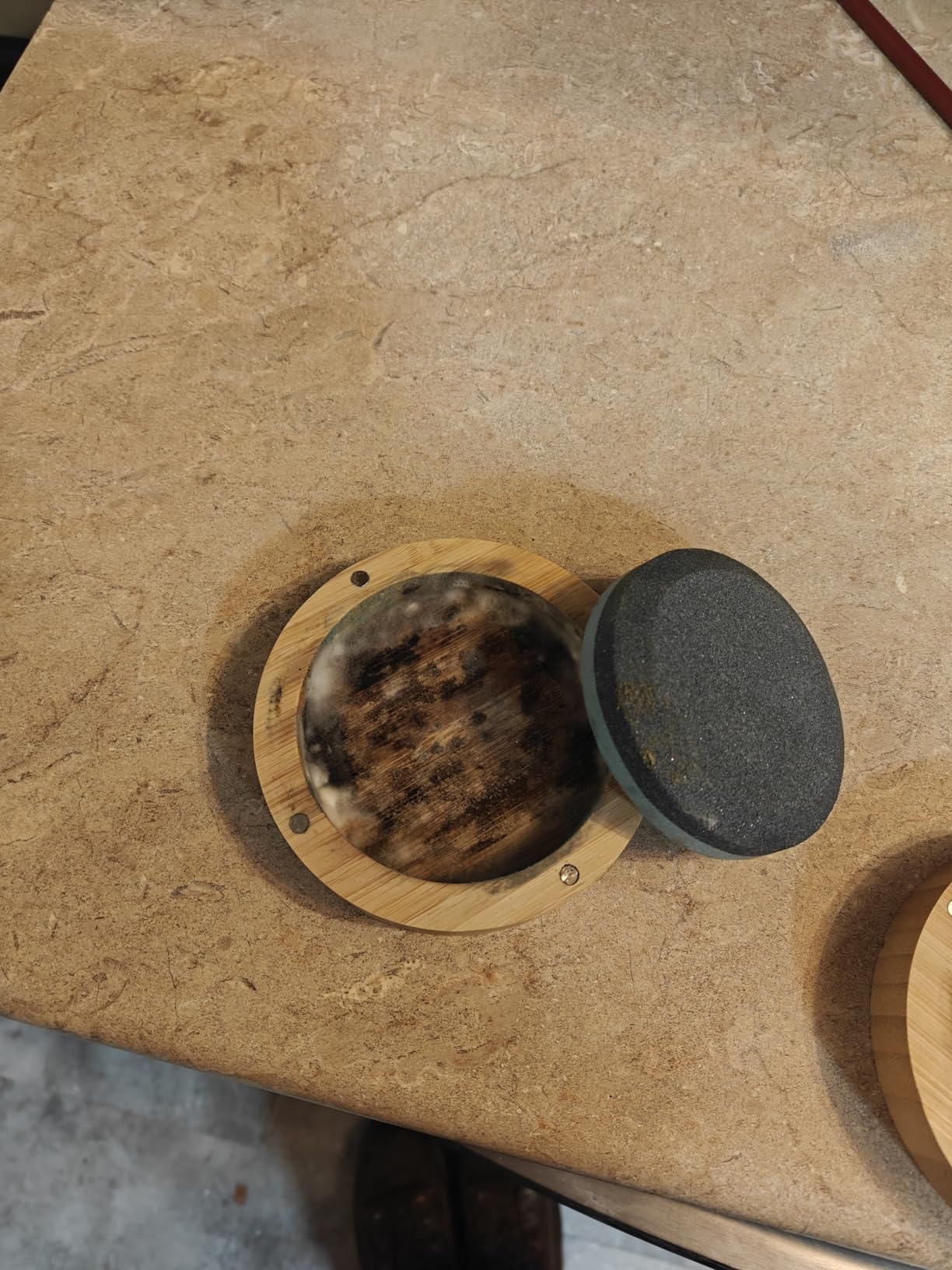
Two care notes come up repeatedly. Let the stone dry completely before you close the bamboo box, because a sealed box traps moisture and owners report mildew forming. And expect to flatten the face eventually, since a soft stone dishes in the center faster than a hard one.
What it is good for
It suits dull or lightly chipped working axes, firewood bits that have been sitting in a shed all winter, and anyone who wants more cutting power per minute than a 180 grit puck delivers.
It is also a strong choice for readers who like displaying their tools, since the bamboo box makes it a tidy object to keep on a shelf with the axe.
What it is not good for
It is not the stone for polishing, and the 320 side is a finishing grit rather than a refining one. If you want a mirror edge for a carving axe, follow up with a finer stone or a strop.
Heavy daily use will wear the face faster than you expect. If you split wood every weekend, budget for occasional flattening or pick a harder stone for the bench.
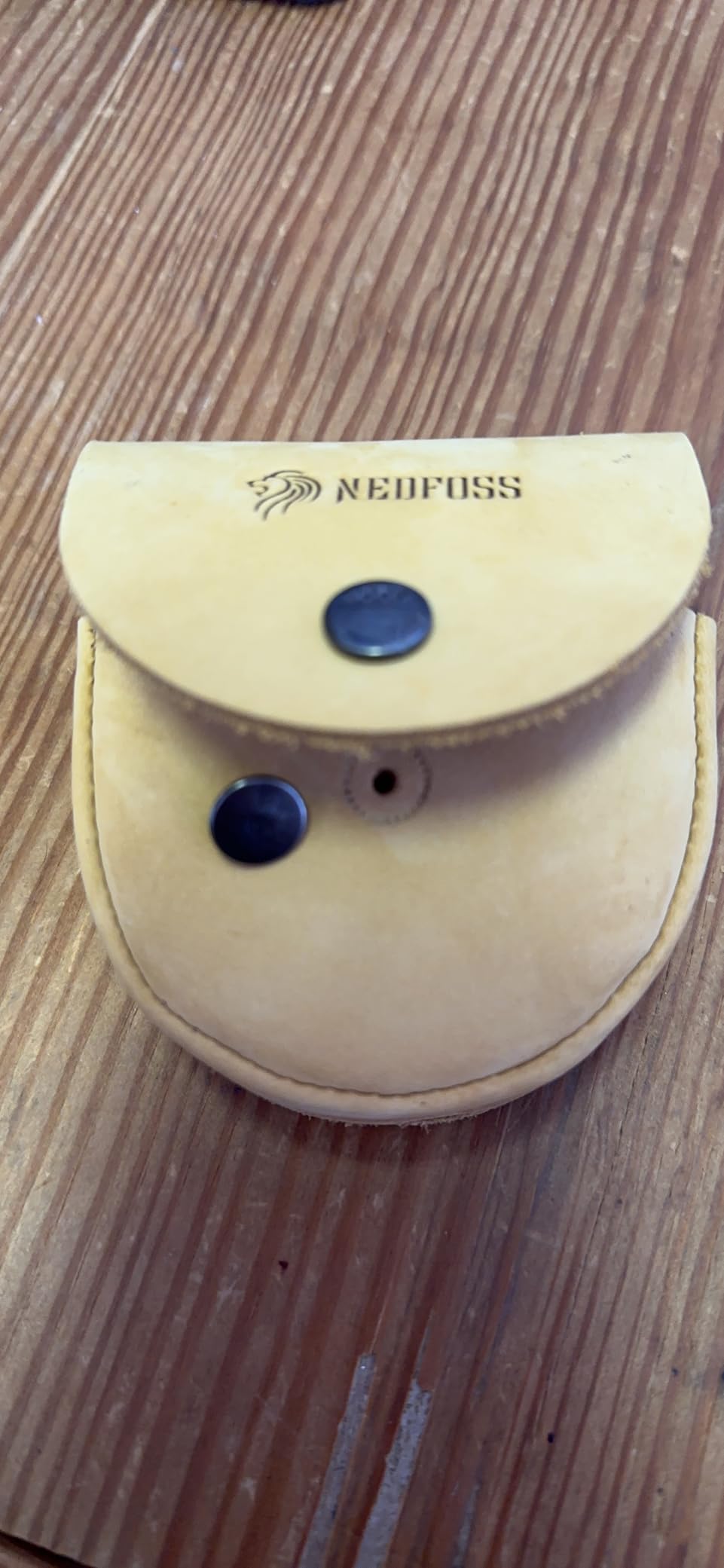
4. NedFoss Axe and Hatchet Puck – Best Low-Cost Carry Stone
NedFoss Axe/Hatchet Sharpening Puck Whetstone Knife Sharpening Stone
- Inexpensive dual grit puck suited to axe work
- Wear-resistant nylon sheath is easy to belt or pack
- Corundum handles routine edge touch-ups
- Cleaning cloth included for keeping pores clear
- Both grit faces are mild so it suits touch-up over repair
- Grit level details are vague between the two faces
- Stone needs cleaning after each use to avoid loading
This is the stone we recommend for anyone who wants something in the pack rather than something on the bench. The nylon sheath is light and holds up to being tossed in a daypack, and the puck itself is small enough to sit in a chest pocket between uses.
The technique guidance printed on the product is sound: grip the stone firmly with fingers clear of the edge and use circular or sweeping motions. Keep that habit and it will keep an axe keen through a whole trip without any other tool.
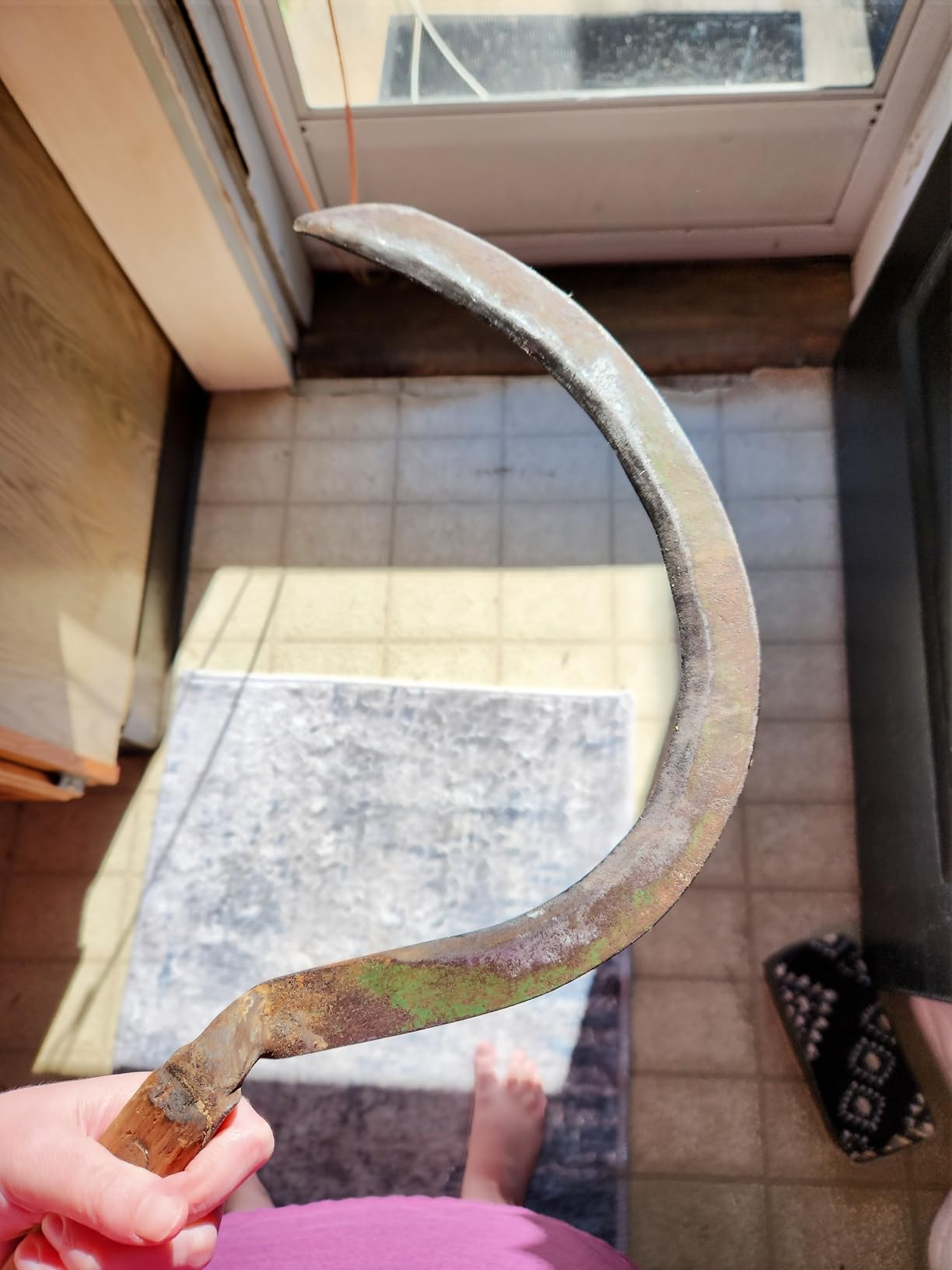
The grit spread is the thing to understand before you buy. Both faces are on the mild side and closer together in coarseness than buyers expect, so this does not give you the satisfying jump from aggressive repair to fine finish that the DDF IohEF does.
Cleaning is not optional with a corundum face. The included cloth is there for a reason, and owners who wipe the slurry off after each session report noticeably better cutting over time than those who let it load up.
What it is good for
It works well for campsite maintenance, keeping a hatchet or camp axe keen between firewood tasks, and for anyone who wants a spare stone in the truck without spending much on it.
It also handles machetes and garden tools, so it doubles as a general outdoor blade stone rather than an axe-only tool.
What it is not good for
It is too mild for damage repair or for thinning a heavy bevel. If the edge is already dull and slow, this will feel like it is doing nothing, and that is the abrasive rather than your technique.
Because the two faces sit close in grit, you get less of a real progression from it than from a stone with a wider spread. If you want a coarse-then-fine step, look elsewhere.
5. Angerstone Axe and Hatchet Sharpener 180/320 – Best Budget Stone with Finger Sleeves
- Genuine leather pouch with reinforced stitching and copper snap
- Finger protector sleeves included which is rare at this tier
- 180 grit repairs and 320 grit finishes
- Compact enough to wear on a belt
- Works best wet which keeps dust down
- Small puck is awkward for large hands and new bevels
- Concave curve forms in the face fairly quickly
- Fine dust comes off during use so work outdoors
- Keeps edges sharp but not razor sharp
The pouch is the story here. Owners consistently rate the genuine leather case with its reinforced stitching and copper rivet snap as better than what comes with pucks costing several times more, and that is not marketing spin, it shows up again and again in buyer feedback.
The finger sleeves are the second detail worth knowing about. Most puck stones tell you to keep your fingers clear of the bit; these actually give you something to hold the axe with. For a beginner sharpening their first edge, that removes the single biggest source of hesitation.
Working wet matters with this one. The white corundum is fired for hardness, and owners report it cutting fastest and producing the least dust when the face is damp before you start.
What it is good for
It suits bushcraft kits and anyone who wants a genuine leather carry pouch and finger protection without a premium price. The 180 and 320 faces handle routine resharpening on an older, well-used axe.
It also works across a wide range of tools, including scissors, machetes, shovels, and mower blades, which makes it a useful single addition to a garden shed.
What it is not good for
The 3.1 inch face is compact, and owners with larger hands say it feels cramped, especially when setting a bevel on a brand-new axe. For that job you want a bigger face.
It brings a used edge back to sharp, not to sharp enough to shave. If you want a fine carving finish, follow it with a finer stone or a strop, and expect the face to concave with regular use.
6. Gransfors Bruk Ceramic Grinding Puck – Best Ceramic Cutting Speed
- Highest rated in this group with a very strong review base
- Ceramic cuts faster than expected
- Soft rubber case doubles as a grip keeping fingers away from the edge
- Restores a flat bevel on axes that went convex
- Lightweight and pocketable with no noticeable wear
- Ceramic is porous and needs frequent rewetting
- Compact 3 inch puck can feel cramped for larger hands
- Costs more than synthetic puck stones
Ceramic behaves differently from silicon carbide in a way you feel immediately. It cuts fast without gouging into the stone, and reviewers with real sharpening experience single this puck out as the one that finally got their axes properly sharp after cheaper plates fell short.
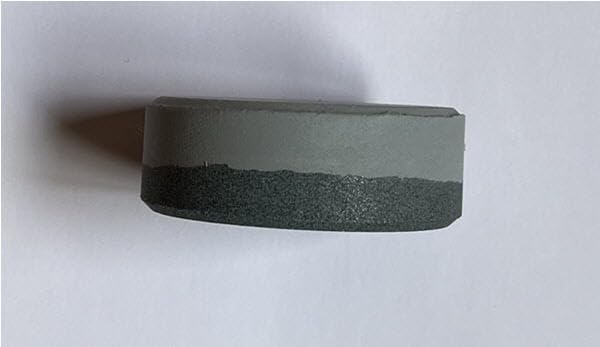
The rubber housing is more than packaging. It is a genuinely grippy surface that keeps your hand wrapped around the stone with fingers away from the edge, and it protects the puck from the knocks that crack ceramic.
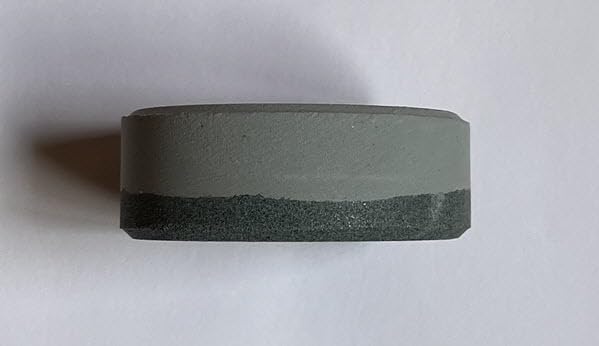
Owners also point out that it will take a slightly convex axe and put a flat bevel back on it, which is more than most pucks in this list manage. At 151 g it disappears into a jacket pocket.
The catch is that ceramic is porous. It soaks water straight through, so you either work it wet and keep a cap on the underside, or you rewet it every few minutes. Plan for that extra step.
What it is good for
It suits experienced sharpeners who want a fast, hard-cutting puck and already understand working wet stones. It is a strong pick for maintaining a quality axe you care about rather than a beater.
It also suits people who grip tools firmly and want their hand as far from the bit as possible. The rubber housing makes short sessions on a cold morning far less of a problem.
What it is not good for
It is not a dry stone. If you will not carry water or a spray bottle, this will frustrate you, because the face stops cutting once it dries out.
The 3 inch face is compact enough to feel small with bigger hands, and the price sits well above the synthetic pucks. If you only need touch-ups, you are paying for capability you may not use.
7. Norton Axe and Hatchet Stone – Best for Light Hatchets
Norton Axe & Hatchet Stone – Blade Sharpening Disc for Axes and Hatchets – Dual Grit Combo Whetstone
- Finer grit spread than most pucks with a genuinely fine finishing side
- Coarse side removes material quickly with minimal loading
- 3 inch disc sits well in the palm and stores in a toolbox
- Rinsing under cold water keeps steel fines from jamming
- Not aggressive enough for general axes and mauls
- Grit numbers are not published making comparison hard
- Thinner and slightly harder to hold than some pucks
The reason experienced sharpeners like this puck is the balance between its two faces. Most budget stones have two grits that feel like the same grit. This one has a coarse side that clears dings and burrs and a fine side that polishes close to where you would expect a sharpening stone to end up.
It is also the lightest puck here at just under five ounces, and the three inch disc sits flat in the palm. If your sharpening hand gets tired, that matters more than you would expect over a twenty-minute session.
What it is good for
It suits hatchets, tomahawks, small hand axes, and knife work where you want a finer result than a typical puck gives you. It is a good bench stone for light tools.
It also suits anyone who wants a finer final edge without buying a separate refining stone. Run the coarse face to shape, then the fine face, and you are close to stropped.
What it is not good for
Experienced owners are clear that this is a light hatchet tool, not a general axe or maul stone. On a heavy bit with a thick factory bevel it will feel slow and you may think the stone is faulty.
Norton does not publish the grit numbers for this puck, which makes it harder to compare against stones that state them. And at this thickness it is a little harder to hold securely than a chunkier puck.
8. Hultafors Swedish Axe Grinding Stone – Best Wider Grit Range
Hultafors Swedish Axe Griding Stone with Leather Pouch, Grey
- 180 and 600 pairing is the widest refinement range among these puck stones
- Full stone trough gives a secure grip and keeps fingers protected
- Durable genuine leather case included
- Works dry but gives best results with water
- Largest and heaviest stone in the group at 231 g
- Even the 600 grit side still needs stropping for a polished edge
The 180 and 600 pairing does something the other pucks cannot. Most two-sided axe stones give you repair and a modest refine. This one gives you repair at 180 and a genuinely fine finish at 600, which is the whole progression most people want for a working edge in a single stone.
The full hand trough is a better safety story than any of the round pucks. Your whole hand sits down in a channel, which physically keeps your fingers behind the bit rather than asking you to remember to keep them there.
What it is good for
It suits the person who wants one wide-range stone instead of two separate tools, and who sharpens at a bench, in a garage, or at a base camp rather than on a moving trail.
It also suits anyone who has been disappointed by 320 grit pucks that leave an edge feeling blunt. The 600 face is a real step up in refinement.
What it is not good for
It is the biggest stone in the group at 231 g and it is shaped like a small block, so it is a bench or vehicle stone. Packing weight rules it out for most backcountry kits.
Even at 600 grit, this does not produce a mirror edge on its own. Finish with paper, leather, or a strop and compound if that matters to you.
9. Whitby Abrasives 4 Inch Dual Grit Puck – Best Large Face and Grooved Grip
4″ Dual Grit Axe/Hatchet Silicon Carbide Sharpener Multipurpose Sharpening Stone Grinding Wheel
- Largest puck face here at 4 inches giving more contact per stroke
- Recessed finger groove gives a secure grip with fingers clear of the bit
- 120 and 240 grit covers repair through finishing
- Tough carborundum construction cuts aggressively
- Stores in a toolbox or shed with no power needed
- 240 grit is a finishing grit so a strop or finer stone is needed
- Heavier than the smaller pucks at around 1.1 lb
- Groove can trap water and slurry if not cleaned
If small pucks feel cramped to you, this is the answer. At four inches across, the face gives you roughly twice the contact area of a three inch puck, which means fewer strokes to cover the same section of bevel. Reviewers who fight with small pucks single out the diameter as the reason they stopped fighting.
The recessed finger groove is the other feature worth noting. It gives you a positive grip point that holds your hand steady and positions your fingers behind the stone rather than near the bit. That is a real safety gain, not a comfort one.
What it is good for
It suits larger hands, and it suits axes and hatchets with broad bevels because there is simply more stone to follow the curve. The 120 grit coarse side is aggressive enough for real repair work on outdoor tools.
It is also a good yard tool, handling mower blades, shovels, hoes, and machetes as happily as it handles axes, and it lives happily in a shed or vehicle.
What it is not good for
At roughly a pound and a quarter, it sits at the heavy end of the pucks here and it is not a pack-and-go stone. If weight in your pack matters, choose something smaller.
The 240 grit face leaves a working edge rather than a polished one. And the recessed groove collects slurry, so rinse it and dry it after a session or it will stay gritty.
10. WATL Dual Grit Axe and Hatchet Stone 400/1000 – Best for Throwing Axes
WATL Official Dual Grit Axe & Hatchet Sharpening Stone | Premium World Axe Throwing League Whetstone for Razor-Sharp Blade Maintenance
- 400 and 1000 grits start far finer than most competing pucks
- Packs easily into a small bag or pocket at 3 inch diameter
- Drag-the-axe-across-the-surface design needs no technique
- Developed for competition axe edge durability
- 400 grit is too fine to repair deep nicks or severe dullness
- Not a wet stone design so metal particles can load the surface
- At 16 ounces it is heavier than most compact pucks
Every other stone on this list starts at or below 240 grit. This one starts at 400 and finishes at 1000, which puts it in a completely different category: refinement of an already-good edge rather than reshaping a bad one.
That makes it the right tool for competition axes, where the edge has to stay consistent across many throws and survive repeated impacts. Owners note it puts a clean, even edge on a throwing axe quickly.
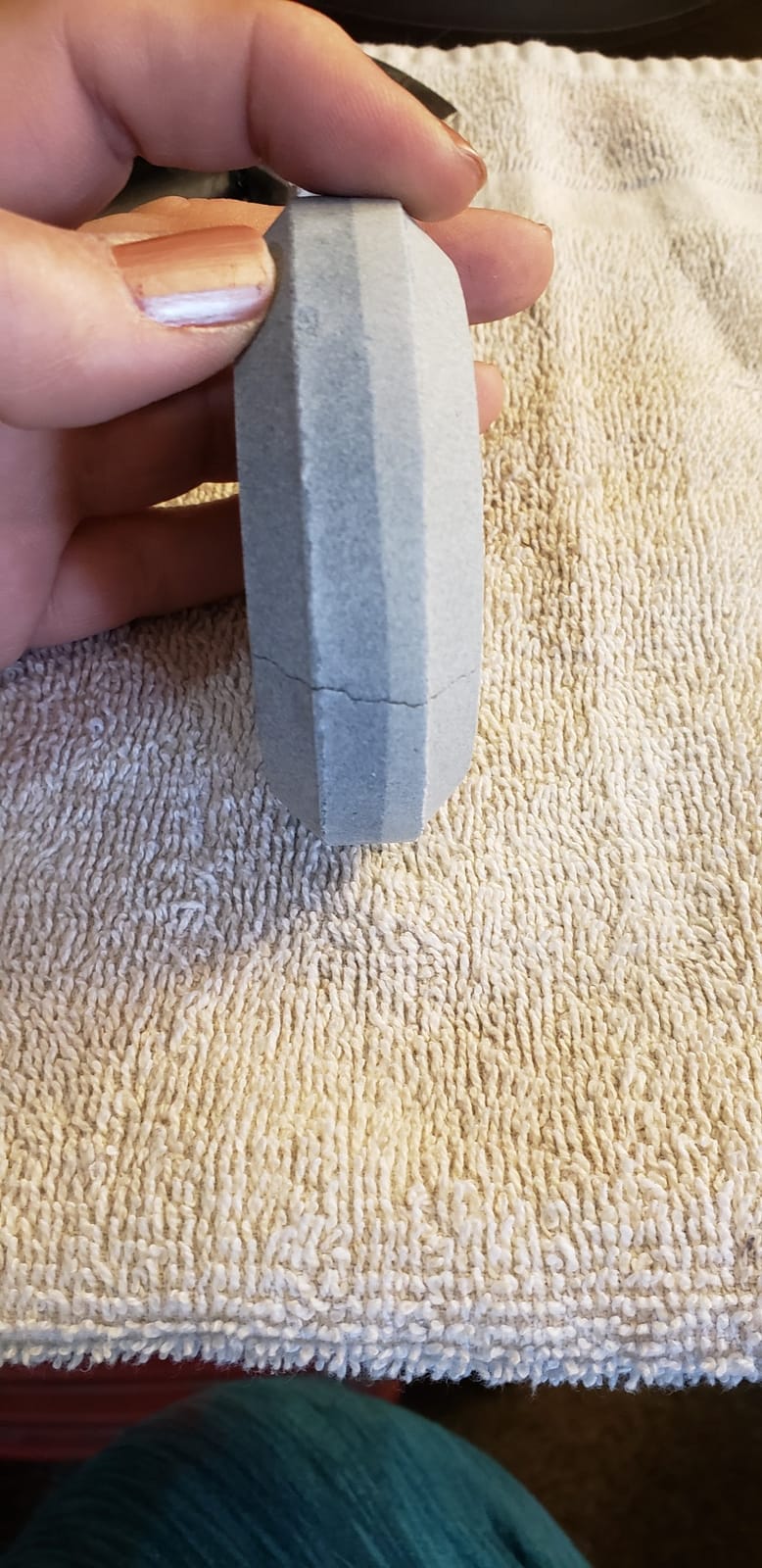
At just over three inches across and an inch thick, it packs smaller than it feels in the hand. The technique is the simplest here too, because the stone works by dragging the axe across the surface rather than by working in circles.
The limitation is stated plainly in the buyer feedback: these grits refine and finish, they do not repair. If your axe has a chip or a rolled edge, you need a coarser stone first and this one second.
What it is good for
It suits anyone maintaining an already-sharp edge and wanting to keep it consistent, which includes competition axe owners, people with a good axe they do not want to damage, and anyone finishing off a two-stone progression.
It is also a compact second stone. Pairing it with a 120 to 180 grit puck covers the whole range from repair to fine finish with one stone in each hand.
What it is not good for
It cannot rescue dull steel. There is no coarser grit here, so anyone buying this as their only stone will hit a wall the first time they nick the bit.
It is not designed to be used wet, so steel particles can load the surface over time. Clean it regularly with a brush and water and dry it before storing.
Grit Progression for Axes: A Practical Cheat Sheet
Start at 150 to 180 grit if the bit is dull, finish at 320 to 600, and stop there. That is the whole answer for almost every working axe, and it is why the pucks on this list sit in that range rather than climbing into knife territory.
Coarse grit removes metal fast. On an axe, that means clearing dings, resetting a rolled edge, and thinning a bevel that has gone too thick. Everything below 180 is doing that job, and going much coarser than 120 on an axe usually means you are removing good steel to fix a problem a file would fix faster.
Fine grit refines. The step from 180 to 320 is the useful one for a working edge, because it clears the coarse scratches left behind and leaves a surface that will actually hold. The step from 320 to 600 is for when you want a noticeably keener bit.
Going past 1000 grit is where most people make the mistake. A knife edge refined to 3000 grit is a beautiful edge and a poor axe edge, because a very fine edge is a brittle one. It feels sharper and it chips sooner when it meets a knot or a frozen log, which is exactly what an axe edge meets every time you use it properly.
The type of axe also changes the answer. A felling axe works at roughly 25 to 30 degrees per side and wants toughness. A splitting maul wants an even thicker bevel because it takes shock. A carving axe runs finer, closer to 15 to 20 degrees per side, so it can take a finer finish without chipping. A hatchet sits between the felling and carving numbers.
That last point is why the 400 and 1000 stone on this list exists as a specialist rather than a general recommendation. It is a finishing stone for an edge that is already in good shape, not a maintenance stone for one that is not.
How to Sharpen an Axe on a Stone, Step by Step
You can absolutely sharpen an axe with a sharpening stone. The motion is different from knife sharpening and much easier, because the round face lets you work in circles instead of tracking a fixed angle.
- Secure the axe. Brace the head on a stump, clamp it in a vise, or set the eye in a block of wood so the blade stands at a comfortable height.
- Check the edge under good light. Run a thumbnail along it gently; any spot that catches is damage that a coarse face can clear.
- Wet the stone. A few drops of water, or a spray bottle, keeps steel fines from clogging the pores and slows loading.
- Set the angle by eye. Rest the bevel flat on the stone and look at the line from the end of the axe, aiming for a shallow, even contact across the whole face.
- Work the coarse face in circles. Move the stone around the bevel in steady circular strokes with light, even pressure. Circles are what produce a convex edge rather than a flat one.
- Feel for the burr. After a few minutes, run a fingertip carefully along the back of the edge; a light burr should appear on the opposite side. Keep your fingers on the flat, never on the cutting line.
- Flip to the fine face and repeat. A lighter touch here. Two or three passes is usually enough to remove the burr and close the scratches.
- Deburr and strop. Drag the edge lightly across leather, or finish on a few folds of newspaper, to knock down the wire edge.
- Clean and store. Rinse the stone, let it dry fully, then return it to its pouch or box.
Common axe sharpening mistakes
Pressing too hard is the first one, and it is the most common. Force does not sharpen an edge faster; it dishes the stone and rounds your bevel unevenly. Light, steady pressure clears steel faster.
Using straight strokes instead of circles is the second. Straight strokes concentrate your work in the middle of the edge and produce a hollow or a flat grind that will not release wood well.
Climbing past 1000 grit by reflex is the third, since knife habits do not transfer. Going too fine costs edge toughness and buys you a chip the first time you hit a knot.
Starting too coarse is the fourth. If you jump straight to a 120 grit face on an edge that only needs a touch-up, you remove good steel for no reason and weaken the bit over time.
Leaving the burr on is the fifth. A wire edge feels sharp and is a liability, because it folds back on the first hard contact. Deburr every time.
Storing the stone wet in a sealed case is the sixth, and it is how pucks end up with mildew or a soft, slow-cutting face.
Holding the axe too close to the bit is the seventh. Use a puck grip or the Hultafors trough so your hand stays behind the edge by design rather than by care.
Trying to fix heavy chips with a puck is the eighth. A stone cannot thin a thick bevel quickly, and users who try often assume the stone is broken. Start with a file for damage, then stone the edge.
If you want the technique in motion rather than in text, our guides to diamond sharpening stones and kitchen knife sharpening systems cover the same stroke logic for straight edges, which transfers well once you have the circular motion down.
Stone Care: Flattening, Wetting, and Storing Your Puck
A stone stops cutting flat before it stops existing. The center wears down from the circular motion you use every session, forms a shallow dish, and the edge stops registering on the stone. Flattening is normal maintenance, not a sign the stone failed.
The simple method uses coarse abrasive on a flat surface. Lay a sheet of 80 to 120 grit sandpaper on a piece of glass or a granite counter, add a drop of water, and rub the stone face in circles under light pressure until the whole face shows an even scratch pattern. Ten minutes of even work is usually enough.
Move up to finer paper only if you want to refine the face itself, which most people never need to do. Check the result by resting the stone on a flat table and seeing whether it rocks, then by looking at the face under a light.
Lubrication depends entirely on the material. Silicon carbide and corundum stones want water, a few drops on the face before you start and again if it starts to drag. Ceramic pucks want water too but soak it up quickly, so expect to rewet often. Plated stones need nothing at all.
Storage is where care pays off. Let the stone dry completely at room temperature before it goes back in a case, because a sealed case over a damp stone traps moisture. Keep pucks in their leather pouch or a ventilated box rather than a plastic bag, and keep oil away from the faces unless the manufacturer says otherwise.
Buying Guide: How to Choose an Axe Sharpening Stone
Set a grit floor first. Anything at or below 120 is a repair stone, anything from 150 to 240 is a maintenance stone, and 320 to 600 is a refining stone. For most people, a dual-grit puck with a coarse face between 150 and 180 and a fine face between 320 and 600 covers everything.
Decide dual-grit over single-grit, always. A single-sided stone forces you to own two tools or skip a step, and forum users consistently list single-sided stones as a deal breaker for axe work.
Then choose the abrasive family. Silicon carbide and carborundum cut fastest and are the sensible default. Aluminum oxide and corundum are slightly slower but wear flatter. Ceramic cuts very fast and resists gouging but must be worked wet. Diamond cuts hardest of all and needs no lubricant, though none of the picks here used one.
Size matters more than people expect. A three inch puck suits a hatchet and fits any pocket. A four inch puck suits a full-size axe and large hands, at the cost of weight. If you have ever felt cramped on a smaller stone, step up rather than pressing harder.
Look at grip features next. A recessed finger groove, a rubber housing, or a full hand trough all keep your fingers behind the bit by design, which is worth more than any feature on a spec sheet.
Check what is included. A leather pouch with a belt loop turns a bench stone into a field stone, and a cleaning cloth matters for corundum and silicon carbide faces that load quickly. A sealed case is only a bonus if you dry the stone first.
Finally, know when a stone is the wrong tool. A puck cannot thin a thick factory bevel quickly, and it is a poor answer to a bit with real chips or a rolled edge from a strike. Start those jobs with a file or a coarse utility stone, then finish on the puck.
If your main sharpening work is on straight kitchen edges rather than curved axe bevels, our electric knife sharpening systems comparison covers a different category of tool entirely.
Frequently Asked Questions
What is the best thing to sharpen an axe with?
For most axes, a dual-grit sharpening stone is the right tool: a round puck or compact field whetstone with a coarse face around 150 to 180 grit and a fine face around 320 to 600 grit. The round face follows a curved bevel in circular strokes and cannot dig a hollow into it. Use a file or a coarse utility stone first only when the bit has real chips or a rolled edge from a strike.
Can I sharpen an axe with a sharpening stone or a whetstone?
Yes, and a whetstone is the standard method. Hold the axe steady on a stump or in a vise, rest the stone on the bevel, and sweep it in circles rather than straight strokes. Circles produce a convex edge that releases wood well. Work the coarse side to reset the bevel, then the fine side to refine, and finish by deburring on leather or newspaper.
What grit should I use for sharpening an axe?
Start at 150 to 180 grit for a dull working axe and finish at 320 to 600 grit. Drop to 120 grit only when there is real damage such as chips or a rolled edge. Go finer than 600 only for carving axes, which run thinner and finer than felling axes. Staying in this range gives you a bite that holds and resists chipping on knots and frozen wood.
Should I sharpen an axe past 1000 grit?
No, not for a working axe. Past 600 or 1000 grit you produce a finer, more brittle edge that feels sharper but chips sooner when it meets a knot or frozen log. A felling or splitting axe is more valuable with a slightly coarser, tougher edge. Reserve very fine grits for carving axes with thin sections, where a polished edge is the goal in itself.
Should I use a round puck or a rectangular whetstone for an axe?
A round puck is better for most axes. Its curved face lets you work the entire bevel in circular strokes without concentrating your strokes in the middle, which is what causes a hollow on a flat rectangular stone. A rectangular whetstone is better when you need a flat, fixed angle, such as when thinning a heavy bevel, so many sharpers keep a puck for maintenance and a flat stone for setup work.
The Best Sharpening Stones for Axes in 2026
The Lansky Puck is the best sharpening stone for axes overall because it does the fewest things wrong. One tool covers coarse repair and fine maintenance, the circular motion is forgiving enough to learn in ten minutes, and more owners have lived with it long enough that its limits are well known rather than surprising.
Buy the DDF IohEF 180/320 if you want a genuine two-grit progression and a belt pouch at a modest price, and the Sharp Pebble 150/320 if your edges are dull or lightly chipped and you want the fastest cutting here. For finer work on a hatchet, the Norton puck finishes better than its size suggests. For a wide 180 to 600 range in one stone, the Hultafors is the one.
Maintenance is what keeps any of them working. A few drops of water, circular strokes, light pressure, and a burr you actually check for will take you far. Touch up an axe at the end of a splitting session rather than waiting until it stops biting, and the stone will keep its flat face and the axe will keep its edge.