
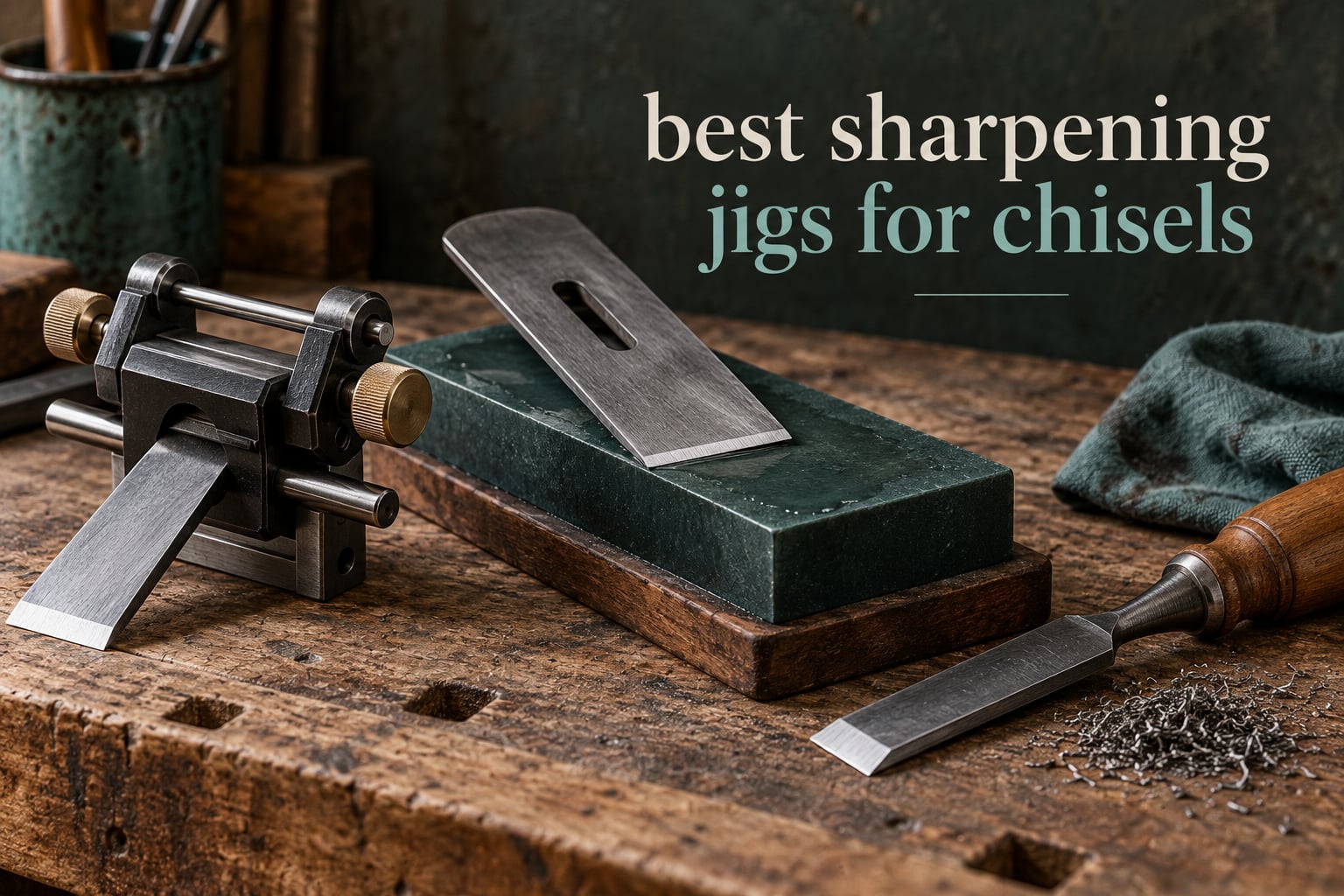
A chisel sharpening jig is a small fixture that grips a chisel or plane iron at a fixed, repeatable angle and rolls it across a stone so you get the same bevel every time without holding that angle by hand. Our best overall pick for 2026 is the ATLIN Honing Guide, which fits chisels from 1/8 inch to 1-7/8 inch wide and carries the largest review base of any guide we tested.
Freehand sharpening is a genuine skill, and experienced sharpeners do it faster than any jig allows. The argument for a jig is different: it turns sharpening from a skill test into a setup routine. Because the angle comes back the same session after session, you remove far less steel per session, which protects the bevel and keeps edges true over the long run.
We looked at ten guides that cover the whole price span, from a light aluminium budget model to a Japanese steel body and two Tormek accessories. Along the way we focused on the questions buyers actually argue about: does the jig work on short chisels, does it hold tapered vintage blades, can you repeat the setting tomorrow, and does it take up so much stone that you have nothing left to work with.
If your sharpening work is mostly kitchen knives rather than bench tools, start with our guides to the best whetstones for knife sharpening and the best kitchen knife sharpening systems first, then come back here for chisel-specific geometry.
Top 3 Sharpening Jigs for Chisels in 2026

ATLIN Honing Guide
- Self-centering body fits 1/8 to 1-7/8 inch blades
- Hardened steel roller wheel
- Adjustable projection for all angles

Tormek SE-77 Square Edge Jig
- Dual squareness adjustment knobs
- Works with T-3 T-7 and T-8
- Can grind camber into plane irons

Saker Chisel Sharpening Jig
- Angle fixing tool for repeatable bevels
- Off-center roller suits short plane blades
- Fits 0.2 to 2.55 inch blades
Quick Overview: 10 Sharpening Jigs for Chisels in 2026
Every guide below holds a blade at a chosen angle and rolls it across a stone or plate. What separates them is geometry, clamp range and how honestly they repeat the setting. Read the table first, then jump to the full review of whichever row fits your blades.
| Product | Specifications | Action |
|---|---|---|
| ATLIN Honing Guide |
|
Check Latest Price |
| Saker Chisel Sharpening Jig |
|
Check Latest Price |
 KAKURI Honing Guide KAKURI Honing Guide |
|
Check Latest Price |
 Sharp Pebble Honing Guide Sharp Pebble Honing Guide |
|
Check Latest Price |
| Tormek SE-77 Square Edge Jig |
|
Check Latest Price |
 Gohelper Honing Guide Set Gohelper Honing Guide Set |
|
Check Latest Price |
 GOINGMAKE Honing Guide System GOINGMAKE Honing Guide System |
|
Check Latest Price |
 Tormek SVS-38 Short Tool Jig Tormek SVS-38 Short Tool Jig |
|
Check Latest Price |
 AUXTUR Honing Guide Set AUXTUR Honing Guide Set |
|
Check Latest Price |
 G Sharp Chisel Sharpener G Sharp Chisel Sharpener |
|
Check Latest Price |
1. ATLIN Honing Guide: Best Overall Sharpening Jig for Chisels
- Self-centering body handles a wide range of widths
- Hardened steel roller resists wear and flat spots
- Cheapest reliable route to a repeatable angle
- Instructions included
- Aluminum body is lighter and less rigid than steel
- No angle gauge or fixture in the box
- Basic design with fewer setting aids
We have gone back to this guide more than any other in the group, and it is still the one we hand to anyone starting out. The body is a self-centering aluminium design that swallows chisels from a quarter inch up to nearly two inches, and every angle comes from adjusting how far the blade projects past the roller. Nothing else in this list has close to the review volume behind it.
The hardened steel roller is the detail that keeps it in service for years rather than months. Cheap rollers develop a flat spot, and a flat spot on the roller means the jig sits high in one spot, which means an uneven bevel. Reviewers consistently single out the roller as the reason the guide keeps returning the same setting.
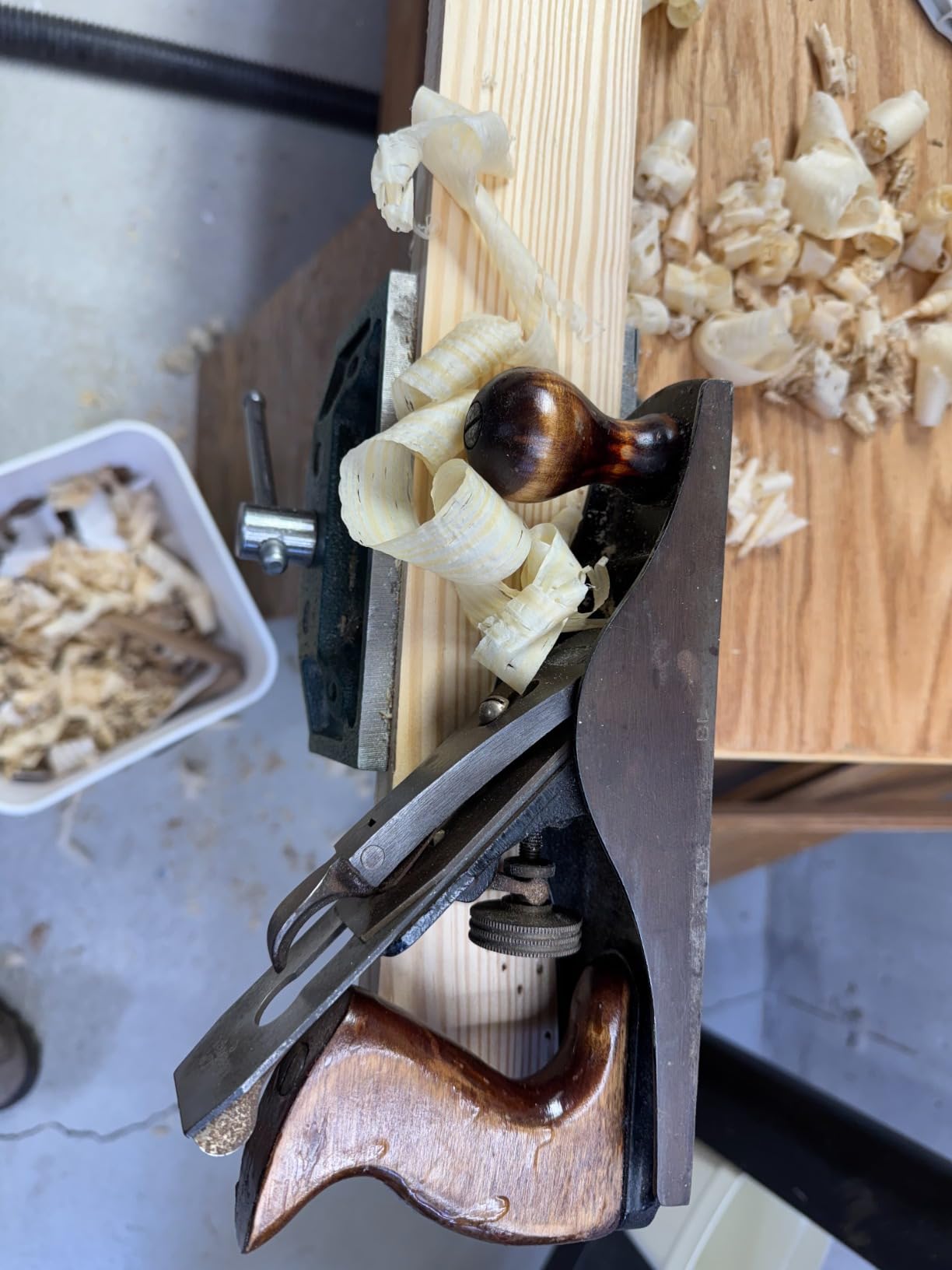
The honest weakness is material. Aluminium is lighter and less rigid than stainless or carbon steel, so it feels less planted on the stone and is easier to tip if you press hard. If you work mostly on wide plane irons and push real pressure, the KAKURI and Sharp Pebble bodies feel noticeably more solid.
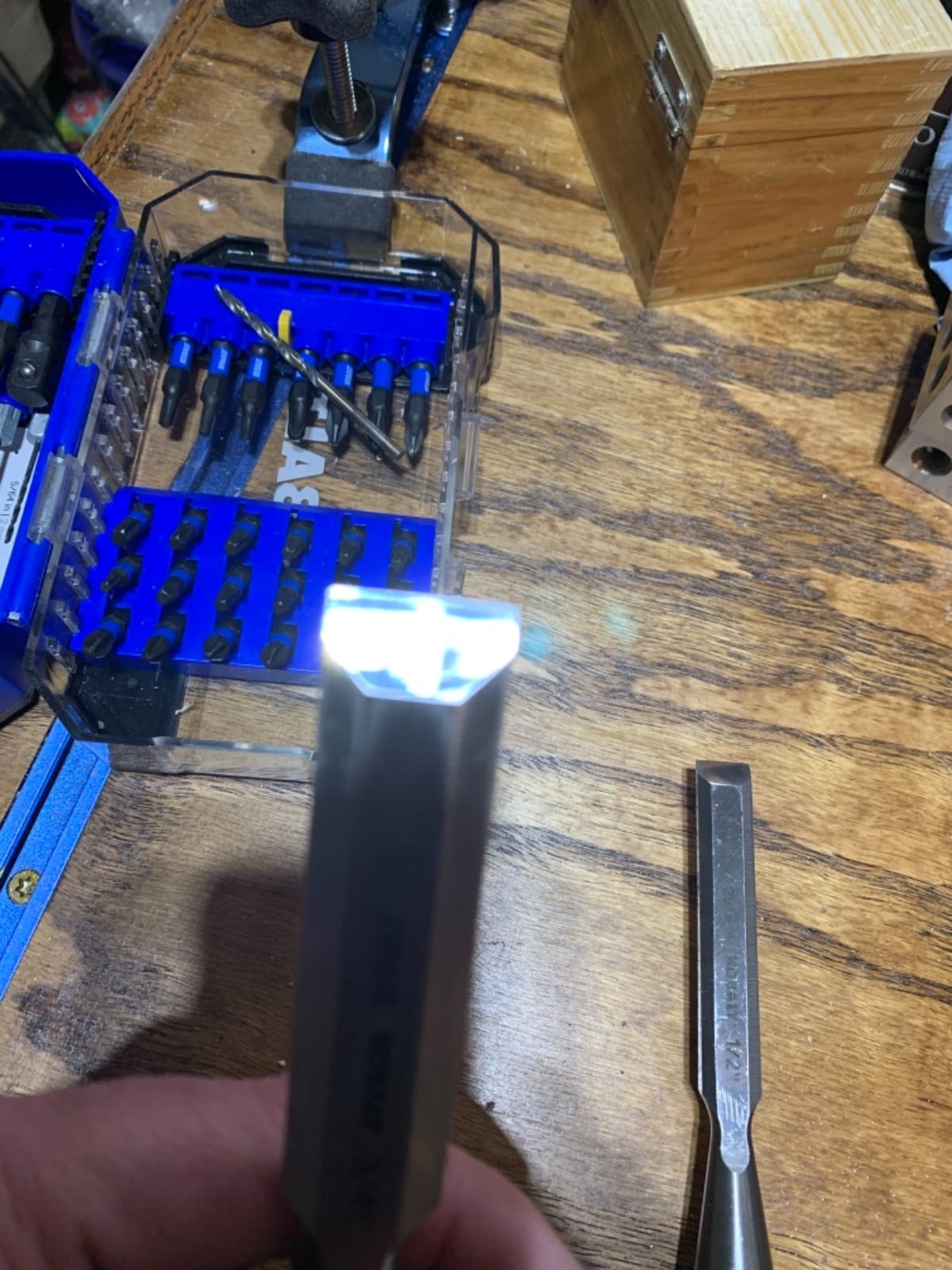
There is also no angle gauge, no fixture and no reference chart in the box. You set the angle by eye against the blade and check with a straightedge or the Sharpie trick. For a beginner that is one extra step to learn, and for a few minutes of setup it is a fair trade for the simplest guide that works.
Who the ATLIN suits best
Beginners, students and anyone restoring a mixed pile of inherited or yard-sale chisels. The self-centering body means you are not swapping fixtures every time the blade width changes, which is the single biggest time sink with projection-only guides.
It is also the safest first jig. Nothing here needs calibration, and the roller does not need periodic replacement the way a brass roller set can.
Who should skip the ATLIN
Skip it if your main work is wide kanna or hand plane irons under heavy pressure, where a heavier steel body keeps the angle truer. Skip it as well if you want a guided angle setting out of the box rather than learning projection by eye.
2. Saker Chisel Sharpening Jig: Best All-Round Starter Set
- Wide bottom roller stays level through passes
- Metal stud lock keeps the blade from slipping
- Angle fixing tool beats projection-only setting
- All-metal body resists corrosion
- Bundled stone is fine grit so coarse shaping needs another stone
- Heavier than minimal roller-only guides
The Saker guide is the one we recommend to someone who wants a first sharpening setup that arrives complete. It comes with a whetstone as well as the jig, and it adds two things the bare-bones guides leave out: a wide bottom roller for stability and a metal stud that locks the blade so it cannot creep mid-pass.
The angle fixing tool is the feature that separates it from the projection-only designs. You set the angle against the point where the cutting edge meets the stone, and the jig holds that relationship for you. Reviewers regularly describe it as the step up that stops the constant readjusting.
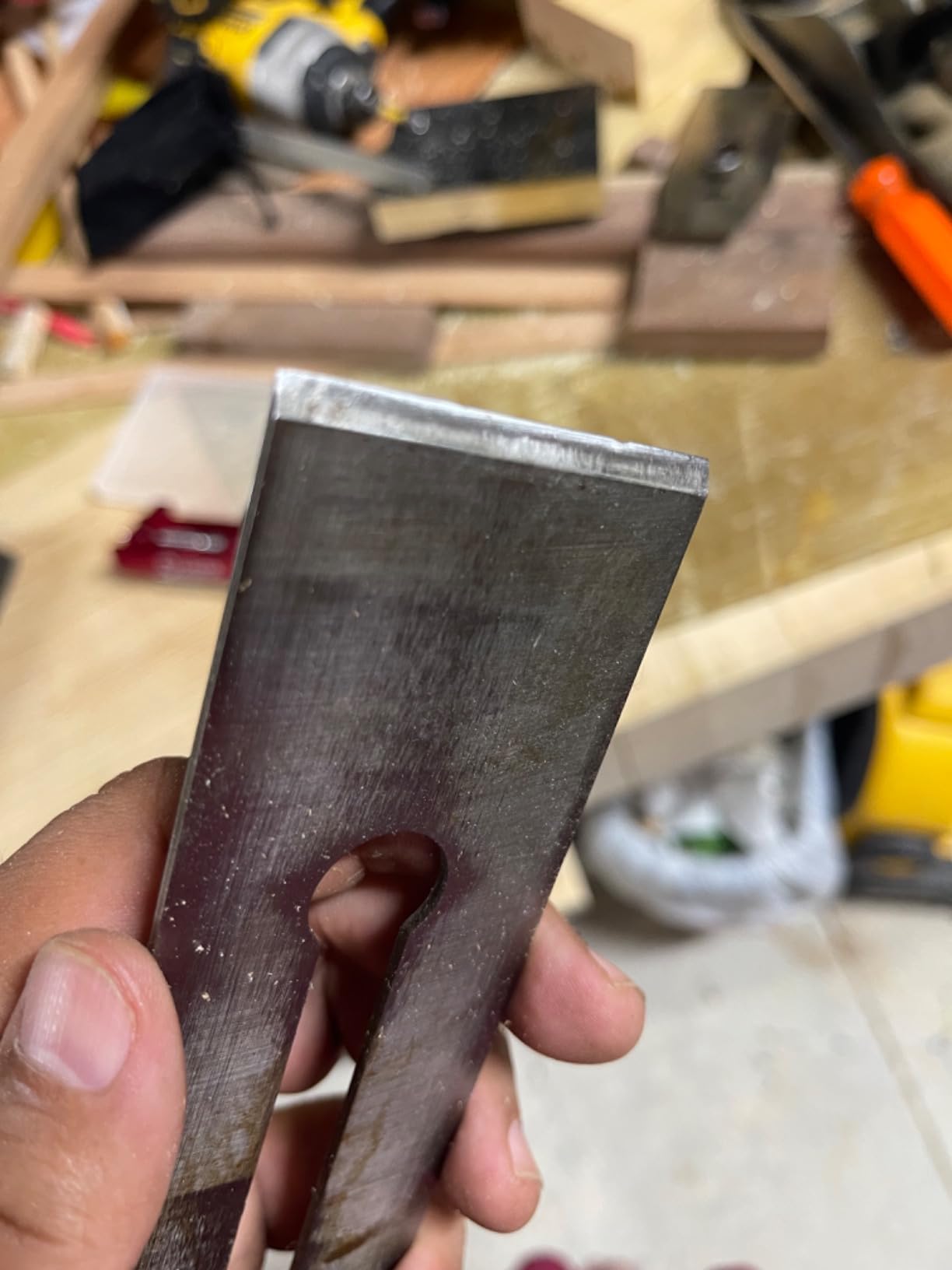
The off-center roller was clearly designed with real blades in mind. Because the roller sits offset rather than directly under the heel, shorter plane irons still sit correctly instead of pitching forward. That matters more than it sounds, because a short blade that sits forward changes the angle you actually get.
Clamp range runs from 0.2 inch to 2.55 inch, which covers most bench chisels and a good spread of plane irons. The all-metal aluminium alloy body is wear resistant and anti-corrosion, and at 1.1 pounds it has real presence on the stone.
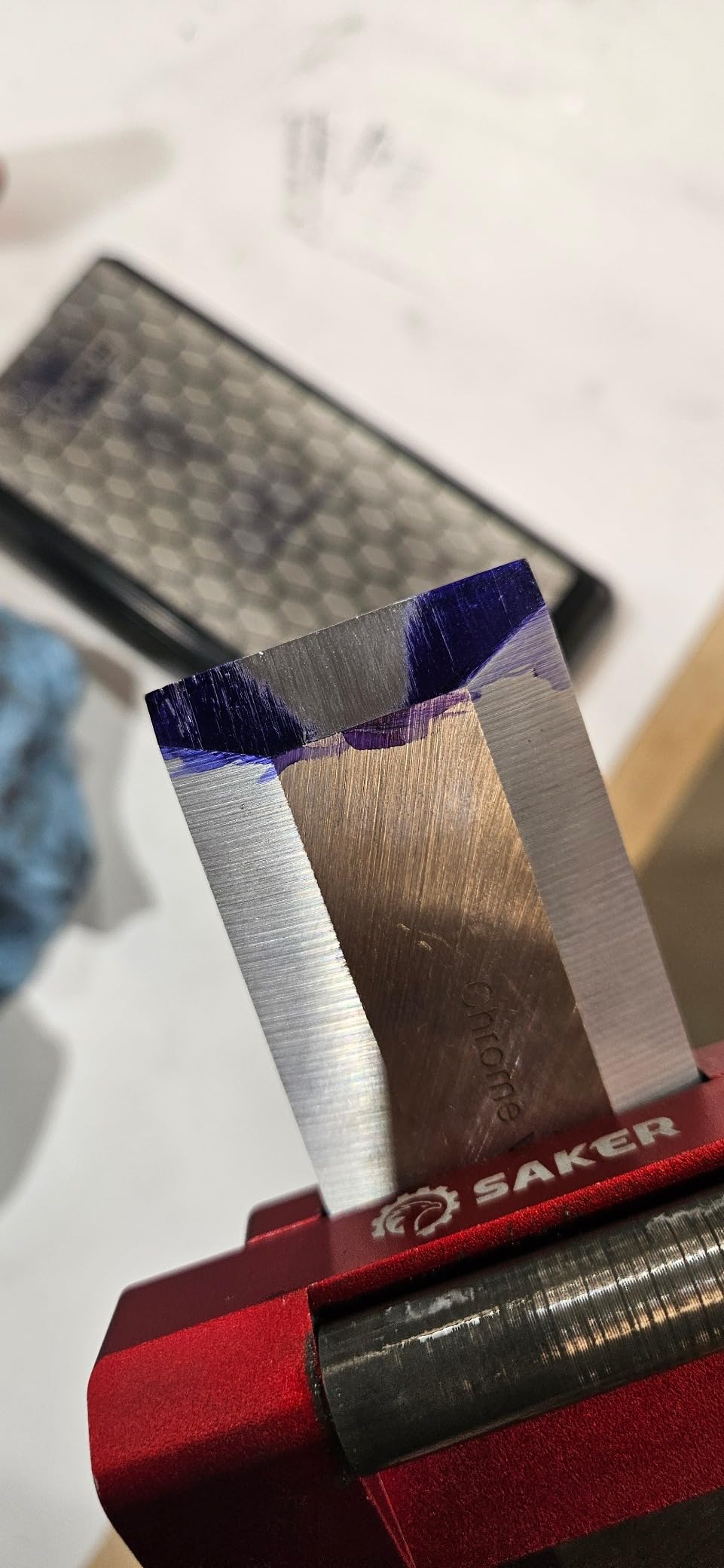
Where the Saker earns its place
It suits a first sharpening kit rather than a first jig alone. The wide roller gives smooth passes, the stud lock gives confidence, and the angle fixing tool shortens the learning curve considerably for someone who has never set a bevel on purpose.
It is also a good match for shorter plane irons, because the offset roller was built for exactly that case.
Where it falls short
The bundled stone is fine grit, which is useful for honing an already-sharp edge but useless for reshaping a damaged bevel. Plan to add a coarse stone for real sharpening work. The body is also heavier than minimal roller guides, which is a fair trade for stability but worth knowing.
3. KAKURI Honing Guide: Best for Japanese Chisels and Kanna Irons
KAKURI Honing Guide Sharpening Jig for Chisels and Planes Blades, Japanese Sharpening Guide for Woodworking Tools, Made in JAPAN
- Heavy machined steel body stays dead steady
- Ash handles give real finger leverage
- Built for kanna plane irons and wide chisels
- Screw clamp is safe to handle
- No edge guide for squaring thin chisels
- Angle set by eye and hard to repeat
- Carbon steel can rust after wet stone work
This is the only guide in the group made in Japan, and that shows in the steel. At 16 ounces with a heavy machined body, it stays planted on the stone better than anything else here. If you cut kanna or work with wide hand plane irons, that planted feel is the whole point of the tool.
The dual ash wood handles on both sides are a genuinely different approach to pressure. You push with your fingers through the wood rather than clamping down on a metal frame, which gives fine control right at the edge where the work happens.
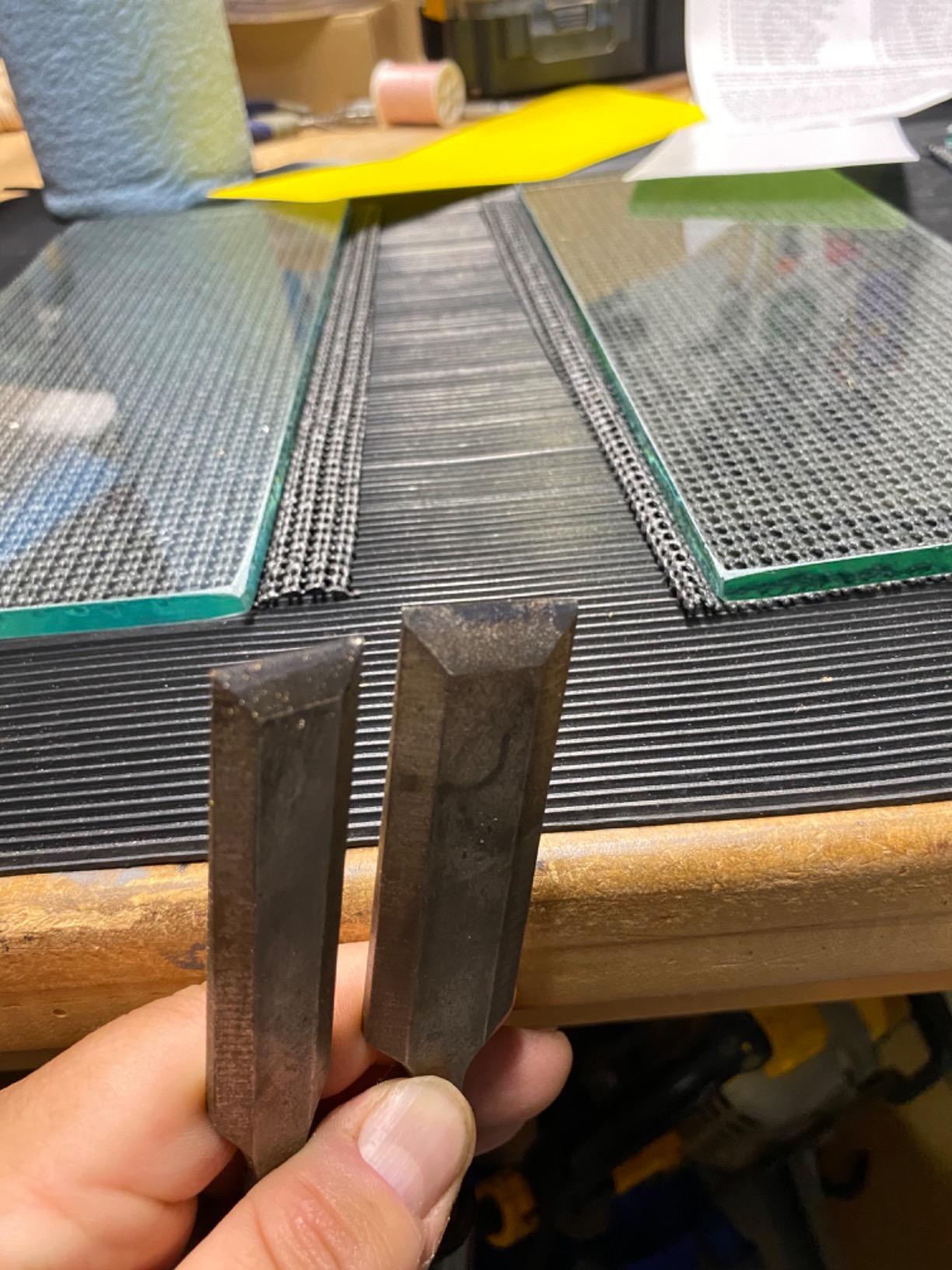
Clamp coverage is the widest useful span of the manual guides. Chisels run from 3mm to 42mm, and hand plane irons pick up from 42mm to 70mm, so a single jig covers both ends of a Japanese tool roll without swapping fixtures.
Reviewers split clearly along blade size. People with large kanna and hand plane irons love the heft, roller quality and handles. People sharpening thin chisels find the missing edge guide and the absence of angle markings frustrating, and several note surface rust on the carbon steel body after wet stone work.
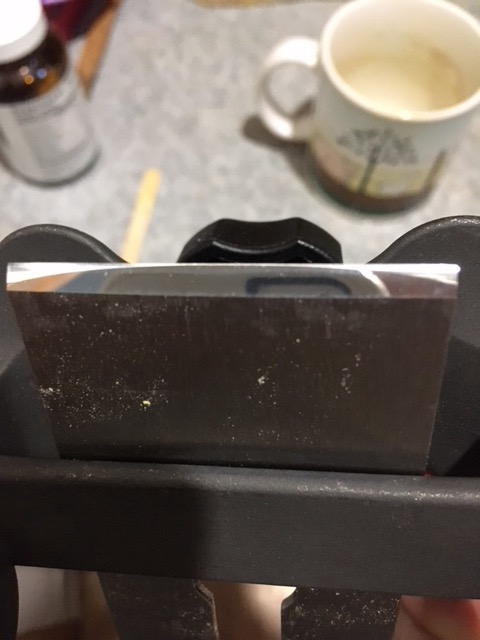
Built for heavy blades
Large kanna, wide hand plane irons and chunky bench chisels are where this guide earns its place. The weight and roller width stop the jig flexing during passes, and the screw-fixed clamp is safer to handle than a quick-release lever when the blade is heavy.
If your sharpening load is mostly wide irons and hard timber, the steel body is the right foundation.
Where it frustrates you
There is no edge guide or reference line to square the blade against the jig, and the angle is set by eye. Removing and reinserting a blade rarely returns the same angle, which is exactly the repeatability problem a jig is supposed to solve. Chisels under half an inch wide are also a poor fit.
4. Sharp Pebble Honing Guide: Best Stainless Build for Plane Irons
Sharp Pebble Honing Guide for Chisels and Planes – Chisel Sharpening Jig
- Heavier and better finished than cheaper copies
- Single wheel rolls straight on the stone
- Works with thick diamond plates
- Projection chart in the manual
- Beveled inner faces awkward with tapered side bevels
- Wheel sits on the back half of the stone so stroke is halved
- Needs periodic cleaning of stone dust
The Sharp Pebble is the best-finished wheel-on-stone guide here. The body is machined from stainless steel with a bronze bearing, edges are rounded rather than left sharp, and there is no paint to chip or peel. At 11.2 ounces it feels like a tool rather than an accessory.
The single-wheel design rolls directly on the stone, so plate thickness does not change the angle you get. That makes it one of the few guides here that works properly on a thick diamond plate, where most wheel-on-stone designs get confused by the extra height.
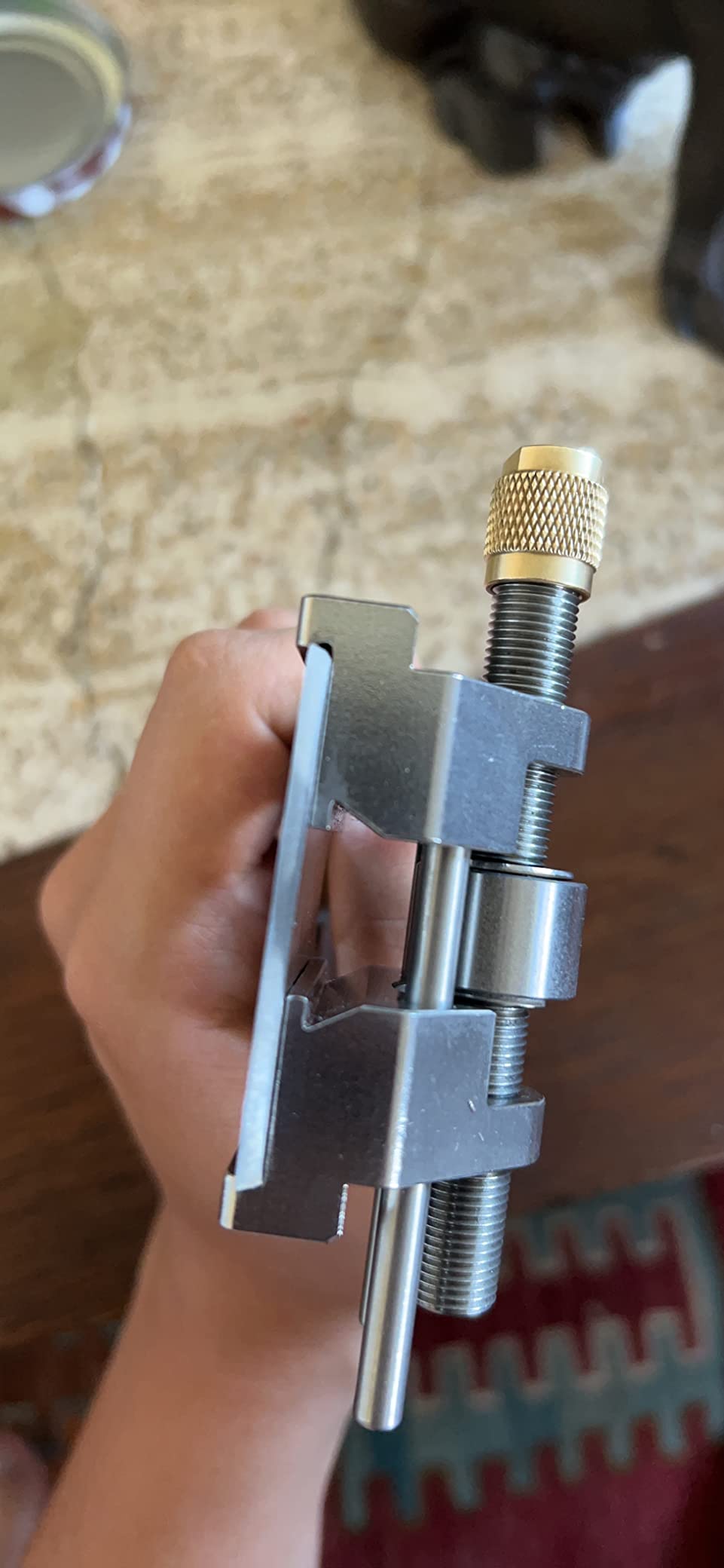
Clamp range is unusually generous. Chisels fit from 0.25 inch to 1.96 inch, and planer blades from 1.41 inch to 3.22 inch, so wide bench and low-angle plane irons are covered by the same jig. The manual and companion eBook supply projection measurements, which takes the guesswork out of the setting step.
Knurled brass adjuster knobs are grippy enough to set with wet hands, and the whole thing arrives in a protective tube that keeps stone dust out of the mechanism. Reviewers call out build quality as consistently better than same-design guides at lower prices.
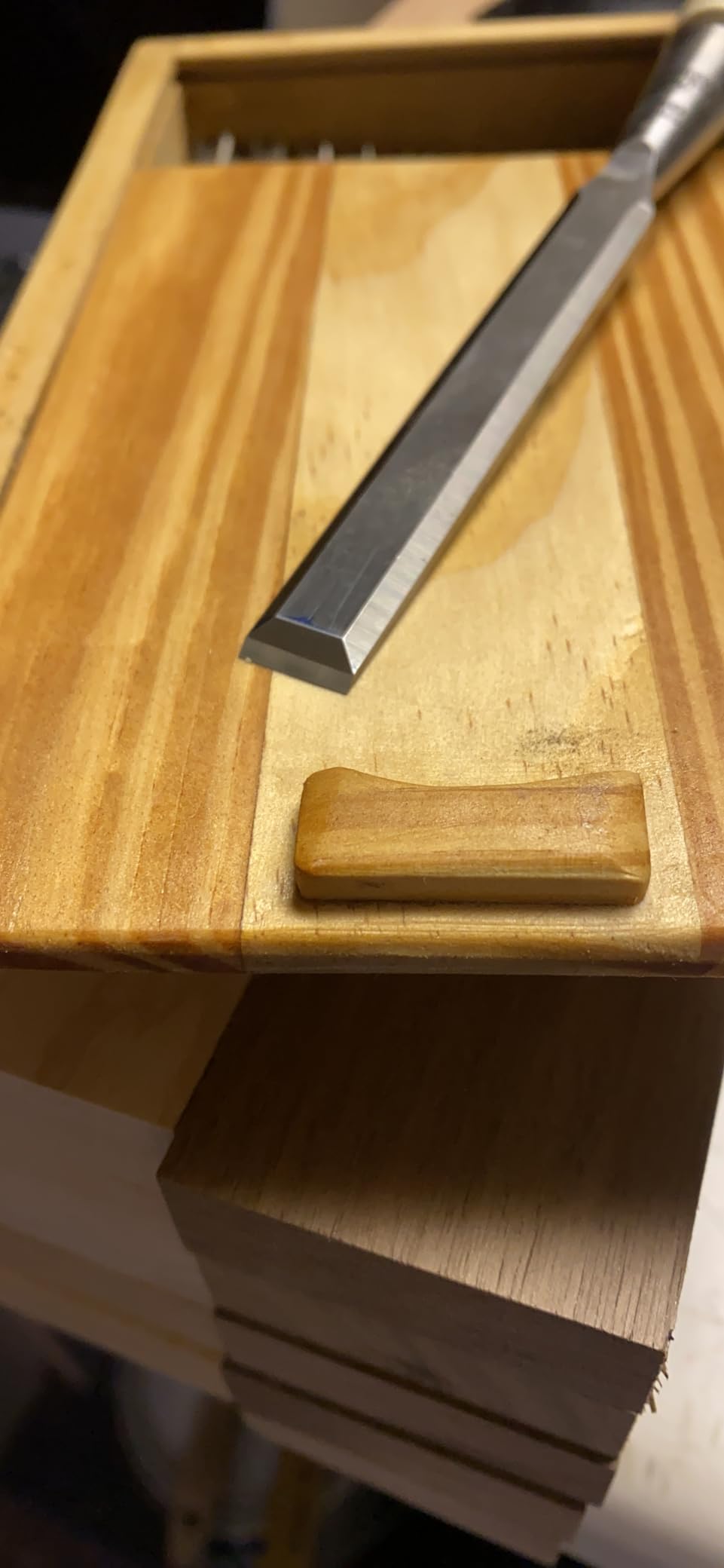
Wide irons and flat stones
This is the guide for anyone whose sharpening list is mostly plane irons, or who works on thick diamond plates and sandpaper systems. The broad clamp range and the flat-rolling single wheel handle both cases well, and the projection chart makes the first session much shorter.
The stainless body also shrugs off water, which matters if you use water stones.
Where it falls short
The beveled inner faces make it awkward to hold chisels with tapered or compound side bevels, and several users with those blades built their own spacers as a workaround. Because the wheel rides on the back half of the stone, usable stone length is roughly halved and you need to rotate the stone to even out wear.
5. Tormek SE-77 Square Edge Jig: Best for Tormek Sharpener Owners
Tormek SE-77 Square Edge Jig – Innovative Jig For Sharpening Wood Chisels and Plane Blades / Irons
- Two knobs make squareness repeatable and correctable mid-pass
- Only jig here that grinds camber for smoothers
- Solid heavy casting with smooth adjusters
- Large upgrade over the stamped original
- Only works with Tormek T-3 T-7 and T-8 machines
- Knobs must be returned carefully or it stays out of square
- Back tab can limit travel on non-Tormek bars
At 4.6 stars across 572 reviews, this is the highest-rated product in the group. It is not a whetstone guide, so it competes in a different category, but for anyone who owns a Tormek it is a large step up from the thin stamped jig that ships with the machine.
Two fine-tuning knobs let you dial the blade square against the support bar and correct it on the fly. On a wheel sharpener, squareness is the difference between a flat edge and a slightly rounded one, and being able to nudge it without stripping everything down is the useful part.
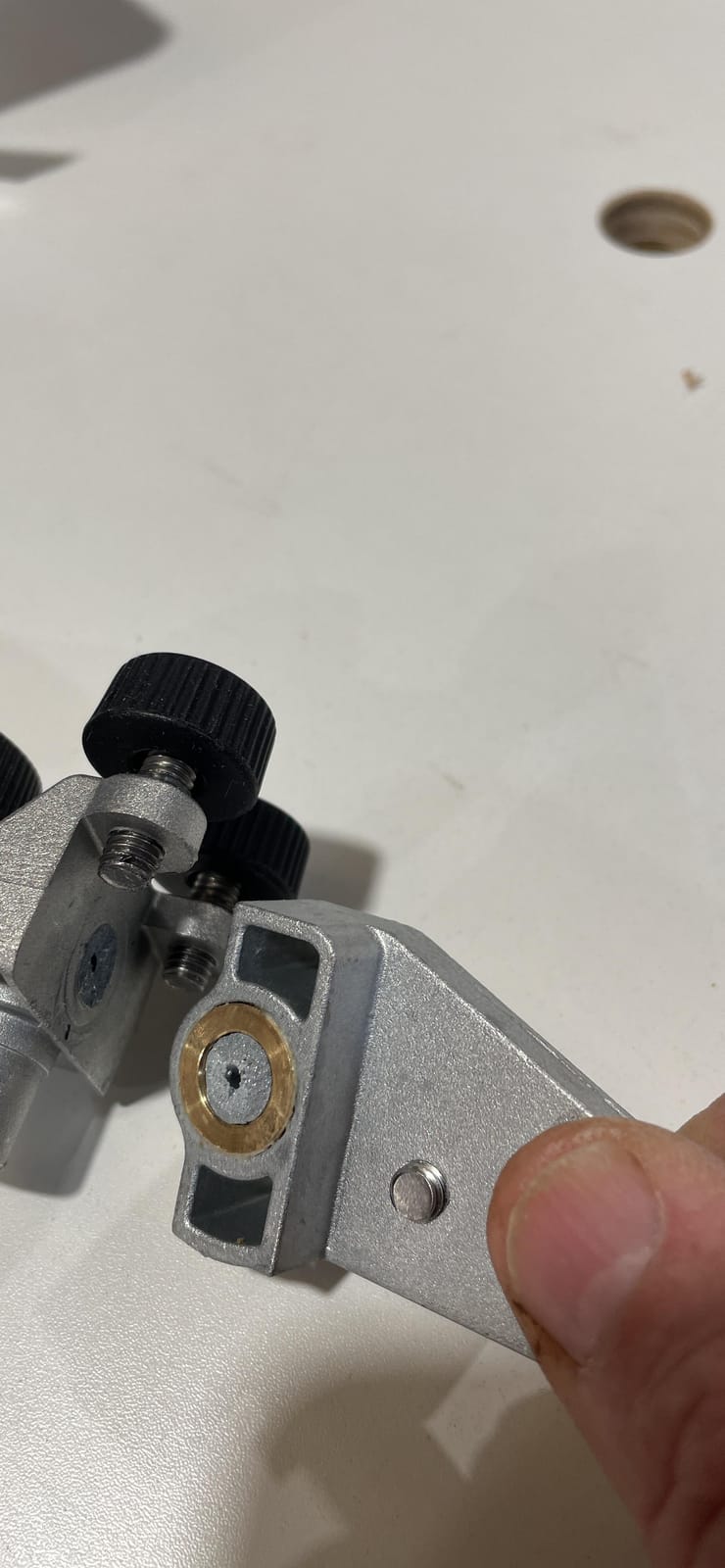
There is one feature here that no other product in this roundup offers. Loosen the thumb knobs slightly and the jig grinds a slight convex camber into a plane iron. That is exactly what a smoother or a low-angle bench plane wants, and no manual wheel-on-stone guide can produce it.
The body is precision-cast zinc with a black composite upper, and it runs smoothly along the Tormek universal support bar. Owners describe it as a decisive upgrade rather than a marginal improvement.
For Tormek owners and camber work
If you sharpen on a T-3, T-7 or T-8, this is the jig to own. It handles chisels and plane irons across a wide range, and the two-knob squareness system makes an edge you can trust at sharpeners where a hand is the only reference otherwise.
The camber capability makes it the pick for anyone who owns a smoother or a low-angle bench plane and wants to set a radius deliberately.
Where it is the wrong tool
It does nothing for manual stones. If you sharpen on waterstones, oilstones or diamond plates, this sits in a cupboard. The squareness knobs also need careful return, and a jig left out of square will quietly ruin the next blade. The back tab can limit travel on non-Tormek support bars.
6. Gohelper Honing Guide Set: Best Angle Gauge and Fixture Setup
- Gauge and fixture take the guesswork out of angle setting
- Wide roller is stable on plates and sandpaper systems
- Narrow clamp shoulders fit chisels unaltered
- Disassembles fully for servicing
- Chisels under about 1/4 inch are hard to seat square
- Short plane irons sit loose at 30 degrees
- Occasional casting defects reported
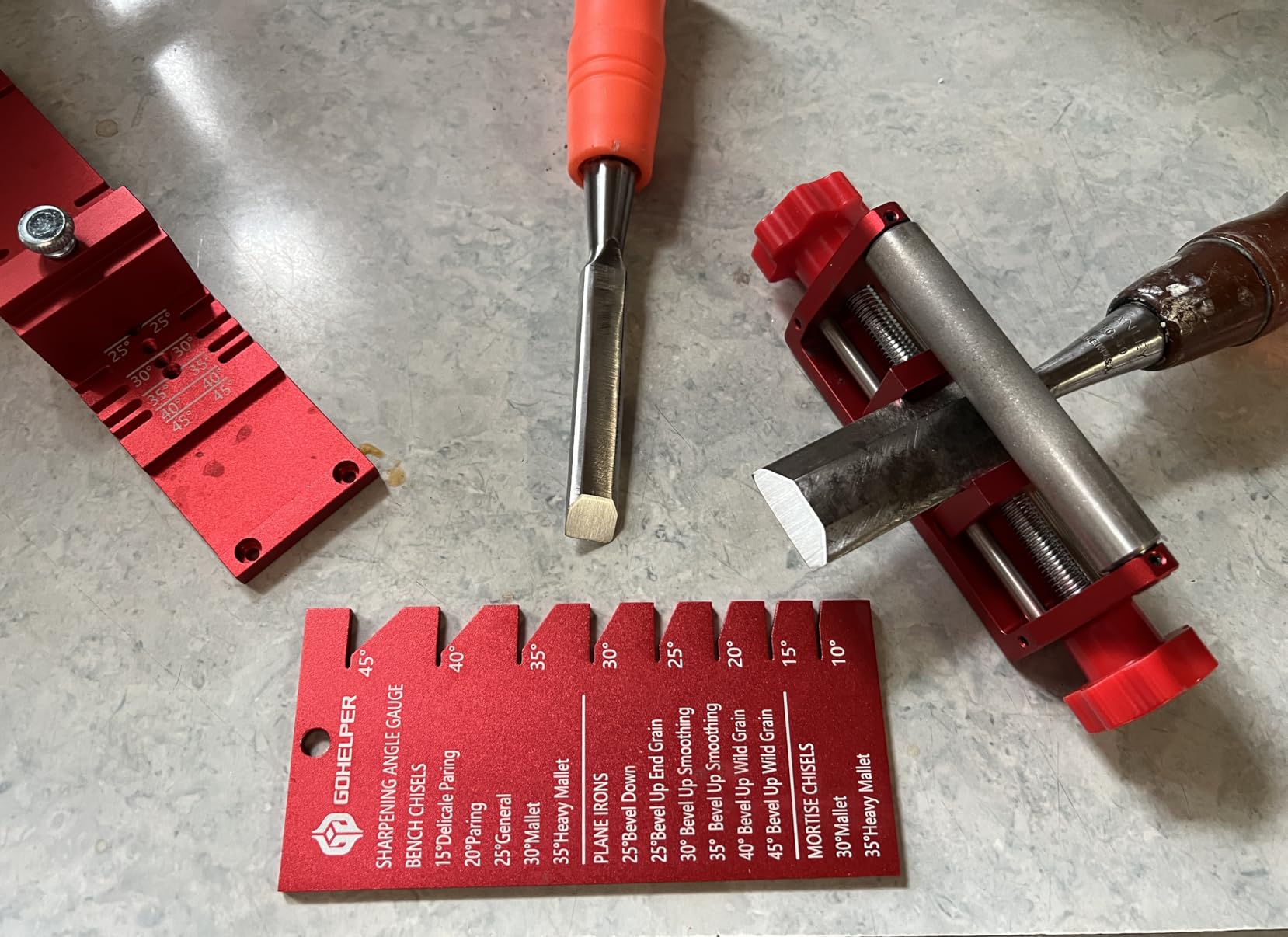
Most guides leave you to estimate the angle. This one includes a gauge to measure the bevel your blade already has and a fixture with a positioning block to set the length, so you are matching a known angle instead of guessing at it. For a first setup, that is the difference between a confident first session and an hour of trial and error.
Clamp range is the widest on test, running from 0.1 inch to 2.8 inch across chisels and plane blades. The narrow clamp shoulders seat thin chisels without any shimming, and the extended wide roller stays stable on diamond plates and sandpaper systems.
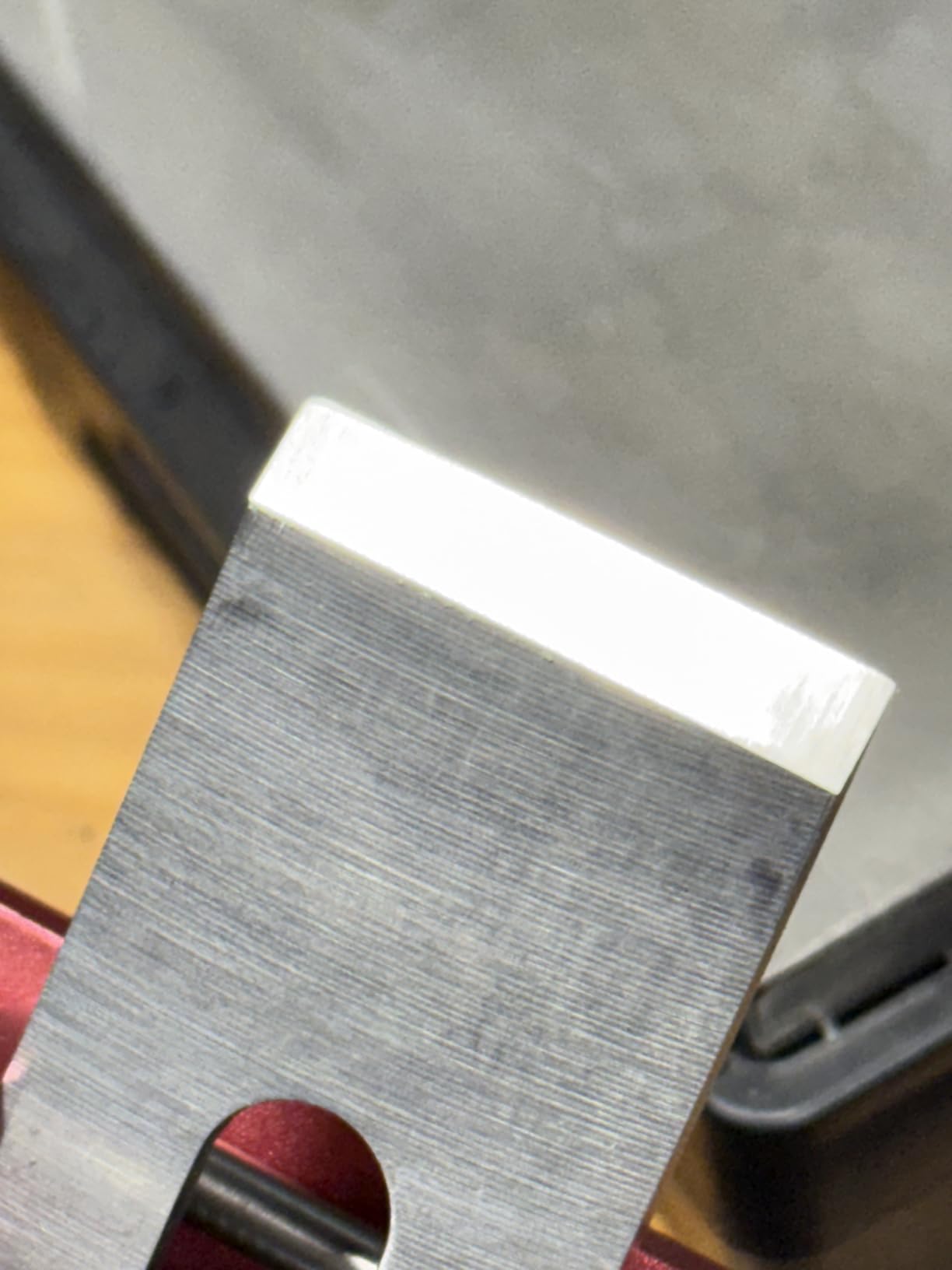
Construction is anodized CNC-machined aluminium alloy with stainless steel components and laser-etched markings that stay readable in low light. It comes apart fully with a small Allen key, which means you can service it or replace a worn part instead of binning the jig.
At 4.5 stars from 509 reviews, the standouts named most often are the gauge and fixture, the roller stability and the disassembly-friendly design.
Aimed at first-time setters
If you have never deliberately set a bevel angle, the gauge and fixture do the hardest part of the job for you. Measure what is there, set what you want, and the jig holds that relationship through every pass.
The very wide clamp range also makes this a one-jig solution for mixed tool rolls, including wide plane irons.
Where the play shows up
Two recurring friction points. Chisels narrower than about a quarter inch can be hard to seat square because of play in this style of design, and short plane irons do not lock down well at 30 degrees because the blade sits forward in the jaws. A few owners have also received pieces with casting defects.
7. GOINGMAKE Honing Guide System: Best Interchangeable Roller Widths
- Long and short rollers adapt to narrow chisels and wide irons
- Widest marked angle range in this group
- Shoulder reference squares the edge to the rollers
- Storage box and clear illustrated instructions
- Angle fixture is about half a degree off true
- Brass rollers can trap diamond grit and go flat
- Narrowest 5/32 inch listing still excludes some quarter inch chisels
The reason this system is different is the roller set. Two short and two long brass rollers ship in the box, and swapping them lets the jig carry anything from a slim chisel to a wide bench plane iron without a wobble. Most competing guides force you to choose one roller width and live with the compromise.
The angle fixture carries the widest marked range we found, covering 15, 20, 25, 30, 35, 40 and 45 degrees plus a second set at 17 through 42. A shoulder on the right side squares the cutting edge to the rollers, which is the step that separates a clean bevel from a slightly skewed one.
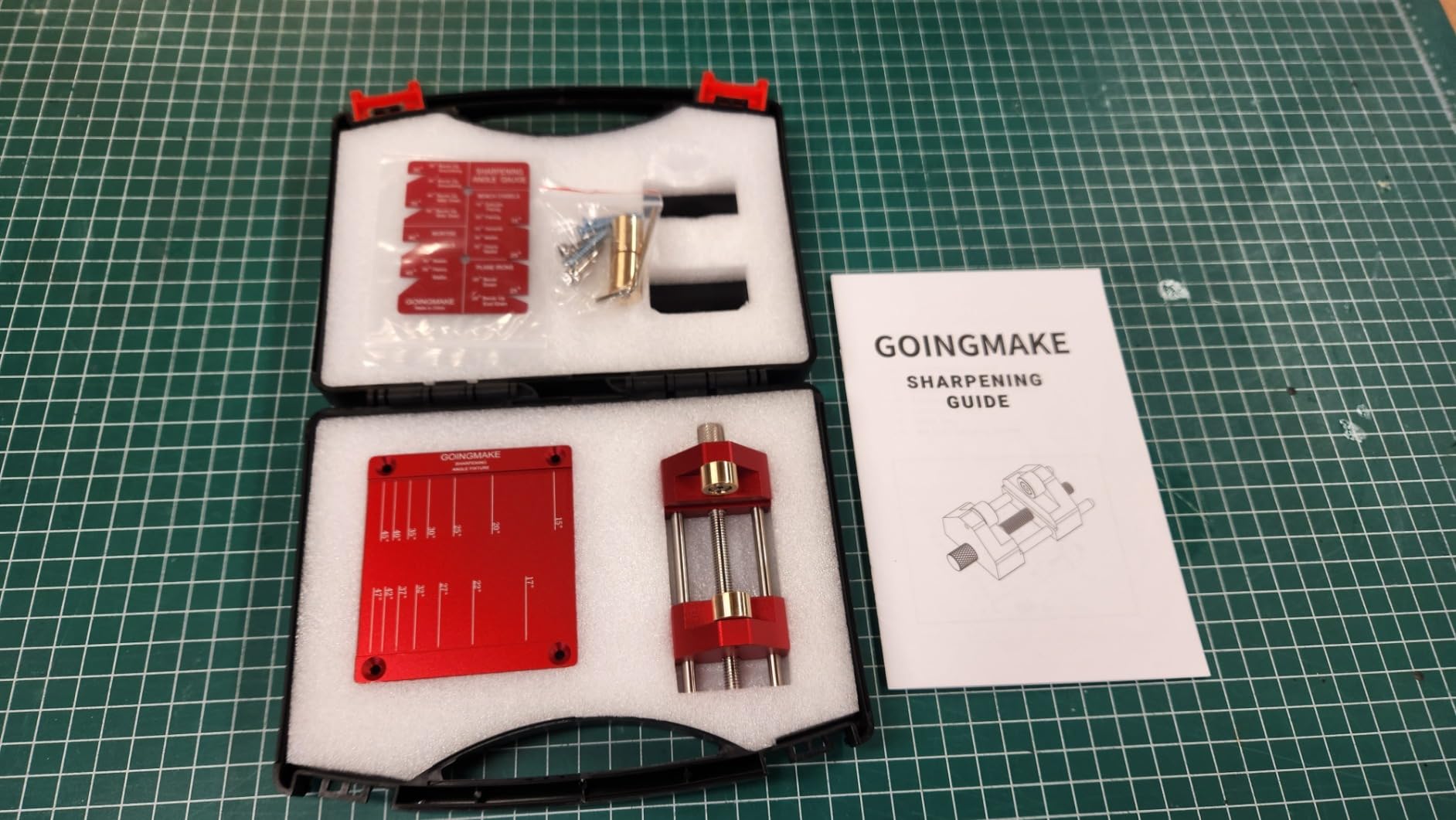
Clamp range runs from 5/32 inch to 3 inch, the widest in the roundup, and the aluminium, brass and stainless build comes with a storage box. Instructions use large graphics, which is more than can be said for a surprising number of jigs at this level.
Several owners report that the guide eliminated a persistent edge bias they had lived with for years using a cheaper guide. That is repeatability paying off in the way you actually notice.
Mixed tool rolls and family setups
This suits anyone sharpening a wide mix of chisels and plane irons on one bench, or a shop teaching students who will be bringing tools of every width. Swapping rollers takes seconds and removes the rocking problem that narrow chisels suffer in wide jigs.
The edge-squaring shoulder is also worth having if your current guide produces bevels that lean.
Two honest caveats
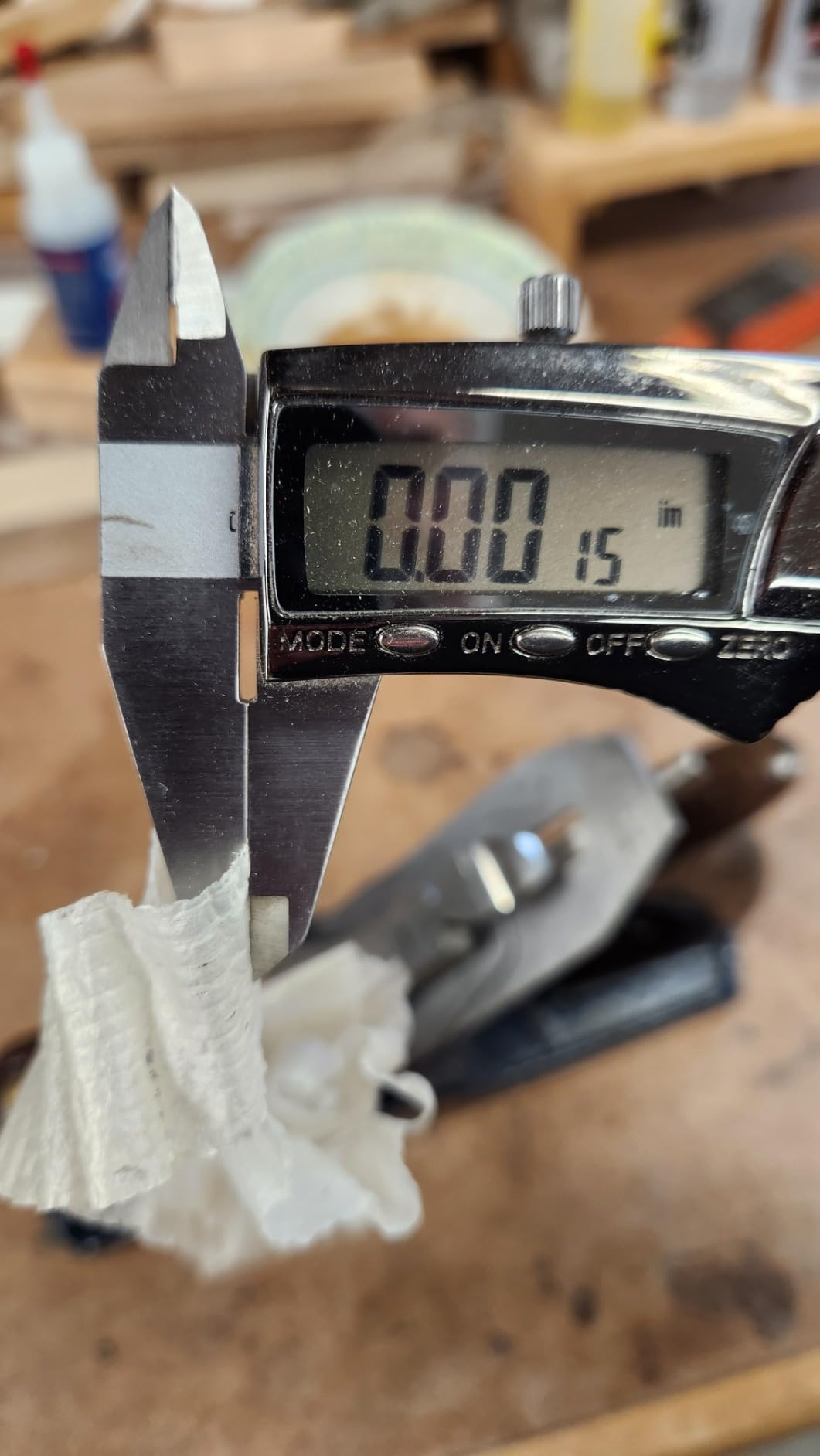
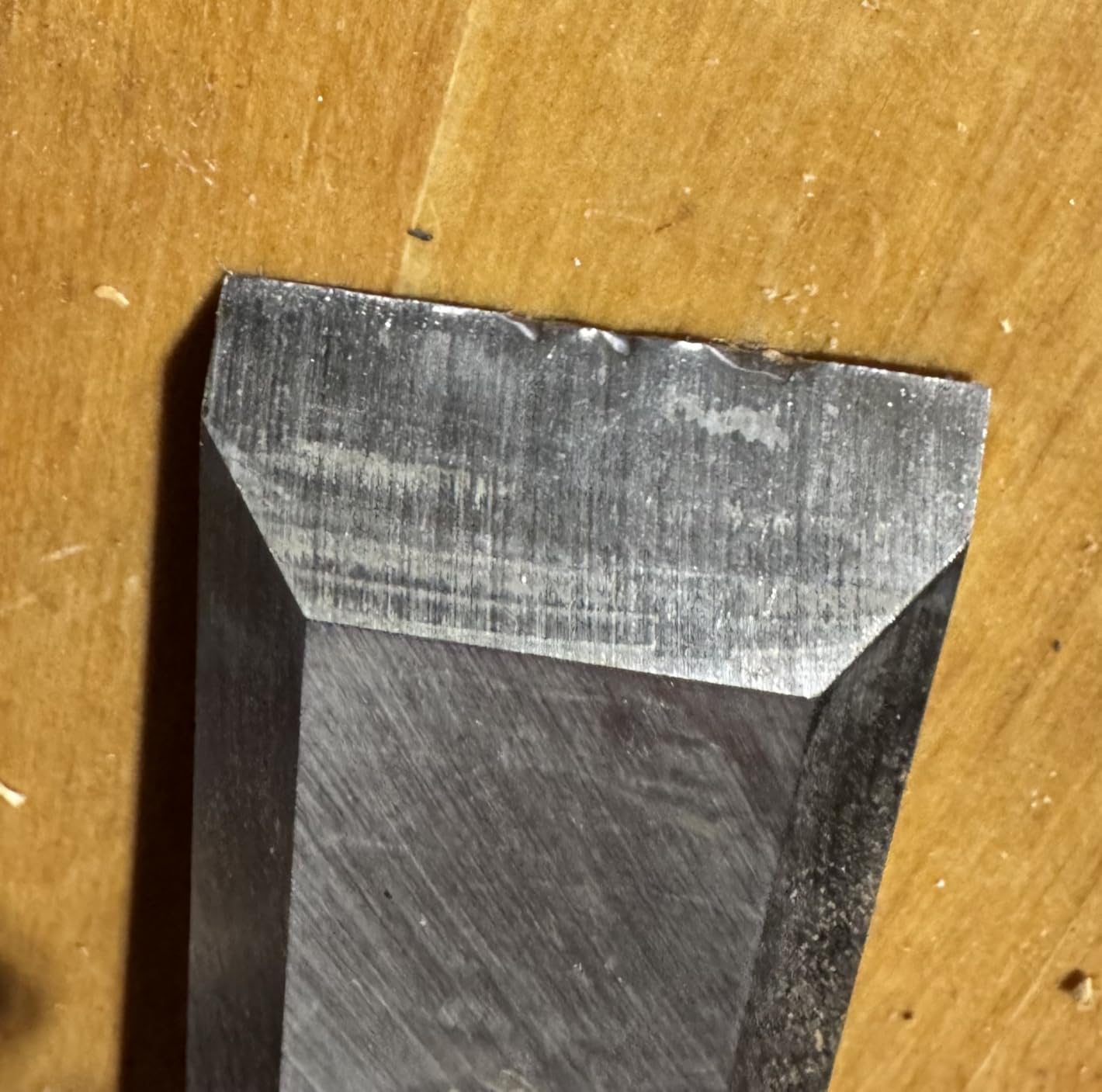
The angle fixture runs about half a degree off true, so check it against a trusted reference before you trust the setting. Removable brass rollers can trap diamond grit between roller and mount and develop a temporary flat spot until they are cleaned and lubricated. Some quarter inch chisels with different profiles still fall outside the narrowest listed width.
8. Tormek SVS-38 Short Tool Jig: Best for Stubby Chisels and Gouges
Tormek SVS-38 Short Tool Jig – Sharpen Short Woodworking Tools like Short Wood Chisels, Carving Gouges, Tools for Power Carvers etc.
- Flanges hold the tool square by mechanical constraint
- Compact and light for short chisels and gouges
- Runs on both sides of the Tormek universal support
- Limited to straight-shanked tools up to 1-1/2 inch wide
- Tormek specific rather than a general whetstone guide
This is the most mechanically clever idea in the roundup. Instead of trying to line a short tool up by eye, two parallel flanges run on either side of the Tormek universal support and physically prevent the blade from tipping. Squareness is guaranteed by the shape of the tool, not by your eyesight.
That design is why it earns its place here despite being narrow in scope. Short chisels that have been shortened down to stubs, carving gouges and power-carver tools are the hardest things to keep square on a wheel, and this jig simply removes the possibility of getting it wrong.
When nothing else fits
Reach for this when you work on stubby chisels, small carving gouges or power carver tools. The twin-flange constraint is the answer to the short-blade problem that frustrates wheel-on-stone guides, because there is no projection to get wrong.
At 3.52 ounces it is also the easiest to carry around and the least intrusive on a small bench.
Where it does not apply
It is limited to straight-shanked tools up to 1-1/2 inch wide, so full bench chisels and plane irons are out of scope. It also needs a Tormek sharpener and the universal support, which makes it a poor choice if you sharpen on stones.
9. AUXTUR Honing Guide Set: Best Bundle with a Stone Included
AUXTUR chisel sharpening jig with Honing Guide Tool Set for Woodworking
- Complete package with a 400 and 1000 grit stone
- Angle gauge and positioning block aid repeatable setting
- Wide roller gives a smooth stroke
- Anodized aluminum and stainless resist rust
- Bundled stone is a thin adhesive plate that wears down
- No positive lock on the clamp knobs so small chisels drift
- Angle reference is a thin paper card that tears
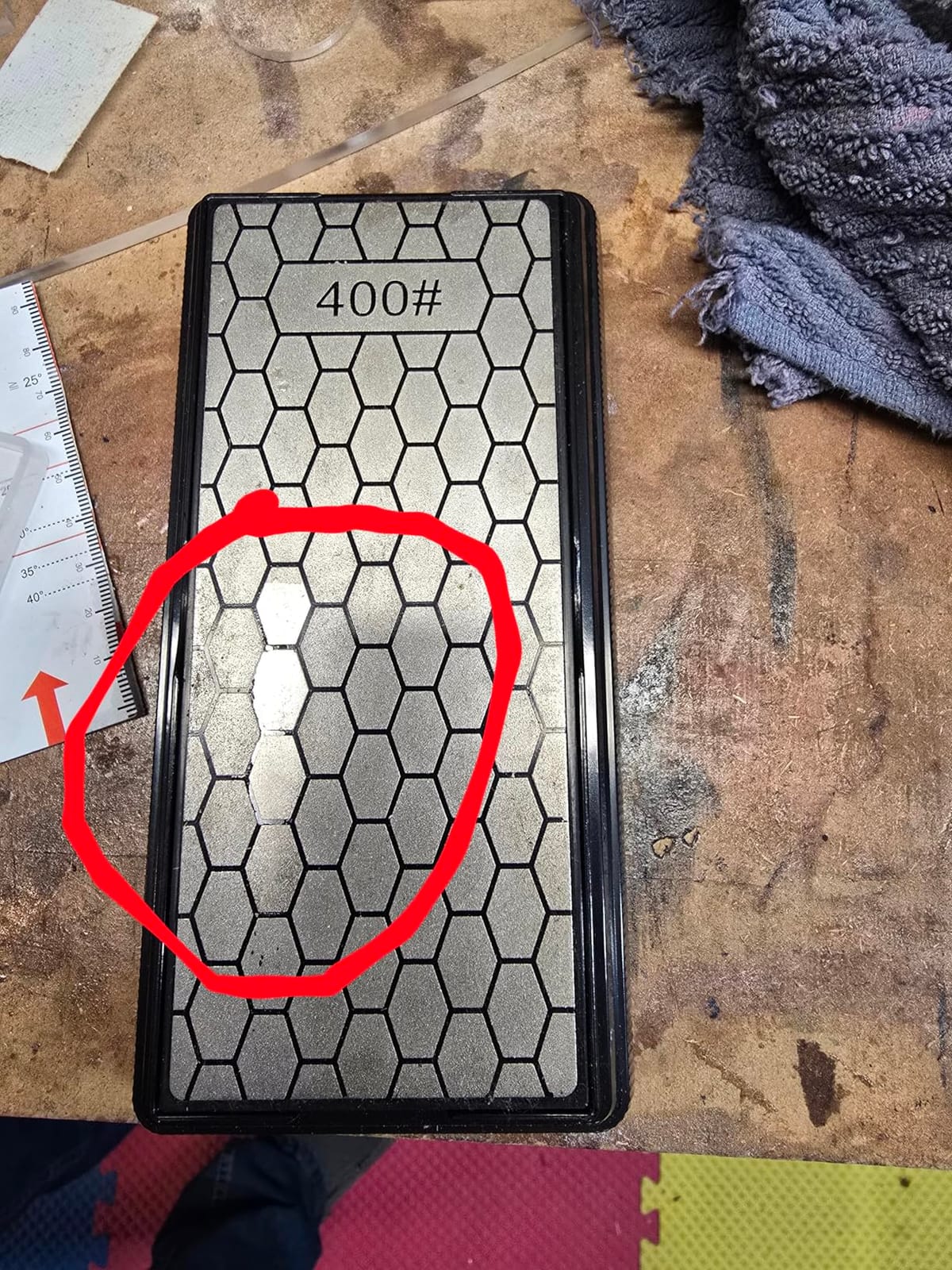
The AUXTUR set pairs a solid guide with a 400 and 1000 grit stone, which means you can register a bevel and take it to a fine finish without buying anything else. Buyers consistently rate the guide above the stone, and that is the honest read: the jig is the reason to keep this, the plate is a convenience.
Two adjustable jaws hold the blade at the correct angle, and the kit includes an angle gauge to measure the existing bevel plus a fixture with a positioning block to set the length. Clamp range runs 0.1 inch to 2.55 inch with an extended roller for smooth passes at any width.
Construction is anodized CNC-machined aluminium alloy and stainless steel with high-precision etched markings, at 1.1 pounds. That is a well-made tool that resists rust, which matters if you use wet stones.
The recurring complaints are all about accessories rather than the jig itself. The stone is a thin adhesive diamond plate that wears down over months, and the angle reference is a thin paper card that tears easily.
Good for a first bench setup
If you want a working sharpening setup from one box, this covers it. The gauge and positioning block take the guesswork out of the first angle setting, and the 400 grit stone handles the coarse work that the fine-grit bundles elsewhere cannot.
It is also a reasonable second guide if you want a second angle available for different jobs.
Where the clamp lets go
There is no positive lock on the clamp knobs, so small chisels can drift out of square during passes, and the paper angle card will not survive a busy shop. The adhesive stone is the part to plan a replacement for rather than depend on long term.
10. G Sharp Chisel Sharpener: Best All-in-One Hand-Powered Kit
- Complete grit progression in one compact unit
- Unusually wide 22 to 90 degree angle range
- Covers very narrow and very wide blades
- Hand powered and easy to carry
- Diamond hones are consumables that wear down
- Fixed grit progression is less flexible than choosing your own stones
The G Sharp is the pick for anyone who does not want to manage stones at all. Four diamond hones at 200, 400, 800 and 1500 grit sit in the body, plus diamond micro-foils for polishing, and the whole thing runs off your hand. Nothing to soak, nothing to flatten, nothing to store flat.
The angle range is the widest on test, from 22 to 90 degrees, and the blade range runs from 3mm to 85mm wide. That covers everything from a slim chisel to a wide bench plane iron in a single jig, which is unusual for a compact unit.
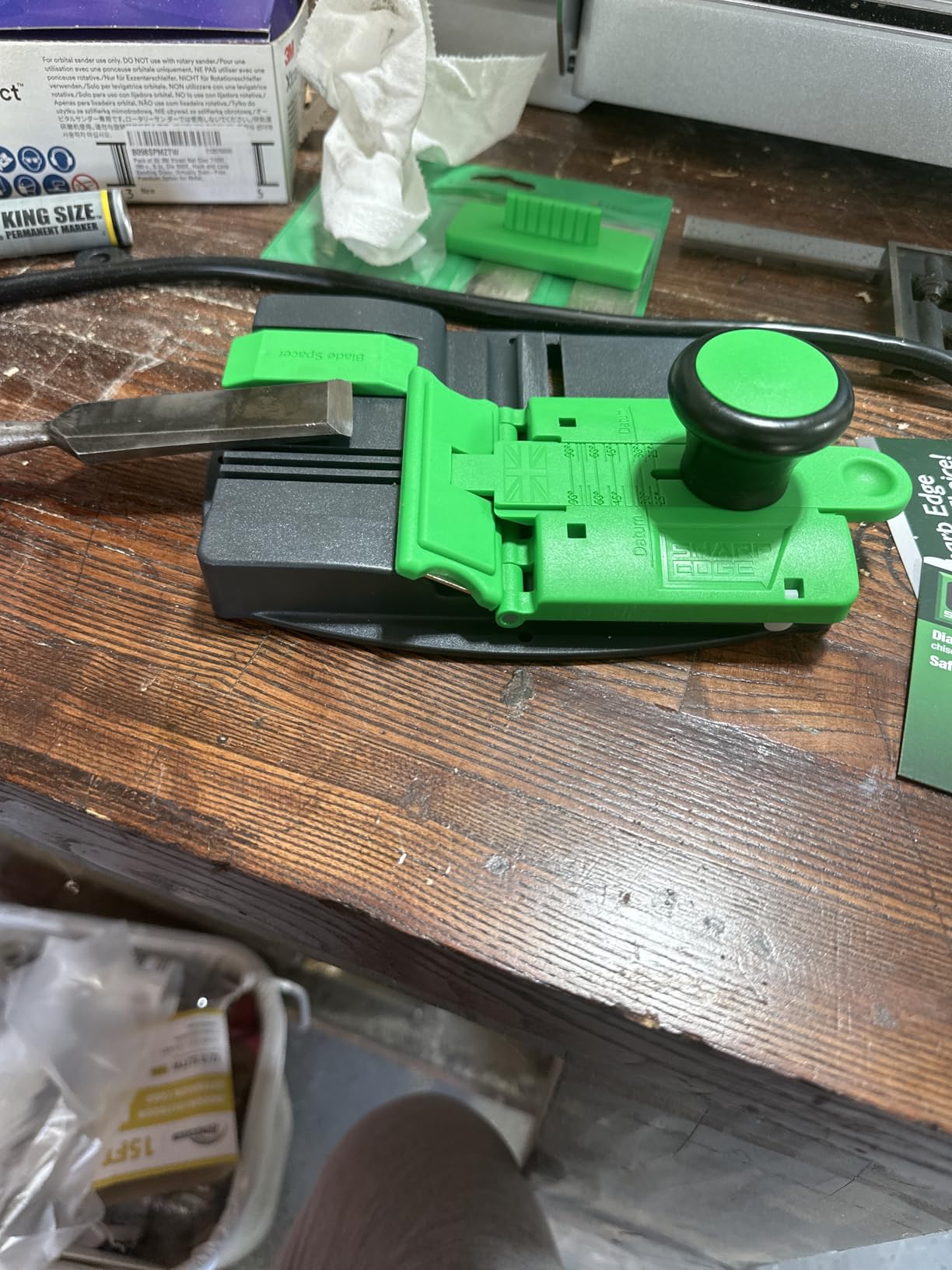
It is also genuinely portable, described as light and robust enough to be knocked about in a tool bag. For a woodworker who sharpens on site, on a balcony, or in a shared workshop where a water stone would be unwelcome, that solves a real problem.
It is hand powered and needs no electricity, which means it works anywhere and adds nothing to the bench circuit.
Why it suits a specific bench
This is the right tool for a small-space sharpener, a student, or anyone who wants a progression without the commitment of a full stone set. It handles both very narrow and very wide blades without adjustment, and the polishing foils finish an edge nicely.
It is also the most forgiving purchase for a beginner, because there is no flatness to maintain.
Where it runs out
The diamond hones are consumables. They will wear down over time and need replacing, which is a running cost rather than a one-time purchase. The fixed grit progression is also less flexible than choosing your own stones, so you cannot grind a fresh bevel and then jump to a much finer stone than 1500 grit in one pass.
How to Choose a Chisel Sharpening Jig
Most buying guides talk about accuracy, which is the wrong first question. The question that matters is repeatability: does this jig return to the same angle tomorrow, next week, next year? A jig that is theoretically accurate but needs readjusting every session will remove far more steel than one that is slightly off and never moves. Look for positive locks, marked settings and fixtures that return to a fixed position.
Top-clamping, side-clamping and wheel-on-stone
There are three broad designs, and the geometry decides which blades you can actually sharpen.
Wheel-on-stone designs clamp the blade between jaws and roll on a wheel or roller beneath the stone. They are compact, cheap and effective on modern flat-ground blades of even thickness. Their weakness is blades that are not uniform, and their footprint eats stone length.
Top-clamping designs hold the blade from above and roll or slide it along the stone, which puts far less pressure on the edge and tolerates tapered vintage blades and thick-land Japanese chisels that side-clamping guides cannot grip. Side-clamping designs are the most compact but only work on blades of even, parallel thickness. If your tool roll includes anything old, tapered or Japanese, top-clamping is the safer architecture.
The short-chisel problem
This is the most repeated complaint across sharpening forums and almost no roundup covers it. Wheel-on-stone guides set the angle by projection, and projection depends on the wheel sitting at a fixed distance from the edge. On a stubby chisel there is not enough blade behind the wheel for the jig to tilt, so it simply cannot reach a steeper angle no matter how you adjust it.
That is why top-clamping guides and flanged designs like the Tormek SVS-38 exist. If most of your short tools are chisels that have already been shortened, buy for that geometry rather than for the clamp range on the box.
Repeatability beats accuracy every time
Two guides can produce the same angle and only one will produce it again next month. Guides with a marked fixture, a lockable knob or a fixed stop score higher on repeatability than guides that rely on a knurled screw held by friction. A wide roller also matters here, because a narrow one flexes and the angle drifts across the stroke.
Clamp range and how narrow your blades really are
Listed clamp ranges are usually generous in theory and tight in practice. Chisels under a quarter inch are hard to seat square in many wheel designs, and wide irons sitting forward in the jaws lose the setting. Measure your narrowest and widest blade before you buy, and pay more attention to the reviews for your blade size than to the headline range.
Matching the jig to your stones
Stone size is part of the jig purchase, not an accessory. A wheel-on-stone guide takes up enough of a small stone that you get almost no usable stroke, so treat 8 inch stones as the practical minimum for any roller jig and prefer 10 inches if you can. Grit choice matters too: a coarse grit to establish the bevel, a medium to refine it, and a fine or strop to remove the burr. If you sharpen knives too, our picks for diamond sharpening stones cover the flat, long-lasting option.
One warning that gets repeated constantly: a jig cannot rescue an unflattened stone. If the stone has a hollow in the middle, the jig will faithfully reproduce that hollow across your whole blade.
When a jig is the wrong purchase
Skip a manual jig entirely if you sharpen a lot on a powered system. Motorized and water-cooled sharpeners set the angle by their own geometry, and adding a manual jig alongside one is redundant. It is also worth weighing whether you need a jig at all, since a first flat stone and a consistent hand is genuinely enough for many beginners.
If you already own a powered sharpener but want to compare systems, our guide to electric sharpening systems covers what that route actually costs in speed and edge consistency.
Frequently Asked Questions
What is the best sharpening jig for chisels?
For most woodworkers the ATLIN Honing Guide is the best sharpening jig for chisels because its self-centering body fits blades from 1/8 inch to 1-7/8 inch wide, the hardened steel roller resists flat spots, and every angle comes from adjusting projection. If you sharpen wide Japanese plane irons, the heavier KAKURI body suits you better, and if you own a Tormek machine the SE-77 square edge jig is the answer.
Is a honing guide necessary?
A honing guide is not strictly necessary. If you can already hold a consistent bevel freehand, a jig mainly adds repeatability rather than quality, and experienced sharpeners often work faster without one. It earns its place for beginners, for anyone restoring uneven inherited blades, and for anyone who wants fast repeatable touch-ups between projects rather than rebuilding a bevel from scratch each time.
What angle should I sharpen a chisel to?
Most bench chisels work well at a 25 degree primary bevel, which keeps the edge keen without being so fragile that it chips. A 30 degree micro-bevel on top is the usual next step and is easier to maintain than moving the whole primary bevel to 30 degrees. Wide paring chisels and low-angle bench planes want a shallower angle, while heavy duty chisels that will meet stone or concrete can take more.
What grit should I use to sharpen chisels?
Work from coarse to fine rather than jumping straight to a fine grit. Start around 400 to 600 grit to establish or repair the primary bevel, move to 800 to 1200 to refine it, then use 3000 to 6000 grit or a leather strop to remove the burr and hone the edge. If the bevel is already correct, jump straight to a medium grit and spend your time at the fine end instead.
Is a sharpening jig better than a motorized sharpener?
Neither is better, they do different jobs. A manual jig gives you a fully controllable primary and micro-bevel at any angle and costs almost nothing to run, but it takes practice and a flat stone. A motorized or water-cooled sharpener is faster and more repeatable once set up, and handles a wide mix of tools, but it locks you into its own abrasive format and a fixed approach to the edge.
Conclusion: The Best Sharpening Jigs for Chisels in 2026
The best sharpening jigs for chisels in 2026 depend less on price than on your blade shapes. The ATLIN Honing Guide is our overall pick for repeatable angles on mixed tools, the KAKURI body earns its keep on wide Japanese irons, the Sharp Pebble handles the broadest plane iron range, and the Tormek SE-77 is unbeatable if you sharpen on a wheel.
Whichever you choose, check the clamp range against your narrowest and widest blade before you order, and plan on stones at least 8 inches long so the jig still leaves you a usable stroke.