
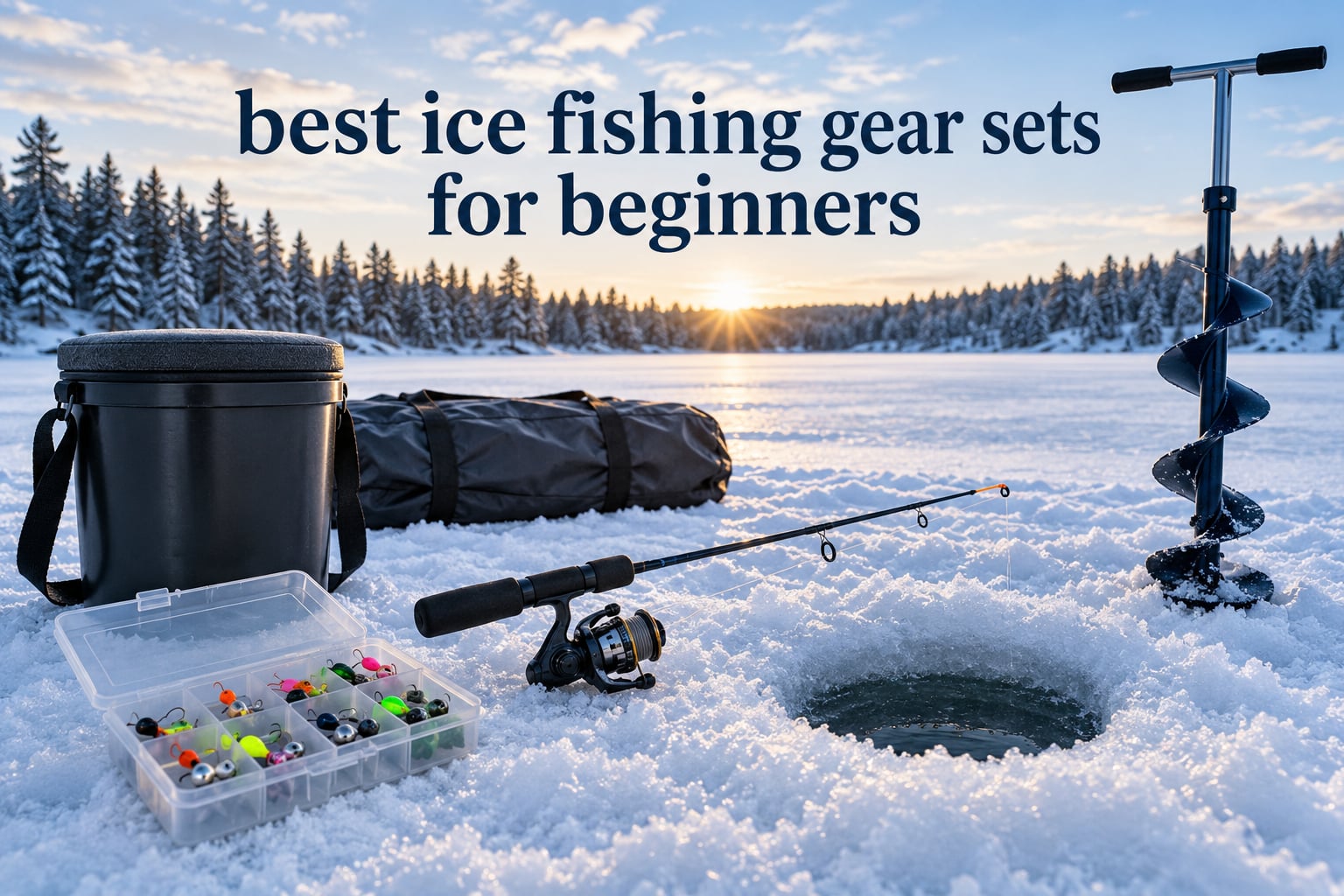
Ice fishing has a reputation for being expensive, which stops a lot of people before they drill their first hole. It does not have to be that way. After a few seasons on hard water and reading through what first-timers actually ask, we put together this guide to the best ice fishing gear sets for beginners in 2026 — ten picks that cover the whole system, not just the rod everyone else is writing about.
Most roundups on this topic rank rods. A rod is maybe one-tenth of what you carry onto a lake. You also need a way to cut the hole, a way to clear the slush, something to sit on, and a safety kit that is not optional. The ten products below cover those categories as well as the fishing itself, so a first-timer can build a working setup instead of a shelf of orphaned accessories.
If you are still deciding whether to buy anything at all, read the safety section first, then come back. A guided trip or a rented shelter is a completely legitimate first step, and plenty of anglers on the r/IceFishing forums recommend exactly that route before committing to a full outfit. If you already know you are buying, our guide to ice fishing rods covers the blank and action questions in more depth.
Table of Contents
The Gear a First-Timer Actually Needs
A beginner ice fishing setup comes down to eight categories in priority order: a short ice rod with a size 500 or size 750 spinning reel, 4 to 8 lb monofilament, an auger, an ice scoop, a spud bar and ice picks, a personal flotation device, a shelter or sled, and a bucket that doubles as a stool. Buy within each category cheaply at first, except the rod and reel, which are the one place where spending pays back.
The priority order matters more than the price. A flimsy rod will hide every bite you ever get, but a premium auger will not put a single fish in the cooler. Once the core eight are covered, the sensible next upgrade is a tip-up so you are not holding a rod for four straight hours, and only after that do electronics earn a place in the budget.
Ice Safety Comes Before Any Product Recommendation
No product list matters if you end up in the water. Clear ice is stronger than it looks, and slush that hides a crack will not announce itself. Before any gear recommendation, the basics are fixed: fish with a partner, check the ice on the way out and not only where you plan to drill, wear a flotation device you would actually put on in a car, and carry spikes.
Most of the safety items cost very little. A spud bar is described over and over on r/IceFishing as the one piece that is not a luxury, because if you fall through it lets you pull yourself back onto the surface you came from. Ice picks in plastic sleeves are worth the extra few dollars because the unsleeved versions can end up where you were aiming them at someone else. A charged phone in a waterproof pouch, a travel plan filed with someone onshore, and a check of the forecast for wind and temperature complete the kit.
Our rule is simple. If the thickness is not obviously beyond what you would stand on with a full pack, we do not drill. Thickness readings vary with currents and shoreline, and local knowledge beats any number on a screen.
Top 3 Picks For Best Ice Fishing Gear Sets for Beginners in 2026
These three are the strongest starting points in the roundup. Each one bundles the rod, reel and terminal tackle so a beginner has a usable box on the first trip, and each solves a slightly different problem: completeness, value, or a low-cost way to find out whether you like the sport.

Dr. Fish 24 in Ice Kit
- 24 in graphite rod
- 5BB spinning reel
- spare spool
- lure box and backpack seat

Gonex 28 in Medium Light Combo
- Carbon fiber rod
- 4+1 BB reel
- 52 jig assortment
- skimmer and stool
Shakespeare Fuel Ice Combo
- 28 in solid glass rod
- EVA foam grip
- stainless guides
- pre-spooled reel
All 10 Picks at a Glance
The table below covers the full beginner system: four rod and reel options, one lure box, an auger, two tip-up options, a flasher and a shelter. Scan the category column first — if you are still missing a whole category, that gap matters more than any upgrade within one you already own.
| Product | Specifications | Action |
|---|---|---|
| Dr. Fish 24 in Ice Kit |
|
Check Latest Price |
| Gonex 28 in Medium Light Combo |
|
Check Latest Price |
| Shakespeare Fuel Ice Combo |
|
Check Latest Price |
 Aventik Two-Piece Ice Combo Aventik Two-Piece Ice Combo |
|
Check Latest Price |
 Catch Co Mystery Ice Box Catch Co Mystery Ice Box |
|
Check Latest Price |
 Nordic Legend 8 in E-Drill Auger Nordic Legend 8 in E-Drill Auger |
|
Check Latest Price |
 Celsius 3-Pack Tip-Ups Celsius 3-Pack Tip-Ups |
|
Check Latest Price |
 Bullnose Steel Tip-Down Bullnose Steel Tip-Down |
|
Check Latest Price |
 Garmin Striker 4 Portable Kit Garmin Striker 4 Portable Kit |
|
Check Latest Price |
 Outsunny 4 Person Pop-Up Shelter Outsunny 4 Person Pop-Up Shelter |
|
Check Latest Price |
1. Dr. Fish 24 in Ice Kit — Best All-in-One Gear Set for Beginners
- Genuinely complete first box
- Good graphite blank sensitivity
- Large lure assortment for the money
- Backpack seat carries gear easily
- Reel can develop a tight spot and jerky retrieve
- Factory line is springy and worth replacing
- Seat and straps suit smaller adults
We kept this kit on the sled for a full season as the first setup we hand to friends who had never been on hard water. It covers the rod, reel, terminal tackle and a seat in one box, which means the first outing is not delayed while you wait for a second delivery to arrive. The 24 inch rod is short enough to work inside a portable shelter and light enough to hold for a whole afternoon.
The lure selection is what surprised me. Instead of three token jigs, you get jig rap, jigger shads, jig heads and soft plastic worms, which is enough variety to fish panfish and perch without a second trip to the tackle shop. The reel runs on five ball bearings with a spare spool, so line swaps are quick rather than a fumbled knot in the cold.
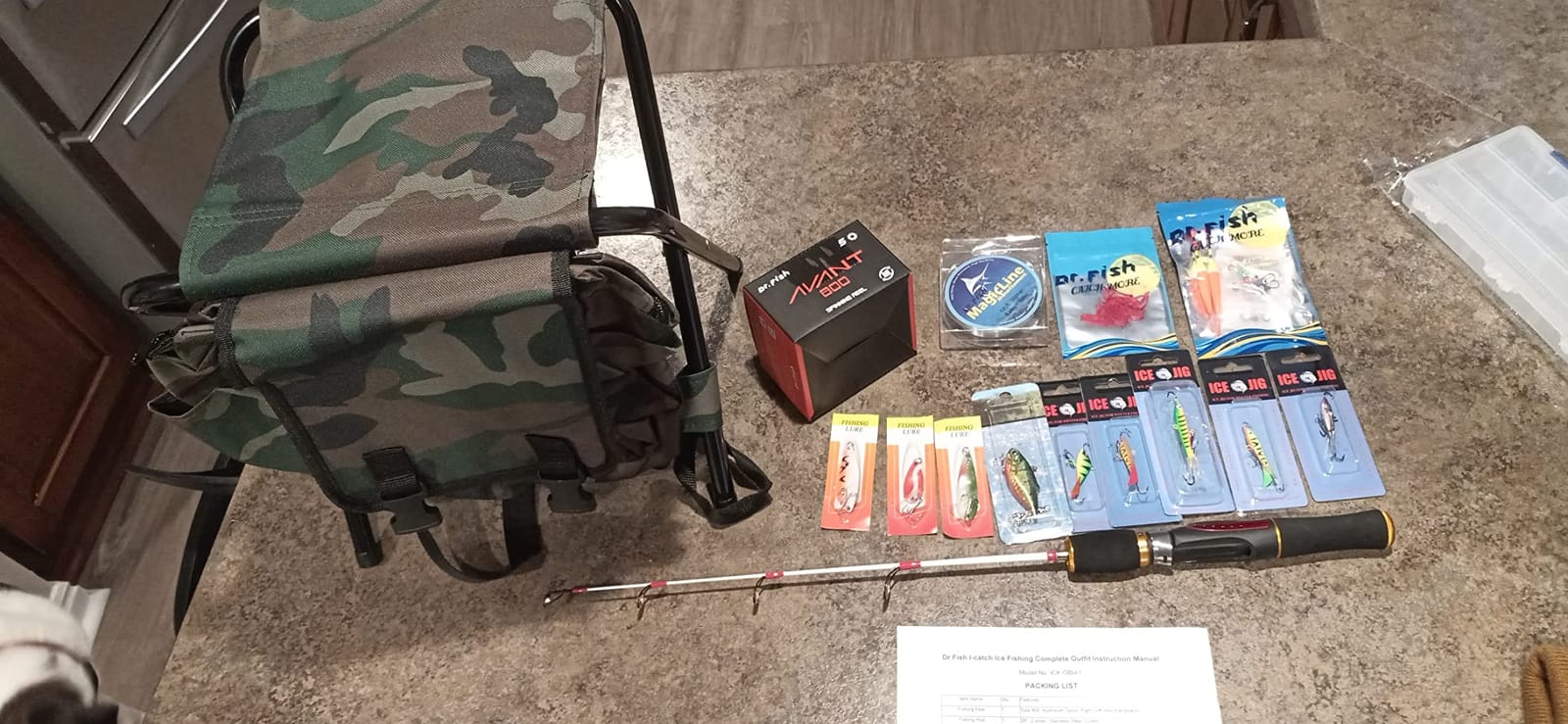
The graphite blank gives more tip feedback than rods in this price bracket usually manage, which matters because on the ice you feel a bite rather than seeing a float. Line capacity runs 100 to 200 yards and the factory line sits in the 6 to 12 lb range, which is heavier than most beginners need.
When this kit fits the trip
This is the pick for a single angler who wants one purchase instead of five, and for a family starting out where adults and kids will share a box. Everything fits in the backpack seat, so hauling it across a plowed access is a one-person job. Give it a season before judging it, and be ready to swap the reel line for something in the 4 to 6 lb range before the first trip.
When to look elsewhere
Skip it if you are a larger adult heading out in full winter gear. Reviewers repeatedly point out that the backpack straps and seat are sized for smaller adults or children, and a cramped seat turns a six-hour day into a shorter one. If your target is walleye, plan on replacing the reel — its drag is not the deciding factor on a fish that size.
2. Gonex 28 in Medium Light Combo — Best Value Rod and Reel Kit
Gonex Ice Fishing Rod Reel Combo 28“ Medium Light Spinning Rod Complete Kit
- Strong value for a full kit
- 52 jigs cover many species
- Light enough for a small backpack
- 28 in and 30 in length options
- Folding stool is very small
- Factory line is oversized and tangles
- Build quality reads as budget
This is the kit we recommend when someone wants the classic ice rod shape — medium-light power, fast response, a proper spinning reel — without moving past the entry tier. The carbon fiber blank is the reason it feels lighter than the price suggests, and 28 inches works inside a shelter while still being usable for spot-fishing on open ice.
The 52-piece jig assortment is the quiet advantage. Several of the pieces glow, some are plain chartreuse and orange, and together they cover the jig-and-spoon approach that most beginners start with. The metal skimmer doubles as your ice scoop, so one more item on the checklist is handled inside the box.
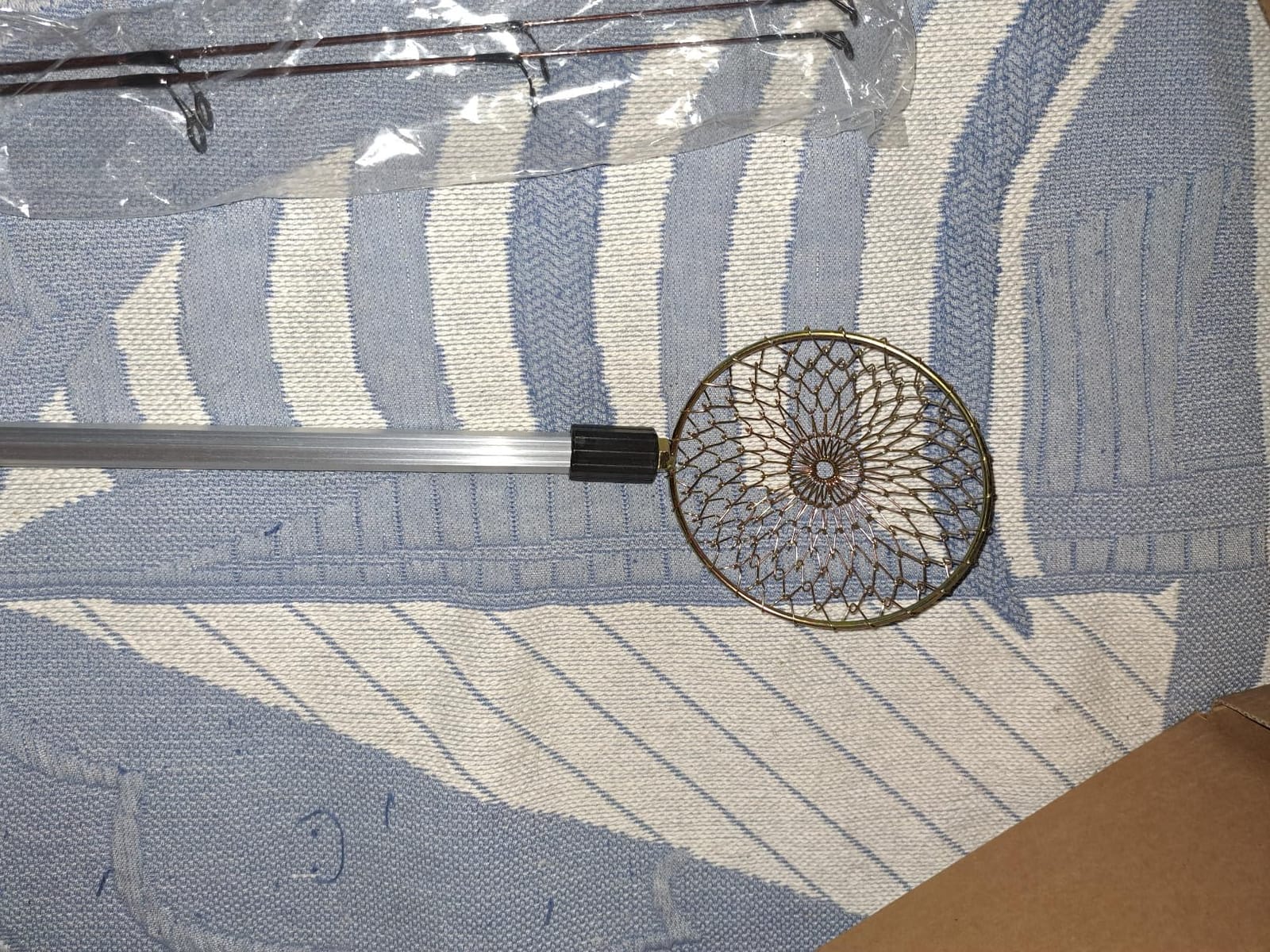
A two-year warranty backs the combo, and the folding stool is what makes it feel like a set rather than a rod with extras. Line weight is rated at 4 to 8 lb, which is a genuinely useful band for perch, crappie, bluegill and trout, and the listed target species runs all the way to walleye and catfish.
How to get the most from it
Re-spool before the first outing. The supplied line is oversized for the small spool, and tangle complaints are the single most common note across reviews. Trim the factory line back to the 4 to 6 lb range, tie it directly to the jig rather than adding a leader, and the kit performs like a considerably more expensive combo.
What to know before you buy
The folding stool is genuinely tiny — small enough that most adults will end up sitting on a bucket instead. A few buyers also report missing or mismatched pieces in the box, so open it indoors before you leave for the lake. If you already own a stool and a scoop, the value of this kit drops noticeably, and you could spend the difference on a better rod later.
3. Shakespeare Fuel Ice Combo — Best Budget Rod and Reel Combo
- Lowest cost way to start
- Well balanced and neatly finished
- Packs small for a carry bag
- Ready to fish out of the box
- Slender blank struggles with larger fish
- Reel is the weaker half
- Occasional quality control issues
We include this one because a real number of beginners never move past a single inexpensive combo, and that is a reasonable place to start. The translucent red solid glass blank with graphite rings looks better than the price suggests, and the balance point sits where a short ice rod should sit for light jigging.
The EVA foam handle matters more than it sounds. On a cold morning your bare hand grips poorly, and a tacky foam grip is the difference between fishing all morning and putting the rod down after twenty minutes. It is also a common gift for a child who wants to try the sport, and the low entry cost makes that an easy decision.
Which fish this combo handles
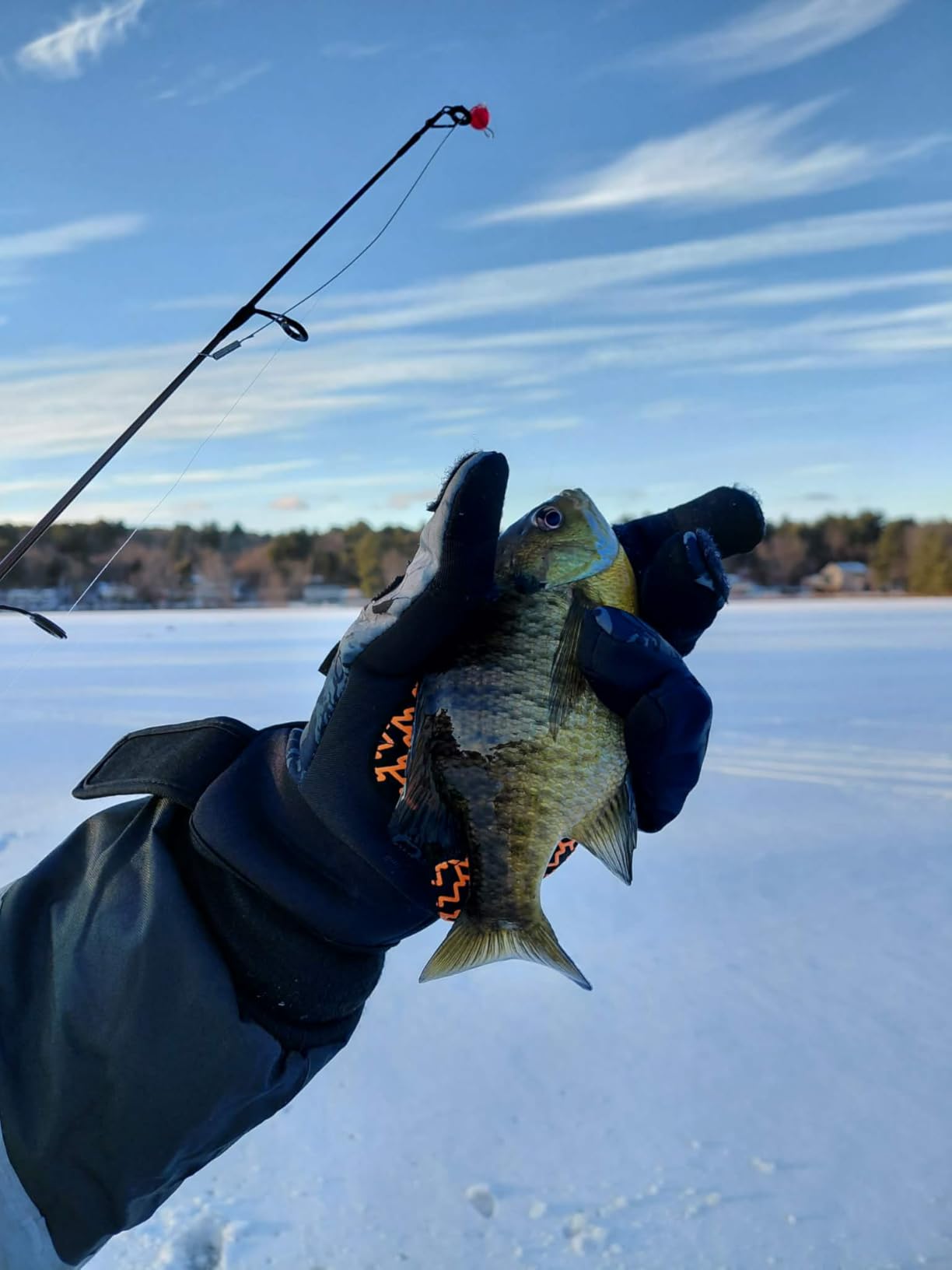
Treat it as a panfish and smelt rod. At 28 inches with medium power and 6 lb rated line, it is set up for perch, trout, crappie and bluegill, which is where most first-timers spend their time. If your goal is a school of walleye in 20 feet of water, this is not the tool, and no amount of technique will change that.
Where it falls short
The reel draws the most criticism. A size 20 ultralight spinning reel is functional, but it is the part most likely to disappoint a beginner who expects it to hold a bigger fish. Check the guide rings before you head out, because a small number of reviewers report misalignment or a tip that arrived cracked — the whole combo takes five minutes to inspect.
4. Aventik Two-Piece Ice Combo — Best Pick for Choosing Rod Length
- Four lengths available in one design
- Two-piece rod stores and travels easily
- Larger guide eyes reduce ice buildup
- EVA grip holds when gloved
- Stiffer than the ultralight label suggests
- Replace the factory line first
- Some reports of tip breakage
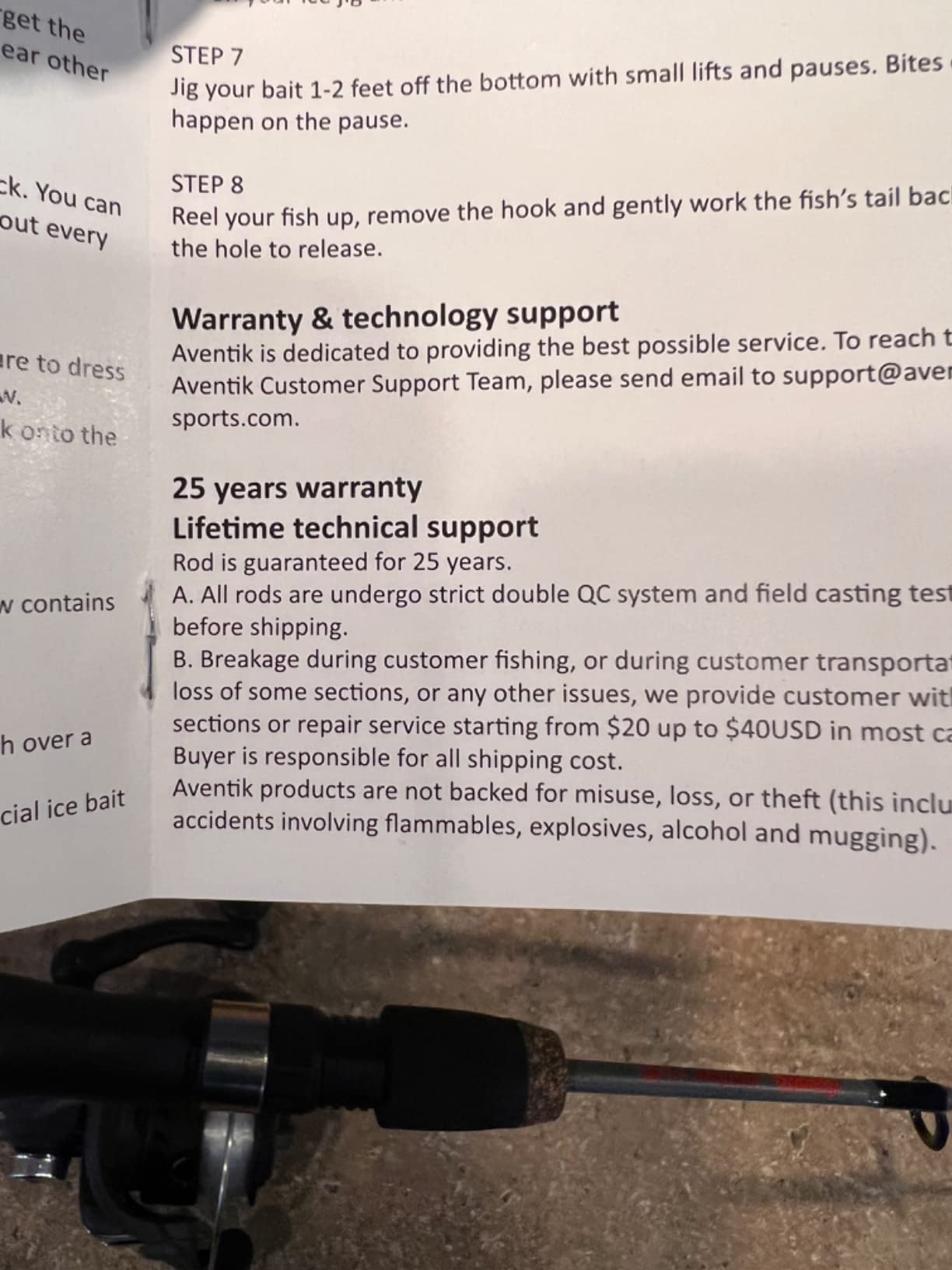
Length is the decision most beginners get wrong, because they buy a long rod before they own a shelter. This combo runs from 26 to 32 inches in the same two-piece design, so you can start short for shelter fishing and move up later without changing the whole setup. The high-feet blank shape keeps the spinning reel rotor away from your glove as you turn the handle.
The included jig heads and soft plastic lures cover the basic panfish approach, and larger guide eyes than most ice rods carry, which reduces the slush and frost buildup that makes cheap combos quit halfway through a morning. The reel uses shielded stainless bearings, a reasonable choice when everything is running in cold, wet conditions.
Four pounds is the rated line and the blank combines graphite with fiberglass, which trades a little sensitivity for a lot of durability. Reviewers frequently recommend replacing the factory line before the first trip, and we would agree — old line on a new reel is a bad trade.
Choosing the right length
Pick 26 or 28 inches if you will be inside a shelter or a portable hub where a long rod hits the ceiling. Go to 30 or 32 inches for sight fishing on open ice, where you want to reach down a steep bank without laying over. The two-piece format means the extra length packs flat in a sled, so the longer option costs you nothing in transport.
Where quality control gets shaky
Two patterns show up often enough to mention: guide eyes not lining up on arrival, and rod tips breaking, occasionally on first use. Inspect the guides and run a light line through them before the trip. Also note that despite the ultralight styling in some versions, owners often describe the action as stiffer than expected — expect to feel bites more than you might with a genuinely ultralight blank.
5. Catch Co Mystery Ice Box — Best Gift Pick for a New Ice Angler
- Genuinely ice specific lure designs
- Low cost and easy to gift
- Technique content helps new anglers
- Regular and Pro versions
- Contents are a surprise
- Not a rod and reel set
- Only 5 to 6 pieces per box
Be clear about what this is: a lure box, not a gear set. It solves the bait problem for someone who already owns a rod and reel and needs lures designed for under-ice work rather than a random assortment of open-water plastics. If you are building a first kit from nothing, treat this as an add-on for a later season.
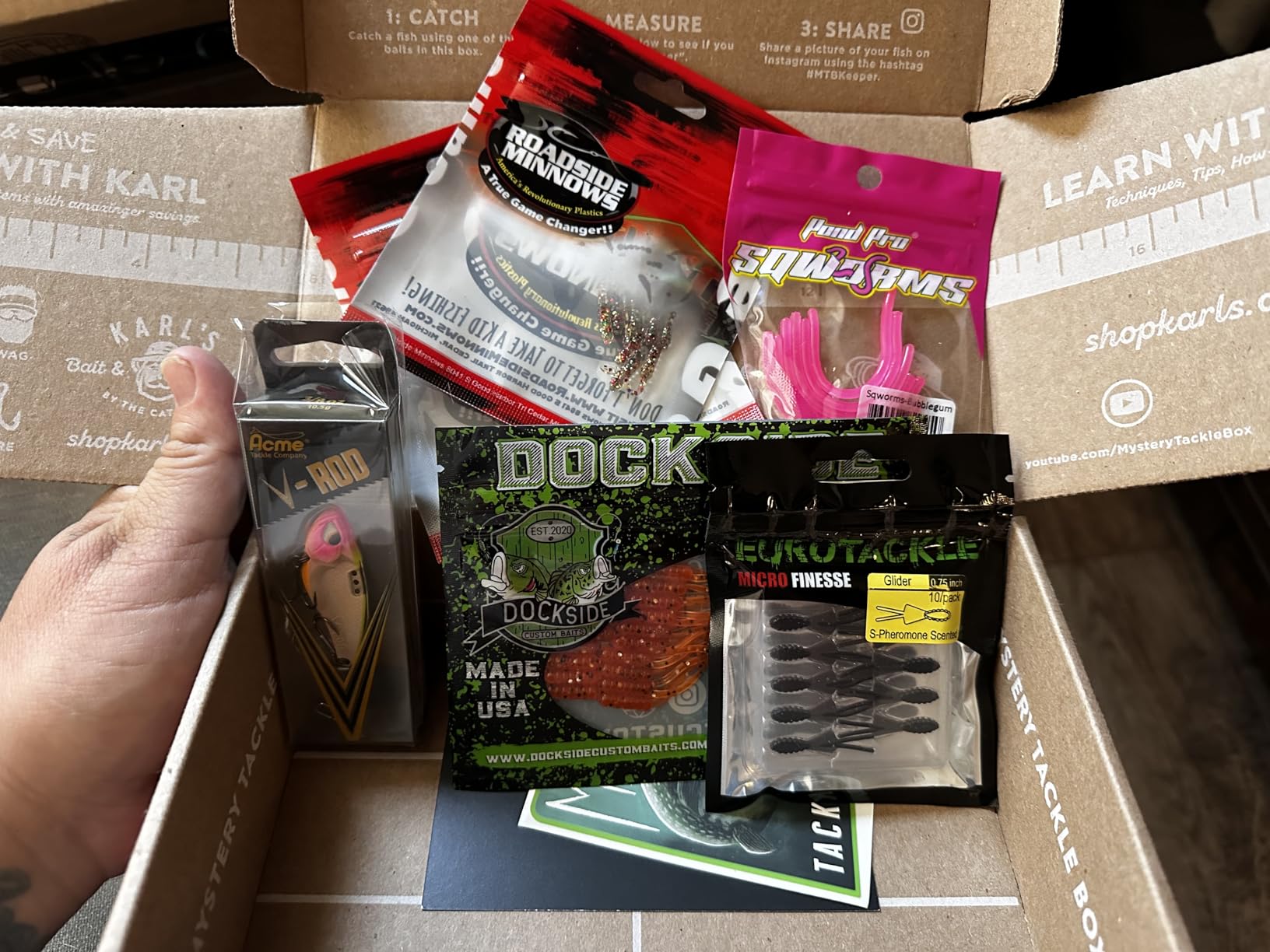
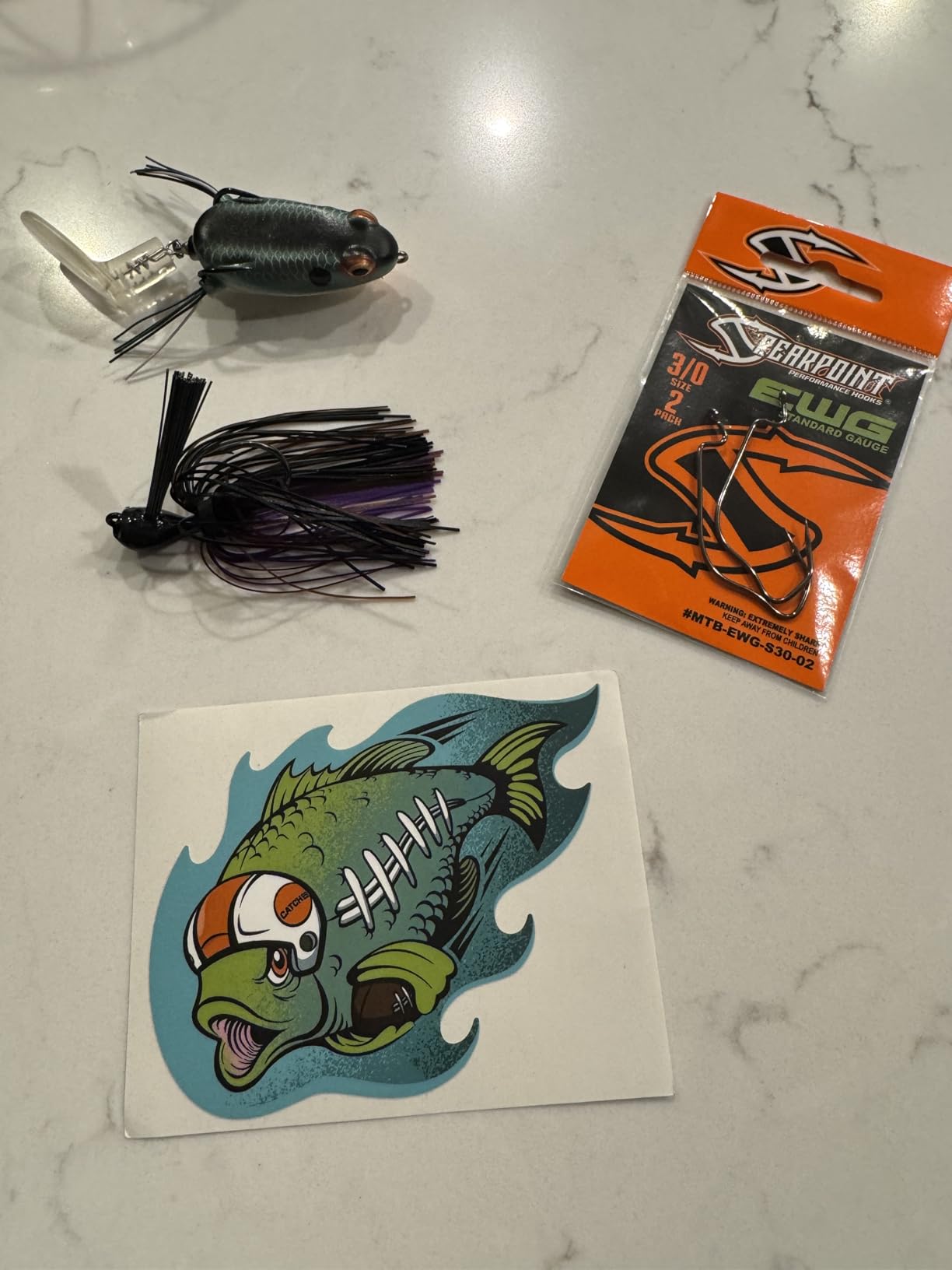
The lures are the selling point. Each box holds five to seven ice fishing specific designs, including limited edition shapes you will not find on a rack, and the included technique material gives a beginner something to read while the auger does its work. Regular and Pro versions let you choose how deep a gift you want to go.
The 4.1 average across a large review base tells you what you are getting. Owners like the designs and the price, and they also point out that you cannot choose what is inside and that the piece count is modest. That is the deal — you are buying curation and novelty, not quantity.
Who this works for
This is our recommendation for anyone buying for a person who is already hooked on the sport. It is the easiest gift in this roundup, it needs no size or skill information, and it cannot be returned once opened. For a complete first outing it falls short, because a new angler still needs a rod, a reel and something to cut a hole.
How to buy without disappointment
Understand the format before you commit. Mystery means surprise, so if the recipient has strong lure preferences, this will frustrate them. Pairing one box with a known-good combo rod is the strongest version of this purchase — you get a durable setup plus a rotating supply of ice-specific lures for the season ahead.
6. Nordic Legend 8 in E-Drill Auger — Best Auger for Drilling Fast
Nordic Legend E-Drill Nylon Ice Auger Combo and Universal Adapter with 14” Extension (8-in)
- Cuts thick ice far faster than a hand auger
- Light enough to haul on a sled
- Extension reduces shaft bending
- Blades hold their edge over seasons
- Cordless drill sold separately
- Adjustment bolt threads can strip
- Needs a high-torque drill
Switching from a hand auger to a drill-powered one changes an afternoon on the ice. Owners running a decent 18V to 20V brushless drill report opening 8 to 10 inch holes in seconds and putting out hundreds over a season without the blades dulling. The nylon flighting and aluminum stem make it roughly a third the weight of a comparable steel hand auger, which is the difference between comfortable and exhausting on a long walk.
The universal adapter with a 14 inch extension is the part we would not skip. Drilling keeps the shaft straight and dampens the wobble that snaps tips, and the three adjustable height settings let you match your drill height. A safety cover and carrying strap are included, which matters more than it sounds when the auger is riding loose on a sled.
Why this beats a hand auger
Time on the ice is the real currency. Hole hopping means drilling repeatedly, and a hand auger on 8 inch ice turns one quick relocation into a five minute workout. Once you have a cordless drill on hand — many households already own one for home projects — this auger is the cheapest way to reclaim that time, and the weight saving compounds every trip.
Before you order
The drill is not included, so budget for an 18V to 20V brushless model if you do not own one. Because the nylon flighting puts less load on the motor than steel, a low-end drill will stall on hard ice. A few buyers have reported a stripped height adjustment bolt on early use, so tighten it fully and re-check it after the first trip.
7. Celsius 3-Pack Tip-Ups — Best Budget Tip-Up Set
- Covers three holes in one outing
- Frees your hands entirely
- Compact and easy to carry
- No batteries or wiring to fail
- Wind and surface movement cause false signals
- Basic plastic construction
- Mixed durability feedback
A three-pack is the cheapest way to implement the two-hole beginner pattern that comes up constantly in first-timer discussions: hand-jig one hole for active fish, set a tip-up on the second so something is working while you work. Three units let you spread across holes instead of watching a single rod, which is how most people stay comfortable on the ice for a full day.
Mechanically it does one thing well. A fish pulls the line, the indicator moves, and you walk over and pick up the rod. There is nothing electronic to freeze, no batteries to lose in a glove, and the nylon body with plastic handle packs flat into the same bag as your lures.
Where tip-ups earn their money
The value shows up as soon as you are fishing slower than you think. A tip-up lets you set a bait — a golden shiner or a jig suspended under a float — and pick it up later without standing over a rod. On long, quiet afternoons for walleye this is the difference between catching and watching the ice. Three units also let you test depth and cover across separate holes rather than committing to one spot.
The limits to plan around
Wind and moving water are the weaknesses, and both trigger false signals that train a beginner to ignore the tip-up entirely. Plastic parts also mean occasional durability complaints, which is what pulls the average down to 4.0. Pick a sheltered hole behind a bank or an ice ridge, and treat the noise as information about the spot rather than a fault in the gear.
8. Bullnose Steel Tip-Down — Best Tip-Up for Bite Sensitivity
Bullnose Products Original Blue Ice Fishing Tip Down-Tip Up- Sensitive to The Slightest Fish Bites- Fits Most Spinning Reels and Some Smaller Straight-Line Reels.
- Registers the lightest bites
- Steel frame built to last
- Folding frame moves between holes
- Works with most spinning reels
- Fishing rod not included
- Clip suits smaller spinning reels
- Bulkier than a simple clip-on tip
This is the upgrade path from the plastic three-pack. The rocking motion on a steel frame registers a bite you would barely feel through a cold blank, and at a 4.4 average across its reviews it is one of the better-rated tools on the ice that is not a rod or a shelter. Owners running several units so every hole stays watched while they sit is the standard use.
The frame measures 9 inches long, 4.5 inches wide and 8 inches high, then folds flat for transport between holes. The custom plastic clip fits a standard 3/4 inch rod handle, which covers most ice rods from the kits in this roundup.
Why sensitivity changes your catch rate
A lighter mechanism means you notice the tap of a bluegill that a stiffer indicator would swallow. On panfish that difference compounds, because you are reacting in seconds rather than resetting every time the wind moves the ice. For a beginner, the faster the feedback loop, the faster you learn to read what is happening under the surface.
Fit is the one thing to verify
The clip is made for smaller spinning reels, and owners with larger spinners report it does not seat properly. Since the size 20 and size 500 style reels in this roundup fit fine, this matters most if you later upgrade to a bigger reel for walleye. It is also bulkier than a clip-on indicator, so count the carrying volume before committing to several.
9. Garmin Striker 4 Portable Kit — Best Rated Flasher for Finding Fish
- Highest rated product in this roundup
- Readable screen in direct sunlight
- Battery carries a full day on the ice
- Waypoints let you return to productive spots
- Included transducer is not ice specific
- Weak documentation and no transducer arm
- Screen is small in glare
The best-rated product here by a clear margin, at 4.7 across more than two thousand reviews. The flasher mode is built in, which means the display narrows to a vertical sonar view designed for watching a jig come up the hole. CHIRP sonar sends a continuous sweep of frequencies, and owners credit that with cleaner fish arches and better separation between fish and structure in shallow water.
Waypoint marking is the feature that pays back hardest over a season. Mark the brush pile or the drop-off that produced fish in January, and you can find it again in February when you would otherwise be drilling holes at random. Maximum depth is 1,600 feet in freshwater, so depth is never the limiting factor.
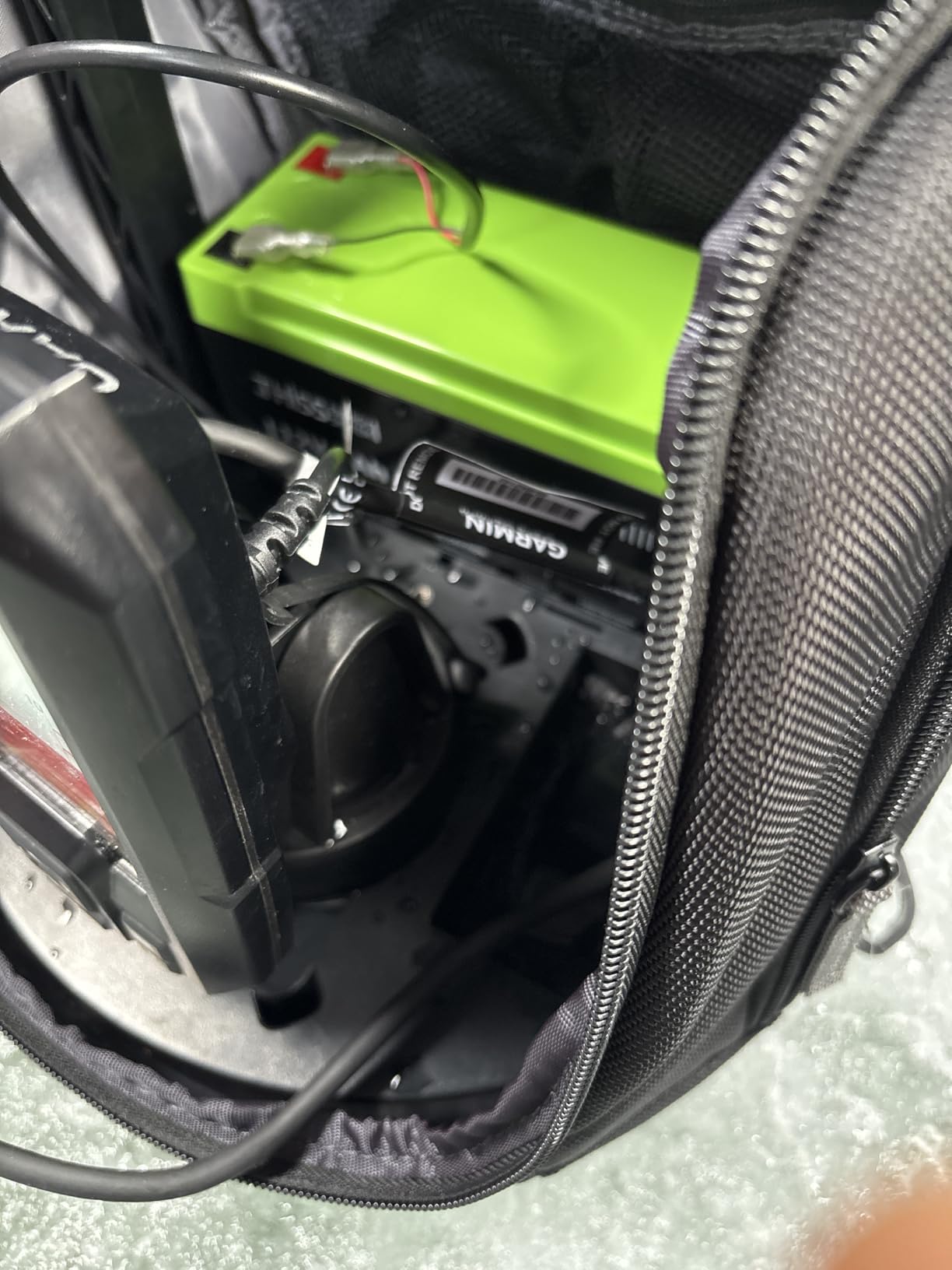
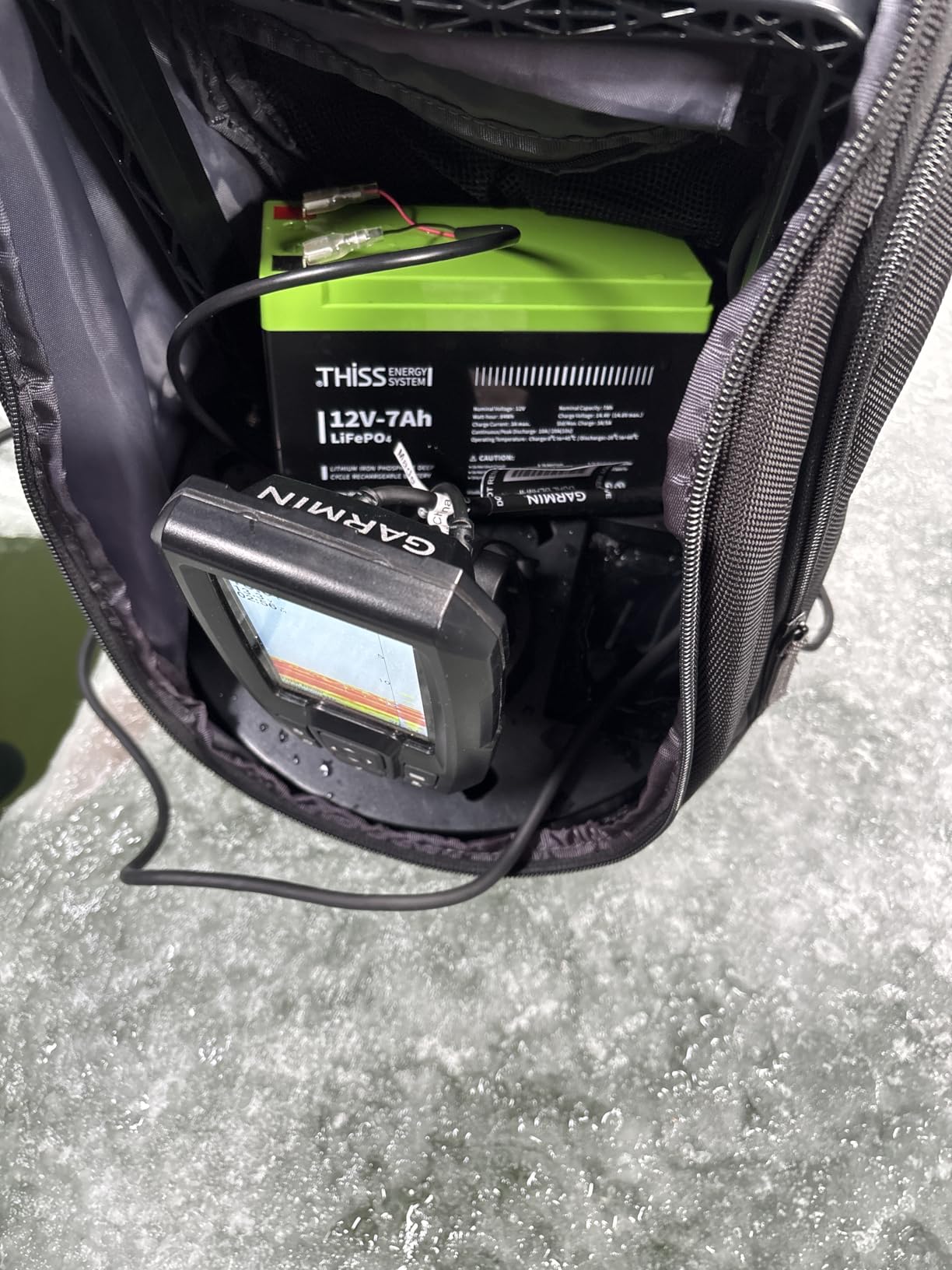
The portable kit includes the rechargeable battery, AC charger, carry bag, foam float, power and data cable, and a mounting bracket. It also doubles as a summer unit for a kayak or small boat, which stretches the cost across two seasons of use.
What you need to add before the ice
The included transducer is built for a transom or in-hull mounting, not for ice. Most owners rig it for ice use separately, and you will also want a transducer arm to hold the unit back from the hole edge, which is not included. Plan for both as extra purchases rather than assuming the kit is turnkey on day one.
When it is worth the money
It earns its place when you fish the same water repeatedly and want to find structure instead of guessing. If you are still learning where fish hold in relation to depth and cover, that knowledge is what the unit is really teaching you. The 3.5 inch screen is small in glare, so tilt it away from low sun, and expect to lean on community setup videos because the written documentation is thin.
10. Outsunny 4 Person Pop-Up Shelter — Best Shelter for Cold Weather Comfort
Outsunny 4 Person Pop-up Insulated Ice Fishing Tent, Light Blue
- Sets up in under a minute
- Thicker insulation than budget rivals
- Packs into the included bag
- Stands up well when tied down
- Heavier than expected at 23 pounds
- Light walls let in daylight
- Insulation not rated for extreme cold
Setup speed is the headline feature. Pull the roof up and out on all four sides and the hub stands on its own, with no separate pole assembly to thread in freezing conditions. Owners also praise the wall thickness relative to the price, and the way it collapses back into the bag without forcing the fabric, which is what makes it repeatable trip after trip.
Two zippered doors and two double-layer windows mean you can see out without fully unzipping and letting the wind in. The floor is a waterproof Oxford rather than bare ground, and 300D fabric handles wind-driven snow once you add the guylines and stakes that come in the kit. For a two-person outing the 4 person model is genuinely comfortable. Our ice shelter guide compares the alternatives if you want to size up before buying.
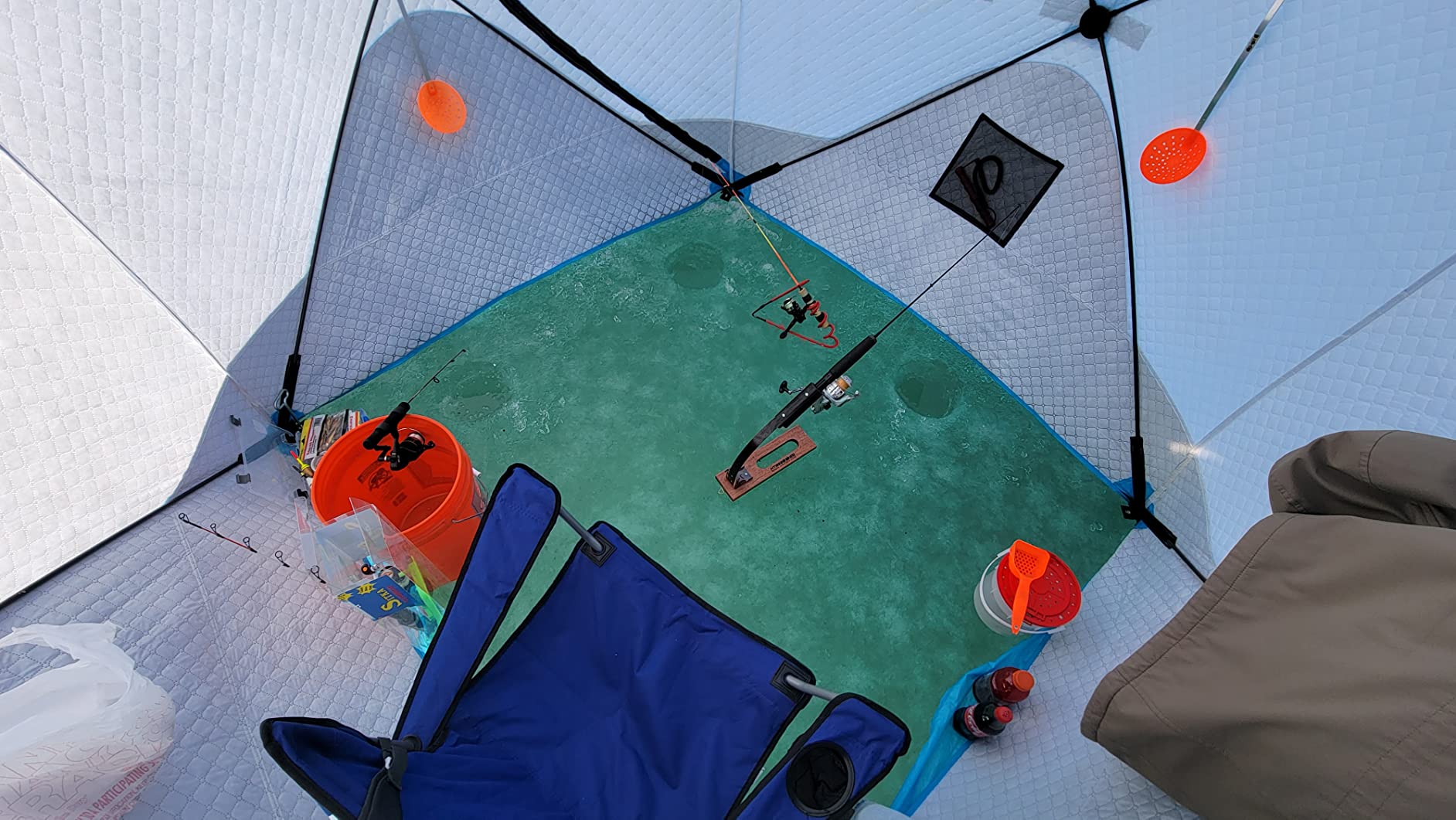
Two, four and eight person sizes are available, and the fiberglass support poles flex instead of cracking under repeated setup, which is where cheaper dome shelters fail. Several owners end up using it as a winter camping or smoking shelter, which says something about the insulation.
How to make it warmer
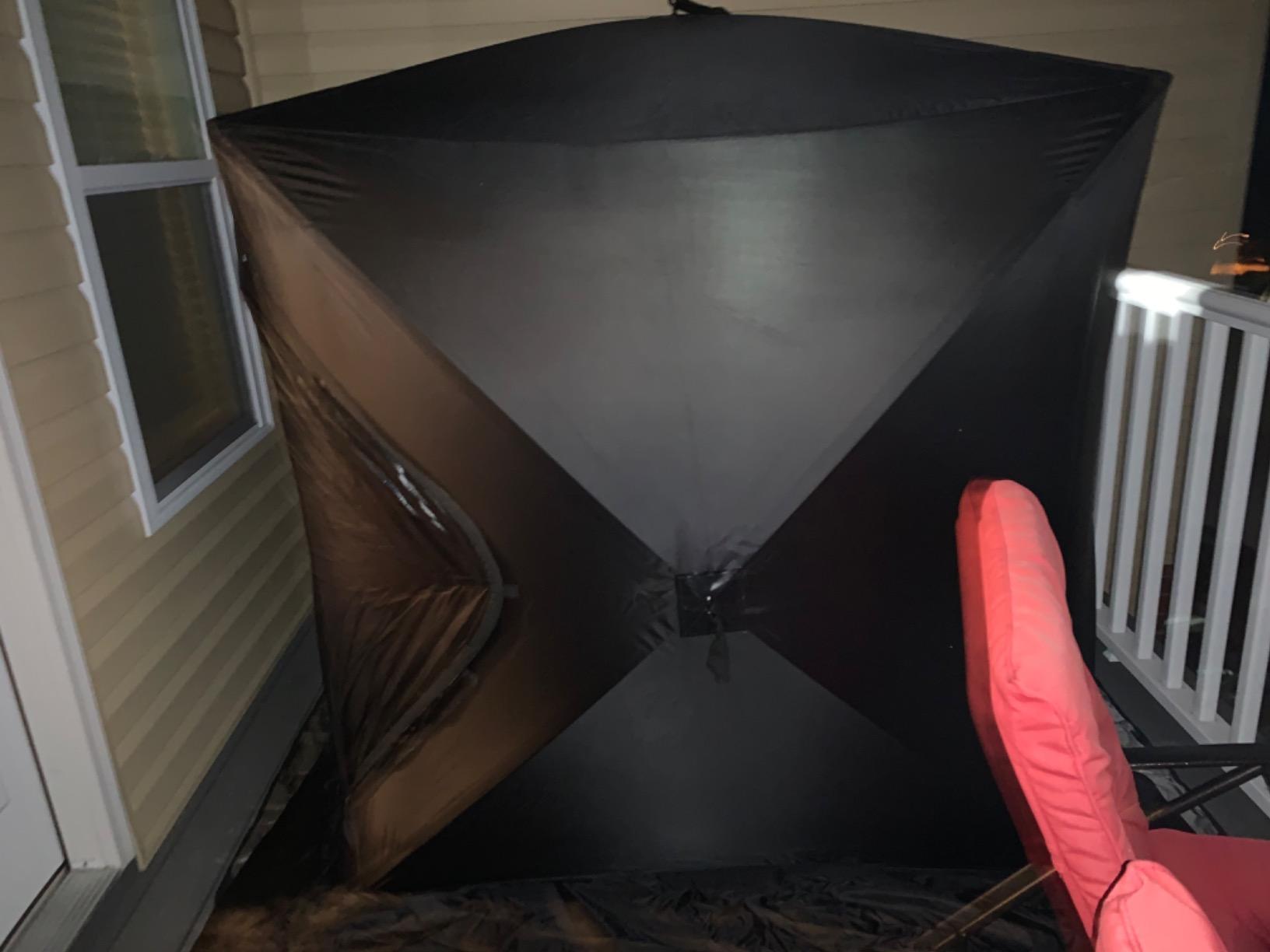
Layer clothing first, because no budget shelter substitutes for a good parka and insulated bibs. Inside, a small propane heater is what turns a shelter into somewhere you can sit comfortably for hours, but keep ventilation open and never run any heat source unattended. Adding a foam seat pad and keeping a dry change of gloves inside the shelter solves the most common complaint about cold hands.
What to weigh before buying
It weighs 23 pounds and folds to 51.25 inches long, which is a heavy pull for a hand sled. Light-colored walls also admit a lot of daylight, which reduces sight-fishing effectiveness, and the insulation is thinner than the marketing implies in genuinely extreme cold. If you are hauling a long way on foot, a lighter one-person hub is the more sensible purchase.
How to Build Your First Ice Fishing Setup
Start with rod length and power, because it is the one purchase that is hard to change later. Short rods of 24 to 28 inches suit portable shelters; longer rods of 30 to 32 inches suit open-ice sight fishing. Medium-light power with fast action handles panfish, perch and trout, while a stiffer rod is the right call once you are chasing walleye. Our ice rod guide covers blank materials and action in more detail.
Reel size follows the rod. A size 500 or size 20 spinning reel pairs with a short panfish rod, and a size 750 suits longer rods and heavier fish. On line, 4 to 8 lb monofilament is the practical band for most beginners — light enough to detect a bluegill tap, heavy enough to pull a perch out of a brush pile. Re-spool any factory line before the first outing, whatever the box says.
For the auger, a hand model is fine for a handful of holes and a drill-powered model wins once you start moving between spots. A separate ice scoop is not optional, since it clears slush and lets you check whether the hole is refreezing. On shelter warmth, insulated walls plus a foam seat and a heater matter far more than floor area.
The two-hole pattern is the simplest way to be productive: jig one hole while a tip-up is set on another. Run that setup with a bucket for a seat, a spud bar within reach, and a spare pair of dry gloves, and you have covered essentially every need a first season will produce.
What Not to Buy in Your First Season
Sonar before you know the water is the most common expensive mistake. A flasher teaches you nothing if you cannot yet find structure by reading a depth chart or noticing a drop-off. Rent one for a trip if you want a look, or spend the season learning to jig effectively first.
Premium rods are second on the list. An expensive blank with a budget reel behind it is a worse combination than a decent rod with a properly sized spinning reel, because the reel is what fails. Upgrade the reel first when the money appears.
The rest of the trap list is short. Skip a powered gas auger until you have a reason to drill twenty holes a day, skip a second and third tip-up until you have proven you can work one hole well, and skip matched gear in a colour scheme you have not committed to. A second rod for a different technique is worth far more than any of them, and it is the upgrade most beginners regret not buying in year two.
Frequently Asked Questions
What is the best gear for ice fishing for beginners?
Eight categories in priority order: a short ice rod with a size 500 or size 750 spinning reel, 4 to 8 lb monofilament, an auger, an ice scoop, a spud bar and ice picks, a personal flotation device, a shelter or sled, and a bucket that doubles as a stool. Spend on the rod and reel first and keep the rest modest.
What is the best ice fishing rod and reel combo?
For most beginners a 26 to 28 inch medium-light rod with a size 500 spinning reel and 4 to 6 lb monofilament covers panfish, perch and trout in a shelter. Go longer at 30 to 32 inches for open-ice sight fishing, and move to a stiffer rod with a size 750 reel once you are targeting walleye.
What size ice fishing line should I use?
4 to 8 lb monofilament is the practical range for most ice anglers. The lower end suits panfish and finesse jigging, while 6 to 8 lb gives you enough strength for perch and structure fishing. Replace any line supplied with a new combo before the first trip.
How thick should ice be to ice fish safely?
There is no single safe number because currents, snow cover and shoreline change the strength of ice. Fish with a partner, check thickness on the way out and again at each new area, wear a flotation device, and carry a spud bar. If the thickness is not obviously beyond what you would walk on with a full pack, do not drill.
Do I need a portable shelter to ice fish?
No, and plenty of first-timers spend a season hole hopping without one. A shelter matters most for warmth during long sessions and for sight fishing in bad weather. If cold is what ends your trips early, a shelter is the first upgrade after the rod and reel.
Should beginners jig or use tip-ups?
Both. Hand jigging gives fast feedback and teaches you to read bites, while a tip-up lets you work a second hole or set bait for slower species. Starting with one of each, jigging in one hole and setting a tip-up in another, covers the two beginner patterns in one outing.
Is buying a bundled ice fishing set a good idea?
For a first season, often yes. Bundles get you on the ice without five separate decisions, and the all-in-one kits in this roundup include a usable rod, reel and lures. The caution is that filler-heavy boxes hide which parts are worth keeping, so open the kit indoors and plan to replace the factory line and, if needed, the reel.
The Bottom Line on Ice Fishing Gear Sets for Beginners in 2026
For a complete first box, the Dr. Fish kit is where we start: a 24 inch graphite rod, a 5BB reel with a spare spool, real lure variety and a seat, all in one purchase. If you already own a stool and a scoop, the Gonex combo is the better value. The Shakespeare Fuel is the honest way to test whether you like the sport for very little, and the Aventik two-piece is the pick once you know which rod length suits your shelter.
Everything past the rod matters just as much. The Nordic Legend auger reclaims your afternoon if you own a cordless drill, the Celsius three-pack covers the tip-up part of the two-hole pattern, and the Bullnose tip-down is the sensitivity upgrade worth making in year two. The Garmin Striker 4 earns its place once you are fishing familiar water, and the Outsunny pop-up solves the cold that ends trips early. For the best ice fishing gear sets for beginners in 2026, buy the rod and reel well and everything else sensibly — and take the spud bar regardless.