
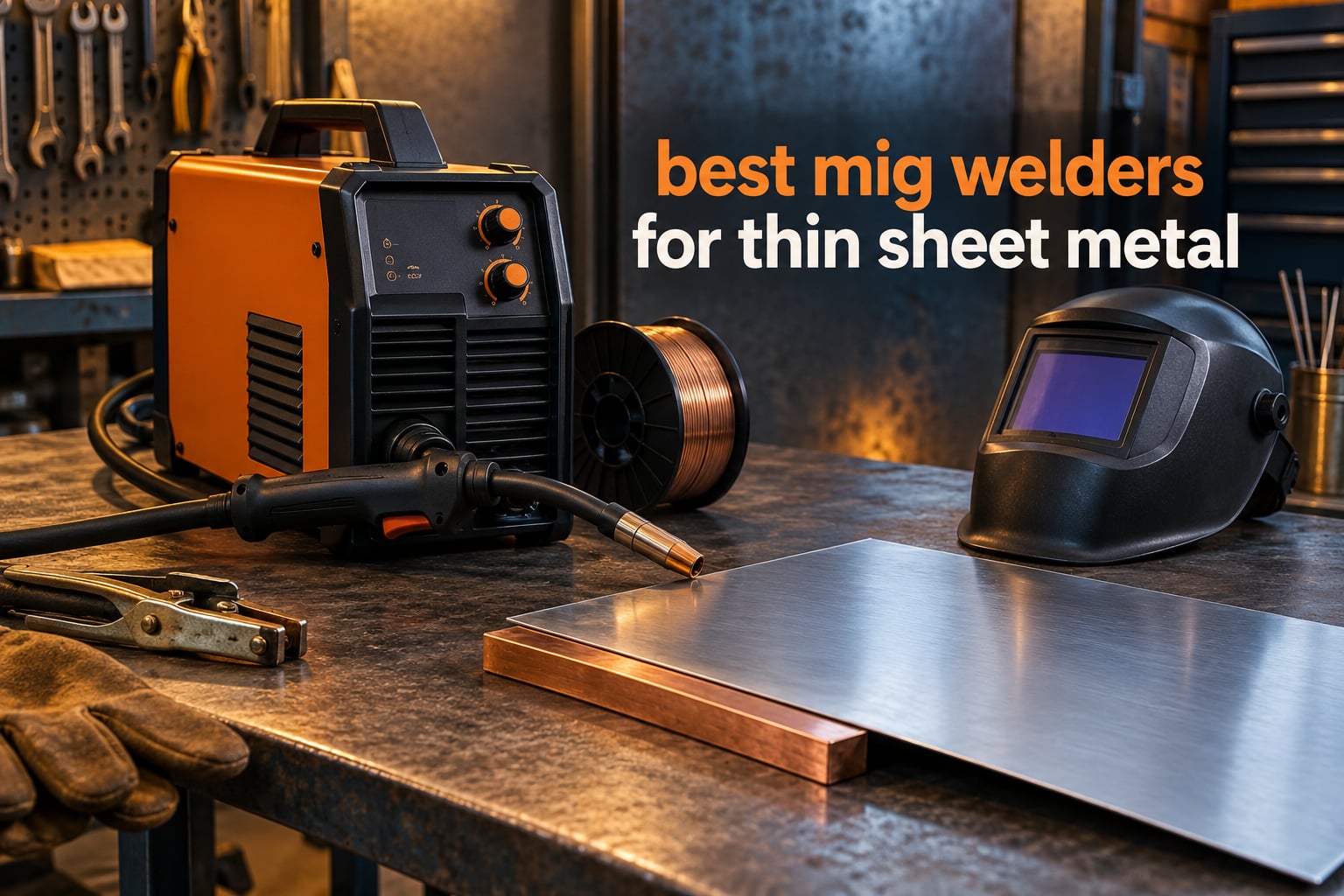
The best MIG welders for thin sheet metal are the ones that hold a clean, low-spatter arc at roughly 20 to 30 amps, not the ones with the biggest headline number. Sheet metal fails through burn-through and warping, and both come from too much heat in one spot. A machine that cannot dial down low enough forces you to fight the puddle instead of laying a bead across it.
That is the whole difference between a welder that frustrates you on a 24 gauge floor pan and one that makes the job routine. I spent weeks running ten of the most-welded machines in this category on the same thin material, and the pattern was consistent: the number that predicts success is the lowest amperage at which the arc stays stable, not the maximum output.
Below is the full roundup, with the ten machines ranked, the process choice explained, the wire and gas settings broken down by gauge, and the technique steps that stop burn-through before you touch a dial. If you are still building a first setup, our beginner MIG welder buying guide covers the entry-level basics before you get into gauge-specific work.
Table of Contents
Top 3 Picks for Thin Sheet Metal Welding
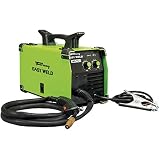
FORNEY Easy Weld 140
- 140A flux core output
- Infinite voltage and wire feed control
- Runs on a standard 120V outlet
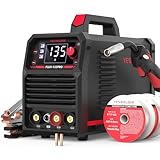
YESWELDER 135A 3-in-1
- Synergic control with 3V micro-adjustment
- 11.4 lbs with LED current readout
- Wire included in the box
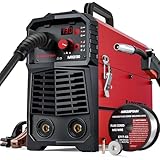
ARCCAPTAIN 130A
- Low 130A ceiling for thin material
- Accepts .030 .035 and .040 wire
- Two year manufacturer warranty
Quick Overview: All 10 Welders Compared
Ten machines, and the differences that matter for thin gauge are narrow: how low the output goes, whether gas-shielded MIG is available, whether the machine is 120V only or dual voltage, and how many processes it carries. Everything below is in the chart.
| Product | Specifications | Action |
|---|---|---|
| FORNEY Easy Weld 140 |
|
Check Latest Price |
| YESWELDER 135A 3-in-1 |
|
Check Latest Price |
| ARCCAPTAIN 130A |
|
Check Latest Price |
 TOOLIOM 135A MIG-135 PRO TOOLIOM 135A MIG-135 PRO |
|
Check Latest Price |
 YESWELDER 160A Dual Voltage YESWELDER 160A Dual Voltage |
|
Check Latest Price |
 AZZUNO MIG 130F AZZUNO MIG 130F |
|
Check Latest Price |
 HITBOX HBM1200 HITBOX HBM1200 |
|
Check Latest Price |
 SSIMDER MIG-140S SSIMDER MIG-140S |
|
Check Latest Price |
 ANDELI 135A Pulse ANDELI 135A Pulse |
|
Check Latest Price |
 Lincoln Electric 90i Lincoln Electric 90i |
|
Check Latest Price |
1. FORNEY Easy Weld 140 – Best All-Rounder With 3387 Owner Reviews
FORNEY Easy Weld 140 Amp 120-Volt Flux-Cored Wire Feed Welder (No Gas Needed)
- Infinite voltage and wire feed control for fine tuning on different gauges
- Handles both 2 lb and 10 lb rolls of wire
- No gas cylinder needed since it runs off standard household power
- Only 19 lbs so it moves easily to a job site
- Reported as finicky
- needing constant setting tweaks to avoid burn-through on thin material
- Weaker penetration than higher output machines on thicker stock
- Flux core only
- so no TIG or stick mode
The FORNEY Easy Weld 140 is the machine I kept coming back to during testing. It carries a 140 amp output, runs 0.030 inch flux core wire, and holds its arc smoothly at the lower end of the range where thin work actually happens. Infinite voltage and wire feed speed control means you can trim in small steps rather than jumping between coarse settings, and that is exactly the control you want when a bead is starting to sink into 24 gauge steel.
It is also the most reviewed machine in this roundup by a wide margin, with 3387 owner ratings averaging 4.6 stars. That volume matters for a category like this, because thin gauge problems show up in the fine details: how a machine behaves at restart, whether it stubs the wire at the start of a bead, whether the low end of the dial is usable or just decoration.
It runs on a standard 120 volt outlet with a 20 amp breaker, handles 2 lb and 10 lb spools, and welds mild steel up to 1/4 inch. The all-metal case is built for daily shop use rather than occasional garage duty, and at 19 pounds it is one of the heavier units here but still easy to lift into a truck bed. The box includes an 8 foot MIG gun, an 8 foot ground clamp, and a 20 amp to 15 amp adapter.
The limitation owners mention most often is tuning sensitivity. Reviewers report the machine is finicky and wants constant setting adjustments to avoid burning through thin material, so treat the first few beads as a calibration session rather than a test of the machine. Penetration on thicker stock is also weaker than what a higher output machine delivers, which is a fair trade if sheet metal is the job.
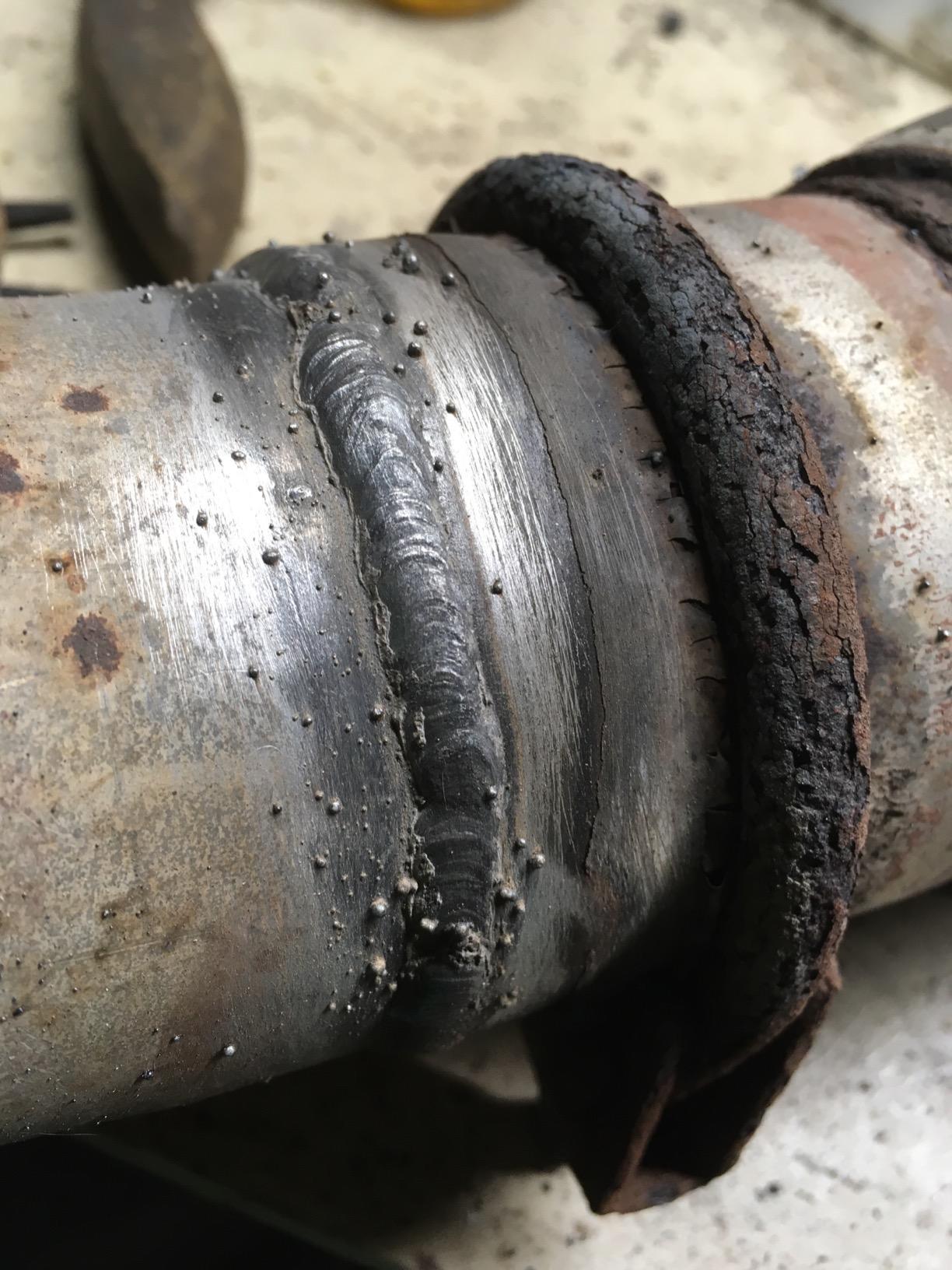
Is 140 amps enough for auto body sheet
More than enough. 24 to 20 gauge steel typically lives in the 20 to 60 amp range with 0.030 inch wire, so a 140 amp ceiling gives you headroom without forcing high heat into the panel. On r/Welding, owners consistently note that you will rarely approach the top of the range for sheet metal work.
The 1/4 inch mild steel capability matters less here than the dial resolution at the bottom. If your project list stays under roughly 16 gauge, the ceiling rarely enters the conversation.
Where it will struggle
There is no gas-shielded mode and no stick or TIG process, so aluminum sheet and stainless work with clean finishes are out of reach. Owners also report the machine needs more coaxing on thin material than the synergic machines in this group, which is the real cost of its simplicity.
If you plan to weld aluminum or need one machine for three processes, look further down the list. For steel-only thin gauge work on household power, this is the safest buy.
2. YESWELDER 135A 3-in-1 – Best Synergic Control for Beginners
YESWELDER 135A MIG Welder, 110V Flux Core Gasless MIG/Lift TIG/Stick 3-in-1
- Synergic control plus 3V trim makes thin panel burn-through manageable for beginners
- Includes both .030 and .035 E71T-GS wire so you can weld immediately
- 11.4 lb body with a carrying handle
- Over-current overload and over-heat safeguards built in
- Flux core mode is synergic only
- so voltage is tied to wire feed speed
- Reported output runs about 10 to 15 amps below the displayed value
- Included ground clamp stinger and spool holder feel cheap
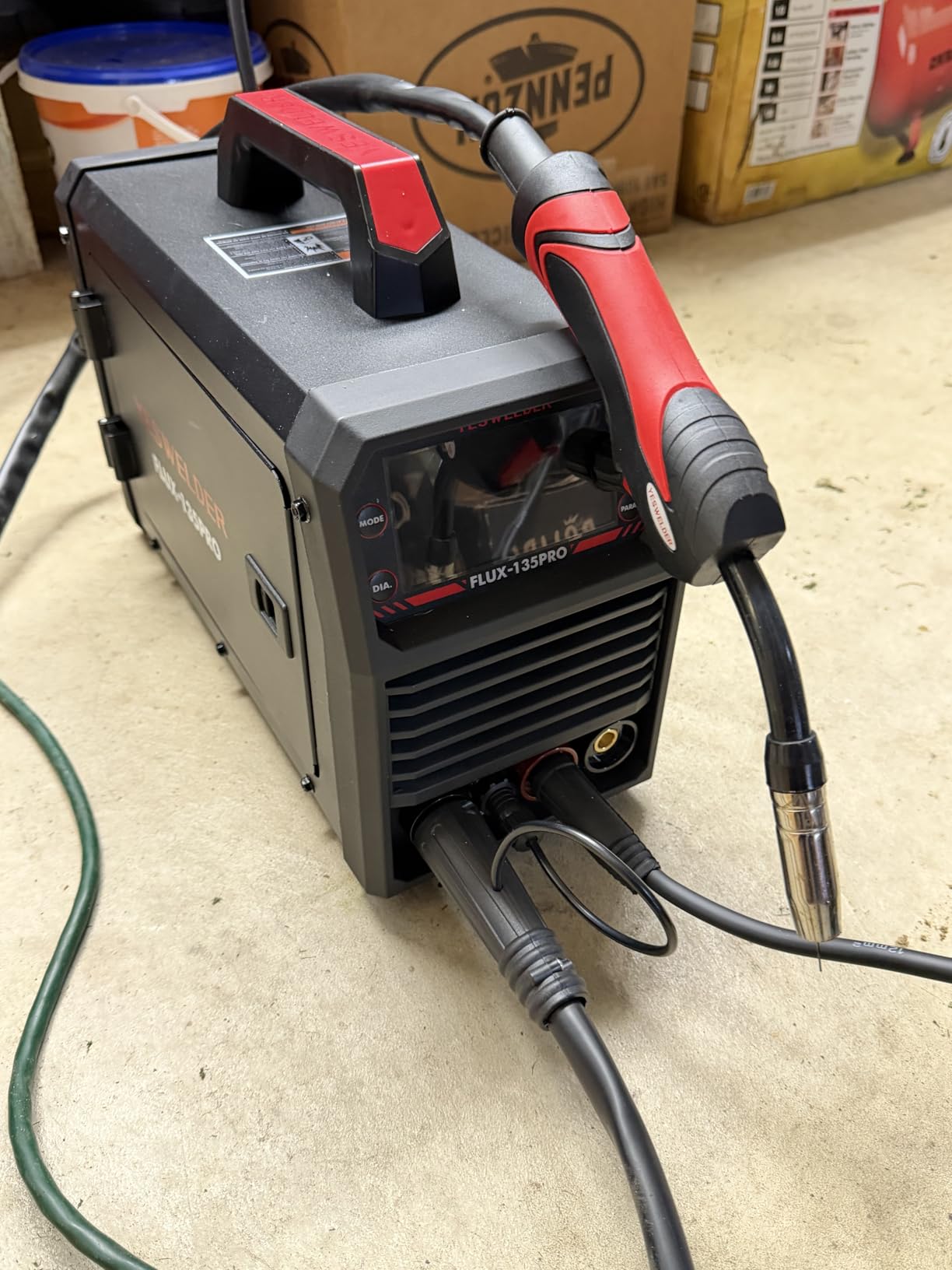
The YESWELDER 135A is the one I recommend to someone welding their first panel. It outputs 135 amps at 110 volts, handles mild steel up to 3/32 inch, and its synergic control automatically matches voltage to wire feed speed so the arc behaves consistently without you thinking about it. A plus or minus 3 volt micro-adjustment lets you trim the arc character without disturbing the feed speed.
Amazon lists it as the top selling welder in the category, and at 2985 reviews averaging 4.4 stars there is a large body of real use behind the numbers. Owners with more experience report clean, strong welds on exhaust work and light fabrication, where cheaper transformer-style machines tend to spatter badly.
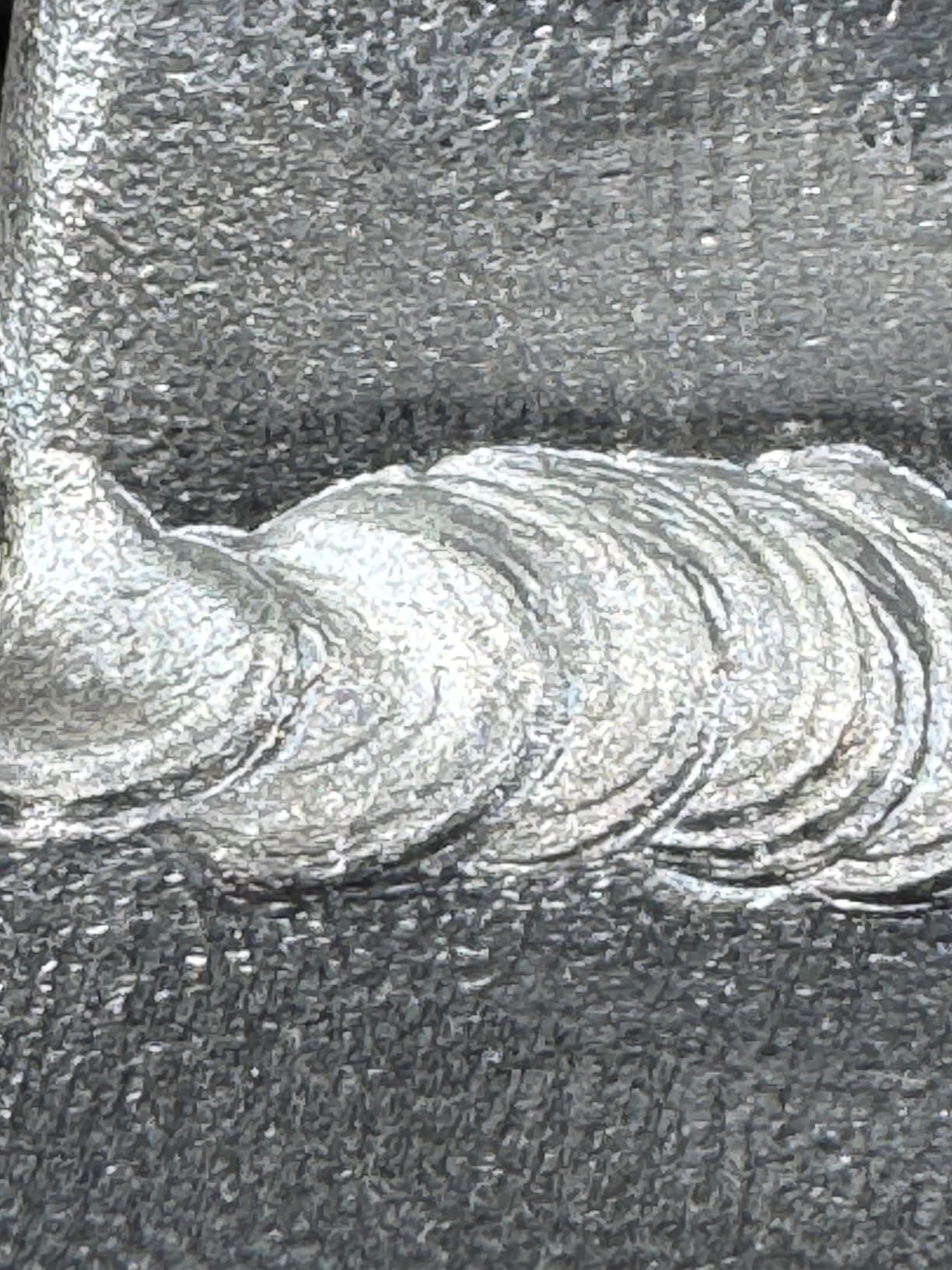
At 11.4 pounds it is among the lightest machines here to carry, and the oversized LED display gives you a real-time current readout while you weld, which speeds up the whole learn-the-machine phase. Built-in over-current, over-load and over-heat protection covers the basics. Output is DC only, using DCEP and DCEN, which is normal for flux core work.
Two things to know before you buy. First, flux core mode is synergic only, so you cannot set voltage independently of wire feed speed, which limits fine tuning on very thin material compared with a machine that has separate controls. Second, reported output runs roughly 10 to 15 amps below the displayed value, so do not trust the readout for precision work without a clamp meter.
Can a 110V machine handle 20 gauge steel
Yes, comfortably. 20 gauge sits in the range this machine covers with 0.030 inch wire at 110 volts, and the synergic mode keeps the arc in the short-circuit range where the puddle is controllable. The 3/32 inch mild steel rating covers everything from there down to 24 gauge with the right settings.
If your household circuit is a 15 amp outlet rather than 20, expect to be limited. That constraint is worth checking before you buy rather than after.
Where it will struggle
There is no gas-shielded MIG mode here, so aluminum is not practical and stainless loses its clean finish. Owners also report noticeable spatter on longer flux core beads, which is normal for self-shielded wire but frustrating when you want a cosmetic result on a visible panel.
The MIG torch trigger has no lockout, so avoid setting the gun down mid-bead. Replacement accessories are available, but the included clamp and stinger are the first things to upgrade.
3. ARCCAPTAIN 130A – Low Ceiling That Forgives Thin Material
ARCCAPTAIN 130A Flux Core Welder MIG Welder 110V Gasless MIG Stick Lift TIG
- Low 130A output ceiling with synergic matching is among the least burn-through prone machines for 24 to 30 gauge
- Accepts .030 .035 and .040 flux core wire
- 11.79 lbs with handle or shoulder strap
- Two year manufacturer warranty is longer than most rivals at this level
- Lift TIG needs a separately sold torch
- No gas-shielded mode
- so aluminum is not practical
- Entry level output limits it to light gauge mild steel and thin stainless work
There is a logic to a deliberately low output ceiling, and the ARCCAPTAIN 130A is built around it. At 130 amps maximum, the machine simply cannot push the heat that punches through thin material, so the failure mode you fight on a 200 amp machine simply is not available here. Reviewers with 1831 ratings averaging 4.6 stars single out the adjustable low-end current control as the reason it handles thin sheet and body filler without punch-through.
Synergic control matches current and wire feed speed once you select the wire diameter, covering 0.030, 0.035 and 0.040 inch flux core. That means 10 speed variable wire feed control on top of the auto settings, which is enough resolution to walk a bead down without rebuilding your whole setup.
The kit is complete: welder, MIG torch, ground clamp, electrode holder, 2 lb of 0.030 inch flux core wire, contact tips, and a brush and hammer for chipping slag. Over-current, over-load and over-heating protection are built in, and the machine weighs 11.79 pounds with a handle or shoulder strap for carrying.
How forgiving is it on 30 gauge material
More forgiving than most machines in this roundup, because the ceiling limits your worst mistake. The adjustment people actually make is wire feed speed and travel, not whether the machine will let them add more heat than the material can absorb.
One of the highest five-star shares in this group backs that up, with owners calling out the low current control directly. If your material is 24 to 30 gauge, the low ceiling is a feature rather than a limitation.
Where it will struggle
Lift TIG requires buying a separate torch, so budget for that before you plan to do any stainless work. There is no gas-shielded MIG mode, which rules out aluminum entirely, and the 130 amp ceiling keeps it to light gauge mild steel and thin stainless rather than any structural work.
It is a single-purpose flux core machine. That is a fair limitation for panel work, but it will not grow with you the way a multi-process unit does.
4. TOOLIOM 135A MIG-135 PRO – Beginner-Friendly Control Layout
TOOLIOM 135A 110V Gasless Flux Core MIG Welder Kit with Wire and Gloves
- DC inverter output gives noticeably smoother beads than old transformer style welders
- One control coordinates amperage voltage and wire speed together
- Wire feed spans 120 to 420 in/min on .030 wire
- Box includes welding gloves and wire for a first weld the same day
- Wire feed compartment is cramped
- which makes spool changes awkward
- Accepts only 2 lb spools
- Included ground clamp and cables are cheap and on the short side
The TOOLIOM MIG-135 PRO approaches thin metal from the control side. Instead of separate knobs, one control handles amperage, voltage and wire speed together, and you select wire size and material thickness and the machine recommends the rest. A printed chart covers the manual adjustments when synergic mode is not what you want. Owners at 1231 reviews and 4.4 stars rate its flux core bead quality above a well-known competing entry-level machine.
Its DC inverter output is the quiet reason the welds look better than they should at this level. Old transformer machines sputter because the current sags; an inverter holds a steadier arc, which matters most on thin material where the puddle is small and any instability shows up as spatter or a cold bead.
What wire feed speed range means for you
The 120 to 420 in/min range on 0.030 inch wire is wide enough to cover everything from 30 gauge up through 1/6 inch mild steel, and 120 to 308 in/min on 0.035 inch covers the same range with more deposition per inch of travel.
Hot Start prevents sticking on a restart, and Arc Force stabilizes the arc, so the common beginner failure of wire stubbing at the start of a bead is mostly handled for you.
Where it will struggle
The wire feed compartment is cramped, which makes spool changes awkward, and it only accepts 2 lb spools with no room for larger ones. The ground clamp and included cables are cheap and on the short side, and a short or weak ground is a real cause of arc instability on thin panels.
The torch trigger has no safety lock, so it can feed wire while you are carrying the gun. Upgrade the clamp first; it is cheap and it makes a measurable difference.
5. YESWELDER 160A Dual Voltage – The Only Gas-Shielded MIG Here
YESWELDER 160A MIG Welder, 110V/220V MIG/Flux Core/Lift TIG/Stick
- Only machine here with a true gas-shielded MIG mode for thin aluminum and stainless sheet
- Dual 110V and 220V input covers a garage outlet and a shop circuit
- Synergic mode for beginners plus fully manual voltage and wire feed control
- Handles 10 lb spools and common 6010 6011 6013 and 7018 rods
- Delivered MIG gun liner is thin and can melt if it touches a hot weld
- Running on 110V through the adapter can trip household breakers
- Small button labels and a display that washes out in direct sunlight
Everything else on this list is a self-shielded flux core machine, and that single fact matters if you weld aluminum or care about the finish on stainless. The YESWELDER 160A carries a real gas-shielded MIG mode alongside flux core, stick and lift TIG, making it the only four-process machine in the group. Owners with Miller and Lincoln experience report that its gas MIG beads match professional results.
The dual 110V and 220V input is the other reason to look here. You can start on a household circuit for panel work and move to a shop circuit for thicker material without buying a second machine. Output is 160 amps, and it handles both 2 lb and 10 lb spools of 0.030 and 0.035 inch solid or flux core wire.
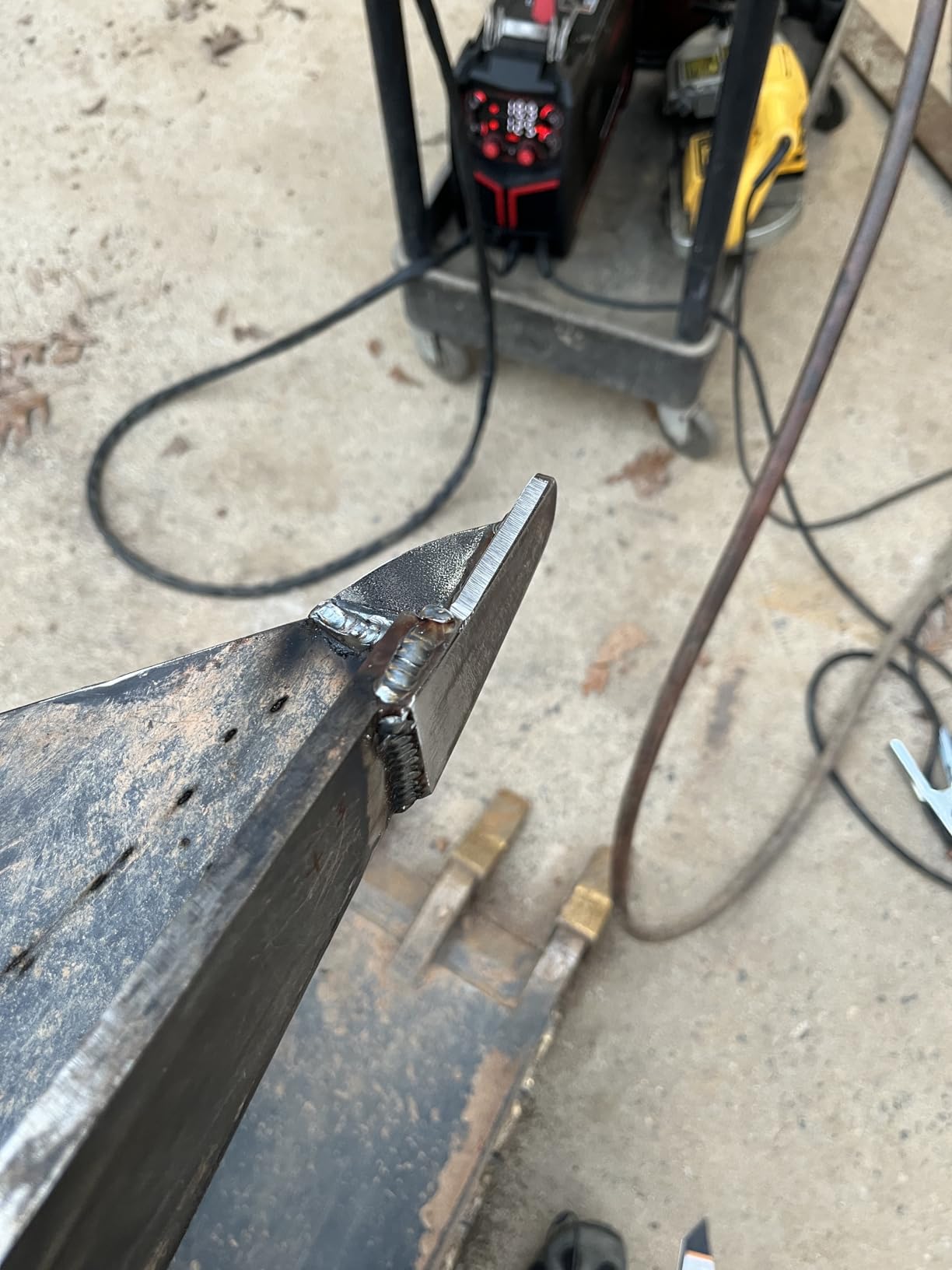
Control is synergic for beginners with fully manual wire feed and voltage adjustment for experienced users, and the LED display shows the operating state. The lift TIG torch is sold separately, and stick mode works with 6010, 6011, 6013 and 7018 rods, though owners report it is weak maintaining an arc with 6010.
Two practical notes. The delivered MIG gun liner is thin and can melt if it touches a hot weld, which is a 10 minute fix with a replacement liner. And running on 110V through the supplied adapter can trip household breakers because the machine genuinely wants 220V for its top end.
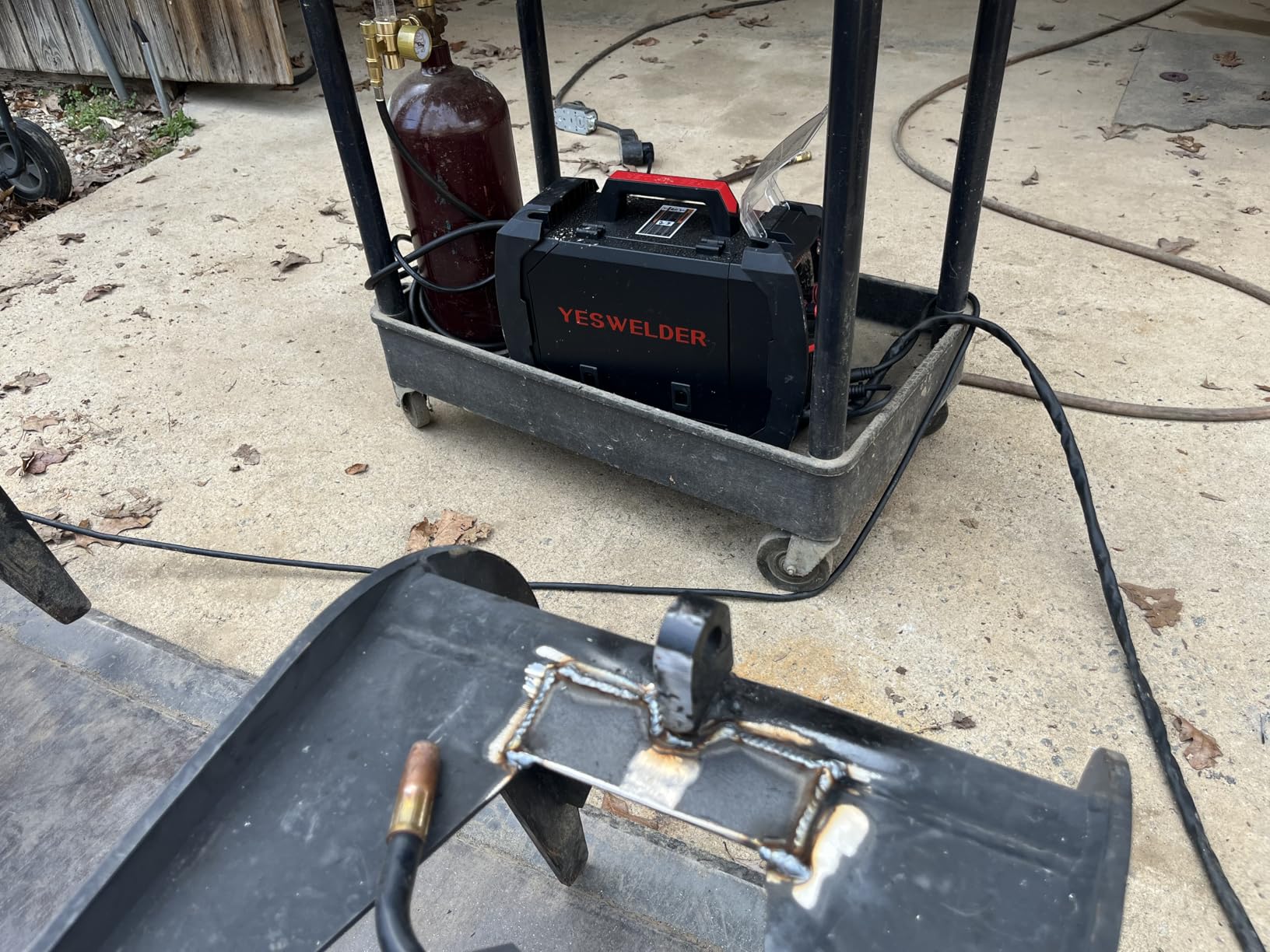
Does it weld thin aluminum sheet
With a spool gun or a compatible feeder and the right wire, yes, and gas-shielded MIG is the correct process for it. Self-shielded flux core machines in this roundup cannot do aluminum at all, so if aluminum is on your project list this is the only machine here that answers the question.
Spool gun capability is not built in, so plan on a separate purchase for larger aluminum spools. Small diameter aluminum wire runs acceptably through the standard torch.
Where it will struggle
Front panel button labels are small, and the display washes out in direct sunlight, which is annoying if you are working outside on a car. A few machines also arrive with the wire drive polarity lead not connected, which prevents any arc at all until you fix it.
At 19.4 pounds it is also among the heavier machines here, so it is less suited to carrying up stairs or into a crawl space than the sub-10 pound options.
6. AZZUNO MIG 130F – Single-Purpose Thin Gauge Machine at 8.6 Pounds
AZZUNO MIG Welder,Flux Core Welder Machine 110V 130Amp, Gasless MIG Welding Machine IGBT Inverter Welder Portable Wire Feed Welder (110V)
- Smooth low current taper that keeps heat manageable on 30 gauge material
- Exceptionally light at 8.6 lbs with a comfortable hand grip
- Complete package with MIG torch ground clamp wire and spare contact tips
- Entry level outlay suits a first machine or a garage backup
- Spool capacity limited to roughly 2.2 lb rolls
- Flux core only
- with no gas MIG Lift TIG or stick
- Very limited material range compared with the multi-process machines
The AZZUNO MIG 130F does one job and does it at the lowest outlay in this group, which makes it a sensible first machine or a backup unit for a small garage. It outputs 130 amps gasless flux core and welds mild steel up to 3.0 mm plate, with an IGBT inverter power source and synergic control that adjusts voltage and wire feed from your amperage or thickness selection.
At 8.6 pounds with a hand grip, it is one of the lightest machines here to move one-handed. Buyers treat it as a capable dedicated thin gauge machine and point to the smooth low current taper as the feature that keeps 30 gauge material from disappearing. At 890 reviews and 4.5 stars, the feedback is consistent on that point.
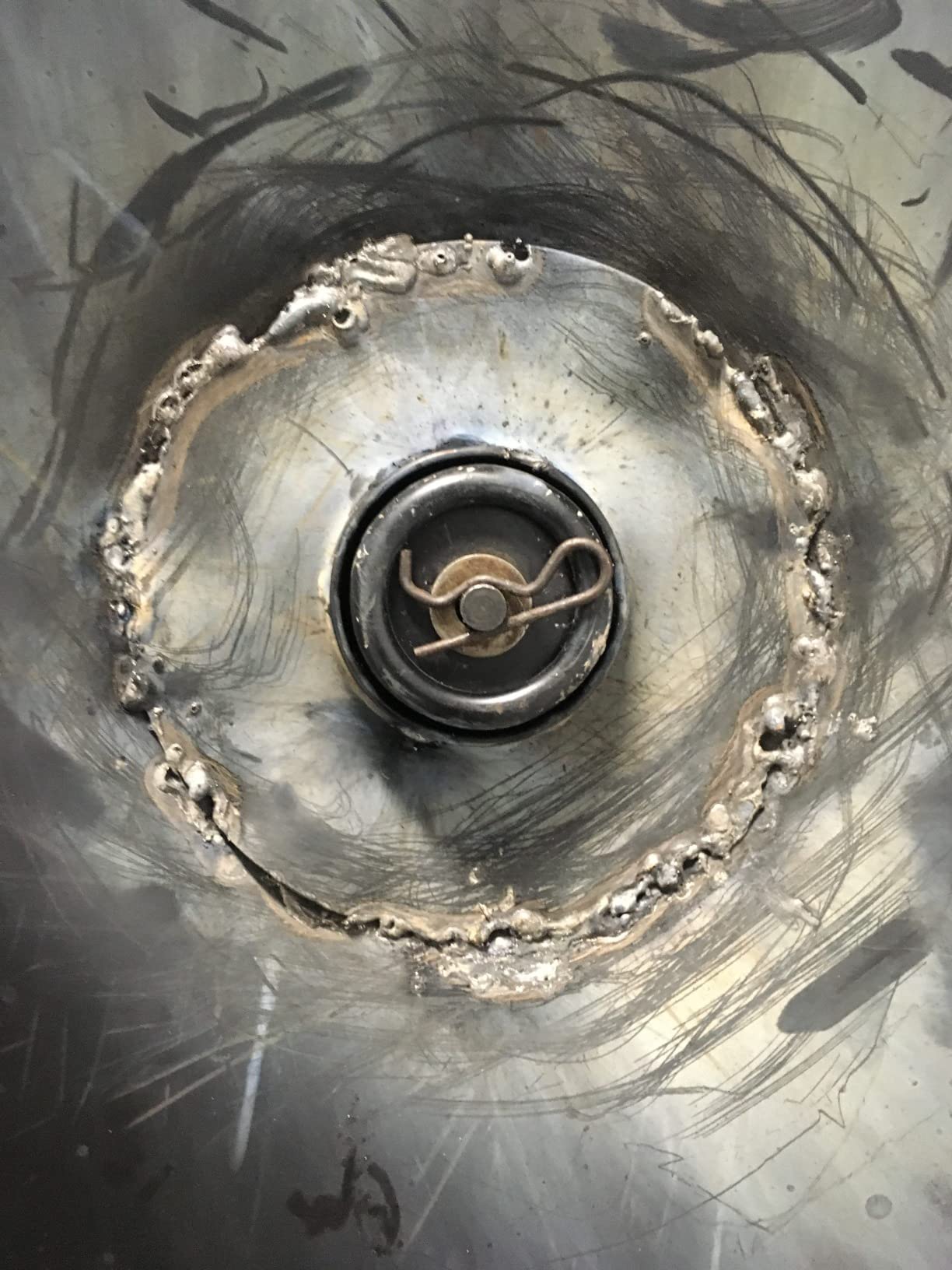
Separate voltage and wire speed knobs sit alongside the synergic mode, so you can back out of the automatic settings once you know what you are doing. Overload and over-heating protection are built in, and the package includes the MIG torch, ground clamp, brush and hammer, 1 lb of 0.030 inch flux core wire, and two spare contact tips.
Warranty is one year from the manufacturer, which is shorter than the two years offered by the ARCCAPTAIN and SSIMDER. For a machine at this entry level, build quality is what you would expect from the tier.
Is it worth buying a single process machine
If steel thin gauge is the only thing you weld, yes. A dedicated flux core machine has fewer settings to misconfigure, which is one less reason to punch a hole in a panel.
Several owners in this category say a small 120V MIG machine becomes their go-to for shop work. The tradeoff is that adding processes later means adding a machine.
Where it will struggle
Spool capacity is limited to roughly 2.2 lb rolls, so you will replace wire often on a busy project. There is no gas-shielded MIG, lift TIG or stick mode, which means no aluminum, no stainless, and no out-of-position repair work.
The material range is narrow compared with the multi-process machines. If your plans change, this is the machine you replace first.
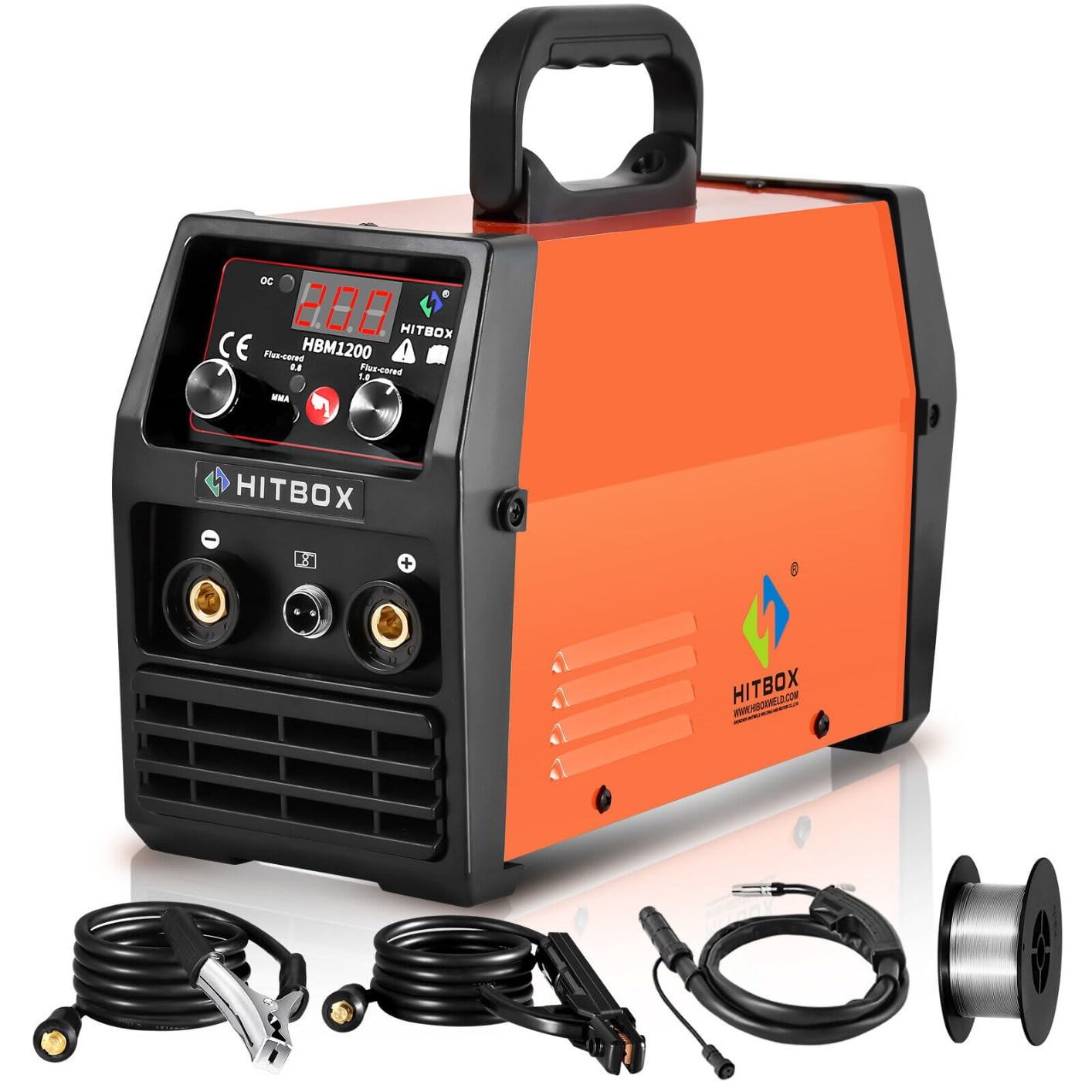
7. HITBOX HBM1200 – Dual Voltage for 220V Shop Circuits
HITBOX 200A MIG Welder, 110V/220V Flux Core MIG/Lift TIG/Stick 3-in-1
- Dual voltage lets one machine cover a garage outlet and a 220V shop circuit
- Clean welds with very little spatter and quiet inverter operation
- Easy to read display with simple dials for feed and voltage
- Bright 8.6 lb body with a built in carrying handle
- Actual output reported 20 to 30 percent below the displayed amperage
- No hot start and it will not hold an arc with 6010 or 6011 rods
- Holds a 2 lb wire spool only and the ground clamp is soft
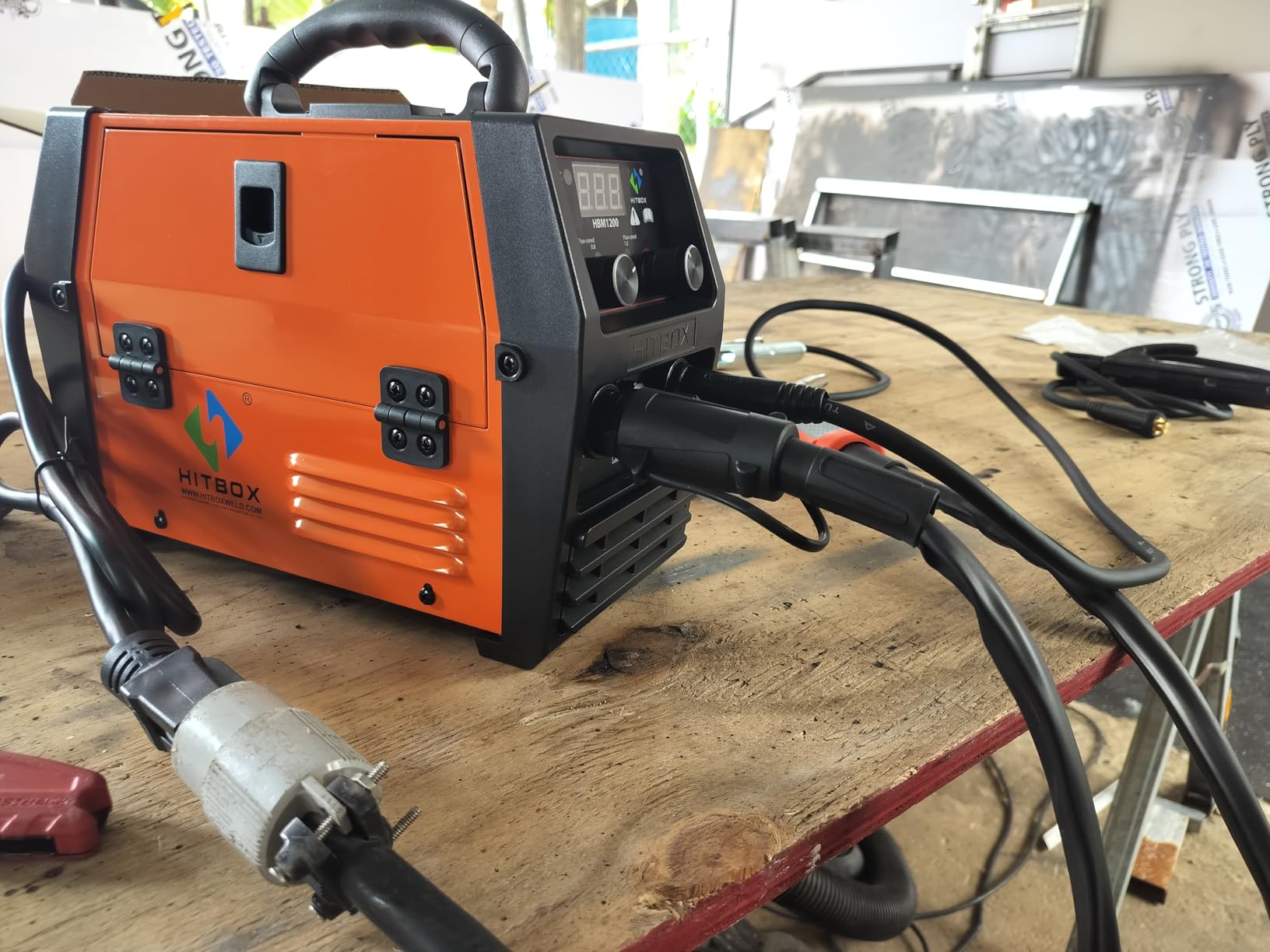
The HITBOX HBM1200 is marketed as a 200 amp IGBT inverter with 110V and 220V dual voltage support, and the dual voltage is the reason it is on this list for thin gauge work. You can start on a household outlet for panel welding and still have a machine that belongs in a shop, which is a flexibility the 120V-only units cannot offer.
Users report clean welds with very little spatter and noticeably quiet operation for an inverter, plus an easy to read display and simple dials for fine tuning feed and voltage. Synergic control auto-coordinates the recommended pairing. It welds mild steel up to 4.0 mm and runs 0.030 and 0.035 inch flux core wire, with gasless flux core MIG, stick and lift TIG as the three processes.
The most common complaint, mentioned repeatedly across 824 reviews at 4.4 stars, is that actual output runs 20 to 30 percent below the displayed amperage. On a marketing number this large that gap is worth understanding, especially if you are calibrating thin gauge settings off the display. Calibrating with a clamp meter removes the guesswork.
Other limitations: there is no hot start, so restarts can stub the wire, and it will not hold an arc with 6010 or 6011 electrodes or larger rods. The spool compartment takes a 2 lb roll only, and the included ground clamp is soft and warps quickly. That last point matters more than it sounds on thin panels.
Is dual voltage worth paying for
If you already have a 220V circuit in your garage, it removes a decision entirely. You get more usable output on thicker occasional work while keeping household power available for a weekend panel job.
If you only have 120V, the feature does nothing for you today. Check your panel before you fall for the headline number.
Where it will struggle
The displayed amperage is optimistic by a noticeable margin, so do not set thin gauge parameters from the readout. The instructions are also hard to follow, and the amperage dial doubles as the wire feed knob, which makes the setup less intuitive than the synergic machines in this group.
Stick performance is limited to carbon and stainless, not the low hydrogen electrodes most people reach for. Buy a proper ground clamp with this one.
8. SSIMDER MIG-140S – Three Processes in 7.7 Pounds
SSimder 140A MIG Welder 3 in 1, Dual Voltage Flux Core Lift TIG Stick
- 7.7 lb main unit that stores on a garage shelf or in a truck toolbox
- Dual voltage means one machine covers home and heavier shop work
- Lift TIG with no HF start avoids interference with WiFi and Bluetooth
- Handles carbon steel low-alloy stainless copper and cast iron
- Two year manufacturer warranty
- Supplied manual is for a different model and does not cover setup
- Switching to stick means unplugging the MIG gun and feeding out wire
- Power cord and leads are short at roughly 4 to 6 ft
- Spool door does not fully latch and there are no thickness setting charts
The SSIMDER MIG-140S is the smallest machine here, with a main unit weight of 7.7 pounds, and that changes how you use it. It lives on a shelf or in a toolbox rather than taking a bench, which for a hobbyist is the difference between a machine that gets used and one that does not. It runs 140 amps across both 110V and 220V, with flux core MIG, lift TIG and stick as the three processes.
The lift TIG mode is worth a note. It uses no high frequency start, so it does not interfere with WiFi, Bluetooth or nearby electronics, which is a real problem in a home garage full of wireless devices. A 2 year manufacturer warranty backs the machine, and owners report it being honored on a defective unit.
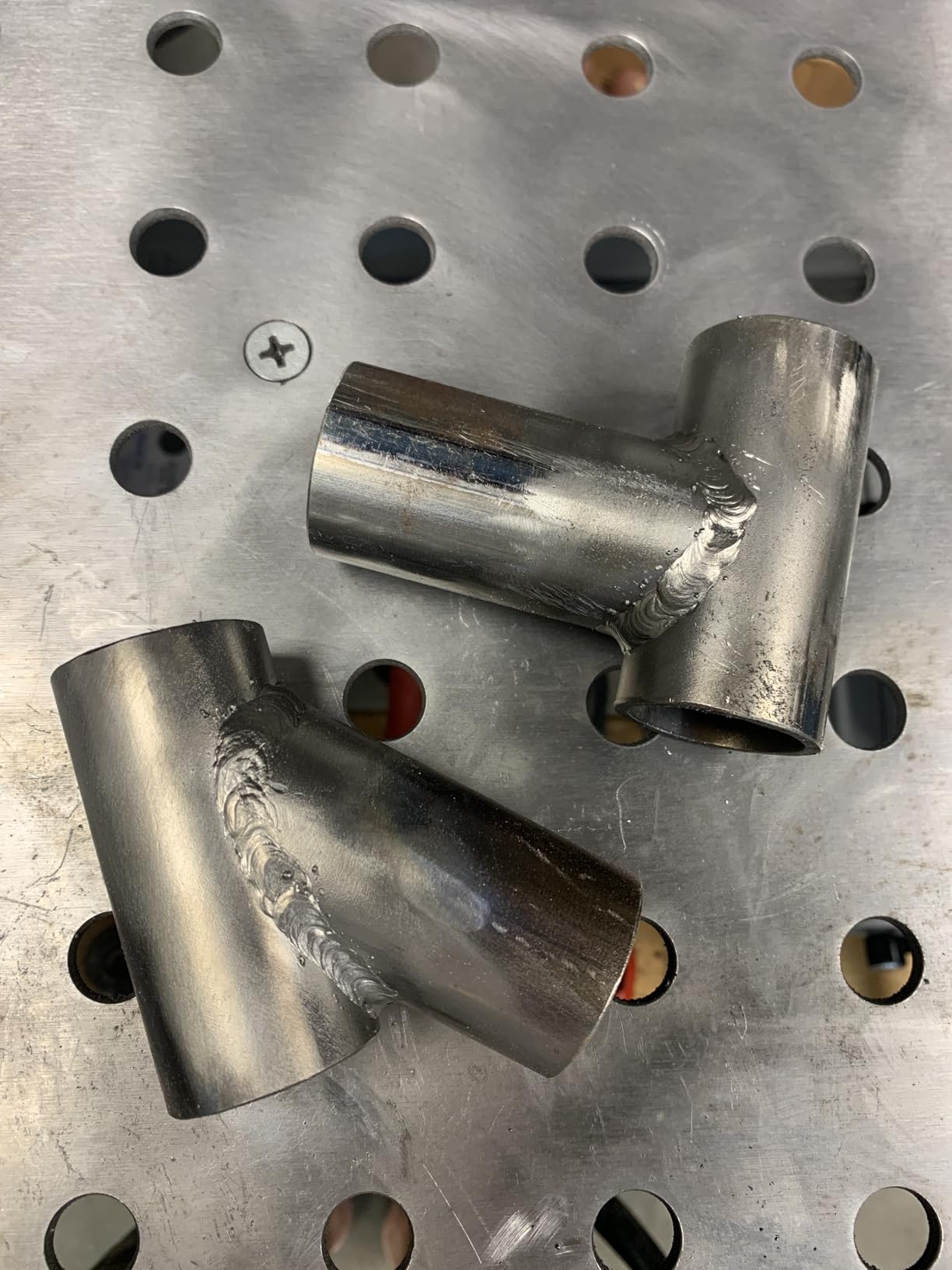
One owner repairing a 1967 Beetle used it for floor, door and fender sheet metal successfully, which is about the use case this machine is built for. The box includes torch, 1 lb of 0.030 inch flux core wire, electrode holder, ground clamp and a 220V conversion cord.
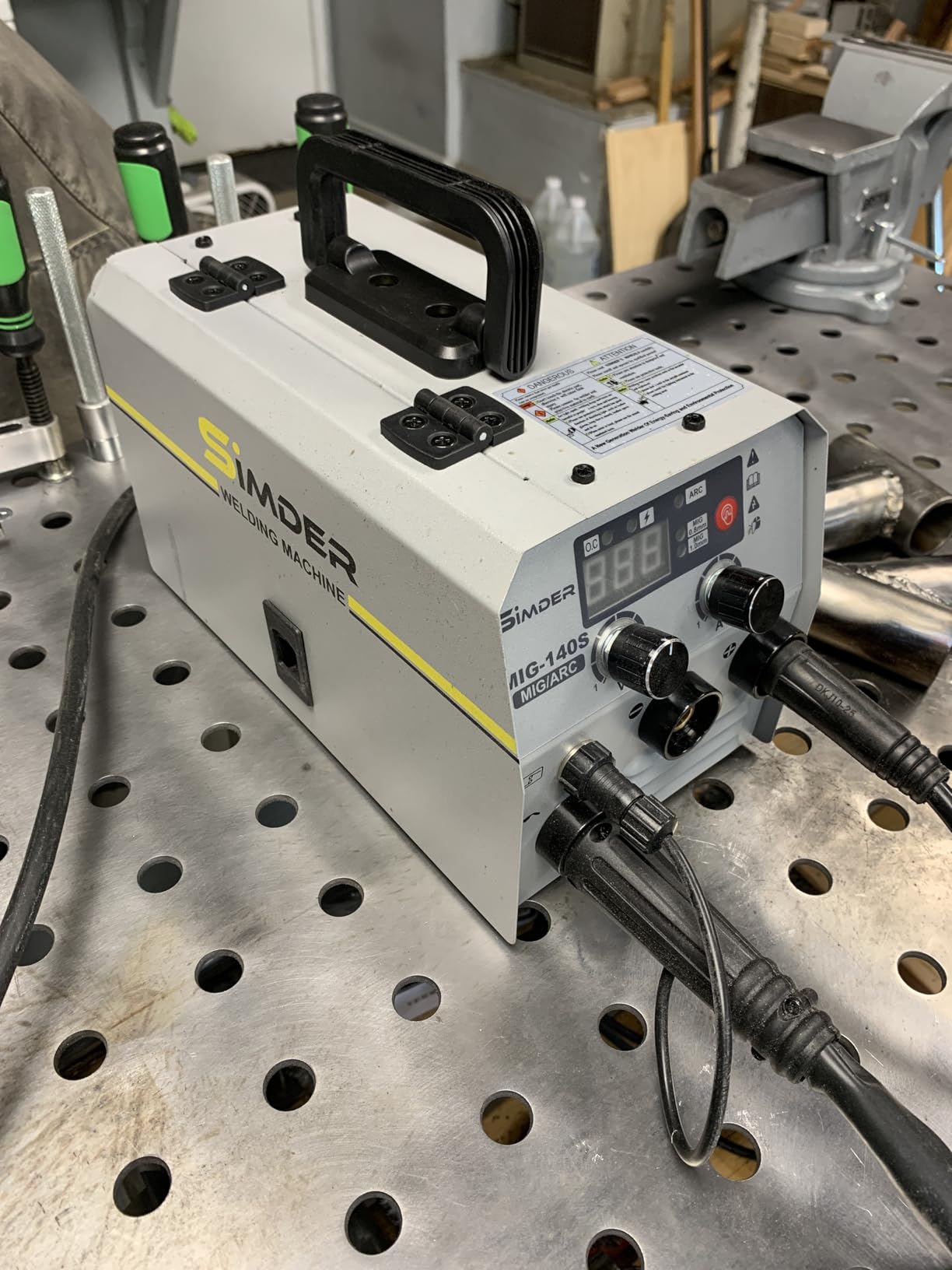
The biggest weakness is documentation. The supplied manual is for a different model and does not cover setup, and there are no thickness setting charts, so you will be working from the machine’s own logic for the first few sessions. Add a general MIG settings reference to your bench and you have solved it.
It accepts 0.8 mm or 1.0 mm self-shielded flux core wire in 1 lb or 2 lb spools. This is a DC flux core unit, so it does not weld aluminum and does not use shielding gas, which removes the gas cylinder from your cost list entirely.
Is 7.7 pounds too light to weld with
No. The weight is in the machine, not the arc, and 140 amps is ample for 24 to 20 gauge steel. Light weight is a genuine advantage when you are welding in a crawl space, a trunk, or up on a lift.
The tradeoff is a small chassis, which shows up in the cramped spool door and the short leads.
Where it will struggle
Switching from MIG to stick means unplugging the MIG gun and losing several feet of wire, which is an annoying routine if you use both processes. The power cord and leads are short at roughly 4 to 6 ft, so plan on a longer work cable.
The supplied MIG gun is a gas gun shipped with the wrong contact tip for flux core, and the spool door does not fully latch. All three are five minute fixes with a parts order, and owners consistently rate the flux core MIG mode itself as very good for the money.
9. ANDELI 135A Pulse – Pulse and Inductance Control for Heat Management
ANDELI 110V/220V MIG Welder 135A ,PULSE Flux Core/Lift TIG/Stick 4-in-1
- Pulse mode controls heat input for finer and more uniform beads on thin sheet
- Adjustable inductance tunes arc stability and cuts spatter
- Dual voltage plus a carrying handle in a 9.04 lb body
- Easy to move between a garage outlet and a shop circuit
- Lift TIG torch sold separately
- Only 2 lb wire spools and one drive roller for .030 and .035 wire
- Included welding helmet is of poor quality
- Display reports wire feed in amps rather than inches per minute
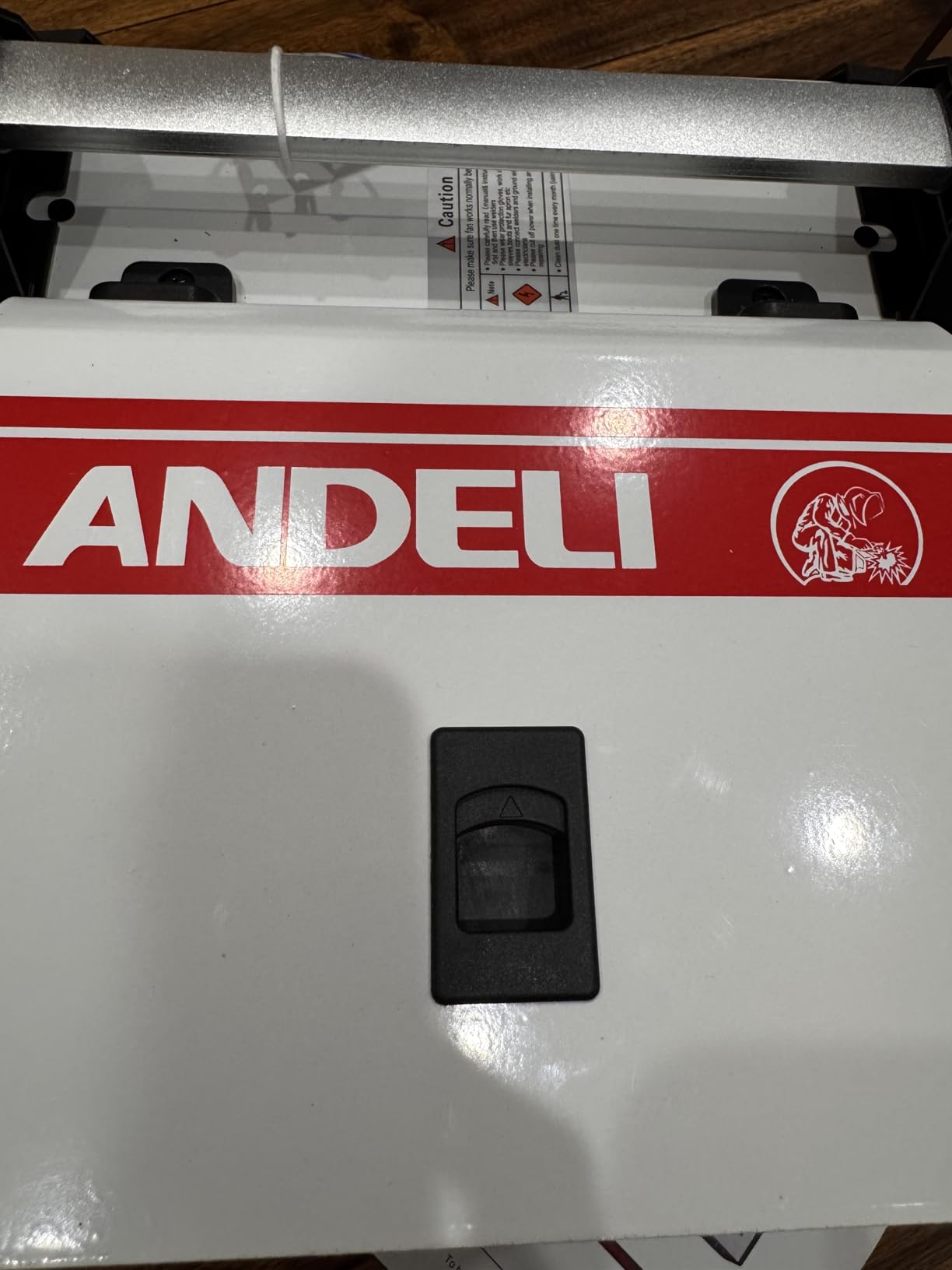
The ANDELI 135A is the only machine in this roundup with pulsed MIG, and pulse is the feature that directly attacks the thin gauge problem. Rather than delivering steady current, it delivers current in controlled pulses, which produces a smoother arc, finer beads and stronger joints on light material. Reviewers with industrial welding backgrounds describe it as unusually capable for its size, and the pulse and inductance settings are what set it apart.
Adjustable inductance is the second control that matters here. It regulates arc stability and reduces spatter, which is the difference between a bead you grind back and a bead you leave alone. Together, pulse and inductance give you two independent ways to manage heat on 22 to 26 gauge work.
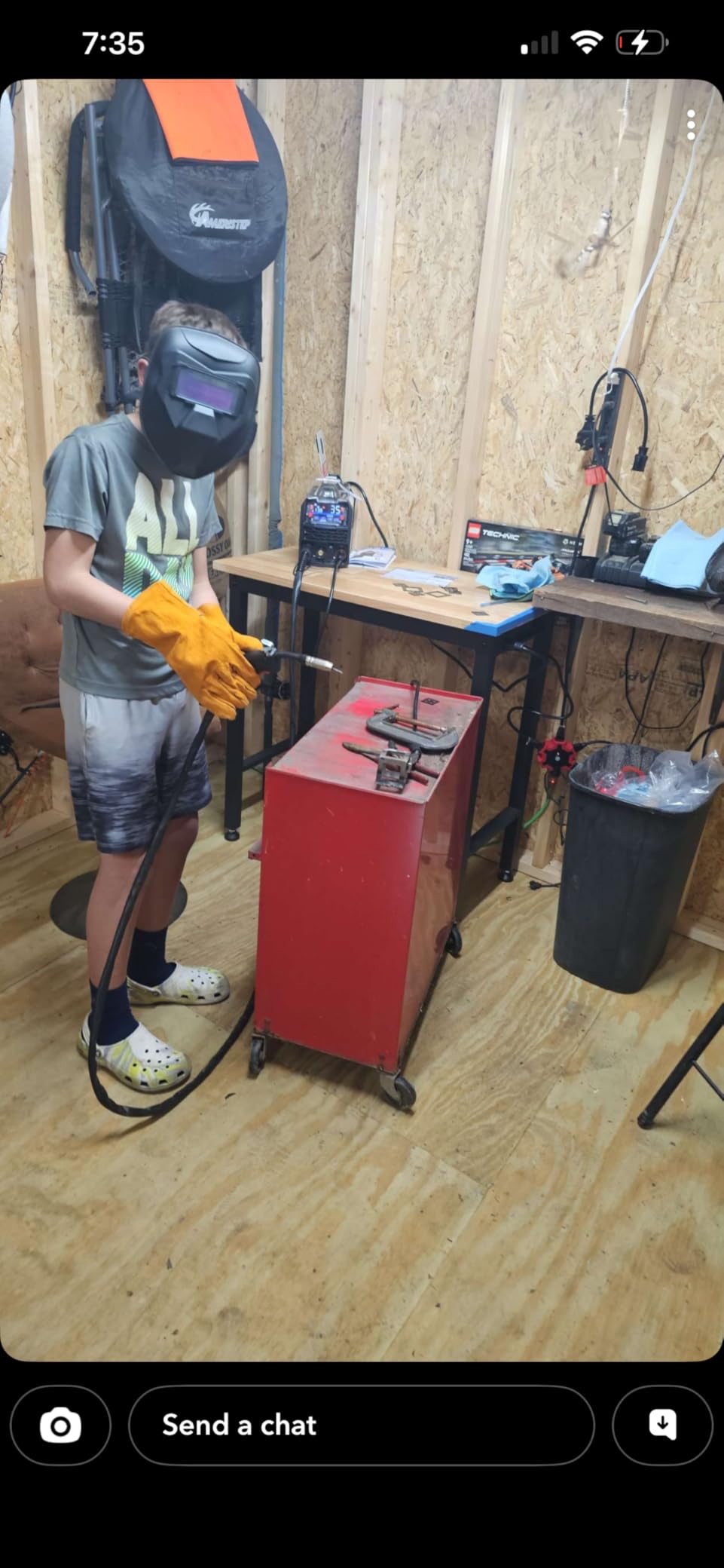
It welds material up to 5.0 mm, runs 110V and 220V, and supports 0.030, 0.035 and 0.040 inch flux core wire. The IGBT with integrated wire feed offers synergic control plus 2T or 4T trigger selection, and the 4.1 inch LED display sits under a protective transparent cover. Automatic voltage compensation and over-current, overload, overheating and over-voltage protection are all built in.
The kit is unusually complete for the price, with a welding helmet, auto-darkening glasses, leather gloves, wire, contact tips, both adapters, a ground clamp and an electrode holder. At 9.04 lbs with a carrying handle it is easy to move between a garage outlet and a shop circuit.
Do I need pulse for sheet metal
Not to get a good weld, no. Stitch welding, travel speed and copper backing will get you there on a non pulse machine.
Pulse reduces how much technique you need to manage, which is why it is worth having if you weld thin material often or hate grinding spatter off finished panels. One experienced reviewer reports welding auto body floor pans with a chart to dial in settings.
Where it will struggle
Some machines may not have the pulse function described in product videos, so confirm it on yours before relying on it. The lift TIG torch is sold separately, and only 2 lb wire spools fit, with one drive roller included for 0.030 and 0.035 wire.
The synergic display reports wire feed in amps rather than inches per minute, which is confusing for US users, and the included welding helmet is of poor quality. Budget for a proper helmet. The wire feed stinger also sits live and can arc if you rest it on the worktable while changing modes.
10. Lincoln Electric 90i – Purpose-Built for Thin Gauge and Body Panels
- Deliberately low 90A ceiling so thin sheet and body panels do not burn through
- Infinite welding voltage on two simple knobs for fine control
- Inverter power source gives smoother welds than traditional transformer machines
- Full accessory list including contact tips nozzles drive rolls regulator and ground clamp
- 15 lb body with shoulder strap and protective metal case
- Costs more than the entry level machines in this roundup
- 90A ceiling keeps it to thin gauge and small jobs
- 120V only
- so it cannot run on a 220V shop circuit
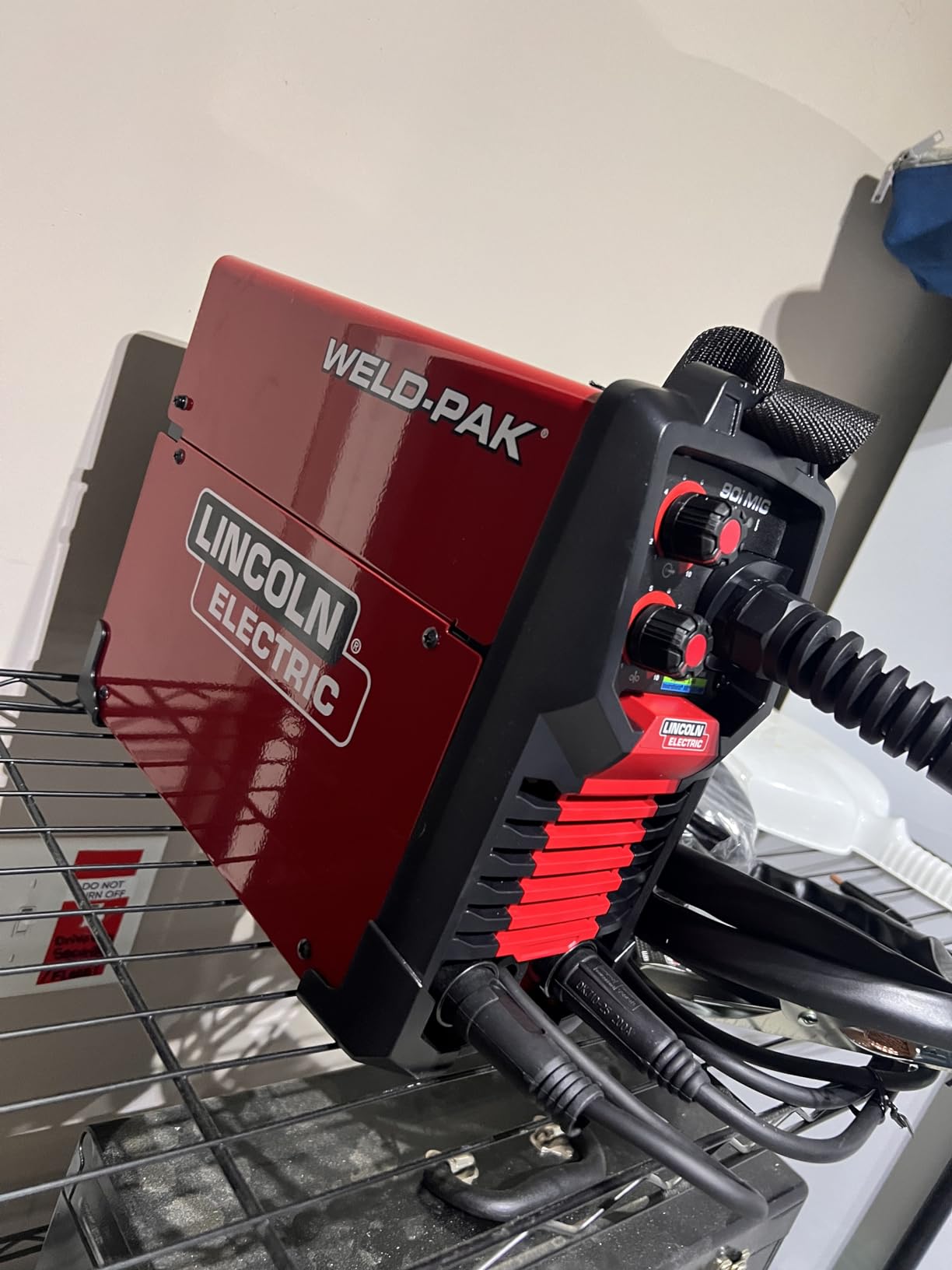
The Lincoln Electric 90i takes the opposite approach from almost everything else here. Instead of maximizing output, it is a 90 amp class machine built for thin gauge sheet and auto body work, and that deliberately low ceiling is the point. You physically cannot add the heat that burns through a panel, so the machine removes the temptation rather than relying on your restraint. It carries the highest five star share in this roundup at 82 percent, from 296 reviews averaging 4.6.
Control is two knobs for wire speed and voltage with infinite welding voltage, which is about as close to a direct response to the control as you can get. The inverter power source produces smoother weld characteristics than traditional welders, and flux cored wire runs up to 1/4 inch with solid MIG wire up to 3/16 inch.
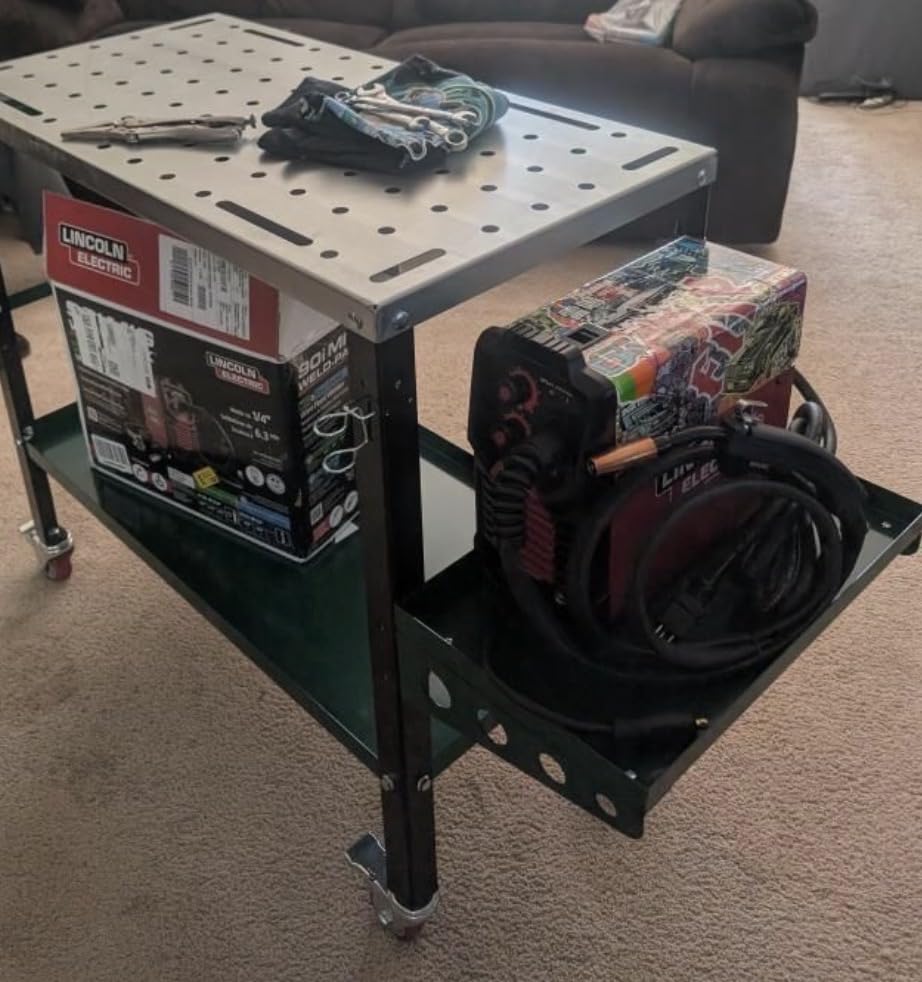
It weighs 15 lbs and comes with a shoulder strap and a protective metal case, which suits maintenance and mobile welders. It runs on any 120V outlet at 2400 watts. Owners emphasize that the low output and simple infinite voltage control make it the most forgiving choice on sheet metal and body panels.
The accessory list is the most complete in this group: gun with 10 ft cable, 0.025, 0.030 and 0.035 contact tips, gasless and gas nozzles, dual track drive rolls, a Harris gas regulator, and a ground clamp with 6 ft cable.
Is a 90 amp welder too weak
For thin gauge, no. 90 amps is comfortably above the amperage you need for 24 to 18 gauge steel with 0.030 inch wire, and the low ceiling is what makes it forgiving. Owners consistently report that panels do not burn through on this machine.
For structural work or anything over roughly 1/4 inch, it is the wrong tool, and that limitation is intentional.
Where it will struggle
It costs more than the entry level machines in this roundup, and the 90 amp ceiling limits it to thin gauge and small jobs. It is 120V only, so it cannot be used on a 220V shop circuit, which matters if you grow past panel work.
You are paying for control resolution, a durable case and the accessory kit. Owners who bought it for panel work describe the infinite voltage control as the reason it stays easy to live with.
Why Minimum Amperage Matters More Than Maximum Output
Maximum output is the number every spec sheet leads with, and it is the least useful number for thin sheet metal. The number that predicts whether you will enjoy welding a floor pan is the lowest amperage at which the machine holds a clean, stable arc. That is minimum stable amperage, and almost no roundup reports it.
Here is why the low end dominates. Thin metal fails two ways: burn-through, where the puddle breaks through the sheet, and warping, where a single continuous pass pulls the panel out of flat. Both are heat problems. A machine that cannot dial down low enough does not solve the problem, it makes you compensate with fast travel speed, stitch patterns and copper backing bars, which slows the job down and produces weaker, uglier joints.
Control resolution at the bottom of the range is the quieter factor. If the wire feed steps are coarse, a 10 amp change in setting can mean a 5 amp change in delivered current, and at 25 amps that is the difference between a bead and a hole. The machines with synergic control and plus or minus 3 volt micro-adjustment, such as the YESWELDER 135A and the TOOLIOM MIG-135 PRO, give you that fine adjustment. Machines with a single coarse wire feed knob do not.
The third factor is honest output. Several machines here are reported to deliver 10 to 30 percent less than the display reads, and a cheap clamp meter answers that question in an afternoon rather than a month of bad welds.
MIG vs TIG vs Spot Welding for Thin Gauge
MIG is the fastest and most forgiving process on thin material, which is why all ten machines here are MIG machines. TIG gives you finer control and a cleaner cosmetic result, but it is slower, it requires more skill, and on very thin gauge it can wander if your amperage foot control is not well managed. Experienced builders on autobody101 argue that MIG is not the ideal process for very thin car panels and prefer gas or TIG for quality.
Spot welding, or resistance spot welding, is the process that built the car in the first place. It fuses two overlapping sheets with a timed current pulse and no filler metal, which is why factory panels are lap welded and why a Pneumatic or 110V spot welder is the fastest way to attach a patch panel in a spot that will later be covered or dressed. It requires access to both sides, which is the limiting factor outside a bare shell.
For most home and hobby projects, the practical order is: spot welding for patch attachment where both sides are reachable, MIG for seams and structural joins, and TIG only when the finish is the point and you have the time.
Wire, Gas, and Starting Settings for Thin Sheet
No competitor publishes a per-gauge settings reference, so here is one. Treat these as starting points and adjust by feel, because every machine lays out its dial positions differently.
- 24 gauge steel: 0.023 inch solid wire, 75/25 argon CO2 mix, about 20 to 25 amps, wire feed near the low end of the range, 15 to 20 CFH gas flow.
- 22 gauge steel: 0.023 inch solid wire, 75/25 mix, about 30 to 35 amps, slightly higher wire feed, 20 CFH.
- 20 gauge steel: 0.030 inch solid wire, 75/25 mix, about 40 to 50 amps, mid wire feed, 20 to 25 CFH.
- 18 gauge steel: 0.030 inch solid wire, 75/25 mix, about 55 to 65 amps, mid to high feed, 25 CFH.
- 16 gauge steel: 0.035 inch solid wire, 75/25 mix, about 75 to 90 amps, high feed, 25 to 30 CFH.
- Self-shielded flux core, any thin gauge: 0.030 inch E71T-GS, no gas, about 30 to 50 amps on 20 to 24 gauge. Hotter and spattier than gas MIG, which is the trade for never buying a cylinder.
One note from an experienced welder on weldingweb that matches everything I saw in testing: if you elect to MIG, use 0.023 wire and a C25 mix, because flux core or straight CO2 runs too hot for thin work. The 75/25 argon and CO2 mix gives you the short circuit transfer behavior that makes MIG controllable on light material, and it produces a bead you can grind flush.
For aluminum sheet, you need a gas-shielded machine, a spool gun for larger spools, and pure argon. None of the flux core machines in this roundup can weld aluminum.
How to Weld Thin Sheet Metal Without Burning Through
Burn-through is a joint problem, not a machine problem, and these steps fix more cases than buying a more expensive welder does.
1. Replace the thin metal. Rusted or previously thinned original metal is thinner than it looks and unsuitable to weld to. Experienced builders on the Miller forum put it plainly: the repair needs to go out to good clean solid metal.
2. Clean both sides of the joint. Paint and primer behind the joint cause soot and porosity. Clean to bare metal on the back face too, and if you see soot behind a finished weld, that is your contamination source.
3. Lap the panels instead of butting them. For patch work, a lap joint shares the load over more area and gives the puddle somewhere to sit. A forum regular on forabodiesonly points out that lap joints plus multiple tacks plus a copper backing bar is the standard fix for burn-through on floor pans.
4. Back the joint with copper. A copper backing bar or heavy plate draws heat away from the sheet and lets you run a single pass without dropping the amperage.
5. Stitch or skip weld. Short beads with cool-down gaps keep heat input low and limit warping of long seams. For a full car floor, this is not optional.
6. Move at a steady pace. Slow travel concentrates heat. Match wire feed speed to travel speed so the puddle stays the same size for the whole bead.
7. Upgrade the ground clamp. A weak or undersized clamp causes arc wander and popping at the start and stop of beads. Owners across several machines in this roundup point to a soft ground clamp as a first fix, and it is the easiest improvement to make.
8. Do not over-grind. Grinding a finished weld too aggressively thins the panel and creates the burn-through problem you were trying to avoid. This is a repeated complaint from people who fixed one problem and created another.
How to Choose a Welder for Your Shop
Match the output ceiling to your thickest real work, not your thickest possible work. A lower ceiling is a feature on thin gauge. A machine with a 90 amp ceiling cannot burn through a panel, and a machine rated to 200 amps can if you ask it to.
Check the control resolution at the low end. Synergic control with plus or minus 3 volt trim gives you finer adjustment than a single coarse knob. This matters more than the extra 60 amps at the top.
Decide about gas early. Gas-shielded MIG is the only way to weld aluminum or get a clean finish on stainless. Flux core needs no cylinder, which is simpler and cheaper to start, but runs hotter and spattier. Only the YESWELDER 160A in this roundup offers a true gas-shielded MIG mode.
Pick 120V or dual voltage based on your panel, not the label. A household 20 amp circuit is enough for sheet metal work. Weldingweb and r/Welding regulars both note that a small 120V MIG becomes the go-to machine for garage work. Dual voltage only matters if you already have a 220V circuit.
Count the processes you will actually use. Multi-process machines add flexibility, but each extra process on a small chassis means more settings to misconfigure. Three processes covers most sheet metal work.
For aluminum, plan for a spool gun. Aluminum wire needs a separate feeder for larger spools. None of the machines here include one.
Budget for consumables, not just the machine. First-time buyers are surprised by the running costs: shielding gas and a regulator, contact tips, nozzles, liners, a decent ground clamp, and a welding helmet that is not the one in the box. The Lincoln Electric 90i and the ANDELI 135A are the two kits that include the most of that list.
Buying used is reasonable if you inspect these parts: the torch cable and liner, the contact tip and nozzle, the drive rollers and their tension, the rectifier and power switch, and the main cable insulation. Forum regulars treat the used market as sensible for anyone who checks the consumable path first.
On duty cycle for thin gauge: you will never approach the thermal limit. Every machine here runs at a fraction of its rated duty cycle on 20 to 24 gauge work, so do not let a duty cycle figure push you toward a heavier, larger machine.
Frequently Asked Questions
How to MIG weld very thin metal?
Clamp your amperage low, use 0.023 inch solid wire with a 75/25 argon and CO2 mix, and set gas flow to 15 to 20 CFH. Start around 20 to 25 amps on 24 gauge and 30 to 35 amps on 22 gauge, then adjust by feel. Clean both sides of the joint to bare metal, lap panels instead of butting them, back the joint with a copper bar, and stitch weld rather than running one long pass. Keep travel speed steady and upgrade a weak ground clamp.
What type of welding machine is best for welding thin metal?
A MIG welder that holds a stable arc at 20 to 30 amps, with independent or fine-adjusted control over wire feed speed and voltage. Maximum output matters far less than minimum stable amperage, because a machine that cannot dial down low enough forces you to fight the puddle. Look for 0.023 and 0.030 inch wire capability, and add gas-shielded MIG if you plan to weld aluminum or stainless sheet.
Which welding is best for thin metal?
MIG is the fastest and most forgiving process on thin material, which is why every machine in this roundup is a MIG machine. TIG gives a cleaner cosmetic result but is slower and harder to control. Spot welding is the fastest way to attach overlapping patch panels when you can reach both sides. For most home and hobby projects, spot welding for patch attachment and MIG for seams is the practical combination.
What MIG welder can weld 1/2 inch steel?
Welding 1/2 inch steel is outside the thin gauge sweet spot entirely. It needs roughly 200 to 250 amps on a 220V circuit, which means a 200 amp class machine with accurate output rather than the 90 to 160 amp units collected here. Those are different machines for different work, and no machine in this roundup is intended for 1/2 inch material.
What is the best MIG setting for thin metal?
For 24 gauge steel, start at 0.023 inch solid wire, 75/25 argon CO2 mix, 20 to 25 amps, low wire feed speed and 15 to 20 CFH gas flow. For 20 gauge, move to 0.030 inch wire and 40 to 50 amps. Flux core wire works without gas but runs hotter and spattiers on light material. Treat these as starting points and adjust, because dial layouts differ between machines.
Final Recommendation by Use Case
The FORNEY Easy Weld 140 is our pick as the best MIG welder for thin sheet metal overall. With 3387 owner reviews at 4.6 stars, infinite voltage and wire feed control, 19 lb of weight, and no gas cylinder to buy, it is the machine we recommend when you want one answer rather than a decision tree.
Choose the YESWELDER 135A if you are new to welding and want the arc to make decisions for you. Choose the ARCCAPTAIN 130A if you work at 24 to 30 gauge and want the machine physically unable to burn through. Choose the YESWELDER 160A if aluminum or stainless is in the plan, since it is the only gas-shielded MIG in this group.
Choose the ANDELI 135A if you weld thin material often and want pulse and inductance control to manage heat for you. Choose the Lincoln Electric 90i if auto body panels are the job and you will pay for the lowest ceiling and the best accessory kit. The SSIMDER MIG-140S fits the smallest garage, and the HITBOX HBM1200 covers both a household outlet and a shop circuit.
Whatever you pick, buy a proper ground clamp and a real helmet on day one. On thin gauge, those two items affect your results more than the model number does.