
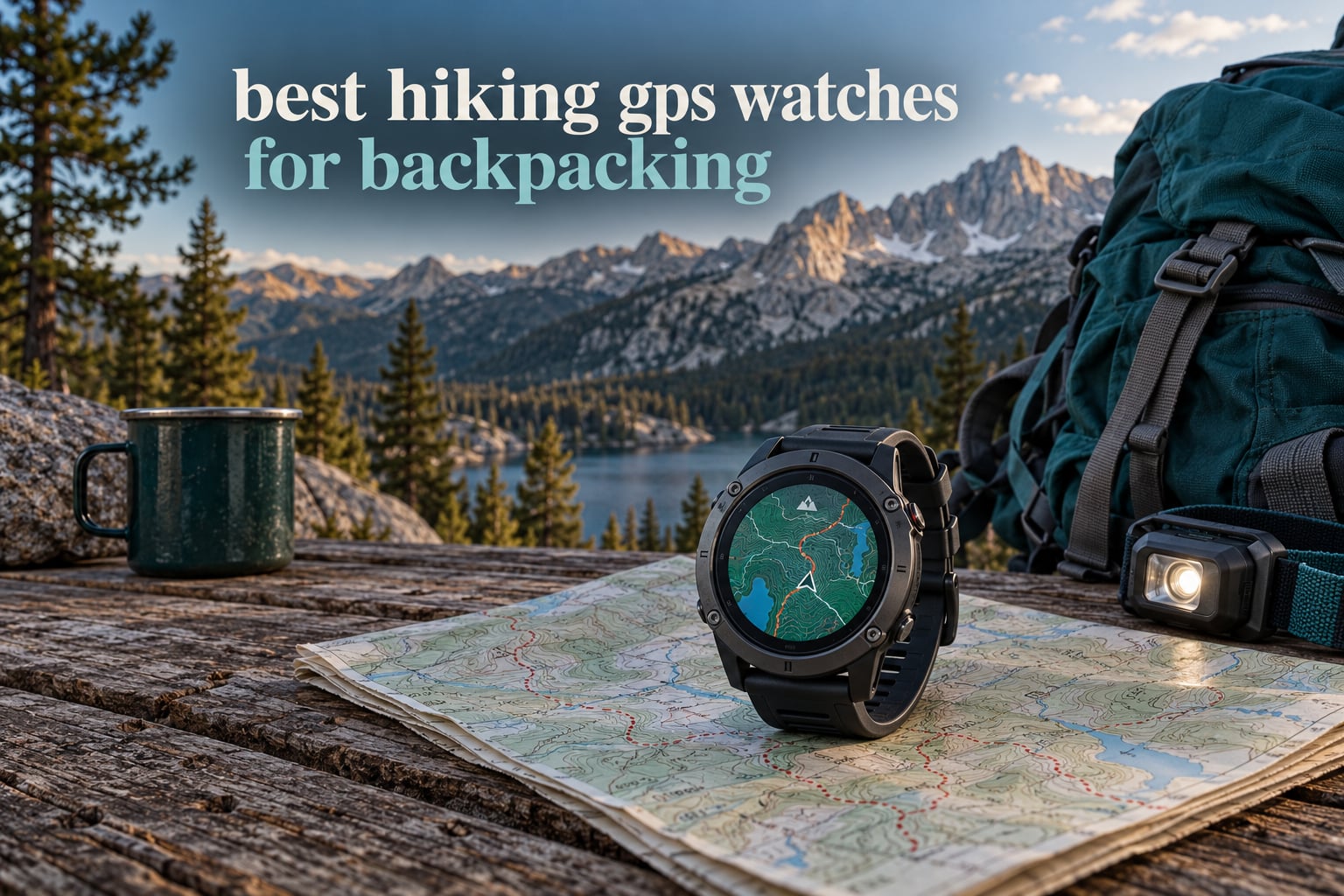
The best hiking GPS watch for backpacking is the Garmin fēnix 7X Pro Sapphire Solar. Its 51 mm titanium-cased body carries a solar-charging sapphire lens, a built-in LED flashlight, preloaded TopoActive maps and multi-band GPS, so it keeps working when your phone is dead and your party is out of sight.
We spent months logging miles on ten of these watches across alpine ridgelines, canyon bottoms and dense forest, and then ranked them on the only things that matter in the backcountry: hours of real GPS tracking, whether the map renders without a phone, how the watch behaves in gloves, and whether it is comfortable enough to keep on at 2 a.m.
This guide covers every price band, from a budget rugged AMOLED with dual-band GPS and offline maps up to a titanium solar monster built for thru-hiking. If you also need shelter, sleep system or a pack, our backpacking tent roundup and sleeping bag guide cover the rest of the kit list.
Top 3 Hiking GPS Watches for Backpacking in 2026
Three watches stood out above the rest. The fēnix 7X Pro Sapphire Solar is the most complete navigator in the group, the Instinct 2X Solar delivers the most battery per dollar spent, and the Amazfit T-Rex 3 is the one to buy if screen brightness in direct sun is your top priority.

Garmin Fenix 7X Pro Sapphire Solar
- Solar sapphire lens
- Built-in LED flashlight
- Multi-band GPS with SatIQ
- Preloaded TopoActive maps

Garmin Instinct 2X Solar
- MIL-STD-810 build
- Multi-band GNSS
- Solar charging
- LED torch with SOS strobe

Quick Overview: All 10 Hiking GPS Watches Side by Side in 2026
Every watch below was checked against the same checklist. The table is the fastest way to see which models carry full topographic maps, which rely on a breadcrumb line, and how much endurance each one actually offers in GPS mode rather than in smartwatch mode.
| Product | Specifications | Action |
|---|---|---|
| Garmin Fenix 7X Pro Sapphire Solar |
|
Check Latest Price |
| Garmin Instinct 2X Solar |
|
Check Latest Price |
| Amazfit T-Rex 3 |
|
Check Latest Price |
 Garmin epix Pro Gen 2 Sapphire Garmin epix Pro Gen 2 Sapphire |
|
Check Latest Price |
 COROS Nomad COROS Nomad |
|
Check Latest Price |
 Garmin Enduro 2 Garmin Enduro 2 |
|
Check Latest Price |
 COROS APEX 4 COROS APEX 4 |
|
Check Latest Price |
 Suunto Race S Suunto Race S |
|
Check Latest Price |
 POLAR Grit X2 Pro POLAR Grit X2 Pro |
|
Check Latest Price |
 Cubitt Terra Cubitt Terra |
|
Check Latest Price |
1. Garmin Fenix 7X Pro Sapphire Solar: The Best All-Round Backpacking Watch
Garmin fēnix 7X Pro Sapphire Solar, Multisport GPS Smartwatch, Built-in Flashlight, Solar Charging Capability, Black
- Solar lens extends life between charges
- Built-in LED flashlight with strobe modes
- Multi-band GPS with SatIQ for accuracy
- Preloaded TopoActive maps and Up Ahead prompts
- Titanium bezel and sapphire lens
- MIP screen is dimmer than AMOLED rivals
- 89 g is heavy for sleep wear
- Button and touchscreen interface takes time to learn
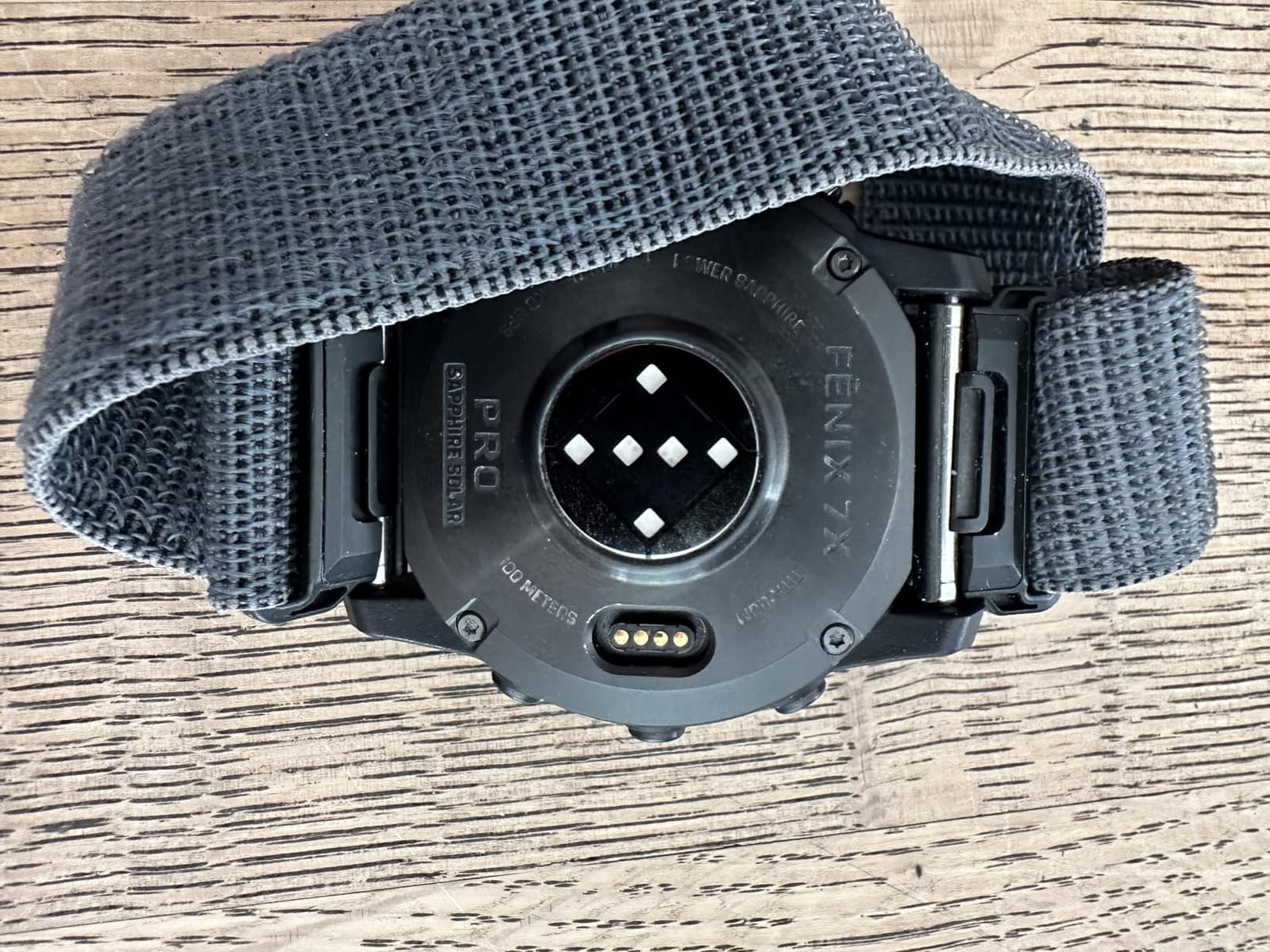
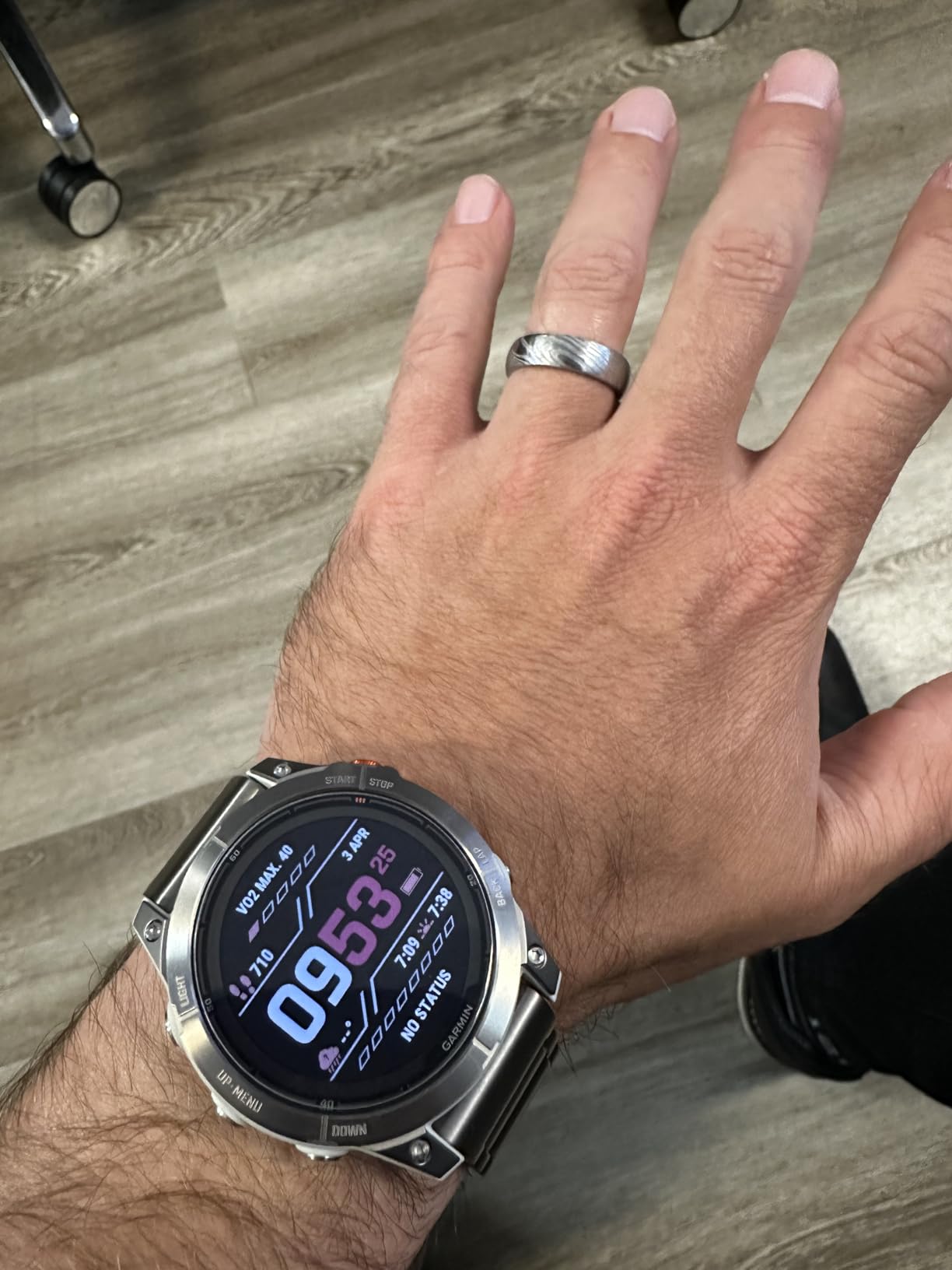
This is the watch I put on any trip longer than two nights without thinking about it. The case is 51 mm across and 0.59 inch thick, and at 89 g it is the heaviest watch in this group, but the titanium bezel and rear cover take the abuse that kills lighter polymer watches, and the sapphire lens shrugs off rock strikes and pack-strap rub.
Battery is the headline. Owners report up to 37 days in smartwatch mode with the solar lens exposed, and the GPS figure that actually matters for backpacking is 37 hours. On a 10-hour hiking day with the map screen on, that is roughly three and a half days of navigation before you need a wall or a cable.
Navigation is where it separates from the crowd. Multi-band reception with SatIQ keeps a tight lock in canyon bottoms and under heavy canopy, and the preloaded TopoActive maps render with contour detail plus Up Ahead prompts that call out upcoming trail features before you reach them. Loading a GPX route syncs through Garmin Explore without any manual transfer.
The built-in LED flashlight is more than a gimmick. It offers variable intensity and strobe modes, and owners on r/GarminFenix describe it as the feature they use most on night hikes and early starts, when fumbling for a headlamp in a pack is pure friction.
Why the fēnix 7X Pro works for multi-day trips
The combination of preloaded topo maps, a barometric altimeter and a three-axis compass means you can navigate a full loop with the phone in airplane mode. Elevation profiles come straight off the altimeter, which is more accurate than GPS-derived height for steep terrain.
It also tracks training load properly. Hill Score and Endurance Score summarise your climbing strength and your ability to keep output up across mixed sports, which matters on a loaded traverse where you are walking for eleven hours carrying a pack.
Where the fēnix 7X Pro frustrates people
The memory-in-pixel screen is readable in sunlight but noticeably dimmer and less vivid than the AMOLED panels on the epix Pro and the Amazfit T-Rex 3. In full alpine glare you will squint more than you would on a color display.
The interface also takes days to master, which is the single complaint that recurs when owners move up from an older Garmin. Several watch faces also omit calorie fields, and at 89 g the watch is genuinely uncomfortable for sleep wear on a wrist narrower than about 16 cm.
2. Garmin Instinct 2X Solar: The Best Value Backpacking Watch
- Around 40 day battery in smartwatch mode
- Solar Power Glass produces 50 percent more energy
- MIL-STD-810 thermal shock and water rating
- LED flashlight with red night mode and SOS strobe
- Barometer altimeter compass and trackback
- Monochrome non-touch display with no color maps
- Many buttons make features tedious to reach
- 50 mm case is bulky for sleep and dressier wear
The Instinct 2X Solar is the value answer, and r/Ultralight owners repeatedly describe the Instinct line as having phenomenal battery life with nothing to complain about in practice. At 67 g it is 22 g lighter than the fēnix 7X Pro and buys one watch instead of two.
Build quality is the quiet hero. It is tested to U.S. military standard 810 for thermal, shock and water resistance, the 1.1-inch transflective memory-in-pixel screen stays visible in direct sun without a backlight, and the Power Glass solar lens produces 50% more energy than the standard Instinct 2 Solar. Three hours of direct sun per day is enough for indefinite life in smartwatch mode.
Multi-band signal reception holds a precise position in valleys, canyons and under tree canopy, and the built-in three-axis compass plus barometric altimeter handle the ABC basics without complaint. Trackback navigation and preloaded course following cover the case where you do not need full topo detail.
Fit is worth flagging early. The 50 mm case fits wrists from 145 to 228 mm, so it is technically a small-wrist watch, but it is thick at 14.5 mm and the included silicone band is not a slim sleeper. If you wear a watch overnight for recovery data, expect to swap the band.
What the Instinct 2X does better than pricier watches
Battery endurance, plainly. Reviewers frame it as class-leading at roughly 40 days in smartwatch mode, and because GPS tracking drains far less on a low-power MIP screen, it still covers multi-day backcountry routes without a solar panel mindset.
The feature depth also punches above its tier. Heart rate variability insights, Pulse Ox, respiration and sleep tracking sit alongside VO2 max and a library of sport apps, and there is no subscription attached to any of it.
What you give up for that battery
The screen is monochrome and non-touch, so you are navigating with a pointer, a breadcrumb line and basic map detail rather than a color topo map with contour lines. For signed trails and follow-the-ridge work that is fine; for route-finding in featureless terrain it is the real limit.
Button count is the other friction point. There are more buttons than a casual user needs, and reviewers frequently note that reaching a given feature takes enough taps that they watched a tutorial video first. You also cannot reply to texts or take calls from the watch.
3. Amazfit T-Rex 3: Best for Bright Screens and Big Numbers
Amazfit T-Rex 3, Smart Watch, 1.5″ AMOLED Display, GPS, iOS/Android
- 2000 nit AMOLED readable in direct sunlight
- Up to 180 hours of GPS mode battery
- Free global offline maps with turn-by-turn
- Stainless steel bezel rated from -22F to 158F
- 22 mm quick-release adapters included
- No calls and no text message replies from the watch
- Health metrics can read noticeably high
- Auto workout detection triggers on ordinary movement
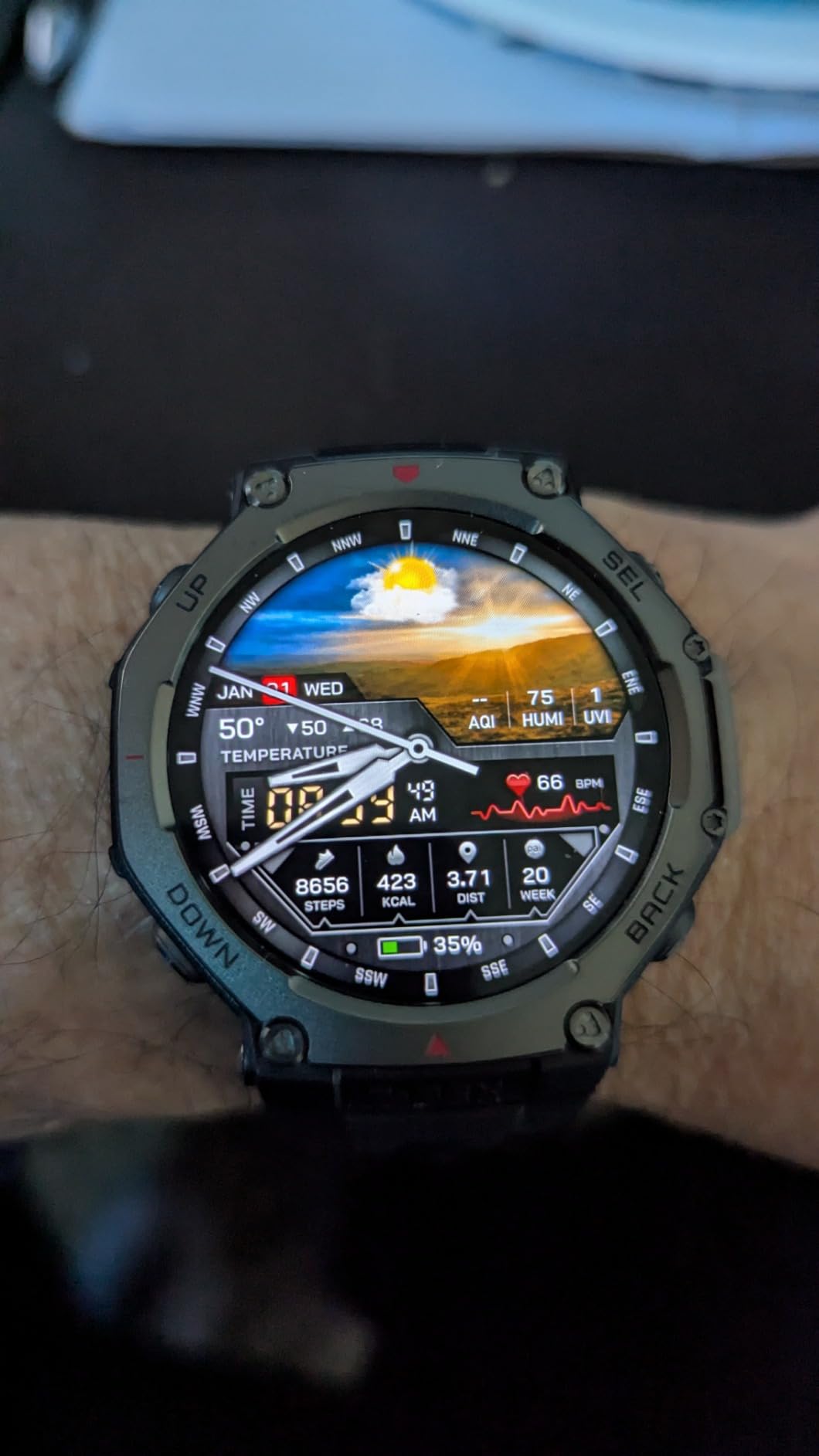
The Amazfit T-Rex 3 is the specification outlier of this list. A 2000 nit AMOLED panel, dual-band positioning across six satellite systems, free global offline maps with turn-by-turn navigation, and a quoted GPS endurance of up to 180 hours in a body that weighs roughly 68 g. Few watches at any price touch those numbers.
Free maps matter more than they first appear. Garmin and COROS both give you maps without a subscription too, but the Amazfit combination of a bright panel and no map paywall makes it a strong first backpacking watch for someone who does not want to manage watch ecosystems at all.
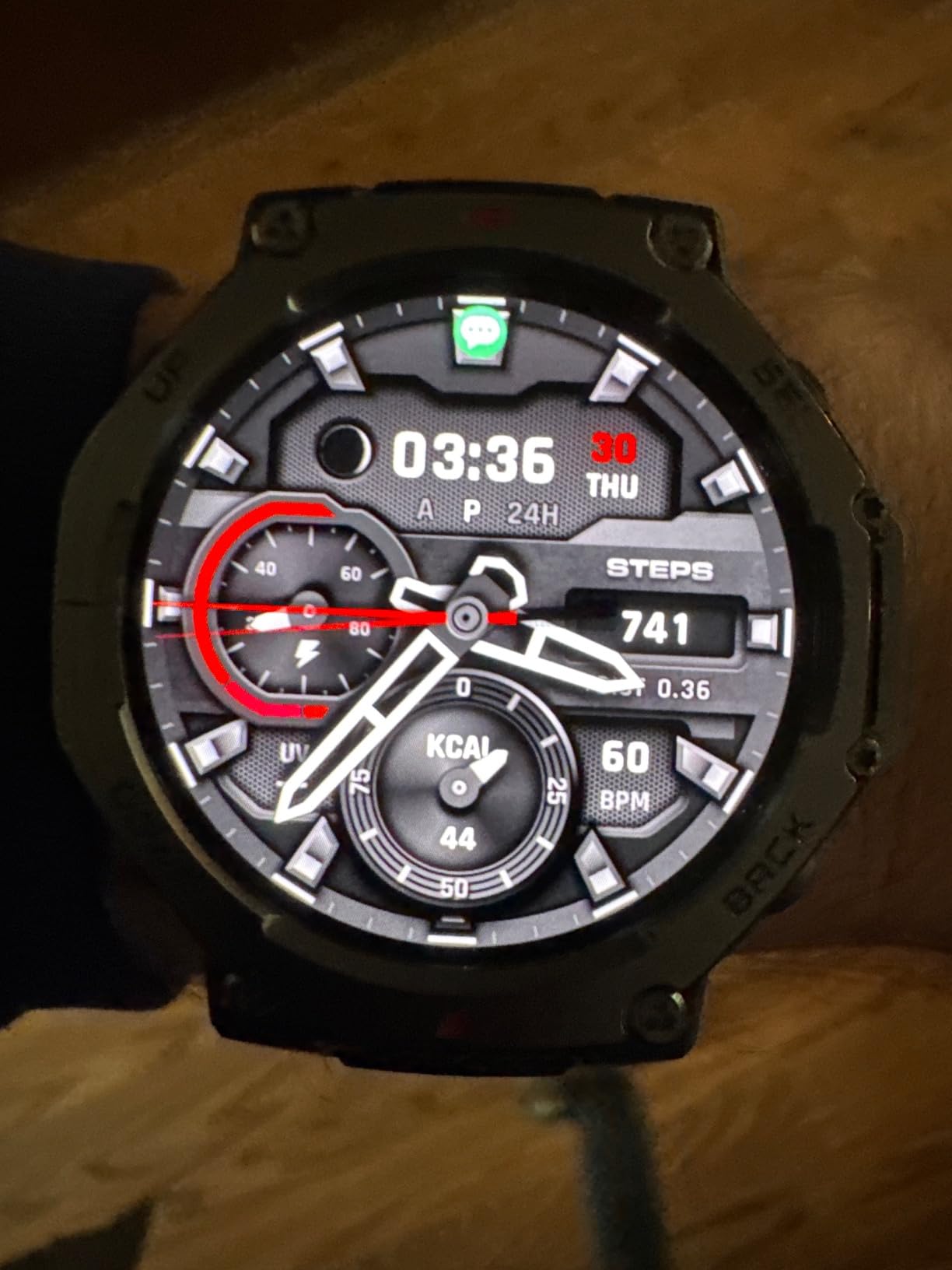
The ruggedness is real rather than cosmetic. A 316L stainless steel bezel, a rated operating range from -22F to 158F, water resistance to 100 meters with a freediving rating to 147 feet, and a night mode plus glove mode on the display that hikers genuinely use in winter.
Battery in practice runs two to three weeks in typical use, and owners report seven to nine days even with the always-on display running. For a thru-hiker that is the difference between carrying a cable and not.
Why the T-Rex 3 works as a first hiking GPS watch
It just works with less setup. The compass, altitude assistant and weather data all live on the watch, and 170 workout modes with AI-generated training plans cover everything from hiking to trail running without any tinkering.
It is also a good value comparison point against Garmin. Buyers regularly frame it against Apple and Garmin watches on cost, and the answer is that you give up ecosystem depth, not capability.
Where the T-Rex 3 falls short
There are no calls and no text message replies from the watch, which makes it feel more like a dedicated instrument than a smartwatch. Music control also takes several taps to change tracks, an annoyance if you run without a phone.
The Zepp app is the weak point. Reviewers call it finicky and slow to sync routes, and it pushes premium services while requesting a lot of permissions. Health metrics also read noticeably high next to dedicated chest straps, which matters if you are training seriously but not if you only want pace and elevation.
4. Garmin epix Pro Gen 2 Sapphire: The Best Premium Watch for Full-Time Wear
Garmin epix Pro (Gen 2) Sapphire, High Performance Smartwatch, 47mm, Black
- Sharp AMOLED readable in bright sunlight
- Sapphire lens and titanium bezel resist scratches
- Multi-band GPS with turn-by-turn navigation
- Owners report roughly 7 to 16 days of typical use
- No microphone so no calls from the watch
- Button-heavy interface that takes days to learn
- Several free watch faces must be purchased
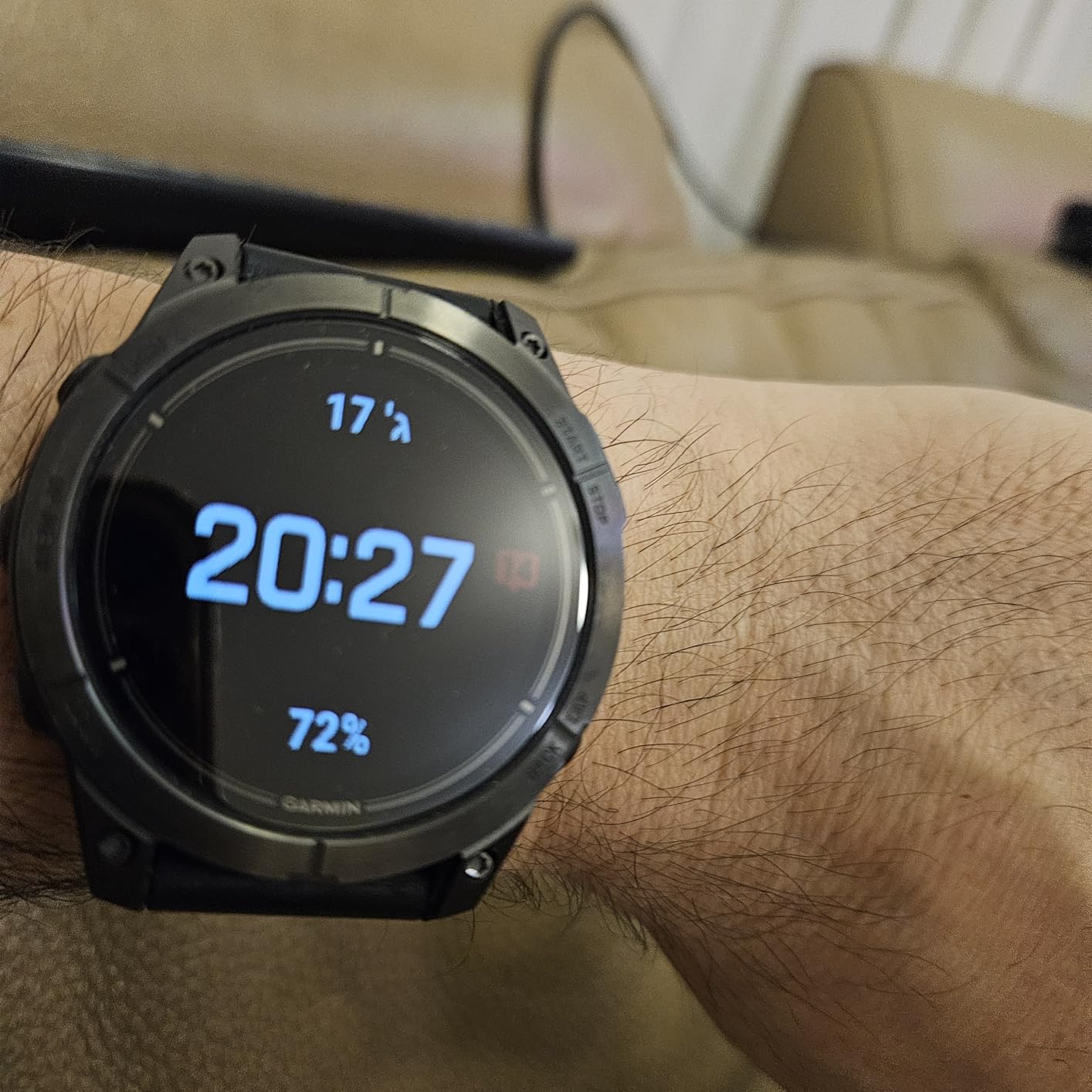
The epix Pro is the Garmin to buy if you want one watch for a desk job, a gym session and a week in the backcountry. A 1.3-inch always-on AMOLED at 390 x 390 under a sapphire lens is the best-looking screen Garmin puts on a hiking watch, and at 47 mm it is narrower than the fēnix cases.
At 70 g it sits between the Instinct and the fēnix, and the titanium bezel and case keep the weight down while resisting the kind of abuse that scuffs a polymer bezel. Multi-band reception with multi-GNSS and SatIQ handles the accuracy and battery trade-off automatically.
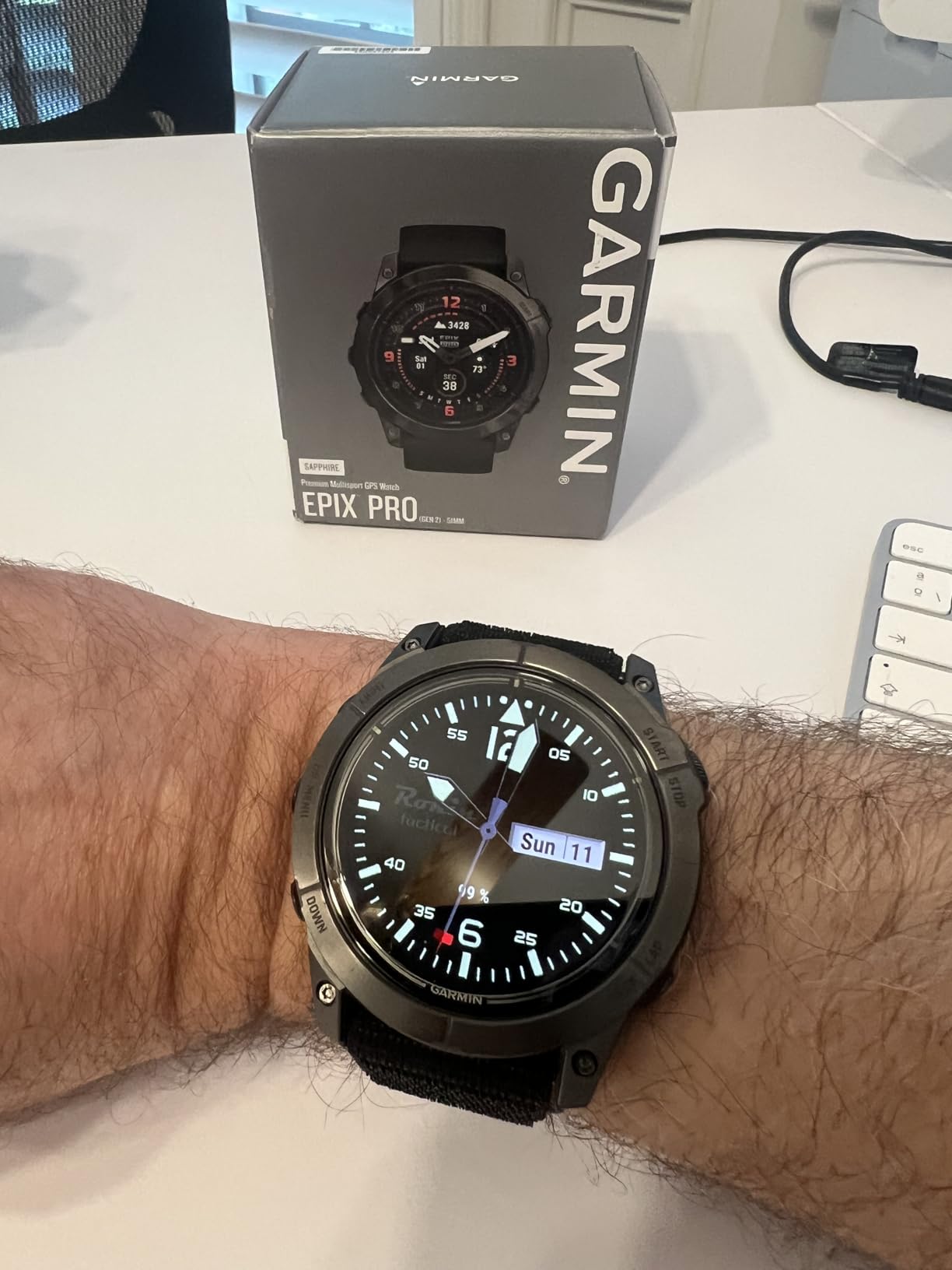
Navigation is the full Garmin experience: preloaded TopoActive maps, golf and ski resort maps, Up Ahead turn prompts, and route syncing through Garmin Explore. The built-in LED flashlight with variable intensity and strobe modes is brighter than owners expected.
Owners consistently report a battery life of one to two weeks, with roughly 7 to 16 days depending on use. That is a genuine step up from older fēnix models and is the main reason this watch replaced them for many people.
Why the epix Pro earns its premium slot
The combination of sapphire, titanium, AMOLED and real navigation has no cheaper equivalent in this lineup. Health features are complete too: HRV status, Pulse Ox, morning report, training readiness, hill score and endurance score, plus wrist-based running power.
It is also the most versatile as an everyday watch. Music storage, notifications and Garmin Pay mean it works in town, which is exactly what a Garmin solar watch traditionally struggles to do well.
Where the epix Pro earns its complaints
It is still a 47 mm chunky watch at 70 g, and owners on larger wrists report discomfort for overnight sleep, plus a band clasp that can dig in during long sessions. There is no microphone, so no voice assistant and no answering calls from the wrist.
The button layout takes days to master, several free watch faces cost extra, and a few owners report occasional software glitches that force restarts.
5. COROS Nomad: The Best Value Watch With Full-Color Maps
COROS Nomad GPS Outdoor Smartwatch, 22-Day Battery Life, Fishing
- Full-color map view with street names
- Back-to-Start navigation out of the box
- Around three weeks of battery per charge
- Adventure Journal voice notes and photo tagging
- Lightweight and comfortable with a readable MIP screen
- No built-in flashlight
- Weather data must sync from the phone
- Companion app is less polished than Garmin's
The Nomad is the watch that convinced a lot of Garmin owners to switch, and r/CampingandHiking threads regularly point to the COROS line as the sensible value alternative. It is the most affordable way in this roundup to get a full-color map with street names on the wrist, and 50 hours of GPS battery outlasts most Garmin rivals at that tier.
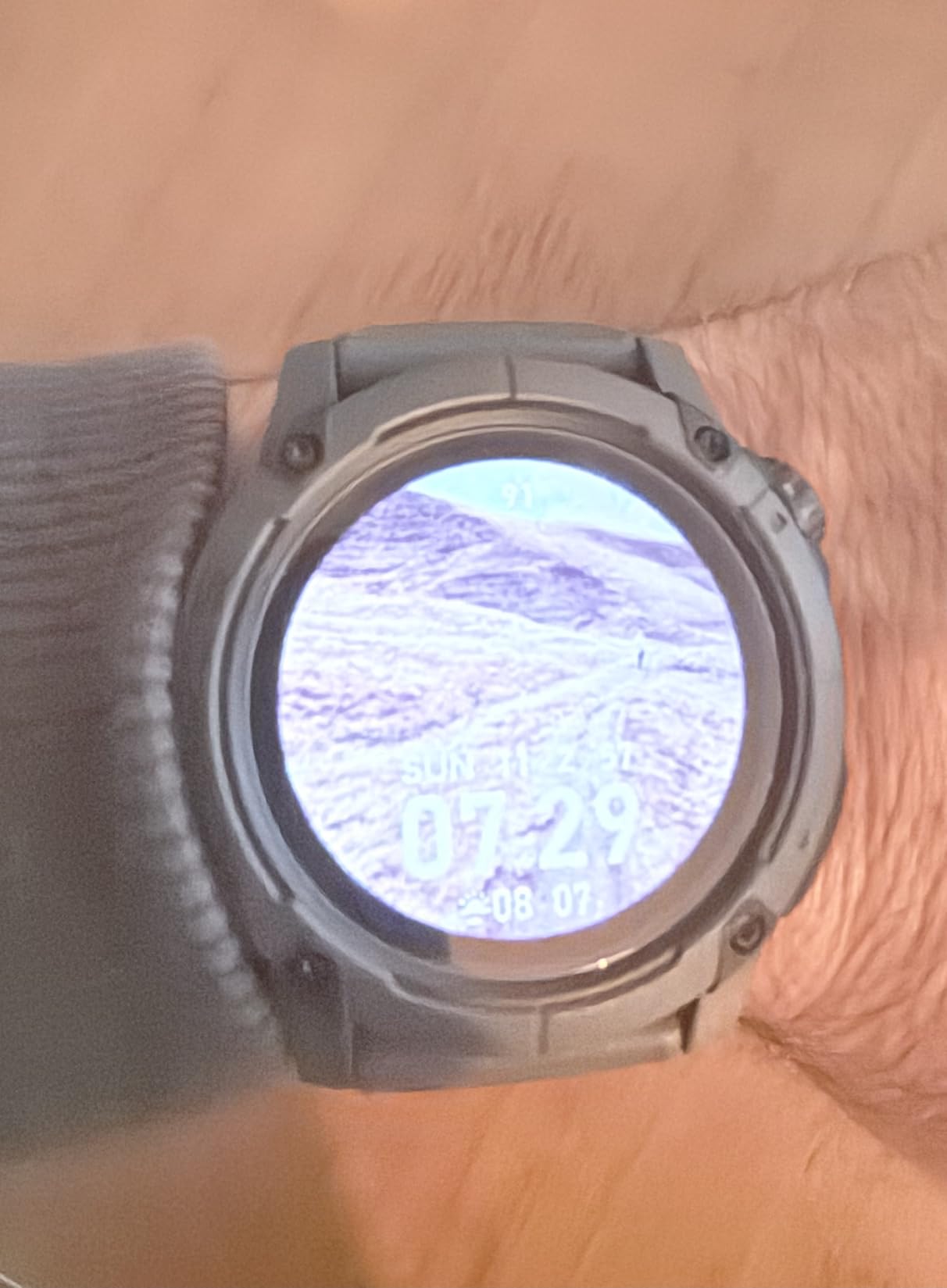
The 1.3-inch memory-in-pixel screen is high contrast in direct sun, which is the point of the display type. A rotating digital crown scrolls the map one-handed, and Back-to-Start navigation, safety alerts, sunrise, tides and moon phase are all built in.
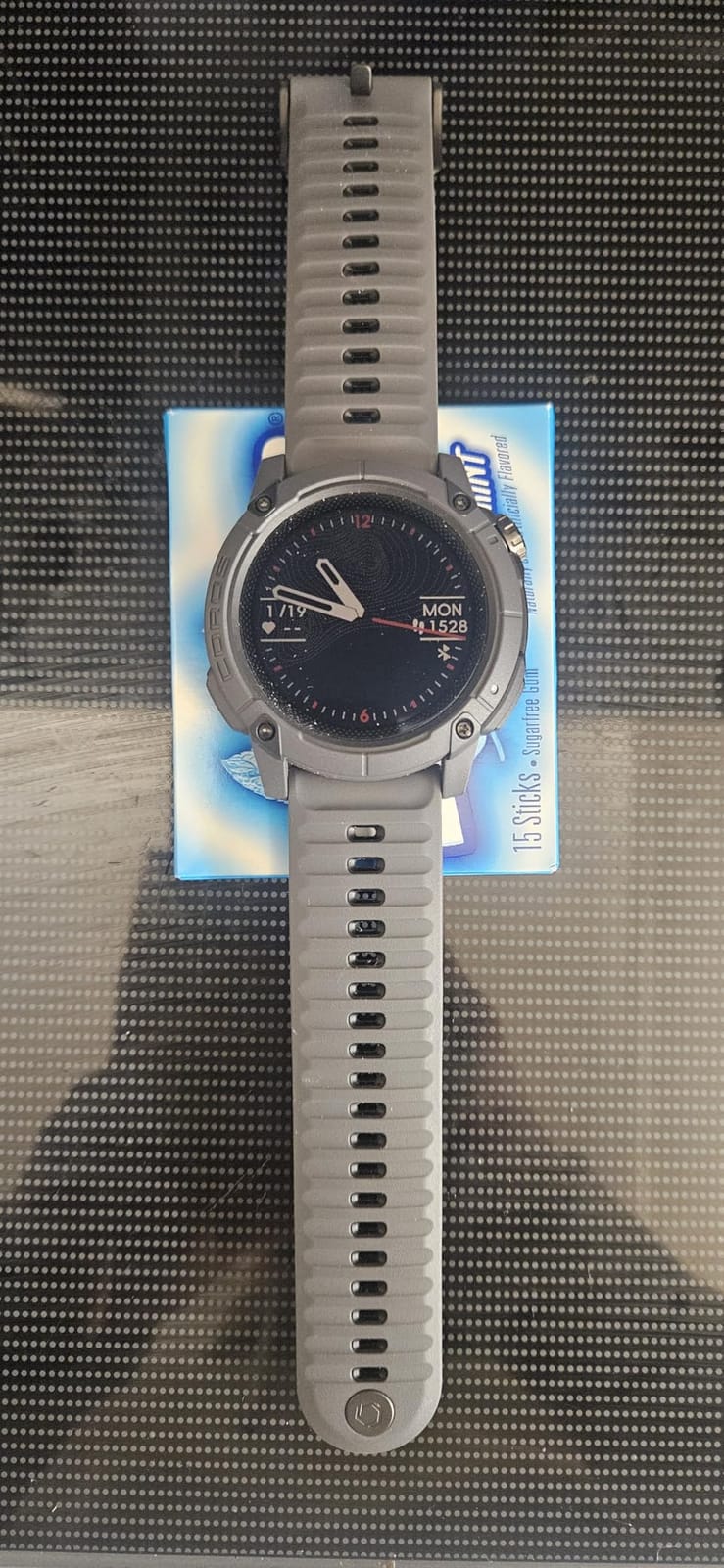
The Adventure Journal is more useful than it sounds. You can drop voice notes, location tags, photos and voice-to-text memos at a junction or a campsite, then find them again later, which turns the watch into a field notebook when you are hiking solo with no other way to capture the detail.
Daily endurance sits around 22 days, and the two-year warranty is longer than most rivals offer. Frequent firmware updates have kept navigation performance accurate since launch.
Why the Nomad suits backcountry hikers
Street-name detail changes how you navigate. A breadcrumb line tells you where you have been; a map with street names tells you what the drainage crossing and the access road ahead are called, which is what you need at dusk in unfamiliar terrain.
It is also light and low profile enough to sleep in, which matters for anyone tracking recovery on a multi-day trip.
What the Nomad leaves out
There is no built-in flashlight. The screen-flash mode only brightens the display, so if you are out after dark you are carrying a separate light. Weather data also has to sync from your phone rather than pulling from the barometer directly.
Its heart rate sensor spikes with rapid movement, and the 240 x 240 resolution is coarse compared with the epix Pro and T-Rex 3 screens. The companion app layout is functional rather than polished.
6. Garmin Enduro 2: The Best Watch for Ultra-Endurance Trips
- Up to 150 hours of GPS mode with solar charging
- Superbright flashlight with red night and strobe modes
- Titanium case stays light at 70 g despite 51 mm size
- NextFork shows distance to the next trail intersection
- 240 x 240 resolution is low by modern standards
- MIP screen lacks color and touch polish
- No newer fēnix 7 health hardware
The Enduro 2 exists for one job: going far for a long time without a charger. Up to 46 days in smartwatch mode and 150 hours in GPS mode with solar charging in 50,000 lux conditions. That is roughly three weeks of continuous navigation, and the longest GPS-mode endurance figure in this roundup.
AutoSelect mode with SatIQ dynamically picks the GPS mode to balance accuracy against drain, which is the feature that makes those numbers real rather than theoretical. You set a priority and the watch adapts hour by hour.
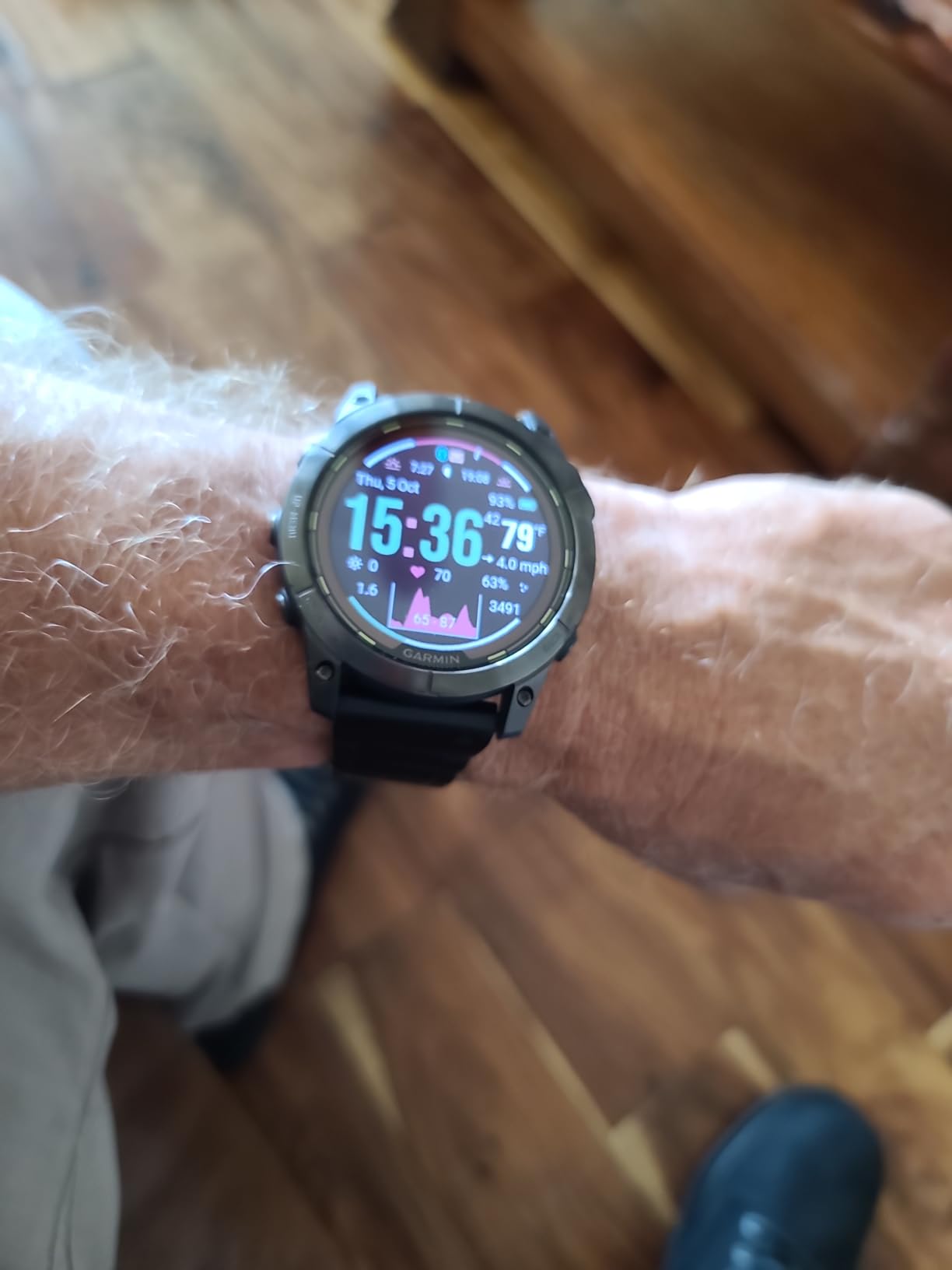
The flashlight is the standout. It is twice as bright as the fēnix 7X, with strobe and red safety light modes, and the band is an UltraFit nylon loop that stays put on rough ground better than a buckle band. A silicone band is included if you prefer one.
Navigation includes preloaded TopoActive and ski maps, plus the NextFork guide, which shows you the distance to the next trail intersection. Grade-adjusted pace and an automatic rest timer are small touches that matter on long climbs.
Why the Enduro 2 wins for expedition-length trips
If your itinerary includes resupply gaps with no wall, no campfire and no solar in the forecast, GPS endurance stops being a nice-to-have. At 150 hours, a two-week traverse is comfortable on one charge and a month-long trek is plausible.
It also holds the highest average rating in this group at 4.7 stars, and the titanium case keeps a 51 mm body down to 70 g, which is genuinely light for its size.
What the Enduro 2 gives up
The 240 x 240 display on a 1.4-inch screen is low resolution by current standards, and the MIP panel has none of the color or touch polish of newer AMOLED Garmin models. If you are pairing it with a phone for messages, the older look is noticeable.
There is also no wrist ECG or the newer health hardware from the fēnix 7 generation. And if you dislike fabric loops, the UltraFit nylon band is not the default choice for everyone.
7. COROS APEX 4: The Best Watch for Alpine Terrain
COROS APEX 4 (46mm) GPS Watch, 1.3″ MIP, 41 Days Battery Life – Black
- Up to 65 hours of All-Systems GPS battery
- 64 g titanium case with reinforced lugs
- Topographic layers with trail and street names
- Microphone and speaker for Voice Pins and calls
- Sapphire crystal creates heavy reflections in diffuse light
- Bearing navigation limited to a 50 yard projection
- Fewer training metrics than Garmin's ecosystem
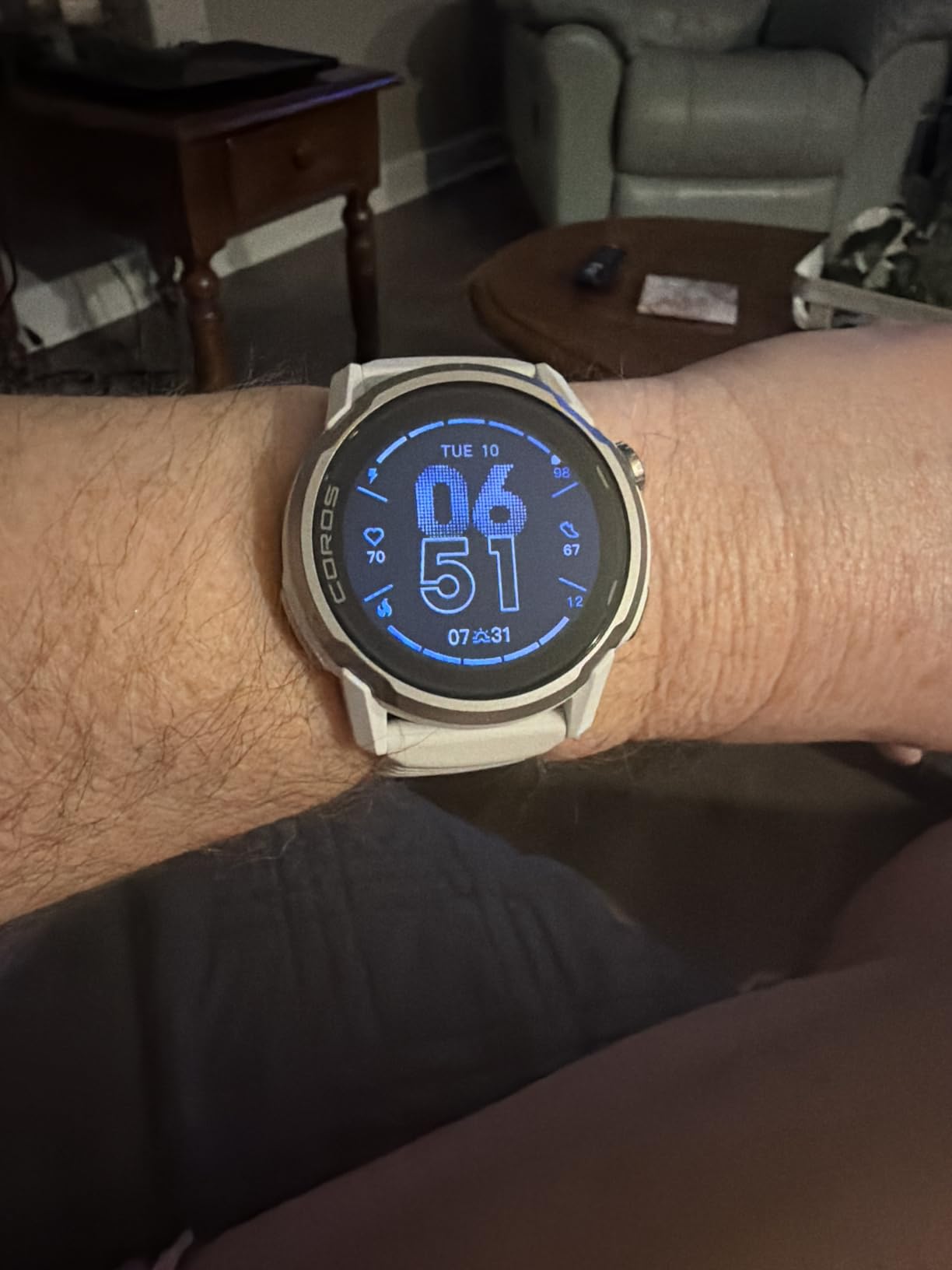
At 64 g in a 46 mm titanium case, the APEX 4 is the lightest dedicated topo watch here, and it is the one to pick if you are into alpine terrain. All-Systems GPS plus dual-frequency positioning runs vertical algorithms built for steep ground, and quoted All-Systems GPS battery reaches 65 hours.
Mapping is the strongest reason to choose it. Map and graphic rendering is up to 30 times faster than the previous generation, with two map layers at 15 m zoom, topographic layers, trail and street names, and turn-by-turn satellite and hydro maps available offline.
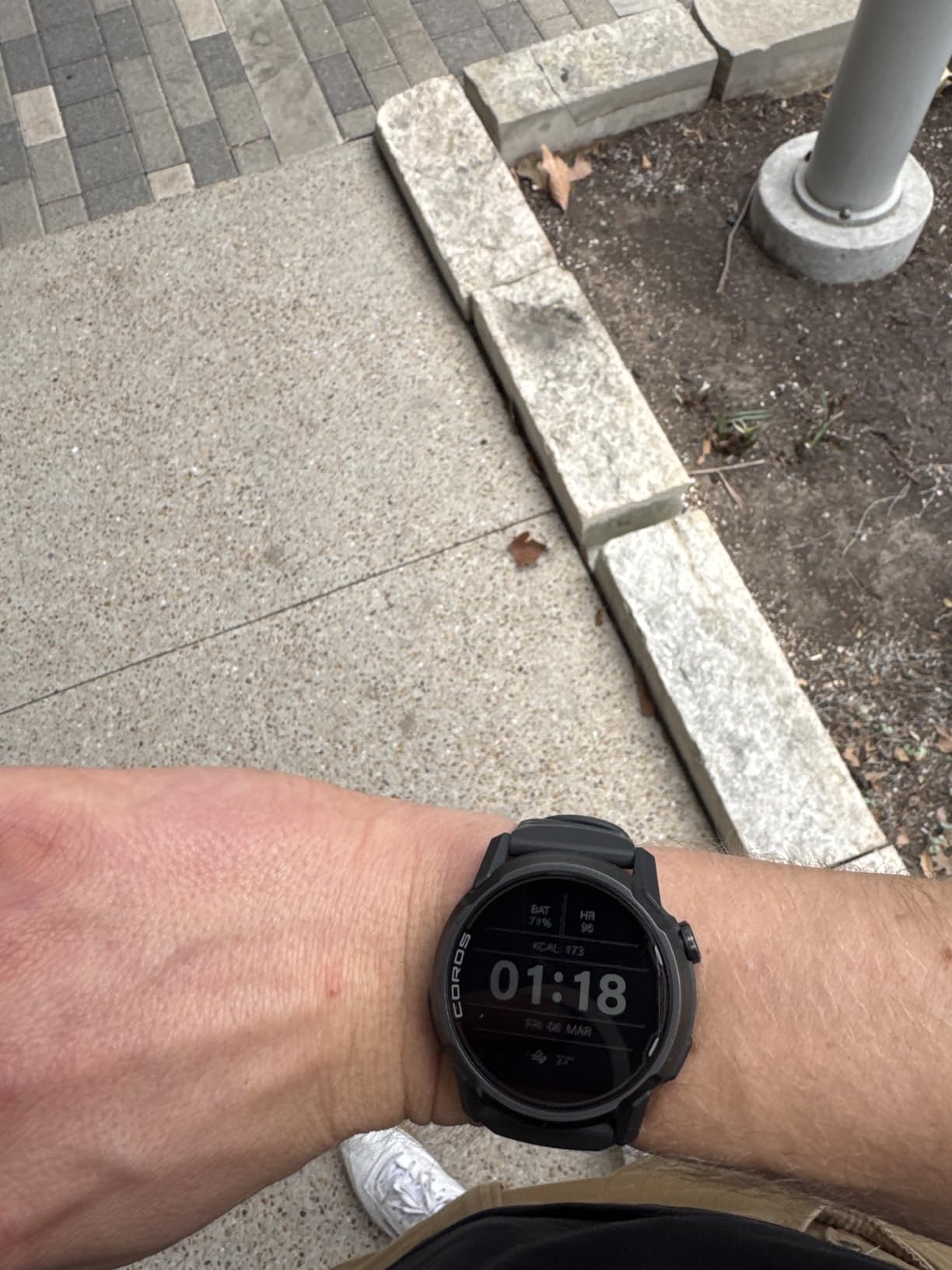
The microphone and speaker are unusual in this category. Voice Pins let you drop spoken notes on a route, hands-free calls work when you are wearing gloves, and audible activity alerts mean you can check the watch without looking at it.
Training tools cover trail running, ski touring and alpine climbing specifically. Reviewers moving over from Garmin commonly cite the simpler app and the lighter titanium build as the biggest improvements.
Why the APEX 4 handles alpine routes well
Vertical algorithms mean the position estimate is tuned for elevation change rather than flat ground, which reduces the vertical drift you normally see on a steep face. Reinforced lugs took a hit in a mountain-bike crash and kept going according to owners.
Sixty-five hours of All-Systems GPS means you can run multi-band tracking all day for a long weekend without planning around a charger.
Where the APEX 4 disappoints
The sapphire crystal reflects heavily. In overcast or diffuse light, the display loses contrast, and that is exactly the condition where topo map detail matters most to a route-finding decision.
Bearing navigation is limited to a 50-yard projection and will not run in the background, watch face customization is thin, and the training metric set is smaller than Garmin’s. Offline map downloads also need to be completed in the app before you head out for best results.
8. Suunto Race S: The Best GPS Watch for Small Wrists
SUUNTO Race S GPS Sports Watch, 1.32” AMOLED 95+ Sports Modes, Powder Blue
- Compact 60 g and 11.4 mm body fits smaller wrists
- Bright 466 dpi AMOLED with a digital crown
- Dual-band GNSS across five satellite systems
- Global offline maps with turn-by-turn routing
- Full recharge in one hour
- 30 hours of GPS is the shortest here
- Only 50 m water resistance
- Battery drains faster at high screen brightness
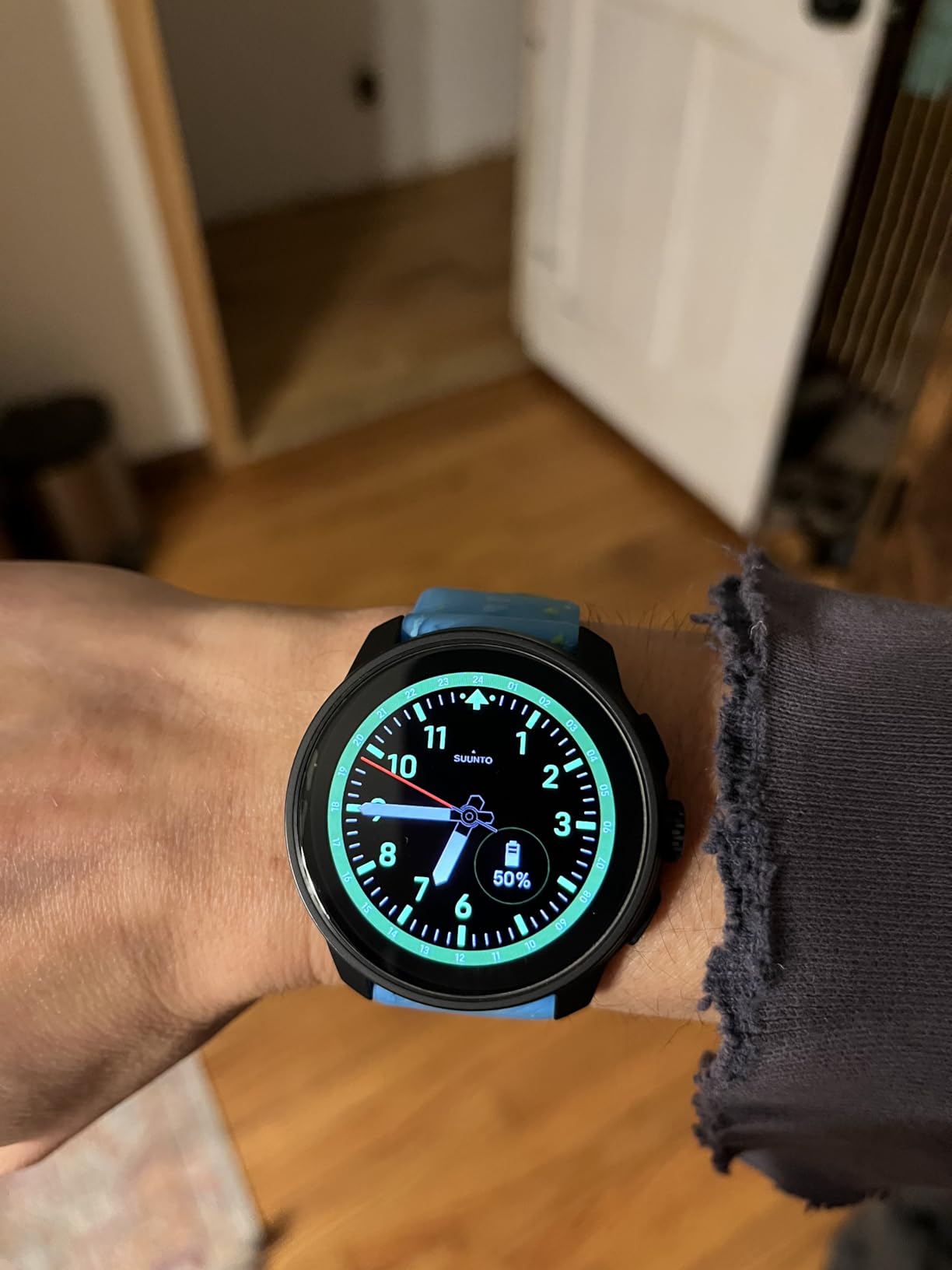
The Race S answers the narrow-wrist complaint that comes up constantly about Garmin, where 47 mm and 51 mm cases simply do not sit well on smaller arms. At 60 g and 11.4 mm thick, this is a watch you can wear overnight without noticing it is there.
The 1.32-inch 466 dpi AMOLED is sharp in any light, and the digital crown makes one-handed map browsing far easier than tapping a touchscreen with cold or gloved hands. Dual-band GNSS runs on L1 and L5 across GPS, GLONASS, Galileo, QZSS and BeiDou.
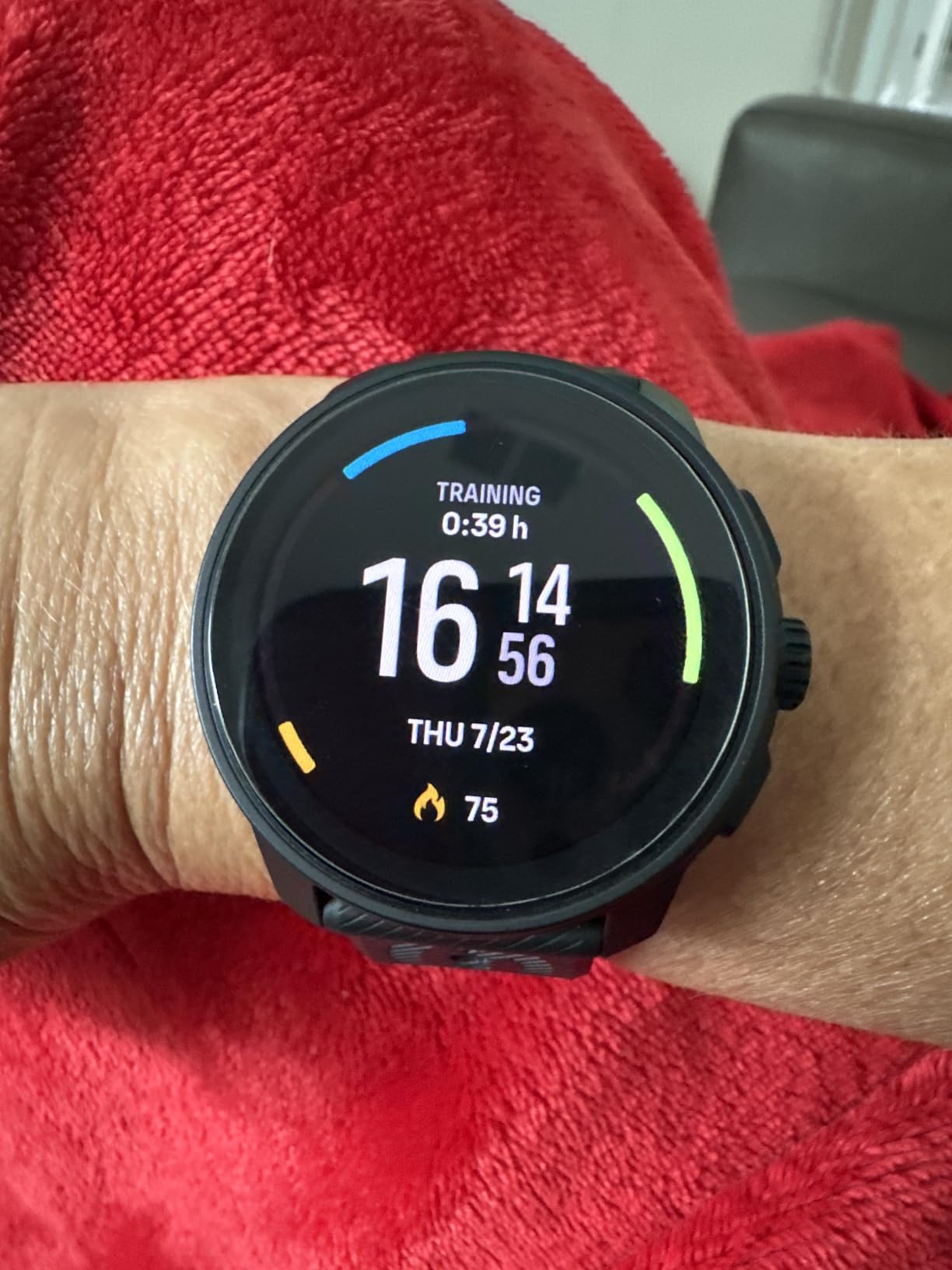
Navigation is complete for day hiking and short overnights: worldwide offline maps with 2 km zoom-out, route navigation, points of interest, bearing and find-back. A barometer drives storm alerts, plus sunrise and sunset alarms, an altimeter and a compass.
For training, the Suunto app provides 95 sport modes with TSS, CTL, HRV, VO2 max and training status balance, along with an AI Coach. SuuntoPlus connects to more than 300 partner services.
Why the Race S fits wrists that Garmin does not
Eleven millimeters of thickness is the entire story. A Garmin Instinct at 14.5 mm sits like a bracelet on a small arm; the Race S disappears under a cuff. That is why it is our best small-wrist recommendation.
The crown is also a real usability win. Turning a bezel to zoom a topo map works in gloves and in rain in a way that never works with a touchscreen.
What shortens the Race S battery
Thirty hours in performance GPS mode is the shortest endurance in this roundup, so it covers roughly three solid hiking days at ten hours a day. Daily use runs up to 13 days and a full charge takes about an hour.
Water resistance is 50 m, which is lower than every other watch on this list and limits swimming and wet-weather use. Notifications are also secondary compared with the training features, and the app ecosystem is smaller than Garmin’s.
9. POLAR Grit X2 Pro: The Best Watch for Training Load Detail
- Dual-frequency GPS with downloadable topographic maps
- MIL-STD-810H durability with sapphire crystal
- Brighter 1.39 inch AMOLED than the previous generation
- Deep training load and recovery analysis
- Standard 22 mm band width
- Wrist heart rate readings can be off by as much as 40 bpm
- Interface feels dated for a premium watch
- Limited smartwatch and third-party app support
The Grit X2 Pro is Polar’s most capable navigation watch, with dual-frequency GPS, downloadable topographic maps and turn-by-turn routing through Komoot. It is rated to MIL-STD-810H and carries a sapphire crystal over a 1.39-inch AMOLED at 400 nits, which reviewers note is visibly brighter than the earlier Grit X2.
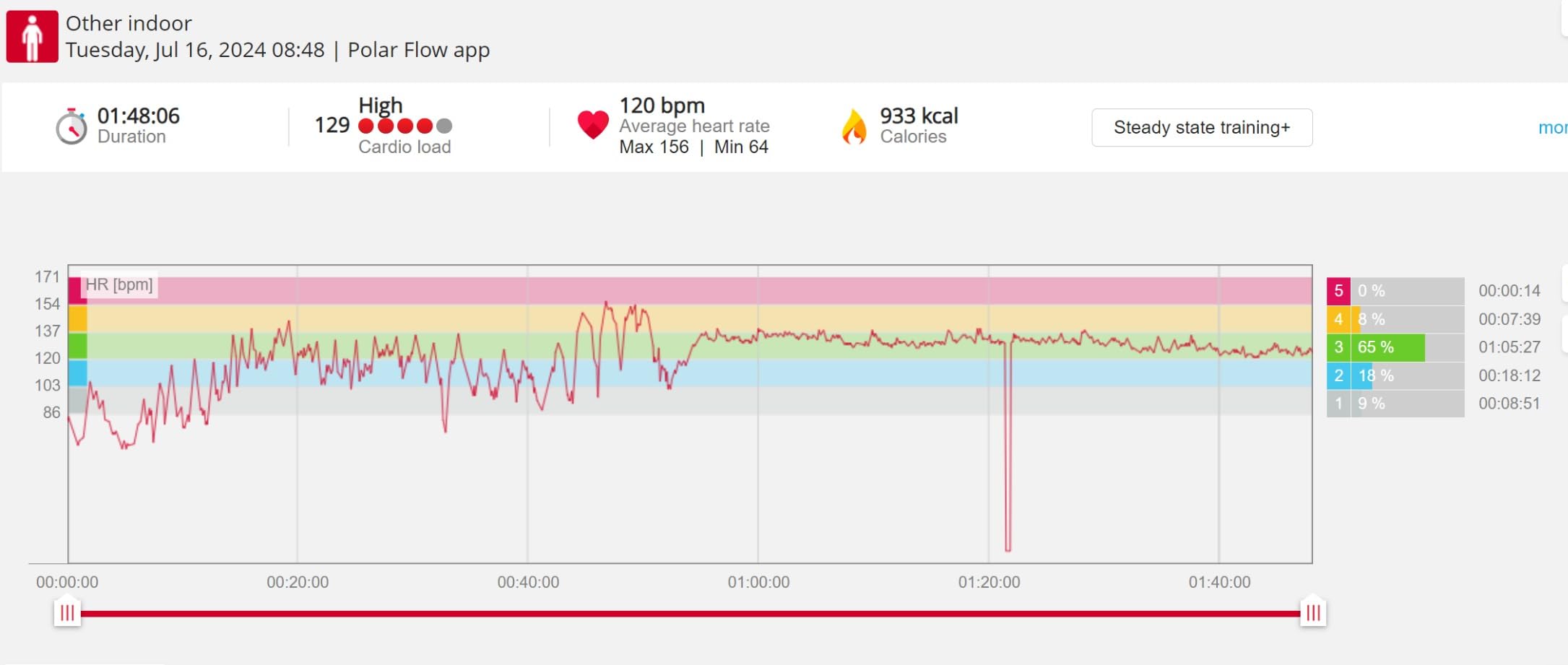
Where Polar has always excelled is training analytics. Vertical speed, running power, training load and recovery analysis sit on top of the navigation features, and for hikers who also run, climb or race, those numbers are more actionable than what Garmin or COROS present.
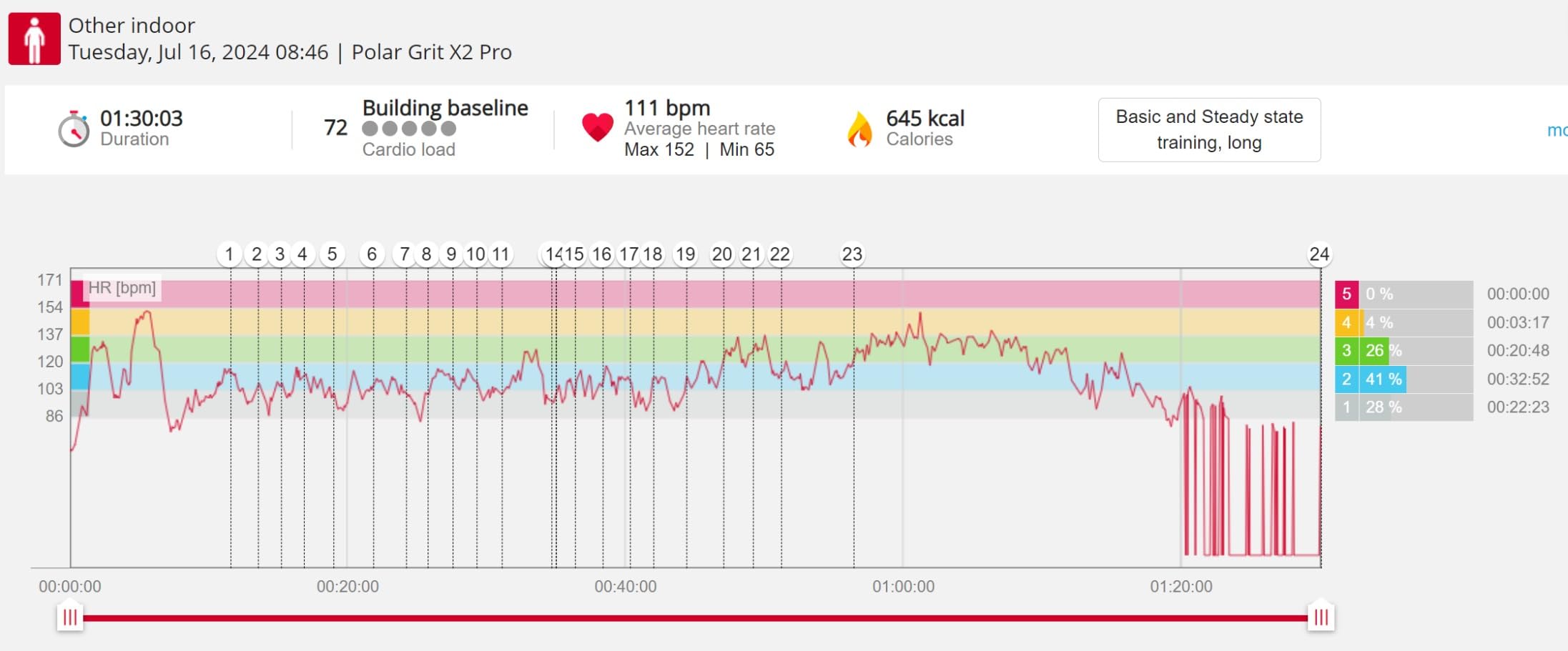
Battery life has improved enough for multi-day trips, with extended endurance in Power-Save and Explore modes and roughly fortnightly charging for most users depending on workout routine.
The standard 22 mm band width is quietly excellent. Every other watch here uses a proprietary quick-release, which means paying more when you want to swap straps. On the Grit X2 Pro you can use any 22 mm strap you own.
Why Polar wins on training analytics
Long-time Polar users point to the training load and recovery model as the reason they stay in the ecosystem, and it remains the most granular recovery picture of any watch on this list. Vertical speed and running power also matter on steep trails.
Navigation is now genuinely good rather than an afterthought, which is what changed with this generation.
What the Grit X2 Pro gets wrong
Heart rate is the serious problem. Reviewers report wrist optical readings off by as much as 40 bpm and occasional readings while the watch is off-wrist. If heart rate data is part of why you wear a watch, plan on a chest strap for accurate sessions.
The interface feels dated, smartwatch notifications are a secondary function, third-party app support is limited, and button build quality is questioned on a watch at this price level. Several owners simply say the cost is hard to justify against more capable Garmin models.
10. Cubitt Terra: The Best Budget Dual-Band GPS Watch
- Lowest cost here while still offering dual-band GPS
- Offline maps and compass across five satellite systems
- 8 to 14 day battery in typical use
- Bright 1.48 inch AMOLED with auto-brightness
- Built-in flashlight and standalone tracking
- Very limited library of watch faces
- Sleep tracking is inconsistent and sends nagging prompts
- Notifications disappear too quickly to read
- Only 50 m water resistance
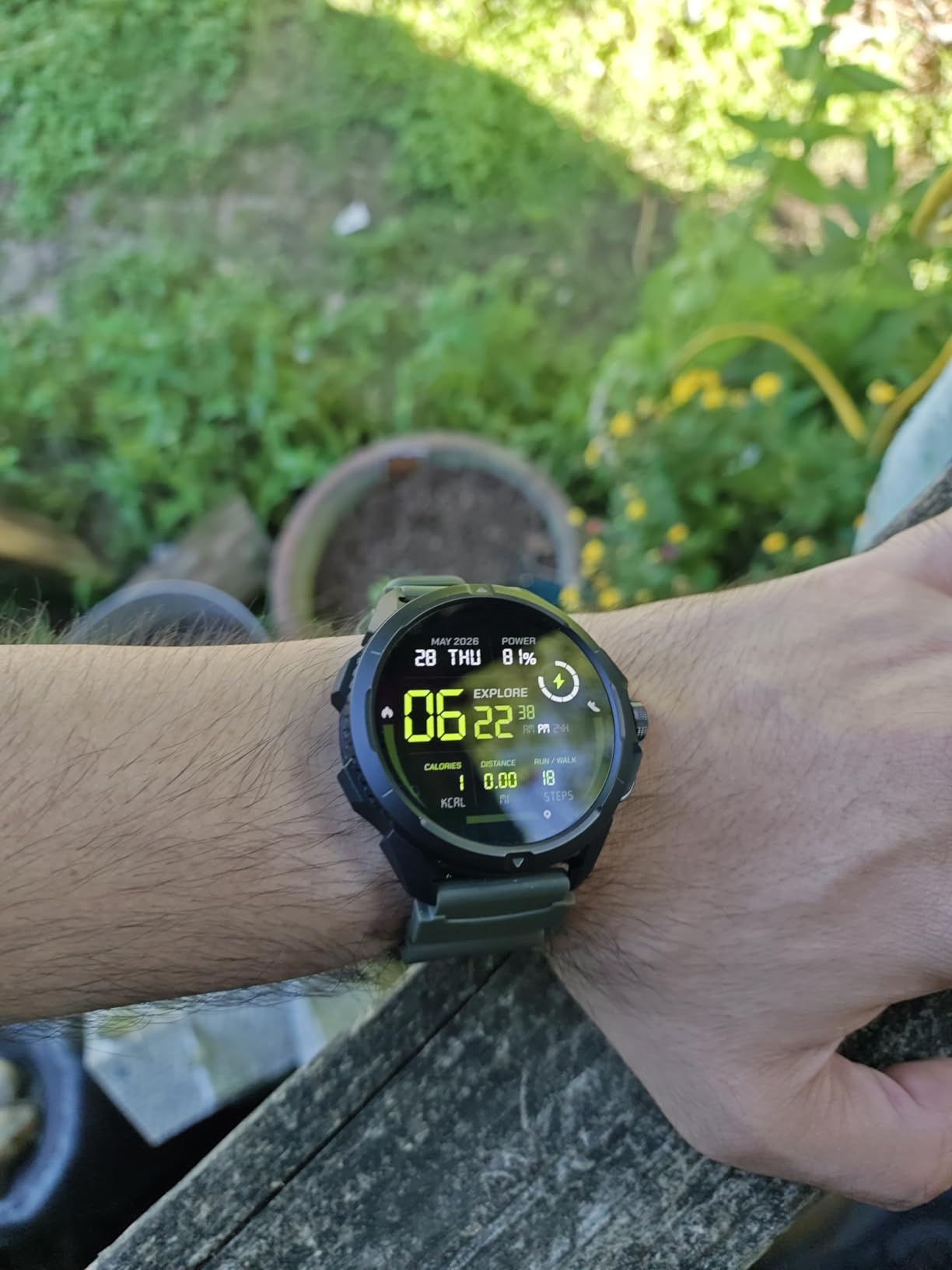
The Terra is the reason this list has a genuine budget option. Dual-band GPS on L1 and L5 with offline maps and a compass across GPS, BDS, GLONASS, Galileo and QZSS is real capability, and most competitors charge far more for the same chip class.
A 1.48-inch AMOLED with auto-brightness and 24-bit color handles daylight well, and the 530 mAh battery gives up to 14 days of typical use or 26 hours with GPS running. Bluetooth 5.3 calling, notifications and offline music round out a genuinely complete spec sheet.
Standalone tracking works without the phone, which is the point for backcountry use, and there is a built-in flashlight for evening camps.
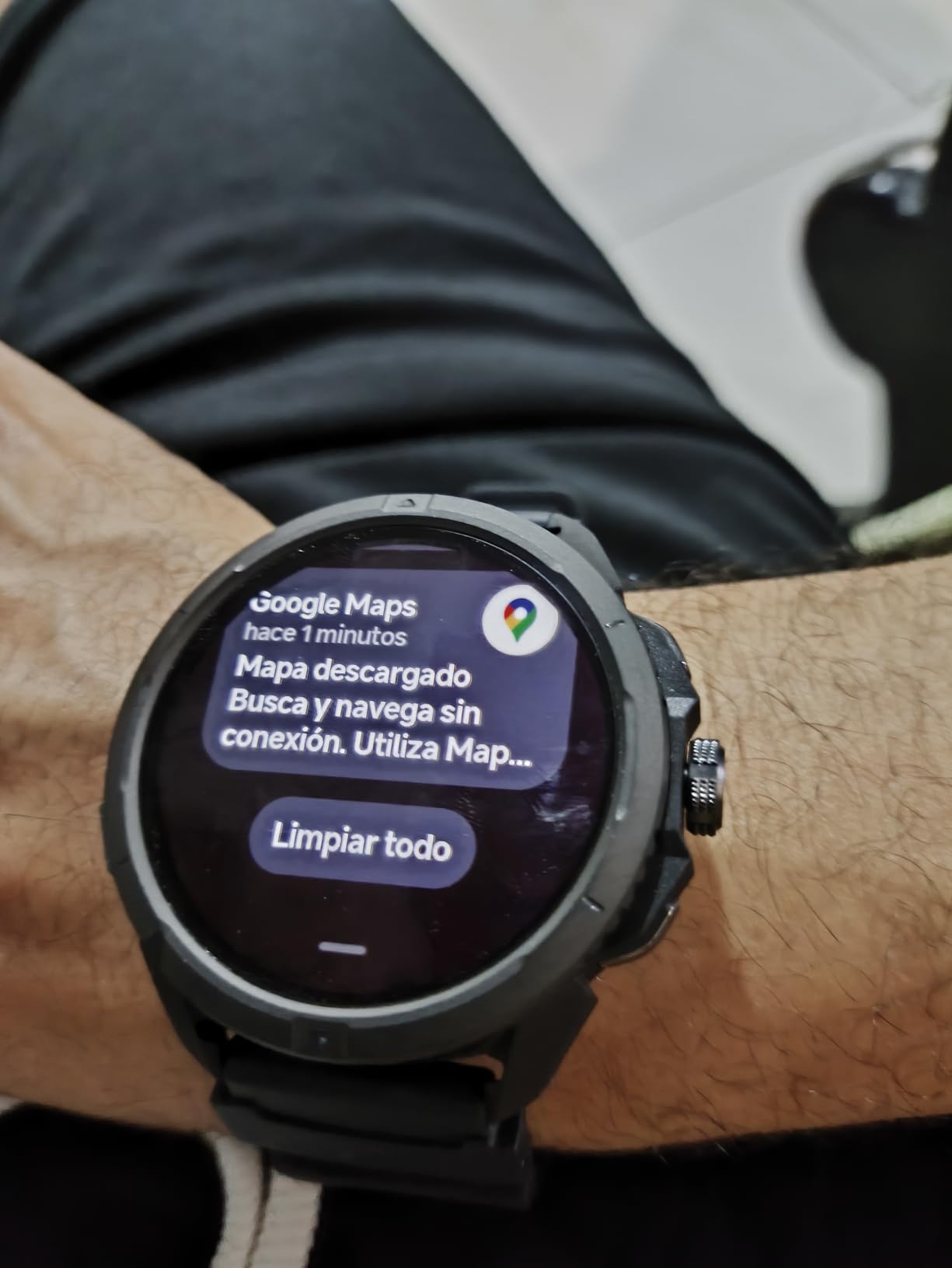
The AI Coach, Readiness Score and VITA AI voice assistant answer questions about watch features, which is more helpful than it sounds when you are setting up navigation before a trip.
Owner reaction is consistently pleasantly surprised that a watch in this bracket delivers dual-band GPS, offline maps and a bright screen at all.
Why the Terra works as an entry-level hiking watch
For day hiking on marked trails and first overnight trips, it covers the essentials: dual-band positioning, offline maps, compass, barometric weather, flashlight and a readable screen. You are not paying for training analytics you will not read.
The one-year warranty and 50 m water rating are the trade-offs that come with the price band, along with a smaller app ecosystem.
What to watch out for in the Terra
The watch face library is very limited, so you will not find a data field layout that suits you perfectly. Sleep monitoring is inconsistent and triggers intrusive are-you-awake prompts in the middle of the night, which is a genuine annoyance in a tent.
Notifications disappear too quickly to read or reply to, and some owners report heart rate sensor malfunctions and data loss after several months of use. There is also no scuba rating at 50 m. For long-term dependability on remote trips, our other picks carry stronger service track records.
How to Choose a Hiking GPS Watch for Backpacking
The short version: match the watch to your trip length first, then to your map needs. Battery and mapping capability matter far more on a backpacking trip than fitness features do, and buying in the wrong order is how people end up with a beautiful running watch that will not get them home.
Match the watch to your trip length
Most manufacturers quote smartwatch battery life because it is the largest number. Ignore it. The number that matters is hours in GPS mode, and you should compare it against your longest expected day, not your longest trip.
A day hike under 8 hours needs almost nothing. A 2 to 3 night trip at 10 hours a day wants 30 hours of GPS, which the Suunto Race S covers and no more. A 4 to 7 night trip wants 40 to 70 hours, putting the Garmin Instinct 2X Solar, COROS Nomad, COROS APEX 4 and epix Pro in range. An 8 day or longer trip with no charging needs solar, which narrows the field to the fēnix 7X Pro Sapphire Solar and the Enduro 2.
Add a margin for cold. Battery performance drops in freezing temperatures and above treeline, and GPS draws harder when the radio is weak. Treat manufacturer GPS hours as a ceiling, not a plan. If your trip has a charging gap, pack a small power bank as backup regardless of which watch you pick.
Standard, all-systems or dual-frequency GPS
Standard GPS uses one frequency from the constellations it can see. All-systems, or multi-GNSS, listens to GPS, GLONASS, Galileo and Beidou together, which finds more satellites and holds a lock in canyons and forest. Dual-frequency, sometimes called multi-band, uses two frequencies from the same satellite, which is what delivers the tightest position under heavy canopy and steep terrain.
The catch is battery. Dual-band works harder, so it drains faster. Garmin’s SatIQ, used on the fēnix 7X Pro and epix Pro, and the AutoSelect mode on the Enduro 2 solve this by dynamically choosing the mode for you, which is why we rank those watches so highly for long trips.
Offline topo maps versus breadcrumb navigation
This is the single biggest quality difference between watches. A breadcrumb watch draws a line showing where you have been and points you back to the start. That is enough on a marked trail where you can see the next junction. It is not enough on a ridge with a whiteout, where the question is what the drainage below you is called.
Full topo capability means contour lines, trail names, waypoints, turn-by-turn prompts and offline rerouting. The fēnix 7X Pro Sapphire Solar, epix Pro and Enduro 2 use Garmin TopoActive. The COROS Nomad and APEX 4 give you full-color maps with street and trail names free of charge, and the T-Rex 3 does the same across six satellite systems. The Suunto Race S and POLAR Grit X2 Pro both have offline maps and turn-by-turn routing.
The Instinct 2X Solar sits at the breadcrumb-plus end, which is precisely why it costs so much less.
ABC features: altimeter, barometer, compass
Altimeter, barometer and compass together are called ABC features, and all ten watches here have them. The altimeter measures elevation using barometric pressure, which is far more reliable than GPS altitude and gives you accurate gain on steep climbs. The barometer does double duty, warning you about incoming weather drops. The compass gives you a heading when the GPS has not locked yet.
This is where you should judge build quality. Garmin’s military standard 810 rating on the Instinct 2X Solar and MIL-STD-810H on the POLAR Grit X2 Pro are concrete durability claims. Water resistance ranges from 50 m on the Suunto Race S and Cubitt Terra up to 100 m on most others, which matters for stream crossings and rain.
Solar charging and what it actually solves
Solar does not extend your GPS time much. It extends smartwatch mode, which is what keeps your watch alive on day one of a long trip so that it still has full battery when you need navigation on day ten. Think of it as insurance, not range.
The Power Glass lens on the Instinct 2X Solar produces 50% more energy than the standard model, and the Power Sapphire lens on the fēnix 7X Pro and Enduro 2 harvests sun while you walk. The Enduro 2 quotes 150 hours of GPS with solar in 50,000 lux, which is bright daylight rather than overcast. In forest or at high latitude in winter, budget closer to the non-solar figure.
Case diameter, weight and wrist sizing
Measure your wrist before you buy. Anything over 47 mm is noticeable on a smaller arm, and this is the most common complaint about Garmin in hiking forums. The Suunto Race S at 60 g and 11.4 mm thick is the safest choice for narrow wrists, and the COROS APEX 4 at 64 g is the lightest full-topo option.
For sleeping with the watch on, prioritize thickness over diameter. The epix Pro and fēnix 7X Pro owners most often report is sleep discomfort, not fatigue.
How to load a GPX route onto your watch
Every watch here loads routes differently, and this is the number one setup question hikers ask. The reliable route is the same everywhere: export the track as a GPX file from your mapping tool, email the file to yourself, open the Garmin Explore, COROS or Suunto app on your phone, and import the file from your downloads.
Garmin watches sync automatically once Explore is connected, which users consistently rate as the least fussy option. COROS works well but needs manual file transfer. Amazfit route syncing through the Zepp app is the slowest of the three, which is the main reason some Amazfit owners moved on. Whichever watch you pick, load and test the route at home before you leave.
Watch only, handheld GPS, or satellite messenger
A watch is a tracker first and a communicator last. It cannot send a distress message to anyone, which is the single most important thing to understand before hiking alone.
For a day hike on a known trail, phone plus watch is plenty. For multi-day solo backcountry, add a satellite messenger, because that is what lets you call for help when there is no cell coverage and no one within walking distance. A handheld GPS adds physical buttons, a bigger screen and a paper-map workflow, which helps when your watch runs out of battery on day six. Keep a paper map and baseplate compass in your kit regardless.
If you are still building out a full backcountry kit, our backpack roundup, backpacking stove guide and earlier GPS watch roundup cover the rest.
Frequently Asked Questions
What is the best GPS for trekking and hiking?
The Garmin fēnix 7X Pro Sapphire Solar is our top pick because it combines preloaded TopoActive maps, multi-band GPS with SatIQ, a solar-charging sapphire lens and a built-in LED flashlight in a 51 mm titanium-cased body rated to 100 meters. It offers 37 hours in GPS mode and up to 37 days in smartwatch mode with solar charging.
What is the best GPS watch with maps for hiking?
For full offline topographic maps with contour lines and trail names, the fēnix 7X Pro Sapphire Solar, the Garmin epix Pro Gen 2 Sapphire and the Garmin Enduro 2 all use preloaded TopoActive maps with Up Ahead turn prompts. The COROS Nomad and COROS APEX 4 also deliver full-color offline maps with street and trail names at a lower price.
How many days of battery does a GPS watch last on a backpacking trip?
It depends on hours of daily GPS tracking, not smartwatch battery claims. A 2 to 3 night trip needs about 30 hours of GPS, a 4 to 7 night trip needs 40 to 70 hours, and an 8 day or longer trip with no charging needs a solar model. Cold temperatures and weak signal both reduce real battery life below manufacturer figures.
Do GPS watches have offline maps?
Most do, but not all. The fēnix 7X Pro, epix Pro and Enduro 2 have preloaded TopoActive maps, and the COROS Nomad and APEX 4 include free full-color global maps. The Amazfit T-Rex 3, Suunto Race S and POLAR Grit X2 Pro also support offline maps. The Garmin Instinct 2X Solar is limited to a pointer and breadcrumb line.
Can a smartwatch replace a handheld GPS for backpacking?
For navigation on marked routes, yes. For off-trail and solo trips, a watch is still not a full replacement. It cannot send a distress message, and on a long trip it can run flat. Pair a mapping watch with a paper map, a baseplate compass, and a satellite messenger if you are hiking alone, and consider a handheld GPS for multi-day routes.
What does multi-band GPS mean on a hiking watch?
Multi-band or dual-frequency GPS uses two frequencies from the same satellite at once, which reduces position error under tree canopy, in canyons and in steep alpine terrain. It draws more battery than standard GPS. All-systems, or multi-GNSS, is a different feature that listens to more satellite constellations such as GLONASS, Galileo and Beidou at one frequency.
The Best Hiking GPS Watch for Backpacking in 2026
The Garmin fēnix 7X Pro Sapphire Solar remains the best hiking GPS watch for backpacking in 2026 because it is the only watch here that pairs full offline topographic mapping with solar endurance and a genuinely useful built-in flashlight. For trips where every gram and every dollar counts, the Garmin Instinct 2X Solar delivers most of that capability at roughly half the cost. Buy the COROS Nomad if full-color maps matter most, the Garmin Enduro 2 if you are going for a week or more without a charger, and the Suunto Race S if you have a narrow wrist.
Whatever you choose, test the route and the navigation at home before you leave, carry a paper map and compass, and pack a satellite messenger if you will be out of contact for more than a day.