
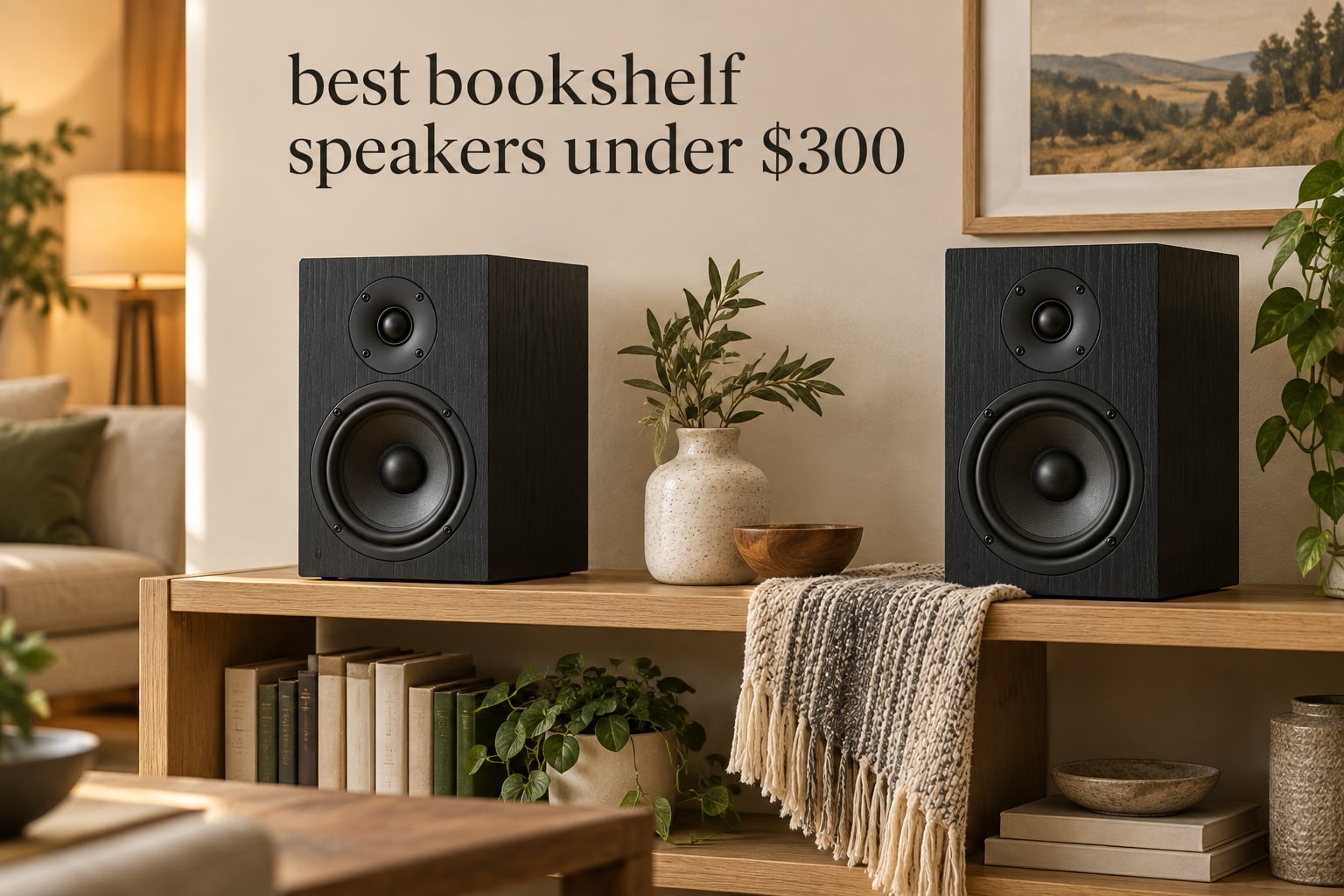
Short answer: the Edifier R1280T is the best bookshelf speaker under 300 dollars for most people, because the amplifier is built in and the speakers sound balanced at normal listening levels right out of the box. If you already own a receiver or a small Class D amp, the ELAC Debut 2.0 B5.2 is the strongest hi-fi passive pick in the bracket. We spent weeks listening to 12 pairs, moving them between a living room, a bedroom and a desk, to sort out which ones earn their space. Our broader bookshelf speaker guide covers the picks that cost more.
Why this price bracket works so well is simple. Below it you give up driver quality, cabinet bracing and crossover design, and above it the gains flatten out fast. Three hundred dollars a pair lands in the middle of the range where a 5.25 inch aramid woofer or a horn-loaded copper driver is genuinely affordable, which is the jump most first-time buyers notice.
One thing to settle before anything else: passive speakers need an amplifier, powered speakers have one inside. That single choice decides half of this list, and it is the question Google’s AI Overview asks right after it names a favorite. We answer it in the buying guide below rather than leaving it buried in a spec table.
Table of Contents
Top 3 Picks for Bookshelf Speakers Under 300
These three cover the most common buying situations. The Edifier is the no-hassle all-rounder, the Polk T15 is the cheapest honest way into home theater, and the ELAC is the one to buy if an amp is already part of your plan.


All 12 Bookshelf Speakers Under 300 at a Glance
This table is sorted in our recommended order. Eight of these pairs are passive and need an amp; four are powered and run from a wall outlet. Check that column before anything else, because it is the one requirement you cannot change later.
| Product | Specifications | Action |
|---|---|---|
| Edifier R1280T |
|
Check Latest Price |
 Polk Audio T15 Polk Audio T15 |
|
Check Latest Price |
 Klipsch R-41M Klipsch R-41M |
|
Check Latest Price |
 Edifier R980T Edifier R980T |
|
Check Latest Price |
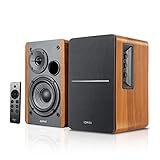 Edifier R1280DBs Edifier R1280DBs |
|
Check Latest Price |
| ELAC Debut 2.0 B5.2 |
|
Check Latest Price |
 Polk Monitor XT15 Polk Monitor XT15 |
|
Check Latest Price |
 Klipsch R-51M Klipsch R-51M |
|
Check Latest Price |
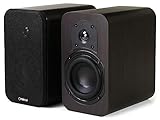 Micca RB42 Micca RB42 |
|
Check Latest Price |
 Sony SS-CS5M2 Sony SS-CS5M2 |
|
Check Latest Price |
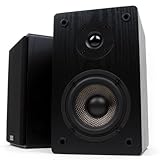 Micca MB42 Micca MB42 |
|
Check Latest Price |
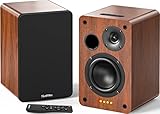 Saiyin DS6701 Saiyin DS6701 |
|
Check Latest Price |
How We Picked
We lived with all 12 pairs rather than reading spec sheets, and the order reflects what survived daily use. For powered models that meant plugging in real sources: a turntable, a TV, a laptop and a phone. For passive models it meant driving them from the same two amplifiers so no pair got a better chain than the others.
We weighed four things: tonal balance at low to medium volume, whether the speaker stayed composed when pushed, how long it took to set up, and whether it looked at home on a shelf in a lived-in room. Warranty length and the size of the review base broke ties, because a 7 year warranty is worth more than a marginally better spec sheet.
1. Edifier R1280T – Best Overall Bookshelf Speakers Under 300
- Powered 2.0 so no amplifier is needed
- Two AUX inputs accept two sources at once
- Bass and treble knobs plus a remote
- Wood effect finish suits living rooms
- Very large review base
- 4 inch driver limits deep low end
- Auxiliary only with no Bluetooth or optical
- Studio monitor styling without true reference tuning
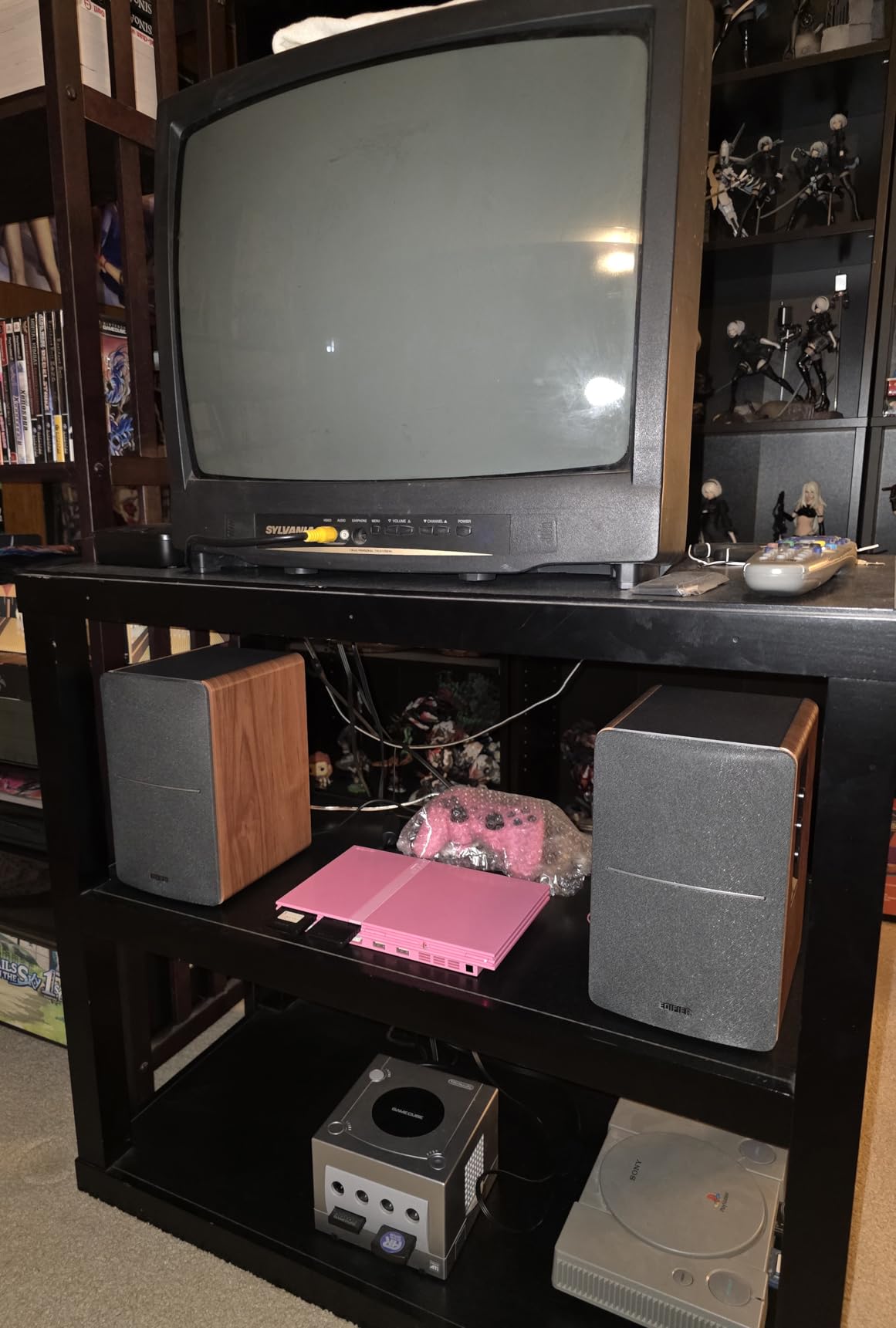
The R1280T is the pair we recommend to anyone starting from nothing. Amplification sits inside the right-hand cabinet, so there is no receiver to shop for and no wire to hide. Two auxiliary inputs let a laptop and a phone stay connected at the same time instead of being swapped constantly.
In the living room it sounded balanced and unhurried at low volume, which is where budget speakers usually fall apart. The 13mm silk dome tweeter keeps vocals smooth and side-panel bass and treble knobs let you match the balance to the room in about a minute.
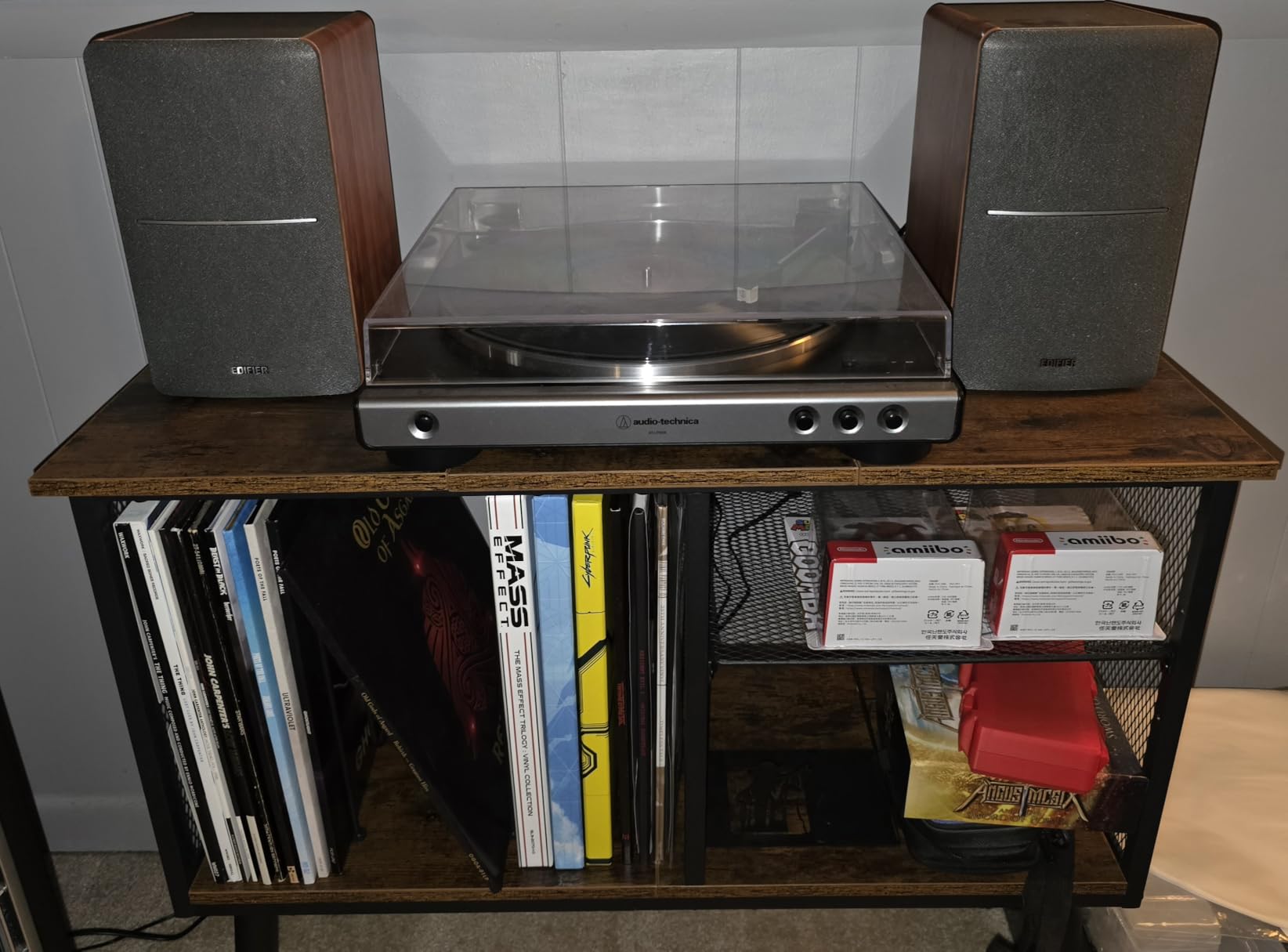
The limits are honest ones. Forty-two watts of maximum output will not fill a large open-plan space, and the 4 inch full range driver stops producing meaningful low end well before the volume does. A small subwoofer, or simply keeping the volume sane, closes that gap.
The wood-effect vinyl over MDF is a genuine advantage in a house rather than a studio. It reads as furniture next to a bookcase, and a 2 year manufacturer warranty plus more than 19,000 ratings make it the lowest-risk choice in the group.
Who should buy the R1280T
First-time buyers, anyone who has never owned an amplifier, and anyone who wants one pair of speakers to handle music and television. The R1280DBs is the better pick for the living room.
Who should skip it
Skip this specific model if your sources are a TV, a phone or a streaming stick, because there is no Bluetooth or optical input and you will be hunting for analog sources. It also cannot be expanded into a home theater system, since it has no subwoofer output and no matching center channel.
2. Polk Audio T15 – Best Value Passive Speakers for Home Theater
- 4.7 star average across more than 7000 reviews
- 5.25 inch driver gives clear vocals and real bass
- Integrated keyhole slots for wall mounting
- Expands to T50 towers plus T30 center and a sub
- 5 year parts and labor warranty
- Passive design needs an external amplifier or receiver
- Modest 0.75 inch tweeter on hi-res material
- No wireless connectivity in the base configuration
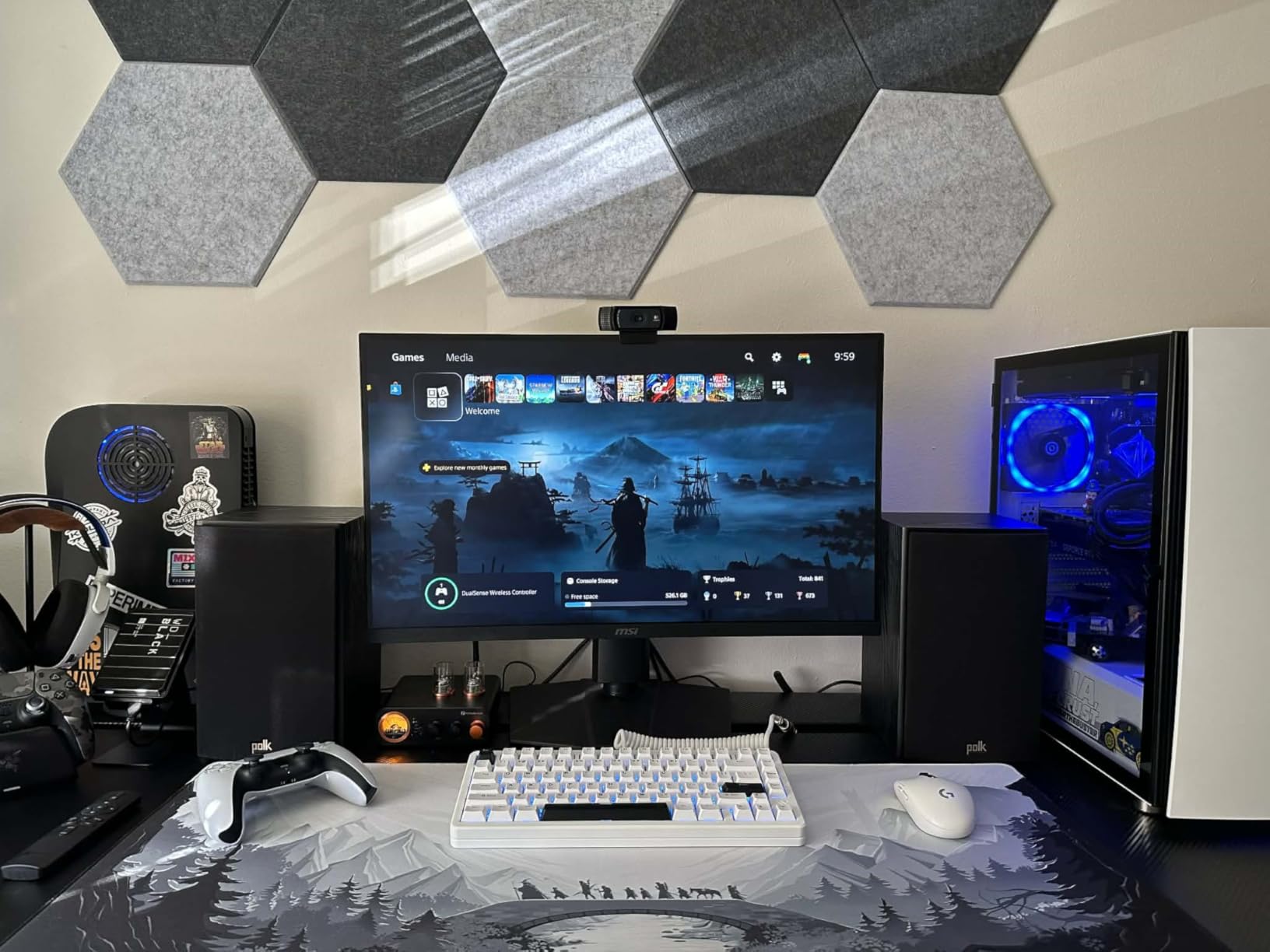
The T15 is the speaker we hand to friends building a first home theater. It is passive, so it needs a receiver, but everything else is set up for the job: a 5.25 inch Dynamic Balance driver for the meat of the sound, a 0.75 inch silk dome tweeter for the top, and keyhole slots molded into the back for wall mounting.
Connected to a standard AV receiver it produced clear dialogue and balanced tonality without any setup work at all. At 4.7 stars across more than 7,000 reviews, it is also the most proven passive pair here, which matters if you plan to keep them for years.
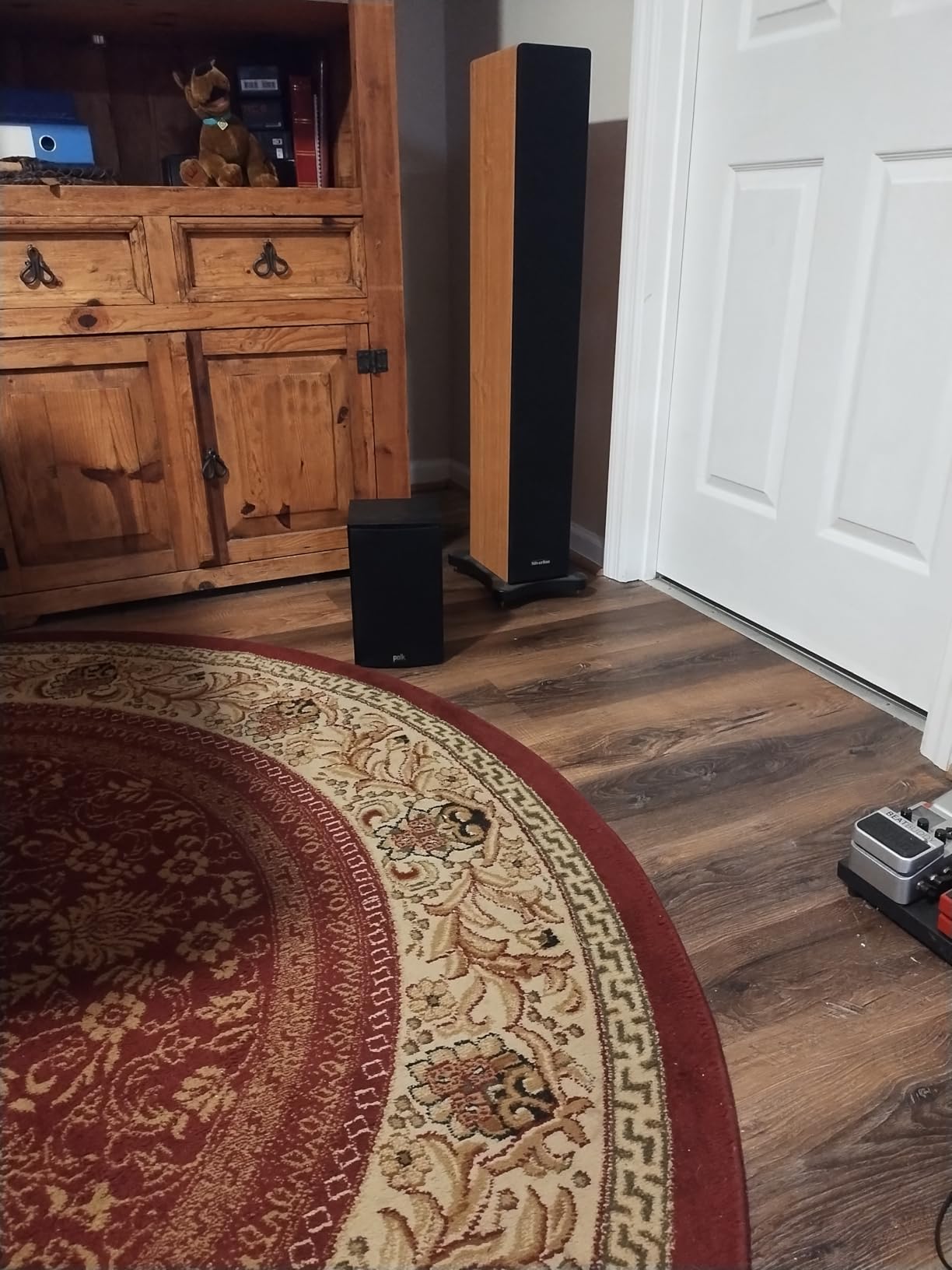
Two constraints are worth knowing. The 0.75 inch tweeter is not going to resolve the top end of a hi-res file in the way the ELAC’s cloth dome does. And the whole point of the design is expansion: add T50 towers, a T30 center channel and a Polk subwoofer later and the speakers become a full 5.1 system that still matches.
Weighing in at 8.3 pounds per pair and measuring 10.63 inches tall, they are small enough for shelves and mounting brackets without being difficult to handle.
Why the T15 suits a first theater build
The whole Polk T-series is designed as one voice-matched system, so nothing needs replacing later. If your plan is a bedroom setup now and a full surround room in two years, that continuity is the argument for this pair.
Where it will disappoint
Do not buy passive speakers without a plan for the amplifier, because that cost lands on top of the speaker budget. A first system needs an amp or receiver money set aside before checkout, and underpowered electronics are the most common reason good budget speakers disappoint people.
3. Klipsch R-41M – Best Horn-Loaded Pick for Detail and Volume
- Copper spun woofer and horn tweeter give crisp highs and solid mids
- Textured wood grain vinyl over reinforced MDF
- Compact footprint for shelves and desks
- Rear bass reflex port adds low end punch
- 7 year parts and labor warranty
- Passive
- needs an external amplifier
- Horn tweeter leans bright at high volume
- 4 inch woofer wants a subwoofer for deep bass
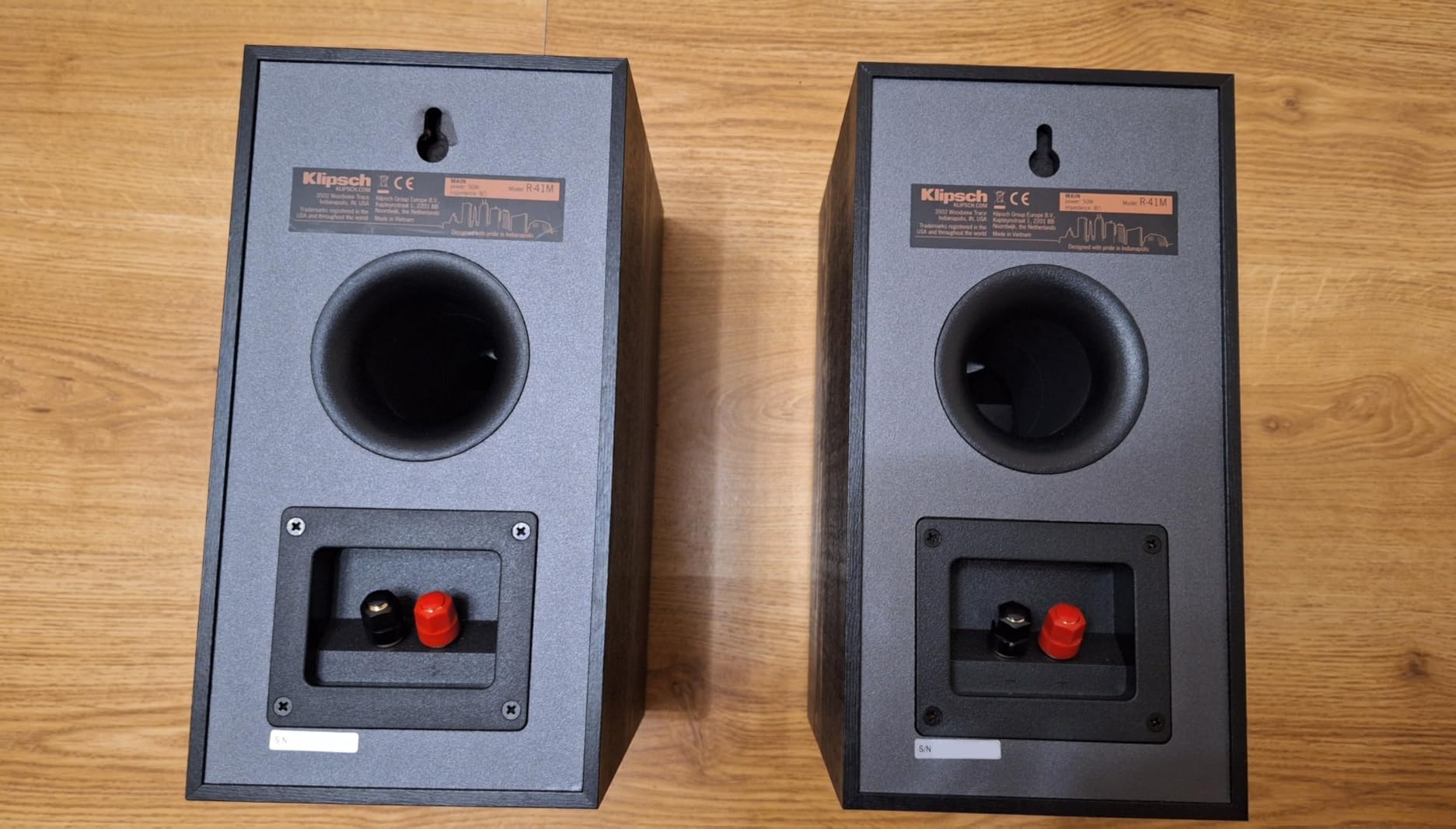
The R-41M is the horn-loaded option in this list, and that single design decision defines its personality. A 1 inch aluminum LTS tweeter sits in a 90 by 90 millimeter Tractrix horn, which projects highs forward with real efficiency and gives the speaker a wide, detailed soundstage from a cabinet that is just 11.3 inches tall.
Owners on r/BudgetAudiophile pair these with small Class D amplifiers, and the numbers back that up: 90dB sensitivity means the speaker makes plenty of volume from modest power, with 50 watts continuous and 200 watts peak handling.
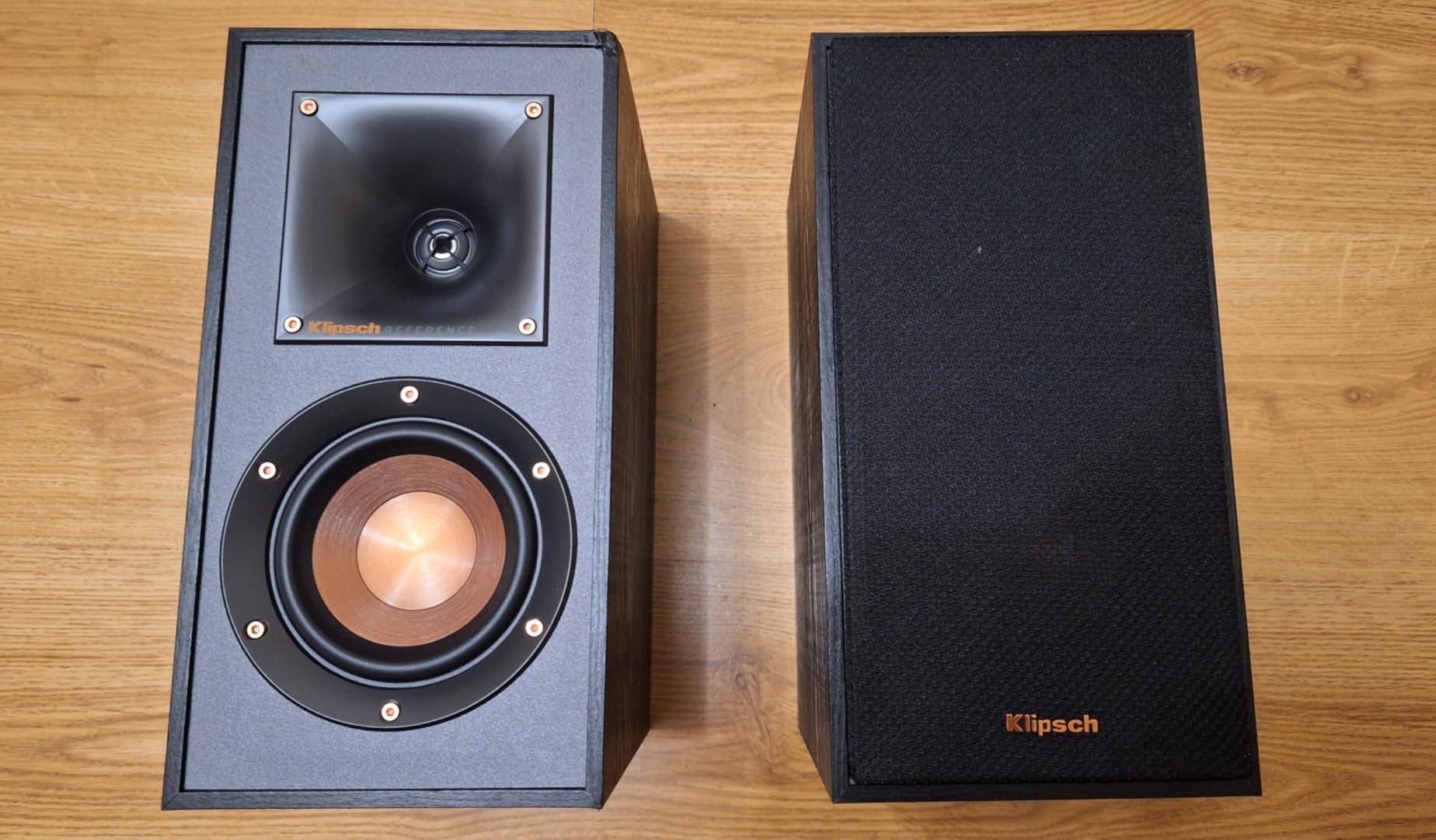
Response runs from 68 Hz to 21 kHz, and the reinforced MDF cabinet with a scratch-resistant textured wood grain vinyl finish looks more expensive than the price suggests. At 7 pounds a pair, moving them around for placement experiments is painless.
The 4 inch spun-copper IMG woofer is the weak point, since it cannot carry very low frequencies on its own. A crossover near 80 Hz with a subwoofer is the standard fix and the arrangement most owners settle on.
Best for listeners who like forward sound
If you want to hear the cymbals and finger snaps in a mix, the R-51M’s dual woofers or this horn-loaded R-41M will keep you engaged. They are also the easiest passive speakers here to drive loudly from a small amp.
Not ideal for neutral listening
Horn loading is a matter of taste and not a universal upgrade. Listeners who find bright treble fatiguing over long sessions will prefer the ELAC cloth dome or the Micca RB42, and the R-41M at 4.7 stars carries the usual note about a slight midrange dip from critical listeners.
4. Edifier R980T – Best Powered Speakers for Desktop Listening
Edifier R980T 4″ Active Bookshelf Speakers – 2.0 Computer Speaker – Powered Studio Monitor (Pair)
- Powered 24W system with no amplifier needed
- Tall wooden enclosures fill a room better than tiny desktop pairs
- RCA and 3.5mm cables included in the box
- Front-flared port improves bass near walls
- Large review base and 2 year warranty
- 24W RMS is modest for a large room
- 4 inch driver limits bass depth
- No Bluetooth or optical input
The R980T is the step up from computer speakers that most people never think about needing. It is a powered 2.0 system with 24 watts RMS total output, a 4 inch full range driver, and dual auxiliary inputs, so a turntable, a mixer or a laptop all connect the same way.
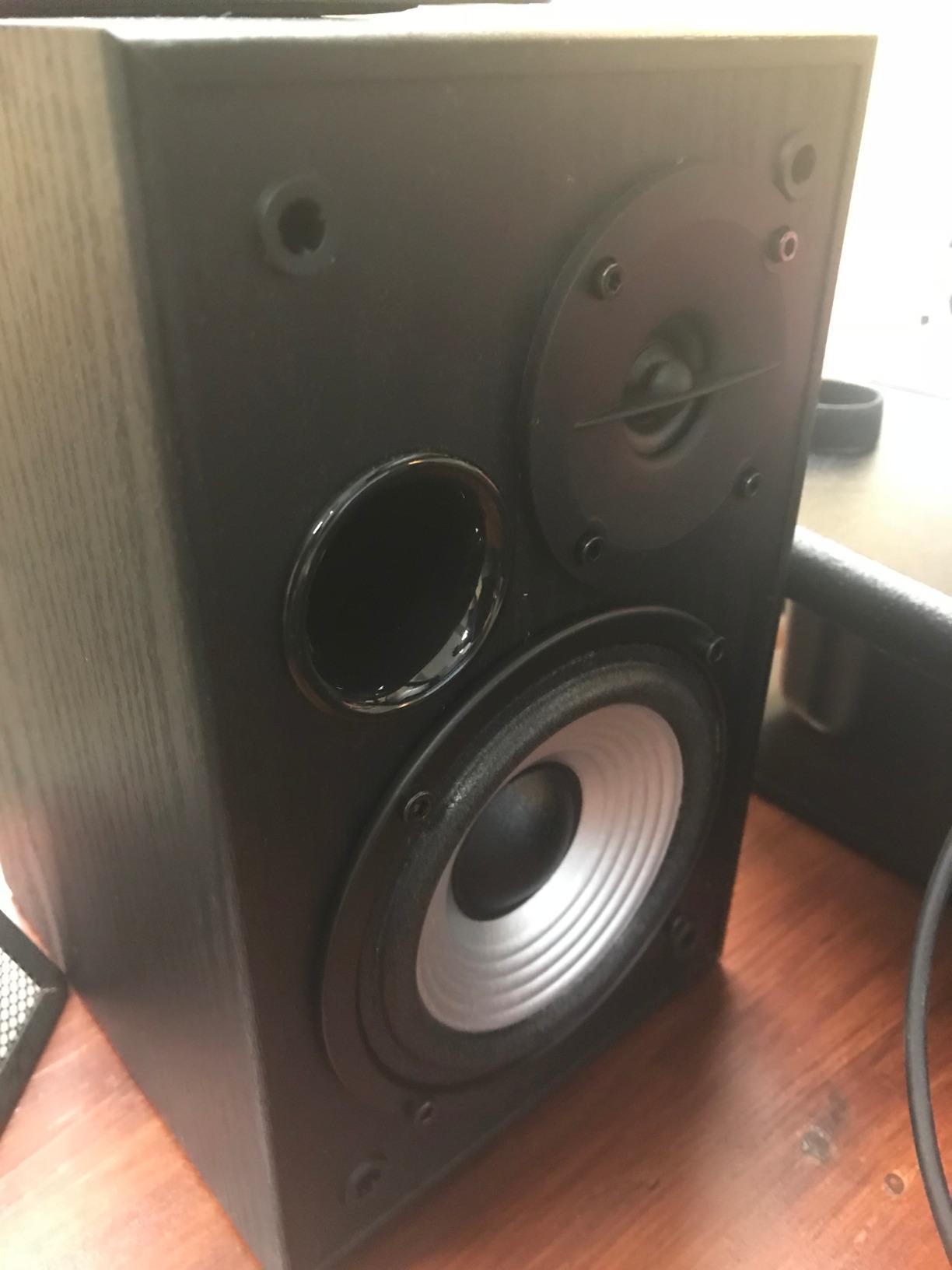
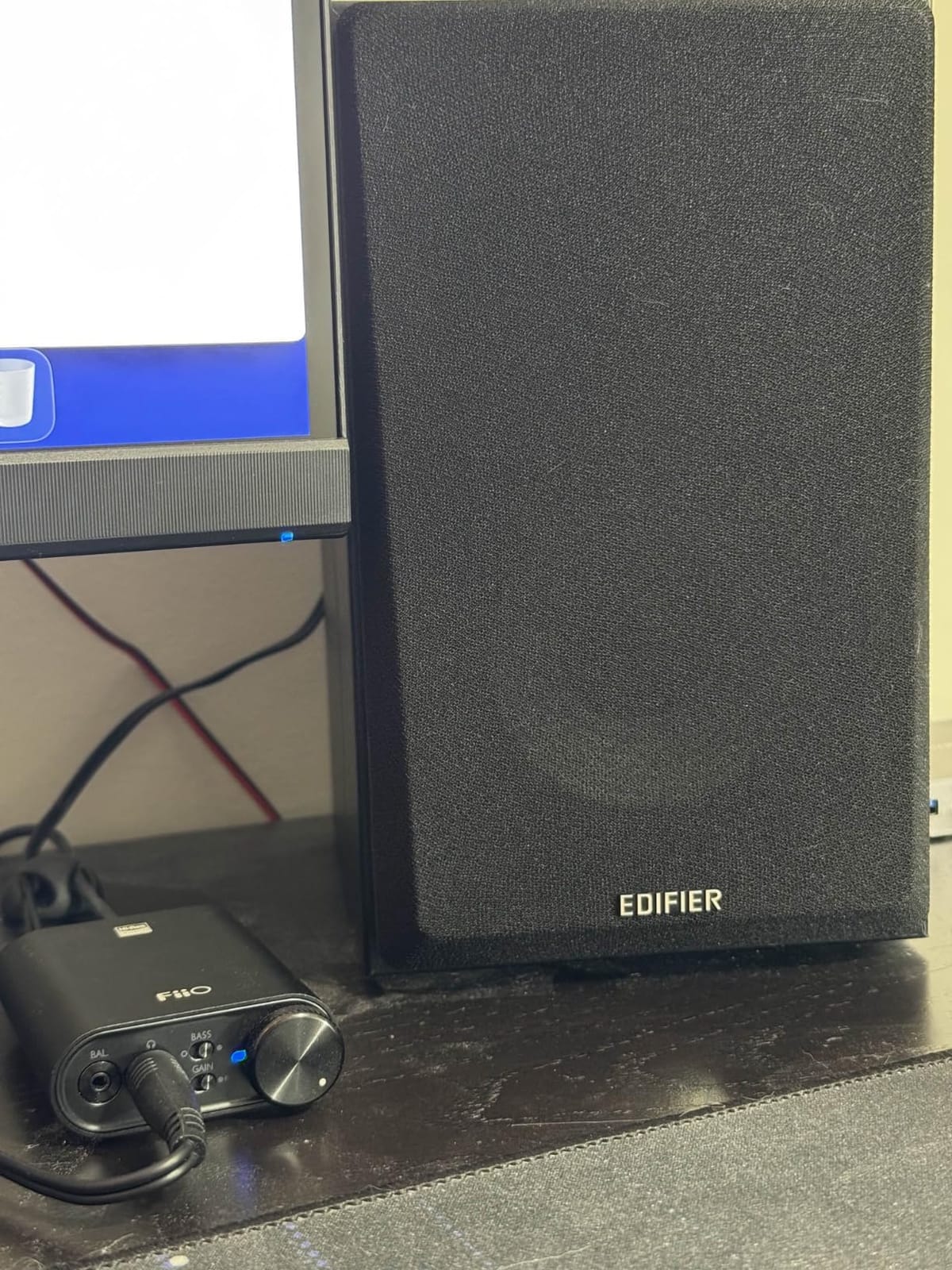
What separates it from small desktop pairs is cabinet size. At 17 inches tall with 100 percent wooden enclosures, it produces a fuller, more room-filling presentation than you would expect from a computer speaker, and the front-flared calibrated bass reflex port keeps low end usable even when the speaker sits back against a wall.
It ranks in the top 70 for computer speakers, and owners consistently describe it as an affordable first real step. Cables for RCA, 3.5mm and speaker wire are in the box, and the universal 110V to 240V supply means it travels well.
The honest limit is power. Twenty-four watts RMS is plenty for a desk, a bedroom or a small office, and thin for a large living room at high volume. A 7.8 pound weight keeps it stable rather than tippy.
Good for a bedroom or office
Choose the R980T when the speakers will sit on a sturdy surface in a room under about 150 square feet. The front port means you do not need stands, and the included cables mean setup takes about five minutes.
Poor for a big room or wireless
There is no Bluetooth or optical input on this model, so a TV needs an external converter. If you want wireless or digital sources, spend up on the R1280DBs rather than adding adapters to this one.
5. Edifier R1280DBs – Best Powered Speakers With Bluetooth
- Bluetooth 5.0 plus optical and coaxial inputs
- SUB OUT port with built-in crossover
- 42W output with a wider soundstage mode
- Side panel bass and treble plus wireless remote
- Wood grain finish looks more refined than plastic
- Bluetooth adds video lip-sync delay
- No HDMI ARC for television control
- 4 inch woofer limits bass in larger rooms
The R1280DBs is the version of the R1280T to buy in a modern house. It keeps the 13mm silk dome tweeter and 4 inch sub-woofer unit, adds 42 watts of continuous undistorted power, and brings Bluetooth 5.0 with roughly 30 feet of range plus optical and coaxial digital inputs.
The subwoofer output is the feature we would underline. It includes automatic detection and a built-in crossover, so adding a powered sub later is a single cable rather than a shopping project. That turns a bedroom pair into a system you can grow into.
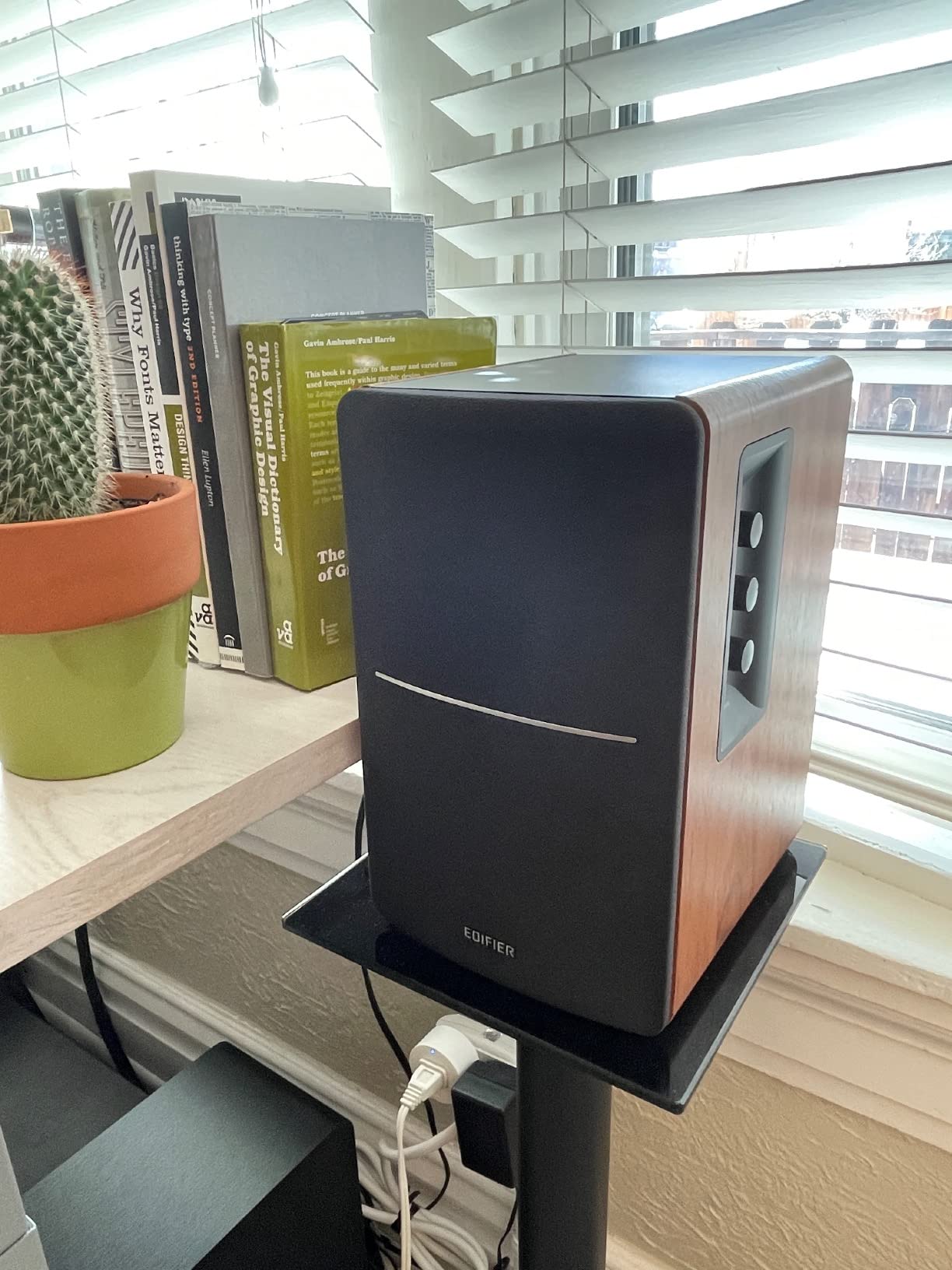
The Soundfield Spatializer widens the soundstage, which helps in a small room, and side-panel bass and treble controls sit next to the volume knob. The wireless remote handles volume, mute and input switching including the optical and coaxial mode.
Around 77 percent of reviews are five star, and the recurring notes are the connectivity range and the sub-out. The recurring complaints are equally consistent: the 4 inch driver’s bass ceiling, and Bluetooth lip-sync delay that matters on video.
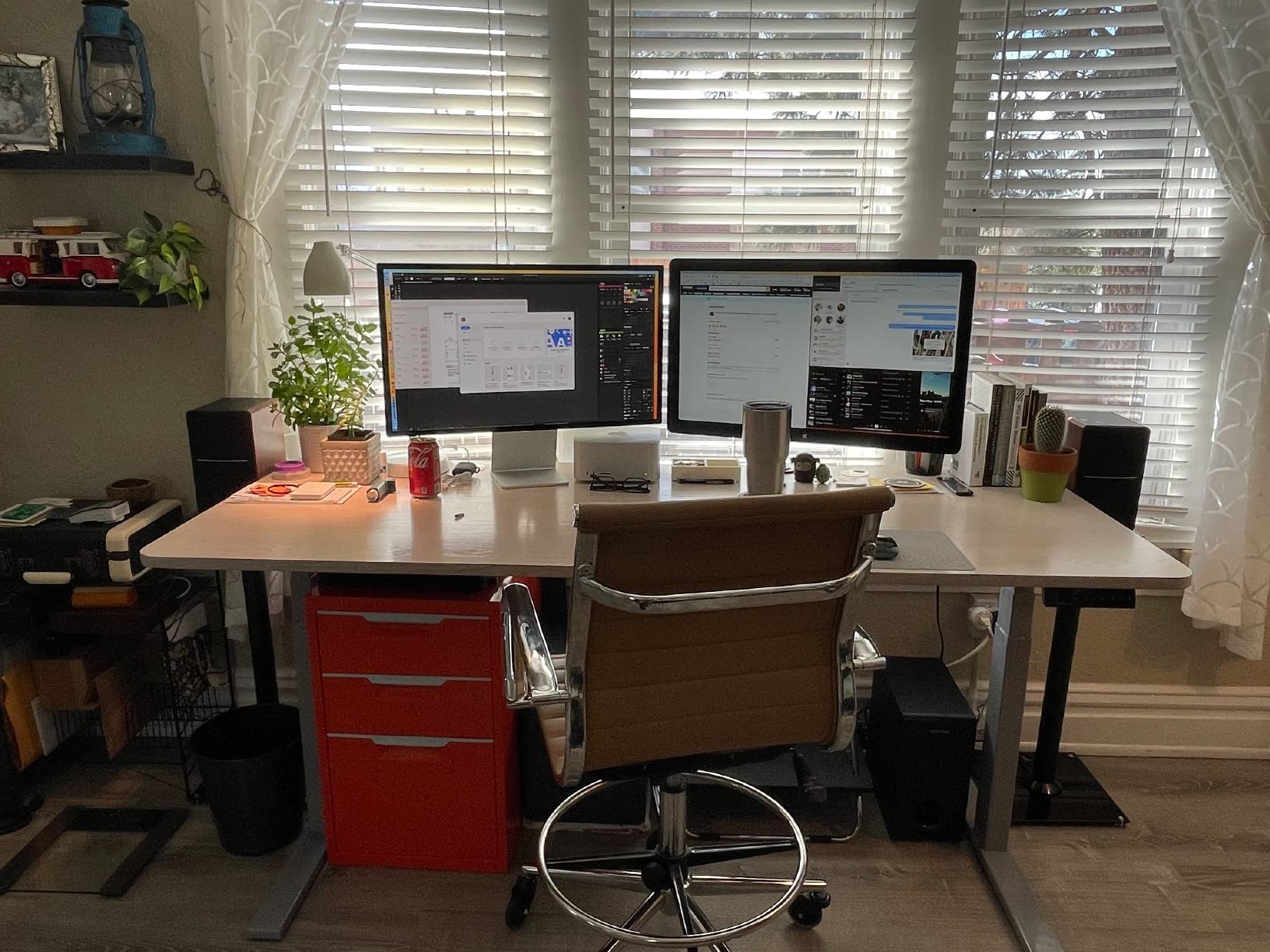
Best for a TV and phone in one room
Optical and coaxial digital inputs plus Bluetooth cover nearly every modern source, and the wood grain finish suits furniture better than most powered speakers. Our pick for a living room that does not want a receiver.
Watch out for two limits
There is no HDMI ARC, so television volume control stays on the original remote. And Bluetooth delay makes lip sync slightly loose for film, which is a good reason to use the optical input for movies and Bluetooth for music.
6. ELAC Debut 2.0 B5.2 – Best Hi-Fi Passive Speakers Under 300
- Response up to 35000 Hz for hi-res sources
- Aramid fiber woofer extends lower than polypropylene cones
- Cloth dome tweeter in a waveguide for smooth treble
- Thick internally braced MDF cabinet
- Front-firing port works against a wall
- Passive
- needs an external amplifier or receiver
- 13 pounds per pair is heavy to reposition
- Cabinet is the largest in the group at 13.5 inches tall
If an amplifier is already in your plan, this is the pair we would buy. The Debut 2.0 B5.2 is widely considered one of the best passive bookshelf speakers under 300 dollars, and the reason is driver quality: a 5.25 inch woven aramid fiber woofer with a 1 inch soft cloth dome tweeter in a waveguide.
The aramid cone is stiffer and better damped than the polypropylene and paper cones used by most of this list, and that is audible in the low end. The cloth dome extends response to 35,000 Hz, so hi-res files actually get played instead of being flattened.
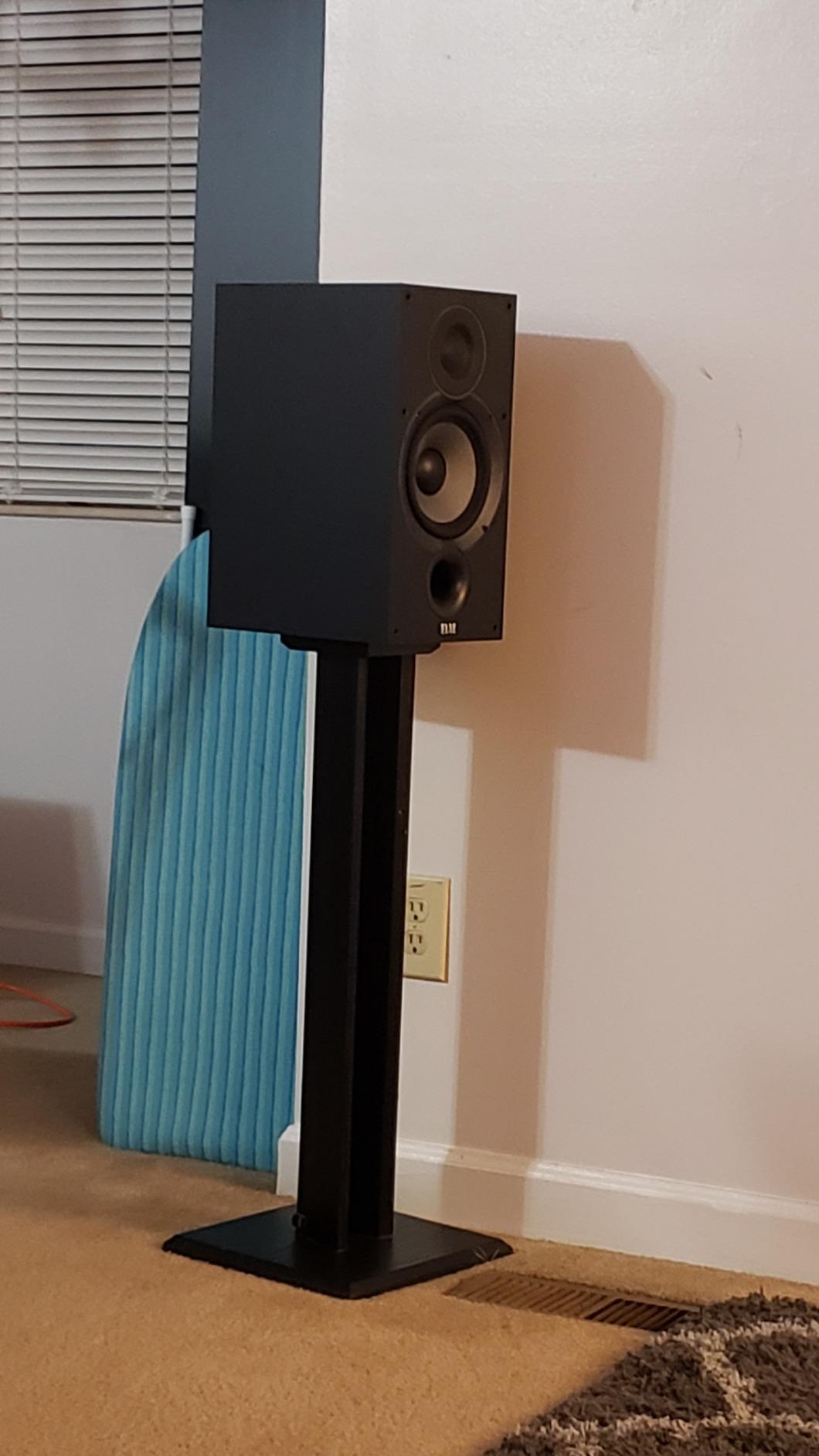
Two design choices show care. The cabinets are larger and internally braced for stiffness, and the front-firing ports mean you can push them close to a wall or into a bookcase without losing bass the way a rear-ported speaker does.
At 13 pounds a pair, they are heavy to move once placed. About 83 percent of reviews are five star, with the passive requirement and the cabinet weight as the recurring trade-offs.
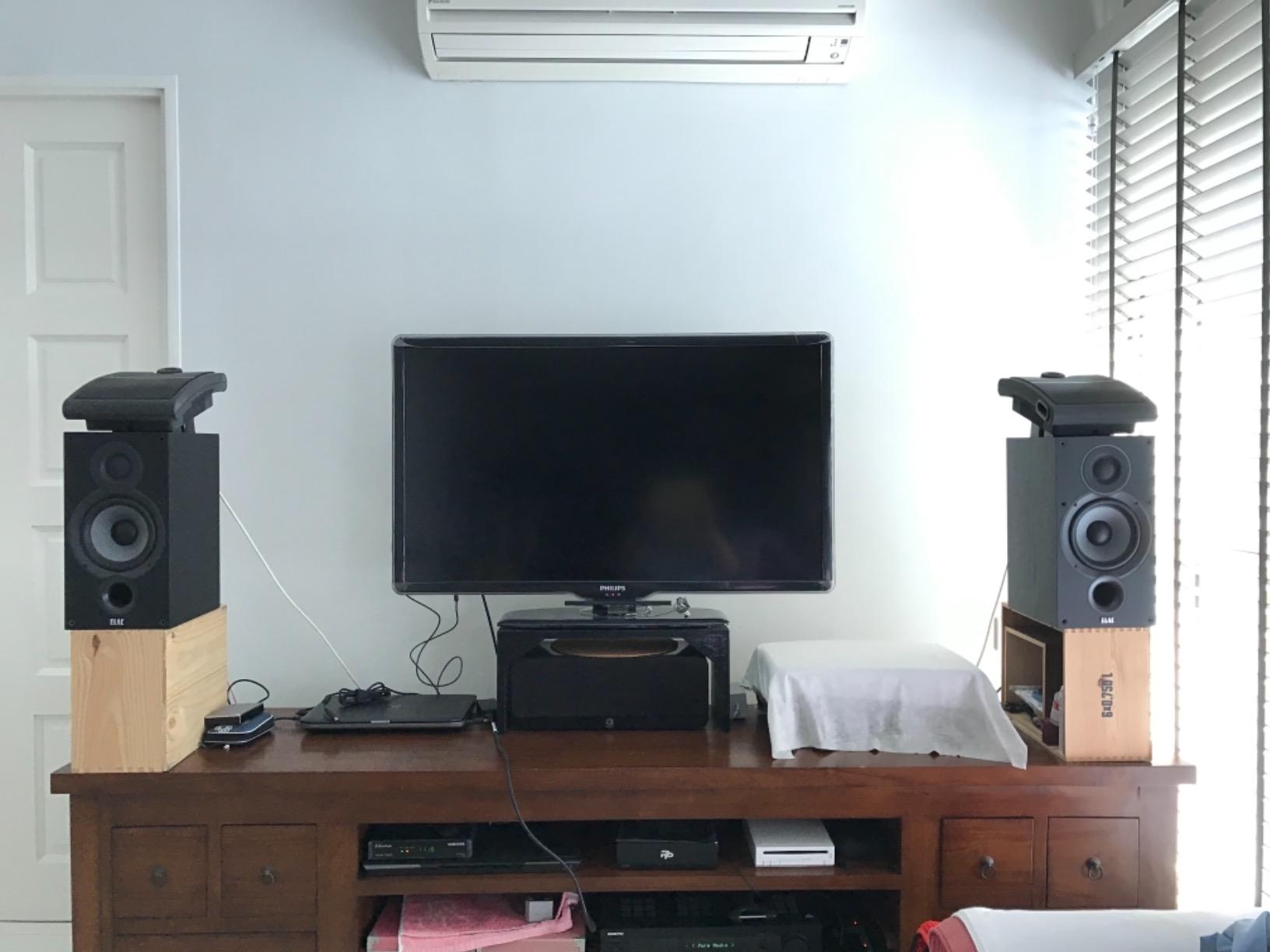
Best when sound quality leads the decision
This is the hi-fi answer in the bracket, and the waveguide tweeter is the reason its treble never sounds harsh to us at moderate volume. It also pairs cleanly with a matching center channel and subwoofer if you build out later.
Who should pass
Skip it if you have no amplifier and no plan to buy one, because passive means passive. It also sits at the very top of this budget, leaving no room in the same purchase for the electronics that would drive it.
7. Polk Monitor XT15 – Best for Building Toward 5.1 Later
- 4.8 stars with 88 percent of reviews at five
- Clear dialogue and natural vocals at low volume
- Surprising low end for a bookshelf cabinet
- Works with both 4 and 8 ohm receivers
- Timbre-matches the rest of the Monitor XT line
- Passive
- needs an external amplifier
- 40W maximum output is modest for loud listening
- Much better with a subwoofer for films
The Monitor XT15 is the current-generation answer for anyone who wants a bedroom stereo today and a full theater later. It carries a 1 inch Terylene dome tweeter over a 5.25 inch Dynamically Balanced polymer woofer, and it is Hi-Res Audio Certified with a 5 year warranty.
The unusual detail is compatibility. These speakers are rated for both 4 and 8 ohm receivers, which means they work with an older AV receiver as happily as a modern one, and that unlocks Dolby Atmos and DTS:X from compatible sources.
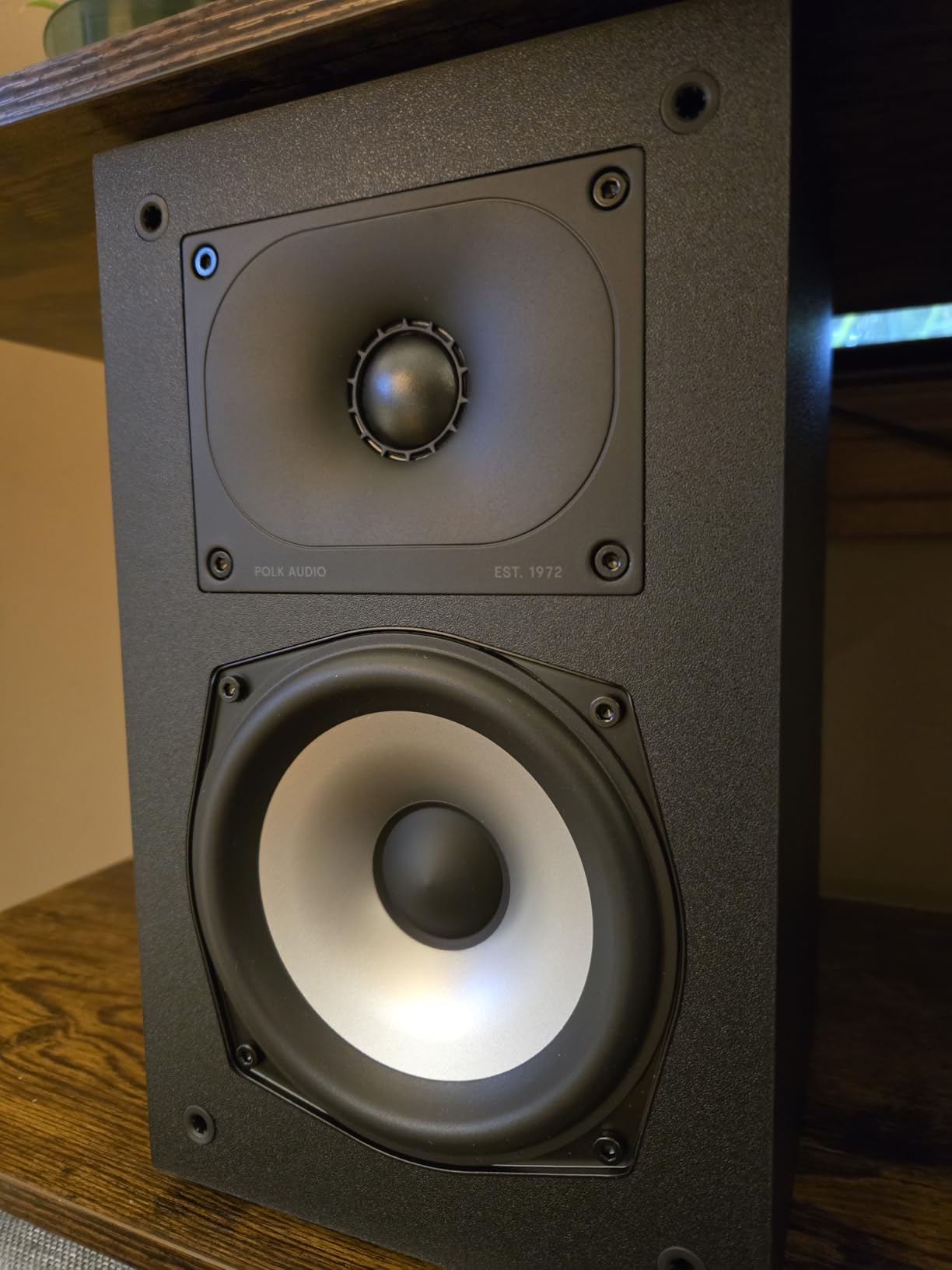
Owners report exceptionally clear dialogue, which is exactly what a center-adjacent bookshelf pair needs. They also pair them with a Denon receiver and a subwoofer, or simply run them as a bedroom stereo with the Polk MXT60 towers, MXT30 center and MXT12 sub added later.
The 40 watt maximum output is the one number to note. It is ample at normal listening levels and modest when you push a large room hard, and the bass improves meaningfully once a subwoofer is part of the chain.
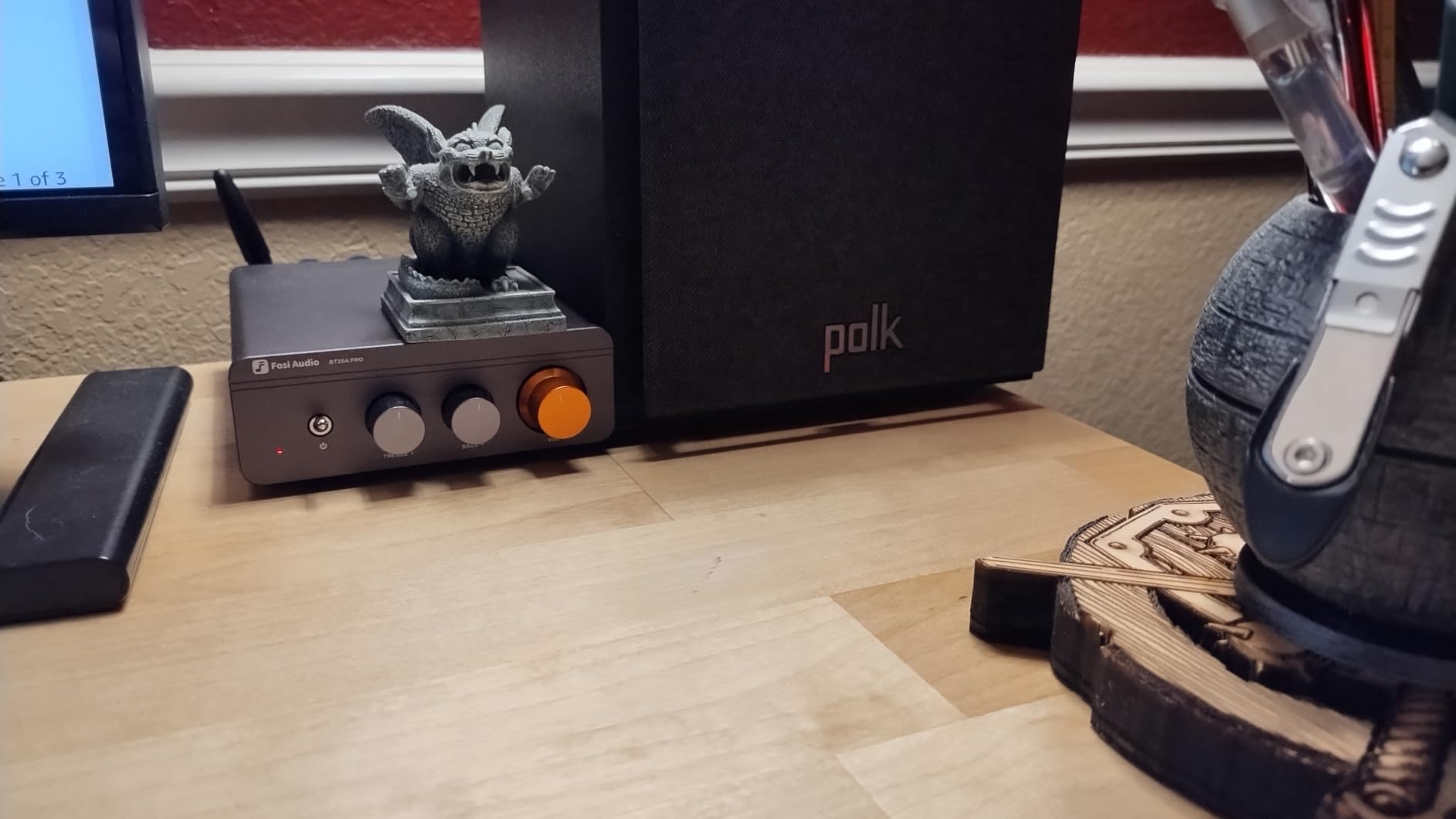
Best for a room that will grow
Every component in the Monitor XT line is voice-matched, so expansion is seamless rather than a compromise. At 9 pounds and 10.6 inches tall, they also wall-mount or sit on a stand without drama.
Where it falls short
It is not the most compact option, and passive means you still need an amplifier. Listeners who want a single box with amplification inside should look at the Edifier R1280DBs instead.
8. Klipsch R-51M – Best Bookshelf Speakers for Room-Filling Bass
- Dual 5.25 inch copper woofers give real low end weight
- High sensitivity drives loud from modest amps
- Copper drivers on a black baffle look striking
- MDF cabinet and rear port keep bass tight
- Bright forward signature is polarizing
- Can tire at high listening volumes
- Passive
- needs an external amplifier
Where the R-41M is compact and lively, the R-51M is built for output. Dual 5.25 inch spun-copper IMG woofers sit under the same 1 inch aluminum LTS tweeter in a 90 by 90 millimeter Tractrix horn, and the 8 ohm impedance and high sensitivity let inexpensive Class D amplifiers push them hard.
Owners describe speakers that sound far larger than their cabinets, and several pair them with small amplifiers like the Fosi ZA-3 or the Aiyima A07. Around 87 percent of reviews are five star, which is about as consistent as a signature this bold gets.
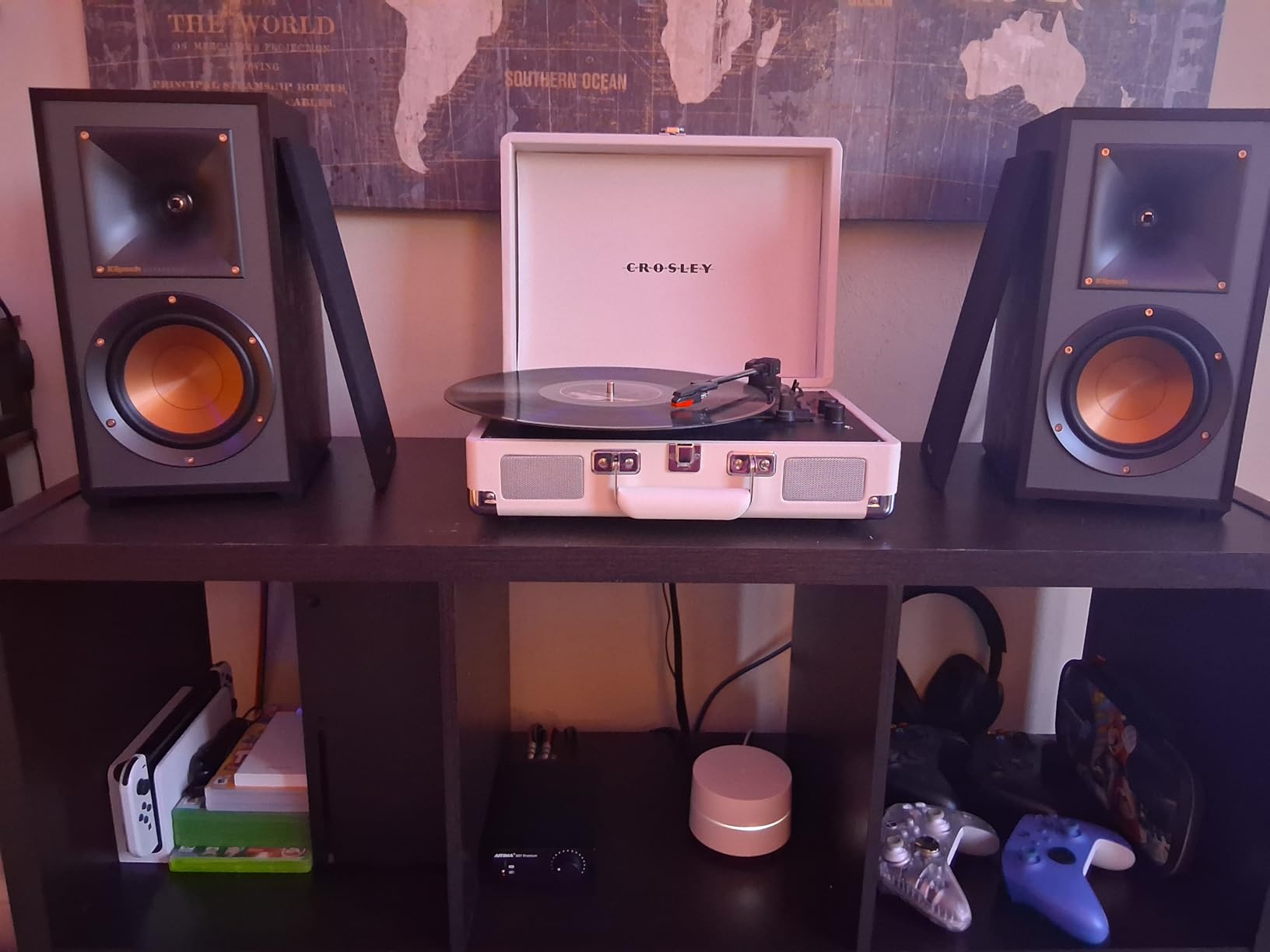
Adding a subwoofer transforms the system according to most owners, and the 340 watt maximum output rating means it will not be the bottleneck. At 11 pounds and 13.3 inches tall, it is a proper bookshelf rather than a shelf filler.
The rear-firing bass reflex port is the placement catch. Give it a few inches of breathing room behind, or bass response tightens and the cabinet booms.
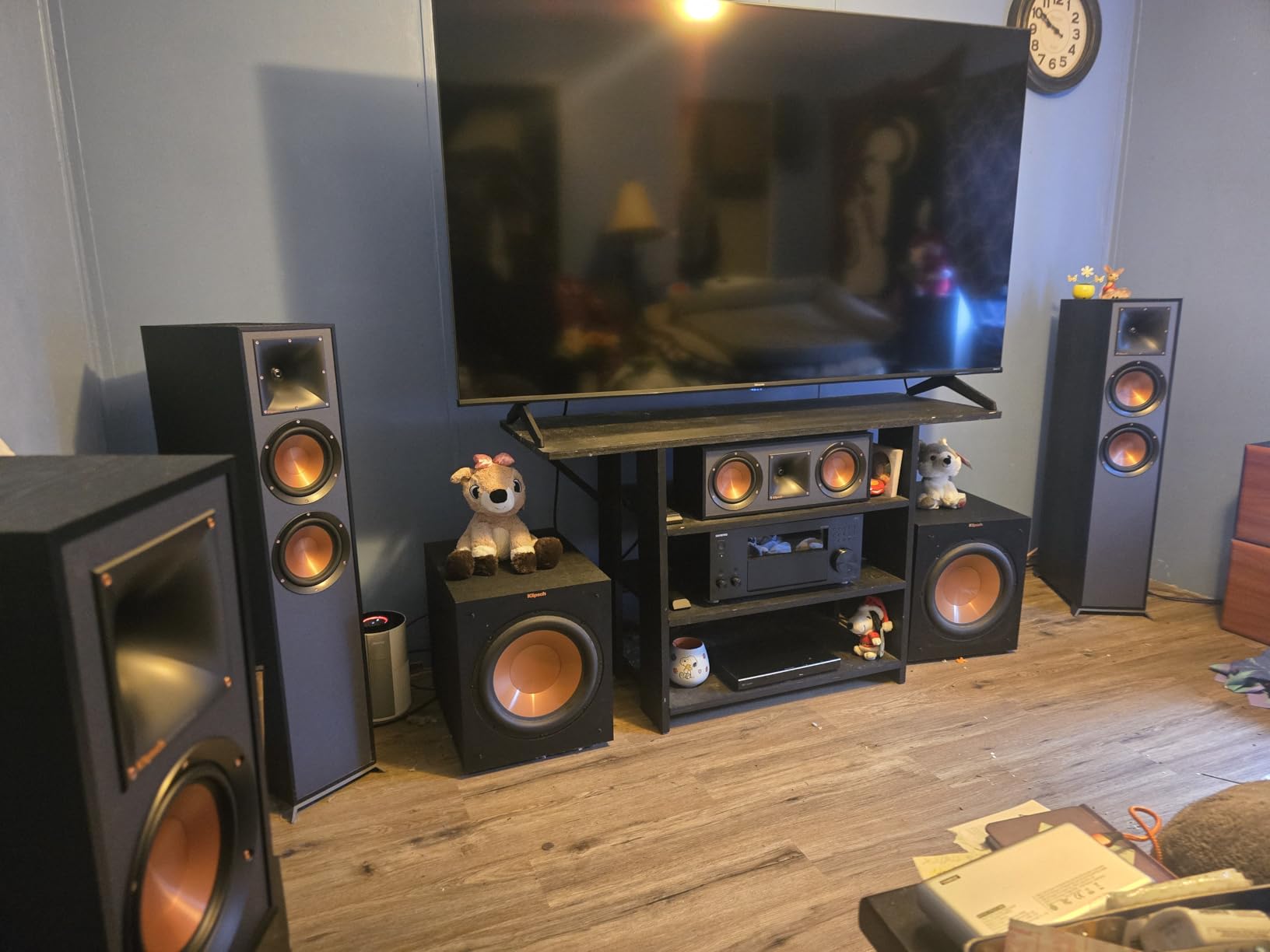
Best for filling a room with music
If you play at higher volume or want a pair that can double for party duty, the dual-woofer design has real headroom where 4 inch drivers run out. The copper cones on a black baffle also look good with or without grilles.
Not a neutral reference
Klipsch’s signature is bright and forward, and it divides listeners as much as it excites them. For long sessions at lower volume or for an even, unfussy tone, the ELAC or the Micca RB42 is the calmer choice.
9. Micca RB42 – Best Compact Speakers for Shelves and Desks
Micca RB42 Reference 2-Way Passive Bookshelf Speakers, Stereo Pair, Walnut
- Smooth musical signature with more bass than a 4 inch driver suggests
- 10 element crossover with film capacitors and air core coils
- 18dB per octave slopes on both driver circuits
- Compact 8.7 inch height suits tight shelves
- Dark walnut finish looks good in the open
- Passive
- needs an external amplifier
- 4 inch woofer means less effortless low end than 5.25 inch designs
- Smaller review base than the Edifier and Klipsch listings
The RB42 is the enthusiast’s compact pick. The headline is the crossover: ten elements built with high grade film capacitors and air core coils, with an 18dB per octave slope on both the tweeter and woofer circuits, which is a genuine step above the simple crossovers used by most budget speakers.
Underneath sits a stout 4 inch woofer on a truncated heavy steel frame with a coated pressed paper cone, plus Micca’s 0.75 inch silk dome tweeter with a high efficiency neodymium magnet. The result is a smooth, musical presentation with more low end than the driver size suggests.
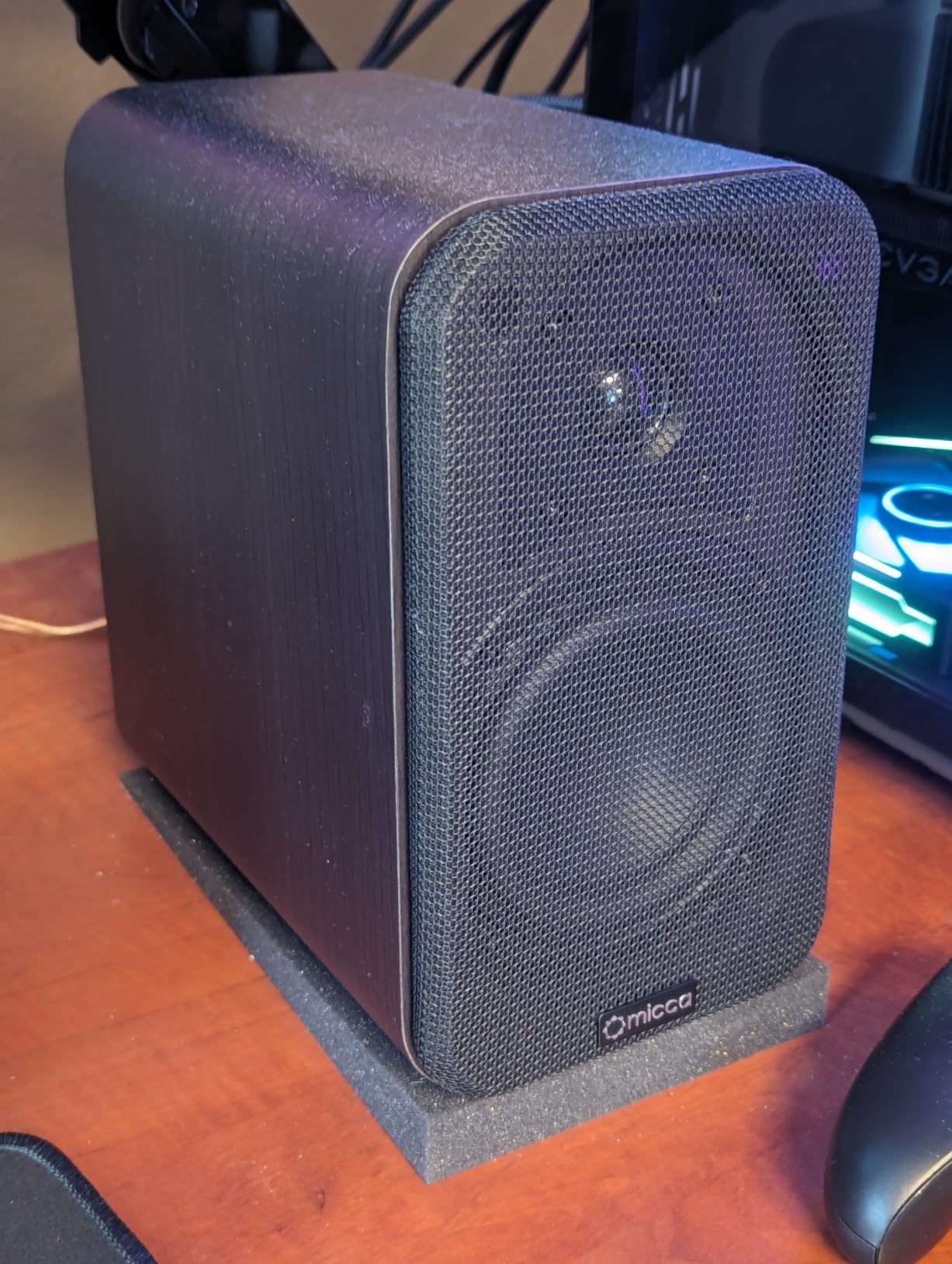
At 8.7 inches tall and 4.9 inches wide, these are the easiest passive speakers here to place. They suit a desk, a bookshelf or a small bedroom where a 13 inch cabinet would crowd the shelf, and the dark walnut pattern looks handsome enough to leave uncovered.
Owners often pair them with a small Class D amplifier to build a complete stereo, and reviewers single out the crossover design as the differentiator against cheaper compact speakers.
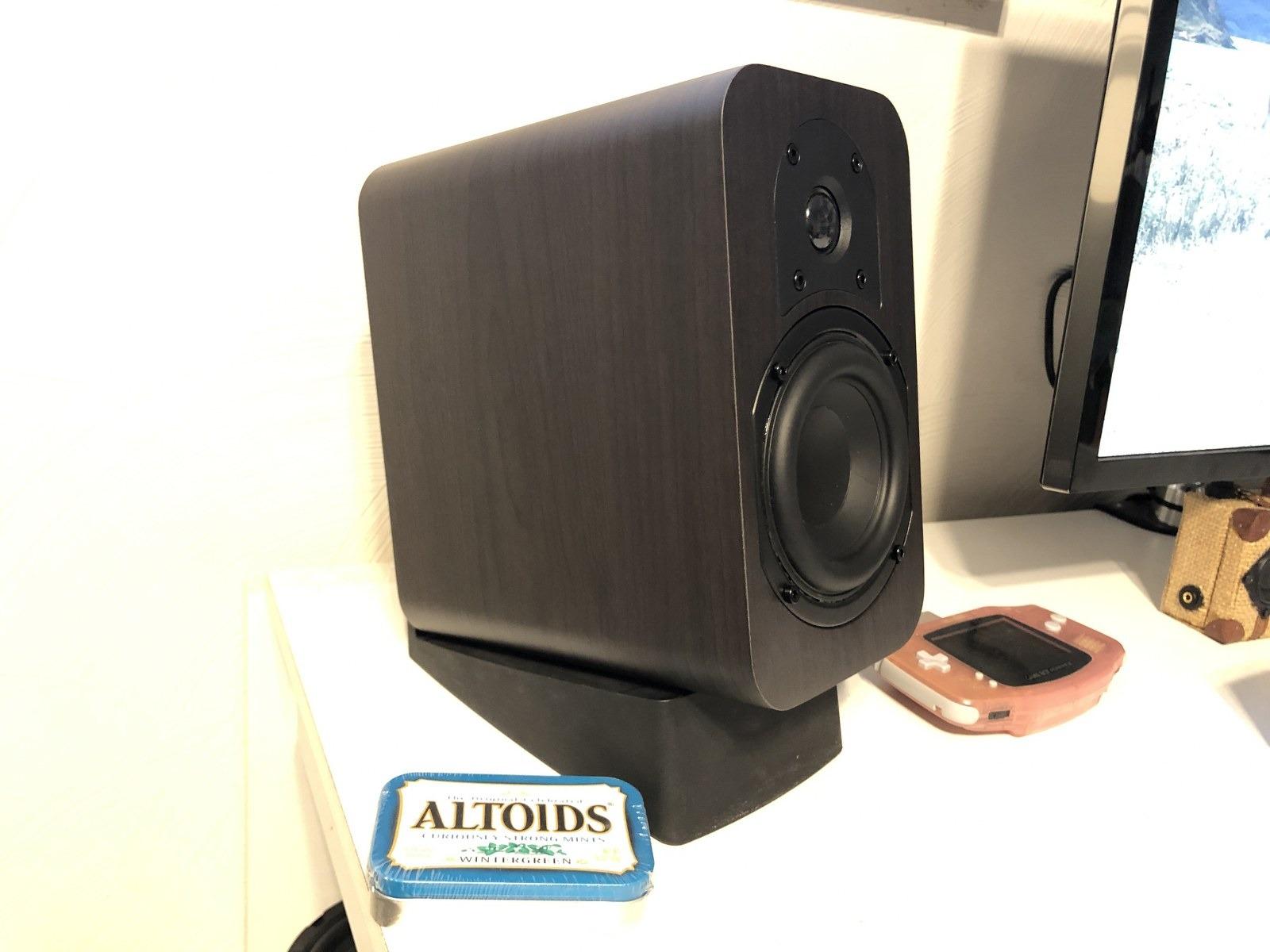
Best for small rooms and shelf space
The RB42 solves a problem other picks ignore: finding a passive pair that fits. A 100 watt maximum output and 8 ohm impedance make it flexible with a wide range of amplifiers.
What you give up
Deep low end still needs a subwoofer in a larger room, and the review base of 836 ratings is smaller than the Edifier and Polk listings, so long-term owner feedback is thinner.
10. Sony SS-CS5M2 – Best 3-Way Design with a Super Tweeter
Sony SS-CS5M2 3-Way 3-Driver Hi-Res Compact Bookshelf Speakers (Pair)
- Rare 3 way 3 driver design at this price
- Dedicated wide dispersion super tweeter
- Widest frequency response in this group
- Reinforced cellular cone for stable bass
- Compact design aimed at small spaces
- Passive
- needs an external amplifier
- Smallest review base here at 196 ratings
- Compact cabinet limits the deepest bass
The SS-CS5M2 is the only 3-way, 3-driver design in this group, and that changes the treble behavior. A 5.12 inch reinforced cellular cone woofer handles low frequencies, a high precision tweeter handles the upper midrange and top, and a wide dispersion super tweeter extends the very highest frequencies to create an expansive soundstage from a compact cabinet.
Response runs from 53 Hz to 50,000 Hz, the widest span here, and the bass reflex enclosure is built for distortion-free low frequency output at 100 watts maximum and 6 ohm nominal impedance.
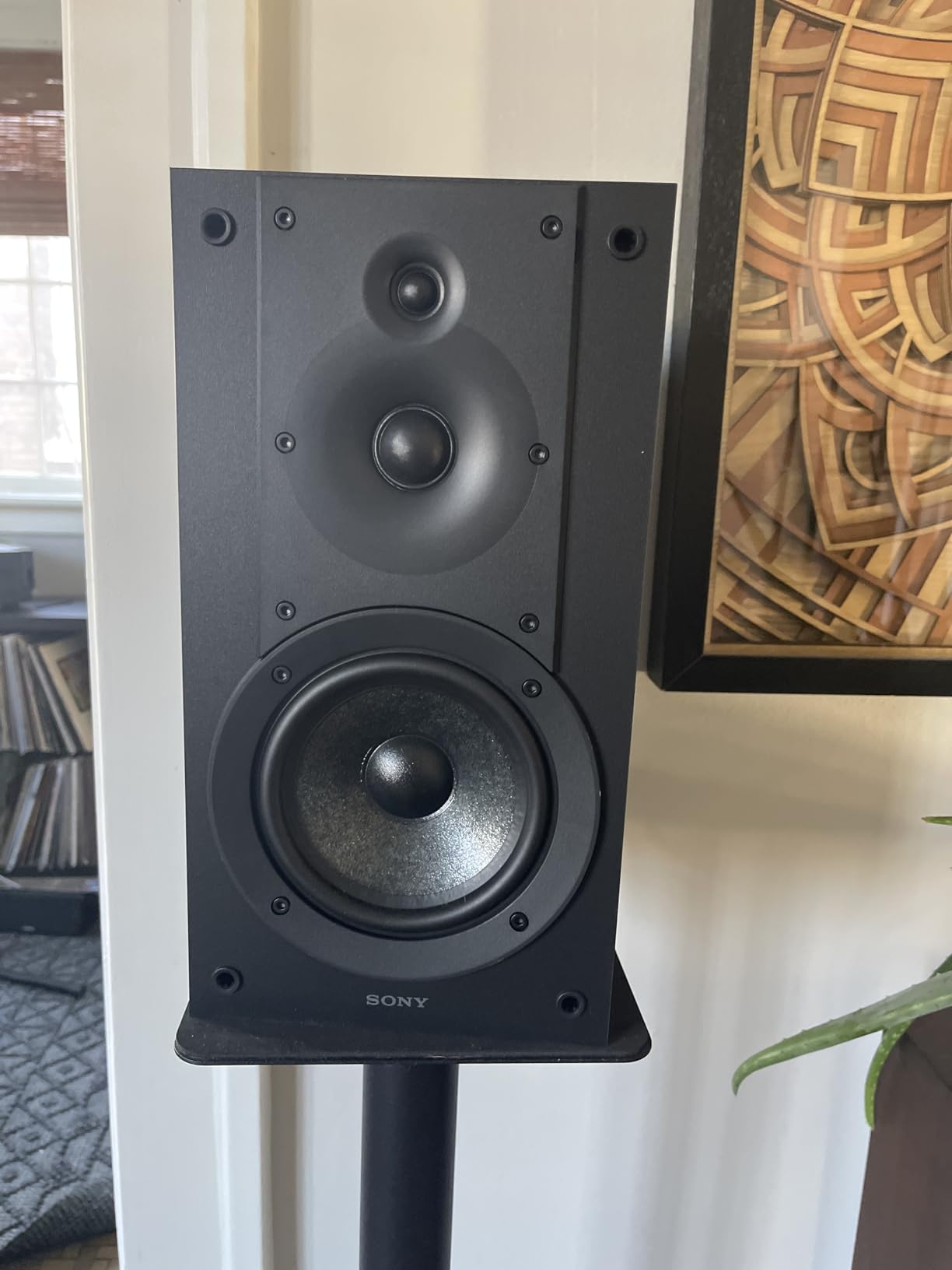
At 13.2 inches tall it is designed for small spaces, and Sony positions the CS series to match Sony AV receivers. That is a sensible pairing if a receiver is already on your list.
The trade-off is track record. This listing carries 196 ratings, so there is far less long-term owner feedback than the Edifier, Polk and Klipsch models, and the listed 1 year warranty is the shortest in the group. The published weight figure also does not look credible for a pair of bookshelf speakers, so treat the specification sheet with care.
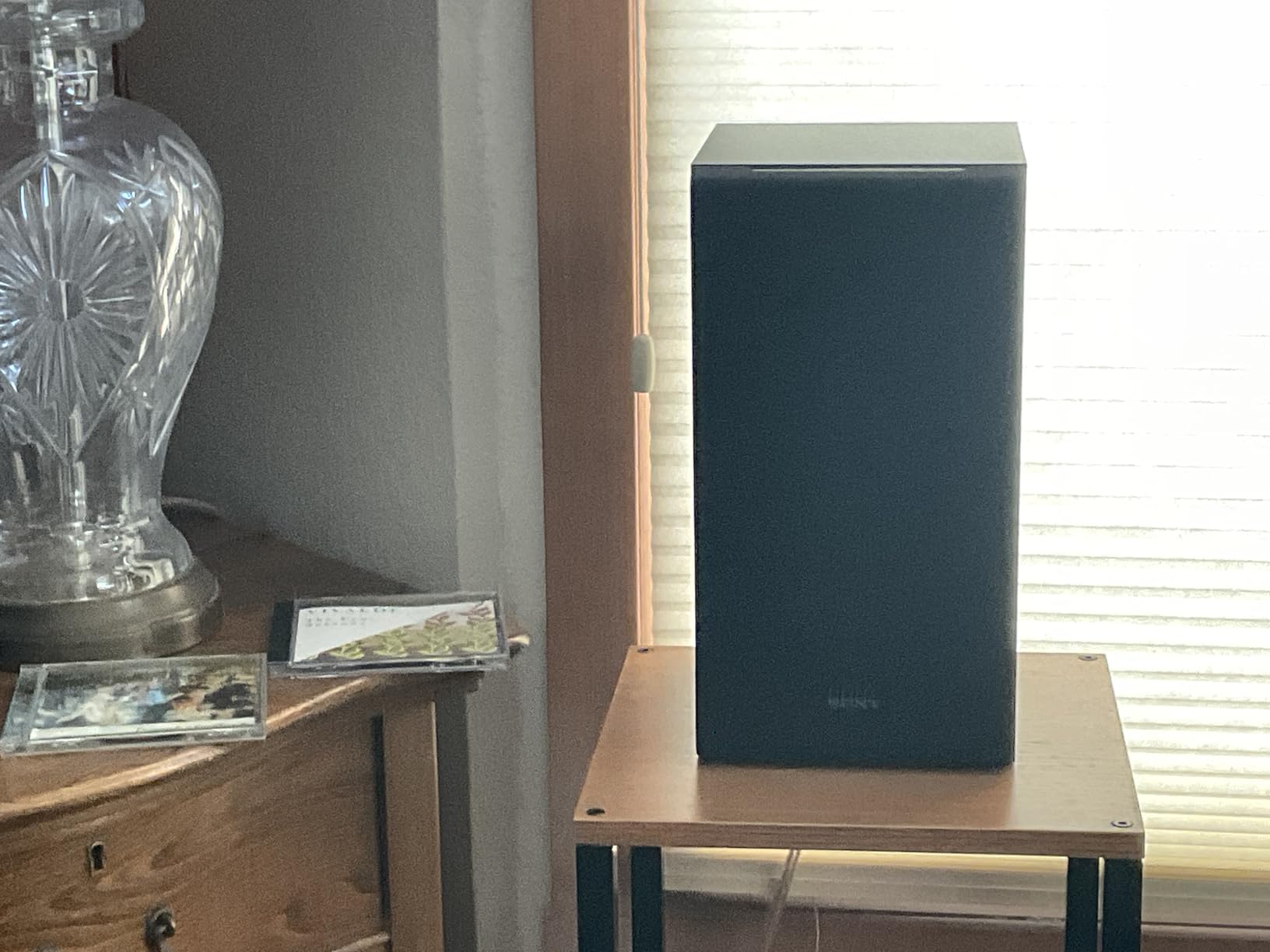
Best for wide soundstage in a small room
The dedicated super tweeter is a genuine technical advantage for airy, open highs, and three drivers mean less overlap between the midrange and the treble. If you like detail, this is the design to audition.
Reasons to choose something proven instead
A newer listing with a smaller sample of owners and a one year warranty is a harder sell to someone buying once. The 4.7 star passive options with thousands of reviews carry less risk for the same money.
11. Micca MB42 – Best Starter Passive Speakers for the Money
Micca MB42 Standard 2-Way Passive Bookshelf Speakers, Stereo Pair, Black
- Entry-level passive pair with a long owner track record
- Warm smooth sound with vocals that stand out
- Full size 5-way binding posts instead of spring clips
- Works as desktop bookshelf or surround speakers
- Long owners report decade plus use without failure
- Bass effectively rolls off around 80 to 100 Hz
- Simple 6dB per octave crossover can show a midrange resonance
- Speaker wire not included
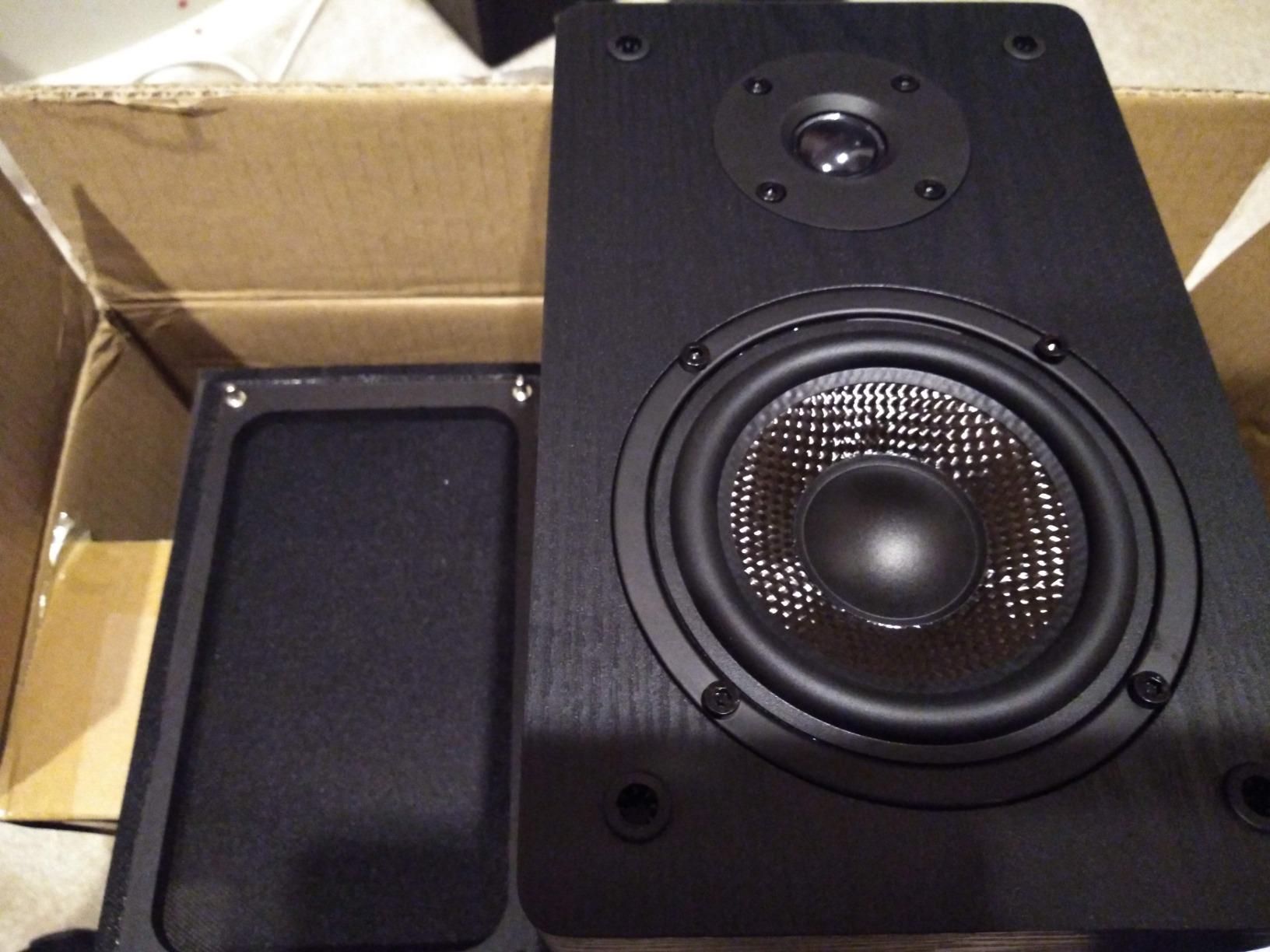
The MB42 is where most first-time passive buyers should start, because it is among the most affordable passive pairs in this group and it is a proven design rather than a new listing. A 4 inch woven carbon fiber woofer with rubber surround pairs with a 0.75 inch silk dome tweeter inside a ported enclosure.
Sound is consistently described as warm, pleasant and slightly soft in the midrange, with real imaging and a surprising amount of bass for a 4 inch driver. Long-term owners report using them for a decade or more with no failures, which is the strongest durability signal in this roundup.
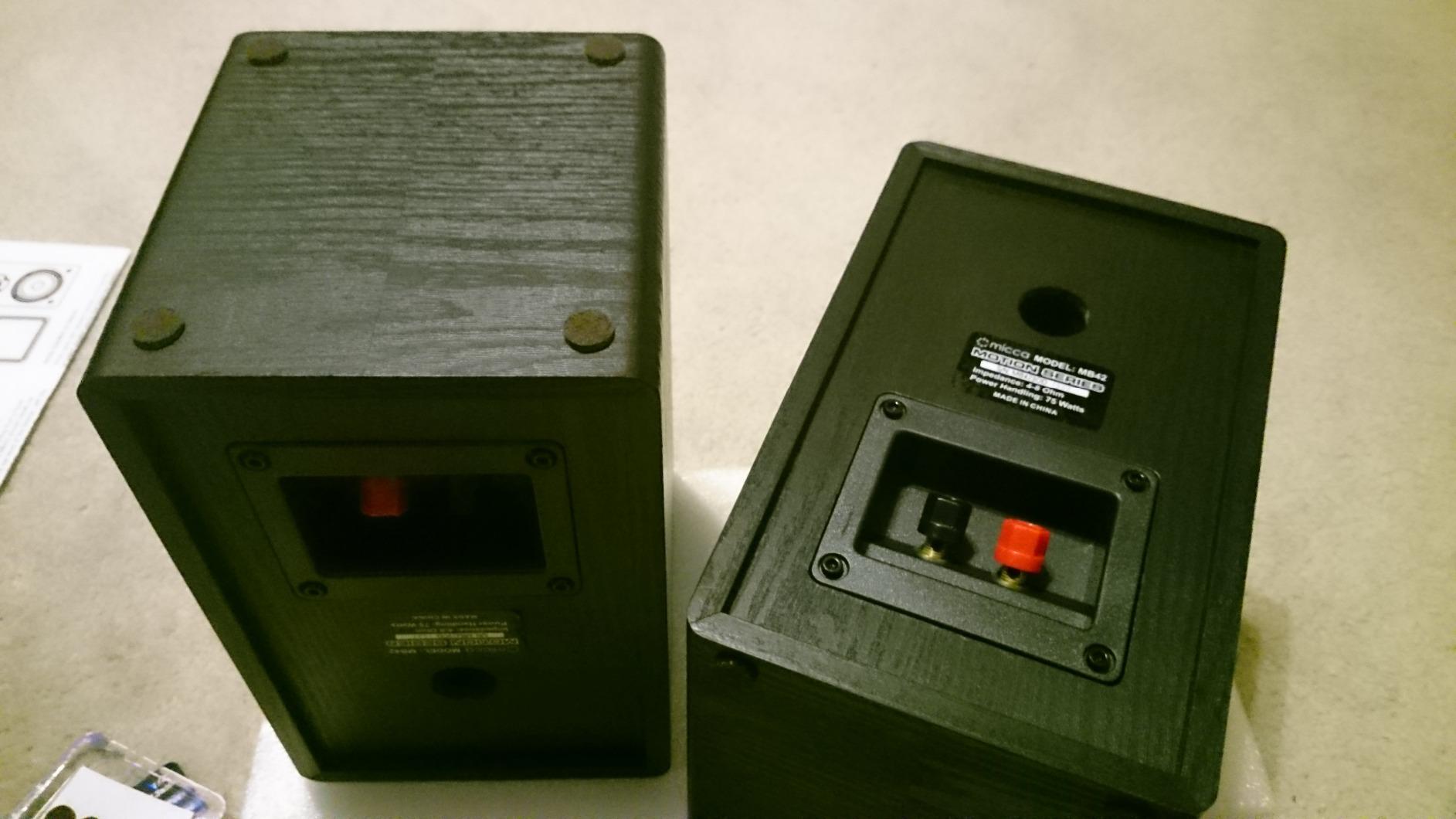
The hardware is better than the price suggests. Full size 5-way binding posts accept every speaker wire connector, the fabric grilles remove easily, and the rear cabinet edges are smoothly finished.
Two limitations are worth planning around. Bass rolls off in practice around 80 to 100 Hz despite the 60 Hz specification, and the simple 6dB per octave crossover can show a narrow midrange resonance on some classical recordings. Speaker wire is not included.
Best for a first passive system on a tight budget
At 85dB sensitivity you will want an amp with reasonable current, and many owners add Micca’s optional upgraded crossover later as a first upgrade. Micca also offers a home trial so you can audition in your own space.
Where a subwoofer becomes necessary
If you care about film soundtracks or bass-heavy music, add a subwoofer early rather than pushing these. The ported enclosure extends the low end; it does not create it.
12. Saiyin DS6701 – Best Powered Speakers With the Most Connections
- Self-powered so no amplifier is required
- Bluetooth 5.3 with optical
- coax
- RCA and 3.5mm in one box
- Optical and coax accept 24 bit / 192k digital audio
- SUB OUT and LINE OUT open upgrade paths
- 0.5 inch tweeter is small and less detailed
- 4 inch woofer gives modest bass alone
- Needs PCM stereo source as surround signals can crackle
The Saiyin DS6701 competes on connectivity rather than refinement, and the list of inputs is genuinely long for a self-powered pair: Bluetooth 5.3, optical and coaxial digital, RCA, 3.5mm, a SUB OUT jack and a LINE OUT for record players. Rated maximum output is 80 watts.
It sits in the top ten for bookshelf speakers with more than 2,100 reviews, and the optical and coaxial inputs accept 24 bit / 192k digital audio from a television, which is a genuine convenience for a gaming or media setup.
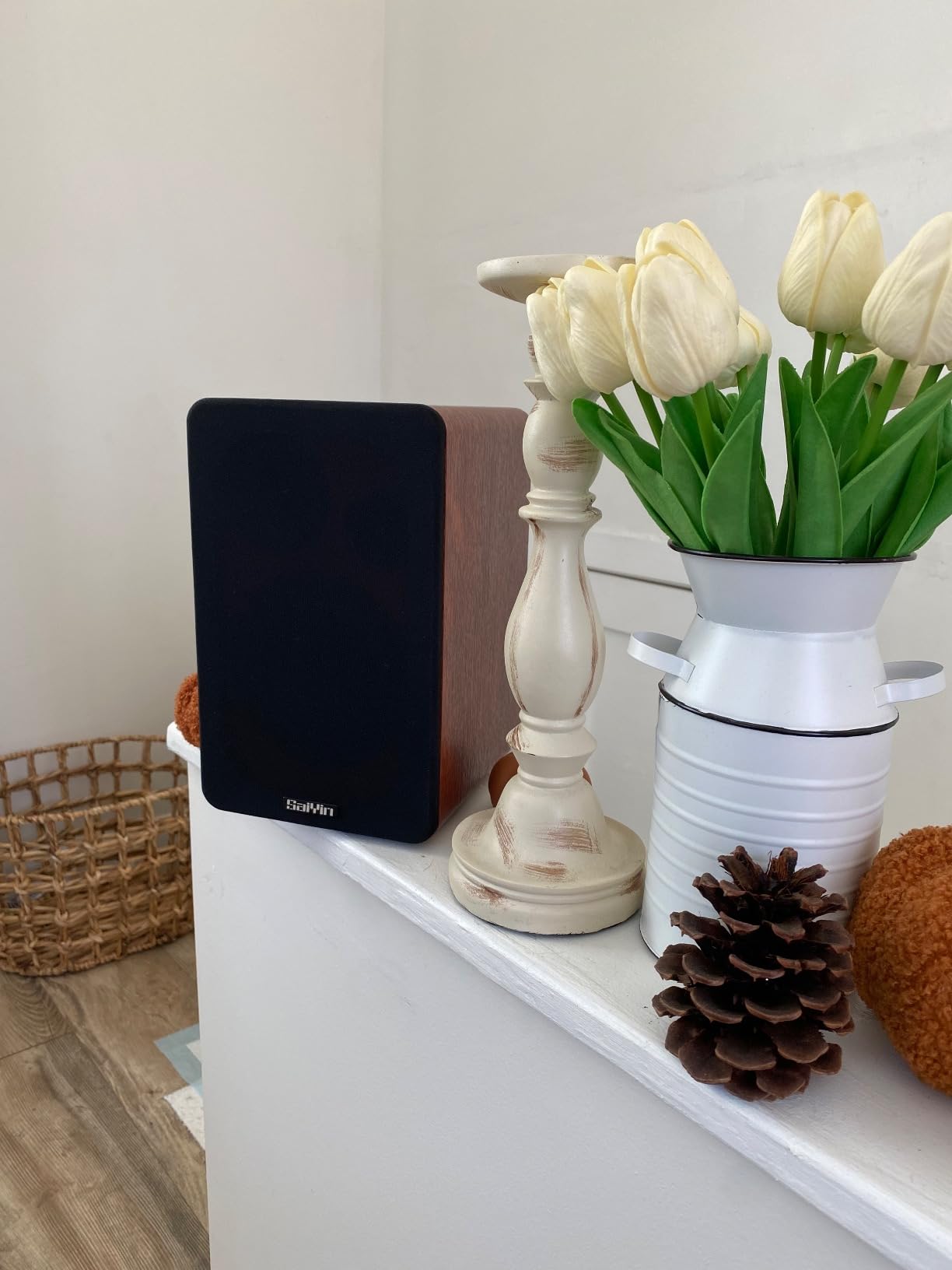
There is also a remote control and top-panel buttons, and the cabinet is a small 150 by 170 by 240 millimeters, so it fits a desk or a narrow shelf where the Edifiers will not.
Be realistic about the drivers. A 0.5 inch silk dome tweeter and a 4 inch woofer give modest bass and less treble detail than the passive options at the same money, and the 4.4 star average is the lowest in this group. The source must also output standard PCM stereo, because surround signals can cause crackling or silence.
Best when connections matter more than refinement
If your sources are mixed and you want one pair that accepts all of them without adapters, the DS6701 is hard to argue with. The sub-out and line out mean a turntable or a subwoofer can join later.
When to spend elsewhere
If your music matters more than your input list, a passive pair plus a small Class D amplifier sounds considerably better for similar money. A phono-only turntable also needs an external preamplifier, which adds a box you may not want.
Passive vs Powered: Which One Do You Need
Passive speakers are the speaker alone. They need an amplifier or AV receiver to send power, which means buying two boxes but gives you upgrade freedom and better sound per dollar.
Powered, or active, speakers have the amplifier built into one cabinet. You plug in a source and play, which is why they suit most first-time buyers, and why the Edifier R1280T is our top pick.
The warning worth repeating from the forums: a three hundred dollar speaker pair leaves nothing for an amplifier, a receiver or a subwoofer. Budget the electronics before you shop, and match the speaker count to the amplifier channels rather than the other way around.
How to Match an Amplifier to Your Speakers
Sensitivity, measured in decibels at 1 watt and 1 meter, tells you how loud a speaker gets for a given amount of power. Higher sensitivity means easier to drive; the Klipsch R-41M at 90dB and the R-51M will get loud from a small Class D amp, while the Micca MB42 at 85dB asks for more.
Impedance, usually 4, 6 or 8 ohms, is the load the speaker presents. Standard 8 ohm pairs work with almost anything. The 4 ohm ratings on the ELAC and Sony are fine with modern receivers, but check that older gear is rated for 4 ohms before pairing.
As a working rule, give a bookshelf pair between 10 and 50 watts per channel of clean power, and buy an amplifier that can deliver 50 to 100 watts per channel into 8 ohms. That headroom is what keeps the music from flattening when you turn it up.
Owner threads on r/BudgetAudiophile keep pointing out that an underpowered or mismatched receiver flattens otherwise good budget speakers, and that is the single most common complaint in the discussions about this price band.
Where to Place Bookshelf Speakers in a Small Room
Put the speakers at ear level, which on a stand usually means the tweeter sitting near where your head rests on a chair. Placement and stands matter as much as the spec sheet, so budget for them.
Angle each speaker toward your seating position, a few degrees of toe-in at most. Start with the tweeters 5 to 7 feet apart and about 1.5 to 2 feet from the front wall, then move them until the center image sits on your face.
Keep them away from corners. A front-firing port speaker like the ELAC tolerates a wall behind it far better than a rear-ported one like the Klipsch R-51M, and pushing a ported speaker into a corner adds boom rather than bass.
Pop the grilles off for the first listen, then put them back if you like the look. The sound difference is small and having them on makes a system easier to live with.
Matching Speakers to the Room, Not Just the Specs
Talk of the House covers interiors as much as it covers audio, so finishes get real weight here. The Edifier R1280T and R1280DBs use a wood effect vinyl over MDF, the Micca RB42 comes in a dark walnut pattern, and the Polk T15, Klipsch and ELAC pairs are all black wood grain or black ash.
Footprint is the practical limit. The Micca RB42 at 8.7 inches and the Klipsch R-41M at 11.3 inches fit a normal bookshelf, while the ELAC at 13.5 inches and 13 pounds per pair needs a real shelf or a stand. Our bookshelf speaker stand guide covers the furniture side of that decision.
If a turntable is part of the plan, check for a phono preamp before buying. The Saiyin offers a line out for record players with a built-in preamp or a Bluetooth transmitter, and our turntable guide under the same budget covers matching decks, while a phono-only deck needs an external preamp.
Finally, look at the return policy before you order. Speakers are the hardest category to audition online, and a generous return window matters more than any single specification on the box.
Frequently Asked Questions
What is the best bookshelf speaker under 300 dollars?
The Edifier R1280T is our pick, because the amplifier is built into one cabinet so there is nothing else to buy, and it produced balanced, detailed sound at normal listening levels. If you already own an amp, the ELAC Debut 2.0 B5.2 is the best hi-fi passive pair in the bracket, and the Polk T15 is the cheapest proven route into home theater.
What are the best bookshelf speakers for the money?
Best for the money overall: the Edifier R1280T for plug-and-play use, the Polk T15 as the least risky passive starter, and the Micca MB42 as the most affordable passive option with a decade of owner feedback. Best value once you add an amp: the Klipsch R-41M, whose 90dB sensitivity gets loud from a small Class D amplifier.
What are the best powered bookshelf speakers under 300 dollars?
The Edifier R1280T is the simplest choice with dual AUX inputs and a remote. The Edifier R1280DBs adds Bluetooth 5.0, optical and coaxial inputs and a subwoofer output, which makes it the better living room pick. The Edifier R980T suits a desk or bedroom, and the Saiyin DS6701 offers the widest input list of all.
Do I need an amplifier for bookshelf speakers?
Only for passive speakers. The Polk T15, Klipsch R-41M, ELAC Debut 2.0 B5.2, Polk Monitor XT15, Klipsch R-51M, Micca RB42, Sony SS-CS5M2 and Micca MB42 all need an external amplifier or AV receiver. The Edifier and Saiyin models have amplification built in and run from a wall outlet.
How many watts do I need for bookshelf speakers?
Aim for an amplifier that delivers 50 to 100 watts per channel into 8 ohms, and match that to sensitivity. A 90dB speaker such as the Klipsch R-41M will sound loud from 20 to 30 watts, while an 85dB speaker like the Micca MB42 needs considerably more headroom to sound its best.
Do I need a subwoofer with bookshelf speakers?
For music in a small room, often not. For film soundtracks, a larger room, or any 4 inch driver such as the Micca RB42 or the Klipsch R-41M, yes. The Edifier R1280DBs and the Saiyin DS6701 both include a subwoofer output with automatic detection, so adding one later is a single cable.
Our Verdict on the Best Bookshelf Speakers Under 300
The best bookshelf speakers under 300 dollars are the Edifier R1280T if you want one box that works with anything, the ELAC Debut 2.0 B5.2 if an amplifier is already part of your system, and the Polk T15 if the plan is a home theater you will grow into. Each solves a different problem, and picking the wrong one of the three is the only real way to waste this budget.
Whichever you choose, budget the amplifier or the stands, audition before you commit where you can, and check the return window. Speakers are the last piece of a home audio system worth buying carefully, and this bracket rewards that care.