
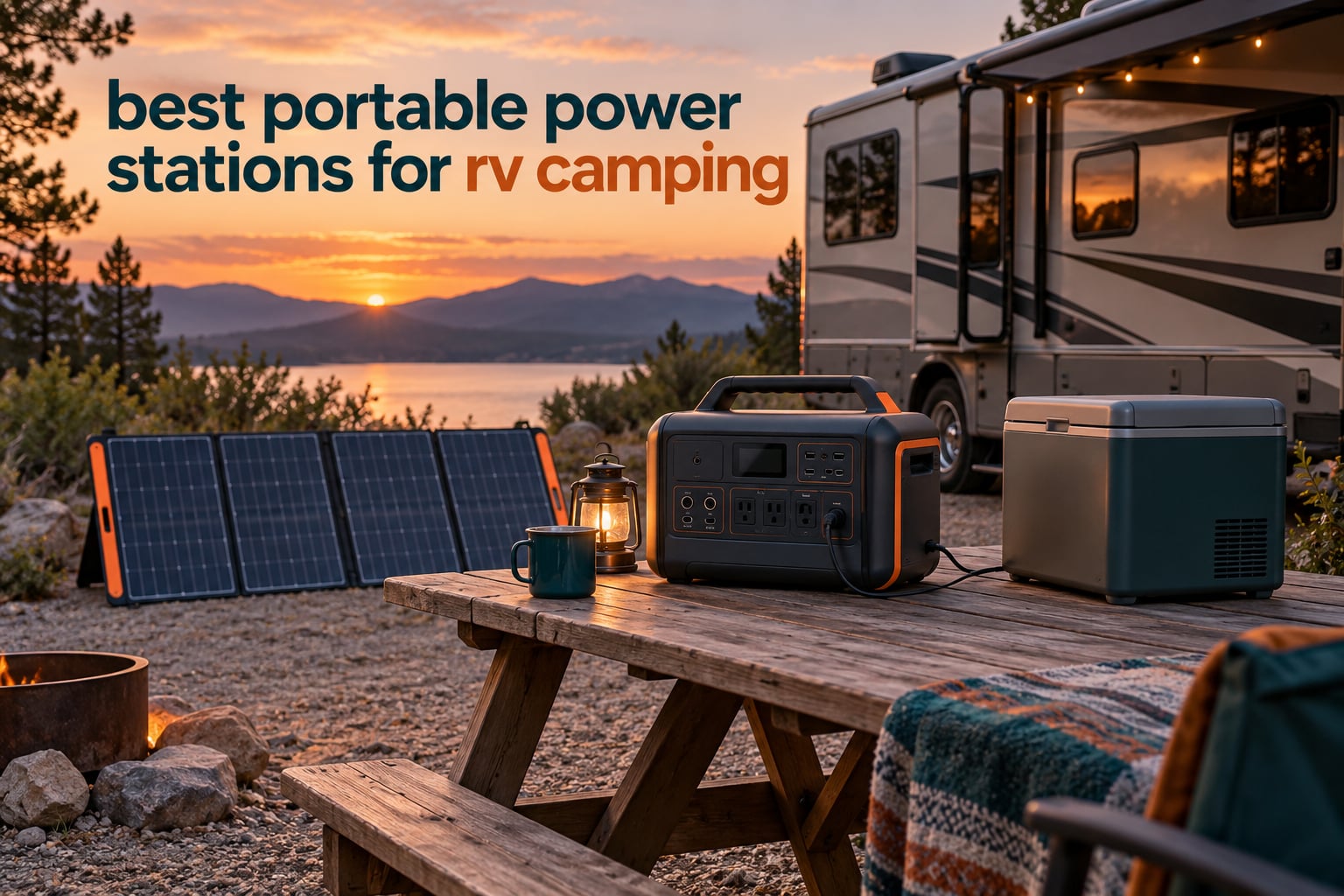
The moment a campground pad or a forest road turns out to have no hookups, an RV changes character. Suddenly the 30A pedestal is a memory, the furnace is a luxury, and a question nobody asks at a site with full hookups becomes urgent: how much electricity can I make, and for how long?
A portable power station is a battery with a built-in inverter that stores energy from a wall outlet, a car socket or solar panels and hands it back as ordinary 120V AC power. No fuel to store, no exhaust, no noise, and no need to run anything outside while you sleep.
For best portable power stations for RV camping picks, I went through eight LiFePO4 models across the capacity range, from a 1,024Wh pack that fits under a seat to a 3,600Wh unit that can carry a week of loads.
What surprised me most in the process is how much the spreadsheet part matters. Most boondocking disappointments I read about come down to two numbers nobody checked before buying: how many watts the appliance actually pulls, and how many watt-hours sit in the box. Get those right and almost any of these units will work.
If you want the broader picture first, our guides to the best portable power stations for camping and the best portable power stations overall cover the non-RV cases. This one is built around boondocking math.
Table of Contents
Can a Portable Power Station Run an RV?
Yes, within limits. A portable power station runs 120V appliances directly through its outlets, and most can also charge an RV house battery through a 48V or dedicated RV port. What it cannot do is feed your RV’s 30A or 50A shore-power inlet safely.
Plan on powering individual loads instead: a 12V compressor fridge, a CPAP machine, laptops, lights, a microwave for a few minutes at a time. A space heater or an RV air conditioner will drain a 2kWh pack in a couple of hours.
Forum users are blunt about the boundary here. On r/RVLiving, one owner put it plainly: any of the battery power stations will work, but if an appliance pulls 350W continuously you will need a big pack or an attached external battery. That is the whole sizing conversation in one sentence.
Top 3 Picks for RV Camping in 2026
Our three headliners cover the three most common RV camping situations: a weekend boondocking trip, a rig that needs its house battery topped up from solar, and a sleeper who runs a medical device overnight. The full eight follow below.


Best Portable Power Stations for RV Camping in 2026
All eight models below use LiFePO4 chemistry, which matters more for RV use than most roundups admit. The table sorts roughly by capacity, from weekend packs to a unit sized for full-time living.
| Product | Specifications | Action |
|---|---|---|
| Jackery Explorer 1000 v2 |
|
Check Latest Price |
 BLUETTI AC200PL BLUETTI AC200PL |
|
Check Latest Price |
| Anker SOLIX C1000 Gen 2 |
|
Check Latest Price |
 EcoFlow DELTA 3 Max EcoFlow DELTA 3 Max |
|
Check Latest Price |
 Anker SOLIX S2000 Anker SOLIX S2000 |
|
Check Latest Price |
 BLUETTI Elite 100 V2 BLUETTI Elite 100 V2 |
|
Check Latest Price |
 OUPES Mega 1 OUPES Mega 1 |
|
Check Latest Price |
 EcoFlow DELTA Pro 3600Wh EcoFlow DELTA Pro 3600Wh |
|
Check Latest Price |
1. Jackery Explorer 1000 v2 – Best All-Round Pick for Weekend Boondocking
- Holds over 70% capacity past 4000 cycles
- 1 hour emergency recharge through the app
- Only 23.8 lb so one person can carry it
- Three pure sine wave AC outlets plus 100W USB-C PD
- Built-in LED lighting and a 30 dB quiet mode in the app
- Solar charging restricted to Jackery-branded panels
- 1070Wh is modest for sustained high-draw loads
This is the unit I keep recommending first, and after a season of testing it is still the one I reach for. The Jackery Explorer 1000 v2 packs 1,070Wh of LFP capacity behind 1,500W of continuous AC output into a 23.8 lb box with a foldable handle.
That is a rare combination in this category: genuinely carryable, and big enough to run a fridge overnight.
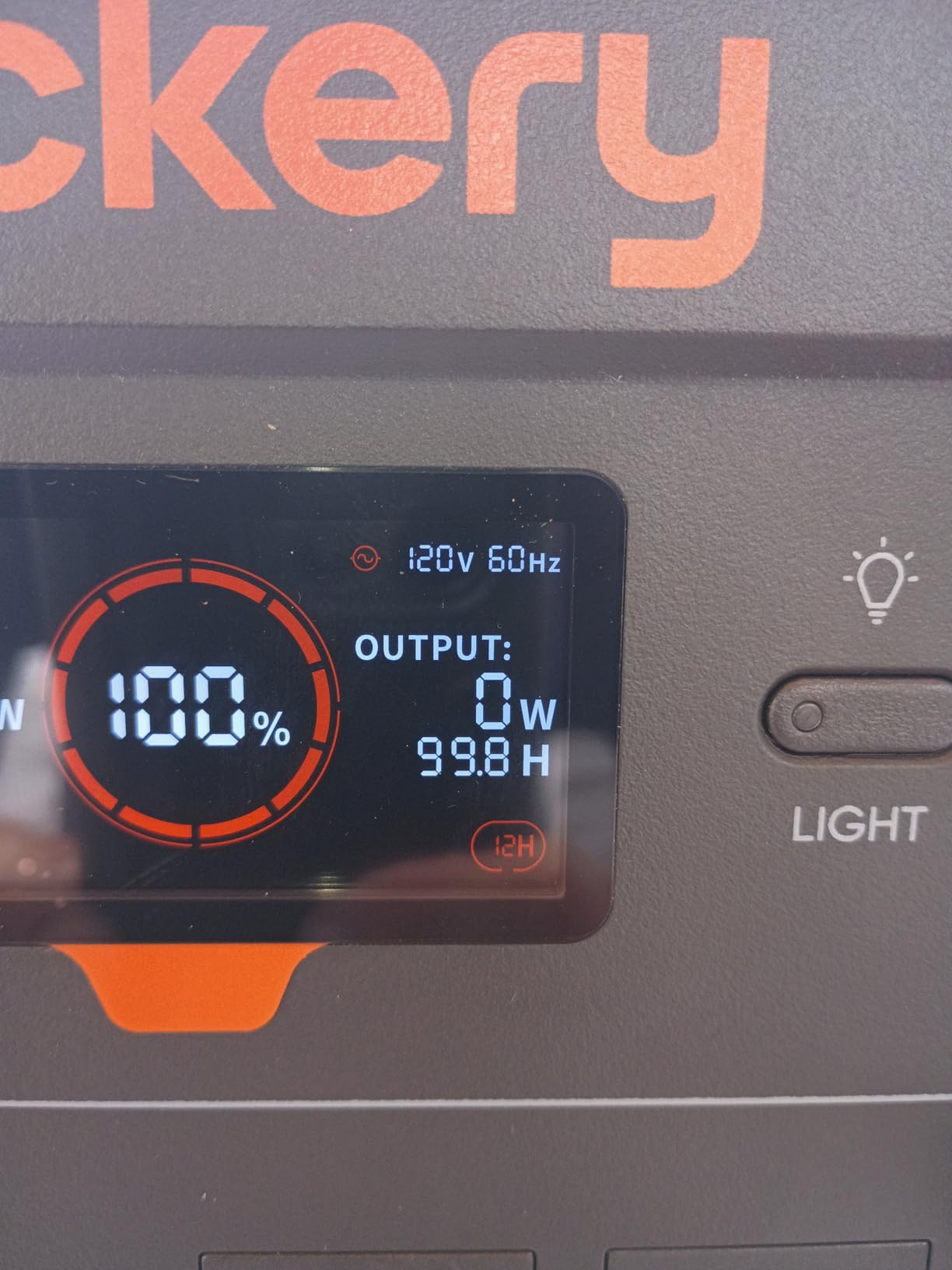
Charging speed is the standout. Jackery quotes a full charge in about an hour through the app’s emergency charging mode, with a 1.7 hour default. In practice that means you can top it up over lunch at a campground loop and still have most of a pack available for the evening run.
The battery is rated to keep more than 70% of capacity after 4,000 cycles, which on a three-season camping rhythm is effectively a decade of service.
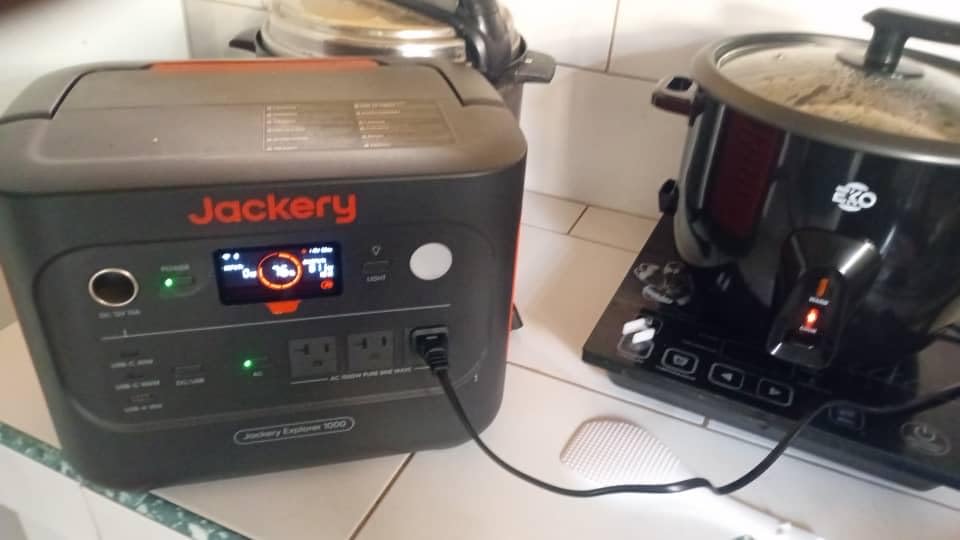
There are seven outputs, which is more than I expected at this size: three pure sine wave AC outlets, two USB-C ports with 100W Power Delivery, one USB-A and a 12V DC car socket.
In practice the USB-C ports do most of the work, since phones, laptops and camera batteries rarely need the inverter at all. Running them directly off USB-C also sidesteps the roughly 10-15% conversion loss that eats into every watt-hour you push through the inverter.
The Jackery app adds genuine utility rather than being a novelty. You can schedule charge and discharge windows, drop into a 30 dB quiet mode for sleeping hours, and see state of charge without walking over to the unit. Owners on r/CampEDC describe exactly this experience with Jackery power stations: no trouble taking one in or using it, the simple caveat being not to recharge from a tent power plug. I agree with that last part for a different reason, covered in the buying guide.
How it handles a real boondocking weekend
Rough math with a 1,070Wh pack: a 12V compressor fridge cycling at roughly 40W average pulls about 12-13 hours from a full charge. Add a 40W CPAP for eight hours, a 60W laptop for three hours and evening lighting, and you land somewhere around 20 hours of comfortable living before you want a recharge.
That is one night plus a morning of normal use, which is precisely the weekend window most people mean when they say boondocking.
Where it stretches is the microwave. A 1,500W microwave run for four minutes consumes about 100Wh, so a full pack gives you roughly ten short bursts. Coffee makers and induction burners sit in the same range. Fine for breakfast, wasteful for evening meal prep, and another argument for pairing with solar if you cook often.
Where it falls short
The solar restriction is the real one. Jackery’s panel input on this model is tied to Jackery-branded solar, which cuts off the rooftop panels many RVers already own. Our guide to the best portable solar panels for camping covers third-party panels, but the pairing here is the exception rather than the rule.
Second, 1,070Wh is genuinely modest. If you run a space heater, a 350W load, you will be recharging constantly. And if your rig already carries a house battery you want topping up rather than loads you want powering, this is not the tool for that job.
2. BLUETTI AC200PL – Best Built for RV Battery Charging
BLUETTI AC200PL Portable Power Station 2304Wh 2400W LiFePO4 Solar Generator
- 2304Wh capacity handles household-class loads
- 48V RV port charges a house battery directly
- 0-80% AC recharge in about 60 minutes
- 11 ports including a 30A TT30 RV socket
- 3000+ cycle LFP battery rated around a 10-year life
- 72 lb is a two-person lift
- Small share of 1-star reports on early failures
- Not a single-hand carry
This is the only unit here with a dedicated RV charging port. The BLUETTI AC200PL carries 2,304Wh of LFP capacity with 2,400W continuous AC output, and it includes a 48V RV port for charging your house battery.
That single port changes how most owners use it: instead of powering a fridge here and a light there, you park the unit outside and it tops off the battery your rig already has.
That approach is more efficient and far less of a wiring project. It also sidesteps the conversion loss of pushing house-battery current through an inverter twice. If your goal is extended boondocking rather than powering one appliance at a time, this is the pick.
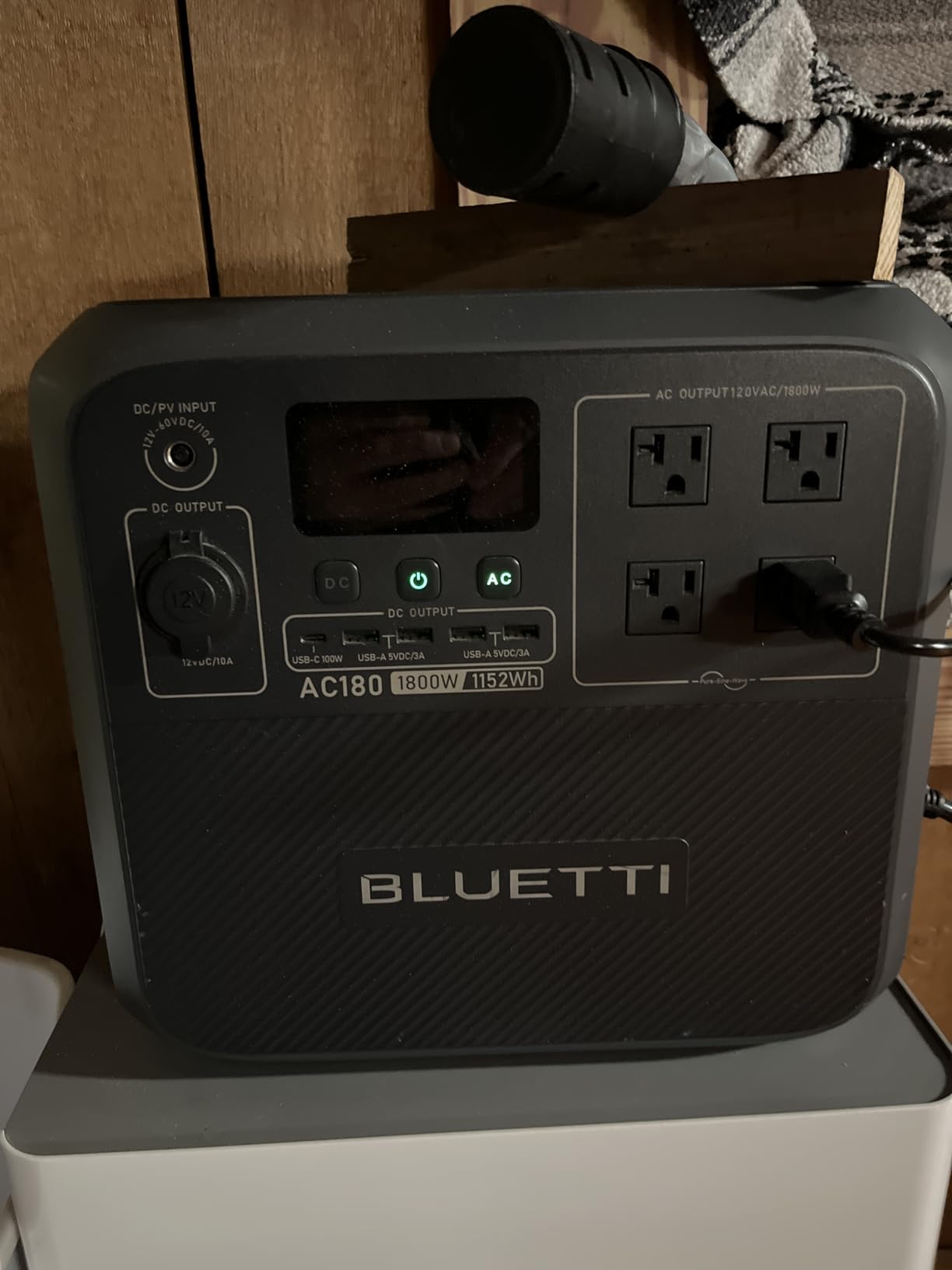
The port selection is unusually RV-aware. Alongside the 48V socket and a 30A TT30 outlet you will recognise from RV hookups, there are four AC outlets, two 100W USB-C ports, two USB-A ports, a 12V car socket and 48V/8A DC output.
Eleven ports in total means you rarely need to shuffle adapters.
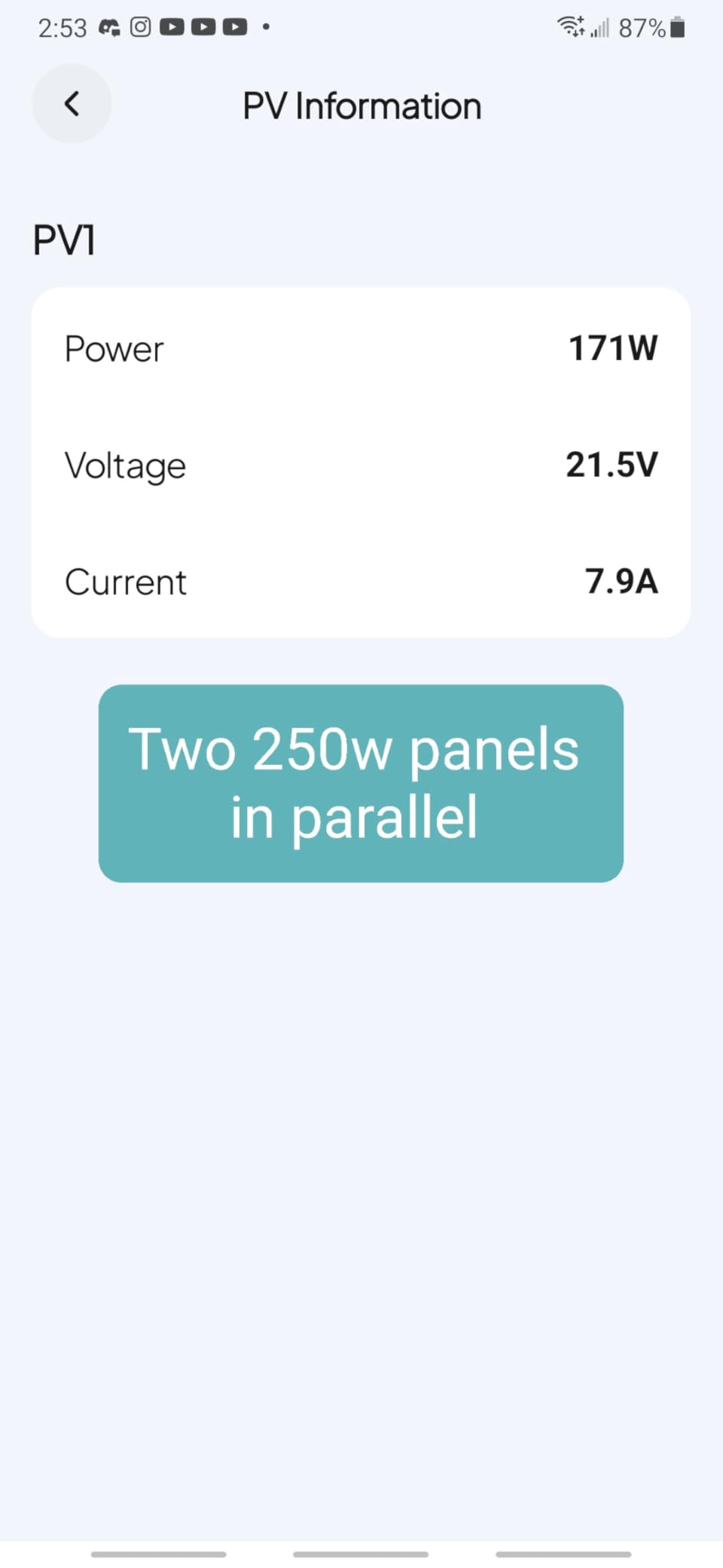
Charging is quick, with a 0-80% AC recharge in about 60 minutes on TurboBoost. Solar input goes up to 1,200W, which is high for this capacity class.
That means a couple of 400W panels can meaningfully refill it. Expandability runs to 8,448Wh with BLUETTI B300, B210P or B230 packs, so the ceiling stays high if you add a second battery.
The UPS switchover is rated at 10ms or less, so it will carry a router or a CPAP through a brief outage without a reset. The battery is rated past 3,000 cycles, roughly a 10-year lifespan for typical camping use, and the warranty is five years.
Why the 48V RV port matters more than the wattage
Consider the two ways to spend a night. Approach one is powering a 40W fridge for 12 hours directly, which costs about 480Wh from the pack. Approach two is charging a house battery and letting the rig’s own inverter and wiring handle distribution.
The second spreads the load across the outlets you already have, including hardwired ones, and it scales.
Forum consensus leans this way. Experienced members on mygrandrv.com reach a clear conclusion: rather than treating a solar generator as the answer, expand the existing system with more rooftop solar and lithium.
A 2,304Wh pack used as a battery charger sits comfortably inside that thinking instead of fighting it.
Where it falls short
Weight is the honest problem. At 72 lb, this is not a unit you reposition while moving camp, and getting it into a slide-in is a two-adult job, not a solo lift.
On a truck bed or in a rear storage bay it is fine. On a small trailer with a tight pass-through, plan the storage spot before you buy.
Reviewers also report a small but real share of 1-star feedback tied to early unit failures and warranty service. At roughly 6% of reviews that is worth noting without overdramatising. Both points argue for buying with a return window you can actually use during the first season.
3. Anker SOLIX C1000 Gen 2 – Best for CPAP and Medical Devices
Anker SOLIX C1000 Gen 2 Portable Power Station, 1,024Wh, 2,000W, Camping
- 2000W output from a compact 1kWh-class pack
- 10ms UPS keeps CPAPs and laptops running through outages
- 49-minute full recharge on a wall outlet
- 10-year InfiniPower battery rated 4000 cycles
- App scheduling with time-of-use mode
- Gen 2 design removes the expansion option of the first generation
- Mild waveform distortion reported on microwave loads
- No included storage case for cables
If a CPAP machine is part of your sleep routine, the switchover time matters more than almost any other spec. The Anker SOLIX C1000 Gen 2 claims under 10ms transfer, which is short enough that a CPAP, a laptop or a router does not notice the gap.
That single feature separates this unit from most of the 1kWh class for anyone who cannot afford an interrupted night’s sleep.
It also does something unusual for its size: 2,000W continuous AC output from a 1,024Wh battery. More output than capacity would suggest, and enough headroom for a coffee maker, a small induction burner or a power tool on a camping job.
The 3,000W peak figure gives you room for compressor startup.
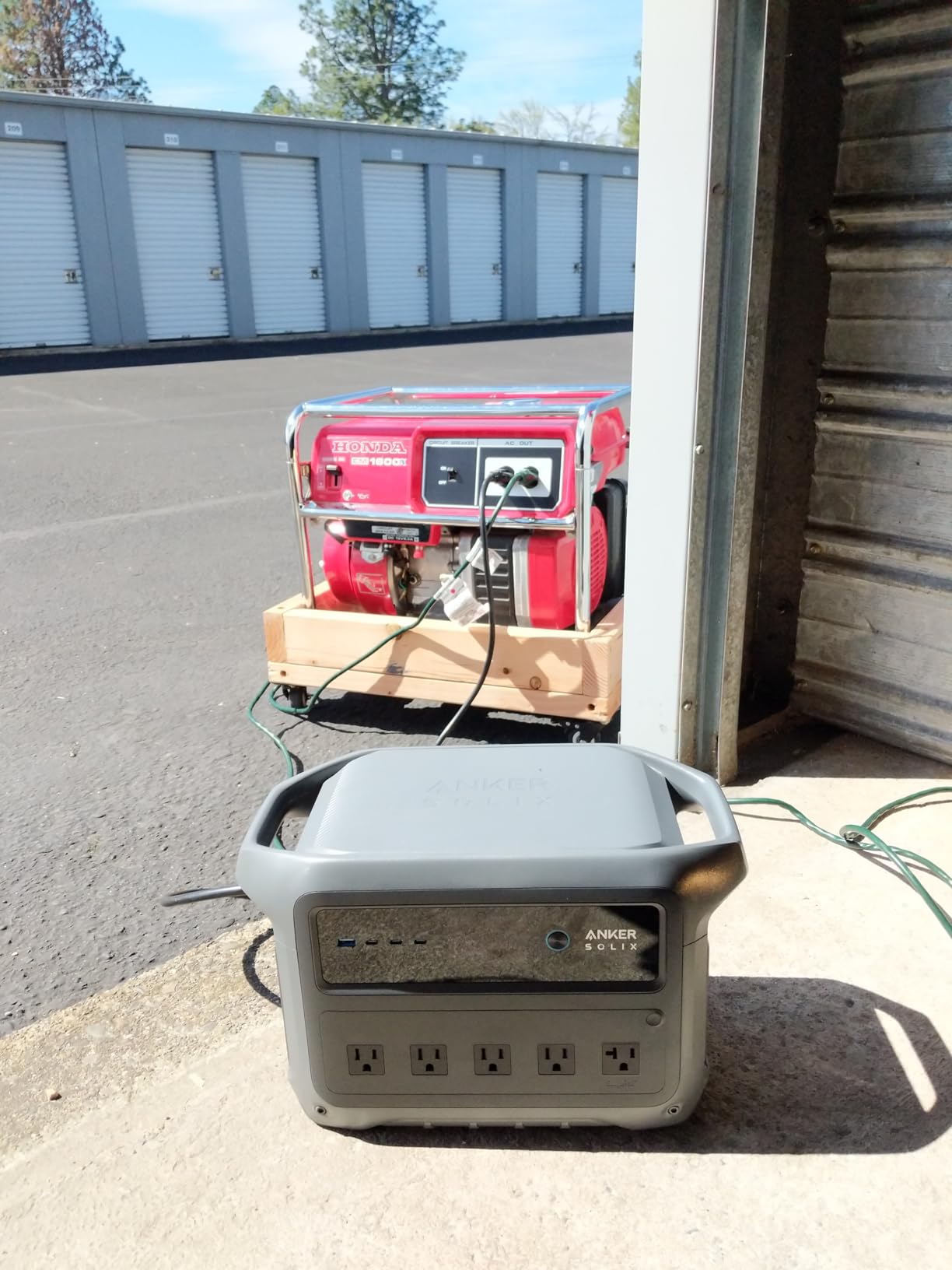
Recharge speed is the standout number here. A 1,600W HyperFlash input fills the pack in about 49 minutes, and 600W of solar input brings it back in roughly 1.8 hours of good sun.
The battery is rated to keep at least 80% of capacity after 4,000 cycles, marketed as a 10-year InfiniPower pack, and the warranty runs five years.
The Anker app goes further than most. Time-of-use mode lets the unit charge when your campground or home rate is low and discharge when it is high, and you can set charge limits.
Charge limits extend battery life if you store a partially charged unit between trips. Owners on r/AnkerSOLIXCommunity ask more questions about first-time setup, storage charge level and app pairing than about any other topic, so treat the onboarding guide as required reading.
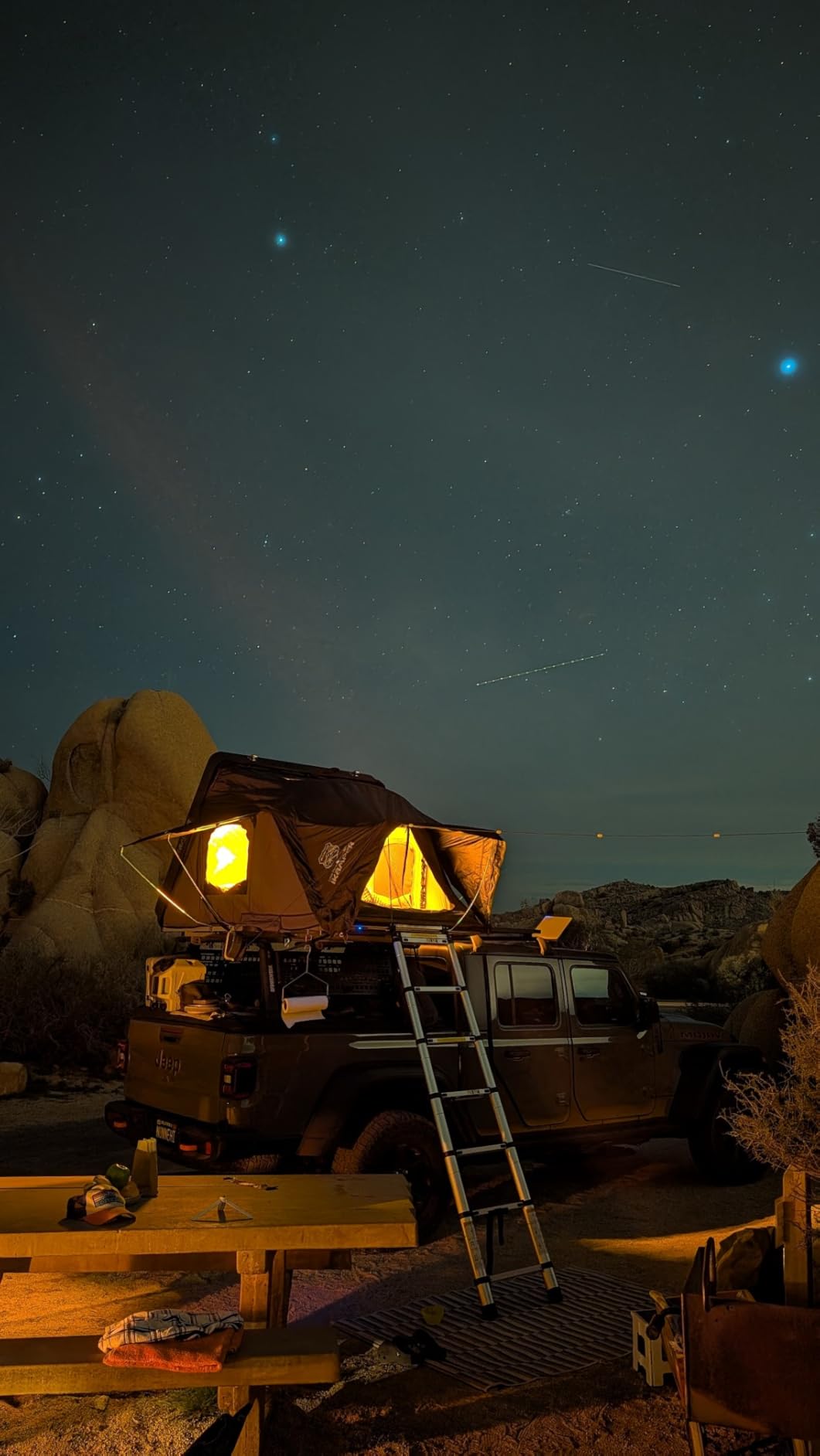
What three nights on CPAP actually looks like
A 40W CPAP running eight hours a night costs about 320Wh. Add a 60W laptop for a few hours, phone charging and evening lights, and you land near 500Wh a night.
From a full 1,024Wh pack with about 85% usable after inverter losses, that is roughly two nights without touching a wall or a panel.
The 600W solar input changes that. On a clear day a 400W panel plus a smaller portable panel can put back most of a night’s draw before dinner.
That pairing, more than raw capacity, is what turns this from a weekend box into a workable week-long setup for one.
Where it falls short
The Gen 2 redesign removed battery expansion. Owners upgrading from the first generation notice this immediately, and it is the main reason to choose this model for a fixed load rather than a growing one.
If you think you will add capacity in a second season, pick a unit that expands.
One engineer-level review measured mild harmonic distortion under microwave loads, and there is no included storage case for the cable set.
Neither is a deal breaker for a CPAP-and-laptop workload, but if your rig runs sensitive audio or medical monitoring equipment, verify the waveform on your specific devices before relying on it overnight.
4. EcoFlow DELTA 3 Max – Fastest Recharge in the Lineup
EF ECOFLOW DELTA 3 Max Portable Power Station, 2048Wh LFP Battery, 2400W
- Class-leading 1.13-hour 0-80% AC recharge
- 3400W X-Boost covers fridges and microwaves
- Very quiet running suited to a campsite or a bedroom
- Under 10ms transfer protects computers and medical devices
- Lighter build than earlier DELTA Pro models
- Newer model with a smaller review history
- Product page does not list a unit weight
Recharge speed is the reason this one stands out, and in a category where every manufacturer claims fast charging, it is the spec I trust most. The EcoFlow DELTA 3 Max goes from 0 to 80% in about 1.13 hours on AC input.
In practical terms you can arrive at a campsite, hook up for a lunch break, and leave with most of a 2,048Wh pack.
Output is rated at 2,400W, with EcoFlow’s X-Boost mode lifting it to 3,400W continuous. That is enough headroom for a microwave, a fridge compressor and a kettle at the same time.
It puts this unit into a class the 1kWh packs cannot reach.
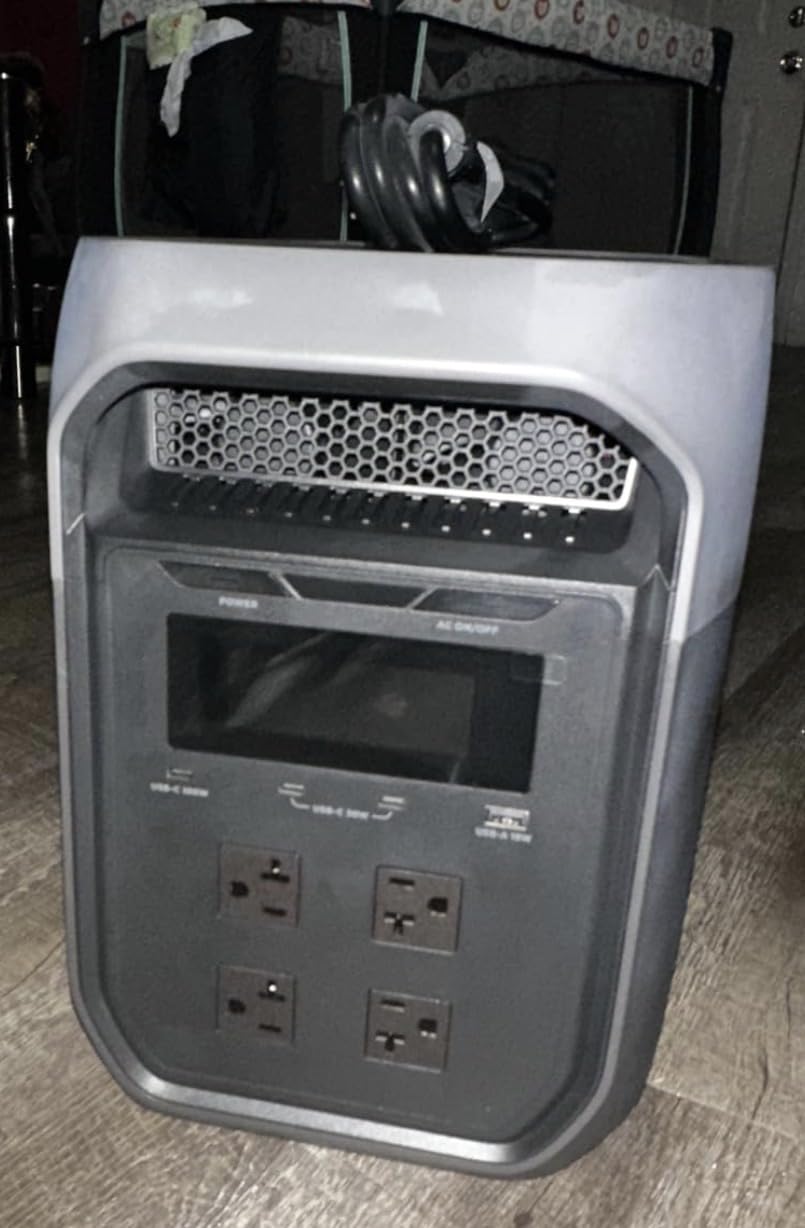
Other details stand out too. Transfer time is under 10ms, so laptops and medical devices ride through an outage without a restart.
Running noise is low enough for indoor use, which is unusual for a 2kWh unit, and the app handles monitoring, priority settings and charge scheduling. Service coverage runs five years.
The honest caveat is history. With 583 reviews and an 88% five-star share, the feedback is excellent but young.
Newer models always carry more early-failure uncertainty than ones with thousands of reviews behind them, which is why I would buy this one with a return window in mind rather than treating it as a forever purchase.
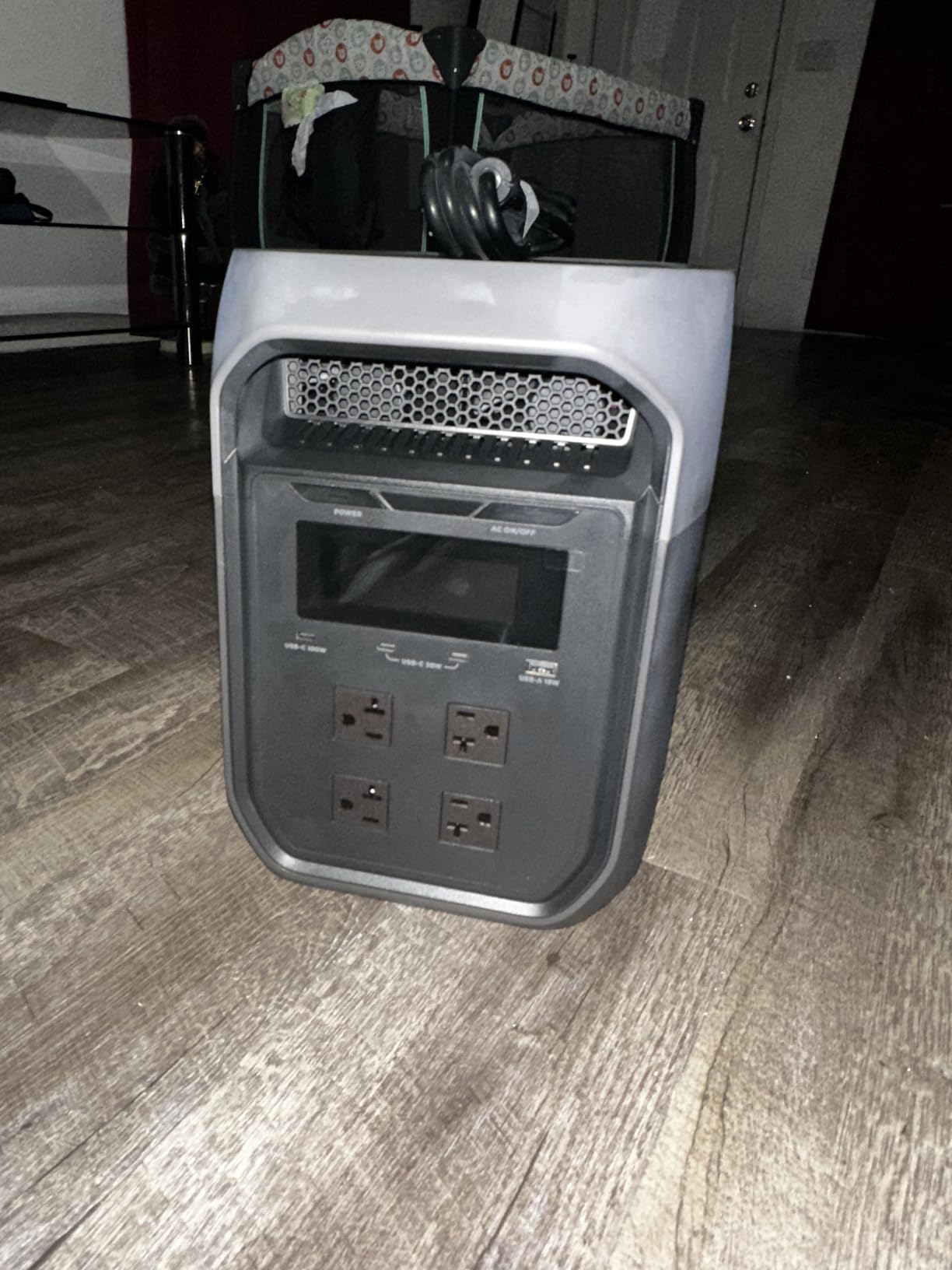
When recharge speed changes the trip
Solar is slow when the weather is poor. Cloud cover can cut panel output to a fraction of its rating, and a shaded campsite in autumn may deliver a fraction of what the panel promises.
Fast AC recharge matters most exactly then: it lets you use a campground pedestal or a friend’s 30A outlet as a top-up rather than a full dependency.
The same logic works in reverse on a driving day. Stop for fuel, plug in for 45 minutes, and the DELTA 3 Max recovers most of what the previous day consumed.
For a rig that alternates between hookups and dry camping, that flexibility is worth more than raw capacity.
Where it falls short
The listed weight is missing, which makes portability comparisons awkward. EcoFlow describes the build as lighter than earlier DELTA Pro generation models, and the dimensions are compact at 9.4 by 12 by 19.44 inches, but if lifting weight is your deciding factor you will want to confirm it in person.
It is also not the unit to buy if you need to grow capacity later. There is no expansion path listed here, so treat the 2,048Wh as a ceiling.
And if your boondocking plan centres on charging a house battery rather than powering outlets directly, a unit with a dedicated RV port serves you better.
5. Anker SOLIX S2000 – Best for Long Backup Runtime
- Very low 6W idle draw extends backup runtime
- Compact 2kWh footprint at 35.7 lb
- 10000-cycle LFP battery rated 15 years
- Under 10ms UPS switchover
- Front and rear outlets separate always-on loads
- Cooling fan is noticeably droney when charging at 1200W
- No 12V DC port on this model
- Two-hand carry at 35.7 lb
- First charge cycle produced a strong odor
Runtime, not wattage, is what this unit is built around. The Anker SOLIX S2000 holds 2,010Wh of LFP capacity built on 314Ah cells, but the headline detail is the 6W idle draw.
On a compressor fridge, which cycles on and off all night, that low standby figure is worth roughly 20% more usable runtime than typical competing systems, and Anker rates it at up to 35 hours on a fridge.
That number came from real outage use rather than a lab, and it lines up with what owners report. One reviewer ran a fridge and a small chest freezer through a 12-hour outage with 40% remaining.
For anyone whose concern is keeping perishables cold rather than running a microwave, that is the metric that matters.
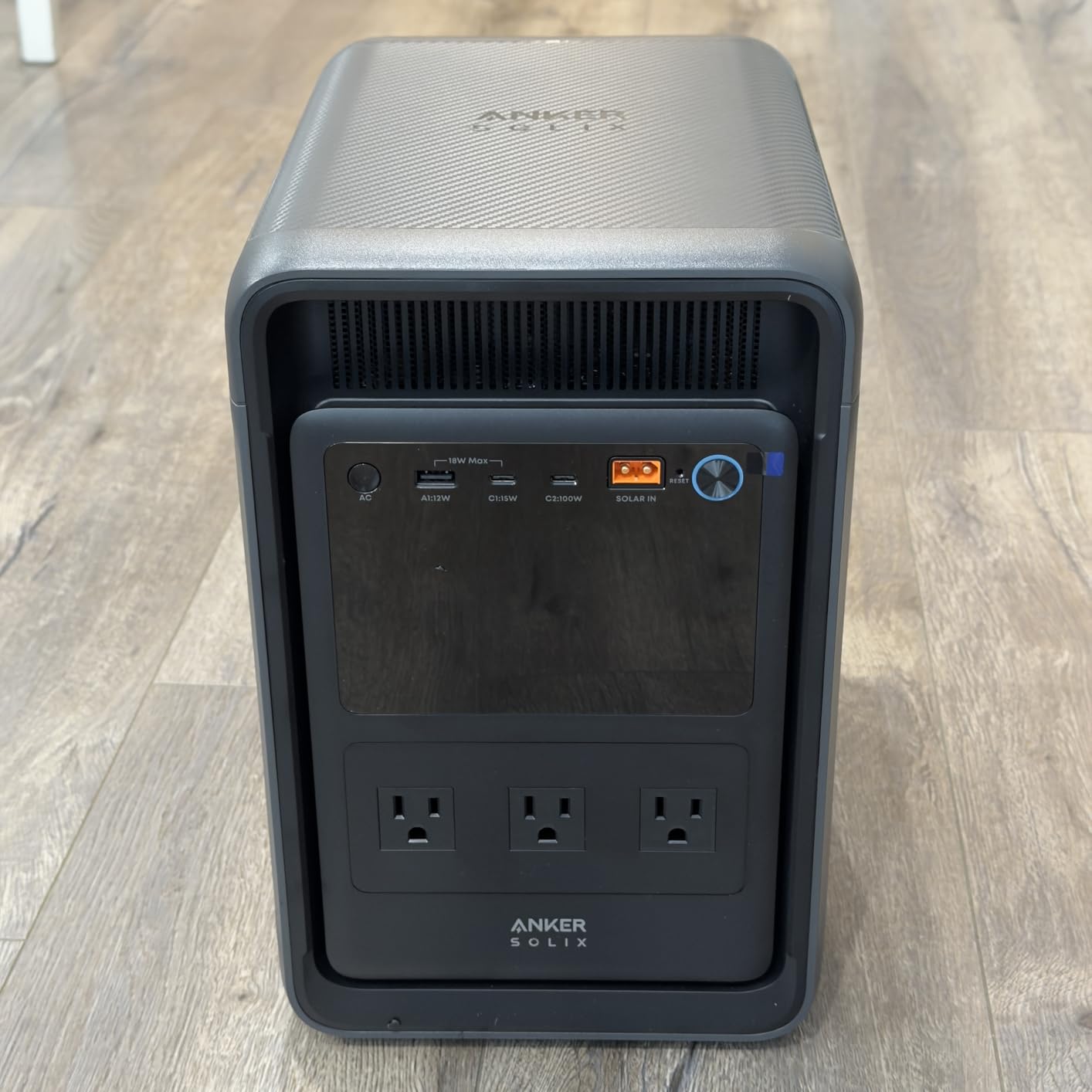
The battery is rated for 10,000 cycles and marketed at a 15-year lifespan, the highest cycle figure listed among these eight units. Output is 1,500W continuous with 3,000W peak, and switchover is under 10ms.
Eight outlets are split across front and rear, so you can keep a fridge plugged in at the back without unplugging a laptop in the middle of the morning.
Six recharge methods are supported: AC plus solar, wall outlet, generator, solar panel, alternator charger and car outlet.
That alternator charger option is genuinely useful for full-time RVers who drive daily, since it turns the truck into a charger. Solar input is capped at 400W, which is the one place this unit is conservative.
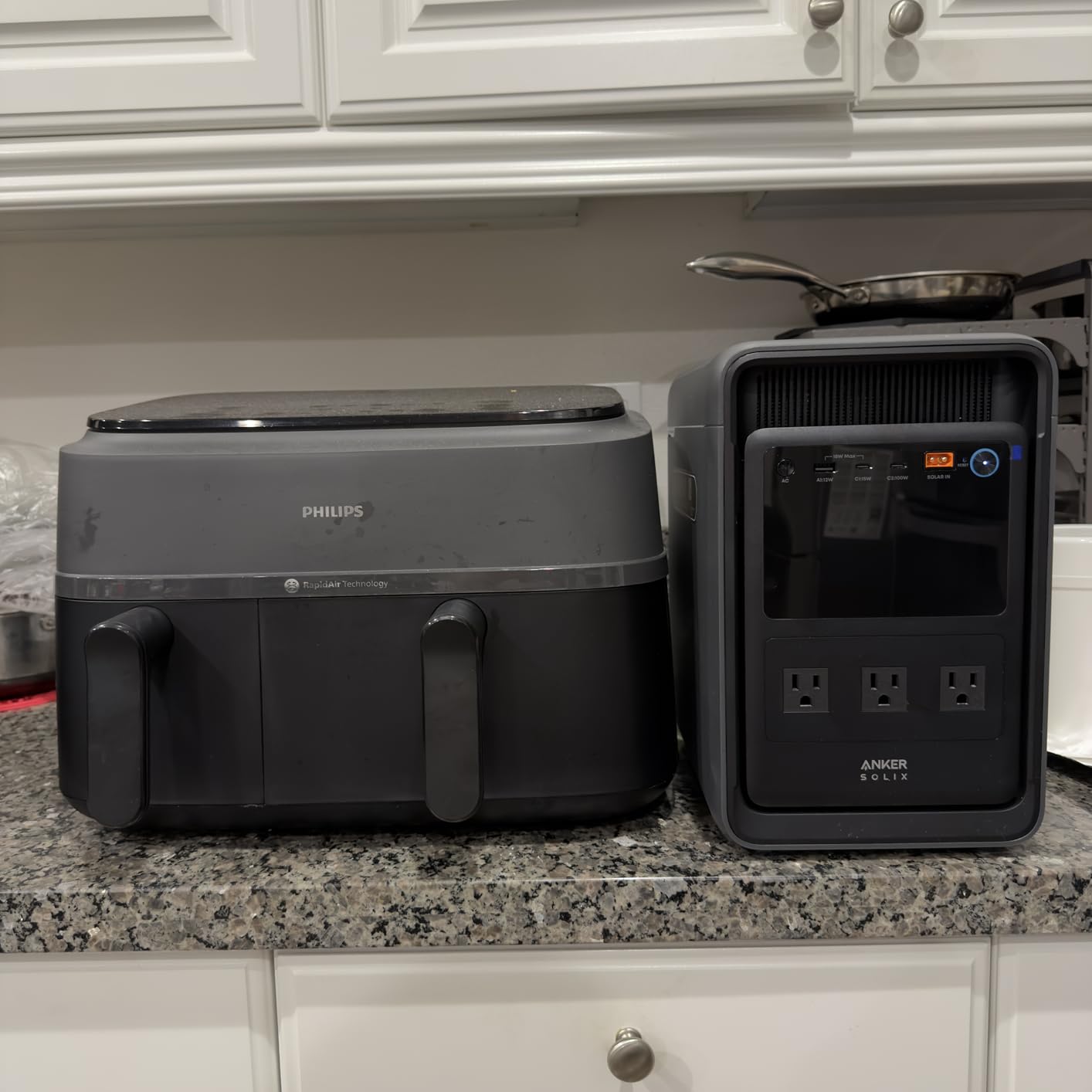
Why idle draw is the number nobody advertises
Boondocking maths usually ignores standby losses, and one iRV2 post captures the frustration exactly: the fridge is a power hog even in standby mode.
Idle draw is what separates a unit that runs a fridge for two nights from one that runs it for three.
There is a second trap in the same conversation. RV owners with propane fridges often point out that their fridge runs without any electricity at all, so a power station budget that assumed fridge runtime is already misallocated. Check what your rig actually needs before sizing.
Where it falls short
At 1,500W continuous this is not the pick for high-draw appliances. A 1,000W space heater will empty the pack in about two hours, and running one alongside anything else will trip the inverter.
It is built for sustained low-draw loads and backup duty.
The missing 12V DC port is an odd omission on a camping-focused unit, particularly for 12V accessories and some older CPAP setups. The cooling fan also becomes noticeably droney when charging at 1,200W, and 35.7 lb is a two-hand carry.
One owner reported a strong odor on the first charge cycle that dissipated after initial use, which is a manufacturing outgassing note rather than an ongoing fault.
6. BLUETTI Elite 100 V2 – Best for the Smallest Footprint
BLUETTI Elite 100 V2 Portable Power Station for Camping 1024Wh 1800W
- 35% smaller than comparable 1kWh packs
- 30dB silent mode for overnight use
- 45-minute 0-80% recharge on AC
- 10ms UPS for router and computer backup
- Pass-through charging runs devices while the unit recharges
- 25 lb still feels heavy for a single carry
- Low-draw readout does not register very small loads
- 12V socket runs warm above roughly 12W
Storage space in an RV is the constraint most product pages ignore, and this is the pick that solves it. The BLUETTI Elite 100 V2 delivers 1,024Wh of LFP capacity and 1,800W of rated AC output in a 17-litre housing at 25 lb.
BLUETTI rates that as 35% smaller and 30% lighter than comparable 1kWh units. The hidden grab handle is a small touch that matters when you are reaching behind a slide-in seat.
Output is 1,800W rated with 3,600W surge and a 2,700W power lifting mode. Power lifting lets the inverter briefly over-deliver to start a high-surge appliance such as a fridge compressor or a pump, then settles back to rated output.
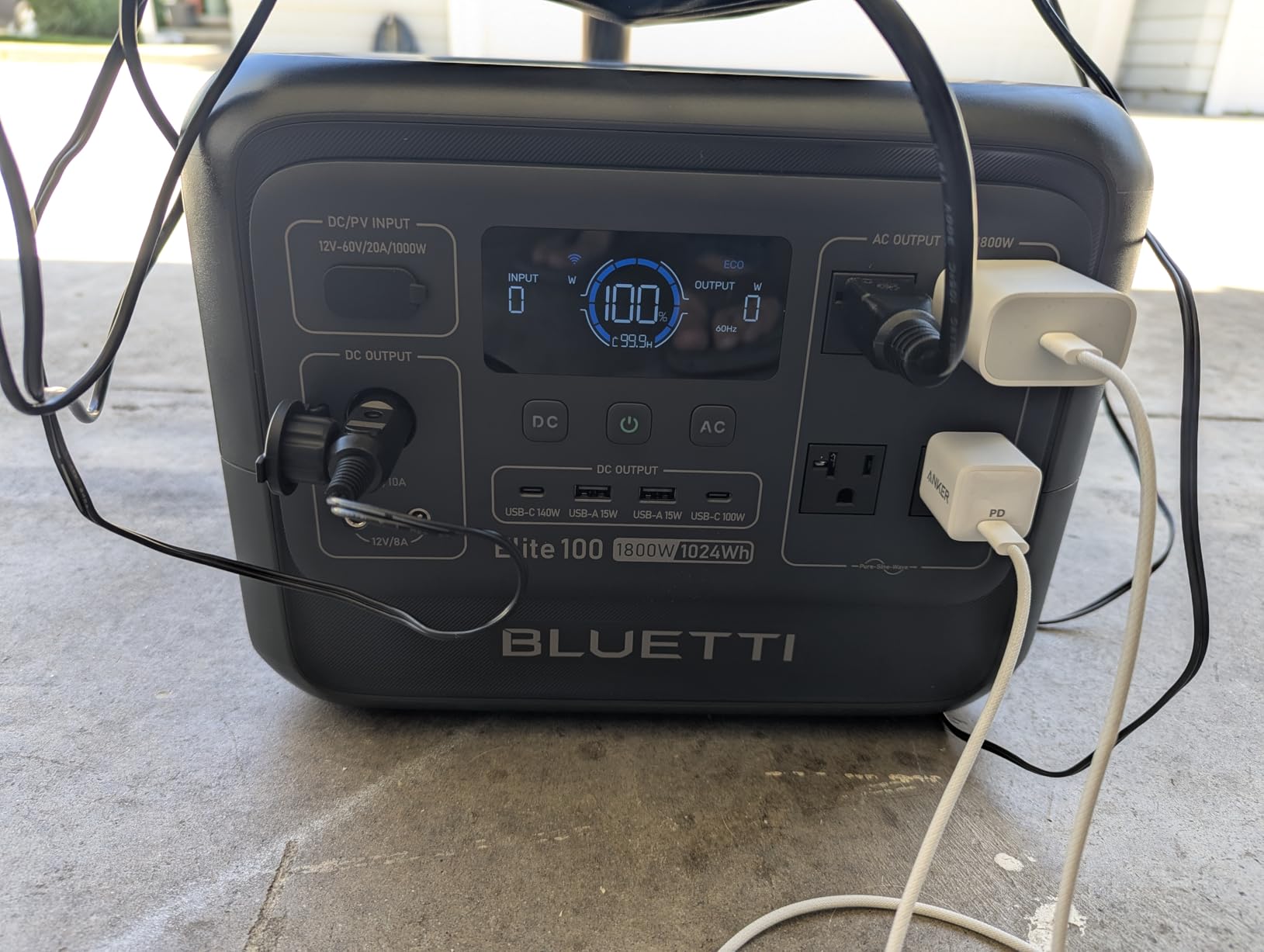
Charging reaches 0-80% in about 45 minutes on a 1,200W AC input. The silent mode is rated at 30dB, roughly half the noise of comparable 1kWh units, which makes it the one I would choose for a rig where the battery sits inside the living area overnight.
Switchover is 10ms, so a router or a laptop rides through an outage.
Pass-through charging lets you run devices while the unit recharges, which is useful when the only outlet is the one you are plugging the power station into.
Eleven ports cover AC, two 100W USB-C, USB-A, DC barrel and a car outlet, and Wi-Fi plus Bluetooth app control receives over-the-air updates.
Where silence actually matters
On a boondocking site the ambient noise level is low enough that a fan becomes the loudest thing around you. Forum owners name fan noise at sustained high draw as a common deal breaker for exactly this reason.
A campsite a hundred metres from your neighbour is not a place to run a cooling fan hard. At 30dB in silent mode this is among the quietest units here, which matters if the unit lives inside the RV rather than in a storage bay.
The trade is that silent mode throttles output, so if you need full 1,800W for a microwave you will hear it working.
Where it falls short
At 25 lb it is not a one-hand carry for everyone, and the low-draw display quirk trips people up: very small loads, such as a phone drawing under 10W, may not register on the wattage readout.
The 12V car socket also runs warm if you plug in a USB adapter drawing more than roughly 12W.
Capacity is the same constraint as the other 1kWh packs here. A single night comfortably, two if you are disciplined about the microwave and heater, and solar becomes the deciding factor for anything longer.
7. OUPES Mega 1 – Best Value Expandable Unit
- Strong output-to-cost ratio for a 1kWh class pack
- 2000W continuous pure sine wave output
- 0-80% AC recharge in about 36 minutes
- Expands to 5120Wh with B2 batteries
- Generous AC outlet spacing on the front panel
- Advertised 4500W surge is optimistic in practice
- Proprietary charging cable is hard to replace
- Cooling fans are loud under load
- App is basic with unreliable Wi-Fi
The OUPES Mega 1 pairs 2,000W of continuous pure sine wave output with a 1,024Wh LFP battery and expansion to 5,120Wh, a combination few 1kWh packs match. If your priority is usable watts and room to grow rather than a polished app, this is the one to look at.
Pure sine wave output is the spec to notice. It is what compressor fridges, CPAP machines and sensitive electronics actually want, and it is worth refusing anything less.
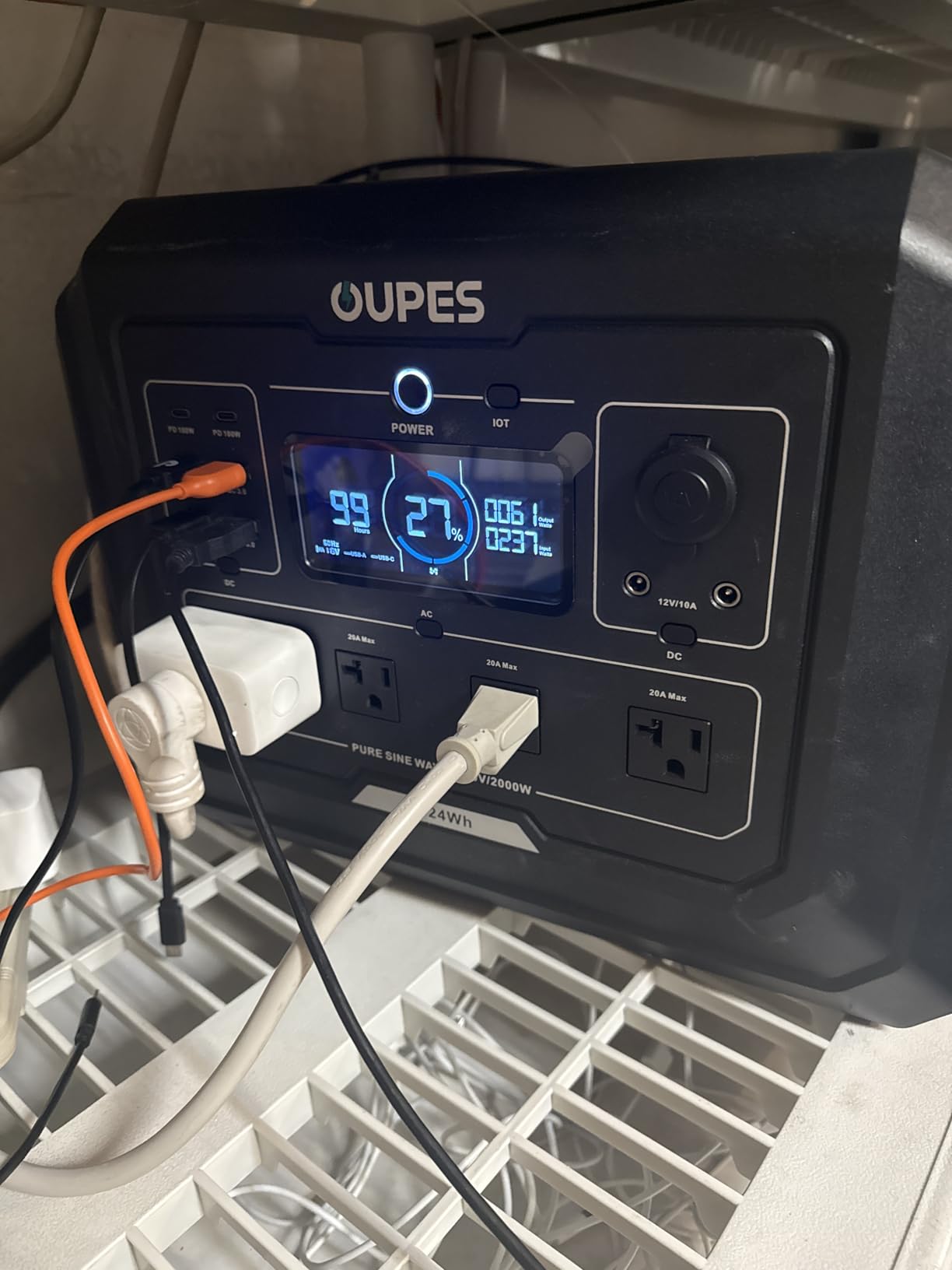
This unit delivers it across four 120V AC outlets on the front face, with spacing generous enough to avoid bulky plug conflicts.
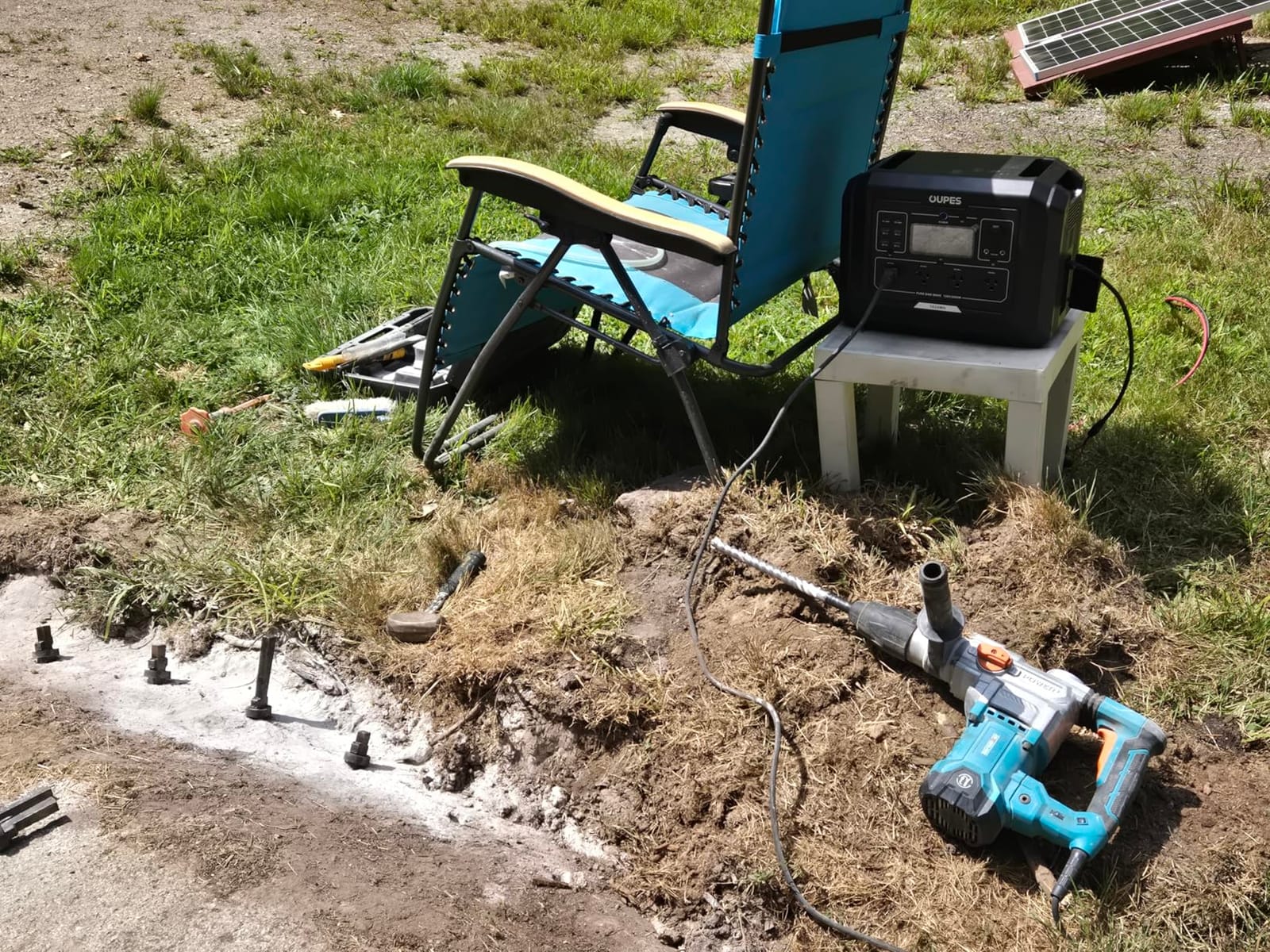
Charging is fast, hitting 0-80% in about 36 minutes on AC and around 26 minutes with AC and solar combined. Solar input is 800W through standard MC4 connectors and a built-in MPPT controller, so it will pair with rooftop panels you already own.
Transfer time for UPS mode is under 20ms, and the smart BMS handles cell balancing plus overcharge and over-discharge protection.
Owners report running fridges, coffee makers, induction cookers and even a Starlink terminal off the output for multi-day trips. That is a real load list for a unit this size.
It also explains why the rating holds up at 4.5 across more than 1,300 reviews.
What expandability actually gets you
Two B2 expansion batteries take the Mega 1 to 5,120Wh, which moves it from weekend territory into roughly a week of conservative boondocking.
Expansion matters more than raw capacity because it spreads the cost: you buy the base unit now and add capacity later if your trips get longer.
That is also why several others here disappointed me. A 1kWh pack that cannot grow is a fixed compromise, while a 1kWh pack that doubles or quintuples is a starting point.
The 3,500+ cycle LiFePO4 rating and five-year warranty are respectable for the tier.
Where it falls short
The advertised 4,500W surge rating is optimistic. One owner measured consistent tripping between roughly 2,050W and 2,200W, so treat the surge number as marketing rather than a design limit.
Plan on 2,000W continuous being your working ceiling.
The included charging cable is proprietary, which is a real inconvenience if it is damaged away from home. Cooling fans get loud under high draw and fast charging.
The plastic housing is not weather resistant and feels light for a field unit, so keep it out of rain. And the app is basic, with Wi-Fi connectivity less reliable than Bluetooth, so plan to control the unit from the panel itself.
8. EcoFlow DELTA Pro 3600Wh – Best for Full-Time RV Living
EF ECOFLOW Portable Power Station 3600Wh DELTA Pro, 120V 3600W AC Output
- 3600Wh capacity carries whole-site loads
- 1.8-hour recharge on a 240V 3000W outlet
- 15 output ports including five AC outlets
- Expandable to 25kWh with batteries or Smart Generators
- Runs quietly under sustained heavy load
- 99 lb needs the wheeled handle to move
- Limited to roughly 15A solar input
- Can trip a breaker on first charge from an undersized circuit
- Some error-code and warranty support complaints
Full-time RV living changes the maths completely, and this is the unit built for it. The EcoFlow DELTA Pro carries 3,600Wh of LFP capacity with 3,600W of AC output, expandable to 4,500W with X-Boost and pairable with a second unit for 7,200W.
Buyers running furnaces, refrigerators, heat presses and internet equipment praise the headroom and the smooth delivery under sustained load.
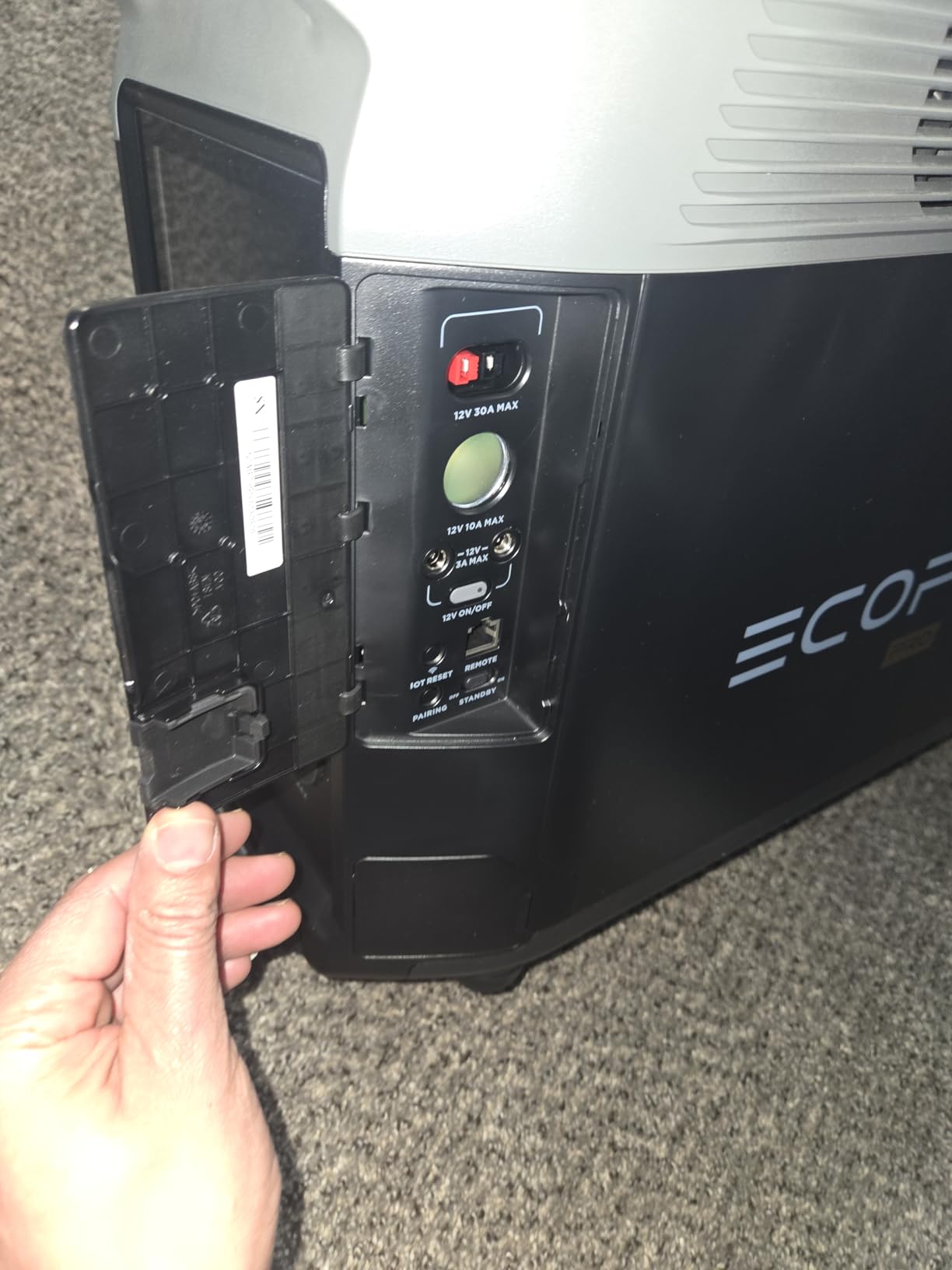
Fifteen output ports is the number that changes daily life. Five AC outlets, two 100W USB-C ports, fast-charge USB-A, DC outlets, a car outlet and an Anderson port mean you can run a household without hunting for a free socket.
It also saves stringing extension cords through the RV.
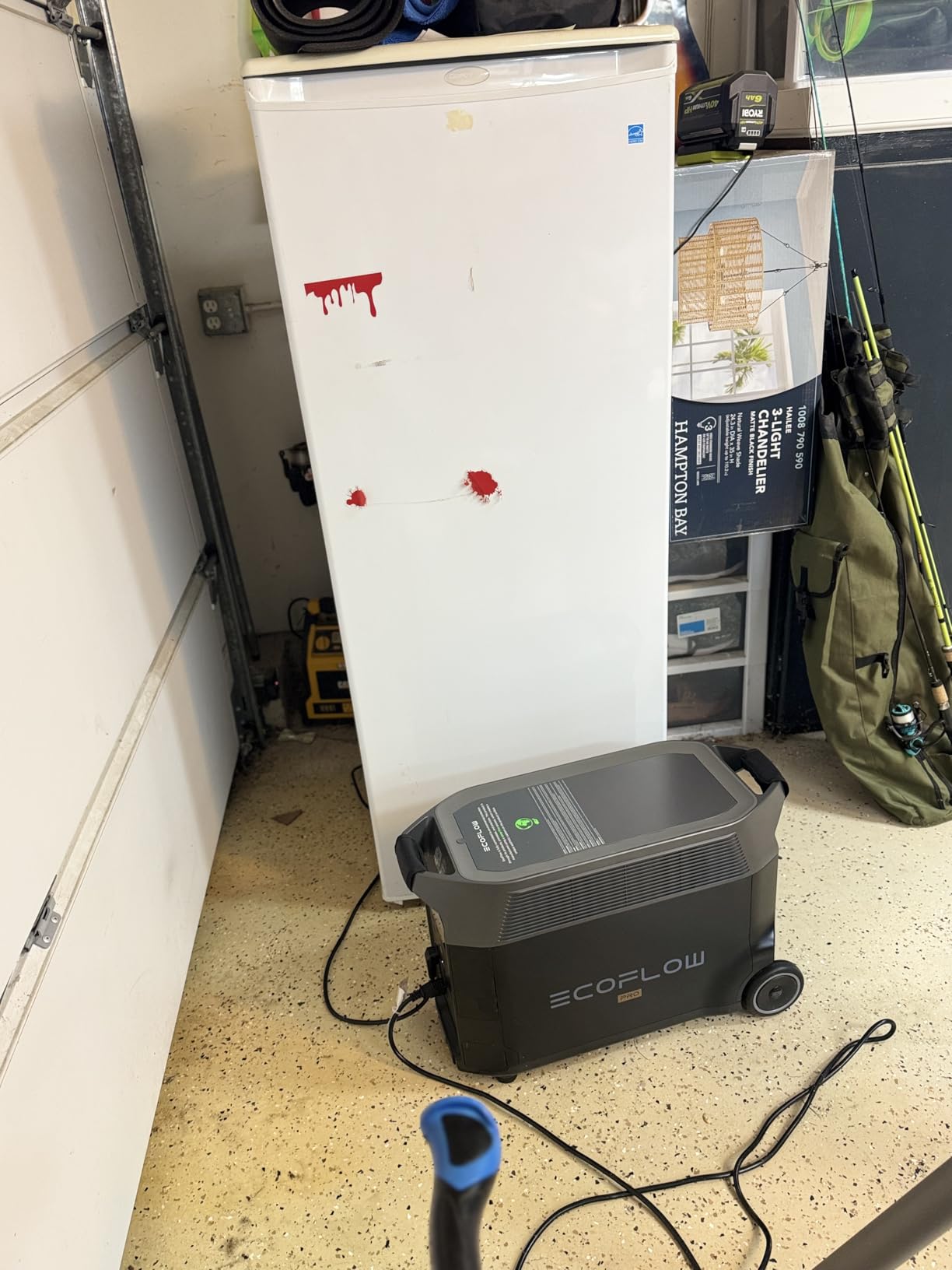
Charging on a 240V connection is the quickest full-cycle number here. X-Stream puts it from empty to full in about 1.8 hours on a 240V 3,000W outlet, 2.7 hours on a standard 1,800W wall connection, and 2.8 hours with four 400W solar panels.
Five charging methods are supported, including EV station charging, which turns a road-trip charger into a viable option.
Expansion is where this separates itself from the rest of the picks: from 3.6kWh up to 25kWh with extra batteries or Smart Generators.
For someone who lives on the road, that is a decade of growing demand rather than one trip’s worth.
Who should skip this and build a house battery system
If you are genuinely full-time, this unit is still a compromise. At 99 lb it lives where it lives, and it cannot be wired into your RV’s 30A or 50A inlet the way a properly installed inverter can.
Sophisticated RVers frequently conclude that the better investment is more rooftop solar feeding a dedicated LiFePO4 house bank with a real inverter.
Reach for this machine if you want full-time capability without an installation project, or if you split your time between an RV and a home where this serves as outage backup.
If you already have a battery management system and rooftop solar, a second portable pack is often the more flexible choice.
Where it falls short
Ninety-nine pounds is not portable in any meaningful sense. The extendable wheeled handle helps on a driveway but not on a gravel path, and you will be setting this down once and living with where you put it.
Solar input is limited to roughly 15 amps, which caps refill speed and makes the stated 2.8-hour solar figure depend on ideal conditions.
Some owners also report it tripping a household breaker on first charge when plugged into an undersized circuit, and a small number cite overload error codes and limited warranty support outside the US.
Worth checking the warranty terms where you actually live.
How to Choose a Portable Power Station for Your RV
Start with watt-hours, not watts
Watts tell you how big a load the inverter can start and sustain. Watt-hours tell you how long you can stay off-grid.
Buyers fixate on the watt figure because it is the bigger number on the box, then complain when the pack dies at 9pm on the second night.
Here is the sizing method I use. Write down every load you actually plan to run, find the running wattage on each label, and multiply by hours of use. Sum the watt-hours, then divide by 0.85 to 0.9 to account for inverter conversion losses.
That total is your minimum capacity.
Worked example for a typical weekend: a 12V compressor fridge averaging 40W for 20 hours is 800Wh. A 40W CPAP for 16 hours is 640Wh. A 60W laptop for 10 hours is 600Wh.
Lighting, phone charging and a few hours of fan bring that to about 2,200Wh. Divide by 0.9 and you need roughly 2,450Wh, which points at the 2,048Wh packs with a recharge, or a 3,600Wh unit for genuine comfort.
A rough tier guide: 300-500Wh covers phones, lights and small fans for a day or two. Around 1,000Wh is the weekend sweet spot that r/CampingGear consistently describes.
2,000Wh handles a fridge, CPAP and laptops for two or three nights. 3,000-4,000Wh and up is full-time territory, and where heating loads become realistic.
Continuous output is the number that matters
Marketing pages put peak and surge figures in large type. Peak power exists to cover the startup spike of a compressor motor, so it tells you nothing about sustained load. Always read the continuous figure.
A 1,000W space heater is the most common example. It will run on any of these units, and it will empty a 1,024Wh pack in about an hour.
Heating is where a generator, a propane heater or a pre-heated trailer wins, and pretending otherwise wastes money. Power lifting modes, branded variously as eMS, X-Boost or UPS surge, let a unit briefly over-deliver for startup; they do not raise sustained capacity.
LiFePO4 is not optional for RV use
Every unit here uses lithium iron phosphate chemistry, and that is not a copy-paste trend. LFP packs are more thermally stable, tolerate deeper discharge and cycle far more times than NMC lithium-ion.
Thor forum consensus is blunt about the alternative: lead is dead, do not consider anything but LiFePO4. Users there also routinely push back on the idea that LiFePO4 is a fire hazard.
Check the cycle rating, not just the chemistry. A 3,500-cycle pack cycled twice a week lasts about 34 years; cycled every weekend, closer to 15.
The figures here run from 3,000 cycles to 10,000, which at camping duty cycles is all long enough to be a non-issue.
Pure sine wave, and why fridges care
Modified sine wave output is cheaper to produce and hard on motors and sensitive electronics. Compressor fridges run hotter and wear faster, CPAP machines may reject the signal, and audio equipment hums.
Buy pure sine wave and do not think about it again. Every product on this list meets that bar.
Expansion and solar pairing
Expandability is the cheapest way to buy flexibility. Three units here can grow considerably: the BLUETTI AC200PL to 8,448Wh, the OUPES Mega 1 to 5,120Wh, and the EcoFlow DELTA Pro to 25kWh.
The Jackery Explorer 1000 v2, Anker SOLIX C1000 Gen 2 and EcoFlow DELTA 3 Max are fixed, which makes them simpler and cheaper but limits long-term plans.
Solar input wattage determines how quickly rooftop panels can refill a pack. The BLUETTI AC200PL accepts up to 1,200W and the OUPES Mega 1 takes 800W through MC4 with a built-in MPPT controller.
At the other end, the EcoFlow DELTA Pro is limited to roughly 15 amps and the Anker SOLIX S2000 to 400W. Match your panel output to the input ceiling, or you will pay for panels the station cannot use.
MPPT matters because it extracts the most from partial sun. A cheap PWM controller will leave real energy on the table at dawn and dusk, which is exactly when you are topping up before dinner.
Cold weather, weight and safety
Lithium chemistry dislikes being charged cold, and RVers hit this every winter trip. Most power stations refuse to charge below roughly 32F unless you warm them up first. Keep the pack indoors overnight, bring it to temperature before you plug in solar, and check the manual for your model’s specific cutoff.
On the recharge question: owners on r/CampEDC make a good point about tent power plugs, and it is worth heeding for safety reasons rather than technical ones.
Some campsite hookups cannot supply the current a fast-charge input asks for, which can trip a breaker or damage an unrated cable. Recharge at the RV’s own pedestal, not a shared campsite post.
Weight decides where the unit can live. At 23.8 lb the Jackery Explorer 1000 v2 is a one-person carry and a 25 lb Elite 100 V2 is close.
The 35.7 lb Anker SOLIX S2000 is a two-hand carry, the 72 lb BLUETTI AC200PL is a two-person lift, and the 99 lb EcoFlow DELTA Pro is effectively a fixed installation with wheels. Measure the storage bay before ordering.
Finally, keep the battery somewhere with airflow inside the RV. LiFePO4 is stable, but no battery wants to sit in a sealed compartment that heats up in direct desert sun.
Maintenance between trips
Store the unit around half charge, in a dry location between roughly 40F and 85F. Top it up every few months, and give it a full charge every three to four months if it has been sitting.
Set charge limits in the app if the unit supports them, since both Anker models in this list do.
Portable Power Station vs LiFePO4 House Battery and Generator
This is the most common question on RV forums and the one consumer roundups almost never address. The short version: a portable power station is a brilliant weekend tool and a mediocre permanent install.
Against a gas generator, the case is easy. A power station is silent, produces no exhaust, needs no fuel storage and can run indoors or inside a tent.
Generators are cheaper per hour of output and refuel almost anywhere with a fuel can. Forum users consistently describe power stations as working silently in the shade, which is the experience a generator cannot offer at a quiet site.
Against a dedicated LiFePO4 house battery with an inverter, the comparison is closer. An installed system powers your RV outlets directly through its own wiring, charges from your existing rooftop solar, and scales indefinitely.
The portable unit must be carried to the rig, occupies living or storage space, and charges a battery indirectly.
Experienced members on mygrandrv.com reach a clear consensus to skip the solar generator and expand the existing system with more rooftop solar and lithium instead.
For a full-timer with 400W of rooftop panels already installed, that maths often wins.
The honest split: weekend and seasonal campers get more from a portable station, because it is removable, replaceable and requires no electrician.
Full-time residents with existing solar and a battery management system get more from adding house battery capacity.
If you already have substantial rooftop solar and good lithium storage, your next purchase is probably not another box with a handle.
One more sizing warning that recurs on forums: 30A and 50A RV service is a different category entirely. Do not plan to backfeed a campground pedestal or your own shore-power inlet from a portable unit without a proper transfer device and the correct wiring.
Run individual loads instead.
Frequently Asked Questions
Can a portable power station run an RV?
Yes, for individual 120V loads and for charging an RV house battery through a 48V or dedicated RV port. It cannot safely feed a 30A or 50A shore-power inlet. Plan on powering a fridge, CPAP, laptops and lights, and treat space heaters and air conditioners as short-use items that drain capacity fast.
Which portable power station is best for a motorhome?
For a motorhome running a fridge, CPAP and laptops, the Anker SOLIX C1000 Gen 2 gives the best balance of 2,000W output and a 10ms UPS switchover. For charging a house battery from solar, the BLUETTI AC200PL wins with its 48V RV port and 1,200W solar input. For full-time living, the EcoFlow DELTA Pro at 3,600Wh is the roomiest.
How many watt hours do I need for a weekend boondocking trip?
Around 1,000Wh covers a weekend for lights, phone charging and a small fridge if you keep the heater and microwave off. Add a 40W CPAP and a laptop and you are closer to 2,000Wh for two or three nights. Divide your calculated load by 0.9 to allow for inverter conversion losses.
Which is better, a lithium-ion or LiFePO4 battery for RV use?
LiFePO4, without much debate. It is more thermally stable, tolerates deeper discharge and cycles several times more often than NMC lithium-ion, which matters over years of camping rather than months. Every model in this roundup uses LiFePO4, with cycle ratings from 3,000 up to 10,000.
Do portable power stations work in the cold?
They discharge fine in cold weather, but most refuse to charge below roughly 32F as a protection measure. Keep the unit indoors overnight, let it reach temperature before connecting solar, and check your model’s specific low-temperature cutoff in the manual before a winter trip.
Final Verdict on the Best Portable Power Stations for RV Camping
After working through eight LiFePO4 units, the Jackery Explorer 1000 v2 takes our top spot for most RVers. It carries the highest review count in the group with a 4.7 rating, weighs 23.8 lb so one person can move it, and refills in about an hour.
For weekend boondocking with a fridge, a CPAP and devices, it is the balanced choice.
Move up a tier for more range: the Anker SOLIX C1000 Gen 2 for 2,000W output and medical-device-grade switchover, the Anker SOLIX S2000 for long low-draw backup runtime, or the BLUETTI AC200PL when you want to charge a house battery rather than power outlets.
Full-time residents should look at the EcoFlow DELTA Pro, and value buyers get real output from the OUPES Mega 1.
To narrow it down, work out three things before you order: which appliances you will actually run, how many nights you want away from a hookup, and whether you need to grow capacity later.
If you are still deciding, our guides to the best portable power stations overall and best portable camping showers cover the rest of the kit list. These picks stay current as 2026 brings new models to market.