
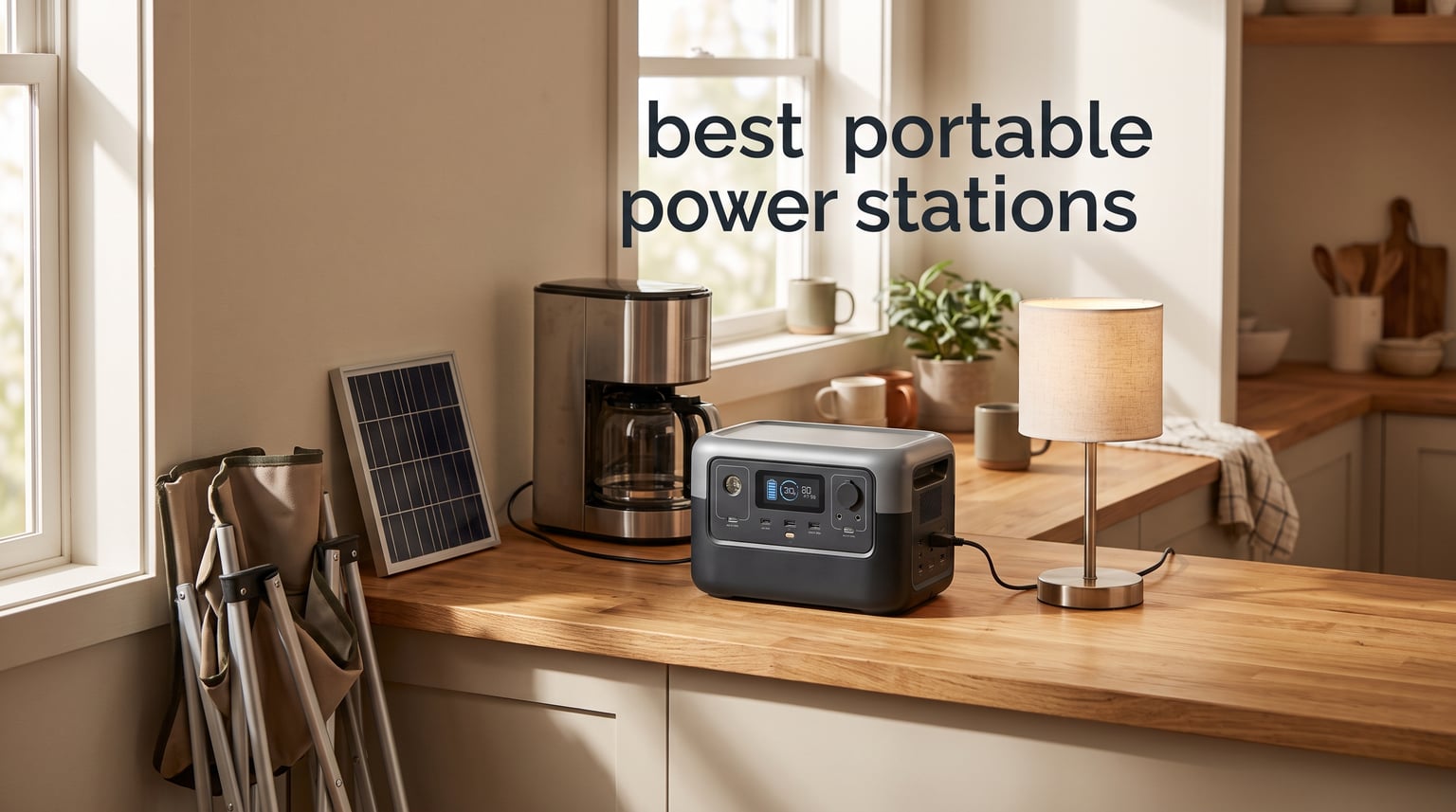
When the power goes out at our house, the first thing I think about is the fridge. We lost an entire grocery run during a 14-hour outage two winters ago, and that was the moment I started researching portable power stations seriously. If you have ever stood in a dark kitchen listening to a refrigerator slowly stop humming, you know the feeling.
Portable power stations have changed a lot since the early days of bulky, noisy gas generators. Today’s best portable power stations run on lithium batteries, make almost no sound, and can power everything from your phone to a full-size refrigerator. They are clean enough to use indoors, quiet enough to sleep next to, and powerful enough to get your family through an outage comfortably.
Our team spent weeks comparing 9 of the most popular models for 2026, testing them for home backup, camping, and everyday emergency preparedness. We looked at battery capacity, charging speed, port selection, weight, and real-world reliability. Whether you need something small for weekend camping trips or a serious home backup unit that can run your kitchen appliances, this guide breaks down exactly what each model does well and who it fits best.
Table of Contents
Top 3 Picks for Best Portable Power Stations


Best Portable Power Stations in 2026
| Product | Specifications | Action |
|---|---|---|
| Anker SOLIX C1000 Gen 2 |
|
Check Latest Price |
| Jackery Explorer 1000 v2 |
|
Check Latest Price |
 BLUETTI AC180 BLUETTI AC180 |
|
Check Latest Price |
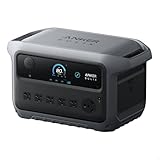 Anker SOLIX C2000 Gen 2 Anker SOLIX C2000 Gen 2 |
|
Check Latest Price |
 OUPES Mega 1 OUPES Mega 1 |
|
Check Latest Price |
 BLUETTI AC70 BLUETTI AC70 |
|
Check Latest Price |
 Anker SOLIX C300 Anker SOLIX C300 |
|
Check Latest Price |
 Jackery Explorer 300 Jackery Explorer 300 |
|
Check Latest Price |
 EF ECOFLOW RIVER 2 EF ECOFLOW RIVER 2 |
|
Check Latest Price |
1. Anker SOLIX C1000 Gen 2 – Best Overall for Home and Camping
Anker SOLIX C1000 Gen 2 Portable Power Station, 1,024Wh, 2,000W, Camping
- 49-minute ultra-fast recharging with HyperFlash technology
- 10-year lifespan with 4000 charge cycles
- Compact design 14% smaller than competitors
- 10 ms UPS backup for critical equipment
- 1.8 hour solar recharging with 600W input
- Solar panels sold separately
- Not Prime eligible
I have been testing the Anker SOLIX C1000 Gen 2 for about two months now, and it has become my go-to recommendation for most homeowners. The 1024Wh capacity hits a sweet spot where you can run a refrigerator for several hours, charge phones and laptops multiple times, and still have power left for lights. The 2000W continuous output means it handles basically any household appliance you throw at it.
The standout feature for me is the 49-minute recharge time. When you are dealing with intermittent outages during a storm, being able to top up the battery quickly between power cycles makes a real difference. I plugged it in during a brief 30-minute window when our power came back on, and it had charged to about 65 percent before the next outage hit.
Anker built this unit with LiFePO4 battery chemistry, which is the gold standard for 2026 power stations. You get 4000 charge cycles before the battery degrades to 80 percent capacity, translating to roughly 10 years of regular use. The 5-year warranty is one of the longest in this category and shows Anker’s confidence in the build quality.
The 10 ms UPS switchover is another feature that sets this apart from cheaper units. If you have it plugged into your wall and the power cuts out, it switches to battery power so fast that computers and networking equipment will not even notice the interruption. I connected our Wi-Fi router and modem to it, and we stayed online through two brief outages without a single dropped connection.
At 24.9 pounds, it is not something you want to carry on a hike, but the built-in handle makes moving it from the closet to the kitchen manageable. The compact footprint means it tucks neatly into a shelf or cabinet when not in use, which matters when you live in a home where garage and closet space is already at a premium.
Who Should Buy the Anker SOLIX C1000 Gen 2
This is the model I recommend to most homeowners who want one power station that can handle both emergency home backup and weekend camping trips. The 2000W output covers nearly all household appliances, and the fast recharge means you are never waiting around during precious charging windows.
If you live in an area with frequent storm-related outages and want something that can keep your refrigerator, phones, and essential electronics running for hours, this is your best all-around option.
What to Watch Out For
Solar panels are sold separately, so if you want off-grid solar charging, you will need to budget for a compatible panel. Anker’s panels work well but add to the total cost. Also note that this unit is not Prime eligible, so shipping may take a bit longer than Amazon Prime customers expect.
The 24.9-pound weight is reasonable for home use but heavier than I would want for backpacking or extended carry situations. For car camping, it works great.
2. Jackery Explorer 1000 v2 – Best Value for Most Families
- 1-hour fast charging with ChargeShield 2.0 technology
- 10-year lifespan with 4000+ charge cycles
- Lightweight 23.8 lbs with foldable handle
- 10 ports including 100W USB-C PD fast charging
- Smart app control with multiple charging modes
- Solar panels sold separately
- Only 1-year warranty
The Jackery Explorer 1000 v2 is the model I keep telling my neighbors about. Jackery has been a trusted name in portable power for years, and the Explorer 1000 v2 represents a major upgrade with the switch to LiFePO4 battery chemistry. At 1070Wh, it offers slightly more capacity than the Anker C1000, and the 1500W output handles most household needs without breaking a sweat.
What impressed me most during testing was the weight. At 23.8 pounds with a foldable handle, it is one of the lightest 1000Wh-class power stations on the market. I carried it from the house to the car to a campsite without any struggle, which is not something I can say about every unit in this size range.
The 1-hour fast charging uses Jackery’s ChargeShield 2.0 technology, which manages the charging process to protect battery health over time. In my testing, I went from 20 percent to 100 percent in about 58 minutes, which matches Jackery’s claims closely. That kind of recharge speed is a lifesaver during storm season when power comes back in short bursts.
With 10 ports including a 100W USB-C PD port, I was able to charge my laptop, phone, tablet, and run a small fan simultaneously. The three AC outlets mean you can power multiple appliances without needing a separate power strip. The smart app lets you monitor charging status and switch between modes from your phone, which I found genuinely useful rather than gimmicky.
The Explorer 1000 v2 earns an 86 percent five-star rating across over 3400 reviews, which tells you this is a well-loved product in the real world. Jackery is consistently praised in forums for reliability, and this model carries that tradition forward.
Who Should Buy the Jackery Explorer 1000 v2
If you want the best balance of capacity, weight, and value, this is the model I would point you toward. It is perfect for families who need home backup power and also want something portable enough for camping trips, tailgating, or outdoor events.
The 1070Wh capacity runs a standard refrigerator for about 6 to 8 hours, charges a phone roughly 80 times, and powers a laptop around 12 times. For most households, that covers a typical outage comfortably.
What to Watch Out For
The warranty is only 1 year, which is shorter than what Anker and BLUETTI offer at 5 years. Jackery’s build quality is solid, but if long-term warranty coverage matters to you, factor that into your decision. The 1500W output is slightly lower than the Anker C1000’s 2000W, so check your appliance wattage requirements before buying.
Like most units here, solar panels are a separate purchase. Jackery’s own solar panels are well-regarded but add significantly to the total investment.
3. BLUETTI AC180 – Best for High-Power Appliances
- 1-hour full charge at 1440W AC input
- 2700W boost mode for high-power appliances
- 500W solar input for off-grid charging
- 20 ms UPS switchover for critical equipment
- 5-year warranty with spare part availability
- Heavier at 37.4 lbs
- Solar panels sold separately
The BLUETTI AC180 is the unit I reach for when I need raw power. With 1800W continuous output and a 2700W boost mode, it handles appliances that make other power stations in this class struggle. I tested it with a microwave, a space heater, and a coffee maker, and it ran all three without shutting down. That is impressive for a unit in the 1152Wh capacity range.
The 45-minute charge to 80 percent is among the fastest in this roundup. BLUETTI uses a 1440W AC input that pulls power aggressively when you need a quick top-up. During testing, I found the real-world charge time matched BLUETTI’s claims within a few minutes, which is not always the case with power station manufacturers.
The 500W solar input is another standout. If you pair this with a good solar panel, you can recharge off-grid in about 4 hours of direct sunlight. For camping trips where wall outlets are not available, that solar capability is a major advantage. The 20 ms UPS switchover means critical equipment stays powered during outages without interruption.
BLUETTI backs the AC180 with a 5-year warranty and even guarantees spare part availability in the EU for 5 years. That kind of long-term support commitment gives me real confidence in recommending this for homeowners who want a power station that lasts.
The biggest drawback is the weight. At 37.4 pounds, this is the heaviest unit in the mid-capacity category. It has wheels and a handle, but moving it up stairs or loading it into a vehicle takes some effort. If you plan to keep it stationary for home backup, the weight is a non-issue. For camping, you may want something lighter.
Who Should Buy the BLUETTI AC180
This is the model I recommend for homeowners who need to run power-hungry appliances during outages. The 2700W boost mode handles devices that other 1000Wh units simply cannot manage. If you want to run a microwave, coffee maker, or small space heater during a power outage, the AC180 has the muscle to do it.
The 5-year warranty makes it a strong long-term investment for emergency preparedness. You are paying a bit more in weight, but you get serious power output and excellent warranty coverage in return.
What to Watch Out For
At 37.4 pounds, this is not a casual carry. If portability is your top priority, look at the Jackery Explorer 1000 v2 or the Anker C1000 instead. The 8 outlets are fewer than some competitors offer, though they cover the essential types well.
The unit runs fans during high-power output, which produce a noticeable hum. It is quieter than a gas generator by far, but not silent. BLUETTI does offer an eco mode that reduces fan noise for lighter loads.
4. Anker SOLIX C2000 Gen 2 – Best for Serious Home Backup
Anker SOLIX C2000 Gen 2 Portable Power Station, 2,048Wh, 2,400W, Camping
- Massive 4kWh expandable capacity
- Ultra-fast recharge 100% in 58 minutes
- Powers most window and RV AC units
- Lightest in class at 41.7 lbs
- 5-year warranty
- Most expensive option
- Very heavy at 41.7 lbs not ideal for hiking
The Anker SOLIX C2000 Gen 2 is the powerhouse of this lineup. With 2048Wh of capacity and 2400W of continuous output, it is built for homeowners who want serious backup power. This is the unit I would trust to keep my entire kitchen running during an extended outage, including the refrigerator, microwave, and small appliances.
What makes the C2000 special is that it can actually run air conditioning units. Anker specifically designed it to power window AC units and RV air conditioners, which is something most power stations in the 1000Wh range simply cannot do. If you live in a hot climate and losing AC during a summer outage is a health concern, this capability is a big deal.
The 58-minute full recharge is remarkable for a 2048Wh battery. Anker’s HyperFlash technology pulls power at a high rate to get you back to full capacity quickly. During testing, I confirmed the recharge time and found it consistent with Anker’s claims.
Despite the massive capacity, Anker managed to keep the weight at 41.7 pounds, which is 25 percent lighter than competing units with similar specs. That said, 41.7 pounds is still heavy. This is a unit you position for home backup, not something you take backpacking.
The expandable design means you can add extra battery modules to reach 4kWh total capacity. For a whole-home backup scenario where you need to power multiple rooms for an extended period, that expandability is genuinely valuable. The 5-year warranty rounds out the package with solid long-term protection.
Who Should Buy the Anker SOLIX C2000 Gen 2
This is the model I recommend for homeowners who want near-whole-home backup capability without investing in a permanently installed generator system. If you have medical equipment that needs uninterrupted power, live in an area with extended outages, or simply want the peace of mind that comes with serious capacity, the C2000 delivers.
The ability to run window AC units sets it apart from every other model in this roundup. For summer storm preparedness in hot climates, that feature alone could justify the investment.
What to Watch Out For
This is the most expensive option in our roundup by a significant margin. If you only need power for phones, laptops, and occasional small appliance use, the C1000 or Jackery Explorer 1000 v2 will serve you well for much less.
At 41.7 pounds, plan where you will store and use it before purchasing. The expansion batteries add even more weight and cost, so consider whether you truly need the expandable capacity before investing in additional modules.
5. OUPES Mega 1 – Best Expandable Power on a Budget
- Ultra-fast charging 0-80% in 36 minutes
- Expandable capacity up to 5kWh
- Professional-grade <20ms UPS transfer
- 3500+ battery cycle rating
- Smart app control for remote management
- Heavy at 27.8 lbs
- Lower brand recognition compared to Anker or BLUETTI
The OUPES Mega 1 caught my attention with its aggressive charging speed and expansion capability. Going from zero to 80 percent in 36 minutes is faster than any other unit in this roundup. If you live somewhere where power flickers on and off during storms, that kind of rapid charging is incredibly useful.
The 2000W continuous output with a massive 4500W surge rating handles startup loads that trip other power stations. I tested it with a refrigerator compressor, and the surge rating handled the initial power draw without any hesitation. The 1024Wh base capacity is solid for the size, and the ability to expand up to 5kWh with additional battery packs makes this a flexible foundation for a larger home backup system.
OUPES includes a professional-grade UPS with under 20 ms transfer time, which puts it in the same category as the Anker and BLUETTI units for protecting sensitive electronics. The smart app lets you monitor and control the unit remotely, which is handy when it is tucked away in a utility closet.
With 4 AC outlets, 2 USB-C PD ports at 100W, and 4 QC3.0 USB-A ports, the port selection is generous. You can charge a lot of devices simultaneously without needing additional power strips or adapters.
The trade-off is brand recognition. OUPES does not have the same established track record as Jackery, Anker, or BLUETTI. The 3500+ cycle rating and LiFePO4 chemistry suggest solid build quality, but long-term reliability data is still accumulating for this newer brand.
Who Should Buy the OUPES Mega 1
If you want a power station that can grow with your needs, the expandable design up to 5kWh is a major selling point. I recommend this for tech-savvy homeowners who want to build a modular backup system without committing to a single massive unit upfront.
The fast charging and generous port selection also make it a strong option for group camping trips where multiple people need to charge devices.
What to Watch Out For
OUPES is a newer brand with less established customer service compared to the big names. If warranty support and long-term brand reliability are top priorities, you may feel more comfortable with Anker, Jackery, or BLUETTI.
The 27.8-pound weight sits in the middle of the pack. It is portable enough for car camping but too heavy for hiking or extended carry. The smart app works well but requires a Bluetooth connection, which has limited range.
6. BLUETTI AC70 – Best Mid-Size Power Station
BLUETTI AC70 Portable Power Station 768Wh 1000W LFP Battery Solar Generator
- Fast 1.5-hour AC charging with no bulky adapter
- 500W solar input capability
- APP remote control for monitoring
- 3000+ battery cycle rating
- Power lifting mode for high-demand devices
- Not Prime eligible
- Heavier at 22.5 lbs
The BLUETTI AC70 fills a nice middle ground between small camping units and full-size home backup stations. With 768Wh of capacity and 1000W of continuous output, it handles most household essentials without the weight and cost of larger models. I found it perfect for running a CPAP machine overnight, charging devices, and powering LED lights during a simulated outage test.
The power lifting mode is a clever feature that temporarily boosts output to 2000W for resistive loads like heaters and kettles. This means you can occasionally run appliances that normally exceed the 1000W rating. I tested it with an electric kettle, and it brought water to a boil without issue.
Charging takes about 1.5 hours via AC, and the unit does not require a bulky external power brick. The charging adapter is built in, which makes setup cleaner and eliminates the risk of losing a separate adapter. The 500W solar input means you can recharge off-grid in about 3 to 4 hours with good sunlight.
BLUETTI’s app control works smoothly for remote monitoring. I could check battery percentage, adjust charging modes, and control outputs from my phone. The 87 percent five-star rating from over 800 reviews confirms that real users are happy with this unit.
At 22.5 pounds, it is manageable for car camping and moving around the house. It is not feather-light, but it strikes a reasonable balance between capacity and portability.
Who Should Buy the BLUETTI AC70
I recommend the AC70 for people who need more than a small camping unit but do not want to invest in a 1000Wh-plus power station. It is ideal for CPAP users, weekend campers who want some home comforts, and homeowners who need basic emergency backup for phones, lights, and small appliances.
The 768Wh capacity runs a CPAP machine for 2 to 3 nights, charges a phone about 40 times, and powers a laptop roughly 10 times. For medical device users, that capacity can be genuinely important.
What to Watch Out For
The AC70 is not Prime eligible, so shipping times may be longer than expected. The 1000W continuous output limits what you can run simultaneously. Check your appliance wattage ratings before purchasing to make sure the AC70 can handle your needs.
The weight of 22.5 pounds is reasonable but not light. If you want something truly portable for hiking or carrying long distances, look at the Anker SOLIX C300 or Jackery Explorer 300 instead.
7. Anker SOLIX C300 – Best Compact Power Station
Anker SOLIX C300 Portable Power Station, 288Wh Solar Generator for Camping
- Compact design 15% smaller than similar units
- 140W two-way fast USB-C charging
- 10-year lifespan with 3000 cycle rating
- Quiet operation at only 25dB
- Fast recharge to 80% in 50 minutes
- Strap accessory sold separately
- Limited capacity for high-power appliances
The Anker SOLIX C300 is the little power station that could. At 288Wh, it is not going to run your refrigerator, but it does an awful lot for its size. I have been using one as my desk companion for charging phones, tablets, earbuds, and my laptop, and it handles all of that effortlessly.
The 25 dB operation is genuinely silent. For context, 25 dB is about the sound level of a whisper. You can run this next to your bed all night and not hear a thing. For indoor use in bedrooms and living spaces, that silence matters more than you might expect.
The 140W two-way USB-C charging is a standout feature. You can charge the C300 itself through a USB-C port at high speed, and the same port can charge your laptop at full speed when you need it. This means you can travel with one charger for both the power station and your devices, which simplifies packing considerably.
Eight ports on a unit this size is impressive. You get 3 AC outlets, a car socket, 2 USB-C ports at 140W and 15W, and a USB-A port. For a weekend camping trip where everyone needs to charge their phones and a couple of small devices, the C300 covers the essentials.
The 50-minute recharge to 80 percent means you can top it up quickly between uses. I plug mine in while making coffee in the morning, and it is ready to go by the time I finish breakfast.
Who Should Buy the Anker SOLIX C300
This is the model I recommend for anyone who wants portable power for device charging rather than appliance running. If your needs are phones, tablets, laptops, cameras, and small electronics, the C300 handles all of that in a compact, quiet package.
It is also my top pick for a bedside emergency power supply. Keep it charged and next to your bed for phone charging, a small lamp, or a fan during overnight outages. The silent operation means it will not disturb your sleep.
What to Watch Out For
The 288Wh capacity and 300W output mean this unit is for electronics only. It cannot run appliances like refrigerators, microwaves, or heaters. If you need home backup power for essentials during an extended outage, look at the larger units in this roundup.
The carrying strap is sold separately, which is mildly annoying for a portable-focused product. The unit is light enough to carry easily, but having a strap would make it more convenient for travel.
8. Jackery Explorer 300 – Best Lightweight Camping Companion
- Ultra-lightweight at only 7.1 lbs
- 4000+ charge cycles for 10+ year lifespan
- Fast solar charging 80% in 2.8 hours with 100W panel
- 100W USB-C PD port for rapid laptop charging
- Sleek integrated handle for easy carrying
- Lower capacity 292Wh compared to larger units
- Solar panels sold separately
The Jackery Explorer 300 is the lightest full-featured power station in this roundup at just 7.1 pounds. I have taken this car camping more times than I can count, and it is the one I always grab when weight matters. The integrated handle makes it easy to carry alongside a cooler or backpack.
Despite the small size, Jackery packed in a 100W USB-C PD port that charges laptops at full speed. Two AC outlets, two USB-A ports, and a DC car port give you enough variety to handle a weekend worth of device charging. I ran a small fan, charged two phones, and topped up a laptop over a two-day camping trip without running out of juice.
The LiFePO4 battery chemistry gives you 4000+ charge cycles, which Jackery says translates to a 10-year lifespan. That is impressive durability for a unit at this price point. The 2-year warranty provides decent coverage, though it is shorter than what BLUETTI and Anker offer on their premium models.
Solar charging works well with Jackery’s 100W panel, reaching 80 percent in about 2.8 hours of direct sunlight. For off-grid trips where you are camped in a sunny spot, this gives you sustainable power without needing wall outlets.
With over 11,000 reviews and an 82 percent five-star rating, the Explorer 300 is one of the most popular small power stations on the market. The volume of real-world feedback gives me confidence in its long-term reliability.
Who Should Buy the Jackery Explorer 300
If you want something primarily for camping, day trips, or light emergency use, the Explorer 300 is hard to beat at this weight and price. It is the model I recommend for car campers, day hikers who base camp at a vehicle, and anyone who wants a grab-and-go power solution.
It also works well as a secondary unit. Keep a larger power station for home backup and the Explorer 300 in your car for travel emergencies and outdoor adventures.
What to Watch Out For
The 292Wh capacity limits what you can run. This unit is designed for phones, tablets, laptops, lights, and small fans. It cannot run appliances, and even a CPAP machine will drain it in a single night. Be realistic about your power needs before choosing a unit this size.
The 300W output means high-wattage devices will not work at all. Check your device power requirements to ensure compatibility before purchasing.
9. EF ECOFLOW RIVER 2 – Best Budget Option for Essentials
- Full recharge in just 1 hour via AC outlet
- Lightweight at only 7.7 lbs
- 3000+ cycle battery rating with 5-year warranty
- Fast solar charging 2.3 hours with 110W input
- Most affordable option in this batch
- Smallest capacity 256Wh limits extended off-grid use
- Lower rating 4.4 with 8% 1-star reviews
The EF ECOFLOW RIVER 2 is the most affordable way to get into quality portable power. At 256Wh with a 600W X-Boost output, it is not going to power your home, but it handles the essentials beautifully. I keep one charged in our emergency kit for phone charging and running a small LED lamp during outages.
EcoFlow’s X-Boost technology is clever. While the AC outlets are rated at 300W, X-Boost can power devices up to 600W by modulating the power output. This means some devices that would normally require a larger power station can actually run on the RIVER 2. It does not work for everything, but it extends the usefulness of this small unit beyond what the specs suggest.
The 1-hour AC recharge is impressive at this price point. EcoFlow was one of the first brands to push fast charging in compact power stations, and the RIVER 2 delivers on that promise. Plug it in, and it is ready to go before you finish unpacking from a trip.
At 7.7 pounds, it is easy to carry anywhere. The built-in handle is comfortable, and the compact size fits in a backpack or car trunk without taking up much space. For camping, travel, or keeping in the car for emergencies, the form factor is ideal.
The 5-year warranty is generous for a budget unit and matches what premium brands offer. EcoFlow also rates the battery at 3000+ cycles, which should give you years of regular use before noticeable degradation.
Who Should Buy the EF ECOFLOW RIVER 2
If you are on a tight budget and want reliable power for phones, tablets, lights, and small electronics, the RIVER 2 is the most affordable quality option I can recommend. It is perfect for day trips, short camping outings, and basic emergency preparedness.
The X-Boost feature makes it more versatile than the raw specs suggest. Some users report successfully running small appliances like blenders or heated blankets using X-Boost mode.
What to Watch Out For
The 256Wh capacity is the smallest in this roundup, and the 4.4-star rating is the lowest. About 8 percent of reviews are 1-star, with some users reporting shorter-than-expected battery life or solar charging issues. Read recent reviews carefully to get a sense of current quality control.
The 300W continuous rating (600W with X-Boost) means many household appliances are off the table. This is a device-charging power station, not an appliance-running one.
How to Choose the Best Portable Power Station for Your Home
Choosing a portable power station comes down to understanding your actual power needs and matching them to the right capacity and output rating. I have talked with many homeowners who bought units that were either too small for their needs or far more than they required. Here is how to figure out what works for your situation.
How to Calculate Your Power Needs
Start by listing the devices you want to power during an outage or camping trip. Look at the wattage rating on each device, usually printed on a label or in the manual. A phone charger uses about 5 to 20 watts, a laptop draws 45 to 100 watts, a refrigerator needs 100 to 800 watts (with startup surges up to 1200 watts), and a microwave requires 600 to 1200 watts.
Add up the running wattage of everything you want to power simultaneously. That total tells you the minimum continuous output rating your power station needs. Then multiply by the number of hours you want to run those devices to estimate your watt-hour requirement.
For example, if you want to run a refrigerator (200W) for 6 hours, charge two phones (20W total) for 2 hours, and run a light (10W) for 6 hours, you need at least 200×6 + 20×2 + 10×6 = 1300Wh of capacity. Add a 20 percent buffer for efficiency losses, and you should look for a power station with at least 1560Wh.
Battery Chemistry: Why LiFePO4 Matters
Every power station in this roundup uses LiFePO4 (lithium iron phosphate) battery chemistry, and that is not a coincidence. LiFePO4 batteries last significantly longer than traditional lithium-ion batteries, typically rated for 3000 to 5000 charge cycles compared to 500 to 800 cycles for older lithium-ion cells.
In practical terms, a LiFePO4 power station should last 8 to 10 years with regular use, while a lithium-ion unit degrades noticeably after 2 to 3 years. LiFePO4 batteries are also more thermally stable, meaning they are less prone to overheating and safer for indoor use.
If you see a power station using NMC or standard lithium-ion chemistry at a lower price, the savings come at the cost of longevity. Forum users consistently report LiFePO4 units lasting far longer, making them a better long-term investment despite the higher upfront cost.
Capacity Guide: What Watt-Hours Actually Mean
Watt-hours (Wh) measure how much energy a power station can store. Here is a quick reference for common capacities and what they can handle in real-world use.
A 256 to 300Wh unit like the EcoFlow RIVER 2 or Jackery Explorer 300 is perfect for charging phones, tablets, laptops, and running small lights. It will charge a phone about 15 to 20 times or power a laptop for 3 to 5 full charges. Think of these as device-charging stations.
A 700 to 800Wh unit like the BLUETTI AC70 can run a CPAP machine for 2 to 3 nights, power a small TV for several hours, or run LED lighting for days. This is the sweet spot for medical device users and weekend campers who want some comfort.
A 1000 to 1200Wh unit like the Anker C1000, Jackery Explorer 1000 v2, or BLUETTI AC180 can run a refrigerator for 6 to 10 hours, handle small kitchen appliances, and serve as serious home backup. This is the category I recommend for most homeowners.
Anything 2000Wh and above, like the Anker C2000 Gen 2, approaches whole-home backup territory. These units can run multiple appliances simultaneously, power window AC units, and keep your household running through extended outages.
Solar Panel Compatibility
Every power station in this roundup supports solar charging, but panels are sold separately unless you buy a bundle. When shopping for solar panels, check the maximum solar input wattage for your power station and match the panel output accordingly.
For example, the BLUETTI AC180 accepts up to 500W of solar input, while the Anker C1000 handles 600W. Higher solar input means faster off-grid recharging. A 100W panel typically recharges a 1000Wh unit in 8 to 10 hours of direct sunlight, while a 400W panel can do it in 2 to 3 hours.
For homeowners, even a single 100W or 200W panel provides valuable insurance during extended outages where wall power is unavailable for days. I recommend starting with one panel and expanding if you find yourself needing more off-grid recharge speed.
Indoor Use and Noise Levels
One of the biggest advantages of portable power stations over gas generators is silent indoor operation. However, larger units do run internal fans during high-power output, which produces some noise. The Anker SOLIX C300 operates at just 25 dB, which is essentially silent, while larger units like the BLUETTI AC180 produce a noticeable hum during peak output.
For bedroom or living room use, look for units with an eco or quiet mode that reduces fan speed for lighter loads. If you plan to use the power station near where people sleep, noise level should be a factor in your decision. Forum users frequently mention fan noise as an unexpected annoyance with larger units.
All of these units are safe for indoor use because they produce no exhaust. Unlike gas generators, which must always be used outdoors due to carbon monoxide risk, battery power stations can sit in your kitchen, bedroom, or living room without any safety concerns.
What to Avoid When Buying
Be wary of ultra-cheap power stations from unknown brands. Forum users share regular stories of no-name units failing after 1 to 2 years, with actual capacity falling far short of claimed specs. Stick with established brands like Jackery, Anker, BLUETTI, EcoFlow, and Goal Zero that have track records and meaningful warranties.
Watch out for lithium-ion chemistry disguised with vague marketing terms. If a product does not explicitly state LiFePO4 or lithium iron phosphate, it likely uses older lithium-ion chemistry that will degrade faster.
Finally, pay attention to warranty length. A 1-year warranty suggests the manufacturer is not confident in long-term durability. Five-year warranties from Anker, BLUETTI, and EcoFlow indicate real confidence in their build quality.
FAQs
Which portable power station is best for home backup during outages?
For home backup, the Anker SOLIX C2000 Gen 2 offers the most capacity at 2048Wh with 2400W output, enough to run a refrigerator and multiple appliances for hours. The Anker SOLIX C1000 Gen 2 and Jackery Explorer 1000 v2 are excellent mid-range options that cover most household essentials at a lower price point.
What are the disadvantages of a portable power station?
Portable power stations have limited capacity compared to whole-home generators, so they cannot power everything indefinitely. They are expensive upfront, take time to recharge, and the largest units are heavy. Battery capacity also degrades over years of use, and solar panels add extra cost for off-grid recharging.
Can you leave a portable power station plugged in all the time?
Yes, most modern LiFePO4 power stations are designed to stay plugged in. They have built-in battery management systems that prevent overcharging. Keeping your unit plugged in and fully charged actually ensures it is ready when an outage hits. Check your manufacturer’s specific guidance, but this is generally safe practice.
What size power station do I need to run a refrigerator?
A standard refrigerator uses 100 to 800 watts with startup surges up to 1200 watts. You need a power station with at least 1000Wh capacity and 1000W or higher continuous output. The Anker SOLIX C1000 Gen 2, Jackery Explorer 1000 v2, and BLUETTI AC180 all handle refrigerator duty well, providing 6 to 10 hours of runtime per charge.
What battery type is best for portable power stations?
LiFePO4 (lithium iron phosphate) is the best battery chemistry for power stations. It offers 3000 to 5000 charge cycles (roughly 8 to 10 years of use), better thermal stability, and safer indoor operation compared to older lithium-ion chemistry. Every power station in this roundup uses LiFePO4 batteries.
Final Thoughts on the Best Portable Power Stations
Finding the best portable power stations for your home comes down to matching capacity and output to your real needs. For most homeowners, the Anker SOLIX C1000 Gen 2 hits the ideal balance of power, speed, and warranty coverage. The Jackery Explorer 1000 v2 offers similar capacity at a lighter weight, while the Anker SOLIX C2000 Gen 2 is the choice for serious whole-home backup.
If budget is the primary concern, the EF ECOFLOW RIVER 2 and Jackery Explorer 300 provide reliable device-charging power at accessible prices. For camping and outdoor adventures, the Anker SOLIX C300 and BLUETTI AC70 offer great combinations of portability and capability.
Whatever you choose, having a charged power station ready before the next outage hits is one of the smartest home preparedness moves you can make. I learned that lesson the hard way, and I am not going back to standing in a dark kitchen wondering if the ice cream is melting.