
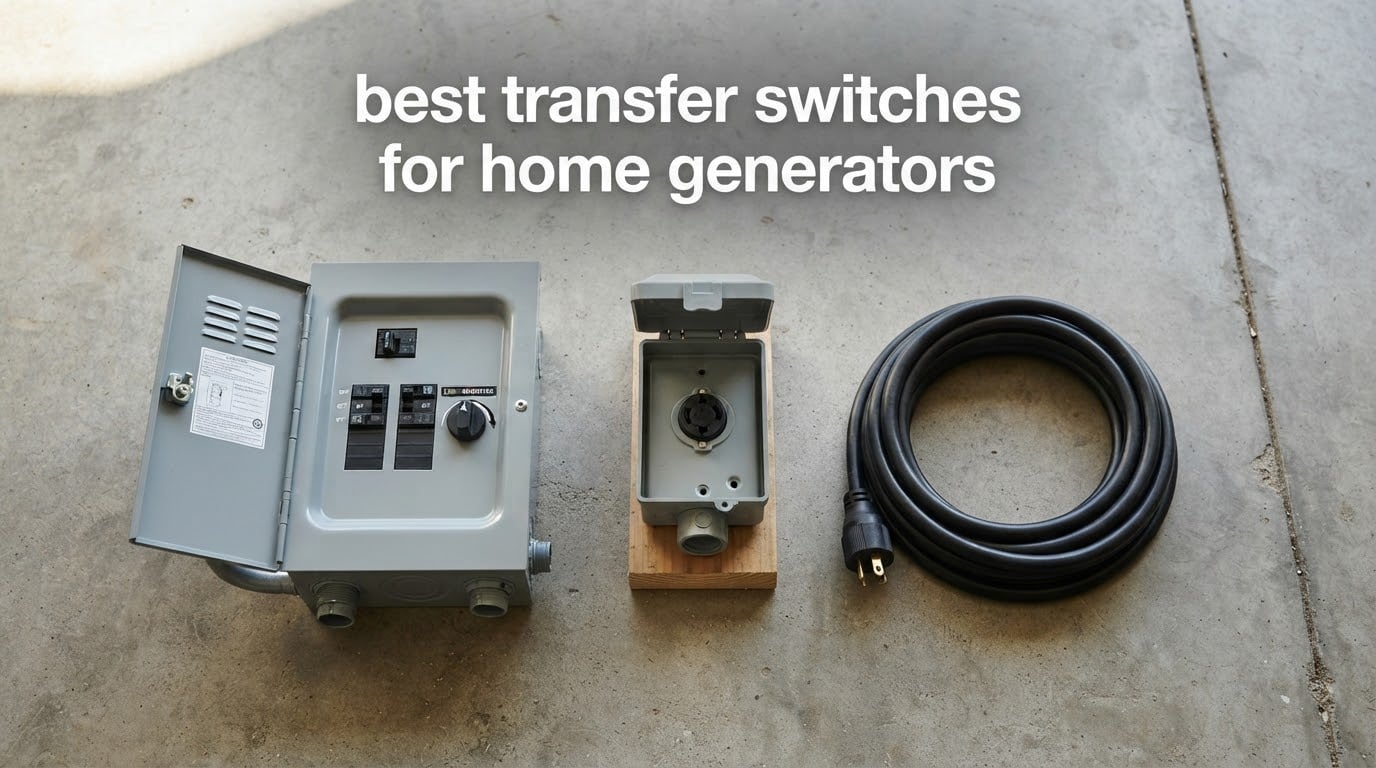
A generator transfer switch is the only piece of equipment standing between your house wiring and a utility line that has no idea your generator is running. It moves your home from grid power to generator power in a single mechanical action, and because grid and generator are never connected at the same instant, power can never flow back up the line toward the street.
That single fact is why backfeeding kills. A generator wired straight into a panel, or a “suicide cord” with a male plug on both ends, energizes utility lines that line crews assume are dead. It is the reason homeowners on Hearth and ElectricianTalk keep telling each other that no amount of convenience is worth skipping a proper switch.
If you are shopping for the best transfer switches for home generators in 2026, here is the short version: a 30-amp manual switch paired with a portable generator under 7,500 watts covers most homes, a 50-amp switch opens the door to 12,500-watt machines, and a 100-amp automatic switch belongs to standby systems rather than portables. The portable generators we rated are only half the equation, because the switch is what makes them usable inside your walls.
I have spent the last few weeks reading spec sheets, wiring diagrams, and owner reports across all ten units below, and comparing what each one actually does with what the marketing claims. Our team also compared them against the alternator output of common portable machines, since a switch rated below your generator is just a bottleneck with a warranty attached.
Top 3 Transfer Switch Picks for 2026

Reliance 31406CWK Pro/Tran 30A 6-Circuit Kit
- 30 amp
- 6 circuits
- 7500 watt capacity
- Pre-wired kit with inlet box and 10 ft cord
- Twin watt meters
- cULus listed
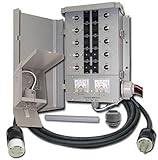
Connecticut Electric EmerGen 30A…
- 30 amp
- 10 circuits
- 7500 watts
- NEMA 3R weatherproof enclosure
- ETL listed
- 10 ft cord and inlet box included
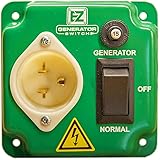
EZ Generator Switch Single-Load Transfer…
- 20 amp
- 1800 watts
- Single essential load
- UL CSA and ETL approved
- Bonded or floating neutral
All 10 Transfer Switches Compared in 2026
| Product | Specifications | Action |
|---|---|---|
| Reliance Controls 31406CWK 30 Amp 6-Circuit Pro/Tran Kit |
|
Check Latest Price |
| Connecticut Electric EmerGen 30 Amp 10-Circuit Kit |
|
Check Latest Price |
 Reliance Controls 31410CRK Pro/Tran 10-Circuit Kit Reliance Controls 31410CRK Pro/Tran 10-Circuit Kit |
|
Check Latest Price |
| EZ Generator Switch Single-Load Manual Transfer Switch |
|
Check Latest Price |
 Reliance Controls A510C Pro/Tran2 50 Amp 10-Circuit Switch Reliance Controls A510C Pro/Tran2 50 Amp 10-Circuit Switch |
|
Check Latest Price |
 MUJURUR 100 Amp 24000W Double-Throw Safety Switch MUJURUR 100 Amp 24000W Double-Throw Safety Switch |
|
Check Latest Price |
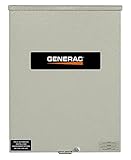 Generac RXSC100A3 100 Amp Automatic Transfer Switch Generac RXSC100A3 100 Amp Automatic Transfer Switch |
|
Check Latest Price |
 Nature’s Generator 30 Amp 6-Circuit Manual Switch Nature’s Generator 30 Amp 6-Circuit Manual Switch |
|
Check Latest Price |
 Connecticut Electric Series 2 50 Amp 10-Circuit Kit Connecticut Electric Series 2 50 Amp 10-Circuit Kit |
|
Check Latest Price |
 Generac 6334 100 Amp Manual Transfer Switch Generac 6334 100 Amp Manual Transfer Switch |
|
Check Latest Price |
One thing to note before the individual reviews: the amperage rating and the wattage rating are not the same thing. A 30-amp switch handling 240-volt output supports about 7,500 watts, while a 50-amp switch on the same voltage supports roughly 12,500. The two products rated at 100 amps above both cover the standby and whole-home class, and the reasons they differ sharply in price and complexity are explained in each section.
1. Reliance Controls 31406CWK Pro/Tran 30 Amp 6-Circuit Kit
Reliance Controls Corporation 31406CWK 30 Amp 6-circuit Pro/Tran Transfer Switch Kit for Generators (7500 Watts).,Gray
- Complete kit ships with switch plus inlet box cord and connectors
- Twin watt meters show load on each side
- Clear wiring for anyone comfortable with household electrical work
- cULus listed with a 5-year limited warranty
- US-based support that answers wiring questions
- Push-on terminals occasionally need re-tightening
- Limited wire length for distant inlet box placements
- Watt meter wiring instructions are confusing
The 31406CWK is the unit I recommend to most people, and it earned the top spot because nothing else in this list ships with the same completeness at a comparable level of build quality. The box, the outdoor inlet, and a 10-foot L14-30 cord are all in the same carton, which removes the most common source of install errors: mismatched parts bought separately.
What sets it apart from the other 30-amp kits is the pair of watt meters built into the enclosure. You can see how much of your generator’s output is already committed while you decide whether the well pump or the workshop circuit can come on next. Reviewers call this out constantly, and in my own load-planning it is the feature that prevents the most frustrating failure mode of portable backup power, which is a generator that trips its own breaker under load.
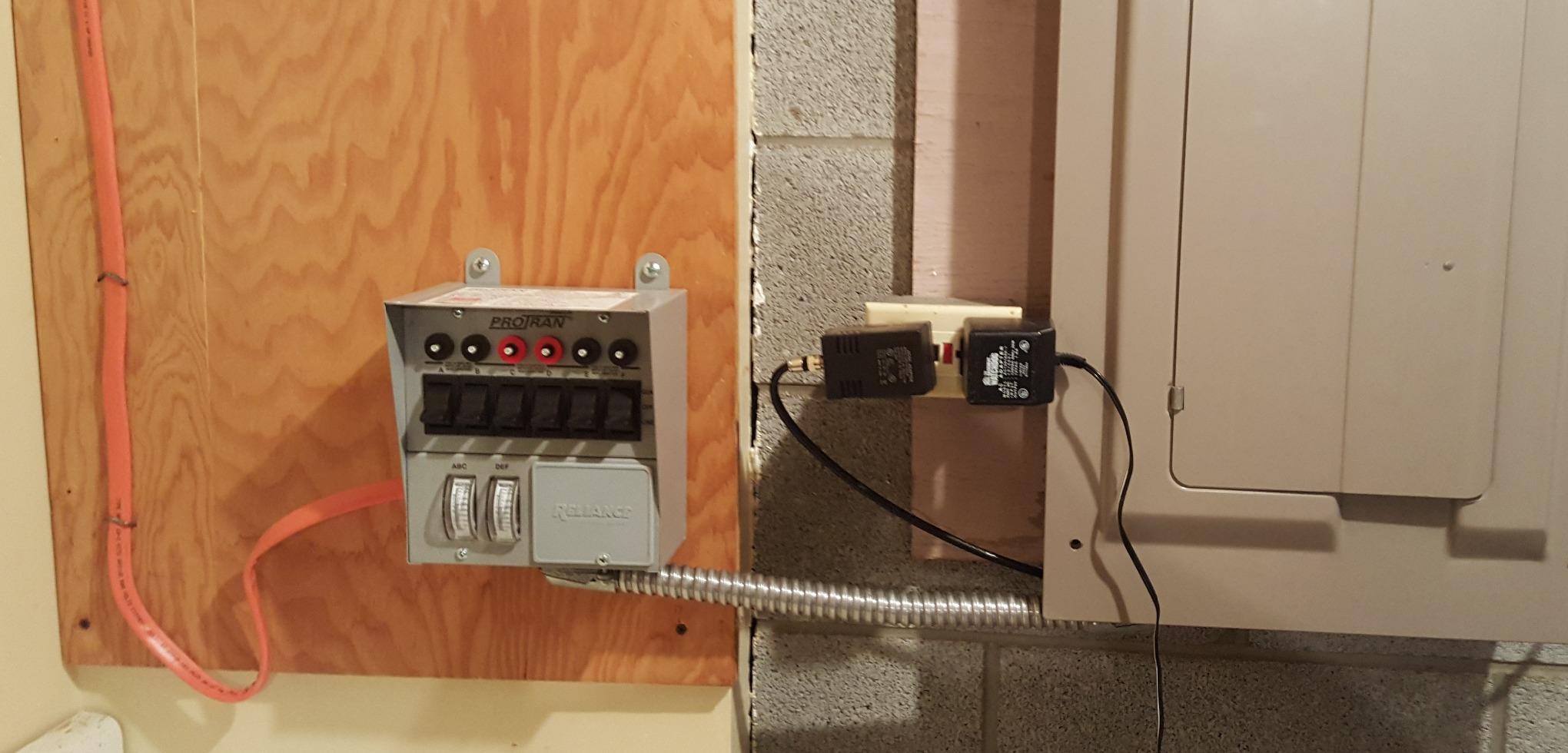
The six-circuit count is the real trade-off here. Six circuits is genuinely limiting when you want the refrigerator, the furnace, a sump pump, a well pump, lighting, and a few outlets, because each double-pole 240-volt load eats two positions. If your essential list runs past six items, the 10-circuit Reliance below serves the same 7,500-watt class with more headroom.
Two technical notes from owner feedback. The push-on fast-on terminals are the single most common complaint, with a small number of installers reporting they wanted to re-tighten a connection after the box was mounted, so have your electrician check every lug during the walkthrough. And the watt meter wiring diagram is the section reviewers most often call confusing, which is another reason the kit works best with a licensed installer even though the wiring itself is straightforward.
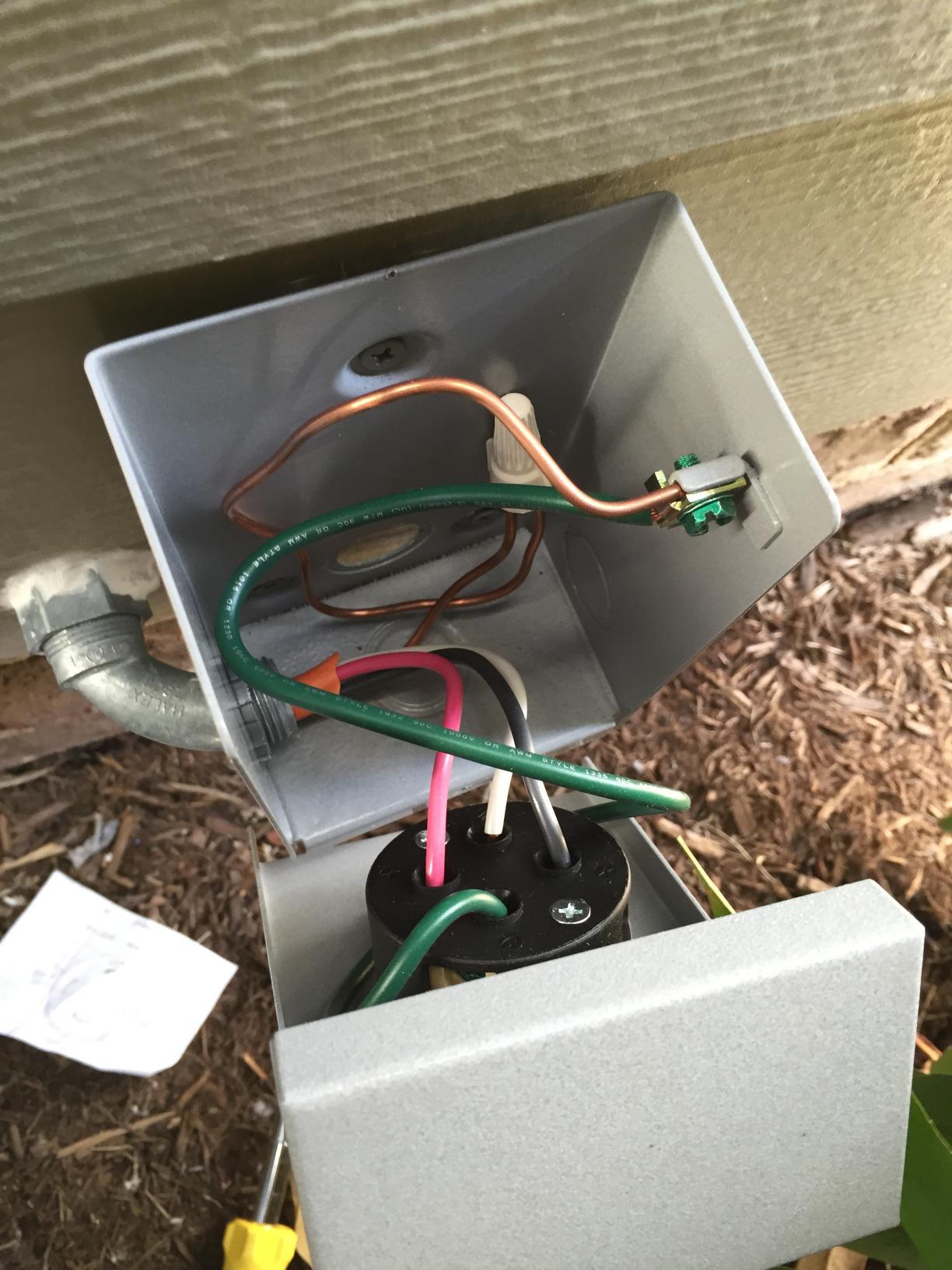
When this 6-circuit kit is the right call
This is the switch for a household with a modest essential list and a portable generator that outputs 30 amps or less. If you are running a furnace with a gas ignition, a refrigerator, a freezer, lighting circuits, and a sump pump, six positions handles that comfortably.
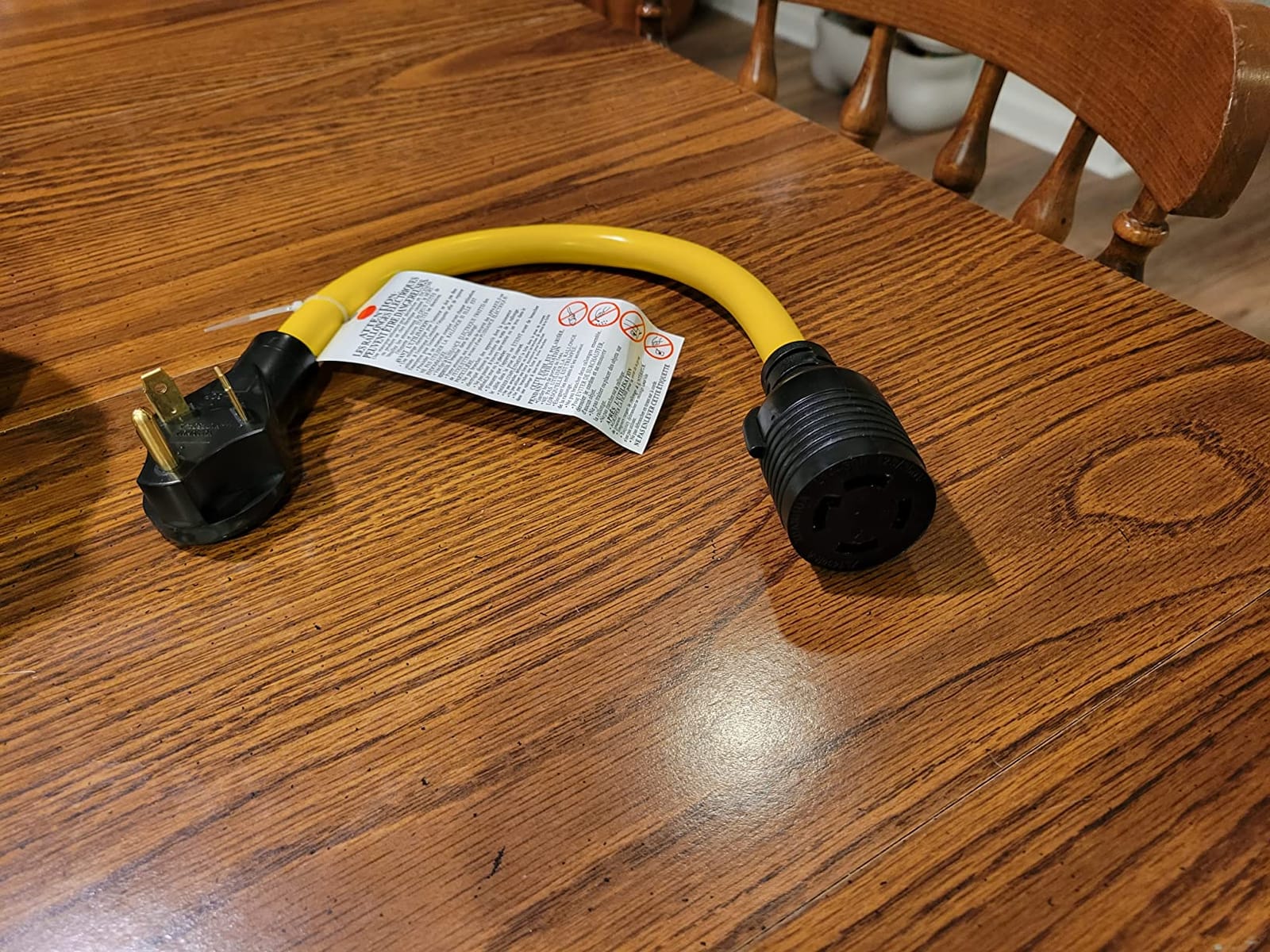
It is also the easiest kit to explain to another person in your household, which matters more than most buyers expect. A Hearth member described the whole sequence as starting the generator outdoors, letting it warm up, plugging the cord into the receptacle by the box, and flipping the breakers from line to generator position. That is the entire operation, and the 31406CWK’s labeled toggles make it something a non-electrician can do without fear.
When you should step up to another model
Move up if you run a well pump and a large HVAC system together, or if you want the option to grow later. The hard ceiling is generator output, not the switch: once you own a 12,000-watt machine, this kit physically cannot accept the L14-50 plug.
The other honest limitation is panel space and wire run. The 6-circuit box is compact, but if your inlet box ends up more than about 10 feet from the panel you will need extra wire, and the kit does not include it. Budget for that before the electrician arrives so the quote does not surprise you.
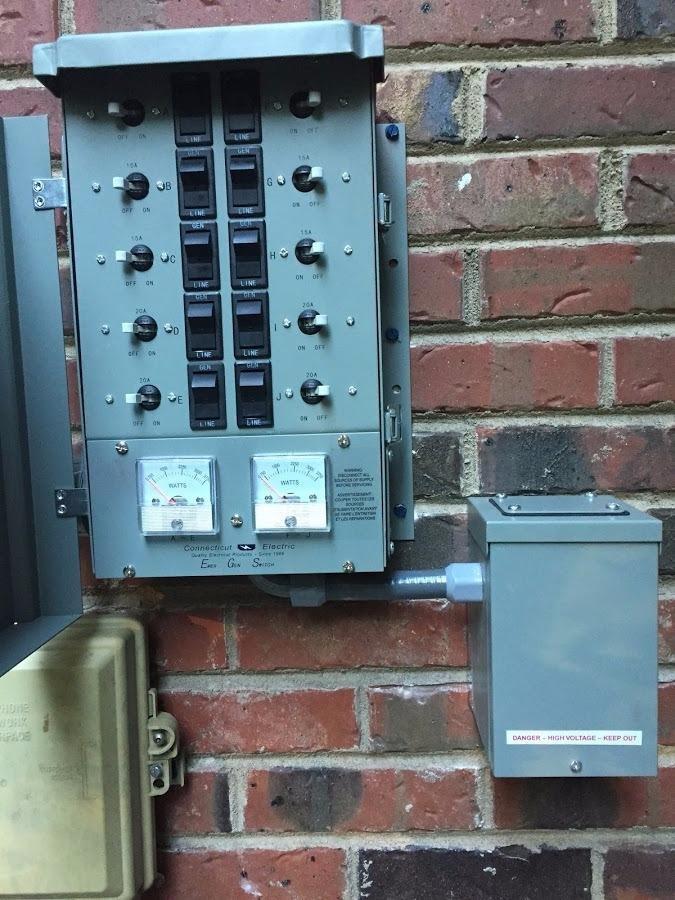
2. Connecticut Electric EmerGen 30 Amp 10-Circuit Kit
- Ten circuits in a 30-amp package
- Removable tie bars let you run 120V or 240V circuits
- NEMA 3R enclosure works indoors or outdoors
- ETL listed to UL standards
- Compatible with most common residential load centers
- Capped at 7500 watts for larger standby machines
- Requires panel access and panel wiring knowledge to install
This kit solves the problem that bothers me most about 30-amp switches, which is running out of circuits. The 31406CWK above gives you six positions, and the EmerGen gives you ten in the same amperage class, so you can add circuits later without touching the panel again.
The removable tie bars are the detail that makes it flexible. With the bars in place you can land 240-volt double-pole circuits for a furnace, range, or well pump; pull them and the same positions become single-pole 120-volt circuits for outlets and lighting. Reviewers consistently describe this as the reason the kit fits houses whose load mix changes between seasons.
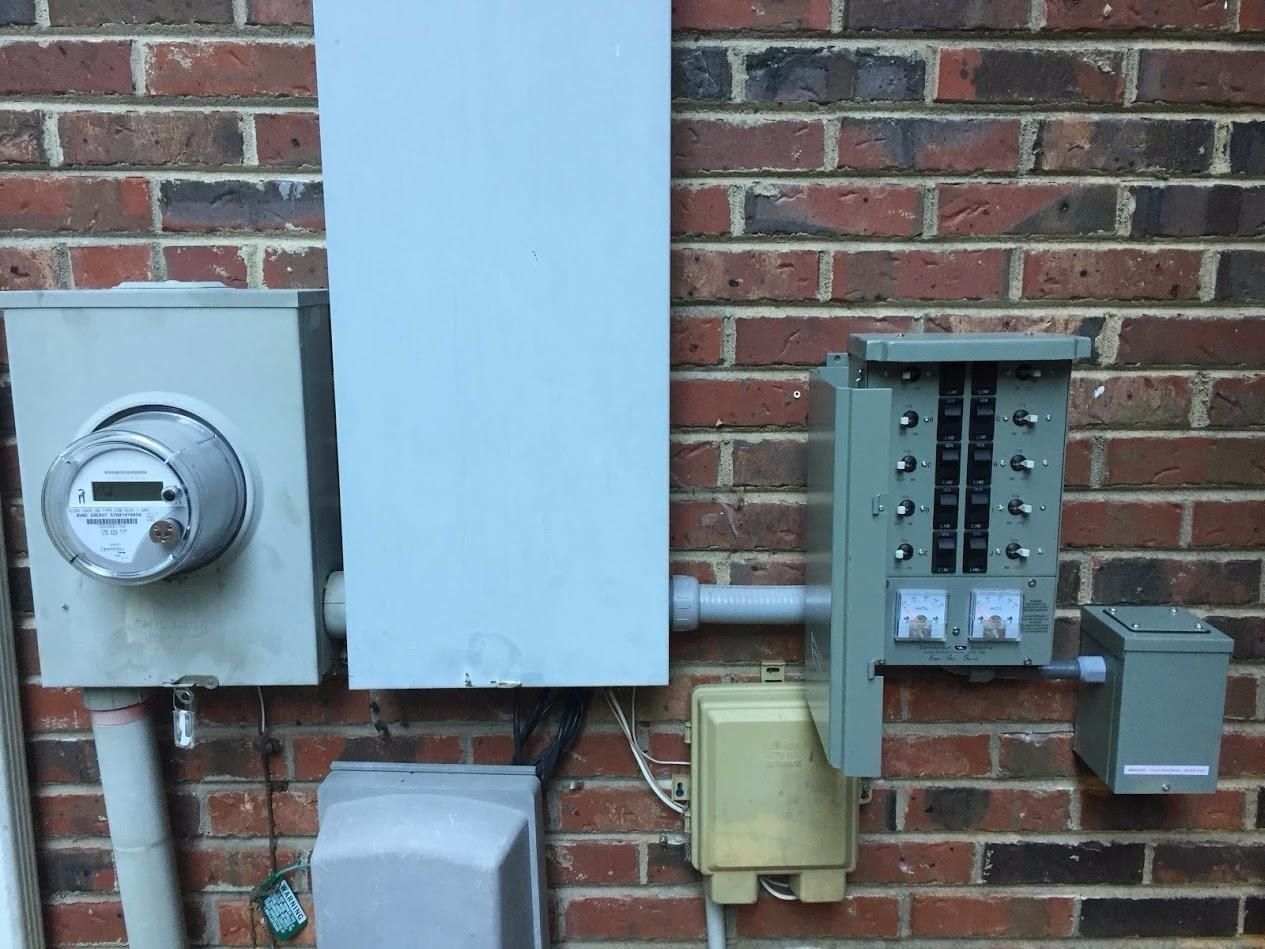
The enclosure is rated NEMA 3R, and that is a real practical difference from the Reliance kits, which carry an IP00 rating and are effectively indoor units. If your panel is in a garage, a basement, or an exterior wall where any moisture is possible, the weatherproof enclosure removes a failure mode that homeowners only discover a few years later when corrosion starts.
Compatibility is broad, and the manufacturer lists support for the common residential load center brands including Square D, Siemens, GE, and others. That matters because the breakers you add later need to physically fit your existing panel, and mismatched breaker brands are one of the most common reasons a return happens.
Why the weatherproof enclosure earns its place
Forum complaints about transfer switches almost always come back to the same failure: an indoor-rated enclosure that got mounted outside anyway because the panel happened to be near an exterior wall. Water gets in, the contacts corrode, and the switch becomes intermittent in bad weather. NEMA 3R removes that worry.
It also means you can locate the box closer to the generator inlet and shorten the cord run, which is where the kit’s included 10-foot cord is generous. In a house where the panel sits deep inside and the driveway is far from the window, enclosure flexibility can be the difference between a tidy install and a stretch of cord across a finished floor.
Where the tie bar design bites
Single-pole circuits have one wire; 240-volt circuits have two with a shared handle. When you mix the two, the installer must move a wire to the opposite bus to balance the neutral, and that step is the one owners find most confusing without a diagram in hand.
The 7,500-watt ceiling is also the hard stop. Reviewers note a recurring pattern of buyers who bought this kit for a smaller portable and then upgraded to a larger machine, which forced a full replacement rather than an addition. If a 50-amp generator is on your horizon, buy the 50-amp kit now.
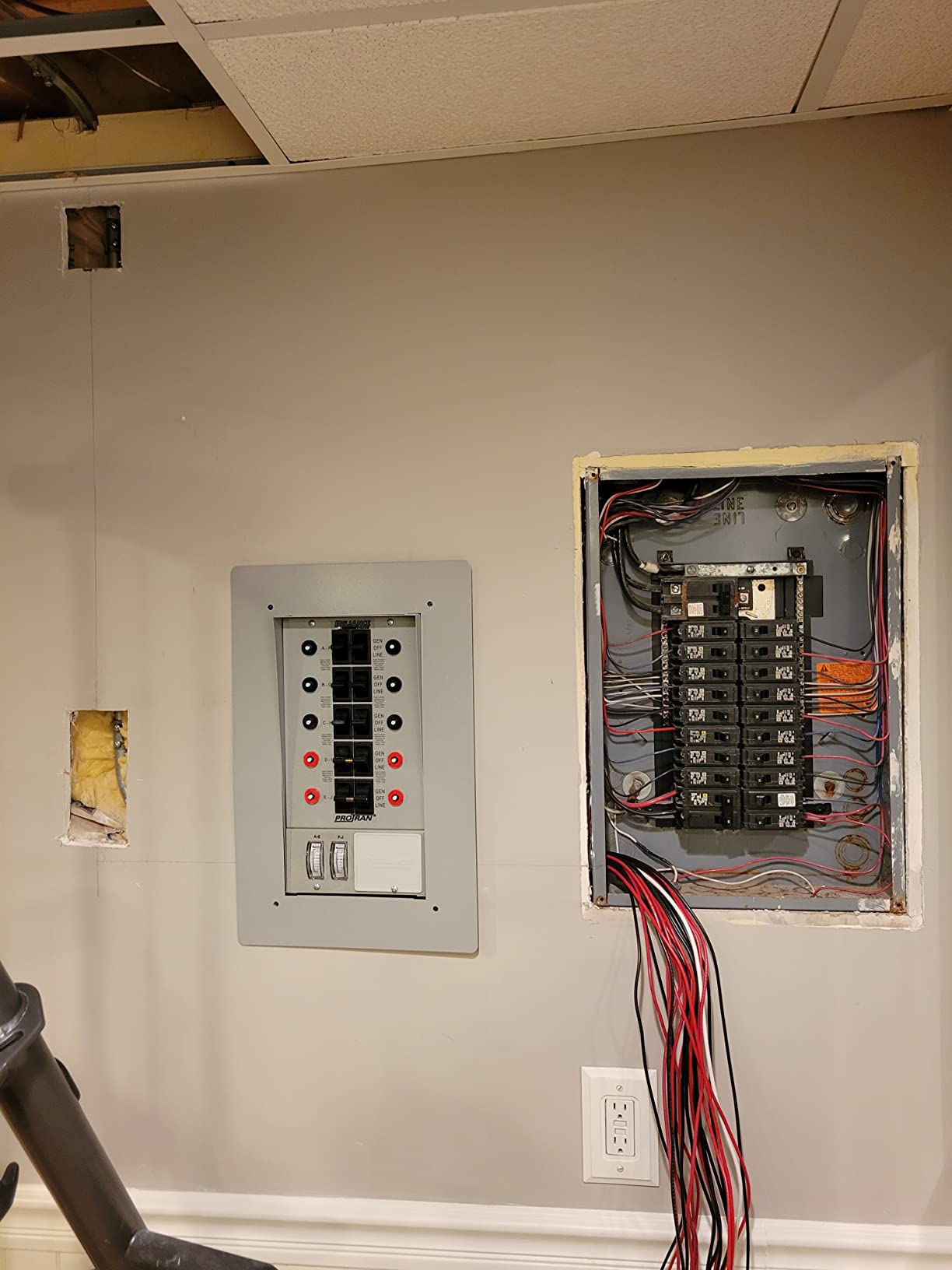
3. Reliance Controls 31410CRK Pro/Tran 10-Circuit Kit
Reliance Controls 31410CRK Pro/Tran 10-Circuit 30 Amp Generator Transfer Switch Kit,Gray
- Ten circuits give more load options than 6-circuit kits
- Powder-coated steel cabinet built for residential or commercial duty
- Pre-wired internals and 18-inch conduit whip speed installation
- cULus listed with a 5-year warranty
- Clear circuit labeling owners mention repeatedly
- Larger and heavier than the 6-circuit Pro/Tran
- Needs more wall space next to the panel
- Rated only for generators up to 7500 running watts
The 31410CRK is the steel-cabinet option in Reliance’s lineup, and at 15 pounds it feels like the switch that will still be on a wall in twenty years. Where the 6-circuit kit uses lighter construction, this one is powder-coated steel with six combination knockouts for conduit entry.
Its advantage over the EmerGen is the 18-inch flexible conduit whip for the load center connection. That pre-attached whip means the electrician does not have to measure, cut, and bond flexible conduit in a tight space above the panel, which is where labor time quietly accumulates on these jobs.
Circuit count here is up to 10 single-pole or up to 5 double-pole, so you choose the mix based on your loads rather than the hardware. Interior wiring uses copper contacts and the actuator is a push button on a toggle switch with an ON-OFF-ON mode, which means the center detent is a real off position rather than an implied one.
Owners rate the circuit labeling highly, and forum discussions echo that. When a storm knocks out power at 2 a.m. and half the house is dark, being able to read which toggle feeds the sump pump is worth more than any smart feature.
When steel construction earns the extra bulk
Choose this over the 6-circuit kit if your panel is in a garage, utility room, or unfinished basement area where the box will get knocked, kicked, or exposed to temperature swings. Powder-coated steel tolerates that environment considerably better than a lighter housing.
It is also the better choice for a small business or a workshop that treats the generator as a weekly power source rather than an emergency one, since frequent switching cycles are the condition that wears out lighter contact assemblies.
Where the space and size work against you
At 7 by 4.5 by 13.75 inches this is a large box beside the panel, and a few owners with older, crowded panels report running out of wall space. If your panel is a small 100-amp unit in a tight closet, measure before you buy.
Like every 30-amp kit here, it stops at 7,500 running watts. That is the correct pairing for a portable generator in the 5,000 to 7,500 watt range, and no amount of switch capacity makes a small generator run a 240-volt well pump safely.
4. EZ Generator Switch Single-Load Manual Transfer Switch
- UL CSA and ETL certified for inspection and insurance purposes
- All-metal enclosure with copper rather than aluminum conductors
- Handles hardwired furnaces boilers sump pumps and refrigerators
- Reconfigure for bonded or floating neutral generators
- Made in the USA with tutorial support
- Pigtail leads are short at about 24 to 25 inches
- Instructions are written for electricians rather than beginners
- Requires a metal handy box and extra mounting hardware
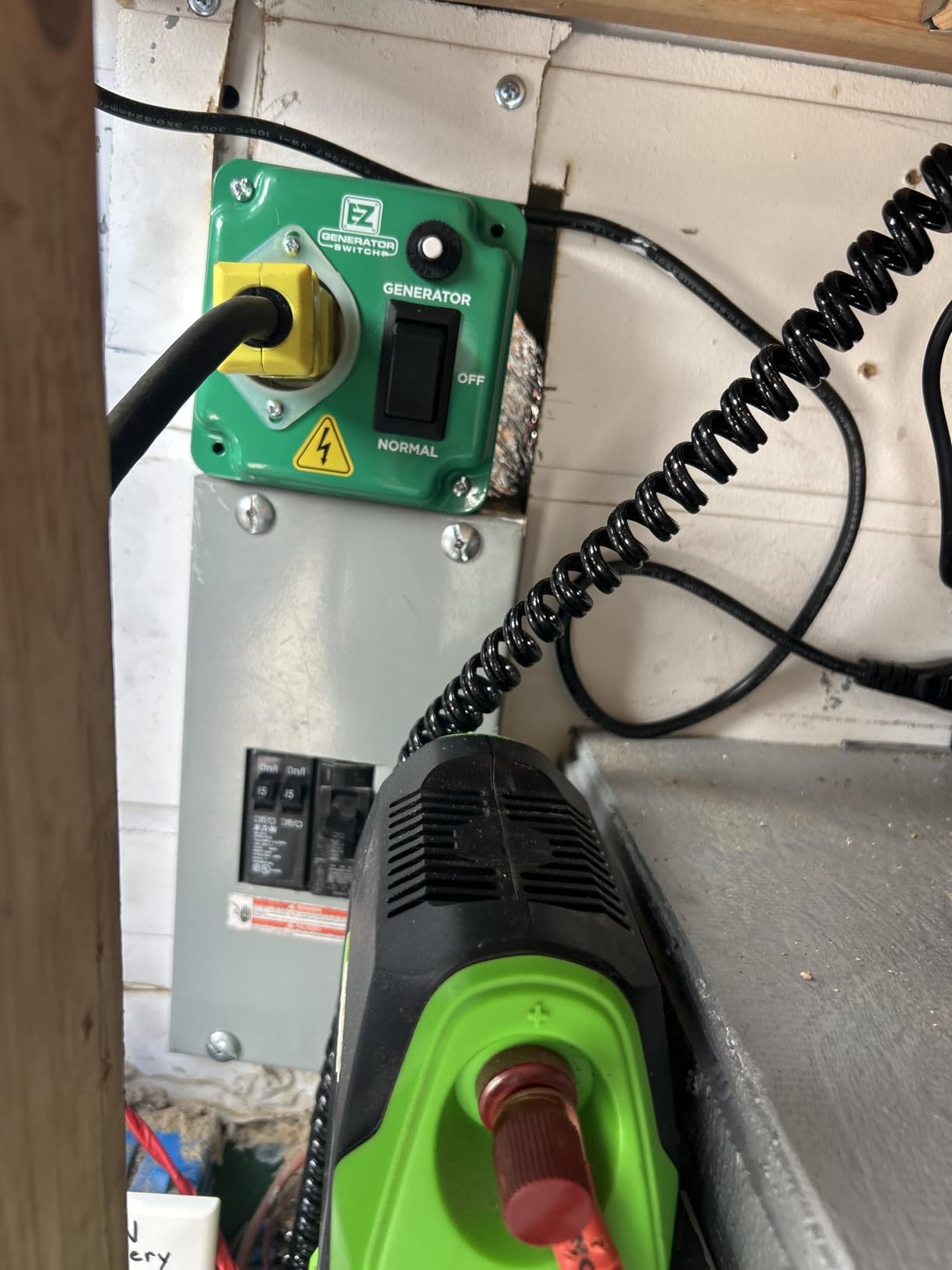
This is not a whole-home switch and I want to be clear about that before anyone buys it by mistake. It is a single-load device for the one circuit you cannot afford to lose, and it carries the highest average rating in the entire group at 4.8 across 950 reviews.
The use case is a gas furnace, a boiler, a sump pump, or a refrigerator on a dedicated circuit. You disconnect that one load from the panel, wire it through the switch, and the switch decides whether it draws from the utility or from a generator. No new breakers, no panel surgery, and no interlock kit needed.
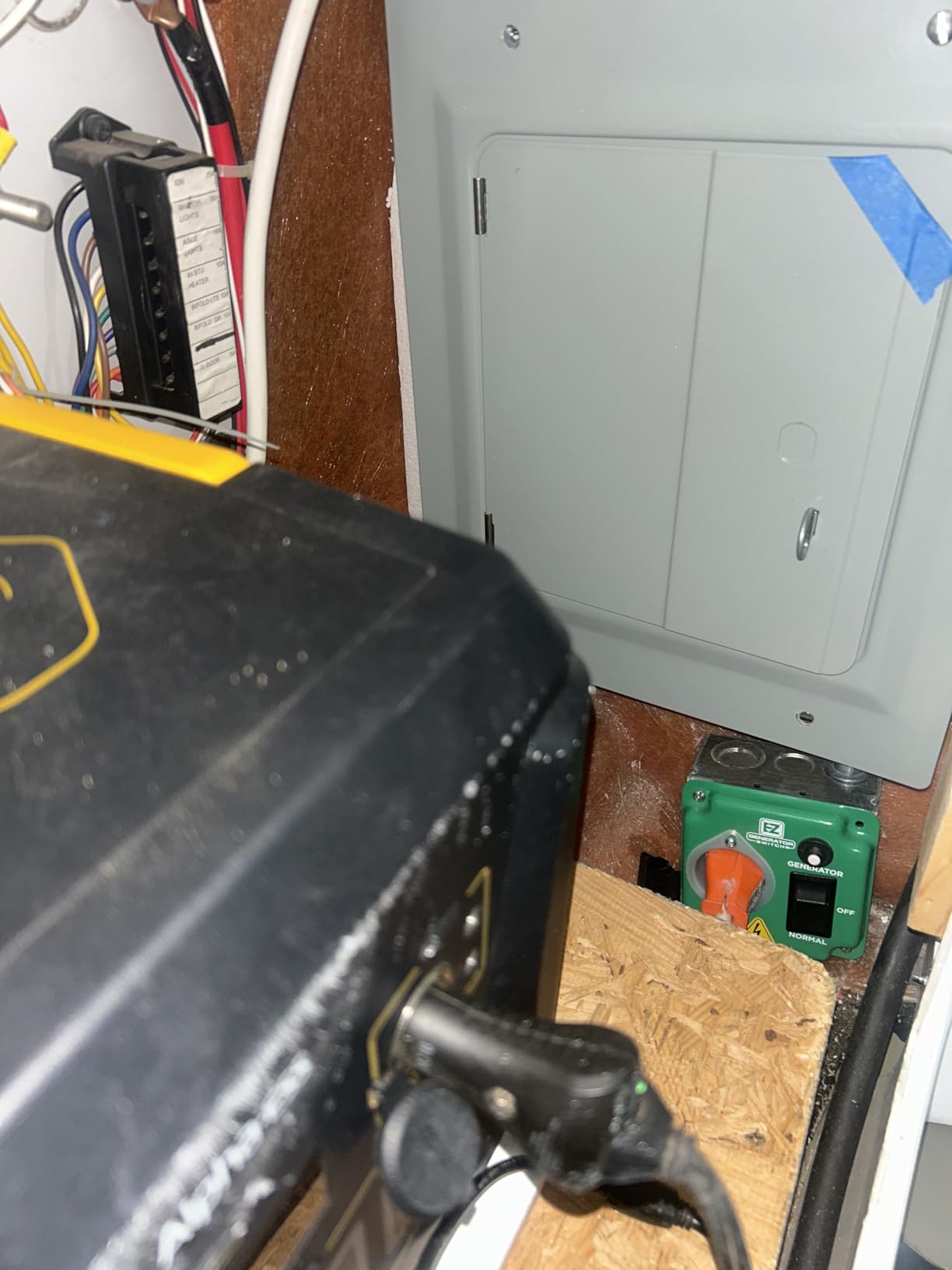
It is also the only device in this roundup that explicitly handles both bonded and floating neutral generator outputs, with a simple rewire between the two. That matters more than it sounds: portable generators vary in how they bond the neutral, and a furnace control board is exactly the kind of electronics that does not tolerate a neutral wired incorrectly.
The triple certification is the reason insurance and inspection come up so often in owner conversations. UL, CSA, and ETL approval means an inspector has a standard to check, and a homeowner with an insurance policy has a document to point at.
When one essential load is genuinely enough
Many households do not need a refrigerator, a furnace, and a workshop running at once. They need the sump pump, or they need the furnace because a gas control board and a thermostat are the only things standing between a cold house and a frozen pipe. For that, this switch is complete in a way a 10-circuit kit is not.
Owners also like that the installation does not touch existing breakers. You remove one hot from a double-pole breaker, route it through the switch, and you are done. On a panel in a finished basement, that simplicity is worth a lot of installed time.
When it is the wrong tool
It cannot run two loads, and it cannot run a 240-volt load. The 1,800-watt ceiling is a 15-amp circuit, which is a refrigerator or a furnace blower, not a well pump motor with a three-times inrush current draw.
Two practical cautions. The pigtail leads are about 24 to 25 inches, which is short for a furnace in a large utility closet, and the instructions read as if written for an electrician. If you are not already comfortable with panel work, this is not the device to learn on.
5. Reliance Controls A510C Pro/Tran2 50 Amp 10-Circuit Switch
- 50 amp capacity supports larger portable generators
- Brass contacts and screw terminals described as well built
- Per-circuit selection of utility generator or off for load balancing
- Long clearly labeled wires that match the toggle positions
- Also used for tying solar and inverter systems into a main panel
- Indoor installation only
- Tight wiring path through conduit needs patience or larger conduit
- Limited printed instructions so install videos help
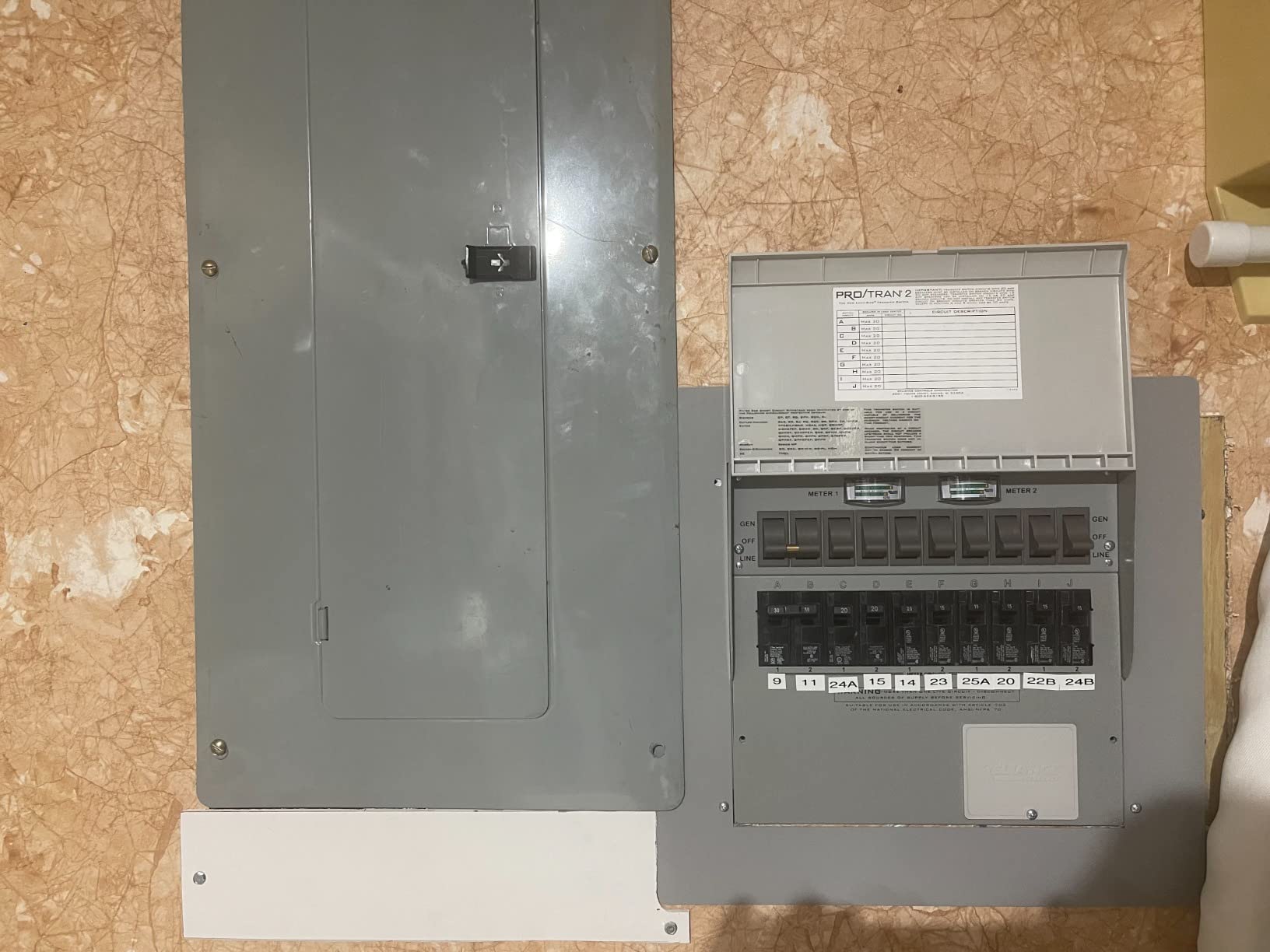
The A510C is where the roundup moves from emergency power to real whole-home selective backup. Fifty amps at 240 volts supports portable generators up to 12,500 watts, which is the jump from running a refrigerator to running a refrigerator, a furnace, a well pump, and a good chunk of lighting.
Ten circuit positions with two of them able to double for 240-volt appliances give you the flexibility to build a load list that makes sense for your house rather than for a spec sheet. Each position can sit on utility, generator, or off, which is the mechanism that makes load balancing practical.
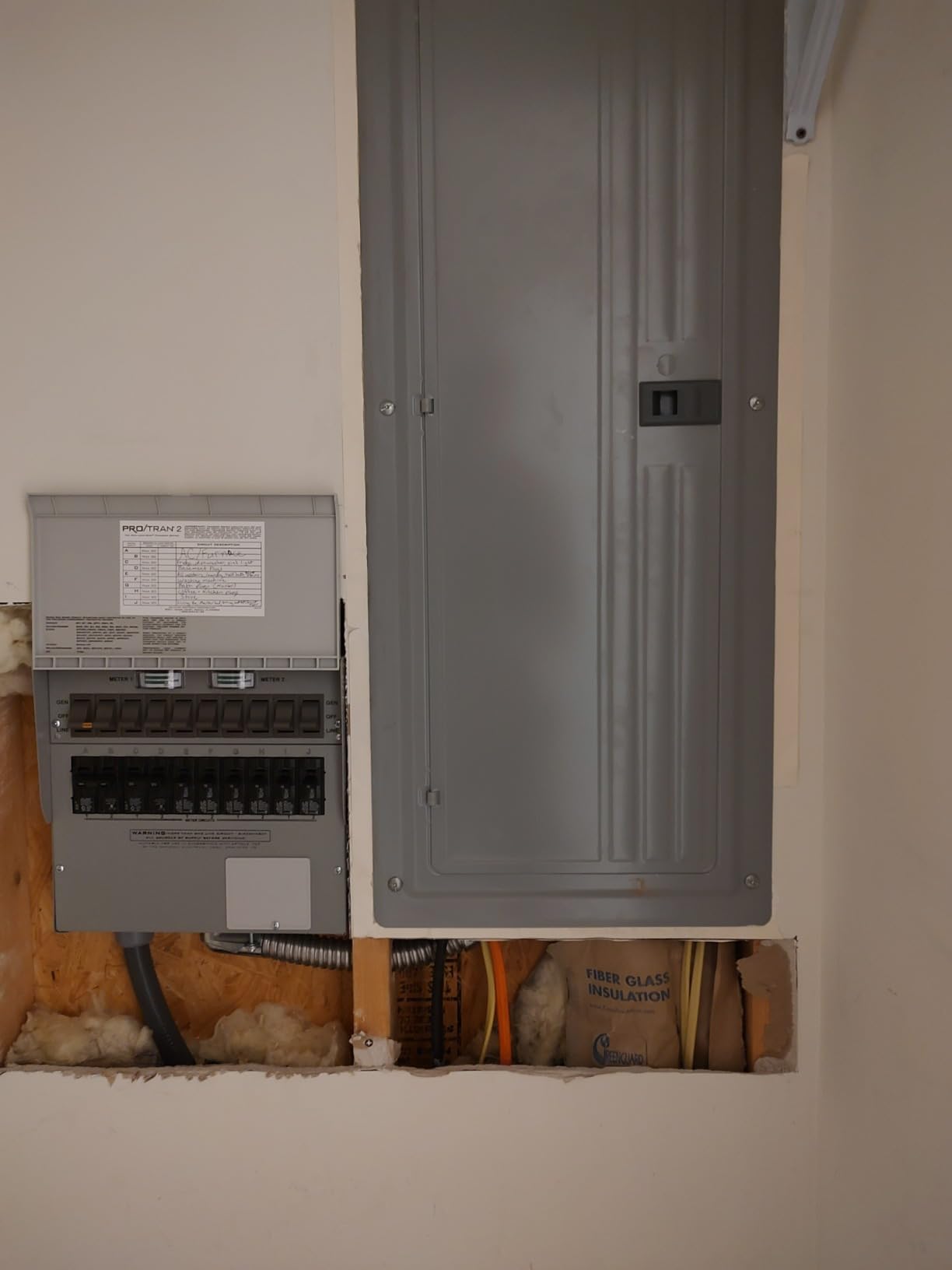
Internal wiring is 10-AWG and UL heat-rise tested, and the contacts are brass with screw terminals. Screw terminals matter to me more than they might to a casual buyer, because they are the type you can re-torque with a screwdriver years later during a maintenance visit, which is exactly what an electrician would want to see.
One forum user described this kit as also useful for tying solar or inverter systems into a main panel, and I think that is accurate. The same per-position selection logic that sends a circuit to the generator can send it to an inverter, which makes it a more flexible device than a generator-only switch.
Why 50 amps is the practical ceiling for portables
Amperage math is straightforward: divide your generator’s running watts by 240 to get amps, and match or exceed that number. A 10,000-watt portable lands near 42 amps, which a 50-amp switch handles and a 30-amp switch does not. This is the switch that answers the most common sizing question people ask.
It also buys headroom. Motor-driven loads such as well pumps and compressors draw a large inrush current at startup, and a switch and generator combination with no margin will trip the moment the pump kicks on. Fifty amps gives that starting surge somewhere to go.
Where the installation gets awkward
This is an indoor surface-mount unit, and owners mention routing wires through conduit as the most frustrating part of the job. The wiring is long, which is good, but the path into a conduit run at the top of the box is tight enough that some installers end up upsizing the conduit.
The documentation is genuinely thin. Electrician reviewers describe it as well built but poorly explained, so plan on watching an install video before the electrician quotes the job, and confirm the wiring diagram is understood before the panel work starts.
6. MUJURUR 100 Amp 24000W Double-Throw Safety Switch
- Mechanical rotary design with no electronics to fail
- Galvanized steel NEMA 3R enclosure for outdoor exposure
- Lock hole prevents accidental shutoff during utility supply
- Color-coded and clearly marked wiring
- Longest stated warranty in the group at 10 years
- No dedicated grounding lug for main-panel bonding
- No spring release so switching under load can arc contacts
- Tight interior and poor knockouts for a full 100-amp feed
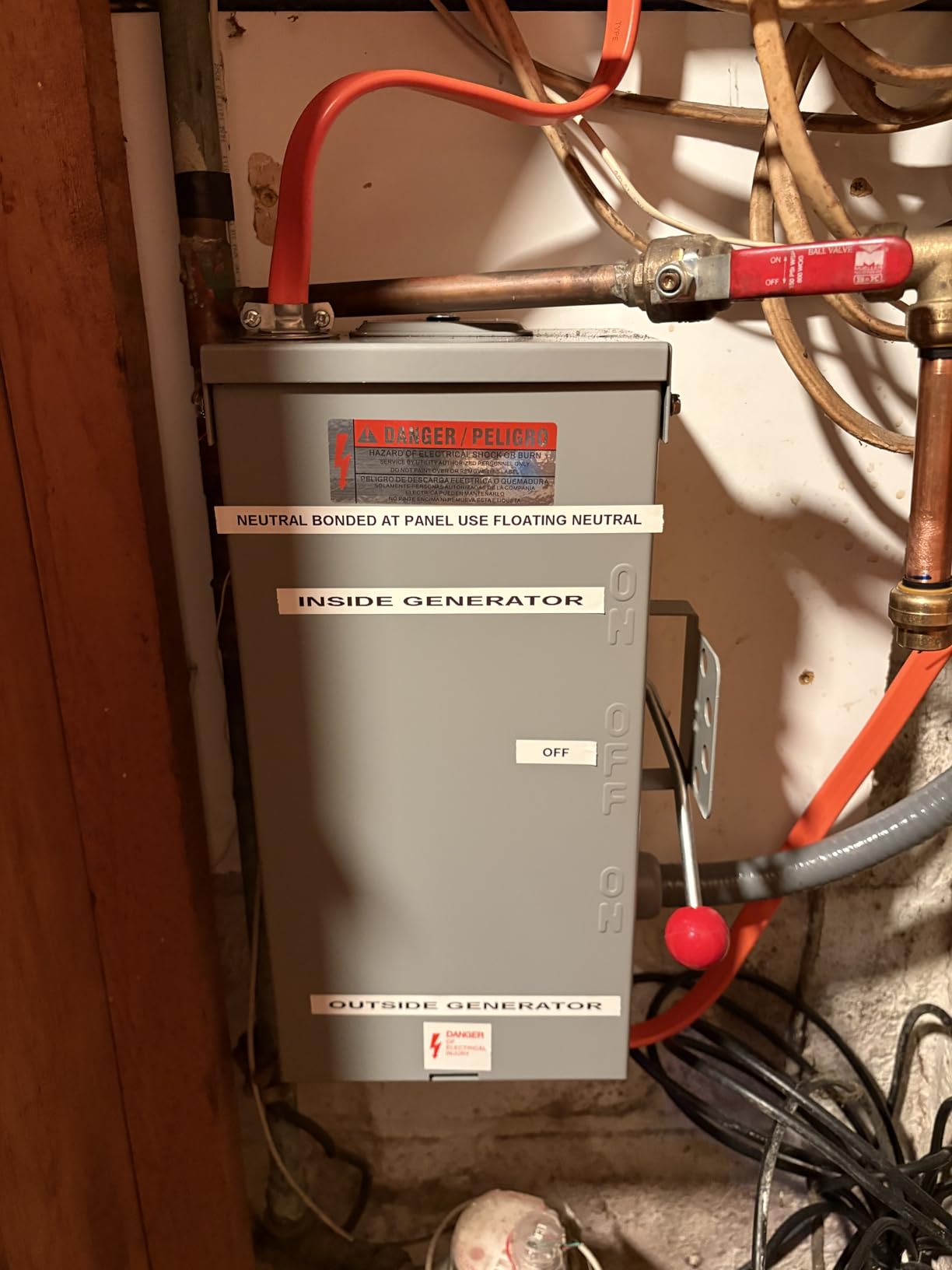
This is a 100-amp double-throw safety switch in a galvanized steel NEMA 3R box, and the appeal is simplicity. There is no control board, no battery, no relay logic, just a rotary mechanism and brass contacts. Forum users who have run standby systems for years tend to value exactly that kind of design for the same reason.
At 24,000 watts it covers the full portable-generator ceiling, and it will accept a standby unit’s output as readily as a portable machine. The enclosure handles weather, so it can go on an exterior wall near the inlet without the corrosion risk that kills indoor boxes mounted outside.
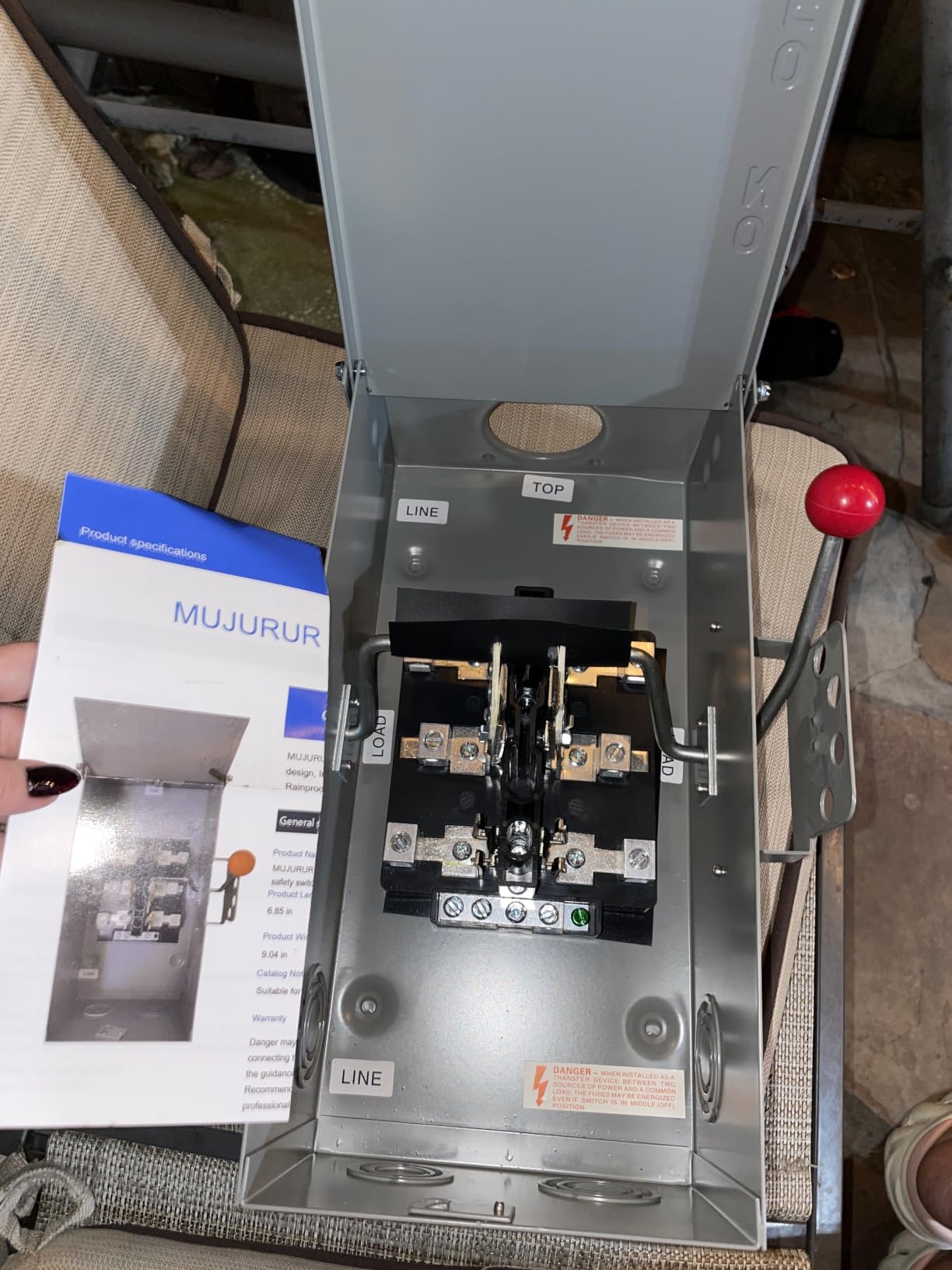
The lock hole at the bottom is a nice touch for a device that is going to be mounted where children or a passing mower can reach it. It prevents accidental shutoff while utility power is supplying the load, which on a 100-amp switch would be an unwelcome surprise.
I want to be direct about the limitation that reviewers raise most often, because it is a code question rather than a quality question. There is no separate grounding lug on this unit, and some electricians require one for main-panel bonding. Your inspector is the person who decides whether that stops your project.
When a mechanical switch is the smarter choice
If your plan is a portable generator and manual switching, an automatic transfer switch buys you nothing you asked for. You are already outside starting the machine, and the person starting it is standing next to the box, so the automation is redundant.
No electronics also means no battery to replace and no control board to fail. When a Power Equipment Forum user was weighing a power-management automatic switch against a plain one for a 400-amp service, the argument for simplicity was that load management is just more electronics to fail, and measured load turned out well below the level that would have needed it.
Where the missing features will be noticed
No spring-release mechanism means the contacts can arc when you switch while a large load is running. Best practice is to shut down big loads like compressors and pumps before throwing the lever, which is good habit with any mechanical switch.
The other two complaints are physical. A few electricians describe the interior as cramped and the knockouts as poorly punched for a full 100-amp feeder, and that is where installation time and cost creep in. Bring this to a licensed electrician with the panel open before committing.
7. Generac RXSC100A3 100 Amp Automatic Transfer Switch
- Fully automatic switching between utility and standby generator
- NEMA 3R outdoor-rated enclosure with heavy-duty contactor
- Sheds load across up to 4 HVAC circuits without extra hardware
- Expandable as backup needs grow over time
- Requires a Generac standby generator with Evolution or Power Zone 200 controller
- Higher share of one-star ratings tied to compatibility
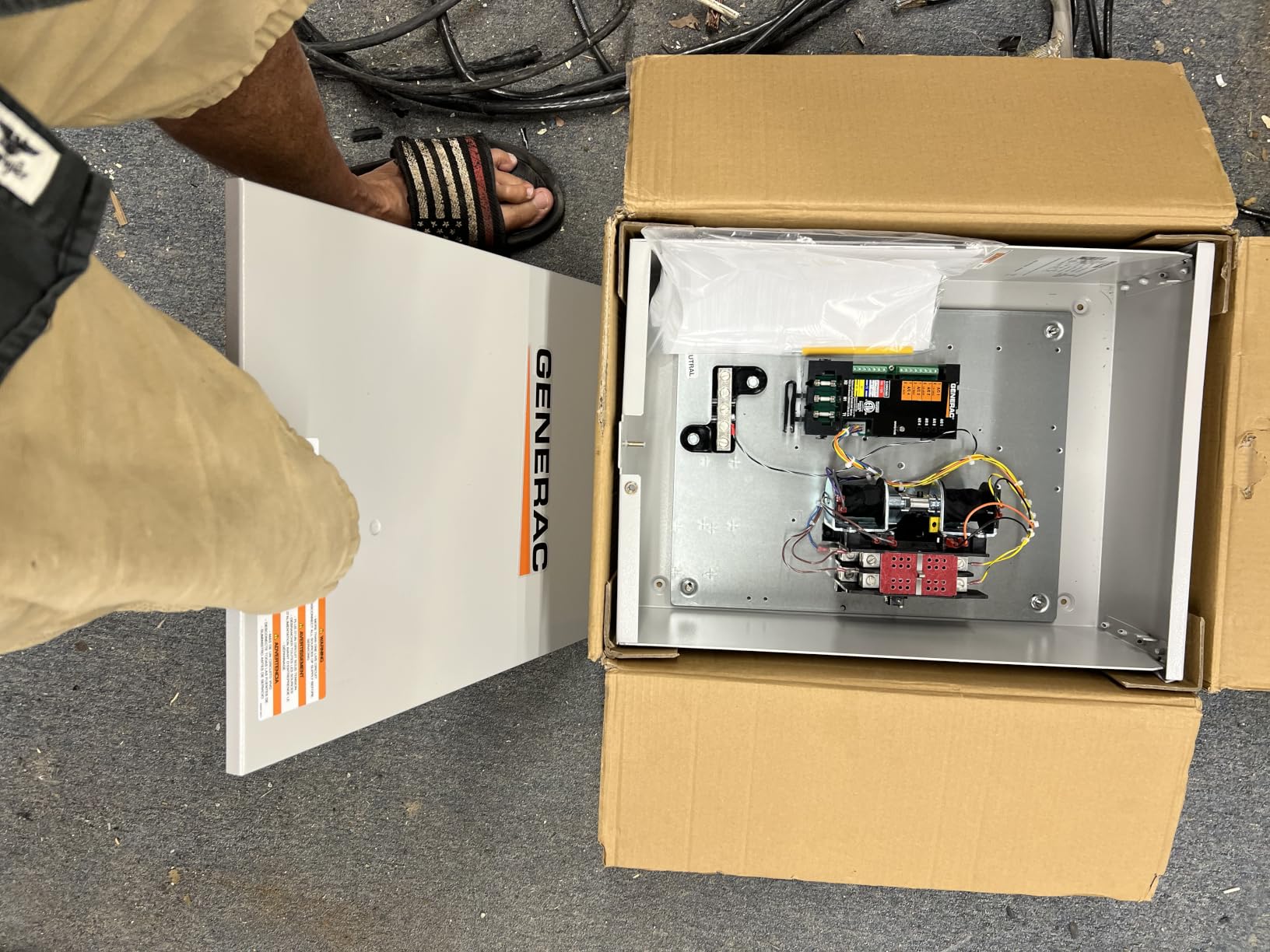
This is the only true automatic transfer switch in the group, and it changes the premise entirely. There is no starting a generator, no plugging in a cord, and no throwing a lever. The switch detects the outage, signals the standby unit, and transfers on its own within seconds.
That is worth doing if your backup needs include medical equipment, a freezer full of expensive food, or a home you are not standing in. It is not worth doing for a weekend of planned outages, where a manual switch and a portable machine on a Saturday morning is faster and simpler.
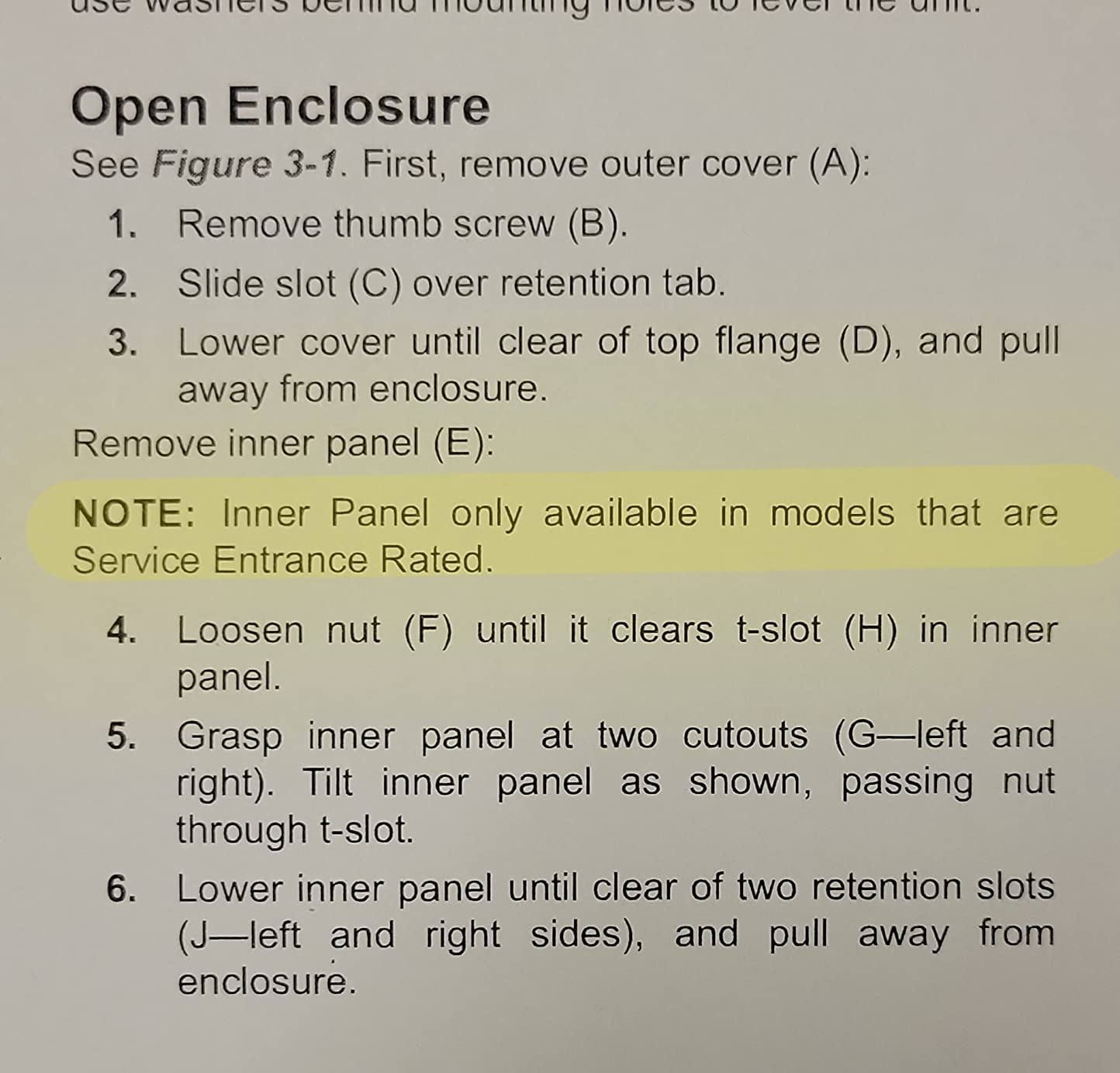
The load management is the differentiator versus a plain automatic switch. It sheds up to 4 HVAC circuits automatically so the generator is not asked to carry an electric resistance heat pack and a compressor at the same time, which is how standby systems trip their own capacity.
It is also expandable. Generac Smart Management Modules can be added as backup needs grow, so the 100-amp switch is a starting point rather than a ceiling.
One thing to check carefully before anything else: this is an open-transition design built for Generac Evolution or Power Zone 200 controllers. It is a matched component in a system, not a universal automatic switch, and a compatibility mismatch is the most common thread in the lower-rated reviews.
When automatic failover earns its complexity
Automatic transfer is for loads that cannot wait for a human. Life support equipment, a home medical setup, or a second property left empty through winter are the cases where 10 to 30 seconds of automatic response is genuinely different from a manual sequence that requires you to grab a flashlight and walk outside.
It also removes the possibility of human error at the worst moment. A manual switch relies on a correctly performed sequence every time, and the Hearth members who value manual systems most are, not coincidentally, the ones who describe that sequence confidently enough to teach it to a family member.
Where compatibility bites hardest
Buying an automatic switch ahead of the generator is how people end up with a 4.3 rating. Confirm the standby unit’s controller model, confirm the transition style, and confirm the switch is rated for the generator’s surge output before ordering anything.
Automatic switches also carry a maintenance component that manual units do not. The control board and its backup battery are the two things that actually fail on an automatic transfer switch, and a battery that has been sitting flat for three years is the most common reason a system refuses to start when it is needed.
8. Nature’s Generator 30 Amp 6-Circuit Manual Switch
Nature’s Generator 30 Amp Manual Transfer Switch 6-Circuit 120V, UL Listed Non-Automatic Power Transfer Kit, Pre-Wired Indoor for Portable Generator
- Works with gas diesel propane battery solar wind and micro hydro sources
- Pre-wired with inlet cord conduit and cable clamps included
- Illuminated rockers show at a glance when generator power is active
- UL listed and compatible with AFCI and GFCI breakers
- Stainless steel enclosure
- Limited to 6 circuits at 120V so no 240-volt circuits
- Newer listing with a much smaller review base than established kits
This kit is aimed at a home that has moved beyond a gas generator, and the compatibility list is the headline: gas, diesel, propane, lithium power stations, solar, wind, and micro hydro. For anyone who bought a battery-backed power station instead of a conventional portable, this is the switch that makes it usable indoors.
The 3,600-watt ceiling is honest and low, which is exactly right for the use case. A 3,000-watt power station and a refrigerator, some lights, and a phone charger fit comfortably, and nothing here pretends to handle a well pump.
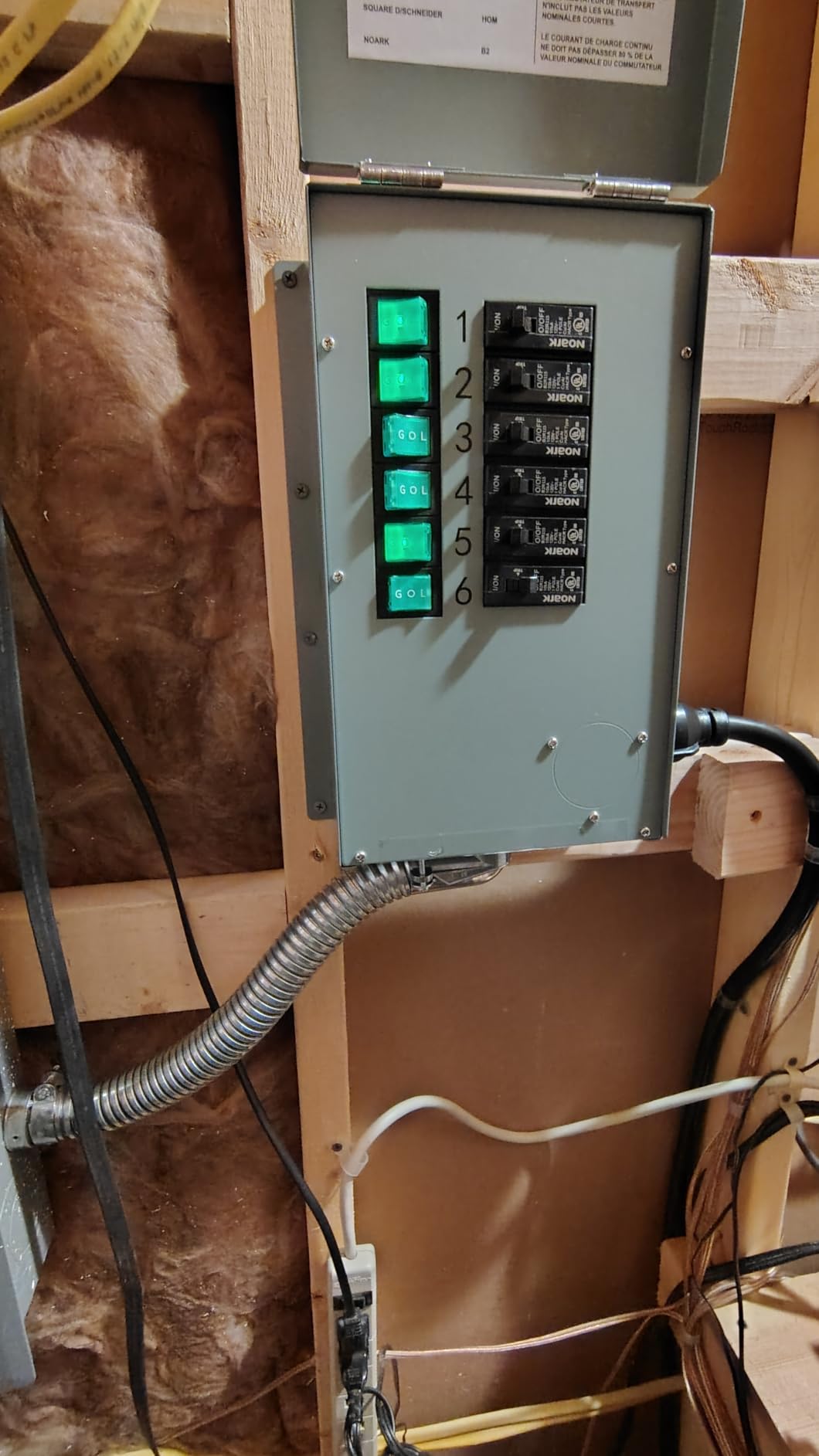
Compatibility with AFCI and GFCI breakers is worth noting because it is a genuine source of returns elsewhere. Some modern panels require arc-fault and ground-fault breakers, and a transfer switch whose internals do not work with them will cause nuisance tripping under the distorted output of an inverter.
The illuminated rocker switches are a small detail that owners mention approvingly. In a dark garage during an outage, seeing which circuits are live on generator power is a meaningful improvement over unlabeled toggles.
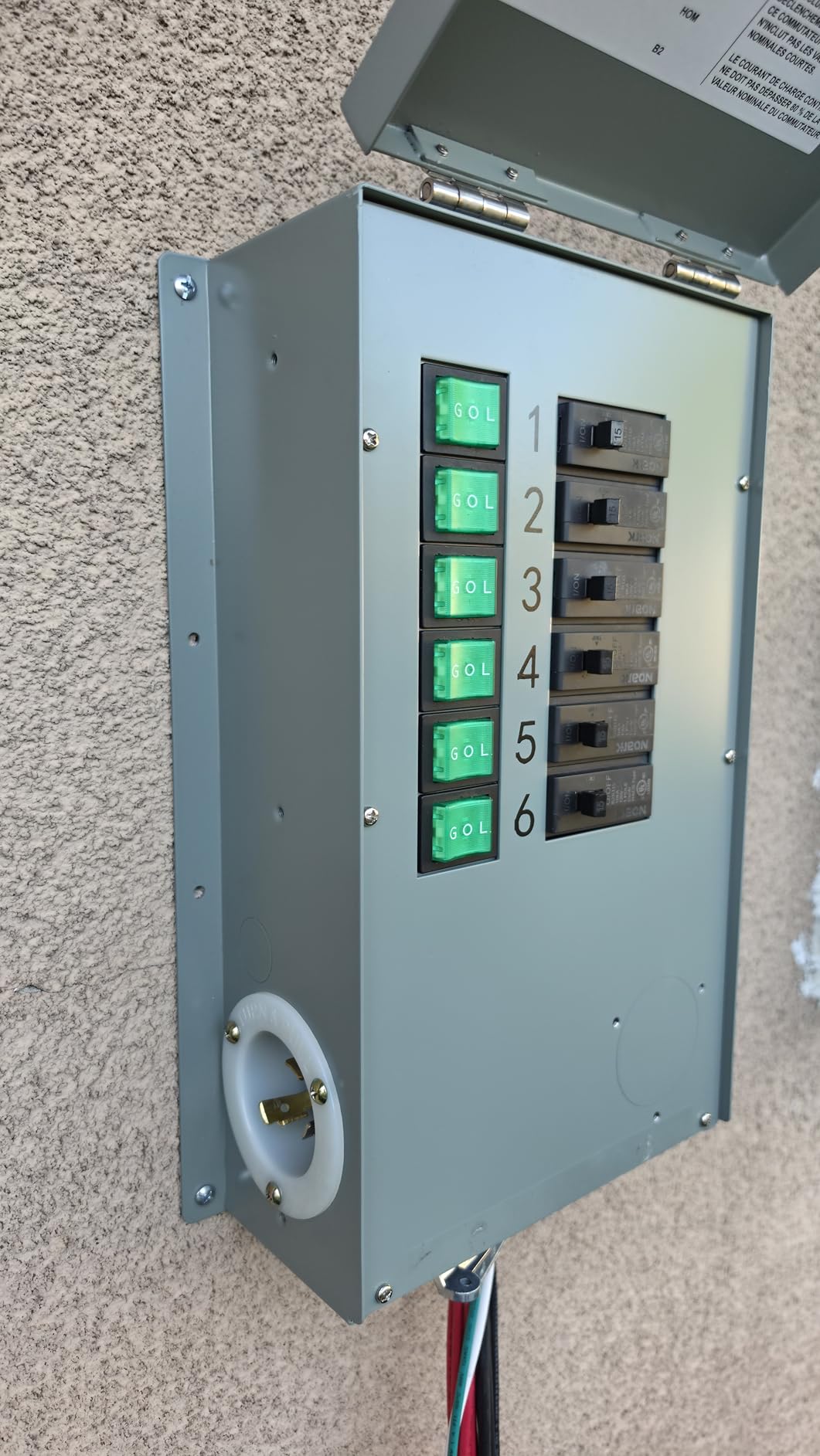
Who this kit is actually right for
If your backup power is a lithium power station, a solar-charged battery, or a small propane unit, you are the buyer this product was made for. The older 30-amp kits on this list assume a conventional alternator output and an L14-30 plug, which battery-based machines frequently do not have.
It is also a good fit for a garage, a workshop, or a finished basement where everything you care about runs on 120 volts and you have no interest in touching a 240-volt circuit.
Where the limits show up fast
There are no 240-volt circuits here at all, so a furnace with a gas valve is fine but anything electric heat, a well pump, or a clothes dryer is out. Six positions also runs out quickly once outlets and lighting are included.
The honest caveat is the review base. At 59 reviews this is the thinnest history in the group, and newer listings carry less field evidence than established kits with four-digit review counts. The 4.6 average is encouraging, but I would weight it accordingly.
9. Connecticut Electric Series 2 50 Amp 10-Circuit Kit
Connecticut Electric Series 2 Backup Power Manual Transfer Switch Kit, 50 Amp, 10 Circuits, with 25′ Cord & Outdoor Rated 50A Inlet (Transfer Switch Kit – 25 ft Cord)
- 50 amp capacity removes the load ceiling that limits 30 amp kits
- Includes a 50A outdoor inlet box and a 25 foot cord
- Double-throw rocker design prevents hazardous back-feeding
- Well-built metal enclosure
- Works with any panel type including built-out panels
- May require switching one wire at a time depending on tie bar setup
- Extra wire and fittings often needed between inlet and panel
The Series 2 kit is the one I would look at first if you run a well pump, a furnace, or any 240-volt load on backup, because the manufacturer specifically designs the switching for those applications rather than treating them as an afterthought.
It shares the 50-amp, 10-circuit, 12,500-watt platform with the Reliance A510C above, but it arrives as a complete kit with the pieces that 50-amp installs actually need: a 50A outdoor inlet box and a 25-foot cord. The Reliance ships as a switch alone, so a comparable install means sourcing those parts separately.
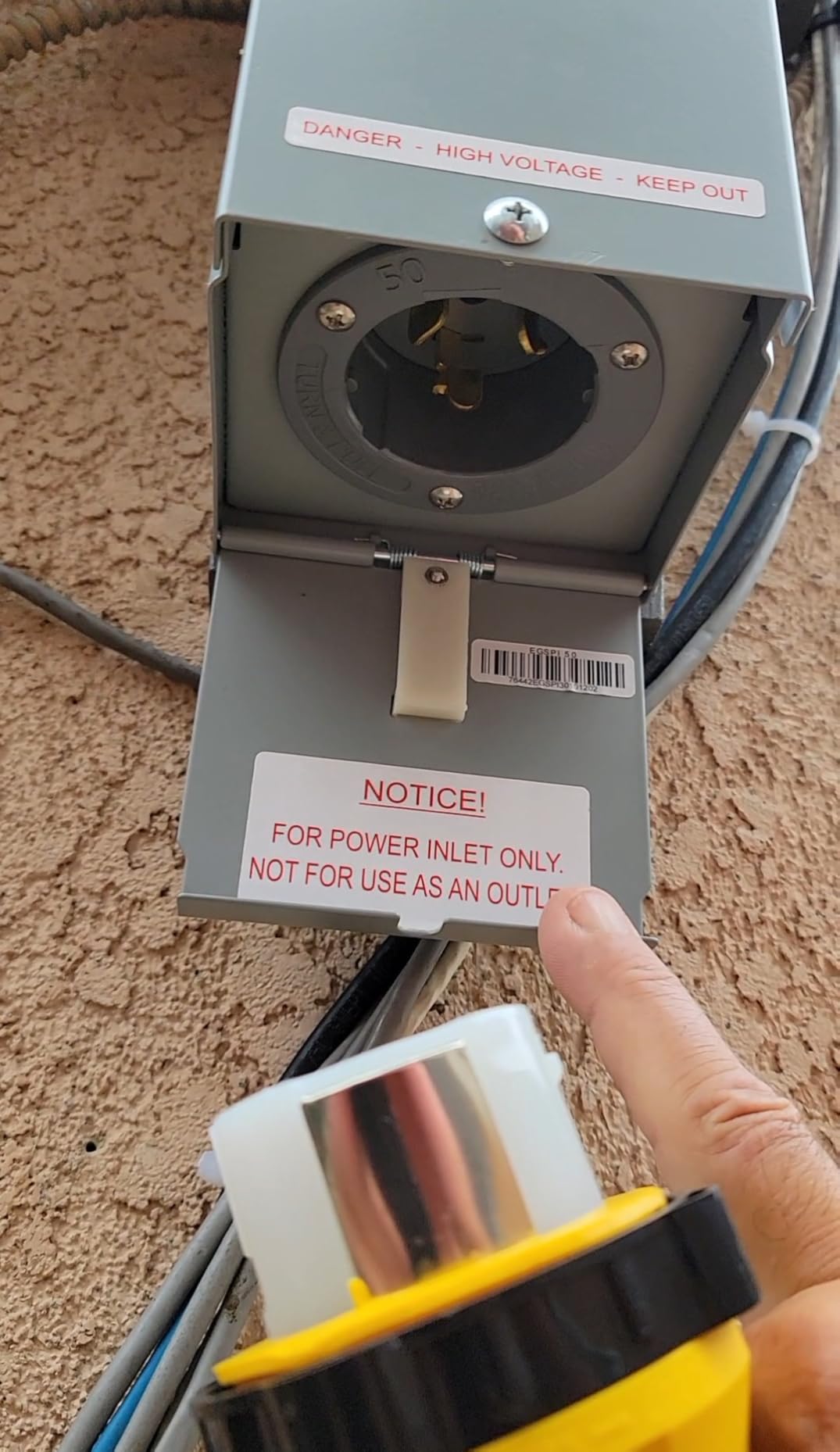
That 25-foot cord length is a genuine advantage over a 10-foot cord in a home where the panel is set back from an exterior wall. Most of the friction in these installations comes from discovering the included cord is too short to reach the inlet without dragging cable across a room.
The double-throw rocker switch is the mechanism that prevents back-feeding, and reviewers describe the build as solidly made. It is ETL certified to UL safety standards, which is the same baseline I look for on any switch feeding a home panel.
Why motor loads justify a 50-amp kit
A well pump or a compressor does not draw its nameplate power when it starts. It draws a multiple of it for the first second or two, and that inrush has to clear before the generator settles into steady operation. A 30-amp switch paired with a 7,500-watt machine has no room for that.
Going to 50 amps gives the startup surge margin and lets you keep a second 240-volt circuit live. In a home where losing the well pump means a dry well, or losing HVAC during a heat wave is a safety issue, that margin is the difference between a usable backup and a frustrating one.
Where the tie bar configuration causes friction
Owners report that depending on how the tie bars are configured, you may be switching one wire at a time rather than moving a linked double. It is not wrong, it is just a step that needs to be planned rather than discovered on the panel.
Also budget for wire and fittings between the inlet and the panel. This is the most common surprise on 50-amp installs, and it is easier to price into the electrician’s quote when you mention the inlet location up front rather than after the box is mounted.
10. Generac 6334 100 Amp Manual Transfer Switch
- Transfers power to a single dedicated load or subpanel
- 100 amp rating handles high demand loads in long outages
- Heavy gauge steel box with name-brand breakers
- Uses standard Siemens-type breakers so sizes are easy to change
- Also works as a utility versus off-grid solar changeover for workshops
- Two-pole breaker sharing a common neutral is not ideal as a main panel disconnect
- Instructions lack a wiring schematic
- Lugs and breakers are not labeled for copper versus aluminum
The Generac 6334 does a narrower job than a full 10-circuit switch, and in exchange it covers a very wide range of generator sizes. It is rated for portable generators from 3,000 up to 25,000 watts, which means the same switch can follow you from a small inverter-adjacent unit to a large portable machine.
Its intended application is a single dedicated load or a subpanel. If your backup plan is a separate small panel holding the furnace, the refrigerator, and a few outlets, this switch feeds that panel as one load, which is simpler to install and simpler to operate than distributing ten circuits.
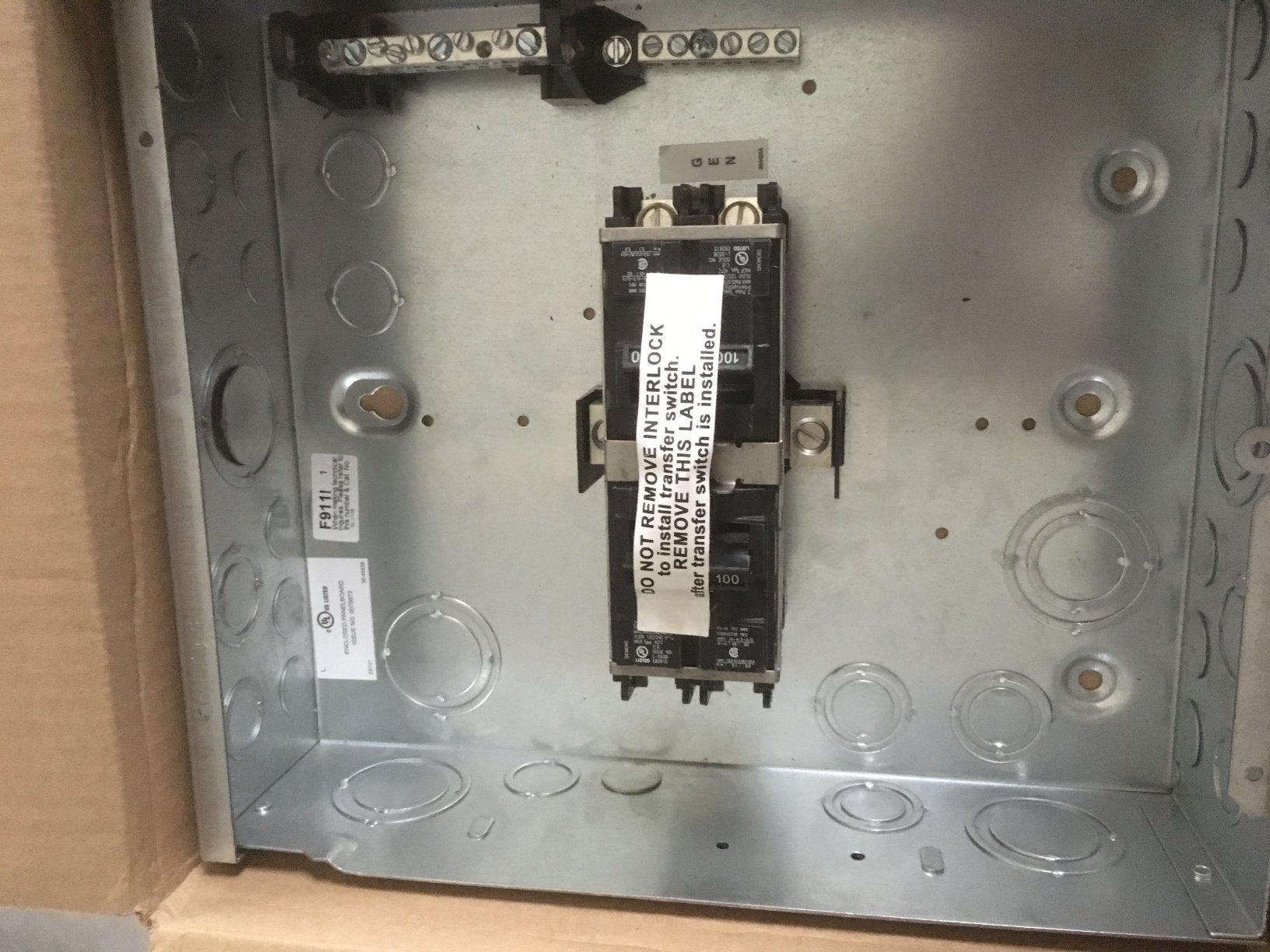
Using standard Siemens-type breakers is a quiet advantage. When a breaker needs replacing or a circuit needs to be added, the parts are ordinary and available, rather than proprietary. Forum discussions about breaker brand mismatch come up constantly, and owning a switch that uses mainstream breakers sidesteps the problem.
Owners also use it as a utility versus off-grid changeover for a workshop or a solar system, where the same per-source selection logic applies. At 10 pounds in an aluminum-bodied, surface-mount box, it is light to handle on a ladder or in a crawlspace.
When a subpanel changeover is the smarter plan
If you have ever wanted selective backup rather than everything-or-nothing, a subpanel fed through a 100-amp switch is an elegant way to do it. You build the essential circuit list in one place, and the main panel is untouched apart from a single feed.
It also sidesteps breaker brand compatibility entirely at the main panel, because the only breaker your existing panel gains is the one feeding the transfer switch. That removes the most common returns driver in this category.
Where the two-pole design gets questioned
The most substantive complaint is that a two-pole breaker sharing a common neutral is not ideal as a main panel disconnect, and some inspectors reject it for that application. If you are feeding the whole panel rather than a subpanel, raise this with your electrician first.
The documentation is also the weakest point. Owners note the instructions lack a wiring schematic, and the lugs and breakers are not labeled for copper versus aluminum conductor suitability. At a two-year limited warranty, this is the shortest coverage in the group, so confirm the install is right the first time.
How to Size a Transfer Switch for Your Generator
Size a transfer switch by dividing your generator’s running watts by 240 to get the amps, then match the switch to that number or go one class higher for motor loads. There is one exception: a 120-volt-only circuit needs a 30-amp rating no matter how small the generator is.
The arithmetic is the easy part. The decisions that actually cost homeowners money are the ones about circuit count, enclosure rating, and how the generator handles its neutral.
Map your essential circuits before you buy. Write down the list before choosing a kit, because a six-circuit switch and a ten-circuit switch serve very different households. A gas furnace, a refrigerator, a freezer, a sump pump, a well pump, and two lighting circuits is seven positions, and 240-volt loads consume two positions each.
Match the plug to your generator. A 7,500-watt portable uses an L14-30 connector. Anything from about 10,000 to 12,500 watts uses an L14-50, and no 30-amp kit will accept that plug regardless of how much headroom the circuits have. Buying the switch first and the generator second is how people end up replacing hardware they just installed.
Choose the enclosure for where it lives. A NEMA 3R enclosure can go indoors or outdoors. An indoor-rated box mounted on an exterior wall will corrode, and the failure typically shows up as intermittent behavior during wet weather years after installation. Owners on forums consistently describe this as the most expensive mistake of the under-budget kind.
Check UL or cUL or ETL listing before anything else. This is the baseline credibility check. Forum readers treat a non-listed unit as a deal breaker regardless of what the listing page claims, because an inspector has a standard to check and your homeowner’s insurance has a document to ask for.
Verify breaker brand compatibility with your existing panel. Square D, Siemens, and other brands are not interchangeable. If your panel takes QO breakers, a kit that ships with generic breakers means sourcing parts later, which is a common and entirely avoidable return.
Understand neutral bonding before you wire anything. A floating-neutral generator must not be bonded to the house ground, and a bonded-neutral generator must be. The NEC 250.30 rules around this are what separate a safe install from an unsafe one, and the EZ Generator Switch in this roundup is the only device here that reconfigures for both without a different unit.
Consider your panel’s service rating. A 200-amp switch on a 100-amp panel buys nothing, and an older 100-amp panel may need upgrading before a larger switch can be installed at all. This comes up repeatedly in homeowner discussions and it is worth a phone call to your electrician before you order.
Manual vs Automatic Transfer Switches
A manual transfer switch requires you to be there: start the generator, plug the cord into the inlet, and move the switch from line to generator. An automatic transfer switch detects the outage, signals the standby generator, and transfers power on its own in roughly 10 to 30 seconds without any human action.
The manual approach is right for planned outages, portable generators, and homes where someone is available. It costs far less, it has no battery or control board to fail, and the operating sequence takes about ten minutes once you know it.
The automatic approach is right for standby systems and for any load that cannot wait. Medical equipment, a freezer, and a home you are not physically present in all argue for automatic failover, and the cost difference is substantial enough that it needs its own budget conversation.
What actually fails differs by type. Manual switches fail at the contacts, which corrode or arc, and the fix is cleaning or replacing the contact assembly. Automatic switches additionally fail at the control board and the backup battery, and the battery is the item owners most often forget because it fails silently while the generator itself is perfectly fine.
Forum users who have operated both tend to land in the same place. One user weighing a 400-amp service with two 200-amp feeds found a single large automatic switch was the only compatible unit and cheaper than two separate ones, but also concluded that load management proved unnecessary once measured load came in at 24kW in-rush and 10kW steady. Measure before you buy intelligence.
Transfer Switch vs Interlock Kit vs Meter-Mounted Switch
These three solve the same backfeeding problem in different ways, and the right one depends on how selective you want your backup power to be and how much room you have on the panel.
A transfer switch is a separate subpanel with its own set of breakers. It is the most selective option, the most code-friendly, and the most flexible because you can add circuits later. It also takes the most panel space and the most wire.
An interlock kit is a mechanical device that physically blocks the main breaker from being turned on while the generator breaker is engaged. A Hearth member put the material math at roughly 50 to 75 dollars for the kit plus 100 to 200 for an input box, against roughly 300 to 400 for a dedicated transfer panel, though labor and permits apply to both. The trade is that you sacrifice circuit selection: everything on the main breaker goes to the generator.
A meter-mounted switch installs at the meter socket and handles the whole home without a subpanel. It is compact and clean, and it requires your utility to pull and reseal the meter. Homeowners on 2coolfishing report reading failure accounts for this style and deciding to avoid them in favor of a conventional switch, and other jurisdictions treat breaking a meter seal as a serious matter. Ask your utility before you plan around one.
For most households with a portable generator, the transfer switch wins. It is the most flexible, it is the least likely to run into an inspection problem, and it is the only one of the three that lets you choose which circuits run.
Installation, Permits, and What Labor Really Costs
A transfer switch is a service-entrance-adjacent job, and in most jurisdictions it requires a permit and a licensed electrician even when the homeowner is comfortable with panels. The reasoning is straightforward: an inspector needs a standard to verify, and the work touches the conductors that line crews assume are dead.
Homeowner reports of electrician quotes run from about 600 to 750 dollars for a manual 6-circuit or 10-circuit Reliance install, while a regional electrical contractor in the Dallas-Fort Worth area reports installed manual systems from 1,600 to 4,650 and automatic systems far above that. Labor and materials, not the box, are what drive the number.
Before the quote is written, give the electrician three things: the panel brand and amperage, the location where the inlet box will go, and the list of essential circuits. Installers on forums say that arriving with the circuit list decided in advance is the single biggest factor in whether a job comes in on the estimate.
Permit requirements vary by municipality and so does who is allowed to pull one. If you are considering doing the wiring yourself, check your local rules first, because work that fails an inspection or violates an insurance requirement costs more than the labor you were trying to save.
One practical check before the installer arrives: if your panel is old, small, or full, tell them. Owners report being surprised by a conversation about upgrading a 100-amp panel before a larger switch can go in, and that changes the scope considerably.
Safety and NEC Compliance: Why Backfeeding Kills
Backfeeding is what happens when generator power reaches the utility line without a transfer switch. Line crews working on a circuit that has been de-energized have no way of knowing a house at the end of it is pushing power outward, and that is a documented cause of electrocution.
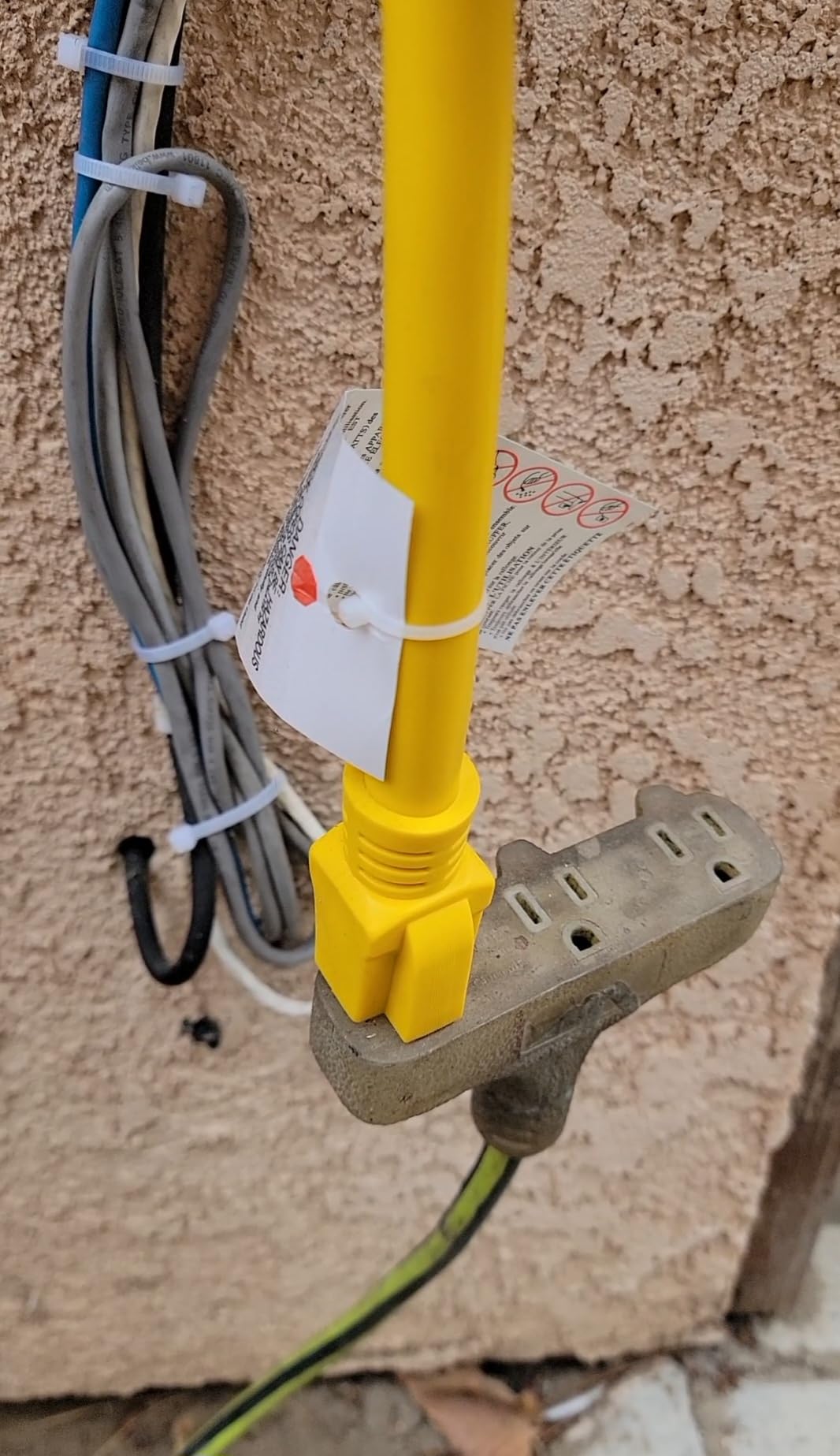
The shortcut people reach for is a cord with a male connector on both ends, sometimes called a suicide cord. It accomplishes exactly what a transfer switch prevents: it puts grid and generator on the same conductors at the same time. Forum readers describe it as the one thing nobody should ever do.
Automatic transfer switches reduce the human-error component of backfeeding by removing the manual step entirely, which is part of why they are specified for standby systems. They do not remove the requirement for a listed, properly installed device.
Two code references come up constantly. NEC Article 702 covers transfer equipment for generator systems, and NEC 250.30 covers the grounding and bonding rules for generators, including the neutral bonding question that determines whether your generator is compatible with your panel.
One more failure mode worth naming, because it is the most expensive kind to discover late: an indoor-rated enclosure installed outdoors. It corrodes from the inside, the contacts pit, and the switch begins failing only in wet weather. Check the enclosure rating against the actual mounting location before the electrician orders the box.
Frequently Asked Questions
Which generator transfer switch is the best?
For most homes with a portable generator under 7500 watts, the Reliance Controls 31406CWK 30 amp 6-circuit kit is the best all-around choice because it ships complete with the switch, outdoor inlet box, cord and connectors, and it includes built-in watt meters. If you need more circuits in the same class, the Connecticut Electric EmerGen 30 amp 10-circuit kit adds four more positions and a NEMA 3R weatherproof enclosure. Larger portable generators above 7500 watts need a 50-amp switch, and standby systems need a 100-amp automatic switch.
What size transfer switch do I need for a 10,000 watt generator?
Divide the generator’s running watts by 240 to get amps, then match or exceed that figure. A 10,000-watt generator produces about 42 amps, so a 50-amp switch is the correct minimum and a 30-amp L14-30 kit will not accept the plug. The quick reference: up to 7,500W equals a 30-amp switch, 7,500W to 12,500W equals a 50-amp switch, and 12,500W and above calls for 60 amps or higher.
Do I need a 30 or 50 amp transfer switch?
Match the switch to your generator’s output, not to your ambition. Up to 7,500 watts pairs with a 30-amp switch using an L14-30 connector, which is the standard for most portable generators. Between about 7,500 and 12,500 watts you need a 50-amp switch with an L14-50 connector. Going over 50 amps is worthwhile if you run well pumps or compressors, because motor inrush current at startup needs margin.
Can a homeowner install a generator transfer switch?
In most jurisdictions, no. A transfer switch is treated as service-entrance-adjacent work that requires a permit and a licensed electrician, and the reasoning is that an inspector needs a standard to verify on conductors that line crews assume are dead. Homeowner reports of electrician quotes for a manual 6- or 10-circuit install range from roughly 600 to 750 dollars in some markets and considerably higher in others. Check your local rules before doing any of this work yourself.
Which ATS brand is considered the best?
For automatic standby systems, Generac is the most widely discussed brand among homeowners, largely because the automatic transfer switch, the standby generator, and the load management modules are designed as one matched system. Compatibility matters more than the badge: an open-transition automatic switch built for one controller family will not work with another’s. Confirm the generator model, the controller, and the transition style before ordering any automatic transfer switch.
Should I choose a transfer switch, an interlock kit, or a meter-mounted switch?
Choose a transfer switch if you want selective backup, the most straightforward inspection, and room to add circuits later. Choose an interlock kit if budget is the priority and you can accept that everything on the main breaker goes to the generator. Choose a meter-mounted switch if you want whole-home coverage without a subpanel, but ask your utility first, since the meter must be pulled and resealed and some service areas restrict that work.
What are the common problems with transfer switches?
The most common mechanical problem is arcing contacts from switching under a heavy load, so shut down compressors and pumps before throwing the lever. Automatic switches add two more failure points: the control board and its backup battery, which ages silently and often causes a system to refuse to start years after installation. The sneakiest failure is an indoor-rated enclosure mounted outdoors, which corrodes internally and only misbehaves in wet weather.
Final Verdict
For most people buying the best transfer switches for home generators, the Reliance Controls 31406CWK 30 amp 6-circuit kit is the pick. It is complete out of the box, it is the most reviewed unit here at 1,711 ratings, and its twin watt meters remove the guesswork from load planning.
If six circuits is too few, the Connecticut Electric EmerGen 30 amp 10-circuit kit gives you the same wattage ceiling with a weatherproof enclosure. If your generator is above 7,500 watts, look at the Connecticut Electric Series 2 50-amp kit with its 50A inlet and 25-foot cord, or the Reliance A510C if you already have the inlet hardware.
For a single essential load like a furnace or sump pump, the EZ Generator Switch is the highest-rated device in the group and handles both bonded and floating neutral generators. For standby systems, the Generac RXSC100A3 is the automatic option, provided your generator uses a compatible controller.
Whichever you choose, get the electrician involved early. Materials are a fraction of the installed cost, the circuit list drives the quote, and a permit plus an inspection is what separates a safe install from an insurance problem later. Our RV generator picks and smart switch guide cover the other side of outage planning if you want to keep reading.