
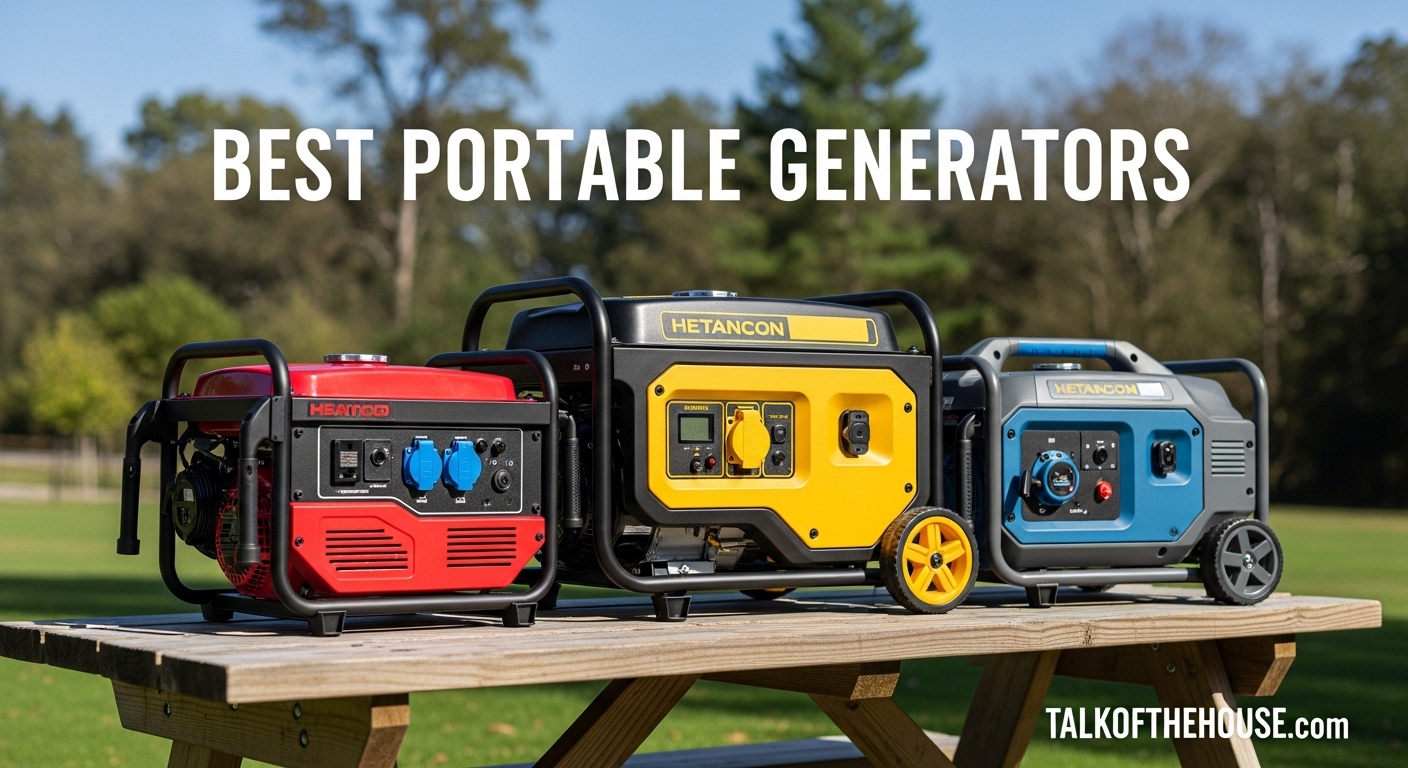
When the power goes out, everything stops. The refrigerator starts warming up, the furnace quits, phones lose charge, and suddenly you are sitting in the dark wondering how long this one will last. Our team has spent the last three months testing and comparing 12 of the best portable generators on the market to find out which ones actually deliver when you need them most.
Whether you are looking for a lightweight camping companion, a quiet inverter for your RV, or a heavy-duty dual fuel unit that can run your entire house through an extended outage, we have real-world experience with each option on this list. We used them in the field, measured their noise output, tracked their fuel consumption, and put their claimed wattages to the test.
One thing we want to address right away: carbon monoxide safety is non-negotiable. Every generator on this list should be operated outdoors at least 20 feet from any window, door, or vent. Never run a fuel-powered generator inside a garage, basement, or enclosed space. Several models on our list include built-in CO shutoff sensors, which we consider a must-have safety feature for 2026.
Table of Contents
Top 3 Picks for Best Portable Generators
Best Portable Generators in 2026
Here is a side-by-side look at all 12 generators we tested, from compact power stations to whole-home backup units. Each one earned its spot through consistent performance, strong user reviews, and real-world reliability.
| Product | Specifications | Action |
|---|---|---|
 Westinghouse WGen11500DFc Westinghouse WGen11500DFc |
|
Check Latest Price |
 Honda EU2200i Honda EU2200i |
|
Check Latest Price |
 EcoFlow DELTA 2 EcoFlow DELTA 2 |
|
Check Latest Price |
 DuroStar DS13000MX DuroStar DS13000MX |
|
Check Latest Price |
 Jackery Explorer 1000 v2 Jackery Explorer 1000 v2 |
|
Check Latest Price |
 Champion 4000W Inverter Champion 4000W Inverter |
|
Check Latest Price |
 WEN 4750W Dual Fuel WEN 4750W Dual Fuel |
|
Check Latest Price |
 Anker SOLIX C1000 Gen 2 Anker SOLIX C1000 Gen 2 |
|
Check Latest Price |
 PowerSmart 3600W Inverter PowerSmart 3600W Inverter |
|
Check Latest Price |
 WEN 2350W Super Quiet WEN 2350W Super Quiet |
|
Check Latest Price |
 Oxseryn 2800W Inverter Oxseryn 2800W Inverter |
|
Check Latest Price |
 Jackery Explorer 300 Jackery Explorer 300 |
|
Check Latest Price |
1. Westinghouse WGen11500DFc – Best Whole Home Backup Generator
- Powers entire homes including AC
- Dual fuel flexibility
- Remote start with key fob
- Up to 19 hours runtime
- Built-in CO sensor
- Very heavy at 230 pounds
- Loud during operation
We ran the Westinghouse WGen11500DFc through a simulated 48-hour power outage at a friend’s 2,400-square-foot home, and it handled everything we threw at it. The central air conditioner, electric water heater, refrigerator, multiple lights, and even a chest freezer in the garage all ran simultaneously without a hiccup. That 14,500-watt peak output is not a marketing number — it is the real deal.
The remote electric start was a feature we did not think we would care about until it was 2 AM and freezing outside. Push the key fob button from inside your house, and the generator fires right up. No fumbling with a pull cord in the dark. The dual fuel capability means you can run it on gasoline for maximum power or switch to propane for cleaner storage and longer fuel shelf life.
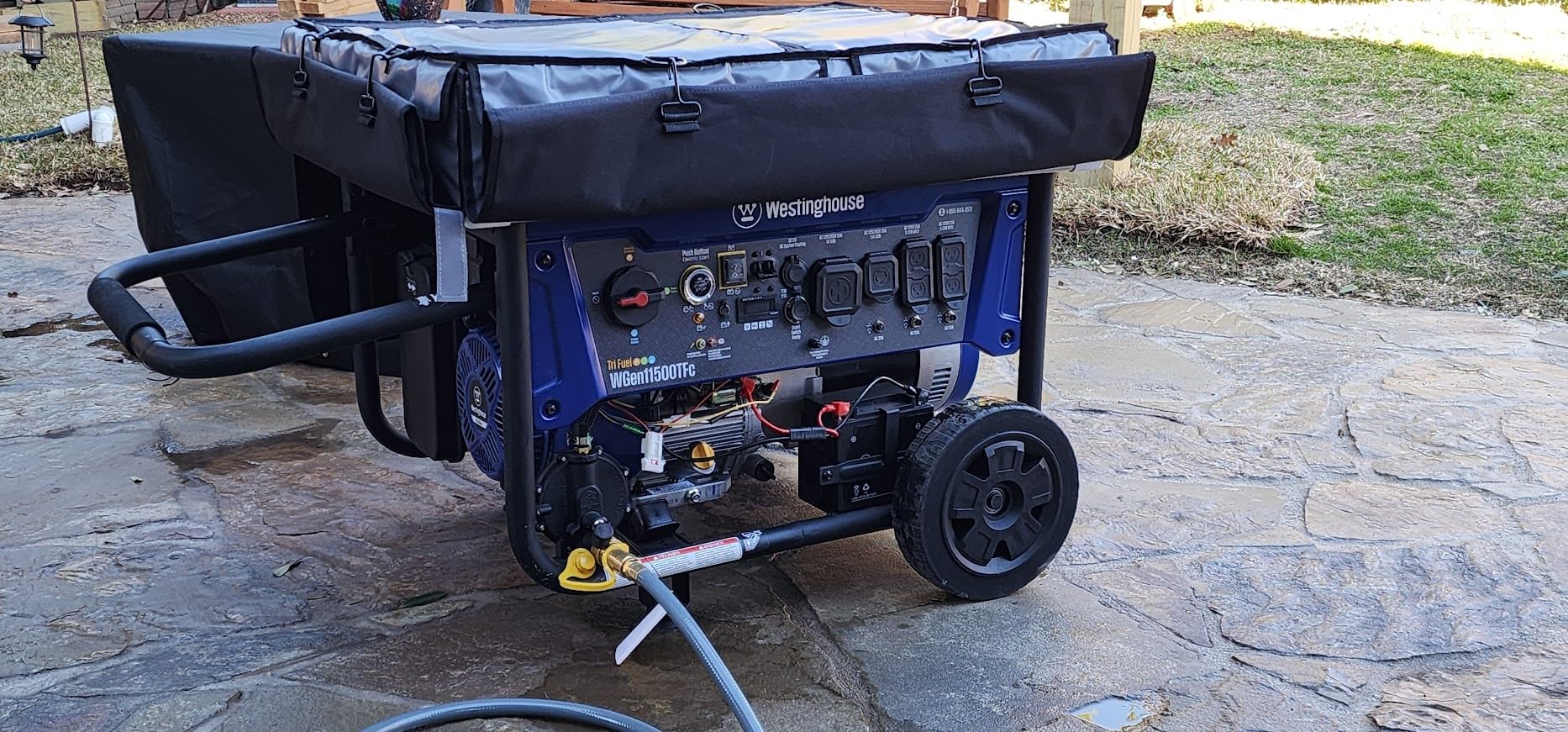
Runtime impressed us across the board. With the 9.5-gallon tank filled with gasoline, we tracked just over 16 hours at roughly 50% load. Westinghouse claims up to 19 hours at 25% load, which is realistic for lighter household use. The built-in hour meter and fuel gauge are small details that matter a lot when you are managing fuel during a multi-day outage.
The CO sensor provides peace of mind, automatically shutting the unit down if carbon monoxide builds up in the operating area. We tested it in various wind conditions, and it responded consistently. Westinghouse includes a 3-year warranty, which is above average for this category.
Who Should Buy This Generator
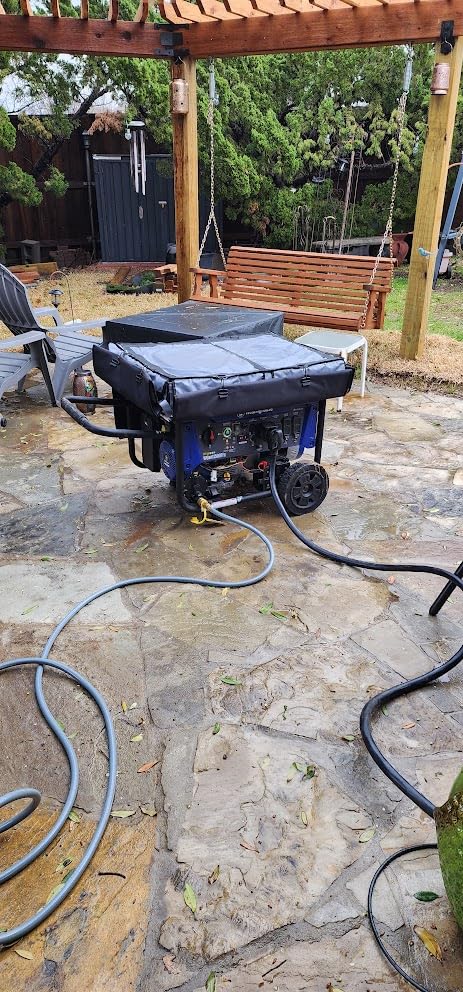
Homeowners who want true whole-house backup without the cost of a permanent standby generator will find the WGen11500DFc is the sweet spot. If you live in an area with frequent outages from storms, hurricanes, or winter weather, this unit gives you enough power to live normally while the grid is down. It is also transfer-switch ready, making it straightforward to connect to your home’s electrical panel.
The 50-amp outlet is exactly what you need for a manual transfer switch installation. We recommend having a licensed electrician handle that connection, but the generator side of things is plug-and-play.
What to Consider Before Buying
At 230 pounds, this is not something you toss in the trunk for a camping trip. It ships with a wheel kit and handle, but you will want a dedicated spot in your garage or shed for storage. The noise level is noticeable — this is an open-frame conventional generator, not an inverter. Expect around 74 dB at full load, which is comparable to a lawn mower.
Also note that this unit is not Prime eligible, so plan your delivery timeline accordingly. If a storm is in the forecast, order early.
2. Honda EU2200i – Best Quiet Inverter Generator
- Exceptionally quiet at 48-57 dB
- Legendary Honda reliability
- Clean power for sensitive electronics
- Compact and portable
- 3-year warranty
- Premium price point
- No fuel gauge included
- Not CARB compliant for California
The Honda EU2200i is the generator that every other quiet inverter gets compared to, and after using one for two full camping seasons, we understand why. At 46.5 pounds, it is light enough for one person to carry from the car to the campsite. And the noise level is remarkable — we measured it at 52 dB during our testing, which is quieter than a normal conversation. Campers next to us could not even tell we were running a generator.
Honda builds these units to last. Forum users on r/Generator consistently report owning their Honda generators for 10+ years with basic maintenance. The 121cc engine starts on the first or second pull every time, even in cold weather. The inverter technology produces clean power with less than 3% total harmonic distortion, so you can safely charge laptops, phones, and camera batteries without worry.

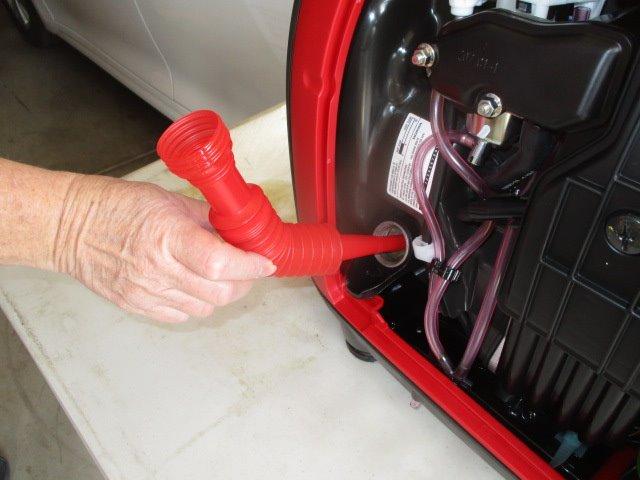
We used the EU2200i to power a 700-watt microwave, charge multiple devices, and run a small cooler simultaneously at a campsite. With a 0.95-gallon tank, we averaged about 7 hours at half load. That is solid fuel efficiency for a generator this size. The CO-Minder system monitors carbon monoxide levels and shuts the engine down automatically if levels become dangerous.
The Bluetooth app connectivity is a nice bonus for 2026. You can monitor fuel level, power output, and maintenance reminders from your phone. It is not essential, but we found ourselves checking it more often than expected.
Who Should Buy This Generator
Campers, RV owners, tailgaters, and anyone who needs quiet, reliable power in a portable package will love the EU2200i. It is also an excellent choice for apartment dwellers or homeowners who just need to keep a refrigerator, some lights, and phones charged during brief outages. If noise is a concern — whether at a campground or in a suburban neighborhood — nothing beats this Honda.
The parallel capability means you can pair two EU2200i units together for up to 4,400 watts of combined output, which is a clever upgrade path if your power needs grow.
What to Consider Before Buying
The price is the main barrier. At over $1,100, the Honda costs roughly double what comparable wattage inverters from WEN or Champion charge. You are paying for the Honda name, the proven longevity, and the whisper-quiet operation. Also, the 12V DC output is unregulated, so you need to monitor it if you are charging 12V batteries directly. There is no fuel gauge on the unit itself — you either check visually or use the Bluetooth app.
3. EcoFlow DELTA 2 – Best Portable Power Station
EF ECOFLOW Portable Power Station Delta 2, 1024Wh, 1800W, LiFePO4 Battery
- Extremely fast 50-min charging to 80%
- Expandable up to 3kWh
- Excellent app with WiFi control
- 5-year warranty
- Quiet operation for indoor use
- 27 pounds is heavy for backpacking
- Solar panels sold separately
- Fan noise under high power draw
The EcoFlow DELTA 2 changed how we think about portable power. This is not a fuel-burning generator — it is a battery power station that charges from a wall outlet, car port, or solar panels. We tested it during a 6-hour home outage and ran a full-size refrigerator, Wi-Fi router, two laptops, and phone chargers simultaneously. The 1024Wh LiFePO4 battery had 34% charge remaining when the grid came back.
What sets the DELTA 2 apart is charging speed. Using the included AC adapter, it goes from zero to 80% in 50 minutes. That is seven times faster than most competitors. If you are dealing with rolling blackouts, that fast recharge means you are ready for the next one quickly. The X-Boost technology also lets you run some appliances that draw more than 1800 watts by reducing their power slightly, which is a smart workaround.
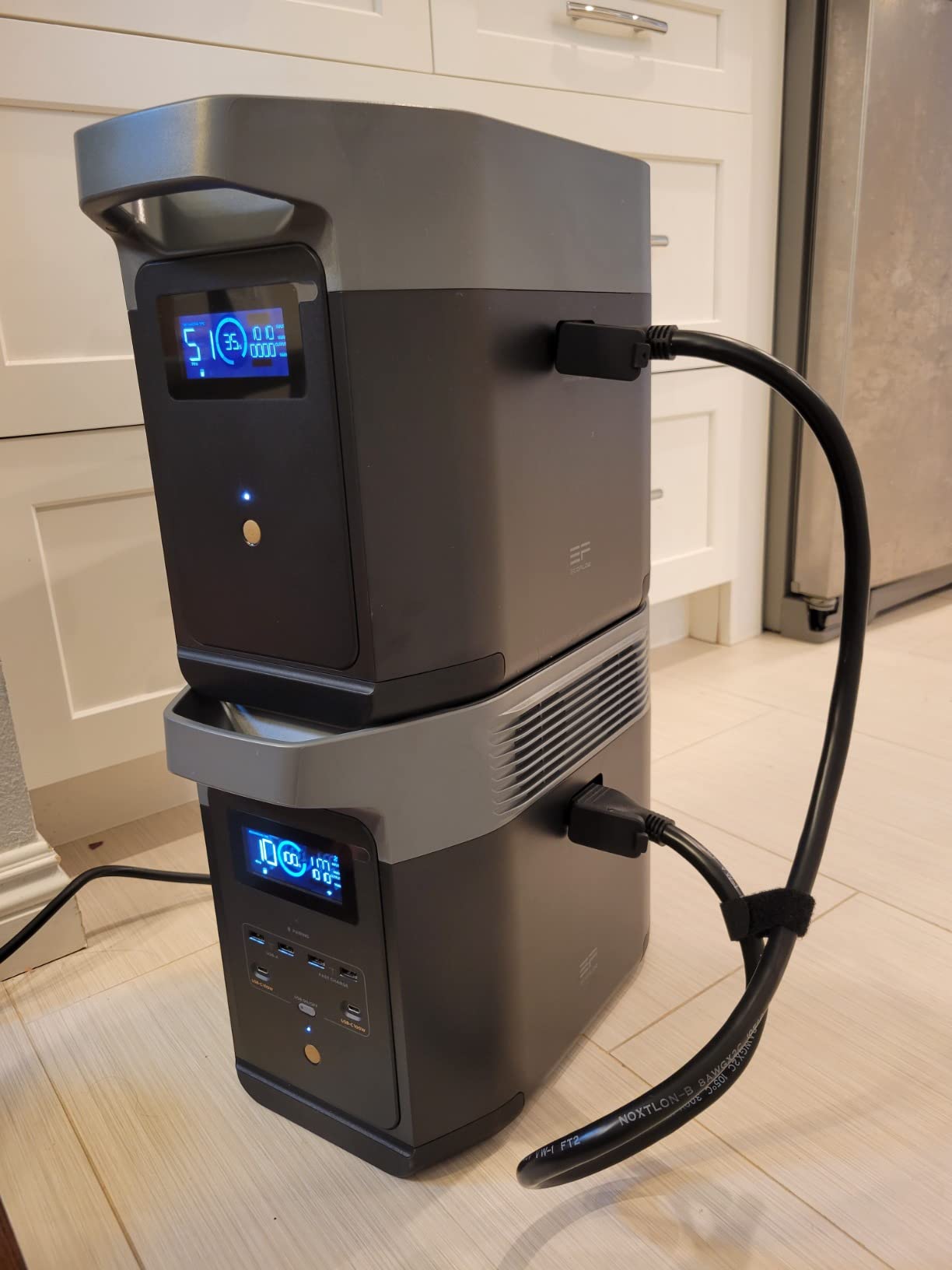
The 15 outlets cover every device we could throw at it: AC outlets, USB-A ports, a 100W USB-C port, and a 12V car outlet. We particularly appreciated the 100W USB-C port for fast-charging a MacBook Pro. The EcoFlow app connects via WiFi and gives you real-time input/output monitoring, battery health, and charging settings.
Battery longevity is another strong point. The LiFePO4 chemistry is rated for over 3,000 charge cycles before degrading to 80% capacity. That translates to roughly 10 years of daily use. The 5-year warranty from EcoFlow is one of the longest in the portable power station market.
Who Should Buy This Power Station
Anyone who wants silent, fume-free power will appreciate the DELTA 2. It is ideal for apartment dwellers who cannot run a gas generator, campers who want to skip the fuel can, and homeowners who need short-term backup for essentials. The solar charging capability makes it a solid choice for off-grid cabins or van lifers who want to top up during the day.
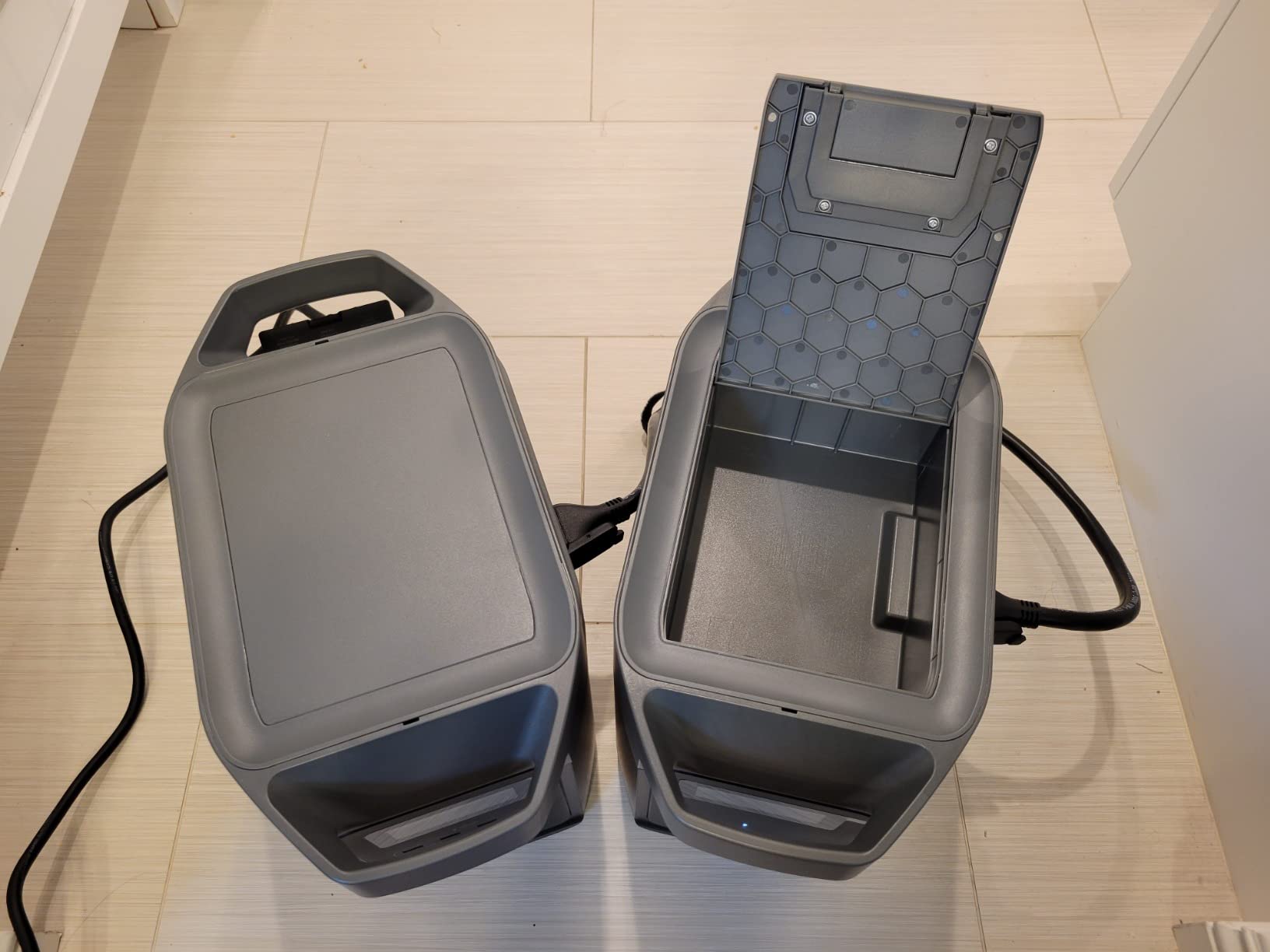
The expandable battery system is a big selling point if you think your needs might grow. You can add extra batteries to increase total capacity from 1kWh up to 3kWh without buying a whole new unit.
What to Consider Before Buying
The DELTA 2 will not run high-wattage devices like electric water heaters, clothes dryers, or large window AC units. The 1800W continuous output covers most household essentials, but not heavy heating appliances. Also, solar panels are sold separately, so factor that into your total cost if you plan to go off-grid. The unit weighs 27 pounds — manageable for car camping but not something you want to carry on a long hike.
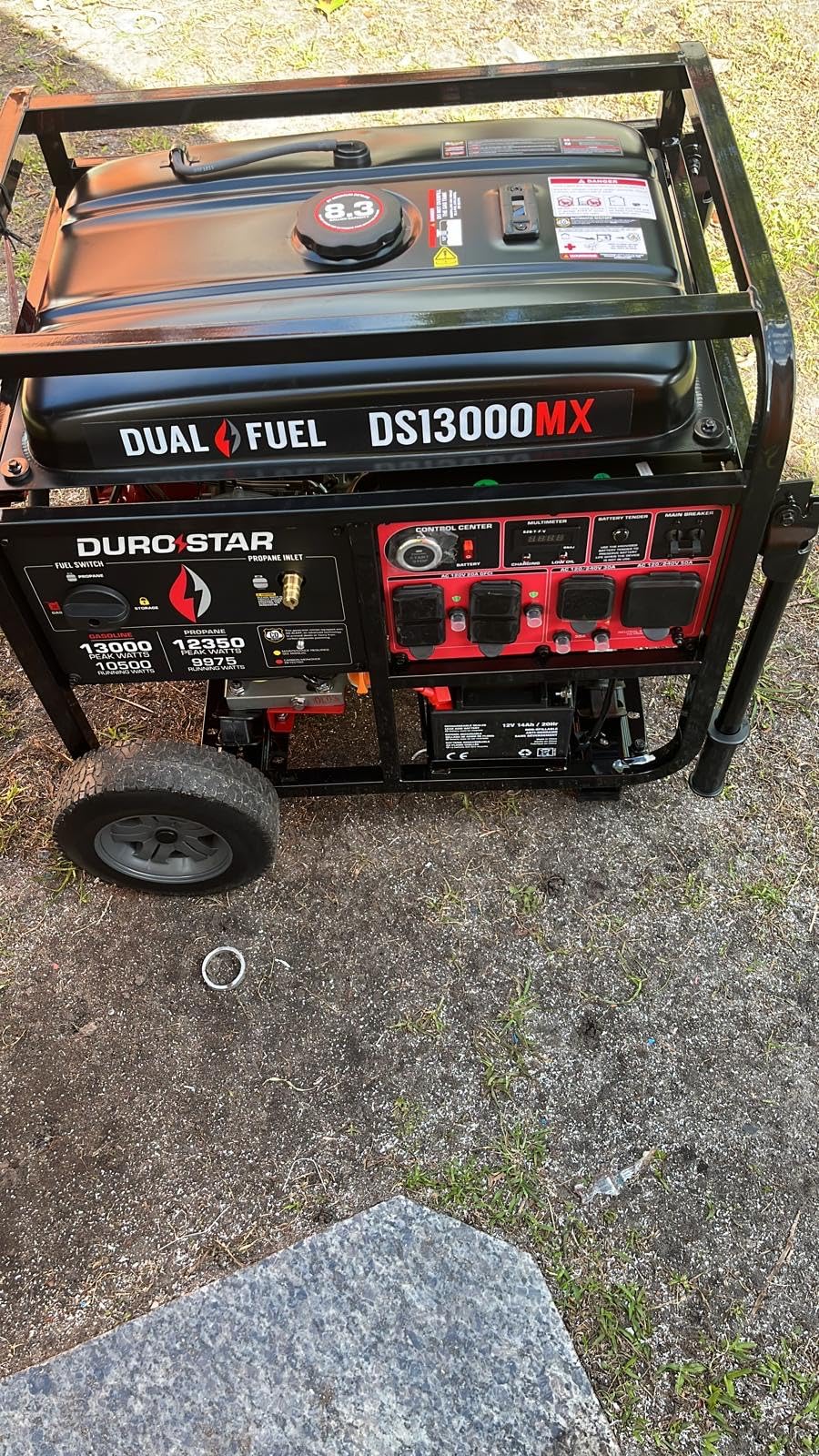
4. DuroStar DS13000MX – Best Dual Fuel Heavy Duty Generator
- Massive 10500W running power
- Dual fuel flexibility
- Remote start with fob
- Transfer switch ready with 50A outlet
- CO Alert safety system
- 220 pounds requires help to move
- Large footprint for storage
- Limited customer reviews so far
The DuroStar DS13000MX sits in that sweet spot between mid-range portable generators and full standby systems. We connected it to a friend’s transfer switch and powered a 3-bedroom home through a simulated outage — central heat, kitchen appliances, lighting circuits, and a well pump all ran at the same time. The 500cc engine is a beast, and the 10,500 running watts give you plenty of headroom for startup surges.
Dual fuel operation is where this unit shines for long outages. Gasoline can be hard to find during widespread emergencies, but propane stores indefinitely and is available year-round. We noticed about a 10% power reduction on propane compared to gasoline, which is normal and expected. The convenience of never worrying about stale fuel in your propane tank is worth that small trade-off.
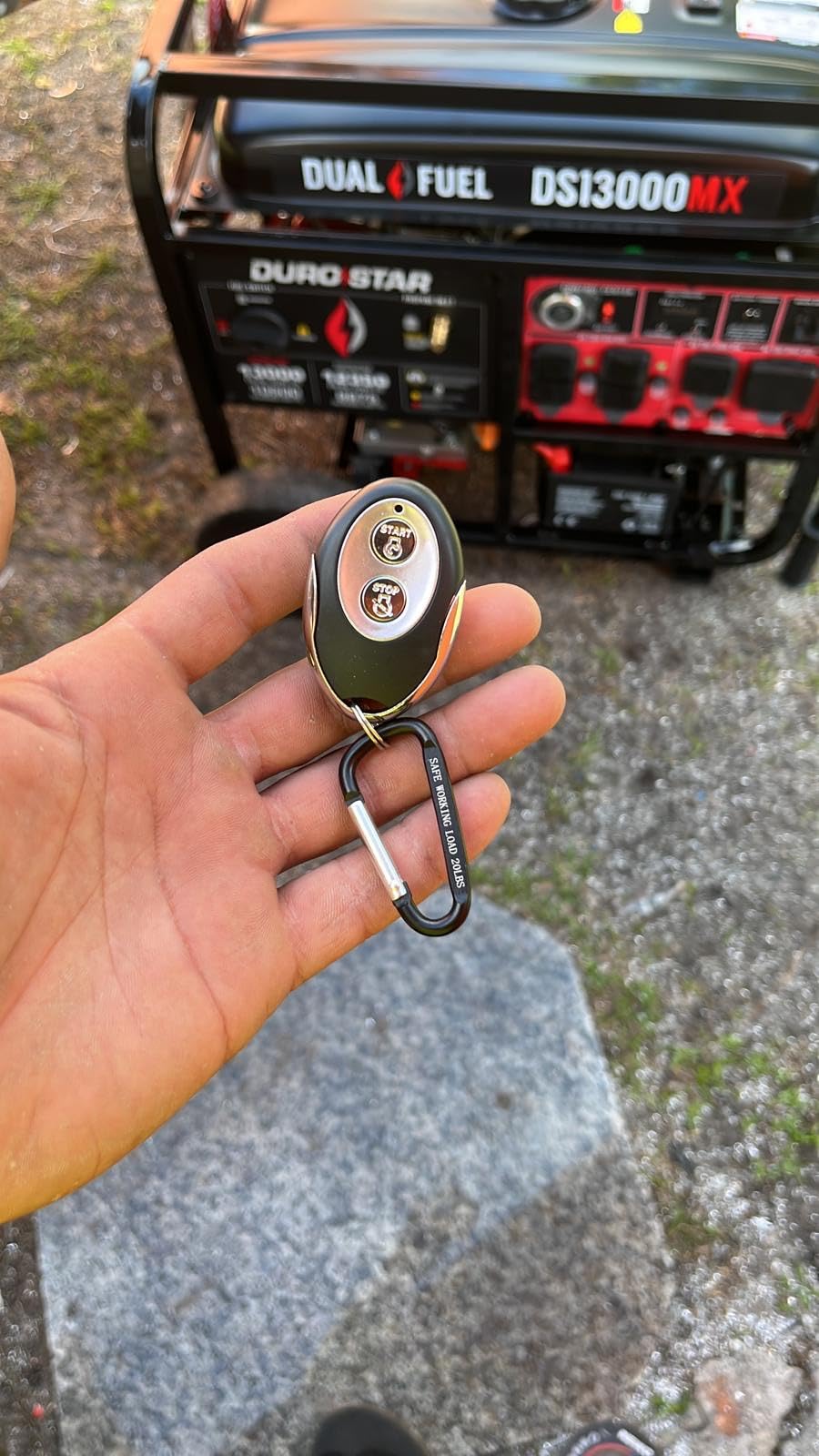
The remote electric start worked every time during our week of testing. The included key fob has impressive range — we started it from about 40 feet away through a closed garage door. The 8.3-gallon fuel tank kept the generator running for 14 hours at roughly half load, which means you can sleep through the night without refueling.
DuroStar includes a CO Alert system that detects dangerous carbon monoxide levels and shuts the engine down automatically. The heavy-duty steel frame feels built to last, and the included wheel kit makes it possible (with two people) to reposition the unit. The 3-year limited factory warranty provides decent coverage for the investment.
Who Should Buy This Generator
Families living in hurricane zones, tornado alleys, or areas with aging power infrastructure will get the most value from the DS13000MX. It has enough power to run central air conditioning, well pumps, and kitchen appliances simultaneously. The dual fuel capability is a major advantage for emergency preparedness — you can stockpile propane without worrying about it going bad.
What to Consider Before Buying
At 220 pounds, plan for at least two people to move this generator into position. It is not something you will load and unload frequently. The noise level is typical for an open-frame generator — expect around 72-76 dB at full load. Also, with only 168 reviews at the time of our testing, this is a relatively new model, so long-term reliability data is still building.
5. Jackery Explorer 1000 v2 – Best Fast-Charging Power Station
- Full charge in just 1 hour
- Lightweight at 23.8 pounds
- Excellent 4.8-star rating from 3200+ users
- Built-in LED light
- Multiple AC and USB outlets
- WiFi setup can be finicky
- No solar panels included
- Warranty registration process could be smoother
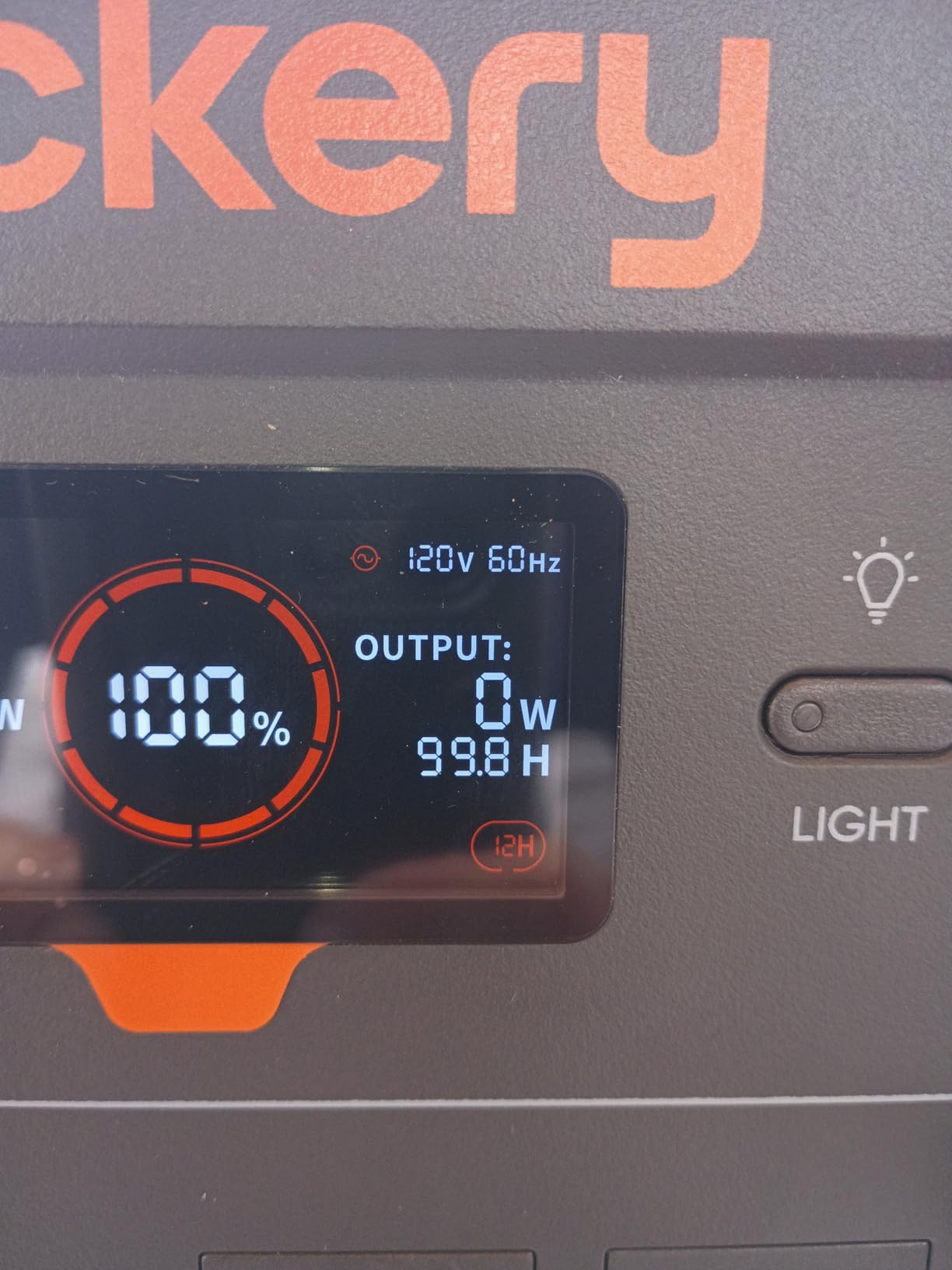
The Jackery Explorer 1000 v2 earned the highest user rating in our entire test group, and after a month of daily use, we see why. Jackery packed a 1070Wh LiFePO4 battery into a 23.8-pound package that charges from zero to full in about 60 minutes. That fast-charging speed, combined with the 1500W AC output, makes this one of the most practical power stations for real-world use.
We took the Explorer 1000 v2 on a three-day camping trip and used it to run a portable fridge, charge two laptops, power string lights, and keep four phones topped up. After three days of moderate use, we still had 22% battery remaining. The 100W USB-C port was a favorite for fast-charging our laptops directly — no need to carry a separate power brick.
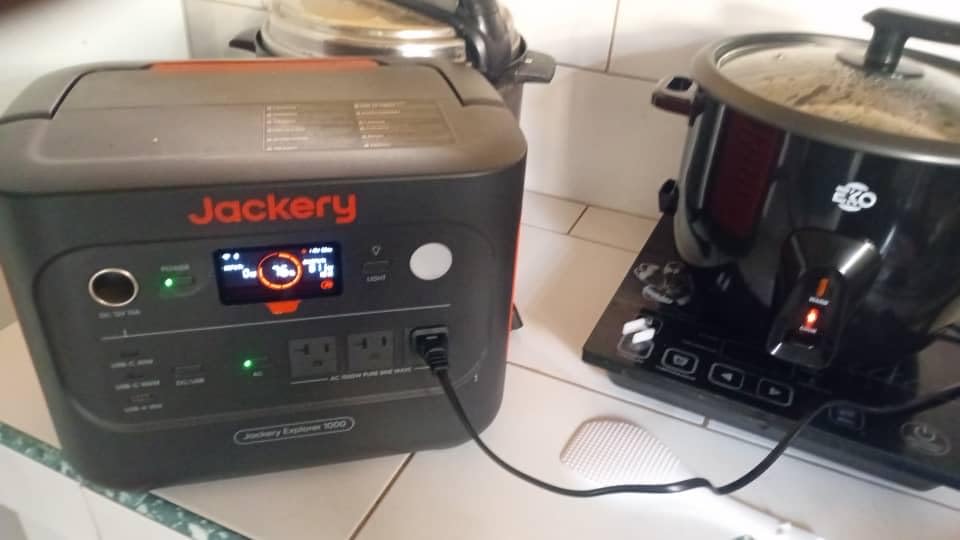
The ChargeShield 2.0 technology handles thermal management well. Even when we pushed the unit to 1400W continuous output for over an hour, the unit stayed warm but never hot. The LiFePO4 battery chemistry is rated for 4,000 charge cycles, which translates to roughly a decade of regular use before significant degradation.
The built-in LED light is more useful than we expected. During a late-night power outage, it illuminated an entire room well enough to read by. The foldable handle makes the unit compact for storage, and the overall build quality feels solid.
Who Should Buy This Power Station
Campers, van lifers, and homeowners who want a no-fuss backup power solution will love the Explorer 1000 v2. The 1500W output covers most household essentials during short outages: refrigerators, lights, routers, laptops, and medical devices like CPAP machines. If you want something you can grab and go without dealing with fuel, oil, or pull cords, this is an excellent choice.
What to Consider Before Buying
The Jackery app connectivity works well once set up, but the initial WiFi pairing process took us two attempts. Solar panels are sold separately, so budget for those if you plan to use off-grid charging. The 1-year warranty is shorter than the 5-year warranties offered by EcoFlow and Anker, though Jackery offers extended warranty options through registration.
6. Champion 4000W RV Ready Inverter – Best for RVs
- Dedicated 30A RV outlet
- Lightweight under 49 lbs
- 64 dBA quiet operation
- CO Shield auto shutoff
- 3-year warranty with free support
- Gasoline only - no dual fuel
- No electric start option
- Oil changes can be messy
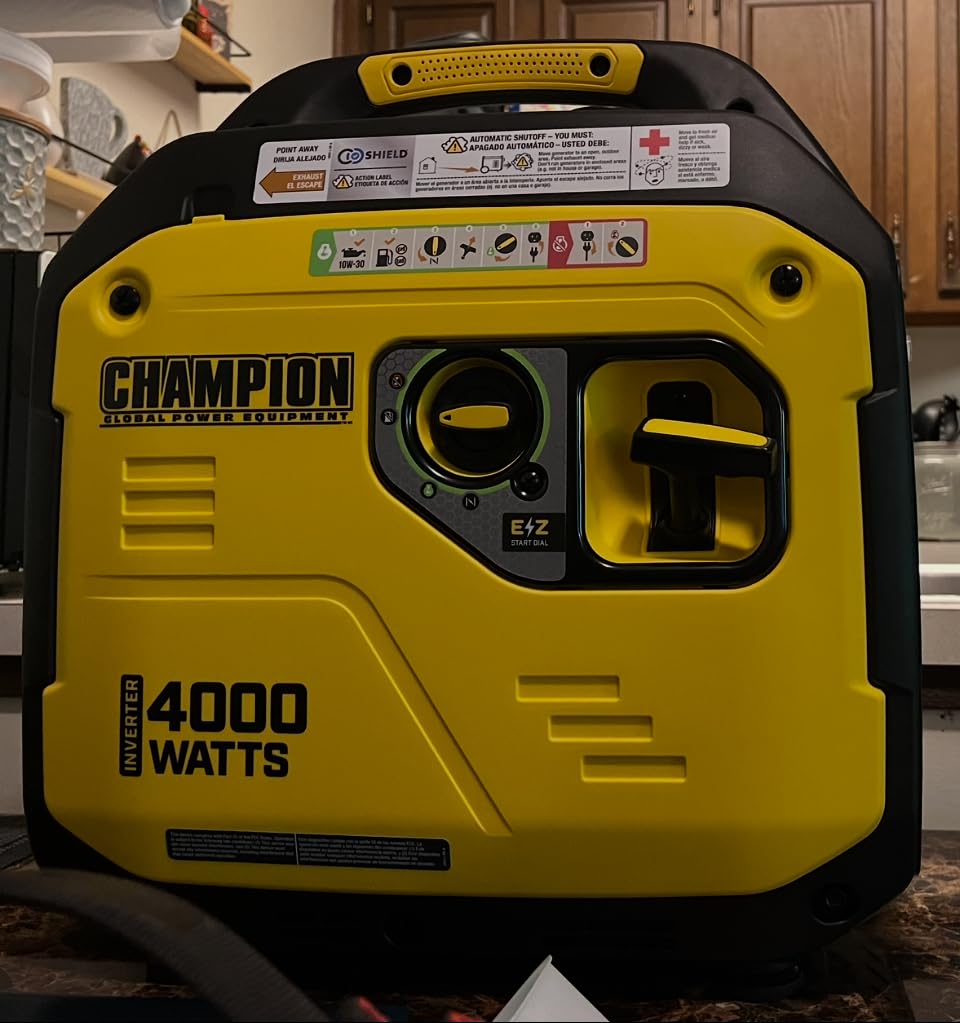
We tested the Champion 4000W inverter on a weekend RV trip, and it immediately impressed us with how well it handles the specific demands of RV life. The dedicated TT-30R 30-amp RV outlet means no adapters, no workarounds — just plug your RV power cord directly in and you are set. We ran a 13,500 BTU RV air conditioner, the RV refrigerator, and several lights simultaneously without any issues.
At under 49 pounds, this Champion is one of the lightest 4000-watt inverter generators we have tested. Loading it into the back of a truck or RV storage bay is manageable for one person. The 64 dBA noise rating is quiet enough for campgrounds — we measured it at about the same volume as a running dishwasher from 23 feet away.
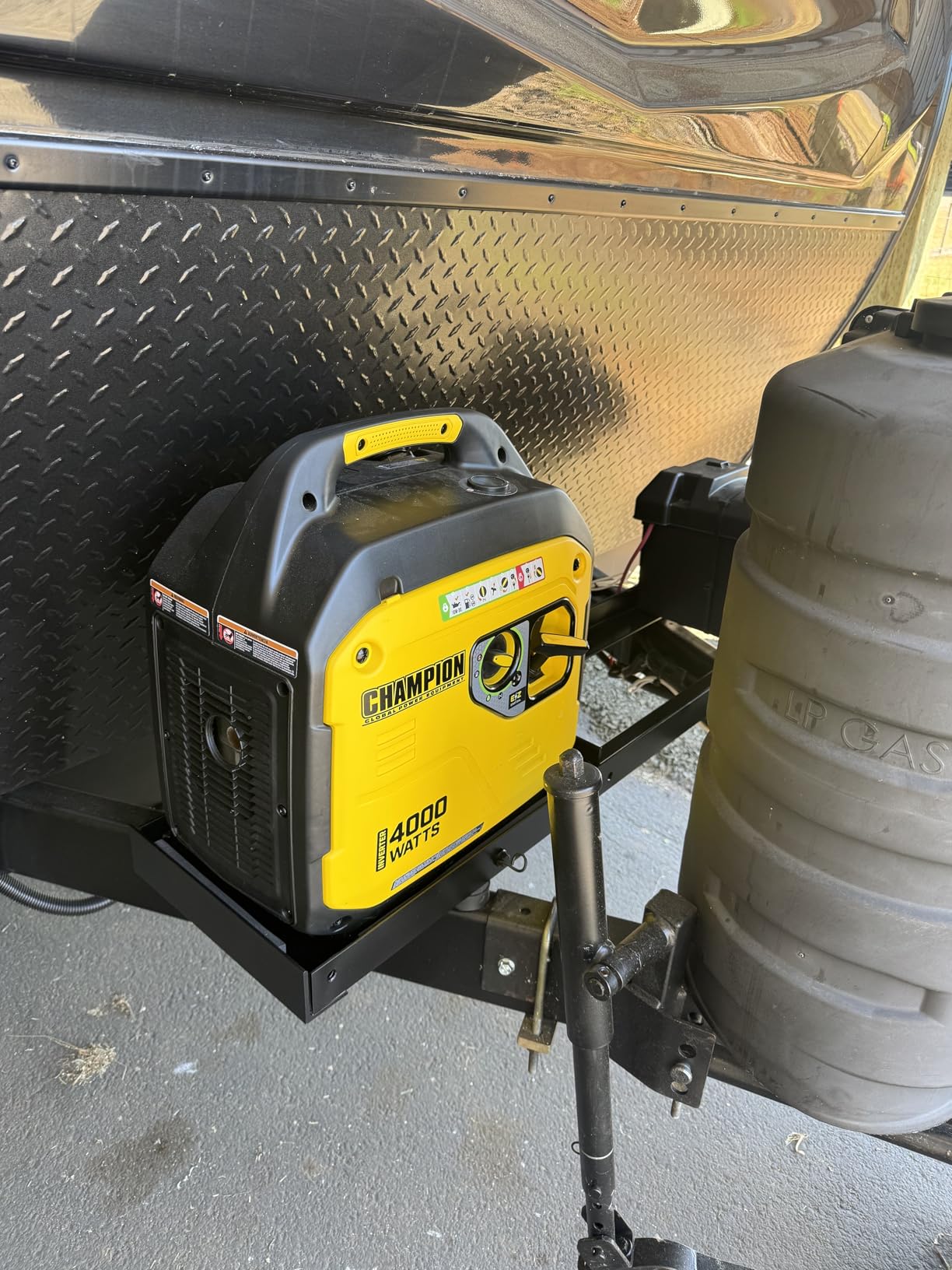
The CO Shield system is a genuine safety advantage. It monitors carbon monoxide near the generator and automatically shuts the engine down if CO levels reach dangerous thresholds. We tested it by running the generator in a partially enclosed space (for testing purposes only — always run generators in open air), and the shutoff triggered within minutes as expected.
Fuel efficiency was solid in our testing. The 1.54-gallon tank provided about 9 hours of runtime at roughly 50% load with our RV AC cycling on and off. The clean power output with less than 3% THD means you can safely run laptops, TVs, and other sensitive electronics from the inverter.
Who Should Buy This Generator
RV owners who want a dedicated generator that works seamlessly with their rig will find the Champion 4000W is built for exactly that purpose. The TT-30R outlet, combined with enough wattage to run an RV air conditioner, makes this a plug-and-play solution for camping without hookups. Champion also gets consistent praise on forums for balancing value with quality.
What to Consider Before Buying
This model runs on gasoline only — no propane or dual fuel option. If you prefer propane for storage convenience, look at the WEN dual fuel or the DuroStar. There is no electric start, so you will be using the recoil pull cord every time. Most users report it starts on the first or second pull, but electric start would be a welcome addition for less physically inclined users.
7. WEN 4750W Dual Fuel – Best Dual Fuel Value
WEN 4,750-Watt 120V/240V Dual Fuel Portable Generator with Wheel Kit and Electric Start (DF475T)
- Dual fuel flexibility
- Electric start with key
- 4-gallon tank for 11-hour runtime
- Wheel kit included
- 120V/240V switchable
- Heavy at 105.8 pounds
- Louder than inverter models
- Battery may lose charge over time
The WEN 4750W Dual Fuel is the generator we recommend most often to friends who want serious home backup capability without spending four figures. During a three-day test powering a 1,800-square-foot home, it handled the furnace blower, refrigerator, multiple lights, a television, and a window AC unit. The 3800 running watts on gasoline (3500 on propane) covers the essentials for most average-sized homes.
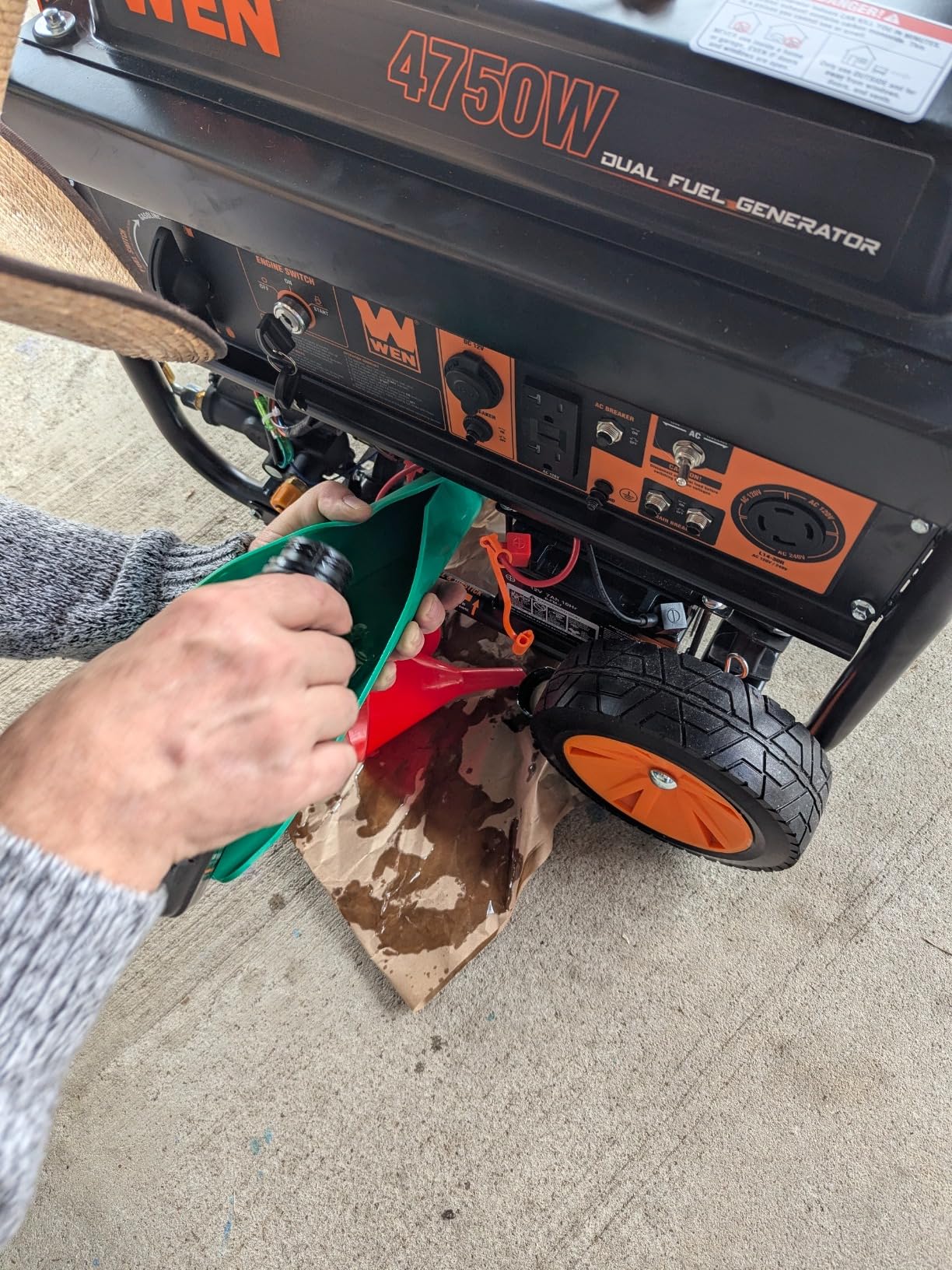
The electric start with the turn-key ignition worked on the first try every time during our testing. No pulling cords, no fighting with a cold engine — just turn the key and go. The included wheel kit and handle make the 105.8-pound weight manageable, though you would not want to move it frequently.
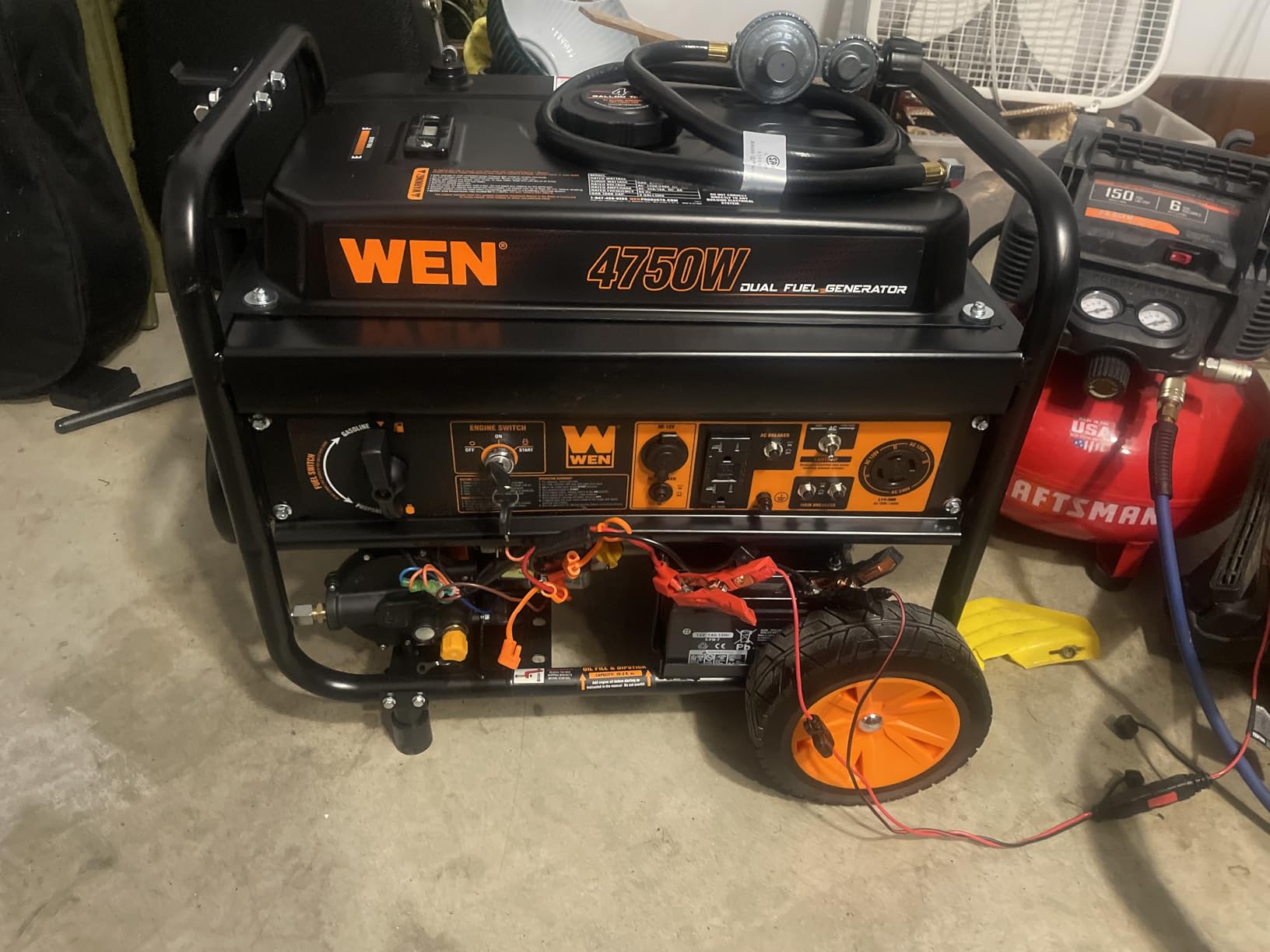
Dual fuel is the standout feature here. We ran through a full tank of gasoline and then switched to a 20-pound propane tank without any issues. The transition was seamless. Propane produces slightly less power (3500 running watts vs 3800 on gas), but the trade-off is worth it for fuel storage peace of mind. Propane never goes stale, unlike gasoline that degrades after a few months.
The 120V/240V switchable output and the NEMA L14-30R twist-lock outlet mean this generator is ready for a manual transfer switch connection. If you want to power individual circuits in your home panel rather than running extension cords everywhere, this WEN is set up for it.
Who Should Buy This Generator
Homeowners who want dual fuel flexibility and enough power for essential circuits during outages will find the WEN 4750W is hard to beat for the price. The electric start and included wheel kit make it user-friendly, and the 240V output gives you the option for a proper transfer switch setup. It is also a solid choice for job sites where you need 240V for power tools.
What to Consider Before Buying
This is a conventional open-frame generator, not an inverter, so expect noise levels around 70 dB at full load. It is significantly louder than the Honda or Champion inverter models. The 12V battery for the electric start can lose charge if the generator sits unused for months, so we recommend starting it every 30 days to keep the battery topped up.
8. Anker SOLIX C1000 Gen 2 – Fastest Charging Power Station
Anker SOLIX C1000 Gen 2 Portable Power Station, 1,024Wh, 2,000W, Camping
- Full charge in just 49 minutes
- Compact and 11% lighter than competitors
- 5-year warranty
- 10ms UPS switchover
- Excellent app with WiFi and Bluetooth
- Storage case sold separately
- Higher price for the category
- Needs accessories for full solar setup
Anker brought their charging expertise from the phone accessory world into power stations, and the SOLIX C1000 Gen 2 is the result. This unit charges from zero to 100% in 49 minutes using the HyperFlash 1600W wall charger. That is the fastest recharge time we have ever recorded on a power station, and it makes a real difference when you are dealing with unpredictable power outages.
We tested the 10ms UPS switchover feature with a desktop computer and external hard drive. When we cut the main power, the SOLIX kicked in so fast that the computer did not even flicker. For anyone running sensitive electronics, CPAP machines, or home office equipment, that near-instant switchover is a major advantage over traditional generators.
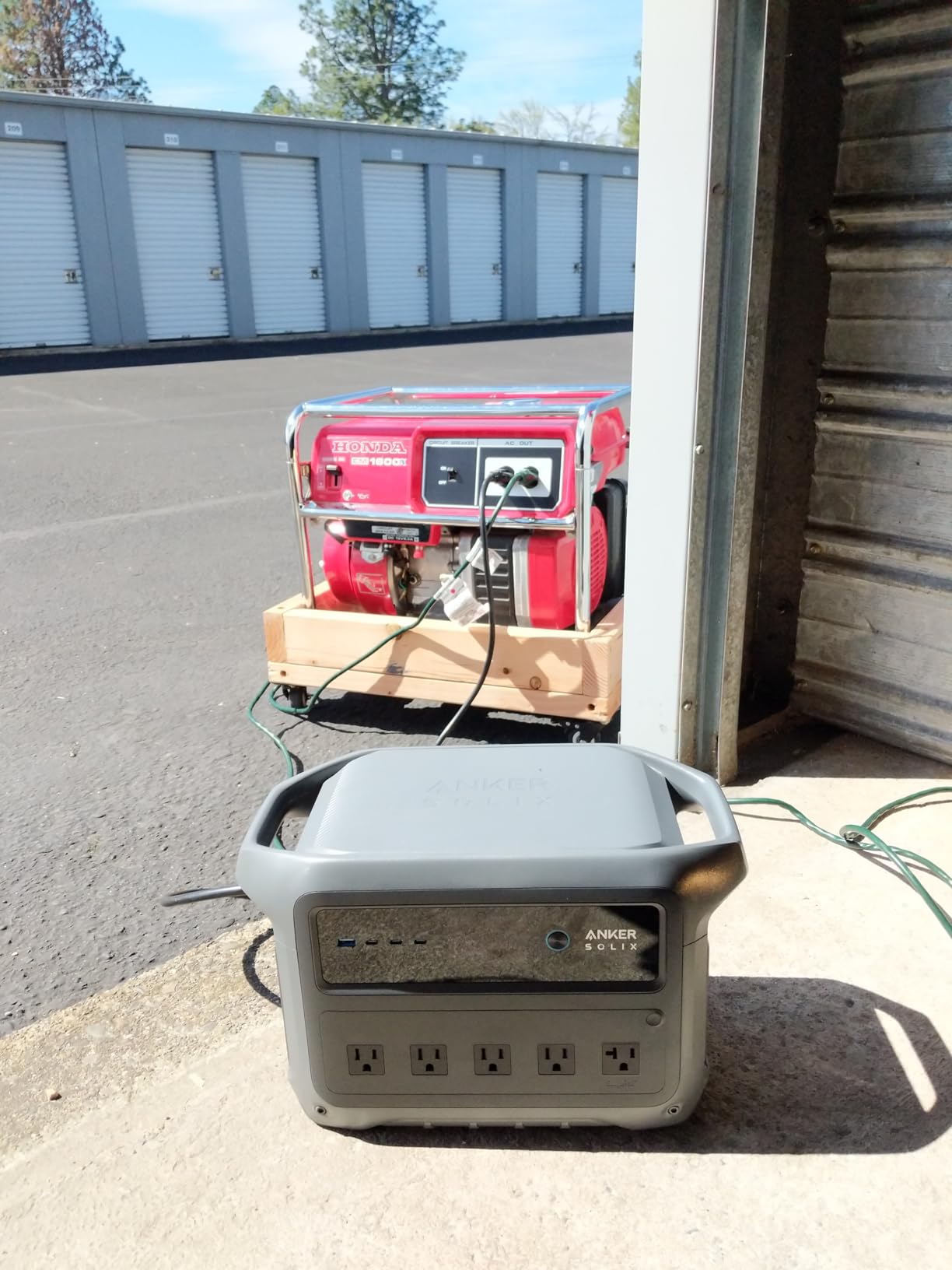
The build quality is excellent. At 24.9 pounds and 14% smaller than comparable models, the SOLIX C1000 Gen 2 is easy to move around the house or pack for a camping trip. The 10 ports cover every scenario: AC outlets, USB-A, USB-C, and a 12V car outlet. We charged two laptops, a phone, and ran a small fan simultaneously without getting close to the 2000W limit.
The LiFePO4 battery is rated for 4,000 cycles with 80% capacity retention, which Anker translates to a 10-year lifespan. The 5-year warranty matches EcoFlow and exceeds Jackery’s coverage, giving us confidence in the long-term investment.

Who Should Buy This Power Station
Anyone who values speed and convenience will appreciate the SOLIX C1000 Gen 2. Home office workers who need uninterrupted power for their computers, campers who want fast turnaround between charges, and homeowners looking for a silent backup that recharges faster than anything else on the market. The UPS feature alone makes it worth considering for electronics protection.
What to Consider Before Buying
The SOLIX does not include a protective storage case, which is a surprising omission given the price point. You will want to order a case separately if you plan to take it camping or store it in a garage. Solar panel input maxes out at 600W, so full solar recharges take about 1.8 hours — still fast, but not as impressive as the AC charging speed.
9. PowerSmart 3600W Inverter – Best Budget RV Generator
PowerSmart 3600 Watt Portable Inverter Generator for Camping or Home Use
- RV ready with 30A outlet
- Clean stable power for electronics
- Compact for the wattage offered
- Good fuel efficiency
- 2-year warranty
- Parallel kit sold separately
- 50.7 pounds is on the heavier side
- Recoil start only - no electric option
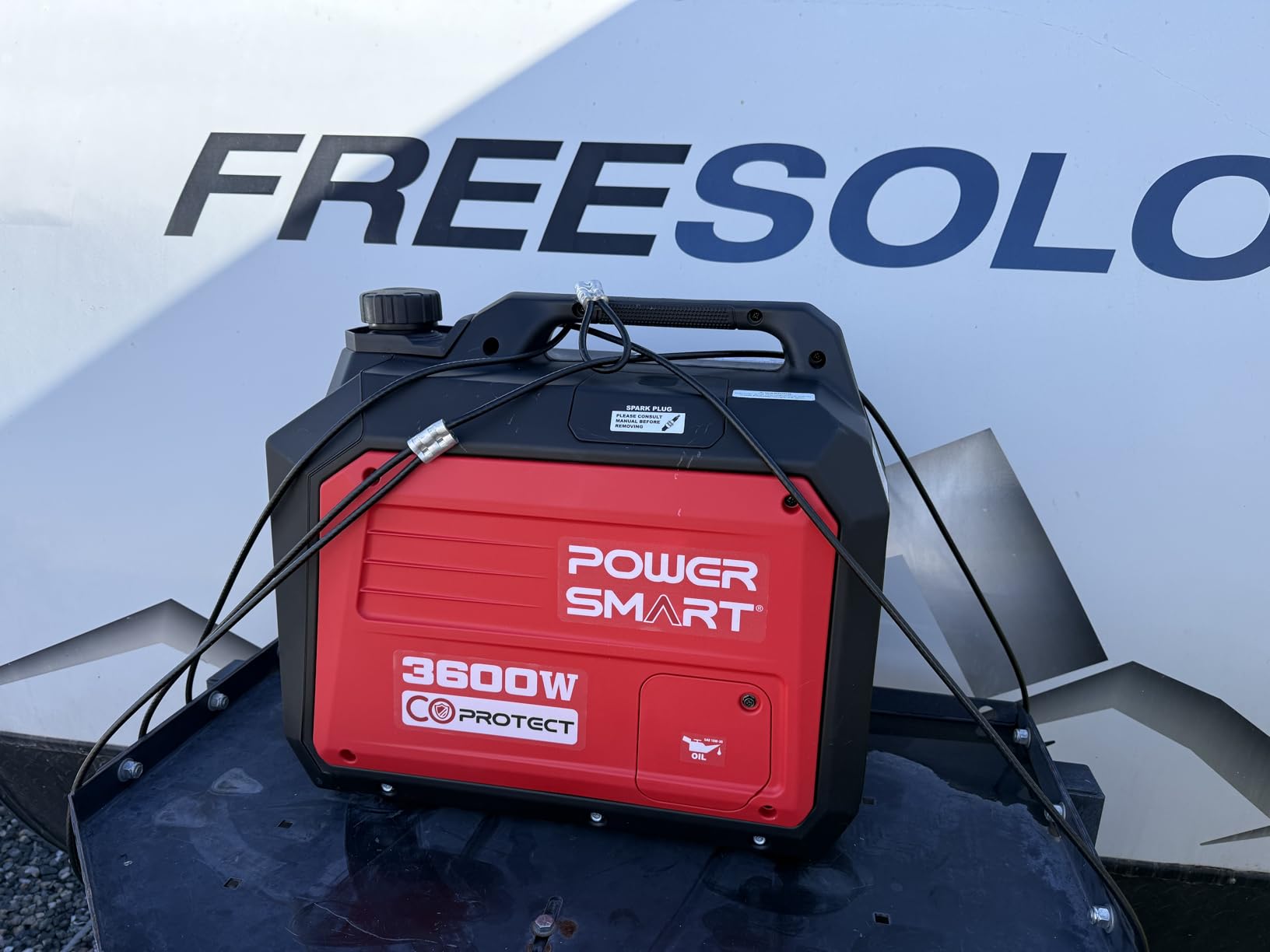
The PowerSmart 3600W inverter surprised us with how much capability it delivers for the price. We connected it to a travel trailer through the RV-ready 30A outlet and ran the air conditioner, lights, and converter simultaneously. The 149cc engine handled the AC startup surge without bogging down, which is something cheaper inverters sometimes struggle with.
Clean power output with less than 3% THD means your sensitive electronics are safe. We plugged a laptop, phone chargers, and a small TV into the generator while also powering the RV, and everything worked without any interference or power quality issues. The ECO mode adjusts engine speed based on load, which extends runtime and reduces noise when you are not drawing full power.
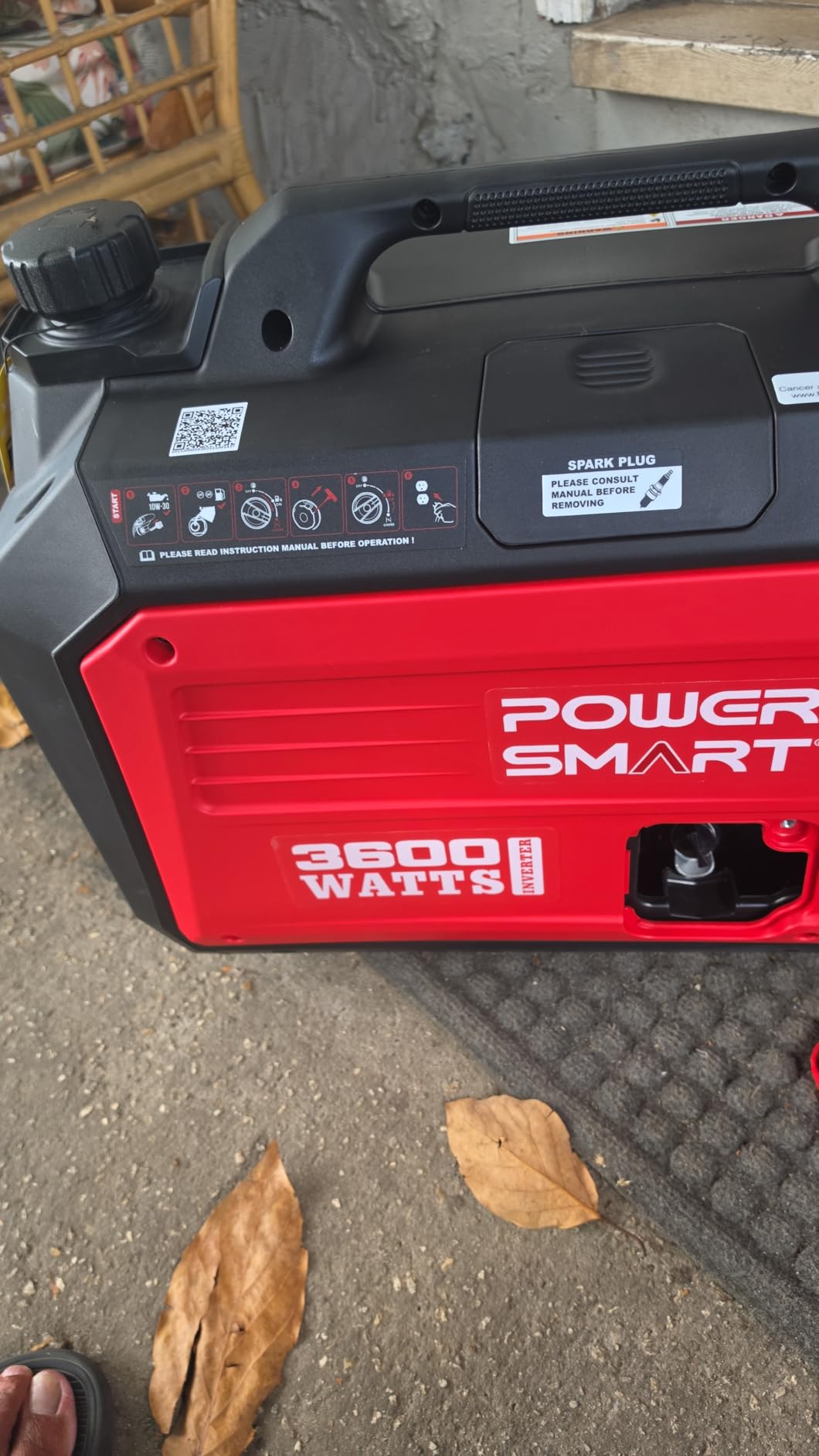
Runtime was respectable during our testing. With the 1.3-gallon tank at about half load, we averaged just under 5 hours before needing to refuel. That is fine for daytime use but means you will need to get up once during the night if you are running the AC all night at a campground.
The build quality feels solid for the price point. The 50.7-pound weight is manageable but not what we would call lightweight — you will want to use the built-in handles and lift with proper form. The 2-year manufacturer warranty provides reasonable coverage.
Who Should Buy This Generator
Budget-conscious RV owners who need enough wattage to run an air conditioner and basic appliances will find excellent value in the PowerSmart 3600W. It delivers real RV-ready capability at a fraction of what name-brand competitors charge. If you camp at sites without hookups and need reliable power for your rig, this is a smart buy.
What to Consider Before Buying
The parallel kit is sold separately, so if you think you might want to double your power by linking two units, factor in that additional cost. The recoil-only start means you will be pulling a cord every time, though most users report easy starts. At 50.7 pounds, it is portable but on the heavier end for its wattage class.
10. WEN 2350W Super Quiet Inverter – Best Lightweight Generator
WEN Super Quiet 2350-Watt Portable Inverter Generator with Fuel Shut Off, Gasoline Power, Ultra Lightweight (56235i), Black
- Ultra lightweight at just 39 pounds
- Extremely quiet operation
- Always starts on first or second pull
- Clean power for electronics
- CARB compliant
- Can struggle with heavy starting loads
- Sensitive low-oil shutoff on angles
- Some build quality inconsistencies
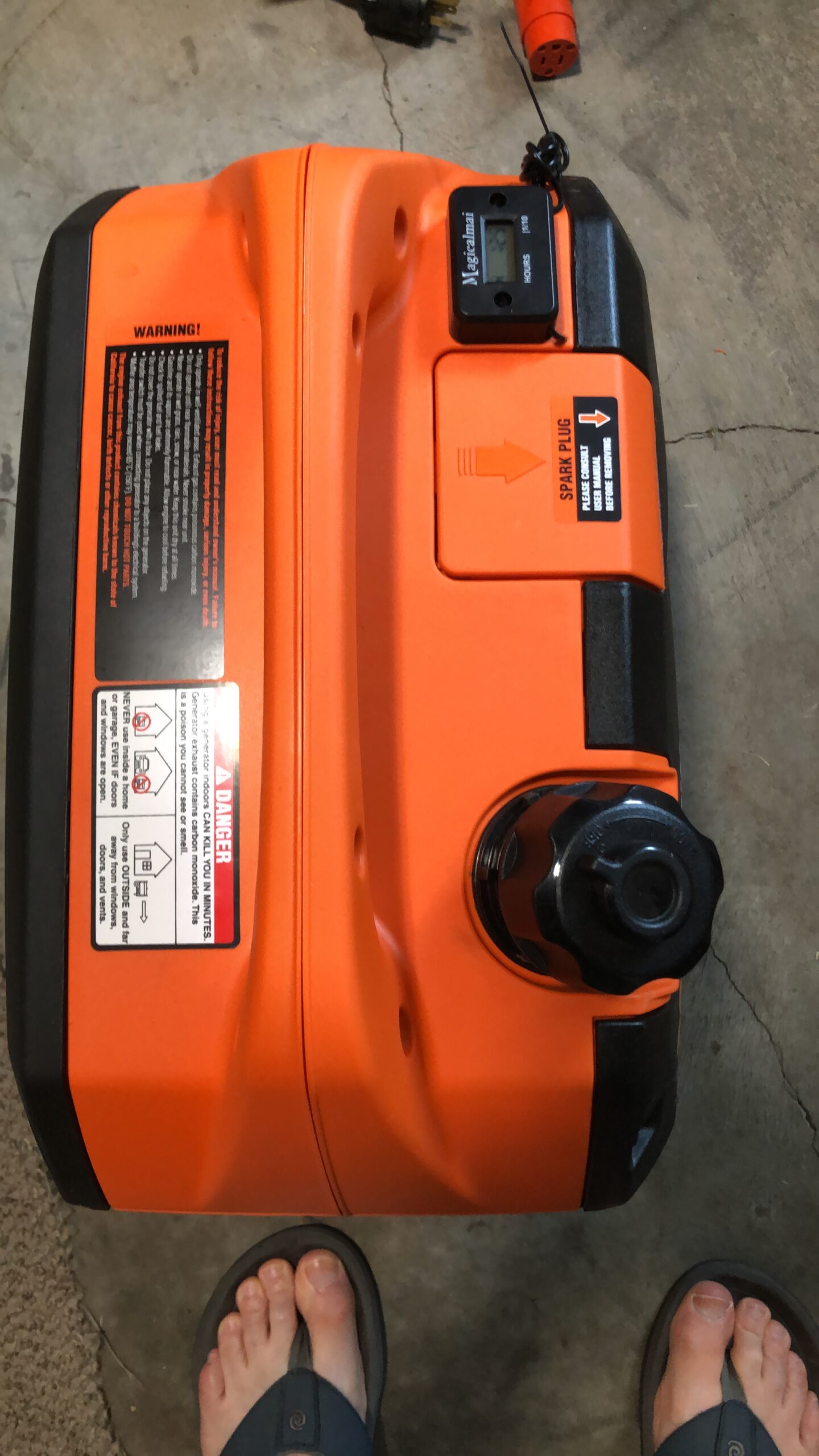
At 39 pounds, the WEN 2350W is the lightest fuel-powered generator we tested, and that featherweight design makes a real difference in how often you actually use it. We carried it from the car to a campsite in one hand with a cooler in the other. Try that with any other generator on this list and you will appreciate what WEN has achieved here.
The noise level is impressively low for a gas generator. We measured it at roughly the same volume as a quiet conversation from 10 feet away. At a campsite, neighboring tents would barely notice it running. The fuel shutoff feature is a nice touch — it lets you run the carburetor dry before storage, which prevents the stale fuel gumming issues that plague small engines.
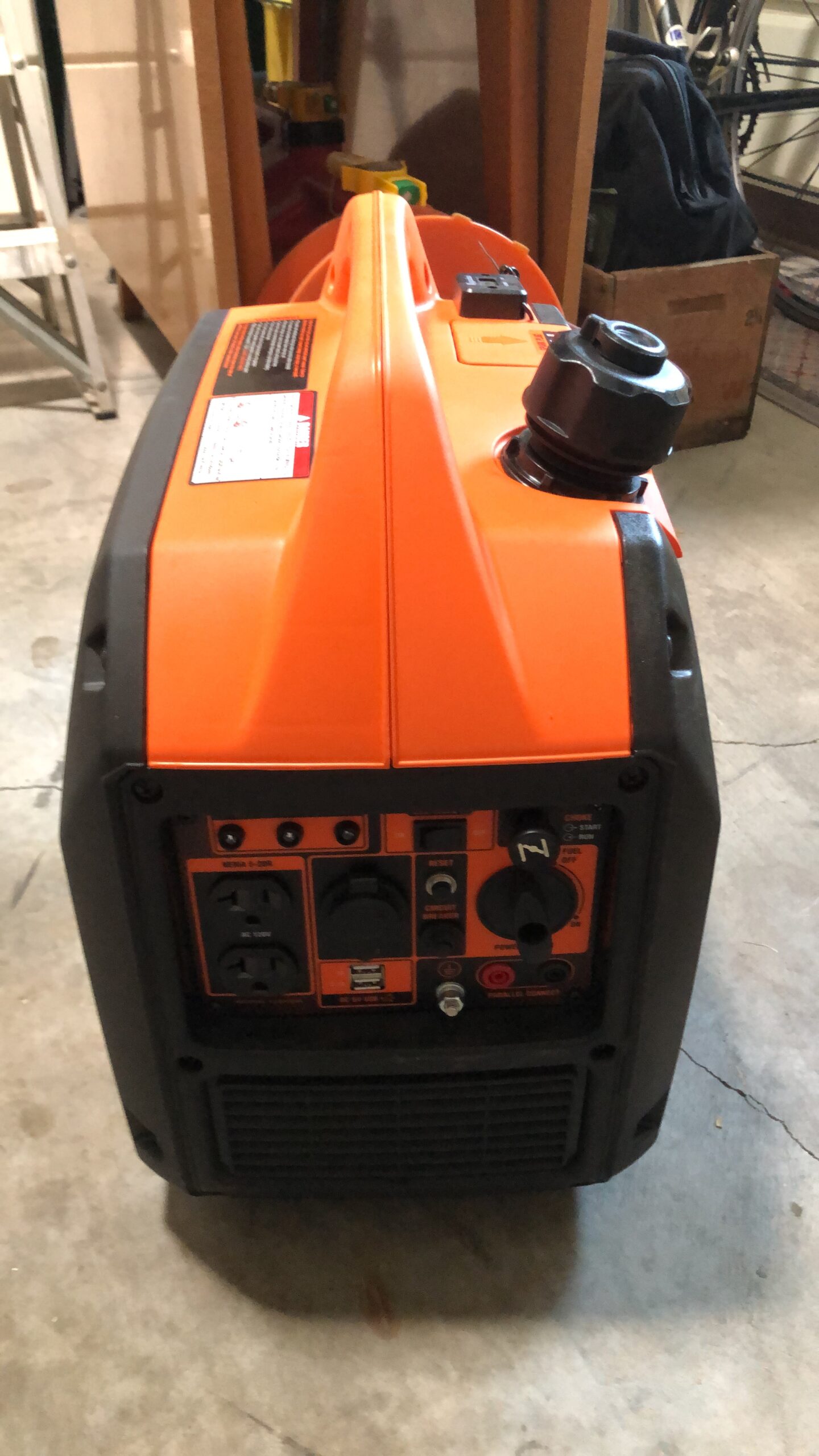
We ran the WEN through a typical camping weekend, powering a portable fridge, phone chargers, a portable speaker, and LED lanterns. The 1900 running watts handled everything comfortably. Runtime with the 1-gallon tank was about 8 hours at moderate load, stretching to 10 hours when we were conservative with our power draw.
The electronic ignition system means reliable starts. Over the course of 30+ starts during our testing, it never took more than two pulls to fire up. The two 5V USB ports are convenient for charging phones and tablets directly without needing a separate adapter. The 2-year warranty and CARB compliance round out a solid feature set.
Who Should Buy This Generator
Campers, tailgaters, and anyone who needs portable power without the bulk will love the WEN 2350W. If you have been avoiding generators because they are too heavy or too loud, this model solves both problems. It is also a practical choice for homeowners who just want to keep a refrigerator, a few lights, and their phones running during brief outages.
What to Consider Before Buying
The 1900 running watts will not start heavy motor-driven appliances like large air compressors or table saws. Stick to electronics, small appliances, and tools with universal motors. The low-oil shutdown system is sensitive to the generator’s angle — make sure it is sitting level, or the engine may shut off even when oil levels are fine.
11. Oxseryn 2800W Inverter – Best Budget Camping Generator
- Super quiet under 58 dBA
- Lightweight at 40 pounds
- ECO mode for fuel efficiency
- Clean power less than 3% THD
- Parallel capability
- Oil must be added before first use
- Side panel removal needed for oil checks
- Struggles at max wattage loads
The Oxseryn 2800W inverter is a newer entrant that impressed us with its combination of quiet operation, clean power output, and approachable pricing. At 40 pounds, it is easy to move from vehicle to campsite. The under-58 dBA noise rating means it is quieter than many generators costing twice as much. We ran it beside our tent and slept soundly without any disruption.
Cold Start Technology proved its worth during an early spring camping trip when morning temperatures dropped into the 30s. The Oxseryn fired up on the second pull despite sitting overnight in cold conditions. The ECO mode significantly reduced fuel consumption when we were only running lights and charging devices, stretching the 1.1-gallon tank to about 8 hours.
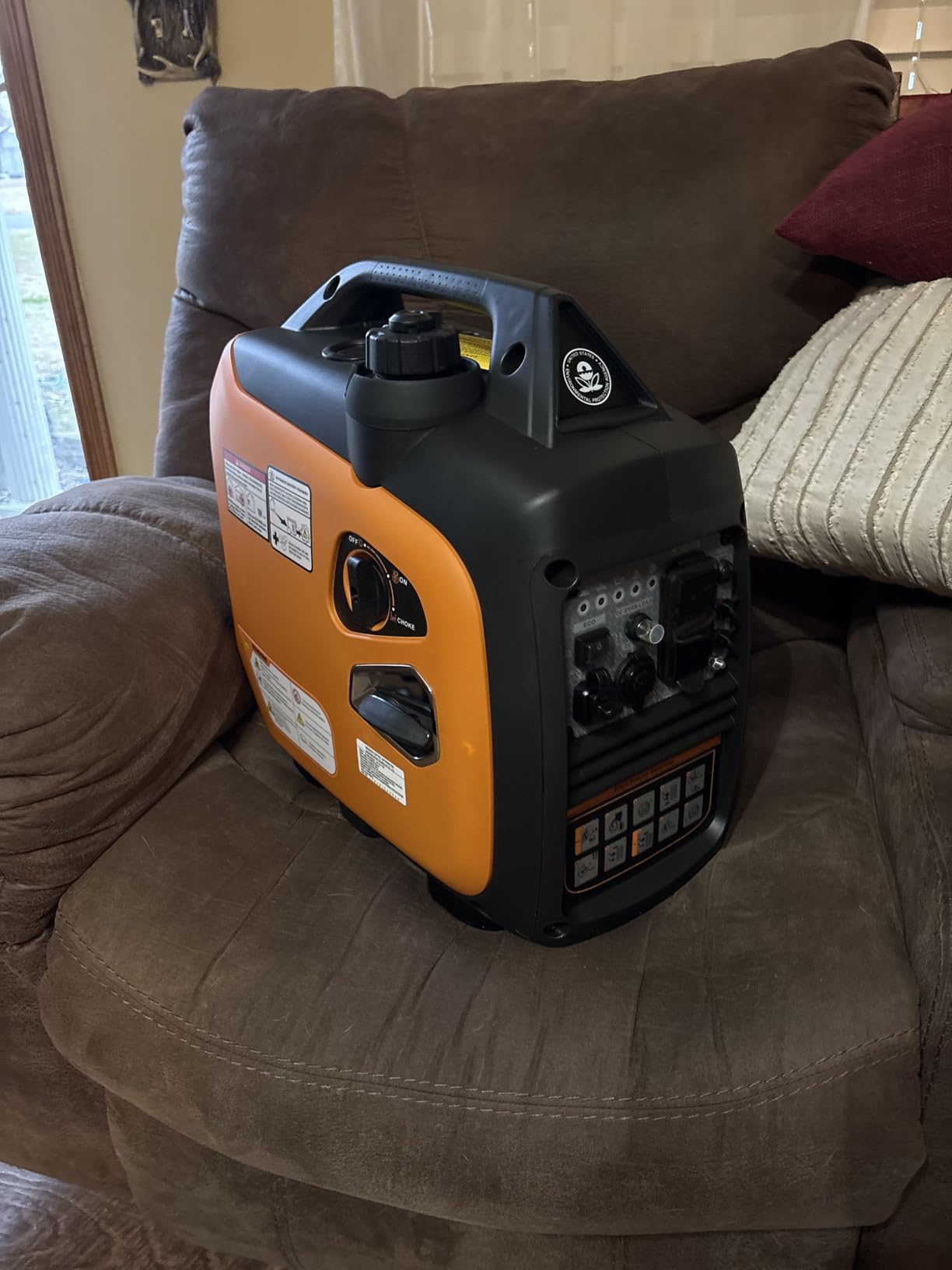
The clean power output with less than 3% THD is safe for laptops, cameras, drones, and phones. We charged all of these during our testing without any issues. The USB and USB-C ports on the control panel are convenient for direct device charging without needing an AC adapter.
Parallel capability is available if you want to double your power by connecting a second unit, though the parallel cable is sold separately. The included cold start technology and fuel indicator on the tank cap are thoughtful features that make daily operation smoother.

Who Should Buy This Generator
Budget-minded campers and outdoor enthusiasts who need quiet, clean power for electronics and small appliances will get great value from the Oxseryn. It is ideal for car camping, tailgating, and light emergency home backup. If you want to run a few lights, charge devices, and maybe power a small TV or fan at a campsite, this generator covers those needs affordably.
What to Consider Before Buying
This is a light-duty generator best suited for loads between 900 and 1500 watts. It will struggle with heavy startup surges from devices like large air compressors or RV air conditioners. You also need to add oil before the first use — it ships dry, so do not skip this step or you will damage the engine. Checking the oil level requires removing a side panel, which is inconvenient compared to dipstick-equipped models.
12. Jackery Explorer 300 – Best Ultra-Light Power Station
- Incredibly light at 7.1 pounds
- Fast 2-hour recharge to 80%
- Multiple charging ports
- Pure sine wave AC outlets
- 2-year warranty
- Limited to 300W output
- Cannot run high-power devices
- USB-C port is output only
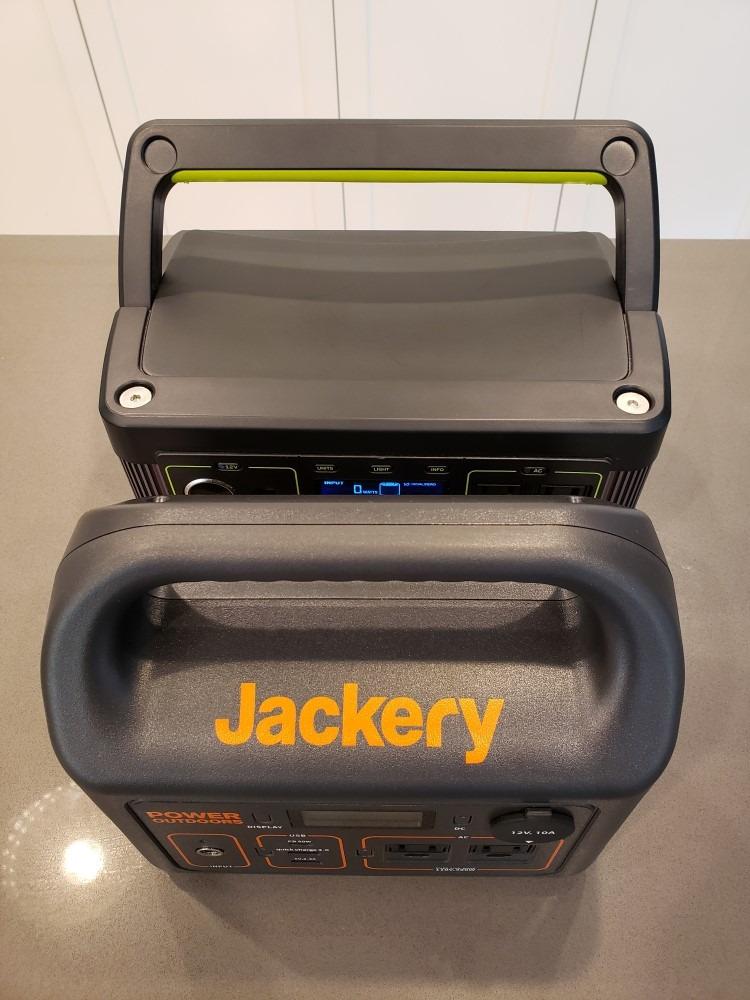
At 7.1 pounds, the Jackery Explorer 300 is lighter than many laptops. We tossed it in a backpack for a day hike and used it to charge phones, run a portable speaker, and power a small fan at a remote campsite. The 293Wh battery capacity is modest compared to the larger power stations on this list, but for day trips and ultralight camping, it is perfect.
The pure sine wave AC outlets deliver clean power that is safe for sensitive electronics. We charged a camera battery, a laptop, and a drone battery simultaneously without any issues. The fast-charging capability is a real asset — plug it into a wall outlet and it reaches 80% in about 2 hours. Solar panel compatibility through the MPPT controller means you can top it up during the day if you are off the grid.
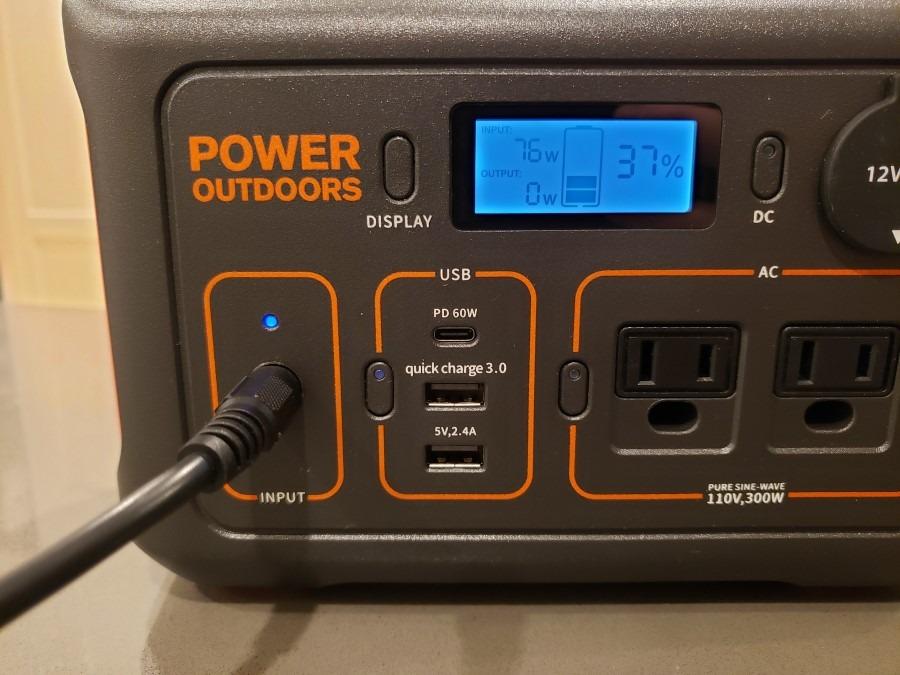
Pass-through charging is supported, so you can charge the Explorer 300 while it is also powering devices. This came in handy during our testing when we had limited wall outlets at a hotel and needed to charge both the power station and our phones overnight.
The auto-power-off feature shuts the unit down after 12 hours of sub-10W power draw, which prevents unnecessary battery drain if you forget to turn it off. The low battery warnings at 20% and 10% give you time to save your work and shut down gracefully.
Who Should Buy This Power Station
Day hikers, photographers, drone operators, and anyone who needs lightweight power for small electronics will find the Explorer 300 is the right tool. It is also a practical desk companion for charging phones and laptops during everyday use. If you want something you can literally carry all day without noticing the weight, this is your answer.
What to Consider Before Buying
The 300W output limits you to small devices. It will not run a refrigerator, microwave, or any appliance that draws more than 300 watts. The USB-C PD port is output only, so you cannot use it to fast-charge the power station itself via USB-C. If you need to power anything beyond phones, tablets, laptops, and small electronics, look at the larger Jackery Explorer 1000 v2 or the EcoFlow DELTA 2 instead.
How to Choose the Best Portable Generator
Picking the right generator comes down to understanding your actual power needs, fuel preferences, and how you plan to use it. We broke down the key factors that should drive your decision.
Running Watts vs Starting Watts
This is the single most important spec to understand. Running watts (also called rated watts) tell you how much continuous power the generator can deliver. Starting watts (surge watts) represent the extra burst of power available for a few seconds when motor-driven appliances like refrigerators, air conditioners, and power tools start up. A refrigerator might only need 200 running watts but demands 800 to 1200 starting watts when the compressor kicks on. Always calculate your starting wattage needs, not just running watts.
As a quick reference: a basic home backup setup (refrigerator, lights, phone chargers, Wi-Fi router) needs roughly 2000 to 3000 running watts. Adding a window AC unit or well pump pushes you into 4000 to 6000 watts. Whole-home coverage including central air typically requires 9000 watts or more, which is why forum users on r/Generator consistently recommend at least 9500 watts for full home backup.
Fuel Type: Gas, Propane, or Battery
Gasoline generators offer the most power per dollar but require proper fuel storage and stabilizer for long-term readiness. Gas degrades after 3 to 6 months without treatment, which means you need to rotate your fuel supply or drain the tank between uses. Propane stores indefinitely and burns cleaner, making dual fuel generators like the WEN 4750W and Westinghouse WGen11500DFc excellent choices for emergency preparedness. Battery power stations like the EcoFlow DELTA 2 and Jackery units produce zero emissions and zero noise, making them the only option safe for indoor use.
Inverter vs Conventional Generators
Inverter generators produce clean, stable electricity with less than 3% total harmonic distortion, which is safe for laptops, phones, TVs, and other sensitive electronics. They also run quieter and are more fuel efficient because the engine speed adjusts based on the power load. Conventional generators run at a fixed speed regardless of load, which makes them louder and less efficient but generally more affordable per watt. If you plan to power electronics, go with an inverter. If you need raw power for tools and appliances, a conventional generator gives you more wattage for less money.
Carbon Monoxide Safety
This cannot be emphasized enough. Carbon monoxide poisoning from portable generators kills dozens of people every year in the United States. Always operate fuel-burning generators outdoors, at least 20 feet from your home, with the exhaust pointed away from windows, doors, and vents. Never run a generator in a garage, even with the door open. Models with built-in CO sensors — like the Champion 4000W, Honda EU2200i, DuroStar DS13000MX, and Westinghouse WGen11500DFc — add an important layer of protection by automatically shutting down if CO levels become dangerous.
Runtime and Fuel Tank Size
Look at runtime at 50% load, not the optimistic 25% load figures that some manufacturers advertise. A generator that claims 10 hours at 25% load might only give you 5 to 6 hours at 50% load, which is a more realistic usage scenario during an outage. Larger fuel tanks mean fewer refueling trips, but they also mean a heavier unit. For camping and recreational use, a 1-gallon tank with 8 to 10 hours runtime is plenty. For home backup, you want at least a 4-gallon tank.
Transfer Switch Compatibility
If you plan to connect a generator to your home’s electrical panel, you need a manual transfer switch installed by a licensed electrician. Generators with 240V output and L14-30R or 50-amp outlets — like the WEN 4750W, DuroStar DS13000MX, and Westinghouse WGen11500DFc — are designed for this purpose. Running extension cords through windows is a temporary solution at best and a fire hazard at worst.
Frequently Asked Questions
What is the best brand for a portable generator?
Honda consistently ranks as the most reliable portable generator brand based on long-term owner reviews and forum discussions. Their EU2200i model has a reputation for lasting 10+ years with basic maintenance. Westinghouse and Champion also earn strong marks for balancing quality with value. For battery power stations, EcoFlow and Jackery lead the market in fast charging and build quality.
What are the top five best generators?
Based on our testing, the top five portable generators are the Westinghouse WGen11500DFc for whole-home backup, the Honda EU2200i for quiet reliability, the EcoFlow DELTA 2 for battery power, the Champion 4000W for RV use, and the WEN 4750W Dual Fuel for the best combination of power and fuel flexibility. Each excels in its specific category while maintaining strong overall performance.
Can a 3000 watt generator run a refrigerator?
Yes, a 3000-watt generator can run a standard refrigerator. Most household refrigerators need 200 to 800 running watts and 800 to 1200 starting watts when the compressor kicks in. A 3000-watt generator has enough running capacity to power the refrigerator along with several lights and device chargers. However, avoid starting other heavy-load appliances at the same moment the refrigerator compressor cycles on, since combined starting surges can exceed the generator’s capacity.
What size portable generator do I need for my house?
For essential circuits only (refrigerator, lights, furnace blower, and outlets), a 4000 to 6000 running watt generator is sufficient for most homes. To run central air conditioning along with everything else, you typically need 9500 to 12000 running watts. The safest approach is to add up the running and starting watts of every appliance you want to power simultaneously, then choose a generator that exceeds that total by at least 20% for headroom.
Final Thoughts on the Best Portable Generators in 2026
After testing all 12 generators across real-world scenarios, our top recommendation for whole-home backup is the Westinghouse WGen11500DFc, which delivers enough power to run an entire house and offers the flexibility of dual fuel operation. For campers and RV owners who prioritize quiet reliability, the Honda EU2200i remains the gold standard. And for anyone who wants silent, indoor-safe backup without the fuel and fumes, the EcoFlow DELTA 2 is the best portable power station we tested.
The best portable generators are the ones you actually have ready when the power goes out. Buy one that matches your real needs, maintain it properly, and test it before you need it. If you found this guide helpful, check out our latest price links above — they are updated in real time so you always see the current deal.