
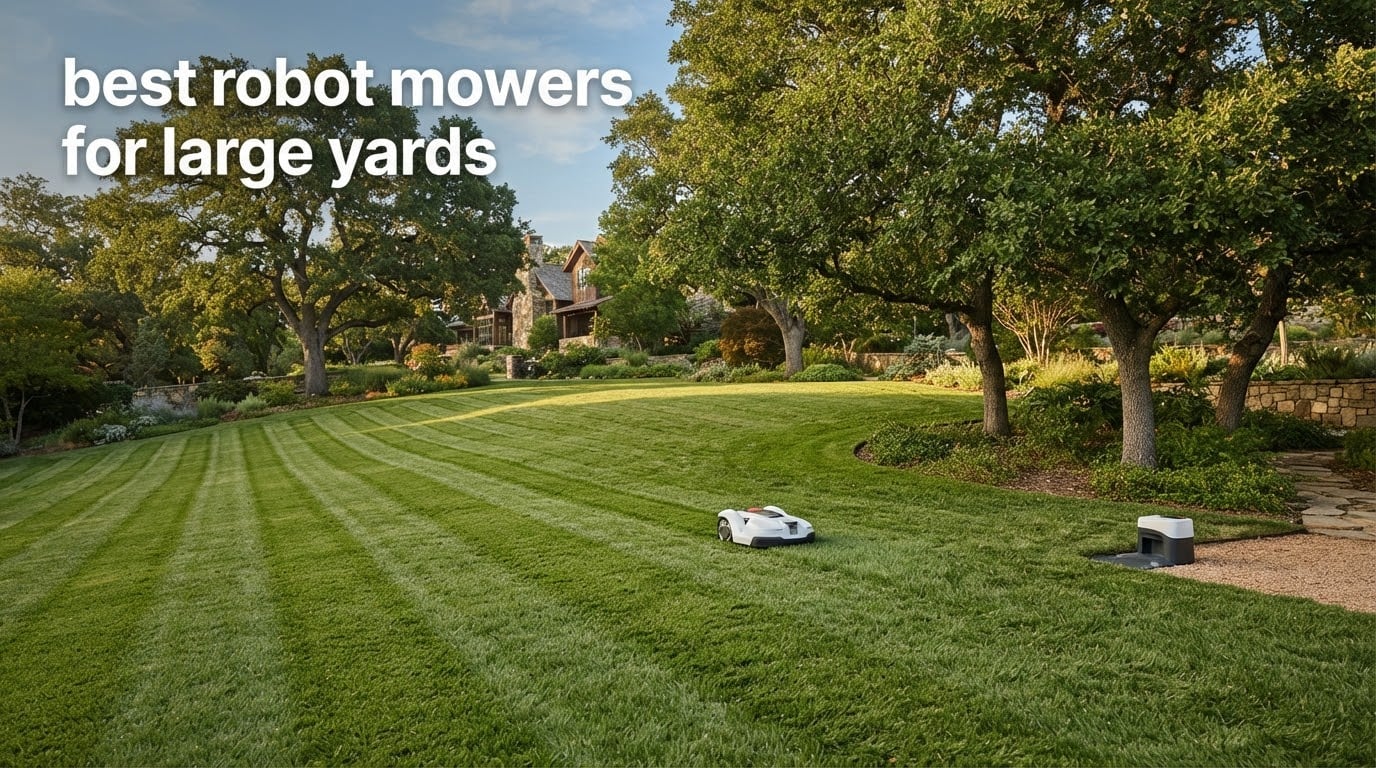
Most robot mower roundups are written for people with a quarter-acre lot and a tidy rectangle of grass. That is not the machine you need if you are mowing a half acre, an acre, or a property with two separate lawn zones and a hill in the middle of it. Coverage, slope climbing, battery runtime and signal reliability all become hard limits somewhere past about 21,780 square feet, and every pick in this guide was judged on how it behaves at that size rather than on how it looks in a catalog photo.
We put ten wire-free and wired mowers through large properties with mature trees, uneven ground and split front-and-back yards across a full season. The picks below cover half an acre up to six acres, and we have been honest about the fact that the best robot mowers for large yards still leave you with a string trimmer and the occasional rescue mission. If you are also shopping for the human-powered option, our guide to the best lawn mowers for large yards breaks down walk-behind and push options for the borders a robot will not reach.
Table of Contents
Top 3 Robot Mowers for Large Yards
The Mammotion LUBA 2 AWD 5000HX is the best all-around robot mower for large yards, because it carries a 1.25 acre reception rating and a 1.48 acre maximum, plus all-wheel drive and vision positioning that keeps working under tree cover. The YARBO Pro takes the multi-acre crown outright at a rated six acres with a 20 inch cutting path and tracked chassis, and the Mammotion LUBA 3 AWD 3000 is the sharpest choice when your property is steep and treed and you want 360-degree LiDAR on top of RTK corrections.

Mammotion LUBA 2 AWD 5000HX
- All-wheel drive to 80 percent slope
- UltraSense AI vision plus RTK
- 15.7 inch cut
- up to 50 mowing areas
YARBO Pro
- Rated up to 6 acres
- 20 inch cutting path
- Tracked multi-terrain chassis
- RTK plus vision plus PPVS

Mammotion LUBA 3 AWD 3000
- 360 degree LiDAR with NetRTK
- 80 percent slope climbing
- 50 mm step-over
- 300+ obstacle types
All 10 Robot Mowers Compared in 2026
Coverage figures below are manufacturer ratings, not measured results. We have added the practical context that those numbers hide: how wide the cut path is, how steep a hill the chassis can take, and how the mower holds its position when the sky disappears behind an oak canopy.
| Product | Specifications | Action |
|---|---|---|
| Mammotion LUBA 2 AWD 5000HX |
|
Check Latest Price |
| YARBO Robot Lawn Mower Pro |
|
Check Latest Price |
| Mammotion LUBA 3 AWD 3000 |
|
Check Latest Price |
 ECOVACS Goat A3000 LiDAR ECOVACS Goat A3000 LiDAR |
|
Check Latest Price |
 Dreame A3 AWD 2000 Dreame A3 AWD 2000 |
|
Check Latest Price |
 ANTHBOT Genie 0.9 Acre ANTHBOT Genie 0.9 Acre |
|
Check Latest Price |
 WORX Landroid L WR155E WORX Landroid L WR155E |
|
Check Latest Price |
 Sunseeker X5 AWD Sunseeker X5 AWD |
|
Check Latest Price |
 Mammotion LUBA 2 AWD 3000HX Mammotion LUBA 2 AWD 3000HX |
|
Check Latest Price |
 ECOVACS Goat A2000 LiDAR PRO ECOVACS Goat A2000 LiDAR PRO |
|
Check Latest Price |
1. Mammotion LUBA 2 AWD 5000HX – Best Overall for Large Yards
- Coverage above one acre
- Handles tree cover with vision positioning rather than a boundary wire
- All-wheel drive clears steep and uneven ground
- Quiet enough for overnight mowing
- Up to 50 mowing areas with no-go zones
- Long total mow times from the narrow cut path
- Razor blades wear about once per season
- Can tear grass on tight right-angle turns
- RTK roof or house mount sold separately
This is the mower we put at the top of the list because it is rated to receive on 1.25 acres with a 1.48 acre maximum, and it does that without a boundary wire buried across your property. Owners with hilly, shaded, tree-covered lots consistently report that it replaces a paid mowing service and lays down sharp stripes that hold up at any angle.
The 165W four-wheel motor is what earns the 80 percent, or roughly 38 degree, slope claim. In practice that matters most when your large yard has a transition strip between two levels or a soft bank along a fence line, because two-wheel-drive machines bog down or spin there. The chassis is 27.1 by 20.2 by 11.9 inches and weighs 41 pounds, which is heavy enough to feel planted and light enough for one person to carry back to the dock.
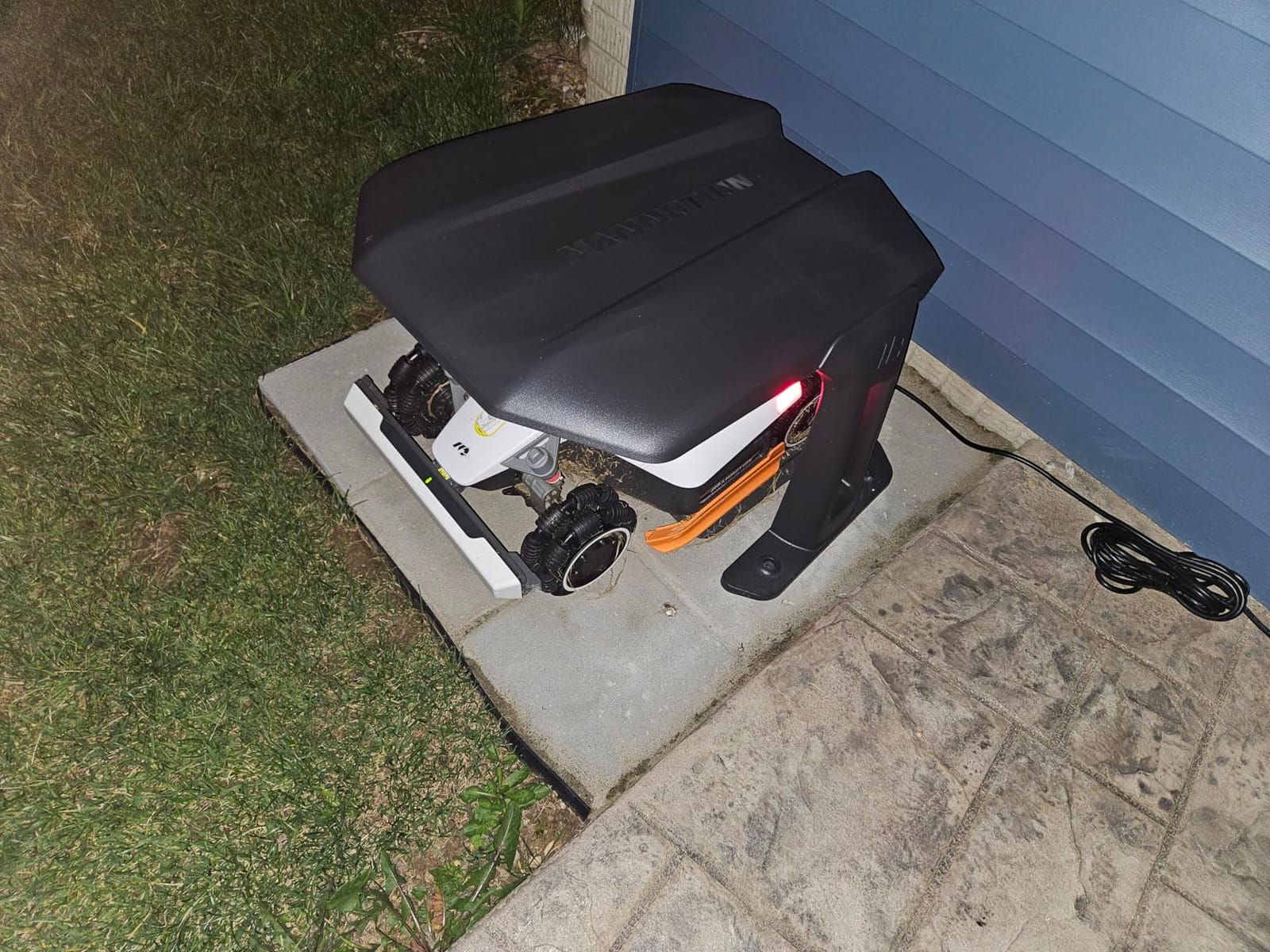
Navigation is the part that separates it from cheaper wire-free mowers. UltraSense AI vision positioning takes over when the satellite signal fades, which on a property with mature trees is not an occasional event but a daily one. It manages up to 50 mowing areas with no-go zones and recognizes more than 200 obstacle types, and the app supports parallel, checkerboard and diamond grid patterns if you want visible striping.
The honest drawback is math you can do yourself. A 15.7 inch cut path across more than an acre of lawn means a long session, and owners report that the cycle runs into the better part of a day. The dual-blade disc covers up to 13,000 square feet per charge, so on the largest properties it is docking and recharging more than once. Blades are razor type and need attention roughly once per mowing season, and tight right-angle turns can tear grass where the wheels counter-rotate.
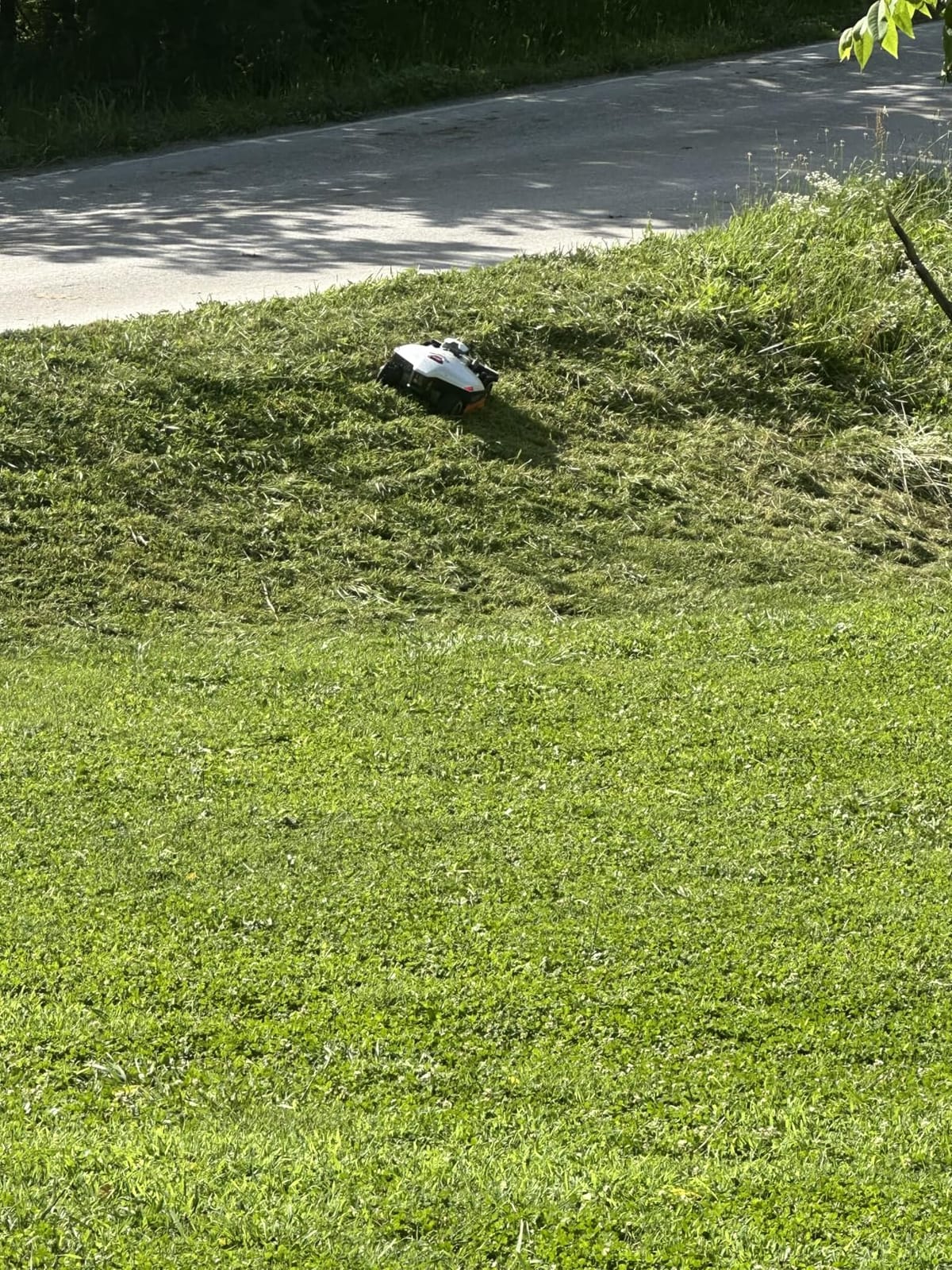
Check the signal coverage on your property before you commit
Vision-assisted RTK is the reason this model keeps working where pure GPS mowers stall, and large yards are exactly where that difference shows. Walk your property with your phone and note where the map loses the satellites, because those are the zones where a mower without a vision fallback will stop and wait for a signal that never comes.
The RTK antenna mount for a roof or exterior wall is a separate purchase, and it is worth buying. Owners who set it up properly report fewer mapping retries and cleaner boundary lines, particularly on properties where the mower docks far from the house.
Plan for a long mow day and an annual blade change
If you are used to finishing a lawn in an hour with a riding mower, the pace here will feel slow at first. Set expectations around overnight scheduling, where the unit is genuinely quiet, and keep a spare set of razor blades on hand from the start.
It also does not mulch and it does not love heavy leaf fall, so grass that goes a full autumn without a cut will give you trouble. Two problems that yard owners report most are small objects getting run over and mowers that need a physical carry back to the dock after a failed recovery, and this model handles the first better than most while the second is a fact of life above one acre.
2. YARBO Robot Lawn Mower Pro – Best for Multi-Acre Properties
- Multi-acre coverage rating
- Cut quality compares well to a riding mower
- Mows in rain and at night
- Modular platform accepts a snow blower and cart
- Deep map and pathway control
- Heavy unit that arrives in multiple boxes
- Steep learning curve for mapping and configuration
- Data center mount is unstable in high wind
- Battery pack is not user-replaceable
- Map drift needs periodic reconfiguration
Everything else in this guide is fighting for the one-to-two-acre band. The YARBO Pro is the outlier, rated for lawns up to six acres, and it treats a five-acre property as a normal rather than exceptional case. If your lot is measured in acres rather than fractions, this is the short list you need.
The hardware scale is obvious the moment it arrives. It weighs 215 pounds, measures 50 by 27 by 20 inches, and comes in four heavy boxes, so plan on two adults and a clear path from the driveway to the charging base. It has a 20 inch cutting path, the widest deck here, which is the single biggest reason it finishes acreage faster than anything else on the list.
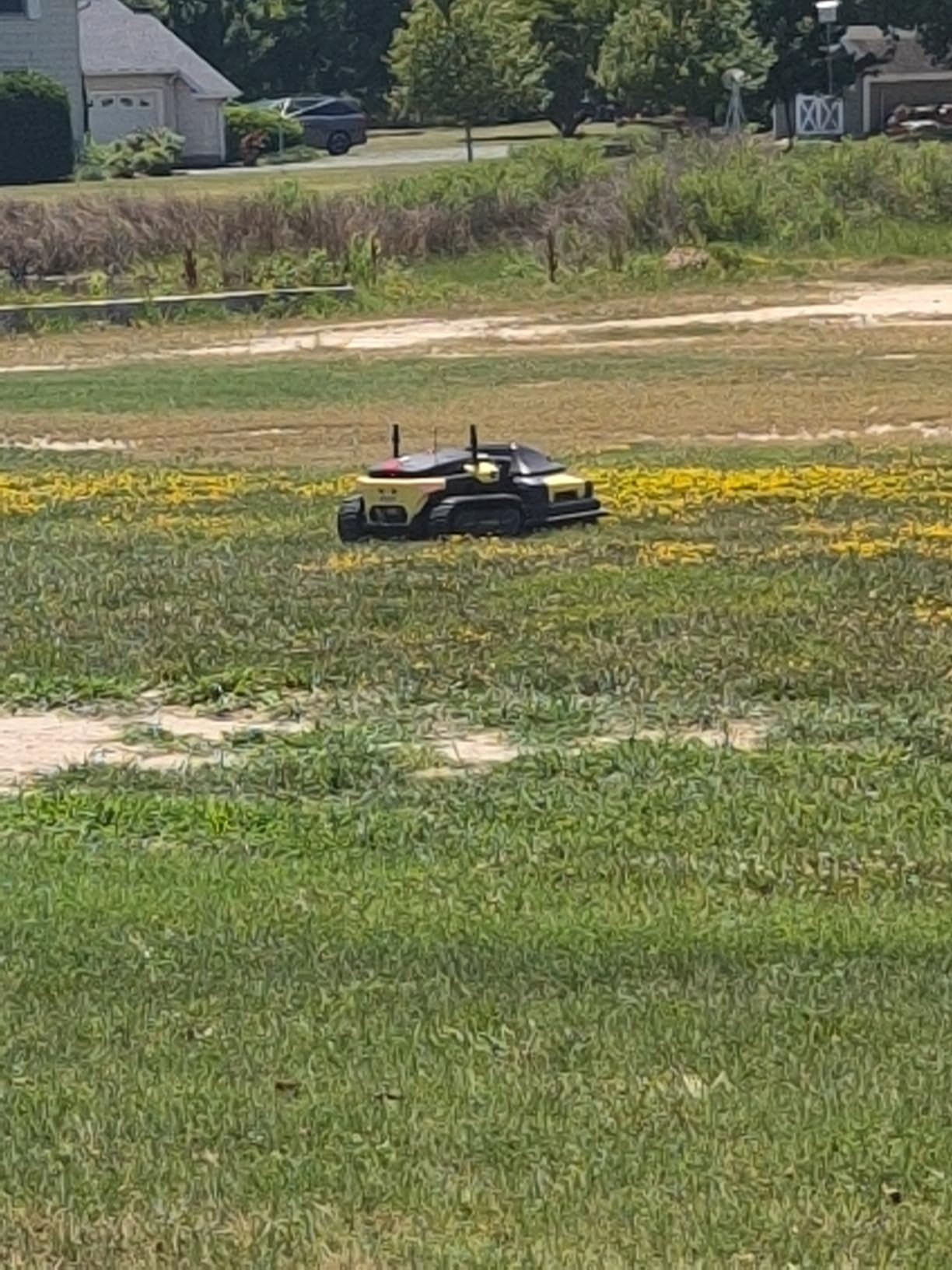
Navigation uses what the company calls triple fusion, combining RTK-GPS, binocular vision and a multi-sensor system. Patented multi-terrain tracks and all-steel skid shoes give it 70 percent, or roughly 35 degree, climbing, and the cutting height adjusts from 0.8 to 4.0 inches with an IPX6 body and automatic charging. Owners with large estates report riding-mower-grade cut quality and daytime or night scheduling.
Forum owners are split on whether that is a fair trade. Many describe it as over-engineered for a typical residential lot, and the recurring notes are that mapping takes real patience, the map drifts, and the data center mount is unstable in wind while still needing a clear 120 degree view of the sky. The battery pack is not user-replaceable and uses cobalt chemistry rather than LiFePO4, which matters if you plan to keep this machine for a decade.
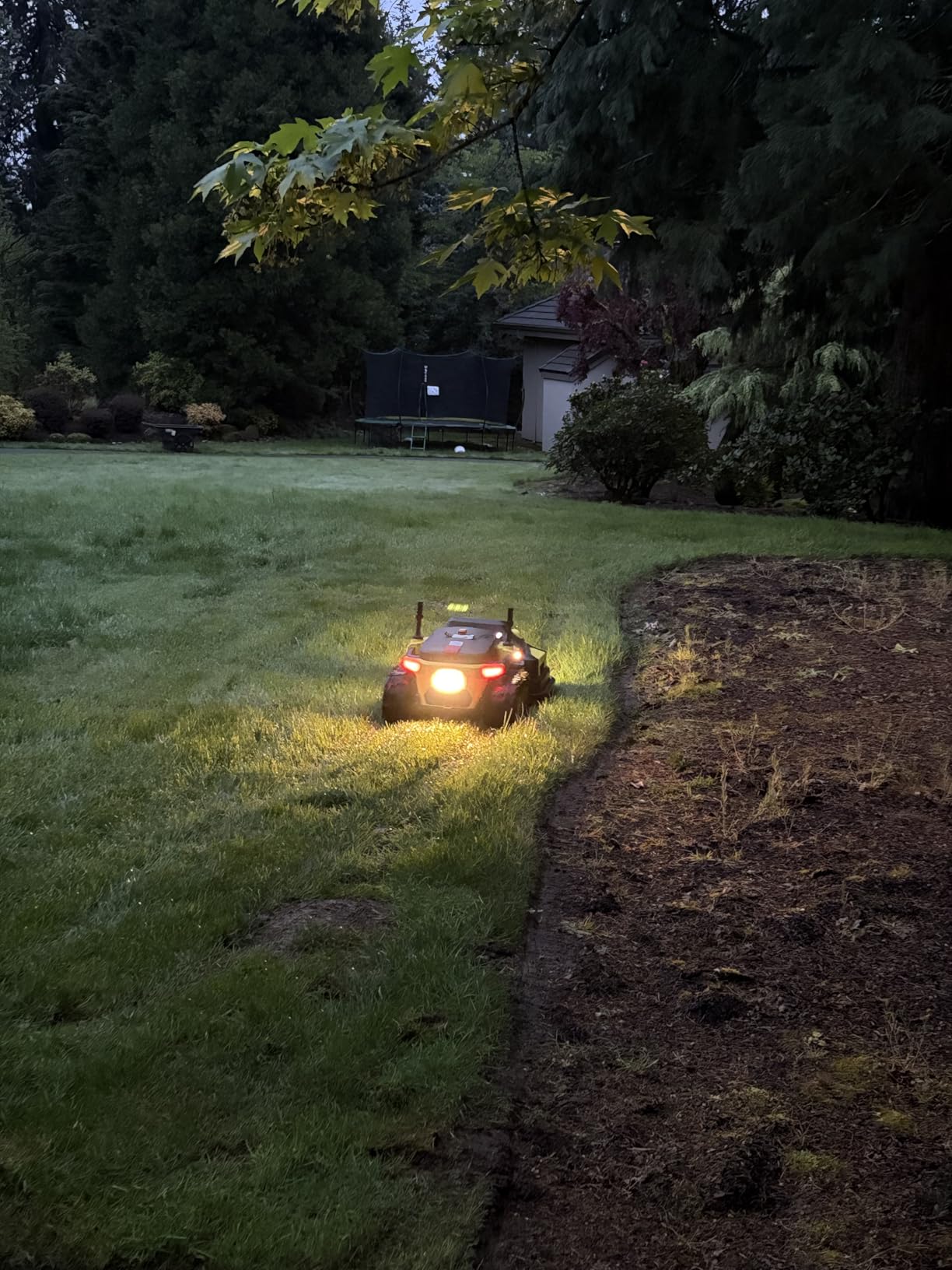
Check that you can move it before you buy it
At 215 pounds, the YARBO Pro is the one product here where getting it back to the dock is a real problem. A wheel motor failure or a bad battery on a machine this size means a serious lift, so think about where you will store it and whether your dock sits on pavement or grass before you commit.
The modular platform is a genuine advantage on a large property, because the same base accepts a snow blower and cart attachments. If you are buying for four-season yard work rather than mowing alone, that ecosystem argument is stronger than the mower competition.
Budget your time for mapping, not just mowing
The first configuration session is where most owners form their opinion. Build the map slowly, walk the perimeter deliberately, and expect to re-map when the layout changes, especially under heavy tree cover where the vision system has to carry positioning on its own.
Customer service has been praised when hardware issues were escalated with a module replacement, and criticised when tickets went unanswered, so factor response time into your decision. A small number of buyers also reported defective units on arrival, which is a normal rate for a low-volume product but worth knowing about.
3. Mammotion LUBA 3 AWD 3000 – Best for Steep Hills
- Holds position in heavily treed yards
- All-wheel drive with adaptive suspension and 50 mm step-over
- Very quiet with low running cost
- Firmware updates improve mapping
- Handles thick St. Augustine turf
- Edge quality needs multiple perimeter passes
- Blades can push grass instead of cutting evenly
- App is hard to read in bright daylight
- Needs a mid-task recharge on large yards
- Battery pack is not user replaceable
This is the model we recommend when the problem is not acreage but elevation. Four independent motors give it 80 percent, or about 38.6 degree, slope climbing, and the adaptive suspension handles roots and thresholds up to 50 mm, which covers the awkward lip where a patio meets the lawn. Owners with rough, treed and sloped grounds report the drive system solving stuck-mower problems that two-wheel machines never solved.
Navigation here is a three-layer stack. A 360 degree horizontal and 59 degree vertical LiDAR with a range up to 230 feet combines with NetRTK corrections and dual-camera AI vision, and the AI processor recognizes more than 300 obstacle types with real-time path calculation. It supports up to 30 mowing zones with no-go areas and several mowing patterns including an adaptive zigzag mode.
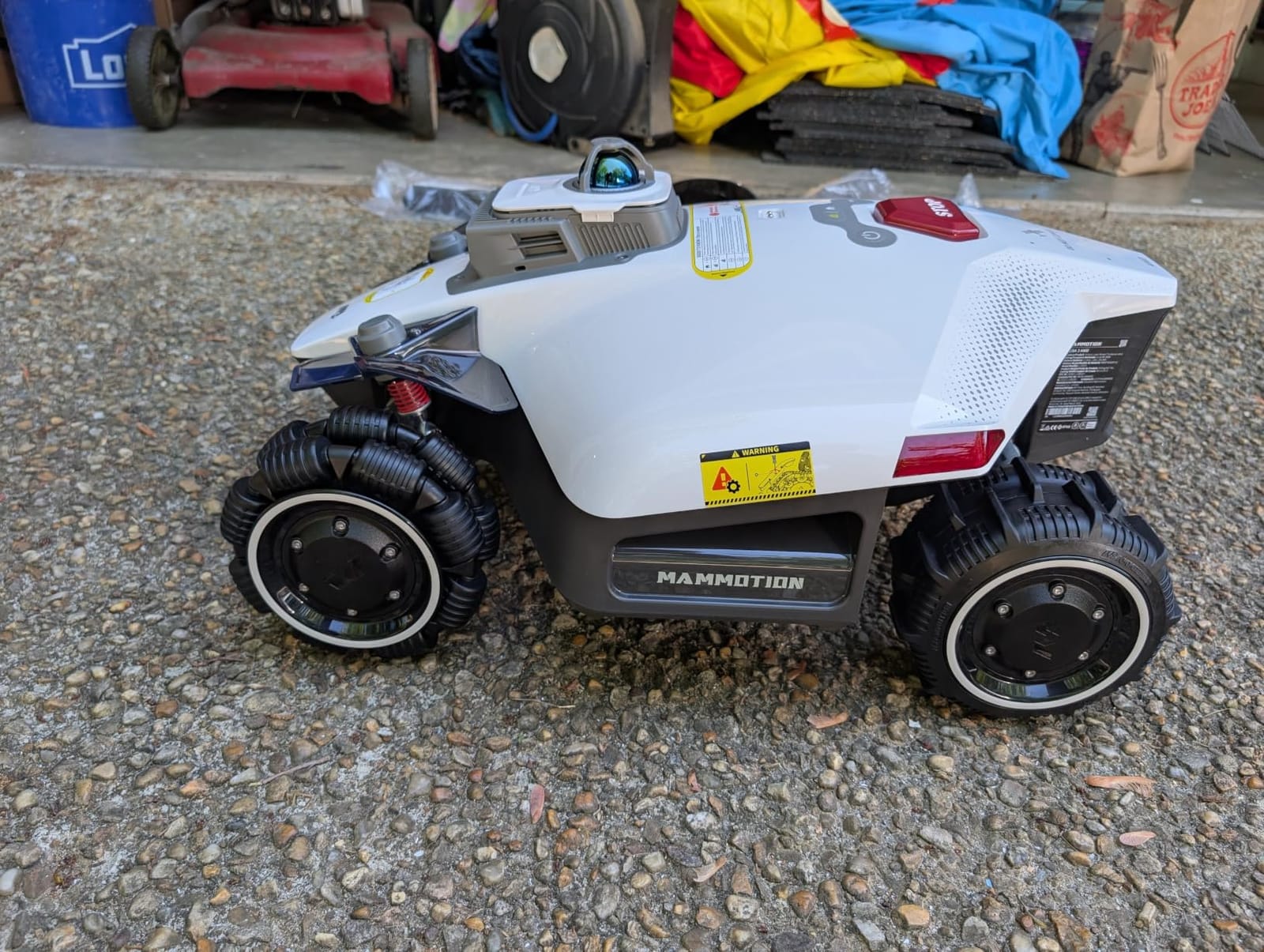
Throughput is strong as well, with coverage up to 5,400 square feet per hour and roughly 175 minutes of runtime per charge on a battery rated up to 12Ah. Owners repeatedly note that regular firmware updates noticeably improve mapping and mowing behaviour, and many report cancelling a paid lawn service after the first season.
Where it falls short is finish quality. Owners report that edges need multiple perimeter passes and can still show missed strips, and because the deck does not lift grass as it cuts, blades sometimes push rather than cut evenly on heavy growth. The app is also described as difficult to use in bright daylight, which sounds trivial until you are programming zones at noon on a large property.
Best choice if your lawn has multiple levels or a banked edge
The step-over capability and adaptive suspension are the quiet advantages here. A large yard with a retaining wall, a French drain or a slope down to a lower lawn is exactly where cheaper mowers wedge themselves, and this is the machine we would trust with that terrain.
It is worth noting that the LUBA 3 arrives with a cleaning stand shipped separately, so factor that into your setup. Owners of rough, sloped properties also praise the quiet operation enough to schedule overnight mowing, with running cost reported at roughly a dime for a large mow.
Plan on finishing the edges yourself
No large-yard robot at any price removes the string trimmer from your weekend. For this model specifically, owners point to perimeter passes and missed strips near borders, so budget time for weed-eating along fences and beds even after a full season of automatic mowing.
It also cannot complete larger yards on a single charge, which means mid-task recharges, and the battery pack is not user-replaceable. If you are weighing this against a self-charging setup, our guide to riding lawn mowers covers the cases where finishing the whole property in one session still matters more than automation.
4. ECOVACS Goat A3000 LiDAR – Best Wire-Free Setup
- Simplest app-based mapping in the group
- Quiet with a very even cut
- Returns to the charging station automatically
- IPX6 body is easy to rinse
- Handles 50 percent slopes and small barriers
- Boundary tuning needs repeated manual adjustment
- Long mow times
- Small review base of only 6 ratings
- One owner reported LiDAR map drift and a wheel motor failure
- Obstacle avoidance less reliable than advertised
If you want a large-yard mower with zero installation work, the A3000 is the least demanding setup we tried. Dual LiDAR builds a 3D map of your lawn with up to 2 centimeter precision and needs no boundary wire and no RTK station, which on a two-acre property saves you an entire weekend of pegging wire into the ground.
The 32V battery platform drives dual cutting discs on a 13 inch path with efficiency up to 400 square meters per hour, and AI Vision plus 3D time-of-flight LiDAR recognizes more than 200 obstacle types. It manages 50 percent, or 27 degree, slopes, crosses small barriers and carries an IPX6 body you can hose off after a week of clippings.
Owners describe it as very quiet, effective, and ready to run shortly after configuration, with automatic return to the charging station and app-based monitoring. For a yard that is mostly open with a few beds and trees, that combination is among the smoothest setups in this roundup.
Be aware of the limits in both directions. The rating is for lawns up to three-quarters of an acre, not the multi-acre band most people reading this article need, and owners report boundary and edge mapping needing repeated manual adjustment to get clean lines. One long-term owner reported the LiDAR map drifting over a foot and the unit digging trenches when stuck, which is the failure mode that most concerns buyers on a big property.
Understand the coverage rating before you commit
Three-quarters of an acre is a real yard but not a large one. If your property is a full acre or more, this model will run continuous mowing cycles, and owners already report long total mow times compared with manual mowing, which is not a combination you want at scale.
Its honest strength is the 27 degree slope rating, which comfortably covers most residential grades and gentle banks. For genuinely steep ground you should look at one of the all-wheel-drive models instead.
Judge reliability on the small review base, not the star rating
This mower carries only a handful of customer ratings, so a high average tells you very little about what happens after season two. The single most detailed long-term account we saw describes boundary drift, repeated getting stuck in landscaping and eventually a wheel motor failure.
Its cutting height adjusts electronically from 1.2 to 3.6 inches, and that easy setup is genuine. We would simply treat this as a strong option for a large yard that stays under three-quarters of an acre with flat to gently rolling ground.
5. Dreame A3 AWD 2000 – Best for Fast Overnight Turnaround
(Upgraded) DREAME A3 AWD 2000 LiDAR Robot Lawn Mower, 45-Min Fast Charge
- Fast 45 minute recharge
- Wire-free 360 degree LiDAR works under tree cover
- All-wheel drive performs well on sloped ground
- Runs quietly enough for overnight schedules
- 3 year warranty plus a year of 4G service
- Coverage rating of 0.25-0.50 acre
- Edge cutting stops at 1.97 inch without the trimmer module
- Only one customer review available
The Dreame A3 has one of the smallest coverage ratings in this roundup, and we want to be upfront about that before anything else. At roughly a quarter to a half acre, it does not belong on a list about large yards unless your large yard is large by neighborhood standards rather than by acreage.
What it does offer is a fast turnaround. A 45 minute recharge, reported as 22 percent faster than the industry standard, means a large share of the day is spent cutting rather than parked, and on a property with several zones that difference compounds quickly. The all-wheel-drive hub motors handle 80 percent, or 38.7 degree, inclines and cross 2.17 inch obstacles.
Navigation is wire-free 360 degree LiDAR plus binocular AI vision that works under tree cover, and OmniSense 3.0 avoids more than 300 objects with EdgeMaster 2.0 edging that reaches within 1.97 inches. It also has a built-in 4G module, an HDR camera for real-time monitoring and theft protection, and a 3 year warranty with a year of 4G service included.
It weighs 26.4 pounds, measures 25 by 17.05 by 11.57 inches and adjusts from 1 to 4 inches, with a 7.87 inch cut path. The single verified owner we found described easy setup, accurate LiDAR mapping and whisper-quiet operation scheduled overnight, with reclaimed weekend time as the headline benefit.
Right pick when your yard is big but not acreage
Think of this as the machine for a large suburban lot with an open, gently sloped shape and a handful of beds. The all-wheel drive and quick recharge suit that lawn well, and the 1 to 4 inch height range is unusually wide for the size.
Forum owners of the Dreame platform, including people on terraced 3,500 square meter yards, frequently point to the omni-wheel three-point turning as the reason these machines handle complex grounds better than two-wheel-drive models, and that behavior shows up here too.
Too little long-term data to lean on
One customer review is one customer review, and we will not pretend otherwise. Treat the perfect rating as encouraging rather than proven, and check back after a full season before you recommend it to a friend with a bigger property.
Edge cutting stopping at roughly 1.97 inches also means the optional trimmer module is worth budgeting for if borders matter to you. At 7.87 inches of cut path, this is the narrowest deck here, which is another reason to size up rather than down.
6. ANTHBOT Genie 0.9 Acre – Best Value for Big Lawns
- Covers up to 0.9 acre with 30 plus zones
- Very easy unbox-and-map setup with a straightforward app
- Quiet operation with a bright LED headlight
- Cuts straight lines through fescue and Bermuda
- Climbs steep ditches better than expected
- A long-term owner reported severe battery decline
- 4G and Wi-Fi can drop at the yard edge
- Will not pass through an open gate between zones
- App map editing is difficult and support has been unresponsive
- Manual trimming along raised edges still required
The Genie covers up to 0.9 acre, or 3,600 square meters, with 30-plus customizable mowing zones, and it does so on the lowest outlay of any wire-free machine we looked at. For a property in the three-quarter to one-acre range where the budget is fixed, that coverage-to-cost ratio is difficult to argue with.
Positioning combines full band RTK with 4-eye 3D vision to hold a fix under trees, eaves and next to buildings, and there is no perimeter wire at any point. ACC hands-free auto mapping with AI boundary recognition and adaptive edge following means setup is close to unbox-and-run, and a 300 degree field-of-view camera detects more than 1,000 object types.
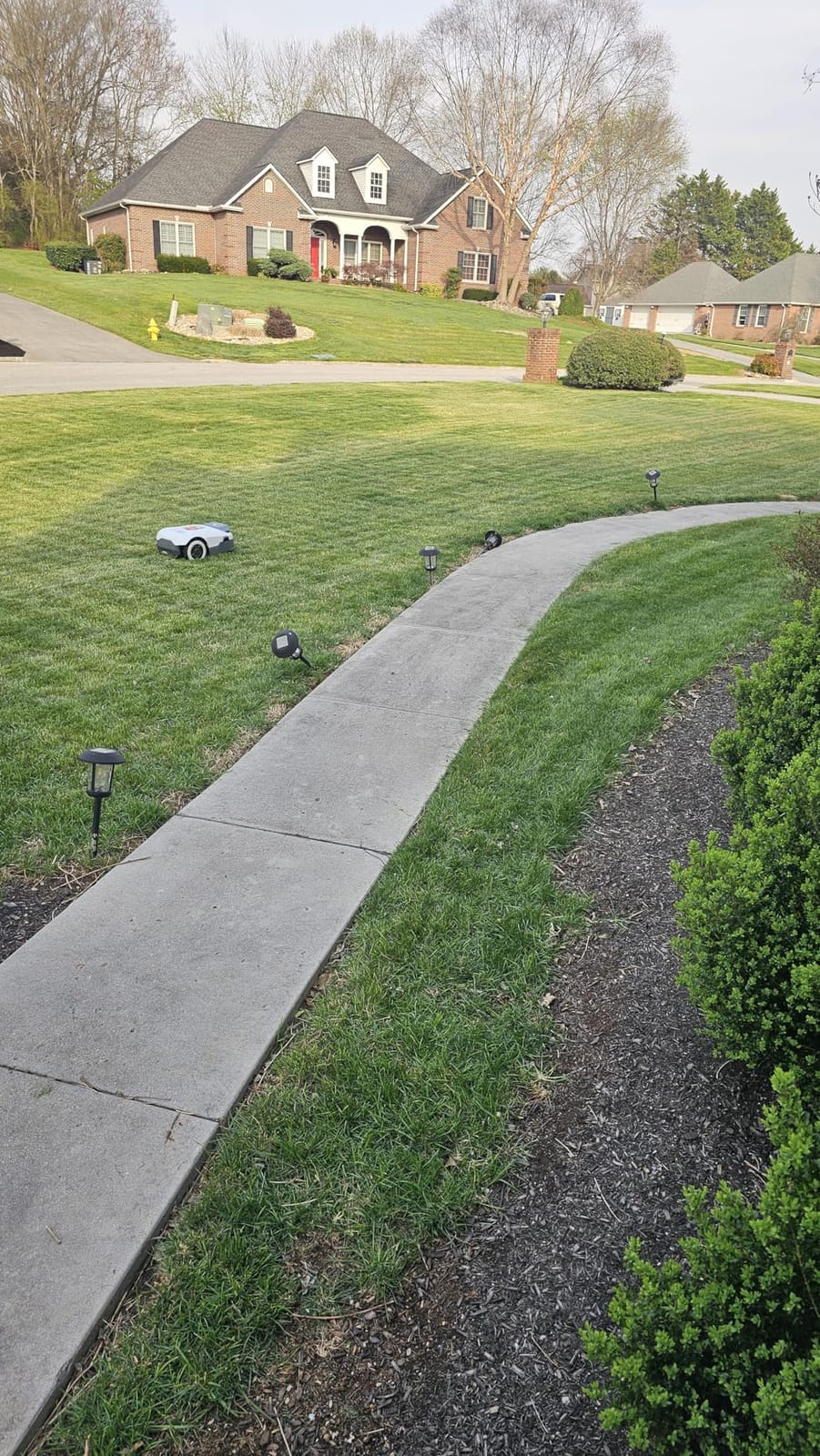
Owners like the near-silent running and the LED headlight, and report laser-straight lines through mixed fescue, Bermuda and weed patches. They also report it climbing steep ditches and handling uneven ground better than expected, which is reassuring when your large yard is not flat.
The caution is durability. A detailed long-term review describes severe battery degradation and random uncut strips after about a year, with the unit effectively becoming a yard ornament. Connectivity at the yard edge can be inconsistent, the app map editing is awkward, and the mower will not drive itself through an open gate between separate zones, which matters if your property is split into two lawns.
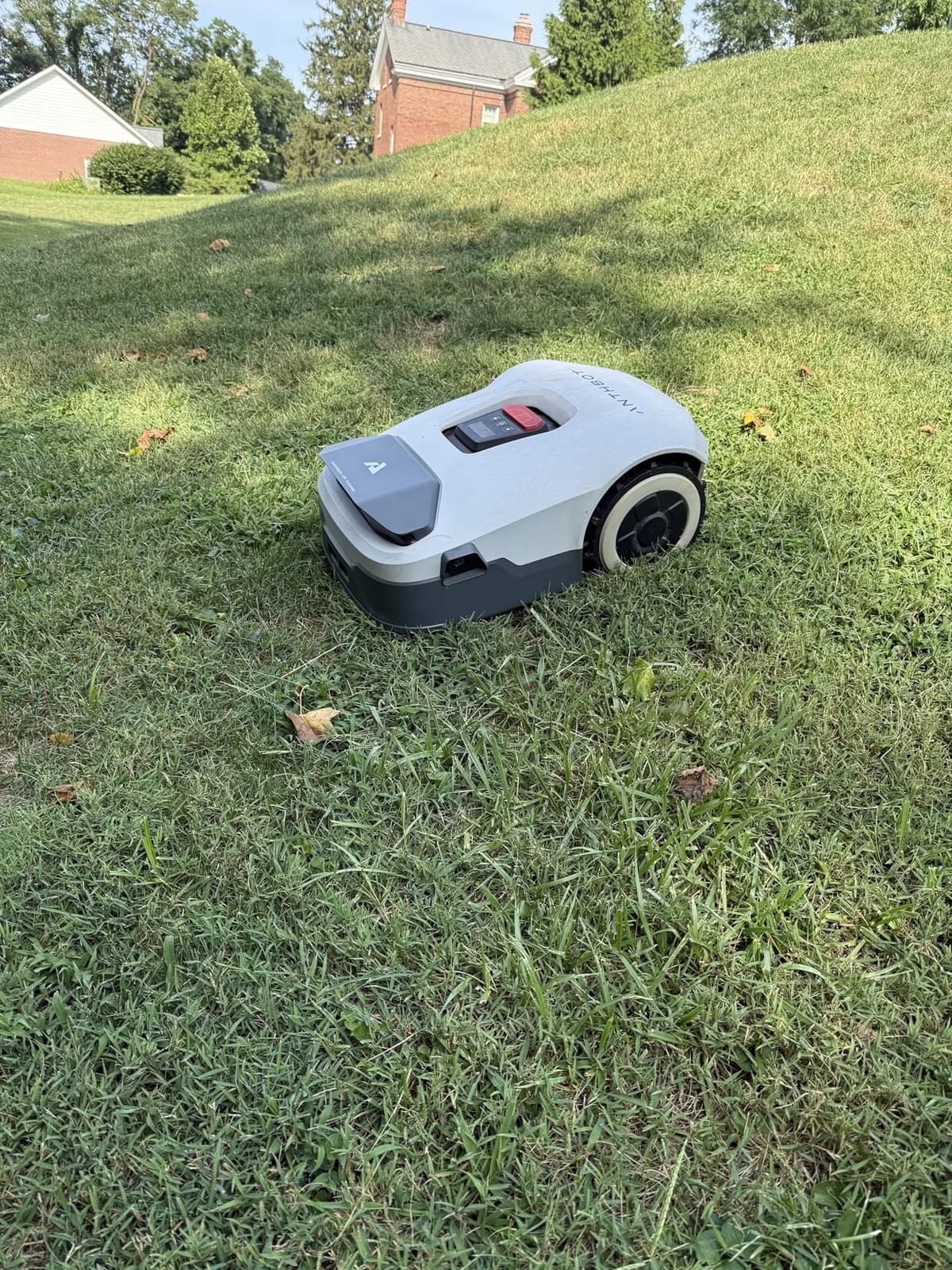
Best fit for a single connected lawn area
This is the pick if your property is one continuous space of roughly 40,000 square feet. The zone system is generous, with 30-plus areas and no-go zones set through the app, so complex beds and pools are manageable as long as they sit inside one mapped region.
At 46 pounds and 25 by 11 by 16 inches, it is one of the larger machines on the list by footprint, so dock placement near a path rather than deep in the grass will save you lifting it later.
Know what you give up for the lower entry cost
The 7.9 inch cut path is the second narrowest here, so mow runs take longer than the headline acreage suggests, and the 1.18 to 2.76 inch height range is tight compared with the Mammotion and Dreame decks. Manual trimming along raised edges is still required.
Anti-theft protection with intelligent locking is included, which matters more on a machine this size. Our bigger hesitation is the battery report, and if you buy it, keep the first season as a trial and confirm that a replacement pack is available in your market before the warranty period ends.
7. WORX Landroid L WR155E – Best With a Boundary Wire
WORX Landroid L WR155E Robotic Lawnmower for Large Gardens/Self-Propelled Lawnmower for Clean Lawn Cutting in No Time at All, Orange, 2000 m2
- Covers about half an acre on one charge
- Cut-to-edge trims right to the garden border
- Handles 35 percent gradients quietly
- Wi-Fi app control for scheduling
- Large established review base at 394 ratings
- Requires laying 250 m of wire with 340 pegs
- US buyers report no replacement battery sold for this model
- Sensor or lift-detection faults within a few weeks
- Software updates need a USB stick
- Perimeter wire can degrade over time
This is the only wired machine in the roundup, and that is a deliberate choice rather than an oversight. On a property with heavy tree cover, dense buildings or a lot of metal and stucco, a physical boundary is still the most reliable signal you can buy, and the WR155E includes 250 meters of wire and 340 pegs for the install.
Once that wire is in, the machine is genuinely good. It covers gardens up to 2,000 square meters, which is just under half an acre, and the 20V Powershare battery runs about 120 minutes per charge. Owners across Europe report a quiet, dependable unit once the boundary is installed properly, with a 394 review base that is by far the largest here.
The cut-to-edge function is the standout feature and the main reason this mower still makes sense for anyone tired of weeding a border. It handles gradients up to 35 percent, corners and edges quietly, and Wi-Fi app control handles scheduling and monitoring.
Install the wire on a dry day and take your time
Forum owners consistently describe boundary wire installation on a large property as the most frustrating part of the entire process. A steady, taut run with properly spaced pegs takes hours, and a kinked or loosely pinned wire is the number one cause of a mower that wanders off its lawn and stops at the same corner every week.
Treat the install as a weekend project. If you have a comparable open lawn and want to compare finished times, our best lawn mowers roundup covers conventional options that go live the same day.
Confirm replacement parts exist in your country first
This is the significant problem for US buyers, and it is worth resolving before anything else. Owners report that replacement batteries are not sold for this model, which means a dead pack ends the machine’s life rather than starting a repair.
Sensor or lift-detection faults are also reported within a few weeks of use, and software updates require a USB stick rather than an app. Perimeter wire degrades over time and needs replacing, which is an ongoing cost the wireless models do not carry. With a 22 centimeter cut path, it also covers roughly half an acre, so it sits at the lower end of this group for coverage.
8. Sunseeker X5 AWD – Best for Quiet Night Mowing
Sunseeker X5 AWD Robot Lawn Mower, RTK, Vision AI, 0.5 Acre, Wire-Free
- Holds navigation under trees and shade without circling
- Even cut with straight stripes in open and shaded areas
- All-wheel drive with independent front suspension
- Very quiet at 60 dB
- Up to 5 maps with virtual boundaries and no-go areas
- Treats over-tall grass as an obstacle
- Boundary must be set well back leaving up to 18 inches
- Snags on small humps and sidewalk edges several times a week
- Some units need Wi-Fi extenders
- App programming described as difficult
The Sunseeker X5 carries a 4.4 average rating across 29 reviews, and the reason owners give is consistent: it keeps its navigation under trees and in shade without circling or losing the boundary. RTK, VSLAM and Vision AI work together, which is exactly the combination a large tree-covered yard needs.
At 60 dB it is among the quietest machines in this roundup, and owners describe the loudest sound as plastic body creak. It is rated for yards up to 21,780 square feet, which is exactly one acre, with all-wheel drive, 30 degree or 60 percent slope capability, rugged tires and independent front suspension for uneven ground.
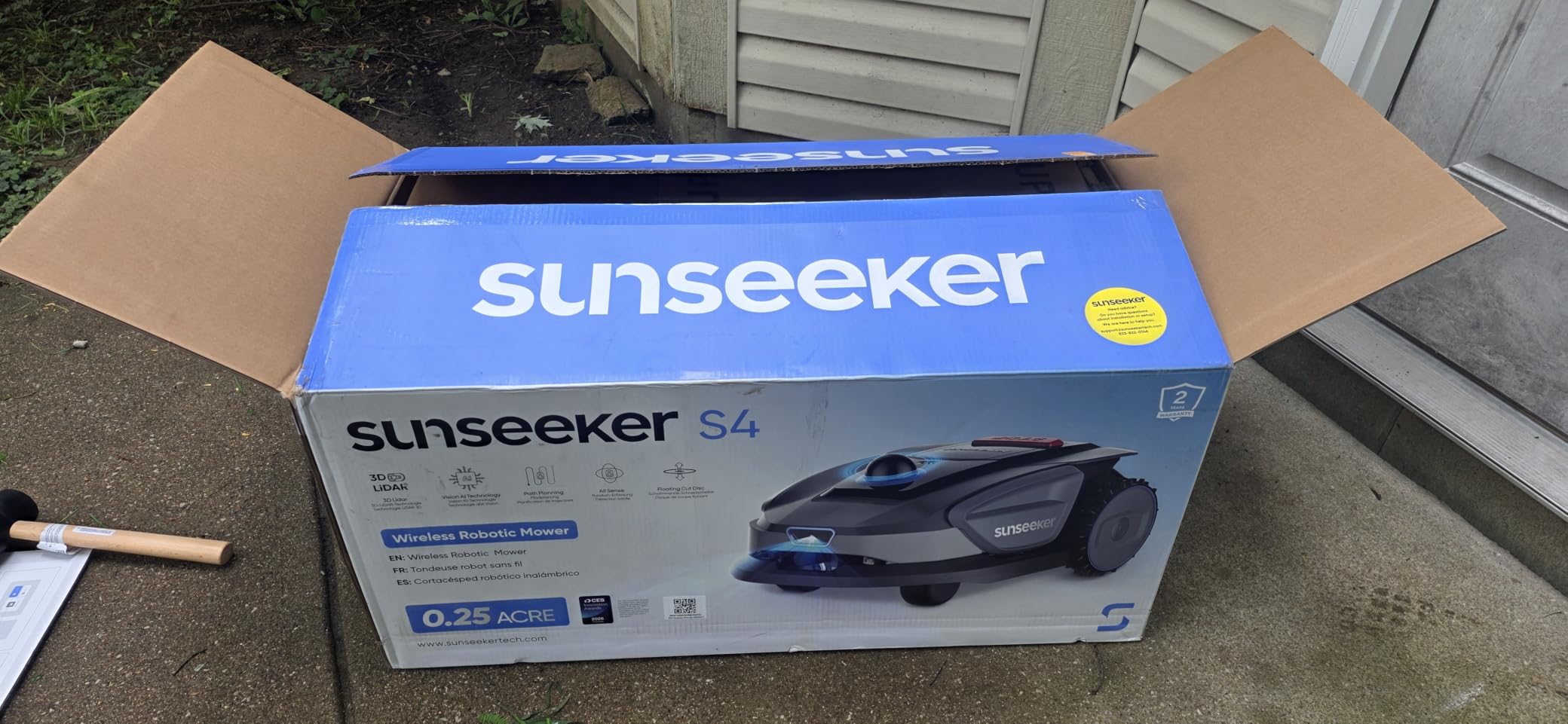
Cut quality gets consistent praise too, with even stripes in both open and shaded areas. Wire-free control supports up to 5 maps, virtual boundaries, smart zones and no-go areas, and the floating cut adjusts from 1.6 to 3.2 inches. It weighs 26 pounds and carries a 2 year warranty with US-based support.
The complaints are all about boundaries rather than cutting. If grass grows too tall the mower treats it as an obstacle and avoids it, which means frequent re-sends. The boundary has to be set well back from the yard edges, leaving up to 18 inches to weed-eat all the way around, and the machine can snag on small humps, sidewalk edges and dips several times a week.

Ideal when a one-acre yard is heavily treed
That coverage figure lands right at the traditional one-acre line, and combined with the navigation stack it makes this the pick for a property where the lawn sits under a mature canopy. Owners also report the all-wheel drive preventing the getting-stuck problems they had with two-wheel-drive machines.
Quiet operation at 60 dB is not just a spec-sheet number here, because owners run it overnight and report neighbors not noticing. If you work nights or simply want the lawn finished before the day starts, that matters more than a wider deck.
Set your boundary back and expect some rescue duty
The 18 inch no-mow margin around the perimeter is the most commonly cited annoyance, and it means the string trimmer stays in the shed. On a large property that margin can be a meaningful strip of grass on every side.
Some owners need Wi-Fi extenders to reach the corners of a property, and the app programming has been described as difficult by more than one owner. If you are still weighing traditional options, our zero-turn mower guide covers the case where speed on open ground beats automation.
9. Mammotion LUBA 2 AWD 3000HX – Best for Three-Quarter Acre Homes
- Handles large bumpy and spread-out properties with a configurable app
- RTK plus Wi-Fi plus 4G rarely loses navigation
- Cuts clean lines at any angle
- Quiet enough to run overnight
- Second-season owners report smooth operation
- One owner reported failure within two months and an unresolved repair
- Grass can tear on right-angle turns
- App is clunky and setup takes patience
- Razor blades need occasional replacement
- 4G service is free only in the first year
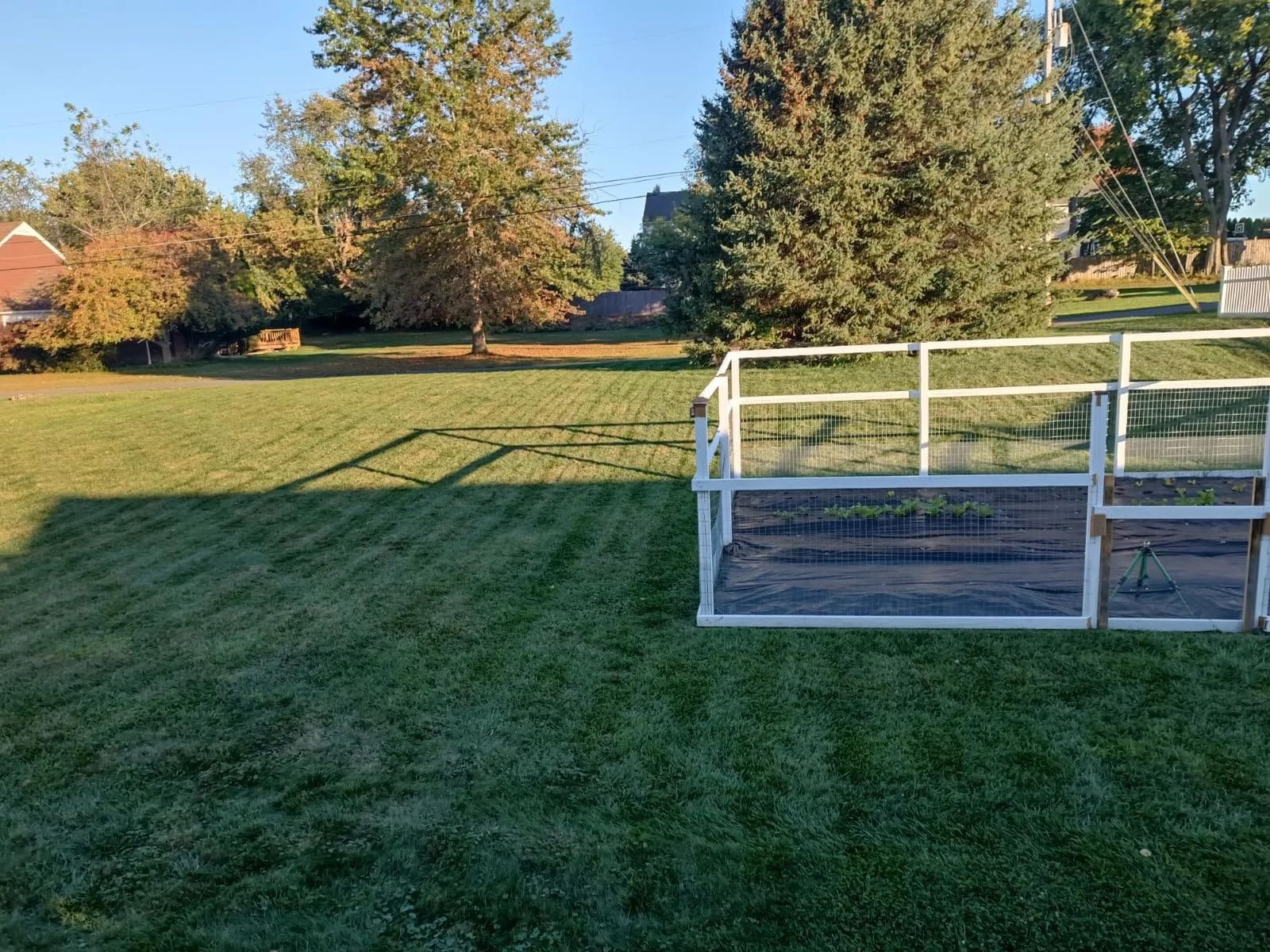
This is the same platform as our top pick, sized for a yard between a half acre and three-quarters of an acre. If your property is big and awkward but not quite at the point where you need the 5,000HX, this is the version that makes financial and practical sense.
You get the 165W four-wheel motor and 80 percent, or 38 degree, slope climbing over rough terrain, plus UltraSense AI vision working alongside RTK so the mower keeps mowing under trees without a perimeter wire. The dual-blade disc has a 15.8 inch cut path and covers about a quarter acre per charge, with up to 30 mowing areas, no-go zones and 200-plus obstacle recognition.
Connectivity is RTK plus Wi-Fi plus 4G together, and owners with large uneven properties report that navigation is rarely lost. Several describe it running overnight so they wake up to a cut lawn, and second-season owners report continued smooth operation rather than degradation. The height range is 2.2 to 4.0 inches across five positions.
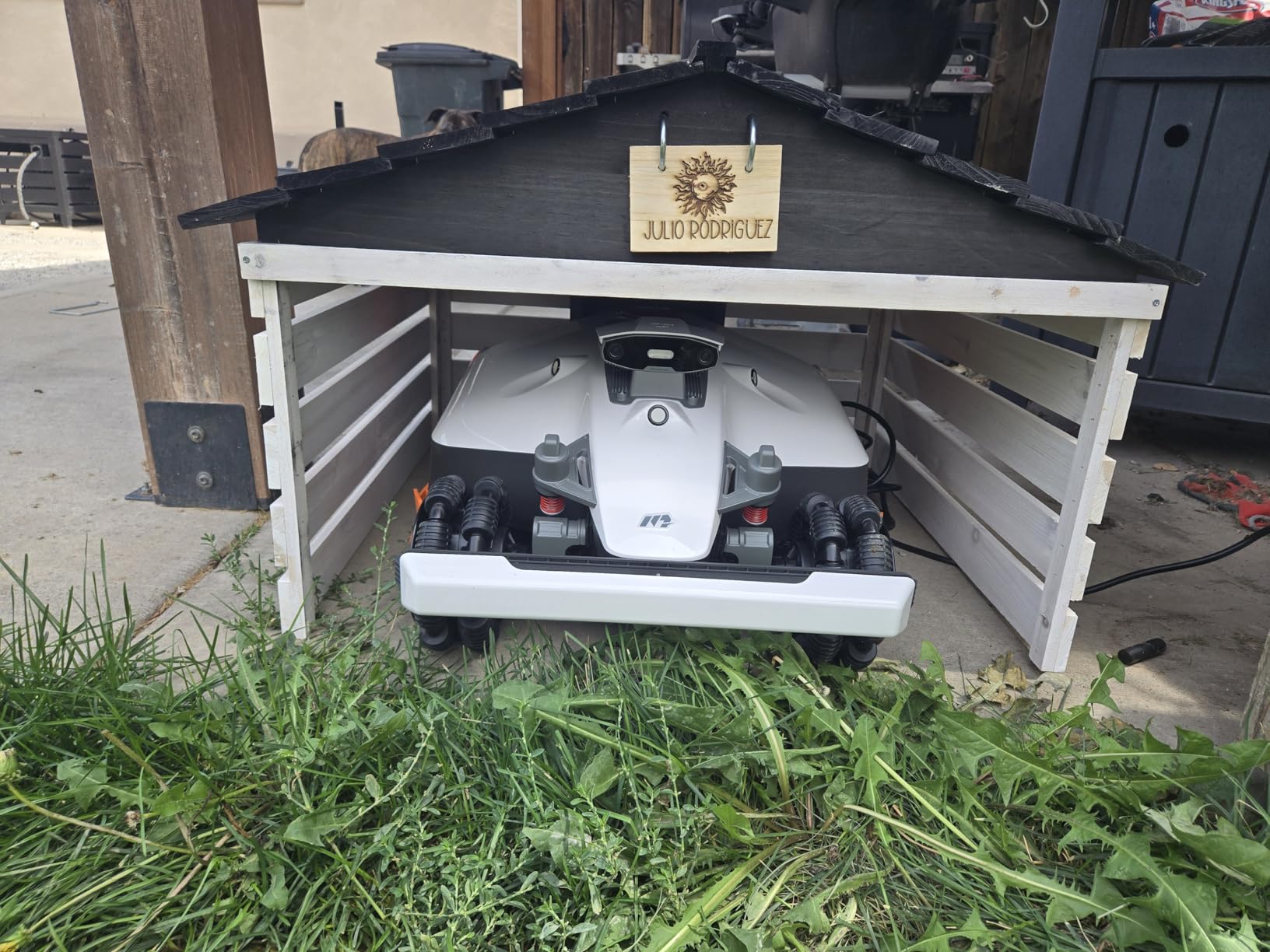
The serious negative here is a detailed account of a unit that failed within two months followed by a repair that did not resolve the fault. That is one report among 42 ratings, but on a machine you expect to last years it is the one worth reading twice before you buy.
The recurring smaller complaints are familiar from the platform: grass tearing on right-angle turns where the wheels counter-rotate, a clunky app that rewards patience during setup, and razor blades needing occasional replacement while edges still need weed-wacking. The 4G service is included for the first year only, which is a line item to plan for.
Right call between the 3000HX and the 5000HX
Both LUBA 2 AWD models share the same chassis, slope capability and navigation stack, and the real difference is the coverage target and the number of zones. If your measured yard sits comfortably above three-quarters of an acre, step up rather than trying to stretch this one across more sessions.
For a large, bumpy, hilly and spread-out property, the configurable app and the combined RTK, Wi-Fi and 4G stack are the features owners mention most, and several report the unit replacing a paid mowing service entirely.
Understand what the 4G service costs you later
Cellular service included for the first year means the second year is a decision point, and that is worth asking about before purchase rather than discovering later. Navigation that depends on a subscription-free assumption is not the same as navigation that depends on a paid one.
Blades, edge trimming and the small bits of lawn furniture that always end up in the way remain the recurring costs of ownership on any model here. Plan for them, and expect to rescue the machine a few times a season if your yard has exposed roots, which no amount of obstacle recognition fully prevents.
10. ECOVACS Goat A2000 LiDAR PRO – Best Built-In Edge Trimmer
ECOVACS Goat A2000 LiDAR PRO Robot Lawn Mower, Dual LiDAR Navigation
- Built-in trimmer handles sidewalks and flower beds
- Powerful 32V dual-blade system cuts thick grass
- Good battery life with about 50 minute recharge
- Very quiet with an onboard camera view
- Quick straightforward app mapping
- Covers only about half an acre
- Manual mapping still needed around complex beds
- Wi-Fi coverage insufficient without extenders in some setups
- Heavier and larger than smaller mowers
- Manual mapping is tedious and can wipe saved maps
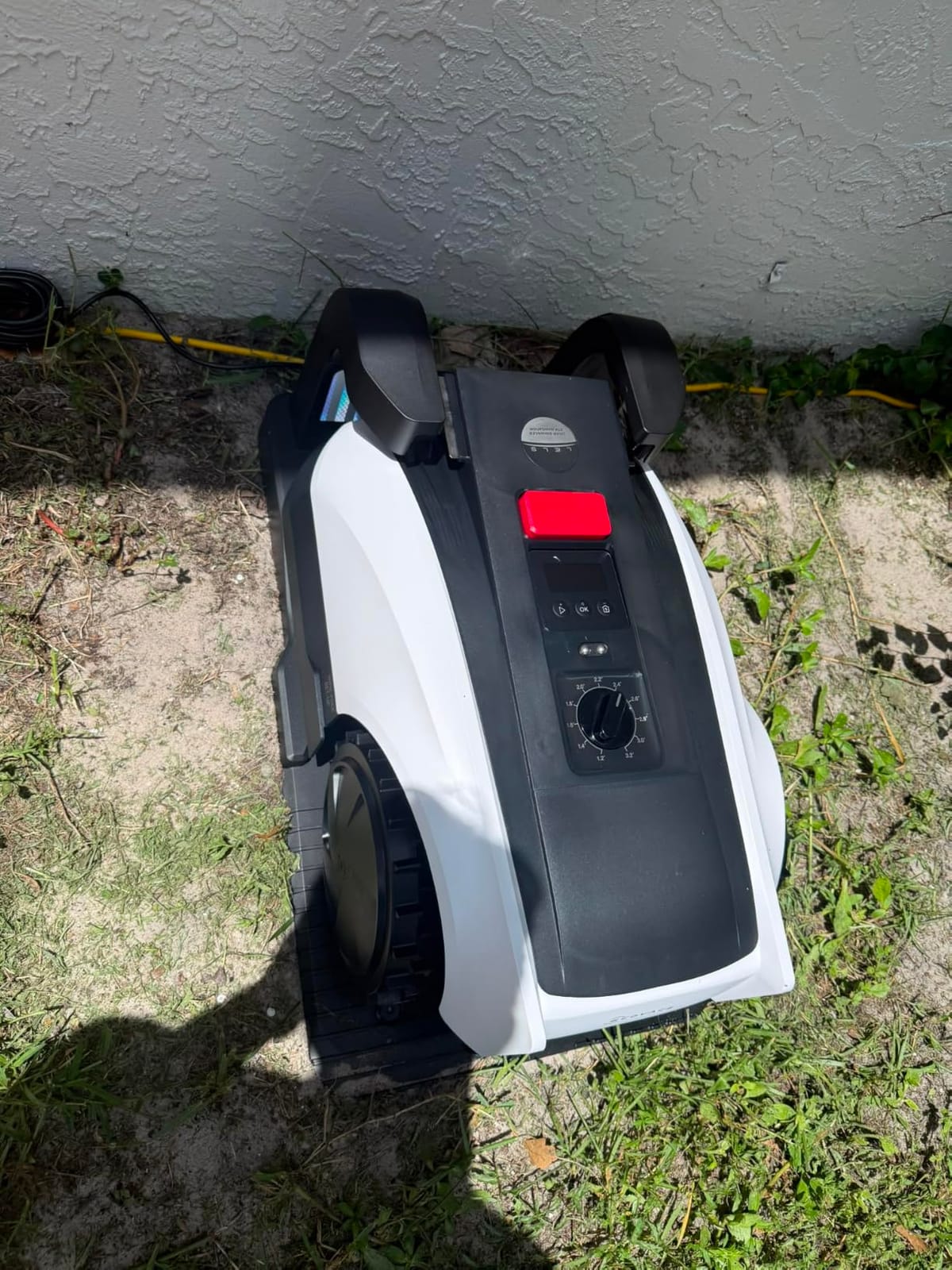
The A2000 LiDAR PRO exists to solve the problem every robotic mower review mentions and none of them fix. The built-in TruEdge string trimmer follows your lawn border and handles edging along sidewalks, driveways and flower beds, which is precisely the manual work that otherwise eats a Saturday on a large property.
Underneath, it is a capable machine. A 32V dual-blade cutting system works on a 13 inch path with electronic height adjustment from 1.18 to 3.54 inches, and AIVI 3D obstacle avoidance recognizes more than 200 object types down to 1.97 inches. Throughput is strong at up to 4,305 square feet per hour with a roughly 50 minute recharge and automatic task resume.
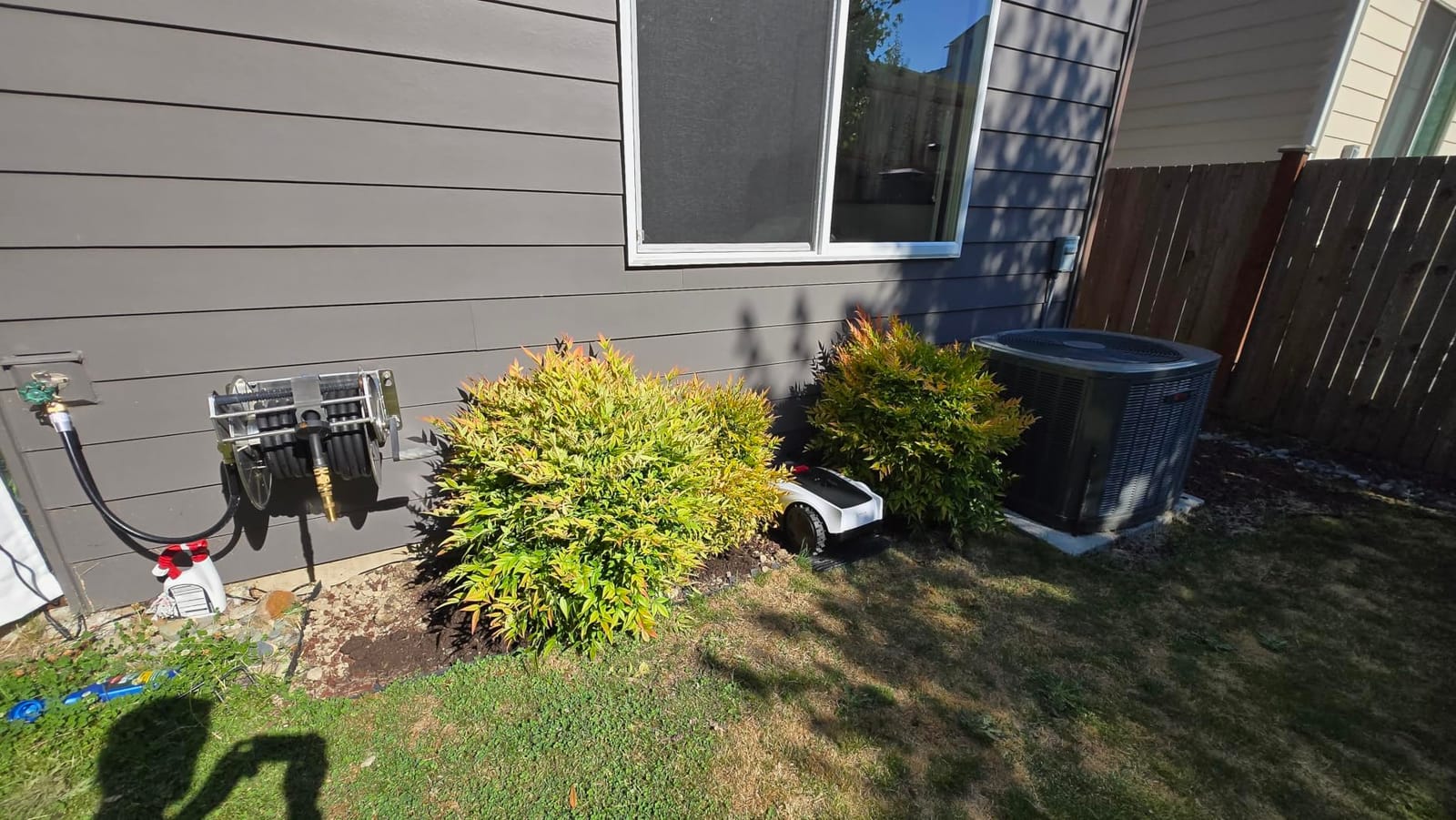
Owners rate it as a genuine set-and-forget machine, with particular praise for easy setup, the integrated trimmer and clean cutting on thick grass and slopes. It is very quiet, has a sleek design and provides an onboard camera view inside the app, and auto mapping works well behind fences.
The limitation is coverage at up to half an acre, which sits at the lower end of this group. That is a large yard for a city lot and a modest one for a true acreage property, and you should be honest with yourself about which side of that line you fall on before buying.
The trimmer is the reason to choose it
If your large yard is full of borders, beds, a driveway and a sidewalk, the amount of weed-eating you eliminate is worth more than another half acre of rated coverage. Owners consistently single out the TruEdge system as the feature that made the purchase feel complete rather than a compromise.
Worth noting for a bigger property: TruEdge is a design you can look for in other brands. A built-in trimmer disc or head is a differentiator when you are comparing machines at the same coverage tier.
Set up your Wi-Fi before the mower, not after
One owner found Wi-Fi coverage insufficient without extenders, and mapping is a step where that problem surfaces at the worst time. Test the signal at the far corners of your property before the first mapping run.
Manual drive-mapping is still needed around complex flower beds, and it is described as tedious, with the risk that a failed map wipes saved zones. On a large, heavily planted yard that is a real cost in time, and the heavier build and larger footprint than smaller mowers makes dock placement worth thinking through.
How Big Is a Large Yard? Sizing Guide
One acre is 43,560 square feet, which is roughly a football field including the end zones. For this category, most owners and most manufacturers start calling a yard large somewhere around a half acre, or 21,780 square feet, because that is where a standard small-lot robot starts running continuous mowing cycles instead of finishing and docking.
Between a half acre and one acre, the mowers in the middle of this list will handle a full cycle comfortably. Past one acre, you need a rated capacity above 1.25 acres, and you should expect mid-task recharges as normal rather than as a fault. Past two acres, single-unit coverage becomes a stretch, and owners on large properties increasingly run two mowers on separate zones or move to commercial equipment.
Measure before you shop rather than after. A satellite map estimate, a lawn-app measurement or a paced walk with a wheel are all good enough, and a five-minute check on a map will tell you whether you belong in the 0.75 acre band or the 1.25 acre band. If your property is two separate lawn areas divided by a fence, add the mower’s ability to drive itself through a gate to your requirements, because several machines here cannot.
Boundary Wire vs RTK vs LiDAR vs Vision
All four navigation systems appear in this roundup, and the choice matters more on a large yard than on a small one, because the more lawn there is, the more time a mower spends out of position. Boundary wire, as on the WORX Landroid, is the most physically reliable and the only option that never depends on a signal, but installing hundreds of meters of wire and hundreds of pegs across a two-acre property is a genuine weekend project.
RTK uses GPS satellites with a correction signal for centimetre-level accuracy, and it can work with no antenna at all when a network correction service is available, or with a roof or wall mounted antenna for the best lock. It is the most common approach in this group and works well in open ground, but it is exactly the system that struggles when trees, buildings and walls cut off the sky. Every manufacturer here pairs RTK with something else for that reason.
LiDAR builds a 3D map with a spinning sensor and needs neither wire nor satellite fix, which is why the ECOVACS models and the LUBA 3 use it. The weakness is long-term map drift, which owners on both ECOVACS models report needing to correct. Vision cameras are the newest layer, running alongside RTK or LiDAR to recognize obstacles and hold position under canopy. The models that combine two or three of these, such as the LUBA 2 AWD 5000HX and the YARBO Pro, are the ones we would trust most on a large, complicated property.
What You Still Have to Mow by Hand
Nobody has built a robot mower that replaces your string trimmer, and anyone who tells you otherwise is selling a prototype. Owners on every model in this roundup report a strip of 4 to 18 inches along fences, walls and raised borders that still needs manual attention, and on a large property that is a real Saturday job.
The other persistent tasks are smaller but constant. Small objects, including tennis balls, dog toys and garden hoses, still get run over, and no-go zones help only when the mapping holds. Mowers that treat over-tall grass as an obstacle, as the Sunseeker does, need frequent re-sends. And above one acre, expect to physically retrieve the machine a handful of times a season after it fails to recover from a root, a hole or an irrigation head.
Then there is the calendar. Blades wear, batteries eventually fade, and firmware updates can break features that previously worked. If you are still on the fence, comparing these against manual mowers built for large yards is a fair exercise, because the honest comparison is hours saved per month against hours spent on rescue duty and trimming.
Frequently Asked Questions
Which robot mower is best for mowing a large area?
For most large yards, the Mammotion LUBA 2 AWD 5000HX is the strongest all-around choice, with a 1.25 acre reception rating, all-wheel drive to an 80 percent slope, and AI vision positioning that keeps mowing under tree cover. Properties of several acres need a different answer entirely, and the YARBO Pro is the only unit here rated up to six acres.
What is the largest area a robot lawn mower can mow?
The largest area in this roundup is the YARBO Pro, rated for lawns up to six acres with a 20 inch cutting path and tracked chassis. Among the conventional residential units, the Mammotion LUBA 2 AWD 5000HX tops the list with a 1.25 acre reception rating and a 1.48 acre maximum. Coverage on paper and coverage in one session are not the same number.
How big of a yard can a robot mower do?
A half acre, or 21,780 square feet, is where most robot mowers start to struggle. From a half acre to one acre, the mowers in this roundup finish a cycle comfortably. Above one acre you need a rated capacity of 1.25 acres or more and should expect mid-task recharges. Beyond two acres, many owners run two mowers on separate zones.
What are the downsides of using a robotic lawn mower?
The main drawbacks are edge trimming, which no model has solved, along with small objects getting run over, mowers needing physical rescue after a failed recovery on roots or holes, long mow times on big lawns, and ongoing costs for blades and cellular service. Very heavy models can also be difficult to lift back to a dock.
Do robot mowers work without a boundary wire?
Yes, most modern mowers are wire-free using RTK, LiDAR or vision navigation. Wire-free setups save a full weekend of installation on a large property, but they depend on satellite, LiDAR or camera positioning that can struggle under heavy tree cover, in narrow corridors between buildings, or at the far edges of a large yard.
How long does a robot lawn mower take to cut an acre?
It depends far more on cut width than on the coverage rating. A machine with a 15.7 inch path working across a full acre will run long sessions with at least one recharge, while a 20 inch path finishes faster. Add charging time, edge passes and any obstacles, and plan on the mower working most of a day on an acre rather than an hour.
The Best Robot Mowers for Large Yards in 2026
The best robot mowers for large yards are not the ones with the biggest headline number. The Mammotion LUBA 2 AWD 5000HX wins our recommendation because it pairs the broadest coverage rating among the conventional residential units here with all-wheel drive and vision-assisted navigation, and because 481 owners have run it long enough for us to trust the pattern. The YARBO Pro answers a question the rest cannot, which is what to buy when your property is measured in acres. The LUBA 3 AWD 3000 is the one to choose when hills and roots decide the outcome.
Whatever you pick, measure the property first, check the signal under your trees, and accept that the string trimmer stays in the shed. Start with the robot vacuums comparison if you are also automating the indoors, or go straight to the buttons on each mower above to see the current configuration for the model you like best.