
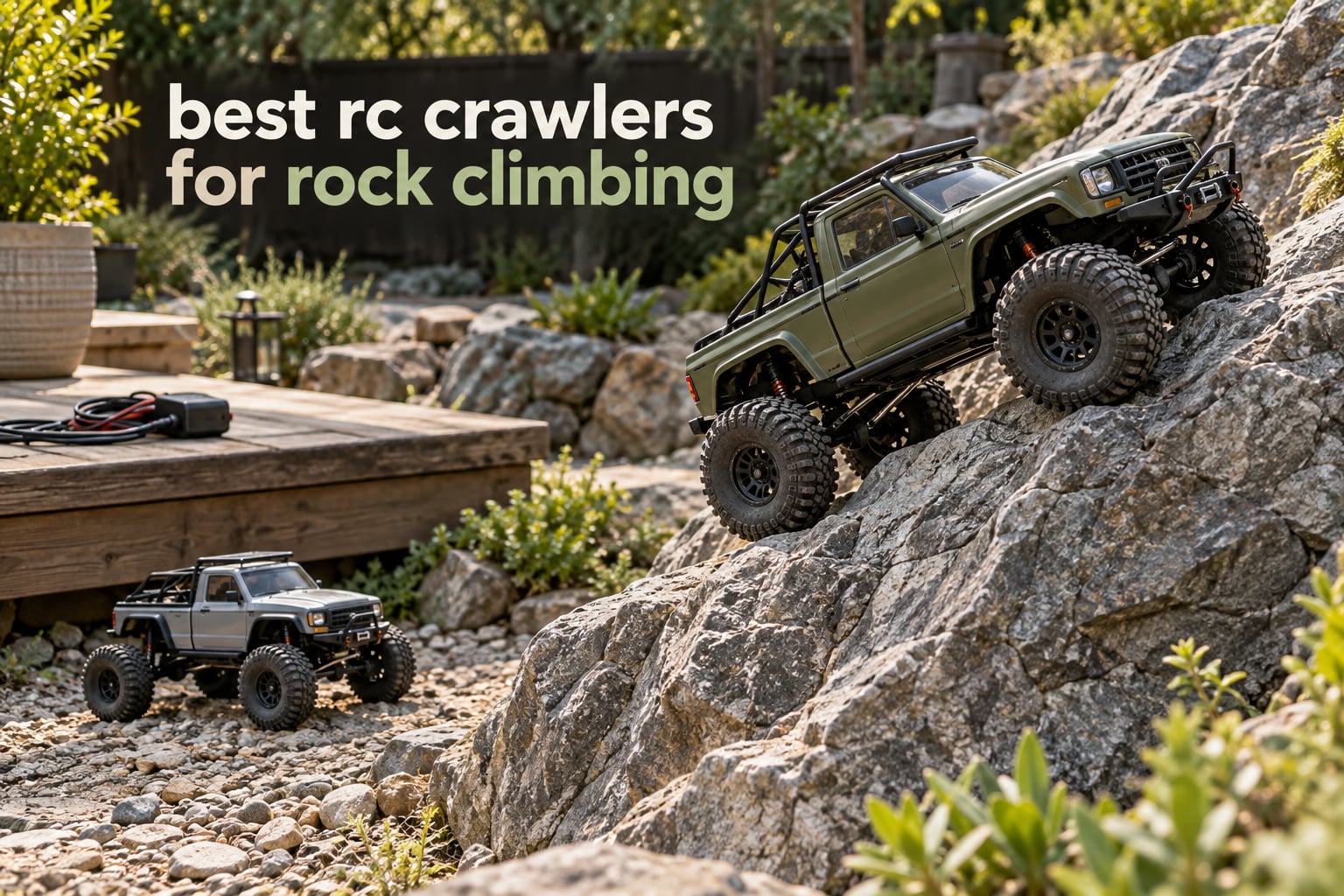
Most RC trucks are built to be fast, and that is exactly why so many of them bounce off a garden boulder and land upside down. The best rc crawlers for rock climbing are built the opposite way: low gear ratios, long-travel suspension, high articulation and a low center of gravity, so the truck crawls up rock slowly instead of launching off it. If your idea of a good weekend involves a rock garden, a woodland trail or a backyard obstacle course you built yourself, the difference between these two truck types is the whole hobby.
We spent weeks comparing the ten crawlers below on the criteria that actually decide whether a truck climbs: low-speed torque, articulation, ground clearance, drivetrain strength, weight distribution, and whether a battery and charger come in the box. Our team also read through hundreds of owner reviews to separate the machines that shrug off hard rock from the ones that need upgrades before their first climb. Every limitation we found is written down too, including plastic gears, weak steering and batteries that run out quickly.
Whether you are buying your first crawler, building a course for a kid or teen, or trading up from a toy-grade truck, this roundup covers the honest tiers rather than pretending a cheap listing climbs like a hobby rig. If you are decorating the space where you will drive, you might also enjoy our picks for the best rock collection kits.
Table of Contents
What Is an RC Rock Crawler?
An RC rock crawler is a radio-controlled truck built for slow, low-speed climbing rather than speed. It pairs high low-end torque and a low gear ratio with long-travel suspension, solid axles and high articulation, so the wheels keep contact and grip on uneven rock instead of spinning or tipping the truck over.
That single difference separates four vehicle types. A crawler climbs. A trail truck is faster and softer, with long-travel suspension for fast logging trails and jumps. A trail buggy is fast, low and open-topped, built for loose dirt. A basher is a fast, durable stadium truck that jumps and takes hits. Buying a trail truck when you wanted a crawler is the single most common mistake in this hobby, and it is why so many people give up after one failed rock face.
Top 3 Picks for Rock Climbing in 2026
These are the three we recommend first, and each one wins for a different reason. The Everest-10 is the all-round choice, the SCX24 is the easiest platform to learn on, and the SCX10 III Base Camp is the most capable when the rock gets serious.

Redcat Everest-10 1/10 Crawler
- Dual 42T brushed motors
- Waterproof 40A ESC
- Tunable suspension
- Battery and charger included

Axial SCX24 Jeep Gladiator 1/24
- Metal chassis with steel frame rails
- Oil-filled shocks
- Spektrum SLT2 radio
- LiPo and charger included

Axial SCX10 III Base Camp 1/10
- Steel C-channel chassis
- AR45 portal axles
- LCXU transmission
- Factory assembled
All 10 RC Crawlers Side by Side in 2026
Every truck in the list appears below with the hardware that matters on rock. Use this table to narrow the field by scale, drivetrain and what arrives in the box, then read the individual entries for the honest limitations.
| Product | Specifications | Action |
|---|---|---|
| Redcat Racing Everest-10 1/10 Rock Crawler |
|
Check Latest Price |
| Axial SCX24 Jeep Gladiator 1/24 |
|
Check Latest Price |
| Axial SCX10 III Base Camp 1/10 |
|
Check Latest Price |
 Redcat Ascent-18 APEX 1/18 Brushless Redcat Ascent-18 APEX 1/18 Brushless |
|
Check Latest Price |
 Traxxas TRX-4M F-150 High Trail 1/18 Traxxas TRX-4M F-150 High Trail 1/18 |
|
Check Latest Price |
 HOBBYPLUS CR18P EVO 2 1/18 HOBBYPLUS CR18P EVO 2 1/18 |
|
Check Latest Price |
 Redcat Ascent 1/10 Rock Crawler Redcat Ascent 1/10 Rock Crawler |
|
Check Latest Price |
 Cheerwing 1/10 Rock Crawler Cheerwing 1/10 Rock Crawler |
|
Check Latest Price |
 YAZHIYI MN-82 Toyota Pickup 1/12 YAZHIYI MN-82 Toyota Pickup 1/12 |
|
Check Latest Price |
 BEAURE 1:10 Willys MB Army Truck BEAURE 1:10 Willys MB Army Truck |
|
Check Latest Price |
How We Picked and Evaluated These Crawlers
We ranked these trucks on the five things that decide whether a climb succeeds. The first is low-speed torque, which is a function of gear ratio and motor winding rather than the speed rating on the box. The second is articulation, meaning how far the suspension can flex with one wheel hanging in the air while the others still have grip.
Third is drivetrain strength, because plastic spur and differential gears are the first thing to fail on hard rock. Fourth is weight distribution: a low center of gravity keeps the truck on its tires on a side hill instead of rolling onto its roof. Fifth is what actually arrives in the box, since several listings in this price range ship without a battery or charger at all.
Everything below comes from published specifications and from owner feedback on record for each truck, and we have not softened the negatives. Where a machine needs an upgrade before it can handle real rock, we say so.
1. Redcat Racing Everest-10 — Editor’s Choice Hobby Crawler for Real Rock
Redcat Racing Everest-10 Electric Rock Crawler with Waterproof Electronics, 2.4Ghz Radio Control (1/10 Scale), Blue/Black
- Climbs logs and steep rock with real torque
- Excellent articulation and flex for its class
- Waterproof electronics hold up when submerged
- Battery and charger included
- Tunable and easy to service
- Plastic diff lockers and steering servo fail under hard climbing
- Wide turning radius without rear steer
- High center of gravity makes it easy to flip
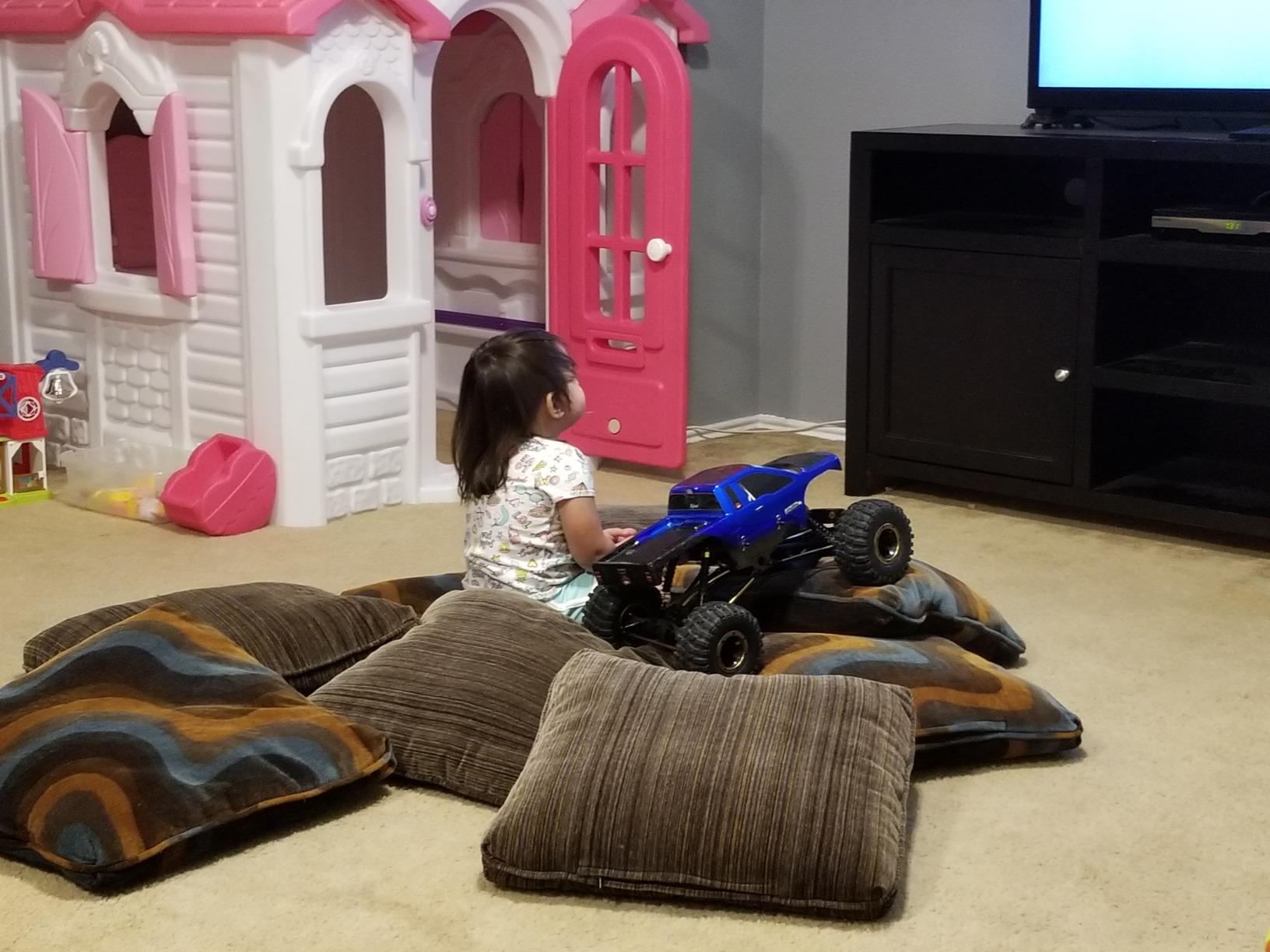
This is the truck we keep coming back to. At 1/10 scale it has enough mass and wheelbase to plant itself on a slope, yet it is small enough to run on a backyard stone garden without tearing up the lawn. The dual 42T RC550 brushed motors give it a genuinely crawl-like top speed, which is what you want on a rock face.
Owners consistently single out two things: the suspension flex, which lets the axle droop and keep all four wheels loaded, and the waterproofing, which survives the puddle you inevitably drive through. It also ships with a battery and a charger, so it is genuinely ready to run the day it arrives.
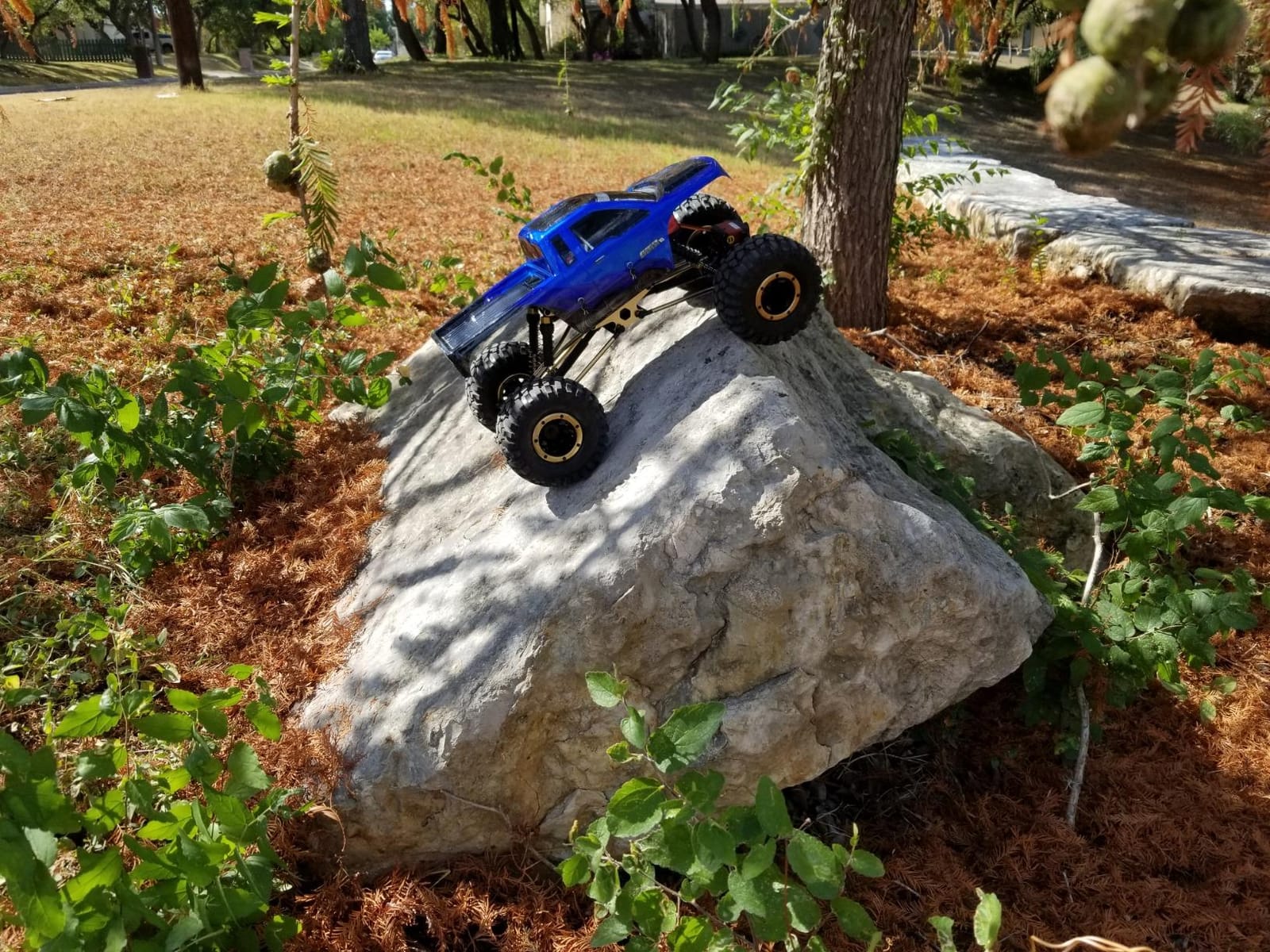
The tuning options are the quiet strength here. Adjustable ride height, wheelbase and toe angle, plus selectable shock positions, let you dial the truck in for a smooth rock garden or rake it out for a technical ledge. That matters because a stock setup from the factory is a starting point, not a finished machine.
The honest catch is the drivetrain. The original plastic differential lockers and the original steering servo are the parts that fail first once you start leaning on real rock, and the truck is heavy enough at the top that it will roll onto its side more readily than a lower chassis. Both are upgrade paths, not dealbreakers.
Why it climbs better than most trucks at this size
The answer is torque delivery rather than headline power. A low gear ratio paired with a 40A waterproof ESC means the truck keeps pulling while the wheels are already spinning slowly, which is exactly the situation where a crawler either crests the rock or falls off it.
Buyers who want to modify it have an easy path. Tires, servos, lockers and motors are all replaceable with standard hardware, and the frame is conventional enough that almost nothing is glued or potted.
Where it will disappoint you
Three things. Straight-line speed is slow, so do not buy it expecting trail performance. The turning radius is wide without a rear-steer kit, which makes tight switchbacks on a narrow trail harder than they need to be.
And if you mostly drive wet rock or mud, budget for a servo and a set of tires early. Many owners make those two changes first and report the truck feels like a different machine afterward.
2. Axial SCX24 Jeep Gladiator — Best RC Crawler for Beginners
- Longer wheelbase adds stability on climbs and side hills
- Precise low-speed crawl control
- Huge aftermarket and upgrade support
- Battery and charger included
- Detailed scale Gladiator body
- Small battery and charger can fail early
- Tires could offer more grip
- Body-mounted battery connector is awkward to unplug
The SCX24 platform is where most hobbyists in the forums start, and the Jeep Gladiator body is the version to buy. Compared with a shorter-bodied SCX24, the longer wheelbase resists tipping on a side hill and gives you a better read on where the front tires are placed, which is the difference between a clean line and a repeated attempt.
Control feel is the appeal. At 1/24 scale the truck moves at a pace where you can creep, place a tire on a ledge, and reposition the body without panic. The metal chassis with steel frame rails and oil-filled shocks make it heavier than it looks, and that mass is useful on rock.
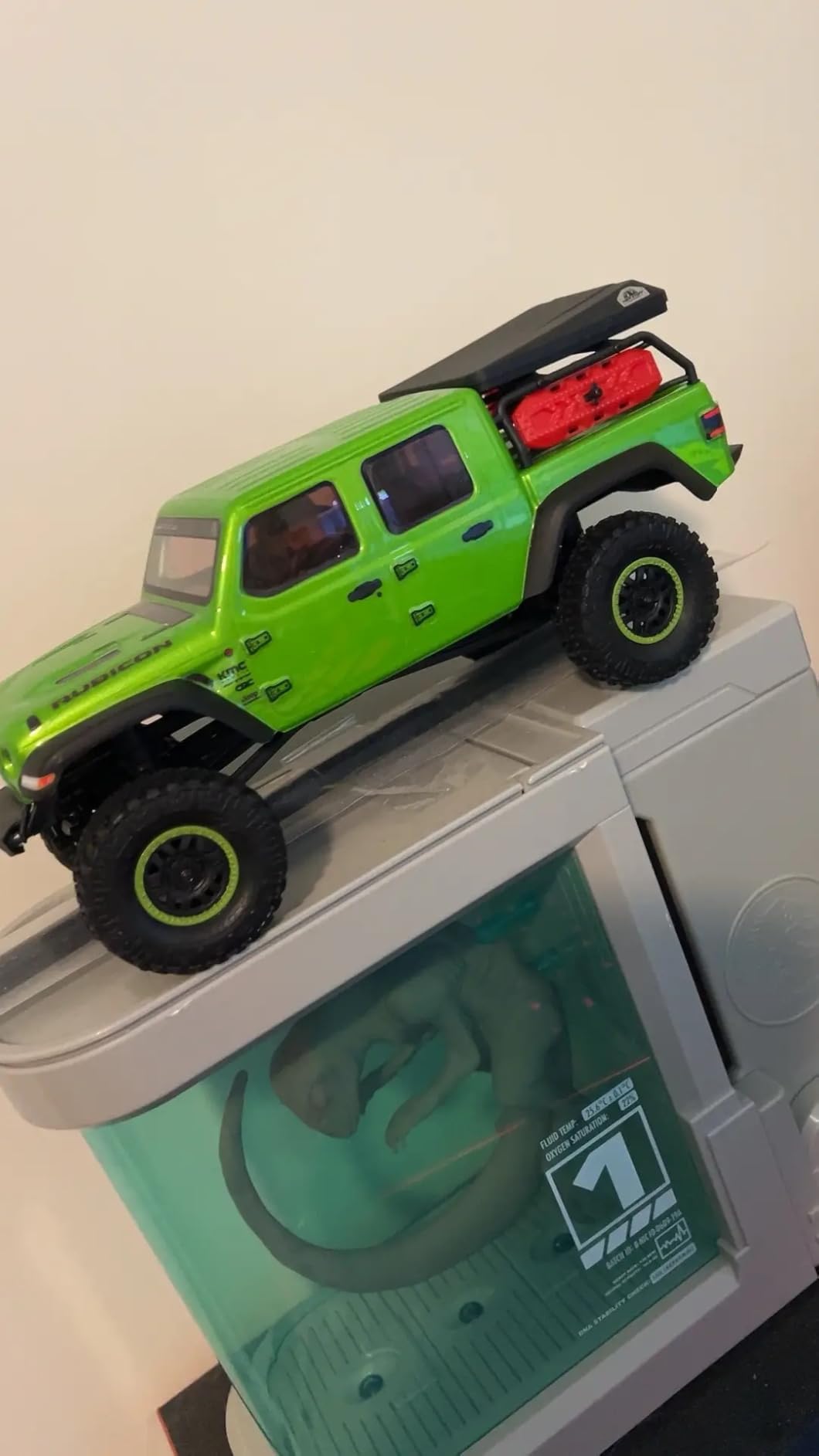
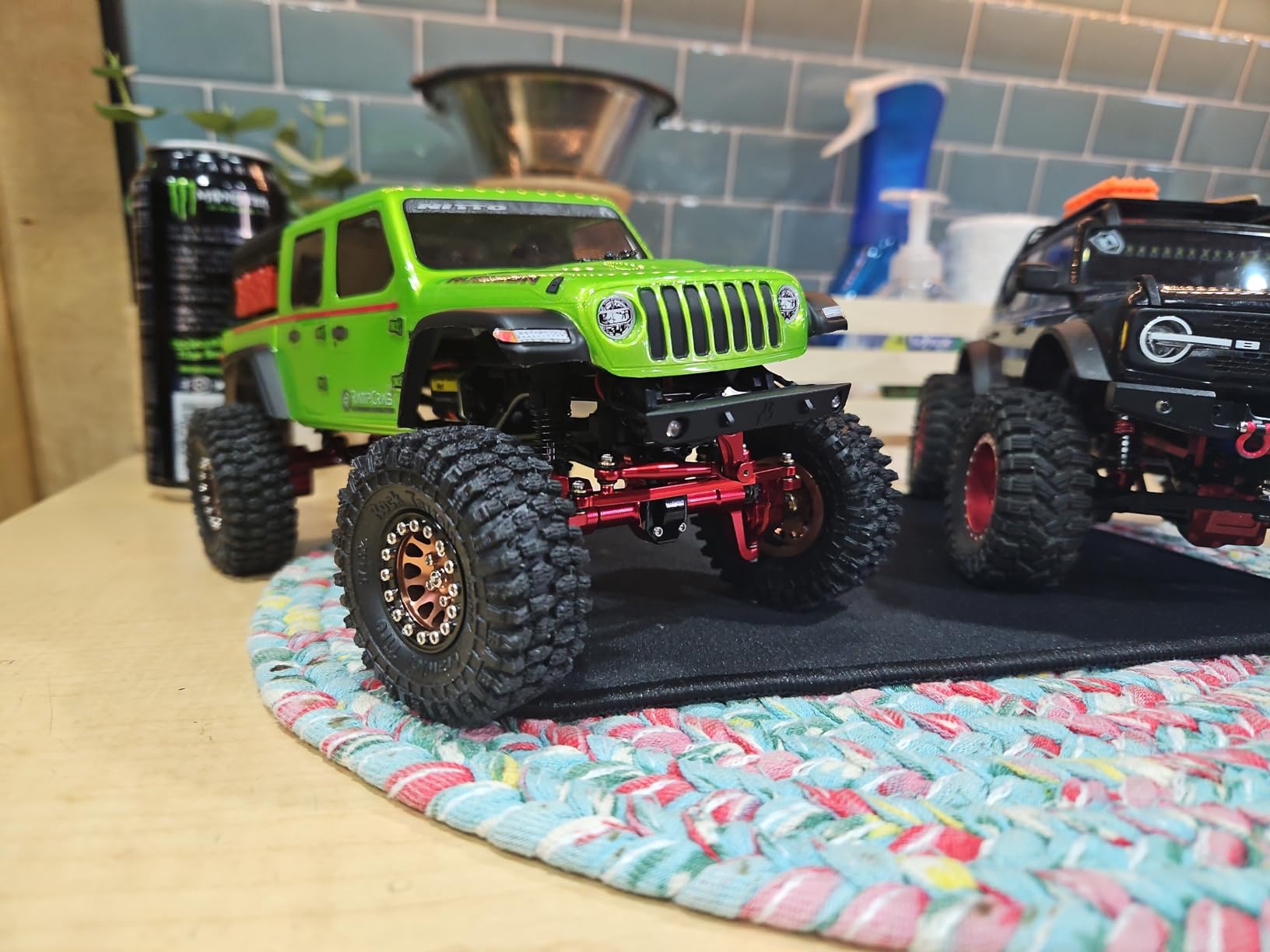
Oil-filled shocks damp the small chatter that makes a light truck bounce off a rock face, and the Spektrum SLT2 radio gives proportional throttle and steering rather than the on-off feel of a toy. The KMC wheels and Nitto Trail Grappler tires are the factory setup and they are decent, though grippy rubber is the most common first mod.
The scale Jeep Gladiator body is polycarbonate, so it flexes rather than snapping, and the front bumper LED lights make evening runs possible. The Spektrum 350mAh LiPo and the 0.5A USB charger are in the box, so nothing extra is needed for the first session.
Why it is the easiest platform to learn on
Size is the reason. A 1/24 truck is small enough to run indoors on carpet or a tile floor and small enough that a beginner is not terrified of stranding it in a creek. The cost of a mistake is also low, which matters when you are still working out throttle discipline.
Beyond that, the support is the real advantage. Axial parts, bodies, shock sets and upgrade packages for this chassis are widely available, so your first crawler can grow into a hobby instead of becoming a shelf item.
Where it will disappoint you
Quality control on the small battery and the USB charger is the most reported complaint, with some buyers seeing one or the other fail within weeks. The included 350mAh pack also means short run times, so plan on a spare pack early.
The other two gripes are cosmetic in origin but annoying in practice. The factory tires could grip better on loose rock, and the body-mounted battery connector is fiddly enough that owners upgrade brass weights and relocate the pack to the chassis tray fairly quickly.
3. Axial SCX10 III Base Camp — Best for Portal Axle Climbing
- Steel C-channel chassis and AR45 portals climb hard rock
- Spektrum SLT3 radio and 40A waterproof ESC included
- Factory assembled and ready to run
- Loaded with scale accessories
- Battery and charger sold separately
- Brushed 35T motor is slower and less efficient than brushless
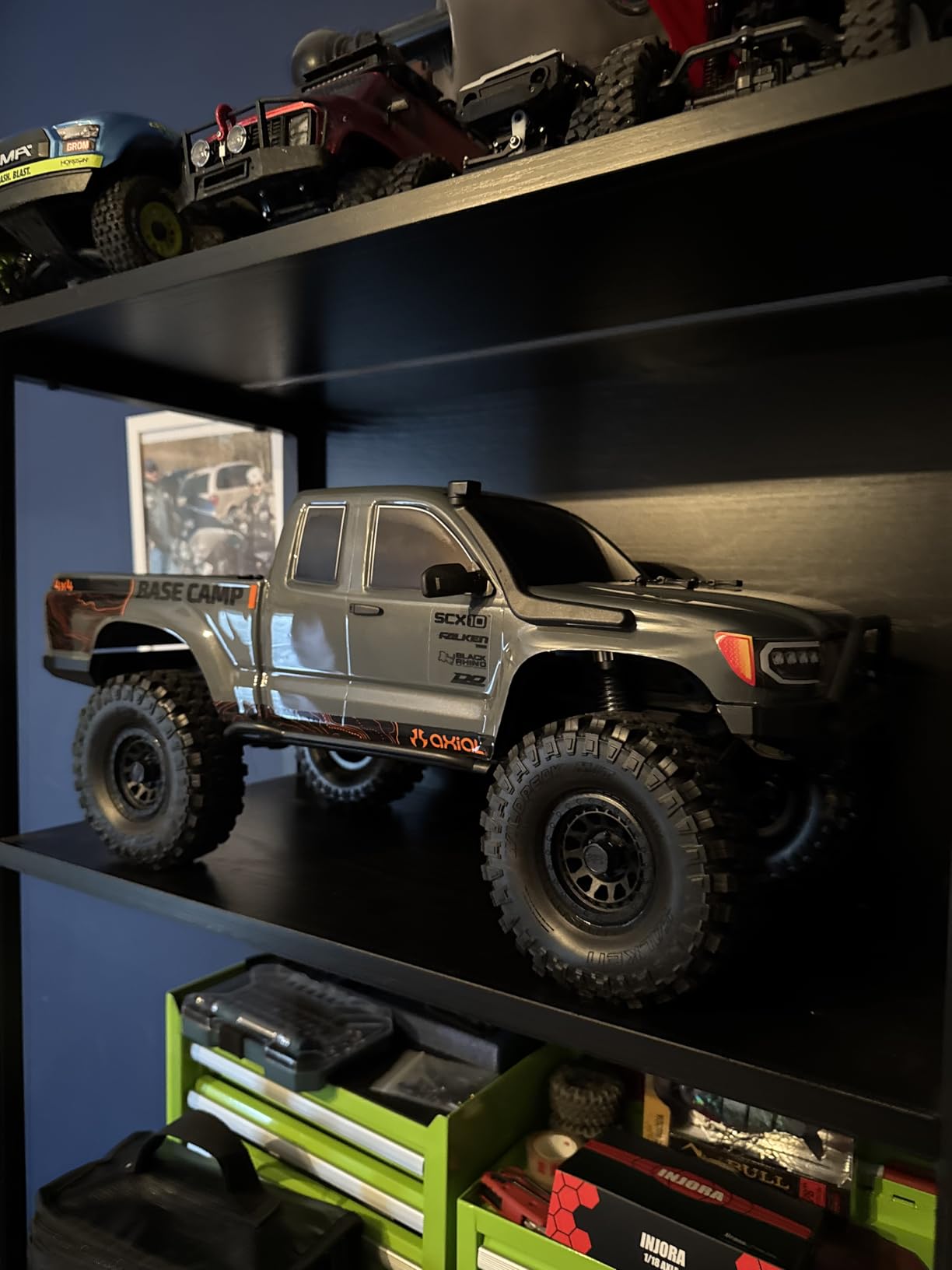
This is the truck we would put against a genuinely nasty rock face. The steel C-channel chassis does not flex where a plastic tray would, and the AR45 portal axles put the driveshaft and the motor high enough to keep the belly of the truck off the rock when it leans forward on a climb.
Portals are the single biggest hardware advantage on this list. A portal axle adds several inches of clearance at the pivot compared with a straight axle, and clearance is what lets a crawler bridge a gap instead of grounding out halfway across it.
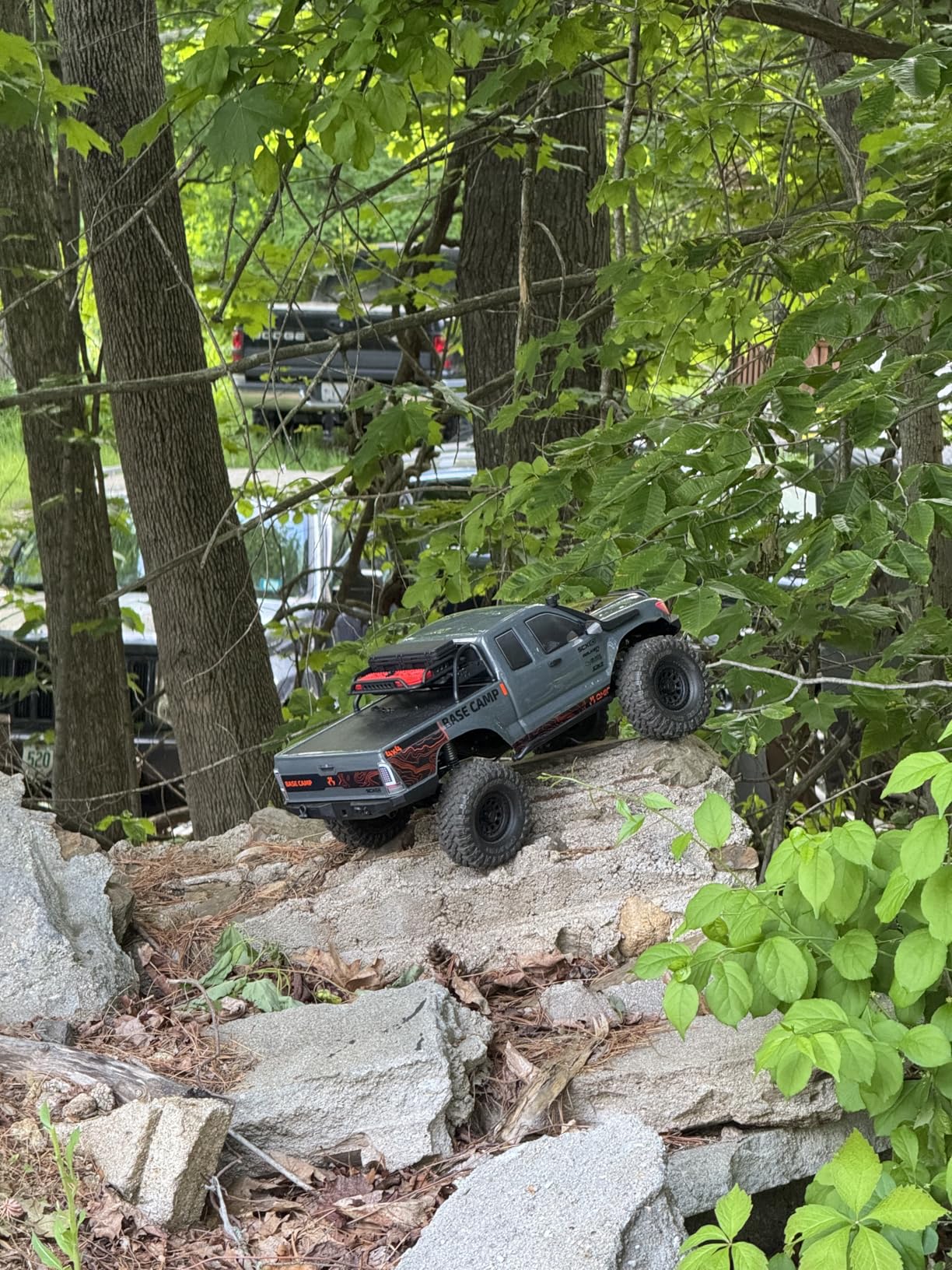
The electronics package is unusually good for a ready-to-run kit: a Spektrum SLT3 three-channel radio, a 40A waterproof ESC, a 5-channel receiver, a 15kg waterproof servo and a 35T 540 brushed motor. The LCXU transmission is rated as durable, and the scale accessories add the detail that makes it pleasant to run on a trail rather than a test course.
It is factory assembled, which is worth something to a first-time buyer. You do not need to build it, shim it, or tune suspension linkages before the first climb, you just need a battery and a charger.
Why the chassis and axles matter more than the motor
On a hard climb, the drivetrain is a system, not a motor. A strong chassis carries the load, portal axles keep the pivot point clear, and the LCXU transmission holds up under the torque that gets sent through it. Owners report this combination handling hard rock without drama.
The brushed motor is the weakest link, not the structure. That is fine for learning, and it is also the obvious upgrade path later when you decide a brushless system is worth the money.
Where it will disappoint you
The battery and charger are not included, and that is the number one surprise buyers report. Budget for a proper LiPo pack and a real charger before the truck ever leaves the box, because the truck cannot be run without them.
Second, the 35T brushed motor is slower and less efficient than a brushless setup, so on long trails where you want to cover ground it will feel underpowered. If your interest is pure crawling rather than hiking-trail driving, you will not notice. If both matter, budget for a motor swap.
4. Redcat Ascent-18 APEX — Best for Brushless Power in a Small Package
Redcat Racing Ascent-18 APEX, 1/18 Scale Brushless Electric Rock Crawler, Carbon Fiber, 4WD RC Car for Adults with 2.4GHz Radio System (Gray)
- Brushless Hobbywing system climbs harder than most hobby trucks its size
- Carbon fiber LCG chassis with motor-forward layout
- Wide portal axles add clearance and steering radius
- Beadlock wheels and oil-filled coilovers
- Radio battery and charger included
- Small 200mAh battery limits run time
- A minority report early electronics failures
This is the most interesting engineering in the roundup if your priority is low center of gravity. The carbon fiber chassis holds the weight down low, and the Hobbywing Mini 24 brushless system with a 3500KV motor delivers torque without the lag you feel from a brushed motor at very low throttle.
That combination is what lets it climb well at 1/18 scale. Smaller trucks are usually the ones that spin their wheels on a rock face because there is not enough mass or gear reduction to hold the line. The low-center layout and the angled skid plate here are the answer to that problem.
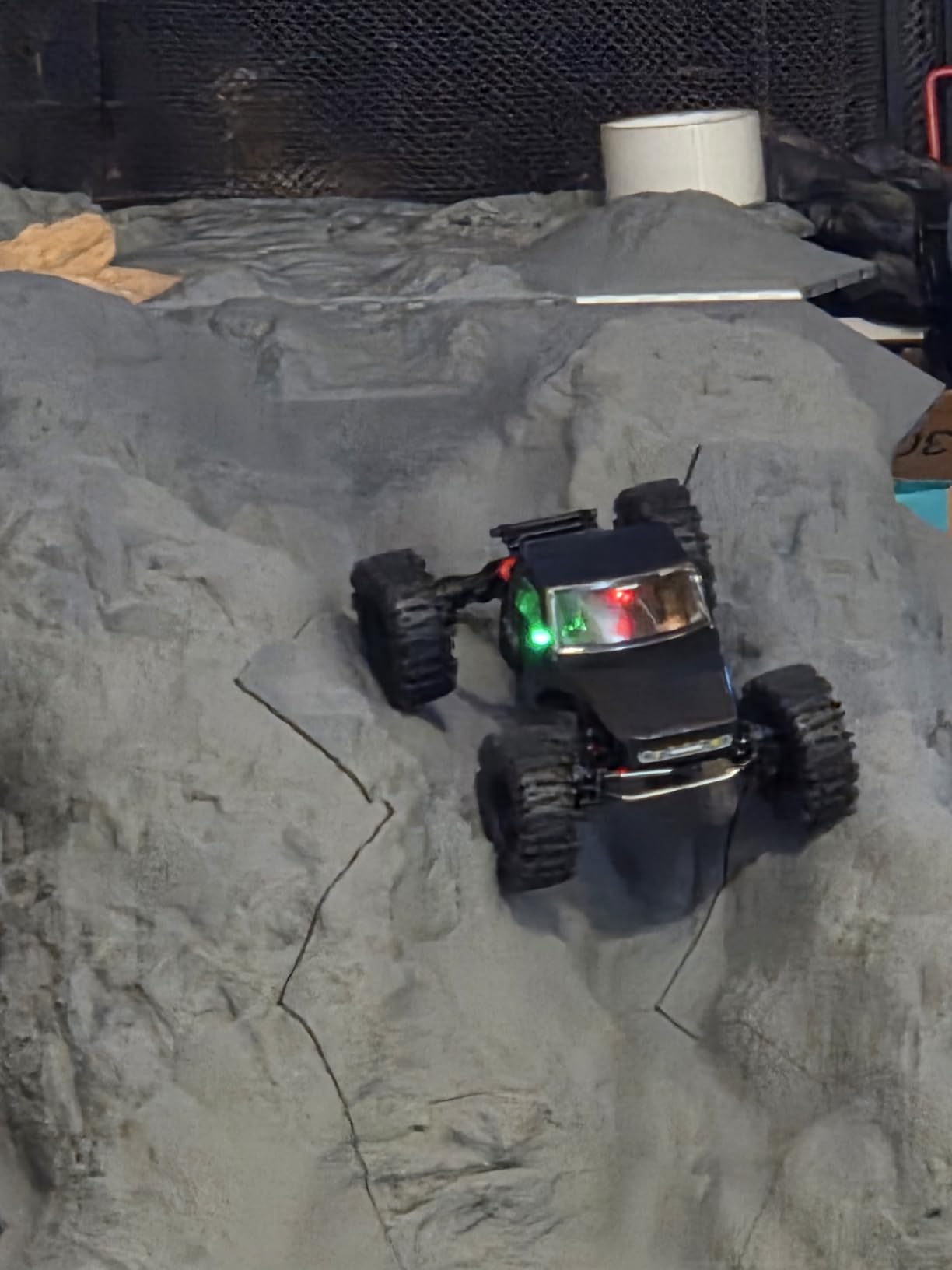
Wide portal axles give you two wins at once: extra ground clearance and a wider steering radius, which means fewer front tires pointed into the rock when you need to make a tight correction on a ledge. The brass front portal boxes and diff covers add weight bias exactly where traction needs it.
The 1.3-inch three-piece beadlock wheels with stainless steel screws and the aluminum-capped oil-filled coilover shocks are the kind of parts that would normally be a separate purchase. The RTX-4C four-channel radio with adjustable end-point adjustment lets you tame the steering for slow technical work.
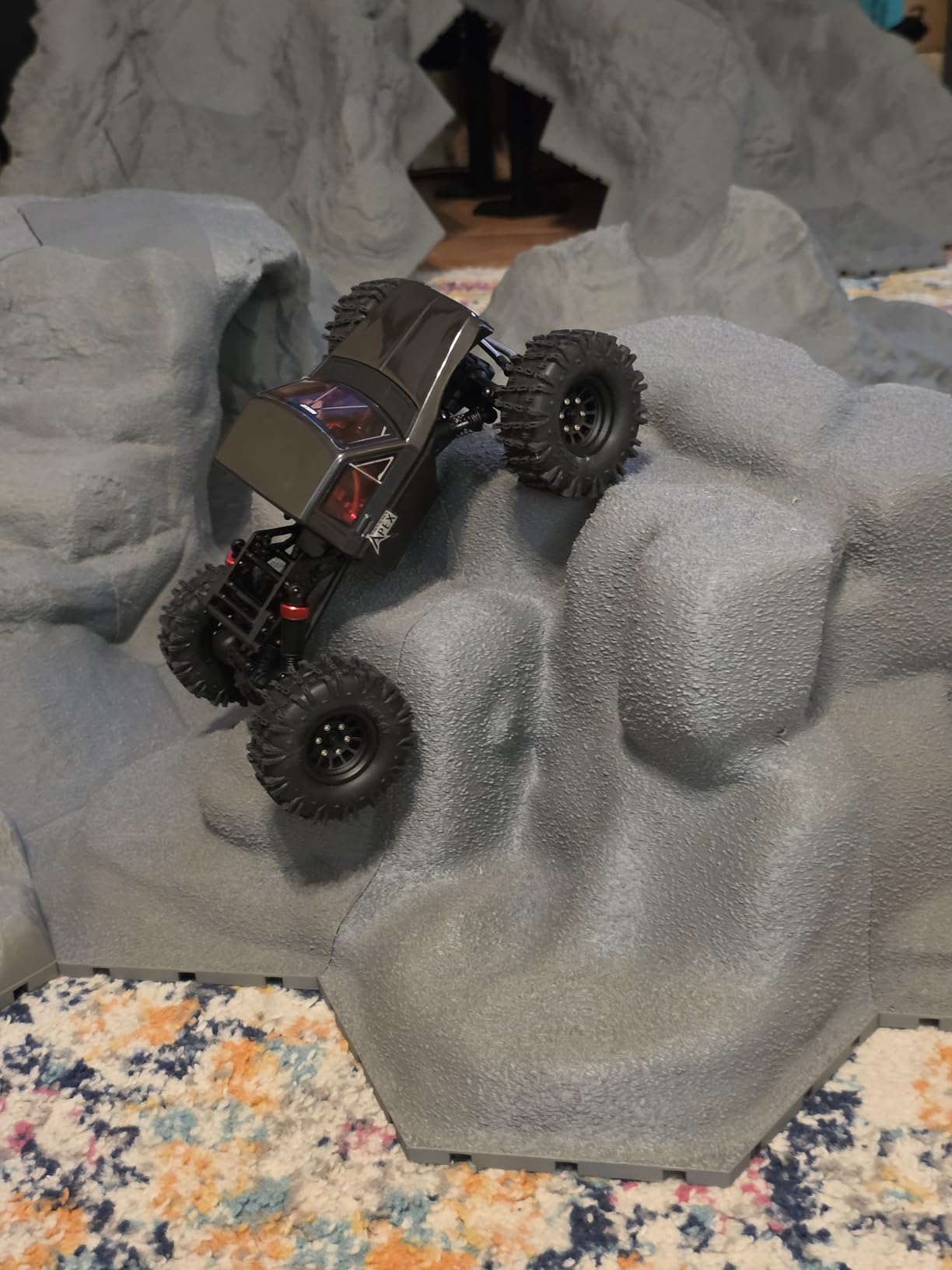
Why brushless changes the feel on a small truck
Brushed motors get hot and lose torque as they work. A brushless system stays efficient, so on a long attempt up a steep face with the wheels loaded, the truck is still pulling at the throttle setting you chose instead of fading out halfway through the climb.
It is also quieter, which sounds trivial until you are trying to hear whether the front tires are gripping or spinning. On a technical rock, that audible feedback is genuinely useful.
Where it will disappoint you
The included 3S 200mAh battery is the biggest limitation. It is enough to learn the truck but not enough for a full afternoon, so plan on upgrading to a larger pack early rather than complaining about it later.
Some owners also report early electronics failures, and the small battery also means you should carry a proper LiPo charger from the start. Radio batteries are not included either, which catches people out on the first day.
5. Traxxas TRX-4M F-150 High Trail — Best Long-Wheelbase Trail Crawler
- Lift kit and larger tires add real ground clearance
- Long wheelbase climbs steadily and predictably
- Tool-free clipless body comes off in seconds
- Battery charger and full-size transmitter included
- Original electronics need upgrades for serious crawling
- Visible share of durability complaints in reviews
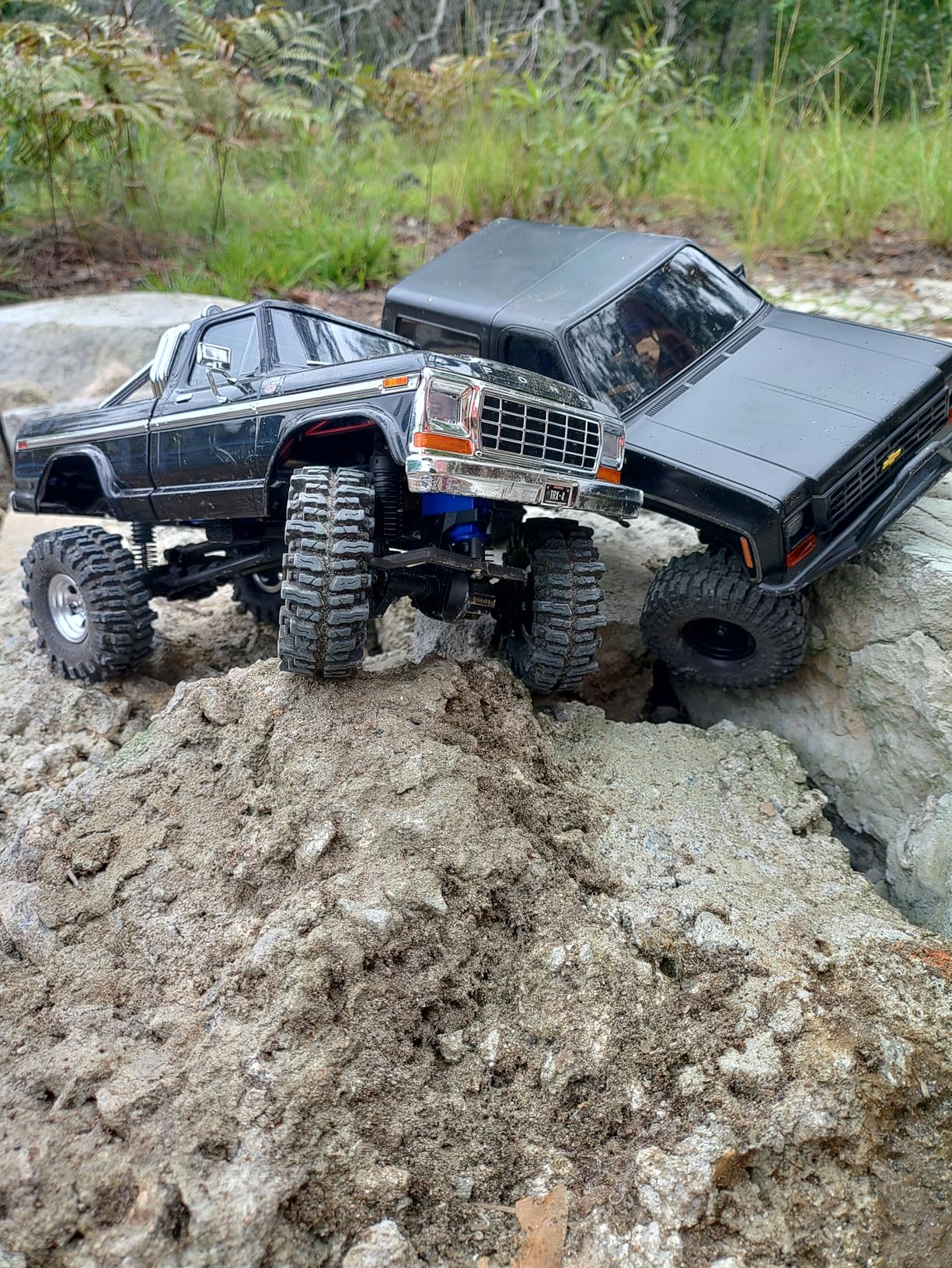
The High Trail edition is the TRX-4M configured for climbing rather than speed, and the factory long-arm lift kit is the reason. Extra ride height plus 2.4-inch Mickey Thompson Baja Pro XS tires means the truck clears obstacles that would stop a standard body-on-tires setup halfway up.
The long wheelbase does the second half of the job. Spread-out wheelbase resists the forward pitch that happens when the front tires catch a ledge, so the truck climbs in a straight line instead of wheelie-ing off the rock and landing on its back.
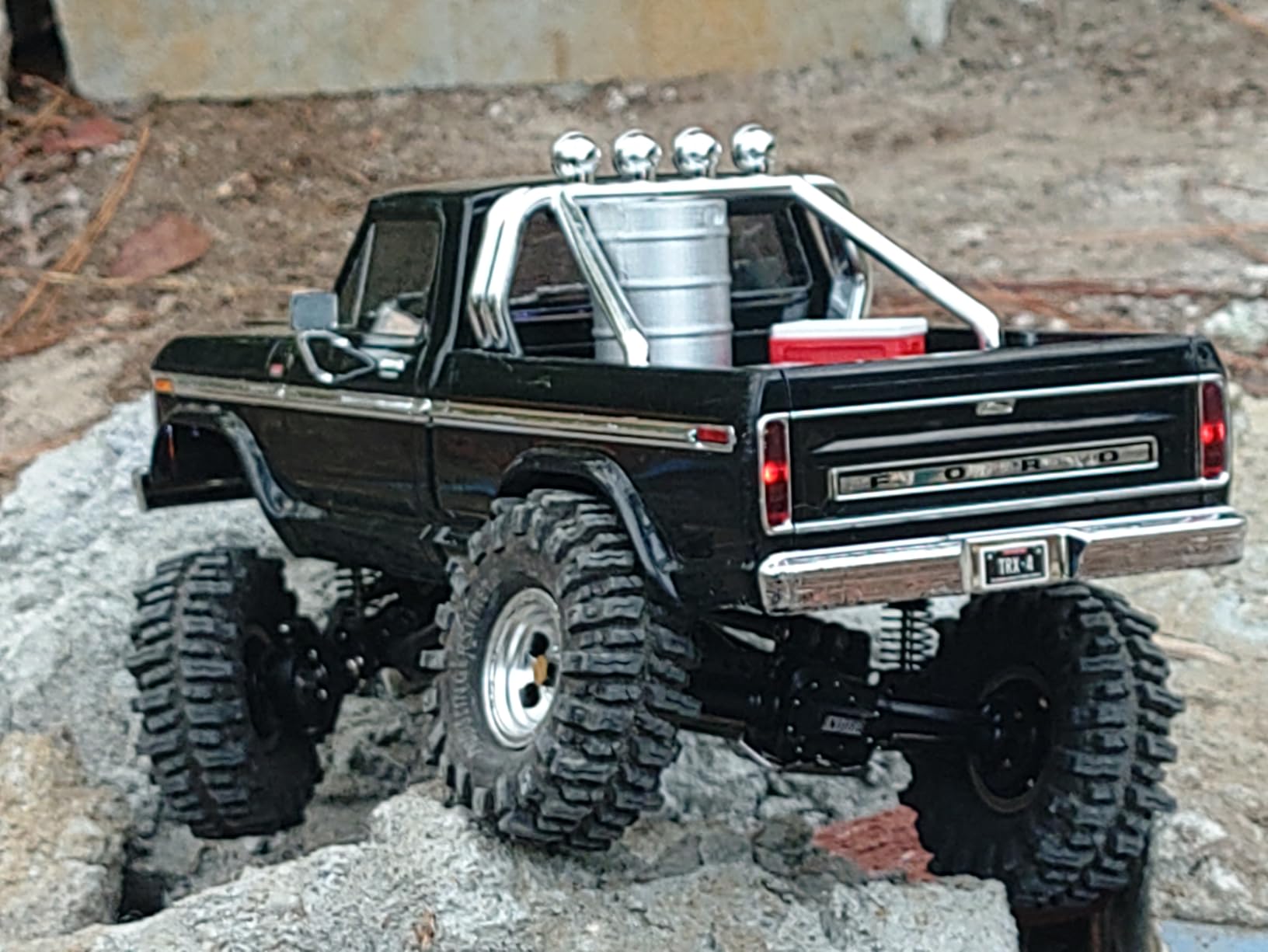
Everything about the ownership experience is designed to be quick. The clipless ABS body releases in seconds with no tools, which matters more than it sounds when it is raining and you do not want to be fumbling with body clips. The detailed scale F-150 body fits the wheel arches cleanly once the lift kit raises the chassis.
You also get a full-size 2.4GHz transmitter in the box, plus a LiPo battery and charger. That matters for anyone coming from a small toy transmitter, because a properly sized radio is a large quality-of-life difference over a full afternoon of driving.
Why clearance beats power on a ledge
Most failed climbs are clearance failures, not torque failures. When the belly of a truck grounds out on a rock edge, no amount of throttle will help because the wheels stop loading. The lift kit gives the chassis the room to keep all four tires in contact over a step.
Bigger tires help for the same reason: more rubber means more contact patch on a rounded surface, and rounded rocks are where grip goes to die.
Where it will disappoint you
If your goal is competitive-level crawling, the original electronics need work. The servos and the drivetrain are fine for trail-grade obstacles but will eventually be the limit on genuinely hard rock.
There is also a visible share of one-star reviews tied to component durability, so inspect the truck on arrival and keep some spares. For trail driving and moderate rock, though, the out-of-box experience is the most polished on this list.
6. HOBBYPLUS CR18P EVO 2 — Best Two-Speed Crawler with Metal Gears
- Metal sintered gears and portal hubs
- Machined aluminum chassis with beadlock wheels
- Switchable two-speed transmission from the transmitter
- Slow-speed crawl control out of the box
- LED lights and detailed Convoy body
- Side mirrors break easily
- Radio sometimes loses binding
- Thinner aftermarket ecosystem than Axial or Traxxas
Metal sintered gears in a truck this size are unusual, and they are the reason this one earns its place. Plastic spur and differential gears are the most common failure point in cheap crawlers, because a stalled motor on rock turns teeth rather than moving the truck.
The two-speed transmission is the other standout. You switch it from the transmitter between a low crawling gear and a faster trail gear, so the same truck works for a slow technical line in the morning and a longer run down a woodland path in the afternoon. Very few sub-1/10 crawlers give you that.
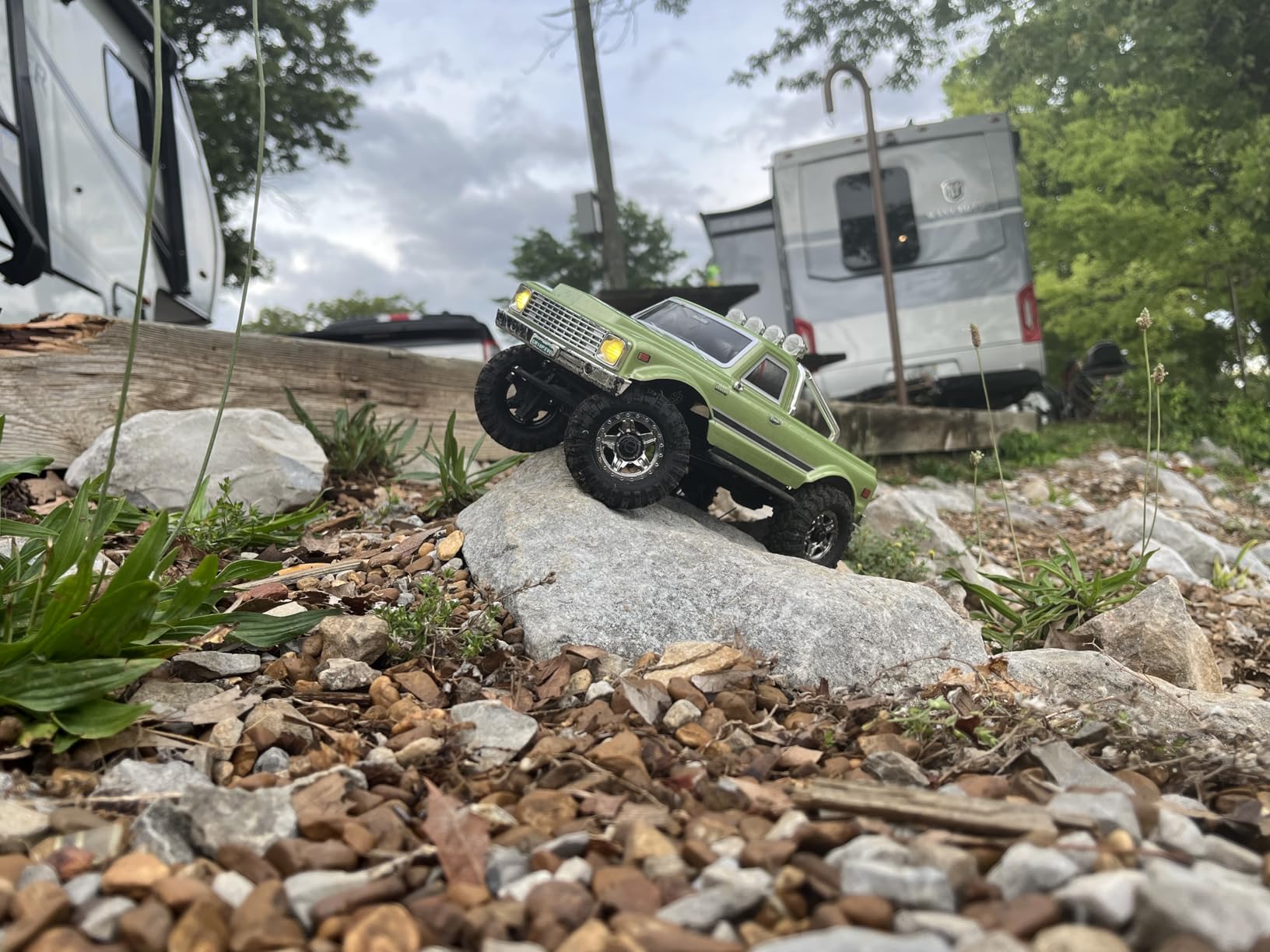
Crawl control out of the box is where it feels like a step up. The 3-link suspension with a high-torque motor and big-bore shocks absorbs small rock chatter so the tires stay loaded, and the soft all-terrain tires have a genuinely sticky compound that grips loose dirt and rock better than the hard plastics fitted to many cheaper trucks.
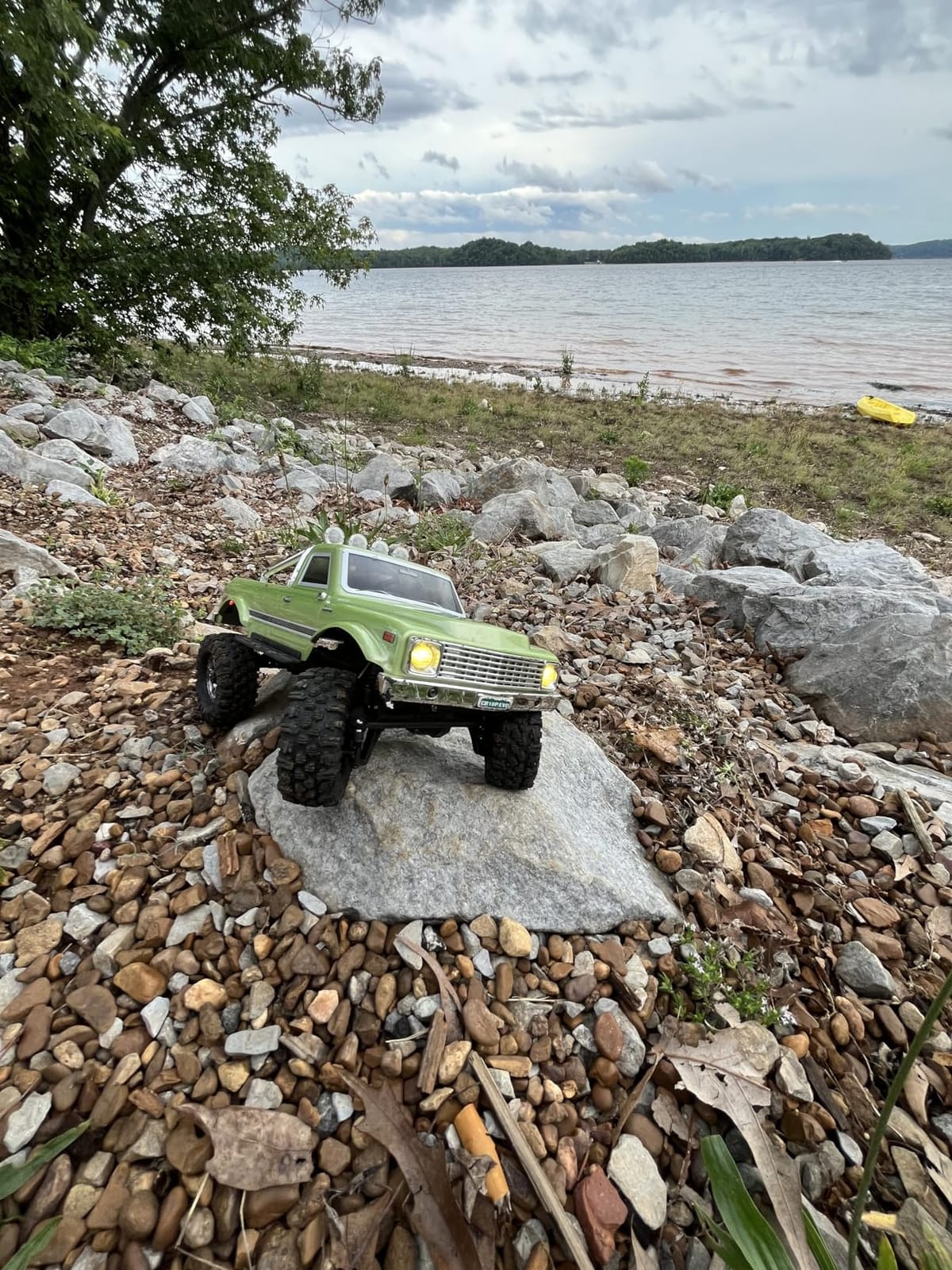
You also get machined aluminum chassis parts, beadlock wheels, working LED lights and a detailed Convoy body. It arrives fully assembled, which is convenient, though the transmitter is the only listed included component, so confirm the battery situation for your region before you order.
Why two-speed changes what one truck can do
Fixed-gear crawlers are either geared for climbing or geared for moving, and the wrong choice leaves you frustrated. A low gear that climbs beautifully will have you walking behind the truck down a path, while a high gear on a rock face means the wheels spin and nothing happens.
A switchable transmission means the gearing matches the terrain, not the other way around. Owners who use both modes say it is the single feature that makes the truck usable on more than one type of ground.
Where it will disappoint you
The smaller platform is the trade. At 1/18 it is light, so on a steep face it depends on grip and momentum more than on sheer weight, and big off-road boulders are outside its comfort zone.
The body mirrors are fragile and break easily, and the radio does not always stay bound to the truck. The thinner aftermarket ecosystem is the bigger issue: there are fewer upgrade options than on Axial or Traxxas platforms, so plan a more self-contained setup if you plan to modify it heavily.
7. Redcat Ascent 1/10 — Best Low-Center-of-Gravity Climber
- Low center of gravity chassis crawls hard out of the box
- Gen 9 portal axles and adjustable shock positions hug rock well
- Clear upgrade path with weights gearing and motor swaps
- Strong value against custom builds
- Shock spring swap needed for most terrain
- Receiver is not genuinely waterproof
- Front shock removal is awkward
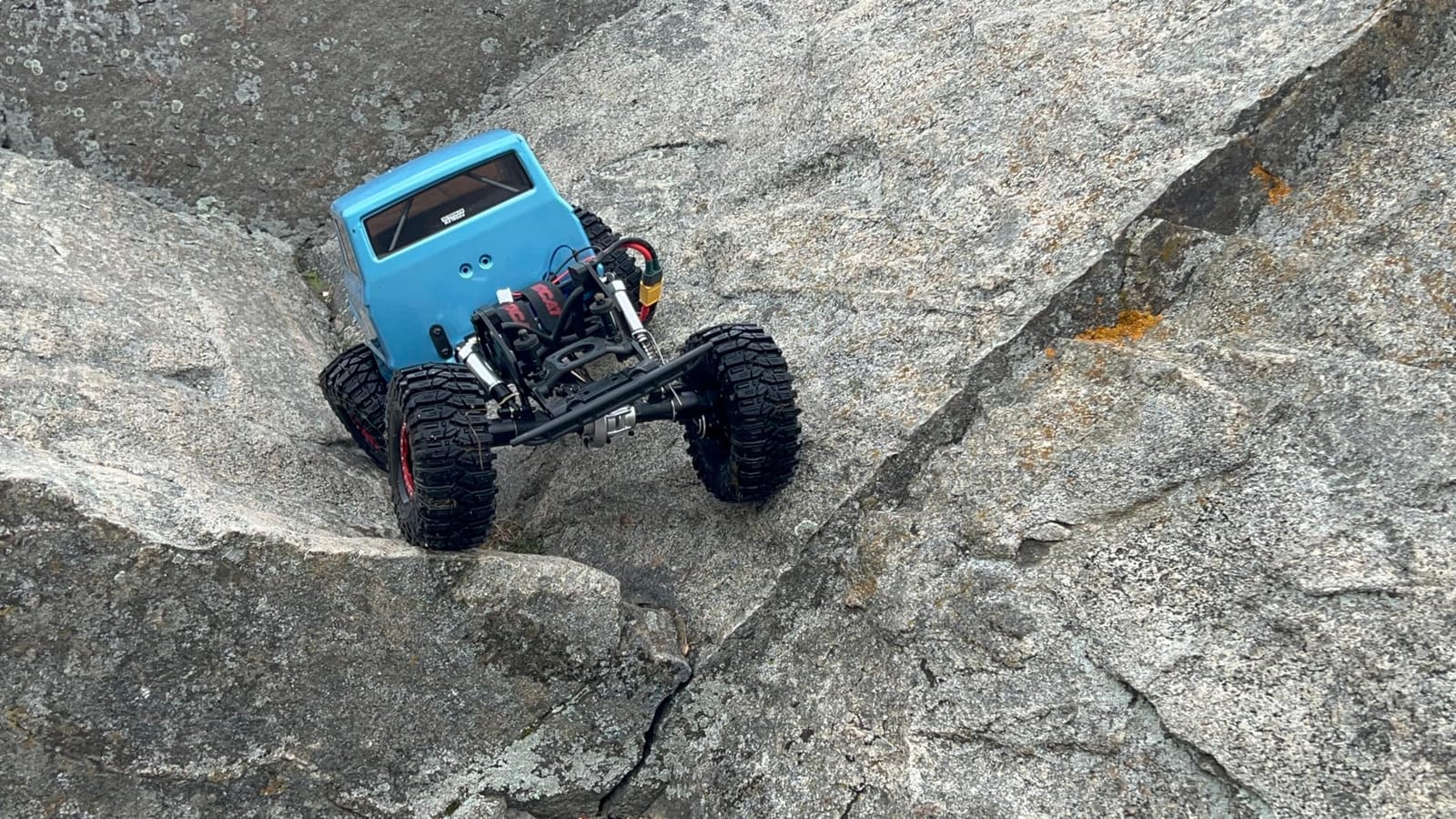
The Ascent is the platform enthusiasts in the forums single out when they want a competition-capable crawler without building one. The lightweight aluminum chassis places the weight as low as possible, and a low center of gravity is the difference between leaning on a rock and rolling off it.
Add the Gen 9 high-clearance portal axles with adjustable suspension positions and the truck can drop one side onto a rock while keeping the opposite tires loaded. That is the geometry that turns a hard climb into a series of small, controlled movements instead of one heroic attempt.
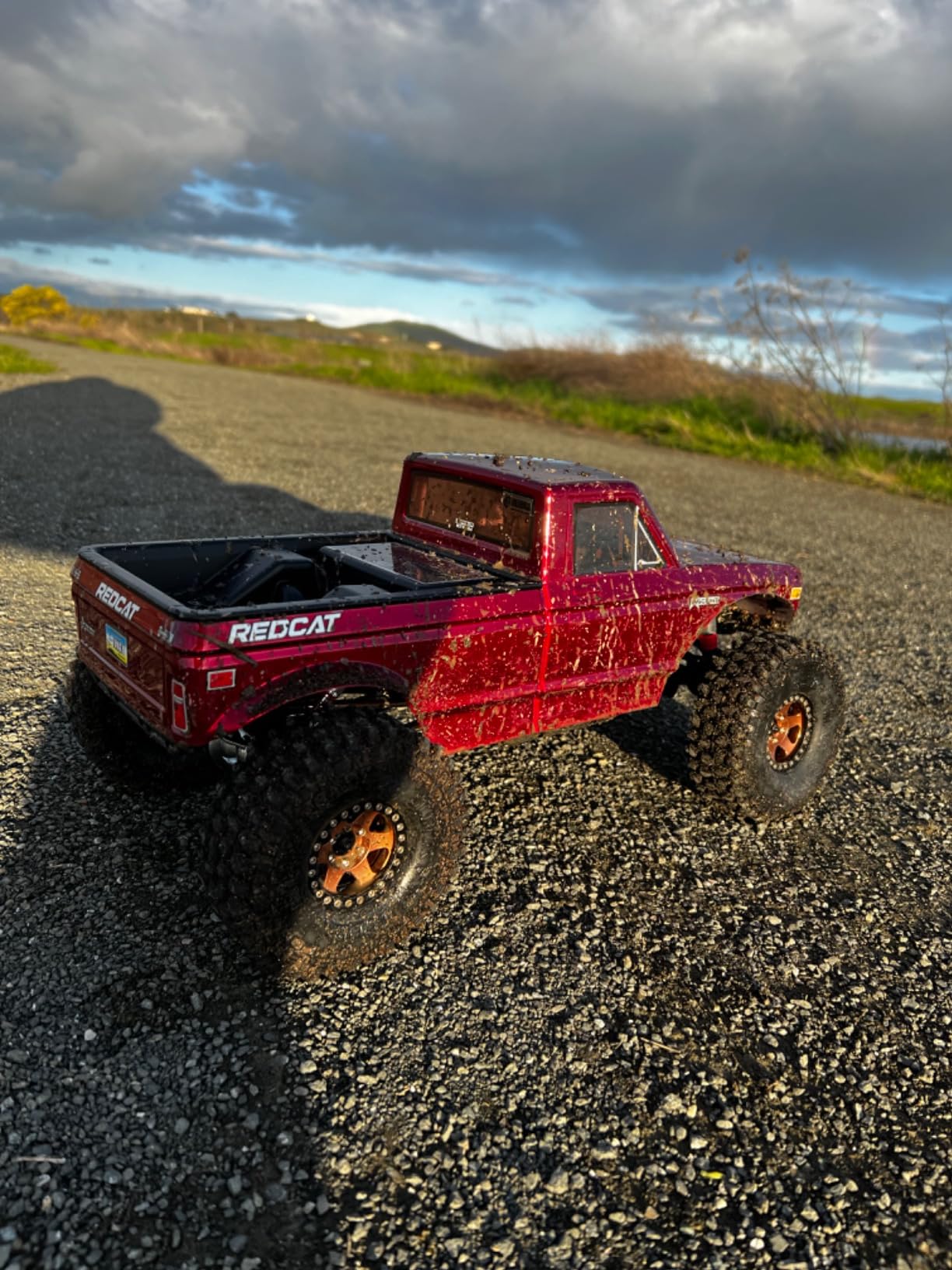
The brushed motor and ESC combination supplies the low-end grunt, and the gearing option for front overdrive lets you tune how much the front axle pulls relative to the rear. Owners regularly report that the same truck out-crawls far more expensive builds once that adjustment is set correctly.
Modding is straightforward. Brass weights, motor and ESC swaps, gearing changes and shock work are all accessible without cutting anything, so the truck can grow with you rather than becoming a fixed-endpoint machine.
Why center of gravity beats raw power
Think about what happens when a truck leans toward its downhill side on a rock. A high-center truck rotates over the lower tires. A low-center truck rotates until the weight transfers onto the low side and the tires catch. The climbing power is identical in both cases, but only one of them is still attached to the rock afterward.
That is why owners of this platform describe it as outperforming modified machines that cost several times more. The chassis geometry does work the motor cannot.
Where it will disappoint you
The original shocks are too stiff for most rock, and a spring swap is close to a mandatory first mod. Removing the front shocks is genuinely awkward and means partially dismantling the front axle, which is a complaint several owners raise directly.
Second, the receiver is not as waterproof as the marketing suggests, so relocate it before you get near water or wet mud. Some buyers also report packaging damage on arrival, such as a bent rear link or a damaged pan hard mount, so inspect the truck before first use.
8. Cheerwing 1/10 Rock Crawler — Best for Long Run Time
Cheerwing 1:10 Scale Rock Crawler 4WD Off-Road Remote Control Truck
- Large 2500mAh battery for long sessions
- All-steel suspension links and rail chassis frame add rigidity
- Sealed electronics run in water
- 2.4GHz remote with two control modes
- Strong traction on rock sand and concrete
- Plastic transmission gears eventually wear out
- Stock plastic wheels strip their hexes quickly
- Top-heavy chassis tips easily
- Integrated ESC and receiver cannot be re-bound
Everything about this truck points at endurance. The 2500mAh rechargeable battery is several times the capacity of what most micro and small crawlers include, and on a 1/10 scale truck with a 550 brushed motor it converts into sessions rather than three-minute demos.
The structure is worth noting too. An all-steel suspension, steering links and rail chassis frame add a rigidity that plastic trays cannot match, and that rigidity is what keeps the alignment predictable when a wheel is loaded against a rock edge.
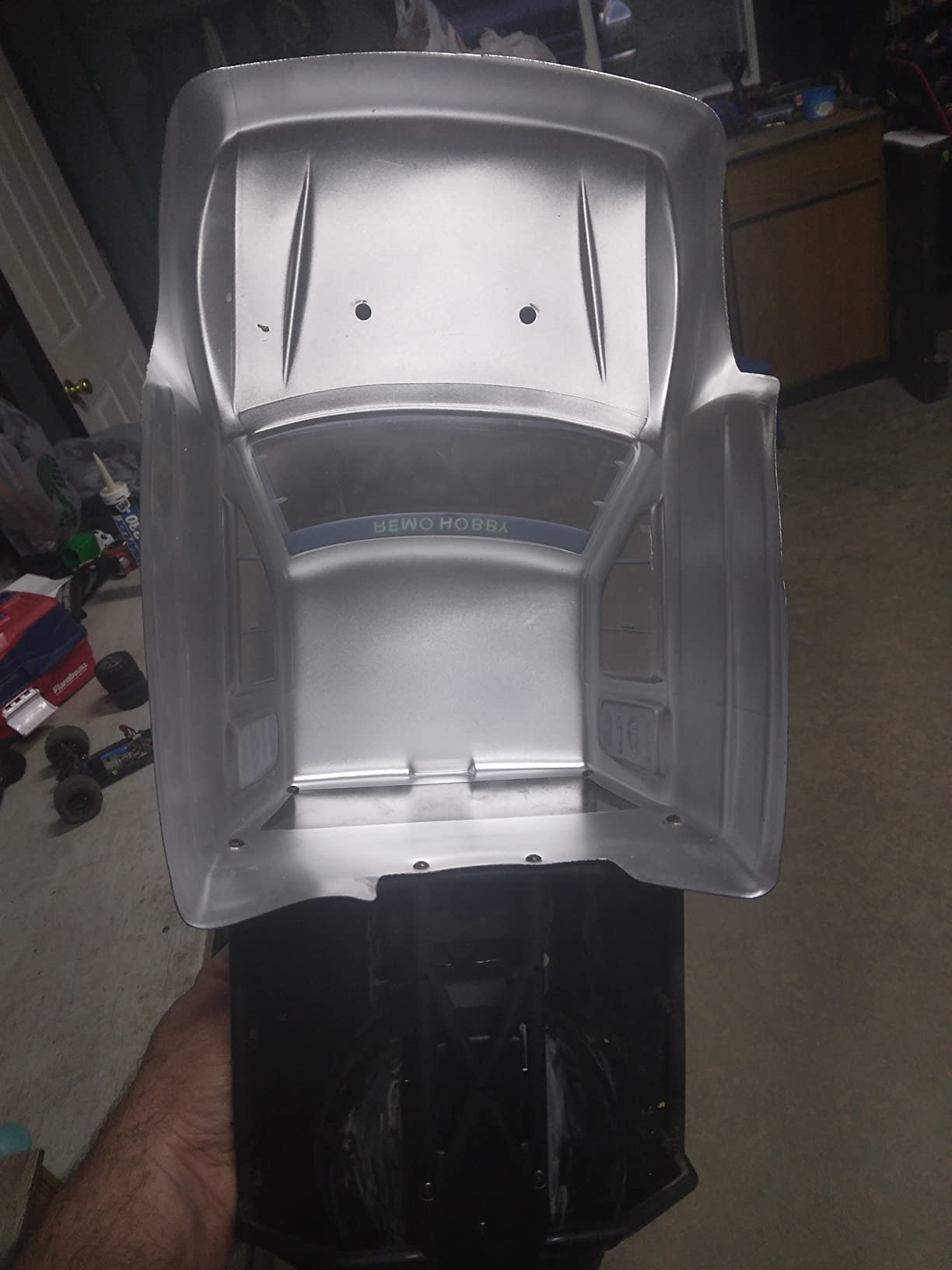
Sealed electronics are the sleeper feature. The waterproof brushed ESC, waterproof receiver and sealed gear cover mean puddles, mud and wet rock are not the end of the session, which is a real advantage for anyone driving near a creek or in a damp woodland.
The 6kg/cm metal gear waterproof steering servo has more torque than a cheap truck’s plastic-gear servo, which matters because steering load is what burns out servos on technical rock. The 2.4GHz remote reaches up to 250 feet and switches between two control modes.
Why run time changes how you drive
Short batteries end your session at the worst moment. With a large pack you can work the same rock face for twenty minutes, which is the difference between learning the line and giving up on it. It also removes the temptation to rush, and rushing is the main reason beginners roll a crawler over.
Long sessions also expose how a truck wears. This one holds up well on rock after tire and weight upgrades, but it will tell you over time if the drivetrain needs attention.
Where it will disappoint you
The drivetrain is the weak point. The transmission uses plastic gears that eventually wear out, and the plastic wheels strip their hexes quickly, so budget for an aluminum wheel set and a gear replacement long before you think you need them.
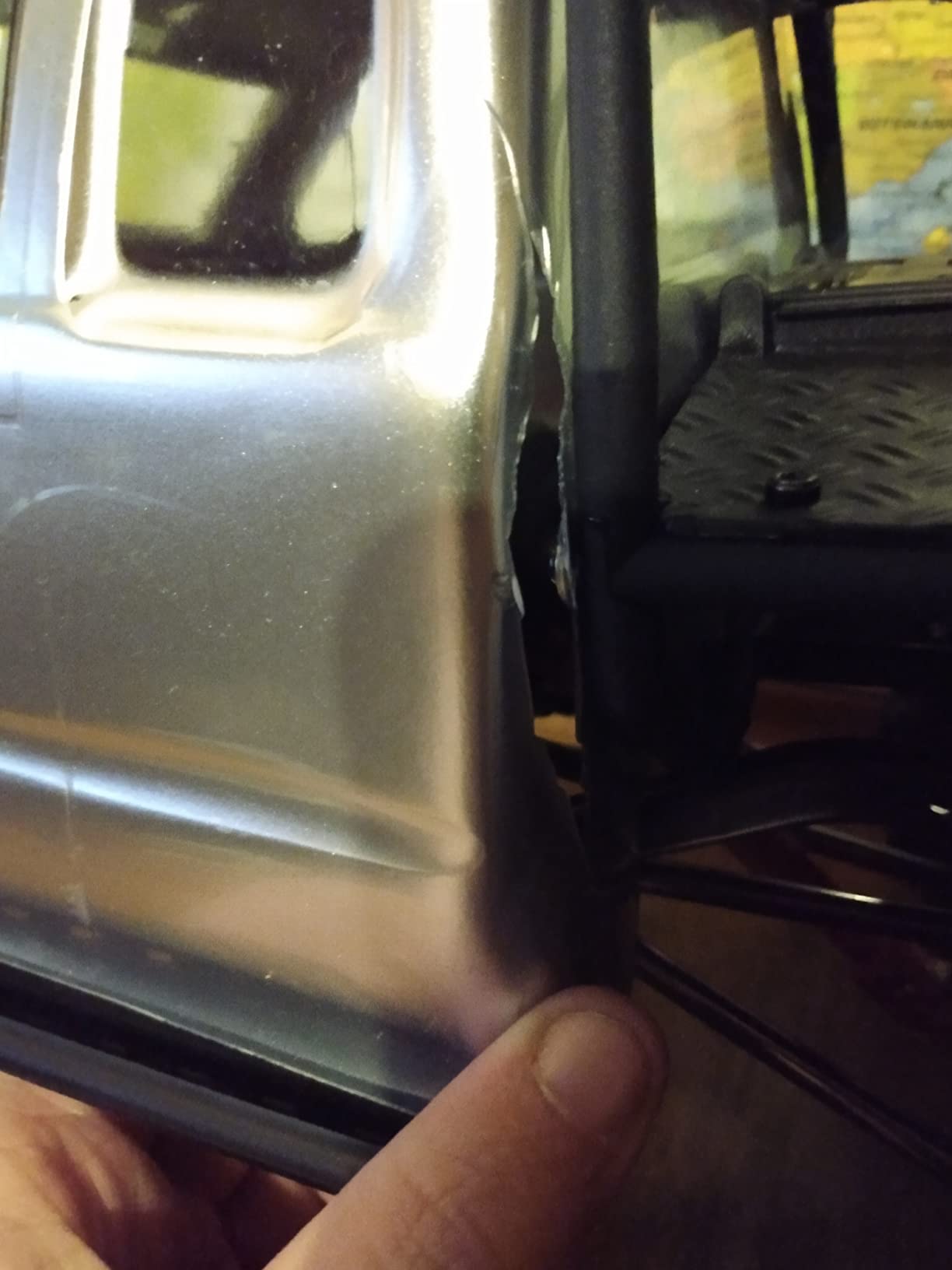
The chassis is top-heavy and tips easily on side hills, and the integrated ESC and receiver cannot be re-bound, so a radio glitch is not something you can fix with a rebind. Some buyers also report arriving with a bent shock or a faulty controller, so check both on arrival.
9. YAZHIYI MN-82 Toyota Pickup — Best Budget First Crawler
- Two 1200mAh batteries plus charger included
- Realistic scale Toyota pickup body
- Handles flat ground small rocks and hills
- Durable enough for repeated outdoor play
- Weak against larger rocks compared with hobby-grade crawlers
- Front axle converter can loosen and cause toe-out
- Drive components can fail after a few months outdoors
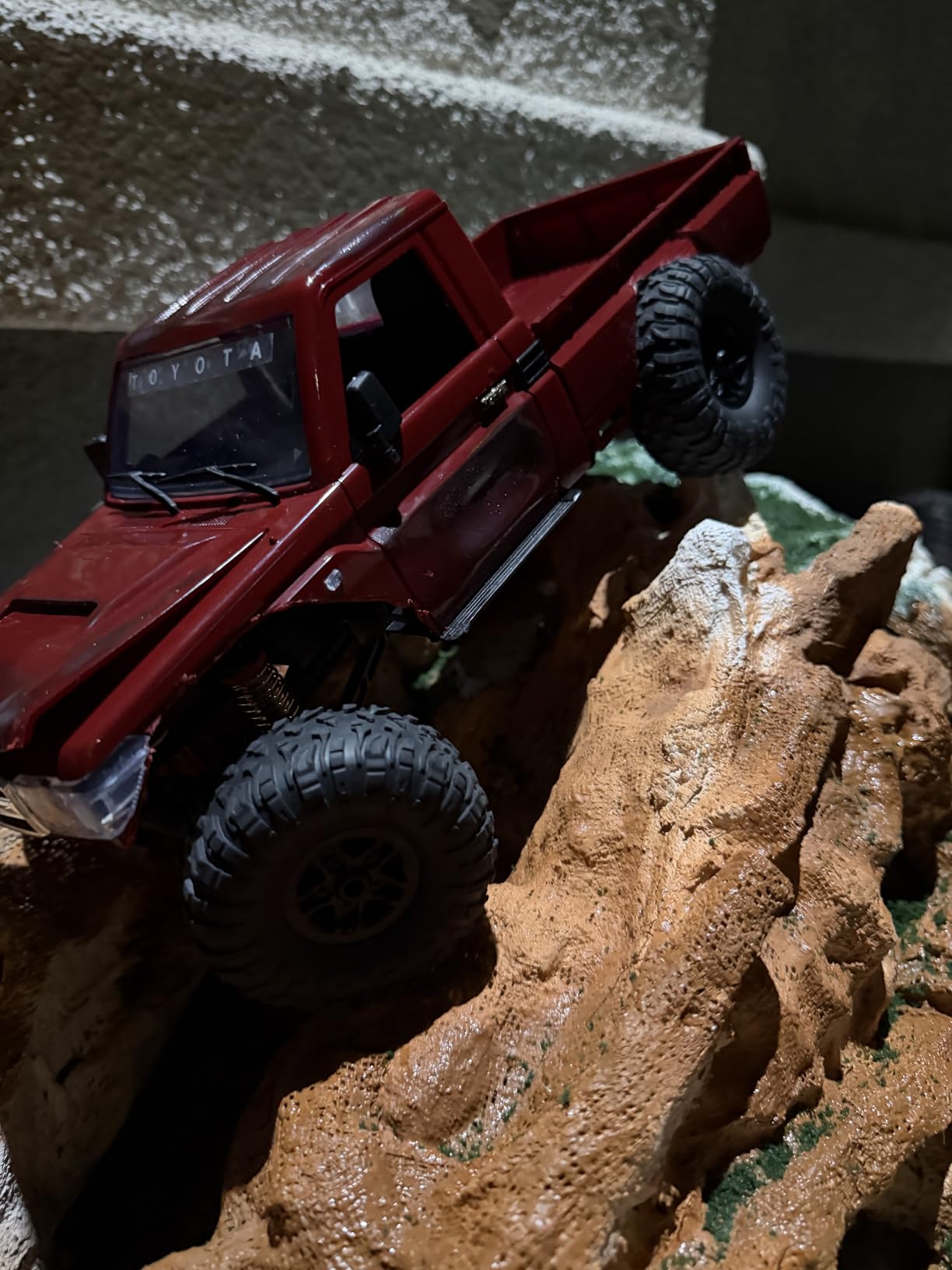
This is the truck to buy when the goal is finding out whether a kid, a teen or an adult actually enjoys crawling before spending serious money. It is a 1/12 scale Toyota pickup, it is fully assembled, and it arrives with two 1200mAh rechargeable batteries and a charger.
Two batteries matters more than it sounds. It means nobody in the house is fighting over who gets to drive, and it means an afternoon session does not end after one flat pack. The two-speed transmission modes let you crawl slowly on a light rock or run faster on open ground.
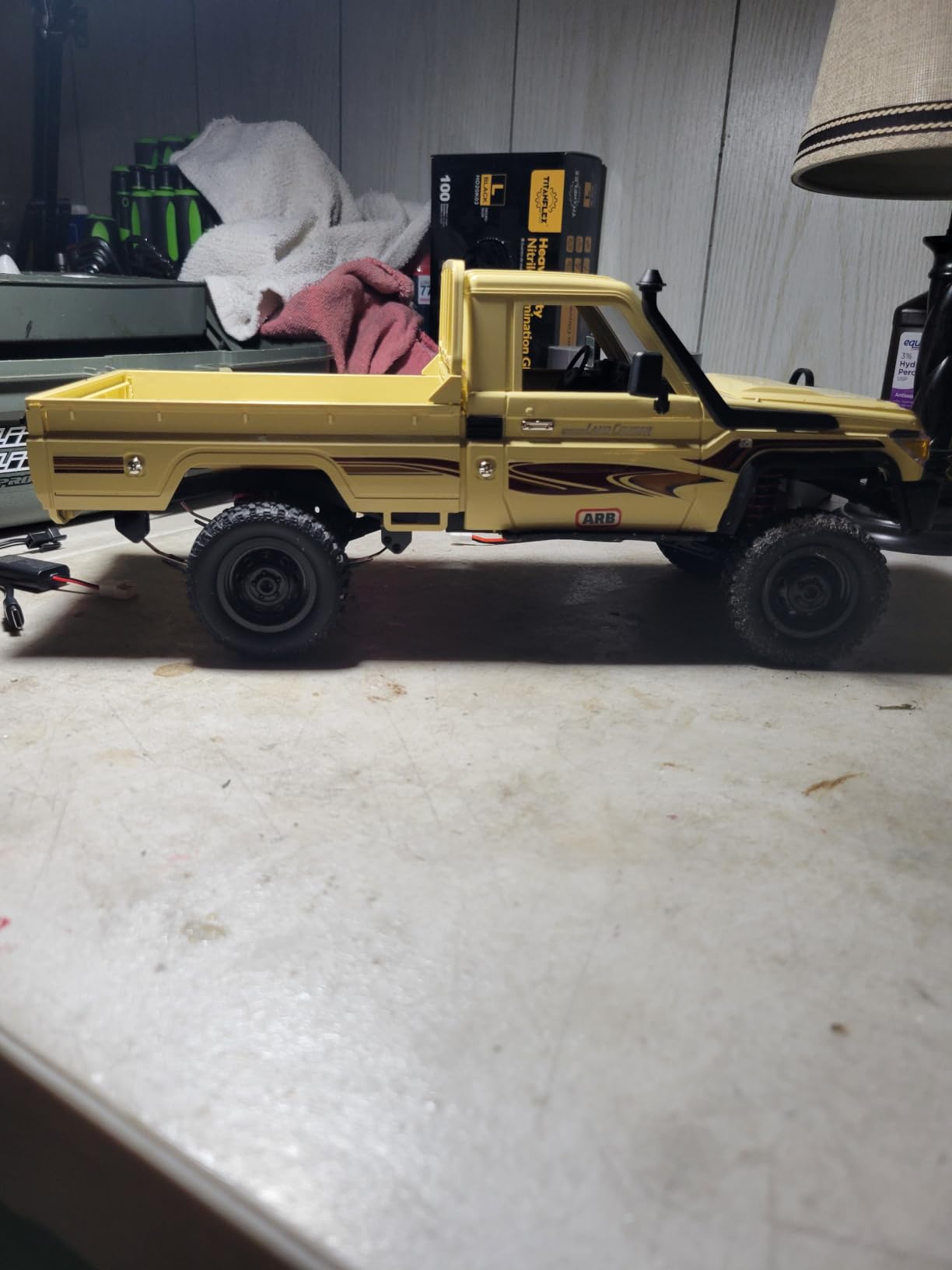
Where it performs well is honest: flat indoor surfaces, packed dirt, grass, and small rocks. The all-terrain tires and the 2.4GHz four-wheel-drive system with precise steering handle that terrain without drama, and the scale body looks good enough that nobody thinks it is a toy.
It is also genuinely durable for repeated outdoor play. The chassis and drivetrain take knocks from family use, and the small footprint means it is easy to supervise, easy to carry and impossible to lose in long grass.
Why it makes sense as a first crawler
The learning happens on the ground, not in the manual. A small, light truck with two-speed modes lets a new driver practice slow throttle control and line placement without the risk of a cracked chassis or a broken shock. The cost of a mistake is trivial.
For a family, the appeal is that it works indoors on a hard floor when the weather is bad, and outdoors on a driveway when it is not. If someone in the house is still undecided, that versatility answers the question without a big commitment.
Where it will disappoint you
Be clear about the ceiling. Compared with the hobby-grade crawlers on this list it is weak against larger rocks, and drive components can fail after a few months of regular outdoor use. This is a first crawler, not a final one.
The most common mechanical problem reported is the front axle converter loosening, which makes the front wheels toe out and lose traction. It is a small, fixable issue, but you should know about it before you blame your driving.
10. BEAURE 1:10 Willys MB Army Truck — Best for Kids and Families
BEAURE 1:10 RC Willys Army Truck – 4×4 Rock Crawler with Winch Toy for Boys
- Highly detailed scale Willys MB with opening doors
- Working leaf springs and drive shafts
- Functional winch is a standout detail
- High-grip tires handle grass dirt and gravel
- LED lights and 2.4GHz controller
- Body and drivetrain parts are cheap plastic
- Controller quality is low
- Winch and canvas cover sometimes missing from shipments
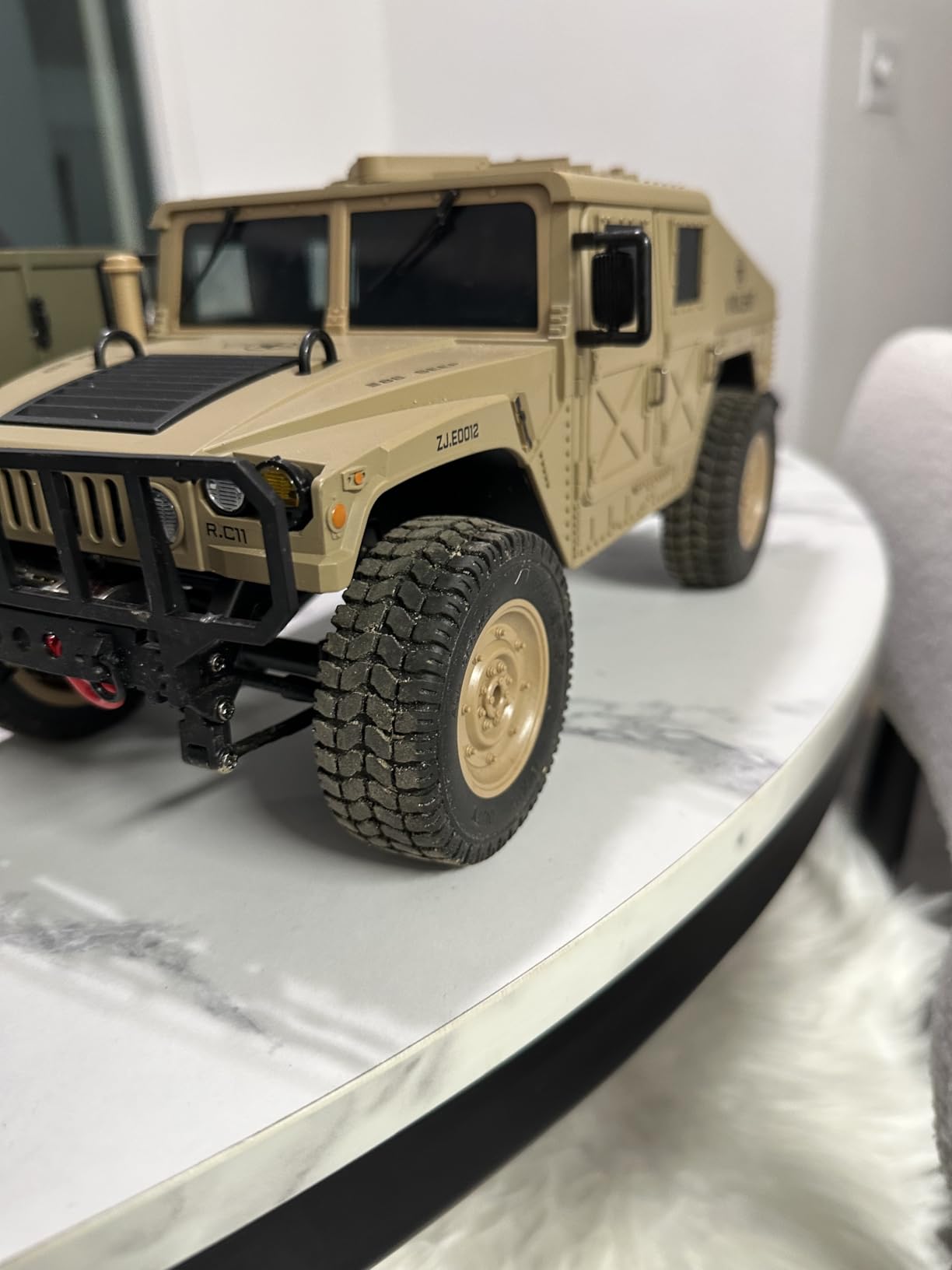
There is no RC crawler with more character than a scale Willys MB, and the opening doors, removable canvas cover and working leaf springs make this one a display piece as much as a drive. The working winch is the detail that stops people in their tracks, and it is actually usable rather than decorative.
On the driving side, the high-grip tires and 1.02 inch ground clearance handle grass, dirt and gravel trails, and the listed climbing capability is 30 degrees. That is honest for a trail truck at this level, and it will take small rock ledges and garden edges without drama.
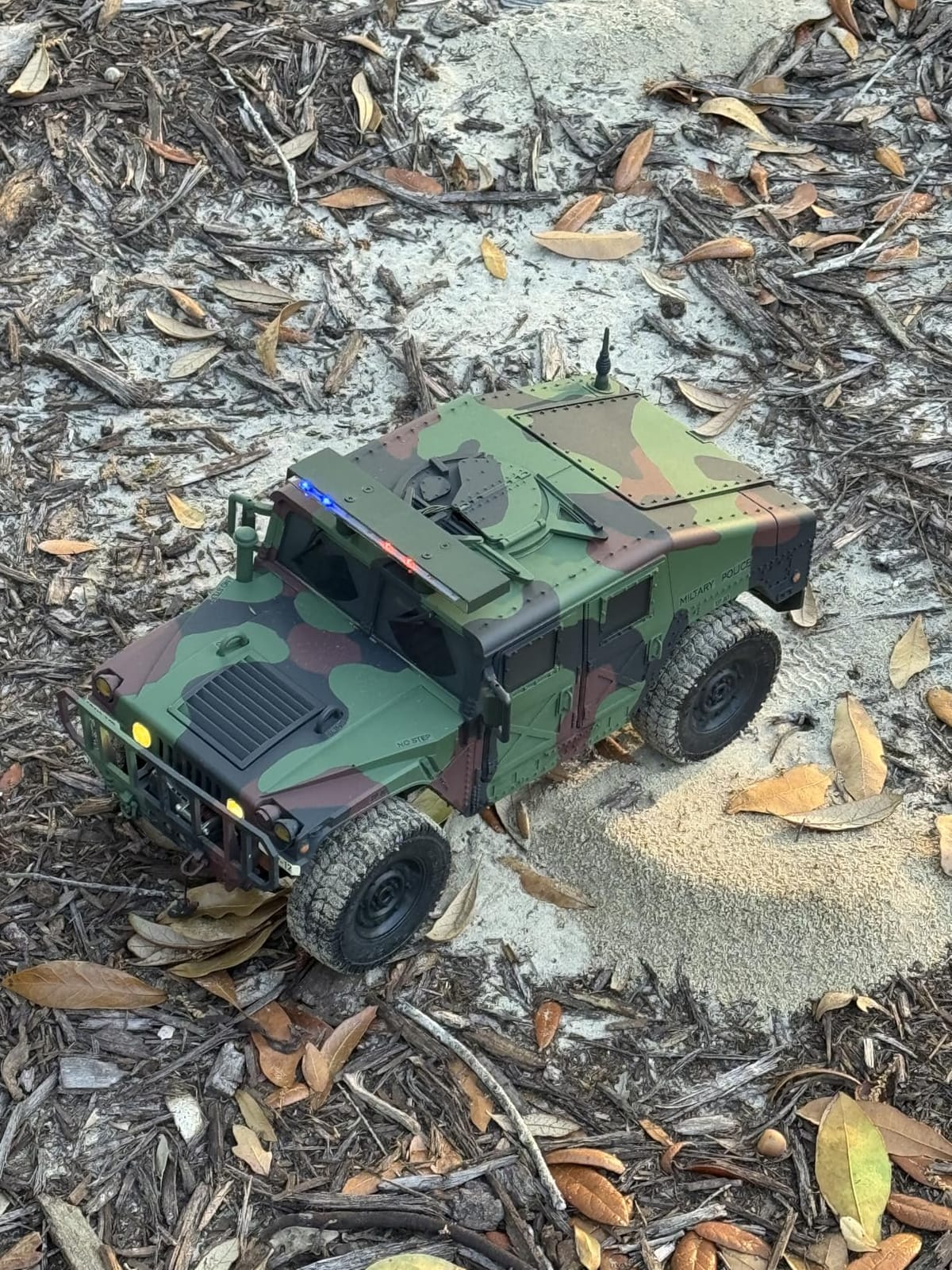
The reinforced chassis and upgraded steering system make it more durable than the category usually suggests, and several owners have modified theirs and run them on scale field layouts. The LED lights and the 2.4GHz multi-car capable controller let you run more than one truck at a time, which quietly doubles the fun at a gathering.
About 40 minutes of play time per charge is a reasonable session length for a younger driver. Parts for this truck are widely available through the manufacturer, so repairs after a hard tumble are straightforward rather than a write-off.
Why the scale body matters for a family purchase
A Willys MB looks like something from a history book, and that is the point for a younger driver. It turns a driving session into a small scene, and the opening doors, working winch and canvas cover give hands something to do while the truck is being lined up for a climb.
It also ages well. A military truck with visible mechanical detail stays interesting long after the novelty of a bright off-road truck has worn off, which makes it a safer gift than something chosen purely for speed.
Where it will disappoint you
Body and drivetrain parts are cheap plastic, so hard rock will eventually take a toll, and the controller quality is low with some owners reporting forward and reverse failing. The listed 6 km/h maximum speed is slow, which is fine for crawling and disappointing for anyone who wanted a fast basher.
The most serious complaint comes from international buyers, who report shipments arriving without the advertised winch or canvas cover. Check the box contents the moment it lands, and if you are buying this as a gift, allow time for that check before the birthday. It pairs well with an indoor home climbing wall if the kids will be driving indoors as often as out.
RC Crawler Buying Guide: Scale, Motors, Articulation and Batteries
Scale is the first decision, and it matters more than most buyers expect. A 1/24 or 1/18 truck is light and portable, which makes it easy to learn on and safe indoors, but it needs grip and momentum to get up a steep face. A 1/12 or 1/10 truck has the mass to plant itself on rock, and that mass is why the Everest-10, the Ascent 1/10 and the SCX10 III all feel stable where smaller rigs spin.
Motor type is the second decision, and it comes up constantly on hobby forums. A brushed motor is a 550 or 540 can with copper windings and a commutator, and it is cheaper, heavier and less efficient. A brushless system uses a sensorless or sensored controller with no physical contacts in the motor, and it delivers torque more smoothly, runs cooler and lasts longer.
For crawling specifically, brushless helps most on long attempts and on heavy trucks where heat becomes a problem. It is not essential on a small truck with light loads. One on this list, the Redcat Ascent-18 APEX, uses a brushless system at 1/18 scale, and owners report it out-climbing brushed trucks of a similar size.
Articulation is the third decision, and it is the spec that most affects whether a climb succeeds. Articulation is how far the suspension can flex with one wheel off the ground. A straight or solid axle that flexes at the links keeps three tires loaded when the fourth hangs in the air, which is the whole game on a rock face. A truck that tops out with two wheels dangling cannot climb, no matter how much torque it has.
Portal axles are worth understanding because they show up repeatedly. A portal axle places the axle pivot and the driveshaft higher than a straight axle, adding clearance under the middle of the truck. That clearance is what stops the chassis grounding out on a step, and it is why the SCX10 III and the two Redcats on this list can bridge gaps that flatter trucks cannot.
Center of gravity is the fourth decision and the least advertised. A low center of gravity keeps the truck’s weight close to the ground, which makes it far less likely to roll over on a side hill. Two of the trucks here were designed around it: the Ascent-18 APEX places the motor forward and low on a carbon fiber chassis, and the Ascent 1/10 uses a lightweight aluminum chassis specifically to drop the center of gravity.
Drivetrain material is the fifth decision, and it is the one that decides how long the truck lasts. Metal sintered gears, as used in the HOBBYPLUS CR18P EVO 2, hold up on hard rock. Plastic spur and differential gears, common at lower levels, are the first thing to fail when a motor stalls against a rock face. The Cheerwing and the Everest-10 both have known plastic components in the drivetrain, so treat those as service items rather than permanent parts.
Ready-to-run versus kit is the sixth decision. A ready-to-run truck arrives assembled, with a radio and usually a battery, which is what you want if you want to drive within an hour of delivery. A kit saves money and lets you choose the drivetrain, but it assumes you can build it. Several listings in this category ship without a battery or charger, so check the included components before ordering, and add a proper LiPo charger to your budget if one is not included.
Run time is the last decision and the one most buyers get wrong. Small packs of a few hundred milliamp hours are fine for learning but end sessions early, while packs in the 1200mAh to 2500mAh range support a full afternoon. Balance the pack against the truck’s weight, because an unbalanced heavy pack high in the chassis is the fastest way to tip over on a side hill.
Where to Drive a Crawler and How to Drive It Well
Start in your own yard. A rock garden, a pile of stones from a landscaping project, or a stack of bricks on a driveway is enough to learn every technique that matters, and it has the advantage that you are close to the house. Do not attack the big rock on the first afternoon. Work up from flat ground to a curb, to a low ledge, to a steeper face, exactly as beginner guides in the hobby recommend. If the weather keeps you indoors, a peg-based climbing pegboard gives you a graduated practice surface for throttle control before you take the truck outside.
Beyond the yard, public land, woodland trails and multi-use paths are the natural home for a crawler, provided you check the local rules first. A crawler is quiet, which makes it acceptable on far more land than a basher, and it is slow enough that you are rarely near another user. Watch for loose soil, since digging into a bank on a spinning wheel is how trails get closed to the hobby.
Throttle discipline is the skill that matters most, and it is a learner’s habit rather than a talent. Rock crawling is a low-speed discipline. Short taps of throttle with a pause between them let the tires find grip before they start spinning, while one long throttle input is what spins the tires and flips the truck. Momentum has a place, but only when the line is already correct.
Body position and spotting do the rest. On a side hill, approach so the uphill tires stay loaded, and let the low side tires do the work. When a front wheel is hanging, back down, rotate the chassis slightly, and approach again rather than forcing throttle. And always have a spotter when you cannot see the front tires, which is more often than you would expect on a big rock.
To get unstuck, do the opposite of what your instincts tell you. Reverse off the line, change your approach angle by a few degrees, and try again with a slower input. Most climbs that look impossible are a bad line plus too much throttle, and both are correctable in a single attempt.
If your interest in rock runs deeper than driving over it, our picks for the best rock tumblers for adults cover the other half of the hobby, and the stones they work with make a genuinely good practice course once they are tumbled down to a manageable size.
Frequently Asked Questions
What is the best RC rock crawler for a beginner?
The Axial SCX24 Jeep Gladiator is the easiest crawler to learn on. Its 1/24 size is small enough to run indoors or in tight spaces, the longer wheelbase keeps it stable on climbs, and the low-speed control is precise enough for a new driver. A battery and charger are included, and the platform has one of the widest aftermarket support systems in the hobby.
Is brushed or brushless better for rock crawling?
Brushless is better for crawling, but it is not required. A brushless motor delivers torque more smoothly, runs cooler and loses less power on long climbs, which matters most on heavier trucks. A brushed motor is cheaper, heavier and less efficient, and it can heat up and lose torque during a hard attempt. Most beginners start brushed and upgrade later.
What scale is best for rock climbing?
Between 1/10 and 1/12 is best for real rock because the mass helps the truck plant itself on a face. 1/18 and 1/24 are easier to learn on and run indoors, but they rely more on grip and momentum. A 1/10 truck with a low center of gravity and portal axles is the most capable setup on this list.
Do RC crawlers come with a battery and charger?
Some do and some do not, so check the included components before ordering. Several of the crawlers reviewed here arrive with a battery and a charger ready to run, while others ship with the truck and radio only. Budget for a proper LiPo pack and a real charger if they are not listed, because you cannot drive the truck without them.
What is the difference between a crawler and a trail truck?
A crawler is geared low for slow, precise climbing, with long-travel suspension, high articulation and a low center of gravity. A trail truck is faster and softer, built for fast logging trails and jumps. A basher is a fast, durable stadium truck for jumps and hard landings. Buying a trail truck when you want a crawler is the most common mistake in the hobby.
How do I get my RC crawler unstuck on a rock?
Reverse off the line, then change your approach angle slightly and try again with a much slower throttle input. Most failed climbs are a bad line combined with too much throttle, not a lack of power. Keep the weight toward the uphill side, avoid loading a single tire, and use short taps of throttle with pauses so the tires find grip before they spin.
Final Verdict: Best RC Crawlers for Rock Climbing in 2026
The Redcat Everest-10 wins this roundup because it is the rare truck that is genuinely good out of the box: strong climbing torque, real articulation, waterproof electronics and a battery and charger in the box, all at a price that leaves room for the two upgrades it eventually needs. If you want the easiest platform to learn on, the Axial SCX24 Jeep Gladiator is the pick, and if you want the hardest hardware on the list, the Axial SCX10 III Base Camp handles the toughest rock in this group.
For a low-center-of-gravity specialist, the Redcat Ascent 1/10 does more than its price suggests. For brushless power in a small package, the Ascent-18 APEX is the one. For long afternoons on a trail, the Cheerwing 1/10 wins on run time, and for a family or a first-time driver, the MN-82 Toyota pickup and the Willys MB are the sensible, low-risk entry points. Whichever you pick, buy a proper charger, learn slow throttle control in your own yard, and upgrade tires before anything else.